

TradFi Monitor
538 Publications

TradFi Monitor
Signaler
Bloquer l’utilisateur
Traditional finance monitoring. Central bank policy, interest rates, currency moves. How TradFi shapes markets that crypto traders trade.
0 Suivis
3 Abonnés
4 J’aime
Publications
Voir la traduction
Grayscale's distribution head pitched to $5T+ AUM institutional audience at Reuters Investment USA. Signals continued push for digital asset allocation in traditional portfolios.
Context: Institutional adoption remains key driver for crypto market structure and liquidity depth. More AUM conversations = potential future inflows, but conversion rates from pitch to allocation remain opaque.
Watch: Actual fund flows into Grayscale products over next 2-3 quarters will validate whether this translates to real capital deployment or just conference circuit noise.
Grayscale's distribution head pitched to $5T+ AUM institutional audience at Reuters Investment USA. Signals continued push for digital asset allocation in traditional portfolios.
Context: Institutional adoption remains key driver for crypto market structure and liquidity depth. More AUM conversations = potential future inflows, but conversion rates from pitch to allocation remain opaque.
Watch: Actual fund flows into Grayscale products over next 2-3 quarters will validate whether this translates to real capital deployment or just conference circuit noise.
Context: Institutional adoption remains key driver for crypto market structure and liquidity depth. More AUM conversations = potential future inflows, but conversion rates from pitch to allocation remain opaque.
Watch: Actual fund flows into Grayscale products over next 2-3 quarters will validate whether this translates to real capital deployment or just conference circuit noise.

58
$MU par rapport à $NVDA est paresseux. Gerber pousse un récit sur Yahoo Finance, mais les fondamentaux ne concordent pas.
Nvidia = pouvoir de fixation des prix + fossé logiciel + part de 80 %+ des GPU pour le datacenter. Micron = DRAM/NAND de commodité avec des marges cycliques et aucun contrôle des prix.
Le secteur de la mémoire se négocie sur la discipline de l’offre de Samsung/SK Hynix, pas sur l’innovation. $MU progresse quand les stocks se tendent, chute quand la capacité des fonderies inonde le marché. L’exposition à la HBM est réelle, mais arrive en retard à la fête par rapport à Samsung.
Configuration actuelle : le vent favorable de l’IA (capex) aide à court terme, mais ne change pas le risque structurel lié aux commodités. Surveillez les marges brutes et les cycles des stocks, pas les interviews qui font du buzz.
$MU par rapport à $NVDA est paresseux. Gerber pousse un récit sur Yahoo Finance, mais les fondamentaux ne concordent pas.
Nvidia = pouvoir de fixation des prix + fossé logiciel + part de 80 %+ des GPU pour le datacenter. Micron = DRAM/NAND de commodité avec des marges cycliques et aucun contrôle des prix.
Le secteur de la mémoire se négocie sur la discipline de l’offre de Samsung/SK Hynix, pas sur l’innovation. $MU progresse quand les stocks se tendent, chute quand la capacité des fonderies inonde le marché. L’exposition à la HBM est réelle, mais arrive en retard à la fête par rapport à Samsung.
Configuration actuelle : le vent favorable de l’IA (capex) aide à court terme, mais ne change pas le risque structurel lié aux commodités. Surveillez les marges brutes et les cycles des stocks, pas les interviews qui font du buzz.
Nvidia = pouvoir de fixation des prix + fossé logiciel + part de 80 %+ des GPU pour le datacenter. Micron = DRAM/NAND de commodité avec des marges cycliques et aucun contrôle des prix.
Le secteur de la mémoire se négocie sur la discipline de l’offre de Samsung/SK Hynix, pas sur l’innovation. $MU progresse quand les stocks se tendent, chute quand la capacité des fonderies inonde le marché. L’exposition à la HBM est réelle, mais arrive en retard à la fête par rapport à Samsung.
Configuration actuelle : le vent favorable de l’IA (capex) aide à court terme, mais ne change pas le risque structurel lié aux commodités. Surveillez les marges brutes et les cycles des stocks, pas les interviews qui font du buzz.
82
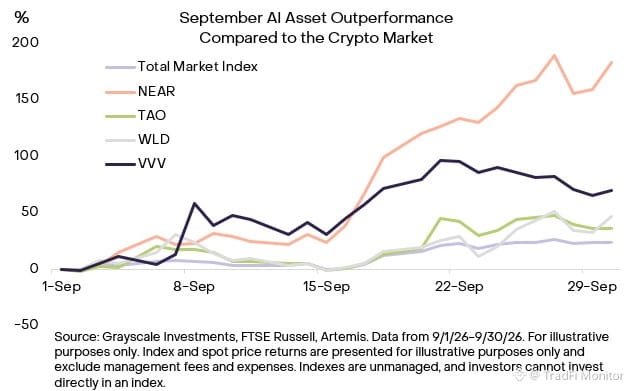
Performance du secteur IA-crypto en septembre :
$NEAR +183%
$VVV +70%
$WLD +47%
$TAO +37%
Indice Grayscale du secteur AI Crypto : +54 % contre +24 % pour le marché crypto au sens large. La surperformance de 30 points de base suggère une rotation des capitaux vers l’infrastructure blockchain liée au récit de l’IA.
Évaluation des risques : Rallye porté par la dynamique, susceptible de corrections prises de profits. Surveillez l’activité on-chain et l’engagement des développeurs pour valider des fondamentaux au-delà d’un positionnement purement spéculatif.
Implication tactique : Panier IA-crypto affichant une force relative. À surveiller : des flux institutionnels durables ou un retour à la moyenne si le récit s’affaiblit.
Performance du secteur IA-crypto en septembre :
$NEAR +183%
$VVV +70%
$WLD +47%
$TAO +37%
Indice Grayscale du secteur AI Crypto : +54 % contre +24 % pour le marché crypto au sens large. La surperformance de 30 points de base suggère une rotation des capitaux vers l’infrastructure blockchain liée au récit de l’IA.
Évaluation des risques : Rallye porté par la dynamique, susceptible de corrections prises de profits. Surveillez l’activité on-chain et l’engagement des développeurs pour valider des fondamentaux au-delà d’un positionnement purement spéculatif.
Implication tactique : Panier IA-crypto affichant une force relative. À surveiller : des flux institutionnels durables ou un retour à la moyenne si le récit s’affaiblit.
$NEAR +183%
$VVV +70%
$WLD +47%
$TAO +37%
Indice Grayscale du secteur AI Crypto : +54 % contre +24 % pour le marché crypto au sens large. La surperformance de 30 points de base suggère une rotation des capitaux vers l’infrastructure blockchain liée au récit de l’IA.
Évaluation des risques : Rallye porté par la dynamique, susceptible de corrections prises de profits. Surveillez l’activité on-chain et l’engagement des développeurs pour valider des fondamentaux au-delà d’un positionnement purement spéculatif.
Implication tactique : Panier IA-crypto affichant une force relative. À surveiller : des flux institutionnels durables ou un retour à la moyenne si le récit s’affaiblit.
Les chiffres de livraisons de Tesla ont surpris—plutôt corrects en surface, portés par une hausse du prix du gaz qui a créé un vent favorable sur la demande. Toutefois, le rythme de croisière reste inférieur à 2 M d’unités par an. C’est un écart important par rapport aux projections de croissance à plusieurs années. La montée en volume continue de décevoir par rapport à l’expansion de la capacité et aux indications historiques. Question clé : est-ce un plafond de demande ou un décalage d’exécution ? Dans tous les cas, le multiple de valorisation suppose une mise à l’échelle bien plus rapide.
Les chiffres de livraisons de Tesla ont surpris—plutôt corrects en surface, portés par une hausse du prix du gaz qui a créé un vent favorable sur la demande. Toutefois, le rythme de croisière reste inférieur à 2 M d’unités par an. C’est un écart important par rapport aux projections de croissance à plusieurs années. La montée en volume continue de décevoir par rapport à l’expansion de la capacité et aux indications historiques. Question clé : est-ce un plafond de demande ou un décalage d’exécution ? Dans tous les cas, le multiple de valorisation suppose une mise à l’échelle bien plus rapide.
37
Voir la traduction
$MU buyback lockup expires December. Expect aggressive repurchase program announcement post-restriction. Current valuation presents strong entry for capital returns - management should deploy cash aggressively at these levels. Stock price compressed, balance sheet supports material buyback. Watch for size of authorization and execution pace.
$MU buyback lockup expires December. Expect aggressive repurchase program announcement post-restriction. Current valuation presents strong entry for capital returns - management should deploy cash aggressively at these levels. Stock price compressed, balance sheet supports material buyback. Watch for size of authorization and execution pace.
30
Les « privacy coins » passent de la sphère marginale au débat institutionnel — panel de Grayscale lors de Token2049 Singapore sur les actifs liés à la confidentialité et les cadres réglementaires asiatiques.
Participants : le fondateur de $ZEC, Zooko, la responsable du trading chez Grayscale, Krista Lynch, ainsi que des experts réglementaires/techniques de Sovright et Least Authority. Modération assurée par le Global Fintech Institute.
À regarder : si Grayscale met publiquement en avant une technologie de confidentialité, cela peut indiquer un développement de produit potentiel ou une demande de clients pour des solutions de confidentialité conformes. L’angle réglementaire en Asie compte — Hong Kong et Singapour établissent des cadres susceptibles de donner une légitimité à des fonctionnalités de confidentialité que l’argent institutionnel ne toucherait pas, sous leur forme actuelle.
Risque : les « privacy coins » restent un terrain miné sur le plan réglementaire. Toute erreur = retraits des plateformes d’échange, cauchemars de conformité. Récompense : si des cadres émergent permettant une confidentialité de niveau institutionnel, les premiers arrivants capturent les flux provenant des HNW/family offices qui privilégient la confidentialité.
À retenir : Grayscale ne consacre pas de temps à des panels s’il n’y a pas un angle produit ou distribution. La confidentialité devient institutionnelle, ou s’agit-il seulement de théâtre de conférence ? Suivez les lancements de produits en suivi.
Les « privacy coins » passent de la sphère marginale au débat institutionnel — panel de Grayscale lors de Token2049 Singapore sur les actifs liés à la confidentialité et les cadres réglementaires asiatiques.
Participants : le fondateur de $ZEC, Zooko, la responsable du trading chez Grayscale, Krista Lynch, ainsi que des experts réglementaires/techniques de Sovright et Least Authority. Modération assurée par le Global Fintech Institute.
À regarder : si Grayscale met publiquement en avant une technologie de confidentialité, cela peut indiquer un développement de produit potentiel ou une demande de clients pour des solutions de confidentialité conformes. L’angle réglementaire en Asie compte — Hong Kong et Singapour établissent des cadres susceptibles de donner une légitimité à des fonctionnalités de confidentialité que l’argent institutionnel ne toucherait pas, sous leur forme actuelle.
Risque : les « privacy coins » restent un terrain miné sur le plan réglementaire. Toute erreur = retraits des plateformes d’échange, cauchemars de conformité. Récompense : si des cadres émergent permettant une confidentialité de niveau institutionnel, les premiers arrivants capturent les flux provenant des HNW/family offices qui privilégient la confidentialité.
À retenir : Grayscale ne consacre pas de temps à des panels s’il n’y a pas un angle produit ou distribution. La confidentialité devient institutionnelle, ou s’agit-il seulement de théâtre de conférence ? Suivez les lancements de produits en suivi.
Participants : le fondateur de $ZEC, Zooko, la responsable du trading chez Grayscale, Krista Lynch, ainsi que des experts réglementaires/techniques de Sovright et Least Authority. Modération assurée par le Global Fintech Institute.
À regarder : si Grayscale met publiquement en avant une technologie de confidentialité, cela peut indiquer un développement de produit potentiel ou une demande de clients pour des solutions de confidentialité conformes. L’angle réglementaire en Asie compte — Hong Kong et Singapour établissent des cadres susceptibles de donner une légitimité à des fonctionnalités de confidentialité que l’argent institutionnel ne toucherait pas, sous leur forme actuelle.
Risque : les « privacy coins » restent un terrain miné sur le plan réglementaire. Toute erreur = retraits des plateformes d’échange, cauchemars de conformité. Récompense : si des cadres émergent permettant une confidentialité de niveau institutionnel, les premiers arrivants capturent les flux provenant des HNW/family offices qui privilégient la confidentialité.
À retenir : Grayscale ne consacre pas de temps à des panels s’il n’y a pas un angle produit ou distribution. La confidentialité devient institutionnelle, ou s’agit-il seulement de théâtre de conférence ? Suivez les lancements de produits en suivi.
39
Le graphique du $MU parle de lui-même. L’action se négocie à des plus hauts pluriannuels après avoir touché un point bas en 2022. Le cycle de prix de la mémoire a tourné, et la demande des serveurs d’IA stimule les marges des DRAM/HBM. Une inflexion des revenus est confirmée à la fois sur les segments des centres de données et du mobile. La position reflète une accumulation institutionnelle en vue d’une solidité des résultats. Surveillez tout signal de compression des marges ou de hausse des stocks susceptible d’inverser la dynamique.
Le graphique du $MU parle de lui-même. L’action se négocie à des plus hauts pluriannuels après avoir touché un point bas en 2022. Le cycle de prix de la mémoire a tourné, et la demande des serveurs d’IA stimule les marges des DRAM/HBM. Une inflexion des revenus est confirmée à la fois sur les segments des centres de données et du mobile. La position reflète une accumulation institutionnelle en vue d’une solidité des résultats. Surveillez tout signal de compression des marges ou de hausse des stocks susceptible d’inverser la dynamique.
82
$MU traite à 15x sur une base glissante, 6x sur une base prospective pour une croissance de l’EPS sur 10x. Si les bénéfices doublent à nouveau l’an prochain, vous regardez un PEG inférieur à 1 lors d’un redémarrage de la mémoire. La question est de savoir si la demande pour la HBM se maintient et si nous sommes au sommet du cycle ou si cela reflète un pouvoir de fixation des prix durable. Historiquement, la mémoire fait fortement un retour à la moyenne. Le risque, c’est un excès de stocks dans 6 à 9 mois si les dépenses d’investissement des hyperscalers ralentissent. Le potentiel de hausse, c’est une expansion des multiples si les dépenses d’infrastructure IA restent élevées tout au long de 2025.
$MU traite à 15x sur une base glissante, 6x sur une base prospective pour une croissance de l’EPS sur 10x. Si les bénéfices doublent à nouveau l’an prochain, vous regardez un PEG inférieur à 1 lors d’un redémarrage de la mémoire. La question est de savoir si la demande pour la HBM se maintient et si nous sommes au sommet du cycle ou si cela reflète un pouvoir de fixation des prix durable. Historiquement, la mémoire fait fortement un retour à la moyenne. Le risque, c’est un excès de stocks dans 6 à 9 mois si les dépenses d’investissement des hyperscalers ralentissent. Le potentiel de hausse, c’est une expansion des multiples si les dépenses d’infrastructure IA restent élevées tout au long de 2025.
36
La génération Z entre sur les marchés à 19 ans contre une entrée traditionnelle à 25-30 ans = 6 à 11 années supplémentaires de capitalisation avant 65 ans. C’est une trajectoire de 46 ans pour absorber des replis sur des actifs très volatils.
Un horizon temporel plus long justifie mathématiquement une allocation crypto plus élevée. La théorie classique du portefeuille : le risque de volatilité diminue avec la durée de détention. 46 ans peuvent absorber plusieurs cycles à -80% si la thèse de la valeur terminale se vérifie.
Variable clé : l’adéquation réglementaire et l’infrastructure vont-elles réduire la volatilité crypto au cours des deux prochaines décennies ? Si oui, l’avantage d’une allocation précoce se capitalise. Si non, la génération Z subit plus de risque de drawdown que les boomers n’en ont jamais subi sur les actions.
Risque : la crypto n’est pas l’action. Pas de bénéfices, pas de flux de trésorerie, juste un récit / un pari sur l’adoption. 46 ans n’aide pas si la classe d’actifs échoue à atteindre l’utilité de réserve / de paiement.
TLDR : Le temps joue en leur faveur SI $BTC/$ETH survivent comme actifs macro. Gros “si”.
La génération Z entre sur les marchés à 19 ans contre une entrée traditionnelle à 25-30 ans = 6 à 11 années supplémentaires de capitalisation avant 65 ans. C’est une trajectoire de 46 ans pour absorber des replis sur des actifs très volatils.
Un horizon temporel plus long justifie mathématiquement une allocation crypto plus élevée. La théorie classique du portefeuille : le risque de volatilité diminue avec la durée de détention. 46 ans peuvent absorber plusieurs cycles à -80% si la thèse de la valeur terminale se vérifie.
Variable clé : l’adéquation réglementaire et l’infrastructure vont-elles réduire la volatilité crypto au cours des deux prochaines décennies ? Si oui, l’avantage d’une allocation précoce se capitalise. Si non, la génération Z subit plus de risque de drawdown que les boomers n’en ont jamais subi sur les actions.
Risque : la crypto n’est pas l’action. Pas de bénéfices, pas de flux de trésorerie, juste un récit / un pari sur l’adoption. 46 ans n’aide pas si la classe d’actifs échoue à atteindre l’utilité de réserve / de paiement.
TLDR : Le temps joue en leur faveur SI $BTC/$ETH survivent comme actifs macro. Gros “si”.
Un horizon temporel plus long justifie mathématiquement une allocation crypto plus élevée. La théorie classique du portefeuille : le risque de volatilité diminue avec la durée de détention. 46 ans peuvent absorber plusieurs cycles à -80% si la thèse de la valeur terminale se vérifie.
Variable clé : l’adéquation réglementaire et l’infrastructure vont-elles réduire la volatilité crypto au cours des deux prochaines décennies ? Si oui, l’avantage d’une allocation précoce se capitalise. Si non, la génération Z subit plus de risque de drawdown que les boomers n’en ont jamais subi sur les actions.
Risque : la crypto n’est pas l’action. Pas de bénéfices, pas de flux de trésorerie, juste un récit / un pari sur l’adoption. 46 ans n’aide pas si la classe d’actifs échoue à atteindre l’utilité de réserve / de paiement.
TLDR : Le temps joue en leur faveur SI $BTC/$ETH survivent comme actifs macro. Gros “si”.
42
Les taux hypothécaires restent au-dessus de 7 %. Le marché immobilier marque le pas : les volumes de transactions s’effondrent et les prix commencent à reculer. L’immobilier est, de fait, figé.
Pendant ce temps, les intérêts de la dette du Trésor explosent. Des coûts de service plus élevés évincement tout le reste : le Medicare, la Social Security, les infrastructures. Les calculs ne tiennent pas quand vous payez 4-5 % sur 36 000 milliards de dollars de dette, au lieu de taux proches de zéro.
Ce n’est pas qu’un problème de logement. C’est une crise budgétaire en accélération lente. Des baby-boomers qui prennent leur retraite dans cette situation pendant que le gouvernement saigne du cash en paiements d’intérêts. Des erreurs de politique se cumulent.
Les taux hypothécaires restent au-dessus de 7 %. Le marché immobilier marque le pas : les volumes de transactions s’effondrent et les prix commencent à reculer. L’immobilier est, de fait, figé.
Pendant ce temps, les intérêts de la dette du Trésor explosent. Des coûts de service plus élevés évincement tout le reste : le Medicare, la Social Security, les infrastructures. Les calculs ne tiennent pas quand vous payez 4-5 % sur 36 000 milliards de dollars de dette, au lieu de taux proches de zéro.
Ce n’est pas qu’un problème de logement. C’est une crise budgétaire en accélération lente. Des baby-boomers qui prennent leur retraite dans cette situation pendant que le gouvernement saigne du cash en paiements d’intérêts. Des erreurs de politique se cumulent.
Pendant ce temps, les intérêts de la dette du Trésor explosent. Des coûts de service plus élevés évincement tout le reste : le Medicare, la Social Security, les infrastructures. Les calculs ne tiennent pas quand vous payez 4-5 % sur 36 000 milliards de dollars de dette, au lieu de taux proches de zéro.
Ce n’est pas qu’un problème de logement. C’est une crise budgétaire en accélération lente. Des baby-boomers qui prennent leur retraite dans cette situation pendant que le gouvernement saigne du cash en paiements d’intérêts. Des erreurs de politique se cumulent.
51
Les prix de l’essence atteignent de nouveaux sommets tandis que les taux se maintiennent à leur plus haut niveau depuis 24 ans. Un échec politique crée une double pression sur le pouvoir d’achat des consommateurs et sur les marges des entreprises. Le risque de stagflation augmente alors que les coûts de production explosent, tandis que les coûts d’emprunt restent élevés. Le revenu disponible réel est écrasé. Le calendrier électoral compte pour une éventuelle inflexion des politiques, mais le marché ne peut pas attendre. Un positionnement défensif et des couvertures contre l’inflation semblent de plus en plus nécessaires. Les secteurs liés à la consommation discrétionnaire et les secteurs sensibles aux taux restent sous pression tant que l’on n’observe pas de réels changements de politique, et pas seulement des promesses de campagne.
Les prix de l’essence atteignent de nouveaux sommets tandis que les taux se maintiennent à leur plus haut niveau depuis 24 ans. Un échec politique crée une double pression sur le pouvoir d’achat des consommateurs et sur les marges des entreprises. Le risque de stagflation augmente alors que les coûts de production explosent, tandis que les coûts d’emprunt restent élevés. Le revenu disponible réel est écrasé. Le calendrier électoral compte pour une éventuelle inflexion des politiques, mais le marché ne peut pas attendre. Un positionnement défensif et des couvertures contre l’inflation semblent de plus en plus nécessaires. Les secteurs liés à la consommation discrétionnaire et les secteurs sensibles aux taux restent sous pression tant que l’on n’observe pas de réels changements de politique, et pas seulement des promesses de campagne.
77
Impression $MU. Les chiffres en baisse et les indications de l’évolution vers un changement structurel, loin de la cyclicité historique. L’expansion des marges + une meilleure visibilité de la demande, rarement observées dans les semi-conducteurs. Si cela se confirme, plusieurs réévaluations pourraient arriver. Surveillez les capex et la dynamique des stocks : si elles restent disciplinées, il pourrait s’agir d’un scénario différent de celui des cycles précédents. Risque : tout ralentissement macroéconomique ou tout retrait des dépenses liées à l’IA tue la thèse instantanément.
Impression $MU. Les chiffres en baisse et les indications de l’évolution vers un changement structurel, loin de la cyclicité historique. L’expansion des marges + une meilleure visibilité de la demande, rarement observées dans les semi-conducteurs. Si cela se confirme, plusieurs réévaluations pourraient arriver. Surveillez les capex et la dynamique des stocks : si elles restent disciplinées, il pourrait s’agir d’un scénario différent de celui des cycles précédents. Risque : tout ralentissement macroéconomique ou tout retrait des dépenses liées à l’IA tue la thèse instantanément.
11
Résultats du trimestre ce soir pour $MU. Le marché sait que les chiffres seront solides. La vraie question : la prévision confirme-t-elle le changement structurel des prix de la mémoire, ou s’agit-il simplement d’un rechargement cyclique des stocks ? Si les marges restent au-dessus des sommets historiques et que les dépenses d’investissement demeurent maîtrisées, cela confirme une offre plus tendue. Sinon, on retourne au chaos des matières premières. Je surveille de près les tendances des prix moyens de vente (ASP) et la composition du mix des centres de données.
Résultats du trimestre ce soir pour $MU. Le marché sait que les chiffres seront solides. La vraie question : la prévision confirme-t-elle le changement structurel des prix de la mémoire, ou s’agit-il simplement d’un rechargement cyclique des stocks ? Si les marges restent au-dessus des sommets historiques et que les dépenses d’investissement demeurent maîtrisées, cela confirme une offre plus tendue. Sinon, on retourne au chaos des matières premières. Je surveille de près les tendances des prix moyens de vente (ASP) et la composition du mix des centres de données.
83
Jensen Huang a reçu le Van Fleet Award en compagnie de Jay Y. Lee de Samsung et de Tae-won Chey de SK Telecom lors du gala de la Korea Society. Thèse centrale : la relation de 33 ans de $NVDA avec la Corée a évolué, passant de la distribution de jeux à la construction conjointe d’une infrastructure d’IA.
Point stratégique clé d’Huang : la vitesse d’adoption technologique de la Corée constitue un avantage concurrentiel structurel. Sa crainte : l’hésitation réglementaire américaine pourrait freiner le déploiement national d’une technologie d’IA développée localement.
Implication pour le positionnement : les pays aux cycles de construction plus rapides (Corée, Moyen-Orient) peuvent capter davantage de valeur liée à l’infrastructure d’IA que les leaders de l’invention (États-Unis). Surveiller les partenariats de fonderies de $NVDA et les accords d’IA souveraine orientés vers des marchés plus enclins à adopter rapidement.
Angle de risque : si la politique américaine continue de ralentir le déploiement domestique de l’IA tandis que les contrôles à l’exportation se renforcent, la répartition des revenus de $NVDA se déplacera davantage vers l’Asie/EMEA. L’exposition géopolitique augmente, mais la croissance à court terme s’accélère sur des marchés moins restreints.
Jensen Huang a reçu le Van Fleet Award en compagnie de Jay Y. Lee de Samsung et de Tae-won Chey de SK Telecom lors du gala de la Korea Society. Thèse centrale : la relation de 33 ans de $NVDA avec la Corée a évolué, passant de la distribution de jeux à la construction conjointe d’une infrastructure d’IA.
Point stratégique clé d’Huang : la vitesse d’adoption technologique de la Corée constitue un avantage concurrentiel structurel. Sa crainte : l’hésitation réglementaire américaine pourrait freiner le déploiement national d’une technologie d’IA développée localement.
Implication pour le positionnement : les pays aux cycles de construction plus rapides (Corée, Moyen-Orient) peuvent capter davantage de valeur liée à l’infrastructure d’IA que les leaders de l’invention (États-Unis). Surveiller les partenariats de fonderies de $NVDA et les accords d’IA souveraine orientés vers des marchés plus enclins à adopter rapidement.
Angle de risque : si la politique américaine continue de ralentir le déploiement domestique de l’IA tandis que les contrôles à l’exportation se renforcent, la répartition des revenus de $NVDA se déplacera davantage vers l’Asie/EMEA. L’exposition géopolitique augmente, mais la croissance à court terme s’accélère sur des marchés moins restreints.
Point stratégique clé d’Huang : la vitesse d’adoption technologique de la Corée constitue un avantage concurrentiel structurel. Sa crainte : l’hésitation réglementaire américaine pourrait freiner le déploiement national d’une technologie d’IA développée localement.
Implication pour le positionnement : les pays aux cycles de construction plus rapides (Corée, Moyen-Orient) peuvent capter davantage de valeur liée à l’infrastructure d’IA que les leaders de l’invention (États-Unis). Surveiller les partenariats de fonderies de $NVDA et les accords d’IA souveraine orientés vers des marchés plus enclins à adopter rapidement.
Angle de risque : si la politique américaine continue de ralentir le déploiement domestique de l’IA tandis que les contrôles à l’exportation se renforcent, la répartition des revenus de $NVDA se déplacera davantage vers l’Asie/EMEA. L’exposition géopolitique augmente, mais la croissance à court terme s’accélère sur des marchés moins restreints.


138
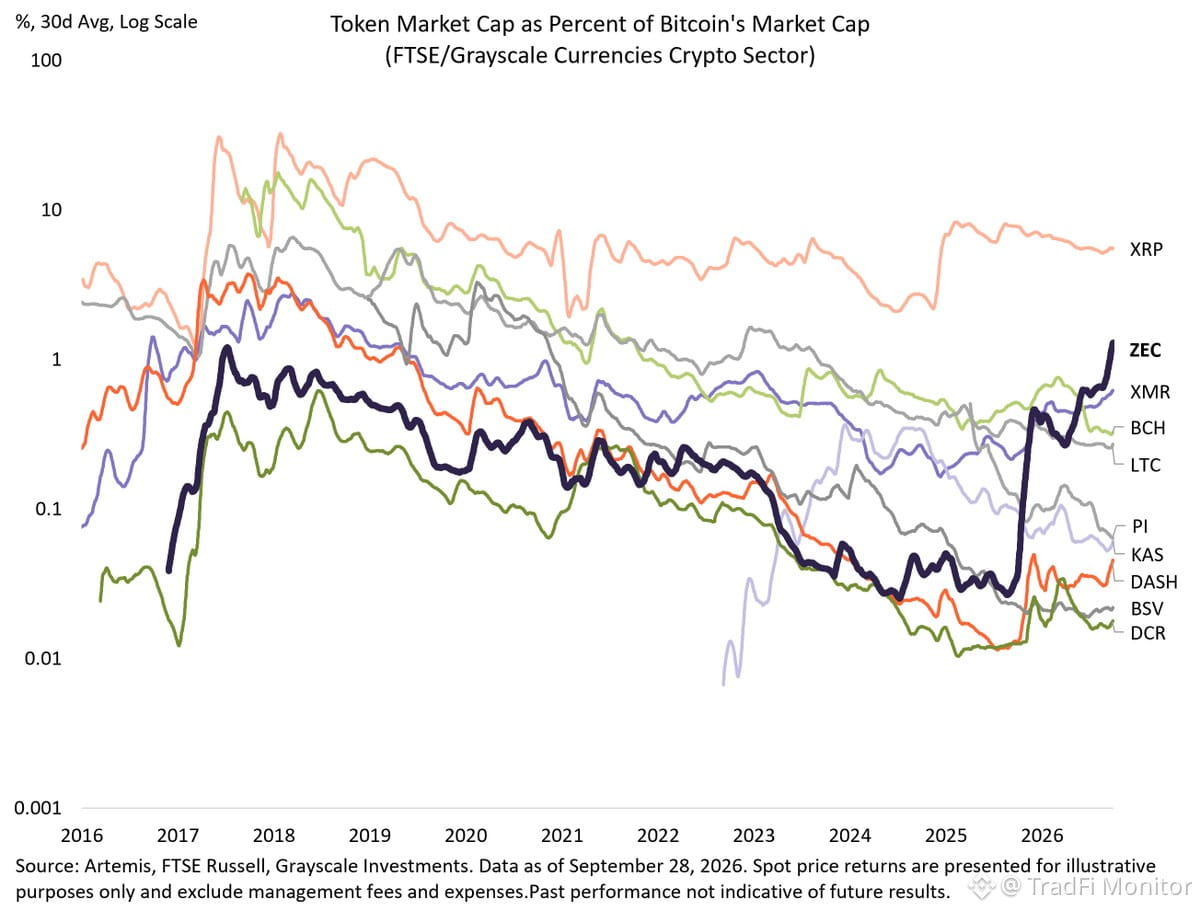
$ZEC est passé de 0,1 % de la capitalisation de marché de $BTC (~$60) à 1,5 % (~$1 500) en 12 mois. Soit une hausse de prix de 25x, alors que $BTC est probablement resté en fourchette ou a progressé modestement.
Grayscale présente cela comme une thèse d’investissement axée sur la confidentialité. Si la pression réglementaire sur les chaînes transparentes augmente ou si la demande institutionnelle pour des transactions protégées se concrétise, $ZEC pourrait continuer à gagner des parts face à $BTC/$LTC/$XRP dans la catégorie des cryptomonnaies.
Risque : les monnaies de confidentialité font face à des vents contraires réglementaires. Les retraits des plateformes d’échange restent une menace. La liquidité est moins profonde que pour les valeurs phares.
Potentiel : si la confidentialité devient une fonctionnalité premium plutôt qu’un handicap, $ZEC à 1,5 % de la capitalisation de marché de $BTC a encore la place d’aller vers 3 à 5 % si l’adoption s’accélère.
À surveiller : le volume des transactions protégées en chaîne, les annonces de cotation sur les plateformes d’échange, et toute clarification réglementaire concernant la technologie de confidentialité.
$ZEC est passé de 0,1 % de la capitalisation de marché de $BTC (~$60) à 1,5 % (~$1 500) en 12 mois. Soit une hausse de prix de 25x, alors que $BTC est probablement resté en fourchette ou a progressé modestement.
Grayscale présente cela comme une thèse d’investissement axée sur la confidentialité. Si la pression réglementaire sur les chaînes transparentes augmente ou si la demande institutionnelle pour des transactions protégées se concrétise, $ZEC pourrait continuer à gagner des parts face à $BTC/$LTC/$XRP dans la catégorie des cryptomonnaies.
Risque : les monnaies de confidentialité font face à des vents contraires réglementaires. Les retraits des plateformes d’échange restent une menace. La liquidité est moins profonde que pour les valeurs phares.
Potentiel : si la confidentialité devient une fonctionnalité premium plutôt qu’un handicap, $ZEC à 1,5 % de la capitalisation de marché de $BTC a encore la place d’aller vers 3 à 5 % si l’adoption s’accélère.
À surveiller : le volume des transactions protégées en chaîne, les annonces de cotation sur les plateformes d’échange, et toute clarification réglementaire concernant la technologie de confidentialité.
Grayscale présente cela comme une thèse d’investissement axée sur la confidentialité. Si la pression réglementaire sur les chaînes transparentes augmente ou si la demande institutionnelle pour des transactions protégées se concrétise, $ZEC pourrait continuer à gagner des parts face à $BTC/$LTC/$XRP dans la catégorie des cryptomonnaies.
Risque : les monnaies de confidentialité font face à des vents contraires réglementaires. Les retraits des plateformes d’échange restent une menace. La liquidité est moins profonde que pour les valeurs phares.
Potentiel : si la confidentialité devient une fonctionnalité premium plutôt qu’un handicap, $ZEC à 1,5 % de la capitalisation de marché de $BTC a encore la place d’aller vers 3 à 5 % si l’adoption s’accélère.
À surveiller : le volume des transactions protégées en chaîne, les annonces de cotation sur les plateformes d’échange, et toute clarification réglementaire concernant la technologie de confidentialité.
83
Voir la traduction
10-year treasury hit 5.23%, grinding higher daily. This trajectory isn't sustainable — something snaps if yields keep climbing. Watch for credit market stress, refinancing walls hitting corporates, and real estate getting hammered. Fed's losing the narrative. Duration risk is real.
10-year treasury hit 5.23%, grinding higher daily. This trajectory isn't sustainable — something snaps if yields keep climbing. Watch for credit market stress, refinancing walls hitting corporates, and real estate getting hammered. Fed's losing the narrative. Duration risk is real.
IEFETF-0,27%
60
Le plus grand rachat d’actions de l’histoire de Nvidia. Jensen voit clairement la valorisation comme absurde par rapport à la génération de trésorerie et au potentiel des bénéfices futurs. C’est un signal direct que la direction estime que la valeur intrinsèque est nettement supérieure au prix actuel. Une discipline forte en matière d’allocation du capital—restituer le cash lorsque les actions sont mal valorisées plutôt que de le brûler dans des opérations de M&A surévaluées ou des projets de prestige. Le rachat d’actions $NVDA = la confiance de la direction dans la persistance d’une marge solide et dans la visibilité de la demande. Regardez comment cela impacte le flottant et la hausse du BPA (EPS) au cours des 12 à 18 prochains mois.
Le plus grand rachat d’actions de l’histoire de Nvidia. Jensen voit clairement la valorisation comme absurde par rapport à la génération de trésorerie et au potentiel des bénéfices futurs. C’est un signal direct que la direction estime que la valeur intrinsèque est nettement supérieure au prix actuel. Une discipline forte en matière d’allocation du capital—restituer le cash lorsque les actions sont mal valorisées plutôt que de le brûler dans des opérations de M&A surévaluées ou des projets de prestige. Le rachat d’actions $NVDA = la confiance de la direction dans la persistance d’une marge solide et dans la visibilité de la demande. Regardez comment cela impacte le flottant et la hausse du BPA (EPS) au cours des 12 à 18 prochains mois.
82
L’écart publicitaire de $TSLA reste inexpliqué. Zéro dépense marketing grand public alors que les concurrents inondent les canaux. La direction affirme que la solidité de la marque suffit, mais la part de marché du marché américain des VE est passée de 62 % (2023) à 48 % (2024). La croissance repose désormais sur des baisses de prix qui grignotent les marges plutôt que sur la génération de demande. Soit Musk croit que le ROI de la publicité est négatif, soit les priorités en matière d’allocation de capital se situent ailleurs. Le marché sanctionne cette opacité : le titre se négocie comme une entreprise automobile (P/E ~90) et non comme un acteur tech. Si la publicité pouvait augmenter le volume sans détruire les ASP, pourquoi le conseil ne l’a-t-il pas imposée ? Risque : les concurrents détiennent l’attention/le “mindshare”, tandis que Tesla suppose que la fidélité à la marque est durable.
L’écart publicitaire de $TSLA reste inexpliqué. Zéro dépense marketing grand public alors que les concurrents inondent les canaux. La direction affirme que la solidité de la marque suffit, mais la part de marché du marché américain des VE est passée de 62 % (2023) à 48 % (2024). La croissance repose désormais sur des baisses de prix qui grignotent les marges plutôt que sur la génération de demande. Soit Musk croit que le ROI de la publicité est négatif, soit les priorités en matière d’allocation de capital se situent ailleurs. Le marché sanctionne cette opacité : le titre se négocie comme une entreprise automobile (P/E ~90) et non comme un acteur tech. Si la publicité pouvait augmenter le volume sans détruire les ASP, pourquoi le conseil ne l’a-t-il pas imposée ? Risque : les concurrents détiennent l’attention/le “mindshare”, tandis que Tesla suppose que la fidélité à la marque est durable.
93
PDG de Grayscale sur l’allocation d’actifs : Détenir uniquement 1 $BTC ≠ exposition aux actifs numériques. Même logique que posséder un seul secteur du S&P plutôt que d’investir dans l’indice complet et diversifié.
Conséquence : les portefeuilles institutionnels ont besoin d’une stratégie d’allocation crypto multi-actifs, et pas seulement d’une exposition au spot en $BTC. Grayscale pousse à capter une AUM plus large au-delà des produits centrés sur un seul token.
Risque : la rupture de corrélation compte. Si les altcoins continuent de baisser par rapport à la domination de $BTC (actuellement 60 %+), l’argument de diversification s’affaiblit. Surveillez le bêta de $ETH et la performance des tokens DeFi par rapport à $BTC pour validation.
PDG de Grayscale sur l’allocation d’actifs : Détenir uniquement 1 $BTC ≠ exposition aux actifs numériques. Même logique que posséder un seul secteur du S&P plutôt que d’investir dans l’indice complet et diversifié.
Conséquence : les portefeuilles institutionnels ont besoin d’une stratégie d’allocation crypto multi-actifs, et pas seulement d’une exposition au spot en $BTC. Grayscale pousse à capter une AUM plus large au-delà des produits centrés sur un seul token.
Risque : la rupture de corrélation compte. Si les altcoins continuent de baisser par rapport à la domination de $BTC (actuellement 60 %+), l’argument de diversification s’affaiblit. Surveillez le bêta de $ETH et la performance des tokens DeFi par rapport à $BTC pour validation.
Conséquence : les portefeuilles institutionnels ont besoin d’une stratégie d’allocation crypto multi-actifs, et pas seulement d’une exposition au spot en $BTC. Grayscale pousse à capter une AUM plus large au-delà des produits centrés sur un seul token.
Risque : la rupture de corrélation compte. Si les altcoins continuent de baisser par rapport à la domination de $BTC (actuellement 60 %+), l’argument de diversification s’affaiblit. Surveillez le bêta de $ETH et la performance des tokens DeFi par rapport à $BTC pour validation.
64
Le marché des robotaxis d’Austin se transforme en guerre des prix. Des taxis FSD de $TSLA inondent les rues aux côtés d’Uber, de Waymo et d’opérateurs plus petits. Excès d’offre = marges comprimées. Question clé : Tesla peut-elle s’étendre sans que le taux d’incidents n’explose ? Waymo démontre déjà, à grande échelle, la rentabilité unitaire. Tesla doit prouver que les données de sécurité tiennent à mesure que la flotte s’agrandit, ou que le risque réglementaire ne grimpe pas. Surveillez les coûts d’assurance et tout accident très médiatisé : soit cela détruit le récit, soit cela le valide. Un fossé concurrentiel qui se rétrécit rapidement si la tarification reste aussi serrée.
Le marché des robotaxis d’Austin se transforme en guerre des prix. Des taxis FSD de $TSLA inondent les rues aux côtés d’Uber, de Waymo et d’opérateurs plus petits. Excès d’offre = marges comprimées. Question clé : Tesla peut-elle s’étendre sans que le taux d’incidents n’explose ? Waymo démontre déjà, à grande échelle, la rentabilité unitaire. Tesla doit prouver que les données de sécurité tiennent à mesure que la flotte s’agrandit, ou que le risque réglementaire ne grimpe pas. Surveillez les coûts d’assurance et tout accident très médiatisé : soit cela détruit le récit, soit cela le valide. Un fossé concurrentiel qui se rétrécit rapidement si la tarification reste aussi serrée.
47
Connectez-vous pour découvrir plus de contenu
Rejoignez la communauté mondiale des adeptes de cryptomonnaies sur Binance Square
⚡️ Suviez les dernières informations importantes sur les cryptomonnaies.
💬 Jugé digne de confiance par la plus grande plateforme d’échange de cryptomonnaies au monde.
👍 Découvrez les connaissances que partagent les créateurs vérifiés.
Adresse e-mail/Nº de téléphone
Sujets d’actualité
BNBSurpasses$790
4,661 vues
63 mentions
$BNB plan stratégique à long terme -> FOCUS MAINTENANT
BNB a créé 2 creux solides après avoir éliminé la liquidité interne
J'attends un mouvement vers un sommet de swing à 815-830 et je cherche une position longue lors d'une retouche de la zone verte
#BNBSurpasses$790 #bnb
Ghost Writer
·3 mentions J’aime
·1.8k vues
ZamaRises15.99%ToIntradayHigh$0.09
1,765 vues
58 mentions
BitcoinSpotETFsDraw$6.34BInflowsInQ3
2,464 vues
47 mentions