

SiamVai77
532 Publications

SiamVai77
Signaler
Bloquer l’utilisateur
🚀 Early Alpha Hunter | 🎁 Airdrops & Binance Alpha | 📈 Crypto Insights | 💎 Hidden Gems | Follow for Updates
Ouvert au trading
Trade régulièrement
4.1 an(s)
133 Suivis
126 Abonnés
1.1K+ J’aime
Publications
Portefeuille
Tous
Citations
·
--
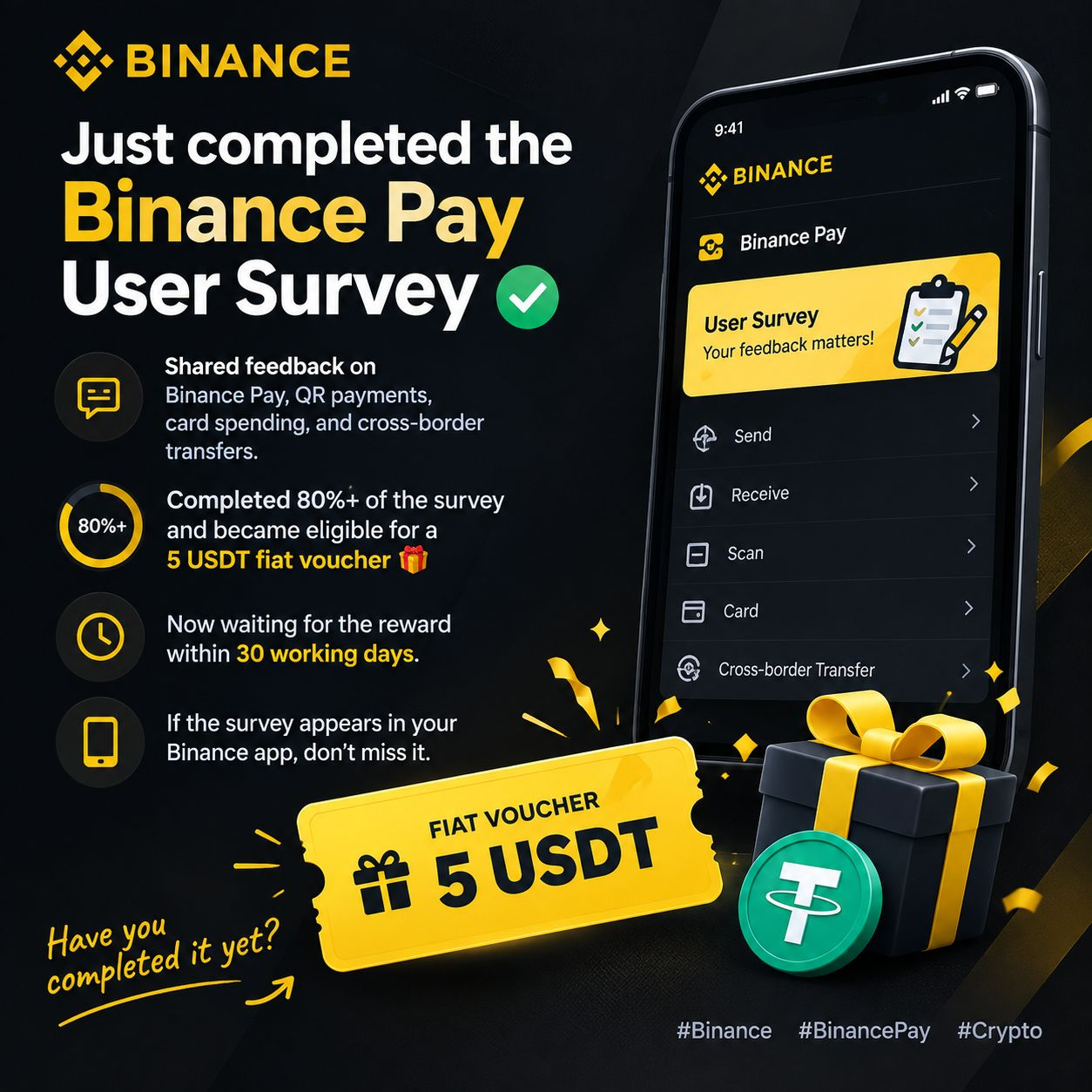
Small tasks can lead to rewards 🚀
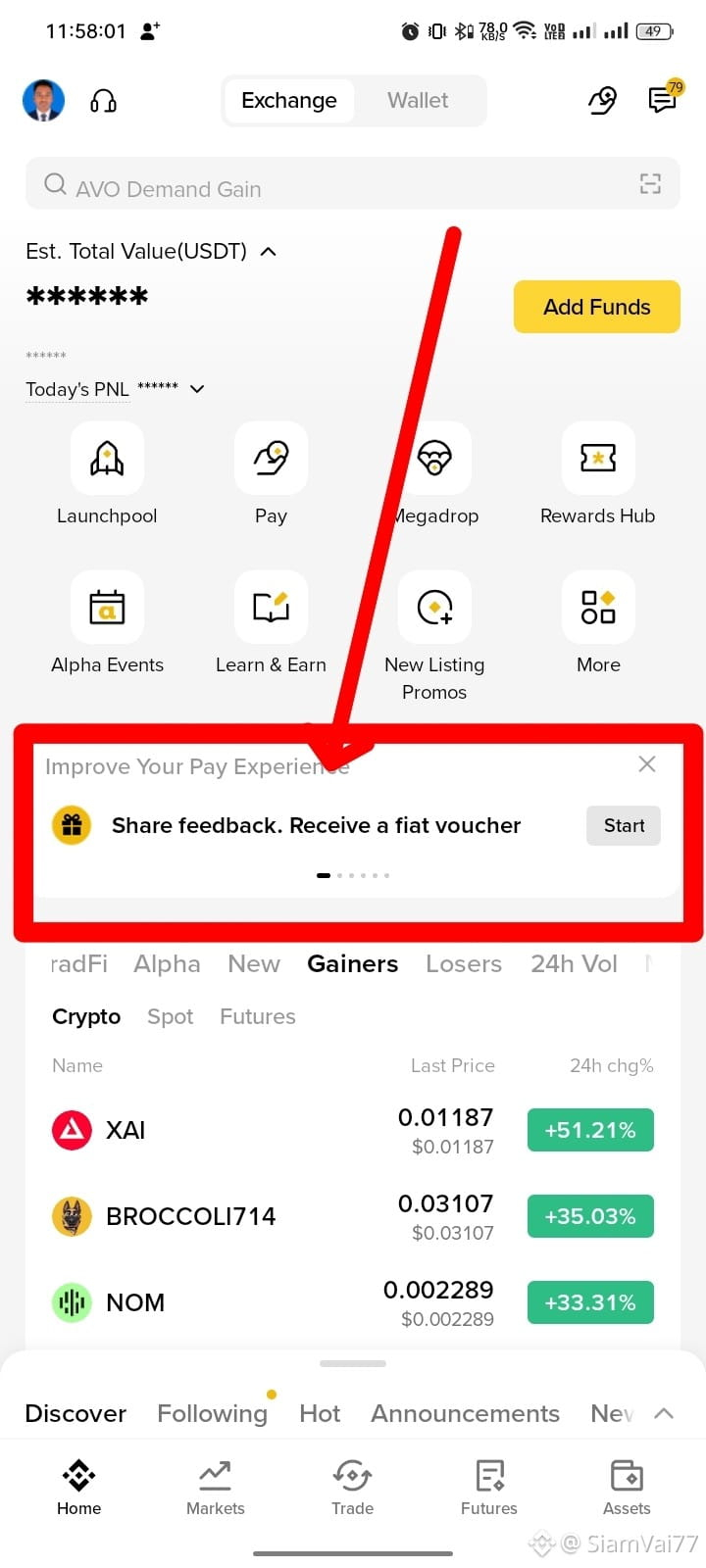
Completed the Binance Pay User Survey and shared feedback on payments, QR transactions, card spending, and cross-border transfers.
80%+ completion unlocked eligibility for a 5 USDT fiat voucher 🎁
Now the countdown begins ⏳
If the survey appears in your Binance app, don't overlook it.
#Binance #BinancePay #crypto $BNB $BTC
Small tasks can lead to rewards 🚀
Completed the Binance Pay User Survey and shared feedback on payments, QR transactions, card spending, and cross-border transfers.
80%+ completion unlocked eligibility for a 5 USDT fiat voucher 🎁
Now the countdown begins ⏳
If the survey appears in your Binance app, don't overlook it.
#Binance #BinancePay #crypto $BNB $BTC
Completed the Binance Pay User Survey and shared feedback on payments, QR transactions, card spending, and cross-border transfers.
80%+ completion unlocked eligibility for a 5 USDT fiat voucher 🎁
Now the countdown begins ⏳
If the survey appears in your Binance app, don't overlook it.
#Binance #BinancePay #crypto $BNB $BTC
1
1
98
·
--
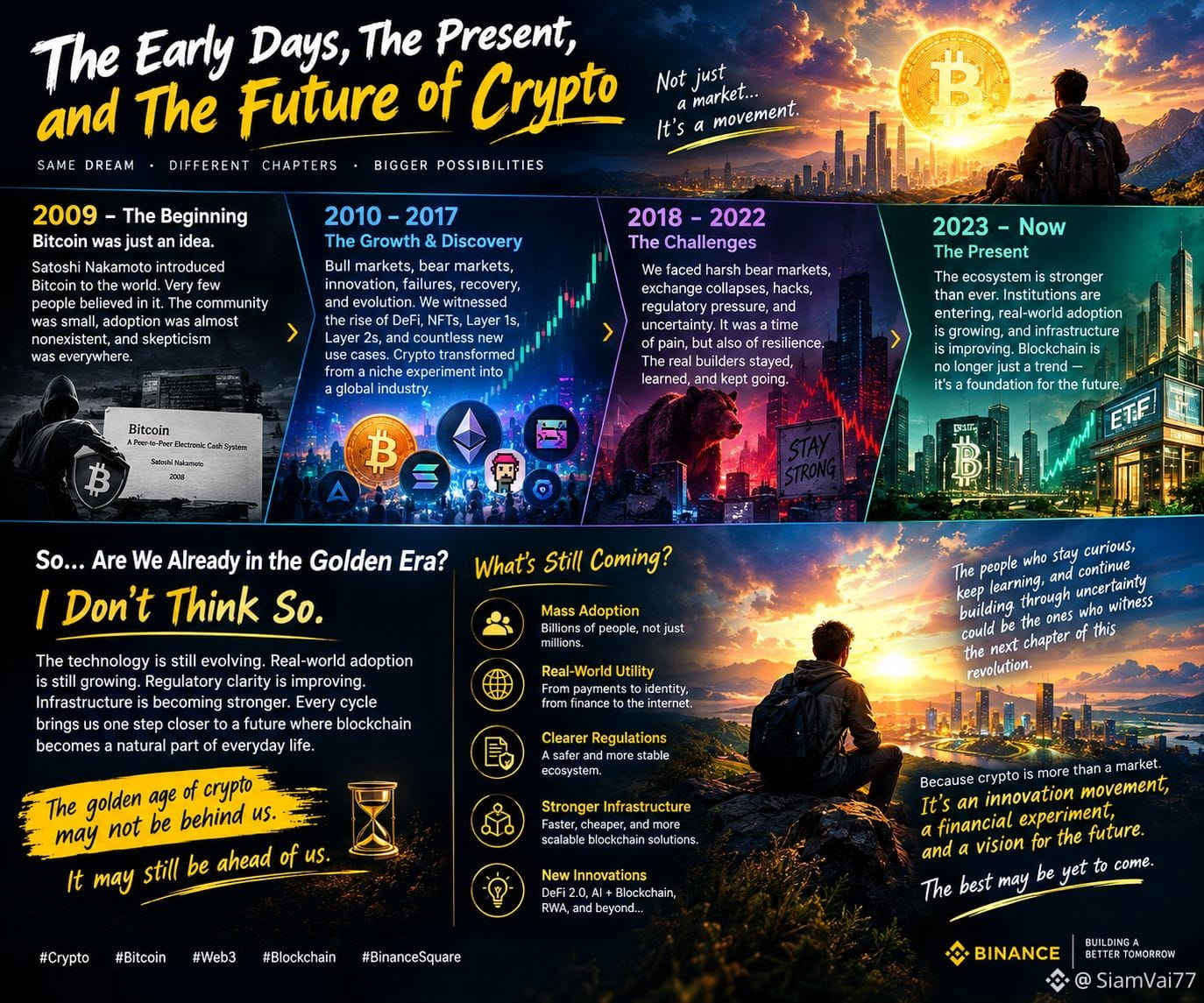
🚀 The Early Days, The Present, and The Future of Crypto
There was a time when Bitcoin was just an idea.
Back in 2009, when Satoshi Nakamoto introduced Bitcoin to the world, very few people believed it would become a global asset. The community was small, adoption was almost nonexistent, and skepticism was everywhere.
Then came the years of growth.
Bull markets, bear markets, innovation, failures, recovery, and evolution. We witnessed the rise of DeFi, NFTs, Layer 1s, Layer 2s, and countless new use cases. Crypto transformed from a niche experiment into a global industry attracting developers, institutions, and millions of users.
But are we already in the golden era?
I don't think so.
The technology is still evolving. Real-world adoption is still growing. Regulatory clarity is improving. Infrastructure is becoming stronger. Every cycle brings us one step closer to a future where blockchain becomes a natural part of everyday life.
The golden age of crypto may not be behind us.
It may still be ahead of us.
The people who stay curious, keep learning, and continue building through uncertainty could be the ones who witness the next chapter of this revolution.
Because crypto is more than a market.
It's an innovation movement, a financial experiment, and a vision for the future.
🌱 The best may be yet to come.
#crypto #bitcoin #Web3 #blockchain #BinanceSquare $BR $BTR
🚀 The Early Days, The Present, and The Future of Crypto
There was a time when Bitcoin was just an idea.
Back in 2009, when Satoshi Nakamoto introduced Bitcoin to the world, very few people believed it would become a global asset. The community was small, adoption was almost nonexistent, and skepticism was everywhere.
Then came the years of growth.
Bull markets, bear markets, innovation, failures, recovery, and evolution. We witnessed the rise of DeFi, NFTs, Layer 1s, Layer 2s, and countless new use cases. Crypto transformed from a niche experiment into a global industry attracting developers, institutions, and millions of users.
But are we already in the golden era?
I don't think so.
The technology is still evolving. Real-world adoption is still growing. Regulatory clarity is improving. Infrastructure is becoming stronger. Every cycle brings us one step closer to a future where blockchain becomes a natural part of everyday life.
The golden age of crypto may not be behind us.
It may still be ahead of us.
The people who stay curious, keep learning, and continue building through uncertainty could be the ones who witness the next chapter of this revolution.
Because crypto is more than a market.
It's an innovation movement, a financial experiment, and a vision for the future.
🌱 The best may be yet to come.
#crypto #bitcoin #Web3 #blockchain #BinanceSquare $BR $BTR
There was a time when Bitcoin was just an idea.
Back in 2009, when Satoshi Nakamoto introduced Bitcoin to the world, very few people believed it would become a global asset. The community was small, adoption was almost nonexistent, and skepticism was everywhere.
Then came the years of growth.
Bull markets, bear markets, innovation, failures, recovery, and evolution. We witnessed the rise of DeFi, NFTs, Layer 1s, Layer 2s, and countless new use cases. Crypto transformed from a niche experiment into a global industry attracting developers, institutions, and millions of users.
But are we already in the golden era?
I don't think so.
The technology is still evolving. Real-world adoption is still growing. Regulatory clarity is improving. Infrastructure is becoming stronger. Every cycle brings us one step closer to a future where blockchain becomes a natural part of everyday life.
The golden age of crypto may not be behind us.
It may still be ahead of us.
The people who stay curious, keep learning, and continue building through uncertainty could be the ones who witness the next chapter of this revolution.
Because crypto is more than a market.
It's an innovation movement, a financial experiment, and a vision for the future.
🌱 The best may be yet to come.
#crypto #bitcoin #Web3 #blockchain #BinanceSquare $BR $BTR
66
·
--
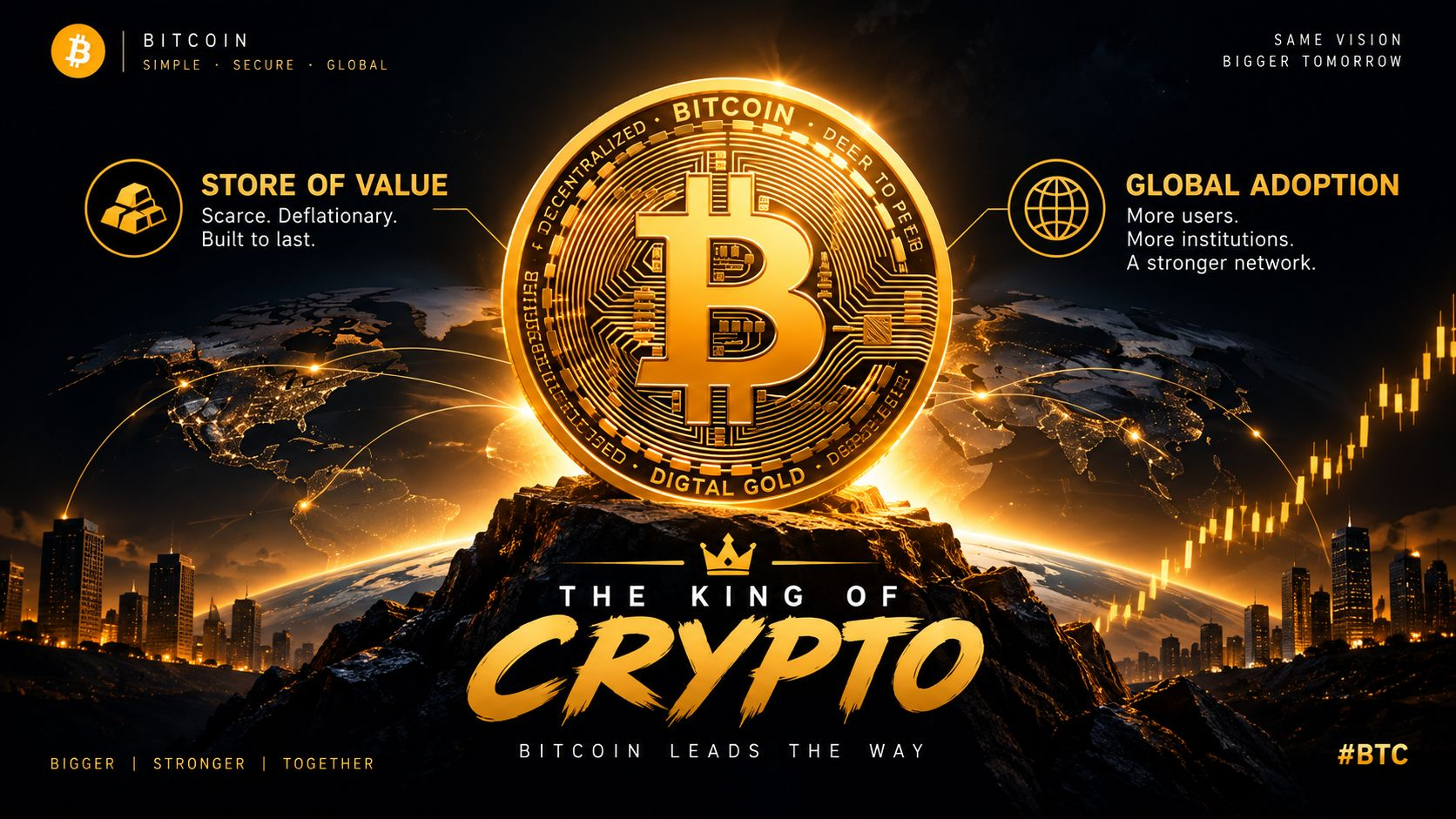
Bitcoin continues to be the benchmark for the entire crypto market.
Every cycle brings new narratives, but BTC remains the asset most investors watch first.
Whether you're bullish or cautious, Bitcoin's role in market sentiment is hard to ignore.
My question for the community:
What will be the biggest driver for BTC in the next cycle?
🔹 Institutional Adoption
🔹 ETF Growth
🔹 Global Liquidity
🔹 Retail Participation
Share your thoughts below. 👇
#BTC #bitcoin
$NVDAB $NVDA.US
Bitcoin continues to be the benchmark for the entire crypto market.
Every cycle brings new narratives, but BTC remains the asset most investors watch first.
Whether you're bullish or cautious, Bitcoin's role in market sentiment is hard to ignore.
My question for the community:
What will be the biggest driver for BTC in the next cycle?
🔹 Institutional Adoption
🔹 ETF Growth
🔹 Global Liquidity
🔹 Retail Participation
Share your thoughts below. 👇
#BTC #bitcoin
$NVDAB $NVDA.US
Every cycle brings new narratives, but BTC remains the asset most investors watch first.
Whether you're bullish or cautious, Bitcoin's role in market sentiment is hard to ignore.
My question for the community:
What will be the biggest driver for BTC in the next cycle?
🔹 Institutional Adoption
🔹 ETF Growth
🔹 Global Liquidity
🔹 Retail Participation
Share your thoughts below. 👇
#BTC #bitcoin
$NVDAB $NVDA.US
BTC+1,67%
NVDAUS+0,63%
57
·
--
Rebind
Rebind

Riyads Creation
·
--
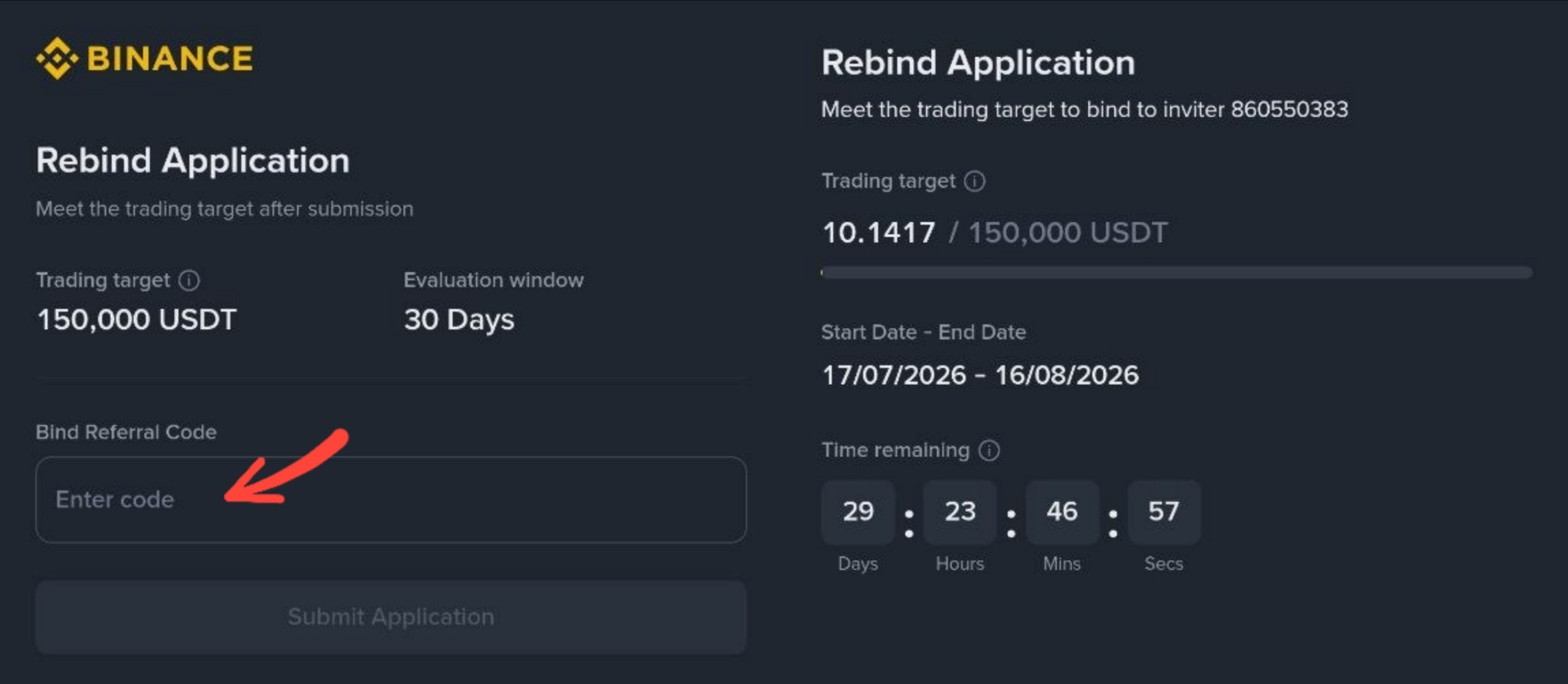
🚨 Binance Old Users: New Referral Bind Opportunity!
If you created your Binance account long ago, it's worth checking whether you're eligible to bind a referral code.
🔗 Check here: Open Now
✅ If your account shows "Bind Referral Code", you can link a referral for the first time.
🎯 Bind Code: 43314035
Trading Requirement: • Complete 150,000 USDT Spot or Futures trading volume • Within 30 days after binding
Benefits may include:
✅ Referral feeback (if applicable)
✅ Access to custom referral events
✅ Potential extra campaign rewards (subject to Binance eligibility)
Always verify your eligibility directly on the Binance page before proceeding.
#Binance #Referral #BinanceSquare #Crypto #Trading #Web3
If you created your Binance account long ago, it's worth checking whether you're eligible to bind a referral code.
🔗 Check here: Open Now
✅ If your account shows "Bind Referral Code", you can link a referral for the first time.
🎯 Bind Code: 43314035
Trading Requirement: • Complete 150,000 USDT Spot or Futures trading volume • Within 30 days after binding
Benefits may include:
✅ Referral feeback (if applicable)
✅ Access to custom referral events
✅ Potential extra campaign rewards (subject to Binance eligibility)
Always verify your eligibility directly on the Binance page before proceeding.
#Binance #Referral #BinanceSquare #Crypto #Trading #Web3
3
3
·
--
Technology alone doesn't create adoption.
Confidence does.
For blockchain to reach mainstream users, people need systems that are secure, practical, and trustworthy.
That's one reason why privacy-focused infrastructure continues to attract attention.
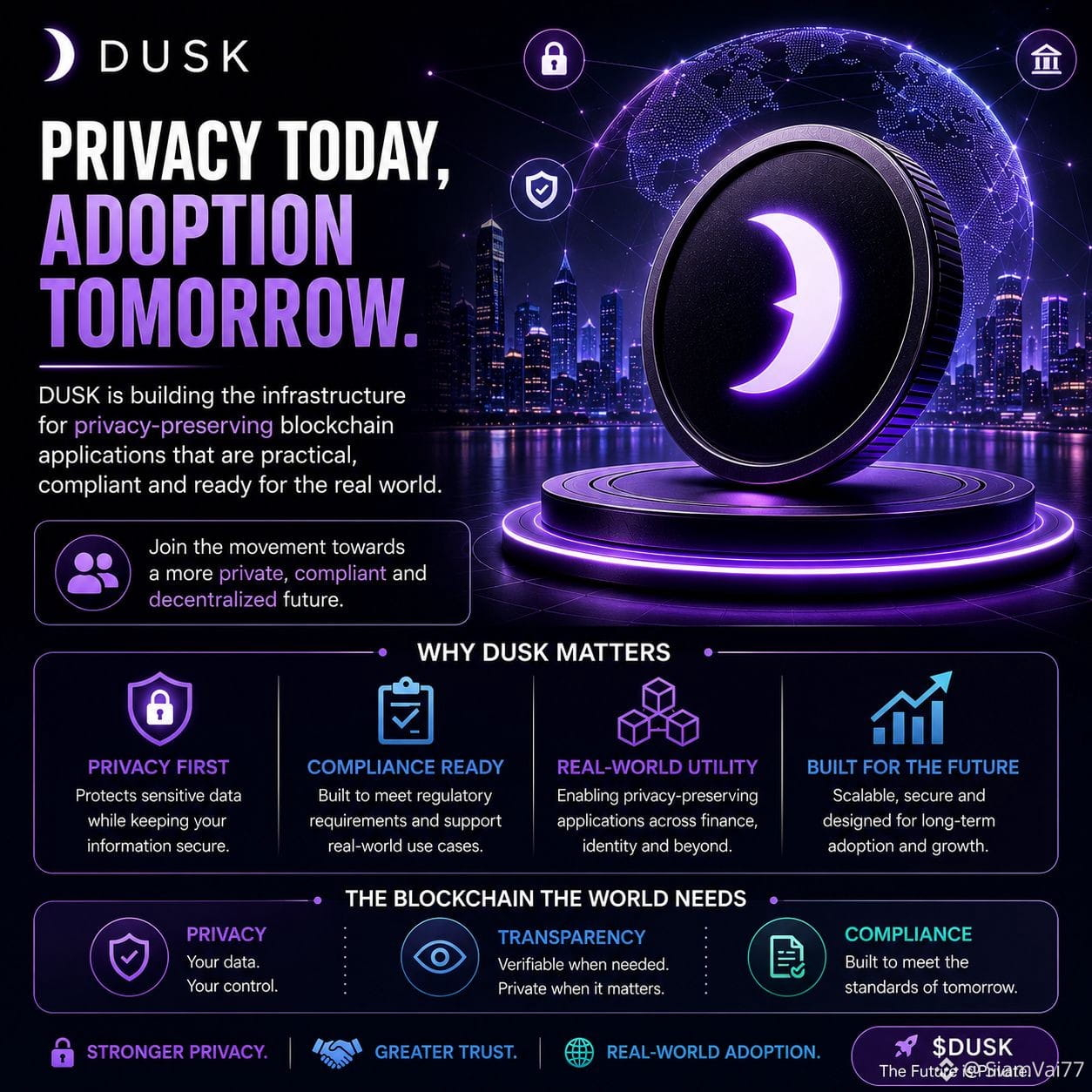
@Dusk is working on solutions that aim to combine privacy, compliance, and real-world usability within a blockchain environment.
As the industry evolves, projects that address real-world requirements may play an important role in the next phase of growth.
Question for the community:
What is the biggest barrier to mass blockchain adoption today?
🔹 Privacy concerns
🔹 User experience
🔹 Regulation
🔹 Education
Share your thoughts below. 👇
#dusk $DUSK @Dusk_Foundation
Technology alone doesn't create adoption.
Confidence does.
For blockchain to reach mainstream users, people need systems that are secure, practical, and trustworthy.
That's one reason why privacy-focused infrastructure continues to attract attention.
@Dusk is working on solutions that aim to combine privacy, compliance, and real-world usability within a blockchain environment.
As the industry evolves, projects that address real-world requirements may play an important role in the next phase of growth.
Question for the community:
What is the biggest barrier to mass blockchain adoption today?
🔹 Privacy concerns
🔹 User experience
🔹 Regulation
🔹 Education
Share your thoughts below. 👇
#dusk $DUSK @Dusk
Confidence does.
For blockchain to reach mainstream users, people need systems that are secure, practical, and trustworthy.
That's one reason why privacy-focused infrastructure continues to attract attention.
@Dusk is working on solutions that aim to combine privacy, compliance, and real-world usability within a blockchain environment.
As the industry evolves, projects that address real-world requirements may play an important role in the next phase of growth.
Question for the community:
What is the biggest barrier to mass blockchain adoption today?
🔹 Privacy concerns
🔹 User experience
🔹 Regulation
🔹 Education
Share your thoughts below. 👇
#dusk $DUSK @Dusk
3
112
·
--
The next phase of blockchain growth may not be driven by hype alone.
It may be driven by trust.
For businesses and institutions, privacy and compliance are essential requirements, not optional features.
This is one reason why @Dusk continues to attract attention.
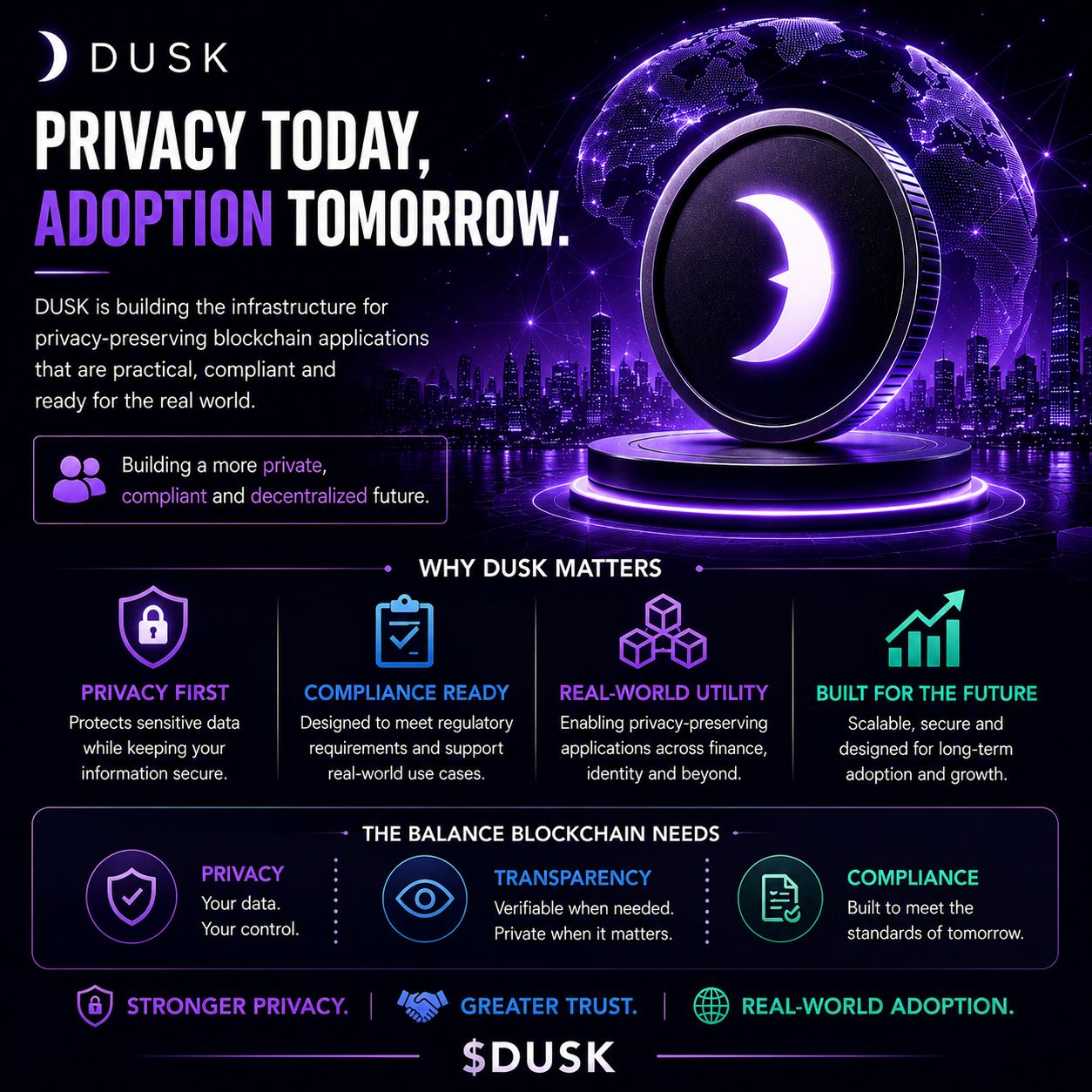
$DUSK is focused on building privacy-preserving infrastructure that aims to support real-world adoption while maintaining regulatory compatibility.
As the industry matures, projects solving practical challenges could have a stronger long-term impact.
What matters more for blockchain adoption?
🔹 Privacy
🔹 Compliance
🔹 Scalability
🔹 User Experience
Share your thoughts below. 👇
#dusk $DUSK @Dusk_Foundation
The next phase of blockchain growth may not be driven by hype alone.
It may be driven by trust.
For businesses and institutions, privacy and compliance are essential requirements, not optional features.
This is one reason why @Dusk continues to attract attention.
$DUSK is focused on building privacy-preserving infrastructure that aims to support real-world adoption while maintaining regulatory compatibility.
As the industry matures, projects solving practical challenges could have a stronger long-term impact.
What matters more for blockchain adoption?
🔹 Privacy
🔹 Compliance
🔹 Scalability
🔹 User Experience
Share your thoughts below. 👇
#dusk $DUSK @Dusk
It may be driven by trust.
For businesses and institutions, privacy and compliance are essential requirements, not optional features.
This is one reason why @Dusk continues to attract attention.
$DUSK is focused on building privacy-preserving infrastructure that aims to support real-world adoption while maintaining regulatory compatibility.
As the industry matures, projects solving practical challenges could have a stronger long-term impact.
What matters more for blockchain adoption?
🔹 Privacy
🔹 Compliance
🔹 Scalability
🔹 User Experience
Share your thoughts below. 👇
#dusk $DUSK @Dusk
2
89
·
--
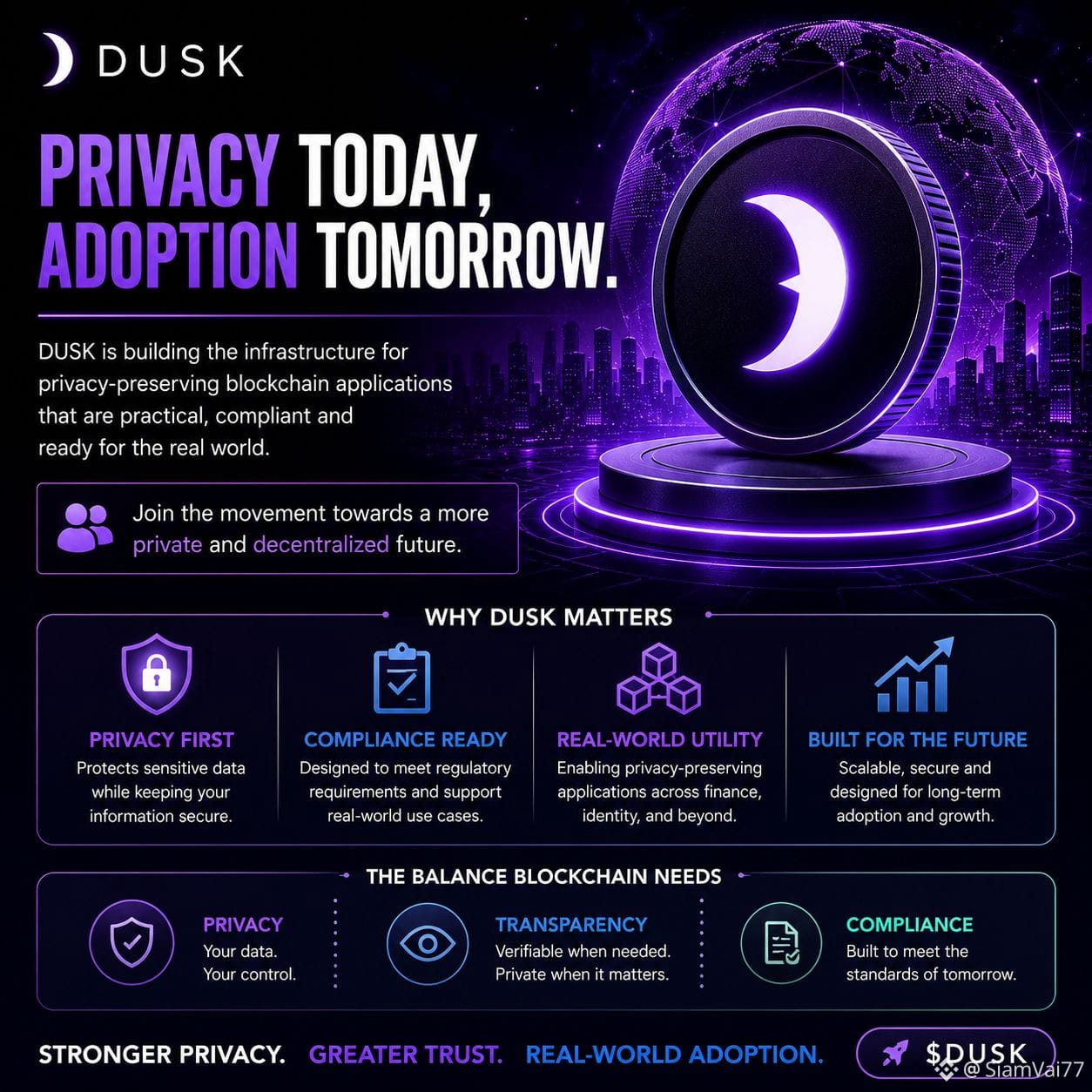
Everyone talks about blockchain adoption.
But adoption doesn't happen when technology is impressive.
It happens when technology solves real problems.
For institutions and businesses, privacy and compliance are not optional features — they are requirements.
That's one reason why @Dusk continues to stand out.
The vision behind $DUSK is to create infrastructure where privacy, security, and real-world usability can work together.
As blockchain evolves, projects that focus on practical utility may have a stronger foundation for long-term growth.
What do you think is the biggest challenge preventing mass blockchain adoption today?
👇 Let's discuss.
#dusk $DUSK @Dusk_Foundation
Everyone talks about blockchain adoption.
But adoption doesn't happen when technology is impressive.
It happens when technology solves real problems.
For institutions and businesses, privacy and compliance are not optional features — they are requirements.
That's one reason why @Dusk continues to stand out.
The vision behind $DUSK is to create infrastructure where privacy, security, and real-world usability can work together.
As blockchain evolves, projects that focus on practical utility may have a stronger foundation for long-term growth.
What do you think is the biggest challenge preventing mass blockchain adoption today?
👇 Let's discuss.
#dusk $DUSK @Dusk
But adoption doesn't happen when technology is impressive.
It happens when technology solves real problems.
For institutions and businesses, privacy and compliance are not optional features — they are requirements.
That's one reason why @Dusk continues to stand out.
The vision behind $DUSK is to create infrastructure where privacy, security, and real-world usability can work together.
As blockchain evolves, projects that focus on practical utility may have a stronger foundation for long-term growth.
What do you think is the biggest challenge preventing mass blockchain adoption today?
👇 Let's discuss.
#dusk $DUSK @Dusk
2
93
·
--
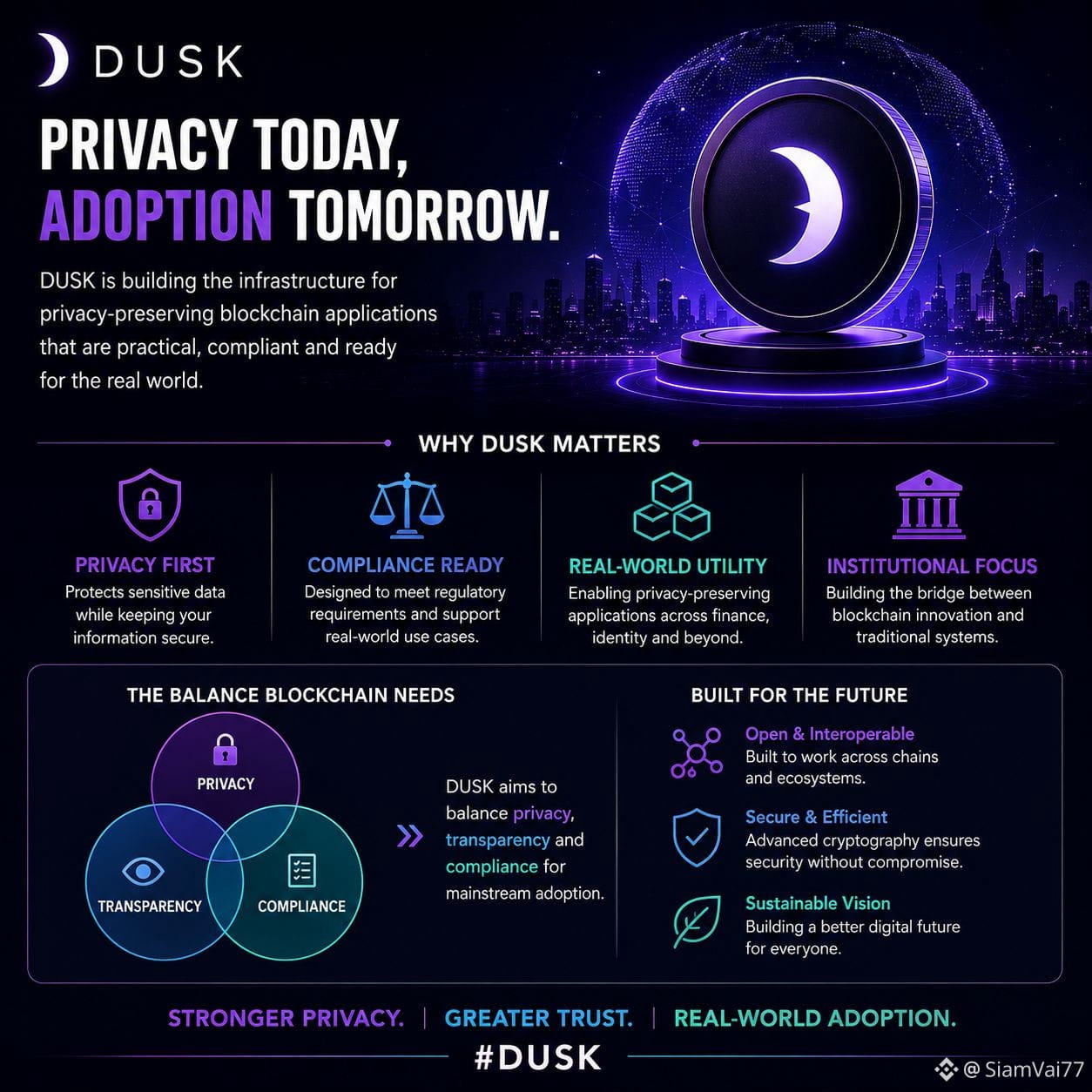
Many blockchain discussions focus on price.
But long-term value often comes from solving real problems.
One challenge facing blockchain adoption is balancing:
🔹 Privacy
🔹 Transparency
🔹 Regulatory compliance
This is where @Dusk_Foundation is taking an interesting approach.
The vision behind $DUSK is to support privacy-preserving applications while remaining practical for real-world and institutional use cases.
As the industry matures, projects that combine innovation with real utility may have an advantage.
My question for the community:
Which factor will be most important for blockchain adoption over the next few years?
✅ Privacy
✅ Compliance
✅ Scalability
✅ User Experience
Share your thoughts below. 👇
#dusk $DUSK
Many blockchain discussions focus on price.
But long-term value often comes from solving real problems.
One challenge facing blockchain adoption is balancing:
🔹 Privacy
🔹 Transparency
🔹 Regulatory compliance
This is where @Dusk is taking an interesting approach.
The vision behind $DUSK is to support privacy-preserving applications while remaining practical for real-world and institutional use cases.
As the industry matures, projects that combine innovation with real utility may have an advantage.
My question for the community:
Which factor will be most important for blockchain adoption over the next few years?
✅ Privacy
✅ Compliance
✅ Scalability
✅ User Experience
Share your thoughts below. 👇
#dusk $DUSK
But long-term value often comes from solving real problems.
One challenge facing blockchain adoption is balancing:
🔹 Privacy
🔹 Transparency
🔹 Regulatory compliance
This is where @Dusk is taking an interesting approach.
The vision behind $DUSK is to support privacy-preserving applications while remaining practical for real-world and institutional use cases.
As the industry matures, projects that combine innovation with real utility may have an advantage.
My question for the community:
Which factor will be most important for blockchain adoption over the next few years?
✅ Privacy
✅ Compliance
✅ Scalability
✅ User Experience
Share your thoughts below. 👇
#dusk $DUSK
1
4
102
·
--
Most DeFi users focus on one thing:
Yield.
But sustainable investing often starts with understanding risk.
That's why fixed-rate markets are becoming an interesting part of the DeFi ecosystem.
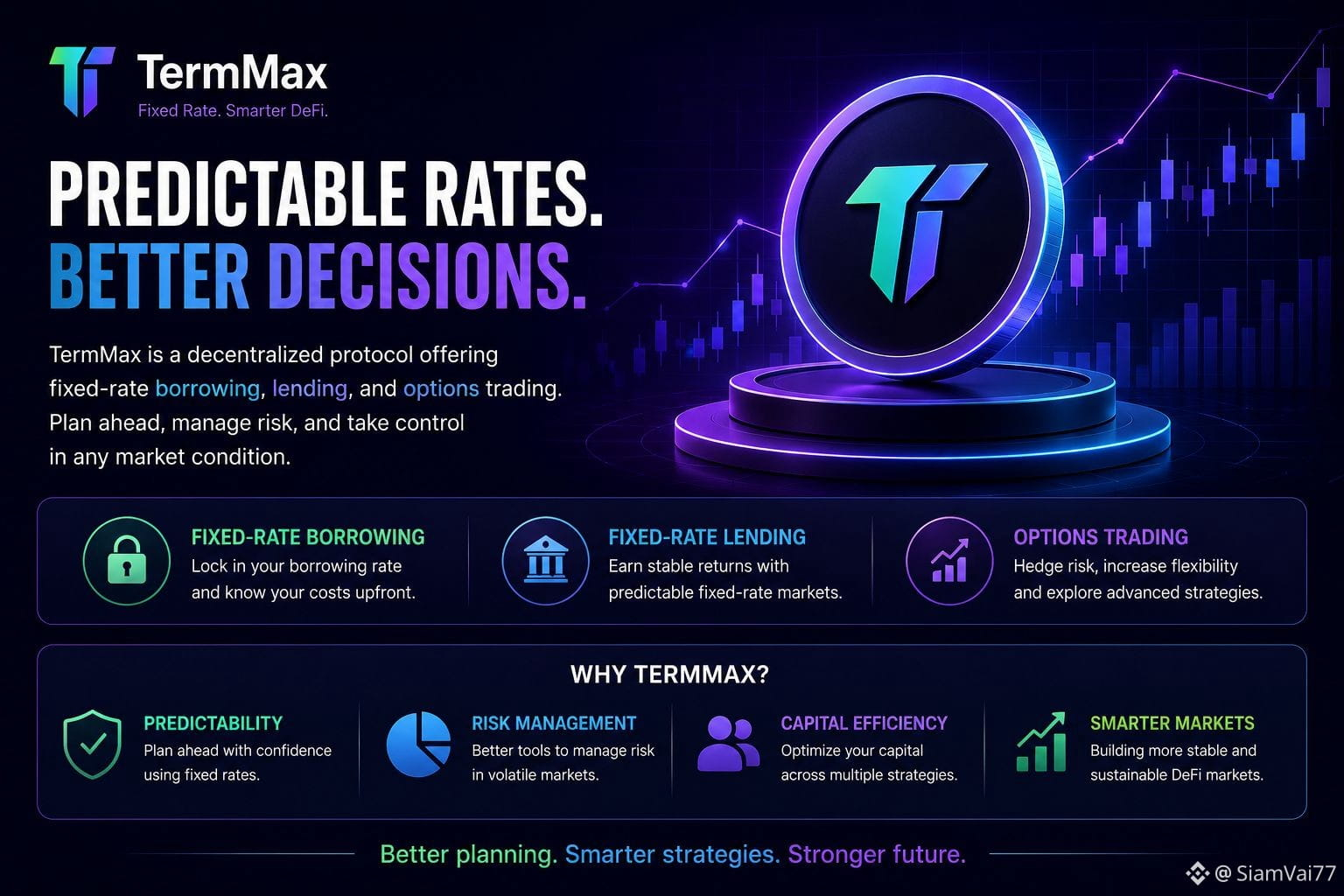
@termmax is building a platform where users can explore:
🔹 Fixed-rate borrowing
🔹 Fixed-rate lending
🔹 Options-based strategies
Instead of reacting to every market movement, users can access tools designed to improve planning and capital management.
As DeFi continues to evolve, do you think risk management tools will become just as important as yield opportunities?
Share your thoughts below. 👇
#TermMax
Most DeFi users focus on one thing:
Yield.
But sustainable investing often starts with understanding risk.
That's why fixed-rate markets are becoming an interesting part of the DeFi ecosystem.
@TermMax is building a platform where users can explore:
🔹 Fixed-rate borrowing
🔹 Fixed-rate lending
🔹 Options-based strategies
Instead of reacting to every market movement, users can access tools designed to improve planning and capital management.
As DeFi continues to evolve, do you think risk management tools will become just as important as yield opportunities?
Share your thoughts below. 👇
#TermMax
Yield.
But sustainable investing often starts with understanding risk.
That's why fixed-rate markets are becoming an interesting part of the DeFi ecosystem.
@TermMax is building a platform where users can explore:
🔹 Fixed-rate borrowing
🔹 Fixed-rate lending
🔹 Options-based strategies
Instead of reacting to every market movement, users can access tools designed to improve planning and capital management.
As DeFi continues to evolve, do you think risk management tools will become just as important as yield opportunities?
Share your thoughts below. 👇
#TermMax
3
75
·
--
Blockchain adoption isn't only about speed.
For real-world finance, privacy and regulatory compliance can be equally important.
@Dusk_Foundation
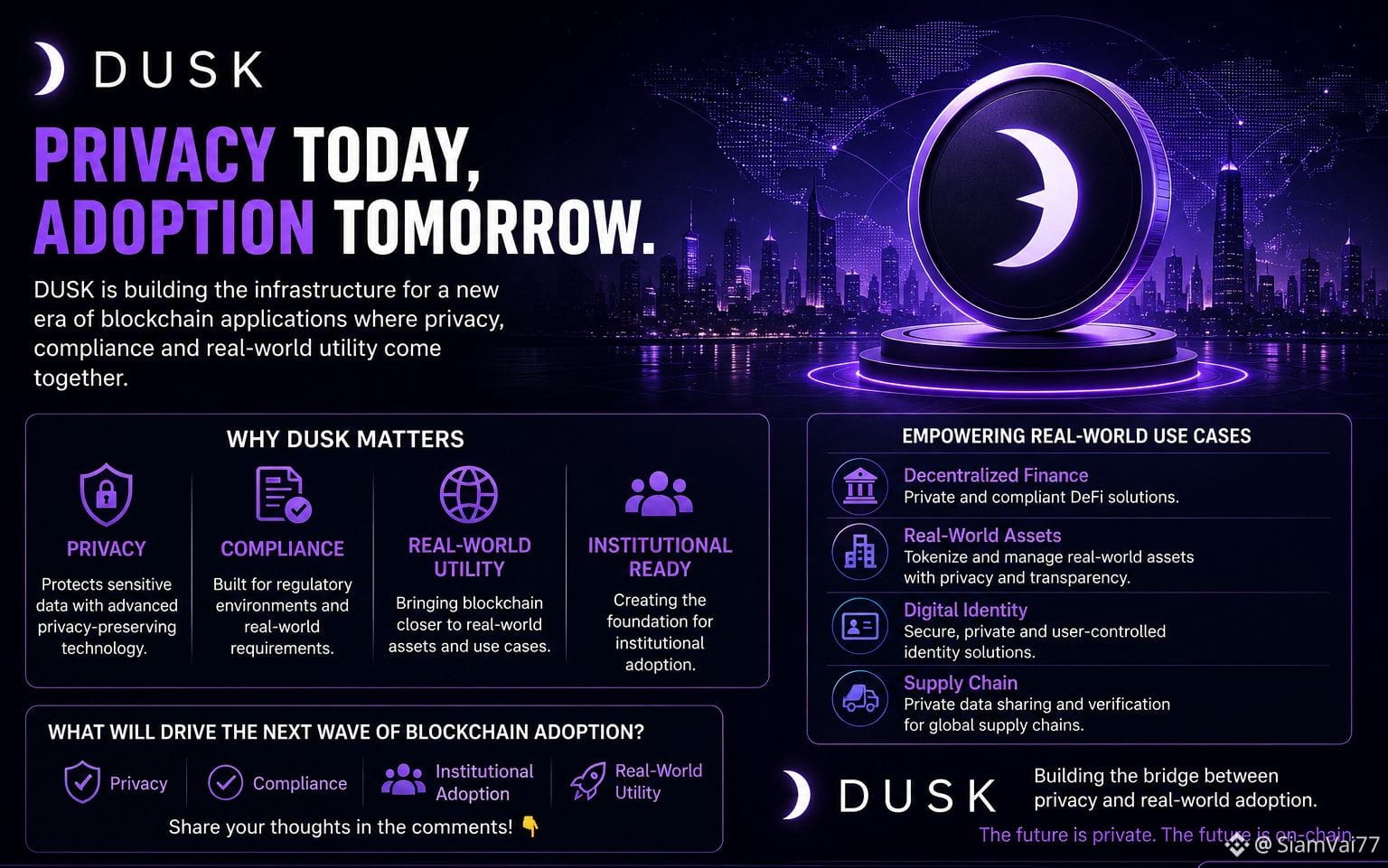
is building infrastructure around privacy-preserving blockchain applications, with a focus on bringing blockchain closer to real-world financial use cases.
Why this matters:
🔹 Privacy for sensitive data
🔹 Compliance for regulated environments
🔹 On-chain infrastructure for real-world assets
🔹 Better foundations for institutional adoption
The bigger question is:
Can blockchain deliver transparency where it matters, while keeping sensitive information private?
That's the challenge I'm watching $DUSK tackle.
What do you think will drive the next wave of adoption?
#dusk $DUSK
Blockchain adoption isn't only about speed.
For real-world finance, privacy and regulatory compliance can be equally important.
@Dusk
is building infrastructure around privacy-preserving blockchain applications, with a focus on bringing blockchain closer to real-world financial use cases.
Why this matters:
🔹 Privacy for sensitive data
🔹 Compliance for regulated environments
🔹 On-chain infrastructure for real-world assets
🔹 Better foundations for institutional adoption
The bigger question is:
Can blockchain deliver transparency where it matters, while keeping sensitive information private?
That's the challenge I'm watching $DUSK tackle.
What do you think will drive the next wave of adoption?
#dusk $DUSK
For real-world finance, privacy and regulatory compliance can be equally important.
@Dusk
is building infrastructure around privacy-preserving blockchain applications, with a focus on bringing blockchain closer to real-world financial use cases.
Why this matters:
🔹 Privacy for sensitive data
🔹 Compliance for regulated environments
🔹 On-chain infrastructure for real-world assets
🔹 Better foundations for institutional adoption
The bigger question is:
Can blockchain deliver transparency where it matters, while keeping sensitive information private?
That's the challenge I'm watching $DUSK tackle.
What do you think will drive the next wave of adoption?
#dusk $DUSK
1
2
82
·
--
One of the biggest challenges in DeFi is dealing with uncertainty.
Variable borrowing rates can change quickly, making long-term planning difficult.
That's why fixed-rate markets are attracting attention.
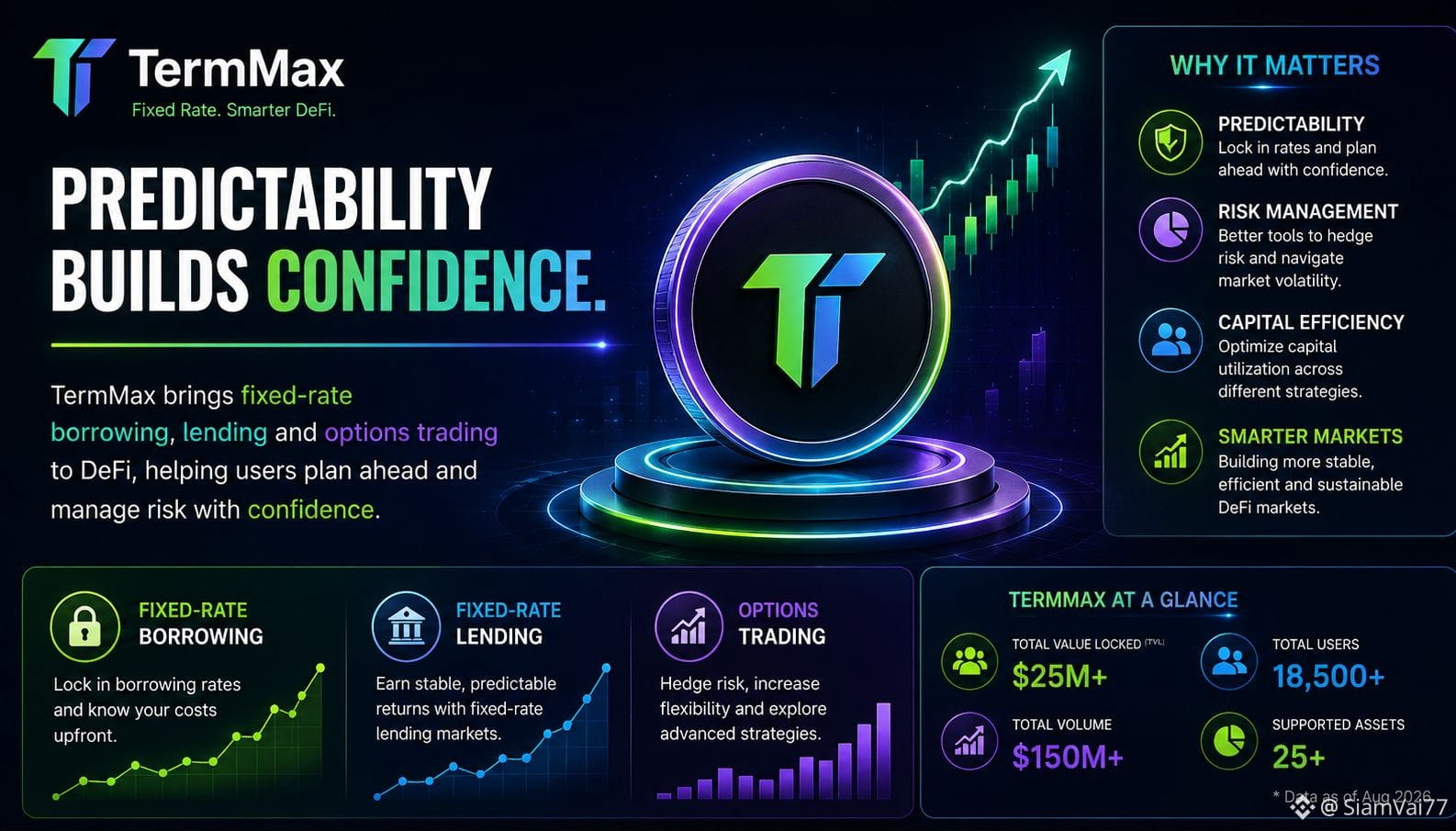
TermMax is building a decentralized protocol that combines:
🔹 Fixed-rate borrowing
🔹 Fixed-rate lending
🔹 Options trading
The goal isn't to eliminate risk, but to give users more predictable tools for managing capital in volatile markets.
As DeFi evolves, do you think users will prioritize:
✅ Predictability and planning
or
🚀 Higher returns with more uncertainty?
I'd love to hear your thoughts.
#termmax @termmax
One of the biggest challenges in DeFi is dealing with uncertainty.
Variable borrowing rates can change quickly, making long-term planning difficult.
That's why fixed-rate markets are attracting attention.
TermMax is building a decentralized protocol that combines:
🔹 Fixed-rate borrowing
🔹 Fixed-rate lending
🔹 Options trading
The goal isn't to eliminate risk, but to give users more predictable tools for managing capital in volatile markets.
As DeFi evolves, do you think users will prioritize:
✅ Predictability and planning
or
🚀 Higher returns with more uncertainty?
I'd love to hear your thoughts.
#termmax @TermMax
Variable borrowing rates can change quickly, making long-term planning difficult.
That's why fixed-rate markets are attracting attention.
TermMax is building a decentralized protocol that combines:
🔹 Fixed-rate borrowing
🔹 Fixed-rate lending
🔹 Options trading
The goal isn't to eliminate risk, but to give users more predictable tools for managing capital in volatile markets.
As DeFi evolves, do you think users will prioritize:
✅ Predictability and planning
or
🚀 Higher returns with more uncertainty?
I'd love to hear your thoughts.
#termmax @TermMax
5
6
81
·
--
As blockchain adoption grows, one challenge becomes increasingly clear:
How can organizations use blockchain technology while protecting sensitive information?
Public transparency is powerful, but not every piece of data should be visible to everyone.
This is where privacy-focused infrastructure becomes important.
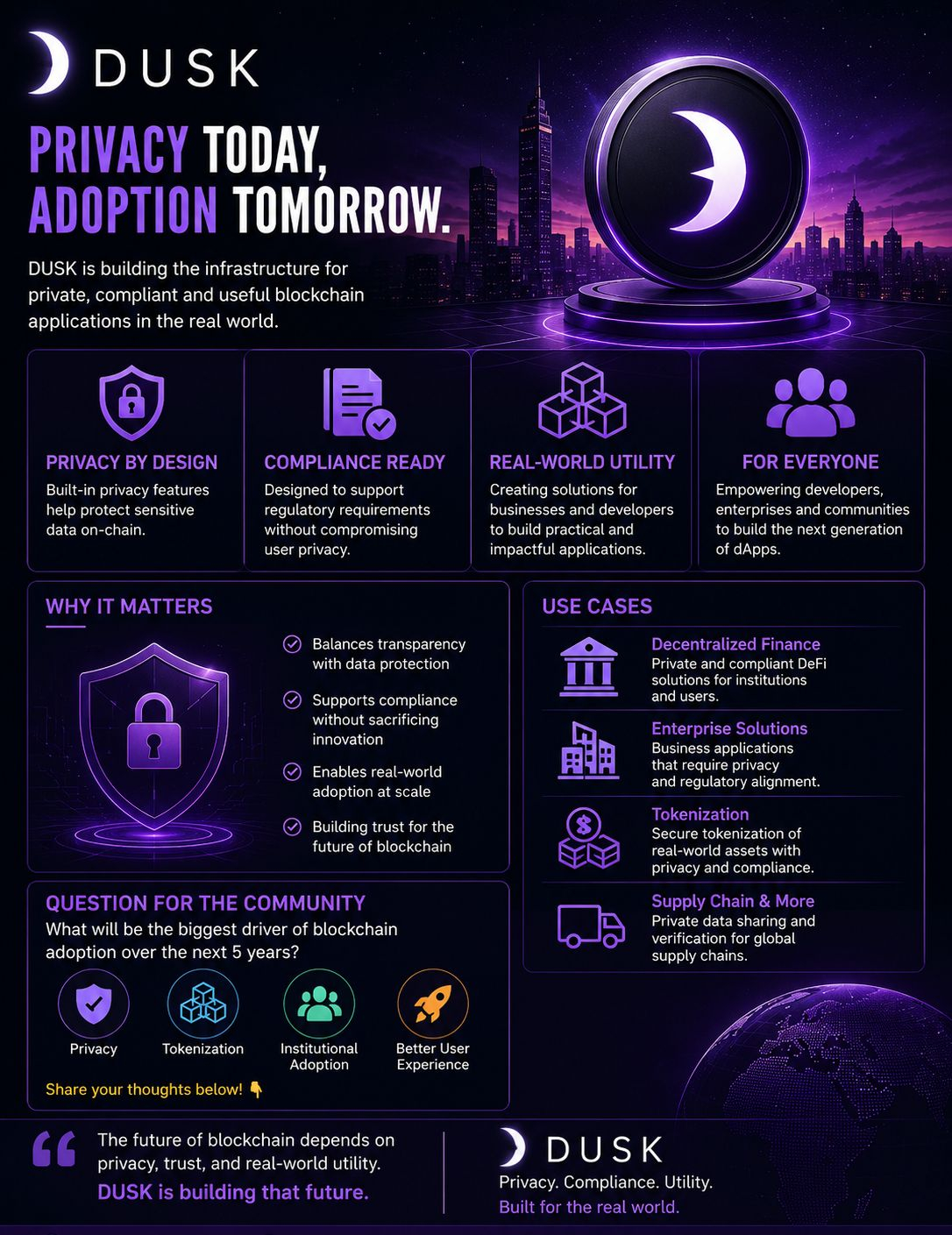
@Dusk_Foundation is building toward a future where privacy, compliance, and real-world utility can coexist.
The long-term success of blockchain may depend not only on speed and scalability, but also on how well it handles real-world requirements.
My question for the community:
What will be the biggest driver of blockchain adoption over the next 5 years?
🔹 Privacy
🔹 Tokenization
🔹 Institutional Adoption
🔹 Better User Experience
Share your thoughts below. 👇
#dusk $DUSK
As blockchain adoption grows, one challenge becomes increasingly clear:
How can organizations use blockchain technology while protecting sensitive information?
Public transparency is powerful, but not every piece of data should be visible to everyone.
This is where privacy-focused infrastructure becomes important.
@Dusk is building toward a future where privacy, compliance, and real-world utility can coexist.
The long-term success of blockchain may depend not only on speed and scalability, but also on how well it handles real-world requirements.
My question for the community:
What will be the biggest driver of blockchain adoption over the next 5 years?
🔹 Privacy
🔹 Tokenization
🔹 Institutional Adoption
🔹 Better User Experience
Share your thoughts below. 👇
#dusk $DUSK
How can organizations use blockchain technology while protecting sensitive information?
Public transparency is powerful, but not every piece of data should be visible to everyone.
This is where privacy-focused infrastructure becomes important.
@Dusk is building toward a future where privacy, compliance, and real-world utility can coexist.
The long-term success of blockchain may depend not only on speed and scalability, but also on how well it handles real-world requirements.
My question for the community:
What will be the biggest driver of blockchain adoption over the next 5 years?
🔹 Privacy
🔹 Tokenization
🔹 Institutional Adoption
🔹 Better User Experience
Share your thoughts below. 👇
#dusk $DUSK
2
5
84
·
--
DeFi gives users freedom.
But freedom without planning tools can create uncertainty.
This is why fixed-rate markets are becoming an important topic in decentralized finance.
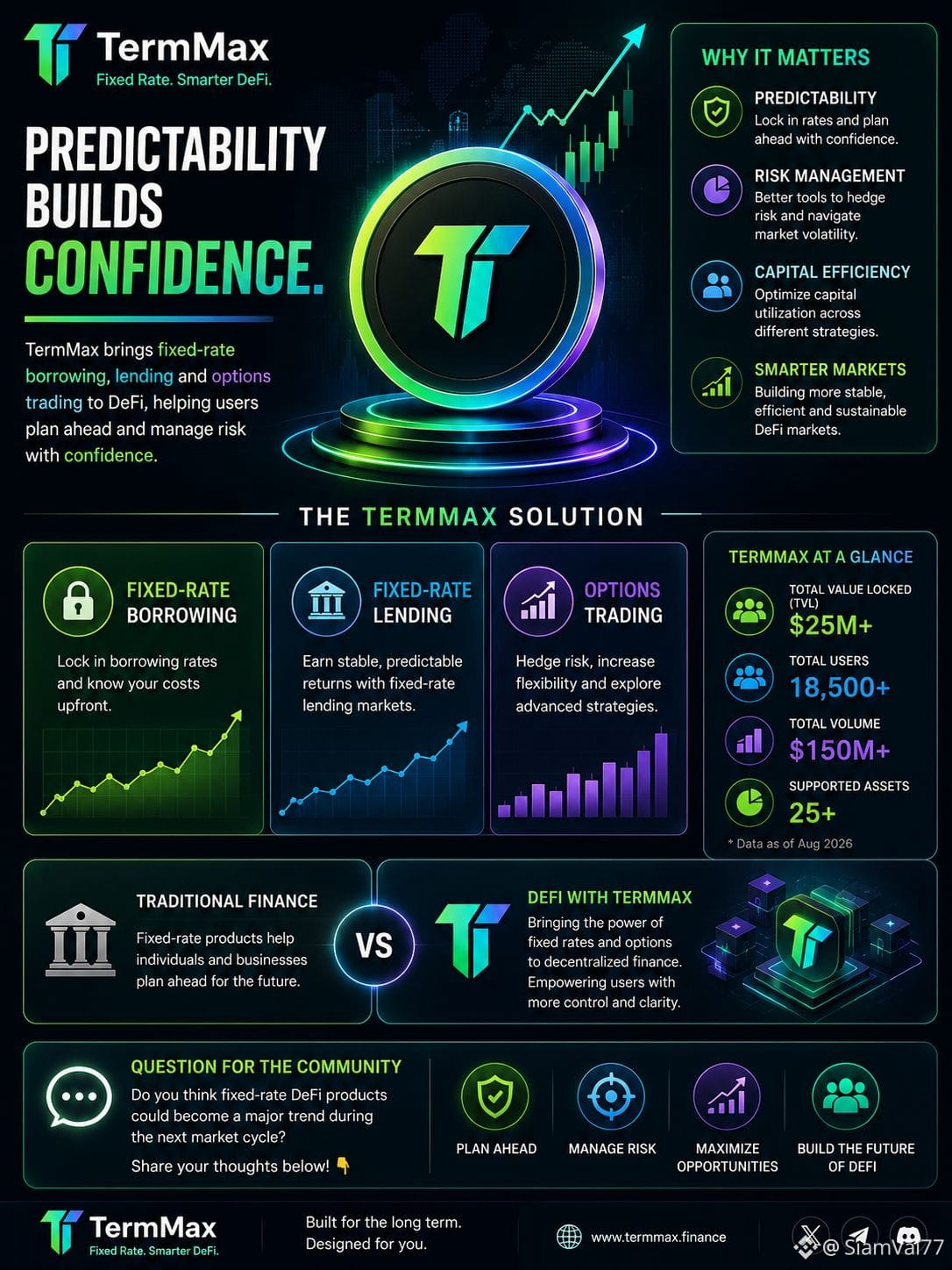
TermMax is building a protocol focused on:
🔹 Fixed-rate borrowing
🔹 Fixed-rate lending
🔹 Options trading
Instead of constantly reacting to changing market conditions, users can access tools designed to improve predictability and capital management.
Traditional finance has relied on fixed-rate products for decades.
Do you think fixed-rate DeFi products could become a major trend during the next market cycle?
👇 Share your thoughts.
#termmax @termmax
DeFi gives users freedom.
But freedom without planning tools can create uncertainty.
This is why fixed-rate markets are becoming an important topic in decentralized finance.
TermMax is building a protocol focused on:
🔹 Fixed-rate borrowing
🔹 Fixed-rate lending
🔹 Options trading
Instead of constantly reacting to changing market conditions, users can access tools designed to improve predictability and capital management.
Traditional finance has relied on fixed-rate products for decades.
Do you think fixed-rate DeFi products could become a major trend during the next market cycle?
👇 Share your thoughts.
#termmax @TermMax
But freedom without planning tools can create uncertainty.
This is why fixed-rate markets are becoming an important topic in decentralized finance.
TermMax is building a protocol focused on:
🔹 Fixed-rate borrowing
🔹 Fixed-rate lending
🔹 Options trading
Instead of constantly reacting to changing market conditions, users can access tools designed to improve predictability and capital management.
Traditional finance has relied on fixed-rate products for decades.
Do you think fixed-rate DeFi products could become a major trend during the next market cycle?
👇 Share your thoughts.
#termmax @TermMax
17
1
11
94
·
--
Every blockchain project talks about adoption.
But real adoption requires more than fast transactions and market hype.
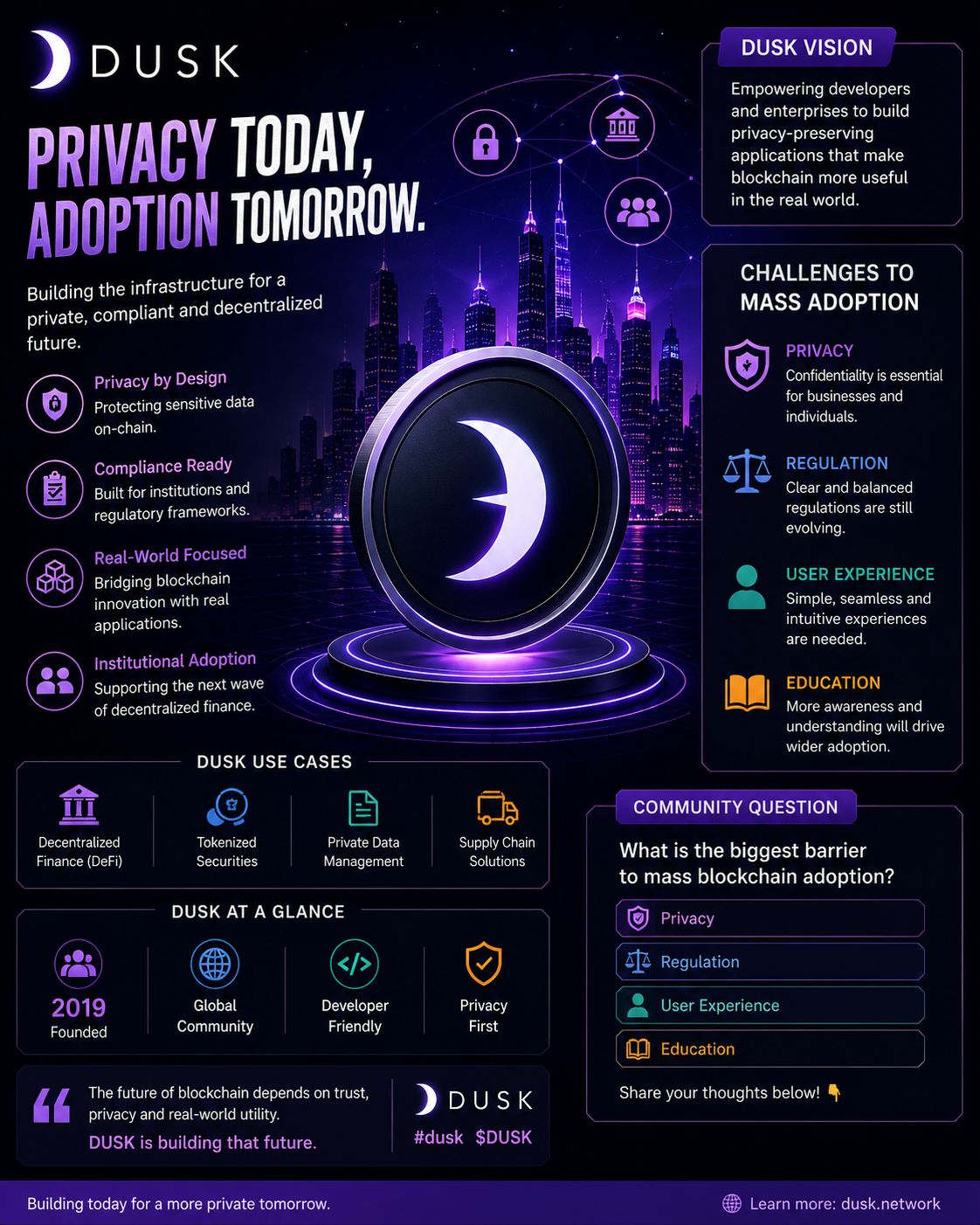
Businesses need confidentiality.
Institutions need compliance.
Users need privacy.
The challenge is finding a balance between all three.
This is one reason why I keep following @Dusk.
The vision behind $DUSK focuses on building infrastructure that supports privacy-preserving applications while remaining practical for real-world use cases.
As blockchain technology continues to evolve, projects solving real problems may stand out more than projects chasing trends.
My question for the community:
What is the biggest barrier to mass blockchain adoption today?
🔹 Privacy
🔹 Regulation
🔹 User Experience
🔹 Education
Share your thoughts below. 👇
#dusk $DUSK @Dusk_Foundation
Every blockchain project talks about adoption.
But real adoption requires more than fast transactions and market hype.
Businesses need confidentiality.
Institutions need compliance.
Users need privacy.
The challenge is finding a balance between all three.
This is one reason why I keep following @Dusk.
The vision behind $DUSK focuses on building infrastructure that supports privacy-preserving applications while remaining practical for real-world use cases.
As blockchain technology continues to evolve, projects solving real problems may stand out more than projects chasing trends.
My question for the community:
What is the biggest barrier to mass blockchain adoption today?
🔹 Privacy
🔹 Regulation
🔹 User Experience
🔹 Education
Share your thoughts below. 👇
#dusk $DUSK @Dusk
But real adoption requires more than fast transactions and market hype.
Businesses need confidentiality.
Institutions need compliance.
Users need privacy.
The challenge is finding a balance between all three.
This is one reason why I keep following @Dusk.
The vision behind $DUSK focuses on building infrastructure that supports privacy-preserving applications while remaining practical for real-world use cases.
As blockchain technology continues to evolve, projects solving real problems may stand out more than projects chasing trends.
My question for the community:
What is the biggest barrier to mass blockchain adoption today?
🔹 Privacy
🔹 Regulation
🔹 User Experience
🔹 Education
Share your thoughts below. 👇
#dusk $DUSK @Dusk
4
7
102
·
--
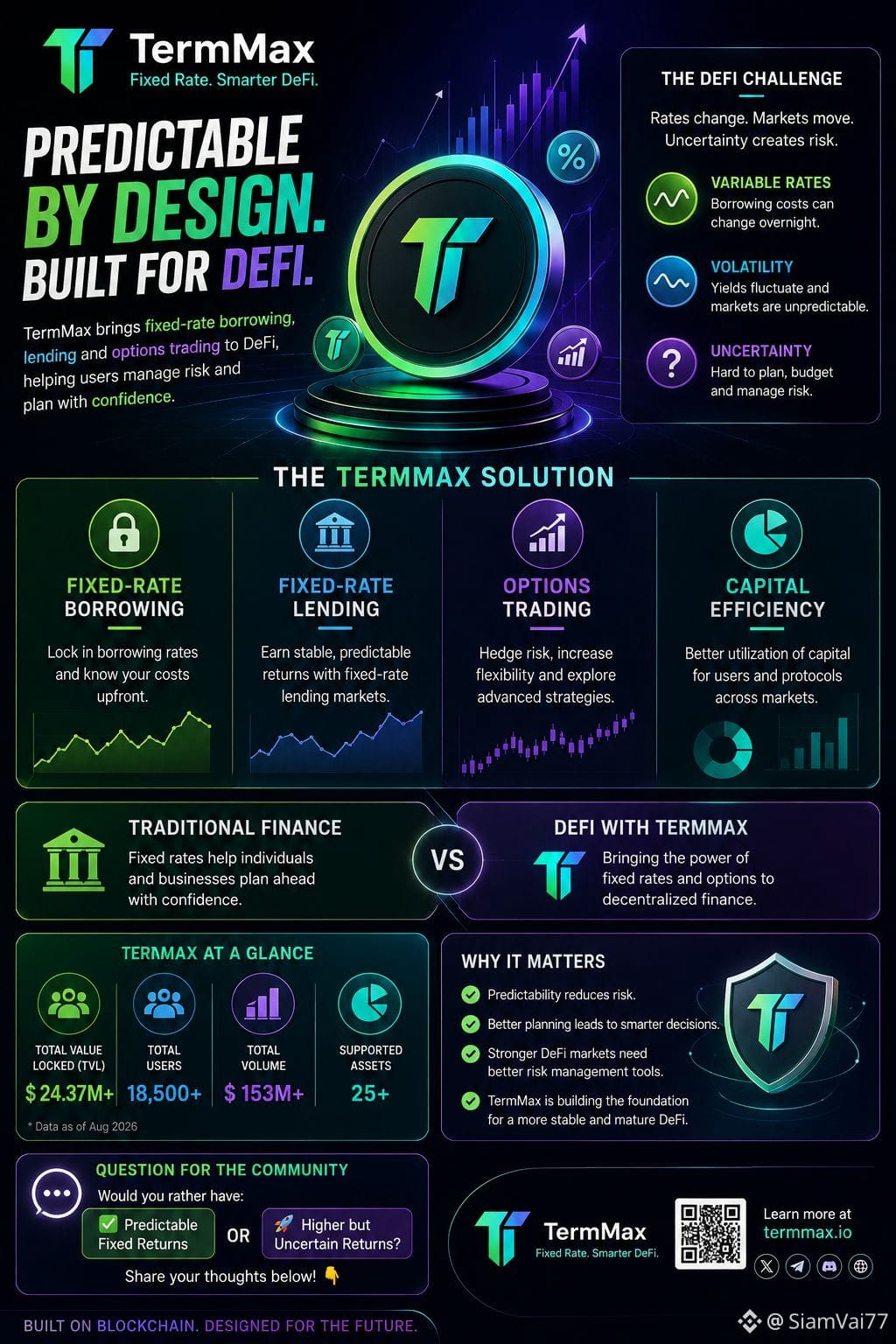
DeFi has grown rapidly, but one challenge remains:
Uncertainty.
Borrowing costs can change overnight, yields fluctuate, and market volatility makes planning difficult.
This is where TermMax stands out.
TermMax is a decentralized protocol focused on:
🔹 Fixed-rate borrowing
🔹 Fixed-rate lending
🔹 Options trading
🔹 Capital efficiency
Instead of relying entirely on variable rates, users can access more predictable financial tools while staying on-chain.
In traditional finance, fixed rates help individuals and businesses plan ahead. It will be interesting to see whether DeFi follows a similar path as the industry matures.
My question for the community:
Would you rather have:
✅ Predictable fixed returns
or
🚀 Higher but uncertain variable returns?
Let's discuss. 👇
#termmax @termmax
DeFi has grown rapidly, but one challenge remains:
Uncertainty.
Borrowing costs can change overnight, yields fluctuate, and market volatility makes planning difficult.
This is where TermMax stands out.
TermMax is a decentralized protocol focused on:
🔹 Fixed-rate borrowing
🔹 Fixed-rate lending
🔹 Options trading
🔹 Capital efficiency
Instead of relying entirely on variable rates, users can access more predictable financial tools while staying on-chain.
In traditional finance, fixed rates help individuals and businesses plan ahead. It will be interesting to see whether DeFi follows a similar path as the industry matures.
My question for the community:
Would you rather have:
✅ Predictable fixed returns
or
🚀 Higher but uncertain variable returns?
Let's discuss. 👇
#termmax @TermMax
Uncertainty.
Borrowing costs can change overnight, yields fluctuate, and market volatility makes planning difficult.
This is where TermMax stands out.
TermMax is a decentralized protocol focused on:
🔹 Fixed-rate borrowing
🔹 Fixed-rate lending
🔹 Options trading
🔹 Capital efficiency
Instead of relying entirely on variable rates, users can access more predictable financial tools while staying on-chain.
In traditional finance, fixed rates help individuals and businesses plan ahead. It will be interesting to see whether DeFi follows a similar path as the industry matures.
My question for the community:
Would you rather have:
✅ Predictable fixed returns
or
🚀 Higher but uncertain variable returns?
Let's discuss. 👇
#termmax @TermMax
6
6
90
·
--
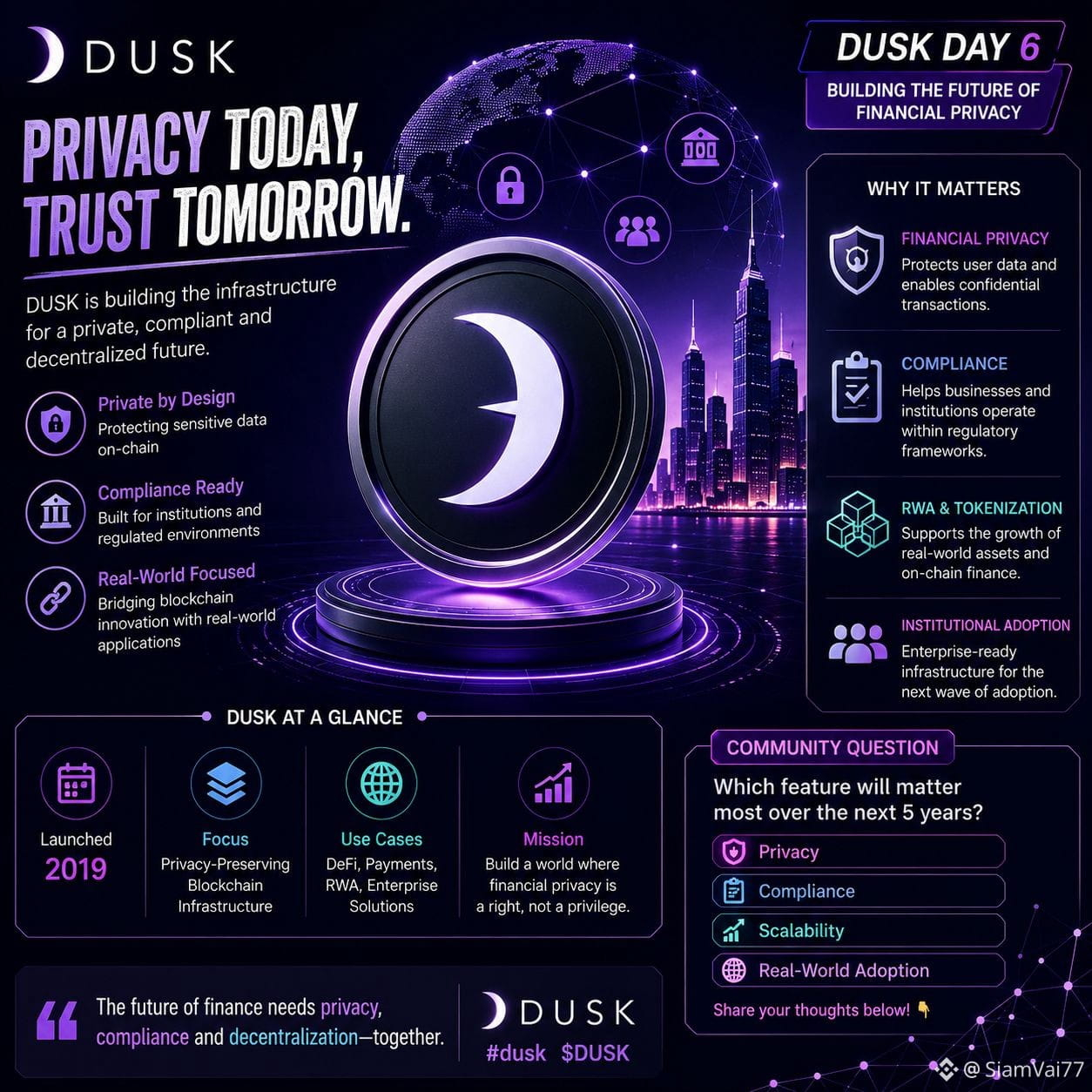
Many blockchain projects focus on speed.
Others focus on scalability.
But as adoption grows, another question becomes increasingly important:
How can users and institutions protect sensitive data while still operating in a compliant environment?
This is one reason I continue to follow @Dusk_Foundation
The vision behind $DUSK combines privacy-focused technology with infrastructure designed for real-world applications.
As blockchain moves beyond speculation and into business, finance, and tokenized assets, the demand for privacy-preserving solutions may continue to grow.
My question for the community:
Which feature will matter most over the next 5 years?
🔹 Privacy
🔹 Compliance
🔹 Scalability
🔹 Real-World Adoption
Share your thoughts below. 👇
#dusk $DUSK
Many blockchain projects focus on speed.
Others focus on scalability.
But as adoption grows, another question becomes increasingly important:
How can users and institutions protect sensitive data while still operating in a compliant environment?
This is one reason I continue to follow @Dusk
The vision behind $DUSK combines privacy-focused technology with infrastructure designed for real-world applications.
As blockchain moves beyond speculation and into business, finance, and tokenized assets, the demand for privacy-preserving solutions may continue to grow.
My question for the community:
Which feature will matter most over the next 5 years?
🔹 Privacy
🔹 Compliance
🔹 Scalability
🔹 Real-World Adoption
Share your thoughts below. 👇
#dusk $DUSK
Others focus on scalability.
But as adoption grows, another question becomes increasingly important:
How can users and institutions protect sensitive data while still operating in a compliant environment?
This is one reason I continue to follow @Dusk
The vision behind $DUSK combines privacy-focused technology with infrastructure designed for real-world applications.
As blockchain moves beyond speculation and into business, finance, and tokenized assets, the demand for privacy-preserving solutions may continue to grow.
My question for the community:
Which feature will matter most over the next 5 years?
🔹 Privacy
🔹 Compliance
🔹 Scalability
🔹 Real-World Adoption
Share your thoughts below. 👇
#dusk $DUSK
1
5
89
·
--
Trading sur 30 j de 65.8 USDT en $DUSK
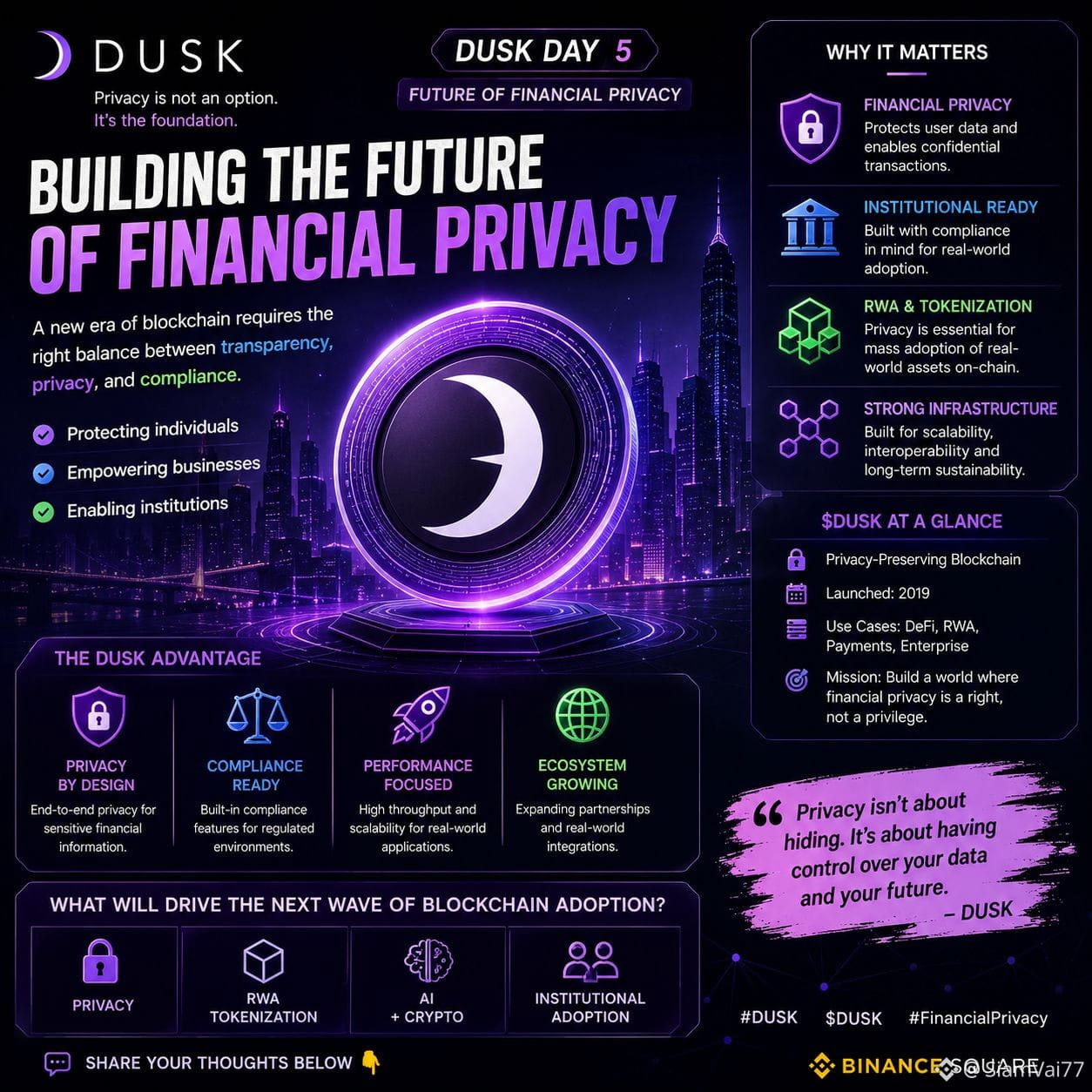
The future of blockchain may not be a choice between transparency and privacy.
It may require both.
Individuals want privacy.
Businesses need confidentiality.
Institutions require compliance.
Finding the right balance between these elements could be one of the biggest challenges—and opportunities—for the next generation of blockchain infrastructure.
This is one reason I'm following @Dusk and the development of $DUSK.
As adoption grows, privacy-preserving technologies may become increasingly important for real-world financial applications.
What do you think will drive the next wave of blockchain adoption?
🔹 Privacy
🔹 RWA Tokenization
🔹 AI + Crypto
🔹 Institutional Adoption
Let's discuss. 👇
#dusk $DUSK @Dusk_Foundation
The future of blockchain may not be a choice between transparency and privacy.
It may require both.
Individuals want privacy.
Businesses need confidentiality.
Institutions require compliance.
Finding the right balance between these elements could be one of the biggest challenges—and opportunities—for the next generation of blockchain infrastructure.
This is one reason I'm following @Dusk and the development of $DUSK .
As adoption grows, privacy-preserving technologies may become increasingly important for real-world financial applications.
What do you think will drive the next wave of blockchain adoption?
🔹 Privacy
🔹 RWA Tokenization
🔹 AI + Crypto
🔹 Institutional Adoption
Let's discuss. 👇
#dusk $DUSK @Dusk
It may require both.
Individuals want privacy.
Businesses need confidentiality.
Institutions require compliance.
Finding the right balance between these elements could be one of the biggest challenges—and opportunities—for the next generation of blockchain infrastructure.
This is one reason I'm following @Dusk and the development of $DUSK .
As adoption grows, privacy-preserving technologies may become increasingly important for real-world financial applications.
What do you think will drive the next wave of blockchain adoption?
🔹 Privacy
🔹 RWA Tokenization
🔹 AI + Crypto
🔹 Institutional Adoption
Let's discuss. 👇
#dusk $DUSK @Dusk
2
5
87
·
--
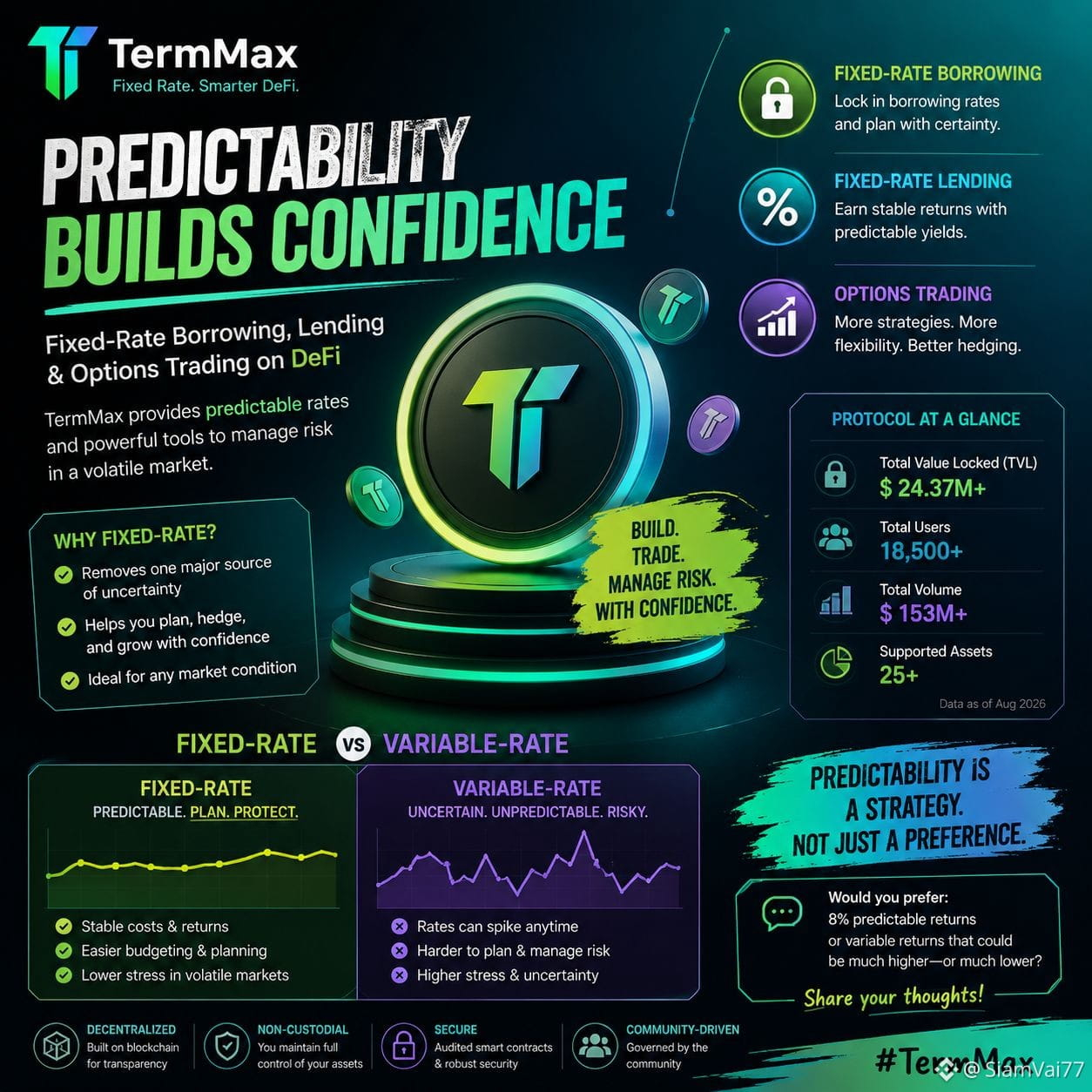
One challenge in DeFi is uncertainty.
Borrowing costs can change quickly, yields fluctuate, and market conditions shift without warning.
This is why fixed-rate markets are gaining attention.
TermMax is building a decentralized protocol focused on:
🔹 Fixed-rate borrowing
🔹 Fixed-rate lending
🔹 Options trading
The goal isn't to remove risk—it's to provide more predictability for users managing capital in volatile markets.
As DeFi matures, risk management tools may become just as important as yield generation.
My question for the community:
Would you prefer:
✅ 8% predictable returns
or
🚀 Variable returns that could be much higher—but also much lower?
The answer may say a lot about where DeFi is heading next.
#termmax @termmax
One challenge in DeFi is uncertainty.
Borrowing costs can change quickly, yields fluctuate, and market conditions shift without warning.
This is why fixed-rate markets are gaining attention.
TermMax is building a decentralized protocol focused on:
🔹 Fixed-rate borrowing
🔹 Fixed-rate lending
🔹 Options trading
The goal isn't to remove risk—it's to provide more predictability for users managing capital in volatile markets.
As DeFi matures, risk management tools may become just as important as yield generation.
My question for the community:
Would you prefer:
✅ 8% predictable returns
or
🚀 Variable returns that could be much higher—but also much lower?
The answer may say a lot about where DeFi is heading next.
#termmax @TermMax
Borrowing costs can change quickly, yields fluctuate, and market conditions shift without warning.
This is why fixed-rate markets are gaining attention.
TermMax is building a decentralized protocol focused on:
🔹 Fixed-rate borrowing
🔹 Fixed-rate lending
🔹 Options trading
The goal isn't to remove risk—it's to provide more predictability for users managing capital in volatile markets.
As DeFi matures, risk management tools may become just as important as yield generation.
My question for the community:
Would you prefer:
✅ 8% predictable returns
or
🚀 Variable returns that could be much higher—but also much lower?
The answer may say a lot about where DeFi is heading next.
#termmax @TermMax
10
1
9
113
·
--
Partiellement vrai
Most DeFi users focus on yield.
But one challenge remains: uncertainty.
Rates change. Rewards change. Market conditions change.
That's why fixed-rate borrowing and lending is an interesting concept.
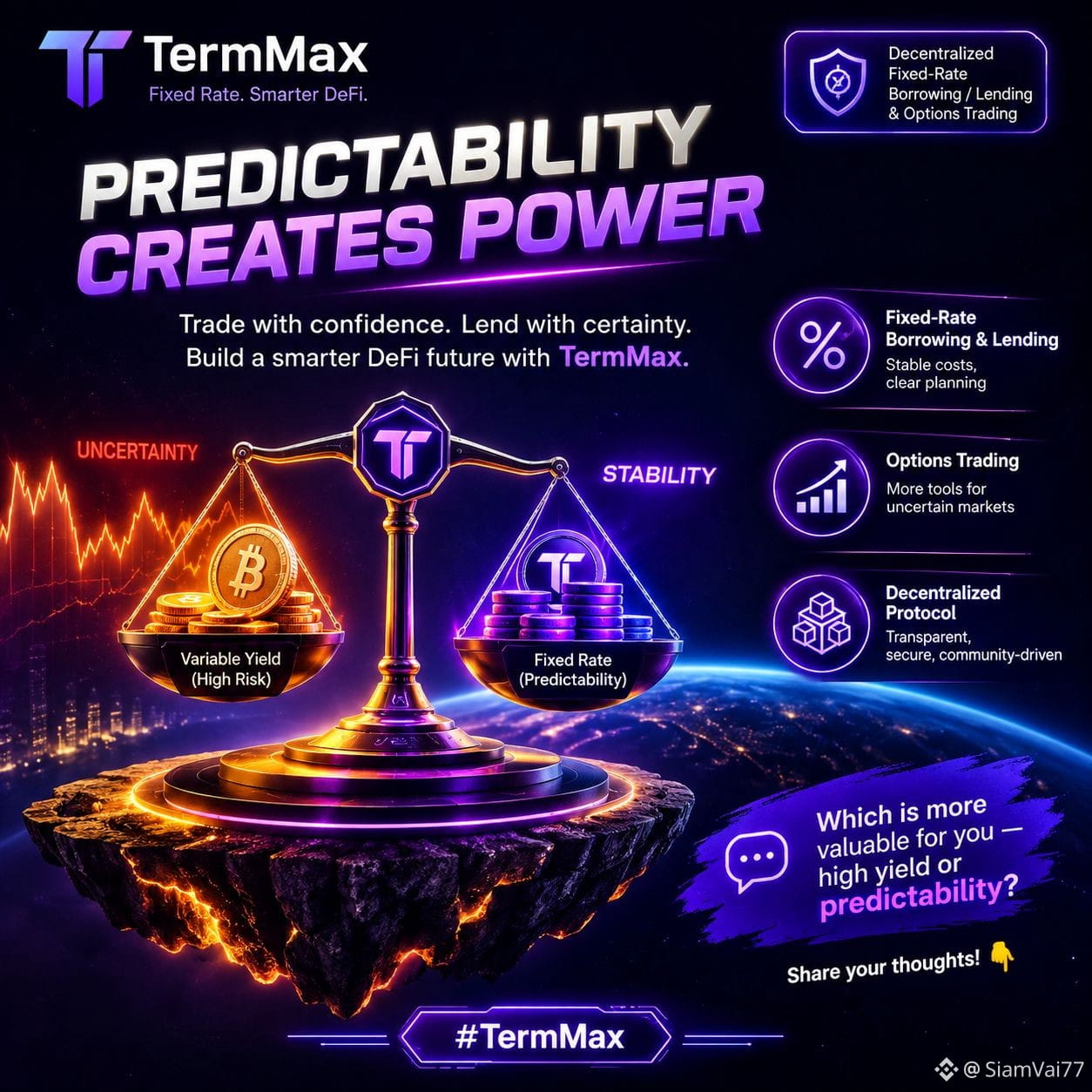
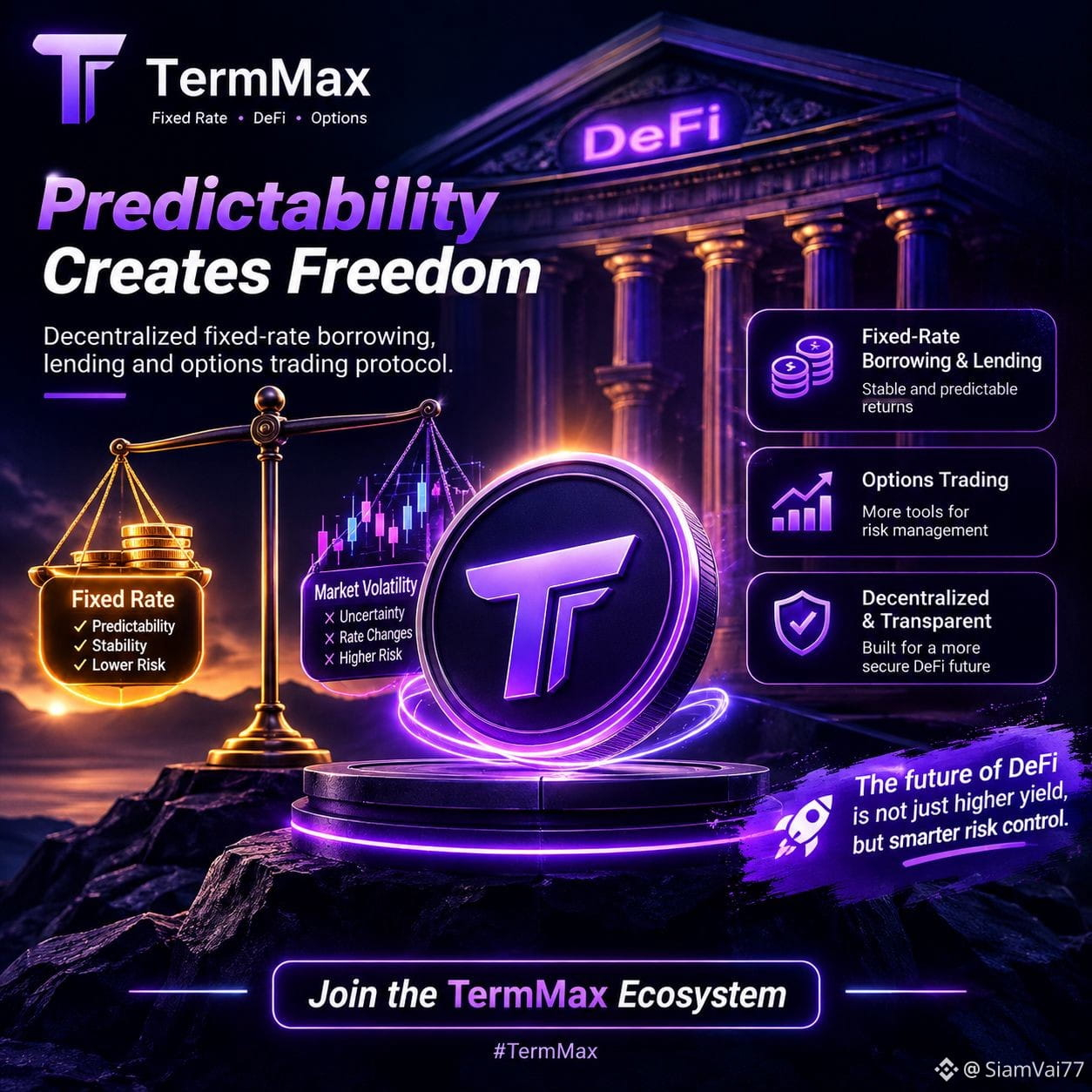
TermMax is building a decentralized protocol where users can access fixed-rate borrowing/lending and options trading, bringing more predictability to DeFi.
As the ecosystem grows, do you think fixed rates will become more important than chasing the highest yield?
Share your thoughts below. 👇
#termmax @termmax
Most DeFi users focus on yield.
But one challenge remains: uncertainty.
Rates change. Rewards change. Market conditions change.
That's why fixed-rate borrowing and lending is an interesting concept.
TermMax is building a decentralized protocol where users can access fixed-rate borrowing/lending and options trading, bringing more predictability to DeFi.
As the ecosystem grows, do you think fixed rates will become more important than chasing the highest yield?
Share your thoughts below. 👇
#termmax @TermMax
But one challenge remains: uncertainty.
Rates change. Rewards change. Market conditions change.
That's why fixed-rate borrowing and lending is an interesting concept.
TermMax is building a decentralized protocol where users can access fixed-rate borrowing/lending and options trading, bringing more predictability to DeFi.
As the ecosystem grows, do you think fixed rates will become more important than chasing the highest yield?
Share your thoughts below. 👇
#termmax @TermMax
17
12
131
Connectez-vous pour découvrir plus de contenu
Rejoignez la communauté mondiale des adeptes de cryptomonnaies sur Binance Square
⚡️ Suviez les dernières informations importantes sur les cryptomonnaies.
💬 Jugé digne de confiance par la plus grande plateforme d’échange de cryptomonnaies au monde.
👍 Découvrez les connaissances que partagent les créateurs vérifiés.
Adresse e-mail/Nº de téléphone
Sujets d’actualité
BitcoinSpotETFsNetInflow$191M
2,412 vues
116 mentions
#BitcoinSpotETFsNetInflow$191M
🚨 Breaking: Wall Street just dropped another $191M into #BitcoinSpotETFsNetInflow$191M!
BlackRock’s IBIT alone scooped up $163M like it was free candy, while WisdomTree experienced a tiny $4M couch-money panic.
What does this mean?
The big boys are hungry. 6.43% of all Bitcoin is now locked in these ETFs. Translation: supply is shrinking, and FOMO is real! 🚀
What should traders do?
🚀 Strap in: Volatility is coming.
👀 Stop refreshing the chart every 5 seconds (we know you do).
🧠 Follow the smart money, but don't bet your house.
⚠️ Not financial advice. Do your own research!
👇 Want to ride the wave? Support me by clicking to trade below:
➡️ $BTC
| $ETH
|$BNB
🔥 New here? Use code VINHTOCDO or click the link to claim your bonus: https://www.binance.com/register?ref=VINHTOCDO
#Bitcoin #CryptoTrading #CryptoNews #BullRun #blackRock #VINHTOCDO
Vinhtocdo
·6 mentions J’aime
·276 vues
CFTCUpdatesGuidanceOnTokenizedAssets
17,840 vues
773 mentions
BitgetSays$352MAffectedInHack
5,196 vues
69 mentions