

Babyfolio
23 Publications

Babyfolio
 Binance Square Vérifié
Signaler
Bloquer l’utilisateur
Software Engineer managing generational wealth for my babies. Cover AI infrastructure
2 Suivis
673 Abonnés
95 J’aime
Publications
Tous
Citations
·
--
I've been asked a lot what I think about $IREN, so there it is.
I don't talk about $IREN often, but I think the R/R here is pretty good.
I still have a hard time looking past the brothers' compensation. But if you can, I think there's some nice upside here if management continues to deliver.
And to their credit, they've executed well so far.
The bulls have already explained the upside case well enough, so I won't repeat it.
I've been asked a lot what I think about $IREN, so there it is.
I don't talk about $IREN often, but I think the R/R here is pretty good.
I still have a hard time looking past the brothers' compensation. But if you can, I think there's some nice upside here if management continues to deliver.
And to their credit, they've executed well so far.
The bulls have already explained the upside case well enough, so I won't repeat it.
I don't talk about $IREN often, but I think the R/R here is pretty good.
I still have a hard time looking past the brothers' compensation. But if you can, I think there's some nice upside here if management continues to deliver.
And to their credit, they've executed well so far.
The bulls have already explained the upside case well enough, so I won't repeat it.
3
8
11.3k
·
--
$CRDO was an obvious one.
With plenty of time to accumulate/add.
Investors clearly misread the print, expectations were not baked into the call, the stock was already priced in for a miss that never occurred.
Sometimes it's just that easy, just gotta look at the facts and not let the stock price affect your conviction.
$CRDO was an obvious one.
With plenty of time to accumulate/add.
Investors clearly misread the print, expectations were not baked into the call, the stock was already priced in for a miss that never occurred.
Sometimes it's just that easy, just gotta look at the facts and not let the stock price affect your conviction.
With plenty of time to accumulate/add.
Investors clearly misread the print, expectations were not baked into the call, the stock was already priced in for a miss that never occurred.
Sometimes it's just that easy, just gotta look at the facts and not let the stock price affect your conviction.
Babyfolio
·
--
$CRDO
- Credo Technology
The stock just got cut 40% in a few trading days, including a 20% drop immediately after earnings.
The actual quarter was not bad.
Revenue grew 115% year over year. Non GAAP net income grew 140%. Management guided to another sequential revenue increase next quarter, with gross margins still close to 68%.
The market probably wanted a bigger guidance, so that slight miss killed the stock.
As AI clusters get larger, moving data between GPUs becomes one of the bottlenecks in the system. Credo sells the cables, optics and connectivity silicon that solve exactly that problem.
- Credo Technology
The stock just got cut 40% in a few trading days, including a 20% drop immediately after earnings.
The actual quarter was not bad.
Revenue grew 115% year over year. Non GAAP net income grew 140%. Management guided to another sequential revenue increase next quarter, with gross margins still close to 68%.
The market probably wanted a bigger guidance, so that slight miss killed the stock.
As AI clusters get larger, moving data between GPUs becomes one of the bottlenecks in the system. Credo sells the cables, optics and connectivity silicon that solve exactly that problem.
2
3
920
·
--
Vérifié
an AI infra angle I think should be looked at:
$META Muse runs on a persistent, dedicated VM for each user.
What if this becomes the standard architecture for AI agents?
Agents that can actually use browsers, log into accounts and take actions probably need isolated, secure environments. If everyone starts copying this architecture, virtualization could become a much bigger AI beneficiary than people expect.
That's why I think it's worth looking at $NTNX if the Muse architecture is validated by competition.
They don't need Meta as a customer. The thesis is that enterprises eventually want their own version of this architecture, and Nutanix is already building specifically around agentic AI, VMs, containers and governance.
$AVGO through VMware is another obvious one to watch, and one that I already own.
Very early thesis, but I think there's something here worth watching.
an AI infra angle I think should be looked at:
$META Muse runs on a persistent, dedicated VM for each user.
What if this becomes the standard architecture for AI agents?
Agents that can actually use browsers, log into accounts and take actions probably need isolated, secure environments. If everyone starts copying this architecture, virtualization could become a much bigger AI beneficiary than people expect.
That's why I think it's worth looking at $NTNX if the Muse architecture is validated by competition.
They don't need Meta as a customer. The thesis is that enterprises eventually want their own version of this architecture, and Nutanix is already building specifically around agentic AI, VMs, containers and governance.
$AVGO through VMware is another obvious one to watch, and one that I already own.
Very early thesis, but I think there's something here worth watching.
$META Muse runs on a persistent, dedicated VM for each user.
What if this becomes the standard architecture for AI agents?
Agents that can actually use browsers, log into accounts and take actions probably need isolated, secure environments. If everyone starts copying this architecture, virtualization could become a much bigger AI beneficiary than people expect.
That's why I think it's worth looking at $NTNX if the Muse architecture is validated by competition.
They don't need Meta as a customer. The thesis is that enterprises eventually want their own version of this architecture, and Nutanix is already building specifically around agentic AI, VMs, containers and governance.
$AVGO through VMware is another obvious one to watch, and one that I already own.
Very early thesis, but I think there's something here worth watching.
2
7
4.2k
·
--
Vérifié
Meta scaling its custom MTIA chips into data centers is another sign hyperscalers are increasingly going custom to lower inference costs.
Google has TPUs. Amazon has Trainium. Meta is now taking MTIA to multi GW scale.
This is structurally bullish for $AVGO.
Broadcom co-develops Meta's custom XPUs and supplies the Ethernet infrastructure connecting them. So as Meta shifts more compute toward its own silicon, Broadcom still captures a meaningful piece of that.
Meta scaling its custom MTIA chips into data centers is another sign hyperscalers are increasingly going custom to lower inference costs.
Google has TPUs. Amazon has Trainium. Meta is now taking MTIA to multi GW scale.
This is structurally bullish for $AVGO.
Broadcom co-develops Meta's custom XPUs and supplies the Ethernet infrastructure connecting them. So as Meta shifts more compute toward its own silicon, Broadcom still captures a meaningful piece of that.
Google has TPUs. Amazon has Trainium. Meta is now taking MTIA to multi GW scale.
This is structurally bullish for $AVGO.
Broadcom co-develops Meta's custom XPUs and supplies the Ethernet infrastructure connecting them. So as Meta shifts more compute toward its own silicon, Broadcom still captures a meaningful piece of that.
1
2
713
·
--
Haussier
New investors, or anyone sitting on cash thinking they missed the AI run, this one's for you.
I get asked all the time how I'd build an AI-focused portfolio from scratch today while still maintaining some diversification.
Obviously, this isn't diversified in the traditional sense. It's 100% AI.
But it is diversified across the AI stack: applications, GPUs, custom silicon, foundries, memory, networking, cloud infrastructure and physical AI.
This is also NOT a list of the best companies at any price. The allocations reflect current valuations and the R/R I see today.
Here's how I'd structure it:
20% $META
20% $NVDA
20% $AVGO
10% $DRAM
10% $TSM
10% $NBIS
10% $CRDO
That's 80% in established leaders and critical bottlenecks, with the remaining 20% in higher-growth compute and networking names.
If I were building an AI portfolio from scratch today, this is probably where I'd start.
You can always adjust it over time if you want more risk and potentially more upside.
New investors, or anyone sitting on cash thinking they missed the AI run, this one's for you.
I get asked all the time how I'd build an AI-focused portfolio from scratch today while still maintaining some diversification.
Obviously, this isn't diversified in the traditional sense. It's 100% AI.
But it is diversified across the AI stack: applications, GPUs, custom silicon, foundries, memory, networking, cloud infrastructure and physical AI.
This is also NOT a list of the best companies at any price. The allocations reflect current valuations and the R/R I see today.
Here's how I'd structure it:
20% $META
20% $NVDA
20% $AVGO
10% $DRAM
10% $TSM
10% $NBIS
10% $CRDO
That's 80% in established leaders and critical bottlenecks, with the remaining 20% in higher-growth compute and networking names.
If I were building an AI portfolio from scratch today, this is probably where I'd start.
You can always adjust it over time if you want more risk and potentially more upside.
I get asked all the time how I'd build an AI-focused portfolio from scratch today while still maintaining some diversification.
Obviously, this isn't diversified in the traditional sense. It's 100% AI.
But it is diversified across the AI stack: applications, GPUs, custom silicon, foundries, memory, networking, cloud infrastructure and physical AI.
This is also NOT a list of the best companies at any price. The allocations reflect current valuations and the R/R I see today.
Here's how I'd structure it:
20% $META
20% $NVDA
20% $AVGO
10% $DRAM
10% $TSM
10% $NBIS
10% $CRDO
That's 80% in established leaders and critical bottlenecks, with the remaining 20% in higher-growth compute and networking names.
If I were building an AI portfolio from scratch today, this is probably where I'd start.
You can always adjust it over time if you want more risk and potentially more upside.
1
14
7.5k
·
--
Personally, I think Muse is quite unique compared to similar offerings.
$META took the more expensive route: every user gets their own isolated virtual machine in the cloud, where their Muse and connected data live. They even run a separate agent that controls what Muse can access and when it needs your permission.
That infrastructure isn't cheap, but Meta has something most AI startups don't: huge ad business that can subsidize the cost while Muse scales.
And for an agent that eventually wants access to your email, calendar, payments and other personal data, trust is probably one of the biggest barriers to adoption.
Meta seems to understand that and is willing to spend more to solve it properly.
Combine that with their distribution advantage and Muse already hitting #1 on the US App Store, and the story gets more interesting by the day.
Every day we seem to get another bullish data point for
$META
That's why I think $META could be one of the winners of the AI application layer.
Personally, I think Muse is quite unique compared to similar offerings.
$META took the more expensive route: every user gets their own isolated virtual machine in the cloud, where their Muse and connected data live. They even run a separate agent that controls what Muse can access and when it needs your permission.
That infrastructure isn't cheap, but Meta has something most AI startups don't: huge ad business that can subsidize the cost while Muse scales.
And for an agent that eventually wants access to your email, calendar, payments and other personal data, trust is probably one of the biggest barriers to adoption.
Meta seems to understand that and is willing to spend more to solve it properly.
Combine that with their distribution advantage and Muse already hitting #1 on the US App Store, and the story gets more interesting by the day.
Every day we seem to get another bullish data point for
$META
That's why I think $META could be one of the winners of the AI application layer.
$META took the more expensive route: every user gets their own isolated virtual machine in the cloud, where their Muse and connected data live. They even run a separate agent that controls what Muse can access and when it needs your permission.
That infrastructure isn't cheap, but Meta has something most AI startups don't: huge ad business that can subsidize the cost while Muse scales.
And for an agent that eventually wants access to your email, calendar, payments and other personal data, trust is probably one of the biggest barriers to adoption.
Meta seems to understand that and is willing to spend more to solve it properly.
Combine that with their distribution advantage and Muse already hitting #1 on the US App Store, and the story gets more interesting by the day.
Every day we seem to get another bullish data point for
$META
That's why I think $META could be one of the winners of the AI application layer.
1
2
2.2k
·
--
Vérifié
$AVGO
- Broadcom
Broadcom is well off its June high even though the numbers have become stronger, not weaker.
Last quarter revenue grew 86%. AI semiconductor revenue grew 221% to $16.7 billion. Free cash flow was $13.7 billion in a single quarter.
But the real story is the guidance. Broadcom expects AI revenue to reach roughly $58 billion in 2026, double to $115 billion in 2027 and double again to $230 billion in 2028.
This growth is increasingly coming from custom silicon, not commodity chips.
Custom accelerators represented 73% of AI revenue last quarter, with XPU shipments growing more than 3.5x year over year.
Anthropic has committed to multiple gigawatts of next-generation Google TPU capacity supplied through Broadcom starting in 2027.
OpenAI is building its own accelerator with Broadcom, beginning with Jalapeño, as part of a 10-gigawatt deployment planned through 2029.
The market is worried about customer concentration and whether hyperscaler spending eventually slows. These are fair concerns.
But Broadcom is becoming the company that designs the custom chips and networking infrastructure behind the largest AI labs in the world.
$AVGO
- Broadcom
Broadcom is well off its June high even though the numbers have become stronger, not weaker.
Last quarter revenue grew 86%. AI semiconductor revenue grew 221% to $16.7 billion. Free cash flow was $13.7 billion in a single quarter.
But the real story is the guidance. Broadcom expects AI revenue to reach roughly $58 billion in 2026, double to $115 billion in 2027 and double again to $230 billion in 2028.
This growth is increasingly coming from custom silicon, not commodity chips.
Custom accelerators represented 73% of AI revenue last quarter, with XPU shipments growing more than 3.5x year over year.
Anthropic has committed to multiple gigawatts of next-generation Google TPU capacity supplied through Broadcom starting in 2027.
OpenAI is building its own accelerator with Broadcom, beginning with Jalapeño, as part of a 10-gigawatt deployment planned through 2029.
The market is worried about customer concentration and whether hyperscaler spending eventually slows. These are fair concerns.
But Broadcom is becoming the company that designs the custom chips and networking infrastructure behind the largest AI labs in the world.
- Broadcom
Broadcom is well off its June high even though the numbers have become stronger, not weaker.
Last quarter revenue grew 86%. AI semiconductor revenue grew 221% to $16.7 billion. Free cash flow was $13.7 billion in a single quarter.
But the real story is the guidance. Broadcom expects AI revenue to reach roughly $58 billion in 2026, double to $115 billion in 2027 and double again to $230 billion in 2028.
This growth is increasingly coming from custom silicon, not commodity chips.
Custom accelerators represented 73% of AI revenue last quarter, with XPU shipments growing more than 3.5x year over year.
Anthropic has committed to multiple gigawatts of next-generation Google TPU capacity supplied through Broadcom starting in 2027.
OpenAI is building its own accelerator with Broadcom, beginning with Jalapeño, as part of a 10-gigawatt deployment planned through 2029.
The market is worried about customer concentration and whether hyperscaler spending eventually slows. These are fair concerns.
But Broadcom is becoming the company that designs the custom chips and networking infrastructure behind the largest AI labs in the world.
2
5
5.8k
·
--
Vérifié
$ORCL
- Oracle
Around $145, half its 2025 peak.
The market is focused on the enormous amount of money Oracle has to spend building data centers. Free cash flow was negative $23.7 billion last year, and the company is using both debt and new equity to fund the buildout.
The other side is a $638 billion contracted backlog, up 363% year over year. Cloud infrastructure revenue grew 77% for the year, and Oracle expects total revenue to reach $90 billion this year.
A huge part of the story is OpenAI. Oracle is one of the core infrastructure partners behind Stargate. OpenAI has committed to another 4.5 gigawatts of Oracle capacity, taking the partnership to more than 5 gigawatts under development and over 2 million chips.
There is also a reported $300 billion agreement for OpenAI to purchase Oracle computing capacity over roughly five years.
I am becoming increasingly bullish on OpenAI in general, and Oracle is one of the best ways to get exposure to that growth.
If OpenAI keeps scaling and Oracle converts even a reasonable portion of that backlog into revenue, today’s financing concerns will look very different in a few years.
$ORCL
- Oracle
Around $145, half its 2025 peak.
The market is focused on the enormous amount of money Oracle has to spend building data centers. Free cash flow was negative $23.7 billion last year, and the company is using both debt and new equity to fund the buildout.
The other side is a $638 billion contracted backlog, up 363% year over year. Cloud infrastructure revenue grew 77% for the year, and Oracle expects total revenue to reach $90 billion this year.
A huge part of the story is OpenAI. Oracle is one of the core infrastructure partners behind Stargate. OpenAI has committed to another 4.5 gigawatts of Oracle capacity, taking the partnership to more than 5 gigawatts under development and over 2 million chips.
There is also a reported $300 billion agreement for OpenAI to purchase Oracle computing capacity over roughly five years.
I am becoming increasingly bullish on OpenAI in general, and Oracle is one of the best ways to get exposure to that growth.
If OpenAI keeps scaling and Oracle converts even a reasonable portion of that backlog into revenue, today’s financing concerns will look very different in a few years.
- Oracle
Around $145, half its 2025 peak.
The market is focused on the enormous amount of money Oracle has to spend building data centers. Free cash flow was negative $23.7 billion last year, and the company is using both debt and new equity to fund the buildout.
The other side is a $638 billion contracted backlog, up 363% year over year. Cloud infrastructure revenue grew 77% for the year, and Oracle expects total revenue to reach $90 billion this year.
A huge part of the story is OpenAI. Oracle is one of the core infrastructure partners behind Stargate. OpenAI has committed to another 4.5 gigawatts of Oracle capacity, taking the partnership to more than 5 gigawatts under development and over 2 million chips.
There is also a reported $300 billion agreement for OpenAI to purchase Oracle computing capacity over roughly five years.
I am becoming increasingly bullish on OpenAI in general, and Oracle is one of the best ways to get exposure to that growth.
If OpenAI keeps scaling and Oracle converts even a reasonable portion of that backlog into revenue, today’s financing concerns will look very different in a few years.
5
3.9k
·
--
Vérifié
The H100 (commercialized in 2022!!!) and H200 price hikes specifically deserve more attention.
From October 1, $NBIS is raising on demand H100 rates from $3.85 to $4.50 per GPU-hour and H200 rates from $4.50 to $5.40.
That's around 17% and 20% more for older GPUs.
The GPU depreciation bear case is now impossible to defend. Newer chips keep arriving, yet Nebius sees room to charge MORE for the older ones.
Those GPUs are already installed. Higher rental rates can help recover the original investment faster and improve returns over their working life. Another reason to stay bullish on $NBIS.
Expect more price hikes in the future.
The H100 (commercialized in 2022!!!) and H200 price hikes specifically deserve more attention.
From October 1, $NBIS is raising on demand H100 rates from $3.85 to $4.50 per GPU-hour and H200 rates from $4.50 to $5.40.
That's around 17% and 20% more for older GPUs.
The GPU depreciation bear case is now impossible to defend. Newer chips keep arriving, yet Nebius sees room to charge MORE for the older ones.
Those GPUs are already installed. Higher rental rates can help recover the original investment faster and improve returns over their working life. Another reason to stay bullish on $NBIS.
Expect more price hikes in the future.
From October 1, $NBIS is raising on demand H100 rates from $3.85 to $4.50 per GPU-hour and H200 rates from $4.50 to $5.40.
That's around 17% and 20% more for older GPUs.
The GPU depreciation bear case is now impossible to defend. Newer chips keep arriving, yet Nebius sees room to charge MORE for the older ones.
Those GPUs are already installed. Higher rental rates can help recover the original investment faster and improve returns over their working life. Another reason to stay bullish on $NBIS.
Expect more price hikes in the future.
1
1.8k
·
--
Vérifié
The next name on my list is $NVDA.
It may be the most famous stock in the market, yet many investors still ignore it because they assume the opportunity has already passed.
The bear case is familiar: AI spending eventually slows and hyperscalers develop their own chips.
Let’s look at the numbers:
• Revenue: $96.2B, up 106% YoY
• Data Center revenue: $89B, up 117% YoY
• Operating income: Up 124% YoY
• Gross margin: 75%
• Next-quarter revenue guidance: $108B, with zero China revenue included
NVIDIA now sells the entire AI factory: GPUs, CPUs, networking, systems and software.
Every new generation allows it to capture more of the infrastructure stack. Despite that growth, $NVDA trades at 18-19x forward P/E.
The company is widely known, but its numbers are still underappreciated.
At this growth rate and valuation, I think the market is already pricing in slowdown in spending.
That is why $NVDA is my third great R/R pick.
The next name on my list is $NVDA.
It may be the most famous stock in the market, yet many investors still ignore it because they assume the opportunity has already passed.
The bear case is familiar: AI spending eventually slows and hyperscalers develop their own chips.
Let’s look at the numbers:
• Revenue: $96.2B, up 106% YoY
• Data Center revenue: $89B, up 117% YoY
• Operating income: Up 124% YoY
• Gross margin: 75%
• Next-quarter revenue guidance: $108B, with zero China revenue included
NVIDIA now sells the entire AI factory: GPUs, CPUs, networking, systems and software.
Every new generation allows it to capture more of the infrastructure stack. Despite that growth, $NVDA trades at 18-19x forward P/E.
The company is widely known, but its numbers are still underappreciated.
At this growth rate and valuation, I think the market is already pricing in slowdown in spending.
That is why $NVDA is my third great R/R pick.
It may be the most famous stock in the market, yet many investors still ignore it because they assume the opportunity has already passed.
The bear case is familiar: AI spending eventually slows and hyperscalers develop their own chips.
Let’s look at the numbers:
• Revenue: $96.2B, up 106% YoY
• Data Center revenue: $89B, up 117% YoY
• Operating income: Up 124% YoY
• Gross margin: 75%
• Next-quarter revenue guidance: $108B, with zero China revenue included
NVIDIA now sells the entire AI factory: GPUs, CPUs, networking, systems and software.
Every new generation allows it to capture more of the infrastructure stack. Despite that growth, $NVDA trades at 18-19x forward P/E.
The company is widely known, but its numbers are still underappreciated.
At this growth rate and valuation, I think the market is already pricing in slowdown in spending.
That is why $NVDA is my third great R/R pick.
Babyfolio
·
--
HaussierThe next name on my list is $META , and the main reason is Muse.
Meta just launched Muse, a personal AI agent with its own secure virtual computer and browser.
It can manage emails, make reservations, complete purchases and handles tasks with multiple steps. It remembers your goals, suggests what to do next and keeps working after you close the app.
Early feedback on the App Store has been strong. Muse has a 4.9/5 rating from around 3,400 US App Store ratings with users describing it as fast, efficient and surprisingly useful.
This is the clearest look yet at what Meta's massive AI spending is producing.
Meta expects $130B to $145B in capex this year, and providing every Muse user with a secure cloud computer will be expensive. Even with that spending,
$META
trades at roughly 20x forward earnings.
The opportunity in my eyes is huge.
Muse is free for most uses, with paid subscriptions for heavier users. It can also complete purchases through Stripe's Link, potentially placing Meta between user intent and the transaction.
Meta already owns one of the world’s strongest advertising businesses. Muse could become an entirely new growth engine alongside it.
I really believe that with their distribution, they can be one of the biggest AI application layer winners.
That is why $META is my second great R/R pick.
Meta just launched Muse, a personal AI agent with its own secure virtual computer and browser.
It can manage emails, make reservations, complete purchases and handles tasks with multiple steps. It remembers your goals, suggests what to do next and keeps working after you close the app.
Early feedback on the App Store has been strong. Muse has a 4.9/5 rating from around 3,400 US App Store ratings with users describing it as fast, efficient and surprisingly useful.
This is the clearest look yet at what Meta's massive AI spending is producing.
Meta expects $130B to $145B in capex this year, and providing every Muse user with a secure cloud computer will be expensive. Even with that spending,
$META
trades at roughly 20x forward earnings.
The opportunity in my eyes is huge.
Muse is free for most uses, with paid subscriptions for heavier users. It can also complete purchases through Stripe's Link, potentially placing Meta between user intent and the transaction.
Meta already owns one of the world’s strongest advertising businesses. Muse could become an entirely new growth engine alongside it.
I really believe that with their distribution, they can be one of the biggest AI application layer winners.
That is why $META is my second great R/R pick.
1
4
805
·
--
Haussier
The next name on my list is $META , and the main reason is Muse.
Meta just launched Muse, a personal AI agent with its own secure virtual computer and browser.
It can manage emails, make reservations, complete purchases and handles tasks with multiple steps. It remembers your goals, suggests what to do next and keeps working after you close the app.
Early feedback on the App Store has been strong. Muse has a 4.9/5 rating from around 3,400 US App Store ratings with users describing it as fast, efficient and surprisingly useful.
This is the clearest look yet at what Meta's massive AI spending is producing.
Meta expects $130B to $145B in capex this year, and providing every Muse user with a secure cloud computer will be expensive. Even with that spending,
$META
trades at roughly 20x forward earnings.
The opportunity in my eyes is huge.
Muse is free for most uses, with paid subscriptions for heavier users. It can also complete purchases through Stripe's Link, potentially placing Meta between user intent and the transaction.
Meta already owns one of the world’s strongest advertising businesses. Muse could become an entirely new growth engine alongside it.
I really believe that with their distribution, they can be one of the biggest AI application layer winners.
That is why $META is my second great R/R pick.
The next name on my list is $META , and the main reason is Muse.
Meta just launched Muse, a personal AI agent with its own secure virtual computer and browser.
It can manage emails, make reservations, complete purchases and handles tasks with multiple steps. It remembers your goals, suggests what to do next and keeps working after you close the app.
Early feedback on the App Store has been strong. Muse has a 4.9/5 rating from around 3,400 US App Store ratings with users describing it as fast, efficient and surprisingly useful.
This is the clearest look yet at what Meta's massive AI spending is producing.
Meta expects $130B to $145B in capex this year, and providing every Muse user with a secure cloud computer will be expensive. Even with that spending,
$META
trades at roughly 20x forward earnings.
The opportunity in my eyes is huge.
Muse is free for most uses, with paid subscriptions for heavier users. It can also complete purchases through Stripe's Link, potentially placing Meta between user intent and the transaction.
Meta already owns one of the world’s strongest advertising businesses. Muse could become an entirely new growth engine alongside it.
I really believe that with their distribution, they can be one of the biggest AI application layer winners.
That is why $META is my second great R/R pick.
Meta just launched Muse, a personal AI agent with its own secure virtual computer and browser.
It can manage emails, make reservations, complete purchases and handles tasks with multiple steps. It remembers your goals, suggests what to do next and keeps working after you close the app.
Early feedback on the App Store has been strong. Muse has a 4.9/5 rating from around 3,400 US App Store ratings with users describing it as fast, efficient and surprisingly useful.
This is the clearest look yet at what Meta's massive AI spending is producing.
Meta expects $130B to $145B in capex this year, and providing every Muse user with a secure cloud computer will be expensive. Even with that spending,
$META
trades at roughly 20x forward earnings.
The opportunity in my eyes is huge.
Muse is free for most uses, with paid subscriptions for heavier users. It can also complete purchases through Stripe's Link, potentially placing Meta between user intent and the transaction.
Meta already owns one of the world’s strongest advertising businesses. Muse could become an entirely new growth engine alongside it.
I really believe that with their distribution, they can be one of the biggest AI application layer winners.
That is why $META is my second great R/R pick.
Babyfolio
·
--
I don't like calling anything "free money" in the stock market.
There is no free money. Generally, no risk means no reward.
But I can give you a few ideas that, in my eyes, are about as close as it gets from a risk/reward perspective.
I'm going to make this into separate posts because I hate threads.
My first pick is... Broadcom ($AVGO), which I talked about in the last few days.
Let me explain:
First, I think $AVGO is increasingly being priced as if meaningful market share loss is inevitable.
The bear case(the opportunity) is that $MRVL, MediaTek and others will take share from Broadcom in custom silicon.
Hyperscalers and AI labs are spending hundreds of billions building infra and they want chips designed specifically for their own use.
Broadcom doesn't need 100% market share to win massively and it's not just custom XPUs.
Their numbers are hard to believe for a company at this size:
Broadcom reported $16.7B in quarterly AI semiconductor revenue, up 221% YoY. Next quarter, it expects $21.7B.
Management sees AI revenues doubling two years in a row:
$58B in FY26
$115B in FY27
$230B in FY28
It's already one of the most profitable semiconductor companies in the world, they sit deep inside the AI infrastructure buildout, with huge visibility into future demand.
$MRVL and MediaTek WILL take some market share but if Broadcom can lose some share while its AI business still doubles, I'm not sure that's the bear case people think it is.
$AVGO is my first pick in this series of great R/R picks.
There is no free money. Generally, no risk means no reward.
But I can give you a few ideas that, in my eyes, are about as close as it gets from a risk/reward perspective.
I'm going to make this into separate posts because I hate threads.
My first pick is... Broadcom ($AVGO), which I talked about in the last few days.
Let me explain:
First, I think $AVGO is increasingly being priced as if meaningful market share loss is inevitable.
The bear case(the opportunity) is that $MRVL, MediaTek and others will take share from Broadcom in custom silicon.
Hyperscalers and AI labs are spending hundreds of billions building infra and they want chips designed specifically for their own use.
Broadcom doesn't need 100% market share to win massively and it's not just custom XPUs.
Their numbers are hard to believe for a company at this size:
Broadcom reported $16.7B in quarterly AI semiconductor revenue, up 221% YoY. Next quarter, it expects $21.7B.
Management sees AI revenues doubling two years in a row:
$58B in FY26
$115B in FY27
$230B in FY28
It's already one of the most profitable semiconductor companies in the world, they sit deep inside the AI infrastructure buildout, with huge visibility into future demand.
$MRVL and MediaTek WILL take some market share but if Broadcom can lose some share while its AI business still doubles, I'm not sure that's the bear case people think it is.
$AVGO is my first pick in this series of great R/R picks.
1
1
1
440
·
--
Vérifié
$CRDO
- Credo Technology
The stock just got cut 40% in a few trading days, including a 20% drop immediately after earnings.
The actual quarter was not bad.
Revenue grew 115% year over year. Non GAAP net income grew 140%. Management guided to another sequential revenue increase next quarter, with gross margins still close to 68%.
The market probably wanted a bigger guidance, so that slight miss killed the stock.
As AI clusters get larger, moving data between GPUs becomes one of the bottlenecks in the system. Credo sells the cables, optics and connectivity silicon that solve exactly that problem.
$CRDO
- Credo Technology
The stock just got cut 40% in a few trading days, including a 20% drop immediately after earnings.
The actual quarter was not bad.
Revenue grew 115% year over year. Non GAAP net income grew 140%. Management guided to another sequential revenue increase next quarter, with gross margins still close to 68%.
The market probably wanted a bigger guidance, so that slight miss killed the stock.
As AI clusters get larger, moving data between GPUs becomes one of the bottlenecks in the system. Credo sells the cables, optics and connectivity silicon that solve exactly that problem.
- Credo Technology
The stock just got cut 40% in a few trading days, including a 20% drop immediately after earnings.
The actual quarter was not bad.
Revenue grew 115% year over year. Non GAAP net income grew 140%. Management guided to another sequential revenue increase next quarter, with gross margins still close to 68%.
The market probably wanted a bigger guidance, so that slight miss killed the stock.
As AI clusters get larger, moving data between GPUs becomes one of the bottlenecks in the system. Credo sells the cables, optics and connectivity silicon that solve exactly that problem.
3
1
1
1.9k
·
--
Can't stress this enough: if this drawdown extends, it could be a gift for people who missed the train.
AI development is not stopping, and the infrastructure buildout definitely isn't stopping.
Surviving this kind of volatility is hard, but please, for your financial future, focus on quality.
Great management.
Minimal dilution.
Growing revenue and guidance.
Strong margins and ideally profitability.
My picks for this are $NBIS, $AVGO and $CRDO. I've explained why in separate tweets.
You won't avoid drawdowns, but sticking to quality should give you a much better chance than constantly chasing shitcos.
Can't stress this enough: if this drawdown extends, it could be a gift for people who missed the train.
AI development is not stopping, and the infrastructure buildout definitely isn't stopping.
Surviving this kind of volatility is hard, but please, for your financial future, focus on quality.
Great management.
Minimal dilution.
Growing revenue and guidance.
Strong margins and ideally profitability.
My picks for this are $NBIS, $AVGO and $CRDO. I've explained why in separate tweets.
You won't avoid drawdowns, but sticking to quality should give you a much better chance than constantly chasing shitcos.
AI development is not stopping, and the infrastructure buildout definitely isn't stopping.
Surviving this kind of volatility is hard, but please, for your financial future, focus on quality.
Great management.
Minimal dilution.
Growing revenue and guidance.
Strong margins and ideally profitability.
My picks for this are $NBIS, $AVGO and $CRDO. I've explained why in separate tweets.
You won't avoid drawdowns, but sticking to quality should give you a much better chance than constantly chasing shitcos.
3
2
1.7k
·
--
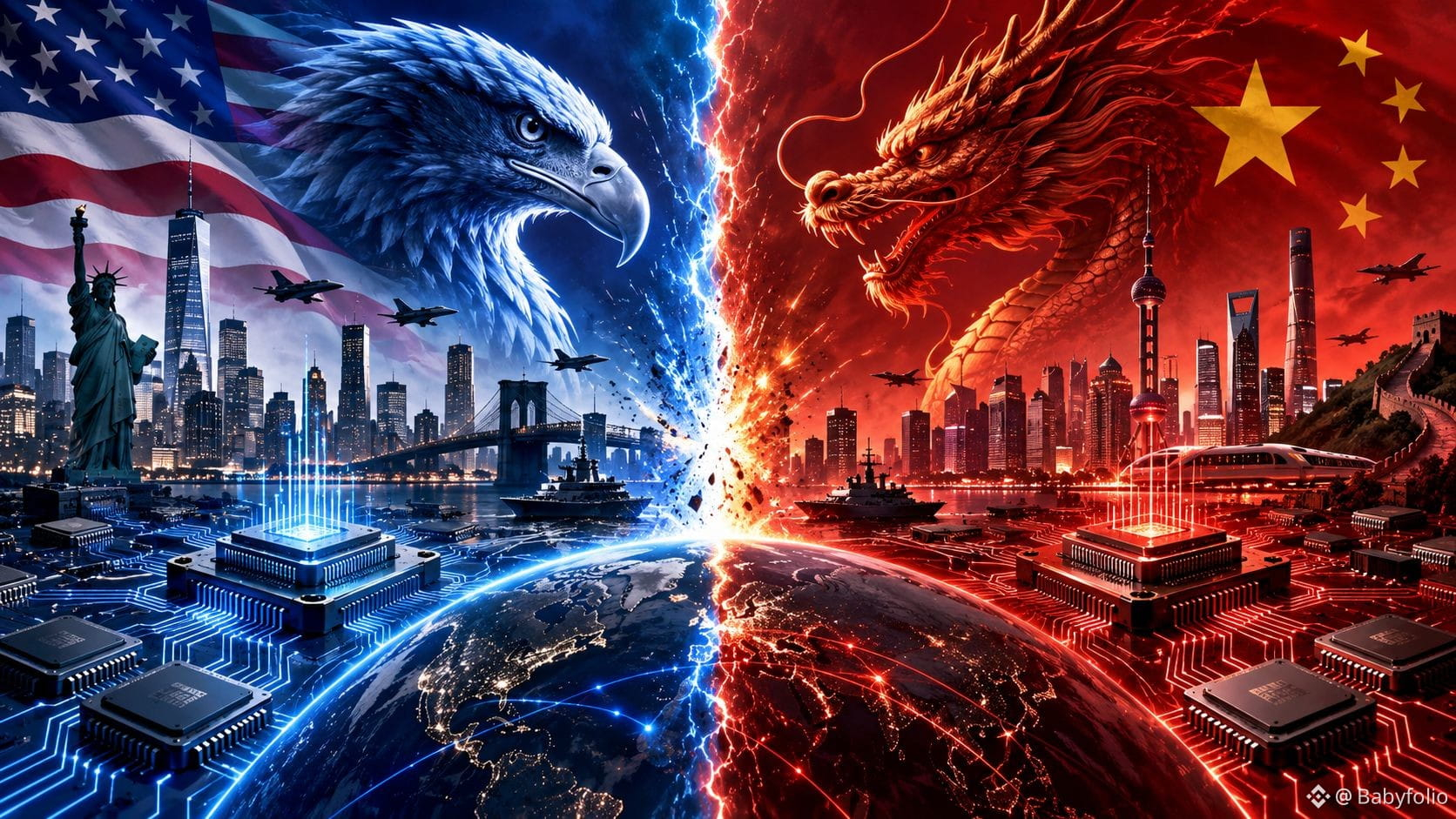
Dario Amodei from @AnthropicAI wrote an essay laying out 3 steps to slow down the frontier of AI.
Sam Altman agreed.
Elon Musk agreed.
And Anthropic is already implementing the first step.
But the third step is the one that makes the whole thing possible: international coordination, including getting China to slow down too.
Do you really think China is going to slow down its AI progress because the US does?
Dario Amodei from @AnthropicAI wrote an essay laying out 3 steps to slow down the frontier of AI.
Sam Altman agreed.
Elon Musk agreed.
And Anthropic is already implementing the first step.
But the third step is the one that makes the whole thing possible: international coordination, including getting China to slow down too.
Do you really think China is going to slow down its AI progress because the US does?
Sam Altman agreed.
Elon Musk agreed.
And Anthropic is already implementing the first step.
But the third step is the one that makes the whole thing possible: international coordination, including getting China to slow down too.
Do you really think China is going to slow down its AI progress because the US does?
4
676
·
--
Vérifié
The growing bear case around $AVGO is that it's losing custom ASIC market share to $MRVL and MediaTek ($2454).
I'm not losing sleep here, not worried at all.
Broadcom expects AI revenue to reach $58B in FY26 and double in FY27. It also has something its competitors don't: scale across the entire AI cluster.
Broadcom helps hyperscalers design custom XPUs while also providing the networking infrastructure connecting them through Tomahawk and Jericho. That scale gives it stronger access to scarce TSMC capacity, advanced packaging and HBM.
$MRVL and MediaTek can win individual programs like compute tiles, I/O, etc.., but Broadcom's position across both custom compute and networking will be extremely difficult to replicate.
That said, $MRVL is starting to grow on me as well. I just find its valuation less attractive right now.
The growing bear case around $AVGO is that it's losing custom ASIC market share to $MRVL and MediaTek ($2454).
I'm not losing sleep here, not worried at all.
Broadcom expects AI revenue to reach $58B in FY26 and double in FY27. It also has something its competitors don't: scale across the entire AI cluster.
Broadcom helps hyperscalers design custom XPUs while also providing the networking infrastructure connecting them through Tomahawk and Jericho. That scale gives it stronger access to scarce TSMC capacity, advanced packaging and HBM.
$MRVL and MediaTek can win individual programs like compute tiles, I/O, etc.., but Broadcom's position across both custom compute and networking will be extremely difficult to replicate.
That said, $MRVL is starting to grow on me as well. I just find its valuation less attractive right now.
I'm not losing sleep here, not worried at all.
Broadcom expects AI revenue to reach $58B in FY26 and double in FY27. It also has something its competitors don't: scale across the entire AI cluster.
Broadcom helps hyperscalers design custom XPUs while also providing the networking infrastructure connecting them through Tomahawk and Jericho. That scale gives it stronger access to scarce TSMC capacity, advanced packaging and HBM.
$MRVL and MediaTek can win individual programs like compute tiles, I/O, etc.., but Broadcom's position across both custom compute and networking will be extremely difficult to replicate.
That said, $MRVL is starting to grow on me as well. I just find its valuation less attractive right now.
4
1.3k
·
--
Partiellement vrai
$META proves just how valuable distribution is.
There are probably dozens of startups building something similar to Muse, with varying levels of quality. Yet none of them managed to reach meaningful adoption.
Then Meta launches Muse and it goes straight to #2 on the US App Store.
Obviously, that's still far from mass adoption(83k users in one day), but the point is that almost no startup can put a new product in front of this many users this quickly.
Meta's reach is an huge competitive advantage, especially as AI products become easier to build and distribution becomes the bottleneck.
And despite all of that, $META is still the cheapest of the hyperscalers.
I'm watching it closely. I really like the direction the company is going.
$META proves just how valuable distribution is.
There are probably dozens of startups building something similar to Muse, with varying levels of quality. Yet none of them managed to reach meaningful adoption.
Then Meta launches Muse and it goes straight to #2 on the US App Store.
Obviously, that's still far from mass adoption(83k users in one day), but the point is that almost no startup can put a new product in front of this many users this quickly.
Meta's reach is an huge competitive advantage, especially as AI products become easier to build and distribution becomes the bottleneck.
And despite all of that, $META is still the cheapest of the hyperscalers.
I'm watching it closely. I really like the direction the company is going.
There are probably dozens of startups building something similar to Muse, with varying levels of quality. Yet none of them managed to reach meaningful adoption.
Then Meta launches Muse and it goes straight to #2 on the US App Store.
Obviously, that's still far from mass adoption(83k users in one day), but the point is that almost no startup can put a new product in front of this many users this quickly.
Meta's reach is an huge competitive advantage, especially as AI products become easier to build and distribution becomes the bottleneck.
And despite all of that, $META is still the cheapest of the hyperscalers.
I'm watching it closely. I really like the direction the company is going.
1
4
2.8k
·
--
Vérifié
I don't like calling anything "free money" in the stock market.
There is no free money. Generally, no risk means no reward.
But I can give you a few ideas that, in my eyes, are about as close as it gets from a risk/reward perspective.
I'm going to make this into separate posts because I hate threads.
My first pick is... Broadcom ($AVGO), which I talked about in the last few days.
Let me explain:
First, I think $AVGO is increasingly being priced as if meaningful market share loss is inevitable.
The bear case(the opportunity) is that $MRVL, MediaTek and others will take share from Broadcom in custom silicon.
Hyperscalers and AI labs are spending hundreds of billions building infra and they want chips designed specifically for their own use.
Broadcom doesn't need 100% market share to win massively and it's not just custom XPUs.
Their numbers are hard to believe for a company at this size:
Broadcom reported $16.7B in quarterly AI semiconductor revenue, up 221% YoY. Next quarter, it expects $21.7B.
Management sees AI revenues doubling two years in a row:
$58B in FY26
$115B in FY27
$230B in FY28
It's already one of the most profitable semiconductor companies in the world, they sit deep inside the AI infrastructure buildout, with huge visibility into future demand.
$MRVL and MediaTek WILL take some market share but if Broadcom can lose some share while its AI business still doubles, I'm not sure that's the bear case people think it is.
$AVGO is my first pick in this series of great R/R picks.
I don't like calling anything "free money" in the stock market.
There is no free money. Generally, no risk means no reward.
But I can give you a few ideas that, in my eyes, are about as close as it gets from a risk/reward perspective.
I'm going to make this into separate posts because I hate threads.
My first pick is... Broadcom ($AVGO), which I talked about in the last few days.
Let me explain:
First, I think $AVGO is increasingly being priced as if meaningful market share loss is inevitable.
The bear case(the opportunity) is that $MRVL, MediaTek and others will take share from Broadcom in custom silicon.
Hyperscalers and AI labs are spending hundreds of billions building infra and they want chips designed specifically for their own use.
Broadcom doesn't need 100% market share to win massively and it's not just custom XPUs.
Their numbers are hard to believe for a company at this size:
Broadcom reported $16.7B in quarterly AI semiconductor revenue, up 221% YoY. Next quarter, it expects $21.7B.
Management sees AI revenues doubling two years in a row:
$58B in FY26
$115B in FY27
$230B in FY28
It's already one of the most profitable semiconductor companies in the world, they sit deep inside the AI infrastructure buildout, with huge visibility into future demand.
$MRVL and MediaTek WILL take some market share but if Broadcom can lose some share while its AI business still doubles, I'm not sure that's the bear case people think it is.
$AVGO is my first pick in this series of great R/R picks.
There is no free money. Generally, no risk means no reward.
But I can give you a few ideas that, in my eyes, are about as close as it gets from a risk/reward perspective.
I'm going to make this into separate posts because I hate threads.
My first pick is... Broadcom ($AVGO), which I talked about in the last few days.
Let me explain:
First, I think $AVGO is increasingly being priced as if meaningful market share loss is inevitable.
The bear case(the opportunity) is that $MRVL, MediaTek and others will take share from Broadcom in custom silicon.
Hyperscalers and AI labs are spending hundreds of billions building infra and they want chips designed specifically for their own use.
Broadcom doesn't need 100% market share to win massively and it's not just custom XPUs.
Their numbers are hard to believe for a company at this size:
Broadcom reported $16.7B in quarterly AI semiconductor revenue, up 221% YoY. Next quarter, it expects $21.7B.
Management sees AI revenues doubling two years in a row:
$58B in FY26
$115B in FY27
$230B in FY28
It's already one of the most profitable semiconductor companies in the world, they sit deep inside the AI infrastructure buildout, with huge visibility into future demand.
$MRVL and MediaTek WILL take some market share but if Broadcom can lose some share while its AI business still doubles, I'm not sure that's the bear case people think it is.
$AVGO is my first pick in this series of great R/R picks.
3
1
14
7k
·
--
My track record is public. You can verify all of it on X (@babyfolio).
Some of my calls:
$NBIS around $90, now $230
$CRDO around $90, now $170
$OUST around $25, now $36
$402340 around ₩800K, later sold around ₩2M
And plenty more.
The interesting part is that I think some of my best opportunities are still ahead.
I already have a few names I'm extremely excited about and I'll be sharing them soon.
Follow if you want to catch them before everyone is talking about them.
My track record is public. You can verify all of it on X (@babyfolio).
Some of my calls:
$NBIS around $90, now $230
$CRDO around $90, now $170
$OUST around $25, now $36
$402340 around ₩800K, later sold around ₩2M
And plenty more.
The interesting part is that I think some of my best opportunities are still ahead.
I already have a few names I'm extremely excited about and I'll be sharing them soon.
Follow if you want to catch them before everyone is talking about them.
Some of my calls:
$NBIS around $90, now $230
$CRDO around $90, now $170
$OUST around $25, now $36
$402340 around ₩800K, later sold around ₩2M
And plenty more.
The interesting part is that I think some of my best opportunities are still ahead.
I already have a few names I'm extremely excited about and I'll be sharing them soon.
Follow if you want to catch them before everyone is talking about them.
Babyfolio
·
--
First time posting on Binance Square. I'm famously known on X(52k followers) as a stock trader and investor, my YTD is currently sitting at ~300%
I'm mainly covering AI infrastructure stocks, I have massive experience with building things with AI, happy to be here and share massive alpha with you all.
Great thing to come, make sure to drop a follow❤️
I'm mainly covering AI infrastructure stocks, I have massive experience with building things with AI, happy to be here and share massive alpha with you all.
Great thing to come, make sure to drop a follow❤️
3
63
·
--
First time posting on Binance Square. I'm famously known on X(52k followers) as a stock trader and investor, my YTD is currently sitting at ~300%
I'm mainly covering AI infrastructure stocks, I have massive experience with building things with AI, happy to be here and share massive alpha with you all.
Great thing to come, make sure to drop a follow❤️
First time posting on Binance Square. I'm famously known on X(52k followers) as a stock trader and investor, my YTD is currently sitting at ~300%
I'm mainly covering AI infrastructure stocks, I have massive experience with building things with AI, happy to be here and share massive alpha with you all.
Great thing to come, make sure to drop a follow❤️
I'm mainly covering AI infrastructure stocks, I have massive experience with building things with AI, happy to be here and share massive alpha with you all.
Great thing to come, make sure to drop a follow❤️
8
1
6
994
Connectez-vous pour découvrir plus de contenu
Rejoignez la communauté mondiale des adeptes de cryptomonnaies sur Binance Square
⚡️ Suviez les dernières informations importantes sur les cryptomonnaies.
💬 Jugé digne de confiance par la plus grande plateforme d’échange de cryptomonnaies au monde.
👍 Découvrez les connaissances que partagent les créateurs vérifiés.
Adresse e-mail/Nº de téléphone
Sujets d’actualité
BitwiseFilesFinalNEARSpotETFProspectus
34,647 vues
949 mentions
#bitwisefilesfinalnearspotetfprospectus 🚀
Can the NEAR token reach $562?$NEAR
Bitwise is preparing a spot NEAR ETF, listed under the ticker NRR on NYSE Arca. The manager was already discussing targets of $155, or even $562 by 2030.$RESOLV $DASH
Rajo C
·6 mentions J’aime
·3.6k vues
BitgetHackerMoves$83MStolenXRP
20,890 vues
135 mentions
SOLSpotETFWeeklyInflow$188M
11,442 vues
102 mentions