

jesmeen
1.4k Publications

jesmeen
Signaler
Bloquer l’utilisateur
113 Suivis
96 Abonnés
621 J’aime
Publications
Tous
Citations
Direct
·
--
#FedRateWatch
Been sitting with this Solana number for a few days now and it still bugs me. During the meme rally in early September, something like 7 out of 10 transactions just didn't go through, for close to two days. Not laggy, not overpriced — dead on arrival, for anyone trying to actually use the thing.
The part that gets me isn't the outage itself, it's how quickly everyone moved past it. Congestion during a hype spike isn't new for this chain, so the instinct is always "add a layer-2, problem solved." Maybe. But a layer built to catch a base chain's failure mode hasn't really been stress-tested until the next spike hits it too. Feels like we're just relocating the same question rather than answering it.
There's a second thing nagging at me that gets less airtime — the hardware needed to run a validator on Solana is heavier than most chains ask for, which quietly narrows who can actually participate. That's a fair trade if pure speed is the whole goal. But it's not a trade you can keep making forever without the thing starting to resemble a fast private database more than a public network.
Anyway, benchmarks from a normal Tuesday don't tell me much. I want to see what happens on the worst day, because that's the only day that actually matters.
$ZEC
{spot}(ZECUSDT)
$BTC
{spot}(BTCUSDT)
$ETH
{spot}(ETHUSDT)
#FedRateWatch
Been sitting with this Solana number for a few days now and it still bugs me. During the meme rally in early September, something like 7 out of 10 transactions just didn't go through, for close to two days. Not laggy, not overpriced — dead on arrival, for anyone trying to actually use the thing.
The part that gets me isn't the outage itself, it's how quickly everyone moved past it. Congestion during a hype spike isn't new for this chain, so the instinct is always "add a layer-2, problem solved." Maybe. But a layer built to catch a base chain's failure mode hasn't really been stress-tested until the next spike hits it too. Feels like we're just relocating the same question rather than answering it.
There's a second thing nagging at me that gets less airtime — the hardware needed to run a validator on Solana is heavier than most chains ask for, which quietly narrows who can actually participate. That's a fair trade if pure speed is the whole goal. But it's not a trade you can keep making forever without the thing starting to resemble a fast private database more than a public network.
Anyway, benchmarks from a normal Tuesday don't tell me much. I want to see what happens on the worst day, because that's the only day that actually matters.
$ZEC
$BTC
$ETH
Been sitting with this Solana number for a few days now and it still bugs me. During the meme rally in early September, something like 7 out of 10 transactions just didn't go through, for close to two days. Not laggy, not overpriced — dead on arrival, for anyone trying to actually use the thing.
The part that gets me isn't the outage itself, it's how quickly everyone moved past it. Congestion during a hype spike isn't new for this chain, so the instinct is always "add a layer-2, problem solved." Maybe. But a layer built to catch a base chain's failure mode hasn't really been stress-tested until the next spike hits it too. Feels like we're just relocating the same question rather than answering it.
There's a second thing nagging at me that gets less airtime — the hardware needed to run a validator on Solana is heavier than most chains ask for, which quietly narrows who can actually participate. That's a fair trade if pure speed is the whole goal. But it's not a trade you can keep making forever without the thing starting to resemble a fast private database more than a public network.
Anyway, benchmarks from a normal Tuesday don't tell me much. I want to see what happens on the worst day, because that's the only day that actually matters.
$ZEC
$BTC
$ETH
1
256
·
--
#CPIWatch I keep catching myself at these events, half-listening to another restaking pitch, coffee gone cold. It sounds clean — reuse stake that's already securing one chain, skip the slow grind of building trust from scratch for every new service. But what's actually being reused isn't capital, it's risk. And risk doesn't split evenly, it just gets tangled — five sets of slashing rules from five teams that have probably never talked to each other.
That's the part that gets me. If the same validators back a bridge, an oracle, a data layer, one bad slashing event doesn't stay contained. It bleeds back into the base chain everyone assumed was solid ground. It's basically rehypothecation with extra steps — reasonable-looking claims stacked on the same collateral, invisible until it isn't.
I don't think operators have fully grappled with this. Some do real diligence. Plenty just chase yield, because that's what happens when moving fast pays more than being careful. Doesn't mean it collapses — just means it's messier than the pitch deck.
Whitepaper won't tell us how this holds up. Watching it survive a bad week will.
$MET
{spot}(METUSDT)
$ETH
{spot}(ETHUSDT)
$BTC
{spot}(BTCUSDT)
#CPIWatch I keep catching myself at these events, half-listening to another restaking pitch, coffee gone cold. It sounds clean — reuse stake that's already securing one chain, skip the slow grind of building trust from scratch for every new service. But what's actually being reused isn't capital, it's risk. And risk doesn't split evenly, it just gets tangled — five sets of slashing rules from five teams that have probably never talked to each other.
That's the part that gets me. If the same validators back a bridge, an oracle, a data layer, one bad slashing event doesn't stay contained. It bleeds back into the base chain everyone assumed was solid ground. It's basically rehypothecation with extra steps — reasonable-looking claims stacked on the same collateral, invisible until it isn't.
I don't think operators have fully grappled with this. Some do real diligence. Plenty just chase yield, because that's what happens when moving fast pays more than being careful. Doesn't mean it collapses — just means it's messier than the pitch deck.
Whitepaper won't tell us how this holds up. Watching it survive a bad week will.
$MET
$ETH
$BTC
That's the part that gets me. If the same validators back a bridge, an oracle, a data layer, one bad slashing event doesn't stay contained. It bleeds back into the base chain everyone assumed was solid ground. It's basically rehypothecation with extra steps — reasonable-looking claims stacked on the same collateral, invisible until it isn't.
I don't think operators have fully grappled with this. Some do real diligence. Plenty just chase yield, because that's what happens when moving fast pays more than being careful. Doesn't mean it collapses — just means it's messier than the pitch deck.
Whitepaper won't tell us how this holds up. Watching it survive a bad week will.
$MET
$ETH
$BTC
1
2
147
·
--
#dusk @Dusk_Foundation $DUSK
{spot}(DUSKUSDT)
$A
{spot}(AUSDT)
$BTC
{spot}(BTCUSDT)
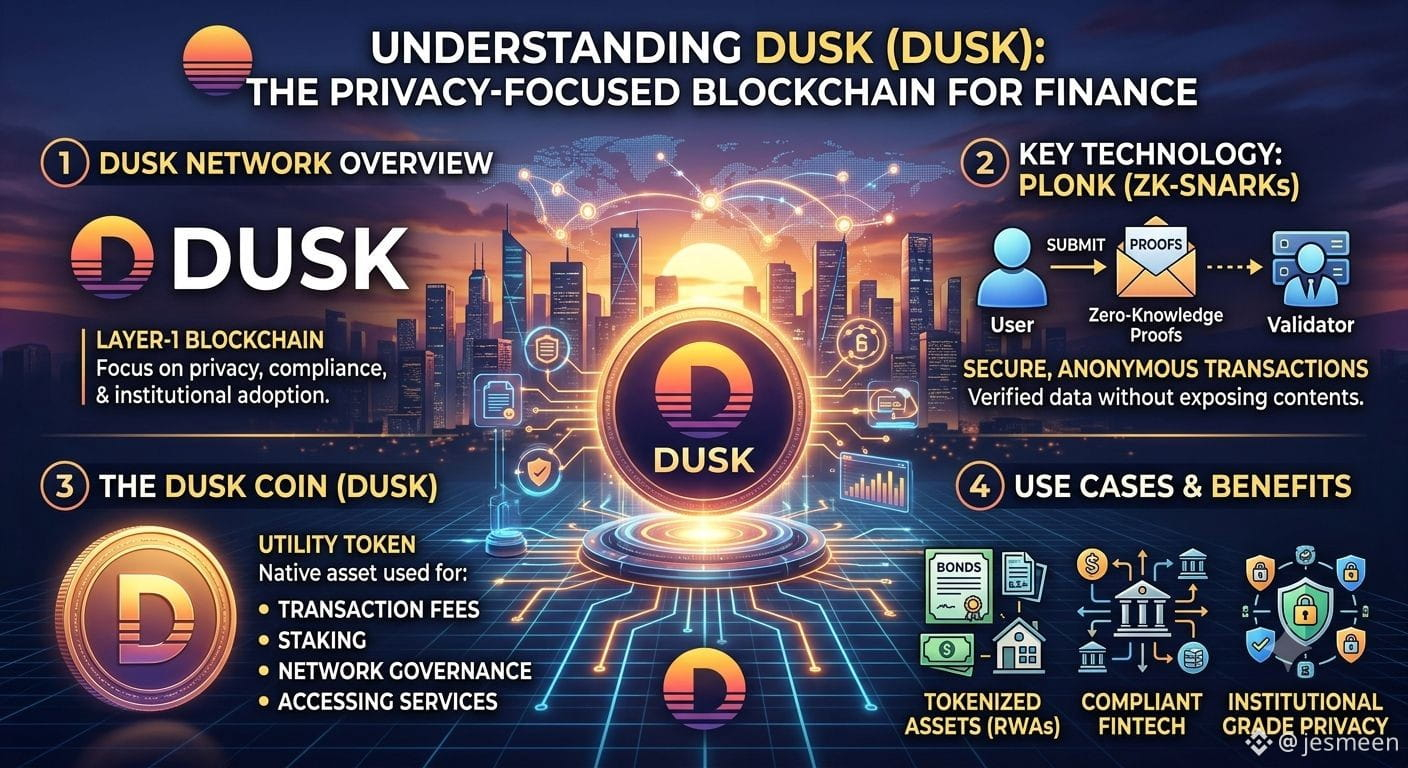
I keep coming back to Dusk Network's pitch, partly because it flips the usual privacy-coin logic on its head, and partly because I'm not sure that's a compliment yet. Most projects hide everything and dare regulators to catch up later. Dusk builds the exit door in from day one, which feels almost too polite for crypto. The mechanism is zero-knowledge proofs wrapped into their XSC contracts—a transaction can prove it's valid, correct amounts, correct permissions, without exposing the actual numbers or who's on either end. Clean on paper. Then you hit the real question, the one that always shows up eventually: valid to whom, and visible to whom? A regulator auditing a security token isn't going to accept "trust the math" forever, so Dusk layers in selective disclosure—approved parties get a key that unlocks specific details on request. Useful, maybe even necessary if institutions ever touch this seriously. But now there's a key sitting somewhere, held by someone, and that someone quietly becomes the weak point the cryptography was supposed to remove. So does privacy survive contact with the first person who's allowed to see through it?
#dusk @Dusk $DUSK
$A
$BTC
I keep coming back to Dusk Network's pitch, partly because it flips the usual privacy-coin logic on its head, and partly because I'm not sure that's a compliment yet. Most projects hide everything and dare regulators to catch up later. Dusk builds the exit door in from day one, which feels almost too polite for crypto. The mechanism is zero-knowledge proofs wrapped into their XSC contracts—a transaction can prove it's valid, correct amounts, correct permissions, without exposing the actual numbers or who's on either end. Clean on paper. Then you hit the real question, the one that always shows up eventually: valid to whom, and visible to whom? A regulator auditing a security token isn't going to accept "trust the math" forever, so Dusk layers in selective disclosure—approved parties get a key that unlocks specific details on request. Useful, maybe even necessary if institutions ever touch this seriously. But now there's a key sitting somewhere, held by someone, and that someone quietly becomes the weak point the cryptography was supposed to remove. So does privacy survive contact with the first person who's allowed to see through it?
$A
$BTC
I keep coming back to Dusk Network's pitch, partly because it flips the usual privacy-coin logic on its head, and partly because I'm not sure that's a compliment yet. Most projects hide everything and dare regulators to catch up later. Dusk builds the exit door in from day one, which feels almost too polite for crypto. The mechanism is zero-knowledge proofs wrapped into their XSC contracts—a transaction can prove it's valid, correct amounts, correct permissions, without exposing the actual numbers or who's on either end. Clean on paper. Then you hit the real question, the one that always shows up eventually: valid to whom, and visible to whom? A regulator auditing a security token isn't going to accept "trust the math" forever, so Dusk layers in selective disclosure—approved parties get a key that unlocks specific details on request. Useful, maybe even necessary if institutions ever touch this seriously. But now there's a key sitting somewhere, held by someone, and that someone quietly becomes the weak point the cryptography was supposed to remove. So does privacy survive contact with the first person who's allowed to see through it?
12
5
759
·
--
#dusk @Dusk_Foundation $DUSK
{spot}(DUSKUSDT)
$TUT
{spot}(TUTUSDT)
$BITCOIN
{alpha}(10x72e4f9f808c49a2a61de9c5896298920dc4eeea9)
I'm standing here thinking about Dusk Network at a point where the privacy-coin conversation feels tired, and yet the actual problem it's chewing on hasn't gone away. You either build for privacy and get treated like a compliance liability, or you build fully transparent and every treasury move sits there in public for competitors to pick apart. Dusk's trying to thread that needle with confidential contracts under the XSC standard — hide what should stay hidden, reveal it to whoever's actually owed the right to see it.
At first it sounds almost too tidy, honestly. But the messier question is who's holding the keys to that disclosure, and whether the system bends gracefully or breaks the first time a regulator or a court actually asks. That's the part nobody puts on a slide.
I'm not fully convinced yet, not because the engineering looks sloppy — it doesn't — but because I've watched enough ambitious privacy tech get the math right and the human governance around it wrong. Institutions talk a good game about wanting confidentiality, then quietly go build where the liquidity already lives.
Staying narrow — financial instruments, regulated issuance, nothing else — is the smarter bet here, if only because there's less room to fake progress. Execution will decide everything, same as always. I want to see real disputes survive this system before I call it proven rather than promising.
#dusk @Dusk $DUSK
$TUT
$BITCOIN
I'm standing here thinking about Dusk Network at a point where the privacy-coin conversation feels tired, and yet the actual problem it's chewing on hasn't gone away. You either build for privacy and get treated like a compliance liability, or you build fully transparent and every treasury move sits there in public for competitors to pick apart. Dusk's trying to thread that needle with confidential contracts under the XSC standard — hide what should stay hidden, reveal it to whoever's actually owed the right to see it.
At first it sounds almost too tidy, honestly. But the messier question is who's holding the keys to that disclosure, and whether the system bends gracefully or breaks the first time a regulator or a court actually asks. That's the part nobody puts on a slide.
I'm not fully convinced yet, not because the engineering looks sloppy — it doesn't — but because I've watched enough ambitious privacy tech get the math right and the human governance around it wrong. Institutions talk a good game about wanting confidentiality, then quietly go build where the liquidity already lives.
Staying narrow — financial instruments, regulated issuance, nothing else — is the smarter bet here, if only because there's less room to fake progress. Execution will decide everything, same as always. I want to see real disputes survive this system before I call it proven rather than promising.
$TUT
$BITCOIN
I'm standing here thinking about Dusk Network at a point where the privacy-coin conversation feels tired, and yet the actual problem it's chewing on hasn't gone away. You either build for privacy and get treated like a compliance liability, or you build fully transparent and every treasury move sits there in public for competitors to pick apart. Dusk's trying to thread that needle with confidential contracts under the XSC standard — hide what should stay hidden, reveal it to whoever's actually owed the right to see it.
At first it sounds almost too tidy, honestly. But the messier question is who's holding the keys to that disclosure, and whether the system bends gracefully or breaks the first time a regulator or a court actually asks. That's the part nobody puts on a slide.
I'm not fully convinced yet, not because the engineering looks sloppy — it doesn't — but because I've watched enough ambitious privacy tech get the math right and the human governance around it wrong. Institutions talk a good game about wanting confidentiality, then quietly go build where the liquidity already lives.
Staying narrow — financial instruments, regulated issuance, nothing else — is the smarter bet here, if only because there's less room to fake progress. Execution will decide everything, same as always. I want to see real disputes survive this system before I call it proven rather than promising.
5
4
437
·
--
#dusk @Dusk_Foundation $DUSK
{spot}(DUSKUSDT)
$TUT
{spot}(TUTUSDT)
$BTC
{spot}(BTCUSDT)
I'm standing here thinking about how many "privacy chains" I've watched come and go, and Dusk Network keeps landing in a different bucket for me — not because the tech is flawless, but because it's chasing the uncomfortable question everyone else avoids: privacy for whom, and under what conditions.
At first it sounds simple. Confidential smart contracts, zero-knowledge proofs, a public chain with private guts. But reality is different the moment a regulator needs to see inside something that was built never to be seen. That's not just privacy anymore, that's a disclosure problem wearing privacy's clothes, and it's a much harder thing to engineer well.
This is where it gets interesting. Most privacy projects try to dodge regulation. Dusk seems to be building toward it, aiming for something that could actually sit inside frameworks like MiCA. Real systems don't work in extremes — full secrecy scares institutions off, full transparency defeats the point. That uncomfortable middle is probably where the real demand lives, if it exists at scale.
I'm not fully convinced yet. Institutions move slow and need legal certainty long before they need elegant cryptography. Execution will decide everything here, like it always does. What I'm actually watching for isn't another partnership announcement — it's whether someone outside the core team quietly builds something real on it and it just holds up.
#dusk @Dusk $DUSK
$TUT
$BTC
I'm standing here thinking about how many "privacy chains" I've watched come and go, and Dusk Network keeps landing in a different bucket for me — not because the tech is flawless, but because it's chasing the uncomfortable question everyone else avoids: privacy for whom, and under what conditions.
At first it sounds simple. Confidential smart contracts, zero-knowledge proofs, a public chain with private guts. But reality is different the moment a regulator needs to see inside something that was built never to be seen. That's not just privacy anymore, that's a disclosure problem wearing privacy's clothes, and it's a much harder thing to engineer well.
This is where it gets interesting. Most privacy projects try to dodge regulation. Dusk seems to be building toward it, aiming for something that could actually sit inside frameworks like MiCA. Real systems don't work in extremes — full secrecy scares institutions off, full transparency defeats the point. That uncomfortable middle is probably where the real demand lives, if it exists at scale.
I'm not fully convinced yet. Institutions move slow and need legal certainty long before they need elegant cryptography. Execution will decide everything here, like it always does. What I'm actually watching for isn't another partnership announcement — it's whether someone outside the core team quietly builds something real on it and it just holds up.
$TUT
$BTC
I'm standing here thinking about how many "privacy chains" I've watched come and go, and Dusk Network keeps landing in a different bucket for me — not because the tech is flawless, but because it's chasing the uncomfortable question everyone else avoids: privacy for whom, and under what conditions.
At first it sounds simple. Confidential smart contracts, zero-knowledge proofs, a public chain with private guts. But reality is different the moment a regulator needs to see inside something that was built never to be seen. That's not just privacy anymore, that's a disclosure problem wearing privacy's clothes, and it's a much harder thing to engineer well.
This is where it gets interesting. Most privacy projects try to dodge regulation. Dusk seems to be building toward it, aiming for something that could actually sit inside frameworks like MiCA. Real systems don't work in extremes — full secrecy scares institutions off, full transparency defeats the point. That uncomfortable middle is probably where the real demand lives, if it exists at scale.
I'm not fully convinced yet. Institutions move slow and need legal certainty long before they need elegant cryptography. Execution will decide everything here, like it always does. What I'm actually watching for isn't another partnership announcement — it's whether someone outside the core team quietly builds something real on it and it just holds up.
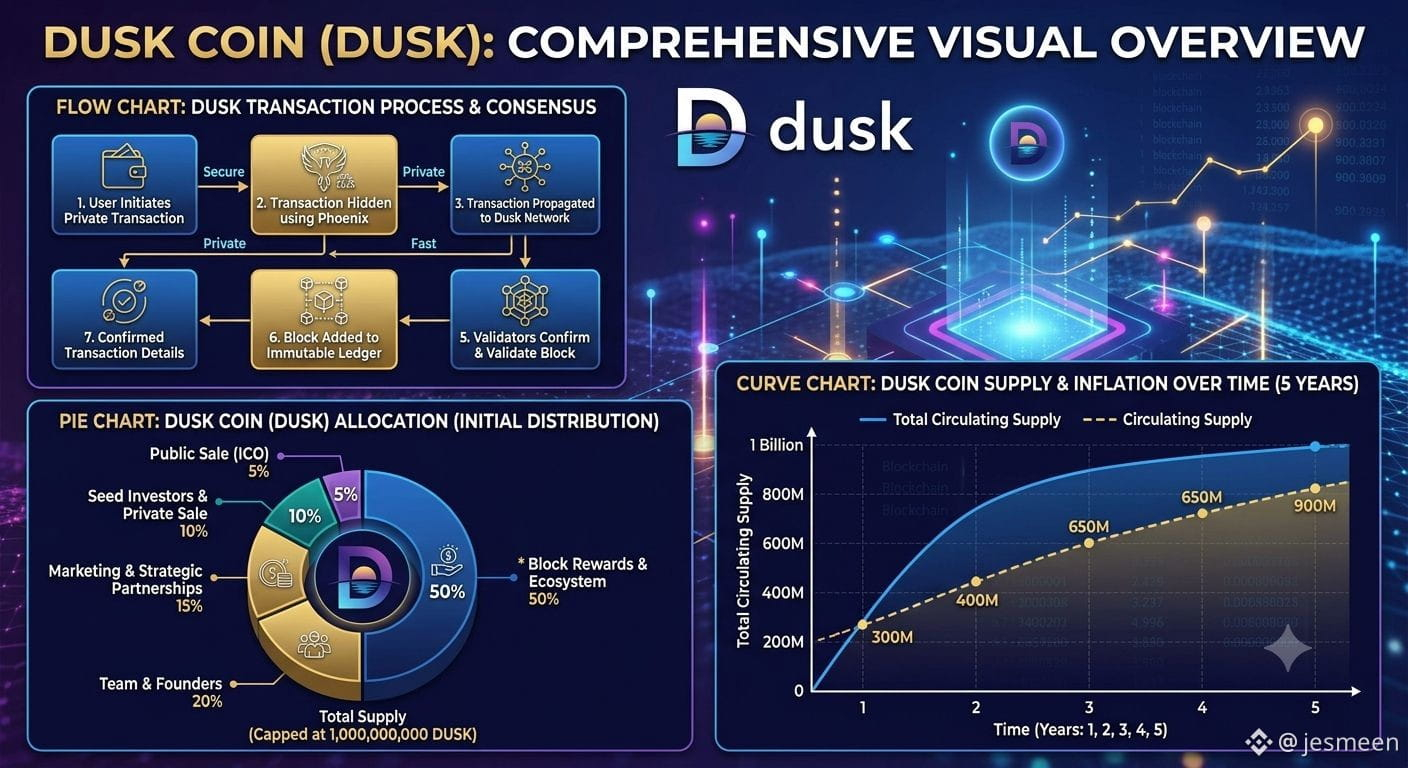
9
7
503
·
--
#dusk @Dusk_Foundation
$ZEC
{spot}(ZECUSDT)
$PEPE
{spot}(PEPEUSDT)
$DUSK
{spot}(DUSKUSDT)
I keep coming back to Dusk Network's whole pitch: privacy AND compliance, not privacy vs compliance. Easy to say, brutal to build.
Selective disclosure sounds elegant on paper — auditors see what they need, nobody else sees the rest. But who holds the viewing key? What happens when a court order needs more than "selective" was designed for? That's not a crypto problem anymore, that's law wearing a smart contract costume.
The ZK tech is mostly there at this point. What's not there is everything around it — custody support, audit frameworks for encrypted state, exchanges willing to list something that smells like a privacy coin even when it's really built for tokenized securities. Dusk leans hard into the "regulated finance" framing to dodge that stigma. Not sure the market draws that line as cleanly as they'd like.
Also, confidential contracts aren't free. Proof generation costs something, and that cost lands somewhere — fees, throughput, or centralization toward whoever's got the hardware. Haven't seen real sustained usage yet to know how that tradeoff actually plays out here.
What I respect is the narrow scope. Not trying to be everything, just infrastructure for regulated asset issuance. Smaller bet, maybe a smarter one.
Still watching for a real deployment that isn't just a pilot with a press release attached. Execution's going to decide this one, not the whitepaper.
#SandboxSANDSuspectedInfiniteMintFlawOnBase
#GrayscaleFilesFifthZECETFAmendment
#BitcoinETFs
#USCanadaTradeTalksCollapseCanadaVowsRetaliation
#dusk @Dusk
$ZEC
$PEPE
$DUSK
I keep coming back to Dusk Network's whole pitch: privacy AND compliance, not privacy vs compliance. Easy to say, brutal to build.
Selective disclosure sounds elegant on paper — auditors see what they need, nobody else sees the rest. But who holds the viewing key? What happens when a court order needs more than "selective" was designed for? That's not a crypto problem anymore, that's law wearing a smart contract costume.
The ZK tech is mostly there at this point. What's not there is everything around it — custody support, audit frameworks for encrypted state, exchanges willing to list something that smells like a privacy coin even when it's really built for tokenized securities. Dusk leans hard into the "regulated finance" framing to dodge that stigma. Not sure the market draws that line as cleanly as they'd like.
Also, confidential contracts aren't free. Proof generation costs something, and that cost lands somewhere — fees, throughput, or centralization toward whoever's got the hardware. Haven't seen real sustained usage yet to know how that tradeoff actually plays out here.
What I respect is the narrow scope. Not trying to be everything, just infrastructure for regulated asset issuance. Smaller bet, maybe a smarter one.
Still watching for a real deployment that isn't just a pilot with a press release attached. Execution's going to decide this one, not the whitepaper.
#SandboxSANDSuspectedInfiniteMintFlawOnBase
#GrayscaleFilesFifthZECETFAmendment
#BitcoinETFs
#USCanadaTradeTalksCollapseCanadaVowsRetaliation
$ZEC
$PEPE
$DUSK
I keep coming back to Dusk Network's whole pitch: privacy AND compliance, not privacy vs compliance. Easy to say, brutal to build.
Selective disclosure sounds elegant on paper — auditors see what they need, nobody else sees the rest. But who holds the viewing key? What happens when a court order needs more than "selective" was designed for? That's not a crypto problem anymore, that's law wearing a smart contract costume.
The ZK tech is mostly there at this point. What's not there is everything around it — custody support, audit frameworks for encrypted state, exchanges willing to list something that smells like a privacy coin even when it's really built for tokenized securities. Dusk leans hard into the "regulated finance" framing to dodge that stigma. Not sure the market draws that line as cleanly as they'd like.
Also, confidential contracts aren't free. Proof generation costs something, and that cost lands somewhere — fees, throughput, or centralization toward whoever's got the hardware. Haven't seen real sustained usage yet to know how that tradeoff actually plays out here.
What I respect is the narrow scope. Not trying to be everything, just infrastructure for regulated asset issuance. Smaller bet, maybe a smarter one.
Still watching for a real deployment that isn't just a pilot with a press release attached. Execution's going to decide this one, not the whitepaper.
#SandboxSANDSuspectedInfiniteMintFlawOnBase
#GrayscaleFilesFifthZECETFAmendment
#BitcoinETFs
#USCanadaTradeTalksCollapseCanadaVowsRetaliation
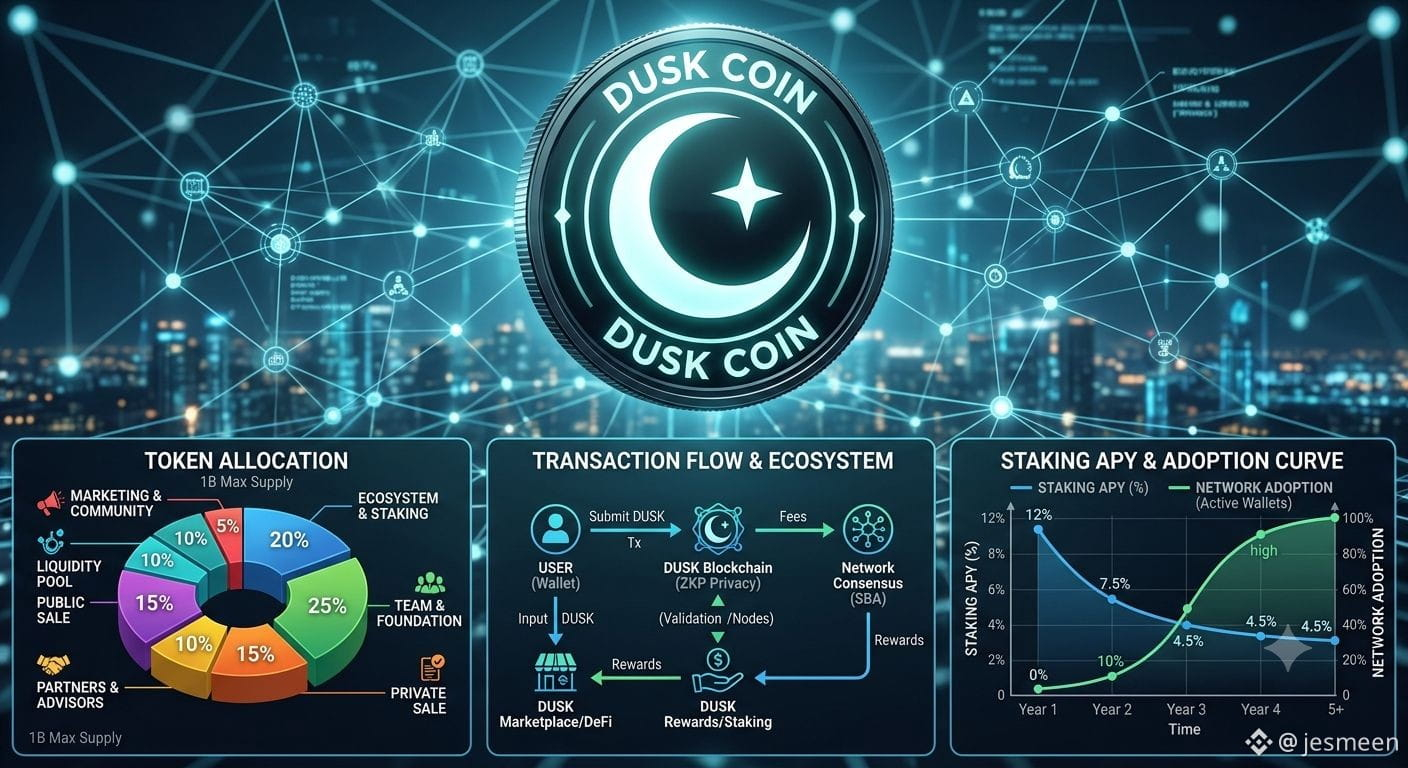
5
4
587
·
--
#dusk @Dusk_Foundation $DUSK
{spot}(DUSKUSDT)
$SUI
{spot}(SUIUSDT)
$X
{alpha}(560x0510101ec6c49d24ed911f0011e22a0d697ee776)
I'm standing here thinking about how many "privacy blockchain for finance" pitches I've heard over the years, and Dusk Network is the one that keeps quietly resurfacing in conversations that aren't on any stage.
The idea itself isn't complicated. XSC lets smart contracts stay confidential while still proving they followed the rules. At first it sounds simple, hide the data, keep the compliance. But reality is different once you realize regulators don't actually want opacity, they want controlled visibility. That's a much harder thing to engineer than plain privacy.
This is where it gets complicated for basically every project in this category. Institutions want privacy from competitors, not from regulators, and building a system that can tell the difference is the real work. Not the zero-knowledge math, that part's mostly solved. The governance around who can see what, when, and why, that's what determines if a compliance team ever signs off on it.
I'm not fully convinced yet that it scales the way the docs suggest, and I haven't seen enough real transaction volume to judge the proving overhead under load. Adoption in institutional finance is also just slow by nature, not because of hesitation but because switching settlement rails is genuine legal risk for whoever goes first.
What I'll say is Dusk hasn't chased retail hype the way most L1s did last cycle. It stayed narrow. Whether that's discipline or just limited ambition, I honestly can't tell yet. Execution will decide everything, not the whitepaper.
#BitcoinBestWeekSinceMarch2023
#USRefinersFaceLoomingCrudeSupplyDrop
#GoldReboundsNearly5%
#GrayscaleFilesFifthZECETFAmendment
#dusk @Dusk $DUSK
$SUI
$X
I'm standing here thinking about how many "privacy blockchain for finance" pitches I've heard over the years, and Dusk Network is the one that keeps quietly resurfacing in conversations that aren't on any stage.
The idea itself isn't complicated. XSC lets smart contracts stay confidential while still proving they followed the rules. At first it sounds simple, hide the data, keep the compliance. But reality is different once you realize regulators don't actually want opacity, they want controlled visibility. That's a much harder thing to engineer than plain privacy.
This is where it gets complicated for basically every project in this category. Institutions want privacy from competitors, not from regulators, and building a system that can tell the difference is the real work. Not the zero-knowledge math, that part's mostly solved. The governance around who can see what, when, and why, that's what determines if a compliance team ever signs off on it.
I'm not fully convinced yet that it scales the way the docs suggest, and I haven't seen enough real transaction volume to judge the proving overhead under load. Adoption in institutional finance is also just slow by nature, not because of hesitation but because switching settlement rails is genuine legal risk for whoever goes first.
What I'll say is Dusk hasn't chased retail hype the way most L1s did last cycle. It stayed narrow. Whether that's discipline or just limited ambition, I honestly can't tell yet. Execution will decide everything, not the whitepaper.
#BitcoinBestWeekSinceMarch2023
#USRefinersFaceLoomingCrudeSupplyDrop
#GoldReboundsNearly5%
#GrayscaleFilesFifthZECETFAmendment
$SUI
$X
I'm standing here thinking about how many "privacy blockchain for finance" pitches I've heard over the years, and Dusk Network is the one that keeps quietly resurfacing in conversations that aren't on any stage.
The idea itself isn't complicated. XSC lets smart contracts stay confidential while still proving they followed the rules. At first it sounds simple, hide the data, keep the compliance. But reality is different once you realize regulators don't actually want opacity, they want controlled visibility. That's a much harder thing to engineer than plain privacy.
This is where it gets complicated for basically every project in this category. Institutions want privacy from competitors, not from regulators, and building a system that can tell the difference is the real work. Not the zero-knowledge math, that part's mostly solved. The governance around who can see what, when, and why, that's what determines if a compliance team ever signs off on it.
I'm not fully convinced yet that it scales the way the docs suggest, and I haven't seen enough real transaction volume to judge the proving overhead under load. Adoption in institutional finance is also just slow by nature, not because of hesitation but because switching settlement rails is genuine legal risk for whoever goes first.
What I'll say is Dusk hasn't chased retail hype the way most L1s did last cycle. It stayed narrow. Whether that's discipline or just limited ambition, I honestly can't tell yet. Execution will decide everything, not the whitepaper.
#BitcoinBestWeekSinceMarch2023
#USRefinersFaceLoomingCrudeSupplyDrop
#GoldReboundsNearly5%
#GrayscaleFilesFifthZECETFAmendment
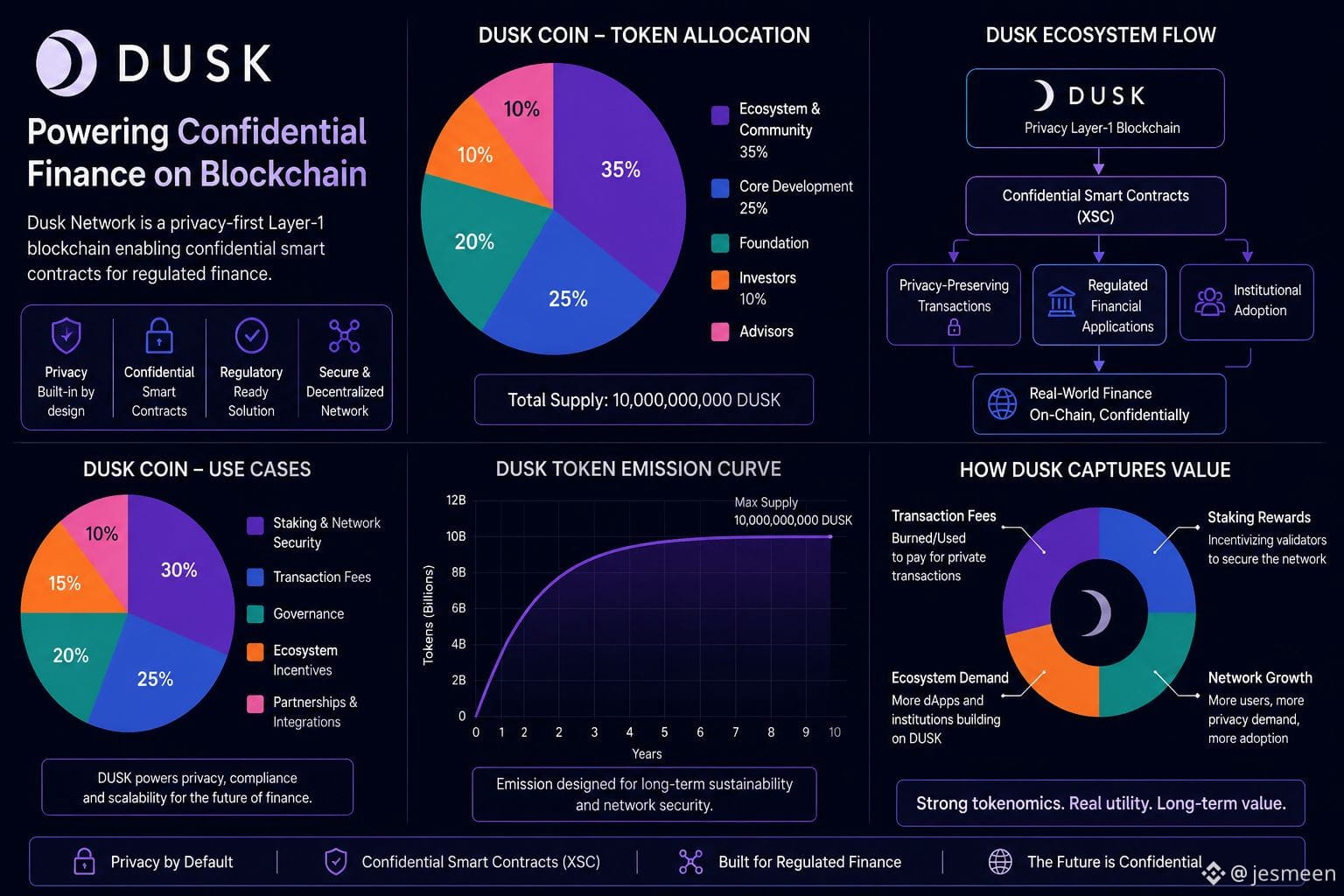
7
4
304
·
--
#dusk @Dusk_Foundation
$BITCOIN
{alpha}(10x72e4f9f808c49a2a61de9c5896298920dc4eeea9)
$XRP
{spot}(XRPUSDT)
$DUSK
{spot}(DUSKUSDT)
I'm watching Dusk Network come up again in a privacy-chain discussion and something about it still nags at me. The pitch is confidential smart contracts for regulated finance, XSC standard, zero-knowledge proofs that let you hide transaction details while still proving compliance to whoever needs to check. At first it sounds simple. Hide the data, keep the trust.
But reality is different. Privacy and compliance pull against each other, they don't just shake hands because a whitepaper says so. Selective disclosure, letting a regulator see specific data without exposing the whole chain, is a much harder problem than plain privacy ever was. That's where things get interesting, and also where most projects quietly go silent.
I'm not fully convinced yet that proof generation stays fast enough once real financial logic gets layered in. Institutions don't just want confidentiality, they want speed and predictable costs, and zero-knowledge systems haven't historically been cheap on either front.
Execution will decide everything here. Not the branding, not the framework alignment, whether this actually holds up under real settlement volume and real regulatory scrutiny. I keep coming back to that. The problem Dusk is chasing is real. Whether they're the ones who solve it is still an open question.
#TrumpPressesCongressToPassClarityAct
#SamsungToAnnounceNewShareholderReturnPlanFriday
#GoldReboundsNearly5%
#Bitcoin❗
#dusk @Dusk
$BITCOIN
$XRP
$DUSK
I'm watching Dusk Network come up again in a privacy-chain discussion and something about it still nags at me. The pitch is confidential smart contracts for regulated finance, XSC standard, zero-knowledge proofs that let you hide transaction details while still proving compliance to whoever needs to check. At first it sounds simple. Hide the data, keep the trust.
But reality is different. Privacy and compliance pull against each other, they don't just shake hands because a whitepaper says so. Selective disclosure, letting a regulator see specific data without exposing the whole chain, is a much harder problem than plain privacy ever was. That's where things get interesting, and also where most projects quietly go silent.
I'm not fully convinced yet that proof generation stays fast enough once real financial logic gets layered in. Institutions don't just want confidentiality, they want speed and predictable costs, and zero-knowledge systems haven't historically been cheap on either front.
Execution will decide everything here. Not the branding, not the framework alignment, whether this actually holds up under real settlement volume and real regulatory scrutiny. I keep coming back to that. The problem Dusk is chasing is real. Whether they're the ones who solve it is still an open question.
#TrumpPressesCongressToPassClarityAct
#SamsungToAnnounceNewShareholderReturnPlanFriday
#GoldReboundsNearly5%
#Bitcoin❗
$BITCOIN
$XRP
$DUSK
I'm watching Dusk Network come up again in a privacy-chain discussion and something about it still nags at me. The pitch is confidential smart contracts for regulated finance, XSC standard, zero-knowledge proofs that let you hide transaction details while still proving compliance to whoever needs to check. At first it sounds simple. Hide the data, keep the trust.
But reality is different. Privacy and compliance pull against each other, they don't just shake hands because a whitepaper says so. Selective disclosure, letting a regulator see specific data without exposing the whole chain, is a much harder problem than plain privacy ever was. That's where things get interesting, and also where most projects quietly go silent.
I'm not fully convinced yet that proof generation stays fast enough once real financial logic gets layered in. Institutions don't just want confidentiality, they want speed and predictable costs, and zero-knowledge systems haven't historically been cheap on either front.
Execution will decide everything here. Not the branding, not the framework alignment, whether this actually holds up under real settlement volume and real regulatory scrutiny. I keep coming back to that. The problem Dusk is chasing is real. Whether they're the ones who solve it is still an open question.
#TrumpPressesCongressToPassClarityAct
#SamsungToAnnounceNewShareholderReturnPlanFriday
#GoldReboundsNearly5%
#Bitcoin❗
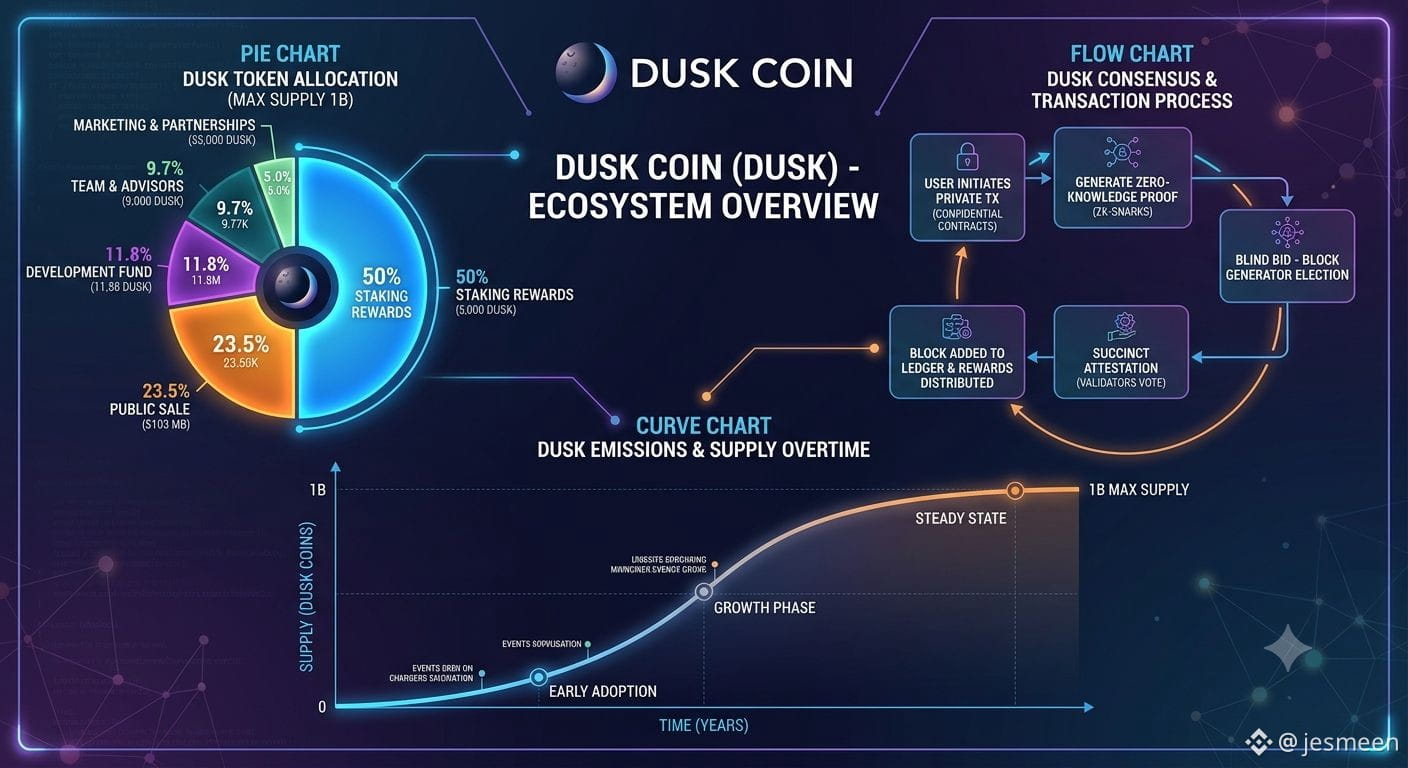
2
3
254
·
--
#dusk @Dusk_Foundation $DUSK
{spot}(DUSKUSDT)
$DOS
{future}(DOSUSDT)
$CYBER
{spot}(CYBERUSDT)
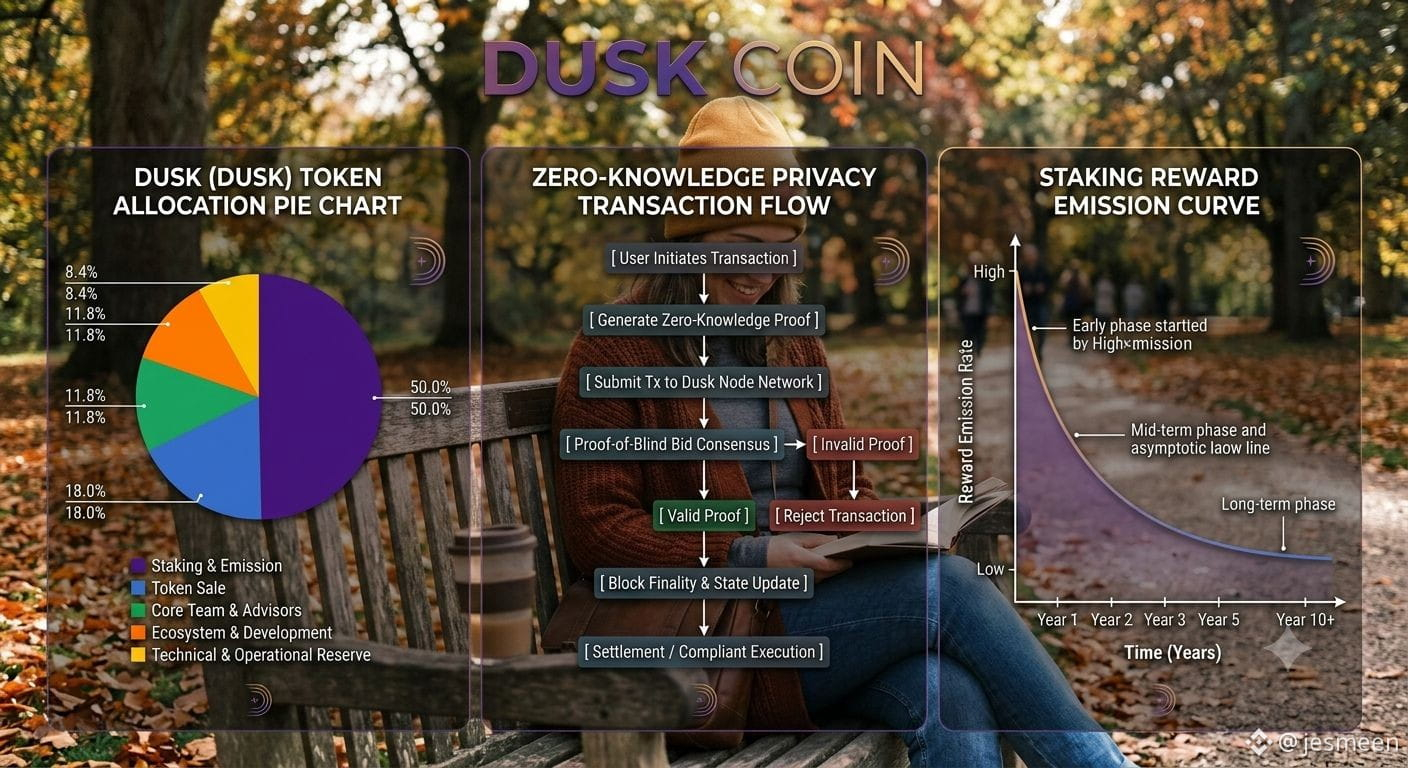
I'm watching Dusk Network's testnet chatter go by and it's hard not to feel a little numb to it at first. Another privacy chain claiming it's finally cracked the compliance-privacy tension. I've heard that before.
But the XSC confidential contract piece actually made me slow down. Contracts that prove correctness without exposing the data behind them, with selective disclosure baked in instead of bolted on later. That's a more mature take than the old privacy-coin playbook of just ignoring regulators entirely.
I'm not fully convinced yet, though. Selective disclosure sounds clean on a whitepaper. It gets messier the moment an actual auditor starts asking where the line sits. And confidential contracts aren't free — more proving, more verification, somewhere a throughput cost shows up. Testnets are forgiving. Mainnets under real load rarely are.
What I do notice is the restraint. No meme-driven hype, no "next Bitcoin of privacy" noise. The messaging stays close to what they're actually claiming, which in this space is rarer than it should be.
Execution will decide everything here. I'll be watching for real institutional volume six months from now, not the announcement — that's usually where these projects quietly tell on themselves.
#KOSPICloses5.9%HigherOnChipmakerBuybacks
#btc70k
#CryptoRally
#FOMCWatch
#dusk @Dusk $DUSK
$DOS
$CYBER
I'm watching Dusk Network's testnet chatter go by and it's hard not to feel a little numb to it at first. Another privacy chain claiming it's finally cracked the compliance-privacy tension. I've heard that before.
But the XSC confidential contract piece actually made me slow down. Contracts that prove correctness without exposing the data behind them, with selective disclosure baked in instead of bolted on later. That's a more mature take than the old privacy-coin playbook of just ignoring regulators entirely.
I'm not fully convinced yet, though. Selective disclosure sounds clean on a whitepaper. It gets messier the moment an actual auditor starts asking where the line sits. And confidential contracts aren't free — more proving, more verification, somewhere a throughput cost shows up. Testnets are forgiving. Mainnets under real load rarely are.
What I do notice is the restraint. No meme-driven hype, no "next Bitcoin of privacy" noise. The messaging stays close to what they're actually claiming, which in this space is rarer than it should be.
Execution will decide everything here. I'll be watching for real institutional volume six months from now, not the announcement — that's usually where these projects quietly tell on themselves.
#KOSPICloses5.9%HigherOnChipmakerBuybacks
#btc70k
#CryptoRally
#FOMCWatch
$DOS
$CYBER
I'm watching Dusk Network's testnet chatter go by and it's hard not to feel a little numb to it at first. Another privacy chain claiming it's finally cracked the compliance-privacy tension. I've heard that before.
But the XSC confidential contract piece actually made me slow down. Contracts that prove correctness without exposing the data behind them, with selective disclosure baked in instead of bolted on later. That's a more mature take than the old privacy-coin playbook of just ignoring regulators entirely.
I'm not fully convinced yet, though. Selective disclosure sounds clean on a whitepaper. It gets messier the moment an actual auditor starts asking where the line sits. And confidential contracts aren't free — more proving, more verification, somewhere a throughput cost shows up. Testnets are forgiving. Mainnets under real load rarely are.
What I do notice is the restraint. No meme-driven hype, no "next Bitcoin of privacy" noise. The messaging stays close to what they're actually claiming, which in this space is rarer than it should be.
Execution will decide everything here. I'll be watching for real institutional volume six months from now, not the announcement — that's usually where these projects quietly tell on themselves.
#KOSPICloses5.9%HigherOnChipmakerBuybacks
#btc70k
#CryptoRally
#FOMCWatch
9
4
714
·
--
#dusk $DUSK @Dusk_Foundation
{spot}(DUSKUSDT)
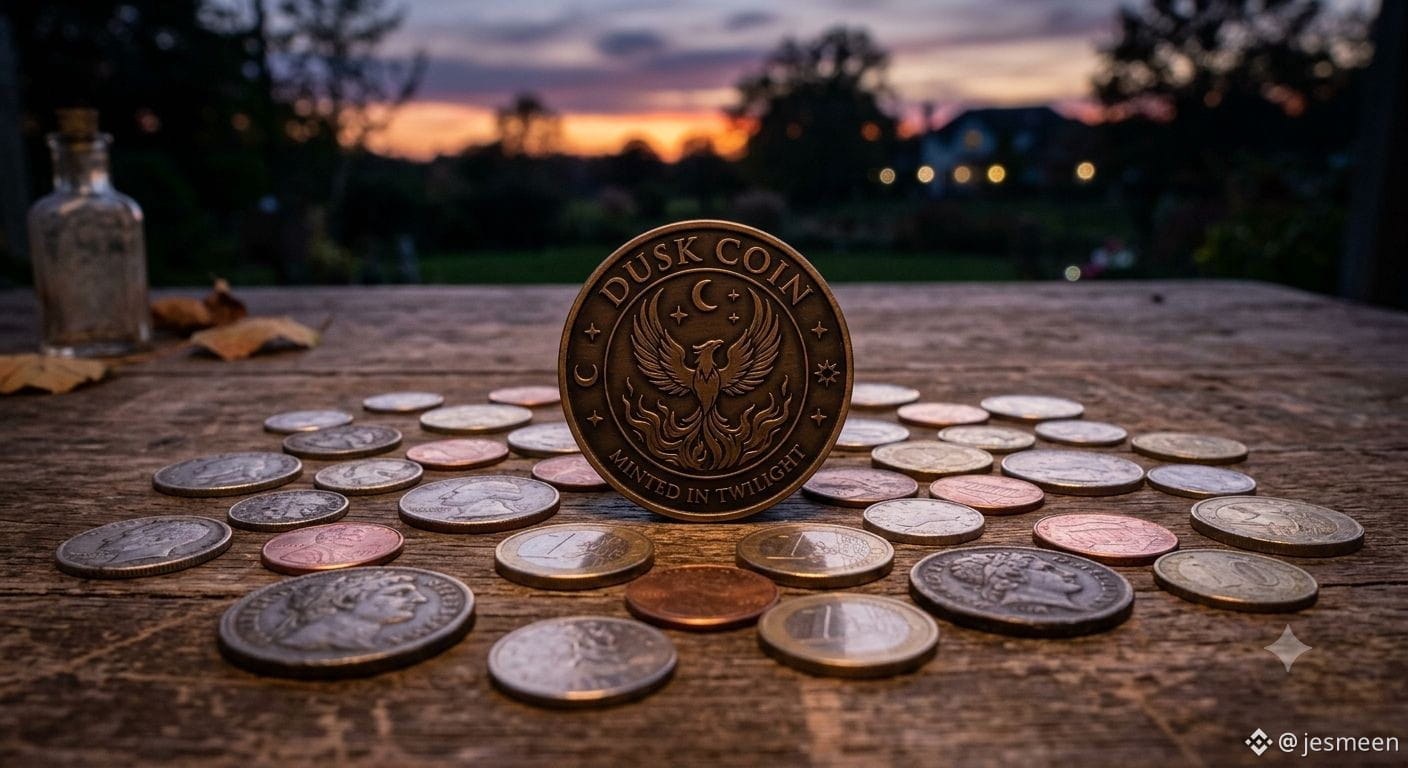
I'm looking at Dusk Network again and the thing that actually holds my attention isn't the "privacy blockchain" tagline, it's the XSC standard underneath it. Confidential smart contracts for financial applications sounds clean until you ask the obvious question: confidential from whom? Regulators still need to see something, somewhere, or the whole "built for regulated finance" pitch falls apart.
That's where it gets interesting. Selective disclosure is easy to draw on a whiteboard. Way harder to run in production when you've got different regulators wanting different levels of access, and a proof system that has to hold up under actual legal scrutiny, not just a testnet demo.
$AAPLB
{spot}(AAPLBUSDT)
I'm not fully convinced yet. The cryptography is probably fine — that part usually is. What worries me is everything above it: governance, key management, who updates the rules when regulation shifts. Real systems don't work in extremes, and Dusk is trying to sit exactly in the uncomfortable middle between transparent and private.
Execution will decide everything here. Not the whitepaper.
$SOON
{future}(SOONUSDT)
#USStorageStocksExtendLosses
#FOMCWatch
#EthereumOpensGlamsterdamEarlyTestnet
#HyperliquidTradeXYZAskSECForIPOPRules
#dusk $DUSK @Dusk
I'm looking at Dusk Network again and the thing that actually holds my attention isn't the "privacy blockchain" tagline, it's the XSC standard underneath it. Confidential smart contracts for financial applications sounds clean until you ask the obvious question: confidential from whom? Regulators still need to see something, somewhere, or the whole "built for regulated finance" pitch falls apart.
That's where it gets interesting. Selective disclosure is easy to draw on a whiteboard. Way harder to run in production when you've got different regulators wanting different levels of access, and a proof system that has to hold up under actual legal scrutiny, not just a testnet demo.
$AAPLB
I'm not fully convinced yet. The cryptography is probably fine — that part usually is. What worries me is everything above it: governance, key management, who updates the rules when regulation shifts. Real systems don't work in extremes, and Dusk is trying to sit exactly in the uncomfortable middle between transparent and private.
Execution will decide everything here. Not the whitepaper.
$SOON
#USStorageStocksExtendLosses
#FOMCWatch
#EthereumOpensGlamsterdamEarlyTestnet
#HyperliquidTradeXYZAskSECForIPOPRules
I'm looking at Dusk Network again and the thing that actually holds my attention isn't the "privacy blockchain" tagline, it's the XSC standard underneath it. Confidential smart contracts for financial applications sounds clean until you ask the obvious question: confidential from whom? Regulators still need to see something, somewhere, or the whole "built for regulated finance" pitch falls apart.
That's where it gets interesting. Selective disclosure is easy to draw on a whiteboard. Way harder to run in production when you've got different regulators wanting different levels of access, and a proof system that has to hold up under actual legal scrutiny, not just a testnet demo.
$AAPLB
I'm not fully convinced yet. The cryptography is probably fine — that part usually is. What worries me is everything above it: governance, key management, who updates the rules when regulation shifts. Real systems don't work in extremes, and Dusk is trying to sit exactly in the uncomfortable middle between transparent and private.
Execution will decide everything here. Not the whitepaper.
$SOON
#USStorageStocksExtendLosses
#FOMCWatch
#EthereumOpensGlamsterdamEarlyTestnet
#HyperliquidTradeXYZAskSECForIPOPRules
6
6
345
·
--
#dusk $DUSK @Dusk_Foundation
{spot}(DUSKUSDT)
I'm watching Dusk Network get talked about again and I keep landing on the same thought — privacy and compliance aren't natural allies, they're a negotiation, and Dusk is trying to build a whole chain out of that negotiation.
$CYCN.US
{stock_us}(CYCN.US)
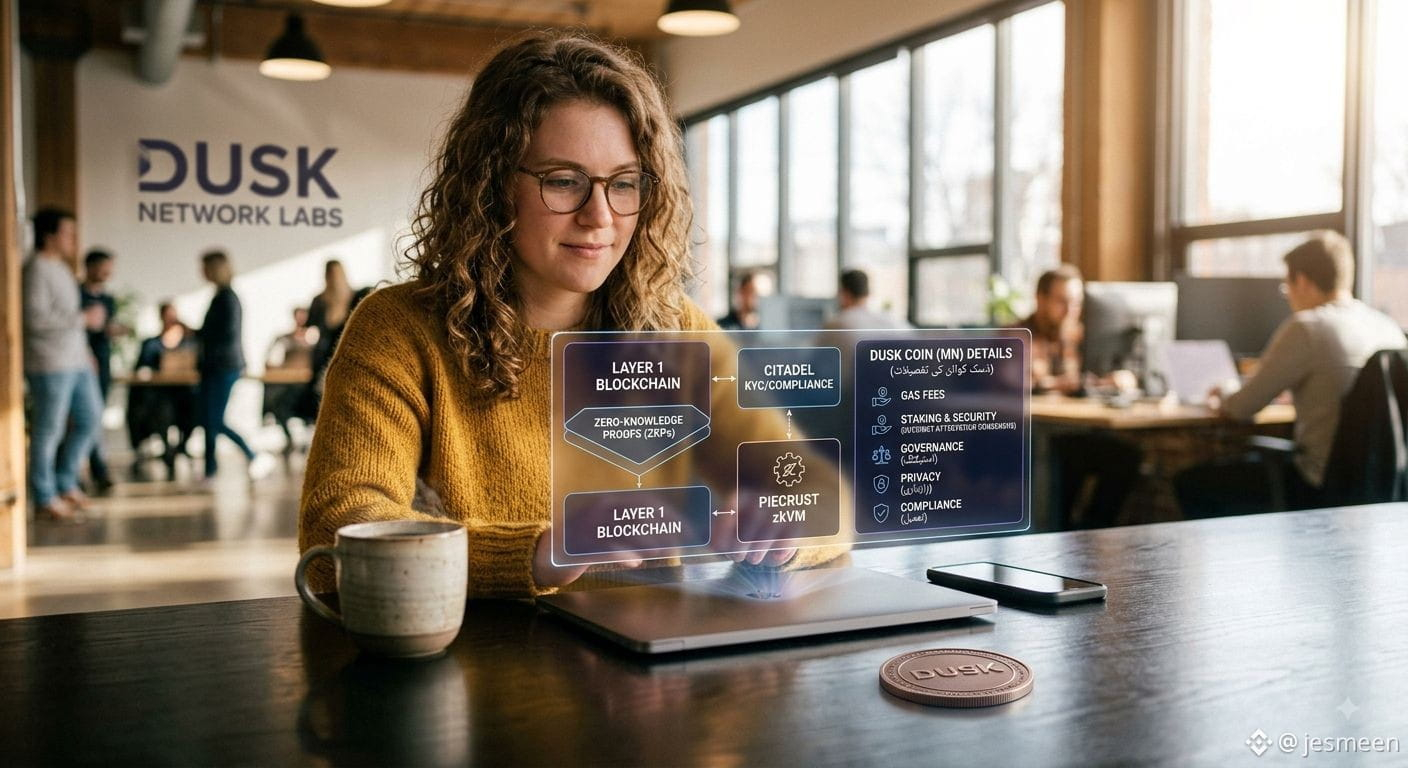
The idea itself makes sense. Institutions don't want total transparency, but they don't want total opacity either. They want to prove something's true without showing their whole hand. That's what XSC is reaching for with confidential contracts.
But that's also where it gets hard. Zero-knowledge proofs are great at hiding data, not so great at giving regulators clean, revocable access when they actually need it. That gap doesn't get solved with clever code — it gets solved with years of legal groundwork nobody sees on a roadmap graphic.
$AAPL.US
{stock_us}(AAPL.US)
I'm not fully convinced yet. Not because the tech is bad, but because this category doesn't get judged by TVL charts or hype cycles. It gets judged by whether real institutions actually settle real instruments on it, repeatedly, under real scrutiny — without quietly routing around the privacy layer when things get serious.
Execution will decide everything here. Everything else is just noise until then.
#DollarHits3MonthLow
#USPressesSouthKoreaToPrioritizeMemoryChips
#BTCPerpFundingRateHits20MonthHigh
#EthereumFoundationLaunchesGlamsterdamTestnet
#dusk $DUSK @Dusk
I'm watching Dusk Network get talked about again and I keep landing on the same thought — privacy and compliance aren't natural allies, they're a negotiation, and Dusk is trying to build a whole chain out of that negotiation.
$CYCN.US
The idea itself makes sense. Institutions don't want total transparency, but they don't want total opacity either. They want to prove something's true without showing their whole hand. That's what XSC is reaching for with confidential contracts.
But that's also where it gets hard. Zero-knowledge proofs are great at hiding data, not so great at giving regulators clean, revocable access when they actually need it. That gap doesn't get solved with clever code — it gets solved with years of legal groundwork nobody sees on a roadmap graphic.
$AAPL.US
I'm not fully convinced yet. Not because the tech is bad, but because this category doesn't get judged by TVL charts or hype cycles. It gets judged by whether real institutions actually settle real instruments on it, repeatedly, under real scrutiny — without quietly routing around the privacy layer when things get serious.
Execution will decide everything here. Everything else is just noise until then.
#DollarHits3MonthLow
#USPressesSouthKoreaToPrioritizeMemoryChips
#BTCPerpFundingRateHits20MonthHigh
#EthereumFoundationLaunchesGlamsterdamTestnet
I'm watching Dusk Network get talked about again and I keep landing on the same thought — privacy and compliance aren't natural allies, they're a negotiation, and Dusk is trying to build a whole chain out of that negotiation.
$CYCN.US
The idea itself makes sense. Institutions don't want total transparency, but they don't want total opacity either. They want to prove something's true without showing their whole hand. That's what XSC is reaching for with confidential contracts.
But that's also where it gets hard. Zero-knowledge proofs are great at hiding data, not so great at giving regulators clean, revocable access when they actually need it. That gap doesn't get solved with clever code — it gets solved with years of legal groundwork nobody sees on a roadmap graphic.
$AAPL.US
I'm not fully convinced yet. Not because the tech is bad, but because this category doesn't get judged by TVL charts or hype cycles. It gets judged by whether real institutions actually settle real instruments on it, repeatedly, under real scrutiny — without quietly routing around the privacy layer when things get serious.
Execution will decide everything here. Everything else is just noise until then.
#DollarHits3MonthLow
#USPressesSouthKoreaToPrioritizeMemoryChips
#BTCPerpFundingRateHits20MonthHigh
#EthereumFoundationLaunchesGlamsterdamTestnet
10
7
301
·
--
#dusk $DUSK @Dusk_Foundation $BTC $DOS
{future}(DOSUSDT)
{spot}(BTCUSDT)
{spot}(DUSKUSDT)
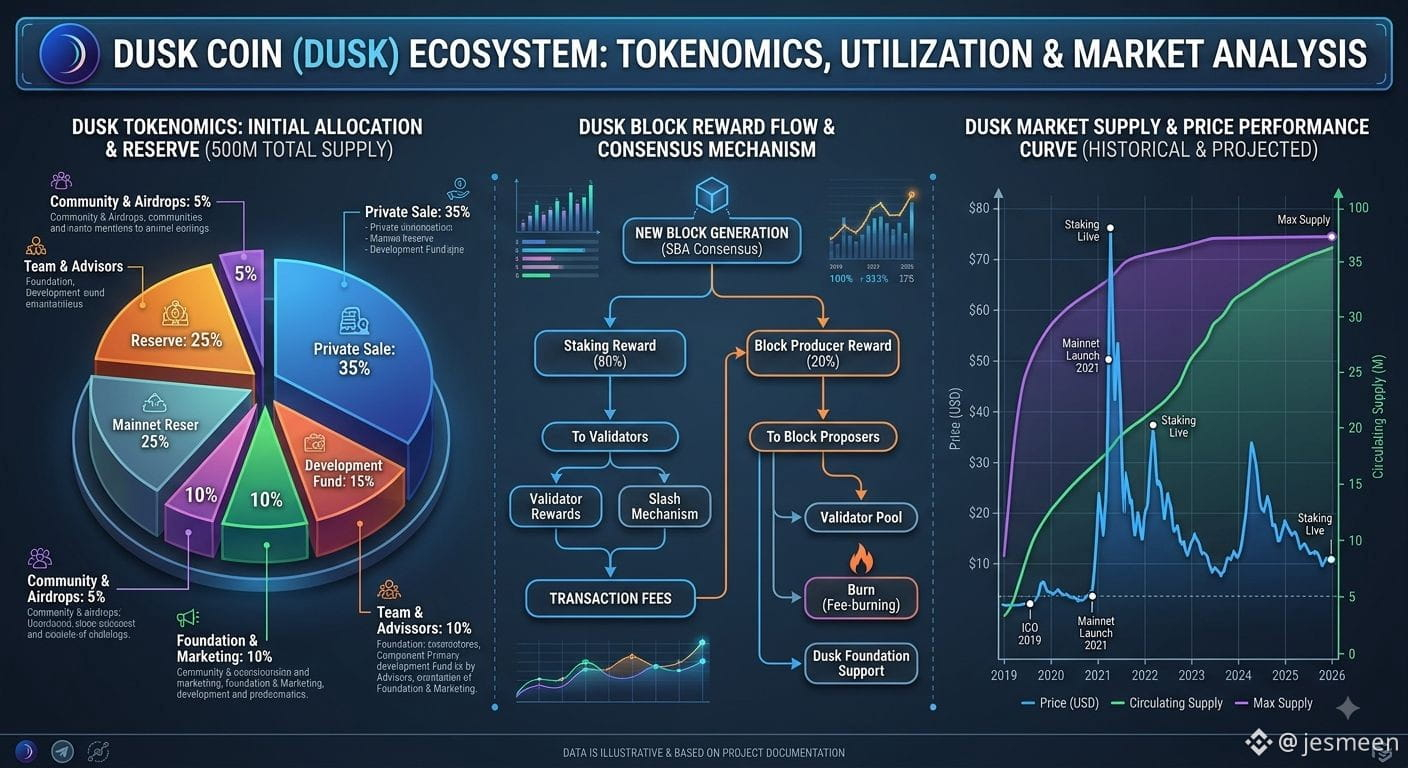
I'm looking at Dusk Network again and still landing in the same spot. The idea of confidential smart contracts for real financial use makes sense on paper — institutions don't want their positions visible to everyone watching the chain. But privacy and verifiability pull against each other, and that tension doesn't just disappear because you call it XSC.
At first it sounds like a clean solve. Then you remember zero-knowledge proofs at scale are still hard, and regulators want selective disclosure, not a black box. That's where it gets complicated.
I'm not fully convinced yet. The real competition isn't other L1s, it's boring permissioned databases institutions already trust. Dusk has to beat that quietly, over years, not with another announcement.
Execution will decide everything here. Watching, not hyped.
#Bitcoin❗
#ChinaJulyOutputRetailInvestmentAllMiss
#SECReviewsSix3xLeveragedCommodityETFs
#SP500TopsRecord7800
#dusk $DUSK @Dusk $BTC $DOS
I'm looking at Dusk Network again and still landing in the same spot. The idea of confidential smart contracts for real financial use makes sense on paper — institutions don't want their positions visible to everyone watching the chain. But privacy and verifiability pull against each other, and that tension doesn't just disappear because you call it XSC.
At first it sounds like a clean solve. Then you remember zero-knowledge proofs at scale are still hard, and regulators want selective disclosure, not a black box. That's where it gets complicated.
I'm not fully convinced yet. The real competition isn't other L1s, it's boring permissioned databases institutions already trust. Dusk has to beat that quietly, over years, not with another announcement.
Execution will decide everything here. Watching, not hyped.
#Bitcoin❗
#ChinaJulyOutputRetailInvestmentAllMiss
#SECReviewsSix3xLeveragedCommodityETFs
#SP500TopsRecord7800
I'm looking at Dusk Network again and still landing in the same spot. The idea of confidential smart contracts for real financial use makes sense on paper — institutions don't want their positions visible to everyone watching the chain. But privacy and verifiability pull against each other, and that tension doesn't just disappear because you call it XSC.
At first it sounds like a clean solve. Then you remember zero-knowledge proofs at scale are still hard, and regulators want selective disclosure, not a black box. That's where it gets complicated.
I'm not fully convinced yet. The real competition isn't other L1s, it's boring permissioned databases institutions already trust. Dusk has to beat that quietly, over years, not with another announcement.
Execution will decide everything here. Watching, not hyped.
#Bitcoin❗
#ChinaJulyOutputRetailInvestmentAllMiss
#SECReviewsSix3xLeveragedCommodityETFs
#SP500TopsRecord7800
16
8
585
·
--
#dusk @Dusk_Foundation $DUSK
{spot}(DUSKUSDT)
$AAPLB
{spot}(AAPLBUSDT)
$BTC
{spot}(BTCUSDT)
I've been looking at Dusk Network lately, mostly because "privacy for regulated finance" is a much harder claim than "privacy" alone, and I wanted to see if the architecture actually backs it up.
The pitch is confidential smart contracts through their XSC standard — trades and balances stay hidden, but still provable to whoever's legally allowed to see them. That's the real problem in institutional crypto. Full transparency doesn't work for a trading desk, but full secrecy doesn't work for a regulator. Threading that needle with zero-knowledge proofs is the right idea on paper.
Where I get skeptical is scale. Proving a simple transfer privately is one thing. Proving complex financial logic — compliance checks, settlement conditions, multi-party contracts — is a much heavier lift, and that's usually where these systems get slow in ways the whitepaper doesn't show you.
There's also the regulatory side, which honestly matters more than the tech. You can build compliant-by-design rails, but if no regulator has actually blessed this model yet, you're just waiting. That's not a knock on Dusk specifically, it's the timeline every project like this runs into.
I don't think the idea is wrong. Something like this probably needs to exist eventually. Whether Dusk is the one still standing when real volume shows up is a different question, and that's the part I'm still watching, not betting on yet.
#BNBChainToActivatePasteurHardFork
#COWRises55.77%In24h
#SP500TopsRecord7800
#bitcoin
#dusk @Dusk $DUSK
$AAPLB
$BTC
I've been looking at Dusk Network lately, mostly because "privacy for regulated finance" is a much harder claim than "privacy" alone, and I wanted to see if the architecture actually backs it up.
The pitch is confidential smart contracts through their XSC standard — trades and balances stay hidden, but still provable to whoever's legally allowed to see them. That's the real problem in institutional crypto. Full transparency doesn't work for a trading desk, but full secrecy doesn't work for a regulator. Threading that needle with zero-knowledge proofs is the right idea on paper.
Where I get skeptical is scale. Proving a simple transfer privately is one thing. Proving complex financial logic — compliance checks, settlement conditions, multi-party contracts — is a much heavier lift, and that's usually where these systems get slow in ways the whitepaper doesn't show you.
There's also the regulatory side, which honestly matters more than the tech. You can build compliant-by-design rails, but if no regulator has actually blessed this model yet, you're just waiting. That's not a knock on Dusk specifically, it's the timeline every project like this runs into.
I don't think the idea is wrong. Something like this probably needs to exist eventually. Whether Dusk is the one still standing when real volume shows up is a different question, and that's the part I'm still watching, not betting on yet.
#BNBChainToActivatePasteurHardFork
#COWRises55.77%In24h
#SP500TopsRecord7800
#bitcoin
$AAPLB
$BTC
I've been looking at Dusk Network lately, mostly because "privacy for regulated finance" is a much harder claim than "privacy" alone, and I wanted to see if the architecture actually backs it up.
The pitch is confidential smart contracts through their XSC standard — trades and balances stay hidden, but still provable to whoever's legally allowed to see them. That's the real problem in institutional crypto. Full transparency doesn't work for a trading desk, but full secrecy doesn't work for a regulator. Threading that needle with zero-knowledge proofs is the right idea on paper.
Where I get skeptical is scale. Proving a simple transfer privately is one thing. Proving complex financial logic — compliance checks, settlement conditions, multi-party contracts — is a much heavier lift, and that's usually where these systems get slow in ways the whitepaper doesn't show you.
There's also the regulatory side, which honestly matters more than the tech. You can build compliant-by-design rails, but if no regulator has actually blessed this model yet, you're just waiting. That's not a knock on Dusk specifically, it's the timeline every project like this runs into.
I don't think the idea is wrong. Something like this probably needs to exist eventually. Whether Dusk is the one still standing when real volume shows up is a different question, and that's the part I'm still watching, not betting on yet.
#BNBChainToActivatePasteurHardFork
#COWRises55.77%In24h
#SP500TopsRecord7800
#bitcoin

10
5
606
·
--
#dusk $DUSK @Dusk_Foundation
{spot}(DUSKUSDT)
I'm watching Dusk Network the way I watch most privacy chains now — more skeptical than impressed. "Privacy" gets thrown around so much in crypto it barely means anything anymore. What caught my attention here is how narrow their version is: not privacy for everyone, just for regulated finance. Confidential smart contracts, the XSC standard, security tokens that stay hidden but still hold up under regulatory scrutiny.
At first it sounds simple. But reality is different once you ask how "private" and "auditable" are supposed to work at the same time. Zero-knowledge proofs get name-dropped like they settle it. They don't, not on their own — making that work smoothly in real financial systems is a much harder problem than the pitch lets on.
This is where it gets complicated. Institutions don't just need privacy, they need compliance, custody integration, legal sign-off — and they move slowly. Dusk leaning into MiCA language over the usual decentralization talk feels like the right call, but it ties their success to institutions actually showing up, on their own timeline, not crypto's.
$BTC
{spot}(BTCUSDT)
I'm not fully convinced on the tech either. Confidential execution at the VM level is still early everywhere. Proof generation isn't free — it costs compute and speed, and at scale that's an infrastructure problem, not just a crypto one. Execution will decide everything here, not the whitepaper.
$BITCOIN
{alpha}(10x72e4f9f808c49a2a61de9c5896298920dc4eeea9)
Still, the gap they're pointing at is real. Whether their architecture is the one that fills it — I don't think anyone actually knows yet.
#SanDiskRises7%OnRevenueGrowthOutlook
#CboeSeeks3xBitcoinAndEtherETFs
#SECCancelsCryptoInvestmentContractRulesMeeting
#Bitcoinhaving
#dusk $DUSK @Dusk
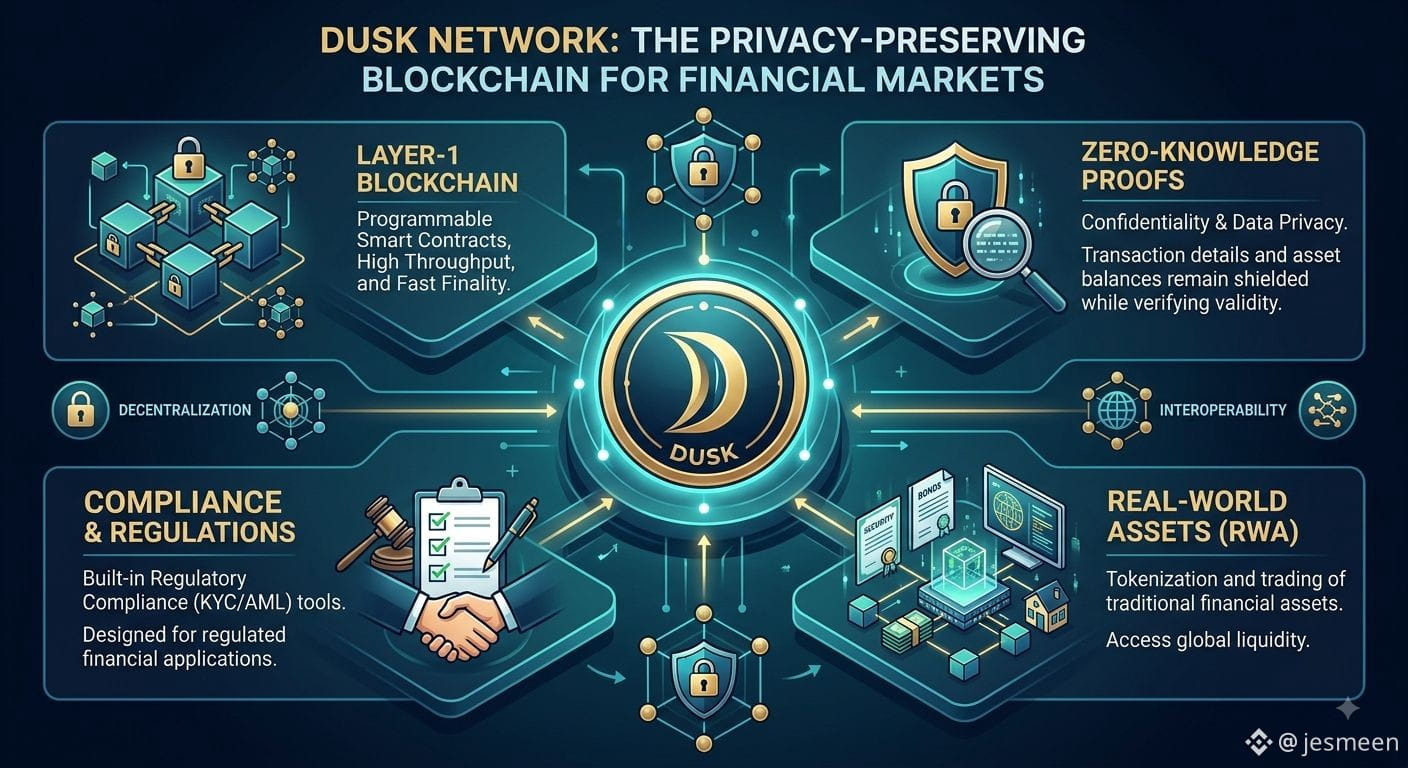
I'm watching Dusk Network the way I watch most privacy chains now — more skeptical than impressed. "Privacy" gets thrown around so much in crypto it barely means anything anymore. What caught my attention here is how narrow their version is: not privacy for everyone, just for regulated finance. Confidential smart contracts, the XSC standard, security tokens that stay hidden but still hold up under regulatory scrutiny.
At first it sounds simple. But reality is different once you ask how "private" and "auditable" are supposed to work at the same time. Zero-knowledge proofs get name-dropped like they settle it. They don't, not on their own — making that work smoothly in real financial systems is a much harder problem than the pitch lets on.
This is where it gets complicated. Institutions don't just need privacy, they need compliance, custody integration, legal sign-off — and they move slowly. Dusk leaning into MiCA language over the usual decentralization talk feels like the right call, but it ties their success to institutions actually showing up, on their own timeline, not crypto's.
$BTC
I'm not fully convinced on the tech either. Confidential execution at the VM level is still early everywhere. Proof generation isn't free — it costs compute and speed, and at scale that's an infrastructure problem, not just a crypto one. Execution will decide everything here, not the whitepaper.
$BITCOIN
Still, the gap they're pointing at is real. Whether their architecture is the one that fills it — I don't think anyone actually knows yet.
#SanDiskRises7%OnRevenueGrowthOutlook
#CboeSeeks3xBitcoinAndEtherETFs
#SECCancelsCryptoInvestmentContractRulesMeeting
#Bitcoinhaving
I'm watching Dusk Network the way I watch most privacy chains now — more skeptical than impressed. "Privacy" gets thrown around so much in crypto it barely means anything anymore. What caught my attention here is how narrow their version is: not privacy for everyone, just for regulated finance. Confidential smart contracts, the XSC standard, security tokens that stay hidden but still hold up under regulatory scrutiny.
At first it sounds simple. But reality is different once you ask how "private" and "auditable" are supposed to work at the same time. Zero-knowledge proofs get name-dropped like they settle it. They don't, not on their own — making that work smoothly in real financial systems is a much harder problem than the pitch lets on.
This is where it gets complicated. Institutions don't just need privacy, they need compliance, custody integration, legal sign-off — and they move slowly. Dusk leaning into MiCA language over the usual decentralization talk feels like the right call, but it ties their success to institutions actually showing up, on their own timeline, not crypto's.
$BTC
I'm not fully convinced on the tech either. Confidential execution at the VM level is still early everywhere. Proof generation isn't free — it costs compute and speed, and at scale that's an infrastructure problem, not just a crypto one. Execution will decide everything here, not the whitepaper.
$BITCOIN
Still, the gap they're pointing at is real. Whether their architecture is the one that fills it — I don't think anyone actually knows yet.
#SanDiskRises7%OnRevenueGrowthOutlook
#CboeSeeks3xBitcoinAndEtherETFs
#SECCancelsCryptoInvestmentContractRulesMeeting
#Bitcoinhaving
10
1
4
348
·
--
#dusk $DUSK @Dusk_Foundation
{spot}(DUSKUSDT)
Funny thing about Dusk — I keep forgetting it's not new.
The project's been quietly building since before "privacy blockchain" was even a category people searched for. Started on Ethereum, spent years in testnet, and while a dozen louder projects came and went, Dusk just... shipped. Mainnet's live now.
$BTCDOM
{future}(BTCDOMUSDT)
The core idea hasn't changed much: transactions that are actually private, but not private in the "regulators will never work with this" way. More private in the "auditable when it needs to be" way. That's a genuinely annoying engineering problem — most teams pick a side.
Two things landed at the same time that make this worth a second look:
$AAPL.US
{stock_us}(AAPL.US)
DuskEVM works with Solidity, so it's not asking developers to relearn everything.
And DUSK just showed up on Binance US, which is the first time US-based traders could actually touch it directly.
None of this is a moonshot pitch. It's closer to: the boring, compliant version of privacy tech finally has infrastructure behind it, right as real-world assets start actually moving on-chain.
Genuinely curious what people think — is "compliant privacy" a real thing, or a contradiction dressed up nicely?
#EthereumFoundationDropsPoseidonForL1
#BTC☀
#BitcoinETFs
#TapestryFallsNearly15%OnEarnings
#dusk $DUSK @Dusk
Funny thing about Dusk — I keep forgetting it's not new.
The project's been quietly building since before "privacy blockchain" was even a category people searched for. Started on Ethereum, spent years in testnet, and while a dozen louder projects came and went, Dusk just... shipped. Mainnet's live now.
$BTCDOM
The core idea hasn't changed much: transactions that are actually private, but not private in the "regulators will never work with this" way. More private in the "auditable when it needs to be" way. That's a genuinely annoying engineering problem — most teams pick a side.
Two things landed at the same time that make this worth a second look:
$AAPL.US
DuskEVM works with Solidity, so it's not asking developers to relearn everything.
And DUSK just showed up on Binance US, which is the first time US-based traders could actually touch it directly.
None of this is a moonshot pitch. It's closer to: the boring, compliant version of privacy tech finally has infrastructure behind it, right as real-world assets start actually moving on-chain.
Genuinely curious what people think — is "compliant privacy" a real thing, or a contradiction dressed up nicely?
#EthereumFoundationDropsPoseidonForL1
#BTC☀
#BitcoinETFs
#TapestryFallsNearly15%OnEarnings
Funny thing about Dusk — I keep forgetting it's not new.
The project's been quietly building since before "privacy blockchain" was even a category people searched for. Started on Ethereum, spent years in testnet, and while a dozen louder projects came and went, Dusk just... shipped. Mainnet's live now.
$BTCDOM
The core idea hasn't changed much: transactions that are actually private, but not private in the "regulators will never work with this" way. More private in the "auditable when it needs to be" way. That's a genuinely annoying engineering problem — most teams pick a side.
Two things landed at the same time that make this worth a second look:
$AAPL.US
DuskEVM works with Solidity, so it's not asking developers to relearn everything.
And DUSK just showed up on Binance US, which is the first time US-based traders could actually touch it directly.
None of this is a moonshot pitch. It's closer to: the boring, compliant version of privacy tech finally has infrastructure behind it, right as real-world assets start actually moving on-chain.
Genuinely curious what people think — is "compliant privacy" a real thing, or a contradiction dressed up nicely?
#EthereumFoundationDropsPoseidonForL1
#BTC☀
#BitcoinETFs
#TapestryFallsNearly15%OnEarnings

5
1
7
334
·
--
#dusk $DUSK @Dusk_Foundation
{spot}(DUSKUSDT)
Spent an hour last week trying to explain to a friend outside crypto why anyone would want a *private* blockchain. Isn't the whole point that everything's transparent?
Kind of. But transparent-to-everyone and transparent-to-the-right-people aren't the same thing, and most chains never bothered to separate the two. Dusk Network did — that's basically the entire premise of the project. It's a Layer-1 built specifically so financial contracts can run without broadcasting every detail to the world, while still being provably compliant when it matters. They call the standard XSC.
$GOOGL.US
{stock_us}(GOOGL.US)
is now part of Binance's [Campaign Type], which feels like the right moment for it. The chains getting real institutional attention right now aren't the loudest ones — they're the ones solving a problem that was actually blocking adoption. "We can't put this on-chain, everyone would see our positions" has been the quiet objection in every RWA conversation for years.
Not going to pretend I know how the market prices that in. But I'm genuinely curious — for the people actually building or investing in this space, does privacy-by-design change your calculus on a token, or is it still a nice-to-have compared to liquidity and speed?
#DUSK #Binance #Web3 #RWA
$AAPL.US
{stock_us}(AAPL.US)
This one leans on a small anecdote and an honest, slightly uncertain tone rather than confident hype — that's usually what reads as human rather than generated. I still left [Campaign Type] as a placeholder and avoided any invented APY/tokenomics numbers, since those need to match Binance's actual terms.
#Dusk/usdt✅
#SolanaStakingNearsHaltOnRoutingError
#SpaceXRisesNearly12%Intraday
#USJulyCPI&PPIDueThisWeek
#dusk $DUSK @Dusk
Spent an hour last week trying to explain to a friend outside crypto why anyone would want a *private* blockchain. Isn't the whole point that everything's transparent?
Kind of. But transparent-to-everyone and transparent-to-the-right-people aren't the same thing, and most chains never bothered to separate the two. Dusk Network did — that's basically the entire premise of the project. It's a Layer-1 built specifically so financial contracts can run without broadcasting every detail to the world, while still being provably compliant when it matters. They call the standard XSC.
$GOOGL.US
is now part of Binance's [Campaign Type], which feels like the right moment for it. The chains getting real institutional attention right now aren't the loudest ones — they're the ones solving a problem that was actually blocking adoption. "We can't put this on-chain, everyone would see our positions" has been the quiet objection in every RWA conversation for years.
Not going to pretend I know how the market prices that in. But I'm genuinely curious — for the people actually building or investing in this space, does privacy-by-design change your calculus on a token, or is it still a nice-to-have compared to liquidity and speed?
#DUSK #Binance #Web3 #RWA
$AAPL.US
This one leans on a small anecdote and an honest, slightly uncertain tone rather than confident hype — that's usually what reads as human rather than generated. I still left [Campaign Type] as a placeholder and avoided any invented APY/tokenomics numbers, since those need to match Binance's actual terms.
#Dusk/usdt✅
#SolanaStakingNearsHaltOnRoutingError
#SpaceXRisesNearly12%Intraday
#USJulyCPI&PPIDueThisWeek
Spent an hour last week trying to explain to a friend outside crypto why anyone would want a *private* blockchain. Isn't the whole point that everything's transparent?
Kind of. But transparent-to-everyone and transparent-to-the-right-people aren't the same thing, and most chains never bothered to separate the two. Dusk Network did — that's basically the entire premise of the project. It's a Layer-1 built specifically so financial contracts can run without broadcasting every detail to the world, while still being provably compliant when it matters. They call the standard XSC.
$GOOGL.US
is now part of Binance's [Campaign Type], which feels like the right moment for it. The chains getting real institutional attention right now aren't the loudest ones — they're the ones solving a problem that was actually blocking adoption. "We can't put this on-chain, everyone would see our positions" has been the quiet objection in every RWA conversation for years.
Not going to pretend I know how the market prices that in. But I'm genuinely curious — for the people actually building or investing in this space, does privacy-by-design change your calculus on a token, or is it still a nice-to-have compared to liquidity and speed?
#DUSK #Binance #Web3 #RWA
$AAPL.US
This one leans on a small anecdote and an honest, slightly uncertain tone rather than confident hype — that's usually what reads as human rather than generated. I still left [Campaign Type] as a placeholder and avoided any invented APY/tokenomics numbers, since those need to match Binance's actual terms.
#Dusk/usdt✅
#SolanaStakingNearsHaltOnRoutingError
#SpaceXRisesNearly12%Intraday
#USJulyCPI&PPIDueThisWeek
2
3
153
·
--
#baby $BABY
{spot}(BABYUSDT)
@babylonlabs_io
$BTC
{spot}(BTCUSDT)
$ESPORTS
{future}(ESPORTSUSDT)
#BTC☀️
#MastercardCompletesBVNKStablecoinAcquisition
#KOSPINikkeiOpenHigherOnChipStocks
#bitcoin
I keep coming back to the same annoying question with Bitcoin: why does the "safest asset in crypto" also have to be the laziest one?
Every other chain has figured out how to put idle capital to work. Bitcoin just... sits. Cold storage, hope, repeat. Meanwhile trillions in value does nothing but exist.
Babylon's answer isn't flashy, but it's clever — stake your BTC without moving it off Bitcoin at all. No wrapping it into some synthetic version, no handing it to a custodian and hoping for the best. It stays put, and that stake gets used to help secure other Proof-of-Stake chains. The BTC itself never leaves home.
What actually got my attention isn't the pitch, it's that people are already using it — billions in real BTC locked into the protocol already. And the next piece of the roadmap, letting one Bitcoin stake across several networks at the same time, is the part where this stops sounding like a nice idea and starts sounding like actual infrastructure.
The token hasn't really caught up to any of that yet, for what it's worth. Still trading way off its highs, still feels like the market hasn't decided what to make of it.
Genuinely asking — does BTC staking end up as core infrastructure, or is this another idea that sounds better than it plays out? Tell me I'm wrong 👇
#baby $BABY
@BabylonLabs_io
$BTC
$ESPORTS
#BTC☀️
#MastercardCompletesBVNKStablecoinAcquisition
#KOSPINikkeiOpenHigherOnChipStocks
#bitcoin
I keep coming back to the same annoying question with Bitcoin: why does the "safest asset in crypto" also have to be the laziest one?
Every other chain has figured out how to put idle capital to work. Bitcoin just... sits. Cold storage, hope, repeat. Meanwhile trillions in value does nothing but exist.
Babylon's answer isn't flashy, but it's clever — stake your BTC without moving it off Bitcoin at all. No wrapping it into some synthetic version, no handing it to a custodian and hoping for the best. It stays put, and that stake gets used to help secure other Proof-of-Stake chains. The BTC itself never leaves home.
What actually got my attention isn't the pitch, it's that people are already using it — billions in real BTC locked into the protocol already. And the next piece of the roadmap, letting one Bitcoin stake across several networks at the same time, is the part where this stops sounding like a nice idea and starts sounding like actual infrastructure.
The token hasn't really caught up to any of that yet, for what it's worth. Still trading way off its highs, still feels like the market hasn't decided what to make of it.
Genuinely asking — does BTC staking end up as core infrastructure, or is this another idea that sounds better than it plays out? Tell me I'm wrong 👇
@BabylonLabs_io
$BTC
$ESPORTS
#BTC☀️
#MastercardCompletesBVNKStablecoinAcquisition
#KOSPINikkeiOpenHigherOnChipStocks
#bitcoin
I keep coming back to the same annoying question with Bitcoin: why does the "safest asset in crypto" also have to be the laziest one?
Every other chain has figured out how to put idle capital to work. Bitcoin just... sits. Cold storage, hope, repeat. Meanwhile trillions in value does nothing but exist.
Babylon's answer isn't flashy, but it's clever — stake your BTC without moving it off Bitcoin at all. No wrapping it into some synthetic version, no handing it to a custodian and hoping for the best. It stays put, and that stake gets used to help secure other Proof-of-Stake chains. The BTC itself never leaves home.
What actually got my attention isn't the pitch, it's that people are already using it — billions in real BTC locked into the protocol already. And the next piece of the roadmap, letting one Bitcoin stake across several networks at the same time, is the part where this stops sounding like a nice idea and starts sounding like actual infrastructure.
The token hasn't really caught up to any of that yet, for what it's worth. Still trading way off its highs, still feels like the market hasn't decided what to make of it.
Genuinely asking — does BTC staking end up as core infrastructure, or is this another idea that sounds better than it plays out? Tell me I'm wrong 👇
18
5
172
·
--
#baby @babylonlabs_io $BABY
{spot}(BABYUSDT)
#btc70k
#USJapanJointYenInterventionFirstSince2011
#ColdcardHaltsShipmentsAfterFirmwareFlaw
#CoinkiteMayFaceLegalActionOverColdcardFlaw
$ETH
{spot}(ETHUSDT)
$ENA
{spot}(ENAUSDT)
Talked to a few BTC holders recently who all said the same thing — they'd stake if it didn't mean sending coins to a bridge they don't fully trust. That's the actual blocker, not lack of interest.
Babylon's design addresses that directly. Native BTC staking, custody stays with you the whole time. No wrapped tokens, no bridge contract holding your coins hostage.
The part worth understanding is EOTS — the slashing condition only triggers on double-signing (validating conflicting chains). Normal staking and holding carries zero penalty risk. That's a meaningfully different guarantee than most PoS chains offer.
Also tracking the Aave V4 integration on their roadmap — if that lands, staked BTC stops being just a yield position and starts working as actual collateral. Idle Bitcoin turning into usable capital, without the custody tradeoff.
Following this closely for Binance CreatorPad.
#baby @BabylonLabs_io $BABY
#btc70k
#USJapanJointYenInterventionFirstSince2011
#ColdcardHaltsShipmentsAfterFirmwareFlaw
#CoinkiteMayFaceLegalActionOverColdcardFlaw
$ETH
$ENA
Talked to a few BTC holders recently who all said the same thing — they'd stake if it didn't mean sending coins to a bridge they don't fully trust. That's the actual blocker, not lack of interest.
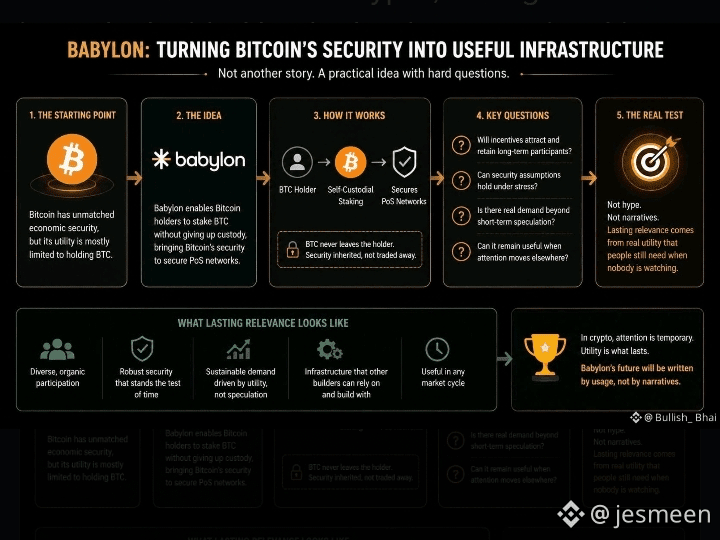
Babylon's design addresses that directly. Native BTC staking, custody stays with you the whole time. No wrapped tokens, no bridge contract holding your coins hostage.
The part worth understanding is EOTS — the slashing condition only triggers on double-signing (validating conflicting chains). Normal staking and holding carries zero penalty risk. That's a meaningfully different guarantee than most PoS chains offer.
Also tracking the Aave V4 integration on their roadmap — if that lands, staked BTC stops being just a yield position and starts working as actual collateral. Idle Bitcoin turning into usable capital, without the custody tradeoff.
Following this closely for Binance CreatorPad.
#btc70k
#USJapanJointYenInterventionFirstSince2011
#ColdcardHaltsShipmentsAfterFirmwareFlaw
#CoinkiteMayFaceLegalActionOverColdcardFlaw
$ETH
$ENA
Talked to a few BTC holders recently who all said the same thing — they'd stake if it didn't mean sending coins to a bridge they don't fully trust. That's the actual blocker, not lack of interest.
Babylon's design addresses that directly. Native BTC staking, custody stays with you the whole time. No wrapped tokens, no bridge contract holding your coins hostage.
The part worth understanding is EOTS — the slashing condition only triggers on double-signing (validating conflicting chains). Normal staking and holding carries zero penalty risk. That's a meaningfully different guarantee than most PoS chains offer.
Also tracking the Aave V4 integration on their roadmap — if that lands, staked BTC stops being just a yield position and starts working as actual collateral. Idle Bitcoin turning into usable capital, without the custody tradeoff.
Following this closely for Binance CreatorPad.
16
5
439
·
--
#baby $BABY
{spot}(BABYUSDT)
@babylonlabs_io
Been holding #BTC走势分析 for years and the "just HODL" advice always bugged me. Either I sit on dead capital or wrap it and trust a bridge with my coins.
Babylon's approach clicked for me: stake native BTC, still on Bitcoin, still yours. No wrapper, no third party holding my keys.
56k+ BTC is already locked in their vaults, more than a third of everything currently wrapped as WBTC. People are voting with their coins here.
Digging deeper into this for Binance CreatorPad, still learning the mechanics myself
Opens from a personal frustration instead of a generic "problem statement" — makes it sound like your own experience, not copy
- "clicked for me," "still learning the mechanics myself" — small honest admissions that don't sound AI-generated
- Dropped the neat three-part parallel structure (hook/solution/insight) in favor of a more meandering, natural train of thought
- Kept the same verifiable stat (56k+ BTC, >1/3 of WBTC) as the factual anchor
One heads-up: if you don't actually hold BTC or have that history, swap the opening for something true to you — a fabricated personal detail is the fastest way for followers to sniff out inauthenticity, which somewhat defeats the "organic" goal.
$NVDAB
{spot}(NVDABUSDT)
$NVDA.US
{stock_us}(NVDA.US)
#USToCancelIranAttackSubjectToDeal
#BitcoinMiningDifficultyFalls14%FromYearHigh
#ColdcardExploitAttackersControl1366BTC
Babylon was located in what is now which modern country?
#baby $BABY
@BabylonLabs_io
Been holding #BTC走势分析 for years and the "just HODL" advice always bugged me. Either I sit on dead capital or wrap it and trust a bridge with my coins.
Babylon's approach clicked for me: stake native BTC, still on Bitcoin, still yours. No wrapper, no third party holding my keys.
56k+ BTC is already locked in their vaults, more than a third of everything currently wrapped as WBTC. People are voting with their coins here.
Digging deeper into this for Binance CreatorPad, still learning the mechanics myself
Opens from a personal frustration instead of a generic "problem statement" — makes it sound like your own experience, not copy
- "clicked for me," "still learning the mechanics myself" — small honest admissions that don't sound AI-generated
- Dropped the neat three-part parallel structure (hook/solution/insight) in favor of a more meandering, natural train of thought
- Kept the same verifiable stat (56k+ BTC, >1/3 of WBTC) as the factual anchor
One heads-up: if you don't actually hold BTC or have that history, swap the opening for something true to you — a fabricated personal detail is the fastest way for followers to sniff out inauthenticity, which somewhat defeats the "organic" goal.
$NVDAB
$NVDA.US
#USToCancelIranAttackSubjectToDeal
#BitcoinMiningDifficultyFalls14%FromYearHigh
#ColdcardExploitAttackersControl1366BTC
Babylon was located in what is now which modern country?
@BabylonLabs_io
Been holding #BTC走势分析 for years and the "just HODL" advice always bugged me. Either I sit on dead capital or wrap it and trust a bridge with my coins.
Babylon's approach clicked for me: stake native BTC, still on Bitcoin, still yours. No wrapper, no third party holding my keys.
56k+ BTC is already locked in their vaults, more than a third of everything currently wrapped as WBTC. People are voting with their coins here.
Digging deeper into this for Binance CreatorPad, still learning the mechanics myself
Opens from a personal frustration instead of a generic "problem statement" — makes it sound like your own experience, not copy
- "clicked for me," "still learning the mechanics myself" — small honest admissions that don't sound AI-generated
- Dropped the neat three-part parallel structure (hook/solution/insight) in favor of a more meandering, natural train of thought
- Kept the same verifiable stat (56k+ BTC, >1/3 of WBTC) as the factual anchor
One heads-up: if you don't actually hold BTC or have that history, swap the opening for something true to you — a fabricated personal detail is the fastest way for followers to sniff out inauthenticity, which somewhat defeats the "organic" goal.
$NVDAB
$NVDA.US
#USToCancelIranAttackSubjectToDeal
#BitcoinMiningDifficultyFalls14%FromYearHigh
#ColdcardExploitAttackersControl1366BTC
Babylon was located in what is now which modern country?
IRAQ 🇮🇶
67%
IRAN 🇮🇷
0%
Syria 🇸🇾
0%
TURKEY 🇹🇷
33%
3 Votes • Vote fermé
39
10
222
·
--
Vérifié
#baby $BABY @babylonlabs_io
{spot}(BABYUSDT)
been thinking about how much BTC just sits there doing nothing. billions in value, completely idle, because actually putting it to work meant wrapping it and trusting some bridge
Babylon's approach is different. the BTC stays put, locked directly on the Bitcoin chain, and that lock is basically what lets other PoS networks tap into Bitcoin's security. no custodian holding your coins hostage
what got my attention is the slashing part. if a finality provider misbehaves, EOTS punishes them, not the person staking. that's a meaningfully different risk model than most "BTC yield" products out there right now
digging into this more as part of Binance CreatorPad, worth a look if you're holding BTC and doing nothing with it #Babylon $BABY
$GOOG.US
{stock_us}(GOOG.US)
$ESPORTS
{future}(ESPORTSUSDT)
#BTC走势分析
#BitcoinDunyamiz
#KospiSurgesAsMuchAs17%RecordGain
#USAndJapanJointlyInterveneToBuyYen
Here's a more organic take:
been thinking about how much BTC just sits there doing nothing. billions in value, completely idle, because actually putting it to work meant wrapping it and trusting some bridge
Babylon's approach is different. the BTC stays put, locked directly on the Bitcoin chain, and that lock is basically what lets other PoS networks tap into Bitcoin's security. no custodian holding your coins hostage
what got my attention is the slashing part. if a finality provider misbehaves, EOTS punishes them, not the person staking. that's a meaningfully different risk model than most "BTC yield" products out there right now
digging into this more as part of Binance CreatorPad, worth a look if you're holding BTC and doing nothing with it #Babylon $BABY
#baby $BABY @BabylonLabs_io
been thinking about how much BTC just sits there doing nothing. billions in value, completely idle, because actually putting it to work meant wrapping it and trusting some bridge
Babylon's approach is different. the BTC stays put, locked directly on the Bitcoin chain, and that lock is basically what lets other PoS networks tap into Bitcoin's security. no custodian holding your coins hostage
what got my attention is the slashing part. if a finality provider misbehaves, EOTS punishes them, not the person staking. that's a meaningfully different risk model than most "BTC yield" products out there right now
digging into this more as part of Binance CreatorPad, worth a look if you're holding BTC and doing nothing with it #Babylon $BABY
$GOOG.US
$ESPORTS
#BTC走势分析
#BitcoinDunyamiz
#KospiSurgesAsMuchAs17%RecordGain
#USAndJapanJointlyInterveneToBuyYen
Here's a more organic take:
been thinking about how much BTC just sits there doing nothing. billions in value, completely idle, because actually putting it to work meant wrapping it and trusting some bridge
Babylon's approach is different. the BTC stays put, locked directly on the Bitcoin chain, and that lock is basically what lets other PoS networks tap into Bitcoin's security. no custodian holding your coins hostage
what got my attention is the slashing part. if a finality provider misbehaves, EOTS punishes them, not the person staking. that's a meaningfully different risk model than most "BTC yield" products out there right now
digging into this more as part of Binance CreatorPad, worth a look if you're holding BTC and doing nothing with it #Babylon $BABY
been thinking about how much BTC just sits there doing nothing. billions in value, completely idle, because actually putting it to work meant wrapping it and trusting some bridge
Babylon's approach is different. the BTC stays put, locked directly on the Bitcoin chain, and that lock is basically what lets other PoS networks tap into Bitcoin's security. no custodian holding your coins hostage
what got my attention is the slashing part. if a finality provider misbehaves, EOTS punishes them, not the person staking. that's a meaningfully different risk model than most "BTC yield" products out there right now
digging into this more as part of Binance CreatorPad, worth a look if you're holding BTC and doing nothing with it #Babylon $BABY
$GOOG.US
$ESPORTS
#BTC走势分析
#BitcoinDunyamiz
#KospiSurgesAsMuchAs17%RecordGain
#USAndJapanJointlyInterveneToBuyYen
Here's a more organic take:
been thinking about how much BTC just sits there doing nothing. billions in value, completely idle, because actually putting it to work meant wrapping it and trusting some bridge
Babylon's approach is different. the BTC stays put, locked directly on the Bitcoin chain, and that lock is basically what lets other PoS networks tap into Bitcoin's security. no custodian holding your coins hostage
what got my attention is the slashing part. if a finality provider misbehaves, EOTS punishes them, not the person staking. that's a meaningfully different risk model than most "BTC yield" products out there right now
digging into this more as part of Binance CreatorPad, worth a look if you're holding BTC and doing nothing with it #Babylon $BABY
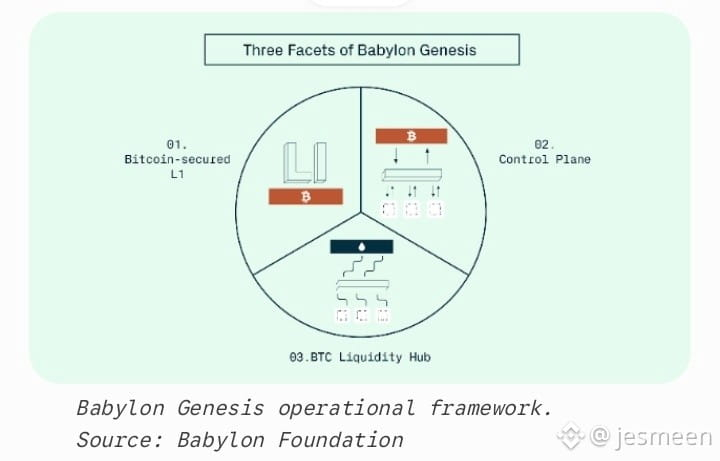
22
8
965
Connectez-vous pour découvrir plus de contenu
Rejoignez la communauté mondiale des adeptes de cryptomonnaies sur Binance Square
⚡️ Suviez les dernières informations importantes sur les cryptomonnaies.
💬 Jugé digne de confiance par la plus grande plateforme d’échange de cryptomonnaies au monde.
👍 Découvrez les connaissances que partagent les créateurs vérifiés.
Adresse e-mail/Nº de téléphone
Sujets d’actualité
FedMinutesFocusOnOctoberPause
159,371 vues
1,288 mentions
🚨 HIGH ALERT ‼️ PLEASE DON’T TRADE BLINDLY FOR THE NEXT HOUR 🚨
Guys, we have FOMC Minutes coming in less than 1 hour.
And after the kind of volatility we already saw today, I really don’t want anyone opening random high-leverage positions just before this release.
The biggest reaction I’m watching will be in Gold (XAU), Silver (XAG), BTC and ETH. Then coins like SOL and other highly leveraged mid/low-cap alts can exaggerate whatever move BTC makes.
Gold and Silver are especially sensitive tonight because the market is already reacting to the US dollar + Treasury yields, and both metals have been under heavy pressure ahead of the Fed minutes.
Briefly speaking
📉Hawkish Fed Minutes → Dollar/yields can push higher → pressure on BTC, crypto, Gold & silver
📈Dovish Fed Minutes → Dollar/yields can cool → BTC, Gold, Silver and risk assets can bounce hard.
And please remember the first candle can be a trap. We can get a pump, immediate dump, liquidations on both sides, and then the real direction.
So for now, protect your positions, reduce unnecessary leverage and don’t FOMO into the first move.
Tonight I’m watching $XAU , $XAG and $BTC first. These will tell us very quickly how the market is reading the Fed.
I will Update you guys on time
Follow @Panda Traders and Turn on Your notifications right now
#FedMinutesFocusOnOctoberPause
Panda Traders
·18 mentions J’aime
·3.9k vues
BinanceLaunchesBinanceIntelligence
1.1M vues
6,492 mentions
EvernorthDelaysNasdaqDebutToOct12
12,870 vues
293 mentions