
Sahil987
13k Publications

Sahil987
 Compte Square Vérifié+
@Sahil_987_ 🔶 Web3 Learner | Trends & Market Understanding | Mistakes & Market Lessons In Real Time. No Shortcuts - Just Consistency.
Trade fréquemment
2.2 an(s)
189 Suivis
70.5K+ Abonnés
56.4K+ J’aime
Publications
Tous
Citations
Vidéos
Direct
PINNED
Claim 🎁🎁 Somewhere between the mountains and your smile, I found my favorite place to be.

Gold is ending the week under pressure, falling around 3.24% as traders take some profits after its strong run.
The pullback also comes as markets reassess interest-rate expectations and the strength of the dollar. When yields and the DXY move higher, precious metals can face pressure because holding non-yielding assets becomes relatively less attractive.
Still, a weekly decline doesn't necessarily change the bigger picture for GOLD. Central-bank demand, geopolitical uncertainty, and long-term diversification remain important parts of the gold story.
The key now is whether buyers step back in after the correction or whether this weakness develops into something deeper.
Do you see the drop in GOLD as a healthy reset, or could more downside be coming?
$XAU $XAUT $PAXG
#GoldFalls3.24%ThisWeek
#MarketSentimentToday #Market_Update
The pullback also comes as markets reassess interest-rate expectations and the strength of the dollar. When yields and the DXY move higher, precious metals can face pressure because holding non-yielding assets becomes relatively less attractive.
Still, a weekly decline doesn't necessarily change the bigger picture for GOLD. Central-bank demand, geopolitical uncertainty, and long-term diversification remain important parts of the gold story.
The key now is whether buyers step back in after the correction or whether this weakness develops into something deeper.
Do you see the drop in GOLD as a healthy reset, or could more downside be coming?
$XAU $XAUT $PAXG
#GoldFalls3.24%ThisWeek
#MarketSentimentToday #Market_Update
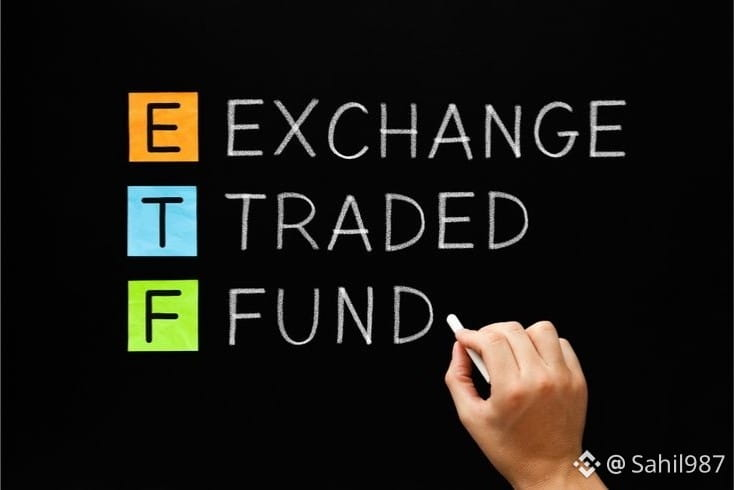
Trading in single-stock leveraged #ETFs in South Korea is reportedly falling, suggesting retail investors may be becoming more cautious after a period of heavy demand for high-risk products.
These products can amplify both gains and losses, so a drop in activity may reflect changing sentiment as investors become less willing to take aggressive bets on individual stocks.
The shift is worth watching because retail participation can be a useful signal for broader market risk appetite. If traders are moving away from leveraged exposure, it could point to a more defensive mood across equities.
For #KOSPI and Korean stocks, the key question is whether this is simply a temporary slowdown or the start of a broader pullback in retail risk-taking.
Do you think Korean retail investors are becoming more cautious, or are they simply rotating into less leveraged opportunities?
$NVDA $AAPL $GOOGL
#KoreaSingleStockLeveragedETFTradingFalls
These products can amplify both gains and losses, so a drop in activity may reflect changing sentiment as investors become less willing to take aggressive bets on individual stocks.
The shift is worth watching because retail participation can be a useful signal for broader market risk appetite. If traders are moving away from leveraged exposure, it could point to a more defensive mood across equities.
For #KOSPI and Korean stocks, the key question is whether this is simply a temporary slowdown or the start of a broader pullback in retail risk-taking.
Do you think Korean retail investors are becoming more cautious, or are they simply rotating into less leveraged opportunities?
$NVDA $AAPL $GOOGL
#KoreaSingleStockLeveragedETFTradingFalls
claim 🎁🎁

Nia987
·
--
Red packet dropped 🧧
Follow ✅
Comments ✅
Repost ✅
Follow ✅
Comments ✅
Repost ✅

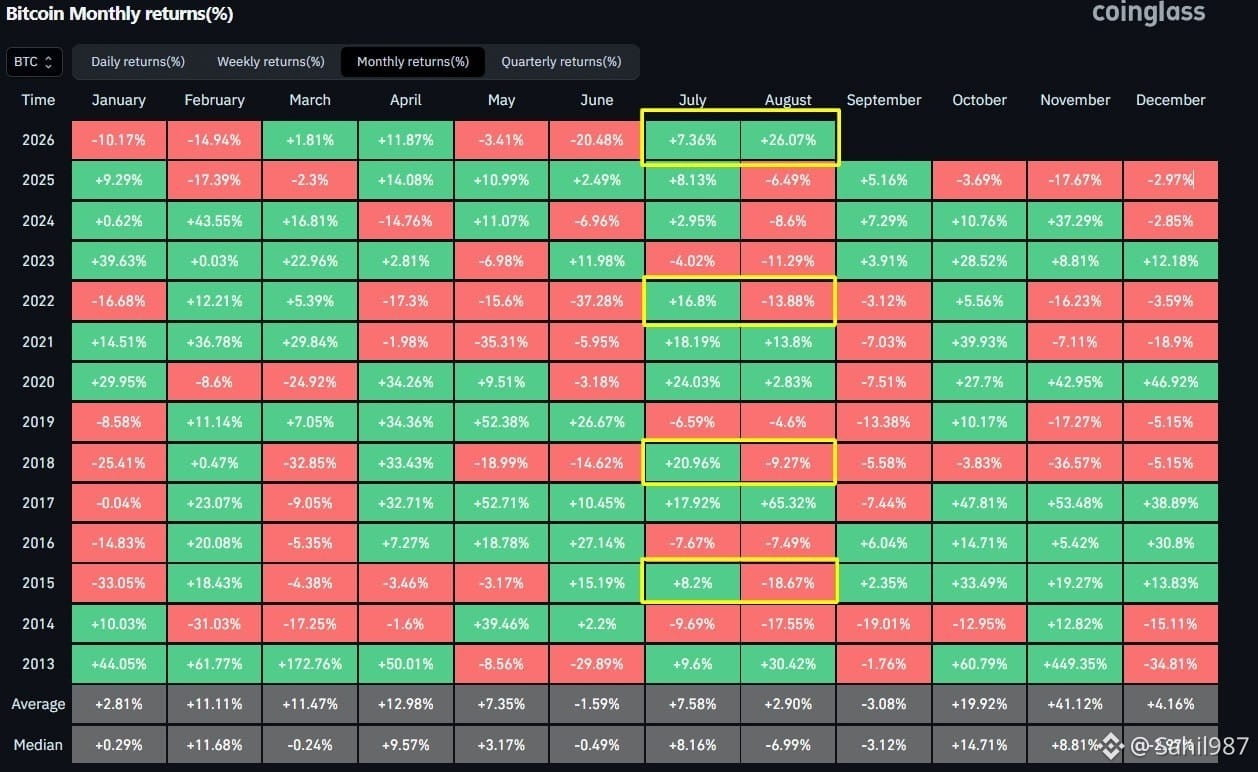
Bitcoin is just one day away from potentially closing August in the green, which would break the pattern we've seen during this bear-market phase.
If $BTC finishes the month higher, 2026 would mark the first positive August of this cycle. That's interesting because seasonal patterns can influence sentiment, but they don't always survive when market conditions change.
A green August wouldn't confirm that the bear market is over, but it could signal that Bitcoin's price behavior is starting to diverge from the pattern investors have become used to.
Now all eyes are on the final day. Holding the gains into the monthly close could make the setup for September even more interesting.
Do you think $BTC is finally breaking its August pattern, or is it too early to call a change in trend?
#MarketSentimentToday #CryptoUpdate
#BitcoinSpotETFEnds9DayInflowStreak
If $BTC finishes the month higher, 2026 would mark the first positive August of this cycle. That's interesting because seasonal patterns can influence sentiment, but they don't always survive when market conditions change.
A green August wouldn't confirm that the bear market is over, but it could signal that Bitcoin's price behavior is starting to diverge from the pattern investors have become used to.
Now all eyes are on the final day. Holding the gains into the monthly close could make the setup for September even more interesting.
Do you think $BTC is finally breaking its August pattern, or is it too early to call a change in trend?
#MarketSentimentToday #CryptoUpdate
#BitcoinSpotETFEnds9DayInflowStreak
The Musk–Altman feud keeps getting more personal, but the bigger issue underneath it is still about who gets to shape the future of AI.
Musk has accused Sam Altman of moving OpenAI away from its original nonprofit and open-source mission, arguing that the organization became something very different from what was promised at the beginning.
Whatever side you take, the evolution of $OPENAI shows how quickly the AI landscape has changed.
What started with a focus on openness and research is now sitting at the center of a massive race for capital, talent and technological control.
The interesting question is whether the original ideals of open AI can survive when the stakes become this big.
#CryptoNews #Market_Update #OpenAI
#ElonMusk #MarketSentimentToday
Musk has accused Sam Altman of moving OpenAI away from its original nonprofit and open-source mission, arguing that the organization became something very different from what was promised at the beginning.
Whatever side you take, the evolution of $OPENAI shows how quickly the AI landscape has changed.
What started with a focus on openness and research is now sitting at the center of a massive race for capital, talent and technological control.
The interesting question is whether the original ideals of open AI can survive when the stakes become this big.
#CryptoNews #Market_Update #OpenAI
#ElonMusk #MarketSentimentToday

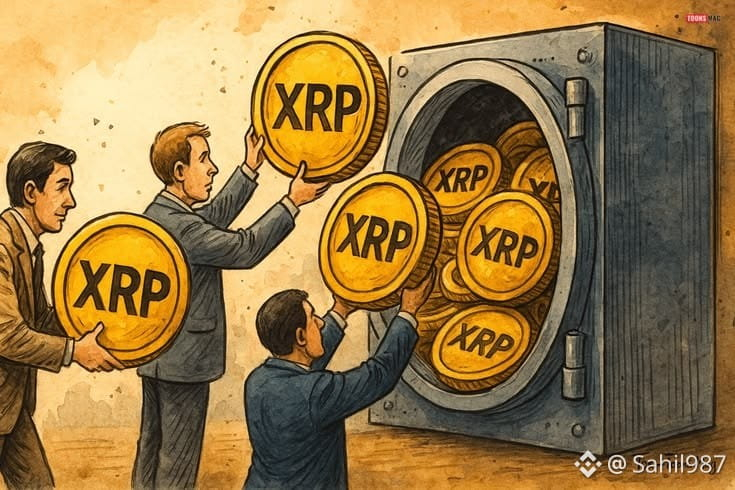
August has been a wild month for $XRP with the token jumping from around $1 to $1.70 in just a few days before settling back down.
Now the attention is shifting toward September. Historical patterns have been encouraging, with XRP posting gains in each of the past four Septembers, while a strong August has sometimes been followed by another positive month. Of course, history can offer context, but it doesn't guarantee the same setup will repeat.
The bigger catalyst could be regulation. Renewed discussions around the #CLARITYAct in the U.S. Senate could become an important driver for XRP and the broader crypto market if progress brings more clarity around digital assets.
After such a strong August, September has a lot to live up to.
Do you think $XRP can continue the momentum into September, or is another pullback more likely after the recent rally?
#ICBAOpposesCLARITYActOverStablecoinLoophole
#XRPETFsBiggestWeeklyHaulOf2026
Now the attention is shifting toward September. Historical patterns have been encouraging, with XRP posting gains in each of the past four Septembers, while a strong August has sometimes been followed by another positive month. Of course, history can offer context, but it doesn't guarantee the same setup will repeat.
The bigger catalyst could be regulation. Renewed discussions around the #CLARITYAct in the U.S. Senate could become an important driver for XRP and the broader crypto market if progress brings more clarity around digital assets.
After such a strong August, September has a lot to live up to.
Do you think $XRP can continue the momentum into September, or is another pullback more likely after the recent rally?
#ICBAOpposesCLARITYActOverStablecoinLoophole
#XRPETFsBiggestWeeklyHaulOf2026

The interesting part about $ZEC isn't just the ETF launch, but how quickly the attention around it disappeared. Social activity peaked before Zcash reached around $878, then fell back toward normal levels as the ETF began trading.
That kind of pattern can be a warning for traders. When social buzz peaks before a major event, much of the expected excitement may already be reflected in the price. The actual launch can then become a “sell the news” moment rather than the catalyst everyone expected.
Still, institutional access gives ZEC a different path forward. Grayscale's ETF could make it easier for traditional investors to gain exposure, while Zcash's privacy-focused technology gives it a distinct position among major crypto assets.
The real test now is whether ZEC can attract sustained demand after the initial hype has faded.
Do you think the #etf can bring long-term institutional interest to $ZEC or was most of the excitement already priced in?
#USShortTermTreasuryYieldsJump
#Market_Update #CryptoNews
That kind of pattern can be a warning for traders. When social buzz peaks before a major event, much of the expected excitement may already be reflected in the price. The actual launch can then become a “sell the news” moment rather than the catalyst everyone expected.
Still, institutional access gives ZEC a different path forward. Grayscale's ETF could make it easier for traditional investors to gain exposure, while Zcash's privacy-focused technology gives it a distinct position among major crypto assets.
The real test now is whether ZEC can attract sustained demand after the initial hype has faded.
Do you think the #etf can bring long-term institutional interest to $ZEC or was most of the excitement already priced in?
#USShortTermTreasuryYieldsJump
#Market_Update #CryptoNews
Vérifié
A real $BTC transaction has reportedly been mined on mainnet using a post-quantum signature scheme, marking an important step toward testing how Bitcoin could defend against future quantum attacks.
It’s still early, but the message is clear: quantum resistance is moving from theory into real-world experimentation. If “Q-Day” eventually arrives, networks that start testing migration paths now could have a major advantage.
#AntiQuantumBitcoinTransactionMinedOnMainnet
#BitcoinSpotETFEnds9DayInflowStreak
It’s still early, but the message is clear: quantum resistance is moving from theory into real-world experimentation. If “Q-Day” eventually arrives, networks that start testing migration paths now could have a major advantage.
#AntiQuantumBitcoinTransactionMinedOnMainnet
#BitcoinSpotETFEnds9DayInflowStreak

The quantum threat to crypto is starting to look less like a distant science-fiction problem and more like something networks need to prepare for now.
Ripple is working toward making the XRP Ledger resistant to future quantum attacks, while Bitcoin and Ethereum are also thinking about migration paths. The recent breakthrough from Anthropic makes the urgency even clearer: if cryptography can become dramatically easier to attack through better AI-assisted methods, waiting until “Q-Day” could be too late.
For $XRP this is less about today’s price and more about long-term network resilience. Which blockchain do you think will handle the transition to post-quantum security best?
#FedSeptRateHikeOddsRiseTo57%
#XRPledger #Market_Update #CryptoNews
Ripple is working toward making the XRP Ledger resistant to future quantum attacks, while Bitcoin and Ethereum are also thinking about migration paths. The recent breakthrough from Anthropic makes the urgency even clearer: if cryptography can become dramatically easier to attack through better AI-assisted methods, waiting until “Q-Day” could be too late.
For $XRP this is less about today’s price and more about long-term network resilience. Which blockchain do you think will handle the transition to post-quantum security best?
#FedSeptRateHikeOddsRiseTo57%
#XRPledger #Market_Update #CryptoNews

The message from Kevin Warsh at Jackson Hole sounds more cautious than the market may have hoped. Inflation is still above where the Fed wants it, and he made it clear that the 2% target remains the priority.
He also pointed out that recent inflation improvements haven't changed the underlying picture enough yet. With labor markets still stable and financial conditions not particularly restrictive, there doesn't seem to be an urgent reason for aggressive easing.
That could keep pressure on $BTC and other risk assets if traders start pricing in fewer or later rate cuts. The dollar and Treasury yields could also remain important signals as markets adjust to the Fed's tone.
For now, the message is pretty simple: don't expect the Fed to rush.
Do you think this hawkish tone will keep $BTC under pressure, or has the market already priced it in?
#Fed #MarketSentimentToday
#Market_Update #bitcoin
He also pointed out that recent inflation improvements haven't changed the underlying picture enough yet. With labor markets still stable and financial conditions not particularly restrictive, there doesn't seem to be an urgent reason for aggressive easing.
That could keep pressure on $BTC and other risk assets if traders start pricing in fewer or later rate cuts. The dollar and Treasury yields could also remain important signals as markets adjust to the Fed's tone.
For now, the message is pretty simple: don't expect the Fed to rush.
Do you think this hawkish tone will keep $BTC under pressure, or has the market already priced it in?
#Fed #MarketSentimentToday
#Market_Update #bitcoin

Vérifié
The closer I look at DuskEVM, the more I think the interesting part isn’t simply that it’s EVM-compatible.
It’s what happens when familiar building tools meet infrastructure built for regulated finance.
A developer already knows Solidity.
They already know how to build with EVM tooling.
Now imagine taking that familiar workflow and putting it on infrastructure where settlement, privacy and compliance are part of the bigger picture.
That changes the conversation for me.
Because the hardest part isn’t always building the app.
It’s building an environment where the app can eventually handle real financial activity.
DuskEVM is now available as a testnet, giving developers a place to deploy and test applications with familiar Solidity tooling.
And this is where I’m watching closely.
One builder becomes an application.
One application brings users.
Users create activity.
Activity creates utility for $DUSK
If that loop starts working, DuskEVM becomes much more than another EVM environment.
It becomes a bridge between what developers already know and what regulated on-chain finance still needs.
That’s the part I’m betting people will understand more clearly over time.
@Dusk #dusk
It’s what happens when familiar building tools meet infrastructure built for regulated finance.
A developer already knows Solidity.
They already know how to build with EVM tooling.
Now imagine taking that familiar workflow and putting it on infrastructure where settlement, privacy and compliance are part of the bigger picture.
That changes the conversation for me.
Because the hardest part isn’t always building the app.
It’s building an environment where the app can eventually handle real financial activity.
DuskEVM is now available as a testnet, giving developers a place to deploy and test applications with familiar Solidity tooling.
And this is where I’m watching closely.
One builder becomes an application.
One application brings users.
Users create activity.
Activity creates utility for $DUSK
If that loop starts working, DuskEVM becomes much more than another EVM environment.
It becomes a bridge between what developers already know and what regulated on-chain finance still needs.
That’s the part I’m betting people will understand more clearly over time.
@Dusk #dusk
RLUSD crossing $2 billion in market cap is becoming an interesting development for the broader XRP ecosystem, especially with nearly $1 billion reportedly issued directly on the XRP Ledger.
At the same time, $XRP has gained around 44% in a week, bringing even more attention to the network. The important question now is whether growing stablecoin liquidity can translate into more real activity across payments, trading, and on-chain settlement.
A strong price move can attract attention quickly, but sustained ecosystem growth usually comes from actual usage. If #RLUSD continues expanding alongside network activity, it could give the recent $XRP momentum a stronger fundamental story.
Do you think RLUSD's growth could become a bigger long-term catalyst for the XRP ecosystem than the current price rally?
#XRPRallies44%InAWeek #RLUSD
#CryptoFearGreedIndexHits74
At the same time, $XRP has gained around 44% in a week, bringing even more attention to the network. The important question now is whether growing stablecoin liquidity can translate into more real activity across payments, trading, and on-chain settlement.
A strong price move can attract attention quickly, but sustained ecosystem growth usually comes from actual usage. If #RLUSD continues expanding alongside network activity, it could give the recent $XRP momentum a stronger fundamental story.
Do you think RLUSD's growth could become a bigger long-term catalyst for the XRP ecosystem than the current price rally?
#XRPRallies44%InAWeek #RLUSD
#CryptoFearGreedIndexHits74
AI development is moving so fast that even the quiet milestones are starting to matter. Reports that OpenAI has completed pretraining its “Bel” model suggest another major system could be moving into the next stage of development.
$OPENAI Pretraining is only part of the process, but it’s where a huge amount of the model’s core capability is built. What happens next testing, tuning and safety work is where the real picture starts to emerge.
The interesting part isn’t just the model’s name. It’s how much better the next generation of #AI can actually become.
#OpenAIReportedlyCompletesBelModelPretraining
#MarketSentimentToday #Market_Update
$OPENAI Pretraining is only part of the process, but it’s where a huge amount of the model’s core capability is built. What happens next testing, tuning and safety work is where the real picture starts to emerge.
The interesting part isn’t just the model’s name. It’s how much better the next generation of #AI can actually become.
#OpenAIReportedlyCompletesBelModelPretraining
#MarketSentimentToday #Market_Update
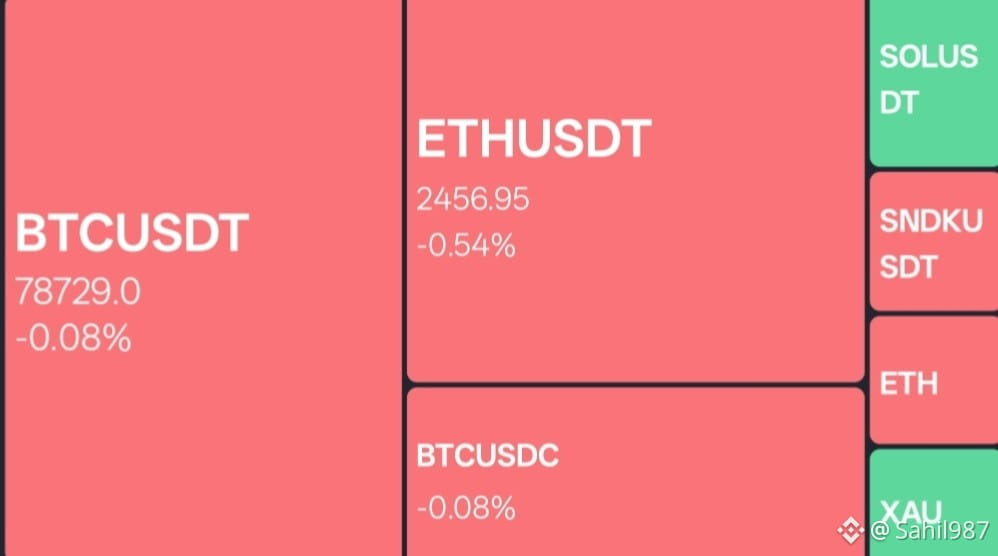
The market feels like it’s taking a breather rather than making a clear move. Bitcoin is sitting around $78.7K with only a small decline, while Ethereum is under a little more pressure and several major assets remain in the red.
At the same time, gold is holding up better, which says a lot about where some traders are looking when risk appetite cools.
Nothing looks panicked here. It just feels like the market is waiting for the next real catalyst before choosing a direction.
$BTC $XAU $ETH
#Marketsentimentstoday #bitcoin
At the same time, gold is holding up better, which says a lot about where some traders are looking when risk appetite cools.
Nothing looks panicked here. It just feels like the market is waiting for the next real catalyst before choosing a direction.
$BTC $XAU $ETH
#Marketsentimentstoday #bitcoin
The crypto market is starting to show signs of broader strength, not just a Bitcoin-led move. Solana pushing above $100 while total market cap climbs close to $2.77T suggests capital is spreading across the wider ecosystem.
$SOL That’s usually more interesting than one token simply having a strong day. When majors and altcoins start moving together, it can signal that risk appetite is returning.
The next part of the story is whether this strength can hold after the initial momentum fades.
#MarketSentimentToday #Market_Update
$SOL That’s usually more interesting than one token simply having a strong day. When majors and altcoins start moving together, it can signal that risk appetite is returning.
The next part of the story is whether this strength can hold after the initial momentum fades.
#MarketSentimentToday #Market_Update
Blockchain upgrades usually don’t get much attention until they affect the things users actually notice. @BNB Chain Pasteur hard fork is aimed at strengthening bridge and validator security while also improving the network’s ability to handle more transactions.
$BNB That combination matters because scaling without stronger infrastructure can create new weaknesses, while security without better capacity can limit growth.
For BNB Chain, this is less about one upgrade and more about building a network that can handle a much larger ecosystem without sacrificing reliability.
The real test now is how much of that improvement users actually feel as activity grows.
$BNB That combination matters because scaling without stronger infrastructure can create new weaknesses, while security without better capacity can limit growth.
For BNB Chain, this is less about one upgrade and more about building a network that can handle a much larger ecosystem without sacrificing reliability.
The real test now is how much of that improvement users actually feel as activity grows.
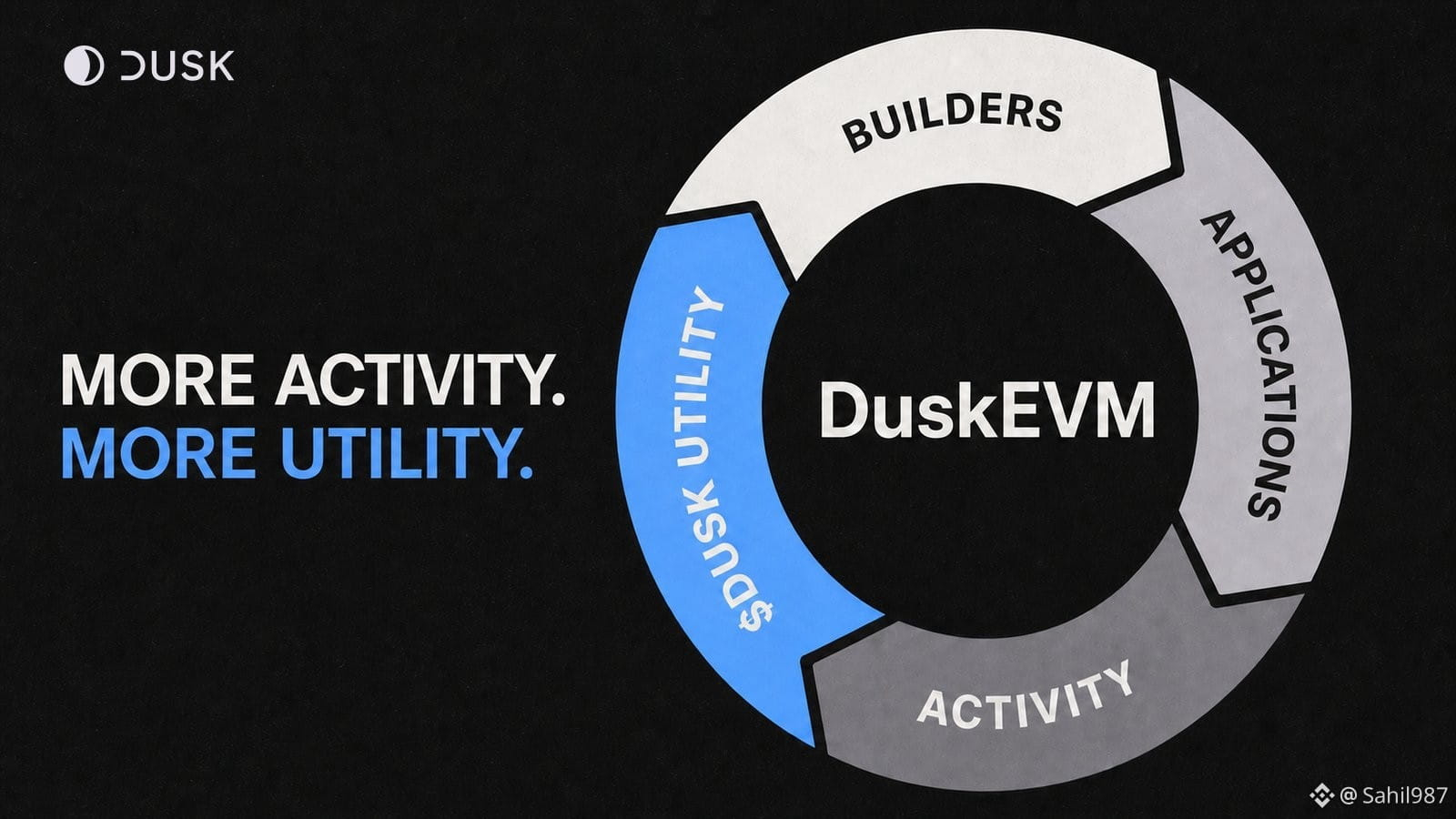
I’ve been thinking about DuskEVM a little differently lately.
A new chain doesn’t become useful just because the technology is there.
Someone has to build on it.
Then people have to actually use those applications.
And that’s where the interesting part starts.
More builders can bring more applications.
More applications can bring more activity.
More activity can create more reasons to use $DUSK
Then that utility can attract more builders again.
It’s a simple loop, but getting that loop moving is the hard part.
That’s what I see in this DuskEVM picture.
Not just another EVM environment sitting there waiting for attention.
The real question is whether builders, applications and users can create enough activity to make the ecosystem feed itself.
Because at the end of the day, I’d rather see a token become useful because people actually need it than because everyone is simply talking about it.
That’s the kind of growth I’m watching for with Dusk.
@Dusk #dusk $DUSK
A new chain doesn’t become useful just because the technology is there.
Someone has to build on it.
Then people have to actually use those applications.
And that’s where the interesting part starts.
More builders can bring more applications.
More applications can bring more activity.
More activity can create more reasons to use $DUSK
Then that utility can attract more builders again.
It’s a simple loop, but getting that loop moving is the hard part.
That’s what I see in this DuskEVM picture.
Not just another EVM environment sitting there waiting for attention.
The real question is whether builders, applications and users can create enough activity to make the ecosystem feed itself.
Because at the end of the day, I’d rather see a token become useful because people actually need it than because everyone is simply talking about it.
That’s the kind of growth I’m watching for with Dusk.
@Dusk #dusk $DUSK
Connectez-vous pour découvrir plus de contenu