
Retsu玄
3.8k Publications
Retsu玄
I write about crypto as systems, not stories
Ouvert au trading
Trade régulièrement
1.1 an(s)
478 Suivis
18.3K+ Abonnés
5.6K+ J’aime
Publications
Portefeuille
Tous
Citations
Direct
Vérifié
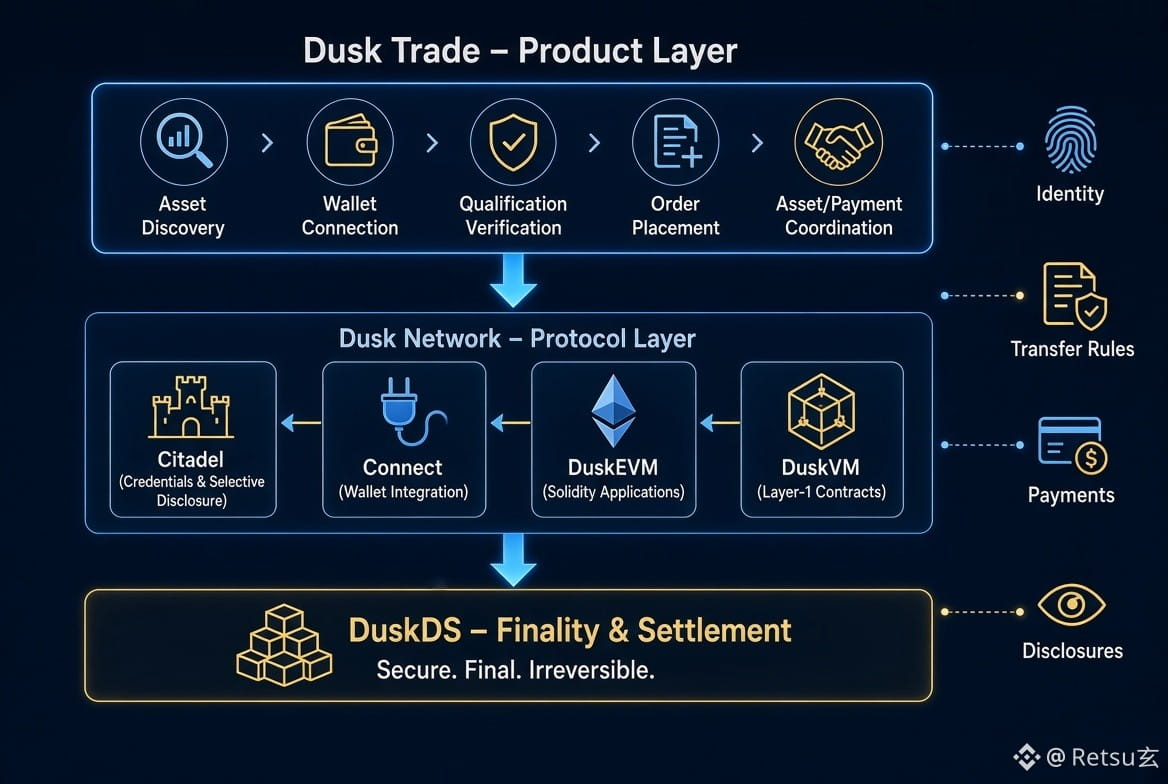
When I look at Dusk, the real challenge in real-world assets is not token issuance itself but keeping every supporting element aligned from the moment an asset is discovered until settlement is complete. Identity, wallet status, transfer restrictions, payments and disclosures must remain consistent or the process breaks.
Dusk Trade sits at the user layer. Participants locate an asset, connect a wallet and pass qualification checks before trading. Once a deal is struck the asset leg still has to be coordinated with the payment leg while selective information is released to the right parties. Underneath, DuskDS supplies finality, DuskEVM runs Solidity applications, DuskVM handles layer-one contracts, Citadel manages credentials and controlled disclosure, and Connect brings the wallet into the flow.
This layered design creates practical friction. Any stall in identity, wallet or settlement interfaces can appear to the user only as a failed transaction. The detailed compliance rules institutions need to produce many possible on-chain rejection paths; without clear mapping of those rejections to the next useful step, protocol-level controls risk becoming another form of manual review. Documentation describes the intended workflow yet does not yet show live assets, real investors or measured settlement success rates, so the system remains in the infrastructure phase.
Even with those open questions, the focus on readable failure reasons and auditable records of company actions shows a serious attempt to handle the operational realities that usually stop RWA projects. Whether a first asset can move cleanly from onboarding through order placement to final settlement, with transparent error handling and lasting on-chain traces, will matter more than how many asset types can eventually be listed. That attention to closed loops under real constraints is why the project still warrants continued observation.
#dusk $DUSK @Dusk
Dusk Trade sits at the user layer. Participants locate an asset, connect a wallet and pass qualification checks before trading. Once a deal is struck the asset leg still has to be coordinated with the payment leg while selective information is released to the right parties. Underneath, DuskDS supplies finality, DuskEVM runs Solidity applications, DuskVM handles layer-one contracts, Citadel manages credentials and controlled disclosure, and Connect brings the wallet into the flow.
This layered design creates practical friction. Any stall in identity, wallet or settlement interfaces can appear to the user only as a failed transaction. The detailed compliance rules institutions need to produce many possible on-chain rejection paths; without clear mapping of those rejections to the next useful step, protocol-level controls risk becoming another form of manual review. Documentation describes the intended workflow yet does not yet show live assets, real investors or measured settlement success rates, so the system remains in the infrastructure phase.
Even with those open questions, the focus on readable failure reasons and auditable records of company actions shows a serious attempt to handle the operational realities that usually stop RWA projects. Whether a first asset can move cleanly from onboarding through order placement to final settlement, with transparent error handling and lasting on-chain traces, will matter more than how many asset types can eventually be listed. That attention to closed loops under real constraints is why the project still warrants continued observation.
#dusk $DUSK @Dusk
#dusk $DUSK @Dusk
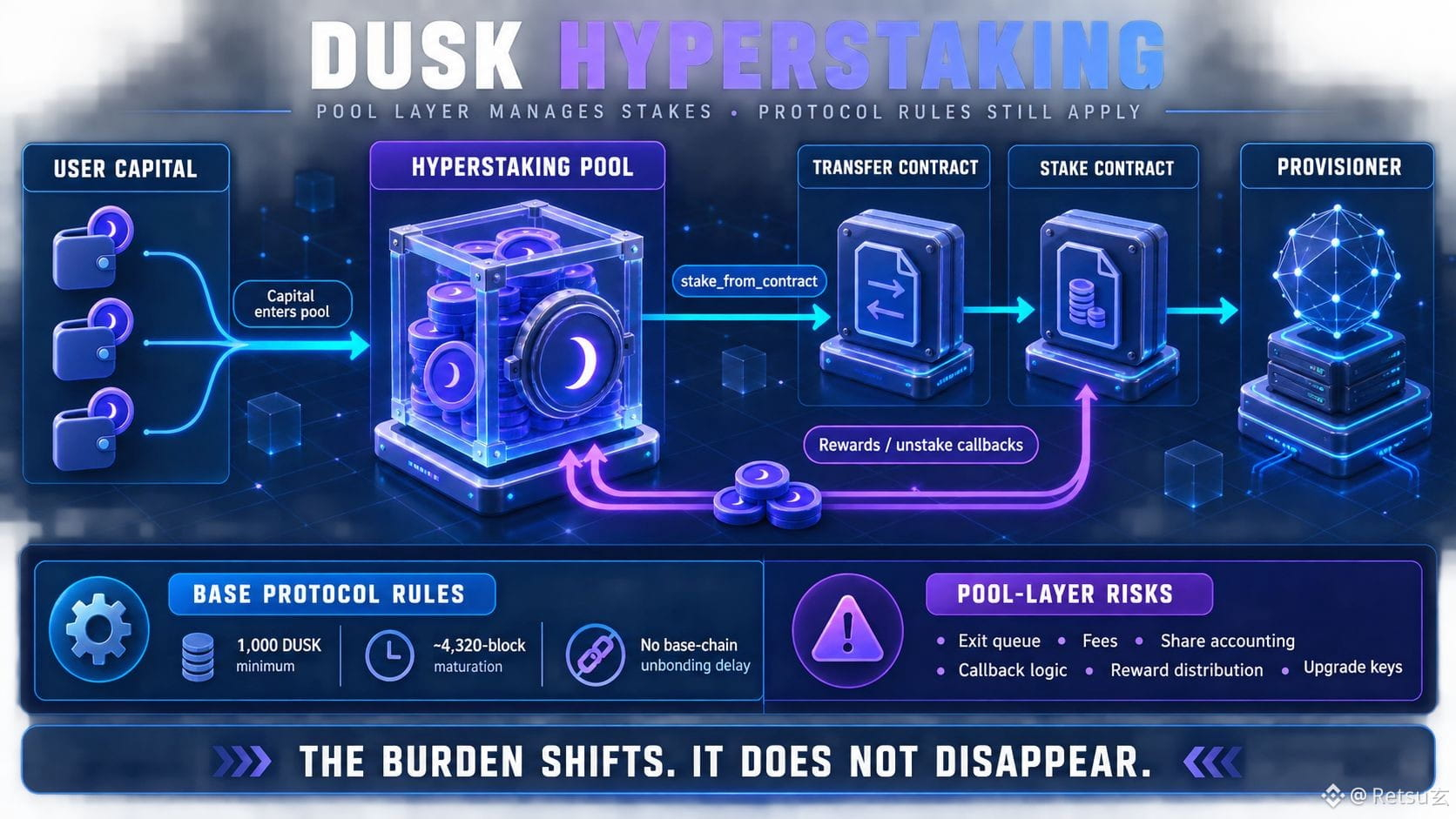
After reviewing Dusk’s staking materials I noticed that the real constraint has never been the absolute size of a stake so much as the operational burden of keeping a provisioner online and synchronized. Hyperstaking simply relocates that burden from an individual operator to a smart-contract layer that can hold positions, collect rewards, and allocate them according to programmable rules.
In practice the mechanism works by letting capital first enter a pool; the pool then calls the Transfer Contract’s stake_from_contract function to create the position. Later the Stake Contract notifies the same pool when rewards become claimable or when an unstake is requested, so the contract itself becomes the active manager of the stake. The 1000 DUSK minimum and the roughly 4320-block maturation window still apply, whether the caller is a human or a contract.
The difficulty appears once the pool sits between the protocol and the end user. Exit liquidity can be throttled by the pool’s own queue, fee schedule, or internal accounting, even though the base chain itself imposes no unbonding delay. Users also inherit exposure to share-calculation errors, callback failures, reward-distribution logic, and any upgrade keys the contract may hold. What looks like the removal of a custodial node is therefore only a shift of the control surface one layer higher.
Still, the design is worth watching because it opens a path for capital strategies that run continuously rather than as discrete user actions. If the pool contracts prove open, auditable, and able to reconcile every token movement on-chain, the same machinery that currently feels opaque could become a durable primitive for coordinated participation.
After reviewing Dusk’s staking materials I noticed that the real constraint has never been the absolute size of a stake so much as the operational burden of keeping a provisioner online and synchronized. Hyperstaking simply relocates that burden from an individual operator to a smart-contract layer that can hold positions, collect rewards, and allocate them according to programmable rules.
In practice the mechanism works by letting capital first enter a pool; the pool then calls the Transfer Contract’s stake_from_contract function to create the position. Later the Stake Contract notifies the same pool when rewards become claimable or when an unstake is requested, so the contract itself becomes the active manager of the stake. The 1000 DUSK minimum and the roughly 4320-block maturation window still apply, whether the caller is a human or a contract.
The difficulty appears once the pool sits between the protocol and the end user. Exit liquidity can be throttled by the pool’s own queue, fee schedule, or internal accounting, even though the base chain itself imposes no unbonding delay. Users also inherit exposure to share-calculation errors, callback failures, reward-distribution logic, and any upgrade keys the contract may hold. What looks like the removal of a custodial node is therefore only a shift of the control surface one layer higher.
Still, the design is worth watching because it opens a path for capital strategies that run continuously rather than as discrete user actions. If the pool contracts prove open, auditable, and able to reconcile every token movement on-chain, the same machinery that currently feels opaque could become a durable primitive for coordinated participation.
Vérifié
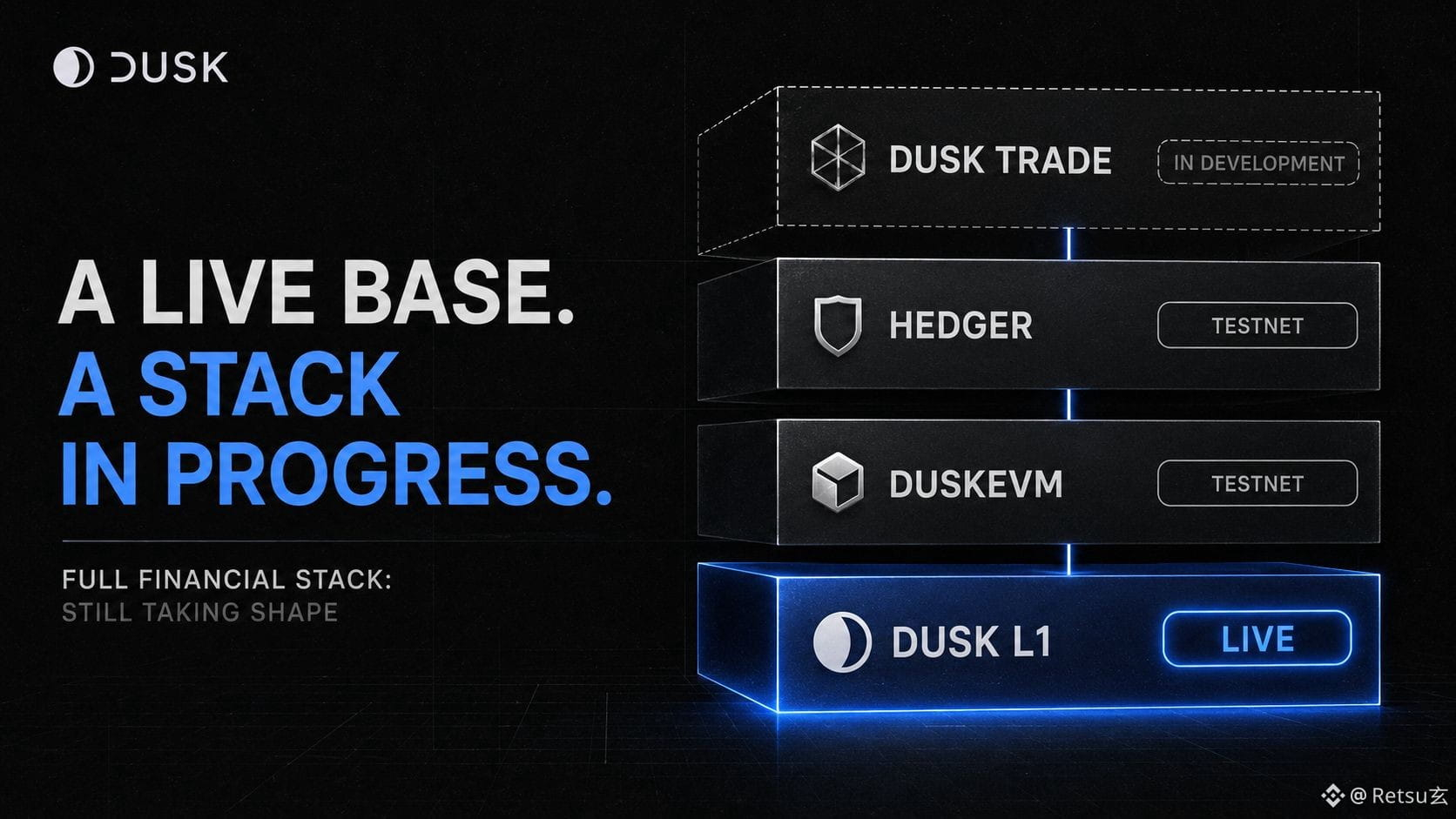
I went back through Dusk’s current product pages and caught myself making one broad assumption: because mainnet is live, I treated the whole financial stack as if it had reached the same stage. The status labels changed that view.
Dusk L1 is live, providing consensus, settlement, data availability, public and shielded transactions, and DuskVM execution. DuskEVM remains on testnet, where Solidity apps use familiar EVM tooling and DUSK for gas while settling through DuskDS. The hedger is also on testnet, adding confidential EVM flows. Dusk Trade is still being built as the product layer for onboarding, controlled access, trading, payment coordination, and settlement.
That made me look at it differently.
My interpretation: Dusk has a live base, but its broader financial thesis depends on several moving layers becoming production-ready together. A secure L1 does not automatically prove that the EVM layer, privacy engine, bridge, and user app will behave as one reliable market workflow.
My uncertainty is integration risk. What release and audit conditions will move DuskEVM and Hedger from testnet to mainnet? If Dusk Trade relies on those layers, how will upgrades or failures be coordinated without interrupting eligibility, trading, or settlement?
I want to watch this in practice.
#dusk $DUSK @Dusk
Dusk L1 is live, providing consensus, settlement, data availability, public and shielded transactions, and DuskVM execution. DuskEVM remains on testnet, where Solidity apps use familiar EVM tooling and DUSK for gas while settling through DuskDS. The hedger is also on testnet, adding confidential EVM flows. Dusk Trade is still being built as the product layer for onboarding, controlled access, trading, payment coordination, and settlement.
That made me look at it differently.
My interpretation: Dusk has a live base, but its broader financial thesis depends on several moving layers becoming production-ready together. A secure L1 does not automatically prove that the EVM layer, privacy engine, bridge, and user app will behave as one reliable market workflow.
My uncertainty is integration risk. What release and audit conditions will move DuskEVM and Hedger from testnet to mainnet? If Dusk Trade relies on those layers, how will upgrades or failures be coordinated without interrupting eligibility, trading, or settlement?
I want to watch this in practice.
#dusk $DUSK @Dusk
Vérifié
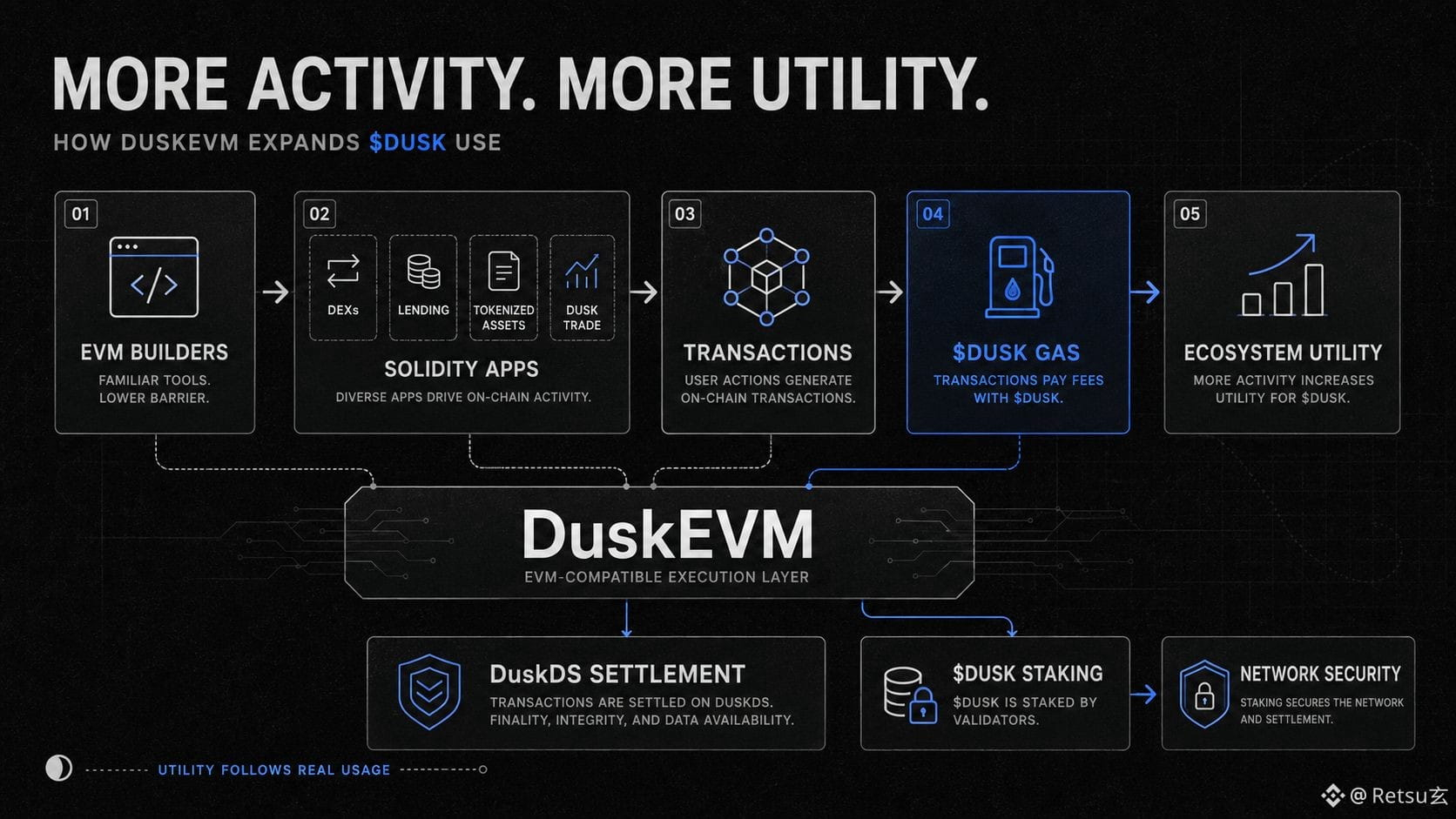
I’ll be keeping it honest here: what caught my attention about DuskEVM was not EVM compatibility on its own, but how that compatibility could expand real utility for Dusk.
DuskEVM is currently on testnet. It gives Solidity developers familiar wallets, libraries, Foundry and Hardhat, with DUSK used as the native gas token. Transactions execute on DuskEVM, while batches and state commitments are published to DuskDS for data availability and settlement. In practical terms, lower tooling friction can attract more builders; useful applications can create more transactions; and those transactions require DUSK for execution. Separately, staking DUSK helps secure the wider Dusk network.
But compatibility does not automatically create DEX liquidity, lending demand, TVL or revenue. Builders still need reliable infrastructure and products people return to. This is where Dusk Trade fits the strategy: it is being built as the application layer for tokenized financial assets, connecting onboarding, trading, payment coordination and settlement.
My view is simple DUSK utility becomes meaningful when testnet development turns into repeated mainnet usage. The mechanism can support demand, but adoption still has to be earned.
#dusk $DUSK @Dusk
DuskEVM is currently on testnet. It gives Solidity developers familiar wallets, libraries, Foundry and Hardhat, with DUSK used as the native gas token. Transactions execute on DuskEVM, while batches and state commitments are published to DuskDS for data availability and settlement. In practical terms, lower tooling friction can attract more builders; useful applications can create more transactions; and those transactions require DUSK for execution. Separately, staking DUSK helps secure the wider Dusk network.
But compatibility does not automatically create DEX liquidity, lending demand, TVL or revenue. Builders still need reliable infrastructure and products people return to. This is where Dusk Trade fits the strategy: it is being built as the application layer for tokenized financial assets, connecting onboarding, trading, payment coordination and settlement.
My view is simple DUSK utility becomes meaningful when testnet development turns into repeated mainnet usage. The mechanism can support demand, but adoption still has to be earned.
#dusk $DUSK @Dusk
#dusk $DUSK
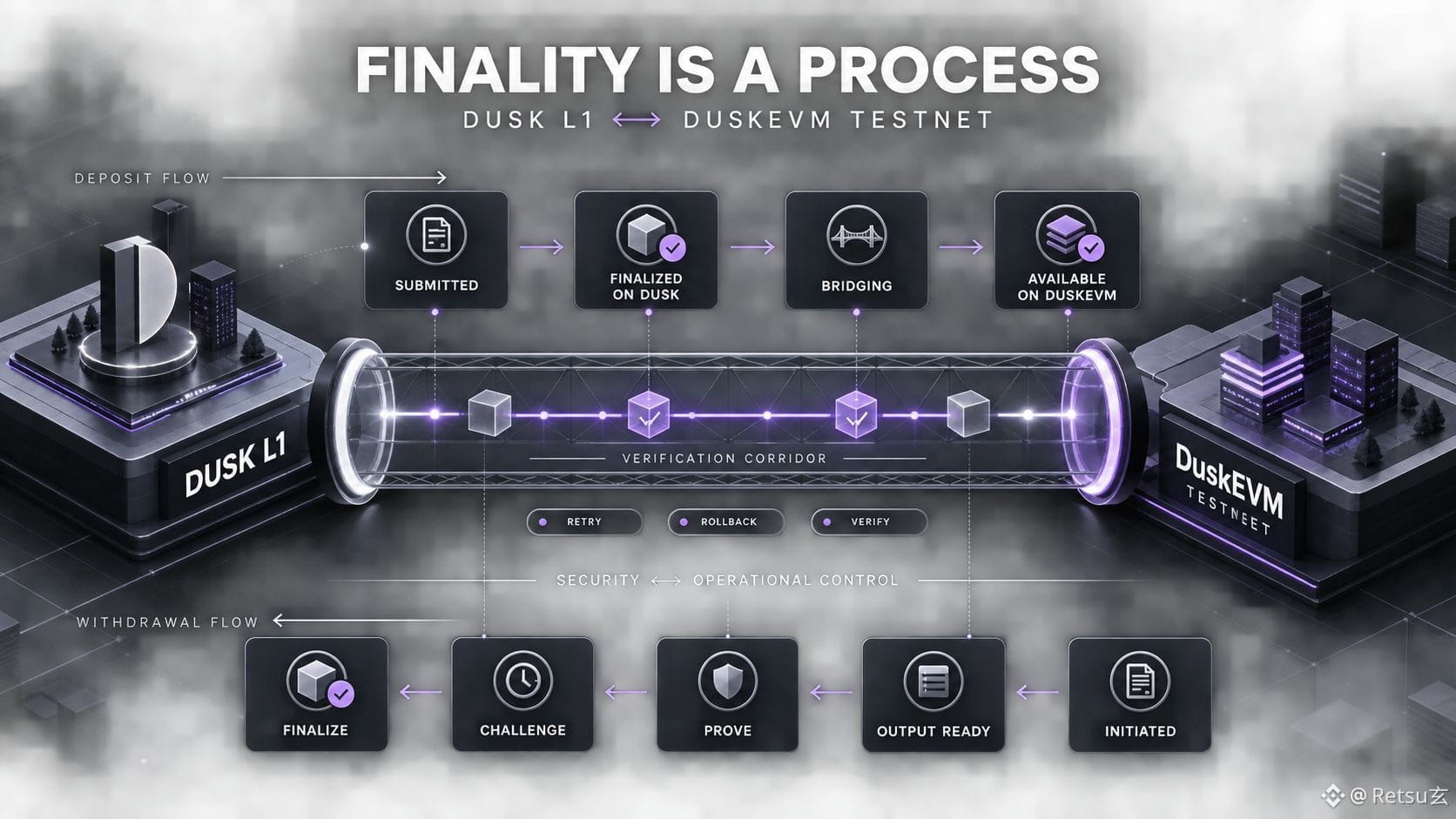
I went back through the @Dusk documentation last night., I caught myself treating “finalized” as a single moment. I assumed that once a Dusk transaction was final, funds should immediately exist on DuskEVM. The docs made that assumption too simple.
On DuskEVM Testnet, a deposit is submitted and finalized on Dusk L1, then processed before the balance becomes available on DuskEVM. A withdrawal has more stages: initiate on DuskEVM, wait for an output, prove on Dusk L1, pass the required maturity and dispute-game checks, then finalize on L1. The documentation warns that inclusion, execution, and finality are not the same status, and readiness should come from protocol state rather than elapsed time.
That made me look at it differently.
My interpretation: the bridge is not a hiding delay; it is trying to turn a cross-layer state machine into something a wallet can explain. The tension is security versus operational dependence. Safer retries, rollback recovery, and challenge checks reduce one class of failure, but recovery paths also concentrate responsibility somewhere.
My uncertainty: during a rollback plus relayer failure, what can a user verify independently before funds are released or retried? Who can pause or resume bridge operations, and what limits that authority if the emergency lasts longer than expected?
I want to watch this in practice.
I went back through the @Dusk documentation last night., I caught myself treating “finalized” as a single moment. I assumed that once a Dusk transaction was final, funds should immediately exist on DuskEVM. The docs made that assumption too simple.
On DuskEVM Testnet, a deposit is submitted and finalized on Dusk L1, then processed before the balance becomes available on DuskEVM. A withdrawal has more stages: initiate on DuskEVM, wait for an output, prove on Dusk L1, pass the required maturity and dispute-game checks, then finalize on L1. The documentation warns that inclusion, execution, and finality are not the same status, and readiness should come from protocol state rather than elapsed time.
That made me look at it differently.
My interpretation: the bridge is not a hiding delay; it is trying to turn a cross-layer state machine into something a wallet can explain. The tension is security versus operational dependence. Safer retries, rollback recovery, and challenge checks reduce one class of failure, but recovery paths also concentrate responsibility somewhere.
My uncertainty: during a rollback plus relayer failure, what can a user verify independently before funds are released or retried? Who can pause or resume bridge operations, and what limits that authority if the emergency lasts longer than expected?
I want to watch this in practice.
#termmax @TermMax
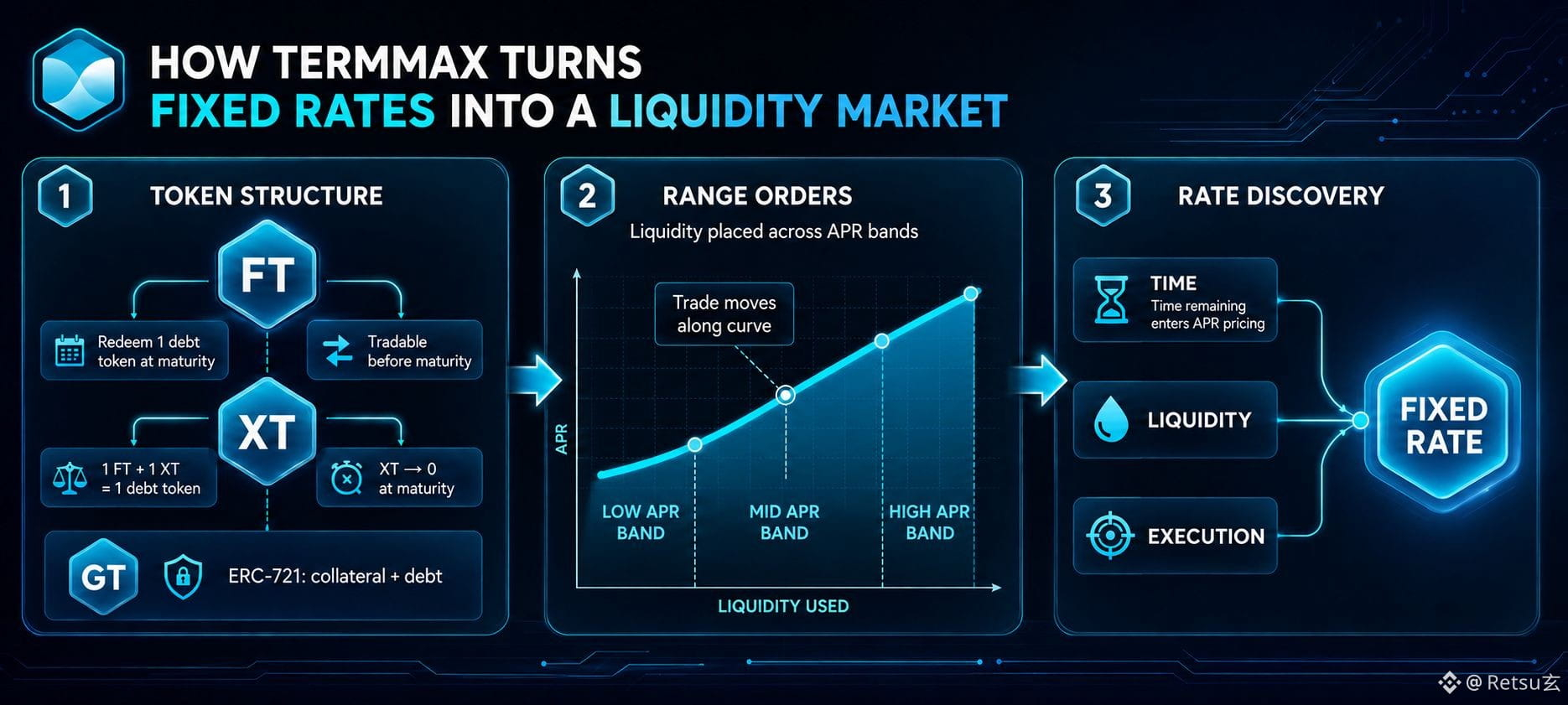
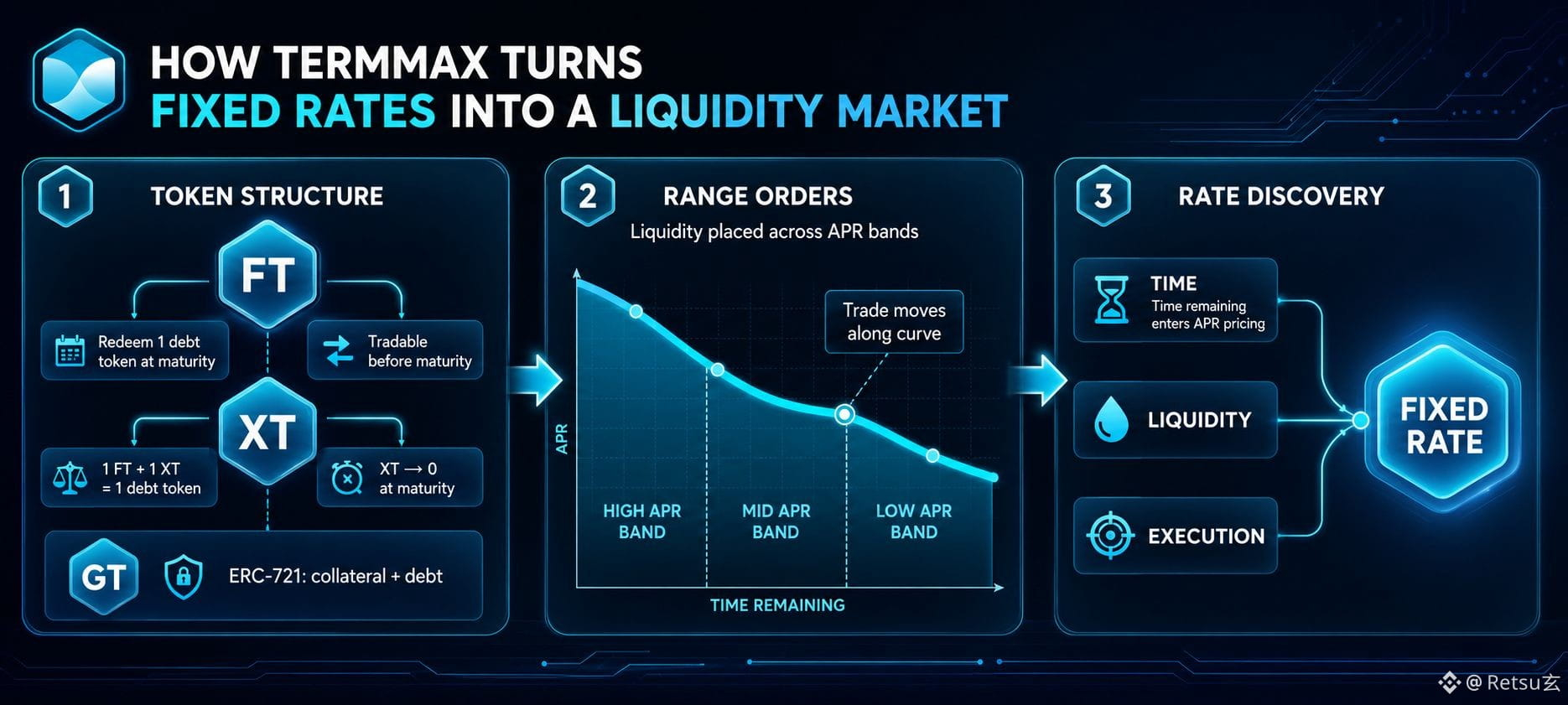
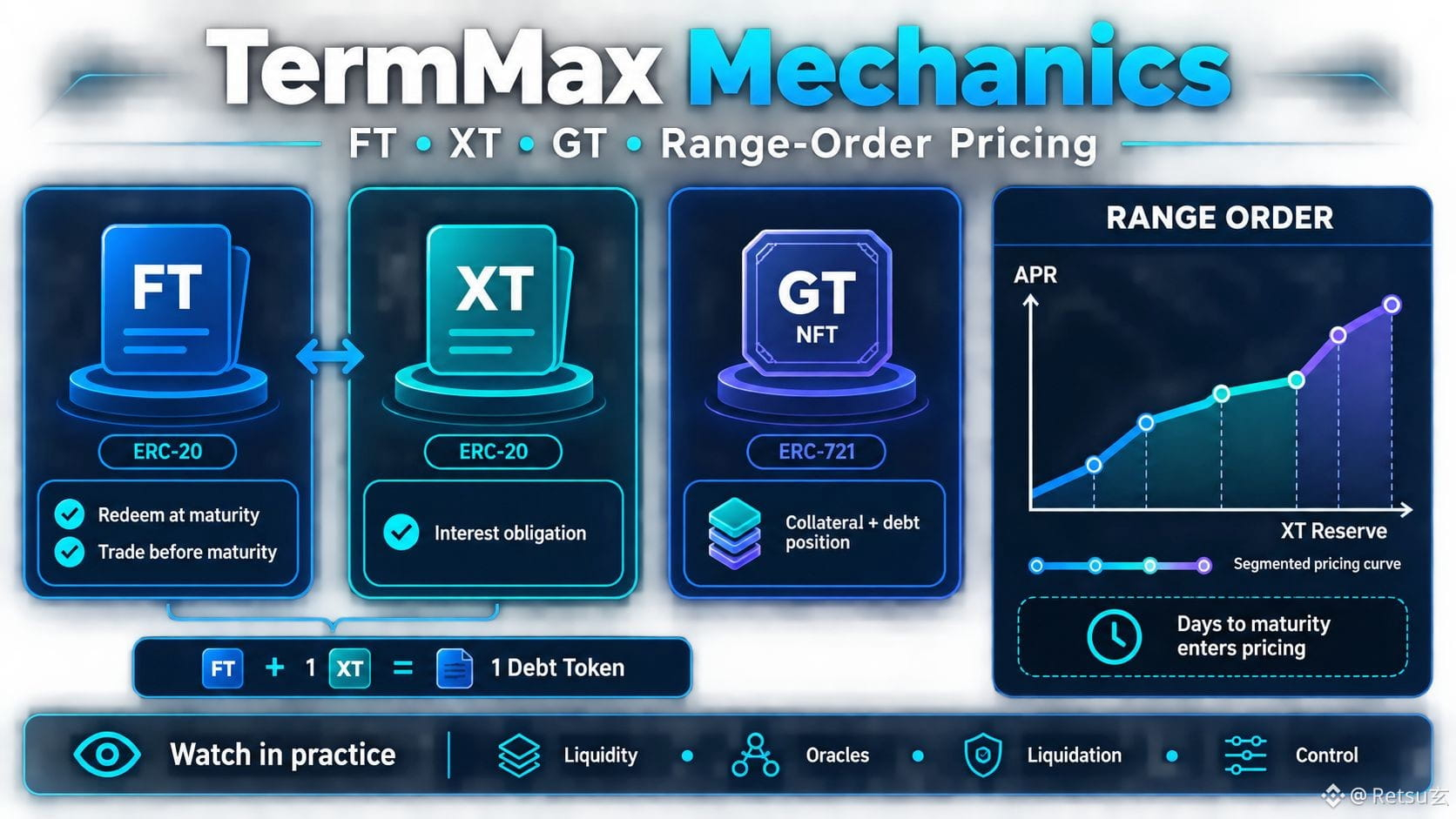
I went back through the TermMax documentation last night with one initial interpretation: its fixed rate came mainly from locking a loan until maturity. The mechanics changed that view.
FT is a fungible ERC-20 claim redeemable for one debt token at maturity. XT is its fungible complement: 1 FT plus 1 XT equals one debt token, and XT goes to zero at maturity. GT is an ERC-721 position recording an individual loan’s collateral and debt. FT can also be sold before maturity at the rate and liquidity available then.
A range order is a series of continuous orders configured by a setter or curator. Its segmented pricing curve places liquidity across APR ranges, so the rate a taker receives changes as trades move through the curve.
That made me look at it differently.
The V2 order contract feeds days remaining until maturity into its APR calculation with the curve’s virtual reserves. My interpretation is that TermMax does more than lock a rate: it creates a market where time, liquidity placement, and execution shape how that rate is discovered.
How will FT exits execute when liquidity thins and sellers arrive together? How concentrated can orders become in one curve segment, and how distributed is control over curve and risk parameters? I also want to see how oracle dependence and liquidation behave under stress.
I want to watch this in practice.
I went back through the TermMax documentation last night with one initial interpretation: its fixed rate came mainly from locking a loan until maturity. The mechanics changed that view.
FT is a fungible ERC-20 claim redeemable for one debt token at maturity. XT is its fungible complement: 1 FT plus 1 XT equals one debt token, and XT goes to zero at maturity. GT is an ERC-721 position recording an individual loan’s collateral and debt. FT can also be sold before maturity at the rate and liquidity available then.
A range order is a series of continuous orders configured by a setter or curator. Its segmented pricing curve places liquidity across APR ranges, so the rate a taker receives changes as trades move through the curve.
That made me look at it differently.
The V2 order contract feeds days remaining until maturity into its APR calculation with the curve’s virtual reserves. My interpretation is that TermMax does more than lock a rate: it creates a market where time, liquidity placement, and execution shape how that rate is discovered.
How will FT exits execute when liquidity thins and sellers arrive together? How concentrated can orders become in one curve segment, and how distributed is control over curve and risk parameters? I also want to see how oracle dependence and liquidation behave under stress.
I want to watch this in practice.
#dusk $DUSK @Dusk
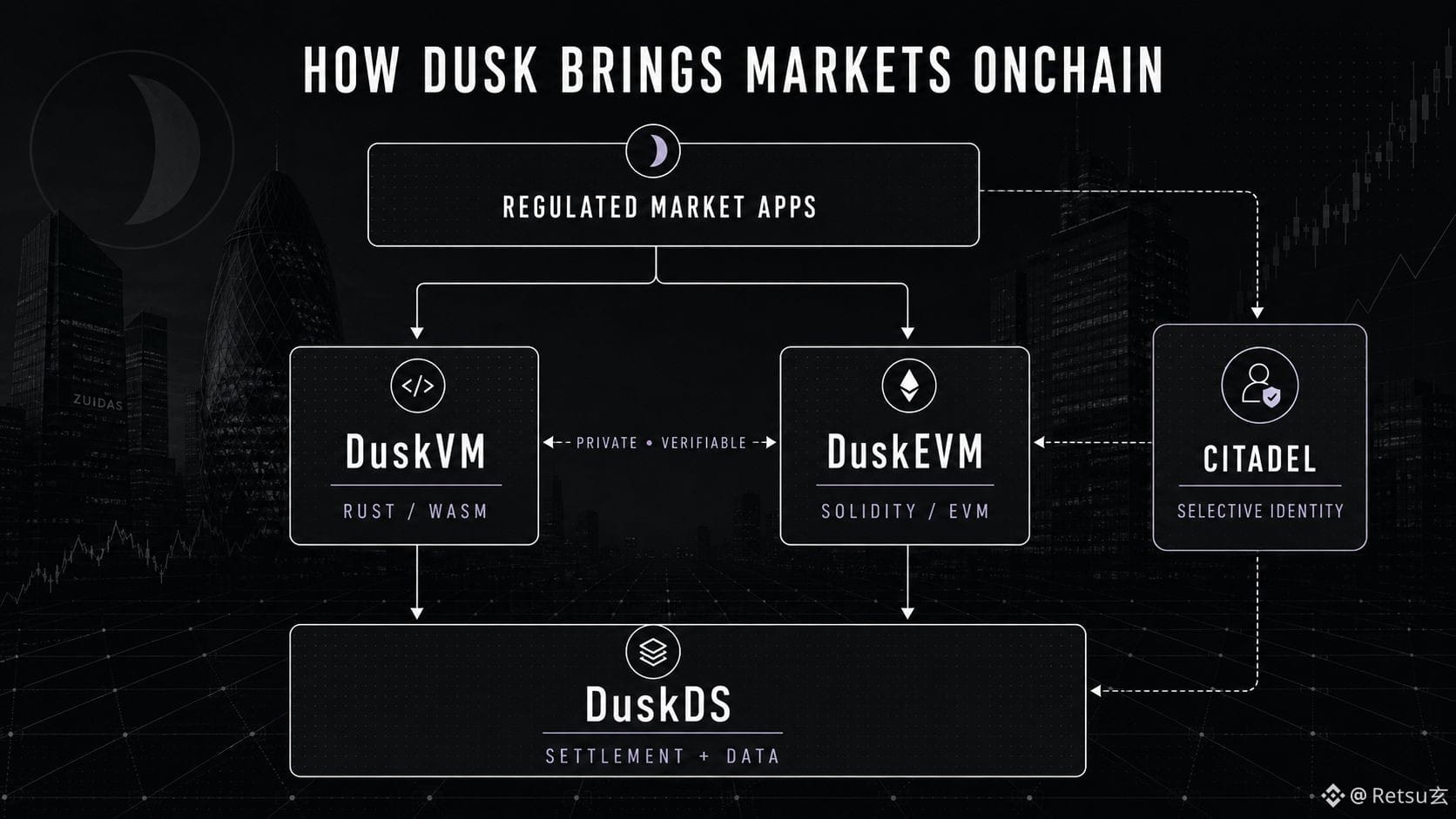
I initially approached Dusk’s documentation with a simple understanding: tokenizing a bond or fund mainly involves recording ownership in a smart contract. What shifted my perspective was realizing that the real complexity lies in the ecosystem surrounding the token—rules around eligibility, transfers, private data handling, payments, settlement, and ongoing servicing all needed to align.
Dusk addresses this by distributing responsibilities across its architecture. DuskVM executes Rust and WebAssembly contracts directly on Layer 1. DuskEVM allows Solidity-based apps to leverage familiar EVM tools, while batches, transaction metadata, and state commitments progress toward final settlement via DuskDS. Citadel employs credentials and zero-knowledge proofs so users can demonstrate they hold an approved license without revealing personal information or the full license details on-chain; service providers still retain control over which issuers and attributes they recognize.
This changed how I viewed the system.
My takeaway: privacy here isn’t about complete invisibility. It’s about enabling verification without requiring broad disclosure. The challenge, though, is determining where control lies when these boundaries matter. If a credential is revoked mid-trade, whose state governs eligibility at settlement? And when policies from issuers, trading venues, auditors, and regulators clash, who ultimately decides when and how much information must be disclosed?
I’m keen to see how this plays out in real-world use.
I initially approached Dusk’s documentation with a simple understanding: tokenizing a bond or fund mainly involves recording ownership in a smart contract. What shifted my perspective was realizing that the real complexity lies in the ecosystem surrounding the token—rules around eligibility, transfers, private data handling, payments, settlement, and ongoing servicing all needed to align.
Dusk addresses this by distributing responsibilities across its architecture. DuskVM executes Rust and WebAssembly contracts directly on Layer 1. DuskEVM allows Solidity-based apps to leverage familiar EVM tools, while batches, transaction metadata, and state commitments progress toward final settlement via DuskDS. Citadel employs credentials and zero-knowledge proofs so users can demonstrate they hold an approved license without revealing personal information or the full license details on-chain; service providers still retain control over which issuers and attributes they recognize.
This changed how I viewed the system.
My takeaway: privacy here isn’t about complete invisibility. It’s about enabling verification without requiring broad disclosure. The challenge, though, is determining where control lies when these boundaries matter. If a credential is revoked mid-trade, whose state governs eligibility at settlement? And when policies from issuers, trading venues, auditors, and regulators clash, who ultimately decides when and how much information must be disclosed?
I’m keen to see how this plays out in real-world use.
#termmax @TermMax
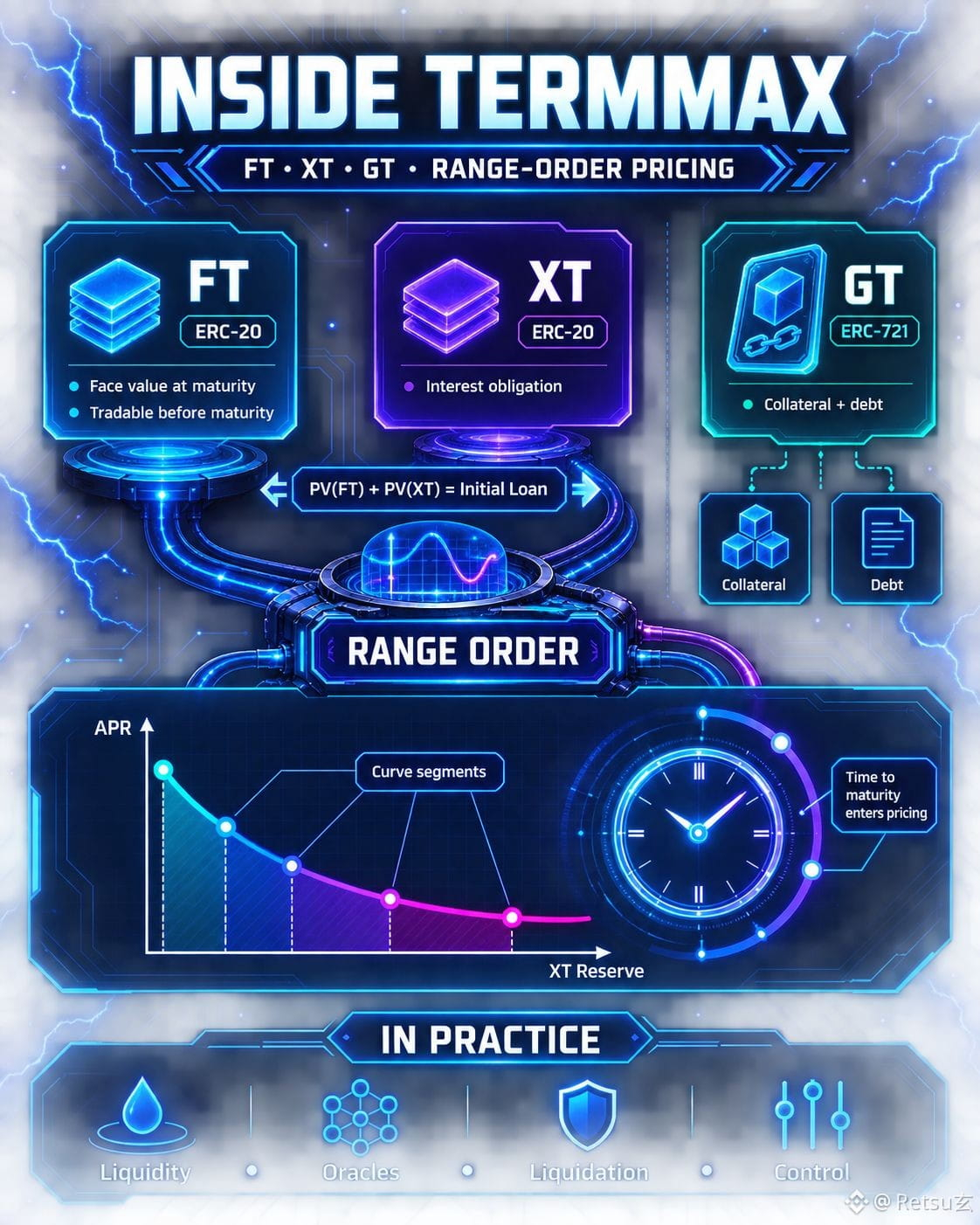
I spent part of last night tracing a TermMax market from the documentation into the contract code. My initial interpretation was that FT, XT, and GT were three labels for one loan. FT is an ERC-20 bought below face value, redeemable at face value in the debt token at maturity, and tradable before then. XT is an ERC-20 representing the interest obligation; the combined present value of FT and XT equals the initial loan amount. GT is an ERC-721 representing a borrowing position and recording its collateral and debt.
A range order is a series of continuous orders configured by a setter or curator. Its pricing curve is built from segments with an APR upper bound and an XT lower bound, and one market can contain multiple range orders.
That made me look at it differently.
The whitepaper defines its time ratio as days to maturity divided by 365. The V2 contracts calculate days remaining and pass that value into the curve and FT/XT swap logic.
My interpretation is that the rate a user sees reflects curve placement, XT reserve movement, and time. What happens to an FT exit when liquidity sits in only a few segments? During market stress, how do oracle fallback, DEX slippage, and liquidation capacity interact? How should control be divided among curators, guardians, admins, and token governance?
I want to watch this in practice.
I spent part of last night tracing a TermMax market from the documentation into the contract code. My initial interpretation was that FT, XT, and GT were three labels for one loan. FT is an ERC-20 bought below face value, redeemable at face value in the debt token at maturity, and tradable before then. XT is an ERC-20 representing the interest obligation; the combined present value of FT and XT equals the initial loan amount. GT is an ERC-721 representing a borrowing position and recording its collateral and debt.
A range order is a series of continuous orders configured by a setter or curator. Its pricing curve is built from segments with an APR upper bound and an XT lower bound, and one market can contain multiple range orders.
That made me look at it differently.
The whitepaper defines its time ratio as days to maturity divided by 365. The V2 contracts calculate days remaining and pass that value into the curve and FT/XT swap logic.
My interpretation is that the rate a user sees reflects curve placement, XT reserve movement, and time. What happens to an FT exit when liquidity sits in only a few segments? During market stress, how do oracle fallback, DEX slippage, and liquidation capacity interact? How should control be divided among curators, guardians, admins, and token governance?
I want to watch this in practice.
#termmax @TermMax
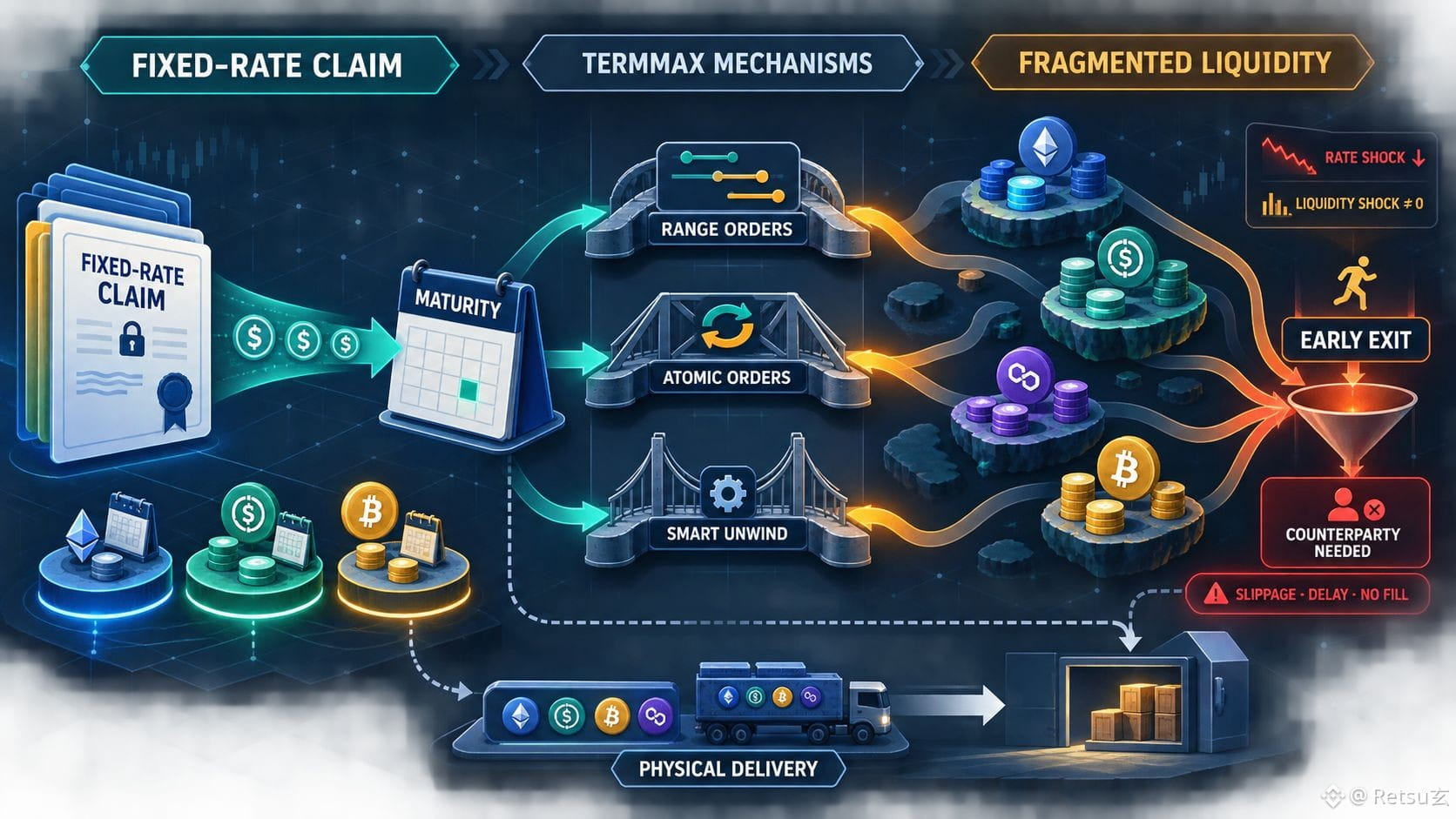
I have spent years observing DeFi and its pursuit of yield, and I find the promise of fixed-rate markets enticing. I have seen too many cycles where the promise of easy money has come at the expense of something bigger, a zero-coupon token that defines a claim at maturity, not an easily realizable exit.
Something about TermMax’s design caught my eye in the context of range orders, quoting a rate along a curve, and atomic orders that span multiple markets by sharing a pool, Smart Unwind’s search for liquidity to unwind a debt position, and the challenge of fragmentation across collateral and maturities. Each of these design elements addresses the risk of illiquidity at exit, but at the price of reduced availability of liquidity at any point. The need for a counterparty to buy an obligation at any given moment remains, and such a counterparty may not always be available, resulting in slippage, delays, or even an outright absence of a market. TermMax’s Alpha documentation acknowledges this by stating that liquidity is not guaranteed.
I find myself wondering whether the promise of fixed-rate lending is not itself the source of the danger, one that simply moves the problem elsewhere. Physical delivery of the collateral underlies any obligation, but the value of the collateral may turn out to be less than that of the liability owed if the lender is unable to deliver the specific asset promised at the time of liquidation. Audits, open code, and bounty programs are all helpful, but they do not eliminate the risks of contract failure, oracles, or market fragmentation. By fixing rates, TermMax reduces the risk of rate shocks but not the risk of liquidity shocks. This is the trade-off I am willing to make in the name of yield.
I have spent years observing DeFi and its pursuit of yield, and I find the promise of fixed-rate markets enticing. I have seen too many cycles where the promise of easy money has come at the expense of something bigger, a zero-coupon token that defines a claim at maturity, not an easily realizable exit.
Something about TermMax’s design caught my eye in the context of range orders, quoting a rate along a curve, and atomic orders that span multiple markets by sharing a pool, Smart Unwind’s search for liquidity to unwind a debt position, and the challenge of fragmentation across collateral and maturities. Each of these design elements addresses the risk of illiquidity at exit, but at the price of reduced availability of liquidity at any point. The need for a counterparty to buy an obligation at any given moment remains, and such a counterparty may not always be available, resulting in slippage, delays, or even an outright absence of a market. TermMax’s Alpha documentation acknowledges this by stating that liquidity is not guaranteed.
I find myself wondering whether the promise of fixed-rate lending is not itself the source of the danger, one that simply moves the problem elsewhere. Physical delivery of the collateral underlies any obligation, but the value of the collateral may turn out to be less than that of the liability owed if the lender is unable to deliver the specific asset promised at the time of liquidation. Audits, open code, and bounty programs are all helpful, but they do not eliminate the risks of contract failure, oracles, or market fragmentation. By fixing rates, TermMax reduces the risk of rate shocks but not the risk of liquidity shocks. This is the trade-off I am willing to make in the name of yield.
Last night, I revisited the Dusk documentation, focusing on grasping the actual role $DUSK plays within the protocol—its technical function rather than the market-driven story.
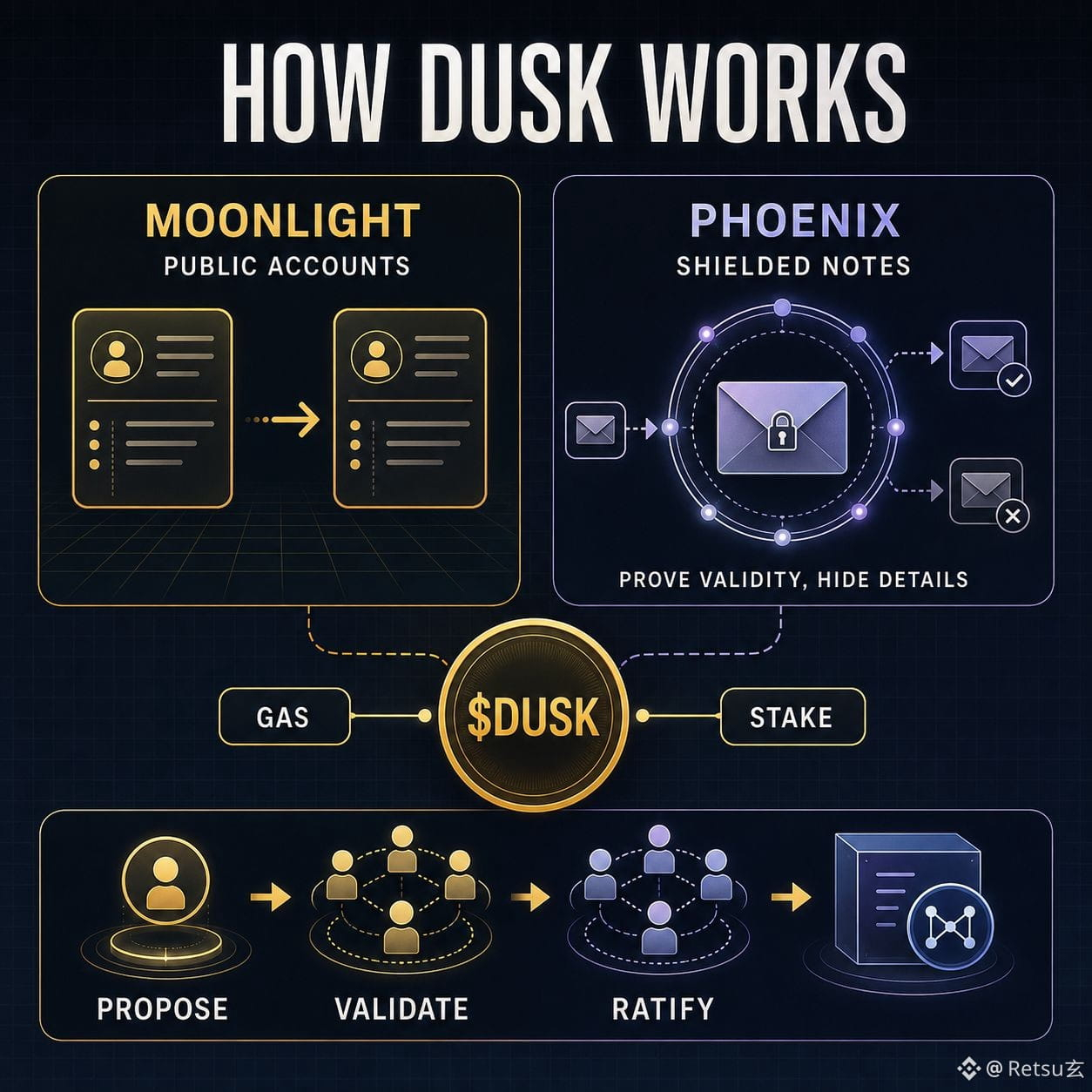
The first thing I had to untangle was DuskDS’s two transaction models. Moonlight is the familiar route: public accounts, visible balances, sender, recipient, amount. Phoenix works with encrypted “notes.” To spend one, the user supplies a zero-knowledge proof that ownership and balance rules hold. Think of handing a clerk a sealed envelope whose seal proves every required box is checked, without exposing the contents. A nullifier then lets the network reject a second spend without identifying which note in the public tree was used. I reread that part twice—then a notification pulled me away—because privacy doesn’t mean “nothing is checked.” It means the network checks a proof instead of the hidden transaction details. Viewing keys can selectively reveal information.
Consensus took another pass. Dusk calls it Succinct Attestation: stakers, or provisioners, lock DUSK; deterministic, stake-weighted selection picks a block proposer, then one committee validates and another ratifies. Aggregated signatures become an attestation that a quorum agreed. So $DUSK is both gas and the stake behind participation.
The part I’d examine next is concentration. Selection is permissionless, but how distributed are effective committee credits in practice? In the pages I read, I couldn’t find a clear account of who changes global parameters. maybe I missed it.
What evidence would show committee power is genuinely dispersed? How are viewing keys governed in real deployments? who can change protocol parameters, and through what process?
#dusk $DUSK @Dusk
The first thing I had to untangle was DuskDS’s two transaction models. Moonlight is the familiar route: public accounts, visible balances, sender, recipient, amount. Phoenix works with encrypted “notes.” To spend one, the user supplies a zero-knowledge proof that ownership and balance rules hold. Think of handing a clerk a sealed envelope whose seal proves every required box is checked, without exposing the contents. A nullifier then lets the network reject a second spend without identifying which note in the public tree was used. I reread that part twice—then a notification pulled me away—because privacy doesn’t mean “nothing is checked.” It means the network checks a proof instead of the hidden transaction details. Viewing keys can selectively reveal information.
Consensus took another pass. Dusk calls it Succinct Attestation: stakers, or provisioners, lock DUSK; deterministic, stake-weighted selection picks a block proposer, then one committee validates and another ratifies. Aggregated signatures become an attestation that a quorum agreed. So $DUSK is both gas and the stake behind participation.
The part I’d examine next is concentration. Selection is permissionless, but how distributed are effective committee credits in practice? In the pages I read, I couldn’t find a clear account of who changes global parameters. maybe I missed it.
What evidence would show committee power is genuinely dispersed? How are viewing keys governed in real deployments? who can change protocol parameters, and through what process?
#dusk $DUSK @Dusk
#termmax @TermMax
I went back through the TermMax documentation last night. My initial interpretation was that it only locked a lending rate and issued a receipt. The docs say FT is an ERC-20 bought below face value and redeemable for one debt token at maturity. XT is the ERC-20 representing the interest obligation; the present values of FT and XT equal the initial loan amount. GT is an ERC-721 recording collateral and debt for one borrowing position.
A range order groups continuous orders configured by an order setter or curator. Its pricing curve has segments with an APR upper bound and an XT lower bound. As trades change the XT reserve, the matched rate moves along the curve.
That made me look at it differently.
The whitepaper uses days to maturity divided by 365 as its time ratio; the contracts use days remaining in curve calculations. FT can also be sold before maturity. My reading is that an early exit depends on available pricing and liquidity, not only maturity redemption.
My interpretation is that rate setting is expressed through liquidity placement. How does execution behave when FT liquidity thins or most liquidity sits in one segment? During market stress, how do oracle failover, DEX liquidity, liquidation capacity, and protocol parameters interact? How much control do curators and admin roles retain?
I want to watch this in practice.
I went back through the TermMax documentation last night. My initial interpretation was that it only locked a lending rate and issued a receipt. The docs say FT is an ERC-20 bought below face value and redeemable for one debt token at maturity. XT is the ERC-20 representing the interest obligation; the present values of FT and XT equal the initial loan amount. GT is an ERC-721 recording collateral and debt for one borrowing position.
A range order groups continuous orders configured by an order setter or curator. Its pricing curve has segments with an APR upper bound and an XT lower bound. As trades change the XT reserve, the matched rate moves along the curve.
That made me look at it differently.
The whitepaper uses days to maturity divided by 365 as its time ratio; the contracts use days remaining in curve calculations. FT can also be sold before maturity. My reading is that an early exit depends on available pricing and liquidity, not only maturity redemption.
My interpretation is that rate setting is expressed through liquidity placement. How does execution behave when FT liquidity thins or most liquidity sits in one segment? During market stress, how do oracle failover, DEX liquidity, liquidation capacity, and protocol parameters interact? How much control do curators and admin roles retain?
I want to watch this in practice.
#dusk $DUSK @Dusk
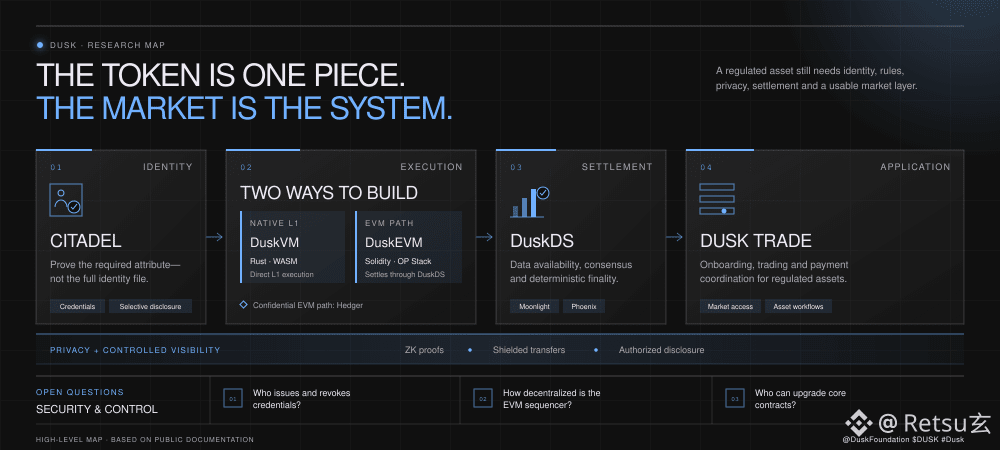
I went back through Dusk’s documentation last night because “regulated DeFi” is easy to say, but harder to picture as a system.
I first thought the main idea was private tokenization. A few pages later, my view changed: the token is only one piece. The harder job is joining identity, transfer rules and settlement without exposing every balance or credential.
The DuskVM/DuskEVM split helped. DuskVM runs Rust/WASM contracts on the L1; DuskEVM lets Solidity apps publish data and settle through DuskDS. My read is that one path sits closer to Dusk’s native privacy tools, while the other lowers the barrier for Ethereum developers.
Citadel is where I still have questions. Proving “I’m eligible” without revealing a full identity record makes sense, but who issues and revokes credentials? What happens if an issuer is compromised? Who controls access when disclosure is legally required?
I’m also unsure how decentralization works across the stack. Succinct Attestation is described as permissionless and committee-based, but how decentralized is the DuskEVM sequencer? Who can upgrade bridges or core contracts, and what checks apply? The DIP process records proposals, but I couldn’t find a clear answer on final decisions.
Where is the biggest security assumption? Can privacy, regulatory control and credible neutrality coexist without one dominating?
I went back through Dusk’s documentation last night because “regulated DeFi” is easy to say, but harder to picture as a system.
I first thought the main idea was private tokenization. A few pages later, my view changed: the token is only one piece. The harder job is joining identity, transfer rules and settlement without exposing every balance or credential.
The DuskVM/DuskEVM split helped. DuskVM runs Rust/WASM contracts on the L1; DuskEVM lets Solidity apps publish data and settle through DuskDS. My read is that one path sits closer to Dusk’s native privacy tools, while the other lowers the barrier for Ethereum developers.
Citadel is where I still have questions. Proving “I’m eligible” without revealing a full identity record makes sense, but who issues and revokes credentials? What happens if an issuer is compromised? Who controls access when disclosure is legally required?
I’m also unsure how decentralization works across the stack. Succinct Attestation is described as permissionless and committee-based, but how decentralized is the DuskEVM sequencer? Who can upgrade bridges or core contracts, and what checks apply? The DIP process records proposals, but I couldn’t find a clear answer on final decisions.
Where is the biggest security assumption? Can privacy, regulatory control and credible neutrality coexist without one dominating?
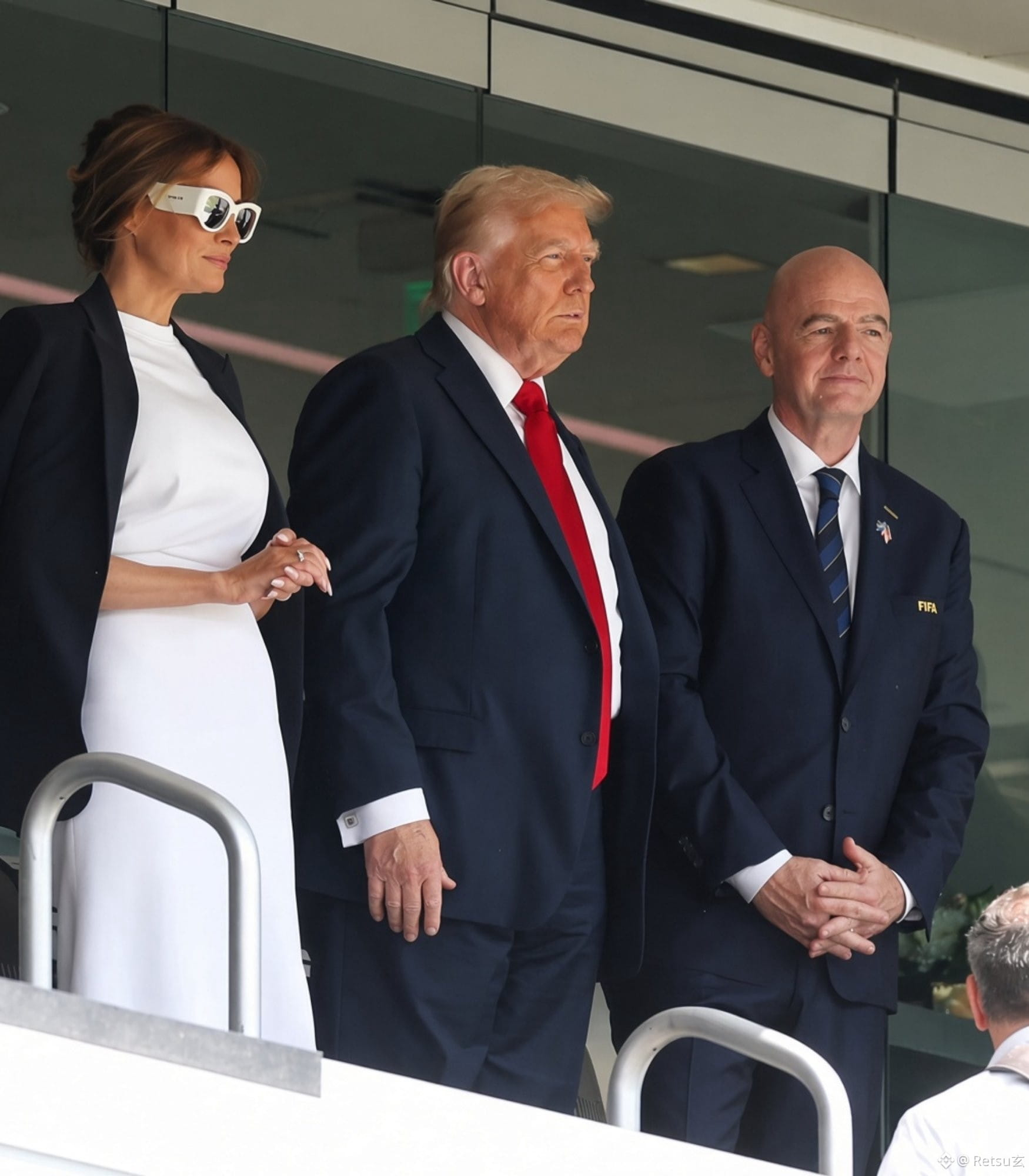
JUST IN: 🇺🇸 Melania Trump has now recorded the lowest approval rating for a First Lady in U.S. history, reaching -12.
Throughout the year, she has made just 38 public appearances and has not been seen in public since attending the FIFA World Cup final on July 19.
#SECCancelsCryptoRulemakingMeeting
#SP500TopsRecord7800
Throughout the year, she has made just 38 public appearances and has not been seen in public since attending the FIFA World Cup final on July 19.
#SECCancelsCryptoRulemakingMeeting
#SP500TopsRecord7800
Binance has scheduled BNB Smart Chain (BEP20) wallet maintenance for August 20, 2026, at 06:00 UTC. Deposits and withdrawals through the network will be suspended from 05:55 UTC, with maintenance expected to last approximately one hour.
Trading of tokens supported on BNB Smart Chain will remain unaffected, so the interruption applies only to deposits and withdrawals. Binance says these services will reopen once the network is deemed stable, without a separate follow-up announcement.
Anyone planning to move BEP20 assets through Binance may want to complete the transaction before the suspension begins to avoid potential delays.
Trading of tokens supported on BNB Smart Chain will remain unaffected, so the interruption applies only to deposits and withdrawals. Binance says these services will reopen once the network is deemed stable, without a separate follow-up announcement.
Anyone planning to move BEP20 assets through Binance may want to complete the transaction before the suspension begins to avoid potential delays.
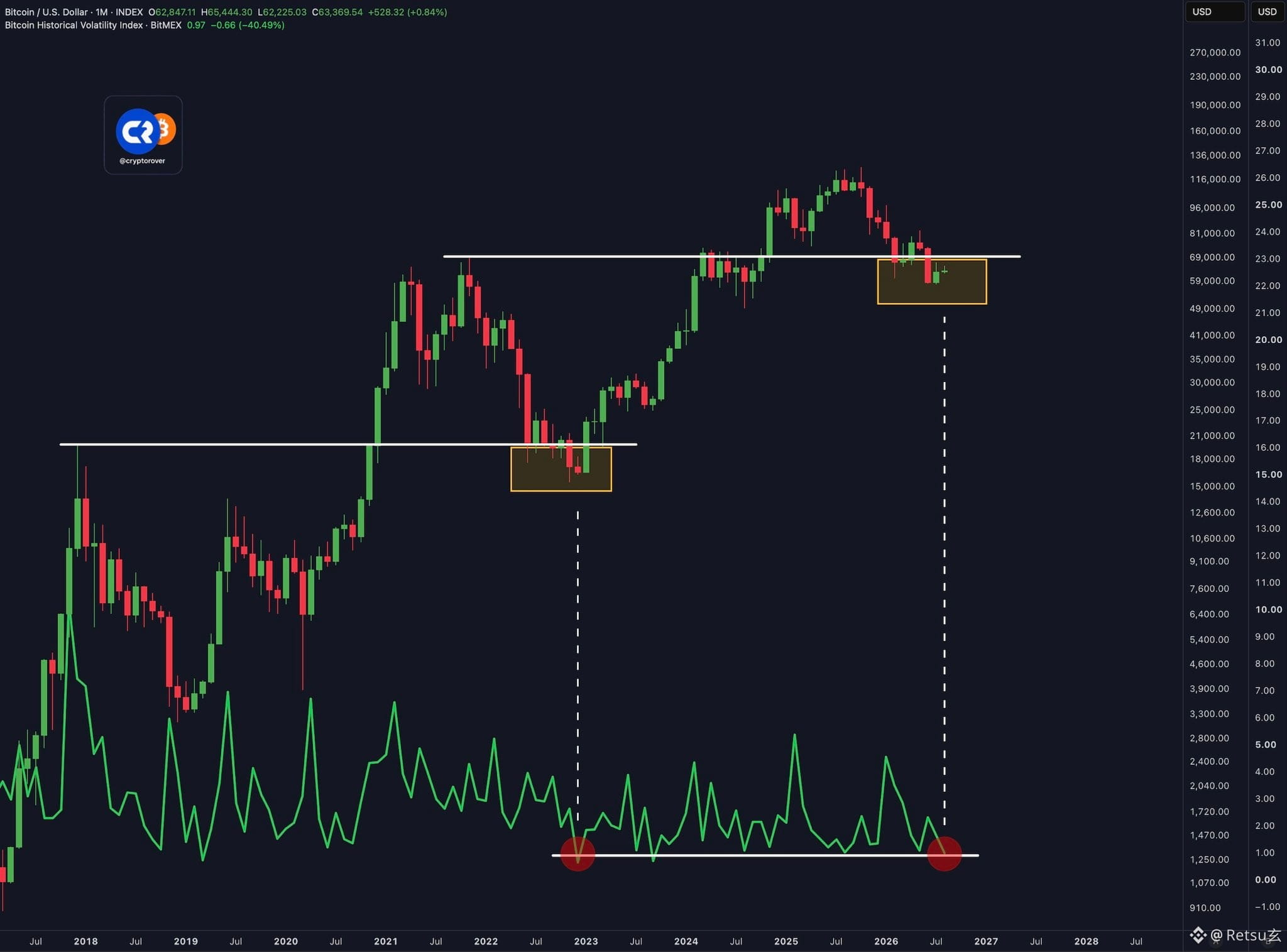
I think that over the next 6–12 months:
$BTC : $100K - $150K
The last time Bitcoin volatility was this low in a bear market was in 2022.
$BTC was in its bottoming phase and went parabolic shortly after.
Something big is coming…
#SP500TopsRecord7800
#CardanoSplitsDijkstraUpgradeIntoTwoPhases
#SECReviewsSix3xLeveragedCommodityETFs
$BTC : $100K - $150K
The last time Bitcoin volatility was this low in a bear market was in 2022.
$BTC was in its bottoming phase and went parabolic shortly after.
Something big is coming…
#SP500TopsRecord7800
#CardanoSplitsDijkstraUpgradeIntoTwoPhases
#SECReviewsSix3xLeveragedCommodityETFs
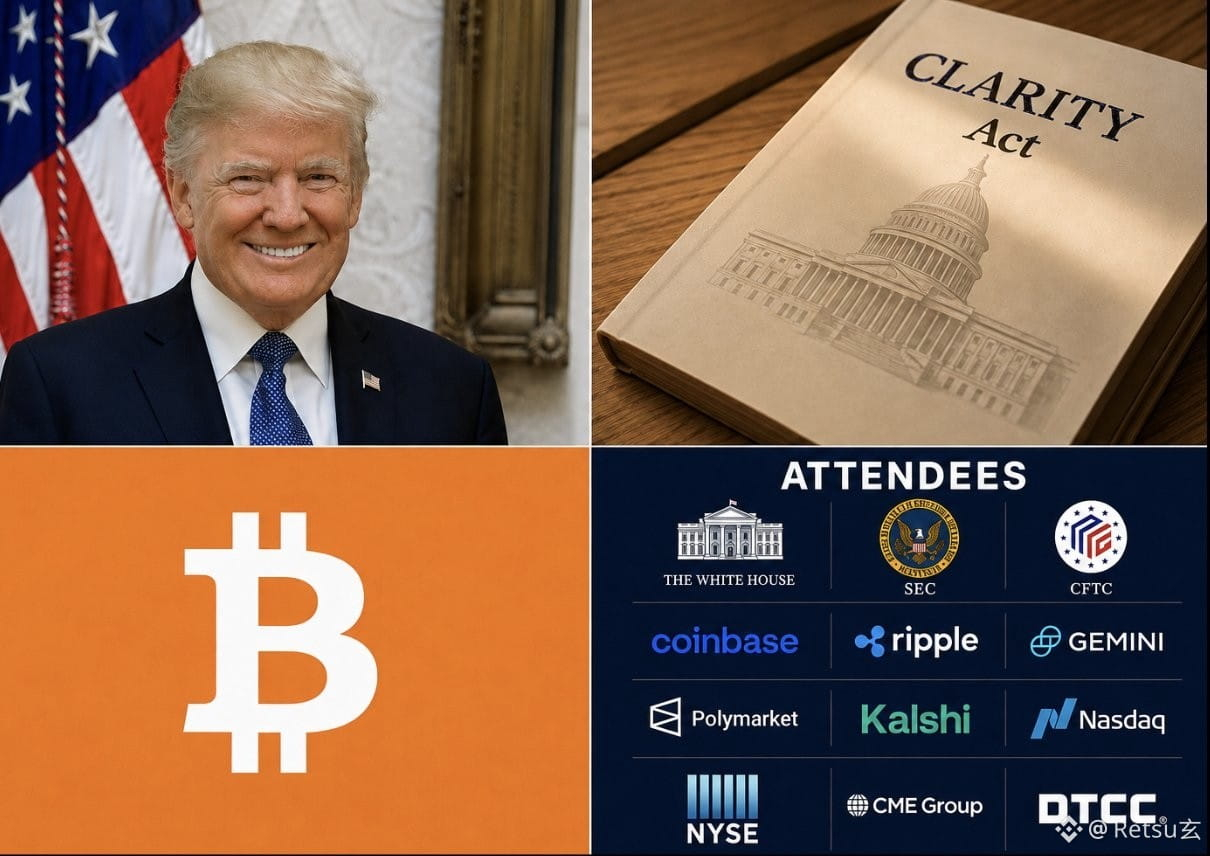
🇺🇸 THE WHITE HOUSE IS HOLDING THE MOST SIGNIFICANT CRYPTO MEETING TO DATE THIS WEEK!
With President Trump, SEC Chair Atkins, CFTC Chair Selig, and crypto-firms Coinbase, Ripple, Gemini, Polymarket, Kalshi, Nasdaq, NYSE, CME, and DTCC, among others, in attendance. However, the most notable detail is the last name on that list!
DTCC is the organization that settles most stock trades in America. Why consult them about legislation if they are already finalizing settlements? The only logical conclusion is that President Trump has authorized the commencement of implementation. This development is significant enough that it does not require the CLARITY Act to take effect.
#IsraelStrikesLebanonKillsHezbollahCommander
#SP500TopsRecord7800
#SP500EarningsBeatExpectations
#USToPressNationsToPickUSOrChinaAICoalition
With President Trump, SEC Chair Atkins, CFTC Chair Selig, and crypto-firms Coinbase, Ripple, Gemini, Polymarket, Kalshi, Nasdaq, NYSE, CME, and DTCC, among others, in attendance. However, the most notable detail is the last name on that list!
DTCC is the organization that settles most stock trades in America. Why consult them about legislation if they are already finalizing settlements? The only logical conclusion is that President Trump has authorized the commencement of implementation. This development is significant enough that it does not require the CLARITY Act to take effect.
#IsraelStrikesLebanonKillsHezbollahCommander
#SP500TopsRecord7800
#SP500EarningsBeatExpectations
#USToPressNationsToPickUSOrChinaAICoalition
The cryptocurrency market never sleeps! Here are the most important observations at the moment:
$BTC is holding its critical support level
$ETH shows signs of increased on-chain activity,
and altcoins seem to be stabilizing for a potential breakout soon.
What are you noticing in the market these days?
#Bitcoin #Ethereum
#IsraelStrikesLebanonKillsHezbollahCommander
#CardanoSplitsDijkstraUpgradeIntoTwoPhases #SECReviewsSix3xLeveragedCommodityETFs
$BTC is holding its critical support level
$ETH shows signs of increased on-chain activity,
and altcoins seem to be stabilizing for a potential breakout soon.
What are you noticing in the market these days?
#Bitcoin #Ethereum
#IsraelStrikesLebanonKillsHezbollahCommander
#CardanoSplitsDijkstraUpgradeIntoTwoPhases #SECReviewsSix3xLeveragedCommodityETFs
#dusk $DUSK @Dusk
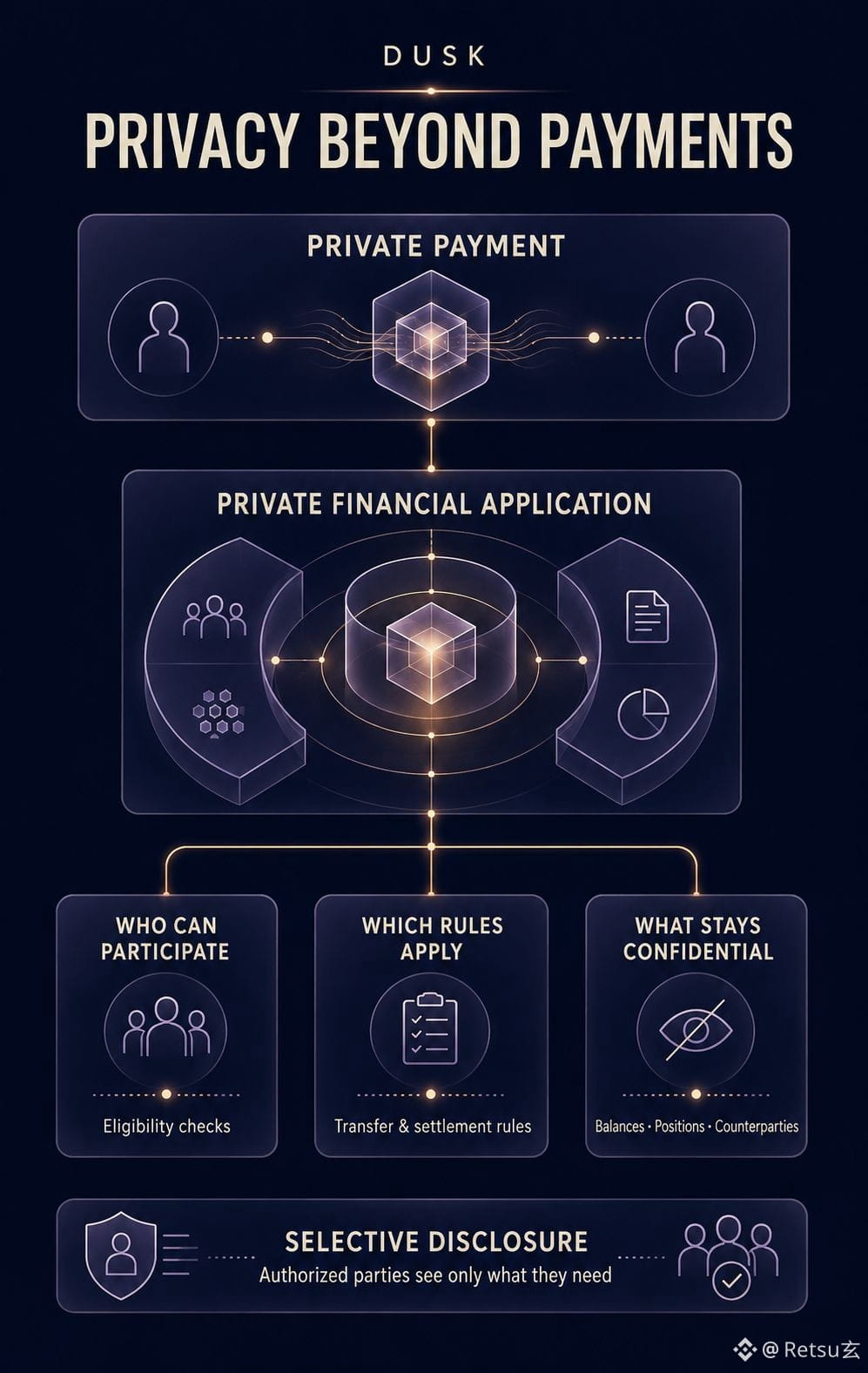
I've been around long enough to notice that crypto often treats privacy as a transfer feature: hide the sender, receiver or amount, and call the job done. That matters, but one private payment does not make a private financial system. The app around it can still expose positions, eligibility, counterparties and transaction rules.
Something about Dusk caught my attention. Phoenix offers shielded, note-based transfers, while Moonlight keeps a public account path. More interesting is what sits above the payment. Dusk's contracts and identity layer are designed so an app can check eligibility, enforce transfer or settlement conditions, and disclose selected facts to an issuer or auditor without publishing everything.
I've seen similar ideas before, and the hard part was rarely cryptography alone. It was deciding where privacy ends: who gets viewing rights, how access is governed, what metadata leaks, and whether users understand the choices. Private finance still needs liquidity, pricing, recovery and decent wallets. Confidential execution does not erase those problems.
I keep wondering whether crypto has framed privacy too narrowly. Bitcoin showed that value can move without a bank, but its open ledger also showed how much a payment trail reveals. Dusk is testing a broader idea: perhaps the useful unit of privacy is not one transaction, but the financial relationship around it. I'm still not convinced the trade-offs are solved, but that question feels worth following.
I've been around long enough to notice that crypto often treats privacy as a transfer feature: hide the sender, receiver or amount, and call the job done. That matters, but one private payment does not make a private financial system. The app around it can still expose positions, eligibility, counterparties and transaction rules.
Something about Dusk caught my attention. Phoenix offers shielded, note-based transfers, while Moonlight keeps a public account path. More interesting is what sits above the payment. Dusk's contracts and identity layer are designed so an app can check eligibility, enforce transfer or settlement conditions, and disclose selected facts to an issuer or auditor without publishing everything.
I've seen similar ideas before, and the hard part was rarely cryptography alone. It was deciding where privacy ends: who gets viewing rights, how access is governed, what metadata leaks, and whether users understand the choices. Private finance still needs liquidity, pricing, recovery and decent wallets. Confidential execution does not erase those problems.
I keep wondering whether crypto has framed privacy too narrowly. Bitcoin showed that value can move without a bank, but its open ledger also showed how much a payment trail reveals. Dusk is testing a broader idea: perhaps the useful unit of privacy is not one transaction, but the financial relationship around it. I'm still not convinced the trade-offs are solved, but that question feels worth following.
Vérifié
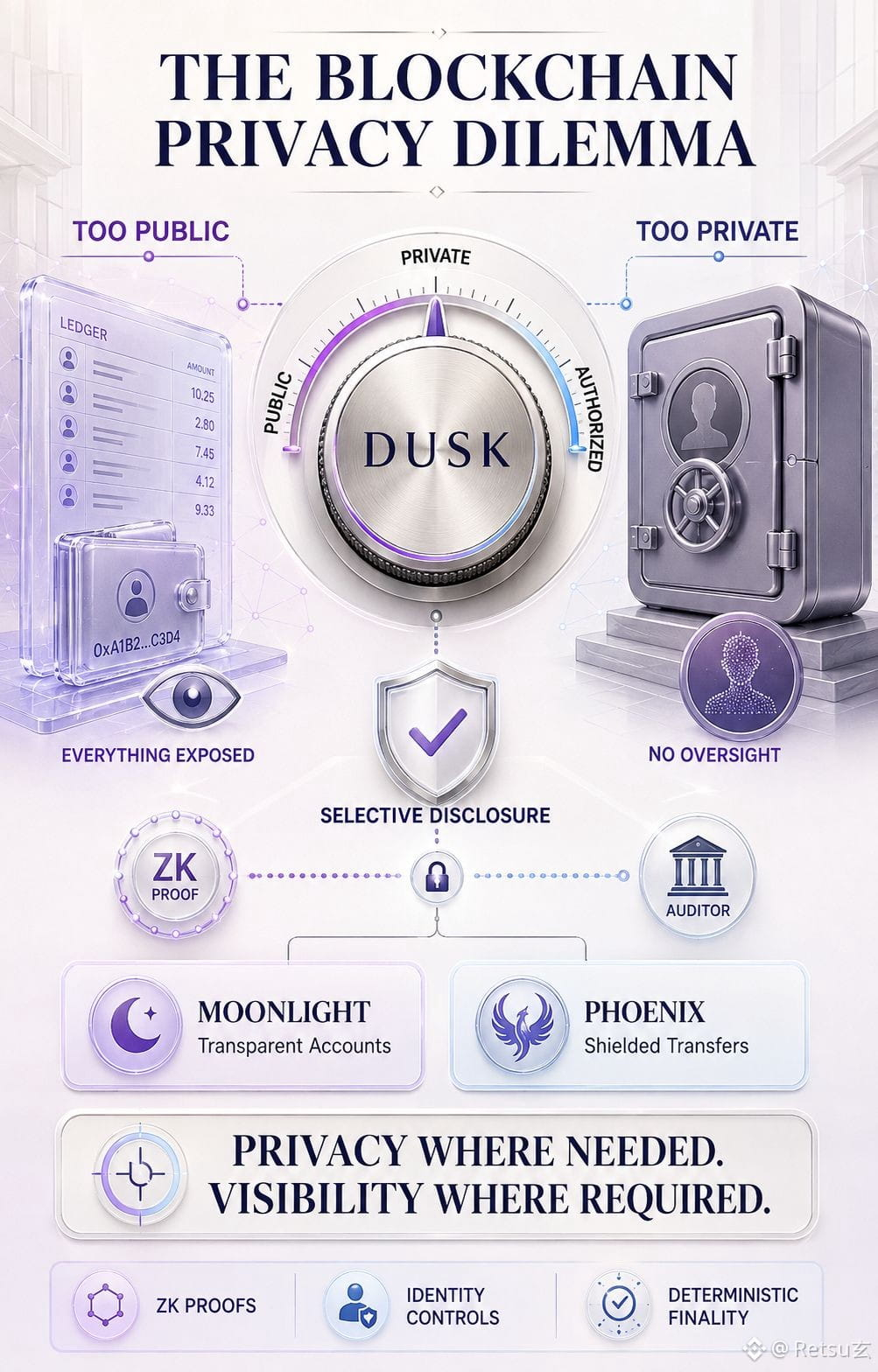
#dusk $DUSK What is the defining blockchain dilemma in the Blockchain world ?
Public blockchains expose everything, every transaction, wallet, and payment. Imagine a bank posting client portfolios and trades on a billboard. Institutions thrive on discretion, so they refuse.
Fully private chains create the opposite. Identities dissolve into smoke. Total anonymity. No audits. No oversight. Regulators step inside and retreat. It is not privacy. It is evasion dressed in cryptography.
Dusk Network rejects this false choice.
It offers selective disclosure, a scalpel in a world of sledgehammers. Zero knowledge proofs create a path between exposure and obscurity. Prove compliance without revealing your hand. Show regulators receipts while keeping balances, partners, and holdings private. Need verification. Here is the key. Everyone else sees shadows.
Moonlight embodies this dual architecture of transparency and secrecy. Its public mode shines when openness matters. Phoenix, its encrypted twin, conceals amounts, senders, and receivers while preserving proof of legitimacy. Flip a switch and shift worlds. Not a compromise. A spectrum of sovereignty.
Citadel weaves identity on chain, enabling KYC and AML without sacrificing privacy. The XSC standard embeds compliance into digital securities from birth, including bonds, funds, and equities. Everything is rule aware. Privacy is not rebellion. It is the foundation of accountability.
This is not theory from a PDF.
On January 7, 2026, Dusk mainnet ignites. DuskEVM boots up. Solidity developers, your tools are ready.
With NPEX, a licensed Dutch exchange, Dusk will bring hundreds of millions in tokenized securities on chain. Real assets. Real scale.
With Quantoz Payments, it created EURQ, MiCA compliant digital euro e money. Anchored and real.
Too naked. Too dark.
Dusk says, choose the light, choose the shade. Conceal what must remain hidden. Reveal what must be seen. This is not balanced. It is control.
@Dusk
Public blockchains expose everything, every transaction, wallet, and payment. Imagine a bank posting client portfolios and trades on a billboard. Institutions thrive on discretion, so they refuse.
Fully private chains create the opposite. Identities dissolve into smoke. Total anonymity. No audits. No oversight. Regulators step inside and retreat. It is not privacy. It is evasion dressed in cryptography.
Dusk Network rejects this false choice.
It offers selective disclosure, a scalpel in a world of sledgehammers. Zero knowledge proofs create a path between exposure and obscurity. Prove compliance without revealing your hand. Show regulators receipts while keeping balances, partners, and holdings private. Need verification. Here is the key. Everyone else sees shadows.
Moonlight embodies this dual architecture of transparency and secrecy. Its public mode shines when openness matters. Phoenix, its encrypted twin, conceals amounts, senders, and receivers while preserving proof of legitimacy. Flip a switch and shift worlds. Not a compromise. A spectrum of sovereignty.
Citadel weaves identity on chain, enabling KYC and AML without sacrificing privacy. The XSC standard embeds compliance into digital securities from birth, including bonds, funds, and equities. Everything is rule aware. Privacy is not rebellion. It is the foundation of accountability.
This is not theory from a PDF.
On January 7, 2026, Dusk mainnet ignites. DuskEVM boots up. Solidity developers, your tools are ready.
With NPEX, a licensed Dutch exchange, Dusk will bring hundreds of millions in tokenized securities on chain. Real assets. Real scale.
With Quantoz Payments, it created EURQ, MiCA compliant digital euro e money. Anchored and real.
Too naked. Too dark.
Dusk says, choose the light, choose the shade. Conceal what must remain hidden. Reveal what must be seen. This is not balanced. It is control.
@Dusk
#dusk $DUSK
I’ve noticed that the more time I spend using transparent blockchains, the more complicated the idea of “transparency” starts to feel.
The first time I waited for an Ethereum transaction to confirm, curiosity pushed me toward a block explorer. What surprised me was not the delay, but how much financial history a public address could expose. That transparency is useful for verification, yet it becomes uncomfortable when the same model is applied to institutions that may be unable or unwilling to expose every position, balance, or counterparty relationship publicly.
That is what makes @Dusk interesting to me.
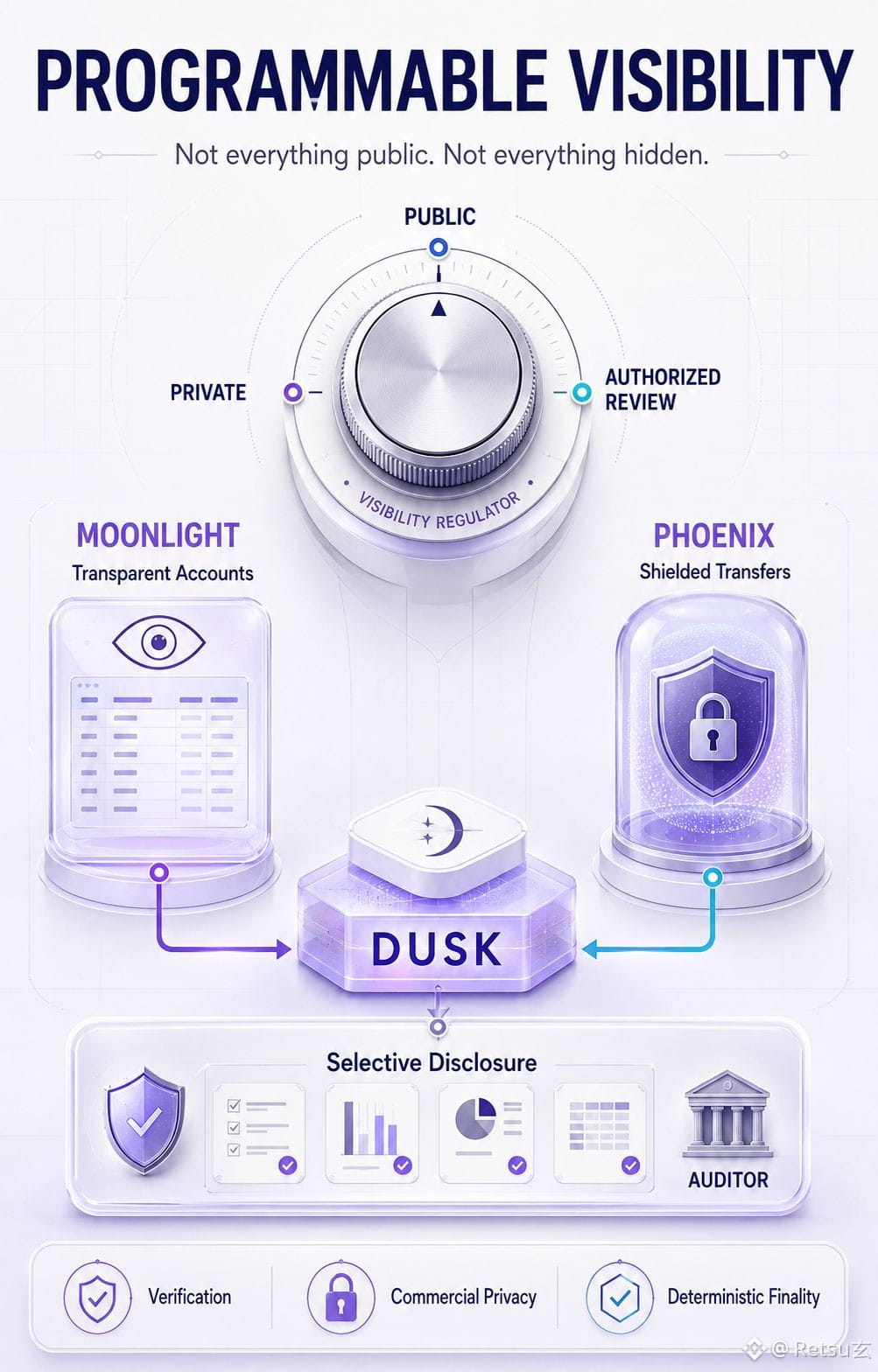
Dusk does not simply make everything private. Its architecture offers different visibility models. Moonlight is transparent and account-based, while Phoenix provides shielded UTXO transfers. In Phoenix transactions, sender, receiver, and transferred amount are hidden from the general public, while involved parties and holders of the appropriate view key can access relevant information.
The important idea, then, is not “privacy versus transparency.” It is programmable visibility.
Dusk also uses zero-knowledge proofs and selective disclosure, allowing financial workflows to keep unnecessary information confidential while providing controlled evidence when authorized parties need it. Its Succinct Attestation consensus provides deterministic finality once a block is ratified.
Ethereum is not standing still either. Privacy technologies continue to develop there, while ZK-rollups should not automatically be treated as private transaction systems because their primary role is scaling through validity proofs.
So I keep coming back to one question: if financial activity can remain shielded by default, exactly what should an auditor be allowed to access, and who should control that permission?
That boundary may matter more for institutional adoption than simply making every transaction public.
I’ve noticed that the more time I spend using transparent blockchains, the more complicated the idea of “transparency” starts to feel.
The first time I waited for an Ethereum transaction to confirm, curiosity pushed me toward a block explorer. What surprised me was not the delay, but how much financial history a public address could expose. That transparency is useful for verification, yet it becomes uncomfortable when the same model is applied to institutions that may be unable or unwilling to expose every position, balance, or counterparty relationship publicly.
That is what makes @Dusk interesting to me.
Dusk does not simply make everything private. Its architecture offers different visibility models. Moonlight is transparent and account-based, while Phoenix provides shielded UTXO transfers. In Phoenix transactions, sender, receiver, and transferred amount are hidden from the general public, while involved parties and holders of the appropriate view key can access relevant information.
The important idea, then, is not “privacy versus transparency.” It is programmable visibility.
Dusk also uses zero-knowledge proofs and selective disclosure, allowing financial workflows to keep unnecessary information confidential while providing controlled evidence when authorized parties need it. Its Succinct Attestation consensus provides deterministic finality once a block is ratified.
Ethereum is not standing still either. Privacy technologies continue to develop there, while ZK-rollups should not automatically be treated as private transaction systems because their primary role is scaling through validity proofs.
So I keep coming back to one question: if financial activity can remain shielded by default, exactly what should an auditor be allowed to access, and who should control that permission?
That boundary may matter more for institutional adoption than simply making every transaction public.
Connectez-vous pour découvrir plus de contenu