

#cardanosplitsdijkstraupgradeintotwophases
cardanosplitsdijkstraupgradeintotwophases
124,985 views
1,182 Discussing
Hot
Latest

·
--
#CardanoSplitsDijkstraUpgradeIntoTwoPhases
Cardano’s Dijkstra Upgrade Takes a Two-Phase Path 🚀
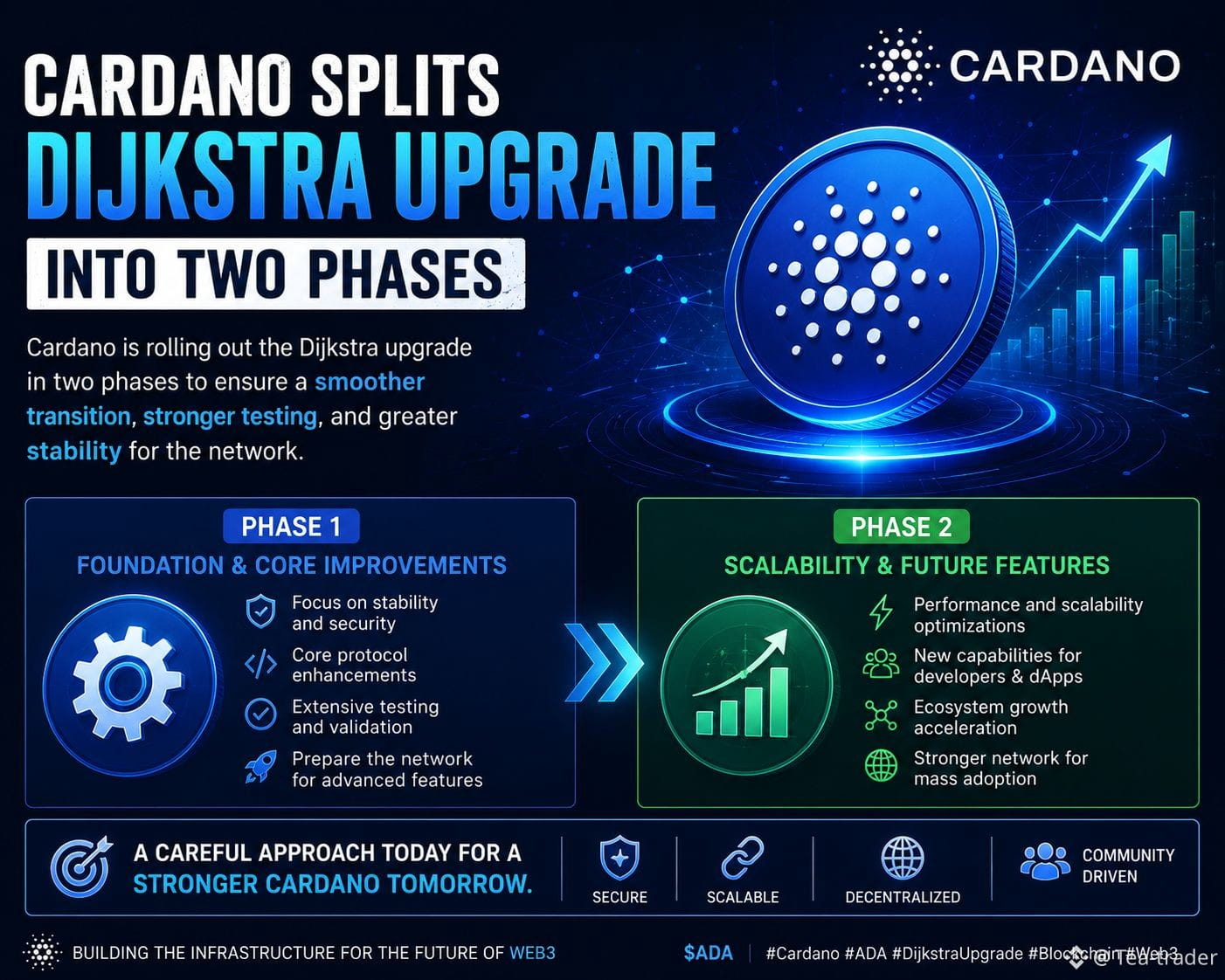
Cardano is splitting its major Dijkstra upgrade into two phases, giving the network more time to roll out important scaling and settlement improvements safely.
Phase 1 — Q4 2026: Cardano plans to introduce Ouroboros Linear Leios, designed to significantly improve transaction throughput through Endorser Blocks. This phase also includes Nested Transactions and several ledger and protocol improvements.
Phase 2 — Q2 2027: The focus shifts to Ouroboros Peras, which adds a stake-pool voting layer designed to accelerate settlement and give transactions faster finality.
This phased approach could be important for the Cardano ecosystem. Instead of rushing multiple major consensus changes into one upgrade, developers can test, prepare infrastructure and allow the community to adapt between stages.
For $ADA, the upgrade is a major development to watch. Better throughput and faster settlement could strengthen Cardano’s position among competing smart-contract networks, although the actual market impact will depend on successful testing, governance approval and real-world adoption.
The roadmap dates are targets rather than guaranteed launch dates, so the coming months will be important for tracking development and ecosystem readiness.
#CardanoSplitsDijkstraUpgradeIntoTwoPhases #Cardano #ADA #Dijkstra #Crypto #Blockchain #Leios #Peras
#CardanoSplitsDijkstraUpgradeIntoTwoPhases
Cardano’s Dijkstra Upgrade Takes a Two-Phase Path 🚀
Cardano is splitting its major Dijkstra upgrade into two phases, giving the network more time to roll out important scaling and settlement improvements safely.
Phase 1 — Q4 2026: Cardano plans to introduce Ouroboros Linear Leios, designed to significantly improve transaction throughput through Endorser Blocks. This phase also includes Nested Transactions and several ledger and protocol improvements.
Phase 2 — Q2 2027: The focus shifts to Ouroboros Peras, which adds a stake-pool voting layer designed to accelerate settlement and give transactions faster finality.
This phased approach could be important for the Cardano ecosystem. Instead of rushing multiple major consensus changes into one upgrade, developers can test, prepare infrastructure and allow the community to adapt between stages.
For $ADA, the upgrade is a major development to watch. Better throughput and faster settlement could strengthen Cardano’s position among competing smart-contract networks, although the actual market impact will depend on successful testing, governance approval and real-world adoption.
The roadmap dates are targets rather than guaranteed launch dates, so the coming months will be important for tracking development and ecosystem readiness.
#CardanoSplitsDijkstraUpgradeIntoTwoPhases #Cardano #ADA #Dijkstra #Crypto #Blockchain #Leios #Peras
Cardano’s Dijkstra Upgrade Takes a Two-Phase Path 🚀
Cardano is splitting its major Dijkstra upgrade into two phases, giving the network more time to roll out important scaling and settlement improvements safely.
Phase 1 — Q4 2026: Cardano plans to introduce Ouroboros Linear Leios, designed to significantly improve transaction throughput through Endorser Blocks. This phase also includes Nested Transactions and several ledger and protocol improvements.
Phase 2 — Q2 2027: The focus shifts to Ouroboros Peras, which adds a stake-pool voting layer designed to accelerate settlement and give transactions faster finality.
This phased approach could be important for the Cardano ecosystem. Instead of rushing multiple major consensus changes into one upgrade, developers can test, prepare infrastructure and allow the community to adapt between stages.
For $ADA, the upgrade is a major development to watch. Better throughput and faster settlement could strengthen Cardano’s position among competing smart-contract networks, although the actual market impact will depend on successful testing, governance approval and real-world adoption.
The roadmap dates are targets rather than guaranteed launch dates, so the coming months will be important for tracking development and ecosystem readiness.
#CardanoSplitsDijkstraUpgradeIntoTwoPhases #Cardano #ADA #Dijkstra #Crypto #Blockchain #Leios #Peras
72

·
--
#CardanoSplitsDijkstraUpgradeIntoTwoPhases
🚀 Cardano Splits Dijkstra Upgrade Into Two Phases
Cardano is taking a phased approach to the Dijkstra upgrade, breaking the rollout into two stages to improve stability, testing, and network coordination.
The move highlights Cardano’s focus on careful development while preparing the ecosystem for future scalability and performance improvements.
📈 Traders and ADA holders will be watching closely as each phase progresses and the upgrade moves toward broader implementation.
#Cardano #ADA #DijkstraUpgrade #Blockchain #Crypto #Web3 #CryptoNews
#CardanoSplitsDijkstraUpgradeIntoTwoPhases
🚀 Cardano Splits Dijkstra Upgrade Into Two Phases
Cardano is taking a phased approach to the Dijkstra upgrade, breaking the rollout into two stages to improve stability, testing, and network coordination.
The move highlights Cardano’s focus on careful development while preparing the ecosystem for future scalability and performance improvements.
📈 Traders and ADA holders will be watching closely as each phase progresses and the upgrade moves toward broader implementation.
#Cardano #ADA #DijkstraUpgrade #Blockchain #Crypto #Web3 #CryptoNews
🚀 Cardano Splits Dijkstra Upgrade Into Two Phases
Cardano is taking a phased approach to the Dijkstra upgrade, breaking the rollout into two stages to improve stability, testing, and network coordination.
The move highlights Cardano’s focus on careful development while preparing the ecosystem for future scalability and performance improvements.
📈 Traders and ADA holders will be watching closely as each phase progresses and the upgrade moves toward broader implementation.
#Cardano #ADA #DijkstraUpgrade #Blockchain #Crypto #Web3 #CryptoNews
82

🚀 Major shake-up in Cardano! The decision to split the Dijkstra upgrade into two phases could streamline development and enhance scalability. This is a bold move that may boost $ADA's performance amid a bullish market. Are you optimistic about this upgrade? 💭 #CardanoSplitsDijkstraUpgradeIntoTwoPhases #ADA
💬 Únete y síguenos, seguimos analizando el mercado por ti.
🚀 Major shake-up in Cardano! The decision to split the Dijkstra upgrade into two phases could streamline development and enhance scalability. This is a bold move that may boost $ADA 's performance amid a bullish market. Are you optimistic about this upgrade? 💭 #CardanoSplitsDijkstraUpgradeIntoTwoPhases #ADA
💬 Únete y síguenos, seguimos analizando el mercado por ti.
💬 Únete y síguenos, seguimos analizando el mercado por ti.
77

·
--
Verified
#CardanoSplitsDijkstraUpgradeIntoTwoPhases
#ADA #Cardano
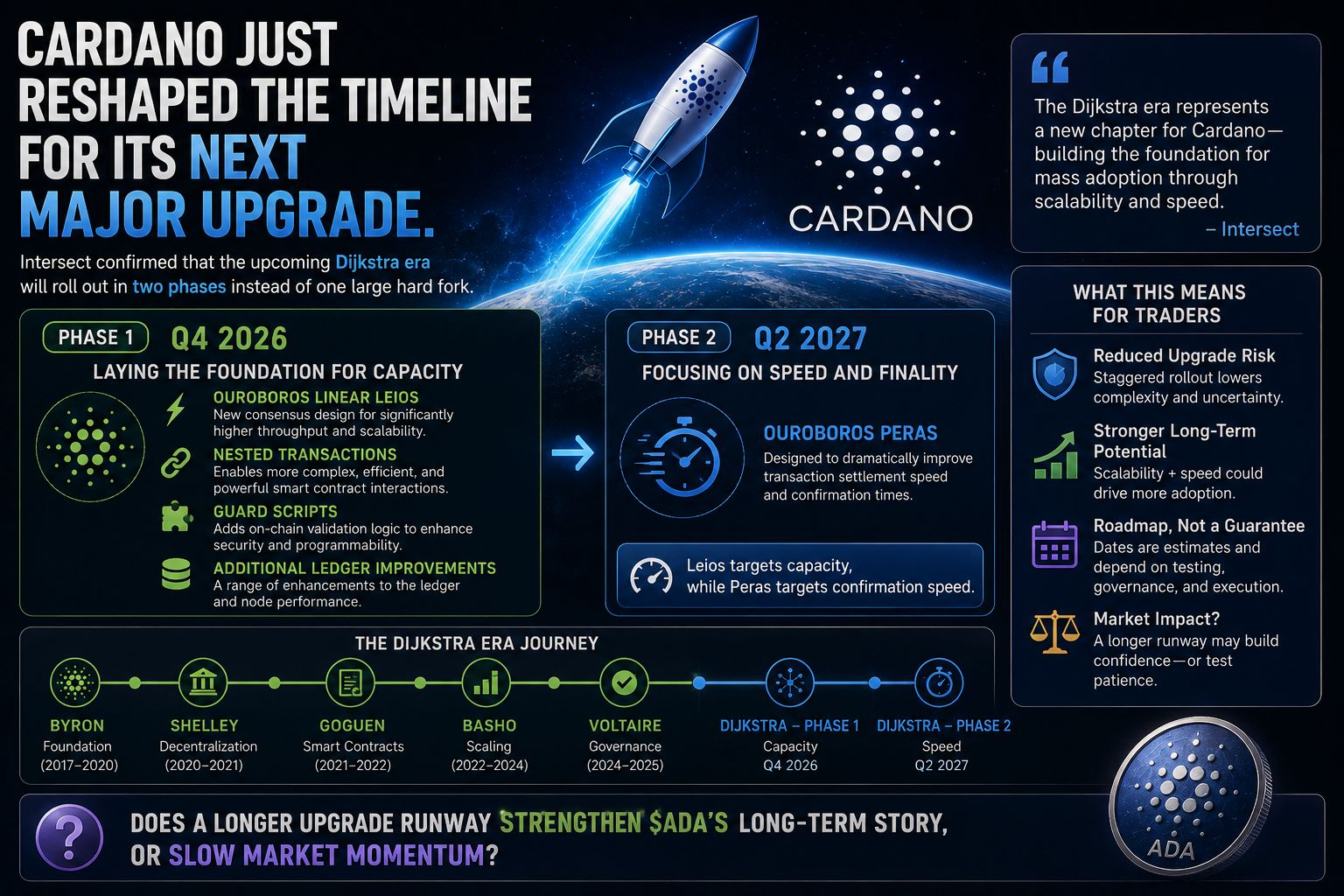
🚀 Cardano just reshaped the timeline for its next major upgrade.
$GPS $TUT $ACE
{spot}(GPSUSDT)
{spot}(TUTUSDT)
{spot}(ACEUSDT)
Intersect confirmed that the upcoming Dijkstra era will roll out in two phases instead of one large hard fork.
📍 Phase 1 — Q4 2026
⚡ Ouroboros Linear Leios for higher throughput
🔗 Nested Transactions + Guard Scripts
🧩 Additional ledger improvements
📍 Phase 2 — Q2 2027
\\
⏱️ Ouroboros Peras, designed to improve transaction settlement speed
The idea is simple: Leios targets capacity, while Peras targets confirmation speed.
For traders, the staggered approach could reduce upgrade risk—but the roadmap dates are still estimates and depend on testing and governance.
👀 Does a longer upgrade runway strengthen $ADA’s long-term story, or slow market momentum?
#Crypto #Blockchain #Trading
#CardanoSplitsDijkstraUpgradeIntoTwoPhases
#ADA #Cardano
🚀 Cardano just reshaped the timeline for its next major upgrade.
$GPS $TUT $ACE
Intersect confirmed that the upcoming Dijkstra era will roll out in two phases instead of one large hard fork.
📍 Phase 1 — Q4 2026
⚡ Ouroboros Linear Leios for higher throughput
🔗 Nested Transactions + Guard Scripts
🧩 Additional ledger improvements
📍 Phase 2 — Q2 2027
\\
⏱️ Ouroboros Peras, designed to improve transaction settlement speed
The idea is simple: Leios targets capacity, while Peras targets confirmation speed.
For traders, the staggered approach could reduce upgrade risk—but the roadmap dates are still estimates and depend on testing and governance.
👀 Does a longer upgrade runway strengthen $ADA’s long-term story, or slow market momentum?
#Crypto #Blockchain #Trading
#ADA #Cardano
🚀 Cardano just reshaped the timeline for its next major upgrade.
$GPS $TUT $ACE
Intersect confirmed that the upcoming Dijkstra era will roll out in two phases instead of one large hard fork.
📍 Phase 1 — Q4 2026
⚡ Ouroboros Linear Leios for higher throughput
🔗 Nested Transactions + Guard Scripts
🧩 Additional ledger improvements
📍 Phase 2 — Q2 2027
\\
⏱️ Ouroboros Peras, designed to improve transaction settlement speed
The idea is simple: Leios targets capacity, while Peras targets confirmation speed.
For traders, the staggered approach could reduce upgrade risk—but the roadmap dates are still estimates and depend on testing and governance.
👀 Does a longer upgrade runway strengthen $ADA’s long-term story, or slow market momentum?
#Crypto #Blockchain #Trading
1
272

·
--
Roadmap & Future Updates🗓️ Upgrade Dijkstra (Phase 1 - Q4 2026): Cardano targets the completion of Phase 1 code at the end of 2026 to introduce the Ouroboros Linear Leios feature to massively increase transaction speed and capacity#CardanoSplitsDijkstraUpgradeIntoTwoPhases
Roadmap & Future Updates🗓️ Upgrade Dijkstra (Phase 1 - Q4 2026): Cardano targets the completion of Phase 1 code at the end of 2026 to introduce the Ouroboros Linear Leios feature to massively increase transaction speed and capacity#CardanoSplitsDijkstraUpgradeIntoTwoPhases
144

·
--
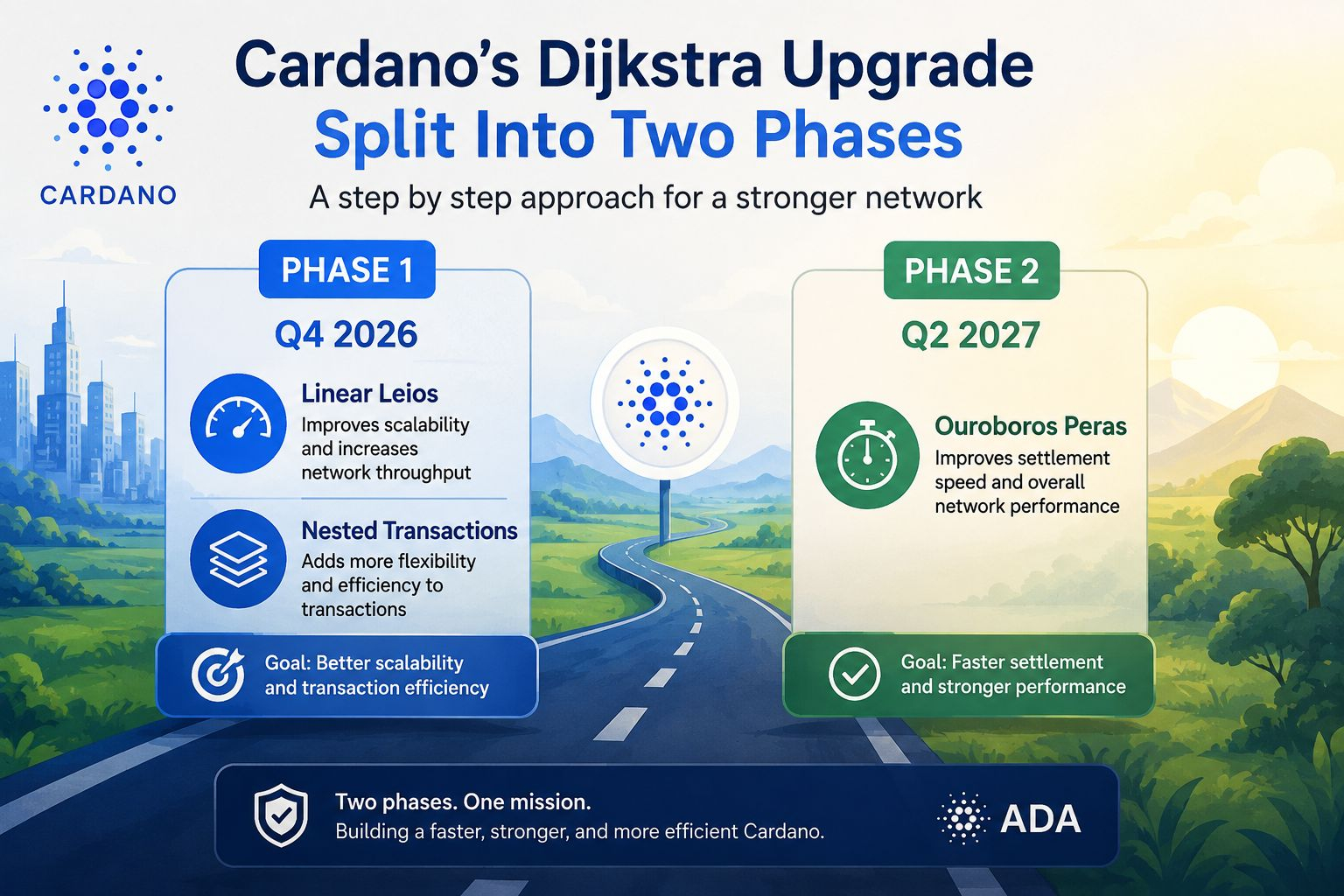
Cardano is taking a more careful approach with the Dijkstra upgrade.
Instead of putting everything live at once the rollout will happen in two phases.
The first phase is targeting Q4 2026 with Linear Leios and Nested Transactions. Peras is planned for the second phase in Q2 2027.
I actually like this approach big upgrades are easier to test and fix when they are rolled out step by step.
For ADA now it comes down to execution and whether these upgrades bring real improvements to the network.
$ADA
{future}(ADAUSDT)
#cadano
#CardanoSplitsDijkstraUpgradeIntoTwoPhases
Cardano is taking a more careful approach with the Dijkstra upgrade.
Instead of putting everything live at once the rollout will happen in two phases.
The first phase is targeting Q4 2026 with Linear Leios and Nested Transactions. Peras is planned for the second phase in Q2 2027.
I actually like this approach big upgrades are easier to test and fix when they are rolled out step by step.
For ADA now it comes down to execution and whether these upgrades bring real improvements to the network.
$ADA
#cadano
#CardanoSplitsDijkstraUpgradeIntoTwoPhases
Instead of putting everything live at once the rollout will happen in two phases.
The first phase is targeting Q4 2026 with Linear Leios and Nested Transactions. Peras is planned for the second phase in Q2 2027.
I actually like this approach big upgrades are easier to test and fix when they are rolled out step by step.
For ADA now it comes down to execution and whether these upgrades bring real improvements to the network.
$ADA
#cadano
#CardanoSplitsDijkstraUpgradeIntoTwoPhases
2
25
452

·
--
Bullish
Partly True
#cardanosplitsdijkstraupgradeintotwophases
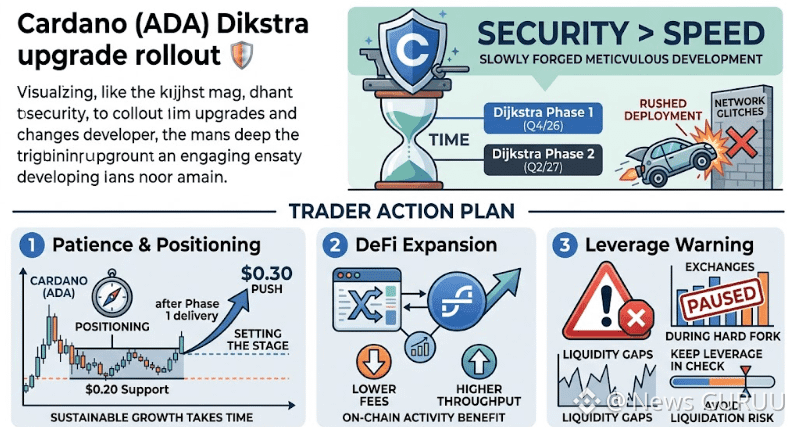
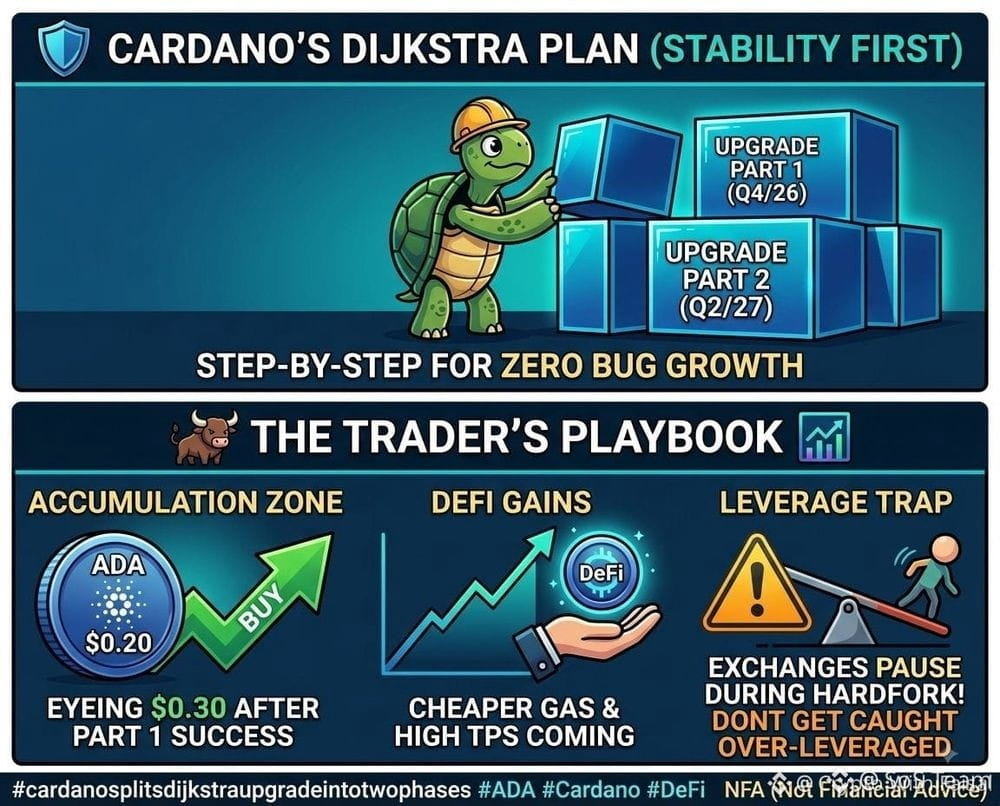
🚨 CARDANO’S DIJKSTRA UPGRADE: SECURITY FIRST 🛡️
Cardano is splitting the Dijkstra upgrade into two phases — Q4 2026 and Q2 2027 — prioritizing a safer rollout over speed.
📊 Trading View: BUY 📈
With $0.20 support holding, a smooth Phase 1 could open the path toward $0.30. Lower fees and higher throughput could also strengthen DeFi activity. ⚡
Hard-fork events may cause temporary network pauses and liquidity gaps, so keep leverage under control.
❓ Can ADA break $0.30 after a successful upgrade? "CLICK ON THE BELOW YELLOW COIN TAG TO GO TO DESIRED TRADING PAGE TO GET BENEFIT TRADE"$ADA $PORTAL
{spot}(PORTALUSDT)
{spot}(ADAUSDT)
#Cardano #ADA
#cardanosplitsdijkstraupgradeintotwophases
🚨 CARDANO’S DIJKSTRA UPGRADE: SECURITY FIRST 🛡️
Cardano is splitting the Dijkstra upgrade into two phases — Q4 2026 and Q2 2027 — prioritizing a safer rollout over speed.
📊 Trading View: BUY 📈
With $0.20 support holding, a smooth Phase 1 could open the path toward $0.30. Lower fees and higher throughput could also strengthen DeFi activity. ⚡
Hard-fork events may cause temporary network pauses and liquidity gaps, so keep leverage under control.
❓ Can ADA break $0.30 after a successful upgrade? "CLICK ON THE BELOW YELLOW COIN TAG TO GO TO DESIRED TRADING PAGE TO GET BENEFIT TRADE"$ADA $PORTAL
#Cardano #ADA
🚨 CARDANO’S DIJKSTRA UPGRADE: SECURITY FIRST 🛡️
Cardano is splitting the Dijkstra upgrade into two phases — Q4 2026 and Q2 2027 — prioritizing a safer rollout over speed.
📊 Trading View: BUY 📈
With $0.20 support holding, a smooth Phase 1 could open the path toward $0.30. Lower fees and higher throughput could also strengthen DeFi activity. ⚡
Hard-fork events may cause temporary network pauses and liquidity gaps, so keep leverage under control.
❓ Can ADA break $0.30 after a successful upgrade? "CLICK ON THE BELOW YELLOW COIN TAG TO GO TO DESIRED TRADING PAGE TO GET BENEFIT TRADE"$ADA $PORTAL
#Cardano #ADA
1
6
8k

⚡📈 $ADA Has a Bigger Roadmap Than One Hard Fork
Cardano's Dijkstra upgrade is now structured in two stages.
Phase 1 focuses on Linear Leios, designed to improve transaction throughput, while Phase 2 introduces Ouroboros Peras, targeting faster settlement.
This phased strategy gives developers more time to test major changes before the next stage.
For spot investors, the key question is simple: will technical progress create real adoption?
$ADA remains one to watch. 👀
#cardanosplitsdijkstraupgradeintotwophases
⚡📈 $ADA Has a Bigger Roadmap Than One Hard Fork
Cardano's Dijkstra upgrade is now structured in two stages.
Phase 1 focuses on Linear Leios, designed to improve transaction throughput, while Phase 2 introduces Ouroboros Peras, targeting faster settlement.
This phased strategy gives developers more time to test major changes before the next stage.
For spot investors, the key question is simple: will technical progress create real adoption?
$ADA remains one to watch. 👀
#cardanosplitsdijkstraupgradeintotwophases
Cardano's Dijkstra upgrade is now structured in two stages.
Phase 1 focuses on Linear Leios, designed to improve transaction throughput, while Phase 2 introduces Ouroboros Peras, targeting faster settlement.
This phased strategy gives developers more time to test major changes before the next stage.
For spot investors, the key question is simple: will technical progress create real adoption?
$ADA remains one to watch. 👀
#cardanosplitsdijkstraupgradeintotwophases
69
📈 $ADA HAS A TWO-STAGE CATALYST AHEAD!
Cardano's Dijkstra roadmap is becoming clearer.
The first stage is focused heavily on scaling and transaction capacity, with Linear Leios among the major components. The second stage is expected to focus on faster settlement/finality through Peras.
That creates two separate milestones for the Cardano ecosystem instead of one massive event.
For spot investors watching $ADA, execution will matter more than hype.
If the upgrades deliver measurable improvements in network performance and adoption, the long-term narrative could become much stronger.
And broader market strength could keep established assets such as $BTC, $ETH and $BNB in focus as well. 🌍
#cardanosplitsdijkstraupgradeintotwophases
📈 $ADA HAS A TWO-STAGE CATALYST AHEAD!
Cardano's Dijkstra roadmap is becoming clearer.
The first stage is focused heavily on scaling and transaction capacity, with Linear Leios among the major components. The second stage is expected to focus on faster settlement/finality through Peras.
That creates two separate milestones for the Cardano ecosystem instead of one massive event.
For spot investors watching $ADA, execution will matter more than hype.
If the upgrades deliver measurable improvements in network performance and adoption, the long-term narrative could become much stronger.
And broader market strength could keep established assets such as $BTC, $ETH and $BNB in focus as well. 🌍
#cardanosplitsdijkstraupgradeintotwophases
Cardano's Dijkstra roadmap is becoming clearer.
The first stage is focused heavily on scaling and transaction capacity, with Linear Leios among the major components. The second stage is expected to focus on faster settlement/finality through Peras.
That creates two separate milestones for the Cardano ecosystem instead of one massive event.
For spot investors watching $ADA, execution will matter more than hype.
If the upgrades deliver measurable improvements in network performance and adoption, the long-term narrative could become much stronger.
And broader market strength could keep established assets such as $BTC, $ETH and $BNB in focus as well. 🌍
#cardanosplitsdijkstraupgradeintotwophases
258

·
--
Verified
#cardanosplitsdijkstraupgradeintotwophases
Cardano's governance entity, Intersect, has officially structured the upcoming Dijkstra Era into a two-phase rollout to safely introduce massive scalability and consensus upgrades:
Key Takeaways of the Dijkstra Upgrade
⚡ Phase 1 (Target: Q4 2026): Introduces the core Dijkstra ledger era along with Linear Leios (CIP-164). This brings Endorser Blocks to dramatically scale transaction throughput without compromising security, alongside Nested Transactions, Plutus V4, and new address features.
⏱️ Phase 2 (Target: Q2 2027): Activates Ouroboros Peras via an intra-era hard fork. Peras will introduce stake-pool voting layers to significantly speed up transaction settlement finality.
🦀 Node Diversity (Amaru Rust Node): The open-source Rust client, Amaru, is progressing towards full mainnet block production (targeted for November 2026) to reduce reliance on the primary Haskell node.
📜 Governance Preparedness: To support the upgrade, Input Output (IO) plans to submit a constitutional amendment proposal before September 11, 2026, establishing necessary protocol guardrails under CIP-1694.
$ADA $OPEN $USDE
#cardanosplitsdijkstraupgradeintotwophases
Cardano's governance entity, Intersect, has officially structured the upcoming Dijkstra Era into a two-phase rollout to safely introduce massive scalability and consensus upgrades:
Key Takeaways of the Dijkstra Upgrade
⚡ Phase 1 (Target: Q4 2026): Introduces the core Dijkstra ledger era along with Linear Leios (CIP-164). This brings Endorser Blocks to dramatically scale transaction throughput without compromising security, alongside Nested Transactions, Plutus V4, and new address features.
⏱️ Phase 2 (Target: Q2 2027): Activates Ouroboros Peras via an intra-era hard fork. Peras will introduce stake-pool voting layers to significantly speed up transaction settlement finality.
🦀 Node Diversity (Amaru Rust Node): The open-source Rust client, Amaru, is progressing towards full mainnet block production (targeted for November 2026) to reduce reliance on the primary Haskell node.
📜 Governance Preparedness: To support the upgrade, Input Output (IO) plans to submit a constitutional amendment proposal before September 11, 2026, establishing necessary protocol guardrails under CIP-1694.
$ADA $OPEN $USDE
Cardano's governance entity, Intersect, has officially structured the upcoming Dijkstra Era into a two-phase rollout to safely introduce massive scalability and consensus upgrades:
Key Takeaways of the Dijkstra Upgrade
⚡ Phase 1 (Target: Q4 2026): Introduces the core Dijkstra ledger era along with Linear Leios (CIP-164). This brings Endorser Blocks to dramatically scale transaction throughput without compromising security, alongside Nested Transactions, Plutus V4, and new address features.
⏱️ Phase 2 (Target: Q2 2027): Activates Ouroboros Peras via an intra-era hard fork. Peras will introduce stake-pool voting layers to significantly speed up transaction settlement finality.
🦀 Node Diversity (Amaru Rust Node): The open-source Rust client, Amaru, is progressing towards full mainnet block production (targeted for November 2026) to reduce reliance on the primary Haskell node.
📜 Governance Preparedness: To support the upgrade, Input Output (IO) plans to submit a constitutional amendment proposal before September 11, 2026, establishing necessary protocol guardrails under CIP-1694.
$ADA $OPEN $USDE
3
995

·
--
Bearish
$ADA
{future}(ADAUSDT)
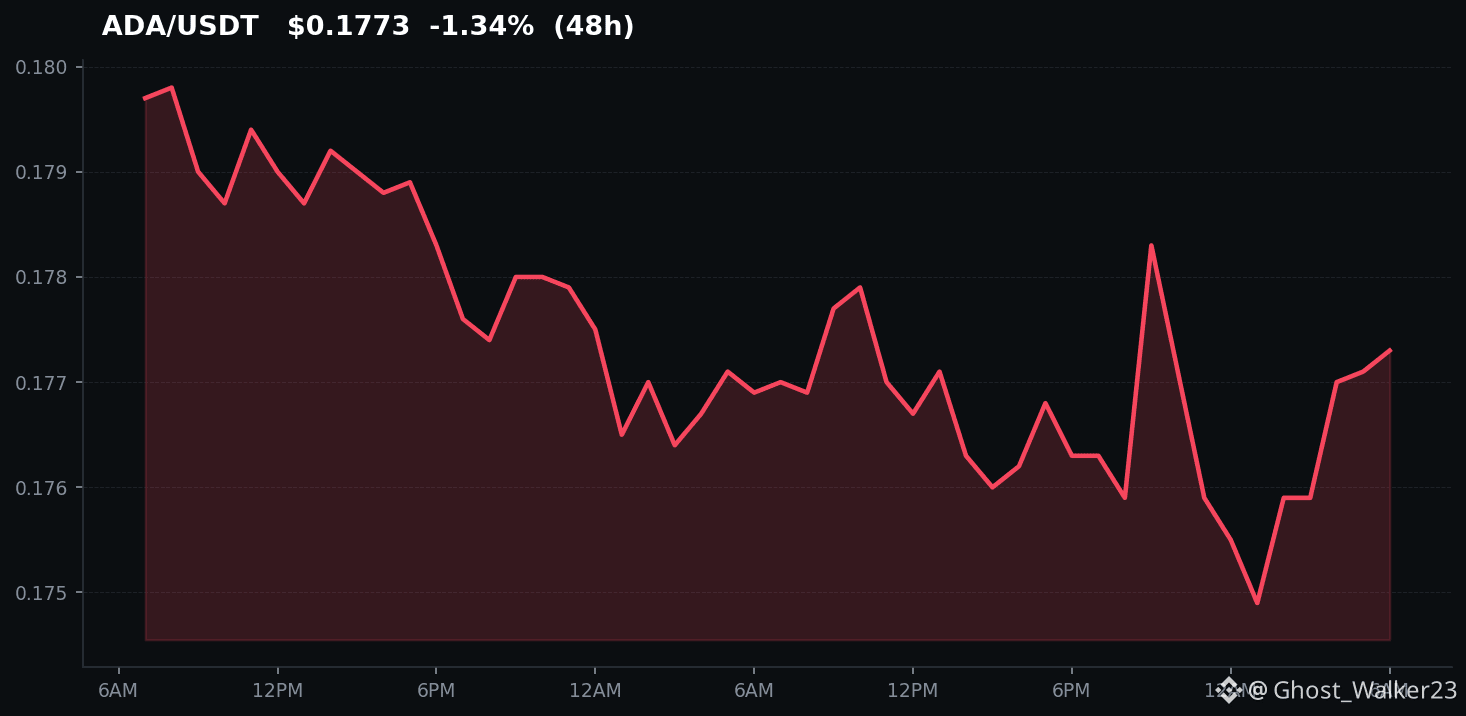
🚨#Cardano price fell about 1% to $0.174 as traders weighed a two-stage Dijkstra upgrade roadmap against a bearish chart structure and nearby liquidation risks.#CardanoSplitsDijkstraUpgradeIntoTwoPhases
$ADA
🚨#Cardano price fell about 1% to $0.174 as traders weighed a two-stage Dijkstra upgrade roadmap against a bearish chart structure and nearby liquidation risks.#CardanoSplitsDijkstraUpgradeIntoTwoPhases
🚨#Cardano price fell about 1% to $0.174 as traders weighed a two-stage Dijkstra upgrade roadmap against a bearish chart structure and nearby liquidation risks.#CardanoSplitsDijkstraUpgradeIntoTwoPhases
98

·
--
Partly True
#cardanosplitsdijkstraupgradeintotwophases
🚀🔥 Cardano splits its Dijkstra Upgrade into two phases! 🔥🚀
🔹 The crypto community is buzzing with the news: the eagerly awaited Cardano Dijkstra Upgrade won’t arrive all at once, but in two strategic stages.
🔹 This move aims to ensure technical stability and a safer transition for developers and users.
🔹 Phase 1: smart contract optimization and performance improvements. ⚡
🔹 Phase 2: full integration with new scalability and governance features. 🌐
💡 The strategy reflects Cardano’s commitment to gradual, solid innovation—avoiding the risks of rushed implementation.
📈 Traders and holders are already speculating: will this upgrade be the catalyst for a new ADA rally? 🚀💎
👉 Join the conversation and share your perspective with the community #Cardano.
✨ by ElCryptoBoy ✨
#cardanosplitsdijkstraupgradeintotwophases
🚀🔥 Cardano splits its Dijkstra Upgrade into two phases! 🔥🚀
🔹 The crypto community is buzzing with the news: the eagerly awaited Cardano Dijkstra Upgrade won’t arrive all at once, but in two strategic stages.
🔹 This move aims to ensure technical stability and a safer transition for developers and users.
🔹 Phase 1: smart contract optimization and performance improvements. ⚡
🔹 Phase 2: full integration with new scalability and governance features. 🌐
💡 The strategy reflects Cardano’s commitment to gradual, solid innovation—avoiding the risks of rushed implementation.
📈 Traders and holders are already speculating: will this upgrade be the catalyst for a new ADA rally? 🚀💎
👉 Join the conversation and share your perspective with the community #Cardano.
✨ by ElCryptoBoy ✨
🚀🔥 Cardano splits its Dijkstra Upgrade into two phases! 🔥🚀
🔹 The crypto community is buzzing with the news: the eagerly awaited Cardano Dijkstra Upgrade won’t arrive all at once, but in two strategic stages.
🔹 This move aims to ensure technical stability and a safer transition for developers and users.
🔹 Phase 1: smart contract optimization and performance improvements. ⚡
🔹 Phase 2: full integration with new scalability and governance features. 🌐
💡 The strategy reflects Cardano’s commitment to gradual, solid innovation—avoiding the risks of rushed implementation.
📈 Traders and holders are already speculating: will this upgrade be the catalyst for a new ADA rally? 🚀💎
👉 Join the conversation and share your perspective with the community #Cardano.
✨ by ElCryptoBoy ✨
1.3k
🚀 CARDANO JUST CHANGED THE Dijkstra GAME!
Cardano is splitting its major Dijkstra upgrade into TWO phases instead of pushing everything at once. 🧩
⚡ Phase 1 — Q4 2026: Linear Leios, Nested Transactions and other scaling/ledger improvements
⚡ Phase 2 — Q2 2027: Ouroboros Peras, targeting faster transaction finality
This could give developers more time to test each major component before the next stage goes live.
For $ADA, the bigger story isn't the headline—it's whether these upgrades translate into real network activity and adoption.
And if broader crypto sentiment stays strong, keep $BTC, $ETH and $BNB on the radar too. 📊
#cardanosplitsdijkstraupgradeintotwophases
🚀 CARDANO JUST CHANGED THE Dijkstra GAME!
Cardano is splitting its major Dijkstra upgrade into TWO phases instead of pushing everything at once. 🧩
⚡ Phase 1 — Q4 2026: Linear Leios, Nested Transactions and other scaling/ledger improvements
⚡ Phase 2 — Q2 2027: Ouroboros Peras, targeting faster transaction finality
This could give developers more time to test each major component before the next stage goes live.
For $ADA, the bigger story isn't the headline—it's whether these upgrades translate into real network activity and adoption.
And if broader crypto sentiment stays strong, keep $BTC, $ETH and $BNB on the radar too. 📊
#cardanosplitsdijkstraupgradeintotwophases
Cardano is splitting its major Dijkstra upgrade into TWO phases instead of pushing everything at once. 🧩
⚡ Phase 1 — Q4 2026: Linear Leios, Nested Transactions and other scaling/ledger improvements
⚡ Phase 2 — Q2 2027: Ouroboros Peras, targeting faster transaction finality
This could give developers more time to test each major component before the next stage goes live.
For $ADA, the bigger story isn't the headline—it's whether these upgrades translate into real network activity and adoption.
And if broader crypto sentiment stays strong, keep $BTC, $ETH and $BNB on the radar too. 📊
#cardanosplitsdijkstraupgradeintotwophases
25

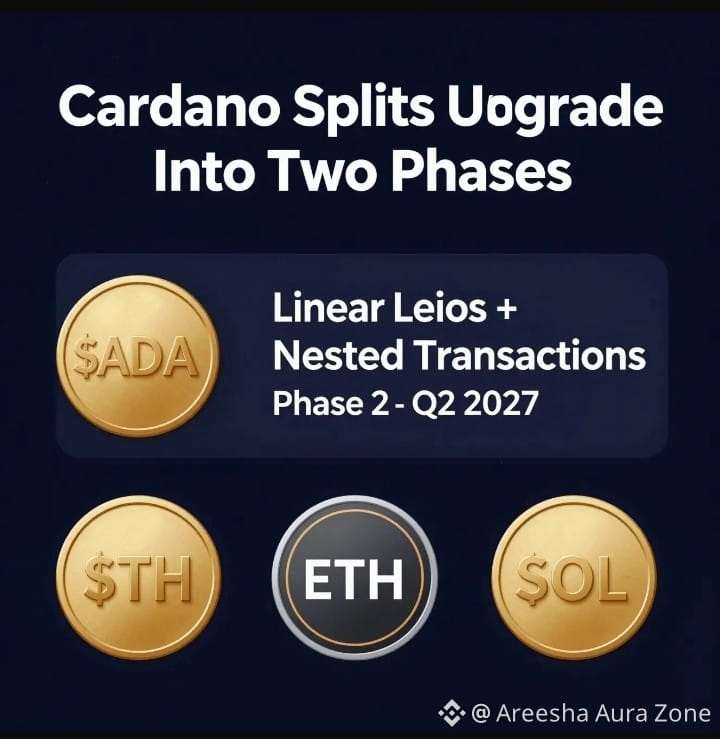
#CardanoSplitsDijkstraUpgradeIntoTwoPhases 🚀 Cardano Splits Dijkstra Upgrade Into Two Phases
Cardano’s upcoming Dijkstra upgrade is being rolled out in two stages.
🔹 Phase 1 — Q4 2026: Linear Leios + Nested Transactions
🔹 Phase 2 — Q2 2027: Ouroboros Peras for faster transaction finality
The phased approach aims to improve scalability, throughput and settlement speed while allowing testing and governance to progress step by step.
💰 Best matching coins:
🥇 $ADA
{spot}(ADAUSDT)
🥈 $ETH
{spot}(ETHUSDT)
🥉 $SOL
{spot}(SOLUSDT)
#Cardano #ADA #Dijkstra #Leios
#CardanoSplitsDijkstraUpgradeIntoTwoPhases 🚀 Cardano Splits Dijkstra Upgrade Into Two Phases
Cardano’s upcoming Dijkstra upgrade is being rolled out in two stages.
🔹 Phase 1 — Q4 2026: Linear Leios + Nested Transactions
🔹 Phase 2 — Q2 2027: Ouroboros Peras for faster transaction finality
The phased approach aims to improve scalability, throughput and settlement speed while allowing testing and governance to progress step by step.
💰 Best matching coins:
🥇 $ADA
🥈 $ETH
🥉 $SOL
#Cardano #ADA #Dijkstra #Leios
Cardano’s upcoming Dijkstra upgrade is being rolled out in two stages.
🔹 Phase 1 — Q4 2026: Linear Leios + Nested Transactions
🔹 Phase 2 — Q2 2027: Ouroboros Peras for faster transaction finality
The phased approach aims to improve scalability, throughput and settlement speed while allowing testing and governance to progress step by step.
💰 Best matching coins:
🥇 $ADA
🥈 $ETH
🥉 $SOL
#Cardano #ADA #Dijkstra #Leios
69
🔥 TWO PHASES. ONE BIG CARDANO TEST.
Cardano is taking a slower, more structured route with Dijkstra.
Instead of one giant upgrade, the rollout is being divided into stages:
📌 Q4 2026: scaling-focused improvements including Linear Leios
📌 Q2 2027: Peras and faster finality
Cardano's development teams have already been integrating Leios components into the Dijkstra-era node, showing that the work is moving beyond pure roadmap discussion.
The real test for $ADA will be execution.
A successful rollout could strengthen the network's scaling narrative—but the market will ultimately want to see actual usage.
Meanwhile, $BTC, $ETH and $BNB remain key established spot assets to watch.
#cardanosplitsdijkstraupgradeintotwophases
🔥 TWO PHASES. ONE BIG CARDANO TEST.
Cardano is taking a slower, more structured route with Dijkstra.
Instead of one giant upgrade, the rollout is being divided into stages:
📌 Q4 2026: scaling-focused improvements including Linear Leios
📌 Q2 2027: Peras and faster finality
Cardano's development teams have already been integrating Leios components into the Dijkstra-era node, showing that the work is moving beyond pure roadmap discussion.
The real test for $ADA will be execution.
A successful rollout could strengthen the network's scaling narrative—but the market will ultimately want to see actual usage.
Meanwhile, $BTC, $ETH and $BNB remain key established spot assets to watch.
#cardanosplitsdijkstraupgradeintotwophases
Cardano is taking a slower, more structured route with Dijkstra.
Instead of one giant upgrade, the rollout is being divided into stages:
📌 Q4 2026: scaling-focused improvements including Linear Leios
📌 Q2 2027: Peras and faster finality
Cardano's development teams have already been integrating Leios components into the Dijkstra-era node, showing that the work is moving beyond pure roadmap discussion.
The real test for $ADA will be execution.
A successful rollout could strengthen the network's scaling narrative—but the market will ultimately want to see actual usage.
Meanwhile, $BTC, $ETH and $BNB remain key established spot assets to watch.
#cardanosplitsdijkstraupgradeintotwophases
32

·
--
The counterintuitive part of Cardano splitting the Dijkstra upgrade into two phases is that slower execution can sometimes be more bullish than rushed delivery.
Most traders only see “delay” and panic-sell $ADA, then chase it back higher if sentiment flips. I’ve seen this movie in past cycles: the market often punishes uncertainty first, then rewards clean execution later.
A phased upgrade usually means the team is reducing risk. Instead of pushing one large change across the network at once, they separate the rollout so validators, builders, wallets, and exchanges can adapt with fewer surprises. That matters because in crypto, a broken upgrade can damage trust faster than a red candle.
But here’s the trader’s lesson: two phases can also mean two separate narrative waves. Phase one may bring speculation, phase two may bring confirmation. If you’re holding $ADA against $USDT, don’t just ask “is the upgrade good?” Ask: what is already priced in, where is liquidity sitting, and will the market still care when the second phase arrives?
With the Fear & Greed Index sitting in fear territory, people are emotionally wired to protect capital, not imagine upside. That’s where veterans slow down. Fear can create entries, but only if you know the difference between technical rollout risk and a real thesis break.
Are phased upgrades making you more confident in $ADA, or are you waiting for delivery before trusting the chart? #CardanoSplitsDijkstraUpgradeIntoTwoPhases #SECCancelsCryptoRulemakingMeeting
The counterintuitive part of Cardano splitting the Dijkstra upgrade into two phases is that slower execution can sometimes be more bullish than rushed delivery.
Most traders only see “delay” and panic-sell $ADA , then chase it back higher if sentiment flips. I’ve seen this movie in past cycles: the market often punishes uncertainty first, then rewards clean execution later.
A phased upgrade usually means the team is reducing risk. Instead of pushing one large change across the network at once, they separate the rollout so validators, builders, wallets, and exchanges can adapt with fewer surprises. That matters because in crypto, a broken upgrade can damage trust faster than a red candle.
But here’s the trader’s lesson: two phases can also mean two separate narrative waves. Phase one may bring speculation, phase two may bring confirmation. If you’re holding $ADA against $USDT, don’t just ask “is the upgrade good?” Ask: what is already priced in, where is liquidity sitting, and will the market still care when the second phase arrives?
With the Fear & Greed Index sitting in fear territory, people are emotionally wired to protect capital, not imagine upside. That’s where veterans slow down. Fear can create entries, but only if you know the difference between technical rollout risk and a real thesis break.
Are phased upgrades making you more confident in $ADA , or are you waiting for delivery before trusting the chart? #CardanoSplitsDijkstraUpgradeIntoTwoPhases #SECCancelsCryptoRulemakingMeeting
Most traders only see “delay” and panic-sell $ADA , then chase it back higher if sentiment flips. I’ve seen this movie in past cycles: the market often punishes uncertainty first, then rewards clean execution later.
A phased upgrade usually means the team is reducing risk. Instead of pushing one large change across the network at once, they separate the rollout so validators, builders, wallets, and exchanges can adapt with fewer surprises. That matters because in crypto, a broken upgrade can damage trust faster than a red candle.
But here’s the trader’s lesson: two phases can also mean two separate narrative waves. Phase one may bring speculation, phase two may bring confirmation. If you’re holding $ADA against $USDT, don’t just ask “is the upgrade good?” Ask: what is already priced in, where is liquidity sitting, and will the market still care when the second phase arrives?
With the Fear & Greed Index sitting in fear territory, people are emotionally wired to protect capital, not imagine upside. That’s where veterans slow down. Fear can create entries, but only if you know the difference between technical rollout risk and a real thesis break.
Are phased upgrades making you more confident in $ADA , or are you waiting for delivery before trusting the chart? #CardanoSplitsDijkstraUpgradeIntoTwoPhases #SECCancelsCryptoRulemakingMeeting
30
👀 THE BIG $ADA QUESTION ISN'T “WHEN?” — IT'S “WHAT CHANGES?”
Cardano's Dijkstra upgrade is now being structured across two major phases.
The first aims to bring important scaling capabilities, while the second is designed to improve transaction finality. Current targets point toward Q4 2026 for Phase 1 and Q2 2027 for Phase 2.
That gives the Cardano ecosystem multiple milestones to watch.
But markets can be unforgiving: a roadmap alone doesn't create value.
For $ADA , the real catalysts will be successful deployment, network usage, developer activity and actual demand.
That's the part I'm watching—not just the upgrade headline. 📊
#cardanosplitsdijkstraupgradeintotwophases
👀 THE BIG $ADA QUESTION ISN'T “WHEN?” — IT'S “WHAT CHANGES?”
Cardano's Dijkstra upgrade is now being structured across two major phases.
The first aims to bring important scaling capabilities, while the second is designed to improve transaction finality. Current targets point toward Q4 2026 for Phase 1 and Q2 2027 for Phase 2.
That gives the Cardano ecosystem multiple milestones to watch.
But markets can be unforgiving: a roadmap alone doesn't create value.
For $ADA , the real catalysts will be successful deployment, network usage, developer activity and actual demand.
That's the part I'm watching—not just the upgrade headline. 📊
#cardanosplitsdijkstraupgradeintotwophases
Cardano's Dijkstra upgrade is now being structured across two major phases.
The first aims to bring important scaling capabilities, while the second is designed to improve transaction finality. Current targets point toward Q4 2026 for Phase 1 and Q2 2027 for Phase 2.
That gives the Cardano ecosystem multiple milestones to watch.
But markets can be unforgiving: a roadmap alone doesn't create value.
For $ADA , the real catalysts will be successful deployment, network usage, developer activity and actual demand.
That's the part I'm watching—not just the upgrade headline. 📊
#cardanosplitsdijkstraupgradeintotwophases
228
·
--
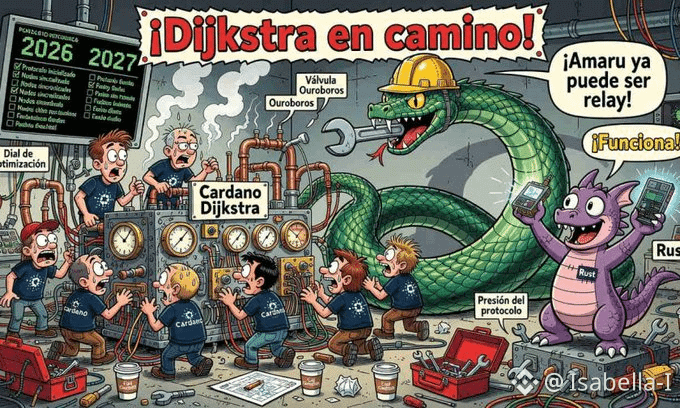
#cardanosplitsdijkstraupgradeintotwophases Cardano Accelerates Toward the Dijkstra Era: Two Phases and Alternative Nodes on the Way$ADA $C $TREE
#cardanosplitsdijkstraupgradeintotwophases Cardano Accelerates Toward the Dijkstra Era: Two Phases and Alternative Nodes on the Way$ADA $C $TREE
19
·
--
Verified
#cardanosplitsdijkstraupgradeintotwophases
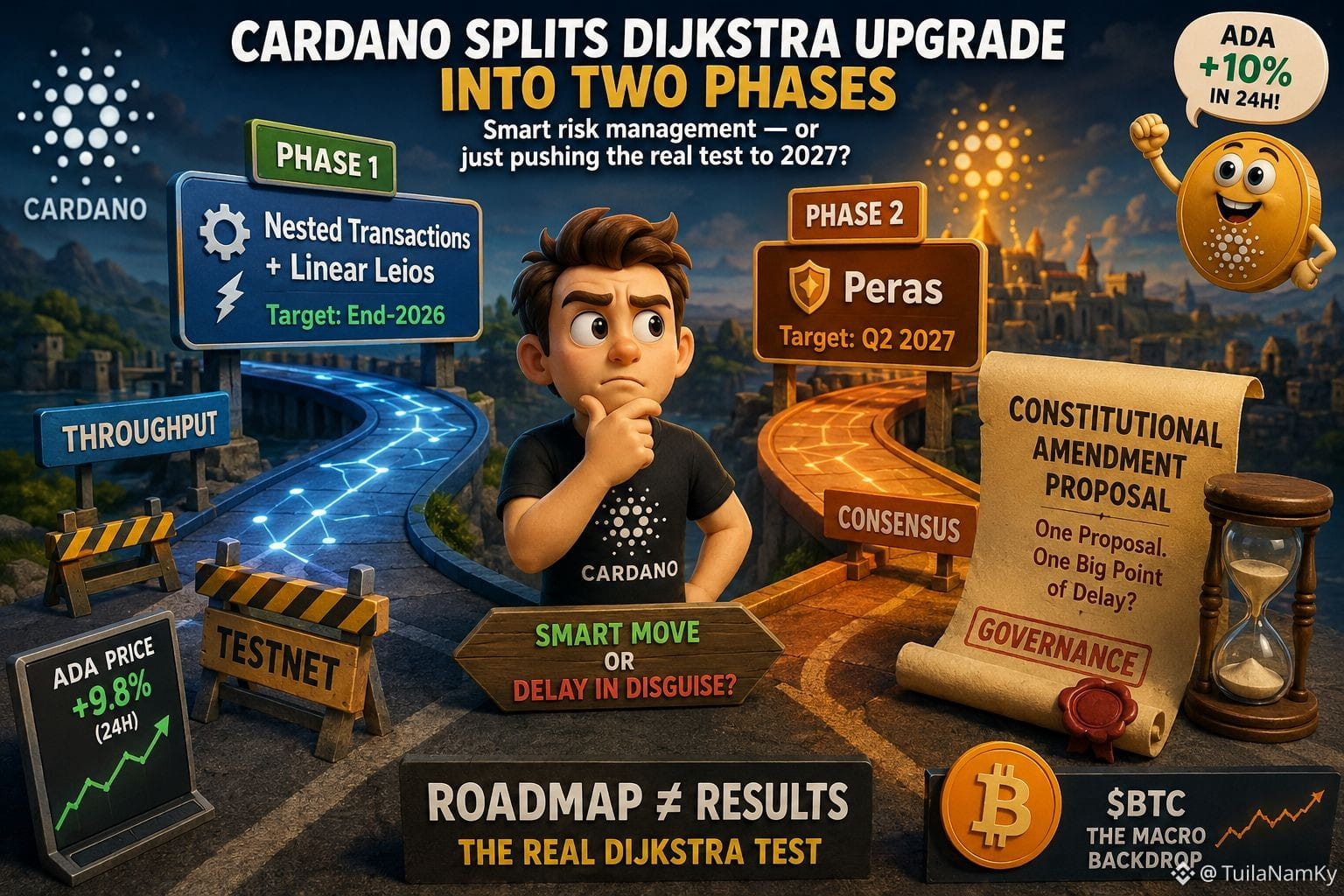
Cardano just split its biggest upgrade into two phases.
Smart risk management — or a sign Dijkstra still isn’t ready? 👀
The roadmap is now clear:
⚙️ Phase 1: Nested Transactions + Linear Leios
📅 Target: code completion by end-2026
⚡ Phase 2: Peras
📅 Target: Q2 2027
Why split it?
Throughput and consensus are fundamentally different challenges. Separating them allows each component to be tested and deployed with less technical risk.
But here’s the catch:
End-2026 ≠ mainnet.
Both phases still need testnet validation and on-chain governance approval.
And governance could become the bottleneck. Dijkstra’s protocol parameters are being bundled into a single Constitutional Amendment proposal — cleaner, but potentially creating one major point of delay.
Meanwhile, ADA already jumped nearly 10% in 24 hours earlier this month.
The market may be pricing the roadmap before the upgrade has actually delivered anything on mainnet.
That’s the real Dijkstra test:
Roadmap ≠ results.
If Linear Leios delivers meaningful throughput gains, ADA could gain a stronger L1 narrative. If timelines slip, expectations can unwind quickly.
And if broader risk appetite shifts, BTC remains the macro backdrop.
Is splitting Dijkstra a smarter way to reduce upgrade risk — or just pushing the biggest test into 2027? 🤔
#Cardano $ADA $BTC
{future}(BTCUSDT)
{future}(ADAUSDT)
#cardanosplitsdijkstraupgradeintotwophases
Cardano just split its biggest upgrade into two phases.
Smart risk management — or a sign Dijkstra still isn’t ready? 👀
The roadmap is now clear:
⚙️ Phase 1: Nested Transactions + Linear Leios
📅 Target: code completion by end-2026
⚡ Phase 2: Peras
📅 Target: Q2 2027
Why split it?
Throughput and consensus are fundamentally different challenges. Separating them allows each component to be tested and deployed with less technical risk.
But here’s the catch:
End-2026 ≠ mainnet.
Both phases still need testnet validation and on-chain governance approval.
And governance could become the bottleneck. Dijkstra’s protocol parameters are being bundled into a single Constitutional Amendment proposal — cleaner, but potentially creating one major point of delay.
Meanwhile, ADA already jumped nearly 10% in 24 hours earlier this month.
The market may be pricing the roadmap before the upgrade has actually delivered anything on mainnet.
That’s the real Dijkstra test:
Roadmap ≠ results.
If Linear Leios delivers meaningful throughput gains, ADA could gain a stronger L1 narrative. If timelines slip, expectations can unwind quickly.
And if broader risk appetite shifts, BTC remains the macro backdrop.
Is splitting Dijkstra a smarter way to reduce upgrade risk — or just pushing the biggest test into 2027? 🤔
#Cardano $ADA $BTC
Cardano just split its biggest upgrade into two phases.
Smart risk management — or a sign Dijkstra still isn’t ready? 👀
The roadmap is now clear:
⚙️ Phase 1: Nested Transactions + Linear Leios
📅 Target: code completion by end-2026
⚡ Phase 2: Peras
📅 Target: Q2 2027
Why split it?
Throughput and consensus are fundamentally different challenges. Separating them allows each component to be tested and deployed with less technical risk.
But here’s the catch:
End-2026 ≠ mainnet.
Both phases still need testnet validation and on-chain governance approval.
And governance could become the bottleneck. Dijkstra’s protocol parameters are being bundled into a single Constitutional Amendment proposal — cleaner, but potentially creating one major point of delay.
Meanwhile, ADA already jumped nearly 10% in 24 hours earlier this month.
The market may be pricing the roadmap before the upgrade has actually delivered anything on mainnet.
That’s the real Dijkstra test:
Roadmap ≠ results.
If Linear Leios delivers meaningful throughput gains, ADA could gain a stronger L1 narrative. If timelines slip, expectations can unwind quickly.
And if broader risk appetite shifts, BTC remains the macro backdrop.
Is splitting Dijkstra a smarter way to reduce upgrade risk — or just pushing the biggest test into 2027? 🤔
#Cardano $ADA $BTC
3
2
2.6k

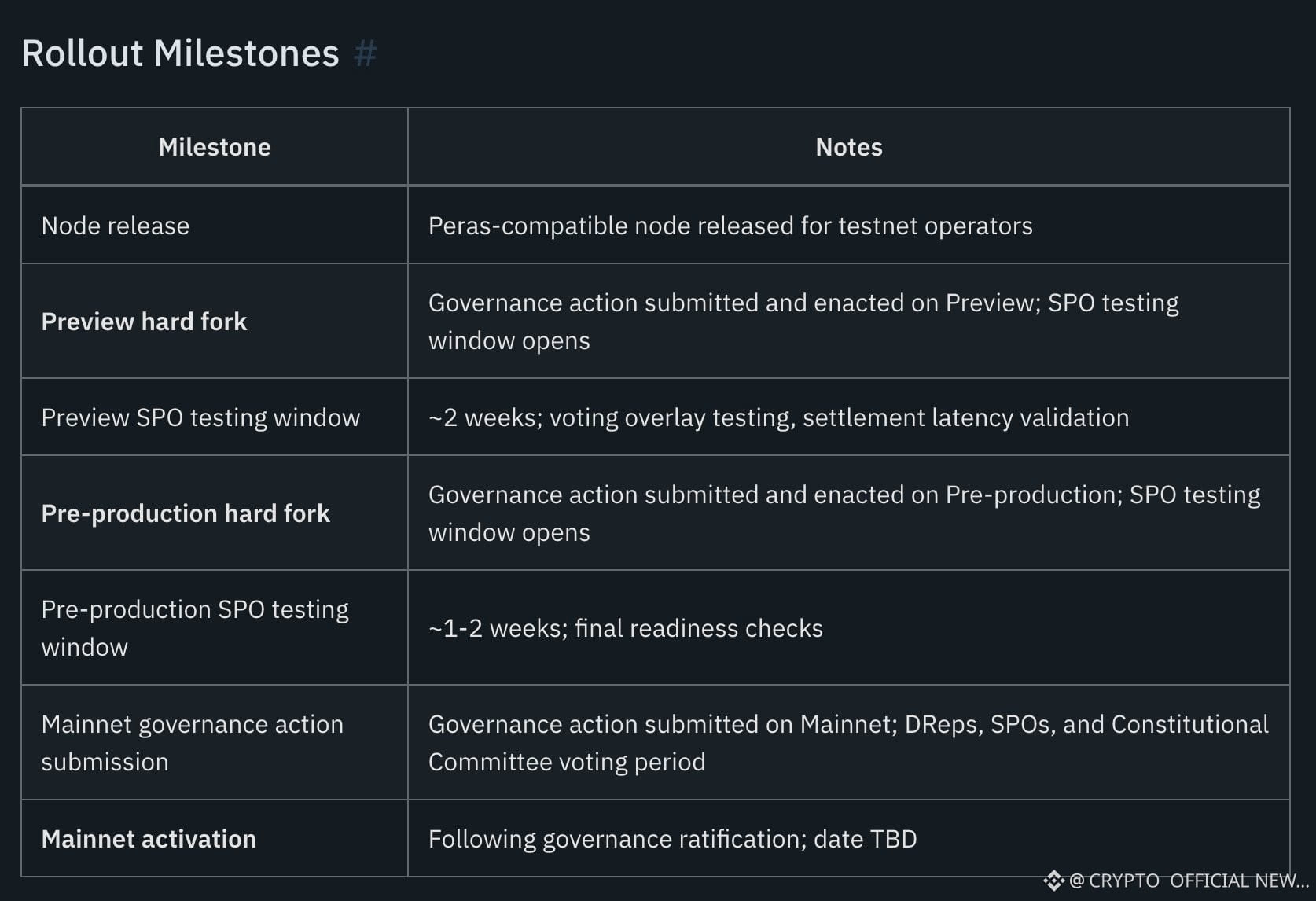
#CardanoSplitsDijkstraUpgradeIntoTwoPhases Cardano isn’t waiting for “the next cycle.” It’s rebuilding the infrastructure for the next level.
The Dijkstra era continues to move forward.
Late 2026:
Nested Transactions + Linear Leios.
Q2 2027:
Peras through an intra-era hard fork.
But to me, one of the most important changes is happening outside the spotlight:
Amaru.
An alternative node implementation written in Rust that can already operate as a relay, validate the chain, and sync to the tip, with mainnet block production targeted for November 2026.
That means something much bigger than “just another node”: less dependence on a single implementation, greater infrastructure diversity, stronger network resilience, and a much more solid foundation for scaling.
At the same time, the Constitution is also being updated so the new Leios parameters can be governed from day one.
A lot of people are still only watching the price of $ADA
I’m watching what’s being built underneath it.$ADA
{future}(ADAUSDT)
$XAU
{future}(XAUUSDT)
#CardanoSplitsDijkstraUpgradeIntoTwoPhases Cardano isn’t waiting for “the next cycle.” It’s rebuilding the infrastructure for the next level.
The Dijkstra era continues to move forward.
Late 2026:
Nested Transactions + Linear Leios.
Q2 2027:
Peras through an intra-era hard fork.
But to me, one of the most important changes is happening outside the spotlight:
Amaru.
An alternative node implementation written in Rust that can already operate as a relay, validate the chain, and sync to the tip, with mainnet block production targeted for November 2026.
That means something much bigger than “just another node”: less dependence on a single implementation, greater infrastructure diversity, stronger network resilience, and a much more solid foundation for scaling.
At the same time, the Constitution is also being updated so the new Leios parameters can be governed from day one.
A lot of people are still only watching the price of $ADA
I’m watching what’s being built underneath it.$ADA
$XAU
The Dijkstra era continues to move forward.
Late 2026:
Nested Transactions + Linear Leios.
Q2 2027:
Peras through an intra-era hard fork.
But to me, one of the most important changes is happening outside the spotlight:
Amaru.
An alternative node implementation written in Rust that can already operate as a relay, validate the chain, and sync to the tip, with mainnet block production targeted for November 2026.
That means something much bigger than “just another node”: less dependence on a single implementation, greater infrastructure diversity, stronger network resilience, and a much more solid foundation for scaling.
At the same time, the Constitution is also being updated so the new Leios parameters can be governed from day one.
A lot of people are still only watching the price of $ADA
I’m watching what’s being built underneath it.$ADA
$XAU
1
146
Log in to explore more content
Join global crypto users on Binance Square
⚡️ Get latest and useful information about crypto.
💬 Trusted by the world’s largest crypto exchange.
👍 Discover real insights from verified creators.
Email / Phone number
Trending Topics
1
#MetaMaskExitsLidoValidatorsAfterSecurityIncident
3,837 views
199 Discussing
2
#MicronBeatsEarningsLiftsGuidance
6,987 views
211 Discussing
3
#CFTCSubmitsTwoEventContractRulesToWhiteHouse
6,968 views
203 Discussing
4
#BitcoinClears$85200
25,470 views
286 Discussing
5
#AltcoinSeasonIndexHoldsAbove60For5Days
128,761 views
1,673 Discussing
6
#USADPAdds90000JobsInSeptember
56,599 views
947 Discussing
7
#USCorePCEEasesTo3%InAugust
40,544 views
663 Discussing
8
#KospiPostsWorstQuarterSince2020
23,708 views
569 Discussing
9
#SECToClarifyOnChainFundraisingRules
59,941 views
774 Discussing
10
#UKFCAOpensCryptoFirmAuthorization
55,905 views
631 Discussing