

#optimism
optimism
846,197 vues
3,149 mentions
Populaire
Récents

·
--
Haussier
🚨 $OP IS COILING UP. THE BREAKOUT IS LOADING. 🚨
Optimism is sitting at $0.1213 — a major multi-week support zone that has been defended repeatedly.
Look at the structure on the 4H chart:
🔹 The yellow zone is a hard floor. Every time price dips here, buyers step in.
🔹 The red dashed line is the descending resistance that has kept OP suppressed.
🔹 The moment OP breaks and closes above that red line, the path to $0.1500 opens up fast.
This isn't a gamble. This is a textbook setup. Support is holding, momentum is shifting, and the risk-to-reward is incredible.
Spot accumulation only. No leverage. Just patience.
👇 Click the $OP widget below to check the live price and buy now before the breakout. 👇
{spot}(OPUSDT)
⚠️ Risk Management: If OP closes a 4H candle below $0.118, the setup is invalidated. Always use a small spot size and DCA. No leverage.
If you are buying now drop 🚀. If not tell me the reason, I'm hearing you
#Optimism #altcoins #Layer2 #HalalCrypto #BinanceSquare
🚨 $OP IS COILING UP. THE BREAKOUT IS LOADING. 🚨
Optimism is sitting at $0.1213 — a major multi-week support zone that has been defended repeatedly.
Look at the structure on the 4H chart:
🔹 The yellow zone is a hard floor. Every time price dips here, buyers step in.
🔹 The red dashed line is the descending resistance that has kept OP suppressed.
🔹 The moment OP breaks and closes above that red line, the path to $0.1500 opens up fast.
This isn't a gamble. This is a textbook setup. Support is holding, momentum is shifting, and the risk-to-reward is incredible.
Spot accumulation only. No leverage. Just patience.
👇 Click the $OP widget below to check the live price and buy now before the breakout. 👇
⚠️ Risk Management: If OP closes a 4H candle below $0.118, the setup is invalidated. Always use a small spot size and DCA. No leverage.
If you are buying now drop 🚀. If not tell me the reason, I'm hearing you
#Optimism #altcoins #Layer2 #HalalCrypto #BinanceSquare
Optimism is sitting at $0.1213 — a major multi-week support zone that has been defended repeatedly.
Look at the structure on the 4H chart:
🔹 The yellow zone is a hard floor. Every time price dips here, buyers step in.
🔹 The red dashed line is the descending resistance that has kept OP suppressed.
🔹 The moment OP breaks and closes above that red line, the path to $0.1500 opens up fast.
This isn't a gamble. This is a textbook setup. Support is holding, momentum is shifting, and the risk-to-reward is incredible.
Spot accumulation only. No leverage. Just patience.
👇 Click the $OP widget below to check the live price and buy now before the breakout. 👇
⚠️ Risk Management: If OP closes a 4H candle below $0.118, the setup is invalidated. Always use a small spot size and DCA. No leverage.
If you are buying now drop 🚀. If not tell me the reason, I'm hearing you
#Optimism #altcoins #Layer2 #HalalCrypto #BinanceSquare
1
20

·
--
【每日行情分析 10/07】
今日市场 大幅上涨
重点关注:
• $OP $0.1215 +9.53%
• $UNI $8.1690 +7.62%
• $BONK $0.0000 +6.38%
市场情绪极度亢奋,$OP和$UNI强势拉升,$BONK更是暴涨!错过这次就是错过一个时代,$OP即将突破$0.13大关,$UNI冲击$8.5,$BONK已经启动主升浪!现在入场,止盈$0.13,止损$0.115,$UNI止盈$8.8,止损$7.8,$BONK止盈$0.00008,止损$0.00006,暴涨就在眼前,赶紧上车!#分析 $OP #Optimism $UNI #Uniswap $BONK #Bonk #明日财富密码 别再犹豫,立即行动,错过拍大腿!
【每日行情分析 10/07】
今日市场 大幅上涨
重点关注:
• $OP $0.1215 +9.53%
• $UNI $8.1690 +7.62%
• $BONK $0.0000 +6.38%
市场情绪极度亢奋,$OP 和$UNI 强势拉升,$BONK 更是暴涨!错过这次就是错过一个时代,$OP 即将突破$0.13大关,$UNI 冲击$8.5,$BONK 已经启动主升浪!现在入场,止盈$0.13,止损$0.115,$UNI 止盈$8.8,止损$7.8,$BONK 止盈$0.00008,止损$0.00006,暴涨就在眼前,赶紧上车!#分析 $OP #Optimism $UNI #Uniswap $BONK #Bonk #明日财富密码 别再犹豫,立即行动,错过拍大腿!
今日市场 大幅上涨
重点关注:
• $OP $0.1215 +9.53%
• $UNI $8.1690 +7.62%
• $BONK $0.0000 +6.38%
市场情绪极度亢奋,$OP 和$UNI 强势拉升,$BONK 更是暴涨!错过这次就是错过一个时代,$OP 即将突破$0.13大关,$UNI 冲击$8.5,$BONK 已经启动主升浪!现在入场,止盈$0.13,止损$0.115,$UNI 止盈$8.8,止损$7.8,$BONK 止盈$0.00008,止损$0.00006,暴涨就在眼前,赶紧上车!#分析 $OP #Optimism $UNI #Uniswap $BONK #Bonk #明日财富密码 别再犹豫,立即行动,错过拍大腿!
31
·
--
【每日行情分析 10/07】
今日市场 大涨
重点关注:
• $OP $0.1214 +47.42%
• $UNI $8.0990 -8.70%
• $BONK $0.0000 +100.00%
$OP和$BONK暴涨,$UNI回调,抓住机会就赚疯了!$OP突破阻力位,即将启动主升浪,$BONK借势拉升,涨幅惊人!错过拍大腿,赶紧上车!$OP目标$0.15,$BONK目标$0.0001,$UNI反弹到$8.5!现在入场,止盈$0.15,止损$0.11,$BONK止盈$0.0001,止损$0.00005,$UNI止盈$8.5,止损$7.8!手慢无,立即行动!
#分析 $OP #Optimism $UNI #Uniswap $BONK #Bonk #暴涨
【每日行情分析 10/07】
今日市场 大涨
重点关注:
• $OP $0.1214 +47.42%
• $UNI $8.0990 -8.70%
• $BONK $0.0000 +100.00%
$OP 和$BONK 暴涨,$UNI 回调,抓住机会就赚疯了!$OP 突破阻力位,即将启动主升浪,$BONK 借势拉升,涨幅惊人!错过拍大腿,赶紧上车!$OP 目标$0.15,$BONK 目标$0.0001,$UNI 反弹到$8.5!现在入场,止盈$0.15,止损$0.11,$BONK 止盈$0.0001,止损$0.00005,$UNI 止盈$8.5,止损$7.8!手慢无,立即行动!
#分析 $OP #Optimism $UNI #Uniswap $BONK #Bonk #暴涨
今日市场 大涨
重点关注:
• $OP $0.1214 +47.42%
• $UNI $8.0990 -8.70%
• $BONK $0.0000 +100.00%
$OP 和$BONK 暴涨,$UNI 回调,抓住机会就赚疯了!$OP 突破阻力位,即将启动主升浪,$BONK 借势拉升,涨幅惊人!错过拍大腿,赶紧上车!$OP 目标$0.15,$BONK 目标$0.0001,$UNI 反弹到$8.5!现在入场,止盈$0.15,止损$0.11,$BONK 止盈$0.0001,止损$0.00005,$UNI 止盈$8.5,止损$7.8!手慢无,立即行动!
#分析 $OP #Optimism $UNI #Uniswap $BONK #Bonk #暴涨
3

·
--
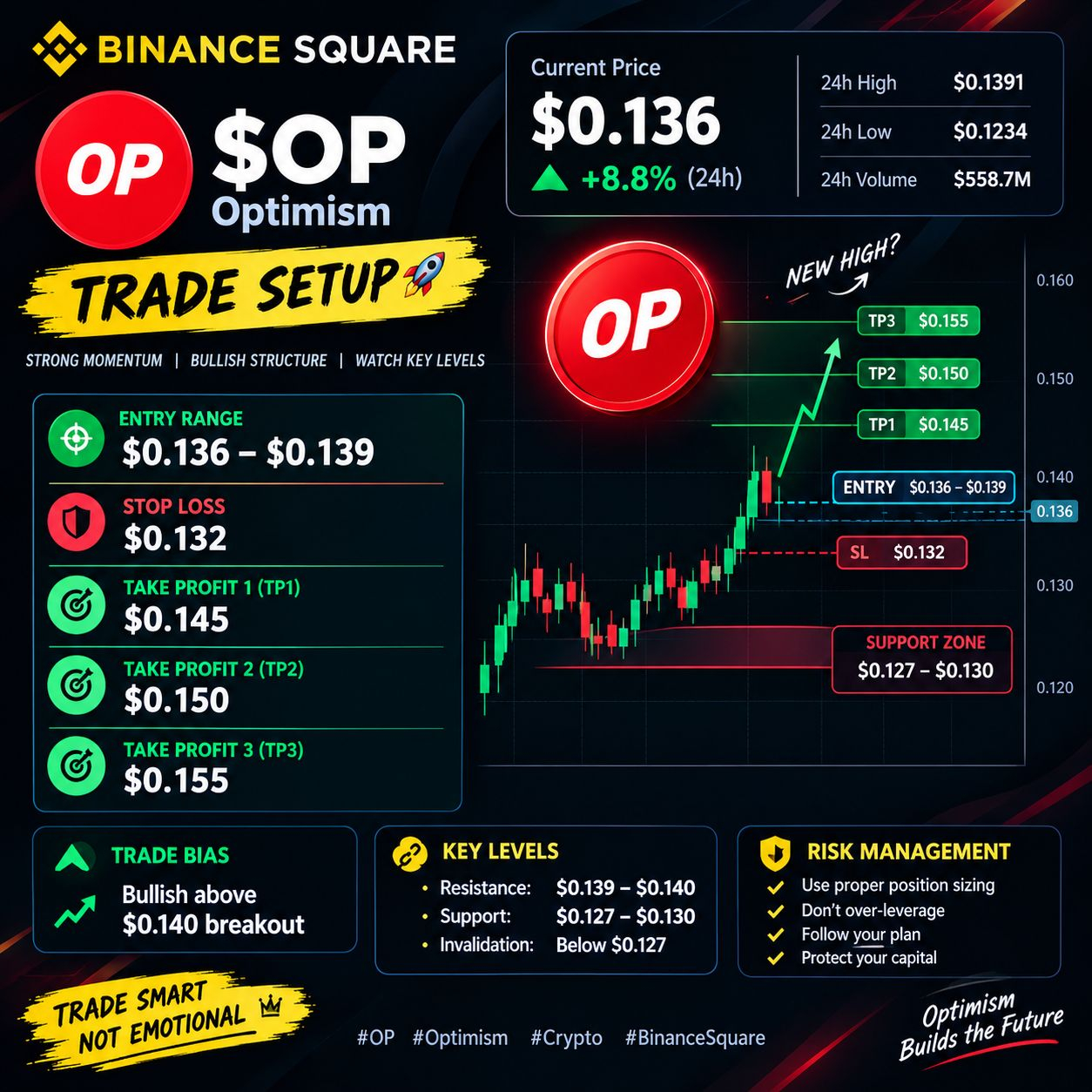
🚨 $OP TRADE SETUP 🚨
🟢 Entry: $0.136–$0.139
🛑 Stop Loss: $0.132
🎯 TP1: $0.145
🎯 TP2: $0.150
🎯 TP3: $0.155
📈 Bias: Bullish above $0.140 breakout
⚠️ Risk: Keep position size small & protect capital.
{future}(OPUSDT)
#OP #Optimism #Crypto #BinanceSquar e
🚨 $OP TRADE SETUP 🚨
🟢 Entry: $0.136–$0.139
🛑 Stop Loss: $0.132
🎯 TP1: $0.145
🎯 TP2: $0.150
🎯 TP3: $0.155
📈 Bias: Bullish above $0.140 breakout
⚠️ Risk: Keep position size small & protect capital.
#OP #Optimism #Crypto #BinanceSquar e
🟢 Entry: $0.136–$0.139
🛑 Stop Loss: $0.132
🎯 TP1: $0.145
🎯 TP2: $0.150
🎯 TP3: $0.155
📈 Bias: Bullish above $0.140 breakout
⚠️ Risk: Keep position size small & protect capital.
#OP #Optimism #Crypto #BinanceSquar e
1
280
·
--
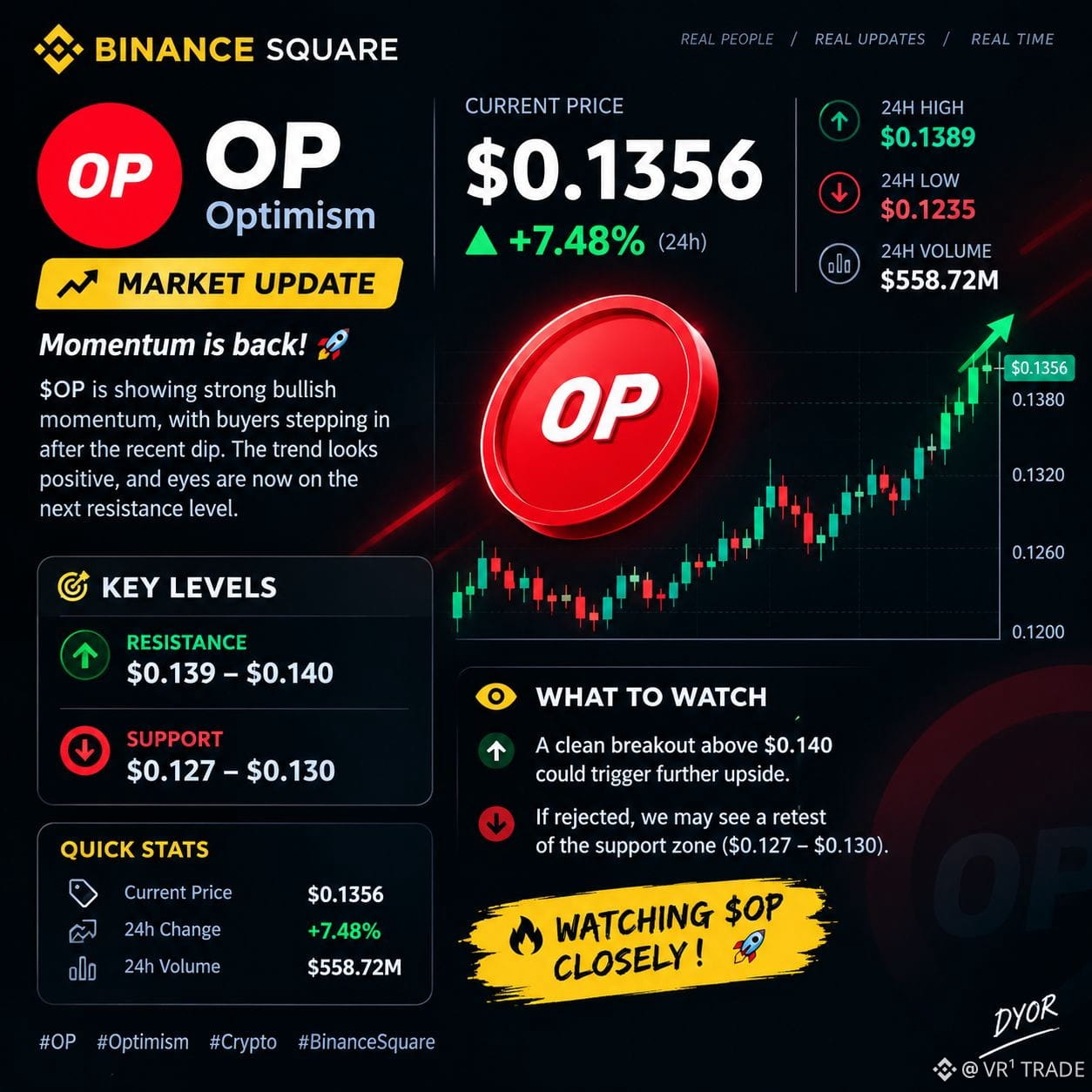
🚨 $OP MARKET UPDATE 🚨
$OP is showing fresh bullish momentum after yesterday’s strong move 📈
💰 Current Zone: ~$0.135
📈 24H: +7% area
🔥 Key Resistance: ~$0.139–$0.140
🟢 Key Support: ~$0.127–$0.130
{future}(OPUSDT)
A clean breakout above $0.140 could signal further upside, while rejection may bring a retest of support.
👀 Watching $OP closely. 🚀
#OP #Optimism #Crypto #BinanceSquare
🚨 $OP MARKET UPDATE 🚨
$OP is showing fresh bullish momentum after yesterday’s strong move 📈
💰 Current Zone: ~$0.135
📈 24H: +7% area
🔥 Key Resistance: ~$0.139–$0.140
🟢 Key Support: ~$0.127–$0.130
A clean breakout above $0.140 could signal further upside, while rejection may bring a retest of support.
👀 Watching $OP closely. 🚀
#OP #Optimism #Crypto #BinanceSquare
$OP is showing fresh bullish momentum after yesterday’s strong move 📈
💰 Current Zone: ~$0.135
📈 24H: +7% area
🔥 Key Resistance: ~$0.139–$0.140
🟢 Key Support: ~$0.127–$0.130
A clean breakout above $0.140 could signal further upside, while rejection may bring a retest of support.
👀 Watching $OP closely. 🚀
#OP #Optimism #Crypto #BinanceSquare
189
·
--
【2026-10-06 02:20 行情速递】
📈 $OP $0.1366 +2.94%
📈 $SUI $1.1920 -2.62%
📈 $WIF $0.2534 +2.38%
$OP继续拉升,$SUI急跌后反弹,$WIF暴涨中!错过$OP这次机会拍大腿,$WIF已经冲破前期高点!$OP快到入场位,$WIF目标$0.3,$SUI看$1.3!老手都知道,现在不冲等什么?错过这次暴涨,只能后悔!$OP入场$0.1355,止盈$0.14,止损$0.133!$WIF入场$0.25,止盈$0.3,止损$0.24!$SUI入场$1.19,止盈$1.3,止损$1.16!赶紧上车,错过拍大腿!#快讯 $OP #Optimism $SUI #Sui $WIF #Wif #暴涨中 行动起来,现在就是最佳入场时机!
【2026-10-06 02:20 行情速递】
📈 $OP $0.1366 +2.94%
📈 $SUI $1.1920 -2.62%
📈 $WIF $0.2534 +2.38%
$OP 继续拉升,$SUI 急跌后反弹,$WIF 暴涨中!错过$OP 这次机会拍大腿,$WIF 已经冲破前期高点!$OP 快到入场位,$WIF 目标$0.3,$SUI 看$1.3!老手都知道,现在不冲等什么?错过这次暴涨,只能后悔!$OP 入场$0.1355,止盈$0.14,止损$0.133!$WIF 入场$0.25,止盈$0.3,止损$0.24!$SUI 入场$1.19,止盈$1.3,止损$1.16!赶紧上车,错过拍大腿!#快讯 $OP #Optimism $SUI #Sui $WIF #Wif #暴涨中 行动起来,现在就是最佳入场时机!
📈 $OP $0.1366 +2.94%
📈 $SUI $1.1920 -2.62%
📈 $WIF $0.2534 +2.38%
$OP 继续拉升,$SUI 急跌后反弹,$WIF 暴涨中!错过$OP 这次机会拍大腿,$WIF 已经冲破前期高点!$OP 快到入场位,$WIF 目标$0.3,$SUI 看$1.3!老手都知道,现在不冲等什么?错过这次暴涨,只能后悔!$OP 入场$0.1355,止盈$0.14,止损$0.133!$WIF 入场$0.25,止盈$0.3,止损$0.24!$SUI 入场$1.19,止盈$1.3,止损$1.16!赶紧上车,错过拍大腿!#快讯 $OP #Optimism $SUI #Sui $WIF #Wif #暴涨中 行动起来,现在就是最佳入场时机!
19

💡 مسؤول في Optimism: أهمية امتلاك منصات العقود الآجلة للبنية التحتية
ناقش كبير مسؤولي الأعمال في Optimism أهمية امتلاك منصات تداول العقود الآجلة الدائمة لبنيتها التحتية الخاصة. وشدد على أن هذا التوجه يمكن أن يعزز الميزة التنافسية لهذه المنصات من خلال تمكين تنفيذ أسرع، وتحسين الامتثال التنظيمي، وتقديم خدمات أكثر تخصصًا للمستخدمين.
━━━━━━━━━━━━━━
📊 التأثير: 📈 مرتفع
🏷️ DEFI
#Optimism #DeFi #PerpetualFutures #Infrastructure #CryptoExchanges
📰 المصدر: cryptobriefing.com
💡 مسؤول في Optimism: أهمية امتلاك منصات العقود الآجلة للبنية التحتية
ناقش كبير مسؤولي الأعمال في Optimism أهمية امتلاك منصات تداول العقود الآجلة الدائمة لبنيتها التحتية الخاصة. وشدد على أن هذا التوجه يمكن أن يعزز الميزة التنافسية لهذه المنصات من خلال تمكين تنفيذ أسرع، وتحسين الامتثال التنظيمي، وتقديم خدمات أكثر تخصصًا للمستخدمين.
━━━━━━━━━━━━━━
📊 التأثير: 📈 مرتفع
🏷️ DEFI
#Optimism #DeFi #PerpetualFutures #Infrastructure #CryptoExchanges
📰 المصدر: cryptobriefing.com
ناقش كبير مسؤولي الأعمال في Optimism أهمية امتلاك منصات تداول العقود الآجلة الدائمة لبنيتها التحتية الخاصة. وشدد على أن هذا التوجه يمكن أن يعزز الميزة التنافسية لهذه المنصات من خلال تمكين تنفيذ أسرع، وتحسين الامتثال التنظيمي، وتقديم خدمات أكثر تخصصًا للمستخدمين.
━━━━━━━━━━━━━━
📊 التأثير: 📈 مرتفع
🏷️ DEFI
#Optimism #DeFi #PerpetualFutures #Infrastructure #CryptoExchanges
📰 المصدر: cryptobriefing.com
67

·
--
Haussier
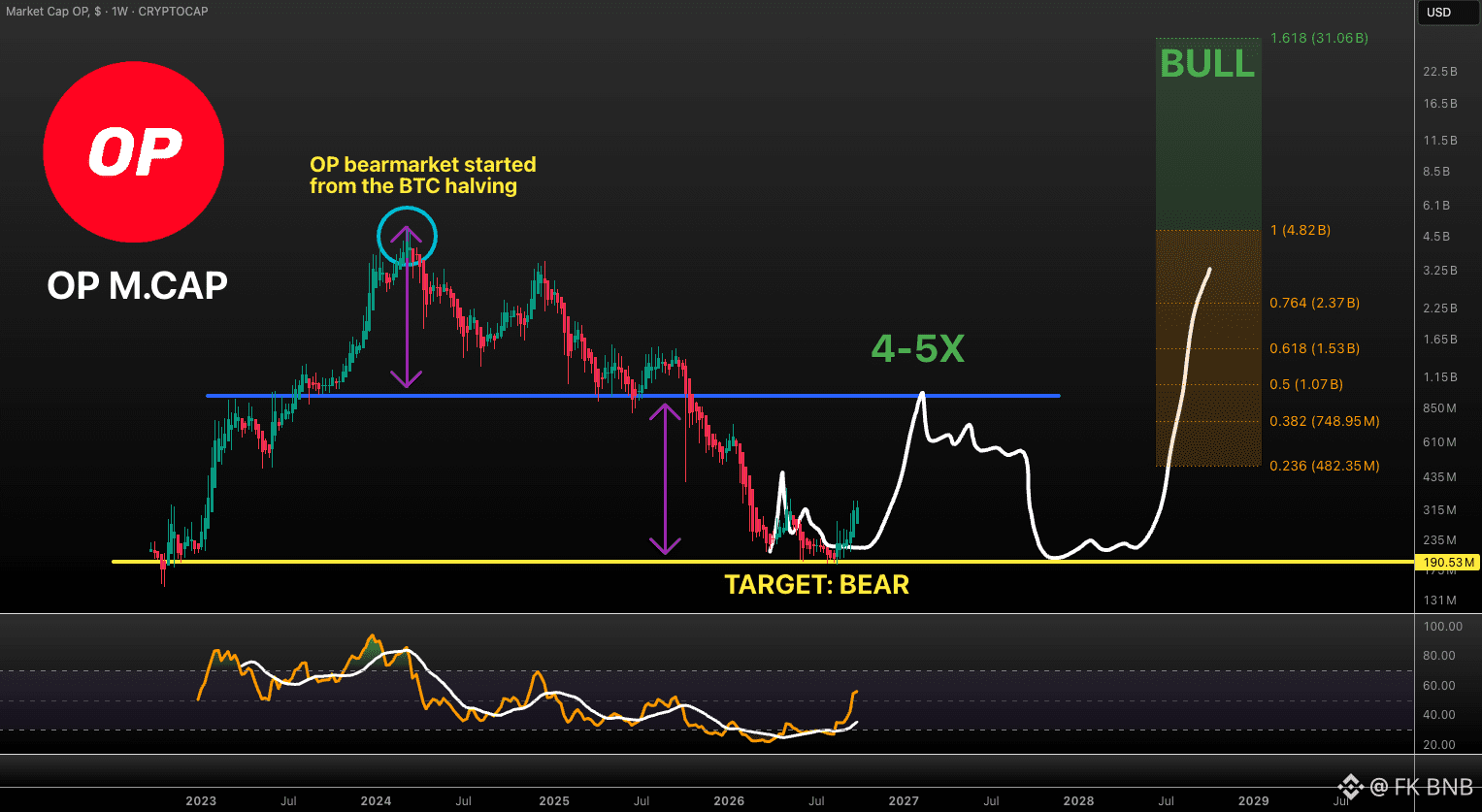
$OP M.CAP UPDATE!!!
Still working on that plan! 👌
4-5X retrace -> back to lows -> Send to 31B (100x)
Invalidation: lose 190 mil
Not Fa!
STAY TUNED
#Optimism
{future}(OPUSDT)
$OP M.CAP UPDATE!!!
Still working on that plan! 👌
4-5X retrace -> back to lows -> Send to 31B (100x)
Invalidation: lose 190 mil
Not Fa!
STAY TUNED
#Optimism
Still working on that plan! 👌
4-5X retrace -> back to lows -> Send to 31B (100x)
Invalidation: lose 190 mil
Not Fa!
STAY TUNED
#Optimism
18

·
--
You need to see this, traders! 👀 $OP averaged around $0.11 in April. The Optimism buyback program saw an 87% drop in monthly purchases by March, and Base moved away from the OP Stack in February. 🧠 Are you adjusting your strategy for the potential supply influx and reduced buy pressure? #Optimism #L2
You need to see this, traders! 👀 $OP averaged around $0.11 in April. The Optimism buyback program saw an 87% drop in monthly purchases by March, and Base moved away from the OP Stack in February. 🧠 Are you adjusting your strategy for the potential supply influx and reduced buy pressure? #Optimism #L2
245

⚔️ $OP P is on a knife-edge right now — after a 71% September rally, it's clinging to the $0.13 pivot
Two clear paths ahead: break above opens $0.15–$0.16 targets, break below risks a flush to $0.11. Bollinger Bands show momentum at a crossroads, with sell-side aggression rising
This $0.13/$0.14 range resolution isn't just about OP — it's become a credibility test for the entire L2 sector heading into Q4
Will $OP hold the pivot and continue the rally, or is a correction coming?
#Bitcoin #Optimism #L2 #BinanceSquare
⚔️ $OP P is on a knife-edge right now — after a 71% September rally, it's clinging to the $0.13 pivot
Two clear paths ahead: break above opens $0.15–$0.16 targets, break below risks a flush to $0.11. Bollinger Bands show momentum at a crossroads, with sell-side aggression rising
This $0.13/$0.14 range resolution isn't just about OP — it's become a credibility test for the entire L2 sector heading into Q4
Will $OP hold the pivot and continue the rally, or is a correction coming?
#Bitcoin #Optimism #L2 #BinanceSquare
Two clear paths ahead: break above opens $0.15–$0.16 targets, break below risks a flush to $0.11. Bollinger Bands show momentum at a crossroads, with sell-side aggression rising
This $0.13/$0.14 range resolution isn't just about OP — it's become a credibility test for the entire L2 sector heading into Q4
Will $OP hold the pivot and continue the rally, or is a correction coming?
#Bitcoin #Optimism #L2 #BinanceSquare
1
352

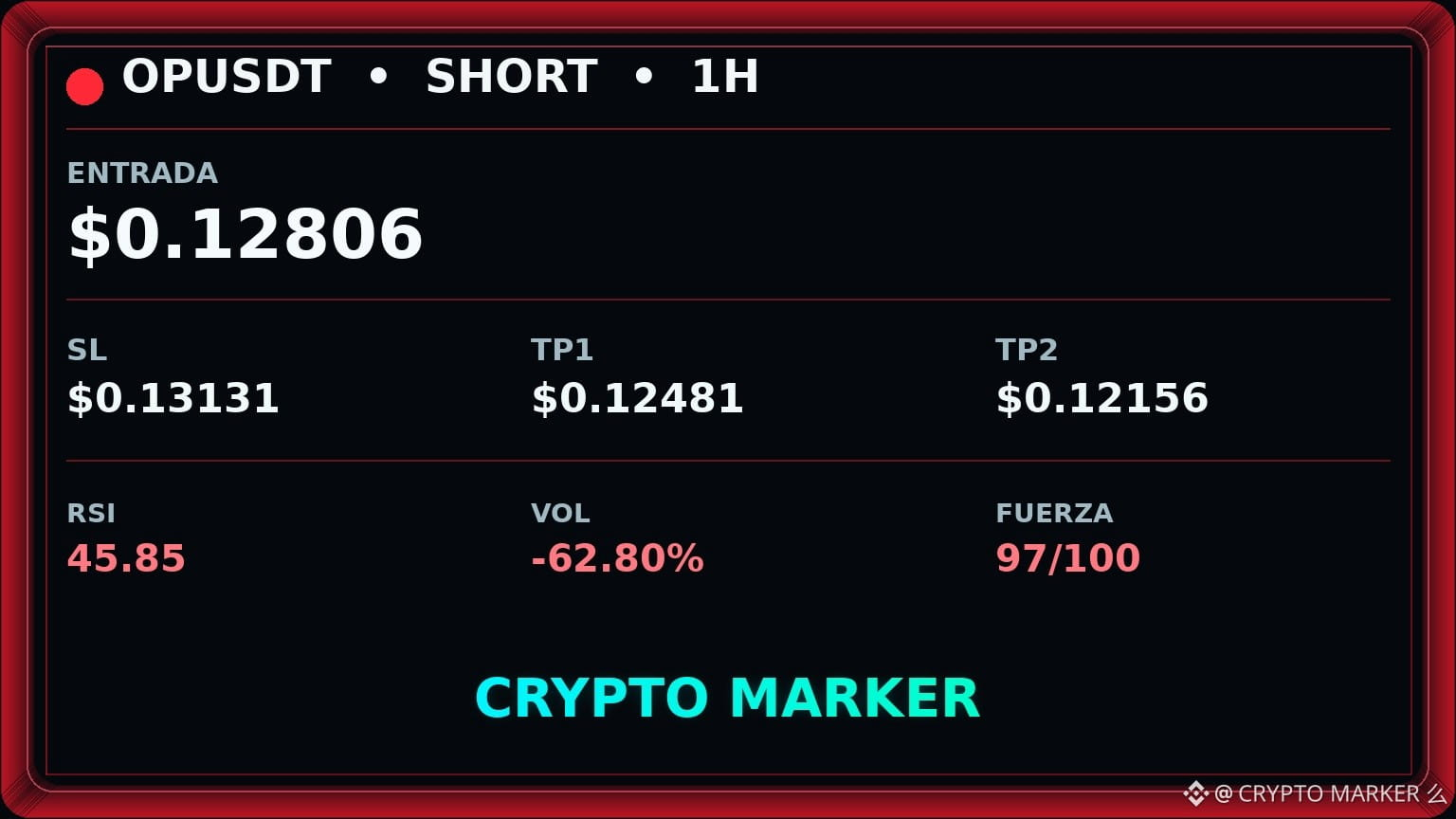
🚨 SEÑAL FUTURES — 1H
🪙 OPUSDT | SHORT
💵 Precio: $0.12806
🎯 Entrada: $0.12806
🛑 SL: $0.13131
🥇 TP1: $0.12481
🥈 TP2: $0.12156
⚡ 5X
📊 INFO
Tendencia: BAJISTA
4H: BAJISTA | 15M: BAJISTA
RSI: 45.85 | ADX: 25.82
Vol: -62.80%
VWAP: $0.13070
OI: +0.00% | L/S: 1.15
Funding: +0.0011%
🔥 Fuerza: 97/100
🎯 Contexto: FAKEOUT_ALCISTA
🧠 Confirmación: OR+ESTRUCTURA, 4H, 1H, 15M, EMA, RSI, MACD, ADX, VWAP, L/S
#OP #Optimism #Crypto_Marker #📊
Opera aquí 👇
👉 $OP
{future}(OPUSDT)
▪︎ Trading ☝️
🚨 SEÑAL FUTURES — 1H
🪙 OPUSDT | SHORT
💵 Precio: $0.12806
🎯 Entrada: $0.12806
🛑 SL: $0.13131
🥇 TP1: $0.12481
🥈 TP2: $0.12156
⚡ 5X
📊 INFO
Tendencia: BAJISTA
4H: BAJISTA | 15M: BAJISTA
RSI: 45.85 | ADX: 25.82
Vol: -62.80%
VWAP: $0.13070
OI: +0.00% | L/S: 1.15
Funding: +0.0011%
🔥 Fuerza: 97/100
🎯 Contexto: FAKEOUT_ALCISTA
🧠 Confirmación: OR+ESTRUCTURA, 4H, 1H, 15M, EMA, RSI, MACD, ADX, VWAP, L/S
#OP #Optimism #Crypto_Marker #📊
Opera aquí 👇
👉 $OP
▪︎ Trading ☝️
🪙 OPUSDT | SHORT
💵 Precio: $0.12806
🎯 Entrada: $0.12806
🛑 SL: $0.13131
🥇 TP1: $0.12481
🥈 TP2: $0.12156
⚡ 5X
📊 INFO
Tendencia: BAJISTA
4H: BAJISTA | 15M: BAJISTA
RSI: 45.85 | ADX: 25.82
Vol: -62.80%
VWAP: $0.13070
OI: +0.00% | L/S: 1.15
Funding: +0.0011%
🔥 Fuerza: 97/100
🎯 Contexto: FAKEOUT_ALCISTA
🧠 Confirmación: OR+ESTRUCTURA, 4H, 1H, 15M, EMA, RSI, MACD, ADX, VWAP, L/S
#OP #Optimism #Crypto_Marker #📊
Opera aquí 👇
👉 $OP
▪︎ Trading ☝️
48
·
--
OP trades near $0.13, experiencing recent 24h volume exceeding $89M amidst market fluctuations. Institutional adoption of the OP Stack continues, notably with KB Securities and Soneium integrations. Optimism's Upgrade 20 successfully deployed in September, enhancing network infrastructure. 📊🏛️ Can institutional inflows counter recent price volatility for $OP? #Optimism #L2
OP trades near $0.13, experiencing recent 24h volume exceeding $89M amidst market fluctuations. Institutional adoption of the OP Stack continues, notably with KB Securities and Soneium integrations. Optimism's Upgrade 20 successfully deployed in September, enhancing network infrastructure. 📊🏛️ Can institutional inflows counter recent price volatility for $OP ? #Optimism #L2
323

·
--
Vérifié
🔴 OP/USDT: Optimism залишається цікавою L2-мережею з низькими комісіями
Optimism — це Layer-2 рішення для Ethereum, створене для швидших і дешевших транзакцій. OP Stack використовується для побудови масштабованих блокчейн-мереж, а сама Optimism позиціонує транзакції як майже безкоштовні порівняно з Ethereum L1. (Optimism)
Зараз OP торгується близько $0,13, а увага до проєкту залишається пов’язаною з розвитком Superchain, інфраструктурою для DeFi та інституційних блокчейн-рішень. (OKX)
Окремо варто звернути увагу на USDT у мережі Optimism: у вересні Binance провела підтримку оновлення контракту USDT в Optimism із конвертацією 1:1. (Binance)
Для трейдерів і користувачів це важливо, адже низькі мережеві комісії роблять Optimism зручною альтернативою Ethereum L1 для частих операцій.
📌 OP/USDT варто тримати у списку спостереження, але сам факт низьких комісій мережі не гарантує зростання ціни OP.
#OP #Optimism #opusdt
🔴 OP/USDT: Optimism залишається цікавою L2-мережею з низькими комісіями
Optimism — це Layer-2 рішення для Ethereum, створене для швидших і дешевших транзакцій. OP Stack використовується для побудови масштабованих блокчейн-мереж, а сама Optimism позиціонує транзакції як майже безкоштовні порівняно з Ethereum L1. (Optimism)
Зараз OP торгується близько $0,13, а увага до проєкту залишається пов’язаною з розвитком Superchain, інфраструктурою для DeFi та інституційних блокчейн-рішень. (OKX)
Окремо варто звернути увагу на USDT у мережі Optimism: у вересні Binance провела підтримку оновлення контракту USDT в Optimism із конвертацією 1:1. (Binance)
Для трейдерів і користувачів це важливо, адже низькі мережеві комісії роблять Optimism зручною альтернативою Ethereum L1 для частих операцій.
📌 OP/USDT варто тримати у списку спостереження, але сам факт низьких комісій мережі не гарантує зростання ціни OP.
#OP #Optimism #opusdt
Optimism — це Layer-2 рішення для Ethereum, створене для швидших і дешевших транзакцій. OP Stack використовується для побудови масштабованих блокчейн-мереж, а сама Optimism позиціонує транзакції як майже безкоштовні порівняно з Ethereum L1. (Optimism)
Зараз OP торгується близько $0,13, а увага до проєкту залишається пов’язаною з розвитком Superchain, інфраструктурою для DeFi та інституційних блокчейн-рішень. (OKX)
Окремо варто звернути увагу на USDT у мережі Optimism: у вересні Binance провела підтримку оновлення контракту USDT в Optimism із конвертацією 1:1. (Binance)
Для трейдерів і користувачів це важливо, адже низькі мережеві комісії роблять Optimism зручною альтернативою Ethereum L1 для частих операцій.
📌 OP/USDT варто тримати у списку спостереження, але сам факт низьких комісій мережі не гарантує зростання ціни OP.
#OP #Optimism #opusdt

3
111

·
--
Haussier
Optimism ($OP )
Optimism remains another major Ethereum scaling project that traders continue to monitor. $OP
{spot}(OPUSDT)
can react quickly to changes in Ethereum sentiment and broader altcoin demand. Today, I would watch whether buyers can reclaim important resistance and hold it. Volume can help confirm whether the move has real participation. If the breakout fails, price may return to the previous range. I prefer waiting for confirmation instead of entering on the first spike. The market can create false breakouts, especially during volatile sessions. Keep risk defined and avoid increasing a position simply because the price is moving in the expected direction. Discipline protects profits and capital. #Optimism
Optimism ($OP )
Optimism remains another major Ethereum scaling project that traders continue to monitor. $OP
can react quickly to changes in Ethereum sentiment and broader altcoin demand. Today, I would watch whether buyers can reclaim important resistance and hold it. Volume can help confirm whether the move has real participation. If the breakout fails, price may return to the previous range. I prefer waiting for confirmation instead of entering on the first spike. The market can create false breakouts, especially during volatile sessions. Keep risk defined and avoid increasing a position simply because the price is moving in the expected direction. Discipline protects profits and capital. #Optimism
Optimism remains another major Ethereum scaling project that traders continue to monitor. $OP
can react quickly to changes in Ethereum sentiment and broader altcoin demand. Today, I would watch whether buyers can reclaim important resistance and hold it. Volume can help confirm whether the move has real participation. If the breakout fails, price may return to the previous range. I prefer waiting for confirmation instead of entering on the first spike. The market can create false breakouts, especially during volatile sessions. Keep risk defined and avoid increasing a position simply because the price is moving in the expected direction. Discipline protects profits and capital. #Optimism
17

·
--
Optimism CBO一句话点破perp赛道的命门:深度流动性和极速执行。道理都懂,真做到的没几个,大部分项目死在滑点和卡顿上。OP这次方向押得挺准,生态衍生品要是落地,基本面就是实打实的加分项。盯着看后续。
$OP #Optimism #Perps
Optimism CBO一句话点破perp赛道的命门:深度流动性和极速执行。道理都懂,真做到的没几个,大部分项目死在滑点和卡顿上。OP这次方向押得挺准,生态衍生品要是落地,基本面就是实打实的加分项。盯着看后续。
$OP #Optimism #Perps
$OP #Optimism #Perps

197
·
--
Haussier
$OP
Optimism powers the OP Stack, the framework behind many rollups including major exchange-backed chains. That "Superchain" vision means growth across many networks can benefit the ecosystem. $OP
{future}(OPUSDT)
price often follows ETH and layer-2 sentiment, but ecosystem expansion offers extra upside. Watch new chain launches built on the stack. Modular scaling is a big long-term theme. Are you betting on the Superchain? #Optimism
$OP
Optimism powers the OP Stack, the framework behind many rollups including major exchange-backed chains. That "Superchain" vision means growth across many networks can benefit the ecosystem. $OP
price often follows ETH and layer-2 sentiment, but ecosystem expansion offers extra upside. Watch new chain launches built on the stack. Modular scaling is a big long-term theme. Are you betting on the Superchain? #Optimism
Optimism powers the OP Stack, the framework behind many rollups including major exchange-backed chains. That "Superchain" vision means growth across many networks can benefit the ecosystem. $OP
price often follows ETH and layer-2 sentiment, but ecosystem expansion offers extra upside. Watch new chain launches built on the stack. Modular scaling is a big long-term theme. Are you betting on the Superchain? #Optimism
14

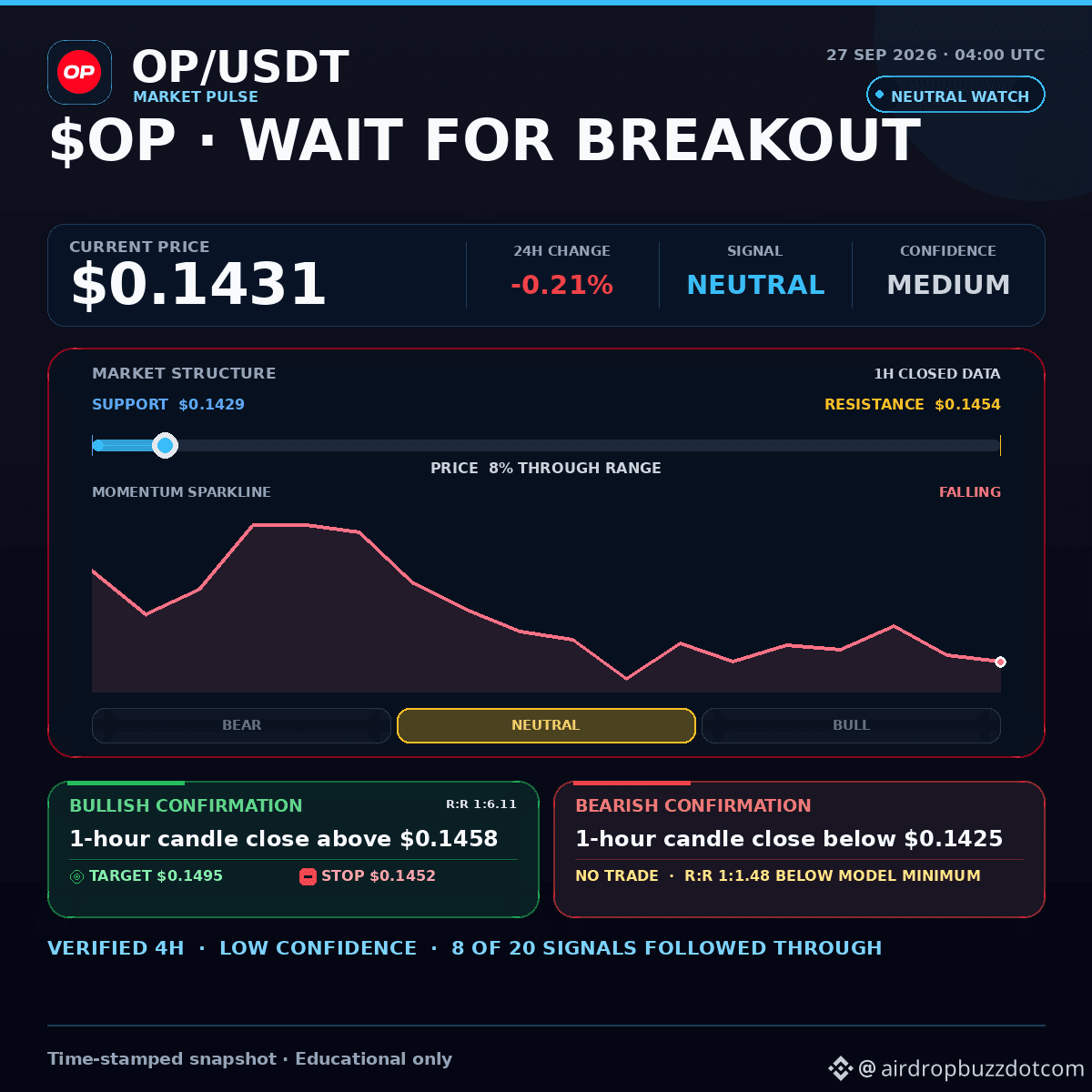
The headline is $OP price. The real story is whether the confirmation layers agree.
📊 Snapshot
• Price: $0.1431
• 24H: -0.21%
• Bias: Neutral
📈 Bull Trigger
1-hour close above $0.1458 with open interest confirmation
📉 Bear Trigger
1-hour close below $0.1425 with open interest confirmation
🎯 Signal Read
Conflicting evidence keeps this conditional, so the close matters more than predicting the direction early.
📌 Confidence
Medium · Low historical confidence · 8 of 20 directional moves were favorable
Signal Quality
- OI: Flat (-0.07%)
- 4H: Bullish | 1D: Bullish (Aligned)
- ATR filter: 0.50 ATR ($0.0008071)
- Risk/reward: 1:6.11
Bull scenario risk plan
- Entry: $0.1458
- Stop: $0.1452
- Target: $0.1495
Triggers confirm conditions rather than price targets, so always wait for the candle close.
Front-run it or wait? Reply FRONT-RUN or WAIT.
#OP #Optimism #CryptoTrading #MarketPulse
Educational only. Time-stamped market snapshot, not financial advice.
The headline is $OP price. The real story is whether the confirmation layers agree.
📊 Snapshot
• Price: $0.1431
• 24H: -0.21%
• Bias: Neutral
📈 Bull Trigger
1-hour close above $0.1458 with open interest confirmation
📉 Bear Trigger
1-hour close below $0.1425 with open interest confirmation
🎯 Signal Read
Conflicting evidence keeps this conditional, so the close matters more than predicting the direction early.
📌 Confidence
Medium · Low historical confidence · 8 of 20 directional moves were favorable
Signal Quality
- OI: Flat (-0.07%)
- 4H: Bullish | 1D: Bullish (Aligned)
- ATR filter: 0.50 ATR ($0.0008071)
- Risk/reward: 1:6.11
Bull scenario risk plan
- Entry: $0.1458
- Stop: $0.1452
- Target: $0.1495
Triggers confirm conditions rather than price targets, so always wait for the candle close.
Front-run it or wait? Reply FRONT-RUN or WAIT.
#OP #Optimism #CryptoTrading #MarketPulse
Educational only. Time-stamped market snapshot, not financial advice.
📊 Snapshot
• Price: $0.1431
• 24H: -0.21%
• Bias: Neutral
📈 Bull Trigger
1-hour close above $0.1458 with open interest confirmation
📉 Bear Trigger
1-hour close below $0.1425 with open interest confirmation
🎯 Signal Read
Conflicting evidence keeps this conditional, so the close matters more than predicting the direction early.
📌 Confidence
Medium · Low historical confidence · 8 of 20 directional moves were favorable
Signal Quality
- OI: Flat (-0.07%)
- 4H: Bullish | 1D: Bullish (Aligned)
- ATR filter: 0.50 ATR ($0.0008071)
- Risk/reward: 1:6.11
Bull scenario risk plan
- Entry: $0.1458
- Stop: $0.1452
- Target: $0.1495
Triggers confirm conditions rather than price targets, so always wait for the candle close.
Front-run it or wait? Reply FRONT-RUN or WAIT.
#OP #Optimism #CryptoTrading #MarketPulse
Educational only. Time-stamped market snapshot, not financial advice.
58
Connectez-vous pour découvrir plus de contenu
Rejoignez la communauté mondiale des adeptes de cryptomonnaies sur Binance Square
⚡️ Suviez les dernières informations importantes sur les cryptomonnaies.
💬 Jugé digne de confiance par la plus grande plateforme d’échange de cryptomonnaies au monde.
👍 Découvrez les connaissances que partagent les créateurs vérifiés.
Adresse e-mail/Nº de téléphone
Sujets d’actualité
1
#BinanceLaunchesBinanceIntelligence
721,010 vues
4,532 mentions
2
#BTCFallsBelow$84K
27,458 vues
99 mentions
3
#DubaiVARAIssuesReserveAssetAuditCircular
5,969 vues
333 mentions
4
#SECApproves3XBitcoinETF
5,529 vues
281 mentions
5
#WinklevossFilesSpotZcashETFApplication
15,123 vues
406 mentions
6
#SouthKoreaAITradeLiftsWorldcoinTo$7.41B
1,815 vues
35 mentions
7
#StrategyEstimates$4.1BIncomeTaxBenefit
1,334 vues
18 mentions
8
#IglooShutsDownAbstractBlockchain
6,137 vues
211 mentions
9
#StrategyMarketCapSurpassesRumble
45,532 vues
915 mentions
10
#StriveBuys2000BTCFor$169M
18,511 vues
161 mentions