

#institutionaladoption
institutionaladoption
1.3M vues
7,616 mentions
Populaire
Récents

·
--
⚡ Solana's ETF story is getting harder to describe as “just another altcoin trade.”...
#SOLSpotETFWeeklyInflow$188M
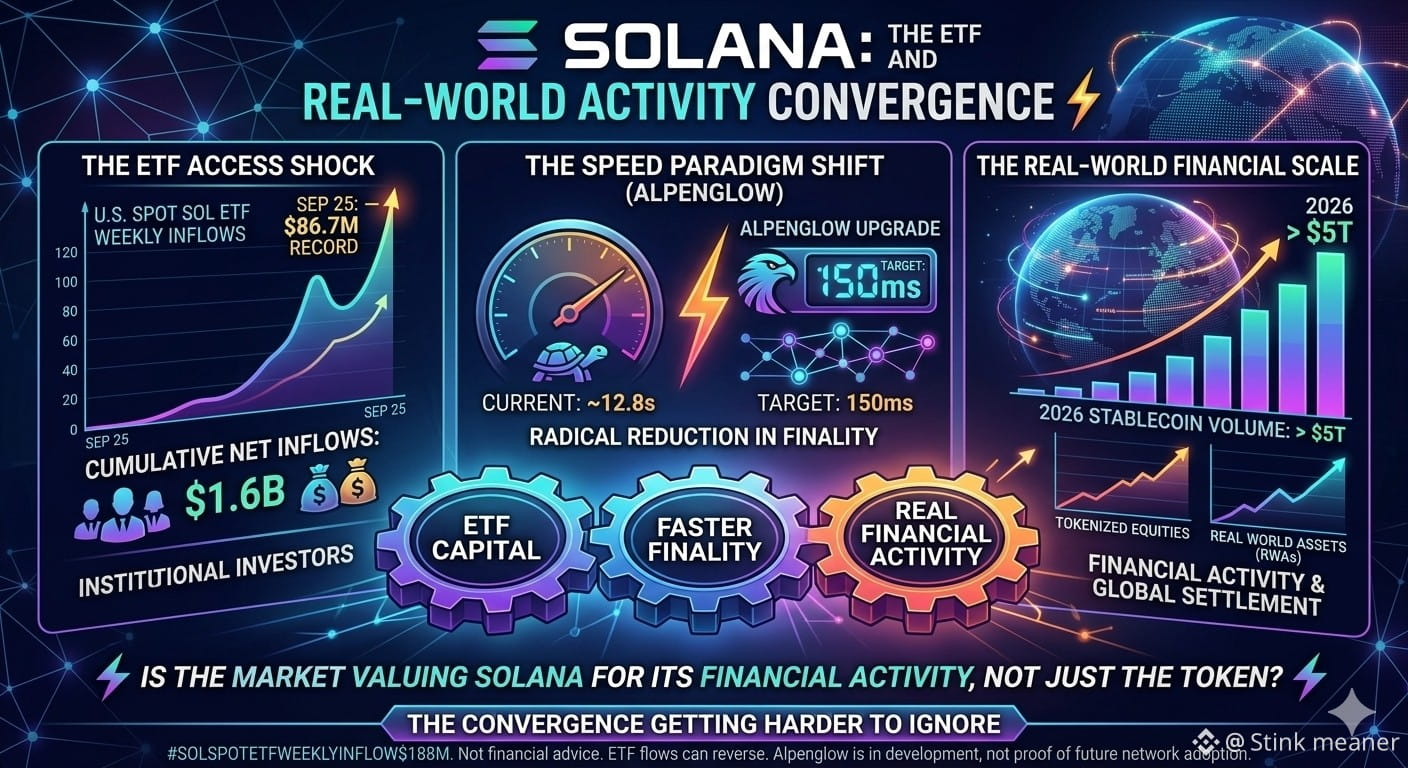
U.S. spot SOL ETFs pulled in roughly $188M last week, including a record $86.7M on Sept. 25. Cumulative net inflows are now around $1.6B.
But look at what is happening underneath the ETF flows.
Solana's next consensus upgrade, Alpenglow, targets roughly 150ms finality, down from about 12.8 seconds under the current system.
At the same time, Solana says 2026 stablecoin volume has already exceeded $5T, while tokenized equities and RWAs have moved into meaningful scale.
Put those together:
ETF access → institutional capital
Alpenglow → faster finality
stablecoins/RWAs → financial activity
The interesting question isn't simply whether investors want SOL.
Is the market beginning to value Solana for the financial activity its network can settle — not just for the token itself?
ETF inflows alone can't answer that.
But the convergence is getting harder to ignore.
Not financial advice. ETF flows can reverse, and Alpenglow is an upgrade in development rather than proof of future network adoption.
$SOL $SUPER $W
{future}(WUSDT)
{future}(SUPERUSDT)
{future}(SOLUSDT)
#InstitutionalAdoption #solana #Alpenglow #CryptoNews
⚡ Solana's ETF story is getting harder to describe as “just another altcoin trade.”...
#SOLSpotETFWeeklyInflow$188M
U.S. spot SOL ETFs pulled in roughly $188M last week, including a record $86.7M on Sept. 25. Cumulative net inflows are now around $1.6B.
But look at what is happening underneath the ETF flows.
Solana's next consensus upgrade, Alpenglow, targets roughly 150ms finality, down from about 12.8 seconds under the current system.
At the same time, Solana says 2026 stablecoin volume has already exceeded $5T, while tokenized equities and RWAs have moved into meaningful scale.
Put those together:
ETF access → institutional capital
Alpenglow → faster finality
stablecoins/RWAs → financial activity
The interesting question isn't simply whether investors want SOL.
Is the market beginning to value Solana for the financial activity its network can settle — not just for the token itself?
ETF inflows alone can't answer that.
But the convergence is getting harder to ignore.
Not financial advice. ETF flows can reverse, and Alpenglow is an upgrade in development rather than proof of future network adoption.
$SOL $SUPER $W
#InstitutionalAdoption #solana #Alpenglow #CryptoNews
#SOLSpotETFWeeklyInflow$188M
U.S. spot SOL ETFs pulled in roughly $188M last week, including a record $86.7M on Sept. 25. Cumulative net inflows are now around $1.6B.
But look at what is happening underneath the ETF flows.
Solana's next consensus upgrade, Alpenglow, targets roughly 150ms finality, down from about 12.8 seconds under the current system.
At the same time, Solana says 2026 stablecoin volume has already exceeded $5T, while tokenized equities and RWAs have moved into meaningful scale.
Put those together:
ETF access → institutional capital
Alpenglow → faster finality
stablecoins/RWAs → financial activity
The interesting question isn't simply whether investors want SOL.
Is the market beginning to value Solana for the financial activity its network can settle — not just for the token itself?
ETF inflows alone can't answer that.
But the convergence is getting harder to ignore.
Not financial advice. ETF flows can reverse, and Alpenglow is an upgrade in development rather than proof of future network adoption.
$SOL $SUPER $W
#InstitutionalAdoption #solana #Alpenglow #CryptoNews
2
497

·
--
🟢 Bullish
🚨 Major Bank Launches Institutional DeFi Fund
Wall Street giant, Global Capital Bank, just announced its new multi-billion dollar DeFi investment fund, opening doors for massive institutional capital inflow into decentralized finance protocols.
📊 Market Impact: Extremely bullish for established DeFi tokens and the broader crypto market. Expect a wave of capital to follow this lead. Keep an eye on blue-chip DeFi assets!
#DeFi #InstitutionalAdoption
🟢 Bullish
🚨 Major Bank Launches Institutional DeFi Fund
Wall Street giant, Global Capital Bank, just announced its new multi-billion dollar DeFi investment fund, opening doors for massive institutional capital inflow into decentralized finance protocols.
📊 Market Impact: Extremely bullish for established DeFi tokens and the broader crypto market. Expect a wave of capital to follow this lead. Keep an eye on blue-chip DeFi assets!
#DeFi #InstitutionalAdoption
🚨 Major Bank Launches Institutional DeFi Fund
Wall Street giant, Global Capital Bank, just announced its new multi-billion dollar DeFi investment fund, opening doors for massive institutional capital inflow into decentralized finance protocols.
📊 Market Impact: Extremely bullish for established DeFi tokens and the broader crypto market. Expect a wave of capital to follow this lead. Keep an eye on blue-chip DeFi assets!
#DeFi #InstitutionalAdoption
59

·
--
中文版:
Strategy又加仓了!1,665个比特币花了1.43亿美元,持仓总量已达847,666个BTC。他们卖掉MSTR股票换来更多比特币,这波操作看涨啊!大佬们还在继续囤币,你跟不跟?$BTC #比特币 #机构增持
English version:
Strategy's stacking more Bitcoin! Just picked up 1,665 BTC for $143M, bringing total holdings to 847,666 BTC. They're selling MSTR shares to accumulate more Bitcoin - the smart money keeps buying! Are you stacking too? $BTC #Bitcoin #InstitutionalAdoption
中文版:
Strategy又加仓了!1,665个比特币花了1.43亿美元,持仓总量已达847,666个BTC。他们卖掉MSTR股票换来更多比特币,这波操作看涨啊!大佬们还在继续囤币,你跟不跟?$BTC #比特币 #机构增持
English version:
Strategy's stacking more Bitcoin! Just picked up 1,665 BTC for $143M, bringing total holdings to 847,666 BTC. They're selling MSTR shares to accumulate more Bitcoin - the smart money keeps buying! Are you stacking too? $BTC #Bitcoin #InstitutionalAdoption
Strategy又加仓了!1,665个比特币花了1.43亿美元,持仓总量已达847,666个BTC。他们卖掉MSTR股票换来更多比特币,这波操作看涨啊!大佬们还在继续囤币,你跟不跟?$BTC #比特币 #机构增持
English version:
Strategy's stacking more Bitcoin! Just picked up 1,665 BTC for $143M, bringing total holdings to 847,666 BTC. They're selling MSTR shares to accumulate more Bitcoin - the smart money keeps buying! Are you stacking too? $BTC #Bitcoin #InstitutionalAdoption
1
98

·
--
The ETF didn't just bring new buyers to $BTC and $ETH. It changed who holds the supply — and that matters more than the flows themselves.
Coins on exchanges sit with reactive hands: traders who sell into strength, capitulate into weakness, and chase narratives. Coins in ETF warehouses sit with structurally passive hands. The custodian has no opinions. It doesn't chase yield, doesn't rotate into whatever is trending, doesn't panic. Shares get created and redeemed only when flows demand it.
That creates a quiet asymmetry: as the passive warehouse grows, the free float that actually trades shrinks. A smaller active float means each marginal dollar of demand moves price more. The same billion-dollar inflow hits differently when a growing share of supply sits in a structure that never sells into rallies.
Second-order effect most people miss: ETFs turned patient holders into carry traders. Some institutions now warehouse spot exposure and sell futures against it, capturing the basis instead of the trend. Latent supply becomes active hedging pressure.
So stop reading ETF flows as a leading signal. Flows follow price. Watch net creations as confirmation of a trend already underway — and watch the shrinking active float as the real structural story.
$BTC $ETH $SOL
#InstitutionalAdoption #ETF #MarketStructure #CryptoInsight #BTC
The ETF didn't just bring new buyers to $BTC and $ETH . It changed who holds the supply — and that matters more than the flows themselves.
Coins on exchanges sit with reactive hands: traders who sell into strength, capitulate into weakness, and chase narratives. Coins in ETF warehouses sit with structurally passive hands. The custodian has no opinions. It doesn't chase yield, doesn't rotate into whatever is trending, doesn't panic. Shares get created and redeemed only when flows demand it.
That creates a quiet asymmetry: as the passive warehouse grows, the free float that actually trades shrinks. A smaller active float means each marginal dollar of demand moves price more. The same billion-dollar inflow hits differently when a growing share of supply sits in a structure that never sells into rallies.
Second-order effect most people miss: ETFs turned patient holders into carry traders. Some institutions now warehouse spot exposure and sell futures against it, capturing the basis instead of the trend. Latent supply becomes active hedging pressure.
So stop reading ETF flows as a leading signal. Flows follow price. Watch net creations as confirmation of a trend already underway — and watch the shrinking active float as the real structural story.
$BTC $ETH $SOL
#InstitutionalAdoption #ETF #MarketStructure #CryptoInsight #BTC
Coins on exchanges sit with reactive hands: traders who sell into strength, capitulate into weakness, and chase narratives. Coins in ETF warehouses sit with structurally passive hands. The custodian has no opinions. It doesn't chase yield, doesn't rotate into whatever is trending, doesn't panic. Shares get created and redeemed only when flows demand it.
That creates a quiet asymmetry: as the passive warehouse grows, the free float that actually trades shrinks. A smaller active float means each marginal dollar of demand moves price more. The same billion-dollar inflow hits differently when a growing share of supply sits in a structure that never sells into rallies.
Second-order effect most people miss: ETFs turned patient holders into carry traders. Some institutions now warehouse spot exposure and sell futures against it, capturing the basis instead of the trend. Latent supply becomes active hedging pressure.
So stop reading ETF flows as a leading signal. Flows follow price. Watch net creations as confirmation of a trend already underway — and watch the shrinking active float as the real structural story.
$BTC $ETH $SOL
#InstitutionalAdoption #ETF #MarketStructure #CryptoInsight #BTC
104

🏦 RAIFFEISEN EXPANDS DIGITAL ASSET RAILS TO 18M USERS ACROSS EUROPE VIA $BTC INFRASTRUCTURE ⚡
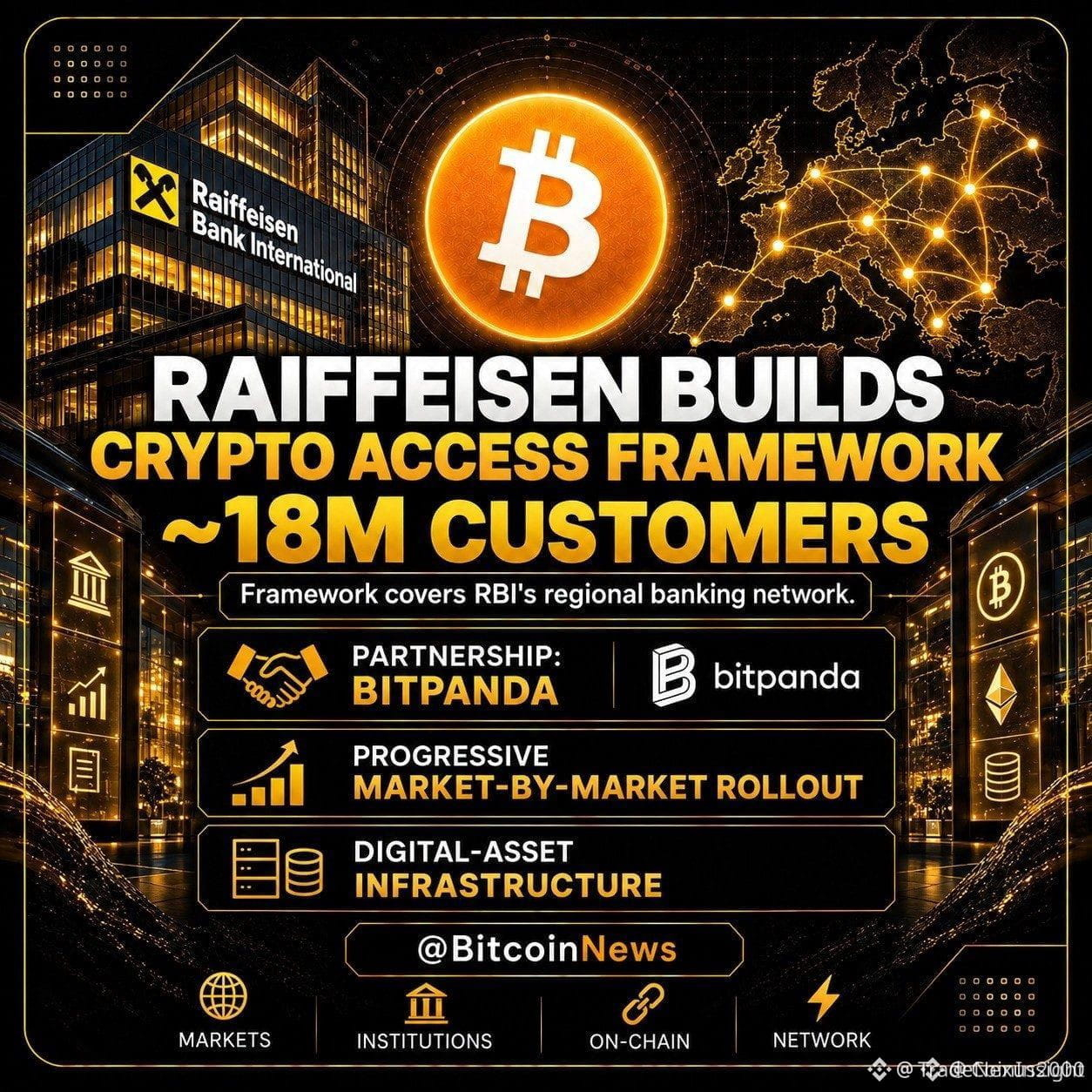
Institutional distribution infrastructure just logged another major structural upgrade across Central and Eastern Europe. Raiffeisen Bank International is embedding crypto access directly into its traditional banking framework for up to 18 million regional clients through Bitpanda Enterprise. 🏦
Rather than driving capital through external exchange ramps, this phased rollout embeds $BTC exposure straight into core banking rails. Lowering friction at the distribution layer historically precedes structural demand shifts as traditional liquidity channels open up. 📊
While deployment remains subject to localized regulatory frameworks, the architectural foundation for mainstream capital integration is officially live. 💬 Will bank-native integration become the dominant gateway for the next cycle of institutional adoption? 👇
⚠️ Not financial advice. Always manage your risk. 🛡️
🏷️ #BTC #Bitcoin #InstitutionalAdoption #Crypto
🦈 🎯
🏦 RAIFFEISEN EXPANDS DIGITAL ASSET RAILS TO 18M USERS ACROSS EUROPE VIA $BTC INFRASTRUCTURE ⚡
Institutional distribution infrastructure just logged another major structural upgrade across Central and Eastern Europe. Raiffeisen Bank International is embedding crypto access directly into its traditional banking framework for up to 18 million regional clients through Bitpanda Enterprise. 🏦
Rather than driving capital through external exchange ramps, this phased rollout embeds $BTC exposure straight into core banking rails. Lowering friction at the distribution layer historically precedes structural demand shifts as traditional liquidity channels open up. 📊
While deployment remains subject to localized regulatory frameworks, the architectural foundation for mainstream capital integration is officially live. 💬 Will bank-native integration become the dominant gateway for the next cycle of institutional adoption? 👇
⚠️ Not financial advice. Always manage your risk. 🛡️
🏷️ #BTC #Bitcoin #InstitutionalAdoption #Crypto
🦈 🎯
Institutional distribution infrastructure just logged another major structural upgrade across Central and Eastern Europe. Raiffeisen Bank International is embedding crypto access directly into its traditional banking framework for up to 18 million regional clients through Bitpanda Enterprise. 🏦
Rather than driving capital through external exchange ramps, this phased rollout embeds $BTC exposure straight into core banking rails. Lowering friction at the distribution layer historically precedes structural demand shifts as traditional liquidity channels open up. 📊
While deployment remains subject to localized regulatory frameworks, the architectural foundation for mainstream capital integration is officially live. 💬 Will bank-native integration become the dominant gateway for the next cycle of institutional adoption? 👇
⚠️ Not financial advice. Always manage your risk. 🛡️
🏷️ #BTC #Bitcoin #InstitutionalAdoption #Crypto
🦈 🎯
18

Article
Próximo Halving.Expectativas Institucionais, Contagem Regressiva do Halving, Medo e Ganância, e o Caminho para 2027
Bitcoin com 61% do Halving Concluído: Quando as Instituições Começam a "Ganhar Ganância", Você Está com Medo ou Seguindo a Multidão?
一、O Próximo Halving: O Tempo Já Está Claro
Segundo dados da plataforma de análise on-chain OKLink, o próximo halving do Bitcoin está previsto para ocorrer em 13 de abril de 2028. Atualmente, o progresso já atingiu 61%, faltando 109.012 blocos para o halving.
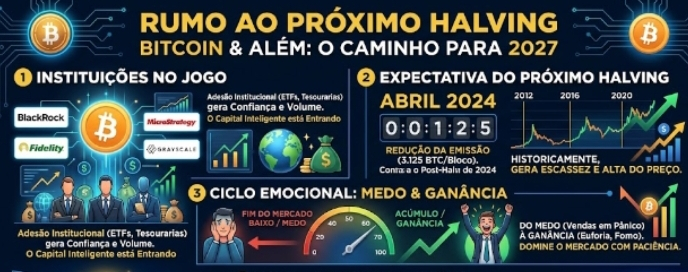
Após o halving, a recompensa por bloco cairá dos atuais 3,125 BTC para 1,5625 BTC. Este será o quinto halving da história do Bitcoin e mais um marco crucial em seu caminho de oferta fixa limitada a 21 milhões de unidades.
A avaliação do CEO da Coinbase, Brian Armstrong, é de que o preço do Bitcoin geralmente se antecipa ao halving: "Tendemos a ver um rali antes do halving", e ele acredita que "os próximos 1 a 2 anos serão um bom período para o Bitcoin".
二、O Que as Instituições Estão Fazendo: Não é Observar, é Alocar
O "Ponto de Ancoragem de Longo Prazo" das Finanças Tradicionais
O Standard Chartered mantém sua previsão de 500 mil dólares para o Bitcoin em 2028, segundo Geoffrey Kendrick, chefe global de pesquisa de ativos digitais. A lógica central é que os fundos soberanos estão acelerando suas alocações em Bitcoin. O fundo soberano de Abu Dhabi já detém o equivalente a cerca de 4.700 Bitcoins no ETF IBIT da BlackRock, e o banco central tcheco também está considerando alocar 5% de suas reservas de 140 bilhões de euros em Bitcoin. Kendrick acredita que, à medida que as barreiras de entrada institucionais diminuem e a volatilidade cai, mais portfólios institucionais migrarão de uma posição de "subalocação" para uma "alocação ótima".
A VanEck, por meio de Matthew Sigel, chefe de pesquisa de ativos digitais, oferece uma janela temporal mais específica: ele recomenda que os clientes montem suas posições antes de outubro de 2026, e afirma claramente que "se o Bitcoin não superar sua máxima histórica antes do primeiro trimestre de 2028, será necessário repensar toda a lógica".
Matt Hougan, CIO da Bitwise, aponta na mesma direção, antes do halving de 2028: meta de preço do Bitcoin de pelo menos 250 mil dólares.
Mas as Vozes Institucionais Não São Unânimes
O Standard Chartered, no final de 2025, chegou a revisar para baixo suas previsões de curto prazo, cortando a meta para o final de 2026 de 300 mil para 150 mil dólares. O motivo: as compras de tesouraria corporativa (como o modelo DAT da MicroStrategy) estagnaram, o prêmio de mNAV desapareceu, e o Bitcoin agora depende de uma única perna: os ETFs. O banco chegou a declarar explicitamente que "o ciclo de halving de quatro anos morreu", argumentando que o preço é mais impulsionado pelo fluxo de ETFs do que pelo choque de oferta.
Essa divergência em si já diz muito: as instituições são otimistas na direção, mas têm divergências reais sobre o ritmo e a magnitude.
三、Medo e Ganância: O Termômetro do Sentimento de Mercado
Segundo o índice de Medo e Ganância de Criptomoedas da CoinMarketCap, em 23 de setembro de 2026, o índice era 74, na zona de "Ganância", uma queda de 4 pontos em relação ao dia anterior.
O contexto desse índice é: o Bitcoin acabou de passar por um rali forte, recuperando-se de menos de 60 mil dólares em junho para acima de 86 mil dólares, com liquidações de curto prazo atingindo 648 milhões de dólares, e o sentimento de FOMO no nível mais alto dos últimos dois anos.
O que isso significa?
· Zona de ganância (74) não significa necessariamente que o mercado atingiu o topo, mas indica claramente que o otimismo já domina. Historicamente, quando a grande maioria dos traders fica simultaneamente extremamente otimista, o mercado tende a entrar em uma fase de digestão.
· Ao mesmo tempo, os ETFs de Bitcoin à vista registraram entrada líquida diária superior a 1 bilhão de dólares, o maior fluxo diário desde outubro de 2025. O IBIT da BlackRock liderou com 381 milhões de dólares, enquanto ARKB e FBTC também superaram 200 milhões de dólares cada.
· O custo médio de compra dos detentores de ETF é de aproximadamente 81.722 dólares, e o preço atual já os colocou de volta na zona de lucro.
Instituições comprando, varejo em FOMO, índice na zona de ganância. Essa combinação por si só merece cautela, e também merece reflexão.
四、2027: Onde Pode Estar a Onda Principal?
Sobre as expectativas para 2027, o mercado apresenta diferentes visões:
Otimistas (perspectiva do ciclo histórico): Uma análise da Nasdaq aponta que o ciclo de quatro anos do Bitcoin nunca teve dois anos consecutivos de queda. Após 2025 ter registrado retorno negativo, 2026 atualmente cai menos de 2%, e "um ano de retorno positivo está logo ali". Se o ciclo de quatro anos continuar válido, 2027 deveria ser um ano de aceleração do bull market antes do halving, possivelmente se aproximando ou atingindo uma nova máxima histórica no final do ano.
Pragmáticos (perspectiva das restrições macro): Algumas análises argumentam que o ambiente atual de taxas de juros apresenta rendimento real positivo, completamente diferente das taxas reais profundamente negativas do bull market de 2021. Petróleo caro, pressão inflacionária e expectativas de alta de juros estão todos pressionando ativos sem rendimento. Portanto, a tendência é acreditar que o restante de 2026 oscilará entre 70 e 90 mil dólares, e a verdadeira onda principal pode ocorrer em 2027, desde que o petróleo recue e o dólar enfraqueça.
Intermediários (Hougan, da Bitwise): Sua declaração é direta — "2027 será um ano inacreditável". Mas ele também observa que o mercado está atualmente no quarto ano de um "novo inverno cripto", com sensação semelhante à de 2018 e 2022, e é preciso primeiro superar esse período de consolidação.
五、Considerações Finais
Halving com 61% de progresso, índice de Medo e Ganância em 74, fluxo de ETFs retornando, instituições divergindo entre metas de 250 mil e 500 mil dólares para 2028.
Quando a ganância domina, faça a si mesmo uma pergunta: Você está seguindo a emoção ou seguindo a lógica?
Se a onda principal de 2027 chegar, ela não será a onda principal de todos. Ela pertence àqueles que mantêm posição no medo e mantêm a clareza na ganância.
Aviso legal: O conteúdo acima é apenas um$a compilação e análise de informações de mercado, não constituindo qualquer recomendação de investimento. O mercado de criptomoedas é altamente volátil; faça julgamentos independentes e assuma os riscos por conta própria.
#bitcoinhakving oin #BTC☀️ #Halving #InstitutionalAdoption #MedoEGanância #2027. $BTC
Próximo Halving.
Expectativas Institucionais, Contagem Regressiva do Halving, Medo e Ganância, e o Caminho para 2027
Bitcoin com 61% do Halving Concluído: Quando as Instituições Começam a "Ganhar Ganância", Você Está com Medo ou Seguindo a Multidão?
一、O Próximo Halving: O Tempo Já Está Claro
Segundo dados da plataforma de análise on-chain OKLink, o próximo halving do Bitcoin está previsto para ocorrer em 13 de abril de 2028. Atualmente, o progresso já atingiu 61%, faltando 109.012 blocos para o halving.
Após o halving, a recompensa por bloco cairá dos atuais 3,125 BTC para 1,5625 BTC. Este será o quinto halving da história do Bitcoin e mais um marco crucial em seu caminho de oferta fixa limitada a 21 milhões de unidades.
A avaliação do CEO da Coinbase, Brian Armstrong, é de que o preço do Bitcoin geralmente se antecipa ao halving: "Tendemos a ver um rali antes do halving", e ele acredita que "os próximos 1 a 2 anos serão um bom período para o Bitcoin".
二、O Que as Instituições Estão Fazendo: Não é Observar, é Alocar
O "Ponto de Ancoragem de Longo Prazo" das Finanças Tradicionais
O Standard Chartered mantém sua previsão de 500 mil dólares para o Bitcoin em 2028, segundo Geoffrey Kendrick, chefe global de pesquisa de ativos digitais. A lógica central é que os fundos soberanos estão acelerando suas alocações em Bitcoin. O fundo soberano de Abu Dhabi já detém o equivalente a cerca de 4.700 Bitcoins no ETF IBIT da BlackRock, e o banco central tcheco também está considerando alocar 5% de suas reservas de 140 bilhões de euros em Bitcoin. Kendrick acredita que, à medida que as barreiras de entrada institucionais diminuem e a volatilidade cai, mais portfólios institucionais migrarão de uma posição de "subalocação" para uma "alocação ótima".
A VanEck, por meio de Matthew Sigel, chefe de pesquisa de ativos digitais, oferece uma janela temporal mais específica: ele recomenda que os clientes montem suas posições antes de outubro de 2026, e afirma claramente que "se o Bitcoin não superar sua máxima histórica antes do primeiro trimestre de 2028, será necessário repensar toda a lógica".
Matt Hougan, CIO da Bitwise, aponta na mesma direção, antes do halving de 2028: meta de preço do Bitcoin de pelo menos 250 mil dólares.
Mas as Vozes Institucionais Não São Unânimes
O Standard Chartered, no final de 2025, chegou a revisar para baixo suas previsões de curto prazo, cortando a meta para o final de 2026 de 300 mil para 150 mil dólares. O motivo: as compras de tesouraria corporativa (como o modelo DAT da MicroStrategy) estagnaram, o prêmio de mNAV desapareceu, e o Bitcoin agora depende de uma única perna: os ETFs. O banco chegou a declarar explicitamente que "o ciclo de halving de quatro anos morreu", argumentando que o preço é mais impulsionado pelo fluxo de ETFs do que pelo choque de oferta.
Essa divergência em si já diz muito: as instituições são otimistas na direção, mas têm divergências reais sobre o ritmo e a magnitude.
三、Medo e Ganância: O Termômetro do Sentimento de Mercado
Segundo o índice de Medo e Ganância de Criptomoedas da CoinMarketCap, em 23 de setembro de 2026, o índice era 74, na zona de "Ganância", uma queda de 4 pontos em relação ao dia anterior.
O contexto desse índice é: o Bitcoin acabou de passar por um rali forte, recuperando-se de menos de 60 mil dólares em junho para acima de 86 mil dólares, com liquidações de curto prazo atingindo 648 milhões de dólares, e o sentimento de FOMO no nível mais alto dos últimos dois anos.
O que isso significa?
· Zona de ganância (74) não significa necessariamente que o mercado atingiu o topo, mas indica claramente que o otimismo já domina. Historicamente, quando a grande maioria dos traders fica simultaneamente extremamente otimista, o mercado tende a entrar em uma fase de digestão.
· Ao mesmo tempo, os ETFs de Bitcoin à vista registraram entrada líquida diária superior a 1 bilhão de dólares, o maior fluxo diário desde outubro de 2025. O IBIT da BlackRock liderou com 381 milhões de dólares, enquanto ARKB e FBTC também superaram 200 milhões de dólares cada.
· O custo médio de compra dos detentores de ETF é de aproximadamente 81.722 dólares, e o preço atual já os colocou de volta na zona de lucro.
Instituições comprando, varejo em FOMO, índice na zona de ganância. Essa combinação por si só merece cautela, e também merece reflexão.
四、2027: Onde Pode Estar a Onda Principal?
Sobre as expectativas para 2027, o mercado apresenta diferentes visões:
Otimistas (perspectiva do ciclo histórico): Uma análise da Nasdaq aponta que o ciclo de quatro anos do Bitcoin nunca teve dois anos consecutivos de queda. Após 2025 ter registrado retorno negativo, 2026 atualmente cai menos de 2%, e "um ano de retorno positivo está logo ali". Se o ciclo de quatro anos continuar válido, 2027 deveria ser um ano de aceleração do bull market antes do halving, possivelmente se aproximando ou atingindo uma nova máxima histórica no final do ano.
Pragmáticos (perspectiva das restrições macro): Algumas análises argumentam que o ambiente atual de taxas de juros apresenta rendimento real positivo, completamente diferente das taxas reais profundamente negativas do bull market de 2021. Petróleo caro, pressão inflacionária e expectativas de alta de juros estão todos pressionando ativos sem rendimento. Portanto, a tendência é acreditar que o restante de 2026 oscilará entre 70 e 90 mil dólares, e a verdadeira onda principal pode ocorrer em 2027, desde que o petróleo recue e o dólar enfraqueça.
Intermediários (Hougan, da Bitwise): Sua declaração é direta — "2027 será um ano inacreditável". Mas ele também observa que o mercado está atualmente no quarto ano de um "novo inverno cripto", com sensação semelhante à de 2018 e 2022, e é preciso primeiro superar esse período de consolidação.
五、Considerações Finais
Halving com 61% de progresso, índice de Medo e Ganância em 74, fluxo de ETFs retornando, instituições divergindo entre metas de 250 mil e 500 mil dólares para 2028.
Quando a ganância domina, faça a si mesmo uma pergunta: Você está seguindo a emoção ou seguindo a lógica?
Se a onda principal de 2027 chegar, ela não será a onda principal de todos. Ela pertence àqueles que mantêm posição no medo e mantêm a clareza na ganância.
Aviso legal: O conteúdo acima é apenas um$a compilação e análise de informações de mercado, não constituindo qualquer recomendação de investimento. O mercado de criptomoedas é altamente volátil; faça julgamentos independentes e assuma os riscos por conta própria.
#bitcoinhakving oin #BTC☀️ #Halving #InstitutionalAdoption #MedoEGanância #2027. $BTC
Bitcoin com 61% do Halving Concluído: Quando as Instituições Começam a "Ganhar Ganância", Você Está com Medo ou Seguindo a Multidão?
一、O Próximo Halving: O Tempo Já Está Claro
Segundo dados da plataforma de análise on-chain OKLink, o próximo halving do Bitcoin está previsto para ocorrer em 13 de abril de 2028. Atualmente, o progresso já atingiu 61%, faltando 109.012 blocos para o halving.
Após o halving, a recompensa por bloco cairá dos atuais 3,125 BTC para 1,5625 BTC. Este será o quinto halving da história do Bitcoin e mais um marco crucial em seu caminho de oferta fixa limitada a 21 milhões de unidades.
A avaliação do CEO da Coinbase, Brian Armstrong, é de que o preço do Bitcoin geralmente se antecipa ao halving: "Tendemos a ver um rali antes do halving", e ele acredita que "os próximos 1 a 2 anos serão um bom período para o Bitcoin".
二、O Que as Instituições Estão Fazendo: Não é Observar, é Alocar
O "Ponto de Ancoragem de Longo Prazo" das Finanças Tradicionais
O Standard Chartered mantém sua previsão de 500 mil dólares para o Bitcoin em 2028, segundo Geoffrey Kendrick, chefe global de pesquisa de ativos digitais. A lógica central é que os fundos soberanos estão acelerando suas alocações em Bitcoin. O fundo soberano de Abu Dhabi já detém o equivalente a cerca de 4.700 Bitcoins no ETF IBIT da BlackRock, e o banco central tcheco também está considerando alocar 5% de suas reservas de 140 bilhões de euros em Bitcoin. Kendrick acredita que, à medida que as barreiras de entrada institucionais diminuem e a volatilidade cai, mais portfólios institucionais migrarão de uma posição de "subalocação" para uma "alocação ótima".
A VanEck, por meio de Matthew Sigel, chefe de pesquisa de ativos digitais, oferece uma janela temporal mais específica: ele recomenda que os clientes montem suas posições antes de outubro de 2026, e afirma claramente que "se o Bitcoin não superar sua máxima histórica antes do primeiro trimestre de 2028, será necessário repensar toda a lógica".
Matt Hougan, CIO da Bitwise, aponta na mesma direção, antes do halving de 2028: meta de preço do Bitcoin de pelo menos 250 mil dólares.
Mas as Vozes Institucionais Não São Unânimes
O Standard Chartered, no final de 2025, chegou a revisar para baixo suas previsões de curto prazo, cortando a meta para o final de 2026 de 300 mil para 150 mil dólares. O motivo: as compras de tesouraria corporativa (como o modelo DAT da MicroStrategy) estagnaram, o prêmio de mNAV desapareceu, e o Bitcoin agora depende de uma única perna: os ETFs. O banco chegou a declarar explicitamente que "o ciclo de halving de quatro anos morreu", argumentando que o preço é mais impulsionado pelo fluxo de ETFs do que pelo choque de oferta.
Essa divergência em si já diz muito: as instituições são otimistas na direção, mas têm divergências reais sobre o ritmo e a magnitude.
三、Medo e Ganância: O Termômetro do Sentimento de Mercado
Segundo o índice de Medo e Ganância de Criptomoedas da CoinMarketCap, em 23 de setembro de 2026, o índice era 74, na zona de "Ganância", uma queda de 4 pontos em relação ao dia anterior.
O contexto desse índice é: o Bitcoin acabou de passar por um rali forte, recuperando-se de menos de 60 mil dólares em junho para acima de 86 mil dólares, com liquidações de curto prazo atingindo 648 milhões de dólares, e o sentimento de FOMO no nível mais alto dos últimos dois anos.
O que isso significa?
· Zona de ganância (74) não significa necessariamente que o mercado atingiu o topo, mas indica claramente que o otimismo já domina. Historicamente, quando a grande maioria dos traders fica simultaneamente extremamente otimista, o mercado tende a entrar em uma fase de digestão.
· Ao mesmo tempo, os ETFs de Bitcoin à vista registraram entrada líquida diária superior a 1 bilhão de dólares, o maior fluxo diário desde outubro de 2025. O IBIT da BlackRock liderou com 381 milhões de dólares, enquanto ARKB e FBTC também superaram 200 milhões de dólares cada.
· O custo médio de compra dos detentores de ETF é de aproximadamente 81.722 dólares, e o preço atual já os colocou de volta na zona de lucro.
Instituições comprando, varejo em FOMO, índice na zona de ganância. Essa combinação por si só merece cautela, e também merece reflexão.
四、2027: Onde Pode Estar a Onda Principal?
Sobre as expectativas para 2027, o mercado apresenta diferentes visões:
Otimistas (perspectiva do ciclo histórico): Uma análise da Nasdaq aponta que o ciclo de quatro anos do Bitcoin nunca teve dois anos consecutivos de queda. Após 2025 ter registrado retorno negativo, 2026 atualmente cai menos de 2%, e "um ano de retorno positivo está logo ali". Se o ciclo de quatro anos continuar válido, 2027 deveria ser um ano de aceleração do bull market antes do halving, possivelmente se aproximando ou atingindo uma nova máxima histórica no final do ano.
Pragmáticos (perspectiva das restrições macro): Algumas análises argumentam que o ambiente atual de taxas de juros apresenta rendimento real positivo, completamente diferente das taxas reais profundamente negativas do bull market de 2021. Petróleo caro, pressão inflacionária e expectativas de alta de juros estão todos pressionando ativos sem rendimento. Portanto, a tendência é acreditar que o restante de 2026 oscilará entre 70 e 90 mil dólares, e a verdadeira onda principal pode ocorrer em 2027, desde que o petróleo recue e o dólar enfraqueça.
Intermediários (Hougan, da Bitwise): Sua declaração é direta — "2027 será um ano inacreditável". Mas ele também observa que o mercado está atualmente no quarto ano de um "novo inverno cripto", com sensação semelhante à de 2018 e 2022, e é preciso primeiro superar esse período de consolidação.
五、Considerações Finais
Halving com 61% de progresso, índice de Medo e Ganância em 74, fluxo de ETFs retornando, instituições divergindo entre metas de 250 mil e 500 mil dólares para 2028.
Quando a ganância domina, faça a si mesmo uma pergunta: Você está seguindo a emoção ou seguindo a lógica?
Se a onda principal de 2027 chegar, ela não será a onda principal de todos. Ela pertence àqueles que mantêm posição no medo e mantêm a clareza na ganância.
Aviso legal: O conteúdo acima é apenas um$a compilação e análise de informações de mercado, não constituindo qualquer recomendação de investimento. O mercado de criptomoedas é altamente volátil; faça julgamentos independentes e assuma os riscos por conta própria.
#bitcoinhakving oin #BTC☀️ #Halving #InstitutionalAdoption #MedoEGanância #2027. $BTC
1
1.1k

Article
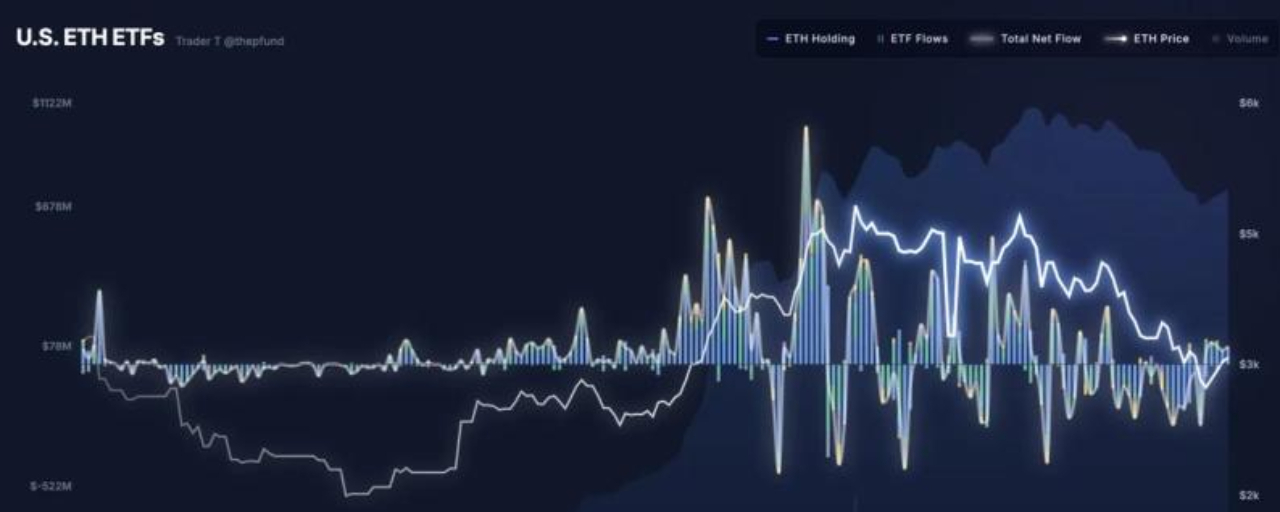
$Ethereum ETF Demand Accelerates — ETH Gets Fresh Institutional Attention$ETH Ethereum spot ETFs recorded $105M in net inflows for the fourth consecutive day, bringing total ETF assets to about $17.5B. BlackRock’s ETHA and Fidelity’s FETH accounted for major portions of the latest inflows.Meanwhile, $ETH recently broke above the $2,661 resistance area after consolidating, with Reuters noting the breakout from a bull-flag pattern.Key story: institutional ETF demand is becoming an increasingly important factor for Ethereum’s market structure. $ETH #Ethereum #InstitutionalAdoption #CryptoNews #AishCryptoTraders $
{etf_us}(ETFT.ETF)
{spot}(ETHUSDT)
$Ethereum ETF Demand Accelerates — ETH Gets Fresh Institutional Attention
$ETH Ethereum spot ETFs recorded $105M in net inflows for the fourth consecutive day, bringing total ETF assets to about $17.5B. BlackRock’s ETHA and Fidelity’s FETH accounted for major portions of the latest inflows.Meanwhile, $ETH recently broke above the $2,661 resistance area after consolidating, with Reuters noting the breakout from a bull-flag pattern.Key story: institutional ETF demand is becoming an increasingly important factor for Ethereum’s market structure. $ETH #Ethereum #InstitutionalAdoption #CryptoNews #AishCryptoTraders $
1
74

Bitwise reports institutions are maintaining 1% to 2% crypto allocations, showing zero reduction in exposure even during a massive 50% market drawdown.
#InstitutionalAdoption #BitwiseInsights
Bitwise reports institutions are maintaining 1% to 2% crypto allocations, showing zero reduction in exposure even during a massive 50% market drawdown.
#InstitutionalAdoption #BitwiseInsights
#InstitutionalAdoption #BitwiseInsights
26

·
--
🚨 $BTC SET TO BENEFIT FROM RAFFEISEN'S EU BANKING PUSH 🦈
Raiffeisen International, wielding $234 bn in assets, is rolling out crypto trading services through Bitpanda to banks across 11 European markets. This move injects smart‑money liquidity into the continent’s banking corridors, creating a fresh conduit for institutional flow. 🦈
For $BTC , broader retail access translates into heightened order‑book depth and a measurable uptick in volume on top‑tier exchanges, tightening spreads and sharpening price discovery. 📊
The expanded network may subtly rebalance supply‑demand dynamics, nudging BTC into a modest bullish bias as new capital streams in. 🌊
💬 How will this institutional bridge reshape BTC’s price dynamics in the coming weeks?
⚠️ Not financial advice. Always manage your risk. 🛡️
🏷️ #BTC #InstitutionalAdoption #CryptoBanking #EU
🚀 🔥
🚨 $BTC SET TO BENEFIT FROM RAFFEISEN'S EU BANKING PUSH 🦈
Raiffeisen International, wielding $234 bn in assets, is rolling out crypto trading services through Bitpanda to banks across 11 European markets. This move injects smart‑money liquidity into the continent’s banking corridors, creating a fresh conduit for institutional flow. 🦈
For $BTC , broader retail access translates into heightened order‑book depth and a measurable uptick in volume on top‑tier exchanges, tightening spreads and sharpening price discovery. 📊
The expanded network may subtly rebalance supply‑demand dynamics, nudging BTC into a modest bullish bias as new capital streams in. 🌊
💬 How will this institutional bridge reshape BTC’s price dynamics in the coming weeks?
⚠️ Not financial advice. Always manage your risk. 🛡️
🏷️ #BTC #InstitutionalAdoption #CryptoBanking #EU
🚀 🔥
Raiffeisen International, wielding $234 bn in assets, is rolling out crypto trading services through Bitpanda to banks across 11 European markets. This move injects smart‑money liquidity into the continent’s banking corridors, creating a fresh conduit for institutional flow. 🦈
For $BTC , broader retail access translates into heightened order‑book depth and a measurable uptick in volume on top‑tier exchanges, tightening spreads and sharpening price discovery. 📊
The expanded network may subtly rebalance supply‑demand dynamics, nudging BTC into a modest bullish bias as new capital streams in. 🌊
💬 How will this institutional bridge reshape BTC’s price dynamics in the coming weeks?
⚠️ Not financial advice. Always manage your risk. 🛡️
🏷️ #BTC #InstitutionalAdoption #CryptoBanking #EU
🚀 🔥

10

·
--
🔥 XRP — Institutional Attention Is Growing
$XRP is getting increasing attention from major financial players. 👀🐋
Reported institutional positions include Goldman Sachs, Jane Street Group, Millennium Management and Marex Group.
Public companies are also building XRP treasury exposure, with Evernorth Holdings currently reporting a large XRP position.
With institutional interest + growing XRP adoption, $XRP is definitely a coin worth keeping on the watchlist. 📈⚡
Watch the levels. Manage risk. DYOR.
#InstitutionalCrypto #XRPArmy #bitcoin #InstitutionalAdoption
{future}(XRPUSDT)
🔥 XRP — Institutional Attention Is Growing
$XRP is getting increasing attention from major financial players. 👀🐋
Reported institutional positions include Goldman Sachs, Jane Street Group, Millennium Management and Marex Group.
Public companies are also building XRP treasury exposure, with Evernorth Holdings currently reporting a large XRP position.
With institutional interest + growing XRP adoption, $XRP is definitely a coin worth keeping on the watchlist. 📈⚡
Watch the levels. Manage risk. DYOR.
#InstitutionalCrypto #XRPArmy #bitcoin #InstitutionalAdoption
$XRP is getting increasing attention from major financial players. 👀🐋
Reported institutional positions include Goldman Sachs, Jane Street Group, Millennium Management and Marex Group.
Public companies are also building XRP treasury exposure, with Evernorth Holdings currently reporting a large XRP position.
With institutional interest + growing XRP adoption, $XRP is definitely a coin worth keeping on the watchlist. 📈⚡
Watch the levels. Manage risk. DYOR.
#InstitutionalCrypto #XRPArmy #bitcoin #InstitutionalAdoption

1
298

·
--
🚀 $BTC GETS A BOOST FROM RAFFEISEN'S EUROPEAN CRYPTO LAUNCH! 🟢
Raiffeisen International, a €235 bn powerhouse, is rolling out crypto desks across 11 European hubs. 🦈 This move plants a deep‑water liquidity source right in the heart of the EU, giving smart money a fresh runway to flip into $BTC and $ETH on a top‑tier exchange.
Expect a surge in order flow as banks channel client capital into digital assets, feeding the buy‑side and potentially nudging the 4‑hour chart into a higher‑high breakout. 📊 Volume spikes and tighter spreads could ⚡ ignite a short‑term rally, especially if the market respects the new institutional demand. 💬 Are you ready to ride the institutional wave or waiting on the sidelines? 👇
⚠️ Not financial advice. Always manage your risk. 🛡️
🏷️ #BTC #InstitutionalAdoption #CryptoNews #Europe
🦈 🔥
🚀 $BTC GETS A BOOST FROM RAFFEISEN'S EUROPEAN CRYPTO LAUNCH! 🟢
Raiffeisen International, a €235 bn powerhouse, is rolling out crypto desks across 11 European hubs. 🦈 This move plants a deep‑water liquidity source right in the heart of the EU, giving smart money a fresh runway to flip into $BTC and $ETH on a top‑tier exchange.
Expect a surge in order flow as banks channel client capital into digital assets, feeding the buy‑side and potentially nudging the 4‑hour chart into a higher‑high breakout. 📊 Volume spikes and tighter spreads could ⚡ ignite a short‑term rally, especially if the market respects the new institutional demand. 💬 Are you ready to ride the institutional wave or waiting on the sidelines? 👇
⚠️ Not financial advice. Always manage your risk. 🛡️
🏷️ #BTC #InstitutionalAdoption #CryptoNews #Europe
🦈 🔥
Raiffeisen International, a €235 bn powerhouse, is rolling out crypto desks across 11 European hubs. 🦈 This move plants a deep‑water liquidity source right in the heart of the EU, giving smart money a fresh runway to flip into $BTC and $ETH on a top‑tier exchange.
Expect a surge in order flow as banks channel client capital into digital assets, feeding the buy‑side and potentially nudging the 4‑hour chart into a higher‑high breakout. 📊 Volume spikes and tighter spreads could ⚡ ignite a short‑term rally, especially if the market respects the new institutional demand. 💬 Are you ready to ride the institutional wave or waiting on the sidelines? 👇
⚠️ Not financial advice. Always manage your risk. 🛡️
🏷️ #BTC #InstitutionalAdoption #CryptoNews #Europe
🦈 🔥
28

·
--
Haussier
🚨 BITCOIN ($BTC) — LATEST NEWS (Ready to Post)
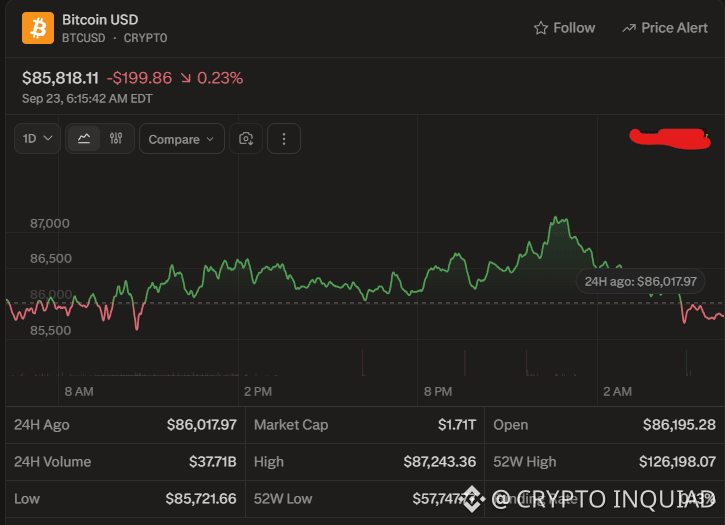
$BTC isn’t making every headline today—but it’s quietly holding above $85K after a 42% rally from its yearly low.
Price just tagged an 8-month high near $87,250, with 24h volume exceeding $37.7B.
Key catalysts:
50-week MA breakout: BTC closed above its 50-week moving average for the first time in 45 weeks—a historically bullish signal
Institutional inflows: Over 2,000 institutions now hold spot Bitcoin ETFs, with RIAs up 20% YoY
Regulatory tailwinds: SEC’s new tokenized securities framework boosted confidence despite Fed rate hikes
Kevin O’Leary thesis: Predicts Bitcoin will capture 1–3% of institutional alt-asset allocations, targeting $1M/BTC long-term
Analysts eye $90K next if BTC clears the $87.3K–$88K resistance zone.
Sometimes the biggest moves happen while the market chases noise.
$BTC
{future}(BTCUSDT)
👀
#Bitcoin #Crypto #InstitutionalAdoption #ETF #write2earn
🚨 BITCOIN ($BTC ) — LATEST NEWS (Ready to Post)
$BTC isn’t making every headline today—but it’s quietly holding above $85K after a 42% rally from its yearly low.
Price just tagged an 8-month high near $87,250, with 24h volume exceeding $37.7B.
Key catalysts:
50-week MA breakout: BTC closed above its 50-week moving average for the first time in 45 weeks—a historically bullish signal
Institutional inflows: Over 2,000 institutions now hold spot Bitcoin ETFs, with RIAs up 20% YoY
Regulatory tailwinds: SEC’s new tokenized securities framework boosted confidence despite Fed rate hikes
Kevin O’Leary thesis: Predicts Bitcoin will capture 1–3% of institutional alt-asset allocations, targeting $1M/BTC long-term
Analysts eye $90K next if BTC clears the $87.3K–$88K resistance zone.
Sometimes the biggest moves happen while the market chases noise.
$BTC
👀
#Bitcoin #Crypto #InstitutionalAdoption #ETF #write2earn
$BTC isn’t making every headline today—but it’s quietly holding above $85K after a 42% rally from its yearly low.
Price just tagged an 8-month high near $87,250, with 24h volume exceeding $37.7B.
Key catalysts:
50-week MA breakout: BTC closed above its 50-week moving average for the first time in 45 weeks—a historically bullish signal
Institutional inflows: Over 2,000 institutions now hold spot Bitcoin ETFs, with RIAs up 20% YoY
Regulatory tailwinds: SEC’s new tokenized securities framework boosted confidence despite Fed rate hikes
Kevin O’Leary thesis: Predicts Bitcoin will capture 1–3% of institutional alt-asset allocations, targeting $1M/BTC long-term
Analysts eye $90K next if BTC clears the $87.3K–$88K resistance zone.
Sometimes the biggest moves happen while the market chases noise.
$BTC
👀
#Bitcoin #Crypto #InstitutionalAdoption #ETF #write2earn
66
·
--
Institutions aren't buying crypto the way the headlines suggest. The quiet entry point is collateral.
Look past ETF flow charts and you find something more structural: BTC and ETH are increasingly used as balance-sheet collateral — borrowed against, lent out, pledged in repo-style arrangements. That is a different adoption curve than buying.
When an asset becomes collateral, three things change:
1. It stops being a trade and becomes infrastructure. Positions built on top of it don't get closed in a panic — they get rolled.
2. Holders become borrowers. A treasury that pledges BTC keeps the upside while unlocking working capital. Structural sell pressure drops.
3. Lenders become the marginal price setters. Haircuts, collateral quality standards, and financing rates quietly become the real market microstructure.
So watch financing rates and collateral utilization, not just spot volume. When lending spreads tighten and basis trades normalize, balance-sheet adoption is compounding under the surface.
This is how assets graduate from speculative instruments to financial primitives — not through sentiment, but through balance sheets.
Flow adoption is loud. Collateral adoption is permanent.
$BTC $ETH $SOL
#InstitutionalAdoption #Bitcoin #CryptoFinance #Collateral #OnChain
Institutions aren't buying crypto the way the headlines suggest. The quiet entry point is collateral.
Look past ETF flow charts and you find something more structural: BTC and ETH are increasingly used as balance-sheet collateral — borrowed against, lent out, pledged in repo-style arrangements. That is a different adoption curve than buying.
When an asset becomes collateral, three things change:
1. It stops being a trade and becomes infrastructure. Positions built on top of it don't get closed in a panic — they get rolled.
2. Holders become borrowers. A treasury that pledges BTC keeps the upside while unlocking working capital. Structural sell pressure drops.
3. Lenders become the marginal price setters. Haircuts, collateral quality standards, and financing rates quietly become the real market microstructure.
So watch financing rates and collateral utilization, not just spot volume. When lending spreads tighten and basis trades normalize, balance-sheet adoption is compounding under the surface.
This is how assets graduate from speculative instruments to financial primitives — not through sentiment, but through balance sheets.
Flow adoption is loud. Collateral adoption is permanent.
$BTC $ETH $SOL
#InstitutionalAdoption #Bitcoin #CryptoFinance #Collateral #OnChain
Look past ETF flow charts and you find something more structural: BTC and ETH are increasingly used as balance-sheet collateral — borrowed against, lent out, pledged in repo-style arrangements. That is a different adoption curve than buying.
When an asset becomes collateral, three things change:
1. It stops being a trade and becomes infrastructure. Positions built on top of it don't get closed in a panic — they get rolled.
2. Holders become borrowers. A treasury that pledges BTC keeps the upside while unlocking working capital. Structural sell pressure drops.
3. Lenders become the marginal price setters. Haircuts, collateral quality standards, and financing rates quietly become the real market microstructure.
So watch financing rates and collateral utilization, not just spot volume. When lending spreads tighten and basis trades normalize, balance-sheet adoption is compounding under the surface.
This is how assets graduate from speculative instruments to financial primitives — not through sentiment, but through balance sheets.
Flow adoption is loud. Collateral adoption is permanent.
$BTC $ETH $SOL
#InstitutionalAdoption #Bitcoin #CryptoFinance #Collateral #OnChain
48
·
--
The Layer 1 conversation keeps circling throughput, fees, and developer count. But the metric institutions actually care about is the one nobody benchmarks: censorship resistance.
Here's why it matters more than TPS.
A chain that can process 100,000 transactions per second but can be halted by a single validator coordination call is not infrastructure. It's a database with extra steps. Institutional capital doesn't need speed first. It needs assurance that no single party can freeze, reorder, or censor its settlement.
The chains that will capture the next wave of institutional flow are the ones where the word "unstoppable" is a technical property, not a marketing slogan.
$BTC proved this. Its value proposition isn't smart contracts or yield. It's the demonstrated inability of any government, corporation, or coalition to alter its rules or stop its settlement. That censorship resistance is why it sits on treasury balance sheets.
$ETH extended the thesis with a validator set large enough that no single entity can dictate state transitions. $SOL is learning the hard way that validator client diversity matters as much as transaction speed.
The next L1 winner won't be the fastest. It'll be the one where the answer to "can this be stopped?" is provably no.
Censorship resistance is the only moat that compounds. Everything else can be copied.
#Layer1 #Crypto #Blockchain #InstitutionalAdoption
The Layer 1 conversation keeps circling throughput, fees, and developer count. But the metric institutions actually care about is the one nobody benchmarks: censorship resistance.
Here's why it matters more than TPS.
A chain that can process 100,000 transactions per second but can be halted by a single validator coordination call is not infrastructure. It's a database with extra steps. Institutional capital doesn't need speed first. It needs assurance that no single party can freeze, reorder, or censor its settlement.
The chains that will capture the next wave of institutional flow are the ones where the word "unstoppable" is a technical property, not a marketing slogan.
$BTC proved this. Its value proposition isn't smart contracts or yield. It's the demonstrated inability of any government, corporation, or coalition to alter its rules or stop its settlement. That censorship resistance is why it sits on treasury balance sheets.
$ETH extended the thesis with a validator set large enough that no single entity can dictate state transitions. $SOL is learning the hard way that validator client diversity matters as much as transaction speed.
The next L1 winner won't be the fastest. It'll be the one where the answer to "can this be stopped?" is provably no.
Censorship resistance is the only moat that compounds. Everything else can be copied.
#Layer1 #Crypto #Blockchain #InstitutionalAdoption
Here's why it matters more than TPS.
A chain that can process 100,000 transactions per second but can be halted by a single validator coordination call is not infrastructure. It's a database with extra steps. Institutional capital doesn't need speed first. It needs assurance that no single party can freeze, reorder, or censor its settlement.
The chains that will capture the next wave of institutional flow are the ones where the word "unstoppable" is a technical property, not a marketing slogan.
$BTC proved this. Its value proposition isn't smart contracts or yield. It's the demonstrated inability of any government, corporation, or coalition to alter its rules or stop its settlement. That censorship resistance is why it sits on treasury balance sheets.
$ETH extended the thesis with a validator set large enough that no single entity can dictate state transitions. $SOL is learning the hard way that validator client diversity matters as much as transaction speed.
The next L1 winner won't be the fastest. It'll be the one where the answer to "can this be stopped?" is provably no.
Censorship resistance is the only moat that compounds. Everything else can be copied.
#Layer1 #Crypto #Blockchain #InstitutionalAdoption
56

Article
Massive ETF Inflows Signal Bullish Institutional MomentumThe Bitcoin spot ETF market just hit another massive milestone. Seeing nearly $1 billion flood into these products in a single day is not just a number on a screen. It represents a fundamental shift in how much institutional capital is ready to play in this arena. This Monday was the 9th largest inflow we have ever seen, and it signals that the demand for direct exposure is far from being exhausted.
For many traders, this level of liquidity is the ultimate green flag. When we see this much capital moving through regulated channels, it creates a massive floor for price action. These are not retail FOMO plays. These are institutional bags being filled by professional money managers and corporate treasuries. The steady absorption of supply by these ETFs is the exact mechanism needed to drive sustained price discovery.
We have seen periods of consolidation before, but these massive inflow days tend to break the boredom and lead to significant volatility. The key takeaway for anyone watching the charts is that the supply shock from ETFs is real and growing. As more funds enter, the liquid supply on exchanges continues to dwindle. This setup is looking incredibly bullish for the medium term as long as the macro environment stays relatively stable.
#BitcoinETFs #InstitutionalAdoption
Massive ETF Inflows Signal Bullish Institutional Momentum
The Bitcoin spot ETF market just hit another massive milestone. Seeing nearly $1 billion flood into these products in a single day is not just a number on a screen. It represents a fundamental shift in how much institutional capital is ready to play in this arena. This Monday was the 9th largest inflow we have ever seen, and it signals that the demand for direct exposure is far from being exhausted.
For many traders, this level of liquidity is the ultimate green flag. When we see this much capital moving through regulated channels, it creates a massive floor for price action. These are not retail FOMO plays. These are institutional bags being filled by professional money managers and corporate treasuries. The steady absorption of supply by these ETFs is the exact mechanism needed to drive sustained price discovery.
We have seen periods of consolidation before, but these massive inflow days tend to break the boredom and lead to significant volatility. The key takeaway for anyone watching the charts is that the supply shock from ETFs is real and growing. As more funds enter, the liquid supply on exchanges continues to dwindle. This setup is looking incredibly bullish for the medium term as long as the macro environment stays relatively stable.
#BitcoinETFs #InstitutionalAdoption
For many traders, this level of liquidity is the ultimate green flag. When we see this much capital moving through regulated channels, it creates a massive floor for price action. These are not retail FOMO plays. These are institutional bags being filled by professional money managers and corporate treasuries. The steady absorption of supply by these ETFs is the exact mechanism needed to drive sustained price discovery.
We have seen periods of consolidation before, but these massive inflow days tend to break the boredom and lead to significant volatility. The key takeaway for anyone watching the charts is that the supply shock from ETFs is real and growing. As more funds enter, the liquid supply on exchanges continues to dwindle. This setup is looking incredibly bullish for the medium term as long as the macro environment stays relatively stable.
#BitcoinETFs #InstitutionalAdoption
8
·
--
加密市场的过山车行情可能要成为历史了!Solstice CEO表示,随着流动性和机构资金入场,未来牛市的波动性会降低。不再是大起大落,也许是更健康的稳定增长。机构玩家入场,散户也能跟着喝汤?#加密货币 #牛市 $BTC $ETH
Crypto's rollercoaster rides might become history. Solstice CEO says deeper liquidity & institutional participation could make future bull runs less volatile. No more wild swings, maybe healthier steady growth. Institutional money coming in, retail investors can benefit too? #CryptoBullRun #InstitutionalAdoption $BTC $ETH
加密市场的过山车行情可能要成为历史了!Solstice CEO表示,随着流动性和机构资金入场,未来牛市的波动性会降低。不再是大起大落,也许是更健康的稳定增长。机构玩家入场,散户也能跟着喝汤?#加密货币 #牛市 $BTC $ETH
Crypto's rollercoaster rides might become history. Solstice CEO says deeper liquidity & institutional participation could make future bull runs less volatile. No more wild swings, maybe healthier steady growth. Institutional money coming in, retail investors can benefit too? #CryptoBullRun #InstitutionalAdoption $BTC $ETH
Crypto's rollercoaster rides might become history. Solstice CEO says deeper liquidity & institutional participation could make future bull runs less volatile. No more wild swings, maybe healthier steady growth. Institutional money coming in, retail investors can benefit too? #CryptoBullRun #InstitutionalAdoption $BTC $ETH
150
Strategy added 950 BTC to its treasury for $76 million. Total holdings now reach 846,000 BTC, representing roughly 4 percent of the total Bitcoin supply.
#BitcoinTreasury #InstitutionalAdoption
Strategy added 950 BTC to its treasury for $76 million. Total holdings now reach 846,000 BTC, representing roughly 4 percent of the total Bitcoin supply.
#BitcoinTreasury #InstitutionalAdoption
#BitcoinTreasury #InstitutionalAdoption
25
·
--
For years, the crypto market treated regulation as an existential threat. Every headline about enforcement actions or new frameworks triggered selloffs. But something has shifted — and it might be the most bullish structural change nobody is pricing.
The fear was always about what regulation would take away: anonymity, access, outsized returns. What it is actually delivering is something nobody expected: a floor of trust.
Clear rules do three things the market desperately needs. First, they convert institutional risk committees from blockers into approvers — a CFO cannot allocate to an asset class with undefined legal status. Second, they eliminate the regulatory arbitrage premium — the discount $BTC and $ETH traded at versus their risk-adjusted fundamentals was mostly legal uncertainty, not technology risk. Third, they create exit liquidity for builders, which creates entry liquidity for capital.
The irony is that the crowd that spent a decade demanding zero regulation is now benefiting from its arrival. Stablecoin legislation means $XRP settlement narratives have legal grounding. ETF frameworks mean TradFi capital can flow into crypto without bespoke legal opinions.
Regulation was never the ceiling. Ambiguity was. And ambiguity is what is slowly being removed.
The next leg of adoption will not come from better technology alone. It will come from the moment when a pension fund trustee can approve a crypto allocation without personal legal exposure. That moment is being built right now — clause by clause, framework by framework.
#CryptoRegulation #InstitutionalAdoption #MarketStructure #RegulatoryClarity
For years, the crypto market treated regulation as an existential threat. Every headline about enforcement actions or new frameworks triggered selloffs. But something has shifted — and it might be the most bullish structural change nobody is pricing.
The fear was always about what regulation would take away: anonymity, access, outsized returns. What it is actually delivering is something nobody expected: a floor of trust.
Clear rules do three things the market desperately needs. First, they convert institutional risk committees from blockers into approvers — a CFO cannot allocate to an asset class with undefined legal status. Second, they eliminate the regulatory arbitrage premium — the discount $BTC and $ETH traded at versus their risk-adjusted fundamentals was mostly legal uncertainty, not technology risk. Third, they create exit liquidity for builders, which creates entry liquidity for capital.
The irony is that the crowd that spent a decade demanding zero regulation is now benefiting from its arrival. Stablecoin legislation means $XRP settlement narratives have legal grounding. ETF frameworks mean TradFi capital can flow into crypto without bespoke legal opinions.
Regulation was never the ceiling. Ambiguity was. And ambiguity is what is slowly being removed.
The next leg of adoption will not come from better technology alone. It will come from the moment when a pension fund trustee can approve a crypto allocation without personal legal exposure. That moment is being built right now — clause by clause, framework by framework.
#CryptoRegulation #InstitutionalAdoption #MarketStructure #RegulatoryClarity
The fear was always about what regulation would take away: anonymity, access, outsized returns. What it is actually delivering is something nobody expected: a floor of trust.
Clear rules do three things the market desperately needs. First, they convert institutional risk committees from blockers into approvers — a CFO cannot allocate to an asset class with undefined legal status. Second, they eliminate the regulatory arbitrage premium — the discount $BTC and $ETH traded at versus their risk-adjusted fundamentals was mostly legal uncertainty, not technology risk. Third, they create exit liquidity for builders, which creates entry liquidity for capital.
The irony is that the crowd that spent a decade demanding zero regulation is now benefiting from its arrival. Stablecoin legislation means $XRP settlement narratives have legal grounding. ETF frameworks mean TradFi capital can flow into crypto without bespoke legal opinions.
Regulation was never the ceiling. Ambiguity was. And ambiguity is what is slowly being removed.
The next leg of adoption will not come from better technology alone. It will come from the moment when a pension fund trustee can approve a crypto allocation without personal legal exposure. That moment is being built right now — clause by clause, framework by framework.
#CryptoRegulation #InstitutionalAdoption #MarketStructure #RegulatoryClarity
514
·
--
The Structural Bid Nobody Talks About
Every day, passive flows from ETFs and corporate treasury programs quietly absorb a meaningful chunk of BTC's available float. Not headlines. Not announcements. Just steady, programmatic buying that doesn't react to fear or greed.
This is the structural bid — and it changes how price discovery works.
When daily DCA inflows exceed miner sell pressure, the marginal seller runs out of inventory before the marginal buyer runs out of conviction. That's not a bull case. It's plumbing. The same dynamic that made housing "always go up" in the 2000s — except crypto's float is smaller and the inflows are global.
The implication: volatility compresses not because markets are calm, but because passive flows smooth the order book. Sharp sellovers get absorbed faster. Rallies face less supply. The market reprices in steps, not spikes.
$ETH is catching the same dynamic through staking yield + institutional treasury adoption. $SOL benefits from venture and dev ecosystem gravity. $BNB rides exchange-mediated treasury flows.
The risk? Passive flows are price-insensitive, not infinite. A macro shock that breaks the DCA mandate — redemptions, regulation, mandate revision — removes the floor. Structural bids are floors, not ceilings.
The real edge isn't predicting price. It's understanding who's buying every day and whether they'll keep doing it.
#Crypto #Bitcoin #Ethereum #InstitutionalAdoption #MarketStructure
The Structural Bid Nobody Talks About
Every day, passive flows from ETFs and corporate treasury programs quietly absorb a meaningful chunk of BTC's available float. Not headlines. Not announcements. Just steady, programmatic buying that doesn't react to fear or greed.
This is the structural bid — and it changes how price discovery works.
When daily DCA inflows exceed miner sell pressure, the marginal seller runs out of inventory before the marginal buyer runs out of conviction. That's not a bull case. It's plumbing. The same dynamic that made housing "always go up" in the 2000s — except crypto's float is smaller and the inflows are global.
The implication: volatility compresses not because markets are calm, but because passive flows smooth the order book. Sharp sellovers get absorbed faster. Rallies face less supply. The market reprices in steps, not spikes.
$ETH is catching the same dynamic through staking yield + institutional treasury adoption. $SOL benefits from venture and dev ecosystem gravity. $BNB rides exchange-mediated treasury flows.
The risk? Passive flows are price-insensitive, not infinite. A macro shock that breaks the DCA mandate — redemptions, regulation, mandate revision — removes the floor. Structural bids are floors, not ceilings.
The real edge isn't predicting price. It's understanding who's buying every day and whether they'll keep doing it.
#Crypto #Bitcoin #Ethereum #InstitutionalAdoption #MarketStructure
Every day, passive flows from ETFs and corporate treasury programs quietly absorb a meaningful chunk of BTC's available float. Not headlines. Not announcements. Just steady, programmatic buying that doesn't react to fear or greed.
This is the structural bid — and it changes how price discovery works.
When daily DCA inflows exceed miner sell pressure, the marginal seller runs out of inventory before the marginal buyer runs out of conviction. That's not a bull case. It's plumbing. The same dynamic that made housing "always go up" in the 2000s — except crypto's float is smaller and the inflows are global.
The implication: volatility compresses not because markets are calm, but because passive flows smooth the order book. Sharp sellovers get absorbed faster. Rallies face less supply. The market reprices in steps, not spikes.
$ETH is catching the same dynamic through staking yield + institutional treasury adoption. $SOL benefits from venture and dev ecosystem gravity. $BNB rides exchange-mediated treasury flows.
The risk? Passive flows are price-insensitive, not infinite. A macro shock that breaks the DCA mandate — redemptions, regulation, mandate revision — removes the floor. Structural bids are floors, not ceilings.
The real edge isn't predicting price. It's understanding who's buying every day and whether they'll keep doing it.
#Crypto #Bitcoin #Ethereum #InstitutionalAdoption #MarketStructure
147
·
--
重大转折!MicroStrategy大佬塞勒:清晰法案流产是加密行业的胜利!行业无需额外立法,可直接与监管合作。信号很明确:行业正被主流接纳!$BTC短期或有提振,长期看机构资金加速入场!#比特币监管 #机构采用
Major turning point! MicroStrategy's Saylor: Clarity Act's failure is actually crypto's win! Industry doesn't need extra legislation, can work directly with regulators. Clear signal: crypto is being mainstreamed! $BTC could see short-term boost, with institutional money accelerating long-term! #BitcoinRegulation #InstitutionalAdoption
重大转折!MicroStrategy大佬塞勒:清晰法案流产是加密行业的胜利!行业无需额外立法,可直接与监管合作。信号很明确:行业正被主流接纳!$BTC 短期或有提振,长期看机构资金加速入场!#比特币监管 #机构采用
Major turning point! MicroStrategy's Saylor: Clarity Act's failure is actually crypto's win! Industry doesn't need extra legislation, can work directly with regulators. Clear signal: crypto is being mainstreamed! $BTC could see short-term boost, with institutional money accelerating long-term! #BitcoinRegulation #InstitutionalAdoption
Major turning point! MicroStrategy's Saylor: Clarity Act's failure is actually crypto's win! Industry doesn't need extra legislation, can work directly with regulators. Clear signal: crypto is being mainstreamed! $BTC could see short-term boost, with institutional money accelerating long-term! #BitcoinRegulation #InstitutionalAdoption
90
Connectez-vous pour découvrir plus de contenu
Rejoignez la communauté mondiale des adeptes de cryptomonnaies sur Binance Square
⚡️ Suviez les dernières informations importantes sur les cryptomonnaies.
💬 Jugé digne de confiance par la plus grande plateforme d’échange de cryptomonnaies au monde.
👍 Découvrez les connaissances que partagent les créateurs vérifiés.
Adresse e-mail/Nº de téléphone
Sujets d’actualité
1
#GoldFallsTo$4144
1,726 vues
57 mentions
2
#QNTFallsOver40%FromMorningHigh
13,750 vues
432 mentions
3
#KospiFalls2.7%SamsungSKHynixDropOver5%
1,812 vues
154 mentions
4
#BitgetCEOConfirms$388MStolenInHack
799 vues
24 mentions
5
#BTCFallsBelow$83000
12,084 vues
107 mentions
6
#BitgetDetailsSecurityIncidentTimeline
10,278 vues
312 mentions
7
#BitcoinSpotETFs$2.39BWeeklyNetInflow
4,621 vues
25 mentions
8
#FedProposesPaymentStablecoinRules
37,758 vues
681 mentions
9
#ChinaMayLetAlibabaByteDanceBuyNvidiaChips
39,810 vues
710 mentions
10
#USChinaRelease$30BTariffCutProductLists
3,599 vues
53 mentions