
#cryptogovernance
cryptogovernance
180,137 vues
491 mentions
Populaire
Récents

·
--
Les DAO redonnent le pouvoir à la communauté ! 🚀 Pas de PDG, juste une gouvernance décentralisée et des décisions intelligentes.
Gardez un œil sur le pouls du marché pendant que nous construisons l’avenir Web3 avec des actifs comme $BTC, $ETH et$BNB.
[insérer le widget de graphique de la pièce ici]
Êtes-vous optimiste au sujet de la gouvernance des DAO ? Dites-le moi ! 👇
#BinanceSquareFamily #DAOWeb3 #CryptoGovernance #Web3 #BİNANCE
Une DAO (DAO), c’est tout le pouvoir crypto authentique — sans patron centralisé, ce sont les votes de la communauté qui comptent ! 🗳️
Grâce à des écosystèmes solides comme $BTC, $ETH et $BNB, les DAO construisent désormais l’avenir du Web3.
[insérez ici le widget du graphique de la pièce]
Êtes-vous impliqué(e) dans un projet DAO ? Faites-le savoir dans les commentaires.
Conseil : lors de la publication sur l’application Binance, cliquez sur l’icône du graphique pour ajouter le widget du graphique de la pièce concernée ! )
Les DAO redonnent le pouvoir à la communauté ! 🚀 Pas de PDG, juste une gouvernance décentralisée et des décisions intelligentes.
Gardez un œil sur le pouls du marché pendant que nous construisons l’avenir Web3 avec des actifs comme $BTC, $ETH et$BNB.
[insérer le widget de graphique de la pièce ici]
Êtes-vous optimiste au sujet de la gouvernance des DAO ? Dites-le moi ! 👇
#BinanceSquareFamily #DAOWeb3 #CryptoGovernance #Web3 #BİNANCE
Une DAO (DAO), c’est tout le pouvoir crypto authentique — sans patron centralisé, ce sont les votes de la communauté qui comptent ! 🗳️
Grâce à des écosystèmes solides comme $BTC, $ETH et $BNB, les DAO construisent désormais l’avenir du Web3.
[insérez ici le widget du graphique de la pièce]
Êtes-vous impliqué(e) dans un projet DAO ? Faites-le savoir dans les commentaires.
Conseil : lors de la publication sur l’application Binance, cliquez sur l’icône du graphique pour ajouter le widget du graphique de la pièce concernée ! )
Gardez un œil sur le pouls du marché pendant que nous construisons l’avenir Web3 avec des actifs comme $BTC, $ETH et$BNB.
[insérer le widget de graphique de la pièce ici]
Êtes-vous optimiste au sujet de la gouvernance des DAO ? Dites-le moi ! 👇
#BinanceSquareFamily #DAOWeb3 #CryptoGovernance #Web3 #BİNANCE
Une DAO (DAO), c’est tout le pouvoir crypto authentique — sans patron centralisé, ce sont les votes de la communauté qui comptent ! 🗳️
Grâce à des écosystèmes solides comme $BTC, $ETH et $BNB, les DAO construisent désormais l’avenir du Web3.
[insérez ici le widget du graphique de la pièce]
Êtes-vous impliqué(e) dans un projet DAO ? Faites-le savoir dans les commentaires.
Conseil : lors de la publication sur l’application Binance, cliquez sur l’icône du graphique pour ajouter le widget du graphique de la pièce concernée ! )
26

🚨 Le PDG de Metaplanet répond aux préoccupations de gouvernance face à la contestation des actionnaires !
Simon Gerovich, PDG de la célèbre société japonaise détenant du Bitcoin, Metaplanet, a officiellement brisé le silence à la suite d’interrogations croissantes des actionnaires concernant la structuration interne de l’entreprise et les opérations de négociation de ses affiliés.
🔹 Reconnaissance de lacunes structurelles : Gerovich a admis que Metaplanet n’avait pas suffisamment expliqué sa structure opérationnelle plus large aux actionnaires publics.
🔹 Désengagement de la participation aux opérations : Le PDG a fermement nié toute implication directe dans les décisions de trading et d’investissement de MMXX Ventures.
🔹 Trésorerie d’entreprise sous surveillance : En tant que l’un des accumulateurs institutionnels les plus agressifs de $BTC in Asie, la gouvernance d’entreprise et la clarté restent essentielles pour la confiance des investisseurs.
Les observateurs du marché continuent de surveiller si des mises à jour de la gouvernance influenceront la stratégie actuelle de trésorerie de la société.
$BTC #Metaplanet #BitcoinTreasury #CryptoGovernance #Write2Earn
🚨 Le PDG de Metaplanet répond aux préoccupations de gouvernance face à la contestation des actionnaires !
Simon Gerovich, PDG de la célèbre société japonaise détenant du Bitcoin, Metaplanet, a officiellement brisé le silence à la suite d’interrogations croissantes des actionnaires concernant la structuration interne de l’entreprise et les opérations de négociation de ses affiliés.
🔹 Reconnaissance de lacunes structurelles : Gerovich a admis que Metaplanet n’avait pas suffisamment expliqué sa structure opérationnelle plus large aux actionnaires publics.
🔹 Désengagement de la participation aux opérations : Le PDG a fermement nié toute implication directe dans les décisions de trading et d’investissement de MMXX Ventures.
🔹 Trésorerie d’entreprise sous surveillance : En tant que l’un des accumulateurs institutionnels les plus agressifs de $BTC in Asie, la gouvernance d’entreprise et la clarté restent essentielles pour la confiance des investisseurs.
Les observateurs du marché continuent de surveiller si des mises à jour de la gouvernance influenceront la stratégie actuelle de trésorerie de la société.
$BTC #Metaplanet #BitcoinTreasury #CryptoGovernance #Write2Earn
Simon Gerovich, PDG de la célèbre société japonaise détenant du Bitcoin, Metaplanet, a officiellement brisé le silence à la suite d’interrogations croissantes des actionnaires concernant la structuration interne de l’entreprise et les opérations de négociation de ses affiliés.
🔹 Reconnaissance de lacunes structurelles : Gerovich a admis que Metaplanet n’avait pas suffisamment expliqué sa structure opérationnelle plus large aux actionnaires publics.
🔹 Désengagement de la participation aux opérations : Le PDG a fermement nié toute implication directe dans les décisions de trading et d’investissement de MMXX Ventures.
🔹 Trésorerie d’entreprise sous surveillance : En tant que l’un des accumulateurs institutionnels les plus agressifs de $BTC in Asie, la gouvernance d’entreprise et la clarté restent essentielles pour la confiance des investisseurs.
Les observateurs du marché continuent de surveiller si des mises à jour de la gouvernance influenceront la stratégie actuelle de trésorerie de la société.
$BTC #Metaplanet #BitcoinTreasury #CryptoGovernance #Write2Earn
85

·
--

Article
Mise à niveau bloquée sous 80%—L’avenir du XRP en attente, les rois du mème se réjouissentL’amendement BatchV1_1 du XRP Ledger est actuellement à 68,57% de soutien des validateurs, en dessous du seuil de 80% requis pour l’activation. Les validateurs doivent maintenir ce niveau pendant 14 jours consécutifs avant que la mise à niveau puisse être lancée; la mise à niveau par lots reste donc en pause pour l’instant. Ce délai signifie que les améliorations de performance anticipées et les nouvelles fonctionnalités ne seront pas déployées tant que l’obstacle du vote n’est pas franchi, laissant la communauté en attente.
#XRP #CryptoGovernance #DeFi
La chute? Même le grand livre le plus efficace peut se retrouver coincé dans une boucle « voter et attendre », prouvant que le consensus est le vrai goulot d’étranglement, pas le code. Si vous êtes validateur, il est temps de faire travailler ces muscles du vote; si vous êtes détenteur, surveillez la barre des 80% : une fois qu’elle est atteinte, le grand livre pourrait foncer plus vite qu’un mème inspiré d’un mème.
Mise à niveau bloquée sous 80%—L’avenir du XRP en attente, les rois du mème se réjouissent
L’amendement BatchV1_1 du XRP Ledger est actuellement à 68,57% de soutien des validateurs, en dessous du seuil de 80% requis pour l’activation. Les validateurs doivent maintenir ce niveau pendant 14 jours consécutifs avant que la mise à niveau puisse être lancée; la mise à niveau par lots reste donc en pause pour l’instant. Ce délai signifie que les améliorations de performance anticipées et les nouvelles fonctionnalités ne seront pas déployées tant que l’obstacle du vote n’est pas franchi, laissant la communauté en attente.
#XRP #CryptoGovernance #DeFi
La chute? Même le grand livre le plus efficace peut se retrouver coincé dans une boucle « voter et attendre », prouvant que le consensus est le vrai goulot d’étranglement, pas le code. Si vous êtes validateur, il est temps de faire travailler ces muscles du vote; si vous êtes détenteur, surveillez la barre des 80% : une fois qu’elle est atteinte, le grand livre pourrait foncer plus vite qu’un mème inspiré d’un mème.
#XRP #CryptoGovernance #DeFi
La chute? Même le grand livre le plus efficace peut se retrouver coincé dans une boucle « voter et attendre », prouvant que le consensus est le vrai goulot d’étranglement, pas le code. Si vous êtes validateur, il est temps de faire travailler ces muscles du vote; si vous êtes détenteur, surveillez la barre des 80% : une fois qu’elle est atteinte, le grand livre pourrait foncer plus vite qu’un mème inspiré d’un mème.
33

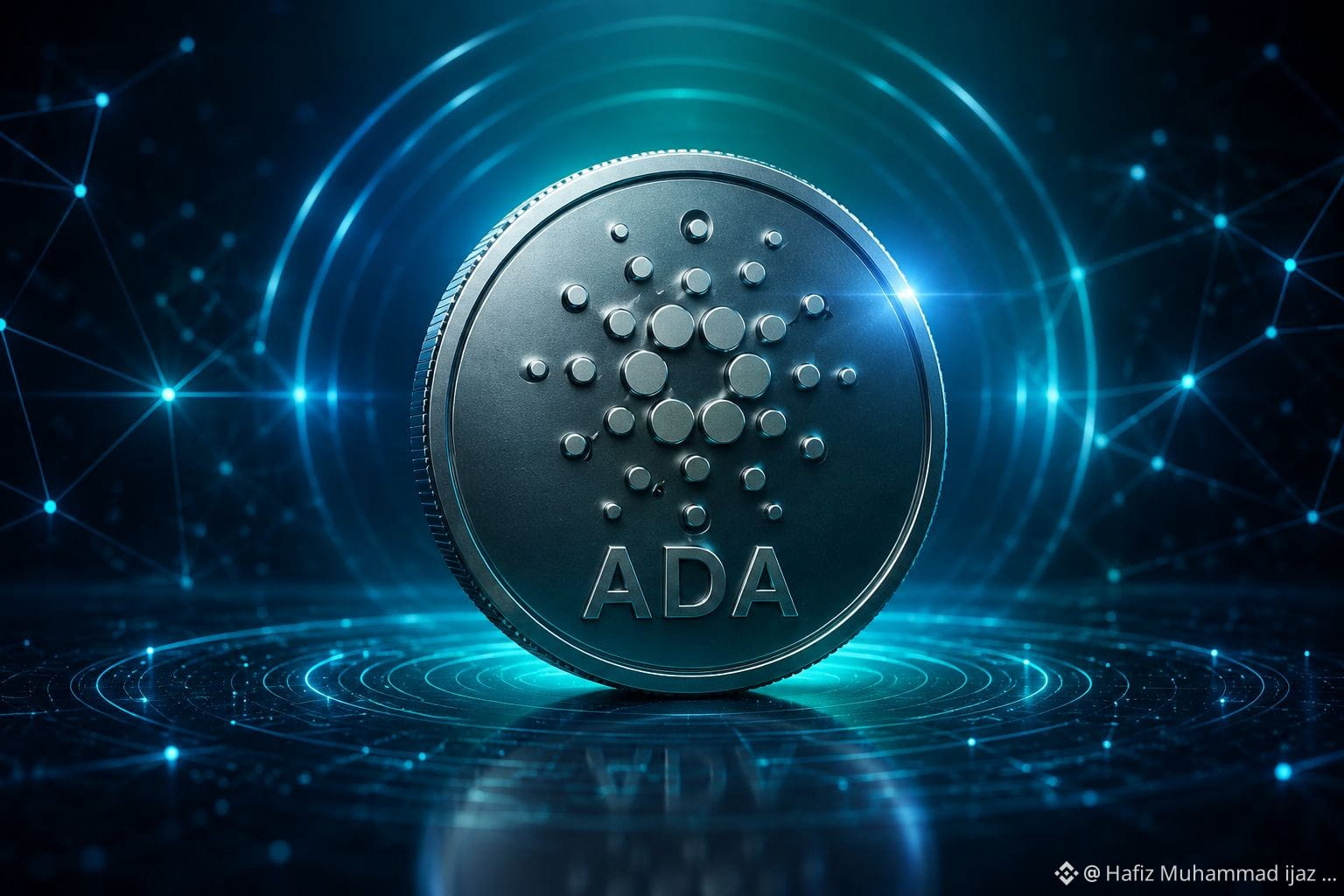
$ADA Est sur le point de voter sur quelque chose qui pourrait changer la façon dont toute la chaîne fonctionne.
Je ne vais pas mentir, j’ai presque fait défiler celui-ci. Les votes de gouvernance sonnent souvent ennuyeux, jusqu’à ce qu’on lise vraiment ce qui est sur la table.
Cardano s’apprête à participer à un vote qui pourrait remodeler entièrement sa couche de validateurs — autrement dit, la manière dont le réseau décide qui a le droit de confirmer les transactions, et comment le pouvoir est distribué sur la chaîne.
Ce n’est pas une histoire de “pump” du prix. C’est du niveau infrastructure, quelque chose qui détermine si $ADA restera décentralisé comme il a été conçu, ou s’orientera vers quelque chose de plus concentré.
La plupart des gens ne regardent que les graphiques. Ceux qui lisent réellement les propositions de gouvernance sont généralement ceux qui voient le prochain mouvement venir en premier.
Je ne vote pas, dans un sens ou dans l’autre — je fais juste remarquer que cela se produit pendant que tout le monde est distrait par $BTC et les gros titres liés à XRP.
Tu suis le volet gouvernance de Cardano, ou tu ne fais que regarder le prix ? 👇
#Cardano #ADA #Blockchain #CryptoGovernance
{future}(ADAUSDT)
$ADA Est sur le point de voter sur quelque chose qui pourrait changer la façon dont toute la chaîne fonctionne.
Je ne vais pas mentir, j’ai presque fait défiler celui-ci. Les votes de gouvernance sonnent souvent ennuyeux, jusqu’à ce qu’on lise vraiment ce qui est sur la table.
Cardano s’apprête à participer à un vote qui pourrait remodeler entièrement sa couche de validateurs — autrement dit, la manière dont le réseau décide qui a le droit de confirmer les transactions, et comment le pouvoir est distribué sur la chaîne.
Ce n’est pas une histoire de “pump” du prix. C’est du niveau infrastructure, quelque chose qui détermine si $ADA restera décentralisé comme il a été conçu, ou s’orientera vers quelque chose de plus concentré.
La plupart des gens ne regardent que les graphiques. Ceux qui lisent réellement les propositions de gouvernance sont généralement ceux qui voient le prochain mouvement venir en premier.
Je ne vote pas, dans un sens ou dans l’autre — je fais juste remarquer que cela se produit pendant que tout le monde est distrait par $BTC et les gros titres liés à XRP.
Tu suis le volet gouvernance de Cardano, ou tu ne fais que regarder le prix ? 👇
#Cardano #ADA #Blockchain #CryptoGovernance
Je ne vais pas mentir, j’ai presque fait défiler celui-ci. Les votes de gouvernance sonnent souvent ennuyeux, jusqu’à ce qu’on lise vraiment ce qui est sur la table.
Cardano s’apprête à participer à un vote qui pourrait remodeler entièrement sa couche de validateurs — autrement dit, la manière dont le réseau décide qui a le droit de confirmer les transactions, et comment le pouvoir est distribué sur la chaîne.
Ce n’est pas une histoire de “pump” du prix. C’est du niveau infrastructure, quelque chose qui détermine si $ADA restera décentralisé comme il a été conçu, ou s’orientera vers quelque chose de plus concentré.
La plupart des gens ne regardent que les graphiques. Ceux qui lisent réellement les propositions de gouvernance sont généralement ceux qui voient le prochain mouvement venir en premier.
Je ne vote pas, dans un sens ou dans l’autre — je fais juste remarquer que cela se produit pendant que tout le monde est distrait par $BTC et les gros titres liés à XRP.
Tu suis le volet gouvernance de Cardano, ou tu ne fais que regarder le prix ? 👇
#Cardano #ADA #Blockchain #CryptoGovernance
71

·
--
Les validateurs de Solana ont approuvé de justesse la SGP-0002 lors du premier vote de gouvernance on-chain liant sur le réseau, doublant le taux annuel de désinflation de 15 % à 30 %. Le changement devrait réduire l’émission projetée de SOL d’environ 18,9 millions de jetons au cours des six prochaines années et amener le réseau à son seuil d’inflation terminal de 1,5 % plus tôt. Une proposition distincte de brûlage des frais n’a pas atteint le seuil requis.
{spot}(SOLUSDT)
$SOL #NewNews #CoinVahini #Solana #SOL #CryptoGovernance
Les validateurs de Solana ont approuvé de justesse la SGP-0002 lors du premier vote de gouvernance on-chain liant sur le réseau, doublant le taux annuel de désinflation de 15 % à 30 %. Le changement devrait réduire l’émission projetée de SOL d’environ 18,9 millions de jetons au cours des six prochaines années et amener le réseau à son seuil d’inflation terminal de 1,5 % plus tôt. Une proposition distincte de brûlage des frais n’a pas atteint le seuil requis.
$SOL #NewNews #CoinVahini #Solana #SOL #CryptoGovernance
$SOL #NewNews #CoinVahini #Solana #SOL #CryptoGovernance
67

$WLFI LITIGE DE GOUVERNANCE DEVIENT PUBLIC À MESURE QUE LE TRIBUNAL REJETTE L’ARBITRAGE PRIVÉ 🦈 🚨
Un tribunal fédéral vient de bloquer les efforts visant à transférer le litige de 45 M$ de Justin Sun vers un arbitrage privé, ouvrant la mécanique $WLFI gouvernance à un examen public. Le capital institutionnel reste bloqué derrière des mécanismes de contrôle central controversés après une baisse de 80% après l’introduction. 🔍
Des gels de jetons arbitraires et des structures de déblocage non résolues créent un frein structurel majeur, affectant directement la liquidité du marché et la confiance dans le flux d’ordres. Les “smart money” exigent une clarté absolue sur la tokenomics avant de rétablir de grandes positions. 🔒
💬 La transparence des audiences publiques résoudra-t-elle les surplombs de tokenomics ou déclenchera-t-elle de nouvelles vagues de liquidité ? 👇
⚠️ Ceci n’est pas un conseil financier. Gérez toujours votre risque. 🛡️
🏷️ #WLFI #CryptoGovernance #MarketStructure #Altcoins
🎯 🦈
$WLFI LITIGE DE GOUVERNANCE DEVIENT PUBLIC À MESURE QUE LE TRIBUNAL REJETTE L’ARBITRAGE PRIVÉ 🦈 🚨
Un tribunal fédéral vient de bloquer les efforts visant à transférer le litige de 45 M$ de Justin Sun vers un arbitrage privé, ouvrant la mécanique $WLFI gouvernance à un examen public. Le capital institutionnel reste bloqué derrière des mécanismes de contrôle central controversés après une baisse de 80% après l’introduction. 🔍
Des gels de jetons arbitraires et des structures de déblocage non résolues créent un frein structurel majeur, affectant directement la liquidité du marché et la confiance dans le flux d’ordres. Les “smart money” exigent une clarté absolue sur la tokenomics avant de rétablir de grandes positions. 🔒
💬 La transparence des audiences publiques résoudra-t-elle les surplombs de tokenomics ou déclenchera-t-elle de nouvelles vagues de liquidité ? 👇
⚠️ Ceci n’est pas un conseil financier. Gérez toujours votre risque. 🛡️
🏷️ #WLFI #CryptoGovernance #MarketStructure #Altcoins
🎯 🦈
Un tribunal fédéral vient de bloquer les efforts visant à transférer le litige de 45 M$ de Justin Sun vers un arbitrage privé, ouvrant la mécanique $WLFI gouvernance à un examen public. Le capital institutionnel reste bloqué derrière des mécanismes de contrôle central controversés après une baisse de 80% après l’introduction. 🔍
Des gels de jetons arbitraires et des structures de déblocage non résolues créent un frein structurel majeur, affectant directement la liquidité du marché et la confiance dans le flux d’ordres. Les “smart money” exigent une clarté absolue sur la tokenomics avant de rétablir de grandes positions. 🔒
💬 La transparence des audiences publiques résoudra-t-elle les surplombs de tokenomics ou déclenchera-t-elle de nouvelles vagues de liquidité ? 👇
⚠️ Ceci n’est pas un conseil financier. Gérez toujours votre risque. 🛡️
🏷️ #WLFI #CryptoGovernance #MarketStructure #Altcoins
🎯 🦈
90

·
--
Le hack de Coldcard prouve que la réputation n’est pas un modèle de sécurité. Une communauté axée sur la vérification a délégué cinq ans de jugement à un seul homme, affirme le PDG de la Fondation, Zach Herbert. Un rappel essentiel pour la gouvernance des crypto-actifs. $BTC #CryptoSecurity #CryptoGovernance
Le hack de Coldcard prouve que la réputation n’est pas un modèle de sécurité. Une communauté axée sur la vérification a délégué cinq ans de jugement à un seul homme, affirme le PDG de la Fondation, Zach Herbert. Un rappel essentiel pour la gouvernance des crypto-actifs. $BTC #CryptoSecurity #CryptoGovernance
12

·
--
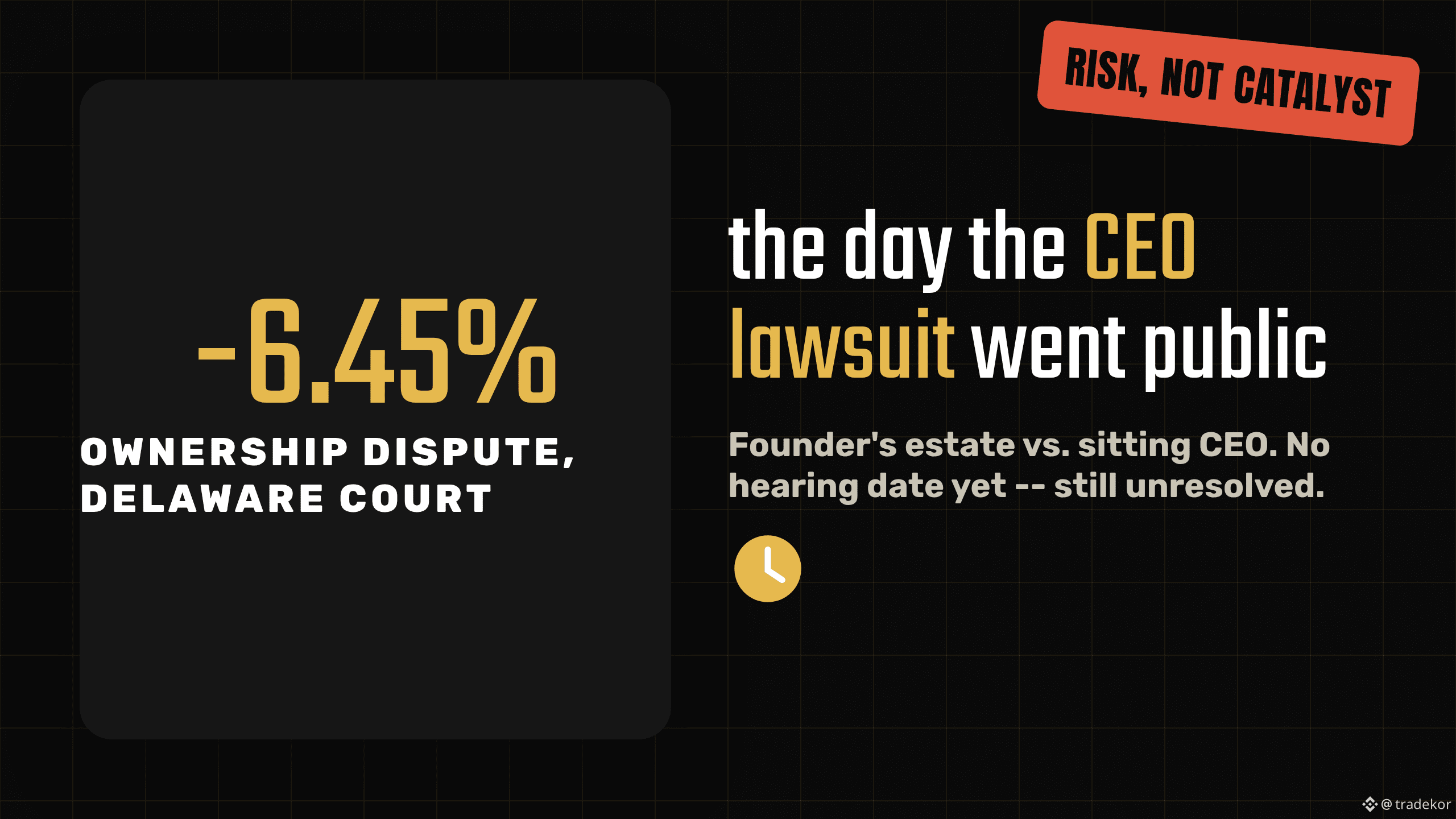
$ONDO a chuté de 6,45% le jour où la mère d’un fondateur a poursuivi en justice pour retirer le PDG en poste de l’entreprise — et l’affaire n’est toujours pas résolue trois semaines plus tard.
Que s’est-il passé : après le décès inattendu du fondateur d’Ondo Finance, Nathan Allman, en mai à l’âge de 32 ans, sa mère, Kathleen Allman, a utilisé des consentements d’actionnaires en juillet pour faire sortir le PDG Ian De Bode de ses fonctions de dirigeant, en affirmant détenir le contrôle via la succession du fondateur. De Bode conteste et reste en place. La succession a déposé une plainte vérifiée auprès de la Cour de chancellerie du Delaware fin juillet, demandant désormais une audience accélérée, arguant que l’incertitude menace des décisions commerciales ordinaires comme les contrats et les émissions de capitaux propres.
Pourquoi c’est important : ce n’est pas une histoire de produit ou de réglementation — c’est un véritable différend sur le contrôle de l’entreprise à l’origine d’un jeton dont la capitalisation boursière dépasse 1,6 Md$, sans date d’audience encore communiquée. Les questions de contrôle non résolues peuvent compliquer les partenariats et les décisions liées aux jetons jusqu’à ce qu’un tribunal tranche qui dirige.
Lecture honnête : De Bode affirme qu’il conserve le soutien des investisseurs principaux et de la Fondation Ondo, donc un rejet rapide est possible — mais tant qu’une décision n’est pas rendue, c’est un risque à intégrer dans les cours, pas une raison d’anticiper une direction précise. Réfutable : surveillez la date d’audience réelle et la décision ; une résolution rapide dans un sens comme dans l’autre fait disparaître la pression, tandis qu’un bras de fer qui s’éternise maintient l’incertitude sur le leadership.
Tiendriez-vous malgré un contentieux de direction non résolu, ou attendriez-vous d’abord une décision ?
Ce n’est pas un conseil financier. Faites vos recherches (DYOR).
$ONDO #Ondo #CryptoGovernance #CorporateLaw #RiskWatch
$ONDO a chuté de 6,45% le jour où la mère d’un fondateur a poursuivi en justice pour retirer le PDG en poste de l’entreprise — et l’affaire n’est toujours pas résolue trois semaines plus tard.
Que s’est-il passé : après le décès inattendu du fondateur d’Ondo Finance, Nathan Allman, en mai à l’âge de 32 ans, sa mère, Kathleen Allman, a utilisé des consentements d’actionnaires en juillet pour faire sortir le PDG Ian De Bode de ses fonctions de dirigeant, en affirmant détenir le contrôle via la succession du fondateur. De Bode conteste et reste en place. La succession a déposé une plainte vérifiée auprès de la Cour de chancellerie du Delaware fin juillet, demandant désormais une audience accélérée, arguant que l’incertitude menace des décisions commerciales ordinaires comme les contrats et les émissions de capitaux propres.
Pourquoi c’est important : ce n’est pas une histoire de produit ou de réglementation — c’est un véritable différend sur le contrôle de l’entreprise à l’origine d’un jeton dont la capitalisation boursière dépasse 1,6 Md$, sans date d’audience encore communiquée. Les questions de contrôle non résolues peuvent compliquer les partenariats et les décisions liées aux jetons jusqu’à ce qu’un tribunal tranche qui dirige.
Lecture honnête : De Bode affirme qu’il conserve le soutien des investisseurs principaux et de la Fondation Ondo, donc un rejet rapide est possible — mais tant qu’une décision n’est pas rendue, c’est un risque à intégrer dans les cours, pas une raison d’anticiper une direction précise. Réfutable : surveillez la date d’audience réelle et la décision ; une résolution rapide dans un sens comme dans l’autre fait disparaître la pression, tandis qu’un bras de fer qui s’éternise maintient l’incertitude sur le leadership.
Tiendriez-vous malgré un contentieux de direction non résolu, ou attendriez-vous d’abord une décision ?
Ce n’est pas un conseil financier. Faites vos recherches (DYOR).
$ONDO #Ondo #CryptoGovernance #CorporateLaw #RiskWatch
Que s’est-il passé : après le décès inattendu du fondateur d’Ondo Finance, Nathan Allman, en mai à l’âge de 32 ans, sa mère, Kathleen Allman, a utilisé des consentements d’actionnaires en juillet pour faire sortir le PDG Ian De Bode de ses fonctions de dirigeant, en affirmant détenir le contrôle via la succession du fondateur. De Bode conteste et reste en place. La succession a déposé une plainte vérifiée auprès de la Cour de chancellerie du Delaware fin juillet, demandant désormais une audience accélérée, arguant que l’incertitude menace des décisions commerciales ordinaires comme les contrats et les émissions de capitaux propres.
Pourquoi c’est important : ce n’est pas une histoire de produit ou de réglementation — c’est un véritable différend sur le contrôle de l’entreprise à l’origine d’un jeton dont la capitalisation boursière dépasse 1,6 Md$, sans date d’audience encore communiquée. Les questions de contrôle non résolues peuvent compliquer les partenariats et les décisions liées aux jetons jusqu’à ce qu’un tribunal tranche qui dirige.
Lecture honnête : De Bode affirme qu’il conserve le soutien des investisseurs principaux et de la Fondation Ondo, donc un rejet rapide est possible — mais tant qu’une décision n’est pas rendue, c’est un risque à intégrer dans les cours, pas une raison d’anticiper une direction précise. Réfutable : surveillez la date d’audience réelle et la décision ; une résolution rapide dans un sens comme dans l’autre fait disparaître la pression, tandis qu’un bras de fer qui s’éternise maintient l’incertitude sur le leadership.
Tiendriez-vous malgré un contentieux de direction non résolu, ou attendriez-vous d’abord une décision ?
Ce n’est pas un conseil financier. Faites vos recherches (DYOR).
$ONDO #Ondo #CryptoGovernance #CorporateLaw #RiskWatch
41

·
--
$OPG VOIT UNE AUGMENTATION DE L'ENGAGEMENT EN GOUVERNANCE ET DE L'ACTIVITÉ DE STAKING 🔥
Entrée : 0,50
Cible : 0,70
Stop Loss : 0,40
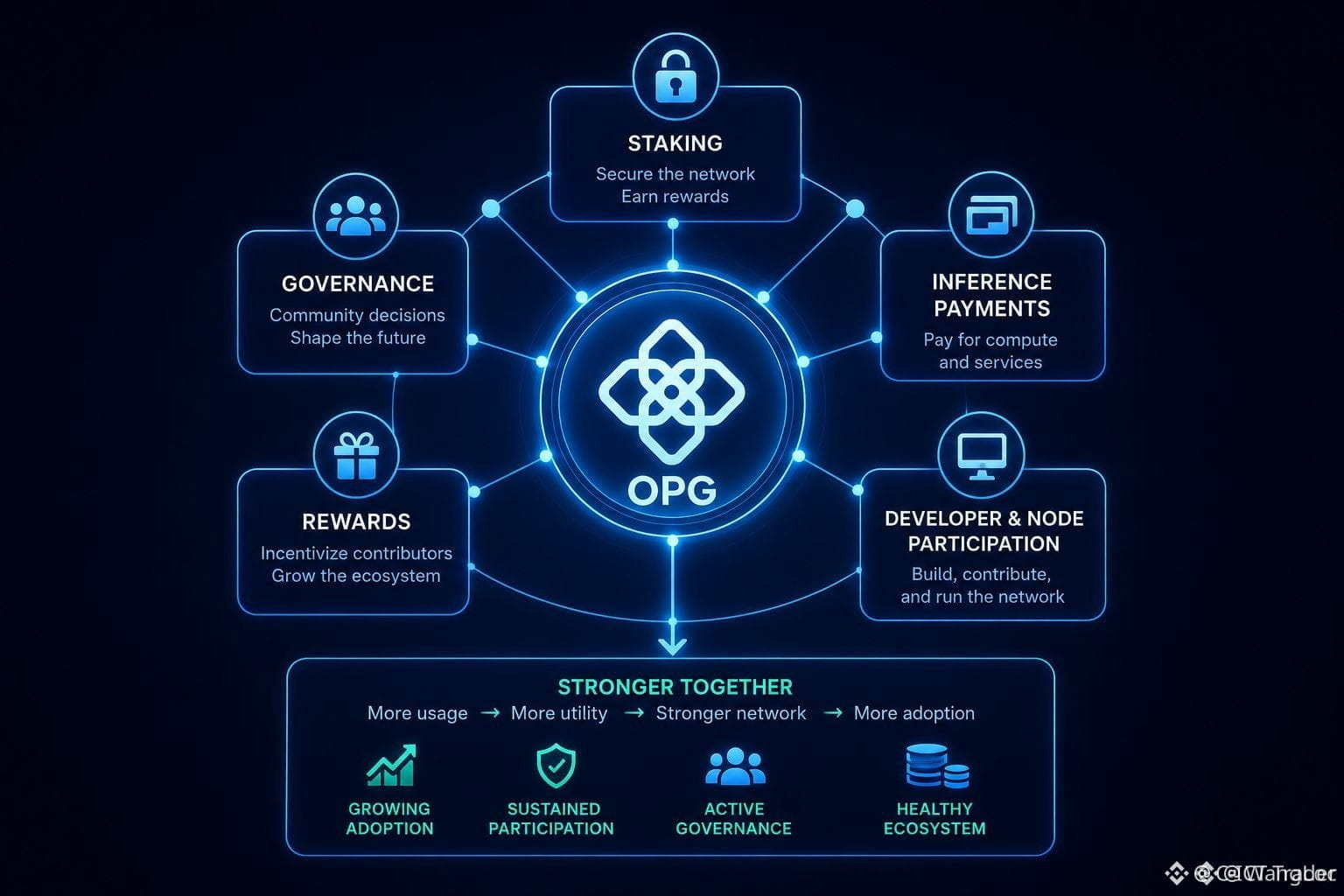
Le véritable test pour $OPG est de savoir si son engagement en gouvernance, son activité de staking et l'adoption par les développeurs continuent de croître indépendamment du battage médiatique du marché, car cela indiquerait un réseau solide et sain. Que se passe-t-il si ces indicateurs commencent à baisser ? Le prix de $OPG suivra-t-il le mouvement ?
Ce n'est pas un conseil financier. Gérez votre risque.
#OPG #LongSetup #CryptoGovernance
💸
$OPG VOIT UNE AUGMENTATION DE L'ENGAGEMENT EN GOUVERNANCE ET DE L'ACTIVITÉ DE STAKING 🔥
Entrée : 0,50
Cible : 0,70
Stop Loss : 0,40
Le véritable test pour $OPG est de savoir si son engagement en gouvernance, son activité de staking et l'adoption par les développeurs continuent de croître indépendamment du battage médiatique du marché, car cela indiquerait un réseau solide et sain. Que se passe-t-il si ces indicateurs commencent à baisser ? Le prix de $OPG suivra-t-il le mouvement ?
Ce n'est pas un conseil financier. Gérez votre risque.
#OPG #LongSetup #CryptoGovernance
💸
Entrée : 0,50
Cible : 0,70
Stop Loss : 0,40
Le véritable test pour $OPG est de savoir si son engagement en gouvernance, son activité de staking et l'adoption par les développeurs continuent de croître indépendamment du battage médiatique du marché, car cela indiquerait un réseau solide et sain. Que se passe-t-il si ces indicateurs commencent à baisser ? Le prix de $OPG suivra-t-il le mouvement ?
Ce n'est pas un conseil financier. Gérez votre risque.
#OPG #LongSetup #CryptoGovernance
💸
1
24

·
--
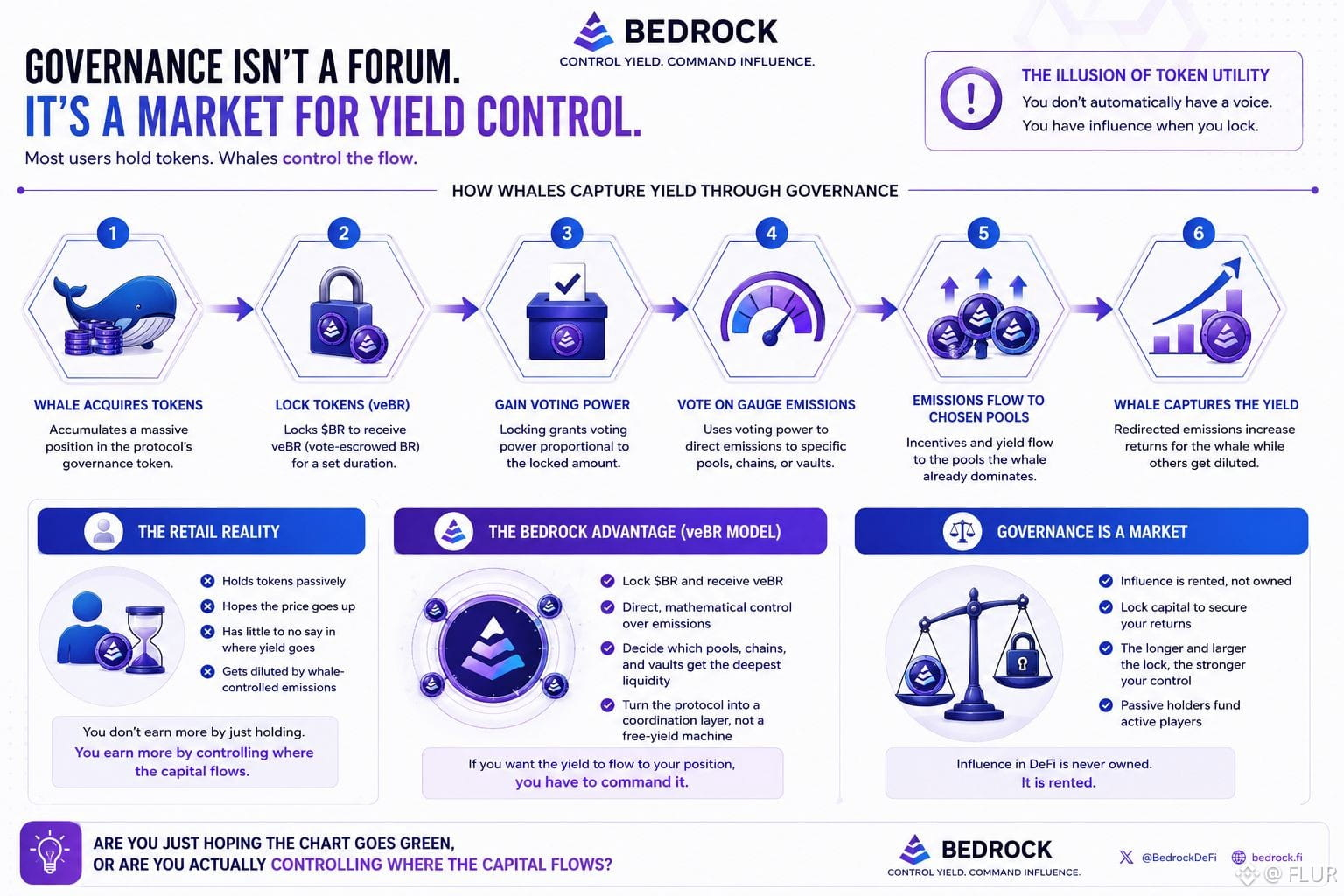
Hier, je regardais un portefeuille de baleine verrouiller une position massive dans un contrat de gouvernance DeFi.
La plupart des utilisateurs de détail voient un verrouillage de plusieurs années et supposent que c'est un signe de "conviction à long terme".
Nous sommes conditionnés à penser que la gouvernance est une assemblée démocratique.
Nous supposons que détenir un token nous donne une voix.
Mais lorsque vous suivez le routage on-chain réel, cette baleine ne votait pas sur les propositions de la communauté.
Elle votait sur les émissions de jauge.
Ils ont verrouillé leurs tokens pour rediriger de force le rendement du protocole directement vers les pools de liquidité spécifiques qu'ils dominent déjà.
Pendant que les utilisateurs quotidiens détiennent le token passivement en attendant que le prix monte, la baleine utilise le token pour siphonner activement le flux de trésorerie du protocole.
Cela brise complètement l'illusion de l'utilité standard des tokens.
La gouvernance n'est pas un forum communautaire.
C'est un marché invisible pour le contrôle du rendement.
Cette tension comportementale est exactement pourquoi le modèle veBR à l'intérieur de Bedrock a attiré mon attention.
Bedrock ne traite pas $BR comme un simple reward spéculatif.
Lorsque les utilisateurs verrouillent $BR pour recevoir veBR (vote-escrowed BR), ils ne reçoivent pas un insigne de vote sans signification.
Ils acquièrent un contrôle direct et mathématique sur les émissions multi-chaînes du protocole.
Ils dictent quels pools de restaking liquides, quelles chaînes et quels coffres reçoivent les incitations à la liquidité les plus profondes.
Le protocole cesse d'être une machine qui distribue du rendement gratuit et devient une couche de coordination où les participants doivent verrouiller du capital pour sécuriser leurs propres rendements.
Si vous voulez que le rendement coule vers votre position spécifique, vous devez le commander.
L'influence dans DeFi n'est jamais possédée.
Elle est louée.
Regardez votre propre portefeuille.
Tenez-vous des tokens en espérant que le graphique devienne vert, ou contrôlez-vous réellement où le capital coule ?
@Bedrock #Bedrock $BR
{future}(BRUSDT)
#DeFi #CryptoGovernance
Hier, je regardais un portefeuille de baleine verrouiller une position massive dans un contrat de gouvernance DeFi.
La plupart des utilisateurs de détail voient un verrouillage de plusieurs années et supposent que c'est un signe de "conviction à long terme".
Nous sommes conditionnés à penser que la gouvernance est une assemblée démocratique.
Nous supposons que détenir un token nous donne une voix.
Mais lorsque vous suivez le routage on-chain réel, cette baleine ne votait pas sur les propositions de la communauté.
Elle votait sur les émissions de jauge.
Ils ont verrouillé leurs tokens pour rediriger de force le rendement du protocole directement vers les pools de liquidité spécifiques qu'ils dominent déjà.
Pendant que les utilisateurs quotidiens détiennent le token passivement en attendant que le prix monte, la baleine utilise le token pour siphonner activement le flux de trésorerie du protocole.
Cela brise complètement l'illusion de l'utilité standard des tokens.
La gouvernance n'est pas un forum communautaire.
C'est un marché invisible pour le contrôle du rendement.
Cette tension comportementale est exactement pourquoi le modèle veBR à l'intérieur de Bedrock a attiré mon attention.
Bedrock ne traite pas $BR comme un simple reward spéculatif.
Lorsque les utilisateurs verrouillent $BR pour recevoir veBR (vote-escrowed BR), ils ne reçoivent pas un insigne de vote sans signification.
Ils acquièrent un contrôle direct et mathématique sur les émissions multi-chaînes du protocole.
Ils dictent quels pools de restaking liquides, quelles chaînes et quels coffres reçoivent les incitations à la liquidité les plus profondes.
Le protocole cesse d'être une machine qui distribue du rendement gratuit et devient une couche de coordination où les participants doivent verrouiller du capital pour sécuriser leurs propres rendements.
Si vous voulez que le rendement coule vers votre position spécifique, vous devez le commander.
L'influence dans DeFi n'est jamais possédée.
Elle est louée.
Regardez votre propre portefeuille.
Tenez-vous des tokens en espérant que le graphique devienne vert, ou contrôlez-vous réellement où le capital coule ?
@Bedrock #Bedrock $BR
#DeFi #CryptoGovernance
La plupart des utilisateurs de détail voient un verrouillage de plusieurs années et supposent que c'est un signe de "conviction à long terme".
Nous sommes conditionnés à penser que la gouvernance est une assemblée démocratique.
Nous supposons que détenir un token nous donne une voix.
Mais lorsque vous suivez le routage on-chain réel, cette baleine ne votait pas sur les propositions de la communauté.
Elle votait sur les émissions de jauge.
Ils ont verrouillé leurs tokens pour rediriger de force le rendement du protocole directement vers les pools de liquidité spécifiques qu'ils dominent déjà.
Pendant que les utilisateurs quotidiens détiennent le token passivement en attendant que le prix monte, la baleine utilise le token pour siphonner activement le flux de trésorerie du protocole.
Cela brise complètement l'illusion de l'utilité standard des tokens.
La gouvernance n'est pas un forum communautaire.
C'est un marché invisible pour le contrôle du rendement.
Cette tension comportementale est exactement pourquoi le modèle veBR à l'intérieur de Bedrock a attiré mon attention.
Bedrock ne traite pas $BR comme un simple reward spéculatif.
Lorsque les utilisateurs verrouillent $BR pour recevoir veBR (vote-escrowed BR), ils ne reçoivent pas un insigne de vote sans signification.
Ils acquièrent un contrôle direct et mathématique sur les émissions multi-chaînes du protocole.
Ils dictent quels pools de restaking liquides, quelles chaînes et quels coffres reçoivent les incitations à la liquidité les plus profondes.
Le protocole cesse d'être une machine qui distribue du rendement gratuit et devient une couche de coordination où les participants doivent verrouiller du capital pour sécuriser leurs propres rendements.
Si vous voulez que le rendement coule vers votre position spécifique, vous devez le commander.
L'influence dans DeFi n'est jamais possédée.
Elle est louée.
Regardez votre propre portefeuille.
Tenez-vous des tokens en espérant que le graphique devienne vert, ou contrôlez-vous réellement où le capital coule ?
@Bedrock #Bedrock $BR
#DeFi #CryptoGovernance
2
3
96

·
--
CZ a proposé de geler les 1,1 million de Satoshi $BTC avant que des ordinateurs quantiques ne puissent les voler.
À première vue, cela ressemble à une mesure protectrice. Mais réfléchissez à ce que cela implique réellement : une décision coordonnée du réseau pour confisquer des coins à une adresse sur la base d’une menace qui ne s’est pas encore matérialisée.
Ce n’est pas un débat technique. C’est un débat de gouvernance.
La propriété la plus puissante de Bitcoin n’est pas la rareté — c’est le fait que personne ne peut modifier les règles unilatéralement. Dès que vous établissez un précédent pour geler des coins « à risque », vous créez une nouvelle catégorie : des coins qui peuvent être gelés si la communauté décide qu’ils posent problème.
$ETH s’est déjà heurté à cela. Le hard fork DAO de 2016 a scindé la chaîne et a laissé une blessure philosophique permanente. La plupart du monde crypto a appris de cet épisode.
$ADA a mis en place des modèles formels de gouvernance précisément parce que les décisions ad hoc sont dangereuses. La réponse au risque quantique n’est pas un gel — c’est un chemin de migration, prévu à l’avance, auquel chaque détenteur choisit d’adhérer.
La menace quantique est réelle. CZ n’a pas tort de la soulever. Mais la solution qui préserve la valeur de Bitcoin, ce sont des mises à niveau de la cryptographie post-quantique, pas des saisies par consensus social.
La façon dont vous résolvez les problèmes difficiles révèle ce que vous croyez réellement que le protocole est censé faire.
#Bitcoin #CryptoGovernance #QuantumComputing #Web3 #BTC
CZ a proposé de geler les 1,1 million de Satoshi $BTC avant que des ordinateurs quantiques ne puissent les voler.
À première vue, cela ressemble à une mesure protectrice. Mais réfléchissez à ce que cela implique réellement : une décision coordonnée du réseau pour confisquer des coins à une adresse sur la base d’une menace qui ne s’est pas encore matérialisée.
Ce n’est pas un débat technique. C’est un débat de gouvernance.
La propriété la plus puissante de Bitcoin n’est pas la rareté — c’est le fait que personne ne peut modifier les règles unilatéralement. Dès que vous établissez un précédent pour geler des coins « à risque », vous créez une nouvelle catégorie : des coins qui peuvent être gelés si la communauté décide qu’ils posent problème.
$ETH s’est déjà heurté à cela. Le hard fork DAO de 2016 a scindé la chaîne et a laissé une blessure philosophique permanente. La plupart du monde crypto a appris de cet épisode.
$ADA a mis en place des modèles formels de gouvernance précisément parce que les décisions ad hoc sont dangereuses. La réponse au risque quantique n’est pas un gel — c’est un chemin de migration, prévu à l’avance, auquel chaque détenteur choisit d’adhérer.
La menace quantique est réelle. CZ n’a pas tort de la soulever. Mais la solution qui préserve la valeur de Bitcoin, ce sont des mises à niveau de la cryptographie post-quantique, pas des saisies par consensus social.
La façon dont vous résolvez les problèmes difficiles révèle ce que vous croyez réellement que le protocole est censé faire.
#Bitcoin #CryptoGovernance #QuantumComputing #Web3 #BTC
À première vue, cela ressemble à une mesure protectrice. Mais réfléchissez à ce que cela implique réellement : une décision coordonnée du réseau pour confisquer des coins à une adresse sur la base d’une menace qui ne s’est pas encore matérialisée.
Ce n’est pas un débat technique. C’est un débat de gouvernance.
La propriété la plus puissante de Bitcoin n’est pas la rareté — c’est le fait que personne ne peut modifier les règles unilatéralement. Dès que vous établissez un précédent pour geler des coins « à risque », vous créez une nouvelle catégorie : des coins qui peuvent être gelés si la communauté décide qu’ils posent problème.
$ETH s’est déjà heurté à cela. Le hard fork DAO de 2016 a scindé la chaîne et a laissé une blessure philosophique permanente. La plupart du monde crypto a appris de cet épisode.
$ADA a mis en place des modèles formels de gouvernance précisément parce que les décisions ad hoc sont dangereuses. La réponse au risque quantique n’est pas un gel — c’est un chemin de migration, prévu à l’avance, auquel chaque détenteur choisit d’adhérer.
La menace quantique est réelle. CZ n’a pas tort de la soulever. Mais la solution qui préserve la valeur de Bitcoin, ce sont des mises à niveau de la cryptographie post-quantique, pas des saisies par consensus social.
La façon dont vous résolvez les problèmes difficiles révèle ce que vous croyez réellement que le protocole est censé faire.
#Bitcoin #CryptoGovernance #QuantumComputing #Web3 #BTC
65

·
--
Article
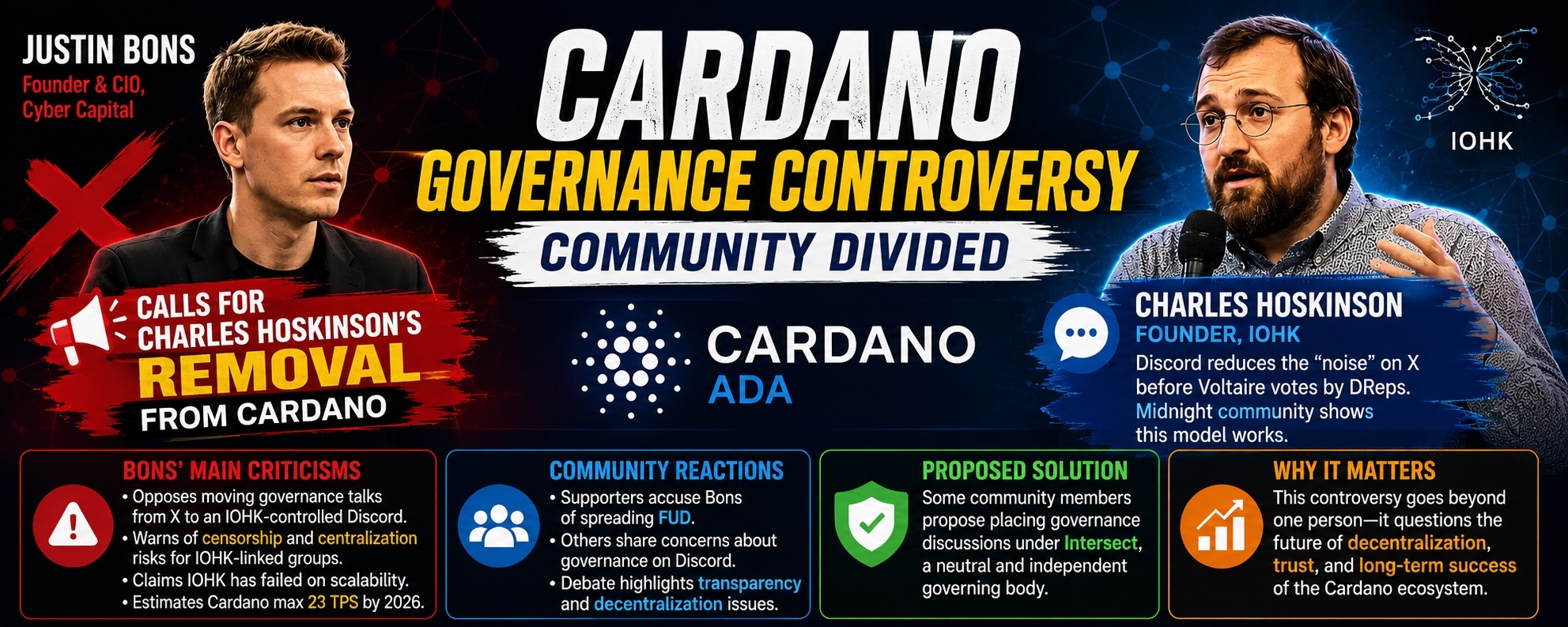
🚨 Justin Bons appelle à écarter Charles Hoskinson de Cardano, la controverse sur la gouvernance éclate🚨 Justin Bons appelle à écarter Charles Hoskinson de Cardano, la controverse sur la gouvernance éclate
Le fondateur de Cyber Capital, Justin Bons, a publiquement appelé la communauté Cardano à écarter Charles Hoskinson de son rôle de leader, arguant que le transfert des discussions de gouvernance vers un serveur Discord contrôlé par IOHK pourrait conduire à de la censure et affaiblir la décentralisation du réseau.
🔸 Critique du modèle de gouvernance sur Discord
🚨 Justin Bons appelle à écarter Charles Hoskinson de Cardano, la controverse sur la gouvernance éclate
🚨 Justin Bons appelle à écarter Charles Hoskinson de Cardano, la controverse sur la gouvernance éclate
Le fondateur de Cyber Capital, Justin Bons, a publiquement appelé la communauté Cardano à écarter Charles Hoskinson de son rôle de leader, arguant que le transfert des discussions de gouvernance vers un serveur Discord contrôlé par IOHK pourrait conduire à de la censure et affaiblir la décentralisation du réseau.
🔸 Critique du modèle de gouvernance sur Discord
Le fondateur de Cyber Capital, Justin Bons, a publiquement appelé la communauté Cardano à écarter Charles Hoskinson de son rôle de leader, arguant que le transfert des discussions de gouvernance vers un serveur Discord contrôlé par IOHK pourrait conduire à de la censure et affaiblir la décentralisation du réseau.
🔸 Critique du modèle de gouvernance sur Discord
1
181

·
--
La Fondation Ethereum traverse la plus grave crise de leadership de son histoire. La co-directrice Hsiao-Wei Wang vient de démissionner, s’ajoutant à une vague d’au moins huit départs de hauts responsables en cinq mois.
L’ancien chercheur Dankrad Feist affirme que cet exode reflète davantage des défaillances de gestion que des désaccords stratégiques. « Les personnes qui partent croient à la vision d’Ethereum — le problème ne vient pas de la stratégie, il vient de la gestion », a-t-il écrit.
Certains membres de la communauté estiment que cela correspond à une décentralisation saine — un transfert du pouvoir de la Fondation vers les développeurs et les DAO. D’autres craignent que cela affaiblisse la capacité d’Ethereum à rivaliser dans un environnement de contrats intelligents de plus en plus encombré.
La Fondation a récemment lancé son cadre CROPS (valeurs cypherpunk, résilience, open source, absence de permission, sécurité), mais des critiques affirment qu’il ne répond pas aux véritables problèmes organisationnels.
Can $ETH maintain its edge while its governing body loses key talent ? Ou est-ce la preuve que les protocoles décentralisés n’ont pas besoin d’une forte fondation centrale ?
#Ethereum #EFLeadership #CryptoGovernance #ETH
La Fondation Ethereum traverse la plus grave crise de leadership de son histoire. La co-directrice Hsiao-Wei Wang vient de démissionner, s’ajoutant à une vague d’au moins huit départs de hauts responsables en cinq mois.
L’ancien chercheur Dankrad Feist affirme que cet exode reflète davantage des défaillances de gestion que des désaccords stratégiques. « Les personnes qui partent croient à la vision d’Ethereum — le problème ne vient pas de la stratégie, il vient de la gestion », a-t-il écrit.
Certains membres de la communauté estiment que cela correspond à une décentralisation saine — un transfert du pouvoir de la Fondation vers les développeurs et les DAO. D’autres craignent que cela affaiblisse la capacité d’Ethereum à rivaliser dans un environnement de contrats intelligents de plus en plus encombré.
La Fondation a récemment lancé son cadre CROPS (valeurs cypherpunk, résilience, open source, absence de permission, sécurité), mais des critiques affirment qu’il ne répond pas aux véritables problèmes organisationnels.
Can $ETH maintain its edge while its governing body loses key talent ? Ou est-ce la preuve que les protocoles décentralisés n’ont pas besoin d’une forte fondation centrale ?
#Ethereum #EFLeadership #CryptoGovernance #ETH
L’ancien chercheur Dankrad Feist affirme que cet exode reflète davantage des défaillances de gestion que des désaccords stratégiques. « Les personnes qui partent croient à la vision d’Ethereum — le problème ne vient pas de la stratégie, il vient de la gestion », a-t-il écrit.
Certains membres de la communauté estiment que cela correspond à une décentralisation saine — un transfert du pouvoir de la Fondation vers les développeurs et les DAO. D’autres craignent que cela affaiblisse la capacité d’Ethereum à rivaliser dans un environnement de contrats intelligents de plus en plus encombré.
La Fondation a récemment lancé son cadre CROPS (valeurs cypherpunk, résilience, open source, absence de permission, sécurité), mais des critiques affirment qu’il ne répond pas aux véritables problèmes organisationnels.
Can $ETH maintain its edge while its governing body loses key talent ? Ou est-ce la preuve que les protocoles décentralisés n’ont pas besoin d’une forte fondation centrale ?
#Ethereum #EFLeadership #CryptoGovernance #ETH
1
5

·
--
Article
Comment la gouvernance DAO est utilisée contre les investisseurs particuliersAvez-vous remarqué à quel point la gouvernance DAO peut être utilisée comme une arme contre les investisseurs particuliers ?
La plupart des traders perdent de l’argent non pas à cause des baisses du marché, mais parce qu’ils font aveuglément confiance à la gouvernance DAO sans prêter attention à ce qui est réellement voté. Cette indifférence laisse la porte grande ouverte aux mauvais acteurs pour vider les trésoreries et déverser sur vos positions.
Regardez ce qui vient de se passer avec $BONK. Un attaquant a acheté pour 4 millions de dollars de tokens, a soumis une proposition pour transférer 4 4 billions de tokens vers son propre portefeuille, puis a simplement attendu. Comme la communauté dormait depuis sept jours, l’attaquant a voté oui avec son propre sac, a fait passer la proposition et s’est éloigné avec 20 millions de dollars.
Comment la gouvernance DAO est utilisée contre les investisseurs particuliers
Avez-vous remarqué à quel point la gouvernance DAO peut être utilisée comme une arme contre les investisseurs particuliers ?
La plupart des traders perdent de l’argent non pas à cause des baisses du marché, mais parce qu’ils font aveuglément confiance à la gouvernance DAO sans prêter attention à ce qui est réellement voté. Cette indifférence laisse la porte grande ouverte aux mauvais acteurs pour vider les trésoreries et déverser sur vos positions.
Regardez ce qui vient de se passer avec $BONK . Un attaquant a acheté pour 4 millions de dollars de tokens, a soumis une proposition pour transférer 4 4 billions de tokens vers son propre portefeuille, puis a simplement attendu. Comme la communauté dormait depuis sept jours, l’attaquant a voté oui avec son propre sac, a fait passer la proposition et s’est éloigné avec 20 millions de dollars.
La plupart des traders perdent de l’argent non pas à cause des baisses du marché, mais parce qu’ils font aveuglément confiance à la gouvernance DAO sans prêter attention à ce qui est réellement voté. Cette indifférence laisse la porte grande ouverte aux mauvais acteurs pour vider les trésoreries et déverser sur vos positions.
Regardez ce qui vient de se passer avec $BONK . Un attaquant a acheté pour 4 millions de dollars de tokens, a soumis une proposition pour transférer 4 4 billions de tokens vers son propre portefeuille, puis a simplement attendu. Comme la communauté dormait depuis sept jours, l’attaquant a voté oui avec son propre sac, a fait passer la proposition et s’est éloigné avec 20 millions de dollars.
81

·
--
L’avenir de la gouvernance Web3 obtient-il enfin la mise à niveau dont elle a besoin ? Parlons de DeXe, un projet qui redéfinit discrètement la manière dont les organisations autonomes décentralisées (DAO) fonctionnent. Alors que beaucoup associent les DAO à l’apathie des électeurs et à une prise de décision chaotique, DeXe construit l’infrastructure pour corriger précisément ces points douloureux.
Au cœur du projet, le protocole DeXe est un outil complet permettant de créer des DAO durables. Son produit phare, le DeXe DAO Studio, permet à quiconque de lancer et de gérer une DAO hautement personnalisable, sans avoir à écrire de code complexe. Ce qui distingue DeXe, c’est son ancrage dans la méritocratie et la gouvernance active. Au lieu du modèle traditionnel « un token, un vote », qui favorise souvent les baleines les plus riches, DeXe introduit une délégation flexible, des sub-DAO et des récompenses pour l’expertise. Cela garantit que les décisions sont prises par celles et ceux qui comprennent réellement les propositions, plutôt que par ceux qui détiennent simplement les portefeuilles les plus importants.
Du point de vue analytique, l’utilité du token DEXE est profondément intégrée à cet écosystème. DEXE n’est pas seulement un actif spéculatif : c’est l’outil fondamental pour sécuriser la gouvernance, aligner les incitations entre différentes DAO et participer à la gestion de la trésorerie. À mesure que de plus en plus de projets cherchent à passer à une décentralisation véritable, la demande d’outils robustes de création de DAO comme DeXe est appelée à croître.
De plus, DeXe résout le problème de la rétention. En récompensant la participation constructive et en proposant des outils qui empêchent les attaques contre la gouvernance, il aide les DAO à maintenir une stabilité à long terme. Sur un marché de plus en plus axé sur l’utilité réelle et des tokenomics durables, l’attention portée par DeXe à l’infrastructure de gouvernance est un récit qui mérite d’être suivi.
Que vous soyez développeur·se et souhaitiez lancer un projet, ou investisseur·se en quête d’utilité à long terme, DeXe offre un aperçu fascinant de la prochaine génération d’organisations collaboratives Web3. Gardez un œil sur son écosystème en pleine expansion à mesure que la gouvernance décentralisée devient la norme d’or.
#DeXe #DAO #CryptoGovernance
L’avenir de la gouvernance Web3 obtient-il enfin la mise à niveau dont elle a besoin ? Parlons de DeXe, un projet qui redéfinit discrètement la manière dont les organisations autonomes décentralisées (DAO) fonctionnent. Alors que beaucoup associent les DAO à l’apathie des électeurs et à une prise de décision chaotique, DeXe construit l’infrastructure pour corriger précisément ces points douloureux.
Au cœur du projet, le protocole DeXe est un outil complet permettant de créer des DAO durables. Son produit phare, le DeXe DAO Studio, permet à quiconque de lancer et de gérer une DAO hautement personnalisable, sans avoir à écrire de code complexe. Ce qui distingue DeXe, c’est son ancrage dans la méritocratie et la gouvernance active. Au lieu du modèle traditionnel « un token, un vote », qui favorise souvent les baleines les plus riches, DeXe introduit une délégation flexible, des sub-DAO et des récompenses pour l’expertise. Cela garantit que les décisions sont prises par celles et ceux qui comprennent réellement les propositions, plutôt que par ceux qui détiennent simplement les portefeuilles les plus importants.
Du point de vue analytique, l’utilité du token DEXE est profondément intégrée à cet écosystème. DEXE n’est pas seulement un actif spéculatif : c’est l’outil fondamental pour sécuriser la gouvernance, aligner les incitations entre différentes DAO et participer à la gestion de la trésorerie. À mesure que de plus en plus de projets cherchent à passer à une décentralisation véritable, la demande d’outils robustes de création de DAO comme DeXe est appelée à croître.
De plus, DeXe résout le problème de la rétention. En récompensant la participation constructive et en proposant des outils qui empêchent les attaques contre la gouvernance, il aide les DAO à maintenir une stabilité à long terme. Sur un marché de plus en plus axé sur l’utilité réelle et des tokenomics durables, l’attention portée par DeXe à l’infrastructure de gouvernance est un récit qui mérite d’être suivi.
Que vous soyez développeur·se et souhaitiez lancer un projet, ou investisseur·se en quête d’utilité à long terme, DeXe offre un aperçu fascinant de la prochaine génération d’organisations collaboratives Web3. Gardez un œil sur son écosystème en pleine expansion à mesure que la gouvernance décentralisée devient la norme d’or.
#DeXe #DAO #CryptoGovernance
Au cœur du projet, le protocole DeXe est un outil complet permettant de créer des DAO durables. Son produit phare, le DeXe DAO Studio, permet à quiconque de lancer et de gérer une DAO hautement personnalisable, sans avoir à écrire de code complexe. Ce qui distingue DeXe, c’est son ancrage dans la méritocratie et la gouvernance active. Au lieu du modèle traditionnel « un token, un vote », qui favorise souvent les baleines les plus riches, DeXe introduit une délégation flexible, des sub-DAO et des récompenses pour l’expertise. Cela garantit que les décisions sont prises par celles et ceux qui comprennent réellement les propositions, plutôt que par ceux qui détiennent simplement les portefeuilles les plus importants.
Du point de vue analytique, l’utilité du token DEXE est profondément intégrée à cet écosystème. DEXE n’est pas seulement un actif spéculatif : c’est l’outil fondamental pour sécuriser la gouvernance, aligner les incitations entre différentes DAO et participer à la gestion de la trésorerie. À mesure que de plus en plus de projets cherchent à passer à une décentralisation véritable, la demande d’outils robustes de création de DAO comme DeXe est appelée à croître.
De plus, DeXe résout le problème de la rétention. En récompensant la participation constructive et en proposant des outils qui empêchent les attaques contre la gouvernance, il aide les DAO à maintenir une stabilité à long terme. Sur un marché de plus en plus axé sur l’utilité réelle et des tokenomics durables, l’attention portée par DeXe à l’infrastructure de gouvernance est un récit qui mérite d’être suivi.
Que vous soyez développeur·se et souhaitiez lancer un projet, ou investisseur·se en quête d’utilité à long terme, DeXe offre un aperçu fascinant de la prochaine génération d’organisations collaboratives Web3. Gardez un œil sur son écosystème en pleine expansion à mesure que la gouvernance décentralisée devient la norme d’or.
#DeXe #DAO #CryptoGovernance
141

·
--
Haussier
Partiellement vrai
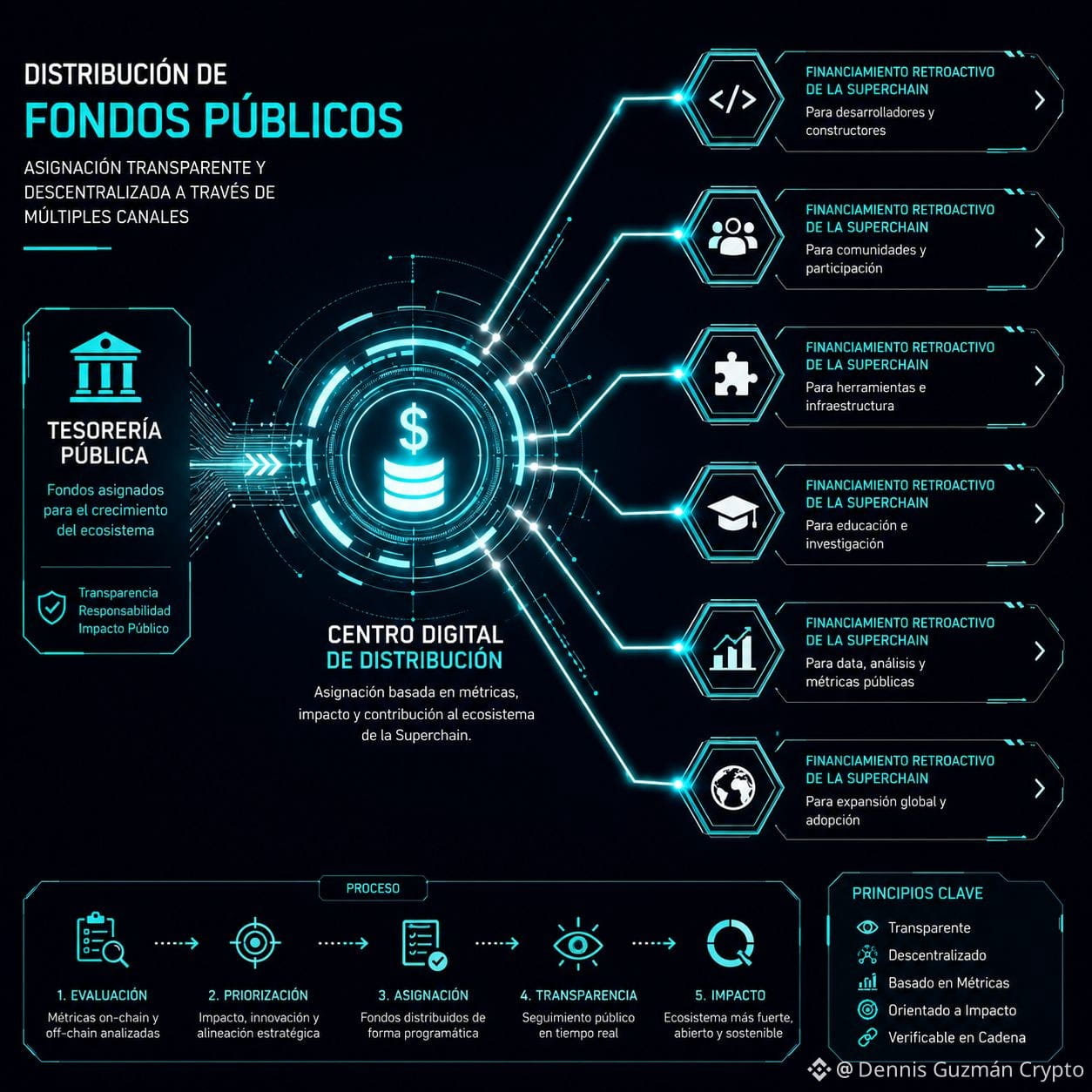
!Une attribution massive de 120 millions de dollars en subventions est distribuée de manière automatisée via des contrats intelligents ! $OP
{future}(OPUSDT)
Les statistiques de gouvernance on-chain révèlent comment l’écosystème décentralisé finance directement des développeurs de logiciels libres de réseau.
Ce flux continu de capitaux garantit l’expansion technique et le renforcement de l’infrastructure de mise à l’échelle, avec un impact positif sur le développement de la Superchain et de protocoles tels qu’Optimism ($OP ).
#OP #Superchain #CryptoGovernance
!Une attribution massive de 120 millions de dollars en subventions est distribuée de manière automatisée via des contrats intelligents ! $OP
Les statistiques de gouvernance on-chain révèlent comment l’écosystème décentralisé finance directement des développeurs de logiciels libres de réseau.
Ce flux continu de capitaux garantit l’expansion technique et le renforcement de l’infrastructure de mise à l’échelle, avec un impact positif sur le développement de la Superchain et de protocoles tels qu’Optimism ($OP ).
#OP #Superchain #CryptoGovernance
Les statistiques de gouvernance on-chain révèlent comment l’écosystème décentralisé finance directement des développeurs de logiciels libres de réseau.
Ce flux continu de capitaux garantit l’expansion technique et le renforcement de l’infrastructure de mise à l’échelle, avec un impact positif sur le développement de la Superchain et de protocoles tels qu’Optimism ($OP ).
#OP #Superchain #CryptoGovernance
1
2
134

·
--
Haussier
$ADA Époque de Gouvernance : La Décentralisation Peut-elle Relancer le Prix ? 🏛️
Cardano a officiellement entamé son ère de gouvernance avancée, confiant le contrôle total de l'écosystème à la communauté. Alors que les critiques soulignent l'action lente des prix comparée aux chaînes alimentées par le hype, le temps de fonctionnement et le record de sécurité de Cardano restent irréprochables.
L'accent est désormais mis sur la création d'applications DeFi et d'entreprise évolutives sur une fondation inébranlable.
Les hodlers d'ADA patients seront-ils récompensés à long terme ? Donnez-moi votre avis honnête ! 📊
#Cardano #ADA #CryptoGovernance #LongTermHolding
{spot}(ADAUSDT)
$ADA Époque de Gouvernance : La Décentralisation Peut-elle Relancer le Prix ? 🏛️
Cardano a officiellement entamé son ère de gouvernance avancée, confiant le contrôle total de l'écosystème à la communauté. Alors que les critiques soulignent l'action lente des prix comparée aux chaînes alimentées par le hype, le temps de fonctionnement et le record de sécurité de Cardano restent irréprochables.
L'accent est désormais mis sur la création d'applications DeFi et d'entreprise évolutives sur une fondation inébranlable.
Les hodlers d'ADA patients seront-ils récompensés à long terme ? Donnez-moi votre avis honnête ! 📊
#Cardano #ADA #CryptoGovernance #LongTermHolding
Cardano a officiellement entamé son ère de gouvernance avancée, confiant le contrôle total de l'écosystème à la communauté. Alors que les critiques soulignent l'action lente des prix comparée aux chaînes alimentées par le hype, le temps de fonctionnement et le record de sécurité de Cardano restent irréprochables.
L'accent est désormais mis sur la création d'applications DeFi et d'entreprise évolutives sur une fondation inébranlable.
Les hodlers d'ADA patients seront-ils récompensés à long terme ? Donnez-moi votre avis honnête ! 📊
#Cardano #ADA #CryptoGovernance #LongTermHolding
185
·
--
J'ai passé un moment à faire défiler le forum de gouvernance d'un protocole majeur hier soir.
Il y avait un énorme débat—des centaines de réponses passionnées—discutant d'une mise à jour administrative mineure du projet.
Pendant ce temps, complètement inaperçu, un seul wallet a discrètement verrouillé une position massive sur la blockchain.
Sans écrire un seul post sur le forum, ils ont exécuté un vote de jauge qui a redirigé des millions de dollars de rendement mensuel directement vers leur propre pool de liquidités privé.
On nous apprend que les "tokens de gouvernance" donnent une voix à la communauté.
On suppose que la valeur de détenir ces tokens réside dans la participation à une sorte de démocratie digitale.
Mais sur la blockchain, cette démocratie n'est souvent qu'une distraction.
La gouvernance est un mot assaini pour l'allocation de capital. La véritable utilité d'un token n'est pas d'avoir une voix ; c'est de diriger l'argent.
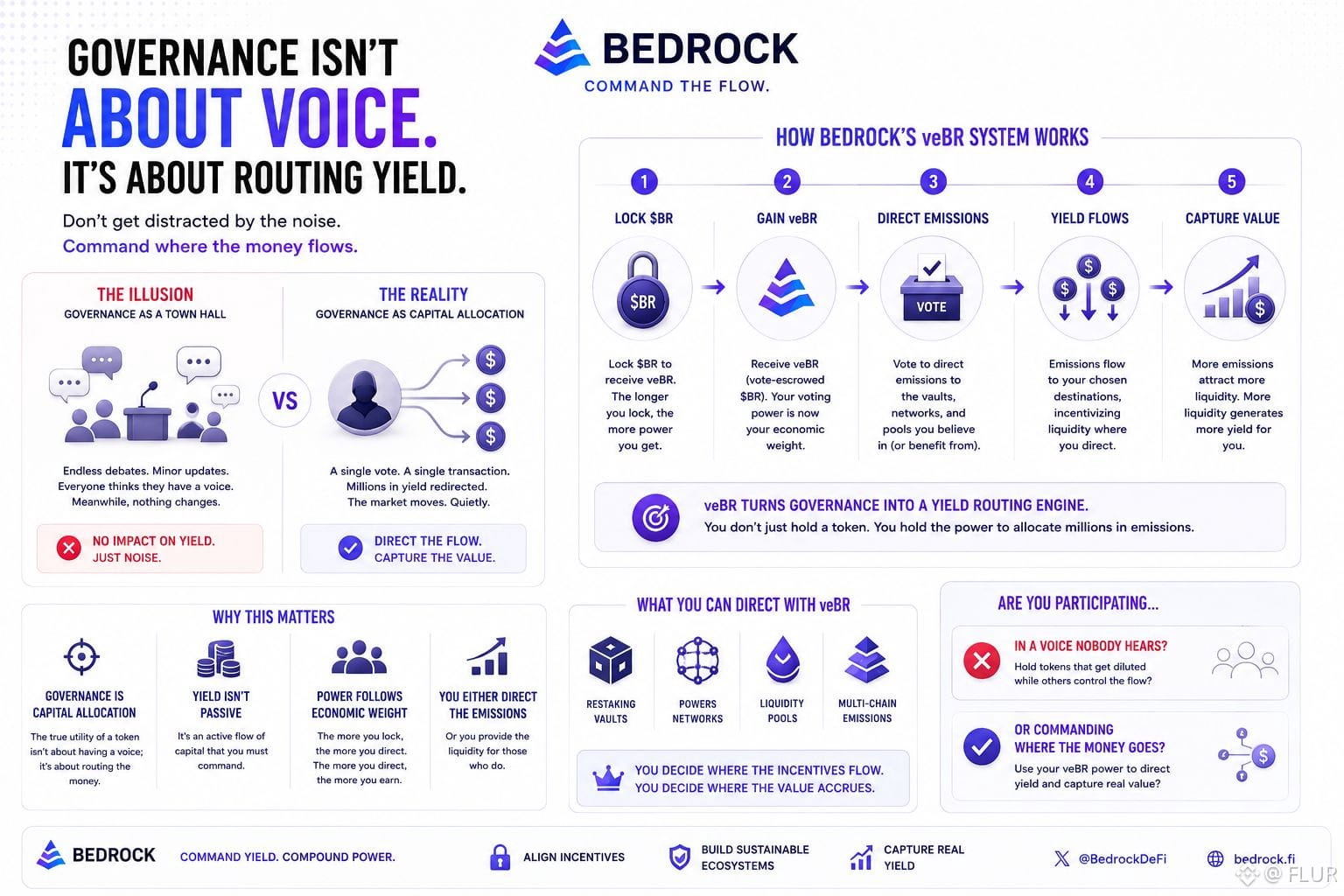
Ce décalage comportemental est exactement pourquoi l'architecture derrière le système veBR de Bedrock se démarque pour moi.
Bedrock enlève l'illusion de la "mairie communautaire" et embrasse la réalité absolue du marché des rendements.
Lorsque vous verrouillez $BR pour recevoir veBR, vous ne vous voyez pas remettre un insigne de vote sans signification.
Vous acquérez le droit mathématique de diriger les flux d'émission multi-chain de Bedrock.
Vous obtenez le pouvoir de dicter exactement quels vaults de restaking, quelles réseaux et quels pools de liquidités reçoivent les incitations les plus profondes.
Le rendement n'est pas un dividende passif qu'un protocole distribue simplement aux détenteurs fidèles.
C'est un flux actif de capital que vous devez commander.
Si vous ne dirigez pas les émissions, vous ne faites que fournir la liquidité pour ceux qui le font.
Regardez les tokens de gouvernance dans votre wallet en ce moment.
Les tenez-vous pour une voix que personne n'entend, ou les utilisez-vous réellement pour commander où va l'argent ?
@Bedrock #Bedrock $BR
{future}(BRUSDT)
#DeFi #CryptoGovernance
J'ai passé un moment à faire défiler le forum de gouvernance d'un protocole majeur hier soir.
Il y avait un énorme débat—des centaines de réponses passionnées—discutant d'une mise à jour administrative mineure du projet.
Pendant ce temps, complètement inaperçu, un seul wallet a discrètement verrouillé une position massive sur la blockchain.
Sans écrire un seul post sur le forum, ils ont exécuté un vote de jauge qui a redirigé des millions de dollars de rendement mensuel directement vers leur propre pool de liquidités privé.
On nous apprend que les "tokens de gouvernance" donnent une voix à la communauté.
On suppose que la valeur de détenir ces tokens réside dans la participation à une sorte de démocratie digitale.
Mais sur la blockchain, cette démocratie n'est souvent qu'une distraction.
La gouvernance est un mot assaini pour l'allocation de capital. La véritable utilité d'un token n'est pas d'avoir une voix ; c'est de diriger l'argent.
Ce décalage comportemental est exactement pourquoi l'architecture derrière le système veBR de Bedrock se démarque pour moi.
Bedrock enlève l'illusion de la "mairie communautaire" et embrasse la réalité absolue du marché des rendements.
Lorsque vous verrouillez $BR pour recevoir veBR, vous ne vous voyez pas remettre un insigne de vote sans signification.
Vous acquérez le droit mathématique de diriger les flux d'émission multi-chain de Bedrock.
Vous obtenez le pouvoir de dicter exactement quels vaults de restaking, quelles réseaux et quels pools de liquidités reçoivent les incitations les plus profondes.
Le rendement n'est pas un dividende passif qu'un protocole distribue simplement aux détenteurs fidèles.
C'est un flux actif de capital que vous devez commander.
Si vous ne dirigez pas les émissions, vous ne faites que fournir la liquidité pour ceux qui le font.
Regardez les tokens de gouvernance dans votre wallet en ce moment.
Les tenez-vous pour une voix que personne n'entend, ou les utilisez-vous réellement pour commander où va l'argent ?
@Bedrock #Bedrock $BR
#DeFi #CryptoGovernance
Il y avait un énorme débat—des centaines de réponses passionnées—discutant d'une mise à jour administrative mineure du projet.
Pendant ce temps, complètement inaperçu, un seul wallet a discrètement verrouillé une position massive sur la blockchain.
Sans écrire un seul post sur le forum, ils ont exécuté un vote de jauge qui a redirigé des millions de dollars de rendement mensuel directement vers leur propre pool de liquidités privé.
On nous apprend que les "tokens de gouvernance" donnent une voix à la communauté.
On suppose que la valeur de détenir ces tokens réside dans la participation à une sorte de démocratie digitale.
Mais sur la blockchain, cette démocratie n'est souvent qu'une distraction.
La gouvernance est un mot assaini pour l'allocation de capital. La véritable utilité d'un token n'est pas d'avoir une voix ; c'est de diriger l'argent.
Ce décalage comportemental est exactement pourquoi l'architecture derrière le système veBR de Bedrock se démarque pour moi.
Bedrock enlève l'illusion de la "mairie communautaire" et embrasse la réalité absolue du marché des rendements.
Lorsque vous verrouillez $BR pour recevoir veBR, vous ne vous voyez pas remettre un insigne de vote sans signification.
Vous acquérez le droit mathématique de diriger les flux d'émission multi-chain de Bedrock.
Vous obtenez le pouvoir de dicter exactement quels vaults de restaking, quelles réseaux et quels pools de liquidités reçoivent les incitations les plus profondes.
Le rendement n'est pas un dividende passif qu'un protocole distribue simplement aux détenteurs fidèles.
C'est un flux actif de capital que vous devez commander.
Si vous ne dirigez pas les émissions, vous ne faites que fournir la liquidité pour ceux qui le font.
Regardez les tokens de gouvernance dans votre wallet en ce moment.
Les tenez-vous pour une voix que personne n'entend, ou les utilisez-vous réellement pour commander où va l'argent ?
@Bedrock #Bedrock $BR
#DeFi #CryptoGovernance
78
·
--
Article
Comment la gouvernance des DAO détournée vide les portefeuilles des investisseurs particuliersPourquoi personne ne parle du fait que la gouvernance décentralisée peut être utilisée comme une arme contre les investisseurs particuliers ?
Beaucoup de traders achètent des tokens en espérant un rallye, pour ensuite voir leurs positions se déverser parce qu’ils ont ignoré le forum de gouvernance. C’est une façon brutale de perdre de l’argent, surtout lorsque l’exploit se produit sous vos yeux, en toute évidence.
Pour protéger votre capital, vous devez commencer à considérer la gouvernance des DAO comme un indicateur de sécurité critique. Nous venons juste de voir cela se produire lorsque qu’un attaquant a acheté pour 4 millions de dollars de $BONK to afin d’initier une proposition malveillante. Il a proposé de transférer 4,4 billions de tokens vers sa propre adresse, de laisser le tout passer totalement inaperçu pendant sept jours, puis de voter « oui » en utilisant son propre pouvoir de vote. La proposition a été acceptée, ce qui lui a permis d’encaisser 20 millions de dollars.
Comment la gouvernance des DAO détournée vide les portefeuilles des investisseurs particuliers
Pourquoi personne ne parle du fait que la gouvernance décentralisée peut être utilisée comme une arme contre les investisseurs particuliers ?
Beaucoup de traders achètent des tokens en espérant un rallye, pour ensuite voir leurs positions se déverser parce qu’ils ont ignoré le forum de gouvernance. C’est une façon brutale de perdre de l’argent, surtout lorsque l’exploit se produit sous vos yeux, en toute évidence.
Pour protéger votre capital, vous devez commencer à considérer la gouvernance des DAO comme un indicateur de sécurité critique. Nous venons juste de voir cela se produire lorsque qu’un attaquant a acheté pour 4 millions de dollars de $BONK to afin d’initier une proposition malveillante. Il a proposé de transférer 4,4 billions de tokens vers sa propre adresse, de laisser le tout passer totalement inaperçu pendant sept jours, puis de voter « oui » en utilisant son propre pouvoir de vote. La proposition a été acceptée, ce qui lui a permis d’encaisser 20 millions de dollars.
Beaucoup de traders achètent des tokens en espérant un rallye, pour ensuite voir leurs positions se déverser parce qu’ils ont ignoré le forum de gouvernance. C’est une façon brutale de perdre de l’argent, surtout lorsque l’exploit se produit sous vos yeux, en toute évidence.
Pour protéger votre capital, vous devez commencer à considérer la gouvernance des DAO comme un indicateur de sécurité critique. Nous venons juste de voir cela se produire lorsque qu’un attaquant a acheté pour 4 millions de dollars de $BONK to afin d’initier une proposition malveillante. Il a proposé de transférer 4,4 billions de tokens vers sa propre adresse, de laisser le tout passer totalement inaperçu pendant sept jours, puis de voter « oui » en utilisant son propre pouvoir de vote. La proposition a été acceptée, ce qui lui a permis d’encaisser 20 millions de dollars.
42

·
--
$AAVE
{future}(AAVEUSDT)
🚨Suppression d’actifs Aave
Dans le cadre d’une démarche stratégique visant à optimiser l’efficacité du protocole et la gestion des risques, Aave avance avec des plans pour supprimer progressivement 50 réserves d’actifs à faible utilisation tout en réduisant, simultanément, certains déploiements on-chain.
En éliminant les marchés inactifs ou à faible liquidité, le protocole vise à rationaliser les opérations, réduire les vecteurs d’attaque potentiels et concentrer la liquidité sur des actifs à forte demande et à forte utilité.
Ce nettoyage constitue une étape importante pour renforcer l’infrastructure d’Aave en vue d’une croissance durable et à long terme dans le secteur DeFi. 📉
#AAVE.智能策略库🏆🏆 #DeFiDominance #CryptoGovernance
$AAVE
🚨Suppression d’actifs Aave
Dans le cadre d’une démarche stratégique visant à optimiser l’efficacité du protocole et la gestion des risques, Aave avance avec des plans pour supprimer progressivement 50 réserves d’actifs à faible utilisation tout en réduisant, simultanément, certains déploiements on-chain.
En éliminant les marchés inactifs ou à faible liquidité, le protocole vise à rationaliser les opérations, réduire les vecteurs d’attaque potentiels et concentrer la liquidité sur des actifs à forte demande et à forte utilité.
Ce nettoyage constitue une étape importante pour renforcer l’infrastructure d’Aave en vue d’une croissance durable et à long terme dans le secteur DeFi. 📉
#AAVE.智能策略库🏆🏆 #DeFiDominance #CryptoGovernance
🚨Suppression d’actifs Aave
Dans le cadre d’une démarche stratégique visant à optimiser l’efficacité du protocole et la gestion des risques, Aave avance avec des plans pour supprimer progressivement 50 réserves d’actifs à faible utilisation tout en réduisant, simultanément, certains déploiements on-chain.
En éliminant les marchés inactifs ou à faible liquidité, le protocole vise à rationaliser les opérations, réduire les vecteurs d’attaque potentiels et concentrer la liquidité sur des actifs à forte demande et à forte utilité.
Ce nettoyage constitue une étape importante pour renforcer l’infrastructure d’Aave en vue d’une croissance durable et à long terme dans le secteur DeFi. 📉
#AAVE.智能策略库🏆🏆 #DeFiDominance #CryptoGovernance

105
Connectez-vous pour découvrir plus de contenu
Rejoignez la communauté mondiale des adeptes de cryptomonnaies sur Binance Square
⚡️ Suviez les dernières informations importantes sur les cryptomonnaies.
💬 Jugé digne de confiance par la plus grande plateforme d’échange de cryptomonnaies au monde.
👍 Découvrez les connaissances que partagent les créateurs vérifiés.
Adresse e-mail/Nº de téléphone
Sujets d’actualité
1
#BitcoinReboundsTo$79K
1,454 vues
52 mentions
2
#FedHikeOddsRiseTo89%
51,596 vues
863 mentions
3
#RLUSDSupplyHitsRecord$2.442B
2,500 vues
51 mentions
4
#AvalancheIntegratesIntoUAEPassDigitalVault
56,268 vues
889 mentions
5
#UKSeeksViewsOnTokenizingGold
42,711 vues
661 mentions
6
#AnthropicCEOCallsForAISlowdown
215,538 vues
3,182 mentions
7
#RevolutDataLeakReportedlyPostedAttackersThreatenDailyReleases
4,011 vues
84 mentions
8
#BrazilCentralBankRaisesVASPCapitalRequirements
35,054 vues
759 mentions
9
#BitcoinThirdSingleBlockReorgInFourWeeks
84,646 vues
1,573 mentions
10
#EthereumFallsBelow$2500
6,806 vues
94 mentions