Binance Square
#clarityactdraft

clarityactdraft

Emilio Crypto Bojan
·
--
SALDOINMEDIATO:
El que esta equivocado eres tu publicando noricias falsas. Reportado!
·
--
Haussier
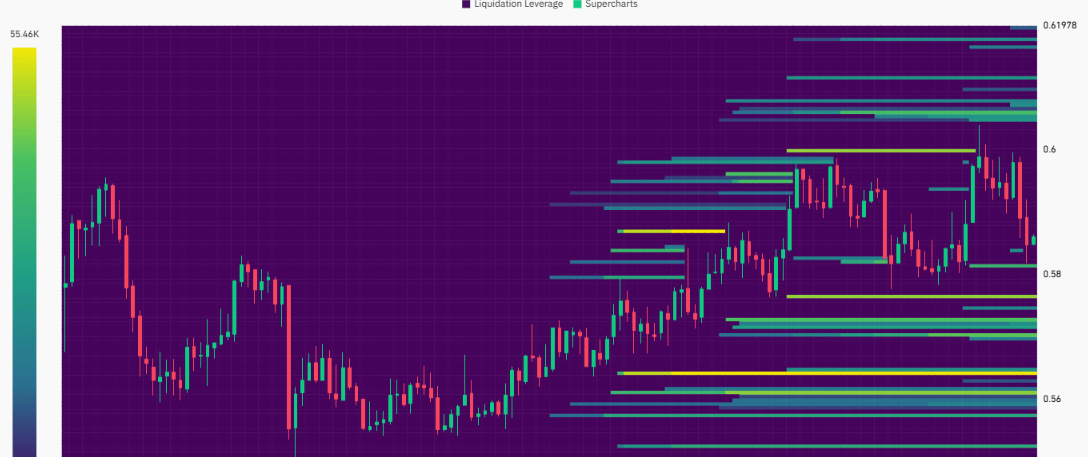
$BTC is sitting at a key decision zone right now. Since yesterday, Bitcoin has been trading between the previous day’s high (PDH) and previous day’s low (PDL), showing clear signs of market indecision and range compression. This type of price action usually appears around major make-or-break levels, so I’m staying patient and focusing on specific scenarios rather than forcing trades inside the range. Any positions taken within the compression would only be quick scalp trades. For higher-probability setups, I’m watching the range boundaries closely — especially around the ~$82,380 PDH. If price sweeps above ~$82,380 and rejects near the previous weekly high, I’ll be looking for short entries. On the downside, if Bitcoin loses the ~$80,457 PDL, I’ll wait for price to move into my main long POI around ~$79,000. Depending on the reaction, I may also consider a scalp short on a clean retest before price reaches that zone. The ~$79,000 region remains an important long POI for me, where I’ll watch for confirmation and long triggers. However, if BTC loses the ~$78,000 level, it could open the door for a deeper move lower, and I’ll then focus on short continuation setups. #ClarityActDraft #BinanceOnline
$BTC is sitting at a key decision zone right now.

Since yesterday, Bitcoin has been trading between the previous day’s high (PDH) and previous day’s low (PDL), showing clear signs of market indecision and range compression.

This type of price action usually appears around major make-or-break levels, so I’m staying patient and focusing on specific scenarios rather than forcing trades inside the range.

Any positions taken within the compression would only be quick scalp trades.
For higher-probability setups, I’m watching the range boundaries closely — especially around the ~$82,380 PDH.

If price sweeps above ~$82,380 and rejects near the previous weekly high, I’ll be looking for short entries.

On the downside, if Bitcoin loses the ~$80,457 PDL, I’ll wait for price to move into my main long POI around ~$79,000. Depending on the reaction, I may also consider a scalp short on a clean retest before price reaches that zone.

The ~$79,000 region remains an important long POI for me, where I’ll watch for confirmation and long triggers.

However, if BTC loses the ~$78,000 level, it could open the door for a deeper move lower, and I’ll then focus on short continuation setups.

#ClarityActDraft #BinanceOnline
BlockChain_UZB:
🎁 ВНИМАНИЕ — ЭТО НЕ ФЕЙК! Binance подготовил специальный бонус для пользователей в мае 🚀 💸 До 80$ БОНУСА ✅ Без сложных условий ✅ Быстро и легко получить ✅ Предложение ограничено по времени 🔥 Не упусти возможность заработать вместе с крипторынком! Забери свой бонус прямо сейчас и начни путь к прибыли 👇 https://app.binance.com/uni-qr/WBpfVwc5?utm_medium=web_share_copy
🔥 Get your popcorn ready this week. So, today the Senate voted to end debates over Kevin Warsh’s nomination for Chair of the Federal Reserve. 🧐In simple terms — he’s officially back in the Fed, and now it’s expected that he could be fully confirmed as Fed Chair later this week. 😏I think everyone understands how important this is. The future economic direction of the United States — and by extension the global markets and crypto — will largely depend on Warsh’s actions. 💶 As you’ve probably noticed, volatility has already returned to Bitcoin over the past few days. And this week we’ll likely get even more of it, because several major events ahead could swing the market hard in both directions: — today: CPI data — tomorrow: PPI data — Thursday: CLARITY Act vote — Trump’s trip to China — Final confirmation of Warsh as Fed Chair Looks like it’s going to be a very “fun” week for the markets 🍿 Trade Smartly 👇🏻 $BTC {future}(BTCUSDT) $ETH {future}(ETHUSDT) $SOL {future}(SOLUSDT) ⚠️ Not financial advice. Educational content only. DYOR #ClarityActDraft #FedChairTransitionNears #GrayscaleCardanoETF #BinanceOnline #BitcoinOrdinalsBrowserOrd.iotoShutDown

🔥 Get your popcorn ready this week.

So, today the Senate voted to end debates over Kevin Warsh’s nomination for Chair of the Federal Reserve.

🧐In simple terms — he’s officially back in the Fed, and now it’s expected that he could be fully confirmed as Fed Chair later this week.

😏I think everyone understands how important this is. The future economic direction of the United States — and by extension the global markets and crypto — will largely depend on Warsh’s actions.

💶 As you’ve probably noticed, volatility has already returned to Bitcoin over the past few days. And this week we’ll likely get even more of it, because several major events ahead could swing the market hard in both directions:

— today: CPI data
— tomorrow: PPI data
— Thursday: CLARITY Act vote
— Trump’s trip to China
— Final confirmation of Warsh as Fed Chair

Looks like it’s going to be a very “fun” week for the markets 🍿
Trade Smartly 👇🏻
$BTC
$ETH
$SOL
⚠️ Not financial advice. Educational content only. DYOR

#ClarityActDraft #FedChairTransitionNears #GrayscaleCardanoETF #BinanceOnline #BitcoinOrdinalsBrowserOrd.iotoShutDown
Feed-Creator-033b36d13:
Despite what moonboys and Trump say, Warsh cannot cut rates with this inflation data. Even if he’ll tey to mild it down by using a different calculation in future.
🚨 TODAY’S MARKET SCHEDULE IS ABSOLUTELY INSANE 📉📈 Wall Street is heading into one of the most volatile trading days of the month. 👀🔥 🕒 03:15 AM → FOMC President Speech 📊 10:30 AM → U.S. CPI Inflation Data 🇺🇸 11:00 AM → Trump Announcement 🌾 12:00 PM → U.S. WASDE Report 💰 1:00 PM → 10-Year Treasury Note Auction 🏦 1:05 PM → Fed President Speech This is a perfect storm of: ⚠️ Inflation data ⚠️ Federal Reserve signals ⚠️ Bond market reactions ⚠️ Political headlines One surprise headline could swing markets HARD in either direction today. 💥 Traders should expect extreme volatility across: 📈 Stocks ₿ Crypto 🛢️ Oil 💵 Dollar 📉 Bonds $SOLV $CYS $PIEVERSE #ClarityActDraft #BinanceOnline #FedChairTransitionNears
🚨 TODAY’S MARKET SCHEDULE IS ABSOLUTELY INSANE 📉📈

Wall Street is heading into one of the most volatile trading days of the month. 👀🔥

🕒 03:15 AM → FOMC President Speech
📊 10:30 AM → U.S. CPI Inflation Data
🇺🇸 11:00 AM → Trump Announcement
🌾 12:00 PM → U.S. WASDE Report
💰 1:00 PM → 10-Year Treasury Note Auction
🏦 1:05 PM → Fed President Speech

This is a perfect storm of: ⚠️ Inflation data
⚠️ Federal Reserve signals
⚠️ Bond market reactions
⚠️ Political headlines

One surprise headline could swing markets HARD in either direction today. 💥

Traders should expect extreme volatility across: 📈 Stocks
₿ Crypto
🛢️ Oil
💵 Dollar
📉 Bonds

$SOLV $CYS $PIEVERSE

#ClarityActDraft #BinanceOnline #FedChairTransitionNears
Chathu 98:
👍
Article
Bitcoin’s Next Big Move? Why 2026 Could Redefine The Entire BTC CycleBitcoin sitting near $81,000 right now feels strange psychologically. Not because the price is weak. But because the market already experienced $126K euphoria only months ago, then immediately shifted back into uncertainty, inflation fear, Fed confusion, and violent liquidity swings. That emotional whiplash is exactly why expert predictions for the rest of 2026 are becoming so divided. Some analysts still see Bitcoin reclaiming $100K–$145K this year. Others think the market may spend months trapped inside a prolonged consolidation phase before the next major expansion begins. Personally, I think both sides are partially right. Because this cycle is no longer behaving like older Bitcoin cycles. In previous eras, Bitcoin was mostly driven by retail speculation and halving narratives. Liquidity exploded, retail FOMO arrived, leverage overheated, then everything collapsed into deep bear markets once momentum died. 2026 feels structurally different. Now Bitcoin sits inside a much larger macro system: ETF flows, institutional treasury exposure, global debt expansion, energy-driven inflation, geopolitical instability, and central bank credibility crises. That changes how the market behaves. Arthur Hayes calling for $145K is not really a “Bitcoin prediction” in the traditional sense. It’s a prediction about liquidity itself. His thesis revolves around governments increasingly choosing debt expansion, wartime spending, and financial stabilization over prolonged economic pain. And honestly, there’s logic behind that. Every major economy right now faces the same problem: too much debt, slowing growth, and inflation that refuses to disappear cleanly. That creates pressure for liquidity expansion eventually, even if the Fed temporarily stays restrictive. At the same time, Christopher Jensen’s more moderate $100K+ recovery thesis probably reflects something equally important: Bitcoin no longer needs retail mania alone to survive corrections. ETF inflows changed the structure underneath the market. That’s probably the biggest difference from earlier cycles. Spot Bitcoin ETFs transformed BTC from a purely speculative asset into an institutionally accessible macro allocation. Pension exposure, wealth managers, corporate treasuries, and regulated funds can now absorb supply in ways that didn’t exist before. That creates stronger downside absorption during corrections. Look at what happened recently: BTC corrected aggressively from ATHs, sentiment turned ugly, yet long-term holder capitulation never reached historical bear-market extremes. That matters. It suggests this market still has structural buyers underneath the volatility. But I also think traders are underestimating one risk: Bitcoin is now deeply connected to macro liquidity cycles. In older cycles, BTC could detach emotionally from traditional markets more easily because participation was smaller and more isolated. Today Bitcoin reacts to CPI, Treasury yields, oil shocks, Fed expectations, and global liquidity conditions almost instantly. That makes this cycle more mature… but also more complex. The biggest near-term question is whether BTC can reclaim the $82K–$85K region decisively. That zone matters psychologically because it sits near major moving averages and institutional positioning areas. A clean breakout there probably reopens momentum toward $90K–$100K faster than people expect. But if macro conditions worsen and liquidity tightens again, Bitcoin could spend much longer ranging while institutions continue accumulating slowly underneath. Personally, I don’t think this cycle ends with Bitcoin disappearing into another multi-year irrelevance phase like older bears. The asset itself matured too much for that. Governments hold it. ETFs absorb it. Institutions allocate to it. Nations mine it. Stablecoin ecosystems settle around it. Bitcoin is no longer fighting for survival. Now it’s fighting for its role inside the future global financial system. And honestly, that may be why this cycle feels psychologically confusing to so many traders. Because Bitcoin is still volatile enough to behave like a speculative asset… while simultaneously becoming important enough to behave like macro infrastructure. That combination has never really existed before. #bitcoin #BinanceOnline #ClarityActDraft #FedChairTransitionNears #BitcoinOrdinalsBrowserOrd.iotoShutDown $BTC {future}(BTCUSDT)

Bitcoin’s Next Big Move? Why 2026 Could Redefine The Entire BTC Cycle

Bitcoin sitting near $81,000 right now feels strange psychologically.
Not because the price is weak.
But because the market already experienced $126K euphoria only months ago, then immediately shifted back into uncertainty, inflation fear, Fed confusion, and violent liquidity swings.
That emotional whiplash is exactly why expert predictions for the rest of 2026 are becoming so divided.
Some analysts still see Bitcoin reclaiming $100K–$145K this year. Others think the market may spend months trapped inside a prolonged consolidation phase before the next major expansion begins.
Personally, I think both sides are partially right.
Because this cycle is no longer behaving like older Bitcoin cycles.
In previous eras, Bitcoin was mostly driven by retail speculation and halving narratives. Liquidity exploded, retail FOMO arrived, leverage overheated, then everything collapsed into deep bear markets once momentum died.
2026 feels structurally different.
Now Bitcoin sits inside a much larger macro system:
ETF flows,
institutional treasury exposure,
global debt expansion,
energy-driven inflation,
geopolitical instability,
and central bank credibility crises.
That changes how the market behaves.
Arthur Hayes calling for $145K is not really a “Bitcoin prediction” in the traditional sense. It’s a prediction about liquidity itself. His thesis revolves around governments increasingly choosing debt expansion, wartime spending, and financial stabilization over prolonged economic pain.
And honestly, there’s logic behind that.
Every major economy right now faces the same problem:
too much debt,
slowing growth,
and inflation that refuses to disappear cleanly.
That creates pressure for liquidity expansion eventually, even if the Fed temporarily stays restrictive.
At the same time, Christopher Jensen’s more moderate $100K+ recovery thesis probably reflects something equally important:
Bitcoin no longer needs retail mania alone to survive corrections.
ETF inflows changed the structure underneath the market.
That’s probably the biggest difference from earlier cycles.
Spot Bitcoin ETFs transformed BTC from a purely speculative asset into an institutionally accessible macro allocation. Pension exposure, wealth managers, corporate treasuries, and regulated funds can now absorb supply in ways that didn’t exist before.
That creates stronger downside absorption during corrections.
Look at what happened recently:
BTC corrected aggressively from ATHs, sentiment turned ugly, yet long-term holder capitulation never reached historical bear-market extremes.
That matters.
It suggests this market still has structural buyers underneath the volatility.
But I also think traders are underestimating one risk:
Bitcoin is now deeply connected to macro liquidity cycles.
In older cycles, BTC could detach emotionally from traditional markets more easily because participation was smaller and more isolated. Today Bitcoin reacts to CPI, Treasury yields, oil shocks, Fed expectations, and global liquidity conditions almost instantly.
That makes this cycle more mature…
but also more complex.
The biggest near-term question is whether BTC can reclaim the $82K–$85K region decisively.
That zone matters psychologically because it sits near major moving averages and institutional positioning areas. A clean breakout there probably reopens momentum toward $90K–$100K faster than people expect.
But if macro conditions worsen and liquidity tightens again, Bitcoin could spend much longer ranging while institutions continue accumulating slowly underneath.
Personally, I don’t think this cycle ends with Bitcoin disappearing into another multi-year irrelevance phase like older bears.
The asset itself matured too much for that.
Governments hold it.
ETFs absorb it.
Institutions allocate to it.
Nations mine it.
Stablecoin ecosystems settle around it.
Bitcoin is no longer fighting for survival.
Now it’s fighting for its role inside the future global financial system.
And honestly, that may be why this cycle feels psychologically confusing to so many traders.
Because Bitcoin is still volatile enough to behave like a speculative asset…
while simultaneously becoming important enough to behave like macro infrastructure.
That combination has never really existed before.
#bitcoin
#BinanceOnline #ClarityActDraft #FedChairTransitionNears #BitcoinOrdinalsBrowserOrd.iotoShutDown $BTC
·
--
Haussier
Bitcoin moving back into the “early bull” zone matters more than people think. What stands out to me isn’t just the green signal itself, it’s *where* it appeared from. This indicator usually flips after the market has already gone through a deep exhaustion phase where leverage dies, weak hands disappear, and long-term holders quietly absorb supply again. That’s exactly what happened in 2019. And again in early 2023. Both times the market still looked uncertain when the signal appeared. Sentiment was skeptical, macro was noisy, and most traders were waiting for confirmation higher. But structurally, the cycle had already started healing underneath. What makes this moment interesting is that BTC is not recovering from a catastrophic collapse like 2022 anymore. It’s trying to re-accelerate after a major cooling phase near ATHs. That changes the psychology completely. The risk is the same one we saw in 2022: green signal without real spot demand persistence. If ETF inflows slow down, liquidity weakens, and BTC cannot reclaim higher supply zones aggressively, this can still become another failed transition phase instead of a full expansion cycle. But honestly, the bigger picture still looks constructive to me. Why? Because this cycle feels less retail-euphoria driven and more structurally bid by institutional flows, treasury accumulation, and long-term positioning. Even recent corrections haven’t created true panic. They’ve mostly created hesitation. That’s usually not how final tops behave. The biggest thing I’m watching now is whether BTC can turn this “early bull” signal into sustained strength above key psychological zones instead of another temporary bounce. If that happens, the market probably shifts from defensive rotation into full conviction mode again. #bitcoin #ClarityActDraft #BinanceOnline #FedChairTransitionNears #BitcoinOrdinalsBrowserOrd.iotoShutDown $BTC {future}(BTCUSDT) $SAGA {future}(SAGAUSDT) $ZENT {alpha}(560x8c321c2e323bc26c01df0dc62311482a1256fdf5)
Bitcoin moving back into the “early bull” zone matters more than people think.

What stands out to me isn’t just the green signal itself, it’s *where* it appeared from. This indicator usually flips after the market has already gone through a deep exhaustion phase where leverage dies, weak hands disappear, and long-term holders quietly absorb supply again.

That’s exactly what happened in 2019.
And again in early 2023.

Both times the market still looked uncertain when the signal appeared. Sentiment was skeptical, macro was noisy, and most traders were waiting for confirmation higher. But structurally, the cycle had already started healing underneath.

What makes this moment interesting is that BTC is not recovering from a catastrophic collapse like 2022 anymore. It’s trying to re-accelerate after a major cooling phase near ATHs. That changes the psychology completely.

The risk is the same one we saw in 2022:
green signal without real spot demand persistence.

If ETF inflows slow down, liquidity weakens, and BTC cannot reclaim higher supply zones aggressively, this can still become another failed transition phase instead of a full expansion cycle.

But honestly, the bigger picture still looks constructive to me.

Why?

Because this cycle feels less retail-euphoria driven and more structurally bid by institutional flows, treasury accumulation, and long-term positioning. Even recent corrections haven’t created true panic. They’ve mostly created hesitation.

That’s usually not how final tops behave.

The biggest thing I’m watching now is whether BTC can turn this “early bull” signal into sustained strength above key psychological zones instead of another temporary bounce. If that happens, the market probably shifts from defensive rotation into full conviction mode again.

#bitcoin
#ClarityActDraft #BinanceOnline #FedChairTransitionNears #BitcoinOrdinalsBrowserOrd.iotoShutDown $BTC

$SAGA
$ZENT
Mitchell Bastardi GQ6I:
claim your gift 🎁
Bitcoin (BTC) is trading at $80,668.53 right now. 24h range: $80,462.97 – $82,137.26 24h change: -0.65% (open: $81,198.97 $BTC BTC update: Price is hovering around $80.7K with a -0.65% move over the last 24H. Volatility stayed contained inside $80.46K–$82.14K. Watching for a breakout above the 24H high or a retest of the 24H low. #BTC #bitcoin #crypto #Binance #ClarityActDraft
Bitcoin (BTC) is trading at $80,668.53 right now.
24h range: $80,462.97 – $82,137.26
24h change: -0.65% (open: $81,198.97
$BTC
BTC update: Price is hovering around $80.7K with a -0.65% move over the last 24H. Volatility stayed contained inside $80.46K–$82.14K. Watching for a breakout above the 24H high or a retest of the 24H low.
#BTC #bitcoin #crypto #Binance
#ClarityActDraft
Mitchell Bastardi GQ6I:
claim your gift 🎁
$BTC briefly touched $81,305 before slipping back near $80,720, showing that traders are still facing strong resistance around the $81K–$82K zone. The recent rejection suggests short-term profit-taking after the latest bullish rally. However, BTC is still holding above the important psychological support of $80,000, which keeps the broader trend positive for now. The Economic Times +2 Technical indicators show Bitcoin moving inside a tight consolidation range. Analysts are watching $81,100–$82,500 as the next breakout area, while support remains around $79,500–$80,000. If BTC stays above support, buyers may attempt another push toward $84K. A drop below $79.5K could increase short-term bearish pressure. Bitcoin News +2 Market sentiment remains cautiously bullish because institutional interest and ETF activity are still supporting the market, although recent ETF outflows created temporary weakness. Traders now expect higher volatility as Bitcoin decides its next major direction. The Economic Times +2#ClarityActDraft #BinanceOnline {spot}(BTCUSDT)
$BTC briefly touched $81,305 before slipping back near $80,720, showing that traders are still facing strong resistance around the $81K–$82K zone. The recent rejection suggests short-term profit-taking after the latest bullish rally. However, BTC is still holding above the important psychological support of $80,000, which keeps the broader trend positive for now.
The Economic Times +2
Technical indicators show Bitcoin moving inside a tight consolidation range. Analysts are watching $81,100–$82,500 as the next breakout area, while support remains around $79,500–$80,000. If BTC stays above support, buyers may attempt another push toward $84K. A drop below $79.5K could increase short-term bearish pressure.
Bitcoin News +2
Market sentiment remains cautiously bullish because institutional interest and ETF activity are still supporting the market, although recent ETF outflows created temporary weakness. Traders now expect higher volatility as Bitcoin decides its next major direction.
The Economic Times +2#ClarityActDraft #BinanceOnline
Mitchell Bastardi GQ6I:
claim your gift 🎁
·
--
Haussier
🚨 BREAKING : U.S. Senate Banking Committee releases draft of the crypto CLARITY Act 👀 A major step toward regulatory clarity Clear rules = confidence Confidence = capital flows #ClarityActDraft $BTC {spot}(BTCUSDT)
🚨 BREAKING : U.S. Senate Banking Committee releases draft of the crypto CLARITY Act 👀

A major step toward regulatory clarity

Clear rules = confidence
Confidence = capital flows #ClarityActDraft

$BTC
Tom Mathew:
1649 USDT FOR 200 PEOPLE 🧧: BPXC7XL7VX
·
--
Baissier
$BTC Bitcoin (BTC) 12 May 2026 update: BTC is trading near the $81K zone after rejection from $82.5K resistance. Market trend is still bullish on the weekly timeframe, but short-term consolidation is visible. If Bitcoin breaks above $82.5K, the next targets could be $85K–$90K. Strong support remains around $80K. Institutional buying and ETF inflows continue supporting the market. � #ClarityActDraft #BinanceOnline #FedChairTransitionNears #bitcoin #BitcoinDunyamiz {spot}(BTCUSDT)
$BTC Bitcoin (BTC) 12 May 2026 update: BTC is trading near the $81K zone after rejection from $82.5K resistance. Market trend is still bullish on the weekly timeframe, but short-term consolidation is visible. If Bitcoin breaks above $82.5K, the next targets could be $85K–$90K. Strong support remains around $80K. Institutional buying and ETF inflows continue supporting the market. �
#ClarityActDraft #BinanceOnline #FedChairTransitionNears #bitcoin #BitcoinDunyamiz
Leda Avon KXze:
100 USDT FOR LAST 10 PEOPLE🧧 : BP1EIUB2FG
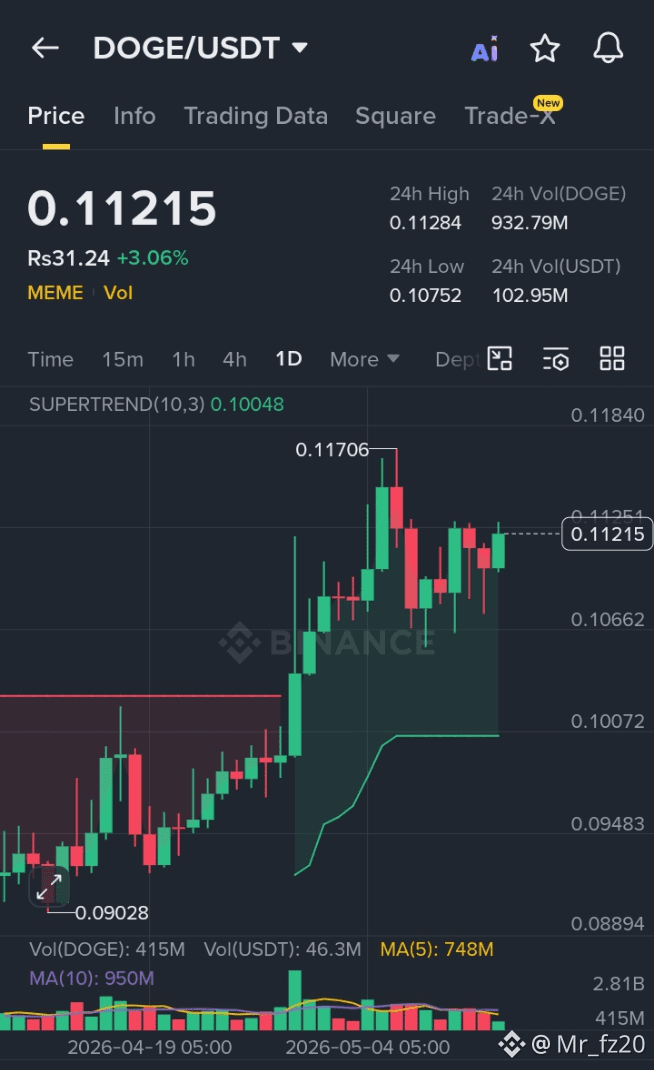
$DOGE is facing heavy pressure right now as the meme coin market starts cooling down after a recent push upward. DOGE/USDT Perpetual is trading near $0.10908 on the 15-minute chart after getting rejected around the $0.1110 area. Sellers stayed aggressive and slowly dragged the price lower candle by candle, showing weak short-term momentum. The biggest level traders are watching now is $0.1088. Price already tested this support, and if it breaks cleanly, DOGE could see another fast drop as panic sellers step in. But if buyers defend this zone, the market may attempt another recovery bounce toward the $0.1100 range. Even with today’s pullback, DOGE still has solid strength on higher time frames: • +16.14% in 30 days • +17.84% in 90 days That means the larger trend is still alive, but short-term traders are clearly nervous right now. 24H stats: • High: $0.11180 • Low: $0.10883 • Volume: 6.79B DOGE The chart feels tense right now. Volume remains massive, emotions are high, and one strong move from either bulls or bears could trigger a sharp breakout very quickly. {spot}(DOGEUSDT) #TrumpToVisitChinaFromMay13To15 #IranRejectsUSPeacePlan #BitcoinOrdinalsBrowserOrd.iotoShutDown #ClarityActDraft #BinanceOnline
$DOGE is facing heavy pressure right now as the meme coin market starts cooling down after a recent push upward.

DOGE/USDT Perpetual is trading near $0.10908 on the 15-minute chart after getting rejected around the $0.1110 area. Sellers stayed aggressive and slowly dragged the price lower candle by candle, showing weak short-term momentum.

The biggest level traders are watching now is $0.1088. Price already tested this support, and if it breaks cleanly, DOGE could see another fast drop as panic sellers step in. But if buyers defend this zone, the market may attempt another recovery bounce toward the $0.1100 range.

Even with today’s pullback, DOGE still has solid strength on higher time frames: • +16.14% in 30 days
• +17.84% in 90 days

That means the larger trend is still alive, but short-term traders are clearly nervous right now.

24H stats: • High: $0.11180
• Low: $0.10883
• Volume: 6.79B DOGE

The chart feels tense right now. Volume remains massive, emotions are high, and one strong move from either bulls or bears could trigger a sharp breakout very quickly.


#TrumpToVisitChinaFromMay13To15 #IranRejectsUSPeacePlan #BitcoinOrdinalsBrowserOrd.iotoShutDown #ClarityActDraft #BinanceOnline
·
--
Haussier
THIS IS IMPORTANT GUYS The crypto market might be entering a new era. The U.S. Senate Banking Committee just released the draft of the CLARITY Act For the first time in a while, it feels like regulation is moving toward structure instead of confusion. Big moment for crypto adoption if this keeps progressing. Smart money is watching closely now. #ClarityActDraft t #Crypto #Bitcoin #Web3 #Altcoins
THIS IS IMPORTANT GUYS

The crypto market might be entering a new era.
The U.S. Senate Banking Committee just released the draft of the CLARITY Act

For the first time in a while, it feels like regulation is moving toward structure instead of confusion.
Big moment for crypto adoption if this keeps progressing.
Smart money is watching closely now.

#ClarityActDraft t #Crypto #Bitcoin #Web3 #Altcoins
Mitchell Bastardi GQ6I:
claim your gift 🎁
🚨 CPI Report Coming Soon Market can get very volatile after the CPI data. If CPI comes higher than expected, it’s bearish for crypto because rate-cut hopes drop and USD can get stronger. If CPI comes lower than expected, it’s bullish for crypto because liquidity hopes improve and risk assets can pump. Forecast is around 3.7% YoY, with release scheduled at 8:30 AM ET. ⚠️ Best move: don’t overtrade before the report. Wait for the first reaction, then trade the confirmed direction. $XRP #ClarityActDraft
🚨 CPI Report Coming Soon
Market can get very volatile after the CPI data.

If CPI comes higher than expected, it’s bearish for crypto because rate-cut hopes drop and USD can get stronger.

If CPI comes lower than expected, it’s bullish for crypto because liquidity hopes improve and risk assets can pump.

Forecast is around 3.7% YoY, with release scheduled at 8:30 AM ET.

⚠️ Best move: don’t overtrade before the report. Wait for the first reaction, then trade the confirmed direction.

$XRP #ClarityActDraft
Mitchell Bastardi GQ6I:
claim your gift 🎁
Been watching $LUNC again and the chart still feels very emotional 👀 Price keeps bouncing around the same zone, but sellers are still active whenever it tries to push higher. At the same time, $LUNC always has one of the strongest communities, so sudden moves can happen anytime Honestly, this coin is never boring to watch 📈 #altcoins #ClarityActDraft #LUNC✅ #TrendingTopic #signaladvisor
Been watching $LUNC again and the chart still feels very emotional 👀

Price keeps bouncing around the same zone, but sellers are still active whenever it tries to push higher. At the same time, $LUNC always has one of the strongest communities, so sudden moves can happen anytime

Honestly, this coin is never boring to watch 📈
#altcoins #ClarityActDraft #LUNC✅ #TrendingTopic #signaladvisor
·
--
Haussier
$SAGA remains strongly bullish on the 4H timeframe {future}(SAGAUSDT) After a massive momentum breakout. Price has exploded with huge conviction, surging nearly 50% and showing dominant buyer control with massive volume. Current Price: $0.03667 (+49.07%) Immediate resistance sits around $0.03814 (24H high), while support is forming in the $0.0320 - $0.0300 zone. Volume is exceptionally strong and momentum indicators are heavily in favor of the bulls. Due to extreme volatility, confirmation on retest or sustained move above $0.038 will be important before taking aggressive entries. $USELESS $IRYS #ClarityActDraft #BinanceOnline #FedChairTransitionNears MARAsNetLossWidensto$1.3BillioninQ1#BitcoinOrdinalsBrowserOrd.iotoShutDown
$SAGA remains strongly bullish on the 4H timeframe
After a massive momentum breakout. Price has exploded with huge conviction, surging nearly 50% and showing dominant buyer control with massive volume.

Current Price: $0.03667 (+49.07%)

Immediate resistance sits around $0.03814 (24H high), while support is forming in the $0.0320 - $0.0300 zone. Volume is exceptionally strong and momentum indicators are heavily in favor of the bulls.

Due to extreme volatility, confirmation on retest or sustained move above $0.038 will be important before taking aggressive entries.

$USELESS $IRYS
#ClarityActDraft #BinanceOnline #FedChairTransitionNears MARAsNetLossWidensto$1.3BillioninQ1#BitcoinOrdinalsBrowserOrd.iotoShutDown
Article
What “Bearish” Really Means in Crypto And Why Most Traders Get WreckedIn the crypto market, identifying and understanding the signs of a bearish market can help traders adjust their strategies to manage risk or take advantage of opportunities from price dips. So what is Bearish? Let’s dive into this article. Bearish is a term describing a market state or trend where asset prices tend to fall. When a trader or investor says they have a bearish view, it means they predict that the price of an asset, stock, cryptocurrency, or market in general will fall in the near future. The crypto market often experiences distinctly bearish periods when the prices of cryptocurrencies like Bitcoin (BTC), Ethereum (ETH), or other altcoins decline continuously for an extended period. Bitcoin (BTC): After peaking at nearly $20,000 in December 2017, Bitcoin experienced a massive price drop that lasted through 2018, losing over 80% of its value to around $3,000 by the end of the year. Then, Bitcoin reached $45,000 and plummeted to $16,000 following news of the FTX exchange's bankruptcy and the arrest of CEO Sam Bankman-Fried.Ethereum (ETH): After peaking at around $4,800 in late 2021, Ethereum fell to around $1,000 in mid-2022 during a strong bearish market. Definition of Bearish in Crypto Characteristics of a Bearish Market in Crypto A bearish market in the cryptocurrency sector has the following prominent characteristics: Continuous price decline over an extended period: A bearish market can begin after a major sell-off, causing asset prices to fall rapidly, then continue to decline gradually or fluctuate slightly before falling again.Decreasing trading volume gradually: This indicates that investors are no longer willing to buy and selling pressure increases as investors try to exit the market. For example, trading volume in 2021 decreased over 70% after BTC hit $16,000.Negative market sentiment: During a bearish market, market sentiment is often very negative. Investors become anxious and sell off assets to minimize losses. Negative news tends to circulate more widely during bearish periods. Media coverage often emphasizes market risks, regulatory challenges, or project failures, increasing fear and uncertainty among investors. In this market, traders use Fear & Greed Index as a useful indicator to check the market sentiment. Increased market volatility: Bear markets often experience high volatility, with sharp price drops followed by brief and limited recoveries. These temporary rebounds are usually not strong enough to change the overall downward trend.Strong selling pressure: Selling pressure dominates the market as the number of sellers significantly exceeds buyers. This imbalance leads to oversupply, making it difficult for prices to stabilize or recover. These characteristics create a vicious cycle, where negative sentiment and selling pressure reinforce each other, causing the market to continue to decline until sufficiently strong positive factors emerge to reverse the trend. Characteristics of a Bearish Market What Causes a Bearish Market in Crypto? A bearish market in crypto is not merely the result of falling prices. It is a structural phase driven by shifts in liquidity, risk appetite, and collective psychology. Much like bull and alt cycles, bearish markets follow a recognizable pattern where capital retreats, narratives weaken, and confidence erodes across the ecosystem. This process typically unfolds when both a capital withdrawal trigger and persistent negative pressure converge. The primary trigger: Capital contraction and risk-off behavior Bearish markets often begin when global liquidity tightens and investors shift into risk-off mode. During periods of economic slowdown or recession, disposable income declines and capital preservation becomes the priority. As a result, exposure to high-volatility assets like cryptocurrencies is reduced first. Macroeconomic stress such as rising interest rates, tightening monetary policy, or declining growth expectations increases the opportunity cost of holding speculative assets. Capital flows out of crypto into cash, bonds, or traditional safe havens, shrinking overall market liquidity. At the same time, regulatory and political developments can accelerate this withdrawal. Government restrictions, enforcement actions, or unclear legal frameworks introduce uncertainty that discourages new inflows and pushes existing participants to exit. Even the perception of regulatory risk is often enough to trigger widespread selling. This initial contraction reduces trading volume, weakens price support, and sets the stage for a broader bearish phase. The reinforcing pressure: Sentiment breakdown and structural stress Once capital begins to exit, bearish markets are sustained by a deterioration in sentiment and market structure. Negative news cycles amplify fear, while pessimistic forecasts reinforce the belief that prices will continue to fall. Investors shift from seeking returns to minimizing losses, creating a self-reinforcing sell pressure. Speculation plays a critical role in this phase. During prior bull cycles, excessive leverage and speculative excess often inflate asset prices beyond sustainable levels. When these bubbles burst, forced liquidations cascade through the market, accelerating downside momentum and erasing confidence. Operational and structural stress further compounds the decline. Fluctuations in energy and raw material costs can impact mining economics, reducing network profitability and adding sell pressure from miners. Technical failures, exchange outages, or security breaches such as hacks undermine trust in market infrastructure, often triggering abrupt exits. As liquidity thins, volatility increases, making recovery attempts fragile and short-lived. Projects delay development, user activity declines, and innovation slows, removing the fundamental drivers that could otherwise stabilize valuations. What Causes a Bearish Market Best Crypto Trading Strategies in a Bearish Market Although a bearish market can be worrying for investors, it also presents many opportunities if the right strategies are applied. Below are some ways to capitalize on or protect assets during this period. Short Selling One of the most popular strategies in a bearish market is short selling. This strategy involves a trader borrowing an asset (crypto), selling it at the current price, and then buying it back at a lower price to repay the loan, profiting from the price difference. How to apply Short Selling: Borrow the asset from an exchange that supports margin trading or derivatives trading.Sell the asset at the current price.Buy back the asset when the price falls, return the borrowed asset, and keep the difference as profit. For example: You hold $10,000 worth of BTC. When the market falls, you open a short position selling the same amount of Bitcoin. As a result, your overall portfolio is not negatively impacted. Then, you use the profit from the short selling to increase your Bitcoin holdings. DCA (Dollar-Cost Averaging) Use the DCA (Dollar-Cost Averaging) strategy by buying small amounts of the asset periodically, regardless of price. In a bearish market, this strategy helps investors average down their purchase price, minimize the risk of buying at the peak, and take advantage of low prices to accumulate assets for the long term. Dollar-Cost Averaging If you believe in the long-term potential of Bitcoin but are unsure when the price will bottom out, you can buy small amounts of BTC weekly or monthly to reduce the impact of short-term price fluctuations. Staking and Yield Farming Instead of selling assets, investors can choose staking or yield farming. This method locks assets to receive rewards, helping to generate additional profits while waiting for the market to recover. However, do not blindly rush into protocols that offer unusually high yields and lack a sustainable tokenomics model. These could be signs of a Ponzi scheme. Price Cycle Trading Some traders in a bearish market will employ swing trading strategies to profit from short-term fluctuations within a downtrend. This includes buying on slight price rebounds and selling before further price drops. Price Cycle Trading Long-Term Investment (Hodl) For investors who believe in the long-term potential of cryptocurrencies, the HODL (Hold On for Dear Life) strategy is often applied during bearish phases. Investors continue to hold the asset unaffected by short-term price declines, hoping that the price will recover and rise in the long term. Psychology and Risk Management in a Bearish Market In a bearish market, controlling psychology and managing risk is crucial for protecting capital and maintaining investment efficiency. Strong fluctuations and widespread pessimism often lead investors to anxiety, resulting in irrational trading decisions. To succeed in this phase, investors need to focus on maintaining discipline and applying sound risk management strategies. One of the biggest challenges is controlling psychology. Emotions such as fear of missing out (FOMO) or worry, uncertainty, and doubt (FUD) often cause investors to act hastily, leading to mistakes. Maintaining composure and adhering to the established trading plan is paramount. Furthermore, investors should avoid letting negative information influence their judgment. Instead, relying on reliable analysis and data will help make more rational decisions. Psychology and Risk Management in a Bearish Market At the same time, risk management is indispensable. Using stop-loss orders is an effective way to limit losses, especially in situations where market movements are unpredictable. In addition, diversifying your investment portfolio also plays a crucial role in minimizing risk. Allocating capital to different asset classes such as stocks, gold, or other cryptocurrencies will help balance losses when one asset experiences a sharp price drop. Another important strategy is to determine the risk/reward ratio before each trade. This helps investors control the acceptable level of risk compared to expected returns, thereby avoiding overly risky trades. Furthermore, choosing reputable exchanges with high security is also essential to minimize risks related to fraud or cyberattacks. What should we do in a Bearish Market? A bearish market negatively impacts the psychology of most investors as profits gradually diminish and losses accumulate, leading investors to potentially leave the market. Here are some things to keep in mind: Don't panic: This is the most important thing when participating in a Bearish market. You might panic if you wake up one day to find a zero missing from the end of your portfolio. However, at this time, you shouldn't sell off all your assets. Stay calm, restructure your portfolio, and find a solution.Diversify your portfolio: Diversifying your portfolio will help you react quickly to market fluctuations and minimize risk if one of your investments loses value. This is a golden rule when investing.Stay updated and continuously learn new knowledge: In the financial market, especially in crypto, information and knowledge are constantly being updated, so having a certain level of understanding will help you recognize golden opportunities in a bearish market.Be patient: Bearish markets can last for months or even years. It's crucial to be patient and not give up on your investments. The market will eventually recover, and you'll be glad you persevered. A bearish market is not just a challenging period, it also presents opportunities for investors who know how to capitalize on and manage risk effectively. Understanding and applying the right knowledge will help you not only protect your capital but also find profitable opportunities even during volatile times. #CryptoZeno #ClarityActDraft #BinanceOnline

What “Bearish” Really Means in Crypto And Why Most Traders Get Wrecked

In the crypto market, identifying and understanding the signs of a bearish market can help traders adjust their strategies to manage risk or take advantage of opportunities from price dips. So what is Bearish? Let’s dive into this article.
Bearish is a term describing a market state or trend where asset prices tend to fall. When a trader or investor says they have a bearish view, it means they predict that the price of an asset, stock, cryptocurrency, or market in general will fall in the near future.
The crypto market often experiences distinctly bearish periods when the prices of cryptocurrencies like Bitcoin (BTC), Ethereum (ETH), or other altcoins decline continuously for an extended period.
Bitcoin (BTC): After peaking at nearly $20,000 in December 2017, Bitcoin experienced a massive price drop that lasted through 2018, losing over 80% of its value to around $3,000 by the end of the year. Then, Bitcoin reached $45,000 and plummeted to $16,000 following news of the FTX exchange's bankruptcy and the arrest of CEO Sam Bankman-Fried.Ethereum (ETH): After peaking at around $4,800 in late 2021, Ethereum fell to around $1,000 in mid-2022 during a strong bearish market.
Definition of Bearish in Crypto
Characteristics of a Bearish Market in Crypto
A bearish market in the cryptocurrency sector has the following prominent characteristics:
Continuous price decline over an extended period: A bearish market can begin after a major sell-off, causing asset prices to fall rapidly, then continue to decline gradually or fluctuate slightly before falling again.Decreasing trading volume gradually: This indicates that investors are no longer willing to buy and selling pressure increases as investors try to exit the market. For example, trading volume in 2021 decreased over 70% after BTC hit $16,000.Negative market sentiment: During a bearish market, market sentiment is often very negative. Investors become anxious and sell off assets to minimize losses. Negative news tends to circulate more widely during bearish periods. Media coverage often emphasizes market risks, regulatory challenges, or project failures, increasing fear and uncertainty among investors. In this market, traders use Fear & Greed Index as a useful indicator to check the market sentiment. Increased market volatility: Bear markets often experience high volatility, with sharp price drops followed by brief and limited recoveries. These temporary rebounds are usually not strong enough to change the overall downward trend.Strong selling pressure: Selling pressure dominates the market as the number of sellers significantly exceeds buyers. This imbalance leads to oversupply, making it difficult for prices to stabilize or recover.
These characteristics create a vicious cycle, where negative sentiment and selling pressure reinforce each other, causing the market to continue to decline until sufficiently strong positive factors emerge to reverse the trend.
Characteristics of a Bearish Market
What Causes a Bearish Market in Crypto?
A bearish market in crypto is not merely the result of falling prices. It is a structural phase driven by shifts in liquidity, risk appetite, and collective psychology. Much like bull and alt cycles, bearish markets follow a recognizable pattern where capital retreats, narratives weaken, and confidence erodes across the ecosystem.
This process typically unfolds when both a capital withdrawal trigger and persistent negative pressure converge.
The primary trigger: Capital contraction and risk-off behavior
Bearish markets often begin when global liquidity tightens and investors shift into risk-off mode. During periods of economic slowdown or recession, disposable income declines and capital preservation becomes the priority. As a result, exposure to high-volatility assets like cryptocurrencies is reduced first.
Macroeconomic stress such as rising interest rates, tightening monetary policy, or declining growth expectations increases the opportunity cost of holding speculative assets. Capital flows out of crypto into cash, bonds, or traditional safe havens, shrinking overall market liquidity.
At the same time, regulatory and political developments can accelerate this withdrawal. Government restrictions, enforcement actions, or unclear legal frameworks introduce uncertainty that discourages new inflows and pushes existing participants to exit. Even the perception of regulatory risk is often enough to trigger widespread selling.
This initial contraction reduces trading volume, weakens price support, and sets the stage for a broader bearish phase.
The reinforcing pressure: Sentiment breakdown and structural stress
Once capital begins to exit, bearish markets are sustained by a deterioration in sentiment and market structure. Negative news cycles amplify fear, while pessimistic forecasts reinforce the belief that prices will continue to fall. Investors shift from seeking returns to minimizing losses, creating a self-reinforcing sell pressure.
Speculation plays a critical role in this phase. During prior bull cycles, excessive leverage and speculative excess often inflate asset prices beyond sustainable levels. When these bubbles burst, forced liquidations cascade through the market, accelerating downside momentum and erasing confidence.
Operational and structural stress further compounds the decline. Fluctuations in energy and raw material costs can impact mining economics, reducing network profitability and adding sell pressure from miners. Technical failures, exchange outages, or security breaches such as hacks undermine trust in market infrastructure, often triggering abrupt exits.
As liquidity thins, volatility increases, making recovery attempts fragile and short-lived. Projects delay development, user activity declines, and innovation slows, removing the fundamental drivers that could otherwise stabilize valuations.
What Causes a Bearish Market
Best Crypto Trading Strategies in a Bearish Market
Although a bearish market can be worrying for investors, it also presents many opportunities if the right strategies are applied. Below are some ways to capitalize on or protect assets during this period.
Short Selling
One of the most popular strategies in a bearish market is short selling. This strategy involves a trader borrowing an asset (crypto), selling it at the current price, and then buying it back at a lower price to repay the loan, profiting from the price difference.
How to apply Short Selling:
Borrow the asset from an exchange that supports margin trading or derivatives trading.Sell the asset at the current price.Buy back the asset when the price falls, return the borrowed asset, and keep the difference as profit.
For example: You hold $10,000 worth of BTC. When the market falls, you open a short position selling the same amount of Bitcoin. As a result, your overall portfolio is not negatively impacted. Then, you use the profit from the short selling to increase your Bitcoin holdings.
DCA (Dollar-Cost Averaging)
Use the DCA (Dollar-Cost Averaging) strategy by buying small amounts of the asset periodically, regardless of price. In a bearish market, this strategy helps investors average down their purchase price, minimize the risk of buying at the peak, and take advantage of low prices to accumulate assets for the long term.
Dollar-Cost Averaging
If you believe in the long-term potential of Bitcoin but are unsure when the price will bottom out, you can buy small amounts of BTC weekly or monthly to reduce the impact of short-term price fluctuations.
Staking and Yield Farming
Instead of selling assets, investors can choose staking or yield farming. This method locks assets to receive rewards, helping to generate additional profits while waiting for the market to recover.
However, do not blindly rush into protocols that offer unusually high yields and lack a sustainable tokenomics model. These could be signs of a Ponzi scheme.
Price Cycle Trading
Some traders in a bearish market will employ swing trading strategies to profit from short-term fluctuations within a downtrend. This includes buying on slight price rebounds and selling before further price drops.
Price Cycle Trading
Long-Term Investment (Hodl)
For investors who believe in the long-term potential of cryptocurrencies, the HODL (Hold On for Dear Life) strategy is often applied during bearish phases. Investors continue to hold the asset unaffected by short-term price declines, hoping that the price will recover and rise in the long term.
Psychology and Risk Management in a Bearish Market
In a bearish market, controlling psychology and managing risk is crucial for protecting capital and maintaining investment efficiency. Strong fluctuations and widespread pessimism often lead investors to anxiety, resulting in irrational trading decisions. To succeed in this phase, investors need to focus on maintaining discipline and applying sound risk management strategies.
One of the biggest challenges is controlling psychology. Emotions such as fear of missing out (FOMO) or worry, uncertainty, and doubt (FUD) often cause investors to act hastily, leading to mistakes. Maintaining composure and adhering to the established trading plan is paramount.
Furthermore, investors should avoid letting negative information influence their judgment. Instead, relying on reliable analysis and data will help make more rational decisions.
Psychology and Risk Management in a Bearish Market
At the same time, risk management is indispensable. Using stop-loss orders is an effective way to limit losses, especially in situations where market movements are unpredictable.
In addition, diversifying your investment portfolio also plays a crucial role in minimizing risk. Allocating capital to different asset classes such as stocks, gold, or other cryptocurrencies will help balance losses when one asset experiences a sharp price drop.
Another important strategy is to determine the risk/reward ratio before each trade. This helps investors control the acceptable level of risk compared to expected returns, thereby avoiding overly risky trades. Furthermore, choosing reputable exchanges with high security is also essential to minimize risks related to fraud or cyberattacks.
What should we do in a Bearish Market?
A bearish market negatively impacts the psychology of most investors as profits gradually diminish and losses accumulate, leading investors to potentially leave the market. Here are some things to keep in mind:
Don't panic: This is the most important thing when participating in a Bearish market. You might panic if you wake up one day to find a zero missing from the end of your portfolio. However, at this time, you shouldn't sell off all your assets. Stay calm, restructure your portfolio, and find a solution.Diversify your portfolio: Diversifying your portfolio will help you react quickly to market fluctuations and minimize risk if one of your investments loses value. This is a golden rule when investing.Stay updated and continuously learn new knowledge: In the financial market, especially in crypto, information and knowledge are constantly being updated, so having a certain level of understanding will help you recognize golden opportunities in a bearish market.Be patient: Bearish markets can last for months or even years. It's crucial to be patient and not give up on your investments. The market will eventually recover, and you'll be glad you persevered.
A bearish market is not just a challenging period, it also presents opportunities for investors who know how to capitalize on and manage risk effectively. Understanding and applying the right knowledge will help you not only protect your capital but also find profitable opportunities even during volatile times.
#CryptoZeno #ClarityActDraft #BinanceOnline
Mitchell Bastardi GQ6I:
claim your gift 🎁
Connectez-vous pour découvrir d’autres contenus
Rejoignez la communauté mondiale des adeptes de cryptomonnaies sur Binance Square
⚡️ Suviez les dernières informations importantes sur les cryptomonnaies.
💬 Jugé digne de confiance par la plus grande plateforme d’échange de cryptomonnaies au monde.
👍 Découvrez les connaissances que partagent les créateurs vérifiés.
Adresse e-mail/Nº de téléphone