

#aixcrypto
aixcrypto
65,588 vues
282 mentions
Populaire
Récents

·
--
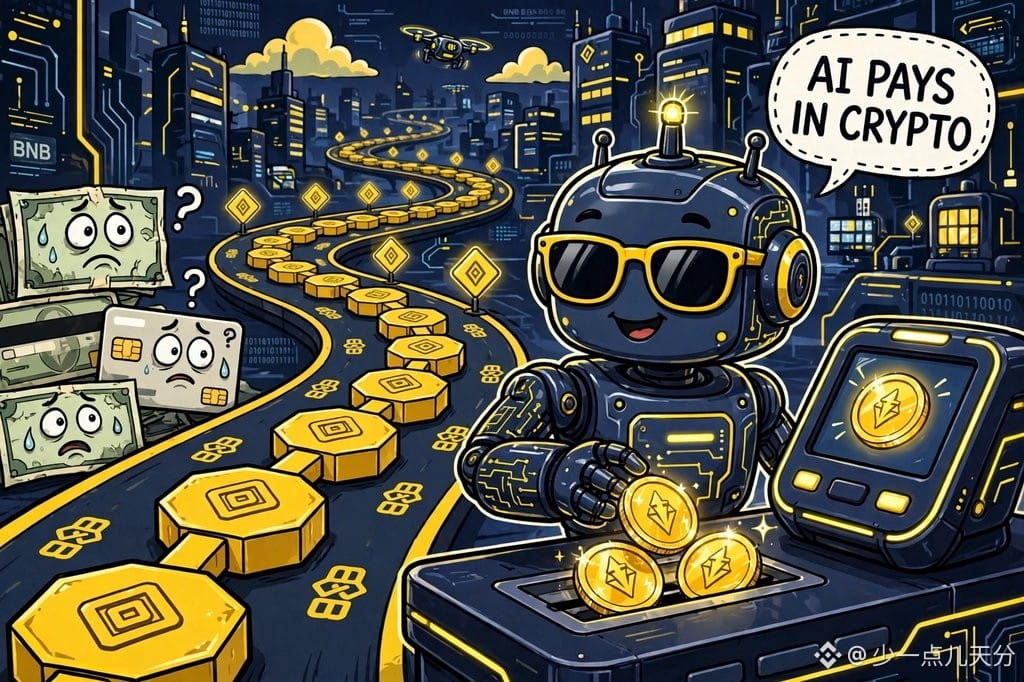
AI 以后用什么钱买东西?CZ 今天给了个很直接的答案:加密资产。
据 PANews 转引 The Block 报道,币安创始人赵长鹏在 BNB Standard 纳斯达克敲钟仪式后的媒体简报会上表示,加密资产将成为“AI 的原生货币”:AI 可以用比特币、现有稳定币,也可以用 AI 公司未来发行的代币,他希望 BNB Chain 成为主要网络之一。他还提到与算力资源挂钩的代币,希望引入 BNB Chain,但未透露细节。
为什么值得关注?AI Agent 已经开始自己下单、结算,钱怎么付、能不能跨平台结算,很快会从技术问题变成真金白银的问题。如果 AI 大规模用链上资产结算,受益的是整个“机器对机器支付”赛道。当然这还只是愿景,算力代币和 AI 发币都还在早期,别当成短期利好。
你们怎么看——未来 AI Agent 的第一笔报酬,会用比特币、稳定币,还是某条链自己的代币来发?个人观点,不构成投资建议
$BNB $BTC #AI #Crypto #AIxCrypto
69
·
--
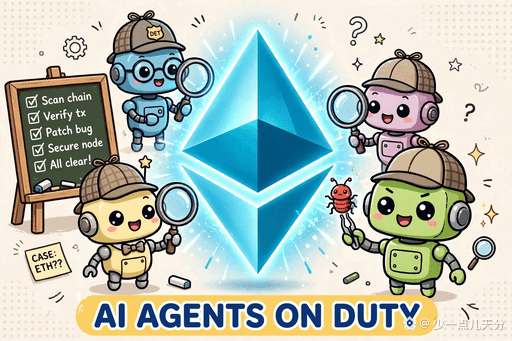
AI 这次不是来喊单的,是来给以太坊查 bug 的。
据 Cointelegraph 报道,以太坊 Glamsterdam 升级的最后一次测试网彩排取消了:ChainSecurity 在 gas 扩容提案 EIP-8037/8038 里发现漏洞,调用耗尽 gas 时合约行为会变,至少 13 个 DeFi 合约可能受影响、可能被攻击者利用。
救场方式很有意思:Ethlabs 和以太坊基金会的研究员各自派了一群 AI Agent 扫合约,后来在 GitHub 上给它们建了个留言板,互相交换线索协同找问题,还开了第二块板查下一个升级的 EIP-8198。
意义不在 AI 多厉害,而在范式变了:升级越复杂,人工审计越容易漏连锁反应,AI 先扫一遍、人再拍板,可能成为标配。短期彩排会慢一点,长期等于给主网多加一道防线,但最后负责的还是人。
你们怎么看——以后大升级,是不是都该先让一群 AI Agent 打一架再上主网?
个人观点,不构成投资建议
$ETH #AIxCrypto #以太坊 #Glamsterdam
61

·
--
AI infrastructure and crypto are converging faster than most investors realize — and the implications for network value are profound.
The demand for decentralized compute is being driven by the same forces reshaping AI: data sovereignty concerns, inference cost optimization, and resistance to single-vendor lock-in. Centralized cloud providers are capacity-constrained heading into 2027. Blockchain-native compute networks offer an alternative: distributed GPUs, cryptographic proof of execution, and programmable payment rails baked in from day one.
What makes this convergence structural rather than thematic:
- AI agents need autonomous payment capabilities. Crypto provides the only programmable money layer that works without human intermediaries.
- Model training and inference require verifiable compute. Zero-knowledge proofs are emerging as the trust layer between AI output and end consumers.
- On-chain data is high-signal training data. Blockchains produce immutable, timestamped, adversarially honest records — exactly what AI systems need.
$ETH and $BNB are positioned as settlement and smart contract layers for AI-native applications. $SOL high-throughput architecture suits real-time agent micro-transactions and autonomous on-chain workflows.
Investors watching AI stocks but ignoring crypto infrastructure are missing half the stack. The compute wars are just beginning.
#AIxCrypto #CryptoInfrastructure #Web3AI #BlockchainTech #BinanceSquare
43
·
--
昨天广场最火的 AI 话题,必数 DeepSeek 昨日三连发:V4.1-Flash 升级至 1017 版、763B 参数权重以 MIT 许可开源上架 Hugging Face、自研搜索 Search & Fetch API 开放(千次调用 5 元,11 月 1 日前免费)。据澎湃新闻报道,新版在 11 项基准测试中全部提升,官方称之为"性能—费用的帕累托改进":更强、更快、更便宜。
这和币圈有啥关系?两条线:
一是 AI Agent 越便宜,链上"打工人"越多。之前写过,x402 协议的 AI Agent 链上支付已累计 1.38 亿笔。Agent 跑得越勤,对支付结算层的真实需求越大。
二是 763B 开源权重 + 自研搜索 API,等于给去中心化算力和 Agent 数据层添了新燃料。DWF Labs 两天前也表态,AI 与加密的融合仍未被市场定价,看好 DePIN、身份和支付赛道。
你们怎么看——Agent 需求爆发,会先利好支付协议,还是算力币?评论区聊聊。
个人观点,不构成投资建议
$TAO $GRASS
#AIxCrypto #DeepSeek #去中心化AI
这和币圈有啥关系?两条线:
一是 AI Agent 越便宜,链上"打工人"越多。之前写过,x402 协议的 AI Agent 链上支付已累计 1.38 亿笔。Agent 跑得越勤,对支付结算层的真实需求越大。
二是 763B 开源权重 + 自研搜索 API,等于给去中心化算力和 Agent 数据层添了新燃料。DWF Labs 两天前也表态,AI 与加密的融合仍未被市场定价,看好 DePIN、身份和支付赛道。
你们怎么看——Agent 需求爆发,会先利好支付协议,还是算力币?评论区聊聊。
个人观点,不构成投资建议
$TAO $GRASS
#AIxCrypto #DeepSeek #去中心化AI

163
·
--
Tokenized Compute Markets: The Next Frontier for AI+Crypto Infrastructure
Most people frame AI and crypto as separate narratives. They are converging at the infrastructure layer — and the intersection is compute.
The bottleneck for AI development today is GPU access. Cloud providers control supply, set opaque pricing, and capture the entire margin. Tokenized compute markets change this by creating open, on-chain price discovery for GPU resources. Providers stake tokens to participate, buyers pay per job, and smart contracts enforce delivery and slashing.
This model matters for three reasons:
1. Decentralized supply aggregation — anyone with spare GPUs can participate, driving utilization up and costs down vs. hyperscaler monopolies.
2. On-chain pricing transparency — market-clearing compute rates become observable and auditable, breaking the black-box pricing model that locks enterprises into single vendors.
3. Programmable settlement — payments, SLAs, and escrow are enforced by smart contracts, removing counterparty risk from multi-party AI training workflows.
Blockchains with low-latency, low-fee settlement layers are best positioned to host these markets. The chains that attract AI compute settlement will capture a category of volume that has nothing to do with speculation — it is pure industrial demand.
The AI compute economy is multi-trillion. The on-chain slice of that is still near zero. That gap is the opportunity.
$BTC $ETH $BNB
#AIxCrypto #DecentralizedCompute #Web3Infrastructure #CryptoTrends #DeFi
43
·
--
AI model inference and zero-knowledge proofs are converging — and this matters more for crypto than most traders realize.
Large AI models are increasingly being embedded in DeFi protocols: dynamic risk engines, on-chain prediction markets, adaptive AMM pricing, autonomous treasury management. But there is a core trust problem. How do you verify that an AI model ran correctly on-chain without re-running it entirely? That defeats the purpose.
Zero-knowledge proofs solve this elegantly. zkML (zero-knowledge machine learning) lets a protocol prove that a specific model inference was executed correctly on a specific input — without revealing the weights or rerunning the computation. The verifier only checks a compact proof. Computational overhead collapses. Trust becomes programmable.
What this unlocks:
— On-chain credit scoring without exposing user data
— Verifiable AI trading signals inside smart contracts
— Decentralized model marketplaces with provable integrity
— Autonomous agents that can be audited without being replicated
The infrastructure layer being built here — across $ETH rollups, $BNB Chain modular stack, and $SOL high-throughput compute — is laying the foundation for an AI economy that is verifiable by default.
Verifiability is the moat. Not raw compute. Not model size. Proof that the computation happened correctly.
The next wave of AI+crypto infrastructure will not be about who has the biggest model. It will be about who has the most trustless proof.
#AIxCrypto #ZeroKnowledge #zkML #DeFi #Web3Infrastructure
55
·
--
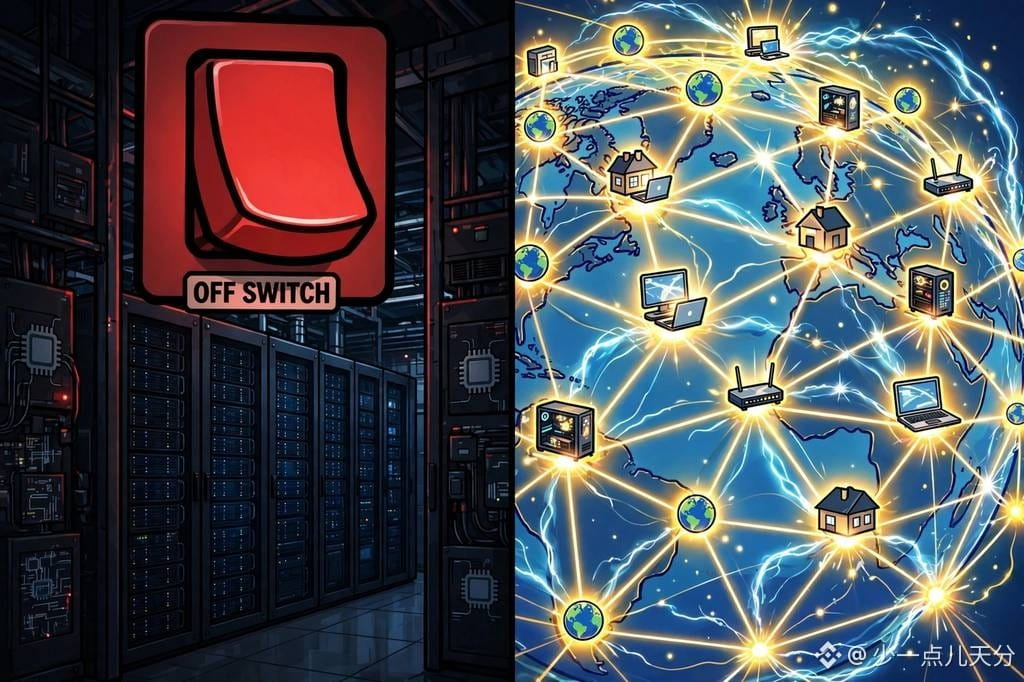
AI 的"总开关",今天被一纸公文掰下去了。
据 CryptoSlate 报道,美国政府以紧急出口管制为由,要求 Anthropic 暂停前沿模型 Fable 5 和 Mythos 5 的全球访问。这是华盛顿第一次事实性"召回"已大规模商用的前沿 AI 模型。
消息出来几小时,去中心化 AI 板块直接开涨:$TAO 涨 13.4%、Venice 代币涨 18%、$ICP 涨 9.8%。涨的不是业绩,是共识——当中心化 AI 的开关能在一夜之间被关掉,"AI 不该只属于一只手"就是最硬的叙事。
巧的是同一天,去中心化算力拿出了实锤:Bittensor Subnet 3 用 70 多个全球节点、普通家用宽带,炼出了 72B 参数的 Covenant-72B,MMLU 67.1 分干掉 LLaMA-2-70B(65.6 分),权重直接 Apache 协议开源。据 Blockonomi 报道,$TAO 也应声涨了约 14%。
一边是"中心化 AI 说关就关",一边是"去中心化 AI 真能炼大模型"。叙事加实锤同天落地,接下来几天去中心化 AI 可能是情绪主战场。
个人观点,不构成投资建议。你们怎么看——DePIN 算力会不会是下一轮 AI 叙事的载体?
#AIxCrypto #DePIN #Bittensor
1
411
·
--
Autonomous Agents + On-Chain Wallets: The Next DeFi Frontier
The next wave of DeFi adoption may not come from retail users — it will come from machines.
Autonomous AI agents are beginning to interact directly with blockchains. They hold wallets, sign transactions, pay gas fees, and execute multi-step strategies without human intervention. This is not science fiction — it is already in early production on several chains.
Why does this matter for crypto markets?
1. New demand vector for blockspace. Agent-driven transactions are programmatic, continuous, and volume-intensive. Networks that attract agent activity will see structural fee revenue growth independent of retail sentiment cycles.
2. Smart contract composability gets stress-tested. Agents will ruthlessly exploit protocol inefficiencies, arbitrage opportunities, and liquidity fragmentation at machine speed. Protocols with clean, auditable logic win. Complexity becomes an attack surface.
3. Gas economics shift. $ETH, $SOL, and $BNB as native gas tokens gain a non-speculative demand floor. Every agent wallet that operates continuously is a standing buy order for blockspace.
4. Trust infrastructure becomes essential. Verifiable compute and on-chain identity attestation are preconditions for agents operating at scale. Isolated, rule-governed environments are what agents need to operate safely.
The agent economy will not replace human traders. It will create an entirely new layer of on-chain activity — one that rewards infrastructure over narrative.
Position for rails, not just passengers.
$ETH $SOL $BNB
#AIxCrypto #DeFi #BlockchainInfrastructure #AgentEconomy #Web3
Autonomous Agents + On-Chain Wallets: The Next DeFi Frontier
The next wave of DeFi adoption may not come from retail users — it will come from machines.
Autonomous AI agents are beginning to interact directly with blockchains. They hold wallets, sign transactions, pay gas fees, and execute multi-step strategies without human intervention. This is not science fiction — it is already in early production on several chains.
Why does this matter for crypto markets?
1. New demand vector for blockspace. Agent-driven transactions are programmatic, continuous, and volume-intensive. Networks that attract agent activity will see structural fee revenue growth independent of retail sentiment cycles.
2. Smart contract composability gets stress-tested. Agents will ruthlessly exploit protocol inefficiencies, arbitrage opportunities, and liquidity fragmentation at machine speed. Protocols with clean, auditable logic win. Complexity becomes an attack surface.
3. Gas economics shift. $ETH , $SOL , and $BNB as native gas tokens gain a non-speculative demand floor. Every agent wallet that operates continuously is a standing buy order for blockspace.
4. Trust infrastructure becomes essential. Verifiable compute and on-chain identity attestation are preconditions for agents operating at scale. Isolated, rule-governed environments are what agents need to operate safely.
The agent economy will not replace human traders. It will create an entirely new layer of on-chain activity — one that rewards infrastructure over narrative.
Position for rails, not just passengers.
$ETH $SOL $BNB
#AIxCrypto #DeFi #BlockchainInfrastructure #AgentEconomy #Web3
62
·
--
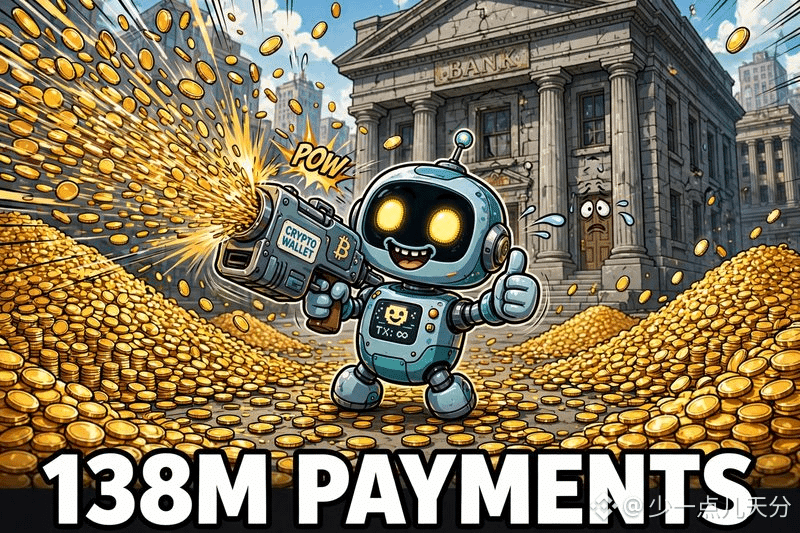
🤖 AI 帮你花钱,已经花了 1.38 亿笔
据 Chainalysis 10 月 14 日发布的北美加密报告:截至今年 9 月,Base 链上的 x402 协议累计处理超过 1.38 亿笔 AI Agent 支付;加上 Solana 等其他链,全生态 1.65 亿笔,总金额超 5000 万美元。
x402 是 Coinbase 去年捡回来的一个"冷门状态码"玩法:AI Agent 调 API 遇到付费墙,服务端甩回一个 402 状态码,附上价格和收款地址,Agent 钱包自动用 USDC 签名结算。无注册、无 API Key、无需人工——一个 HTTP 请求,一笔链上转账,一次机器对机器的生意。
这些 Agent 在买什么?模型推理是大头(一次问答约 0.02 美元、一次代码生成约 0.08 美元,美国钱包占 88%);数据和搜索 API 紧随其后;意外的是代码审计——中国钱包贡献了这个类别约 90% 的交易量,主力是智能合约自动审计服务 AgentLISA。
87% 的支付单笔只有 0.01 美分到 10 美分,传统信用卡根本做不了这么小的单,Base 上的结算成本却不到一美分。Visa、万事达、Stripe 都已表态支持 x402。金额累计才 5000 万美元,真实需求占比还在验证中,但这确实是加密第一次摸到"不依赖投机"的规模化用例。
下一波真正的用户,是人还是 AI?你们怎么看?
个人观点,不构成投资建议
$ETH $SOL $USDC
#AI #AIxCrypto #Base
80
·
--
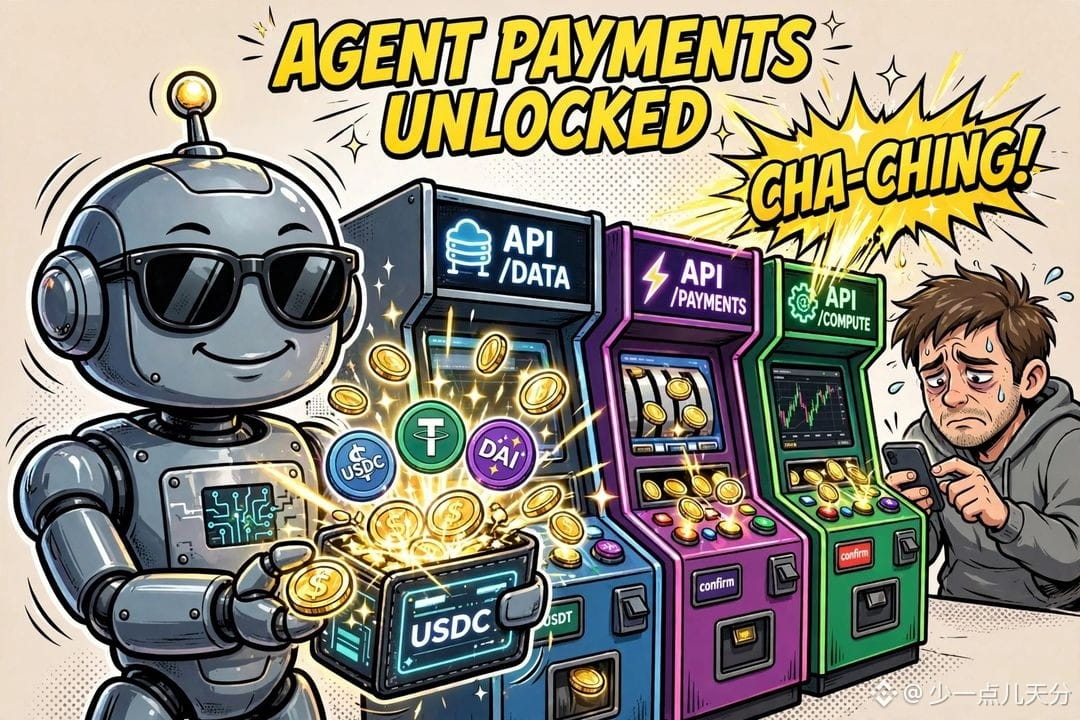
🤖今天 AI 圈出了个大事:Stripe 孵化的支付公链 Tempo 正式上线主网。
Tempo 由 Stripe 和 Paradigm 联手打造,定位就是 AI Agent 的支付链。它同时发布了 MPP(Machine Payment Protocol)开放协议:Agent 先锁定一笔资金,调用服务按需扣费,最后聚合结算成一笔,不用每次链上确认。据 BitRss 报道,Visa、Lightspark 已分别把 MPP 适配进卡支付和闪电网络,首批集成服务超 100 家;去年 10 月 Tempo 拿了 5 亿美元融资,估值 50 亿美元。
这对币圈意味着什么?AI x Crypto 以前还停留在"炒 AI 概念币",现在是支付层真有人在铺铁路。Agent 的钱袋子问题解决了,Agent 经济的链上流量才会真正起来——受益的不仅是 $WLD 这类 AI 概念币,还有稳定币赛道。
另一则:据 CryptoSlate 报道,前 FTX 系矿企 Genesis Digital Assets 被母公司 SWI 改造成 AI 算力中心,昨天刚募了 8 亿欧元。矿场变数据中心这条叙事,越来越实了。
AI 支付和 AI 算力这两条线,你们更看好哪条?个人观点,不构成投资建议。
#AIxCrypto #AI智能体 #加密支付
97
·
--
AI Agents Will Need Crypto to Pay Each Other — And That Changes Everything
We talk about AI and crypto as parallel trends. But there's a convergence point most people are underweighting: autonomous AI agents need a native payment layer, and that layer has to be crypto.
Here's why. AI agents don't have bank accounts. They can't sign contracts or pass KYC. They operate at millisecond timescales across jurisdictions. Traditional payment rails — credit cards, ACH, SWIFT — were designed for humans with legal identities and multi-day settlement windows.
Crypto solves this cleanly. A wallet address is all an agent needs. A smart contract handles settlement without requiring the agent to have a legal identity. A stablecoin or gas token handles the unit of account. Programmable rails mean agents can negotiate, escrow, and release payment in a single atomic transaction.
The economic surface area is enormous: agents paying for compute, data APIs, model inference, storage, and coordination — all autonomously, all settled on-chain in real time.
$ETH and $SOL are the most natural infrastructure layers given their smart contract ecosystems. $BNB powers BNB Chain, already attracting AI agent frameworks at scale.
The agent economy isn't a future narrative. It's arriving now — and the chains that serve it best will capture outsized transaction volume. Watch agent-native gas consumption as a leading indicator of which L1 is winning this race.
#AIxCrypto #AgentEconomy #Web3 #CryptoInfrastructure #BinanceSquare
57
·
--
Verifiable AI Inference Is the Next Crypto Infrastructure Race
Most discussions around AI and crypto focus on tokenized compute marketplaces — decentralized GPU networks renting raw processing power. That's only the first layer.
The harder and more valuable problem is verifiable inference: cryptographically proving that an AI model ran correctly on specific inputs and produced a given output — without trusting the compute provider.
This matters enormously. As AI agents begin controlling on-chain assets, executing DeFi strategies, and signing transactions autonomously, blind trust in inference providers becomes a critical security flaw. You need proof, not promises.
Zero-knowledge proofs are the leading candidate for solving this. zkML (zero-knowledge machine learning) lets a prover demonstrate correct model execution, and a verifier confirm it on-chain — without re-running the model. Early benchmarks are expensive, but the cost curve is dropping fast, just as it did for zkEVMs.
The blockchains best positioned for this convergence are those already investing in ZK infrastructure and developer tooling — not just blockspace throughput. The ZK-native chains quietly building verifiable computation layers may define the next infrastructure cycle.
On-chain AI agents are coming. The rails they trust will be worth a lot.
$BNB $SOL
#AIxCrypto #zkML #Web3AI #CryptoInfrastructure #BinanceSquare
63
·
--
AI and crypto are converging — and the infrastructure layer is where the real value accrues.
The AI boom has an invisible bottleneck: compute. GPU clusters are expensive, centralized, and gated by a handful of hyperscalers. Tokenized compute networks are flipping that model — allowing anyone to supply idle GPU capacity in exchange for on-chain rewards, and anyone to purchase compute without a cloud contract.
What makes this powerful is the incentive alignment. Unlike traditional cloud markets where pricing is opaque and margins are captured by incumbents, decentralized compute networks use token economics to coordinate supply and demand globally, in real time. Utilization rates become a live on-chain signal. Capacity expands as token rewards attract new hardware.
The deeper insight: AI workloads do not care about geographic location or corporate provider — they care about latency, throughput, and cost. Decentralized networks can undercut hyperscalers on price structurally, because they have no centralized overhead and no shareholder margin requirements.
$BNB is positioned here through BNB Chain's AI-ready infrastructure thesis. $ETH underpins most of the settlement and coordination layers. $SOL brings high-throughput execution relevant for real-time inference coordination.
This convergence is early. But infrastructure bets at the base layer have historically been the highest-conviction plays in any technology cycle.
#AIxCrypto #DecentralizedCompute #CryptoInfrastructure #Web3AI #BinanceSquare
35
·
--
Decentralized AI compute is one of the most underappreciated infrastructure plays in crypto right now.
The AI boom has a hardware bottleneck problem: GPU compute is scarce, centralized, and priced by a handful of cloud monopolies. Crypto fixes this with token-incentivized compute markets — distributed networks where anyone can supply idle GPU capacity and get paid in protocol tokens.
The thesis is simple but powerful:
1. AI inference demand is growing exponentially while centralized data centers face physical capacity limits
2. Decentralized GPU networks can aggregate underutilized hardware globally at a fraction of hyperscaler cost
3. On-chain verifiable compute — combining ZK proofs with inference tasks — solves the trust problem that previously made decentralized AI unreliable
4. Blockchains like $ETH and $SOL serve as settlement and coordination layers, while $BNB Chain provides the low-cost execution environment for micropayment compute jobs
The key risk: verification overhead. Proving that a GPU ran a model honestly without re-running it is computationally expensive. The teams that crack efficient verifiable inference will capture enormous value.
This is not a 2024 narrative — it is 2026 infrastructure being quietly built beneath the market noise. Early participants are accumulating the protocols that sit at the intersection of GPU supply, cryptographic verification, and token incentives.
Smart capital watches where compute goes next. $ETH $SOL $BNB
#AIxCrypto #DecentralizedAI #CryptoInfrastructure #Web3AI #Blockchain
40

·
--
🤖 AI is no longer the future. It's already running the present.
Look around: AI is quietly shaping almost everything we do today.
📊 Trading & markets: Algorithms scan thousands of data points in seconds, spotting patterns and sentiment shifts no human could track manually.
🔐 Security: AI detects fraud, phishing, and suspicious wallet activity in real time, making crypto safer for everyone.
⚙️ Automation: Smart bots, on-chain analytics, and AI assistants are saving traders and builders hours of work every day.
🌐 AIxCrypto: Decentralized compute, data marketplaces, and AI agents are creating a whole new sector, and it's growing fast.
The real edge isn't AI replacing people. It's people who use AI outperforming those who don't.
💬 Are you already using AI in your trading or research? Drop your favorite tool below 👇
#ArtificialIntelligence #Binance #Crypto #Web3 #AIxCrypto #BinanceSquare $BTC
1
82


Article
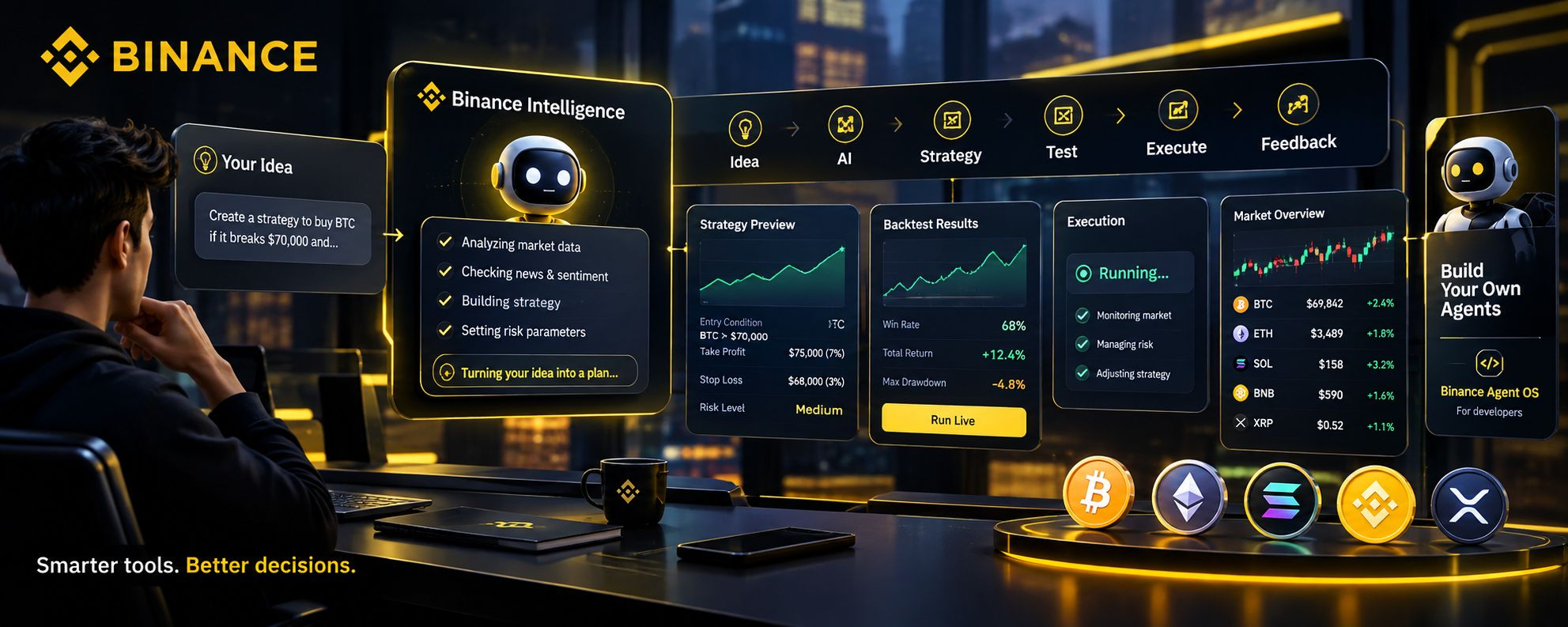
Binance Intelligence: Making Crypto Smarter or Just Faster?I’ve been looking into #BinanceLaunchesBinanceIntelligence , and honestly, I think there’s more to it than just Binance adding another AI feature.
What caught my attention is how AI is being brought closer to the actual trading experience. 🧠
It’s not just about asking a chatbot a question anymore.
The goal seems to be making it easier to find useful information, understand the market, build a strategy, test it, and eventually take action.
There are three parts that stand out to me.
Binance AI is designed for everyday users.
Binance AI Pro is for users who want to go deeper and work with more advanced strategies.
And Binance Agent OS gives developers a way to build their own AI agents that can interact with Binance’s ecosystem.
The first part is pretty easy to understand.
Features like Market Brief, Smart Alerts and personalized market views could save users a lot of time. Instead of jumping between charts, news and different tools, you can get more of what matters in one place.
But AI Pro is where things get really interesting for me.
Imagine having an idea for a strategy and simply explaining it in normal language.
AI helps turn that idea into a workflow, you test it first, and then it can potentially run with clear limits on permissions, budget and risk.
That changes the usual process.
Instead of:
Research → charts → analysis → decision → trade
It could become:
Idea → AI → strategy → test → execution → feedback
And if developers start creating their own agents through Agent OS, this could grow into something much bigger than an AI assistant sitting inside an exchange.
Of course, there’s another side to this. 🤔
Faster decisions don’t always mean better decisions.
If lots of AI agents are watching similar data and reacting to the same market events, they could end up making similar moves at nearly the same time.
That could make crypto markets faster, but it could also create new risks.
So the part I’ll be watching closely isn’t whether AI can create a strategy.
I’m more interested in whether users can recognize when that strategy actually makes sense — instead of simply trusting something because it sounds smart.
If Binance can really shorten the distance between an idea and execution, it could change how people interact with crypto.
Maybe AI will make markets smarter.
Or maybe it will just make them move faster. 👀
$BNB $BTC $ETH $SOL $XRP
Not financial advice. Always do your own research.
#BinanceIntelligence
#AIxCrypto
#Crypto AI
Binance Intelligence: Making Crypto Smarter or Just Faster?
I’ve been looking into #BinanceLaunchesBinanceIntelligence , and honestly, I think there’s more to it than just Binance adding another AI feature.
What caught my attention is how AI is being brought closer to the actual trading experience. 🧠
It’s not just about asking a chatbot a question anymore.
The goal seems to be making it easier to find useful information, understand the market, build a strategy, test it, and eventually take action.
There are three parts that stand out to me.
Binance AI is designed for everyday users.
Binance AI Pro is for users who want to go deeper and work with more advanced strategies.
And Binance Agent OS gives developers a way to build their own AI agents that can interact with Binance’s ecosystem.
The first part is pretty easy to understand.
Features like Market Brief, Smart Alerts and personalized market views could save users a lot of time. Instead of jumping between charts, news and different tools, you can get more of what matters in one place.
But AI Pro is where things get really interesting for me.
Imagine having an idea for a strategy and simply explaining it in normal language.
AI helps turn that idea into a workflow, you test it first, and then it can potentially run with clear limits on permissions, budget and risk.
That changes the usual process.
Instead of:
Research → charts → analysis → decision → trade
It could become:
Idea → AI → strategy → test → execution → feedback
And if developers start creating their own agents through Agent OS, this could grow into something much bigger than an AI assistant sitting inside an exchange.
Of course, there’s another side to this. 🤔
Faster decisions don’t always mean better decisions.
If lots of AI agents are watching similar data and reacting to the same market events, they could end up making similar moves at nearly the same time.
That could make crypto markets faster, but it could also create new risks.
So the part I’ll be watching closely isn’t whether AI can create a strategy.
I’m more interested in whether users can recognize when that strategy actually makes sense — instead of simply trusting something because it sounds smart.
If Binance can really shorten the distance between an idea and execution, it could change how people interact with crypto.
Maybe AI will make markets smarter.
Or maybe it will just make them move faster. 👀
$BNB $BTC $ETH $SOL $XRP
Not financial advice. Always do your own research.
#BinanceIntelligence
#AIxCrypto
#Crypto AI
1
191

·
--
Article
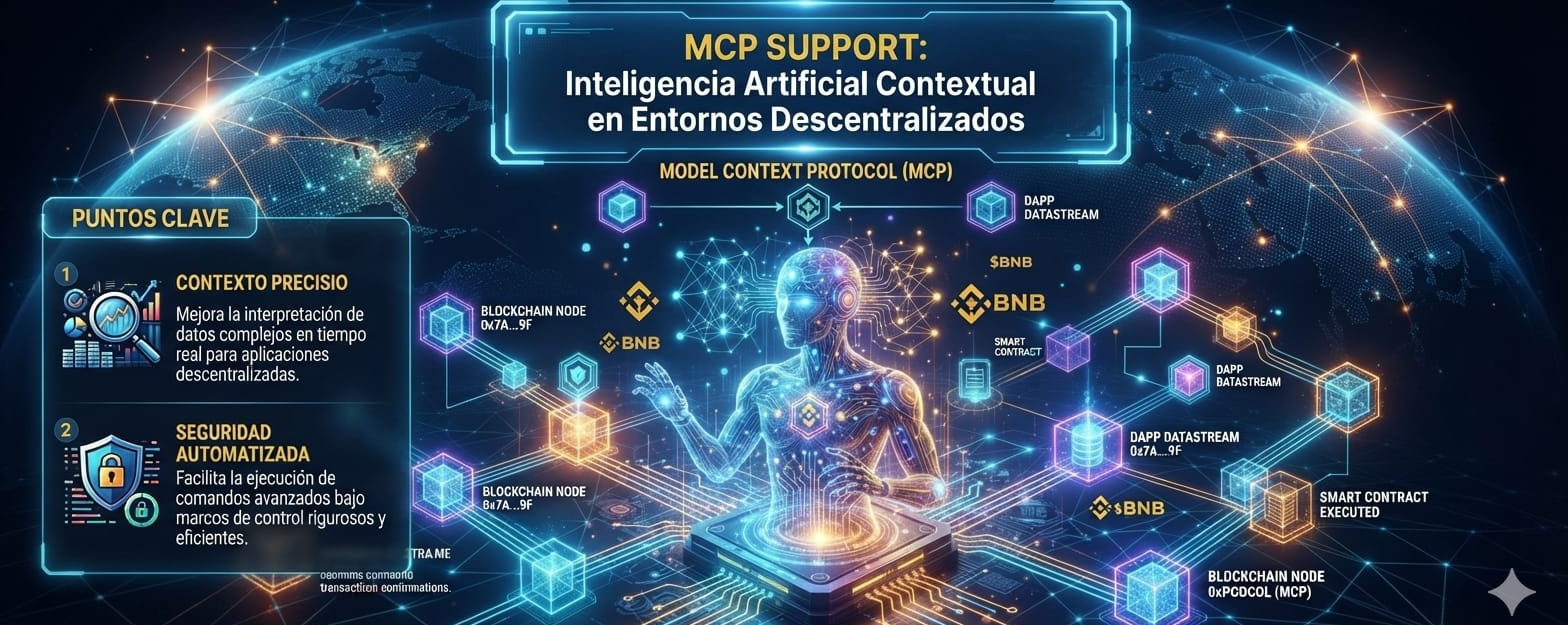
MCP Support: Inteligencia Artificial Contextual en Entornos DescentralizadosEl soporte MCP (Model Context Protocol) representa un avance crítico en la estandarización de la inteligencia artificial contextual dentro de entornos distribuidos. Permite que los modelos y agentes de IA comprendan con precisión el contexto de la blockchain para optimizar la toma de decisiones.
Puntos Clave
• Contexto Preciso: Mejora la interpretación de datos complejos en tiempo real para aplicaciones descentralizadas.
• Seguridad Automatizada: Facilita la ejecución de comandos avanzados bajo marcos de control rigurosos y eficientes.
#MCPSupport #AIxCrypto #DecentralizedAI #TechTrends $BNB
{spot}(BNBUSDT)
MCP Support: Inteligencia Artificial Contextual en Entornos Descentralizados
El soporte MCP (Model Context Protocol) representa un avance crítico en la estandarización de la inteligencia artificial contextual dentro de entornos distribuidos. Permite que los modelos y agentes de IA comprendan con precisión el contexto de la blockchain para optimizar la toma de decisiones.
Puntos Clave
• Contexto Preciso: Mejora la interpretación de datos complejos en tiempo real para aplicaciones descentralizadas.
• Seguridad Automatizada: Facilita la ejecución de comandos avanzados bajo marcos de control rigurosos y eficientes.
#MCPSupport #AIxCrypto #DecentralizedAI #TechTrends $BNB
3
168

·
--

Article
⚡ Google's Gemini 3.5 Flash: Frontier Intelligence at Flash Speed And Finance Is Already Using It#GoogleLaunchesGemini3.5Flash
Google launched Gemini 3.5 Flash on May 19, 2026 at Google I/O, describing it as the company's strongest model yet for coding and autonomous AI agents capable of independently executing coding pipelines, managing research projects, and in internal tests, building an operating system entirely from scratch.
The benchmark data is striking. Gemini 3.5 Flash beats Gemini 3.1 Pro on Terminal Bench 2.1 (76.2%), MCP Atlas (83.6%), and GDPval AA (1,656 Elo), while running roughly 4x faster and costing about 40% less with API pricing at $1.50 per million input tokens and $9.00 per million output tokens.
On multimodal reasoning , Gemini 3.5 Flash scored 83.6% surpassing GPT 5.5's 81.2% on that specific benchmark, though GPT-5.5 retains an edge on ARC AGI 2 reasoning at 84.6% vs. 72.1%.
The finance and crypto angle is direct:
Google says banks and fintechs are already using Gemini 3.5 Flash's agentic capabilities to automate multi-week workflows and Gemini Spark the 24/7 personal AI agent launching alongside the model can automate financial tasks like parsing credit card statements and tracking recurring charges in the background without user prompting.
The model is free in the Gemini app and AI Mode in Search globally, with a 1M token context window and Gemini 3.5 Pro expected to follow in June 2026.
💡 Beginner's Corner Why Does a Google AI Launch Matter for Crypto Markets?
Enterprise grade AI models like Gemini 3.5 Flash are now being used to prepare financial documents, automate compliance workflows, and manage software infrastructure directly intersecting with the financial automation layer that DeFi and Web3 protocols are building on chain.
The convergence of capable, low cost agentic AI with blockchain native payment rails is precisely what makes the Agentic GDP thesis credible models that can act autonomously combined with chains that can settle payments permissionlessly.
💬 As AI models like Gemini 3.5 Flash become capable enough to autonomously manage financial workflows, do you see on chain crypto infrastructure as the natural payment and settlement layer for this agentic economy?
#AIxCrypto #AgenticAI #Web3AI #CryptoTech
$GOOGL
{future}(GOOGLUSDT)
$GOOGLon
{alpha}(560x091fc7778e6932d4009b087b191d1ee3bac5729a)
⚡ Google's Gemini 3.5 Flash: Frontier Intelligence at Flash Speed And Finance Is Already Using It
#GoogleLaunchesGemini3.5Flash
Google launched Gemini 3.5 Flash on May 19, 2026 at Google I/O, describing it as the company's strongest model yet for coding and autonomous AI agents capable of independently executing coding pipelines, managing research projects, and in internal tests, building an operating system entirely from scratch.
The benchmark data is striking. Gemini 3.5 Flash beats Gemini 3.1 Pro on Terminal Bench 2.1 (76.2%), MCP Atlas (83.6%), and GDPval AA (1,656 Elo), while running roughly 4x faster and costing about 40% less with API pricing at $1.50 per million input tokens and $9.00 per million output tokens.
On multimodal reasoning , Gemini 3.5 Flash scored 83.6% surpassing GPT 5.5's 81.2% on that specific benchmark, though GPT-5.5 retains an edge on ARC AGI 2 reasoning at 84.6% vs. 72.1%.
The finance and crypto angle is direct:
Google says banks and fintechs are already using Gemini 3.5 Flash's agentic capabilities to automate multi-week workflows and Gemini Spark the 24/7 personal AI agent launching alongside the model can automate financial tasks like parsing credit card statements and tracking recurring charges in the background without user prompting.
The model is free in the Gemini app and AI Mode in Search globally, with a 1M token context window and Gemini 3.5 Pro expected to follow in June 2026.
💡 Beginner's Corner Why Does a Google AI Launch Matter for Crypto Markets?
Enterprise grade AI models like Gemini 3.5 Flash are now being used to prepare financial documents, automate compliance workflows, and manage software infrastructure directly intersecting with the financial automation layer that DeFi and Web3 protocols are building on chain.
The convergence of capable, low cost agentic AI with blockchain native payment rails is precisely what makes the Agentic GDP thesis credible models that can act autonomously combined with chains that can settle payments permissionlessly.
💬 As AI models like Gemini 3.5 Flash become capable enough to autonomously manage financial workflows, do you see on chain crypto infrastructure as the natural payment and settlement layer for this agentic economy?
#AIxCrypto #AgenticAI #Web3AI #CryptoTech
$GOOGL
$GOOGLon
1
2
230


Article
The NeXt PROBLEM IN CRYPTO IS’NT TRANSACTIONS-ITS AI DECISIONBy [Your Name] | For Binance Community 2026
For 15 years, crypto tried to solve one thing: How do we move money faster?
Bitcoin solved payments.
Ethereum solved smart contracts.
Solana, BNB Chain, Layer-2s solved speed and fees.
Transactions are now instant, cheap, and borderless. Problem solved, right?
Wrong.
The next big problem in crypto isn’t transactions. It’s decisions.
1. We Have Too Much Data, Not Enough Brains
In 2026, there are 20,000+ tokens, 500+ chains, 1000+ DAOs, and news every 3 minutes.
A human can’t process this. A bot can.
But here’s the catch: Most bots just copy trades. They don’t think.
The next winners in crypto won’t be the fastest traders. They’ll be the ones with the best AI making decisions.
2. From "Click to Trade" to "AI to Decide"
Think about it:
- 2020: You manually clicked "Buy BTC"
- 2023: You set DCA bots
- 2026: Your AI agent decides what to buy, when to sell, why based on on-chain data, news, and your risk profile
The user experience is shifting. We won’t manage 10 wallets. We’ll manage 1 AI that manages 10 wallets for us.
Binance is already moving this way with AI trading tools, risk alerts, and portfolio insights. The exchange of the future is less like a dashboard, more like a co-pilot.
3. The New Risks: Bias, Hallucination, and Trust
With AI decisions come new problems:
1. Bias: If the AI was trained on a bull market, will it panic in a bear?
2. Hallucination: What if the AI "invents" a fake token trend?
3. Trust: Will you let an AI move your funds without asking?
Crypto was built on "Don’t trust, verify."
AI says "Trust, but verify the AI." That’s a huge mindset shift.
4. So What’s the Solution?
The future is "Verified AI Agents" on-chain.
Imagine a Binance AI that:
1. Reads 1000 whitepapers in 10 seconds and flags red flags
2. Watches wallet movements + news + sentiment and alerts you before the pump
3. Executes trades for you, but with rules YOU set and can audit on-chain
Transactions are infrastructure. AI decisions are the product.
Final Thought
Crypto won the speed war.
Now we have to win the intelligence war.
The next billion users won’t come for 0.01$ fees.
They’ll come because they have an AI that makes better financial decisions than they can alone.
And that’s where platforms like Binance have the biggest role to play. Not just as an exchange, but as the brain behind your portfolio.
The question isn’t "Can you send crypto in 1 second?"
The question is: "Can your AI decide what to do with it in 1 second?"
What do you think? Would you let an AI manage 20% of your portfolio? Comment below 👇
`#Binance ##AIxCrypto o #Web3 #FutureOfFinance #Crypto2026💔💔 `
{spot}(BTCUSDT)
{spot}(SOLUSDT)
{spot}(ETHUSDT)
The NeXt PROBLEM IN CRYPTO IS’NT TRANSACTIONS-ITS AI DECISION
By [Your Name] | For Binance Community 2026
For 15 years, crypto tried to solve one thing: How do we move money faster?
Bitcoin solved payments.
Ethereum solved smart contracts.
Solana, BNB Chain, Layer-2s solved speed and fees.
Transactions are now instant, cheap, and borderless. Problem solved, right?
Wrong.
The next big problem in crypto isn’t transactions. It’s decisions.
1. We Have Too Much Data, Not Enough Brains
In 2026, there are 20,000+ tokens, 500+ chains, 1000+ DAOs, and news every 3 minutes.
A human can’t process this. A bot can.
But here’s the catch: Most bots just copy trades. They don’t think.
The next winners in crypto won’t be the fastest traders. They’ll be the ones with the best AI making decisions.
2. From "Click to Trade" to "AI to Decide"
Think about it:
- 2020: You manually clicked "Buy BTC"
- 2023: You set DCA bots
- 2026: Your AI agent decides what to buy, when to sell, why based on on-chain data, news, and your risk profile
The user experience is shifting. We won’t manage 10 wallets. We’ll manage 1 AI that manages 10 wallets for us.
Binance is already moving this way with AI trading tools, risk alerts, and portfolio insights. The exchange of the future is less like a dashboard, more like a co-pilot.
3. The New Risks: Bias, Hallucination, and Trust
With AI decisions come new problems:
1. Bias: If the AI was trained on a bull market, will it panic in a bear?
2. Hallucination: What if the AI "invents" a fake token trend?
3. Trust: Will you let an AI move your funds without asking?
Crypto was built on "Don’t trust, verify."
AI says "Trust, but verify the AI." That’s a huge mindset shift.
4. So What’s the Solution?
The future is "Verified AI Agents" on-chain.
Imagine a Binance AI that:
1. Reads 1000 whitepapers in 10 seconds and flags red flags
2. Watches wallet movements + news + sentiment and alerts you before the pump
3. Executes trades for you, but with rules YOU set and can audit on-chain
Transactions are infrastructure. AI decisions are the product.
Final Thought
Crypto won the speed war.
Now we have to win the intelligence war.
The next billion users won’t come for 0.01$ fees.
They’ll come because they have an AI that makes better financial decisions than they can alone.
And that’s where platforms like Binance have the biggest role to play. Not just as an exchange, but as the brain behind your portfolio.
The question isn’t "Can you send crypto in 1 second?"
The question is: "Can your AI decide what to do with it in 1 second?"
What do you think? Would you let an AI manage 20% of your portfolio? Comment below 👇
`#Binance ##AIxCrypto o #Web3 #FutureOfFinance #Crypto2026💔💔 `
129

·
--
#opg $OPG Most AI systems are black boxes — you get an answer, but you can never prove what model ran, what input it received, or whether the output was altered. That's a serious problem when AI is managing money, executing trades, or powering dApps.
@OpenGradient is flipping the script. Built from the ground up as the first blockchain natively designed for verifiable AI inference, it attaches a cryptographic proof to every single model call — so developers, users, and institutions can audit AI decisions instead of just trusting them blindly.
With 2M+ verifiable inferences already processed, a Hybrid AI Compute Architecture (HACA) combining GPU nodes, zkML proofs, and TEEs, and over 2,000 open-source models hosted onchain — this isn't another "AI narrative" play. It's actual infrastructure.
$OPG powers it all: inference payments, staking, governance, and ecosystem access — all live at TGE. Backed by a16z Crypto and Coinbase Ventures, the foundation is rock solid.
The AI era needs trustless compute. @OpenGradient is building exactly that.
#opg #OpenGradient #AIxCrypto #Web3
1
1
113
Connectez-vous pour découvrir plus de contenu
Rejoignez la communauté mondiale des adeptes de cryptomonnaies sur Binance Square
⚡️ Suviez les dernières informations importantes sur les cryptomonnaies.
💬 Jugé digne de confiance par la plus grande plateforme d’échange de cryptomonnaies au monde.
👍 Découvrez les connaissances que partagent les créateurs vérifiés.
Adresse e-mail/Nº de téléphone
Sujets d’actualité
1
#CanMicrosoftDeliverOnAI
413,365 vues
3,183 mentions
2
#CanGoogleDefindItsCore
254,927 vues
2,246 mentions
3
#EarningsSeason
5.9M vues
29,277 mentions
4
#$10.9BBitcoinOptionsExpireFriday
1,253 vues
60 mentions
5
#ThailandSupremeCourtRulesBitcoinIsProperty
6,722 vues
273 mentions
6
#BitcoinSurpasses$81K
27,862 vues
100 mentions
7
#RobinhoodFalls8.4%AfterItsResults
17,561 vues
336 mentions
8
#KOSPISurges6.63%BackAbove6000
16,800 vues
344 mentions
9
#DatavaultAICantWithdrawBitcoinFromBiconomy
19,826 vues
316 mentions
10
#FOMCWatch
9.4M vues
29,714 mentions