
#security
security
1.8M vues
4,439 mentions
Populaire
Récents

·
--
Si tu continues à ignorer ces contrôles de sécurité, arrête tout de suite.
Les traders ne dorment plus et perdent de l’argent quand des bots passent au travers ou que des pages de phishing imitent la vraie vérification. Être « rugged » après avoir ignoré les bases, c’est la douleur la plus ancienne de ce secteur.
Cette confirmation supplémentaire que tu n’es pas un bot fait plus que simplement empêcher le spam. C’est la différence, lors de cycles précédents, entre survivre à une attaque coordonnée et voir ton $BTC disparaître du jour au lendemain. Un peu comme quand le $ETH DeFi naissant s’est fait submerger par des bots, contrairement à des configurations plus strictes sur le $BNB now.
Le jeu du chat et de la souris ne s’arrête jamais vraiment, mais le sauter, c’est comme ça que les comptes se font compromettre plus vite que n’importe quel krach du marché.
Quelqu’un d’autre voit plus de ces contrôles apparaître, et est-ce que ça aide vraiment ou juste ça énerve ?
#Crypto #Security #DeFi
Si tu continues à ignorer ces contrôles de sécurité, arrête tout de suite.
Les traders ne dorment plus et perdent de l’argent quand des bots passent au travers ou que des pages de phishing imitent la vraie vérification. Être « rugged » après avoir ignoré les bases, c’est la douleur la plus ancienne de ce secteur.
Cette confirmation supplémentaire que tu n’es pas un bot fait plus que simplement empêcher le spam. C’est la différence, lors de cycles précédents, entre survivre à une attaque coordonnée et voir ton $BTC disparaître du jour au lendemain. Un peu comme quand le $ETH DeFi naissant s’est fait submerger par des bots, contrairement à des configurations plus strictes sur le $BNB now.
Le jeu du chat et de la souris ne s’arrête jamais vraiment, mais le sauter, c’est comme ça que les comptes se font compromettre plus vite que n’importe quel krach du marché.
Quelqu’un d’autre voit plus de ces contrôles apparaître, et est-ce que ça aide vraiment ou juste ça énerve ?
#Crypto #Security #DeFi
Les traders ne dorment plus et perdent de l’argent quand des bots passent au travers ou que des pages de phishing imitent la vraie vérification. Être « rugged » après avoir ignoré les bases, c’est la douleur la plus ancienne de ce secteur.
Cette confirmation supplémentaire que tu n’es pas un bot fait plus que simplement empêcher le spam. C’est la différence, lors de cycles précédents, entre survivre à une attaque coordonnée et voir ton $BTC disparaître du jour au lendemain. Un peu comme quand le $ETH DeFi naissant s’est fait submerger par des bots, contrairement à des configurations plus strictes sur le $BNB now.
Le jeu du chat et de la souris ne s’arrête jamais vraiment, mais le sauter, c’est comme ça que les comptes se font compromettre plus vite que n’importe quel krach du marché.
Quelqu’un d’autre voit plus de ces contrôles apparaître, et est-ce que ça aide vraiment ou juste ça énerve ?
#Crypto #Security #DeFi
11

Article
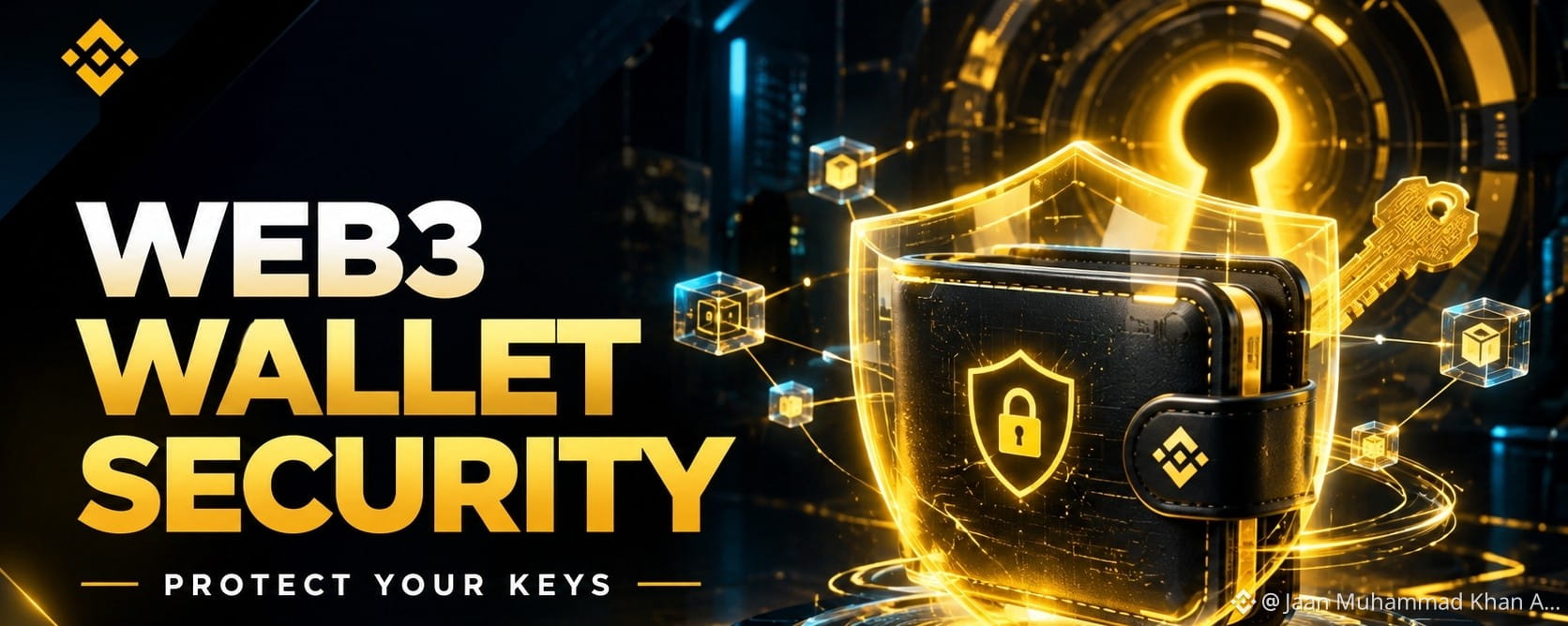
🌐SÉCURITÉ DU PORTEFEUILLE WEB3🔐 Sécurité du portefeuille Web3 : Votre portefeuille est bien plus qu’un simple mot de passe
Web3 a changé la façon dont les gens interagissent avec les actifs numériques.
Au lieu de s’appuyer entièrement sur des institutions financières traditionnelles, les utilisateurs peuvent interagir directement avec les réseaux blockchain via des portefeuilles.
Un portefeuille peut donner accès à des actifs, des applications décentralisées, des NFT, des protocoles DeFi et des smart contracts.
Mais il existe une réalité importante :
Votre portefeuille n’est sécurisé que dans la mesure dont vous l’utilisez et le protégez.
Un réseau blockchain peut être très sécurisé, mais cela ne rend pas automatiquement chaque interaction de portefeuille sûre.
🌐SÉCURITÉ DU PORTEFEUILLE WEB3
🔐 Sécurité du portefeuille Web3 : Votre portefeuille est bien plus qu’un simple mot de passe
Web3 a changé la façon dont les gens interagissent avec les actifs numériques.
Au lieu de s’appuyer entièrement sur des institutions financières traditionnelles, les utilisateurs peuvent interagir directement avec les réseaux blockchain via des portefeuilles.
Un portefeuille peut donner accès à des actifs, des applications décentralisées, des NFT, des protocoles DeFi et des smart contracts.
Mais il existe une réalité importante :
Votre portefeuille n’est sécurisé que dans la mesure dont vous l’utilisez et le protégez.
Un réseau blockchain peut être très sécurisé, mais cela ne rend pas automatiquement chaque interaction de portefeuille sûre.
Web3 a changé la façon dont les gens interagissent avec les actifs numériques.
Au lieu de s’appuyer entièrement sur des institutions financières traditionnelles, les utilisateurs peuvent interagir directement avec les réseaux blockchain via des portefeuilles.
Un portefeuille peut donner accès à des actifs, des applications décentralisées, des NFT, des protocoles DeFi et des smart contracts.
Mais il existe une réalité importante :
Votre portefeuille n’est sécurisé que dans la mesure dont vous l’utilisez et le protégez.
Un réseau blockchain peut être très sécurisé, mais cela ne rend pas automatiquement chaque interaction de portefeuille sûre.
179

·
--
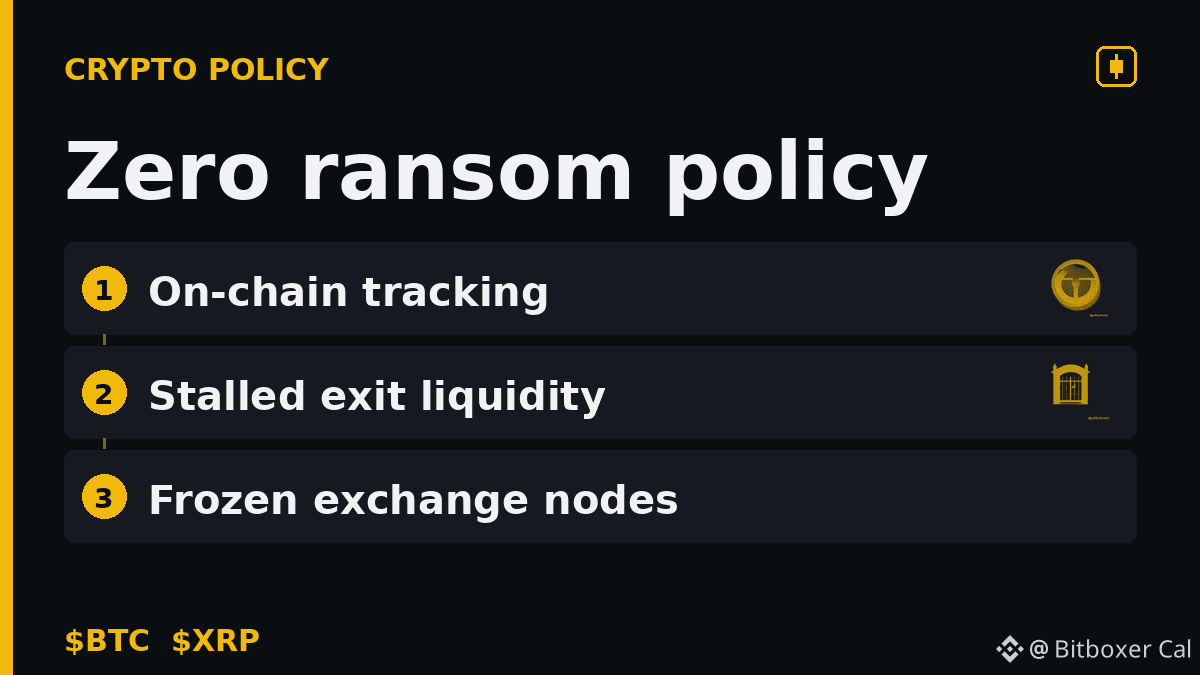
Les politiques de tolérance zéro transforment $BTC en un piège radioactif pour les pirates.
Grâce à la médico-légale on-chain, il devient impossible de transférer hors bourse des pièces contaminées. Si les protocoles refusent de négocier, la liquidité de sortie d’un attaquant disparaît. Voyez comment des plateformes d’échange gèlent $XRP ou des actifs transférés via des ponts pour enfermer les pirates dans une trace numérique permanente. Ce changement met-il effectivement fin à la rentabilité des piratages crypto ?
$BTC #crypto #blockchain #security
Les politiques de tolérance zéro transforment $BTC en un piège radioactif pour les pirates.
Grâce à la médico-légale on-chain, il devient impossible de transférer hors bourse des pièces contaminées. Si les protocoles refusent de négocier, la liquidité de sortie d’un attaquant disparaît. Voyez comment des plateformes d’échange gèlent $XRP ou des actifs transférés via des ponts pour enfermer les pirates dans une trace numérique permanente. Ce changement met-il effectivement fin à la rentabilité des piratages crypto ?
$BTC #crypto #blockchain #security
Grâce à la médico-légale on-chain, il devient impossible de transférer hors bourse des pièces contaminées. Si les protocoles refusent de négocier, la liquidité de sortie d’un attaquant disparaît. Voyez comment des plateformes d’échange gèlent $XRP ou des actifs transférés via des ponts pour enfermer les pirates dans une trace numérique permanente. Ce changement met-il effectivement fin à la rentabilité des piratages crypto ?
$BTC #crypto #blockchain #security
84
Voir la traduction
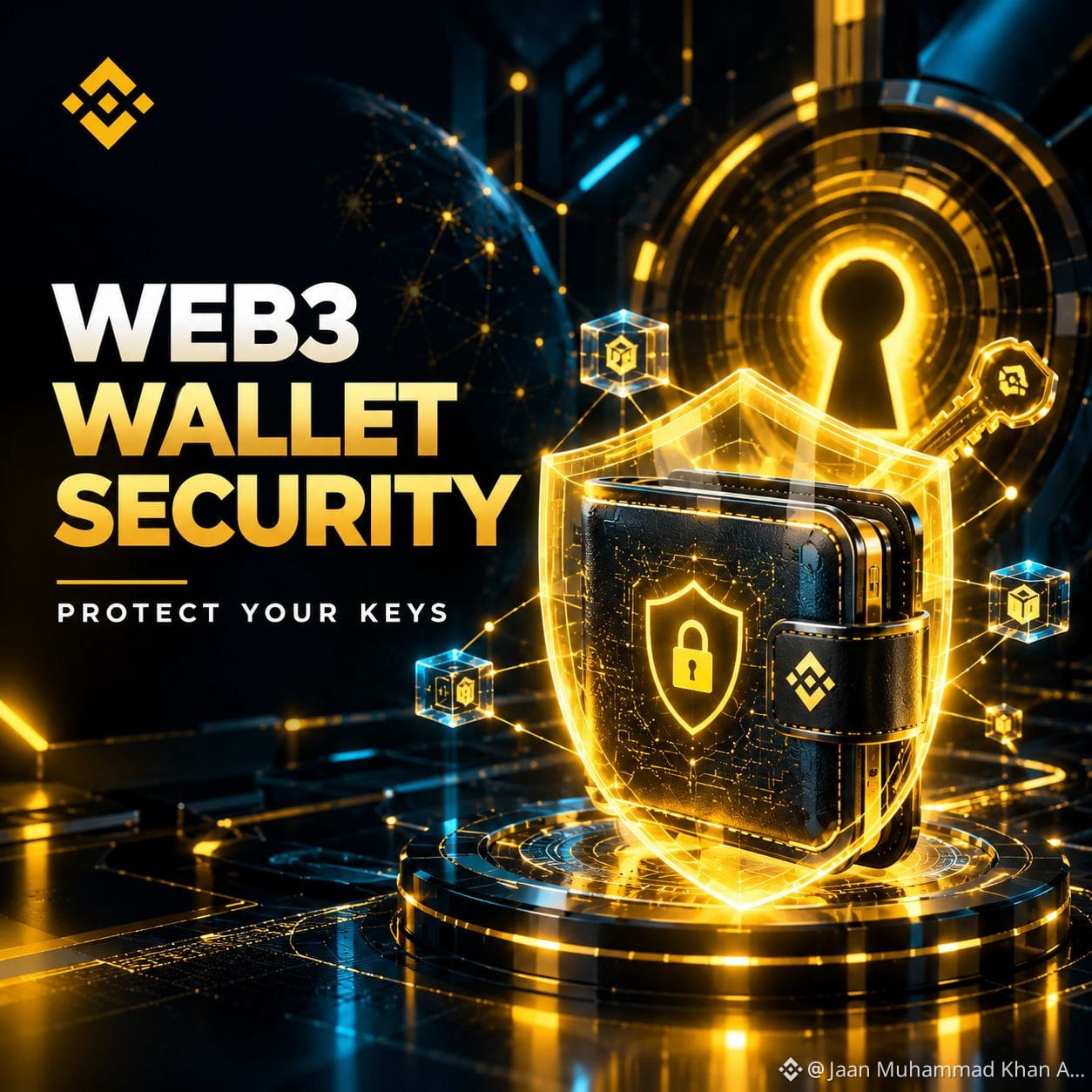
🌐 WEB3 WALLET SECURITY 🔐
Your Wallet Is More Than Just a Password
Web3 gives users direct control over digital assets, DeFi, NFTs, dApps, and blockchain transactions.
But remember:
Blockchain security ≠ Wallet security.
Your wallet is only as secure as the way you use and protect it.
🔑 WHY WALLET SECURITY IS DIFFERENT
Web3 wallets can rely on private keys or seed phrases.
If those secrets are compromised, an attacker may not need to “hack the blockchain.”
They may simply use the credentials you exposed.
Protect the keys → Protect the assets.
⚠️ COMMON WALLET THREATS
1️⃣ Phishing — Fake websites can trick users into connecting wallets or approving malicious transactions.
2️⃣ Malicious Contracts — Blindly signing transactions or approvals can give attackers dangerous permissions.
3️⃣ Seed Phrase Theft — Never enter your recovery phrase into websites, forms, messages, or unverified “support” pages.
4️⃣ Fake Airdrops — Free tokens can be used as bait for malicious wallet interactions.
5️⃣ Compromised Devices — Your phone or computer can become the weakest link.
🛡️ 5 SECURITY LAYERS
💻 Device — Keep your OS and browser updated.
🔐 Wallet — Protect your recovery information.
✍️ Transactions — Understand what you're signing.
🌐 Applications — Verify websites and contracts.
💰 Assets — Consider separating funds across wallets.
🧠 THE BIGGER LESSON
Your security chain can look like:
User → Device → Wallet → App → Smart Contract → Blockchain
If one layer is compromised, the entire interaction can become risky.
🚀 My takeaway:
Web3 gives you more control—but also more responsibility.
Secure the keys.
Verify the transaction.
Understand what you're signing.
That's where responsible Web3 security begins. 🔐
What do you think is the biggest Web3 wallet security risk?
🎣 Phishing
🔑 Seed phrase theft
📝 Malicious transactions
💻 Compromised devices
#security
🌐 WEB3 WALLET SECURITY 🔐
Your Wallet Is More Than Just a Password
Web3 gives users direct control over digital assets, DeFi, NFTs, dApps, and blockchain transactions.
But remember:
Blockchain security ≠ Wallet security.
Your wallet is only as secure as the way you use and protect it.
🔑 WHY WALLET SECURITY IS DIFFERENT
Web3 wallets can rely on private keys or seed phrases.
If those secrets are compromised, an attacker may not need to “hack the blockchain.”
They may simply use the credentials you exposed.
Protect the keys → Protect the assets.
⚠️ COMMON WALLET THREATS
1️⃣ Phishing — Fake websites can trick users into connecting wallets or approving malicious transactions.
2️⃣ Malicious Contracts — Blindly signing transactions or approvals can give attackers dangerous permissions.
3️⃣ Seed Phrase Theft — Never enter your recovery phrase into websites, forms, messages, or unverified “support” pages.
4️⃣ Fake Airdrops — Free tokens can be used as bait for malicious wallet interactions.
5️⃣ Compromised Devices — Your phone or computer can become the weakest link.
🛡️ 5 SECURITY LAYERS
💻 Device — Keep your OS and browser updated.
🔐 Wallet — Protect your recovery information.
✍️ Transactions — Understand what you're signing.
🌐 Applications — Verify websites and contracts.
💰 Assets — Consider separating funds across wallets.
🧠 THE BIGGER LESSON
Your security chain can look like:
User → Device → Wallet → App → Smart Contract → Blockchain
If one layer is compromised, the entire interaction can become risky.
🚀 My takeaway:
Web3 gives you more control—but also more responsibility.
Secure the keys.
Verify the transaction.
Understand what you're signing.
That's where responsible Web3 security begins. 🔐
What do you think is the biggest Web3 wallet security risk?
🎣 Phishing
🔑 Seed phrase theft
📝 Malicious transactions
💻 Compromised devices
#security
Your Wallet Is More Than Just a Password
Web3 gives users direct control over digital assets, DeFi, NFTs, dApps, and blockchain transactions.
But remember:
Blockchain security ≠ Wallet security.
Your wallet is only as secure as the way you use and protect it.
🔑 WHY WALLET SECURITY IS DIFFERENT
Web3 wallets can rely on private keys or seed phrases.
If those secrets are compromised, an attacker may not need to “hack the blockchain.”
They may simply use the credentials you exposed.
Protect the keys → Protect the assets.
⚠️ COMMON WALLET THREATS
1️⃣ Phishing — Fake websites can trick users into connecting wallets or approving malicious transactions.
2️⃣ Malicious Contracts — Blindly signing transactions or approvals can give attackers dangerous permissions.
3️⃣ Seed Phrase Theft — Never enter your recovery phrase into websites, forms, messages, or unverified “support” pages.
4️⃣ Fake Airdrops — Free tokens can be used as bait for malicious wallet interactions.
5️⃣ Compromised Devices — Your phone or computer can become the weakest link.
🛡️ 5 SECURITY LAYERS
💻 Device — Keep your OS and browser updated.
🔐 Wallet — Protect your recovery information.
✍️ Transactions — Understand what you're signing.
🌐 Applications — Verify websites and contracts.
💰 Assets — Consider separating funds across wallets.
🧠 THE BIGGER LESSON
Your security chain can look like:
User → Device → Wallet → App → Smart Contract → Blockchain
If one layer is compromised, the entire interaction can become risky.
🚀 My takeaway:
Web3 gives you more control—but also more responsibility.
Secure the keys.
Verify the transaction.
Understand what you're signing.
That's where responsible Web3 security begins. 🔐
What do you think is the biggest Web3 wallet security risk?
🎣 Phishing
🔑 Seed phrase theft
📝 Malicious transactions
💻 Compromised devices
#security
44

·
--
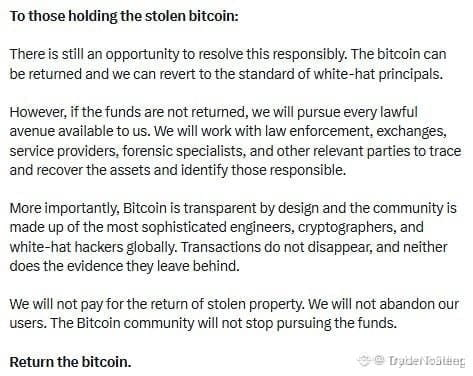
🚨 PROBLÈMES BLOCKSTREAM : ULTIMATUM D’UN HACKER ET MENACE DE BRÈCHE DE LA SIDECHAIN LIQUIDE POUR L’INFRASTRUCTURE $BTC ⚠️
Blockstream a émis une directive juridique officielle aux acteurs qui compromettent le réseau Liquid après avoir découvert une brèche en cours à travers l’écosystème. 🔍 Des analystes sécurité indiquent que cette vulnérabilité dans l’infrastructure de sidechain fédérée de Bitcoin déclenche une contraction de liquidité à court terme et une pression de vente brève sur les jetons de l’écosystème dérivé comme $TFUEL .
Du point de vue de la structure de marché, le capital institutionnel observe de près si cette friction opérationnelle provoque un désengagement plus profond des « smart money », ou si le flux d’ordres se stabilise autour de pools de support clés. 📌 🌊
💬 Comment cet événement de sécurité va-t-il impacter votre position sur les solutions d’expansion des sidechains au cours des prochaines sessions ? 👇
⚠️ Ceci n’est pas un conseil financier. Gérez toujours votre risque. 🛡️
🏷️ #BTC #TFUEL #MarketStructure #CryptoNews #Security
🎯 🦈
🚨 PROBLÈMES BLOCKSTREAM : ULTIMATUM D’UN HACKER ET MENACE DE BRÈCHE DE LA SIDECHAIN LIQUIDE POUR L’INFRASTRUCTURE $BTC ⚠️
Blockstream a émis une directive juridique officielle aux acteurs qui compromettent le réseau Liquid après avoir découvert une brèche en cours à travers l’écosystème. 🔍 Des analystes sécurité indiquent que cette vulnérabilité dans l’infrastructure de sidechain fédérée de Bitcoin déclenche une contraction de liquidité à court terme et une pression de vente brève sur les jetons de l’écosystème dérivé comme $TFUEL .
Du point de vue de la structure de marché, le capital institutionnel observe de près si cette friction opérationnelle provoque un désengagement plus profond des « smart money », ou si le flux d’ordres se stabilise autour de pools de support clés. 📌 🌊
💬 Comment cet événement de sécurité va-t-il impacter votre position sur les solutions d’expansion des sidechains au cours des prochaines sessions ? 👇
⚠️ Ceci n’est pas un conseil financier. Gérez toujours votre risque. 🛡️
🏷️ #BTC #TFUEL #MarketStructure #CryptoNews #Security
🎯 🦈
Blockstream a émis une directive juridique officielle aux acteurs qui compromettent le réseau Liquid après avoir découvert une brèche en cours à travers l’écosystème. 🔍 Des analystes sécurité indiquent que cette vulnérabilité dans l’infrastructure de sidechain fédérée de Bitcoin déclenche une contraction de liquidité à court terme et une pression de vente brève sur les jetons de l’écosystème dérivé comme $TFUEL .
Du point de vue de la structure de marché, le capital institutionnel observe de près si cette friction opérationnelle provoque un désengagement plus profond des « smart money », ou si le flux d’ordres se stabilise autour de pools de support clés. 📌 🌊
💬 Comment cet événement de sécurité va-t-il impacter votre position sur les solutions d’expansion des sidechains au cours des prochaines sessions ? 👇
⚠️ Ceci n’est pas un conseil financier. Gérez toujours votre risque. 🛡️
🏷️ #BTC #TFUEL #MarketStructure #CryptoNews #Security
🎯 🦈
23

🚨 $BTC ALERTE : ARNAQUE DE PHISHING MASQUÉE DERRIÈRE LE SITE OFFICIEL de Trezor ! 🦈
La dernière brèche a exploité un service de messagerie tiers compromis, permettant aux attaquants d’envoyer des emails intitulés « Alerte de sécurité critique » qui semblent provenir directement du domaine de Trezor. 📧 Avec plus de 87k d’utilisateurs déjà exposés à la suite d’un hack antérieur impliquant un partenaire d’expédition, la charge de phishing se fait désormais passer pour une mise à jour urgente du firmware, rendant la vérification visuelle presque impossible. 📊
Les plus avisés savent que le moment où un email au look légitime arrive, c’est une « chasse à la liquidité » pour les identifiants—pas un mouvement du marché. Gardez votre boîte mail affûtée et vérifiez chaque lien sur le site officiel, pas dans l’email. 💡💬 Est-ce que vous vérifiez deux fois les alertes Trezor avant de cliquer ? 👇
⚠️ Ceci ne constitue pas un conseil financier. Gérez toujours votre risque. 🛡️
🏷️ #BTC #PhishingAlert #Security #Crypto
🔥 💎
🚨 $BTC ALERTE : ARNAQUE DE PHISHING MASQUÉE DERRIÈRE LE SITE OFFICIEL de Trezor ! 🦈
La dernière brèche a exploité un service de messagerie tiers compromis, permettant aux attaquants d’envoyer des emails intitulés « Alerte de sécurité critique » qui semblent provenir directement du domaine de Trezor. 📧 Avec plus de 87k d’utilisateurs déjà exposés à la suite d’un hack antérieur impliquant un partenaire d’expédition, la charge de phishing se fait désormais passer pour une mise à jour urgente du firmware, rendant la vérification visuelle presque impossible. 📊
Les plus avisés savent que le moment où un email au look légitime arrive, c’est une « chasse à la liquidité » pour les identifiants—pas un mouvement du marché. Gardez votre boîte mail affûtée et vérifiez chaque lien sur le site officiel, pas dans l’email. 💡💬 Est-ce que vous vérifiez deux fois les alertes Trezor avant de cliquer ? 👇
⚠️ Ceci ne constitue pas un conseil financier. Gérez toujours votre risque. 🛡️
🏷️ #BTC #PhishingAlert #Security #Crypto
🔥 💎
La dernière brèche a exploité un service de messagerie tiers compromis, permettant aux attaquants d’envoyer des emails intitulés « Alerte de sécurité critique » qui semblent provenir directement du domaine de Trezor. 📧 Avec plus de 87k d’utilisateurs déjà exposés à la suite d’un hack antérieur impliquant un partenaire d’expédition, la charge de phishing se fait désormais passer pour une mise à jour urgente du firmware, rendant la vérification visuelle presque impossible. 📊
Les plus avisés savent que le moment où un email au look légitime arrive, c’est une « chasse à la liquidité » pour les identifiants—pas un mouvement du marché. Gardez votre boîte mail affûtée et vérifiez chaque lien sur le site officiel, pas dans l’email. 💡💬 Est-ce que vous vérifiez deux fois les alertes Trezor avant de cliquer ? 👇
⚠️ Ceci ne constitue pas un conseil financier. Gérez toujours votre risque. 🛡️
🏷️ #BTC #PhishingAlert #Security #Crypto
🔥 💎
12

·
--
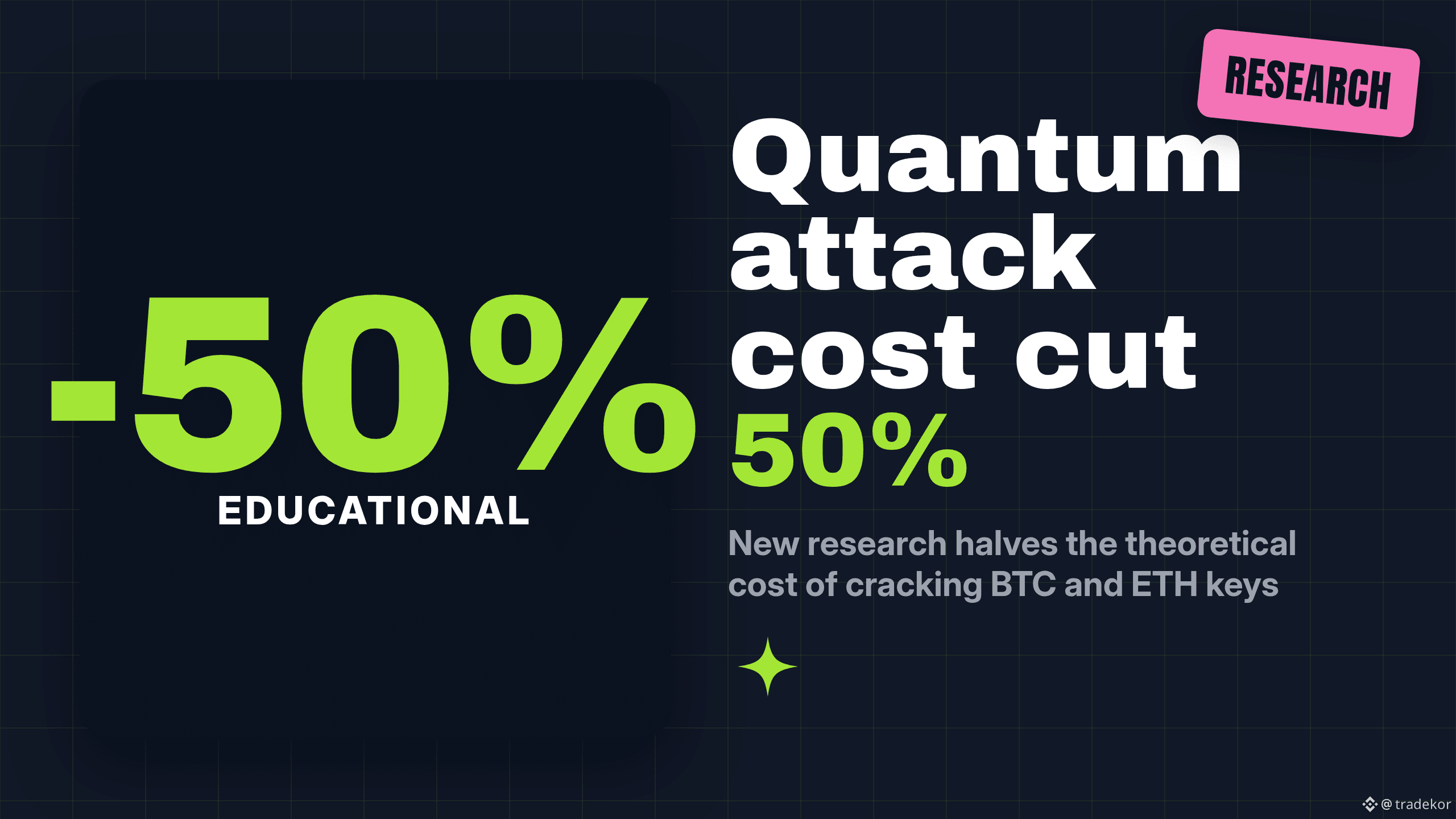
Des chercheurs viennent de réduire l’estimation du coût du calcul quantique pour attaquer le chiffrement de Bitcoin et d’Ethereum de plus de 50% — et aucune machine sur Terre ne peut encore le faire.
La nouvelle : un effort collaboratif (100+ contributeurs, dont des équipes de la Ethereum Foundation, Theta Labs et StarkWare) a conçu un nouveau circuit quantique nécessitant 1 151 qubits logiques et environ 1,3 million de portes de Toffoli pour réaliser l’étape arithmétique centrale permettant de briser la cryptographie par courbes elliptiques (secp256k1) qui sécurise les clés privées de Bitcoin et d’Ethereum. Le score de ressources combiné s’élève à environ 1,5 milliard — plus de 50% de moins que le repère d’environ 3 milliards publié par Google Quantum AI en mars, et une baisse de 86% par rapport à la position de départ d’un défi de recherche ouvert lancé il y a seulement deux mois.
Le hic : le matériel quantique d’aujourd’hui ne dispose que d’environ 1 000 à 1 200 qubits physiques et les nombres de qubits logiques sont dans les dizaines ou les centaines tout au plus — loin de permettre de faire cela. Il s’agit d’un repère pour une attaque théorique future, pas d’une menace en temps réel, et la remédiation (mises à niveau des protocoles, migrations des portefeuilles vers des signatures résistantes au quantique) a plusieurs années d’avance avant que le matériel puisse plausiblement rattraper. Les progrès comme celui-ci ont tendance à survenir par à-coups irréguliers, plutôt que de suivre un compte à rebours régulier.
Pourquoi cela reste important : environ 7 millions de BTC se trouvent dans des adresses où la clé publique est déjà exposée on-chain — ce sont les pièces les plus à risque dès que le « Q-Day » arrivera éventuellement, et la migration de l’ensemble du secteur vers des portefeuilles résistants au quantique prendra des années à se déployer, même une fois la technologie disponible. Une recherche comme celle-ci doit précisément alimenter la planification de cette migration, et non constituer une percée matérielle soudaine que personne n’avait anticipée.
Une réduction de plus de 50% du coût théorique de l’attaque change-t-elle votre avis sur le caractère urgent de la migration vers des portefeuilles résistants au quantique ?
Ce n’est pas un conseil financier. Faites vos propres recherches (DYOR).
$BTC $ETH #CryptoNews #Quantum #Sécurité
Des chercheurs viennent de réduire l’estimation du coût du calcul quantique pour attaquer le chiffrement de Bitcoin et d’Ethereum de plus de 50% — et aucune machine sur Terre ne peut encore le faire.
La nouvelle : un effort collaboratif (100+ contributeurs, dont des équipes de la Ethereum Foundation, Theta Labs et StarkWare) a conçu un nouveau circuit quantique nécessitant 1 151 qubits logiques et environ 1,3 million de portes de Toffoli pour réaliser l’étape arithmétique centrale permettant de briser la cryptographie par courbes elliptiques (secp256k1) qui sécurise les clés privées de Bitcoin et d’Ethereum. Le score de ressources combiné s’élève à environ 1,5 milliard — plus de 50% de moins que le repère d’environ 3 milliards publié par Google Quantum AI en mars, et une baisse de 86% par rapport à la position de départ d’un défi de recherche ouvert lancé il y a seulement deux mois.
Le hic : le matériel quantique d’aujourd’hui ne dispose que d’environ 1 000 à 1 200 qubits physiques et les nombres de qubits logiques sont dans les dizaines ou les centaines tout au plus — loin de permettre de faire cela. Il s’agit d’un repère pour une attaque théorique future, pas d’une menace en temps réel, et la remédiation (mises à niveau des protocoles, migrations des portefeuilles vers des signatures résistantes au quantique) a plusieurs années d’avance avant que le matériel puisse plausiblement rattraper. Les progrès comme celui-ci ont tendance à survenir par à-coups irréguliers, plutôt que de suivre un compte à rebours régulier.
Pourquoi cela reste important : environ 7 millions de BTC se trouvent dans des adresses où la clé publique est déjà exposée on-chain — ce sont les pièces les plus à risque dès que le « Q-Day » arrivera éventuellement, et la migration de l’ensemble du secteur vers des portefeuilles résistants au quantique prendra des années à se déployer, même une fois la technologie disponible. Une recherche comme celle-ci doit précisément alimenter la planification de cette migration, et non constituer une percée matérielle soudaine que personne n’avait anticipée.
Une réduction de plus de 50% du coût théorique de l’attaque change-t-elle votre avis sur le caractère urgent de la migration vers des portefeuilles résistants au quantique ?
Ce n’est pas un conseil financier. Faites vos propres recherches (DYOR).
$BTC $ETH #CryptoNews #Quantum #Sécurité
La nouvelle : un effort collaboratif (100+ contributeurs, dont des équipes de la Ethereum Foundation, Theta Labs et StarkWare) a conçu un nouveau circuit quantique nécessitant 1 151 qubits logiques et environ 1,3 million de portes de Toffoli pour réaliser l’étape arithmétique centrale permettant de briser la cryptographie par courbes elliptiques (secp256k1) qui sécurise les clés privées de Bitcoin et d’Ethereum. Le score de ressources combiné s’élève à environ 1,5 milliard — plus de 50% de moins que le repère d’environ 3 milliards publié par Google Quantum AI en mars, et une baisse de 86% par rapport à la position de départ d’un défi de recherche ouvert lancé il y a seulement deux mois.
Le hic : le matériel quantique d’aujourd’hui ne dispose que d’environ 1 000 à 1 200 qubits physiques et les nombres de qubits logiques sont dans les dizaines ou les centaines tout au plus — loin de permettre de faire cela. Il s’agit d’un repère pour une attaque théorique future, pas d’une menace en temps réel, et la remédiation (mises à niveau des protocoles, migrations des portefeuilles vers des signatures résistantes au quantique) a plusieurs années d’avance avant que le matériel puisse plausiblement rattraper. Les progrès comme celui-ci ont tendance à survenir par à-coups irréguliers, plutôt que de suivre un compte à rebours régulier.
Pourquoi cela reste important : environ 7 millions de BTC se trouvent dans des adresses où la clé publique est déjà exposée on-chain — ce sont les pièces les plus à risque dès que le « Q-Day » arrivera éventuellement, et la migration de l’ensemble du secteur vers des portefeuilles résistants au quantique prendra des années à se déployer, même une fois la technologie disponible. Une recherche comme celle-ci doit précisément alimenter la planification de cette migration, et non constituer une percée matérielle soudaine que personne n’avait anticipée.
Une réduction de plus de 50% du coût théorique de l’attaque change-t-elle votre avis sur le caractère urgent de la migration vers des portefeuilles résistants au quantique ?
Ce n’est pas un conseil financier. Faites vos propres recherches (DYOR).
$BTC $ETH #CryptoNews #Quantum #Sécurité
65

·
--
Voir la traduction
🚨 REVOLUT DATA BREACH EXPOSES BITCOIN HISTORIES DRIVING SHORT TERM PRIVACY CONCERNS 📉
The recent security breach at Revolut highlights how centralized off-ramps remain vulnerable to social engineering rather than core infrastructure exploits. While user balances remain fully secure, the exposure of personal identification alongside on-chain footprint data introduces clear structural privacy friction. 📊
From an order flow perspective, administrative leaks typically trigger transient sentiment pullbacks rather than systemic repositioning. Institutional capital generally separates operational social engineering from platform liquidity, using knee-jerk retail reactions to gauge market absorbency. 🔍
🤔 Will this privacy lapse trigger a temporary market dip, or will smart money quickly absorb the noise? 👇
⚠️ Not financial advice. Always manage your risk. 🛡️
🏷️ #BTC #MarketUpdate #Crypto #Security
🎯 🦈
🚨 REVOLUT DATA BREACH EXPOSES BITCOIN HISTORIES DRIVING SHORT TERM PRIVACY CONCERNS 📉
The recent security breach at Revolut highlights how centralized off-ramps remain vulnerable to social engineering rather than core infrastructure exploits. While user balances remain fully secure, the exposure of personal identification alongside on-chain footprint data introduces clear structural privacy friction. 📊
From an order flow perspective, administrative leaks typically trigger transient sentiment pullbacks rather than systemic repositioning. Institutional capital generally separates operational social engineering from platform liquidity, using knee-jerk retail reactions to gauge market absorbency. 🔍
🤔 Will this privacy lapse trigger a temporary market dip, or will smart money quickly absorb the noise? 👇
⚠️ Not financial advice. Always manage your risk. 🛡️
🏷️ #BTC #MarketUpdate #Crypto #Security
🎯 🦈
The recent security breach at Revolut highlights how centralized off-ramps remain vulnerable to social engineering rather than core infrastructure exploits. While user balances remain fully secure, the exposure of personal identification alongside on-chain footprint data introduces clear structural privacy friction. 📊
From an order flow perspective, administrative leaks typically trigger transient sentiment pullbacks rather than systemic repositioning. Institutional capital generally separates operational social engineering from platform liquidity, using knee-jerk retail reactions to gauge market absorbency. 🔍
🤔 Will this privacy lapse trigger a temporary market dip, or will smart money quickly absorb the noise? 👇
⚠️ Not financial advice. Always manage your risk. 🛡️
🏷️ #BTC #MarketUpdate #Crypto #Security
🎯 🦈


1

·
--
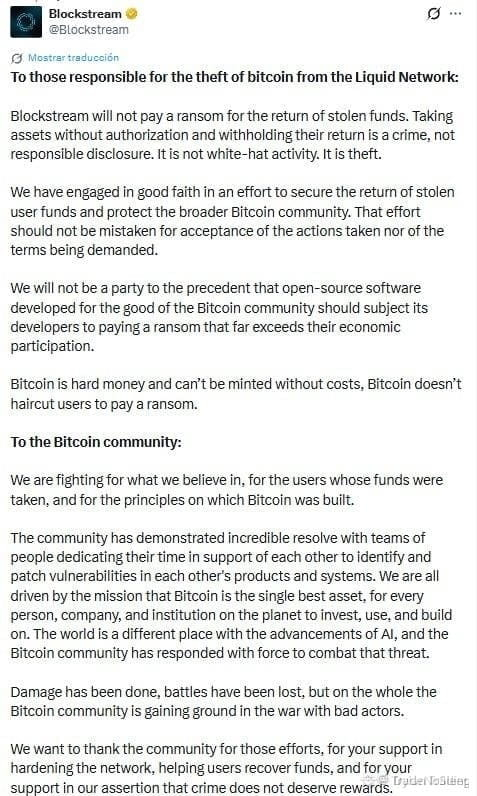
🚨 BLOCKSTREAM REFUSE UNE RANÇON APRÈS $BTC EXPLOIT SUITE À DES EXPERTISES SUR-CHAÎNE RENFORCÉES ! 🛡️
Blockstream a adopté une position institutionnelle ferme à la suite de la récente brèche du réseau Liquid, refusant de payer les demandes de rançon. Plutôt que de traiter avec des exploitants non autorisés, l’équipe d’infrastructure exploite des expertises forensiques sur la chaîne et un suivi des échanges de premier ordre pour isoler les mouvements du ledger volé $BTC . 📊
Les registres publics laissent des traces permanentes, rendant les transferts illicites à haut volume notoirement difficiles à liquider sans déclencher des pièges de conformité automatisés. 🔍 En attendant, méfiez-vous d’arnaques d’hameçonnage secondaires cherchant à profiter de la panique des utilisateurs sous couvert de récupération d’actifs. ⚠️
💬 Pensez-vous que les politiques institutionnelles de non-négociation finiront par dissuader les futures exploitations de protocole ? 👇
⚠️ Ceci ne constitue pas un conseil financier. Gérez toujours votre risque. 🛡️
🏷️ #BTC #Blockstream #OnChain #Security
🛡️ 🔍
🚨 BLOCKSTREAM REFUSE UNE RANÇON APRÈS $BTC EXPLOIT SUITE À DES EXPERTISES SUR-CHAÎNE RENFORCÉES ! 🛡️
Blockstream a adopté une position institutionnelle ferme à la suite de la récente brèche du réseau Liquid, refusant de payer les demandes de rançon. Plutôt que de traiter avec des exploitants non autorisés, l’équipe d’infrastructure exploite des expertises forensiques sur la chaîne et un suivi des échanges de premier ordre pour isoler les mouvements du ledger volé $BTC . 📊
Les registres publics laissent des traces permanentes, rendant les transferts illicites à haut volume notoirement difficiles à liquider sans déclencher des pièges de conformité automatisés. 🔍 En attendant, méfiez-vous d’arnaques d’hameçonnage secondaires cherchant à profiter de la panique des utilisateurs sous couvert de récupération d’actifs. ⚠️
💬 Pensez-vous que les politiques institutionnelles de non-négociation finiront par dissuader les futures exploitations de protocole ? 👇
⚠️ Ceci ne constitue pas un conseil financier. Gérez toujours votre risque. 🛡️
🏷️ #BTC #Blockstream #OnChain #Security
🛡️ 🔍
Blockstream a adopté une position institutionnelle ferme à la suite de la récente brèche du réseau Liquid, refusant de payer les demandes de rançon. Plutôt que de traiter avec des exploitants non autorisés, l’équipe d’infrastructure exploite des expertises forensiques sur la chaîne et un suivi des échanges de premier ordre pour isoler les mouvements du ledger volé $BTC . 📊
Les registres publics laissent des traces permanentes, rendant les transferts illicites à haut volume notoirement difficiles à liquider sans déclencher des pièges de conformité automatisés. 🔍 En attendant, méfiez-vous d’arnaques d’hameçonnage secondaires cherchant à profiter de la panique des utilisateurs sous couvert de récupération d’actifs. ⚠️
💬 Pensez-vous que les politiques institutionnelles de non-négociation finiront par dissuader les futures exploitations de protocole ? 👇
⚠️ Ceci ne constitue pas un conseil financier. Gérez toujours votre risque. 🛡️
🏷️ #BTC #Blockstream #OnChain #Security
🛡️ 🔍
13

🚨 BLOCKSTREAM REFUSE L’EXIGENCE DE RANÇON APRÈS UNE FUGUE MAJEURE, CRÉANT $BTC UN NIVEAU DE TENSION ! 📉
Blockstream trace une ligne rouge, refusant officiellement de payer la rançon après une faille exploitée à plusieurs millions de dollars sur le réseau Liquid. 🔒 Même si la perte de capital frappe durement le sentiment du marché à court terme, céder au chantage crée un précédent dangereux pour les infrastructures institutionnelles.
Attendez une volatilité immédiate autour des actifs liés à Liquid, tels que $TFUEL , alors que les principales plateformes resserrent les limites de retrait et lancent des audits de sécurité urgents. ⚠️ Les “smart money” se couvrent déjà contre le risque, mais l’intégrité structurelle à long terme exige aucun compromis avec les exploitants. 📉
💬 Cette position intransigeante restaurera-t-elle la confiance institutionnelle dans la sécurité, ou la pression vendeuse à court terme prendra-t-elle le dessus ? 👇
⚠️ Ceci n’est pas un conseil financier. Gérez toujours votre risque. 🛡️
🏷️ #BTC #TFUEL #CryptoNews #MarketAlert #Security
🛡️ 👁️
🚨 BLOCKSTREAM REFUSE L’EXIGENCE DE RANÇON APRÈS UNE FUGUE MAJEURE, CRÉANT $BTC UN NIVEAU DE TENSION ! 📉
Blockstream trace une ligne rouge, refusant officiellement de payer la rançon après une faille exploitée à plusieurs millions de dollars sur le réseau Liquid. 🔒 Même si la perte de capital frappe durement le sentiment du marché à court terme, céder au chantage crée un précédent dangereux pour les infrastructures institutionnelles.
Attendez une volatilité immédiate autour des actifs liés à Liquid, tels que $TFUEL , alors que les principales plateformes resserrent les limites de retrait et lancent des audits de sécurité urgents. ⚠️ Les “smart money” se couvrent déjà contre le risque, mais l’intégrité structurelle à long terme exige aucun compromis avec les exploitants. 📉
💬 Cette position intransigeante restaurera-t-elle la confiance institutionnelle dans la sécurité, ou la pression vendeuse à court terme prendra-t-elle le dessus ? 👇
⚠️ Ceci n’est pas un conseil financier. Gérez toujours votre risque. 🛡️
🏷️ #BTC #TFUEL #CryptoNews #MarketAlert #Security
🛡️ 👁️
Blockstream trace une ligne rouge, refusant officiellement de payer la rançon après une faille exploitée à plusieurs millions de dollars sur le réseau Liquid. 🔒 Même si la perte de capital frappe durement le sentiment du marché à court terme, céder au chantage crée un précédent dangereux pour les infrastructures institutionnelles.
Attendez une volatilité immédiate autour des actifs liés à Liquid, tels que $TFUEL , alors que les principales plateformes resserrent les limites de retrait et lancent des audits de sécurité urgents. ⚠️ Les “smart money” se couvrent déjà contre le risque, mais l’intégrité structurelle à long terme exige aucun compromis avec les exploitants. 📉
💬 Cette position intransigeante restaurera-t-elle la confiance institutionnelle dans la sécurité, ou la pression vendeuse à court terme prendra-t-elle le dessus ? 👇
⚠️ Ceci n’est pas un conseil financier. Gérez toujours votre risque. 🛡️
🏷️ #BTC #TFUEL #CryptoNews #MarketAlert #Security
🛡️ 👁️


32

Trezor, attention. Le fabricant de portefeuilles matériels Trezor vient de confirmer que son fournisseur de messagerie tiers a été compromis. Cela signifie que des pirates envoient actuellement des alertes de sécurité frauduleuses, mais réalistes, aux utilisateurs. Voici ce qu’il faut savoir tout de suite : 1️⃣ Les e-mails d’hameçonnage prétendent à tort qu’il existe une faille matérielle critique sur votre appareil. 2️⃣ Ils tenteront de vous faire entrer votre phrase de récupération pour corriger ce problème imaginaire. 3️⃣ Ne saisissez, en aucune circonstance, votre phrase de graine en ligne et ne la partagez avec personne. Votre appareil physique et vos $BTC fonds restent en sécurité tant que vous conservez votre phrase de récupération entièrement hors ligne et confidentielle. Restez vigilant, car la sécurité commence par nos propres actions. #Bitcoin #PhishingAlert #Security #Write2Earn
Trezor, attention. Le fabricant de portefeuilles matériels Trezor vient de confirmer que son fournisseur de messagerie tiers a été compromis. Cela signifie que des pirates envoient actuellement des alertes de sécurité frauduleuses, mais réalistes, aux utilisateurs. Voici ce qu’il faut savoir tout de suite : 1️⃣ Les e-mails d’hameçonnage prétendent à tort qu’il existe une faille matérielle critique sur votre appareil. 2️⃣ Ils tenteront de vous faire entrer votre phrase de récupération pour corriger ce problème imaginaire. 3️⃣ Ne saisissez, en aucune circonstance, votre phrase de graine en ligne et ne la partagez avec personne. Votre appareil physique et vos $BTC fonds restent en sécurité tant que vous conservez votre phrase de récupération entièrement hors ligne et confidentielle. Restez vigilant, car la sécurité commence par nos propres actions. #Bitcoin #PhishingAlert #Security #Write2Earn

55
Imaginez recevoir un e-mail provenant d’une adresse officielle et vérifiée, qui ressemble à 100% à la réalité, pour découvrir qu’il s’agit d’un piège conçu pour voler l’intégralité de votre capital crypto. Ce n’est pas un scénario hypothétique, mais le dernier cauchemar de sécurité qui touche les utilisateurs de portefeuilles matériels.
Comment pouvons-nous dormir sur nos deux oreilles en sachant que nos clés hors ligne sont en sécurité, mais que nos adresses e-mail sont transformées en arme contre nous ?
Voici ce que nous savons pour le moment :
🚨 Trezor a confirmé qu’une faille de sécurité de tierce partie chez le prestataire d’expédition ShipMonk est à l’origine du problème.
🚨 Cette faille a permis à des acteurs malveillants d’envoyer des e-mails de phishing directement depuis un domaine Trezor légitime.
🚨 Les données compromises incluent des informations personnelles de clients ayant commandé des appareils.
N’entrez, jamais, jamais votre phrase de récupération sur un site web, même si l’e-mail provient du domaine officiel exact. Sérieusement, restez sur vos gardes et gardez votre $BTC et $ETH en sécurité. Ces pirates deviennent beaucoup trop intelligents.
#Trezor #Security #Phishing #Write2Earn
Imaginez recevoir un e-mail provenant d’une adresse officielle et vérifiée, qui ressemble à 100% à la réalité, pour découvrir qu’il s’agit d’un piège conçu pour voler l’intégralité de votre capital crypto. Ce n’est pas un scénario hypothétique, mais le dernier cauchemar de sécurité qui touche les utilisateurs de portefeuilles matériels.
Comment pouvons-nous dormir sur nos deux oreilles en sachant que nos clés hors ligne sont en sécurité, mais que nos adresses e-mail sont transformées en arme contre nous ?
Voici ce que nous savons pour le moment :
🚨 Trezor a confirmé qu’une faille de sécurité de tierce partie chez le prestataire d’expédition ShipMonk est à l’origine du problème.
🚨 Cette faille a permis à des acteurs malveillants d’envoyer des e-mails de phishing directement depuis un domaine Trezor légitime.
🚨 Les données compromises incluent des informations personnelles de clients ayant commandé des appareils.
N’entrez, jamais, jamais votre phrase de récupération sur un site web, même si l’e-mail provient du domaine officiel exact. Sérieusement, restez sur vos gardes et gardez votre $BTC et $ETH en sécurité. Ces pirates deviennent beaucoup trop intelligents.
#Trezor #Security #Phishing #Write2Earn
Comment pouvons-nous dormir sur nos deux oreilles en sachant que nos clés hors ligne sont en sécurité, mais que nos adresses e-mail sont transformées en arme contre nous ?
Voici ce que nous savons pour le moment :
🚨 Trezor a confirmé qu’une faille de sécurité de tierce partie chez le prestataire d’expédition ShipMonk est à l’origine du problème.
🚨 Cette faille a permis à des acteurs malveillants d’envoyer des e-mails de phishing directement depuis un domaine Trezor légitime.
🚨 Les données compromises incluent des informations personnelles de clients ayant commandé des appareils.
N’entrez, jamais, jamais votre phrase de récupération sur un site web, même si l’e-mail provient du domaine officiel exact. Sérieusement, restez sur vos gardes et gardez votre $BTC et $ETH en sécurité. Ces pirates deviennent beaucoup trop intelligents.
#Trezor #Security #Phishing #Write2Earn

31


Voir la traduction
🚨 比特币钱包密钥源自放射性衰变 🧠
📊 | $BTC | $ETH | $BNB |
- 请关注、点赞并留言,分享您的看法,一起讨论。 📈
- Entropy32 Plus 将放射性衰变转化为离线比特币种子短语。
- 该设备利用放射性衰变产生熵,但其熵来源尚未得到验证。
- 目前尚未进行第三方审计,安全性仍存疑。 🔥
- 若熵来源被证实安全,可能提升离线种子生成的可信度。
- 否则其未经审计的特性或将导致投资者谨慎,短期内需求或保持平稳。
- 鲸鱼行为暂无明显变化,预计短线行情仍呈横盘震荡。
- 您认为放射性熵源在比特币安全领域的前景如何?
- 欢迎关注获取更多加密市场动态,期待您的评论。
- #Bitcoin #Crypto #Whales #Security #Blockchain
🚨 比特币钱包密钥源自放射性衰变 🧠
📊 | $BTC | $ETH | $BNB |
- 请关注、点赞并留言,分享您的看法,一起讨论。 📈
- Entropy32 Plus 将放射性衰变转化为离线比特币种子短语。
- 该设备利用放射性衰变产生熵,但其熵来源尚未得到验证。
- 目前尚未进行第三方审计,安全性仍存疑。 🔥
- 若熵来源被证实安全,可能提升离线种子生成的可信度。
- 否则其未经审计的特性或将导致投资者谨慎,短期内需求或保持平稳。
- 鲸鱼行为暂无明显变化,预计短线行情仍呈横盘震荡。
- 您认为放射性熵源在比特币安全领域的前景如何?
- 欢迎关注获取更多加密市场动态,期待您的评论。
- #Bitcoin #Crypto #Whales #Security #Blockchain
📊 | $BTC | $ETH | $BNB |
- 请关注、点赞并留言,分享您的看法,一起讨论。 📈
- Entropy32 Plus 将放射性衰变转化为离线比特币种子短语。
- 该设备利用放射性衰变产生熵,但其熵来源尚未得到验证。
- 目前尚未进行第三方审计,安全性仍存疑。 🔥
- 若熵来源被证实安全,可能提升离线种子生成的可信度。
- 否则其未经审计的特性或将导致投资者谨慎,短期内需求或保持平稳。
- 鲸鱼行为暂无明显变化,预计短线行情仍呈横盘震荡。
- 您认为放射性熵源在比特币安全领域的前景如何?
- 欢迎关注获取更多加密市场动态,期待您的评论。
- #Bitcoin #Crypto #Whales #Security #Blockchain
155
Voir la traduction
🚨 恶意机器人探测比特币支付服务器 📈 盗取主控钥匙 🧠
📊 | $BTC | $ETH | $BNB |
- 请关注、点赞并留言,共同探讨行业动态。 📈
- 恶意机器人持续扫描公开的比特币支付服务器接口。
- 目标为窃取服务器的主管理员密钥,危及资产安全。
- 受影响的仅为手动暴露的API,官方已在2.4.4版本封闭公共路径。
- 该报告首次发布于CryptoSlate,市场情绪保持中性。 🔥
- 若漏洞未彻底修补,可能导致短期内安全担忧加剧,影响比特币支付服务需求。
- 随着2.4.4版本发布,安全风险或将下降,预计短线交易波动保持横盘。
- 由于鲸鱼行为未出现明显波动,市场对该事件的反应仍保持中性。
- 短期内,投资者可能关注其他链上安全升级,以评估风险敞口。
- 您认为此类安全漏洞会对比特币生态的信任度产生多大影响?
- 欢迎继续关注,我们将第一时间提供后续分析,期待您的评论。
- #Bitcoin #Crypto #Security #Whales #Blockchain
🚨 恶意机器人探测比特币支付服务器 📈 盗取主控钥匙 🧠
📊 | $BTC | $ETH | $BNB |
- 请关注、点赞并留言,共同探讨行业动态。 📈
- 恶意机器人持续扫描公开的比特币支付服务器接口。
- 目标为窃取服务器的主管理员密钥,危及资产安全。
- 受影响的仅为手动暴露的API,官方已在2.4.4版本封闭公共路径。
- 该报告首次发布于CryptoSlate,市场情绪保持中性。 🔥
- 若漏洞未彻底修补,可能导致短期内安全担忧加剧,影响比特币支付服务需求。
- 随着2.4.4版本发布,安全风险或将下降,预计短线交易波动保持横盘。
- 由于鲸鱼行为未出现明显波动,市场对该事件的反应仍保持中性。
- 短期内,投资者可能关注其他链上安全升级,以评估风险敞口。
- 您认为此类安全漏洞会对比特币生态的信任度产生多大影响?
- 欢迎继续关注,我们将第一时间提供后续分析,期待您的评论。
- #Bitcoin #Crypto #Security #Whales #Blockchain
📊 | $BTC | $ETH | $BNB |
- 请关注、点赞并留言,共同探讨行业动态。 📈
- 恶意机器人持续扫描公开的比特币支付服务器接口。
- 目标为窃取服务器的主管理员密钥,危及资产安全。
- 受影响的仅为手动暴露的API,官方已在2.4.4版本封闭公共路径。
- 该报告首次发布于CryptoSlate,市场情绪保持中性。 🔥
- 若漏洞未彻底修补,可能导致短期内安全担忧加剧,影响比特币支付服务需求。
- 随着2.4.4版本发布,安全风险或将下降,预计短线交易波动保持横盘。
- 由于鲸鱼行为未出现明显波动,市场对该事件的反应仍保持中性。
- 短期内,投资者可能关注其他链上安全升级,以评估风险敞口。
- 您认为此类安全漏洞会对比特币生态的信任度产生多大影响?
- 欢迎继续关注,我们将第一时间提供后续分析,期待您的评论。
- #Bitcoin #Crypto #Security #Whales #Blockchain
10

·
--
Haussier
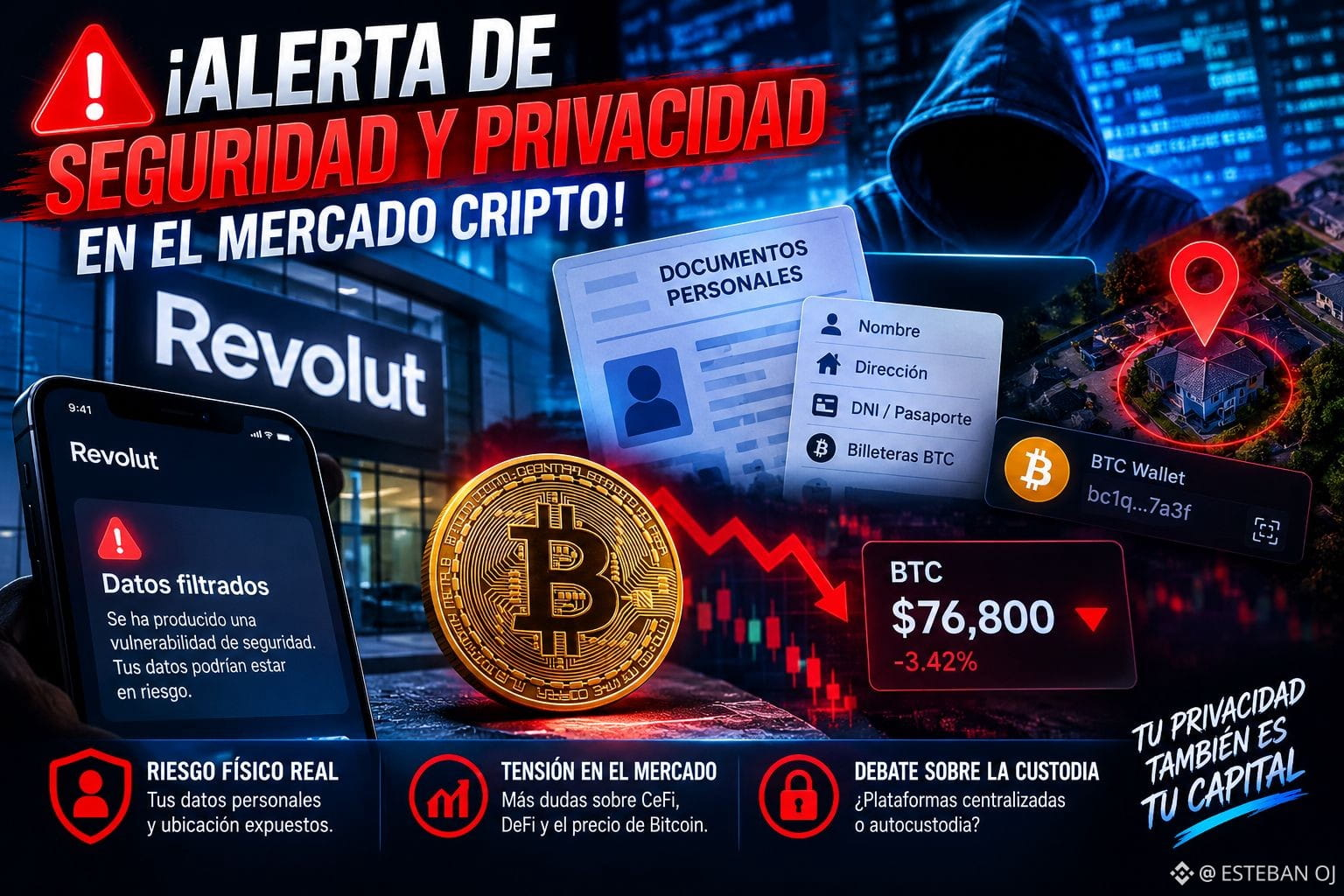
🚨 ALERTE DE SÉCURITÉ ET DE CONFIDENTIALITÉ SUR LE MARCHÉ CRYPTO ! 🚨
Une importante vulnérabilité externe vient de secouer les détenteurs d’actifs numériques. Le géant fintech Revolut a confirmé une grave fuite de données après avoir subi une attaque par usurpation d’identité. L’incident n’a pas seulement exposé des documents personnels : il a aussi lié directement les adresses de portefeuilles de $BTC de utilisateurs fortunés à leurs domiciles physiques réels.
Points clés à connaître concernant la polémique :
#1 Risque physique réel pour les investisseurs : Contrairement aux cyberattaques habituelles où seuls les fonds en ligne sont menacés, ce piratage met directement en jeu la sécurité personnelle des utilisateurs en révélant où ils vivent et combien de crypto-monnaies ils possèdent.
#2 Tension sur le marché : La fuite a déclenché l’alarme dans le secteur, renforçant les doutes sur les risques à l’intersection entre la finance traditionnelle (CeFi) et les actifs décentralisés. S’y ajoute un contexte incertain où le prix de $BTC exerce une pression sur la zone de support après être retombé vers 76.800-77.000 dollars au milieu de tensions macroéconomiques.
#3 Débat sur la garde des actifs : L’événement a ravivé les discussions au sein de la communauté sur la question de savoir si les investisseurs devraient conserver leurs actifs sur des plateformes centralisées ou migrer vers l’autogarde sur des réseaux comme $ETH ou via des solutions « cold storage ».
Qu’en pensez-vous de ce type de failles de sécurité ? Avez-vous l’habitude de
conserver vos informations et vos actifs sur des plateformes centralisées ou préférez-vous l’autogarde ? 💬👇
#CryptoNews #Bitcoin #Security
🚨 ALERTE DE SÉCURITÉ ET DE CONFIDENTIALITÉ SUR LE MARCHÉ CRYPTO ! 🚨
Une importante vulnérabilité externe vient de secouer les détenteurs d’actifs numériques. Le géant fintech Revolut a confirmé une grave fuite de données après avoir subi une attaque par usurpation d’identité. L’incident n’a pas seulement exposé des documents personnels : il a aussi lié directement les adresses de portefeuilles de $BTC de utilisateurs fortunés à leurs domiciles physiques réels.
Points clés à connaître concernant la polémique :
#1 Risque physique réel pour les investisseurs : Contrairement aux cyberattaques habituelles où seuls les fonds en ligne sont menacés, ce piratage met directement en jeu la sécurité personnelle des utilisateurs en révélant où ils vivent et combien de crypto-monnaies ils possèdent.
#2 Tension sur le marché : La fuite a déclenché l’alarme dans le secteur, renforçant les doutes sur les risques à l’intersection entre la finance traditionnelle (CeFi) et les actifs décentralisés. S’y ajoute un contexte incertain où le prix de $BTC exerce une pression sur la zone de support après être retombé vers 76.800-77.000 dollars au milieu de tensions macroéconomiques.
#3 Débat sur la garde des actifs : L’événement a ravivé les discussions au sein de la communauté sur la question de savoir si les investisseurs devraient conserver leurs actifs sur des plateformes centralisées ou migrer vers l’autogarde sur des réseaux comme $ETH ou via des solutions « cold storage ».
Qu’en pensez-vous de ce type de failles de sécurité ? Avez-vous l’habitude de
conserver vos informations et vos actifs sur des plateformes centralisées ou préférez-vous l’autogarde ? 💬👇
#CryptoNews #Bitcoin #Security
Une importante vulnérabilité externe vient de secouer les détenteurs d’actifs numériques. Le géant fintech Revolut a confirmé une grave fuite de données après avoir subi une attaque par usurpation d’identité. L’incident n’a pas seulement exposé des documents personnels : il a aussi lié directement les adresses de portefeuilles de $BTC de utilisateurs fortunés à leurs domiciles physiques réels.
Points clés à connaître concernant la polémique :
#1 Risque physique réel pour les investisseurs : Contrairement aux cyberattaques habituelles où seuls les fonds en ligne sont menacés, ce piratage met directement en jeu la sécurité personnelle des utilisateurs en révélant où ils vivent et combien de crypto-monnaies ils possèdent.
#2 Tension sur le marché : La fuite a déclenché l’alarme dans le secteur, renforçant les doutes sur les risques à l’intersection entre la finance traditionnelle (CeFi) et les actifs décentralisés. S’y ajoute un contexte incertain où le prix de $BTC exerce une pression sur la zone de support après être retombé vers 76.800-77.000 dollars au milieu de tensions macroéconomiques.
#3 Débat sur la garde des actifs : L’événement a ravivé les discussions au sein de la communauté sur la question de savoir si les investisseurs devraient conserver leurs actifs sur des plateformes centralisées ou migrer vers l’autogarde sur des réseaux comme $ETH ou via des solutions « cold storage ».
Qu’en pensez-vous de ce type de failles de sécurité ? Avez-vous l’habitude de
conserver vos informations et vos actifs sur des plateformes centralisées ou préférez-vous l’autogarde ? 💬👇
#CryptoNews #Bitcoin #Security
Capricorn7 :
🧐This incident hits on the single biggest dark side of KYC (Know Your Customer) compliance: centralized honeypots. When centralized platforms gather massive amounts of highly sensitive data—passports, selfies, home addresses, and complete transaction histories—they create a high-value target for hackers. As seen in this breach, attackers don't even need to crack the blockchain; they just exploit institutional human error via social engineering and fake government subpoenas.
8
1
3
250
·
--
🚨 Nouvelles | Piratage de Chainflip sur le réseau Tron et perte d’environ 736 000 USDT
Chainflip a annoncé que son protocole d’échange inter-chaînes a subi une attaque sur le réseau Tron, entraînant l’exécution de 6 paiements non autorisés et une perte d’environ 736 400 USDT.
La plateforme a temporairement suspendu le réseau Tron, avec une reprise prévue dès que possible le lundi.
Selon les premières investigations, l’attaquant a exploité la dépendance de Chainflip à un Memo pour lire les ordres d’échange ; en y ajoutant un Memo spécial à une transaction déjà signée par les validateurs, le système l’a traitée comme un échange distinct, activant ainsi le processus de remboursement. Résultat : deux paiements ont été effectués pour le même dépôt.
Chainflip a confirmé que le reste des fonds est en sécurité et qu’elle indemnisera les utilisateurs concernés.
📌 Cipher Vault : cet incident met en lumière les risques liés à la conception de la logique des transactions inter-chaînes, en particulier lorsque des données comme le Memo font partie du mécanisme d’exécution des paiements.
#Chainflip #Tron #USDT #Crypto #Security
🚨 Nouvelles | Piratage de Chainflip sur le réseau Tron et perte d’environ 736 000 USDT
Chainflip a annoncé que son protocole d’échange inter-chaînes a subi une attaque sur le réseau Tron, entraînant l’exécution de 6 paiements non autorisés et une perte d’environ 736 400 USDT.
La plateforme a temporairement suspendu le réseau Tron, avec une reprise prévue dès que possible le lundi.
Selon les premières investigations, l’attaquant a exploité la dépendance de Chainflip à un Memo pour lire les ordres d’échange ; en y ajoutant un Memo spécial à une transaction déjà signée par les validateurs, le système l’a traitée comme un échange distinct, activant ainsi le processus de remboursement. Résultat : deux paiements ont été effectués pour le même dépôt.
Chainflip a confirmé que le reste des fonds est en sécurité et qu’elle indemnisera les utilisateurs concernés.
📌 Cipher Vault : cet incident met en lumière les risques liés à la conception de la logique des transactions inter-chaînes, en particulier lorsque des données comme le Memo font partie du mécanisme d’exécution des paiements.
#Chainflip #Tron #USDT #Crypto #Security
Chainflip a annoncé que son protocole d’échange inter-chaînes a subi une attaque sur le réseau Tron, entraînant l’exécution de 6 paiements non autorisés et une perte d’environ 736 400 USDT.
La plateforme a temporairement suspendu le réseau Tron, avec une reprise prévue dès que possible le lundi.
Selon les premières investigations, l’attaquant a exploité la dépendance de Chainflip à un Memo pour lire les ordres d’échange ; en y ajoutant un Memo spécial à une transaction déjà signée par les validateurs, le système l’a traitée comme un échange distinct, activant ainsi le processus de remboursement. Résultat : deux paiements ont été effectués pour le même dépôt.
Chainflip a confirmé que le reste des fonds est en sécurité et qu’elle indemnisera les utilisateurs concernés.
📌 Cipher Vault : cet incident met en lumière les risques liés à la conception de la logique des transactions inter-chaînes, en particulier lorsque des données comme le Memo font partie du mécanisme d’exécution des paiements.
#Chainflip #Tron #USDT #Crypto #Security
1
24
Voir la traduction
🚨 REVOLUT误泄富客护照及比特币记录 🧠
📊 | $BTC | $ETH | $BNB |
- 请关注、点赞并留言,共同探讨最新加密动态 📈
- Revolut因误认欺诈性政府请求,向黑客披露用户护照、自拍及比特币交易记录。
- 受影响用户包括持有大量资产的富客,信息涉及护照/驾照、姓名、出生日期、住址、电话、IBAN及账户对账单。
- 公开的交易数据涵盖提现记录及完整的比特币转账历史,可能被用于洗钱或进一步攻击。
- 公司已声明将配合调查并加强身份验证流程。 🔥
- 该泄露事件可能导致市场对中心化金融平台信任度下降,短期内比特币价格预计承压。
- 投资者情绪转为看空,或将触发抛售潮,引发波动加剧。
- 巨鲸可能利用下跌进行分配或低位吸纳,观察链上大额转移动向。
- 短期内市场预计保持下行压力,波动性上升,需关注监管回应。
- 你认为此类数据泄露会否加速用户转向去中心化交易所?
- 欢迎继续关注我们的深度分析,留言分享你的看法。
- #Bitcoin #Crypto #Whales #Security #Revolut
🚨 REVOLUT误泄富客护照及比特币记录 🧠
📊 | $BTC | $ETH | $BNB |
- 请关注、点赞并留言,共同探讨最新加密动态 📈
- Revolut因误认欺诈性政府请求,向黑客披露用户护照、自拍及比特币交易记录。
- 受影响用户包括持有大量资产的富客,信息涉及护照/驾照、姓名、出生日期、住址、电话、IBAN及账户对账单。
- 公开的交易数据涵盖提现记录及完整的比特币转账历史,可能被用于洗钱或进一步攻击。
- 公司已声明将配合调查并加强身份验证流程。 🔥
- 该泄露事件可能导致市场对中心化金融平台信任度下降,短期内比特币价格预计承压。
- 投资者情绪转为看空,或将触发抛售潮,引发波动加剧。
- 巨鲸可能利用下跌进行分配或低位吸纳,观察链上大额转移动向。
- 短期内市场预计保持下行压力,波动性上升,需关注监管回应。
- 你认为此类数据泄露会否加速用户转向去中心化交易所?
- 欢迎继续关注我们的深度分析,留言分享你的看法。
- #Bitcoin #Crypto #Whales #Security #Revolut
📊 | $BTC | $ETH | $BNB |
- 请关注、点赞并留言,共同探讨最新加密动态 📈
- Revolut因误认欺诈性政府请求,向黑客披露用户护照、自拍及比特币交易记录。
- 受影响用户包括持有大量资产的富客,信息涉及护照/驾照、姓名、出生日期、住址、电话、IBAN及账户对账单。
- 公开的交易数据涵盖提现记录及完整的比特币转账历史,可能被用于洗钱或进一步攻击。
- 公司已声明将配合调查并加强身份验证流程。 🔥
- 该泄露事件可能导致市场对中心化金融平台信任度下降,短期内比特币价格预计承压。
- 投资者情绪转为看空,或将触发抛售潮,引发波动加剧。
- 巨鲸可能利用下跌进行分配或低位吸纳,观察链上大额转移动向。
- 短期内市场预计保持下行压力,波动性上升,需关注监管回应。
- 你认为此类数据泄露会否加速用户转向去中心化交易所?
- 欢迎继续关注我们的深度分析,留言分享你的看法。
- #Bitcoin #Crypto #Whales #Security #Revolut
44

·
--
Assouplissement du risque quantique ? Des chercheurs en crypto réduisent de 50 % les estimations d’attaque quantique contre le Bitcoin et l’Ethereum. Un article révélé par CoinDesk montre que des humains et une IA surpassent le résultat de Google de mars sur un calcul central utilisé par l’algorithme de Shor, en ajoutant une nouvelle variable à l’horloge quantique de la crypto. Dans combien de temps la sécurité post-quantique deviendra-t-elle vraiment importante ? $BTC $ETH #Quantum #Security #Crypto
Assouplissement du risque quantique ? Des chercheurs en crypto réduisent de 50 % les estimations d’attaque quantique contre le Bitcoin et l’Ethereum. Un article révélé par CoinDesk montre que des humains et une IA surpassent le résultat de Google de mars sur un calcul central utilisé par l’algorithme de Shor, en ajoutant une nouvelle variable à l’horloge quantique de la crypto. Dans combien de temps la sécurité post-quantique deviendra-t-elle vraiment importante ? $BTC $ETH #Quantum #Security #Crypto
21
Connectez-vous pour découvrir plus de contenu
Rejoignez la communauté mondiale des adeptes de cryptomonnaies sur Binance Square
⚡️ Suviez les dernières informations importantes sur les cryptomonnaies.
💬 Jugé digne de confiance par la plus grande plateforme d’échange de cryptomonnaies au monde.
👍 Découvrez les connaissances que partagent les créateurs vérifiés.
Adresse e-mail/Nº de téléphone
Sujets d’actualité
1
#AnthropicCEOCallsForAISlowdown
66,583 vues
924 mentions
2
#BitcoinThirdSingleBlockReorgInFourWeeks
2,545 vues
140 mentions
3
#EthereumFallsBelow$2500
2 vues
22 mentions
4
#BitcoinDropsToIntradayLow$76367
127 vues
4 mentions
5
#LSKSurgesOver515%In24Hours
2,434 vues
102 mentions
6
#ClarityActLawIn2026OddsRiseTo30%
758 vues
29 mentions
7
#KoreaCryptoTaxDelayPetitionMeetsReviewThreshold
116 vues
19 mentions
8
#EURequiresWalletMakersReportFlawsIn24Hours
587 vues
35 mentions
9
#ZcashNU7VoteEndsSeptember14
2,070 vues
53 mentions
10
#AnthropicChoosesNasdaqForPotentialIPO
33,110 vues
373 mentions