

#bitget
bitget
1.3M vues
2,497 mentions
Populaire
Récents

·
--
⚠️ Bitget CEO Confirms Hack: What You Need to Know
Initially, an unauthorized transfer of around $351.6M was reported. However, Bitget has recently revised the estimate, confirming that up to $387.5M was transferred to attacker-controlled addresses.
Are your funds safe? Yes.
There is no direct reason to worry about your personal funds. Bitget clarified that the breach was strictly limited to a specific portion of their Hot and Warm Wallet infrastructure. They have also assured users that their $464M+ User Protection Fund is more than sufficient to cover this loss, emphasizing that user assets remain entirely safe and untouched.
According to Bitget’s official statement, there will be absolutely no loss or impact on your personal account balance or assets.
The Bigger Picture:
While user funds are secure, this incident serves as another grim reminder for the broader crypto industry. A security breach in the wallet infrastructure of such a massive Centralized Exchange (CEX) proves one harsh reality: no matter how big the exchange is, the security risk is never completely zero.
$BTC $BNB #cryptouniverseofficial #Bitget #NewsAboutCrypto
⚠️ Bitget CEO Confirms Hack: What You Need to Know
Initially, an unauthorized transfer of around $351.6M was reported. However, Bitget has recently revised the estimate, confirming that up to $387.5M was transferred to attacker-controlled addresses.
Are your funds safe? Yes.
There is no direct reason to worry about your personal funds. Bitget clarified that the breach was strictly limited to a specific portion of their Hot and Warm Wallet infrastructure. They have also assured users that their $464M+ User Protection Fund is more than sufficient to cover this loss, emphasizing that user assets remain entirely safe and untouched.
According to Bitget’s official statement, there will be absolutely no loss or impact on your personal account balance or assets.
The Bigger Picture:
While user funds are secure, this incident serves as another grim reminder for the broader crypto industry. A security breach in the wallet infrastructure of such a massive Centralized Exchange (CEX) proves one harsh reality: no matter how big the exchange is, the security risk is never completely zero.
$BTC $BNB #cryptouniverseofficial #Bitget #NewsAboutCrypto
Initially, an unauthorized transfer of around $351.6M was reported. However, Bitget has recently revised the estimate, confirming that up to $387.5M was transferred to attacker-controlled addresses.
Are your funds safe? Yes.
There is no direct reason to worry about your personal funds. Bitget clarified that the breach was strictly limited to a specific portion of their Hot and Warm Wallet infrastructure. They have also assured users that their $464M+ User Protection Fund is more than sufficient to cover this loss, emphasizing that user assets remain entirely safe and untouched.
According to Bitget’s official statement, there will be absolutely no loss or impact on your personal account balance or assets.
The Bigger Picture:
While user funds are secure, this incident serves as another grim reminder for the broader crypto industry. A security breach in the wallet infrastructure of such a massive Centralized Exchange (CEX) proves one harsh reality: no matter how big the exchange is, the security risk is never completely zero.
$BTC $BNB #cryptouniverseofficial #Bitget #NewsAboutCrypto
117

Article
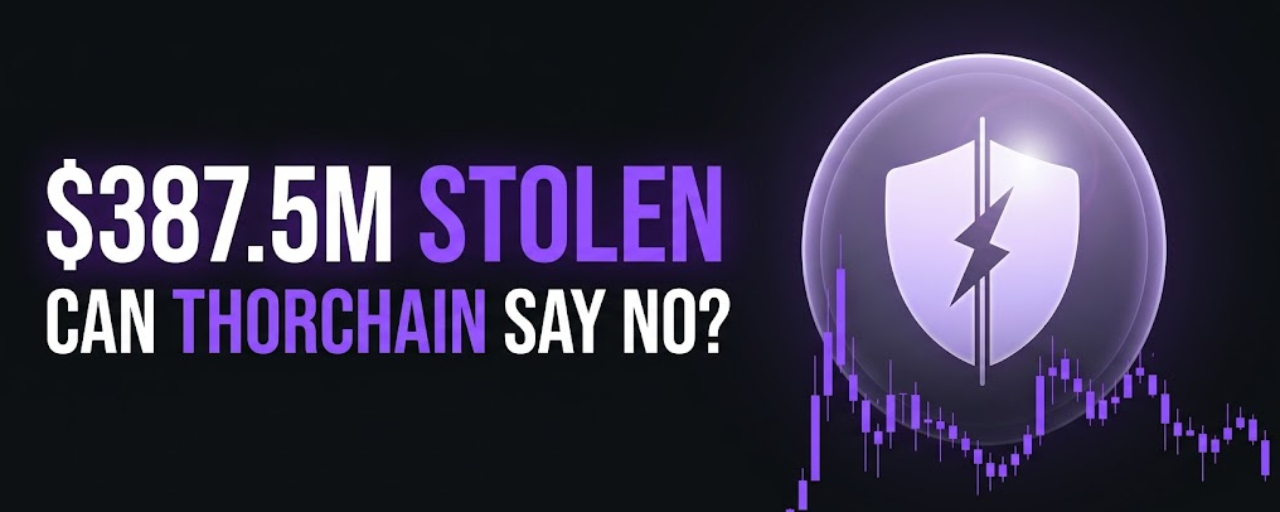
Bitget's Stolen Funds Are Moving Through THORChain: Can a Decentralized Protocol Say No?The loss grew to about 387.5 million dollars and the swaps have started. Here's the debate, plus a checklist every trader can run on their own exchange.
🚨 Getting hacked is the first problem. Watching your stolen money get swapped into something harder to trace is the second.
On September 24, Bitget detected unauthorized transfers from its hot wallets. The first estimate was 351.6 million dollars. After Zcash and TRON assets were counted, the confirmed loss was revised up to about 387.5 million dollars.
📋 Here's what Bitget has said so far.
Its User Protection Fund held more than 464 million dollars, and the exchange says that covers the loss and that customer balances are protected. The CEO said the attackers moved funds directly out of hot wallets, and that cold wallets and users' private keys were not compromised. She also said she suspects North Korea's Lazarus Group, but non technical evidence has been published yet. For now, that is a working theory, not a conclusion.
🔀 Here's where THORChain, and its token $RUNE, come in.
Stolen funds rarely sit still. They hop across chains and change form. One tracing firm, AMLBot, followed a path from TRX to USDT, across a bridge to Ethereum, into ETH, and then through THORChain into BTC. According to GoPlus Security, about 101.5 BTC, roughly 8.5 million dollars, has already left through THORChain, with about 43 million dollars of XRP mid-swap into BTC. Bitget has formally asked THORChain to deny service to the addresses tied to the breach.
⚖️ Now the real debate: can a decentralized protocol just say no?
GoPlus argues it can. Its case is that THORChain swaps are signed by a fairly small group of validators who coordinate in real time, so releasing funds is an active decision, not a neutral process nobody can stop. It points to the Bybit hack, where the attacker washed all 499,000 ETH in about ten days, mostly through THORChain, generating an estimated 5.9 billion dollars in volume and about 5.5 million dollars in fees.
The other side is the classic one. According to GoPlus, THORChain has likened itself to base layer chains like Bitcoin and Ethereum, which do not choose who uses them. Once a protocol starts blocking addresses, critics say, it stops being neutral infrastructure.
Both positions are serious. That is why this is still unresolved.
🧠 Why does this matter beyond one hack?
Because the same question will come back after every big theft. Where does the line sit between "nobody can censor this" and "we will not knowingly help launder stolen money"? Regulators, exchanges and users are all waiting to see how THORChain answers.
🛡️ Your quick safety checklist (it works on any exchange):
1️⃣ Keep only what you actively trade on an exchange. Long term holdings belong in a wallet where you hold the keys.
2️⃣ Turn on an authenticator app for 2FA, plus withdrawal address whitelisting and an anti-phishing code.
3️⃣ Check whether your exchange publishes proof of reserves and has a protection fund, and read how it actually works.
4️⃣ Have a plan for paused withdrawals. Know where else you could move funds if you had to.
5️⃣ Trust official channels only. After every hack, fake "compensation" and "recovery" links appear.
✅ What this means for you
If you use Bitget, follow its official incident updates and check the current withdrawal status directly, since it may have changed since this was written.
If you use any other exchange, treat this as a free stress test. The checklist above takes about ten minutes and covers most of the avoidable risk.
If you follow $RUNE or DeFi more broadly, this is a live test of how protocols handle stolen money. The outcome could shape how much regulators trust decentralized swaps.
🟢 Best case
THORChain's validators block the flagged addresses, more of the funds get frozen, and the industry gets a clear precedent for the next attack.
🔴 Worst case
The funds are fully laundered, the debate stays unresolved, and the same argument returns after the next hack.
👀 Three things to watch
1️⃣ THORChain's response
Do its validators act on Bitget's request, or stay neutral?
2️⃣ Bitget's full incident report
Does it explain how the hot wallets were breached, and confirm withdrawals are fully restored?
3️⃣ Evidence behind the attribution
Does any technical proof appear for the Lazarus Group theory?
💡 The key takeaway
The hack is one story. The way the money moves afterward is another, and it raises a question the industry has not settled: what does "decentralized" owe the people who get robbed?
Until that is answered, the best protection is the one you control yourself.
That is the part worth watching.
This post is for informational and educational purposes only and is not financial advice. Crypto markets are volatile. Always conduct your own research before making financial decisions.
#BinanceSquare #Bitget #THORChain #CryptoSecurity #Crypto
{spot}(RUNEUSDT)
Bitget's Stolen Funds Are Moving Through THORChain: Can a Decentralized Protocol Say No?
The loss grew to about 387.5 million dollars and the swaps have started. Here's the debate, plus a checklist every trader can run on their own exchange.
🚨 Getting hacked is the first problem. Watching your stolen money get swapped into something harder to trace is the second.
On September 24, Bitget detected unauthorized transfers from its hot wallets. The first estimate was 351.6 million dollars. After Zcash and TRON assets were counted, the confirmed loss was revised up to about 387.5 million dollars.
📋 Here's what Bitget has said so far.
Its User Protection Fund held more than 464 million dollars, and the exchange says that covers the loss and that customer balances are protected. The CEO said the attackers moved funds directly out of hot wallets, and that cold wallets and users' private keys were not compromised. She also said she suspects North Korea's Lazarus Group, but non technical evidence has been published yet. For now, that is a working theory, not a conclusion.
🔀 Here's where THORChain, and its token $RUNE, come in.
Stolen funds rarely sit still. They hop across chains and change form. One tracing firm, AMLBot, followed a path from TRX to USDT, across a bridge to Ethereum, into ETH, and then through THORChain into BTC. According to GoPlus Security, about 101.5 BTC, roughly 8.5 million dollars, has already left through THORChain, with about 43 million dollars of XRP mid-swap into BTC. Bitget has formally asked THORChain to deny service to the addresses tied to the breach.
⚖️ Now the real debate: can a decentralized protocol just say no?
GoPlus argues it can. Its case is that THORChain swaps are signed by a fairly small group of validators who coordinate in real time, so releasing funds is an active decision, not a neutral process nobody can stop. It points to the Bybit hack, where the attacker washed all 499,000 ETH in about ten days, mostly through THORChain, generating an estimated 5.9 billion dollars in volume and about 5.5 million dollars in fees.
The other side is the classic one. According to GoPlus, THORChain has likened itself to base layer chains like Bitcoin and Ethereum, which do not choose who uses them. Once a protocol starts blocking addresses, critics say, it stops being neutral infrastructure.
Both positions are serious. That is why this is still unresolved.
🧠 Why does this matter beyond one hack?
Because the same question will come back after every big theft. Where does the line sit between "nobody can censor this" and "we will not knowingly help launder stolen money"? Regulators, exchanges and users are all waiting to see how THORChain answers.
🛡️ Your quick safety checklist (it works on any exchange):
1️⃣ Keep only what you actively trade on an exchange. Long term holdings belong in a wallet where you hold the keys.
2️⃣ Turn on an authenticator app for 2FA, plus withdrawal address whitelisting and an anti-phishing code.
3️⃣ Check whether your exchange publishes proof of reserves and has a protection fund, and read how it actually works.
4️⃣ Have a plan for paused withdrawals. Know where else you could move funds if you had to.
5️⃣ Trust official channels only. After every hack, fake "compensation" and "recovery" links appear.
✅ What this means for you
If you use Bitget, follow its official incident updates and check the current withdrawal status directly, since it may have changed since this was written.
If you use any other exchange, treat this as a free stress test. The checklist above takes about ten minutes and covers most of the avoidable risk.
If you follow $RUNE or DeFi more broadly, this is a live test of how protocols handle stolen money. The outcome could shape how much regulators trust decentralized swaps.
🟢 Best case
THORChain's validators block the flagged addresses, more of the funds get frozen, and the industry gets a clear precedent for the next attack.
🔴 Worst case
The funds are fully laundered, the debate stays unresolved, and the same argument returns after the next hack.
👀 Three things to watch
1️⃣ THORChain's response
Do its validators act on Bitget's request, or stay neutral?
2️⃣ Bitget's full incident report
Does it explain how the hot wallets were breached, and confirm withdrawals are fully restored?
3️⃣ Evidence behind the attribution
Does any technical proof appear for the Lazarus Group theory?
💡 The key takeaway
The hack is one story. The way the money moves afterward is another, and it raises a question the industry has not settled: what does "decentralized" owe the people who get robbed?
Until that is answered, the best protection is the one you control yourself.
That is the part worth watching.
This post is for informational and educational purposes only and is not financial advice. Crypto markets are volatile. Always conduct your own research before making financial decisions.
#BinanceSquare #Bitget #THORChain #CryptoSecurity #Crypto
🚨 Getting hacked is the first problem. Watching your stolen money get swapped into something harder to trace is the second.
On September 24, Bitget detected unauthorized transfers from its hot wallets. The first estimate was 351.6 million dollars. After Zcash and TRON assets were counted, the confirmed loss was revised up to about 387.5 million dollars.
📋 Here's what Bitget has said so far.
Its User Protection Fund held more than 464 million dollars, and the exchange says that covers the loss and that customer balances are protected. The CEO said the attackers moved funds directly out of hot wallets, and that cold wallets and users' private keys were not compromised. She also said she suspects North Korea's Lazarus Group, but non technical evidence has been published yet. For now, that is a working theory, not a conclusion.
🔀 Here's where THORChain, and its token $RUNE, come in.
Stolen funds rarely sit still. They hop across chains and change form. One tracing firm, AMLBot, followed a path from TRX to USDT, across a bridge to Ethereum, into ETH, and then through THORChain into BTC. According to GoPlus Security, about 101.5 BTC, roughly 8.5 million dollars, has already left through THORChain, with about 43 million dollars of XRP mid-swap into BTC. Bitget has formally asked THORChain to deny service to the addresses tied to the breach.
⚖️ Now the real debate: can a decentralized protocol just say no?
GoPlus argues it can. Its case is that THORChain swaps are signed by a fairly small group of validators who coordinate in real time, so releasing funds is an active decision, not a neutral process nobody can stop. It points to the Bybit hack, where the attacker washed all 499,000 ETH in about ten days, mostly through THORChain, generating an estimated 5.9 billion dollars in volume and about 5.5 million dollars in fees.
The other side is the classic one. According to GoPlus, THORChain has likened itself to base layer chains like Bitcoin and Ethereum, which do not choose who uses them. Once a protocol starts blocking addresses, critics say, it stops being neutral infrastructure.
Both positions are serious. That is why this is still unresolved.
🧠 Why does this matter beyond one hack?
Because the same question will come back after every big theft. Where does the line sit between "nobody can censor this" and "we will not knowingly help launder stolen money"? Regulators, exchanges and users are all waiting to see how THORChain answers.
🛡️ Your quick safety checklist (it works on any exchange):
1️⃣ Keep only what you actively trade on an exchange. Long term holdings belong in a wallet where you hold the keys.
2️⃣ Turn on an authenticator app for 2FA, plus withdrawal address whitelisting and an anti-phishing code.
3️⃣ Check whether your exchange publishes proof of reserves and has a protection fund, and read how it actually works.
4️⃣ Have a plan for paused withdrawals. Know where else you could move funds if you had to.
5️⃣ Trust official channels only. After every hack, fake "compensation" and "recovery" links appear.
✅ What this means for you
If you use Bitget, follow its official incident updates and check the current withdrawal status directly, since it may have changed since this was written.
If you use any other exchange, treat this as a free stress test. The checklist above takes about ten minutes and covers most of the avoidable risk.
If you follow $RUNE or DeFi more broadly, this is a live test of how protocols handle stolen money. The outcome could shape how much regulators trust decentralized swaps.
🟢 Best case
THORChain's validators block the flagged addresses, more of the funds get frozen, and the industry gets a clear precedent for the next attack.
🔴 Worst case
The funds are fully laundered, the debate stays unresolved, and the same argument returns after the next hack.
👀 Three things to watch
1️⃣ THORChain's response
Do its validators act on Bitget's request, or stay neutral?
2️⃣ Bitget's full incident report
Does it explain how the hot wallets were breached, and confirm withdrawals are fully restored?
3️⃣ Evidence behind the attribution
Does any technical proof appear for the Lazarus Group theory?
💡 The key takeaway
The hack is one story. The way the money moves afterward is another, and it raises a question the industry has not settled: what does "decentralized" owe the people who get robbed?
Until that is answered, the best protection is the one you control yourself.
That is the part worth watching.
This post is for informational and educational purposes only and is not financial advice. Crypto markets are volatile. Always conduct your own research before making financial decisions.
#BinanceSquare #Bitget #THORChain #CryptoSecurity #Crypto
1
1
124

·
--
🚨 Bitget just put THORChain at the center of crypto’s biggest decentralization debate.
After the reported $387.5M Bitget hot-wallet breach, the attacker began moving stolen funds through cross-chain infrastructure.
Now, Bitget CEO Gracy Chen is publicly asking THORChain to refuse service to the identified attacker wallets.
And that raises a brutal question:
When a wallet is publicly identified as belonging to an attacker, is processing its swap still “neutral”?
Or does permissionless infrastructure become a tool for moving stolen funds once those wallets are known?
We’ve seen this debate before.
After the $1.46B Bybit hack, large amounts of stolen ETH were routed through THORChain as the attacker moved funds across chains.
That exposed the fundamental tension:
Permissionless protocols are built to serve addresses without asking for permission.
But what happens when those addresses are publicly linked to stolen funds?
There’s no traditional “freeze this account” button.
So the real question isn’t:
“Can you identify the attacker?”
It’s:
“What do you do after you identify them?”
Block the wallets — and you raise questions about censorship and permissionlessness.
Keep processing the swaps — and you raise questions about whether neutrality can become a mechanism for moving stolen assets.
That’s why this goes far beyond Bitget.
Crypto has spent years debating whether protocols should be neutral.
Now it has to confront the harder question:
🔥 WHERE DOES NEUTRALITY END — AND RESPONSIBILITY BEGIN?
#BitGet #Bilverse #CryptoNews
{future}(ETHUSDT)
🚨 Bitget just put THORChain at the center of crypto’s biggest decentralization debate.
After the reported $387.5M Bitget hot-wallet breach, the attacker began moving stolen funds through cross-chain infrastructure.
Now, Bitget CEO Gracy Chen is publicly asking THORChain to refuse service to the identified attacker wallets.
And that raises a brutal question:
When a wallet is publicly identified as belonging to an attacker, is processing its swap still “neutral”?
Or does permissionless infrastructure become a tool for moving stolen funds once those wallets are known?
We’ve seen this debate before.
After the $1.46B Bybit hack, large amounts of stolen ETH were routed through THORChain as the attacker moved funds across chains.
That exposed the fundamental tension:
Permissionless protocols are built to serve addresses without asking for permission.
But what happens when those addresses are publicly linked to stolen funds?
There’s no traditional “freeze this account” button.
So the real question isn’t:
“Can you identify the attacker?”
It’s:
“What do you do after you identify them?”
Block the wallets — and you raise questions about censorship and permissionlessness.
Keep processing the swaps — and you raise questions about whether neutrality can become a mechanism for moving stolen assets.
That’s why this goes far beyond Bitget.
Crypto has spent years debating whether protocols should be neutral.
Now it has to confront the harder question:
🔥 WHERE DOES NEUTRALITY END — AND RESPONSIBILITY BEGIN?
#BitGet #Bilverse #CryptoNews
After the reported $387.5M Bitget hot-wallet breach, the attacker began moving stolen funds through cross-chain infrastructure.
Now, Bitget CEO Gracy Chen is publicly asking THORChain to refuse service to the identified attacker wallets.
And that raises a brutal question:
When a wallet is publicly identified as belonging to an attacker, is processing its swap still “neutral”?
Or does permissionless infrastructure become a tool for moving stolen funds once those wallets are known?
We’ve seen this debate before.
After the $1.46B Bybit hack, large amounts of stolen ETH were routed through THORChain as the attacker moved funds across chains.
That exposed the fundamental tension:
Permissionless protocols are built to serve addresses without asking for permission.
But what happens when those addresses are publicly linked to stolen funds?
There’s no traditional “freeze this account” button.
So the real question isn’t:
“Can you identify the attacker?”
It’s:
“What do you do after you identify them?”
Block the wallets — and you raise questions about censorship and permissionlessness.
Keep processing the swaps — and you raise questions about whether neutrality can become a mechanism for moving stolen assets.
That’s why this goes far beyond Bitget.
Crypto has spent years debating whether protocols should be neutral.
Now it has to confront the harder question:
🔥 WHERE DOES NEUTRALITY END — AND RESPONSIBILITY BEGIN?
#BitGet #Bilverse #CryptoNews

633

You’re a #Bitget user staring at a disabled "Withdraw" button while watching hackers freely move millions in stolen XRP. 🛑💸
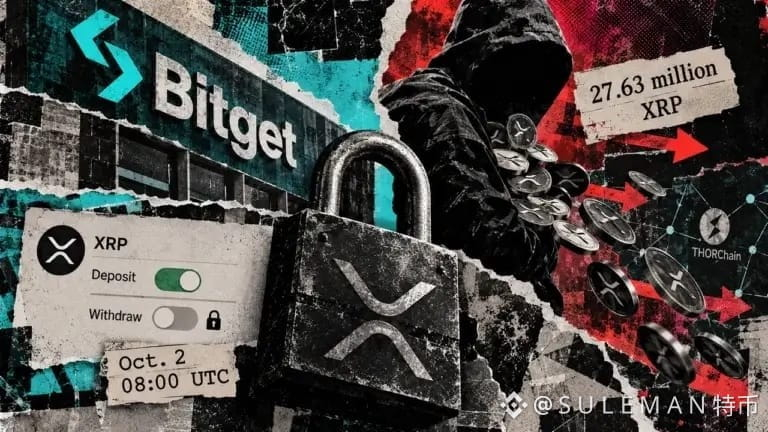
It’s a frustrating paradox right now for retail holders. While Bitget has locked external XRP withdrawals as a "security measure" until October 2nd, the attackers aren't waiting around. On-chain data from Bitquery reveals that the hackers have already funneled over 27.6 million stolen XRP through cross-chain swaps on THORChain, systematically converting it to Bitcoin to cover their tracks.
Meanwhile, another 75 million stolen XRP just sits in the attackers' wallets, waiting for its turn.
Yes, the exchange needs time to patch its infrastructure after a massive $387.5M breach, and yes, internal trading is still technically open. But this situation highlights the ultimate centralized exchange reality: when a breach happens, the bad actors are already miles down the road, while the actual users are stuck behind an API lock, forced to wait for a scheduled "reopening phase."
We are watching a live race between the hackers cashing out and the exchange restoring access. For the users whose funds are frozen in place, October 2nd can't come fast enough. ⏳🔐
$QNT
$PHA
$龙虾
{future}(龙虾USDT)
{future}(PHAUSDT)
{future}(QNTUSDT)
You’re a #Bitget user staring at a disabled "Withdraw" button while watching hackers freely move millions in stolen XRP. 🛑💸
It’s a frustrating paradox right now for retail holders. While Bitget has locked external XRP withdrawals as a "security measure" until October 2nd, the attackers aren't waiting around. On-chain data from Bitquery reveals that the hackers have already funneled over 27.6 million stolen XRP through cross-chain swaps on THORChain, systematically converting it to Bitcoin to cover their tracks.
Meanwhile, another 75 million stolen XRP just sits in the attackers' wallets, waiting for its turn.
Yes, the exchange needs time to patch its infrastructure after a massive $387.5M breach, and yes, internal trading is still technically open. But this situation highlights the ultimate centralized exchange reality: when a breach happens, the bad actors are already miles down the road, while the actual users are stuck behind an API lock, forced to wait for a scheduled "reopening phase."
We are watching a live race between the hackers cashing out and the exchange restoring access. For the users whose funds are frozen in place, October 2nd can't come fast enough. ⏳🔐
$QNT
$PHA
$龙虾
It’s a frustrating paradox right now for retail holders. While Bitget has locked external XRP withdrawals as a "security measure" until October 2nd, the attackers aren't waiting around. On-chain data from Bitquery reveals that the hackers have already funneled over 27.6 million stolen XRP through cross-chain swaps on THORChain, systematically converting it to Bitcoin to cover their tracks.
Meanwhile, another 75 million stolen XRP just sits in the attackers' wallets, waiting for its turn.
Yes, the exchange needs time to patch its infrastructure after a massive $387.5M breach, and yes, internal trading is still technically open. But this situation highlights the ultimate centralized exchange reality: when a breach happens, the bad actors are already miles down the road, while the actual users are stuck behind an API lock, forced to wait for a scheduled "reopening phase."
We are watching a live race between the hackers cashing out and the exchange restoring access. For the users whose funds are frozen in place, October 2nd can't come fast enough. ⏳🔐
$QNT
$PHA
$龙虾
2
566

#Bitget Moves Toward Recovery After $351.6M Security Breach
Crypto exchange Bitget is moving to restore withdrawal services after a major security incident affected roughly $351.6 million in assets. According to Bitget, the attackers compromised a backend system connected to its wallet infrastructure and manipulated transaction data to trigger unauthorized transfers. The exchange says its private keys were not compromised and its cold wallets remained secure. �
CoinDesk +1
The company initially paused withdrawals while its security teams investigated the breach. Bitget says its $464M+ User Protection Fund is sufficient to cover the reported loss, while customer account balances remain unaffected. �
Bitget
Bitget has now announced a phased withdrawal restart, beginning with Bitcoin on September 28 at 08:00 UTC, followed by ETH-related networks on September 29 and USDT networks on September 30. Other tokens, fiat and P2P withdrawals are scheduled for October 2. �
Bitget
Blockchain investigators have traced portions of the stolen funds across multiple networks. Some analysts have pointed to possible North Korean involvement, but the attribution remains under investigation. �
TRM Labs
Key takeaway: The incident appears to have been contained, but the investigation into how the attackers accessed Bitget's backend systems and where the stolen assets ultimately move remains important for the wider crypto industry.
#Bitget Moves Toward Recovery After $351.6M Security Breach
Crypto exchange Bitget is moving to restore withdrawal services after a major security incident affected roughly $351.6 million in assets. According to Bitget, the attackers compromised a backend system connected to its wallet infrastructure and manipulated transaction data to trigger unauthorized transfers. The exchange says its private keys were not compromised and its cold wallets remained secure. �
CoinDesk +1
The company initially paused withdrawals while its security teams investigated the breach. Bitget says its $464M+ User Protection Fund is sufficient to cover the reported loss, while customer account balances remain unaffected. �
Bitget
Bitget has now announced a phased withdrawal restart, beginning with Bitcoin on September 28 at 08:00 UTC, followed by ETH-related networks on September 29 and USDT networks on September 30. Other tokens, fiat and P2P withdrawals are scheduled for October 2. �
Bitget
Blockchain investigators have traced portions of the stolen funds across multiple networks. Some analysts have pointed to possible North Korean involvement, but the attribution remains under investigation. �
TRM Labs
Key takeaway: The incident appears to have been contained, but the investigation into how the attackers accessed Bitget's backend systems and where the stolen assets ultimately move remains important for the wider crypto industry.
Crypto exchange Bitget is moving to restore withdrawal services after a major security incident affected roughly $351.6 million in assets. According to Bitget, the attackers compromised a backend system connected to its wallet infrastructure and manipulated transaction data to trigger unauthorized transfers. The exchange says its private keys were not compromised and its cold wallets remained secure. �
CoinDesk +1
The company initially paused withdrawals while its security teams investigated the breach. Bitget says its $464M+ User Protection Fund is sufficient to cover the reported loss, while customer account balances remain unaffected. �
Bitget
Bitget has now announced a phased withdrawal restart, beginning with Bitcoin on September 28 at 08:00 UTC, followed by ETH-related networks on September 29 and USDT networks on September 30. Other tokens, fiat and P2P withdrawals are scheduled for October 2. �
Bitget
Blockchain investigators have traced portions of the stolen funds across multiple networks. Some analysts have pointed to possible North Korean involvement, but the attribution remains under investigation. �
TRM Labs
Key takeaway: The incident appears to have been contained, but the investigation into how the attackers accessed Bitget's backend systems and where the stolen assets ultimately move remains important for the wider crypto industry.
1
122

🚨 Bitget Hacker Moves $83M in Stolen XRP
The Bitget security breach is getting more attention as blockchain trackers report that roughly 54 million XRP, worth about $83 million, has been moved from wallets linked to the attack. Around $75 million in XRP reportedly remains across the original holding wallets.
What makes this situation interesting is that native XRP cannot simply be frozen by Ripple at the XRP Ledger level. If the stolen coins reach a centralized exchange, however, that exchange may be able to restrict the receiving account and prevent withdrawals.
Importantly, moving XRP between wallets does not automatically mean the hacker has sold it. The transfers could simply be an attempt to redistribute and obscure the funds.
Bitget has estimated the broader breach at approximately $387.5 million and says customer balances remain protected by its security measures.
👀 The key question now: where will the remaining XRP move next?
#Bitget #XRP #Crypto #BlockchainSecurity" #XRPArmy🫶🏻✨ #BitgetHackerMoves$83MStolenXRP
🚨 Bitget Hacker Moves $83M in Stolen XRP
The Bitget security breach is getting more attention as blockchain trackers report that roughly 54 million XRP, worth about $83 million, has been moved from wallets linked to the attack. Around $75 million in XRP reportedly remains across the original holding wallets.
What makes this situation interesting is that native XRP cannot simply be frozen by Ripple at the XRP Ledger level. If the stolen coins reach a centralized exchange, however, that exchange may be able to restrict the receiving account and prevent withdrawals.
Importantly, moving XRP between wallets does not automatically mean the hacker has sold it. The transfers could simply be an attempt to redistribute and obscure the funds.
Bitget has estimated the broader breach at approximately $387.5 million and says customer balances remain protected by its security measures.
👀 The key question now: where will the remaining XRP move next?
#Bitget #XRP #Crypto #BlockchainSecurity" #XRPArmy🫶🏻✨ #BitgetHackerMoves$83MStolenXRP
The Bitget security breach is getting more attention as blockchain trackers report that roughly 54 million XRP, worth about $83 million, has been moved from wallets linked to the attack. Around $75 million in XRP reportedly remains across the original holding wallets.
What makes this situation interesting is that native XRP cannot simply be frozen by Ripple at the XRP Ledger level. If the stolen coins reach a centralized exchange, however, that exchange may be able to restrict the receiving account and prevent withdrawals.
Importantly, moving XRP between wallets does not automatically mean the hacker has sold it. The transfers could simply be an attempt to redistribute and obscure the funds.
Bitget has estimated the broader breach at approximately $387.5 million and says customer balances remain protected by its security measures.
👀 The key question now: where will the remaining XRP move next?
#Bitget #XRP #Crypto #BlockchainSecurity" #XRPArmy🫶🏻✨ #BitgetHackerMoves$83MStolenXRP
62

·
--
🚨 BITGET HACKER IS MOVING THE STOLEN FUNDS 👀
The attacker has moved around $83M in stolen XRP across multiple wallets.
But it’s not just $XRP …
The breach also involved $ZEC and $TRX , with Bitget now estimating the total stolen assets at around $387.5M.
🔴 $XRP
🔴 $ZEC
🔴 $TRX
The big question: Where will the hacker move the funds next?
#xrp #zec #TRX #Bitget #crypto
🚨 BITGET HACKER IS MOVING THE STOLEN FUNDS 👀
The attacker has moved around $83M in stolen XRP across multiple wallets.
But it’s not just $XRP …
The breach also involved $ZEC and $TRX , with Bitget now estimating the total stolen assets at around $387.5M.
🔴 $XRP
🔴 $ZEC
🔴 $TRX
The big question: Where will the hacker move the funds next?
#xrp #zec #TRX #Bitget #crypto
The attacker has moved around $83M in stolen XRP across multiple wallets.
But it’s not just $XRP …
The breach also involved $ZEC and $TRX , with Bitget now estimating the total stolen assets at around $387.5M.
🔴 $XRP
🔴 $ZEC
🔴 $TRX
The big question: Where will the hacker move the funds next?
#xrp #zec #TRX #Bitget #crypto
371

·
--
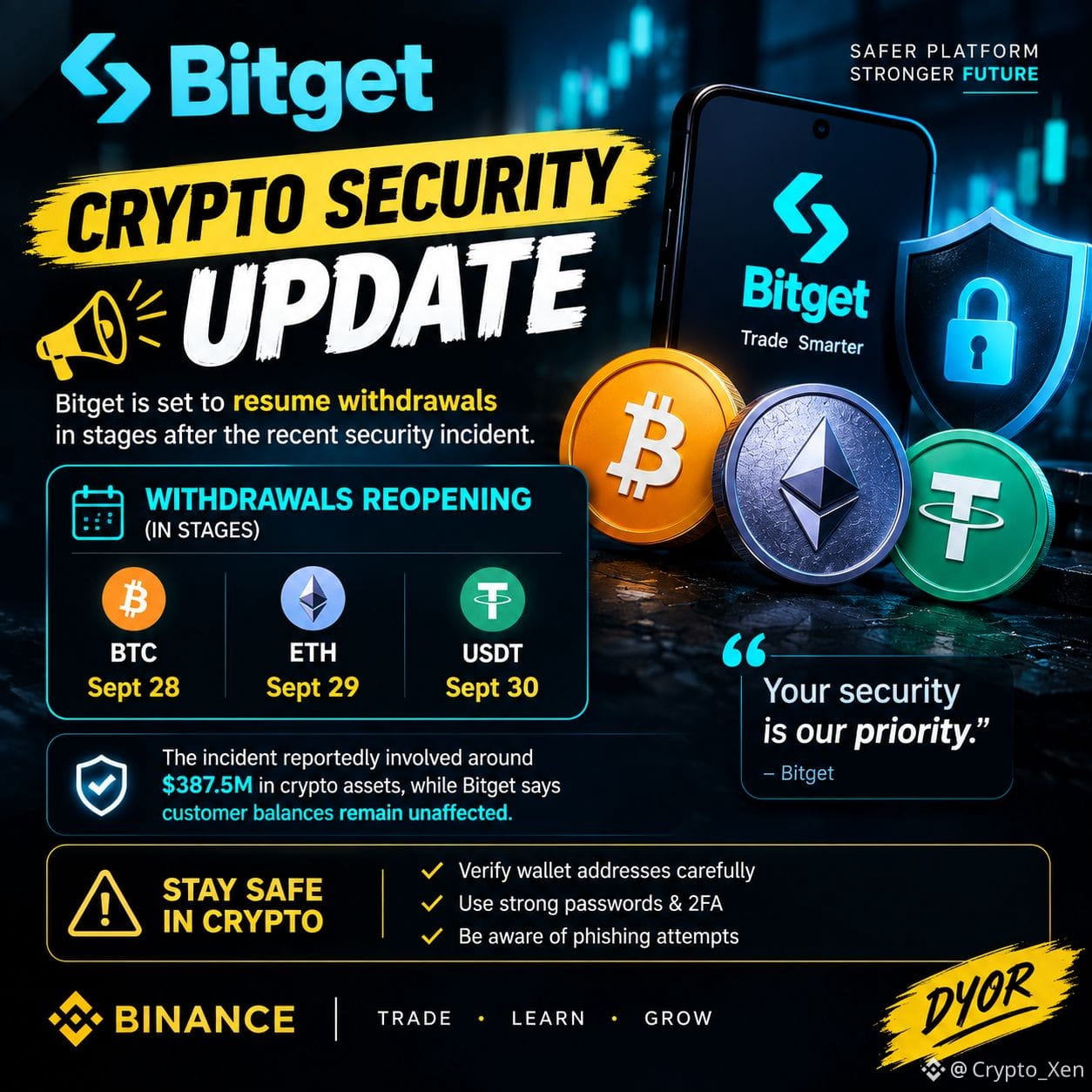
🚨 Crypto Security Update
Bitget is set to resume withdrawals in stages after the recent security incident.
🔹 BTC withdrawals — Sept 28 🔹 ETH withdrawals — Sept 29 🔹 USDT withdrawals — Sept 30
The incident reportedly involved around $387.5M in crypto assets, while Bitget says customer balances remain unaffected.
🔐 This is another reminder to stay alert, verify wallet addresses and use strong security practices.
DYOR. Stay safe in crypto.
#Bitcoin #Ethereum #Bitget #Binance #CryptoNews
🚨 Crypto Security Update
Bitget is set to resume withdrawals in stages after the recent security incident.
🔹 BTC withdrawals — Sept 28 🔹 ETH withdrawals — Sept 29 🔹 USDT withdrawals — Sept 30
The incident reportedly involved around $387.5M in crypto assets, while Bitget says customer balances remain unaffected.
🔐 This is another reminder to stay alert, verify wallet addresses and use strong security practices.
DYOR. Stay safe in crypto.
#Bitcoin #Ethereum #Bitget #Binance #CryptoNews
Bitget is set to resume withdrawals in stages after the recent security incident.
🔹 BTC withdrawals — Sept 28 🔹 ETH withdrawals — Sept 29 🔹 USDT withdrawals — Sept 30
The incident reportedly involved around $387.5M in crypto assets, while Bitget says customer balances remain unaffected.
🔐 This is another reminder to stay alert, verify wallet addresses and use strong security practices.
DYOR. Stay safe in crypto.
#Bitcoin #Ethereum #Bitget #Binance #CryptoNews
6

·
--
🚨 Bitget freezes XRP withdrawals as 27M stolen tokens continue moving on-chain per Bitquery trace. No spot-market sale detected yet, suggesting possible off-radar liquidation or long-term holding. Withdrawal halt signals exchange risk awareness amid unusual on-chain activity. Traders should monitor for sudden sell pressure or exchange reopening as key sentiment shifts. Could this precede a volatility spike in XRP?
#Bitget
$XRP #TradingSignal #CryptoAnalysis
🚨 Bitget freezes XRP withdrawals as 27M stolen tokens continue moving on-chain per Bitquery trace. No spot-market sale detected yet, suggesting possible off-radar liquidation or long-term holding. Withdrawal halt signals exchange risk awareness amid unusual on-chain activity. Traders should monitor for sudden sell pressure or exchange reopening as key sentiment shifts. Could this precede a volatility spike in XRP?
#Bitget
$XRP #TradingSignal #CryptoAnalysis
#Bitget
$XRP #TradingSignal #CryptoAnalysis

34

Article
Circle & Tether Freeze Wallet Linked to Bitget ExploitThe recent Bitget security incident has sparked another major discussion about crypto security and stablecoin control.
Circle and Tether reportedly blacklisted a wallet connected to the exploit, freezing approximately $318,000 worth of USDC and USDT.
However, this represents only a small portion of the affected assets. A significant amount was reportedly converted into ETH, which cannot be directly frozen by USDC or USDT issuers.
This creates an interesting contrast.
Stablecoins: issuers can intervene and freeze specific tokens.
Native crypto assets: assets such as ETH operate without a centralized issuer capable of freezing the coins themselves.
The incident therefore raises a broader question for the crypto industry:
Does the ability to freeze stolen stablecoins provide an important security layer, or does it introduce a trade-off with the permissionless nature of cryptocurrency?
The investigation and movement of the affected funds remain an evolving story.
What is your view?
$USDC $USDT
#CircleTetherFreezeBitgetHackerWallet #Bitget
Circle & Tether Freeze Wallet Linked to Bitget Exploit
The recent Bitget security incident has sparked another major discussion about crypto security and stablecoin control.
Circle and Tether reportedly blacklisted a wallet connected to the exploit, freezing approximately $318,000 worth of USDC and USDT.
However, this represents only a small portion of the affected assets. A significant amount was reportedly converted into ETH, which cannot be directly frozen by USDC or USDT issuers.
This creates an interesting contrast.
Stablecoins: issuers can intervene and freeze specific tokens.
Native crypto assets: assets such as ETH operate without a centralized issuer capable of freezing the coins themselves.
The incident therefore raises a broader question for the crypto industry:
Does the ability to freeze stolen stablecoins provide an important security layer, or does it introduce a trade-off with the permissionless nature of cryptocurrency?
The investigation and movement of the affected funds remain an evolving story.
What is your view?
$USDC $USDT
#CircleTetherFreezeBitgetHackerWallet #Bitget
Circle and Tether reportedly blacklisted a wallet connected to the exploit, freezing approximately $318,000 worth of USDC and USDT.
However, this represents only a small portion of the affected assets. A significant amount was reportedly converted into ETH, which cannot be directly frozen by USDC or USDT issuers.
This creates an interesting contrast.
Stablecoins: issuers can intervene and freeze specific tokens.
Native crypto assets: assets such as ETH operate without a centralized issuer capable of freezing the coins themselves.
The incident therefore raises a broader question for the crypto industry:
Does the ability to freeze stolen stablecoins provide an important security layer, or does it introduce a trade-off with the permissionless nature of cryptocurrency?
The investigation and movement of the affected funds remain an evolving story.
What is your view?
$USDC $USDT
#CircleTetherFreezeBitgetHackerWallet #Bitget
1
66

Bitget confirmed a major security breach on Sep 24, with $387-390M in assets reportedly stolen — a large chunk in $XRP (~103M tokens).
The hacker has now moved roughly $83M of the stolen XRP, sparking debate on-chain about whether decentralized assets like $XRP can even be frozen once stolen.
Should exchanges have more power to freeze compromised funds? 👇
#XRP #Bitget #CryptoSecurity
{future}(XRPUSDT)
Bitget confirmed a major security breach on Sep 24, with $387-390M in assets reportedly stolen — a large chunk in $XRP (~103M tokens).
The hacker has now moved roughly $83M of the stolen XRP, sparking debate on-chain about whether decentralized assets like $XRP can even be frozen once stolen.
Should exchanges have more power to freeze compromised funds? 👇
#XRP #Bitget #CryptoSecurity
The hacker has now moved roughly $83M of the stolen XRP, sparking debate on-chain about whether decentralized assets like $XRP can even be frozen once stolen.
Should exchanges have more power to freeze compromised funds? 👇
#XRP #Bitget #CryptoSecurity
2
105

#BitgetHackerMoves$83MStolenXRP
🚨 $83M Stolen XRP on the Move
The Bitget hacker has reportedly moved around 54 million XRP worth approximately $83 million from wallets linked to the September 24 security breach. Around $75 million in XRP remains across the original wallets.
The transfers show the stolen XRP being distributed across multiple addresses, making recovery and tracking more challenging. Importantly, moving the tokens does not by itself prove they have been sold.
The incident has put renewed attention on exchange security, on-chain tracking and XRP liquidity. Bitget says the broader incident involved approximately $387.5 million in assets and that customer balances remain protected.
#Bitget #XRP’ #CryptoNews🚀🔥V #BlockchainSecurity
$XRP
#BitgetHackerMoves$83MStolenXRP
🚨 $83M Stolen XRP on the Move
The Bitget hacker has reportedly moved around 54 million XRP worth approximately $83 million from wallets linked to the September 24 security breach. Around $75 million in XRP remains across the original wallets.
The transfers show the stolen XRP being distributed across multiple addresses, making recovery and tracking more challenging. Importantly, moving the tokens does not by itself prove they have been sold.
The incident has put renewed attention on exchange security, on-chain tracking and XRP liquidity. Bitget says the broader incident involved approximately $387.5 million in assets and that customer balances remain protected.
#Bitget #XRP’ #CryptoNews🚀🔥V #BlockchainSecurity
$XRP
🚨 $83M Stolen XRP on the Move
The Bitget hacker has reportedly moved around 54 million XRP worth approximately $83 million from wallets linked to the September 24 security breach. Around $75 million in XRP remains across the original wallets.
The transfers show the stolen XRP being distributed across multiple addresses, making recovery and tracking more challenging. Importantly, moving the tokens does not by itself prove they have been sold.
The incident has put renewed attention on exchange security, on-chain tracking and XRP liquidity. Bitget says the broader incident involved approximately $387.5 million in assets and that customer balances remain protected.
#Bitget #XRP’ #CryptoNews🚀🔥V #BlockchainSecurity
$XRP
84

·
--
Vérifié
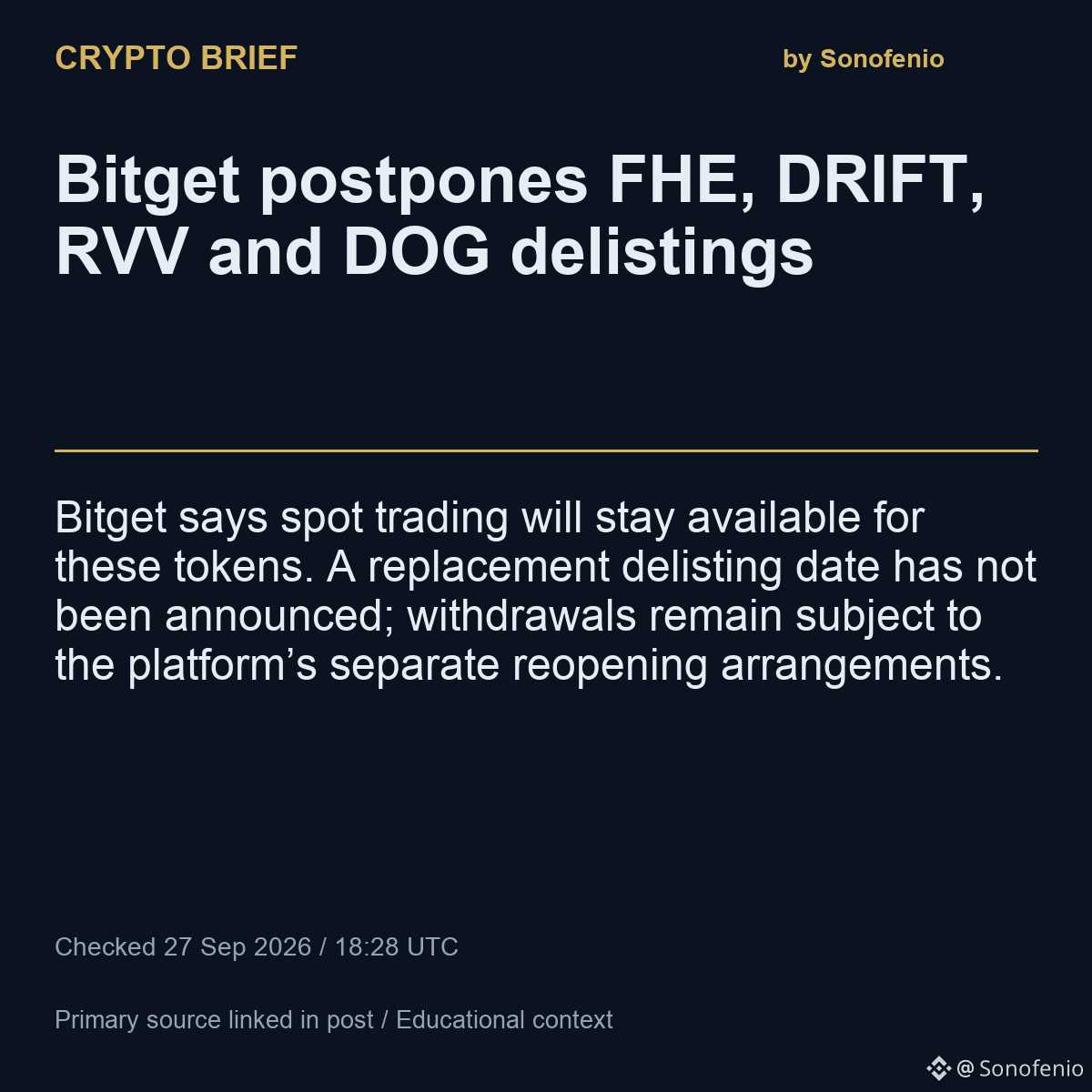
📰 Bitget postpones FHE, DRIFT, RVV and DOG delistings
🔎 Bitget says spot trading will stay available for these tokens. A replacement delisting date has not been announced; withdrawals remain subject to the platform’s separate reopening arrangements.
💡 A postponed delisting is not a cancelled delisting, and continued trading does not confirm withdrawal access. Check the latest asset-specific notices before moving funds.
🔗 Source: https://www.bitget.com/support/articles/12560603896112
#CryptoNews #Bitget #Delisting
📰 Bitget postpones FHE, DRIFT, RVV and DOG delistings
🔎 Bitget says spot trading will stay available for these tokens. A replacement delisting date has not been announced; withdrawals remain subject to the platform’s separate reopening arrangements.
💡 A postponed delisting is not a cancelled delisting, and continued trading does not confirm withdrawal access. Check the latest asset-specific notices before moving funds.
🔗 Source: https://www.bitget.com/support/articles/12560603896112
#CryptoNews #Bitget #Delisting
🔎 Bitget says spot trading will stay available for these tokens. A replacement delisting date has not been announced; withdrawals remain subject to the platform’s separate reopening arrangements.
💡 A postponed delisting is not a cancelled delisting, and continued trading does not confirm withdrawal access. Check the latest asset-specific notices before moving funds.
🔗 Source: https://www.bitget.com/support/articles/12560603896112
#CryptoNews #Bitget #Delisting
2
641

🚨 $1.23M in ETH Linked to Bitget Hack Moves Again
$ETH On-chain activity shows another major fund movement involving an address reportedly connected to the Bitget hacker.
{future}(ETHUSDT)
$ETH Wallet 0x48857f...27c8E recently withdrew 257.6 ETH (~$692K) and 545K USDT from Binance.
The USDT was later converted into approximately 200.2 ETH, taking the wallet’s balance to around 457.9 ETH, valued at roughly $1.23M.
Around 6 hours later, the full 457.9 ETH was transferred to a wallet associated with the Bitget hacker.
🔎 The funds remain on-chain and are still being monitored.
#Bitget #ETH #CryptoSecurity #BİNANCE #CryptoNews
🚨 $1.23M in ETH Linked to Bitget Hack Moves Again
$ETH On-chain activity shows another major fund movement involving an address reportedly connected to the Bitget hacker.
$ETH Wallet 0x48857f...27c8E recently withdrew 257.6 ETH (~$692K) and 545K USDT from Binance.
The USDT was later converted into approximately 200.2 ETH, taking the wallet’s balance to around 457.9 ETH, valued at roughly $1.23M.
Around 6 hours later, the full 457.9 ETH was transferred to a wallet associated with the Bitget hacker.
🔎 The funds remain on-chain and are still being monitored.
#Bitget #ETH #CryptoSecurity #BİNANCE #CryptoNews
$ETH On-chain activity shows another major fund movement involving an address reportedly connected to the Bitget hacker.
$ETH Wallet 0x48857f...27c8E recently withdrew 257.6 ETH (~$692K) and 545K USDT from Binance.
The USDT was later converted into approximately 200.2 ETH, taking the wallet’s balance to around 457.9 ETH, valued at roughly $1.23M.
Around 6 hours later, the full 457.9 ETH was transferred to a wallet associated with the Bitget hacker.
🔎 The funds remain on-chain and are still being monitored.
#Bitget #ETH #CryptoSecurity #BİNANCE #CryptoNews
41

·
--
Haussier
#circletetherfreezebitgethackerwallet
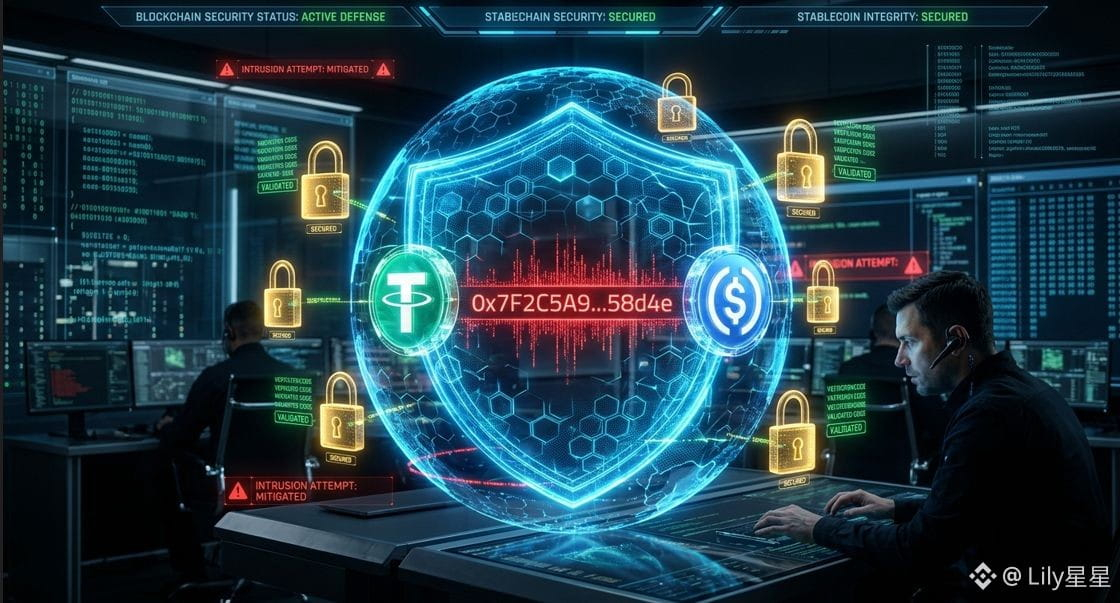
🚨 Security Alert: Circle & Tether Intercept Exploiter Address Following Bitget Breach 🛡️
Rapid security coordination on-chain! Following a security incident where Bitget's backend wallet infrastructure was compromised, major stablecoin issuers Circle and Tether took swift action to blacklist and freeze an address labeled "Bitget Exploiter 8".
The joint response immobilized approximately $318,000 in stablecoins (99,990 USDC and 218,023 USDT) held in the targeted wallet, cutting off those specific assets from being laundered across secondary platforms.
$ZEC
{future}(ZECUSDT)
💡 Key Highlights:
🛑 Swift Blacklisting: Circle and Tether executed smart contract freezes within hours of security alerts from security firm MistTrack.
⚖️ Limits of On-Chain Freezes: While stablecoin issuers can freeze fiat-backed tokens (USDC/USDT), decentralized assets like Ethereum cannot be frozen. Trackers note that the attacker quickly converted a significant portion of stolen assets into ETH.
🛡️ Full Protection Covered: Bitget CEO Gracy Chen confirmed that private keys were not leaked and user assets are fully protected through Bitget's User Protection Fund (valued at over $400M).
What is your take on centralized stablecoin freezes—a vital safety net during exchange breaches or a reminder of central control in crypto? Share your view below! 👇
#CircleMints500MUSDCOnSolana #Bitget
#circletetherfreezebitgethackerwallet
🚨 Security Alert: Circle & Tether Intercept Exploiter Address Following Bitget Breach 🛡️
Rapid security coordination on-chain! Following a security incident where Bitget's backend wallet infrastructure was compromised, major stablecoin issuers Circle and Tether took swift action to blacklist and freeze an address labeled "Bitget Exploiter 8".
The joint response immobilized approximately $318,000 in stablecoins (99,990 USDC and 218,023 USDT) held in the targeted wallet, cutting off those specific assets from being laundered across secondary platforms.
$ZEC
💡 Key Highlights:
🛑 Swift Blacklisting: Circle and Tether executed smart contract freezes within hours of security alerts from security firm MistTrack.
⚖️ Limits of On-Chain Freezes: While stablecoin issuers can freeze fiat-backed tokens (USDC/USDT), decentralized assets like Ethereum cannot be frozen. Trackers note that the attacker quickly converted a significant portion of stolen assets into ETH.
🛡️ Full Protection Covered: Bitget CEO Gracy Chen confirmed that private keys were not leaked and user assets are fully protected through Bitget's User Protection Fund (valued at over $400M).
What is your take on centralized stablecoin freezes—a vital safety net during exchange breaches or a reminder of central control in crypto? Share your view below! 👇
#CircleMints500MUSDCOnSolana #Bitget
🚨 Security Alert: Circle & Tether Intercept Exploiter Address Following Bitget Breach 🛡️
Rapid security coordination on-chain! Following a security incident where Bitget's backend wallet infrastructure was compromised, major stablecoin issuers Circle and Tether took swift action to blacklist and freeze an address labeled "Bitget Exploiter 8".
The joint response immobilized approximately $318,000 in stablecoins (99,990 USDC and 218,023 USDT) held in the targeted wallet, cutting off those specific assets from being laundered across secondary platforms.
$ZEC
💡 Key Highlights:
🛑 Swift Blacklisting: Circle and Tether executed smart contract freezes within hours of security alerts from security firm MistTrack.
⚖️ Limits of On-Chain Freezes: While stablecoin issuers can freeze fiat-backed tokens (USDC/USDT), decentralized assets like Ethereum cannot be frozen. Trackers note that the attacker quickly converted a significant portion of stolen assets into ETH.
🛡️ Full Protection Covered: Bitget CEO Gracy Chen confirmed that private keys were not leaked and user assets are fully protected through Bitget's User Protection Fund (valued at over $400M).
What is your take on centralized stablecoin freezes—a vital safety net during exchange breaches or a reminder of central control in crypto? Share your view below! 👇
#CircleMints500MUSDCOnSolana #Bitget
1
2.4k

·
--
🚨 $83M STOLEN XRP MOVED
The Bitget security breach has entered a new phase.
🔴 Around $83M in stolen $XRP has reportedly moved from the original holding wallets. 🔴 Roughly $75M remains in the initial wallets. 🔴 XRP itself cannot be frozen at the network level, although exchanges can restrict accounts receiving the stolen funds. 🔴 Circle and Tether have frozen around $320K in related stablecoins.
Bitget says its protection fund will cover the losses and customer balances remain unaffected.
The key question now: How much of the stolen crypto can actually be recovered? 👀
#XRP #Bitget #CryptoNews
🚨 $83M STOLEN XRP MOVED
The Bitget security breach has entered a new phase.
🔴 Around $83M in stolen $XRP has reportedly moved from the original holding wallets. 🔴 Roughly $75M remains in the initial wallets. 🔴 XRP itself cannot be frozen at the network level, although exchanges can restrict accounts receiving the stolen funds. 🔴 Circle and Tether have frozen around $320K in related stablecoins.
Bitget says its protection fund will cover the losses and customer balances remain unaffected.
The key question now: How much of the stolen crypto can actually be recovered? 👀
#XRP #Bitget #CryptoNews
The Bitget security breach has entered a new phase.
🔴 Around $83M in stolen $XRP has reportedly moved from the original holding wallets. 🔴 Roughly $75M remains in the initial wallets. 🔴 XRP itself cannot be frozen at the network level, although exchanges can restrict accounts receiving the stolen funds. 🔴 Circle and Tether have frozen around $320K in related stablecoins.
Bitget says its protection fund will cover the losses and customer balances remain unaffected.
The key question now: How much of the stolen crypto can actually be recovered? 👀
#XRP #Bitget #CryptoNews
1
80

🚨 $83M STOLEN XRP JUST MOVED!
Bitget hacker has moved ~54M XRP, while another $75M remains in linked wallets. 👀
Has the next big XRP move already started? 🐋⚡
#XRP #Bitget #CryptoNewsCommunity #XRPnews
🚨 $83M STOLEN XRP JUST MOVED!
Bitget hacker has moved ~54M XRP, while another $75M remains in linked wallets. 👀
Has the next big XRP move already started? 🐋⚡
#XRP #Bitget #CryptoNewsCommunity #XRPnews
Bitget hacker has moved ~54M XRP, while another $75M remains in linked wallets. 👀
Has the next big XRP move already started? 🐋⚡
#XRP #Bitget #CryptoNewsCommunity #XRPnews
104

🚨 BITGET HACKER MOVES $83M IN STOLEN XRP 💰⚠️
A major update has emerged following the Bitget security breach.
🔴 About $83M worth of stolen XRP has reportedly been moved from three wallets linked to the attacker.
📌 Around 103M XRP was initially stolen and split across five wallets.
📌 Roughly $75M reportedly remains across the original wallets.
📌 XRP itself cannot be frozen by Ripple because it is the native asset of the XRP Ledger.
📌 Exchanges can still restrict accounts if stolen XRP reaches their platforms.
Bitget says the affected assets are covered by its protection fund and that customer balances remain unaffected.
👀 The crypto community is now watching where the remaining XRP moves next.
⚠️ Security incidents highlight the importance of using reputable platforms, enabling strong account security, and managing crypto risk carefully.
#Bitget #xrp #CryptoSecurity #BitgetHackerMoves83MStolenXRP $XRP
{future}(XRPUSDT)
🚨 BITGET HACKER MOVES $83M IN STOLEN XRP 💰⚠️
A major update has emerged following the Bitget security breach.
🔴 About $83M worth of stolen XRP has reportedly been moved from three wallets linked to the attacker.
📌 Around 103M XRP was initially stolen and split across five wallets.
📌 Roughly $75M reportedly remains across the original wallets.
📌 XRP itself cannot be frozen by Ripple because it is the native asset of the XRP Ledger.
📌 Exchanges can still restrict accounts if stolen XRP reaches their platforms.
Bitget says the affected assets are covered by its protection fund and that customer balances remain unaffected.
👀 The crypto community is now watching where the remaining XRP moves next.
⚠️ Security incidents highlight the importance of using reputable platforms, enabling strong account security, and managing crypto risk carefully.
#Bitget #xrp #CryptoSecurity #BitgetHackerMoves83MStolenXRP $XRP
A major update has emerged following the Bitget security breach.
🔴 About $83M worth of stolen XRP has reportedly been moved from three wallets linked to the attacker.
📌 Around 103M XRP was initially stolen and split across five wallets.
📌 Roughly $75M reportedly remains across the original wallets.
📌 XRP itself cannot be frozen by Ripple because it is the native asset of the XRP Ledger.
📌 Exchanges can still restrict accounts if stolen XRP reaches their platforms.
Bitget says the affected assets are covered by its protection fund and that customer balances remain unaffected.
👀 The crypto community is now watching where the remaining XRP moves next.
⚠️ Security incidents highlight the importance of using reputable platforms, enabling strong account security, and managing crypto risk carefully.
#Bitget #xrp #CryptoSecurity #BitgetHackerMoves83MStolenXRP $XRP
48

Article
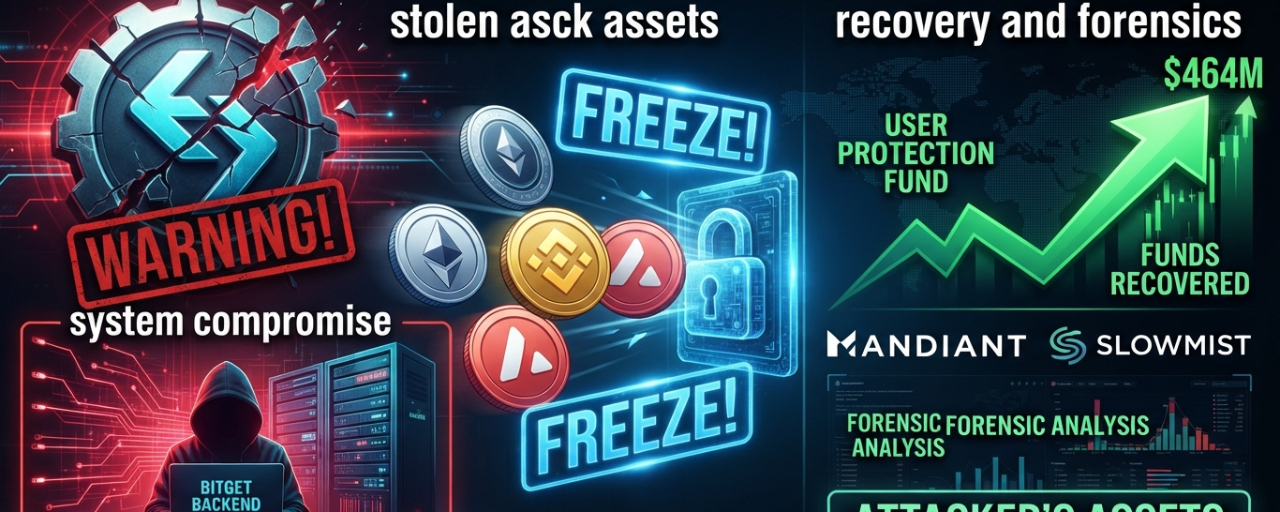
Analysis of the Freezing and Tracking of Funds Stolen from BitgetThe cyberattack suffered by the Bitget exchange—with initial losses estimated at USD 351.6 million and later adjusted following broader audits of assets across networks—has highlighted the complex dynamics of tracking, freezing, and money laundering in the cryptocurrency industry.
The key points regarding the destination of the funds, the intervention of issuers, and the forensic challenges of the incident are analyzed below:
1. Rapid Dispersion and Conversion of Funds
Fan-out laundering strategy: After compromising backend systems and having the authorized approval system execute the transfers, the attackers quickly moved assets (including $ETH , $BNB , $AVAX {spot}(BNBUSDT){spot}(SOLUSDT), and various stablecoins) to centralized collection addresses before rapidly fragmenting them into multiple secondary wallets.Conversion to Ether (ETH): A large portion of the stolen funds (estimated at over USD 183 million in the early phases) was immediately exchanged for Ether on decentralized protocols or through high-liquidity pools, often paying premiums above market value to speed up the consolidation of the loot before exchanges and security firms could react.
2. The Role of Stablecoins and Freezing Limitations
Action by issuers: In incidents of this magnitude, cooperation from stablecoin issuers (such as Tether with USDT and Circle with USDC) is crucial. Although specific amounts were frozen (such as an initial fraction calculated at around USD 318,000), the effectiveness of this measure was limited because the attackers quickly diversified capital into native assets and cross-chain decentralized exchange protocols and mixers like THORChain.Decentralization vs. Intervention: The case demonstrates that while centralized stablecoins allow funds to be blocked immediately at identified addresses, sophisticated hackers adapt their tactics by instantly migrating value toward layer-1 cryptocurrencies and tokens where issuers lack the technical power to freeze them.
3. Forensic Analysis with Mandiant, SlowMist, and State-Sponsored Shadows
Independent audit: Bringing in elite cybersecurity firms such as Mandiant and SlowMist is a fundamental step to map out the complete money trail and audit the flaws in wallet server infrastructure.Threat attribution: On-chain behavioral patterns, conversion speed, and operational structure have pointed toward operational similarities with state-sponsored cybercrime groups (specifically actors linked to North Korea, patterns previously observed in major prior thefts across the industry).
Impact on Solvency and Institutional Response
Despite the scale of the attack, the fact that Bitget possessed the User Protection Fund (surpassing USD 464 million) allowed it to absorb the total loss without compromising individual customer balances, mitigating a systemic crisis of trust while the platform coordinated with law enforcement and on-chain analysis teams to gradually recover operations and withdrawals.
#Bitget #CryptoSecurity #BitgetHackerMoves$83MStolenXRP
Analysis of the Freezing and Tracking of Funds Stolen from Bitget
The cyberattack suffered by the Bitget exchange—with initial losses estimated at USD 351.6 million and later adjusted following broader audits of assets across networks—has highlighted the complex dynamics of tracking, freezing, and money laundering in the cryptocurrency industry.
The key points regarding the destination of the funds, the intervention of issuers, and the forensic challenges of the incident are analyzed below:
1. Rapid Dispersion and Conversion of Funds
Fan-out laundering strategy: After compromising backend systems and having the authorized approval system execute the transfers, the attackers quickly moved assets (including $ETH , $BNB , $AVAX , and various stablecoins) to centralized collection addresses before rapidly fragmenting them into multiple secondary wallets.Conversion to Ether (ETH): A large portion of the stolen funds (estimated at over USD 183 million in the early phases) was immediately exchanged for Ether on decentralized protocols or through high-liquidity pools, often paying premiums above market value to speed up the consolidation of the loot before exchanges and security firms could react.
2. The Role of Stablecoins and Freezing Limitations
Action by issuers: In incidents of this magnitude, cooperation from stablecoin issuers (such as Tether with USDT and Circle with USDC) is crucial. Although specific amounts were frozen (such as an initial fraction calculated at around USD 318,000), the effectiveness of this measure was limited because the attackers quickly diversified capital into native assets and cross-chain decentralized exchange protocols and mixers like THORChain.Decentralization vs. Intervention: The case demonstrates that while centralized stablecoins allow funds to be blocked immediately at identified addresses, sophisticated hackers adapt their tactics by instantly migrating value toward layer-1 cryptocurrencies and tokens where issuers lack the technical power to freeze them.
3. Forensic Analysis with Mandiant, SlowMist, and State-Sponsored Shadows
Independent audit: Bringing in elite cybersecurity firms such as Mandiant and SlowMist is a fundamental step to map out the complete money trail and audit the flaws in wallet server infrastructure.Threat attribution: On-chain behavioral patterns, conversion speed, and operational structure have pointed toward operational similarities with state-sponsored cybercrime groups (specifically actors linked to North Korea, patterns previously observed in major prior thefts across the industry).
Impact on Solvency and Institutional Response
Despite the scale of the attack, the fact that Bitget possessed the User Protection Fund (surpassing USD 464 million) allowed it to absorb the total loss without compromising individual customer balances, mitigating a systemic crisis of trust while the platform coordinated with law enforcement and on-chain analysis teams to gradually recover operations and withdrawals.
#Bitget #CryptoSecurity #BitgetHackerMoves$83MStolenXRP
The key points regarding the destination of the funds, the intervention of issuers, and the forensic challenges of the incident are analyzed below:
1. Rapid Dispersion and Conversion of Funds
Fan-out laundering strategy: After compromising backend systems and having the authorized approval system execute the transfers, the attackers quickly moved assets (including $ETH , $BNB , $AVAX , and various stablecoins) to centralized collection addresses before rapidly fragmenting them into multiple secondary wallets.Conversion to Ether (ETH): A large portion of the stolen funds (estimated at over USD 183 million in the early phases) was immediately exchanged for Ether on decentralized protocols or through high-liquidity pools, often paying premiums above market value to speed up the consolidation of the loot before exchanges and security firms could react.
2. The Role of Stablecoins and Freezing Limitations
Action by issuers: In incidents of this magnitude, cooperation from stablecoin issuers (such as Tether with USDT and Circle with USDC) is crucial. Although specific amounts were frozen (such as an initial fraction calculated at around USD 318,000), the effectiveness of this measure was limited because the attackers quickly diversified capital into native assets and cross-chain decentralized exchange protocols and mixers like THORChain.Decentralization vs. Intervention: The case demonstrates that while centralized stablecoins allow funds to be blocked immediately at identified addresses, sophisticated hackers adapt their tactics by instantly migrating value toward layer-1 cryptocurrencies and tokens where issuers lack the technical power to freeze them.
3. Forensic Analysis with Mandiant, SlowMist, and State-Sponsored Shadows
Independent audit: Bringing in elite cybersecurity firms such as Mandiant and SlowMist is a fundamental step to map out the complete money trail and audit the flaws in wallet server infrastructure.Threat attribution: On-chain behavioral patterns, conversion speed, and operational structure have pointed toward operational similarities with state-sponsored cybercrime groups (specifically actors linked to North Korea, patterns previously observed in major prior thefts across the industry).
Impact on Solvency and Institutional Response
Despite the scale of the attack, the fact that Bitget possessed the User Protection Fund (surpassing USD 464 million) allowed it to absorb the total loss without compromising individual customer balances, mitigating a systemic crisis of trust while the platform coordinated with law enforcement and on-chain analysis teams to gradually recover operations and withdrawals.
#Bitget #CryptoSecurity #BitgetHackerMoves$83MStolenXRP
1
122

·
--
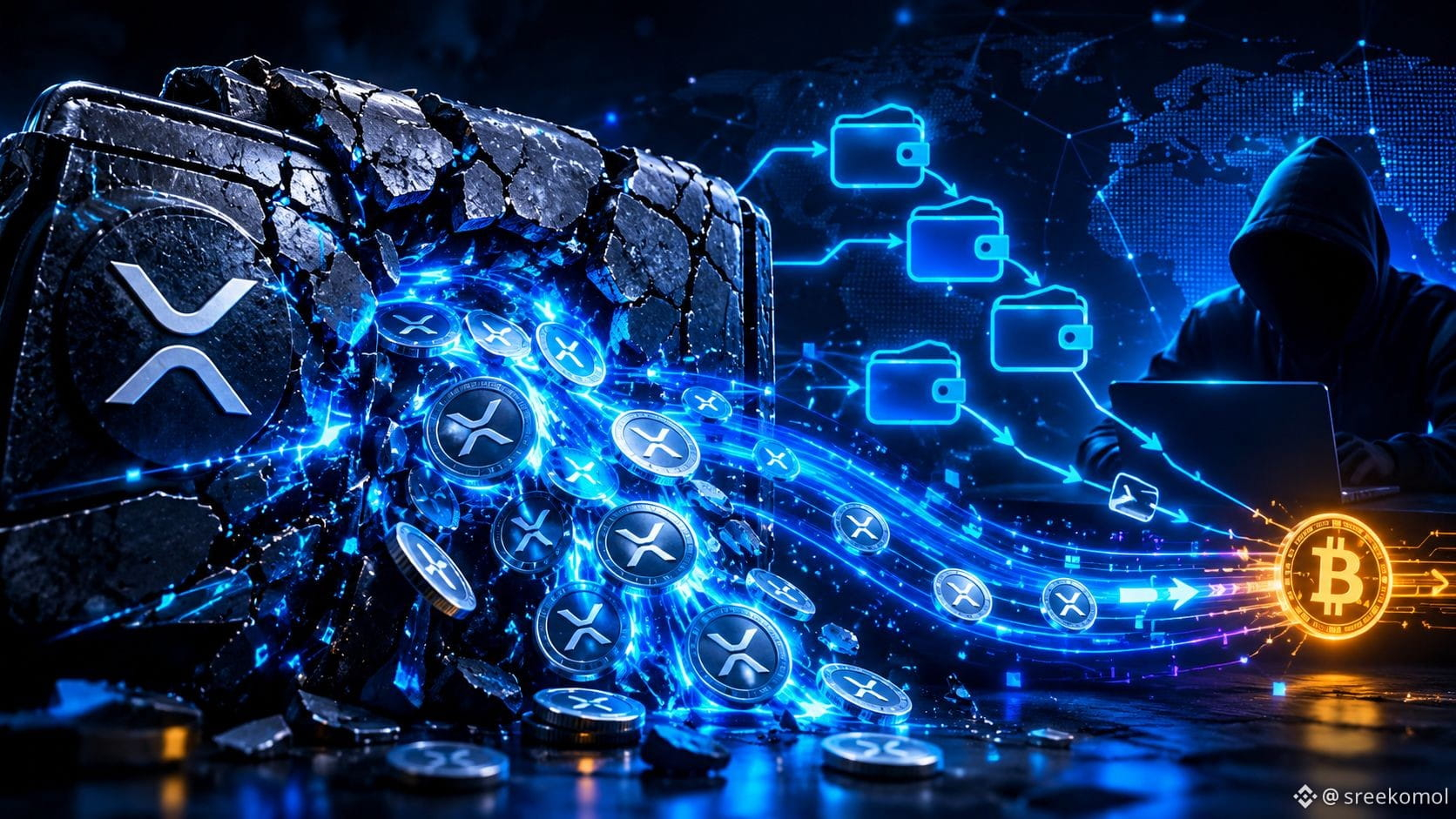
🚨 $83M IN STOLEN XRP IS ON THE MOVE — WHAT HAPPENS NEXT?
The crypto world is watching the aftermath of the reported Bitget security breach on September 24, 2026.
According to reports, around $387M–$390M in assets were stolen, with XRP making up a significant portion of the funds.
🔴 Here’s what happened with the XRP:
💰 ~103M XRP was reportedly moved into five wallets linked to the attacker.
📉 By September 26, around 54M XRP — worth approximately $83M at the time — had already left three of those wallets.
Two wallets that initially held around 20M XRP each were almost completely drained.
Another wallet reportedly dropped to around 5.8M XRP.
That leaves roughly 49M XRP, valued at around $75M at the time, still in the original wallets.
⚠️ But the story didn’t stop there.
The funds reportedly began moving through multiple newly created wallets, making the trail increasingly difficult to follow.
Some reports also indicate that a portion of the XRP may have been routed through THORChain toward Bitcoin.
🔎 The key question now:
Where will the remaining XRP go next?
On-chain movements are still developing, so this is definitely a situation worth watching closely.
Do you think the remaining XRP will stay in the wallets, move to exchanges, or be swapped into BTC? 👇
#Bitget #Blockchain #OnChain #THORChain #CryptoUpdate
🚨 $83M IN STOLEN XRP IS ON THE MOVE — WHAT HAPPENS NEXT?
The crypto world is watching the aftermath of the reported Bitget security breach on September 24, 2026.
According to reports, around $387M–$390M in assets were stolen, with XRP making up a significant portion of the funds.
🔴 Here’s what happened with the XRP:
💰 ~103M XRP was reportedly moved into five wallets linked to the attacker.
📉 By September 26, around 54M XRP — worth approximately $83M at the time — had already left three of those wallets.
Two wallets that initially held around 20M XRP each were almost completely drained.
Another wallet reportedly dropped to around 5.8M XRP.
That leaves roughly 49M XRP, valued at around $75M at the time, still in the original wallets.
⚠️ But the story didn’t stop there.
The funds reportedly began moving through multiple newly created wallets, making the trail increasingly difficult to follow.
Some reports also indicate that a portion of the XRP may have been routed through THORChain toward Bitcoin.
🔎 The key question now:
Where will the remaining XRP go next?
On-chain movements are still developing, so this is definitely a situation worth watching closely.
Do you think the remaining XRP will stay in the wallets, move to exchanges, or be swapped into BTC? 👇
#Bitget #Blockchain #OnChain #THORChain #CryptoUpdate
The crypto world is watching the aftermath of the reported Bitget security breach on September 24, 2026.
According to reports, around $387M–$390M in assets were stolen, with XRP making up a significant portion of the funds.
🔴 Here’s what happened with the XRP:
💰 ~103M XRP was reportedly moved into five wallets linked to the attacker.
📉 By September 26, around 54M XRP — worth approximately $83M at the time — had already left three of those wallets.
Two wallets that initially held around 20M XRP each were almost completely drained.
Another wallet reportedly dropped to around 5.8M XRP.
That leaves roughly 49M XRP, valued at around $75M at the time, still in the original wallets.
⚠️ But the story didn’t stop there.
The funds reportedly began moving through multiple newly created wallets, making the trail increasingly difficult to follow.
Some reports also indicate that a portion of the XRP may have been routed through THORChain toward Bitcoin.
🔎 The key question now:
Where will the remaining XRP go next?
On-chain movements are still developing, so this is definitely a situation worth watching closely.
Do you think the remaining XRP will stay in the wallets, move to exchanges, or be swapped into BTC? 👇
#Bitget #Blockchain #OnChain #THORChain #CryptoUpdate
90
Connectez-vous pour découvrir plus de contenu
Rejoignez la communauté mondiale des adeptes de cryptomonnaies sur Binance Square
⚡️ Suviez les dernières informations importantes sur les cryptomonnaies.
💬 Jugé digne de confiance par la plus grande plateforme d’échange de cryptomonnaies au monde.
👍 Découvrez les connaissances que partagent les créateurs vérifiés.
Adresse e-mail/Nº de téléphone
Sujets d’actualité
1
#BTCFallsBelow$83000
3,364 vues
63 mentions
2
#BitcoinSpotETFs$2.39BWeeklyNetInflow
144 vues
9 mentions
3
#FedProposesPaymentStablecoinRules
15,629 vues
363 mentions
4
#ChinaMayLetAlibabaByteDanceBuyNvidiaChips
17,832 vues
400 mentions
5
#USChinaRelease$30BTariffCutProductLists
2,688 vues
43 mentions
6
#SKoreaFSCConsidersVirtualAssetMarketMaker
12,977 vues
314 mentions
7
#ChinaIndustrialProfitGrowthSlowsFourthMonth
12,716 vues
309 mentions
8
#BitwiseFilesFinalNEARSpotETFProspectus
131,250 vues
1,897 mentions
9
#BitgetHackerMoves$83MStolenXRP
42,087 vues
184 mentions
10
#SOLSpotETFWeeklyInflow$188M
26,150 vues
146 mentions