

pareeshayy
20 Publicaciones

pareeshayy
Denunciar
Bloquear usuario
I am pareeshay 🎀🎀 New in Binance square... Content creator...
6 Siguiendo
0 Seguidores
2 Me gusta
Publicaciones
·
--
·
--
1
279
·
--
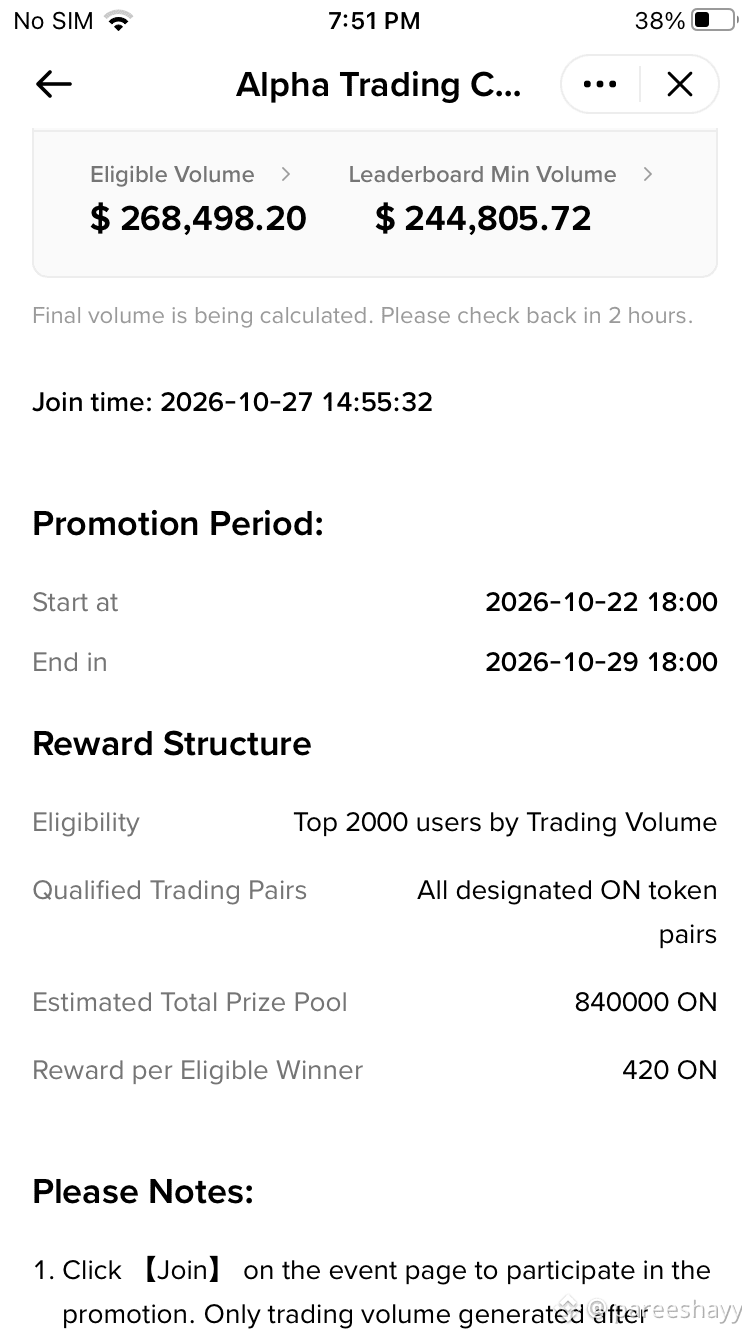
$ON cuando se actualice la clasificación final, mi puesto final será 267k. ¿Soy elegible? Que alguien me lo diga, por favor 😭
$ON cuando se actualice la clasificación final, mi puesto final será 267k. ¿Soy elegible? Que alguien me lo diga, por favor 😭
3
1
386
·
--
Ver traducción
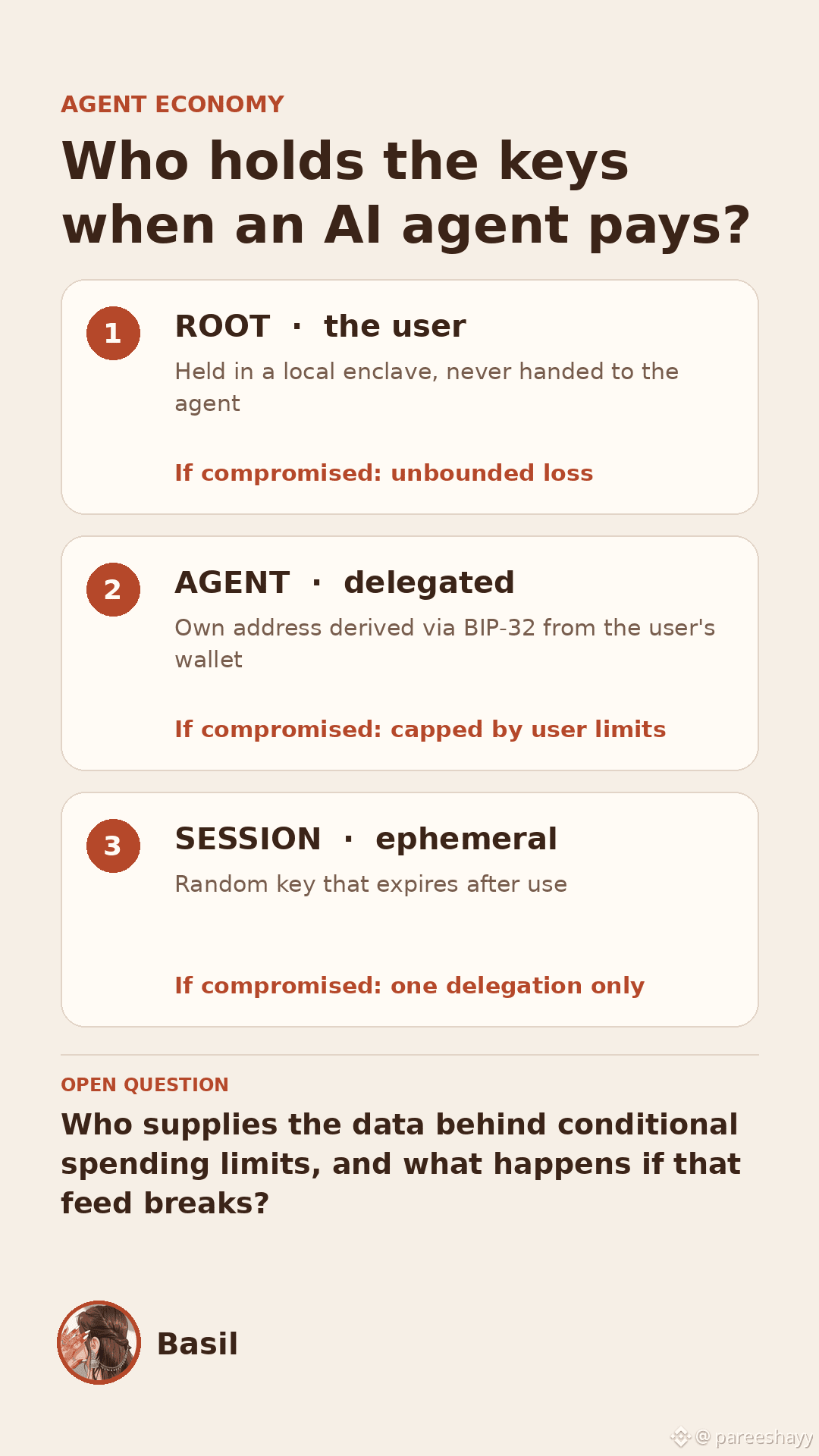
Today I read Kite’s developer docs end to end, and the part that stayed with me wasn’t speed or fees. It was how authority is split into three layers. The user holds root authority, each agent gets its own address derived from the user’s wallet via BIP-32, and every session runs on a random key that expires after use. Compromise a session and you lose one delegation. Compromise an agent and the damage stays inside the limits the user set. Only the root key carries unbounded loss, which is why the docs keep it in a local enclave.
The payment design follows the same logic. Instead of settling every request on-chain, two parties open a channel, exchange thousands of signed updates off-chain, and close it with a second transaction.
The docs cite sub-100ms latency at roughly $1 per million requests.
Here is where I’d push back on my own enthusiasm. The docs also describe conditional rules, like cutting an agent’s limit when volatility spikes. A rule like that needs an outside data input, and I couldn’t find who supplies it or what happens if that feed is wrong. Also, the large testnet figures (hundreds of millions of transactions) came from a testing environment, so they say little about recurring demand on mainnet, which launched April 30, 2026.
What I’m tracking from here: the number of active Agent Passports on KiteScan, the share of agent transactions that are real service payments rather than test traffic, and whether the docs name the data source behind conditional spending limits.
An agent economy only works if a person can hand over a wallet and still sleep. That depends less on how fast agents pay and more on what the rules do when their inputs break.
#KiteBBW $KITE @GoKiteAI #KiteBBW
Today I read Kite’s developer docs end to end, and the part that stayed with me wasn’t speed or fees. It was how authority is split into three layers. The user holds root authority, each agent gets its own address derived from the user’s wallet via BIP-32, and every session runs on a random key that expires after use. Compromise a session and you lose one delegation. Compromise an agent and the damage stays inside the limits the user set. Only the root key carries unbounded loss, which is why the docs keep it in a local enclave.
The payment design follows the same logic. Instead of settling every request on-chain, two parties open a channel, exchange thousands of signed updates off-chain, and close it with a second transaction.
The docs cite sub-100ms latency at roughly $1 per million requests.
Here is where I’d push back on my own enthusiasm. The docs also describe conditional rules, like cutting an agent’s limit when volatility spikes. A rule like that needs an outside data input, and I couldn’t find who supplies it or what happens if that feed is wrong. Also, the large testnet figures (hundreds of millions of transactions) came from a testing environment, so they say little about recurring demand on mainnet, which launched April 30, 2026.
What I’m tracking from here: the number of active Agent Passports on KiteScan, the share of agent transactions that are real service payments rather than test traffic, and whether the docs name the data source behind conditional spending limits.
An agent economy only works if a person can hand over a wallet and still sleep. That depends less on how fast agents pay and more on what the rules do when their inputs break.
#KiteBBW $KITE @KITE AI 中文 #KiteBBW
80
·
--
Ver traducción
#BinancePick i am done my today task everyone can join this hottested camapign
#BinancePick i am done my today task everyone can join this hottested camapign
·
--
Ver traducción
#BinancePick everyone join this campaign befire late
#BinancePick everyone join this campaign befire late
·
--
#BinancePick ¿Cuándo se distribuirá la recompensa de la semana 1?
#BinancePick ¿Cuándo se distribuirá la recompensa de la semana 1?
51
·
--
$ON La competencia tiene miedo de participar... me voy temprano 😅
$ON La competencia tiene miedo de participar... me voy temprano 😅
396
·
--
Ver traducción
#BinancePick everyone please join this campaign
#BinancePick everyone please join this campaign
·
--
#BinancePick ¿Alguien recibió el pago de la primera semana? 🥲
#BinancePick ¿Alguien recibió el pago de la primera semana? 🥲
62
·
--
Ver traducción
#BinancePick somethig new intresting camapign live lets try.. everyone join
#BinancePick somethig new intresting camapign live lets try.. everyone join
·
--
#dusk $DUSK @Dusk_Foundation Mucha gente que observa la capa de consenso de Dusk se hace primero una pregunta: ¿qué tan rápido es? Me quedé pensando que la velocidad es el lugar equivocado para empezar. La pregunta más interesante es contra qué protege realmente el diseño.
La Acreditación Concisa (Succinct Attestation) ejecuta cada bloque en tres pasos: Propuesta, Validación y Ratificación. Un proveedor crea un bloque candidato. Un comité seleccionado al azar comprueba su validez. Un segundo comité seleccionado, de forma separada, confirma el resultado de la validación y lo finaliza. Dos comités independientes, el mismo bloque, el mismo ciclo.
Lo que me frenó al leerlo fue la palabra "independientemente". La mayoría de los sistemas PoS usan un solo comité para proponer y aprobar. Dusk utiliza dos comités separados para la validación y la ratificación, lo que significa que un bloque necesita el acuerdo de dos grupos que fueron seleccionados al azar y por separado antes de que siquiera se considere definitivo. Un comité comprometido no puede hacer pasar por sí solo un bloque inválido.
La aleatoriedad importa más de lo que parece a primera vista. Los proveedores se seleccionan mediante sortición (sortition): ponderada por la participación (stake), pero no determinista. Nadie sabe de antemano qué nodos específicos formarán el próximo comité de validación o de ratificación. Esa incertidumbre es el mecanismo de seguridad. Un atacante no puede sobornar ni atacar a un comité que aún no existe.
La participación mínima para participar es de 1,000 DUSK. Ese número no es arbitrario: establece el piso económico de lo que cuesta convertirse en proveedor y, potencialmente, influir en la selección del comité. Cuanto mayor sea la participación total depositada, más costoso resulta acumular suficiente peso como para importar.
Lo que encuentro verdaderamente sin resolver es la relación entre la concentración de participación y los resultados de la sortición a lo largo del tiempo. Si un pequeño número de grandes proveedores domina el peso de la participación, la selección "aleatoria" empieza a producir patrones predecibles. La criptografía se mantiene, pero las suposiciones económicas subyacentes requieren vigilancia.
#dusk $DUSK @Dusk Mucha gente que observa la capa de consenso de Dusk se hace primero una pregunta: ¿qué tan rápido es? Me quedé pensando que la velocidad es el lugar equivocado para empezar. La pregunta más interesante es contra qué protege realmente el diseño.
La Acreditación Concisa (Succinct Attestation) ejecuta cada bloque en tres pasos: Propuesta, Validación y Ratificación. Un proveedor crea un bloque candidato. Un comité seleccionado al azar comprueba su validez. Un segundo comité seleccionado, de forma separada, confirma el resultado de la validación y lo finaliza. Dos comités independientes, el mismo bloque, el mismo ciclo.
Lo que me frenó al leerlo fue la palabra "independientemente". La mayoría de los sistemas PoS usan un solo comité para proponer y aprobar. Dusk utiliza dos comités separados para la validación y la ratificación, lo que significa que un bloque necesita el acuerdo de dos grupos que fueron seleccionados al azar y por separado antes de que siquiera se considere definitivo. Un comité comprometido no puede hacer pasar por sí solo un bloque inválido.
La aleatoriedad importa más de lo que parece a primera vista. Los proveedores se seleccionan mediante sortición (sortition): ponderada por la participación (stake), pero no determinista. Nadie sabe de antemano qué nodos específicos formarán el próximo comité de validación o de ratificación. Esa incertidumbre es el mecanismo de seguridad. Un atacante no puede sobornar ni atacar a un comité que aún no existe.
La participación mínima para participar es de 1,000 DUSK. Ese número no es arbitrario: establece el piso económico de lo que cuesta convertirse en proveedor y, potencialmente, influir en la selección del comité. Cuanto mayor sea la participación total depositada, más costoso resulta acumular suficiente peso como para importar.
Lo que encuentro verdaderamente sin resolver es la relación entre la concentración de participación y los resultados de la sortición a lo largo del tiempo. Si un pequeño número de grandes proveedores domina el peso de la participación, la selección "aleatoria" empieza a producir patrones predecibles. La criptografía se mantiene, pero las suposiciones económicas subyacentes requieren vigilancia.
80
·
--
Ver traducción
#dusk $DUSK @Dusk_Foundation Many people who look at Dusk for the first time reduce Phoenix and Moonlight to a simple toggle - private mode and public mode. I kept thinking that framing misses what is actually interesting about how these two models sit inside the same protocol.
Phoenix is not just "private." It is a completely different transaction architecture. Funds do not live in balances - they live as encrypted notes. When you spend, you consume existing notes and create new ones, proving with zero-knowledge proofs that no double spend happened and that the amounts add up, without revealing who sent what to whom or how much moved. The receiver sees the note. Nobody else does, unless you share a viewing key.
Moonlight works the opposite way - account-based, fully transparent, sender and recipient and amount all visible on-chain. The kind of model most people already understand from Ethereum.
What caught my attention is that both models settle through the same Transfer Contract on DuskDS. They are not separate chains or separate ledgers. A Phoenix transaction and a Moonlight transaction can both exist inside the same block, finalized by the same consensus round, without either model needing to know about the other's internal logic.
The part worth sitting with is what this means for regulated assets. A securities transaction might need full transparency for the regulator and full privacy from the counterparty. Phoenix viewing keys make selective disclosure possible - you reveal exactly what you must, to exactly who requires it, nothing more. Moonlight handles flows where transparency is the requirement by default.
What I find harder to answer is whether regulators will accept viewing-key-based disclosure as equivalent to traditional audit trails. The cryptography works. Whether the legal frameworks catch up is a different question entirely.
#dusk $DUSK @Dusk Many people who look at Dusk for the first time reduce Phoenix and Moonlight to a simple toggle - private mode and public mode. I kept thinking that framing misses what is actually interesting about how these two models sit inside the same protocol.
Phoenix is not just "private." It is a completely different transaction architecture. Funds do not live in balances - they live as encrypted notes. When you spend, you consume existing notes and create new ones, proving with zero-knowledge proofs that no double spend happened and that the amounts add up, without revealing who sent what to whom or how much moved. The receiver sees the note. Nobody else does, unless you share a viewing key.
Moonlight works the opposite way - account-based, fully transparent, sender and recipient and amount all visible on-chain. The kind of model most people already understand from Ethereum.
What caught my attention is that both models settle through the same Transfer Contract on DuskDS. They are not separate chains or separate ledgers. A Phoenix transaction and a Moonlight transaction can both exist inside the same block, finalized by the same consensus round, without either model needing to know about the other's internal logic.
The part worth sitting with is what this means for regulated assets. A securities transaction might need full transparency for the regulator and full privacy from the counterparty. Phoenix viewing keys make selective disclosure possible - you reveal exactly what you must, to exactly who requires it, nothing more. Moonlight handles flows where transparency is the requirement by default.
What I find harder to answer is whether regulators will accept viewing-key-based disclosure as equivalent to traditional audit trails. The cryptography works. Whether the legal frameworks catch up is a different question entirely.
81
Inicia sesión para explorar más contenidos
Únete a usuarios de criptomonedas de todo el mundo en Binance Square
⚡️ Obtén la información más reciente y útil sobre criptomonedas.
💬 Confía en el mayor exchange de criptomonedas del mundo.
👍 Descubre opiniones reales de creadores verificados.
Correo electrónico/número de teléfono
Temas en tendencia
UniswapA16zSeekDeFiExemptionFromIllinoisCryptoTax
26,298 visualizaciones
765 participa(n) en el debate
#CryptoTax 🚨 ACTUALIZACIÓN DEL MERCADO DE CRIPTOMONEDAS Y REGULACIÓN #HKDollarStablecoinHKDAPToLaunchOnSolana
#uniswapa16zseekdefiexemptionfromillinoiscryptotax UNISWAP, a16z y DeFi Education Fund impugnan las normas fiscales sobre criptomonedas de Illinois
30 de octubre de 2026 | Volatilidad del mercado y novedades del sector
📊 1. RESUMEN DEL MERCADO
Los mercados de criptomonedas muestran señales mixtas: algunos activos registran fuertes ganancias, mientras que varias de las principales criptomonedas siguen bajo presión.
📈 Mayores ganancias reportadas
SOPH: +60.81% — $0.00238
BEAMX: +37.94% — $0.004701
SKDDB: +16.81% — $9.38
📉 Pérdidas destacadas reportadas
INTWUSDT: −61.09% — $6.72
AKEUSDT: −31.47% — $0.013989
SNXXUSDT: −30.71% — $6.43
🔎 Principales criptoactivos bajo presión
DOGE: −5.06%
PEPE: −4.91%
SUI: −4.83%
NEAR: −3.28%
XRP: −3.13%
Uniswap Labs, Andreessen Horowitz (a16z) y DeFi Education Fund (DEF) buscan exenciones de las normas de Illinois sobre
#Uniswap #a16z #DeFi #CryptoRegulation #Illinois # #Web3 #BinanceSquare
#HKDollarStablecoinHKDAPToLaunchOnSolana #HKDAP #Stablecoin #CryptoNews #Blockchain #DeFi #DigitalPayments
⚖️ 3. NORMAS FISCALES DE ILLINOIS SOBRE CRIPTOMONEDAS: UNISWAP, a16z Y DEFI
Uniswap Labs, Andreessen Horowitz (a16z) y DeFi Education Fund están vinculados a iniciativas para solicitar exenciones de los requisitos fiscales propuestos para las criptomonedas en Illinois.
El debate pone de relieve una cuestión clave: ¿Cómo deberían aplicarse las obligaciones de declaración fiscal a las entidades descentralizadas que quizá no operen como intermediarios financieros tradicionales?
El resultado podría influir en el cumplimiento normativo de DeFi, las obligaciones de los desarrolladores y el futuro entorno regulatorio.
#BinanceSquare #CryptoNews #HKDAP #Stablecoin #Uniswap #a16z #DeFi #CryptoTax
CHASEPA SULUXù
·2 «Me gusta»
·242 visualizaciones
HKDollarStablecoinHKDAPToLaunchOnSolana
20,008 visualizaciones
487 participa(n) en el debate
$1.5BInLeveragedCryptoBetsLiquidated
43,121 visualizaciones
253 participa(n) en el debate