

TamaraSolovei
34 Publicaciones

TamaraSolovei
Denunciar
Bloquear usuario
7 Siguiendo
2 Seguidores
5 Me gusta
Publicaciones
#dusk $DUSK @Dusk_Foundation
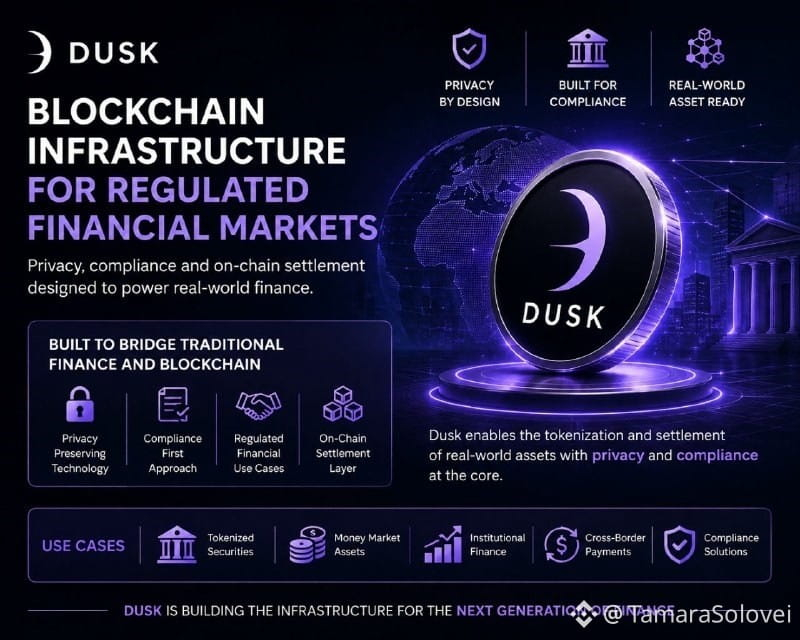
Una de las cosas más importantes para las finanzas institucionales es saber exactamente qué sucede cuando se completa una transacción.
Por eso, el enfoque de Dusk sobre la liquidación llamó mi atención.
En los mercados financieros tradicionales, la liquidación puede implicar múltiples sistemas e intermediarios. La infraestructura en cadena ofrece la posibilidad de hacer el proceso más directo y programable.
@Dusk_Foundation se está construyendo alrededor de la liquidación determinista, combinándola con funciones de privacidad y cumplimiento necesarias para activos regulados.
Esto importa porque una seguridad tokenizada no es útil simplemente por existir en una blockchain.
La infraestructura también necesita responder:
🔹 ¿Quién tiene permitido mantenerla?
🔹 ¿Se puede transferir?
🔹 ¿Qué información debe verificarse?
🔹 ¿Cuándo es final la transacción?
Dusk está intentando que esas reglas formen parte de la propia red.
Para mí, esa es la tesis RWA más interesante: no solo tokenizar activos, sino hacer que todo el ciclo de vida de la transacción financiera sea programable y verificable.
#dusk $DUSK @Dusk
Una de las cosas más importantes para las finanzas institucionales es saber exactamente qué sucede cuando se completa una transacción.
Por eso, el enfoque de Dusk sobre la liquidación llamó mi atención.
En los mercados financieros tradicionales, la liquidación puede implicar múltiples sistemas e intermediarios. La infraestructura en cadena ofrece la posibilidad de hacer el proceso más directo y programable.
@Dusk se está construyendo alrededor de la liquidación determinista, combinándola con funciones de privacidad y cumplimiento necesarias para activos regulados.
Esto importa porque una seguridad tokenizada no es útil simplemente por existir en una blockchain.
La infraestructura también necesita responder:
🔹 ¿Quién tiene permitido mantenerla?
🔹 ¿Se puede transferir?
🔹 ¿Qué información debe verificarse?
🔹 ¿Cuándo es final la transacción?
Dusk está intentando que esas reglas formen parte de la propia red.
Para mí, esa es la tesis RWA más interesante: no solo tokenizar activos, sino hacer que todo el ciclo de vida de la transacción financiera sea programable y verificable.
Una de las cosas más importantes para las finanzas institucionales es saber exactamente qué sucede cuando se completa una transacción.
Por eso, el enfoque de Dusk sobre la liquidación llamó mi atención.
En los mercados financieros tradicionales, la liquidación puede implicar múltiples sistemas e intermediarios. La infraestructura en cadena ofrece la posibilidad de hacer el proceso más directo y programable.
@Dusk se está construyendo alrededor de la liquidación determinista, combinándola con funciones de privacidad y cumplimiento necesarias para activos regulados.
Esto importa porque una seguridad tokenizada no es útil simplemente por existir en una blockchain.
La infraestructura también necesita responder:
🔹 ¿Quién tiene permitido mantenerla?
🔹 ¿Se puede transferir?
🔹 ¿Qué información debe verificarse?
🔹 ¿Cuándo es final la transacción?
Dusk está intentando que esas reglas formen parte de la propia red.
Para mí, esa es la tesis RWA más interesante: no solo tokenizar activos, sino hacer que todo el ciclo de vida de la transacción financiera sea programable y verificable.
103
Ver traducción
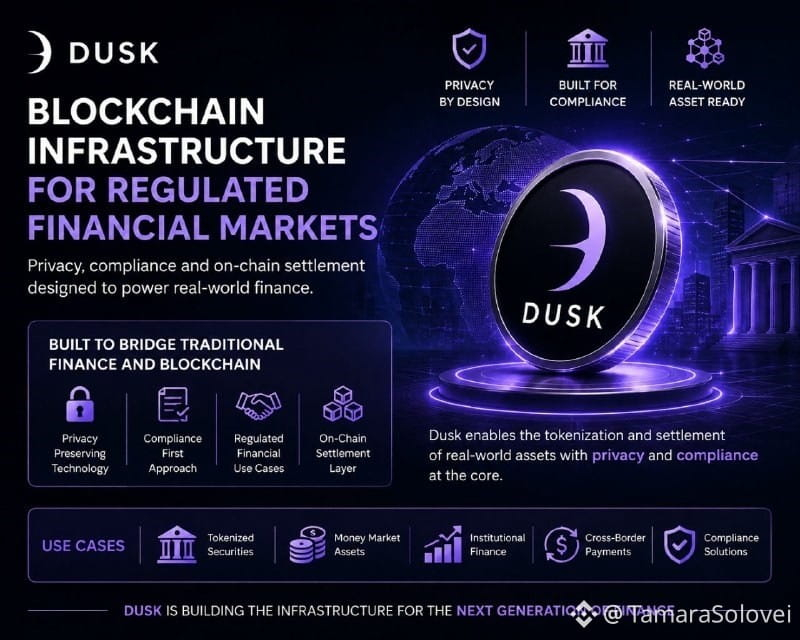
#dusk $DUSK @Dusk_Foundation After following Dusk for a while, the part that stands out to me is how specifically the network is built around financial markets.
Dusk isn't trying to solve every possible blockchain use case.
Its infrastructure is focused on a much narrower — but potentially very important — problem: making regulated financial assets work on-chain.
That means dealing with the things that make traditional finance complicated in the first place:
🔹 Investor eligibility
🔹 Asset transfers
🔹 Privacy and selective disclosure
🔹 Compliance requirements
🔹 Deterministic settlement
🔹 Different execution environments for developers
And I think that's the right way to approach the RWA market.
Tokenizing an asset is only the starting point. The real challenge is building infrastructure where that asset can actually be issued, transferred, traded and settled while the rules surrounding it remain enforceable.
That's the thesis behind Dusk that I find most compelling.
Not “blockchain for everything.”
Blockchain infrastructure specifically designed for financial markets.
Whether Dusk can turn this architecture into significant real-world adoption remains the big question.
But as the RWA sector continues to develop, I think projects solving the infrastructure problem deserve attention.
For now, $DUSK stays on my watchlist.
#dusk $DUSK @Dusk After following Dusk for a while, the part that stands out to me is how specifically the network is built around financial markets.
Dusk isn't trying to solve every possible blockchain use case.
Its infrastructure is focused on a much narrower — but potentially very important — problem: making regulated financial assets work on-chain.
That means dealing with the things that make traditional finance complicated in the first place:
🔹 Investor eligibility
🔹 Asset transfers
🔹 Privacy and selective disclosure
🔹 Compliance requirements
🔹 Deterministic settlement
🔹 Different execution environments for developers
And I think that's the right way to approach the RWA market.
Tokenizing an asset is only the starting point. The real challenge is building infrastructure where that asset can actually be issued, transferred, traded and settled while the rules surrounding it remain enforceable.
That's the thesis behind Dusk that I find most compelling.
Not “blockchain for everything.”
Blockchain infrastructure specifically designed for financial markets.
Whether Dusk can turn this architecture into significant real-world adoption remains the big question.
But as the RWA sector continues to develop, I think projects solving the infrastructure problem deserve attention.
For now, $DUSK stays on my watchlist.
Dusk isn't trying to solve every possible blockchain use case.
Its infrastructure is focused on a much narrower — but potentially very important — problem: making regulated financial assets work on-chain.
That means dealing with the things that make traditional finance complicated in the first place:
🔹 Investor eligibility
🔹 Asset transfers
🔹 Privacy and selective disclosure
🔹 Compliance requirements
🔹 Deterministic settlement
🔹 Different execution environments for developers
And I think that's the right way to approach the RWA market.
Tokenizing an asset is only the starting point. The real challenge is building infrastructure where that asset can actually be issued, transferred, traded and settled while the rules surrounding it remain enforceable.
That's the thesis behind Dusk that I find most compelling.
Not “blockchain for everything.”
Blockchain infrastructure specifically designed for financial markets.
Whether Dusk can turn this architecture into significant real-world adoption remains the big question.
But as the RWA sector continues to develop, I think projects solving the infrastructure problem deserve attention.
For now, $DUSK stays on my watchlist.
83
Ver traducción
#dusk $DUSK @Dusk_Foundation
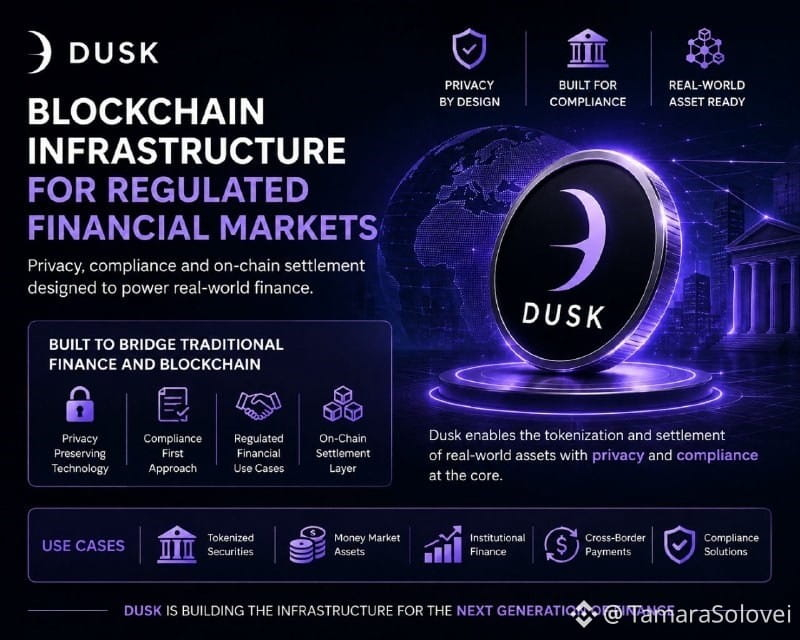
The most interesting part of Dusk might be what happens between the moment an asset is issued and the moment it reaches an investor.
Regulated finance has a lot of conditions that need to be enforced before an asset can actually move: investor eligibility, transfer restrictions, compliance checks and settlement.
@Dusk_Foundation is building these requirements into the blockchain infrastructure itself.
That means the network isn't treating compliance as a separate layer that has to be bolted onto every application. Instead, regulated asset workflows can be built around native access controls, privacy-preserving transactions and deterministic settlement.
I think this approach makes sense for institutional markets.
A public blockchain can provide transparency, but financial institutions also need controlled access and predictable execution.
Dusk is trying to combine both:
Transparent infrastructure where it helps.
Privacy where it's necessary.
Verification where regulation requires it.
If tokenized securities eventually become a major market, these details could matter far more than simply having another blockchain capable of issuing tokens.
The real test is whether financial institutions can actually operate on the network.
That's what I'll be watching with $DUSK .
#dusk $DUSK @Dusk
The most interesting part of Dusk might be what happens between the moment an asset is issued and the moment it reaches an investor.
Regulated finance has a lot of conditions that need to be enforced before an asset can actually move: investor eligibility, transfer restrictions, compliance checks and settlement.
@Dusk is building these requirements into the blockchain infrastructure itself.
That means the network isn't treating compliance as a separate layer that has to be bolted onto every application. Instead, regulated asset workflows can be built around native access controls, privacy-preserving transactions and deterministic settlement.
I think this approach makes sense for institutional markets.
A public blockchain can provide transparency, but financial institutions also need controlled access and predictable execution.
Dusk is trying to combine both:
Transparent infrastructure where it helps.
Privacy where it's necessary.
Verification where regulation requires it.
If tokenized securities eventually become a major market, these details could matter far more than simply having another blockchain capable of issuing tokens.
The real test is whether financial institutions can actually operate on the network.
That's what I'll be watching with $DUSK .
The most interesting part of Dusk might be what happens between the moment an asset is issued and the moment it reaches an investor.
Regulated finance has a lot of conditions that need to be enforced before an asset can actually move: investor eligibility, transfer restrictions, compliance checks and settlement.
@Dusk is building these requirements into the blockchain infrastructure itself.
That means the network isn't treating compliance as a separate layer that has to be bolted onto every application. Instead, regulated asset workflows can be built around native access controls, privacy-preserving transactions and deterministic settlement.
I think this approach makes sense for institutional markets.
A public blockchain can provide transparency, but financial institutions also need controlled access and predictable execution.
Dusk is trying to combine both:
Transparent infrastructure where it helps.
Privacy where it's necessary.
Verification where regulation requires it.
If tokenized securities eventually become a major market, these details could matter far more than simply having another blockchain capable of issuing tokens.
The real test is whether financial institutions can actually operate on the network.
That's what I'll be watching with $DUSK .
80
Ver traducción
#dusk $DUSK @Dusk_Foundation
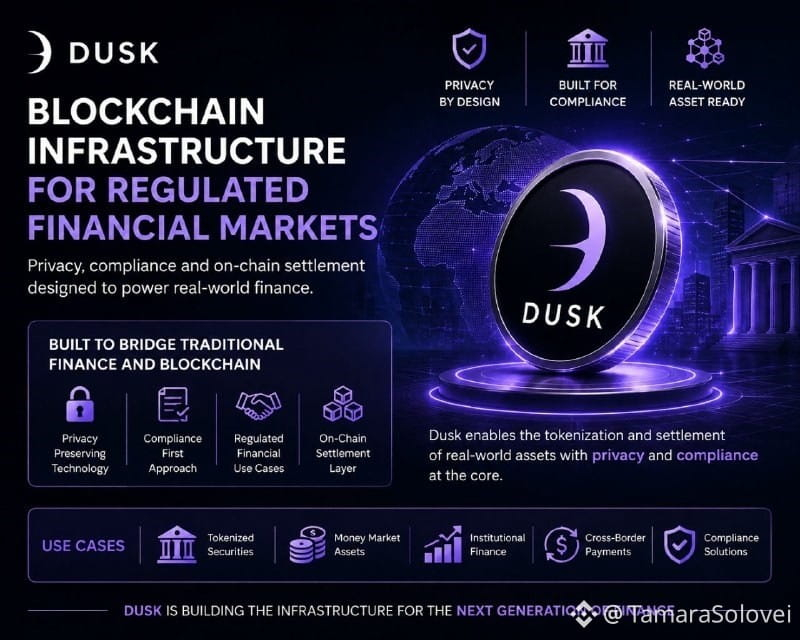
Most people hear “RWA” and immediately think about tokenizing government bonds or putting real estate onchain.
But I think the more interesting opportunity is much broader.
Private markets.
A huge amount of economic activity happens outside public markets.
Private companies need financing.
Investors need access to opportunities.
Ownership needs to be recorded.
Transfers need to be controlled.
Payments and settlement need to happen.
And every participant needs to know who is actually allowed to do what.
Today, a lot of this infrastructure is fragmented across issuers, banks, custodians, administrators, brokers and other intermediaries.
Tokenization doesn't automatically solve that.
Putting an asset on a blockchain doesn't magically create liquidity, demand or legal certainty.
The interesting part is what happens when the entire lifecycle of an asset can be represented digitally.
Issuance.
Investor eligibility.
Ownership.
Transfers.
Dividends.
Voting.
Settlement.
That's where @Dusk_Foundation _Foundation is taking an interesting approach.
Dusk isn't simply saying “let's put more assets onchain.”
It's trying to build infrastructure where regulated assets can exist onchain while still dealing with the requirements that financial markets can't ignore.
Privacy.
Selective disclosure.
Access controls.
Compliance.
Deterministic settlement.
And that's particularly important for private markets.
A public blockchain gives you transparency by default.
Financial markets often need the opposite: controlled visibility.
An investor may need to prove they're eligible without exposing every piece of personal information.
A company may need to keep sensitive positions private.
A regulated venue may need to know exactly who can hold or transfer an asset.
That doesn't mean blockchain has to choose between transparency and privacy.
It means the infrastructure needs to be designed for both.
This is why I'm paying attention to Dusk.
The interesting question isn't whether we can tokenize another asset.
#dusk $DUSK @Dusk
Most people hear “RWA” and immediately think about tokenizing government bonds or putting real estate onchain.
But I think the more interesting opportunity is much broader.
Private markets.
A huge amount of economic activity happens outside public markets.
Private companies need financing.
Investors need access to opportunities.
Ownership needs to be recorded.
Transfers need to be controlled.
Payments and settlement need to happen.
And every participant needs to know who is actually allowed to do what.
Today, a lot of this infrastructure is fragmented across issuers, banks, custodians, administrators, brokers and other intermediaries.
Tokenization doesn't automatically solve that.
Putting an asset on a blockchain doesn't magically create liquidity, demand or legal certainty.
The interesting part is what happens when the entire lifecycle of an asset can be represented digitally.
Issuance.
Investor eligibility.
Ownership.
Transfers.
Dividends.
Voting.
Settlement.
That's where @Dusk _Foundation is taking an interesting approach.
Dusk isn't simply saying “let's put more assets onchain.”
It's trying to build infrastructure where regulated assets can exist onchain while still dealing with the requirements that financial markets can't ignore.
Privacy.
Selective disclosure.
Access controls.
Compliance.
Deterministic settlement.
And that's particularly important for private markets.
A public blockchain gives you transparency by default.
Financial markets often need the opposite: controlled visibility.
An investor may need to prove they're eligible without exposing every piece of personal information.
A company may need to keep sensitive positions private.
A regulated venue may need to know exactly who can hold or transfer an asset.
That doesn't mean blockchain has to choose between transparency and privacy.
It means the infrastructure needs to be designed for both.
This is why I'm paying attention to Dusk.
The interesting question isn't whether we can tokenize another asset.
Most people hear “RWA” and immediately think about tokenizing government bonds or putting real estate onchain.
But I think the more interesting opportunity is much broader.
Private markets.
A huge amount of economic activity happens outside public markets.
Private companies need financing.
Investors need access to opportunities.
Ownership needs to be recorded.
Transfers need to be controlled.
Payments and settlement need to happen.
And every participant needs to know who is actually allowed to do what.
Today, a lot of this infrastructure is fragmented across issuers, banks, custodians, administrators, brokers and other intermediaries.
Tokenization doesn't automatically solve that.
Putting an asset on a blockchain doesn't magically create liquidity, demand or legal certainty.
The interesting part is what happens when the entire lifecycle of an asset can be represented digitally.
Issuance.
Investor eligibility.
Ownership.
Transfers.
Dividends.
Voting.
Settlement.
That's where @Dusk _Foundation is taking an interesting approach.
Dusk isn't simply saying “let's put more assets onchain.”
It's trying to build infrastructure where regulated assets can exist onchain while still dealing with the requirements that financial markets can't ignore.
Privacy.
Selective disclosure.
Access controls.
Compliance.
Deterministic settlement.
And that's particularly important for private markets.
A public blockchain gives you transparency by default.
Financial markets often need the opposite: controlled visibility.
An investor may need to prove they're eligible without exposing every piece of personal information.
A company may need to keep sensitive positions private.
A regulated venue may need to know exactly who can hold or transfer an asset.
That doesn't mean blockchain has to choose between transparency and privacy.
It means the infrastructure needs to be designed for both.
This is why I'm paying attention to Dusk.
The interesting question isn't whether we can tokenize another asset.
71
Ver traducción
#dusk $DUSK @Dusk_Foundation
Most people hear “RWA” and immediately think about tokenizing government bonds or putting real estate onchain.
But I think the more interesting opportunity is much broader.
Private markets.
A huge amount of economic activity happens outside public markets.
Private companies need financing.
Investors need access to opportunities.
Ownership needs to be recorded.
Transfers need to be controlled.
Payments and settlement need to happen.
And every participant needs to know who is actually allowed to do what.
Today, a lot of this infrastructure is fragmented across issuers, banks, custodians, administrators, brokers and other intermediaries.
Tokenization doesn't automatically solve that.
Putting an asset on a blockchain doesn't magically create liquidity, demand or legal certainty.
The interesting part is what happens when the entire lifecycle of an asset can be represented digitally.
Issuance.
Investor eligibility.
Ownership.
Transfers.
Dividends.
Voting.
Settlement.
That's where @Dusk_Foundation _Foundation is taking an interesting approach.
Dusk isn't simply saying “let's put more assets onchain.”
It's trying to build infrastructure where regulated assets can exist onchain while still dealing with the requirements that financial markets can't ignore.
Privacy.
Selective disclosure.
Access controls.
Compliance.
Deterministic settlement.
And that's particularly important for private markets.
A public blockchain gives you transparency by default.
Financial markets often need the opposite: controlled visibility.
An investor may need to prove they're eligible without exposing every piece of personal information.
A company may need to keep sensitive positions private.
A regulated venue may need to know exactly who can hold or transfer an asset.
That doesn't mean blockchain has to choose between transparency and privacy.
It means the infrastructure needs to be designed for both.
This is why I'm paying attention to Dusk.
The interesting question isn't whether we can tokenize another asset.
#dusk $DUSK @Dusk
Most people hear “RWA” and immediately think about tokenizing government bonds or putting real estate onchain.
But I think the more interesting opportunity is much broader.
Private markets.
A huge amount of economic activity happens outside public markets.
Private companies need financing.
Investors need access to opportunities.
Ownership needs to be recorded.
Transfers need to be controlled.
Payments and settlement need to happen.
And every participant needs to know who is actually allowed to do what.
Today, a lot of this infrastructure is fragmented across issuers, banks, custodians, administrators, brokers and other intermediaries.
Tokenization doesn't automatically solve that.
Putting an asset on a blockchain doesn't magically create liquidity, demand or legal certainty.
The interesting part is what happens when the entire lifecycle of an asset can be represented digitally.
Issuance.
Investor eligibility.
Ownership.
Transfers.
Dividends.
Voting.
Settlement.
That's where @Dusk _Foundation is taking an interesting approach.
Dusk isn't simply saying “let's put more assets onchain.”
It's trying to build infrastructure where regulated assets can exist onchain while still dealing with the requirements that financial markets can't ignore.
Privacy.
Selective disclosure.
Access controls.
Compliance.
Deterministic settlement.
And that's particularly important for private markets.
A public blockchain gives you transparency by default.
Financial markets often need the opposite: controlled visibility.
An investor may need to prove they're eligible without exposing every piece of personal information.
A company may need to keep sensitive positions private.
A regulated venue may need to know exactly who can hold or transfer an asset.
That doesn't mean blockchain has to choose between transparency and privacy.
It means the infrastructure needs to be designed for both.
This is why I'm paying attention to Dusk.
The interesting question isn't whether we can tokenize another asset.
Most people hear “RWA” and immediately think about tokenizing government bonds or putting real estate onchain.
But I think the more interesting opportunity is much broader.
Private markets.
A huge amount of economic activity happens outside public markets.
Private companies need financing.
Investors need access to opportunities.
Ownership needs to be recorded.
Transfers need to be controlled.
Payments and settlement need to happen.
And every participant needs to know who is actually allowed to do what.
Today, a lot of this infrastructure is fragmented across issuers, banks, custodians, administrators, brokers and other intermediaries.
Tokenization doesn't automatically solve that.
Putting an asset on a blockchain doesn't magically create liquidity, demand or legal certainty.
The interesting part is what happens when the entire lifecycle of an asset can be represented digitally.
Issuance.
Investor eligibility.
Ownership.
Transfers.
Dividends.
Voting.
Settlement.
That's where @Dusk _Foundation is taking an interesting approach.
Dusk isn't simply saying “let's put more assets onchain.”
It's trying to build infrastructure where regulated assets can exist onchain while still dealing with the requirements that financial markets can't ignore.
Privacy.
Selective disclosure.
Access controls.
Compliance.
Deterministic settlement.
And that's particularly important for private markets.
A public blockchain gives you transparency by default.
Financial markets often need the opposite: controlled visibility.
An investor may need to prove they're eligible without exposing every piece of personal information.
A company may need to keep sensitive positions private.
A regulated venue may need to know exactly who can hold or transfer an asset.
That doesn't mean blockchain has to choose between transparency and privacy.
It means the infrastructure needs to be designed for both.
This is why I'm paying attention to Dusk.
The interesting question isn't whether we can tokenize another asset.
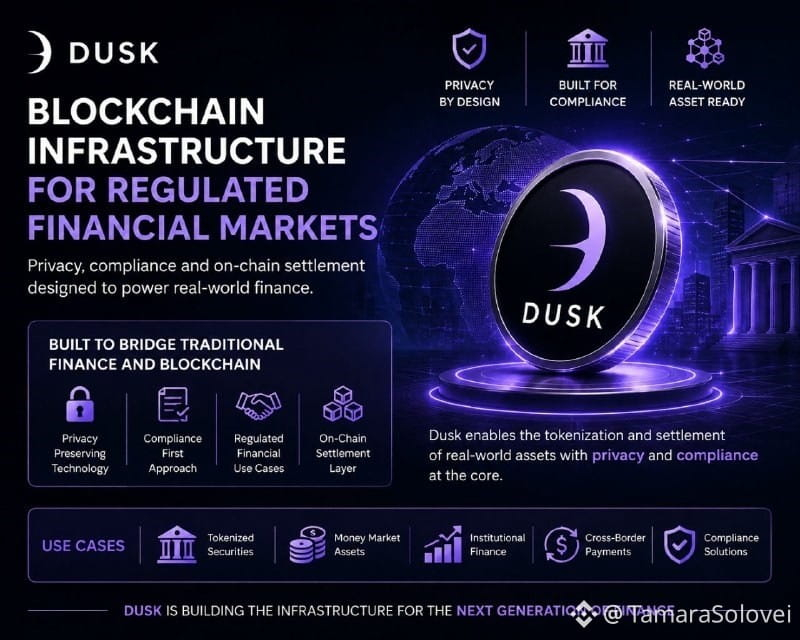
64
Ver traducción
#termmax @termmax DeFi becomes much more interesting when financial positions can be built like Lego blocks.
That’s one reason I’m watching TermMax.
The protocol is focused on fixed-rate lending and borrowing with defined maturities, but the bigger idea is what these predictable positions can enable on top of them.
A fixed-rate position can become a building block for:
🔹 Hedging interest-rate exposure
🔹 More predictable leverage
🔹 Fixed-income strategies
🔹 Vaults and structured products
🔹 More precise capital management
Instead of every strategy depending on whatever the floating market rate happens to be at a particular moment, users can build around a known rate and a defined time horizon.
That's important because sophisticated financial strategies usually need more than liquidity. They need predictability.
TermMax is essentially bringing another primitive from traditional fixed-income markets into DeFi and making it composable with on-chain infrastructure.
The interesting question is how far fixed-rate markets can go once they become programmable.
$TMX is one token I'll be watching as this sector develops.
#termmax @TermMax DeFi becomes much more interesting when financial positions can be built like Lego blocks.
That’s one reason I’m watching TermMax.
The protocol is focused on fixed-rate lending and borrowing with defined maturities, but the bigger idea is what these predictable positions can enable on top of them.
A fixed-rate position can become a building block for:
🔹 Hedging interest-rate exposure
🔹 More predictable leverage
🔹 Fixed-income strategies
🔹 Vaults and structured products
🔹 More precise capital management
Instead of every strategy depending on whatever the floating market rate happens to be at a particular moment, users can build around a known rate and a defined time horizon.
That's important because sophisticated financial strategies usually need more than liquidity. They need predictability.
TermMax is essentially bringing another primitive from traditional fixed-income markets into DeFi and making it composable with on-chain infrastructure.
The interesting question is how far fixed-rate markets can go once they become programmable.
$TMX is one token I'll be watching as this sector develops.
That’s one reason I’m watching TermMax.
The protocol is focused on fixed-rate lending and borrowing with defined maturities, but the bigger idea is what these predictable positions can enable on top of them.
A fixed-rate position can become a building block for:
🔹 Hedging interest-rate exposure
🔹 More predictable leverage
🔹 Fixed-income strategies
🔹 Vaults and structured products
🔹 More precise capital management
Instead of every strategy depending on whatever the floating market rate happens to be at a particular moment, users can build around a known rate and a defined time horizon.
That's important because sophisticated financial strategies usually need more than liquidity. They need predictability.
TermMax is essentially bringing another primitive from traditional fixed-income markets into DeFi and making it composable with on-chain infrastructure.
The interesting question is how far fixed-rate markets can go once they become programmable.
$TMX is one token I'll be watching as this sector develops.
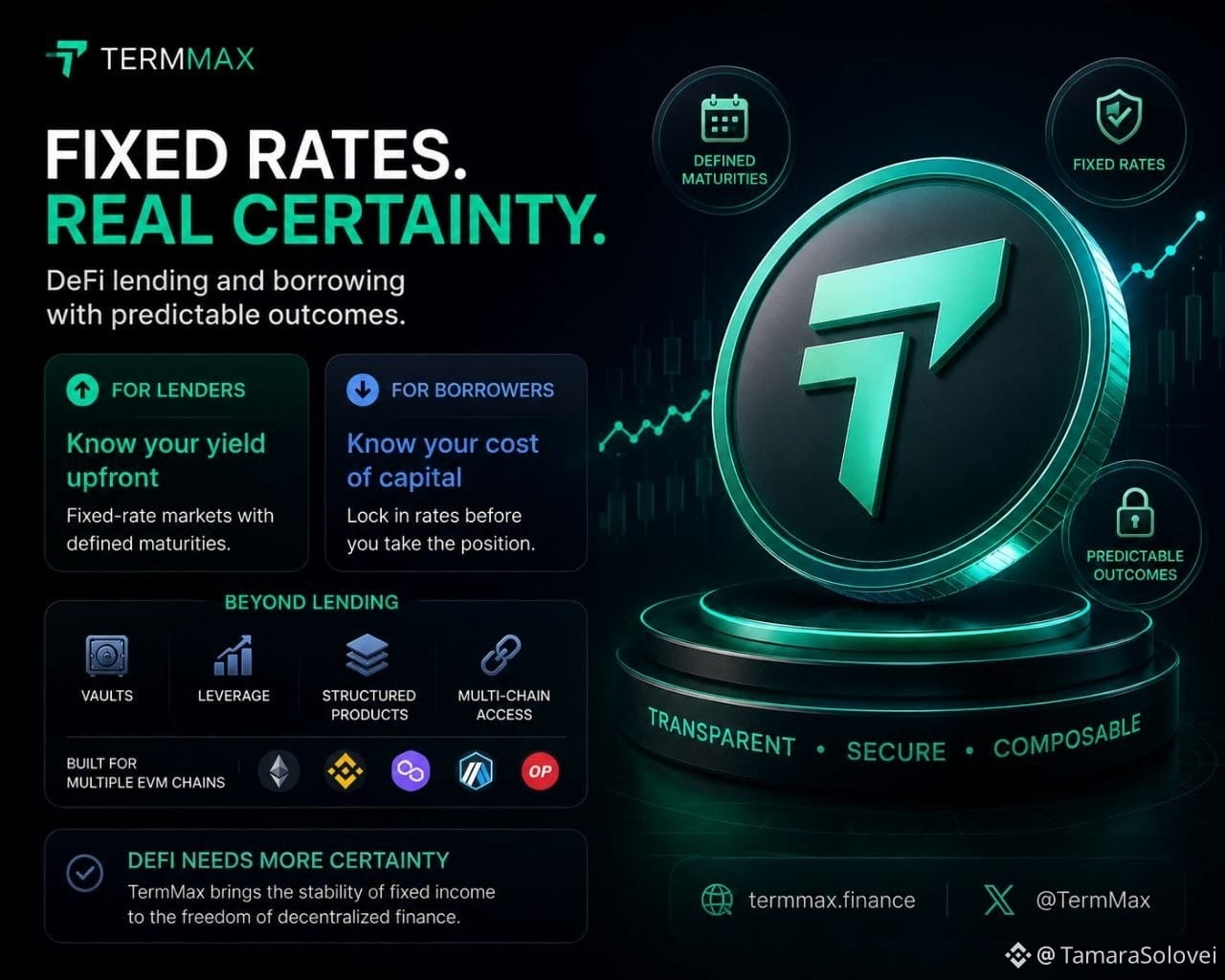
57
#dusk $DUSK @Dusk_Foundation
Una cosa que me resulta interesante de Dusk es que no intenta forzar todas las aplicaciones financieras en el mismo modelo de ejecución.
La red ofrece DuskVM para aplicaciones nativas en Rust/WASM y DuskEVM para desarrolladores que quieren un entorno compatible con Ethereum.
Eso crea un equilibrio interesante.
Los desarrolladores pueden usar herramientas EVM familiares y lenguajes de contratos inteligentes, mientras que las aplicaciones que necesiten un acceso más profundo a las capacidades nativas de Dusk pueden construirse directamente sobre DuskVM.
Debajo de ambos entornos está DuskDS, que proporciona la capa de liquidación y de disponibilidad de datos.
Esta arquitectura tiene sentido para una red enfocada en aplicaciones financieras. Los distintos productos pueden tener requisitos técnicos diferentes sin que necesariamente necesiten cadenas completamente separadas.
Y el token nativo $DUSK conecta el ecosistema a través de las comisiones de transacción y el staking de la red.
Para mí, la pregunta interesante no es si Dusk puede atraer desarrolladores; es si esta arquitectura puede convertirse en una actividad financiera real on-chain.
Si lo hace, $DUSK se convierte en algo más que un token vinculado a una narrativa de RWA. Se convierte en parte de la infraestructura que impulsa las aplicaciones construidas sobre Dusk.
#dusk $DUSK @Dusk
Una cosa que me resulta interesante de Dusk es que no intenta forzar todas las aplicaciones financieras en el mismo modelo de ejecución.
La red ofrece DuskVM para aplicaciones nativas en Rust/WASM y DuskEVM para desarrolladores que quieren un entorno compatible con Ethereum.
Eso crea un equilibrio interesante.
Los desarrolladores pueden usar herramientas EVM familiares y lenguajes de contratos inteligentes, mientras que las aplicaciones que necesiten un acceso más profundo a las capacidades nativas de Dusk pueden construirse directamente sobre DuskVM.
Debajo de ambos entornos está DuskDS, que proporciona la capa de liquidación y de disponibilidad de datos.
Esta arquitectura tiene sentido para una red enfocada en aplicaciones financieras. Los distintos productos pueden tener requisitos técnicos diferentes sin que necesariamente necesiten cadenas completamente separadas.
Y el token nativo $DUSK conecta el ecosistema a través de las comisiones de transacción y el staking de la red.
Para mí, la pregunta interesante no es si Dusk puede atraer desarrolladores; es si esta arquitectura puede convertirse en una actividad financiera real on-chain.
Si lo hace, $DUSK se convierte en algo más que un token vinculado a una narrativa de RWA. Se convierte en parte de la infraestructura que impulsa las aplicaciones construidas sobre Dusk.
Una cosa que me resulta interesante de Dusk es que no intenta forzar todas las aplicaciones financieras en el mismo modelo de ejecución.
La red ofrece DuskVM para aplicaciones nativas en Rust/WASM y DuskEVM para desarrolladores que quieren un entorno compatible con Ethereum.
Eso crea un equilibrio interesante.
Los desarrolladores pueden usar herramientas EVM familiares y lenguajes de contratos inteligentes, mientras que las aplicaciones que necesiten un acceso más profundo a las capacidades nativas de Dusk pueden construirse directamente sobre DuskVM.
Debajo de ambos entornos está DuskDS, que proporciona la capa de liquidación y de disponibilidad de datos.
Esta arquitectura tiene sentido para una red enfocada en aplicaciones financieras. Los distintos productos pueden tener requisitos técnicos diferentes sin que necesariamente necesiten cadenas completamente separadas.
Y el token nativo $DUSK conecta el ecosistema a través de las comisiones de transacción y el staking de la red.
Para mí, la pregunta interesante no es si Dusk puede atraer desarrolladores; es si esta arquitectura puede convertirse en una actividad financiera real on-chain.
Si lo hace, $DUSK se convierte en algo más que un token vinculado a una narrativa de RWA. Se convierte en parte de la infraestructura que impulsa las aplicaciones construidas sobre Dusk.
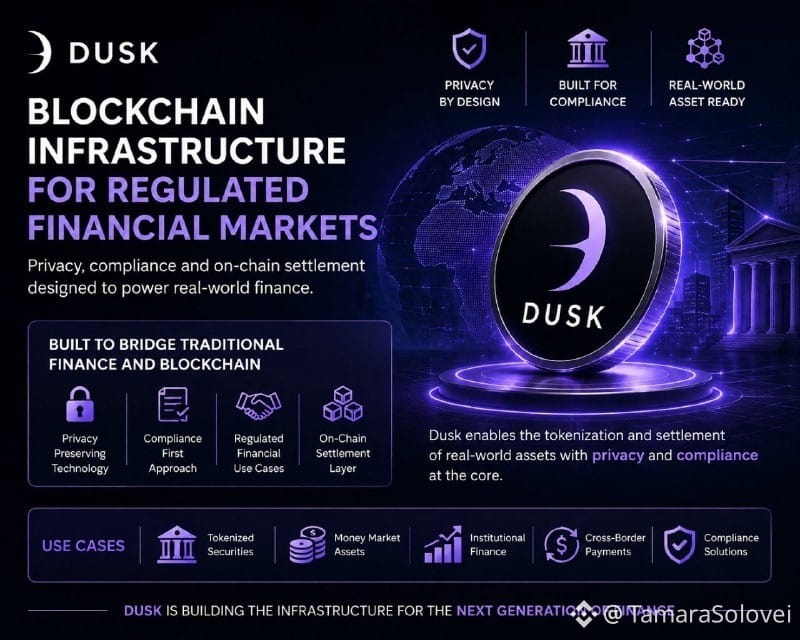
79
#dusk $DUSK @Dusk_Foundation
El crepúsculo (Dusk) está adoptando un enfoque interesante para uno de los mayores problemas de las finanzas en cadena: hacer que distintas partes del mercado funcionen juntas.
Un valor tokenizado necesita más que una dirección de blockchain. Necesita reglas sobre quién puede tenerlo, cómo puede transferirse, qué información puede divulgarse y cómo se finaliza la liquidación.
Dusk está incorporando estos requisitos en su red, en lugar de tratarlos como infraestructuras separadas.
Lo que me llama la atención es la combinación de:
🔹 Acceso con permisos cuando se requiere
🔹 Transacciones que preservan la privacidad
🔹 Divulgación selectiva
🔹 Liquidación determinista
🔹 Compatibilidad con EVM para desarrolladores
Esa combinación podría hacer que Dusk sea útil para aplicaciones financieras donde las transacciones completamente públicas no son prácticas, pero tampoco lo son los sistemas completamente privados.
La parte interesante de la tesis de Dusk no es poner las finanzas en una blockchain. Es hacer que la infraestructura de blockchain se ajuste a la forma en que realmente funciona la banca regulada.
Si los activos del mundo real (RWAs) continúan avanzando hacia la adopción institucional, ese nicho es uno que vale la pena seguir.
#dusk $DUSK @Dusk
El crepúsculo (Dusk) está adoptando un enfoque interesante para uno de los mayores problemas de las finanzas en cadena: hacer que distintas partes del mercado funcionen juntas.
Un valor tokenizado necesita más que una dirección de blockchain. Necesita reglas sobre quién puede tenerlo, cómo puede transferirse, qué información puede divulgarse y cómo se finaliza la liquidación.
Dusk está incorporando estos requisitos en su red, en lugar de tratarlos como infraestructuras separadas.
Lo que me llama la atención es la combinación de:
🔹 Acceso con permisos cuando se requiere
🔹 Transacciones que preservan la privacidad
🔹 Divulgación selectiva
🔹 Liquidación determinista
🔹 Compatibilidad con EVM para desarrolladores
Esa combinación podría hacer que Dusk sea útil para aplicaciones financieras donde las transacciones completamente públicas no son prácticas, pero tampoco lo son los sistemas completamente privados.
La parte interesante de la tesis de Dusk no es poner las finanzas en una blockchain. Es hacer que la infraestructura de blockchain se ajuste a la forma en que realmente funciona la banca regulada.
Si los activos del mundo real (RWAs) continúan avanzando hacia la adopción institucional, ese nicho es uno que vale la pena seguir.
El crepúsculo (Dusk) está adoptando un enfoque interesante para uno de los mayores problemas de las finanzas en cadena: hacer que distintas partes del mercado funcionen juntas.
Un valor tokenizado necesita más que una dirección de blockchain. Necesita reglas sobre quién puede tenerlo, cómo puede transferirse, qué información puede divulgarse y cómo se finaliza la liquidación.
Dusk está incorporando estos requisitos en su red, en lugar de tratarlos como infraestructuras separadas.
Lo que me llama la atención es la combinación de:
🔹 Acceso con permisos cuando se requiere
🔹 Transacciones que preservan la privacidad
🔹 Divulgación selectiva
🔹 Liquidación determinista
🔹 Compatibilidad con EVM para desarrolladores
Esa combinación podría hacer que Dusk sea útil para aplicaciones financieras donde las transacciones completamente públicas no son prácticas, pero tampoco lo son los sistemas completamente privados.
La parte interesante de la tesis de Dusk no es poner las finanzas en una blockchain. Es hacer que la infraestructura de blockchain se ajuste a la forma en que realmente funciona la banca regulada.
Si los activos del mundo real (RWAs) continúan avanzando hacia la adopción institucional, ese nicho es uno que vale la pena seguir.
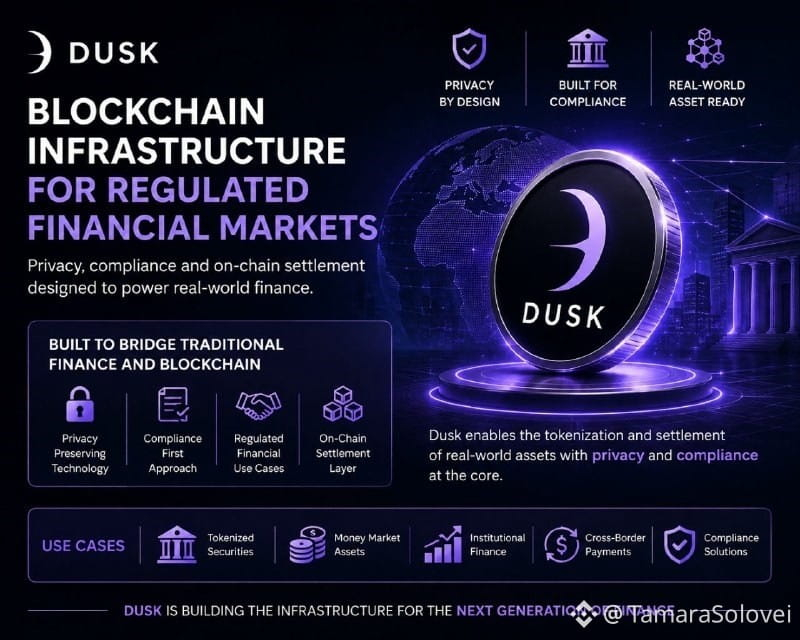
62
#termmax @termmax
La previsibilidad puede ser tan valiosa como el rendimiento en DeFi.
Cuando los tipos de interés de los préstamos cambian constantemente, gestionar una posición se convierte en un objetivo en movimiento. Una estrategia que hoy parece atractiva puede volverse costosa mañana simplemente porque las condiciones del mercado cambiaron.
TermMax lo aborda con mercados de tipo fijo y vencimientos definidos.
Eso le da a los usuarios algo que a menudo falta en DeFi: un marco más claro para planificar el capital.
Los prestatarios pueden conocer su coste de financiación con antelación, mientras que los prestamistas pueden evaluar un rendimiento esperado durante un periodo específico en lugar de depender completamente de un tipo variable.
Esto también abre posibilidades interesantes para estrategias más sofisticadas:
🔹 Cobertura del riesgo de tipo de interés
🔹 Planificación de un apalancamiento con más precisión
🔹 Construcción de estrategias de renta fija
🔹 Combinar préstamos con productos estructurados
🔹 Crear estrategias de bóveda más predecibles
Creo que es un paso importante si DeFi quiere ir más allá de la especulación a corto plazo y convertirse en un ecosistema financiero más completo.
Poder conocer tu tipo y tu vencimiento de antemano puede parecer algo sencillo — pero en un mercado volátil, la previsibilidad en sí misma tiene valor.
Eso es lo que hace que la aproximación de TermMax merezca la pena seguirla de cerca.
#termmax @TermMax
La previsibilidad puede ser tan valiosa como el rendimiento en DeFi.
Cuando los tipos de interés de los préstamos cambian constantemente, gestionar una posición se convierte en un objetivo en movimiento. Una estrategia que hoy parece atractiva puede volverse costosa mañana simplemente porque las condiciones del mercado cambiaron.
TermMax lo aborda con mercados de tipo fijo y vencimientos definidos.
Eso le da a los usuarios algo que a menudo falta en DeFi: un marco más claro para planificar el capital.
Los prestatarios pueden conocer su coste de financiación con antelación, mientras que los prestamistas pueden evaluar un rendimiento esperado durante un periodo específico en lugar de depender completamente de un tipo variable.
Esto también abre posibilidades interesantes para estrategias más sofisticadas:
🔹 Cobertura del riesgo de tipo de interés
🔹 Planificación de un apalancamiento con más precisión
🔹 Construcción de estrategias de renta fija
🔹 Combinar préstamos con productos estructurados
🔹 Crear estrategias de bóveda más predecibles
Creo que es un paso importante si DeFi quiere ir más allá de la especulación a corto plazo y convertirse en un ecosistema financiero más completo.
Poder conocer tu tipo y tu vencimiento de antemano puede parecer algo sencillo — pero en un mercado volátil, la previsibilidad en sí misma tiene valor.
Eso es lo que hace que la aproximación de TermMax merezca la pena seguirla de cerca.
La previsibilidad puede ser tan valiosa como el rendimiento en DeFi.
Cuando los tipos de interés de los préstamos cambian constantemente, gestionar una posición se convierte en un objetivo en movimiento. Una estrategia que hoy parece atractiva puede volverse costosa mañana simplemente porque las condiciones del mercado cambiaron.
TermMax lo aborda con mercados de tipo fijo y vencimientos definidos.
Eso le da a los usuarios algo que a menudo falta en DeFi: un marco más claro para planificar el capital.
Los prestatarios pueden conocer su coste de financiación con antelación, mientras que los prestamistas pueden evaluar un rendimiento esperado durante un periodo específico en lugar de depender completamente de un tipo variable.
Esto también abre posibilidades interesantes para estrategias más sofisticadas:
🔹 Cobertura del riesgo de tipo de interés
🔹 Planificación de un apalancamiento con más precisión
🔹 Construcción de estrategias de renta fija
🔹 Combinar préstamos con productos estructurados
🔹 Crear estrategias de bóveda más predecibles
Creo que es un paso importante si DeFi quiere ir más allá de la especulación a corto plazo y convertirse en un ecosistema financiero más completo.
Poder conocer tu tipo y tu vencimiento de antemano puede parecer algo sencillo — pero en un mercado volátil, la previsibilidad en sí misma tiene valor.
Eso es lo que hace que la aproximación de TermMax merezca la pena seguirla de cerca.
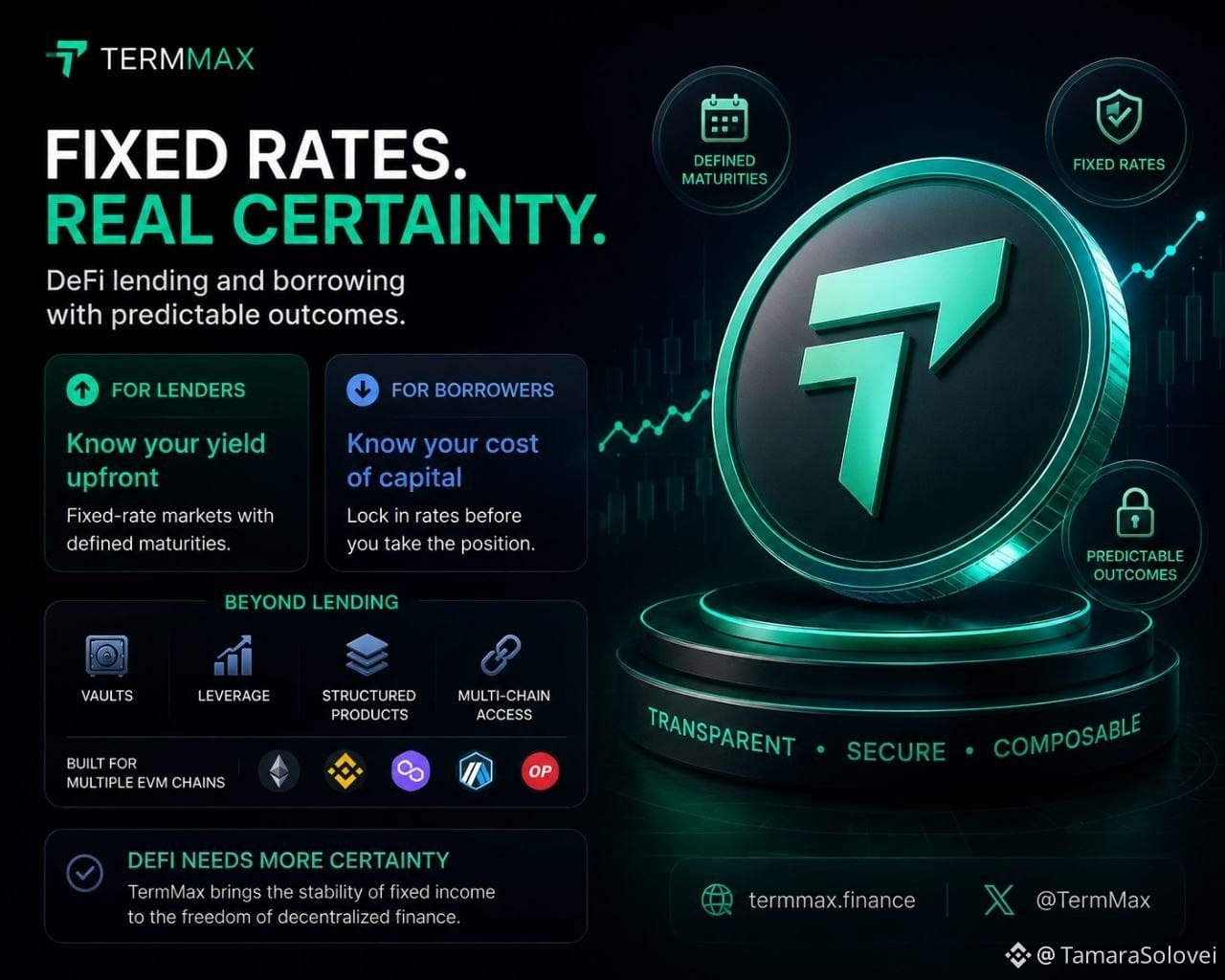
77
Ver traducción
#termmax @termmax
What makes TermMax interesting isn't only fixed-rate lending. It's the idea of turning predictable debt into a building block for DeFi.
Fixed-rate markets can give users something that is often missing from on-chain finance: a clear timeline for a position.
Instead of constantly reacting to changing borrowing costs, users can structure positions around a known rate and maturity.
This creates interesting possibilities for more advanced strategies:
🔹 Fixed-rate borrowing
🔹 Predictable lending returns
🔹 Leveraged strategies
🔹 Vault-based products
🔹 Structured positions
The goal isn't simply to copy traditional fixed-income products on-chain. It's to make these financial primitives composable with the rest of DeFi.
That's where I think $TMX becomes interesting as part of the bigger TermMax ecosystem.
If DeFi wants to attract more sophisticated capital, predictable rates and defined maturities could become just as important as liquidity.
The next evolution of DeFi might not be about more leverage. It might be about better control over risk.
#termmax @TermMax
What makes TermMax interesting isn't only fixed-rate lending. It's the idea of turning predictable debt into a building block for DeFi.
Fixed-rate markets can give users something that is often missing from on-chain finance: a clear timeline for a position.
Instead of constantly reacting to changing borrowing costs, users can structure positions around a known rate and maturity.
This creates interesting possibilities for more advanced strategies:
🔹 Fixed-rate borrowing
🔹 Predictable lending returns
🔹 Leveraged strategies
🔹 Vault-based products
🔹 Structured positions
The goal isn't simply to copy traditional fixed-income products on-chain. It's to make these financial primitives composable with the rest of DeFi.
That's where I think $TMX becomes interesting as part of the bigger TermMax ecosystem.
If DeFi wants to attract more sophisticated capital, predictable rates and defined maturities could become just as important as liquidity.
The next evolution of DeFi might not be about more leverage. It might be about better control over risk.
What makes TermMax interesting isn't only fixed-rate lending. It's the idea of turning predictable debt into a building block for DeFi.
Fixed-rate markets can give users something that is often missing from on-chain finance: a clear timeline for a position.
Instead of constantly reacting to changing borrowing costs, users can structure positions around a known rate and maturity.
This creates interesting possibilities for more advanced strategies:
🔹 Fixed-rate borrowing
🔹 Predictable lending returns
🔹 Leveraged strategies
🔹 Vault-based products
🔹 Structured positions
The goal isn't simply to copy traditional fixed-income products on-chain. It's to make these financial primitives composable with the rest of DeFi.
That's where I think $TMX becomes interesting as part of the bigger TermMax ecosystem.
If DeFi wants to attract more sophisticated capital, predictable rates and defined maturities could become just as important as liquidity.
The next evolution of DeFi might not be about more leverage. It might be about better control over risk.
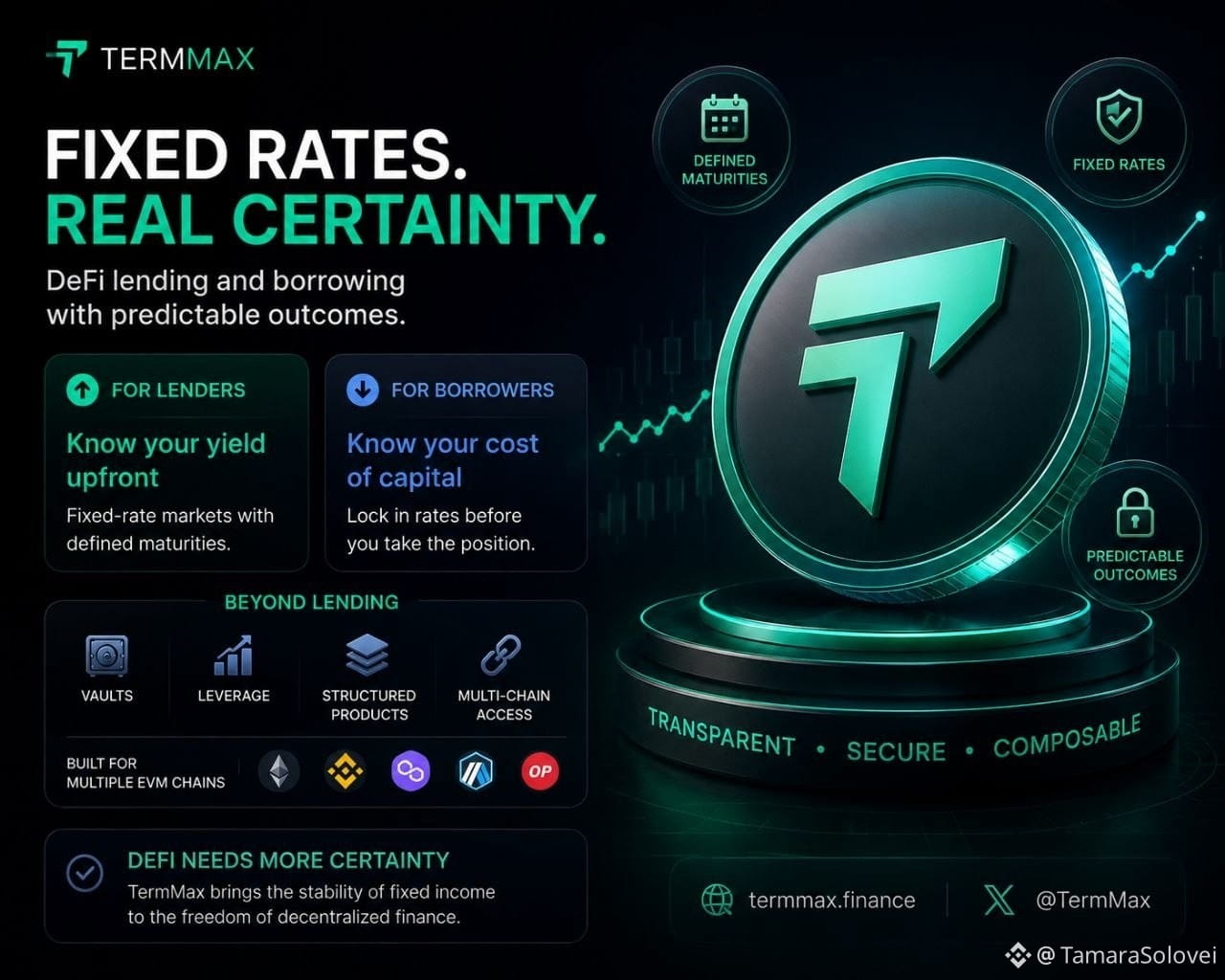
56
Ver traducción
#dusk $DUSK @Dusk_Foundation
Why does regulated finance need its own blockchain infrastructure instead of simply using a public chain?
That question is becoming increasingly important as tokenized securities and real-world assets move on-chain.
@Dusk_Foundation is built around the idea that financial markets have different requirements from ordinary crypto applications. Issuers, investors, custodians and regulators all need to interact with the same infrastructure while sensitive financial information remains protected.
One of the most interesting concepts is selective disclosure.
Instead of choosing between complete transparency or complete privacy, Dusk is designed to let authorized parties verify the information they need without exposing every transaction or portfolio detail publicly. Combined with deterministic settlement and access controls, this creates infrastructure tailored for regulated digital assets.
I think that distinction is what makes Dusk worth watching. The future of RWAs may depend less on creating tokens and more on creating networks capable of handling the real-world rules behind them.
#dusk $DUSK @Dusk
Why does regulated finance need its own blockchain infrastructure instead of simply using a public chain?
That question is becoming increasingly important as tokenized securities and real-world assets move on-chain.
@Dusk is built around the idea that financial markets have different requirements from ordinary crypto applications. Issuers, investors, custodians and regulators all need to interact with the same infrastructure while sensitive financial information remains protected.
One of the most interesting concepts is selective disclosure.
Instead of choosing between complete transparency or complete privacy, Dusk is designed to let authorized parties verify the information they need without exposing every transaction or portfolio detail publicly. Combined with deterministic settlement and access controls, this creates infrastructure tailored for regulated digital assets.
I think that distinction is what makes Dusk worth watching. The future of RWAs may depend less on creating tokens and more on creating networks capable of handling the real-world rules behind them.
Why does regulated finance need its own blockchain infrastructure instead of simply using a public chain?
That question is becoming increasingly important as tokenized securities and real-world assets move on-chain.
@Dusk is built around the idea that financial markets have different requirements from ordinary crypto applications. Issuers, investors, custodians and regulators all need to interact with the same infrastructure while sensitive financial information remains protected.
One of the most interesting concepts is selective disclosure.
Instead of choosing between complete transparency or complete privacy, Dusk is designed to let authorized parties verify the information they need without exposing every transaction or portfolio detail publicly. Combined with deterministic settlement and access controls, this creates infrastructure tailored for regulated digital assets.
I think that distinction is what makes Dusk worth watching. The future of RWAs may depend less on creating tokens and more on creating networks capable of handling the real-world rules behind them.
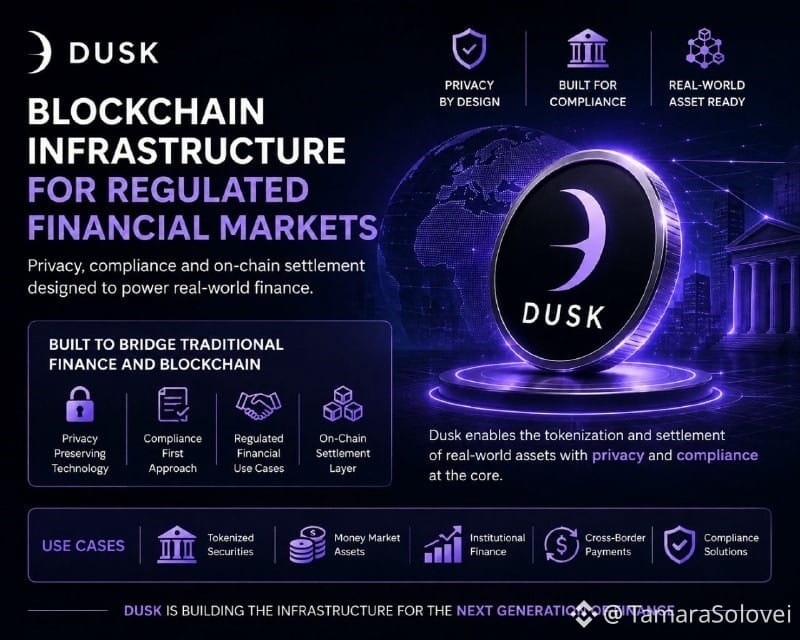
78
Ver traducción
#termmax @termmax
DeFi is great at giving users flexibility, but flexibility often comes with uncertainty.
Interest rates can change quickly, making it difficult to plan the cost of borrowing or the return on lending.
@termmax approaches this problem with fixed-rate markets and defined maturities.
Instead of constantly watching the lending rate, users can know the key parameters of a position in advance.
For lenders, that can mean clearer expectations around yield. For borrowers, it can make the cost of capital easier to plan.
I think this is an important direction for DeFi because predictable financial products could make on-chain markets more useful beyond short-term speculation.
More certainty doesn't have to mean less flexibility. It can simply mean better tools for managing risk.
#termmax @TermMax
DeFi is great at giving users flexibility, but flexibility often comes with uncertainty.
Interest rates can change quickly, making it difficult to plan the cost of borrowing or the return on lending.
@TermMax approaches this problem with fixed-rate markets and defined maturities.
Instead of constantly watching the lending rate, users can know the key parameters of a position in advance.
For lenders, that can mean clearer expectations around yield. For borrowers, it can make the cost of capital easier to plan.
I think this is an important direction for DeFi because predictable financial products could make on-chain markets more useful beyond short-term speculation.
More certainty doesn't have to mean less flexibility. It can simply mean better tools for managing risk.
DeFi is great at giving users flexibility, but flexibility often comes with uncertainty.
Interest rates can change quickly, making it difficult to plan the cost of borrowing or the return on lending.
@TermMax approaches this problem with fixed-rate markets and defined maturities.
Instead of constantly watching the lending rate, users can know the key parameters of a position in advance.
For lenders, that can mean clearer expectations around yield. For borrowers, it can make the cost of capital easier to plan.
I think this is an important direction for DeFi because predictable financial products could make on-chain markets more useful beyond short-term speculation.
More certainty doesn't have to mean less flexibility. It can simply mean better tools for managing risk.
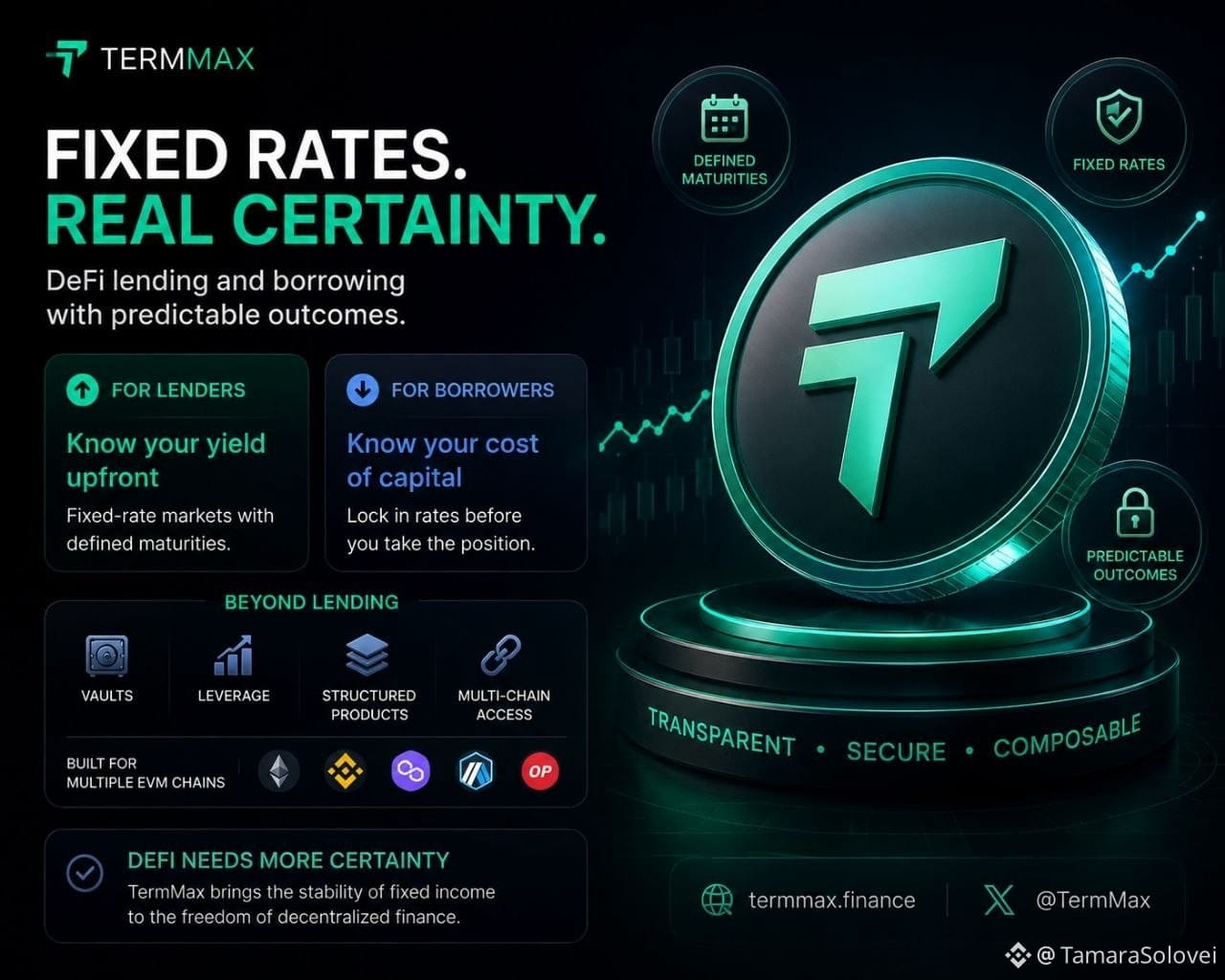
40
Ver traducción
#dusk $DUSK @Dusk_Foundation
A financial asset doesn't end its journey when the trade is completed.
That’s why I think the infrastructure behind tokenized assets is more important than the token itself.
In traditional markets, an asset can go through issuance, trading, settlement, dividends, reporting, transfers and other corporate actions. Each stage can involve different systems and intermediaries.
@Dusk_Foundation is approaching this as a complete on-chain workflow.
Its infrastructure is designed to handle things like eligibility checks, transfer restrictions, privacy, settlement, reporting and corporate actions as part of the asset lifecycle.
There is also an interesting distinction between public transparency and private financial information.
Dusk supports transparent transactions through Moonlight, while Phoenix enables shielded transfers using zero-knowledge proofs. Information can also be selectively disclosed when an authorized party needs it.
This is important because regulated finance doesn't necessarily need everything to be public.
It needs the right information to be visible to the right participants at the right time.
And that's a very different design philosophy from simply putting an existing financial asset on a public blockchain.
If tokenized securities become a major part of the next phase of Web3, I think infrastructure like this will be just as important as the assets themselves.
Dusk isn't only trying to put finance on-chain. It's trying to make the entire financial workflow work there.
#dusk $DUSK @Dusk
A financial asset doesn't end its journey when the trade is completed.
That’s why I think the infrastructure behind tokenized assets is more important than the token itself.
In traditional markets, an asset can go through issuance, trading, settlement, dividends, reporting, transfers and other corporate actions. Each stage can involve different systems and intermediaries.
@Dusk is approaching this as a complete on-chain workflow.
Its infrastructure is designed to handle things like eligibility checks, transfer restrictions, privacy, settlement, reporting and corporate actions as part of the asset lifecycle.
There is also an interesting distinction between public transparency and private financial information.
Dusk supports transparent transactions through Moonlight, while Phoenix enables shielded transfers using zero-knowledge proofs. Information can also be selectively disclosed when an authorized party needs it.
This is important because regulated finance doesn't necessarily need everything to be public.
It needs the right information to be visible to the right participants at the right time.
And that's a very different design philosophy from simply putting an existing financial asset on a public blockchain.
If tokenized securities become a major part of the next phase of Web3, I think infrastructure like this will be just as important as the assets themselves.
Dusk isn't only trying to put finance on-chain. It's trying to make the entire financial workflow work there.
A financial asset doesn't end its journey when the trade is completed.
That’s why I think the infrastructure behind tokenized assets is more important than the token itself.
In traditional markets, an asset can go through issuance, trading, settlement, dividends, reporting, transfers and other corporate actions. Each stage can involve different systems and intermediaries.
@Dusk is approaching this as a complete on-chain workflow.
Its infrastructure is designed to handle things like eligibility checks, transfer restrictions, privacy, settlement, reporting and corporate actions as part of the asset lifecycle.
There is also an interesting distinction between public transparency and private financial information.
Dusk supports transparent transactions through Moonlight, while Phoenix enables shielded transfers using zero-knowledge proofs. Information can also be selectively disclosed when an authorized party needs it.
This is important because regulated finance doesn't necessarily need everything to be public.
It needs the right information to be visible to the right participants at the right time.
And that's a very different design philosophy from simply putting an existing financial asset on a public blockchain.
If tokenized securities become a major part of the next phase of Web3, I think infrastructure like this will be just as important as the assets themselves.
Dusk isn't only trying to put finance on-chain. It's trying to make the entire financial workflow work there.
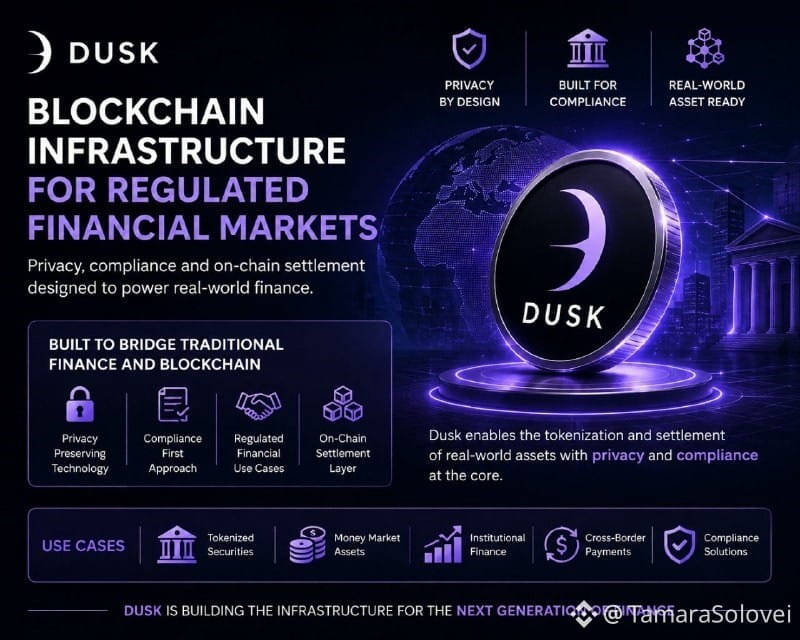
60
#bstockscis @BinanceCIS
Lo que hace que las acciones tokenizadas sean interesantes no es solo la posibilidad de comprarlas on-chain. Es lo que ocurre después de que las tienes.
Las acciones acercan la exposición tradicional de renta variable a un entorno blockchain, abriendo la puerta a funciones que no existen de la misma manera con las cuentas de corretaje convencionales.
Con bStocks operando como tokens BEP-20 en BNB Smart Chain, el activo puede formar parte de un ecosistema on-chain más amplio en lugar de permanecer encerrado dentro de una plataforma financiera tradicional.
Eso crea algunas posibilidades interesantes:
🔹
Transferencias on-chain
🔹
Acceso 24/7
🔹
Liquidación basada en blockchain
🔹
Posible integración con infraestructura Web3
🔹
La capacidad de mantener renta variable tokenizada en una billetera compatible
Pero la parte más importante para mí es el puente entre dos mundos financieros.
Las acciones tradicionales brindan exposición a empresas establecidas y negocios reales. La infraestructura blockchain aporta programabilidad, portabilidad y liquidación continua.
Juntas esas dos cosas, las acciones tokenizadas empiezan a parecerse menos a un simple producto cripto y más a un nuevo “primitivo” financiero.
El mercado RWA aún se está desarrollando, pero esta es exactamente la clase de infraestructura que creo que vale la pena seguir.
¿Qué activo tradicional te gustaría ver integrado completamente con las finanzas on-chain?
#bstockscis @BinanceCIS
Lo que hace que las acciones tokenizadas sean interesantes no es solo la posibilidad de comprarlas on-chain. Es lo que ocurre después de que las tienes.
Las acciones acercan la exposición tradicional de renta variable a un entorno blockchain, abriendo la puerta a funciones que no existen de la misma manera con las cuentas de corretaje convencionales.
Con bStocks operando como tokens BEP-20 en BNB Smart Chain, el activo puede formar parte de un ecosistema on-chain más amplio en lugar de permanecer encerrado dentro de una plataforma financiera tradicional.
Eso crea algunas posibilidades interesantes:
🔹
Transferencias on-chain
🔹
Acceso 24/7
🔹
Liquidación basada en blockchain
🔹
Posible integración con infraestructura Web3
🔹
La capacidad de mantener renta variable tokenizada en una billetera compatible
Pero la parte más importante para mí es el puente entre dos mundos financieros.
Las acciones tradicionales brindan exposición a empresas establecidas y negocios reales. La infraestructura blockchain aporta programabilidad, portabilidad y liquidación continua.
Juntas esas dos cosas, las acciones tokenizadas empiezan a parecerse menos a un simple producto cripto y más a un nuevo “primitivo” financiero.
El mercado RWA aún se está desarrollando, pero esta es exactamente la clase de infraestructura que creo que vale la pena seguir.
¿Qué activo tradicional te gustaría ver integrado completamente con las finanzas on-chain?
Lo que hace que las acciones tokenizadas sean interesantes no es solo la posibilidad de comprarlas on-chain. Es lo que ocurre después de que las tienes.
Las acciones acercan la exposición tradicional de renta variable a un entorno blockchain, abriendo la puerta a funciones que no existen de la misma manera con las cuentas de corretaje convencionales.
Con bStocks operando como tokens BEP-20 en BNB Smart Chain, el activo puede formar parte de un ecosistema on-chain más amplio en lugar de permanecer encerrado dentro de una plataforma financiera tradicional.
Eso crea algunas posibilidades interesantes:
🔹
Transferencias on-chain
🔹
Acceso 24/7
🔹
Liquidación basada en blockchain
🔹
Posible integración con infraestructura Web3
🔹
La capacidad de mantener renta variable tokenizada en una billetera compatible
Pero la parte más importante para mí es el puente entre dos mundos financieros.
Las acciones tradicionales brindan exposición a empresas establecidas y negocios reales. La infraestructura blockchain aporta programabilidad, portabilidad y liquidación continua.
Juntas esas dos cosas, las acciones tokenizadas empiezan a parecerse menos a un simple producto cripto y más a un nuevo “primitivo” financiero.
El mercado RWA aún se está desarrollando, pero esta es exactamente la clase de infraestructura que creo que vale la pena seguir.
¿Qué activo tradicional te gustaría ver integrado completamente con las finanzas on-chain?
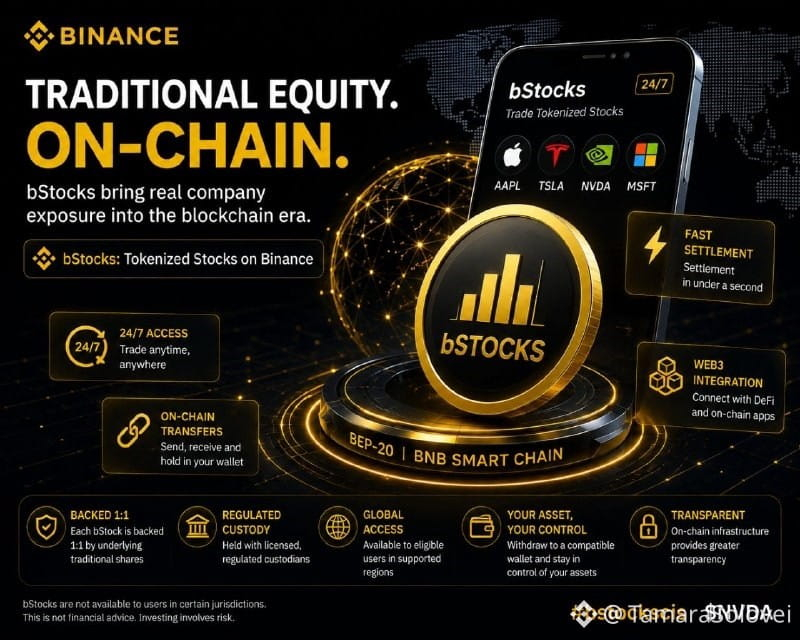
147
Ver traducción
#termmax @termmax
The maturity of the DeFi ecosystem is directly correlated with the introduction of primitive financial instruments capable of mitigating volatility risks. A significant gap in current credit markets is the lack of robust fixed-rate lending solutions. This is where @termmax introduces a crucial innovation.
By utilizing Zero-Coupon Bonds and Liquidity Pools, TermMax provides predictable yield curves for lenders and guaranteed capital costs for borrowers. This model dramatically reduces slippage and the uncertainty associated with variable interest rates. From my perspective, this approach is essential for attracting large-scale institutional liquidity, which requires accurate cash flow forecasting. Moving beyond variable-rate dependence is a critical step toward the long-term stabilization of capital markets on the blockchain.
#termmax @TermMax
The maturity of the DeFi ecosystem is directly correlated with the introduction of primitive financial instruments capable of mitigating volatility risks. A significant gap in current credit markets is the lack of robust fixed-rate lending solutions. This is where @TermMax introduces a crucial innovation.
By utilizing Zero-Coupon Bonds and Liquidity Pools, TermMax provides predictable yield curves for lenders and guaranteed capital costs for borrowers. This model dramatically reduces slippage and the uncertainty associated with variable interest rates. From my perspective, this approach is essential for attracting large-scale institutional liquidity, which requires accurate cash flow forecasting. Moving beyond variable-rate dependence is a critical step toward the long-term stabilization of capital markets on the blockchain.
The maturity of the DeFi ecosystem is directly correlated with the introduction of primitive financial instruments capable of mitigating volatility risks. A significant gap in current credit markets is the lack of robust fixed-rate lending solutions. This is where @TermMax introduces a crucial innovation.
By utilizing Zero-Coupon Bonds and Liquidity Pools, TermMax provides predictable yield curves for lenders and guaranteed capital costs for borrowers. This model dramatically reduces slippage and the uncertainty associated with variable interest rates. From my perspective, this approach is essential for attracting large-scale institutional liquidity, which requires accurate cash flow forecasting. Moving beyond variable-rate dependence is a critical step toward the long-term stabilization of capital markets on the blockchain.
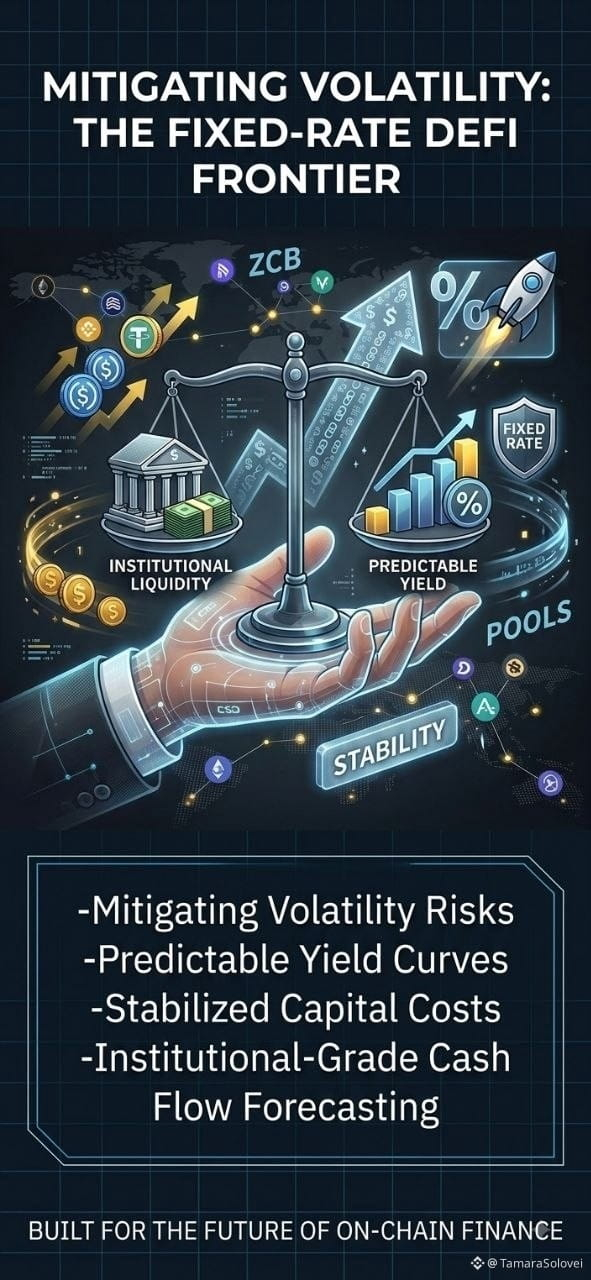
47
#dusk $DUSK @Dusk_Foundation
Tokenizar un activo es solo el primer paso. El verdadero desafío es construir el mercado a su alrededor.
Por eso me interesa lo que @Dusk_Foundation está construyendo.
Dusk Trade está diseñado como una capa de aplicación para activos financieros tokenizados, cubriendo más que simplemente comprar y vender. El flujo de trabajo puede incluir incorporación de inversores, comprobaciones de elegibilidad, conexión de billeteras, coordinación de pagos y liquidación.
Por debajo, Dusk proporciona la infraestructura para flujos de trabajo regulados: controles de acceso, privacidad, divulgación selectiva y liquidación determinista.
Ese enfoque tiene sentido para mí porque los mercados financieros reales no son solo contratos tokenizados. Involucran emisores, inversores, plataformas, custodios, cumplimiento y liquidación — todo lo cual necesita funcionar en conjunto.
Si los RWA van a escalar, la infraestructura tiene que respaldar el flujo de trabajo completo del mercado, no solo colocar otro activo en la cadena.
Esa es la dirección que estoy vigilando con Dusk.
#dusk $DUSK @Dusk
Tokenizar un activo es solo el primer paso. El verdadero desafío es construir el mercado a su alrededor.
Por eso me interesa lo que @Dusk está construyendo.
Dusk Trade está diseñado como una capa de aplicación para activos financieros tokenizados, cubriendo más que simplemente comprar y vender. El flujo de trabajo puede incluir incorporación de inversores, comprobaciones de elegibilidad, conexión de billeteras, coordinación de pagos y liquidación.
Por debajo, Dusk proporciona la infraestructura para flujos de trabajo regulados: controles de acceso, privacidad, divulgación selectiva y liquidación determinista.
Ese enfoque tiene sentido para mí porque los mercados financieros reales no son solo contratos tokenizados. Involucran emisores, inversores, plataformas, custodios, cumplimiento y liquidación — todo lo cual necesita funcionar en conjunto.
Si los RWA van a escalar, la infraestructura tiene que respaldar el flujo de trabajo completo del mercado, no solo colocar otro activo en la cadena.
Esa es la dirección que estoy vigilando con Dusk.
Tokenizar un activo es solo el primer paso. El verdadero desafío es construir el mercado a su alrededor.
Por eso me interesa lo que @Dusk está construyendo.
Dusk Trade está diseñado como una capa de aplicación para activos financieros tokenizados, cubriendo más que simplemente comprar y vender. El flujo de trabajo puede incluir incorporación de inversores, comprobaciones de elegibilidad, conexión de billeteras, coordinación de pagos y liquidación.
Por debajo, Dusk proporciona la infraestructura para flujos de trabajo regulados: controles de acceso, privacidad, divulgación selectiva y liquidación determinista.
Ese enfoque tiene sentido para mí porque los mercados financieros reales no son solo contratos tokenizados. Involucran emisores, inversores, plataformas, custodios, cumplimiento y liquidación — todo lo cual necesita funcionar en conjunto.
Si los RWA van a escalar, la infraestructura tiene que respaldar el flujo de trabajo completo del mercado, no solo colocar otro activo en la cadena.
Esa es la dirección que estoy vigilando con Dusk.
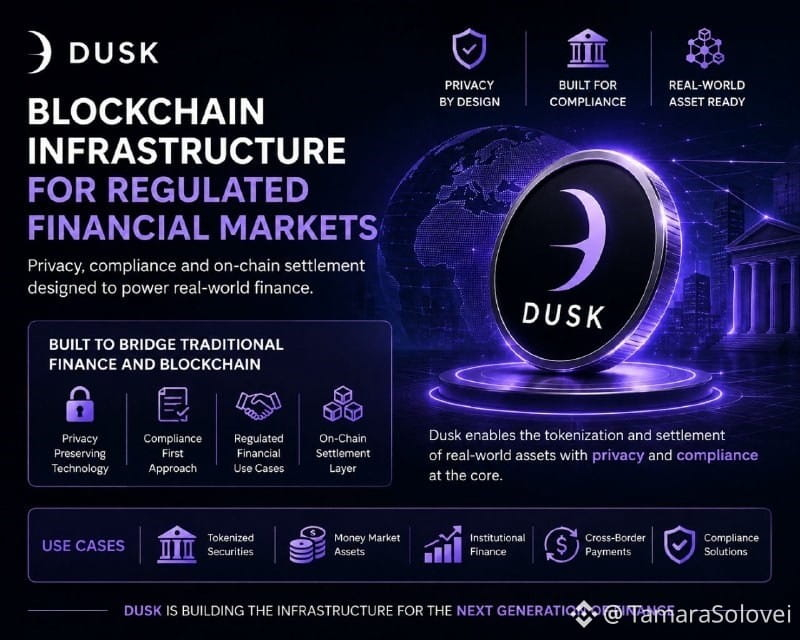
61
#bstockscis @BinanceCIS
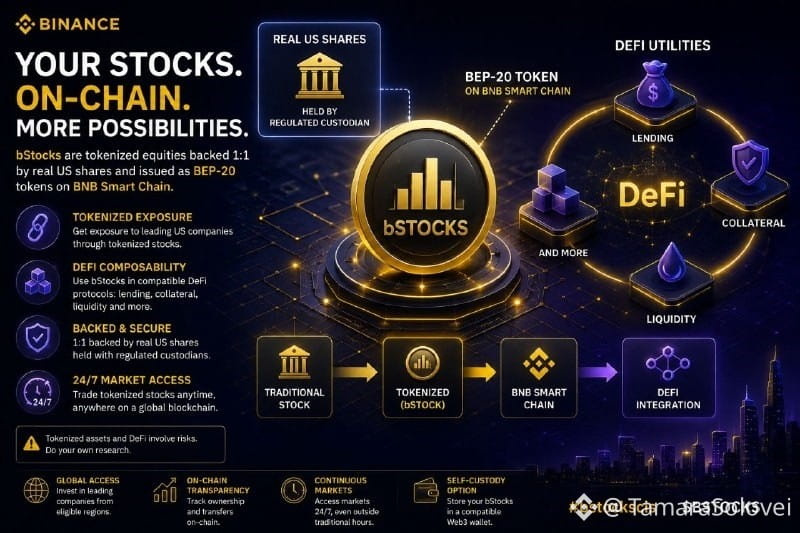
¿Qué pasaría si tu cartera de acciones pudiera convertirse en parte de tu estrategia financiera en cadena (on-chain)?
Aquí es donde las acciones tokenizadas empiezan a ponerse realmente interesantes.
Las acciones no son simplemente representaciones digitales de acciones tradicionales. Como existen como tokens BEP-20 en BNB Smart Chain, pueden potencialmente interactuar con la misma infraestructura blockchain que respalda otros activos digitales.
Eso abre un espacio de diseño completamente diferente.
Imagina tener exposición a una empresa y poder usar ese token dentro de aplicaciones DeFi compatibles en lugar de mantener el activo aislado dentro de una cuenta de corretaje tradicional.
La palabra importante aquí es la composabilidad.
Las participaciones tradicionales generalmente viven dentro de una infraestructura de corretaje. Los activos tokenizados pueden potencialmente convertirse en bloques de construcción para otras aplicaciones financieras: préstamos, colateral, liquidez y otras estrategias on-chain, dependiendo de los protocolos específicos y de los requisitos de elegibilidad.
El marco bStocks actual de Binance se construye sobre un respaldo 1:1 mediante acciones estadounidenses correspondientes mantenidas con un custodio regulado, mientras que el propio token opera en BNB Smart Chain.
Esto crea una combinación interesante:
Activo tradicional → representación tokenizada → infraestructura blockchain → posible utilidad DeFi.
Y por eso pienso que la historia de RWA es más grande que simplemente poner los mercados a disposición 24/7.
La innovación real podría ser hacer que activos financieros antes aislados sean composables con un stack financiero completamente nuevo.
Por supuesto, la integración con DeFi también introduce riesgos adicionales de contratos inteligentes, liquidez y mercado, así que “en cadena” no significa automáticamente “mejor”.
Pero la posibilidad en sí es fascinante.
¿De verdad usarías una acción tokenizada como colateral o dentro de DeFi, o la mantendrías únicamente como una inversión?
#bstockscis @BinanceCIS
¿Qué pasaría si tu cartera de acciones pudiera convertirse en parte de tu estrategia financiera en cadena (on-chain)?
Aquí es donde las acciones tokenizadas empiezan a ponerse realmente interesantes.
Las acciones no son simplemente representaciones digitales de acciones tradicionales. Como existen como tokens BEP-20 en BNB Smart Chain, pueden potencialmente interactuar con la misma infraestructura blockchain que respalda otros activos digitales.
Eso abre un espacio de diseño completamente diferente.
Imagina tener exposición a una empresa y poder usar ese token dentro de aplicaciones DeFi compatibles en lugar de mantener el activo aislado dentro de una cuenta de corretaje tradicional.
La palabra importante aquí es la composabilidad.
Las participaciones tradicionales generalmente viven dentro de una infraestructura de corretaje. Los activos tokenizados pueden potencialmente convertirse en bloques de construcción para otras aplicaciones financieras: préstamos, colateral, liquidez y otras estrategias on-chain, dependiendo de los protocolos específicos y de los requisitos de elegibilidad.
El marco bStocks actual de Binance se construye sobre un respaldo 1:1 mediante acciones estadounidenses correspondientes mantenidas con un custodio regulado, mientras que el propio token opera en BNB Smart Chain.
Esto crea una combinación interesante:
Activo tradicional → representación tokenizada → infraestructura blockchain → posible utilidad DeFi.
Y por eso pienso que la historia de RWA es más grande que simplemente poner los mercados a disposición 24/7.
La innovación real podría ser hacer que activos financieros antes aislados sean composables con un stack financiero completamente nuevo.
Por supuesto, la integración con DeFi también introduce riesgos adicionales de contratos inteligentes, liquidez y mercado, así que “en cadena” no significa automáticamente “mejor”.
Pero la posibilidad en sí es fascinante.
¿De verdad usarías una acción tokenizada como colateral o dentro de DeFi, o la mantendrías únicamente como una inversión?
¿Qué pasaría si tu cartera de acciones pudiera convertirse en parte de tu estrategia financiera en cadena (on-chain)?
Aquí es donde las acciones tokenizadas empiezan a ponerse realmente interesantes.
Las acciones no son simplemente representaciones digitales de acciones tradicionales. Como existen como tokens BEP-20 en BNB Smart Chain, pueden potencialmente interactuar con la misma infraestructura blockchain que respalda otros activos digitales.
Eso abre un espacio de diseño completamente diferente.
Imagina tener exposición a una empresa y poder usar ese token dentro de aplicaciones DeFi compatibles en lugar de mantener el activo aislado dentro de una cuenta de corretaje tradicional.
La palabra importante aquí es la composabilidad.
Las participaciones tradicionales generalmente viven dentro de una infraestructura de corretaje. Los activos tokenizados pueden potencialmente convertirse en bloques de construcción para otras aplicaciones financieras: préstamos, colateral, liquidez y otras estrategias on-chain, dependiendo de los protocolos específicos y de los requisitos de elegibilidad.
El marco bStocks actual de Binance se construye sobre un respaldo 1:1 mediante acciones estadounidenses correspondientes mantenidas con un custodio regulado, mientras que el propio token opera en BNB Smart Chain.
Esto crea una combinación interesante:
Activo tradicional → representación tokenizada → infraestructura blockchain → posible utilidad DeFi.
Y por eso pienso que la historia de RWA es más grande que simplemente poner los mercados a disposición 24/7.
La innovación real podría ser hacer que activos financieros antes aislados sean composables con un stack financiero completamente nuevo.
Por supuesto, la integración con DeFi también introduce riesgos adicionales de contratos inteligentes, liquidez y mercado, así que “en cadena” no significa automáticamente “mejor”.
Pero la posibilidad en sí es fascinante.
¿De verdad usarías una acción tokenizada como colateral o dentro de DeFi, o la mantendrías únicamente como una inversión?
69
#dusk $DUSK @Dusk_Foundation
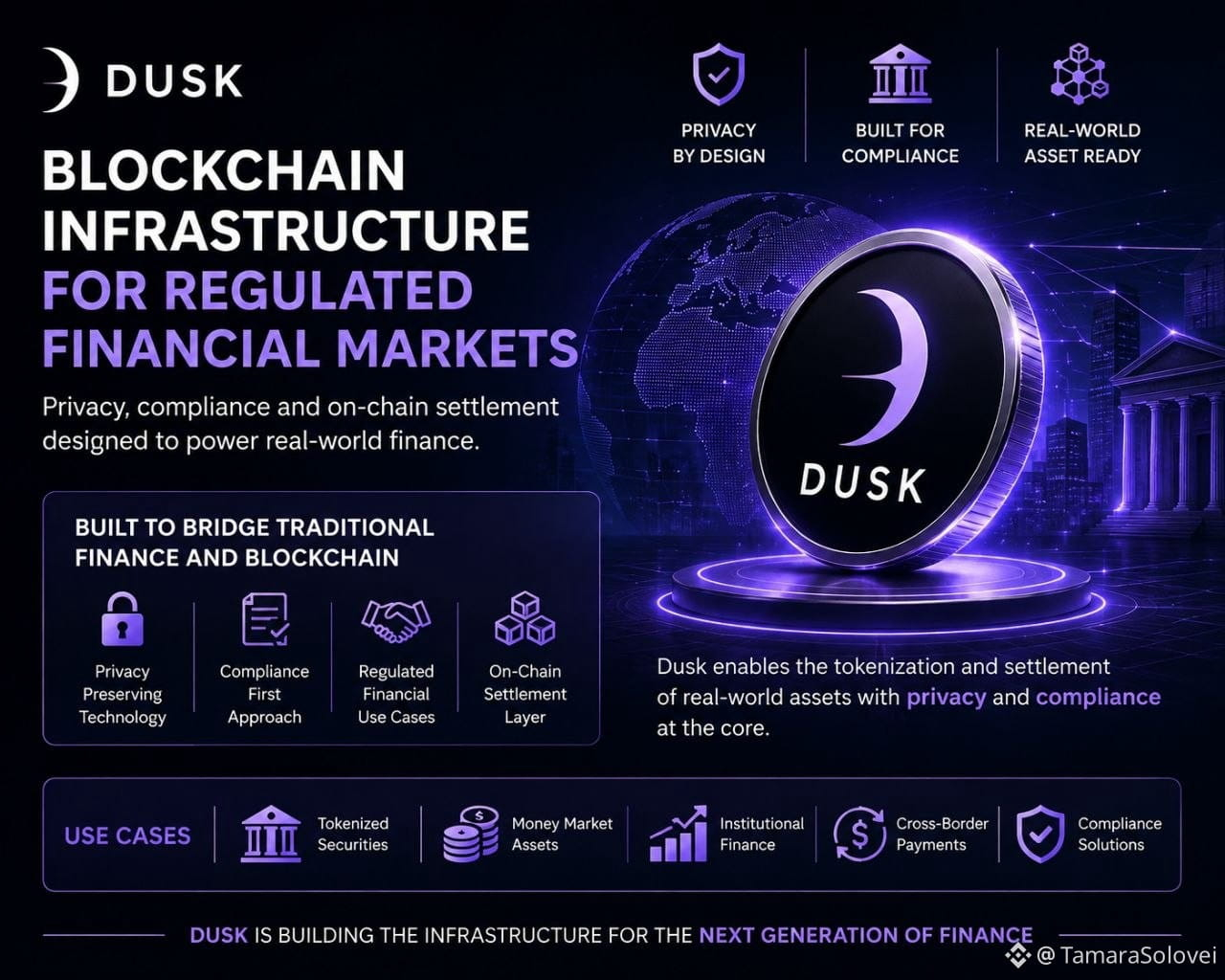
Las RWAs necesitan más que tokenización. Necesitan una infraestructura construida para mercados financieros reales.
Eso es lo que hace que @Dusk_Foundation sea interesante para mí.
Dusk está diseñado en torno a activos regulados, combinando privacidad, cumplimiento y liquidación en cadena. En lugar de hacer que cada transacción sea completamente pública, su arquitectura admite divulgación selectiva, permitiendo que la información relevante se verifique sin exponer todo a todo el mundo.
Esto podría ser especialmente útil para valores, bonos y otros activos regulados, donde la privacidad del inversor y los requisitos regulatorios deben coexistir.
Otra parte interesante es la compatibilidad de Dusk con EVM, que facilita que los desarrolladores familiarizados con las herramientas de Ethereum construyan aplicaciones en la red.
Si las RWAs van a convertirse en una parte importante de Web3, la infraestructura detrás de ellas necesita manejar mucho más que simples transferencias de tokens.
Ese es el nicho que Dusk está intentando construir.
#dusk $DUSK @Dusk
Las RWAs necesitan más que tokenización. Necesitan una infraestructura construida para mercados financieros reales.
Eso es lo que hace que @Dusk sea interesante para mí.
Dusk está diseñado en torno a activos regulados, combinando privacidad, cumplimiento y liquidación en cadena. En lugar de hacer que cada transacción sea completamente pública, su arquitectura admite divulgación selectiva, permitiendo que la información relevante se verifique sin exponer todo a todo el mundo.
Esto podría ser especialmente útil para valores, bonos y otros activos regulados, donde la privacidad del inversor y los requisitos regulatorios deben coexistir.
Otra parte interesante es la compatibilidad de Dusk con EVM, que facilita que los desarrolladores familiarizados con las herramientas de Ethereum construyan aplicaciones en la red.
Si las RWAs van a convertirse en una parte importante de Web3, la infraestructura detrás de ellas necesita manejar mucho más que simples transferencias de tokens.
Ese es el nicho que Dusk está intentando construir.
Las RWAs necesitan más que tokenización. Necesitan una infraestructura construida para mercados financieros reales.
Eso es lo que hace que @Dusk sea interesante para mí.
Dusk está diseñado en torno a activos regulados, combinando privacidad, cumplimiento y liquidación en cadena. En lugar de hacer que cada transacción sea completamente pública, su arquitectura admite divulgación selectiva, permitiendo que la información relevante se verifique sin exponer todo a todo el mundo.
Esto podría ser especialmente útil para valores, bonos y otros activos regulados, donde la privacidad del inversor y los requisitos regulatorios deben coexistir.
Otra parte interesante es la compatibilidad de Dusk con EVM, que facilita que los desarrolladores familiarizados con las herramientas de Ethereum construyan aplicaciones en la red.
Si las RWAs van a convertirse en una parte importante de Web3, la infraestructura detrás de ellas necesita manejar mucho más que simples transferencias de tokens.
Ese es el nicho que Dusk está intentando construir.
1
79
#bstockscis @BinanceCIS
¿Qué ocurre cuando una acción deja de estar bloqueada dentro de una cuenta de corretaje?
Esa es una de las ideas más interesantes detrás de bStocks.
Una acción tokenizada como $AAPL no es simplemente un ticker que se muestra en una bolsa. bStocks están respaldadas 1:1 por acciones estadounidenses correspondientes mantenidas con un custodio regulado, mientras que el token en sí existe como un activo BEP-20 en BNB Smart Chain.
Lo interesante es lo que esto permite.
En lugar de mantener tu exposición exclusivamente dentro de un entorno tradicional de corretaje, los usuarios elegibles pueden retirar el activo tokenizado a una billetera Web3 compatible.
Eso abre la puerta a algo que las acciones tradicionales no pueden ofrecer fácilmente:
🔗 Transferencias nativas de blockchain
🌐 Componibilidad en cadena
🔐 Autocustodia mediante una billetera compatible
🕐 Infraestructura de trading 24/7
Y aquí es donde la tokenización se convierte en algo más que solo cambiar el formato de un activo.
La exposición económica subyacente permanece conectada a la seguridad tradicional, mientras que la representación de esa exposición puede interactuar con la infraestructura blockchain.
Esa es la parte de las acciones tokenizadas que encuentro más interesante: llevar activos financieros del mundo real a un entorno donde la propiedad y las aplicaciones de blockchain por fin puedan empezar a interactuar.
¿Mantendrías una acción tokenizada en Binance o la moverías a tu propia billetera compatible?
#bstockscis @BinanceCIS
¿Qué ocurre cuando una acción deja de estar bloqueada dentro de una cuenta de corretaje?
Esa es una de las ideas más interesantes detrás de bStocks.
Una acción tokenizada como $AAPL no es simplemente un ticker que se muestra en una bolsa. bStocks están respaldadas 1:1 por acciones estadounidenses correspondientes mantenidas con un custodio regulado, mientras que el token en sí existe como un activo BEP-20 en BNB Smart Chain.
Lo interesante es lo que esto permite.
En lugar de mantener tu exposición exclusivamente dentro de un entorno tradicional de corretaje, los usuarios elegibles pueden retirar el activo tokenizado a una billetera Web3 compatible.
Eso abre la puerta a algo que las acciones tradicionales no pueden ofrecer fácilmente:
🔗 Transferencias nativas de blockchain
🌐 Componibilidad en cadena
🔐 Autocustodia mediante una billetera compatible
🕐 Infraestructura de trading 24/7
Y aquí es donde la tokenización se convierte en algo más que solo cambiar el formato de un activo.
La exposición económica subyacente permanece conectada a la seguridad tradicional, mientras que la representación de esa exposición puede interactuar con la infraestructura blockchain.
Esa es la parte de las acciones tokenizadas que encuentro más interesante: llevar activos financieros del mundo real a un entorno donde la propiedad y las aplicaciones de blockchain por fin puedan empezar a interactuar.
¿Mantendrías una acción tokenizada en Binance o la moverías a tu propia billetera compatible?
¿Qué ocurre cuando una acción deja de estar bloqueada dentro de una cuenta de corretaje?
Esa es una de las ideas más interesantes detrás de bStocks.
Una acción tokenizada como $AAPL no es simplemente un ticker que se muestra en una bolsa. bStocks están respaldadas 1:1 por acciones estadounidenses correspondientes mantenidas con un custodio regulado, mientras que el token en sí existe como un activo BEP-20 en BNB Smart Chain.
Lo interesante es lo que esto permite.
En lugar de mantener tu exposición exclusivamente dentro de un entorno tradicional de corretaje, los usuarios elegibles pueden retirar el activo tokenizado a una billetera Web3 compatible.
Eso abre la puerta a algo que las acciones tradicionales no pueden ofrecer fácilmente:
🔗 Transferencias nativas de blockchain
🌐 Componibilidad en cadena
🔐 Autocustodia mediante una billetera compatible
🕐 Infraestructura de trading 24/7
Y aquí es donde la tokenización se convierte en algo más que solo cambiar el formato de un activo.
La exposición económica subyacente permanece conectada a la seguridad tradicional, mientras que la representación de esa exposición puede interactuar con la infraestructura blockchain.
Esa es la parte de las acciones tokenizadas que encuentro más interesante: llevar activos financieros del mundo real a un entorno donde la propiedad y las aplicaciones de blockchain por fin puedan empezar a interactuar.
¿Mantendrías una acción tokenizada en Binance o la moverías a tu propia billetera compatible?
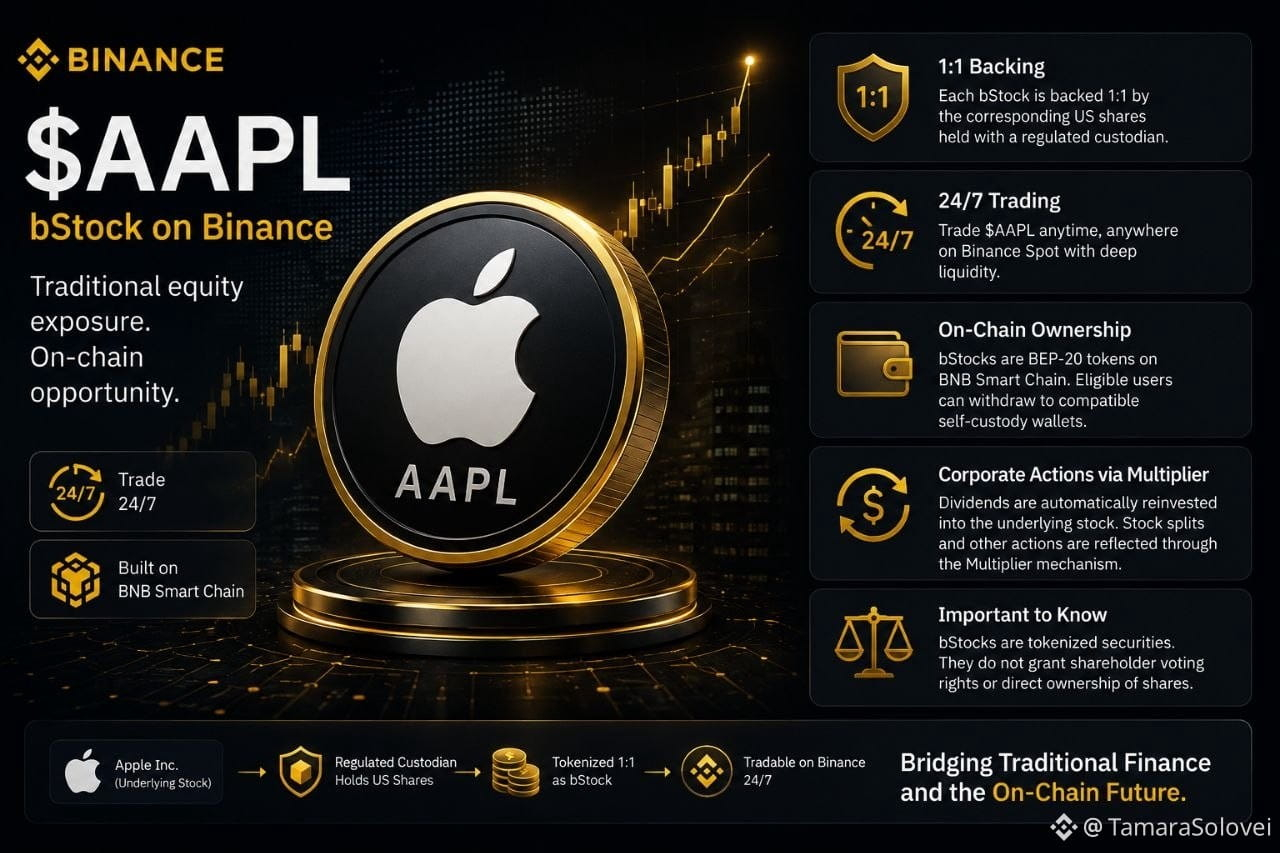
1
2
116
#dusk $DUSK @Dusk_Foundation
Una cosa que hace que Dusk sea interesante es que no obliga a que todas las aplicaciones utilicen la infraestructura blockchain de la misma manera.
Dusk separa la liquidación de la ejecución mediante su arquitectura modular.
En la base está DuskDS, responsable del consenso, la finalidad y la disponibilidad de datos. Por encima de eso, los desarrolladores pueden usar DuskVM para contratos inteligentes nativos en Rust/WASM o DuskEVM cuando quieran un entorno compatible con EVM y herramientas de Solidity familiares.
¿Por qué es eso importante para las finanzas reguladas?
Las diferentes aplicaciones financieras tienen requisitos distintos. Un flujo de activos nativos puede necesitar acceso directo a la privacidad y a los modelos de transacción de Dusk, mientras que otra aplicación podría beneficiarse de las herramientas de Ethereum existentes y de la infraestructura de desarrollo.
En esencia, Dusk intenta ofrecer ambos caminos sin renunciar a su capa subyacente de liquidación.
Y aquí es donde la arquitectura se vuelve más interesante que la narrativa habitual de “blockchain RWA”.
La red está diseñada en torno a requisitos como:
🔹 elegibilidad y controles de acceso
🔹 divulgación selectiva de información sensible
🔹 transacciones confidenciales
🔹 liquidación determinista
🔹 emisión y gestión de activos regulados
Su documentación describe específicamente casos de uso que van desde la renta variable y la deuda tokenizadas hasta DeFi institucional y la liquidación de entrega contra pago.
Para mí, la pregunta clave no es si las instituciones acabarán usando blockchain. Es si la infraestructura subyacente es lo bastante flexible como para cumplir los requisitos de los mercados financieros reales.
Esa es la parte de la tesis de Dusk que estoy observando.
#dusk $DUSK @Dusk
Una cosa que hace que Dusk sea interesante es que no obliga a que todas las aplicaciones utilicen la infraestructura blockchain de la misma manera.
Dusk separa la liquidación de la ejecución mediante su arquitectura modular.
En la base está DuskDS, responsable del consenso, la finalidad y la disponibilidad de datos. Por encima de eso, los desarrolladores pueden usar DuskVM para contratos inteligentes nativos en Rust/WASM o DuskEVM cuando quieran un entorno compatible con EVM y herramientas de Solidity familiares.
¿Por qué es eso importante para las finanzas reguladas?
Las diferentes aplicaciones financieras tienen requisitos distintos. Un flujo de activos nativos puede necesitar acceso directo a la privacidad y a los modelos de transacción de Dusk, mientras que otra aplicación podría beneficiarse de las herramientas de Ethereum existentes y de la infraestructura de desarrollo.
En esencia, Dusk intenta ofrecer ambos caminos sin renunciar a su capa subyacente de liquidación.
Y aquí es donde la arquitectura se vuelve más interesante que la narrativa habitual de “blockchain RWA”.
La red está diseñada en torno a requisitos como:
🔹 elegibilidad y controles de acceso
🔹 divulgación selectiva de información sensible
🔹 transacciones confidenciales
🔹 liquidación determinista
🔹 emisión y gestión de activos regulados
Su documentación describe específicamente casos de uso que van desde la renta variable y la deuda tokenizadas hasta DeFi institucional y la liquidación de entrega contra pago.
Para mí, la pregunta clave no es si las instituciones acabarán usando blockchain. Es si la infraestructura subyacente es lo bastante flexible como para cumplir los requisitos de los mercados financieros reales.
Esa es la parte de la tesis de Dusk que estoy observando.
Una cosa que hace que Dusk sea interesante es que no obliga a que todas las aplicaciones utilicen la infraestructura blockchain de la misma manera.
Dusk separa la liquidación de la ejecución mediante su arquitectura modular.
En la base está DuskDS, responsable del consenso, la finalidad y la disponibilidad de datos. Por encima de eso, los desarrolladores pueden usar DuskVM para contratos inteligentes nativos en Rust/WASM o DuskEVM cuando quieran un entorno compatible con EVM y herramientas de Solidity familiares.
¿Por qué es eso importante para las finanzas reguladas?
Las diferentes aplicaciones financieras tienen requisitos distintos. Un flujo de activos nativos puede necesitar acceso directo a la privacidad y a los modelos de transacción de Dusk, mientras que otra aplicación podría beneficiarse de las herramientas de Ethereum existentes y de la infraestructura de desarrollo.
En esencia, Dusk intenta ofrecer ambos caminos sin renunciar a su capa subyacente de liquidación.
Y aquí es donde la arquitectura se vuelve más interesante que la narrativa habitual de “blockchain RWA”.
La red está diseñada en torno a requisitos como:
🔹 elegibilidad y controles de acceso
🔹 divulgación selectiva de información sensible
🔹 transacciones confidenciales
🔹 liquidación determinista
🔹 emisión y gestión de activos regulados
Su documentación describe específicamente casos de uso que van desde la renta variable y la deuda tokenizadas hasta DeFi institucional y la liquidación de entrega contra pago.
Para mí, la pregunta clave no es si las instituciones acabarán usando blockchain. Es si la infraestructura subyacente es lo bastante flexible como para cumplir los requisitos de los mercados financieros reales.
Esa es la parte de la tesis de Dusk que estoy observando.
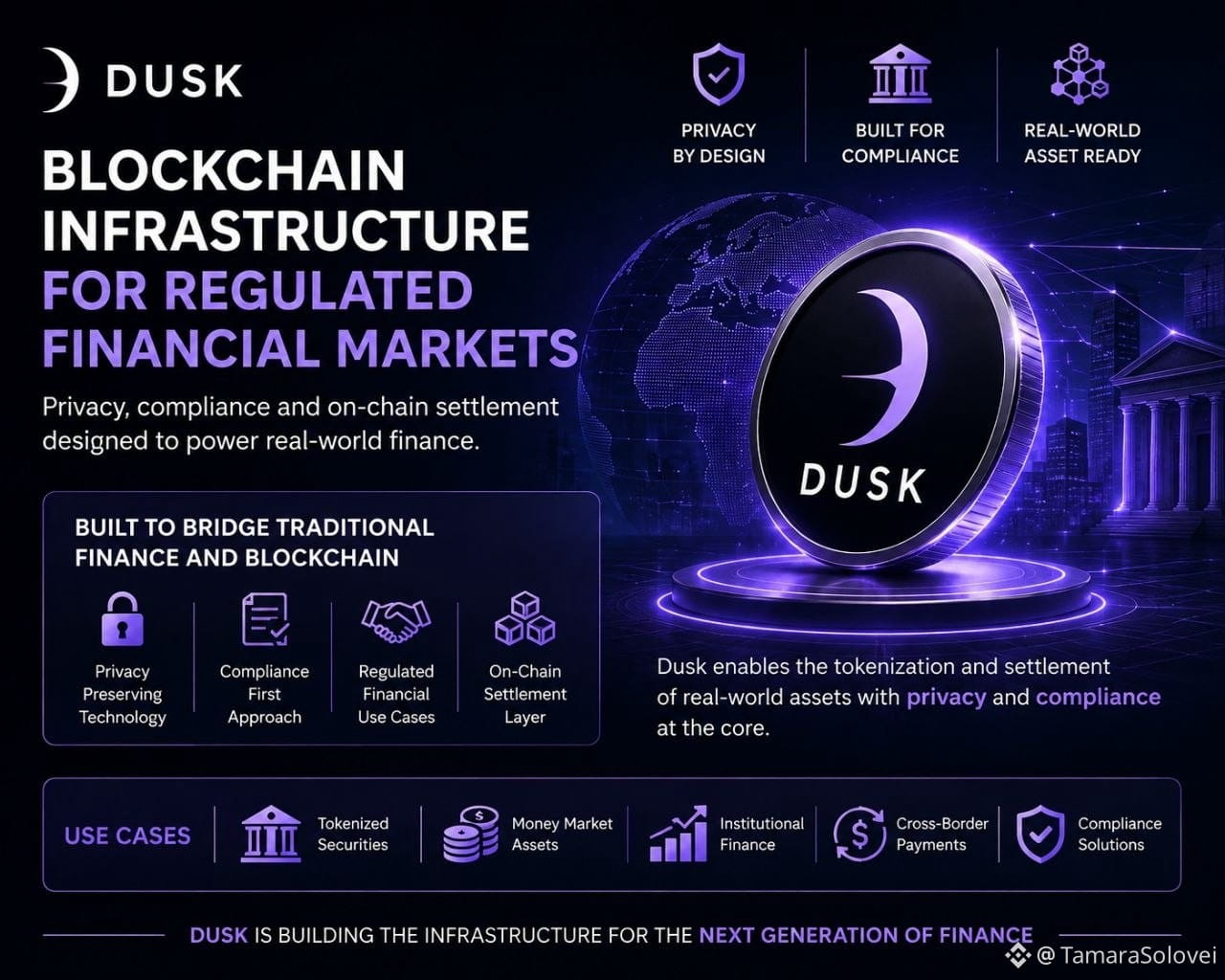
2
1
57
Inicia sesión para explorar más contenidos
Únete a usuarios de criptomonedas de todo el mundo en Binance Square
⚡️ Obtén la información más reciente y útil sobre criptomonedas.
💬 Confía en el mayor exchange de criptomonedas del mundo.
👍 Descubre opiniones reales de creadores verificados.
Correo electrónico/número de teléfono
Temas en tendencia
CircleMints500MUSDCOnSolana
29,154 visualizaciones
819 participa(n) en el debate
#CircleMints500MUSDCOnSolana
Circle Inyecta $500M USDC en Solana: Impacto en la Liquidez y el Ecosistema DeFi
El emisor de stablecoins Circle completó la emisión (minting) de 500 millones de dólares en USDC dentro de la red Solana. La operación se ejecutó en dos bloques consecutivos de 250 millones cada uno, captando de inmediato la atención de analistas, traders e inversores institucionales.
🔑 Claves del Evento
Mecánica On-Chain: La acuñación no implica una compra directa de mercado por $500M, sino la gestión de tesorería e inventario por parte de Circle para respaldar la demanda de liquidación, intercambios y aplicaciones DeFi.
Crecimiento en Solana: Solana continúa expandiendo su participación en el suministro total circulante de USDC, consolidándose como la alternativa principal a Ethereum para transacciones de dólares digitales.
Respaldo 1:1: Cada token emitido por Circle cuenta con un respaldo equivalente en dólares estadounidenses o activos líquidos equivalentes en reserva.
🚀 ¿Qué Significa Esto para el Mercado?
1. Inyección de Liquidez On-Chain
Un suministro más amplio de USDC en Solana mejora la profundidad del mercado en exchanges descentralizados (DEXs) como Raydium o Orca, reduciendo el slippage y facilitando transacciones de mayor volumen.
2. Impulso a los Protocolos DeFi
Las aplicaciones de préstamos (lending), rendimiento (yield) y derivados dentro de Solana disponen de más colateral en dólares reales para acomodar el flujo de capital de inversores minoristas e institucionales.
3. Mayor Adopción Comercial
La infraestructura de pagos sobre Solana continúa consolidándose como la opción preferida para soluciones e-commerce y pasarelas de pago globales que buscan reducir costes de procesamiento tradicional.
Nota: La acuñación masiva de stablecoins suele preceder a períodos de mayor actividad transaccional en el mercado cripto, sirviendo como un indicador adelantado de la entrada de capital fíat al ecosistema.
$SOL
$USDC
Joseph RRG S7
·1 «Me gusta»
·179 visualizaciones
PolymarketBankFailureBetsDrawFDICConcern
43,301 visualizaciones
984 participa(n) en el debate
BlackRockBuildsTokenizedPortfoliosForOndo
35,737 visualizaciones
660 participa(n) en el debate