
LowOnChain
193 Publicaciones

LowOnChain
Denunciar
Bloquear usuario
Crypto native with experience testing products and running campaigns across Web3. I break down what works, why it works, and where real traction is forming.
38 Siguiendo
41 Seguidores
170 Me gusta
Publicaciones
Todo
Cotizaciones
·
--

Artículo
Elysium: Una Nueva Era para Hyperliquid - La Capa 2 Diseñada para Acumular ValorSe supone que las Capa 2 hacen que los ecosistemas de blockchain sean más rápidos, más baratos y más escalables.
Pero hay otra pregunta que vale la pena hacer:
¿Quién captura realmente el valor creado por la Capa 2?
Esa pregunta es lo que hace que Elysium de Kinetiq sea especialmente interesante.
Elysium se está diseñando como una Capa 2 hecha a medida para el ecosistema de Hyperliquid, centrada en el trading, la liquidez, los lanzamientos de tokens y la composabilidad sin interrupciones con HyperCore.
En lugar de crear otro entorno de ejecución aislado, el objetivo es hacer que Elysium sea una extensión de la economía existente de Hyperliquid.
Elysium: Una Nueva Era para Hyperliquid - La Capa 2 Diseñada para Acumular Valor
Se supone que las Capa 2 hacen que los ecosistemas de blockchain sean más rápidos, más baratos y más escalables.
Pero hay otra pregunta que vale la pena hacer:
¿Quién captura realmente el valor creado por la Capa 2?
Esa pregunta es lo que hace que Elysium de Kinetiq sea especialmente interesante.
Elysium se está diseñando como una Capa 2 hecha a medida para el ecosistema de Hyperliquid, centrada en el trading, la liquidez, los lanzamientos de tokens y la composabilidad sin interrupciones con HyperCore.
En lugar de crear otro entorno de ejecución aislado, el objetivo es hacer que Elysium sea una extensión de la economía existente de Hyperliquid.
Pero hay otra pregunta que vale la pena hacer:
¿Quién captura realmente el valor creado por la Capa 2?
Esa pregunta es lo que hace que Elysium de Kinetiq sea especialmente interesante.
Elysium se está diseñando como una Capa 2 hecha a medida para el ecosistema de Hyperliquid, centrada en el trading, la liquidez, los lanzamientos de tokens y la composabilidad sin interrupciones con HyperCore.
En lugar de crear otro entorno de ejecución aislado, el objetivo es hacer que Elysium sea una extensión de la economía existente de Hyperliquid.
1
1
1
109
·
--
Artículo
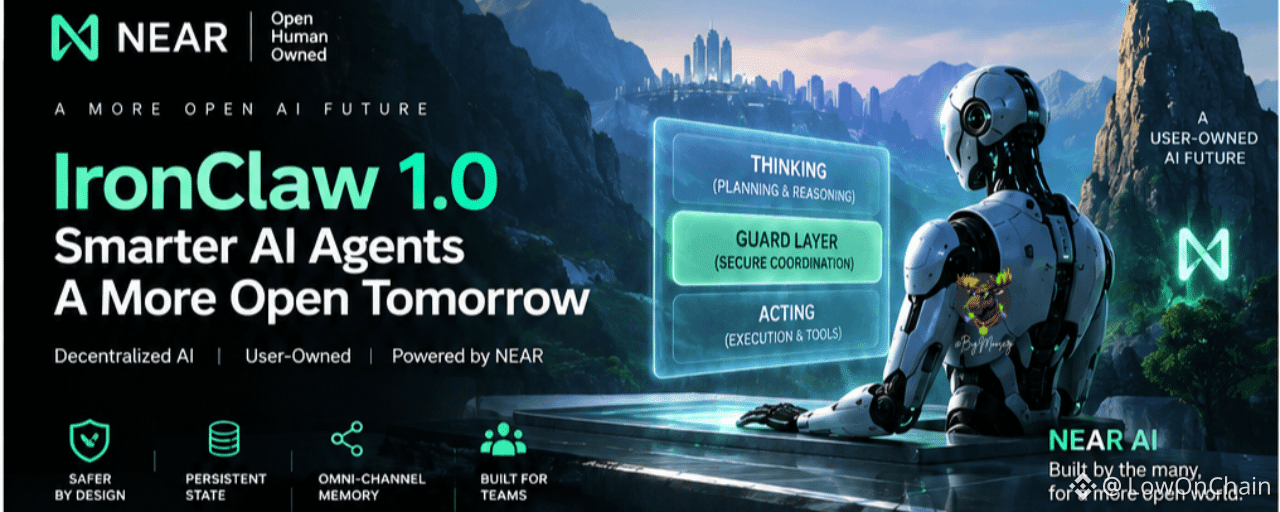
IronClaw 1.0 y la infraestructura detrás de la próxima generación de agentes de IALos agentes de IA están entrando en una nueva fase.
En lugar de simplemente generar respuestas, cada vez más se espera que investiguen, interactúen con herramientas, gestionen flujos de trabajo y realicen acciones en nombre de los usuarios. Eso hace que una pregunta sea cada vez más importante: ¿cómo damos a la IA más capacidad sin renunciar al control?
#IronClaw 1.0 desde @NEAR_Protocol aborda este desafío a través de la arquitectura.
Su idea clave es la separación entre pensar y actuar.
El modelo de IA se encarga del razonamiento y la toma de decisiones, mientras que una capa segura de coordinación llamada el guardián se sitúa entre el modelo y las herramientas a las que puede acceder. Esto crea una vía controlada donde las acciones pueden validarse y, cuando sea necesario, aprobarse explícitamente antes de su ejecución.
IronClaw 1.0 y la infraestructura detrás de la próxima generación de agentes de IA
Los agentes de IA están entrando en una nueva fase.
En lugar de simplemente generar respuestas, cada vez más se espera que investiguen, interactúen con herramientas, gestionen flujos de trabajo y realicen acciones en nombre de los usuarios. Eso hace que una pregunta sea cada vez más importante: ¿cómo damos a la IA más capacidad sin renunciar al control?
#IronClaw 1.0 desde @NEAR Protocol aborda este desafío a través de la arquitectura.
Su idea clave es la separación entre pensar y actuar.
El modelo de IA se encarga del razonamiento y la toma de decisiones, mientras que una capa segura de coordinación llamada el guardián se sitúa entre el modelo y las herramientas a las que puede acceder. Esto crea una vía controlada donde las acciones pueden validarse y, cuando sea necesario, aprobarse explícitamente antes de su ejecución.
En lugar de simplemente generar respuestas, cada vez más se espera que investiguen, interactúen con herramientas, gestionen flujos de trabajo y realicen acciones en nombre de los usuarios. Eso hace que una pregunta sea cada vez más importante: ¿cómo damos a la IA más capacidad sin renunciar al control?
#IronClaw 1.0 desde @NEAR Protocol aborda este desafío a través de la arquitectura.
Su idea clave es la separación entre pensar y actuar.
El modelo de IA se encarga del razonamiento y la toma de decisiones, mientras que una capa segura de coordinación llamada el guardián se sitúa entre el modelo y las herramientas a las que puede acceder. Esto crea una vía controlada donde las acciones pueden validarse y, cuando sea necesario, aprobarse explícitamente antes de su ejecución.
1
1
95
·
--
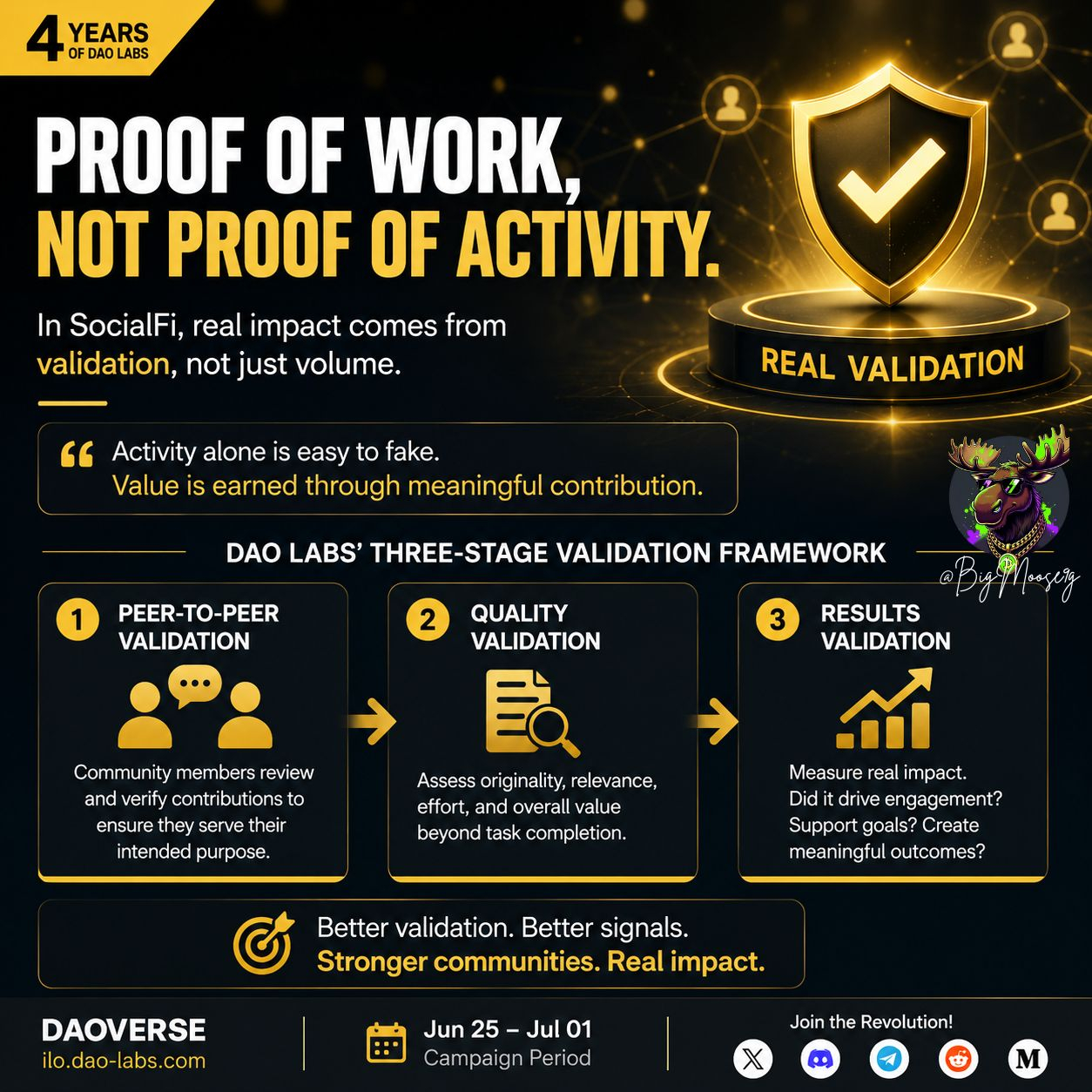
SocialFi resolvió la participación. No ha resuelto la validación.
Ese es el argumento central en el artículo más reciente de @DAOLabs , y sinceramente, es algo que he sentido como contribuyente, sin tener las palabras adecuadas para expresarlo.
He realizado tareas de social mining que exigieron un esfuerzo real: investigación, contenido original, análisis de protocolos y tareas que básicamente consistían en presentarse. La mayoría de las plataformas medían de la misma forma: tarea completada, recompensa enviada. El contribuyente que invirtió 3 horas y el que publicó un comentario genérico en 30 segundos ambos "contribuyeron".
Esa es la brecha de validación.
El marco de validación en tres etapas de DAO Labs (revisión por pares → verificación de calidad → medición de resultados) es el intento más serio que he visto para cerrarla. No solo pregunta si completaste una tarea. Pregunta si tu contribución creó un valor real para el proyecto y la comunidad.
La capa de persona a persona es lo que más destaca. Los algoritmos son buenos contando. No son buenos evaluando el contexto, la originalidad, o si una explicación realmente ayudó a alguien a comprender un concepto. La revisión humana cubre ese vacío.
Para cualquiera que realice un trabajo serio en comunidades de Web3, no cultivando porciones, no haciendo spam, sino construyendo de verdad, este tipo de modelo de validación es lo que marca la diferencia entre sistemas que valen la pena como para contribuir y aquellos que, gradualmente, expulsan a los contribuyentes de calidad.
La actividad por sí sola nunca debería ser la métrica final.
#SocialMining @DAOLabs
Artículo: https://dao-labs.com/posts/proof-of-work-and-retainability-in-socialfi-what-real-validation-looks-like-part-1
SocialFi resolvió la participación. No ha resuelto la validación.
Ese es el argumento central en el artículo más reciente de @DAO Labs , y sinceramente, es algo que he sentido como contribuyente, sin tener las palabras adecuadas para expresarlo.
He realizado tareas de social mining que exigieron un esfuerzo real: investigación, contenido original, análisis de protocolos y tareas que básicamente consistían en presentarse. La mayoría de las plataformas medían de la misma forma: tarea completada, recompensa enviada. El contribuyente que invirtió 3 horas y el que publicó un comentario genérico en 30 segundos ambos "contribuyeron".
Esa es la brecha de validación.
El marco de validación en tres etapas de DAO Labs (revisión por pares → verificación de calidad → medición de resultados) es el intento más serio que he visto para cerrarla. No solo pregunta si completaste una tarea. Pregunta si tu contribución creó un valor real para el proyecto y la comunidad.
La capa de persona a persona es lo que más destaca. Los algoritmos son buenos contando. No son buenos evaluando el contexto, la originalidad, o si una explicación realmente ayudó a alguien a comprender un concepto. La revisión humana cubre ese vacío.
Para cualquiera que realice un trabajo serio en comunidades de Web3, no cultivando porciones, no haciendo spam, sino construyendo de verdad, este tipo de modelo de validación es lo que marca la diferencia entre sistemas que valen la pena como para contribuir y aquellos que, gradualmente, expulsan a los contribuyentes de calidad.
La actividad por sí sola nunca debería ser la métrica final.
#SocialMining @DAO Labs
Artículo: https://dao-labs.com/posts/proof-of-work-and-retainability-in-socialfi-what-real-validation-looks-like-part-1
Ese es el argumento central en el artículo más reciente de @DAO Labs , y sinceramente, es algo que he sentido como contribuyente, sin tener las palabras adecuadas para expresarlo.
He realizado tareas de social mining que exigieron un esfuerzo real: investigación, contenido original, análisis de protocolos y tareas que básicamente consistían en presentarse. La mayoría de las plataformas medían de la misma forma: tarea completada, recompensa enviada. El contribuyente que invirtió 3 horas y el que publicó un comentario genérico en 30 segundos ambos "contribuyeron".
Esa es la brecha de validación.
El marco de validación en tres etapas de DAO Labs (revisión por pares → verificación de calidad → medición de resultados) es el intento más serio que he visto para cerrarla. No solo pregunta si completaste una tarea. Pregunta si tu contribución creó un valor real para el proyecto y la comunidad.
La capa de persona a persona es lo que más destaca. Los algoritmos son buenos contando. No son buenos evaluando el contexto, la originalidad, o si una explicación realmente ayudó a alguien a comprender un concepto. La revisión humana cubre ese vacío.
Para cualquiera que realice un trabajo serio en comunidades de Web3, no cultivando porciones, no haciendo spam, sino construyendo de verdad, este tipo de modelo de validación es lo que marca la diferencia entre sistemas que valen la pena como para contribuir y aquellos que, gradualmente, expulsan a los contribuyentes de calidad.
La actividad por sí sola nunca debería ser la métrica final.
#SocialMining @DAO Labs
Artículo: https://dao-labs.com/posts/proof-of-work-and-retainability-in-socialfi-what-real-validation-looks-like-part-1
336
·
--

Artículo
Por qué la mayoría de las economías de GameFi fracasan - Y qué está haciendo Pixels de manera diferenteGameFi tiene un problema de gestión, no un problema de demanda.
La mayoría de los proyectos de GameFi no fracasan porque los jugadores no estén interesados. Fracasan porque sus economías no se gestionan activamente.
Hay un patrón que todos hemos visto: lanzamiento fuerte, tracción inicial, actividad de tokens… y luego una lenta fuga de usuarios.
No porque el juego de repente se volviera malo - sino porque no hay nada que mantenga a los jugadores enganchados a lo largo del tiempo.
Si una economía no se gestiona como un negocio, colapsará como una moda.
Los sobrevivientes piensan en métricas, no en momentos.
Por qué la mayoría de las economías de GameFi fracasan - Y qué está haciendo Pixels de manera diferente
GameFi tiene un problema de gestión, no un problema de demanda.
La mayoría de los proyectos de GameFi no fracasan porque los jugadores no estén interesados. Fracasan porque sus economías no se gestionan activamente.
Hay un patrón que todos hemos visto: lanzamiento fuerte, tracción inicial, actividad de tokens… y luego una lenta fuga de usuarios.
No porque el juego de repente se volviera malo - sino porque no hay nada que mantenga a los jugadores enganchados a lo largo del tiempo.
Si una economía no se gestiona como un negocio, colapsará como una moda.
Los sobrevivientes piensan en métricas, no en momentos.
La mayoría de los proyectos de GameFi no fracasan porque los jugadores no estén interesados. Fracasan porque sus economías no se gestionan activamente.
Hay un patrón que todos hemos visto: lanzamiento fuerte, tracción inicial, actividad de tokens… y luego una lenta fuga de usuarios.
No porque el juego de repente se volviera malo - sino porque no hay nada que mantenga a los jugadores enganchados a lo largo del tiempo.
Si una economía no se gestiona como un negocio, colapsará como una moda.
Los sobrevivientes piensan en métricas, no en momentos.
2
2
34
·
--
En @pixels , la agricultura es solo el punto de entrada.
La capa más profunda es cómo $PIXEL conecta la tierra, los recursos y las acciones de los jugadores en un sistema en evolución.
Stacked no se trata de ciclos de hype, se trata de ciclos económicos que realmente pueden durar.
Esa es la diferencia que sientes con el tiempo.
#pixel
En @Pixels , la agricultura es solo el punto de entrada.
La capa más profunda es cómo $PIXEL conecta la tierra, los recursos y las acciones de los jugadores en un sistema en evolución.
Stacked no se trata de ciclos de hype, se trata de ciclos económicos que realmente pueden durar.
Esa es la diferencia que sientes con el tiempo.
#pixel
La capa más profunda es cómo $PIXEL conecta la tierra, los recursos y las acciones de los jugadores en un sistema en evolución.
Stacked no se trata de ciclos de hype, se trata de ciclos económicos que realmente pueden durar.
Esa es la diferencia que sientes con el tiempo.
#pixel
3
2
104
·
--
Artículo
Rompiendo el Ciclo GameFi: Por Qué la Utilidad Es la Única Verdadera AlphaCómo @pixels y $PIXEL están construyendo una economía de token que realmente funciona a través de Stacked
GameFi tiene un patrón que la mayoría de la gente ya reconoce.
Un nuevo proyecto se lanza con entusiasmo. El token se dispara. Los primeros usuarios obtienen recompensas. Las emisiones comienzan. La presión de venta se acumula. El gráfico se desvanece. La comunidad desaparece lentamente.
Ha sucedido tantas veces que casi se siente como un ciclo de vida incorporado.
El entusiasmo puede iniciar una economía GameFi. Pero solo la utilidad puede sostenerla.
El problema central no es el marketing, el momento, o incluso la distribución del token. Es que la mayoría de los tokens no hacen nada significativo dentro de sus propios ecosistemas. Existen como incentivos - no como infraestructura.
Rompiendo el Ciclo GameFi: Por Qué la Utilidad Es la Única Verdadera Alpha
Cómo @Pixels y $PIXEL están construyendo una economía de token que realmente funciona a través de Stacked
GameFi tiene un patrón que la mayoría de la gente ya reconoce.
Un nuevo proyecto se lanza con entusiasmo. El token se dispara. Los primeros usuarios obtienen recompensas. Las emisiones comienzan. La presión de venta se acumula. El gráfico se desvanece. La comunidad desaparece lentamente.
Ha sucedido tantas veces que casi se siente como un ciclo de vida incorporado.
El entusiasmo puede iniciar una economía GameFi. Pero solo la utilidad puede sostenerla.
El problema central no es el marketing, el momento, o incluso la distribución del token. Es que la mayoría de los tokens no hacen nada significativo dentro de sus propios ecosistemas. Existen como incentivos - no como infraestructura.
GameFi tiene un patrón que la mayoría de la gente ya reconoce.
Un nuevo proyecto se lanza con entusiasmo. El token se dispara. Los primeros usuarios obtienen recompensas. Las emisiones comienzan. La presión de venta se acumula. El gráfico se desvanece. La comunidad desaparece lentamente.
Ha sucedido tantas veces que casi se siente como un ciclo de vida incorporado.
El entusiasmo puede iniciar una economía GameFi. Pero solo la utilidad puede sostenerla.
El problema central no es el marketing, el momento, o incluso la distribución del token. Es que la mayoría de los tokens no hacen nada significativo dentro de sus propios ecosistemas. Existen como incentivos - no como infraestructura.
1
37
·
--
#pixel $PIXEL El cambio con @Pixels no es un juego más ruidoso, es un diseño más inteligente.
$PIXEL no es solo un token de recompensa - es una capa de coordinación entre jugadores, activos y sistemas de progresión dentro de Stacked.
Cuando la utilidad se acumula, la especulación se convierte en secundaria.
Ahí es donde comienza el verdadero GameFi.
#pixel
#pixel $PIXEL El cambio con @Pixels no es un juego más ruidoso, es un diseño más inteligente.
$PIXEL no es solo un token de recompensa - es una capa de coordinación entre jugadores, activos y sistemas de progresión dentro de Stacked.
Cuando la utilidad se acumula, la especulación se convierte en secundaria.
Ahí es donde comienza el verdadero GameFi.
#pixel
$PIXEL no es solo un token de recompensa - es una capa de coordinación entre jugadores, activos y sistemas de progresión dentro de Stacked.
Cuando la utilidad se acumula, la especulación se convierte en secundaria.
Ahí es donde comienza el verdadero GameFi.
#pixel
4
4
41
·
--

Artículo
Más Allá del Contenido: Cómo Pixels Está Redefiniendo la Retención de Jugadores en Web3Por qué $PIXEL y el ecosistema Stacked se centran en el compromiso continuo - no solo en lanzamientos de contenido.
La mayoría de los juegos Web3 todavía están persiguiendo un bucle familiar: lanzar más contenido, atraer más jugadores, esperar que se queden.
Pero aquí está la incómoda verdad: el contenido por sí solo no retiene a nadie por mucho tiempo.
“Solo agregaremos más contenido” no es una estrategia de retención. Es una estrategia de picos temporales.
Los jugadores no se van porque no hay nada que hacer. Se van porque nada los trae de vuelta de manera consistente.
Este es exactamente donde @pixels está tomando un camino diferente.
Más Allá del Contenido: Cómo Pixels Está Redefiniendo la Retención de Jugadores en Web3
Por qué $PIXEL y el ecosistema Stacked se centran en el compromiso continuo - no solo en lanzamientos de contenido.
La mayoría de los juegos Web3 todavía están persiguiendo un bucle familiar: lanzar más contenido, atraer más jugadores, esperar que se queden.
Pero aquí está la incómoda verdad: el contenido por sí solo no retiene a nadie por mucho tiempo.
“Solo agregaremos más contenido” no es una estrategia de retención. Es una estrategia de picos temporales.
Los jugadores no se van porque no hay nada que hacer. Se van porque nada los trae de vuelta de manera consistente.
Este es exactamente donde @Pixels está tomando un camino diferente.
La mayoría de los juegos Web3 todavía están persiguiendo un bucle familiar: lanzar más contenido, atraer más jugadores, esperar que se queden.
Pero aquí está la incómoda verdad: el contenido por sí solo no retiene a nadie por mucho tiempo.
“Solo agregaremos más contenido” no es una estrategia de retención. Es una estrategia de picos temporales.
Los jugadores no se van porque no hay nada que hacer. Se van porque nada los trae de vuelta de manera consistente.
Este es exactamente donde @Pixels está tomando un camino diferente.
4
3
27
·
--
Alcista
La mayoría de las personas todavía ven @pixels como solo un juego de agricultura. Eso es superficial.
Por debajo, $PIXEL impulsa un ciclo completo donde el tiempo, los activos y el comportamiento de los jugadores alimentan una economía en vivo.
De eso se trata realmente el ecosistema Stacked: convertir el juego en un valor sostenido, no en una extracción única.
#pixel
La mayoría de las personas todavía ven @Pixels como solo un juego de agricultura. Eso es superficial.
Por debajo, $PIXEL impulsa un ciclo completo donde el tiempo, los activos y el comportamiento de los jugadores alimentan una economía en vivo.
De eso se trata realmente el ecosistema Stacked: convertir el juego en un valor sostenido, no en una extracción única.
#pixel
Por debajo, $PIXEL impulsa un ciclo completo donde el tiempo, los activos y el comportamiento de los jugadores alimentan una economía en vivo.
De eso se trata realmente el ecosistema Stacked: convertir el juego en un valor sostenido, no en una extracción única.
#pixel
5
6
34
·
--

Artículo
Diseñando un Tesoro Comunitario PIXEL: Por Qué el Tiempo Importa Más Que los TokensCuando la mayoría de las personas piensan en un tesoro comunitario, imaginan una billetera compartida: los fondos entran, las propuestas salen, y la comunidad vota sobre cómo gastar.
Ese modelo suena justo. Incluso se siente descentralizado.
Pero en un sistema como @Pixels, ese enfoque se rompe más rápido de lo esperado.
“Un tesoro no es solo un grupo de tokens - es un sistema para decidir cuándo el valor se vuelve líquido.”
Más allá del Modelo Simple
La estructura ingenua es fácil de entender:
Mantén PIXEL en un multisig
Financia a creadores, jugadores e iniciativas
Diseñando un Tesoro Comunitario PIXEL: Por Qué el Tiempo Importa Más Que los Tokens
Cuando la mayoría de las personas piensan en un tesoro comunitario, imaginan una billetera compartida: los fondos entran, las propuestas salen, y la comunidad vota sobre cómo gastar.
Ese modelo suena justo. Incluso se siente descentralizado.
Pero en un sistema como @Pixels, ese enfoque se rompe más rápido de lo esperado.
“Un tesoro no es solo un grupo de tokens - es un sistema para decidir cuándo el valor se vuelve líquido.”
Más allá del Modelo Simple
La estructura ingenua es fácil de entender:
Mantén PIXEL en un multisig
Financia a creadores, jugadores e iniciativas
Ese modelo suena justo. Incluso se siente descentralizado.
Pero en un sistema como @Pixels, ese enfoque se rompe más rápido de lo esperado.
“Un tesoro no es solo un grupo de tokens - es un sistema para decidir cuándo el valor se vuelve líquido.”
Más allá del Modelo Simple
La estructura ingenua es fácil de entender:
Mantén PIXEL en un multisig
Financia a creadores, jugadores e iniciativas
9
7
29
·
--
El cambio en los juegos Web3 está ocurriendo ahora mismo, y @pixels lo está liderando en silencio.
La mayoría de la gente todavía piensa que $PIXEL está solo relacionado con la agricultura y bucles de juego simples... pero esa es una forma de pensar obsoleta.
Con la introducción de Stacked, Pixels está evolucionando hacia algo mucho más grande: una economía inteligente impulsada por datos donde el comportamiento del jugador realmente moldea las recompensas. En lugar de emisiones aleatorias, los incentivos ahora están personalizados, haciendo que el sistema sea más sostenible y atractivo con el tiempo.
Esto cambia todo.
Estamos pasando de “jugar-para-ganar” a “jugar-y-participar-en-una-economía-que-se-adapta-a-ti”.
Cada acción—agricultura, comercio, progreso, ya no está aislada. Alimenta a un sistema más inteligente diseñado para retener valor, no solo distribuirlo.
$PIXEL ya no es solo un token. Se está convirtiendo en la capa de coordinación de una economía digital viva y en evolución.
Si todavía estás tratando a Pixels como un juego básico, te estás perdiendo la imagen más grande.
#pixel
El cambio en los juegos Web3 está ocurriendo ahora mismo, y @Pixels lo está liderando en silencio.
La mayoría de la gente todavía piensa que $PIXEL está solo relacionado con la agricultura y bucles de juego simples... pero esa es una forma de pensar obsoleta.
Con la introducción de Stacked, Pixels está evolucionando hacia algo mucho más grande: una economía inteligente impulsada por datos donde el comportamiento del jugador realmente moldea las recompensas. En lugar de emisiones aleatorias, los incentivos ahora están personalizados, haciendo que el sistema sea más sostenible y atractivo con el tiempo.
Esto cambia todo.
Estamos pasando de “jugar-para-ganar” a “jugar-y-participar-en-una-economía-que-se-adapta-a-ti”.
Cada acción—agricultura, comercio, progreso, ya no está aislada. Alimenta a un sistema más inteligente diseñado para retener valor, no solo distribuirlo.
$PIXEL ya no es solo un token. Se está convirtiendo en la capa de coordinación de una economía digital viva y en evolución.
Si todavía estás tratando a Pixels como un juego básico, te estás perdiendo la imagen más grande.
#pixel
La mayoría de la gente todavía piensa que $PIXEL está solo relacionado con la agricultura y bucles de juego simples... pero esa es una forma de pensar obsoleta.
Con la introducción de Stacked, Pixels está evolucionando hacia algo mucho más grande: una economía inteligente impulsada por datos donde el comportamiento del jugador realmente moldea las recompensas. En lugar de emisiones aleatorias, los incentivos ahora están personalizados, haciendo que el sistema sea más sostenible y atractivo con el tiempo.
Esto cambia todo.
Estamos pasando de “jugar-para-ganar” a “jugar-y-participar-en-una-economía-que-se-adapta-a-ti”.
Cada acción—agricultura, comercio, progreso, ya no está aislada. Alimenta a un sistema más inteligente diseñado para retener valor, no solo distribuirlo.
$PIXEL ya no es solo un token. Se está convirtiendo en la capa de coordinación de una economía digital viva y en evolución.
Si todavía estás tratando a Pixels como un juego básico, te estás perdiendo la imagen más grande.
#pixel
9
9
36
·
--

Artículo
PIXELS de Privacidad: Control, Ilusión y el Costo Oculto de la Simplicidad en Web3Hay un patrón en Web3 que se vuelve más claro cuanto más tiempo permanezcas: las ideas no llegan completamente formadas. Emergen, ganan creencias, se simplifican para la adopción, y solo más tarde revelan su complejidad.
La privacidad es una de esas ideas.
Con @pixels y el ascenso de $PIXEL, la conversación se siente diferente en la superficie. No se enmarca como ideología o resistencia. Está envuelta en la jugabilidad, ciclos de agricultura, interacción social, exploración. Se siente ligera. Accesible. Casi desconectada de las discusiones más pesadas que dieron forma a los primeros años de las criptomonedas.
PIXELS de Privacidad: Control, Ilusión y el Costo Oculto de la Simplicidad en Web3
Hay un patrón en Web3 que se vuelve más claro cuanto más tiempo permanezcas: las ideas no llegan completamente formadas. Emergen, ganan creencias, se simplifican para la adopción, y solo más tarde revelan su complejidad.
La privacidad es una de esas ideas.
Con @Pixels y el ascenso de $PIXEL , la conversación se siente diferente en la superficie. No se enmarca como ideología o resistencia. Está envuelta en la jugabilidad, ciclos de agricultura, interacción social, exploración. Se siente ligera. Accesible. Casi desconectada de las discusiones más pesadas que dieron forma a los primeros años de las criptomonedas.
La privacidad es una de esas ideas.
Con @Pixels y el ascenso de $PIXEL , la conversación se siente diferente en la superficie. No se enmarca como ideología o resistencia. Está envuelta en la jugabilidad, ciclos de agricultura, interacción social, exploración. Se siente ligera. Accesible. Casi desconectada de las discusiones más pesadas que dieron forma a los primeros años de las criptomonedas.
7
7
35
·
--
Lo que encuentro interesante sobre @pixels es cómo el ecosistema Stacked conecta la jugabilidad con el valor real.
Cuando apostas $PIXEL , no solo estás ganando, sino que estás mejorando activamente tu experiencia en el juego.
Ese equilibrio entre utilidad y recompensa es por lo que #pixel sigue ganando atención.
Lo que encuentro interesante sobre @Pixels es cómo el ecosistema Stacked conecta la jugabilidad con el valor real.
Cuando apostas $PIXEL , no solo estás ganando, sino que estás mejorando activamente tu experiencia en el juego.
Ese equilibrio entre utilidad y recompensa es por lo que #pixel sigue ganando atención.
Cuando apostas $PIXEL , no solo estás ganando, sino que estás mejorando activamente tu experiencia en el juego.
Ese equilibrio entre utilidad y recompensa es por lo que #pixel sigue ganando atención.
8
7
27
·
--
He estado explorando la mecánica detrás de @pixels y está claro que el sistema apilado está diseñado para jugadores a largo plazo.
Sostener y usar $PIXEL no se trata solo de recompensas, en realidad moldea tu progreso y eficiencia en el juego.
Este tipo de integración es lo que hace que #pixel se destaque en los juegos de Web3.
He estado explorando la mecánica detrás de @Pixels y está claro que el sistema apilado está diseñado para jugadores a largo plazo.
Sostener y usar $PIXEL no se trata solo de recompensas, en realidad moldea tu progreso y eficiencia en el juego.
Este tipo de integración es lo que hace que #pixel se destaque en los juegos de Web3.
Sostener y usar $PIXEL no se trata solo de recompensas, en realidad moldea tu progreso y eficiencia en el juego.
Este tipo de integración es lo que hace que #pixel se destaque en los juegos de Web3.
6
7
24
·
--

Artículo
Más Allá del Gráfico: La Verdadera Historia de $PIXEL Es Suministro vs UtilidadLa mayoría de las personas en crypto están observando el $PIXEL chart y reaccionando al precio. Pero el precio por sí solo rara vez cuenta la historia completa. Lo que realmente importa es la relación entre la oferta que entra en el mercado y la demanda que se crea dentro del ecosistema.
En este momento, ese saldo es lo que hace que Pixels sea uno de los estudios de caso más interesantes de GameFi.
La Realidad de la Oferta Que La Mayoría de las Personas Ignora
Una gran parte del suministro total de $PIXEL aún no está en circulación. Eso significa que nuevos tokens seguirán entrando en el mercado con el tiempo a través de desbloqueos programados.
Más Allá del Gráfico: La Verdadera Historia de $PIXEL Es Suministro vs Utilidad
La mayoría de las personas en crypto están observando el $PIXEL chart y reaccionando al precio. Pero el precio por sí solo rara vez cuenta la historia completa. Lo que realmente importa es la relación entre la oferta que entra en el mercado y la demanda que se crea dentro del ecosistema.
En este momento, ese saldo es lo que hace que Pixels sea uno de los estudios de caso más interesantes de GameFi.
La Realidad de la Oferta Que La Mayoría de las Personas Ignora
Una gran parte del suministro total de $PIXEL aún no está en circulación. Eso significa que nuevos tokens seguirán entrando en el mercado con el tiempo a través de desbloqueos programados.
En este momento, ese saldo es lo que hace que Pixels sea uno de los estudios de caso más interesantes de GameFi.
La Realidad de la Oferta Que La Mayoría de las Personas Ignora
Una gran parte del suministro total de $PIXEL aún no está en circulación. Eso significa que nuevos tokens seguirán entrando en el mercado con el tiempo a través de desbloqueos programados.
11
10
42
·
--
Muchos tokens de GameFi dependen del hype, pero @pixels se inclina hacia la utilidad real a través de Stacked.
Cuando las recompensas se optimizan en lugar de ser enviadas en exceso, el ecosistema tiene una mejor oportunidad de perdurar.
Ahí es donde $PIXEL se vuelve interesante.
#pixel
Muchos tokens de GameFi dependen del hype, pero @Pixels se inclina hacia la utilidad real a través de Stacked.
Cuando las recompensas se optimizan en lugar de ser enviadas en exceso, el ecosistema tiene una mejor oportunidad de perdurar.
Ahí es donde $PIXEL se vuelve interesante.
#pixel
Cuando las recompensas se optimizan en lugar de ser enviadas en exceso, el ecosistema tiene una mejor oportunidad de perdurar.
Ahí es donde $PIXEL se vuelve interesante.
#pixel
12
12
29
·
--
Lo que me gusta de @pixels en este momento es la dirección que están tomando con Stacked.
Ya no se trata solo de ganar, se trata de ganar que tiene sentido.
Si las recompensas están vinculadas a un compromiso real, $PIXEL comienza a verse muy diferente de los tokens típicos de GameFi.
#pixel
Lo que me gusta de @Pixels en este momento es la dirección que están tomando con Stacked.
Ya no se trata solo de ganar, se trata de ganar que tiene sentido.
Si las recompensas están vinculadas a un compromiso real, $PIXEL comienza a verse muy diferente de los tokens típicos de GameFi.
#pixel
Ya no se trata solo de ganar, se trata de ganar que tiene sentido.
Si las recompensas están vinculadas a un compromiso real, $PIXEL comienza a verse muy diferente de los tokens típicos de GameFi.
#pixel

34
·
--

Artículo
Stacked Está Corrigiendo Silenciosamente Lo Que Jugar Para Ganar Hizo MalDurante años, la idea de jugar para ganar ha traído tanto promesas como decepciones. Introdujo una nueva forma de pensar sobre los videojuegos, donde el tiempo invertido podría traducirse en valor real. Pero en la práctica, muchos sistemas no lograron mantenerse. A menudo, las recompensas estaban desalineadas, atrayendo a usuarios a corto plazo y creando economías que no podían sostenerse.
Stacked, que surge del ecosistema Pixels, se siente como una respuesta moldeada por la experiencia más que por la teoría.
El Problema Central: Incentivos Que Rompen Juegos
La mayoría de los sistemas de jugar para ganar no fracasaron por falta de recompensas. Fracasaron debido a cómo estaban estructuradas esas recompensas.
Stacked Está Corrigiendo Silenciosamente Lo Que Jugar Para Ganar Hizo Mal
Durante años, la idea de jugar para ganar ha traído tanto promesas como decepciones. Introdujo una nueva forma de pensar sobre los videojuegos, donde el tiempo invertido podría traducirse en valor real. Pero en la práctica, muchos sistemas no lograron mantenerse. A menudo, las recompensas estaban desalineadas, atrayendo a usuarios a corto plazo y creando economías que no podían sostenerse.
Stacked, que surge del ecosistema Pixels, se siente como una respuesta moldeada por la experiencia más que por la teoría.
El Problema Central: Incentivos Que Rompen Juegos
La mayoría de los sistemas de jugar para ganar no fracasaron por falta de recompensas. Fracasaron debido a cómo estaban estructuradas esas recompensas.
Stacked, que surge del ecosistema Pixels, se siente como una respuesta moldeada por la experiencia más que por la teoría.
El Problema Central: Incentivos Que Rompen Juegos
La mayoría de los sistemas de jugar para ganar no fracasaron por falta de recompensas. Fracasaron debido a cómo estaban estructuradas esas recompensas.
42
·
--
LowOnChain
·
--
Explorar el crecimiento de @Pixels últimamente ha sido realmente impresionante.
La forma en que $PIXEL está integrando la jugabilidad con la propiedad real muestra cómo debería evolucionar el juego en Web3.
Desde mecánicas de agricultura hasta economías impulsadas por los jugadores, Pixels está construyendo algo sostenible, no solo un bombo.
Estoy ansioso por ver cómo $PIXEL expande la utilidad y atrae a más jugadores al ecosistema. #pixel
La forma en que $PIXEL está integrando la jugabilidad con la propiedad real muestra cómo debería evolucionar el juego en Web3.
Desde mecánicas de agricultura hasta economías impulsadas por los jugadores, Pixels está construyendo algo sostenible, no solo un bombo.
Estoy ansioso por ver cómo $PIXEL expande la utilidad y atrae a más jugadores al ecosistema. #pixel
6
·
--

Artículo
El Auge de Pixels: Economías de Juego Más Inteligentes Impulsadas por $PIXELLa evolución del juego Web3 ya no se trata solo de jugar para ganar, se trata de construir ecosistemas inteligentes y adaptativos. @pixels está comenzando a reflejar este cambio, especialmente cuando piensas en cómo los datos, las recompensas y el comportamiento de los jugadores pueden estar conectados en un bucle continuo.
El concepto ilustrado arriba destaca cómo debería ser la economía de un juego moderno. Imagina un sistema donde tu actividad de juego alimenta una capa inteligente, similar a un “Economista de Juegos de IA Apilados”, que procesa datos de comportamiento en tiempo real. En el contexto de Pixels, esto se alinea estrechamente con cómo $PIXEL puede evolucionar más allá de ser solo un token de recompensa en un impulsor central del equilibrio económico.
El Auge de Pixels: Economías de Juego Más Inteligentes Impulsadas por $PIXEL
La evolución del juego Web3 ya no se trata solo de jugar para ganar, se trata de construir ecosistemas inteligentes y adaptativos. @Pixels está comenzando a reflejar este cambio, especialmente cuando piensas en cómo los datos, las recompensas y el comportamiento de los jugadores pueden estar conectados en un bucle continuo.
El concepto ilustrado arriba destaca cómo debería ser la economía de un juego moderno. Imagina un sistema donde tu actividad de juego alimenta una capa inteligente, similar a un “Economista de Juegos de IA Apilados”, que procesa datos de comportamiento en tiempo real. En el contexto de Pixels, esto se alinea estrechamente con cómo $PIXEL puede evolucionar más allá de ser solo un token de recompensa en un impulsor central del equilibrio económico.
El concepto ilustrado arriba destaca cómo debería ser la economía de un juego moderno. Imagina un sistema donde tu actividad de juego alimenta una capa inteligente, similar a un “Economista de Juegos de IA Apilados”, que procesa datos de comportamiento en tiempo real. En el contexto de Pixels, esto se alinea estrechamente con cómo $PIXEL puede evolucionar más allá de ser solo un token de recompensa en un impulsor central del equilibrio económico.
17
12
99
Inicia sesión para explorar más contenidos
Únete a usuarios de criptomonedas de todo el mundo en Binance Square
⚡️ Obtén la información más reciente y útil sobre criptomonedas.
💬 Confía en el mayor exchange de criptomonedas del mundo.
👍 Descubre opiniones reales de creadores verificados.
Correo electrónico/número de teléfono
Temas en tendencia
BOJRaisesRatesTo31YearHigh
116,533 visualizaciones
1,823 participa(n) en el debate
#bojraisesratesto31yearhigh ¿El BOJ en máximos de 31 años y Bitcoin subiendo? La madurez institucional de $BTC en un solo gráfico 🇯🇵📈⚡
El Banco de Japón elevó su tasa al 1.25% (máximo histórico en más de tres décadas), y lo que muchos pronosticaban como un colapso del carry trade terminó mostrando la fortaleza más limpia del mercado cripto.
🧠 3 lecturas clave de la mesa técnica:
1️⃣ Desacoplamiento Macro: El yen no se fortaleció como proyectaban los analistas tradicionales y BTC respondió con un rebote contundente, demostrando que la demanda en Spot sigue intacta.
2️⃣ Superando a los gigantes tecnológicos: Con una capitalización de más de $1.63 billones, Bitcoin vuelve a colocarse por delante de Tesla ($1.438B), reafirmando su papel como activo de reserva y refugio de liquidez global.
3️⃣ Estructura en 4H y 1D: La absorción en los soportes valida que las correcciones macro son ventanas de acumulación institucional, no de capitulación.
$Mientras el retail entra en pánico por los titulares de tipos de interés, la gestión profesional sigue el rastro de la liquidez real. 💎🛡️
💬 Debate para la comunidad: ¿Consideran que este desacoplamiento confirma el inicio del tramo final del ciclo alcista hacia nuevos máximos históricos, o la liquidez global aún pondrá a prueba los soportes? ¡Dejen su análisis abajo! 👇🔥
#bojraisesratesto31yearhigh #MacroEconomy #Trading #BinanceSquare
Jacktraders
·1 «Me gusta»
·6.2k visualizaciones
BuffettStepsDownAsBerkshireChairman
54,819 visualizaciones
886 participa(n) en el debate
XRPExchangeReservesHitSevenYearLow
57,790 visualizaciones
842 participa(n) en el debate