

#stake
stake
241,499 vistas
343 están debatiendo
Hot
Lo último

·
--
Cómo hacer staking de RIVER y votar por tu equipo
https://youtu.be/4_xluhADpng?si=ntY7paGd3PQPuqYi
$RIVER #Stake #vote
@RiverdotInc
{alpha}(560xda7ad9dea9397cffddae2f8a052b82f1484252b3)
Cómo hacer staking de RIVER y votar por tu equipo
https://youtu.be/4_xluhADpng?si=ntY7paGd3PQPuqYi
$RIVER #Stake #vote
@Riverdotinc
https://youtu.be/4_xluhADpng?si=ntY7paGd3PQPuqYi
$RIVER #Stake #vote
@Riverdotinc

1
454

2026.5.25 #solana 链上热点 #memecoin🚀🚀🚀
$Stake
Narrativa: El primer banco sin confianza. Los contratos inteligentes ya están desplegados en la red principal de Solana, logrando un verdadero staking y mecanismo de cashback sin confianza 1.2M #Stake
CA: 5s7tf6ih2CEZf7ZPNkJAtcknAq9DL5GsWHMMT3Jdpump
{web3_wallet_create}(CT_5015s7tf6ih2CEZf7ZPNkJAtcknAq9DL5GsWHMMT3Jdpump)
Si quieres saber más, mira mi perfil.
2026.5.25 #solana 链上热点 #memecoin🚀🚀🚀
$Stake
Narrativa: El primer banco sin confianza. Los contratos inteligentes ya están desplegados en la red principal de Solana, logrando un verdadero staking y mecanismo de cashback sin confianza 1.2M #Stake
CA: 5s7tf6ih2CEZf7ZPNkJAtcknAq9DL5GsWHMMT3Jdpump
Si quieres saber más, mira mi perfil.
$Stake
Narrativa: El primer banco sin confianza. Los contratos inteligentes ya están desplegados en la red principal de Solana, logrando un verdadero staking y mecanismo de cashback sin confianza 1.2M #Stake
CA: 5s7tf6ih2CEZf7ZPNkJAtcknAq9DL5GsWHMMT3Jdpump
Si quieres saber más, mira mi perfil.

200

·
--
Artículo
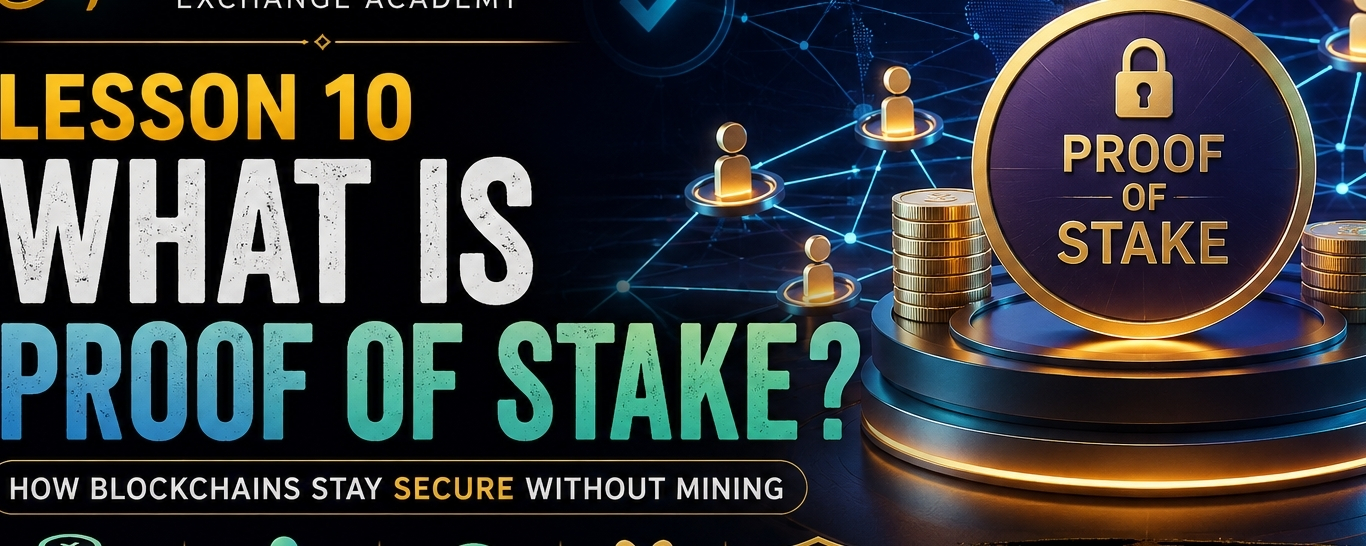
Lección 10: ¿Qué es la Prueba de Participación?Imagina esto...
Imagina una aldea donde todos comparten el mismo libro de registros.
Cada vez que alguien realiza una transacción, la aldea necesita acordar que es real.
Pero, en lugar de usar computadoras potentes para competir en un rompecabezas difícil, imagina a personas aportando algunas de sus propias monedas valiosas como garantía.
Esos participantes ayudan a comprobar y asegurar el libro de registros.
Esta es la idea básica detrás de la Prueba de Participación.
¿Qué es la Prueba de Participación?
La Prueba de Participación, a menudo llamada PoS, es una forma en que algunas redes blockchain usan para ayudar a asegurar la red y ponerse de acuerdo sobre qué transacciones y bloques son válidos.
Lección 10: ¿Qué es la Prueba de Participación?
Imagina esto...
Imagina una aldea donde todos comparten el mismo libro de registros.
Cada vez que alguien realiza una transacción, la aldea necesita acordar que es real.
Pero, en lugar de usar computadoras potentes para competir en un rompecabezas difícil, imagina a personas aportando algunas de sus propias monedas valiosas como garantía.
Esos participantes ayudan a comprobar y asegurar el libro de registros.
Esta es la idea básica detrás de la Prueba de Participación.
¿Qué es la Prueba de Participación?
La Prueba de Participación, a menudo llamada PoS, es una forma en que algunas redes blockchain usan para ayudar a asegurar la red y ponerse de acuerdo sobre qué transacciones y bloques son válidos.
Imagina una aldea donde todos comparten el mismo libro de registros.
Cada vez que alguien realiza una transacción, la aldea necesita acordar que es real.
Pero, en lugar de usar computadoras potentes para competir en un rompecabezas difícil, imagina a personas aportando algunas de sus propias monedas valiosas como garantía.
Esos participantes ayudan a comprobar y asegurar el libro de registros.
Esta es la idea básica detrás de la Prueba de Participación.
¿Qué es la Prueba de Participación?
La Prueba de Participación, a menudo llamada PoS, es una forma en que algunas redes blockchain usan para ayudar a asegurar la red y ponerse de acuerdo sobre qué transacciones y bloques son válidos.
94

·
--
Alcista
#baby $BABY Mientras hacía scroll, de repente vi el proyecto de Babilonia. Pensé que echaría un vistazo para ver qué había dentro y ¡me sorprendió muchísimo! El staking sin confianza es una gran oportunidad para que los titulares de Bitcoin mantengan su Bitcoin seguro y obtengan beneficios adicionales. Realmente están planeando llevar la seguridad de toda la cadena de bloques a otro nivel.
Ahora hagamos una encuesta sobre esto, para que puedas votar. Las opciones de la encuesta se muestran a continuación: @babylonlabs_io #BTC #Stake
{spot}(BTCUSDT)
#baby $BABY Mientras hacía scroll, de repente vi el proyecto de Babilonia. Pensé que echaría un vistazo para ver qué había dentro y ¡me sorprendió muchísimo! El staking sin confianza es una gran oportunidad para que los titulares de Bitcoin mantengan su Bitcoin seguro y obtengan beneficios adicionales. Realmente están planeando llevar la seguridad de toda la cadena de bloques a otro nivel.
Ahora hagamos una encuesta sobre esto, para que puedas votar. Las opciones de la encuesta se muestran a continuación: @BabylonLabs_io #BTC #Stake
Ahora hagamos una encuesta sobre esto, para que puedas votar. Las opciones de la encuesta se muestran a continuación: @BabylonLabs_io #BTC #Stake
4
3
42

·
--
Alcista
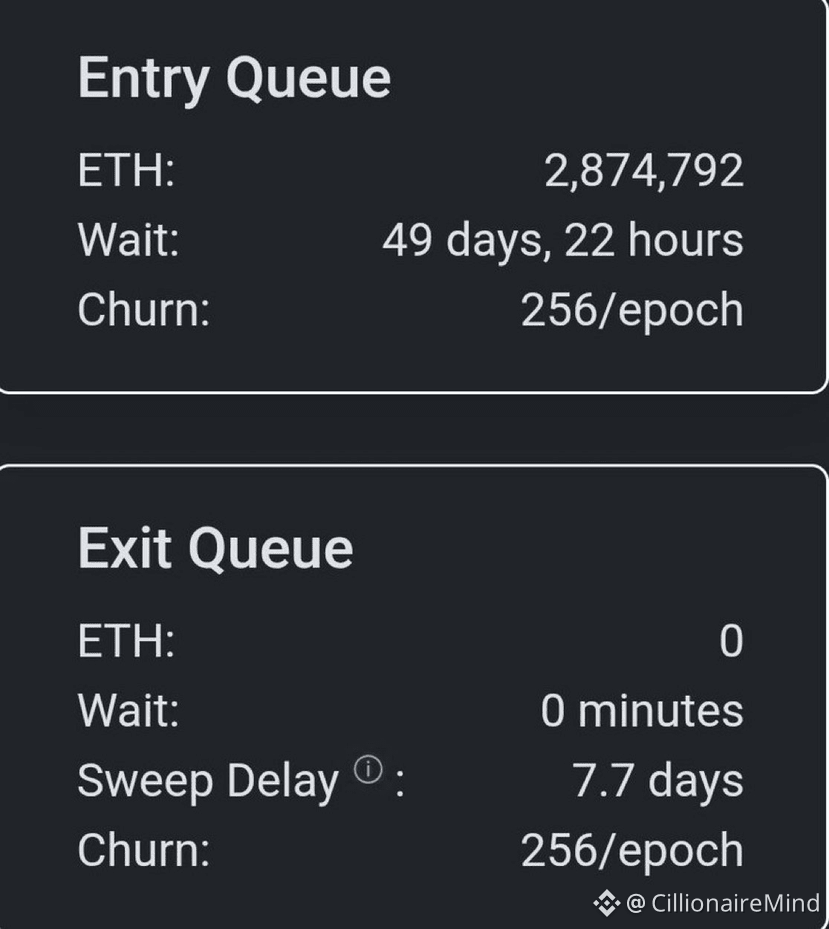
Nadie se está apurando a deshacer el staking de $ETH
Alrededor de 1 de cada 3 ETH ya está stakeado.
Eso te dice algo:
➠ Los holders están eligiendo rendimiento sobre venta
➠ La convicción a largo plazo sigue siendo fuerte
➠ La oferta líquida sigue apretándose
Mientras el precio sube y baja, una gran parte de la oferta simplemente está ahí ganando.
El mercado podría estar durmiendo en la dinámica de la oferta de Ethereum.
#Ethereum #Stake
{spot}(ETHUSDT)
Nadie se está apurando a deshacer el staking de $ETH
Alrededor de 1 de cada 3 ETH ya está stakeado.
Eso te dice algo:
➠ Los holders están eligiendo rendimiento sobre venta
➠ La convicción a largo plazo sigue siendo fuerte
➠ La oferta líquida sigue apretándose
Mientras el precio sube y baja, una gran parte de la oferta simplemente está ahí ganando.
El mercado podría estar durmiendo en la dinámica de la oferta de Ethereum.
#Ethereum #Stake
Alrededor de 1 de cada 3 ETH ya está stakeado.
Eso te dice algo:
➠ Los holders están eligiendo rendimiento sobre venta
➠ La convicción a largo plazo sigue siendo fuerte
➠ La oferta líquida sigue apretándose
Mientras el precio sube y baja, una gran parte de la oferta simplemente está ahí ganando.
El mercado podría estar durmiendo en la dinámica de la oferta de Ethereum.
#Ethereum #Stake
1
100
·
--
Apuesta RIVER para gobernar y ganar tu parte
Reclama la tuya esta semana
Asegura tu posición. !
$RIVER #RİVER #Stake
@RiverdotInc
{alpha}(560xda7ad9dea9397cffddae2f8a052b82f1484252b3)
Apuesta RIVER para gobernar y ganar tu parte
Reclama la tuya esta semana
Asegura tu posición. !
$RIVER #RİVER #Stake
@Riverdotinc
Reclama la tuya esta semana
Asegura tu posición. !
$RIVER #RİVER #Stake
@Riverdotinc

1
306
·
--
La votación inicial cierra el 11 de junio
Apuesta $RIVER para elegir a tu equipo
$RIVER
#RİVER #Stake #vote
@RiverdotInc
{alpha}(560xda7ad9dea9397cffddae2f8a052b82f1484252b3)
La votación inicial cierra el 11 de junio
Apuesta $RIVER para elegir a tu equipo
$RIVER
#RİVER #Stake #vote
@Riverdotinc
Apuesta $RIVER para elegir a tu equipo
$RIVER
#RİVER #Stake #vote
@Riverdotinc

460

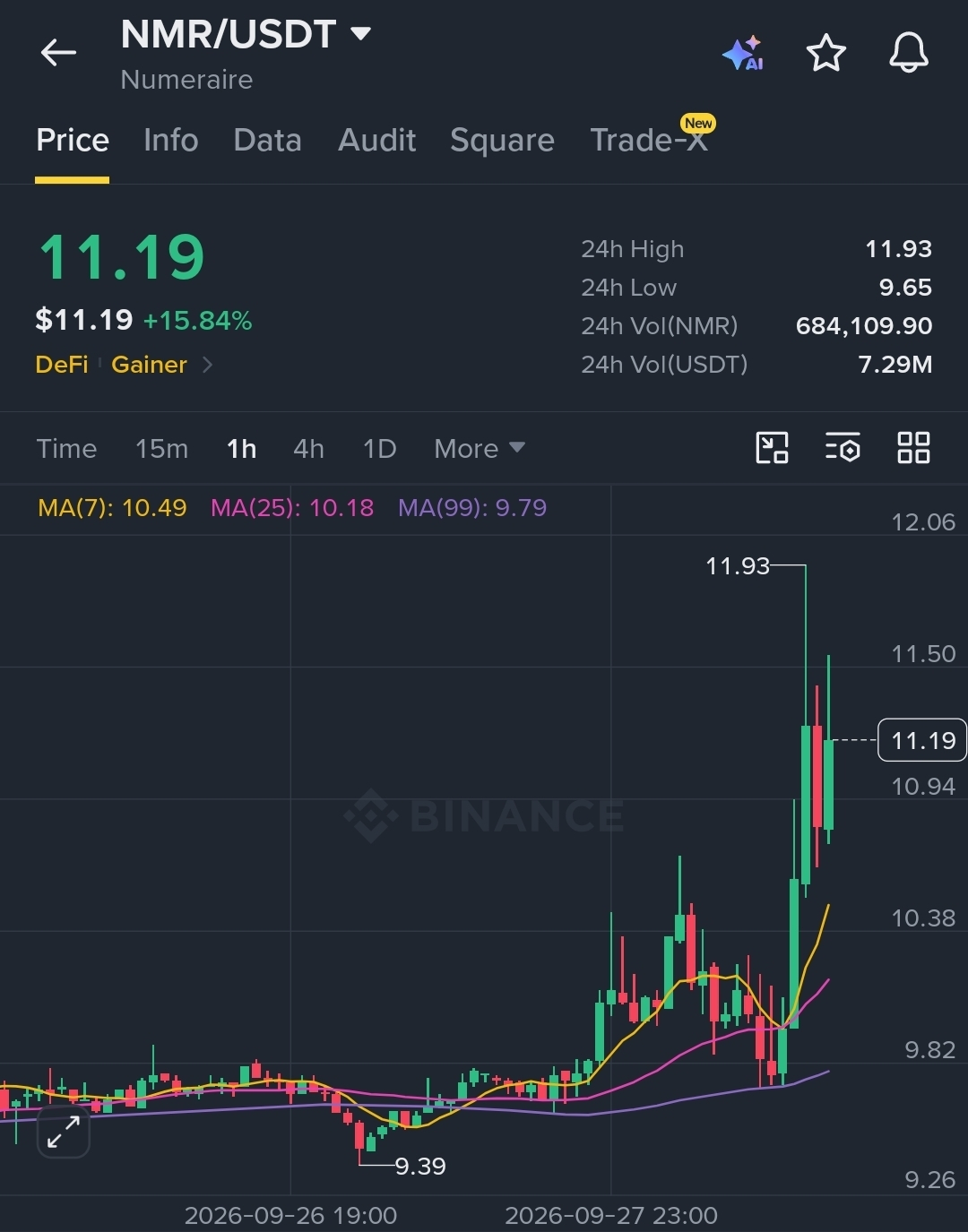
$NMR /USDT — 🟢 LARGO · Conf 80%
📍 Entrada: 11.1565 – 11.2235
🛑 SL: 9.9150
🎯 TP1: 11.7495
✅ TP2: 12.1971
🏆 TP3: 12.8685
El precio explotó por encima de todas las MAs de 1H con una sola vela agresiva hasta 11.93 y luego retrocedió a 11.19 — el re-test de la MA7 (~10.49) se mantuvo, y la estructura actual favorece la continuación si 10.90 se mantiene como nuevo soporte.
$NMR : Numeraire es un token de fondo de cobertura cripto basado en torneos donde científicos de datos apuestan NMR para señalar la confianza del modelo; mecánica única de “skin-in-the-game” (interés propio) — pero el riesgo de iliquidez es real con solo $7.29M en volumen de 24H en USDT.
¿El modelo de torneos de Numerai realmente produce alfa que justifica NMR como reserva de valor, o la mecánica de quema por staking hace la mayor parte del trabajo en el precio?
#NMR #numeraire #Stake #storeofvalue #HedgeFunds
{future}(NMRUSDT)
$NMR /USDT — 🟢 LARGO · Conf 80%
📍 Entrada: 11.1565 – 11.2235
🛑 SL: 9.9150
🎯 TP1: 11.7495
✅ TP2: 12.1971
🏆 TP3: 12.8685
El precio explotó por encima de todas las MAs de 1H con una sola vela agresiva hasta 11.93 y luego retrocedió a 11.19 — el re-test de la MA7 (~10.49) se mantuvo, y la estructura actual favorece la continuación si 10.90 se mantiene como nuevo soporte.
$NMR : Numeraire es un token de fondo de cobertura cripto basado en torneos donde científicos de datos apuestan NMR para señalar la confianza del modelo; mecánica única de “skin-in-the-game” (interés propio) — pero el riesgo de iliquidez es real con solo $7.29M en volumen de 24H en USDT.
¿El modelo de torneos de Numerai realmente produce alfa que justifica NMR como reserva de valor, o la mecánica de quema por staking hace la mayor parte del trabajo en el precio?
#NMR #numeraire #Stake #storeofvalue #HedgeFunds
📍 Entrada: 11.1565 – 11.2235
🛑 SL: 9.9150
🎯 TP1: 11.7495
✅ TP2: 12.1971
🏆 TP3: 12.8685
El precio explotó por encima de todas las MAs de 1H con una sola vela agresiva hasta 11.93 y luego retrocedió a 11.19 — el re-test de la MA7 (~10.49) se mantuvo, y la estructura actual favorece la continuación si 10.90 se mantiene como nuevo soporte.
$NMR : Numeraire es un token de fondo de cobertura cripto basado en torneos donde científicos de datos apuestan NMR para señalar la confianza del modelo; mecánica única de “skin-in-the-game” (interés propio) — pero el riesgo de iliquidez es real con solo $7.29M en volumen de 24H en USDT.
¿El modelo de torneos de Numerai realmente produce alfa que justifica NMR como reserva de valor, o la mecánica de quema por staking hace la mayor parte del trabajo en el precio?
#NMR #numeraire #Stake #storeofvalue #HedgeFunds

1
190

·
--
Alcista
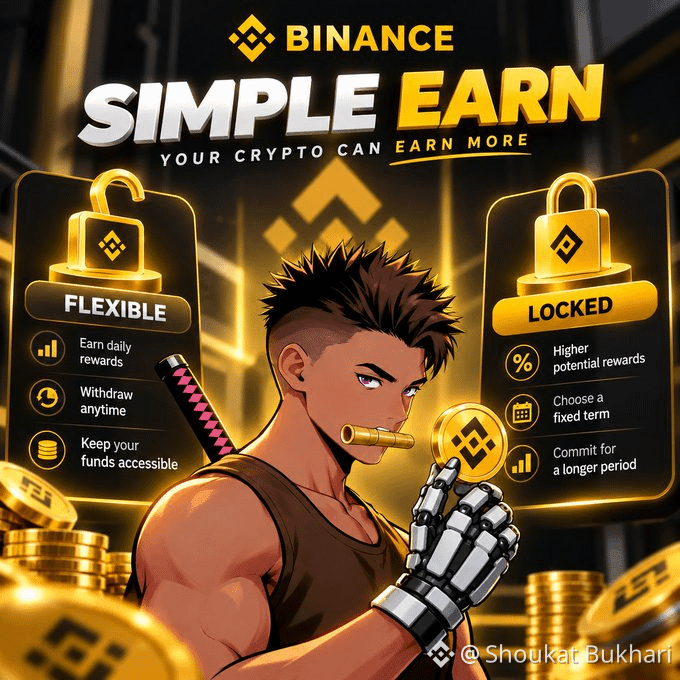
Si ya tienes criptomonedas, Binance Simple Earn te ofrece una forma de poner esos activos a trabajar.
→ Con Binance Simple Earn, tienes dos opciones sencillas.
> Recompensas Flexible Earn mientras mantienes tu cripto disponible para retirar cuando lo necesites.
ㆍ Las recompensas se acumulan diariamente
ㆍ Retira cuando quieras
ㆍ Sin depósito mínimo
ㆍ Admite cientos de activos, incluidos $BTC , $ETH , $SOL , $BNB, USDT y USDC
> Bloqueado Elige un período fijo y bloquea tu cripto durante ese tiempo. Puede ofrecer una tasa más alta que la Flexible.
ㆍ Elige 7, 14, 30, 60, 90 o 120 días
ㆍ Tasa más alta que la Flexible
ㆍ La redención anticipada puede implicar renunciar a recompensas
En pocas palabras,
> Flexible = más libertad
>Bloqueado = tiempo fijo, posibles recompensas más altas El APR puede cambiar y no está garantizado,
así que siempre revisa los términos más recientes antes de usar un producto.
¿Cuál se ajusta mejor a ti?
¿Flexible o Bloqueado?
Este es contenido educativo; siempre haz tu propia investigación (DYOR)
#Binance #Stake #BTC #BinanceEarn
Si ya tienes criptomonedas, Binance Simple Earn te ofrece una forma de poner esos activos a trabajar.
→ Con Binance Simple Earn, tienes dos opciones sencillas.
> Recompensas Flexible Earn mientras mantienes tu cripto disponible para retirar cuando lo necesites.
ㆍ Las recompensas se acumulan diariamente
ㆍ Retira cuando quieras
ㆍ Sin depósito mínimo
ㆍ Admite cientos de activos, incluidos $BTC , $ETH , $SOL , $BNB, USDT y USDC
> Bloqueado Elige un período fijo y bloquea tu cripto durante ese tiempo. Puede ofrecer una tasa más alta que la Flexible.
ㆍ Elige 7, 14, 30, 60, 90 o 120 días
ㆍ Tasa más alta que la Flexible
ㆍ La redención anticipada puede implicar renunciar a recompensas
En pocas palabras,
> Flexible = más libertad
>Bloqueado = tiempo fijo, posibles recompensas más altas El APR puede cambiar y no está garantizado,
así que siempre revisa los términos más recientes antes de usar un producto.
¿Cuál se ajusta mejor a ti?
¿Flexible o Bloqueado?
Este es contenido educativo; siempre haz tu propia investigación (DYOR)
#Binance #Stake #BTC #BinanceEarn
→ Con Binance Simple Earn, tienes dos opciones sencillas.
> Recompensas Flexible Earn mientras mantienes tu cripto disponible para retirar cuando lo necesites.
ㆍ Las recompensas se acumulan diariamente
ㆍ Retira cuando quieras
ㆍ Sin depósito mínimo
ㆍ Admite cientos de activos, incluidos $BTC , $ETH , $SOL , $BNB, USDT y USDC
> Bloqueado Elige un período fijo y bloquea tu cripto durante ese tiempo. Puede ofrecer una tasa más alta que la Flexible.
ㆍ Elige 7, 14, 30, 60, 90 o 120 días
ㆍ Tasa más alta que la Flexible
ㆍ La redención anticipada puede implicar renunciar a recompensas
En pocas palabras,
> Flexible = más libertad
>Bloqueado = tiempo fijo, posibles recompensas más altas El APR puede cambiar y no está garantizado,
así que siempre revisa los términos más recientes antes de usar un producto.
¿Cuál se ajusta mejor a ti?
¿Flexible o Bloqueado?
Este es contenido educativo; siempre haz tu propia investigación (DYOR)
#Binance #Stake #BTC #BinanceEarn
90
Wanchain es el mejor lugar para llevar tus monedas estables.
Gana una alta rentabilidad (APR) participando en #USDT o #USDC✅ y gana xWAN.
Cámbialo y #Stake xWAN para ganar #Stablecoins
Ve a xstake.wanchain.org y aprovecha estas oportunidades.
Wanchain es el mejor lugar para llevar tus monedas estables.
Gana una alta rentabilidad (APR) participando en #USDT o #USDC✅ y gana xWAN.
Cámbialo y #Stake xWAN para ganar #Stablecoins
Ve a xstake.wanchain.org y aprovecha estas oportunidades.
Gana una alta rentabilidad (APR) participando en #USDT o #USDC✅ y gana xWAN.
Cámbialo y #Stake xWAN para ganar #Stablecoins
Ve a xstake.wanchain.org y aprovecha estas oportunidades.

55
·
--
Alcista
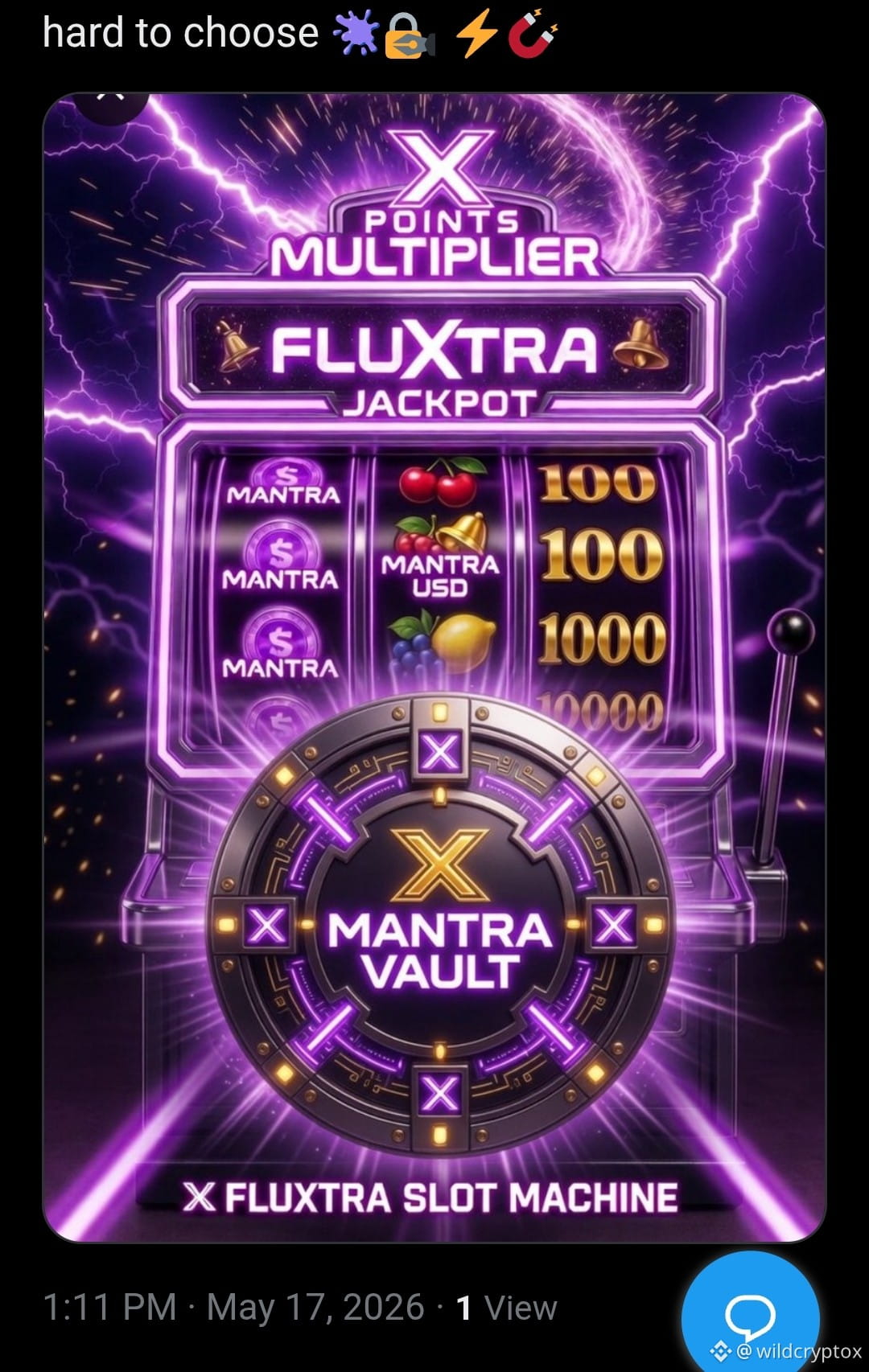
@MANTRA_Chain $MANTRA
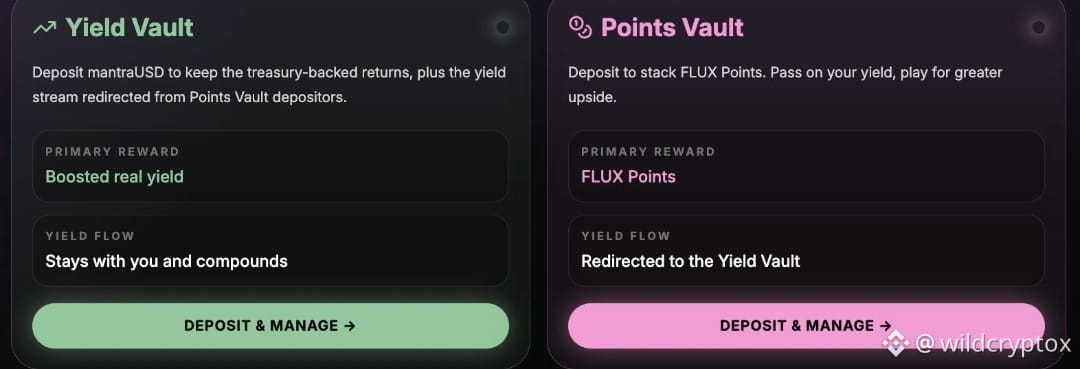
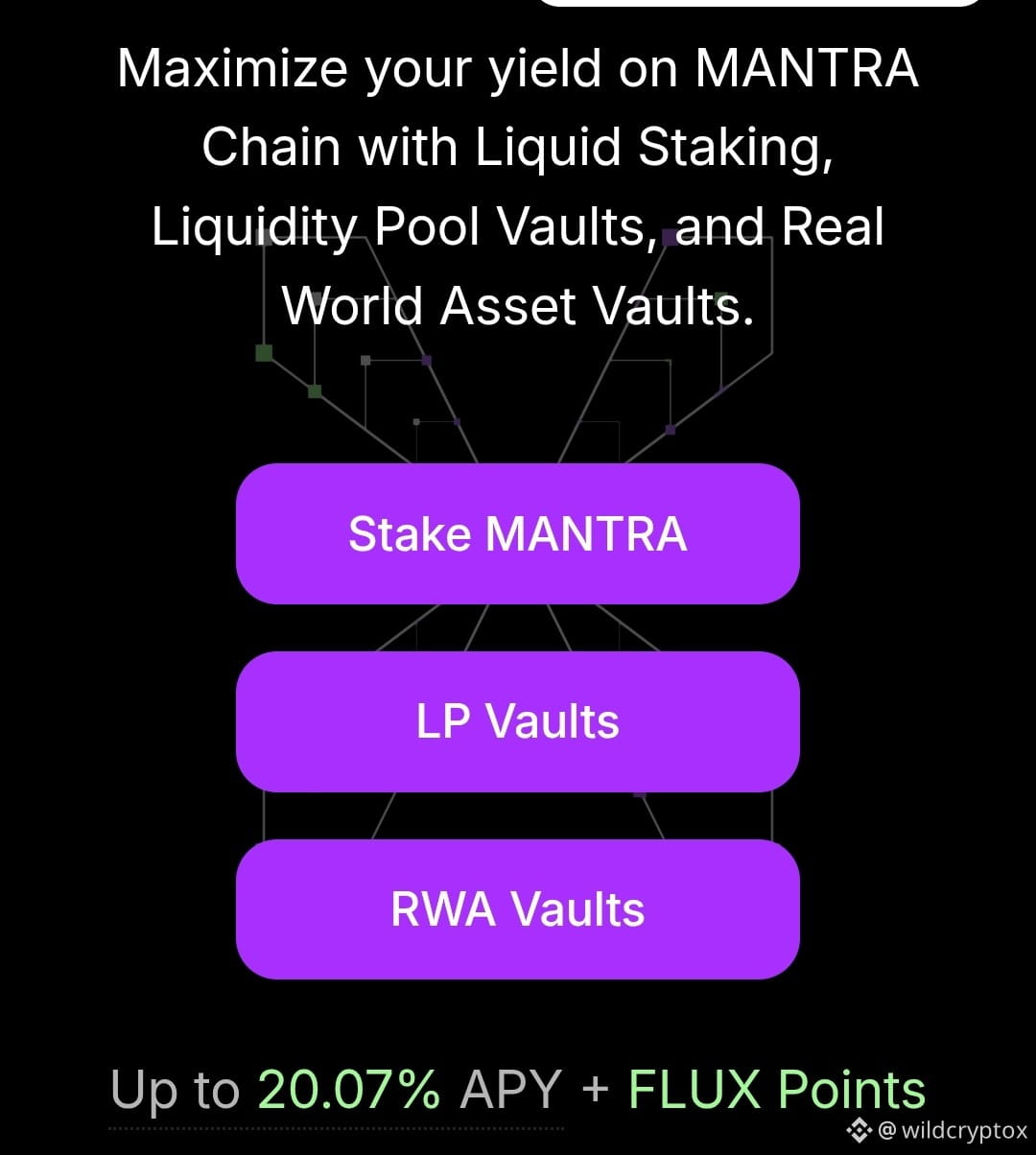
#Fluxtra Vaults 🔐 te ofrece 2 maneras de jugar en los vaults RWA 👇
🔹 wmantraUSD-Yld = gana rendimiento de T-bills aumentado
🔹 wmantraUSD-Pts = gana Puntos Flux en lugar de rendimiento
100M #fluxtraMANTRA Puntos comenzarán a distribuirse desde el 11 de mayo para la Temporada 1 👀
El rendimiento o los puntos dependen de tu estrategia.
Aún es temprano de cualquier manera.
#Stake #Onchain #Crypto
@MANTRA $MANTRA
#Fluxtra Vaults 🔐 te ofrece 2 maneras de jugar en los vaults RWA 👇
🔹 wmantraUSD-Yld = gana rendimiento de T-bills aumentado
🔹 wmantraUSD-Pts = gana Puntos Flux en lugar de rendimiento
100M #fluxtraMANTRA Puntos comenzarán a distribuirse desde el 11 de mayo para la Temporada 1 👀
El rendimiento o los puntos dependen de tu estrategia.
Aún es temprano de cualquier manera.
#Stake #Onchain #Crypto
#Fluxtra Vaults 🔐 te ofrece 2 maneras de jugar en los vaults RWA 👇
🔹 wmantraUSD-Yld = gana rendimiento de T-bills aumentado
🔹 wmantraUSD-Pts = gana Puntos Flux en lugar de rendimiento
100M #fluxtraMANTRA Puntos comenzarán a distribuirse desde el 11 de mayo para la Temporada 1 👀
El rendimiento o los puntos dependen de tu estrategia.
Aún es temprano de cualquier manera.
#Stake #Onchain #Crypto
1
245
·
--
Alcista
@MANTRA_Chain $MANTRA
#Stake #onchain #FluxtraMANTRA
Solo mantente alerta. No uses apalancamiento.
$BTC es una bestia salvaje y los mercados no perdonan
Una trampa alcista puede convertirse repentinamente en una trampa bajista.
🌮 TIEMPOS
Tiempo para #CompliantFinance
Tiempo para #MantraFinance
@MANTRA $MANTRA
#Stake #onchain #FluxtraMANTRA
Solo mantente alerta. No uses apalancamiento.
$BTC es una bestia salvaje y los mercados no perdonan
Una trampa alcista puede convertirse repentinamente en una trampa bajista.
🌮 TIEMPOS
Tiempo para #CompliantFinance
Tiempo para #MantraFinance
#Stake #onchain #FluxtraMANTRA
Solo mantente alerta. No uses apalancamiento.
$BTC es una bestia salvaje y los mercados no perdonan
Una trampa alcista puede convertirse repentinamente en una trampa bajista.
🌮 TIEMPOS
Tiempo para #CompliantFinance
Tiempo para #MantraFinance


Ihtisham_Ul Haq
·
--
🚨¡TRAMPA BULL $BTC TERMINANDO!
La fase final del mercado bajista está más cerca de lo que piensas.
Bitcoin acaba de entrar en el rally de alivio - la misma trampa bull que en 2022:
Fase 1: Caída (-54%) → HECHO
Fase 2: Recuperación falsa → AQUÍ ESTAMOS
Fase 3: Fondo real → CARGANDO
Los minoristas están comprando, las ballenas están descargando.
Trampa bajista → shorts eliminados
Trampa bull → longs enterrados
El mismo patrón se repitió en 2022 - y está sucediendo de nuevo.
#DYOR🟢
La fase final del mercado bajista está más cerca de lo que piensas.
Bitcoin acaba de entrar en el rally de alivio - la misma trampa bull que en 2022:
Fase 1: Caída (-54%) → HECHO
Fase 2: Recuperación falsa → AQUÍ ESTAMOS
Fase 3: Fondo real → CARGANDO
Los minoristas están comprando, las ballenas están descargando.
Trampa bajista → shorts eliminados
Trampa bull → longs enterrados
El mismo patrón se repitió en 2022 - y está sucediendo de nuevo.
#DYOR🟢
1
3
140

ALERTA 🚨 Los bloques de orden en $PUNDIX ( PUNDIX ) revelan una consolidación alcista; el alto volumen impulsa el momentum a medida que aumenta el interés institucional 📈. $EIGEN ( EIGEN ) aprovecha la innovación de re-staking, atrayendo liquidez y expandiendo su ecosistema 🚀. $LDO ( LDO DAO ) se beneficia de los crecientes rendimientos del staking, fortaleciendo el sentimiento de los inversores 💹. Los tres señalan una fuerte compra en medio de una actividad cada vez mayor 🏦. #Crypto #SMC #Bullish #DeFi #Stake
ALERTA 🚨 Los bloques de orden en $PUNDIX ( PUNDIX ) revelan una consolidación alcista; el alto volumen impulsa el momentum a medida que aumenta el interés institucional 📈. $EIGEN ( EIGEN ) aprovecha la innovación de re-staking, atrayendo liquidez y expandiendo su ecosistema 🚀. $LDO ( LDO DAO ) se beneficia de los crecientes rendimientos del staking, fortaleciendo el sentimiento de los inversores 💹. Los tres señalan una fuerte compra en medio de una actividad cada vez mayor 🏦. #Crypto #SMC #Bullish #DeFi #Stake
135


·
--
@MANTRA_Chain $MANTRA
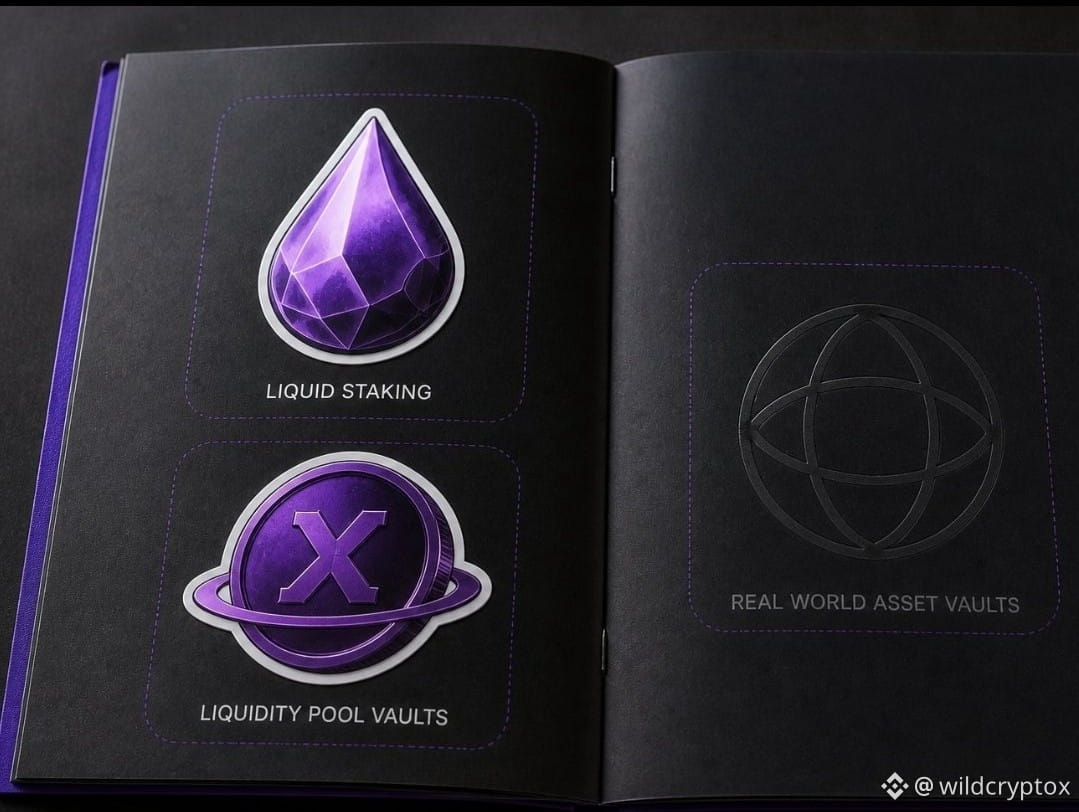
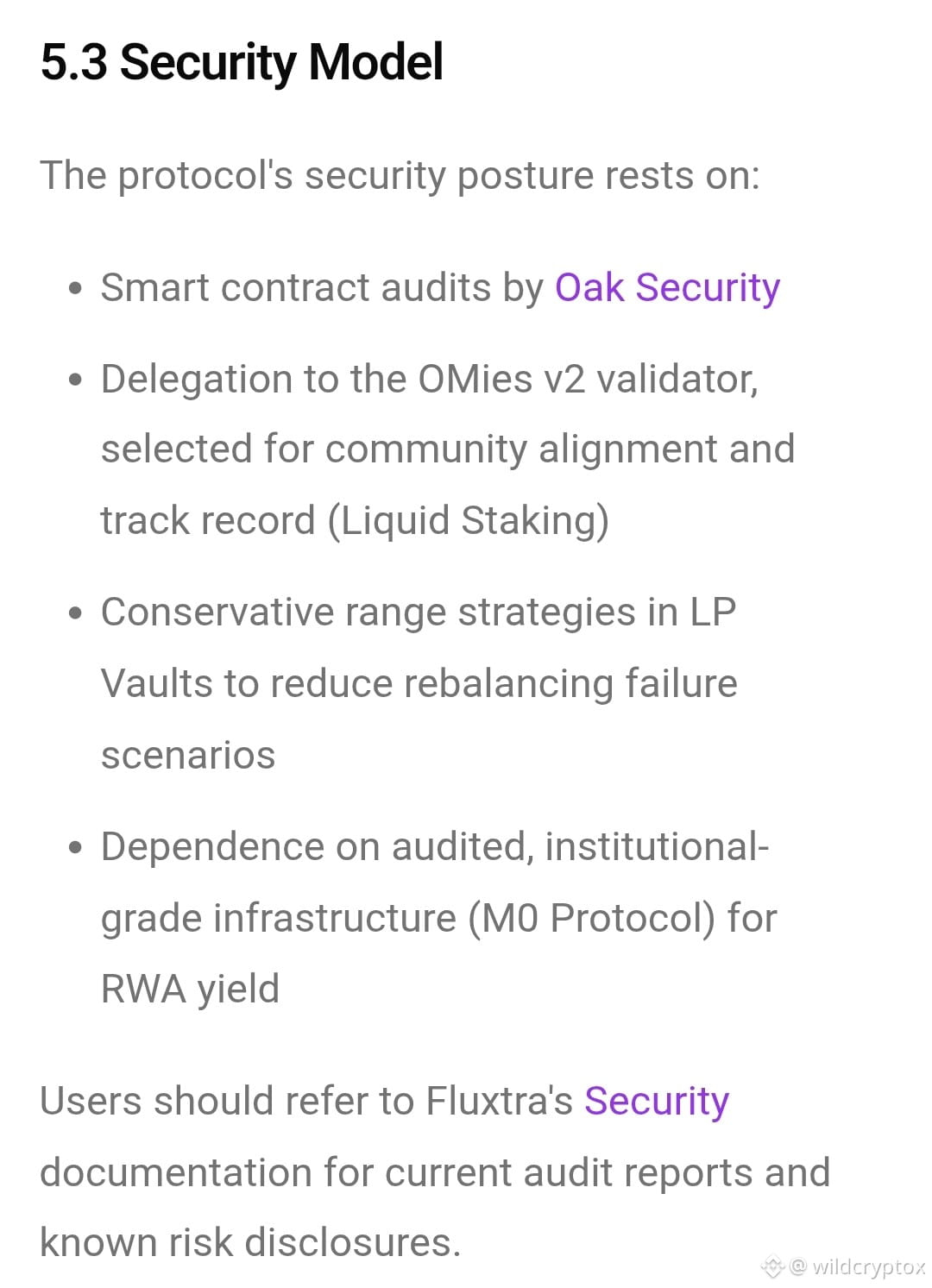
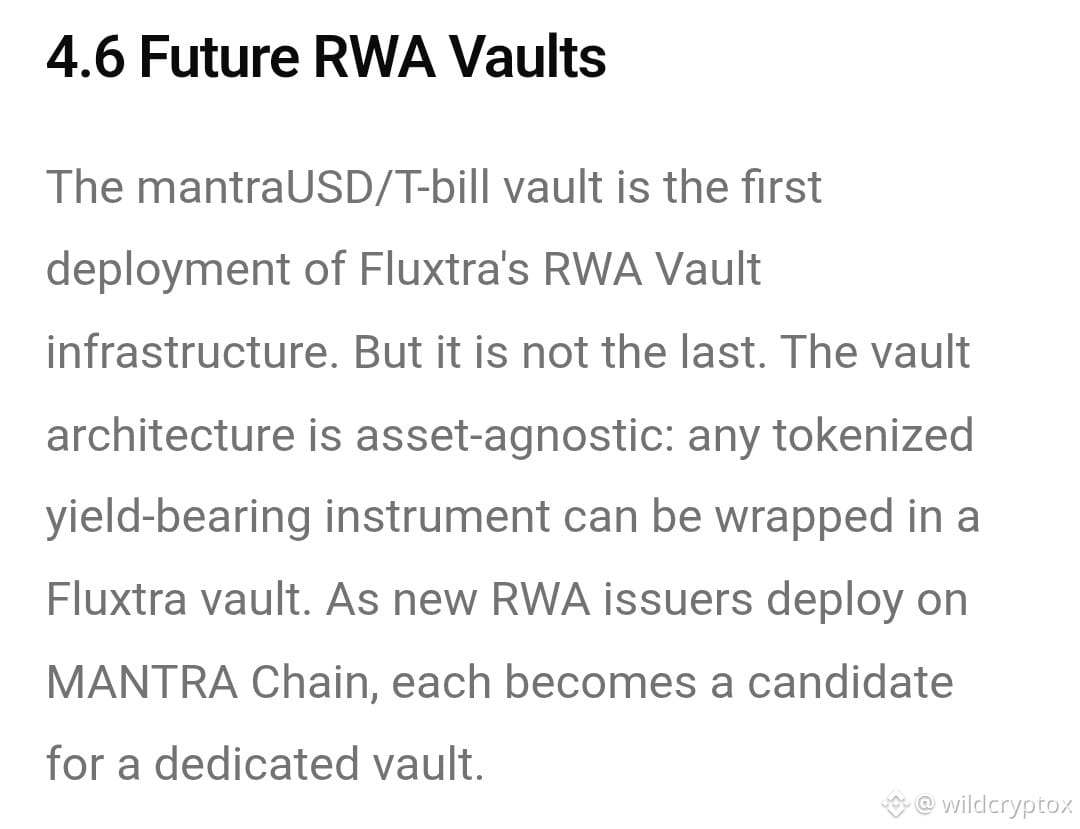
VAULTS de RWAs
$MANTRA : Obtén $XTRA
💧Acumula puntos de FluxtraMANTRA
🪙 Recibe $XTRA
" El sistema está diseñado para recompensar la profundidad de participación, no solo el tamaño del depósito"
No necesitas ser una gran ballena para ganar un APY Institucional Alto.
#Vaults #Stake #Onchain con Infraestructura Cumplidora de Regulaciones.
@MANTRA_Chain 📈
@FluxtraMANTRA 🔐
https://docs.fluxtra.xyz/resources/whitepaper
@MANTRA $MANTRA
VAULTS de RWAs
$MANTRA : Obtén $XTRA
💧Acumula puntos de FluxtraMANTRA
🪙 Recibe $XTRA
" El sistema está diseñado para recompensar la profundidad de participación, no solo el tamaño del depósito"
No necesitas ser una gran ballena para ganar un APY Institucional Alto.
#Vaults #Stake #Onchain con Infraestructura Cumplidora de Regulaciones.
@MANTRA 📈
@FluxtraMANTRA 🔐
https://docs.fluxtra.xyz/resources/whitepaper
VAULTS de RWAs
$MANTRA : Obtén $XTRA
💧Acumula puntos de FluxtraMANTRA
🪙 Recibe $XTRA
" El sistema está diseñado para recompensar la profundidad de participación, no solo el tamaño del depósito"
No necesitas ser una gran ballena para ganar un APY Institucional Alto.
#Vaults #Stake #Onchain con Infraestructura Cumplidora de Regulaciones.
@MANTRA 📈
@FluxtraMANTRA 🔐
https://docs.fluxtra.xyz/resources/whitepaper
1
443

·
--
Artículo
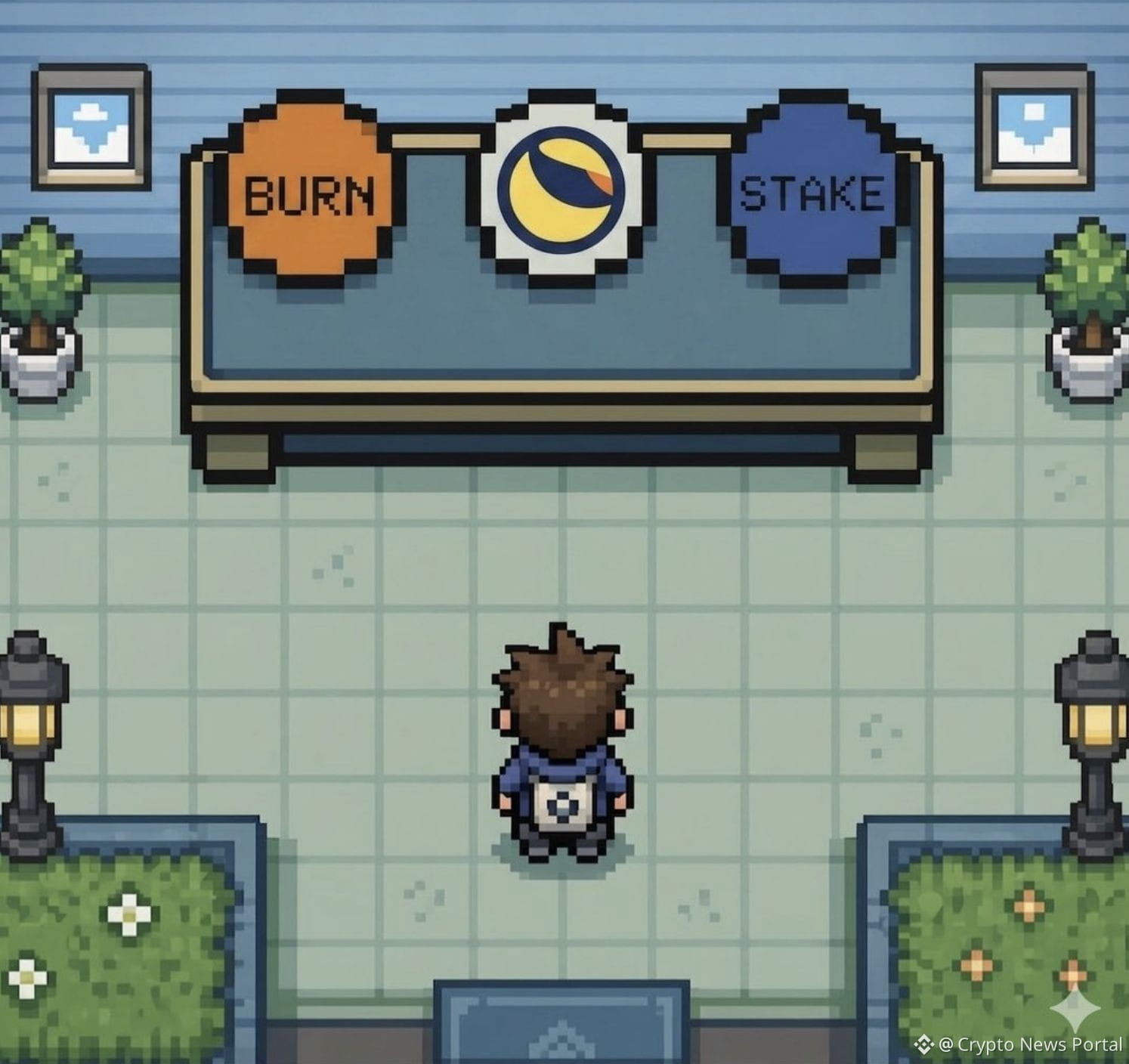
¿Qué es Binance TR Launchpool❓¿Cómo funciona❓Binance TR Launchpool es un sistema que permite a los usuarios poner en staking activos criptográficos específicos y ganar recompensas. Esto permite a los inversores generar ingresos pasivos sin costos adicionales mientras mantienen sus activos seguros.
¿Cómo participar en Launchpool?
Los usuarios pueden participar en Binance TR Launchpool poniendo en staking activos criptográficos elegibles y ganando recompensas. Hay dos tipos de staking disponibles:
Staking flexible: Los activos se pueden retirar en cualquier momento, y las recompensas se ganan diariamente.
Staking bloqueado: Los activos se bloquean por un período fijo, pero los usuarios reciben recompensas más altas.
¿Qué es Binance TR Launchpool❓¿Cómo funciona❓
Binance TR Launchpool es un sistema que permite a los usuarios poner en staking activos criptográficos específicos y ganar recompensas. Esto permite a los inversores generar ingresos pasivos sin costos adicionales mientras mantienen sus activos seguros.
¿Cómo participar en Launchpool?
Los usuarios pueden participar en Binance TR Launchpool poniendo en staking activos criptográficos elegibles y ganando recompensas. Hay dos tipos de staking disponibles:
Staking flexible: Los activos se pueden retirar en cualquier momento, y las recompensas se ganan diariamente.
Staking bloqueado: Los activos se bloquean por un período fijo, pero los usuarios reciben recompensas más altas.
¿Cómo participar en Launchpool?
Los usuarios pueden participar en Binance TR Launchpool poniendo en staking activos criptográficos elegibles y ganando recompensas. Hay dos tipos de staking disponibles:
Staking flexible: Los activos se pueden retirar en cualquier momento, y las recompensas se ganan diariamente.
Staking bloqueado: Los activos se bloquean por un período fijo, pero los usuarios reciben recompensas más altas.
2.8k
1.5k
375
2.8k
·
--
Alcista
@MANTRA_Chain $MANTRA
@Square-Creator-212970648
MANTRA en alza✒️📈🔥
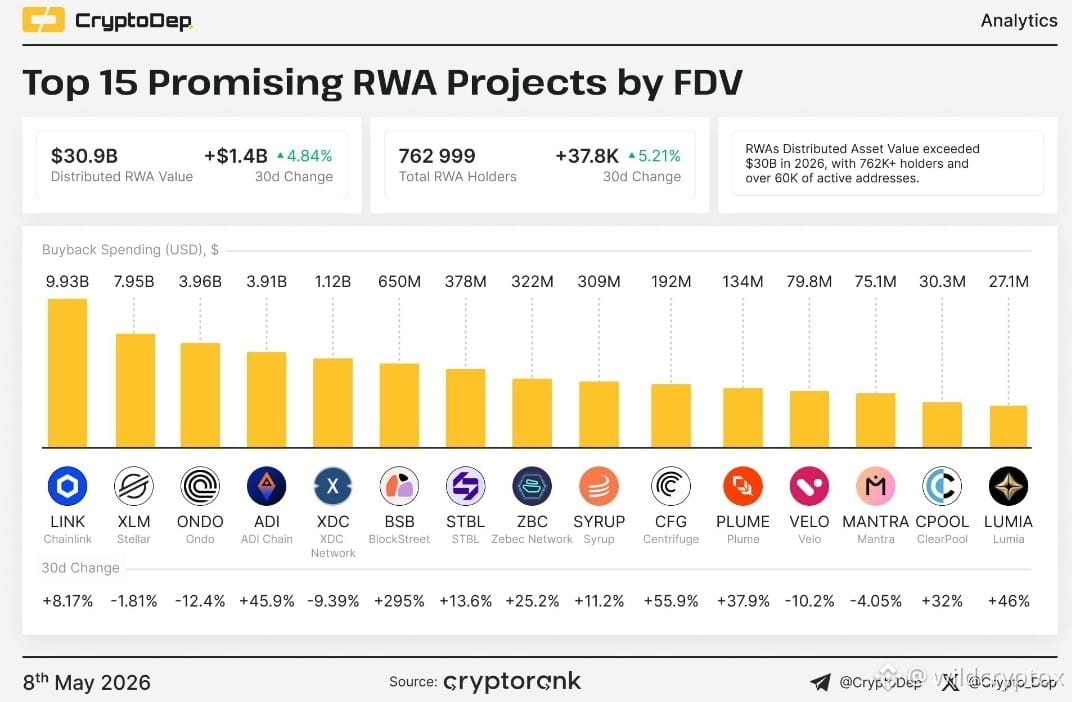
Ciclo de TokeniZación 2026. El juego apenas ha comenzado.
Las instituciones, cuando tengan que operar bajo un marco legal, elegirán aquellos L1's que sean compatibles a nivel de Protocolo.
Los tiempos están cambiando y son desafiantes.
¡Prepárate!
$MANTRA . L1 Soberano ⛓️🌐📈
#Stake #Onchain #RWAs #DEFi
@MANTRA $MANTRA
@DefiCrypto
MANTRA en alza✒️📈🔥
Ciclo de TokeniZación 2026. El juego apenas ha comenzado.
Las instituciones, cuando tengan que operar bajo un marco legal, elegirán aquellos L1's que sean compatibles a nivel de Protocolo.
Los tiempos están cambiando y son desafiantes.
¡Prepárate!
$MANTRA . L1 Soberano ⛓️🌐📈
#Stake #Onchain #RWAs #DEFi
@DefiCrypto
MANTRA en alza✒️📈🔥
Ciclo de TokeniZación 2026. El juego apenas ha comenzado.
Las instituciones, cuando tengan que operar bajo un marco legal, elegirán aquellos L1's que sean compatibles a nivel de Protocolo.
Los tiempos están cambiando y son desafiantes.
¡Prepárate!
$MANTRA . L1 Soberano ⛓️🌐📈
#Stake #Onchain #RWAs #DEFi

3
745
·
--
Alcista

CRYPTO MECHANIC
·
--
Muchos traders pueden ganar dinero durante unas pocas semanas o incluso unos pocos meses.
Pero si cada periodo rentable es seguido por un gran golpe, eso es una señal roja importante.
Generalmente, el problema no es la estrategia.
Empieza con buenos resultados.
Los buenos resultados generan confianza.
Luego, la confianza lentamente se convierte en ego.
Empiezas a aumentar el riesgo.
Dejas de respetar tus reglas.
Mantienes las posiciones perdedoras más tiempo porque “sabes” que el precio volverá.
Forzas operaciones porque las ganancias recientes te hacen sentir intocable.
Y es exactamente cuando el mercado te reinicia.
El mercado recompensa la disciplina mucho más que la confianza.
Cualquiera puede sentirse como un genio durante una racha ganadora.
La verdadera habilidad es mantenerse controlado cuando las cosas van bien.
Cuando eres rentable, tu primer trabajo no es hacer más dinero.
Es proteger el capital que ya has construido.
Pero si cada periodo rentable es seguido por un gran golpe, eso es una señal roja importante.
Generalmente, el problema no es la estrategia.
Empieza con buenos resultados.
Los buenos resultados generan confianza.
Luego, la confianza lentamente se convierte en ego.
Empiezas a aumentar el riesgo.
Dejas de respetar tus reglas.
Mantienes las posiciones perdedoras más tiempo porque “sabes” que el precio volverá.
Forzas operaciones porque las ganancias recientes te hacen sentir intocable.
Y es exactamente cuando el mercado te reinicia.
El mercado recompensa la disciplina mucho más que la confianza.
Cualquiera puede sentirse como un genio durante una racha ganadora.
La verdadera habilidad es mantenerse controlado cuando las cosas van bien.
Cuando eres rentable, tu primer trabajo no es hacer más dinero.
Es proteger el capital que ya has construido.
1
327
Inicia sesión para explorar más contenidos
Únete a usuarios globales de criptomonedas en Binance Square
⚡️ Obtén información útil y actualizada sobre criptos.
💬 Avalado por el mayor exchange de criptomonedas en el mundo.
👍 Descubre perspectivas reales de creadores verificados.
Email/número de teléfono
Temas populares
1
#DriftHackVictimsBeginClaims
2,240 vistas
65 están debatiendo
2
#SolanaTokenizedStockVolumeTops$4.4BInSeptember
959 vistas
16 están debatiendo
3
#BitcoinSpotETFsDraw$6.34BInflowsInQ3
8,466 vistas
125 están debatiendo
4
#EthereumValidatorExitQueueJumps392%
165,366 vistas
1,250 están debatiendo
5
#IMFApprovesElSalvador$138MWithBitcoinWaiver
15,840 vistas
79 están debatiendo
6
#SECHaltsCryptoETFReviewsAmidFundingLapse
301,111 vistas
2,061 están debatiendo
7
#ZcashETFPostsFirstWeeklyOutflow$93.6M
101,011 vistas
263 están debatiendo
8
#GreekPoliceBustCryptoScamRingArrest17
417,147 vistas
2,667 están debatiendo
9
#BitcoinRejectedAt$87K
234,339 vistas
333 están debatiendo
10
#FedOctoberRateHikeOddsFallTo17%
432,163 vistas
2,792 están debatiendo