

Philboom
2.1k Publicaciones

Philboom
Denunciar
Bloquear usuario
Crypto Fundamentals Analyst.
8 Siguiendo
75 Seguidores
232 Me gusta
Publicaciones
Todo
Citas
·
--
Alcista
#NFPWatch
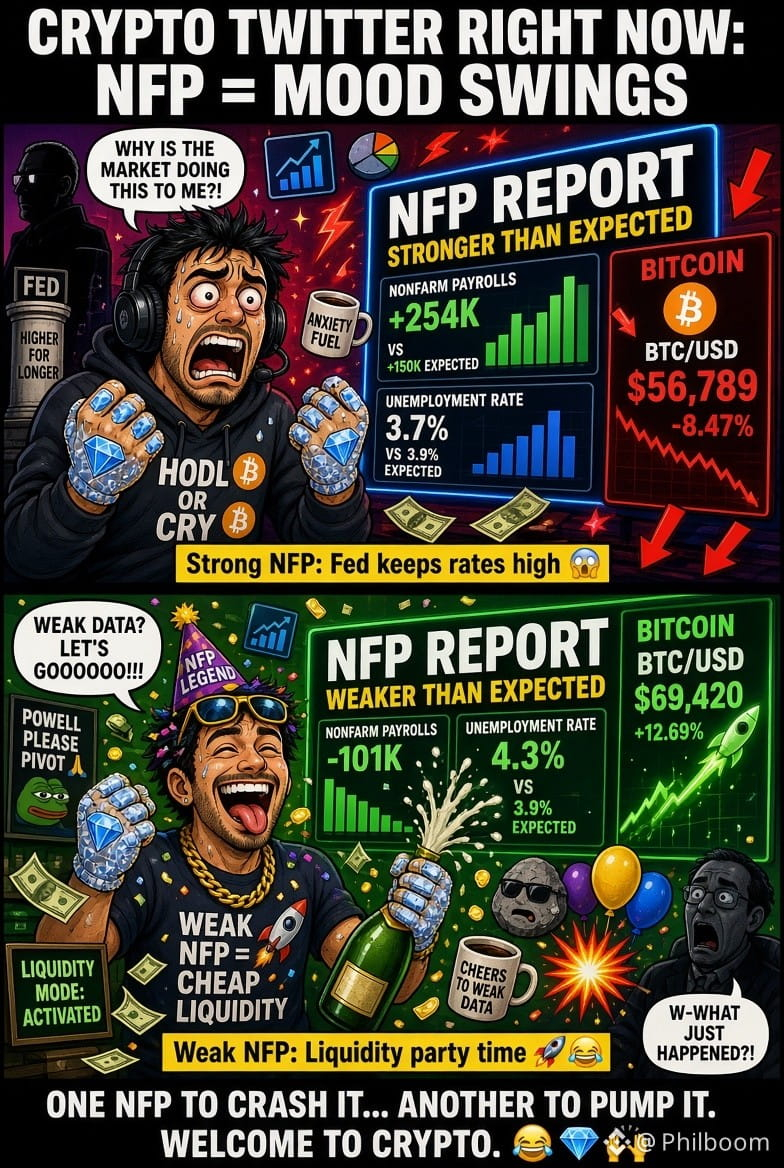
El día de la NFP es como el universo enviando un examen sorpresa a todos los traders de cripto al mismo tiempo 📊💥
El informe de Non Farm Payrolls llega y de repente Bitcoin empieza a comportarse como si lo hubieran pillado doomscrolleando durante una reunión de la Fed. Este número no le importa tu altcoin favorito ni tus manos de diamante. Solo le importan los empleos en EE. UU. Si los empleos son fuertes, la economía sigue acelerada con cafeína ☕💪 así que la Fed podría mantener las tasas más altas por más tiempo. Las tasas más altas impulsan el dólar y los rendimientos de los bonos, y eso hace que mantener cripto que no genera rendimiento se sienta como cargar una bolsa de piedras cuesta arriba 🪨📈
Los empleos débiles cambian el guion. Los datos suaves susurran que podrían venir recortes de tasas, lo que inunda el sistema de liquidez y de apetito por el riesgo. De pronto, Bitcoin recuerda que otra vez es el chico cool de la fiesta 🎉🚀
Aquí va el té analítico ☕ La transmisión es una reacción en cadena macro pura. Las NFP cambian las probabilidades sobre la Fed; luego se mueven los rendimientos y el dólar; después reaccionan los activos globales de riesgo, incluyendo el cripto. Históricamente, el movimiento promedio de Bitcoin en estos días ronda el dos por ciento, que básicamente es el caos diario normal. La dirección es más o menos como tirar una moneda, así que no apuestes la granja a un solo titular 🎲
Los salarios y el desempleo roban protagonismo a veces. Salarios calientes con empleos fuertes es el combo hawkish definitivo que puede mandar al cripto a un breve enfriamiento. Todo blando y los traders empiezan a refrescar las gráficas como si fuera la mañana de Navidad 🎄
Así que cuando llegue el número trátalo como el clima. Prepárate para la turbulencia, pero no canceles todo el viaje por carretera. El cripto todavía es joven, dramático y alérgico a los datos macro aburridos, y sin embargo siempre aparece para el drama 🎭😂
$BTC
{spot}(BTCUSDT)
#NFPWatch
El día de la NFP es como el universo enviando un examen sorpresa a todos los traders de cripto al mismo tiempo 📊💥
El informe de Non Farm Payrolls llega y de repente Bitcoin empieza a comportarse como si lo hubieran pillado doomscrolleando durante una reunión de la Fed. Este número no le importa tu altcoin favorito ni tus manos de diamante. Solo le importan los empleos en EE. UU. Si los empleos son fuertes, la economía sigue acelerada con cafeína ☕💪 así que la Fed podría mantener las tasas más altas por más tiempo. Las tasas más altas impulsan el dólar y los rendimientos de los bonos, y eso hace que mantener cripto que no genera rendimiento se sienta como cargar una bolsa de piedras cuesta arriba 🪨📈
Los empleos débiles cambian el guion. Los datos suaves susurran que podrían venir recortes de tasas, lo que inunda el sistema de liquidez y de apetito por el riesgo. De pronto, Bitcoin recuerda que otra vez es el chico cool de la fiesta 🎉🚀
Aquí va el té analítico ☕ La transmisión es una reacción en cadena macro pura. Las NFP cambian las probabilidades sobre la Fed; luego se mueven los rendimientos y el dólar; después reaccionan los activos globales de riesgo, incluyendo el cripto. Históricamente, el movimiento promedio de Bitcoin en estos días ronda el dos por ciento, que básicamente es el caos diario normal. La dirección es más o menos como tirar una moneda, así que no apuestes la granja a un solo titular 🎲
Los salarios y el desempleo roban protagonismo a veces. Salarios calientes con empleos fuertes es el combo hawkish definitivo que puede mandar al cripto a un breve enfriamiento. Todo blando y los traders empiezan a refrescar las gráficas como si fuera la mañana de Navidad 🎄
Así que cuando llegue el número trátalo como el clima. Prepárate para la turbulencia, pero no canceles todo el viaje por carretera. El cripto todavía es joven, dramático y alérgico a los datos macro aburridos, y sin embargo siempre aparece para el drama 🎭😂
$BTC
El día de la NFP es como el universo enviando un examen sorpresa a todos los traders de cripto al mismo tiempo 📊💥
El informe de Non Farm Payrolls llega y de repente Bitcoin empieza a comportarse como si lo hubieran pillado doomscrolleando durante una reunión de la Fed. Este número no le importa tu altcoin favorito ni tus manos de diamante. Solo le importan los empleos en EE. UU. Si los empleos son fuertes, la economía sigue acelerada con cafeína ☕💪 así que la Fed podría mantener las tasas más altas por más tiempo. Las tasas más altas impulsan el dólar y los rendimientos de los bonos, y eso hace que mantener cripto que no genera rendimiento se sienta como cargar una bolsa de piedras cuesta arriba 🪨📈
Los empleos débiles cambian el guion. Los datos suaves susurran que podrían venir recortes de tasas, lo que inunda el sistema de liquidez y de apetito por el riesgo. De pronto, Bitcoin recuerda que otra vez es el chico cool de la fiesta 🎉🚀
Aquí va el té analítico ☕ La transmisión es una reacción en cadena macro pura. Las NFP cambian las probabilidades sobre la Fed; luego se mueven los rendimientos y el dólar; después reaccionan los activos globales de riesgo, incluyendo el cripto. Históricamente, el movimiento promedio de Bitcoin en estos días ronda el dos por ciento, que básicamente es el caos diario normal. La dirección es más o menos como tirar una moneda, así que no apuestes la granja a un solo titular 🎲
Los salarios y el desempleo roban protagonismo a veces. Salarios calientes con empleos fuertes es el combo hawkish definitivo que puede mandar al cripto a un breve enfriamiento. Todo blando y los traders empiezan a refrescar las gráficas como si fuera la mañana de Navidad 🎄
Así que cuando llegue el número trátalo como el clima. Prepárate para la turbulencia, pero no canceles todo el viaje por carretera. El cripto todavía es joven, dramático y alérgico a los datos macro aburridos, y sin embargo siempre aparece para el drama 🎭😂
$BTC
95
·
--
Alcista
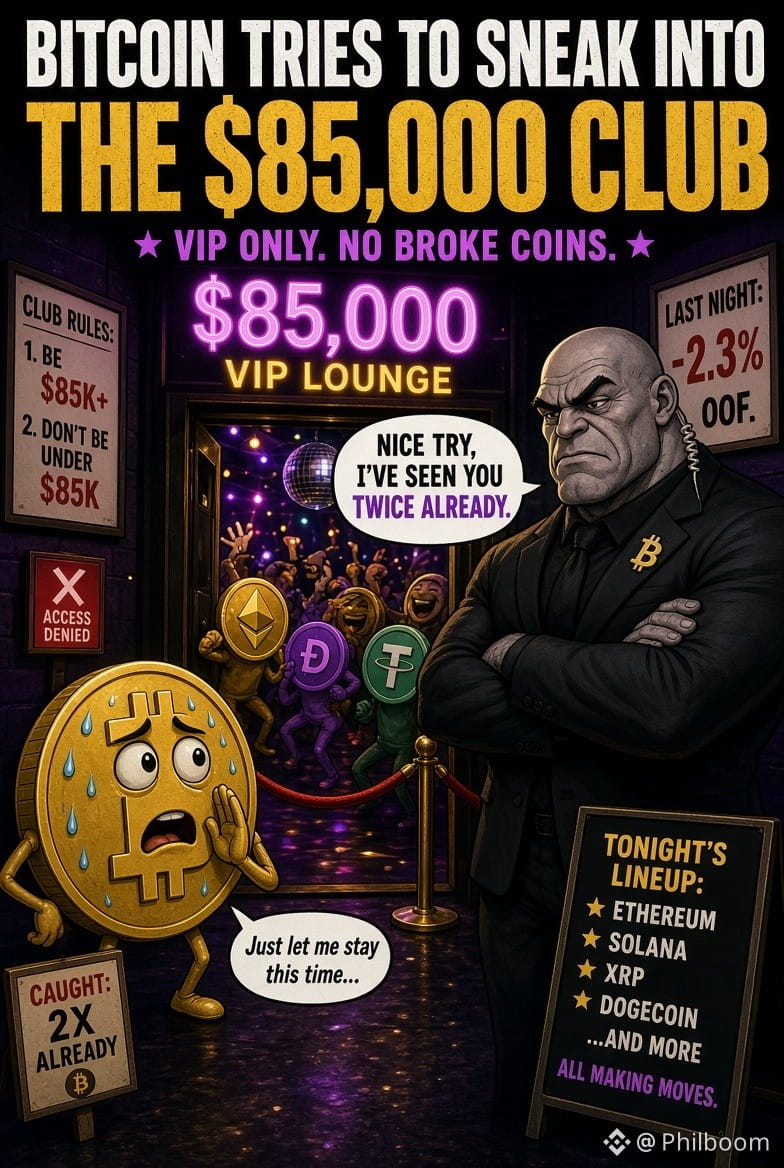
Bitcoin sigue cruzando los $85.000 como si intentara colarse pasando a un portero que ya lo vio dos veces 🚪😂
El miércoles, el BTC superó los $85.500 con una inflación más fresca de lo esperado, y luego lo devolvió cuando las tasas de los bonos se negaron a moverse. El jueves, a las 2:41 a. m. ET, cruzó $85.027 en el spot de Binance. Para el 2 de octubre, está entre $84.900 y $85.400, básicamente en el mismo vecindario al que no deja de ir y del que no deja de salir. Cruzar $85.000 ya dejó de ser noticia. Mantenerse por encima de eso es la historia real que nadie ha escrito todavía. 💎
Aquí está el número específico que vale la pena vigilar 🧠
24/7 Wall St. fija la prueba real en $85.518, aproximadamente un 2% por encima de donde está ahora, como nivel de cierre antes de la reunión del 27-28 de octubre de la Fed. Dos fuerzas siguen bloqueándolo cada vez. El rendimiento a 10 años cerca del 5.2%, su nivel más alto desde 2007, hace que un activo de rendimiento cero sea más difícil de vender cuando los bonos pagan tan bien. Y los traders que compraron cerca del pico de $87.397 siguen deshaciéndose en cada repunte: un muro de venta documentado que se reconstruye cada vez que el precio se acerca. 😂
El caso estacional que aún sigue vigente 🎯
Diez de los últimos trece octubres terminaron en positivo. Los ETF de Bitcoin atrajeron $2.4 mil millones la semana pasada, el mejor desempeño desde octubre de 2025, y los mercados de futuros ahora valoran solo un 47.1% de probabilidad de un alza en octubre. Solo que septiembre, por su parte, vio aproximadamente 25,700 BTC vendidos con ganancia en una sola sesión, el mayor volumen de 2026. El optimismo de octubre y la toma de beneficios récord están ocurriendo al mismo tiempo. 💡
La conclusión honesta 🚀
Un cierre por encima de $85.518 significaría algo de verdad. Un nuevo intento por encima de $85.000 que se desvanece para la noche, no.
#BitcoinRisesToward$85K
$BTC
{spot}(BTCUSDT)
Bitcoin sigue cruzando los $85.000 como si intentara colarse pasando a un portero que ya lo vio dos veces 🚪😂
El miércoles, el BTC superó los $85.500 con una inflación más fresca de lo esperado, y luego lo devolvió cuando las tasas de los bonos se negaron a moverse. El jueves, a las 2:41 a. m. ET, cruzó $85.027 en el spot de Binance. Para el 2 de octubre, está entre $84.900 y $85.400, básicamente en el mismo vecindario al que no deja de ir y del que no deja de salir. Cruzar $85.000 ya dejó de ser noticia. Mantenerse por encima de eso es la historia real que nadie ha escrito todavía. 💎
Aquí está el número específico que vale la pena vigilar 🧠
24/7 Wall St. fija la prueba real en $85.518, aproximadamente un 2% por encima de donde está ahora, como nivel de cierre antes de la reunión del 27-28 de octubre de la Fed. Dos fuerzas siguen bloqueándolo cada vez. El rendimiento a 10 años cerca del 5.2%, su nivel más alto desde 2007, hace que un activo de rendimiento cero sea más difícil de vender cuando los bonos pagan tan bien. Y los traders que compraron cerca del pico de $87.397 siguen deshaciéndose en cada repunte: un muro de venta documentado que se reconstruye cada vez que el precio se acerca. 😂
El caso estacional que aún sigue vigente 🎯
Diez de los últimos trece octubres terminaron en positivo. Los ETF de Bitcoin atrajeron $2.4 mil millones la semana pasada, el mejor desempeño desde octubre de 2025, y los mercados de futuros ahora valoran solo un 47.1% de probabilidad de un alza en octubre. Solo que septiembre, por su parte, vio aproximadamente 25,700 BTC vendidos con ganancia en una sola sesión, el mayor volumen de 2026. El optimismo de octubre y la toma de beneficios récord están ocurriendo al mismo tiempo. 💡
La conclusión honesta 🚀
Un cierre por encima de $85.518 significaría algo de verdad. Un nuevo intento por encima de $85.000 que se desvanece para la noche, no.
#BitcoinRisesToward$85K
$BTC
El miércoles, el BTC superó los $85.500 con una inflación más fresca de lo esperado, y luego lo devolvió cuando las tasas de los bonos se negaron a moverse. El jueves, a las 2:41 a. m. ET, cruzó $85.027 en el spot de Binance. Para el 2 de octubre, está entre $84.900 y $85.400, básicamente en el mismo vecindario al que no deja de ir y del que no deja de salir. Cruzar $85.000 ya dejó de ser noticia. Mantenerse por encima de eso es la historia real que nadie ha escrito todavía. 💎
Aquí está el número específico que vale la pena vigilar 🧠
24/7 Wall St. fija la prueba real en $85.518, aproximadamente un 2% por encima de donde está ahora, como nivel de cierre antes de la reunión del 27-28 de octubre de la Fed. Dos fuerzas siguen bloqueándolo cada vez. El rendimiento a 10 años cerca del 5.2%, su nivel más alto desde 2007, hace que un activo de rendimiento cero sea más difícil de vender cuando los bonos pagan tan bien. Y los traders que compraron cerca del pico de $87.397 siguen deshaciéndose en cada repunte: un muro de venta documentado que se reconstruye cada vez que el precio se acerca. 😂
El caso estacional que aún sigue vigente 🎯
Diez de los últimos trece octubres terminaron en positivo. Los ETF de Bitcoin atrajeron $2.4 mil millones la semana pasada, el mejor desempeño desde octubre de 2025, y los mercados de futuros ahora valoran solo un 47.1% de probabilidad de un alza en octubre. Solo que septiembre, por su parte, vio aproximadamente 25,700 BTC vendidos con ganancia en una sola sesión, el mayor volumen de 2026. El optimismo de octubre y la toma de beneficios récord están ocurriendo al mismo tiempo. 💡
La conclusión honesta 🚀
Un cierre por encima de $85.518 significaría algo de verdad. Un nuevo intento por encima de $85.000 que se desvanece para la noche, no.
#BitcoinRisesToward$85K
$BTC
99
·
--
Alcista
#SECToClarifyOnChainFundraisingRules
El Congreso perdió la votación, así que el presidente de la SEC dijo que lo haría él mismo 🏛️😂
El 15 de septiembre, la Ley CLARITY murió en el Senado con 49-50, once votos menos de los sesenta necesarios. Y no fue tampoco la típica pelea de territorios entre la SEC y la CFTC: fue un conflicto ético por tenencias de cripto por parte de funcionarios y sus familias lo que en realidad la hundió. Al día siguiente, el presidente de la SEC, Paul Atkins, publicó en X que la agencia actuaría dentro de su autoridad estatutaria, pase lo que pase. El 29 de septiembre se lo dijo lo mismo de forma directa a CNBC: la SEC aclarará las normas sobre recaudación en cadena (onchain) con o sin el Congreso. 💎
Aquí está la trampa honesta que vale la pena meditar 🧠
Atkins no ha dicho si esto se convierte en una exención formal, una vía de registro o una simple guía para el personal. Todavía no existe texto de ninguna regla. Lo que dio es intención, expresada con confianza, en televisión, pero la intención no es lo mismo que un documento en el que cualquiera pueda confiar de verdad. 😂
La parte que ya es real 🎯
“Regulación de criptoactivos”, propuesta allá por agosto, está ahí mismo ahora, con números concretos adjuntos: una exención para startups para rondas de hasta $5 millones durante cuatro años, y una exención para recaudación de hasta $75 millones al año; además, un camino para que un token salga del estatus de valor una vez esté lo suficientemente descentralizado. Los comentarios cierran el 20 de octubre. Es probable que este sea el vehículo al que Atkins está apuntando. 💡
El detalle sobre el personal 🚀
La comisionada Hester Peirce se marcha el 2 de octubre, dejando solo a Atkins y a Mark Uyeda para terminar, en la práctica, lo que se construya. Los mercados de predicción ya valoran una versión reanimada de la Ley CLARITY en cifras de un solo dígito para este año. La SEC ahora es la única puerta que queda abierta, y aun así sigue estando mayormente cerrada.
$BTC
{spot}(BTCUSDT)
#SECToClarifyOnChainFundraisingRules
El Congreso perdió la votación, así que el presidente de la SEC dijo que lo haría él mismo 🏛️😂
El 15 de septiembre, la Ley CLARITY murió en el Senado con 49-50, once votos menos de los sesenta necesarios. Y no fue tampoco la típica pelea de territorios entre la SEC y la CFTC: fue un conflicto ético por tenencias de cripto por parte de funcionarios y sus familias lo que en realidad la hundió. Al día siguiente, el presidente de la SEC, Paul Atkins, publicó en X que la agencia actuaría dentro de su autoridad estatutaria, pase lo que pase. El 29 de septiembre se lo dijo lo mismo de forma directa a CNBC: la SEC aclarará las normas sobre recaudación en cadena (onchain) con o sin el Congreso. 💎
Aquí está la trampa honesta que vale la pena meditar 🧠
Atkins no ha dicho si esto se convierte en una exención formal, una vía de registro o una simple guía para el personal. Todavía no existe texto de ninguna regla. Lo que dio es intención, expresada con confianza, en televisión, pero la intención no es lo mismo que un documento en el que cualquiera pueda confiar de verdad. 😂
La parte que ya es real 🎯
“Regulación de criptoactivos”, propuesta allá por agosto, está ahí mismo ahora, con números concretos adjuntos: una exención para startups para rondas de hasta $5 millones durante cuatro años, y una exención para recaudación de hasta $75 millones al año; además, un camino para que un token salga del estatus de valor una vez esté lo suficientemente descentralizado. Los comentarios cierran el 20 de octubre. Es probable que este sea el vehículo al que Atkins está apuntando. 💡
El detalle sobre el personal 🚀
La comisionada Hester Peirce se marcha el 2 de octubre, dejando solo a Atkins y a Mark Uyeda para terminar, en la práctica, lo que se construya. Los mercados de predicción ya valoran una versión reanimada de la Ley CLARITY en cifras de un solo dígito para este año. La SEC ahora es la única puerta que queda abierta, y aun así sigue estando mayormente cerrada.
$BTC
El Congreso perdió la votación, así que el presidente de la SEC dijo que lo haría él mismo 🏛️😂
El 15 de septiembre, la Ley CLARITY murió en el Senado con 49-50, once votos menos de los sesenta necesarios. Y no fue tampoco la típica pelea de territorios entre la SEC y la CFTC: fue un conflicto ético por tenencias de cripto por parte de funcionarios y sus familias lo que en realidad la hundió. Al día siguiente, el presidente de la SEC, Paul Atkins, publicó en X que la agencia actuaría dentro de su autoridad estatutaria, pase lo que pase. El 29 de septiembre se lo dijo lo mismo de forma directa a CNBC: la SEC aclarará las normas sobre recaudación en cadena (onchain) con o sin el Congreso. 💎
Aquí está la trampa honesta que vale la pena meditar 🧠
Atkins no ha dicho si esto se convierte en una exención formal, una vía de registro o una simple guía para el personal. Todavía no existe texto de ninguna regla. Lo que dio es intención, expresada con confianza, en televisión, pero la intención no es lo mismo que un documento en el que cualquiera pueda confiar de verdad. 😂
La parte que ya es real 🎯
“Regulación de criptoactivos”, propuesta allá por agosto, está ahí mismo ahora, con números concretos adjuntos: una exención para startups para rondas de hasta $5 millones durante cuatro años, y una exención para recaudación de hasta $75 millones al año; además, un camino para que un token salga del estatus de valor una vez esté lo suficientemente descentralizado. Los comentarios cierran el 20 de octubre. Es probable que este sea el vehículo al que Atkins está apuntando. 💡
El detalle sobre el personal 🚀
La comisionada Hester Peirce se marcha el 2 de octubre, dejando solo a Atkins y a Mark Uyeda para terminar, en la práctica, lo que se construya. Los mercados de predicción ya valoran una versión reanimada de la Ley CLARITY en cifras de un solo dígito para este año. La SEC ahora es la única puerta que queda abierta, y aun así sigue estando mayormente cerrada.
$BTC

157
·
--
Alcista
#BitMineETHHoldingsTop6Million
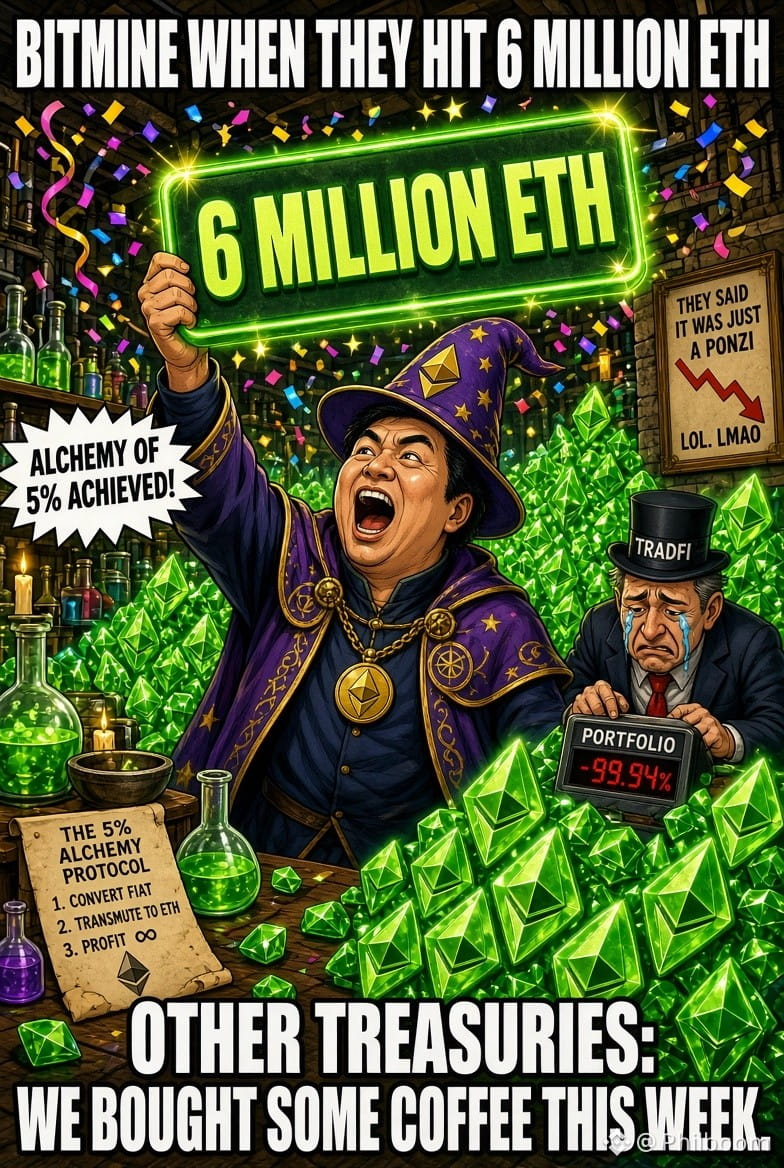
Bitmine acaba de atravesar el umbral de los seis millones de ETH y el mundo cripto está haciendo dobles tomas como un gato que ve un puntero láser 🐱💨 El 28 de septiembre su tesorería alcanzó un sólido 6001302 ETH tras otra compra semanal constante de 17362 tokens. Eso significa que están acumulando cerca de un cinco por ciento de todo el suministro de Ethereum en menos de quince meses de modo de acumulación pura.
Tom Lee y el equipo han convertido la estrategia de tesorería corporativa en un deporte extremo. Mientras otras firmas debaten el momento del mercado, Bitmine sigue comprando cada semana, como si fuera una membresía de gimnasio que se niegan a cancelar. La mayoría de esas monedas ya están en staking, generando un rendimiento serio que podría superar los cuatrocientos millones de dólares al año cuando todo quede completamente bloqueado.
Los analistas lo están llamando la Alquimia del cinco por ciento, y Bitmine básicamente es el alquimista que apareció temprano con un carrito de compras. Ahora se sitúan como la tesorería de Ethereum más grande del planeta y la segunda mayor tesorería cripto en general, solo por detrás de la ballena de Bitcoin conocida como Strategy.
Lo gracioso es ver cómo las finanzas tradicionales intentan explicar cómo una antigua empresa de minería se tragó más ETH que la mayoría de los estados-nación, publicando actualizaciones semanales como un influencer del fitness contando repeticiones. Las pérdidas en papel iban y venían, pero la compra nunca parpadeó. Los efectos de red empiezan a activarse y el bucle de retroalimentación positivo se está volviendo ensordecedor.
Seis millones no es solo un número. Es una declaración de que estamos aquí para el juego largo y trajimos snacks 🚀📈
$ETH
{spot}(ETHUSDT)
#BitMineETHHoldingsTop6Million
Bitmine acaba de atravesar el umbral de los seis millones de ETH y el mundo cripto está haciendo dobles tomas como un gato que ve un puntero láser 🐱💨 El 28 de septiembre su tesorería alcanzó un sólido 6001302 ETH tras otra compra semanal constante de 17362 tokens. Eso significa que están acumulando cerca de un cinco por ciento de todo el suministro de Ethereum en menos de quince meses de modo de acumulación pura.
Tom Lee y el equipo han convertido la estrategia de tesorería corporativa en un deporte extremo. Mientras otras firmas debaten el momento del mercado, Bitmine sigue comprando cada semana, como si fuera una membresía de gimnasio que se niegan a cancelar. La mayoría de esas monedas ya están en staking, generando un rendimiento serio que podría superar los cuatrocientos millones de dólares al año cuando todo quede completamente bloqueado.
Los analistas lo están llamando la Alquimia del cinco por ciento, y Bitmine básicamente es el alquimista que apareció temprano con un carrito de compras. Ahora se sitúan como la tesorería de Ethereum más grande del planeta y la segunda mayor tesorería cripto en general, solo por detrás de la ballena de Bitcoin conocida como Strategy.
Lo gracioso es ver cómo las finanzas tradicionales intentan explicar cómo una antigua empresa de minería se tragó más ETH que la mayoría de los estados-nación, publicando actualizaciones semanales como un influencer del fitness contando repeticiones. Las pérdidas en papel iban y venían, pero la compra nunca parpadeó. Los efectos de red empiezan a activarse y el bucle de retroalimentación positivo se está volviendo ensordecedor.
Seis millones no es solo un número. Es una declaración de que estamos aquí para el juego largo y trajimos snacks 🚀📈
$ETH
Bitmine acaba de atravesar el umbral de los seis millones de ETH y el mundo cripto está haciendo dobles tomas como un gato que ve un puntero láser 🐱💨 El 28 de septiembre su tesorería alcanzó un sólido 6001302 ETH tras otra compra semanal constante de 17362 tokens. Eso significa que están acumulando cerca de un cinco por ciento de todo el suministro de Ethereum en menos de quince meses de modo de acumulación pura.
Tom Lee y el equipo han convertido la estrategia de tesorería corporativa en un deporte extremo. Mientras otras firmas debaten el momento del mercado, Bitmine sigue comprando cada semana, como si fuera una membresía de gimnasio que se niegan a cancelar. La mayoría de esas monedas ya están en staking, generando un rendimiento serio que podría superar los cuatrocientos millones de dólares al año cuando todo quede completamente bloqueado.
Los analistas lo están llamando la Alquimia del cinco por ciento, y Bitmine básicamente es el alquimista que apareció temprano con un carrito de compras. Ahora se sitúan como la tesorería de Ethereum más grande del planeta y la segunda mayor tesorería cripto en general, solo por detrás de la ballena de Bitcoin conocida como Strategy.
Lo gracioso es ver cómo las finanzas tradicionales intentan explicar cómo una antigua empresa de minería se tragó más ETH que la mayoría de los estados-nación, publicando actualizaciones semanales como un influencer del fitness contando repeticiones. Las pérdidas en papel iban y venían, pero la compra nunca parpadeó. Los efectos de red empiezan a activarse y el bucle de retroalimentación positivo se está volviendo ensordecedor.
Seis millones no es solo un número. Es una declaración de que estamos aquí para el juego largo y trajimos snacks 🚀📈
$ETH
93
·
--
Alcista
#StrategyAdds1666BTCHoldingsReach847666
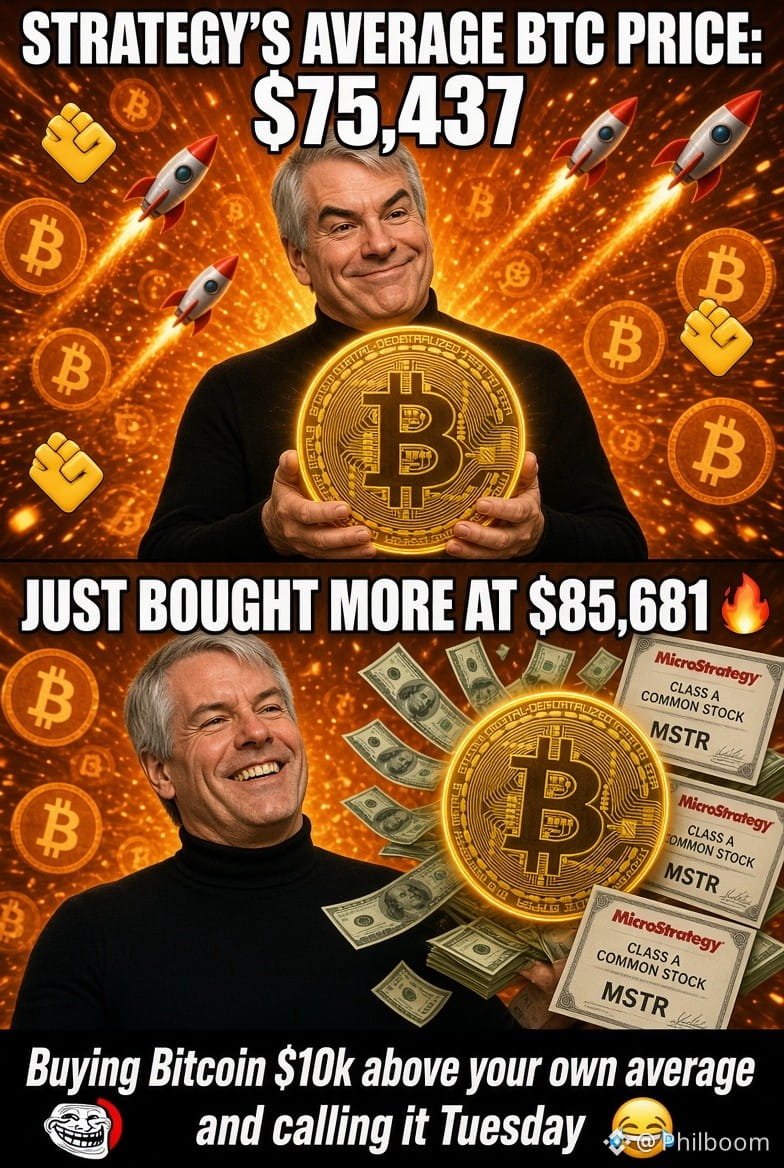
Estrategia compró Bitcoin por $10,000 por encima de su propio precio promedio y lo llamó el martes 📈😂
Entre el 21 y el 27 de septiembre, Strategy compró aproximadamente 1,665 a 1,666 Bitcoins más, según fuentes que lo redondean ligeramente diferente, por alrededor de $142.7 millones, a un precio promedio de $85,681 por moneda. Las tenencias totales ahora se sitúan en 847,666 BTC, con base de costo de $63.95 mil millones y precio promedio en toda la empresa de $75,437. Lee esos dos números uno al lado del otro. Esta tanda costó más de $10,000 por moneda que el promedio de todo lo que ya poseen. Strategy ya no solo está comprando Bitcoin, está comprándolo con un sobreprecio frente a sí mismo. 💎
Aquí está el cambio de financiamiento que vale la pena notar 🧠
La compra de 950 BTC de la semana pasada salió directamente de efectivo existente; no se vendieron acciones nuevas. Esta semana se volvió a la venta de 1.47 millones de acciones de MSTR por $246.2 millones, dividiendo los ingresos: $142.7 millones para Bitcoin y $103.5 millones para recomprar 1.53 millones de acciones preferentes de STRC. Una semana efectivo, la siguiente semana acciones. Aparentemente, el bolsillo que tenga el dinero esa semana decide el método. 😂
El número de escala con el que vale la pena quedarse 🎯
Un análisis señala que Strategy ahora posee aproximadamente el 4% del suministro fijo total de 21 millones de monedas de Bitcoin. La concentración en ese nivel tiende eventualmente a atraer la atención de reguladores y responsables de políticas, no solo de otros inversionistas que observan los informes. 💡
La conclusión honesta 🚀
El avance del propio Saylor se leyó simplemente, aún más naranja. La presentación lo confirmó. Si tiene sentido comprar con prima frente a tu propio promedio a largo plazo es la misma pregunta que esta empresa ha estado respondiendo durante años, con más compras.
$BTC
{spot}(BTCUSDT)
#StrategyAdds1666BTCHoldingsReach847666
Estrategia compró Bitcoin por $10,000 por encima de su propio precio promedio y lo llamó el martes 📈😂
Entre el 21 y el 27 de septiembre, Strategy compró aproximadamente 1,665 a 1,666 Bitcoins más, según fuentes que lo redondean ligeramente diferente, por alrededor de $142.7 millones, a un precio promedio de $85,681 por moneda. Las tenencias totales ahora se sitúan en 847,666 BTC, con base de costo de $63.95 mil millones y precio promedio en toda la empresa de $75,437. Lee esos dos números uno al lado del otro. Esta tanda costó más de $10,000 por moneda que el promedio de todo lo que ya poseen. Strategy ya no solo está comprando Bitcoin, está comprándolo con un sobreprecio frente a sí mismo. 💎
Aquí está el cambio de financiamiento que vale la pena notar 🧠
La compra de 950 BTC de la semana pasada salió directamente de efectivo existente; no se vendieron acciones nuevas. Esta semana se volvió a la venta de 1.47 millones de acciones de MSTR por $246.2 millones, dividiendo los ingresos: $142.7 millones para Bitcoin y $103.5 millones para recomprar 1.53 millones de acciones preferentes de STRC. Una semana efectivo, la siguiente semana acciones. Aparentemente, el bolsillo que tenga el dinero esa semana decide el método. 😂
El número de escala con el que vale la pena quedarse 🎯
Un análisis señala que Strategy ahora posee aproximadamente el 4% del suministro fijo total de 21 millones de monedas de Bitcoin. La concentración en ese nivel tiende eventualmente a atraer la atención de reguladores y responsables de políticas, no solo de otros inversionistas que observan los informes. 💡
La conclusión honesta 🚀
El avance del propio Saylor se leyó simplemente, aún más naranja. La presentación lo confirmó. Si tiene sentido comprar con prima frente a tu propio promedio a largo plazo es la misma pregunta que esta empresa ha estado respondiendo durante años, con más compras.
$BTC
Estrategia compró Bitcoin por $10,000 por encima de su propio precio promedio y lo llamó el martes 📈😂
Entre el 21 y el 27 de septiembre, Strategy compró aproximadamente 1,665 a 1,666 Bitcoins más, según fuentes que lo redondean ligeramente diferente, por alrededor de $142.7 millones, a un precio promedio de $85,681 por moneda. Las tenencias totales ahora se sitúan en 847,666 BTC, con base de costo de $63.95 mil millones y precio promedio en toda la empresa de $75,437. Lee esos dos números uno al lado del otro. Esta tanda costó más de $10,000 por moneda que el promedio de todo lo que ya poseen. Strategy ya no solo está comprando Bitcoin, está comprándolo con un sobreprecio frente a sí mismo. 💎
Aquí está el cambio de financiamiento que vale la pena notar 🧠
La compra de 950 BTC de la semana pasada salió directamente de efectivo existente; no se vendieron acciones nuevas. Esta semana se volvió a la venta de 1.47 millones de acciones de MSTR por $246.2 millones, dividiendo los ingresos: $142.7 millones para Bitcoin y $103.5 millones para recomprar 1.53 millones de acciones preferentes de STRC. Una semana efectivo, la siguiente semana acciones. Aparentemente, el bolsillo que tenga el dinero esa semana decide el método. 😂
El número de escala con el que vale la pena quedarse 🎯
Un análisis señala que Strategy ahora posee aproximadamente el 4% del suministro fijo total de 21 millones de monedas de Bitcoin. La concentración en ese nivel tiende eventualmente a atraer la atención de reguladores y responsables de políticas, no solo de otros inversionistas que observan los informes. 💡
La conclusión honesta 🚀
El avance del propio Saylor se leyó simplemente, aún más naranja. La presentación lo confirmó. Si tiene sentido comprar con prima frente a tu propio promedio a largo plazo es la misma pregunta que esta empresa ha estado respondiendo durante años, con más compras.
$BTC
90
·
--
Alcista
#ChainlinkLaunchesCCIP2WithEnterpriseVerification
Chainlink acaba de lanzar CCIP 2.0 y la fiesta entre cadenas acaba de recibir una mejora seria 🚀🔐
Hoy, los reyes de los oráculos implementaron la siguiente versión de su Protocolo de Interoperabilidad entre Cadenas y en todas partes las instituciones están haciendo la danza de la alegría 💃🏦 Ya no tendrás que elegir entre “mover mis tokens rápido y rezar” o “esperar para siempre y estar seguro”. Ahora puedes tener ambas cosas y además con tus propios guardaespaldas.
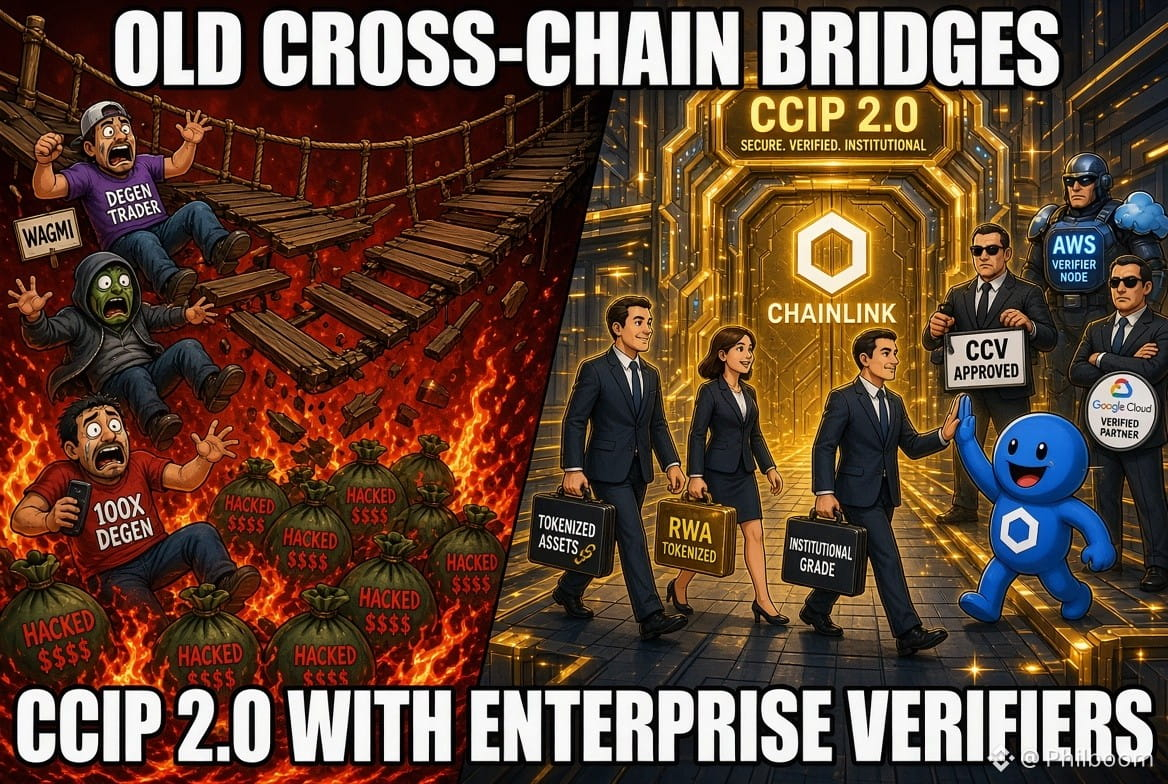
La característica estrella es la seguridad adicional mediante Verificadores entre Cadenas. Imagina el comité predeterminado de Chainlink, de dieciséis operadores de nodos independientes, ya vigilando la bóveda. Ahora puedes contratar guardias extra, como Infosys o Nethermind, o incluso ejecutar tu propio verificador en AWS o Google Cloud. Cada guardia extra tiene que dar el visto bueno antes de que los tokens salten de cadenas. Es como añadir reconocimiento facial y un lector de huellas dactilares encima de la puerta principal ya cerrada con llave 🔒👀
También incorporaron el Motor de Cumplimiento Automatizado para que las verificaciones de KYC, AML y sanciones se realicen automáticamente sin matar el flujo. ¿Quieres transferencias más rápidas que la finalización para movimientos del día a día o finalización total para los grandes bolsillos? Elige tu propia aventura ⏱️💰
Analíticamente, esto es inteligente. Después de que los puentes rivales siguieran destrozándose, Chainlink dijo: “está bien, dejaremos que los jugadores serios traigan su propia verificación”. Las instituciones obtienen control sin tener que reconstruir todo. La liquidez por fin puede fluir entre cadenas como agua en lugar de como melaza.
Lo más gracioso La misma tecnología que impulsa a los degenes de DeFi ahora va vestida con traje y corbata lista para juntas directivas. Un día está entrando a un memecoin, y al siguiente está ayudando a Fidelity a mover activos tokenizados. Solo en cripto 😂🌍
CCIP 2.0 está en vivo. Los puentes ya crecieron.
$LINK
{spot}(LINKUSDT)
#ChainlinkLaunchesCCIP2WithEnterpriseVerification
Chainlink acaba de lanzar CCIP 2.0 y la fiesta entre cadenas acaba de recibir una mejora seria 🚀🔐
Hoy, los reyes de los oráculos implementaron la siguiente versión de su Protocolo de Interoperabilidad entre Cadenas y en todas partes las instituciones están haciendo la danza de la alegría 💃🏦 Ya no tendrás que elegir entre “mover mis tokens rápido y rezar” o “esperar para siempre y estar seguro”. Ahora puedes tener ambas cosas y además con tus propios guardaespaldas.
La característica estrella es la seguridad adicional mediante Verificadores entre Cadenas. Imagina el comité predeterminado de Chainlink, de dieciséis operadores de nodos independientes, ya vigilando la bóveda. Ahora puedes contratar guardias extra, como Infosys o Nethermind, o incluso ejecutar tu propio verificador en AWS o Google Cloud. Cada guardia extra tiene que dar el visto bueno antes de que los tokens salten de cadenas. Es como añadir reconocimiento facial y un lector de huellas dactilares encima de la puerta principal ya cerrada con llave 🔒👀
También incorporaron el Motor de Cumplimiento Automatizado para que las verificaciones de KYC, AML y sanciones se realicen automáticamente sin matar el flujo. ¿Quieres transferencias más rápidas que la finalización para movimientos del día a día o finalización total para los grandes bolsillos? Elige tu propia aventura ⏱️💰
Analíticamente, esto es inteligente. Después de que los puentes rivales siguieran destrozándose, Chainlink dijo: “está bien, dejaremos que los jugadores serios traigan su propia verificación”. Las instituciones obtienen control sin tener que reconstruir todo. La liquidez por fin puede fluir entre cadenas como agua en lugar de como melaza.
Lo más gracioso La misma tecnología que impulsa a los degenes de DeFi ahora va vestida con traje y corbata lista para juntas directivas. Un día está entrando a un memecoin, y al siguiente está ayudando a Fidelity a mover activos tokenizados. Solo en cripto 😂🌍
CCIP 2.0 está en vivo. Los puentes ya crecieron.
$LINK
Chainlink acaba de lanzar CCIP 2.0 y la fiesta entre cadenas acaba de recibir una mejora seria 🚀🔐
Hoy, los reyes de los oráculos implementaron la siguiente versión de su Protocolo de Interoperabilidad entre Cadenas y en todas partes las instituciones están haciendo la danza de la alegría 💃🏦 Ya no tendrás que elegir entre “mover mis tokens rápido y rezar” o “esperar para siempre y estar seguro”. Ahora puedes tener ambas cosas y además con tus propios guardaespaldas.
La característica estrella es la seguridad adicional mediante Verificadores entre Cadenas. Imagina el comité predeterminado de Chainlink, de dieciséis operadores de nodos independientes, ya vigilando la bóveda. Ahora puedes contratar guardias extra, como Infosys o Nethermind, o incluso ejecutar tu propio verificador en AWS o Google Cloud. Cada guardia extra tiene que dar el visto bueno antes de que los tokens salten de cadenas. Es como añadir reconocimiento facial y un lector de huellas dactilares encima de la puerta principal ya cerrada con llave 🔒👀
También incorporaron el Motor de Cumplimiento Automatizado para que las verificaciones de KYC, AML y sanciones se realicen automáticamente sin matar el flujo. ¿Quieres transferencias más rápidas que la finalización para movimientos del día a día o finalización total para los grandes bolsillos? Elige tu propia aventura ⏱️💰
Analíticamente, esto es inteligente. Después de que los puentes rivales siguieran destrozándose, Chainlink dijo: “está bien, dejaremos que los jugadores serios traigan su propia verificación”. Las instituciones obtienen control sin tener que reconstruir todo. La liquidez por fin puede fluir entre cadenas como agua en lugar de como melaza.
Lo más gracioso La misma tecnología que impulsa a los degenes de DeFi ahora va vestida con traje y corbata lista para juntas directivas. Un día está entrando a un memecoin, y al siguiente está ayudando a Fidelity a mover activos tokenizados. Solo en cripto 😂🌍
CCIP 2.0 está en vivo. Los puentes ya crecieron.
$LINK
2
117
·
--
Alcista
Los ETF de Solana acaban de tener su mejor semana de la historia, lo cual significa casi nada dado cómo ha ido este año 📊🎢
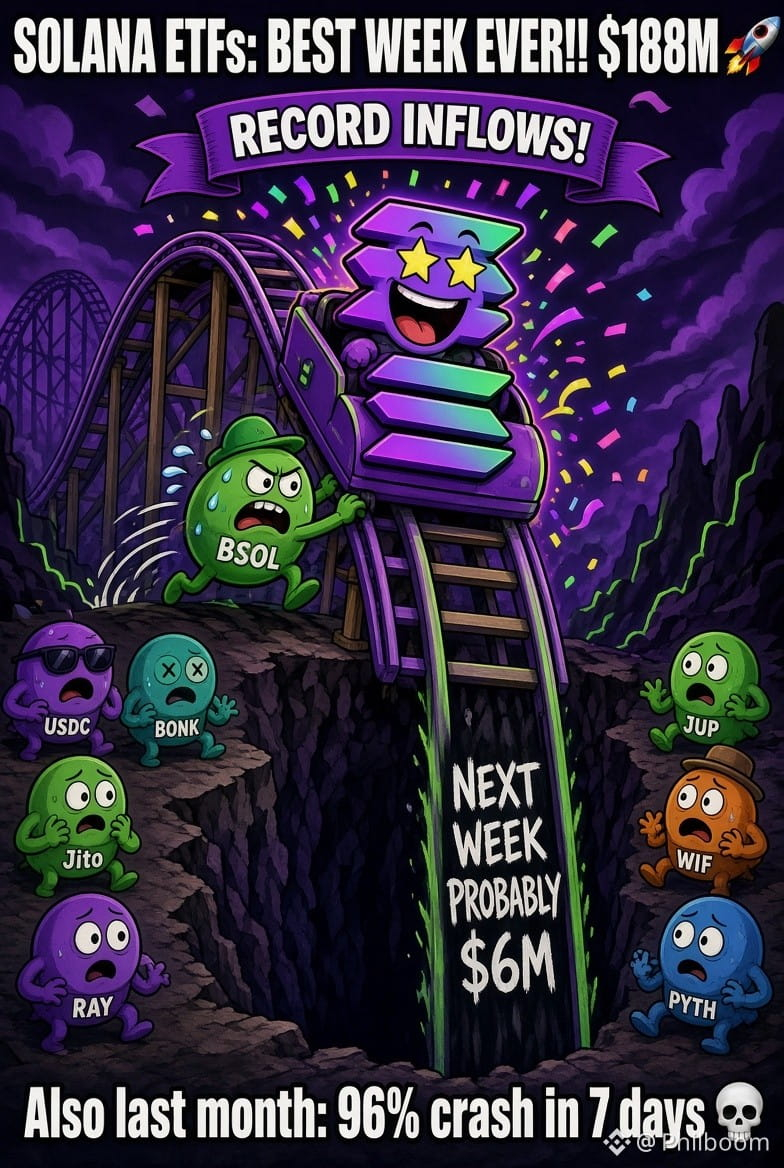
27 de septiembre. La cuenta oficial de X de Solana confirmó que los ETF spot de Solana en EE. UU. registraron $188,21 millones en entradas netas durante la semana que terminó el 25 de septiembre, el mayor total semanal desde que estos productos se lanzaron en octubre del año pasado. El BSOL de Bitwise lideró con $128,46 millones, aproximadamente el 68% de la entrada total de la semana. El GSOL de Grayscale sumó $28,06 millones y el FSOL de Fidelity aportó $17,59 millones. El SOL en sí se quedó en $121,45, con una subida modesta durante el día. 📈
He aquí por qué llamar esto una tendencia requiere mucha cautela 🧠
Esta categoría exacta de ETF pasó de $153,87 millones en la semana que terminó el 28 de agosto a apenas $6,18 millones en la semana siguiente, una caída del 96% en siete días. Luego registró solo $13,2 millones en la semana que terminó el 18 de septiembre, incluso cuando los fondos de Bitcoin tuvieron la semana más tranquila registrada al mismo tiempo. Ahora de repente $188 millones. Tres semanas salvajemente distintas en un solo mes no es un patrón: es una moneda al aire que a veces cae dos veces de la misma manera. 😂
El riesgo real de concentración que vale la pena señalar 💎
Solo el BSOL representó el 68% de esta semana récord. Eso es un solo emisor, no un consenso institucional amplio. El propio reporte de Solana reconoce directamente que las entradas a los ETF por sí solas no son suficientes para concluir que el precio seguirá subiendo. La verdadera convicción se vería como varios fondos aportando de forma significativa, no como un fondo grande cargando con todo el titular. 🎯
La conclusión honesta 🚀
Una semana récord sí vale la pena anotarla. Lo único que este año ha enseñado de verdad a alguien a dudar es si sobrevive más allá del próximo viernes.
#SOLSpotETFWeeklyInflow$188M
$SOL
{spot}(SOLUSDT)
Los ETF de Solana acaban de tener su mejor semana de la historia, lo cual significa casi nada dado cómo ha ido este año 📊🎢
27 de septiembre. La cuenta oficial de X de Solana confirmó que los ETF spot de Solana en EE. UU. registraron $188,21 millones en entradas netas durante la semana que terminó el 25 de septiembre, el mayor total semanal desde que estos productos se lanzaron en octubre del año pasado. El BSOL de Bitwise lideró con $128,46 millones, aproximadamente el 68% de la entrada total de la semana. El GSOL de Grayscale sumó $28,06 millones y el FSOL de Fidelity aportó $17,59 millones. El SOL en sí se quedó en $121,45, con una subida modesta durante el día. 📈
He aquí por qué llamar esto una tendencia requiere mucha cautela 🧠
Esta categoría exacta de ETF pasó de $153,87 millones en la semana que terminó el 28 de agosto a apenas $6,18 millones en la semana siguiente, una caída del 96% en siete días. Luego registró solo $13,2 millones en la semana que terminó el 18 de septiembre, incluso cuando los fondos de Bitcoin tuvieron la semana más tranquila registrada al mismo tiempo. Ahora de repente $188 millones. Tres semanas salvajemente distintas en un solo mes no es un patrón: es una moneda al aire que a veces cae dos veces de la misma manera. 😂
El riesgo real de concentración que vale la pena señalar 💎
Solo el BSOL representó el 68% de esta semana récord. Eso es un solo emisor, no un consenso institucional amplio. El propio reporte de Solana reconoce directamente que las entradas a los ETF por sí solas no son suficientes para concluir que el precio seguirá subiendo. La verdadera convicción se vería como varios fondos aportando de forma significativa, no como un fondo grande cargando con todo el titular. 🎯
La conclusión honesta 🚀
Una semana récord sí vale la pena anotarla. Lo único que este año ha enseñado de verdad a alguien a dudar es si sobrevive más allá del próximo viernes.
#SOLSpotETFWeeklyInflow$188M
$SOL
27 de septiembre. La cuenta oficial de X de Solana confirmó que los ETF spot de Solana en EE. UU. registraron $188,21 millones en entradas netas durante la semana que terminó el 25 de septiembre, el mayor total semanal desde que estos productos se lanzaron en octubre del año pasado. El BSOL de Bitwise lideró con $128,46 millones, aproximadamente el 68% de la entrada total de la semana. El GSOL de Grayscale sumó $28,06 millones y el FSOL de Fidelity aportó $17,59 millones. El SOL en sí se quedó en $121,45, con una subida modesta durante el día. 📈
He aquí por qué llamar esto una tendencia requiere mucha cautela 🧠
Esta categoría exacta de ETF pasó de $153,87 millones en la semana que terminó el 28 de agosto a apenas $6,18 millones en la semana siguiente, una caída del 96% en siete días. Luego registró solo $13,2 millones en la semana que terminó el 18 de septiembre, incluso cuando los fondos de Bitcoin tuvieron la semana más tranquila registrada al mismo tiempo. Ahora de repente $188 millones. Tres semanas salvajemente distintas en un solo mes no es un patrón: es una moneda al aire que a veces cae dos veces de la misma manera. 😂
El riesgo real de concentración que vale la pena señalar 💎
Solo el BSOL representó el 68% de esta semana récord. Eso es un solo emisor, no un consenso institucional amplio. El propio reporte de Solana reconoce directamente que las entradas a los ETF por sí solas no son suficientes para concluir que el precio seguirá subiendo. La verdadera convicción se vería como varios fondos aportando de forma significativa, no como un fondo grande cargando con todo el titular. 🎯
La conclusión honesta 🚀
Una semana récord sí vale la pena anotarla. Lo único que este año ha enseñado de verdad a alguien a dudar es si sobrevive más allá del próximo viernes.
#SOLSpotETFWeeklyInflow$188M
$SOL
102
·
--
Alcista
#CircleMints500MUSDCOnSolana
Circle acuñó 500 millones de dólares en Solana otra vez, y cada vez es menos un titular y más una suscripción 💵🔄
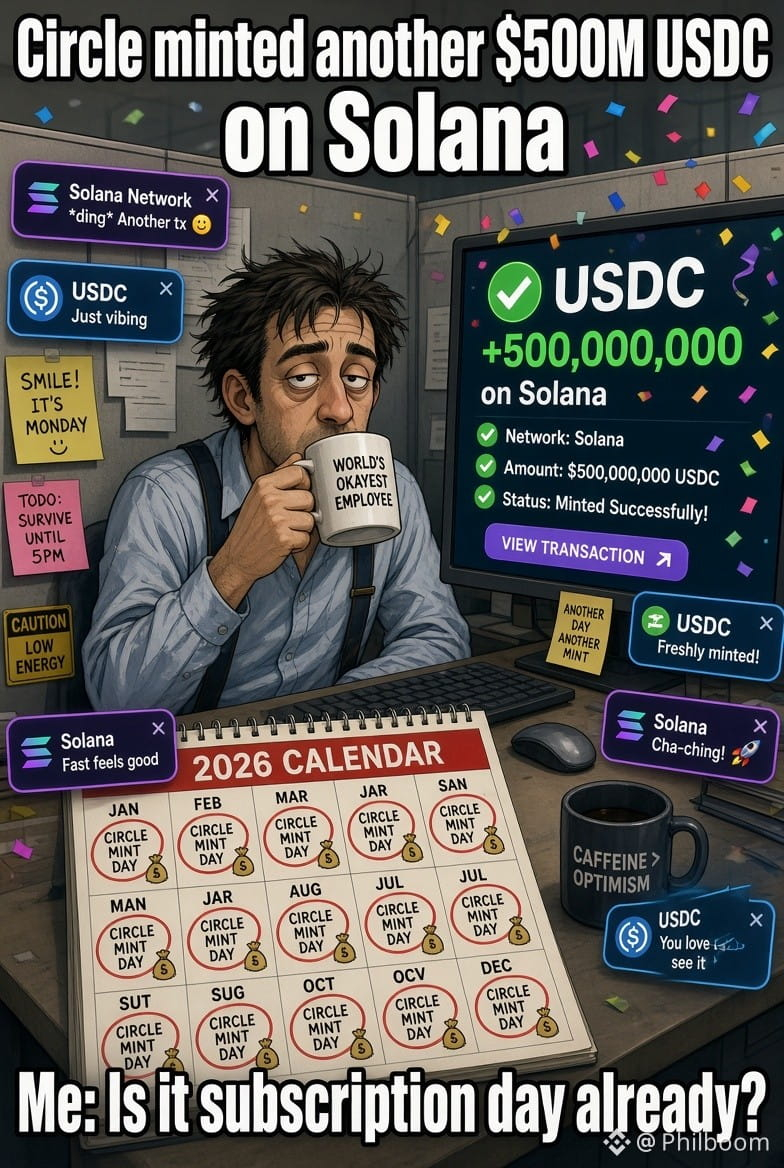
26 de septiembre, 5:42 a. m. y 11:04 a. m. hora de Pekín. La tesorería de USDC de Circle acuñó 250 millones de USDC en Solana en cada transacción, 500 millones en total. Los datos on-chain lo confirman con precisión, al minuto. Aquí está el detalle honesto: este mismo titular exacto, la misma cifra de 500 millones, ha aparecido ahora varias veces por separado a lo largo de 2026, en abril, junio, julio y otra vez hoy. Circle no está teniendo un gran momento en Solana. Está teniendo el mismo momento repetidamente, lo cual es, en cierto modo, una señal más fuerte que cualquier acuñación única podría ofrecer. 😂
Aquí está la tendencia real que vale la pena observar debajo de la repetición 🧠
La emisión semanal de USDC en Solana se ha mantenido tan alta como 3,25 mil millones de dólares durante los picos anteriores de este año, empujando la red hacia aproximadamente el 10% del suministro total de USDC, territorio que ha sido casi exclusivo de Ethereum desde que se lanzó USDC. El volumen de transacciones ajustado de USDC ha superado al de USDT en 2026 en general, con la demanda institucional citada como el principal motor en varios informes. 💎
El punto estructural honesto 🎯
USDC aún mantiene la mayor parte de su suministro total en Ethereum. Circle ha estado aumentando de forma constante el ritmo de emisión en Solana durante todo el año, tratándolo como una expansión real de la infraestructura y no como una inyección única de liquidez. Que el liderazgo estructural de Ethereum se mantenga mientras el capital sigue diversificándose entre redes sigue siendo una de las preguntas fundamentales de las stablecoins en 2026. 💡
La conclusión honesta 🚀
Una acuñación no significa nada por sí sola. Una docena de acuñaciones idénticas a lo largo de nueve meses significa que el patrón es ahora la verdadera historia.
$SOL $USDC
{spot}(SOLUSDT)
{spot}(USDCUSDT)
#CircleMints500MUSDCOnSolana
Circle acuñó 500 millones de dólares en Solana otra vez, y cada vez es menos un titular y más una suscripción 💵🔄
26 de septiembre, 5:42 a. m. y 11:04 a. m. hora de Pekín. La tesorería de USDC de Circle acuñó 250 millones de USDC en Solana en cada transacción, 500 millones en total. Los datos on-chain lo confirman con precisión, al minuto. Aquí está el detalle honesto: este mismo titular exacto, la misma cifra de 500 millones, ha aparecido ahora varias veces por separado a lo largo de 2026, en abril, junio, julio y otra vez hoy. Circle no está teniendo un gran momento en Solana. Está teniendo el mismo momento repetidamente, lo cual es, en cierto modo, una señal más fuerte que cualquier acuñación única podría ofrecer. 😂
Aquí está la tendencia real que vale la pena observar debajo de la repetición 🧠
La emisión semanal de USDC en Solana se ha mantenido tan alta como 3,25 mil millones de dólares durante los picos anteriores de este año, empujando la red hacia aproximadamente el 10% del suministro total de USDC, territorio que ha sido casi exclusivo de Ethereum desde que se lanzó USDC. El volumen de transacciones ajustado de USDC ha superado al de USDT en 2026 en general, con la demanda institucional citada como el principal motor en varios informes. 💎
El punto estructural honesto 🎯
USDC aún mantiene la mayor parte de su suministro total en Ethereum. Circle ha estado aumentando de forma constante el ritmo de emisión en Solana durante todo el año, tratándolo como una expansión real de la infraestructura y no como una inyección única de liquidez. Que el liderazgo estructural de Ethereum se mantenga mientras el capital sigue diversificándose entre redes sigue siendo una de las preguntas fundamentales de las stablecoins en 2026. 💡
La conclusión honesta 🚀
Una acuñación no significa nada por sí sola. Una docena de acuñaciones idénticas a lo largo de nueve meses significa que el patrón es ahora la verdadera historia.
$SOL $USDC
Circle acuñó 500 millones de dólares en Solana otra vez, y cada vez es menos un titular y más una suscripción 💵🔄
26 de septiembre, 5:42 a. m. y 11:04 a. m. hora de Pekín. La tesorería de USDC de Circle acuñó 250 millones de USDC en Solana en cada transacción, 500 millones en total. Los datos on-chain lo confirman con precisión, al minuto. Aquí está el detalle honesto: este mismo titular exacto, la misma cifra de 500 millones, ha aparecido ahora varias veces por separado a lo largo de 2026, en abril, junio, julio y otra vez hoy. Circle no está teniendo un gran momento en Solana. Está teniendo el mismo momento repetidamente, lo cual es, en cierto modo, una señal más fuerte que cualquier acuñación única podría ofrecer. 😂
Aquí está la tendencia real que vale la pena observar debajo de la repetición 🧠
La emisión semanal de USDC en Solana se ha mantenido tan alta como 3,25 mil millones de dólares durante los picos anteriores de este año, empujando la red hacia aproximadamente el 10% del suministro total de USDC, territorio que ha sido casi exclusivo de Ethereum desde que se lanzó USDC. El volumen de transacciones ajustado de USDC ha superado al de USDT en 2026 en general, con la demanda institucional citada como el principal motor en varios informes. 💎
El punto estructural honesto 🎯
USDC aún mantiene la mayor parte de su suministro total en Ethereum. Circle ha estado aumentando de forma constante el ritmo de emisión en Solana durante todo el año, tratándolo como una expansión real de la infraestructura y no como una inyección única de liquidez. Que el liderazgo estructural de Ethereum se mantenga mientras el capital sigue diversificándose entre redes sigue siendo una de las preguntas fundamentales de las stablecoins en 2026. 💡
La conclusión honesta 🚀
Una acuñación no significa nada por sí sola. Una docena de acuñaciones idénticas a lo largo de nueve meses significa que el patrón es ahora la verdadera historia.
$SOL $USDC
2
131
·
--
Alcista
Los ETF de Bitcoin atrajeron 191 millones de dólares el mismo día en que una bolsa perdió 352 millones de dólares 🎭📊
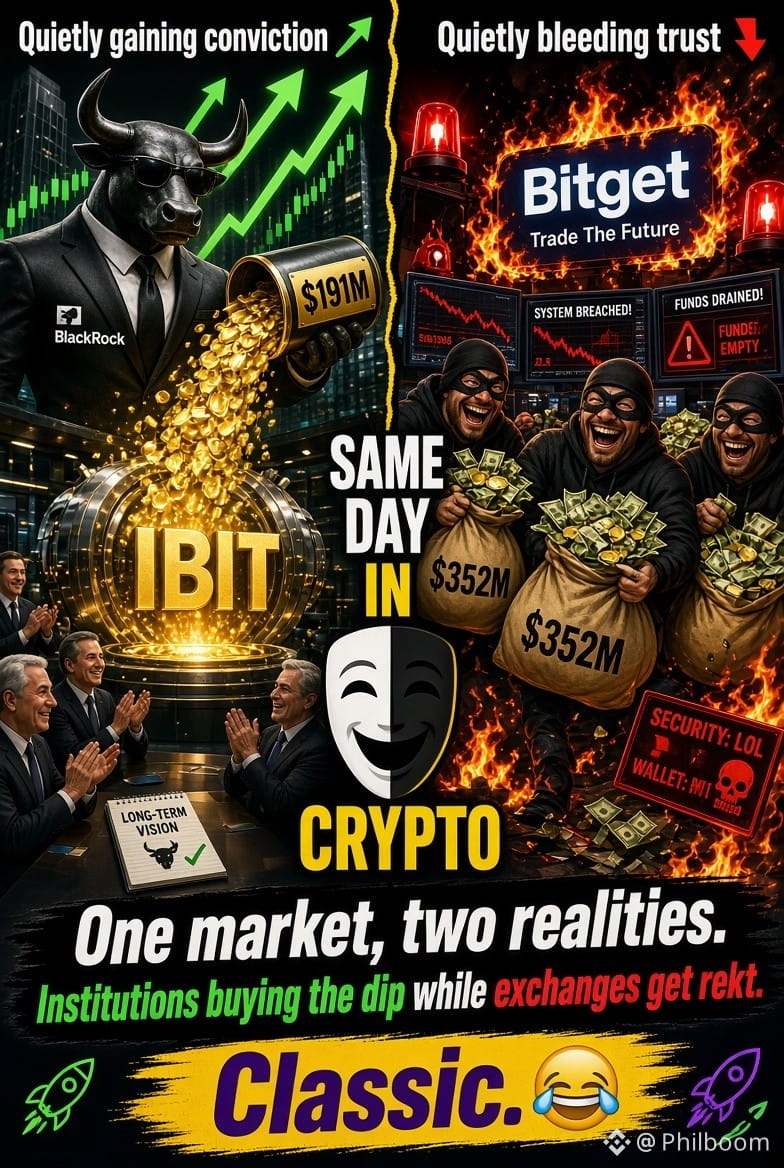
24 de septiembre. Los ETF estadounidenses de Bitcoin al contado registraron 191 millones en entradas netas, el sexto día consecutivo de flujos positivos. El de BlackRock, IBIT, lideró con 163 millones, impulsando su entrada histórica total por encima de los 65 mil millones. El de Fidelity, FBTC, sumó 12,86 millones. Los activos netos totales ahora se sitúan en 108,91 mil millones de dólares, aproximadamente el 6,43% de la capitalización de mercado total de Bitcoin. Este es el mismo día exacto en que Bitget reveló su hack de 351,6 millones de dólares. Una esquina de las criptomonedas sangraba en silencio la confianza mientras otra, en silencio, ganaba convicción. 😂
Aquí está el contexto honesto que vale la pena poner dentro 🧠
Estos 191 millones son realmente modestos frente a lo que septiembre ya ha entregado. Solo el 21 de septiembre entraron 998,96 millones de dólares, el mayor día individual desde octubre de 2025, dentro de una semana que captó 986,9 millones en total: la tercera semana consecutiva de flujos positivos. Agosto cerró con 3,52 mil millones en entradas mensuales, el nivel más fuerte desde septiembre de 2025. Con ese panorama, 191 millones suena menos a titular y más a un martes tranquilo para una categoría de ETF que ha estado realmente encendida todo el mes. 💎
La lectura honesta del analista que vale la pena incluir 🎯
Min Jung, de Presto Research, describió esto como cripto haciendo una operación de “alcance” tras haber quedado rezagada frente a otros activos de riesgo, con entradas sólidas que señalan una demanda institucional renovada, en lugar de puro apalancamiento. Dominick John, de Zeus Research, por su parte, calificó las entradas sostenidas como evidencia de una demanda real al contado que se está construyendo debajo del precio. 💡
El marcador honesto 🚀
Las compras institucionales de Bitcoin y los miedos sobre la seguridad en los exchanges van en paralelo, no en secuencia. Ambas realidades son ciertas sobre el mismo mercado el mismo día.
$BTC
{spot}(BTCUSDT)
#BitcoinSpotETFsNetInflow$191M
Los ETF de Bitcoin atrajeron 191 millones de dólares el mismo día en que una bolsa perdió 352 millones de dólares 🎭📊
24 de septiembre. Los ETF estadounidenses de Bitcoin al contado registraron 191 millones en entradas netas, el sexto día consecutivo de flujos positivos. El de BlackRock, IBIT, lideró con 163 millones, impulsando su entrada histórica total por encima de los 65 mil millones. El de Fidelity, FBTC, sumó 12,86 millones. Los activos netos totales ahora se sitúan en 108,91 mil millones de dólares, aproximadamente el 6,43% de la capitalización de mercado total de Bitcoin. Este es el mismo día exacto en que Bitget reveló su hack de 351,6 millones de dólares. Una esquina de las criptomonedas sangraba en silencio la confianza mientras otra, en silencio, ganaba convicción. 😂
Aquí está el contexto honesto que vale la pena poner dentro 🧠
Estos 191 millones son realmente modestos frente a lo que septiembre ya ha entregado. Solo el 21 de septiembre entraron 998,96 millones de dólares, el mayor día individual desde octubre de 2025, dentro de una semana que captó 986,9 millones en total: la tercera semana consecutiva de flujos positivos. Agosto cerró con 3,52 mil millones en entradas mensuales, el nivel más fuerte desde septiembre de 2025. Con ese panorama, 191 millones suena menos a titular y más a un martes tranquilo para una categoría de ETF que ha estado realmente encendida todo el mes. 💎
La lectura honesta del analista que vale la pena incluir 🎯
Min Jung, de Presto Research, describió esto como cripto haciendo una operación de “alcance” tras haber quedado rezagada frente a otros activos de riesgo, con entradas sólidas que señalan una demanda institucional renovada, en lugar de puro apalancamiento. Dominick John, de Zeus Research, por su parte, calificó las entradas sostenidas como evidencia de una demanda real al contado que se está construyendo debajo del precio. 💡
El marcador honesto 🚀
Las compras institucionales de Bitcoin y los miedos sobre la seguridad en los exchanges van en paralelo, no en secuencia. Ambas realidades son ciertas sobre el mismo mercado el mismo día.
$BTC
#BitcoinSpotETFsNetInflow$191M
24 de septiembre. Los ETF estadounidenses de Bitcoin al contado registraron 191 millones en entradas netas, el sexto día consecutivo de flujos positivos. El de BlackRock, IBIT, lideró con 163 millones, impulsando su entrada histórica total por encima de los 65 mil millones. El de Fidelity, FBTC, sumó 12,86 millones. Los activos netos totales ahora se sitúan en 108,91 mil millones de dólares, aproximadamente el 6,43% de la capitalización de mercado total de Bitcoin. Este es el mismo día exacto en que Bitget reveló su hack de 351,6 millones de dólares. Una esquina de las criptomonedas sangraba en silencio la confianza mientras otra, en silencio, ganaba convicción. 😂
Aquí está el contexto honesto que vale la pena poner dentro 🧠
Estos 191 millones son realmente modestos frente a lo que septiembre ya ha entregado. Solo el 21 de septiembre entraron 998,96 millones de dólares, el mayor día individual desde octubre de 2025, dentro de una semana que captó 986,9 millones en total: la tercera semana consecutiva de flujos positivos. Agosto cerró con 3,52 mil millones en entradas mensuales, el nivel más fuerte desde septiembre de 2025. Con ese panorama, 191 millones suena menos a titular y más a un martes tranquilo para una categoría de ETF que ha estado realmente encendida todo el mes. 💎
La lectura honesta del analista que vale la pena incluir 🎯
Min Jung, de Presto Research, describió esto como cripto haciendo una operación de “alcance” tras haber quedado rezagada frente a otros activos de riesgo, con entradas sólidas que señalan una demanda institucional renovada, en lugar de puro apalancamiento. Dominick John, de Zeus Research, por su parte, calificó las entradas sostenidas como evidencia de una demanda real al contado que se está construyendo debajo del precio. 💡
El marcador honesto 🚀
Las compras institucionales de Bitcoin y los miedos sobre la seguridad en los exchanges van en paralelo, no en secuencia. Ambas realidades son ciertas sobre el mismo mercado el mismo día.
$BTC
#BitcoinSpotETFsNetInflow$191M
59
·
--
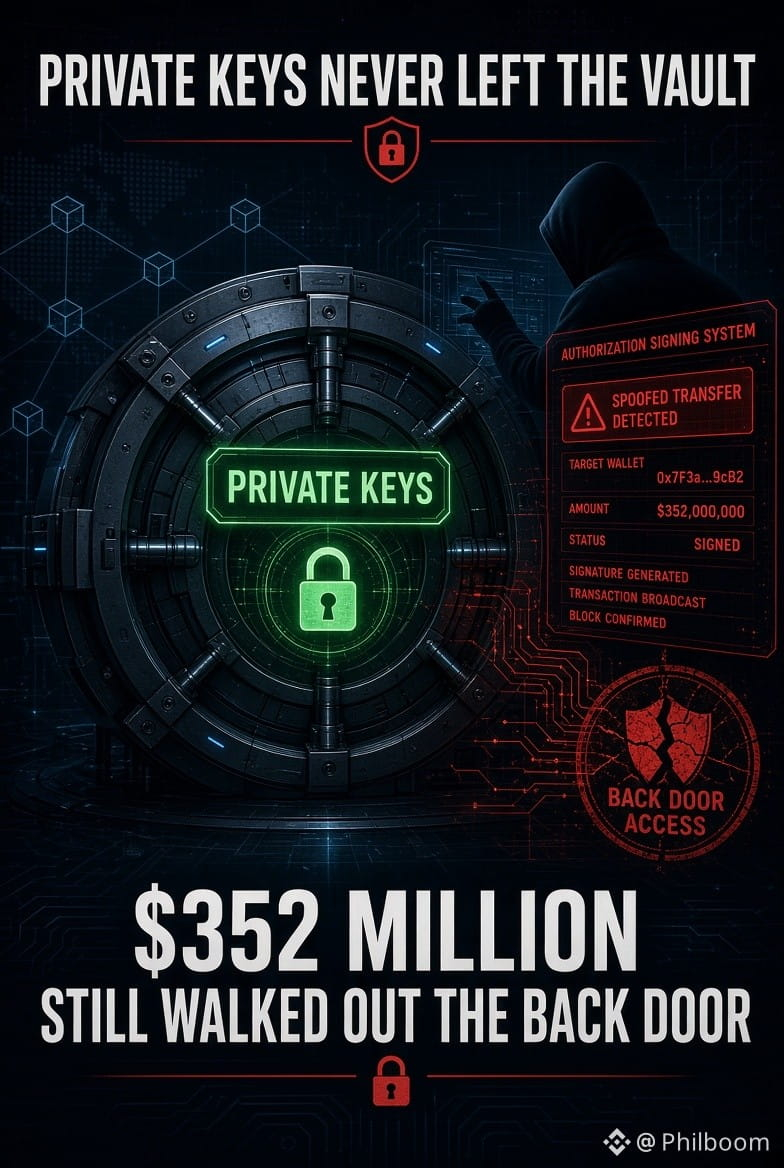
Bitget perdió $352 millones y los atacantes nunca robaron realmente una sola clave privada 🔓📊
24 de septiembre, 18:31 UTC. Los sistemas de seguridad de Bitget detectaron transferencias no autorizadas desde sus carteras hot y warm, con aproximadamente $351,6 millones expuestos entre ether, XRP, USDT, USDC, Avalanche y BNB. La CEO, Gracy Chen, confirmó que las carteras frías permanecieron totalmente seguras y que la arquitectura de tres niveles del exchange contuvo la brecha en sus capas externas. Este es probablemente el mayor hack de cripto de 2026, llegando apenas semanas después del incidente de $320 millones de Liquid Network. Septiembre no ha sido amable con la seguridad de las carteras. 😂
Aquí está la parte realmente inteligente que vale la pena entender 🧠
Chen fue explícita: "se ha descartado la filtración de claves privadas". El atacante, en cambio, vulneró un sistema crítico de billetera en el backend, falsificó la información de la transferencia y engañó al propio proceso de firma de autorizaciones de Bitget para que aprobara transferencias fraudulentas. Eso no es fuerza bruta: es hacer que el sistema crea que la solicitud era legítima cuando no lo era. 💎
Lo sospechoso que vale la pena observar con cuidado 🎯
Para el 25 de septiembre, Chen dijo que las pruebas preliminares apuntaban a hackers norcoreanos, citando direcciones IP vinculadas a servicios VPN previamente asociados al grupo y patrones de ataque que se parecen a operaciones anteriores. Esto sigue siendo un hallazgo preliminar, no una conclusión confirmada. 💡
La tranquilidad honesta que conviene incluir 🎭
El Fondo de Protección al Usuario de Bitget tiene más de $464 millones, suficiente para cubrir la pérdida de inmediato. Los depósitos y el trading continuaron con normalidad durante todo el proceso. Los retiros permanecieron en pausa a la espera de una revisión completa de seguridad. Las propias palabras de Chen capturan bien el momento: "no vamos a salir corriendo de esto".
Se movió dinero real. Los fondos de los usuarios siguen cubiertos. La investigación aún está en curso. 🚀
#BitgetSays$352MAffectedInHack
$BTC
{spot}(BTCUSDT)
Bitget perdió $352 millones y los atacantes nunca robaron realmente una sola clave privada 🔓📊
24 de septiembre, 18:31 UTC. Los sistemas de seguridad de Bitget detectaron transferencias no autorizadas desde sus carteras hot y warm, con aproximadamente $351,6 millones expuestos entre ether, XRP, USDT, USDC, Avalanche y BNB. La CEO, Gracy Chen, confirmó que las carteras frías permanecieron totalmente seguras y que la arquitectura de tres niveles del exchange contuvo la brecha en sus capas externas. Este es probablemente el mayor hack de cripto de 2026, llegando apenas semanas después del incidente de $320 millones de Liquid Network. Septiembre no ha sido amable con la seguridad de las carteras. 😂
Aquí está la parte realmente inteligente que vale la pena entender 🧠
Chen fue explícita: "se ha descartado la filtración de claves privadas". El atacante, en cambio, vulneró un sistema crítico de billetera en el backend, falsificó la información de la transferencia y engañó al propio proceso de firma de autorizaciones de Bitget para que aprobara transferencias fraudulentas. Eso no es fuerza bruta: es hacer que el sistema crea que la solicitud era legítima cuando no lo era. 💎
Lo sospechoso que vale la pena observar con cuidado 🎯
Para el 25 de septiembre, Chen dijo que las pruebas preliminares apuntaban a hackers norcoreanos, citando direcciones IP vinculadas a servicios VPN previamente asociados al grupo y patrones de ataque que se parecen a operaciones anteriores. Esto sigue siendo un hallazgo preliminar, no una conclusión confirmada. 💡
La tranquilidad honesta que conviene incluir 🎭
El Fondo de Protección al Usuario de Bitget tiene más de $464 millones, suficiente para cubrir la pérdida de inmediato. Los depósitos y el trading continuaron con normalidad durante todo el proceso. Los retiros permanecieron en pausa a la espera de una revisión completa de seguridad. Las propias palabras de Chen capturan bien el momento: "no vamos a salir corriendo de esto".
Se movió dinero real. Los fondos de los usuarios siguen cubiertos. La investigación aún está en curso. 🚀
#BitgetSays$352MAffectedInHack
$BTC
24 de septiembre, 18:31 UTC. Los sistemas de seguridad de Bitget detectaron transferencias no autorizadas desde sus carteras hot y warm, con aproximadamente $351,6 millones expuestos entre ether, XRP, USDT, USDC, Avalanche y BNB. La CEO, Gracy Chen, confirmó que las carteras frías permanecieron totalmente seguras y que la arquitectura de tres niveles del exchange contuvo la brecha en sus capas externas. Este es probablemente el mayor hack de cripto de 2026, llegando apenas semanas después del incidente de $320 millones de Liquid Network. Septiembre no ha sido amable con la seguridad de las carteras. 😂
Aquí está la parte realmente inteligente que vale la pena entender 🧠
Chen fue explícita: "se ha descartado la filtración de claves privadas". El atacante, en cambio, vulneró un sistema crítico de billetera en el backend, falsificó la información de la transferencia y engañó al propio proceso de firma de autorizaciones de Bitget para que aprobara transferencias fraudulentas. Eso no es fuerza bruta: es hacer que el sistema crea que la solicitud era legítima cuando no lo era. 💎
Lo sospechoso que vale la pena observar con cuidado 🎯
Para el 25 de septiembre, Chen dijo que las pruebas preliminares apuntaban a hackers norcoreanos, citando direcciones IP vinculadas a servicios VPN previamente asociados al grupo y patrones de ataque que se parecen a operaciones anteriores. Esto sigue siendo un hallazgo preliminar, no una conclusión confirmada. 💡
La tranquilidad honesta que conviene incluir 🎭
El Fondo de Protección al Usuario de Bitget tiene más de $464 millones, suficiente para cubrir la pérdida de inmediato. Los depósitos y el trading continuaron con normalidad durante todo el proceso. Los retiros permanecieron en pausa a la espera de una revisión completa de seguridad. Las propias palabras de Chen capturan bien el momento: "no vamos a salir corriendo de esto".
Se movió dinero real. Los fondos de los usuarios siguen cubiertos. La investigación aún está en curso. 🚀
#BitgetSays$352MAffectedInHack
$BTC
87
·
--
Alcista
#BinanceWillListHyperliquid(HYPE)
Binance acaba de soltar la bomba de HYPE y la línea de tiempo cripto está vibrando como un trader con cafeína al 50x de apalancamiento. ¡🚀🔥!
Hoy a las 11:00 UTC, el mayor exchange del mundo por fin abrió las puertas para el token nativo de Hyperliquid en spot con tres pares brillantes HYPE/USDT HYPE/USDC y hasta HYPE/TRY para los amantes de la lira turca. Los depósitos ya estaban fluyendo una hora antes mientras que los retiros tendrán luz verde mañana. ¿La tarifa de listado? Un glorioso cero BNB. Respeto puro. 👑💸
Pero aquí va el giro con picante. Binance le puso a HYPE su etiqueta Seed Tag. Esa pequeña etiqueta básicamente significa: “esta puede despegar o arrasar tu portafolio con la misma emoción, así que por favor aprueba nuestro cuestionario de riesgo cada 90 días como un adulto responsable”. Clásica crianza estilo Binance. Listan el token DEX perenne más candente del planeta y luego recuerdan con educación que aún podría provocarte un latigazo emocional. 😂📉📈
Hyperliquid no es poca cosa. El rey de los perpetuos on-chain está imprimiendo volumen e ingresos como una impresora de dinero bien engrasada, mientras que su token en gran parte se quedaba atrapado en el terreno de los futuros y los mercados secundarios. El listado en spot en Binance es el sello definitivo de legitimidad. Más liquidez, libros de órdenes más profundos y una avalancha de nuevos ojos minoristas llegando de una sola vez.
Por supuesto, ya apareció el drama clásico de “vender la noticia”. El precio se movió después del anuncio porque el cripto nunca sube a la vez de forma educada. Aun así, la perspectiva a largo plazo luce jugosa. Un acceso más amplio más la curiosidad institucional podrían convertir HYPE en un residente permanente de primer nivel en lugar de solo el chico cool del patio de juegos DEX.
Así que agarra tu palomitas ajusta tu configuración de riesgo y mira los fuegos artificiales. Binance finalmente invitó a Hyperliquid a la gran mesa y la fiesta se puso mucho más ruidosa. 🥳🏆💎
$HYPE $BNB
{spot}(HYPEUSDT)
{spot}(BNBUSDT)
#BinanceWillListHyperliquid(HYPE)
Binance acaba de soltar la bomba de HYPE y la línea de tiempo cripto está vibrando como un trader con cafeína al 50x de apalancamiento. ¡🚀🔥!
Hoy a las 11:00 UTC, el mayor exchange del mundo por fin abrió las puertas para el token nativo de Hyperliquid en spot con tres pares brillantes HYPE/USDT HYPE/USDC y hasta HYPE/TRY para los amantes de la lira turca. Los depósitos ya estaban fluyendo una hora antes mientras que los retiros tendrán luz verde mañana. ¿La tarifa de listado? Un glorioso cero BNB. Respeto puro. 👑💸
Pero aquí va el giro con picante. Binance le puso a HYPE su etiqueta Seed Tag. Esa pequeña etiqueta básicamente significa: “esta puede despegar o arrasar tu portafolio con la misma emoción, así que por favor aprueba nuestro cuestionario de riesgo cada 90 días como un adulto responsable”. Clásica crianza estilo Binance. Listan el token DEX perenne más candente del planeta y luego recuerdan con educación que aún podría provocarte un latigazo emocional. 😂📉📈
Hyperliquid no es poca cosa. El rey de los perpetuos on-chain está imprimiendo volumen e ingresos como una impresora de dinero bien engrasada, mientras que su token en gran parte se quedaba atrapado en el terreno de los futuros y los mercados secundarios. El listado en spot en Binance es el sello definitivo de legitimidad. Más liquidez, libros de órdenes más profundos y una avalancha de nuevos ojos minoristas llegando de una sola vez.
Por supuesto, ya apareció el drama clásico de “vender la noticia”. El precio se movió después del anuncio porque el cripto nunca sube a la vez de forma educada. Aun así, la perspectiva a largo plazo luce jugosa. Un acceso más amplio más la curiosidad institucional podrían convertir HYPE en un residente permanente de primer nivel en lugar de solo el chico cool del patio de juegos DEX.
Así que agarra tu palomitas ajusta tu configuración de riesgo y mira los fuegos artificiales. Binance finalmente invitó a Hyperliquid a la gran mesa y la fiesta se puso mucho más ruidosa. 🥳🏆💎
$HYPE $BNB
Binance acaba de soltar la bomba de HYPE y la línea de tiempo cripto está vibrando como un trader con cafeína al 50x de apalancamiento. ¡🚀🔥!
Hoy a las 11:00 UTC, el mayor exchange del mundo por fin abrió las puertas para el token nativo de Hyperliquid en spot con tres pares brillantes HYPE/USDT HYPE/USDC y hasta HYPE/TRY para los amantes de la lira turca. Los depósitos ya estaban fluyendo una hora antes mientras que los retiros tendrán luz verde mañana. ¿La tarifa de listado? Un glorioso cero BNB. Respeto puro. 👑💸
Pero aquí va el giro con picante. Binance le puso a HYPE su etiqueta Seed Tag. Esa pequeña etiqueta básicamente significa: “esta puede despegar o arrasar tu portafolio con la misma emoción, así que por favor aprueba nuestro cuestionario de riesgo cada 90 días como un adulto responsable”. Clásica crianza estilo Binance. Listan el token DEX perenne más candente del planeta y luego recuerdan con educación que aún podría provocarte un latigazo emocional. 😂📉📈
Hyperliquid no es poca cosa. El rey de los perpetuos on-chain está imprimiendo volumen e ingresos como una impresora de dinero bien engrasada, mientras que su token en gran parte se quedaba atrapado en el terreno de los futuros y los mercados secundarios. El listado en spot en Binance es el sello definitivo de legitimidad. Más liquidez, libros de órdenes más profundos y una avalancha de nuevos ojos minoristas llegando de una sola vez.
Por supuesto, ya apareció el drama clásico de “vender la noticia”. El precio se movió después del anuncio porque el cripto nunca sube a la vez de forma educada. Aun así, la perspectiva a largo plazo luce jugosa. Un acceso más amplio más la curiosidad institucional podrían convertir HYPE en un residente permanente de primer nivel en lugar de solo el chico cool del patio de juegos DEX.
Así que agarra tu palomitas ajusta tu configuración de riesgo y mira los fuegos artificiales. Binance finalmente invitó a Hyperliquid a la gran mesa y la fiesta se puso mucho más ruidosa. 🥳🏆💎
$HYPE $BNB

196
·
--
Alcista
#CardanoJoinsX402PaymentStandard
Cardano se unió a la carrera de pagos con IA y apareció después de que todos los demás ya le hubieran dado alcance a la pista 🏁😂
21 de septiembre. Cardano se unió oficialmente a x402, el estándar de pagos abierto que permite que aplicaciones y agentes autónomos de IA paguen servicios en línea directamente, sin cuentas, sin claves de API, sin suscripciones mensuales: solo una solicitud web estándar que se liquida en ADA o en tokens nativos de Cardano. El soporte para TypeScript ya está en marcha, Python llegará y ya se completó una transacción real en la testnet de preproducción. Mainnet todavía no está activa. Aun así, ADA respondió, saltando aproximadamente un 4% hasta un máximo de cuatro meses, con un trader que lo calificó como una ruptura de una resistencia de varios años. Los mercados claramente no necesitan que el producto terminado se emocione. 💎
Aquí tienes el marcador honesto que vale la pena conocer antes de emocionarte demasiado 🧠
XRP Ledger ya ha procesado más de 1.4 millones de transacciones de agentes de IA a través de este mismo estándar. Coinbase informó más de 100 millones de pagos x402 combinados en Base y Solana. Cardano no está pionerizando esta categoría: llega a una carrera en la que varios competidores ya llevan una ventaja real, medida en cientos de millones. 😂
Aquí está por qué esto realmente importa de todos modos 🎯
Hemos seguido a agentes de IA controlando aproximadamente el 30% de la liquidez en las principales pools de Solana durante todo el año, y Pay.sh, de Google, se lanzó en Solana específicamente para este caso de uso. Cada cadena que agrega soporte para x402 está apostando a que los pagos de máquina a máquina se vuelvan realmente enormes. Que Cardano llegue tarde a esa apuesta no significa que la apuesta en sí esté mal. 💡
La conclusión honesta 🚀
Ser segundo, tercero o cuarto en un mercado realmente grande aún gana a no aparecer en absoluto.
$ADA
{spot}(ADAUSDT)
#CardanoJoinsX402PaymentStandard
Cardano se unió a la carrera de pagos con IA y apareció después de que todos los demás ya le hubieran dado alcance a la pista 🏁😂
21 de septiembre. Cardano se unió oficialmente a x402, el estándar de pagos abierto que permite que aplicaciones y agentes autónomos de IA paguen servicios en línea directamente, sin cuentas, sin claves de API, sin suscripciones mensuales: solo una solicitud web estándar que se liquida en ADA o en tokens nativos de Cardano. El soporte para TypeScript ya está en marcha, Python llegará y ya se completó una transacción real en la testnet de preproducción. Mainnet todavía no está activa. Aun así, ADA respondió, saltando aproximadamente un 4% hasta un máximo de cuatro meses, con un trader que lo calificó como una ruptura de una resistencia de varios años. Los mercados claramente no necesitan que el producto terminado se emocione. 💎
Aquí tienes el marcador honesto que vale la pena conocer antes de emocionarte demasiado 🧠
XRP Ledger ya ha procesado más de 1.4 millones de transacciones de agentes de IA a través de este mismo estándar. Coinbase informó más de 100 millones de pagos x402 combinados en Base y Solana. Cardano no está pionerizando esta categoría: llega a una carrera en la que varios competidores ya llevan una ventaja real, medida en cientos de millones. 😂
Aquí está por qué esto realmente importa de todos modos 🎯
Hemos seguido a agentes de IA controlando aproximadamente el 30% de la liquidez en las principales pools de Solana durante todo el año, y Pay.sh, de Google, se lanzó en Solana específicamente para este caso de uso. Cada cadena que agrega soporte para x402 está apostando a que los pagos de máquina a máquina se vuelvan realmente enormes. Que Cardano llegue tarde a esa apuesta no significa que la apuesta en sí esté mal. 💡
La conclusión honesta 🚀
Ser segundo, tercero o cuarto en un mercado realmente grande aún gana a no aparecer en absoluto.
$ADA
Cardano se unió a la carrera de pagos con IA y apareció después de que todos los demás ya le hubieran dado alcance a la pista 🏁😂
21 de septiembre. Cardano se unió oficialmente a x402, el estándar de pagos abierto que permite que aplicaciones y agentes autónomos de IA paguen servicios en línea directamente, sin cuentas, sin claves de API, sin suscripciones mensuales: solo una solicitud web estándar que se liquida en ADA o en tokens nativos de Cardano. El soporte para TypeScript ya está en marcha, Python llegará y ya se completó una transacción real en la testnet de preproducción. Mainnet todavía no está activa. Aun así, ADA respondió, saltando aproximadamente un 4% hasta un máximo de cuatro meses, con un trader que lo calificó como una ruptura de una resistencia de varios años. Los mercados claramente no necesitan que el producto terminado se emocione. 💎
Aquí tienes el marcador honesto que vale la pena conocer antes de emocionarte demasiado 🧠
XRP Ledger ya ha procesado más de 1.4 millones de transacciones de agentes de IA a través de este mismo estándar. Coinbase informó más de 100 millones de pagos x402 combinados en Base y Solana. Cardano no está pionerizando esta categoría: llega a una carrera en la que varios competidores ya llevan una ventaja real, medida en cientos de millones. 😂
Aquí está por qué esto realmente importa de todos modos 🎯
Hemos seguido a agentes de IA controlando aproximadamente el 30% de la liquidez en las principales pools de Solana durante todo el año, y Pay.sh, de Google, se lanzó en Solana específicamente para este caso de uso. Cada cadena que agrega soporte para x402 está apostando a que los pagos de máquina a máquina se vuelvan realmente enormes. Que Cardano llegue tarde a esa apuesta no significa que la apuesta en sí esté mal. 💡
La conclusión honesta 🚀
Ser segundo, tercero o cuarto en un mercado realmente grande aún gana a no aparecer en absoluto.
$ADA

150
·
--
Alcista
#StrategyAdds950Bitcoin
Strategy compró 950 Bitcoins más y esta vez realmente usó su propio dinero 💰📈
Entre el 14 y el 20 de septiembre, Strategy compró 950 Bitcoins por 75,7 millones de dólares, a un precio promedio de 79.670 dólares, elevando sus tenencias totales a 846.000 BTC adquiridos por 63,80 mil millones de dólares en total, con un costo promedio de 75.416 dólares por moneda. Esto ocurrió justo cuando Bitcoin subía hasta un máximo de nueve meses, supuestamente tocando 85.583 dólares. La empresa que convirtió la compra de Bitcoin en un rasgo de personalidad acaba de añadir más; de nuevo, para cuando llega, apenas califica como noticia por sí sola. 😂
Aquí está el detalle que de verdad vale la pena notar 🧠
Esta compra se financió por completo con efectivo USD existente; no se vendieron nuevas acciones de MSTR a través del programa de colocación directa (at-the-market) para financiarla. A principios de este año, las compras de Q1 se financiaron explícitamente mediante emisión de acciones recientes y notas convertibles. Esta vez, la empresa simplemente se metió en el efectivo que ya tenía guardado. Una pequeña diferencia, pero real para cualquiera que siga si la compra de Bitcoin de Strategy todavía requiere diluir a los accionistas cada vez. 💎
El resto de la documentación de la semana 🎯
Strategy también recompró 1,77 millones de acciones de su acción preferente STRC por 174 millones de dólares, y retiró 57,4 millones de dólares de una reserva USD separada, específicamente para cubrir dividendos preferentes e intereses de deuda. A 20 de septiembre, esa reserva se situaba en 5,04 mil millones de dólares, con Efectivo USD en 1,05 mil millones de dólares. Tres fondos de efectivo separados, tres propósitos distintos: todo se divulgó en el mismo formulario rutinario. 💡
La conclusión honesta 🚀
Comprar la caída ya no es realmente la historia de esta empresa. Comprar independientemente de la caída, financiando de la manera que esté disponible esa semana, es simplemente cómo opera Strategy ahora.
$BTC
{spot}(BTCUSDT)
#StrategyAdds950Bitcoin
Strategy compró 950 Bitcoins más y esta vez realmente usó su propio dinero 💰📈
Entre el 14 y el 20 de septiembre, Strategy compró 950 Bitcoins por 75,7 millones de dólares, a un precio promedio de 79.670 dólares, elevando sus tenencias totales a 846.000 BTC adquiridos por 63,80 mil millones de dólares en total, con un costo promedio de 75.416 dólares por moneda. Esto ocurrió justo cuando Bitcoin subía hasta un máximo de nueve meses, supuestamente tocando 85.583 dólares. La empresa que convirtió la compra de Bitcoin en un rasgo de personalidad acaba de añadir más; de nuevo, para cuando llega, apenas califica como noticia por sí sola. 😂
Aquí está el detalle que de verdad vale la pena notar 🧠
Esta compra se financió por completo con efectivo USD existente; no se vendieron nuevas acciones de MSTR a través del programa de colocación directa (at-the-market) para financiarla. A principios de este año, las compras de Q1 se financiaron explícitamente mediante emisión de acciones recientes y notas convertibles. Esta vez, la empresa simplemente se metió en el efectivo que ya tenía guardado. Una pequeña diferencia, pero real para cualquiera que siga si la compra de Bitcoin de Strategy todavía requiere diluir a los accionistas cada vez. 💎
El resto de la documentación de la semana 🎯
Strategy también recompró 1,77 millones de acciones de su acción preferente STRC por 174 millones de dólares, y retiró 57,4 millones de dólares de una reserva USD separada, específicamente para cubrir dividendos preferentes e intereses de deuda. A 20 de septiembre, esa reserva se situaba en 5,04 mil millones de dólares, con Efectivo USD en 1,05 mil millones de dólares. Tres fondos de efectivo separados, tres propósitos distintos: todo se divulgó en el mismo formulario rutinario. 💡
La conclusión honesta 🚀
Comprar la caída ya no es realmente la historia de esta empresa. Comprar independientemente de la caída, financiando de la manera que esté disponible esa semana, es simplemente cómo opera Strategy ahora.
$BTC
Strategy compró 950 Bitcoins más y esta vez realmente usó su propio dinero 💰📈
Entre el 14 y el 20 de septiembre, Strategy compró 950 Bitcoins por 75,7 millones de dólares, a un precio promedio de 79.670 dólares, elevando sus tenencias totales a 846.000 BTC adquiridos por 63,80 mil millones de dólares en total, con un costo promedio de 75.416 dólares por moneda. Esto ocurrió justo cuando Bitcoin subía hasta un máximo de nueve meses, supuestamente tocando 85.583 dólares. La empresa que convirtió la compra de Bitcoin en un rasgo de personalidad acaba de añadir más; de nuevo, para cuando llega, apenas califica como noticia por sí sola. 😂
Aquí está el detalle que de verdad vale la pena notar 🧠
Esta compra se financió por completo con efectivo USD existente; no se vendieron nuevas acciones de MSTR a través del programa de colocación directa (at-the-market) para financiarla. A principios de este año, las compras de Q1 se financiaron explícitamente mediante emisión de acciones recientes y notas convertibles. Esta vez, la empresa simplemente se metió en el efectivo que ya tenía guardado. Una pequeña diferencia, pero real para cualquiera que siga si la compra de Bitcoin de Strategy todavía requiere diluir a los accionistas cada vez. 💎
El resto de la documentación de la semana 🎯
Strategy también recompró 1,77 millones de acciones de su acción preferente STRC por 174 millones de dólares, y retiró 57,4 millones de dólares de una reserva USD separada, específicamente para cubrir dividendos preferentes e intereses de deuda. A 20 de septiembre, esa reserva se situaba en 5,04 mil millones de dólares, con Efectivo USD en 1,05 mil millones de dólares. Tres fondos de efectivo separados, tres propósitos distintos: todo se divulgó en el mismo formulario rutinario. 💡
La conclusión honesta 🚀
Comprar la caída ya no es realmente la historia de esta empresa. Comprar independientemente de la caída, financiando de la manera que esté disponible esa semana, es simplemente cómo opera Strategy ahora.
$BTC
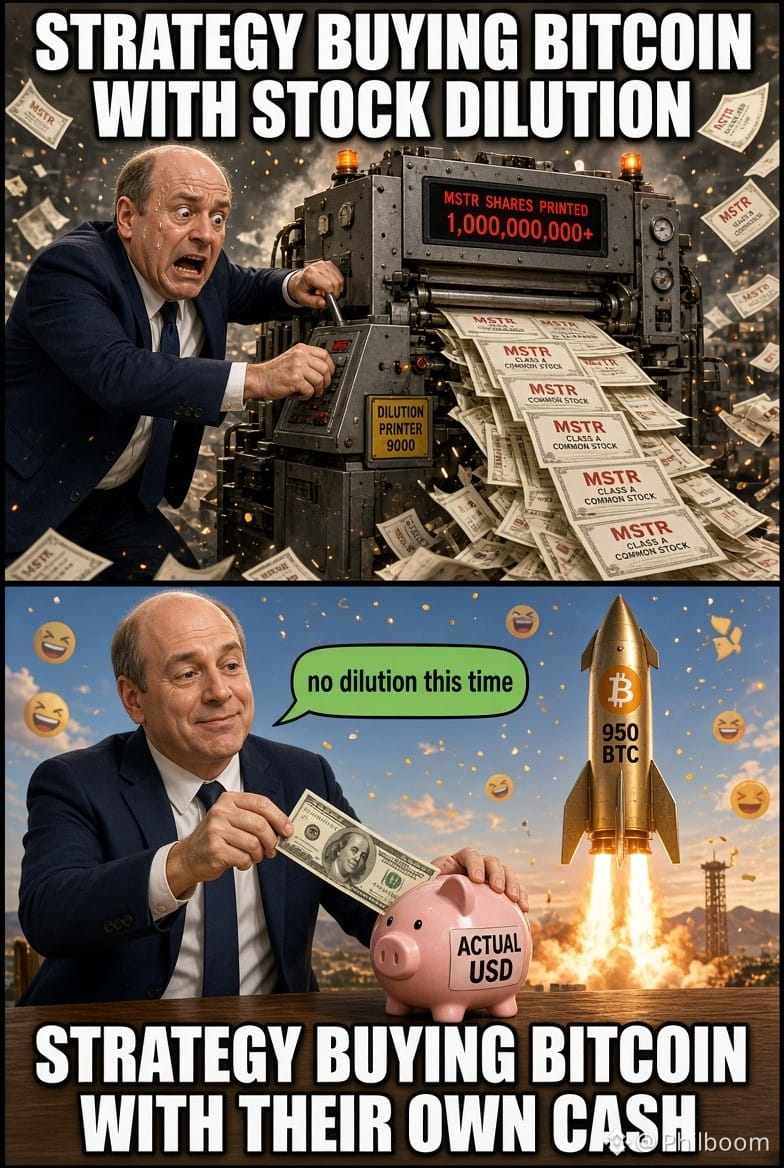
1
138
·
--
Alcista
#SouthAfricaProposesCryptoExchangeControls
Sudáfrica está reviviendo una ley de la era del apartheid de 1961 y las criptomonedas acaban de ser incluidas dentro de ella 🇿🇦🔒
El Tesoro Nacional publicó el Borrador de Regulaciones de Gestión de Flujos de Capital el 17 de abril, reemplazando finalmente las Regulaciones de Control de Cambios de 1961. Vale la pena sentarse con el trasfondo aquí: aquel régimen original se construyó para defender el rand contra la fuga de capitales después de Sharpeville y se utilizó durante toda la etapa del apartheid para controlar quién podía mover dinero y hacia dónde. Ahora, las criptomonedas se están incorporando a la misma arquitectura exacta. 😂
Esto es lo que el borrador realmente exige 🧠
Todo activo cripto que salga de Sudáfrica debe pasar por un proveedor local autorizado. Los titulares deben presentar declaraciones por escrito sobre sus tenencias dentro de los 30 días. Cada transacción necesita un propósito declarado, y usar cripto fuera de ese propósito puede activar una venta forzada. En escenarios de decomiso, los titulares podrían verse obligados a entregar claves privadas para que el Estado gane el control de activos custodiados por ellos mismos. Las sanciones llegan a cinco años de prisión. Incluso el Tesoro no puede ponerse de acuerdo consigo mismo sobre la fecha límite para comentarios: un documento dice 18 de mayo, otro dice 10 de junio. 💎
La tensión honesta que vale la pena nombrar directamente 🎭
Daily Maverick lo llama una mezcla desordenada de exceso de alcance y fingida indignación libertaria. Otros lo enmarcan como una redefinición fundamental de los derechos de propiedad para cualquiera que tenga Bitcoin, oro o propiedad intelectual. Ambas lecturas pueden ser ciertas al mismo tiempo: modernización en el papel, control basado en permisos en la práctica. 🔓
El argumento de libertad que vale la pena recordar 🎯
La autocustodia existe precisamente para momentos como este. Una clave privada que vive solo en tu propia cabeza no puede legislarse en un archivador. Cada nuevo requisito de declaración es un recordatorio de exactamente por qué la descentralización nunca se suponía que necesitara el permiso de nadie. 🚀
$BTC $ETH
{spot}(BTCUSDT)
{spot}(ETHUSDT)
#SouthAfricaProposesCryptoExchangeControls
Sudáfrica está reviviendo una ley de la era del apartheid de 1961 y las criptomonedas acaban de ser incluidas dentro de ella 🇿🇦🔒
El Tesoro Nacional publicó el Borrador de Regulaciones de Gestión de Flujos de Capital el 17 de abril, reemplazando finalmente las Regulaciones de Control de Cambios de 1961. Vale la pena sentarse con el trasfondo aquí: aquel régimen original se construyó para defender el rand contra la fuga de capitales después de Sharpeville y se utilizó durante toda la etapa del apartheid para controlar quién podía mover dinero y hacia dónde. Ahora, las criptomonedas se están incorporando a la misma arquitectura exacta. 😂
Esto es lo que el borrador realmente exige 🧠
Todo activo cripto que salga de Sudáfrica debe pasar por un proveedor local autorizado. Los titulares deben presentar declaraciones por escrito sobre sus tenencias dentro de los 30 días. Cada transacción necesita un propósito declarado, y usar cripto fuera de ese propósito puede activar una venta forzada. En escenarios de decomiso, los titulares podrían verse obligados a entregar claves privadas para que el Estado gane el control de activos custodiados por ellos mismos. Las sanciones llegan a cinco años de prisión. Incluso el Tesoro no puede ponerse de acuerdo consigo mismo sobre la fecha límite para comentarios: un documento dice 18 de mayo, otro dice 10 de junio. 💎
La tensión honesta que vale la pena nombrar directamente 🎭
Daily Maverick lo llama una mezcla desordenada de exceso de alcance y fingida indignación libertaria. Otros lo enmarcan como una redefinición fundamental de los derechos de propiedad para cualquiera que tenga Bitcoin, oro o propiedad intelectual. Ambas lecturas pueden ser ciertas al mismo tiempo: modernización en el papel, control basado en permisos en la práctica. 🔓
El argumento de libertad que vale la pena recordar 🎯
La autocustodia existe precisamente para momentos como este. Una clave privada que vive solo en tu propia cabeza no puede legislarse en un archivador. Cada nuevo requisito de declaración es un recordatorio de exactamente por qué la descentralización nunca se suponía que necesitara el permiso de nadie. 🚀
$BTC $ETH
Sudáfrica está reviviendo una ley de la era del apartheid de 1961 y las criptomonedas acaban de ser incluidas dentro de ella 🇿🇦🔒
El Tesoro Nacional publicó el Borrador de Regulaciones de Gestión de Flujos de Capital el 17 de abril, reemplazando finalmente las Regulaciones de Control de Cambios de 1961. Vale la pena sentarse con el trasfondo aquí: aquel régimen original se construyó para defender el rand contra la fuga de capitales después de Sharpeville y se utilizó durante toda la etapa del apartheid para controlar quién podía mover dinero y hacia dónde. Ahora, las criptomonedas se están incorporando a la misma arquitectura exacta. 😂
Esto es lo que el borrador realmente exige 🧠
Todo activo cripto que salga de Sudáfrica debe pasar por un proveedor local autorizado. Los titulares deben presentar declaraciones por escrito sobre sus tenencias dentro de los 30 días. Cada transacción necesita un propósito declarado, y usar cripto fuera de ese propósito puede activar una venta forzada. En escenarios de decomiso, los titulares podrían verse obligados a entregar claves privadas para que el Estado gane el control de activos custodiados por ellos mismos. Las sanciones llegan a cinco años de prisión. Incluso el Tesoro no puede ponerse de acuerdo consigo mismo sobre la fecha límite para comentarios: un documento dice 18 de mayo, otro dice 10 de junio. 💎
La tensión honesta que vale la pena nombrar directamente 🎭
Daily Maverick lo llama una mezcla desordenada de exceso de alcance y fingida indignación libertaria. Otros lo enmarcan como una redefinición fundamental de los derechos de propiedad para cualquiera que tenga Bitcoin, oro o propiedad intelectual. Ambas lecturas pueden ser ciertas al mismo tiempo: modernización en el papel, control basado en permisos en la práctica. 🔓
El argumento de libertad que vale la pena recordar 🎯
La autocustodia existe precisamente para momentos como este. Una clave privada que vive solo en tu propia cabeza no puede legislarse en un archivador. Cada nuevo requisito de declaración es un recordatorio de exactamente por qué la descentralización nunca se suponía que necesitara el permiso de nadie. 🚀
$BTC $ETH

175
·
--
Bajista
#XRPExchangeReservesHitSevenYearLow
Las reservas de XRP tocan un mínimo de siete años y nadie se pone de acuerdo sobre lo que eso realmente significa 📉🎭
18 de septiembre. Las reservas de los exchanges de XRP cayeron a unos 1.7 mil millones de tokens, el nivel más bajo en siete años, el mismo día en que los ETF de XRP registraron una salida de 5.15 millones de dólares, la mayor desde el 2 de septiembre. A pesar de esa salida, los fondos siguen encaminados para una 10.ª semana consecutiva de entradas netas en general. El analista Dark Defender señaló directamente la tensión evidente: XRP todavía está un 25% por debajo de su máximo de agosto, incluso cuando este supuesto indicio “alcista” sigue construyéndose por debajo. 😂
Aquí está la complicación honesta con la que vale la pena sentarse 🧠
Los seguimientos de reservas no se ponen de acuerdo entre sí. Glassnode muestra un mínimo de siete años cerca de 1.6 mil millones de XRP. Un seguidor más amplio del analista Leonidas muestra algo más cercano a 14 mil millones. La medición más estrecha de CryptoQuant muestra solo una caída del 2.2% desde mayo, muy lejos de algo que se parezca a un shock. Tres fuentes respetadas, tres números totalmente distintos, describiendo el mismo activo el mismo día. 💎
La pregunta incómoda que vale la pena hacer de frente 🎯
Un número de reservas en caída solo significa que los tokens se movieron a algún otro lugar. No implica automáticamente que exista una nueva demanda que absorba lo que luego se vende. El RSI de dos semanas está en 43.78 frente a un mínimo histórico de 33.52; ambos siguen por encima del umbral estándar de “sobreventa” de 30, así que incluso la lectura del impulso es ambigua más que gritar algo específico. 💡
La conclusión honesta 🚀
A todos les encanta una narrativa limpia de “shock de oferta”. Los datos reales de esta semana son más enredados, contradictorios y, en verdad, aún no resueltos. El número de flujo del ETF del viernes es lo único concreto que queda por vigilar antes de que la racha se extienda o se rompa.
$XRP
{spot}(XRPUSDT)
#XRPExchangeReservesHitSevenYearLow
Las reservas de XRP tocan un mínimo de siete años y nadie se pone de acuerdo sobre lo que eso realmente significa 📉🎭
18 de septiembre. Las reservas de los exchanges de XRP cayeron a unos 1.7 mil millones de tokens, el nivel más bajo en siete años, el mismo día en que los ETF de XRP registraron una salida de 5.15 millones de dólares, la mayor desde el 2 de septiembre. A pesar de esa salida, los fondos siguen encaminados para una 10.ª semana consecutiva de entradas netas en general. El analista Dark Defender señaló directamente la tensión evidente: XRP todavía está un 25% por debajo de su máximo de agosto, incluso cuando este supuesto indicio “alcista” sigue construyéndose por debajo. 😂
Aquí está la complicación honesta con la que vale la pena sentarse 🧠
Los seguimientos de reservas no se ponen de acuerdo entre sí. Glassnode muestra un mínimo de siete años cerca de 1.6 mil millones de XRP. Un seguidor más amplio del analista Leonidas muestra algo más cercano a 14 mil millones. La medición más estrecha de CryptoQuant muestra solo una caída del 2.2% desde mayo, muy lejos de algo que se parezca a un shock. Tres fuentes respetadas, tres números totalmente distintos, describiendo el mismo activo el mismo día. 💎
La pregunta incómoda que vale la pena hacer de frente 🎯
Un número de reservas en caída solo significa que los tokens se movieron a algún otro lugar. No implica automáticamente que exista una nueva demanda que absorba lo que luego se vende. El RSI de dos semanas está en 43.78 frente a un mínimo histórico de 33.52; ambos siguen por encima del umbral estándar de “sobreventa” de 30, así que incluso la lectura del impulso es ambigua más que gritar algo específico. 💡
La conclusión honesta 🚀
A todos les encanta una narrativa limpia de “shock de oferta”. Los datos reales de esta semana son más enredados, contradictorios y, en verdad, aún no resueltos. El número de flujo del ETF del viernes es lo único concreto que queda por vigilar antes de que la racha se extienda o se rompa.
$XRP
Las reservas de XRP tocan un mínimo de siete años y nadie se pone de acuerdo sobre lo que eso realmente significa 📉🎭
18 de septiembre. Las reservas de los exchanges de XRP cayeron a unos 1.7 mil millones de tokens, el nivel más bajo en siete años, el mismo día en que los ETF de XRP registraron una salida de 5.15 millones de dólares, la mayor desde el 2 de septiembre. A pesar de esa salida, los fondos siguen encaminados para una 10.ª semana consecutiva de entradas netas en general. El analista Dark Defender señaló directamente la tensión evidente: XRP todavía está un 25% por debajo de su máximo de agosto, incluso cuando este supuesto indicio “alcista” sigue construyéndose por debajo. 😂
Aquí está la complicación honesta con la que vale la pena sentarse 🧠
Los seguimientos de reservas no se ponen de acuerdo entre sí. Glassnode muestra un mínimo de siete años cerca de 1.6 mil millones de XRP. Un seguidor más amplio del analista Leonidas muestra algo más cercano a 14 mil millones. La medición más estrecha de CryptoQuant muestra solo una caída del 2.2% desde mayo, muy lejos de algo que se parezca a un shock. Tres fuentes respetadas, tres números totalmente distintos, describiendo el mismo activo el mismo día. 💎
La pregunta incómoda que vale la pena hacer de frente 🎯
Un número de reservas en caída solo significa que los tokens se movieron a algún otro lugar. No implica automáticamente que exista una nueva demanda que absorba lo que luego se vende. El RSI de dos semanas está en 43.78 frente a un mínimo histórico de 33.52; ambos siguen por encima del umbral estándar de “sobreventa” de 30, así que incluso la lectura del impulso es ambigua más que gritar algo específico. 💡
La conclusión honesta 🚀
A todos les encanta una narrativa limpia de “shock de oferta”. Los datos reales de esta semana son más enredados, contradictorios y, en verdad, aún no resueltos. El número de flujo del ETF del viernes es lo único concreto que queda por vigilar antes de que la racha se extienda o se rompa.
$XRP

1
1
575
·
--
Alcista
Verificado
La Fed subió tipos, FALLÓ la CLARITY y aun así el cripto se disparó porque aparentemente nadie lee las malas noticias primero 📈😂
El 16 de septiembre, la Fed entregó exactamente lo que los mercados habían descontado durante semanas: una subida de 25 puntos básicos hasta el 4.00%, y la votación de cloture de la Ley CLARITY falló el día anterior. Dos titulares genuinamente bajistas, uno tras otro. Dos días después, el cripto está al alza en todo el tablero: Bitcoin vuelve a superar los $80,000, con una subida de casi 6% en 24 horas; Ether sube 7.3%; XRP sube 8.9%. A veces, la peor noticia que por fin aterriza trae, como si nada, su propio tipo de alivio. La incertidumbre resuelta, incluso de forma desfavorable, supera a la incertidumbre que se prolonga para siempre. 💎
Aquí está quién realmente impulsó la recuperación 🧠
Solana, no Bitcoin. SOL saltó del 10 al 12.7% hasta $112.41, su nivel más alto en siete meses, superando tanto a Bitcoin como a Ether el mismo día. Las acciones “relacionadas” con cripto se movieron aún más fuerte: Coinbase subió 11.7%, Strategy subió 16.4% y Gemini subió 31%. Cuando todo el mercado repunta en conjunto, el token con una razón concreta de verdad encuentra la forma de darles alcance a todos los demás. 🎯
La razón por la que Solana recibió el empujón extra 💡
La SEC otorgó a Solana una Exención de Innovación de cinco años el 18 de septiembre, proporcionando una claridad regulatoria real para el trading de valores tokenizados en la red. Eso ocurrió el mismo día en que Solana activó la tercera fase de su actualización SIMD-0525, recortando aún más el tiempo de slot. Claridad regulatoria + una actualización técnica, sumadas a una ola de alivio que afectó al mercado en general, explican por qué SOL está logrando casi el doble de la ganancia de Bitcoin. 🚀
La conclusión honesta 🎭
Los mercados hicieron caso omiso a una subida de tipos y a un proyecto de ley fallido en las mismas 48 horas. Si ese “desdén” se mantiene es la única pregunta real que queda en pie.
#SOLJumpsAbout10%
$SOL
{spot}(SOLUSDT)
La Fed subió tipos, FALLÓ la CLARITY y aun así el cripto se disparó porque aparentemente nadie lee las malas noticias primero 📈😂
El 16 de septiembre, la Fed entregó exactamente lo que los mercados habían descontado durante semanas: una subida de 25 puntos básicos hasta el 4.00%, y la votación de cloture de la Ley CLARITY falló el día anterior. Dos titulares genuinamente bajistas, uno tras otro. Dos días después, el cripto está al alza en todo el tablero: Bitcoin vuelve a superar los $80,000, con una subida de casi 6% en 24 horas; Ether sube 7.3%; XRP sube 8.9%. A veces, la peor noticia que por fin aterriza trae, como si nada, su propio tipo de alivio. La incertidumbre resuelta, incluso de forma desfavorable, supera a la incertidumbre que se prolonga para siempre. 💎
Aquí está quién realmente impulsó la recuperación 🧠
Solana, no Bitcoin. SOL saltó del 10 al 12.7% hasta $112.41, su nivel más alto en siete meses, superando tanto a Bitcoin como a Ether el mismo día. Las acciones “relacionadas” con cripto se movieron aún más fuerte: Coinbase subió 11.7%, Strategy subió 16.4% y Gemini subió 31%. Cuando todo el mercado repunta en conjunto, el token con una razón concreta de verdad encuentra la forma de darles alcance a todos los demás. 🎯
La razón por la que Solana recibió el empujón extra 💡
La SEC otorgó a Solana una Exención de Innovación de cinco años el 18 de septiembre, proporcionando una claridad regulatoria real para el trading de valores tokenizados en la red. Eso ocurrió el mismo día en que Solana activó la tercera fase de su actualización SIMD-0525, recortando aún más el tiempo de slot. Claridad regulatoria + una actualización técnica, sumadas a una ola de alivio que afectó al mercado en general, explican por qué SOL está logrando casi el doble de la ganancia de Bitcoin. 🚀
La conclusión honesta 🎭
Los mercados hicieron caso omiso a una subida de tipos y a un proyecto de ley fallido en las mismas 48 horas. Si ese “desdén” se mantiene es la única pregunta real que queda en pie.
#SOLJumpsAbout10%
$SOL
El 16 de septiembre, la Fed entregó exactamente lo que los mercados habían descontado durante semanas: una subida de 25 puntos básicos hasta el 4.00%, y la votación de cloture de la Ley CLARITY falló el día anterior. Dos titulares genuinamente bajistas, uno tras otro. Dos días después, el cripto está al alza en todo el tablero: Bitcoin vuelve a superar los $80,000, con una subida de casi 6% en 24 horas; Ether sube 7.3%; XRP sube 8.9%. A veces, la peor noticia que por fin aterriza trae, como si nada, su propio tipo de alivio. La incertidumbre resuelta, incluso de forma desfavorable, supera a la incertidumbre que se prolonga para siempre. 💎
Aquí está quién realmente impulsó la recuperación 🧠
Solana, no Bitcoin. SOL saltó del 10 al 12.7% hasta $112.41, su nivel más alto en siete meses, superando tanto a Bitcoin como a Ether el mismo día. Las acciones “relacionadas” con cripto se movieron aún más fuerte: Coinbase subió 11.7%, Strategy subió 16.4% y Gemini subió 31%. Cuando todo el mercado repunta en conjunto, el token con una razón concreta de verdad encuentra la forma de darles alcance a todos los demás. 🎯
La razón por la que Solana recibió el empujón extra 💡
La SEC otorgó a Solana una Exención de Innovación de cinco años el 18 de septiembre, proporcionando una claridad regulatoria real para el trading de valores tokenizados en la red. Eso ocurrió el mismo día en que Solana activó la tercera fase de su actualización SIMD-0525, recortando aún más el tiempo de slot. Claridad regulatoria + una actualización técnica, sumadas a una ola de alivio que afectó al mercado en general, explican por qué SOL está logrando casi el doble de la ganancia de Bitcoin. 🚀
La conclusión honesta 🎭
Los mercados hicieron caso omiso a una subida de tipos y a un proyecto de ley fallido en las mismas 48 horas. Si ese “desdén” se mantiene es la única pregunta real que queda en pie.
#SOLJumpsAbout10%
$SOL
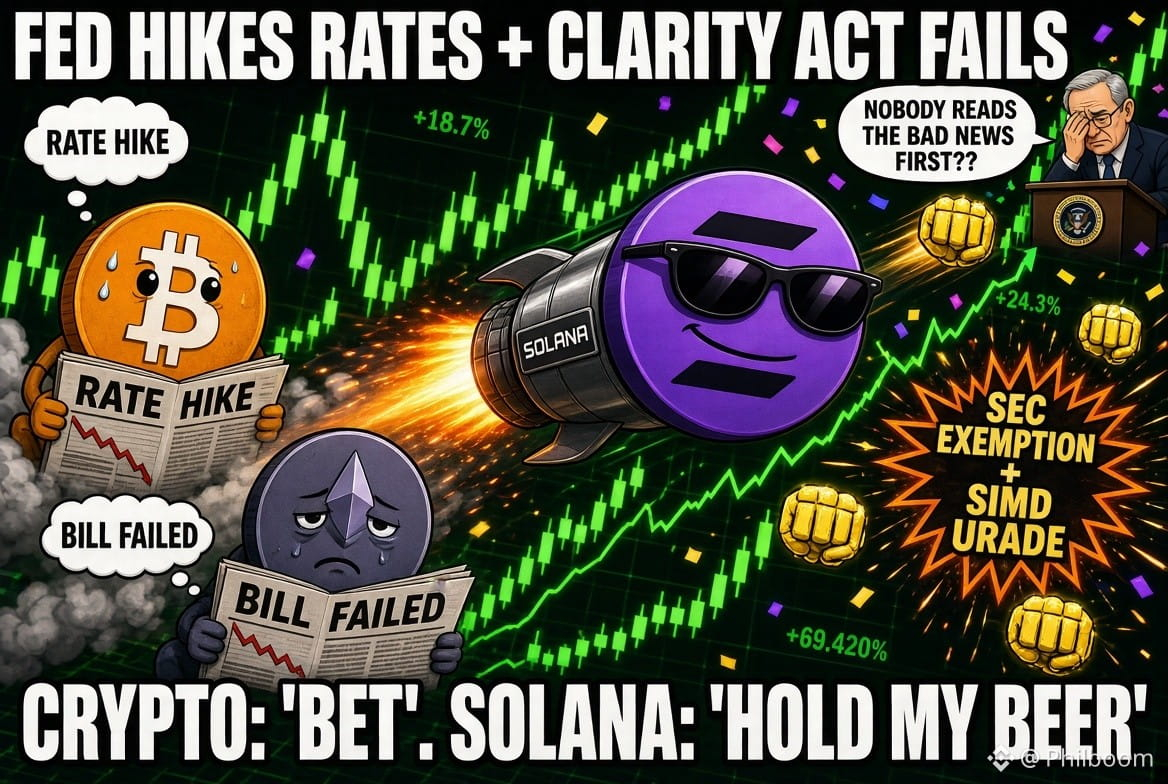
1
806
·
--
Alcista
#BTCBreaks80K
Bitcoin acaba de romper los 80.000 dólares como un toro con cafeína en una tienda de porcelana 🐂💥 y el mundo cripto está perdiendo la cabeza en conjunto.
En esta bonita tarde del 18 de septiembre de 2026, el BTC está bailando entre 80.800 y 80.850 dólares después de un jugoso repunte del 5 al 6% en 24 horas. Ayer estaba de capa caída en la franja de los 70 y se veía deprimido. Hoy se despertó y decidió que el muro psicológico de los 80k era solo una sugerencia, y se impulsó hacia arriba con un beso alto (casi rozando) los 81k. Comportamiento clásico de Bitcoin: ignora a la Fed, ignora el drama y ve directo hacia arriba para los memes 📈🚀
Analíticamente, este movimiento se siente como una combinación de short squeeze con el cóctel de FOMO institucional. Las entradas al ETF spot volvieron a ponerse en verde tras los reembolsos recientes y los osos apalancados fueron liquidados con más dureza que un proyecto fallido de grupo. El nivel de 80k ha sido una zona de resistencia tozuda durante meses, así que recuperarlo con volumen es una victoria técnica bastante decente. Aun así, estamos lejos del máximo histórico de octubre de 2025, cerca de 126k, así que la fiesta tiene margen para crecer… o para estrellarse espectacularmente según las próximas explosiones macro de la semana.
¿Lo más gracioso? La mitad de Twitter ya está declarando “a la luna”, mientras que la otra mitad grita “rebote de gato muerto”. Mientras tanto, el propio Bitcoin se queda ahí como “hago lo que quiero” 😂🪙
Aguanten sus asientos, gente. Este oro digital una vez más demuestra que puede ignorar la gravedad por más tiempo que la mayoría de nosotros puede ignorar nuestros chats de grupo. Si esto es el inicio de una recuperación real o solo otro amague picante… está por verse, pero maldita sea, se siente buenísimo ver 80k otra vez.
$BTC
{spot}(BTCUSDT)
#BTCBreaks80K
Bitcoin acaba de romper los 80.000 dólares como un toro con cafeína en una tienda de porcelana 🐂💥 y el mundo cripto está perdiendo la cabeza en conjunto.
En esta bonita tarde del 18 de septiembre de 2026, el BTC está bailando entre 80.800 y 80.850 dólares después de un jugoso repunte del 5 al 6% en 24 horas. Ayer estaba de capa caída en la franja de los 70 y se veía deprimido. Hoy se despertó y decidió que el muro psicológico de los 80k era solo una sugerencia, y se impulsó hacia arriba con un beso alto (casi rozando) los 81k. Comportamiento clásico de Bitcoin: ignora a la Fed, ignora el drama y ve directo hacia arriba para los memes 📈🚀
Analíticamente, este movimiento se siente como una combinación de short squeeze con el cóctel de FOMO institucional. Las entradas al ETF spot volvieron a ponerse en verde tras los reembolsos recientes y los osos apalancados fueron liquidados con más dureza que un proyecto fallido de grupo. El nivel de 80k ha sido una zona de resistencia tozuda durante meses, así que recuperarlo con volumen es una victoria técnica bastante decente. Aun así, estamos lejos del máximo histórico de octubre de 2025, cerca de 126k, así que la fiesta tiene margen para crecer… o para estrellarse espectacularmente según las próximas explosiones macro de la semana.
¿Lo más gracioso? La mitad de Twitter ya está declarando “a la luna”, mientras que la otra mitad grita “rebote de gato muerto”. Mientras tanto, el propio Bitcoin se queda ahí como “hago lo que quiero” 😂🪙
Aguanten sus asientos, gente. Este oro digital una vez más demuestra que puede ignorar la gravedad por más tiempo que la mayoría de nosotros puede ignorar nuestros chats de grupo. Si esto es el inicio de una recuperación real o solo otro amague picante… está por verse, pero maldita sea, se siente buenísimo ver 80k otra vez.
$BTC
Bitcoin acaba de romper los 80.000 dólares como un toro con cafeína en una tienda de porcelana 🐂💥 y el mundo cripto está perdiendo la cabeza en conjunto.
En esta bonita tarde del 18 de septiembre de 2026, el BTC está bailando entre 80.800 y 80.850 dólares después de un jugoso repunte del 5 al 6% en 24 horas. Ayer estaba de capa caída en la franja de los 70 y se veía deprimido. Hoy se despertó y decidió que el muro psicológico de los 80k era solo una sugerencia, y se impulsó hacia arriba con un beso alto (casi rozando) los 81k. Comportamiento clásico de Bitcoin: ignora a la Fed, ignora el drama y ve directo hacia arriba para los memes 📈🚀
Analíticamente, este movimiento se siente como una combinación de short squeeze con el cóctel de FOMO institucional. Las entradas al ETF spot volvieron a ponerse en verde tras los reembolsos recientes y los osos apalancados fueron liquidados con más dureza que un proyecto fallido de grupo. El nivel de 80k ha sido una zona de resistencia tozuda durante meses, así que recuperarlo con volumen es una victoria técnica bastante decente. Aun así, estamos lejos del máximo histórico de octubre de 2025, cerca de 126k, así que la fiesta tiene margen para crecer… o para estrellarse espectacularmente según las próximas explosiones macro de la semana.
¿Lo más gracioso? La mitad de Twitter ya está declarando “a la luna”, mientras que la otra mitad grita “rebote de gato muerto”. Mientras tanto, el propio Bitcoin se queda ahí como “hago lo que quiero” 😂🪙
Aguanten sus asientos, gente. Este oro digital una vez más demuestra que puede ignorar la gravedad por más tiempo que la mayoría de nosotros puede ignorar nuestros chats de grupo. Si esto es el inicio de una recuperación real o solo otro amague picante… está por verse, pero maldita sea, se siente buenísimo ver 80k otra vez.
$BTC

1
193
·
--
Alcista
Verificado
NEAR diseñó un incentivo donde los titulares están financieramente motivados para que el precio suba 🎯📈
18 de septiembre. NEAR se disparó más de un 26% hasta 3,45 USD, subiendo desde 2,34 USD solo tres días antes: un movimiento del 45% en 72 horas. Ese tipo de subida normalmente necesita un catalizador de verdad salvaje. Este casi funciona como si fuera mecánico, y sinceramente es bastante brillante una vez que entiendes cómo opera. 😂
Este es el planteamiento que nadie fuera del cripto diseñaría jamás 🧠
El 15 de septiembre, el pipeline de privacidad de Intenciones Confidenciales de NEAR superó los 70 millones en TVL, lo que activó un airdrop de 333,333 tokens especiales "NEAR@3.33" para cualquiera que tuviera 100 USD o más y completara un swap confidencial. Aquí está el giro: esos tokens solo se convierten en NEAR real y gastable una vez que el propio precio promedio ponderado por volumen del token se mantiene en 3,33 USD o por encima durante tres días consecutivos. NEAR, en esencia, les dio a miles de personas una razón financiera para querer que el precio subiera, específicamente para desbloquear dinero que ya técnicamente poseían. 💎
La comedia del diseño de incentivos 🎭
Esto no es manipulación en el sentido tradicional: es transparente, se anunció públicamente y se diseñó específicamente para desalentar el wash trading y los flips rápidos. Solo que, además, termina creando exactamente la presión de compra necesaria para alcanzar su propia meta. En algún lugar, un teórico de juegos aplaude en silencio. 😂
Los personajes de soporte que vale la pena notar 💡
NEAR Intents registró una operación importante de un tiburón intercambiando ETH directamente por ZEC a través de esta misma capa de privacidad, y los ingresos por comisiones de la plataforma alcanzaron 1,58 millones de USD en los últimos 30 días. Uso real debajo de los mecanismos del incentivo, no solo especulación disfrazada de algo. 🎯
Que se mantenga el 3,33 durante los tres días requeridos es lo único que en realidad decide si fue un diseño inteligente o solo una fiesta costosa. 🚀
#NEARSurge26%Past$3.45
$NEAR
{future}(NEARUSDT)
NEAR diseñó un incentivo donde los titulares están financieramente motivados para que el precio suba 🎯📈
18 de septiembre. NEAR se disparó más de un 26% hasta 3,45 USD, subiendo desde 2,34 USD solo tres días antes: un movimiento del 45% en 72 horas. Ese tipo de subida normalmente necesita un catalizador de verdad salvaje. Este casi funciona como si fuera mecánico, y sinceramente es bastante brillante una vez que entiendes cómo opera. 😂
Este es el planteamiento que nadie fuera del cripto diseñaría jamás 🧠
El 15 de septiembre, el pipeline de privacidad de Intenciones Confidenciales de NEAR superó los 70 millones en TVL, lo que activó un airdrop de 333,333 tokens especiales "NEAR@3.33" para cualquiera que tuviera 100 USD o más y completara un swap confidencial. Aquí está el giro: esos tokens solo se convierten en NEAR real y gastable una vez que el propio precio promedio ponderado por volumen del token se mantiene en 3,33 USD o por encima durante tres días consecutivos. NEAR, en esencia, les dio a miles de personas una razón financiera para querer que el precio subiera, específicamente para desbloquear dinero que ya técnicamente poseían. 💎
La comedia del diseño de incentivos 🎭
Esto no es manipulación en el sentido tradicional: es transparente, se anunció públicamente y se diseñó específicamente para desalentar el wash trading y los flips rápidos. Solo que, además, termina creando exactamente la presión de compra necesaria para alcanzar su propia meta. En algún lugar, un teórico de juegos aplaude en silencio. 😂
Los personajes de soporte que vale la pena notar 💡
NEAR Intents registró una operación importante de un tiburón intercambiando ETH directamente por ZEC a través de esta misma capa de privacidad, y los ingresos por comisiones de la plataforma alcanzaron 1,58 millones de USD en los últimos 30 días. Uso real debajo de los mecanismos del incentivo, no solo especulación disfrazada de algo. 🎯
Que se mantenga el 3,33 durante los tres días requeridos es lo único que en realidad decide si fue un diseño inteligente o solo una fiesta costosa. 🚀
#NEARSurge26%Past$3.45
$NEAR
18 de septiembre. NEAR se disparó más de un 26% hasta 3,45 USD, subiendo desde 2,34 USD solo tres días antes: un movimiento del 45% en 72 horas. Ese tipo de subida normalmente necesita un catalizador de verdad salvaje. Este casi funciona como si fuera mecánico, y sinceramente es bastante brillante una vez que entiendes cómo opera. 😂
Este es el planteamiento que nadie fuera del cripto diseñaría jamás 🧠
El 15 de septiembre, el pipeline de privacidad de Intenciones Confidenciales de NEAR superó los 70 millones en TVL, lo que activó un airdrop de 333,333 tokens especiales "NEAR@3.33" para cualquiera que tuviera 100 USD o más y completara un swap confidencial. Aquí está el giro: esos tokens solo se convierten en NEAR real y gastable una vez que el propio precio promedio ponderado por volumen del token se mantiene en 3,33 USD o por encima durante tres días consecutivos. NEAR, en esencia, les dio a miles de personas una razón financiera para querer que el precio subiera, específicamente para desbloquear dinero que ya técnicamente poseían. 💎
La comedia del diseño de incentivos 🎭
Esto no es manipulación en el sentido tradicional: es transparente, se anunció públicamente y se diseñó específicamente para desalentar el wash trading y los flips rápidos. Solo que, además, termina creando exactamente la presión de compra necesaria para alcanzar su propia meta. En algún lugar, un teórico de juegos aplaude en silencio. 😂
Los personajes de soporte que vale la pena notar 💡
NEAR Intents registró una operación importante de un tiburón intercambiando ETH directamente por ZEC a través de esta misma capa de privacidad, y los ingresos por comisiones de la plataforma alcanzaron 1,58 millones de USD en los últimos 30 días. Uso real debajo de los mecanismos del incentivo, no solo especulación disfrazada de algo. 🎯
Que se mantenga el 3,33 durante los tres días requeridos es lo único que en realidad decide si fue un diseño inteligente o solo una fiesta costosa. 🚀
#NEARSurge26%Past$3.45
$NEAR

1
785
·
--
Alcista
#MemeLaunchpads82%OfArcDayOneVolume
Circle construyó una cadena institucional y los traders de memes se presentaron en la fiesta equivocada de todos modos 🎉🏦
16 de septiembre. La red principal Arc de Circle salió en vivo y produjo $410.8 millones en volumen DEX y 7.76 millones de transacciones el primer día. Los launchpads de monedas meme representaron el 82% de eso, aproximadamente $336.3 millones. Un solo launchpad, arguspad.io, manejó por sí solo $202.35 millones, cerca de la mitad de toda la actividad de la cadena, y acuñó 83,751 de los 97,025 tokens creados ese día. Más tokens en 24 horas que el mejor día registrado de pump.fun, en una cadena construida por la empresa que emite USDC. 😂
Aquí está la ironía con la que vale la pena quedarse 🧠
Circle comercializó Arc como un sistema operativo económico para mercados financieros, movimiento de dinero en tiempo real y agentes de IA que transaccionan de forma autónoma. Los validadores fundadores incluyen BlackRock, Visa, Mastercard, DTCC y ICE. Bitwise y Janus Henderson están moviendo fondos tokenizados a la cadena. Visa y MoneyGram planean liquidar stablecoins a través de ella. Y en el día de apertura, nada de eso marcó el tono. Lo marcaron los traders especulativos de memes. 💎
El número que lo pone en perspectiva 🎯
Elimina por completo los launchpads y el volumen real institucional y no especulativo de Arc fue de alrededor de $74.6 millones; sigue siendo respetable para una cadena de solo dos días, solo que no es la historia principal. El debut del propio Robinhood Chain el 1 de julio hizo algo comparativamente pequeño: $14.74 millones, lo que significa que Arc se lanzó casi 28 veces más grande. 💡
La advertencia honesta que vale recordar 🎭
Robinhood Chain se enfrió durante agosto antes de alcanzar este mes un récord diario de $3.7 mil millones. Los volúmenes iniciales casi no te dicen nada sobre a dónde termina llegando una cadena. Si Arc se convierte en infraestructura institucional genuina o solo en otro patio de juegos temporal para memes es una pregunta que estas primeras 24 horas no pueden responder realmente. 🚀
$ARC $BTC
{future}(ARCUSDT)
{spot}(BTCUSDT)
#MemeLaunchpads82%OfArcDayOneVolume
Circle construyó una cadena institucional y los traders de memes se presentaron en la fiesta equivocada de todos modos 🎉🏦
16 de septiembre. La red principal Arc de Circle salió en vivo y produjo $410.8 millones en volumen DEX y 7.76 millones de transacciones el primer día. Los launchpads de monedas meme representaron el 82% de eso, aproximadamente $336.3 millones. Un solo launchpad, arguspad.io, manejó por sí solo $202.35 millones, cerca de la mitad de toda la actividad de la cadena, y acuñó 83,751 de los 97,025 tokens creados ese día. Más tokens en 24 horas que el mejor día registrado de pump.fun, en una cadena construida por la empresa que emite USDC. 😂
Aquí está la ironía con la que vale la pena quedarse 🧠
Circle comercializó Arc como un sistema operativo económico para mercados financieros, movimiento de dinero en tiempo real y agentes de IA que transaccionan de forma autónoma. Los validadores fundadores incluyen BlackRock, Visa, Mastercard, DTCC y ICE. Bitwise y Janus Henderson están moviendo fondos tokenizados a la cadena. Visa y MoneyGram planean liquidar stablecoins a través de ella. Y en el día de apertura, nada de eso marcó el tono. Lo marcaron los traders especulativos de memes. 💎
El número que lo pone en perspectiva 🎯
Elimina por completo los launchpads y el volumen real institucional y no especulativo de Arc fue de alrededor de $74.6 millones; sigue siendo respetable para una cadena de solo dos días, solo que no es la historia principal. El debut del propio Robinhood Chain el 1 de julio hizo algo comparativamente pequeño: $14.74 millones, lo que significa que Arc se lanzó casi 28 veces más grande. 💡
La advertencia honesta que vale recordar 🎭
Robinhood Chain se enfrió durante agosto antes de alcanzar este mes un récord diario de $3.7 mil millones. Los volúmenes iniciales casi no te dicen nada sobre a dónde termina llegando una cadena. Si Arc se convierte en infraestructura institucional genuina o solo en otro patio de juegos temporal para memes es una pregunta que estas primeras 24 horas no pueden responder realmente. 🚀
$ARC $BTC
Circle construyó una cadena institucional y los traders de memes se presentaron en la fiesta equivocada de todos modos 🎉🏦
16 de septiembre. La red principal Arc de Circle salió en vivo y produjo $410.8 millones en volumen DEX y 7.76 millones de transacciones el primer día. Los launchpads de monedas meme representaron el 82% de eso, aproximadamente $336.3 millones. Un solo launchpad, arguspad.io, manejó por sí solo $202.35 millones, cerca de la mitad de toda la actividad de la cadena, y acuñó 83,751 de los 97,025 tokens creados ese día. Más tokens en 24 horas que el mejor día registrado de pump.fun, en una cadena construida por la empresa que emite USDC. 😂
Aquí está la ironía con la que vale la pena quedarse 🧠
Circle comercializó Arc como un sistema operativo económico para mercados financieros, movimiento de dinero en tiempo real y agentes de IA que transaccionan de forma autónoma. Los validadores fundadores incluyen BlackRock, Visa, Mastercard, DTCC y ICE. Bitwise y Janus Henderson están moviendo fondos tokenizados a la cadena. Visa y MoneyGram planean liquidar stablecoins a través de ella. Y en el día de apertura, nada de eso marcó el tono. Lo marcaron los traders especulativos de memes. 💎
El número que lo pone en perspectiva 🎯
Elimina por completo los launchpads y el volumen real institucional y no especulativo de Arc fue de alrededor de $74.6 millones; sigue siendo respetable para una cadena de solo dos días, solo que no es la historia principal. El debut del propio Robinhood Chain el 1 de julio hizo algo comparativamente pequeño: $14.74 millones, lo que significa que Arc se lanzó casi 28 veces más grande. 💡
La advertencia honesta que vale recordar 🎭
Robinhood Chain se enfrió durante agosto antes de alcanzar este mes un récord diario de $3.7 mil millones. Los volúmenes iniciales casi no te dicen nada sobre a dónde termina llegando una cadena. Si Arc se convierte en infraestructura institucional genuina o solo en otro patio de juegos temporal para memes es una pregunta que estas primeras 24 horas no pueden responder realmente. 🚀
$ARC $BTC

1
246
·
--
Alcista
#MSTRTradingVolumeSurpassesMorganStanley
Ahora un “proxy” de Bitcoin (acción) cotiza más acciones al día que el banco más grande de Estados Unidos 🏦📊
Strategy Inc, la empresa que antes se conocía como MicroStrategy, ahora registra más rotación diaria de acciones que JPMorgan Chase. El volumen diario promedio de MSTR se sitúa alrededor de 15 a 20 millones de acciones. JPMorgan promedia aproximadamente 6 a 9 millones. Es una frase realmente extraña de escribir sobre un banco que tiene un valor de mercado de casi un billón de dólares. 😂
Aquí está la diferencia de escala que hace que esto caiga distinto 🧠
MSTR cotiza cerca de 97 a 100 dólares por acción, con una capitalización bursátil de alrededor de 38 mil millones. JPMorgan cotiza alrededor de 360 dólares por acción, con una capitalización bursátil por encima de 950 mil millones, aproximadamente 25 veces mayor. Una empresa que es una fracción del tamaño de JPMorgan está moviendo más acciones todos y cada uno de los días. En términos de dólares, la brecha en realidad se reduce bastante: el volumen diario de MSTR se sitúa en torno a 1.5 a 2 mil millones de dólares, mientras que el de JPMorgan está en 2.2 a 3.2 mil millones, ya que el precio mucho más alto de las acciones de JPMorgan significa que menos acciones cargan el mismo peso en dólares. 💎
La razón honesta detrás del frenesí 🎯
MSTR ofrece a los inversores exposición apalancada a Bitcoin a través de una acción que se puede negociar, vender en corto y con margen; algo que la posesión directa de Bitcoin dificulta considerablemente para muchas cuentas institucionales. Esa comodidad estructural, financiada con deuda y acciones preferentes, sigue atrayendo volumen especulativo independientemente de lo que el negocio subyacente haga día a día. 💡
Una nota breve y honesta sobre los nombres 🎭
Algunas charlas recientes han planteado una comparación con Morgan Stanley en particular, pero esa combinación no cuadra con el reporte confirmado. JPMorgan es el banco real que MSTR ha superado genuinamente en volumen de acciones este año, y ese hito por sí solo es lo bastante notable como para no necesitar el nombre equivocado pegado a él. 🚀
$MSTRB $BTC
{spot}(MSTRBUSDT)
{spot}(BTCUSDT)
#MSTRTradingVolumeSurpassesMorganStanley
Ahora un “proxy” de Bitcoin (acción) cotiza más acciones al día que el banco más grande de Estados Unidos 🏦📊
Strategy Inc, la empresa que antes se conocía como MicroStrategy, ahora registra más rotación diaria de acciones que JPMorgan Chase. El volumen diario promedio de MSTR se sitúa alrededor de 15 a 20 millones de acciones. JPMorgan promedia aproximadamente 6 a 9 millones. Es una frase realmente extraña de escribir sobre un banco que tiene un valor de mercado de casi un billón de dólares. 😂
Aquí está la diferencia de escala que hace que esto caiga distinto 🧠
MSTR cotiza cerca de 97 a 100 dólares por acción, con una capitalización bursátil de alrededor de 38 mil millones. JPMorgan cotiza alrededor de 360 dólares por acción, con una capitalización bursátil por encima de 950 mil millones, aproximadamente 25 veces mayor. Una empresa que es una fracción del tamaño de JPMorgan está moviendo más acciones todos y cada uno de los días. En términos de dólares, la brecha en realidad se reduce bastante: el volumen diario de MSTR se sitúa en torno a 1.5 a 2 mil millones de dólares, mientras que el de JPMorgan está en 2.2 a 3.2 mil millones, ya que el precio mucho más alto de las acciones de JPMorgan significa que menos acciones cargan el mismo peso en dólares. 💎
La razón honesta detrás del frenesí 🎯
MSTR ofrece a los inversores exposición apalancada a Bitcoin a través de una acción que se puede negociar, vender en corto y con margen; algo que la posesión directa de Bitcoin dificulta considerablemente para muchas cuentas institucionales. Esa comodidad estructural, financiada con deuda y acciones preferentes, sigue atrayendo volumen especulativo independientemente de lo que el negocio subyacente haga día a día. 💡
Una nota breve y honesta sobre los nombres 🎭
Algunas charlas recientes han planteado una comparación con Morgan Stanley en particular, pero esa combinación no cuadra con el reporte confirmado. JPMorgan es el banco real que MSTR ha superado genuinamente en volumen de acciones este año, y ese hito por sí solo es lo bastante notable como para no necesitar el nombre equivocado pegado a él. 🚀
$MSTRB $BTC
Ahora un “proxy” de Bitcoin (acción) cotiza más acciones al día que el banco más grande de Estados Unidos 🏦📊
Strategy Inc, la empresa que antes se conocía como MicroStrategy, ahora registra más rotación diaria de acciones que JPMorgan Chase. El volumen diario promedio de MSTR se sitúa alrededor de 15 a 20 millones de acciones. JPMorgan promedia aproximadamente 6 a 9 millones. Es una frase realmente extraña de escribir sobre un banco que tiene un valor de mercado de casi un billón de dólares. 😂
Aquí está la diferencia de escala que hace que esto caiga distinto 🧠
MSTR cotiza cerca de 97 a 100 dólares por acción, con una capitalización bursátil de alrededor de 38 mil millones. JPMorgan cotiza alrededor de 360 dólares por acción, con una capitalización bursátil por encima de 950 mil millones, aproximadamente 25 veces mayor. Una empresa que es una fracción del tamaño de JPMorgan está moviendo más acciones todos y cada uno de los días. En términos de dólares, la brecha en realidad se reduce bastante: el volumen diario de MSTR se sitúa en torno a 1.5 a 2 mil millones de dólares, mientras que el de JPMorgan está en 2.2 a 3.2 mil millones, ya que el precio mucho más alto de las acciones de JPMorgan significa que menos acciones cargan el mismo peso en dólares. 💎
La razón honesta detrás del frenesí 🎯
MSTR ofrece a los inversores exposición apalancada a Bitcoin a través de una acción que se puede negociar, vender en corto y con margen; algo que la posesión directa de Bitcoin dificulta considerablemente para muchas cuentas institucionales. Esa comodidad estructural, financiada con deuda y acciones preferentes, sigue atrayendo volumen especulativo independientemente de lo que el negocio subyacente haga día a día. 💡
Una nota breve y honesta sobre los nombres 🎭
Algunas charlas recientes han planteado una comparación con Morgan Stanley en particular, pero esa combinación no cuadra con el reporte confirmado. JPMorgan es el banco real que MSTR ha superado genuinamente en volumen de acciones este año, y ese hito por sí solo es lo bastante notable como para no necesitar el nombre equivocado pegado a él. 🚀
$MSTRB $BTC
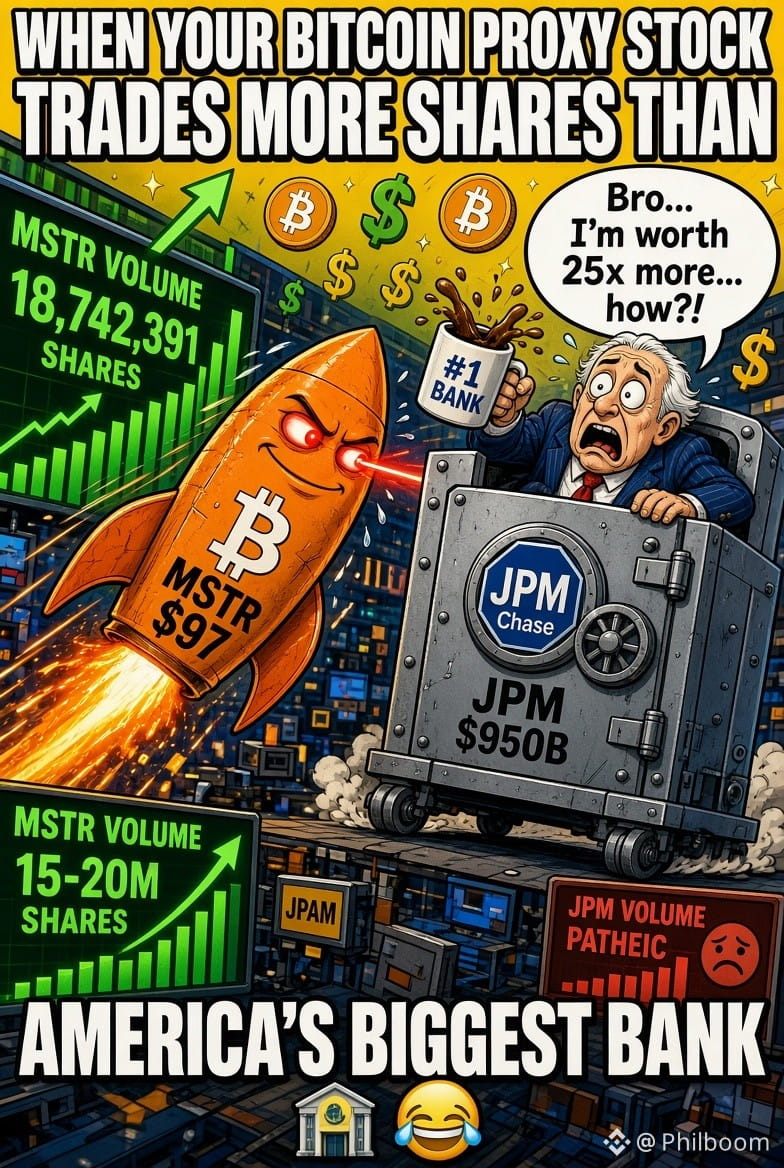
93
Inicia sesión para explorar más contenidos
Únete a usuarios globales de criptomonedas en Binance Square
⚡️ Obtén información útil y actualizada sobre criptos.
💬 Avalado por el mayor exchange de criptomonedas en el mundo.
👍 Descubre perspectivas reales de creadores verificados.
Email/número de teléfono
Temas populares
NFPWatch
10.8M vistas
19,089 están debatiendo
Noticias de cripto | Bitcoin se acerca a 85.000 dólares mientras los rendimientos del Tesoro caen antes del informe NFP de EE. UU.
Binance News
·37 me gusta
·48.2k vistas
BitcoinFundingRateTriplesTo10%
134,739 vistas
1,058 están debatiendo
BitcoinSurpasses$86KUp2.99%
43,196 vistas
106 están debatiendo