

#babylon
babylon
706,508 vistas
2,625 están debatiendo
Hot
Lo último

·
--
Bajista
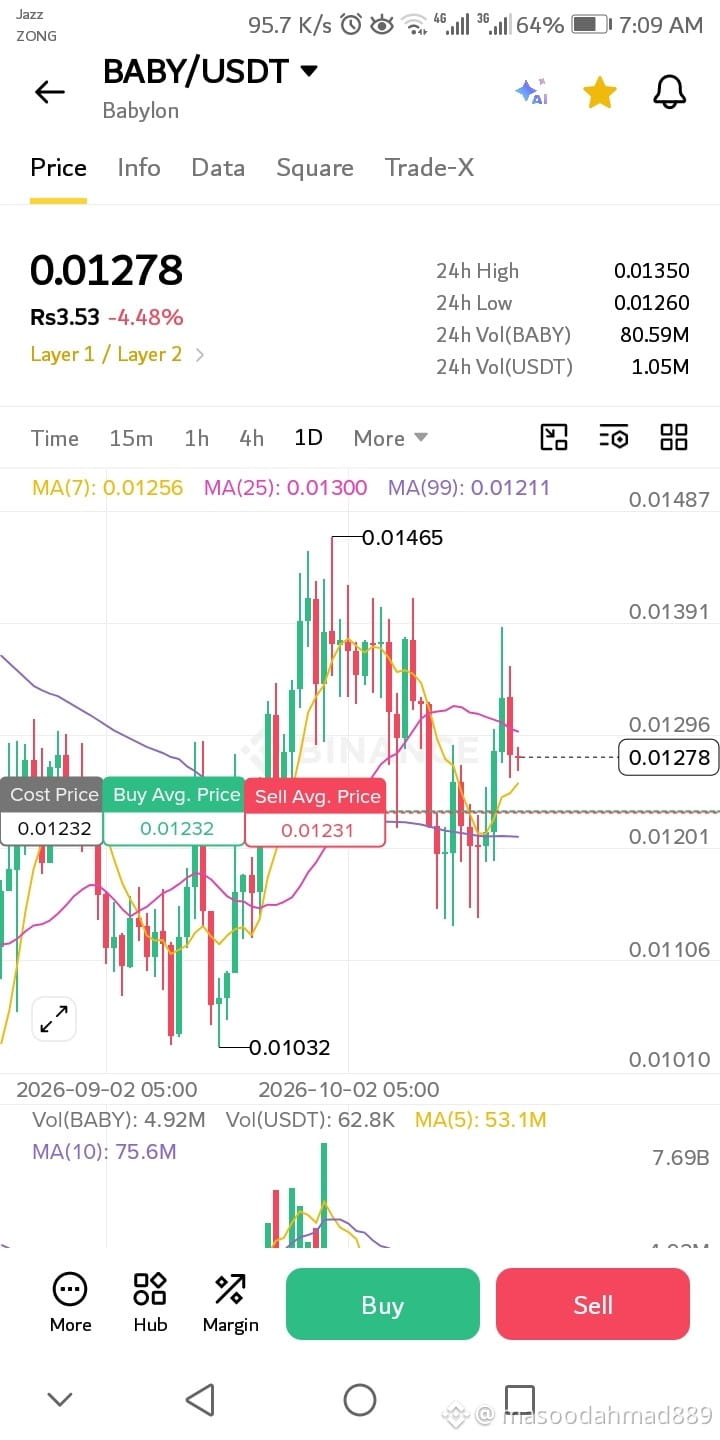
#Babylon Bajista por debajo de 0.01300.
Confirmación: abre una posición corta solo si el precio rechaza la resistencia o rompe por debajo de 0.01260. Evita perseguir el movimiento.
BABY/USDT — Configuración de trading
Sesgo del gráfico
Precio actual (captura de pantalla) 0.01278
Resistencia inmediata 0.01300–0.01310
Soporte inmediato 0.01260
Soporte principal 0.01210–0.01200
#Babylon
#Babylon Bajista por debajo de 0.01300.
Confirmación: abre una posición corta solo si el precio rechaza la resistencia o rompe por debajo de 0.01260. Evita perseguir el movimiento.
BABY/USDT — Configuración de trading
Sesgo del gráfico
Precio actual (captura de pantalla) 0.01278
Resistencia inmediata 0.01300–0.01310
Soporte inmediato 0.01260
Soporte principal 0.01210–0.01200
#Babylon
Confirmación: abre una posición corta solo si el precio rechaza la resistencia o rompe por debajo de 0.01260. Evita perseguir el movimiento.
BABY/USDT — Configuración de trading
Sesgo del gráfico
Precio actual (captura de pantalla) 0.01278
Resistencia inmediata 0.01300–0.01310
Soporte inmediato 0.01260
Soporte principal 0.01210–0.01200
#Babylon
171

·
--
Alcista
¡El futuro de las DeFi de Bitcoin por fin está aquí! Las bóvedas de Bitcoin sin necesidad de confianza de Babylon (TBV) están revolucionando la forma en que aprovechamos la seguridad inactiva de Bitcoin, creando un ecosistema BTCFi mucho más seguro y productivo. Me entusiasma mucho ver el continuo crecimiento de $BABY y la increíble visión que está haciendo realidad @BabylonLabs_io. ¡Este es un gran paso adelante, necesario, para las finanzas descentralizadas y la utilidad de Bitcoin! #baby $BTC #babylon
¡El futuro de las DeFi de Bitcoin por fin está aquí! Las bóvedas de Bitcoin sin necesidad de confianza de Babylon (TBV) están revolucionando la forma en que aprovechamos la seguridad inactiva de Bitcoin, creando un ecosistema BTCFi mucho más seguro y productivo. Me entusiasma mucho ver el continuo crecimiento de $BABY y la increíble visión que está haciendo realidad @BabylonLabs_io. ¡Este es un gran paso adelante, necesario, para las finanzas descentralizadas y la utilidad de Bitcoin! #baby $BTC #babylon
274

·
--
📌 Desbloqueo del 10, ¿quién corre primero?
$BABY 0.01451, 24h +8.9%.
El lote que se desbloquea el 10 de octubre, se enviará al equipo, asesores e inversores tempranos.
Cuanto más suba, más ordenadas estarán las órdenes de venta el día del desbloqueo.
🟢 La narrativa de apostar BTC nativa sigue en pie; BTCFi es una de las líneas principales de este año
🔴 Oferta infinita y liberación lineal mensual; del lado de la oferta, aquí no hay fin
Posición de disciplina: para hablar de continuidad hay que mantenerse por encima del máximo de hoy 0.0147; si cae de vuelta a 0.0132, esta ronda termina.
Si el desbloqueo va delante, ¿te atreves a mantenerlo de un día para otro?
🎉 Que a los que persiguen subidas también les toque que alguien los empuje; los retrocesos siempre te faltarán un punto ✨
$BABY #Babylon #BTCFi #币安广场
(No constituye asesoramiento)
📌 Desbloqueo del 10, ¿quién corre primero?
$BABY 0.01451, 24h +8.9%.
El lote que se desbloquea el 10 de octubre, se enviará al equipo, asesores e inversores tempranos.
Cuanto más suba, más ordenadas estarán las órdenes de venta el día del desbloqueo.
🟢 La narrativa de apostar BTC nativa sigue en pie; BTCFi es una de las líneas principales de este año
🔴 Oferta infinita y liberación lineal mensual; del lado de la oferta, aquí no hay fin
Posición de disciplina: para hablar de continuidad hay que mantenerse por encima del máximo de hoy 0.0147; si cae de vuelta a 0.0132, esta ronda termina.
Si el desbloqueo va delante, ¿te atreves a mantenerlo de un día para otro?
🎉 Que a los que persiguen subidas también les toque que alguien los empuje; los retrocesos siempre te faltarán un punto ✨
$BABY #Babylon #BTCFi #币安广场
(No constituye asesoramiento)
$BABY 0.01451, 24h +8.9%.
El lote que se desbloquea el 10 de octubre, se enviará al equipo, asesores e inversores tempranos.
Cuanto más suba, más ordenadas estarán las órdenes de venta el día del desbloqueo.
🟢 La narrativa de apostar BTC nativa sigue en pie; BTCFi es una de las líneas principales de este año
🔴 Oferta infinita y liberación lineal mensual; del lado de la oferta, aquí no hay fin
Posición de disciplina: para hablar de continuidad hay que mantenerse por encima del máximo de hoy 0.0147; si cae de vuelta a 0.0132, esta ronda termina.
Si el desbloqueo va delante, ¿te atreves a mantenerlo de un día para otro?
🎉 Que a los que persiguen subidas también les toque que alguien los empuje; los retrocesos siempre te faltarán un punto ✨
$BABY #Babylon #BTCFi #币安广场
(No constituye asesoramiento)

154


·
--
Alcista
#Babylon a 0.01413$ de altura 7.29% plantea una pregunta que me gustaría ver en el mercado cripto: ¿y si no se tratara de crear un nuevo capital, sino de utilizar el capital que ya existe? El proyecto intenta aprovechar el BTC mediante Staking para asegurar otras redes. La idea tiene algo de inteligente a nivel arquitectónico; el Bitcoin sigue siendo el activo, pero su seguridad económica puede integrarse en otros ecosistemas. Y a medida que se amplían los depósitos de BTC, comienza la verdadera prueba de la idea.
#baby @babylonlabs_io #marouan47 #EarningsSeason
$BABY
{spot}(BABYUSDT)
#Babylon a 0.01413$ de altura 7.29% plantea una pregunta que me gustaría ver en el mercado cripto: ¿y si no se tratara de crear un nuevo capital, sino de utilizar el capital que ya existe? El proyecto intenta aprovechar el BTC mediante Staking para asegurar otras redes. La idea tiene algo de inteligente a nivel arquitectónico; el Bitcoin sigue siendo el activo, pero su seguridad económica puede integrarse en otros ecosistemas. Y a medida que se amplían los depósitos de BTC, comienza la verdadera prueba de la idea.
#baby @BabylonLabs_io #marouan47 #EarningsSeason
$BABY
#baby @BabylonLabs_io #marouan47 #EarningsSeason
$BABY

1
2
819

$BABY
{spot}(BABYUSDT)
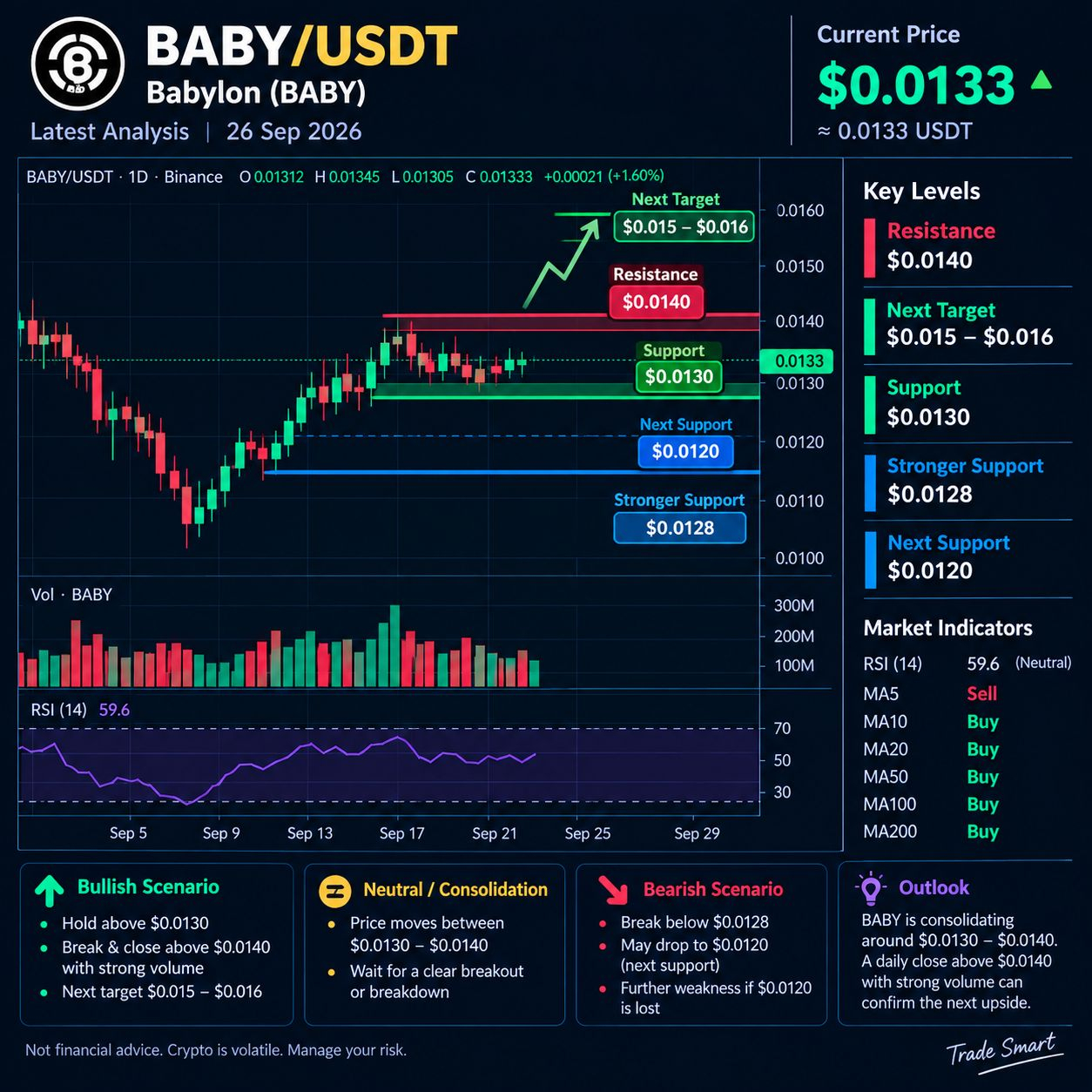
BABY (Babylon) — Análisis de hoy | 26 Sep 2026
BABY/USDT está alrededor de $0.0133 hoy. Las lecturas técnicas actuales son constructivas: el RSI está cerca de 59.6, mientras que las medias móviles de 10/20/50/100/200 periodos están mostrando señales de compra; la MA de 5 periodos está mostrando una señal de venta a corto plazo. �
Investing.com Nigeria +1
🔑 Niveles clave
🟢 Soporte: $0.0130
🟢 Soporte más fuerte: $0.0128
🔻 Soporte siguiente: $0.0120
🔴 Resistencia: $0.0140
🚀 Por encima de $0.0140: vigila la zona $0.015–$0.016
⚠️ Por debajo de $0.0128: el impulso bajista podría aumentar hacia $0.0120.
Los datos recientes también muestran una actividad de trading elevada de BABY, y Binance está ejecutando actualmente una competencia de trading BABY/USDT y BABY/USDC hasta el 29 de septiembre de 2026. �
CoinMarketCap +1
Vista posterior lista: BABY actualmente está consolidando alrededor de $0.0130–$0.0140. Un cierre de vela diaria por encima de $0.0140 con volumen fuerte sería una confirmación alcista más clara; perder $0.0128 debilitaría la configuración.
#baby
#Babylon
#CryptoAnalysis
$BABY
BABY (Babylon) — Análisis de hoy | 26 Sep 2026
BABY/USDT está alrededor de $0.0133 hoy. Las lecturas técnicas actuales son constructivas: el RSI está cerca de 59.6, mientras que las medias móviles de 10/20/50/100/200 periodos están mostrando señales de compra; la MA de 5 periodos está mostrando una señal de venta a corto plazo. �
Investing.com Nigeria +1
🔑 Niveles clave
🟢 Soporte: $0.0130
🟢 Soporte más fuerte: $0.0128
🔻 Soporte siguiente: $0.0120
🔴 Resistencia: $0.0140
🚀 Por encima de $0.0140: vigila la zona $0.015–$0.016
⚠️ Por debajo de $0.0128: el impulso bajista podría aumentar hacia $0.0120.
Los datos recientes también muestran una actividad de trading elevada de BABY, y Binance está ejecutando actualmente una competencia de trading BABY/USDT y BABY/USDC hasta el 29 de septiembre de 2026. �
CoinMarketCap +1
Vista posterior lista: BABY actualmente está consolidando alrededor de $0.0130–$0.0140. Un cierre de vela diaria por encima de $0.0140 con volumen fuerte sería una confirmación alcista más clara; perder $0.0128 debilitaría la configuración.
#baby
#Babylon
#CryptoAnalysis
BABY (Babylon) — Análisis de hoy | 26 Sep 2026
BABY/USDT está alrededor de $0.0133 hoy. Las lecturas técnicas actuales son constructivas: el RSI está cerca de 59.6, mientras que las medias móviles de 10/20/50/100/200 periodos están mostrando señales de compra; la MA de 5 periodos está mostrando una señal de venta a corto plazo. �
Investing.com Nigeria +1
🔑 Niveles clave
🟢 Soporte: $0.0130
🟢 Soporte más fuerte: $0.0128
🔻 Soporte siguiente: $0.0120
🔴 Resistencia: $0.0140
🚀 Por encima de $0.0140: vigila la zona $0.015–$0.016
⚠️ Por debajo de $0.0128: el impulso bajista podría aumentar hacia $0.0120.
Los datos recientes también muestran una actividad de trading elevada de BABY, y Binance está ejecutando actualmente una competencia de trading BABY/USDT y BABY/USDC hasta el 29 de septiembre de 2026. �
CoinMarketCap +1
Vista posterior lista: BABY actualmente está consolidando alrededor de $0.0130–$0.0140. Un cierre de vela diaria por encima de $0.0140 con volumen fuerte sería una confirmación alcista más clara; perder $0.0128 debilitaría la configuración.
#baby
#Babylon
#CryptoAnalysis
214

·
--
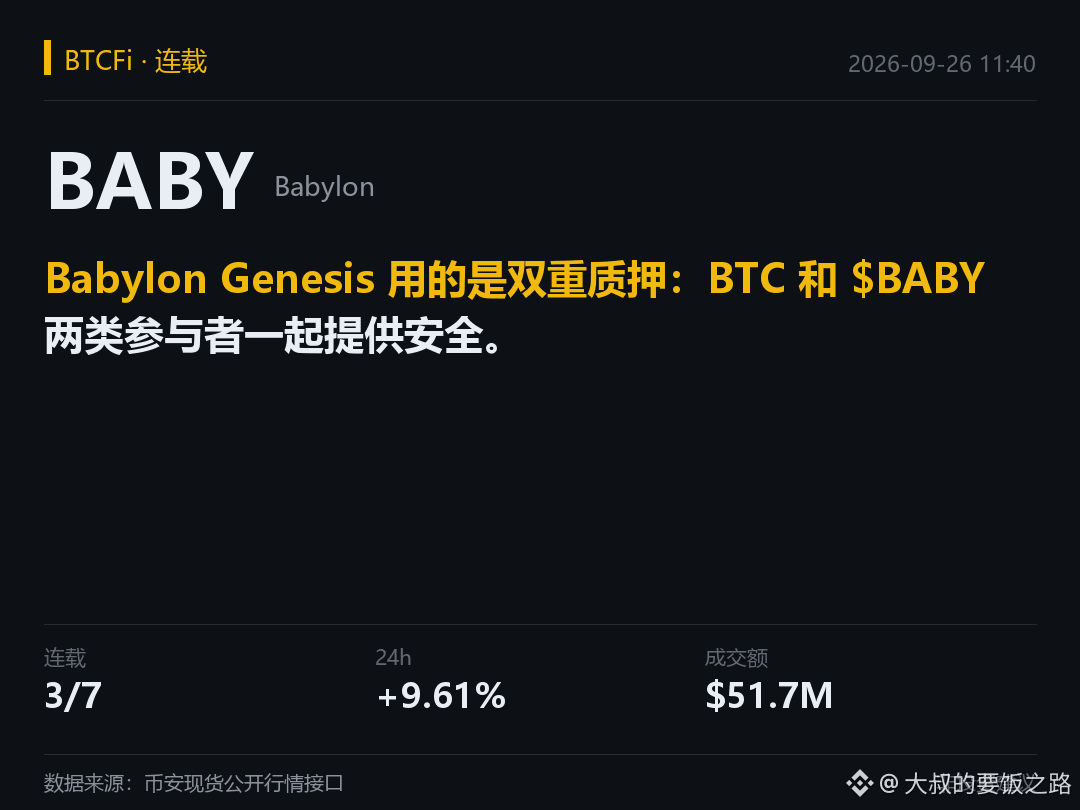
Babylon Genesis usa una doble pignoración: BTC y dos tipos de participantes, con el número $BABY , proporcionan seguridad juntos.
Pero los activos de recompensa solo son BABY. Que Bitcoin participe en el servicio de seguridad no significa que las recompensas provengan de los ingresos operativos de Bitcoin. Estas dos cosas a menudo se escriben mezcladas.
#Babylon
No es asesoramiento de inversión
{future}(BABYUSDT)
Babylon Genesis usa una doble pignoración: BTC y dos tipos de participantes, con el número $BABY , proporcionan seguridad juntos.
Pero los activos de recompensa solo son BABY. Que Bitcoin participe en el servicio de seguridad no significa que las recompensas provengan de los ingresos operativos de Bitcoin. Estas dos cosas a menudo se escriben mezcladas.
#Babylon
No es asesoramiento de inversión
Pero los activos de recompensa solo son BABY. Que Bitcoin participe en el servicio de seguridad no significa que las recompensas provengan de los ingresos operativos de Bitcoin. Estas dos cosas a menudo se escriben mezcladas.
#Babylon
No es asesoramiento de inversión
142

·
--
🔥 $BABY : La subida continúa 🚀
Entrada: 0.01275–0.01285$
Objetivos
1️⃣ 0.01310$
2️⃣ 0.01340$
3️⃣ 0.01375$
Stop loss: 0.01240$
Haz tu propia investigación aquí $BABY
{future}(BABYUSDT)
¿Por qué BABY?
Soporte 0.0122$ fuerte — 3 pruebas exitosas
RSI en 52 — sobrecompra leve — subida inminente
MA50 en 0.01159 — ¡tendencia alcista!
Sigue también $XRP
{future}(XRPUSDT)
Respeta siempre los límites de la operación y gestiona tu riesgo con cuidado 🙏
#xrp #Babylon #altcoins
🔥 $BABY : La subida continúa 🚀
Entrada: 0.01275–0.01285$
Objetivos
1️⃣ 0.01310$
2️⃣ 0.01340$
3️⃣ 0.01375$
Stop loss: 0.01240$
Haz tu propia investigación aquí $BABY
¿Por qué BABY?
Soporte 0.0122$ fuerte — 3 pruebas exitosas
RSI en 52 — sobrecompra leve — subida inminente
MA50 en 0.01159 — ¡tendencia alcista!
Sigue también $XRP
Respeta siempre los límites de la operación y gestiona tu riesgo con cuidado 🙏
#xrp #Babylon #altcoins
Entrada: 0.01275–0.01285$
Objetivos
1️⃣ 0.01310$
2️⃣ 0.01340$
3️⃣ 0.01375$
Stop loss: 0.01240$
Haz tu propia investigación aquí $BABY
¿Por qué BABY?
Soporte 0.0122$ fuerte — 3 pruebas exitosas
RSI en 52 — sobrecompra leve — subida inminente
MA50 en 0.01159 — ¡tendencia alcista!
Sigue también $XRP
Respeta siempre los límites de la operación y gestiona tu riesgo con cuidado 🙏
#xrp #Babylon #altcoins
1
29

·
--
Alcista
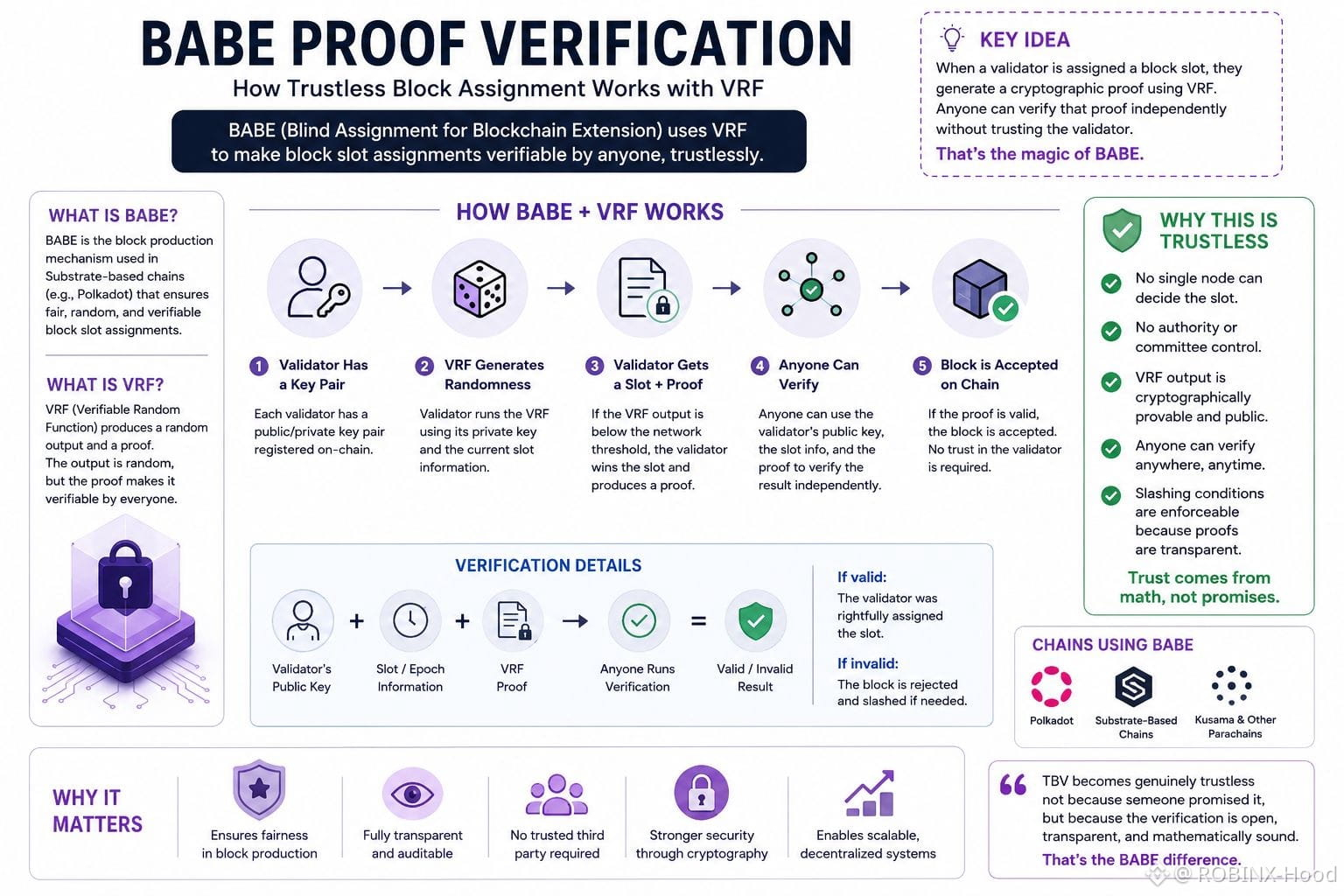
Me tomó mucho más tiempo del que me gustaría admitir entender de verdad la verificación de pruebas BABE. Pero cuando por fin encajó, honestamente cambió la forma en que pienso sobre los sistemas de confianza mínima en general. Aquí va mi postura simple. $BABY (Blind Assignment for Blockchain Extension) usa algo llamado VRF, una Verifiable Random Function. Cuando a un validador le asignan un espacio de bloque, genera una prueba criptográfica. Cualquiera, literalmente cualquiera, puede verificar esa prueba de manera independiente sin confiar en el validador para nada. Esa es la magia. El tema es que la mayoría de la gente escucha "trust less" y asume que es solo un lenguaje de marketing. Pero con BABE, las matemáticas realmente lo respaldan. Ningún nodo, ninguna autoridad, ningún comité puede falsificar la asignación del espacio porque la salida del VRF es demostrable criptográficamente y totalmente pública. Así que TBV se vuelve realmente de confianza mínima no porque alguien lo prometiera, sino porque la verificación está abierta, es transparente y está respaldada matemáticamente. Siento que esa distinción importa muchísimo, especialmente ahora cuando todos están lanzando "trust less" sin que realmente signifique nada. ¿De verdad has investigado cómo funcionan las pruebas VRF en tu cadena favorita? Vale la pena meterse en el agujero del conejo.
#baby #Babylon #BabylonLabs_io @babylonlabs_io $BABY
Me tomó mucho más tiempo del que me gustaría admitir entender de verdad la verificación de pruebas BABE. Pero cuando por fin encajó, honestamente cambió la forma en que pienso sobre los sistemas de confianza mínima en general. Aquí va mi postura simple. $BABY (Blind Assignment for Blockchain Extension) usa algo llamado VRF, una Verifiable Random Function. Cuando a un validador le asignan un espacio de bloque, genera una prueba criptográfica. Cualquiera, literalmente cualquiera, puede verificar esa prueba de manera independiente sin confiar en el validador para nada. Esa es la magia. El tema es que la mayoría de la gente escucha "trust less" y asume que es solo un lenguaje de marketing. Pero con BABE, las matemáticas realmente lo respaldan. Ningún nodo, ninguna autoridad, ningún comité puede falsificar la asignación del espacio porque la salida del VRF es demostrable criptográficamente y totalmente pública. Así que TBV se vuelve realmente de confianza mínima no porque alguien lo prometiera, sino porque la verificación está abierta, es transparente y está respaldada matemáticamente. Siento que esa distinción importa muchísimo, especialmente ahora cuando todos están lanzando "trust less" sin que realmente signifique nada. ¿De verdad has investigado cómo funcionan las pruebas VRF en tu cadena favorita? Vale la pena meterse en el agujero del conejo.
#baby #Babylon #BabylonLabs_io @BabylonLabs_io $BABY
#baby #Babylon #BabylonLabs_io @BabylonLabs_io $BABY
119
93
761
·
--
Alcista
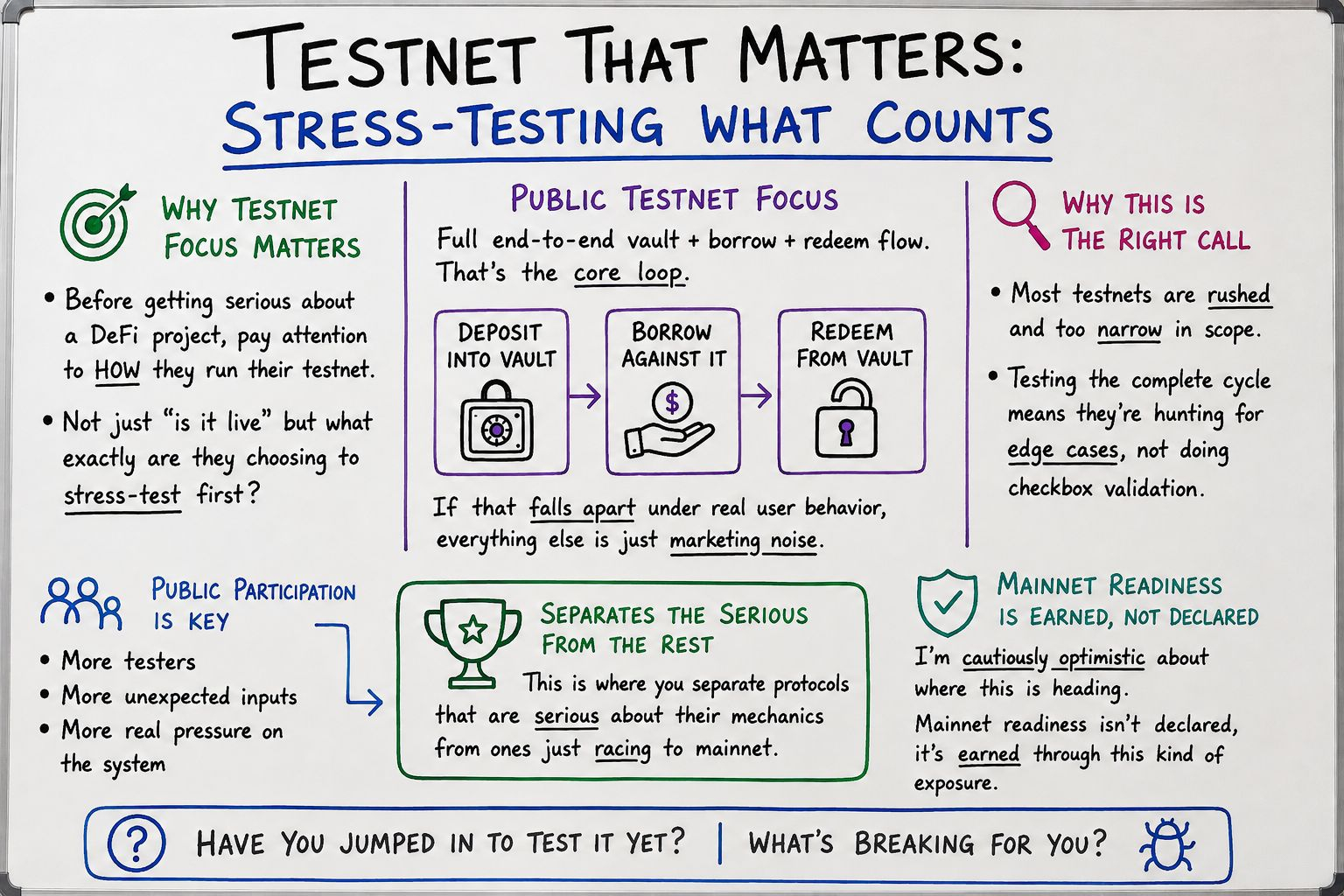
Honestamente, una de las cosas a las que siempre presto atención antes de ponerme serio con un proyecto de DeFi es cómo ejecutan su testnet. No solo “¿está en funcionamiento?”, sino ¿qué exactamente están eligiendo para someter a pruebas primero?
El enfoque de esta testnet pública es el flujo completo de bóveda + préstamo + redención, de extremo a extremo. Y mira, esa es genuinamente la decisión correcta. Ese es el ciclo central. Si se rompe bajo el comportamiento real de los usuarios, todo lo demás es solo ruido de marketing. Lo que pasa es que la mayoría de las testnets se lanzan con prisa y tienen un alcance demasiado limitado. Probar el ciclo completo, depositar en la bóveda, pedir prestado con base en ella y, luego, redimir, significa que realmente están buscando casos límite en lugar de hacer validación por listas. Siento que aquí es donde se separan los protocolos serios con sus mecanismos de los que solo están compitiendo por llegar a mainnet. La participación pública también importa. Más testers, más entradas inesperadas, más presión real sobre el sistema. tbh estoy cautelosamente optimista sobre hacia dónde va esto. La preparación para mainnet no se declara: se gana con este tipo de exposición. ¿Ya te metiste a probarlo? ¿Qué se está rompiendo para ti?
$BABY #baby #Babylon #BabylonLabs_io @babylonlabs_io
Honestamente, una de las cosas a las que siempre presto atención antes de ponerme serio con un proyecto de DeFi es cómo ejecutan su testnet. No solo “¿está en funcionamiento?”, sino ¿qué exactamente están eligiendo para someter a pruebas primero?
El enfoque de esta testnet pública es el flujo completo de bóveda + préstamo + redención, de extremo a extremo. Y mira, esa es genuinamente la decisión correcta. Ese es el ciclo central. Si se rompe bajo el comportamiento real de los usuarios, todo lo demás es solo ruido de marketing. Lo que pasa es que la mayoría de las testnets se lanzan con prisa y tienen un alcance demasiado limitado. Probar el ciclo completo, depositar en la bóveda, pedir prestado con base en ella y, luego, redimir, significa que realmente están buscando casos límite en lugar de hacer validación por listas. Siento que aquí es donde se separan los protocolos serios con sus mecanismos de los que solo están compitiendo por llegar a mainnet. La participación pública también importa. Más testers, más entradas inesperadas, más presión real sobre el sistema. tbh estoy cautelosamente optimista sobre hacia dónde va esto. La preparación para mainnet no se declara: se gana con este tipo de exposición. ¿Ya te metiste a probarlo? ¿Qué se está rompiendo para ti?
$BABY #baby #Babylon #BabylonLabs_io @BabylonLabs_io
El enfoque de esta testnet pública es el flujo completo de bóveda + préstamo + redención, de extremo a extremo. Y mira, esa es genuinamente la decisión correcta. Ese es el ciclo central. Si se rompe bajo el comportamiento real de los usuarios, todo lo demás es solo ruido de marketing. Lo que pasa es que la mayoría de las testnets se lanzan con prisa y tienen un alcance demasiado limitado. Probar el ciclo completo, depositar en la bóveda, pedir prestado con base en ella y, luego, redimir, significa que realmente están buscando casos límite en lugar de hacer validación por listas. Siento que aquí es donde se separan los protocolos serios con sus mecanismos de los que solo están compitiendo por llegar a mainnet. La participación pública también importa. Más testers, más entradas inesperadas, más presión real sobre el sistema. tbh estoy cautelosamente optimista sobre hacia dónde va esto. La preparación para mainnet no se declara: se gana con este tipo de exposición. ¿Ya te metiste a probarlo? ¿Qué se está rompiendo para ti?
$BABY #baby #Babylon #BabylonLabs_io @BabylonLabs_io
173
72
495
·
--
Alcista
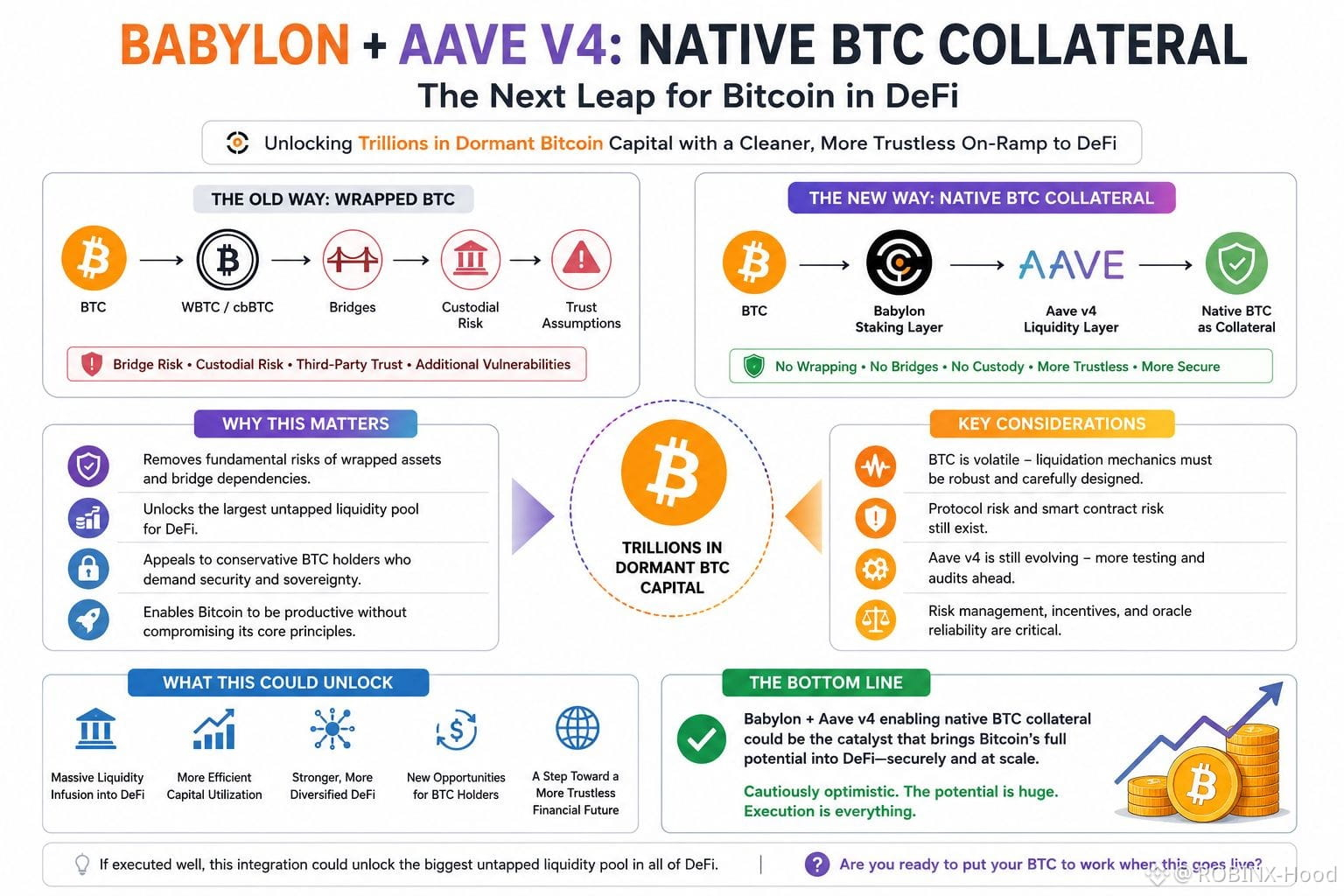
Honestamente, esta en particular en realidad me hizo dejar de scrollear. Babylon + Aave v4 habilitando colateral nativo de BTC es un tema mucho más grande de lo que la mayoría de la gente le está dando crédito ahora mismo. O sea, siempre tuvimos wBTC, cbBTC, todas estas alternativas envueltas, pero vienen con riesgo de puente, suposiciones de custodia y, honestamente, una capa de confianza que estás depositando en terceros.
El colateral nativo cambia completamente esa ecuación. Si la capa de staking de Babylon permite que el BTC permanezca dentro de Aave sin envolverlo, estás eliminando una vulnerabilidad fundamental de la pila. Eso son billones en capital dormido de Bitcoin que por fin obtiene un acceso limpio y más sin confianza (trustless) hacia DeFi.
El punto es que los holders de BTC son notoriamente conservadores. No quieren tocar tokens envueltos. Pero, ¿y si el colateral nativo realmente los mueve? Aunque con cautela, estoy bastante entusiasmado. El riesgo de protocolo sigue siendo muy real; la mecánica de liquidación sobre colateral volátil necesita un diseño cuidadoso, y Aave v4 todavía está evolucionando. No hay garantías aquí. Pero si esto se ejecuta de forma limpia, podría desbloquear el mayor fondo de liquidez aún sin explotar de todo DeFi.
¿En serio estás considerando poner a trabajar el BTC como colateral cuando esto se lance?
#baby #Babylon #BabylonLabs_io @babylonlabs_io $BABY
Honestamente, esta en particular en realidad me hizo dejar de scrollear. Babylon + Aave v4 habilitando colateral nativo de BTC es un tema mucho más grande de lo que la mayoría de la gente le está dando crédito ahora mismo. O sea, siempre tuvimos wBTC, cbBTC, todas estas alternativas envueltas, pero vienen con riesgo de puente, suposiciones de custodia y, honestamente, una capa de confianza que estás depositando en terceros.
El colateral nativo cambia completamente esa ecuación. Si la capa de staking de Babylon permite que el BTC permanezca dentro de Aave sin envolverlo, estás eliminando una vulnerabilidad fundamental de la pila. Eso son billones en capital dormido de Bitcoin que por fin obtiene un acceso limpio y más sin confianza (trustless) hacia DeFi.
El punto es que los holders de BTC son notoriamente conservadores. No quieren tocar tokens envueltos. Pero, ¿y si el colateral nativo realmente los mueve? Aunque con cautela, estoy bastante entusiasmado. El riesgo de protocolo sigue siendo muy real; la mecánica de liquidación sobre colateral volátil necesita un diseño cuidadoso, y Aave v4 todavía está evolucionando. No hay garantías aquí. Pero si esto se ejecuta de forma limpia, podría desbloquear el mayor fondo de liquidez aún sin explotar de todo DeFi.
¿En serio estás considerando poner a trabajar el BTC como colateral cuando esto se lance?
#baby #Babylon #BabylonLabs_io @BabylonLabs_io $BABY
El colateral nativo cambia completamente esa ecuación. Si la capa de staking de Babylon permite que el BTC permanezca dentro de Aave sin envolverlo, estás eliminando una vulnerabilidad fundamental de la pila. Eso son billones en capital dormido de Bitcoin que por fin obtiene un acceso limpio y más sin confianza (trustless) hacia DeFi.
El punto es que los holders de BTC son notoriamente conservadores. No quieren tocar tokens envueltos. Pero, ¿y si el colateral nativo realmente los mueve? Aunque con cautela, estoy bastante entusiasmado. El riesgo de protocolo sigue siendo muy real; la mecánica de liquidación sobre colateral volátil necesita un diseño cuidadoso, y Aave v4 todavía está evolucionando. No hay garantías aquí. Pero si esto se ejecuta de forma limpia, podría desbloquear el mayor fondo de liquidez aún sin explotar de todo DeFi.
¿En serio estás considerando poner a trabajar el BTC como colateral cuando esto se lance?
#baby #Babylon #BabylonLabs_io @BabylonLabs_io $BABY
138
105
1.3k

Casi aumenté mi $BABY posición esta mañana, pero cerré la ventana de la orden después de pasar unos minutos más leyendo el calendario de asignación de Babylon. Mi posición sigue siendo diminuta y, sinceramente, me interesa más entender los incentivos que buscar una entrada rápida.
Al principio, traté la tabla de asignación de tokens como si fuera una simple contabilidad. Equipo, inversores, ecosistema, comunidad: solo porcentajes con distintos períodos de adquisición. Cuanto más la miraba, más me daba cuenta de que esas fechas moldean silenciosamente todo el mercado mucho antes de que la acción del precio cuente la historia.
Un cliff de 12 meses no solo retrasa la oferta. También filtra a los participantes. Algunos tenedores están dispuestos a esperar a través de la incertidumbre, mientras que otros siempre planeaban vender en cuanto tuvieran la primera oportunidad. Cada desbloqueo importante se convierte en una prueba real de demanda, porque el mercado tiene que demostrar que puede absorber nuevos tokens en circulación en lugar de depender de una escasez artificial.
Lo que realmente llamó mi atención fue la asignación al ecosistema. Normalmente se presenta como combustible para el crecimiento, y eso es cierto, pero esos mismos tokens eventualmente entran en circulación. Ya sea que se distribuyan mediante subvenciones, incentivos o asociaciones, con el tiempo también incrementan la oferta disponible. Ignorar esto deja fuera la mitad de la imagen.
Por eso estoy siguiendo la @babylonlabs_io adopción junto con su calendario de adquisición. Cuando lleguen los desbloqueos finales, no solo quiero ver menos restricciones sobre la oferta; quiero saber si la gente todavía realmente quiere BABY, o si la escasez fue haciendo casi todo el trabajo desde el principio.
#BabylonLabs_io #BABY #Babylon #Giggle #GiggleAcademy $SNXX $GIGGLE
📊 ¿Cuál es la prueba más grande para Babylon después de que termine una gran adquisición?
Casi aumenté mi $BABY posición esta mañana, pero cerré la ventana de la orden después de pasar unos minutos más leyendo el calendario de asignación de Babylon. Mi posición sigue siendo diminuta y, sinceramente, me interesa más entender los incentivos que buscar una entrada rápida.
Al principio, traté la tabla de asignación de tokens como si fuera una simple contabilidad. Equipo, inversores, ecosistema, comunidad: solo porcentajes con distintos períodos de adquisición. Cuanto más la miraba, más me daba cuenta de que esas fechas moldean silenciosamente todo el mercado mucho antes de que la acción del precio cuente la historia.
Un cliff de 12 meses no solo retrasa la oferta. También filtra a los participantes. Algunos tenedores están dispuestos a esperar a través de la incertidumbre, mientras que otros siempre planeaban vender en cuanto tuvieran la primera oportunidad. Cada desbloqueo importante se convierte en una prueba real de demanda, porque el mercado tiene que demostrar que puede absorber nuevos tokens en circulación en lugar de depender de una escasez artificial.
Lo que realmente llamó mi atención fue la asignación al ecosistema. Normalmente se presenta como combustible para el crecimiento, y eso es cierto, pero esos mismos tokens eventualmente entran en circulación. Ya sea que se distribuyan mediante subvenciones, incentivos o asociaciones, con el tiempo también incrementan la oferta disponible. Ignorar esto deja fuera la mitad de la imagen.
Por eso estoy siguiendo la @BabylonLabs_io adopción junto con su calendario de adquisición. Cuando lleguen los desbloqueos finales, no solo quiero ver menos restricciones sobre la oferta; quiero saber si la gente todavía realmente quiere BABY, o si la escasez fue haciendo casi todo el trabajo desde el principio.
#BabylonLabs_io #BABY #Babylon #Giggle #GiggleAcademy $SNXX $GIGGLE
📊 ¿Cuál es la prueba más grande para Babylon después de que termine una gran adquisición?
Al principio, traté la tabla de asignación de tokens como si fuera una simple contabilidad. Equipo, inversores, ecosistema, comunidad: solo porcentajes con distintos períodos de adquisición. Cuanto más la miraba, más me daba cuenta de que esas fechas moldean silenciosamente todo el mercado mucho antes de que la acción del precio cuente la historia.
Un cliff de 12 meses no solo retrasa la oferta. También filtra a los participantes. Algunos tenedores están dispuestos a esperar a través de la incertidumbre, mientras que otros siempre planeaban vender en cuanto tuvieran la primera oportunidad. Cada desbloqueo importante se convierte en una prueba real de demanda, porque el mercado tiene que demostrar que puede absorber nuevos tokens en circulación en lugar de depender de una escasez artificial.
Lo que realmente llamó mi atención fue la asignación al ecosistema. Normalmente se presenta como combustible para el crecimiento, y eso es cierto, pero esos mismos tokens eventualmente entran en circulación. Ya sea que se distribuyan mediante subvenciones, incentivos o asociaciones, con el tiempo también incrementan la oferta disponible. Ignorar esto deja fuera la mitad de la imagen.
Por eso estoy siguiendo la @BabylonLabs_io adopción junto con su calendario de adquisición. Cuando lleguen los desbloqueos finales, no solo quiero ver menos restricciones sobre la oferta; quiero saber si la gente todavía realmente quiere BABY, o si la escasez fue haciendo casi todo el trabajo desde el principio.
#BabylonLabs_io #BABY #Babylon #Giggle #GiggleAcademy $SNXX $GIGGLE
📊 ¿Cuál es la prueba más grande para Babylon después de que termine una gran adquisición?
🔥 Sustained real demand
100%
📈 Strong ecosystem growth
0%
💰 Market absorbs unlocks
0%
🤔 Too early to tell
0%
1 Voto(s) • Votación cerrada
14
1
6
545
·
--
Alcista
Verificado
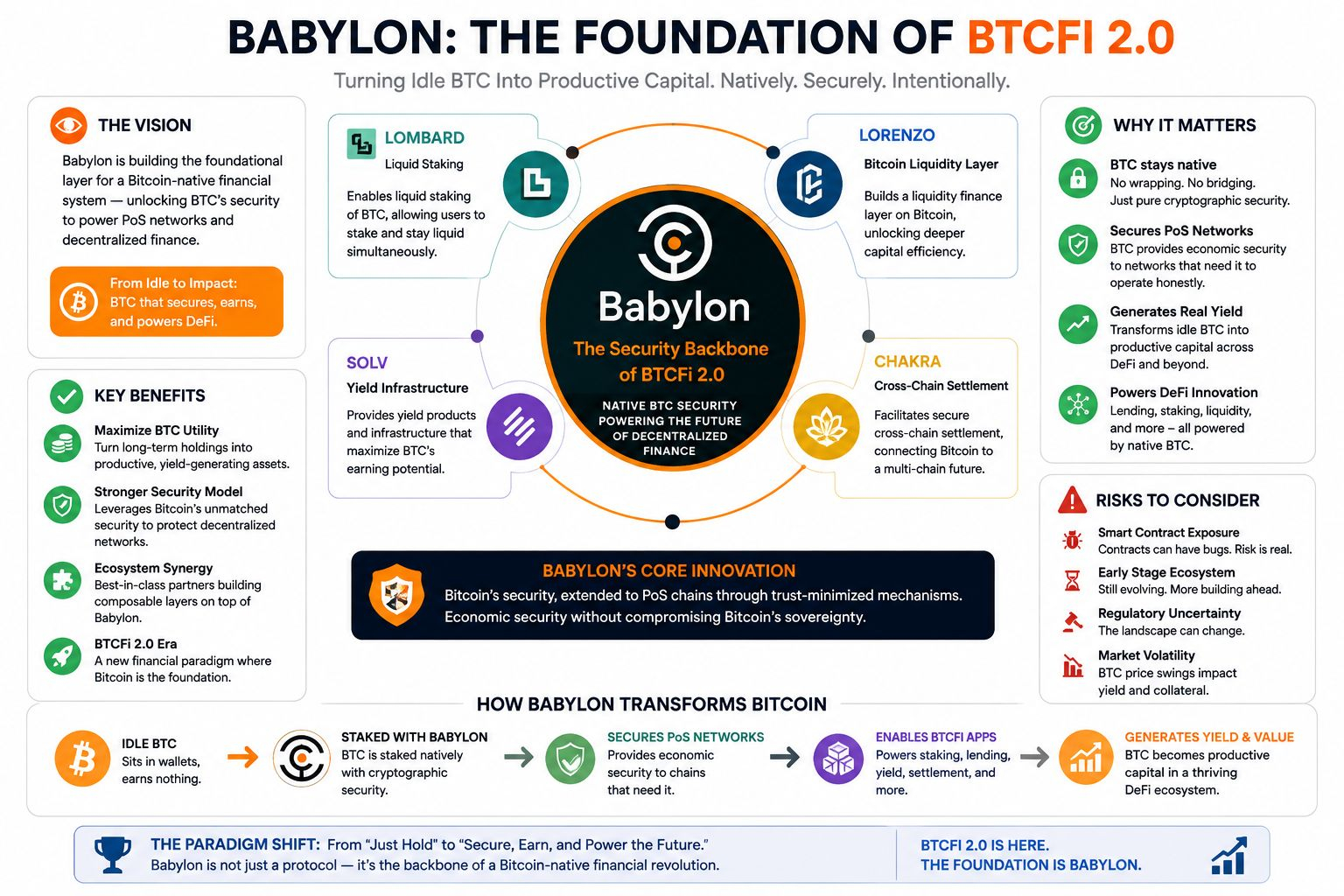
Honestamente, llevo meses viendo crecer el ecosistema de Babylon y creo que la mayoría de la gente todavía no entiende del todo lo que se está construyendo aquí. Lo cierto es que Babylon no es solo otro protocolo de rentabilidad (yield) de BTC. Se está convirtiendo en la capa fundamental de lo que yo llamaría, de verdad, BTCFi 2.0. Y las asociaciones son la señal real.
Lombard aporta liquid staking. Lorenzo añade una capa de finanzas de liquidez de Bitcoin. Solv conecta infraestructura de yield. Chakra se encarga de la liquidación entre cadenas. Cada pieza encaja de forma intencional. Lo que está haciendo Babylon es, básicamente, convertir BTC ocioso en capital productivo, de manera nativa, sin envoltorios ni puentes. Solo seguridad criptográfica pura, tomada por cadenas PoS que realmente la necesitan para funcionar. Mira, no digo que esté libre de riesgos. La exposición a contratos inteligentes es real, el ecosistema aún está en etapas tempranas y la incertidumbre regulatoria nunca desaparece por completo. Pero ¿la arquitectura? En silencio, se está convirtiendo en el eje vertebrador de un sistema financiero nativo de Bitcoin.
Esto ya no es BTC guardado en frío en una wallet de hardware. Es BTC que asegura redes, genera yield real y impulsa DeFi.
Eso es un cambio de paradigma real, tbh.
¿Te estás posicionando para esto o sigues manteniendo tu BTC ocioso?
#baby #BabylonLabs_io @babylonlabs_io $BABY #Babylon
Honestamente, llevo meses viendo crecer el ecosistema de Babylon y creo que la mayoría de la gente todavía no entiende del todo lo que se está construyendo aquí. Lo cierto es que Babylon no es solo otro protocolo de rentabilidad (yield) de BTC. Se está convirtiendo en la capa fundamental de lo que yo llamaría, de verdad, BTCFi 2.0. Y las asociaciones son la señal real.
Lombard aporta liquid staking. Lorenzo añade una capa de finanzas de liquidez de Bitcoin. Solv conecta infraestructura de yield. Chakra se encarga de la liquidación entre cadenas. Cada pieza encaja de forma intencional. Lo que está haciendo Babylon es, básicamente, convertir BTC ocioso en capital productivo, de manera nativa, sin envoltorios ni puentes. Solo seguridad criptográfica pura, tomada por cadenas PoS que realmente la necesitan para funcionar. Mira, no digo que esté libre de riesgos. La exposición a contratos inteligentes es real, el ecosistema aún está en etapas tempranas y la incertidumbre regulatoria nunca desaparece por completo. Pero ¿la arquitectura? En silencio, se está convirtiendo en el eje vertebrador de un sistema financiero nativo de Bitcoin.
Esto ya no es BTC guardado en frío en una wallet de hardware. Es BTC que asegura redes, genera yield real y impulsa DeFi.
Eso es un cambio de paradigma real, tbh.
¿Te estás posicionando para esto o sigues manteniendo tu BTC ocioso?
#baby #BabylonLabs_io @BabylonLabs_io $BABY #Babylon
Lombard aporta liquid staking. Lorenzo añade una capa de finanzas de liquidez de Bitcoin. Solv conecta infraestructura de yield. Chakra se encarga de la liquidación entre cadenas. Cada pieza encaja de forma intencional. Lo que está haciendo Babylon es, básicamente, convertir BTC ocioso en capital productivo, de manera nativa, sin envoltorios ni puentes. Solo seguridad criptográfica pura, tomada por cadenas PoS que realmente la necesitan para funcionar. Mira, no digo que esté libre de riesgos. La exposición a contratos inteligentes es real, el ecosistema aún está en etapas tempranas y la incertidumbre regulatoria nunca desaparece por completo. Pero ¿la arquitectura? En silencio, se está convirtiendo en el eje vertebrador de un sistema financiero nativo de Bitcoin.
Esto ya no es BTC guardado en frío en una wallet de hardware. Es BTC que asegura redes, genera yield real y impulsa DeFi.
Eso es un cambio de paradigma real, tbh.
¿Te estás posicionando para esto o sigues manteniendo tu BTC ocioso?
#baby #BabylonLabs_io @BabylonLabs_io $BABY #Babylon
149
109
892
·
--
Alcista
Parcialmente cierto
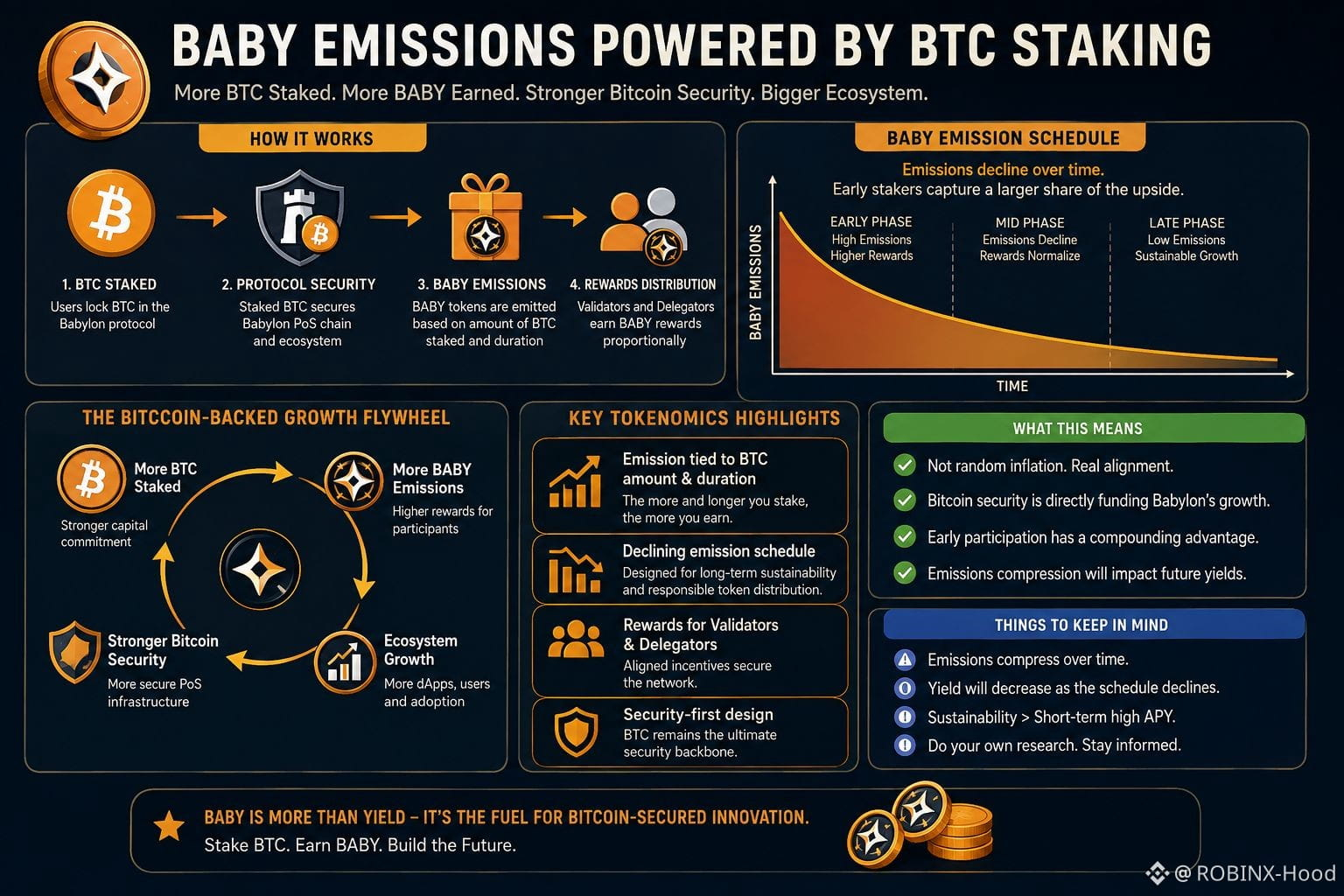
He estado pasando tiempo dentro de los documentos oficiales @babylonlabs_io últimamente y, sinceramente, el modelo de emisiones BABY vinculado al staking de BTC es mucho más matizado de lo que la mayoría comenta. Esto es lo que me llamó la atención. Las emisiones de BABY no se distribuyen al azar. Están directamente ligadas a cuánto Bitcoin está bloqueado activamente en el protocolo y durante cuánto tiempo. Más BTC en staking significa más BABY fluyendo hacia validadores y delegadores. Eso crea un bucle de retroalimentación realmente interesante en el que la seguridad de Bitcoin literalmente está financiando el crecimiento del ecosistema Babylon. La cuestión es que esto no es solo farming de rendimiento disfrazado con un traje de Bitcoin. El cronograma de emisiones está diseñado para declinar gradualmente, lo que significa que los primeros stakers están capturando una parte desproporcionada de la subida. Eso es tokenomics de manual desarrollándose en tiempo real. Siento que mucha gente está pasando por alto esto porque ve el staking de BTC y de inmediato asume que es demasiado bueno para ser verdad. En resumen, el mecanismo real es más limpio de lo que esperaba después de leerlo bien. Aun así, sigo con cautela. Las emisiones se comprimen con el tiempo y eso afecta seriamente las cuentas del rendimiento a largo plazo aquí. ¿Alguien más está siguiendo de cerca las recompensas $BABY ?
#baby #Babylon #BabylonLabs_io @babylonlabs_io
He estado pasando tiempo dentro de los documentos oficiales @BabylonLabs_io últimamente y, sinceramente, el modelo de emisiones BABY vinculado al staking de BTC es mucho más matizado de lo que la mayoría comenta. Esto es lo que me llamó la atención. Las emisiones de BABY no se distribuyen al azar. Están directamente ligadas a cuánto Bitcoin está bloqueado activamente en el protocolo y durante cuánto tiempo. Más BTC en staking significa más BABY fluyendo hacia validadores y delegadores. Eso crea un bucle de retroalimentación realmente interesante en el que la seguridad de Bitcoin literalmente está financiando el crecimiento del ecosistema Babylon. La cuestión es que esto no es solo farming de rendimiento disfrazado con un traje de Bitcoin. El cronograma de emisiones está diseñado para declinar gradualmente, lo que significa que los primeros stakers están capturando una parte desproporcionada de la subida. Eso es tokenomics de manual desarrollándose en tiempo real. Siento que mucha gente está pasando por alto esto porque ve el staking de BTC y de inmediato asume que es demasiado bueno para ser verdad. En resumen, el mecanismo real es más limpio de lo que esperaba después de leerlo bien. Aun así, sigo con cautela. Las emisiones se comprimen con el tiempo y eso afecta seriamente las cuentas del rendimiento a largo plazo aquí. ¿Alguien más está siguiendo de cerca las recompensas $BABY ?
#baby #Babylon #BabylonLabs_io @BabylonLabs_io
#baby #Babylon #BabylonLabs_io @BabylonLabs_io
158
119
642
·
--
Alcista
Hola mis amigos, ¿cómo están todos? Hoy hablaremos sobre el proyecto criptográfico $BABY con Bright 😎 Future 👇🏼
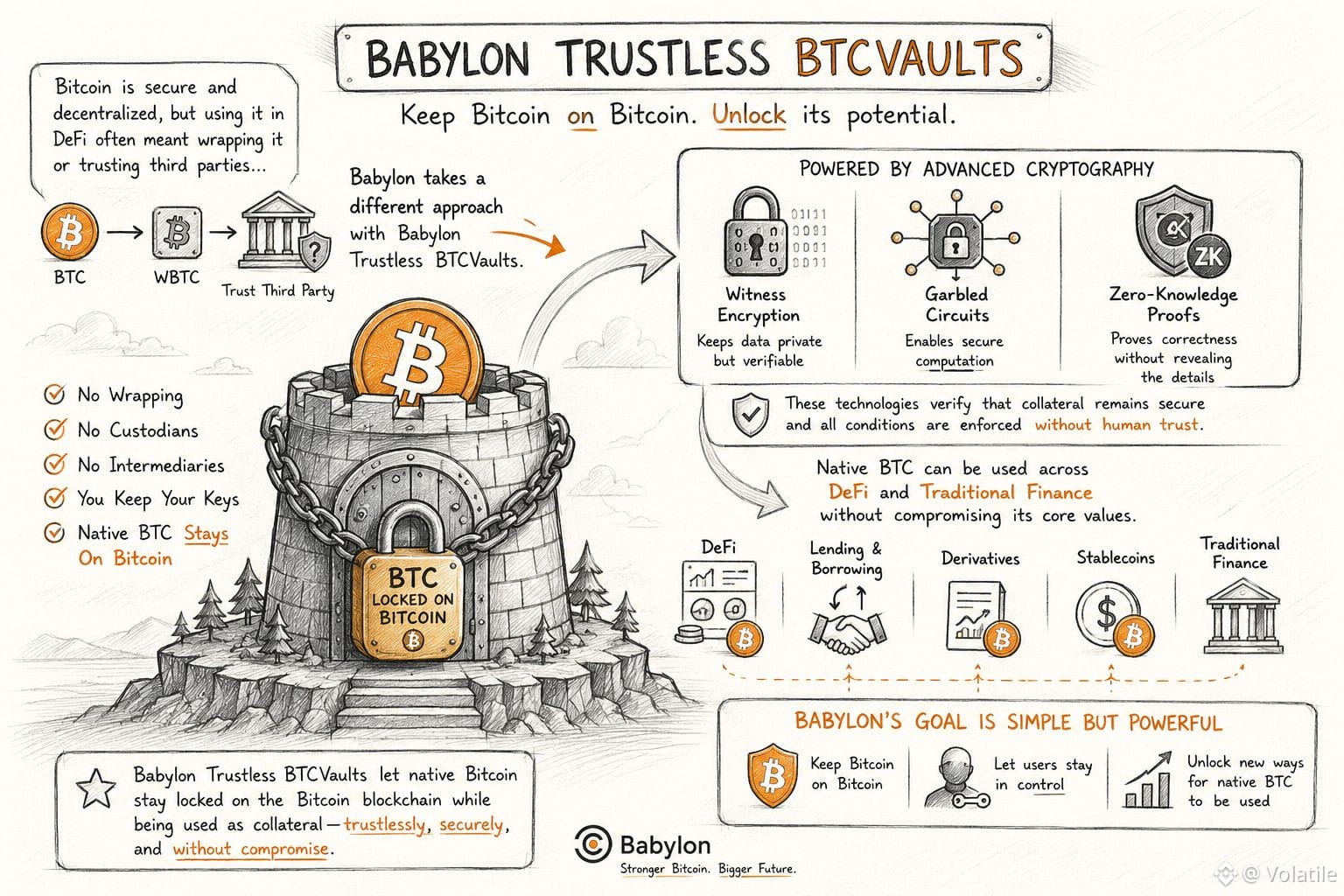
Bitcoin siempre se ha conocido por su seguridad y descentralización, pero usarlo en DeFi a menudo significaba envolverlo o confiar en terceros. Babylon está tomando un enfoque diferente con los Babylon Trustless BTCVaults. En lugar de mover Bitcoin fuera de su red nativa, los BTCVaults ✓ permiten que el BTC nativo permanezca bloqueado en la blockchain de Bitcoin mientras aún se usa como colateral. No hay envoltura, no hay custodios y no hay intermediarios involucrados. Los usuarios mantienen el control de sus propias claves y el Bitcoin nunca se convierte en otro activo. Tecnologías criptográficas avanzadas, incluidas la encriptación de testigos, los circuitos garbled y las pruebas de conocimiento cero, ayudan a verificar que el colateral permanece seguro y que se cumplen todas las condiciones sin depender de la confianza humana. Esto significa que Bitcoin puede usarse en sistemas financieros descentralizados e incluso tradicionales, preservando los principios trustless que lo hicieron valioso en primer lugar. El objetivo de Babylons es simple pero poderoso: mantener Bitcoin en Bitcoin, permitir que los usuarios sigan en control y desbloquear nuevas formas para que se use el nativo $BTC sin comprometer sus valores fundamentales.
Que tengan un lindo día, cuídense 😀
#baby @babylonlabs_io #Babylon #Babylonchain #BabylonLabs_io
{future}(BTCUSDT)
{future}(BABYUSDT)
Hola mis amigos, ¿cómo están todos? Hoy hablaremos sobre el proyecto criptográfico $BABY con Bright 😎 Future 👇🏼
Bitcoin siempre se ha conocido por su seguridad y descentralización, pero usarlo en DeFi a menudo significaba envolverlo o confiar en terceros. Babylon está tomando un enfoque diferente con los Babylon Trustless BTCVaults. En lugar de mover Bitcoin fuera de su red nativa, los BTCVaults ✓ permiten que el BTC nativo permanezca bloqueado en la blockchain de Bitcoin mientras aún se usa como colateral. No hay envoltura, no hay custodios y no hay intermediarios involucrados. Los usuarios mantienen el control de sus propias claves y el Bitcoin nunca se convierte en otro activo. Tecnologías criptográficas avanzadas, incluidas la encriptación de testigos, los circuitos garbled y las pruebas de conocimiento cero, ayudan a verificar que el colateral permanece seguro y que se cumplen todas las condiciones sin depender de la confianza humana. Esto significa que Bitcoin puede usarse en sistemas financieros descentralizados e incluso tradicionales, preservando los principios trustless que lo hicieron valioso en primer lugar. El objetivo de Babylons es simple pero poderoso: mantener Bitcoin en Bitcoin, permitir que los usuarios sigan en control y desbloquear nuevas formas para que se use el nativo $BTC sin comprometer sus valores fundamentales.
Que tengan un lindo día, cuídense 😀
#baby @BabylonLabs_io #Babylon #Babylonchain #BabylonLabs_io
Bitcoin siempre se ha conocido por su seguridad y descentralización, pero usarlo en DeFi a menudo significaba envolverlo o confiar en terceros. Babylon está tomando un enfoque diferente con los Babylon Trustless BTCVaults. En lugar de mover Bitcoin fuera de su red nativa, los BTCVaults ✓ permiten que el BTC nativo permanezca bloqueado en la blockchain de Bitcoin mientras aún se usa como colateral. No hay envoltura, no hay custodios y no hay intermediarios involucrados. Los usuarios mantienen el control de sus propias claves y el Bitcoin nunca se convierte en otro activo. Tecnologías criptográficas avanzadas, incluidas la encriptación de testigos, los circuitos garbled y las pruebas de conocimiento cero, ayudan a verificar que el colateral permanece seguro y que se cumplen todas las condiciones sin depender de la confianza humana. Esto significa que Bitcoin puede usarse en sistemas financieros descentralizados e incluso tradicionales, preservando los principios trustless que lo hicieron valioso en primer lugar. El objetivo de Babylons es simple pero poderoso: mantener Bitcoin en Bitcoin, permitir que los usuarios sigan en control y desbloquear nuevas formas para que se use el nativo $BTC sin comprometer sus valores fundamentales.
Que tengan un lindo día, cuídense 😀
#baby @BabylonLabs_io #Babylon #Babylonchain #BabylonLabs_io
10
5
109
·
--
Alcista
Hace unos minutos añadí un poco más $BABY a, pero solo con una pequeña posición de prueba. Esta vez no estaba siguiendo el precio. Intentaba entender qué es lo que realmente sucede antes de que exista incluso una bóveda de Babylon, y eso terminó cambiando la forma en que pienso sobre la adopción.
Al principio, asumí que la creación de la bóveda era básicamente un clic en la cartera seguido de una confirmación en cadena.
No es así.
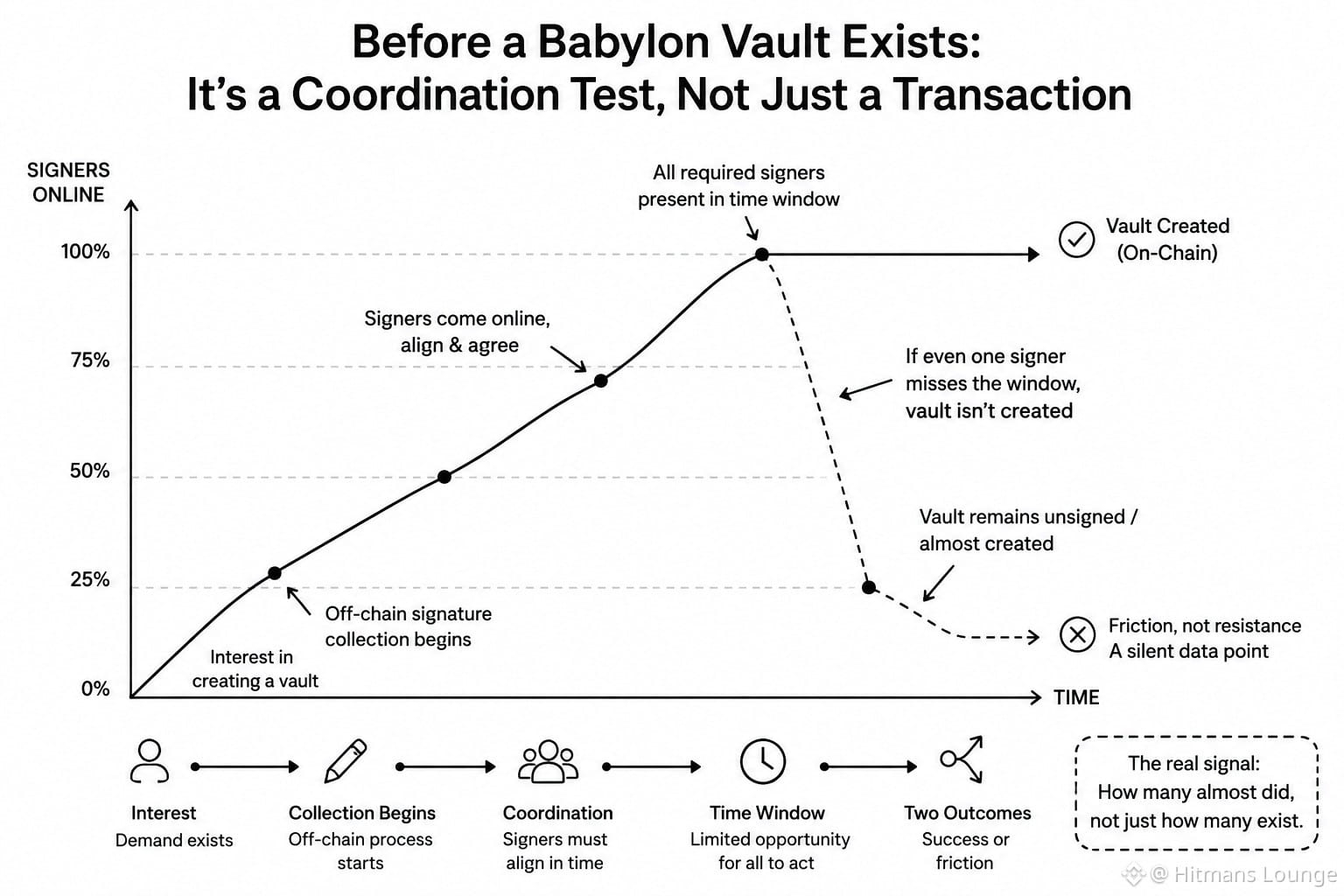
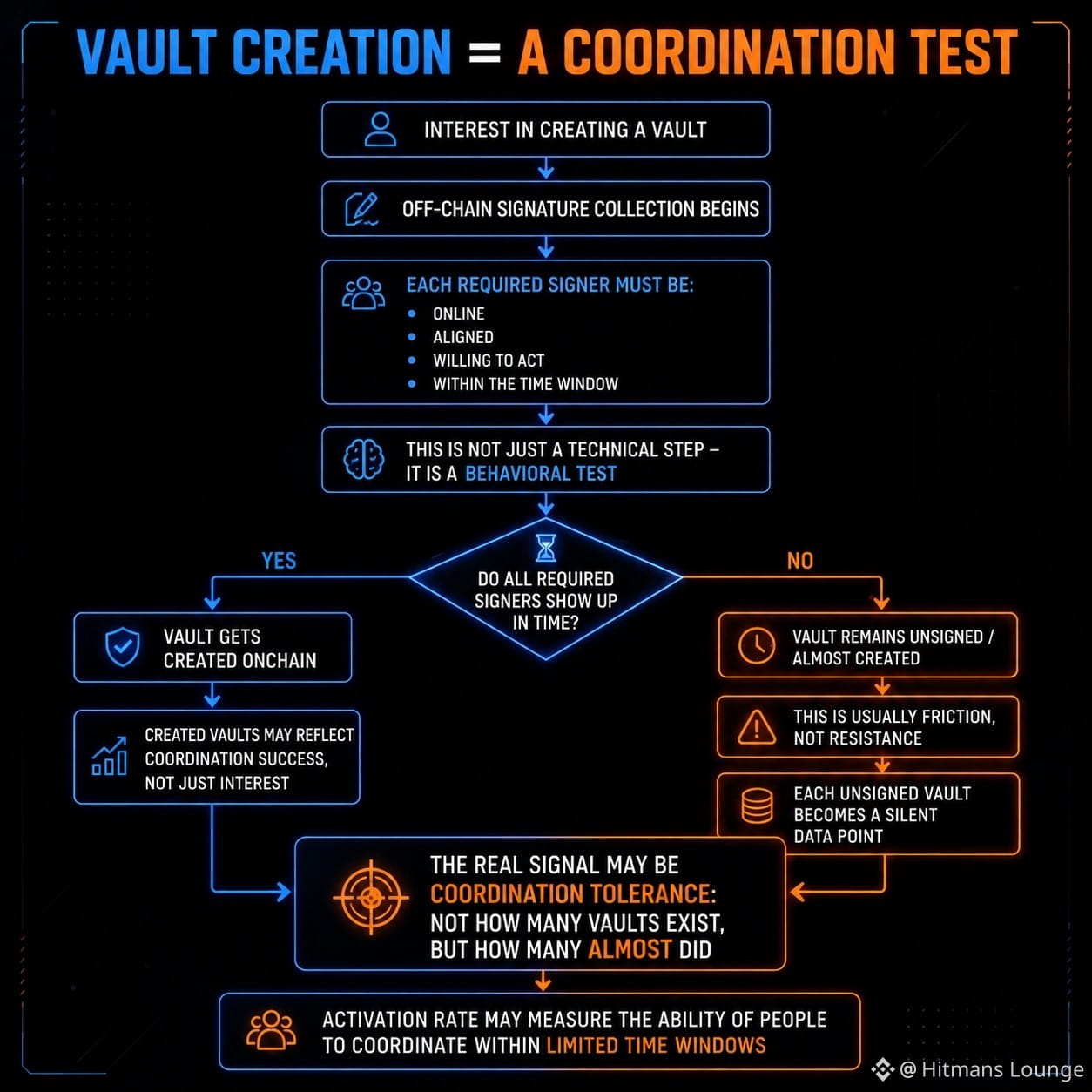
La parte que captó mi atención sucede antes de que nada llegue a la cadena. Varias firmas tienen que reunirse fuera de la cadena, y cada participante requerido tiene que estar en línea, responder y estar dispuesto a firmar dentro de una ventana de tiempo limitada. Si una sola parte se pierde ese momento, la bóveda simplemente no se crea.
Eso me hizo darme cuenta de algo que no había considerado antes.
Cuando la gente habla de las tasas de activación, por lo general las trata como una medida de la demanda.
Pero ahora empiezo a pensar que también reflejan otra cosa: la tolerancia a la coordinación. Una bóveda fallida no siempre es un rechazo del protocolo. A veces solo es un grupo de participantes que no pudo sincronizarse a tiempo.
Esa diferencia importa porque cambia cómo interpreto las métricas de adopción. Una activación baja no significa automáticamente poco interés.
Simplemente puede revelar dónde aún existe fricción operativa.
Todavía estoy siguiendo de cerca @babylonlabs_io y todavía no he aumentado más allá de mi pequeña posición.
Pero ahora estoy prestando más atención a las bóvedas que casi ocurrieron que a las que realmente llegaron a la cadena.
A veces, las firmas faltantes cuentan una historia más interesante que las transacciones exitosas.
#BabylonLabs_io #Babylon #BABY #Bitcoin $VIC $HOME
Hace unos minutos añadí un poco más $BABY a, pero solo con una pequeña posición de prueba. Esta vez no estaba siguiendo el precio. Intentaba entender qué es lo que realmente sucede antes de que exista incluso una bóveda de Babylon, y eso terminó cambiando la forma en que pienso sobre la adopción.
Al principio, asumí que la creación de la bóveda era básicamente un clic en la cartera seguido de una confirmación en cadena.
No es así.
La parte que captó mi atención sucede antes de que nada llegue a la cadena. Varias firmas tienen que reunirse fuera de la cadena, y cada participante requerido tiene que estar en línea, responder y estar dispuesto a firmar dentro de una ventana de tiempo limitada. Si una sola parte se pierde ese momento, la bóveda simplemente no se crea.
Eso me hizo darme cuenta de algo que no había considerado antes.
Cuando la gente habla de las tasas de activación, por lo general las trata como una medida de la demanda.
Pero ahora empiezo a pensar que también reflejan otra cosa: la tolerancia a la coordinación. Una bóveda fallida no siempre es un rechazo del protocolo. A veces solo es un grupo de participantes que no pudo sincronizarse a tiempo.
Esa diferencia importa porque cambia cómo interpreto las métricas de adopción. Una activación baja no significa automáticamente poco interés.
Simplemente puede revelar dónde aún existe fricción operativa.
Todavía estoy siguiendo de cerca @BabylonLabs_io y todavía no he aumentado más allá de mi pequeña posición.
Pero ahora estoy prestando más atención a las bóvedas que casi ocurrieron que a las que realmente llegaron a la cadena.
A veces, las firmas faltantes cuentan una historia más interesante que las transacciones exitosas.
#BabylonLabs_io #Babylon #BABY #Bitcoin $VIC $HOME
Al principio, asumí que la creación de la bóveda era básicamente un clic en la cartera seguido de una confirmación en cadena.
No es así.
La parte que captó mi atención sucede antes de que nada llegue a la cadena. Varias firmas tienen que reunirse fuera de la cadena, y cada participante requerido tiene que estar en línea, responder y estar dispuesto a firmar dentro de una ventana de tiempo limitada. Si una sola parte se pierde ese momento, la bóveda simplemente no se crea.
Eso me hizo darme cuenta de algo que no había considerado antes.
Cuando la gente habla de las tasas de activación, por lo general las trata como una medida de la demanda.
Pero ahora empiezo a pensar que también reflejan otra cosa: la tolerancia a la coordinación. Una bóveda fallida no siempre es un rechazo del protocolo. A veces solo es un grupo de participantes que no pudo sincronizarse a tiempo.
Esa diferencia importa porque cambia cómo interpreto las métricas de adopción. Una activación baja no significa automáticamente poco interés.
Simplemente puede revelar dónde aún existe fricción operativa.
Todavía estoy siguiendo de cerca @BabylonLabs_io y todavía no he aumentado más allá de mi pequeña posición.
Pero ahora estoy prestando más atención a las bóvedas que casi ocurrieron que a las que realmente llegaron a la cadena.
A veces, las firmas faltantes cuentan una historia más interesante que las transacciones exitosas.
#BabylonLabs_io #Babylon #BABY #Bitcoin $VIC $HOME
30
17
2.4k
·
--
Alcista
Verificado
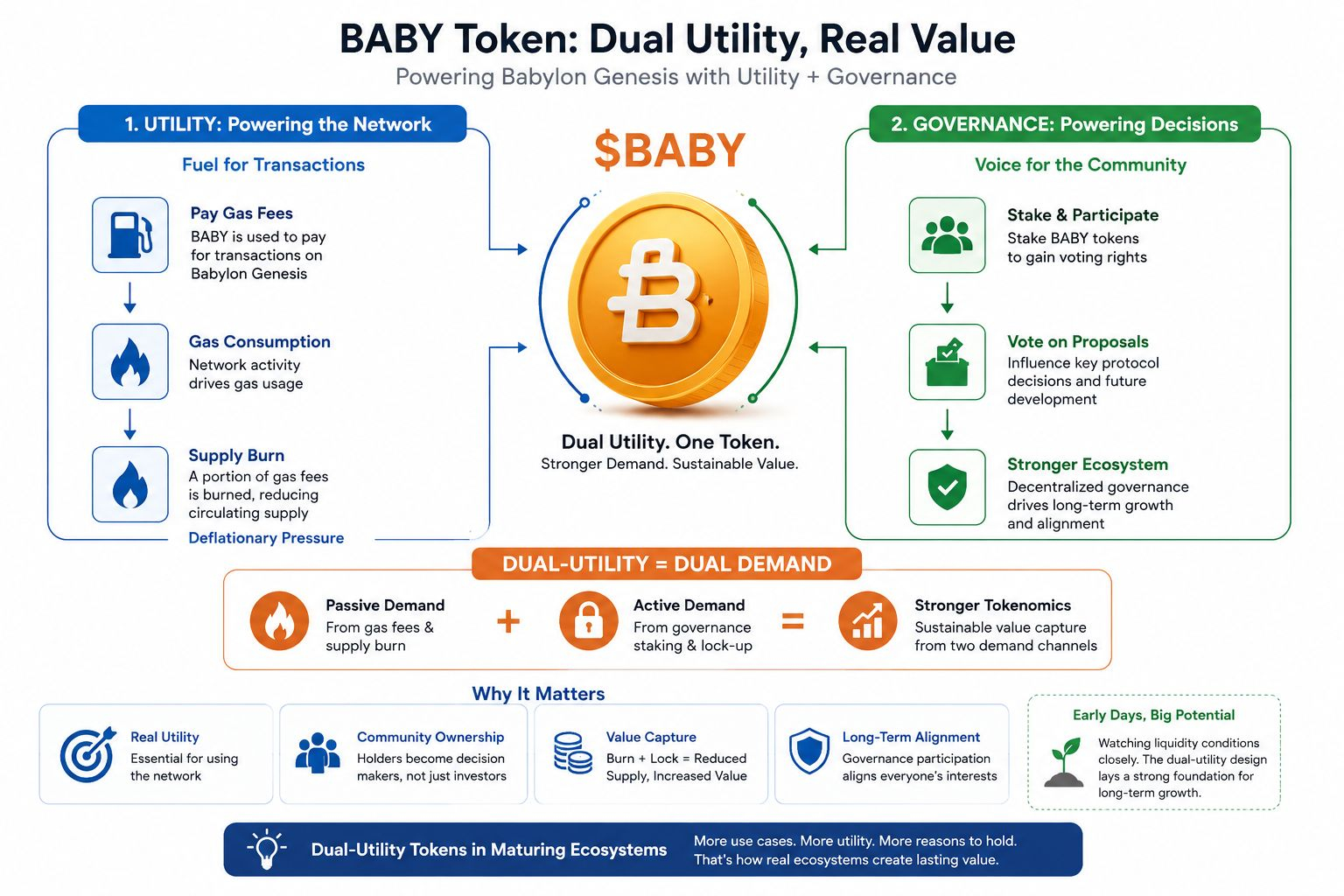
Sinceramente, los tokens de doble utilidad no son nada nuevo en el cripto. Pero la forma en que BABY lo logra en Babylon Genesis me hizo detenerme y pensar un segundo. Esto es lo que quiero decir. BABY no es solo combustible para las transacciones. Sí, impulsa las comisiones de gas como esperarías de cualquier token nativo de una L1. Pero también tiene un peso real en la gobernanza. Los stakers obtienen derechos de voto sobre las decisiones del protocolo, lo que significa que los titulares ya no son solo pasajeros; en realidad, están en el asiento del conductor.
La cuestión es que este doble papel crea una presión real sobre la demanda desde dos frentes a la vez. El consumo de gas quema el suministro de manera pasiva, mientras que el staking de gobernanza lo bloquea voluntariamente. Esa es una base bastante sólida de tokenomics si el ecosistema en general realmente crece. Siento que mucha gente todavía no se da cuenta de lo importante que es esta estructura dual para capturar valor a largo plazo. La mayoría de los tokens de utilidad única luchan por mantener la convicción cuando cambia el sentimiento del mercado. El diseño de BABY le da una razón real para mantenerse, no solo para negociarse. Aun así, estoy vigilando cuidadosamente las condiciones de liquidez, en serio. Días tempranos. ¿Cuál es tu opinión sobre los tokens de doble utilidad en ecosistemas que están madurando?
$BABY #baby #Babylon #BabylonLabs_io @babylonlabs_io
Sinceramente, los tokens de doble utilidad no son nada nuevo en el cripto. Pero la forma en que BABY lo logra en Babylon Genesis me hizo detenerme y pensar un segundo. Esto es lo que quiero decir. BABY no es solo combustible para las transacciones. Sí, impulsa las comisiones de gas como esperarías de cualquier token nativo de una L1. Pero también tiene un peso real en la gobernanza. Los stakers obtienen derechos de voto sobre las decisiones del protocolo, lo que significa que los titulares ya no son solo pasajeros; en realidad, están en el asiento del conductor.
La cuestión es que este doble papel crea una presión real sobre la demanda desde dos frentes a la vez. El consumo de gas quema el suministro de manera pasiva, mientras que el staking de gobernanza lo bloquea voluntariamente. Esa es una base bastante sólida de tokenomics si el ecosistema en general realmente crece. Siento que mucha gente todavía no se da cuenta de lo importante que es esta estructura dual para capturar valor a largo plazo. La mayoría de los tokens de utilidad única luchan por mantener la convicción cuando cambia el sentimiento del mercado. El diseño de BABY le da una razón real para mantenerse, no solo para negociarse. Aun así, estoy vigilando cuidadosamente las condiciones de liquidez, en serio. Días tempranos. ¿Cuál es tu opinión sobre los tokens de doble utilidad en ecosistemas que están madurando?
$BABY #baby #Babylon #BabylonLabs_io @BabylonLabs_io
La cuestión es que este doble papel crea una presión real sobre la demanda desde dos frentes a la vez. El consumo de gas quema el suministro de manera pasiva, mientras que el staking de gobernanza lo bloquea voluntariamente. Esa es una base bastante sólida de tokenomics si el ecosistema en general realmente crece. Siento que mucha gente todavía no se da cuenta de lo importante que es esta estructura dual para capturar valor a largo plazo. La mayoría de los tokens de utilidad única luchan por mantener la convicción cuando cambia el sentimiento del mercado. El diseño de BABY le da una razón real para mantenerse, no solo para negociarse. Aun así, estoy vigilando cuidadosamente las condiciones de liquidez, en serio. Días tempranos. ¿Cuál es tu opinión sobre los tokens de doble utilidad en ecosistemas que están madurando?
$BABY #baby #Babylon #BabylonLabs_io @BabylonLabs_io
144
116
814

#baby $BABY
Este es el elemento que faltaba. El capital de Bitcoin + el protocolo de Babylon = una nueva era.
Babylon está aportando algo que Bitcoin nunca tuvo: *rendimiento sin envolver*.
Durante 15 años Bitcoin solo estuvo ahí. Seguro, pero silencioso. Babylon lo cambia.
Al usar Bitcoin como activo de staking, Babylon asegura cadenas PoS, L2s y capas de DA — mientras que los titulares de BTC finalmente obtienen recompensas.
Sin puentes. Sin envoltura. Solo seguridad pura de Bitcoin, extendida a todo el ecosistema cripto.
Este es el elemento que faltaba. El capital de Bitcoin + el protocolo de Babylon = una nueva era.
La cadena que lo inició todo… ahora está asegurando todo lo demás.
#Babylon #BTCFi
#baby $BABY
Este es el elemento que faltaba. El capital de Bitcoin + el protocolo de Babylon = una nueva era.
Babylon está aportando algo que Bitcoin nunca tuvo: *rendimiento sin envolver*.
Durante 15 años Bitcoin solo estuvo ahí. Seguro, pero silencioso. Babylon lo cambia.
Al usar Bitcoin como activo de staking, Babylon asegura cadenas PoS, L2s y capas de DA — mientras que los titulares de BTC finalmente obtienen recompensas.
Sin puentes. Sin envoltura. Solo seguridad pura de Bitcoin, extendida a todo el ecosistema cripto.
Este es el elemento que faltaba. El capital de Bitcoin + el protocolo de Babylon = una nueva era.
La cadena que lo inició todo… ahora está asegurando todo lo demás.
#Babylon #BTCFi
Este es el elemento que faltaba. El capital de Bitcoin + el protocolo de Babylon = una nueva era.
Babylon está aportando algo que Bitcoin nunca tuvo: *rendimiento sin envolver*.
Durante 15 años Bitcoin solo estuvo ahí. Seguro, pero silencioso. Babylon lo cambia.
Al usar Bitcoin como activo de staking, Babylon asegura cadenas PoS, L2s y capas de DA — mientras que los titulares de BTC finalmente obtienen recompensas.
Sin puentes. Sin envoltura. Solo seguridad pura de Bitcoin, extendida a todo el ecosistema cripto.
Este es el elemento que faltaba. El capital de Bitcoin + el protocolo de Babylon = una nueva era.
La cadena que lo inició todo… ahora está asegurando todo lo demás.
#Babylon #BTCFi
95

Pedagogía y Descubrimiento
La nueva campaña Babylon es la ocasión perfecta para descubrir cómo el staking de Bitcoin asegura las cadenas PoS. Un modelo económico innovador que combina la protección de los fondos y la acumulación de recompensas. ¡Únete a la aventura sin esperar! 💡#Babylon $BABY
Pedagogía y Descubrimiento
La nueva campaña Babylon es la ocasión perfecta para descubrir cómo el staking de Bitcoin asegura las cadenas PoS. Un modelo económico innovador que combina la protección de los fondos y la acumulación de recompensas. ¡Únete a la aventura sin esperar! 💡#Babylon $BABY
La nueva campaña Babylon es la ocasión perfecta para descubrir cómo el staking de Bitcoin asegura las cadenas PoS. Un modelo económico innovador que combina la protección de los fondos y la acumulación de recompensas. ¡Únete a la aventura sin esperar! 💡#Babylon $BABY
24

·
--
Alcista
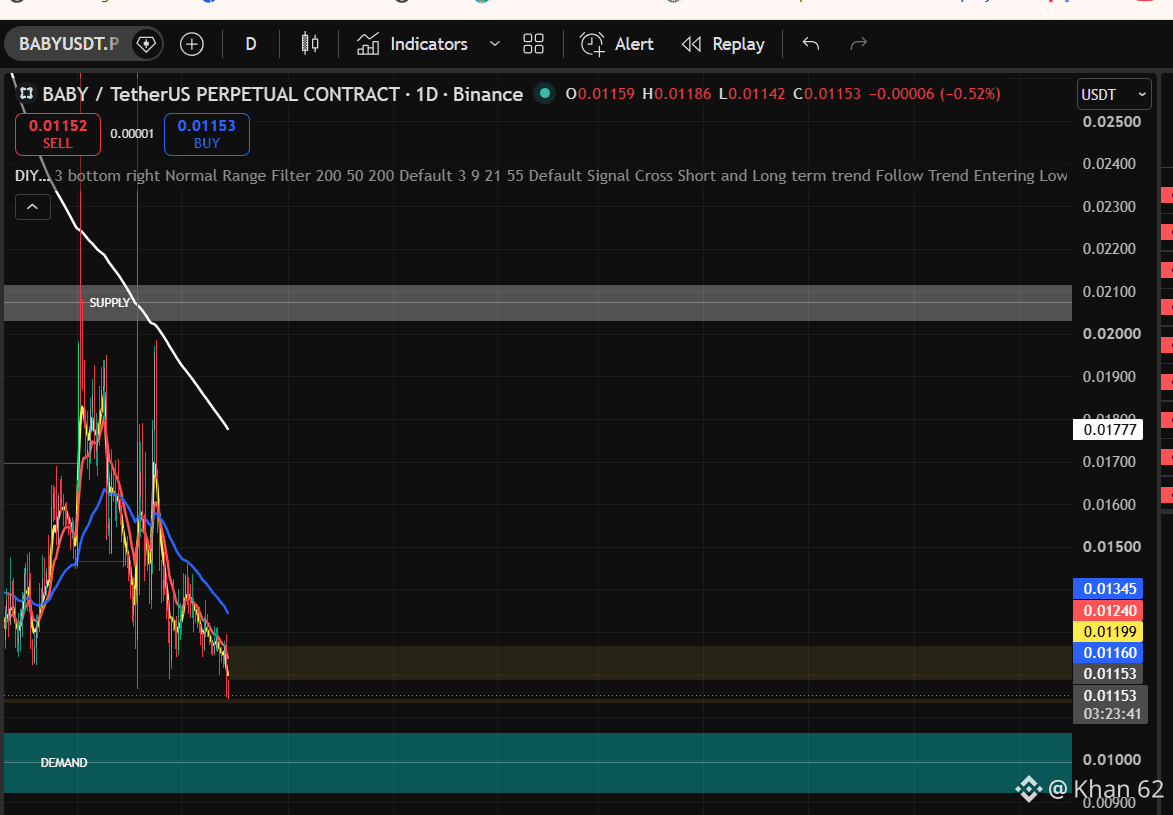
#baby $BABY @babylonlabs_io Todo el mundo habla del precio de Bitcoin.. Casi nadie habla de lo que Bitcoin realmente puede hacer.
👀 Durante un tiempo pensé que Bitcoin solo servía para dos cosas:
✅ Lo guardas.
✅ Esperas a que suba el precio.
Entonces algo me hizo clic.
🍋 Lo que supuestamente es el activo digital del mundo simplemente se queda ahí, sin hacer nada la mayor parte del tiempo.
Eso nunca me pareció del todo.
Cada vez que el mercado sube, la gente mete miles de millones de dólares en estas cosas de DeFi que en realidad son muy riesgosas solo para obtener un retorno mayor.. Bitcoin, que es en lo que más confía la gente, normalmente se queda al margen, porque si quieres usarlo tienes que envolverlo (wrap) o hacer un puente (bridge) o confiar en otra persona para que lo custodie por ti.
Eso no parece correcto.
💥 Así que empecé a investigar una forma de hacer las cosas.
¿Qué pasaría si Bitcoin pudiera quedarse justo donde está y aun así seguir siendo útil?
Esa idea fue la que captó mi atención.
El objetivo no es acabar con la manera en que Bitcoin mantiene segura la protección del dinero de las personas. El objetivo es construir encima de eso.
La pregunta no es "¿Cómo puede Bitcoin ser como todos los tokens DeFi?"
Es "¿Cómo puede funcionar DeFi con Bitcoin?"
Eso lo cambia todo.
🌕 Si Bitcoin se puede usar para prestar, hacer staking o asegurar redes sin que la gente tenga que renunciar al control de su dinero, entonces la mayor oportunidad quizá no sea crear un activo nuevo.
Quizá sea aprovechar al máximo el que ya tenemos.
Aún estamos en esos días y la gente debe tener cuidado antes de poner su dinero en cualquier cosa.
Creo que lo siguiente grande para Bitcoin no se tratará solo del precio.
Se tratará de lo que Bitcoin puede hacer.
🍋¿Qué crees que pasará primero con Bitcoin: subirá el precio o la gente encontrará formas de usarlo?
#bitcoin #blockchain #cryptoeducation #Babylon
$BABY $BTC
#baby $BABY @BabylonLabs_io Todo el mundo habla del precio de Bitcoin.. Casi nadie habla de lo que Bitcoin realmente puede hacer.
👀 Durante un tiempo pensé que Bitcoin solo servía para dos cosas:
✅ Lo guardas.
✅ Esperas a que suba el precio.
Entonces algo me hizo clic.
🍋 Lo que supuestamente es el activo digital del mundo simplemente se queda ahí, sin hacer nada la mayor parte del tiempo.
Eso nunca me pareció del todo.
Cada vez que el mercado sube, la gente mete miles de millones de dólares en estas cosas de DeFi que en realidad son muy riesgosas solo para obtener un retorno mayor.. Bitcoin, que es en lo que más confía la gente, normalmente se queda al margen, porque si quieres usarlo tienes que envolverlo (wrap) o hacer un puente (bridge) o confiar en otra persona para que lo custodie por ti.
Eso no parece correcto.
💥 Así que empecé a investigar una forma de hacer las cosas.
¿Qué pasaría si Bitcoin pudiera quedarse justo donde está y aun así seguir siendo útil?
Esa idea fue la que captó mi atención.
El objetivo no es acabar con la manera en que Bitcoin mantiene segura la protección del dinero de las personas. El objetivo es construir encima de eso.
La pregunta no es "¿Cómo puede Bitcoin ser como todos los tokens DeFi?"
Es "¿Cómo puede funcionar DeFi con Bitcoin?"
Eso lo cambia todo.
🌕 Si Bitcoin se puede usar para prestar, hacer staking o asegurar redes sin que la gente tenga que renunciar al control de su dinero, entonces la mayor oportunidad quizá no sea crear un activo nuevo.
Quizá sea aprovechar al máximo el que ya tenemos.
Aún estamos en esos días y la gente debe tener cuidado antes de poner su dinero en cualquier cosa.
Creo que lo siguiente grande para Bitcoin no se tratará solo del precio.
Se tratará de lo que Bitcoin puede hacer.
🍋¿Qué crees que pasará primero con Bitcoin: subirá el precio o la gente encontrará formas de usarlo?
#bitcoin #blockchain #cryptoeducation #Babylon
$BABY $BTC
👀 Durante un tiempo pensé que Bitcoin solo servía para dos cosas:
✅ Lo guardas.
✅ Esperas a que suba el precio.
Entonces algo me hizo clic.
🍋 Lo que supuestamente es el activo digital del mundo simplemente se queda ahí, sin hacer nada la mayor parte del tiempo.
Eso nunca me pareció del todo.
Cada vez que el mercado sube, la gente mete miles de millones de dólares en estas cosas de DeFi que en realidad son muy riesgosas solo para obtener un retorno mayor.. Bitcoin, que es en lo que más confía la gente, normalmente se queda al margen, porque si quieres usarlo tienes que envolverlo (wrap) o hacer un puente (bridge) o confiar en otra persona para que lo custodie por ti.
Eso no parece correcto.
💥 Así que empecé a investigar una forma de hacer las cosas.
¿Qué pasaría si Bitcoin pudiera quedarse justo donde está y aun así seguir siendo útil?
Esa idea fue la que captó mi atención.
El objetivo no es acabar con la manera en que Bitcoin mantiene segura la protección del dinero de las personas. El objetivo es construir encima de eso.
La pregunta no es "¿Cómo puede Bitcoin ser como todos los tokens DeFi?"
Es "¿Cómo puede funcionar DeFi con Bitcoin?"
Eso lo cambia todo.
🌕 Si Bitcoin se puede usar para prestar, hacer staking o asegurar redes sin que la gente tenga que renunciar al control de su dinero, entonces la mayor oportunidad quizá no sea crear un activo nuevo.
Quizá sea aprovechar al máximo el que ya tenemos.
Aún estamos en esos días y la gente debe tener cuidado antes de poner su dinero en cualquier cosa.
Creo que lo siguiente grande para Bitcoin no se tratará solo del precio.
Se tratará de lo que Bitcoin puede hacer.
🍋¿Qué crees que pasará primero con Bitcoin: subirá el precio o la gente encontrará formas de usarlo?
#bitcoin #blockchain #cryptoeducation #Babylon
$BABY $BTC
121

·
--
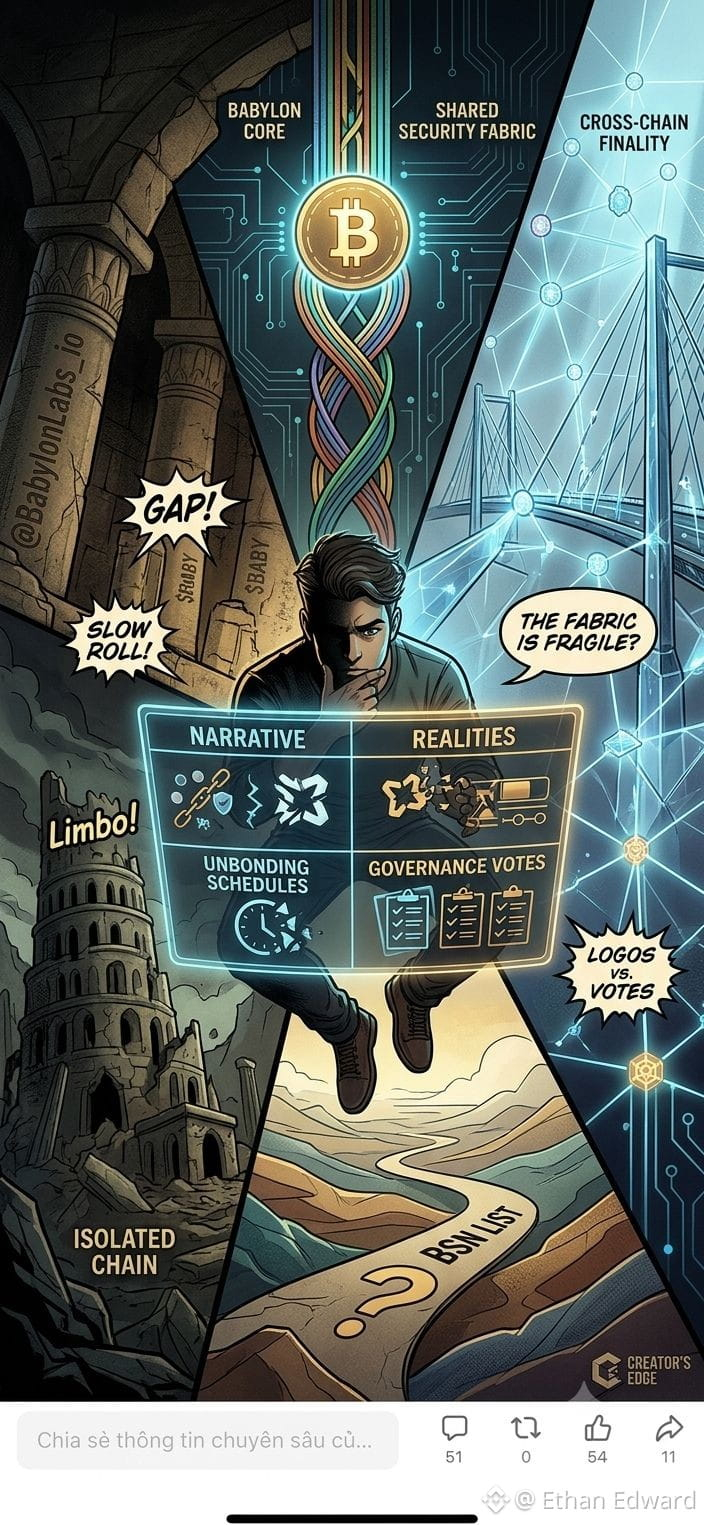
El mayor malentendido sobre @babylonlabs_io no es la tecnología—son las expectativas sobre el calendario.
Muchos titulares tratan $BABY staking como una granja de liquidez: depositar BTC hoy, cobrar rendimientos mañana y retirar el stake cuando el hype se apaga. Pero la seguridad nativa sigue estrictamente las reglas de bloques de Bitcoin.
Cuando haces staking de BTC de forma nativa, el des-anclaje no es una transacción instantánea de “clic y retirar”. Requiere acuerdos de liquidación con timelock criptográfico que llevan tiempo.
Así que el “rendimiento nativo instantáneo” en las narrativas del mercado en realidad es un “compromiso estructurado de bloqueo” en la práctica.
Esto no es una falla—es exactamente la razón por la que el modelo de seguridad de Babylon funciona. La seguridad real de la capa BTCfi no puede construirse con puertas de salida instantáneas de dinero caliente.
¿Están listos los traders para cronogramas de staking estructurados, o todavía esperan una liquidez estilo memecoin?
¡Hablemos abajo! 👇
#Babylon $BABY #BTCFi #creatorpad @babylonlabs_io
#baby
{spot}(BABYUSDT)
El mayor malentendido sobre @BabylonLabs_io no es la tecnología—son las expectativas sobre el calendario.
Muchos titulares tratan $BABY staking como una granja de liquidez: depositar BTC hoy, cobrar rendimientos mañana y retirar el stake cuando el hype se apaga. Pero la seguridad nativa sigue estrictamente las reglas de bloques de Bitcoin.
Cuando haces staking de BTC de forma nativa, el des-anclaje no es una transacción instantánea de “clic y retirar”. Requiere acuerdos de liquidación con timelock criptográfico que llevan tiempo.
Así que el “rendimiento nativo instantáneo” en las narrativas del mercado en realidad es un “compromiso estructurado de bloqueo” en la práctica.
Esto no es una falla—es exactamente la razón por la que el modelo de seguridad de Babylon funciona. La seguridad real de la capa BTCfi no puede construirse con puertas de salida instantáneas de dinero caliente.
¿Están listos los traders para cronogramas de staking estructurados, o todavía esperan una liquidez estilo memecoin?
¡Hablemos abajo! 👇
#Babylon $BABY #BTCFi #creatorpad @BabylonLabs_io
#baby
Muchos titulares tratan $BABY staking como una granja de liquidez: depositar BTC hoy, cobrar rendimientos mañana y retirar el stake cuando el hype se apaga. Pero la seguridad nativa sigue estrictamente las reglas de bloques de Bitcoin.
Cuando haces staking de BTC de forma nativa, el des-anclaje no es una transacción instantánea de “clic y retirar”. Requiere acuerdos de liquidación con timelock criptográfico que llevan tiempo.
Así que el “rendimiento nativo instantáneo” en las narrativas del mercado en realidad es un “compromiso estructurado de bloqueo” en la práctica.
Esto no es una falla—es exactamente la razón por la que el modelo de seguridad de Babylon funciona. La seguridad real de la capa BTCfi no puede construirse con puertas de salida instantáneas de dinero caliente.
¿Están listos los traders para cronogramas de staking estructurados, o todavía esperan una liquidez estilo memecoin?
¡Hablemos abajo! 👇
#Babylon $BABY #BTCFi #creatorpad @BabylonLabs_io
#baby
93
Inicia sesión para explorar más contenidos
Únete a usuarios globales de criptomonedas en Binance Square
⚡️ Obtén información útil y actualizada sobre criptos.
💬 Avalado por el mayor exchange de criptomonedas en el mundo.
👍 Descubre perspectivas reales de creadores verificados.
Email/número de teléfono
Temas populares
1
#BinancePick
2.6M vistas
139,744 están debatiendo
2
#EarningsSeason
5M vistas
24,126 están debatiendo
3
#StrategyMSTRSurpassesNasdaqInMarketCap
115 vistas
22 están debatiendo
4
#CanadaProposesStablecoinRedemptionWithin3BusinessDays
0 vistas
2 están debatiendo
5
#ElectrumWalletBugLetRogueServersStealFunds
5,672 vistas
190 están debatiendo
6
#ArgentineCourtDismissesLIBRACaseAgainstMilei
14,085 vistas
262 están debatiendo
7
#SKHynixReportedlyPlansSpecialDividendFromKioxiaStakeSale
2,716 vistas
42 están debatiendo
8
#KeystoneWebsiteBreachExposesBuyersShippingAddresses
1,502 vistas
35 están debatiendo
9
#USQ3GDPAndSeptemberPCEDueNextWeek
89,002 vistas
1,073 están debatiendo
10
#SouthKoreaDelaysCryptoIncomeTax
162,197 vistas
1,121 están debatiendo