
#baby
baby
10.2M views
82,671 Discussing
Hot
Latest

·
--
📉 Today's Biggest Bearish Coins
Today's market weakness is centered around LSK, UAI, STEEM, and BABY, as these tokens are facing increased selling pressure and weaker price momentum. $LSK continues to struggle with bearish sentiment, while $UAI has lost momentum after recent volatility. $STEEM remains under pressure as traders reduce risk exposure, and #BABY is also seeing downside movement with sellers maintaining control. If market conditions remain weak, these coins could continue to experience heightened volatility and downside risk throughout today's trading session.
📉 Today's Biggest Bearish Coins
Today's market weakness is centered around LSK, UAI, STEEM, and BABY, as these tokens are facing increased selling pressure and weaker price momentum. $LSK continues to struggle with bearish sentiment, while $UAI has lost momentum after recent volatility. $STEEM remains under pressure as traders reduce risk exposure, and #BABY is also seeing downside movement with sellers maintaining control. If market conditions remain weak, these coins could continue to experience heightened volatility and downside risk throughout today's trading session.
Today's market weakness is centered around LSK, UAI, STEEM, and BABY, as these tokens are facing increased selling pressure and weaker price momentum. $LSK continues to struggle with bearish sentiment, while $UAI has lost momentum after recent volatility. $STEEM remains under pressure as traders reduce risk exposure, and #BABY is also seeing downside movement with sellers maintaining control. If market conditions remain weak, these coins could continue to experience heightened volatility and downside risk throughout today's trading session.

阿拉登:
11
1
501

·
--
Bearish
$BABY ... Bearish Pressure Builds
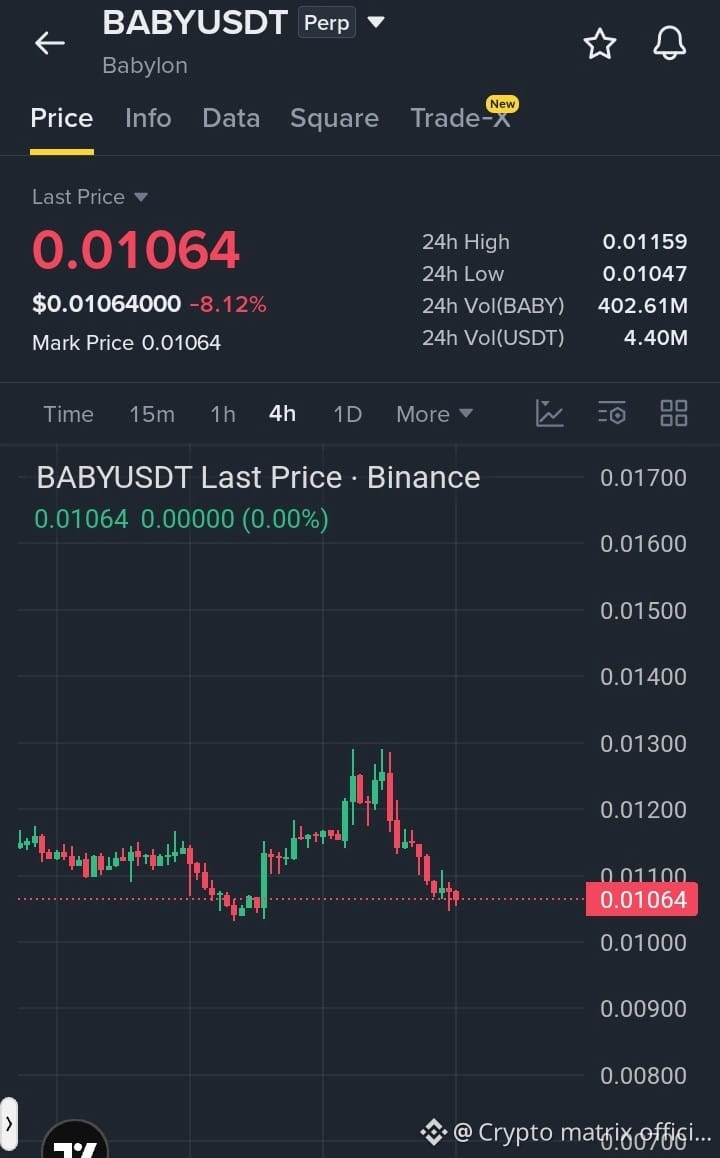
#BABY is struggling near the 0.0106 area after a steady rejection from the 0.0128 zone. The latest 4H candles remain weak, keeping downside momentum active while price trades close to recent support.
SHORT TRADE SETUP
Entry: 0.01060 – 0.01085
TP1: 0.01020
TP2: 0.00980
TP3: 0.00940
SL: 0.01120
Sell and Trade
{future}(BABYUSDT)
$LSK
{future}(LSKUSDT)
$龙虾
{future}(龙虾USDT)
$BABY ... Bearish Pressure Builds
#BABY is struggling near the 0.0106 area after a steady rejection from the 0.0128 zone. The latest 4H candles remain weak, keeping downside momentum active while price trades close to recent support.
SHORT TRADE SETUP
Entry: 0.01060 – 0.01085
TP1: 0.01020
TP2: 0.00980
TP3: 0.00940
SL: 0.01120
Sell and Trade
$LSK
$龙虾
#BABY is struggling near the 0.0106 area after a steady rejection from the 0.0128 zone. The latest 4H candles remain weak, keeping downside momentum active while price trades close to recent support.
SHORT TRADE SETUP
Entry: 0.01060 – 0.01085
TP1: 0.01020
TP2: 0.00980
TP3: 0.00940
SL: 0.01120
Sell and Trade
$LSK
$龙虾
2
677

·
--
Bullish
30D trade $BABY 23.6 USDT
The BABY short squeeze is hitting near $0.01074.
Two guns are watching this upside liquidity.
$BABY
$AIN
$AKE 🟢 LIQUIDITY ZONE HIT 🟢
Short liquidation spotted 🧨
🔫🔫
$1.2363K cleared at $0.01074
Upside liquidity swept — watch reaction 👀
🎯 TP Targets:
TP1: ~$0.01085
TP2: ~$0.01095
TP3: ~$0.01106
#baby
The BABY short squeeze is hitting near $0.01074.
Two guns are watching this upside liquidity.
$BABY
$AIN
$AKE 🟢 LIQUIDITY ZONE HIT 🟢
Short liquidation spotted 🧨
🔫🔫
$1.2363K cleared at $0.01074
Upside liquidity swept — watch reaction 👀
🎯 TP Targets:
TP1: ~$0.01085
TP2: ~$0.01095
TP3: ~$0.01106
#baby
Two guns are watching this upside liquidity.
$BABY
$AIN
$AKE 🟢 LIQUIDITY ZONE HIT 🟢
Short liquidation spotted 🧨
🔫🔫
$1.2363K cleared at $0.01074
Upside liquidity swept — watch reaction 👀
🎯 TP Targets:
TP1: ~$0.01085
TP2: ~$0.01095
TP3: ~$0.01106
#baby
1
287

·
--
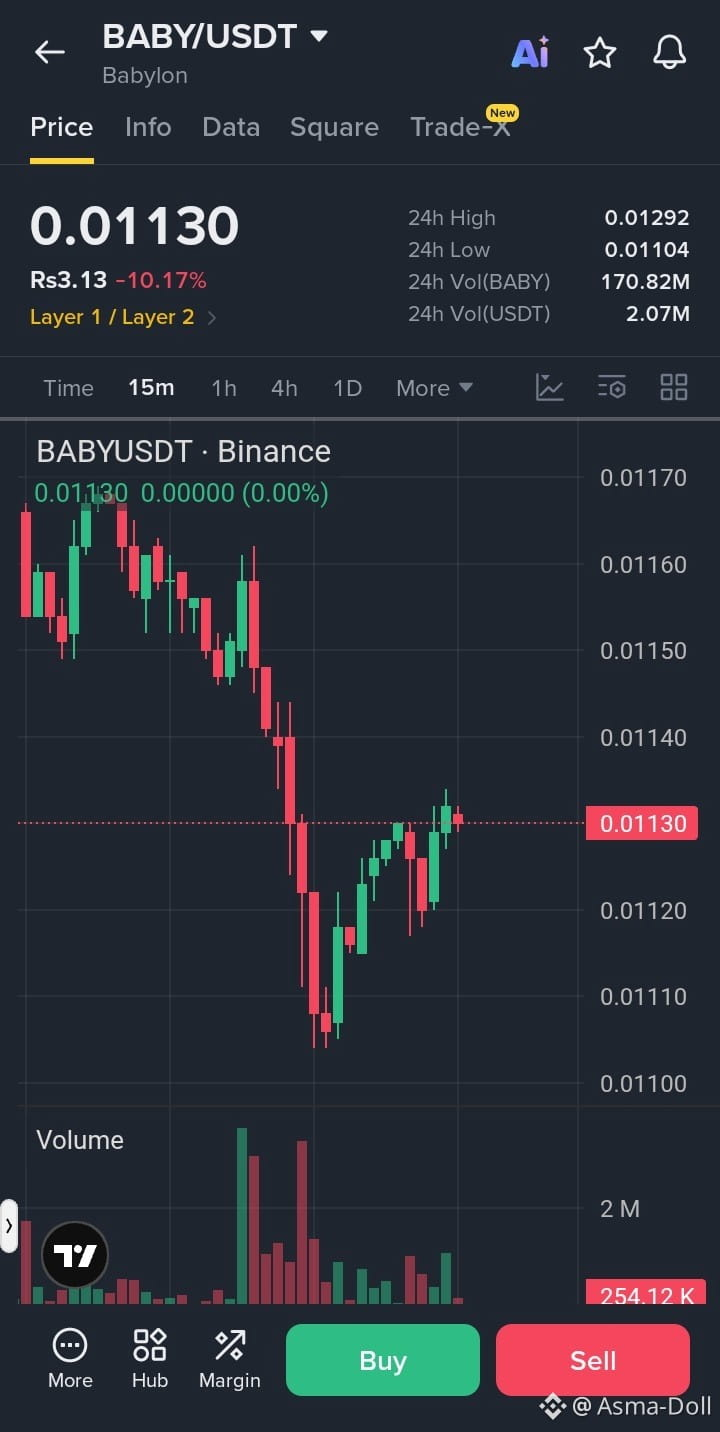
$BABY /USDT — SHORT 📉
Entry: 0.01125 – 0.01145
Stop Loss: 0.01175
TP1: 0.01105
TP2: 0.01080
TP3: 0.01050
Trade here $BABY
{future}(BABYUSDT)
Analysis:
Price down 10.17%, showing strong bearish pressure.
Trading close to the 24h low 0.01104.
Weak bounce structure favors continuation if support breaks.
Confirmation: clean break below 0.01100–0.01104 with volume.
⚠️ If price reclaims 0.01175, avoid/cancel the short.
#BABY #BABYUSDT #Binance #CryptoShort #Altcoins
$BABY /USDT — SHORT 📉
Entry: 0.01125 – 0.01145
Stop Loss: 0.01175
TP1: 0.01105
TP2: 0.01080
TP3: 0.01050
Trade here $BABY
Analysis:
Price down 10.17%, showing strong bearish pressure.
Trading close to the 24h low 0.01104.
Weak bounce structure favors continuation if support breaks.
Confirmation: clean break below 0.01100–0.01104 with volume.
⚠️ If price reclaims 0.01175, avoid/cancel the short.
#BABY #BABYUSDT #Binance #CryptoShort #Altcoins
Entry: 0.01125 – 0.01145
Stop Loss: 0.01175
TP1: 0.01105
TP2: 0.01080
TP3: 0.01050
Trade here $BABY
Analysis:
Price down 10.17%, showing strong bearish pressure.
Trading close to the 24h low 0.01104.
Weak bounce structure favors continuation if support breaks.
Confirmation: clean break below 0.01100–0.01104 with volume.
⚠️ If price reclaims 0.01175, avoid/cancel the short.
#BABY #BABYUSDT #Binance #CryptoShort #Altcoins
19

⚡ $BABY AND $CTK IGNITE DOUBLE-DIGIT SURGES AS BUYERS STRIKE BACK! 🚀
Momentum is shifting rapidly across the board as $BABY surges over 10.5% and $CTK matches the tempo with a clean 10.1% pump. 📊 Order flow shows aggressive spot absorption stepping up, lifting price off key consolidation floors.
When multi-token double-digit breakouts fire simultaneously, smart capital is usually front-running a broader rotation. ⚡ Keep your eyes glued to volume continuation before chasing high prints. 💬 Which of these two setups are you backing for the next expansion leg? 👇
⚠️ Not financial advice. Always manage your risk. 🛡️
🏷️ #BABY #CTK #Altcoins #Breakout #Crypto
⚡ 🎯
⚡ $BABY AND $CTK IGNITE DOUBLE-DIGIT SURGES AS BUYERS STRIKE BACK! 🚀
Momentum is shifting rapidly across the board as $BABY surges over 10.5% and $CTK matches the tempo with a clean 10.1% pump. 📊 Order flow shows aggressive spot absorption stepping up, lifting price off key consolidation floors.
When multi-token double-digit breakouts fire simultaneously, smart capital is usually front-running a broader rotation. ⚡ Keep your eyes glued to volume continuation before chasing high prints. 💬 Which of these two setups are you backing for the next expansion leg? 👇
⚠️ Not financial advice. Always manage your risk. 🛡️
🏷️ #BABY #CTK #Altcoins #Breakout #Crypto
⚡ 🎯
Momentum is shifting rapidly across the board as $BABY surges over 10.5% and $CTK matches the tempo with a clean 10.1% pump. 📊 Order flow shows aggressive spot absorption stepping up, lifting price off key consolidation floors.
When multi-token double-digit breakouts fire simultaneously, smart capital is usually front-running a broader rotation. ⚡ Keep your eyes glued to volume continuation before chasing high prints. 💬 Which of these two setups are you backing for the next expansion leg? 👇
⚠️ Not financial advice. Always manage your risk. 🛡️
🏷️ #BABY #CTK #Altcoins #Breakout #Crypto
⚡ 🎯

106

⚡ $BABY AND $CTK IGNITE DOUBLE-DIGIT SURGES AS BUYERS STEP UP! 💥
Order flow is shifting rapidly as $BABY prints a 10.53% move while $CTK tracks closely behind with a 10.17% gain. 📊 Aggressive bids are stepping in to swallow overhead ask walls, signaling that buyers are taking charge across both order books.
⚡ When momentum assets print back-to-back double-digit impulses, smart money often uses the initial expansion to trigger breakouts before securing secondary continuation legs. 💡 Waiting for volume-backed level flips will separate high-conviction entries from chasing late candles.
💬 Are you bidding the momentum retests on $BABY and $CTK , or waiting for daily candle confirmations? 👇
⚠️ Not financial advice. Always manage your risk. 🛡️
🏷️ #BABY #CTK #Altcoins #Momentum #Crypto
🔥 ⚡
⚡ $BABY AND $CTK IGNITE DOUBLE-DIGIT SURGES AS BUYERS STEP UP! 💥
Order flow is shifting rapidly as $BABY prints a 10.53% move while $CTK tracks closely behind with a 10.17% gain. 📊 Aggressive bids are stepping in to swallow overhead ask walls, signaling that buyers are taking charge across both order books.
⚡ When momentum assets print back-to-back double-digit impulses, smart money often uses the initial expansion to trigger breakouts before securing secondary continuation legs. 💡 Waiting for volume-backed level flips will separate high-conviction entries from chasing late candles.
💬 Are you bidding the momentum retests on $BABY and $CTK , or waiting for daily candle confirmations? 👇
⚠️ Not financial advice. Always manage your risk. 🛡️
🏷️ #BABY #CTK #Altcoins #Momentum #Crypto
🔥 ⚡
Order flow is shifting rapidly as $BABY prints a 10.53% move while $CTK tracks closely behind with a 10.17% gain. 📊 Aggressive bids are stepping in to swallow overhead ask walls, signaling that buyers are taking charge across both order books.
⚡ When momentum assets print back-to-back double-digit impulses, smart money often uses the initial expansion to trigger breakouts before securing secondary continuation legs. 💡 Waiting for volume-backed level flips will separate high-conviction entries from chasing late candles.
💬 Are you bidding the momentum retests on $BABY and $CTK , or waiting for daily candle confirmations? 👇
⚠️ Not financial advice. Always manage your risk. 🛡️
🏷️ #BABY #CTK #Altcoins #Momentum #Crypto
🔥 ⚡

42

·
--
$BABY AND $CTK IGNITE DOUBLE-DIGIT EXPANSION AS LIQUIDITY SWEEPS UPPER RESISTANCE 🚀 ⚡
$BABY stepping up +10.53% alongside $CTK surging +10.17% marks a clear shift in order flow metrics. Smart money is actively sweeping overhead liquidity, causing immediate market structure imbalances that confirm aggressive buyer footprint. 📊
When consecutive double-digit pushes materialize concurrently, it signals systematic accumulation rather than an isolated retail spike. 🔍 The priority now shifts to tracking lower timeframe demand blocks for high-probability continuation setups after volatility normalizes. ⚡
💬 Are you waiting for a structural pull-back into discount zones or trading the immediate momentum? 👇
⚠️ Not financial advice. Always manage your risk. 🛡️
🏷️ #BABY #CTK #MarketStructure #Crypto #Breakout
🎯 🦈
$BABY AND $CTK IGNITE DOUBLE-DIGIT EXPANSION AS LIQUIDITY SWEEPS UPPER RESISTANCE 🚀 ⚡
$BABY stepping up +10.53% alongside $CTK surging +10.17% marks a clear shift in order flow metrics. Smart money is actively sweeping overhead liquidity, causing immediate market structure imbalances that confirm aggressive buyer footprint. 📊
When consecutive double-digit pushes materialize concurrently, it signals systematic accumulation rather than an isolated retail spike. 🔍 The priority now shifts to tracking lower timeframe demand blocks for high-probability continuation setups after volatility normalizes. ⚡
💬 Are you waiting for a structural pull-back into discount zones or trading the immediate momentum? 👇
⚠️ Not financial advice. Always manage your risk. 🛡️
🏷️ #BABY #CTK #MarketStructure #Crypto #Breakout
🎯 🦈
$BABY stepping up +10.53% alongside $CTK surging +10.17% marks a clear shift in order flow metrics. Smart money is actively sweeping overhead liquidity, causing immediate market structure imbalances that confirm aggressive buyer footprint. 📊
When consecutive double-digit pushes materialize concurrently, it signals systematic accumulation rather than an isolated retail spike. 🔍 The priority now shifts to tracking lower timeframe demand blocks for high-probability continuation setups after volatility normalizes. ⚡
💬 Are you waiting for a structural pull-back into discount zones or trading the immediate momentum? 👇
⚠️ Not financial advice. Always manage your risk. 🛡️
🏷️ #BABY #CTK #MarketStructure #Crypto #Breakout
🎯 🦈

68

·
--
⚡ $BABY AND $CTK SURGE WITH DOUBLE-DIGIT MOMENTUM INTO KEY INEFFICIENCY ZONES 📈
Both $BABY and $CTK are demonstrating aggressive order flow expansion, printing crisp double-digit gains of +10.53% and +10.17% respectively. 📊 Institutional volume is actively sweeping localized sell-side liquidity, driving price cleanly through prior range resistance.
This simultaneous expansion across mid-cap structures hints at systematic capital rotation into targeted momentum plays. ⚡ High timeframe market structure dictates waiting for a controlled retest of the origin order block rather than chasing green candles.
💬 Which of these two structural movers are you positioning for on the next pullback? 👇
⚠️ Not financial advice. Always manage your risk. 🛡️
🏷️ #BABY #CTK #Crypto #Breakout #Altcoins
🎯 🦈
⚡ $BABY AND $CTK SURGE WITH DOUBLE-DIGIT MOMENTUM INTO KEY INEFFICIENCY ZONES 📈
Both $BABY and $CTK are demonstrating aggressive order flow expansion, printing crisp double-digit gains of +10.53% and +10.17% respectively. 📊 Institutional volume is actively sweeping localized sell-side liquidity, driving price cleanly through prior range resistance.
This simultaneous expansion across mid-cap structures hints at systematic capital rotation into targeted momentum plays. ⚡ High timeframe market structure dictates waiting for a controlled retest of the origin order block rather than chasing green candles.
💬 Which of these two structural movers are you positioning for on the next pullback? 👇
⚠️ Not financial advice. Always manage your risk. 🛡️
🏷️ #BABY #CTK #Crypto #Breakout #Altcoins
🎯 🦈
Both $BABY and $CTK are demonstrating aggressive order flow expansion, printing crisp double-digit gains of +10.53% and +10.17% respectively. 📊 Institutional volume is actively sweeping localized sell-side liquidity, driving price cleanly through prior range resistance.
This simultaneous expansion across mid-cap structures hints at systematic capital rotation into targeted momentum plays. ⚡ High timeframe market structure dictates waiting for a controlled retest of the origin order block rather than chasing green candles.
💬 Which of these two structural movers are you positioning for on the next pullback? 👇
⚠️ Not financial advice. Always manage your risk. 🛡️
🏷️ #BABY #CTK #Crypto #Breakout #Altcoins
🎯 🦈

39

·
--
Bullish
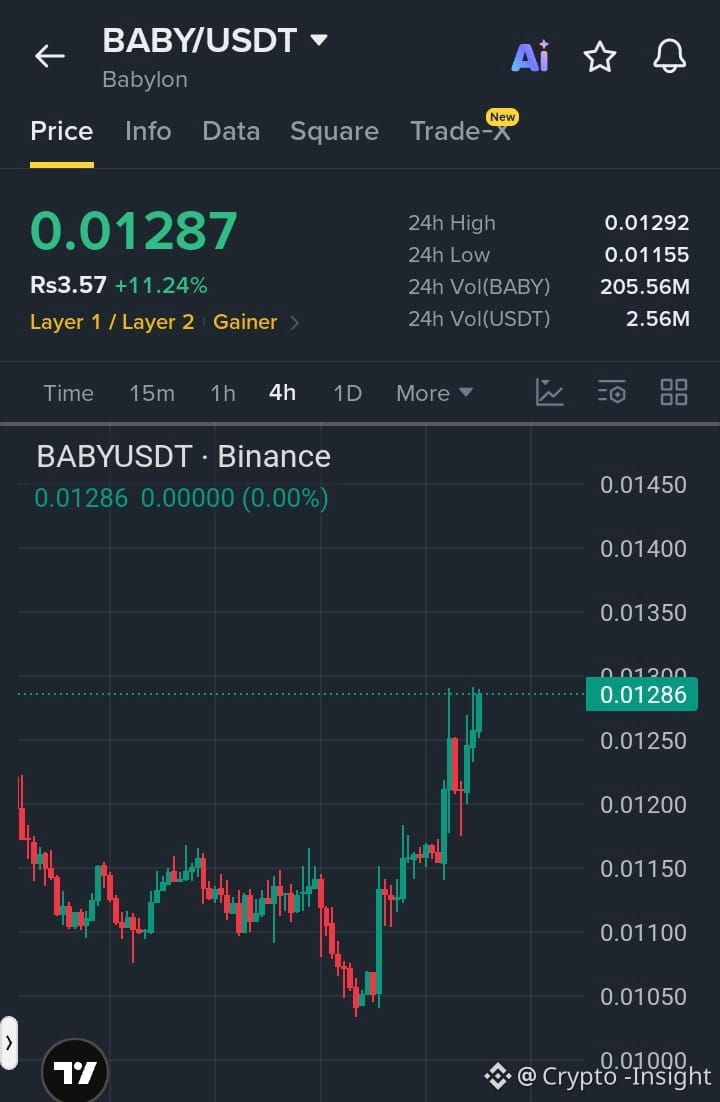
$BABY Is Pushing Higher But Can Bulls Break The Next Wall…!!
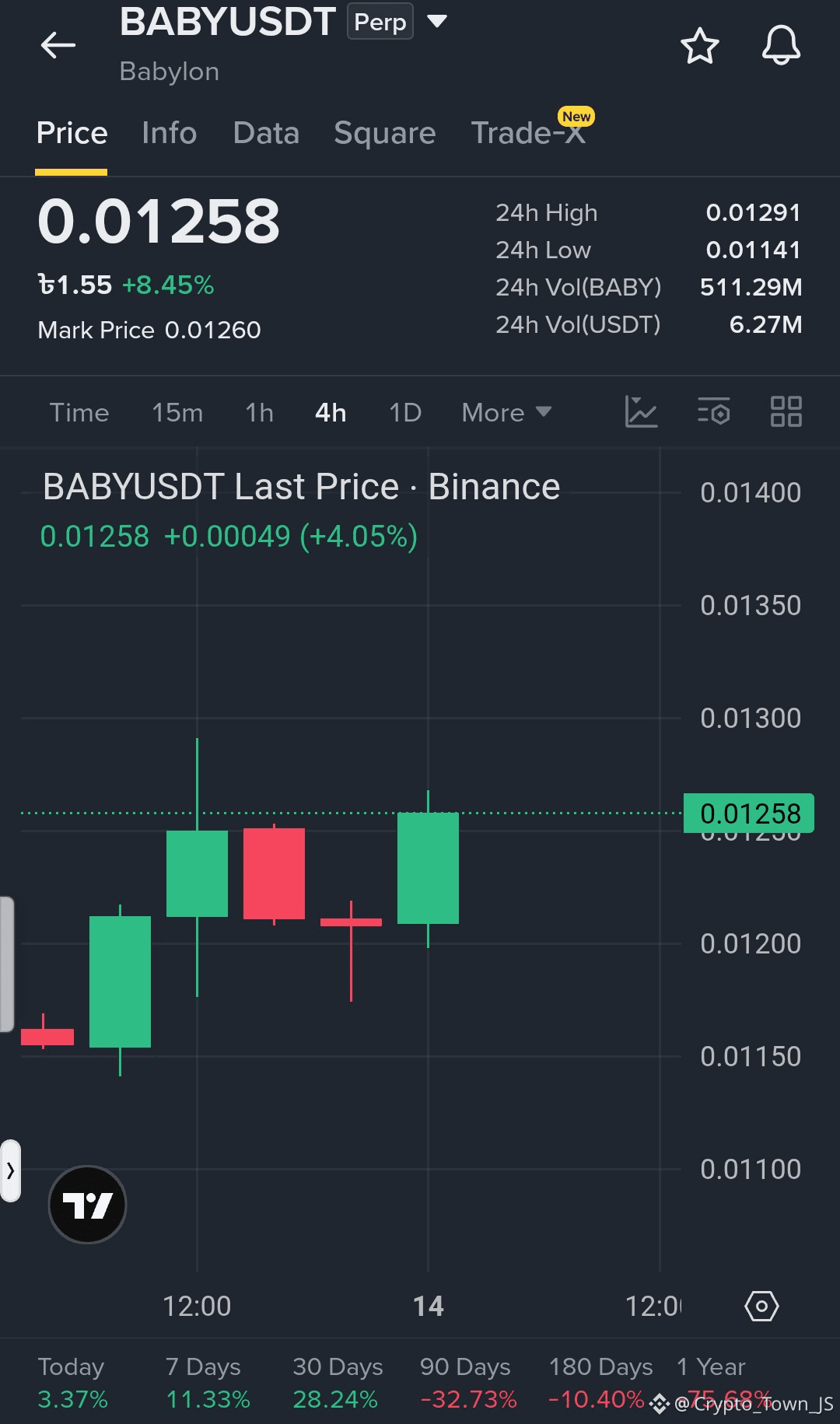
#BABY is showing bullish momentum as price holds near 0.01287 after bouncing from the 0.01155 support zone A break above 0.01292 could open the way toward 0.01350 and 0.01400 while 0.01200 remains an important support level$BTW
{future}(BTWUSDT)
$CVC
{spot}(CVCUSDT)
{spot}(BABYUSDT)
$BABY Is Pushing Higher But Can Bulls Break The Next Wall…!!
#BABY is showing bullish momentum as price holds near 0.01287 after bouncing from the 0.01155 support zone A break above 0.01292 could open the way toward 0.01350 and 0.01400 while 0.01200 remains an important support level$BTW
$CVC
#BABY is showing bullish momentum as price holds near 0.01287 after bouncing from the 0.01155 support zone A break above 0.01292 could open the way toward 0.01350 and 0.01400 while 0.01200 remains an important support level$BTW
$CVC
1
156


·
--
Trade Call Setup SPOT $BABY
👉 Click Here To Buy $BABY
{spot}(BABYUSDT)
Entry: 0.0128
TP1: 0.0132 (+3.0%)
TP2: 0.0136 (+6.0%)
TP3: 0.0140 (+9.0%)
#BABY
Trade Call Setup SPOT $BABY
👉 Click Here To Buy $BABY
Entry: 0.0128
TP1: 0.0132 (+3.0%)
TP2: 0.0136 (+6.0%)
TP3: 0.0140 (+9.0%)
#BABY
👉 Click Here To Buy $BABY
Entry: 0.0128
TP1: 0.0132 (+3.0%)
TP2: 0.0136 (+6.0%)
TP3: 0.0140 (+9.0%)
#BABY
29
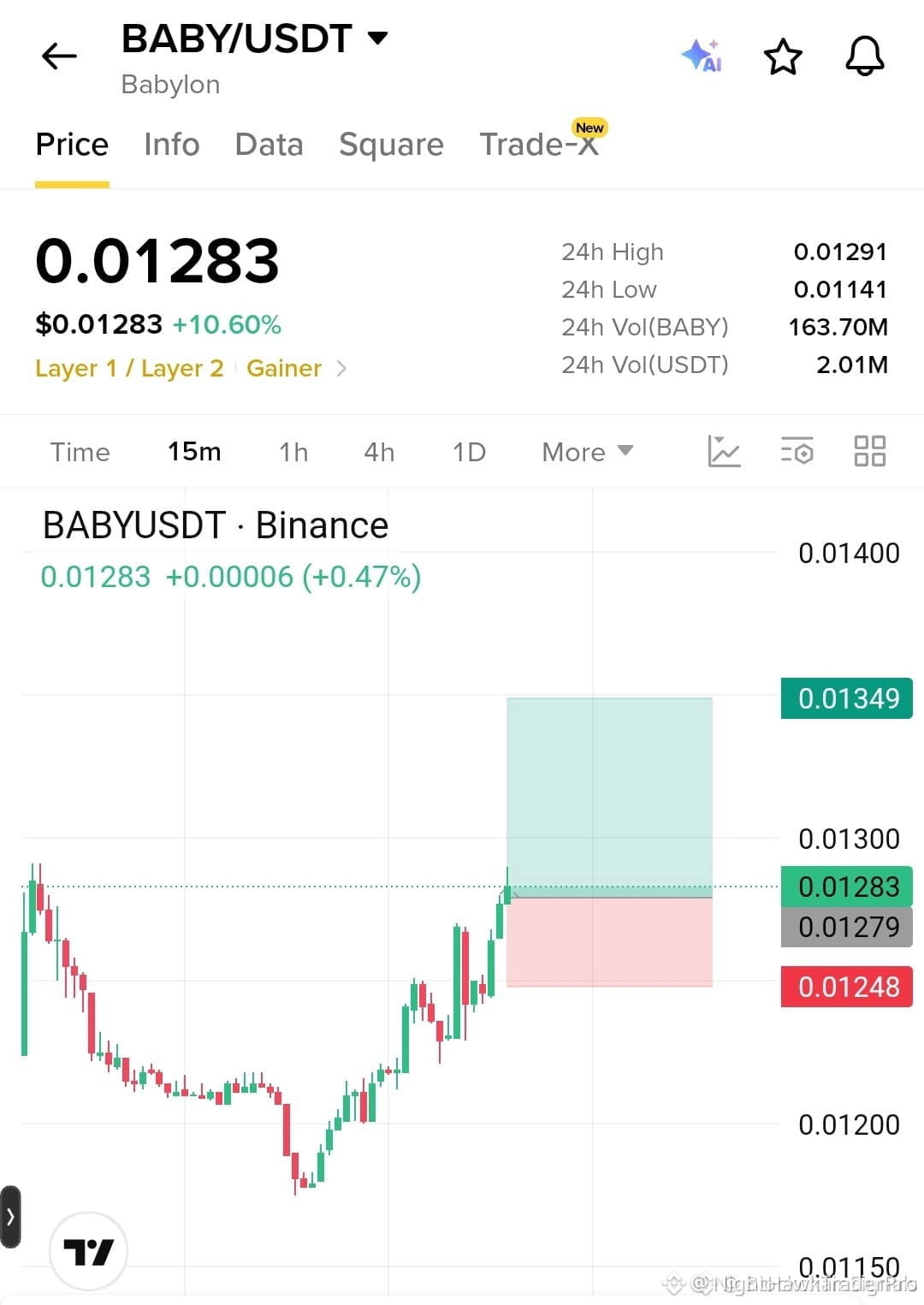
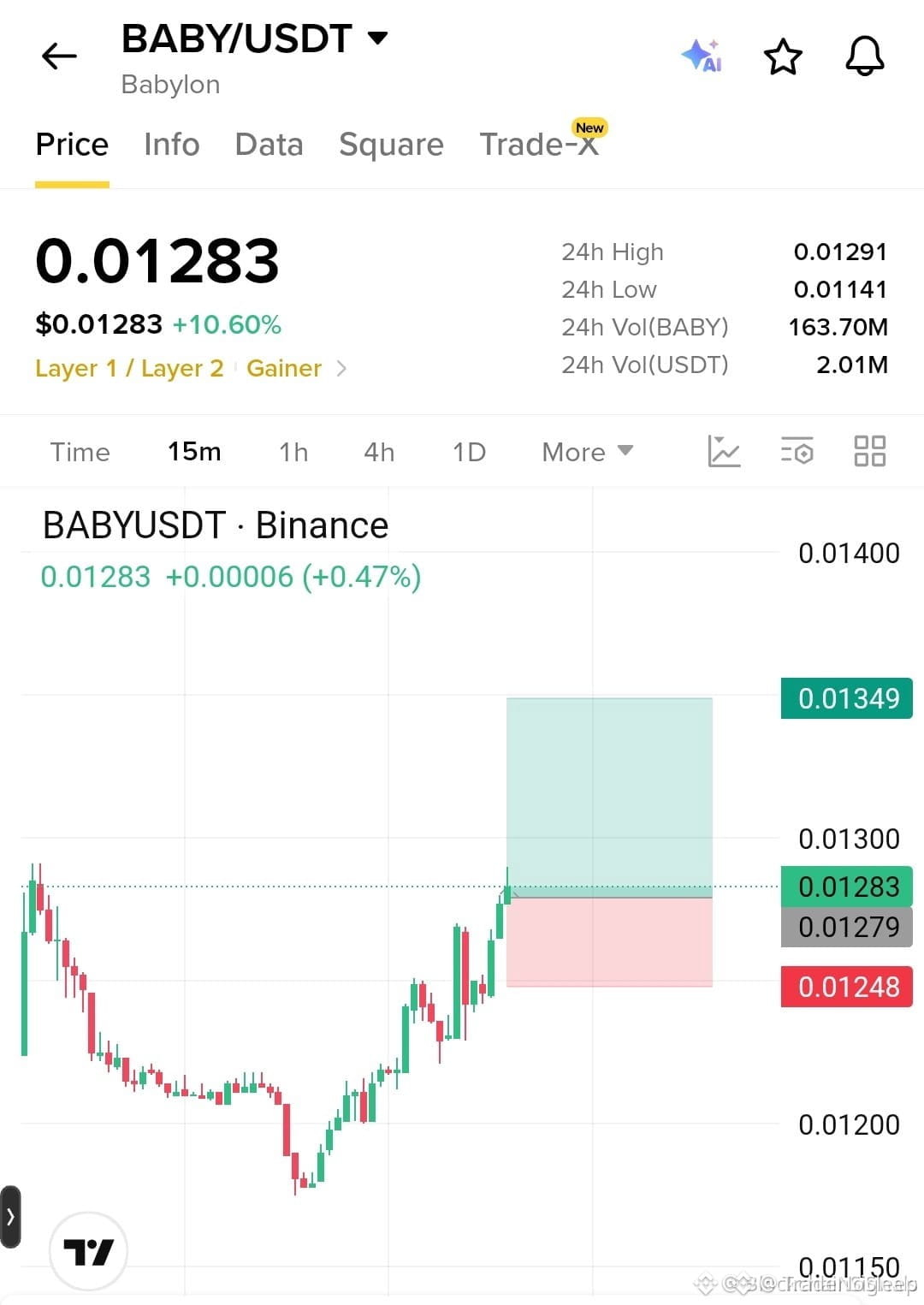
💥 $BABY HIGHER LOWS PRINTING AS BUYERS PREPARE TO BREAK RESISTANCE! ⚡
Entry: 0.01279 - 0.01283 ⚡
Target: 0.01349 🚀
Stop Loss: 0.01248 ⚠️
Buyers are actively stepping up on the lower timeframes, carving out a tight series of higher lows on the 15m chart. 📊 Momentum is coiling hard right below the 0.01283 level as supply begins to dry up.
A clean upside continuation through this trigger zone clears the runway straight toward the 0.01349 liquidity target. ⚡ Smart bids are quietly defending the base while sellers lose leverage with every test. 💡
Are you riding this momentum move toward the high, or waiting for a deeper retest? 👇
⚠️ Not financial advice. Always manage your risk. 🛡️
🏷️ #BABY #LongSetup #Crypto #Breakout #Altcoins
🔥 💎
💥 $BABY HIGHER LOWS PRINTING AS BUYERS PREPARE TO BREAK RESISTANCE! ⚡
Entry: 0.01279 - 0.01283 ⚡
Target: 0.01349 🚀
Stop Loss: 0.01248 ⚠️
Buyers are actively stepping up on the lower timeframes, carving out a tight series of higher lows on the 15m chart. 📊 Momentum is coiling hard right below the 0.01283 level as supply begins to dry up.
A clean upside continuation through this trigger zone clears the runway straight toward the 0.01349 liquidity target. ⚡ Smart bids are quietly defending the base while sellers lose leverage with every test. 💡
Are you riding this momentum move toward the high, or waiting for a deeper retest? 👇
⚠️ Not financial advice. Always manage your risk. 🛡️
🏷️ #BABY #LongSetup #Crypto #Breakout #Altcoins
🔥 💎
Entry: 0.01279 - 0.01283 ⚡
Target: 0.01349 🚀
Stop Loss: 0.01248 ⚠️
Buyers are actively stepping up on the lower timeframes, carving out a tight series of higher lows on the 15m chart. 📊 Momentum is coiling hard right below the 0.01283 level as supply begins to dry up.
A clean upside continuation through this trigger zone clears the runway straight toward the 0.01349 liquidity target. ⚡ Smart bids are quietly defending the base while sellers lose leverage with every test. 💡
Are you riding this momentum move toward the high, or waiting for a deeper retest? 👇
⚠️ Not financial advice. Always manage your risk. 🛡️
🏷️ #BABY #LongSetup #Crypto #Breakout #Altcoins
🔥 💎
12

·
--
🦈 $BABY PRINTS HIGHER LOWS AS INSTITUTIONAL ACCUMULATION EYES THE 0.01349 LIQUIDITY POOL 💥
Entry: 0.01279 - 0.01283 ⚡
Target: 0.01349 🚀
Stop Loss: 0.01248 ⚠️
Price action on $BABY is displaying solid structural strength, printing consecutive higher lows on intraday charts as smart money defends immediate demand. 📌 A sustained push above 0.01283 clears the execution path directly toward the overhead 0.01349 liquidity target. 📊
Order flow remains heavily skewed toward buyers, with micro-pullbacks getting absorbed rapidly before reaching deeper discount zones. 💡 Are you taking positions on this structural retest or waiting for breakout confirmation? 👇
⚠️ Not financial advice. Always manage your risk. 🛡️
🏷️ #BABY #LongSetup #Crypto #MarketStructure #MOVR
⚡ 💎
🦈 $BABY PRINTS HIGHER LOWS AS INSTITUTIONAL ACCUMULATION EYES THE 0.01349 LIQUIDITY POOL 💥
Entry: 0.01279 - 0.01283 ⚡
Target: 0.01349 🚀
Stop Loss: 0.01248 ⚠️
Price action on $BABY is displaying solid structural strength, printing consecutive higher lows on intraday charts as smart money defends immediate demand. 📌 A sustained push above 0.01283 clears the execution path directly toward the overhead 0.01349 liquidity target. 📊
Order flow remains heavily skewed toward buyers, with micro-pullbacks getting absorbed rapidly before reaching deeper discount zones. 💡 Are you taking positions on this structural retest or waiting for breakout confirmation? 👇
⚠️ Not financial advice. Always manage your risk. 🛡️
🏷️ #BABY #LongSetup #Crypto #MarketStructure #MOVR
⚡ 💎
Entry: 0.01279 - 0.01283 ⚡
Target: 0.01349 🚀
Stop Loss: 0.01248 ⚠️
Price action on $BABY is displaying solid structural strength, printing consecutive higher lows on intraday charts as smart money defends immediate demand. 📌 A sustained push above 0.01283 clears the execution path directly toward the overhead 0.01349 liquidity target. 📊
Order flow remains heavily skewed toward buyers, with micro-pullbacks getting absorbed rapidly before reaching deeper discount zones. 💡 Are you taking positions on this structural retest or waiting for breakout confirmation? 👇
⚠️ Not financial advice. Always manage your risk. 🛡️
🏷️ #BABY #LongSetup #Crypto #MarketStructure #MOVR
⚡ 💎
16

·
--
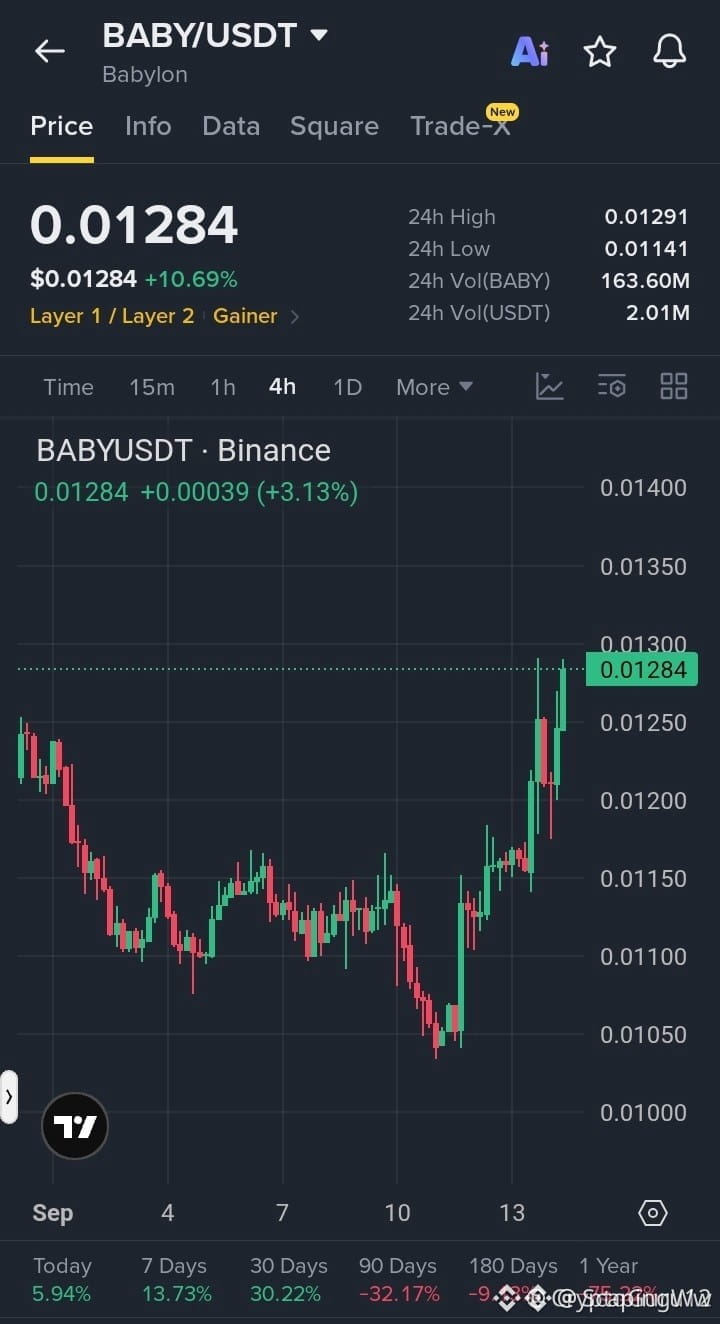
⚡ $BABY COMPRESSING UNDER KEY RESISTANCE AS BULLS PREPARE TO UNLEASH THE NEXT EXPANSION! 📈
Entry: 0.01245 - 0.01275 ⚡
Target: 0.01300 - 0.01360 🚀
Stop Loss: 0.01210 ⚠️
Buyers defended the 0.0105 - 0.0110 demand zone with conviction, carving out a flawless stair-step of higher lows straight through 0.0120 and 0.0125. 📊 Momentum is now coiling tightly just below the 0.01291 high, absorbing overhead supply without giving an inch back to the bears.
📌 A decisive 4H candle close above 0.01291 confirms structural continuation, opening a clear runway toward higher target bands. 💡 Smart money is clearly defending this order flow shift on every minor dip into support. 💬 Are you loading bids in the retest zone or waiting for the official 4H breakout confirmation close? 👇
⚠️ Not financial advice. Always manage your risk. 🛡️
🏷️ #BABY #Crypto #Breakout #Trading #Altcoins
🔥 💎
⚡ $BABY COMPRESSING UNDER KEY RESISTANCE AS BULLS PREPARE TO UNLEASH THE NEXT EXPANSION! 📈
Entry: 0.01245 - 0.01275 ⚡
Target: 0.01300 - 0.01360 🚀
Stop Loss: 0.01210 ⚠️
Buyers defended the 0.0105 - 0.0110 demand zone with conviction, carving out a flawless stair-step of higher lows straight through 0.0120 and 0.0125. 📊 Momentum is now coiling tightly just below the 0.01291 high, absorbing overhead supply without giving an inch back to the bears.
📌 A decisive 4H candle close above 0.01291 confirms structural continuation, opening a clear runway toward higher target bands. 💡 Smart money is clearly defending this order flow shift on every minor dip into support. 💬 Are you loading bids in the retest zone or waiting for the official 4H breakout confirmation close? 👇
⚠️ Not financial advice. Always manage your risk. 🛡️
🏷️ #BABY #Crypto #Breakout #Trading #Altcoins
🔥 💎
Entry: 0.01245 - 0.01275 ⚡
Target: 0.01300 - 0.01360 🚀
Stop Loss: 0.01210 ⚠️
Buyers defended the 0.0105 - 0.0110 demand zone with conviction, carving out a flawless stair-step of higher lows straight through 0.0120 and 0.0125. 📊 Momentum is now coiling tightly just below the 0.01291 high, absorbing overhead supply without giving an inch back to the bears.
📌 A decisive 4H candle close above 0.01291 confirms structural continuation, opening a clear runway toward higher target bands. 💡 Smart money is clearly defending this order flow shift on every minor dip into support. 💬 Are you loading bids in the retest zone or waiting for the official 4H breakout confirmation close? 👇
⚠️ Not financial advice. Always manage your risk. 🛡️
🏷️ #BABY #Crypto #Breakout #Trading #Altcoins
🔥 💎
14

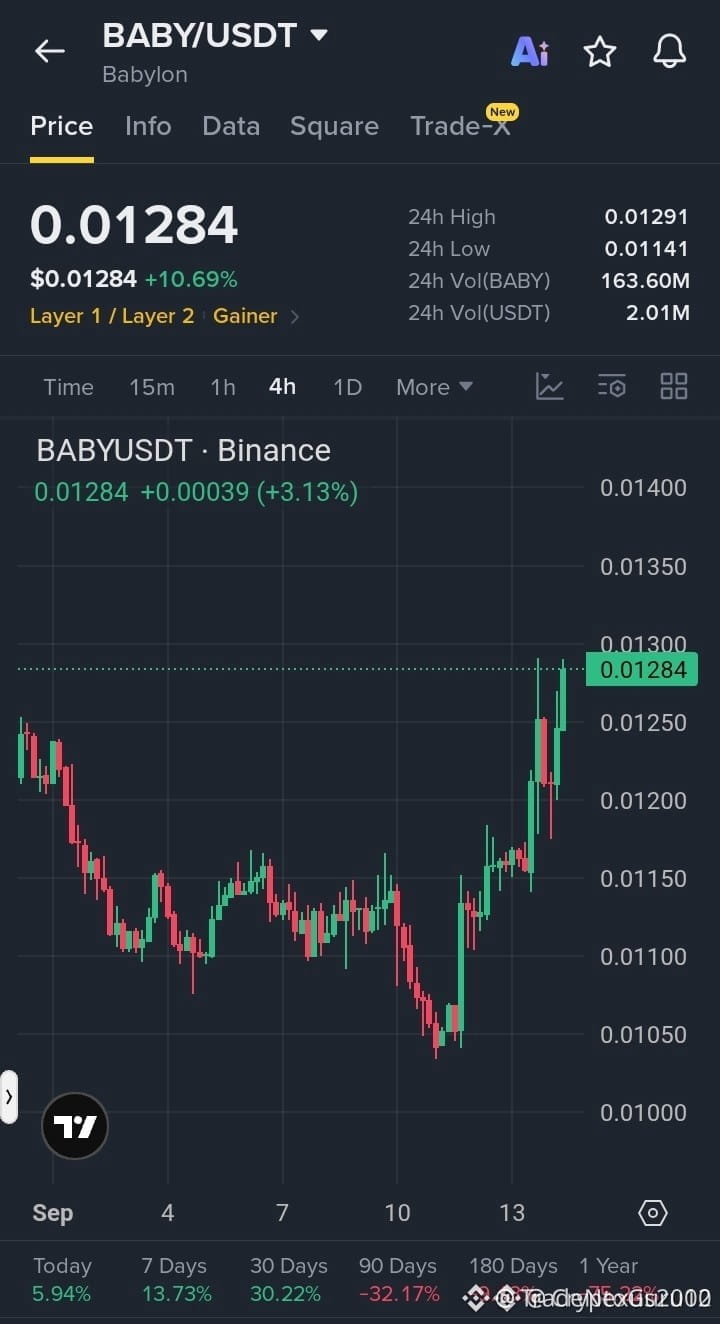
🦈 $BABY EXPANDS MARKET STRUCTURE WITH IMMINENT LIQUIDITY BREAKOUT ABOVE KEY RESISTANCE 🚀
Entry: 0.01245 - 0.01275 ⚡
Target: 0.01300 / 0.01330 / 0.01360 🚀
Stop Loss: 0.01210 ⚠️
Institutional order flow has firmly defended the 0.0105-0.0110 demand block, establishing a crisp sequence of higher lows. Price action cleanly swept sell-side liquidity through 0.0120 and 0.0125, now compressing directly beneath the key high at 0.01284. 📊
A decisive 4H candle close above 0.01291 confirms structural momentum expansion toward upper target liquidity. Smart money positioning favors accumulating inside the fresh imbalance before the next leg higher. 💡
🤔 Are you placing bids inside the demand zone now or waiting for the confirmed breakout close above 0.01291? 👇
⚠️ Not financial advice. Always manage your risk. 🛡️
🏷️ #BABY #MarketStructure #Breakout #Crypto #Altcoins
🎯 🦈
🦈 $BABY EXPANDS MARKET STRUCTURE WITH IMMINENT LIQUIDITY BREAKOUT ABOVE KEY RESISTANCE 🚀
Entry: 0.01245 - 0.01275 ⚡
Target: 0.01300 / 0.01330 / 0.01360 🚀
Stop Loss: 0.01210 ⚠️
Institutional order flow has firmly defended the 0.0105-0.0110 demand block, establishing a crisp sequence of higher lows. Price action cleanly swept sell-side liquidity through 0.0120 and 0.0125, now compressing directly beneath the key high at 0.01284. 📊
A decisive 4H candle close above 0.01291 confirms structural momentum expansion toward upper target liquidity. Smart money positioning favors accumulating inside the fresh imbalance before the next leg higher. 💡
🤔 Are you placing bids inside the demand zone now or waiting for the confirmed breakout close above 0.01291? 👇
⚠️ Not financial advice. Always manage your risk. 🛡️
🏷️ #BABY #MarketStructure #Breakout #Crypto #Altcoins
🎯 🦈
Entry: 0.01245 - 0.01275 ⚡
Target: 0.01300 / 0.01330 / 0.01360 🚀
Stop Loss: 0.01210 ⚠️
Institutional order flow has firmly defended the 0.0105-0.0110 demand block, establishing a crisp sequence of higher lows. Price action cleanly swept sell-side liquidity through 0.0120 and 0.0125, now compressing directly beneath the key high at 0.01284. 📊
A decisive 4H candle close above 0.01291 confirms structural momentum expansion toward upper target liquidity. Smart money positioning favors accumulating inside the fresh imbalance before the next leg higher. 💡
🤔 Are you placing bids inside the demand zone now or waiting for the confirmed breakout close above 0.01291? 👇
⚠️ Not financial advice. Always manage your risk. 🛡️
🏷️ #BABY #MarketStructure #Breakout #Crypto #Altcoins
🎯 🦈
18

·
--
Bullish
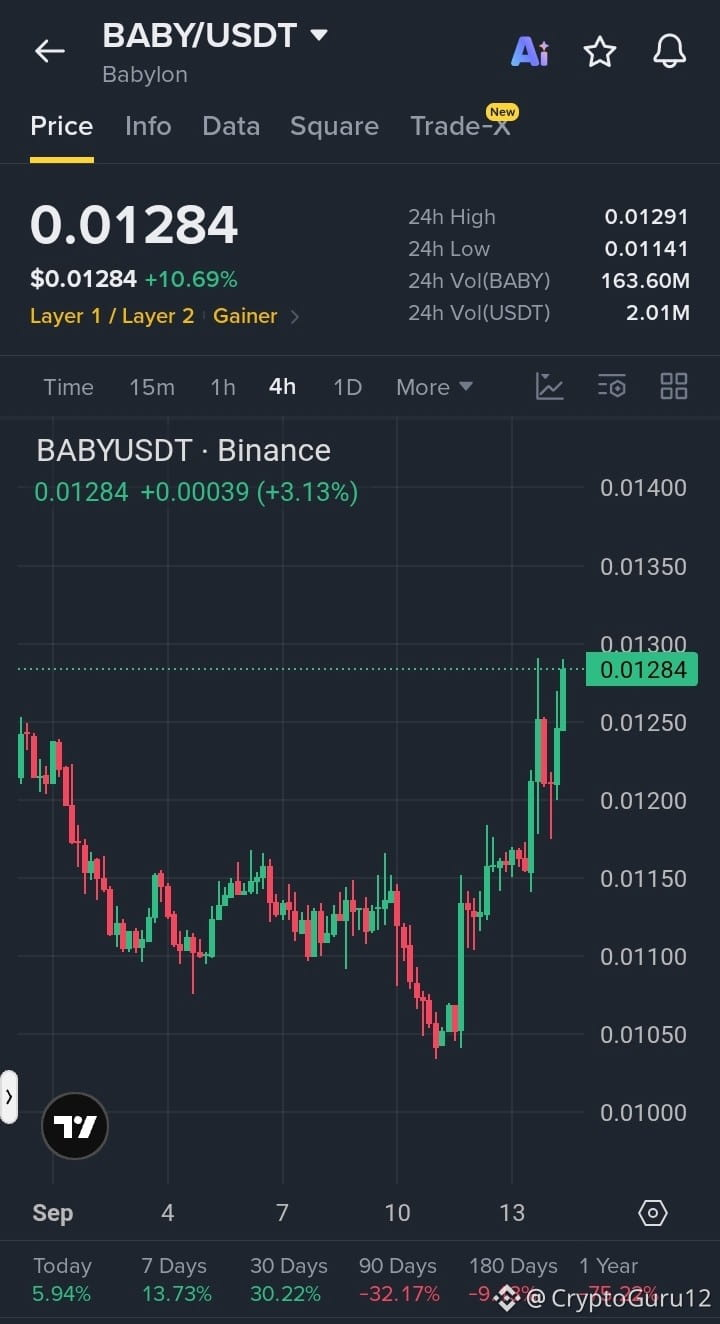
$BABY BREAKOUT MOMENTUM IS BUILDING STRONG
#BABY is showing a powerful bullish structure on the 4H chart. After holding the $0.0105–$0.0110 support zone, price has built higher lows and surged through $0.0120 and $0.0125. With price now near $0.01284, a clean breakout above the $0.01291 high can open the next upside move.
Trade Plan
Entry Zone: $0.01245 – $0.01275
TP1: $0.01300
TP2: $0.01330
TP3: $0.01360
Stop Loss: $0.01210
Confirmation: A strong 4H close above $0.01291 confirms the breakout and strengthens the bullish continuation setup.
Buy and Trade
{future}(BABYUSDT)
$LSK
{future}(LSKUSDT)
$龙虾
{future}(龙虾USDT)
$BABY BREAKOUT MOMENTUM IS BUILDING STRONG
#BABY is showing a powerful bullish structure on the 4H chart. After holding the $0.0105–$0.0110 support zone, price has built higher lows and surged through $0.0120 and $0.0125. With price now near $0.01284, a clean breakout above the $0.01291 high can open the next upside move.
Trade Plan
Entry Zone: $0.01245 – $0.01275
TP1: $0.01300
TP2: $0.01330
TP3: $0.01360
Stop Loss: $0.01210
Confirmation: A strong 4H close above $0.01291 confirms the breakout and strengthens the bullish continuation setup.
Buy and Trade
$LSK
$龙虾
#BABY is showing a powerful bullish structure on the 4H chart. After holding the $0.0105–$0.0110 support zone, price has built higher lows and surged through $0.0120 and $0.0125. With price now near $0.01284, a clean breakout above the $0.01291 high can open the next upside move.
Trade Plan
Entry Zone: $0.01245 – $0.01275
TP1: $0.01300
TP2: $0.01330
TP3: $0.01360
Stop Loss: $0.01210
Confirmation: A strong 4H close above $0.01291 confirms the breakout and strengthens the bullish continuation setup.
Buy and Trade
$LSK
$龙虾
3
376
·
--
🚨 $BABY EXPANDING INTO RESISTANCE AS SMART MONEY ABSORBS LOCAL SELLING PRESSURE! ⚡
Entry: 0.01250 - 0.01275 ⚡
Target: 0.01300 / 0.01325 / 0.01350 🚀
Stop Loss: 0.01215 ⚠️
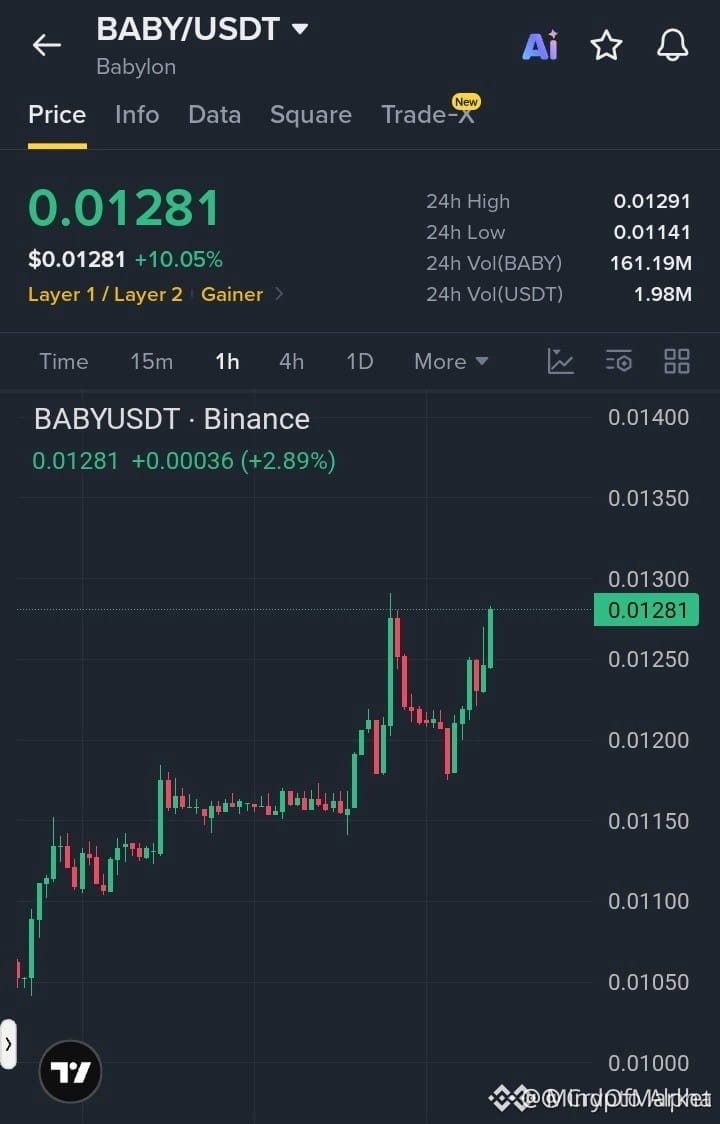
$BABY is printing a clean series of structural higher lows on the 1H timeframe, demonstrating steady accumulation directly below the key $0.0129 liquidity ceiling. 📊 Institutional order flow suggests sellers are losing control as buyers continuously absorb supply at elevated levels.
🔍 A sustained high-volume reclaim of $0.0129 will likely trigger an expansion toward overhead inefficiency targets. 📌 Capital rotation across momentum assets like $LSK further supports the broader bullish context across the board. 💬 Will you wait for the $0.0129 breakout confirmation or bid the structural retest in the demand zone? 👇
⚠️ Not financial advice. Always manage your risk. 🛡️
🏷️ #BABY #LSK #Crypto #Breakout #Altcoins
⚡ 🎯
🚨 $BABY EXPANDING INTO RESISTANCE AS SMART MONEY ABSORBS LOCAL SELLING PRESSURE! ⚡
Entry: 0.01250 - 0.01275 ⚡
Target: 0.01300 / 0.01325 / 0.01350 🚀
Stop Loss: 0.01215 ⚠️
$BABY is printing a clean series of structural higher lows on the 1H timeframe, demonstrating steady accumulation directly below the key $0.0129 liquidity ceiling. 📊 Institutional order flow suggests sellers are losing control as buyers continuously absorb supply at elevated levels.
🔍 A sustained high-volume reclaim of $0.0129 will likely trigger an expansion toward overhead inefficiency targets. 📌 Capital rotation across momentum assets like $LSK further supports the broader bullish context across the board. 💬 Will you wait for the $0.0129 breakout confirmation or bid the structural retest in the demand zone? 👇
⚠️ Not financial advice. Always manage your risk. 🛡️
🏷️ #BABY #LSK #Crypto #Breakout #Altcoins
⚡ 🎯
Entry: 0.01250 - 0.01275 ⚡
Target: 0.01300 / 0.01325 / 0.01350 🚀
Stop Loss: 0.01215 ⚠️
$BABY is printing a clean series of structural higher lows on the 1H timeframe, demonstrating steady accumulation directly below the key $0.0129 liquidity ceiling. 📊 Institutional order flow suggests sellers are losing control as buyers continuously absorb supply at elevated levels.
🔍 A sustained high-volume reclaim of $0.0129 will likely trigger an expansion toward overhead inefficiency targets. 📌 Capital rotation across momentum assets like $LSK further supports the broader bullish context across the board. 💬 Will you wait for the $0.0129 breakout confirmation or bid the structural retest in the demand zone? 👇
⚠️ Not financial advice. Always manage your risk. 🛡️
🏷️ #BABY #LSK #Crypto #Breakout #Altcoins
⚡ 🎯
73
·
--
⚡ $BABY PRESSES AGAINST KEY RESISTANCE AS BUYERS ACCUMULATE HIGHER LOWS 💥
Entry: 0.01250 - 0.01275 ⚡
Target: 0.01300 - 0.01350 🚀
Stop Loss: 0.01215 ⚠️
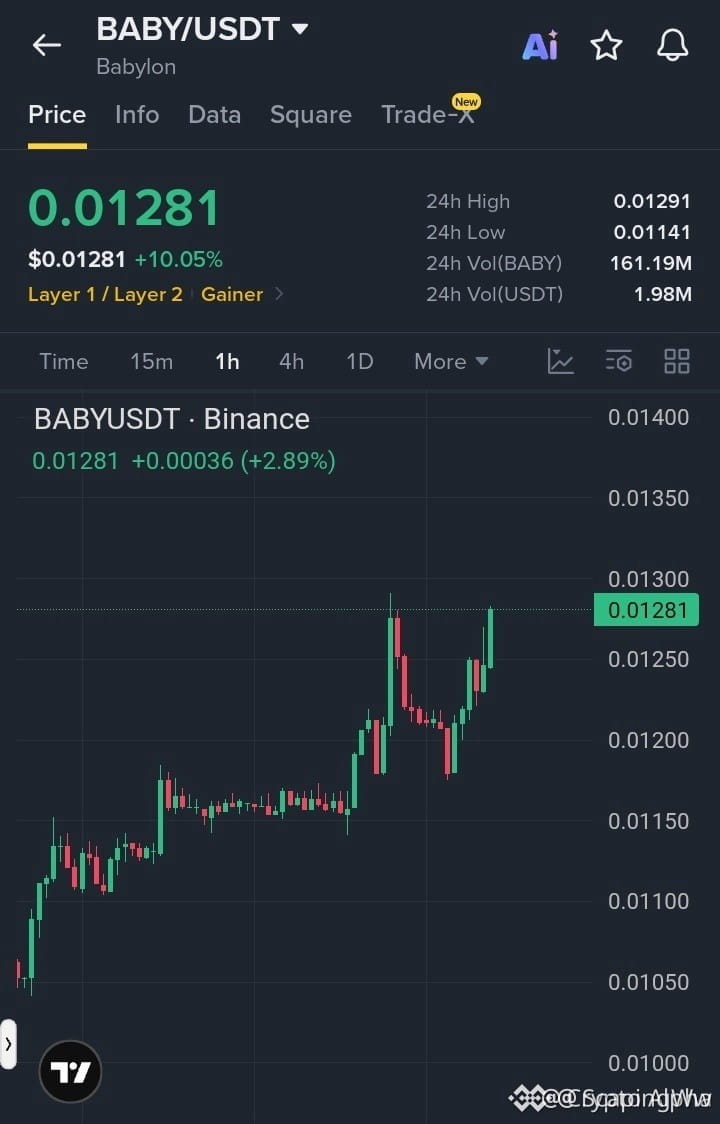
📌 Buyers are steadily defending higher lows on the 1H timeframe, driving price back to test the critical 0.0129 resistance ceiling. 📊 Order flow indicates solid accumulation within the entry zone as momentum builds for a potential expansion phase.
💡 A confirmed push beyond 0.0129 clears the runway toward upper targets up to 0.01350. 💬 Are you front-running this breakout now, or waiting for the clean 1H candle close above resistance? 👇
⚠️ Not financial advice. Always manage your risk. 🛡️
🏷️ #BABY #Crypto #Breakout #LongSetup #Trading
🔥 💎
⚡ $BABY PRESSES AGAINST KEY RESISTANCE AS BUYERS ACCUMULATE HIGHER LOWS 💥
Entry: 0.01250 - 0.01275 ⚡
Target: 0.01300 - 0.01350 🚀
Stop Loss: 0.01215 ⚠️
📌 Buyers are steadily defending higher lows on the 1H timeframe, driving price back to test the critical 0.0129 resistance ceiling. 📊 Order flow indicates solid accumulation within the entry zone as momentum builds for a potential expansion phase.
💡 A confirmed push beyond 0.0129 clears the runway toward upper targets up to 0.01350. 💬 Are you front-running this breakout now, or waiting for the clean 1H candle close above resistance? 👇
⚠️ Not financial advice. Always manage your risk. 🛡️
🏷️ #BABY #Crypto #Breakout #LongSetup #Trading
🔥 💎
Entry: 0.01250 - 0.01275 ⚡
Target: 0.01300 - 0.01350 🚀
Stop Loss: 0.01215 ⚠️
📌 Buyers are steadily defending higher lows on the 1H timeframe, driving price back to test the critical 0.0129 resistance ceiling. 📊 Order flow indicates solid accumulation within the entry zone as momentum builds for a potential expansion phase.
💡 A confirmed push beyond 0.0129 clears the runway toward upper targets up to 0.01350. 💬 Are you front-running this breakout now, or waiting for the clean 1H candle close above resistance? 👇
⚠️ Not financial advice. Always manage your risk. 🛡️
🏷️ #BABY #Crypto #Breakout #LongSetup #Trading
🔥 💎
40

·
--
$BABY 🔥 BABY — Is This Meme Coin Ready for Its Next Move? 📊
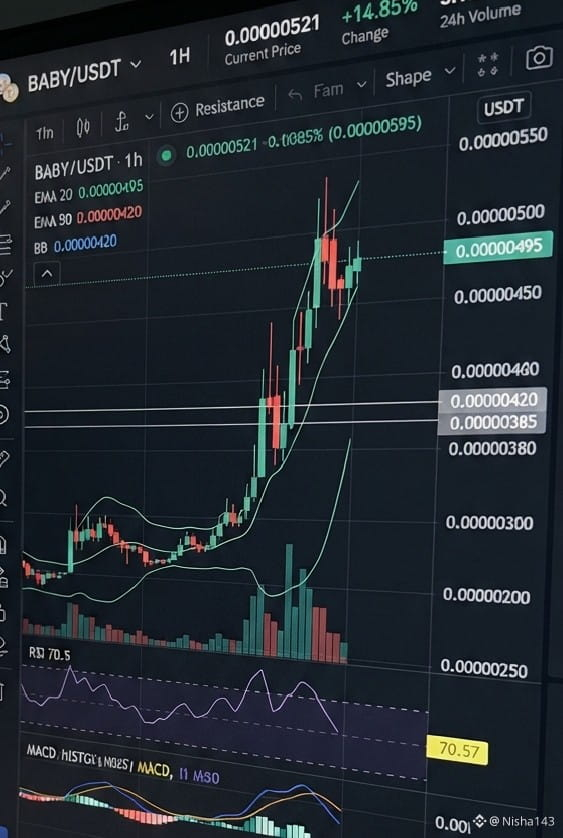
BABY is one of those crypto assets where sentiment, community activity, and market momentum can quickly change the picture. After periods of strong volatility, the key question now is whether BABY can build a sustainable trend instead of just another short-term pump.
📈 Market Structure: BABY needs consistent buying pressure and higher highs to confirm that momentum is genuinely returning. A breakout supported by strong volume would make the setup much more interesting.
🎯 What Could Drive BABY? Community growth, stronger trading activity, broader meme-coin interest, and a bullish overall crypto market could all support future upside. But meme coins can move extremely fast in both directions.
🔮 Future Outlook: If BABY successfully establishes a strong support zone and breaks important resistance with volume, the coin could attract fresh traders and speculative capital. On the other hand, losing key support could bring another sharp correction.
📰 News & Narrative: The biggest factor for BABY remains market attention and ecosystem/community developments. For a small-cap asset, even a relatively small increase in attention can create significant volatility.
⚠️ Risk: BABY remains a high-risk, highly speculative asset. A strong-looking chart does not guarantee continuation, so volume and confirmation matter more than hype.
💡 My Take: I would watch BABY closely rather than chase sudden pumps. The real opportunity comes when price action, volume, and market sentiment start moving in the same direction.
#baby #babygrok #Babylonchain #BABYFOX #BABYFOX
{spot}(BABYUSDT)
$BABY 🔥 BABY — Is This Meme Coin Ready for Its Next Move? 📊
BABY is one of those crypto assets where sentiment, community activity, and market momentum can quickly change the picture. After periods of strong volatility, the key question now is whether BABY can build a sustainable trend instead of just another short-term pump.
📈 Market Structure: BABY needs consistent buying pressure and higher highs to confirm that momentum is genuinely returning. A breakout supported by strong volume would make the setup much more interesting.
🎯 What Could Drive BABY? Community growth, stronger trading activity, broader meme-coin interest, and a bullish overall crypto market could all support future upside. But meme coins can move extremely fast in both directions.
🔮 Future Outlook: If BABY successfully establishes a strong support zone and breaks important resistance with volume, the coin could attract fresh traders and speculative capital. On the other hand, losing key support could bring another sharp correction.
📰 News & Narrative: The biggest factor for BABY remains market attention and ecosystem/community developments. For a small-cap asset, even a relatively small increase in attention can create significant volatility.
⚠️ Risk: BABY remains a high-risk, highly speculative asset. A strong-looking chart does not guarantee continuation, so volume and confirmation matter more than hype.
💡 My Take: I would watch BABY closely rather than chase sudden pumps. The real opportunity comes when price action, volume, and market sentiment start moving in the same direction.
#baby #babygrok #Babylonchain #BABYFOX #BABYFOX
BABY is one of those crypto assets where sentiment, community activity, and market momentum can quickly change the picture. After periods of strong volatility, the key question now is whether BABY can build a sustainable trend instead of just another short-term pump.
📈 Market Structure: BABY needs consistent buying pressure and higher highs to confirm that momentum is genuinely returning. A breakout supported by strong volume would make the setup much more interesting.
🎯 What Could Drive BABY? Community growth, stronger trading activity, broader meme-coin interest, and a bullish overall crypto market could all support future upside. But meme coins can move extremely fast in both directions.
🔮 Future Outlook: If BABY successfully establishes a strong support zone and breaks important resistance with volume, the coin could attract fresh traders and speculative capital. On the other hand, losing key support could bring another sharp correction.
📰 News & Narrative: The biggest factor for BABY remains market attention and ecosystem/community developments. For a small-cap asset, even a relatively small increase in attention can create significant volatility.
⚠️ Risk: BABY remains a high-risk, highly speculative asset. A strong-looking chart does not guarantee continuation, so volume and confirmation matter more than hype.
💡 My Take: I would watch BABY closely rather than chase sudden pumps. The real opportunity comes when price action, volume, and market sentiment start moving in the same direction.
#baby #babygrok #Babylonchain #BABYFOX #BABYFOX
65

·
--
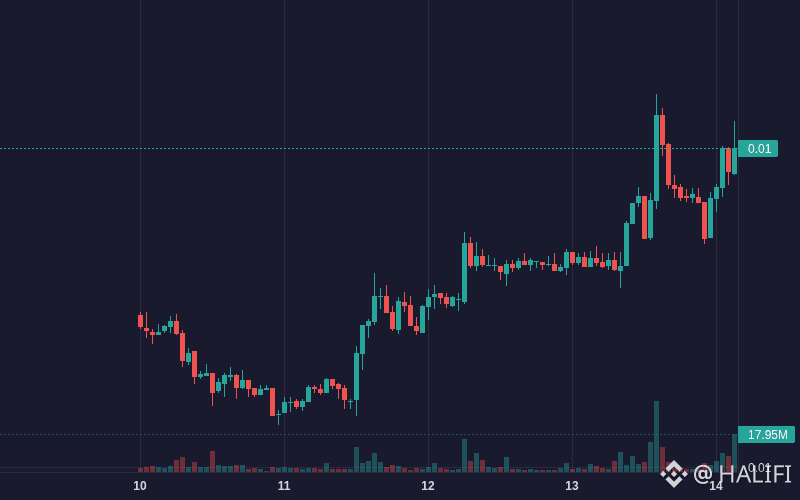
$BABY BABY is showing bullish movement: 7.40% (Crypto).
Volume: 1.92M | Last: $0.012480
Key signals: strong momentum, high volatility, high trader activity.
Bias Daily: BULLISH 🟢 | Weekly: BULLISH 🟢
BABY gained approximately 5.8% over 24 hours, driven by a volume-backed breakout and positive capital inflows.
**Volume-driven breakout (High)**: Trading volume surged significantly to 1.25M USDT in a single 4-hour window, propelling the price to a 24-hour peak of $0.01277.
- **Positive capital inflows (Medium)**: Net inflows peaked at +$127K during the price surge, indicating solid buying pressure from market participants.
- **Bullish momentum (Medium)**: MACD flipped positive with an expanding histogram, confirming the short-term uptrend and supporting the price floor at $0.0123.
#BABY #ZECUSDT #TRUMP #NFA #Crypto
$BABY BABY is showing bullish movement: 7.40% (Crypto).
Volume: 1.92M | Last: $0.012480
Key signals: strong momentum, high volatility, high trader activity.
Bias Daily: BULLISH 🟢 | Weekly: BULLISH 🟢
BABY gained approximately 5.8% over 24 hours, driven by a volume-backed breakout and positive capital inflows.
**Volume-driven breakout (High)**: Trading volume surged significantly to 1.25M USDT in a single 4-hour window, propelling the price to a 24-hour peak of $0.01277.
- **Positive capital inflows (Medium)**: Net inflows peaked at +$127K during the price surge, indicating solid buying pressure from market participants.
- **Bullish momentum (Medium)**: MACD flipped positive with an expanding histogram, confirming the short-term uptrend and supporting the price floor at $0.0123.
#BABY #ZECUSDT #TRUMP #NFA #Crypto
Volume: 1.92M | Last: $0.012480
Key signals: strong momentum, high volatility, high trader activity.
Bias Daily: BULLISH 🟢 | Weekly: BULLISH 🟢
BABY gained approximately 5.8% over 24 hours, driven by a volume-backed breakout and positive capital inflows.
**Volume-driven breakout (High)**: Trading volume surged significantly to 1.25M USDT in a single 4-hour window, propelling the price to a 24-hour peak of $0.01277.
- **Positive capital inflows (Medium)**: Net inflows peaked at +$127K during the price surge, indicating solid buying pressure from market participants.
- **Bullish momentum (Medium)**: MACD flipped positive with an expanding histogram, confirming the short-term uptrend and supporting the price floor at $0.0123.
#BABY #ZECUSDT #TRUMP #NFA #Crypto
41

·
--
Bullish
$BABY USDT LONG SETUP
Stronger buying interest is helping the market maintain its upward direction. The current structure looks encouraging.
Entry Zone: 0.01245–0.01270
TP1: 0.01300
TP2: 0.01350
TP3: 0.01400
SL: 0.01200
#BinanceSquare #crypto #Trading #baby #cryptotrading
$BR $REZ
{future}(REZUSDT)
{future}(BRUSDT)
{future}(BABYUSDT)
$BABY USDT LONG SETUP
Stronger buying interest is helping the market maintain its upward direction. The current structure looks encouraging.
Entry Zone: 0.01245–0.01270
TP1: 0.01300
TP2: 0.01350
TP3: 0.01400
SL: 0.01200
#BinanceSquare #crypto #Trading #baby #cryptotrading
$BR $REZ
Stronger buying interest is helping the market maintain its upward direction. The current structure looks encouraging.
Entry Zone: 0.01245–0.01270
TP1: 0.01300
TP2: 0.01350
TP3: 0.01400
SL: 0.01200
#BinanceSquare #crypto #Trading #baby #cryptotrading
$BR $REZ
32
Log in to explore more content
Join global crypto users on Binance Square
⚡️ Get latest and useful information about crypto.
💬 Trusted by the world’s largest crypto exchange.
👍 Discover real insights from verified creators.
Email / Phone number
Trending Topics
1
#FedRateWatch
1.4M views
6,545 Discussing
2
#ZcashRises6%
39,689 views
565 Discussing
3
#XRPSinks10%
26,648 views
374 Discussing
4
#BitcoinETFsShed$450M
4,457 views
75 Discussing
5
#CircleOpensArcMainnet
12,875 views
256 Discussing
6
#ZcashHoldersBackNU7Upgrade
23,657 views
425 Discussing
7
#MSTRTradingVolumeSurpassesMorganStanley
23,666 views
580 Discussing
8
#BitcoinFalls4%
48,752 views
894 Discussing
9
#SKHynixInTalksToMakeMemoryChipsInUS
19,911 views
358 Discussing
10
#OpenAIDiscussesNewFundingAt$1.2TValuation
4,834 views
57 Discussing