
子敬
37 Posts

子敬
x:@zijingNFT
106 Following
1.1K+ Followers
98 Liked
Posts
All
Quotes
Live
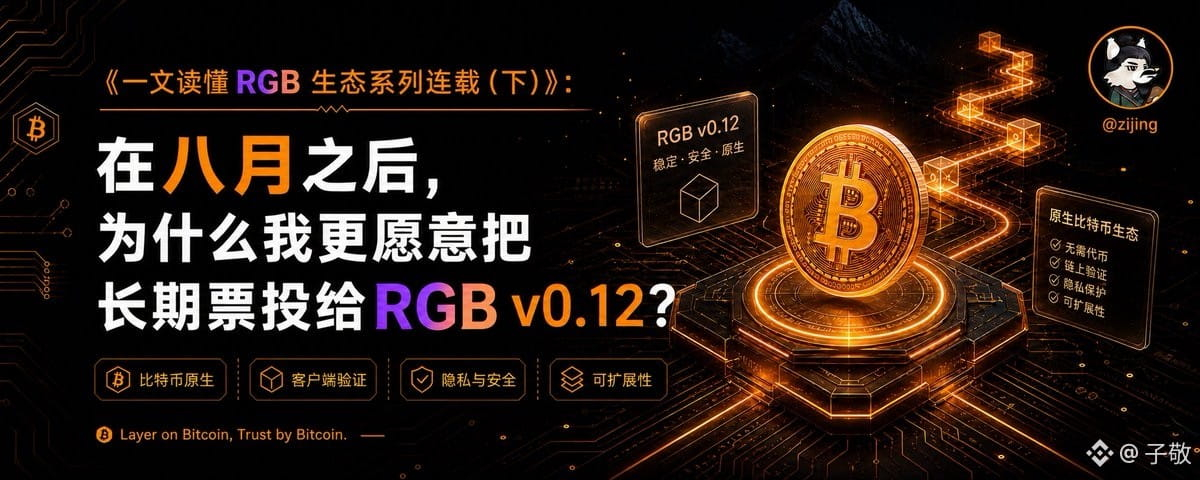
After the recent string of security incidents, @KiiChainio has officially announced its return. Looking at the main business KiiChain focuses on—B2B cross-border payments—security is the lifeline between life and death.
Let’s go over the sequence of events:
Around 22:50 UTC on August 22, KiiChain detected an attack. It then paused the network, preventing the vulnerability from being exploited further. The incident occurred roughly near block height #9,355,723, and the attacker repeated the exploitation 18 times.
Then, in the early hours of August 23, the official statement for the first time confirmed the issue was in the EVM module. Some funds were transferred via Hyperlane to the BNB Chain. A few hours later, the official pinpointed the root cause to the shared Cosmos EVM module, stating that the incident had been contained and that other supported networks were not affected.
Approximately 148.3M in total value, specifically $KII , was affected. Of that, about 80.7M $KII remained on-chain. The official said funds could be restored, upgraded, and migrated to recovery wallets. 67.6M KII had already bridged to BNB Chain, another 3M went to KuCoin, and a freeze was requested.
By August 28, KiiChainio announced that the network had resumed producing blocks and entered a fully operational state.
The official stated that the underlying issues have been patched, the network has been further secured, and the chain state was verified before being brought back online. They also said there was no loss of user funds and that most of the affected tokens had been recovered.
So for now, KiiChain has moved from pausing the chain to stop the bleeding and has entered the recovery and restart phase. The focus now shifts to ecosystem recovery: TRON integration, product progress, ecosystem expansion, and whether real users can truly return and participate again.
As for the specific details of fund recovery and the freezes, more information will need to be confirmed through subsequent announcements and cross-verification with external sources. That said, regardless, the network’s official restoration is a good start, but rebuilding long-term trust and vitality in the ecosystem will still take time to prove.
Keep following and stay updated on the latest developments.
Let’s go over the sequence of events:
Around 22:50 UTC on August 22, KiiChain detected an attack. It then paused the network, preventing the vulnerability from being exploited further. The incident occurred roughly near block height #9,355,723, and the attacker repeated the exploitation 18 times.
Then, in the early hours of August 23, the official statement for the first time confirmed the issue was in the EVM module. Some funds were transferred via Hyperlane to the BNB Chain. A few hours later, the official pinpointed the root cause to the shared Cosmos EVM module, stating that the incident had been contained and that other supported networks were not affected.
Approximately 148.3M in total value, specifically $KII , was affected. Of that, about 80.7M $KII remained on-chain. The official said funds could be restored, upgraded, and migrated to recovery wallets. 67.6M KII had already bridged to BNB Chain, another 3M went to KuCoin, and a freeze was requested.
By August 28, KiiChainio announced that the network had resumed producing blocks and entered a fully operational state.
The official stated that the underlying issues have been patched, the network has been further secured, and the chain state was verified before being brought back online. They also said there was no loss of user funds and that most of the affected tokens had been recovered.
So for now, KiiChain has moved from pausing the chain to stop the bleeding and has entered the recovery and restart phase. The focus now shifts to ecosystem recovery: TRON integration, product progress, ecosystem expansion, and whether real users can truly return and participate again.
As for the specific details of fund recovery and the freezes, more information will need to be confirmed through subsequent announcements and cross-verification with external sources. That said, regardless, the network’s official restoration is a good start, but rebuilding long-term trust and vitality in the ecosystem will still take time to prove.
Keep following and stay updated on the latest developments.

Today I listened to Meng Yan talk on his latest podcast, "Nobody Knows E46 We Have Never Seen Each Other," about the question: “Who did you see?” Maybe each of us is just living in the world of our own imaginings.
Last night, I finished watching the endless gossips in the sky. Sun Ge’s writing is indeed excellent—no wonder he was the top winner of the New Concept contest back then. But how much of it is true and how much is made up? Outsiders can’t really know, because it’s purely fictional.
What’s clever is that the two of them together sparked some thoughts. I want to talk about how, in this long narrative, two people “see” each other.
The “Jingtian” mentioned below is the Jingtian in Sun Ge’s writing. “Sun Ge” is also only the Sun Ge in this article.
▫️The Jingtian in Sun Ge’s eyes is like a palace that must be emptied out and cleared for her.
He books a whole floor of a hotel, clears the entire cinema, arranges flights, schedules, assistants, bodyguards—everyone gets put into motion, all just so she can stay in a space “with nobody else.”
In this story, what she seems to care about isn’t just money.
She cares about: “Can I change something because of me?” “Will you make room in the world for me one day?” “Will you refuse me someday?”
So maybe what hurts Sun Ge the most isn’t just 50 million.
The voice in his heart might really be: “I can accept everything you give me, but you as a person—because of that—you’re still not irreplaceable.”
▫️So, in Sun Ge’s pen, she becomes someone who “always still wants more people.”
He writes that she wants privacy, wants a house, wants a bride price, wants a bigger diamond ring—between the lines there’s a huge imbalance.
But the most interesting part is right here: Sun Ge repeatedly writes, “I said okay.”
He hardly ever asks, and he never refuses. He understands what he gives as love, understands fulfilling her needs as getting closer, and understands each agreement as the moment he’s finally needed.
Until the end, he admits that he doesn’t say “no.” It isn’t because he’s especially generous—it’s because he’s afraid.
Afraid that if he refuses, the other person will leave. Afraid that if he keeps pressing for answers, the one he doesn’t want to face will rise to the surface.
▫️Then what if we switch to Jingtian’s perspective?
In her eyes, Sun Ge might be another person—complex in a different way:
A person with exceptional ability, abundant resources, someone who can arrange everything quickly and flawlessly.
Someone who, as early as three months into knowing her, could organize her projects, relationships, assets, and residence into a document.
Someone who says “I trust you” with his mouth, but keeps investigation materials all along in his heart.
Also a person willing to satisfy nearly every demand, yet who never truly asked her, “What exactly do you want?”
In such a relationship, money becomes strange.
Money is like love, and like power; it’s like care, and also like an invisible net.
Once you accept it, it’s hard to say you’re not defined by it anymore. Refusing it might also mean facing the other person’s disappointment, anger, even the backlash of the entire narrative.
▫️So maybe they either never really saw each other, or maybe they never saw the other person as they truly were.
What Sun Ge sees is a Jingtian who keeps taking, keeps testing, and can never be filled.
What Jingtian sees might be a Sun Ge who treats “what I can give” as “I understand you,” and treats “I’ve never refused” as “I love you.”
One person sees the other as prices and numbers.
One person sees the other as ability—maybe only “cash power.”
In the end, neither of them sees the concrete person in front of them.
Meng Yan says that what people truly engage in with each other is often not two people, but the “images” of the other person that live in each other’s minds.
In those images there are real experiences, and also old wounds, fears, desires, and that part of ourselves we’re least willing to admit.
In Sun Ge’s article, Jingtian is like a blurry QQ profile picture saved from nineteen years ago.
The picture keeps getting bigger, but the person becomes harder and harder to make out.
▫️What the internet is best at is compressing a complicated person into a label:
a gold-digger, a clinger, capital, a female celebrity, a big shot, the victim, the perpetrator.
Once a label is attached, every detail afterward automatically serves it. Just like Xiantai in “Good Friends,” we stop seeing what this person did—we start looking for evidence to prove: “Look, he’s exactly that kind of person.”
I think what Meng Yan wants to remind us in this episode is:
When we realize we’re using a label to look at people, the label has already started to loosen.
This doesn’t mean nobody is responsible, and it doesn’t mean all harm should be forgiven.
It’s just that when many relationships reach the very worst point, it may not be because we didn’t love enough. Often it’s because we attached ourselves too early to that label—“Look, I saw through you long ago.”
We think we’re looking at the person outside the window.
Only later do we realize that what’s reflected on the glass has always been ourselves.
Last night, I finished watching the endless gossips in the sky. Sun Ge’s writing is indeed excellent—no wonder he was the top winner of the New Concept contest back then. But how much of it is true and how much is made up? Outsiders can’t really know, because it’s purely fictional.
What’s clever is that the two of them together sparked some thoughts. I want to talk about how, in this long narrative, two people “see” each other.
The “Jingtian” mentioned below is the Jingtian in Sun Ge’s writing. “Sun Ge” is also only the Sun Ge in this article.
▫️The Jingtian in Sun Ge’s eyes is like a palace that must be emptied out and cleared for her.
He books a whole floor of a hotel, clears the entire cinema, arranges flights, schedules, assistants, bodyguards—everyone gets put into motion, all just so she can stay in a space “with nobody else.”
In this story, what she seems to care about isn’t just money.
She cares about: “Can I change something because of me?” “Will you make room in the world for me one day?” “Will you refuse me someday?”
So maybe what hurts Sun Ge the most isn’t just 50 million.
The voice in his heart might really be: “I can accept everything you give me, but you as a person—because of that—you’re still not irreplaceable.”
▫️So, in Sun Ge’s pen, she becomes someone who “always still wants more people.”
He writes that she wants privacy, wants a house, wants a bride price, wants a bigger diamond ring—between the lines there’s a huge imbalance.
But the most interesting part is right here: Sun Ge repeatedly writes, “I said okay.”
He hardly ever asks, and he never refuses. He understands what he gives as love, understands fulfilling her needs as getting closer, and understands each agreement as the moment he’s finally needed.
Until the end, he admits that he doesn’t say “no.” It isn’t because he’s especially generous—it’s because he’s afraid.
Afraid that if he refuses, the other person will leave. Afraid that if he keeps pressing for answers, the one he doesn’t want to face will rise to the surface.
▫️Then what if we switch to Jingtian’s perspective?
In her eyes, Sun Ge might be another person—complex in a different way:
A person with exceptional ability, abundant resources, someone who can arrange everything quickly and flawlessly.
Someone who, as early as three months into knowing her, could organize her projects, relationships, assets, and residence into a document.
Someone who says “I trust you” with his mouth, but keeps investigation materials all along in his heart.
Also a person willing to satisfy nearly every demand, yet who never truly asked her, “What exactly do you want?”
In such a relationship, money becomes strange.
Money is like love, and like power; it’s like care, and also like an invisible net.
Once you accept it, it’s hard to say you’re not defined by it anymore. Refusing it might also mean facing the other person’s disappointment, anger, even the backlash of the entire narrative.
▫️So maybe they either never really saw each other, or maybe they never saw the other person as they truly were.
What Sun Ge sees is a Jingtian who keeps taking, keeps testing, and can never be filled.
What Jingtian sees might be a Sun Ge who treats “what I can give” as “I understand you,” and treats “I’ve never refused” as “I love you.”
One person sees the other as prices and numbers.
One person sees the other as ability—maybe only “cash power.”
In the end, neither of them sees the concrete person in front of them.
Meng Yan says that what people truly engage in with each other is often not two people, but the “images” of the other person that live in each other’s minds.
In those images there are real experiences, and also old wounds, fears, desires, and that part of ourselves we’re least willing to admit.
In Sun Ge’s article, Jingtian is like a blurry QQ profile picture saved from nineteen years ago.
The picture keeps getting bigger, but the person becomes harder and harder to make out.
▫️What the internet is best at is compressing a complicated person into a label:
a gold-digger, a clinger, capital, a female celebrity, a big shot, the victim, the perpetrator.
Once a label is attached, every detail afterward automatically serves it. Just like Xiantai in “Good Friends,” we stop seeing what this person did—we start looking for evidence to prove: “Look, he’s exactly that kind of person.”
I think what Meng Yan wants to remind us in this episode is:
When we realize we’re using a label to look at people, the label has already started to loosen.
This doesn’t mean nobody is responsible, and it doesn’t mean all harm should be forgiven.
It’s just that when many relationships reach the very worst point, it may not be because we didn’t love enough. Often it’s because we attached ourselves too early to that label—“Look, I saw through you long ago.”
We think we’re looking at the person outside the window.
Only later do we realize that what’s reflected on the glass has always been ourselves.

Verified
WLFI has gotten another financial license, but from my perspective, it’s starting to gradually move $USD1 from being just a simple stablecoin onto the path of “building and controlling an entire suite of stablecoin infrastructure.”
Let’s check the progress:
The World Liberty Trust Company (WLTC) associated with @worldlibertyfi has already received an OCC preliminary conditional approval for a national trust bank license.
Once the operating conditions are met, the issuance, redemption, reserve management of $USD1 , as well as institutional digital-asset custody, will all be pushed forward under a federal regulatory framework.
In short, WLFI wants to pull the core components of $USD1 as much as possible back into its own controllable and auditable system.
Because as stablecoins mature, the market won’t just look at whether they can maintain a 1:1 peg to the US dollar. It will also look at who manages the reserves, who is responsible for redemptions, and whether institutions dare to route their capital and business into it.
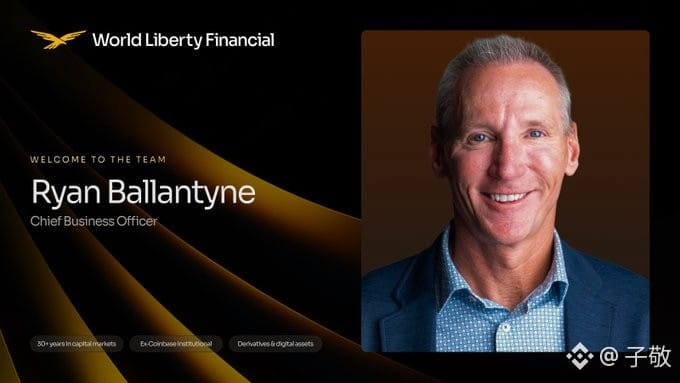
Step two: Formerly, Ryan Ballantyne, ex–Coinbase institutional business lead, has officially taken on the role of CBO. This position is more about connecting real expansion pathways—assets management, capital markets, and institutional channels—into the drive to scale USD1.
So now, WLFI’s route is becoming clearer:
On one hand, strengthen regulation and custody capabilities; on the other, strengthen institutionalized business capabilities.
The first addresses the trust problem; the second addresses the scale problem.
Of course, the license is still only conditionally approved. WLTC has not officially started operations yet, and progress on the $USD1 infrastructure also can’t be equated with value capture of $WLFI .
Next, what needs to be watched is the actual rollout of operating timelines, reserve and redemption mechanisms—and whether $USD1 can secure more real payment, trading, and institutional use cases.
Keep following closely. Since stablecoin competition has reached this stage, the next phase is all about who can turn “trust” into long-term infrastructure.
Let’s check the progress:
The World Liberty Trust Company (WLTC) associated with @worldlibertyfi has already received an OCC preliminary conditional approval for a national trust bank license.
Once the operating conditions are met, the issuance, redemption, reserve management of $USD1 , as well as institutional digital-asset custody, will all be pushed forward under a federal regulatory framework.
In short, WLFI wants to pull the core components of $USD1 as much as possible back into its own controllable and auditable system.
Because as stablecoins mature, the market won’t just look at whether they can maintain a 1:1 peg to the US dollar. It will also look at who manages the reserves, who is responsible for redemptions, and whether institutions dare to route their capital and business into it.
Step two: Formerly, Ryan Ballantyne, ex–Coinbase institutional business lead, has officially taken on the role of CBO. This position is more about connecting real expansion pathways—assets management, capital markets, and institutional channels—into the drive to scale USD1.
So now, WLFI’s route is becoming clearer:
On one hand, strengthen regulation and custody capabilities; on the other, strengthen institutionalized business capabilities.
The first addresses the trust problem; the second addresses the scale problem.
Of course, the license is still only conditionally approved. WLTC has not officially started operations yet, and progress on the $USD1 infrastructure also can’t be equated with value capture of $WLFI .
Next, what needs to be watched is the actual rollout of operating timelines, reserve and redemption mechanisms—and whether $USD1 can secure more real payment, trading, and institutional use cases.
Keep following closely. Since stablecoin competition has reached this stage, the next phase is all about who can turn “trust” into long-term infrastructure.
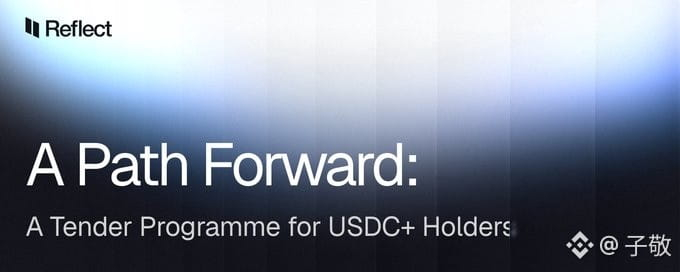
Just saw Reflect @reflectmoney release a payout plan for this shitty project. If you had money stored before, go take a look.
Right now, the options offered to affected users are:
▫️ Get back 0.2 USDC for every 1 USDC+ equivalent
▫️ Or add 80 RC tokens that the official has already explicitly stated have “no monetary value, non-transferable, no promise of future rights or benefits”
Then comes the key point: users will permanently transfer their future claims/recovery rights against Drift/Velocity to Palindrome Engineering.
In other words, if you take 20% cash now and future recovery ends up exceeding 20%, then the money you would have gotten has nothing to do with you—it’s all his.
To be precise, this isn’t a compensation plan provided by the project team at all; it’s an unreasonable discounted debt-claim harvesting.
Forget the 80% discount for a moment. The real issue is that the extra RC is already sealed off on the official side with a clear value boundary, yet the project team is still using it as part of the “compensation” in their proposal.
Also, the portal’s calculation for the “affected amount” has reportedly led to confusion: users say they admitted losses of around $200, while the page only shows $2.
So exactly how much have users lost in your end—how should that be calculated? And why can related parties to the project take away the future recovery upside at a 20% price? All these questions need to be clearly addressed.
@0xNIC0 @stablecoinjesus @arifkazi_ Please answer directly:
1. Why should RC be included in the narrative of the plan?
2. What is the calculation basis/method for eligible amount?
3. How are Palindrome and Reflect’s interests isolated/separated?
4. If future recovery is significantly higher than 20%, why can’t the original users participate in it again?
This set of terms seriously takes advantage of the affected users’ liquidity anxiety, and then uses a very low, high-certainty cash buyout to purchase a relatively more likely chance of recovering.
Affected users should first verify the principal/base, and then decide whether to sign. Absolutely don’t treat each 80 RC as an expected gain—in financial terms, it’s only equivalent to a discounted debt-claim purchase at a two-tenths rate.
You should also question @a16zcrypto and @elliefarrisi: is this really how the project you invested in treats users?
#a16zCSX
Right now, the options offered to affected users are:
▫️ Get back 0.2 USDC for every 1 USDC+ equivalent
▫️ Or add 80 RC tokens that the official has already explicitly stated have “no monetary value, non-transferable, no promise of future rights or benefits”
Then comes the key point: users will permanently transfer their future claims/recovery rights against Drift/Velocity to Palindrome Engineering.
In other words, if you take 20% cash now and future recovery ends up exceeding 20%, then the money you would have gotten has nothing to do with you—it’s all his.
To be precise, this isn’t a compensation plan provided by the project team at all; it’s an unreasonable discounted debt-claim harvesting.
Forget the 80% discount for a moment. The real issue is that the extra RC is already sealed off on the official side with a clear value boundary, yet the project team is still using it as part of the “compensation” in their proposal.
Also, the portal’s calculation for the “affected amount” has reportedly led to confusion: users say they admitted losses of around $200, while the page only shows $2.
So exactly how much have users lost in your end—how should that be calculated? And why can related parties to the project take away the future recovery upside at a 20% price? All these questions need to be clearly addressed.
@0xNIC0 @stablecoinjesus @arifkazi_ Please answer directly:
1. Why should RC be included in the narrative of the plan?
2. What is the calculation basis/method for eligible amount?
3. How are Palindrome and Reflect’s interests isolated/separated?
4. If future recovery is significantly higher than 20%, why can’t the original users participate in it again?
This set of terms seriously takes advantage of the affected users’ liquidity anxiety, and then uses a very low, high-certainty cash buyout to purchase a relatively more likely chance of recovering.
Affected users should first verify the principal/base, and then decide whether to sign. Absolutely don’t treat each 80 RC as an expected gain—in financial terms, it’s only equivalent to a discounted debt-claim purchase at a two-tenths rate.
You should also question @a16zcrypto and @elliefarrisi: is this really how the project you invested in treats users?
#a16zCSX
Finally
Unlocked
Some memories from years ago
A shattered dream story
Add a meal, too
Remember to be kind to yourself 🥹
Unlocked
Some memories from years ago
A shattered dream story
Add a meal, too
Remember to be kind to yourself 🥹

The USDT stablecoin sector—at the end of the day, it’s still crowded mainly by users’ idle capital. Can it somehow also help us grab a bit more than just certainty?
This time around, holding $USD1 on BN means everyone has been enjoying it for a long time—the whole bearish market period.
The latest episode is another refill:
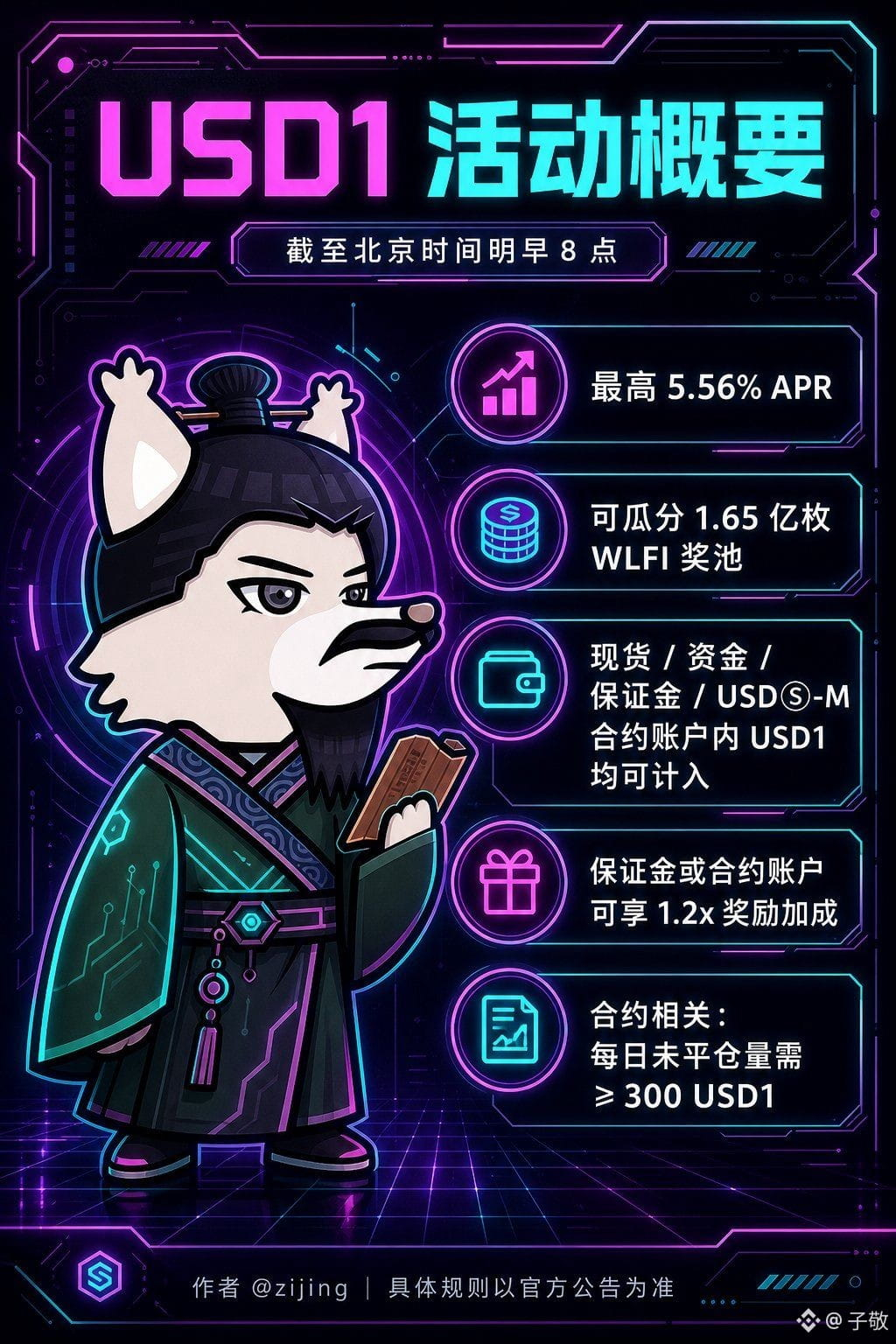
🔸 Up to 5.56% APR
🔸 A total reward pool of 165,000,000 $USD1 ($WLFI )
🔸 Deposit in a margin or futures account; if you meet the requirements, you can also get a 1.2x reward boost
Spot, funds, margin accounts, and $USD1 in USDⓈ-M contract accounts can all count.
For those who already have a $USD1 position, just move it over and leave it there—no need to force leverage just to chase a little extra. Stability first.
⚠️ Here’s a detail that’s easy to miss: to get the 1.2x returns, the daily open interest of $USD1-related contracts must be at least 300 $USD1. How the contracts are used still depends on your own risk tolerance.
The campaign ends at 8:00 AM tomorrow morning. If you already have $USD1, remember to check your holdings.
#USD1 #WLFI
This time around, holding $USD1 on BN means everyone has been enjoying it for a long time—the whole bearish market period.
The latest episode is another refill:
🔸 Up to 5.56% APR
🔸 A total reward pool of 165,000,000 $USD1 ($WLFI )
🔸 Deposit in a margin or futures account; if you meet the requirements, you can also get a 1.2x reward boost
Spot, funds, margin accounts, and $USD1 in USDⓈ-M contract accounts can all count.
For those who already have a $USD1 position, just move it over and leave it there—no need to force leverage just to chase a little extra. Stability first.
⚠️ Here’s a detail that’s easy to miss: to get the 1.2x returns, the daily open interest of $USD1-related contracts must be at least 300 $USD1. How the contracts are used still depends on your own risk tolerance.
The campaign ends at 8:00 AM tomorrow morning. If you already have $USD1, remember to check your holdings.
#USD1 #WLFI
The 1600w $WLFI event is back for a refill, three tracks, with a 30-day window to rake in the profits. Let's break down which one is the most profitable.
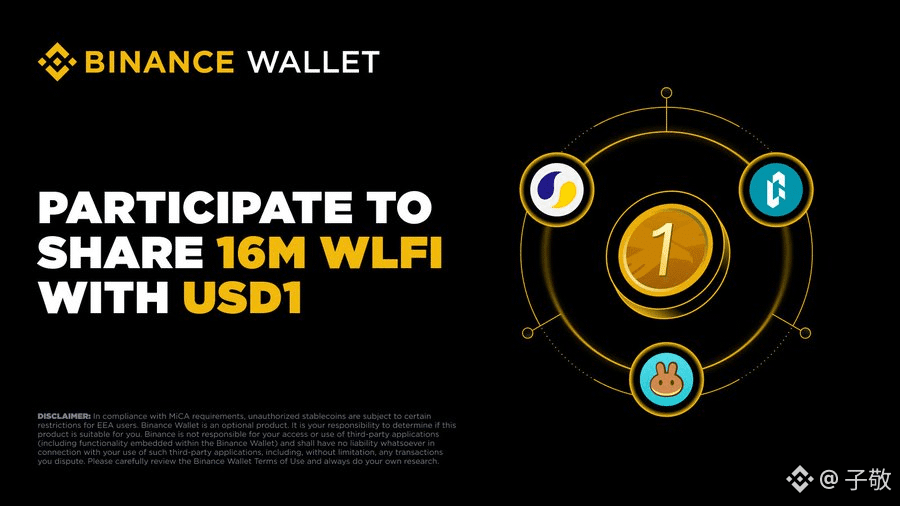
Cycle 👉 6.19 → 7.18, total of 30 days.
Prize Pool: 16,000,000 $WLFI tokens.
Entry: @Binance Wallet DeFi, three protocols corresponding to three strategies.
Threshold: as low as 100 USD1.
1⃣ Strategy One: Earn | Grab that APR boost.
Protocol: Lorenzo / Lista Vault.
Prize Pool: 14.4M WLFI (90% of the total prize pool).
How to play: Subscribe ≥ 100 USD1.
Key Point: During DeFi Season Earn, Lorenzo USD1 positions auto-roll, making it a smooth ride for existing users.
2⃣ Strategy Two: Loan | Capture that borrowing APR boost.
Protocol: Lista.
Prize Pool: 800k WLFI.
How to play: Stake sUSD1+ as collateral, borrow ≥ 100 USD1.
Risk Point: Keep an eye on the liquidation line; don’t over-leverage your collateral ratio.
3⃣ Strategy Three: LP | Snag those trading fee boosts.
Protocol: PancakeSwap.
Pool: sUSD1+ / USD1.
Prize Pool: 800k WLFI.
Best suited for: Those already planning to do stables LP, just pure boosts.
🔅 Personal Judgment
With 90% of the prize pool focused on the Earn track, it clearly shows that the official push is for the subscription play.
Expected yield ranking should roughly be: Lista Earn ≥ Lorenzo Earn > LP > Loan (based on APR boost efficiency estimation, final figures should always be checked on the page).
If you can only pick one, Lista Earn seems to be the highest return on investment choice since sUSD1+ is already an earning asset, adding an APR boost results in double the profit.
⚠️ Special Reminder: The detail about existing positions auto-rolling is crucial; don’t forget to confirm that on the page.
There are still 27 days left, choose any of the three strategies, new and old positions are welcome. This opportunity to rake it in should not be missed.
#USD1 #WLFI
Cycle 👉 6.19 → 7.18, total of 30 days.
Prize Pool: 16,000,000 $WLFI tokens.
Entry: @Binance Wallet DeFi, three protocols corresponding to three strategies.
Threshold: as low as 100 USD1.
1⃣ Strategy One: Earn | Grab that APR boost.
Protocol: Lorenzo / Lista Vault.
Prize Pool: 14.4M WLFI (90% of the total prize pool).
How to play: Subscribe ≥ 100 USD1.
Key Point: During DeFi Season Earn, Lorenzo USD1 positions auto-roll, making it a smooth ride for existing users.
2⃣ Strategy Two: Loan | Capture that borrowing APR boost.
Protocol: Lista.
Prize Pool: 800k WLFI.
How to play: Stake sUSD1+ as collateral, borrow ≥ 100 USD1.
Risk Point: Keep an eye on the liquidation line; don’t over-leverage your collateral ratio.
3⃣ Strategy Three: LP | Snag those trading fee boosts.
Protocol: PancakeSwap.
Pool: sUSD1+ / USD1.
Prize Pool: 800k WLFI.
Best suited for: Those already planning to do stables LP, just pure boosts.
🔅 Personal Judgment
With 90% of the prize pool focused on the Earn track, it clearly shows that the official push is for the subscription play.
Expected yield ranking should roughly be: Lista Earn ≥ Lorenzo Earn > LP > Loan (based on APR boost efficiency estimation, final figures should always be checked on the page).
If you can only pick one, Lista Earn seems to be the highest return on investment choice since sUSD1+ is already an earning asset, adding an APR boost results in double the profit.
⚠️ Special Reminder: The detail about existing positions auto-rolling is crucial; don’t forget to confirm that on the page.
There are still 27 days left, choose any of the three strategies, new and old positions are welcome. This opportunity to rake it in should not be missed.
#USD1 #WLFI
Big News Alert
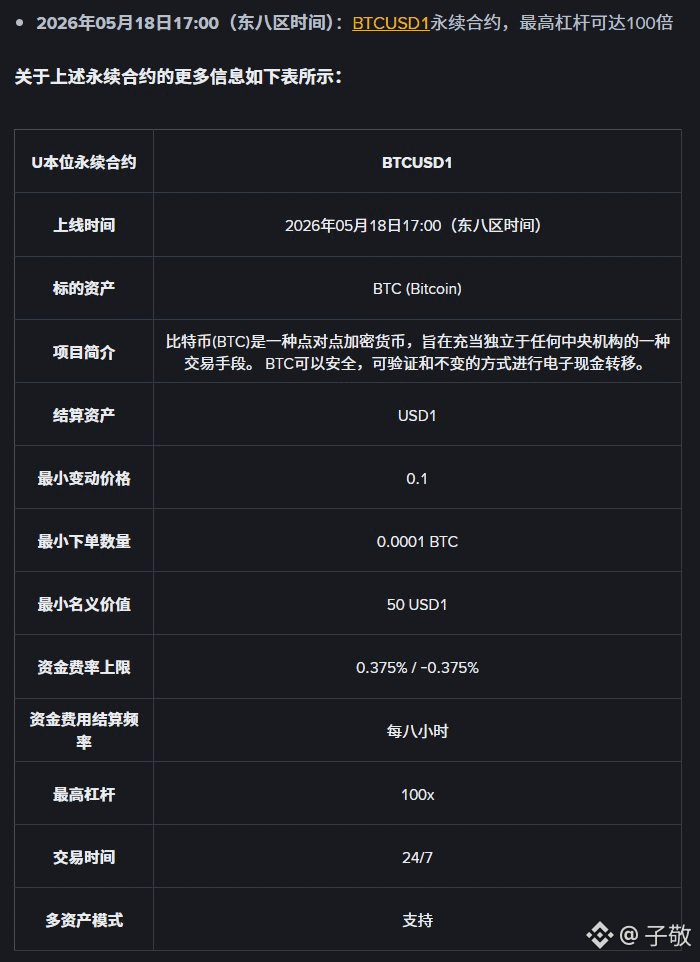
This time, Wall Street's derivatives cash register opened even before the Fed started printing money, as Binance has launched the $BTC / $USD1 perpetual contract.
$USD1 is the official stablecoin created after the president stepped down. If we only look at it from the perspective of on-chain transfers, it's basically just an empty promise and doesn't hold much real significance. What really matters is what kind of 'pricing anchor' can be found in the mainstream liquidity pool.
With the launch of the Binance contract, it’s taking on the roles of pricing, margin, and collateral all at once, like building a load-bearing wall in the deepest waters of on-chain finance.
With a 99.99% collateral grade, being able to secure this number in a unified account changes the game. It indicates that the credit of $USD1 is now equivalent to native USD or prime staked blue-chip assets, moving away from the wild west days of the crypto scene to a standard 'old money shell game.'
The logic I wrote about yesterday is now complete, closing the causal chain:
▫️ Blue-chip assets from the U.S. stock market are tokenizing and competing for liquidity, raising the entire baseline on-chain.
▫️ On the positive side, it keeps money on-chain, while on the negative side, it further forces grassroots native projects into a corner for financing.
The current move with $USD1 is essentially placing the cash register in the most prominent position on this elevated baseline. Looking ahead, the gap between on-chain native assets and compliant assets will only shrink, and investors' judgment of value anchors will fundamentally shift with the entrance of these institutional players.
In the past, retail traders often searched for that one in a million certainty in Meme PVP, hoping to strike it rich through luck and timing.
Now, looking back, those who truly control the wealth direction in the secondary market are rarely the so-called retail traders but rather the market makers who have already allocated chips and paved the way for compliance in the primary market.
The policy dividends from nation-building and the upward spiral of $USD1's asset scale are the macro Beta factors that will be hardest to avoid in the coming months.
This financial restructuring based on macro national policy is reshaping the rules of the game for this cycle.
The table hasn’t been cleared; it’s just a new dealer.
As for what comes next, the next cycle will speak for itself.
🔅 Reminder: Bybit has launched a ridiculous $USD1 product with a 20% annualized return. You might want to check it out.
#USD1 #WLFI
This time, Wall Street's derivatives cash register opened even before the Fed started printing money, as Binance has launched the $BTC / $USD1 perpetual contract.
$USD1 is the official stablecoin created after the president stepped down. If we only look at it from the perspective of on-chain transfers, it's basically just an empty promise and doesn't hold much real significance. What really matters is what kind of 'pricing anchor' can be found in the mainstream liquidity pool.
With the launch of the Binance contract, it’s taking on the roles of pricing, margin, and collateral all at once, like building a load-bearing wall in the deepest waters of on-chain finance.
With a 99.99% collateral grade, being able to secure this number in a unified account changes the game. It indicates that the credit of $USD1 is now equivalent to native USD or prime staked blue-chip assets, moving away from the wild west days of the crypto scene to a standard 'old money shell game.'
The logic I wrote about yesterday is now complete, closing the causal chain:
▫️ Blue-chip assets from the U.S. stock market are tokenizing and competing for liquidity, raising the entire baseline on-chain.
▫️ On the positive side, it keeps money on-chain, while on the negative side, it further forces grassroots native projects into a corner for financing.
The current move with $USD1 is essentially placing the cash register in the most prominent position on this elevated baseline. Looking ahead, the gap between on-chain native assets and compliant assets will only shrink, and investors' judgment of value anchors will fundamentally shift with the entrance of these institutional players.
In the past, retail traders often searched for that one in a million certainty in Meme PVP, hoping to strike it rich through luck and timing.
Now, looking back, those who truly control the wealth direction in the secondary market are rarely the so-called retail traders but rather the market makers who have already allocated chips and paved the way for compliance in the primary market.
The policy dividends from nation-building and the upward spiral of $USD1's asset scale are the macro Beta factors that will be hardest to avoid in the coming months.
This financial restructuring based on macro national policy is reshaping the rules of the game for this cycle.
The table hasn’t been cleared; it’s just a new dealer.
As for what comes next, the next cycle will speak for itself.
🔅 Reminder: Bybit has launched a ridiculous $USD1 product with a 20% annualized return. You might want to check it out.
#USD1 #WLFI

Last month, I listened to an in-depth interview with @Sawyer_APRO about @APRO_Oracle on @day1globalpod, which drew my attention to the APRO project.
Currently on the BNB Chain, APRO is the only oracle with revenue.
Other oracle projects typically go quiet after their TGE, but APRO is busy signing clients—card games, prediction markets, AI, all are top projects in popular sectors.
APRO's current position is somewhat like that of @KEMKEM 1 back in the day—firmly seated as the leader in a single chain, looking towards the entire ecosystem. History doesn't repeat itself, but it can always be referenced.
The team also has a vision; the Pancake pool has voluntarily locked in for 12 months, while also promising that the FDV will not be lower than the opening price.
There are reports that a node plan and staking system will be launched soon. If VC and large holders start locking in at this time, we can roughly estimate how the circulating supply will move 🤔.
Currently, the leading projects in the oracle sector have basically all been listed on Korean exchanges, and I believe that $AT is likely just a matter of time.
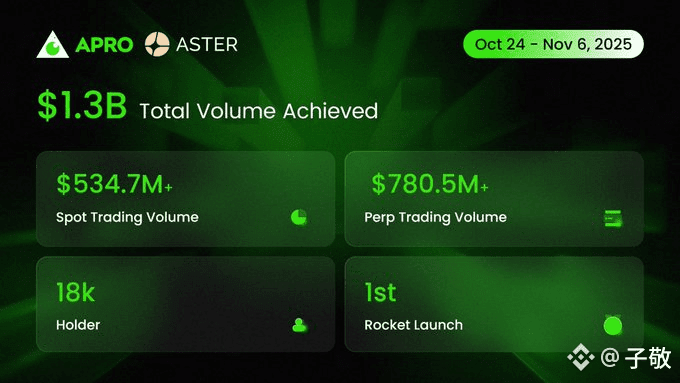
The image below shows the performance report of $AT on @Aster_DEX over the past week.
👇 The extent of the bias from the BN resource is probably unnecessary to elaborate on.
If you want to learn more about APRO, you can listen to episode @starzq with @Rubywang, which is as comprehensive as it gets.
https://www.xiaoyuzhoufm.com/episode/68f3ab96456ffec65e66f083
(This is already the fourth podcast interview on a #Binance spot project, which is quite alarming to think about.)
#apro #BNBChain
Currently on the BNB Chain, APRO is the only oracle with revenue.
Other oracle projects typically go quiet after their TGE, but APRO is busy signing clients—card games, prediction markets, AI, all are top projects in popular sectors.
APRO's current position is somewhat like that of @KEMKEM 1 back in the day—firmly seated as the leader in a single chain, looking towards the entire ecosystem. History doesn't repeat itself, but it can always be referenced.
The team also has a vision; the Pancake pool has voluntarily locked in for 12 months, while also promising that the FDV will not be lower than the opening price.
There are reports that a node plan and staking system will be launched soon. If VC and large holders start locking in at this time, we can roughly estimate how the circulating supply will move 🤔.
Currently, the leading projects in the oracle sector have basically all been listed on Korean exchanges, and I believe that $AT is likely just a matter of time.
The image below shows the performance report of $AT on @Aster_DEX over the past week.
👇 The extent of the bias from the BN resource is probably unnecessary to elaborate on.
If you want to learn more about APRO, you can listen to episode @starzq with @Rubywang, which is as comprehensive as it gets.
https://www.xiaoyuzhoufm.com/episode/68f3ab96456ffec65e66f083
(This is already the fourth podcast interview on a #Binance spot project, which is quite alarming to think about.)
#apro #BNBChain
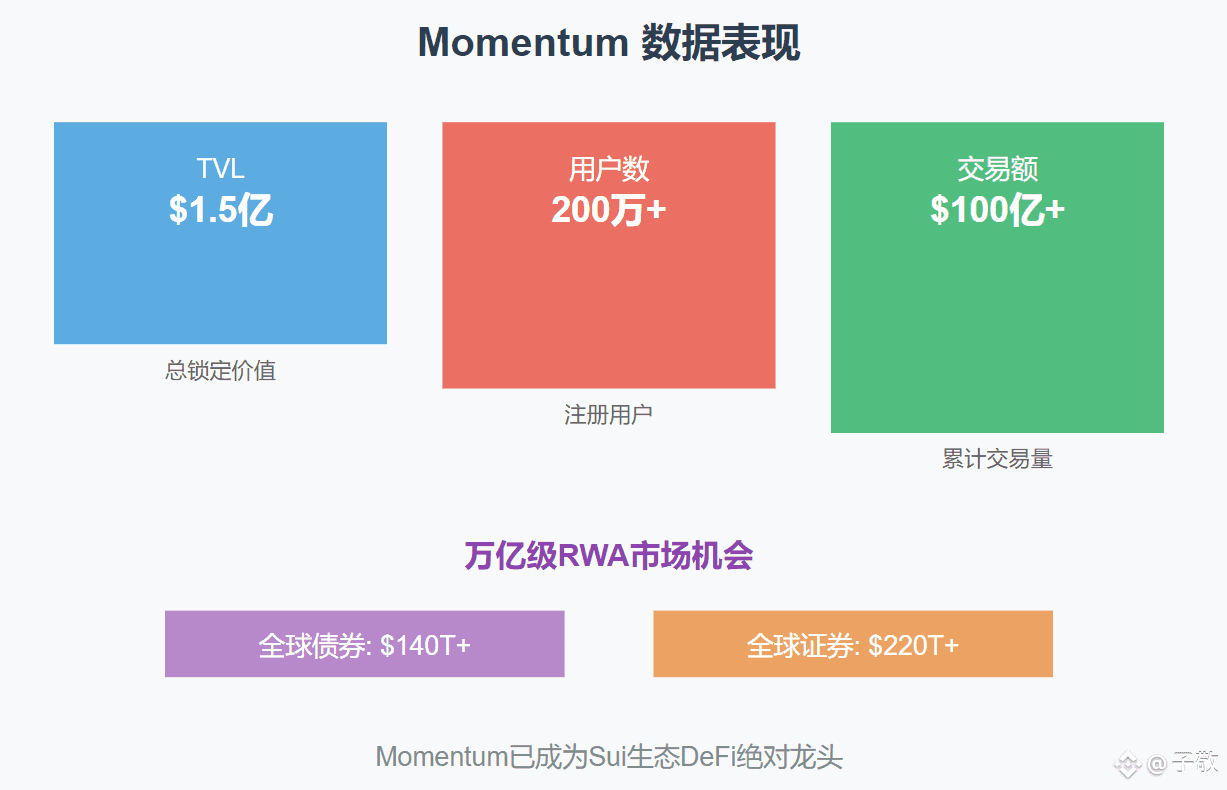
Let’s take a look at the latest report card for Momentum:
▫️ TVL has exceeded 150 million USD
▫️ Cumulative users exceed 2 million
▫️ Total transaction volume has surpassed 10 billion USD
Momentum is now undoubtedly the DeFi leader of the @Sui ecosystem, but they have just released the exciting Momentum X
The emergence of Momentum X could change the game for RWA tokenization
The current situation is:
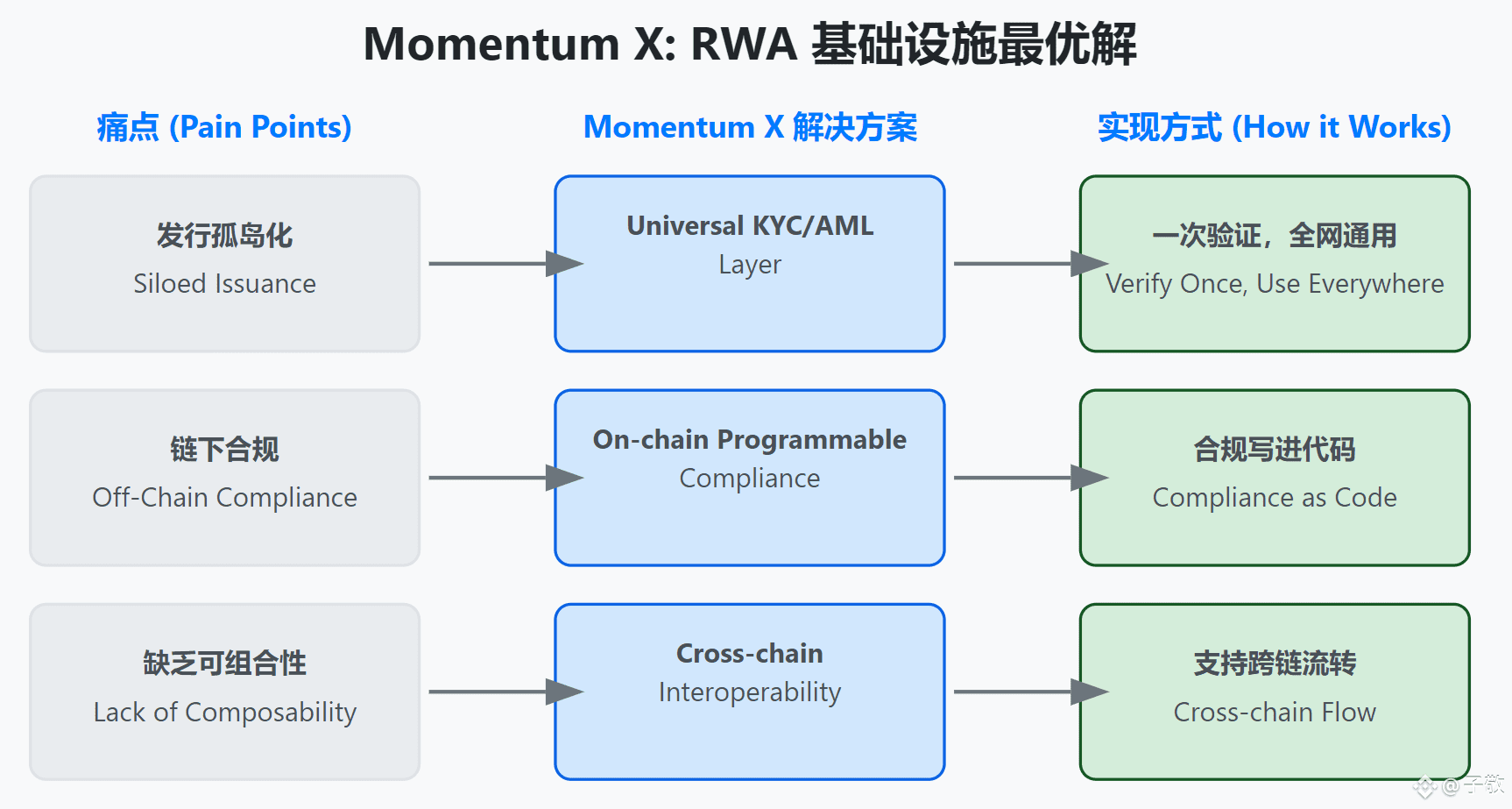
▫️ Issuers operate independently, requiring users to redo KYC on each platform to verify their identity repeatedly
▫️ Compliance is fragmented, and liquidity is scattered like sand
▫️ The same US Treasury assets, issued as tokens on different platforms, cannot interoperate and do not recognize each other
The three major advantages of Momentum X:
One KYC applicable across the network + compliance rules directly written into code for automatic execution + support for free cross-chain circulation
In the future, the same US Treasury bond, regardless of who issues it or on which chain, can be merged for trading, achieving true liquidity unification, and institutional-grade compliance standards will allow large funds to enter the market
This will completely break the boundaries between TradFi and DeFi
The global bond market is 140 trillion USD, and the securities market is 220 trillion USD. Even if only 1% goes on-chain, it will still be a multi-trillion market; where is the ceiling?🤔
Momentum X is striving to become the unified entry point for this trillion-dollar market
🔅 Special reminder, the joint mining activity of OKX Wallet has been extended to September 22, remember to participate👇
https://web3.okx.com/zh-hans/earn/activity/xbtc-sui-season1
#momentum #RWA #DEFİ
▫️ TVL has exceeded 150 million USD
▫️ Cumulative users exceed 2 million
▫️ Total transaction volume has surpassed 10 billion USD
Momentum is now undoubtedly the DeFi leader of the @Sui ecosystem, but they have just released the exciting Momentum X
The emergence of Momentum X could change the game for RWA tokenization
The current situation is:
▫️ Issuers operate independently, requiring users to redo KYC on each platform to verify their identity repeatedly
▫️ Compliance is fragmented, and liquidity is scattered like sand
▫️ The same US Treasury assets, issued as tokens on different platforms, cannot interoperate and do not recognize each other
The three major advantages of Momentum X:
One KYC applicable across the network + compliance rules directly written into code for automatic execution + support for free cross-chain circulation
In the future, the same US Treasury bond, regardless of who issues it or on which chain, can be merged for trading, achieving true liquidity unification, and institutional-grade compliance standards will allow large funds to enter the market
This will completely break the boundaries between TradFi and DeFi
The global bond market is 140 trillion USD, and the securities market is 220 trillion USD. Even if only 1% goes on-chain, it will still be a multi-trillion market; where is the ceiling?🤔
Momentum X is striving to become the unified entry point for this trillion-dollar market
🔅 Special reminder, the joint mining activity of OKX Wallet has been extended to September 22, remember to participate👇
https://web3.okx.com/zh-hans/earn/activity/xbtc-sui-season1
#momentum #RWA #DEFİ
子敬
·
--
Here it comes, the Sui ecosystem engine Momentum has been quite powerful lately, with data skyrocketing:
▫️TVL surpasses $180M
▫️Total trading volume exceeds $8B
▫️User count exceeds 1.7 million
This growth curve is very impressive 😎 It has already become a top presence in the Sui ecosystem
Behind the data, Momentum is starting to show its muscle
🔶New feature Momentum X Nodo AI Vaults launched — a tool that lowers the LP threshold
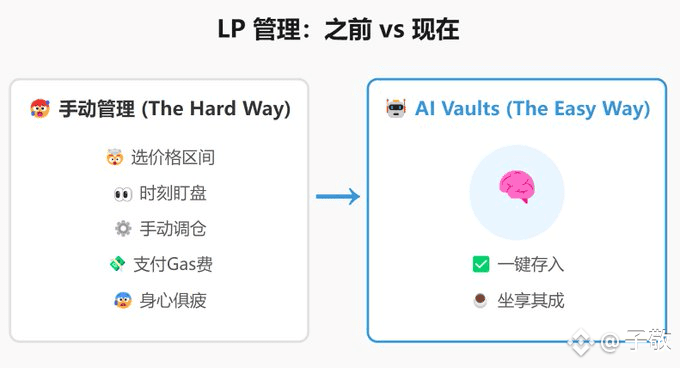
Previous pain points of LP mining:
▫️Difficult range selection: too wide dilutes returns, too narrow easily runs out of range
▫️Frequent manual rebalancing required: time-consuming, mentally exhausting, and incurs gas fees
The launch of AI Vaults directly addresses these pain points:
▫️AI will automatically select the optimal price range
▫️24-hour real-time dynamic rebalancing, no manual intervention needed
▫️Intelligently balances returns and risks
Simply deposit with one click, and you can earn returns and Momentum Bricks effortlessly, which can be easily understood as a fully automated tool for LP
Momentum Vaults is not just a feature update but a starting point for unlocking DeFi composability
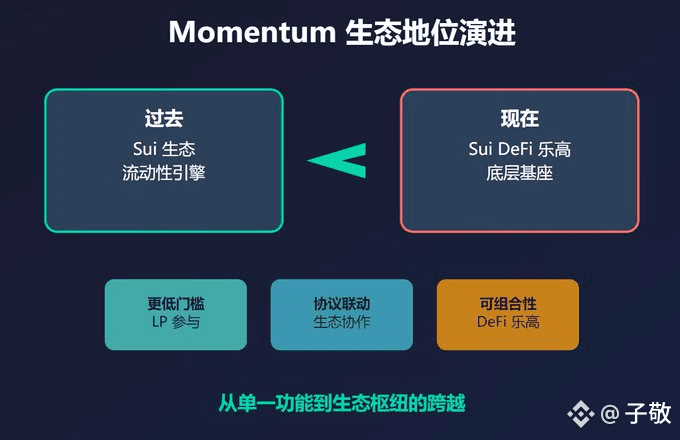
🔶 Previously, Momentum was a powerful "Sui ecosystem liquidity engine", but with Vaults, it is evolving into an indispensable "underlying LEGO" in the Sui DeFi world
▫️Functionally: it has lowered the LP threshold to the floor, allowing ordinary users to engage in liquidity mining
▫️Ecosystem-wise: it can seamlessly combine with other protocols on Sui (like lending, derivatives) to form synergies, creating true DeFi LEGO blocks and building more complex DeFi applications
Momentum's ambition is to become the foundational liquidity base that all Sui DeFi projects can rely on, and this new module is its most important step forward
⚠️Event countdown
▫️Momentum × OKX Wallet event is still hot
https://web3.okx.com/en/earn/activity/momentum-sui
https://web3.okx.com/en/cryptopedia/event/momentum
▫️Momentum × Galxe airdrop is ongoing
https://x.com/MMTFinance/status/1950979803512967529
In today's world where DeFi complexity is constantly increasing, the combination of AI + DeFi is an inevitable trend
Momentum is no longer satisfied with just being a DEX; its DeFi LEGO narrative has begun, and it is worth paying attention to
#Aİ #DeFi #Momentum
▫️TVL surpasses $180M
▫️Total trading volume exceeds $8B
▫️User count exceeds 1.7 million
This growth curve is very impressive 😎 It has already become a top presence in the Sui ecosystem
Behind the data, Momentum is starting to show its muscle
🔶New feature Momentum X Nodo AI Vaults launched — a tool that lowers the LP threshold
Previous pain points of LP mining:
▫️Difficult range selection: too wide dilutes returns, too narrow easily runs out of range
▫️Frequent manual rebalancing required: time-consuming, mentally exhausting, and incurs gas fees
The launch of AI Vaults directly addresses these pain points:
▫️AI will automatically select the optimal price range
▫️24-hour real-time dynamic rebalancing, no manual intervention needed
▫️Intelligently balances returns and risks
Simply deposit with one click, and you can earn returns and Momentum Bricks effortlessly, which can be easily understood as a fully automated tool for LP
Momentum Vaults is not just a feature update but a starting point for unlocking DeFi composability
🔶 Previously, Momentum was a powerful "Sui ecosystem liquidity engine", but with Vaults, it is evolving into an indispensable "underlying LEGO" in the Sui DeFi world
▫️Functionally: it has lowered the LP threshold to the floor, allowing ordinary users to engage in liquidity mining
▫️Ecosystem-wise: it can seamlessly combine with other protocols on Sui (like lending, derivatives) to form synergies, creating true DeFi LEGO blocks and building more complex DeFi applications
Momentum's ambition is to become the foundational liquidity base that all Sui DeFi projects can rely on, and this new module is its most important step forward
⚠️Event countdown
▫️Momentum × OKX Wallet event is still hot
https://web3.okx.com/en/earn/activity/momentum-sui
https://web3.okx.com/en/cryptopedia/event/momentum
▫️Momentum × Galxe airdrop is ongoing
https://x.com/MMTFinance/status/1950979803512967529
In today's world where DeFi complexity is constantly increasing, the combination of AI + DeFi is an inevitable trend
Momentum is no longer satisfied with just being a DEX; its DeFi LEGO narrative has begun, and it is worth paying attention to
#Aİ #DeFi #Momentum
Here it comes, the Sui ecosystem engine Momentum has been quite powerful lately, with data skyrocketing:
▫️TVL surpasses $180M
▫️Total trading volume exceeds $8B
▫️User count exceeds 1.7 million
This growth curve is very impressive 😎 It has already become a top presence in the Sui ecosystem
Behind the data, Momentum is starting to show its muscle
🔶New feature Momentum X Nodo AI Vaults launched — a tool that lowers the LP threshold
Previous pain points of LP mining:
▫️Difficult range selection: too wide dilutes returns, too narrow easily runs out of range
▫️Frequent manual rebalancing required: time-consuming, mentally exhausting, and incurs gas fees
The launch of AI Vaults directly addresses these pain points:
▫️AI will automatically select the optimal price range
▫️24-hour real-time dynamic rebalancing, no manual intervention needed
▫️Intelligently balances returns and risks
Simply deposit with one click, and you can earn returns and Momentum Bricks effortlessly, which can be easily understood as a fully automated tool for LP
Momentum Vaults is not just a feature update but a starting point for unlocking DeFi composability
🔶 Previously, Momentum was a powerful "Sui ecosystem liquidity engine", but with Vaults, it is evolving into an indispensable "underlying LEGO" in the Sui DeFi world
▫️Functionally: it has lowered the LP threshold to the floor, allowing ordinary users to engage in liquidity mining
▫️Ecosystem-wise: it can seamlessly combine with other protocols on Sui (like lending, derivatives) to form synergies, creating true DeFi LEGO blocks and building more complex DeFi applications
Momentum's ambition is to become the foundational liquidity base that all Sui DeFi projects can rely on, and this new module is its most important step forward
⚠️Event countdown
▫️Momentum × OKX Wallet event is still hot
https://web3.okx.com/en/earn/activity/momentum-sui
https://web3.okx.com/en/cryptopedia/event/momentum
▫️Momentum × Galxe airdrop is ongoing
https://x.com/MMTFinance/status/1950979803512967529
In today's world where DeFi complexity is constantly increasing, the combination of AI + DeFi is an inevitable trend
Momentum is no longer satisfied with just being a DEX; its DeFi LEGO narrative has begun, and it is worth paying attention to
#Aİ #DeFi #Momentum
▫️TVL surpasses $180M
▫️Total trading volume exceeds $8B
▫️User count exceeds 1.7 million
This growth curve is very impressive 😎 It has already become a top presence in the Sui ecosystem
Behind the data, Momentum is starting to show its muscle
🔶New feature Momentum X Nodo AI Vaults launched — a tool that lowers the LP threshold
Previous pain points of LP mining:
▫️Difficult range selection: too wide dilutes returns, too narrow easily runs out of range
▫️Frequent manual rebalancing required: time-consuming, mentally exhausting, and incurs gas fees
The launch of AI Vaults directly addresses these pain points:
▫️AI will automatically select the optimal price range
▫️24-hour real-time dynamic rebalancing, no manual intervention needed
▫️Intelligently balances returns and risks
Simply deposit with one click, and you can earn returns and Momentum Bricks effortlessly, which can be easily understood as a fully automated tool for LP
Momentum Vaults is not just a feature update but a starting point for unlocking DeFi composability
🔶 Previously, Momentum was a powerful "Sui ecosystem liquidity engine", but with Vaults, it is evolving into an indispensable "underlying LEGO" in the Sui DeFi world
▫️Functionally: it has lowered the LP threshold to the floor, allowing ordinary users to engage in liquidity mining
▫️Ecosystem-wise: it can seamlessly combine with other protocols on Sui (like lending, derivatives) to form synergies, creating true DeFi LEGO blocks and building more complex DeFi applications
Momentum's ambition is to become the foundational liquidity base that all Sui DeFi projects can rely on, and this new module is its most important step forward
⚠️Event countdown
▫️Momentum × OKX Wallet event is still hot
https://web3.okx.com/en/earn/activity/momentum-sui
https://web3.okx.com/en/cryptopedia/event/momentum
▫️Momentum × Galxe airdrop is ongoing
https://x.com/MMTFinance/status/1950979803512967529
In today's world where DeFi complexity is constantly increasing, the combination of AI + DeFi is an inevitable trend
Momentum is no longer satisfied with just being a DEX; its DeFi LEGO narrative has begun, and it is worth paying attention to
#Aİ #DeFi #Momentum
子敬
·
--
Momentum: The liquidity heart of the Sui ecosystem, not just about trading
If you have been following the Sui ecosystem recently, the name Momentum must be familiar, as it has almost taken the spotlight, becoming one of the most discussed projects in the entire Sui ecosystem
Let's take a look at Momentum's impressive report card:
These numbers reflect the smart money's optimism about the potential of the Momentum mechanism, after all, attracting this much capital and users is definitely not a coincidence
◻️Momentum's list of investors includes an all-star lineup from Crypto
▫️Official support: Sui Foundation and Mysten Labs double endorsement
▫️Top US Investors: Coinbase Ventures, Circle Ventures, Jump
Let's take a look at Momentum's impressive report card:
These numbers reflect the smart money's optimism about the potential of the Momentum mechanism, after all, attracting this much capital and users is definitely not a coincidence
◻️Momentum's list of investors includes an all-star lineup from Crypto
▫️Official support: Sui Foundation and Mysten Labs double endorsement
▫️Top US Investors: Coinbase Ventures, Circle Ventures, Jump


Log in to explore more content