
t-me ZabegCOINS
11 Posts

t-me ZabegCOINS
Report
Block User
I will post full reports with videos, photos, and attached files on my t/channels ZabegCOINSeng and ZabegCOINS. You can find everything there to read.
2 Following
26 Followers
18 Liked
Posts
All
Quotes
PINNED
POST 010
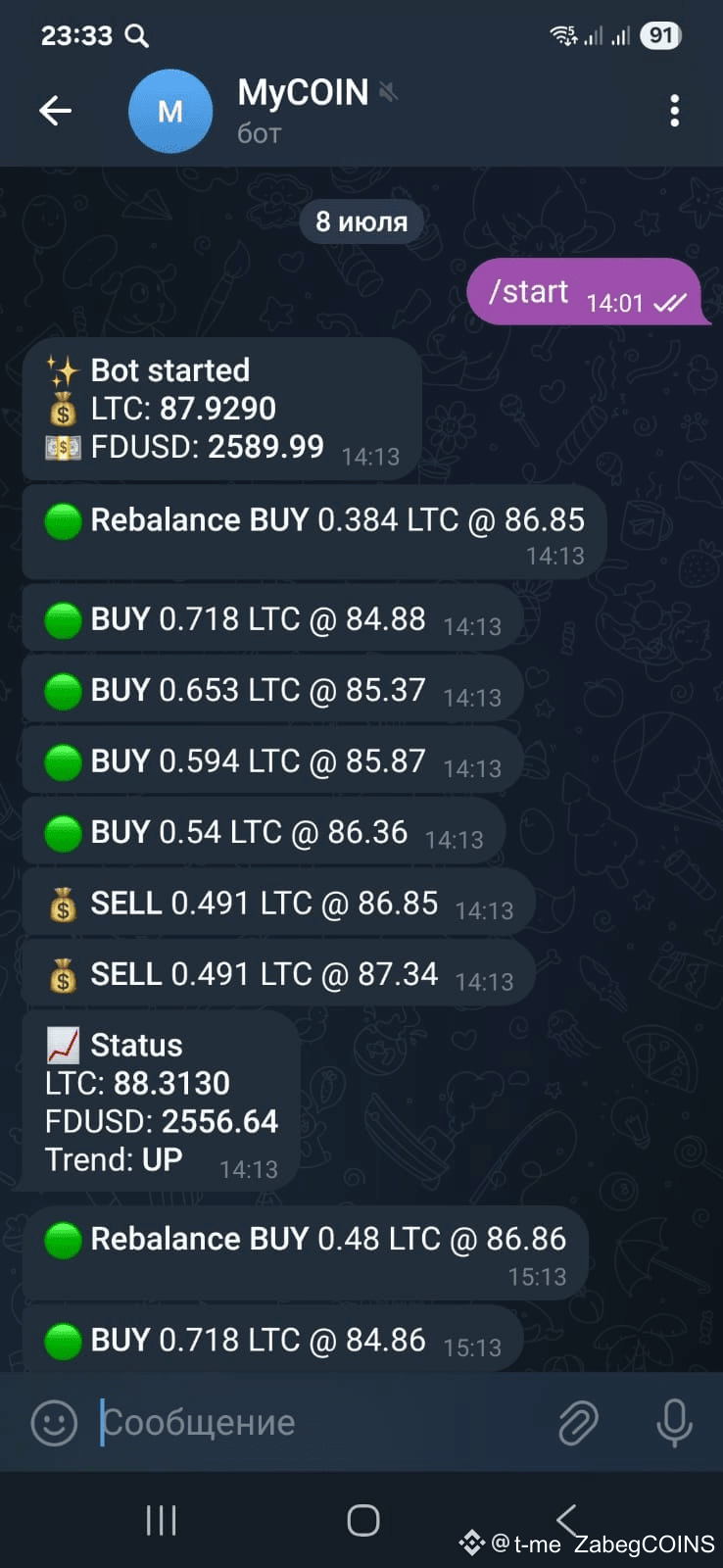
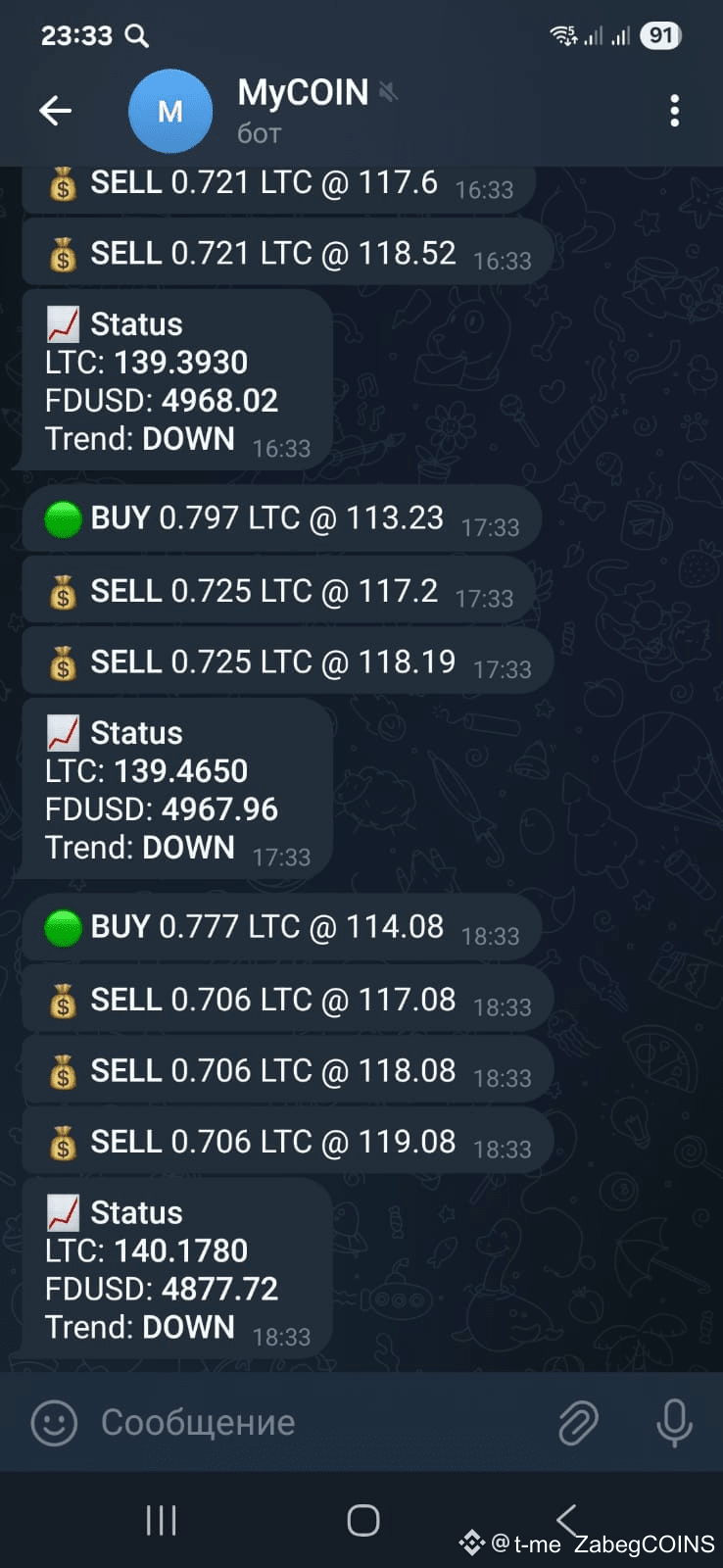
It’s been two and a half months, and I want to share and brag a bit about the results. On June 8, 2025, I launched my bot. At that time, my deposit was LTC 87.92 and FDUSD 2,589. Here’s the current result: LTC 139.39 and FDUSD 4,967.
As I mentioned earlier, it’s only spot trading and only the LTC/FDUSD pair. There were a couple of issues in the bot that I’ll have to fix. It didn’t have a minimum LTC sell level set, and on October 10, during a strong dip, it could have rebuilt the grid and started selling coins — which wouldn’t have been good.
The deposit has almost doubled, which is definitely pleasing. Wishing everyone success and positivity! If you’re interested, check out my first posts — I described all my steps there.
POST 010
It’s been two and a half months, and I want to share and brag a bit about the results. On June 8, 2025, I launched my bot. At that time, my deposit was LTC 87.92 and FDUSD 2,589. Here’s the current result: LTC 139.39 and FDUSD 4,967.
As I mentioned earlier, it’s only spot trading and only the LTC/FDUSD pair. There were a couple of issues in the bot that I’ll have to fix. It didn’t have a minimum LTC sell level set, and on October 10, during a strong dip, it could have rebuilt the grid and started selling coins — which wouldn’t have been good.
The deposit has almost doubled, which is definitely pleasing. Wishing everyone success and positivity! If you’re interested, check out my first posts — I described all my steps there.
It’s been two and a half months, and I want to share and brag a bit about the results. On June 8, 2025, I launched my bot. At that time, my deposit was LTC 87.92 and FDUSD 2,589. Here’s the current result: LTC 139.39 and FDUSD 4,967.
As I mentioned earlier, it’s only spot trading and only the LTC/FDUSD pair. There were a couple of issues in the bot that I’ll have to fix. It didn’t have a minimum LTC sell level set, and on October 10, during a strong dip, it could have rebuilt the grid and started selling coins — which wouldn’t have been good.
The deposit has almost doubled, which is definitely pleasing. Wishing everyone success and positivity! If you’re interested, check out my first posts — I described all my steps there.
1
1
3
171
Verdict - don't go into the futures market, only spot? the chart is just extremely opaque ...
Verdict - don't go into the futures market, only spot? the chart is just extremely opaque ...

RG-trade
·
--
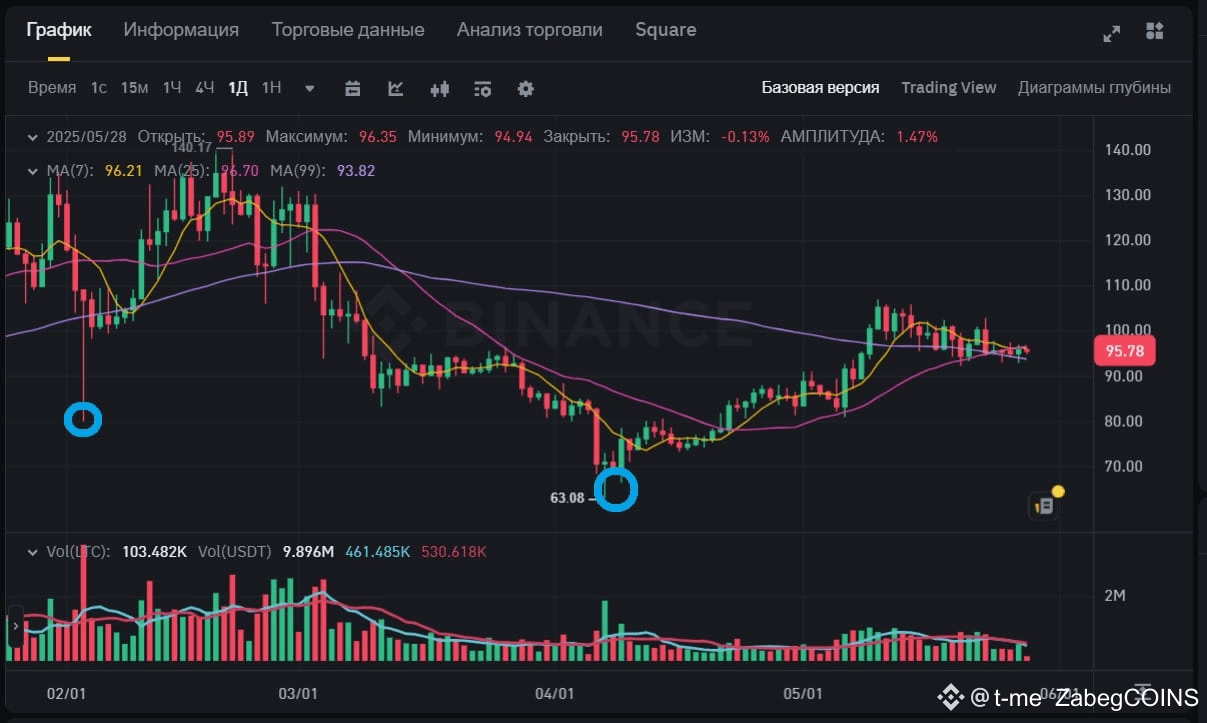
This is the LTC chart on perpetual futures and it doesn't show the truth, the exchange just draws it. You need to check the real chart on spot. And on spot, everything is just fine.
79
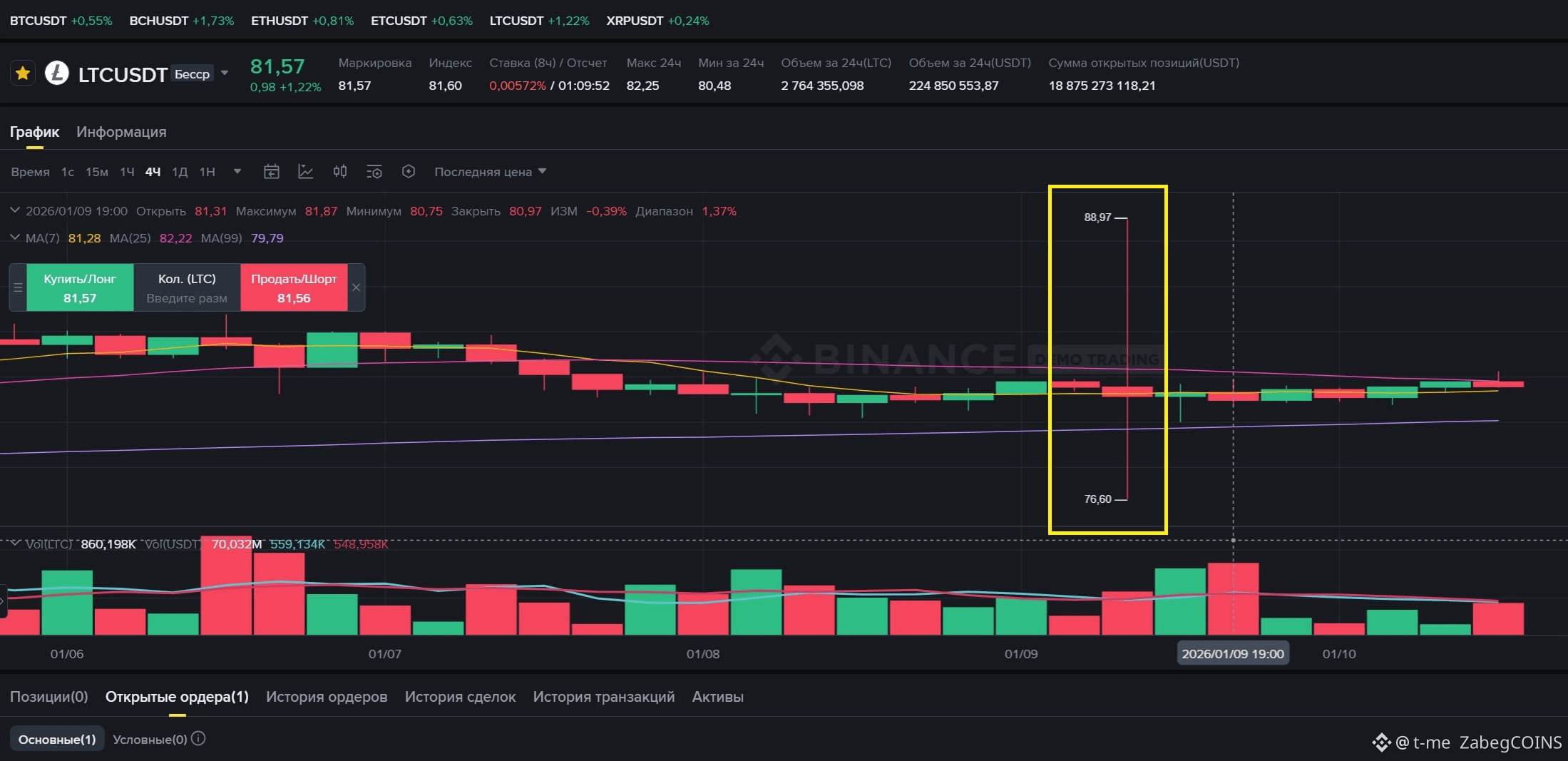
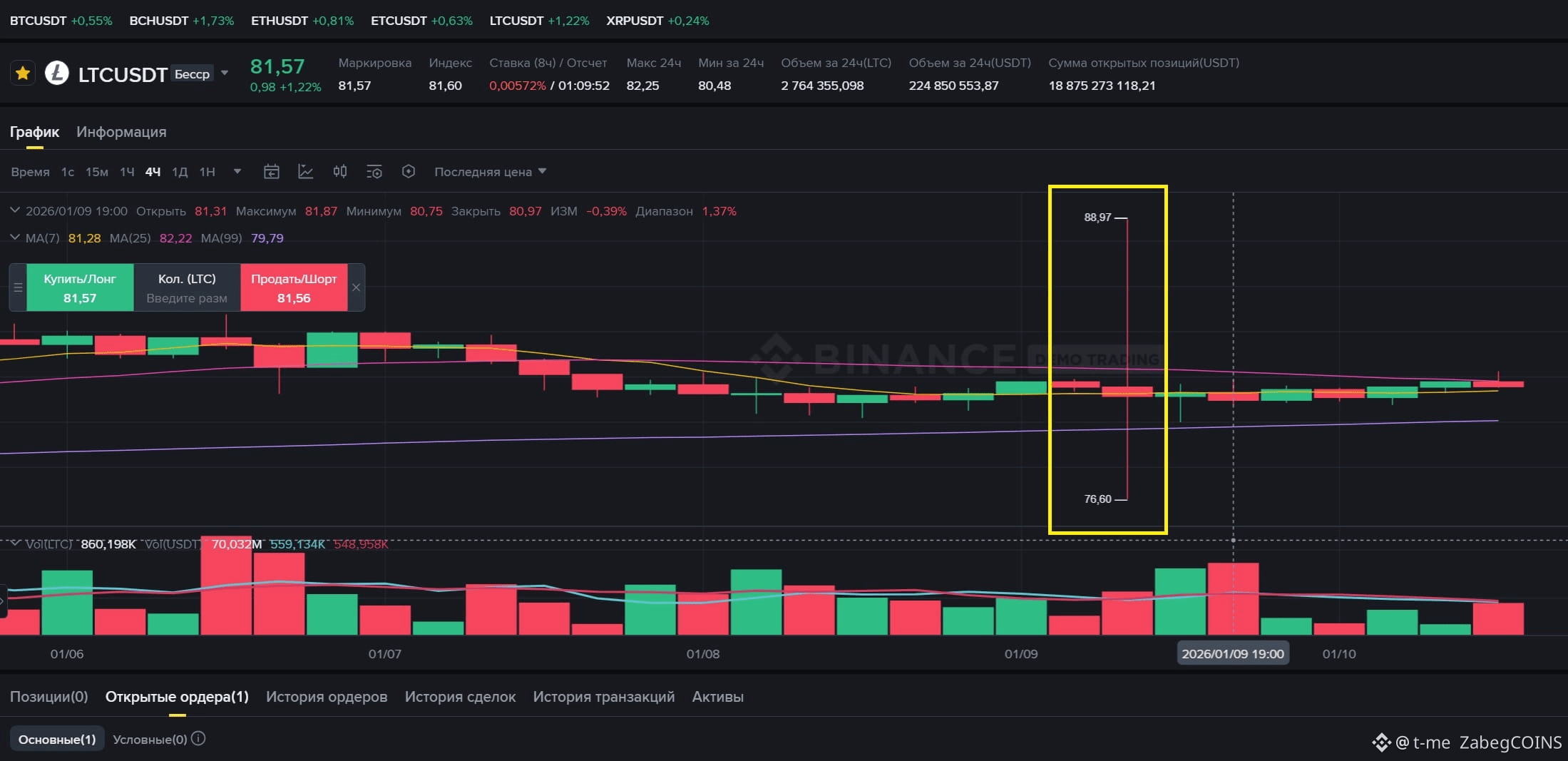
Need the opinion of more experienced people, here's such a chart. Opening and closing within normal range, but the maximum and minimum are definitely not. Such a wick could knock down both longs and shorts. Moreover, if you look at the chart for 1 second, the wick doesn't change. That is, all the change happened within 1 second, which is highly unlikely. There was no such price change on other exchanges. There are verification mechanisms to ensure the chart is accurate or whether someone drew it as they wanted.
Need the opinion of more experienced people, here's such a chart. Opening and closing within normal range, but the maximum and minimum are definitely not. Such a wick could knock down both longs and shorts. Moreover, if you look at the chart for 1 second, the wick doesn't change. That is, all the change happened within 1 second, which is highly unlikely. There was no such price change on other exchanges. There are verification mechanisms to ensure the chart is accurate or whether someone drew it as they wanted.
6
1
1.1k
Started learning futures trading, questions more than answers. Especially interesting situation in the picture. It looks like it was drawn... and with detail down to 1 second, the chart looks even worse. Some kind of scam...
Started learning futures trading, questions more than answers. Especially interesting situation in the picture. It looks like it was drawn... and with detail down to 1 second, the chart looks even worse. Some kind of scam...
t-me ZabegCOINS
·
--
POST 010
It’s been two and a half months, and I want to share and brag a bit about the results. On June 8, 2025, I launched my bot. At that time, my deposit was LTC 87.92 and FDUSD 2,589. Here’s the current result: LTC 139.39 and FDUSD 4,967.
As I mentioned earlier, it’s only spot trading and only the LTC/FDUSD pair. There were a couple of issues in the bot that I’ll have to fix. It didn’t have a minimum LTC sell level set, and on October 10, during a strong dip, it could have rebuilt the grid and started selling coins — which wouldn’t have been good.
The deposit has almost doubled, which is definitely pleasing. Wishing everyone success and positivity! If you’re interested, check out my first posts — I described all my steps there.
It’s been two and a half months, and I want to share and brag a bit about the results. On June 8, 2025, I launched my bot. At that time, my deposit was LTC 87.92 and FDUSD 2,589. Here’s the current result: LTC 139.39 and FDUSD 4,967.
As I mentioned earlier, it’s only spot trading and only the LTC/FDUSD pair. There were a couple of issues in the bot that I’ll have to fix. It didn’t have a minimum LTC sell level set, and on October 10, during a strong dip, it could have rebuilt the grid and started selling coins — which wouldn’t have been good.
The deposit has almost doubled, which is definitely pleasing. Wishing everyone success and positivity! If you’re interested, check out my first posts — I described all my steps there.
2
1
332
WEEK03 \ POST08
Everything hidden eventually comes to light!
I kept noticing a strange pattern on SPOT — the LTC/USDT pair would trade steadily in the $90–$95 range, but every 3–4 weeks, the price would suddenly dip to $70–$75 — and it never lasted more than 15 minutes. If you were quick, you could buy in at a bargain. My entire SPOT strategy was built around these sharp drops.
Only when I started digging into margin trading did everything finally make sense. One more market mystery solved!
WEEK03 \ POST08
Everything hidden eventually comes to light!
I kept noticing a strange pattern on SPOT — the LTC/USDT pair would trade steadily in the $90–$95 range, but every 3–4 weeks, the price would suddenly dip to $70–$75 — and it never lasted more than 15 minutes. If you were quick, you could buy in at a bargain. My entire SPOT strategy was built around these sharp drops.
Only when I started digging into margin trading did everything finally make sense. One more market mystery solved!
Everything hidden eventually comes to light!
I kept noticing a strange pattern on SPOT — the LTC/USDT pair would trade steadily in the $90–$95 range, but every 3–4 weeks, the price would suddenly dip to $70–$75 — and it never lasted more than 15 minutes. If you were quick, you could buy in at a bargain. My entire SPOT strategy was built around these sharp drops.
Only when I started digging into margin trading did everything finally make sense. One more market mystery solved!
241
WEEK 003 \ POST 007
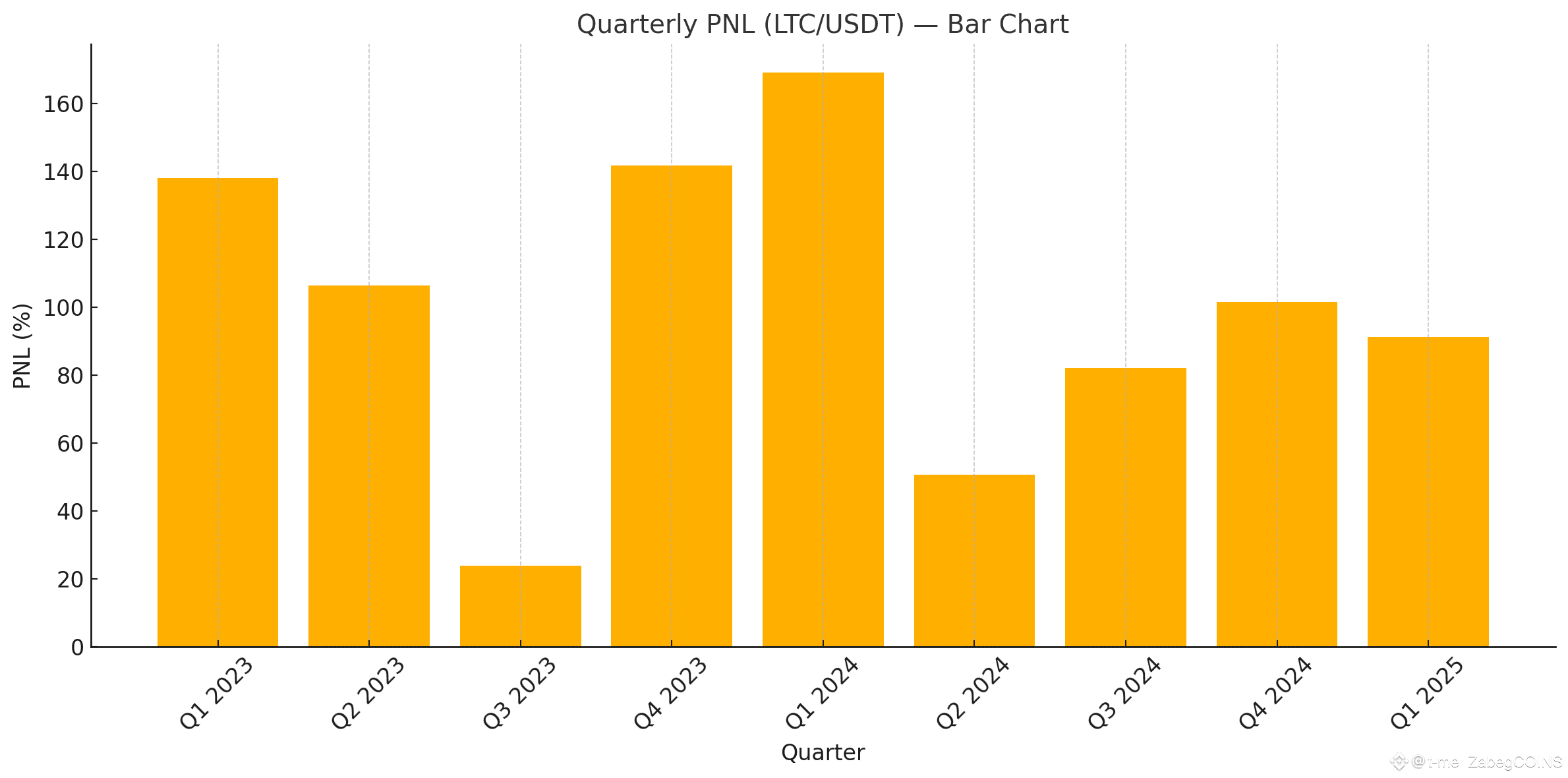
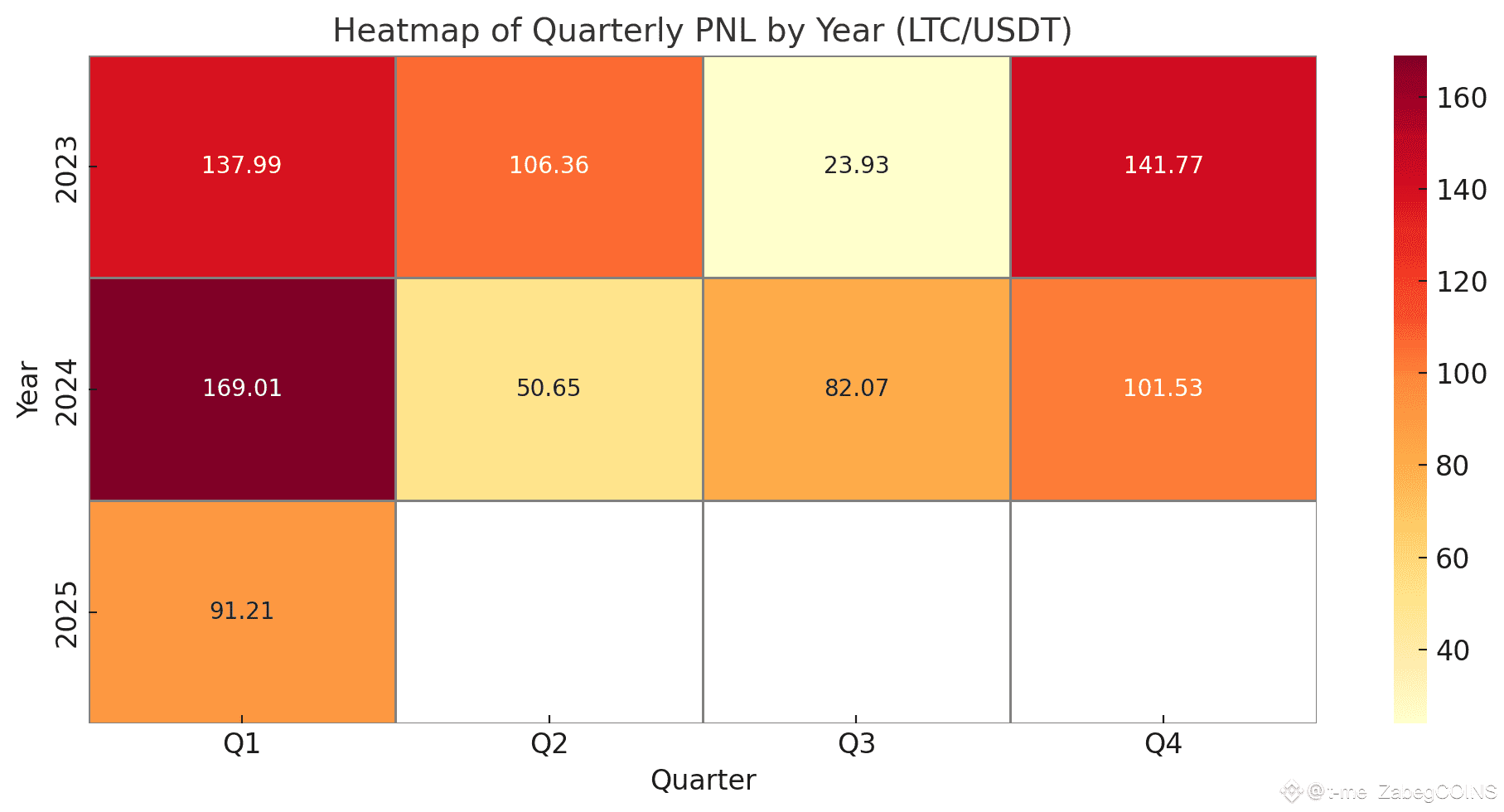
It's the third week of setting up the grid bot for the LTC/USDT pair. I've achieved excellent results and am now moving to live trading on the testnet. I plan to spend a month fine-tuning the process. So far, the results have exceeded my expectations.
WEEK 003 \ POST 007
It's the third week of setting up the grid bot for the LTC/USDT pair. I've achieved excellent results and am now moving to live trading on the testnet. I plan to spend a month fine-tuning the process. So far, the results have exceeded my expectations.
It's the third week of setting up the grid bot for the LTC/USDT pair. I've achieved excellent results and am now moving to live trading on the testnet. I plan to spend a month fine-tuning the process. So far, the results have exceeded my expectations.
356
WEEK 002 \ POST 005
📈
The “100 Posts” project has already started generating profit — even though I haven’t started trading yet.
So far:
— 11 people have reached out for help with building trading bots
— I’ve agreed to work with two of them
🔥
My plan:
— Continue testing my bots
— Share performance stats
— Post feedback from the development process
— And meanwhile, increase my own trading balance
👉
Turns out this niche is genuinely interesting and attracting attention.
💡
Next idea:
Set up personal indicators and send signals to Telegram.
For example:
📊
Pair: LTC/USDT
— Monitor buy/sell volumes within ±10% of the current price
— Let’s say the total volume is 100x
— Check every 30 seconds
— As soon as the volume changes by 10% (up to 110x), analyze who entered — buyers or sellers
— Goal: track large players and respond in real time
🛠
It’s a couple of days of work, and the results — maybe something, maybe not.
In any case — let’s test it.
WEEK 002 \ POST 005
📈
The “100 Posts” project has already started generating profit — even though I haven’t started trading yet.
So far:
— 11 people have reached out for help with building trading bots
— I’ve agreed to work with two of them
🔥
My plan:
— Continue testing my bots
— Share performance stats
— Post feedback from the development process
— And meanwhile, increase my own trading balance
👉
Turns out this niche is genuinely interesting and attracting attention.
💡
Next idea:
Set up personal indicators and send signals to Telegram.
For example:
📊
Pair: LTC/USDT
— Monitor buy/sell volumes within ±10% of the current price
— Let’s say the total volume is 100x
— Check every 30 seconds
— As soon as the volume changes by 10% (up to 110x), analyze who entered — buyers or sellers
— Goal: track large players and respond in real time
🛠
It’s a couple of days of work, and the results — maybe something, maybe not.
In any case — let’s test it.
📈
The “100 Posts” project has already started generating profit — even though I haven’t started trading yet.
So far:
— 11 people have reached out for help with building trading bots
— I’ve agreed to work with two of them
🔥
My plan:
— Continue testing my bots
— Share performance stats
— Post feedback from the development process
— And meanwhile, increase my own trading balance
👉
Turns out this niche is genuinely interesting and attracting attention.
💡
Next idea:
Set up personal indicators and send signals to Telegram.
For example:
📊
Pair: LTC/USDT
— Monitor buy/sell volumes within ±10% of the current price
— Let’s say the total volume is 100x
— Check every 30 seconds
— As soon as the volume changes by 10% (up to 110x), analyze who entered — buyers or sellers
— Goal: track large players and respond in real time
🛠
It’s a couple of days of work, and the results — maybe something, maybe not.
In any case — let’s test it.

170

Article
WEEK 002 \ POST 004In the previous article (WEEK 002 \ POST 003), our Grid strategy performed well across all pairs — except ETH/BTC.
We’ll leave the bot logic unchanged and try tuning the parameters specifically for this pair.
⚙️
Initial Strategy Parameters:
GRID_LEVELS = 10
ATR_PERIOD = 14
ATR_MULTIPLIER = 1.2
DCA_MULTIPLIER = 1.1
RISK_PER_TRADE = 0.8
REBUILD_THRESHOLD = 2.0
BINANCE_COMMISSION = 0.001
MIN_PROFIT_PCT = 0.005
📊
Baseline result:
ETH/BTC
Initial balance: 0.100000 BTC
Final balance: 4.0006 ETH + 0.000019 BTC
Final value: 0.076232 BTC (–23.77%)
Total trades: 146
Parameter Optimization
🟡
Adjusting GRID_LEVELS — number of grid orders
GRID_LEVELS = 8
0.082228 BTC (–17.77%), 125 trades
Fewer trades, lower loss.
GRID_LEVELS = 6
0.080138 BTC (–19.86%), 69 trades
Too few trades — worse outcome.
GRID_LEVELS = 14
0.076822 BTC (–23.18%), 195 trades
Close to baseline — not effective.
GRID_LEVELS = 12
0.078956 BTC (–21.04%), 173 trades
📉
Changing ATR_PERIOD — volatility measurement
ATR_PERIOD = 10
0.080689 BTC (–19.31%), 147 trades
ATR_PERIOD = 12
0.077845 BTC (–22.16%), 149 trades
ATR_PERIOD = 18
0.077989 BTC (–22.01%), 151 trades
📏
Adjusting ATR_MULTIPLIER — distance between orders
ATR_MULTIPLIER = 1.0
0.077617 BTC (–22.38%), 154 trades
ATR_MULTIPLIER = 1.1
0.078021 BTC (–21.98%), 151 trades
ATR_MULTIPLIER = 1.4
0.077405 BTC (–22.59%), 144 trades
ATR_MULTIPLIER = 1.5
0.081082 BTC (–18.92%), 164 trades
✅
Slight improvement.
📉
Tuning DCA_MULTIPLIER = 1.05 — softer averaging down
0.079841 BTC (–20.16%), 146 trades
Changing RISK_PER_TRADE = 0.5 — lower capital allocation per grid
0.076428 BTC (–23.57%), 189 trades
No improvement.
🔁
Adjusting REBUILD_THRESHOLD = 1.5 — rebuild grid more frequently
0.076428 BTC (–23.57%), 189 trades
No impact.
Lowering MIN_PROFIT_PCT = 0.003 — minimum profit per trade
0.078071 BTC (–21.93%), 207 trades
More trades, slightly better result.
🧪
Final Config (best parameter set):
GRID_LEVELS = 8
ATR_PERIOD = 12
ATR_MULTIPLIER = 1.1
DCA_MULTIPLIER = 1.05
RISK_PER_TRADE = 0.6
REBUILD_THRESHOLD = 1.8
MIN_PROFIT_PCT = 0.003
Final Result:
Initial balance: 0.100000 BTC
Final balance: 3.9690 ETH + 0.000380 BTC
Final value: 0.075989 BTC (–24.01%)
Total trades: 177
❌
Conclusion:
Despite all optimizations, ETH/BTC remains unprofitable.
🤯
Let’s forget about it like a bad dream — and move on!
WEEK 002 \ POST 004
In the previous article (WEEK 002 \ POST 003), our Grid strategy performed well across all pairs — except ETH/BTC.
We’ll leave the bot logic unchanged and try tuning the parameters specifically for this pair.
⚙️
Initial Strategy Parameters:
GRID_LEVELS = 10
ATR_PERIOD = 14
ATR_MULTIPLIER = 1.2
DCA_MULTIPLIER = 1.1
RISK_PER_TRADE = 0.8
REBUILD_THRESHOLD = 2.0
BINANCE_COMMISSION = 0.001
MIN_PROFIT_PCT = 0.005
📊
Baseline result:
ETH/BTC
Initial balance: 0.100000 BTC
Final balance: 4.0006 ETH + 0.000019 BTC
Final value: 0.076232 BTC (–23.77%)
Total trades: 146
Parameter Optimization
🟡
Adjusting GRID_LEVELS — number of grid orders
GRID_LEVELS = 8
0.082228 BTC (–17.77%), 125 trades
Fewer trades, lower loss.
GRID_LEVELS = 6
0.080138 BTC (–19.86%), 69 trades
Too few trades — worse outcome.
GRID_LEVELS = 14
0.076822 BTC (–23.18%), 195 trades
Close to baseline — not effective.
GRID_LEVELS = 12
0.078956 BTC (–21.04%), 173 trades
📉
Changing ATR_PERIOD — volatility measurement
ATR_PERIOD = 10
0.080689 BTC (–19.31%), 147 trades
ATR_PERIOD = 12
0.077845 BTC (–22.16%), 149 trades
ATR_PERIOD = 18
0.077989 BTC (–22.01%), 151 trades
📏
Adjusting ATR_MULTIPLIER — distance between orders
ATR_MULTIPLIER = 1.0
0.077617 BTC (–22.38%), 154 trades
ATR_MULTIPLIER = 1.1
0.078021 BTC (–21.98%), 151 trades
ATR_MULTIPLIER = 1.4
0.077405 BTC (–22.59%), 144 trades
ATR_MULTIPLIER = 1.5
0.081082 BTC (–18.92%), 164 trades
✅
Slight improvement.
📉
Tuning DCA_MULTIPLIER = 1.05 — softer averaging down
0.079841 BTC (–20.16%), 146 trades
Changing RISK_PER_TRADE = 0.5 — lower capital allocation per grid
0.076428 BTC (–23.57%), 189 trades
No improvement.
🔁
Adjusting REBUILD_THRESHOLD = 1.5 — rebuild grid more frequently
0.076428 BTC (–23.57%), 189 trades
No impact.
Lowering MIN_PROFIT_PCT = 0.003 — minimum profit per trade
0.078071 BTC (–21.93%), 207 trades
More trades, slightly better result.
🧪
Final Config (best parameter set):
GRID_LEVELS = 8
ATR_PERIOD = 12
ATR_MULTIPLIER = 1.1
DCA_MULTIPLIER = 1.05
RISK_PER_TRADE = 0.6
REBUILD_THRESHOLD = 1.8
MIN_PROFIT_PCT = 0.003
Final Result:
Initial balance: 0.100000 BTC
Final balance: 3.9690 ETH + 0.000380 BTC
Final value: 0.075989 BTC (–24.01%)
Total trades: 177
❌
Conclusion:
Despite all optimizations, ETH/BTC remains unprofitable.
🤯
Let’s forget about it like a bad dream — and move on!
We’ll leave the bot logic unchanged and try tuning the parameters specifically for this pair.
⚙️
Initial Strategy Parameters:
GRID_LEVELS = 10
ATR_PERIOD = 14
ATR_MULTIPLIER = 1.2
DCA_MULTIPLIER = 1.1
RISK_PER_TRADE = 0.8
REBUILD_THRESHOLD = 2.0
BINANCE_COMMISSION = 0.001
MIN_PROFIT_PCT = 0.005
📊
Baseline result:
ETH/BTC
Initial balance: 0.100000 BTC
Final balance: 4.0006 ETH + 0.000019 BTC
Final value: 0.076232 BTC (–23.77%)
Total trades: 146
Parameter Optimization
🟡
Adjusting GRID_LEVELS — number of grid orders
GRID_LEVELS = 8
0.082228 BTC (–17.77%), 125 trades
Fewer trades, lower loss.
GRID_LEVELS = 6
0.080138 BTC (–19.86%), 69 trades
Too few trades — worse outcome.
GRID_LEVELS = 14
0.076822 BTC (–23.18%), 195 trades
Close to baseline — not effective.
GRID_LEVELS = 12
0.078956 BTC (–21.04%), 173 trades
📉
Changing ATR_PERIOD — volatility measurement
ATR_PERIOD = 10
0.080689 BTC (–19.31%), 147 trades
ATR_PERIOD = 12
0.077845 BTC (–22.16%), 149 trades
ATR_PERIOD = 18
0.077989 BTC (–22.01%), 151 trades
📏
Adjusting ATR_MULTIPLIER — distance between orders
ATR_MULTIPLIER = 1.0
0.077617 BTC (–22.38%), 154 trades
ATR_MULTIPLIER = 1.1
0.078021 BTC (–21.98%), 151 trades
ATR_MULTIPLIER = 1.4
0.077405 BTC (–22.59%), 144 trades
ATR_MULTIPLIER = 1.5
0.081082 BTC (–18.92%), 164 trades
✅
Slight improvement.
📉
Tuning DCA_MULTIPLIER = 1.05 — softer averaging down
0.079841 BTC (–20.16%), 146 trades
Changing RISK_PER_TRADE = 0.5 — lower capital allocation per grid
0.076428 BTC (–23.57%), 189 trades
No improvement.
🔁
Adjusting REBUILD_THRESHOLD = 1.5 — rebuild grid more frequently
0.076428 BTC (–23.57%), 189 trades
No impact.
Lowering MIN_PROFIT_PCT = 0.003 — minimum profit per trade
0.078071 BTC (–21.93%), 207 trades
More trades, slightly better result.
🧪
Final Config (best parameter set):
GRID_LEVELS = 8
ATR_PERIOD = 12
ATR_MULTIPLIER = 1.1
DCA_MULTIPLIER = 1.05
RISK_PER_TRADE = 0.6
REBUILD_THRESHOLD = 1.8
MIN_PROFIT_PCT = 0.003
Final Result:
Initial balance: 0.100000 BTC
Final balance: 3.9690 ETH + 0.000380 BTC
Final value: 0.075989 BTC (–24.01%)
Total trades: 177
❌
Conclusion:
Despite all optimizations, ETH/BTC remains unprofitable.
🤯
Let’s forget about it like a bad dream — and move on!
282

Article
WEEK 002 \ POST 003Last time, I wrote the simplest Grid bot with a fixed interval and successfully launched it on the testnet.
Now the goal is to improve our bot a bit:
🔧 What we’ll add:
historical data analysis
grid restructuring to cover a longer period
final trade report
support for multiple trading pairs
💭 My thoughts:
I used to trade LTC/USDT — it's a familiar price, easy to evaluate growth or decline.
BUT! After analyzing trades through LTC/BTC, I realized I had chosen the wrong strategy.
🧠 Why?
Because 1 USDT is still worth 1 USDT even after 10 years,
while the LTC/BTC rate grows over time.
The same operations would have brought me 2–3x more profit.
As the saying goes: live and learn.
📌 The most interesting pairs for me:
LTC/USDT
LTC/BTC
LTC/ETH
LTC/BNB
ETH/BTC
📈 Strategy:
The bot initially splits the balance into 5 equal parts (20% each).
In the first stage, it only trades with its own portion of the balance.
Later on, we’ll try using the combined balance, adjusting the pair set.
The full code is in my journal (link in profile bio).
If you have any great analysis or strategy ideas — drop me a message!
I’ll try to include them in a post (I still have 97 more to write 😅)
📊 Analysis methods used:
📉 Indicators:
ATR (Average True Range) — market volatility
EMA (Exponential Moving Average) — trend direction
Sharpe Ratio — risk-adjusted returns
📏 Trend filters:
EMA-50 — medium-term trend
EMA-200 — long-term trend
📁 Historical data:
https://data.binance.vision/?prefix=data/spot/monthly/klines
Period: May 1, 2024 – May 1, 2025, timeframe 1 hour
🧪 The result: a grid trading simulator with trend filtering and risk analysis.
❗ Binance trading fees are included.
❌ Slippage is not accounted for; all executions are assumed perfect.
Test file: WEEK001_POST003.py (don’t forget to set your parameters)
📊 Trading results:
1️⃣ LTC/USDT
Initial balance: 10,000.00 USDT
Final: 234.1293 LTC + 936.1295 USDT
💰 Value: 21,738.51 USDT (+117.39%)
📈 Trades: 529
2️⃣ LTC/BTC
Initial balance: 0.150000 BTC
Final: 234.4406 LTC + 0.018469 BTC
💰 Value: 0.234388 BTC (+56.26%)
📈 Trades: 213
3️⃣ LTC/ETH
Initial balance: 10.000000 ETH
Final: 681.2177 LTC + 0.164313 ETH
💰 Value: 33.073942 ETH (+230.74%)
📈 Trades: 635
4️⃣ LTC/BNB
Initial balance: 15.000000 BNB
Final: 187.0770 LTC + 0.197667 BNB
💰 Value: 27.959892 BNB (+86.40%)
📈 Trades: 348
5️⃣ ETH/BTC
Initial balance: 0.100000 BTC
Final: 4.0006 ETH + 0.000019 BTC
💰 Value: 0.076232 BTC (–23.77%)
📉 Trades: 146
The results are... strange.
Same parameters, same period — the only difference is the chosen pair.
Yet ETH/BTC ended up losing money 🤔
In the next post, I’ll try changing the parameters to see what happens.
📌 Current strategy parameters:
GRID_LEVELS = 10
ATR_PERIOD = 14
ATR_MULTIPLIER = 1.2
DCA_MULTIPLIER = 1.1
RISK_PER_TRADE = 0.8
REBUILD_THRESHOLD = 2.0
BINANCE_COMMISSION = 0.001
MIN_PROFIT_PCT = 0.005
As for ETH/BTC — it’s unclear why there was a loss.
Maybe we should test a break-even strategy:
if we buy and it’s not profitable — just hold. Might be worth trying.
WEEK 002 \ POST 003
Last time, I wrote the simplest Grid bot with a fixed interval and successfully launched it on the testnet.
Now the goal is to improve our bot a bit:
🔧 What we’ll add:
historical data analysis
grid restructuring to cover a longer period
final trade report
support for multiple trading pairs
💭 My thoughts:
I used to trade LTC/USDT — it's a familiar price, easy to evaluate growth or decline.
BUT! After analyzing trades through LTC/BTC, I realized I had chosen the wrong strategy.
🧠 Why?
Because 1 USDT is still worth 1 USDT even after 10 years,
while the LTC/BTC rate grows over time.
The same operations would have brought me 2–3x more profit.
As the saying goes: live and learn.
📌 The most interesting pairs for me:
LTC/USDT
LTC/BTC
LTC/ETH
LTC/BNB
ETH/BTC
📈 Strategy:
The bot initially splits the balance into 5 equal parts (20% each).
In the first stage, it only trades with its own portion of the balance.
Later on, we’ll try using the combined balance, adjusting the pair set.
The full code is in my journal (link in profile bio).
If you have any great analysis or strategy ideas — drop me a message!
I’ll try to include them in a post (I still have 97 more to write 😅)
📊 Analysis methods used:
📉 Indicators:
ATR (Average True Range) — market volatility
EMA (Exponential Moving Average) — trend direction
Sharpe Ratio — risk-adjusted returns
📏 Trend filters:
EMA-50 — medium-term trend
EMA-200 — long-term trend
📁 Historical data:
https://data.binance.vision/?prefix=data/spot/monthly/klines
Period: May 1, 2024 – May 1, 2025, timeframe 1 hour
🧪 The result: a grid trading simulator with trend filtering and risk analysis.
❗ Binance trading fees are included.
❌ Slippage is not accounted for; all executions are assumed perfect.
Test file: WEEK001_POST003.py (don’t forget to set your parameters)
📊 Trading results:
1️⃣ LTC/USDT
Initial balance: 10,000.00 USDT
Final: 234.1293 LTC + 936.1295 USDT
💰 Value: 21,738.51 USDT (+117.39%)
📈 Trades: 529
2️⃣ LTC/BTC
Initial balance: 0.150000 BTC
Final: 234.4406 LTC + 0.018469 BTC
💰 Value: 0.234388 BTC (+56.26%)
📈 Trades: 213
3️⃣ LTC/ETH
Initial balance: 10.000000 ETH
Final: 681.2177 LTC + 0.164313 ETH
💰 Value: 33.073942 ETH (+230.74%)
📈 Trades: 635
4️⃣ LTC/BNB
Initial balance: 15.000000 BNB
Final: 187.0770 LTC + 0.197667 BNB
💰 Value: 27.959892 BNB (+86.40%)
📈 Trades: 348
5️⃣ ETH/BTC
Initial balance: 0.100000 BTC
Final: 4.0006 ETH + 0.000019 BTC
💰 Value: 0.076232 BTC (–23.77%)
📉 Trades: 146
The results are... strange.
Same parameters, same period — the only difference is the chosen pair.
Yet ETH/BTC ended up losing money 🤔
In the next post, I’ll try changing the parameters to see what happens.
📌 Current strategy parameters:
GRID_LEVELS = 10
ATR_PERIOD = 14
ATR_MULTIPLIER = 1.2
DCA_MULTIPLIER = 1.1
RISK_PER_TRADE = 0.8
REBUILD_THRESHOLD = 2.0
BINANCE_COMMISSION = 0.001
MIN_PROFIT_PCT = 0.005
As for ETH/BTC — it’s unclear why there was a loss.
Maybe we should test a break-even strategy:
if we buy and it’s not profitable — just hold. Might be worth trying.
Now the goal is to improve our bot a bit:
🔧 What we’ll add:
historical data analysis
grid restructuring to cover a longer period
final trade report
support for multiple trading pairs
💭 My thoughts:
I used to trade LTC/USDT — it's a familiar price, easy to evaluate growth or decline.
BUT! After analyzing trades through LTC/BTC, I realized I had chosen the wrong strategy.
🧠 Why?
Because 1 USDT is still worth 1 USDT even after 10 years,
while the LTC/BTC rate grows over time.
The same operations would have brought me 2–3x more profit.
As the saying goes: live and learn.
📌 The most interesting pairs for me:
LTC/USDT
LTC/BTC
LTC/ETH
LTC/BNB
ETH/BTC
📈 Strategy:
The bot initially splits the balance into 5 equal parts (20% each).
In the first stage, it only trades with its own portion of the balance.
Later on, we’ll try using the combined balance, adjusting the pair set.
The full code is in my journal (link in profile bio).
If you have any great analysis or strategy ideas — drop me a message!
I’ll try to include them in a post (I still have 97 more to write 😅)
📊 Analysis methods used:
📉 Indicators:
ATR (Average True Range) — market volatility
EMA (Exponential Moving Average) — trend direction
Sharpe Ratio — risk-adjusted returns
📏 Trend filters:
EMA-50 — medium-term trend
EMA-200 — long-term trend
📁 Historical data:
https://data.binance.vision/?prefix=data/spot/monthly/klines
Period: May 1, 2024 – May 1, 2025, timeframe 1 hour
🧪 The result: a grid trading simulator with trend filtering and risk analysis.
❗ Binance trading fees are included.
❌ Slippage is not accounted for; all executions are assumed perfect.
Test file: WEEK001_POST003.py (don’t forget to set your parameters)
📊 Trading results:
1️⃣ LTC/USDT
Initial balance: 10,000.00 USDT
Final: 234.1293 LTC + 936.1295 USDT
💰 Value: 21,738.51 USDT (+117.39%)
📈 Trades: 529
2️⃣ LTC/BTC
Initial balance: 0.150000 BTC
Final: 234.4406 LTC + 0.018469 BTC
💰 Value: 0.234388 BTC (+56.26%)
📈 Trades: 213
3️⃣ LTC/ETH
Initial balance: 10.000000 ETH
Final: 681.2177 LTC + 0.164313 ETH
💰 Value: 33.073942 ETH (+230.74%)
📈 Trades: 635
4️⃣ LTC/BNB
Initial balance: 15.000000 BNB
Final: 187.0770 LTC + 0.197667 BNB
💰 Value: 27.959892 BNB (+86.40%)
📈 Trades: 348
5️⃣ ETH/BTC
Initial balance: 0.100000 BTC
Final: 4.0006 ETH + 0.000019 BTC
💰 Value: 0.076232 BTC (–23.77%)
📉 Trades: 146
The results are... strange.
Same parameters, same period — the only difference is the chosen pair.
Yet ETH/BTC ended up losing money 🤔
In the next post, I’ll try changing the parameters to see what happens.
📌 Current strategy parameters:
GRID_LEVELS = 10
ATR_PERIOD = 14
ATR_MULTIPLIER = 1.2
DCA_MULTIPLIER = 1.1
RISK_PER_TRADE = 0.8
REBUILD_THRESHOLD = 2.0
BINANCE_COMMISSION = 0.001
MIN_PROFIT_PCT = 0.005
As for ETH/BTC — it’s unclear why there was a loss.
Maybe we should test a break-even strategy:
if we buy and it’s not profitable — just hold. Might be worth trying.
250
WEEK 001 \ POST 002Preparing to Launch Our First Bot on Binance
Before developing my own trading bot, I decided to test the built-in bots available on Binance. Unfortunately, they can’t be evaluated on historical data, and their logic is hidden. I wanted to configure a grid bot, but even that wasn’t possible with the available settings—specifically, the inability to prevent it from selling at a loss under any condition.
However, the main goal here is to learn trading mechanics while building the bot and ideally make a profit in the process.
Step 1: Environment Setup
We start by installing Python. I used version 3.13.3, which is one of the latest stable releases.
Then, I installed PyCharm IDE, specifically the free Community Edition, release 2025.1. There are plenty of tutorials online for both installations.
The entire setup took about 1 hour. I also recommend spending another hour exploring PyCharm’s features and learning Python syntax.
Step 2: Connecting to Binance Testnet
We’re using the Binance Testnet, which allows us to test without risking real funds.
Upon registration, you will receive:
API_KEY = XXXAPI_SECRET = XXX
Step 3: Setting Up Telegram Notifications
I also created a Telegram bot to receive updates. You’ll need:
TELEGRAM_TOKEN = XXXTELEGRAM_CHAT_ID = XXX
Once this is done, we're ready to write the bot.
Step 4: Grid Bot Strategy
I chose the LTC/USDT pair. My manual strategy was simple:
Sell at $80 and set a buy order at $78Buy at $70 and set a sell order at $72
The bot automates this logic by:
Placing a grid of limit buy orders below the current price and limit sell orders above itUpdating order and trade information every minuteSending status reports to TelegramRunning entirely on the Binance Testnet
Code Availability
The full bot script is available in the file WEEK001_POST002.PY. To run it successfully, you must:
Set your own credentials:
API_KEY = '...'
API_SECRET = '...'
TELEGRAM_TOKEN = '...'
TELEGRAM_CHAT_ID = '...'
Install required libraries:
pip install python-binance requests
What We Have So Far
We’ve built a real Grid Bot where you can:
Define your own pair:
SYMBOL = 'LTCUSDT'Configure grid parameters:
GRID_SIZE = 5
PRICE_STEP = 1
QUANTITY = 0.1
You can now monitor results without risking real funds, fine-tune parameters, and test strategies in a safe environment.
Next up: downloading historical data and backtesting the strategy over an extended period—because nobody wants to wait a whole month for a testnet bot to run in real time.
WEEK 001 \ POST 002
Preparing to Launch Our First Bot on Binance
Before developing my own trading bot, I decided to test the built-in bots available on Binance. Unfortunately, they can’t be evaluated on historical data, and their logic is hidden. I wanted to configure a grid bot, but even that wasn’t possible with the available settings—specifically, the inability to prevent it from selling at a loss under any condition.
However, the main goal here is to learn trading mechanics while building the bot and ideally make a profit in the process.
Step 1: Environment Setup
We start by installing Python. I used version 3.13.3, which is one of the latest stable releases.
Then, I installed PyCharm IDE, specifically the free Community Edition, release 2025.1. There are plenty of tutorials online for both installations.
The entire setup took about 1 hour. I also recommend spending another hour exploring PyCharm’s features and learning Python syntax.
Step 2: Connecting to Binance Testnet
We’re using the Binance Testnet, which allows us to test without risking real funds.
Upon registration, you will receive:
API_KEY = XXXAPI_SECRET = XXX
Step 3: Setting Up Telegram Notifications
I also created a Telegram bot to receive updates. You’ll need:
TELEGRAM_TOKEN = XXXTELEGRAM_CHAT_ID = XXX
Once this is done, we're ready to write the bot.
Step 4: Grid Bot Strategy
I chose the LTC/USDT pair. My manual strategy was simple:
Sell at $80 and set a buy order at $78Buy at $70 and set a sell order at $72
The bot automates this logic by:
Placing a grid of limit buy orders below the current price and limit sell orders above itUpdating order and trade information every minuteSending status reports to TelegramRunning entirely on the Binance Testnet
Code Availability
The full bot script is available in the file WEEK001_POST002.PY. To run it successfully, you must:
Set your own credentials:
API_KEY = '...'
API_SECRET = '...'
TELEGRAM_TOKEN = '...'
TELEGRAM_CHAT_ID = '...'
Install required libraries:
pip install python-binance requests
What We Have So Far
We’ve built a real Grid Bot where you can:
Define your own pair:
SYMBOL = 'LTCUSDT'Configure grid parameters:
GRID_SIZE = 5
PRICE_STEP = 1
QUANTITY = 0.1
You can now monitor results without risking real funds, fine-tune parameters, and test strategies in a safe environment.
Next up: downloading historical data and backtesting the strategy over an extended period—because nobody wants to wait a whole month for a testnet bot to run in real time.
Before developing my own trading bot, I decided to test the built-in bots available on Binance. Unfortunately, they can’t be evaluated on historical data, and their logic is hidden. I wanted to configure a grid bot, but even that wasn’t possible with the available settings—specifically, the inability to prevent it from selling at a loss under any condition.
However, the main goal here is to learn trading mechanics while building the bot and ideally make a profit in the process.
Step 1: Environment Setup
We start by installing Python. I used version 3.13.3, which is one of the latest stable releases.
Then, I installed PyCharm IDE, specifically the free Community Edition, release 2025.1. There are plenty of tutorials online for both installations.
The entire setup took about 1 hour. I also recommend spending another hour exploring PyCharm’s features and learning Python syntax.
Step 2: Connecting to Binance Testnet
We’re using the Binance Testnet, which allows us to test without risking real funds.
Upon registration, you will receive:
API_KEY = XXXAPI_SECRET = XXX
Step 3: Setting Up Telegram Notifications
I also created a Telegram bot to receive updates. You’ll need:
TELEGRAM_TOKEN = XXXTELEGRAM_CHAT_ID = XXX
Once this is done, we're ready to write the bot.
Step 4: Grid Bot Strategy
I chose the LTC/USDT pair. My manual strategy was simple:
Sell at $80 and set a buy order at $78Buy at $70 and set a sell order at $72
The bot automates this logic by:
Placing a grid of limit buy orders below the current price and limit sell orders above itUpdating order and trade information every minuteSending status reports to TelegramRunning entirely on the Binance Testnet
Code Availability
The full bot script is available in the file WEEK001_POST002.PY. To run it successfully, you must:
Set your own credentials:
API_KEY = '...'
API_SECRET = '...'
TELEGRAM_TOKEN = '...'
TELEGRAM_CHAT_ID = '...'
Install required libraries:
pip install python-binance requests
What We Have So Far
We’ve built a real Grid Bot where you can:
Define your own pair:
SYMBOL = 'LTCUSDT'Configure grid parameters:
GRID_SIZE = 5
PRICE_STEP = 1
QUANTITY = 0.1
You can now monitor results without risking real funds, fine-tune parameters, and test strategies in a safe environment.
Next up: downloading historical data and backtesting the strategy over an extended period—because nobody wants to wait a whole month for a testnet bot to run in real time.
7
393
Log in to explore more content
Join global crypto users on Binance Square
⚡️ Get latest and useful information about crypto.
💬 Trusted by the world’s largest crypto exchange.
👍 Discover real insights from verified creators.
Email / Phone number
Trending Topics
BitcoinHoldsAbove$77000
769 views
54 Discussing
#anthropicceocallsforaislowdown
🚨 $BTC HOLDS $77K AS MARKET FOCUSES ON BTC & ETH! 🦅
Bitcoin is respecting the 4H trendline, keeping the bullish setup active! 🎯
📍 Entry: 76,826 – 76,500
🎯 Targets: 76,900 ➔ 77,000 ➔ 77,300
🛑 Stop Loss: 76,400
⚠️ Strict Rule: The setup is only valid while key structure holds. Losing the stop area invalidates the trade.
⚡ Watchlist Assets:
🪙 $BTC — Respecting key technical support ahead of macro volatility! 📈
🌐 $ETH — Consolidating tight around key demand zones for a potential breakout move! 📊
Manage leverage carefully and wait for price to hit your predefined hunting zone! 🛡️🧠
❓ What is your move? Longing BTC here or waiting for lower entries? Drop your plan below! 👇
Disclaimer: DYOR. Not financial advice.
#BitcoinHoldsAbove$77000
#AvalancheIntegratesIntoUAEPassDigitalVault
#AnthropicCEOCallsForAISlowdown
#BrazilCentralBankRaisesVASPCapitalRequirements
Hifza Rubab
·0 Likes
·98 views
FedHikeOddsRiseTo89%
2,717 views
159 Discussing
BitcoinCrosses$78000
3,331 views
138 Discussing