

MayorSoft
11 Posts

MayorSoft
Report
Block User
BP-498F2529111A
16 Following
16 Followers
6 Liked
Posts
All
Quotes
·
--
Bullish
Verified
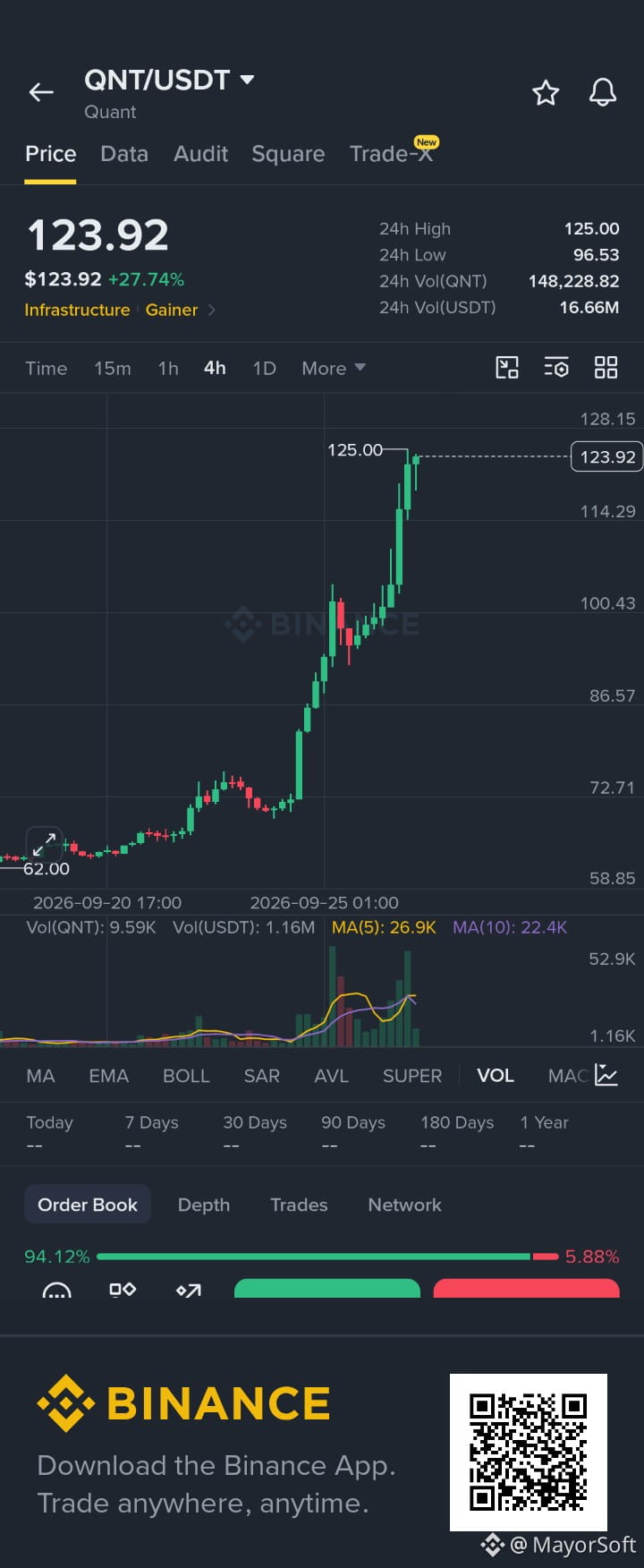
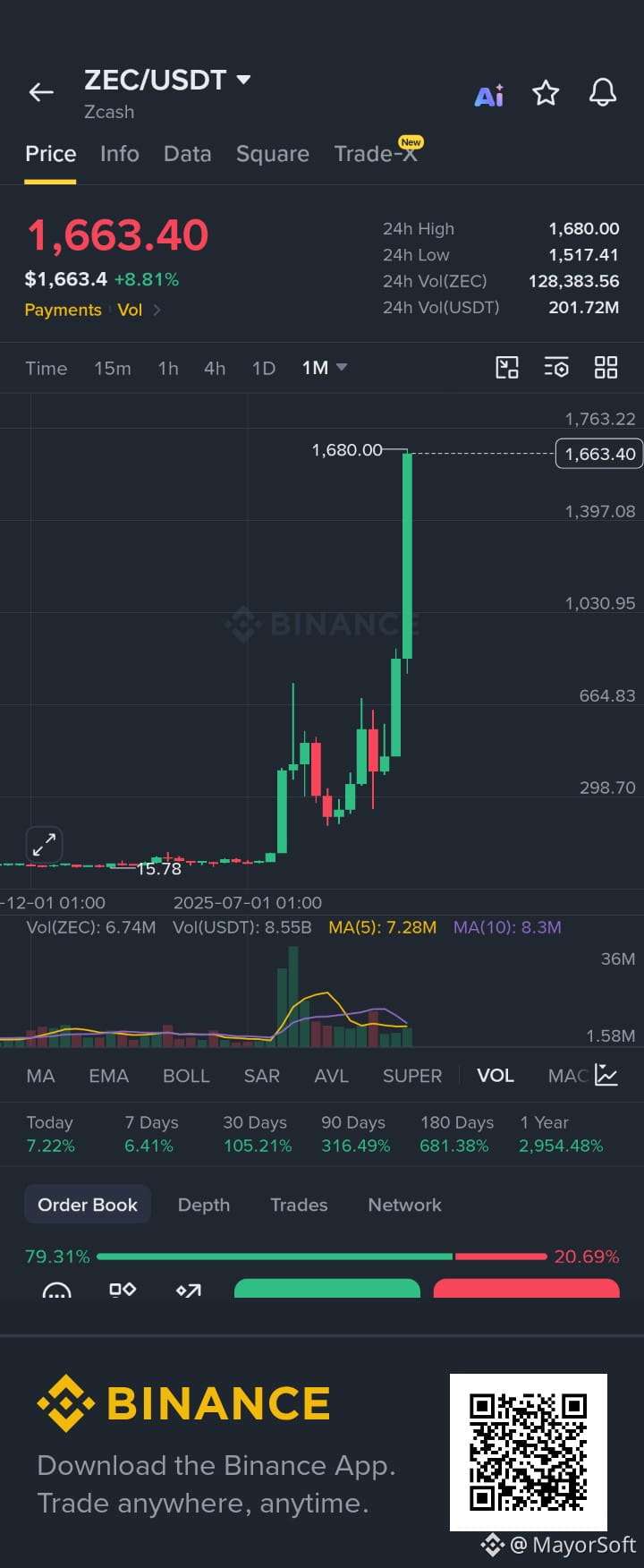
Is QNT Setting Up for a MassiveZEC-Style Breakout?
The structural similarities between Quant (QNT) and Zcash (ZEC) are becoming impossible to ignore on the charts. With ZEC delivering a massive macro rally, traders are aggressively looking for the next legacy asset to replicate this exact market cycle. $QNT is currently flashing the exact same early-stage breakout signals.
Here is why Quant is positioned to follow the trend:
📈 The Macro Setup: Extended Accumulation
Both assets suffered brutal bear market drawdowns followed by multi-year Wyckoff accumulation zones. These long consolidation periods shake out retail money while smart money quietly accumulates. QNT has spent years compressing and recently broke out above a long-term descending trendline, backed by a massive 718% surge in trading volume.
🚀 The Fundamental Catalyst
Technical breakouts need fundamental fuel to sustain momentum. On September 24, it was announced that Quant was selected by The Clearing House (TCH) to provide the interoperability layer for a new U.S. tokenized deposit network. Because TCH processes over $2 trillion in payments daily, this tier-1 institutional validation provides the exact FOMO required to trigger a massive run.
📊 Key QNT Trading Levels to Watch:
Immediate Resistance: $100 – $103. A sustained move above this battleground opens the door directly to the $110 – $123 zone.
Primary Support: $83 – $85. This former resistance turned support is now a high-probability loading zone for any pullbacks.
Macro Target: If the ZEC fractal plays out, reclaiming the macro structural levels toward prior all-time highs becomes the primary cycle objective.
With a hard-capped max supply of just 14.88 million tokens, the tokenomics heavily favor a supply shock. When institutional utility meets a fixed supply, price discovery can be violent.
Are you accumulating QNT here, or waiting for a retest of support? Let me know your targets in the comments! 👇
$ZEC $QNT #CryptoAnalysis
Is QNT Setting Up for a MassiveZEC-Style Breakout?
The structural similarities between Quant (QNT) and Zcash (ZEC) are becoming impossible to ignore on the charts. With ZEC delivering a massive macro rally, traders are aggressively looking for the next legacy asset to replicate this exact market cycle. $QNT is currently flashing the exact same early-stage breakout signals.
Here is why Quant is positioned to follow the trend:
📈 The Macro Setup: Extended Accumulation
Both assets suffered brutal bear market drawdowns followed by multi-year Wyckoff accumulation zones. These long consolidation periods shake out retail money while smart money quietly accumulates. QNT has spent years compressing and recently broke out above a long-term descending trendline, backed by a massive 718% surge in trading volume.
🚀 The Fundamental Catalyst
Technical breakouts need fundamental fuel to sustain momentum. On September 24, it was announced that Quant was selected by The Clearing House (TCH) to provide the interoperability layer for a new U.S. tokenized deposit network. Because TCH processes over $2 trillion in payments daily, this tier-1 institutional validation provides the exact FOMO required to trigger a massive run.
📊 Key QNT Trading Levels to Watch:
Immediate Resistance: $100 – $103. A sustained move above this battleground opens the door directly to the $110 – $123 zone.
Primary Support: $83 – $85. This former resistance turned support is now a high-probability loading zone for any pullbacks.
Macro Target: If the ZEC fractal plays out, reclaiming the macro structural levels toward prior all-time highs becomes the primary cycle objective.
With a hard-capped max supply of just 14.88 million tokens, the tokenomics heavily favor a supply shock. When institutional utility meets a fixed supply, price discovery can be violent.
Are you accumulating QNT here, or waiting for a retest of support? Let me know your targets in the comments! 👇
$ZEC $QNT #CryptoAnalysis
The structural similarities between Quant (QNT) and Zcash (ZEC) are becoming impossible to ignore on the charts. With ZEC delivering a massive macro rally, traders are aggressively looking for the next legacy asset to replicate this exact market cycle. $QNT is currently flashing the exact same early-stage breakout signals.
Here is why Quant is positioned to follow the trend:
📈 The Macro Setup: Extended Accumulation
Both assets suffered brutal bear market drawdowns followed by multi-year Wyckoff accumulation zones. These long consolidation periods shake out retail money while smart money quietly accumulates. QNT has spent years compressing and recently broke out above a long-term descending trendline, backed by a massive 718% surge in trading volume.
🚀 The Fundamental Catalyst
Technical breakouts need fundamental fuel to sustain momentum. On September 24, it was announced that Quant was selected by The Clearing House (TCH) to provide the interoperability layer for a new U.S. tokenized deposit network. Because TCH processes over $2 trillion in payments daily, this tier-1 institutional validation provides the exact FOMO required to trigger a massive run.
📊 Key QNT Trading Levels to Watch:
Immediate Resistance: $100 – $103. A sustained move above this battleground opens the door directly to the $110 – $123 zone.
Primary Support: $83 – $85. This former resistance turned support is now a high-probability loading zone for any pullbacks.
Macro Target: If the ZEC fractal plays out, reclaiming the macro structural levels toward prior all-time highs becomes the primary cycle objective.
With a hard-capped max supply of just 14.88 million tokens, the tokenomics heavily favor a supply shock. When institutional utility meets a fixed supply, price discovery can be violent.
Are you accumulating QNT here, or waiting for a retest of support? Let me know your targets in the comments! 👇
$ZEC $QNT #CryptoAnalysis
3
1.1k
·
--
🚨 $500M USDC JUST ENTERED SOLANA
Circle has minted 500 million USDC on Solana through two separate 250M transactions.
But traders, don't immediately see this and think:
“USDC mint = SOL pump.” ❌
There is more to understand.
What does a USDC mint actually mean?
USDC is a stablecoin designed to maintain a 1:1 value with the US dollar. When Circle mints USDC, new USDC is created and can enter circulation.
For traders, the important part is LIQUIDITY.
Fresh stablecoin liquidity can potentially provide more capital for:
• Spot trading
• Perpetual/futures trading
• DeFi
• DEX liquidity
• Lending
• Arbitrage
• Cross-chain settlement
However, a mint alone does NOT prove that $500M is immediately being used to buy SOL or other assets.
That's the mistake many traders make.
What should you watch next? 👀
Don't just watch the headline.
Watch the on-chain movement:
1️⃣ Where does the newly minted USDC go?
2️⃣ Does it move to exchanges?
3️⃣ Does it enter Solana DeFi protocols?
4️⃣ Does DEX volume increase?
5️⃣ Does SOL open interest increase?
6️⃣ Are stablecoin balances on exchanges rising?
7️⃣ Does price actually confirm the liquidity narrative?
The mint is the information.
The subsequent movement is the signal.
This is an important lesson in on-chain trading:
«Don't trade the headline. Trade the reaction to the headline.»
$500M of additional USDC liquidity is certainly worth monitoring, but traders should wait for confirmation before assuming a bullish or bearish outcome.
Do your own research. Manage your risk.
#Trading #DeFi #OnChainAnalysis $SOL
#CircleMints500MUSDCOnSolana
🚨 $500M USDC JUST ENTERED SOLANA
Circle has minted 500 million USDC on Solana through two separate 250M transactions.
But traders, don't immediately see this and think:
“USDC mint = SOL pump.” ❌
There is more to understand.
What does a USDC mint actually mean?
USDC is a stablecoin designed to maintain a 1:1 value with the US dollar. When Circle mints USDC, new USDC is created and can enter circulation.
For traders, the important part is LIQUIDITY.
Fresh stablecoin liquidity can potentially provide more capital for:
• Spot trading
• Perpetual/futures trading
• DeFi
• DEX liquidity
• Lending
• Arbitrage
• Cross-chain settlement
However, a mint alone does NOT prove that $500M is immediately being used to buy SOL or other assets.
That's the mistake many traders make.
What should you watch next? 👀
Don't just watch the headline.
Watch the on-chain movement:
1️⃣ Where does the newly minted USDC go?
2️⃣ Does it move to exchanges?
3️⃣ Does it enter Solana DeFi protocols?
4️⃣ Does DEX volume increase?
5️⃣ Does SOL open interest increase?
6️⃣ Are stablecoin balances on exchanges rising?
7️⃣ Does price actually confirm the liquidity narrative?
The mint is the information.
The subsequent movement is the signal.
This is an important lesson in on-chain trading:
«Don't trade the headline. Trade the reaction to the headline.»
$500M of additional USDC liquidity is certainly worth monitoring, but traders should wait for confirmation before assuming a bullish or bearish outcome.
Do your own research. Manage your risk.
#Trading #DeFi #OnChainAnalysis $SOL
#CircleMints500MUSDCOnSolana
Circle has minted 500 million USDC on Solana through two separate 250M transactions.
But traders, don't immediately see this and think:
“USDC mint = SOL pump.” ❌
There is more to understand.
What does a USDC mint actually mean?
USDC is a stablecoin designed to maintain a 1:1 value with the US dollar. When Circle mints USDC, new USDC is created and can enter circulation.
For traders, the important part is LIQUIDITY.
Fresh stablecoin liquidity can potentially provide more capital for:
• Spot trading
• Perpetual/futures trading
• DeFi
• DEX liquidity
• Lending
• Arbitrage
• Cross-chain settlement
However, a mint alone does NOT prove that $500M is immediately being used to buy SOL or other assets.
That's the mistake many traders make.
What should you watch next? 👀
Don't just watch the headline.
Watch the on-chain movement:
1️⃣ Where does the newly minted USDC go?
2️⃣ Does it move to exchanges?
3️⃣ Does it enter Solana DeFi protocols?
4️⃣ Does DEX volume increase?
5️⃣ Does SOL open interest increase?
6️⃣ Are stablecoin balances on exchanges rising?
7️⃣ Does price actually confirm the liquidity narrative?
The mint is the information.
The subsequent movement is the signal.
This is an important lesson in on-chain trading:
«Don't trade the headline. Trade the reaction to the headline.»
$500M of additional USDC liquidity is certainly worth monitoring, but traders should wait for confirmation before assuming a bullish or bearish outcome.
Do your own research. Manage your risk.
#Trading #DeFi #OnChainAnalysis $SOL
#CircleMints500MUSDCOnSolana
177
·
--
Bullish
2
249
·
--
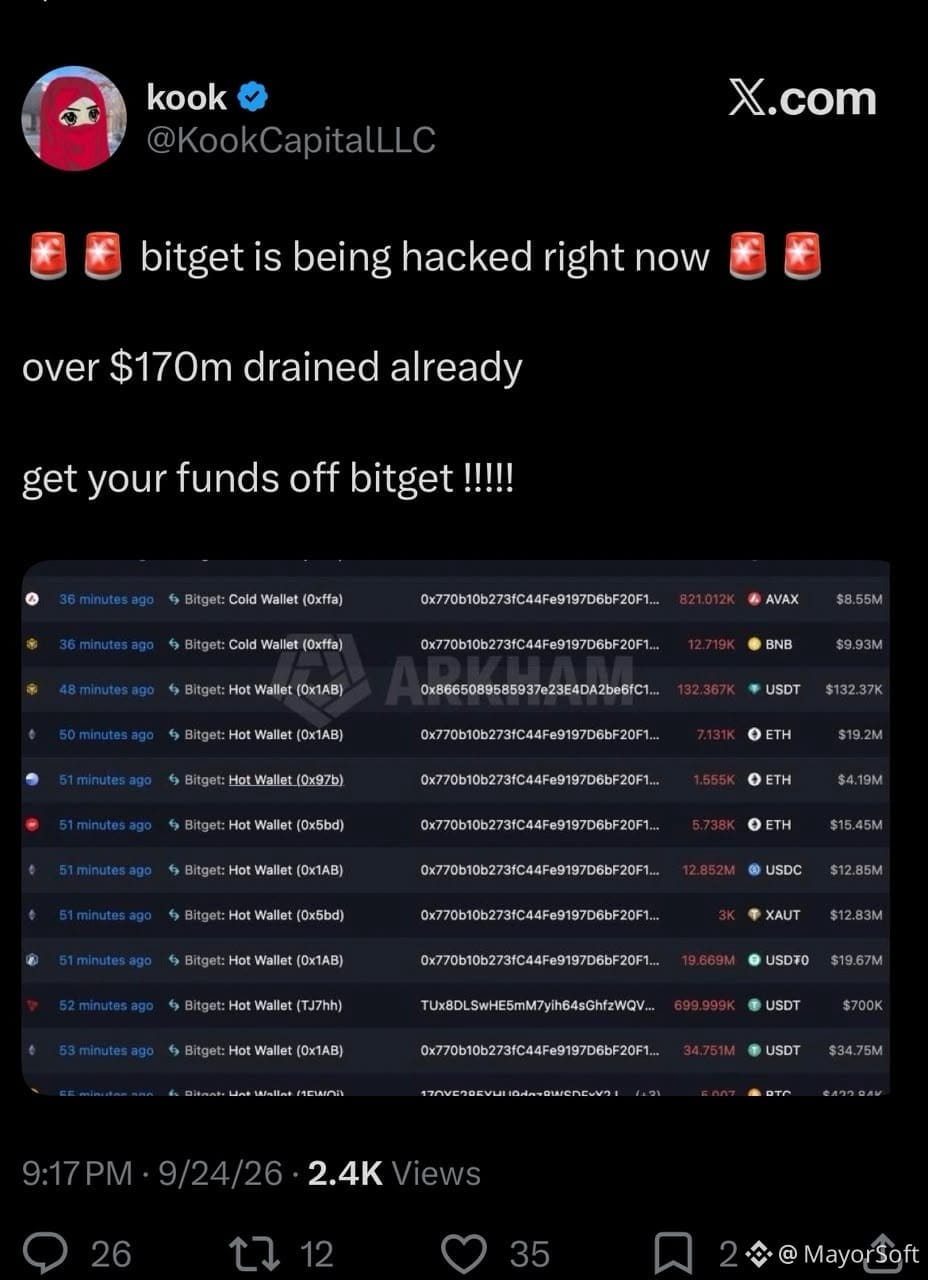
🚨 BITGET HACK: WHAT REALLY HAPPENED?
The crypto industry just witnessed another major exchange security incident.
On September 24, Bitget detected unauthorized transfers from part of its hot/warm wallet infrastructure.
💰 Initial estimated loss: $351.6M
💰 Latest estimate: ~$387.5M
🔐 Cold wallets: Not affected
🛡️ Bitget Protection Fund: $464M+
⛔ Withdrawals: Temporarily suspended
But here's the interesting part:
According to Bitget CEO Gracy Chen, this was not a simple private-key theft.
The attackers reportedly compromised a backend component of the wallet infrastructure and manipulated transaction data so that the exchange's authorization system processed the transfers as legitimate.
That distinction matters.
It means crypto security isn't just about protecting private keys anymore.
Backend systems, transaction approval processes, operational security and access controls can become attack surfaces too.
Bitget has said user funds remain protected and that the incident is covered by its protection fund. The exchange has also begun a phased restoration of withdrawals, starting with BTC on September 28, followed by ETH, USDT and other assets on subsequent dates.
What should crypto users learn from this?
1️⃣ Don't keep your entire portfolio on an exchange.
2️⃣ Use hardware/self-custody wallets for long-term holdings where appropriate.
3️⃣ Don't panic-sell simply because an exchange experiences an incident.
4️⃣ Always verify official announcements before believing screenshots and rumours.
5️⃣ An exchange being large doesn't make it immune to security breaches.
6️⃣ "Not your keys, not your coins" remains an important principle of crypto risk management.
The biggest lesson isn't that crypto is unsafe.
The lesson is that risk management matters at every level — from the individual trader to the biggest exchange.
Stay informed.
Protect your assets.
Never assume "big" means "invincible." #Bitget $BTC
{spot}(BTCUSDT)
#web3_binance #CryptoSecurity #blockchain #CryptoNewss
🚨 BITGET HACK: WHAT REALLY HAPPENED?
The crypto industry just witnessed another major exchange security incident.
On September 24, Bitget detected unauthorized transfers from part of its hot/warm wallet infrastructure.
💰 Initial estimated loss: $351.6M
💰 Latest estimate: ~$387.5M
🔐 Cold wallets: Not affected
🛡️ Bitget Protection Fund: $464M+
⛔ Withdrawals: Temporarily suspended
But here's the interesting part:
According to Bitget CEO Gracy Chen, this was not a simple private-key theft.
The attackers reportedly compromised a backend component of the wallet infrastructure and manipulated transaction data so that the exchange's authorization system processed the transfers as legitimate.
That distinction matters.
It means crypto security isn't just about protecting private keys anymore.
Backend systems, transaction approval processes, operational security and access controls can become attack surfaces too.
Bitget has said user funds remain protected and that the incident is covered by its protection fund. The exchange has also begun a phased restoration of withdrawals, starting with BTC on September 28, followed by ETH, USDT and other assets on subsequent dates.
What should crypto users learn from this?
1️⃣ Don't keep your entire portfolio on an exchange.
2️⃣ Use hardware/self-custody wallets for long-term holdings where appropriate.
3️⃣ Don't panic-sell simply because an exchange experiences an incident.
4️⃣ Always verify official announcements before believing screenshots and rumours.
5️⃣ An exchange being large doesn't make it immune to security breaches.
6️⃣ "Not your keys, not your coins" remains an important principle of crypto risk management.
The biggest lesson isn't that crypto is unsafe.
The lesson is that risk management matters at every level — from the individual trader to the biggest exchange.
Stay informed.
Protect your assets.
Never assume "big" means "invincible." #Bitget $BTC
#web3_binance #CryptoSecurity #blockchain #CryptoNewss
The crypto industry just witnessed another major exchange security incident.
On September 24, Bitget detected unauthorized transfers from part of its hot/warm wallet infrastructure.
💰 Initial estimated loss: $351.6M
💰 Latest estimate: ~$387.5M
🔐 Cold wallets: Not affected
🛡️ Bitget Protection Fund: $464M+
⛔ Withdrawals: Temporarily suspended
But here's the interesting part:
According to Bitget CEO Gracy Chen, this was not a simple private-key theft.
The attackers reportedly compromised a backend component of the wallet infrastructure and manipulated transaction data so that the exchange's authorization system processed the transfers as legitimate.
That distinction matters.
It means crypto security isn't just about protecting private keys anymore.
Backend systems, transaction approval processes, operational security and access controls can become attack surfaces too.
Bitget has said user funds remain protected and that the incident is covered by its protection fund. The exchange has also begun a phased restoration of withdrawals, starting with BTC on September 28, followed by ETH, USDT and other assets on subsequent dates.
What should crypto users learn from this?
1️⃣ Don't keep your entire portfolio on an exchange.
2️⃣ Use hardware/self-custody wallets for long-term holdings where appropriate.
3️⃣ Don't panic-sell simply because an exchange experiences an incident.
4️⃣ Always verify official announcements before believing screenshots and rumours.
5️⃣ An exchange being large doesn't make it immune to security breaches.
6️⃣ "Not your keys, not your coins" remains an important principle of crypto risk management.
The biggest lesson isn't that crypto is unsafe.
The lesson is that risk management matters at every level — from the individual trader to the biggest exchange.
Stay informed.
Protect your assets.
Never assume "big" means "invincible." #Bitget $BTC
#web3_binance #CryptoSecurity #blockchain #CryptoNewss
1
65
·
--
What's your take on $BTC
{spot}(BTCUSDT)
What's your take on $BTC
MayorSoft
·
--
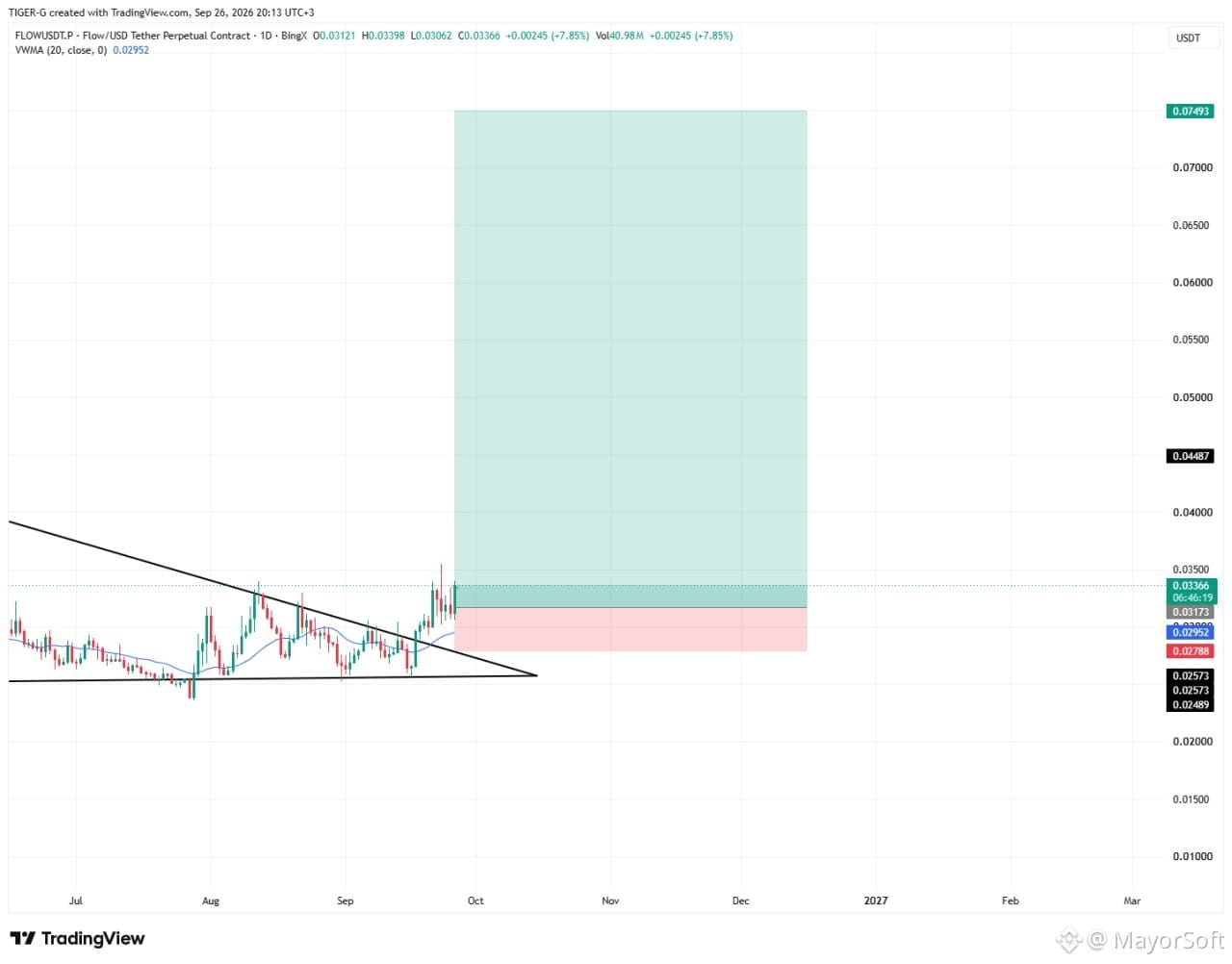
🎯 RISK-REWARD RATIO: THE PART OF TRADING MANY PEOPLE IGNORE
One of the biggest mistakes traders make is focusing only on how much they can make while forgetting to ask:
“How much am I willing to lose to make that profit?”
That is where Risk-to-Reward Ratio (R:R) comes in.
Simply put:
Risk = what you stand to lose if your Stop Loss is hit.
Reward = what you expect to make if your Take Profit is reached.
For example:
If you risk $10 to potentially make $30, your Risk-to-Reward Ratio is 1:3.
Meaning:
➡️ Risk $1
➡️ Potential reward $3
Now here is where it gets interesting…
You don't necessarily need to win every trade to be profitable.
Imagine you take 10 trades with a 1:3 R:R:
❌ You lose 6 trades = -$60
✅ You win 4 trades = +$120
Your total = +$60
This is why professional trading isn't about being right on every trade.
It's about managing your risk, protecting your capital, and making sure your potential reward justifies the risk you're taking.
Before entering a trade, ask yourself:
1️⃣ Where is my Stop Loss?
2️⃣ How much am I risking?
3️⃣ Where is my Take Profit?
4️⃣ What is my R:R?
5️⃣ If this trade loses, can my account comfortably survive it?
Never enter a trade simply because you believe the price will go up or down.
Have a trading plan.
Protect your capital.
Because in trading, survival comes before profit. 📊
What R:R do you normally look for — 1:2, 1:3, 1:5 or something else? 👇
#BinanceSquare #CryptoTrading #RiskManagement #TradingTips #RiskReward #CryptoEducation #FuturesTrading
One of the biggest mistakes traders make is focusing only on how much they can make while forgetting to ask:
“How much am I willing to lose to make that profit?”
That is where Risk-to-Reward Ratio (R:R) comes in.
Simply put:
Risk = what you stand to lose if your Stop Loss is hit.
Reward = what you expect to make if your Take Profit is reached.
For example:
If you risk $10 to potentially make $30, your Risk-to-Reward Ratio is 1:3.
Meaning:
➡️ Risk $1
➡️ Potential reward $3
Now here is where it gets interesting…
You don't necessarily need to win every trade to be profitable.
Imagine you take 10 trades with a 1:3 R:R:
❌ You lose 6 trades = -$60
✅ You win 4 trades = +$120
Your total = +$60
This is why professional trading isn't about being right on every trade.
It's about managing your risk, protecting your capital, and making sure your potential reward justifies the risk you're taking.
Before entering a trade, ask yourself:
1️⃣ Where is my Stop Loss?
2️⃣ How much am I risking?
3️⃣ Where is my Take Profit?
4️⃣ What is my R:R?
5️⃣ If this trade loses, can my account comfortably survive it?
Never enter a trade simply because you believe the price will go up or down.
Have a trading plan.
Protect your capital.
Because in trading, survival comes before profit. 📊
What R:R do you normally look for — 1:2, 1:3, 1:5 or something else? 👇
#BinanceSquare #CryptoTrading #RiskManagement #TradingTips #RiskReward #CryptoEducation #FuturesTrading
6
·
--
Who else is experiencing this?
Who else is experiencing this?
MayorSoft
·
--
if I go long, it will short, if go short it will long, what kinds of market is this 😴
75
·
--
if I go long, it will short, if go short it will long, what kinds of market is this 😴
if I go long, it will short, if go short it will long, what kinds of market is this 😴
1
1
65
·
--
🎯 RISK-REWARD RATIO: THE PART OF TRADING MANY PEOPLE IGNORE
One of the biggest mistakes traders make is focusing only on how much they can make while forgetting to ask:
“How much am I willing to lose to make that profit?”
That is where Risk-to-Reward Ratio (R:R) comes in.
Simply put:
Risk = what you stand to lose if your Stop Loss is hit.
Reward = what you expect to make if your Take Profit is reached.
For example:
If you risk $10 to potentially make $30, your Risk-to-Reward Ratio is 1:3.
Meaning:
➡️ Risk $1
➡️ Potential reward $3
Now here is where it gets interesting…
You don't necessarily need to win every trade to be profitable.
Imagine you take 10 trades with a 1:3 R:R:
❌ You lose 6 trades = -$60
✅ You win 4 trades = +$120
Your total = +$60
This is why professional trading isn't about being right on every trade.
It's about managing your risk, protecting your capital, and making sure your potential reward justifies the risk you're taking.
Before entering a trade, ask yourself:
1️⃣ Where is my Stop Loss?
2️⃣ How much am I risking?
3️⃣ Where is my Take Profit?
4️⃣ What is my R:R?
5️⃣ If this trade loses, can my account comfortably survive it?
Never enter a trade simply because you believe the price will go up or down.
Have a trading plan.
Protect your capital.
Because in trading, survival comes before profit. 📊
What R:R do you normally look for — 1:2, 1:3, 1:5 or something else? 👇
#BinanceSquare #CryptoTrading #RiskManagement #TradingTips #RiskReward #CryptoEducation #FuturesTrading
🎯 RISK-REWARD RATIO: THE PART OF TRADING MANY PEOPLE IGNORE
One of the biggest mistakes traders make is focusing only on how much they can make while forgetting to ask:
“How much am I willing to lose to make that profit?”
That is where Risk-to-Reward Ratio (R:R) comes in.
Simply put:
Risk = what you stand to lose if your Stop Loss is hit.
Reward = what you expect to make if your Take Profit is reached.
For example:
If you risk $10 to potentially make $30, your Risk-to-Reward Ratio is 1:3.
Meaning:
➡️ Risk $1
➡️ Potential reward $3
Now here is where it gets interesting…
You don't necessarily need to win every trade to be profitable.
Imagine you take 10 trades with a 1:3 R:R:
❌ You lose 6 trades = -$60
✅ You win 4 trades = +$120
Your total = +$60
This is why professional trading isn't about being right on every trade.
It's about managing your risk, protecting your capital, and making sure your potential reward justifies the risk you're taking.
Before entering a trade, ask yourself:
1️⃣ Where is my Stop Loss?
2️⃣ How much am I risking?
3️⃣ Where is my Take Profit?
4️⃣ What is my R:R?
5️⃣ If this trade loses, can my account comfortably survive it?
Never enter a trade simply because you believe the price will go up or down.
Have a trading plan.
Protect your capital.
Because in trading, survival comes before profit. 📊
What R:R do you normally look for — 1:2, 1:3, 1:5 or something else? 👇
#BinanceSquare #CryptoTrading #RiskManagement #TradingTips #RiskReward #CryptoEducation #FuturesTrading
One of the biggest mistakes traders make is focusing only on how much they can make while forgetting to ask:
“How much am I willing to lose to make that profit?”
That is where Risk-to-Reward Ratio (R:R) comes in.
Simply put:
Risk = what you stand to lose if your Stop Loss is hit.
Reward = what you expect to make if your Take Profit is reached.
For example:
If you risk $10 to potentially make $30, your Risk-to-Reward Ratio is 1:3.
Meaning:
➡️ Risk $1
➡️ Potential reward $3
Now here is where it gets interesting…
You don't necessarily need to win every trade to be profitable.
Imagine you take 10 trades with a 1:3 R:R:
❌ You lose 6 trades = -$60
✅ You win 4 trades = +$120
Your total = +$60
This is why professional trading isn't about being right on every trade.
It's about managing your risk, protecting your capital, and making sure your potential reward justifies the risk you're taking.
Before entering a trade, ask yourself:
1️⃣ Where is my Stop Loss?
2️⃣ How much am I risking?
3️⃣ Where is my Take Profit?
4️⃣ What is my R:R?
5️⃣ If this trade loses, can my account comfortably survive it?
Never enter a trade simply because you believe the price will go up or down.
Have a trading plan.
Protect your capital.
Because in trading, survival comes before profit. 📊
What R:R do you normally look for — 1:2, 1:3, 1:5 or something else? 👇
#BinanceSquare #CryptoTrading #RiskManagement #TradingTips #RiskReward #CryptoEducation #FuturesTrading
1
1
78
Log in to explore more content
Join global crypto users on Binance Square
⚡️ Get latest and useful information about crypto.
💬 Trusted by the world’s largest crypto exchange.
👍 Discover real insights from verified creators.
Email / Phone number
Trending Topics
StrategyStriveAdd2305BitcoinThisWeek
16,063 views
573 Discussing
#strategystriveadd2305bitcointhisweek 🚨 2,305 BTC just moved into treasuries
While most traders were focused on the Bitcoin price rebound two public companies quietly made big moves. 👀
Strategy and Strive together bought 2,305 BTC for 182.7 million Dollar.
🔹 Strategy bought 950 BTC for 75.7 million dollar
🔹 Strive bought 1,355 BTC for around 107.7 million dollar
This brings their total holdings to:
📊 Strategy. 846,000 BTC
📊 Strive. 26,355 BTC
But the real story isn't the amount of Bitcoin they bought.
It's how they paid for it.
Strategy used cash it already had.
Strive used its stock financing model to fund the purchase. Meaning it’s growing its Bitcoin treasury without relying only on cash flow.
This difference matters.
For traders and investors it adds a layer of analysis: how much Bitcoin is being added, how it’s being funded and what it means for long-term value, per share.
The cost of capital BTC accumulation and share value. These factors are starting to shape the market in ways.
Corporate treasury demand is no longer a side note.
It’s becoming a part of the Bitcoin ecosystem.
💬 What do you think?
Will more companies start buying Bitcoin the way?
Will this trend grow?
#bitcoin #Khan62 #BTC #trading
$MSTR
$MARA $BMNR
Khan 62
·4 Likes
·2.8k views
TrumpRejectsIranHormuzReopening
19,382 views
519 Discussing
TokenizedStockDEXVolumeHits$20.9B
105 views
5 Discussing