
带单程哥-先赚后付
2.3k Posts

带单程哥-先赚后付
Report
Block User
币安聊天室ID👉sol8888 风格职业稳健,以现货交易为核心,合约操作为辅助。合约交易体系完备,胜率长期稳定在80%-90%区间。市场无常,策略有度——行情不明朗时主动停手,专业不只在进攻,更在于懂得收手。学习公众号:凉兮聊趋势
11 Following
2.6K+ Followers
2.1K+ Liked
Posts
All
Quotes
Videos
PINNED
·
--
💥Major Update! Binance Chat Room now supports [Private Chat]!
Chat privately with friends, important information will no longer be overwhelmed by the flood of messages.
Add Cheng Ge to chat about the market:
Enter [Chat Room]
Click the + sign in the upper right corner
Input Chat Room ID: sol8888
Or scan the QR code below
Successfully added, feel free to message anytime!
Get ahead, quickly add Cheng Ge to grasp market trends!

4
2
164
·
--
That day, my account suddenly had more than two hundred thousand more, yet it felt like my soul had been sucked out—I just stared at the screen, dumbfounded
After years in crypto trading: less hair, thicker under-eye bags; my wallet got fuller, but my heart grew empty
That money was pulled back from a long time ago—starting with a small amount and compounding for years into a decent number. No insider info, no luck—just a set of painfully simple methods
Treat trades like fighting monsters; liquidation is a lesson. Every day, only record and review, and control your impulse
Public notes: if you can understand one takeaway, you’ll lose less; if you can do a few, you can outperform most people
Volume is the heartbeat
Rallies are like climbing stairs, drops are like sliding down a slide. Don’t rush to run—because the operator is quietly loading up
A sudden pump with a slow grind down—don’t get excited. The real top comes with volume expanding and a waterfall drop; the waterfall is the sound of a sickle landing
A flash crash isn’t a gift—it’s a finishing blow. When it falls hard, rebounds slowly—that’s the operator fighting and retreating at the same time. Don’t comfort yourself with, “It’s fallen this far, it won’t fall again”—it can, and often even further
At high levels, the thing to fear most is silence
High volume doesn’t necessarily mean a top—what’s scary is zero volume at the high end. Like the dead of night suddenly going silent; something goes wrong in the next second
At the bottom, you need to watch for sustained action
One burst of high volume might be a raid to lure in buyers. Only when volume keeps shrinking and then bursts again—afterward—that’s when the operator is building a position
Candles are corpses; volume is body temperature
Candles are just the result. Trading volume is the real thermometer of the room. When volume shrinks to the point of suffocation, the market has nothing left but ghosts; when volume suddenly explodes, money comes in like sharks that smell blood
Last one: none. No obsession—dare to turn off the screen. No greed—when chasing highs, keep your hands in your pockets. No fear—when there’s a sharp selloff, dare to buy
This isn’t “letting things be.” It’s instinct crawled out of survivor bias
In crypto, opportunities are never lacking. What’s missing is the people who are willing to wait for them. The lights are on—whether you leave is up to you.

3
1
449
·
--
The year I lost five hundred thousand, I was almost done for.
Staring at the order book made my eyes ache, my hands shook so badly I couldn’t hit the keys, and I was so anxious I couldn’t sleep until after midnight. I smoked one cigarette after another—the throat felt like it had been burned.
When my account shrank to just a few thousand U, one thought kept flashing in my mind: forget it, don’t do this anymore.
But I didn’t leave. This money wasn’t the last gamble of a dog—it was the bullet I needed to stand back up.
I only focus on a few things: I exclusively trade the needle-insert moments, wait for the price to crash to key moving-average areas, use a low-multiple leveraged position with small size, take profit on a small portion immediately and get out. At most two trades a day—never touch a third.
For brand-new coins, I grab the first wave: place orders before they go live, with an order book so thin it’s like paper. I set up ahead of time for a low buy. Once the price rises by a certain percentage, I exit right away—fast in, fast out.
After the account reaches a certain size, every night at a fixed time I transfer half into a cold wallet—that habit later saved me countless times. I’ve seen too many people who watched it multiply a few times and still refused to take profits, then ended up giving it all back.
In this stage, technical skill is just the foundation—discipline is the lifeline.
I’m not a genius, and I’m not just lucky. But I figured out one thing:
You can have nothing, but you can’t be clueless about the market. In this world, you don’t rise back on miracles. You rise by making every cut land exactly where it should—hard and steady.
Everyone loses money, but whether you can turn that last bit of capital into something great depends on whether you truly want to stay alive. One person can’t go far—finding the right path is what lets you go longer.

2
475
·
--
People often ask me about the tips for choosing coins and catching the buying points.
I’ll be direct: the method isn’t complicated, but you have to be steady, precise, and decisive. Follow it and you’ll avoid detours; if you don’t, the market will teach you.
Step 1: Scan the Gainers List to filter “live coins”
Every day at the open, review the gainers list for the past half month. Add to your watchlist the coins showing unusual movement and clear upward momentum. Only coins that attract capital attention can keep strengthening. Coins that have been ranging for a long time won’t suddenly become worth waiting for—watching them longer is a waste of time.
Step 2: Watch for the monthly MACD golden cross
A golden cross is the signal that a trend is starting. When it happens, entering then is you making money from the trend. Don’t gamble on a oversold rebound—that’s a matter of luck with extremely high risk. Follow a clearly defined trend and your chances of profit are higher.
Step 3: Use key moving averages as the “entry signal”
When the coin price pulls back to around a key moving average and volume increases, look for an opportunity to enter. Don’t blindly guess the bottom or randomly bet on direction. If there’s no signal, wait. If there is a signal, act.
Remember: not acting is profit; impulsive, blind trading will lead to losses.
Step 4: Don’t get attached after entering—exit immediately if it breaks down
As long as the trend hasn’t broken and support is still holding, you can keep the position. Once the price breaks below the support line, exit immediately—no matter whether you’re up or down. Many people fall because they can’t let go; going from profit to liquidation often comes down to one moment of hesitation.
Step 5: Take profit in portions—don’t be greedy for the whole move
When your profit reaches a certain percentage, reduce part of your position. If the price reaches a higher percentage, reduce another portion. Don’t expect to capture the entire wave—it’s unrealistic. Small wins add up, and over the long term you’ll actually do better.
Step 6: If it breaks a key moving average, liquidate decisively
This rule has saved me countless times. Whether you just bought or you’re stuck in a loss, once it breaks, close the position—absolutely no softness. Being soft on the market only brings a painful cost.
Some people think this method is “rigid.” But the more you act on emotion, the easier it is to get cut. Every one of my rules is something I’ve carefully summarized.
Follow the trend, hold the key levels, and strictly observe your discipline—then making money in the crypto market becomes a smoother path. In the past, I was alone, bumping around in the dark. Now the light is in my hands. The light is always on—are you going to follow it?

1
494
·
--
If your current principal is less than 2,000 USDT, let me say something not very nice first:
What you should learn right now isn’t how to get rich quick—it’s how to survive.
Last year, I took a beginner from 1,500 USDT. In three months, they reached 42,000 USDT. Throughout the whole process, there were no liquidations, and there was no kind of massive drawdown that would lead to a crash.
It wasn’t luck, and it wasn’t about going all-in on some random “miracle coin.” It relied on three very simple rules.
Rule one: You must split your capital. Going all-in is a slow suicide.
If you start with 1,500 USDT, split it like this:
- 500 USDT for intraday moves—no more than two trades per day.
- 500 USDT for swing trades—enter/exit only once every ten days or half a month.
- 500 USDT as your survival fund—never touch it easily.
The core is one sentence: at any time, you’re not allowed to go all-in. As long as you don’t die, you’ll have a chance to turn it around.
Rule two: Only trade what’s deterministic. Everything else gets abandoned.
Don’t participate in sideways, choppy range markets. Most losses happen in this kind of frustrating, grinding environment. If the direction hasn’t clearly developed, stay flat—better to miss the move than to lose badly.
Only act when the structure is clear and the trend is obvious. Remember: the market isn’t going to be open every day, but your principal is being consumed every day.
Rule three: Lock in the rules and clear your emotions.
Per-trade stop loss is capped at 2%. When floating profit reaches 4%, cut the position by half first. If your account’s profit exceeds 20% of your principal, withdraw part of it immediately. Never add to a losing position to average down—that’s the root cause of why most people can’t get back on their feet. Don’t bet on a rebound. Don’t hold and hope. Don’t fantasize about miracles.
If you want to pull off a comeback, understand one thing first: only when the principal is still there do you have the right to talk about doubling.
Splitting capital, waiting for the right timing, controlling position size—these don’t sound exciting, but they can keep you from taking countless detours. In the crypto market, the fastest way to go fast is actually to slow down first. If your current principal is less than 2,000 USDT, let me say something not very nice first: what you should learn isn’t how to get rich quick—it’s how to survive.

1
512
·
--
People always ask me lately, “Bro, I’ve only got a little over 1,000 USDT. Is there still a chance?”
I usually don’t talk about coins first. I ask them three questions instead: will they split their positions, if they lose will they cut, and if there’s no opportunity can they wait?
The real difficulty with a small account isn’t that the money is small—it’s that people are too impatient.
With 1,000 USDT, they’re desperate to make 5,000 USDT in a single trade. Once they see a rally they chase it, and when they’re slightly in the red they add to the position.
In the end, it’s not that the market doesn’t offer opportunities. It’s that they destroy their account themselves first.
When I guide small capital, the first thing I do is split the positions into $AKE .
One part to test, one part reserved for the real trend. Always keep some ammunition on hand.
It’s okay to get one trade wrong. Don’t let one trade take you out of the game.
Second, only wait for the setups that are worth doing.
Don’t touch chop. If the structure isn’t clear, leave it blank—$HEMI .
Only after a genuine breakout with strong volume and the trend is running smoothly should you consider entering. Trading ten times a day looks hardworking, but often it’s just paying the market fees.
Third, if you’re wrong, you must admit it.
Before entering, decide your stop-loss. When it’s hit, just leave. When profit comes out, take some off first. Never rely on losses to average down and “make it back.”
Many people always think about catching three ten-baggers. But actually, what usually enables someone with a small account to grow isn’t any single legendary move—it’s consistently doing these things long term: keeping positions in order, not touching junk markets, and not letting mistakes linger.
1,000 USDT is just the starting point. First train the rules. When the real big opportunities arrive later, you’ll have the capital and the mindset to take them—#Solana跌逾3% .
How to do it with a small account—position sizing, timing, execution—I'll explain it step by step.

1
189
·
--
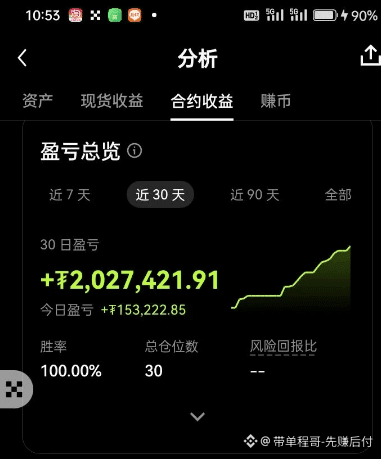
People who have been trading for more than a year and are still losing—trust me, just listen to this. Read the following ten points before you say anything. It’s not a secret manual; it’s meant to sober you up
First: if your capital isn’t big—say within 200,000—then catching the main upswing wave once a year is enough. Don’t stay fully invested every day; that’s basically working for the exchange
Second: you can’t make money beyond your level of understanding—I’ve said this so many times
Practice in a paper trading account until your mindset doesn’t break before going live with real money. You can lose a hundred times in paper trading, but losing once in real trading might be the end
Third: if a major piece of good news comes out and you didn’t get out on the same day, then if the next day gaps up, you must leave. When good news gets “priced in,” it becomes bad news—this is an iron rule in the crypto market
Fourth: for major holidays, reduce position size one week early, or even go to cash. Don’t ask why—ask history
Fifth: for the medium- to long-term, it’s one sentence: keep enough cash, sell after the price rises, buy on sharp drops, and do rolling operations. Don’t hold on stubbornly. Don’t cling stubbornly to losses
Sixth: for short-term trading, only look at trading volume and chart patterns. Trade what’s active; don’t touch what’s not
Seventh: if it falls slowly, the rebound will be slow too; if it falls fast, the rebound will be fast as well. The speed of the drop determines the rebound strength—remember that
Eighth: if you buy the wrong thing, admit it. Cut losses fast. Preserving your principal is more important than anything
Ninth: for short-term trading, you must look at the 15-minute candlestick chart. The KDJ golden cross/death cross is enough
Tenth: there are countless technical methods. Master two or three well—no need to learn too much at once. Learning a bunch is worse than practicing one until it’s熟练
1
1
352
·
--
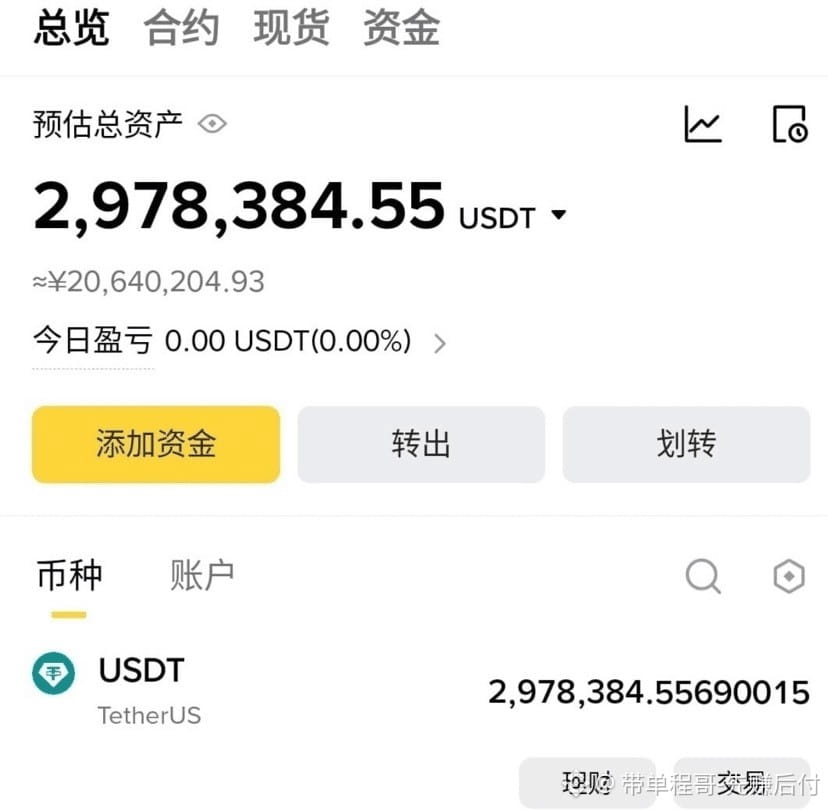
From 30,000 to 10,000,000, I’m increasingly clear on one truth:\n\nThe simpler the trade, the easier it is to make money\n$UB \nMany people study crypto more and more deeply, the more complex they make it—the less they earn\n \nI went from 30K U to 10M U. I didn’t rely on insider info, nor am I gifted beyond others. It all comes down to one secret: simplify, and push simplicity to the extreme\n \nMy comeback journey has three stages, and the pace gets tighter and tighter:\n\nFirst stage: 30K U to 1.2M U, takes two years\nSecond stage: 1.2M U to 6M U, only one year\nThird stage: 6M U to 10M U, just five months\n\nThe further you go, the more you notice a pattern—your earning speed is inversely proportional to your trading frequency. Less trading, steadier execution is far more efficient than frequent transactions\n\nThroughout the whole process, I focus on one specific pattern called the “N” shape: $AKE \n\nA vertical surge up, a diagonal pullback, then another vertical breakout—the pattern is obvious at a glance\n\nEnter the trade as soon as the N shape forms. If it breaks, cut the position. Don’t add positions, don’t hold through breakdowns, and don’t increase leverage—no lingering, no dragging\n\nI set fixed rules: stop loss at 2%, take profit at 10%. Even with a win rate as low as 35%, you can still generate stable profits\n\nMany people think this method is too foolish. They obsess over indicators, draw trend lines, and guess the news—smart people end up outsmarting themselves, and losses come faster\n\nI do the opposite: I strip it down to the essentials. On the chart, I only keep one 20-day moving average, and I fade its color to avoid interfering with my judgment. Every morning at 9:50, I open the trading app and scan the 4-hour chart. If there’s no N pattern, I shut it and leave. If there is, I set the stop loss and take profit. I finish the day’s operations in five minutes\n\nThe rest of the time: drink coffee, walk the dog—completely free from chart-induced mental strain\n\nAfter profits, I have a clear plan: at 1.2M U, withdraw the principal first. At 6M U, withdraw half to buy spot and park it in a fixed-term deposit; the remaining capital keeps rolling. Even if the market drops hard, the foundation remains solid as a rock\n\nTrading for me has only three iron rules:\nDon’t chase pumps—wait until the N pattern completes before acting\nDon’t hold positions—if it breaks down, exit immediately\nDon’t stay in love with the trade—once you hit your target, withdraw in batches\n\nThere is no surefire secret in the crypto world. Only the wisdom of selection\n$BTR \nKeep your patience, filter out distractions, resist temptation—true profitability will eventually settle in\n\nStop staring at the top gainers list. If you can hold steady and secure 10% for twenty times in a row, you’ll realize that 10M U is only a matter of time\n\nI’ve walked through the long night in the crypto world. Now I’m handing you the torch.\nDitch complexity, stick to simplicity—this time, it’s your turn to shine
From 30,000 to 10,000,000, I’m increasingly clear on one truth:\n\nThe simpler the trade, the easier it is to make money\n$UB \nMany people study crypto more and more deeply, the more complex they make it—the less they earn\n \nI went from 30K U to 10M U. I didn’t rely on insider info, nor am I gifted beyond others. It all comes down to one secret: simplify, and push simplicity to the extreme\n \nMy comeback journey has three stages, and the pace gets tighter and tighter:\n\nFirst stage: 30K U to 1.2M U, takes two years\nSecond stage: 1.2M U to 6M U, only one year\nThird stage: 6M U to 10M U, just five months\n\nThe further you go, the more you notice a pattern—your earning speed is inversely proportional to your trading frequency. Less trading, steadier execution is far more efficient than frequent transactions\n\nThroughout the whole process, I focus on one specific pattern called the “N” shape: $AKE \n\nA vertical surge up, a diagonal pullback, then another vertical breakout—the pattern is obvious at a glance\n\nEnter the trade as soon as the N shape forms. If it breaks, cut the position. Don’t add positions, don’t hold through breakdowns, and don’t increase leverage—no lingering, no dragging\n\nI set fixed rules: stop loss at 2%, take profit at 10%. Even with a win rate as low as 35%, you can still generate stable profits\n\nMany people think this method is too foolish. They obsess over indicators, draw trend lines, and guess the news—smart people end up outsmarting themselves, and losses come faster\n\nI do the opposite: I strip it down to the essentials. On the chart, I only keep one 20-day moving average, and I fade its color to avoid interfering with my judgment. Every morning at 9:50, I open the trading app and scan the 4-hour chart. If there’s no N pattern, I shut it and leave. If there is, I set the stop loss and take profit. I finish the day’s operations in five minutes\n\nThe rest of the time: drink coffee, walk the dog—completely free from chart-induced mental strain\n\nAfter profits, I have a clear plan: at 1.2M U, withdraw the principal first. At 6M U, withdraw half to buy spot and park it in a fixed-term deposit; the remaining capital keeps rolling. Even if the market drops hard, the foundation remains solid as a rock\n\nTrading for me has only three iron rules:\nDon’t chase pumps—wait until the N pattern completes before acting\nDon’t hold positions—if it breaks down, exit immediately\nDon’t stay in love with the trade—once you hit your target, withdraw in batches\n\nThere is no surefire secret in the crypto world. Only the wisdom of selection\n$BTR \nKeep your patience, filter out distractions, resist temptation—true profitability will eventually settle in\n\nStop staring at the top gainers list. If you can hold steady and secure 10% for twenty times in a row, you’ll realize that 10M U is only a matter of time\n\nI’ve walked through the long night in the crypto world. Now I’m handing you the torch.\nDitch complexity, stick to simplicity—this time, it’s your turn to shine
2
388
·
--
I’ve been trading crypto for 8 years—from starting with 20,000 to over 50 million. I rely only on these eight rules.
Keep 50% of your position and trade steadily. Monthly returns can soar to 70%.
I passed this private set of techniques to my student—he doubled his money in just three months.
Today I’m in a good mood, so I’m finally laying all my bottom-drawer treasures on the table. Keep this: $AKE
1. Split your funds into five parts—only enter one at a time.
Use a 10-point stop loss. If you’re wrong once, you lose only 2% of your total capital. If you’re wrong five times, you lose only 10%. Take-profit should be set at 10 points or more—do you still think you’ll get trapped?
2. To improve your win rate, it’s just two words: follow the trend.
In a downtrend, every bounce is a bull trap; in an uptrend, every dip is like throwing money into a golden pit. Which is easier to profit from—catching bottoms, or buying dips?
The answer is obvious: $T
3. Don’t touch coins that have had a short-term explosive surge.
Coins that manage to run multiple major breakout waves are rare. After a short-term blowout, can they keep rising? Hardly. When the price stalls and can’t push higher at high levels, it naturally falls—simple logic, yet many still want to gamble.
4. Use MACD to judge entry and exit points. A golden cross formed below the zero line by DIF and DEA, then breaking through the zero line, is a solid and cautious entry signal. If the MACD forms a dead cross and moves downward while above the zero line, it’s time to reduce your position.
5. Never add to your position when you’re losing.
I don’t know who invented “averaging down,” but it has wrecked so many retail traders.
The more you lose, the more you add; the more you add, the more you lose—that’s the biggest taboo in crypto trading. Remember: don’t add when you’re losing; only add when you’re profitable.
6. Trading volume is the soul of the crypto market.
Watch for breakouts on high volume at low levels. At high levels, if it’s stalling despite high volume, exit decisively.
7. Only trade coins in an uptrend.
When the 3-day moving average turns up, the short-term rises; when the 30-day line points up, the medium-term rises; when the 84-day line points up, it’s the primary breakout wave; when the 120-day line points up, the long-term structure is bullish. Trade with the trend—the odds are highest: $BULLA
8. Always review after every round.
Check whether your logic for holding coins has changed, whether the weekly K-line走势 matches your judgment, and whether the direction has shifted. Review in time and adjust your strategy.
The market is always here. With systematic thinking, you can cut through the fog of investing.

1
308
·
--
Use the right method, and making a million isn’t really an unreachable dream.
No matter how much money you have—whether it’s ten thousand or a hundred thousand—it doesn’t matter.
What matters is not always trying to hold every opportunity in your hands. If you can truly digest one or two major market waves in a year, that’s enough.
Constantly holding positions and constantly trying to make money is just feeding yourself with false hope.
If you don’t leave on the day the good news lands, and the next day it gaps up, you have to run.
How many people haven’t made money? They did—then they didn’t leave, and in the end they turned a profit into a loss. Remember: when the good news is fully priced in, that’s the top. Don’t wait until it drops back to your cost before slapping your forehead.
News and holidays are often the days when the market turns.
When big things are coming, first cut down positions or even go to cash, then enter again after the direction becomes clear.
Stability is stronger than anything else.
For medium to long term, keeping position size light is the bottom line.
Going all-in right away is like arguing with fate.
Build your position slowly and enter in batches—you’ll be able to truly hold on.
For short-term trades, timing is about quick entry and quick exit. Enter decisively; exit even more decisively.
If the market is wrong, run faster than anyone else—don’t get greedy for that last bite.
If the market moves slowly, trade slowly; if it moves fast, follow fast. Don’t try to guess the market’s pace with your own rhythm.
Let it move; you follow.
Wrong direction? Admit it, and cut your loss.
Holding a losing position is the start of losing money. Stop-loss isn’t losing—it’s giving yourself a way to stay alive.
For short-term trades, a 15-minute K-line with KDJ is enough.
Know how to read the golden cross and dead cross—then your entries and exits have a basis.
Don’t make it too complicated. Simple things are the most deadly.
One last thing: mindset. In the crypto world, a day is like a year—ups and downs are completely normal.
Don’t get red-eyed, and don’t panic. Only calm people can make it to the end.
Money is hard to earn, but if you walk the right road, you’ll always be able to make it out—@tgfg2491
Use the right method, and making a million isn’t really an unreachable dream.
No matter how much money you have—whether it’s ten thousand or a hundred thousand—it doesn’t matter.
What matters is not always trying to hold every opportunity in your hands. If you can truly digest one or two major market waves in a year, that’s enough.
Constantly holding positions and constantly trying to make money is just feeding yourself with false hope.
If you don’t leave on the day the good news lands, and the next day it gaps up, you have to run.
How many people haven’t made money? They did—then they didn’t leave, and in the end they turned a profit into a loss. Remember: when the good news is fully priced in, that’s the top. Don’t wait until it drops back to your cost before slapping your forehead.
News and holidays are often the days when the market turns.
When big things are coming, first cut down positions or even go to cash, then enter again after the direction becomes clear.
Stability is stronger than anything else.
For medium to long term, keeping position size light is the bottom line.
Going all-in right away is like arguing with fate.
Build your position slowly and enter in batches—you’ll be able to truly hold on.
For short-term trades, timing is about quick entry and quick exit. Enter decisively; exit even more decisively.
If the market is wrong, run faster than anyone else—don’t get greedy for that last bite.
If the market moves slowly, trade slowly; if it moves fast, follow fast. Don’t try to guess the market’s pace with your own rhythm.
Let it move; you follow.
Wrong direction? Admit it, and cut your loss.
Holding a losing position is the start of losing money. Stop-loss isn’t losing—it’s giving yourself a way to stay alive.
For short-term trades, a 15-minute K-line with KDJ is enough.
Know how to read the golden cross and dead cross—then your entries and exits have a basis.
Don’t make it too complicated. Simple things are the most deadly.
One last thing: mindset. In the crypto world, a day is like a year—ups and downs are completely normal.
Don’t get red-eyed, and don’t panic. Only calm people can make it to the end.
Money is hard to earn, but if you walk the right road, you’ll always be able to make it out—@带单程哥-先赚后付

1
2
1.7k
·
--
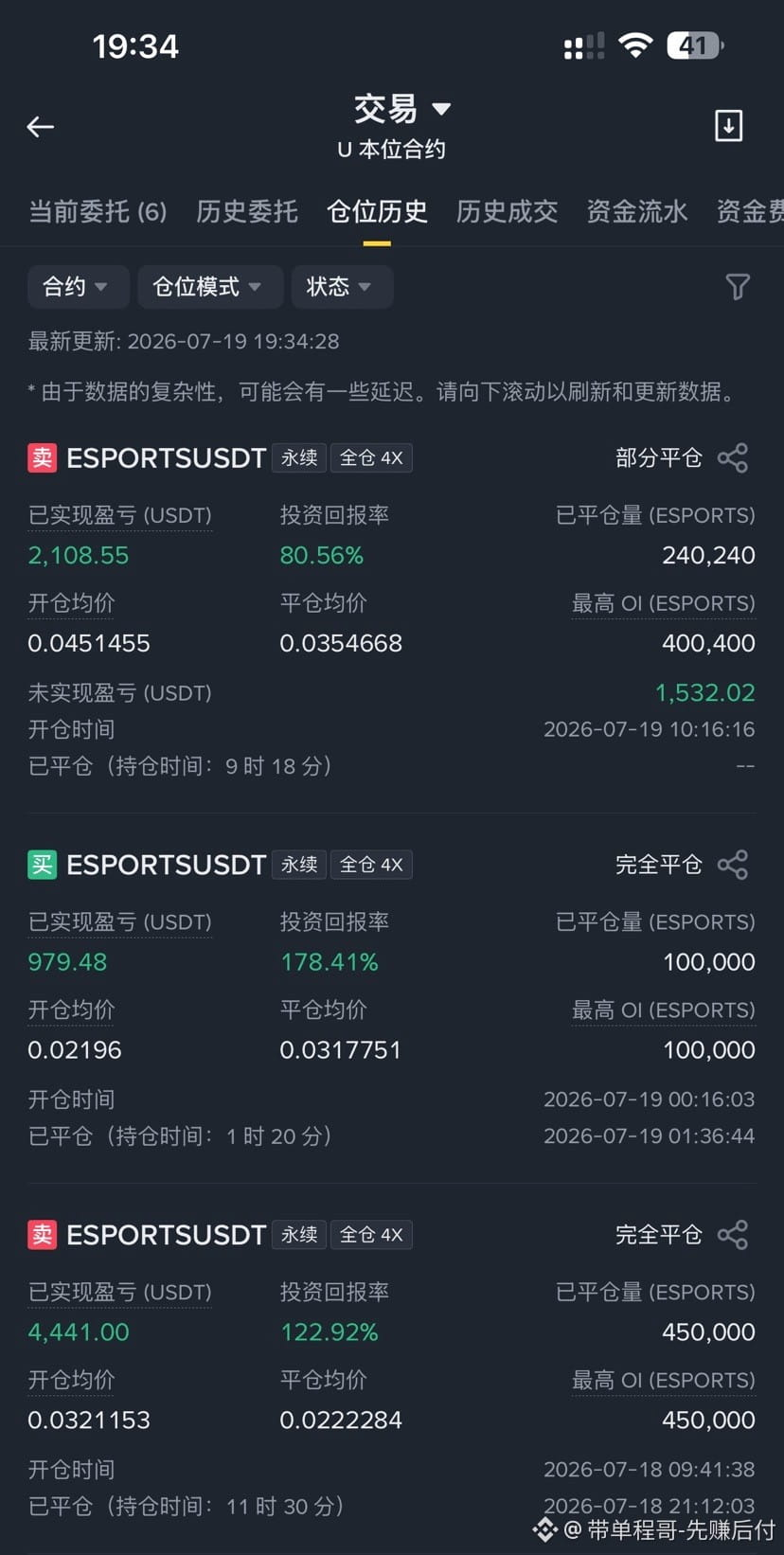
From 1000U to 10,000U—there are just three dead rules
Six months ago, a follower named Wǎntíng came to me with 900U. I gave her a method so simple it was basically like nonsense. She followed it for 30 days, and her account climbed to 12,000U
It’s not luck—three rules are welded into your brain
First cut: Split the money into three parts—going all-in is courting death
Split 900U into three portions of 300U each: 300U for short-term trades, maximum two trades per day, close when it’s time; 300U for waiting for the trend—if the weekly chart isn’t trending up, then pretend you’re dead
300U is your life-saving money. On the day of a liquidation, top up to maintain your position—so you’ll still be at the table. People who go all-in and gamble it all: one liquidation and it’s curtains. Those who split their positions: even if you lose a finger, you can still grow another
Second cut: Only eat the fattest segment—range-bound markets are a meat grinder
My signal is so simple it’s laughable: if the daily moving averages don’t have a bullish alignment, stay in cash
Break above the previous high with volume + daily close confirmation?
Enter.
When profit reaches 30% of your principal, immediately withdraw half. Set the remaining part to a 10% trailing stop for take-profit. Remember: the market always has the next bus. Don’t rush to grab the door—just catch the ride on favorable timing
Third cut: Lock emotions inside the cage—treat yourself like a button-pushing machine
Before entering, write your “life-or-death pledge”: stop loss at 5%, cut automatically at the set time—no bargaining. Take profit at 10%: move the stop loss up to break-even, and let the rest run
If you lose, never add to the position—that’s throwing money into a pit
From 900U to 12,000U—where’s the secret?
It’s just making fewer mistakes. You can only talk about wealth if you stay alive; if you don’t, you’re just someone else’s fee
The crypto world isn’t for the fastest runners—it’s for those who can stick it out until the end @tgfg2491
From 1000U to 10,000U—there are just three dead rules
Six months ago, a follower named Wǎntíng came to me with 900U. I gave her a method so simple it was basically like nonsense. She followed it for 30 days, and her account climbed to 12,000U
It’s not luck—three rules are welded into your brain
First cut: Split the money into three parts—going all-in is courting death
Split 900U into three portions of 300U each: 300U for short-term trades, maximum two trades per day, close when it’s time; 300U for waiting for the trend—if the weekly chart isn’t trending up, then pretend you’re dead
300U is your life-saving money. On the day of a liquidation, top up to maintain your position—so you’ll still be at the table. People who go all-in and gamble it all: one liquidation and it’s curtains. Those who split their positions: even if you lose a finger, you can still grow another
Second cut: Only eat the fattest segment—range-bound markets are a meat grinder
My signal is so simple it’s laughable: if the daily moving averages don’t have a bullish alignment, stay in cash
Break above the previous high with volume + daily close confirmation?
Enter.
When profit reaches 30% of your principal, immediately withdraw half. Set the remaining part to a 10% trailing stop for take-profit. Remember: the market always has the next bus. Don’t rush to grab the door—just catch the ride on favorable timing
Third cut: Lock emotions inside the cage—treat yourself like a button-pushing machine
Before entering, write your “life-or-death pledge”: stop loss at 5%, cut automatically at the set time—no bargaining. Take profit at 10%: move the stop loss up to break-even, and let the rest run
If you lose, never add to the position—that’s throwing money into a pit
From 900U to 12,000U—where’s the secret?
It’s just making fewer mistakes. You can only talk about wealth if you stay alive; if you don’t, you’re just someone else’s fee
The crypto world isn’t for the fastest runners—it’s for those who can stick it out until the end @带单程哥-先赚后付
1
1
645
·
--
If your principal is still less than 2,000 U, first listen to some plain truth: what you should learn right now isn’t how to get rich quick—it’s how to survive first.
Two years ago, I brought along a friend. Starting with 1,500 U, he reached 67,000 within half a year, and he never had a liquidation. It wasn’t luck—it was three “stupid” knives, taken to the extreme: also extremely steady.
First knife: Money must be split. Going all-in is basically asking for death $AKE
Split 1,500 U into three parts: 500 for day trading—at most one trade per day.
500 for swing trading—wait for a signal; if there isn’t one, don’t move.
The other 500 is for survival—you don’t touch it no matter how hard it gets.
Going all-in looks aggressive, but in reality it cuts off your retreat.
Second knife: Only eat the thickest meat. Don’t touch the rest.
Don’t trade in a range-bound market. If the direction is unclear, go to cash (no position).
80% of losses die in choppy, sideways action. Markets don’t offer opportunities every day—but your principal must be kept safe every day.
Third knife: Write the rules in stone; reset your emotions to zero $HEMI
Cut loss at 2%; cut at the scheduled time.
If you’re up 4%, reduce the position by half first.
Once the account reaches +20%, immediately withdraw 30%.
If you lose, never add to the position.
No gambling. No holding on. No fantasies—these three are the root of why nine out of ten people can’t turn things around.
Now his account has already passed 100,000. Even more important: he no longer has to stay up all night watching charts. Five minutes a day—check the levels, finish up, done.
Want to turn things around? Remember this one line: as long as your principal doesn’t die, you have the right to talk about doubling $SNDK
Splitting funds, waiting for the right moment, and controlling your timing—none of it is exciting, but it can help you avoid three years of detours.
In the crypto world, if you want to make money, you can’t do it fast. If you want it fast, you must first learn to go slow.
Don’t play make-believe—only do hands-on trades that can keep you alive. It’s easier to get lost walking alone. If you want to become steady, we’ll do it together @tgfg2491
If your principal is still less than 2,000 U, first listen to some plain truth: what you should learn right now isn’t how to get rich quick—it’s how to survive first.
Two years ago, I brought along a friend. Starting with 1,500 U, he reached 67,000 within half a year, and he never had a liquidation. It wasn’t luck—it was three “stupid” knives, taken to the extreme: also extremely steady.
First knife: Money must be split. Going all-in is basically asking for death $AKE
Split 1,500 U into three parts: 500 for day trading—at most one trade per day.
500 for swing trading—wait for a signal; if there isn’t one, don’t move.
The other 500 is for survival—you don’t touch it no matter how hard it gets.
Going all-in looks aggressive, but in reality it cuts off your retreat.
Second knife: Only eat the thickest meat. Don’t touch the rest.
Don’t trade in a range-bound market. If the direction is unclear, go to cash (no position).
80% of losses die in choppy, sideways action. Markets don’t offer opportunities every day—but your principal must be kept safe every day.
Third knife: Write the rules in stone; reset your emotions to zero $HEMI
Cut loss at 2%; cut at the scheduled time.
If you’re up 4%, reduce the position by half first.
Once the account reaches +20%, immediately withdraw 30%.
If you lose, never add to the position.
No gambling. No holding on. No fantasies—these three are the root of why nine out of ten people can’t turn things around.
Now his account has already passed 100,000. Even more important: he no longer has to stay up all night watching charts. Five minutes a day—check the levels, finish up, done.
Want to turn things around? Remember this one line: as long as your principal doesn’t die, you have the right to talk about doubling $SNDK
Splitting funds, waiting for the right moment, and controlling your timing—none of it is exciting, but it can help you avoid three years of detours.
In the crypto world, if you want to make money, you can’t do it fast. If you want it fast, you must first learn to go slow.
Don’t play make-believe—only do hands-on trades that can keep you alive. It’s easier to get lost walking alone. If you want to become steady, we’ll do it together @带单程哥-先赚后付

1
225
·
--
From a few thousand units to an eight-figure sum—I didn’t rely on insider information, and I don’t have any special talent. I only relied on one thing: make trading simple, and then take that simplicity to the extreme $UAI
Looking back, I went through three stages: from 43k to 1.2 million took two years; from 1.2 million to 6 million took one year; and then in the final five months, I surged from 6 million to 10 million.
The further I went, the clearer it became—how fast you make money is inversely proportional to how many times you operate.
All the way through, I only focused on one pattern: an N-shape—spike up, pull back, and then break through again.
I enter only after the pattern takes shape. If it breaks, I cut immediately. No averaging down, no holding through trouble, and no leverage $MAGMA
The rules are simple too: stop loss at 2%, take profit at 10%. Even if the win rate is only 35%, you can still make steady money.
On the chart, I only keep one indicator: the 20-day moving average. Every day, at a fixed time, I check the four-hour chart for a quick glance.
If there’s a signal, I place an order. If there isn’t, I shut down. No overthinking. No staring at the screen.
How do I handle profits?
When I reached 1.2 million, I withdrew the entire principal. When I reached 6 million, I took half to buy funds and put the rest into fixed-term deposits; the remaining half keeps rolling. That way, even if the market collapses, the foundation stays solid.
Three sentences carved into my bones: Don’t chase pumps—wait for the pattern to finish. Don’t hold through breakdown—if it breaks, you leave. Don’t fight for too long—once you’ve earned enough, take it out $ACE
Stop focusing only on “100x” coins. If you can consistently capture 10% for twenty straight times, a million is just a matter of time.
No hype, no exaggeration—just sharing real, practical experience that keeps you alive. If you want to make steady money, let’s walk together.

384
·
--
I’ve been trading crypto futures for ten years, and I’ve seen too many stories of accounts going to zero overnight. Behind every one, it’s almost always the same mistake—thinking you’ll be the exception.
Last night I received another voice message. A younger guy from Foshan was crying as he said, “Bro, I had a tenfold position with 10,000 USDT—then it pulled back just three percent and all of it’s gone…” I glanced at his trading history—the pattern was too familiar: $CL
Back in 2013, when I first started with contracts, it was the same for me too. I kept thinking that going all-in would help me turn things around faster. In the end, I blew up again and again, until there was nothing left.
Later I finally understood: the real brutality of this market isn’t how high the leverage is—it’s that your position size far exceeds what you can actually withstand.
For example: if you use 900 USDT out of 1,000 USDT at 10x leverage, a move in the opposite direction of just 5% will wipe you out.
But if you only use 100 USDT, then even a 50% swing might be what triggers a liquidation—the space for risk buffer is a full ten times bigger. $BZ
After ten years of stepping into countless traps, I’ve collected three rules that keep me alive:
1) Never risk more than 20% of your total capital per entry. With a 10,000 USDT account, you can put in at most 2,000 USDT each time. Even if your stop loss hits at 10%, you only lose 200 USDT—nowhere near enough to hurt the foundation. This rule is what kept me alive during the 2017 regulatory storm, when so many people went all-in on leverage and went to zero overnight.
2) Strictly cap single-trade losses at within 3%. For example, if you open with 2,000 USDT, set a stop loss in advance at 1.5%. Losing 300 USDT would be exactly 3% of your total capital. Last year, one of my trainees—who used to blow up every month—followed this approach and after three months went from 5,000 USDT to 8,000.
3) In a choppy, ranging market, never add to your position. When the candles are getting揉搓 back and forth, even if it looks like another opportunity, don’t reach in. Wait until the trend truly shows itself before you act. $SNDK
In this market, living long matters far more than making money fast. Don’t let a single moment of impulsiveness destroy all opportunities.

1
1.2k
·
--
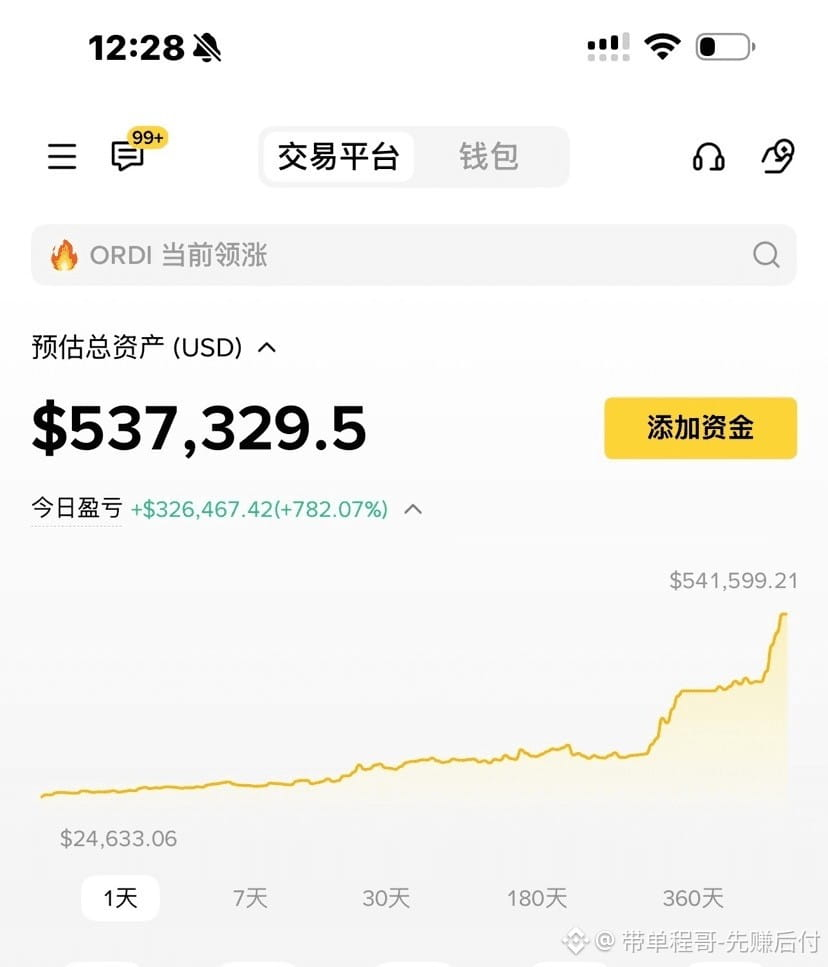
The most heartbreaking truth about trading contracts is: even if you’re right about the direction, you can still lose it all
Back then, I was exactly the same. I lost 630,000 in just half a year—more than once I clearly saw where the price was going, yet I ended up with nothing left
When I went back through my trade history, I finally understood: I didn’t lose because of the market—I fell into three traps that almost everyone can’t easily avoid
First trap: Too impatient
I rushed in the moment the market moved even a little. I was afraid of missing out, but it often turned into me buying the dealer’s stop-and-sweep with perfect timing. I got “stung” and forced out a bunch of times like a needle, and then I watched the price move exactly the way I thought—while my account was already completely empty
$CRV
Second trap: Stops too rigid
Setting a fixed 3% or 5% in the contract market is basically like getting called out to be beaten on the spot. I got taken out by fake breakouts that kept hitting my stop-loss. I cut the loss, and right after that the rally took off
Later I learned: stop-losses must follow the market’s rhythm. You can’t cling to a fixed rule like cutting a boat by the length of a sword
Third trap: All-in, no reserve
I always hoped one trade would turn everything around. But even when my direction was right, a few opposite candles could still wreck me. That night I watched my balance go to zero, and my mind went completely blank
Later, I made rules for myself:
1. Never overcommit—divide the money into three parts. Only those who are still alive have the right to talk about making profits
2. Stop-losses must be flexible—adjust them according to market volatility. Don’t buy into dead numbers
3. If you can’t see it clearly, don’t trade. Being out of the market isn’t embarrassing—randomly moving is what’s deadly
With these rules, I finally climbed out of the traps, and slowly made my account stable and then bigger
Contracts aren’t about betting on odds—they’re more like a survival game. The person who reaches the end isn’t necessarily the one who sees the most clearly, but it’s definitely the one who manages risk best, and is most able to wait
$0G
The market is always there—but you have to make sure you’re still in the game first
If you’re also searching and getting hurt repeatedly, maybe what you lack isn’t skill—it’s a set of rules that can actually protect you@tgfg2491
The most heartbreaking truth about trading contracts is: even if you’re right about the direction, you can still lose it all
Back then, I was exactly the same. I lost 630,000 in just half a year—more than once I clearly saw where the price was going, yet I ended up with nothing left
When I went back through my trade history, I finally understood: I didn’t lose because of the market—I fell into three traps that almost everyone can’t easily avoid
First trap: Too impatient
I rushed in the moment the market moved even a little. I was afraid of missing out, but it often turned into me buying the dealer’s stop-and-sweep with perfect timing. I got “stung” and forced out a bunch of times like a needle, and then I watched the price move exactly the way I thought—while my account was already completely empty
$CRV
Second trap: Stops too rigid
Setting a fixed 3% or 5% in the contract market is basically like getting called out to be beaten on the spot. I got taken out by fake breakouts that kept hitting my stop-loss. I cut the loss, and right after that the rally took off
Later I learned: stop-losses must follow the market’s rhythm. You can’t cling to a fixed rule like cutting a boat by the length of a sword
Third trap: All-in, no reserve
I always hoped one trade would turn everything around. But even when my direction was right, a few opposite candles could still wreck me. That night I watched my balance go to zero, and my mind went completely blank
Later, I made rules for myself:
1. Never overcommit—divide the money into three parts. Only those who are still alive have the right to talk about making profits
2. Stop-losses must be flexible—adjust them according to market volatility. Don’t buy into dead numbers
3. If you can’t see it clearly, don’t trade. Being out of the market isn’t embarrassing—randomly moving is what’s deadly
With these rules, I finally climbed out of the traps, and slowly made my account stable and then bigger
Contracts aren’t about betting on odds—they’re more like a survival game. The person who reaches the end isn’t necessarily the one who sees the most clearly, but it’s definitely the one who manages risk best, and is most able to wait
$0G
The market is always there—but you have to make sure you’re still in the game first
If you’re also searching and getting hurt repeatedly, maybe what you lack isn’t skill—it’s a set of rules that can actually protect you@带单程哥-先赚后付
2
6
8.5k
·
--
Trading coins—this whole thing, if you say it’s complicated, it is; if you say it’s simple, it is too $ARB
I know a senior—he used to run a small convenience store. Later he got into the crypto market. Using a method that’s almost “stupid,” he managed to grow his net worth to eight figures
This method isn’t magical. It’s just four steps, and each step is tightly tied to a single line
First step: Find the right opportunity
Open the daily chart. Don’t look at anything else—just watch the MACD. Find coins where a golden cross appears. Ideally, the golden cross should happen above the 0 axis; it’s steadier and has more strength
Second step: Read the trend
$USELESS
Once you’ve found your target, your whole world only needs one line—the daily moving average line. The simplest rule: if the coin price is above this line, hold; if it breaks below this line, sell. Ignore all other noise
Third step: Buy
When the coin you like breaks above the daily moving average with volume, that’s the signal. Don’t hesitate—go all in. This is the moment when the trend is confirmed
Fourth step: Sell—divide it into three layers
First layer: when this wave’s upside exceeds 40%, sell one-third of your position. Get part of the profit into your pocket first
Second layer: when the upside exceeds 80%, sell another one-third so the profits can keep running
Last layer: the bottom line—once the price breaks below the daily moving average, no matter how much you’re up, liquidate everything. Never fight the market
Finally, and most importantly: if you buy in and then, by the next day, it unfortunately breaks below the daily moving average, don’t entertain any fantasies—sell everything immediately. Wait until one day it reclaims that line, and then you can buy back
With this method, the probability of breaking down is small, but risk awareness still has to be carved into your bones
Making money doesn’t need so many tricks. Most of the time, executing a simple rule all the way through is the most effective path
Above this line is opportunity; below this line is risk. Understand it, trust it, and then repeat it @tgfg2491 $0G
Trading coins—this whole thing, if you say it’s complicated, it is; if you say it’s simple, it is too $ARB
I know a senior—he used to run a small convenience store. Later he got into the crypto market. Using a method that’s almost “stupid,” he managed to grow his net worth to eight figures
This method isn’t magical. It’s just four steps, and each step is tightly tied to a single line
First step: Find the right opportunity
Open the daily chart. Don’t look at anything else—just watch the MACD. Find coins where a golden cross appears. Ideally, the golden cross should happen above the 0 axis; it’s steadier and has more strength
Second step: Read the trend
$USELESS
Once you’ve found your target, your whole world only needs one line—the daily moving average line. The simplest rule: if the coin price is above this line, hold; if it breaks below this line, sell. Ignore all other noise
Third step: Buy
When the coin you like breaks above the daily moving average with volume, that’s the signal. Don’t hesitate—go all in. This is the moment when the trend is confirmed
Fourth step: Sell—divide it into three layers
First layer: when this wave’s upside exceeds 40%, sell one-third of your position. Get part of the profit into your pocket first
Second layer: when the upside exceeds 80%, sell another one-third so the profits can keep running
Last layer: the bottom line—once the price breaks below the daily moving average, no matter how much you’re up, liquidate everything. Never fight the market
Finally, and most importantly: if you buy in and then, by the next day, it unfortunately breaks below the daily moving average, don’t entertain any fantasies—sell everything immediately. Wait until one day it reclaims that line, and then you can buy back
With this method, the probability of breaking down is small, but risk awareness still has to be carved into your bones
Making money doesn’t need so many tricks. Most of the time, executing a simple rule all the way through is the most effective path
Above this line is opportunity; below this line is risk. Understand it, trust it, and then repeat it @带单程哥-先赚后付 $0G
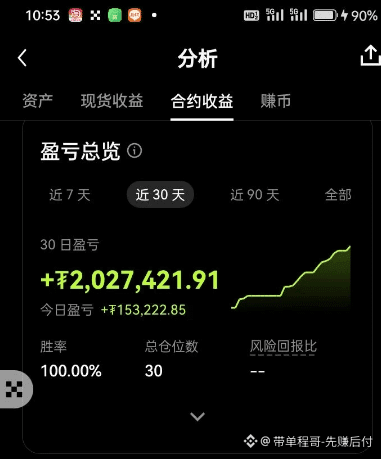
1
3
1.1k
·
--
I’ve been trading crypto for eight years, starting with 20,000 and growing it to tens of millions. To put it plainly, it all comes down to keeping about half your capital in position and trading steadily. My apprentice learned this approach and doubled his money in three months. Today I’ll lay out everything I’ve kept under wraps—listen carefully. $SKR
Don’t go all in with your funds; split them into five parts and enter with only one-fifth each time. Set a stop loss at 10 points, and even if you’re wrong once, you only lose 2% of total capital. Even if you’re wrong five times in a row, it barely scratches the surface. If you’re right, take profit at more than 10 points—trade like this, and how could you get trapped so easily?
If you want to improve your win rate, the core is just two words: follow the trend. In a downtrend, every rebound is a bull trap; in an uptrend, every pullback is the real buying opportunity. Which is easier to profit from: bottom-fishing, or buying on the dip with the trend?
For coins that have surged sharply in the short term, whether they’re major coins or altcoins, try to avoid them. Very few coins can keep running in a strong primary wave. When the rise is too steep in the short term, it becomes harder to keep going up. Once it stops rising at high levels, it will naturally fall—the logic is simple, but there are always people who want to bet on the last leg.
You can use MACD to look at entry and exit points. When DIF and DEA form a golden cross below the zero line and then break above it, that is often a solid entry signal. If MACD forms a death cross above the zero line and turns downward, then it’s time to reduce your position.
The word “averaging down” has hurt countless people. Adding more when you’re already losing only digs the hole deeper; that’s the most dangerous mindset in crypto trading. It’s best not to average down during losses—only consider adding when you’re in profit and the trend is confirmed. $SAHARA
In the relationship between volume and price, trading volume is the soul. When a coin consolidates at a low level and then breaks out on rising volume, it’s worth watching; when volume increases at a high level but the price can no longer rise, leave decisively—don’t hesitate.
Only trade coins in an uptrend. It saves time and increases your odds. In the short term, watch the 3-day line turning upward; in the medium term, the 30-day line; for the main upward wave, the 84-day line; and for the long term, the 120-day line. When the lines point up, the trend is there.
Finally, stick to a nightly review. Check whether the logic behind your holdings has changed, whether the weekly trend still matches expectations, and whether the trend has reversed. Adjust in time, and you can keep up with the rhythm. $BTR
There’s no need for too many methods—master these points, and only by surviving longer in the market can you hope to earn steadily. #三星SK海力士领跌韩股KOSPI跌3.6%

530
·
--
Many people trade coins— the more they learn, the more complicated it gets, and the less they end up making.
But I have a follower. He listened to me and went from 30,000 to 10 million. It wasn’t insider info or talent—just making complicated things simple, and simple things to the extreme.
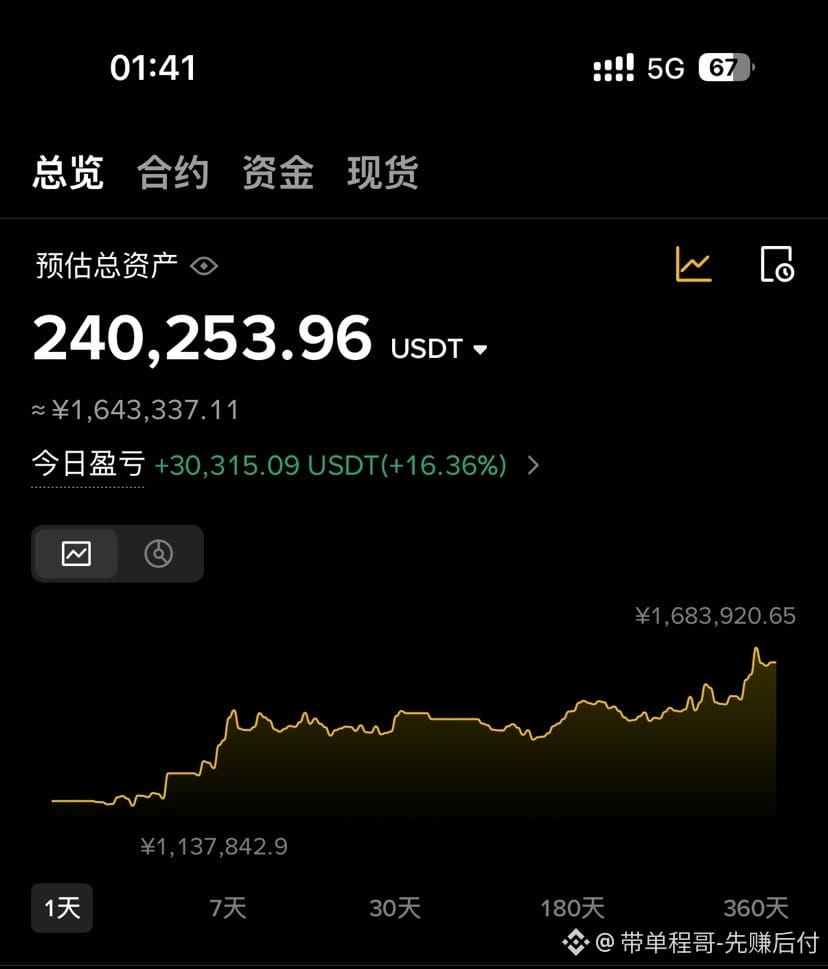
It took him two years to grow from 300,000 to 1.2 million; then another year to roll from 1.2 million to 6 million; and finally, in just five months, he surged from 6 million to 10 million. The further he went, the more he noticed a rule: the speed of making money is inversely proportional to the number of times you take action.
He only follows what I say, and he focuses on just one pattern: the letter “N”—a vertical surge, a diagonal pullback, then another vertical breakout. The moment the “N” pattern completes, he enters the trade; when the “N” breaks, he cuts the position immediately. No averaging down, no holding through losses, and definitely no adding leverage. He sets a stop-loss at 2% and lets take-profit run to 10%. Even with a win rate of only 35%, he can still steadily profit over the long term.
Many people think this method is too “dumb.” They like to watch indicators, draw trendlines, and read the news—yet the smarter they get, the faster they lose. He’s the opposite: simple and brutal. On the chart, he leaves only one 20-day moving average line, and fades the color to prevent himself from overthinking. Every morning at 9:50, he opens the exchange and scans the 4-hour chart. If there’s no “N,” he shuts it down. If there is an “N,” he places the order, with stop-loss and take-profit already set. He finishes his trading in about five minutes a day, then spends the rest of the time drinking coffee, taking the dog for walks.
He distributes his profits in three steps: when he reaches 1.2 million, he withdraws all the principal first; when he reaches 6 million, he takes half out to buy funds and deposit for fixed terms; and then he keeps rolling the rest. That way, even if the market crashes, the foundation is still solid.
I set three rules for him: don’t chase pumps—wait until the pattern is fully formed before acting; don’t hold losing positions—if it breaks down, leave right away; and don’t stay too long—when you’ve made enough, withdraw.
In the coin world, there’s no Holy Grail—only sieves. If you sift long enough, the gold will naturally remain. Don’t fantasize about getting a hundredfold coin every day. If you can steadily take away 10% for 20 straight times, you’ll be surprised to find that 10 million is actually just a matter of time.
I’ve already walked through the darkness. Now the torch is in your hands. This time, it’s your turn to shine.
131
·
--
If your funds are within 100,000, stop fantasizing about those god-level trading setups.
I’ll teach you a method that might seem a bit dumb, but it can help you survive in this market—and gradually get bigger.
The core logic is basically one sentence: only take trades in the right trend. If it’s right, hold on tightly; if it’s wrong, leave immediately.
Step 1: Only choose the strong coin $SKR
Use the daily chart to look at MACD—only trade golden crosses, preferably those above the zero line. Don’t listen to any news or stories. Whether the market is strong or not is already written on the chart.
Step 2: Only recognize one line: the daily moving average
If the price is above the moving average, keep holding. If it falls below, exit immediately. No “wait and see,” and no “maybe it’ll bounce back.”
Step 3: Position sizing is the line between life and death $ZORA
Only when the price is above the moving average and the trading volume increases in sync is it allowed for you to go heavy. If it rises, take profits in batches. Once it breaks the line, clear out instantly without hesitation—this is discipline. No discussion.
Step 4: There is only one stop-loss condition: a break below the daily moving average
The next day, no matter what the reason is, close everything. If you’re wrong, then you’re wrong. It’s not too late to come back once it starts moving strong again.
This method is simple—so simple it doesn’t require any special talent, and it doesn’t rely on luck. But it has one biggest advantage: it can be used by most retail traders, and it helps you not die.
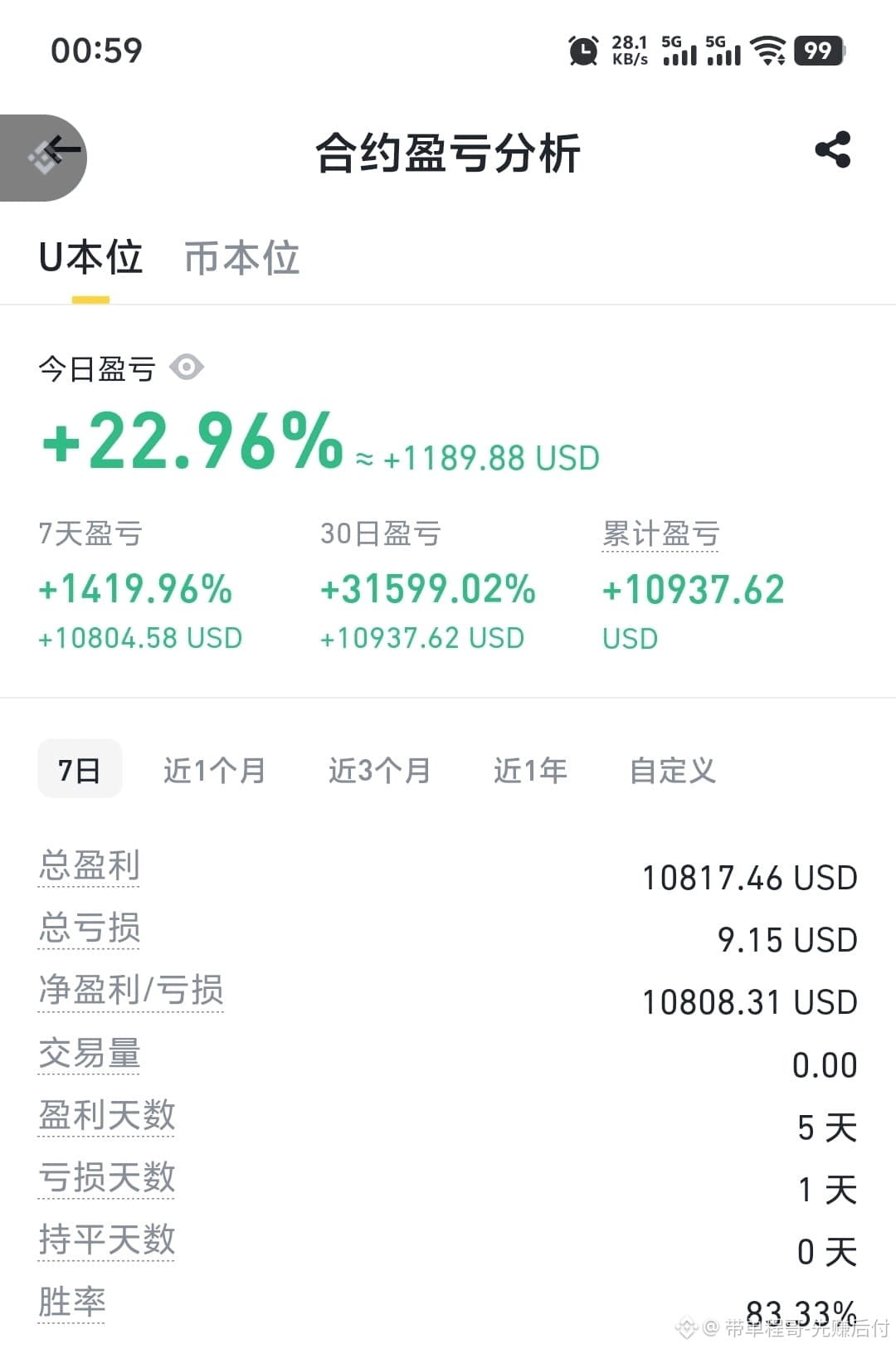
Just like that “Binance Life” wave of the market earlier—I had my brothers go long with the trend as soon as possible. It was originally just a small bet, but the market really played out.
Take what you should take, and leave when you should leave. Making money is winning—don’t overthink anything else $UAI
If you still don’t know how to pick coins, don’t know when to enter, and don’t know when to exit, then follow me.
I can’t promise you’ll get rich overnight, but I can help you avoid a lot of detours @tgfg2491
If your funds are within 100,000, stop fantasizing about those god-level trading setups.
I’ll teach you a method that might seem a bit dumb, but it can help you survive in this market—and gradually get bigger.
The core logic is basically one sentence: only take trades in the right trend. If it’s right, hold on tightly; if it’s wrong, leave immediately.
Step 1: Only choose the strong coin $SKR
Use the daily chart to look at MACD—only trade golden crosses, preferably those above the zero line. Don’t listen to any news or stories. Whether the market is strong or not is already written on the chart.
Step 2: Only recognize one line: the daily moving average
If the price is above the moving average, keep holding. If it falls below, exit immediately. No “wait and see,” and no “maybe it’ll bounce back.”
Step 3: Position sizing is the line between life and death $ZORA
Only when the price is above the moving average and the trading volume increases in sync is it allowed for you to go heavy. If it rises, take profits in batches. Once it breaks the line, clear out instantly without hesitation—this is discipline. No discussion.
Step 4: There is only one stop-loss condition: a break below the daily moving average
The next day, no matter what the reason is, close everything. If you’re wrong, then you’re wrong. It’s not too late to come back once it starts moving strong again.
This method is simple—so simple it doesn’t require any special talent, and it doesn’t rely on luck. But it has one biggest advantage: it can be used by most retail traders, and it helps you not die.
Just like that “Binance Life” wave of the market earlier—I had my brothers go long with the trend as soon as possible. It was originally just a small bet, but the market really played out.
Take what you should take, and leave when you should leave. Making money is winning—don’t overthink anything else $UAI
If you still don’t know how to pick coins, don’t know when to enter, and don’t know when to exit, then follow me.
I can’t promise you’ll get rich overnight, but I can help you avoid a lot of detours @带单程哥-先赚后付
474
·
--
Many people trade crypto in a frenzy; the more they study, the more complicated it gets—yet the less they end up earning.
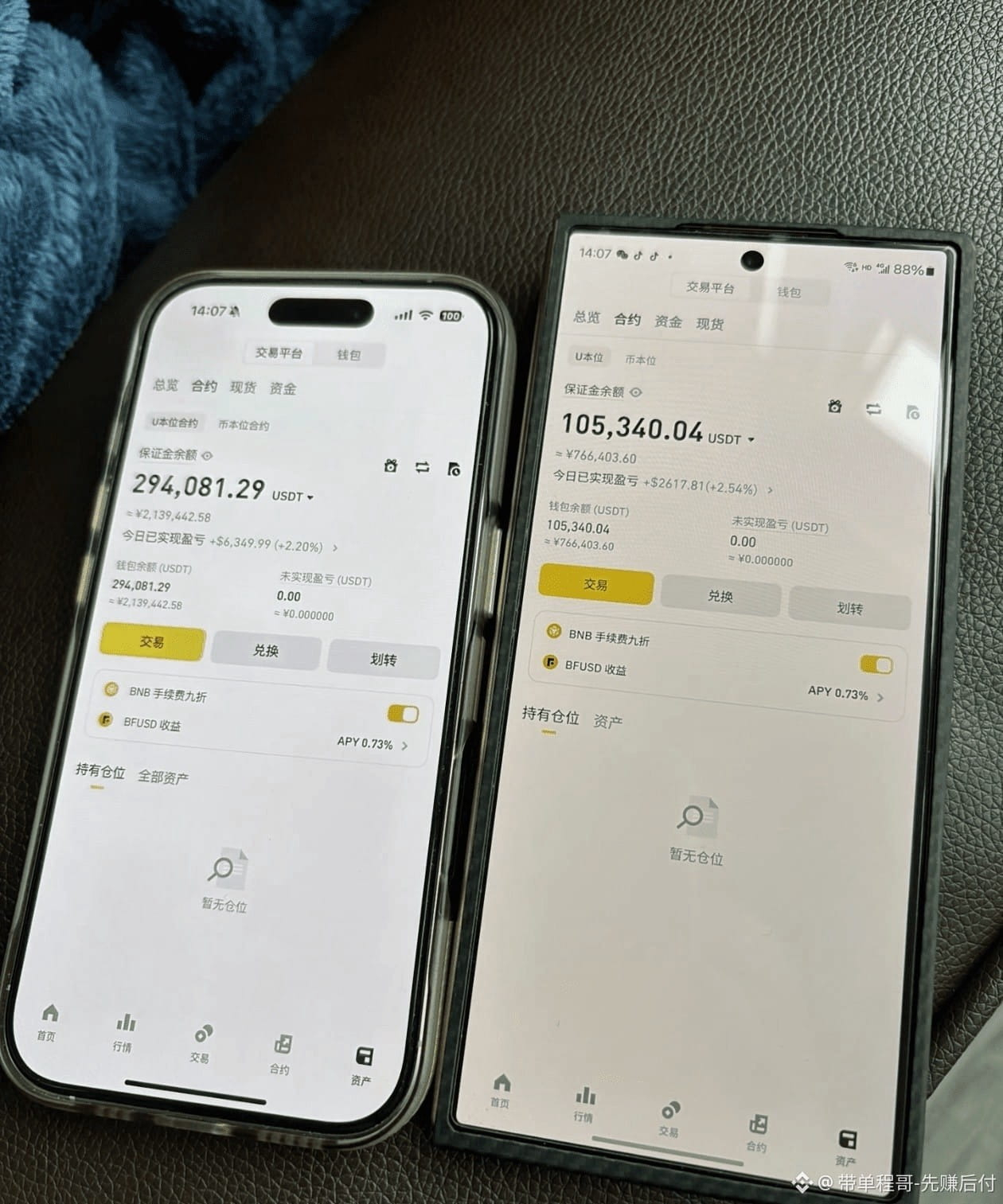
But I have a follower who, by following my guidance, went from 30,000 to 10 million. It wasn’t insider information or talent—just simplifying complex things, and taking simple things to the extreme.
He spent two years moving from 30,000 to 1.2 million.
Then another year to roll from 1.2 million to 6 million; and finally, in just five months, he surged from 6 million to 10 million.
The further he went, the more he discovered a pattern: the speed of making money is inversely proportional to the number of times you take action.
He only listens to me, and he focuses on just one pattern: an N-shape—go straight up on the first leg, pull back diagonally, then break through upward again.
Once the N completes, he enters. If the N breaks, he immediately cuts the position.
No adding to the position, no holding through losses, and certainly no increasing leverage.
He sets the stop-loss at 2%, sets take-profit at 10%. Even with a win rate as low as 35%, over the long term he can still steadily profit.
Many people call this method too “dumb,” and they prefer to watch indicators, draw trend lines, and read the news. In the end, the smarter they think they are, the faster they lose.
He does the opposite—simple and brutal: on the chart, he keeps only one 20-day moving average line. He fades the color to prevent himself from overthinking.
Every day at 9:50 a.m., he opens the exchange, scans the four-hour chart—no N-shape? He just shuts it down.
If there is an N-shape, he places the order and sets the stop-loss and take-profit.
He finishes trading in five minutes a day. The rest of the time he drinks coffee, goes for walks, and takes his dog out.
He divides his profits into three steps:
When he reaches 1.2 million, he withdraws all the principal first.
At 6 million, he takes half out to buy funds and put money into fixed-term deposits.
The rest continues to compound. Even if the market collapses, the foundation is still solid.
I set him three rules: don’t chase the price up—wait until the pattern finishes before acting.
Don’t hold through breakdowns—if it breaks support, leave immediately; don’t get greedy—take profits once you’ve hit your target.
In the crypto market, there is no holy grail—only sieves.
If you sieve long enough, the gold will naturally be left behind.
Don’t spend all day fantasizing about 100x coins. If you can consistently take 10% profit for 20 times in a row, you’ll be surprised: a 10 million is really just a matter of time.
I’ve already walked through the dark. Now the torch has been handed to your hands. This time, it’s your turn to shine.
96
Log in to explore more content
Join global crypto users on Binance Square
⚡️ Get latest and useful information about crypto.
💬 Trusted by the world’s largest crypto exchange.
👍 Discover real insights from verified creators.
Email / Phone number