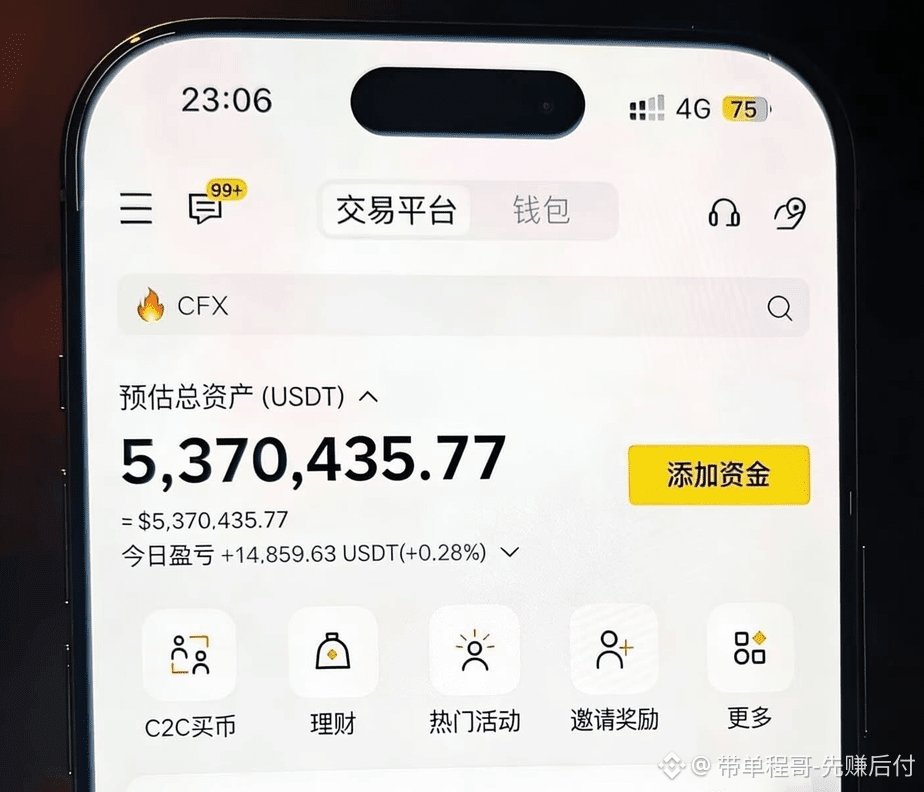
I’ve been trading crypto for 8 years—from starting with 20,000 to over 50 million. I rely only on these eight rules.
Keep 50% of your position and trade steadily. Monthly returns can soar to 70%.
I passed this private set of techniques to my student—he doubled his money in just three months.
Today I’m in a good mood, so I’m finally laying all my bottom-drawer treasures on the table. Keep this: $AKE
1. Split your funds into five parts—only enter one at a time.
Use a 10-point stop loss. If you’re wrong once, you lose only 2% of your total capital. If you’re wrong five times, you lose only 10%. Take-profit should be set at 10 points or more—do you still think you’ll get trapped?
2. To improve your win rate, it’s just two words: follow the trend.
In a downtrend, every bounce is a bull trap; in an uptrend, every dip is like throwing money into a golden pit. Which is easier to profit from—catching bottoms, or buying dips?
The answer is obvious: $T
3. Don’t touch coins that have had a short-term explosive surge.
Coins that manage to run multiple major breakout waves are rare. After a short-term blowout, can they keep rising? Hardly. When the price stalls and can’t push higher at high levels, it naturally falls—simple logic, yet many still want to gamble.
4. Use MACD to judge entry and exit points. A golden cross formed below the zero line by DIF and DEA, then breaking through the zero line, is a solid and cautious entry signal. If the MACD forms a dead cross and moves downward while above the zero line, it’s time to reduce your position.
5. Never add to your position when you’re losing.
I don’t know who invented “averaging down,” but it has wrecked so many retail traders.
The more you lose, the more you add; the more you add, the more you lose—that’s the biggest taboo in crypto trading. Remember: don’t add when you’re losing; only add when you’re profitable.
6. Trading volume is the soul of the crypto market.
Watch for breakouts on high volume at low levels. At high levels, if it’s stalling despite high volume, exit decisively.
7. Only trade coins in an uptrend.
When the 3-day moving average turns up, the short-term rises; when the 30-day line points up, the medium-term rises; when the 84-day line points up, it’s the primary breakout wave; when the 120-day line points up, the long-term structure is bullish. Trade with the trend—the odds are highest: $BULLA
8. Always review after every round.
Check whether your logic for holding coins has changed, whether the weekly K-line走势 matches your judgment, and whether the direction has shifted. Review in time and adjust your strategy.
The market is always here. With systematic thinking, you can cut through the fog of investing.