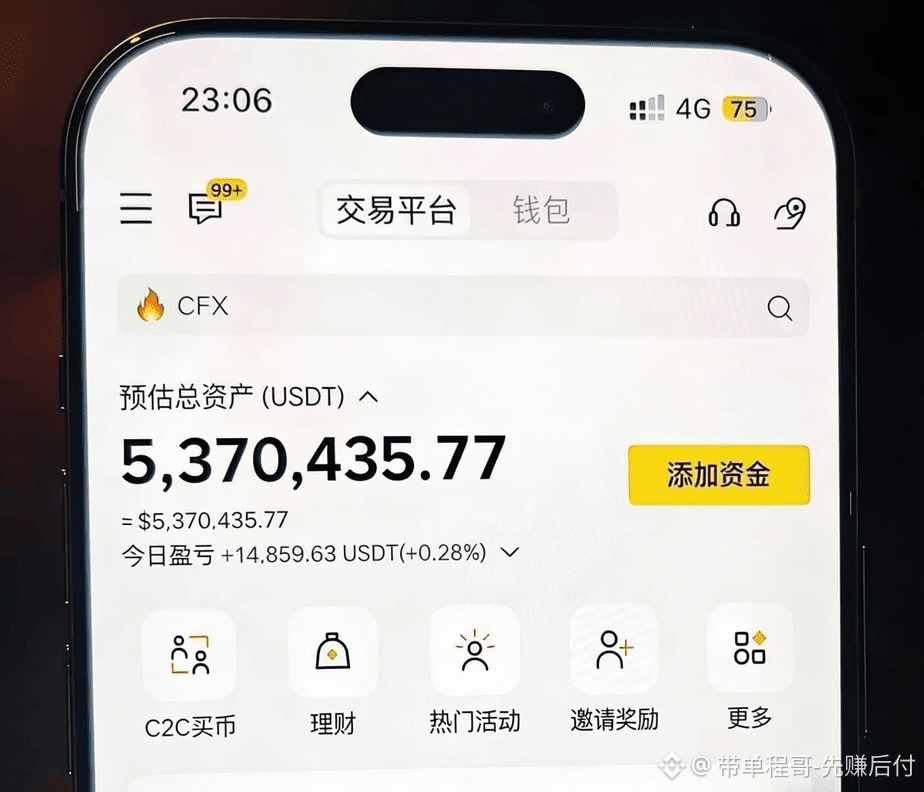
The year I lost five hundred thousand, I was almost done for.
Staring at the order book made my eyes ache, my hands shook so badly I couldn’t hit the keys, and I was so anxious I couldn’t sleep until after midnight. I smoked one cigarette after another—the throat felt like it had been burned.
When my account shrank to just a few thousand U, one thought kept flashing in my mind: forget it, don’t do this anymore.
But I didn’t leave. This money wasn’t the last gamble of a dog—it was the bullet I needed to stand back up.
I only focus on a few things: I exclusively trade the needle-insert moments, wait for the price to crash to key moving-average areas, use a low-multiple leveraged position with small size, take profit on a small portion immediately and get out. At most two trades a day—never touch a third.
For brand-new coins, I grab the first wave: place orders before they go live, with an order book so thin it’s like paper. I set up ahead of time for a low buy. Once the price rises by a certain percentage, I exit right away—fast in, fast out.
After the account reaches a certain size, every night at a fixed time I transfer half into a cold wallet—that habit later saved me countless times. I’ve seen too many people who watched it multiply a few times and still refused to take profits, then ended up giving it all back.
In this stage, technical skill is just the foundation—discipline is the lifeline.
I’m not a genius, and I’m not just lucky. But I figured out one thing:
You can have nothing, but you can’t be clueless about the market. In this world, you don’t rise back on miracles. You rise by making every cut land exactly where it should—hard and steady.
Everyone loses money, but whether you can turn that last bit of capital into something great depends on whether you truly want to stay alive. One person can’t go far—finding the right path is what lets you go longer.