

胡铁花来了
352 Posts

胡铁花来了
Report
Block User
21 Following
41 Followers
87 Liked
Posts
All
Quotes
·
--
An overseas crypto exchange has officially exited the UK today: UK users can no longer deposit funds, new users can no longer register, and commitments related to unlawful promotions will remain in force until October 21, 2031.
This case has a long timeline: the UK Financial Conduct Authority (FCA) issued a warning in October 2023, formally filed suit in October 2025, and made the enforcement action public in February 2026. On October 16 this year, the exchange first announced its UK exit arrangements, under which eligible existing users can apply for a one-time 48-hour withdrawal window. The settlement terms are confidential and do not constitute an admission of wrongdoing. The UK is also preparing to bring more crypto businesses under regulation in October 2027.
I think this is the key signal: for the first time, regulators have used a High Court case to put a complete stop to an overseas exchange’s UK promotions. Being based abroad is no longer a shield.
Do you think other overseas exchanges still advertising in the UK will leave voluntarily first, or wait for regulators to come knocking?
Follow me. When the details of the UK’s new rules for October 2027 are released, I’ll be the first to help you check which overseas exchanges can still serve UK users.

177
·
--
Consensys has just announced a major upgrade: the slowest step in elliptic-curve security checks has been accelerated, running 10.8 times faster on the FourQ curve.
The new method is called Divide-and-Pair and targets subgroup membership checks. It delivers speedups of about 1.6× on Curve25519, 1.3× on Curve448, 1.4× on GC256A, 10.8× on FourQ, and 7× on Jubjub. It has been integrated into the open-source library gnark-crypto, which powers systems including Besu, Linea, Geth, Succinct, and Lighter. The related paper has been accepted by the IACR Transactions on Cryptographic Hardware and Embedded Systems and will be presented at CHES 2027.
I think the real value of this speedup is that it isn’t tied to a particular curve: the same method is no slower than the old one across all five curves. Developers don’t have to switch approaches for each curve individually, making it possible to leave security checks enabled by default instead of turning them off for speed.
If you could roll out this new check in only one of Besu, Linea, and Geth first, which would you choose?
Follow me. When this paper is presented at CHES 2027, I’ll help you check whether its measured speedups in Besu and Linea hold up.
$ETH

88
·
--
Partly True
Tether has taken gold tokenization a step further today: XAUT is no longer just something you hold and wait to rise or fall—you can now deposit it and earn XAUT rewards directly.
The first phase launches with an exclusive promotion: USDT and XAUT can be locked in flexible or fixed-term products, with rewards paid directly in XAUT. Terms range from flexible to 180 days, with a per-user limit of 100,000 USDT and a total promotion cap of $5 million. The second phase will bring in more major crypto assets.
I think this move is right on target: when volatility is high, people don’t need another coin—they need a way to link stablecoin yields to physical gold. Gold backing gives it a different kind of anchor.
Would you choose the flexibility of a flexible-term product, or lock in for 180 days to earn more predictable XAUT rewards?
Follow me. When the list of new assets for phase two comes out, I’ll check whether it includes any coins you hold.
$XAUT $USDT

145
·
--
CertiK has joined the Arbitrum Startup Support Program to provide security backing for early-stage Web3 teams.
Since 2017, CertiK has secured over $60 billion in digital assets across more than 150 countries and regions. Selected teams can access AI Auditor, Skynet, discounted security assessments, and one-on-one guidance in four areas: security, technology, business development, and go-to-market strategy. Winning teams also get four extra benefits: extended access to AI Auditor, priority pre-launch audit scheduling, compliance guidance tailored to their target markets, and promotional opportunities.
In my view, the real value of this kind of support isn’t the list of tools—it’s getting priority scheduling for an audit before launch. If the audit schedule gets held up, the entire launch timeline gets pushed back.
If you’re on an early-stage team, which would you go for first: a discounted security assessment or priority pre-launch audit scheduling?
Follow me. Once the selected teams and winners are announced, I’ll be among the first to check who got priority pre-launch audits.
$ARB

78
·
--
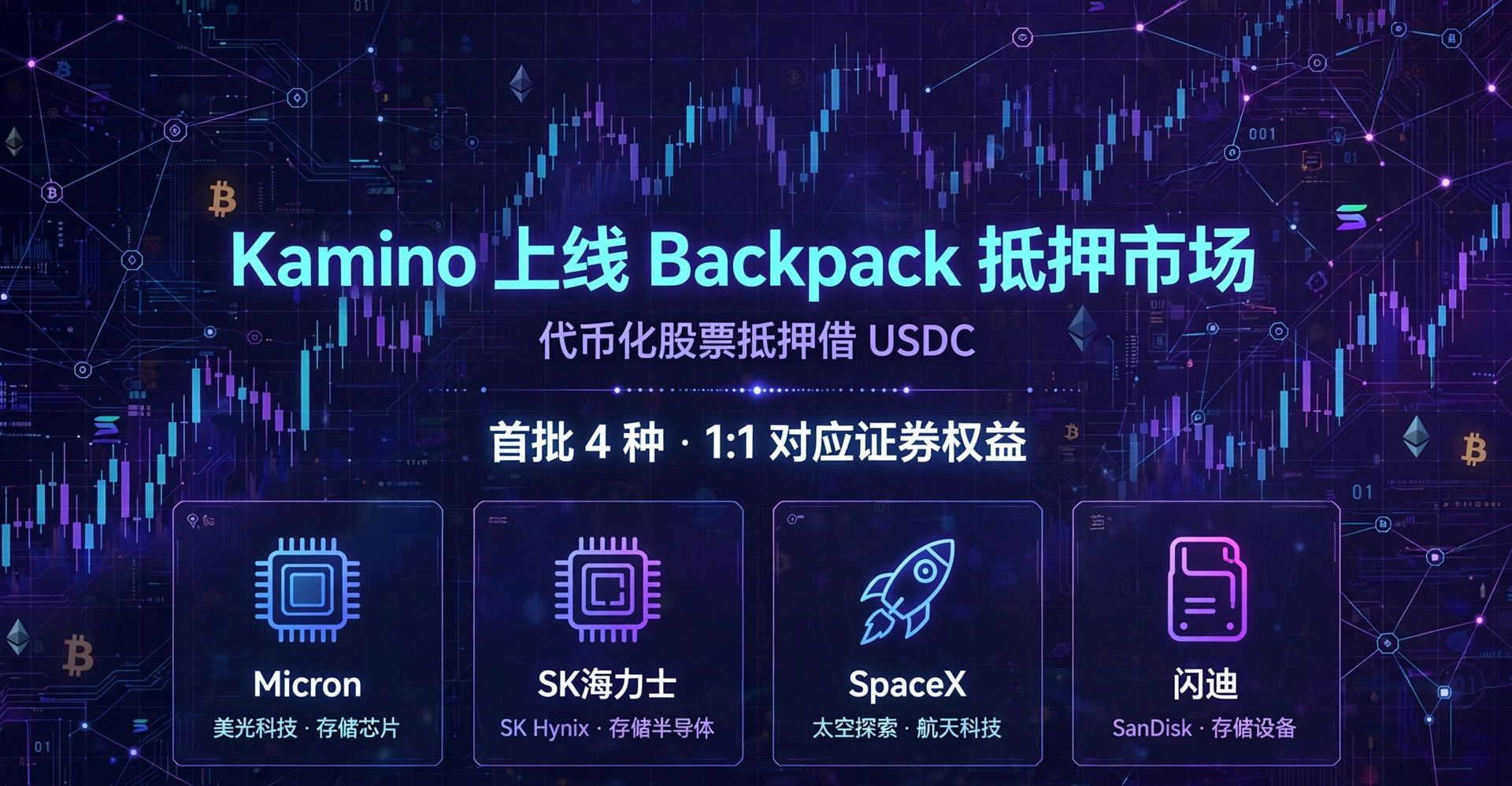
Kamino has launched a new market on Solana: eligible users can deposit tokenized stocks as collateral and borrow USDC directly.
The first batch includes just four assets: Micron, SK hynix, SpaceX, and SanDisk. In Backpack’s compliant structure, each asset is backed 1:1 by securities or interests in securities. The market is isolated, so a problem in one pool won’t directly spread to others. Allez Labs handles the lending terms and risk management.
I think this is a real step forward for tokenized stocks: before, they were just an on-chain certificate you held. Now they can actually be used as collateral to access liquidity. But tracking prices while stock markets are closed remains one of the biggest challenges.
If you held tokenized SpaceX, would you use it as collateral to borrow USDC for liquidity, or sell it outright for cash?
Follow me. Once this market has made it through its first stock-market closure, I’ll check whether collateral levels and liquidation performance look unusual.
$SOL $USDC
39
·
--
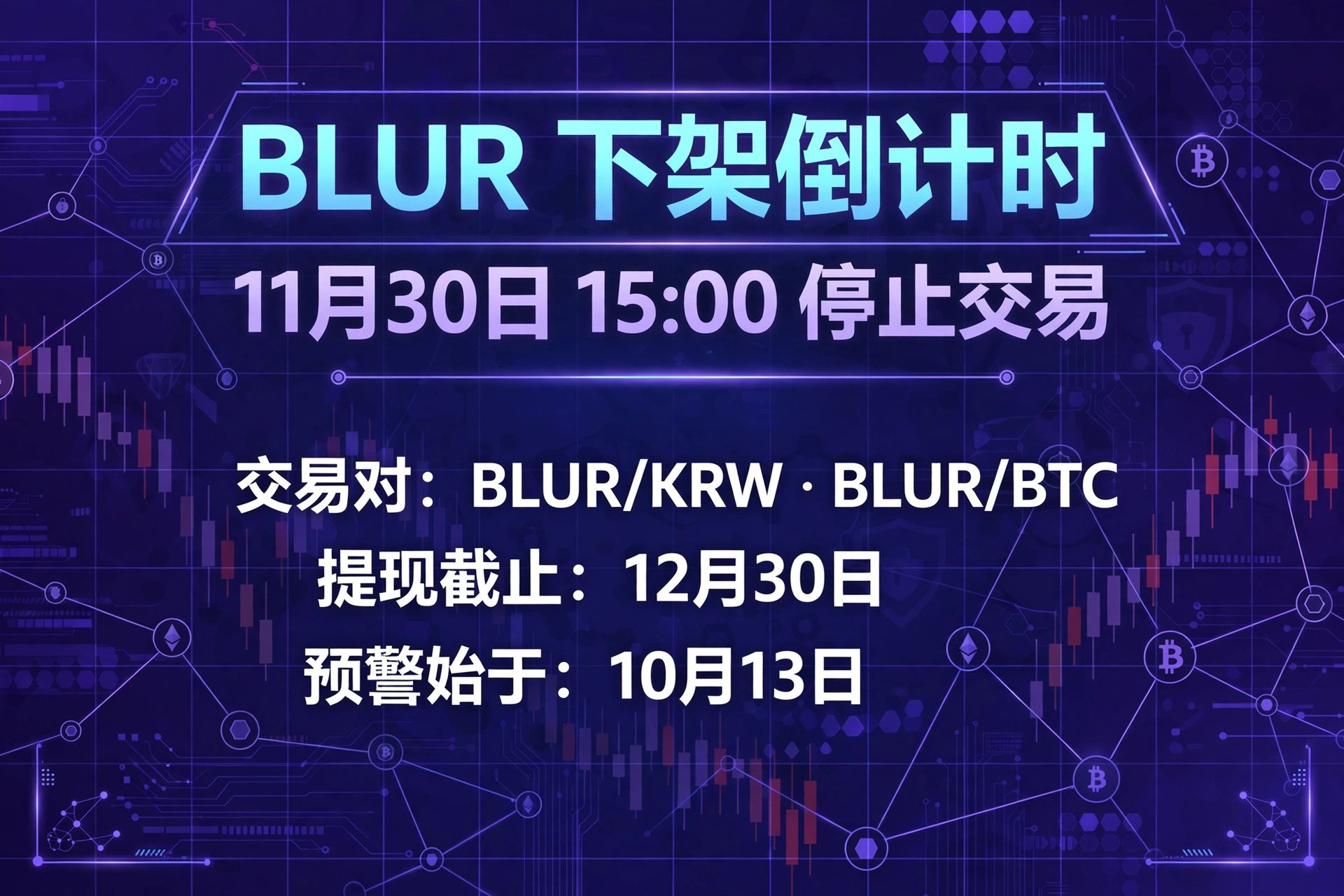
A leading South Korean exchange made its decision today: BLUR trading will stop at 15:00 on November 30, and holders will only have until December 30 to withdraw.
The delisting covers 2 trading pairs: BLUR/KRW and BLUR/BTC. Any unfilled buy or sell orders will be canceled in batches when trading ends. The timeline is also clear: an investment warning was issued on October 13, the review period ran through the week of October 26–30, and today the exchange made its final decision, citing concerns about the project’s business legitimacy and sustainability.
I don’t think this is a sudden delisting. It’s the conclusion of a review process that has unfolded step by step, and major South Korean exchanges are becoming less tolerant of older projects.
If you still have BLUR on the exchange, would you sell before November 30, or transfer it to a wallet and decide what to do before December 30?
Follow me, and on November 30, the delisting day, I’ll help you check whether the final trading time and withdrawal window have changed.
$BLUR
162
·
--
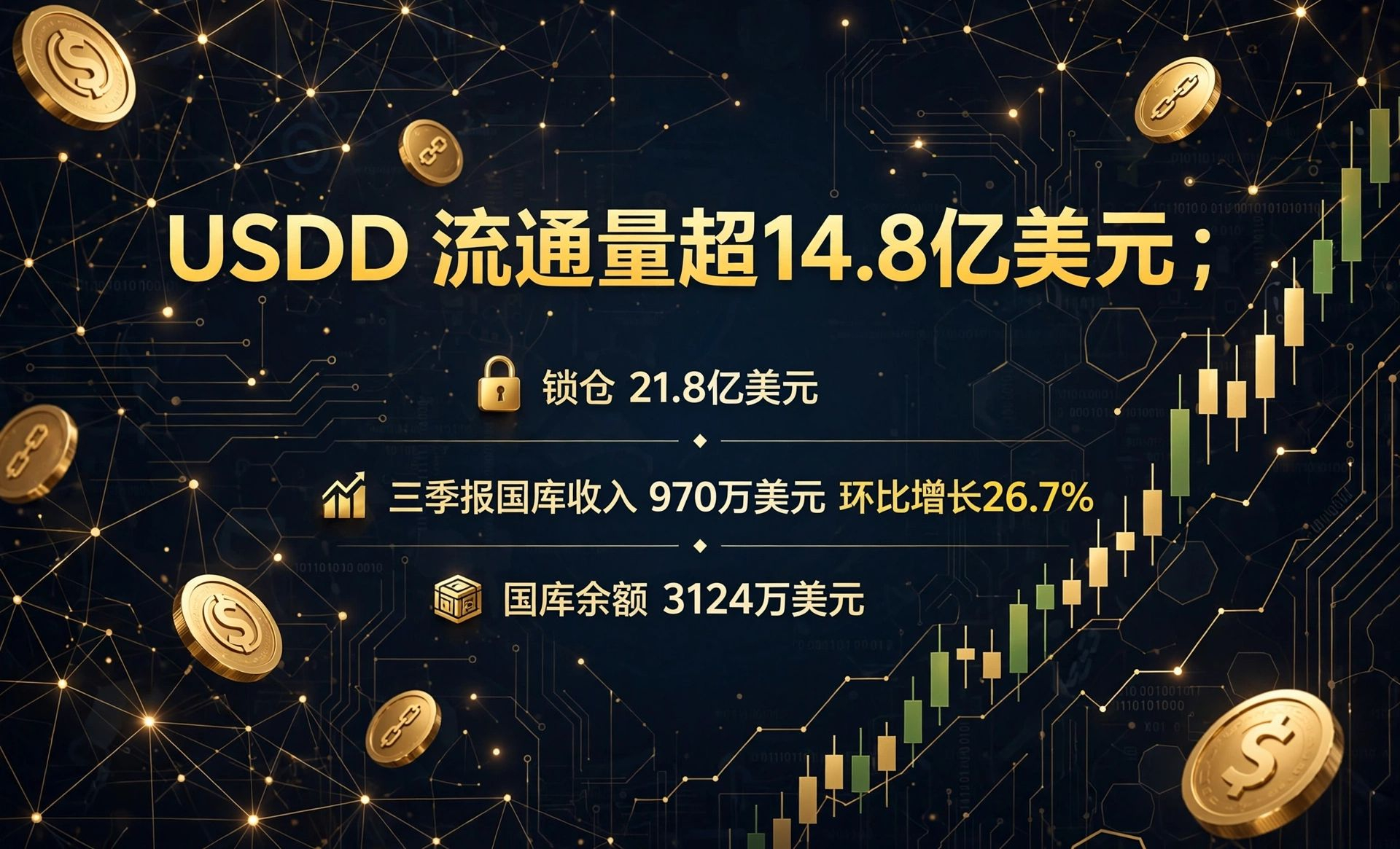
With $1.48 billion in circulation and $2.18 billion locked, USDD’s figures are pushing decentralized stablecoins to a new level.
As of October 29, USDD’s circulating supply exceeded $1.48 billion. Of that, $329.94 million was on Ethereum, accounting for about 22.3%. The protocol’s total value locked reached $2.18 billion. In the week of October 12–19, USDD’s market cap grew by $180.3 million—about 40% of the $449.1 million combined increase among the top ten stablecoin issuers, and the largest increase over the same period. Treasury revenue in the third quarter was $9.7 million, up 26.7% quarter over quarter. The on-chain asset allocation system Smart Allocator contributed $9.11 million, while the treasury balance reached $31.24 million, surpassing $30 million for the first time.
In my view, the key to these figures is that the treasury can generate revenue on its own, rather than relying solely on issuing new tokens to boost its scale. Smart Allocator contributed $9.11 million in a single quarter—that’s what’s helping it build up its locked value.
Which milestone do you think will come first: USDD’s circulating supply surpassing $2 billion, or its locked value surpassing $3 billion?
Follow me, and when the next treasury figures come out, I’ll calculate whether Smart Allocator can maintain a share above 90%.
$USDD
76
·
--
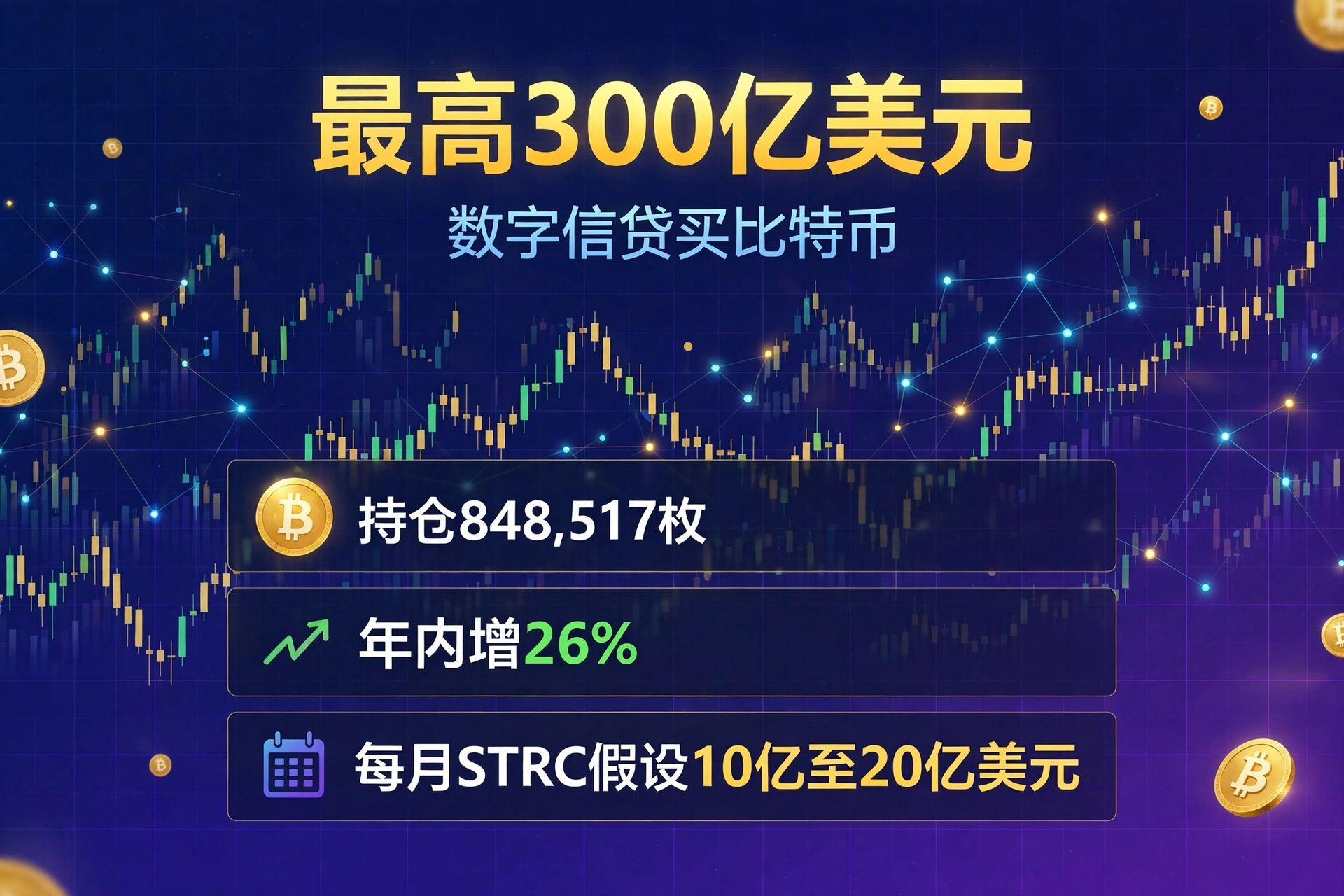
$30 billion in ammunition—Strategy says it can be raised using its existing balance sheet.
On the third-quarter earnings call, the executive chairman said the existing balance sheet could support up to $30 billion in digital credit. The CEO said issuing digital credit would be the main way to buy coins going forward, and gave a hypothetical example: issuing $1 billion to $2 billion of STRC per month, keeping some as dollar reserves and using the rest to buy coins. As of October 25, the company held 848,517 coins, up 26% year to date. Third-quarter net income was $19.53 billion, including $20.91 billion in gains from the revaluation of digital assets.
I think the key takeaway is a shift in its funding approach: when assessing its future coin purchases, watch the pace of preferred stock issuance first, rather than focusing only on common stock offerings.
If it really issues $1 billion to $2 billion of STRC next month, do you think the first proceeds will go toward replenishing dollar reserves or buying coins?
Follow me. As soon as the next STRC issuance announcement comes out, I’ll calculate how many coins that money could buy at the prevailing price.
$BTC
84
·
--
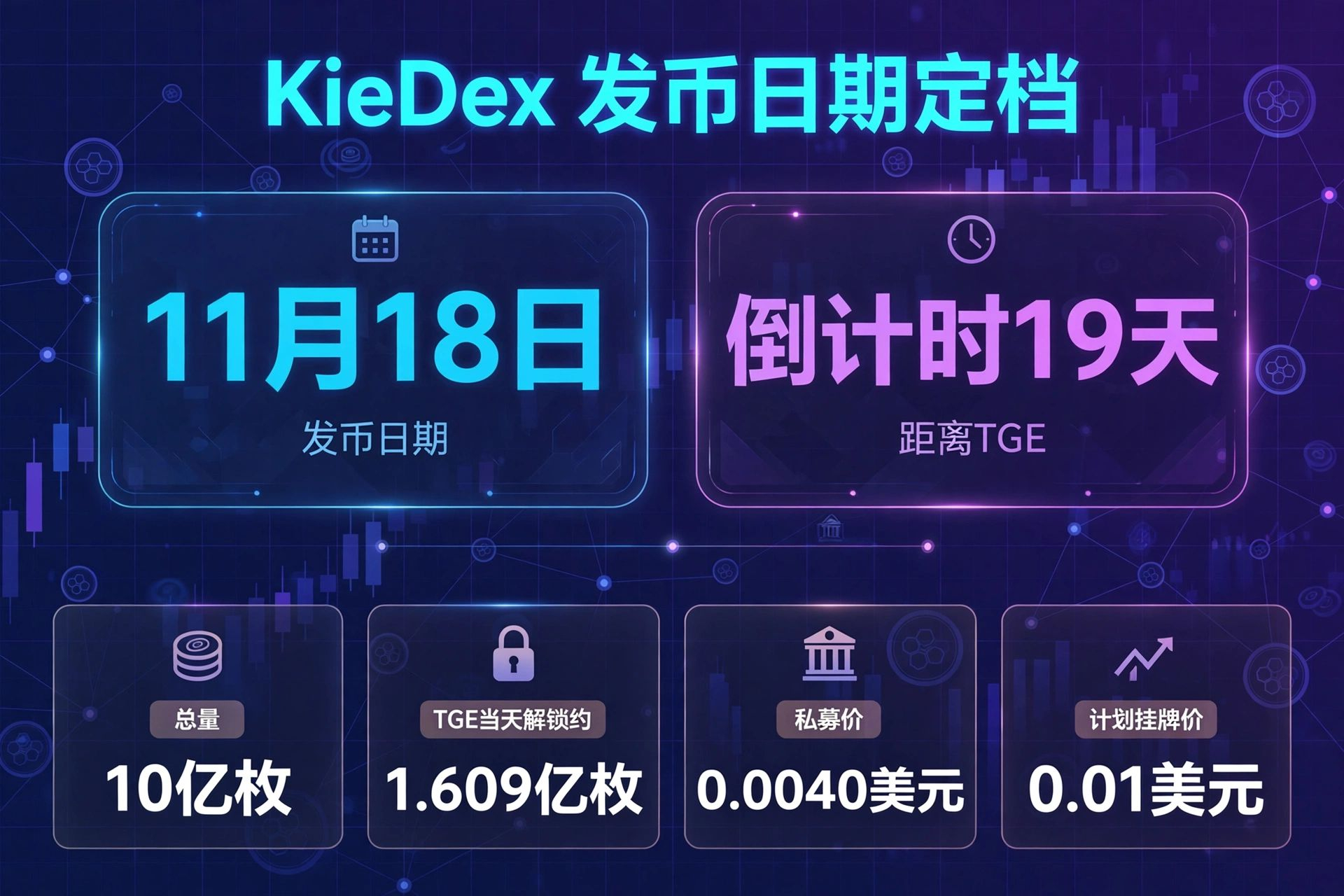
KieDex has set its token launch date in stone: November 18, just 19 days from now.
There are 1 billion tokens in total, with about 16.1% unlocking on TGE day—that’s approximately 160.9 million tokens. The private sale price is $0.0040, while the public sale prices are $0.0055, $0.0070, and $0.0080. The planned listing price is $0.01. The private-sale whitelist closes on November 3 at 7 p.m. Beijing time, and the sale opens an hour later, with a target of $500,000. In April this year, it raised a $3.5 million seed round. For now, the contract address, exchanges, first trading pair, and exact time have yet to be announced.
I think setting the date is only the beginning. Whether the November 3 private sale can hit its target will be the first real test of the community’s interest.
Do you think early participants will absorb the 160.9 million tokens unlocking on November 18, or will they be dumped straight onto the market at the planned $0.01 listing price?
Follow me. As soon as the private sale ends on November 3, I’ll help you figure out exactly how much it raised and how far it fell short of the $500,000 target.
$KDX
195
·
--
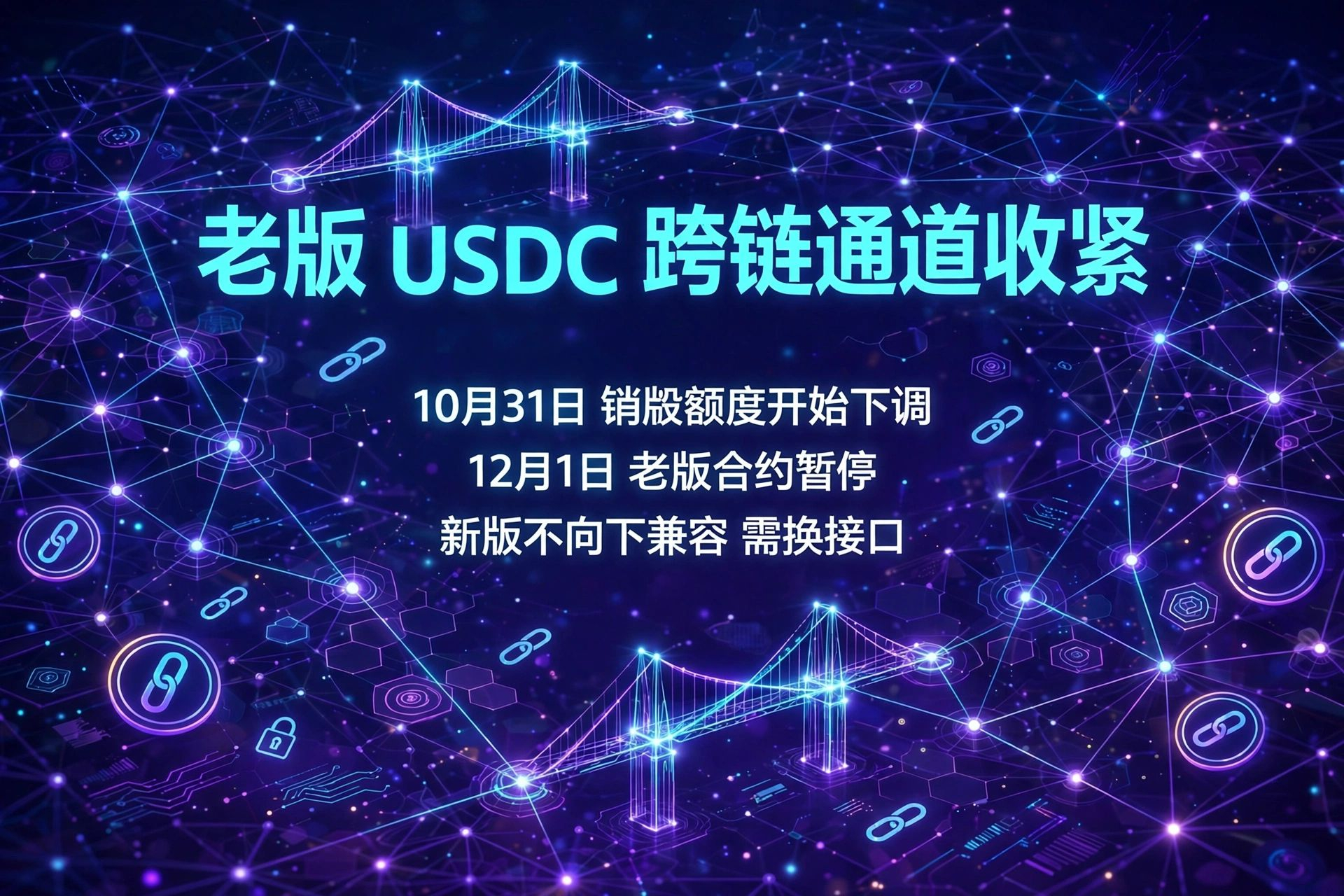
Starting tomorrow, the old USDC cross-chain channel will begin winding down—and it will shut off completely on December 1.
Starting October 31, the burn limit for the old cross-chain protocol will be lowered until it reaches zero. The contracts will be paused on December 1, so apps, wallets, and bridges still using the old route won’t be able to move USDC. The new version uses a different set of contracts and interfaces and isn’t backward compatible, so developers will have to update the interfaces themselves. Pending cross-chain redemptions can still be completed, and the minting limit will be higher than the total amount of pending attestations. Noble is on a different timeline: it won’t shut down until January 12, 2027, and manual redemptions will begin on January 13.
I see this next month as the wind-down period. The real risk is apps that still haven’t switched to the new version by the end of November—the limits will keep tightening, and cross-chain transfers could get stuck at any time.
Do the wallets or bridges you use still rely on the old channel? Will you check during November to make sure they’ve switched to the new version, or wait until December 1 to find out?
Follow me. Once December 1 arrives, I’ll help you check which apps still haven’t switched to the new version.
$USDC
50
·
--
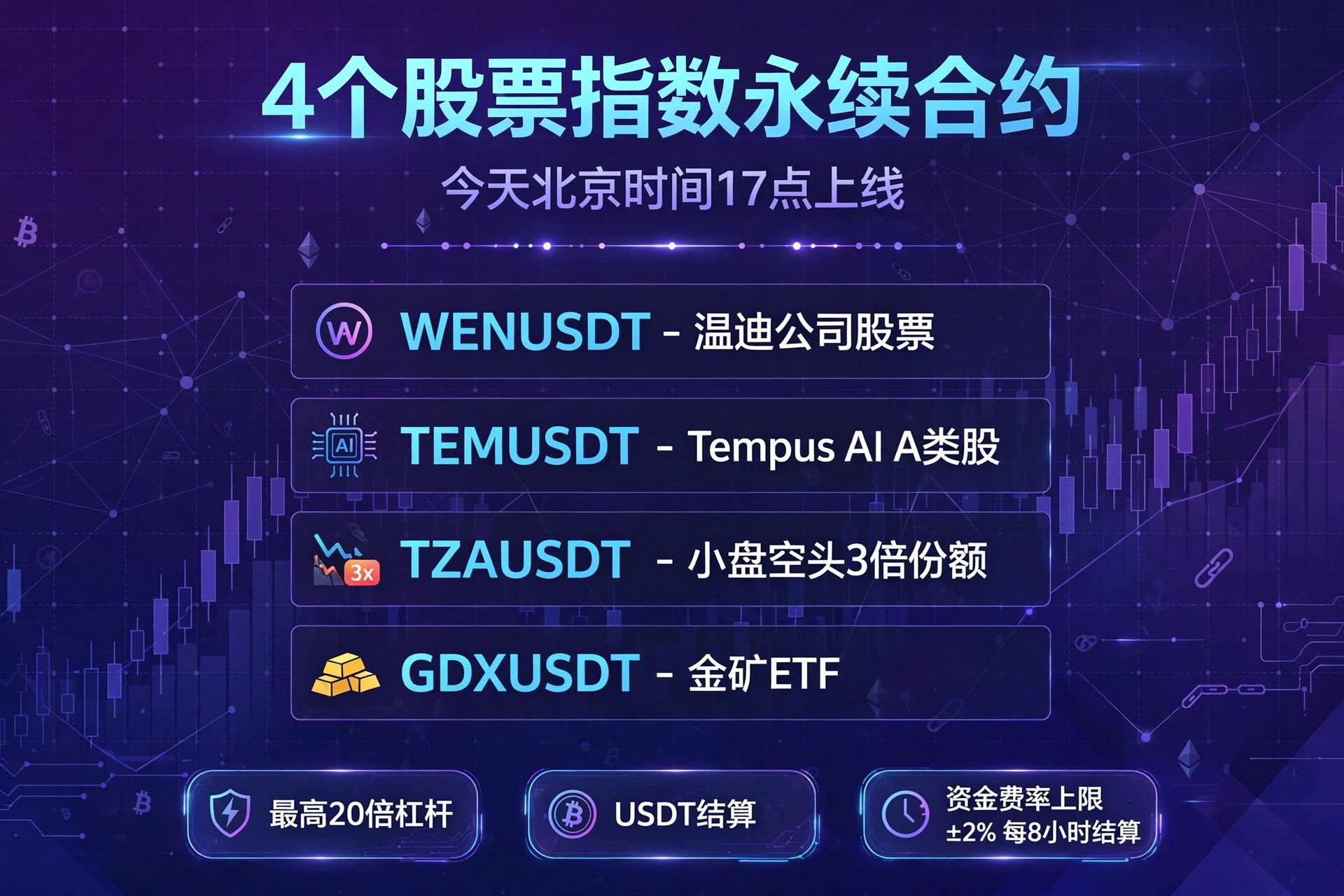
A leading exchange is listing four stock index perpetual contracts today at 17:00 Beijing time, with up to 20x leverage. All are settled in USDT, and their underlying assets span fast food, AI companies, small-cap shorts, and a gold miners ETF.
The four contracts are WENUSDT, TEMUSDT, TZAUSDT, and GDXUSDT, tracking Wendy’s stock, Tempus AI Class A shares, Direxion Daily Small Cap Bear 3X Shares, and the VanEck Gold Miners ETF, respectively. All are USDT-margined contracts, trade 24 hours a day, and settle funding rates every 8 hours, with a 2% cap and floor. The contracts are synthetic derivatives and do not deliver any stocks or fund shares.
In my view, what stands out about this batch is the range of underlying assets, not the leverage itself. The fact that the same USDT-settled framework can accommodate both a fast-food stock and a 3x short ETF is what’s worth watching.
Which of the four will you keep an eye on first: Wendy’s, Tempus AI, the 3x small-cap short, or the gold miners ETF?
Follow me, and after the first funding rate settlement for these contracts, I’ll help you compare the funding rate trends across all four.
$USDT
191
·
--
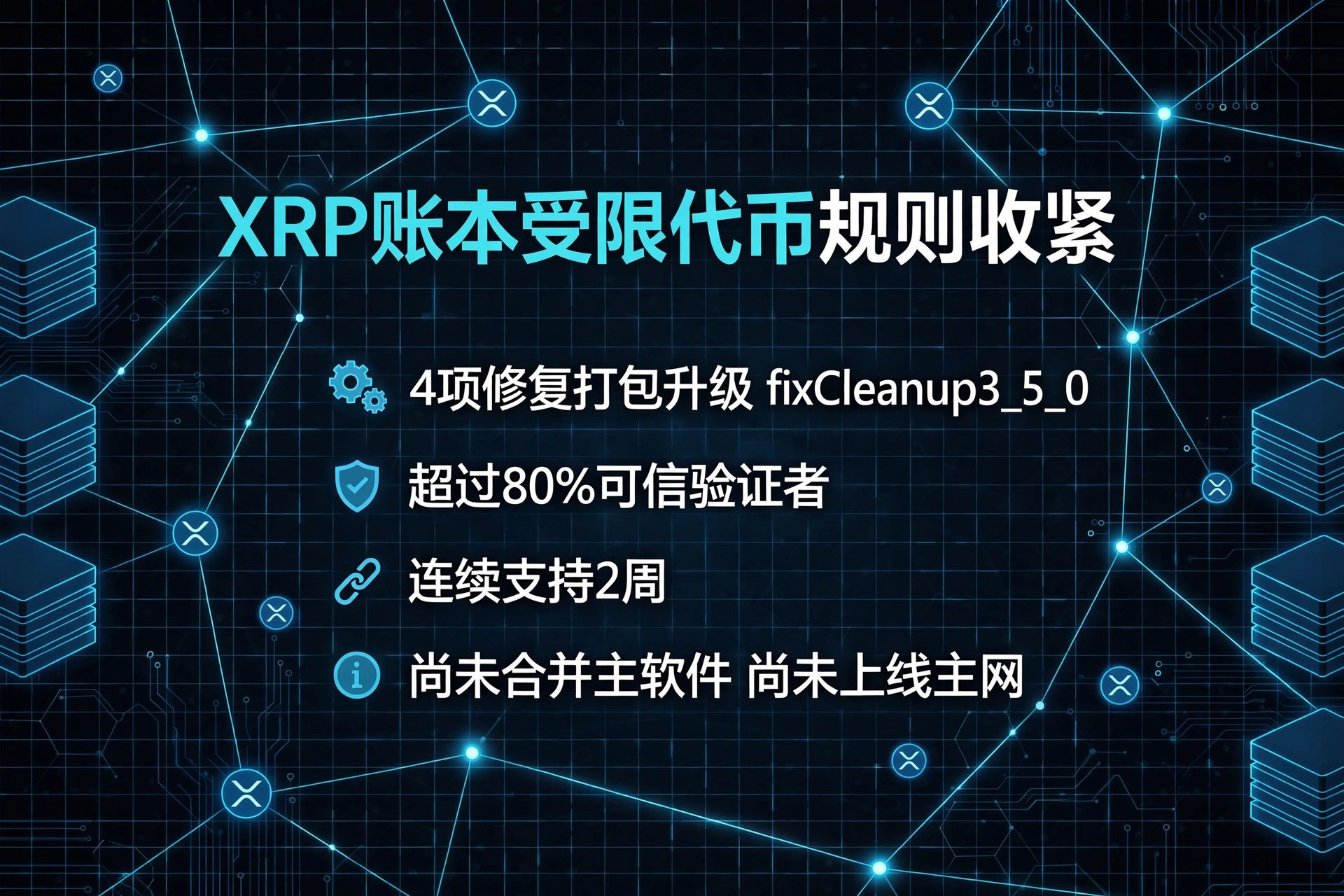
The XRP Ledger tightened the rules for restricted tokens today: 4 fixes have been bundled into an upgrade called fixCleanup3_5_0.
Restricted tokens can only be held by accounts approved by the issuer. Issuers are often regulated asset providers, such as stablecoin and tokenized fund issuers, who verify identities before granting access. This upgrade closes two loopholes: before buying shares in an automated market maker pool, both tokens in the pool must be approved; and a check that previously applied only to zero-balance trust lines has been changed so trust lines with existing balances can’t receive more tokens either. The upgrade also adds a general check to keep approval rules consistent across existing and future features. Holders who aren’t approved will only be able to return their tokens to the issuer. The issuer can approve them at any time to restore normal use. These 4 fixes haven’t yet been merged into the main software or deployed to the mainnet. Deployment must first clear another hurdle: support from more than 80% of trusted validators for two consecutive weeks.
I think this targets the last mile for bringing compliant assets on-chain: issuers approve people before issuing tokens, and the rules leave no loopholes—so stablecoins and tokenized funds can confidently move on-chain.
Which step do you think will hold up this upgrade: merging it into the main software, or getting more than 80% of validators to support it for two straight weeks?
Follow me. Once validator support for fixCleanup3_5_0 starts being counted, I’ll keep an eye on how far it is from 80%.
$XRP
97
·
--
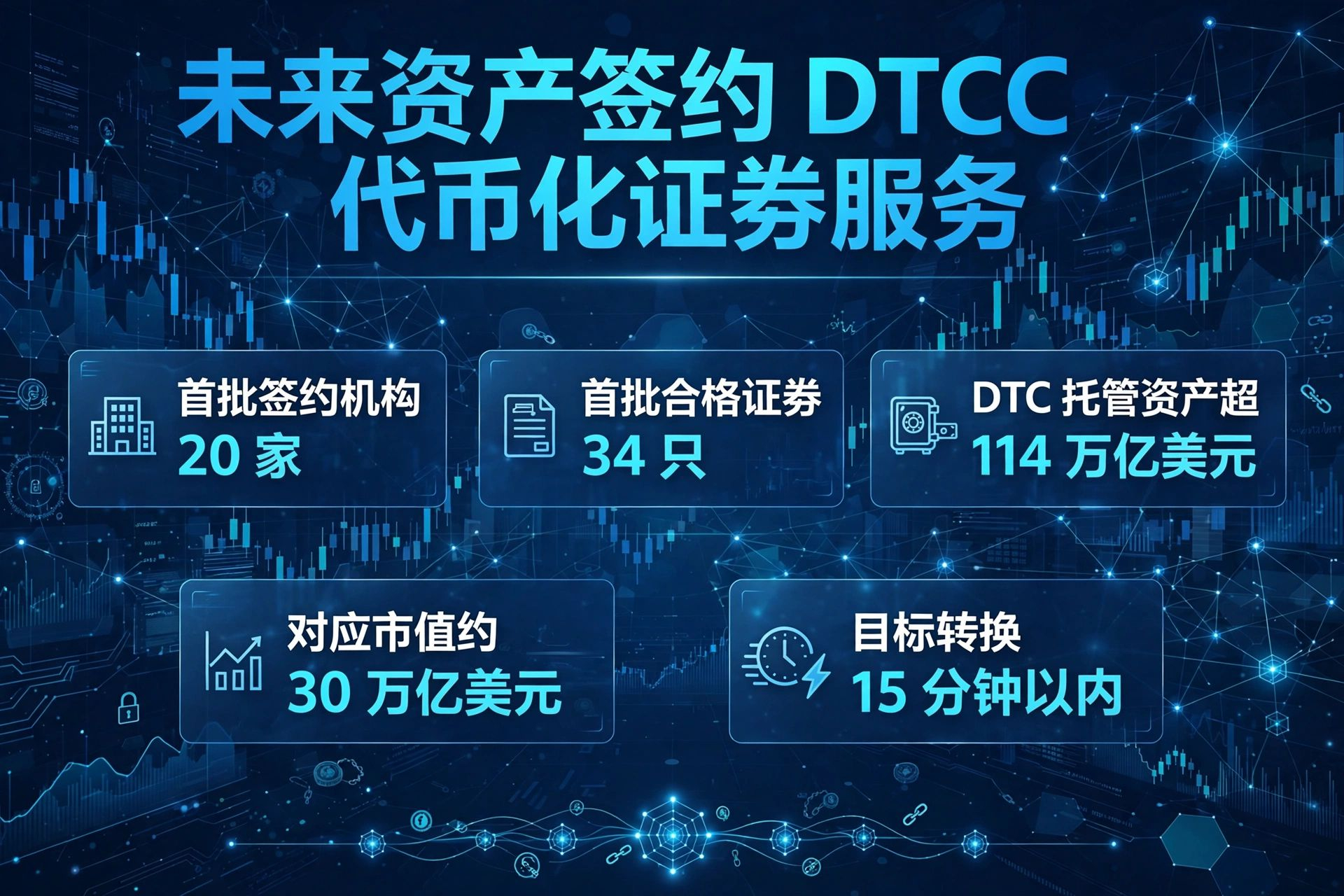
Mirae Asset Securities’ New York subsidiary in South Korea signed an agreement today, officially becoming one of the first users of the DTCC’s tokenized securities service in the United States.
The service is called DTS. It just launched on October 28, and 20 institutions signed on in the first round, including JPMorgan Chase, Morgan Stanley, Bank of America, Citi, and Fidelity. The service turns eligible securities held in custody at DTC into on-chain tokens. They can be converted back and forth between traditional and tokenized forms without changing ownership or economic rights. The first eligible assets are Russell 1000 constituent stocks, ETFs tracking broad-market indexes, and U.S. Treasuries. DTC holds more than $114 trillion in assets, and the first 34 securities have a combined market value of about $30 trillion. The target conversion time is under 15 minutes.
I think the real value of this step is that it moves from discussion groups to actual use. Mirae Asset has clearly said that its next step is to find business use cases where the tokens can serve as collateral and improve capital efficiency—not just sign on in name only.
Where do you think tokenized securities will take off first: as collateral, or for 24-hour transfers and settlement?
Follow me, and when the next list of DTS signatories comes out, I’ll be the first to count how many Wall Street firms still haven’t climbed aboard.
129
·
--
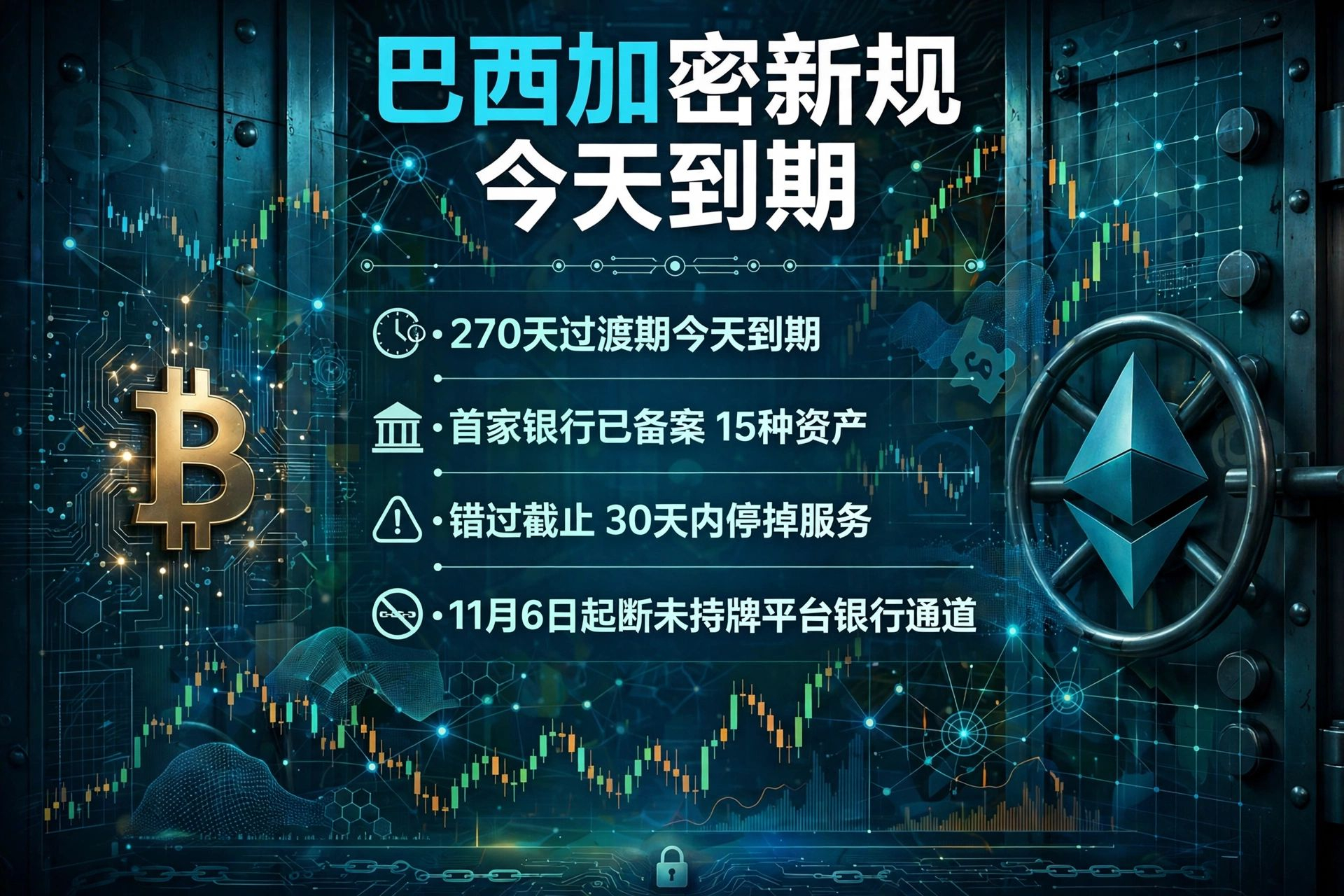
Today is the deadline for Brazil’s new crypto regulations: the 270-day transition period ends today, and institutions that miss the deadline have only 30 days to wind down.
The rules took effect on February 2. Banks follow a notification process, while dedicated crypto platforms must apply for authorization. Brazil’s largest private bank, Itaú, was the first to submit a notification on October 27, covering trading and custody. The platform currently offers 15 assets, including Bitcoin, Ethereum, and USDC. The bank has allowed customers to buy and sell crypto assets since December 2023. Starting November 6, banks and payment institutions may not do business with unauthorized service providers. This cutoff was originally set for October 30, but a September 23 resolution pushed it back by a week. A major overseas platform had already submitted an application on October 23 and tightened restrictions on new loans and margin trading for Brazilian users.
Personally, I think November 6 is the real turning point: platforms without licenses won’t be able to access local Brazilian banking channels.
Which side are you on: will this approach—letting banks get compliant first, then cutting off banking access for unlicensed platforms—push out smaller platforms first, or force larger ones to localize first?
Follow me. Once the November 6 cutoff arrives, I’ll help you count how many platforms can still use Brazil’s banking channels.
$BTC $ETH
12
·
--
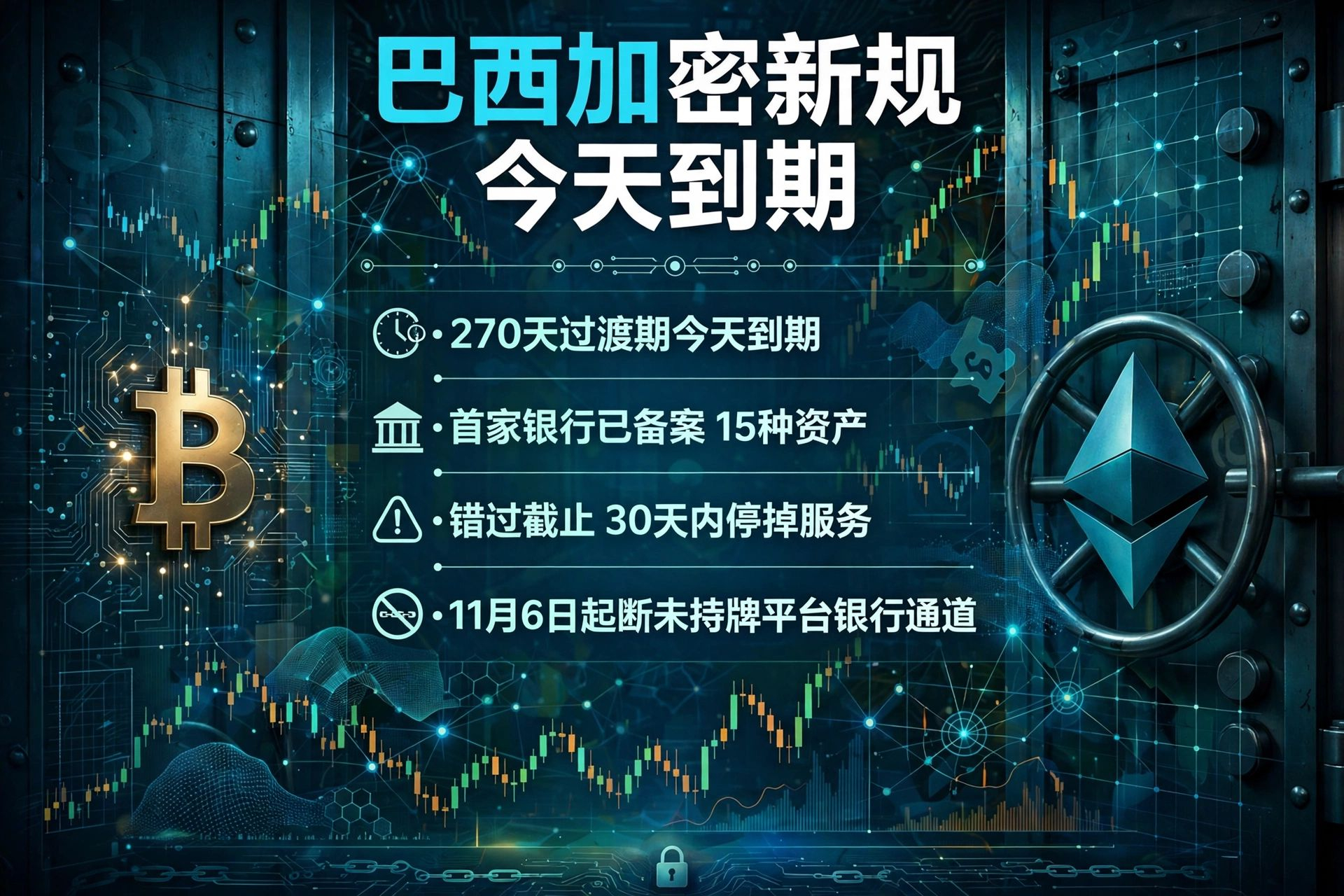
Today is the deadline for Brazil’s new crypto regulations: the 270-day transition period ends today, and institutions that miss the deadline will have only 30 days to wind down.
The rules took effect on February 2. Banks follow a notification process, while dedicated crypto platforms must apply for authorization. Brazil’s largest private bank, Itaú, was the first to submit a notification on October 27, covering trading and custody. The platform currently offers 15 assets, including Bitcoin, Ethereum, and USDC. The bank has allowed customers to buy and sell crypto assets since December 2023. Starting November 6, banks and payment institutions may not do business with unauthorized service providers. This cutoff was originally set for October 30, but a September 23 resolution pushed it back by a week. A major overseas platform had already submitted its application on October 23 and tightened access to new loans and margin trading for Brazilian users.
Personally, I think November 6 is the real turning point: platforms without licenses won’t be able to access local Brazilian banking channels.
Which side are you on? Will this approach—bringing banks into compliance first, then cutting off banking channels for unlicensed platforms—push out smaller platforms first, or force larger ones to localize?
Follow me. Once the November 6 cutoff arrives, I’ll help you count how many platforms can still use Brazilian banking channels.
$BTC $ETH
16
·
--
A brokerage subsidiary of South Korea’s Hanwha, a Fortune Global 500 company, has handed Chainlink the infrastructure to bring real-world assets onchain worldwide.
The two sides signed a strategic partnership on October 30, making Chainlink’s data standards and CCIP the platform’s official data and cross-chain infrastructure. The platform aims to tokenize high-quality real-world assets, issue them on global markets, verify their value, and use them as collateral. The companies have formed a joint working group to focus first on three areas: institutional-grade infrastructure for compliant custody and onchain issuance; standards for valuing real-world assets used as collateral and verifying reserves; and compliance and technical standards to support the rollout of South Korea’s tokenized securities framework. The framework is scheduled to launch in February 2027.
The key here isn’t issuing tokens—it’s establishing collateral standards first. Institutions will only feel confident moving real assets onchain if their valuation and reserves can be reliably verified.
Which asset class do you think will be the first to go onchain as collateral: real estate, bonds, or commodities?
Follow me. Once Hanwha’s first list of onchain assets is announced, I’ll help you check which asset classes are included and which chain they’ll use. #币安神算子
$LINK

35
·
--
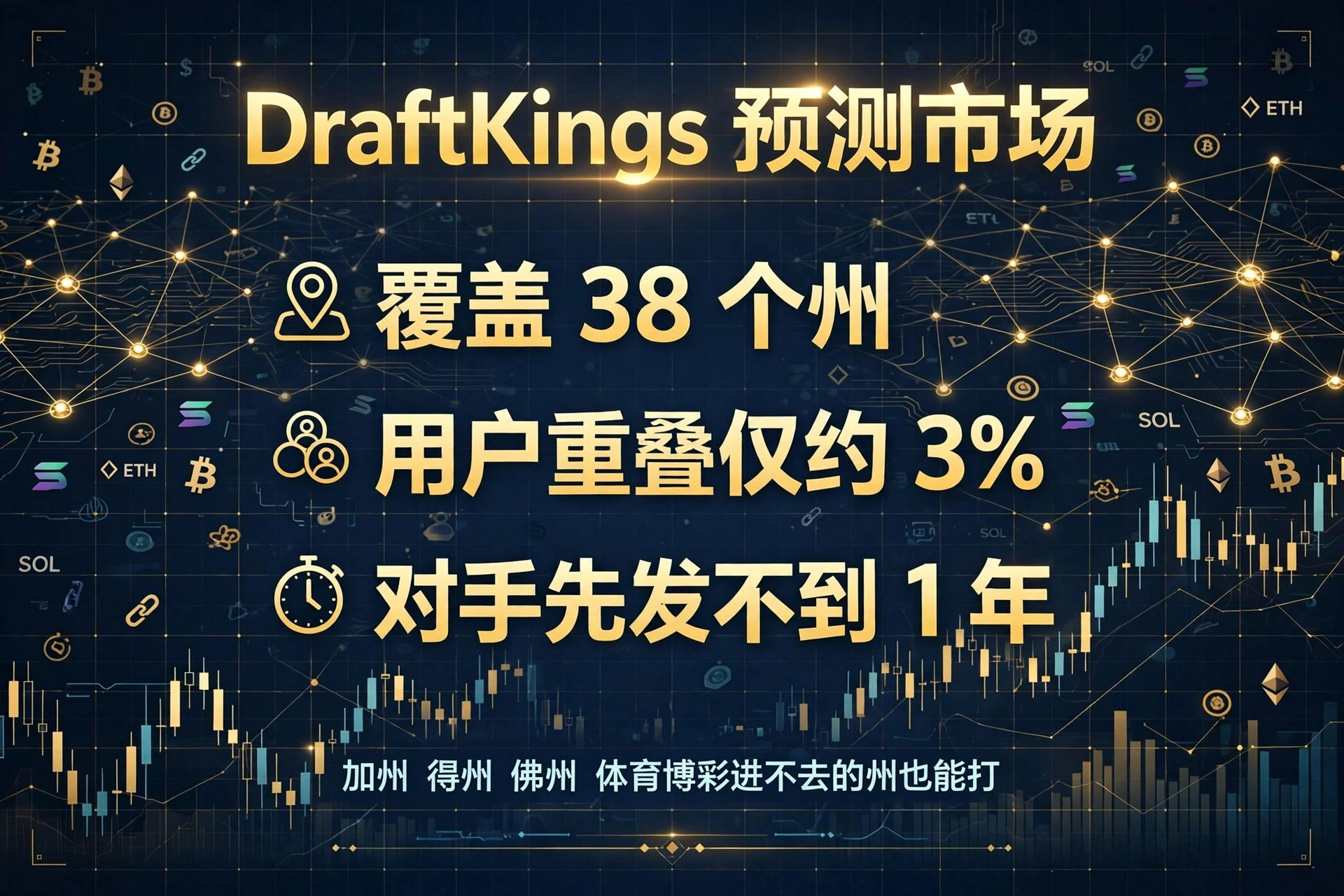
DraftKings CEO Jason Robins said today that traditional sports betting giants are ready to compete head-on for a slice of the prediction market pie.
Its Predictions app already operates in 38 states under the oversight of the U.S. Commodity Futures Trading Commission, and it can also enter California, Texas, and Florida—three states where sports betting apps can’t operate. Robins cited an overlap of just about 3%: in states where sports betting is legal, only around 3% of DraftKings users also deposit money on another prediction market platform. He thinks competitors’ first-mover advantage will last less than a year, and that DraftKings can catch up with its marketing data and pricing models.
I think the key to this battle isn’t who launches first, but who can bring in new users who’ve never placed a bet: that 3% figure shows that the two sides aren’t even competing for the same people right now.
Which side are you on: will DraftKings use its presence in 38 states to turn prediction markets into a mainstream product, or will first-mover platforms hold on to their core base of crypto-native users?
Follow me, and when DraftKings announces its next batch of new states or product categories, I’ll be the first to check how its footprint across 38 states has expanded.
$DKNG
3
·
--
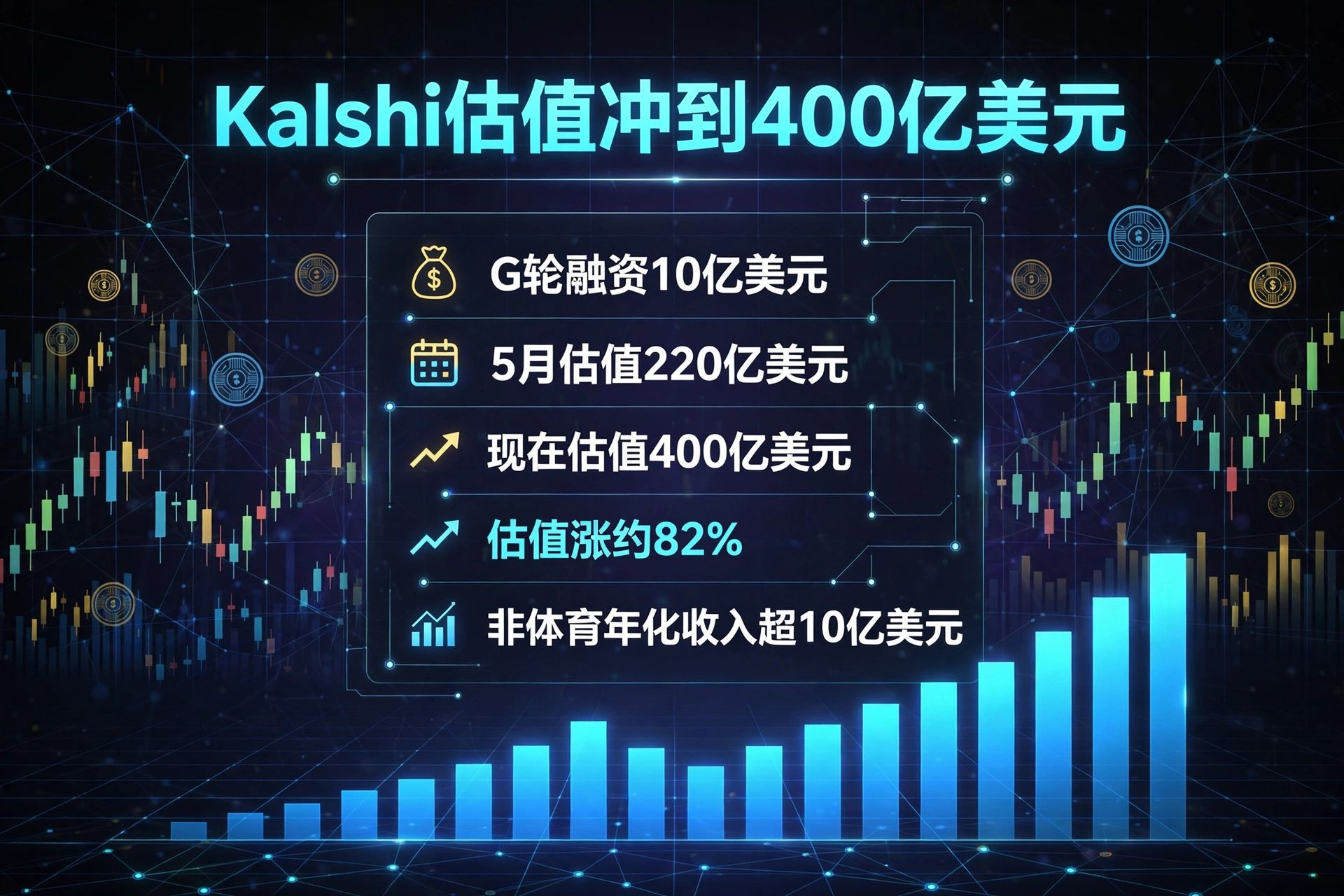
$1 billion in new funding has landed, sending Kalshi’s valuation soaring to $40 billion. Just five months ago, it was valued at $22 billion.
This was a Series G round, co-led by Sequoia Capital and Wellington Management. After raising $1 billion in May at a $22 billion valuation, Kalshi has now raised another $1 billion in just five months, lifting its valuation by about 82%. Its total funding has reached roughly $3.6 billion. Annualized revenue from non-sports markets has already topped $1 billion, and trading volume over the past 30 days was about $15.8 billion.
I think the real signal here is how quickly its valuation has doubled: prediction markets have evolved from a sports-betting business into a platform that can compete with traditional exchanges for multi-asset trading.
Which do you think comes next for Kalshi: an IPO, or rolling out perpetual contracts and multi-asset trading across the platform before going public?
Follow me, and when Kalshi releases its next revenue breakdown, I’ll be the first to work out what share that $1 billion from non-sports markets represents.
$KALSHI
·
--
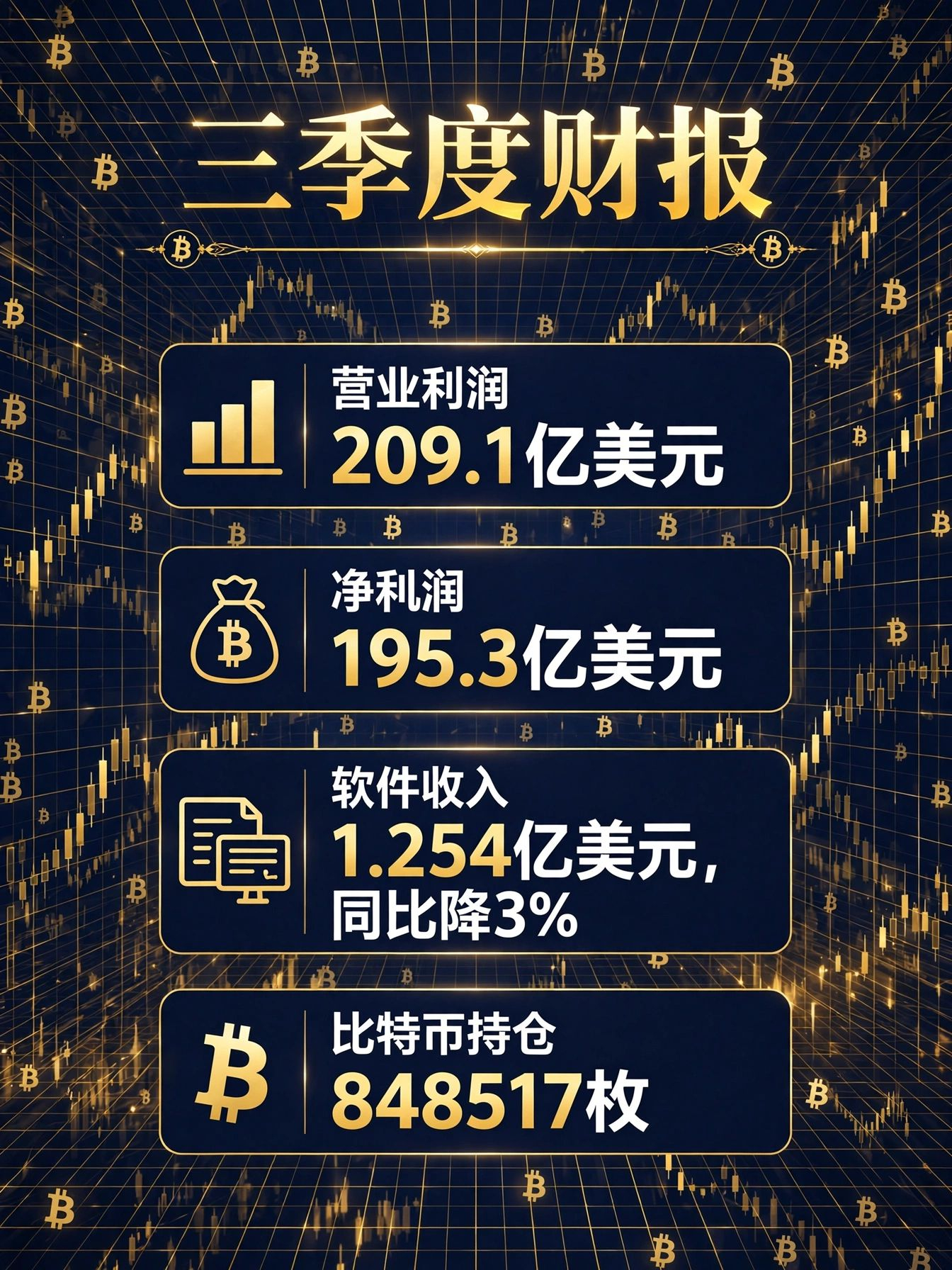
A $20.9 billion gain on paper, while its software business brought in just $125.4 million—Strategy’s third-quarter earnings report laid out the numbers in black and white.
Third-quarter operating income was $20.91 billion, net income was $19.53 billion, and diluted earnings per share were $44.75—all company records, driven mainly by a $20.91 billion fair-value gain on Bitcoin. Software revenue for the same period was $125.4 million, down 3% year over year. As of October 25, the company held 848,517 bitcoins at an average cost of $75,446. Valued at $81,200 on October 23, the holdings were worth $68.9 billion. Holdings grew 26% year to date, but the Bitcoin yield per share was negative 3.7% year to date, with a Bitcoin loss of 24,947 BTC and a dollar loss of $2.03 billion. So far this year, the company has sold about $431.8 million worth of Bitcoin to pay preferred stock dividends and fund buybacks. A proposal to switch preferred stock dividends to daily payments passed with 99.3% approval, and STRC will begin accruing interest daily starting November 1. CFO Andrew Kang will step down on November 5 and remain as an adviser through December 31.
I think the key takeaway from this report isn’t the size of the profit, but that it once again shows Strategy’s financial results are now tied to Bitcoin’s price, with software just a side business.
If Bitcoin falls in the fourth quarter and that $20.9 billion paper gain shrinks, would you still treat Strategy as a Bitcoin proxy, or would you just hold spot Bitcoin directly?
Follow me, and when the next quarterly report comes out, I’ll help you work out whether the Bitcoin per share figure is recovering or continuing to get diluted.
$BTC
2
·
--
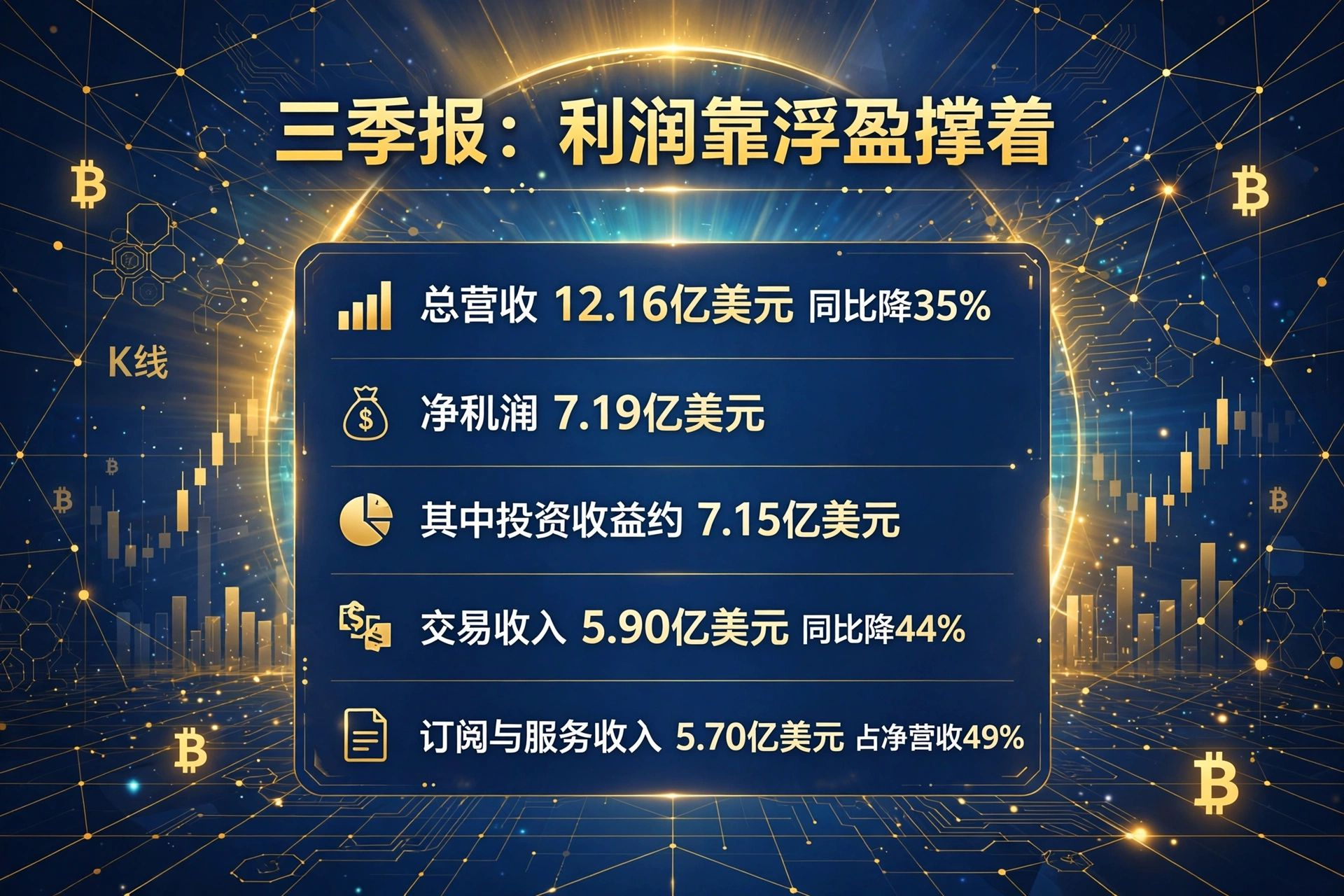
$719 million in net income, with $715 million from unrealized gains on crypto holdings: a major U.S. exchange just released its Q3 earnings, and reported profits and trading business are heading in opposite directions.
Total revenue was $1.216 billion, down 35% year over year and essentially flat quarter over quarter, slightly below expectations of $1.233 billion. Transaction revenue was $590 million, down 44% year over year and 1% quarter over quarter, but above expectations of $527 million. Subscription and services revenue was $570 million, up 3% quarter over quarter and accounting for 49% of net revenue. Net income was $719 million, or $2.51 per diluted share, reversing losses in the first two quarters. About $715 million of that came from investment gains on crypto holdings. Bitcoin’s roughly 39% price increase in Q3 was a major factor behind those unrealized gains. Excluding investment gains, adjusted net income was only $78 million. Adjusted EBITDA was $333 million, up 60% quarter over quarter. For Q4, the company forecast subscription and services revenue of $550 million to $630 million. As of October 25, Q4 transaction revenue was about $165 million.
Personally, I think unrealized gains and the subscription business are carrying this earnings report. Trading itself hasn’t recovered yet, so the quality of the profits is questionable.
Which side are you on: do profits supported by unrealized gains on crypto holdings count as a real comeback, or does it only count once transaction revenue returns to year-over-year growth?
Follow me. When the first data point comes in on whether Q4 subscription revenue is hitting its guidance, I’ll help you compare it against that $550 million to $630 million range.
$BTC
14
Log in to explore more content
Join global crypto users on Binance Square
⚡️ Get latest and useful information about crypto.
💬 Trusted by the world’s largest crypto exchange.
👍 Discover real insights from verified creators.
Email / Phone number
Trending Topics
BinanceReports80%Recoveryof$6.3BillioninLossesfromHackIncident
5,690 views
70 Discussing
Security Incident Update #2 (2026-10-30)
Binance Announcement
·862 Likes
·980.4k views
HeYiSaysWithdrawalsExpectedtoResumeWithin42Hours
8,657 views
209 Discussing
CZSaysCompensationIsinPlaceUsersAreProtected
7,899 views
163 Discussing