

肖姐交易日记
1.8k Posts

肖姐交易日记
Report
Block User
0 Following
2.0K+ Followers
3.5K+ Liked
Posts
All
Quotes
PINNED
·
--
$ETH $SNDK Want to join the strategy chat group? Just add the chat room. #FOMC会议纪要 #韩国KOSPI收涨5.9%芯片回购推动
$ETH $SNDK Want to join the strategy chat group? Just add the chat room. #FOMC会议纪要 #韩国KOSPI收涨5.9%芯片回购推动

50
PINNED
·
--
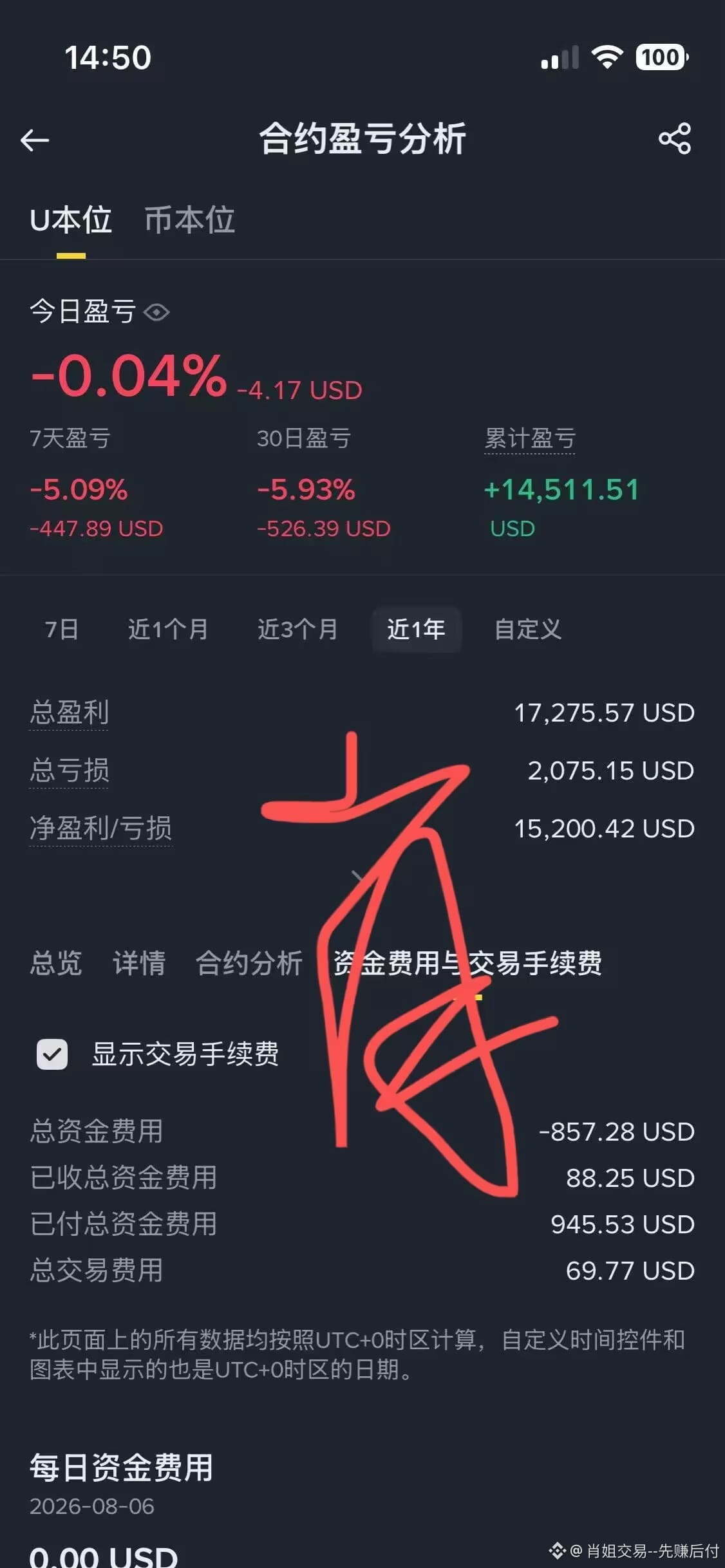
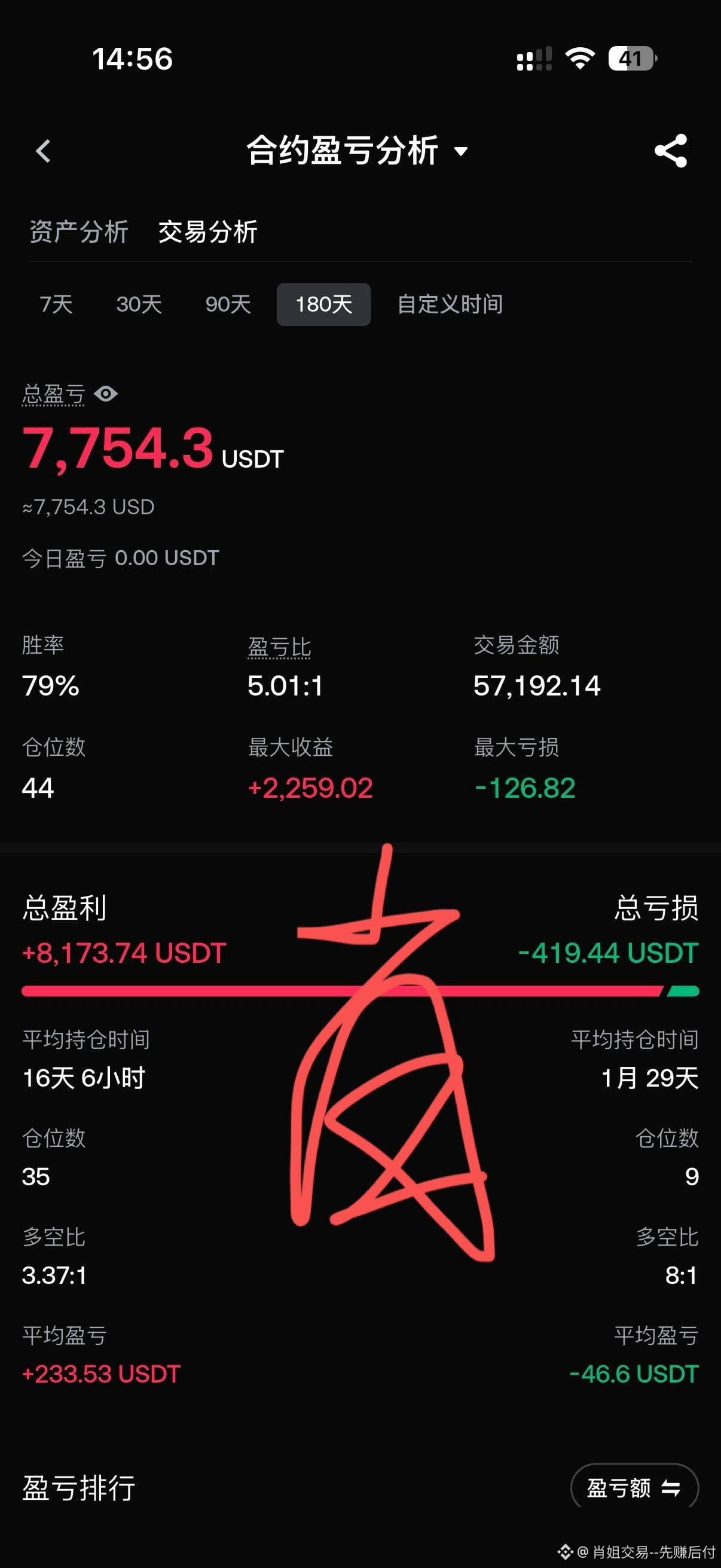
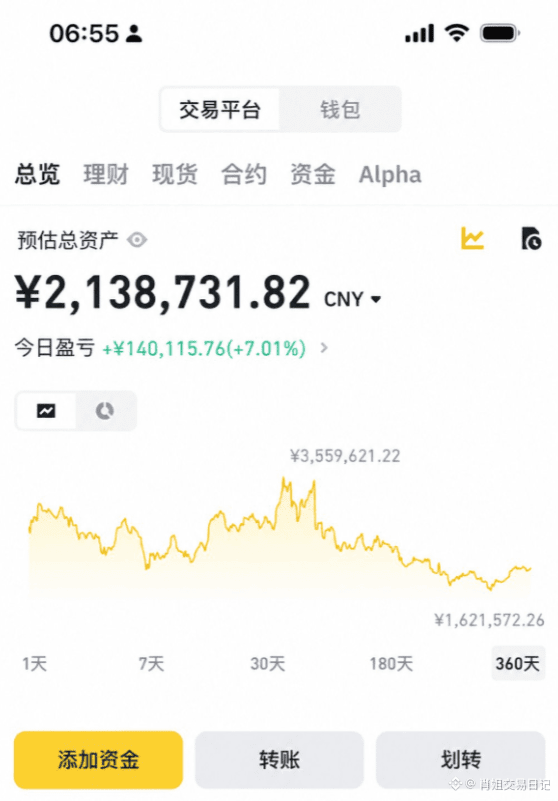
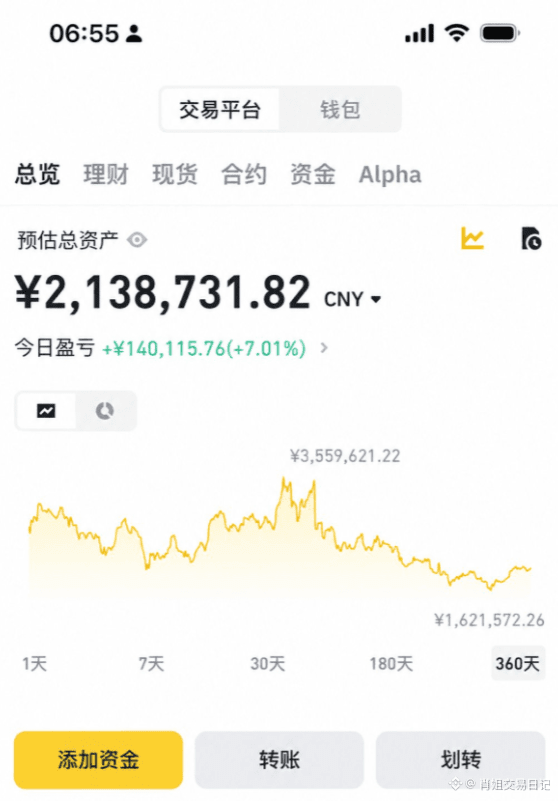
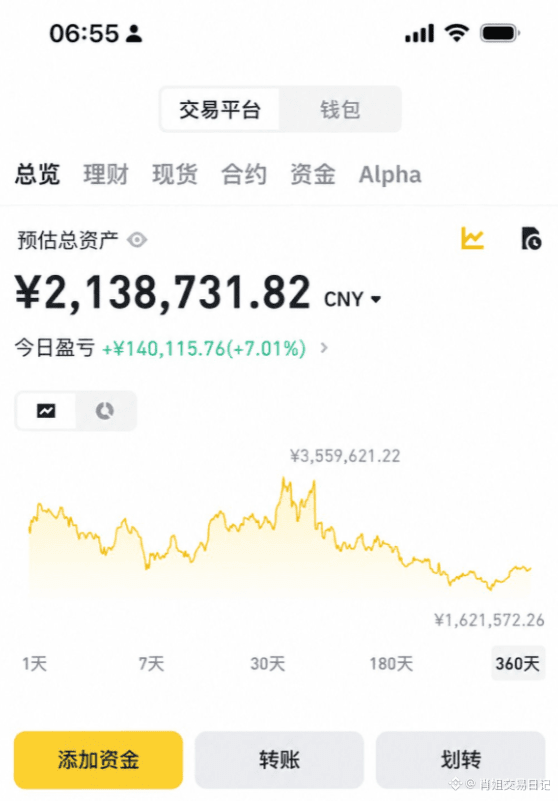
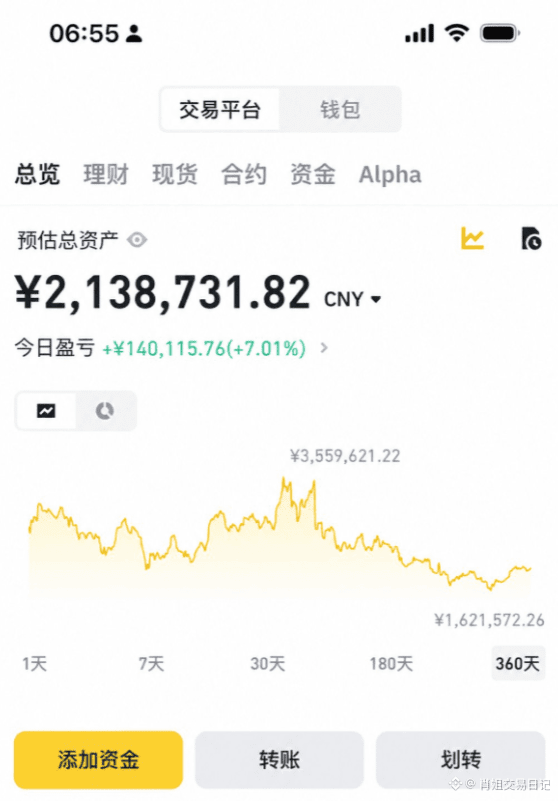
$SKYAI Sister Xiao’s long-term strategy return chart—everyone can take a look.
For those who doubt its authenticity, you can record a real-time video to verify it.$BLESS
We focus on a steady long-term strategy layout, and we also keep an eye on short-term opportunities.$HEI
If you like long-term investing or want to exchange trading ideas, feel free to chat.#美ADP7月私营就业逊预期 #SK海力士盘前二度闪崩30%
$SKYAI Sister Xiao’s long-term strategy return chart—everyone can take a look.
For those who doubt its authenticity, you can record a real-time video to verify it.$BLESS
We focus on a steady long-term strategy layout, and we also keep an eye on short-term opportunities.$HEI
If you like long-term investing or want to exchange trading ideas, feel free to chat.#美ADP7月私营就业逊预期 #SK海力士盘前二度闪崩30%
For those who doubt its authenticity, you can record a real-time video to verify it.$BLESS
We focus on a steady long-term strategy layout, and we also keep an eye on short-term opportunities.$HEI
If you like long-term investing or want to exchange trading ideas, feel free to chat.#美ADP7月私营就业逊预期 #SK海力士盘前二度闪崩30%
2
1
209
·
--
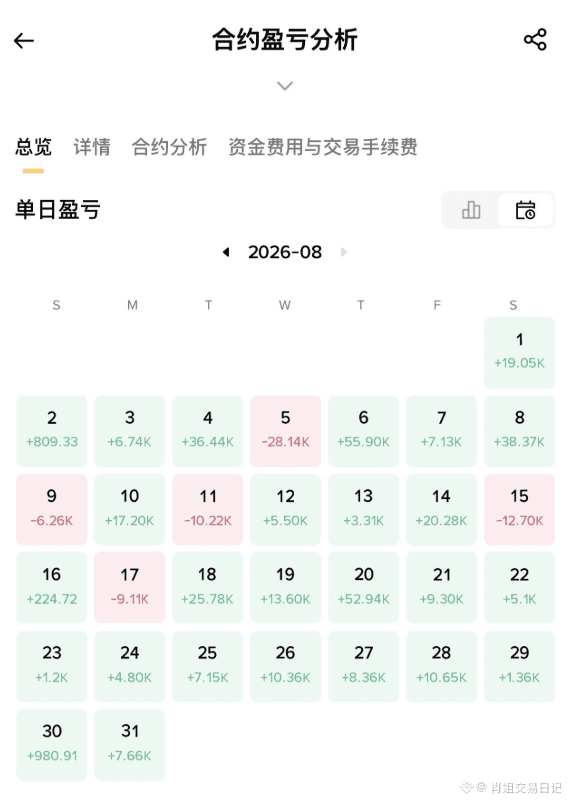
Turning 10,000 U into 80,000 U wasn’t luck, it was rhythm
This round of the market was indeed quite suitable for rolling positions.
Sideways action, liquidity traps, and pumps — once you ride through the rhythm, it’s actually not that complicated:
Buy at low levels, follow the trend, take the money you should take, and then leave.
No full-size all-ins, and no stubbornly holding onto losses.
Take a slice each day, let profits roll up bit by bit, and that’s how the account slowly grows.
Some people ask me if I knew some insider information in advance?
Not at all.
All I do is watch the structure, watch the level, act when it’s time to act, and wait when it’s not.
These two moves in BTC and ETH also felt pretty smooth.
Buy during the shakeout of shorts, reduce positions on the way up, add again on the pullback confirmation — take the swings you can, and don’t force the ones you can’t.
What makes rolling positions truly hard has never been the method, but execution.
A lot of people don’t fail because they can’t read the market, but because they get scared after a little profit, or they hold on after a small loss, and in the end they mess up an otherwise solid rhythm.
I only slowly understood these things after losing and getting knocked down myself.
So when people ask me now why I can stay steadier?
There’s no secret.
I used to love gambling; now I only trade setups I can understand.
Once the rhythm is steady and the position size is steady, the rest is left to the market.#美国初请失业金人数升至20.6万
Turning 10,000 U into 80,000 U wasn’t luck, it was rhythm
This round of the market was indeed quite suitable for rolling positions.
Sideways action, liquidity traps, and pumps — once you ride through the rhythm, it’s actually not that complicated:
Buy at low levels, follow the trend, take the money you should take, and then leave.
No full-size all-ins, and no stubbornly holding onto losses.
Take a slice each day, let profits roll up bit by bit, and that’s how the account slowly grows.
Some people ask me if I knew some insider information in advance?
Not at all.
All I do is watch the structure, watch the level, act when it’s time to act, and wait when it’s not.
These two moves in BTC and ETH also felt pretty smooth.
Buy during the shakeout of shorts, reduce positions on the way up, add again on the pullback confirmation — take the swings you can, and don’t force the ones you can’t.
What makes rolling positions truly hard has never been the method, but execution.
A lot of people don’t fail because they can’t read the market, but because they get scared after a little profit, or they hold on after a small loss, and in the end they mess up an otherwise solid rhythm.
I only slowly understood these things after losing and getting knocked down myself.
So when people ask me now why I can stay steadier?
There’s no secret.
I used to love gambling; now I only trade setups I can understand.
Once the rhythm is steady and the position size is steady, the rest is left to the market.#美国初请失业金人数升至20.6万
This round of the market was indeed quite suitable for rolling positions.
Sideways action, liquidity traps, and pumps — once you ride through the rhythm, it’s actually not that complicated:
Buy at low levels, follow the trend, take the money you should take, and then leave.
No full-size all-ins, and no stubbornly holding onto losses.
Take a slice each day, let profits roll up bit by bit, and that’s how the account slowly grows.
Some people ask me if I knew some insider information in advance?
Not at all.
All I do is watch the structure, watch the level, act when it’s time to act, and wait when it’s not.
These two moves in BTC and ETH also felt pretty smooth.
Buy during the shakeout of shorts, reduce positions on the way up, add again on the pullback confirmation — take the swings you can, and don’t force the ones you can’t.
What makes rolling positions truly hard has never been the method, but execution.
A lot of people don’t fail because they can’t read the market, but because they get scared after a little profit, or they hold on after a small loss, and in the end they mess up an otherwise solid rhythm.
I only slowly understood these things after losing and getting knocked down myself.
So when people ask me now why I can stay steadier?
There’s no secret.
I used to love gambling; now I only trade setups I can understand.
Once the rhythm is steady and the position size is steady, the rest is left to the market.#美国初请失业金人数升至20.6万
196
·
--
Turning 2,000 U into 40,000 wasn’t done by gambling, but step by step, steadily.
When he came to me, his account was down to just 2,000 U.
The first thing he said was: “Sis, is there still any hope for me? Can I get to 40,000 in half a year?”
I didn’t tell him any get-rich-quick story. I just asked one thing: Can you follow the rules and not act recklessly?
He said yes.
Then we started with the simplest approach.
First, split the positions.
Divide the funds into layers: one layer for trial entries, one layer to follow the trend, one layer to wait for key opportunities, and the last layer as the base position.
Don’t charge in every time you see the market move. First test, then confirm, and only then add.
For the first 3 months, he almost never held a large position.
Small positions for trial entries, then follow if the direction was right. When the take-profit level was reached, he took it. He didn’t get greedy for that last bit, and he didn’t chase blindly just because he made a few points less.
On day 42, he completed the first stage target.
On day 93, he climbed another step.
On day 176, he reached 40,000.
As you can see, there was nothing magical here.
What really widened the gap were the things that seemed the dumbest: not chasing randomly, not going all in, not stubbornly holding losing trades. When there was an opportunity, he took it; when there wasn’t, he waited.
Many people ask me whether this method can be copied.
Of course it can.
But the hard part is just four words: going against human nature.
Everyone wants one trade to double their money, and wishes they could multiply their account within a few days. But the people who truly grow an account gradually are often the ones most able to hold back and not act.
If you’re also left with only a little capital right now, don’t rush to think about bouncing back overnight.
First, train your position sizing, rhythm, and execution.
If you want to learn this kind of steady approach, come chat with me. I’ll explain my ideas on entries, position splitting, and trading rhythm clearly to you.#雪花公司财报超预期股价涨24%
Turning 2,000 U into 40,000 wasn’t done by gambling, but step by step, steadily.
When he came to me, his account was down to just 2,000 U.
The first thing he said was: “Sis, is there still any hope for me? Can I get to 40,000 in half a year?”
I didn’t tell him any get-rich-quick story. I just asked one thing: Can you follow the rules and not act recklessly?
He said yes.
Then we started with the simplest approach.
First, split the positions.
Divide the funds into layers: one layer for trial entries, one layer to follow the trend, one layer to wait for key opportunities, and the last layer as the base position.
Don’t charge in every time you see the market move. First test, then confirm, and only then add.
For the first 3 months, he almost never held a large position.
Small positions for trial entries, then follow if the direction was right. When the take-profit level was reached, he took it. He didn’t get greedy for that last bit, and he didn’t chase blindly just because he made a few points less.
On day 42, he completed the first stage target.
On day 93, he climbed another step.
On day 176, he reached 40,000.
As you can see, there was nothing magical here.
What really widened the gap were the things that seemed the dumbest: not chasing randomly, not going all in, not stubbornly holding losing trades. When there was an opportunity, he took it; when there wasn’t, he waited.
Many people ask me whether this method can be copied.
Of course it can.
But the hard part is just four words: going against human nature.
Everyone wants one trade to double their money, and wishes they could multiply their account within a few days. But the people who truly grow an account gradually are often the ones most able to hold back and not act.
If you’re also left with only a little capital right now, don’t rush to think about bouncing back overnight.
First, train your position sizing, rhythm, and execution.
If you want to learn this kind of steady approach, come chat with me. I’ll explain my ideas on entries, position splitting, and trading rhythm clearly to you.#雪花公司财报超预期股价涨24%
When he came to me, his account was down to just 2,000 U.
The first thing he said was: “Sis, is there still any hope for me? Can I get to 40,000 in half a year?”
I didn’t tell him any get-rich-quick story. I just asked one thing: Can you follow the rules and not act recklessly?
He said yes.
Then we started with the simplest approach.
First, split the positions.
Divide the funds into layers: one layer for trial entries, one layer to follow the trend, one layer to wait for key opportunities, and the last layer as the base position.
Don’t charge in every time you see the market move. First test, then confirm, and only then add.
For the first 3 months, he almost never held a large position.
Small positions for trial entries, then follow if the direction was right. When the take-profit level was reached, he took it. He didn’t get greedy for that last bit, and he didn’t chase blindly just because he made a few points less.
On day 42, he completed the first stage target.
On day 93, he climbed another step.
On day 176, he reached 40,000.
As you can see, there was nothing magical here.
What really widened the gap were the things that seemed the dumbest: not chasing randomly, not going all in, not stubbornly holding losing trades. When there was an opportunity, he took it; when there wasn’t, he waited.
Many people ask me whether this method can be copied.
Of course it can.
But the hard part is just four words: going against human nature.
Everyone wants one trade to double their money, and wishes they could multiply their account within a few days. But the people who truly grow an account gradually are often the ones most able to hold back and not act.
If you’re also left with only a little capital right now, don’t rush to think about bouncing back overnight.
First, train your position sizing, rhythm, and execution.
If you want to learn this kind of steady approach, come chat with me. I’ll explain my ideas on entries, position splitting, and trading rhythm clearly to you.#雪花公司财报超预期股价涨24%
265
·
--
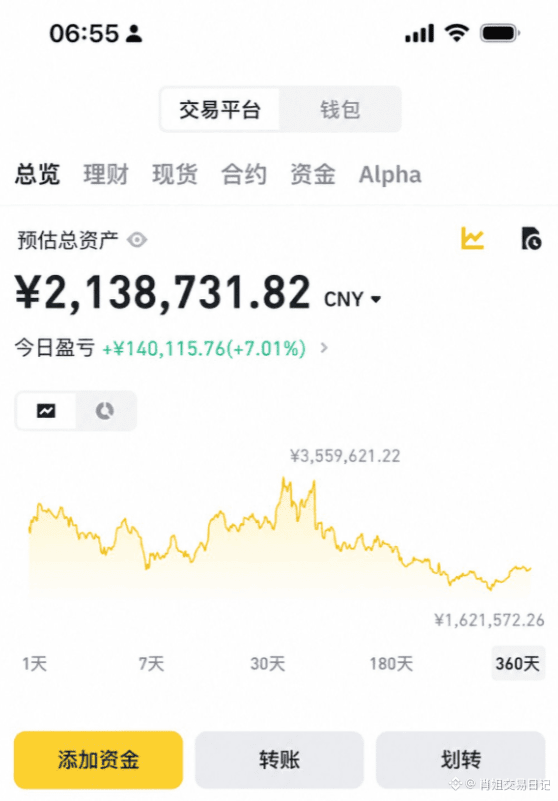
200U to 2 million? I’ve really seen someone do it.
It sounds like bragging, but things like this have actually happened in the market.
It wasn’t based on insider news, and it wasn’t one all-in bet.
It was three words: ride the trend.
When the market was moving up, they dared to hold. After unrealized profits built up, they dared to add. If the direction was wrong, they were willing to cut and leave.
I saw someone start with a few thousand U. After catching that altcoin rally, they basically didn’t chase hot trends, and they didn’t listen to signal calls in groups all day. They just focused on their own trend.
Pull back, cut part of the position.
Break out, add with the trend.
If there’s profit, let it roll.
Just this seemingly dumb method, over a few months, took the account from a few thousand U to hundreds of thousands or even millions.
What’s really hard is never the method, but the execution.
A lot of people take 10% and run; they fear a pullback after a small rise. Just after taking profit, the market pulls another leg.
Then when it pulls back, they get scared again.
When it’s clearly rising, they chase in again.
Back and forth, they caught the move, but not the profit.
There’s another very typical type of person:
They trade every day during choppy markets, and refuse to admit losses; when the real trend starts, they’re afraid to enter.
They can’t hold when they should,
can’t cut when they should,
and get itchy hands when they should be in cash.
In the end, it’s not that they missed opportunities; it’s that when opportunities came, they had nothing to do with them.
So don’t keep asking me how to multiply an account.
First ask yourself three questions:
After you make money, do you dare to add to your position with unrealized gains?
After you lose, are you willing to stop out in time?
When everyone else starts FOMOing, can you stay calm?
Riding a position has never been a miracle of “200U turning into 2 million.”
Its essence is simply this: identify the trend, control position size, hold onto profits, and accept losses when you’re wrong.
When the market comes, dare to act; when you’re wrong, dare to leave.
The people who can really grow small capital are often not the biggest gamblers, but the ones who can best control themselves.#美CFTC审查预测市场关联交易
200U to 2 million? I’ve really seen someone do it.
It sounds like bragging, but things like this have actually happened in the market.
It wasn’t based on insider news, and it wasn’t one all-in bet.
It was three words: ride the trend.
When the market was moving up, they dared to hold. After unrealized profits built up, they dared to add. If the direction was wrong, they were willing to cut and leave.
I saw someone start with a few thousand U. After catching that altcoin rally, they basically didn’t chase hot trends, and they didn’t listen to signal calls in groups all day. They just focused on their own trend.
Pull back, cut part of the position.
Break out, add with the trend.
If there’s profit, let it roll.
Just this seemingly dumb method, over a few months, took the account from a few thousand U to hundreds of thousands or even millions.
What’s really hard is never the method, but the execution.
A lot of people take 10% and run; they fear a pullback after a small rise. Just after taking profit, the market pulls another leg.
Then when it pulls back, they get scared again.
When it’s clearly rising, they chase in again.
Back and forth, they caught the move, but not the profit.
There’s another very typical type of person:
They trade every day during choppy markets, and refuse to admit losses; when the real trend starts, they’re afraid to enter.
They can’t hold when they should,
can’t cut when they should,
and get itchy hands when they should be in cash.
In the end, it’s not that they missed opportunities; it’s that when opportunities came, they had nothing to do with them.
So don’t keep asking me how to multiply an account.
First ask yourself three questions:
After you make money, do you dare to add to your position with unrealized gains?
After you lose, are you willing to stop out in time?
When everyone else starts FOMOing, can you stay calm?
Riding a position has never been a miracle of “200U turning into 2 million.”
Its essence is simply this: identify the trend, control position size, hold onto profits, and accept losses when you’re wrong.
When the market comes, dare to act; when you’re wrong, dare to leave.
The people who can really grow small capital are often not the biggest gamblers, but the ones who can best control themselves.#美CFTC审查预测市场关联交易
It sounds like bragging, but things like this have actually happened in the market.
It wasn’t based on insider news, and it wasn’t one all-in bet.
It was three words: ride the trend.
When the market was moving up, they dared to hold. After unrealized profits built up, they dared to add. If the direction was wrong, they were willing to cut and leave.
I saw someone start with a few thousand U. After catching that altcoin rally, they basically didn’t chase hot trends, and they didn’t listen to signal calls in groups all day. They just focused on their own trend.
Pull back, cut part of the position.
Break out, add with the trend.
If there’s profit, let it roll.
Just this seemingly dumb method, over a few months, took the account from a few thousand U to hundreds of thousands or even millions.
What’s really hard is never the method, but the execution.
A lot of people take 10% and run; they fear a pullback after a small rise. Just after taking profit, the market pulls another leg.
Then when it pulls back, they get scared again.
When it’s clearly rising, they chase in again.
Back and forth, they caught the move, but not the profit.
There’s another very typical type of person:
They trade every day during choppy markets, and refuse to admit losses; when the real trend starts, they’re afraid to enter.
They can’t hold when they should,
can’t cut when they should,
and get itchy hands when they should be in cash.
In the end, it’s not that they missed opportunities; it’s that when opportunities came, they had nothing to do with them.
So don’t keep asking me how to multiply an account.
First ask yourself three questions:
After you make money, do you dare to add to your position with unrealized gains?
After you lose, are you willing to stop out in time?
When everyone else starts FOMOing, can you stay calm?
Riding a position has never been a miracle of “200U turning into 2 million.”
Its essence is simply this: identify the trend, control position size, hold onto profits, and accept losses when you’re wrong.
When the market comes, dare to act; when you’re wrong, dare to leave.
The people who can really grow small capital are often not the biggest gamblers, but the ones who can best control themselves.#美CFTC审查预测市场关联交易
2.4k
·
--
Are you still losing money even if you’re looking in the right direction?
The problem is often not the direction, but the rhythm.
Many people ask me:
“If my direction is clearly right, why do I still end up losing in the end?”
It’s actually simple.
You think entering the market is the start of trading,
but the real trading begins with deciding when to enter, when to hold, and when to exit.
Look back at your recent losing trades—do they often look like this:
The direction is right, but the stop-loss just gets triggered at the lowest point.
When it rises a little, you’re afraid of giving back profit, so you rush to leave.
When it drops a little, panic kicks in and you reverse to chase the short.
In the end, the direction isn’t wrong, but the account keeps shrinking the more you trade.
It’s not that you can’t analyze,
it’s that your timing (rhythm) is off.
Now when I trade, I don’t guess tops or bottoms, and I definitely don’t bet on news every day.
I only watch one thing: whether the rhythm has arrived.
When the signal is there, I act;
when there’s no signal, I wait.
Many times, being in cash isn’t missing opportunities—it’s avoiding unnecessary losses.
In the past, I also drew candlestick charts, copied strategies, listened to news. I’d chase when it went up, and panic when it fell.
I messed around for a long time before I finally understood:
Trading isn’t about who can make more moves—it’s about who can hold back from making unnecessary ones.
Technical analysis is certainly important, but it can’t solve everything.
What truly widens the gap is whether you can act decisively when opportunities appear,
stay restrained during bull traps and bear traps,
and be able to hold when you should,
and leave without hesitation when you should.
At the end of the day, it comes down to two words:
Rhythm.
The market is never short of opportunities—what’s missing are people who can wait for them and seize them.
If you’re still trading based on hunches, emotions, or luck, your account will be worn down by your own actions sooner or later.
If you really want to trade better, don’t think about turning things around overnight—first learn how to bring your own rhythm back.#美国续请失业金人数降至177.9万
Are you still losing money even if you’re looking in the right direction?
The problem is often not the direction, but the rhythm.
Many people ask me:
“If my direction is clearly right, why do I still end up losing in the end?”
It’s actually simple.
You think entering the market is the start of trading,
but the real trading begins with deciding when to enter, when to hold, and when to exit.
Look back at your recent losing trades—do they often look like this:
The direction is right, but the stop-loss just gets triggered at the lowest point.
When it rises a little, you’re afraid of giving back profit, so you rush to leave.
When it drops a little, panic kicks in and you reverse to chase the short.
In the end, the direction isn’t wrong, but the account keeps shrinking the more you trade.
It’s not that you can’t analyze,
it’s that your timing (rhythm) is off.
Now when I trade, I don’t guess tops or bottoms, and I definitely don’t bet on news every day.
I only watch one thing: whether the rhythm has arrived.
When the signal is there, I act;
when there’s no signal, I wait.
Many times, being in cash isn’t missing opportunities—it’s avoiding unnecessary losses.
In the past, I also drew candlestick charts, copied strategies, listened to news. I’d chase when it went up, and panic when it fell.
I messed around for a long time before I finally understood:
Trading isn’t about who can make more moves—it’s about who can hold back from making unnecessary ones.
Technical analysis is certainly important, but it can’t solve everything.
What truly widens the gap is whether you can act decisively when opportunities appear,
stay restrained during bull traps and bear traps,
and be able to hold when you should,
and leave without hesitation when you should.
At the end of the day, it comes down to two words:
Rhythm.
The market is never short of opportunities—what’s missing are people who can wait for them and seize them.
If you’re still trading based on hunches, emotions, or luck, your account will be worn down by your own actions sooner or later.
If you really want to trade better, don’t think about turning things around overnight—first learn how to bring your own rhythm back.#美国续请失业金人数降至177.9万
The problem is often not the direction, but the rhythm.
Many people ask me:
“If my direction is clearly right, why do I still end up losing in the end?”
It’s actually simple.
You think entering the market is the start of trading,
but the real trading begins with deciding when to enter, when to hold, and when to exit.
Look back at your recent losing trades—do they often look like this:
The direction is right, but the stop-loss just gets triggered at the lowest point.
When it rises a little, you’re afraid of giving back profit, so you rush to leave.
When it drops a little, panic kicks in and you reverse to chase the short.
In the end, the direction isn’t wrong, but the account keeps shrinking the more you trade.
It’s not that you can’t analyze,
it’s that your timing (rhythm) is off.
Now when I trade, I don’t guess tops or bottoms, and I definitely don’t bet on news every day.
I only watch one thing: whether the rhythm has arrived.
When the signal is there, I act;
when there’s no signal, I wait.
Many times, being in cash isn’t missing opportunities—it’s avoiding unnecessary losses.
In the past, I also drew candlestick charts, copied strategies, listened to news. I’d chase when it went up, and panic when it fell.
I messed around for a long time before I finally understood:
Trading isn’t about who can make more moves—it’s about who can hold back from making unnecessary ones.
Technical analysis is certainly important, but it can’t solve everything.
What truly widens the gap is whether you can act decisively when opportunities appear,
stay restrained during bull traps and bear traps,
and be able to hold when you should,
and leave without hesitation when you should.
At the end of the day, it comes down to two words:
Rhythm.
The market is never short of opportunities—what’s missing are people who can wait for them and seize them.
If you’re still trading based on hunches, emotions, or luck, your account will be worn down by your own actions sooner or later.
If you really want to trade better, don’t think about turning things around overnight—first learn how to bring your own rhythm back.#美国续请失业金人数降至177.9万
495
·
--
Starting with 2,400U, he reached 170,000U+ in two months, and in the end he took a private plane directly to the Maldives.
Some say it was luck, others think it’s too exaggerated.
But if you look closely at the whole process, you’ll find that what’s truly impressive isn’t some magic method—instead, he consistently does a few things that look “stupid” on the surface.$SNDK
First, he never goes all-in.
With 2,400U, he breaks it into three parts.
700U for day trading, 700U for swing trading, and 600U kept as backup.
For day trading, he makes at most one trade per day—if there’s no opportunity, he doesn’t trade; for swing positions, he waits until price reaches the right level; and the backup money won’t move unless it’s absolutely critical.
Many people lose because of one word: “urgency.” He, on the other hand, keeps an exit for himself at all times.
Second, he doesn’t trade chaotically.
When the market is moving sideways, he basically stays still.
While others make a dozen-plus rounds in a day, he’d rather sit and wait.
If the direction isn’t clear, he doesn’t chase; if there isn’t enough room, he doesn’t act.
He would rather miss it than force a chance.
It looks like he makes profits slowly, but in reality he avoids many pitfalls.
Third, if he’s wrong, he admits it; if he’s right, he takes profit.
Before entering a trade, he thinks through where he might be wrong.
When price reaches the risk level, he exits—he never relies on “holding on for miracles.”
After he makes money, he doesn’t dump everything back in one go; instead, he realizes profits in batches.
Especially after a loss, he never averages down, and he definitely doesn’t think, “This trade must make up for it,” then getting bigger and bigger the more he trades.
Fourth, the money he earns must be taken out.
This is something many people overlook the most.
Once the account grows from a few thousand U to tens of thousands, even more, people easily develop a false sense of invincibility: “Maybe I’m really already unstoppable?”
Then positions get larger and they become bolder.
So he regularly withdraws a portion of the profits, keeping the numbers in the account within a range he can control.
In the end, if someone with small capital wants to grow big, the biggest fear isn’t making slow profits—it’s getting inflated after making a little.
What’s truly worth learning along this journey isn’t how 2,400U turned into 170,000U, but that he never turned trading into gambling.
Not all-in, not chaotic trades, no holding on to positions, and take profits when you earn them.
The method may not guarantee that you’ll flip your situation, but these habits can at least help you survive longer in this market.
For people with small capital, the most important thing is never to double in one shot—it’s to first build your own trading rhythm.#伊朗导弹无人机袭击科威特基地
Starting with 2,400U, he reached 170,000U+ in two months, and in the end he took a private plane directly to the Maldives.
Some say it was luck, others think it’s too exaggerated.
But if you look closely at the whole process, you’ll find that what’s truly impressive isn’t some magic method—instead, he consistently does a few things that look “stupid” on the surface.$SNDK
First, he never goes all-in.
With 2,400U, he breaks it into three parts.
700U for day trading, 700U for swing trading, and 600U kept as backup.
For day trading, he makes at most one trade per day—if there’s no opportunity, he doesn’t trade; for swing positions, he waits until price reaches the right level; and the backup money won’t move unless it’s absolutely critical.
Many people lose because of one word: “urgency.” He, on the other hand, keeps an exit for himself at all times.
Second, he doesn’t trade chaotically.
When the market is moving sideways, he basically stays still.
While others make a dozen-plus rounds in a day, he’d rather sit and wait.
If the direction isn’t clear, he doesn’t chase; if there isn’t enough room, he doesn’t act.
He would rather miss it than force a chance.
It looks like he makes profits slowly, but in reality he avoids many pitfalls.
Third, if he’s wrong, he admits it; if he’s right, he takes profit.
Before entering a trade, he thinks through where he might be wrong.
When price reaches the risk level, he exits—he never relies on “holding on for miracles.”
After he makes money, he doesn’t dump everything back in one go; instead, he realizes profits in batches.
Especially after a loss, he never averages down, and he definitely doesn’t think, “This trade must make up for it,” then getting bigger and bigger the more he trades.
Fourth, the money he earns must be taken out.
This is something many people overlook the most.
Once the account grows from a few thousand U to tens of thousands, even more, people easily develop a false sense of invincibility: “Maybe I’m really already unstoppable?”
Then positions get larger and they become bolder.
So he regularly withdraws a portion of the profits, keeping the numbers in the account within a range he can control.
In the end, if someone with small capital wants to grow big, the biggest fear isn’t making slow profits—it’s getting inflated after making a little.
What’s truly worth learning along this journey isn’t how 2,400U turned into 170,000U, but that he never turned trading into gambling.
Not all-in, not chaotic trades, no holding on to positions, and take profits when you earn them.
The method may not guarantee that you’ll flip your situation, but these habits can at least help you survive longer in this market.
For people with small capital, the most important thing is never to double in one shot—it’s to first build your own trading rhythm.#伊朗导弹无人机袭击科威特基地
Some say it was luck, others think it’s too exaggerated.
But if you look closely at the whole process, you’ll find that what’s truly impressive isn’t some magic method—instead, he consistently does a few things that look “stupid” on the surface.$SNDK
First, he never goes all-in.
With 2,400U, he breaks it into three parts.
700U for day trading, 700U for swing trading, and 600U kept as backup.
For day trading, he makes at most one trade per day—if there’s no opportunity, he doesn’t trade; for swing positions, he waits until price reaches the right level; and the backup money won’t move unless it’s absolutely critical.
Many people lose because of one word: “urgency.” He, on the other hand, keeps an exit for himself at all times.
Second, he doesn’t trade chaotically.
When the market is moving sideways, he basically stays still.
While others make a dozen-plus rounds in a day, he’d rather sit and wait.
If the direction isn’t clear, he doesn’t chase; if there isn’t enough room, he doesn’t act.
He would rather miss it than force a chance.
It looks like he makes profits slowly, but in reality he avoids many pitfalls.
Third, if he’s wrong, he admits it; if he’s right, he takes profit.
Before entering a trade, he thinks through where he might be wrong.
When price reaches the risk level, he exits—he never relies on “holding on for miracles.”
After he makes money, he doesn’t dump everything back in one go; instead, he realizes profits in batches.
Especially after a loss, he never averages down, and he definitely doesn’t think, “This trade must make up for it,” then getting bigger and bigger the more he trades.
Fourth, the money he earns must be taken out.
This is something many people overlook the most.
Once the account grows from a few thousand U to tens of thousands, even more, people easily develop a false sense of invincibility: “Maybe I’m really already unstoppable?”
Then positions get larger and they become bolder.
So he regularly withdraws a portion of the profits, keeping the numbers in the account within a range he can control.
In the end, if someone with small capital wants to grow big, the biggest fear isn’t making slow profits—it’s getting inflated after making a little.
What’s truly worth learning along this journey isn’t how 2,400U turned into 170,000U, but that he never turned trading into gambling.
Not all-in, not chaotic trades, no holding on to positions, and take profits when you earn them.
The method may not guarantee that you’ll flip your situation, but these habits can at least help you survive longer in this market.
For people with small capital, the most important thing is never to double in one shot—it’s to first build your own trading rhythm.#伊朗导弹无人机袭击科威特基地
1
2.6k
·
--
A person who gets into crypto trading and wants to return to a normal life often finds it harder than they think.
I have a friend. When he first started with futures contracts, he didn’t think that much.
With a 1,500U bankroll, he just made a few trades at random—within two days, he surged to 40,000U.
Those days, he was floating, feeling like he had it made.
He thought he’d found a way to make money, and even started to believe:
As long as you dare to do it, money really can come fast.
But the market quickly taught him a lesson.
He went heavier on positions, started going all-in, and began to “hold through losses.”
When he made money, he wanted more; when he lost money, he tried to get it back.
In the end, those 40,000U slowly fell back down to just a few hundred U.
The money was gone, but the person didn’t come back.
After that, he started staring at charts day and night—eating without a schedule, sleeping whenever he could.
Every day he would say, “This time, I’m really not playing anymore.”
But as soon as the market moved, his hand would inevitably open the trading app again.
Why is it so hard to quit?
Because futures contracts give feedback incredibly fast.
If you’re right, your account can visibly grow within minutes;
if you’re wrong, within minutes you can have your mindset completely collapse.
That kind of stimulation is something a normal job is hard to provide.
At work, you get a paycheck monthly; if you do business, you accumulate gradually; investment can take months or even years.
But futures contracts are different.
They keep giving you a false illusion:
“Just one more trade—you might turn it around.”
So it’s easy for people to fall into a loop:
You lose and want to break even.
You win and want to earn more.
You earn too little and feel unwilling to accept it.
You lose too much and feel even more unwilling.
In the end, what many people truly can’t quit may not be the coins.
It’s that feeling of “changing your fate in a short time.”
So after many people leave the market, what’s truly hard isn’t not looking at the candlestick charts—it’s accepting a much slower kind of life again.
You earn money little by little, live your life little by little, and the results also build up step by step.
That’s what many people struggle to adapt to.
The market won’t always give you chances to turn around, but real life will give you opportunities to start over.
The condition is: you have to learn to stop first.#戴尔财报超预期股价涨8%
A person who gets into crypto trading and wants to return to a normal life often finds it harder than they think.
I have a friend. When he first started with futures contracts, he didn’t think that much.
With a 1,500U bankroll, he just made a few trades at random—within two days, he surged to 40,000U.
Those days, he was floating, feeling like he had it made.
He thought he’d found a way to make money, and even started to believe:
As long as you dare to do it, money really can come fast.
But the market quickly taught him a lesson.
He went heavier on positions, started going all-in, and began to “hold through losses.”
When he made money, he wanted more; when he lost money, he tried to get it back.
In the end, those 40,000U slowly fell back down to just a few hundred U.
The money was gone, but the person didn’t come back.
After that, he started staring at charts day and night—eating without a schedule, sleeping whenever he could.
Every day he would say, “This time, I’m really not playing anymore.”
But as soon as the market moved, his hand would inevitably open the trading app again.
Why is it so hard to quit?
Because futures contracts give feedback incredibly fast.
If you’re right, your account can visibly grow within minutes;
if you’re wrong, within minutes you can have your mindset completely collapse.
That kind of stimulation is something a normal job is hard to provide.
At work, you get a paycheck monthly; if you do business, you accumulate gradually; investment can take months or even years.
But futures contracts are different.
They keep giving you a false illusion:
“Just one more trade—you might turn it around.”
So it’s easy for people to fall into a loop:
You lose and want to break even.
You win and want to earn more.
You earn too little and feel unwilling to accept it.
You lose too much and feel even more unwilling.
In the end, what many people truly can’t quit may not be the coins.
It’s that feeling of “changing your fate in a short time.”
So after many people leave the market, what’s truly hard isn’t not looking at the candlestick charts—it’s accepting a much slower kind of life again.
You earn money little by little, live your life little by little, and the results also build up step by step.
That’s what many people struggle to adapt to.
The market won’t always give you chances to turn around, but real life will give you opportunities to start over.
The condition is: you have to learn to stop first.#戴尔财报超预期股价涨8%
I have a friend. When he first started with futures contracts, he didn’t think that much.
With a 1,500U bankroll, he just made a few trades at random—within two days, he surged to 40,000U.
Those days, he was floating, feeling like he had it made.
He thought he’d found a way to make money, and even started to believe:
As long as you dare to do it, money really can come fast.
But the market quickly taught him a lesson.
He went heavier on positions, started going all-in, and began to “hold through losses.”
When he made money, he wanted more; when he lost money, he tried to get it back.
In the end, those 40,000U slowly fell back down to just a few hundred U.
The money was gone, but the person didn’t come back.
After that, he started staring at charts day and night—eating without a schedule, sleeping whenever he could.
Every day he would say, “This time, I’m really not playing anymore.”
But as soon as the market moved, his hand would inevitably open the trading app again.
Why is it so hard to quit?
Because futures contracts give feedback incredibly fast.
If you’re right, your account can visibly grow within minutes;
if you’re wrong, within minutes you can have your mindset completely collapse.
That kind of stimulation is something a normal job is hard to provide.
At work, you get a paycheck monthly; if you do business, you accumulate gradually; investment can take months or even years.
But futures contracts are different.
They keep giving you a false illusion:
“Just one more trade—you might turn it around.”
So it’s easy for people to fall into a loop:
You lose and want to break even.
You win and want to earn more.
You earn too little and feel unwilling to accept it.
You lose too much and feel even more unwilling.
In the end, what many people truly can’t quit may not be the coins.
It’s that feeling of “changing your fate in a short time.”
So after many people leave the market, what’s truly hard isn’t not looking at the candlestick charts—it’s accepting a much slower kind of life again.
You earn money little by little, live your life little by little, and the results also build up step by step.
That’s what many people struggle to adapt to.
The market won’t always give you chances to turn around, but real life will give you opportunities to start over.
The condition is: you have to learn to stop first.#戴尔财报超预期股价涨8%
146
·
--
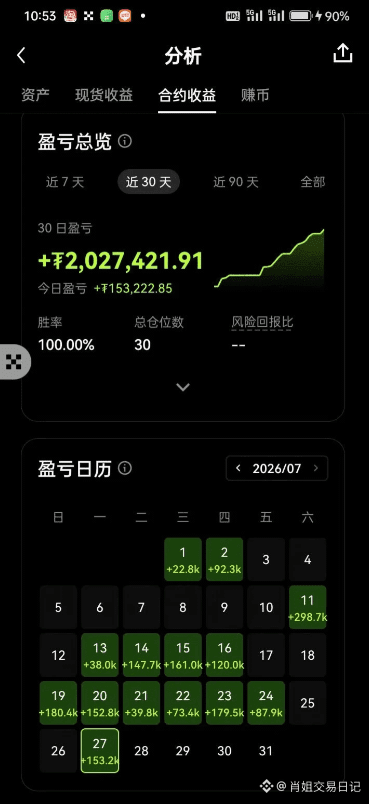
Making money with contracts is definitely satisfying—but the prerequisite is that you understand how to play first.
Two taps, and the moment the profit hits your account, it really feels great.
But who gets to that point without losing, hurting, and blowing up first—only to slowly learn how to control themselves afterward.
In the past, when trading contracts, I always thought: catch every wave. When it goes up, chase it; when it drops, hold on. When you’re down, you still want to make it back quickly.
Now it’s different.
If you can’t read the direction, don’t trade.
If the entry position isn’t right, don’t chase.
If you can’t control risk, I’d rather stay in cash.
By the end of trading, it’s not really about who has the biggest nerve—it’s about who can stay steady, endure, and keep executing.
So I’ve always said:
Contracts can be played, but never treat them like a casino.
Only after taking losses do you learn when you should charge in—and when you should pull back.
Now I can trade boldly, but I also trade carefully.
Because making money with contracts can be impulsive, but getting liquidated is also genuinely painful.
Brothers who are still losing money and still charging in recklessly—don’t think about how to make quick cash first.
Learn how to stay alive first. Then, the rest is something you’ll be qualified to discuss slowly later.#比特币ETF买家回归
Making money with contracts is definitely satisfying—but the prerequisite is that you understand how to play first.
Two taps, and the moment the profit hits your account, it really feels great.
But who gets to that point without losing, hurting, and blowing up first—only to slowly learn how to control themselves afterward.
In the past, when trading contracts, I always thought: catch every wave. When it goes up, chase it; when it drops, hold on. When you’re down, you still want to make it back quickly.
Now it’s different.
If you can’t read the direction, don’t trade.
If the entry position isn’t right, don’t chase.
If you can’t control risk, I’d rather stay in cash.
By the end of trading, it’s not really about who has the biggest nerve—it’s about who can stay steady, endure, and keep executing.
So I’ve always said:
Contracts can be played, but never treat them like a casino.
Only after taking losses do you learn when you should charge in—and when you should pull back.
Now I can trade boldly, but I also trade carefully.
Because making money with contracts can be impulsive, but getting liquidated is also genuinely painful.
Brothers who are still losing money and still charging in recklessly—don’t think about how to make quick cash first.
Learn how to stay alive first. Then, the rest is something you’ll be qualified to discuss slowly later.#比特币ETF买家回归
Two taps, and the moment the profit hits your account, it really feels great.
But who gets to that point without losing, hurting, and blowing up first—only to slowly learn how to control themselves afterward.
In the past, when trading contracts, I always thought: catch every wave. When it goes up, chase it; when it drops, hold on. When you’re down, you still want to make it back quickly.
Now it’s different.
If you can’t read the direction, don’t trade.
If the entry position isn’t right, don’t chase.
If you can’t control risk, I’d rather stay in cash.
By the end of trading, it’s not really about who has the biggest nerve—it’s about who can stay steady, endure, and keep executing.
So I’ve always said:
Contracts can be played, but never treat them like a casino.
Only after taking losses do you learn when you should charge in—and when you should pull back.
Now I can trade boldly, but I also trade carefully.
Because making money with contracts can be impulsive, but getting liquidated is also genuinely painful.
Brothers who are still losing money and still charging in recklessly—don’t think about how to make quick cash first.
Learn how to stay alive first. Then, the rest is something you’ll be qualified to discuss slowly later.#比特币ETF买家回归
161
·
--
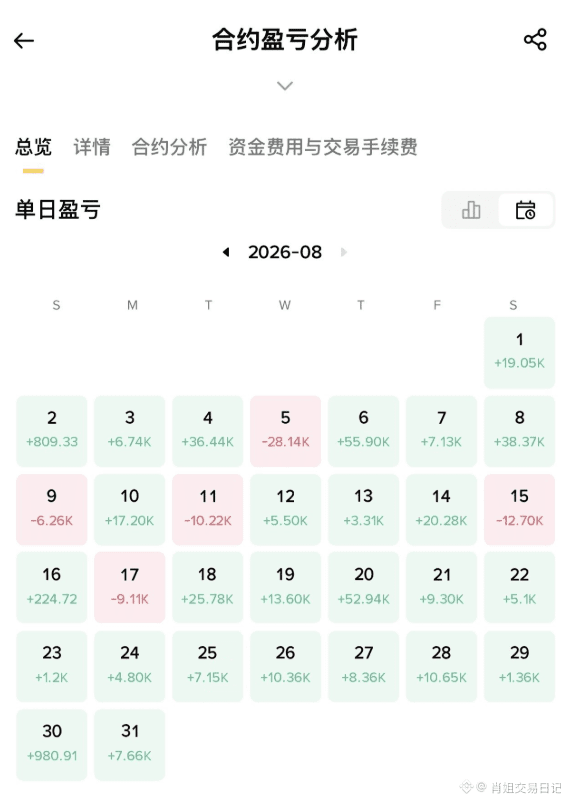
Making the first pot of gold in the crypto market—how long does it really take?
In the end, it all comes down to eight words:
Don’t covet small gains, and don’t fall into big traps.
I know a brother—he put in 50,000 yuan.
When it rose to 53,000, he got out.
He made 6%, and he was thrilled, thinking that locking in profits was the most important thing.
But later, the market pushed on all the way to 68,000.
There was 30% upside—yet none of it had anything to do with him.
What’s even more painful is that later the price dropped back to 50,000, even smashed down to 47,000—and he didn’t leave.
Because he thought:
“It's dropped this much. It can’t keep dropping, can it?”
The longer he held on, the more he lost.
In the end, he still cut his losses.
That’s how many people lose money—back and forth, getting beaten up by the market.
When it rises, they’re afraid profits will run away;
when it falls, they’re afraid of cutting at the absolute bottom.
So it ends up as:
Small gains and you run; big drops and you stubbornly hold.
So how do you fix it?
My own approach is simple:
Don’t guess the bottom—just follow the trend.
Pick coins that have already had a full sell-off and are starting to slowly strengthen from the bottom.
Don’t touch new coins too much. Don’t chase the ones that explode higher.
And don’t try to predict the absolute lowest point.
Test with a small position first, and only add slowly after the price action confirms.
I’d rather miss a segment of upside than get trapped just to “buy the absolute bottom.”
After you’ve made some profit, don’t only stare at account numbers.
If it’s time to take profit, take it.
Get your principal back first, then lock in part of the profit—let the remaining position continue running.
When it reaches your take-profit level, leave decisively.
Even if it later doubles again, don’t slap your own thigh.
You can never finish all the money the market has to offer, but if your principal is gone, then you truly don’t have a chance.
Last year, a friend of mine lost over 600,000 yuan in the early stage.
His mindset was nearly breaking.
Later, he stopped thinking about turning it around in one go and just followed this rhythm—trade bit by bit.
In half a year, not only did he fill the losses, he also bought himself a car.
So I’ve always believed:
The crypto market has never lacked people who can pick the right direction.
What it lacks are people who can hold on when they’re right—earn money—and still be willing to walk away.
If you can control your own hands, in many cases it’s more valuable than being able to read charts all day.
Opportunities show up every day, and they’re not only once.#美军打击两艘伊朗油轮
Making the first pot of gold in the crypto market—how long does it really take?
In the end, it all comes down to eight words:
Don’t covet small gains, and don’t fall into big traps.
I know a brother—he put in 50,000 yuan.
When it rose to 53,000, he got out.
He made 6%, and he was thrilled, thinking that locking in profits was the most important thing.
But later, the market pushed on all the way to 68,000.
There was 30% upside—yet none of it had anything to do with him.
What’s even more painful is that later the price dropped back to 50,000, even smashed down to 47,000—and he didn’t leave.
Because he thought:
“It's dropped this much. It can’t keep dropping, can it?”
The longer he held on, the more he lost.
In the end, he still cut his losses.
That’s how many people lose money—back and forth, getting beaten up by the market.
When it rises, they’re afraid profits will run away;
when it falls, they’re afraid of cutting at the absolute bottom.
So it ends up as:
Small gains and you run; big drops and you stubbornly hold.
So how do you fix it?
My own approach is simple:
Don’t guess the bottom—just follow the trend.
Pick coins that have already had a full sell-off and are starting to slowly strengthen from the bottom.
Don’t touch new coins too much. Don’t chase the ones that explode higher.
And don’t try to predict the absolute lowest point.
Test with a small position first, and only add slowly after the price action confirms.
I’d rather miss a segment of upside than get trapped just to “buy the absolute bottom.”
After you’ve made some profit, don’t only stare at account numbers.
If it’s time to take profit, take it.
Get your principal back first, then lock in part of the profit—let the remaining position continue running.
When it reaches your take-profit level, leave decisively.
Even if it later doubles again, don’t slap your own thigh.
You can never finish all the money the market has to offer, but if your principal is gone, then you truly don’t have a chance.
Last year, a friend of mine lost over 600,000 yuan in the early stage.
His mindset was nearly breaking.
Later, he stopped thinking about turning it around in one go and just followed this rhythm—trade bit by bit.
In half a year, not only did he fill the losses, he also bought himself a car.
So I’ve always believed:
The crypto market has never lacked people who can pick the right direction.
What it lacks are people who can hold on when they’re right—earn money—and still be willing to walk away.
If you can control your own hands, in many cases it’s more valuable than being able to read charts all day.
Opportunities show up every day, and they’re not only once.#美军打击两艘伊朗油轮
In the end, it all comes down to eight words:
Don’t covet small gains, and don’t fall into big traps.
I know a brother—he put in 50,000 yuan.
When it rose to 53,000, he got out.
He made 6%, and he was thrilled, thinking that locking in profits was the most important thing.
But later, the market pushed on all the way to 68,000.
There was 30% upside—yet none of it had anything to do with him.
What’s even more painful is that later the price dropped back to 50,000, even smashed down to 47,000—and he didn’t leave.
Because he thought:
“It's dropped this much. It can’t keep dropping, can it?”
The longer he held on, the more he lost.
In the end, he still cut his losses.
That’s how many people lose money—back and forth, getting beaten up by the market.
When it rises, they’re afraid profits will run away;
when it falls, they’re afraid of cutting at the absolute bottom.
So it ends up as:
Small gains and you run; big drops and you stubbornly hold.
So how do you fix it?
My own approach is simple:
Don’t guess the bottom—just follow the trend.
Pick coins that have already had a full sell-off and are starting to slowly strengthen from the bottom.
Don’t touch new coins too much. Don’t chase the ones that explode higher.
And don’t try to predict the absolute lowest point.
Test with a small position first, and only add slowly after the price action confirms.
I’d rather miss a segment of upside than get trapped just to “buy the absolute bottom.”
After you’ve made some profit, don’t only stare at account numbers.
If it’s time to take profit, take it.
Get your principal back first, then lock in part of the profit—let the remaining position continue running.
When it reaches your take-profit level, leave decisively.
Even if it later doubles again, don’t slap your own thigh.
You can never finish all the money the market has to offer, but if your principal is gone, then you truly don’t have a chance.
Last year, a friend of mine lost over 600,000 yuan in the early stage.
His mindset was nearly breaking.
Later, he stopped thinking about turning it around in one go and just followed this rhythm—trade bit by bit.
In half a year, not only did he fill the losses, he also bought himself a car.
So I’ve always believed:
The crypto market has never lacked people who can pick the right direction.
What it lacks are people who can hold on when they’re right—earn money—and still be willing to walk away.
If you can control your own hands, in many cases it’s more valuable than being able to read charts all day.
Opportunities show up every day, and they’re not only once.#美军打击两艘伊朗油轮
88
·
--
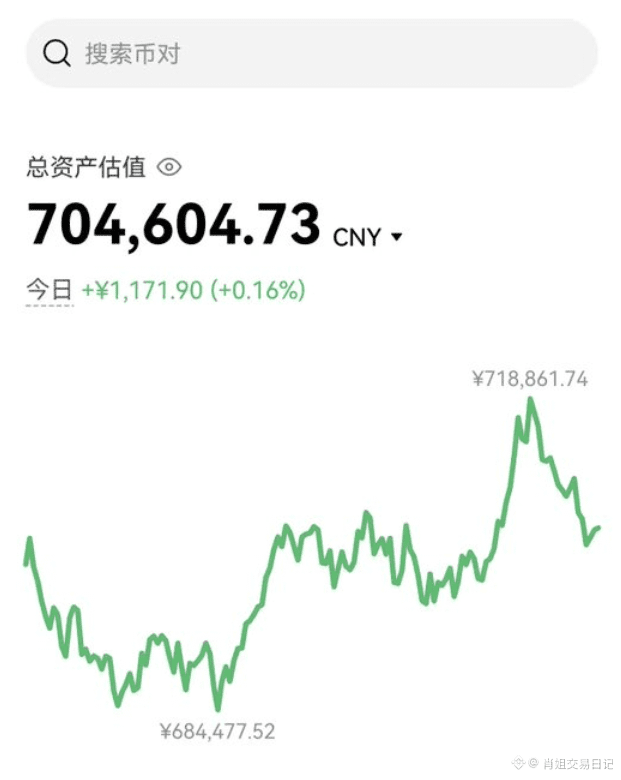
Brothers with less than 2000U in principal, don’t rush.
Let me tell you from the heart:
Crypto isn’t a casino. What truly determines outcomes has never been how bold you are, but whether you can calculate risk clearly.
Before, I guided a newbie who just entered the market. He started with 1200U, made 25,000U in 4 months. Later, his account kept rolling up to 38,000U.
Most importantly, throughout the entire process, he never had a liquidation.
A lot of people first think: “He got lucky.”
But that’s not it.
He simply carried out these three things below—honestly and all the way.
First, split your funds. Don’t fire all your bullets at once.
How to split the 1200U?
400U for short-term trades—watch for opportunities and act, don’t stay too long;
400U for swing trades—if there’s no setup, just wait; it’s fine to stay still for ten days or half a month;
leave the remaining 400U as reserve—don’t move it unless it’s necessary.
Why must you keep a base position?
Because the market is never short of opportunities. What’s scarce is whether you still have principal left.
Second, when there’s no行情 (no good setups), hold your hand.
Most of the time in crypto, the market is range-bound.
When it’s going sideways, people fiddle every day. It looks like you’re busy, but in reality, fees and tiny mistakes gradually grind down your principal.
Trades that are truly worth entering often come after a trend is clearly established.
So my habit has always been simple:
No opportunity—wait. If there is an opportunity—do it.
Once you’ve earned what you should, take profit.
When profits reach a certain level, withdraw in time—don’t let the numbers in your account keep tempting your greed.
Third, set rules in advance—don’t let emotions place orders for you.
When your stop-loss hits, leave immediately.
When you’re at a loss, don’t rely on adding more to “tough it out.”
After making the same mistake several times, stop and review.
The worst thing about trading isn’t losing once. It’s losing, then getting emotional and overexcited, and finally trying to gamble it back with an even bigger order.
In the end, for small capital, the most important thing isn’t “how to turn 1200U into tenfold overnight,” but:
Remove the possibility of liquidation from your trading.
Having a small principal isn’t scary.
What’s scary is having only 1200U, yet thinking about going all-in every day to change your life in one shot.
If you can survive, there will be a next opportunity.
If you currently also have a small account of a few hundred or a few thousand U, what you should study most isn’t getting rich overnight, but how to split your funds, how to wait for opportunities, and how to control risk.
Do these things well, and only then does it become possible for small capital to slowly grow bigger.#美联储加息概率升至68%
Brothers with less than 2000U in principal, don’t rush.
Let me tell you from the heart:
Crypto isn’t a casino. What truly determines outcomes has never been how bold you are, but whether you can calculate risk clearly.
Before, I guided a newbie who just entered the market. He started with 1200U, made 25,000U in 4 months. Later, his account kept rolling up to 38,000U.
Most importantly, throughout the entire process, he never had a liquidation.
A lot of people first think: “He got lucky.”
But that’s not it.
He simply carried out these three things below—honestly and all the way.
First, split your funds. Don’t fire all your bullets at once.
How to split the 1200U?
400U for short-term trades—watch for opportunities and act, don’t stay too long;
400U for swing trades—if there’s no setup, just wait; it’s fine to stay still for ten days or half a month;
leave the remaining 400U as reserve—don’t move it unless it’s necessary.
Why must you keep a base position?
Because the market is never short of opportunities. What’s scarce is whether you still have principal left.
Second, when there’s no行情 (no good setups), hold your hand.
Most of the time in crypto, the market is range-bound.
When it’s going sideways, people fiddle every day. It looks like you’re busy, but in reality, fees and tiny mistakes gradually grind down your principal.
Trades that are truly worth entering often come after a trend is clearly established.
So my habit has always been simple:
No opportunity—wait. If there is an opportunity—do it.
Once you’ve earned what you should, take profit.
When profits reach a certain level, withdraw in time—don’t let the numbers in your account keep tempting your greed.
Third, set rules in advance—don’t let emotions place orders for you.
When your stop-loss hits, leave immediately.
When you’re at a loss, don’t rely on adding more to “tough it out.”
After making the same mistake several times, stop and review.
The worst thing about trading isn’t losing once. It’s losing, then getting emotional and overexcited, and finally trying to gamble it back with an even bigger order.
In the end, for small capital, the most important thing isn’t “how to turn 1200U into tenfold overnight,” but:
Remove the possibility of liquidation from your trading.
Having a small principal isn’t scary.
What’s scary is having only 1200U, yet thinking about going all-in every day to change your life in one shot.
If you can survive, there will be a next opportunity.
If you currently also have a small account of a few hundred or a few thousand U, what you should study most isn’t getting rich overnight, but how to split your funds, how to wait for opportunities, and how to control risk.
Do these things well, and only then does it become possible for small capital to slowly grow bigger.#美联储加息概率升至68%
Let me tell you from the heart:
Crypto isn’t a casino. What truly determines outcomes has never been how bold you are, but whether you can calculate risk clearly.
Before, I guided a newbie who just entered the market. He started with 1200U, made 25,000U in 4 months. Later, his account kept rolling up to 38,000U.
Most importantly, throughout the entire process, he never had a liquidation.
A lot of people first think: “He got lucky.”
But that’s not it.
He simply carried out these three things below—honestly and all the way.
First, split your funds. Don’t fire all your bullets at once.
How to split the 1200U?
400U for short-term trades—watch for opportunities and act, don’t stay too long;
400U for swing trades—if there’s no setup, just wait; it’s fine to stay still for ten days or half a month;
leave the remaining 400U as reserve—don’t move it unless it’s necessary.
Why must you keep a base position?
Because the market is never short of opportunities. What’s scarce is whether you still have principal left.
Second, when there’s no行情 (no good setups), hold your hand.
Most of the time in crypto, the market is range-bound.
When it’s going sideways, people fiddle every day. It looks like you’re busy, but in reality, fees and tiny mistakes gradually grind down your principal.
Trades that are truly worth entering often come after a trend is clearly established.
So my habit has always been simple:
No opportunity—wait. If there is an opportunity—do it.
Once you’ve earned what you should, take profit.
When profits reach a certain level, withdraw in time—don’t let the numbers in your account keep tempting your greed.
Third, set rules in advance—don’t let emotions place orders for you.
When your stop-loss hits, leave immediately.
When you’re at a loss, don’t rely on adding more to “tough it out.”
After making the same mistake several times, stop and review.
The worst thing about trading isn’t losing once. It’s losing, then getting emotional and overexcited, and finally trying to gamble it back with an even bigger order.
In the end, for small capital, the most important thing isn’t “how to turn 1200U into tenfold overnight,” but:
Remove the possibility of liquidation from your trading.
Having a small principal isn’t scary.
What’s scary is having only 1200U, yet thinking about going all-in every day to change your life in one shot.
If you can survive, there will be a next opportunity.
If you currently also have a small account of a few hundred or a few thousand U, what you should study most isn’t getting rich overnight, but how to split your funds, how to wait for opportunities, and how to control risk.
Do these things well, and only then does it become possible for small capital to slowly grow bigger.#美联储加息概率升至68%
2
1.3k
·
--
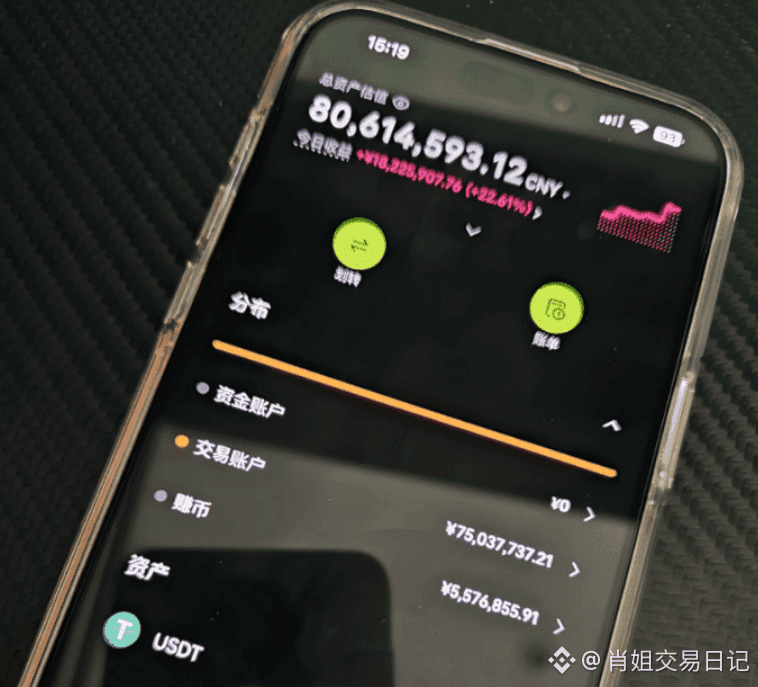
You stare at the market for a dozen hours every day, yet your account still doesn’t seem to make much progress.
If you trade, you probably know this feeling.
Many people think that the longer you watch and the more you trade, the more opportunities you’ll have to make money.
When the market rises, you chase.
When it drops, you add.
When you lose, you keep thinking you need to earn it back fast.
Making a dozen trades a day looks extremely busy.
But what happens in the end?
After half a year, your principal has barely grown, you’ve paid a pile of fees, and your mindset gets dragged down more and more.
Actually, what trading fears most isn’t that you can’t read the market.
It’s that you’re trying too hard to catch every single move.
When a bullish candle spikes upward, you’re afraid you’ll miss the chance.
Just after you jump in, when the price pulls back, you panic and cut losses.
Right after you sell, the market rallies again—and you can’t help but chase it.
Back and forth like this, and in the end it’s not the market that’s making money for you—it’s the fees.
$UAI
What often makes an account harder to grow isn’t one particular losing trade.
It’s what happens after you lose: you start to get impatient.
You keep thinking the next trade will recover the loss—so you open larger positions, trade more frequently, and your judgment becomes more and more emotional.
And then one impulsive trade can wipe out all the money you worked so hard to earn.
After trading for long enough, you’ll find that the truly capable people are often, surprisingly, not that busy.
If there’s no trend, wait.
If your entry isn’t right, wait.
If there’s no opportunity that fits your system, it’s better to stay in cash than trade recklessly.
When the right opportunity finally comes, they’re the ones who dare to act.
There are 365 days in a year—none of them can be your market every day.
You can never run out of money in the market to be made,
but once your principal is lost, getting it back won’t be so easy.
So stop equating “long hours staring at the screen” with “strong ability to make money.”
Trading is truly difficult, not because it’s hard to find opportunities—but because after you understand, you can still hold back and not act impulsively.
Good traders wait for opportunities that belong to them.
Bad traders are usually just waiting for the next loss.#美联储加息概率升至68% #比特币ETF买家回归
You stare at the market for a dozen hours every day, yet your account still doesn’t seem to make much progress.
If you trade, you probably know this feeling.
Many people think that the longer you watch and the more you trade, the more opportunities you’ll have to make money.
When the market rises, you chase.
When it drops, you add.
When you lose, you keep thinking you need to earn it back fast.
Making a dozen trades a day looks extremely busy.
But what happens in the end?
After half a year, your principal has barely grown, you’ve paid a pile of fees, and your mindset gets dragged down more and more.
Actually, what trading fears most isn’t that you can’t read the market.
It’s that you’re trying too hard to catch every single move.
When a bullish candle spikes upward, you’re afraid you’ll miss the chance.
Just after you jump in, when the price pulls back, you panic and cut losses.
Right after you sell, the market rallies again—and you can’t help but chase it.
Back and forth like this, and in the end it’s not the market that’s making money for you—it’s the fees.
$UAI
What often makes an account harder to grow isn’t one particular losing trade.
It’s what happens after you lose: you start to get impatient.
You keep thinking the next trade will recover the loss—so you open larger positions, trade more frequently, and your judgment becomes more and more emotional.
And then one impulsive trade can wipe out all the money you worked so hard to earn.
After trading for long enough, you’ll find that the truly capable people are often, surprisingly, not that busy.
If there’s no trend, wait.
If your entry isn’t right, wait.
If there’s no opportunity that fits your system, it’s better to stay in cash than trade recklessly.
When the right opportunity finally comes, they’re the ones who dare to act.
There are 365 days in a year—none of them can be your market every day.
You can never run out of money in the market to be made,
but once your principal is lost, getting it back won’t be so easy.
So stop equating “long hours staring at the screen” with “strong ability to make money.”
Trading is truly difficult, not because it’s hard to find opportunities—but because after you understand, you can still hold back and not act impulsively.
Good traders wait for opportunities that belong to them.
Bad traders are usually just waiting for the next loss.#美联储加息概率升至68% #比特币ETF买家回归
If you trade, you probably know this feeling.
Many people think that the longer you watch and the more you trade, the more opportunities you’ll have to make money.
When the market rises, you chase.
When it drops, you add.
When you lose, you keep thinking you need to earn it back fast.
Making a dozen trades a day looks extremely busy.
But what happens in the end?
After half a year, your principal has barely grown, you’ve paid a pile of fees, and your mindset gets dragged down more and more.
Actually, what trading fears most isn’t that you can’t read the market.
It’s that you’re trying too hard to catch every single move.
When a bullish candle spikes upward, you’re afraid you’ll miss the chance.
Just after you jump in, when the price pulls back, you panic and cut losses.
Right after you sell, the market rallies again—and you can’t help but chase it.
Back and forth like this, and in the end it’s not the market that’s making money for you—it’s the fees.
$UAI
What often makes an account harder to grow isn’t one particular losing trade.
It’s what happens after you lose: you start to get impatient.
You keep thinking the next trade will recover the loss—so you open larger positions, trade more frequently, and your judgment becomes more and more emotional.
And then one impulsive trade can wipe out all the money you worked so hard to earn.
After trading for long enough, you’ll find that the truly capable people are often, surprisingly, not that busy.
If there’s no trend, wait.
If your entry isn’t right, wait.
If there’s no opportunity that fits your system, it’s better to stay in cash than trade recklessly.
When the right opportunity finally comes, they’re the ones who dare to act.
There are 365 days in a year—none of them can be your market every day.
You can never run out of money in the market to be made,
but once your principal is lost, getting it back won’t be so easy.
So stop equating “long hours staring at the screen” with “strong ability to make money.”
Trading is truly difficult, not because it’s hard to find opportunities—but because after you understand, you can still hold back and not act impulsively.
Good traders wait for opportunities that belong to them.
Bad traders are usually just waiting for the next loss.#美联储加息概率升至68% #比特币ETF买家回归
42
·
--
Account is under 500U—listen to these words first.
What small capital fears most is never that the principal is low. It’s that you have very few bullets, yet you always think you can make a comeback with one swing.
I once coached a brother who started with 400U. In a month and a half, he reached over 20,000U—he never went through a liquidation in the middle.
He didn’t have any magical moves. What he truly relied on was strictly executing these three things.
First, your funds must be split.
Don’t go all-in.
Allocate part for short-term trades—only trade the mainstream coins you understand. Take profit when it reaches your target and leave; allocate part for swing trades—wait for the trend to show up before moving; keep the rest untouched, so you have a backup plan.
Second, only make money from things you understand.
In this market, there isn’t行情 every day.
When the price is ranging and you’re itching to trade, don’t. If there’s no opportunity, stay in cash and wait until the direction truly becomes clear.
Once you reach a certain level of profit, take out some first.
The numbers on your account will fluctuate—what matters is what you’ve actually taken off the table.
Third, you must control your emotions with rules.
When your stop-loss is hit, leave directly.
If you profit, reduce your position when you should; if you lose, don’t think you can fix it by averaging down.
The biggest fear in trading isn’t admitting you’re wrong—it’s being clearly wrong and still insisting on arguing with the market.
To grow from 500U slowly, it’s not about one big gamble. It’s about repeatedly doing these “small” things that don’t look impressive—splitting your positions, cutting losses, reducing exposure.
As long as your principal is still there, there’s always an opportunity.
If your principal is gone, no matter how big the market move is, you can only watch from the sidelines.
Follow Sister Xiao. No bragging, no wishful talk—only real, practical experience that helps small accounts survive.
If you’re still stuck in the cycle of “lose and start over, profit and then give it back,” come chat. First make your trading simple, and then we’ll talk about how to grow it bigger.#ARB上涨30%受Robinhood链收入推动
Account is under 500U—listen to these words first.
What small capital fears most is never that the principal is low. It’s that you have very few bullets, yet you always think you can make a comeback with one swing.
I once coached a brother who started with 400U. In a month and a half, he reached over 20,000U—he never went through a liquidation in the middle.
He didn’t have any magical moves. What he truly relied on was strictly executing these three things.
First, your funds must be split.
Don’t go all-in.
Allocate part for short-term trades—only trade the mainstream coins you understand. Take profit when it reaches your target and leave; allocate part for swing trades—wait for the trend to show up before moving; keep the rest untouched, so you have a backup plan.
Second, only make money from things you understand.
In this market, there isn’t行情 every day.
When the price is ranging and you’re itching to trade, don’t. If there’s no opportunity, stay in cash and wait until the direction truly becomes clear.
Once you reach a certain level of profit, take out some first.
The numbers on your account will fluctuate—what matters is what you’ve actually taken off the table.
Third, you must control your emotions with rules.
When your stop-loss is hit, leave directly.
If you profit, reduce your position when you should; if you lose, don’t think you can fix it by averaging down.
The biggest fear in trading isn’t admitting you’re wrong—it’s being clearly wrong and still insisting on arguing with the market.
To grow from 500U slowly, it’s not about one big gamble. It’s about repeatedly doing these “small” things that don’t look impressive—splitting your positions, cutting losses, reducing exposure.
As long as your principal is still there, there’s always an opportunity.
If your principal is gone, no matter how big the market move is, you can only watch from the sidelines.
Follow Sister Xiao. No bragging, no wishful talk—only real, practical experience that helps small accounts survive.
If you’re still stuck in the cycle of “lose and start over, profit and then give it back,” come chat. First make your trading simple, and then we’ll talk about how to grow it bigger.#ARB上涨30%受Robinhood链收入推动
What small capital fears most is never that the principal is low. It’s that you have very few bullets, yet you always think you can make a comeback with one swing.
I once coached a brother who started with 400U. In a month and a half, he reached over 20,000U—he never went through a liquidation in the middle.
He didn’t have any magical moves. What he truly relied on was strictly executing these three things.
First, your funds must be split.
Don’t go all-in.
Allocate part for short-term trades—only trade the mainstream coins you understand. Take profit when it reaches your target and leave; allocate part for swing trades—wait for the trend to show up before moving; keep the rest untouched, so you have a backup plan.
Second, only make money from things you understand.
In this market, there isn’t行情 every day.
When the price is ranging and you’re itching to trade, don’t. If there’s no opportunity, stay in cash and wait until the direction truly becomes clear.
Once you reach a certain level of profit, take out some first.
The numbers on your account will fluctuate—what matters is what you’ve actually taken off the table.
Third, you must control your emotions with rules.
When your stop-loss is hit, leave directly.
If you profit, reduce your position when you should; if you lose, don’t think you can fix it by averaging down.
The biggest fear in trading isn’t admitting you’re wrong—it’s being clearly wrong and still insisting on arguing with the market.
To grow from 500U slowly, it’s not about one big gamble. It’s about repeatedly doing these “small” things that don’t look impressive—splitting your positions, cutting losses, reducing exposure.
As long as your principal is still there, there’s always an opportunity.
If your principal is gone, no matter how big the market move is, you can only watch from the sidelines.
Follow Sister Xiao. No bragging, no wishful talk—only real, practical experience that helps small accounts survive.
If you’re still stuck in the cycle of “lose and start over, profit and then give it back,” come chat. First make your trading simple, and then we’ll talk about how to grow it bigger.#ARB上涨30%受Robinhood链收入推动
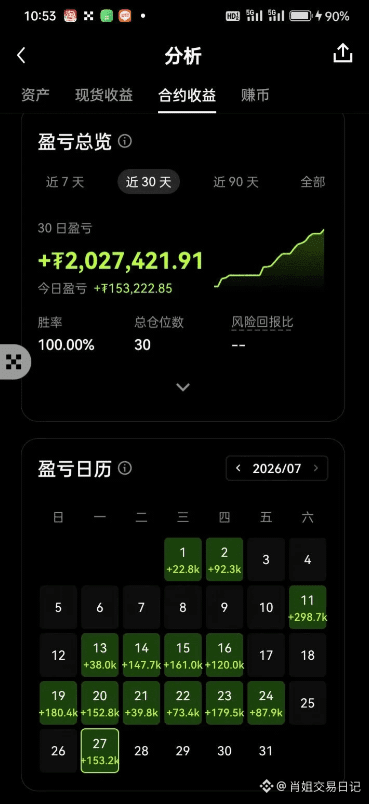
1
120
·
--
Brothers who just entered the crypto圈—don’t rush into thinking about reversing your losses.
Let me say something hard: many newcomers don’t lose because of the market—they lose because of their own impatience.
① Beginners, stay away from high leverage
When others show off profits, you see many of them. When it comes to showing liquidation, you see very few. Leverage amplification doesn’t just magnify profit—it also magnifies risk.
② Focus on the mainstream coins first
Get to understand BTC and ETH first, and don’t jump into chasing all kinds of low-quality “tujiaoshi” coins right away.
③ Don’t always fantasize about 10x or 100x
If you haven’t protected your principal yet, thinking about getting rich quickly usually ends with you losing even faster.
④ Chase the price less, and don’t swing-trade impulsively
When it rises, you’re afraid you’ll miss the train; when it falls, you keep holding on until it’s too late. If there’s no good opportunity, wait. Only act with a plan.
⑤ Set stop-loss and take-profit in advance
Before entering, decide where you’ll admit you’re wrong and where you’ll take your profits. Don’t rely on emotions right at the moment.
⑥ Only trade with spare money
Don’t touch your living expenses, mortgage payments, or borrowed money—absolutely none of it.
⑦ Improve your knowledge first
Money management, position sizing, and market规律 matter far more than constantly searching for “miracle trades.”
⑧ Follow the right people and avoid detours
The most expensive thing in the crypto world isn’t a single loss—it’s repeatedly losing with the wrong method.
Remember this line:
Survive first—then talk about reversing your losses.
The market won’t disappear, and opportunities are always there. What truly matters is: when opportunities come, you still have your principal, and you still have ammunition.#美联储加息概率升至68%
Brothers who just entered the crypto圈—don’t rush into thinking about reversing your losses.
Let me say something hard: many newcomers don’t lose because of the market—they lose because of their own impatience.
① Beginners, stay away from high leverage
When others show off profits, you see many of them. When it comes to showing liquidation, you see very few. Leverage amplification doesn’t just magnify profit—it also magnifies risk.
② Focus on the mainstream coins first
Get to understand BTC and ETH first, and don’t jump into chasing all kinds of low-quality “tujiaoshi” coins right away.
③ Don’t always fantasize about 10x or 100x
If you haven’t protected your principal yet, thinking about getting rich quickly usually ends with you losing even faster.
④ Chase the price less, and don’t swing-trade impulsively
When it rises, you’re afraid you’ll miss the train; when it falls, you keep holding on until it’s too late. If there’s no good opportunity, wait. Only act with a plan.
⑤ Set stop-loss and take-profit in advance
Before entering, decide where you’ll admit you’re wrong and where you’ll take your profits. Don’t rely on emotions right at the moment.
⑥ Only trade with spare money
Don’t touch your living expenses, mortgage payments, or borrowed money—absolutely none of it.
⑦ Improve your knowledge first
Money management, position sizing, and market规律 matter far more than constantly searching for “miracle trades.”
⑧ Follow the right people and avoid detours
The most expensive thing in the crypto world isn’t a single loss—it’s repeatedly losing with the wrong method.
Remember this line:
Survive first—then talk about reversing your losses.
The market won’t disappear, and opportunities are always there. What truly matters is: when opportunities come, you still have your principal, and you still have ammunition.#美联储加息概率升至68%
Let me say something hard: many newcomers don’t lose because of the market—they lose because of their own impatience.
① Beginners, stay away from high leverage
When others show off profits, you see many of them. When it comes to showing liquidation, you see very few. Leverage amplification doesn’t just magnify profit—it also magnifies risk.
② Focus on the mainstream coins first
Get to understand BTC and ETH first, and don’t jump into chasing all kinds of low-quality “tujiaoshi” coins right away.
③ Don’t always fantasize about 10x or 100x
If you haven’t protected your principal yet, thinking about getting rich quickly usually ends with you losing even faster.
④ Chase the price less, and don’t swing-trade impulsively
When it rises, you’re afraid you’ll miss the train; when it falls, you keep holding on until it’s too late. If there’s no good opportunity, wait. Only act with a plan.
⑤ Set stop-loss and take-profit in advance
Before entering, decide where you’ll admit you’re wrong and where you’ll take your profits. Don’t rely on emotions right at the moment.
⑥ Only trade with spare money
Don’t touch your living expenses, mortgage payments, or borrowed money—absolutely none of it.
⑦ Improve your knowledge first
Money management, position sizing, and market规律 matter far more than constantly searching for “miracle trades.”
⑧ Follow the right people and avoid detours
The most expensive thing in the crypto world isn’t a single loss—it’s repeatedly losing with the wrong method.
Remember this line:
Survive first—then talk about reversing your losses.
The market won’t disappear, and opportunities are always there. What truly matters is: when opportunities come, you still have your principal, and you still have ammunition.#美联储加息概率升至68%
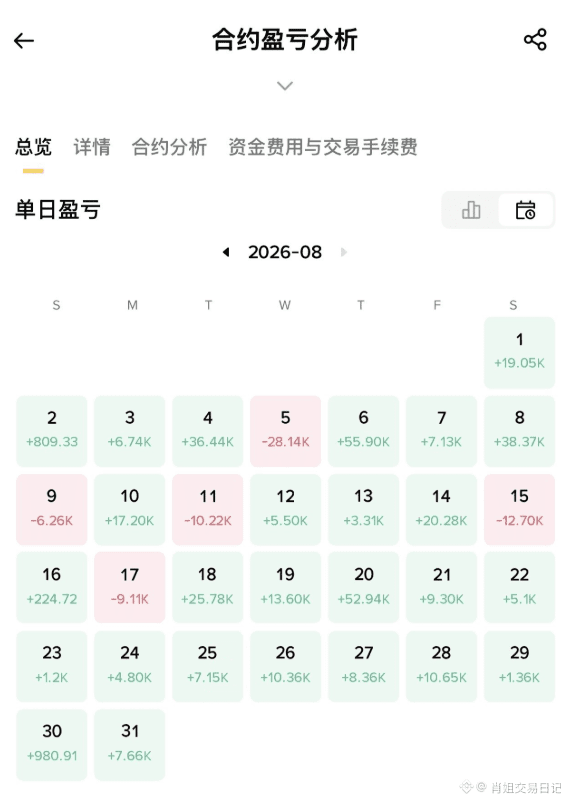
2
515
·
--
In the crypto world, want to turn 3,000 RMB into 1 million?
Honestly, getting to 1 million isn’t that easy.
But if you haven’t even reached 100,000 yet, don’t think about 1 million yet.
With only 3,000 RMB of principal, your first goal should be: first build up 400U, then expand step by step.
I prefer to do it like this:
First phase: test and iterate with a small amount
Around 3,000 RMB, roughly 400U.
You can take 100U as trial funds for a trade, and use it to trade hot-spot coin futures—under the condition that:
light position sizing, stop loss, and take profit; none of these can be missing.
For example, 100U to 200U, 200U to 400U, and 400U to 800U.
But there’s a key point here:
maximize no more than three consecutive gambles—don’t keep going endlessly.
When the market gives you an opportunity, take it; if there isn’t one, stop.
If things go smoothly and your principal reaches around 1,000U, then the way you play can’t be the same as before.
Second phase: combine three types of trades
① Ultra-short trades
Mainly do on the 15-minute timeframe—fast in, fast out.
Only trade the mainstream coins you’re familiar with, like BTC and ETH; act when a hot trend shows up.
The advantage is a fast pace; the downside is just as obvious—risk is fast too.
② Strategy trades
Use a small position size on the 4-hour timeframe.
For example, a small position around 15U, with 10x leverage.
The focus isn’t to make a huge profit in one trade, but to accumulate slowly.
You can take out the money you earn—set aside part each week to do DCA into BTC.
Your principal keeps you alive; your profits drive growth.
③ Trend trades
When a truly big opportunity shows up, then consider the medium- to long-term.
Once you’ve identified the direction, you don’t need to fiddle with it every day.
Find a good entry point, set your stop loss and take profit in advance, and try to make the reward-to-risk ratio reasonable.
Having fewer opportunities is fine—the key is to catch the few times that are truly worth doing.
Finally, one last thing to share with everyone:
In the crypto world, what’s really hard is never finding a coin that can surge wildly—it’s being able to keep the money after you’ve made it.
If you’re still chasing pumps and selling dips right now, or you often don’t know when to enter or when to exit, come to the chat room and exchange ideas together.#美联储加息概率升至68% #科威特防空系统回应伊朗无人机袭击
In the crypto world, want to turn 3,000 RMB into 1 million?
Honestly, getting to 1 million isn’t that easy.
But if you haven’t even reached 100,000 yet, don’t think about 1 million yet.
With only 3,000 RMB of principal, your first goal should be: first build up 400U, then expand step by step.
I prefer to do it like this:
First phase: test and iterate with a small amount
Around 3,000 RMB, roughly 400U.
You can take 100U as trial funds for a trade, and use it to trade hot-spot coin futures—under the condition that:
light position sizing, stop loss, and take profit; none of these can be missing.
For example, 100U to 200U, 200U to 400U, and 400U to 800U.
But there’s a key point here:
maximize no more than three consecutive gambles—don’t keep going endlessly.
When the market gives you an opportunity, take it; if there isn’t one, stop.
If things go smoothly and your principal reaches around 1,000U, then the way you play can’t be the same as before.
Second phase: combine three types of trades
① Ultra-short trades
Mainly do on the 15-minute timeframe—fast in, fast out.
Only trade the mainstream coins you’re familiar with, like BTC and ETH; act when a hot trend shows up.
The advantage is a fast pace; the downside is just as obvious—risk is fast too.
② Strategy trades
Use a small position size on the 4-hour timeframe.
For example, a small position around 15U, with 10x leverage.
The focus isn’t to make a huge profit in one trade, but to accumulate slowly.
You can take out the money you earn—set aside part each week to do DCA into BTC.
Your principal keeps you alive; your profits drive growth.
③ Trend trades
When a truly big opportunity shows up, then consider the medium- to long-term.
Once you’ve identified the direction, you don’t need to fiddle with it every day.
Find a good entry point, set your stop loss and take profit in advance, and try to make the reward-to-risk ratio reasonable.
Having fewer opportunities is fine—the key is to catch the few times that are truly worth doing.
Finally, one last thing to share with everyone:
In the crypto world, what’s really hard is never finding a coin that can surge wildly—it’s being able to keep the money after you’ve made it.
If you’re still chasing pumps and selling dips right now, or you often don’t know when to enter or when to exit, come to the chat room and exchange ideas together.#美联储加息概率升至68% #科威特防空系统回应伊朗无人机袭击
Honestly, getting to 1 million isn’t that easy.
But if you haven’t even reached 100,000 yet, don’t think about 1 million yet.
With only 3,000 RMB of principal, your first goal should be: first build up 400U, then expand step by step.
I prefer to do it like this:
First phase: test and iterate with a small amount
Around 3,000 RMB, roughly 400U.
You can take 100U as trial funds for a trade, and use it to trade hot-spot coin futures—under the condition that:
light position sizing, stop loss, and take profit; none of these can be missing.
For example, 100U to 200U, 200U to 400U, and 400U to 800U.
But there’s a key point here:
maximize no more than three consecutive gambles—don’t keep going endlessly.
When the market gives you an opportunity, take it; if there isn’t one, stop.
If things go smoothly and your principal reaches around 1,000U, then the way you play can’t be the same as before.
Second phase: combine three types of trades
① Ultra-short trades
Mainly do on the 15-minute timeframe—fast in, fast out.
Only trade the mainstream coins you’re familiar with, like BTC and ETH; act when a hot trend shows up.
The advantage is a fast pace; the downside is just as obvious—risk is fast too.
② Strategy trades
Use a small position size on the 4-hour timeframe.
For example, a small position around 15U, with 10x leverage.
The focus isn’t to make a huge profit in one trade, but to accumulate slowly.
You can take out the money you earn—set aside part each week to do DCA into BTC.
Your principal keeps you alive; your profits drive growth.
③ Trend trades
When a truly big opportunity shows up, then consider the medium- to long-term.
Once you’ve identified the direction, you don’t need to fiddle with it every day.
Find a good entry point, set your stop loss and take profit in advance, and try to make the reward-to-risk ratio reasonable.
Having fewer opportunities is fine—the key is to catch the few times that are truly worth doing.
Finally, one last thing to share with everyone:
In the crypto world, what’s really hard is never finding a coin that can surge wildly—it’s being able to keep the money after you’ve made it.
If you’re still chasing pumps and selling dips right now, or you often don’t know when to enter or when to exit, come to the chat room and exchange ideas together.#美联储加息概率升至68% #科威特防空系统回应伊朗无人机袭击
639
·
--
Haven’t blown up my account for seven years. Later I finally understood: what keeps me alive isn’t technology—it’s one word: fear.
The other day, after dinner, I suddenly got a call from the exchange’s risk control.
“Are you planning to withdraw 180,000 USDT this week? What’s the source of your funds?”
I said, “Made money trading crypto.”
On the other end, there was silence for a few seconds, then they asked:
“This account has been used for seven years. It’s never been liquidated?”
I laughed right then.
Because the strange thing they found suspicious was exactly what I cared about most during those seven years:
I never push myself into having no escape route.
After I start earning, the very first thing I never do is keep adding to my position. I take out part of my profits first.
Once the account hits the target, I lock in the gains.
It’s not that I don’t like the market—it’s that I understand too well: when the money is just lying in your account, people are very likely to get inflated.
Numbers on the screen can disappear. Only money you actually withdraw counts as yours.
Second, always keep yourself a fallback.
Not full margin. Never put all your chips into one direction. And never assume you can see through the market just because you got a few correct trades in a row.
If you’re right, take the profits. If you’re wrong, pull out.
Trading isn’t about proving how great you are—it’s about finding ways to make sure you stay at the table.
Third, and this is the one I value most:
Losses must have a limit.
I’ve never demanded that I be right every single time.
What if I’m wrong six out of ten?
As long as when I’m wrong the losses are small, and when I’m right I can hold onto the profits, the account can still climb slowly.
If I make a few wrong trades in a row, I just shut down.
It’s not me admitting defeat—it’s because I know once a person gets overexcited, the easiest thing is to turn one small loss into a big one.
So looking back now, what I’m most proud of after seven years has never been how much money I made.
It’s that after a round after round of blow-ups and crashes, my account is still there.
Getting rich overnight is luck.
Truly surviving across cycles depends on discipline—and even more on reverence.
The market will never lack opportunities.
What’s truly scarce is that you still have your principal, waiting for the next chance.
So don’t think about turning things around overnight.
First, stay alive.
Only if you live long enough do you have the right to talk about the next opportunity.#美联储加息概率升至68% #伊朗革命卫队称打击约旦美军陆战队营地
Haven’t blown up my account for seven years. Later I finally understood: what keeps me alive isn’t technology—it’s one word: fear.
The other day, after dinner, I suddenly got a call from the exchange’s risk control.
“Are you planning to withdraw 180,000 USDT this week? What’s the source of your funds?”
I said, “Made money trading crypto.”
On the other end, there was silence for a few seconds, then they asked:
“This account has been used for seven years. It’s never been liquidated?”
I laughed right then.
Because the strange thing they found suspicious was exactly what I cared about most during those seven years:
I never push myself into having no escape route.
After I start earning, the very first thing I never do is keep adding to my position. I take out part of my profits first.
Once the account hits the target, I lock in the gains.
It’s not that I don’t like the market—it’s that I understand too well: when the money is just lying in your account, people are very likely to get inflated.
Numbers on the screen can disappear. Only money you actually withdraw counts as yours.
Second, always keep yourself a fallback.
Not full margin. Never put all your chips into one direction. And never assume you can see through the market just because you got a few correct trades in a row.
If you’re right, take the profits. If you’re wrong, pull out.
Trading isn’t about proving how great you are—it’s about finding ways to make sure you stay at the table.
Third, and this is the one I value most:
Losses must have a limit.
I’ve never demanded that I be right every single time.
What if I’m wrong six out of ten?
As long as when I’m wrong the losses are small, and when I’m right I can hold onto the profits, the account can still climb slowly.
If I make a few wrong trades in a row, I just shut down.
It’s not me admitting defeat—it’s because I know once a person gets overexcited, the easiest thing is to turn one small loss into a big one.
So looking back now, what I’m most proud of after seven years has never been how much money I made.
It’s that after a round after round of blow-ups and crashes, my account is still there.
Getting rich overnight is luck.
Truly surviving across cycles depends on discipline—and even more on reverence.
The market will never lack opportunities.
What’s truly scarce is that you still have your principal, waiting for the next chance.
So don’t think about turning things around overnight.
First, stay alive.
Only if you live long enough do you have the right to talk about the next opportunity.#美联储加息概率升至68% #伊朗革命卫队称打击约旦美军陆战队营地
The other day, after dinner, I suddenly got a call from the exchange’s risk control.
“Are you planning to withdraw 180,000 USDT this week? What’s the source of your funds?”
I said, “Made money trading crypto.”
On the other end, there was silence for a few seconds, then they asked:
“This account has been used for seven years. It’s never been liquidated?”
I laughed right then.
Because the strange thing they found suspicious was exactly what I cared about most during those seven years:
I never push myself into having no escape route.
After I start earning, the very first thing I never do is keep adding to my position. I take out part of my profits first.
Once the account hits the target, I lock in the gains.
It’s not that I don’t like the market—it’s that I understand too well: when the money is just lying in your account, people are very likely to get inflated.
Numbers on the screen can disappear. Only money you actually withdraw counts as yours.
Second, always keep yourself a fallback.
Not full margin. Never put all your chips into one direction. And never assume you can see through the market just because you got a few correct trades in a row.
If you’re right, take the profits. If you’re wrong, pull out.
Trading isn’t about proving how great you are—it’s about finding ways to make sure you stay at the table.
Third, and this is the one I value most:
Losses must have a limit.
I’ve never demanded that I be right every single time.
What if I’m wrong six out of ten?
As long as when I’m wrong the losses are small, and when I’m right I can hold onto the profits, the account can still climb slowly.
If I make a few wrong trades in a row, I just shut down.
It’s not me admitting defeat—it’s because I know once a person gets overexcited, the easiest thing is to turn one small loss into a big one.
So looking back now, what I’m most proud of after seven years has never been how much money I made.
It’s that after a round after round of blow-ups and crashes, my account is still there.
Getting rich overnight is luck.
Truly surviving across cycles depends on discipline—and even more on reverence.
The market will never lack opportunities.
What’s truly scarce is that you still have your principal, waiting for the next chance.
So don’t think about turning things around overnight.
First, stay alive.
Only if you live long enough do you have the right to talk about the next opportunity.#美联储加息概率升至68% #伊朗革命卫队称打击约旦美军陆战队营地
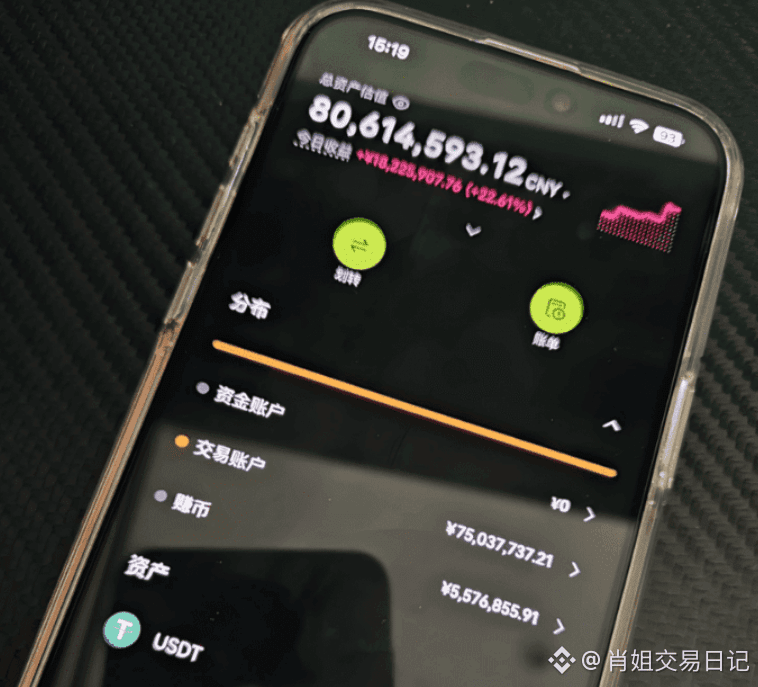
304
·
--
Bullish
$HEMI This buy order is simply making a killing, it surged straight onto the top of the gainers list right off the bat! I’ll keep strongly watching and backing this coin!#ARB上涨30%受Robinhood链收入推动
$HEMI This buy order is simply making a killing, it surged straight onto the top of the gainers list right off the bat! I’ll keep strongly watching and backing this coin!#ARB上涨30%受Robinhood链收入推动
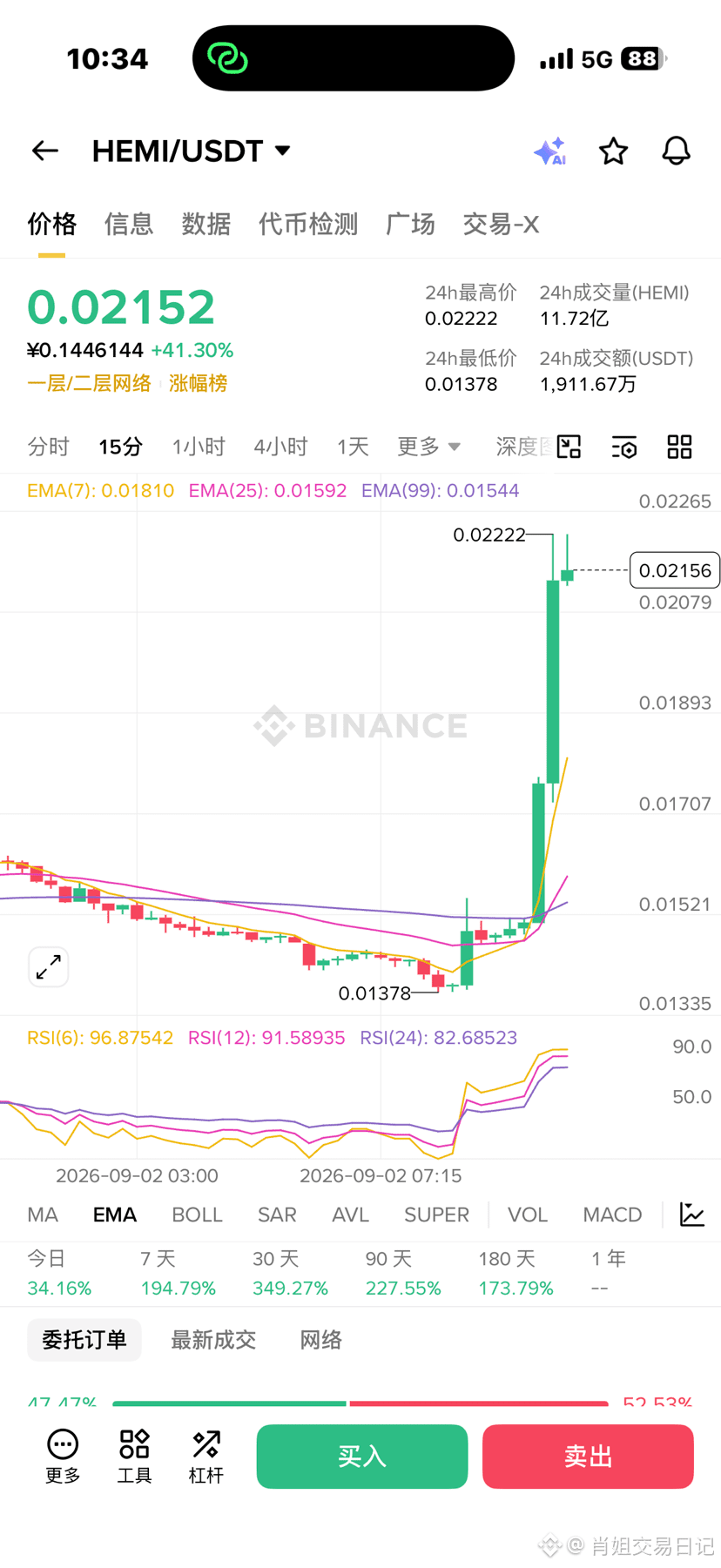
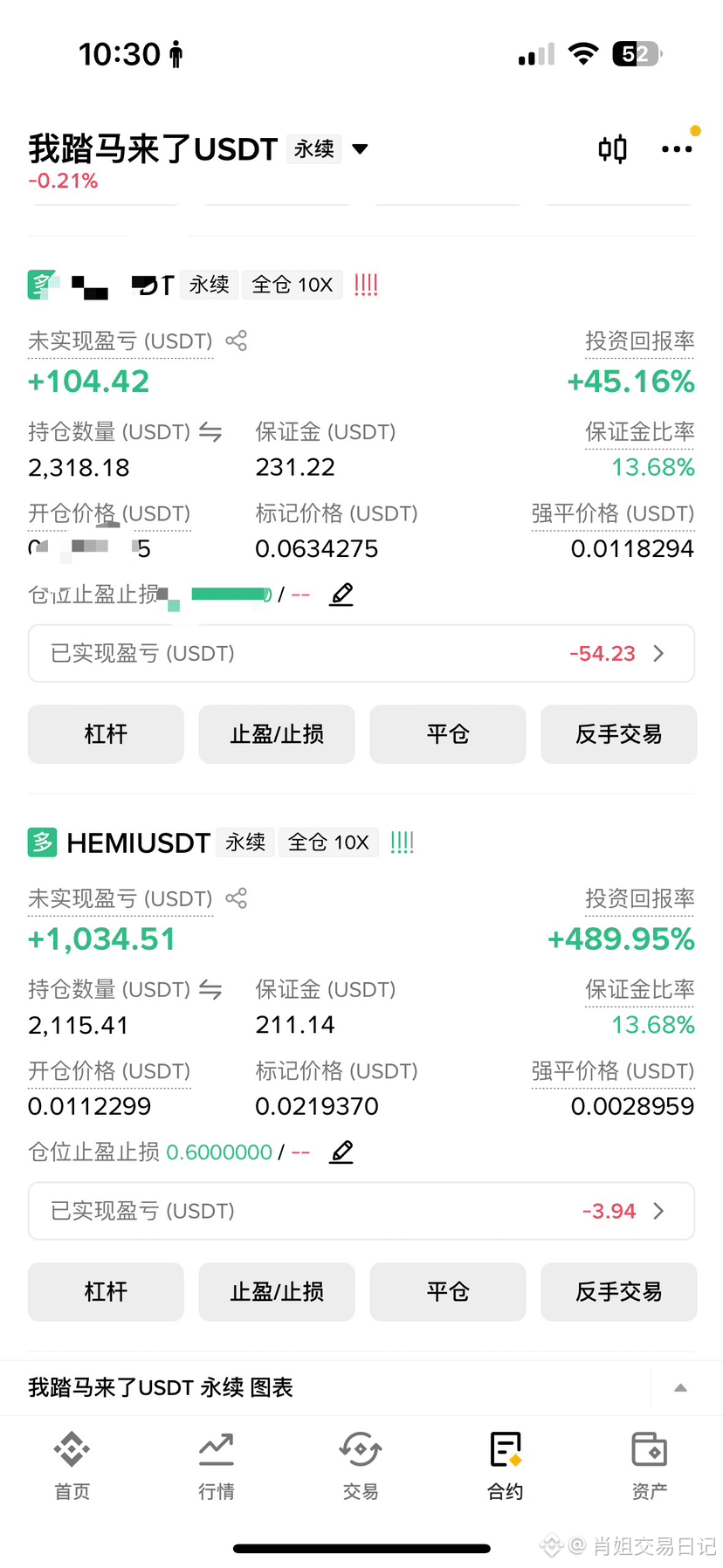
188
·
--
New friends in the coin world, let’s talk about something real today.
First, say this up front:
2,000 yuan isn’t money to fantasize about getting rich overnight.
What you truly need to do is roll your principal up bit by bit.
2,000 RMB is roughly 300U.
In the first phase, don’t rush to think about 100,000. Focus on one target chain:
150U → 300U → 600U → 1500U → 3000U → 10,000U。
With small early capital, you can participate in contracts with small positions, controlling each trade to about 30U, and only look for opportunities you can actually understand.
But remember one sentence for sure:
Small capital can bet on opportunities, but absolutely cannot bet your life.
After you’ve made profit a few times, don’t get carried away. Even if you lose, don’t rush to get it back immediately.
The real danger is never just losing one trade. It’s when you get overconfident and go all-in, then you end up giving back everything you earned before.
Once the principal grows gradually, then stabilize your strategy.
① Scalping
Mainly trade highly liquid coins like BTC and ETH. Use the 15-minute timeframe to find opportunities—quick in, quick out, no lingering.
② Strategy orders
Look at the 4-hour trend. Use small positions to set up in advance; when you reach the expected level, take profit. Don’t fight the market to the end. When the bigger cycle is suitable, then consider long-term allocation of BTC.
③ Trend trades
This is where the real gap in returns comes from.
Identify the setup in advance, set your stop-loss and take-profit, then wait for the real big move. Catch a stretch of the trend—this beats randomly trading every day.
I’ve walked this path step by step myself.
In the end, going from 1,000 to 100,000 isn’t luck—it’s discipline.
Going from 100,000 to 1,000,000 isn’t just courage—it’s patience.
The crypto market has never lacked opportunities. What’s truly rare is—
people whose principal hasn’t been wiped out, whose mindset hasn’t been broken, and who can still stay at the table.
If you’re still exploring right now, that’s okay.
Just don’t think about stepping onto the ladder in one bound. Being solid at every step matters more than anything else.#以太坊ETF连续11日净流入 #WTI油价上涨未平仓合约收缩
New friends in the coin world, let’s talk about something real today.
First, say this up front:
2,000 yuan isn’t money to fantasize about getting rich overnight.
What you truly need to do is roll your principal up bit by bit.
2,000 RMB is roughly 300U.
In the first phase, don’t rush to think about 100,000. Focus on one target chain:
150U → 300U → 600U → 1500U → 3000U → 10,000U。
With small early capital, you can participate in contracts with small positions, controlling each trade to about 30U, and only look for opportunities you can actually understand.
But remember one sentence for sure:
Small capital can bet on opportunities, but absolutely cannot bet your life.
After you’ve made profit a few times, don’t get carried away. Even if you lose, don’t rush to get it back immediately.
The real danger is never just losing one trade. It’s when you get overconfident and go all-in, then you end up giving back everything you earned before.
Once the principal grows gradually, then stabilize your strategy.
① Scalping
Mainly trade highly liquid coins like BTC and ETH. Use the 15-minute timeframe to find opportunities—quick in, quick out, no lingering.
② Strategy orders
Look at the 4-hour trend. Use small positions to set up in advance; when you reach the expected level, take profit. Don’t fight the market to the end. When the bigger cycle is suitable, then consider long-term allocation of BTC.
③ Trend trades
This is where the real gap in returns comes from.
Identify the setup in advance, set your stop-loss and take-profit, then wait for the real big move. Catch a stretch of the trend—this beats randomly trading every day.
I’ve walked this path step by step myself.
In the end, going from 1,000 to 100,000 isn’t luck—it’s discipline.
Going from 100,000 to 1,000,000 isn’t just courage—it’s patience.
The crypto market has never lacked opportunities. What’s truly rare is—
people whose principal hasn’t been wiped out, whose mindset hasn’t been broken, and who can still stay at the table.
If you’re still exploring right now, that’s okay.
Just don’t think about stepping onto the ladder in one bound. Being solid at every step matters more than anything else.#以太坊ETF连续11日净流入 #WTI油价上涨未平仓合约收缩
First, say this up front:
2,000 yuan isn’t money to fantasize about getting rich overnight.
What you truly need to do is roll your principal up bit by bit.
2,000 RMB is roughly 300U.
In the first phase, don’t rush to think about 100,000. Focus on one target chain:
150U → 300U → 600U → 1500U → 3000U → 10,000U。
With small early capital, you can participate in contracts with small positions, controlling each trade to about 30U, and only look for opportunities you can actually understand.
But remember one sentence for sure:
Small capital can bet on opportunities, but absolutely cannot bet your life.
After you’ve made profit a few times, don’t get carried away. Even if you lose, don’t rush to get it back immediately.
The real danger is never just losing one trade. It’s when you get overconfident and go all-in, then you end up giving back everything you earned before.
Once the principal grows gradually, then stabilize your strategy.
① Scalping
Mainly trade highly liquid coins like BTC and ETH. Use the 15-minute timeframe to find opportunities—quick in, quick out, no lingering.
② Strategy orders
Look at the 4-hour trend. Use small positions to set up in advance; when you reach the expected level, take profit. Don’t fight the market to the end. When the bigger cycle is suitable, then consider long-term allocation of BTC.
③ Trend trades
This is where the real gap in returns comes from.
Identify the setup in advance, set your stop-loss and take-profit, then wait for the real big move. Catch a stretch of the trend—this beats randomly trading every day.
I’ve walked this path step by step myself.
In the end, going from 1,000 to 100,000 isn’t luck—it’s discipline.
Going from 100,000 to 1,000,000 isn’t just courage—it’s patience.
The crypto market has never lacked opportunities. What’s truly rare is—
people whose principal hasn’t been wiped out, whose mindset hasn’t been broken, and who can still stay at the table.
If you’re still exploring right now, that’s okay.
Just don’t think about stepping onto the ladder in one bound. Being solid at every step matters more than anything else.#以太坊ETF连续11日净流入 #WTI油价上涨未平仓合约收缩
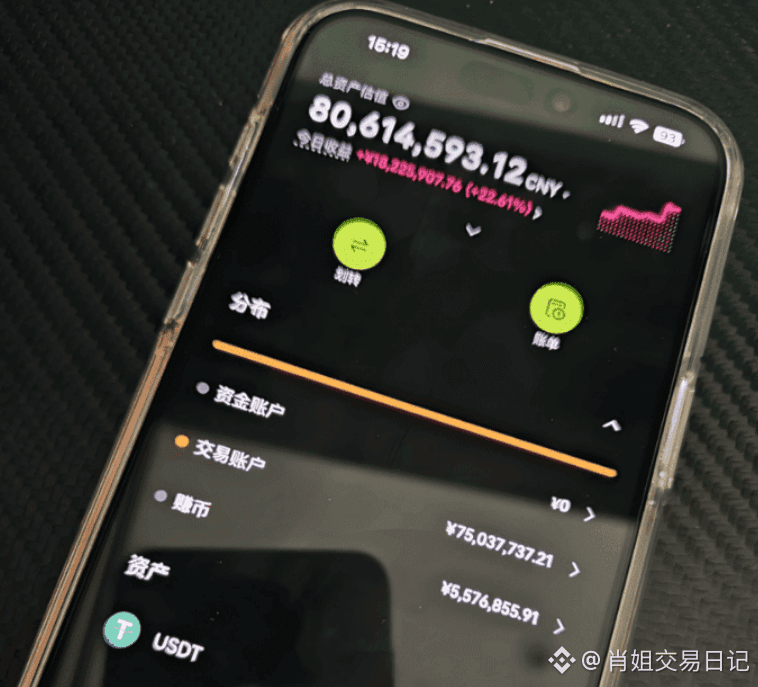
3
788
·
--
A few little trading facts about the crypto market—most people don’t know them, but anyone who’s truly fallen into a trap understands.
First, averaging down isn’t “buy more the more it drops.”
What’s truly hard about averaging down isn’t the math—it’s the mindset. The more you average down, the heavier your position becomes. If it keeps falling, the so-called “lowering your cost basis” can quickly turn into “amplifying your losses.” Averaging down is possible, but you must set a limit.
Second, small profits rolling can be terrifying.
If you have 100k U and make 1% a day, compounding over 250 trading days, the theory says you could grow to around 1.3 million U. But in reality, when people earn 1%, they still want to earn 5%—yet when they lose 1%, they stubbornly hold on. The hardest part of compounding isn’t calculating—it’s execution.
Third, you can make money even with a low win rate.
With a 60% win rate, as long as the payoff ratio is reasonable, you can still make money in the long run. What really causes people to lose money is often not the win rate—it’s taking small wins and letting losses grow, or failing to cut losses when you should.
Fourth, the higher the leverage, the easier emotions get out of control.
At 100x or 125x, what’s magnified isn’t just returns, but volatility and liquidation risk too. Leverage is just a tool—the core is position sizing and risk control.
In the end, trading isn’t about who finds more opportunities—it’s about who can control position size, control their hands, and stay in the game long enough.
There will always be new market cycles. If your principal is gone, the next wave won’t matter to you. #以太坊ETF连续11日净流入
A few little trading facts about the crypto market—most people don’t know them, but anyone who’s truly fallen into a trap understands.
First, averaging down isn’t “buy more the more it drops.”
What’s truly hard about averaging down isn’t the math—it’s the mindset. The more you average down, the heavier your position becomes. If it keeps falling, the so-called “lowering your cost basis” can quickly turn into “amplifying your losses.” Averaging down is possible, but you must set a limit.
Second, small profits rolling can be terrifying.
If you have 100k U and make 1% a day, compounding over 250 trading days, the theory says you could grow to around 1.3 million U. But in reality, when people earn 1%, they still want to earn 5%—yet when they lose 1%, they stubbornly hold on. The hardest part of compounding isn’t calculating—it’s execution.
Third, you can make money even with a low win rate.
With a 60% win rate, as long as the payoff ratio is reasonable, you can still make money in the long run. What really causes people to lose money is often not the win rate—it’s taking small wins and letting losses grow, or failing to cut losses when you should.
Fourth, the higher the leverage, the easier emotions get out of control.
At 100x or 125x, what’s magnified isn’t just returns, but volatility and liquidation risk too. Leverage is just a tool—the core is position sizing and risk control.
In the end, trading isn’t about who finds more opportunities—it’s about who can control position size, control their hands, and stay in the game long enough.
There will always be new market cycles. If your principal is gone, the next wave won’t matter to you. #以太坊ETF连续11日净流入
First, averaging down isn’t “buy more the more it drops.”
What’s truly hard about averaging down isn’t the math—it’s the mindset. The more you average down, the heavier your position becomes. If it keeps falling, the so-called “lowering your cost basis” can quickly turn into “amplifying your losses.” Averaging down is possible, but you must set a limit.
Second, small profits rolling can be terrifying.
If you have 100k U and make 1% a day, compounding over 250 trading days, the theory says you could grow to around 1.3 million U. But in reality, when people earn 1%, they still want to earn 5%—yet when they lose 1%, they stubbornly hold on. The hardest part of compounding isn’t calculating—it’s execution.
Third, you can make money even with a low win rate.
With a 60% win rate, as long as the payoff ratio is reasonable, you can still make money in the long run. What really causes people to lose money is often not the win rate—it’s taking small wins and letting losses grow, or failing to cut losses when you should.
Fourth, the higher the leverage, the easier emotions get out of control.
At 100x or 125x, what’s magnified isn’t just returns, but volatility and liquidation risk too. Leverage is just a tool—the core is position sizing and risk control.
In the end, trading isn’t about who finds more opportunities—it’s about who can control position size, control their hands, and stay in the game long enough.
There will always be new market cycles. If your principal is gone, the next wave won’t matter to you. #以太坊ETF连续11日净流入
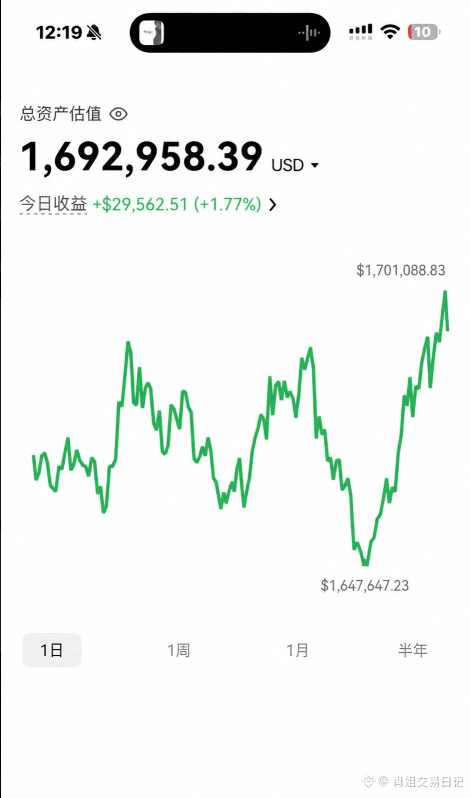
1
284
·
--
Opportunities are always there—only your principal comes once.
Stay in the crypto market long enough, and you’ll slowly understand:
Opportunities have never been scarce; what’s missing is whether you still have enough principal for the next one.
If you didn’t catch this wave, it’s okay—there will be another.
Missing out may mean earning less, but rushing in recklessly and losing—what you lose is real money.
Many people get trapped and shuffled around for two reasons:
One is fear of missing out.
The other is reluctance to cut losses.
When it rises, you’re afraid of missing out and can’t resist chasing at the top;
when it falls, you can’t bring yourself to sell at a loss, thinking you’ll wait a bit longer.
The result is—
Chase at the peak when it goes up, and hold at the halfway point when it drops.
After going through several bull and bear cycles, I’ve come to believe more and more:
Trading isn’t about who’s the boldest—it’s about who lasts the longest.
If you can read the trend, follow it.
If you can’t, wait and observe first.
In the big trend, choose the direction.
In the small trend, look for opportunities.
If your position size is wrong, even if you’re right about the market, you may not actually make money.
So, if you miss it, then you miss it.
Don’t always think:
“ If I hadn’t sold back then, how much I would be up by now.”
And don’t keep regretting:
“ If I had cut earlier back then, I wouldn’t be down so much now.”
The market has no “what if”—only outcomes.
Paper gains are just numbers on your account; principal is the capital you use to turn things around next time.
Especially when the market is bad, don’t keep thinking you can make it all back in a single day.
First, protect your principal.
First, stabilize your rhythm.
Survive until the next market cycle starts to move—opportunities will find you naturally.
The truly capable aren’t the ones who catch every wave,
but the ones who can still wait when they miss,
and can step back when they get it wrong.
Opportunities are always there—once your principal is gone, you can only start over.#比特币8月上涨23%跑赢黄金股市
Opportunities are always there—only your principal comes once.
Stay in the crypto market long enough, and you’ll slowly understand:
Opportunities have never been scarce; what’s missing is whether you still have enough principal for the next one.
If you didn’t catch this wave, it’s okay—there will be another.
Missing out may mean earning less, but rushing in recklessly and losing—what you lose is real money.
Many people get trapped and shuffled around for two reasons:
One is fear of missing out.
The other is reluctance to cut losses.
When it rises, you’re afraid of missing out and can’t resist chasing at the top;
when it falls, you can’t bring yourself to sell at a loss, thinking you’ll wait a bit longer.
The result is—
Chase at the peak when it goes up, and hold at the halfway point when it drops.
After going through several bull and bear cycles, I’ve come to believe more and more:
Trading isn’t about who’s the boldest—it’s about who lasts the longest.
If you can read the trend, follow it.
If you can’t, wait and observe first.
In the big trend, choose the direction.
In the small trend, look for opportunities.
If your position size is wrong, even if you’re right about the market, you may not actually make money.
So, if you miss it, then you miss it.
Don’t always think:
“ If I hadn’t sold back then, how much I would be up by now.”
And don’t keep regretting:
“ If I had cut earlier back then, I wouldn’t be down so much now.”
The market has no “what if”—only outcomes.
Paper gains are just numbers on your account; principal is the capital you use to turn things around next time.
Especially when the market is bad, don’t keep thinking you can make it all back in a single day.
First, protect your principal.
First, stabilize your rhythm.
Survive until the next market cycle starts to move—opportunities will find you naturally.
The truly capable aren’t the ones who catch every wave,
but the ones who can still wait when they miss,
and can step back when they get it wrong.
Opportunities are always there—once your principal is gone, you can only start over.#比特币8月上涨23%跑赢黄金股市
Stay in the crypto market long enough, and you’ll slowly understand:
Opportunities have never been scarce; what’s missing is whether you still have enough principal for the next one.
If you didn’t catch this wave, it’s okay—there will be another.
Missing out may mean earning less, but rushing in recklessly and losing—what you lose is real money.
Many people get trapped and shuffled around for two reasons:
One is fear of missing out.
The other is reluctance to cut losses.
When it rises, you’re afraid of missing out and can’t resist chasing at the top;
when it falls, you can’t bring yourself to sell at a loss, thinking you’ll wait a bit longer.
The result is—
Chase at the peak when it goes up, and hold at the halfway point when it drops.
After going through several bull and bear cycles, I’ve come to believe more and more:
Trading isn’t about who’s the boldest—it’s about who lasts the longest.
If you can read the trend, follow it.
If you can’t, wait and observe first.
In the big trend, choose the direction.
In the small trend, look for opportunities.
If your position size is wrong, even if you’re right about the market, you may not actually make money.
So, if you miss it, then you miss it.
Don’t always think:
“ If I hadn’t sold back then, how much I would be up by now.”
And don’t keep regretting:
“ If I had cut earlier back then, I wouldn’t be down so much now.”
The market has no “what if”—only outcomes.
Paper gains are just numbers on your account; principal is the capital you use to turn things around next time.
Especially when the market is bad, don’t keep thinking you can make it all back in a single day.
First, protect your principal.
First, stabilize your rhythm.
Survive until the next market cycle starts to move—opportunities will find you naturally.
The truly capable aren’t the ones who catch every wave,
but the ones who can still wait when they miss,
and can step back when they get it wrong.
Opportunities are always there—once your principal is gone, you can only start over.#比特币8月上涨23%跑赢黄金股市
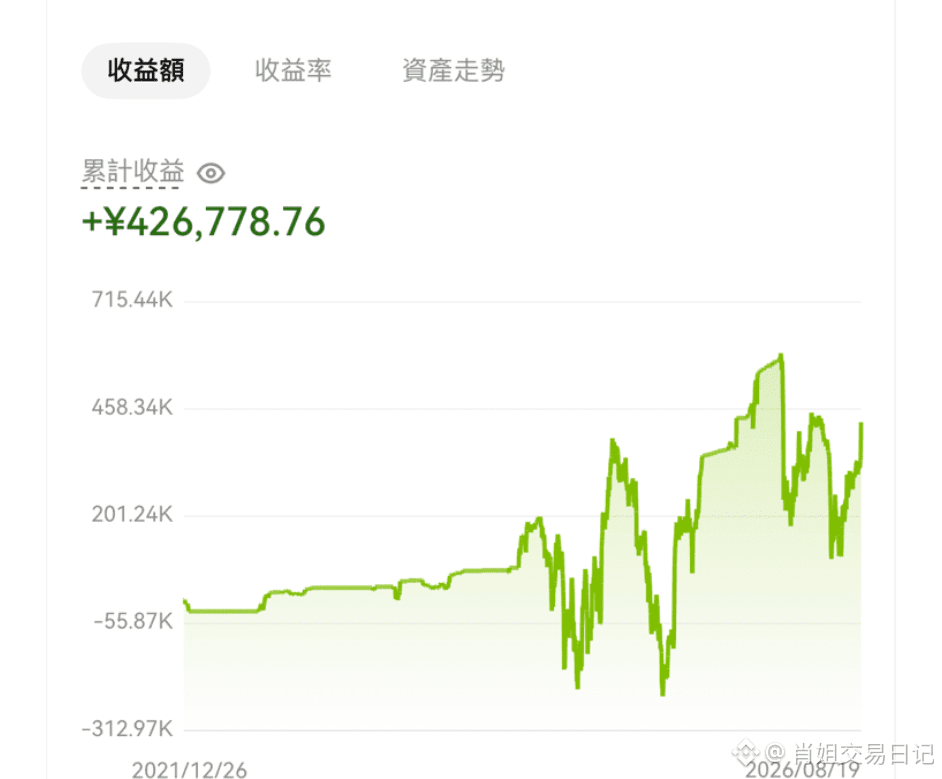
106
Log in to explore more content
Join global crypto users on Binance Square
⚡️ Get latest and useful information about crypto.
💬 Trusted by the world’s largest crypto exchange.
👍 Discover real insights from verified creators.
Email / Phone number
Trending Topics
CircleMints500MUSDCOnSolana
15,990 views
605 Discussing
#circlemints500musdconsolana
🚨 HUGE Liquidity Boost! Circle Mints $500 Million USDC on Solana — Is a Massive DeFi Rally Next? 🚀
💵 What Happened?
In a major on-chain event, the USDC Treasury issued $500 million in USDC directly on the Solana network across two $250M transactions.
This massive influx of real-fiat-backed capital highlights a growing appetite for stablecoins in high-speed, low-cost ecosystems.
🔑 Key Takeaways & Headlines
Fresh On-Chain Liquidity: Freshly minted USDC boosts liquidity pools across Solana-based DEXs, lending markets, and yield protocols.
$SOL
Institutional Signal: Because every USDC is backed 1:1 by real reserves, large minting events reflect actual institutional or commercial capital entering the ecosystem.
Solana’s Market Share Expansion: Solana continues to capture an increasing share of total USDC circulation, threatening traditional stablecoin market distributions.
Macro & Fed Context: As traders monitor global macroeconomic developments and interest rate outlooks, high-yield on-chain opportunities attract resting capital back to Web3.
💡 Why It Matters for Traders
Lower Slippage & Better Swaps: Higher stablecoin depth means larger trades can occur without heavy market impact.
DeFi Yield Potential: Increased USDC reserves encourage higher TVL (Total Value Locked) in Solana lending and farming protocols.
Sentiment Shift: Massive stablecoin injections are historically bullish indicators for ecosystem tokens ($SOL,$JUP, $RAY,$KMNO).
What’s your play? Are you keeping cash on the sidelines or riding the Solana liquidity wave? Drop your thoughts below! 👇
#BlackRockBuildsTokenizedPortfoliosForOndo #solana #defi
Lily星星
·4 Likes
·2.6k views
PolymarketBankFailureBetsDrawFDICConcern
31,632 views
797 Discussing
BlackRockBuildsTokenizedPortfoliosForOndo
26,440 views
537 Discussing