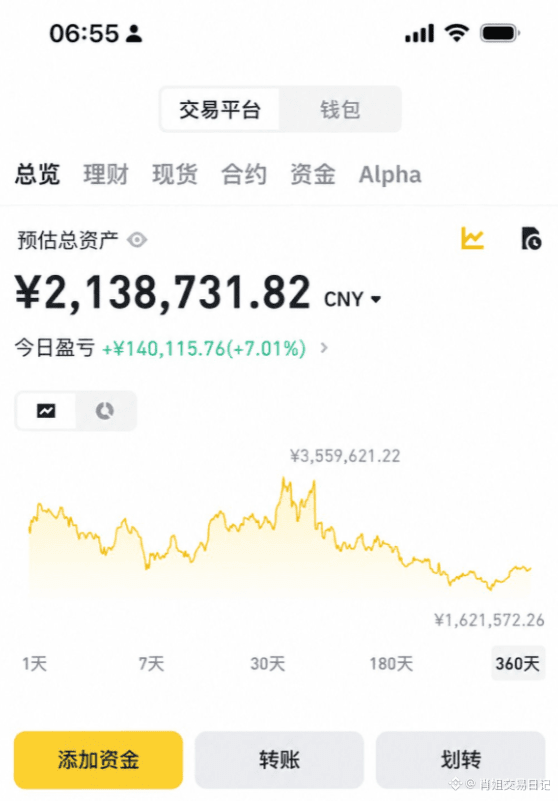
Starting with 2,400U, he reached 170,000U+ in two months, and in the end he took a private plane directly to the Maldives.
Some say it was luck, others think it’s too exaggerated.
But if you look closely at the whole process, you’ll find that what’s truly impressive isn’t some magic method—instead, he consistently does a few things that look “stupid” on the surface.$SNDK
First, he never goes all-in.
With 2,400U, he breaks it into three parts.
700U for day trading, 700U for swing trading, and 600U kept as backup.
For day trading, he makes at most one trade per day—if there’s no opportunity, he doesn’t trade; for swing positions, he waits until price reaches the right level; and the backup money won’t move unless it’s absolutely critical.
Many people lose because of one word: “urgency.” He, on the other hand, keeps an exit for himself at all times.
Second, he doesn’t trade chaotically.
When the market is moving sideways, he basically stays still.
While others make a dozen-plus rounds in a day, he’d rather sit and wait.
If the direction isn’t clear, he doesn’t chase; if there isn’t enough room, he doesn’t act.
He would rather miss it than force a chance.
It looks like he makes profits slowly, but in reality he avoids many pitfalls.
Third, if he’s wrong, he admits it; if he’s right, he takes profit.
Before entering a trade, he thinks through where he might be wrong.
When price reaches the risk level, he exits—he never relies on “holding on for miracles.”
After he makes money, he doesn’t dump everything back in one go; instead, he realizes profits in batches.
Especially after a loss, he never averages down, and he definitely doesn’t think, “This trade must make up for it,” then getting bigger and bigger the more he trades.
Fourth, the money he earns must be taken out.
This is something many people overlook the most.
Once the account grows from a few thousand U to tens of thousands, even more, people easily develop a false sense of invincibility: “Maybe I’m really already unstoppable?”
Then positions get larger and they become bolder.
So he regularly withdraws a portion of the profits, keeping the numbers in the account within a range he can control.
In the end, if someone with small capital wants to grow big, the biggest fear isn’t making slow profits—it’s getting inflated after making a little.
What’s truly worth learning along this journey isn’t how 2,400U turned into 170,000U, but that he never turned trading into gambling.
Not all-in, not chaotic trades, no holding on to positions, and take profits when you earn them.
The method may not guarantee that you’ll flip your situation, but these habits can at least help you survive longer in this market.
For people with small capital, the most important thing is never to double in one shot—it’s to first build your own trading rhythm.#伊朗导弹无人机袭击科威特基地
Some say it was luck, others think it’s too exaggerated.
But if you look closely at the whole process, you’ll find that what’s truly impressive isn’t some magic method—instead, he consistently does a few things that look “stupid” on the surface.$SNDK
First, he never goes all-in.
With 2,400U, he breaks it into three parts.
700U for day trading, 700U for swing trading, and 600U kept as backup.
For day trading, he makes at most one trade per day—if there’s no opportunity, he doesn’t trade; for swing positions, he waits until price reaches the right level; and the backup money won’t move unless it’s absolutely critical.
Many people lose because of one word: “urgency.” He, on the other hand, keeps an exit for himself at all times.
Second, he doesn’t trade chaotically.
When the market is moving sideways, he basically stays still.
While others make a dozen-plus rounds in a day, he’d rather sit and wait.
If the direction isn’t clear, he doesn’t chase; if there isn’t enough room, he doesn’t act.
He would rather miss it than force a chance.
It looks like he makes profits slowly, but in reality he avoids many pitfalls.
Third, if he’s wrong, he admits it; if he’s right, he takes profit.
Before entering a trade, he thinks through where he might be wrong.
When price reaches the risk level, he exits—he never relies on “holding on for miracles.”
After he makes money, he doesn’t dump everything back in one go; instead, he realizes profits in batches.
Especially after a loss, he never averages down, and he definitely doesn’t think, “This trade must make up for it,” then getting bigger and bigger the more he trades.
Fourth, the money he earns must be taken out.
This is something many people overlook the most.
Once the account grows from a few thousand U to tens of thousands, even more, people easily develop a false sense of invincibility: “Maybe I’m really already unstoppable?”
Then positions get larger and they become bolder.
So he regularly withdraws a portion of the profits, keeping the numbers in the account within a range he can control.
In the end, if someone with small capital wants to grow big, the biggest fear isn’t making slow profits—it’s getting inflated after making a little.
What’s truly worth learning along this journey isn’t how 2,400U turned into 170,000U, but that he never turned trading into gambling.
Not all-in, not chaotic trades, no holding on to positions, and take profits when you earn them.
The method may not guarantee that you’ll flip your situation, but these habits can at least help you survive longer in this market.
For people with small capital, the most important thing is never to double in one shot—it’s to first build your own trading rhythm.#伊朗导弹无人机袭击科威特基地