
Runi bro
7.7k Posts

Runi bro
2.7K+ Following
19.5K+ Followers
5.2K+ Liked
Posts
All
Quotes
Live
PINNED
🚨 $XEC Update 🚨
New $XEC update is here! 🚀
Stay active, follow the latest official announcements, and don't miss what's coming next. ✅🎁🎁🎁🎁🎁🎁🎁🎁🎁🧧🧧🧧🧧🧧🧧🧧🧧🧧🧧🧧🧧🧧🧧🧧🧧🧧🚀🧧🚀🚀🧧🧧🧧🧧🧧🧧🧧💵💵💵💵💵💵💵💵💵💵💵💰💰💰💰
#XEC #Crypto #Web3 #blockchain
New $XEC update is here! 🚀
Stay active, follow the latest official announcements, and don't miss what's coming next. ✅🎁🎁🎁🎁🎁🎁🎁🎁🎁🧧🧧🧧🧧🧧🧧🧧🧧🧧🧧🧧🧧🧧🧧🧧🧧🧧🚀🧧🚀🚀🧧🧧🧧🧧🧧🧧🧧💵💵💵💵💵💵💵💵💵💵💵💰💰💰💰
#XEC #Crypto #Web3 #blockchain

reward
Runi bro
·
--
Bearish🚨 $XEC Update 🚨
New $XEC update is here! 🚀
Stay active, follow the latest official announcements, and don't miss what's coming next. ✅🎁🎁🎁🎁🎁🎁🎁🎁🎁🧧🧧🧧🧧🧧🧧🧧🧧🧧🧧🧧🧧🧧🧧🧧🧧🧧🚀🧧🚀🚀🧧🧧🧧🧧🧧🧧🧧💵💵💵💵💵💵💵💵💵💵💵💰💰💰💰
#XEC #Crypto #Web3 #blockchain
New $XEC update is here! 🚀
Stay active, follow the latest official announcements, and don't miss what's coming next. ✅🎁🎁🎁🎁🎁🎁🎁🎁🎁🧧🧧🧧🧧🧧🧧🧧🧧🧧🧧🧧🧧🧧🧧🧧🧧🧧🚀🧧🚀🚀🧧🧧🧧🧧🧧🧧🧧💵💵💵💵💵💵💵💵💵💵💵💰💰💰💰
#XEC #Crypto #Web3 #blockchain

reward
Runi bro
·
--
Bearish🚨 $XEC Update 🚨
New $XEC update is here! 🚀
Stay active, follow the latest official announcements, and don't miss what's coming next. ✅🎁🎁🎁🎁🎁🎁🎁🎁🎁🧧🧧🧧🧧🧧🧧🧧🧧🧧🧧🧧🧧🧧🧧🧧🧧🧧🚀🧧🚀🚀🧧🧧🧧🧧🧧🧧🧧💵💵💵💵💵💵💵💵💵💵💵💰💰💰💰
#XEC #Crypto #Web3 #blockchain
New $XEC update is here! 🚀
Stay active, follow the latest official announcements, and don't miss what's coming next. ✅🎁🎁🎁🎁🎁🎁🎁🎁🎁🧧🧧🧧🧧🧧🧧🧧🧧🧧🧧🧧🧧🧧🧧🧧🧧🧧🚀🧧🚀🚀🧧🧧🧧🧧🧧🧧🧧💵💵💵💵💵💵💵💵💵💵💵💰💰💰💰
#XEC #Crypto #Web3 #blockchain
I used to think blockchain privacy was mainly about hiding information. Now I see the bigger challenge as making privacy usable without losing accountability.
That’s what makes @DuskFoundation interesting to me. Its approach separates public activity from shielded transfers, while zero-knowledge technology can help prove what matters without exposing everything.
For financial infrastructure, that balance feels important. Privacy, verification, and compliance shouldn’t have to compete with each other.
I’m more interested in seeing how this works in real-world use cases than in the hype around it.
@Dusk #dusk $DUSK
That’s what makes @DuskFoundation interesting to me. Its approach separates public activity from shielded transfers, while zero-knowledge technology can help prove what matters without exposing everything.
For financial infrastructure, that balance feels important. Privacy, verification, and compliance shouldn’t have to compete with each other.
I’m more interested in seeing how this works in real-world use cases than in the hype around it.
@Dusk #dusk $DUSK
Verified
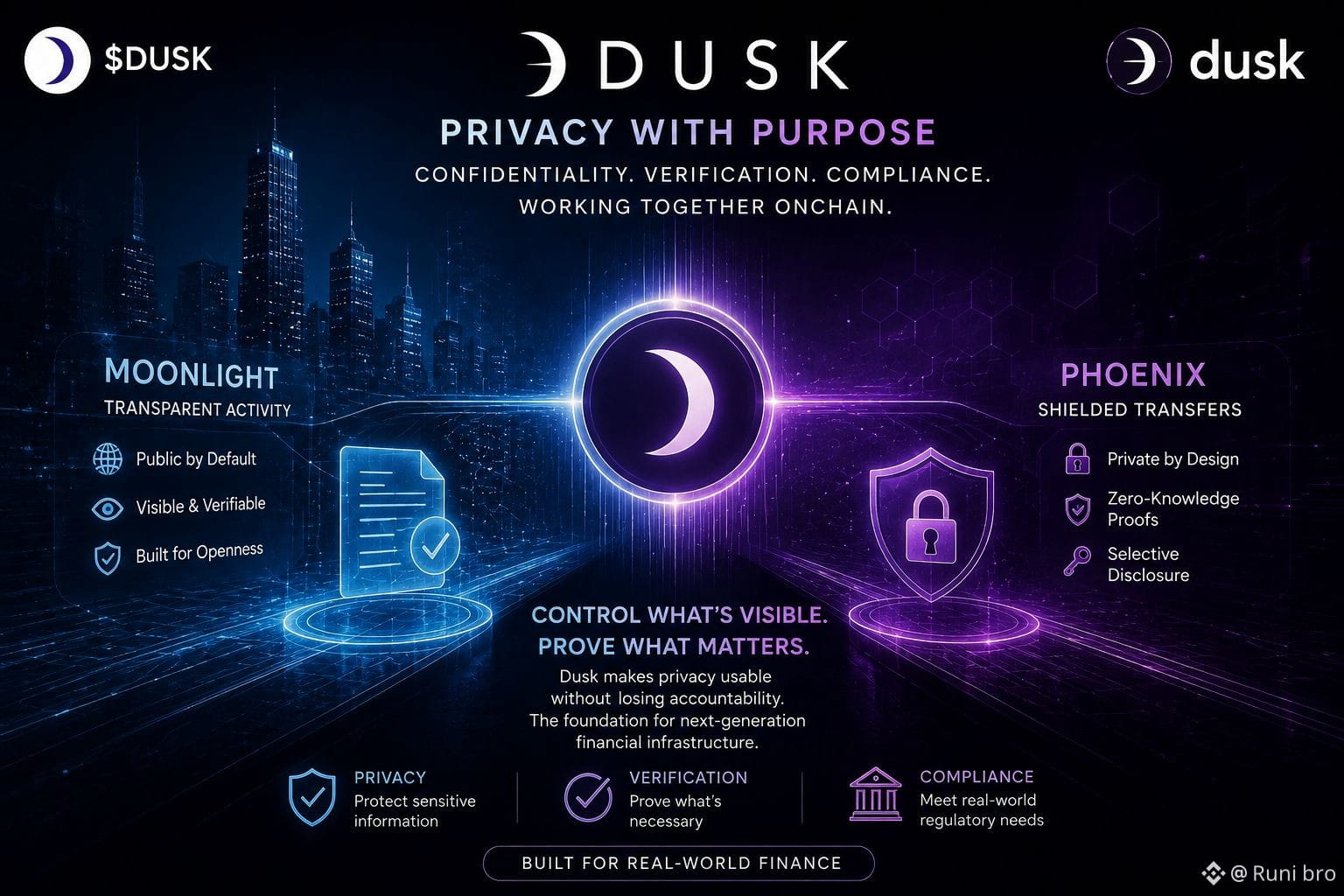
I’ve been thinking about what “privacy” should actually mean on a financial blockchain. To me, it shouldn’t mean making everything invisible. It should mean having control over what becomes visible, to whom, and when.
That’s the part of @Dusk I find interesting. Moonlight handles public account-based activity, while Phoenix uses shielded transfers and zero-knowledge proofs to keep transaction details private. Dusk also supports selective disclosure when authorized parties need evidence.
I think this is a more realistic way to approach onchain finance. Financial markets need confidentiality, but they also need verification and accountability. The real test is whether those requirements can work together without forcing every piece of sensitive data into public view.
That’s what I’ll be watching with
@Dusk #dusk $DUSK
That’s the part of @Dusk I find interesting. Moonlight handles public account-based activity, while Phoenix uses shielded transfers and zero-knowledge proofs to keep transaction details private. Dusk also supports selective disclosure when authorized parties need evidence.
I think this is a more realistic way to approach onchain finance. Financial markets need confidentiality, but they also need verification and accountability. The real test is whether those requirements can work together without forcing every piece of sensitive data into public view.
That’s what I’ll be watching with
@Dusk #dusk $DUSK
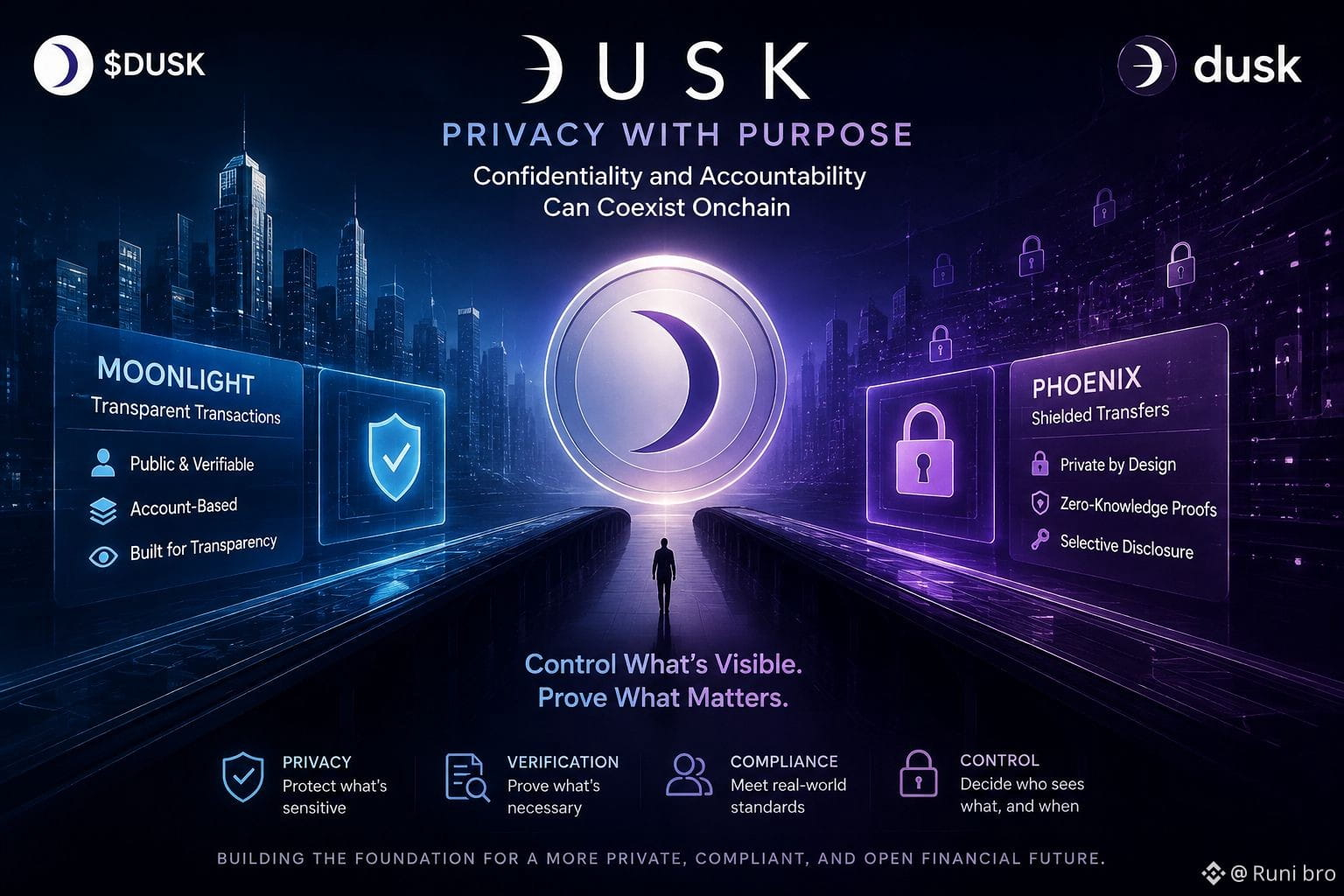
I keep coming back to one question with @Dusk: can blockchain privacy actually work alongside real financial compliance? That’s where I find the design interesting. Instead of treating privacy and transparency as opposites, Dusk focuses on controlled visibility, so sensitive information can stay protected while authorized parties can still verify what matters. That feels much closer to how financial infrastructure needs to operate in the real world. I’m watching how this approach develops, especially around regulated assets and onchain settlement.
@Dusk #dusk $DUSK
@Dusk #dusk $DUSK
Verified
Privacy needs boundaries, not invisibility
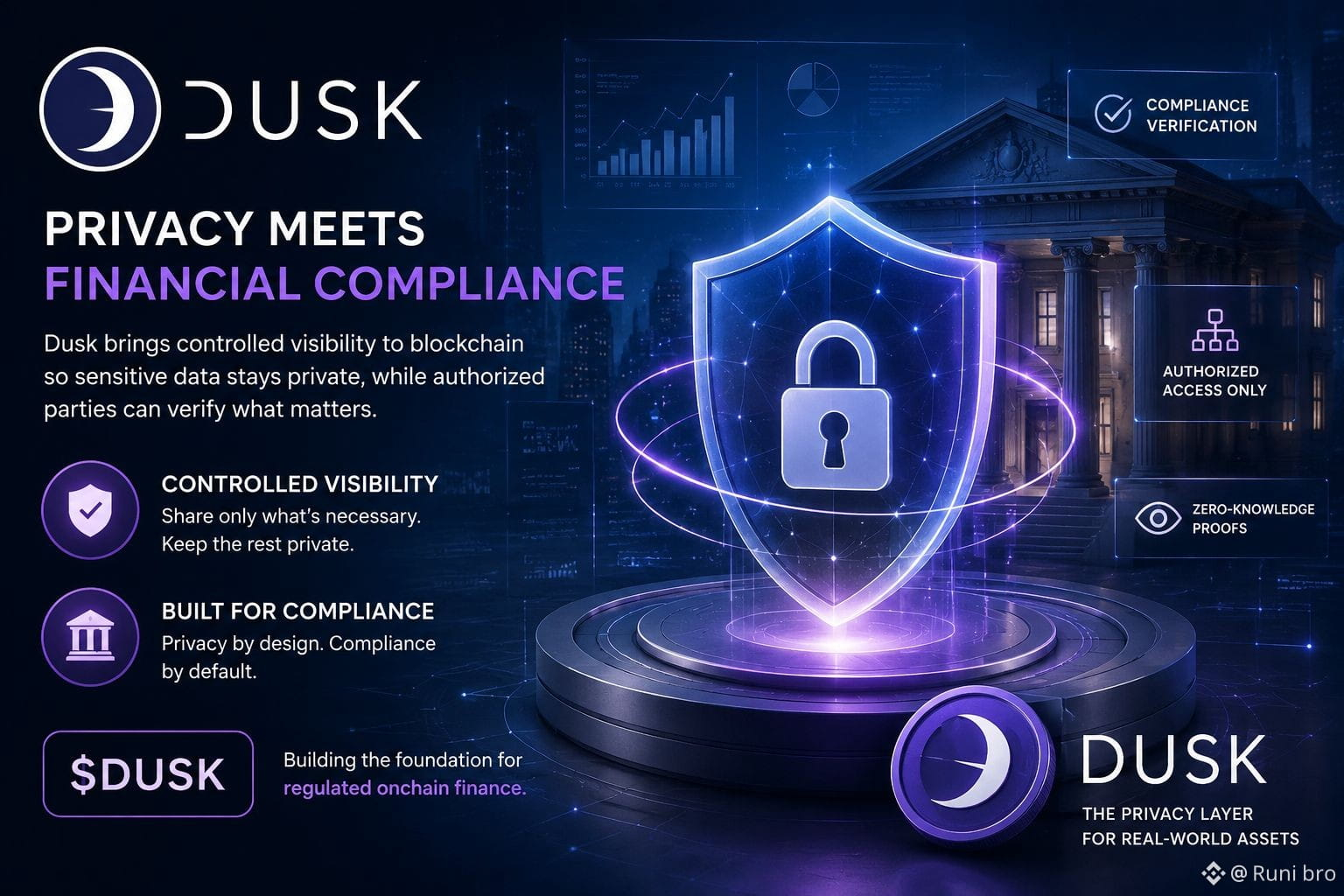
I’m starting to see Dusk’s privacy model less as “hide everything” and more as a question of what should actually be visible.
Dusk’s architecture separates public Moonlight transfers from shielded Phoenix transactions. Phoenix uses zero-knowledge proofs to protect transaction details, while viewing keys can allow information to be revealed when there is a legitimate need for auditing or oversight.
That distinction matters because financial infrastructure rarely works with absolute secrecy. Institutions need privacy around sensitive activity, but they also need ways to prove relevant facts to the right parties.
That’s the part I find more interesting than simply calling Dusk a privacy blockchain. The real design challenge is controlling visibility without removing verifiability.
For me, that makes @Dusk worth watching from an infrastructure perspective, because $DUSK is being built around a more nuanced relationship between privacy and transparency. #dusk
Verification: Dusk’s official documentation confirms Moonlight as the public transaction model, Phoenix as the shielded model using zero-knowledge proofs, and selective disclosure through viewing keys.
@Dusk #dusk $DUSK
I’m starting to see Dusk’s privacy model less as “hide everything” and more as a question of what should actually be visible.
Dusk’s architecture separates public Moonlight transfers from shielded Phoenix transactions. Phoenix uses zero-knowledge proofs to protect transaction details, while viewing keys can allow information to be revealed when there is a legitimate need for auditing or oversight.
That distinction matters because financial infrastructure rarely works with absolute secrecy. Institutions need privacy around sensitive activity, but they also need ways to prove relevant facts to the right parties.
That’s the part I find more interesting than simply calling Dusk a privacy blockchain. The real design challenge is controlling visibility without removing verifiability.
For me, that makes @Dusk worth watching from an infrastructure perspective, because $DUSK is being built around a more nuanced relationship between privacy and transparency. #dusk
Verification: Dusk’s official documentation confirms Moonlight as the public transaction model, Phoenix as the shielded model using zero-knowledge proofs, and selective disclosure through viewing keys.
@Dusk #dusk $DUSK
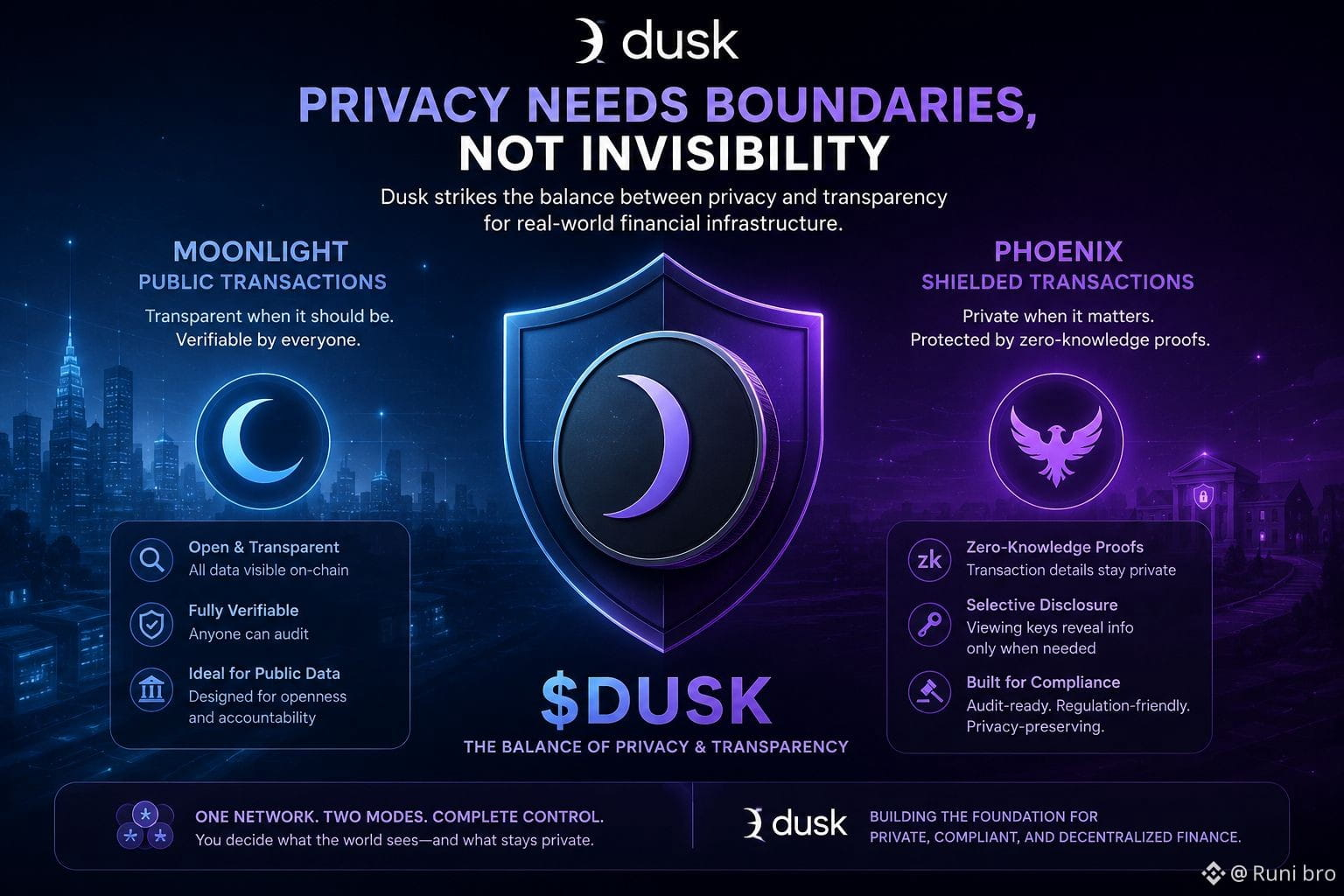
Privacy on a blockchain should not mean making everything invisible. What interests me about @Dusk is the more practical approach: Moonlight supports transparent public flows, while Phoenix uses zero-knowledge proofs for shielded transfers. Dusk also supports selective disclosure when specific information needs to be verified.
That balance feels especially relevant for financial infrastructure, where privacy and accountability have to work together rather than compete. For me, this is one of the more interesting design choices behind $DUSK and its focus on regulated on-chain markets.
@Dusk #dusk $DUSK
That balance feels especially relevant for financial infrastructure, where privacy and accountability have to work together rather than compete. For me, this is one of the more interesting design choices behind $DUSK and its focus on regulated on-chain markets.
@Dusk #dusk $DUSK
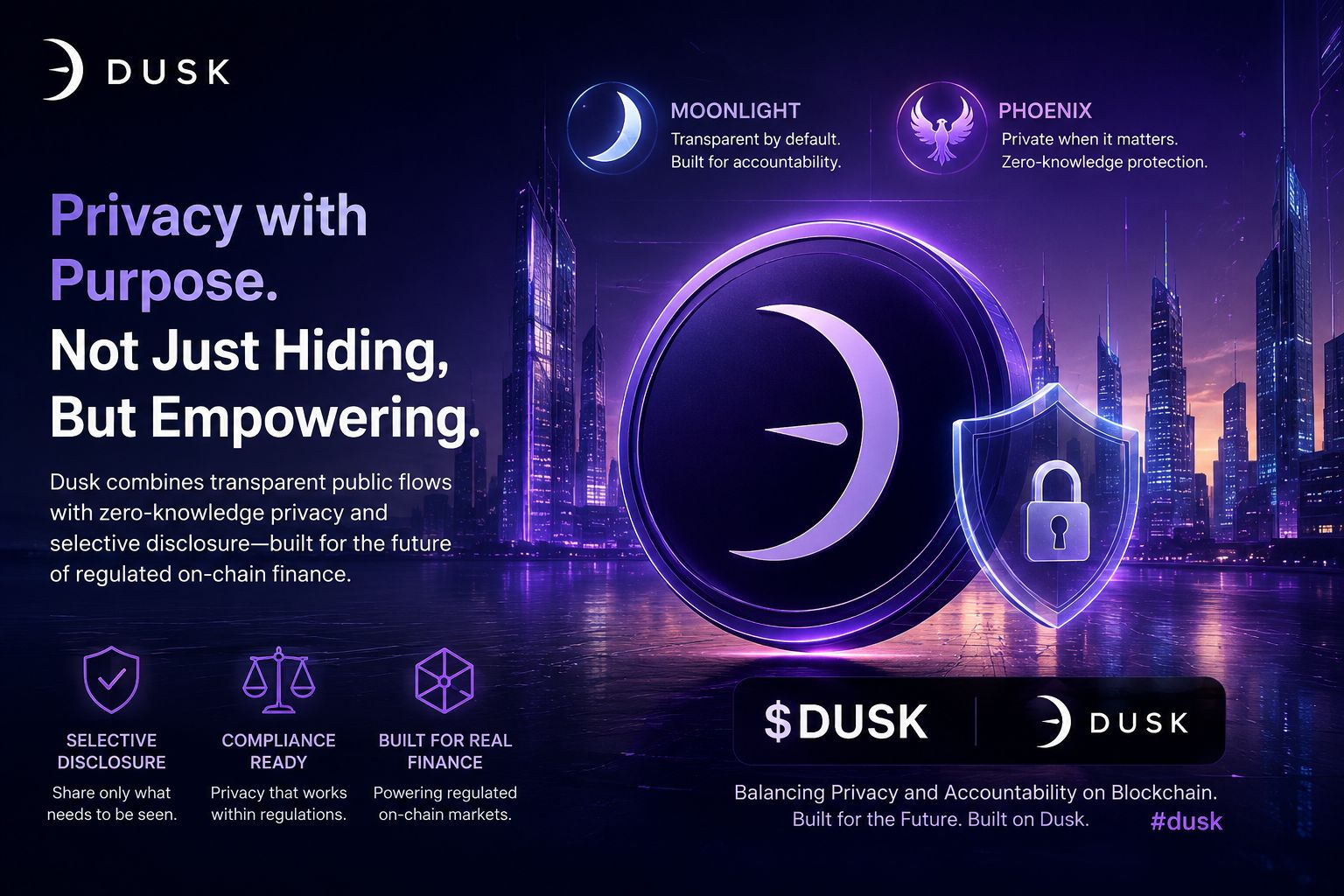
I used to think blockchain transparency was the default advantage. Dusk made me reconsider where that assumption breaks down.
Dusk separates public and confidential transaction flows: Moonlight provides transparent account-based transfers, while Phoenix uses shielded, zero-knowledge transactions. That design is interesting because financial infrastructure often needs both visibility and privacy, depending on the workflow.
For me, the bigger question is not whether blockchain should be transparent or private. It is whether users and institutions can control what information becomes visible, and to whom, without giving up verifiable settlement.
That balance is where I find @Dusk worth watching. $DUSK #dusk
$DUSK
Dusk separates public and confidential transaction flows: Moonlight provides transparent account-based transfers, while Phoenix uses shielded, zero-knowledge transactions. That design is interesting because financial infrastructure often needs both visibility and privacy, depending on the workflow.
For me, the bigger question is not whether blockchain should be transparent or private. It is whether users and institutions can control what information becomes visible, and to whom, without giving up verifiable settlement.
That balance is where I find @Dusk worth watching. $DUSK #dusk
$DUSK
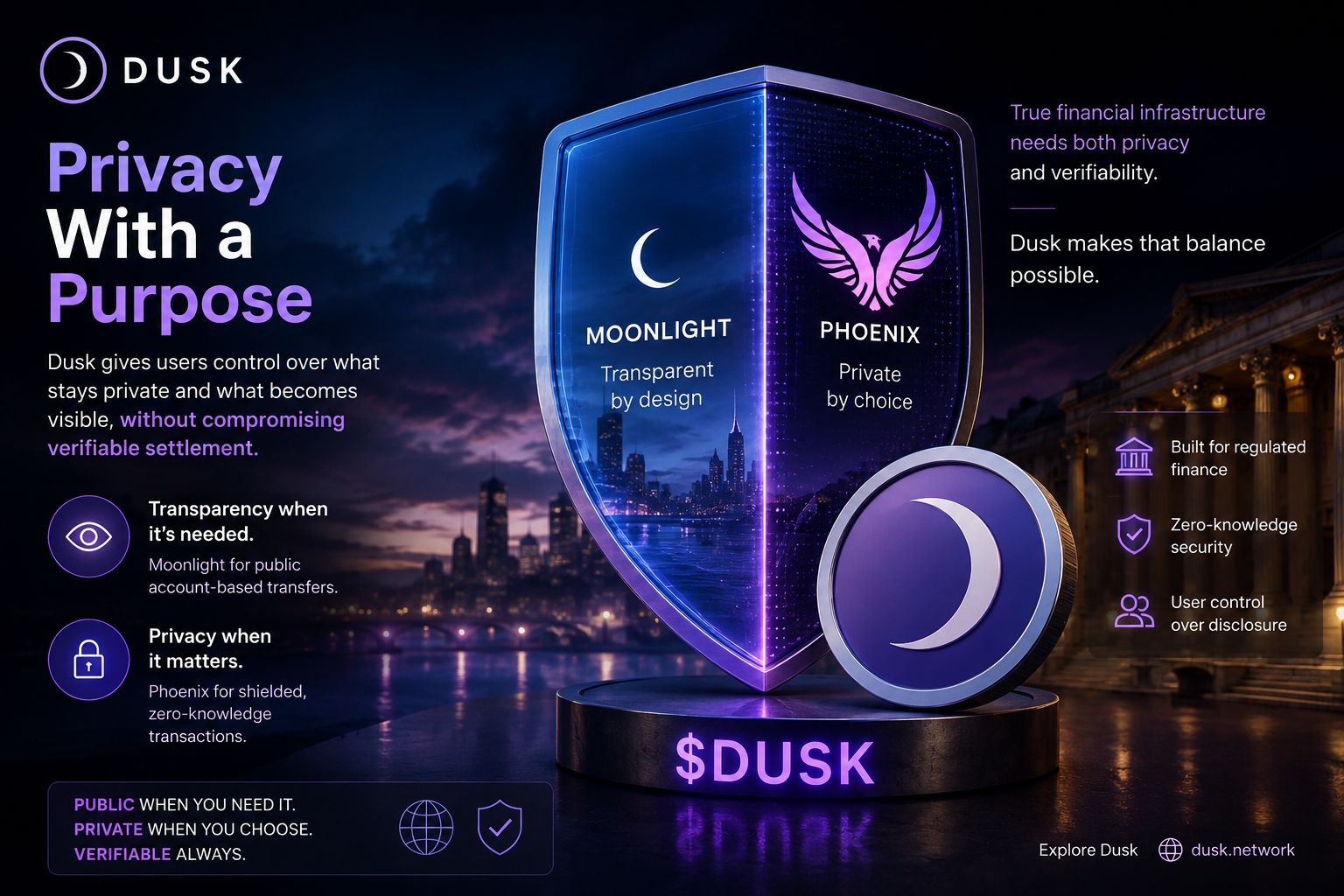
One detail I find interesting about @Dusk is that privacy is not treated as a separate layer added later. Its architecture supports both public and shielded transaction models, with zero-knowledge proofs used for private transfers and selective disclosure when information needs to be verified. That balance matters for financial applications, where making everything public can be just as impractical as making everything opaque.
For me, that makes $DUSK worth watching from an infrastructure perspective. The bigger question is whether blockchains can support real financial workflows without forcing users to choose between transparency, privacy, and compliance. Dusk is clearly designing around that problem.
@Dusk #dusk $DUSK
For me, that makes $DUSK worth watching from an infrastructure perspective. The bigger question is whether blockchains can support real financial workflows without forcing users to choose between transparency, privacy, and compliance. Dusk is clearly designing around that problem.
@Dusk #dusk $DUSK
Verified
A blockchain can offer strong privacy and still make sense for institutional use. But the part I find more interesting is what developers can actually build on top of that foundation.
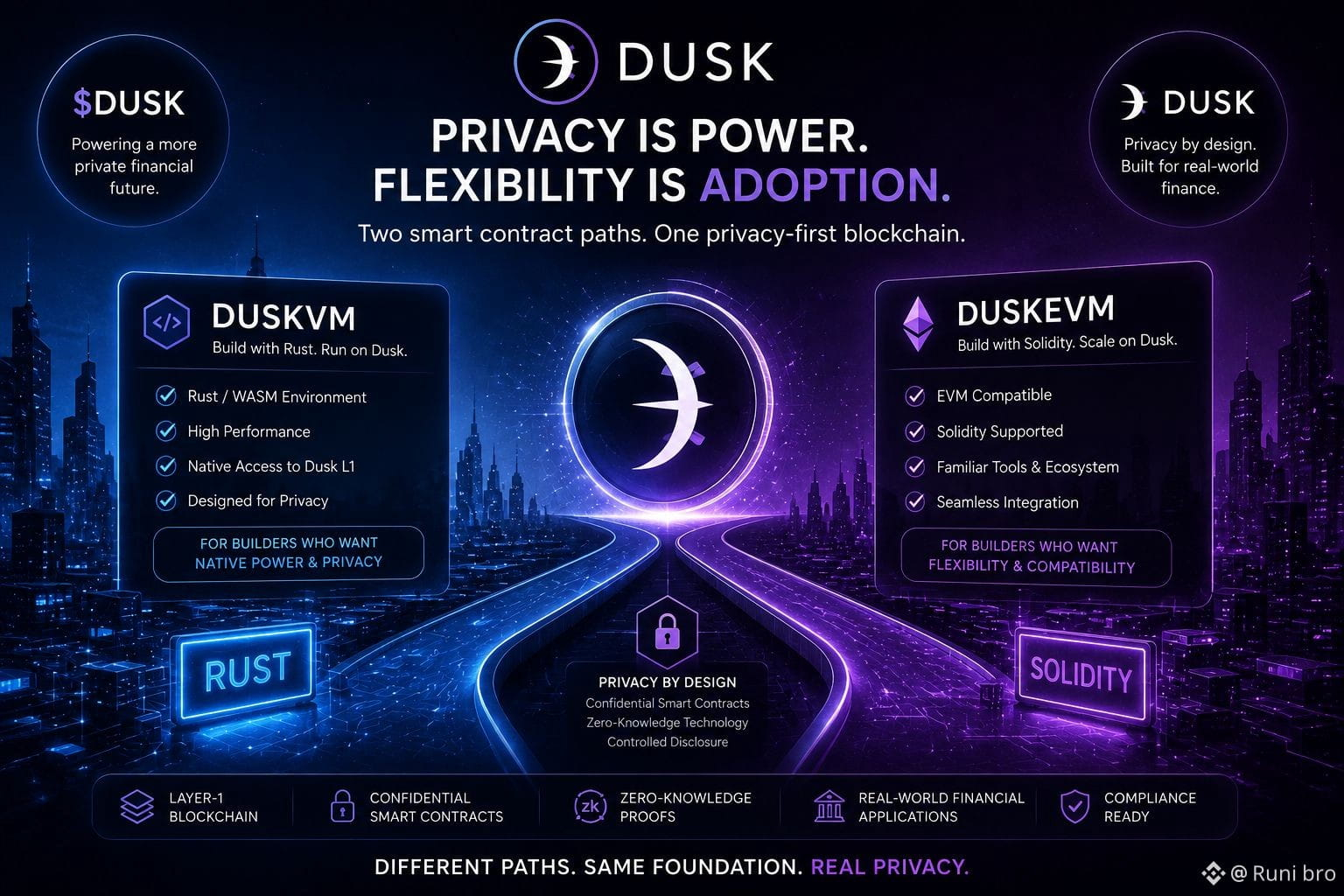
That’s where Dusk’s approach caught my attention. @Dusk has DuskVM for Rust/WASM smart contracts on its L1, while DuskEVM provides an EVM-compatible environment for Solidity developers and familiar tools.
To me, this is more than just adding privacy to a blockchain. Different financial applications have different needs, so giving developers different ways to build can make the infrastructure more flexible.
The real test is whether these tools can help developers create useful financial applications while keeping the privacy and settlement properties Dusk is aiming for.
That’s what I’ll be watching as the Dusk ecosystem continues to grow.
@Dusk #dusk $DUSK
That’s where Dusk’s approach caught my attention. @Dusk has DuskVM for Rust/WASM smart contracts on its L1, while DuskEVM provides an EVM-compatible environment for Solidity developers and familiar tools.
To me, this is more than just adding privacy to a blockchain. Different financial applications have different needs, so giving developers different ways to build can make the infrastructure more flexible.
The real test is whether these tools can help developers create useful financial applications while keeping the privacy and settlement properties Dusk is aiming for.
That’s what I’ll be watching as the Dusk ecosystem continues to grow.
@Dusk #dusk $DUSK
The more I look at Dusk, the more I notice that privacy is only part of the problem. Developers still need a practical way to build.
Dusk takes an interesting approach by offering two smart-contract paths: DuskVM for Rust/WASM contracts running directly on the Dusk L1, and DuskEVM for Solidity and EVM-compatible development. The choice depends on whether a project needs direct access to Dusk’s native architecture or familiar EVM tooling.
To me, this is an important infrastructure question. Strong privacy features mean less if developers find the network difficult to work with. Giving builders different execution paths could make the technology more adaptable to different financial applications.
I’m more interested in that practical balance than the usual blockchain hype. @Dusk $DUSK #dusk
Dusk takes an interesting approach by offering two smart-contract paths: DuskVM for Rust/WASM contracts running directly on the Dusk L1, and DuskEVM for Solidity and EVM-compatible development. The choice depends on whether a project needs direct access to Dusk’s native architecture or familiar EVM tooling.
To me, this is an important infrastructure question. Strong privacy features mean less if developers find the network difficult to work with. Giving builders different execution paths could make the technology more adaptable to different financial applications.
I’m more interested in that practical balance than the usual blockchain hype. @Dusk $DUSK #dusk
Verified
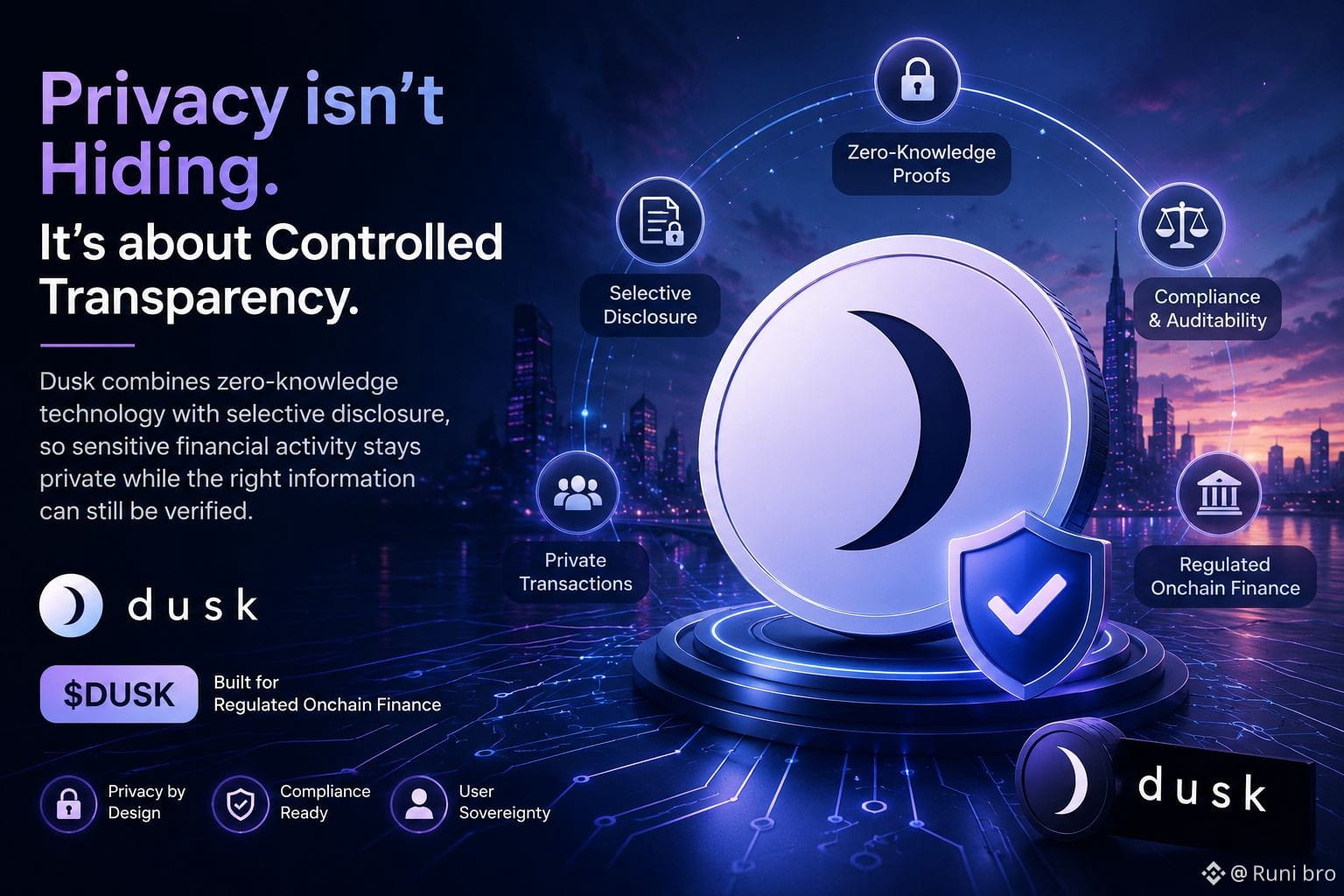
I think blockchain privacy is often misunderstood. Privacy does not have to mean making everything invisible. The more interesting question is whether a network can keep sensitive financial activity private while still allowing the right information to be verified when required.
That is what caught my attention about @Dusk. Its architecture supports both transparent Moonlight transactions and shielded Phoenix transfers, with zero-knowledge proofs helping enable confidential transactions and selective disclosure.
To me, that distinction matters for financial infrastructure. Real markets often need privacy, but they also need evidence, compliance, and controlled access. Dusk is exploring how those requirements can coexist onchain.
I’m watching $DUSK less for short-term narratives and more for the infrastructure question behind it: can blockchain privacy become practical for regulated financial workflows?
@Dusk #dusk $DUSK
That is what caught my attention about @Dusk. Its architecture supports both transparent Moonlight transactions and shielded Phoenix transfers, with zero-knowledge proofs helping enable confidential transactions and selective disclosure.
To me, that distinction matters for financial infrastructure. Real markets often need privacy, but they also need evidence, compliance, and controlled access. Dusk is exploring how those requirements can coexist onchain.
I’m watching $DUSK less for short-term narratives and more for the infrastructure question behind it: can blockchain privacy become practical for regulated financial workflows?
@Dusk #dusk $DUSK
Verified
I’ve been thinking about a less-discussed part of blockchain privacy: usability.
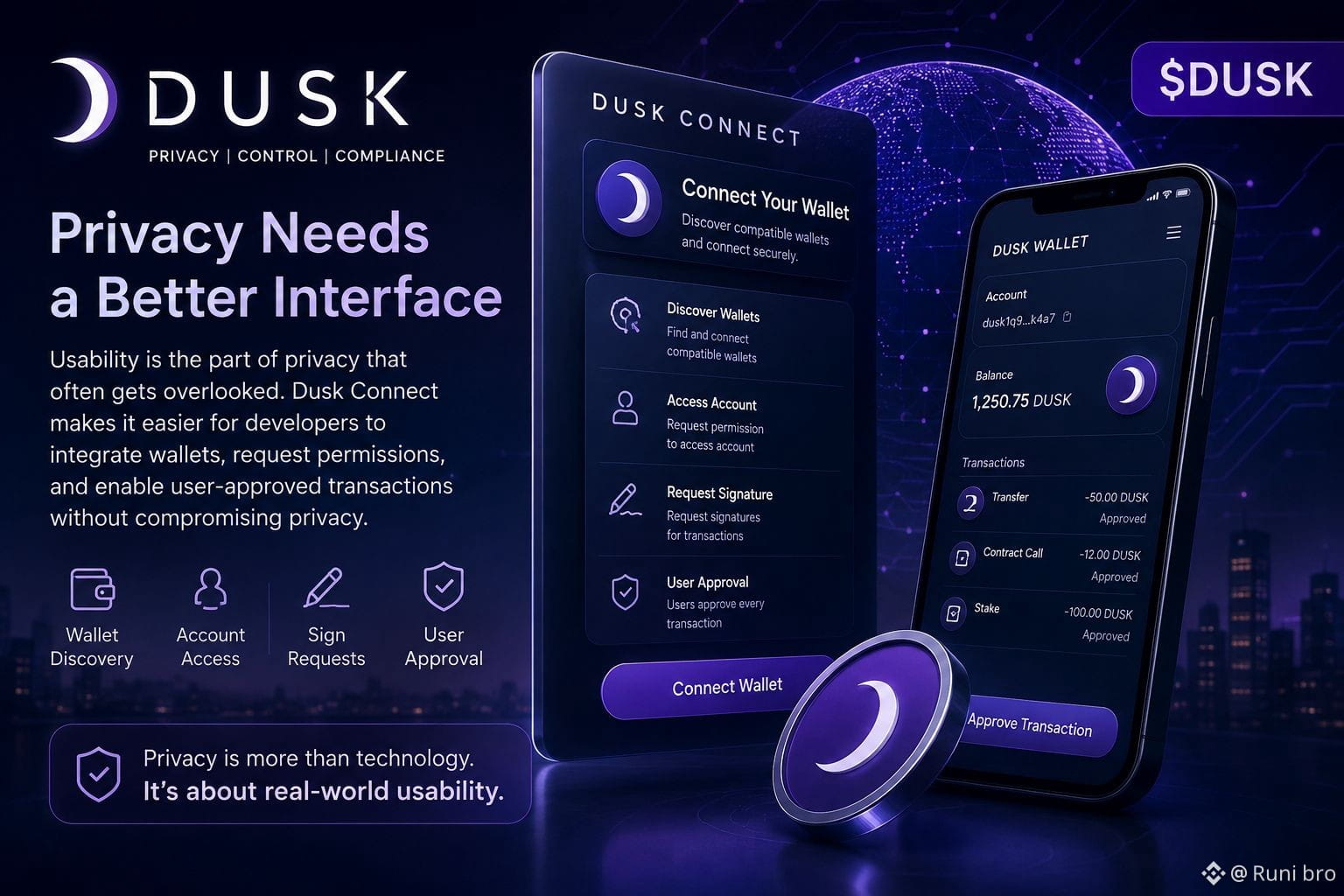
Privacy technology only becomes practical when developers can actually build around it without forcing users through complicated workflows. That’s why @Dusk’s Dusk Connect caught my attention. It provides a wallet integration layer for Dusk dApps, helping applications discover compatible wallets, request account access, signatures, and user-approved transactions.
To me, this is an important infrastructure detail. Privacy is not only about cryptography. It also depends on whether the surrounding developer and wallet experience makes that privacy usable in real applications.
That’s the kind of infrastructure I’m watching from @Dusk, with $DUSK at the center of the network.
@Dusk #dusk $DUSK
Privacy technology only becomes practical when developers can actually build around it without forcing users through complicated workflows. That’s why @Dusk’s Dusk Connect caught my attention. It provides a wallet integration layer for Dusk dApps, helping applications discover compatible wallets, request account access, signatures, and user-approved transactions.
To me, this is an important infrastructure detail. Privacy is not only about cryptography. It also depends on whether the surrounding developer and wallet experience makes that privacy usable in real applications.
That’s the kind of infrastructure I’m watching from @Dusk, with $DUSK at the center of the network.
@Dusk #dusk $DUSK
Verified
A blockchain for financial markets has to answer a harder question than “is it private?”
What matters is whether privacy can coexist with transparency when transparency is actually required.
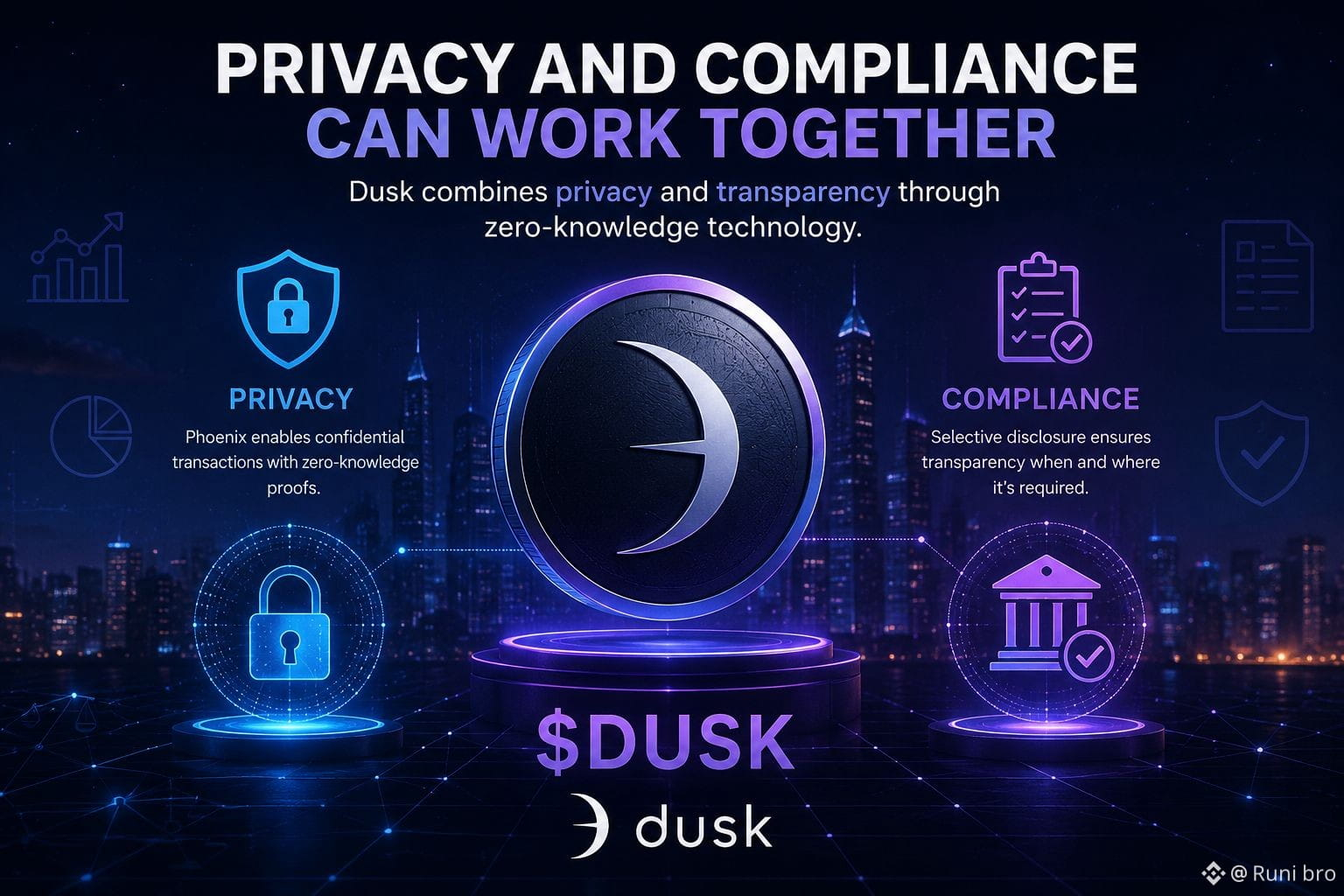
That’s where @Dusk stands out to me. Dusk supports both Moonlight for public transactions and Phoenix for shielded transfers using zero-knowledge proofs. Phoenix can keep transaction details confidential while allowing selective disclosure when authorized parties need evidence.
I find that design more interesting than simply calling a network “privacy-focused.” It treats privacy as something that can be applied according to the workflow, rather than forcing every transaction into the same visibility model.
For regulated digital assets, that distinction could matter. Issuers, investors, venues and auditors may not need identical access to the same information.
The infrastructure challenge is not choosing privacy over compliance. It is designing them to work together.
That is the part of Dusk I’ll be watching more closely. @Dusk #dusk $DUSK
What matters is whether privacy can coexist with transparency when transparency is actually required.
That’s where @Dusk stands out to me. Dusk supports both Moonlight for public transactions and Phoenix for shielded transfers using zero-knowledge proofs. Phoenix can keep transaction details confidential while allowing selective disclosure when authorized parties need evidence.
I find that design more interesting than simply calling a network “privacy-focused.” It treats privacy as something that can be applied according to the workflow, rather than forcing every transaction into the same visibility model.
For regulated digital assets, that distinction could matter. Issuers, investors, venues and auditors may not need identical access to the same information.
The infrastructure challenge is not choosing privacy over compliance. It is designing them to work together.
That is the part of Dusk I’ll be watching more closely. @Dusk #dusk $DUSK
Most blockchains make transparency the default, but regulated finance often needs something more nuanced. That’s where Dusk takes an interesting approach.
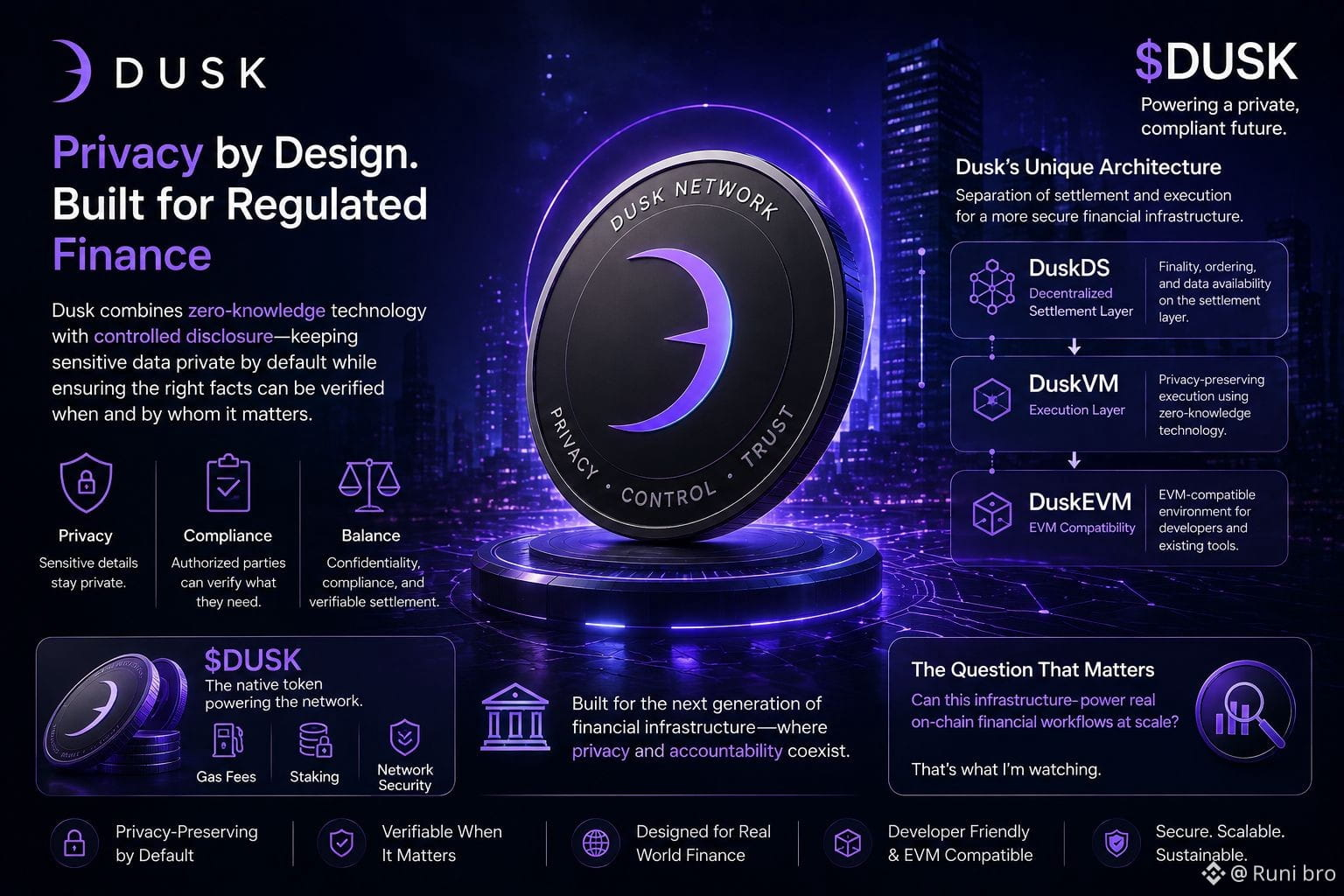
@Dusk is designed to combine privacy with controlled disclosure, using zero-knowledge technology so sensitive transaction details don’t have to become public by default while authorized parties can still verify what they need. Its architecture also separates settlement from execution through DuskDS, DuskVM, and DuskEVM.
For me, that design choice is more interesting than simply adding “privacy” as a feature. Real financial infrastructure has to balance confidentiality, compliance, and verifiable settlement at the same time.
$DUSK also has a direct role in the network as the native token for gas and staking.
The question I’m watching is whether this infrastructure can translate into practical on-chain financial workflows at scale. That’s the part that ultimately matters.
@Dusk #dusk $DUSK
@Dusk is designed to combine privacy with controlled disclosure, using zero-knowledge technology so sensitive transaction details don’t have to become public by default while authorized parties can still verify what they need. Its architecture also separates settlement from execution through DuskDS, DuskVM, and DuskEVM.
For me, that design choice is more interesting than simply adding “privacy” as a feature. Real financial infrastructure has to balance confidentiality, compliance, and verifiable settlement at the same time.
$DUSK also has a direct role in the network as the native token for gas and staking.
The question I’m watching is whether this infrastructure can translate into practical on-chain financial workflows at scale. That’s the part that ultimately matters.
@Dusk #dusk $DUSK
·
--
🎙️ Hawk---an ecological balance guardian, a free-spirited idea disseminator!
Hawk is influencing every city across the globe!

End
03 h 03 m 55 s
4.5k
65
🚨 $COTI Update 🚨
Latest $COTI update is here! 🚀
Stay active, follow official announcements, and don't miss what's coming next. ✅🎁
🧧🧧🧧🧧🧧🧧🧧🧧🧧🧧🧧🧧🧧🧧🧧🧧🧧🧧🧧🧧🧧🧧🧧🧧🧧🧧🧧🧧🧧🧧🧧🧧🧧🧧🧧🧧🧧🧧🧧🧧🧧🧧🧧🧧🧧
Latest $COTI update is here! 🚀
Stay active, follow official announcements, and don't miss what's coming next. ✅🎁
🧧🧧🧧🧧🧧🧧🧧🧧🧧🧧🧧🧧🧧🧧🧧🧧🧧🧧🧧🧧🧧🧧🧧🧧🧧🧧🧧🧧🧧🧧🧧🧧🧧🧧🧧🧧🧧🧧🧧🧧🧧🧧🧧🧧🧧


Log in to explore more content