

Georgia Crypto Trader
5.8k Posts

Georgia Crypto Trader
Report
Block User
Crypto Trader & Market Analyst 📊 | Technical Analysis | Market Trends | Risk Management | Sharing insights, not financial advice.
1.1K+ Following
13.6K+ Followers
3.5K+ Liked
Posts
All
Quotes
Live
PINNED
·
--
Bullish
Verified
Blockchains are good at verifying transactions, but handling sensitive information without exposing it remains a difficult challenge.
That’s where @Nillion has an interesting role to explore. Its blind computation approach focuses on making encrypted data usable without revealing the information itself. This could matter as more applications combine blockchain infrastructure with AI-driven decisions.
Covenants and its first release, Dusk, are part of Nillion’s ecosystem. What interests me most is the idea that privacy doesn’t have to mean making data useless. Building systems where information stays protected while still serving a purpose feels like an important direction for Web3.
#NIL $NIL @nillionnetwork
Blockchains are good at verifying transactions, but handling sensitive information without exposing it remains a difficult challenge.
That’s where @Nillion has an interesting role to explore. Its blind computation approach focuses on making encrypted data usable without revealing the information itself. This could matter as more applications combine blockchain infrastructure with AI-driven decisions.
Covenants and its first release, Dusk, are part of Nillion’s ecosystem. What interests me most is the idea that privacy doesn’t have to mean making data useless. Building systems where information stays protected while still serving a purpose feels like an important direction for Web3.
#NIL $NIL @Nillion

1
5
230
·
--
Bullish
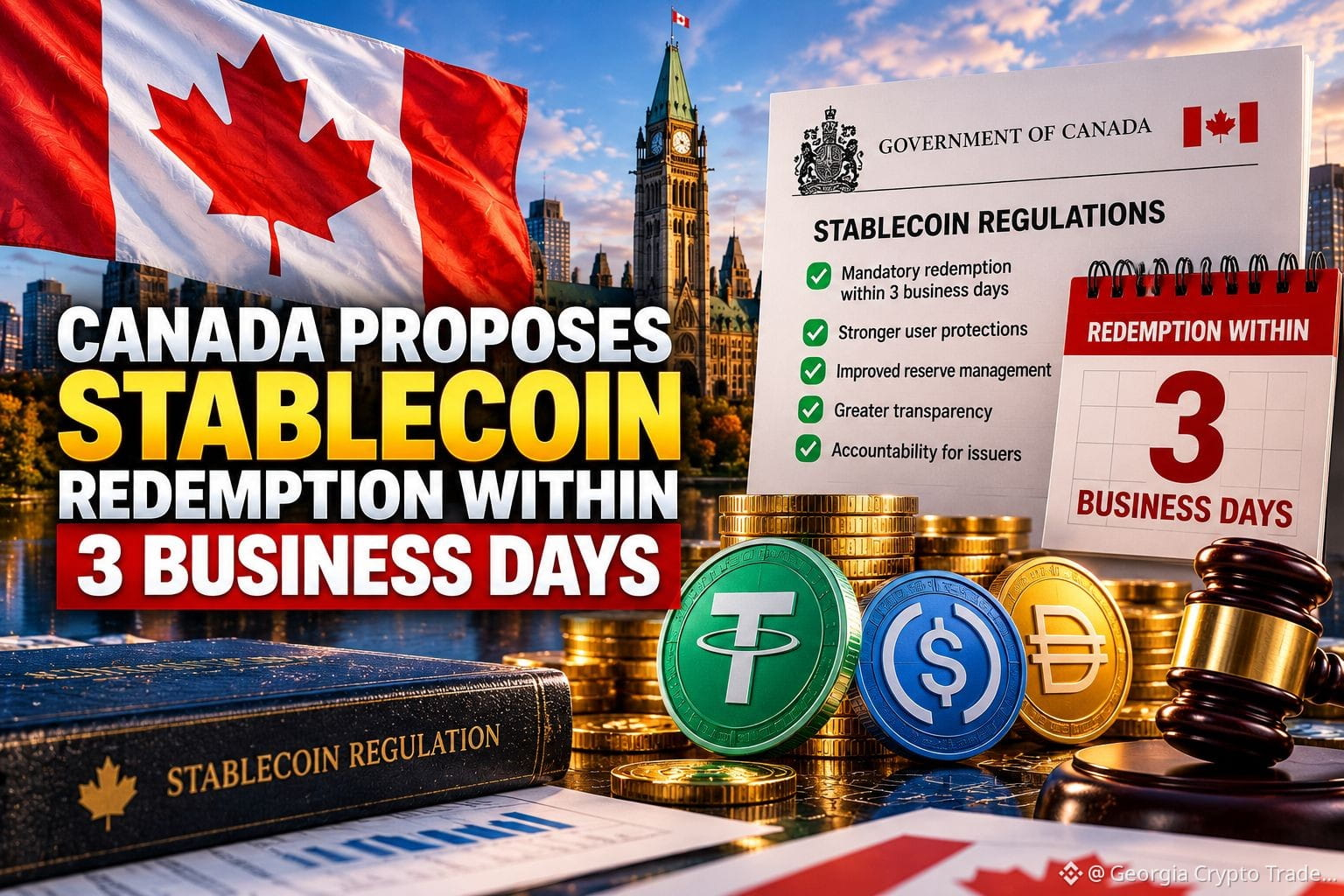
#CanadaProposesStablecoinRedemptionWithin3BusinessDays 🇨🇦 Canada’s Stablecoin Proposal Could Be a Major Regulatory Signal
Canada is reportedly proposing rules that would require stablecoin issuers to redeem tokens within three business days. If adopted, the measure could put redemption rights and issuer accountability at the center of the country’s digital-asset framework.
Why does this matter to crypto markets? Stablecoins are a key part of trading infrastructure. They help traders move between positions, provide liquidity on exchanges, and support activity across decentralized finance. Confidence in their ability to maintain value and process redemptions is therefore essential.
A clear redemption deadline could strengthen user protections by setting expectations for how quickly holders can exchange tokens for the underlying currency. It may also encourage issuers to improve reserve management, operational readiness, and transparency.
But regulation comes with trade-offs. Compliance costs could rise, especially for smaller issuers, while the practical impact will depend on the final wording, eligible assets, and any exceptions. A proposal is not yet an enacted rule, so the details remain important.
📊 What traders should watch:
• Whether the three-business-day deadline becomes law.
• Reserve and disclosure requirements for issuers.
• Potential effects on stablecoin liquidity and market access.
• How Canada’s approach compares with other major jurisdictions.
Market takeaway: Stronger redemption standards could support trust in stablecoins over time, but they do not guarantee higher crypto prices or eliminate issuer risk. For traders, regulatory clarity matters most when it translates into reliable liquidity and transparent backing.
#Stablecoins #CryptoRegulation #Canada #CryptoMarket #MarketAnalysis
$CHIP $BEAMX $PARTI
{future}(PARTIUSDT)
{future}(BEAMXUSDT)
{future}(CHIPUSDT)
#CanadaProposesStablecoinRedemptionWithin3BusinessDays 🇨🇦 Canada’s Stablecoin Proposal Could Be a Major Regulatory Signal
Canada is reportedly proposing rules that would require stablecoin issuers to redeem tokens within three business days. If adopted, the measure could put redemption rights and issuer accountability at the center of the country’s digital-asset framework.
Why does this matter to crypto markets? Stablecoins are a key part of trading infrastructure. They help traders move between positions, provide liquidity on exchanges, and support activity across decentralized finance. Confidence in their ability to maintain value and process redemptions is therefore essential.
A clear redemption deadline could strengthen user protections by setting expectations for how quickly holders can exchange tokens for the underlying currency. It may also encourage issuers to improve reserve management, operational readiness, and transparency.
But regulation comes with trade-offs. Compliance costs could rise, especially for smaller issuers, while the practical impact will depend on the final wording, eligible assets, and any exceptions. A proposal is not yet an enacted rule, so the details remain important.
📊 What traders should watch:
• Whether the three-business-day deadline becomes law.
• Reserve and disclosure requirements for issuers.
• Potential effects on stablecoin liquidity and market access.
• How Canada’s approach compares with other major jurisdictions.
Market takeaway: Stronger redemption standards could support trust in stablecoins over time, but they do not guarantee higher crypto prices or eliminate issuer risk. For traders, regulatory clarity matters most when it translates into reliable liquidity and transparent backing.
#Stablecoins #CryptoRegulation #Canada #CryptoMarket #MarketAnalysis
$CHIP $BEAMX $PARTI
194
·
--
Bearish
#strategymstrsurpassesnasdaqinmarketcap 🚨 Strategy Surpasses Nasdaq in Market Cap: What Does It Mean for Bitcoin?
Strategy (MSTR), the company known for its aggressive Bitcoin accumulation strategy, has reportedly surpassed Nasdaq in market capitalization. If sustained, this milestone highlights how closely corporate valuations can become tied to digital assets.
For crypto market watchers, the bigger story is the relationship between Bitcoin exposure and equity-market sentiment. Strategy gives investors an indirect way to gain exposure to Bitcoin through a publicly traded company, but its shares do not necessarily move in line with BTC at all times.
The stock can trade at a premium or discount to the value of its Bitcoin holdings, while leverage, financing decisions, share dilution and market expectations can amplify volatility.
That distinction matters. A rising market capitalization does not automatically mean Bitcoin itself is gaining value, nor does it guarantee continued demand for MSTR shares.
📊 What traders should monitor:
• Bitcoin’s price trend and spot-market demand.
• Strategy’s Bitcoin holdings and funding decisions.
• MSTR’s valuation relative to its underlying assets.
• Broader risk appetite across equities and crypto.
If the milestone reflects growing investor interest in Bitcoin-linked equities, it may reinforce the narrative of institutional participation. However, the real test is whether that interest persists through market corrections and changing liquidity conditions.
Bottom line: Market-cap milestones make headlines, but valuation, balance-sheet exposure and sustainable demand matter more. Track the underlying data before treating this development as a directional signal for BTC.
#Bitcoin #Strategy #MSTR #CryptoMarket #MarketAnalysis
$BMT $QUICK $AVA
{future}(AVAUSDT)
{spot}(QUICKUSDT)
{future}(BMTUSDT)
#strategymstrsurpassesnasdaqinmarketcap 🚨 Strategy Surpasses Nasdaq in Market Cap: What Does It Mean for Bitcoin?
Strategy (MSTR), the company known for its aggressive Bitcoin accumulation strategy, has reportedly surpassed Nasdaq in market capitalization. If sustained, this milestone highlights how closely corporate valuations can become tied to digital assets.
For crypto market watchers, the bigger story is the relationship between Bitcoin exposure and equity-market sentiment. Strategy gives investors an indirect way to gain exposure to Bitcoin through a publicly traded company, but its shares do not necessarily move in line with BTC at all times.
The stock can trade at a premium or discount to the value of its Bitcoin holdings, while leverage, financing decisions, share dilution and market expectations can amplify volatility.
That distinction matters. A rising market capitalization does not automatically mean Bitcoin itself is gaining value, nor does it guarantee continued demand for MSTR shares.
📊 What traders should monitor:
• Bitcoin’s price trend and spot-market demand.
• Strategy’s Bitcoin holdings and funding decisions.
• MSTR’s valuation relative to its underlying assets.
• Broader risk appetite across equities and crypto.
If the milestone reflects growing investor interest in Bitcoin-linked equities, it may reinforce the narrative of institutional participation. However, the real test is whether that interest persists through market corrections and changing liquidity conditions.
Bottom line: Market-cap milestones make headlines, but valuation, balance-sheet exposure and sustainable demand matter more. Track the underlying data before treating this development as a directional signal for BTC.
#Bitcoin #Strategy #MSTR #CryptoMarket #MarketAnalysis
$BMT $QUICK $AVA
984
·
--
Bearish
Verified
#franklintempletonfilesfortwodividendtobitcoinetfs 🚨 Franklin Templeton’s Bitcoin ETF Move Deserves Attention
Franklin Templeton has reportedly filed for two dividend-focused Bitcoin ETFs, adding another development to the evolving relationship between traditional finance and digital assets.
The key point is not simply the word “dividend.” Bitcoin itself does not generate dividends like company stocks. The real question is how these proposed funds would structure distributions, what strategies they would use, and whether investors would gain Bitcoin exposure alongside a separate income mechanism.
From a market perspective, this signals continued experimentation with crypto-linked investment products. Asset managers are exploring ways to make Bitcoin exposure fit different investor preferences, including those who prioritize cash flow rather than relying entirely on price appreciation.
However, a filing is not the same as regulatory approval, a product launch, or confirmed investor demand. The fund structure, distribution source, fees, risks, and final regulatory status will matter far more than the headline alone.
For BTC traders, this is worth monitoring as part of the broader institutional adoption narrative. But it should not be treated as an immediate bullish catalyst without evidence of meaningful inflows or a measurable change in market conditions.
📊 Trader’s takeaway: Watch the official filings, fund mechanics, and eventual launch details. Innovation in Bitcoin investment products may broaden access, but it does not eliminate volatility or guarantee income.
In crypto, the structure behind a product matters just as much as the headline announcing it.
#Bitcoin #BTC #CryptoNews #BitcoinETF #InstitutionalAdoption
$BAT $SOXSB $GTC
{future}(GTCUSDT)
{spot}(SOXSBUSDT)
{future}(BATUSDT)
#franklintempletonfilesfortwodividendtobitcoinetfs 🚨 Franklin Templeton’s Bitcoin ETF Move Deserves Attention
Franklin Templeton has reportedly filed for two dividend-focused Bitcoin ETFs, adding another development to the evolving relationship between traditional finance and digital assets.
The key point is not simply the word “dividend.” Bitcoin itself does not generate dividends like company stocks. The real question is how these proposed funds would structure distributions, what strategies they would use, and whether investors would gain Bitcoin exposure alongside a separate income mechanism.
From a market perspective, this signals continued experimentation with crypto-linked investment products. Asset managers are exploring ways to make Bitcoin exposure fit different investor preferences, including those who prioritize cash flow rather than relying entirely on price appreciation.
However, a filing is not the same as regulatory approval, a product launch, or confirmed investor demand. The fund structure, distribution source, fees, risks, and final regulatory status will matter far more than the headline alone.
For BTC traders, this is worth monitoring as part of the broader institutional adoption narrative. But it should not be treated as an immediate bullish catalyst without evidence of meaningful inflows or a measurable change in market conditions.
📊 Trader’s takeaway: Watch the official filings, fund mechanics, and eventual launch details. Innovation in Bitcoin investment products may broaden access, but it does not eliminate volatility or guarantee income.
In crypto, the structure behind a product matters just as much as the headline announcing it.
#Bitcoin #BTC #CryptoNews #BitcoinETF #InstitutionalAdoption
$BAT $SOXSB $GTC
1
1
2.1k
·
--
Bearish
#southkoreareportedlyweighsfourthcryptotaxdelay 🇰🇷 South Korea’s Crypto Tax Debate Is Back in Focus
South Korea is reportedly weighing a fourth delay to its planned cryptocurrency tax rules, putting the spotlight back on how regulators intend to treat digital-asset investors.
For the crypto market, this is more than a tax headline. South Korea has an active retail trading community, so changes to the tax framework can influence investor sentiment, trading behavior, and expectations around future regulation.
However, a reported delay should not automatically be interpreted as a bullish signal for Bitcoin or altcoins. Tax uncertainty can affect market participation, but prices still depend on broader liquidity conditions, global risk appetite, capital flows, and other macroeconomic factors.
The key question is whether policymakers will prioritize a clear, workable tax system or postpone implementation while addressing concerns about fairness, enforcement, and market readiness.
For traders, the sensible approach is to separate confirmed policy decisions from reports and speculation. Watch for official government announcements, implementation timelines, and details about which digital-asset transactions would be covered.
If another delay is confirmed, it could provide investors with additional time to prepare. But it would not remove the possibility of future taxation or guarantee increased buying pressure.
📊 Market takeaway: Regulatory clarity matters more than headlines alone. South Korea’s next move could shape local investor expectations, but any broader crypto-market impact will depend on the final decision and wider market conditions.
#CryptoNews #SouthKorea #CryptoRegulation #Bitcoin #MarketAnalysis
$T $COMP $ARK
{future}(ARKUSDT)
{future}(COMPUSDT)
{future}(TUSDT)
#southkoreareportedlyweighsfourthcryptotaxdelay 🇰🇷 South Korea’s Crypto Tax Debate Is Back in Focus
South Korea is reportedly weighing a fourth delay to its planned cryptocurrency tax rules, putting the spotlight back on how regulators intend to treat digital-asset investors.
For the crypto market, this is more than a tax headline. South Korea has an active retail trading community, so changes to the tax framework can influence investor sentiment, trading behavior, and expectations around future regulation.
However, a reported delay should not automatically be interpreted as a bullish signal for Bitcoin or altcoins. Tax uncertainty can affect market participation, but prices still depend on broader liquidity conditions, global risk appetite, capital flows, and other macroeconomic factors.
The key question is whether policymakers will prioritize a clear, workable tax system or postpone implementation while addressing concerns about fairness, enforcement, and market readiness.
For traders, the sensible approach is to separate confirmed policy decisions from reports and speculation. Watch for official government announcements, implementation timelines, and details about which digital-asset transactions would be covered.
If another delay is confirmed, it could provide investors with additional time to prepare. But it would not remove the possibility of future taxation or guarantee increased buying pressure.
📊 Market takeaway: Regulatory clarity matters more than headlines alone. South Korea’s next move could shape local investor expectations, but any broader crypto-market impact will depend on the final decision and wider market conditions.
#CryptoNews #SouthKorea #CryptoRegulation #Bitcoin #MarketAnalysis
$T $COMP $ARK

1
1.8k
·
--
Bearish
#anthropicttmrevenuegrewabout1200% Anthropic’s revenue growth is worth watching — even for crypto traders.
Its latest IPO filing says trailing 12-month revenue rose about 1,200% year over year through September 30, 2026, while headcount grew roughly 170%. Revenue reached $16.3 billion in the first half of 2026. That points to extraordinary demand, but the details matter.
Why should digital-asset traders care? Not because Anthropic’s growth automatically makes crypto bullish. It shows how quickly capital is concentrating around AI infrastructure, compute and software — themes that shape sentiment across technology and risk assets.
The other side matters: revenue growth is not durable profitability. AI firms face major infrastructure costs, customer concentration and pressure to keep investing. Investors will want to see whether growth converts into sustainable margins, not just impressive percentages.
For crypto, watch the wider risk environment: liquidity, interest rates, tech-stock sentiment and flows into speculative assets. AI enthusiasm may support risk appetite, but it can also draw capital away or reverse if valuations stretch.
The takeaway: treat this as a signal about the technology cycle, not a trading trigger. Big numbers make headlines; costs, cash flow and market conditions tell the fuller story. 📊
#Anthropic #AI #CryptoMarket #MarketResearch #Bitcoin
$QUICK $AVA $FOGO
{future}(FOGOUSDT)
{future}(AVAUSDT)
{spot}(QUICKUSDT)
#anthropicttmrevenuegrewabout1200% Anthropic’s revenue growth is worth watching — even for crypto traders.
Its latest IPO filing says trailing 12-month revenue rose about 1,200% year over year through September 30, 2026, while headcount grew roughly 170%. Revenue reached $16.3 billion in the first half of 2026. That points to extraordinary demand, but the details matter.
Why should digital-asset traders care? Not because Anthropic’s growth automatically makes crypto bullish. It shows how quickly capital is concentrating around AI infrastructure, compute and software — themes that shape sentiment across technology and risk assets.
The other side matters: revenue growth is not durable profitability. AI firms face major infrastructure costs, customer concentration and pressure to keep investing. Investors will want to see whether growth converts into sustainable margins, not just impressive percentages.
For crypto, watch the wider risk environment: liquidity, interest rates, tech-stock sentiment and flows into speculative assets. AI enthusiasm may support risk appetite, but it can also draw capital away or reverse if valuations stretch.
The takeaway: treat this as a signal about the technology cycle, not a trading trigger. Big numbers make headlines; costs, cash flow and market conditions tell the fuller story. 📊
#Anthropic #AI #CryptoMarket #MarketResearch #Bitcoin
$QUICK $AVA $FOGO

2k
·
--
Bullish
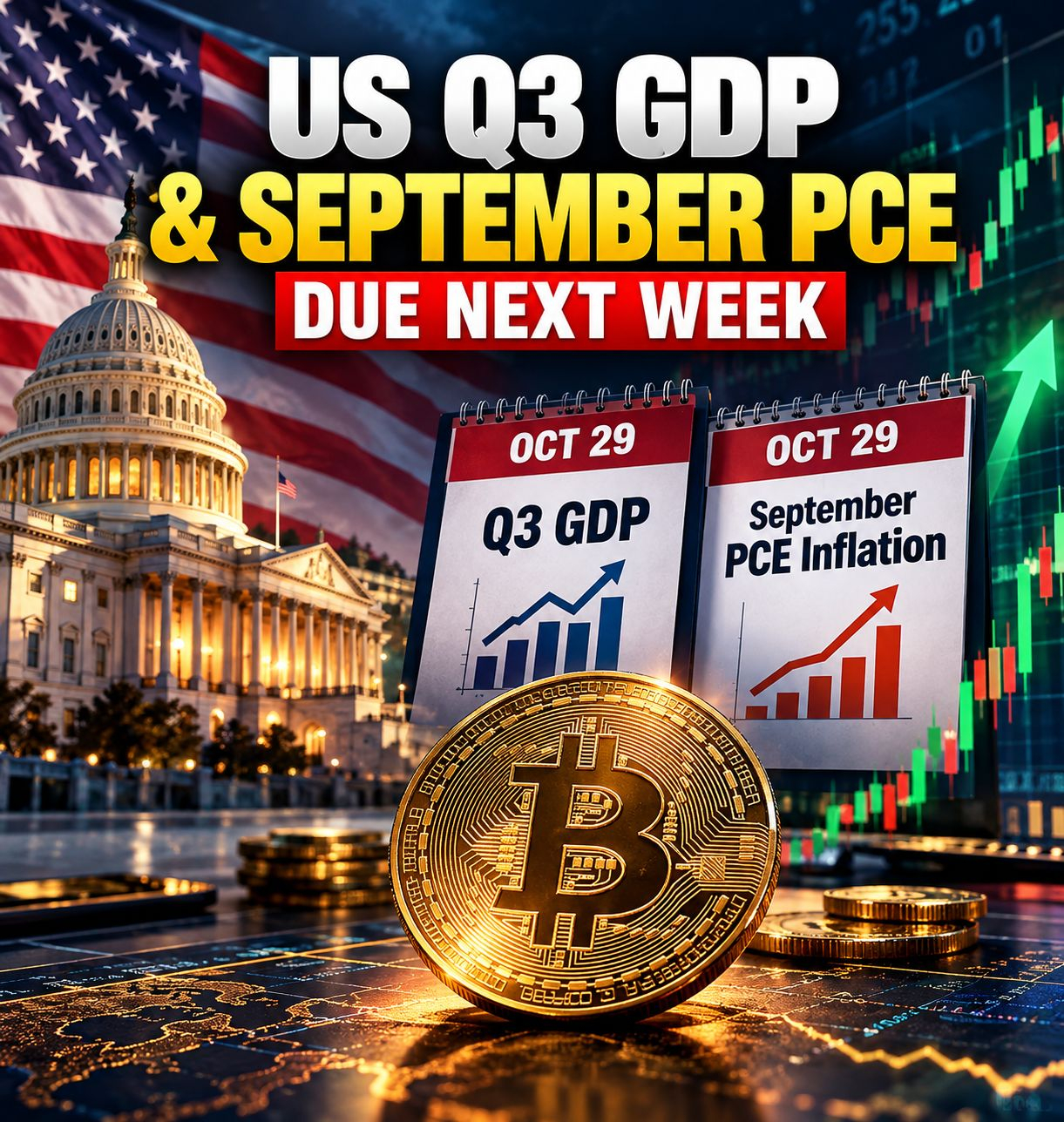
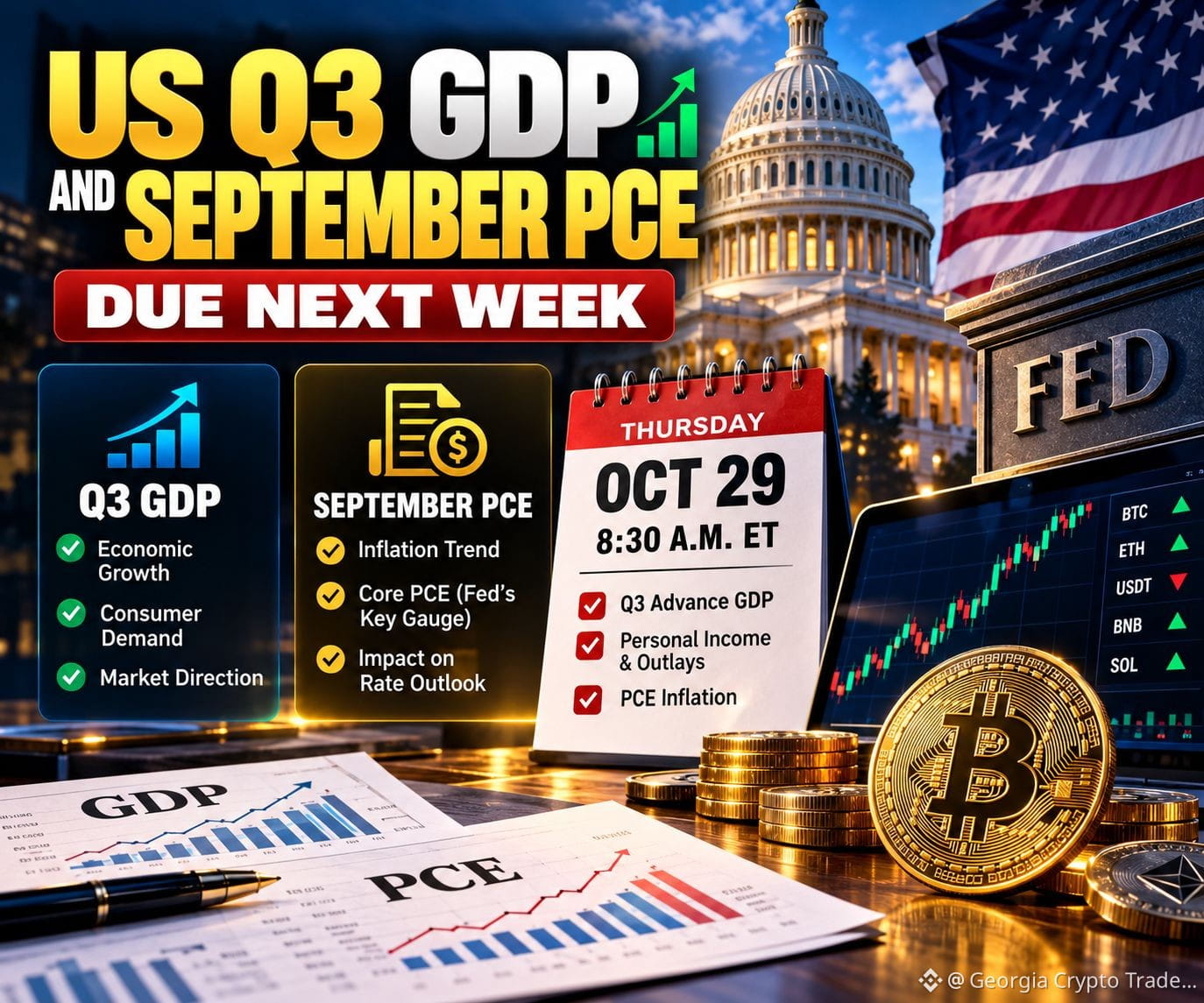
#usq3gdpandseptemberpceduenextweek 📊 US GDP & PCE Inflation: A Crucial Week for Crypto
Markets are preparing for two major US economic releases on October 29: Q3 GDP and September PCE inflation. Both reports could influence expectations for Federal Reserve policy and shape sentiment across Bitcoin and altcoins. The releases are scheduled for 8:30 AM ET.
🔎 What should traders watch?
• GDP growth: Stronger-than-expected growth could signal economic resilience, while a slowdown may raise concerns about demand.
• Core PCE: This inflation measure excludes food and energy and remains an important indicator for assessing underlying price pressures.
• Fed expectations: Persistent inflation could limit expectations for rate cuts, while softer data may ease pressure on financial conditions.
• Bitcoin reaction: BTC may respond to changes in the dollar, Treasury yields, and broader risk sentiment, but the direction is never guaranteed.
⚠️ The key is not simply whether the numbers are positive or negative. Markets react to the difference between actual results and expectations. Even encouraging data can trigger selling if investors have already priced it in.
My trading approach would be to avoid chasing the first move. Watch the initial volatility, volume, and follow-through before drawing conclusions.
These releases could create opportunities, but also increase the risk of sudden reversals and stop-loss execution during volatile conditions.
📌 Which matters more for Bitcoin this week: economic growth or inflation?
#Bitcoin #CryptoMarket #USGDP #PCEInflation #FederalReserve #BinanceSquare
$NIL $ENA $REZ
{future}(REZUSDT)
{future}(ENAUSDT)
{future}(NILUSDT)
#usq3gdpandseptemberpceduenextweek 📊 US GDP & PCE Inflation: A Crucial Week for Crypto
Markets are preparing for two major US economic releases on October 29: Q3 GDP and September PCE inflation. Both reports could influence expectations for Federal Reserve policy and shape sentiment across Bitcoin and altcoins. The releases are scheduled for 8:30 AM ET.
🔎 What should traders watch?
• GDP growth: Stronger-than-expected growth could signal economic resilience, while a slowdown may raise concerns about demand.
• Core PCE: This inflation measure excludes food and energy and remains an important indicator for assessing underlying price pressures.
• Fed expectations: Persistent inflation could limit expectations for rate cuts, while softer data may ease pressure on financial conditions.
• Bitcoin reaction: BTC may respond to changes in the dollar, Treasury yields, and broader risk sentiment, but the direction is never guaranteed.
⚠️ The key is not simply whether the numbers are positive or negative. Markets react to the difference between actual results and expectations. Even encouraging data can trigger selling if investors have already priced it in.
My trading approach would be to avoid chasing the first move. Watch the initial volatility, volume, and follow-through before drawing conclusions.
These releases could create opportunities, but also increase the risk of sudden reversals and stop-loss execution during volatile conditions.
📌 Which matters more for Bitcoin this week: economic growth or inflation?
#Bitcoin #CryptoMarket #USGDP #PCEInflation #FederalReserve #BinanceSquare
$NIL $ENA $REZ
1
1.1k
·
--
Bullish
#KeystoneWebsiteBreachExposesBuyersShippingAddresses 🚨 #KeystoneBreach: A Reminder About Crypto Security
Keystone reportedly suffered a website breach exposing customer names, contact details, shipping addresses, and purchase records. The company says private keys, recovery phrases, passwords, and payment details were not compromised.
🔎 Why should crypto users care?
The main risk is targeted phishing. Attackers with real customer information can send convincing messages about refunds, replacement devices, or wallet security.
📊 Key takeaways:
• Data exposure can create risks even when wallet credentials remain safe.
• Never share your seed phrase or private keys.
• Verify unexpected messages through official channels.
• Avoid suspicious links and requests to move funds.
• Hardware wallets protect private keys, but cannot eliminate every security risk.
⚠️ Keystone says it addressed the vulnerability and is investigating the incident. The full scope remains unclear.
Trader’s perspective: this is a cybersecurity concern, not evidence of a confirmed blockchain exploit or stolen customer funds. Avoid confusing personal-data exposure with direct wallet compromise.
Crypto security requires more than protecting assets on-chain. Customer databases, shipping information, and account privacy also matter.
Should hardware wallet companies collect and retain less customer data?
#CryptoSecurity #Keystone #Bitcoin #SelfCustody #BinanceSquare
$BMT $BREV $DODO
{spot}(DODOUSDT)
{future}(BREVUSDT)
{future}(BMTUSDT)
#KeystoneWebsiteBreachExposesBuyersShippingAddresses 🚨 #KeystoneBreach: A Reminder About Crypto Security
Keystone reportedly suffered a website breach exposing customer names, contact details, shipping addresses, and purchase records. The company says private keys, recovery phrases, passwords, and payment details were not compromised.
🔎 Why should crypto users care?
The main risk is targeted phishing. Attackers with real customer information can send convincing messages about refunds, replacement devices, or wallet security.
📊 Key takeaways:
• Data exposure can create risks even when wallet credentials remain safe.
• Never share your seed phrase or private keys.
• Verify unexpected messages through official channels.
• Avoid suspicious links and requests to move funds.
• Hardware wallets protect private keys, but cannot eliminate every security risk.
⚠️ Keystone says it addressed the vulnerability and is investigating the incident. The full scope remains unclear.
Trader’s perspective: this is a cybersecurity concern, not evidence of a confirmed blockchain exploit or stolen customer funds. Avoid confusing personal-data exposure with direct wallet compromise.
Crypto security requires more than protecting assets on-chain. Customer databases, shipping information, and account privacy also matter.
Should hardware wallet companies collect and retain less customer data?
#CryptoSecurity #Keystone #Bitcoin #SelfCustody #BinanceSquare
$BMT $BREV $DODO

338
·
--
Bullish
#SKHynixReportedlyPlansSpecialDividendFromKioxiaStakeSale 📊 SK Hynix’s Reported $12B Dividend: Why Markets Are Watching
SK Hynix is reportedly considering a special dividend of around 16 trillion won, potentially linked to gains from its investment in Japan’s Kioxia. However, the plan has not been finalized, so investors should distinguish reports from confirmed decisions.
🔎 What matters for markets?
• Shareholder returns: A major payout could attract investor attention, but it does not guarantee a lasting rally.
• AI demand: SK Hynix supplies high-bandwidth memory used in advanced AI infrastructure, making its earnings outlook important to the technology sector.
• Capital allocation: Investors will watch how management balances dividends, future investment, and financial flexibility.
• Market reaction: Official confirmation, dividend terms, and earnings guidance matter more than speculation alone.
⚠️ Trader’s perspective: Strong AI-related demand can support the business outlook, but expectations may already be reflected in the share price. A positive headline does not automatically mean further upside.
This is also worth watching for crypto traders tracking broader technology sentiment and risk appetite. However, any impact on Bitcoin or altcoins would be indirect, not guaranteed.
Would you focus more on SK Hynix’s potential payout or its future AI-memory growth?
#SKHynix #Kioxia #AI #Semiconductors #CryptoMarket
$YB $ERA $OSMO
{spot}(OSMOUSDT)
{future}(ERAUSDT)
{future}(YBUSDT)
#SKHynixReportedlyPlansSpecialDividendFromKioxiaStakeSale 📊 SK Hynix’s Reported $12B Dividend: Why Markets Are Watching
SK Hynix is reportedly considering a special dividend of around 16 trillion won, potentially linked to gains from its investment in Japan’s Kioxia. However, the plan has not been finalized, so investors should distinguish reports from confirmed decisions.
🔎 What matters for markets?
• Shareholder returns: A major payout could attract investor attention, but it does not guarantee a lasting rally.
• AI demand: SK Hynix supplies high-bandwidth memory used in advanced AI infrastructure, making its earnings outlook important to the technology sector.
• Capital allocation: Investors will watch how management balances dividends, future investment, and financial flexibility.
• Market reaction: Official confirmation, dividend terms, and earnings guidance matter more than speculation alone.
⚠️ Trader’s perspective: Strong AI-related demand can support the business outlook, but expectations may already be reflected in the share price. A positive headline does not automatically mean further upside.
This is also worth watching for crypto traders tracking broader technology sentiment and risk appetite. However, any impact on Bitcoin or altcoins would be indirect, not guaranteed.
Would you focus more on SK Hynix’s potential payout or its future AI-memory growth?
#SKHynix #Kioxia #AI #Semiconductors #CryptoMarket
$YB $ERA $OSMO

343
·
--
Bullish
#argentinecourtdismisseslibracaseagainstmilei ⚖️ Argentina Dismisses LIBRA Case Against Milei: Crypto Market Implications
Argentina’s federal court has dismissed the criminal case involving President Javier Milei over the LIBRA memecoin controversy, marking a significant development in a story that shook investor confidence.
Milei promoted LIBRA on social media in February 2025. The token surged in attention before suffering a dramatic collapse, raising questions about speculative trading, transparency, and the risks of high-profile endorsements.
📊 What should crypto traders watch?
🔹 Legal uncertainty: The dismissal changes the immediate legal picture, but potential further challenges mean the broader controversy may not be over.
🔹 Investor sentiment: The case highlights how political figures and social media attention can influence speculative crypto assets.
🔹 Liquidity risks: Sharp price increases can reverse quickly, particularly when trading activity depends heavily on hype rather than sustained demand.
🔹 Market discipline: Traders should examine token distribution, liquidity, holder concentration, and exit conditions before taking speculative positions.
⚠️ Important distinction: A dismissed criminal case does not guarantee investor recovery or establish that a token is fundamentally sound.
My takeaway: this story is a reminder that headlines can move prices, but they do not replace due diligence. Legal developments may change sentiment, while liquidity and market structure continue to shape trading risk.
Will this ruling change how traders view politically connected memecoins, or will caution remain the dominant approach?
#LIBRA #CryptoNews #Argentina #Milei #CryptoMarket #BinanceSquare
$ENA $REZ $BABY
{future}(BABYUSDT)
{future}(REZUSDT)
{future}(ENAUSDT)
#argentinecourtdismisseslibracaseagainstmilei ⚖️ Argentina Dismisses LIBRA Case Against Milei: Crypto Market Implications
Argentina’s federal court has dismissed the criminal case involving President Javier Milei over the LIBRA memecoin controversy, marking a significant development in a story that shook investor confidence.
Milei promoted LIBRA on social media in February 2025. The token surged in attention before suffering a dramatic collapse, raising questions about speculative trading, transparency, and the risks of high-profile endorsements.
📊 What should crypto traders watch?
🔹 Legal uncertainty: The dismissal changes the immediate legal picture, but potential further challenges mean the broader controversy may not be over.
🔹 Investor sentiment: The case highlights how political figures and social media attention can influence speculative crypto assets.
🔹 Liquidity risks: Sharp price increases can reverse quickly, particularly when trading activity depends heavily on hype rather than sustained demand.
🔹 Market discipline: Traders should examine token distribution, liquidity, holder concentration, and exit conditions before taking speculative positions.
⚠️ Important distinction: A dismissed criminal case does not guarantee investor recovery or establish that a token is fundamentally sound.
My takeaway: this story is a reminder that headlines can move prices, but they do not replace due diligence. Legal developments may change sentiment, while liquidity and market structure continue to shape trading risk.
Will this ruling change how traders view politically connected memecoins, or will caution remain the dominant approach?
#LIBRA #CryptoNews #Argentina #Milei #CryptoMarket #BinanceSquare
$ENA $REZ $BABY

287
·
--
Bullish
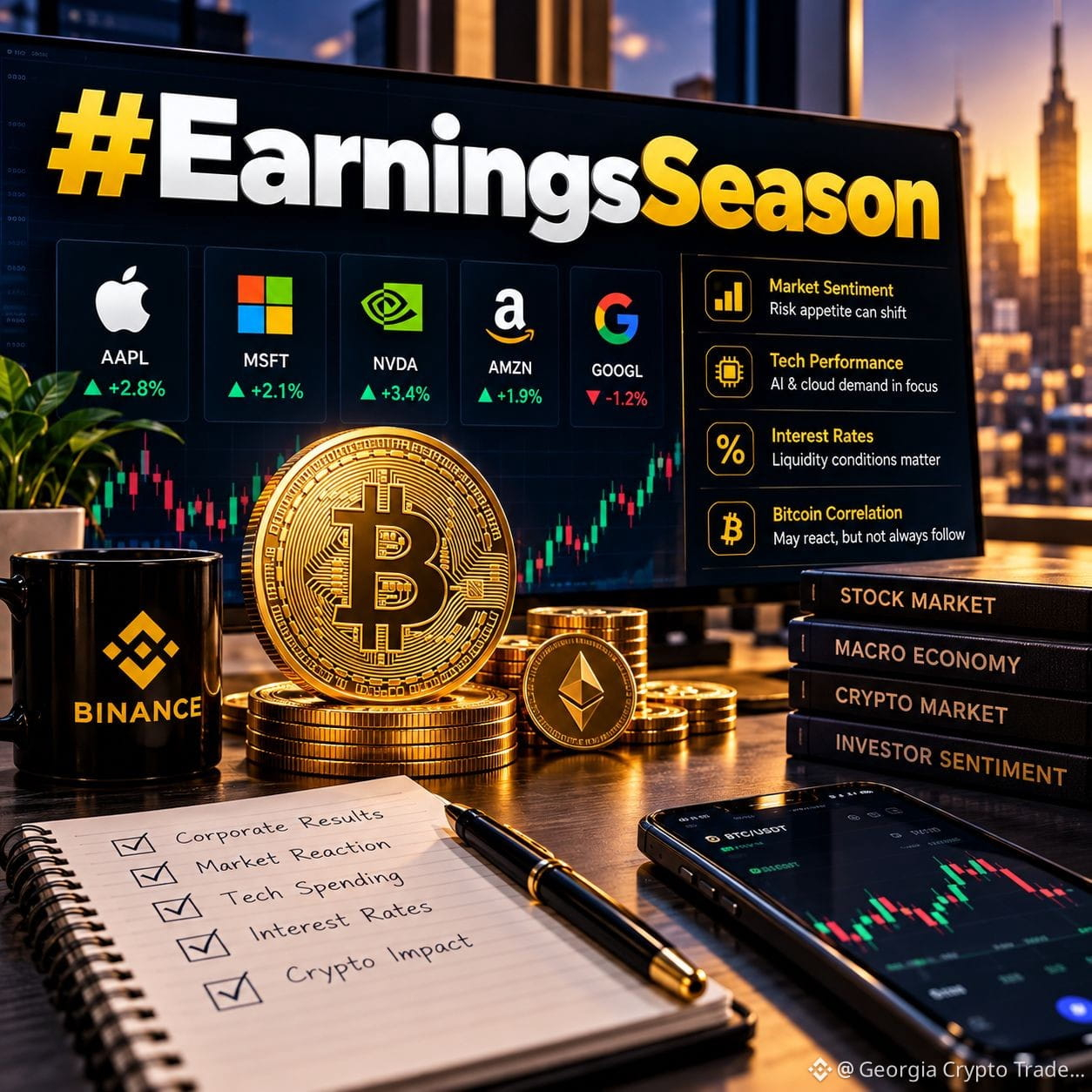
#earningsseason 📊 Earnings Season: Why Crypto Traders Should Pay Attention
Earnings season is more than a stock market event. For crypto traders, it can offer important clues about corporate confidence, technology spending, liquidity conditions, and broader investor sentiment.
When major companies report results, markets look beyond headline profits. Revenue growth, forward guidance, operating margins, and capital expenditure can all influence how investors assess risk. Technology earnings are particularly worth watching because developments in AI spending, cloud demand, and data-center investment can shape expectations across risk assets.
🔎 What matters for crypto?
• Market sentiment: Strong corporate results may support risk appetite, while disappointing guidance can trigger caution.
• Tech performance: Results from major technology companies can influence expectations around AI infrastructure and digital innovation.
• Interest rates: Inflation data and central-bank expectations may matter more than earnings alone when determining liquidity conditions.
• Bitcoin correlation: BTC may react to broader market moves, but it does not necessarily follow equities in every session.
⚠️ One important distinction: strong earnings do not automatically mean crypto prices will rise. Markets often price in expectations before results are released, and even positive reports can trigger selling if guidance disappoints.
My approach this earnings season would be to watch the reaction, not just the headline numbers. Price action, trading volume, Treasury yields, and the dollar can help explain whether investors are embracing risk or becoming more defensive.
The key question is simple: are markets rewarding strong fundamentals, or are expectations already too high?
What do you think earnings season will mean for Bitcoin and altcoins? 👇
#EarningsSeason #Bitcoin #CryptoMarket #MarketAnalysis #BinanceSquare
$BREV $DODO $NIL
{future}(NILUSDT)
{spot}(DODOUSDT)
{future}(BREVUSDT)
#earningsseason 📊 Earnings Season: Why Crypto Traders Should Pay Attention
Earnings season is more than a stock market event. For crypto traders, it can offer important clues about corporate confidence, technology spending, liquidity conditions, and broader investor sentiment.
When major companies report results, markets look beyond headline profits. Revenue growth, forward guidance, operating margins, and capital expenditure can all influence how investors assess risk. Technology earnings are particularly worth watching because developments in AI spending, cloud demand, and data-center investment can shape expectations across risk assets.
🔎 What matters for crypto?
• Market sentiment: Strong corporate results may support risk appetite, while disappointing guidance can trigger caution.
• Tech performance: Results from major technology companies can influence expectations around AI infrastructure and digital innovation.
• Interest rates: Inflation data and central-bank expectations may matter more than earnings alone when determining liquidity conditions.
• Bitcoin correlation: BTC may react to broader market moves, but it does not necessarily follow equities in every session.
⚠️ One important distinction: strong earnings do not automatically mean crypto prices will rise. Markets often price in expectations before results are released, and even positive reports can trigger selling if guidance disappoints.
My approach this earnings season would be to watch the reaction, not just the headline numbers. Price action, trading volume, Treasury yields, and the dollar can help explain whether investors are embracing risk or becoming more defensive.
The key question is simple: are markets rewarding strong fundamentals, or are expectations already too high?
What do you think earnings season will mean for Bitcoin and altcoins? 👇
#EarningsSeason #Bitcoin #CryptoMarket #MarketAnalysis #BinanceSquare
$BREV $DODO $NIL
529
·
--
Bullish
#binancepick 📊 #BinancePick: What Smart Crypto Traders Should Watch
In crypto, the biggest opportunities often come with the biggest uncertainties. That’s why experienced traders focus on market structure, liquidity, volume, and risk management rather than chasing every trending token.
The #BinancePick conversation is a reminder to look beyond the hype and evaluate what the market is actually doing. Is trading volume increasing? Are buyers maintaining momentum? Is price breaking a key resistance level with confirmation, or is the move losing strength?
These details matter because a sudden price increase does not automatically signal a sustainable trend. Low liquidity, sharp reversals, and changing market sentiment can quickly alter the picture.
🔎 What deserves attention right now?
• Volume: Does participation support the current price movement?
• Trend: Is the asset making higher highs and higher lows, or showing weakness?
• Liquidity: Can traders enter and exit without excessive slippage?
• Risk: Where would the trade thesis become invalid?
Bitcoin's direction, broader market sentiment, and upcoming economic developments can also influence altcoin performance. No single indicator guarantees a successful trade, so combining evidence with disciplined risk management is essential.
My view: watch the data, question the hype, and avoid making decisions based solely on a trending hashtag. A strong trading process matters more than catching every move.
Which crypto asset are you watching closely, and what market signal supports your view? Share your analysis below. 👇
#BinancePick #CryptoMarket #TradingAnalysis #CryptoResearch #RiskManagement
$ERA $OSMO $BMT
{future}(BMTUSDT)
{spot}(OSMOUSDT)
{future}(ERAUSDT)
#binancepick 📊 #BinancePick: What Smart Crypto Traders Should Watch
In crypto, the biggest opportunities often come with the biggest uncertainties. That’s why experienced traders focus on market structure, liquidity, volume, and risk management rather than chasing every trending token.
The #BinancePick conversation is a reminder to look beyond the hype and evaluate what the market is actually doing. Is trading volume increasing? Are buyers maintaining momentum? Is price breaking a key resistance level with confirmation, or is the move losing strength?
These details matter because a sudden price increase does not automatically signal a sustainable trend. Low liquidity, sharp reversals, and changing market sentiment can quickly alter the picture.
🔎 What deserves attention right now?
• Volume: Does participation support the current price movement?
• Trend: Is the asset making higher highs and higher lows, or showing weakness?
• Liquidity: Can traders enter and exit without excessive slippage?
• Risk: Where would the trade thesis become invalid?
Bitcoin's direction, broader market sentiment, and upcoming economic developments can also influence altcoin performance. No single indicator guarantees a successful trade, so combining evidence with disciplined risk management is essential.
My view: watch the data, question the hype, and avoid making decisions based solely on a trending hashtag. A strong trading process matters more than catching every move.
Which crypto asset are you watching closely, and what market signal supports your view? Share your analysis below. 👇
#BinancePick #CryptoMarket #TradingAnalysis #CryptoResearch #RiskManagement
$ERA $OSMO $BMT

1
393
·
--
Bullish
#southkoreaplanstoregulatestablecoinsunderfxlaw 🇰🇷 South Korea Plans FX Rules for Stablecoins
South Korea’s central bank plans to work with the government on an amendment to the Foreign Exchange Transactions Act that would regulate stablecoins as payment instruments. The aim is to improve oversight of cross-border digital-asset transfers and close gaps that may enable illegal transactions.
📊 If the proposal advances, cross-border stablecoin transfers could face reporting and monitoring requirements closer to traditional foreign-exchange payments.
Important: this is a plan to draft legislation, not a finalized law. The wording, scope, and timeline remain unconfirmed. South Korea is also developing a broader Digital Asset Basic Act that could shape stablecoin issuance and use.
🔎 Market perspective:
Clearer rules may improve compliance and institutional confidence, but tighter controls could add friction for exchanges, payment providers, and users moving stablecoins internationally. The impact will depend on the final requirements and enforcement.
For traders, this is a regulatory development—not an automatic bullish or bearish signal for Bitcoin. Watch for official draft text and reporting obligations.
Do stronger FX rules help stablecoin adoption, or make cross-border crypto payments harder?
#Stablecoins #SouthKorea #CryptoRegulation #Bitcoin #CryptoNews
$SC $NIL $PYTH
{future}(PYTHUSDT)
{future}(NILUSDT)
{spot}(SCUSDT)
#southkoreaplanstoregulatestablecoinsunderfxlaw 🇰🇷 South Korea Plans FX Rules for Stablecoins
South Korea’s central bank plans to work with the government on an amendment to the Foreign Exchange Transactions Act that would regulate stablecoins as payment instruments. The aim is to improve oversight of cross-border digital-asset transfers and close gaps that may enable illegal transactions.
📊 If the proposal advances, cross-border stablecoin transfers could face reporting and monitoring requirements closer to traditional foreign-exchange payments.
Important: this is a plan to draft legislation, not a finalized law. The wording, scope, and timeline remain unconfirmed. South Korea is also developing a broader Digital Asset Basic Act that could shape stablecoin issuance and use.
🔎 Market perspective:
Clearer rules may improve compliance and institutional confidence, but tighter controls could add friction for exchanges, payment providers, and users moving stablecoins internationally. The impact will depend on the final requirements and enforcement.
For traders, this is a regulatory development—not an automatic bullish or bearish signal for Bitcoin. Watch for official draft text and reporting obligations.
Do stronger FX rules help stablecoin adoption, or make cross-border crypto payments harder?
#Stablecoins #SouthKorea #CryptoRegulation #Bitcoin #CryptoNews
$SC $NIL $PYTH

173
·
--
Bullish
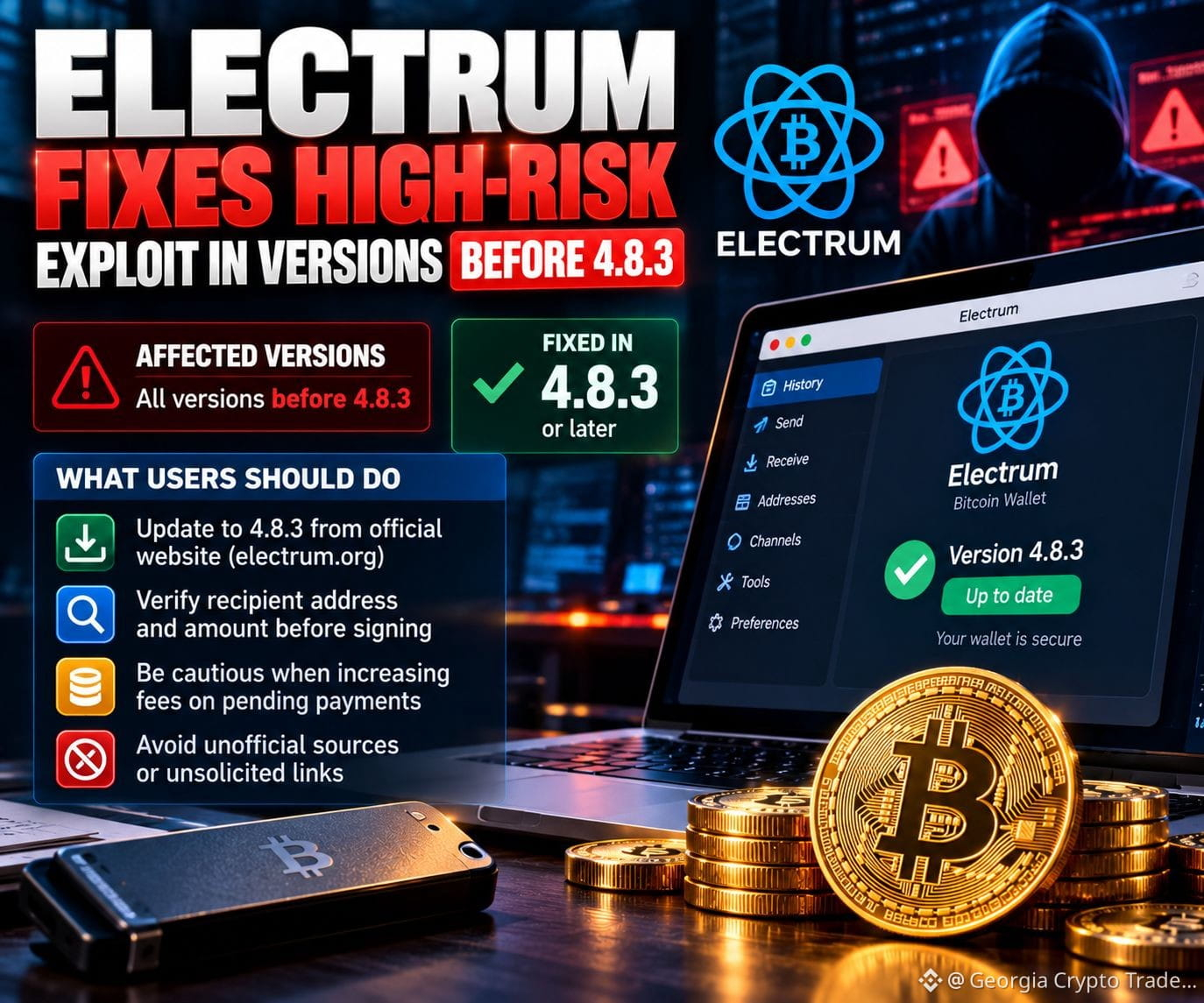
#electrumfixeshighriskexploitinversionsbefore4.8.3 🚨 Electrum Wallet Fixes High-Risk Exploit: Bitcoin Users Should Act
Electrum has released version 4.8.3 after disclosing a high-severity vulnerability that malicious servers exploited to redirect Bitcoin payments. The issue affects all versions before 4.8.3, and developers confirmed two incident reports, including one case involving lost funds.
🔍 How did the exploit work?
A malicious server could hide a user's original unconfirmed payment and display a fake transaction directing funds to an attacker. The danger came when users tried to increase the transaction fee using Replace-by-Fee (RBF). In vulnerable versions, that action could lead users to sign the fraudulent payment themselves.
This is a reminder that wallet security involves more than protecting seed phrases. Transaction verification and the software connecting you to the network also matter.
🛡️ What users should do:
• Update Electrum to version 4.8.3 or later from the official website: electrum.org.
• Verify the complete recipient address and amount before signing any transaction.
• Be especially cautious when increasing fees on pending payments.
• Avoid downloading wallet updates from unsolicited links or unofficial sources.
📊 Market perspective: This is primarily a wallet-security issue, not automatically a bearish signal for Bitcoin's price. However, incidents involving real fund losses can weaken confidence in self-custody if users overlook basic security practices.
The key takeaway is simple: verify before signing, keep wallet software updated, and never assume a transaction is safe just because it appears in your history.
Have you checked your wallet version recently?
#Bitcoin #Electrum #CryptoSecurity #BTC #CryptoNews
$DASH $LUMIA $ZEC
{future}(ZECUSDT)
{future}(LUMIAUSDT)
{future}(DASHUSDT)
#electrumfixeshighriskexploitinversionsbefore4.8.3 🚨 Electrum Wallet Fixes High-Risk Exploit: Bitcoin Users Should Act
Electrum has released version 4.8.3 after disclosing a high-severity vulnerability that malicious servers exploited to redirect Bitcoin payments. The issue affects all versions before 4.8.3, and developers confirmed two incident reports, including one case involving lost funds.
🔍 How did the exploit work?
A malicious server could hide a user's original unconfirmed payment and display a fake transaction directing funds to an attacker. The danger came when users tried to increase the transaction fee using Replace-by-Fee (RBF). In vulnerable versions, that action could lead users to sign the fraudulent payment themselves.
This is a reminder that wallet security involves more than protecting seed phrases. Transaction verification and the software connecting you to the network also matter.
🛡️ What users should do:
• Update Electrum to version 4.8.3 or later from the official website: electrum.org.
• Verify the complete recipient address and amount before signing any transaction.
• Be especially cautious when increasing fees on pending payments.
• Avoid downloading wallet updates from unsolicited links or unofficial sources.
📊 Market perspective: This is primarily a wallet-security issue, not automatically a bearish signal for Bitcoin's price. However, incidents involving real fund losses can weaken confidence in self-custody if users overlook basic security practices.
The key takeaway is simple: verify before signing, keep wallet software updated, and never assume a transaction is safe just because it appears in your history.
Have you checked your wallet version recently?
#Bitcoin #Electrum #CryptoSecurity #BTC #CryptoNews
$DASH $LUMIA $ZEC
36
·
--
Bullish
#southkoreadelayscryptoincometax 🇰🇷 South Korea Moves to Delay Crypto Tax Again — What It Means for the Market
South Korea’s presidential office has reportedly decided to postpone the crypto income tax scheduled for January 2027, according to a report published October 25. The move follows months of debate over regulatory readiness, investor concerns, and the treatment of overseas crypto transactions.
📊 Why does this matter?
Under the existing plan, crypto gains above 2.5 million won annually would face a 22% tax rate, including local tax. The proposed delay reflects concerns that the current framework may not be ready to apply the rules consistently across domestic exchanges, overseas platforms, and different transaction types.
The timing is important. South Korea is a major crypto market, and changes to its tax policy can influence local investor sentiment, trading behavior, and the competitiveness of domestic exchanges.
⚠️ However, traders should separate policy headlines from confirmed market impact. A reported decision to delay is not the same as a completed legislative amendment. The legal process and final implementation date still need to be clarified.
My take: another postponement could provide investors and exchanges with more preparation time, but it does not remove the possibility of future taxation. For Bitcoin and the broader crypto market, this is a regulatory development—not a standalone bullish signal.
The key thing to watch now is whether lawmakers formally revise the tax schedule and what new date they establish.
Do you think clearer crypto tax rules would help South Korea’s market grow?
#CryptoNews #SouthKorea #CryptoRegulation #Bitcoin #CryptoMarket
$CVC $T $WIN
{spot}(WINUSDT)
{future}(TUSDT)
{future}(CVCUSDT)
#southkoreadelayscryptoincometax 🇰🇷 South Korea Moves to Delay Crypto Tax Again — What It Means for the Market
South Korea’s presidential office has reportedly decided to postpone the crypto income tax scheduled for January 2027, according to a report published October 25. The move follows months of debate over regulatory readiness, investor concerns, and the treatment of overseas crypto transactions.
📊 Why does this matter?
Under the existing plan, crypto gains above 2.5 million won annually would face a 22% tax rate, including local tax. The proposed delay reflects concerns that the current framework may not be ready to apply the rules consistently across domestic exchanges, overseas platforms, and different transaction types.
The timing is important. South Korea is a major crypto market, and changes to its tax policy can influence local investor sentiment, trading behavior, and the competitiveness of domestic exchanges.
⚠️ However, traders should separate policy headlines from confirmed market impact. A reported decision to delay is not the same as a completed legislative amendment. The legal process and final implementation date still need to be clarified.
My take: another postponement could provide investors and exchanges with more preparation time, but it does not remove the possibility of future taxation. For Bitcoin and the broader crypto market, this is a regulatory development—not a standalone bullish signal.
The key thing to watch now is whether lawmakers formally revise the tax schedule and what new date they establish.
Do you think clearer crypto tax rules would help South Korea’s market grow?
#CryptoNews #SouthKorea #CryptoRegulation #Bitcoin #CryptoMarket
$CVC $T $WIN

145
·
--
Bullish
#usq3gdpandseptemberpceduenextweek US GDP + September PCE: A Key Market Test 📊
On Thursday, October 29 at 8:30 a.m. ET, the US releases Q3 advance GDP and September Personal Income and Outlays, including PCE inflation. These reports will help traders assess economic momentum alongside price pressures.
What matters most?
🔹 GDP growth: A strong number may signal resilient demand, but could complicate hopes for easier policy if inflation stays firm.
🔹 Core PCE: A key Federal Reserve inflation gauge. A cooler reading may support rate-cut expectations; a hotter print could keep yields and the dollar elevated.
🔹 The details: Consumer spending, income growth, and revisions can shift the story beyond the headline.
For crypto, the transmission channel is likely to be the dollar, Treasury yields, and broader risk appetite. Softer inflation with steady growth may support risk assets, while strong growth and sticky prices could create a more difficult backdrop. Neither outcome guarantees Bitcoin’s direction—market expectations and positioning matter too.
My plan: compare the data with forecasts, avoid chasing the first candle, and manage position size around event volatility.
Which will matter more this week: GDP or PCE?
#CryptoMarket #Bitcoin #Macro #PCE #GDP
$NIL $PYTH $IOST
{future}(IOSTUSDT)
{future}(PYTHUSDT)
{future}(NILUSDT)
#usq3gdpandseptemberpceduenextweek US GDP + September PCE: A Key Market Test 📊
On Thursday, October 29 at 8:30 a.m. ET, the US releases Q3 advance GDP and September Personal Income and Outlays, including PCE inflation. These reports will help traders assess economic momentum alongside price pressures.
What matters most?
🔹 GDP growth: A strong number may signal resilient demand, but could complicate hopes for easier policy if inflation stays firm.
🔹 Core PCE: A key Federal Reserve inflation gauge. A cooler reading may support rate-cut expectations; a hotter print could keep yields and the dollar elevated.
🔹 The details: Consumer spending, income growth, and revisions can shift the story beyond the headline.
For crypto, the transmission channel is likely to be the dollar, Treasury yields, and broader risk appetite. Softer inflation with steady growth may support risk assets, while strong growth and sticky prices could create a more difficult backdrop. Neither outcome guarantees Bitcoin’s direction—market expectations and positioning matter too.
My plan: compare the data with forecasts, avoid chasing the first candle, and manage position size around event volatility.
Which will matter more this week: GDP or PCE?
#CryptoMarket #Bitcoin #Macro #PCE #GDP
$NIL $PYTH $IOST
856
·
--
Bullish
#earningsseason Earnings Season: Numbers Matter, but So Does Guidance 📊
Earnings season puts market expectations against company results. A beat or miss can move a stock, but the deeper signal often sits beneath the headline.
Three things deserve attention:
1️⃣ Revenue quality: Is growth driven by demand, higher prices, or one-off factors?
2️⃣ Margins and cash flow: Are sales turning into sustainable profit, or are costs eating into performance?
3️⃣ Forward guidance: The outlook can matter more than last quarter. Cautious guidance may pressure a stock after a beat, while improving expectations can lift sentiment after a weak report.
Context is critical. A company can post solid numbers and still fall if investors expected more. Another can rise after disappointing results if the outlook is less negative than feared. The first price reaction isn’t always the final verdict.
For crypto traders, corporate results can influence risk appetite, especially when they shift views on tech spending, consumer demand, or liquidity. But correlations are not guarantees, and earnings reports don’t automatically predict Bitcoin’s next move.
My approach: compare results with expectations, read the outlook, watch the reaction, and manage risk around volatility. Don’t trade on a headline alone.
Which signal do you watch first: revenue, margins, or guidance?
#EarningsSeason #MarketAnalysis #Investing #CryptoMarket
$LUMIA $ZEC $SC
{spot}(SCUSDT)
{future}(ZECUSDT)
{future}(LUMIAUSDT)
#earningsseason Earnings Season: Numbers Matter, but So Does Guidance 📊
Earnings season puts market expectations against company results. A beat or miss can move a stock, but the deeper signal often sits beneath the headline.
Three things deserve attention:
1️⃣ Revenue quality: Is growth driven by demand, higher prices, or one-off factors?
2️⃣ Margins and cash flow: Are sales turning into sustainable profit, or are costs eating into performance?
3️⃣ Forward guidance: The outlook can matter more than last quarter. Cautious guidance may pressure a stock after a beat, while improving expectations can lift sentiment after a weak report.
Context is critical. A company can post solid numbers and still fall if investors expected more. Another can rise after disappointing results if the outlook is less negative than feared. The first price reaction isn’t always the final verdict.
For crypto traders, corporate results can influence risk appetite, especially when they shift views on tech spending, consumer demand, or liquidity. But correlations are not guarantees, and earnings reports don’t automatically predict Bitcoin’s next move.
My approach: compare results with expectations, read the outlook, watch the reaction, and manage risk around volatility. Don’t trade on a headline alone.
Which signal do you watch first: revenue, margins, or guidance?
#EarningsSeason #MarketAnalysis #Investing #CryptoMarket
$LUMIA $ZEC $SC

2
804
·
--
Bullish
#binancepick Binance Pick: Look Beyond the Prize Pool 📊
Binance Pick lets eligible users make market predictions, earn campaign Scores, and compete on leaderboards. Season 1 is scheduled to run through November 15, 2026, with rewards of up to 1,000,000 USDC.
The key detail: Scores are campaign points, not cash, and have no direct monetary value. Rewards depend on leaderboard position, eligibility, and official rules—not simply on joining or collecting points.
The campaign includes seasonal and weekly leaderboard rewards, plus a participation pool for users who meet check-in requirements. Tasks and eligibility can vary by region, so review the official campaign page before participating.
There’s a market lesson here, too: predictions should come from a clear timeframe, market context, and a reasoned view—not just the desire to earn points. Short-term price moves can be noisy, and even a strong thesis can be wrong. Don’t treat rewards as guaranteed income or take unnecessary trading risk just to complete tasks.
My take: Binance Pick could help users test their market-reading skills, but the headline prize shouldn’t overshadow the conditions. Understand how Scores and rankings work, and keep risk management separate from leaderboard goals.
What interests you more: testing your analysis or competing on the leaderboard?
#BinancePick #BinanceSquare #CryptoMarket #MarketAnalysis
$T $WIN $DASH
{future}(DASHUSDT)
{spot}(WINUSDT)
{future}(TUSDT)
#binancepick Binance Pick: Look Beyond the Prize Pool 📊
Binance Pick lets eligible users make market predictions, earn campaign Scores, and compete on leaderboards. Season 1 is scheduled to run through November 15, 2026, with rewards of up to 1,000,000 USDC.
The key detail: Scores are campaign points, not cash, and have no direct monetary value. Rewards depend on leaderboard position, eligibility, and official rules—not simply on joining or collecting points.
The campaign includes seasonal and weekly leaderboard rewards, plus a participation pool for users who meet check-in requirements. Tasks and eligibility can vary by region, so review the official campaign page before participating.
There’s a market lesson here, too: predictions should come from a clear timeframe, market context, and a reasoned view—not just the desire to earn points. Short-term price moves can be noisy, and even a strong thesis can be wrong. Don’t treat rewards as guaranteed income or take unnecessary trading risk just to complete tasks.
My take: Binance Pick could help users test their market-reading skills, but the headline prize shouldn’t overshadow the conditions. Understand how Scores and rankings work, and keep risk management separate from leaderboard goals.
What interests you more: testing your analysis or competing on the leaderboard?
#BinancePick #BinanceSquare #CryptoMarket #MarketAnalysis
$T $WIN $DASH

4
8.9k
·
--
Bullish
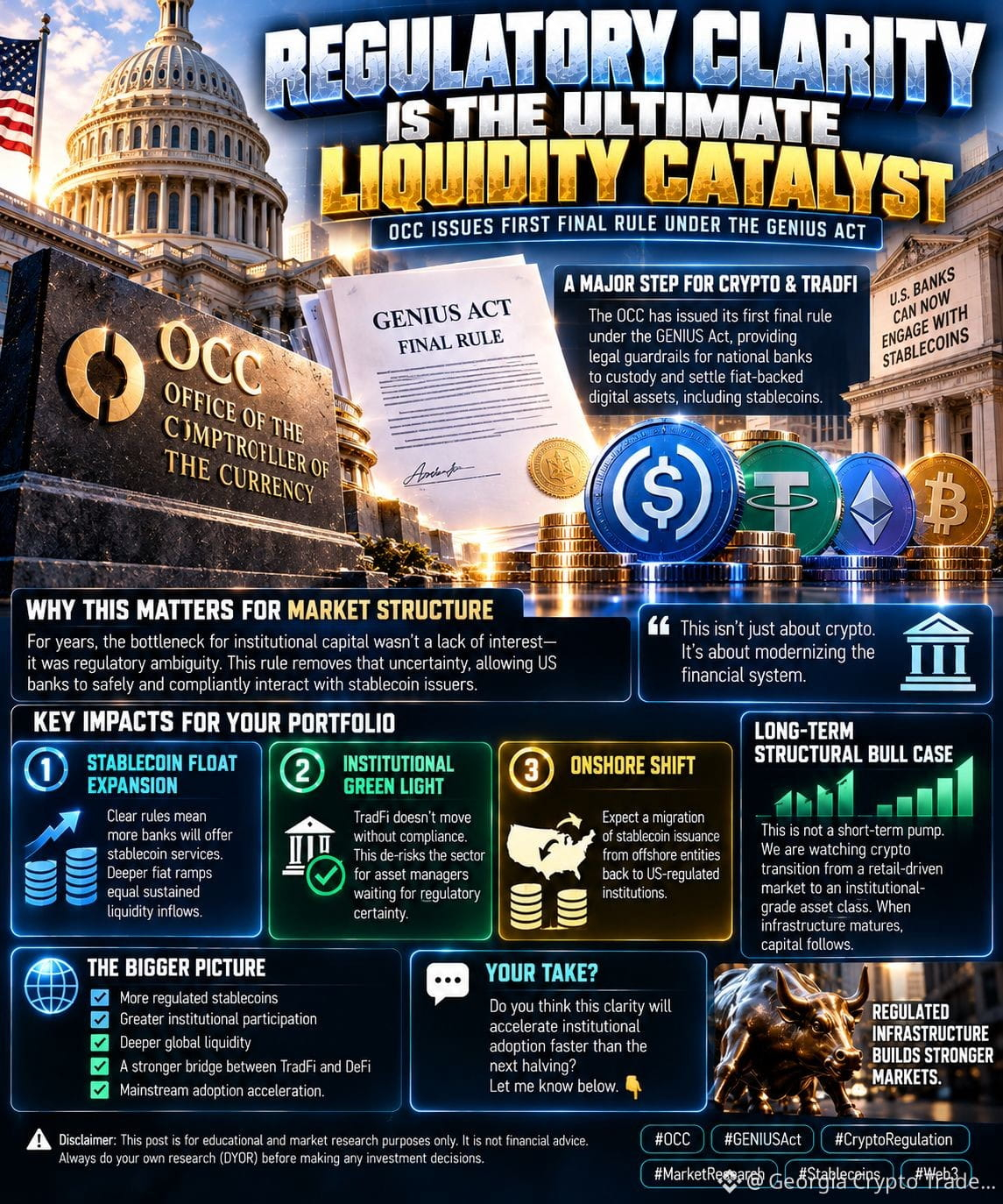
#occissuesfirstfinalruleundergeniusact Regulatory clarity is the ultimate liquidity catalyst. 🏛️📊
The OCC just issued its first final rule under the GENIUS Act. If you’re only watching daily price action, you might miss the macro shift happening. As a market researcher, I don't trade hype; I trade infrastructure. Here is what this means for market structure.
For years, the bottleneck for institutional capital wasn’t a lack of interest—it was regulatory ambiguity. US banks sat on the sidelines, fearing enforcement actions just for interacting with stablecoin issuers. This OCC rule changes the game, providing legal guardrails for national banks to custody and settle fiat-backed digital assets.
Why does this matter for your portfolio?
1️⃣ Stablecoin Float Expansion: Clear rules mean more banks will offer stablecoin services. Deeper fiat ramps equal sustained liquidity inflows.
2️⃣ Institutional Green Light: TradFi doesn't move without compliance. This de-risks the sector for asset managers waiting for regulatory certainty.
3️⃣ Onshore Shift: Expect a migration of stablecoin issuance from offshore entities back to US-regulated institutions.
This isn't a short-term pump; it’s a long-term structural bull case. We are watching crypto transition from a retail-driven market to an institutional-grade asset class. The rails are being built in real-time. When infrastructure matures, capital follows.
Do you think this clarity will accelerate institutional adoption faster than the next halving? Let me know below. 👇
#OCC #GENIUSAct #CryptoRegulation #MarketResearch #Stablecoins
$LUMIA $SOXSB $BOTB
{spot}(BOTBUSDT)
{spot}(SOXSBUSDT)
{future}(LUMIAUSDT)
#occissuesfirstfinalruleundergeniusact Regulatory clarity is the ultimate liquidity catalyst. 🏛️📊
The OCC just issued its first final rule under the GENIUS Act. If you’re only watching daily price action, you might miss the macro shift happening. As a market researcher, I don't trade hype; I trade infrastructure. Here is what this means for market structure.
For years, the bottleneck for institutional capital wasn’t a lack of interest—it was regulatory ambiguity. US banks sat on the sidelines, fearing enforcement actions just for interacting with stablecoin issuers. This OCC rule changes the game, providing legal guardrails for national banks to custody and settle fiat-backed digital assets.
Why does this matter for your portfolio?
1️⃣ Stablecoin Float Expansion: Clear rules mean more banks will offer stablecoin services. Deeper fiat ramps equal sustained liquidity inflows.
2️⃣ Institutional Green Light: TradFi doesn't move without compliance. This de-risks the sector for asset managers waiting for regulatory certainty.
3️⃣ Onshore Shift: Expect a migration of stablecoin issuance from offshore entities back to US-regulated institutions.
This isn't a short-term pump; it’s a long-term structural bull case. We are watching crypto transition from a retail-driven market to an institutional-grade asset class. The rails are being built in real-time. When infrastructure matures, capital follows.
Do you think this clarity will accelerate institutional adoption faster than the next halving? Let me know below. 👇
#OCC #GENIUSAct #CryptoRegulation #MarketResearch #Stablecoins
$LUMIA $SOXSB $BOTB
1
1
1.2k
·
--
Bullish
Verified
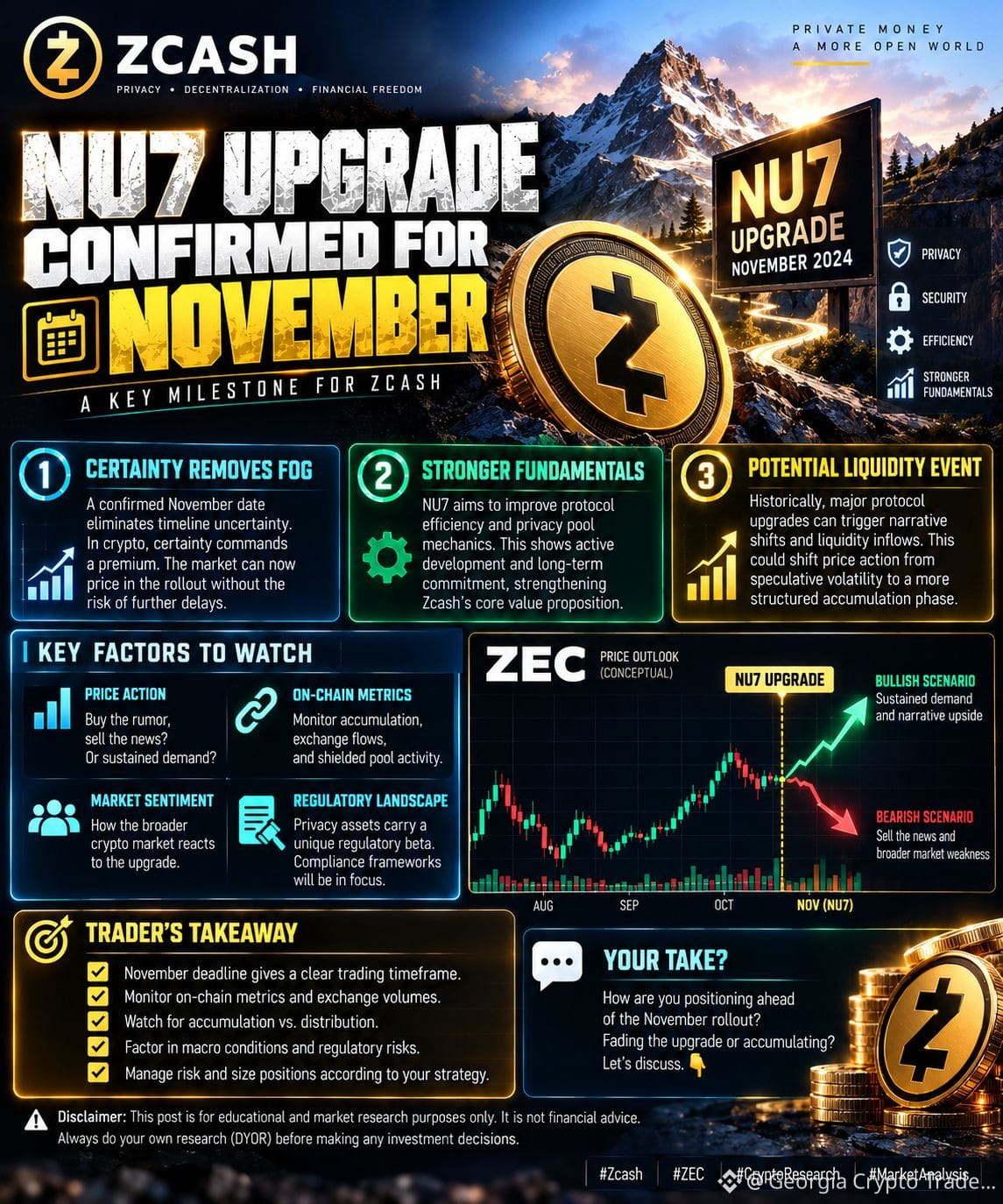
#zcashdevelopersconfirmnovemberdatefornu7upgrade Zcash devs just locked in the November date for the NU7 upgrade. As a market researcher, I view protocol upgrades not just as technical milestones, but as key catalysts for narrative shifts and liquidity events.
Confirming a hard date immediately removes timeline uncertainty. In crypto, certainty commands a premium. For $ZEC, the market can now price in the rollout without the fog of roadmap delays. Historically, this shifts price action from speculative volatility to more structured accumulation phases.
However, a professional approach requires looking at the whole board. While NU7 strengthens protocol fundamentals, we must factor in the macro environment. Privacy assets carry a unique regulatory beta. The market will watch closely to see how the broader ecosystem reacts to the deployment, especially regarding compliance frameworks.
From a trading perspective, this November deadline gives us a clear temporal boundary. The key now is monitoring on-chain metrics and exchange volumes. Are we looking at a classic "buy the rumor, sell the news" setup, or is there structural demand to sustain a post-upgrade trend?
How are you positioning ahead of the November rollout? Fading the upgrade or accumulating? Let’s discuss. 👇
Always remember to manage your risk and size positions according to your personal strategy.
#Zcash #ZEC #CryptoResearch #MarketAnalysis
$DGB $PROM $AVA
{future}(AVAUSDT)
{future}(PROMUSDT)
{spot}(DGBUSDT)
#zcashdevelopersconfirmnovemberdatefornu7upgrade Zcash devs just locked in the November date for the NU7 upgrade. As a market researcher, I view protocol upgrades not just as technical milestones, but as key catalysts for narrative shifts and liquidity events.
Confirming a hard date immediately removes timeline uncertainty. In crypto, certainty commands a premium. For $ZEC, the market can now price in the rollout without the fog of roadmap delays. Historically, this shifts price action from speculative volatility to more structured accumulation phases.
However, a professional approach requires looking at the whole board. While NU7 strengthens protocol fundamentals, we must factor in the macro environment. Privacy assets carry a unique regulatory beta. The market will watch closely to see how the broader ecosystem reacts to the deployment, especially regarding compliance frameworks.
From a trading perspective, this November deadline gives us a clear temporal boundary. The key now is monitoring on-chain metrics and exchange volumes. Are we looking at a classic "buy the rumor, sell the news" setup, or is there structural demand to sustain a post-upgrade trend?
How are you positioning ahead of the November rollout? Fading the upgrade or accumulating? Let’s discuss. 👇
Always remember to manage your risk and size positions according to your personal strategy.
#Zcash #ZEC #CryptoResearch #MarketAnalysis
$DGB $PROM $AVA
2.4k
Log in to explore more content
Join global crypto users on Binance Square
⚡️ Get latest and useful information about crypto.
💬 Trusted by the world’s largest crypto exchange.
👍 Discover real insights from verified creators.
Email / Phone number