
一航交易笔记
29 Posts

一航交易笔记
Report
Block User
波段交易记录者|关注 BTC / ETH / LINK
记录真实交易、技术观察与复盘思考
不喊单,不梭哈,只做有计划的交易
Open Trade

GOOGLB Holder
High-Frequency Trader
2.5 Years
58 Following
140 Followers
99 Liked
Posts
Portfolio
PINNED
·
--
Article
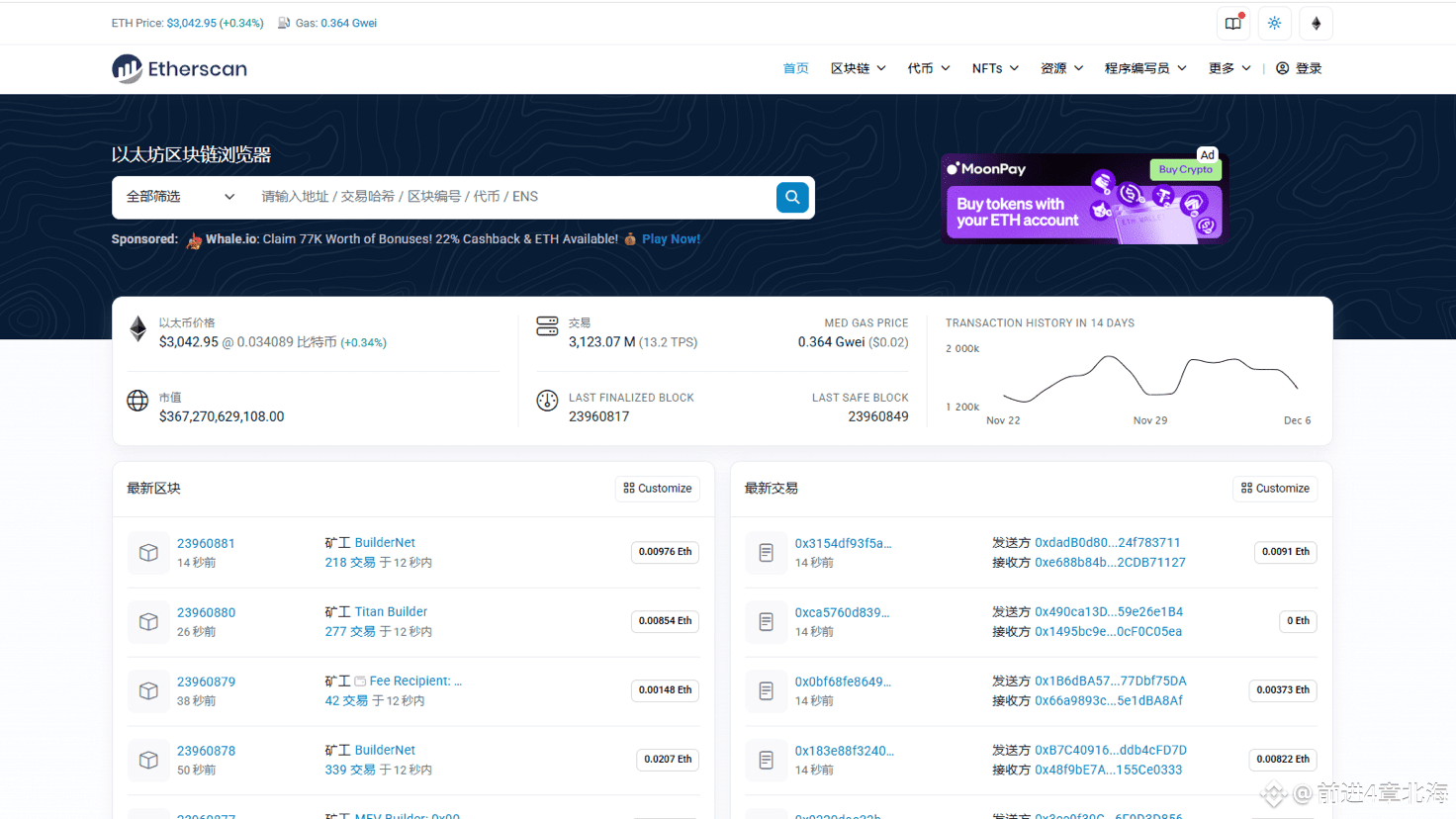
How many people have never even visited the ETH official website, yet have heavily invested in ETH?First, he has never even visited the official ETH website, yet he has heavily invested in ETH.
A few days ago, I talked to a friend offline about the recent market trends. He just entered the crypto space this year, and he mentioned that he chased the ETH rebound a few days ago, buying spot at over 3200, and now it has dropped back to 3000, resulting in another loss.
He also explained why he wanted to buy; he said he saw news that many people were holding, including institutions, and he wanted to hold as well to make a quick profit and then sell immediately.
I curiously asked him if he had ever clicked on ETH, and he said of course he had; how could he buy it without looking?
I mentioned the ETH website, Etherscan, and he looked at me curiously. He said that doesn't matter; he's seen many big influencers not mention these things and still make money.
How many people have never even visited the ETH official website, yet have heavily invested in ETH?
First, he has never even visited the official ETH website, yet he has heavily invested in ETH.
A few days ago, I talked to a friend offline about the recent market trends. He just entered the crypto space this year, and he mentioned that he chased the ETH rebound a few days ago, buying spot at over 3200, and now it has dropped back to 3000, resulting in another loss.
He also explained why he wanted to buy; he said he saw news that many people were holding, including institutions, and he wanted to hold as well to make a quick profit and then sell immediately.
I curiously asked him if he had ever clicked on ETH, and he said of course he had; how could he buy it without looking?
I mentioned the ETH website, Etherscan, and he looked at me curiously. He said that doesn't matter; he's seen many big influencers not mention these things and still make money.
A few days ago, I talked to a friend offline about the recent market trends. He just entered the crypto space this year, and he mentioned that he chased the ETH rebound a few days ago, buying spot at over 3200, and now it has dropped back to 3000, resulting in another loss.
He also explained why he wanted to buy; he said he saw news that many people were holding, including institutions, and he wanted to hold as well to make a quick profit and then sell immediately.
I curiously asked him if he had ever clicked on ETH, and he said of course he had; how could he buy it without looking?
I mentioned the ETH website, Etherscan, and he looked at me curiously. He said that doesn't matter; he's seen many big influencers not mention these things and still make money.
28
10
40
24.6k
·
--
I opened an SPCXB spot grid with 1500U; the event rewards were just a bonus.
Binance recently launched “[现货交易机器人×bStocks交易大赛](https://www.bsmkweb.cc/activity/trading-competition/spot-trading-bots-bstock-trading-competition?ref=858329843)”: using a spot grid, smart rebalancing, or spot DCA, as long as your bStocks trading volume accumulates over 500USDT you can participate in the ranking, and the top 100 will split 8000USDT.
This time the supported assets include CRCLB, MSTRB, MUB, SNDKB, and SPCXB—I ultimately chose SPCXB.
The reason isn’t that I think it will rise soon. Among these assets, SPCXB’s recent liquidity, volatility, and degree of range-bound movement have been relatively balanced. CRCLB and SNDKB have shown a more obvious recent downtrend, MUB’s成交(trading)has been relatively weak, and MSTRB is highly correlated with BTC, so it’s prone to suddenly breaking out into a one-direction move.
The idea is simple:
Don’t predict a rise—just earn from the money made by the price bouncing back and forth within a range.
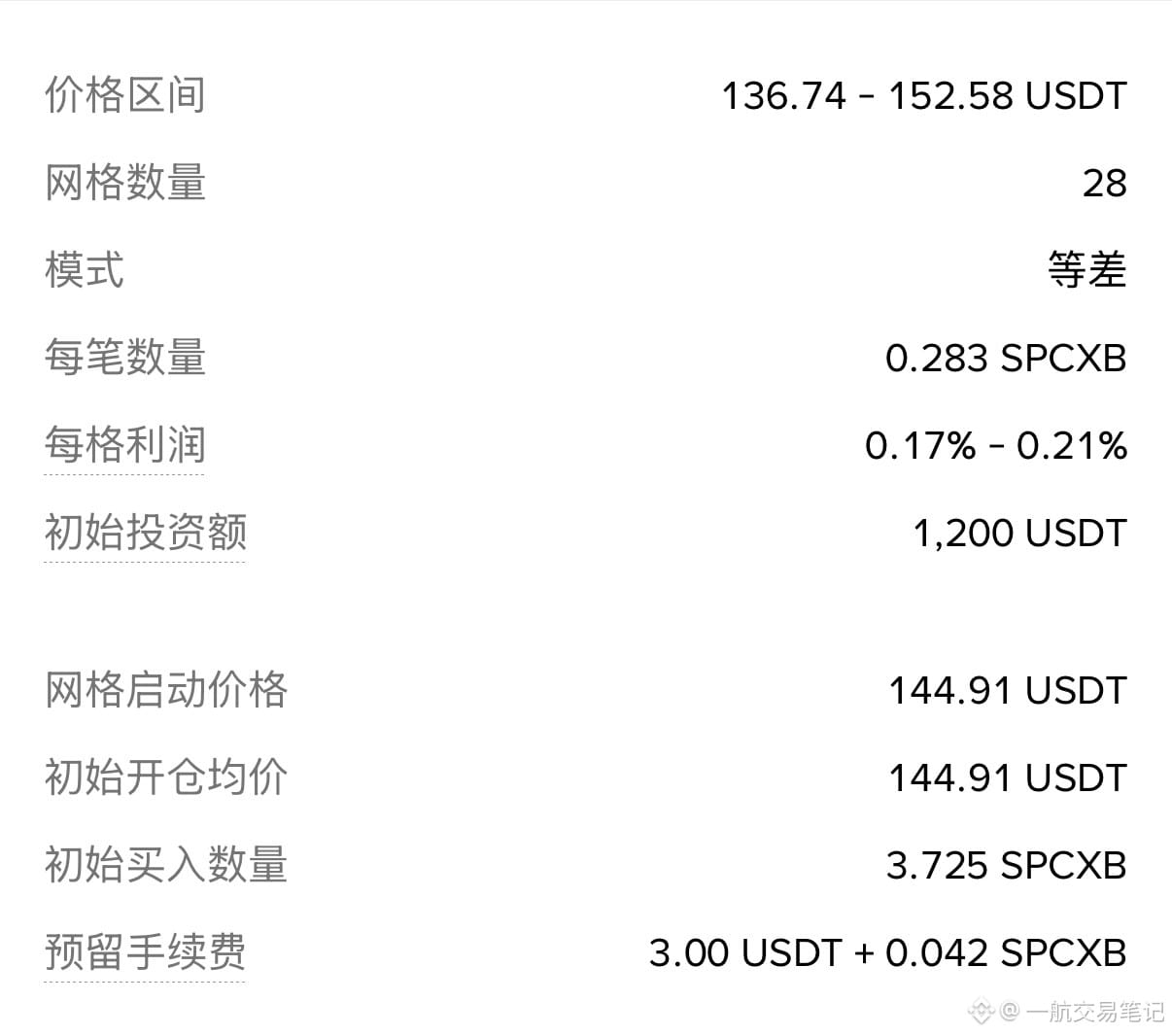
I put in about 1500U. I referenced the short-term consolidation range and grid density provided by Binance AI; the specific parameters are shown in the image. During the event there’s also a zero-maker fee, which is more suitable for grids with smaller spacing and higher trade frequency.
However, a spot grid has no liquidation risk, but that doesn’t mean there’s no risk.
If SPCXB breaks below the lower edge of the grid, the bot will keep buying and may eventually convert most of your USDT into SPCXB. If the price breaks above the upper edge, the robot may sell too early and you could underperform just holding the asset directly.
So I’m not only looking at “grid profit.” Going forward, I’ll also record:
Cumulative trading volume
Number of completed grid cycles
Grid profit
Unrealized P/L on the position
Final total returns
In the first phase, I’ll naturally complete the 500USDT event threshold—not forcing extra volume just to chase the ranking. After that, I’ll update the live results on day 1, day 3, and day 7 to see whether this 1500U truly earned grid profit, or whether it only produced a nice-looking number.
If the grid profit is positive, but the unrealized loss on the position is larger, would you say this grid trade is profitable?
Personal live-trading notes only; not investment advice.
#SPCXB #BStocks #网格交易 $SPCXB
{spot}(SPCXBUSDT)
I opened an SPCXB spot grid with 1500U; the event rewards were just a bonus.
Binance recently launched “现货交易机器人×bStocks交易大赛”: using a spot grid, smart rebalancing, or spot DCA, as long as your bStocks trading volume accumulates over 500USDT you can participate in the ranking, and the top 100 will split 8000USDT.
This time the supported assets include CRCLB, MSTRB, MUB, SNDKB, and SPCXB—I ultimately chose SPCXB.
The reason isn’t that I think it will rise soon. Among these assets, SPCXB’s recent liquidity, volatility, and degree of range-bound movement have been relatively balanced. CRCLB and SNDKB have shown a more obvious recent downtrend, MUB’s成交(trading)has been relatively weak, and MSTRB is highly correlated with BTC, so it’s prone to suddenly breaking out into a one-direction move.
The idea is simple:
Don’t predict a rise—just earn from the money made by the price bouncing back and forth within a range.
I put in about 1500U. I referenced the short-term consolidation range and grid density provided by Binance AI; the specific parameters are shown in the image. During the event there’s also a zero-maker fee, which is more suitable for grids with smaller spacing and higher trade frequency.
However, a spot grid has no liquidation risk, but that doesn’t mean there’s no risk.
If SPCXB breaks below the lower edge of the grid, the bot will keep buying and may eventually convert most of your USDT into SPCXB. If the price breaks above the upper edge, the robot may sell too early and you could underperform just holding the asset directly.
So I’m not only looking at “grid profit.” Going forward, I’ll also record:
Cumulative trading volume
Number of completed grid cycles
Grid profit
Unrealized P/L on the position
Final total returns
In the first phase, I’ll naturally complete the 500USDT event threshold—not forcing extra volume just to chase the ranking. After that, I’ll update the live results on day 1, day 3, and day 7 to see whether this 1500U truly earned grid profit, or whether it only produced a nice-looking number.
If the grid profit is positive, but the unrealized loss on the position is larger, would you say this grid trade is profitable?
Personal live-trading notes only; not investment advice.
#SPCXB #BStocks #网格交易 $SPCXB
Binance recently launched “现货交易机器人×bStocks交易大赛”: using a spot grid, smart rebalancing, or spot DCA, as long as your bStocks trading volume accumulates over 500USDT you can participate in the ranking, and the top 100 will split 8000USDT.
This time the supported assets include CRCLB, MSTRB, MUB, SNDKB, and SPCXB—I ultimately chose SPCXB.
The reason isn’t that I think it will rise soon. Among these assets, SPCXB’s recent liquidity, volatility, and degree of range-bound movement have been relatively balanced. CRCLB and SNDKB have shown a more obvious recent downtrend, MUB’s成交(trading)has been relatively weak, and MSTRB is highly correlated with BTC, so it’s prone to suddenly breaking out into a one-direction move.
The idea is simple:
Don’t predict a rise—just earn from the money made by the price bouncing back and forth within a range.
I put in about 1500U. I referenced the short-term consolidation range and grid density provided by Binance AI; the specific parameters are shown in the image. During the event there’s also a zero-maker fee, which is more suitable for grids with smaller spacing and higher trade frequency.
However, a spot grid has no liquidation risk, but that doesn’t mean there’s no risk.
If SPCXB breaks below the lower edge of the grid, the bot will keep buying and may eventually convert most of your USDT into SPCXB. If the price breaks above the upper edge, the robot may sell too early and you could underperform just holding the asset directly.
So I’m not only looking at “grid profit.” Going forward, I’ll also record:
Cumulative trading volume
Number of completed grid cycles
Grid profit
Unrealized P/L on the position
Final total returns
In the first phase, I’ll naturally complete the 500USDT event threshold—not forcing extra volume just to chase the ranking. After that, I’ll update the live results on day 1, day 3, and day 7 to see whether this 1500U truly earned grid profit, or whether it only produced a nice-looking number.
If the grid profit is positive, but the unrealized loss on the position is larger, would you say this grid trade is profitable?
Personal live-trading notes only; not investment advice.
#SPCXB #BStocks #网格交易 $SPCXB
1
1
177
·
--
Many people buy ONDO for the logic that, translated, is: Ondo’s business will keep getting better, so ONDO will rise.
But the issue is: crypto isn’t stocks.
Ondo can keep launching new stocks, ETFs, and treasury products, and the assets under management could also keep increasing.
However, the clearly disclosed rights currently held by ONDO holders are mainly focused on Ondo DAO and Flux governance, and this does not equal automatically receiving Ondo Global Markets’ business revenue.
So when judging ONDO, the real question isn’t “Is RWA still hot?” What you should think about is:
For the money made by the RWA business, through what mechanism is it transmitted to the ONDO token?
If that “pipeline” in the middle is missing, the more hot the business becomes, the more token holders may just be spectators.
If ONDO can’t directly capture this portion of revenue for the time being, then what exactly are you buying it for?
$ONDO
{spot}(ONDOUSDT)
Personal opinion only; not investment advice.
#ONDO #RWA #DeFi
Many people buy ONDO for the logic that, translated, is: Ondo’s business will keep getting better, so ONDO will rise.
But the issue is: crypto isn’t stocks.
Ondo can keep launching new stocks, ETFs, and treasury products, and the assets under management could also keep increasing.
However, the clearly disclosed rights currently held by ONDO holders are mainly focused on Ondo DAO and Flux governance, and this does not equal automatically receiving Ondo Global Markets’ business revenue.
So when judging ONDO, the real question isn’t “Is RWA still hot?” What you should think about is:
For the money made by the RWA business, through what mechanism is it transmitted to the ONDO token?
If that “pipeline” in the middle is missing, the more hot the business becomes, the more token holders may just be spectators.
If ONDO can’t directly capture this portion of revenue for the time being, then what exactly are you buying it for?
$ONDO
Personal opinion only; not investment advice.
#ONDO #RWA #DeFi
But the issue is: crypto isn’t stocks.
Ondo can keep launching new stocks, ETFs, and treasury products, and the assets under management could also keep increasing.
However, the clearly disclosed rights currently held by ONDO holders are mainly focused on Ondo DAO and Flux governance, and this does not equal automatically receiving Ondo Global Markets’ business revenue.
So when judging ONDO, the real question isn’t “Is RWA still hot?” What you should think about is:
For the money made by the RWA business, through what mechanism is it transmitted to the ONDO token?
If that “pipeline” in the middle is missing, the more hot the business becomes, the more token holders may just be spectators.
If ONDO can’t directly capture this portion of revenue for the time being, then what exactly are you buying it for?
$ONDO
Personal opinion only; not investment advice.
#ONDO #RWA #DeFi

5
3
1.4k
·
--
There are plenty of DeFi veterans, but truly projects that can simultaneously satisfy “there is real demand, they can generate revenue, the token has value-capture capability, and there is room for growth in the future” are fewer than you might think.
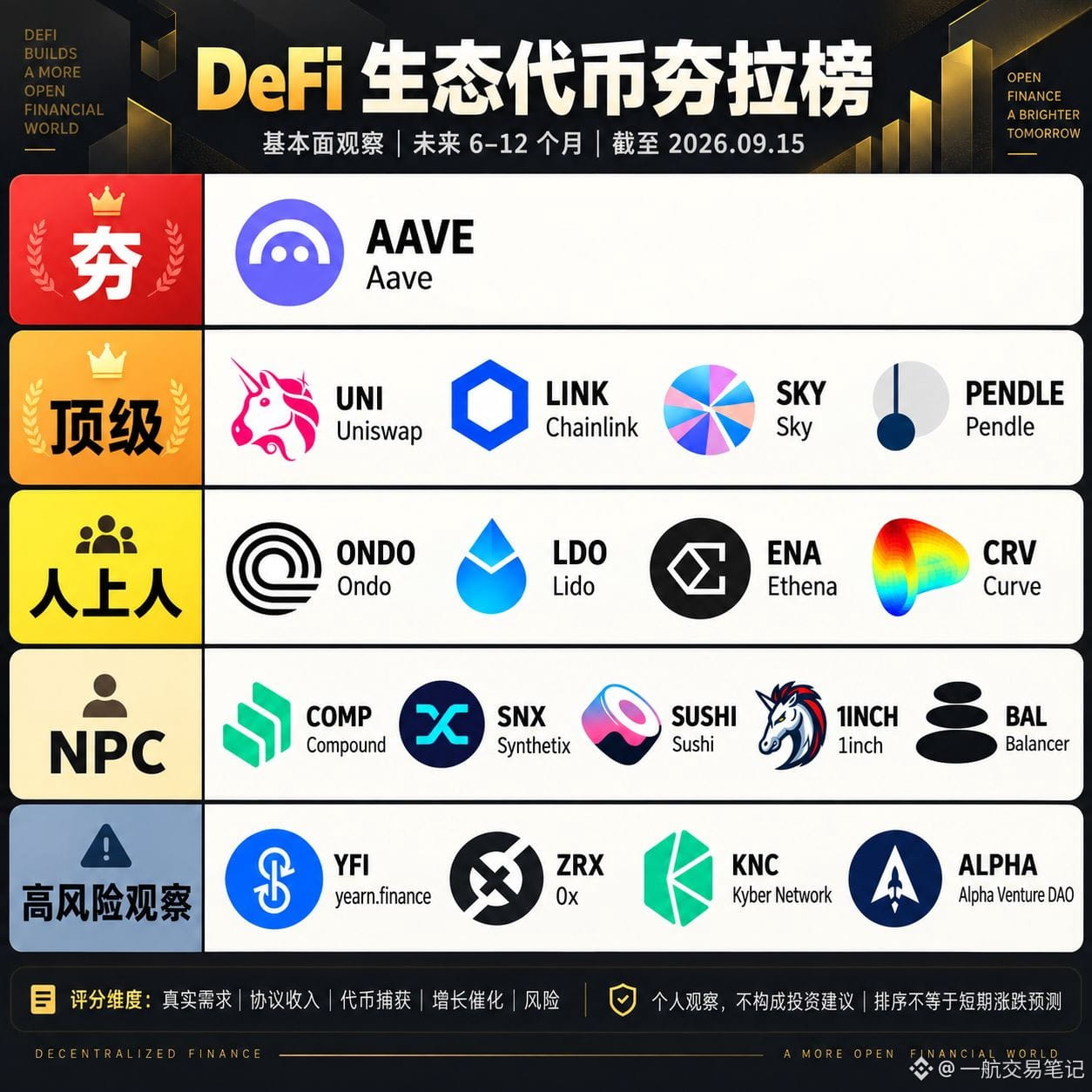
Based on the fundamentals for the next 6 to 12 months, I’ve put together a “DeFi ecosystem token ranking/ladder” version.
Why is AAVE placed separately in the “good hits” section?
It’s not to say it will definitely rise in the short term. Rather, considering overall protocol demand, its position in the sector, cycle-tested performance, and product extensibility, AAVE is still one of the most logically complete core assets in DeFi right now.
UNI, LINK, SKY, and PENDLE are in the “top tier,” corresponding respectively to DEXs, oracle infrastructure, the stablecoin ecosystem, and yield trading. Each project has its own moat, but protocol success doesn’t necessarily translate into token upside—value capture still needs to be judged separately.
ONDO, LDO, ENA, and CRV are “top-tier among top-tier”: their sector positioning and market attention are strong, but they also face controversy regarding regulation, mechanisms, governance, or token value-capture.
As for NPC and the high-risk watchlist area, that doesn’t mean the projects are destined to go to zero. Their issues are more about old narratives fading, intensifying competition, or the token temporarily not having formed a sufficiently clear value-closure loop. If fundamentals reverse, they could still get back onto the table.
If you could only move one project up a tier, and move one project down a tier, who would you pick?
Personal observations only—not investment advice. Rankings do not imply short-term price movement predictions; please do your own research and manage risk.
#DeFi #Altcoins $AAVE $UNI $LINK $SKY $PENDLE
There are plenty of DeFi veterans, but truly projects that can simultaneously satisfy “there is real demand, they can generate revenue, the token has value-capture capability, and there is room for growth in the future” are fewer than you might think.
Based on the fundamentals for the next 6 to 12 months, I’ve put together a “DeFi ecosystem token ranking/ladder” version.
Why is AAVE placed separately in the “good hits” section?
It’s not to say it will definitely rise in the short term. Rather, considering overall protocol demand, its position in the sector, cycle-tested performance, and product extensibility, AAVE is still one of the most logically complete core assets in DeFi right now.
UNI, LINK, SKY, and PENDLE are in the “top tier,” corresponding respectively to DEXs, oracle infrastructure, the stablecoin ecosystem, and yield trading. Each project has its own moat, but protocol success doesn’t necessarily translate into token upside—value capture still needs to be judged separately.
ONDO, LDO, ENA, and CRV are “top-tier among top-tier”: their sector positioning and market attention are strong, but they also face controversy regarding regulation, mechanisms, governance, or token value-capture.
As for NPC and the high-risk watchlist area, that doesn’t mean the projects are destined to go to zero. Their issues are more about old narratives fading, intensifying competition, or the token temporarily not having formed a sufficiently clear value-closure loop. If fundamentals reverse, they could still get back onto the table.
If you could only move one project up a tier, and move one project down a tier, who would you pick?
Personal observations only—not investment advice. Rankings do not imply short-term price movement predictions; please do your own research and manage risk.
#DeFi #Altcoins $AAVE $UNI $LINK $SKY $PENDLE
Based on the fundamentals for the next 6 to 12 months, I’ve put together a “DeFi ecosystem token ranking/ladder” version.
Why is AAVE placed separately in the “good hits” section?
It’s not to say it will definitely rise in the short term. Rather, considering overall protocol demand, its position in the sector, cycle-tested performance, and product extensibility, AAVE is still one of the most logically complete core assets in DeFi right now.
UNI, LINK, SKY, and PENDLE are in the “top tier,” corresponding respectively to DEXs, oracle infrastructure, the stablecoin ecosystem, and yield trading. Each project has its own moat, but protocol success doesn’t necessarily translate into token upside—value capture still needs to be judged separately.
ONDO, LDO, ENA, and CRV are “top-tier among top-tier”: their sector positioning and market attention are strong, but they also face controversy regarding regulation, mechanisms, governance, or token value-capture.
As for NPC and the high-risk watchlist area, that doesn’t mean the projects are destined to go to zero. Their issues are more about old narratives fading, intensifying competition, or the token temporarily not having formed a sufficiently clear value-closure loop. If fundamentals reverse, they could still get back onto the table.
If you could only move one project up a tier, and move one project down a tier, who would you pick?
Personal observations only—not investment advice. Rankings do not imply short-term price movement predictions; please do your own research and manage risk.
#DeFi #Altcoins $AAVE $UNI $LINK $SKY $PENDLE
7
9.4k
·
--
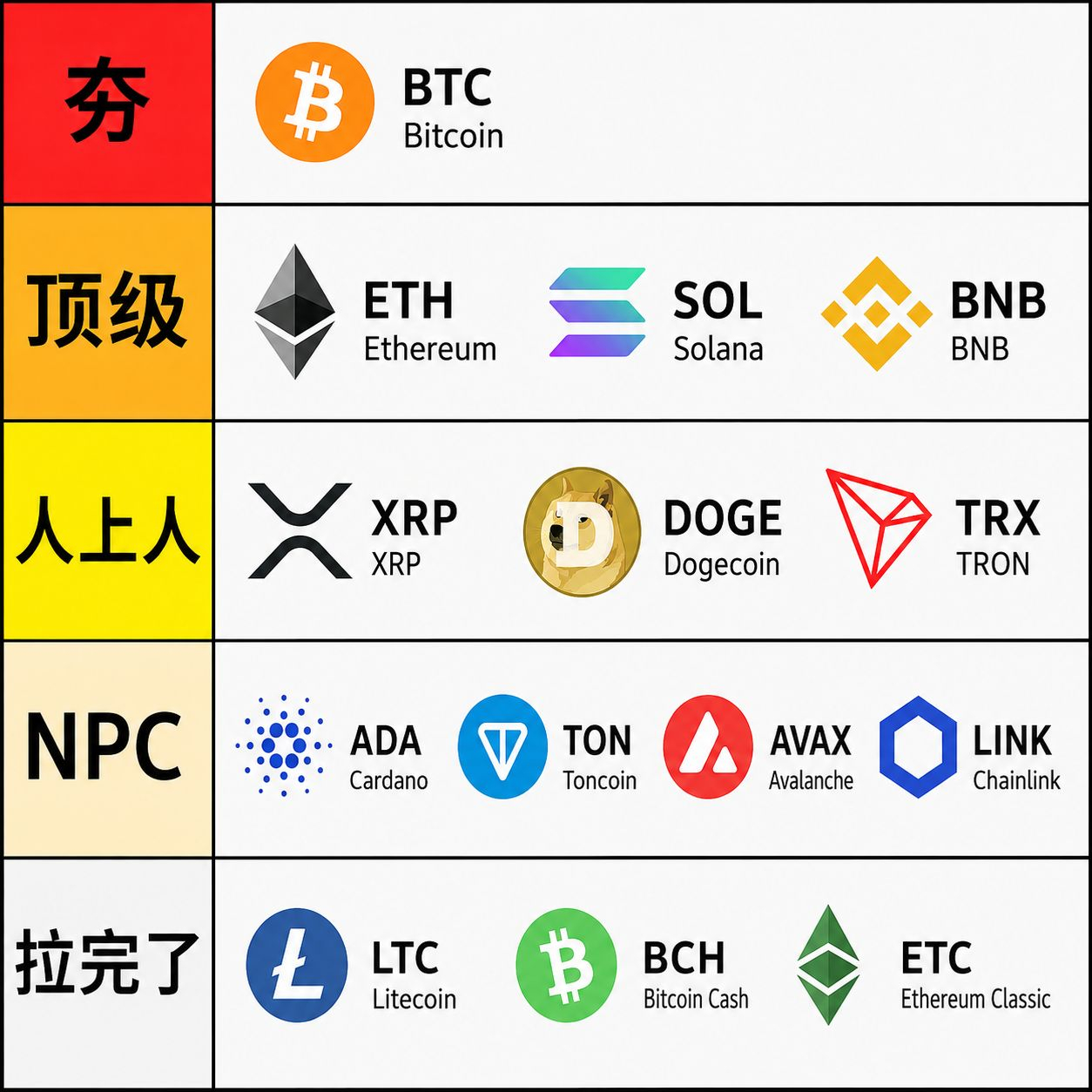
From digging to pulling—let’s take stock of the mainstream coins
Digging
BTC
Reason:
The crypto world’s “hard currency”
Strongest institutional consensus
Best ability to survive market cycles
Top-tier
ETH, SOL, BNB
ETH
One of the kings of public chains
Deep ecosystem “thickness”
A long-established core asset
SOL
This market cycle has extremely high heat
Strong activity, strong user firsthand experience, and strong meme-related absorption
High elasticity—market attention is very high
BNB
Backed by the Binance ecosystem
Ecosystem, users, and platform resources are all there
May rise slowly as an “alt” runner-up, but it’s genuinely steady
Above the rest
XRP, DOGE, TRX
XRP
Highly controversial, but the user base is extremely strong
Long-time players have high familiarity
In every cycle, someone always believes it will come back again
DOGE
A meme-asset-level ancestor
Consensus is too strong—it's no longer just an ordinary joke coin
In a real bull market, it often manages to produce an unexpectedly strong run
TRX
Many people look down on it, but it really is thriving
Strong stablecoin circulation, strong on-chain usage, and strong ecosystem
Belongs to the category of “dismissed by mouth, acknowledged by the market”
NPC
ADA, TON, AVAX / LINK
Well-known, with stories, but often stuck in a position of “seems important, but also not that core”
ADA
A long-standing public chain with many believers
But market heat is often not enough
TON
The imagination behind its entry point is pretty good
But whether its ecosystem explosive growth can be sustained still needs observation
AVAX
Was quite strong before, and the foundation is still there
But its sense of being in the market’s center has declined
LINK
Infrastructure is very important
But the coin-price narrative is sometimes a bit like a “utility workhorse”
Pulled through
LTC, BCH, ETC and similar old but increasingly marginal assets
Reason:
It’s not that they have no value
It’s just that, in the narratives of the new era, their presence is too weak
More like “an old internet portal site is still alive, but young people don’t really use it”$
{future}(BTCUSDT)
From digging to pulling—let’s take stock of the mainstream coins
Digging
BTC
Reason:
The crypto world’s “hard currency”
Strongest institutional consensus
Best ability to survive market cycles
Top-tier
ETH, SOL, BNB
ETH
One of the kings of public chains
Deep ecosystem “thickness”
A long-established core asset
SOL
This market cycle has extremely high heat
Strong activity, strong user firsthand experience, and strong meme-related absorption
High elasticity—market attention is very high
BNB
Backed by the Binance ecosystem
Ecosystem, users, and platform resources are all there
May rise slowly as an “alt” runner-up, but it’s genuinely steady
Above the rest
XRP, DOGE, TRX
XRP
Highly controversial, but the user base is extremely strong
Long-time players have high familiarity
In every cycle, someone always believes it will come back again
DOGE
A meme-asset-level ancestor
Consensus is too strong—it's no longer just an ordinary joke coin
In a real bull market, it often manages to produce an unexpectedly strong run
TRX
Many people look down on it, but it really is thriving
Strong stablecoin circulation, strong on-chain usage, and strong ecosystem
Belongs to the category of “dismissed by mouth, acknowledged by the market”
NPC
ADA, TON, AVAX / LINK
Well-known, with stories, but often stuck in a position of “seems important, but also not that core”
ADA
A long-standing public chain with many believers
But market heat is often not enough
TON
The imagination behind its entry point is pretty good
But whether its ecosystem explosive growth can be sustained still needs observation
AVAX
Was quite strong before, and the foundation is still there
But its sense of being in the market’s center has declined
LINK
Infrastructure is very important
But the coin-price narrative is sometimes a bit like a “utility workhorse”
Pulled through
LTC, BCH, ETC and similar old but increasingly marginal assets
Reason:
It’s not that they have no value
It’s just that, in the narratives of the new era, their presence is too weak
More like “an old internet portal site is still alive, but young people don’t really use it”$
Digging
BTC
Reason:
The crypto world’s “hard currency”
Strongest institutional consensus
Best ability to survive market cycles
Top-tier
ETH, SOL, BNB
ETH
One of the kings of public chains
Deep ecosystem “thickness”
A long-established core asset
SOL
This market cycle has extremely high heat
Strong activity, strong user firsthand experience, and strong meme-related absorption
High elasticity—market attention is very high
BNB
Backed by the Binance ecosystem
Ecosystem, users, and platform resources are all there
May rise slowly as an “alt” runner-up, but it’s genuinely steady
Above the rest
XRP, DOGE, TRX
XRP
Highly controversial, but the user base is extremely strong
Long-time players have high familiarity
In every cycle, someone always believes it will come back again
DOGE
A meme-asset-level ancestor
Consensus is too strong—it's no longer just an ordinary joke coin
In a real bull market, it often manages to produce an unexpectedly strong run
TRX
Many people look down on it, but it really is thriving
Strong stablecoin circulation, strong on-chain usage, and strong ecosystem
Belongs to the category of “dismissed by mouth, acknowledged by the market”
NPC
ADA, TON, AVAX / LINK
Well-known, with stories, but often stuck in a position of “seems important, but also not that core”
ADA
A long-standing public chain with many believers
But market heat is often not enough
TON
The imagination behind its entry point is pretty good
But whether its ecosystem explosive growth can be sustained still needs observation
AVAX
Was quite strong before, and the foundation is still there
But its sense of being in the market’s center has declined
LINK
Infrastructure is very important
But the coin-price narrative is sometimes a bit like a “utility workhorse”
Pulled through
LTC, BCH, ETC and similar old but increasingly marginal assets
Reason:
It’s not that they have no value
It’s just that, in the narratives of the new era, their presence is too weak
More like “an old internet portal site is still alive, but young people don’t really use it”$
2
3
1.7k
·
--
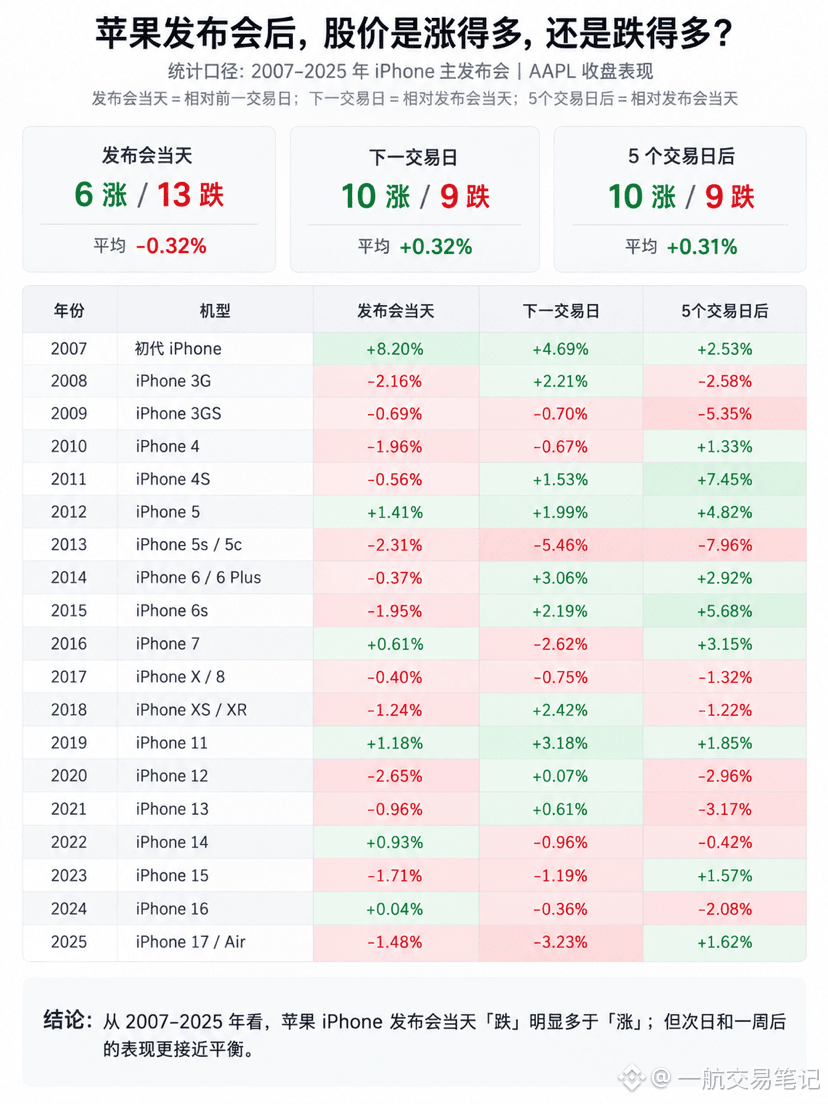
Apple’s product launch is around the corner—after a typical keynote, do stock prices tend to rise more or fall more?
From 2007 to 2025, on the day of Apple’s iPhone launch, there were clearly more instances of “falling” than “rising.”
However, the next-day and one-week-out performance is much closer to balanced.$AAPLB $AAPL.US
Apple’s product launch is around the corner—after a typical keynote, do stock prices tend to rise more or fall more?
From 2007 to 2025, on the day of Apple’s iPhone launch, there were clearly more instances of “falling” than “rising.”
However, the next-day and one-week-out performance is much closer to balanced.$AAPLB $AAPL.US
From 2007 to 2025, on the day of Apple’s iPhone launch, there were clearly more instances of “falling” than “rising.”
However, the next-day and one-week-out performance is much closer to balanced.$AAPLB $AAPL.US
AAPLUS+0.02%
1
314
·
--
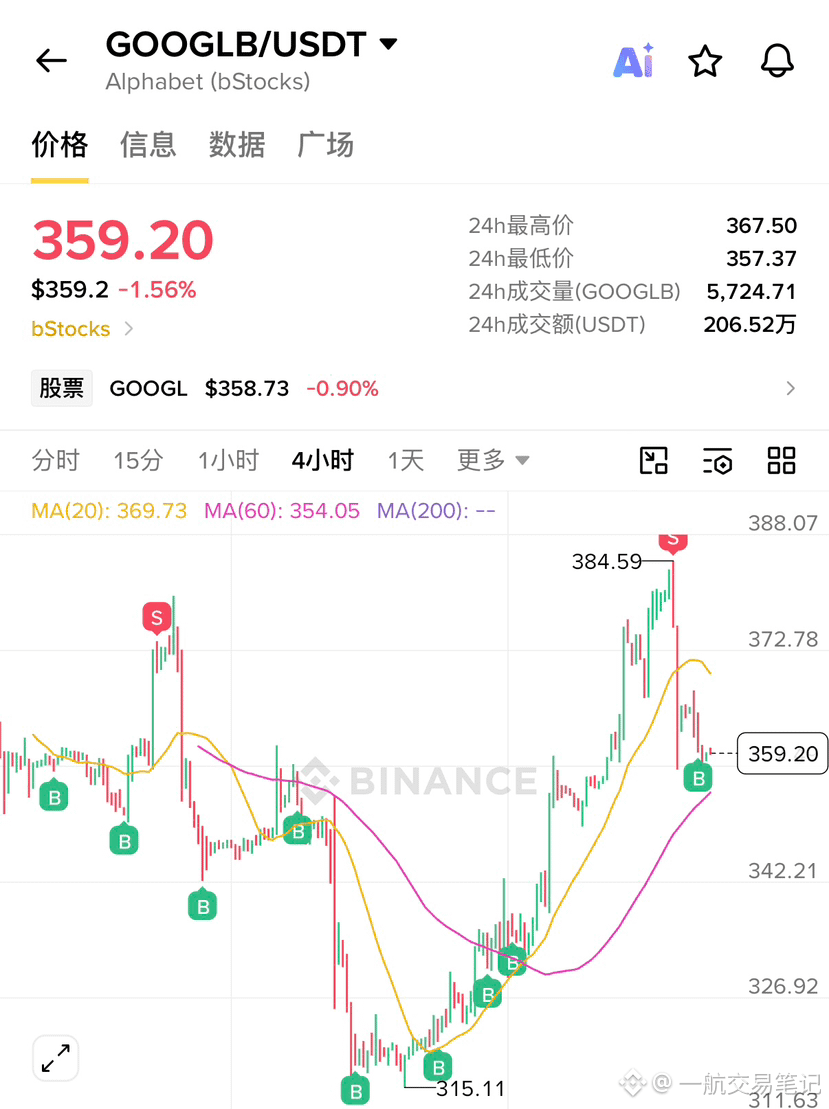
$GOOGLB Currently, we judge Google to be in a broad range of consolidation and volatility. We will allocate part of our position to steadily trade Google spot for short-term swing moves, taking a cautious and gradual approach.
$GOOGLB Currently, we judge Google to be in a broad range of consolidation and volatility. We will allocate part of our position to steadily trade Google spot for short-term swing moves, taking a cautious and gradual approach.
1
150
·
--
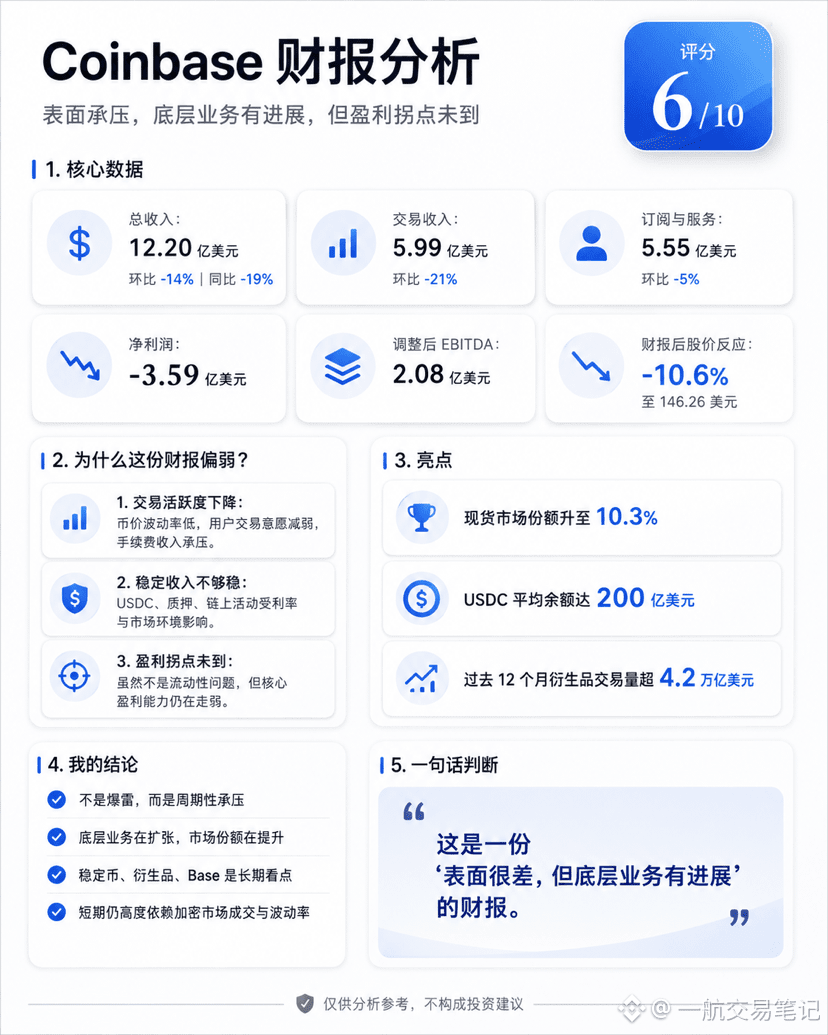
This earnings report from Coinbase certainly looks bad on the surface—revenue, trading volume, and profits are all declining, and the stock price is falling too.
But the underlying business hasn’t really deteriorated. Its spot market share has even risen to 10.3%, and USDC, derivatives, and Base are all still moving forward.
Personally, I think this isn’t a disaster—it’s more like the typical pressure that comes with a cycle.
Until the crypto market’s trading volume and volatility pick up, it’s hard for things to truly improve.
This earnings report from Coinbase certainly looks bad on the surface—revenue, trading volume, and profits are all declining, and the stock price is falling too.
But the underlying business hasn’t really deteriorated. Its spot market share has even risen to 10.3%, and USDC, derivatives, and Base are all still moving forward.
Personally, I think this isn’t a disaster—it’s more like the typical pressure that comes with a cycle.
Until the crypto market’s trading volume and volatility pick up, it’s hard for things to truly improve.
But the underlying business hasn’t really deteriorated. Its spot market share has even risen to 10.3%, and USDC, derivatives, and Base are all still moving forward.
Personally, I think this isn’t a disaster—it’s more like the typical pressure that comes with a cycle.
Until the crypto market’s trading volume and volatility pick up, it’s hard for things to truly improve.
1
136
·
--
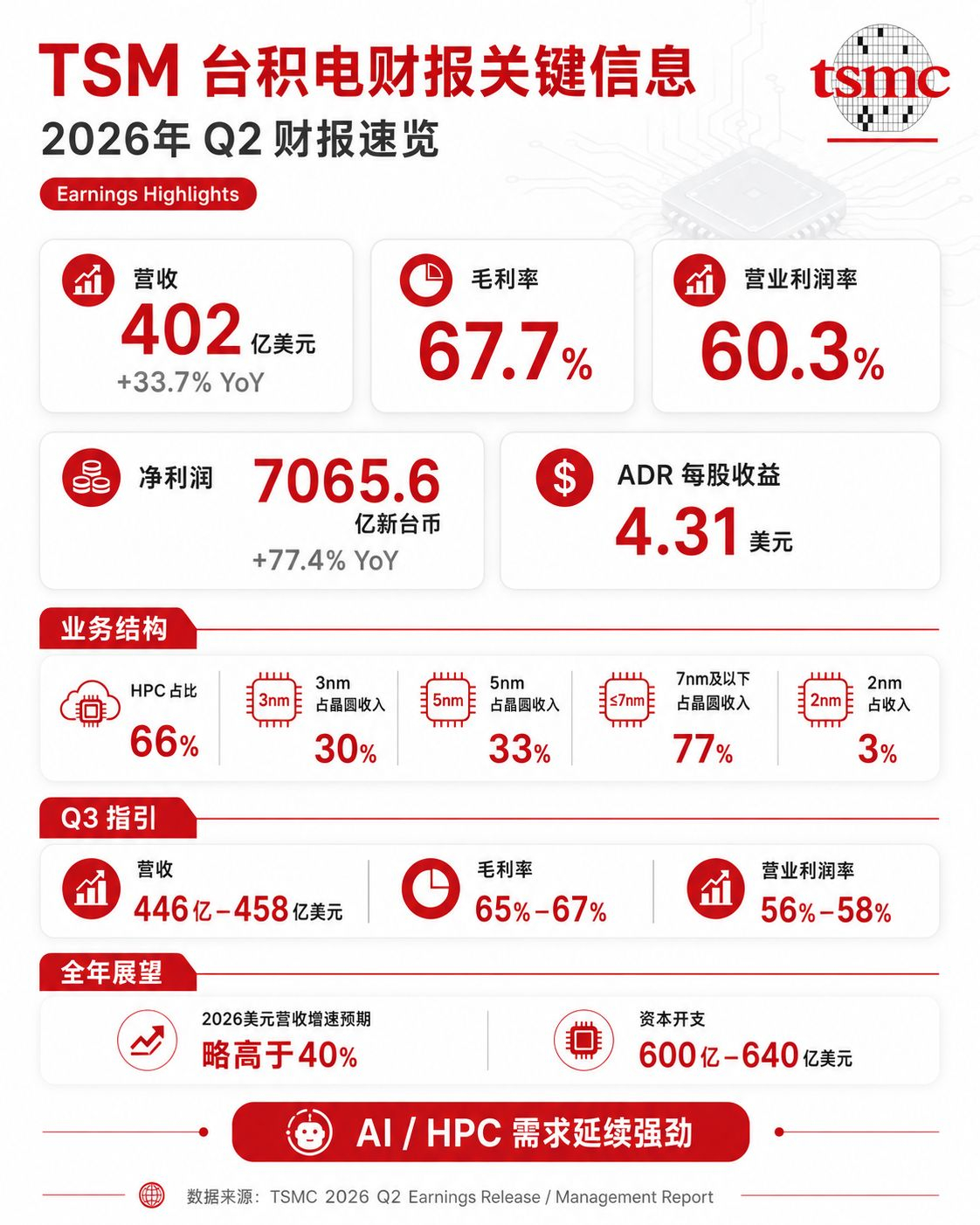
TSMC has always been a company I've continuously followed and held a position in.
This earnings report is very strong, yet the stock price has fallen significantly, which suggests that the expectations set by the market earlier were indeed too high. But looking at everything from revenue and profit margins to AI and HPC demand, the company’s core logic hasn’t changed.
I’d rather view this drop as a repricing.
For a company like this, you don’t need to rush to guess the exact bottom. Control your position size and gradually build your position over time.
In the long run, continue focusing on these three things:
The durability of AI compute demand
The pace of progress in leading-edge process technology
TSMC’s own pricing power
A great company still needs a great price.
TSM, keep watching—buy in batches, no rush.
$TSMB #台积电6月营收同比增67.9%
TSMC has always been a company I've continuously followed and held a position in.
This earnings report is very strong, yet the stock price has fallen significantly, which suggests that the expectations set by the market earlier were indeed too high. But looking at everything from revenue and profit margins to AI and HPC demand, the company’s core logic hasn’t changed.
I’d rather view this drop as a repricing.
For a company like this, you don’t need to rush to guess the exact bottom. Control your position size and gradually build your position over time.
In the long run, continue focusing on these three things:
The durability of AI compute demand
The pace of progress in leading-edge process technology
TSMC’s own pricing power
A great company still needs a great price.
TSM, keep watching—buy in batches, no rush.
$TSMB #台积电6月营收同比增67.9%
This earnings report is very strong, yet the stock price has fallen significantly, which suggests that the expectations set by the market earlier were indeed too high. But looking at everything from revenue and profit margins to AI and HPC demand, the company’s core logic hasn’t changed.
I’d rather view this drop as a repricing.
For a company like this, you don’t need to rush to guess the exact bottom. Control your position size and gradually build your position over time.
In the long run, continue focusing on these three things:
The durability of AI compute demand
The pace of progress in leading-edge process technology
TSMC’s own pricing power
A great company still needs a great price.
TSM, keep watching—buy in batches, no rush.
$TSMB #台积电6月营收同比增67.9%
2
3
214
·
--
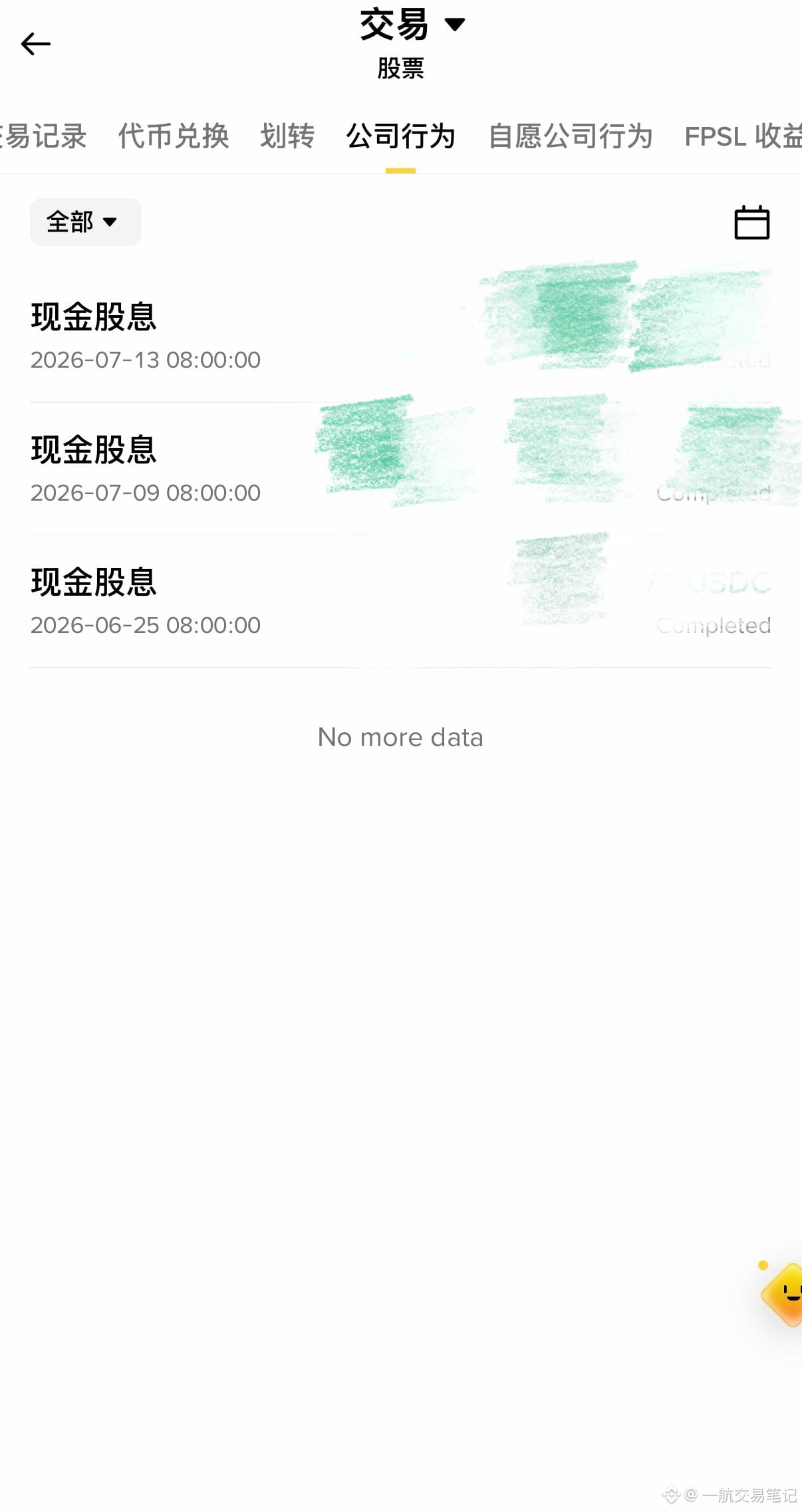
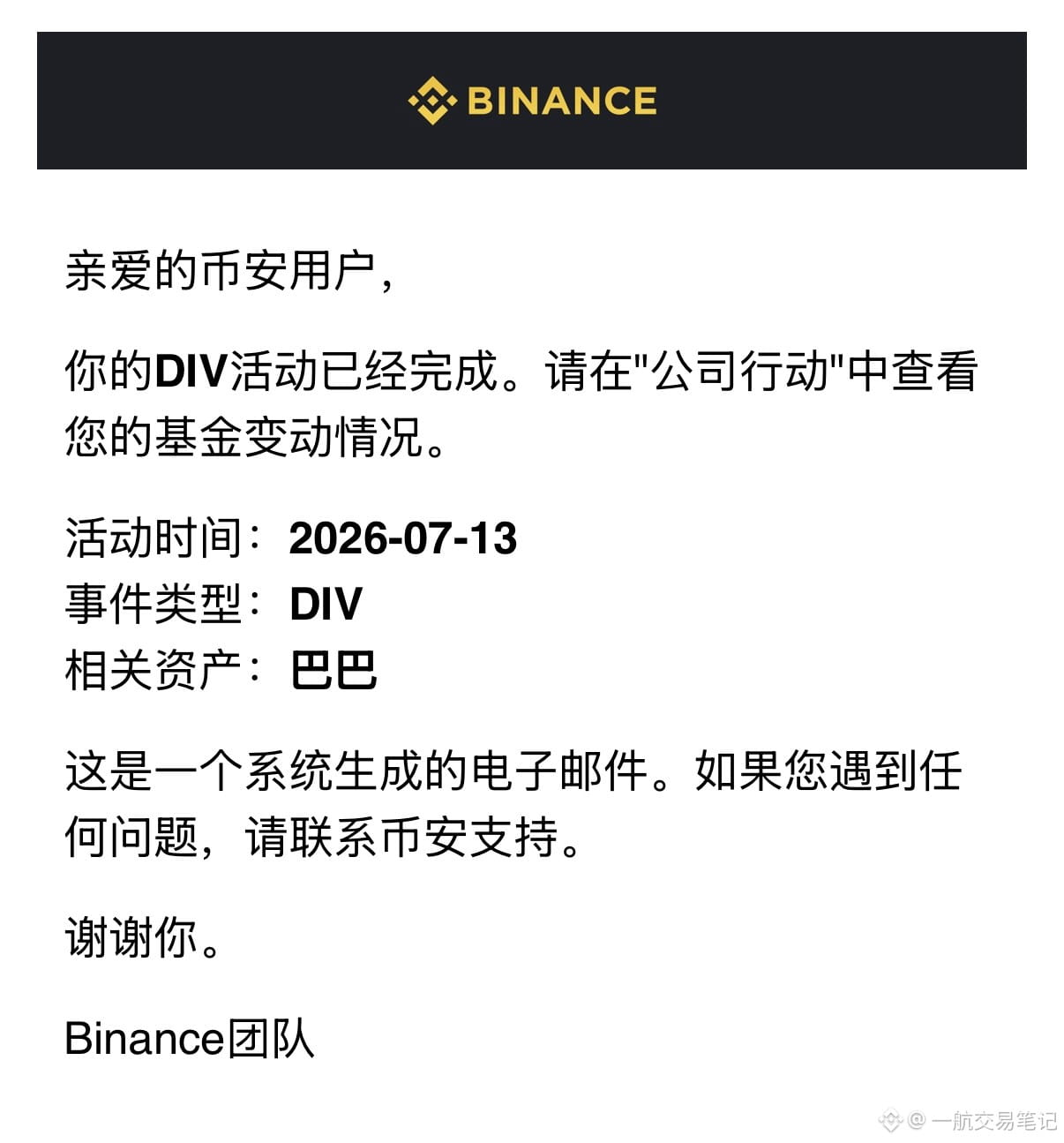
Just received an email notification from Binance about cash dividends~
Opened the app and the money was already credited automatically.
Previously, if you wanted to invest in US stocks and receive dividends, the process was long and complicated, and a lot of people would get discouraged right away.
What about now? Holdings, collecting dividends, and receiving the funds are basically as simple as using an exchange.
You can truly feel this one thing:
The investment threshold has dropped far more than it did a few years ago.
Technology has smoothed out many things that were originally complicated, and ordinary people can get involved easily.
$METAB
{spot}(METABUSDT)
Just received an email notification from Binance about cash dividends~
Opened the app and the money was already credited automatically.
Previously, if you wanted to invest in US stocks and receive dividends, the process was long and complicated, and a lot of people would get discouraged right away.
What about now? Holdings, collecting dividends, and receiving the funds are basically as simple as using an exchange.
You can truly feel this one thing:
The investment threshold has dropped far more than it did a few years ago.
Technology has smoothed out many things that were originally complicated, and ordinary people can get involved easily.
$METAB
Opened the app and the money was already credited automatically.
Previously, if you wanted to invest in US stocks and receive dividends, the process was long and complicated, and a lot of people would get discouraged right away.
What about now? Holdings, collecting dividends, and receiving the funds are basically as simple as using an exchange.
You can truly feel this one thing:
The investment threshold has dropped far more than it did a few years ago.
Technology has smoothed out many things that were originally complicated, and ordinary people can get involved easily.
$METAB
2
207
·
--
A moment ago there was an interesting piece of news, which caused BTC to surge a little. $BTC
{future}(BTCUSDT)
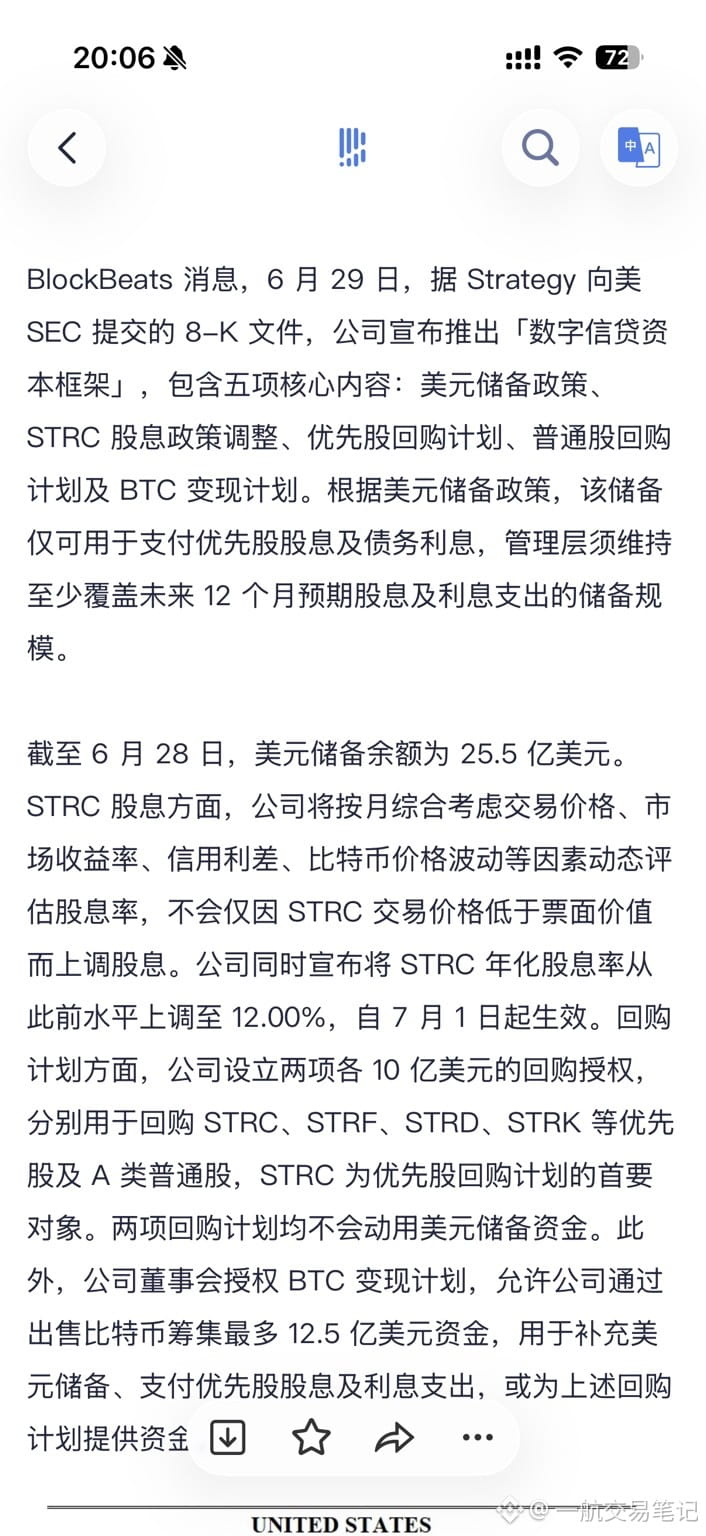
Strategy filed an 8-K with the SEC, officially establishing the “Digital Credit Capital Framework.”
One sentence is especially important: Strategy may be able to sell up to $1.25 billion worth of BTC in the future.
I don’t necessarily think this is bearish—things aren’t that simple.
Over the past few years, the market has always viewed Strategy as a super whale that buys coins forever and never sells coins.
But as the scale of financing tools like STRC keeps growing, a real issue has started to emerge:
Even whales need cash flow.
The most worth-noting part of this announcement—the key actions here—are:
Establishing USD reserves covering at least the next 12 months of expenses
Raising the STRC dividend yield to 12%
Launching a $2 billion share repurchase program
Setting up a BTC liquidation mechanism
Restoring the market’s confidence in Strategy’s credit framework.
What the market fears most is:
When you need cash, but you don’t have any.
From that perspective,
allowing the sale of BTC doesn’t necessarily mean a bearish view on BTC.
On the contrary, it suggests Strategy is gradually evolving from a “Bitcoin-belief fund” into a real BTC financial institution.
In the short term, this is a self-rescue.
In the long term, this could be an important milestone in the process of BTC financialization.
What do you think?
A moment ago there was an interesting piece of news, which caused BTC to surge a little. $BTC
Strategy filed an 8-K with the SEC, officially establishing the “Digital Credit Capital Framework.”
One sentence is especially important: Strategy may be able to sell up to $1.25 billion worth of BTC in the future.
I don’t necessarily think this is bearish—things aren’t that simple.
Over the past few years, the market has always viewed Strategy as a super whale that buys coins forever and never sells coins.
But as the scale of financing tools like STRC keeps growing, a real issue has started to emerge:
Even whales need cash flow.
The most worth-noting part of this announcement—the key actions here—are:
Establishing USD reserves covering at least the next 12 months of expenses
Raising the STRC dividend yield to 12%
Launching a $2 billion share repurchase program
Setting up a BTC liquidation mechanism
Restoring the market’s confidence in Strategy’s credit framework.
What the market fears most is:
When you need cash, but you don’t have any.
From that perspective,
allowing the sale of BTC doesn’t necessarily mean a bearish view on BTC.
On the contrary, it suggests Strategy is gradually evolving from a “Bitcoin-belief fund” into a real BTC financial institution.
In the short term, this is a self-rescue.
In the long term, this could be an important milestone in the process of BTC financialization.
What do you think?
Strategy filed an 8-K with the SEC, officially establishing the “Digital Credit Capital Framework.”
One sentence is especially important: Strategy may be able to sell up to $1.25 billion worth of BTC in the future.
I don’t necessarily think this is bearish—things aren’t that simple.
Over the past few years, the market has always viewed Strategy as a super whale that buys coins forever and never sells coins.
But as the scale of financing tools like STRC keeps growing, a real issue has started to emerge:
Even whales need cash flow.
The most worth-noting part of this announcement—the key actions here—are:
Establishing USD reserves covering at least the next 12 months of expenses
Raising the STRC dividend yield to 12%
Launching a $2 billion share repurchase program
Setting up a BTC liquidation mechanism
Restoring the market’s confidence in Strategy’s credit framework.
What the market fears most is:
When you need cash, but you don’t have any.
From that perspective,
allowing the sale of BTC doesn’t necessarily mean a bearish view on BTC.
On the contrary, it suggests Strategy is gradually evolving from a “Bitcoin-belief fund” into a real BTC financial institution.
In the short term, this is a self-rescue.
In the long term, this could be an important milestone in the process of BTC financialization.
What do you think?
BTC-0.31%
MSTRUS-4.04%
1
350
·
--
7.2 Bought 2,000; around 6.2 bought another 2,000 for a bottom-fishing play, buying in the middle of the mountains. The next time, it's expected to buy another 2,000 at 54,000. $BTC Brothers, tell me—where would be a better place to buy next time?
7.2 Bought 2,000; around 6.2 bought another 2,000 for a bottom-fishing play, buying in the middle of the mountains. The next time, it's expected to buy another 2,000 at 54,000. $BTC Brothers, tell me—where would be a better place to buy next time?
1
246
·
--
Finally get why so many folks are trashing ETH’s whales, even the ones making bank are hating, and the ones losing are too. Every time there's a bounce, they totally wipe out those protective stop losses. #ETH $ETH
Finally get why so many folks are trashing ETH’s whales, even the ones making bank are hating, and the ones losing are too. Every time there's a bounce, they totally wipe out those protective stop losses. #ETH $ETH
2
294
·
--
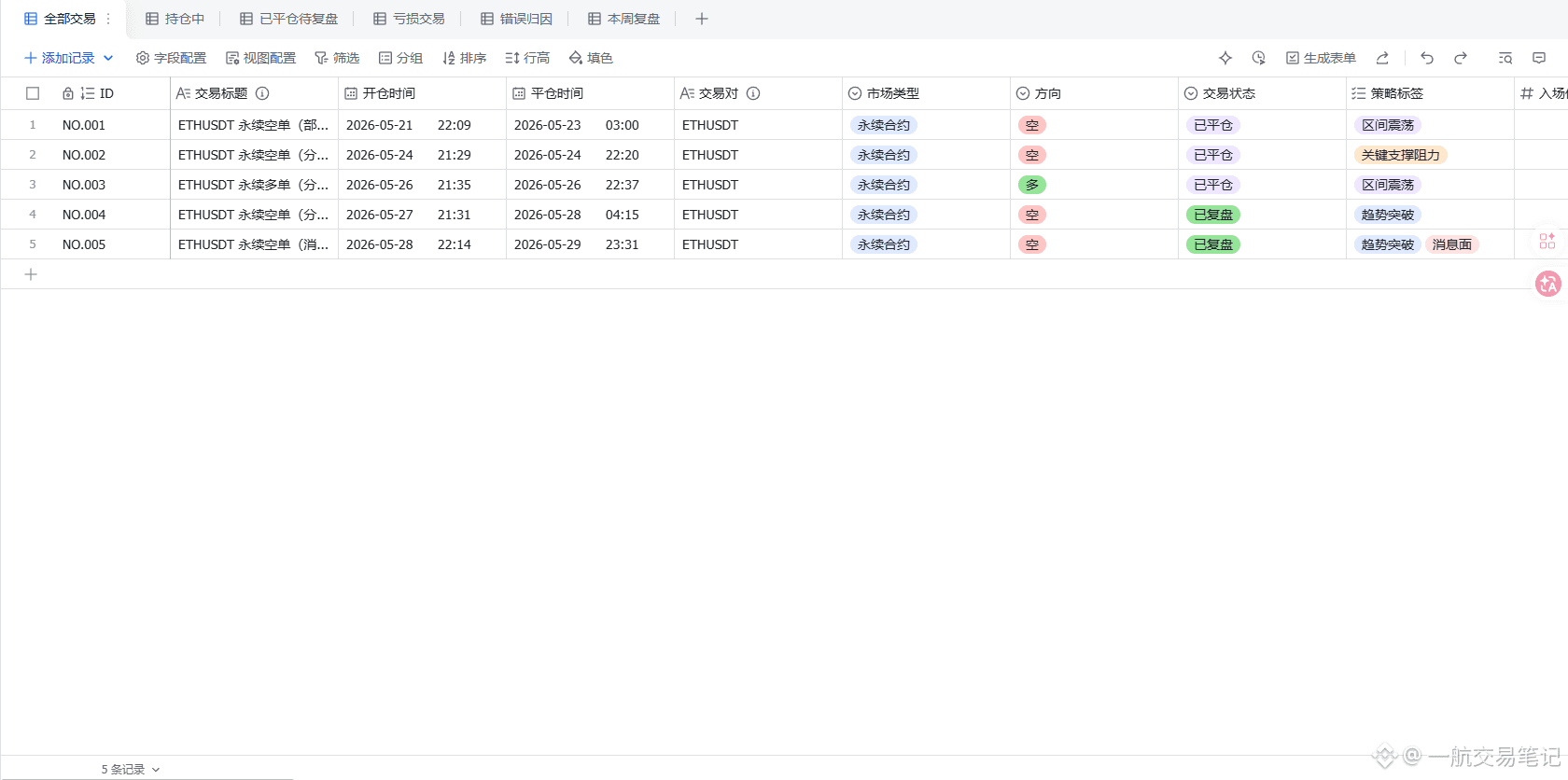
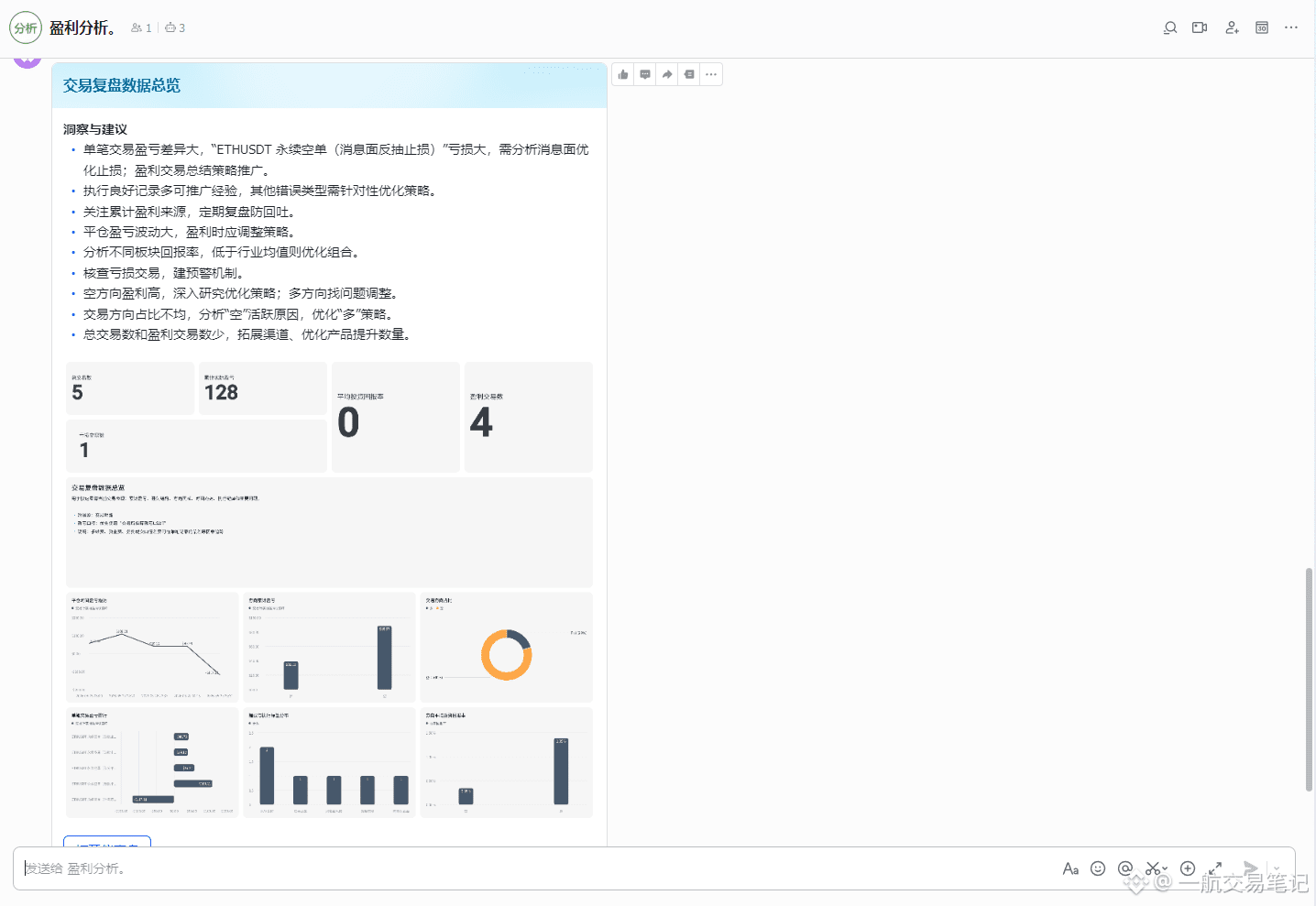
Trading requires constant review, analyzing the reasons behind every trade's take profit and stop loss, as well as the emotions while holding positions. I'm using Codex to connect with Feishu skill to create a review tool. $BTC
$ETH
{future}(BTCUSDT)
{future}(ETHUSDT)
Trading requires constant review, analyzing the reasons behind every trade's take profit and stop loss, as well as the emotions while holding positions. I'm using Codex to connect with Feishu skill to create a review tool. $BTC
$ETH
$ETH
1
1
484
·
--

Article
Understand the difference between trading and investing mindsets, avoid getting liquidatedTrading mindset vs. investing mindset
A lot of folks have been in the market for ages, but they still can’t figure out one crucial thing: are they trading or investing? It sounds simple, but it basically determines your survival in the market.
Most losses don't come from 'not understanding tech' or 'not grasping fundamentals', but from confusion: when buying, you have a trading mindset; then when you get caught in a position, you suddenly shift to an investing mindset; when prices rise, you start daydreaming about getting rich quick with speculative thoughts; and when prices drop, you comfort yourself with long-term beliefs.
Understand the difference between trading and investing mindsets, avoid getting liquidated
Trading mindset vs. investing mindset
A lot of folks have been in the market for ages, but they still can’t figure out one crucial thing: are they trading or investing? It sounds simple, but it basically determines your survival in the market.
Most losses don't come from 'not understanding tech' or 'not grasping fundamentals', but from confusion: when buying, you have a trading mindset; then when you get caught in a position, you suddenly shift to an investing mindset; when prices rise, you start daydreaming about getting rich quick with speculative thoughts; and when prices drop, you comfort yourself with long-term beliefs.
A lot of folks have been in the market for ages, but they still can’t figure out one crucial thing: are they trading or investing? It sounds simple, but it basically determines your survival in the market.
Most losses don't come from 'not understanding tech' or 'not grasping fundamentals', but from confusion: when buying, you have a trading mindset; then when you get caught in a position, you suddenly shift to an investing mindset; when prices rise, you start daydreaming about getting rich quick with speculative thoughts; and when prices drop, you comfort yourself with long-term beliefs.
1
247
·
--
Article
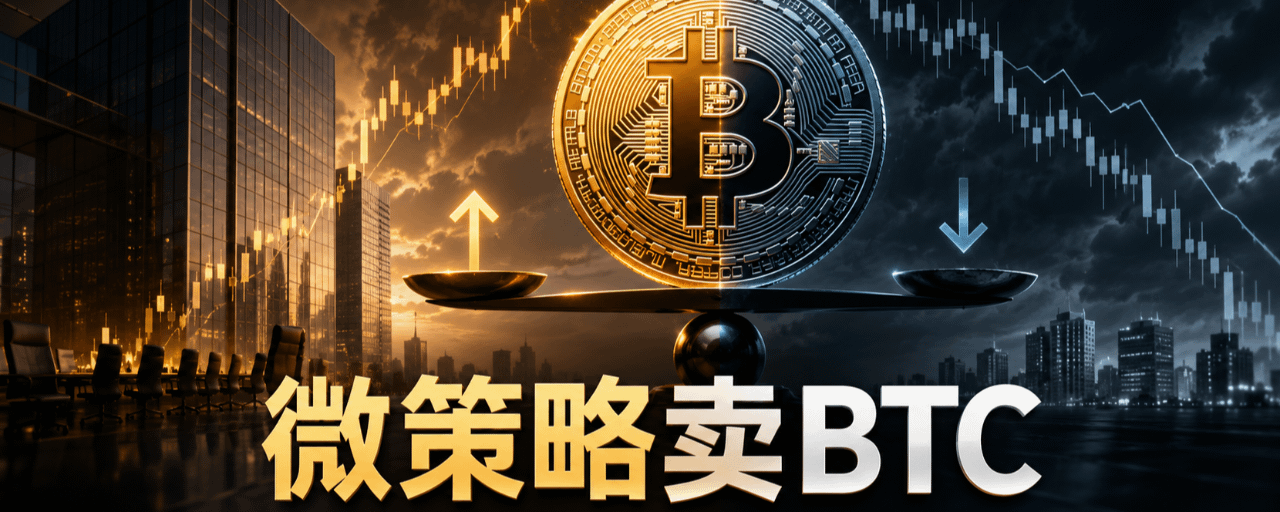
Is MicroStrategy about to sell BTC? It might not be a collapse of faith.Talking about MicroStrategy potentially offloading some BTC.
Recently, the market has been buzzing about one issue:
If Strategy, which is the former MicroStrategy, starts to short some BTC, what will happen?
A lot of people's first reaction is: Oh no, the faith is crumbling.
But I think we can't just look at this from an emotional standpoint.
Strategy is no longer just a simple 'buy coin company.'
It's more like a Bitcoin Treasury company that finances through capital markets, using BTC as the core asset, and employs various financial tools to keep things running.
As of May 3, 2026, Strategy disclosed holding 818,334 BTC. That's not just an ordinary whale; it's part of the market sentiment itself.
Is MicroStrategy about to sell BTC? It might not be a collapse of faith.
Talking about MicroStrategy potentially offloading some BTC.
Recently, the market has been buzzing about one issue:
If Strategy, which is the former MicroStrategy, starts to short some BTC, what will happen?
A lot of people's first reaction is: Oh no, the faith is crumbling.
But I think we can't just look at this from an emotional standpoint.
Strategy is no longer just a simple 'buy coin company.'
It's more like a Bitcoin Treasury company that finances through capital markets, using BTC as the core asset, and employs various financial tools to keep things running.
As of May 3, 2026, Strategy disclosed holding 818,334 BTC. That's not just an ordinary whale; it's part of the market sentiment itself.
Recently, the market has been buzzing about one issue:
If Strategy, which is the former MicroStrategy, starts to short some BTC, what will happen?
A lot of people's first reaction is: Oh no, the faith is crumbling.
But I think we can't just look at this from an emotional standpoint.
Strategy is no longer just a simple 'buy coin company.'
It's more like a Bitcoin Treasury company that finances through capital markets, using BTC as the core asset, and employs various financial tools to keep things running.
As of May 3, 2026, Strategy disclosed holding 818,334 BTC. That's not just an ordinary whale; it's part of the market sentiment itself.
2
160
·
--
I just scooped up some spot around $ONDO 0.3556 with a light position.
This is a light test on the daily chart.
My entry rationale has three points:
1. The daily chart is bouncing off the 20-day moving average, and it hasn't clearly broken below yet;
2. The RWA sector is still worth keeping an eye on;
3. If this level can hold, we could see some recovery ahead.
But the risks are pretty clear:
$ONDO is facing token unlock pressure soon, so we might see some short-term volatility or even a dip.
My plan:
If we see a solid break below the 20-day moving average on the daily chart and can't reclaim it on a bounce, I'll cut my losses;
If it manages to hold and gains volume, I'll keep holding and watching.
I'm increasingly convinced that the key to trading isn't about buying at the lowest point, but knowing beforehand: why you’re buying; what to do if you're wrong; and how to handle it when you're right.
Just documenting my personal trading thoughts, not investment advice. $BTC $ETH
{future}(ETHUSDT)
{spot}(ONDOUSDT)
I just scooped up some spot around $ONDO 0.3556 with a light position.
This is a light test on the daily chart.
My entry rationale has three points:
1. The daily chart is bouncing off the 20-day moving average, and it hasn't clearly broken below yet;
2. The RWA sector is still worth keeping an eye on;
3. If this level can hold, we could see some recovery ahead.
But the risks are pretty clear:
$ONDO is facing token unlock pressure soon, so we might see some short-term volatility or even a dip.
My plan:
If we see a solid break below the 20-day moving average on the daily chart and can't reclaim it on a bounce, I'll cut my losses;
If it manages to hold and gains volume, I'll keep holding and watching.
I'm increasingly convinced that the key to trading isn't about buying at the lowest point, but knowing beforehand: why you’re buying; what to do if you're wrong; and how to handle it when you're right.
Just documenting my personal trading thoughts, not investment advice. $BTC $ETH
This is a light test on the daily chart.
My entry rationale has three points:
1. The daily chart is bouncing off the 20-day moving average, and it hasn't clearly broken below yet;
2. The RWA sector is still worth keeping an eye on;
3. If this level can hold, we could see some recovery ahead.
But the risks are pretty clear:
$ONDO is facing token unlock pressure soon, so we might see some short-term volatility or even a dip.
My plan:
If we see a solid break below the 20-day moving average on the daily chart and can't reclaim it on a bounce, I'll cut my losses;
If it manages to hold and gains volume, I'll keep holding and watching.
I'm increasingly convinced that the key to trading isn't about buying at the lowest point, but knowing beforehand: why you’re buying; what to do if you're wrong; and how to handle it when you're right.
Just documenting my personal trading thoughts, not investment advice. $BTC $ETH
3
2
401
·
--
$RAVE This kind of strong coin should be avoided as much as possible. Shorting can easily lead to being blown up, and going long often results in frequent downward spikes, making it hard to control positions.
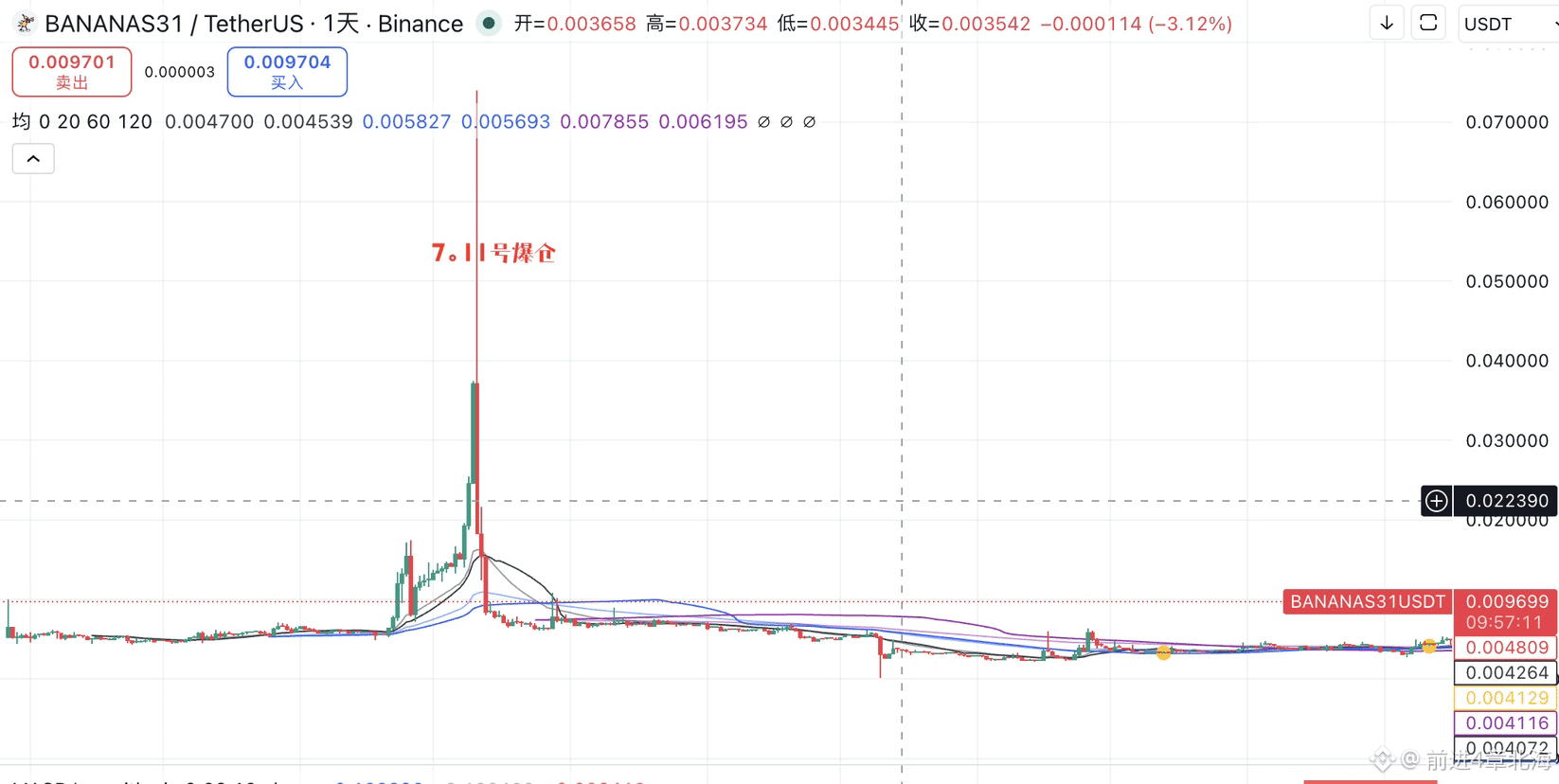
Let me share a trade from last year where I shorted a small coin: bananas31$BANANAS31 , shorting at twice the amount, but on the day of July 11, I also got blown up by 3000U. After a real vacuum period, it started to decline.
The behavior of these operators is very disgusting. If you are not an experienced trader, it is best to avoid these unpleasant coins.
{future}(RAVEUSDT)
{spot}(BANANAS31USDT)
$RAVE This kind of strong coin should be avoided as much as possible. Shorting can easily lead to being blown up, and going long often results in frequent downward spikes, making it hard to control positions.
Let me share a trade from last year where I shorted a small coin: bananas31$BANANAS31 , shorting at twice the amount, but on the day of July 11, I also got blown up by 3000U. After a real vacuum period, it started to decline.
The behavior of these operators is very disgusting. If you are not an experienced trader, it is best to avoid these unpleasant coins.
Let me share a trade from last year where I shorted a small coin: bananas31$BANANAS31 , shorting at twice the amount, but on the day of July 11, I also got blown up by 3000U. After a real vacuum period, it started to decline.
The behavior of these operators is very disgusting. If you are not an experienced trader, it is best to avoid these unpleasant coins.
1
758
·
--
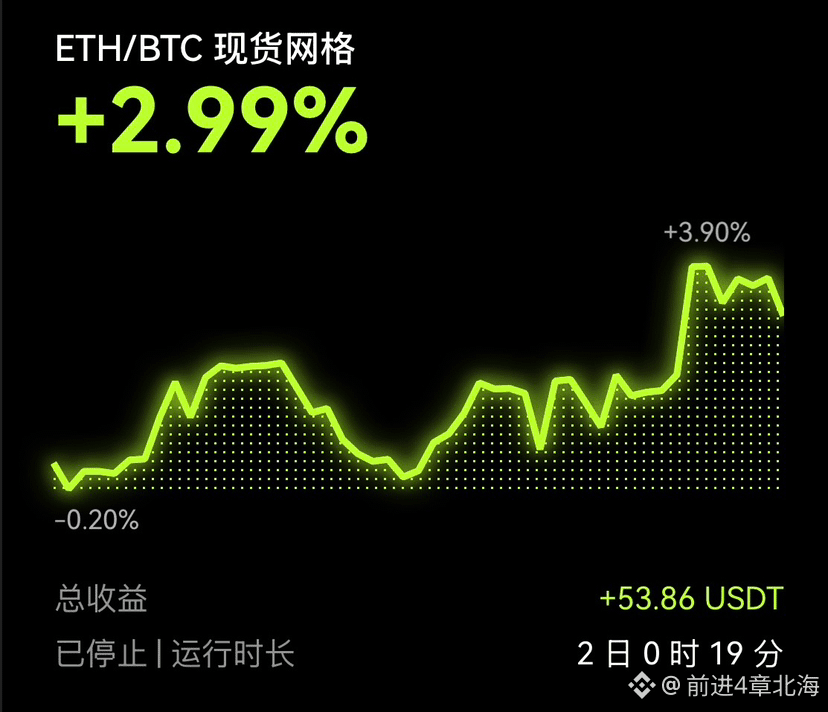
The spot grid using ETH/BTC in a fluctuating range is a good choice. $ETH $BTC
ETH and BTC generally rise and fall together, and their exchange rate fluctuations are much more stable than when compared to USDT alone.
In a market with significant price increases and decreases, there's no need to guess the direction— as long as the relative price between the two fluctuates within the range, the grid can continuously buy low and sell high, automatically arbitraging.
{spot}(BTCUSDT)
{spot}(ETHUSDT)
The spot grid using ETH/BTC in a fluctuating range is a good choice. $ETH $BTC
ETH and BTC generally rise and fall together, and their exchange rate fluctuations are much more stable than when compared to USDT alone.
In a market with significant price increases and decreases, there's no need to guess the direction— as long as the relative price between the two fluctuates within the range, the grid can continuously buy low and sell high, automatically arbitraging.
ETH and BTC generally rise and fall together, and their exchange rate fluctuations are much more stable than when compared to USDT alone.
In a market with significant price increases and decreases, there's no need to guess the direction— as long as the relative price between the two fluctuates within the range, the grid can continuously buy low and sell high, automatically arbitraging.
1
256
·
--
Khamenei's death confirmed, why did gold fall while BTC rose?
I summarized these four points for my brothers as a reference.
Positive news realization: The risk aversion sentiment in the early stage of the airstrike has already overdrawn the increase, and the confirmation of news has led to speculative profit-taking.
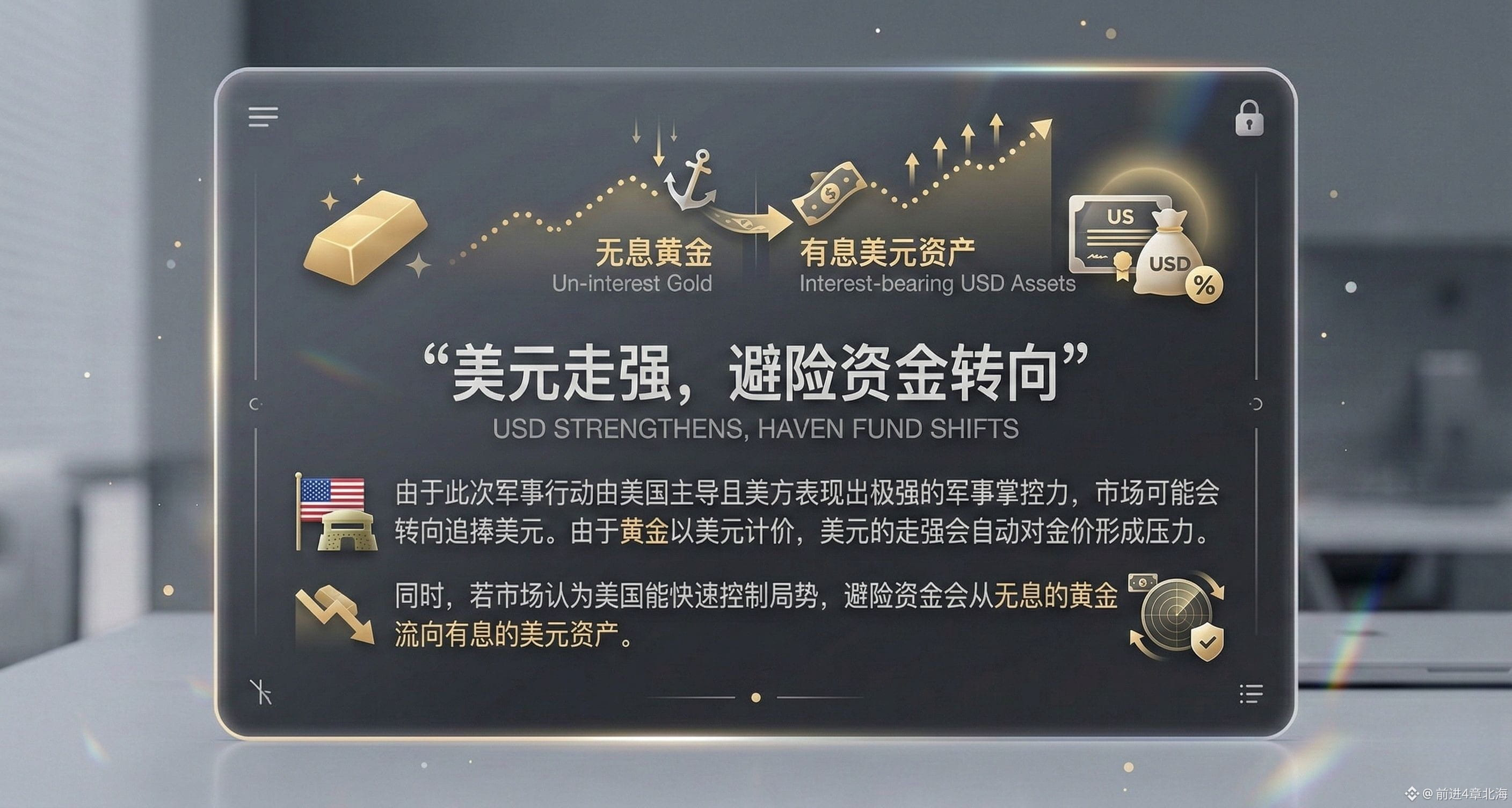
Dollar siphoning: The U.S. side strongly controls the situation, and risk-averse funds shift from 'non-yielding gold' to 'yielding dollar assets'.
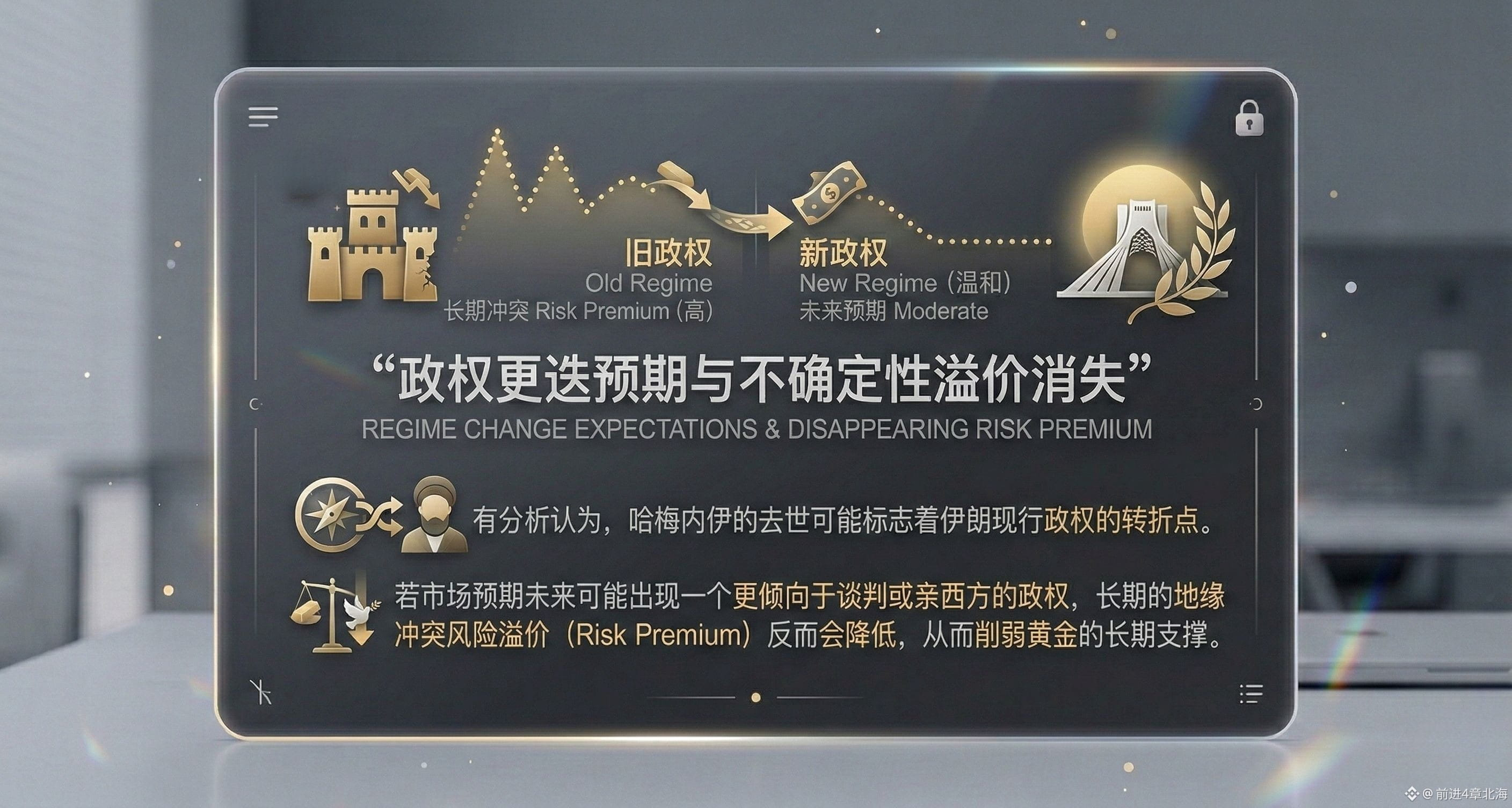
Risk premium retreat: The market bets that a regime change may bring a moderate shift, and the long-term uncertainty premium of geopolitical conflict decreases.
Technical pullback: The previous period was severely overbought; influenced by expectations of Federal Reserve policy and liquidity demand, gold prices enter a technical correction.
#黄金 #宏观经济 #地缘政治 #BTC #ETH
Khamenei's death confirmed, why did gold fall while BTC rose?
I summarized these four points for my brothers as a reference.
Positive news realization: The risk aversion sentiment in the early stage of the airstrike has already overdrawn the increase, and the confirmation of news has led to speculative profit-taking.
Dollar siphoning: The U.S. side strongly controls the situation, and risk-averse funds shift from 'non-yielding gold' to 'yielding dollar assets'.
Risk premium retreat: The market bets that a regime change may bring a moderate shift, and the long-term uncertainty premium of geopolitical conflict decreases.
Technical pullback: The previous period was severely overbought; influenced by expectations of Federal Reserve policy and liquidity demand, gold prices enter a technical correction.
#黄金 #宏观经济 #地缘政治 #BTC #ETH
I summarized these four points for my brothers as a reference.
Positive news realization: The risk aversion sentiment in the early stage of the airstrike has already overdrawn the increase, and the confirmation of news has led to speculative profit-taking.
Dollar siphoning: The U.S. side strongly controls the situation, and risk-averse funds shift from 'non-yielding gold' to 'yielding dollar assets'.
Risk premium retreat: The market bets that a regime change may bring a moderate shift, and the long-term uncertainty premium of geopolitical conflict decreases.
Technical pullback: The previous period was severely overbought; influenced by expectations of Federal Reserve policy and liquidity demand, gold prices enter a technical correction.
#黄金 #宏观经济 #地缘政治 #BTC #ETH


2
251
Log in to explore more content
Join global crypto users on Binance Square
⚡️ Get latest and useful information about crypto.
💬 Trusted by the world’s largest crypto exchange.
👍 Discover real insights from verified creators.
Email / Phone number
Trending Topics
FedRateWatch
1.3M views
6,396 Discussing
Share & Win Traffic Reward in our Trending Hashtag Campaign
✨Topic: FOMC September, What's The Fed's Next Move?
👉How to Join:
Publish a short post or article with hashtag #FedRateWatch
Create content based on the below angles:
- August core CPI rose 0.3% month-over-month, and the odds of a 25bp hike this week are now close to 90%. Do you anticipate a rate hike this week? Is it a one-off, or the start of a longer hiking cycle?
- If the hike lands, how does it play out for BTC, tech stocks, and gold? Bullish or bearish?
- How are you planning to trade next? Share your BTC, stocks or gold trade/holdings with our trade sharing widget.
⏰Campaign Period:
- 2026-09-15 11:00 - 2026-09-17 3:00 UTC
🎁Reward:
- Qualified posts that comply with the above guidelines and contain more than 100 words will be reviewed and may receive a random traffic boost of 500 to 3,000 views. You will receive a notification from your feed secretary if your post is selected.
- Get a chance to have your article featured on Binance Square Official
Need ideas for your post? Visit the topic page #FedRateWatch or the Square Guide on How to Post for Better Reach.
Binance Square Official
·633 Likes
·1.6M views
ZcashRises6%
32,277 views
512 Discussing
XRPSinks10%
21,118 views
336 Discussing