
Muhammad Imran 06
66 Posts

Muhammad Imran 06
Report
Block User
Daily Crypto News & Market Insights 📊 | BTC • ETH • SOL • Altcoins | Breaking News • Market Updates • Crypto Education
Open Trade
Frequent Trader
1.6 Years
2 Following
8 Followers
16 Liked
Posts
Portfolio
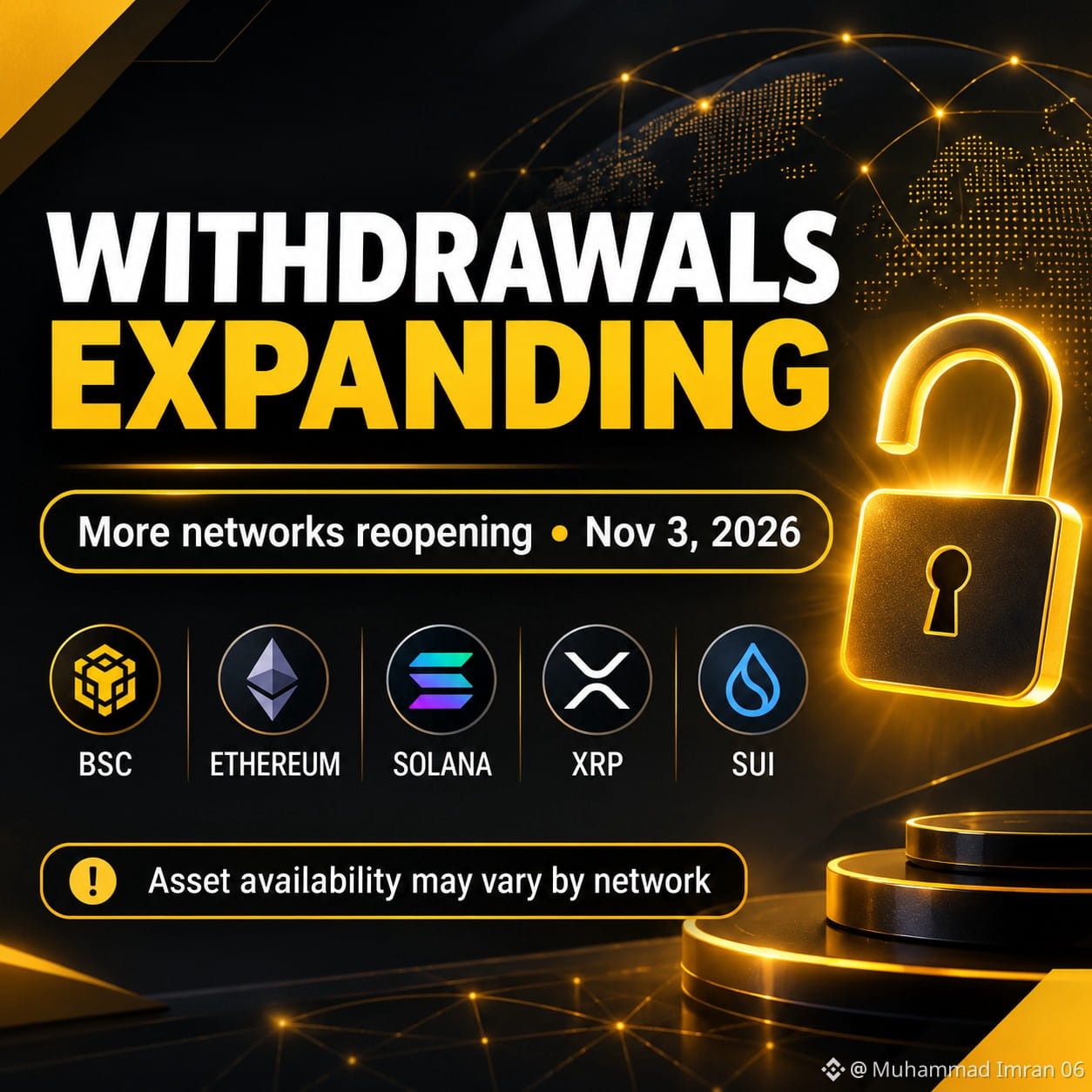
BINANCE WITHDRAWALS UPDATE!
Binance is expanding withdrawal access across more crypto networks following its recent security incident.
The latest update includes:
🔹 BNB Smart Chain (BSC)
🔹 Ethereum (ETH)
🔹 Solana (SOL)
🔹 XRP
🔹 Sui (SUI)
Some assets on Arbitrum, Optimism, Tron and Base are also included in the reopening update.
⚠️ Important: Availability may vary by asset and network. Always check Binance's official withdrawal page before transferring funds.
My question: What matters most to you after an exchange security incident — faster withdrawals or stronger security checks?
$BNB $ETH $SOL $XRP $SUI
#Binance #CryptoSecurity #CryptoNews #Blockchain #CryptoCommunity
81
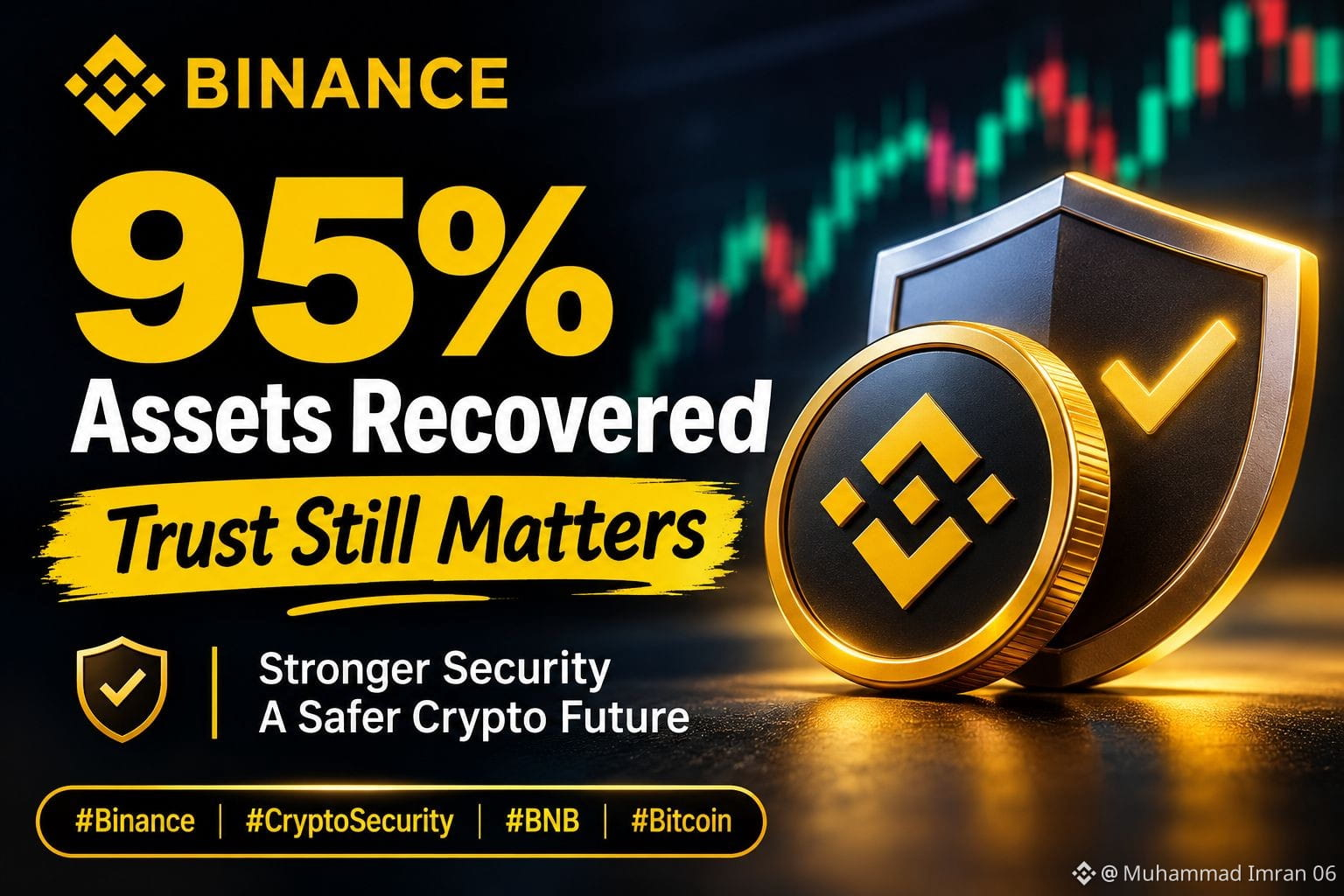
BINANCE FACES A MAJOR TRUST TEST!
After the reported $6.3 billion security breach, Binance says it has covered around 95% of the affected assets.
Here’s what matters now:
🔹 Binance says withdrawals initially surged after services resumed.
🔹 The exchange says withdrawal activity is now stabilizing.
🔹 The remaining 5% involves less-liquid tokens that may take longer to replace.
🔹 The incident is testing user confidence in exchange security.
My take: Recovering funds is important, but rebuilding trust takes more than a statement. Transparency, security improvements, and consistent updates matter.
💬 What matters most to you when choosing a crypto exchange?
1️⃣ Strong security
2️⃣ Proof of Reserves
3️⃣ Fast withdrawals
4️⃣ Transparency during crises
$BNB $BTC $ETH
#Binance #CryptoSecurity #Bitcoin #BNB #CryptoNews
1
150
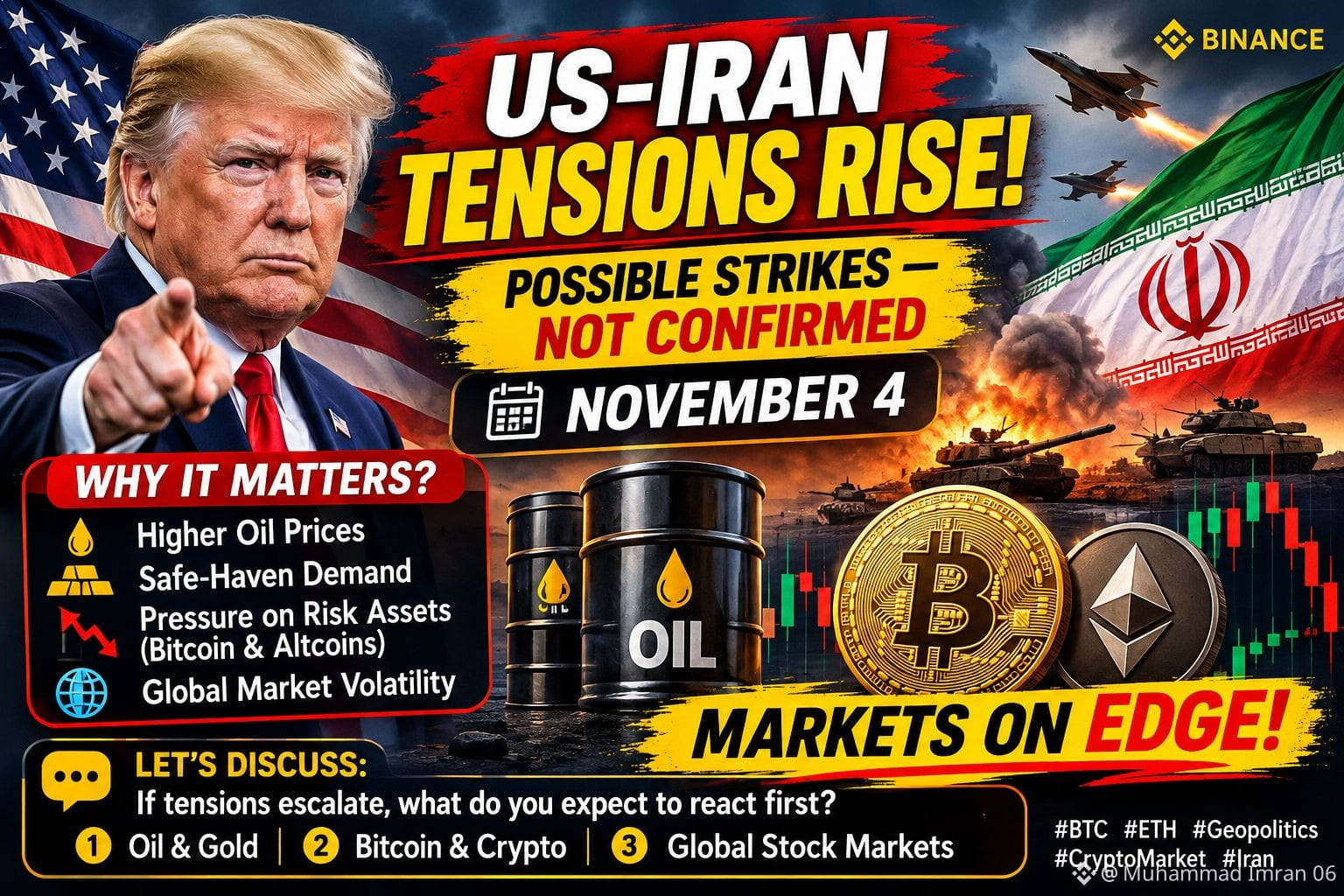
🚨 US-IRAN TENSIONS RISE: NOVEMBER 4 IN FOCUS!
A new report by MS NOW has raised concerns across the Middle East.
According to three senior Gulf officials, the Trump administration has briefed Gulf allies to prepare for possible US strikes on Iran as early as November 4.
But there's an important distinction:
⚠️ No final strike decision has been confirmed.
🇺🇸 The White House declined to comment on possible military plans.
🌍 Gulf countries are reportedly concerned about potential Iranian retaliation.
WHY SHOULD CRYPTO TRADERS CARE?
If tensions escalate, markets could react through:
🛢️ Higher oil-price volatility
🥇 Increased demand for safe-haven assets
📉 Pressure on risk assets such as Bitcoin and altcoins
⚡ Sudden volatility across global financial markets
These are possible scenarios, NOT guaranteed market outcomes.
👇 LET'S DISCUSS:
If US-Iran tensions escalate, what do you expect to react first?
1️⃣ Oil and gold
2️⃣ Bitcoin and crypto
3️⃣ Global stock markets
Share your reasoning below.
Stay informed. Don't trade on rumors.
$BTC $ETH $TRUMP
#Bitcoin #CryptoMarket #Iran #Geopolitics #MarketAnalysis
289
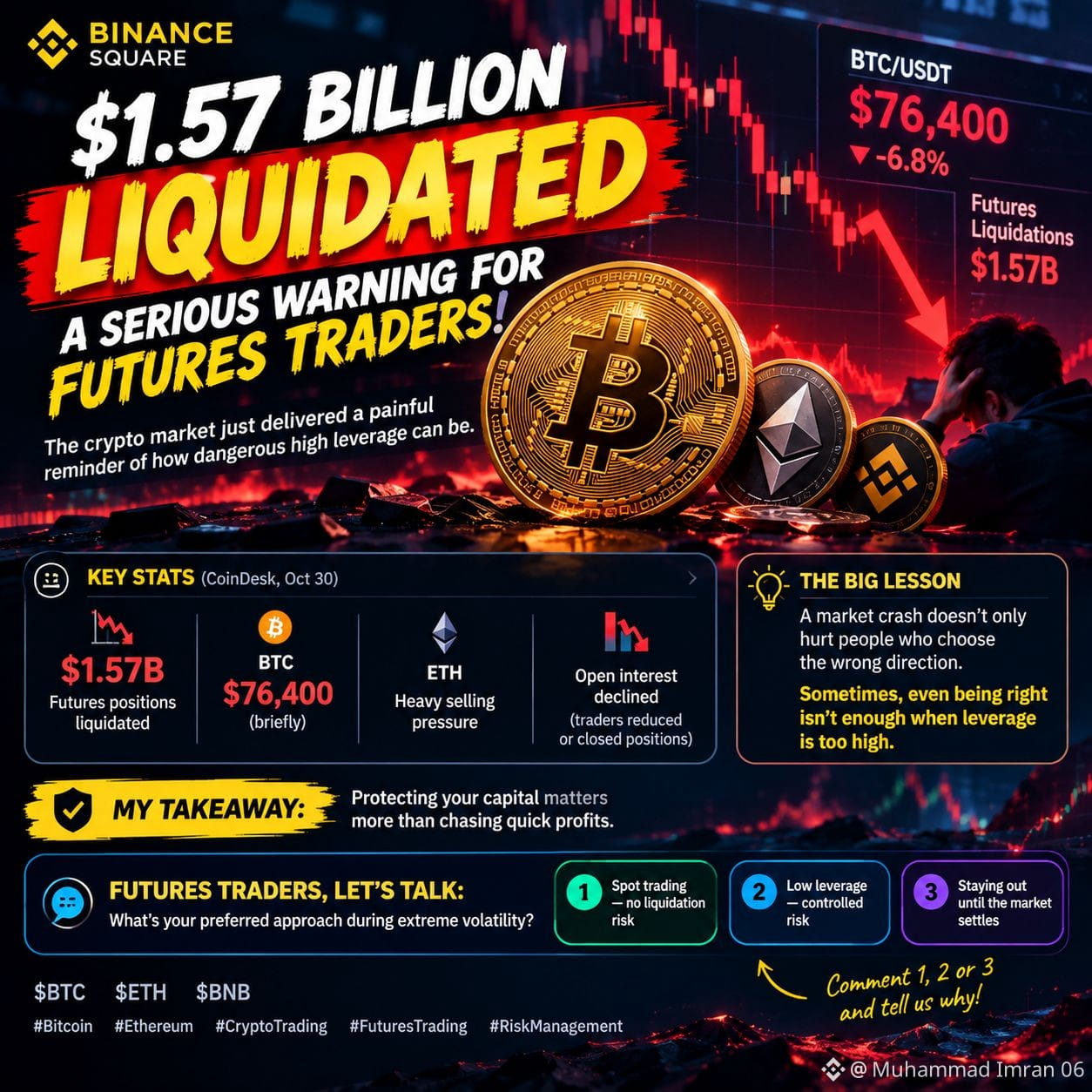
🚨 $1.57 BILLION LIQUIDATED — A SERIOUS WARNING FOR FUTURES TRADERS!
The crypto market just delivered a painful reminder of how dangerous high leverage can be.
According to CoinDesk's October 30 report:
📉 Around $1.57 billion in crypto futures positions were liquidated.
₿ Bitcoin briefly dropped to around $76,400.
🔹 Ethereum also came under heavy selling pressure.
🔹 Open interest declined as traders reduced or closed positions.
But here's the lesson:
A market crash doesn't only hurt people who choose the wrong direction.
Sometimes, even being right about the trend isn't enough when leverage is too high.
My takeaway: Protecting your capital matters more than chasing quick profits.
👇 FUTURES TRADERS, LET'S TALK:
What's your preferred approach during extreme volatility?
1️⃣ Spot trading — no liquidation risk
2️⃣ Low leverage — controlled risk
3️⃣ Staying out until the market settles
Comment 1, 2, or 3 and tell us why!
$BTC $ETH $BNB
#Bitcoin #Ethereum #CryptoTrading #FuturesTrading #RiskManagement
28
🚨 Crypto Just Got a Serious Reminder: Security Matters.
Bitcoin dropped to a six-week low as reports of a major security incident involving Binance shook market confidence.
But here's the bigger lesson:
Crypto isn't only about charts, green candles, and price targets.
It's also about: 🔐 Exchange security
🛡️ Protection of user assets
📊 Transparency during a crisis
🤝 Trust in the platforms we use
A market can recover from a price drop. Rebuilding trust can be much harder.
And this is why understanding security risks is just as important as understanding market trends.
One question for the crypto community:
What matters more when choosing an exchange — low trading fees or strong security?
$BTC
#CryptoNews #Bitcoin #Binance #CryptoSecurity #Blockchain
62
Partly True
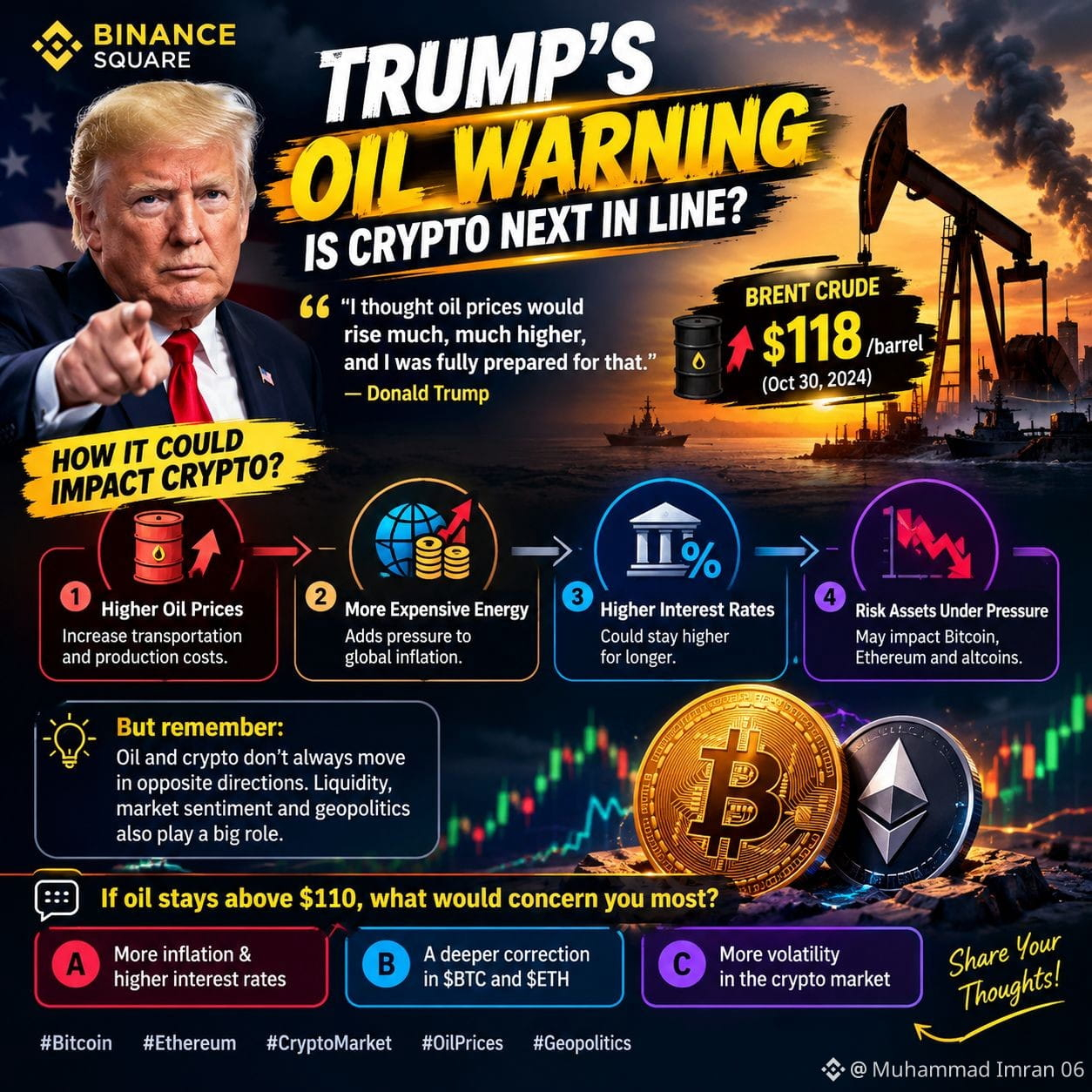
🚨 TRUMP'S OIL WARNING — IS CRYPTO NEXT IN LINE?
President Donald Trump said he expected oil prices to rise much higher because of the Iran conflict, adding that the US had “no other choice.”
Now look at the energy market:
🛢️ Brent crude climbed to around $118 per barrel on October 30, as concerns about Middle East supply disruptions intensified.
Why should crypto traders care?
Here's the possible chain reaction:
1️⃣ Higher oil prices can increase transportation and production costs.
2️⃣ Rising energy costs can add pressure to global inflation.
3️⃣ Persistent inflation may keep interest rates higher for longer.
4️⃣ Tighter financial conditions can put pressure on risk assets, including Bitcoin and altcoins.
But remember: oil prices and crypto do not always move in opposite directions. Liquidity, market sentiment, and geopolitical developments also matter.
🔥 MY QUESTION TO THE CRYPTO COMMUNITY:
If oil stays above $110, what would concern you most?
A) More inflation and higher interest rates
B) A deeper correction in $BTC and $ETH
C) More volatility in $TRUMP and other political meme coins
👇 Choose A, B, or C — and explain WHY.
Let's discuss facts, not just predictions.
$TRUMP
$BTC $ETH
#OilPrices #Bitcoin #CryptoMarket #Inflation #Geopolitics
698
🚨 BINANCE'S $6.3 BILLION SECURITY INCIDENT: THE BIG QUESTION IS TRUST.
Binance has estimated the impact of its recent security incident at around $6.3 billion.
Here’s what we know so far:
🔹 Around $3 billion in affected assets has reportedly been frozen on-chain.
🔹 Binance says it found no evidence of wallet private keys being leaked.
🔹 The investigation uncovered multiple breach points, making this more complex than initially reported.
🔹 Binance says all losses will be covered by SAFU and company funds.
🔹 Deposits are operating normally, while withdrawals remain under security review.
This incident raises an important question for the entire crypto industry:
Is protecting user funds enough, or must exchanges also prove that their security systems are strong enough to prevent incidents like this?
I believe transparency, strong security controls, and clear communication are essential for building long-term trust.
👇 What's your biggest concern?
1️⃣ Exchange security
2️⃣ Withdrawal restrictions
3️⃣ Long-term trust in centralized exchanges
Share your thoughts below. Let's have a real discussion.
$BNB $BTC
#Binance #CryptoSecurity #SAFU #Bitcoin #CryptoCommunity
56
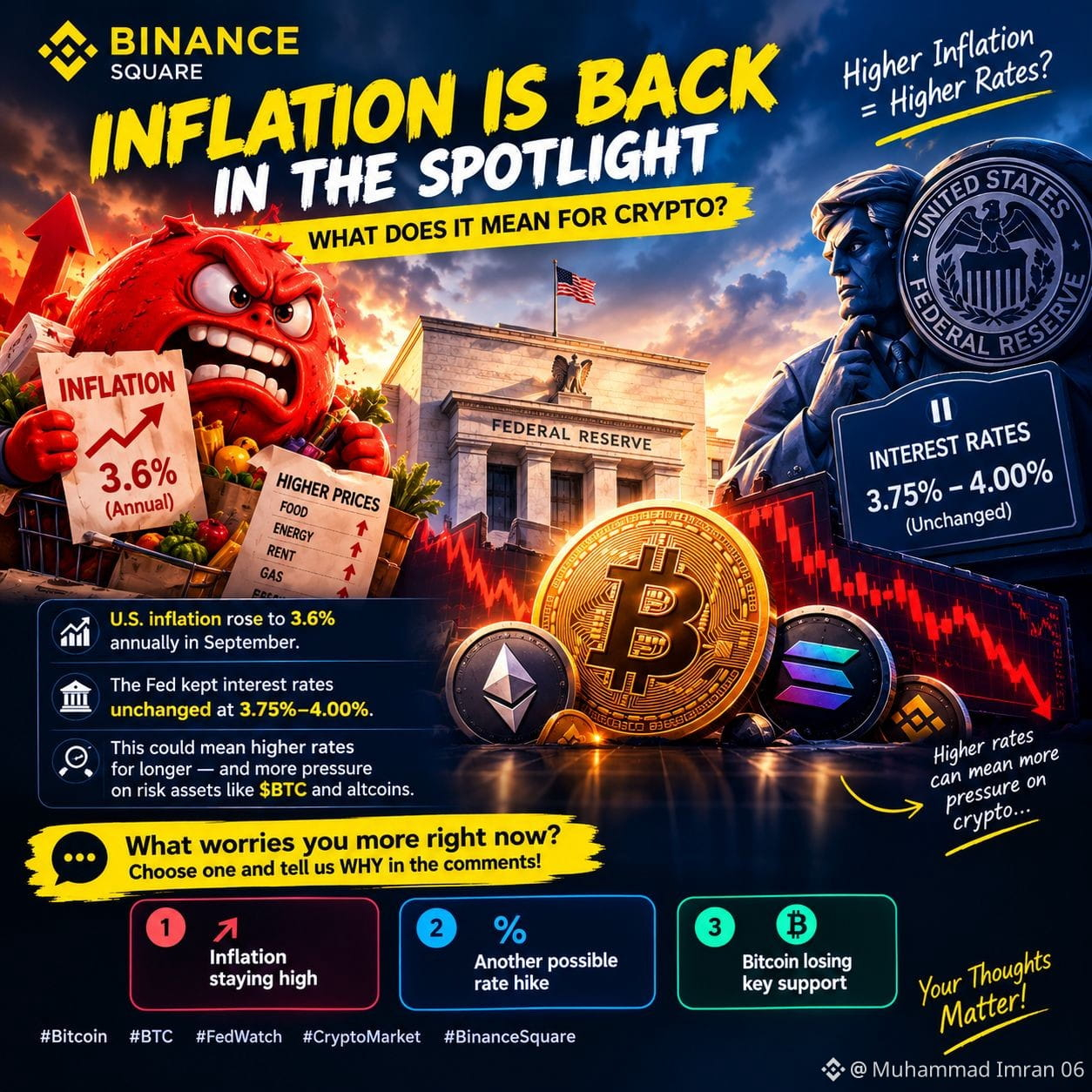
🚨 INFLATION IS BACK IN THE SPOTLIGHT — WHAT DOES IT MEAN FOR CRYPTO?
U.S. inflation rose to 3.6% annually in September, while the Federal Reserve kept interest rates unchanged this week.
Here’s why crypto traders should pay attention 👇
If inflation stays high, interest rates could remain elevated for longer. That may put pressure on risk assets like $BTC and altcoins.
But markets don’t move on headlines alone. Expectations, liquidity, and investor sentiment matter too.
🔥 Let’s talk: What worries you more right now?
1️⃣ Inflation staying high
2️⃣ Another possible rate hike
3️⃣ Bitcoin losing key support
Choose one — and tell us WHY in the comments. I want to hear different perspectives, not just price predictions.
#Bitcoin #BTC #FedWatch #CryptoMarket #BinanceSquare $ETH $SOL
173
🎁 LET’S SAY YOU JUST RECEIVED A SMALL CRYPTO REWARD!
Not a life-changing amount — just a little surprise in your Binance account. 😄💰
What would you do with it?
🟢 HOLD — maybe it grows over time
🟡 SELL — take the small win
🔵 ADD MORE — only if the project makes sense to you
Personally, I wouldn’t buy more just because a coin was given to me for free. I’d look at the project first.
👇 Be honest: HOLD, SELL, or ADD MORE? And WHY?
Let’s see how the community thinks!
#CryptoCommunity #Binance #Bitcoin #CryptoRewards #BinanceSquare

147
🚨 BITCOIN IS BACK NEAR $81K — BUT IS THIS RECOVERY REAL?
$BTC has bounced back toward $81,000 as traders wait for the Federal Reserve’s latest rate decision.
Here’s what I’m watching: a price bounce is interesting, but what happens AFTER the Fed speaks may matter even more.
Will buyers step in with confidence, or will uncertainty bring more volatility?
I don’t think anyone can know the answer with certainty yet.
👇 Let’s discuss: what matters most now?
1️⃣ The Fed’s message
2️⃣ Bitcoin holding above $80K
3️⃣ Strong buying volume
Tell me your reason in the comments — let’s learn from each other, not just guess prices.
#Bitcoin #BTC #CryptoNews #MarketAnalysis #BinanceSquare
87
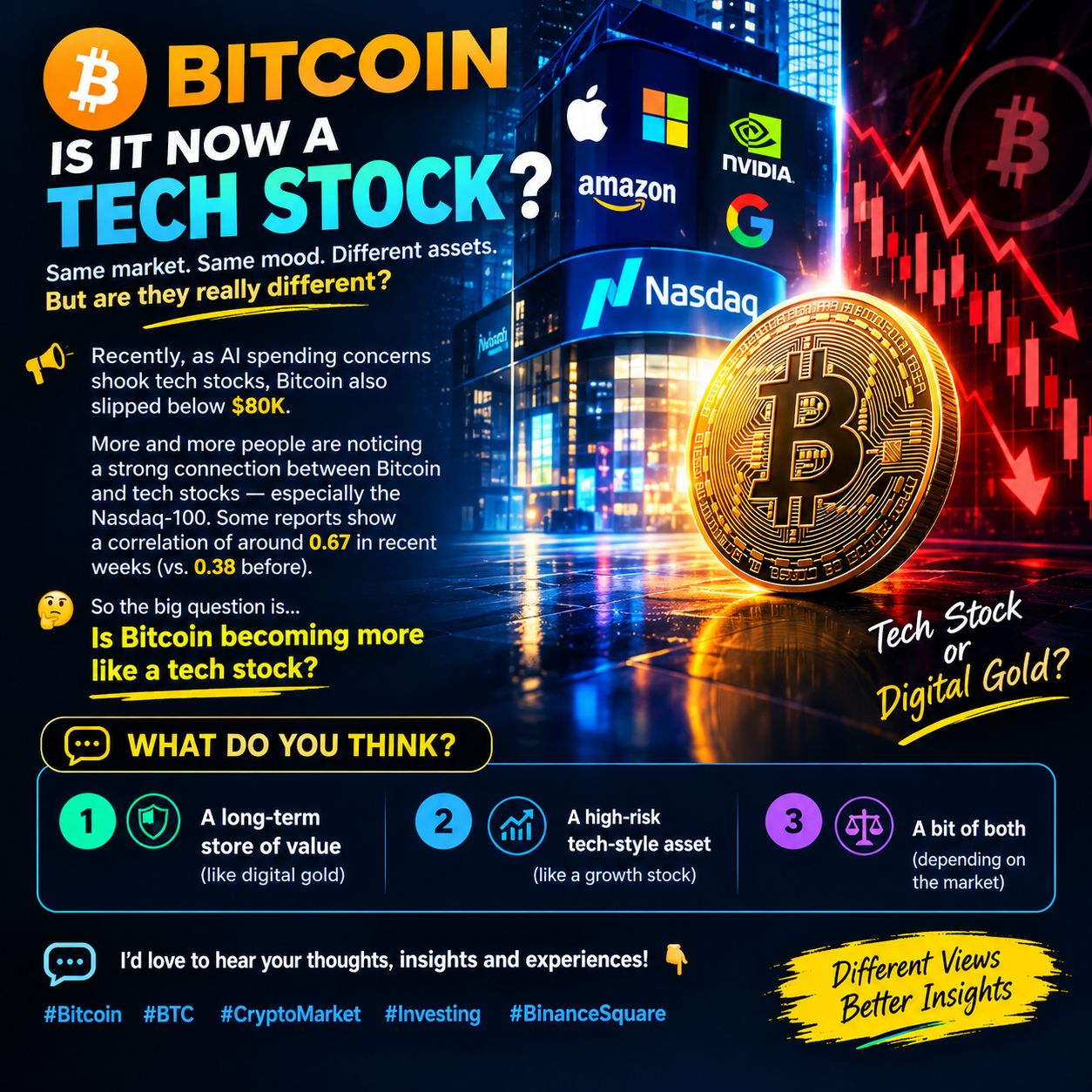
Is Bitcoin becoming more like a tech stock? 👀
Something interesting happened this week: as concerns about AI spending pressured tech stocks, $BTC also slipped below $80K.
That raises a question worth discussing.
Many people see Bitcoin as an alternative to traditional finance. But when markets get nervous, Bitcoin can also behave like a risk asset.
My take: I wouldn’t judge Bitcoin’s long-term role from a few rough trading sessions. I’d watch how it behaves across different market conditions.
What do you think $BTC is becoming?
1️⃣ A long-term store of value
2️⃣ A high-risk tech-style asset
3️⃣ A bit of both, depending on the market
I’m interested in your reasoning, not just the number. 👇
#Bitcoin #BTC #CryptoMarket #Investing #BinanceSquare
34
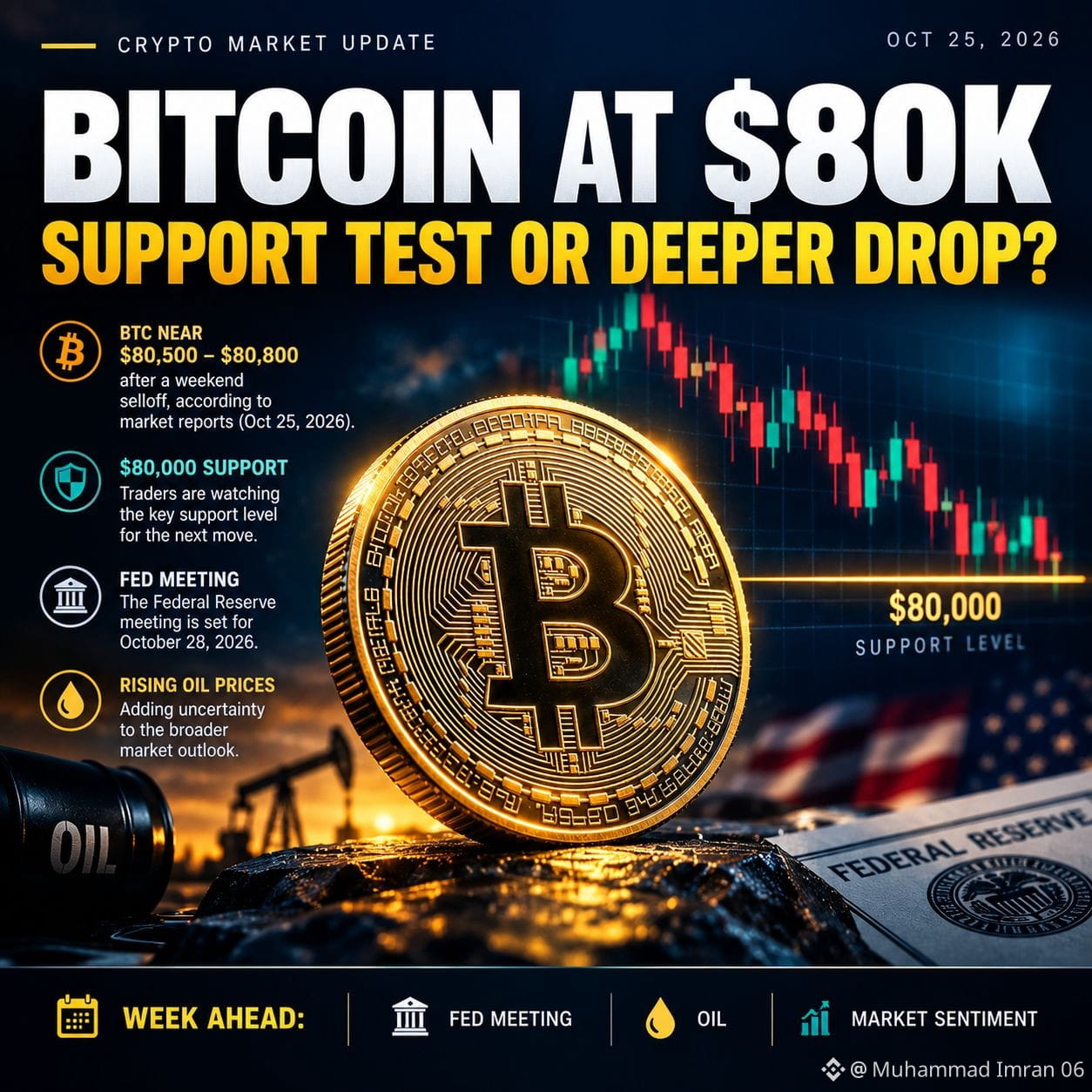
Bitcoin is testing investors’ patience again. 👀
$BTC is hovering near $80K after a rough week for risk assets. And with the Federal Reserve meeting coming up on October 28, the next few days could be important for market sentiment.
Here’s what I’m watching: Can Bitcoin hold $80K, or will sellers push it lower?
I don’t think one price level tells the whole story. The reaction around that level matters just as much.
No blind predictions. Just watching the data and letting the market speak.
What are you watching most closely this week — Bitcoin’s $80K level, the Fed meeting, or the wider economy?
#Bitcoin #BTC #CryptoMarket #CryptoNews #MarketAnalysis
2
85
Red markets reveal something that green candles often hide. 👀
When $BTC pulls back, it’s easy to get caught up in the price. But I think the more useful question is: what is actually driving the move?
Is it macroeconomic pressure, money flowing out of the market, or traders reducing risk?
I don’t want to call every dip a buying opportunity or every drop the start of a crash. I’d rather understand the reason first.
When the market turns red, what do you check first: Bitcoin’s chart, ETF flows, or the bigger economic picture?
I’m interested in how other traders approach it.
#Bitcoin #BTC #CryptoMarket #CryptoCommunity #BinanceSquare
75
Solana just made a major move under the hood. ⚡
$SOL’s Alpenglow upgrade is now live on mainnet, targeting transaction finality of around 150 milliseconds.
That could make a real difference for apps, payments, and trading experiences built on Solana.
But here’s what matters to me: faster technology is only valuable if it delivers a reliable experience for real users.
I’m more interested in seeing how this performs in practice than assuming an upgrade automatically means a higher token price.
What matters more to you when choosing a blockchain: speed, low fees, or reliability?
#Solana #SOL #Blockchain #CryptoNews #BinanceSquare $SOL
Solana just made a major move under the hood. ⚡
$SOL ’s Alpenglow upgrade is now live on mainnet, targeting transaction finality of around 150 milliseconds.
That could make a real difference for apps, payments, and trading experiences built on Solana.
But here’s what matters to me: faster technology is only valuable if it delivers a reliable experience for real users.
I’m more interested in seeing how this performs in practice than assuming an upgrade automatically means a higher token price.
What matters more to you when choosing a blockchain: speed, low fees, or reliability?
#Solana #SOL #Blockchain #CryptoNews #BinanceSquare $SOL

103
The hardest part of crypto isn't watching the price go up. It's staying calm when it suddenly drops. 😅
$BTC recently pushed above $84K, but the move didn't hold. Moments like this remind me why one green candle isn't enough to judge the whole market.
Personally, I'd rather wait for clearer confirmation than make a decision based on excitement or fear.
But everyone handles volatility differently.
Be honest: when Bitcoin drops suddenly, what do you usually do?
📊 Look for an opportunity
⏳ Wait for confirmation
😴 Ignore the noise and stay patient
I'd genuinely like to hear how you approach it.
#Bitcoin #BTC #CryptoCommunity #CryptoTrading #BinanceSquare
82
A green candle feels good, but does it really mean Bitcoin is recovering? 👀
$BTC has shown that the market can turn around quickly. But one green move alone doesn’t convince me that the trend has changed.
Some traders look for higher highs. Others wait for strong volume or for price to hold support.
I’m curious — what gives you the most confidence in a Bitcoin recovery?
1. Higher highs
2. Strong trading volume
3. Holding support
Let’s hear your reasoning. 👇
#Bitcoin #BTC #CryptoCommunity #CryptoTrading #BinanceSquare
75
Crypto really tests your patience sometimes. 😅
One minute, $BTC looks ready to recover. The next, the market reminds everyone that nothing moves in a straight line.
I’m trying to focus less on every little price move and more on what the market actually confirms. A green candle can bring hope, but follow-through is what matters.
And honestly, I know I’m not the only one trying to stay patient through this volatility.
Be honest: when Bitcoin suddenly drops, do you check the chart every few minutes, or step away and wait?
#Bitcoin #BTC #CryptoCommunity #CryptoTrading #BinanceSquare
69
Honestly, crypto is testing everyone’s patience right now. 😅
$BTC is bouncing back toward $81K, but I’m not calling it a bull run just yet.
I’d rather see Bitcoin hold its ground than get excited over one green candle. 📈
No need to rush. Let the market show its hand.
What are you watching more closely right now — Bitcoin’s recovery or the next move in altcoins? 👀
#Bitcoin #BTC #CryptoCommunity #CryptoMarket #BinanceSquare
93
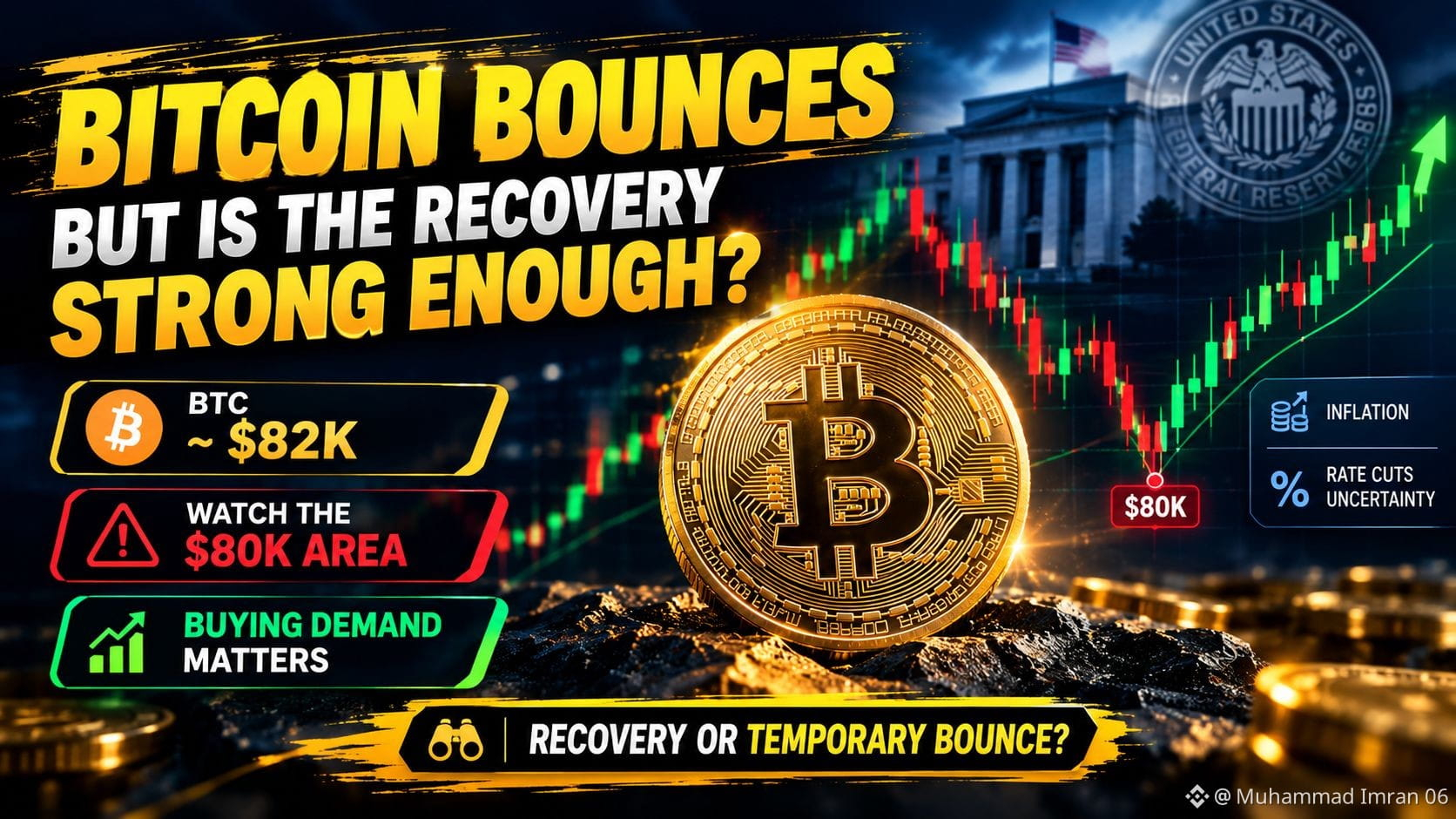
🚨 BITCOIN BOUNCES — BUT IS THE RECOVERY STRONG ENOUGH?
Bitcoin ( $BTC ) is stabilizing near $82,000 after briefly falling below $80,000 earlier this week.
But there’s a catch: a weaker U.S. dollar has offered some support, while concerns about inflation and future Fed rate decisions continue to weigh on market sentiment.
📊 What matters now?
🔹 Can BTC hold above the $80K area? 🔹 Will buyers return with stronger spot-market demand? 🔹 Or will macroeconomic pressure trigger another pullback?
A bounce is encouraging, but it doesn’t automatically confirm a new uptrend. The next move needs confirmation from price action and buying demand.
Your view: Is this a recovery or just a temporary bounce? 👀
#Bitcoin #BTC #CryptoMarket #CryptoAnalysis #BinanceSquare
76
#CPIWatch 🚨 #CPIWatch: Could US Inflation Change Bitcoin’s Next Move?
Crypto traders, the next move may depend on more than just the Bitcoin chart.
Markets are watching U.S. inflation data, oil prices, and Treasury yields. These factors can influence expectations for Federal Reserve policy—and that can affect risk assets, including crypto.
📊 Here are 3 things I'm watching:
🛢️ 1. Oil prices: If energy prices push inflation higher, markets may become more cautious.
🏦 2. Treasury yields: Rising yields can put pressure on risk assets, while falling yields may improve sentiment. The actual reaction depends on the wider economic picture.
₿ 3. Bitcoin confirmation: I want to see how $BTC reacts to the data, whether trading volume supports the move, and whether key support or resistance levels hold.
⚠️ Important: A hot CPI reading does not automatically mean Bitcoin must fall. Markets react to the result, expectations, and the Fed outlook—not just one number.
My question for the community:
If U.S. inflation comes in hotter than expected, what do you think reacts first—Bitcoin, oil, or Treasury yields?
Share your reasoning. Let's discuss the data instead of guessing the outcome.
#CPIWatch #Bitcoin #BTC #MacroEconomics
85
Log in to explore more content
Join global crypto users on Binance Square
⚡️ Get latest and useful information about crypto.
💬 Trusted by the world’s largest crypto exchange.
👍 Discover real insights from verified creators.
Email / Phone number
Trending Topics
JobsReportRaisesHikeOdds
13,144 views
299 Discussing
TradFi News | US Adds 165,000 Jobs in October, More Than Double the 65,000 Forecast, as Unemployment Falls to 4.1%
Binance News
·11 Likes
·6.9k views
US Data Center Rules May Constrain AI Expansion
2,228 views
43 Discussing
CanUSStocksReboundAfterNonfarmPayrolls?
20,051 views
519 Discussing