

Bryant黄先森
1.2k Posts

Bryant黄先森
Report
Block User
Open Trade
Frequent Trader
4.4 Years
661 Following
13.8K+ Followers
2.3K+ Liked
Posts
Portfolio
All
Quotes
Live
PINNED
·
--
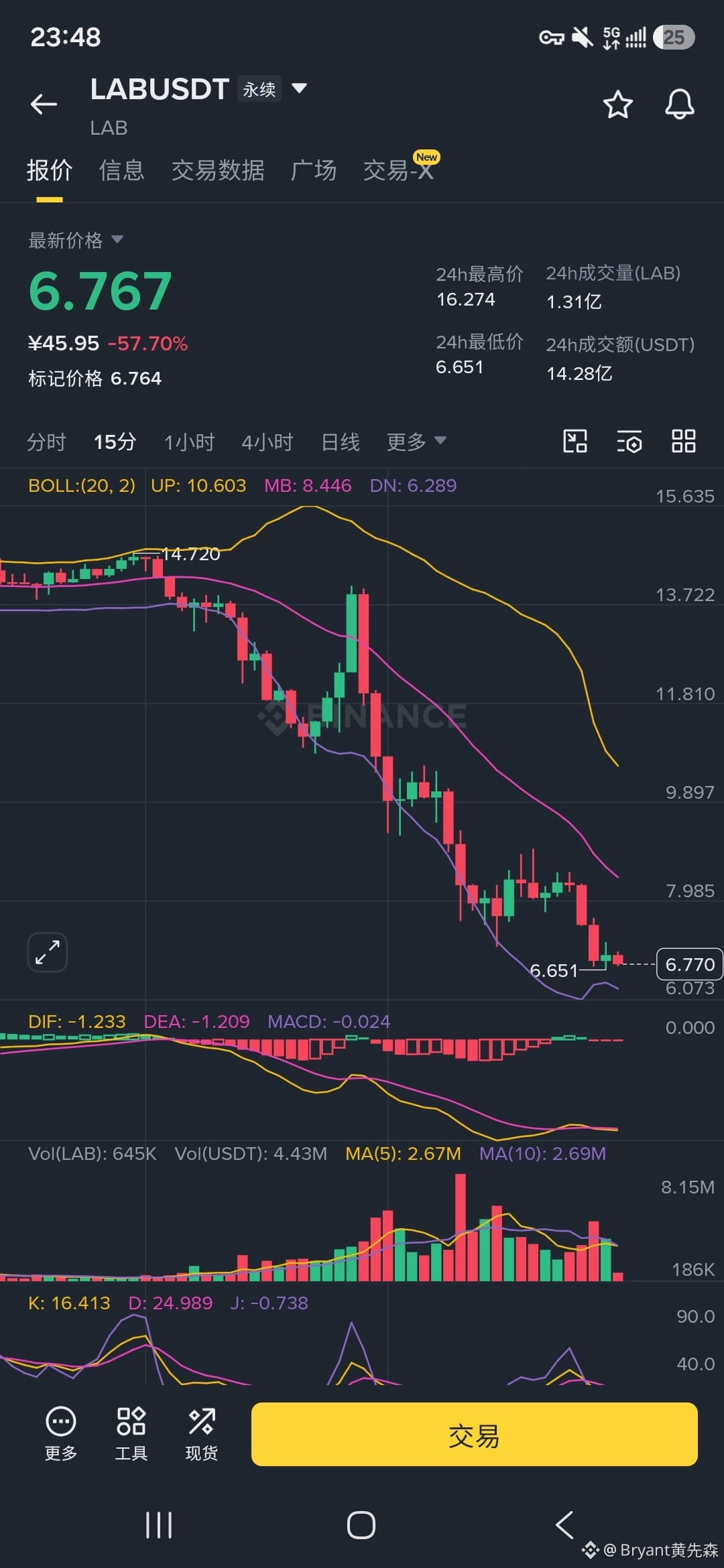
Today’s $LAB is really crazy—after only a few hours it got smashed down. I’m totally wasted. Could it be because the dog pool ran away?
Whenever I run into this kind of market, all sorts of theories pop up in the group. Some say the main force is distributing, others say quant funds are dumping, and then people start hunting for insider info everywhere. But what I’ve found is that no matter how long everyone talks, the real problem never changes—more and more on-chain operations are being handed over to programs, yet ordinary users find it hard to know how these actions are executed or what rules they follow.
And that’s exactly why I’ve been paying more attention to the Newton Mainnet Beta being pushed by @NewtonProtocol . What attracts me isn’t that another mainnet is launched—it’s that it focuses on trustworthy automated execution. As scenarios like AI agents, automated trading, and on-chain payments keep growing, a large amount of on-chain operations will need to be completed automatically. Newton Mainnet Beta aims to build these automated executions on public, verifiable rules, so the execution logic, authorization scope, and task results can all be verified—rather than relying on an unconfirmable black box.
I think this matters even more for developers. With Newton Mainnet Beta, they can directly build DeFi, AI agent, and payment applications that require automated execution capabilities, without having to repeatedly develop the underlying execution framework. For ordinary users, it also means that when using these applications in the future, it won’t just be more convenient—more importantly, you’ll know that your assets always stay within the authorization scope you set.
Every day, people guess how the next candlestick will move, but what truly drives industry progress is often not getting one market move right—it’s building the underlying capabilities well. If more and more applications run on the trusted execution network provided by Newton Mainnet Beta, and automation truly becomes a core Web3 capability, then I believe the value of $NEWT will also be continuously solidified through real network usage, rather than depending on short-term emotions.
#newt $NEWT
Today’s $LAB is really crazy—after only a few hours it got smashed down. I’m totally wasted. Could it be because the dog pool ran away?
Whenever I run into this kind of market, all sorts of theories pop up in the group. Some say the main force is distributing, others say quant funds are dumping, and then people start hunting for insider info everywhere. But what I’ve found is that no matter how long everyone talks, the real problem never changes—more and more on-chain operations are being handed over to programs, yet ordinary users find it hard to know how these actions are executed or what rules they follow.
And that’s exactly why I’ve been paying more attention to the Newton Mainnet Beta being pushed by @NewtonProtocol . What attracts me isn’t that another mainnet is launched—it’s that it focuses on trustworthy automated execution. As scenarios like AI agents, automated trading, and on-chain payments keep growing, a large amount of on-chain operations will need to be completed automatically. Newton Mainnet Beta aims to build these automated executions on public, verifiable rules, so the execution logic, authorization scope, and task results can all be verified—rather than relying on an unconfirmable black box.
I think this matters even more for developers. With Newton Mainnet Beta, they can directly build DeFi, AI agent, and payment applications that require automated execution capabilities, without having to repeatedly develop the underlying execution framework. For ordinary users, it also means that when using these applications in the future, it won’t just be more convenient—more importantly, you’ll know that your assets always stay within the authorization scope you set.
Every day, people guess how the next candlestick will move, but what truly drives industry progress is often not getting one market move right—it’s building the underlying capabilities well. If more and more applications run on the trusted execution network provided by Newton Mainnet Beta, and automation truly becomes a core Web3 capability, then I believe the value of $NEWT will also be continuously solidified through real network usage, rather than depending on short-term emotions.
#newt $NEWT
Whenever I run into this kind of market, all sorts of theories pop up in the group. Some say the main force is distributing, others say quant funds are dumping, and then people start hunting for insider info everywhere. But what I’ve found is that no matter how long everyone talks, the real problem never changes—more and more on-chain operations are being handed over to programs, yet ordinary users find it hard to know how these actions are executed or what rules they follow.
And that’s exactly why I’ve been paying more attention to the Newton Mainnet Beta being pushed by @NewtonProtocol . What attracts me isn’t that another mainnet is launched—it’s that it focuses on trustworthy automated execution. As scenarios like AI agents, automated trading, and on-chain payments keep growing, a large amount of on-chain operations will need to be completed automatically. Newton Mainnet Beta aims to build these automated executions on public, verifiable rules, so the execution logic, authorization scope, and task results can all be verified—rather than relying on an unconfirmable black box.
I think this matters even more for developers. With Newton Mainnet Beta, they can directly build DeFi, AI agent, and payment applications that require automated execution capabilities, without having to repeatedly develop the underlying execution framework. For ordinary users, it also means that when using these applications in the future, it won’t just be more convenient—more importantly, you’ll know that your assets always stay within the authorization scope you set.
Every day, people guess how the next candlestick will move, but what truly drives industry progress is often not getting one market move right—it’s building the underlying capabilities well. If more and more applications run on the trusted execution network provided by Newton Mainnet Beta, and automation truly becomes a core Web3 capability, then I believe the value of $NEWT will also be continuously solidified through real network usage, rather than depending on short-term emotions.
#newt $NEWT
1
4
533
·
--
What truly limits the development of AI has never been compute power, but trustA few days ago, I bought something online. Before placing the order, I didn’t really look at the product description. Instead, I spent more than ten minutes browsing reviews, looking at customers’ photos, checking the store’s ratings, and even specifically opening negative reviews to see what pitfalls other people had run into. Later, I suddenly realized: we encounter a huge amount of information every day, but what truly affects decisions is never how much information there is—it’s whether we’re willing to trust it.
Think about it carefully—future AI is the same. Everyone is now debating whether AI agents can automatically trade, manage assets automatically, and execute strategies automatically. It seems like if the model becomes smarter, many things can be handed over to AI to do. But if it is given wrong data, delayed data, or data standards between different protocols that can’t be verified against each other, then the faster it acts, the faster the risk spreads. The real factor that determines AI’s ceiling isn’t how much information it can process, but whether it can make judgments based on trustworthy information.
What truly limits the development of AI has never been compute power, but trust
A few days ago, I bought something online. Before placing the order, I didn’t really look at the product description. Instead, I spent more than ten minutes browsing reviews, looking at customers’ photos, checking the store’s ratings, and even specifically opening negative reviews to see what pitfalls other people had run into. Later, I suddenly realized: we encounter a huge amount of information every day, but what truly affects decisions is never how much information there is—it’s whether we’re willing to trust it.
Think about it carefully—future AI is the same. Everyone is now debating whether AI agents can automatically trade, manage assets automatically, and execute strategies automatically. It seems like if the model becomes smarter, many things can be handed over to AI to do. But if it is given wrong data, delayed data, or data standards between different protocols that can’t be verified against each other, then the faster it acts, the faster the risk spreads. The real factor that determines AI’s ceiling isn’t how much information it can process, but whether it can make judgments based on trustworthy information.
Think about it carefully—future AI is the same. Everyone is now debating whether AI agents can automatically trade, manage assets automatically, and execute strategies automatically. It seems like if the model becomes smarter, many things can be handed over to AI to do. But if it is given wrong data, delayed data, or data standards between different protocols that can’t be verified against each other, then the faster it acts, the faster the risk spreads. The real factor that determines AI’s ceiling isn’t how much information it can process, but whether it can make judgments based on trustworthy information.
3
4
143
·
--
Verified
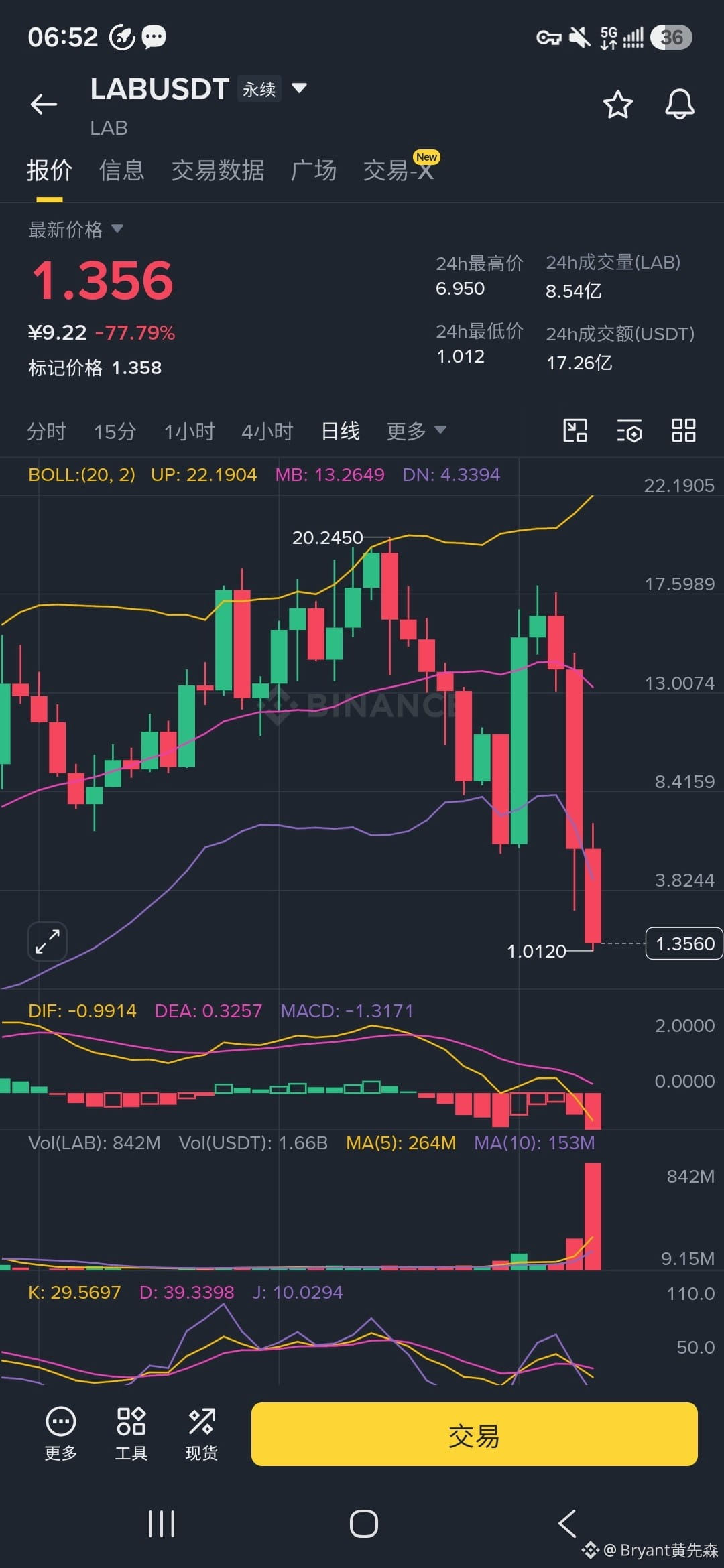
First-Gen Demon Coin $LAB —eventually it fell from its so-called throne, sliding all the way down from the peak to around 1. Market attention always shifts quickly. A few days ago, people were still debating how high it could go; now everyone has started looking for the next hot spot. This kind of market makes me increasingly feel that what truly can survive market cycles is never just a single explosive surge, but whether a project can become an indispensable part of the entire ecosystem.
That’s also why I’ve recently spent more time researching @NewtonProtocol . Instead of just discussing price, I’m more concerned with why it’s aiming to build trustworthy automated execution. On-chain, it’s no longer just about simple transfers. More and more DeFi, AI Agents, payments, and asset management rely on automated execution. If in the future these applications become even more widespread, without a unified, trusted execution network, every project would have to build its own automation stack. That would not only raise development costs, but also make it hard to standardize user experience and security.
Newton Mainnet Beta is precisely addressing this underlying problem. It offers a trusted automation execution network that the whole ecosystem can call. This enables developers to build applications directly on top of these capabilities, instead of repeatedly developing the underlying logic themselves. Users, meanwhile, can complete on-chain tasks according to rules they set. The execution process is open and verifiable, and control over assets always stays in the user’s hands. This means that as more applications connect, the value of Newton Mainnet Beta will be amplified continuously through network effects—not limited to a single scenario.
I believe this is also the biggest difference between @NewtonProtocol and many other projects. It aims to become the foundational infrastructure that common applications—AI Agents, DeFi, on-chain payments, and more—depend on, rather than just a participant in one particular track. As more real business processes run on Newton Mainnet Beta, network activity, the number of developers, and the scale of users will reinforce each other, and the value of $NEWT will naturally be built on real ecosystem demand. This growth logic is exactly why I’m willing to keep paying close attention to it.#newt $NEWT
First-Gen Demon Coin $LAB —eventually it fell from its so-called throne, sliding all the way down from the peak to around 1. Market attention always shifts quickly. A few days ago, people were still debating how high it could go; now everyone has started looking for the next hot spot. This kind of market makes me increasingly feel that what truly can survive market cycles is never just a single explosive surge, but whether a project can become an indispensable part of the entire ecosystem.
That’s also why I’ve recently spent more time researching @NewtonProtocol . Instead of just discussing price, I’m more concerned with why it’s aiming to build trustworthy automated execution. On-chain, it’s no longer just about simple transfers. More and more DeFi, AI Agents, payments, and asset management rely on automated execution. If in the future these applications become even more widespread, without a unified, trusted execution network, every project would have to build its own automation stack. That would not only raise development costs, but also make it hard to standardize user experience and security.
Newton Mainnet Beta is precisely addressing this underlying problem. It offers a trusted automation execution network that the whole ecosystem can call. This enables developers to build applications directly on top of these capabilities, instead of repeatedly developing the underlying logic themselves. Users, meanwhile, can complete on-chain tasks according to rules they set. The execution process is open and verifiable, and control over assets always stays in the user’s hands. This means that as more applications connect, the value of Newton Mainnet Beta will be amplified continuously through network effects—not limited to a single scenario.
I believe this is also the biggest difference between @NewtonProtocol and many other projects. It aims to become the foundational infrastructure that common applications—AI Agents, DeFi, on-chain payments, and more—depend on, rather than just a participant in one particular track. As more real business processes run on Newton Mainnet Beta, network activity, the number of developers, and the scale of users will reinforce each other, and the value of $NEWT will naturally be built on real ecosystem demand. This growth logic is exactly why I’m willing to keep paying close attention to it.#newt $NEWT
That’s also why I’ve recently spent more time researching @NewtonProtocol . Instead of just discussing price, I’m more concerned with why it’s aiming to build trustworthy automated execution. On-chain, it’s no longer just about simple transfers. More and more DeFi, AI Agents, payments, and asset management rely on automated execution. If in the future these applications become even more widespread, without a unified, trusted execution network, every project would have to build its own automation stack. That would not only raise development costs, but also make it hard to standardize user experience and security.
Newton Mainnet Beta is precisely addressing this underlying problem. It offers a trusted automation execution network that the whole ecosystem can call. This enables developers to build applications directly on top of these capabilities, instead of repeatedly developing the underlying logic themselves. Users, meanwhile, can complete on-chain tasks according to rules they set. The execution process is open and verifiable, and control over assets always stays in the user’s hands. This means that as more applications connect, the value of Newton Mainnet Beta will be amplified continuously through network effects—not limited to a single scenario.
I believe this is also the biggest difference between @NewtonProtocol and many other projects. It aims to become the foundational infrastructure that common applications—AI Agents, DeFi, on-chain payments, and more—depend on, rather than just a participant in one particular track. As more real business processes run on Newton Mainnet Beta, network activity, the number of developers, and the scale of users will reinforce each other, and the value of $NEWT will naturally be built on real ecosystem demand. This growth logic is exactly why I’m willing to keep paying close attention to it.#newt $NEWT
2
682
·
--
Floodwaters wash away the roads; what truly tests is infrastructureOver the past two days, I’ve been seeing heavy, continuous rainfall across multiple areas in Guangxi, with severe flooding in some places. Roads have been inundated, vehicles are stranded, shops have closed, and many communities’ normal lives have been affected. Looking at these scenes, my greatest takeaway is that a city’s true resilience isn’t how bustling it is on a sunny day—it’s whether, after extreme situations occur, the infrastructure can still keep running. Drainage systems, power grids, and communications support—things that are hardly discussed in everyday life—once they fail, the entire city is hit by a chain reaction.
This feeling also helped me better understand the value of infrastructure that the white paper @NewtonProtocol has always emphasized.
Floodwaters wash away the roads; what truly tests is infrastructure
Over the past two days, I’ve been seeing heavy, continuous rainfall across multiple areas in Guangxi, with severe flooding in some places. Roads have been inundated, vehicles are stranded, shops have closed, and many communities’ normal lives have been affected. Looking at these scenes, my greatest takeaway is that a city’s true resilience isn’t how bustling it is on a sunny day—it’s whether, after extreme situations occur, the infrastructure can still keep running. Drainage systems, power grids, and communications support—things that are hardly discussed in everyday life—once they fail, the entire city is hit by a chain reaction.
This feeling also helped me better understand the value of infrastructure that the white paper @NewtonProtocol has always emphasized.
This feeling also helped me better understand the value of infrastructure that the white paper @NewtonProtocol has always emphasized.
158
·
--
Real Infrastructure Is Never About Creating Hype—it’s About Building OrderOver the past two days, I took advantage of promotions on e-commerce platforms and bought quite a lot. When I was placing my order, I suddenly realized I no longer纠结 about whether a seller is trustworthy. Instead, what matters more to me is whether the platform provides guarantees, a seven-day no-reason return policy, shipping insurance, and a robust after-sales service. Later, when I thought it through carefully, I realized that we’re willing to pay confidently not because every merchant is worthy of trust, but because the platform first sets up the transaction rules. The more complete the rules, the smoother the transactions—and the less risk consumers have to bear.
With this in mind, I reread the white paper of @NewtonProtocol and suddenly noticed that the focus it puts on issues is a bit different from what many people have been discussing. The market seems to prefer talking about AI, agents, and automation, but this entire white paper spends more time discussing protocol rules, execution logic, and how different participants can build trustworthy collaboration. At first, I felt these topics weren’t that eye-catching. But the further I read, the more I felt this is actually the part that truly determines the value of an underlying infrastructure.
Real Infrastructure Is Never About Creating Hype—it’s About Building Order
Over the past two days, I took advantage of promotions on e-commerce platforms and bought quite a lot. When I was placing my order, I suddenly realized I no longer纠结 about whether a seller is trustworthy. Instead, what matters more to me is whether the platform provides guarantees, a seven-day no-reason return policy, shipping insurance, and a robust after-sales service. Later, when I thought it through carefully, I realized that we’re willing to pay confidently not because every merchant is worthy of trust, but because the platform first sets up the transaction rules. The more complete the rules, the smoother the transactions—and the less risk consumers have to bear.
With this in mind, I reread the white paper of @NewtonProtocol and suddenly noticed that the focus it puts on issues is a bit different from what many people have been discussing. The market seems to prefer talking about AI, agents, and automation, but this entire white paper spends more time discussing protocol rules, execution logic, and how different participants can build trustworthy collaboration. At first, I felt these topics weren’t that eye-catching. But the further I read, the more I felt this is actually the part that truly determines the value of an underlying infrastructure.
With this in mind, I reread the white paper of @NewtonProtocol and suddenly noticed that the focus it puts on issues is a bit different from what many people have been discussing. The market seems to prefer talking about AI, agents, and automation, but this entire white paper spends more time discussing protocol rules, execution logic, and how different participants can build trustworthy collaboration. At first, I felt these topics weren’t that eye-catching. But the further I read, the more I felt this is actually the part that truly determines the value of an underlying infrastructure.
1
2
107
·
--
Verified
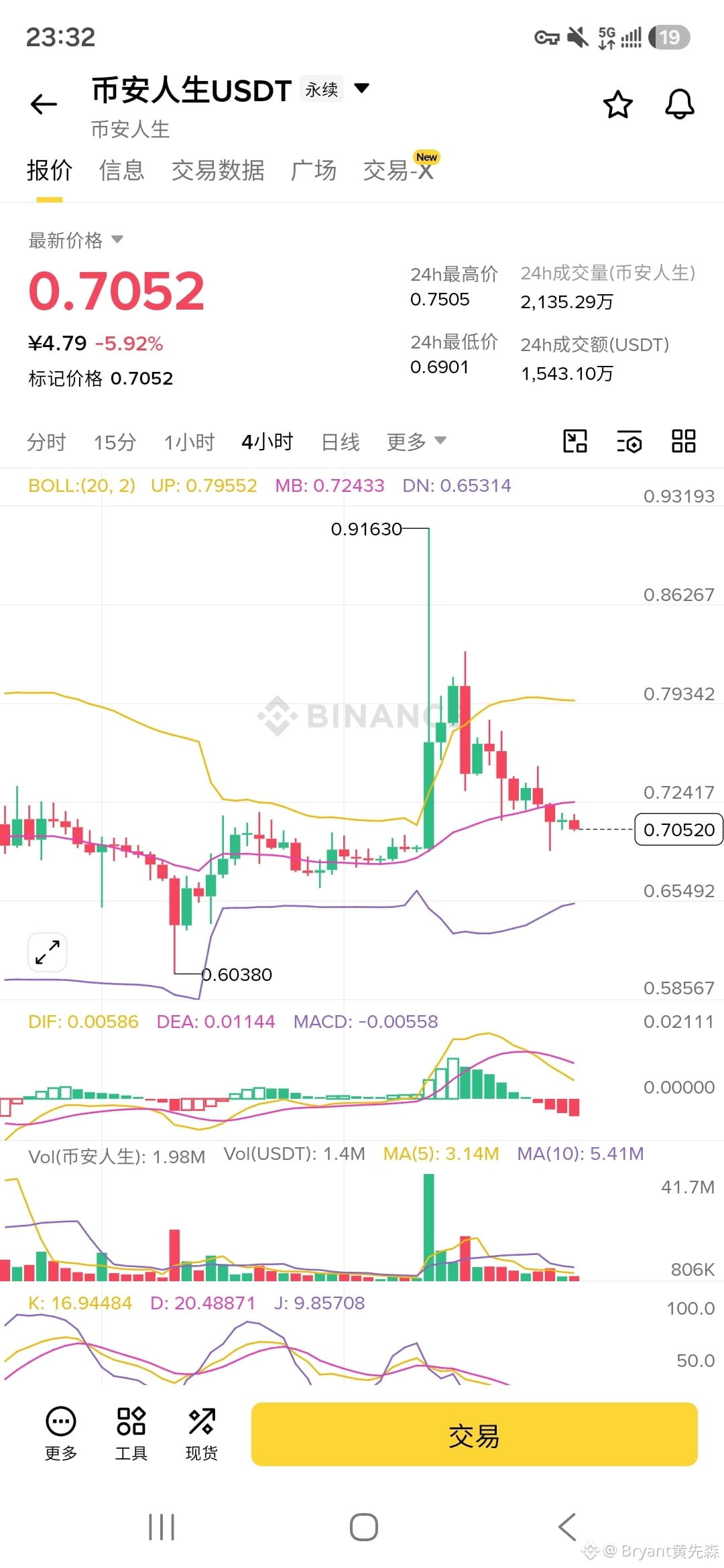
Has this $币安人生 just been another fleeting appearance these past two days? The day before yesterday it just surged to 0.92, but today it’s back down to 0.7. I was even thinking of waiting a bit longer, hoping it might touch 1—yet after a night’s sleep, the profits I’d gained were mostly吐 back out.
While scrolling through the Moments/Feed today, I noticed that the topics people are discussing have shifted from yesterday’s market movement to a new hotspot. That’s how the crypto world has always been: hotspots rotate faster and faster. But what really made me start thinking is this: as more users come onto the chain and applications become more complex, the interactions we need to complete every day will only become more and more frequent. Then the question is—has the underlying capability supporting these interactions kept up?
With that in mind, I spent a little time learning about @NewtonProtocol . By comparing, I found that while many projects focus on performance and speed, this one is more concerned with how to make on-chain automation execution trustworthy. For example, users can set execution rules in advance; within the scope of authorization, the network automatically completes tasks, and the entire execution process can be verified. There’s no need to give up control of assets for convenience.
This point really left an impression on me. More and more people are starting to experience AI agents, automated strategies, and on-chain payments—these scenarios all depend on continuous, high-frequency on-chain interactions. If every step requires manual handling, efficiency will keep dropping; but if everything relies entirely on centralized services, it’s hard to feel comfortable. What Newton Mainnet Beta wants to do is make trusted execution a foundational capability, so developers can build more applications around it—rather than each individual project having to solve the automation and security problems from scratch.
The market changes every day: today people discuss LAB, and tomorrow it might be another hotspot. But right now, I’d rather spend my time focusing on infrastructure like Newton Mainnet Beta. Only when underlying capabilities keep improving can the entire ecosystem truly go further. I also look forward to the value of $NEWT coming from real network usage, not from short-term sentiment-driven hype.
#newt $NEWT
Has this $币安人生 just been another fleeting appearance these past two days? The day before yesterday it just surged to 0.92, but today it’s back down to 0.7. I was even thinking of waiting a bit longer, hoping it might touch 1—yet after a night’s sleep, the profits I’d gained were mostly吐 back out.
While scrolling through the Moments/Feed today, I noticed that the topics people are discussing have shifted from yesterday’s market movement to a new hotspot. That’s how the crypto world has always been: hotspots rotate faster and faster. But what really made me start thinking is this: as more users come onto the chain and applications become more complex, the interactions we need to complete every day will only become more and more frequent. Then the question is—has the underlying capability supporting these interactions kept up?
With that in mind, I spent a little time learning about @NewtonProtocol . By comparing, I found that while many projects focus on performance and speed, this one is more concerned with how to make on-chain automation execution trustworthy. For example, users can set execution rules in advance; within the scope of authorization, the network automatically completes tasks, and the entire execution process can be verified. There’s no need to give up control of assets for convenience.
This point really left an impression on me. More and more people are starting to experience AI agents, automated strategies, and on-chain payments—these scenarios all depend on continuous, high-frequency on-chain interactions. If every step requires manual handling, efficiency will keep dropping; but if everything relies entirely on centralized services, it’s hard to feel comfortable. What Newton Mainnet Beta wants to do is make trusted execution a foundational capability, so developers can build more applications around it—rather than each individual project having to solve the automation and security problems from scratch.
The market changes every day: today people discuss LAB, and tomorrow it might be another hotspot. But right now, I’d rather spend my time focusing on infrastructure like Newton Mainnet Beta. Only when underlying capabilities keep improving can the entire ecosystem truly go further. I also look forward to the value of $NEWT coming from real network usage, not from short-term sentiment-driven hype.
#newt $NEWT
While scrolling through the Moments/Feed today, I noticed that the topics people are discussing have shifted from yesterday’s market movement to a new hotspot. That’s how the crypto world has always been: hotspots rotate faster and faster. But what really made me start thinking is this: as more users come onto the chain and applications become more complex, the interactions we need to complete every day will only become more and more frequent. Then the question is—has the underlying capability supporting these interactions kept up?
With that in mind, I spent a little time learning about @NewtonProtocol . By comparing, I found that while many projects focus on performance and speed, this one is more concerned with how to make on-chain automation execution trustworthy. For example, users can set execution rules in advance; within the scope of authorization, the network automatically completes tasks, and the entire execution process can be verified. There’s no need to give up control of assets for convenience.
This point really left an impression on me. More and more people are starting to experience AI agents, automated strategies, and on-chain payments—these scenarios all depend on continuous, high-frequency on-chain interactions. If every step requires manual handling, efficiency will keep dropping; but if everything relies entirely on centralized services, it’s hard to feel comfortable. What Newton Mainnet Beta wants to do is make trusted execution a foundational capability, so developers can build more applications around it—rather than each individual project having to solve the automation and security problems from scratch.
The market changes every day: today people discuss LAB, and tomorrow it might be another hotspot. But right now, I’d rather spend my time focusing on infrastructure like Newton Mainnet Beta. Only when underlying capabilities keep improving can the entire ecosystem truly go further. I also look forward to the value of $NEWT coming from real network usage, not from short-term sentiment-driven hype.
#newt $NEWT
2
704
·
--
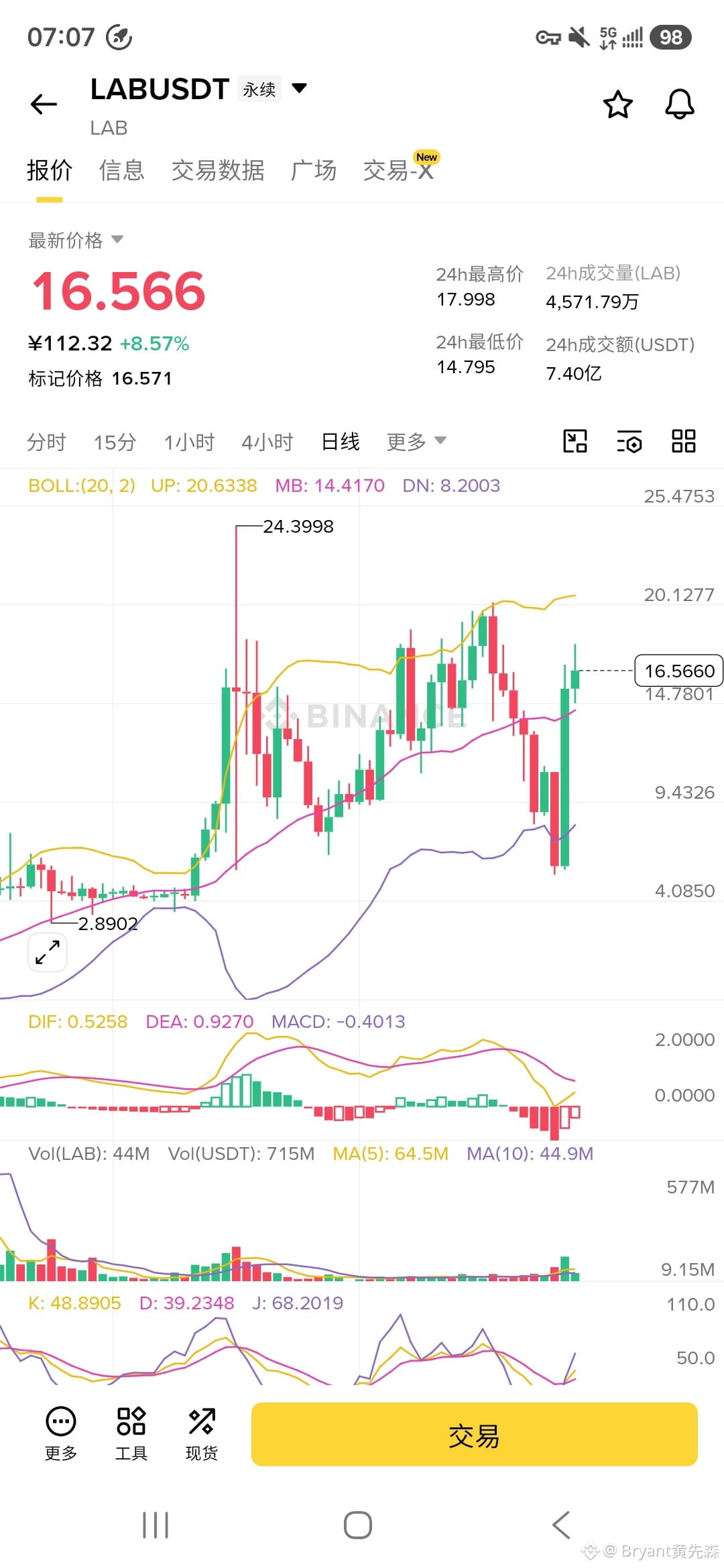
The market conditions have been extremely erratic lately. $LAB was dumped all the way from the peak down to around 5. I thought it might slide into a long period of bearish drift, but before a day even passed, it was pulled back up again. After going through this move, I actually feel less inclined to study the K-line charts.
The market keeps manufacturing emotions for people every day. Today it makes you feel like you missed a bull market, and tomorrow it makes you question life itself. If you keep chasing the price, it’s easy to put your attention in the wrong place.
Over the past few days, I spent a bit of time looking into the materials for @NewtonProtocol , and I also learned about Newton Mainnet Beta. I feel that this kind of project is worth researching slowly. It’s not just about how much it goes up today or down tomorrow; it’s asking a more realistic question: as on-chain applications become increasingly complex—when AI Agents, DeFi, and payment tools all need to automatically execute tasks—will users still be comfortable handing these operations over to the network?
One thing I really agree with about Newton Mainnet Beta is that it doesn’t sacrifice security for the sake of automation. Every execution is built on user authorization. The execution process can be verified, and control of assets remains with the user at all times. In plain terms, it aims to make automation into a capability you can trust, not a black box.
I’ve always believed that truly vibrant infrastructure usually doesn’t change its value because of a single day of big surges or crashes. When the market is good, everyone focuses on prices. When the market is wildly volatile, I’m actually more willing to pay attention to which projects are still seriously building the foundation. If in the future more and more developers really build applications around Newton Mainnet Beta, then I think the value of $NEWT will come more from real network usage than from fleeting hype driven by market sentiment.
#newt $NEWT
The market conditions have been extremely erratic lately. $LAB was dumped all the way from the peak down to around 5. I thought it might slide into a long period of bearish drift, but before a day even passed, it was pulled back up again. After going through this move, I actually feel less inclined to study the K-line charts.
The market keeps manufacturing emotions for people every day. Today it makes you feel like you missed a bull market, and tomorrow it makes you question life itself. If you keep chasing the price, it’s easy to put your attention in the wrong place.
Over the past few days, I spent a bit of time looking into the materials for @NewtonProtocol , and I also learned about Newton Mainnet Beta. I feel that this kind of project is worth researching slowly. It’s not just about how much it goes up today or down tomorrow; it’s asking a more realistic question: as on-chain applications become increasingly complex—when AI Agents, DeFi, and payment tools all need to automatically execute tasks—will users still be comfortable handing these operations over to the network?
One thing I really agree with about Newton Mainnet Beta is that it doesn’t sacrifice security for the sake of automation. Every execution is built on user authorization. The execution process can be verified, and control of assets remains with the user at all times. In plain terms, it aims to make automation into a capability you can trust, not a black box.
I’ve always believed that truly vibrant infrastructure usually doesn’t change its value because of a single day of big surges or crashes. When the market is good, everyone focuses on prices. When the market is wildly volatile, I’m actually more willing to pay attention to which projects are still seriously building the foundation. If in the future more and more developers really build applications around Newton Mainnet Beta, then I think the value of $NEWT will come more from real network usage than from fleeting hype driven by market sentiment.
#newt $NEWT
The market keeps manufacturing emotions for people every day. Today it makes you feel like you missed a bull market, and tomorrow it makes you question life itself. If you keep chasing the price, it’s easy to put your attention in the wrong place.
Over the past few days, I spent a bit of time looking into the materials for @NewtonProtocol , and I also learned about Newton Mainnet Beta. I feel that this kind of project is worth researching slowly. It’s not just about how much it goes up today or down tomorrow; it’s asking a more realistic question: as on-chain applications become increasingly complex—when AI Agents, DeFi, and payment tools all need to automatically execute tasks—will users still be comfortable handing these operations over to the network?
One thing I really agree with about Newton Mainnet Beta is that it doesn’t sacrifice security for the sake of automation. Every execution is built on user authorization. The execution process can be verified, and control of assets remains with the user at all times. In plain terms, it aims to make automation into a capability you can trust, not a black box.
I’ve always believed that truly vibrant infrastructure usually doesn’t change its value because of a single day of big surges or crashes. When the market is good, everyone focuses on prices. When the market is wildly volatile, I’m actually more willing to pay attention to which projects are still seriously building the foundation. If in the future more and more developers really build applications around Newton Mainnet Beta, then I think the value of $NEWT will come more from real network usage than from fleeting hype driven by market sentiment.
#newt $NEWT
338
·
--
Web3 for the Next Decade: What’s Really Valuable Isn’t the Apps, but the RulesOver the past few years, every so often a new hot track would emerge. For example, DeFi, NFTs, L2, Restaking, and now AI Agents. The discussions are almost always about which applications will grow fastest and which projects have the hottest momentum. When I used to look at projects, I followed this same way of thinking. I always assumed that the more dazzling the product and the more features it has, the greater the room for future imagination.
It wasn’t until recently that I reread the white paper from @NewtonProtocol that I realized my focus might have been off all along.
After reading the entire white paper, there isn’t much deliberate hype about how many users the future might bring, nor is there constant emphasis on what AI can do. Instead, it devotes a large portion of its space to protocols, rules, and execution mechanisms. At first, I even felt that these parts were a bit "slow to heat up." But the further I read, the more it became clear that it’s addressing a problem that every Web3 project will eventually face: if more and more operations are carried out by machines in the future, what exactly should we trust?
Web3 for the Next Decade: What’s Really Valuable Isn’t the Apps, but the Rules
Over the past few years, every so often a new hot track would emerge. For example, DeFi, NFTs, L2, Restaking, and now AI Agents. The discussions are almost always about which applications will grow fastest and which projects have the hottest momentum. When I used to look at projects, I followed this same way of thinking. I always assumed that the more dazzling the product and the more features it has, the greater the room for future imagination.
It wasn’t until recently that I reread the white paper from @NewtonProtocol that I realized my focus might have been off all along.
After reading the entire white paper, there isn’t much deliberate hype about how many users the future might bring, nor is there constant emphasis on what AI can do. Instead, it devotes a large portion of its space to protocols, rules, and execution mechanisms. At first, I even felt that these parts were a bit "slow to heat up." But the further I read, the more it became clear that it’s addressing a problem that every Web3 project will eventually face: if more and more operations are carried out by machines in the future, what exactly should we trust?
It wasn’t until recently that I reread the white paper from @NewtonProtocol that I realized my focus might have been off all along.
After reading the entire white paper, there isn’t much deliberate hype about how many users the future might bring, nor is there constant emphasis on what AI can do. Instead, it devotes a large portion of its space to protocols, rules, and execution mechanisms. At first, I even felt that these parts were a bit "slow to heat up." But the further I read, the more it became clear that it’s addressing a problem that every Web3 project will eventually face: if more and more operations are carried out by machines in the future, what exactly should we trust?
1
1
101
·
--
While everyone is talking about AI, Newton’s whitepaper answers the Web3 issue that’s easiest to overlookIf now you asked me to judge whether an AI project is worth paying attention to, I wouldn’t first look at how strong the model is, nor would I start by checking how flashy the demo functions are.
The reason is simple: AI capabilities are improving almost every month, but what Web3 truly lacks has never been a smarter agent. What it lacks is a set of rules that makes users feel safe and confident using agents. If this issue can’t be solved, then even the most powerful AI will be hard to truly manage assets, execute trades, or even participate in more complex on-chain tasks.
And it’s precisely for that reason that I’ve recently read the whitepaper of @NewtonProtocol carefully from start to finish. I originally just wanted to understand the design philosophy behind the Mainnet Beta, but what ended up leaving the deepest impression on me wasn’t the AI itself—it was its attempt to address a problem that almost all Web3 projects are avoiding.
While everyone is talking about AI, Newton’s whitepaper answers the Web3 issue that’s easiest to overlook
If now you asked me to judge whether an AI project is worth paying attention to, I wouldn’t first look at how strong the model is, nor would I start by checking how flashy the demo functions are.
The reason is simple: AI capabilities are improving almost every month, but what Web3 truly lacks has never been a smarter agent. What it lacks is a set of rules that makes users feel safe and confident using agents. If this issue can’t be solved, then even the most powerful AI will be hard to truly manage assets, execute trades, or even participate in more complex on-chain tasks.
And it’s precisely for that reason that I’ve recently read the whitepaper of @NewtonProtocol carefully from start to finish. I originally just wanted to understand the design philosophy behind the Mainnet Beta, but what ended up leaving the deepest impression on me wasn’t the AI itself—it was its attempt to address a problem that almost all Web3 projects are avoiding.
The reason is simple: AI capabilities are improving almost every month, but what Web3 truly lacks has never been a smarter agent. What it lacks is a set of rules that makes users feel safe and confident using agents. If this issue can’t be solved, then even the most powerful AI will be hard to truly manage assets, execute trades, or even participate in more complex on-chain tasks.
And it’s precisely for that reason that I’ve recently read the whitepaper of @NewtonProtocol carefully from start to finish. I originally just wanted to understand the design philosophy behind the Mainnet Beta, but what ended up leaving the deepest impression on me wasn’t the AI itself—it was its attempt to address a problem that almost all Web3 projects are avoiding.
3
2
129
·
--
Verified
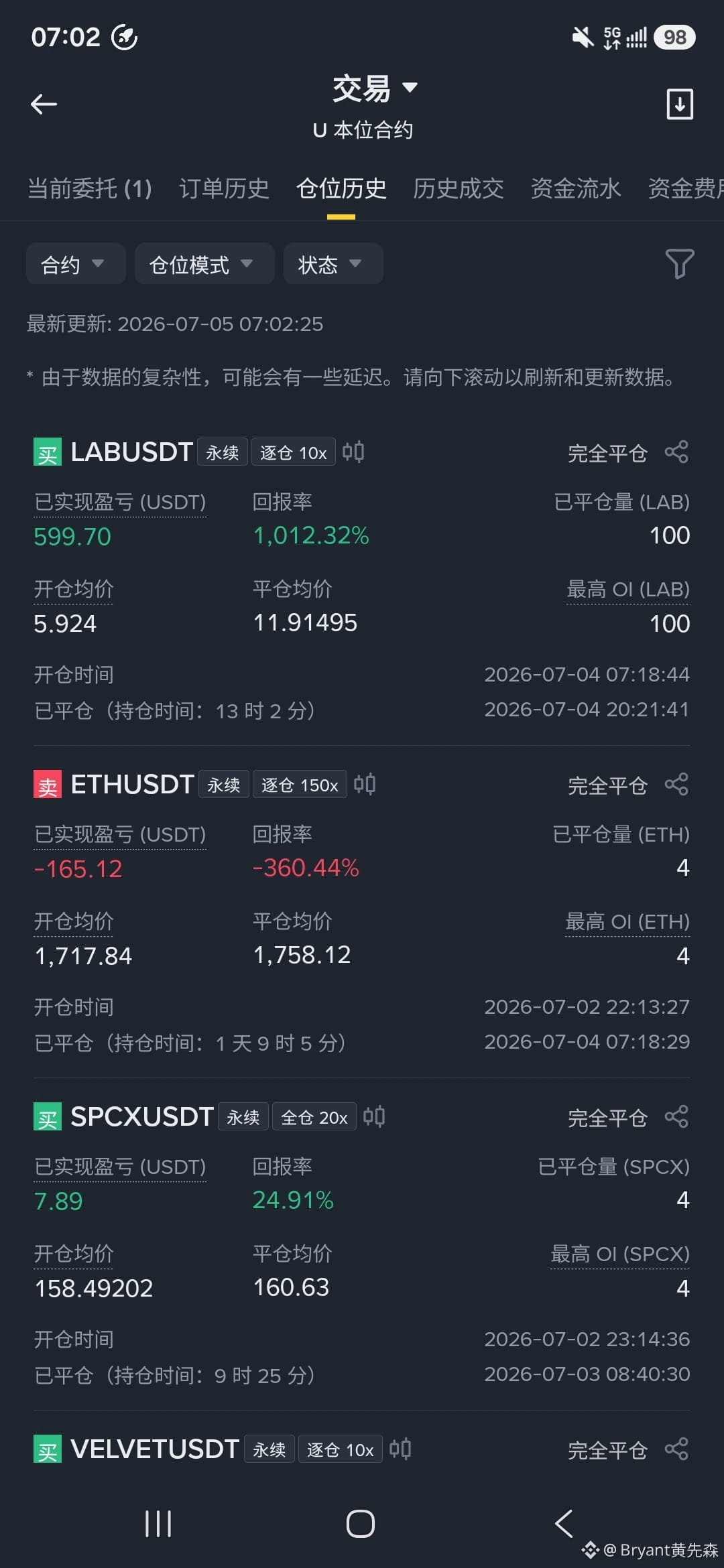
$LAB I ended up back at the position of 15. Yesterday I bought 1,000 units at 4.9, and when it rose to 12, I fully sold out. Even though I made a profit of 600U, seeing the price keep going up, I couldn’t help regretting it: why is it that I can never hold onto it?
Later, I thought about it, and I realized that this kind of emotion is something many people go through. When the market is rising, people fear a pullback; when the market is falling, they fear it will drop further. In the end, most of the energy goes into short-term price fluctuations, while very little is spent thinking about where a project’s true long-term value actually lies.
Recently, while paying attention to @NewtonProtocol , I’ve had some new ideas. As Newton Mainnet Beta continues to progress, what it aims to solve isn’t short-term market hype, but the increasingly important foundational capability of on-chain automated execution. In the future, users won’t need to repeatedly complete tedious steps like signing, authorizing, and executing manually. Instead, tasks can be automatically completed based on preset rules, and the entire execution process can be verified on-chain, while control of the assets remains in the hands of the users.
I think this is also why Newton Mainnet Beta is worth paying attention to. As applications like DeFi, payments, and AI Agents continue to develop, the number of on-chain interactions will only increase. Efficient, secure, and trustworthy automated execution will become an indispensable part of the ecosystem. For developers, they can build more complex applications on top of Newton. For ordinary users, it can also provide a smoother and safer user experience.
Missing out on a profit from one trade isn’t the real problem. What’s truly worth thinking about is which projects have solid underlying logic for continuous growth. If Newton Mainnet Beta can keep attracting more developers and applications to join the ecosystem and generate real network usage demand, then I believe $NEWT is more worth tracking long-term—not just focusing on short-term price movements.
#Newt #newt $NEWT
$LAB I ended up back at the position of 15. Yesterday I bought 1,000 units at 4.9, and when it rose to 12, I fully sold out. Even though I made a profit of 600U, seeing the price keep going up, I couldn’t help regretting it: why is it that I can never hold onto it?
Later, I thought about it, and I realized that this kind of emotion is something many people go through. When the market is rising, people fear a pullback; when the market is falling, they fear it will drop further. In the end, most of the energy goes into short-term price fluctuations, while very little is spent thinking about where a project’s true long-term value actually lies.
Recently, while paying attention to @NewtonProtocol , I’ve had some new ideas. As Newton Mainnet Beta continues to progress, what it aims to solve isn’t short-term market hype, but the increasingly important foundational capability of on-chain automated execution. In the future, users won’t need to repeatedly complete tedious steps like signing, authorizing, and executing manually. Instead, tasks can be automatically completed based on preset rules, and the entire execution process can be verified on-chain, while control of the assets remains in the hands of the users.
I think this is also why Newton Mainnet Beta is worth paying attention to. As applications like DeFi, payments, and AI Agents continue to develop, the number of on-chain interactions will only increase. Efficient, secure, and trustworthy automated execution will become an indispensable part of the ecosystem. For developers, they can build more complex applications on top of Newton. For ordinary users, it can also provide a smoother and safer user experience.
Missing out on a profit from one trade isn’t the real problem. What’s truly worth thinking about is which projects have solid underlying logic for continuous growth. If Newton Mainnet Beta can keep attracting more developers and applications to join the ecosystem and generate real network usage demand, then I believe $NEWT is more worth tracking long-term—not just focusing on short-term price movements.
#Newt #newt $NEWT
Later, I thought about it, and I realized that this kind of emotion is something many people go through. When the market is rising, people fear a pullback; when the market is falling, they fear it will drop further. In the end, most of the energy goes into short-term price fluctuations, while very little is spent thinking about where a project’s true long-term value actually lies.
Recently, while paying attention to @NewtonProtocol , I’ve had some new ideas. As Newton Mainnet Beta continues to progress, what it aims to solve isn’t short-term market hype, but the increasingly important foundational capability of on-chain automated execution. In the future, users won’t need to repeatedly complete tedious steps like signing, authorizing, and executing manually. Instead, tasks can be automatically completed based on preset rules, and the entire execution process can be verified on-chain, while control of the assets remains in the hands of the users.
I think this is also why Newton Mainnet Beta is worth paying attention to. As applications like DeFi, payments, and AI Agents continue to develop, the number of on-chain interactions will only increase. Efficient, secure, and trustworthy automated execution will become an indispensable part of the ecosystem. For developers, they can build more complex applications on top of Newton. For ordinary users, it can also provide a smoother and safer user experience.
Missing out on a profit from one trade isn’t the real problem. What’s truly worth thinking about is which projects have solid underlying logic for continuous growth. If Newton Mainnet Beta can keep attracting more developers and applications to join the ecosystem and generate real network usage demand, then I believe $NEWT is more worth tracking long-term—not just focusing on short-term price movements.
#Newt #newt $NEWT
3
2
805
·
--
Starting from the whitepaper—why I think Newton Protocol’s design is worth serious study?When people read a project whitepaper, what they care about most is usually the token model, the funding background, or the future roadmap. But when I read the whitepaper for @NewtonProtocol , I’m more focused on the question it tries to answer: if, in the future, a large number of on-chain operations are handed over to intelligent Agents to carry out, how can we ensure those Agents are trustworthy enough?
This is what I think is the biggest difference between Newton Protocol and many other AI narrative projects. Many projects focus on what Agents can do, whereas Newton is more concerned with how Agents should securely execute tasks—and how users can always retain control over assets and permissions. The whitepaper repeatedly emphasizes that it’s not about having AI replace users, but about establishing a verifiable, auditable, and permissioned execution framework.
Starting from the whitepaper—why I think Newton Protocol’s design is worth serious study?
When people read a project whitepaper, what they care about most is usually the token model, the funding background, or the future roadmap. But when I read the whitepaper for @NewtonProtocol , I’m more focused on the question it tries to answer: if, in the future, a large number of on-chain operations are handed over to intelligent Agents to carry out, how can we ensure those Agents are trustworthy enough?
This is what I think is the biggest difference between Newton Protocol and many other AI narrative projects. Many projects focus on what Agents can do, whereas Newton is more concerned with how Agents should securely execute tasks—and how users can always retain control over assets and permissions. The whitepaper repeatedly emphasizes that it’s not about having AI replace users, but about establishing a verifiable, auditable, and permissioned execution framework.
This is what I think is the biggest difference between Newton Protocol and many other AI narrative projects. Many projects focus on what Agents can do, whereas Newton is more concerned with how Agents should securely execute tasks—and how users can always retain control over assets and permissions. The whitepaper repeatedly emphasizes that it’s not about having AI replace users, but about establishing a verifiable, auditable, and permissioned execution framework.
1
1
178
·
--
An Yiwu shop that’s less than 10 square meters sold for 17 million yuan, yet it only comes with the right to use it—and you still have to pay rent every year. Most people’s first reaction is that it’s too expensive, but what actually makes it valuable isn’t the size; it’s the location. Because it’s on the golden passageway with steady foot traffic and ongoing trading opportunities, the market is willing to pay a high premium for this scarce resource.
I think Web3 has a similar logic. Many people are used to focusing on token prices, but they overlook what truly determines value: what role the project plays within the broader ecosystem, and whether it can become the foundational infrastructure that other applications can’t do without.
That’s also why I’ve been paying sustained attention to @NewtonProtocol recently. As the Newton Mainnet Beta progresses, what it’s building isn’t just a new main network—it’s a foundational network that can support on-chain automated execution. In the future, whether it’s DeFi strategies, on-chain payments, or collaboration between AI agents, all these scenarios will require secure, trustworthy, and verifiable automated execution capabilities. And Newton Mainnet Beta is precisely providing the underlying support for those use cases.
Compared with those that only chase transaction speed, @NewtonProtocol focuses more on whether automated execution is safe, whether authorization is transparent, and whether the execution process is verifiable—so developers can build more complex applications, and ordinary users can feel confident using on-chain services. I believe this is the real key to determining ecosystem competitiveness.
#newt $NEWT
An Yiwu shop that’s less than 10 square meters sold for 17 million yuan, yet it only comes with the right to use it—and you still have to pay rent every year. Most people’s first reaction is that it’s too expensive, but what actually makes it valuable isn’t the size; it’s the location. Because it’s on the golden passageway with steady foot traffic and ongoing trading opportunities, the market is willing to pay a high premium for this scarce resource.
I think Web3 has a similar logic. Many people are used to focusing on token prices, but they overlook what truly determines value: what role the project plays within the broader ecosystem, and whether it can become the foundational infrastructure that other applications can’t do without.
That’s also why I’ve been paying sustained attention to @NewtonProtocol recently. As the Newton Mainnet Beta progresses, what it’s building isn’t just a new main network—it’s a foundational network that can support on-chain automated execution. In the future, whether it’s DeFi strategies, on-chain payments, or collaboration between AI agents, all these scenarios will require secure, trustworthy, and verifiable automated execution capabilities. And Newton Mainnet Beta is precisely providing the underlying support for those use cases.
Compared with those that only chase transaction speed, @NewtonProtocol focuses more on whether automated execution is safe, whether authorization is transparent, and whether the execution process is verifiable—so developers can build more complex applications, and ordinary users can feel confident using on-chain services. I believe this is the real key to determining ecosystem competitiveness.
#newt $NEWT
I think Web3 has a similar logic. Many people are used to focusing on token prices, but they overlook what truly determines value: what role the project plays within the broader ecosystem, and whether it can become the foundational infrastructure that other applications can’t do without.
That’s also why I’ve been paying sustained attention to @NewtonProtocol recently. As the Newton Mainnet Beta progresses, what it’s building isn’t just a new main network—it’s a foundational network that can support on-chain automated execution. In the future, whether it’s DeFi strategies, on-chain payments, or collaboration between AI agents, all these scenarios will require secure, trustworthy, and verifiable automated execution capabilities. And Newton Mainnet Beta is precisely providing the underlying support for those use cases.
Compared with those that only chase transaction speed, @NewtonProtocol focuses more on whether automated execution is safe, whether authorization is transparent, and whether the execution process is verifiable—so developers can build more complex applications, and ordinary users can feel confident using on-chain services. I believe this is the real key to determining ecosystem competitiveness.
#newt $NEWT

2
3
175
·
--
Why Mainnet Beta is worth more attention than a routine testWhen many people see a project launch Mainnet Beta, their first instinct is to look for whether there are incentives, whether there will be an air drop, or when tokens will be issued. But in my view, what’s truly worth paying attention to is what the Beta itself can validate.
The biggest takeaway from my recent, ongoing observation of <c-12/> is that it hasn’t turned Mainnet Beta into a simple feature demonstration; instead, it has let the entire network accept real users and developers’ testing ahead of time. For any foundational infrastructure that hopes to develop long-term, this step matters far more than simply releasing a new version.
Why Mainnet Beta is worth more attention than a routine test
When many people see a project launch Mainnet Beta, their first instinct is to look for whether there are incentives, whether there will be an air drop, or when tokens will be issued. But in my view, what’s truly worth paying attention to is what the Beta itself can validate.
The biggest takeaway from my recent, ongoing observation of <c-12/> is that it hasn’t turned Mainnet Beta into a simple feature demonstration; instead, it has let the entire network accept real users and developers’ testing ahead of time. For any foundational infrastructure that hopes to develop long-term, this step matters far more than simply releasing a new version.
The biggest takeaway from my recent, ongoing observation of <c-12/> is that it hasn’t turned Mainnet Beta into a simple feature demonstration; instead, it has let the entire network accept real users and developers’ testing ahead of time. For any foundational infrastructure that hopes to develop long-term, this step matters far more than simply releasing a new version.
1
1
147
·
--
Verified
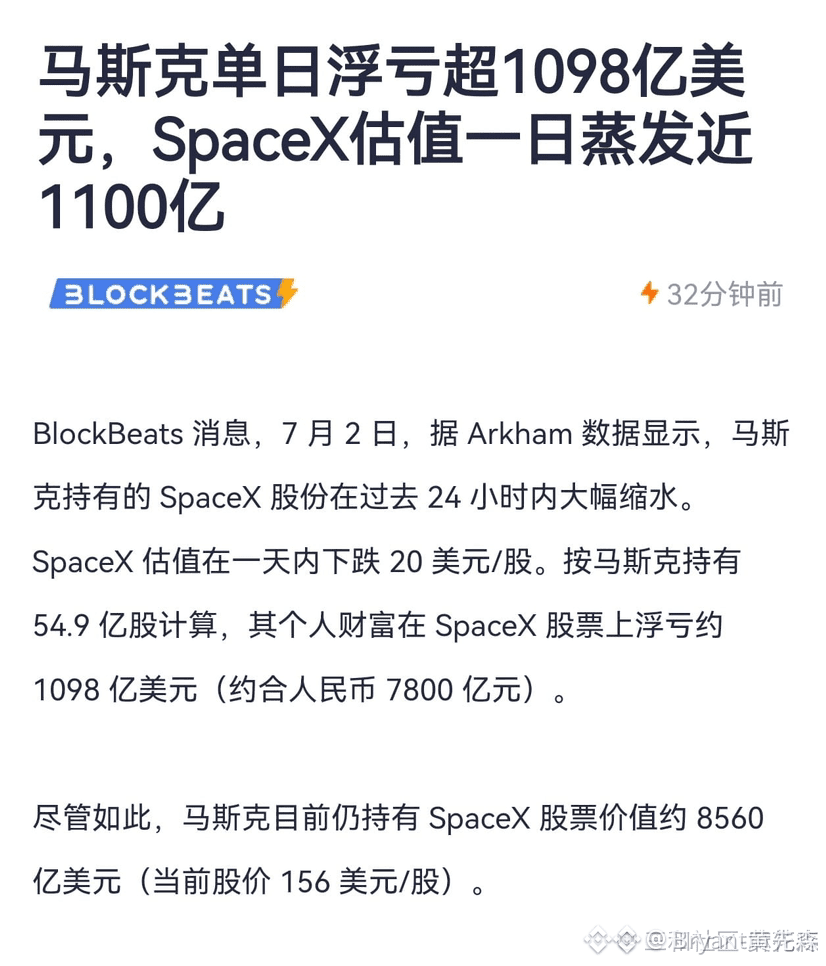
$SPCX Musk is already in the red too; didn’t they say it was going to hit ten thousand? How has unrealized losses now exceeded 109.8 billion?
This makes me think that the market never changes its operating rules because of one person’s influence. No matter how strong the capital or how high the visibility, price volatility cannot be avoided. What truly supports long-term value in the end is whether the project itself has sustained growth in users, developers, and real-world application scenarios, rather than short-term sentiment.
I pay attention to @NewtonProtocol precisely because its approach leans more toward long-term building. With the launch of Newton Mainnet Beta, the project has begun to validate its core capability—building a trustworthy on-chain automated execution network. In the future, users will no longer need to repeatedly perform complex operations manually; instead, they can automatically execute tasks according to preset conditions. At the same time, every execution is verified on-chain, the scope of authorization is clear and traceable, and assets remain under the user’s control. This not only improves efficiency, but also reduces the security risks brought by frequent interactions.
I believe the most noteworthy thing about Newton Mainnet Beta is not just the launch of a mainnet, but that it provides the entire ecosystem with a scalable automation infrastructure. Developers can build different types of applications around it, such as DeFi, payments, subscriptions, and AI Agents, enabling all kinds of on-chain services to run securely and transparently without relying on centralized custody.
Every day the market talks about who made money and who lost money, but what truly determines a project’s future is whether it can attract developers to keep building the ecosystem and attract users to keep using the network. Compared with short-term price fluctuations, I look forward more to seeing @NewtonProtocol continue to improve the ecosystem based on Newton Mainnet Beta and bring more real applications into production. When network usage keeps rising, the value of $NEWT will also have a more solid foundation, rather than relying solely on market sentiment.
#newt $NEWT
$SPCX Musk is already in the red too; didn’t they say it was going to hit ten thousand? How has unrealized losses now exceeded 109.8 billion?
This makes me think that the market never changes its operating rules because of one person’s influence. No matter how strong the capital or how high the visibility, price volatility cannot be avoided. What truly supports long-term value in the end is whether the project itself has sustained growth in users, developers, and real-world application scenarios, rather than short-term sentiment.
I pay attention to @NewtonProtocol precisely because its approach leans more toward long-term building. With the launch of Newton Mainnet Beta, the project has begun to validate its core capability—building a trustworthy on-chain automated execution network. In the future, users will no longer need to repeatedly perform complex operations manually; instead, they can automatically execute tasks according to preset conditions. At the same time, every execution is verified on-chain, the scope of authorization is clear and traceable, and assets remain under the user’s control. This not only improves efficiency, but also reduces the security risks brought by frequent interactions.
I believe the most noteworthy thing about Newton Mainnet Beta is not just the launch of a mainnet, but that it provides the entire ecosystem with a scalable automation infrastructure. Developers can build different types of applications around it, such as DeFi, payments, subscriptions, and AI Agents, enabling all kinds of on-chain services to run securely and transparently without relying on centralized custody.
Every day the market talks about who made money and who lost money, but what truly determines a project’s future is whether it can attract developers to keep building the ecosystem and attract users to keep using the network. Compared with short-term price fluctuations, I look forward more to seeing @NewtonProtocol continue to improve the ecosystem based on Newton Mainnet Beta and bring more real applications into production. When network usage keeps rising, the value of $NEWT will also have a more solid foundation, rather than relying solely on market sentiment.
#newt $NEWT
This makes me think that the market never changes its operating rules because of one person’s influence. No matter how strong the capital or how high the visibility, price volatility cannot be avoided. What truly supports long-term value in the end is whether the project itself has sustained growth in users, developers, and real-world application scenarios, rather than short-term sentiment.
I pay attention to @NewtonProtocol precisely because its approach leans more toward long-term building. With the launch of Newton Mainnet Beta, the project has begun to validate its core capability—building a trustworthy on-chain automated execution network. In the future, users will no longer need to repeatedly perform complex operations manually; instead, they can automatically execute tasks according to preset conditions. At the same time, every execution is verified on-chain, the scope of authorization is clear and traceable, and assets remain under the user’s control. This not only improves efficiency, but also reduces the security risks brought by frequent interactions.
I believe the most noteworthy thing about Newton Mainnet Beta is not just the launch of a mainnet, but that it provides the entire ecosystem with a scalable automation infrastructure. Developers can build different types of applications around it, such as DeFi, payments, subscriptions, and AI Agents, enabling all kinds of on-chain services to run securely and transparently without relying on centralized custody.
Every day the market talks about who made money and who lost money, but what truly determines a project’s future is whether it can attract developers to keep building the ecosystem and attract users to keep using the network. Compared with short-term price fluctuations, I look forward more to seeing @NewtonProtocol continue to improve the ecosystem based on Newton Mainnet Beta and bring more real applications into production. When network usage keeps rising, the value of $NEWT will also have a more solid foundation, rather than relying solely on market sentiment.
#newt $NEWT
1
1
329
·
--
Why more and more people are starting to pay attention to Newton Mainnet Beta?I recently noticed a phenomenon: when people try new projects now, they no longer just care about whether there’s an air drop or incentives. Instead, they start to genuinely see whether the project can solve the pain points of everyday Web3 use. I came to this idea and spent some time experiencing the @NewtonProtocol Mainnet Beta.
As the on-chain ecosystem becomes increasingly rich, every day we interact with different protocols. From asset management, to trading, to cross-chain transfers and approvals—each step requires the user to do it themselves. As there are more operations, not only does efficiency decrease, but it also increases the risk of accidental mistakes and problems with permission management. I believe that if Web3 wants to attract more mainstream users in the future, the first thing to solve is not whether the functionality is rich enough, but rather how to make complex processes simple—while still ensuring security.
Why more and more people are starting to pay attention to Newton Mainnet Beta?
I recently noticed a phenomenon: when people try new projects now, they no longer just care about whether there’s an air drop or incentives. Instead, they start to genuinely see whether the project can solve the pain points of everyday Web3 use. I came to this idea and spent some time experiencing the @NewtonProtocol Mainnet Beta.
As the on-chain ecosystem becomes increasingly rich, every day we interact with different protocols. From asset management, to trading, to cross-chain transfers and approvals—each step requires the user to do it themselves. As there are more operations, not only does efficiency decrease, but it also increases the risk of accidental mistakes and problems with permission management. I believe that if Web3 wants to attract more mainstream users in the future, the first thing to solve is not whether the functionality is rich enough, but rather how to make complex processes simple—while still ensuring security.
As the on-chain ecosystem becomes increasingly rich, every day we interact with different protocols. From asset management, to trading, to cross-chain transfers and approvals—each step requires the user to do it themselves. As there are more operations, not only does efficiency decrease, but it also increases the risk of accidental mistakes and problems with permission management. I believe that if Web3 wants to attract more mainstream users in the future, the first thing to solve is not whether the functionality is rich enough, but rather how to make complex processes simple—while still ensuring security.
1
165
·
--
The returns from this round of Binance #Alpha have brought many people’s attention back to the chain. Every day, many people are calculating points, researching interactions, and participating in token airdrops. On the surface, everyone is chasing returns, but in reality, it’s enabling an increasing number of users to truly experience Web3 applications. The deeper you get involved, the more I feel that whether a project can keep users long-term ultimately depends on whether the on-chain experience is smooth enough and secure enough.
That’s also why I’ve been focusing on @NewtonProtocol recently. With the opening of the Newton Mainnet Beta, what the project is showcasing is not just a new mainnet phase, but also the validation of a new on-chain interaction model. It aims to let users complete complex tasks through smart automation, while ensuring the execution process is verifiable, the scope of authorization is clear, and the assets always remain under the user’s control—not by sacrificing security for convenience.
I believe this capability will become increasingly important as the ecosystem develops. In the future, whether it’s DeFi, payments, or AI agents, it will require frequent on-chain operations. If each execution depends on manual confirmation, it’s not only inefficient—it also can’t support more complex application scenarios. The Newton Mainnet Beta is trying to provide underlying support for these needs, enabling automation to be built on trusted execution rather than simply chasing speed.
Alpha brings traffic and helps more people start to engage with the real on-chain world. But what truly keeps users is the infrastructure that continuously improves the user experience. From this perspective, I’m more hopeful to see @NewtonProtocol attract more developers and applications into the ecosystem based on the Newton Mainnet Beta, and I also look forward to $NEWT releasing greater long-term value as the ecosystem matures.
#newt $NEWT
The returns from this round of Binance #Alpha have brought many people’s attention back to the chain. Every day, many people are calculating points, researching interactions, and participating in token airdrops. On the surface, everyone is chasing returns, but in reality, it’s enabling an increasing number of users to truly experience Web3 applications. The deeper you get involved, the more I feel that whether a project can keep users long-term ultimately depends on whether the on-chain experience is smooth enough and secure enough.
That’s also why I’ve been focusing on @NewtonProtocol recently. With the opening of the Newton Mainnet Beta, what the project is showcasing is not just a new mainnet phase, but also the validation of a new on-chain interaction model. It aims to let users complete complex tasks through smart automation, while ensuring the execution process is verifiable, the scope of authorization is clear, and the assets always remain under the user’s control—not by sacrificing security for convenience.
I believe this capability will become increasingly important as the ecosystem develops. In the future, whether it’s DeFi, payments, or AI agents, it will require frequent on-chain operations. If each execution depends on manual confirmation, it’s not only inefficient—it also can’t support more complex application scenarios. The Newton Mainnet Beta is trying to provide underlying support for these needs, enabling automation to be built on trusted execution rather than simply chasing speed.
Alpha brings traffic and helps more people start to engage with the real on-chain world. But what truly keeps users is the infrastructure that continuously improves the user experience. From this perspective, I’m more hopeful to see @NewtonProtocol attract more developers and applications into the ecosystem based on the Newton Mainnet Beta, and I also look forward to $NEWT releasing greater long-term value as the ecosystem matures.
#newt $NEWT
That’s also why I’ve been focusing on @NewtonProtocol recently. With the opening of the Newton Mainnet Beta, what the project is showcasing is not just a new mainnet phase, but also the validation of a new on-chain interaction model. It aims to let users complete complex tasks through smart automation, while ensuring the execution process is verifiable, the scope of authorization is clear, and the assets always remain under the user’s control—not by sacrificing security for convenience.
I believe this capability will become increasingly important as the ecosystem develops. In the future, whether it’s DeFi, payments, or AI agents, it will require frequent on-chain operations. If each execution depends on manual confirmation, it’s not only inefficient—it also can’t support more complex application scenarios. The Newton Mainnet Beta is trying to provide underlying support for these needs, enabling automation to be built on trusted execution rather than simply chasing speed.
Alpha brings traffic and helps more people start to engage with the real on-chain world. But what truly keeps users is the infrastructure that continuously improves the user experience. From this perspective, I’m more hopeful to see @NewtonProtocol attract more developers and applications into the ecosystem based on the Newton Mainnet Beta, and I also look forward to $NEWT releasing greater long-term value as the ecosystem matures.
#newt $NEWT
3
1
128
·
--
Why I started paying consistent attention to Newton Protocol?I’ve tried a number of new projects during this period, and I noticed a really interesting phenomenon: many protocols are discussing AI, agents, and automation, but not many are actually worth my time for sustained hands-on testing. The reason is simple—if you just use AI as a marketing tagline, it’s difficult to solve the problem of on-chain operations becoming increasingly complex. What’s truly worth paying attention to are the infrastructures that enable automation to be both highly efficient and trustworthy—and that’s also why I started delving deeper into my experience with @NewtonProtocol .
After experiencing it, my biggest takeaway is that Newton hasn’t treated the Mainnet Beta like a normal test network. Instead, it’s validating an entirely new on-chain interaction model. As DeFi, cross-chain activity, and on-chain applications become increasingly rich, users need to complete lots of repetitive tasks every day—such as granting approvals, signing, and managing assets. These workflows are not only time-consuming, but they also carry risks due to human error.
Why I started paying consistent attention to Newton Protocol?
I’ve tried a number of new projects during this period, and I noticed a really interesting phenomenon: many protocols are discussing AI, agents, and automation, but not many are actually worth my time for sustained hands-on testing. The reason is simple—if you just use AI as a marketing tagline, it’s difficult to solve the problem of on-chain operations becoming increasingly complex. What’s truly worth paying attention to are the infrastructures that enable automation to be both highly efficient and trustworthy—and that’s also why I started delving deeper into my experience with @NewtonProtocol .
After experiencing it, my biggest takeaway is that Newton hasn’t treated the Mainnet Beta like a normal test network. Instead, it’s validating an entirely new on-chain interaction model. As DeFi, cross-chain activity, and on-chain applications become increasingly rich, users need to complete lots of repetitive tasks every day—such as granting approvals, signing, and managing assets. These workflows are not only time-consuming, but they also carry risks due to human error.
After experiencing it, my biggest takeaway is that Newton hasn’t treated the Mainnet Beta like a normal test network. Instead, it’s validating an entirely new on-chain interaction model. As DeFi, cross-chain activity, and on-chain applications become increasingly rich, users need to complete lots of repetitive tasks every day—such as granting approvals, signing, and managing assets. These workflows are not only time-consuming, but they also carry risks due to human error.
1
3
138
·
--
Recently, Binance Alpha’s returns have definitely reactivated a lot of people. Every day, everyone studies points, participates in interactions, and races to get the airdrops. For many people, their on-chain interaction frequency is much higher than before. My own biggest takeaway from participating wasn’t just how much I earned, but that high-frequency interactions are revealing an increasingly clear problem: as signatures, authorizations, and automated execution become more and more frequent, can the on-chain experience still balance security, transparency, and efficiency?
That’s also why I started paying sustained attention to @NewtonProtocol . Instead of simply emphasizing performance, Newton Mainnet Beta focuses on how users can safely complete automated on-chain operations. It aims to use a verifiable execution mechanism so that automation no longer means handing over asset control to a third party. Rather, tasks are carried out within the scope of the user’s authorization, every execution leaves a trace, and every action can be verified for its source. For users who rely more and more on on-chain interactions, this design has more real-world value than merely improving TPS.
I believe that Alpha brings more than just a wave of airdrop hype—it’s also getting more and more people to engage with the real on-chain world. And as the number of users continues to grow, infrastructure like Newton Mainnet Beta—capable of balancing automation, security, and transparency—will become important support for the ecosystem’s development. If, in the future, developers can build more practical applications on top of Newton Mainnet Beta, then $NEWT ’s value may come not only from ecosystem growth, but also from how it solves the most genuine and easiest-to-overlook issues in high-frequency on-chain interactions.#Newt
#newt $NEWT
Recently, Binance Alpha’s returns have definitely reactivated a lot of people. Every day, everyone studies points, participates in interactions, and races to get the airdrops. For many people, their on-chain interaction frequency is much higher than before. My own biggest takeaway from participating wasn’t just how much I earned, but that high-frequency interactions are revealing an increasingly clear problem: as signatures, authorizations, and automated execution become more and more frequent, can the on-chain experience still balance security, transparency, and efficiency?
That’s also why I started paying sustained attention to @NewtonProtocol . Instead of simply emphasizing performance, Newton Mainnet Beta focuses on how users can safely complete automated on-chain operations. It aims to use a verifiable execution mechanism so that automation no longer means handing over asset control to a third party. Rather, tasks are carried out within the scope of the user’s authorization, every execution leaves a trace, and every action can be verified for its source. For users who rely more and more on on-chain interactions, this design has more real-world value than merely improving TPS.
I believe that Alpha brings more than just a wave of airdrop hype—it’s also getting more and more people to engage with the real on-chain world. And as the number of users continues to grow, infrastructure like Newton Mainnet Beta—capable of balancing automation, security, and transparency—will become important support for the ecosystem’s development. If, in the future, developers can build more practical applications on top of Newton Mainnet Beta, then $NEWT ’s value may come not only from ecosystem growth, but also from how it solves the most genuine and easiest-to-overlook issues in high-frequency on-chain interactions.#Newt
#newt $NEWT
That’s also why I started paying sustained attention to @NewtonProtocol . Instead of simply emphasizing performance, Newton Mainnet Beta focuses on how users can safely complete automated on-chain operations. It aims to use a verifiable execution mechanism so that automation no longer means handing over asset control to a third party. Rather, tasks are carried out within the scope of the user’s authorization, every execution leaves a trace, and every action can be verified for its source. For users who rely more and more on on-chain interactions, this design has more real-world value than merely improving TPS.
I believe that Alpha brings more than just a wave of airdrop hype—it’s also getting more and more people to engage with the real on-chain world. And as the number of users continues to grow, infrastructure like Newton Mainnet Beta—capable of balancing automation, security, and transparency—will become important support for the ecosystem’s development. If, in the future, developers can build more practical applications on top of Newton Mainnet Beta, then $NEWT ’s value may come not only from ecosystem growth, but also from how it solves the most genuine and easiest-to-overlook issues in high-frequency on-chain interactions.#Newt
#newt $NEWT
1
1
174
·
--
It's here, it's here, it's here. Today at 18:00, claim the #ALPHA airdrop, 224 points. My personal suggestion is: only eat it if you get a high score, because for old-coin airdrops, it's basically around 30U. With a high score, you can also reduce your wear-and-tear costs and avoid wasting cycles; if your score is low, I think you can wait first for the new-coin Pre-TGE subscription/new issue. The wallet activity prediction bonus of 5 points—I’m also planning to wait until the preview is released before deciding whether to do it.
Now I’ve noticed a pretty interesting phenomenon: everyone studies every day how to improve their score, how to calculate returns, and when it’s most cost-effective to participate, yet they rarely consider why these rules keep being adjusted. The platform probably wants to filter for something—not necessarily the fastest runner, but people who are truly willing to keep participating in the ecosystem.
Thinking of that, I’m reminded of @OpenGradient . At first, many people came across it through CreatorPad, but later, after continuing to pay attention, they found that a lot of its design is centered around one goal: to make sure every role in the ecosystem truly participates. Developers can deploy models; nodes handle inference tasks; ordinary users use AI services through OpenGradient Chat. And OPG is like the connector in the whole network, linking these originally independent actions together.
One thing I like is that it doesn’t just keep users stuck in a single experience. It hopes that every real use will become part of the ecosystem. For developers, the model can gain more calls; for nodes, they can participate in running the network; and for users, every time you use AI, you’re helping the entire ecosystem keep growing.
Every day in the crypto space, there are new rules, new activities, and new hotspots. But what truly makes me willing to spend time researching is still projects like this—ones that genuinely combine the product, the users, and the ecosystem. Instead of chasing a one-time short-term trend, I’m more looking forward to seeing OpenGradient’s ecosystem improve step by step. That kind of growth is actually more interesting.
#opg $OPG
It's here, it's here, it's here. Today at 18:00, claim the #ALPHA airdrop, 224 points. My personal suggestion is: only eat it if you get a high score, because for old-coin airdrops, it's basically around 30U. With a high score, you can also reduce your wear-and-tear costs and avoid wasting cycles; if your score is low, I think you can wait first for the new-coin Pre-TGE subscription/new issue. The wallet activity prediction bonus of 5 points—I’m also planning to wait until the preview is released before deciding whether to do it.
Now I’ve noticed a pretty interesting phenomenon: everyone studies every day how to improve their score, how to calculate returns, and when it’s most cost-effective to participate, yet they rarely consider why these rules keep being adjusted. The platform probably wants to filter for something—not necessarily the fastest runner, but people who are truly willing to keep participating in the ecosystem.
Thinking of that, I’m reminded of @OpenGradient . At first, many people came across it through CreatorPad, but later, after continuing to pay attention, they found that a lot of its design is centered around one goal: to make sure every role in the ecosystem truly participates. Developers can deploy models; nodes handle inference tasks; ordinary users use AI services through OpenGradient Chat. And OPG is like the connector in the whole network, linking these originally independent actions together.
One thing I like is that it doesn’t just keep users stuck in a single experience. It hopes that every real use will become part of the ecosystem. For developers, the model can gain more calls; for nodes, they can participate in running the network; and for users, every time you use AI, you’re helping the entire ecosystem keep growing.
Every day in the crypto space, there are new rules, new activities, and new hotspots. But what truly makes me willing to spend time researching is still projects like this—ones that genuinely combine the product, the users, and the ecosystem. Instead of chasing a one-time short-term trend, I’m more looking forward to seeing OpenGradient’s ecosystem improve step by step. That kind of growth is actually more interesting.
#opg $OPG
Now I’ve noticed a pretty interesting phenomenon: everyone studies every day how to improve their score, how to calculate returns, and when it’s most cost-effective to participate, yet they rarely consider why these rules keep being adjusted. The platform probably wants to filter for something—not necessarily the fastest runner, but people who are truly willing to keep participating in the ecosystem.
Thinking of that, I’m reminded of @OpenGradient . At first, many people came across it through CreatorPad, but later, after continuing to pay attention, they found that a lot of its design is centered around one goal: to make sure every role in the ecosystem truly participates. Developers can deploy models; nodes handle inference tasks; ordinary users use AI services through OpenGradient Chat. And OPG is like the connector in the whole network, linking these originally independent actions together.
One thing I like is that it doesn’t just keep users stuck in a single experience. It hopes that every real use will become part of the ecosystem. For developers, the model can gain more calls; for nodes, they can participate in running the network; and for users, every time you use AI, you’re helping the entire ecosystem keep growing.
Every day in the crypto space, there are new rules, new activities, and new hotspots. But what truly makes me willing to spend time researching is still projects like this—ones that genuinely combine the product, the users, and the ecosystem. Instead of chasing a one-time short-term trend, I’m more looking forward to seeing OpenGradient’s ecosystem improve step by step. That kind of growth is actually more interesting.
#opg $OPG
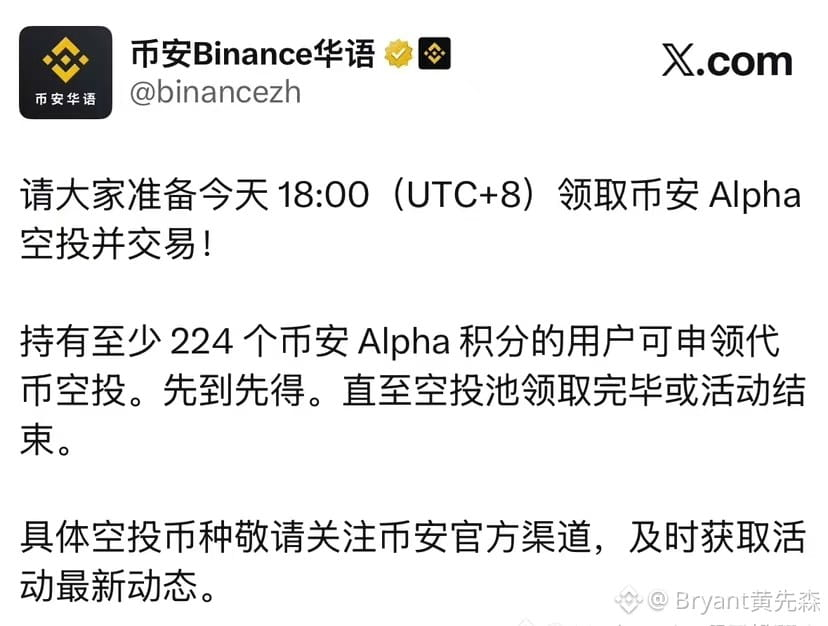
1
2
211
·
--
Today is another day for the Air Force—no airdrop, and no announcement. But today #币安 launched bStocks, where points can be calculated based on 4x trading volume. #Alpha new rules have been rolled out, and from now on, we finally don’t have to worry about not having enough trading volume or getting your points-gaining attempts blocked. A lot of people’s first reaction is to go research how to farm points and how to improve efficiency, but I care more about another question: why does Binance keep adjusting its rules?
I think the answer is actually pretty simple. What the platform wants to see isn’t one-off trading data, but real, sustained user activity. Only when users keep using the product, participate in the ecosystem, and drive ongoing engagement can the whole system form a positive feedback loop.
This is also my biggest takeaway from revisiting @OpenGradient recently. At first, many people focused on the CreatorPad activities and rewards. But after I truly dug into the experience of OpenGradient Chat, I found that its logic is completely different from simply handing out rewards. Every AI inference, every model call, and every time a developer deploys an application creates new value for the entire network. And OPG isn’t just meant for trading—it continuously plays a role in inference, node verification, and ecosystem operations.
In other words, users who come only because of an activity may leave once the campaign ends. But a user who opens OpenGradient Chat every day will keep contributing genuine needs to the whole ecosystem. That’s why I feel that, in the end, AI projects don’t really compete on who gives away more—they compete on who can keep users.
Market rules keep changing, and point-farming methods will keep being updated too. But for projects that truly have staying power, they ultimately still need the product to do the talking. For me, the reason OpenGradient is worth paying attention to isn’t just that it belongs to the AI space—it’s actively connecting actual AI usage, development, and network operations into a complete ecosystem.
#opg $OPG
Today is another day for the Air Force—no airdrop, and no announcement. But today #币安 launched bStocks, where points can be calculated based on 4x trading volume. #Alpha new rules have been rolled out, and from now on, we finally don’t have to worry about not having enough trading volume or getting your points-gaining attempts blocked. A lot of people’s first reaction is to go research how to farm points and how to improve efficiency, but I care more about another question: why does Binance keep adjusting its rules?
I think the answer is actually pretty simple. What the platform wants to see isn’t one-off trading data, but real, sustained user activity. Only when users keep using the product, participate in the ecosystem, and drive ongoing engagement can the whole system form a positive feedback loop.
This is also my biggest takeaway from revisiting @OpenGradient recently. At first, many people focused on the CreatorPad activities and rewards. But after I truly dug into the experience of OpenGradient Chat, I found that its logic is completely different from simply handing out rewards. Every AI inference, every model call, and every time a developer deploys an application creates new value for the entire network. And OPG isn’t just meant for trading—it continuously plays a role in inference, node verification, and ecosystem operations.
In other words, users who come only because of an activity may leave once the campaign ends. But a user who opens OpenGradient Chat every day will keep contributing genuine needs to the whole ecosystem. That’s why I feel that, in the end, AI projects don’t really compete on who gives away more—they compete on who can keep users.
Market rules keep changing, and point-farming methods will keep being updated too. But for projects that truly have staying power, they ultimately still need the product to do the talking. For me, the reason OpenGradient is worth paying attention to isn’t just that it belongs to the AI space—it’s actively connecting actual AI usage, development, and network operations into a complete ecosystem.
#opg $OPG
I think the answer is actually pretty simple. What the platform wants to see isn’t one-off trading data, but real, sustained user activity. Only when users keep using the product, participate in the ecosystem, and drive ongoing engagement can the whole system form a positive feedback loop.
This is also my biggest takeaway from revisiting @OpenGradient recently. At first, many people focused on the CreatorPad activities and rewards. But after I truly dug into the experience of OpenGradient Chat, I found that its logic is completely different from simply handing out rewards. Every AI inference, every model call, and every time a developer deploys an application creates new value for the entire network. And OPG isn’t just meant for trading—it continuously plays a role in inference, node verification, and ecosystem operations.
In other words, users who come only because of an activity may leave once the campaign ends. But a user who opens OpenGradient Chat every day will keep contributing genuine needs to the whole ecosystem. That’s why I feel that, in the end, AI projects don’t really compete on who gives away more—they compete on who can keep users.
Market rules keep changing, and point-farming methods will keep being updated too. But for projects that truly have staying power, they ultimately still need the product to do the talking. For me, the reason OpenGradient is worth paying attention to isn’t just that it belongs to the AI space—it’s actively connecting actual AI usage, development, and network operations into a complete ecosystem.
#opg $OPG
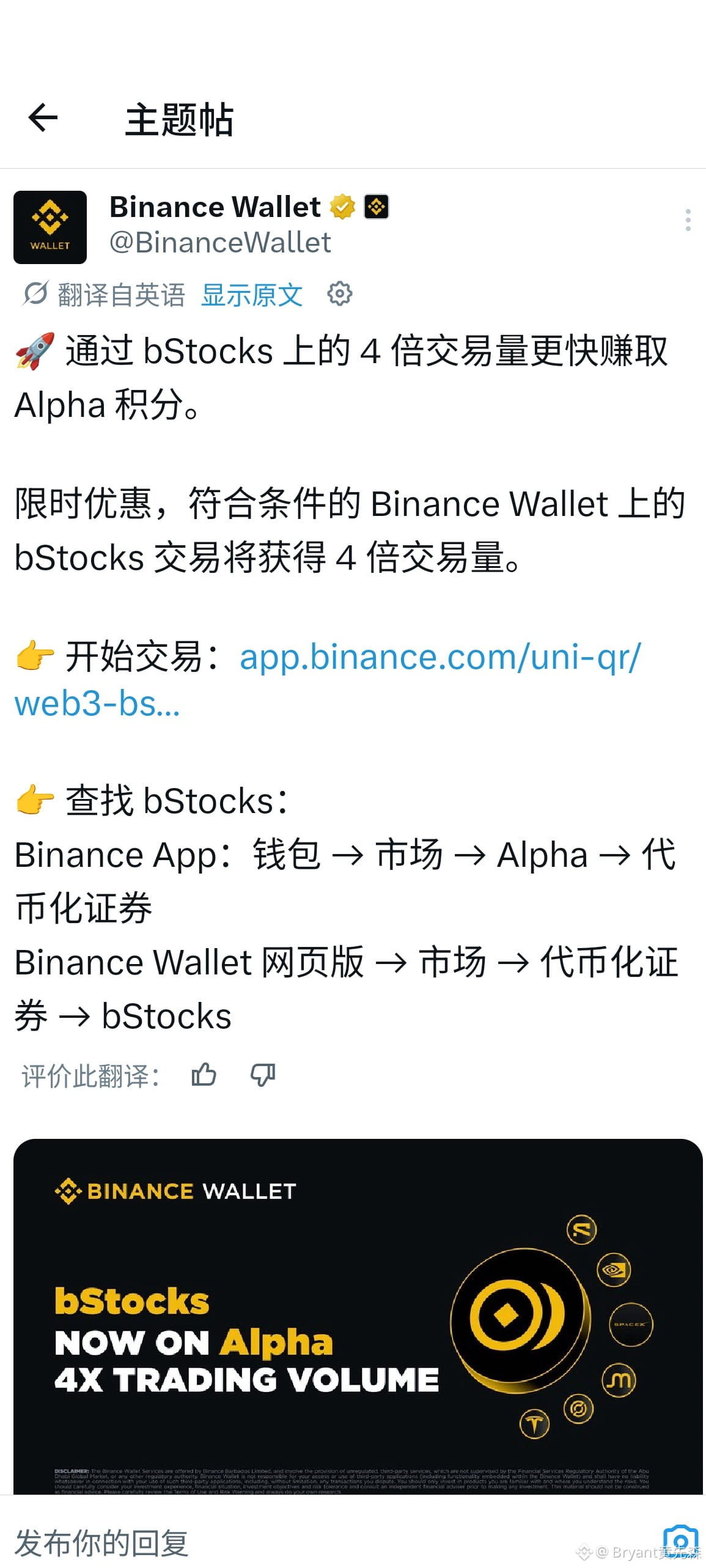
1
3
230
Log in to explore more content
Join global crypto users on Binance Square
⚡️ Get latest and useful information about crypto.
💬 Trusted by the world’s largest crypto exchange.
👍 Discover real insights from verified creators.
Email / Phone number