
John Benjamin
20 Posts

John Benjamin
I love love
23 Following
49 Followers
64 Liked
Posts
All
Quotes
Information is everywhere nowadays, having one place that connects the dots across crypto, AI, stocks, and global markets is genuinely valuable.
The new @BlockDeskNews looks like a solid step in that direction. Looking forward to seeing how it evolves.
The new @BlockDeskNews looks like a solid step in that direction. Looking forward to seeing how it evolves.

BlockDesk News
·
--
Say hello to the new BlockDesk News.
We've rebuilt the site from the ground up — a cleaner, sharper home for everything that moves markets. Global news, stocks, crypto, AI and trading cards, all in one place, refreshed every morning.
This is your desk now. Come have a look.
🔗 Link in bio — blockdesk.news
We've rebuilt the site from the ground up — a cleaner, sharper home for everything that moves markets. Global news, stocks, crypto, AI and trading cards, all in one place, refreshed every morning.
This is your desk now. Come have a look.
🔗 Link in bio — blockdesk.news
Appreciate the perspective from @BlockDeskNews.
A lot of people debate whether university is “worth it,” but the more important question is whether the financing model still works as intended.
Breaking down the incentives, repayment structure, and long-term economic effects makes this a much deeper discussion than just student debt.
A lot of people debate whether university is “worth it,” but the more important question is whether the financing model still works as intended.
Breaking down the incentives, repayment structure, and long-term economic effects makes this a much deeper discussion than just student debt.
BlockDesk News
·
--
Britain's Graduate Debt Trap: How a £9,250-a-Year Promise Became a Generational Con
Britain’s university financing model — sold to a generation as an investment in upward mobility — is now under sustained analytical assault. With annual tuition fees locked at £9,250 and graduate loan balances compounding at interest rates tied to the Retail Price Index, the arithmetic is turning brutal: the majority of English graduates will never repay their full student loan before the 30-year write-off clock expires, meaning they carry a structural debt overhang that reshapes every major financial decision of their adult lives. The question being asked with increasing force is not whether the system is imperfect — it is whether it was ever designed to deliver on its core promise.
Annual Tuition Fee Cap - £9,250
Loan Write-Off Period - 30 Years
Avg. Graduate Debt at Exit - 45k
Graduates Never Full Repay - 55%
Peak Interest Rate Applied - RPI +3%
What Happened — And Why It Matters Now
England’s tuition fee system, which tripled the annual cap to £9,250 in 2017 following the initial 2012 reforms that raised fees to £9,000, was constructed on a specific ideological premise: that higher education is a private good, and those who benefit most should bear the cost. The logic held that graduates would out-earn non-graduates by a sufficient margin to service and eventually retire their debt. What the architects of that policy either failed to model accurately or chose not to publicise was that a substantial majority of borrowers — estimates consistently place the figure above 50%, with some analyses closer to 75% for arts and humanities graduates — would never clear the balance before the 30-year statutory write-off date.
That structural reality has now collided with a labour market that has failed to deliver the graduate premium at the pace once projected. Real wages across the UK economy have been effectively stagnant for much of the past 15 years, with the Office for National Statistics recording that average real weekly earnings in 2024 remained below 2008 peak levels in many sectors. For graduates entering mid-tier salary bands — teachers, social workers, journalists, public sector analysts — the monthly repayment obligation of 9% on earnings above the repayment threshold functions less like loan repayment and more like a permanent graduate income tax surcharge.
Structural Insight
Because repayments are calculated as 9% of income above the threshold regardless of total debt size, a graduate with £60,000 in debt repays at exactly the same monthly rate as one with £25,000 in debt on the same salary. The loan balance is, for the majority, largely irrelevant to their lived experience — but the annual interest accrual is not, as it erodes any psychological sense of progress and locks borrowers into a system they cannot exit early without windfall capital.
The repayment threshold — currently set at £25,000 per year — has itself become a flashpoint. Freezing or only partially uprating the threshold in line with inflation effectively lowers the real earnings level at which graduates begin repaying, drawing more low-to-mid earners into the repayment net earlier and for longer. The combined effect of high nominal balances, RPI-linked interest accrual during study and in early career years, and a threshold that has not kept pace with wage growth has created what critics describe as a regressive transfer mechanism: graduates who earn modestly pay proportionally more over their lifetime than high earners who clear the balance quickly.
The Policy Timeline: A Decade of Escalating Cost
2012Tuition fee cap trebled from £3,375 to £9,000 per year in England following the Browne Review recommendations. The Treasury models the policy as fiscally neutral over time, contingent on high graduate earnings growth.2017Cap raised again to £9,250. Maintenance grants for lower-income students abolished and replaced with additional loans, increasing total debt burdens for the most economically vulnerable entrants by up to £8,000 over a three-year degree.2019–2022RPI inflation spikes in post-pandemic years drive graduate loan interest to its statutory ceiling. Balances compound at rates graduates cannot match through voluntary repayment on typical starting salaries of £24,000–£28,000.2023Government introduces Plan 5 loan terms for new entrants: repayment period extended from 30 to 40 years, threshold frozen in nominal terms at £25,000. Critics argue this is a de facto permanent graduate income tax for the majority of borrowers.2026Public debate intensifies as the first large cohort of 2012-entry graduates approaches the 15-year mark with balances higher in real terms than at graduation, despite years of repayments. The question of systemic deception enters mainstream political discourse.
Key Stakeholders: Who Holds the Leverage
The Treasury
Holds the student loan book as a contingent liability. The Office for Budget Responsibility has repeatedly revised upward the proportion of loans expected to be written off — currently estimated at over 50% of total loan value — meaning the fiscal cost of the system is substantially higher than original projections.
Universities
Locked into a £9,250 fee cap that has not risen with inflation since 2017, universities face real-terms funding cuts per student. Many institutions, particularly post-92 universities serving higher proportions of disadvantaged students, operate on thin margins and face structural deficits.
Graduate Borrowers
Approximately 1.5 million new student loan borrowers enter the system each year. Those on Plan 2 and Plan 5 terms face repayment periods of 30–40 years. For graduates in public sector roles, the effective marginal tax rate including repayments can reach 51% within normal salary bands.
Private Capital & EdTech
As confidence in the traditional degree ROI erodes, alternative credentialing platforms and apprenticeship providers are attracting institutional investment. The degradation of the graduate premium narrative opens a structural market opportunity estimated in the billions across the UK skills economy.
The Investor Angle: Human Capital Mispricing
For investors and economists tracking UK labour market dynamics, the graduate debt crisis represents a significant instance of human capital mispricing at a systemic level. When a large cohort of workers carries debt obligations that function as a permanent income tax surcharge, consumption patterns shift: household formation is delayed, mortgage uptake among under-35s falls, and discretionary spending compresses. The Bank of England’s own research has flagged student debt as a contributing factor in the UK’s subdued housing demand among younger cohorts, with first-time buyer average ages now pushing toward 34 nationally.
The compounding irony is that the government’s own loan book — which it has periodically sought to sell to private buyers at a discount — is only valuable to investors if repayment rates are high. If the majority of borrowers are projected to reach write-off without full repayment, the asset is worth substantially less than its face value. Independent analysts have estimated the effective recovery rate on the post-2012 loan book at between 40p and 55p in the pound, depending on earnings trajectory assumptions — a figure that makes the original policy arithmetic look, at best, wildly optimistic.
Economic Signal
The UK’s graduate employment rate remains high at approximately 87% within six months of graduation — but employment rate and earnings adequacy are different metrics. A graduate employed full-time at £28,000 in London will see their loan balance grow in real terms for the first several years of repayment, not shrink. The system conflates participation with prosperity.
Geopolitical and Structural Risk Factors
⚠ Risk Factor
Britain’s higher education system is acutely exposed to international student fee dependency. Universities currently charge international students unregulated fees — often £25,000–£40,000 per year — to cross-subsidise domestic operations constrained by the £9,250 domestic cap. Any tightening of UK visa policy for international students, or a shift in global student mobility patterns driven by geopolitical competition from US, Canadian, or Australian institutions, would accelerate the financial instability already visible across the sector. At least 15 UK universities are currently operating under formal financial stress monitoring by the sector regulator, with several running cumulative deficits. A hard shock to international enrolment — down 9% in the most recent full academic year — could trigger institutional failures that further erode the value proposition of the domestic degree.
The broader geopolitical dimension is this: as the United States, Australia, and Canada all recalibrate their own higher education financing models in the wake of post-pandemic fiscal pressures, the global competition for skilled graduate talent is intensifying. Countries with lower student debt burdens — Germany’s largely tuition-free system, Scandinavia’s grant-heavy model — are increasingly attractive to mobile UK graduates with marketable skills in technology, engineering, and finance. Brain drain is not a hypothetical; net emigration of UK graduates to higher-wage, lower-tax, lower-debt jurisdictions is a measurable and growing phenomenon that carries long-term consequences for the UK’s productivity trajectory and its ability to service its own broader sovereign obligations.
BlockDesk Verdict
The Graduate Premium Was Always a Conditional Asset — The Conditions Were Never Disclosed
Britain’s tuition fee architecture was not designed as a transparent investment product — it was designed as a politically palatable mechanism for shifting higher education costs off the public balance sheet while maintaining the appearance of universal access. The system delivered on the access metric: university participation rates rose. It failed, structurally and by design, on the returns metric for the majority of borrowers. When more than half of all graduates are projected to reach debt write-off without full repayment — having made monthly deductions from their paycheques for three decades — the original bargain has to be called what it is: a misrepresentation of financial reality at institutional scale.
Watch for three pressure points in the next 18 months: any move by the Treasury to sell further tranches of the student loan book to private investors (a signal of fiscal desperation that will reignite the reform debate), legislative attempts to revisit the Plan 5 40-year repayment window under sustained political pressure from graduate-heavy constituencies, and continued university sector consolidation as smaller institutions face existential financial strain. The graduate debt question is not a side issue in UK economic policy — it is a core structural variable shaping consumption, housing, fertility, and long-run productivity. Markets that ignore it do so at their own analytical peril.
This article is for informational purposes only and does not constitute financial advice. Always conduct your own research before making investment decisions.
Annual Tuition Fee Cap - £9,250
Loan Write-Off Period - 30 Years
Avg. Graduate Debt at Exit - 45k
Graduates Never Full Repay - 55%
Peak Interest Rate Applied - RPI +3%
What Happened — And Why It Matters Now
England’s tuition fee system, which tripled the annual cap to £9,250 in 2017 following the initial 2012 reforms that raised fees to £9,000, was constructed on a specific ideological premise: that higher education is a private good, and those who benefit most should bear the cost. The logic held that graduates would out-earn non-graduates by a sufficient margin to service and eventually retire their debt. What the architects of that policy either failed to model accurately or chose not to publicise was that a substantial majority of borrowers — estimates consistently place the figure above 50%, with some analyses closer to 75% for arts and humanities graduates — would never clear the balance before the 30-year statutory write-off date.
That structural reality has now collided with a labour market that has failed to deliver the graduate premium at the pace once projected. Real wages across the UK economy have been effectively stagnant for much of the past 15 years, with the Office for National Statistics recording that average real weekly earnings in 2024 remained below 2008 peak levels in many sectors. For graduates entering mid-tier salary bands — teachers, social workers, journalists, public sector analysts — the monthly repayment obligation of 9% on earnings above the repayment threshold functions less like loan repayment and more like a permanent graduate income tax surcharge.
Structural Insight
Because repayments are calculated as 9% of income above the threshold regardless of total debt size, a graduate with £60,000 in debt repays at exactly the same monthly rate as one with £25,000 in debt on the same salary. The loan balance is, for the majority, largely irrelevant to their lived experience — but the annual interest accrual is not, as it erodes any psychological sense of progress and locks borrowers into a system they cannot exit early without windfall capital.
The repayment threshold — currently set at £25,000 per year — has itself become a flashpoint. Freezing or only partially uprating the threshold in line with inflation effectively lowers the real earnings level at which graduates begin repaying, drawing more low-to-mid earners into the repayment net earlier and for longer. The combined effect of high nominal balances, RPI-linked interest accrual during study and in early career years, and a threshold that has not kept pace with wage growth has created what critics describe as a regressive transfer mechanism: graduates who earn modestly pay proportionally more over their lifetime than high earners who clear the balance quickly.
The Policy Timeline: A Decade of Escalating Cost
2012Tuition fee cap trebled from £3,375 to £9,000 per year in England following the Browne Review recommendations. The Treasury models the policy as fiscally neutral over time, contingent on high graduate earnings growth.2017Cap raised again to £9,250. Maintenance grants for lower-income students abolished and replaced with additional loans, increasing total debt burdens for the most economically vulnerable entrants by up to £8,000 over a three-year degree.2019–2022RPI inflation spikes in post-pandemic years drive graduate loan interest to its statutory ceiling. Balances compound at rates graduates cannot match through voluntary repayment on typical starting salaries of £24,000–£28,000.2023Government introduces Plan 5 loan terms for new entrants: repayment period extended from 30 to 40 years, threshold frozen in nominal terms at £25,000. Critics argue this is a de facto permanent graduate income tax for the majority of borrowers.2026Public debate intensifies as the first large cohort of 2012-entry graduates approaches the 15-year mark with balances higher in real terms than at graduation, despite years of repayments. The question of systemic deception enters mainstream political discourse.
Key Stakeholders: Who Holds the Leverage
The Treasury
Holds the student loan book as a contingent liability. The Office for Budget Responsibility has repeatedly revised upward the proportion of loans expected to be written off — currently estimated at over 50% of total loan value — meaning the fiscal cost of the system is substantially higher than original projections.
Universities
Locked into a £9,250 fee cap that has not risen with inflation since 2017, universities face real-terms funding cuts per student. Many institutions, particularly post-92 universities serving higher proportions of disadvantaged students, operate on thin margins and face structural deficits.
Graduate Borrowers
Approximately 1.5 million new student loan borrowers enter the system each year. Those on Plan 2 and Plan 5 terms face repayment periods of 30–40 years. For graduates in public sector roles, the effective marginal tax rate including repayments can reach 51% within normal salary bands.
Private Capital & EdTech
As confidence in the traditional degree ROI erodes, alternative credentialing platforms and apprenticeship providers are attracting institutional investment. The degradation of the graduate premium narrative opens a structural market opportunity estimated in the billions across the UK skills economy.
The Investor Angle: Human Capital Mispricing
For investors and economists tracking UK labour market dynamics, the graduate debt crisis represents a significant instance of human capital mispricing at a systemic level. When a large cohort of workers carries debt obligations that function as a permanent income tax surcharge, consumption patterns shift: household formation is delayed, mortgage uptake among under-35s falls, and discretionary spending compresses. The Bank of England’s own research has flagged student debt as a contributing factor in the UK’s subdued housing demand among younger cohorts, with first-time buyer average ages now pushing toward 34 nationally.
The compounding irony is that the government’s own loan book — which it has periodically sought to sell to private buyers at a discount — is only valuable to investors if repayment rates are high. If the majority of borrowers are projected to reach write-off without full repayment, the asset is worth substantially less than its face value. Independent analysts have estimated the effective recovery rate on the post-2012 loan book at between 40p and 55p in the pound, depending on earnings trajectory assumptions — a figure that makes the original policy arithmetic look, at best, wildly optimistic.
Economic Signal
The UK’s graduate employment rate remains high at approximately 87% within six months of graduation — but employment rate and earnings adequacy are different metrics. A graduate employed full-time at £28,000 in London will see their loan balance grow in real terms for the first several years of repayment, not shrink. The system conflates participation with prosperity.
Geopolitical and Structural Risk Factors
⚠ Risk Factor
Britain’s higher education system is acutely exposed to international student fee dependency. Universities currently charge international students unregulated fees — often £25,000–£40,000 per year — to cross-subsidise domestic operations constrained by the £9,250 domestic cap. Any tightening of UK visa policy for international students, or a shift in global student mobility patterns driven by geopolitical competition from US, Canadian, or Australian institutions, would accelerate the financial instability already visible across the sector. At least 15 UK universities are currently operating under formal financial stress monitoring by the sector regulator, with several running cumulative deficits. A hard shock to international enrolment — down 9% in the most recent full academic year — could trigger institutional failures that further erode the value proposition of the domestic degree.
The broader geopolitical dimension is this: as the United States, Australia, and Canada all recalibrate their own higher education financing models in the wake of post-pandemic fiscal pressures, the global competition for skilled graduate talent is intensifying. Countries with lower student debt burdens — Germany’s largely tuition-free system, Scandinavia’s grant-heavy model — are increasingly attractive to mobile UK graduates with marketable skills in technology, engineering, and finance. Brain drain is not a hypothetical; net emigration of UK graduates to higher-wage, lower-tax, lower-debt jurisdictions is a measurable and growing phenomenon that carries long-term consequences for the UK’s productivity trajectory and its ability to service its own broader sovereign obligations.
BlockDesk Verdict
The Graduate Premium Was Always a Conditional Asset — The Conditions Were Never Disclosed
Britain’s tuition fee architecture was not designed as a transparent investment product — it was designed as a politically palatable mechanism for shifting higher education costs off the public balance sheet while maintaining the appearance of universal access. The system delivered on the access metric: university participation rates rose. It failed, structurally and by design, on the returns metric for the majority of borrowers. When more than half of all graduates are projected to reach debt write-off without full repayment — having made monthly deductions from their paycheques for three decades — the original bargain has to be called what it is: a misrepresentation of financial reality at institutional scale.
Watch for three pressure points in the next 18 months: any move by the Treasury to sell further tranches of the student loan book to private investors (a signal of fiscal desperation that will reignite the reform debate), legislative attempts to revisit the Plan 5 40-year repayment window under sustained political pressure from graduate-heavy constituencies, and continued university sector consolidation as smaller institutions face existential financial strain. The graduate debt question is not a side issue in UK economic policy — it is a core structural variable shaping consumption, housing, fertility, and long-run productivity. Markets that ignore it do so at their own analytical peril.
This article is for informational purposes only and does not constitute financial advice. Always conduct your own research before making investment decisions.

Most people will focus on Bitcoin sitting at $64K.
The bigger story is what’s happening around it:
• Regulated crypto infrastructure is expanding.
• AI is becoming an interface for on-chain finance.
• Macro events are shaping how capital moves.
That’s the kind of perspective I appreciate from @BlockDeskNews, connecting the dots instead of chasing headlines.
The bigger story is what’s happening around it:
• Regulated crypto infrastructure is expanding.
• AI is becoming an interface for on-chain finance.
• Macro events are shaping how capital moves.
That’s the kind of perspective I appreciate from @BlockDeskNews, connecting the dots instead of chasing headlines.
BlockDesk News
·
--
Binance Goes Physical: Regulated Gold & Silver
Three converging forces are reshaping crypto markets simultaneously: Binance has secured regulatory clearance to offer USDT-settled gold and silver options through its Abu Dhabi exchange, Bitcoin is pinned near $64,000 as the most internally divided Federal Reserve meeting in years looms, and MoonPay has launched an AI-native payment vault letting ChatGPT and Claude users execute on-chain transactions without surrendering custody. The industry is not waiting for permission — it is building through the turbulence.
Background: A Market Under Pressure From Every Direction
Wednesday, July 29, 2026 delivered a rare confluence of macro and geopolitical catalysts that would test any asset class. Iran-linked conflict escalation sent oil prices surging 8% in a single session, a shock that rippled immediately through Asian equity markets and carried forward into US trading hours. Chip stocks — already under pressure from export restriction uncertainty — continued a sustained sell-off that spilled across Pacific exchanges before US traders even opened their terminals.
Into that environment, Bitcoin demonstrated its characteristic resilience-through-rigidity, refusing to collapse while also refusing to run. The leading cryptocurrency traded in a tight band around $64,000, up 1.20% on the day — a figure that tells a story of consolidation rather than conviction. Ethereum held at $1,919.84, gaining 0.45%, while BNB clocked $572.42 with a modest 0.49% advance. Altcoins showed more volatility: ADA surged 5.95% and XMR added 4.51%, suggesting some rotation into higher-beta assets by traders unwilling to bet on BTC directionality ahead of the Federal Reserve’s rate decision.
Market Signal
Bitcoin’s constriction near $64,000 ahead of what observers are calling the “most divided” FOMC meeting in recent memory is textbook pre-event compression. The longer price coils at this level, the more violent the eventual expansion — in either direction.
Binance’s Abu Dhabi Gambit: Commodities Meet Crypto Compliance
While spot markets churned sideways, Binance executed one of its most strategically significant product launches to date. Through Nest Exchange Limited — its Abu Dhabi Global Market-regulated Recognized Investment Exchange — the company unveiled USDT-settled options contracts on gold and silver. The move is deliberate and calculated: it extends Binance’s product surface into traditional commodity derivatives while operating entirely within a recognized regulatory framework, sidestepping the compliance ambiguities that have haunted the exchange in other jurisdictions.
The ADGM designation is not cosmetic. Abu Dhabi Global Market is a Category A financial center operating under English common law, with supervisory standards that align closely with major Western regulatory bodies. For institutional traders who have been barred by compliance departments from touching Binance’s offshore products, the ADGM wrapper changes the equation entirely. USDT settlement means exposure to gold and silver price movements without the friction of physical delivery or fiat conversion — a structure purpose-built for the crypto-native institutional desk.
The timing is not accidental. With oil spiking 8% on geopolitical risk and safe-haven demand for gold elevated, launching commodity options at this precise moment ensures maximum market relevance. Traders already thinking about gold as a hedge against Middle East instability now have a regulated, crypto-settled mechanism to express that view through the Binance ecosystem.
Strategic Context
Binance’s ADGM-regulated gold and silver options represent the most direct bridge yet between traditional commodity markets and crypto-native infrastructure. USDT settlement eliminates fiat conversion friction while ADGM licensing opens the door to institutional participation that offshore products cannot access.
MoonPay’s PayBox: AI Agents Get a Wallet
The third development emerging from July 29 carries implications that extend well beyond a single product launch. MoonPay’s PayBox vault integrates directly with ChatGPT and Claude — the two dominant AI assistant platforms — allowing users to authorize crypto purchases, token swaps, and crosschain transactions from within a conversation. Critically, users retain custody of their assets throughout the process. The AI does not hold funds; it prepares and proposes transactions that the user must authorize.
This distinction matters enormously from both a security and a regulatory standpoint. By keeping custody with the user while delegating transaction preparation to the AI, MoonPay has threaded a needle that sidesteps the custodial classification that would trigger broker-dealer or money transmitter scrutiny in most jurisdictions. The architecture treats the AI agent as an interface layer, not a counterparty.
The practical implication: a user can instruct Claude to swap ETH for SOL, bridge assets across chains, or purchase a specific token, and the AI will construct the transaction — with MoonPay’s PayBox executing the mechanics — while the user retains final approval authority. This is the first mainstream implementation of agentic crypto execution at conversational AI scale.
Ecosystem Players Driving the Convergence
Binance / Nest Exchange
Operating through its ADGM-regulated Recognized Investment Exchange, Binance is bridging commodity derivatives and crypto infrastructure with USDT-settled gold and silver options — a direct play for institutional compliance-gated capital.
MoonPay PayBox
The AI-native payment vault connects ChatGPT and Claude to on-chain execution — token swaps, crosschain bridges, and crypto purchases — while preserving user custody. Agentic finance just got a retail-grade interface.
Federal Reserve
Described as internally divided, the Fed’s July 2026 rate decision is the single biggest near-term volatility trigger for Bitcoin. Market participants are hedging hard, compressing BTC into a tight range around $64,000 as the decision approaches.
Geopolitical Risk Complex
Iran-linked conflict driving an 8% oil spike is the macro wildcard. Safe-haven rotation into gold and Bitcoin remains a credible scenario — one that Binance’s new commodity options are now positioned to capture directly.
The FOMC Fault Line: Bitcoin’s Immediate Catalyst
Bitcoin’s behavior on July 29 was defined entirely by what has not happened yet. The Federal Reserve’s rate decision — characterized by observers as reflecting the most divided internal sentiment in recent memory — represents the single largest binary event on the immediate horizon. A hold with a dovish tone historically unlocks risk appetite and sends Bitcoin higher. A hold with a hawkish tone, or any signal of prolonged restrictive policy, compresses it further. A surprise cut would be the most explosive catalyst of all.
What makes this particular FOMC meeting unusual is the simultaneous presence of inflationary pressure from the oil spike and deflationary pressure from the Asian equity sell-off. The Fed is being asked to navigate contradictory signals in real time, which explains both the internal division and the market’s paralysis. BTC at $64,000 is the market’s honest expression of genuine uncertainty — not weakness, not strength, but a coiled spring.
Investor Angle: Three Theses, One Session
For active investors, July 29, 2026 offers three distinct entry theses operating on different time horizons. The shortest-duration trade is pure FOMC volatility: position for a breakout from the $64,000 compression zone, with the direction determined by the Fed’s tone. The options market is the natural vehicle here, and notably, Binance’s expanded derivatives infrastructure makes that expression easier for more participants.
The medium-duration thesis centers on Binance’s ADGM commodity options. Gold demand from institutional desks seeking safe-haven exposure in a geopolitically volatile environment, combined with a USDT-settled, ADGM-compliant structure, creates a product with genuine institutional pull. This is not a retail feature — it is a compliance-friendly on-ramp for traditional asset managers who want commodity exposure without leaving the crypto ecosystem.
The longest-duration thesis belongs to MoonPay’s PayBox. Agentic finance — AI systems that can construct and execute financial transactions on behalf of users — is the next major interface paradigm shift. The first platforms to normalize this workflow will capture user habits that are exceptionally sticky. PayBox’s launch with ChatGPT and Claude integration positions MoonPay at the center of that shift from day one.
⚠ Risk Factor
An 8% oil price spike driven by active geopolitical conflict introduces tail-risk scenarios that algorithmic models are not calibrated for. If conflict escalates further, the correlation between crypto and risk assets could reassert violently, dragging Bitcoin below key support regardless of Fed tone. Additionally, MoonPay’s PayBox operates in a regulatory grey zone — AI-authorized transactions are unprecedented territory for financial regulators, and enforcement action in any major jurisdiction could freeze adoption instantly. Binance’s ADGM licensing, while robust, does not eliminate jurisdictional risk in markets where Binance remains under scrutiny.
Timeline: Converging Catalysts
Early July 2026Asian chip-stock sell-off begins, driven by export restriction uncertainty. Pressure builds across Pacific equity markets and begins spilling into US sessions.Late July 2026Iran-linked geopolitical conflict escalates. Oil prices surge 8% in a single session, sending safe-haven demand for gold sharply higher and introducing inflationary pressure that complicates the Federal Reserve’s calculus.July 29, 2026Binance launches USDT-settled gold and silver options through Nest Exchange Limited under ADGM regulatory oversight in Abu Dhabi. MoonPay simultaneously unveils PayBox, integrating AI-native crypto transaction authorization with ChatGPT and Claude. Bitcoin holds near $64,000 as the FOMC decision approaches.ImminentFederal Reserve releases its interest-rate decision — the most internally divided in recent memory. The outcome is the primary near-term directional catalyst for Bitcoin and broad crypto markets.
BlockDesk Verdict
The Infrastructure Is Being Built While the Market Watches the Fed
The most important story of July 29 is not Bitcoin’s price — it is everything happening around it. Binance securing regulated commodity derivatives in Abu Dhabi, MoonPay wiring AI assistants into on-chain execution, and Bitcoin compressing ahead of a binary macro event represent three simultaneous inflection points across different layers of the crypto stack. The asset layer is waiting. The infrastructure layer is not.
Watch the FOMC decision for the immediate Bitcoin catalyst: a dovish pivot or surprise cut targets $68,000–$70,000, while a hawkish hold risks a flush toward $60,000. Beyond the near-term noise, track institutional uptake of Binance’s ADGM commodity options as a leading indicator of how much compliance-gated capital is prepared to enter the ecosystem through regulated wrappers. And monitor PayBox adoption velocity — if AI-native crypto transactions normalize among ChatGPT and Claude’s combined user base, the implications for on-chain volume dwarf anything the FOMC can deliver.
This article is for informational purposes only and does not constitute financial advice. Always conduct your own research before making investment decisions.
Background: A Market Under Pressure From Every Direction
Wednesday, July 29, 2026 delivered a rare confluence of macro and geopolitical catalysts that would test any asset class. Iran-linked conflict escalation sent oil prices surging 8% in a single session, a shock that rippled immediately through Asian equity markets and carried forward into US trading hours. Chip stocks — already under pressure from export restriction uncertainty — continued a sustained sell-off that spilled across Pacific exchanges before US traders even opened their terminals.
Into that environment, Bitcoin demonstrated its characteristic resilience-through-rigidity, refusing to collapse while also refusing to run. The leading cryptocurrency traded in a tight band around $64,000, up 1.20% on the day — a figure that tells a story of consolidation rather than conviction. Ethereum held at $1,919.84, gaining 0.45%, while BNB clocked $572.42 with a modest 0.49% advance. Altcoins showed more volatility: ADA surged 5.95% and XMR added 4.51%, suggesting some rotation into higher-beta assets by traders unwilling to bet on BTC directionality ahead of the Federal Reserve’s rate decision.
Market Signal
Bitcoin’s constriction near $64,000 ahead of what observers are calling the “most divided” FOMC meeting in recent memory is textbook pre-event compression. The longer price coils at this level, the more violent the eventual expansion — in either direction.
Binance’s Abu Dhabi Gambit: Commodities Meet Crypto Compliance
While spot markets churned sideways, Binance executed one of its most strategically significant product launches to date. Through Nest Exchange Limited — its Abu Dhabi Global Market-regulated Recognized Investment Exchange — the company unveiled USDT-settled options contracts on gold and silver. The move is deliberate and calculated: it extends Binance’s product surface into traditional commodity derivatives while operating entirely within a recognized regulatory framework, sidestepping the compliance ambiguities that have haunted the exchange in other jurisdictions.
The ADGM designation is not cosmetic. Abu Dhabi Global Market is a Category A financial center operating under English common law, with supervisory standards that align closely with major Western regulatory bodies. For institutional traders who have been barred by compliance departments from touching Binance’s offshore products, the ADGM wrapper changes the equation entirely. USDT settlement means exposure to gold and silver price movements without the friction of physical delivery or fiat conversion — a structure purpose-built for the crypto-native institutional desk.
The timing is not accidental. With oil spiking 8% on geopolitical risk and safe-haven demand for gold elevated, launching commodity options at this precise moment ensures maximum market relevance. Traders already thinking about gold as a hedge against Middle East instability now have a regulated, crypto-settled mechanism to express that view through the Binance ecosystem.
Strategic Context
Binance’s ADGM-regulated gold and silver options represent the most direct bridge yet between traditional commodity markets and crypto-native infrastructure. USDT settlement eliminates fiat conversion friction while ADGM licensing opens the door to institutional participation that offshore products cannot access.
MoonPay’s PayBox: AI Agents Get a Wallet
The third development emerging from July 29 carries implications that extend well beyond a single product launch. MoonPay’s PayBox vault integrates directly with ChatGPT and Claude — the two dominant AI assistant platforms — allowing users to authorize crypto purchases, token swaps, and crosschain transactions from within a conversation. Critically, users retain custody of their assets throughout the process. The AI does not hold funds; it prepares and proposes transactions that the user must authorize.
This distinction matters enormously from both a security and a regulatory standpoint. By keeping custody with the user while delegating transaction preparation to the AI, MoonPay has threaded a needle that sidesteps the custodial classification that would trigger broker-dealer or money transmitter scrutiny in most jurisdictions. The architecture treats the AI agent as an interface layer, not a counterparty.
The practical implication: a user can instruct Claude to swap ETH for SOL, bridge assets across chains, or purchase a specific token, and the AI will construct the transaction — with MoonPay’s PayBox executing the mechanics — while the user retains final approval authority. This is the first mainstream implementation of agentic crypto execution at conversational AI scale.
Ecosystem Players Driving the Convergence
Binance / Nest Exchange
Operating through its ADGM-regulated Recognized Investment Exchange, Binance is bridging commodity derivatives and crypto infrastructure with USDT-settled gold and silver options — a direct play for institutional compliance-gated capital.
MoonPay PayBox
The AI-native payment vault connects ChatGPT and Claude to on-chain execution — token swaps, crosschain bridges, and crypto purchases — while preserving user custody. Agentic finance just got a retail-grade interface.
Federal Reserve
Described as internally divided, the Fed’s July 2026 rate decision is the single biggest near-term volatility trigger for Bitcoin. Market participants are hedging hard, compressing BTC into a tight range around $64,000 as the decision approaches.
Geopolitical Risk Complex
Iran-linked conflict driving an 8% oil spike is the macro wildcard. Safe-haven rotation into gold and Bitcoin remains a credible scenario — one that Binance’s new commodity options are now positioned to capture directly.
The FOMC Fault Line: Bitcoin’s Immediate Catalyst
Bitcoin’s behavior on July 29 was defined entirely by what has not happened yet. The Federal Reserve’s rate decision — characterized by observers as reflecting the most divided internal sentiment in recent memory — represents the single largest binary event on the immediate horizon. A hold with a dovish tone historically unlocks risk appetite and sends Bitcoin higher. A hold with a hawkish tone, or any signal of prolonged restrictive policy, compresses it further. A surprise cut would be the most explosive catalyst of all.
What makes this particular FOMC meeting unusual is the simultaneous presence of inflationary pressure from the oil spike and deflationary pressure from the Asian equity sell-off. The Fed is being asked to navigate contradictory signals in real time, which explains both the internal division and the market’s paralysis. BTC at $64,000 is the market’s honest expression of genuine uncertainty — not weakness, not strength, but a coiled spring.
Investor Angle: Three Theses, One Session
For active investors, July 29, 2026 offers three distinct entry theses operating on different time horizons. The shortest-duration trade is pure FOMC volatility: position for a breakout from the $64,000 compression zone, with the direction determined by the Fed’s tone. The options market is the natural vehicle here, and notably, Binance’s expanded derivatives infrastructure makes that expression easier for more participants.
The medium-duration thesis centers on Binance’s ADGM commodity options. Gold demand from institutional desks seeking safe-haven exposure in a geopolitically volatile environment, combined with a USDT-settled, ADGM-compliant structure, creates a product with genuine institutional pull. This is not a retail feature — it is a compliance-friendly on-ramp for traditional asset managers who want commodity exposure without leaving the crypto ecosystem.
The longest-duration thesis belongs to MoonPay’s PayBox. Agentic finance — AI systems that can construct and execute financial transactions on behalf of users — is the next major interface paradigm shift. The first platforms to normalize this workflow will capture user habits that are exceptionally sticky. PayBox’s launch with ChatGPT and Claude integration positions MoonPay at the center of that shift from day one.
⚠ Risk Factor
An 8% oil price spike driven by active geopolitical conflict introduces tail-risk scenarios that algorithmic models are not calibrated for. If conflict escalates further, the correlation between crypto and risk assets could reassert violently, dragging Bitcoin below key support regardless of Fed tone. Additionally, MoonPay’s PayBox operates in a regulatory grey zone — AI-authorized transactions are unprecedented territory for financial regulators, and enforcement action in any major jurisdiction could freeze adoption instantly. Binance’s ADGM licensing, while robust, does not eliminate jurisdictional risk in markets where Binance remains under scrutiny.
Timeline: Converging Catalysts
Early July 2026Asian chip-stock sell-off begins, driven by export restriction uncertainty. Pressure builds across Pacific equity markets and begins spilling into US sessions.Late July 2026Iran-linked geopolitical conflict escalates. Oil prices surge 8% in a single session, sending safe-haven demand for gold sharply higher and introducing inflationary pressure that complicates the Federal Reserve’s calculus.July 29, 2026Binance launches USDT-settled gold and silver options through Nest Exchange Limited under ADGM regulatory oversight in Abu Dhabi. MoonPay simultaneously unveils PayBox, integrating AI-native crypto transaction authorization with ChatGPT and Claude. Bitcoin holds near $64,000 as the FOMC decision approaches.ImminentFederal Reserve releases its interest-rate decision — the most internally divided in recent memory. The outcome is the primary near-term directional catalyst for Bitcoin and broad crypto markets.
BlockDesk Verdict
The Infrastructure Is Being Built While the Market Watches the Fed
The most important story of July 29 is not Bitcoin’s price — it is everything happening around it. Binance securing regulated commodity derivatives in Abu Dhabi, MoonPay wiring AI assistants into on-chain execution, and Bitcoin compressing ahead of a binary macro event represent three simultaneous inflection points across different layers of the crypto stack. The asset layer is waiting. The infrastructure layer is not.
Watch the FOMC decision for the immediate Bitcoin catalyst: a dovish pivot or surprise cut targets $68,000–$70,000, while a hawkish hold risks a flush toward $60,000. Beyond the near-term noise, track institutional uptake of Binance’s ADGM commodity options as a leading indicator of how much compliance-gated capital is prepared to enter the ecosystem through regulated wrappers. And monitor PayBox adoption velocity — if AI-native crypto transactions normalize among ChatGPT and Claude’s combined user base, the implications for on-chain volume dwarf anything the FOMC can deliver.
This article is for informational purposes only and does not constitute financial advice. Always conduct your own research before making investment decisions.

Information is everywhere. Context is rare.
I like that @BlockDesk News isn’t just repeating headlines, they dig into the details and connect the dots across crypto, AI, stocks, and TCG. That’s the kind of analysis I want in my feed.
I like that @BlockDesk News isn’t just repeating headlines, they dig into the details and connect the dots across crypto, AI, stocks, and TCG. That’s the kind of analysis I want in my feed.
BlockDesk News
·
--
Bullish🚨
Everyone is covering the same stories.
We’re looking at what’s underneath them.
₿ Crypto
🤖AI
📈 Stocks
🎴 TCG
Different angles. Real analysis. Stories you might not see everywhere else.
Follow
@BlockDesk News and repost this to put someone on 🔥
Everyone is covering the same stories.
We’re looking at what’s underneath them.
₿ Crypto
🤖AI
📈 Stocks
🎴 TCG
Different angles. Real analysis. Stories you might not see everywhere else.
Follow
@BlockDesk News and repost this to put someone on 🔥

@Firo $FIRO Firo's PancakeSwap Liquidity Pool Receives Major Boost
In a significant move for Firo's presence on the BNB Chain, Power Up Privacy has injected $200,000 worth of liquidity into Firo's PancakeSwap pool. This addition, comprising 80,356.8262 BEP20-FIRO and 167.286754 BNB, complements the existing position maintained by the Firo Community Fund, bringing the total pool liquidity to approximately $224,000.
BEP20-FIRO, a wrapped version of FIRO issued by Binance, enables access to BNB Chain's DeFi ecosystem while maintaining a 1:1 backing with native FIRO. This liquidity boost enhances the pool's depth and usability, potentially streamlining FIRO trading on the BNB Chain. Users can swap between BEP20-FIRO and native FIRO through various platforms, with detailed guides forthcoming.
#privacy #Web3 #Crypto
In a significant move for Firo's presence on the BNB Chain, Power Up Privacy has injected $200,000 worth of liquidity into Firo's PancakeSwap pool. This addition, comprising 80,356.8262 BEP20-FIRO and 167.286754 BNB, complements the existing position maintained by the Firo Community Fund, bringing the total pool liquidity to approximately $224,000.
BEP20-FIRO, a wrapped version of FIRO issued by Binance, enables access to BNB Chain's DeFi ecosystem while maintaining a 1:1 backing with native FIRO. This liquidity boost enhances the pool's depth and usability, potentially streamlining FIRO trading on the BNB Chain. Users can swap between BEP20-FIRO and native FIRO through various platforms, with detailed guides forthcoming.
#privacy #Web3 #Crypto
@Firo $FIRO has announced a partnership with Confidential Layer.
#Firo has announce a new partnership with Confidential Layer, a non-custodial bridge that facilitates seamless asset transfers between public and privacy blockchains.
This collaboration significantly advances Firo's mission of integrating Spark's privacy technology across all tokens and coins, including Bitcoin and Ethereum.Stay tuned for more updates in the coming days as we continue to enhance privacy in the blockchain space! For more information, visit: confidentiallayer.com.
The Firo x Confidential Layer partnership is a game-changer! 🚀
Benefits:
• Enhanced privacy across blockchains 🕵️♂️
• Wider accessibility to Firo's Spark tech 🌍
• Non-custodial asset transfers 🔑
• Improved blockchain interoperability 🌉
• New use cases for private transactions 💡
• Stronger privacy coin ecosystem
#Blockchain #Privacy #decentralization $FIRO
#Firo has announce a new partnership with Confidential Layer, a non-custodial bridge that facilitates seamless asset transfers between public and privacy blockchains.
This collaboration significantly advances Firo's mission of integrating Spark's privacy technology across all tokens and coins, including Bitcoin and Ethereum.Stay tuned for more updates in the coming days as we continue to enhance privacy in the blockchain space! For more information, visit: confidentiallayer.com.
The Firo x Confidential Layer partnership is a game-changer! 🚀
Benefits:
• Enhanced privacy across blockchains 🕵️♂️
• Wider accessibility to Firo's Spark tech 🌍
• Non-custodial asset transfers 🔑
• Improved blockchain interoperability 🌉
• New use cases for private transactions 💡
• Stronger privacy coin ecosystem
#Blockchain #Privacy #decentralization $FIRO
Beyond Privacy: Firo's Comprehensive Suite of Features
#Firo has made a name for itself as a privacy-focused cryptocurrency. The project incorporates a range of innovative features that enhance its functionality, security, and user experience.
1. Elysium: Empowering Token Creation
At the forefront of Firo's extended capabilities is Elysium, a sophisticated tokenization layer built atop the Firo blockchain. Elysium opens up a world of possibilities for users, allowing them to create and manage their own tokens with ease. This feature is reminiscent of Ethereum's ERC-20 token standard, but with a crucial difference: tokens created on Elysium can leverage Firo's advanced privacy features.
2. GPU-PoW and FiroPoW: Democratizing Mining
Firo's commitment to decentralization is evident in its unique hybrid security system. This system combines GPU-based Proof of Work with a custom algorithm called FiroPoW. The primary goal? To resist the centralization often caused by specialized mining hardware.
3. Instant Send: Speed Meets Security
In the fast-paced world of digital transactions, waiting for multiple block confirmations isn't always practical. This is where Firo's Instant Send feature comes into play. Leveraging the project's masternode network, Instant Send allows for near-instantaneous confirmation of transactions.
4. Tor Network Compatibility: Enhancing Network Privacy
Privacy in Firo extends beyond transaction details to network-level anonymity. The project is designed to work seamlessly with the Tor (The Onion Router) network, allowing users to route their Firo transactions through this anonymous network.
5. Dandelion++: Obfuscating Transaction Origins
Rounding out Firo's privacy features is Dandelion++, a built-in network layer protocol that enhances transaction privacy. Unlike traditional broadcasting methods, Dandelion++ transmits transactions through a series of randomly selected nodes before widely broadcasting them.
#Blockchain #Privacy #decentralization $FIRO
#Firo has made a name for itself as a privacy-focused cryptocurrency. The project incorporates a range of innovative features that enhance its functionality, security, and user experience.
1. Elysium: Empowering Token Creation
At the forefront of Firo's extended capabilities is Elysium, a sophisticated tokenization layer built atop the Firo blockchain. Elysium opens up a world of possibilities for users, allowing them to create and manage their own tokens with ease. This feature is reminiscent of Ethereum's ERC-20 token standard, but with a crucial difference: tokens created on Elysium can leverage Firo's advanced privacy features.
2. GPU-PoW and FiroPoW: Democratizing Mining
Firo's commitment to decentralization is evident in its unique hybrid security system. This system combines GPU-based Proof of Work with a custom algorithm called FiroPoW. The primary goal? To resist the centralization often caused by specialized mining hardware.
3. Instant Send: Speed Meets Security
In the fast-paced world of digital transactions, waiting for multiple block confirmations isn't always practical. This is where Firo's Instant Send feature comes into play. Leveraging the project's masternode network, Instant Send allows for near-instantaneous confirmation of transactions.
4. Tor Network Compatibility: Enhancing Network Privacy
Privacy in Firo extends beyond transaction details to network-level anonymity. The project is designed to work seamlessly with the Tor (The Onion Router) network, allowing users to route their Firo transactions through this anonymous network.
5. Dandelion++: Obfuscating Transaction Origins
Rounding out Firo's privacy features is Dandelion++, a built-in network layer protocol that enhances transaction privacy. Unlike traditional broadcasting methods, Dandelion++ transmits transactions through a series of randomly selected nodes before widely broadcasting them.
#Blockchain #Privacy #decentralization $FIRO

@Firo $FIRO : Championing Privacy in the Digital Age
In an era where data breaches and privacy concerns are rampant, Firo emerges as a beacon of hope for those seeking secure and private digital transactions.
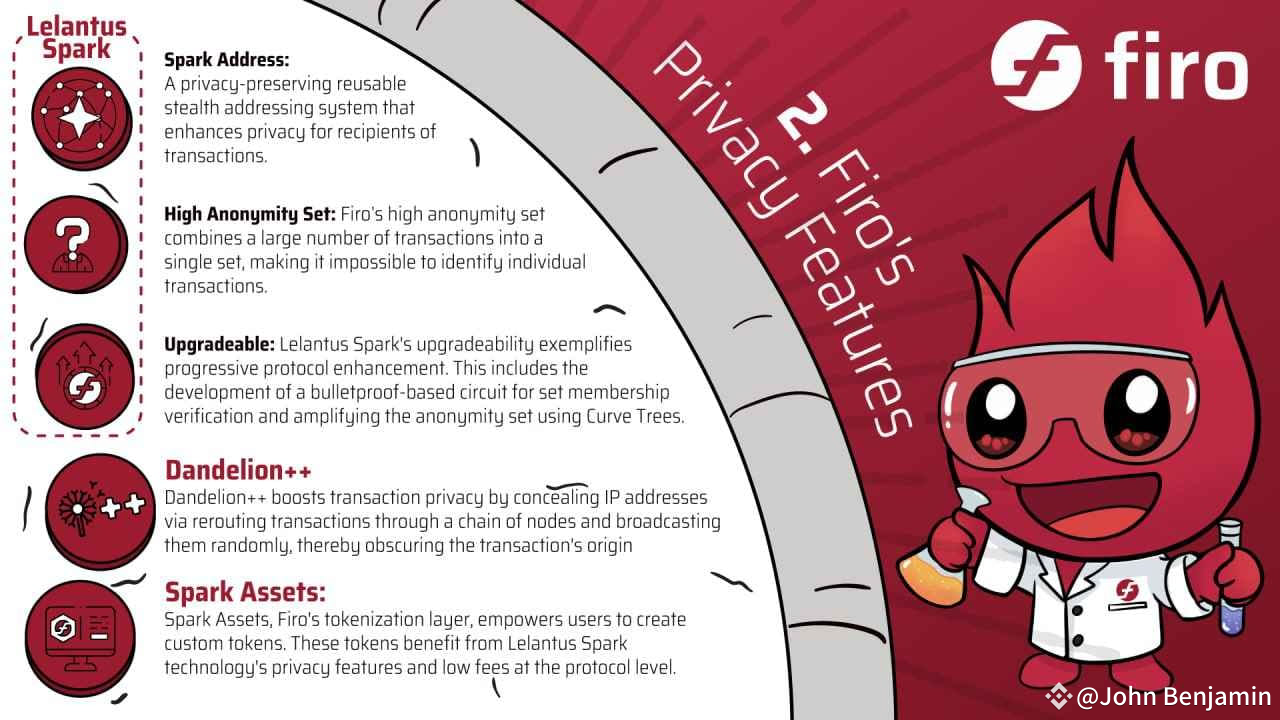
Firo's journey began with the implementation of Zerocoin technology, making it a pioneer in the field. The project then upgraded to Sigma, which marked a significant improvement in privacy and eliminated the need for a trusted setup.
However, the true game-changer came with the introduction of Lelantus, Developed by Firo's dedicated research team, Lelantus uses zero-knowledge proofs to provide anonymity.
The anonymity set in Lelantus is impressive, boasting over 65,000 coins. This is achieved through a system of accumulators that build up the anonymity set over time.
Lelantus Spark is designed to be modular and built on well-established cryptography, making it more secure and easier to audit. It also introduces features like computation offloading and efficient multisignature operations.
#Blockchain #Privacy #decentralization $FIRO
In an era where data breaches and privacy concerns are rampant, Firo emerges as a beacon of hope for those seeking secure and private digital transactions.
Firo's journey began with the implementation of Zerocoin technology, making it a pioneer in the field. The project then upgraded to Sigma, which marked a significant improvement in privacy and eliminated the need for a trusted setup.
However, the true game-changer came with the introduction of Lelantus, Developed by Firo's dedicated research team, Lelantus uses zero-knowledge proofs to provide anonymity.
The anonymity set in Lelantus is impressive, boasting over 65,000 coins. This is achieved through a system of accumulators that build up the anonymity set over time.
Lelantus Spark is designed to be modular and built on well-established cryptography, making it more secure and easier to audit. It also introduces features like computation offloading and efficient multisignature operations.
#Blockchain #Privacy #decentralization $FIRO

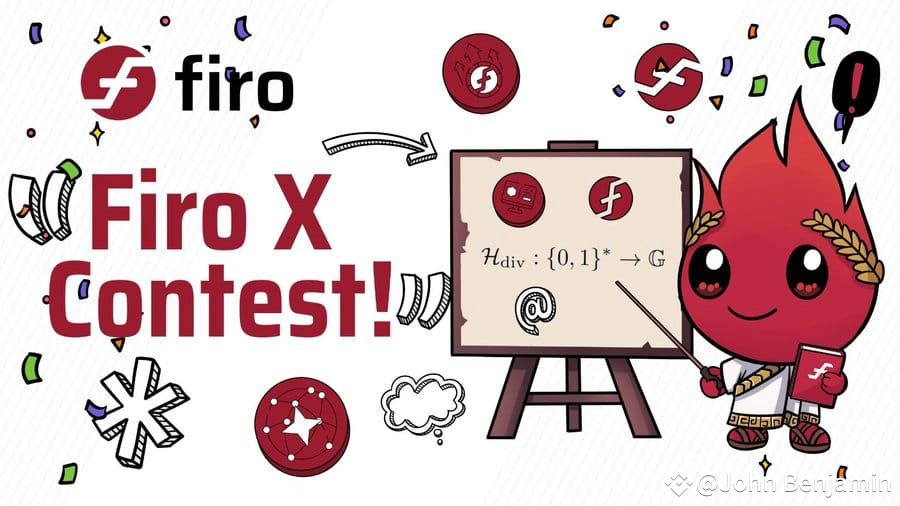
@Firo $FIRO Firo Twitter Contest: Showcase Your Creativity and Knowledge About Privacy Cryptocurrency
Firo has announced a new contest that invites participants to showcase their creativity and knowledge about the #Firo ecosystem. As the privacy landscape in the cryptocurrency world continues to evolve, Firo is taking center stage with this engaging competition.
Contest Details
The Firo X Contest challenges participants to create compelling content about Firo's privacy technology, recent developments, or potential future innovations. Contestants have the freedom to choose their approach, whether it's:
- A deep dive thread on Firo's outstanding privacy technology
- An engaging X post about recent developments in the Firo ecosystem
- An innovative take on Firo's future prospects
Prizes
The contest offers attractive rewards in $FIRO for the top entries:
1. First Place: $60 in $FIRO
2. Second Place: $45 in $FIRO
3. Third Place: $30 in $FIRO
4. Fourth Place: $20 in $FIRO
5. Fifth Place: $15 in $FIRO
6-8th Place: $10 each in $FIRO
Criteria
Entries will be evaluated based on two main factors:
1. Originality of the content
2. Engagement received (views, likes, retweets, and comments)
#Blockchain #Privacy #decentralization $FIRO
Firo has announced a new contest that invites participants to showcase their creativity and knowledge about the #Firo ecosystem. As the privacy landscape in the cryptocurrency world continues to evolve, Firo is taking center stage with this engaging competition.
Contest Details
The Firo X Contest challenges participants to create compelling content about Firo's privacy technology, recent developments, or potential future innovations. Contestants have the freedom to choose their approach, whether it's:
- A deep dive thread on Firo's outstanding privacy technology
- An engaging X post about recent developments in the Firo ecosystem
- An innovative take on Firo's future prospects
Prizes
The contest offers attractive rewards in $FIRO for the top entries:
1. First Place: $60 in $FIRO
2. Second Place: $45 in $FIRO
3. Third Place: $30 in $FIRO
4. Fourth Place: $20 in $FIRO
5. Fifth Place: $15 in $FIRO
6-8th Place: $10 each in $FIRO
Criteria
Entries will be evaluated based on two main factors:
1. Originality of the content
2. Engagement received (views, likes, retweets, and comments)
#Blockchain #Privacy #decentralization $FIRO
Campfire puts you in control of your financial data. 🛡️
Campfire wallet - a game-changer for privacy-focused crypto transactions. 🔥🪙
Campfire is Firo's official wallet, designed with both novice and advanced users in mind. It offers a sleek interface and powerful features to manage your $FIRO securely.
Key features of Campfire:
• User-friendly UI
• Built-in coin control
• Support for Lelantus & Lelantus Spark protocols
• Encrypted backups
• Address book functionality
One standout feature is Campfire's seamless integration of Firo's privacy protocols. You can easily anonymize your transactions using Lelantus Spark, ensuring your financial privacy is protected. 🛡️
For power users, Campfire includes a console for direct interaction with the Firo daemon. This allows for advanced operations and troubleshooting without leaving the wallet interface.
Security is paramount in Campfire. The wallet uses strong encryption for your private keys and offers encrypted backups to safeguard your funds. Always remember to keep your recovery phrase safe! 🔒
Ready to try Campfire? Download it from the official Firo website and join the privacy revolution! Have questions? The Firo community is always here to help.
#Blockchain #Privacy #decentralization $FIRO
Campfire wallet - a game-changer for privacy-focused crypto transactions. 🔥🪙
Campfire is Firo's official wallet, designed with both novice and advanced users in mind. It offers a sleek interface and powerful features to manage your $FIRO securely.
Key features of Campfire:
• User-friendly UI
• Built-in coin control
• Support for Lelantus & Lelantus Spark protocols
• Encrypted backups
• Address book functionality
One standout feature is Campfire's seamless integration of Firo's privacy protocols. You can easily anonymize your transactions using Lelantus Spark, ensuring your financial privacy is protected. 🛡️
For power users, Campfire includes a console for direct interaction with the Firo daemon. This allows for advanced operations and troubleshooting without leaving the wallet interface.
Security is paramount in Campfire. The wallet uses strong encryption for your private keys and offers encrypted backups to safeguard your funds. Always remember to keep your recovery phrase safe! 🔒
Ready to try Campfire? Download it from the official Firo website and join the privacy revolution! Have questions? The Firo community is always here to help.
#Blockchain #Privacy #decentralization $FIRO

🚀 Monerotopia 2024 is happening from November 14th to 17th in the vibrant city of Roma, Mexico City🎉 This is the ultimate event for enthusiasts of #privacy tech and digital cash, where we focus on the latest innovations and practical applications of these technologies. 💸
Monerotopia 2024 is all about unity and bringing together like-minded individuals who are passionate about privacy and decentralized financial systems. Whether you are a developer, investor, or just a privacy advocate, this event is tailored for you.
✨ Highlights of the event
Insightful Talks: Learn from leading experts in privacy tech and digital cash.
Interactive Workshops: Get hands-on experience with the latest tools and technologies.
Networking Opportunities: Connect with the FiroFam and other like-minded individuals.
Exhibitions: Explore innovative products and services in the crypto space.Don’t miss out on this incredible opportunity! Secure your spot now and get 10% off your tickets using the promo code "firo24" 🌐
Join us in Roma, Mexico City for Monerotopia24 and be a part of the future of privacy tech.
#Blockchain #Privacy #decentralization $FIRO
Monerotopia 2024 is all about unity and bringing together like-minded individuals who are passionate about privacy and decentralized financial systems. Whether you are a developer, investor, or just a privacy advocate, this event is tailored for you.
✨ Highlights of the event
Insightful Talks: Learn from leading experts in privacy tech and digital cash.
Interactive Workshops: Get hands-on experience with the latest tools and technologies.
Networking Opportunities: Connect with the FiroFam and other like-minded individuals.
Exhibitions: Explore innovative products and services in the crypto space.Don’t miss out on this incredible opportunity! Secure your spot now and get 10% off your tickets using the promo code "firo24" 🌐
Join us in Roma, Mexico City for Monerotopia24 and be a part of the future of privacy tech.
#Blockchain #Privacy #decentralization $FIRO

@Firo $FIRO Lelantus Spark: A Leap Forward in Cryptocurrency Privacy
Firo, a pioneer in blockchain privacy, has launched its groundbreaking Lelantus Spark protocol on mainnet in January 2024. This next-generation privacy technology builds upon Firo's previous Lelantus protocol, introducing significant enhancements to protect user anonymity.
The cornerstone of Lelantus Spark is the innovative Spark Addresses. These function like stealth addresses, allowing users to receive FIRO directly while maintaining complete privacy. Unlike traditional cryptocurrency addresses, Spark Addresses cannot be looked up on the blockchain, offering unprecedented confidentiality.
Spark transactions cleverly conceal the sender, receiver, and transaction amount. However, the protocol maintains blockchain integrity through zero-knowledge proofs, ensuring network-wide verifiability without compromising individual privacy.
A standout feature is the protocol's large anonymity sets, which significantly complicate statistical analysis compared to other privacy coins. Importantly, Lelantus Spark achieves this without requiring any special trusted setup.
The protocol also introduces Exchange Addresses, a solution allowing exchanges to comply with regulations while preserving user privacy. Additionally, View Keys provide optional transaction visibility for auditing or accounting purposes, putting control firmly in the users' hands.
Looking ahead, the Firo team is already working on further enhancements, including Curve Trees research to expand anonymity sets and Spark Assets for private tokens. With its modular design using well-understood cryptographic building blocks, Lelantus Spark represents a significant advancement in blockchain privacy technology.
#Blockchain #Privacy #decentralization $FIRO #Crypto
Firo, a pioneer in blockchain privacy, has launched its groundbreaking Lelantus Spark protocol on mainnet in January 2024. This next-generation privacy technology builds upon Firo's previous Lelantus protocol, introducing significant enhancements to protect user anonymity.
The cornerstone of Lelantus Spark is the innovative Spark Addresses. These function like stealth addresses, allowing users to receive FIRO directly while maintaining complete privacy. Unlike traditional cryptocurrency addresses, Spark Addresses cannot be looked up on the blockchain, offering unprecedented confidentiality.
Spark transactions cleverly conceal the sender, receiver, and transaction amount. However, the protocol maintains blockchain integrity through zero-knowledge proofs, ensuring network-wide verifiability without compromising individual privacy.
A standout feature is the protocol's large anonymity sets, which significantly complicate statistical analysis compared to other privacy coins. Importantly, Lelantus Spark achieves this without requiring any special trusted setup.
The protocol also introduces Exchange Addresses, a solution allowing exchanges to comply with regulations while preserving user privacy. Additionally, View Keys provide optional transaction visibility for auditing or accounting purposes, putting control firmly in the users' hands.
Looking ahead, the Firo team is already working on further enhancements, including Curve Trees research to expand anonymity sets and Spark Assets for private tokens. With its modular design using well-understood cryptographic building blocks, Lelantus Spark represents a significant advancement in blockchain privacy technology.
#Blockchain #Privacy #decentralization $FIRO #Crypto
The first @Firo $FIRO newsletter 📰 is out as promised.
#Firo is making significant strides with its recent updates.
Major Announcement from the newsletter.
New Tokenomics: Updated tokenomics are now live, which likely involves changes to the economic model of the Firo cryptocurrency to make it more efficient or appealing to users and investors.
Major Donations: Substantial donations have been received from Power Up Privacy, indicating strong support and confidence in Firo's privacy-centric mission.
Spark Names Launch: This new feature seems to involve a naming service, which could be related to user-friendly addresses or identity management within the Firo ecosystem.
Liquidity Mining Campaign: Firo has launched liquidity mining campaigns on major exchanges like Binance and AscendEX, aimed at incentivizing users to provide liquidity and thus increase the trading volume and stability of the Firo token.
Technical Updates: Ongoing improvements and upgrades to the Firo network, ensuring it remains robust and secure.For more detailed information, it’s recommended to go to thier website subscribe to the newsletter.
#Blockchain #Privacy #decentralization $FIRO #Crypto
#Firo is making significant strides with its recent updates.
Major Announcement from the newsletter.
New Tokenomics: Updated tokenomics are now live, which likely involves changes to the economic model of the Firo cryptocurrency to make it more efficient or appealing to users and investors.
Major Donations: Substantial donations have been received from Power Up Privacy, indicating strong support and confidence in Firo's privacy-centric mission.
Spark Names Launch: This new feature seems to involve a naming service, which could be related to user-friendly addresses or identity management within the Firo ecosystem.
Liquidity Mining Campaign: Firo has launched liquidity mining campaigns on major exchanges like Binance and AscendEX, aimed at incentivizing users to provide liquidity and thus increase the trading volume and stability of the Firo token.
Technical Updates: Ongoing improvements and upgrades to the Firo network, ensuring it remains robust and secure.For more detailed information, it’s recommended to go to thier website subscribe to the newsletter.
#Blockchain #Privacy #decentralization $FIRO #Crypto
Stay Ahead of the Curve with @Firo $FIRO Frontier: Your Bi-Weekly Gateway to Privacy-Centric Innovation
$FIRO Frontier is more than just a newsletter; it's your bi-weekly compass navigating the exciting landscape of Firo's ecosystem. Curated by the community, for the community, this invaluable resource delivers a concise yet comprehensive overview of everything you need to know about Firo's latest developments.
Unparalleled Insights, Straight to Your Inbox
By subscribing to Firo Frontier, you're not just signing up for updates—you're joining a movement. Every two weeks, you'll receive:
1. Breaking News: Be the first to know about key announcements that could shape Firo's future.
2. Technical Advancements: Dive deep into the latest privacy innovations driving Firo forward.
3. Community Pulse: Gain insights into ongoing discussions and initiatives within the vibrant Firo community.
4. Expert Analysis: Benefit from thoughtful perspectives on Firo's place in the broader cryptocurrency landscape.
Ready to elevate your Firo experience? Subscribe to Firo Frontier now and step into the future of privacy-focused cryptocurrency. Your bi-weekly dose of cutting-edge insights awaits.
#Blockchain #Privacy #decentralization $FIRO #HMSTRprediction #BinanceLaunchpoolHMSTR
$FIRO Frontier is more than just a newsletter; it's your bi-weekly compass navigating the exciting landscape of Firo's ecosystem. Curated by the community, for the community, this invaluable resource delivers a concise yet comprehensive overview of everything you need to know about Firo's latest developments.
Unparalleled Insights, Straight to Your Inbox
By subscribing to Firo Frontier, you're not just signing up for updates—you're joining a movement. Every two weeks, you'll receive:
1. Breaking News: Be the first to know about key announcements that could shape Firo's future.
2. Technical Advancements: Dive deep into the latest privacy innovations driving Firo forward.
3. Community Pulse: Gain insights into ongoing discussions and initiatives within the vibrant Firo community.
4. Expert Analysis: Benefit from thoughtful perspectives on Firo's place in the broader cryptocurrency landscape.
Ready to elevate your Firo experience? Subscribe to Firo Frontier now and step into the future of privacy-focused cryptocurrency. Your bi-weekly dose of cutting-edge insights awaits.
#Blockchain #Privacy #decentralization $FIRO #HMSTRprediction #BinanceLaunchpoolHMSTR

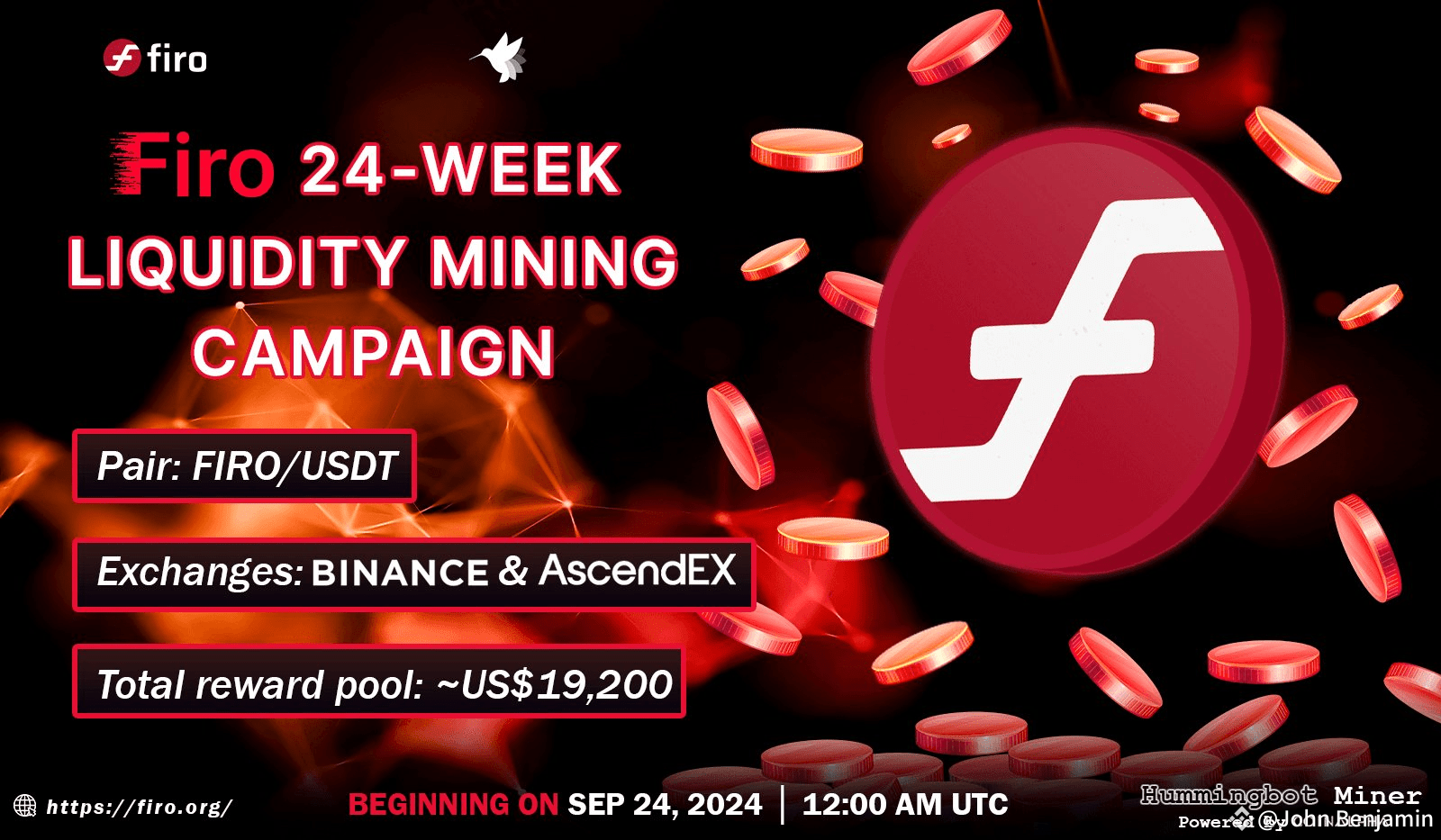
@Firo $FIRO Firo's 24-Week Liquidity Mining Campaign 🚀
🗓 Start Date: September 24, 2024
🪙 Total Reward Pool: Up to US$19,200 (FIRO 684 per week)
📈 Eligible Token Pair: FIRO/USDT
🏦 Exchanges: Binance & AscendEX
💼 Reward Token: FIRO
🔄 Eligible Orders: Maker orders with spreads of 2.0% or lower
Join the campaign and earn rewards weekly! Here’s a step-by-step guide to get started:
Step 1: What is Hummingbot? 🤖
Hummingbot is a decentralized, community-based market-making platform. It allows anyone to participate in market making for a coin/token and contribute to its liquidity. Earn rewards through your trading activity while supporting the project.
Step 2: How Does the Campaign Work? 🔍
Provide liquidity to the FIRO/USDT pair on Binance and AscendEX during the campaign. Earn weekly rewards in Firo based on your activity.
Step 3: Get Started! 🚀
Download Hummingbot Miner App: Visit the Hummingbot website and follow the setup guide.Set Up Your Wallet: Install the app and connect it to your wallet.Connect to Exchanges: Link the app to your Binance and AscendEX accounts.Start Providing Liquidity: Begin trading and providing liquidity to the FIRO/USDT pool.
Don’t miss this chance to earn rewards while engaging with the Firo community! Whether you're experienced or new to liquidity mining, everyone is welcome to join and benefit.
#Blockchain #Privacy #decentralization #FIROUSDT $FIRO
🗓 Start Date: September 24, 2024
🪙 Total Reward Pool: Up to US$19,200 (FIRO 684 per week)
📈 Eligible Token Pair: FIRO/USDT
🏦 Exchanges: Binance & AscendEX
💼 Reward Token: FIRO
🔄 Eligible Orders: Maker orders with spreads of 2.0% or lower
Join the campaign and earn rewards weekly! Here’s a step-by-step guide to get started:
Step 1: What is Hummingbot? 🤖
Hummingbot is a decentralized, community-based market-making platform. It allows anyone to participate in market making for a coin/token and contribute to its liquidity. Earn rewards through your trading activity while supporting the project.
Step 2: How Does the Campaign Work? 🔍
Provide liquidity to the FIRO/USDT pair on Binance and AscendEX during the campaign. Earn weekly rewards in Firo based on your activity.
Step 3: Get Started! 🚀
Download Hummingbot Miner App: Visit the Hummingbot website and follow the setup guide.Set Up Your Wallet: Install the app and connect it to your wallet.Connect to Exchanges: Link the app to your Binance and AscendEX accounts.Start Providing Liquidity: Begin trading and providing liquidity to the FIRO/USDT pool.
Don’t miss this chance to earn rewards while engaging with the Firo community! Whether you're experienced or new to liquidity mining, everyone is welcome to join and benefit.
#Blockchain #Privacy #decentralization #FIROUSDT $FIRO
The Development of Firo: Ensuring Private and Uncensorable Payments.
@Firo $FIRO was developed to address the growing need for private, uncensorable payments and to protect individuals' right to use money freely. By leveraging advanced cryptographic techniques and offering a decentralized platform, Firo ensures that users can maintain financial privacy and autonomy, countering the risks of government overreach and surveillance.
One of the fundamental reasons behind Firo's development is to protect people's right to use money freely. Financial transactions are a core aspect of personal freedom, and the ability to conduct these transactions privately is essential for maintaining individual autonomy. Traditional financial systems often involve third parties, such as banks and payment processors, which can monitor, restrict, or censor transactions. This oversight can lead to a loss of privacy and potential misuse of financial data.
In a world where digital transactions are becoming the norm, ensuring that individuals can maintain privacy and autonomy over their financial activities is crucial.
#Blockchain #Privacy #decentralization #FIRO $FIRO
@Firo $FIRO was developed to address the growing need for private, uncensorable payments and to protect individuals' right to use money freely. By leveraging advanced cryptographic techniques and offering a decentralized platform, Firo ensures that users can maintain financial privacy and autonomy, countering the risks of government overreach and surveillance.
One of the fundamental reasons behind Firo's development is to protect people's right to use money freely. Financial transactions are a core aspect of personal freedom, and the ability to conduct these transactions privately is essential for maintaining individual autonomy. Traditional financial systems often involve third parties, such as banks and payment processors, which can monitor, restrict, or censor transactions. This oversight can lead to a loss of privacy and potential misuse of financial data.
In a world where digital transactions are becoming the norm, ensuring that individuals can maintain privacy and autonomy over their financial activities is crucial.
#Blockchain #Privacy #decentralization #FIRO $FIRO
What if FIRO?🤔🤔🤔 and Why you should chose Firo.
@Firo $FIRO is Your Guide to Private Digital Money. Privacy at its PEAK.
Firo is a cryptocurrency that puts your privacy first. Think of it as digital cash that you can use online without leaving a trail of your financial activities.
Key Features of Firo
1. Privacy Protection: When you use Firo, your transactions are mixed with others, making them hard to trace.
2. Secure Network: Firo uses strong security measures to protect its network.
3. Community-Driven: Big decisions about Firo are made by voting. If you own Firo, you get a say in its future.
4. Constantly Improving: The Firo team regularly updates the system to make it better and more secure.
Why People Should Choose Firo
1. Financial Privacy: Use your money without everyone seeing what you're doing.
2. Control Your Data: You decide who gets to see your financial information.
3. Be Part of a Movement: Join others who believe in the right to financial privacy.
4. User-Friendly: Designed to be easy to use, even if you're new to cryptocurrencies.
#Blockchain #Privacy #decentralization #FIRO $FIRO
@Firo $FIRO is Your Guide to Private Digital Money. Privacy at its PEAK.
Firo is a cryptocurrency that puts your privacy first. Think of it as digital cash that you can use online without leaving a trail of your financial activities.
Key Features of Firo
1. Privacy Protection: When you use Firo, your transactions are mixed with others, making them hard to trace.
2. Secure Network: Firo uses strong security measures to protect its network.
3. Community-Driven: Big decisions about Firo are made by voting. If you own Firo, you get a say in its future.
4. Constantly Improving: The Firo team regularly updates the system to make it better and more secure.
Why People Should Choose Firo
1. Financial Privacy: Use your money without everyone seeing what you're doing.
2. Control Your Data: You decide who gets to see your financial information.
3. Be Part of a Movement: Join others who believe in the right to financial privacy.
4. User-Friendly: Designed to be easy to use, even if you're new to cryptocurrencies.
#Blockchain #Privacy #decentralization #FIRO $FIRO

Announcement! Announcement! Announcement!
@Firo $FIRO Mandatory Update: Firo has released a new version of their software, v0.14.14.0.
Passing this information to all $FIRO users and enthusiasts about the latest upgrade.
This is not an optional update. All users and nodes on the Firo network must update to this new version.
This update, version 0.14.14.0, is not just another routine software patch; it represents a pivotal moment in Firo's evolution, implementing crucial changes to its economic model and network infrastructure.
At the heart of this update lies a series of changes to Firo's tokenomics—the economic model that governs the cryptocurrency. It's a collective step forward, ensuring that the entire ecosystem moves in unison towards its new economic model and enhanced features.
Note: These changes were chosen by Firo users through voting. Also, if you are using Campfire or Stack wallets, no updates are required, as the changes have been made in the backend.
#Blockchain #Privacy #decentralization #FIRO $FIRO
@Firo $FIRO Mandatory Update: Firo has released a new version of their software, v0.14.14.0.
Passing this information to all $FIRO users and enthusiasts about the latest upgrade.
This is not an optional update. All users and nodes on the Firo network must update to this new version.
This update, version 0.14.14.0, is not just another routine software patch; it represents a pivotal moment in Firo's evolution, implementing crucial changes to its economic model and network infrastructure.
At the heart of this update lies a series of changes to Firo's tokenomics—the economic model that governs the cryptocurrency. It's a collective step forward, ensuring that the entire ecosystem moves in unison towards its new economic model and enhanced features.
Note: These changes were chosen by Firo users through voting. Also, if you are using Campfire or Stack wallets, no updates are required, as the changes have been made in the backend.
#Blockchain #Privacy #decentralization #FIRO $FIRO
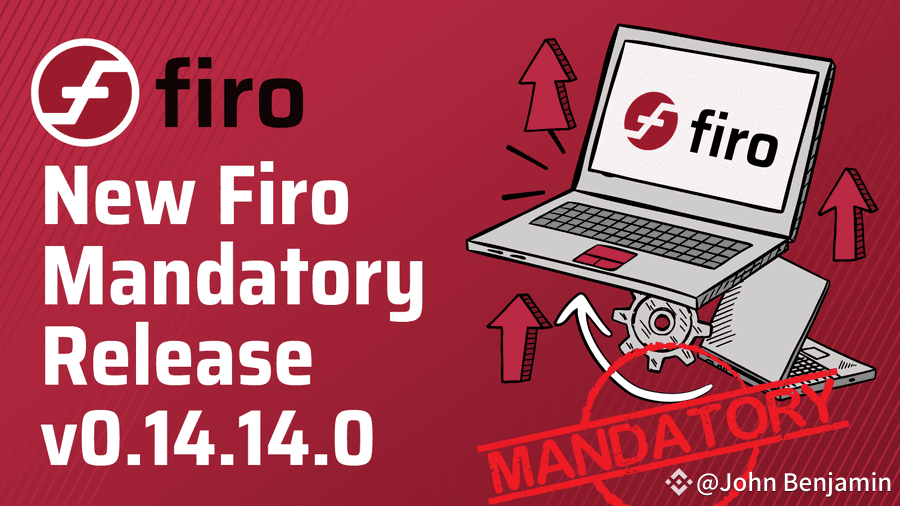
@Firo $FIRO : Sparking a Privacy Revolution in Cryptocurrency
How would you feel if everyone knew about your financial activities? Like what you spend on, what you earn, and how much you have?
I'm introducing you to a kind of money that keeps your financial activities private called $FIRO . Firo = Invisible Money.
Firo, formerly known as Zcoin, is a privacy-focused cryptocurrency and ecosystem. It's a type of digital money designed to protect your privacy.
Firo uses Proof of Work and Chainlocks to secure its network, similar to having both a strong lock and an alarm system on your house. Proof of Work is a security mechanism that requires computational effort to prevent malicious uses of the system, while Chainlocks provide additional protection against certain types of attacks. If someone tries to hack the network, these systems work together to prevent it, keeping your money safe.
Firo can also protect other digital activities, not just financial transactions. Think of Firo as an invisibility cloak for your money. When you use Firo to make a payment, your transaction is mixed with 214 others, so it's hidden in a large group.
For example, if you buy a coffee with Firo, the coffee shop knows they received payment, but they can't see any details about your entire financial history or how much money you have.
Firo provides a strong privacy solution. By using this innovative cryptocurrency, you're not only protecting your own financial information but also supporting a movement for greater privacy and freedom in the digital world. Firo gives you the tools to take control of your digital financial life.
#Blockchain #Privacy #decentralization #FIRO $FIRO
How would you feel if everyone knew about your financial activities? Like what you spend on, what you earn, and how much you have?
I'm introducing you to a kind of money that keeps your financial activities private called $FIRO . Firo = Invisible Money.
Firo, formerly known as Zcoin, is a privacy-focused cryptocurrency and ecosystem. It's a type of digital money designed to protect your privacy.
Firo uses Proof of Work and Chainlocks to secure its network, similar to having both a strong lock and an alarm system on your house. Proof of Work is a security mechanism that requires computational effort to prevent malicious uses of the system, while Chainlocks provide additional protection against certain types of attacks. If someone tries to hack the network, these systems work together to prevent it, keeping your money safe.
Firo can also protect other digital activities, not just financial transactions. Think of Firo as an invisibility cloak for your money. When you use Firo to make a payment, your transaction is mixed with 214 others, so it's hidden in a large group.
For example, if you buy a coffee with Firo, the coffee shop knows they received payment, but they can't see any details about your entire financial history or how much money you have.
Firo provides a strong privacy solution. By using this innovative cryptocurrency, you're not only protecting your own financial information but also supporting a movement for greater privacy and freedom in the digital world. Firo gives you the tools to take control of your digital financial life.
#Blockchain #Privacy #decentralization #FIRO $FIRO
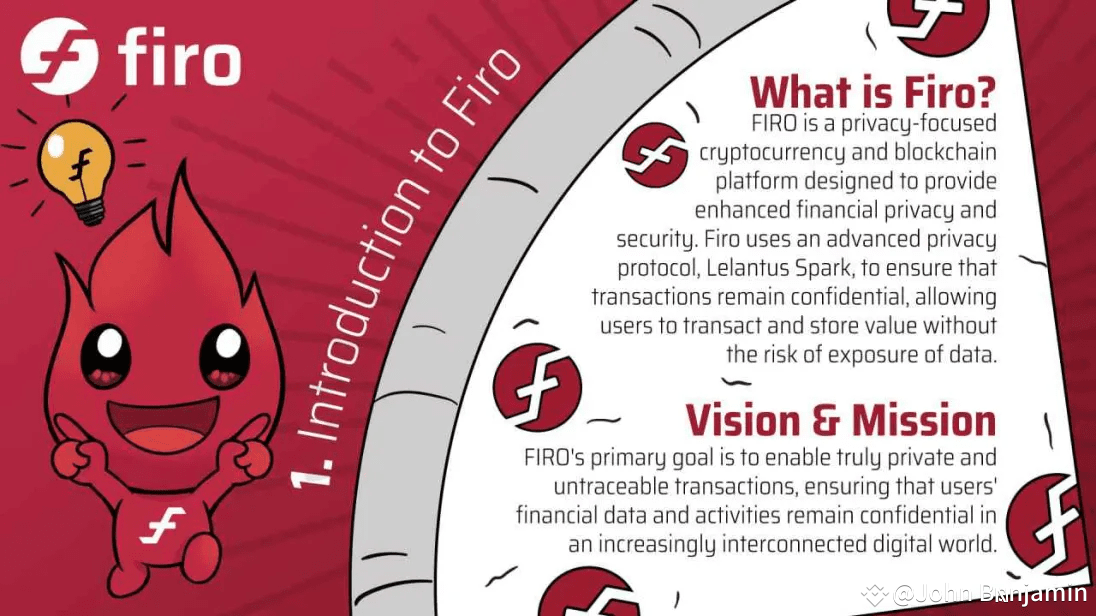
Log in to explore more content