
杰瑞钱多多
116 Posts

杰瑞钱多多
Report
Block User
71 Following
30 Followers
42 Liked
Posts
·
--
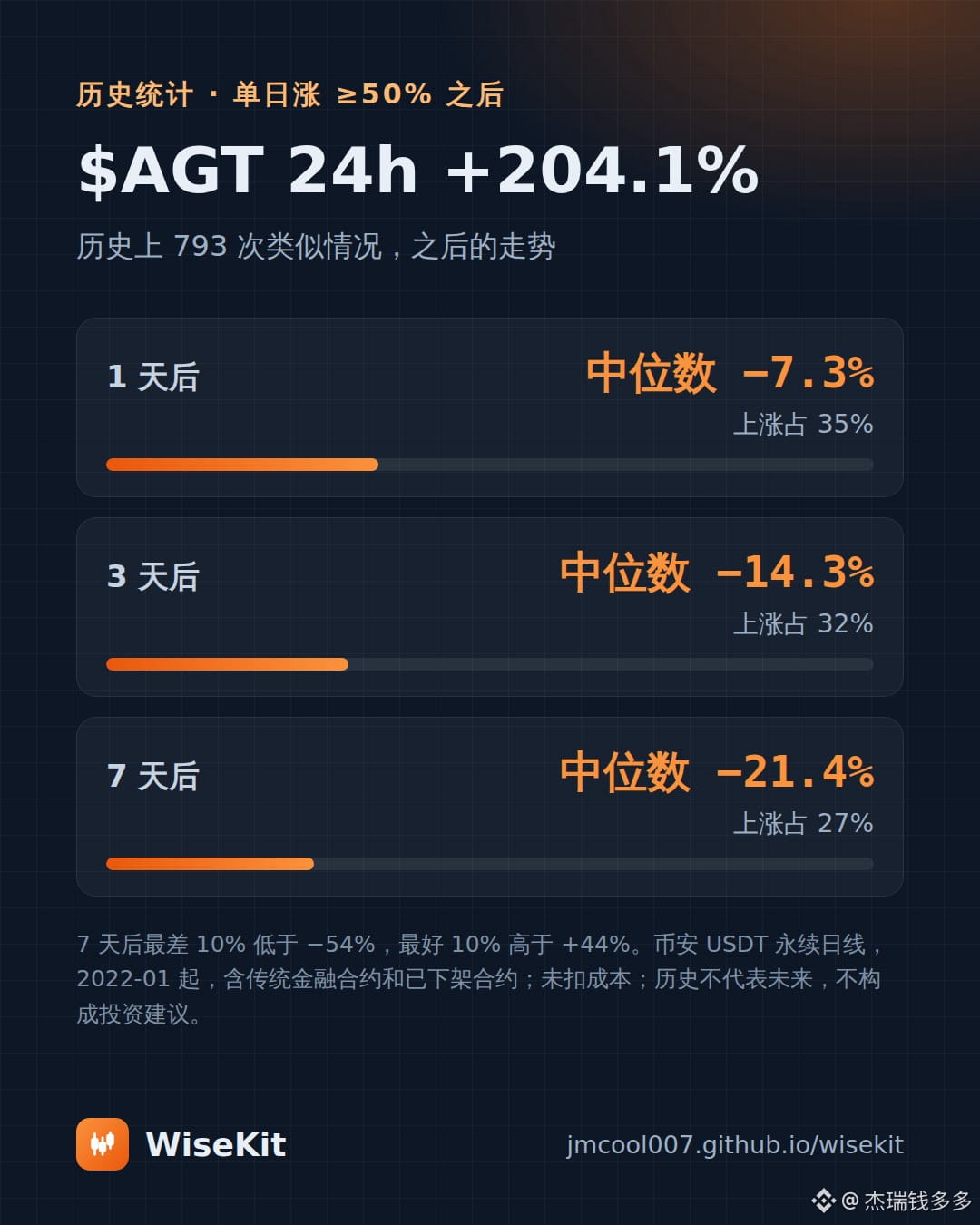
$AGT is up 204.1% in the past 24 hours. Chase it or short it? Let’s look at the historical data first.
I analyzed daily candles for Binance USDT perpetual contracts since 2022 (920 contracts, including traditional finance contracts and 164 delisted ones). There have been 793 instances of a single-day gain of at least 50%. Measured from the next day’s open:
- After 1 day: median return −7.3%; 35% were up
- After 3 days: median return −14.3%; 32% were up
- After 7 days: median return −21.4%; 27% were up
- Outcomes varied widely at both extremes: after 7 days, the worst 10% were down more than 54%, while the best 10% were up more than 44%
In other words, chasing is likely to lose money: about 73% of the time, the price was lower than your entry a week later. But shorting the reversal can also be rough: 14% of the time, the price rose more than 30% again within 7 days—a move that highly leveraged short positions may not survive.
Now let’s look at the cost of holding: $AGT currently has a funding rate of 0.0755% every 4 hours (longs pay shorts). At this rate, chasing a long position now would cost about 0.45% in funding alone over a day.
A few notes: many coins often surge or plunge together on the same day, so these events are not independent; the statistics exclude trading fees and funding fees; returns are calculated from daily close to daily close, so they differ slightly from the rolling 24-hour percentage change; past performance does not predict future results.
When you come across a coin surging like this, what do you usually do: stay away, chase with a small position, or wait for a pullback?
Full statistics and methodology: https://jmcool007.github.io/wisekit/research/pump-dump/
#合约交易 #Altcoins
This is not investment advice.
340
·
--
72.5% win rate—so why am I still losing money?
My contract-trading program ran live for 933 trades, with a 72.5% win rate. Sounds high, but it still lost money.
Breaking it down makes things clear (in R, where 1R = the planned stop-loss amount for one trade):
- Winning trades earned an average of just +0.17R
- Losing trades lost an average of −0.97R
I earn a little when I win, but lose almost the full stop-loss amount when I lose. With this risk/reward ratio, I’d need a win rate of about 85% just to break even. 72.5% is nowhere near enough.
Here’s an even more sobering figure: 82% of losing trades never had an unrealized profit of even 0.25R between entry and stop-out. In other words, it’s not that they “went the wrong way” or that I “took profits too early”—they moved against me as soon as I entered.
So what if I widened the stop-loss and let winning trades run longer? I ran 36 sets of counterfactual replays: widening the trailing stop by 1.5–6 times, turning off the fast trailing layer, and testing these against different initial stop-losses. Not one set turned losses into profits. In fact, the wider the stop, the more I lost, because winning trades simply didn’t run far to begin with.
On top of that, fees accounted for 31% of the losses.
A few takeaways:
1. Win rate is the easiest metric to mislead you. A high win rate with a low risk/reward ratio is often a “picking up pennies in front of a steamroller” setup.
2. Start by looking at a strategy’s expectancy: win rate × average win − loss rate × average loss, then subtract costs.
3. Exit parameters can’t save a signal that gets the direction wrong. I spent a lot of time tuning exits, only to find that the problem was with the entries.
What risk/reward ratios have you seen in high-win-rate strategies?
#合约交易 #QuantitativeTrading
This is not investment advice.
43
·
--
See translation
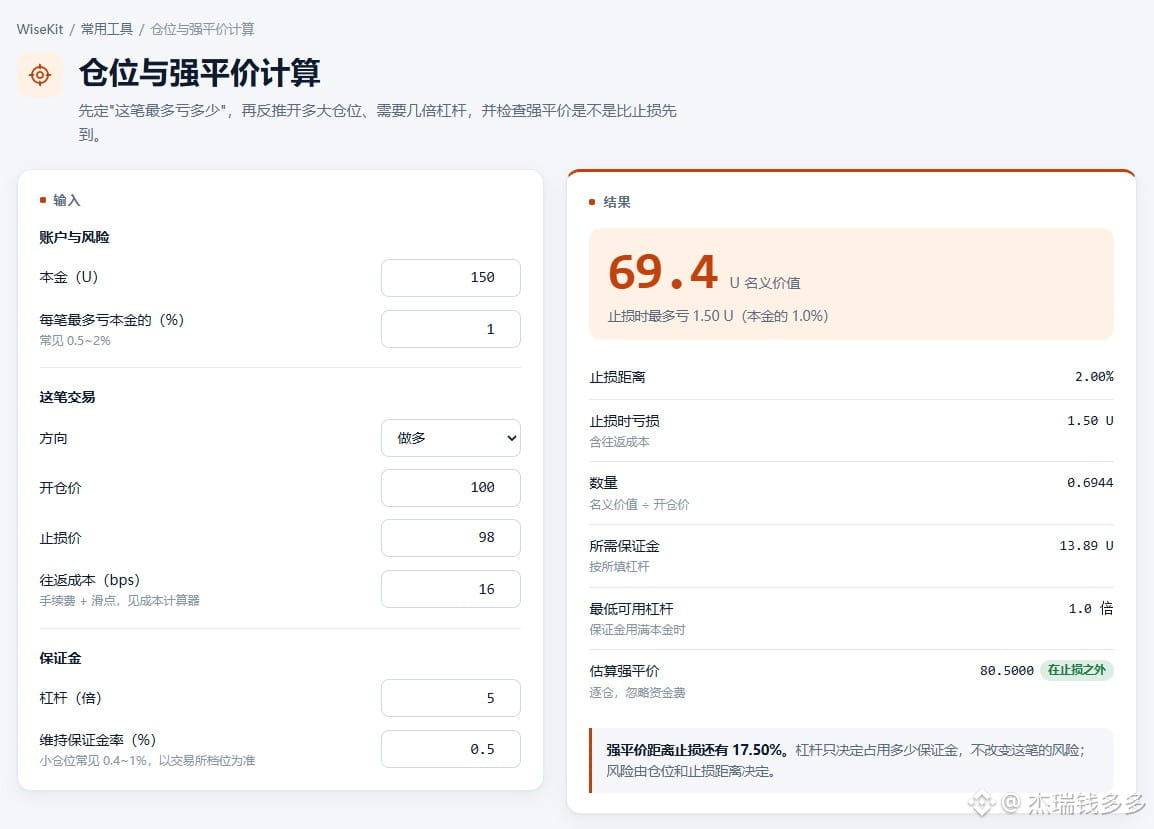
😍给大家做了个小工具《仓位与强平价计算》,大家可以看看是否有用,另外还想要什么工具可以说哈~~
https://jmcool007.github.io/wisekit/position/
😍给大家做了个小工具《仓位与强平价计算》,大家可以看看是否有用,另外还想要什么工具可以说哈~~
https://jmcool007.github.io/wisekit/position/
https://jmcool007.github.io/wisekit/position/
85
·
--
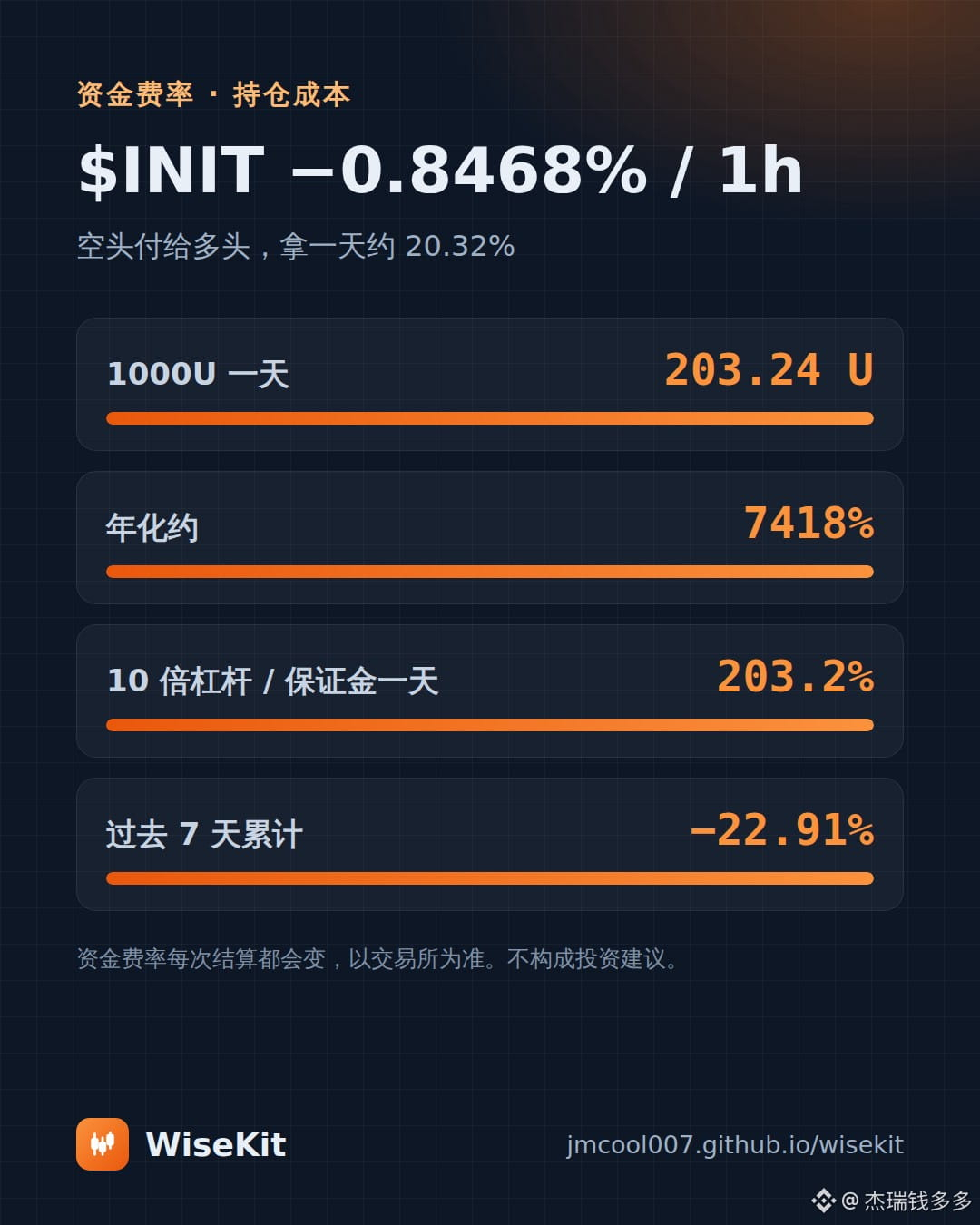
The funding rate for $INIT is currently −0.8468% per hour. If you open a 1000U short position, how much would you pay in a day?
- Direction: shorts pay longs
- At the current rate, that’s about 20.32% per day: a 1000U notional position would pay 203.24U in one day
- Annualized, that’s about 7418%
- Actual cumulative rate over the past 7 days: −22.91% (51 settlements; positive values mean longs pay)
At 10x leverage, the same fee amounts to 203.2% of your margin in one day. Many people focus only on price and don’t account for this holding cost—the longer you hold, the more it eats into your returns.
A high funding rate means many traders are on one side, but it doesn’t by itself indicate which way the price will move next. The rate can change at any time; the rate at settlement applies.
To calculate different rates and holding periods yourself, try this conversion tool: https://jmcool007.github.io/wisekit/funding/
Do you check the funding rate before opening a position?
#合约交易 #FundingRate
This is not investment advice.
280
·
--
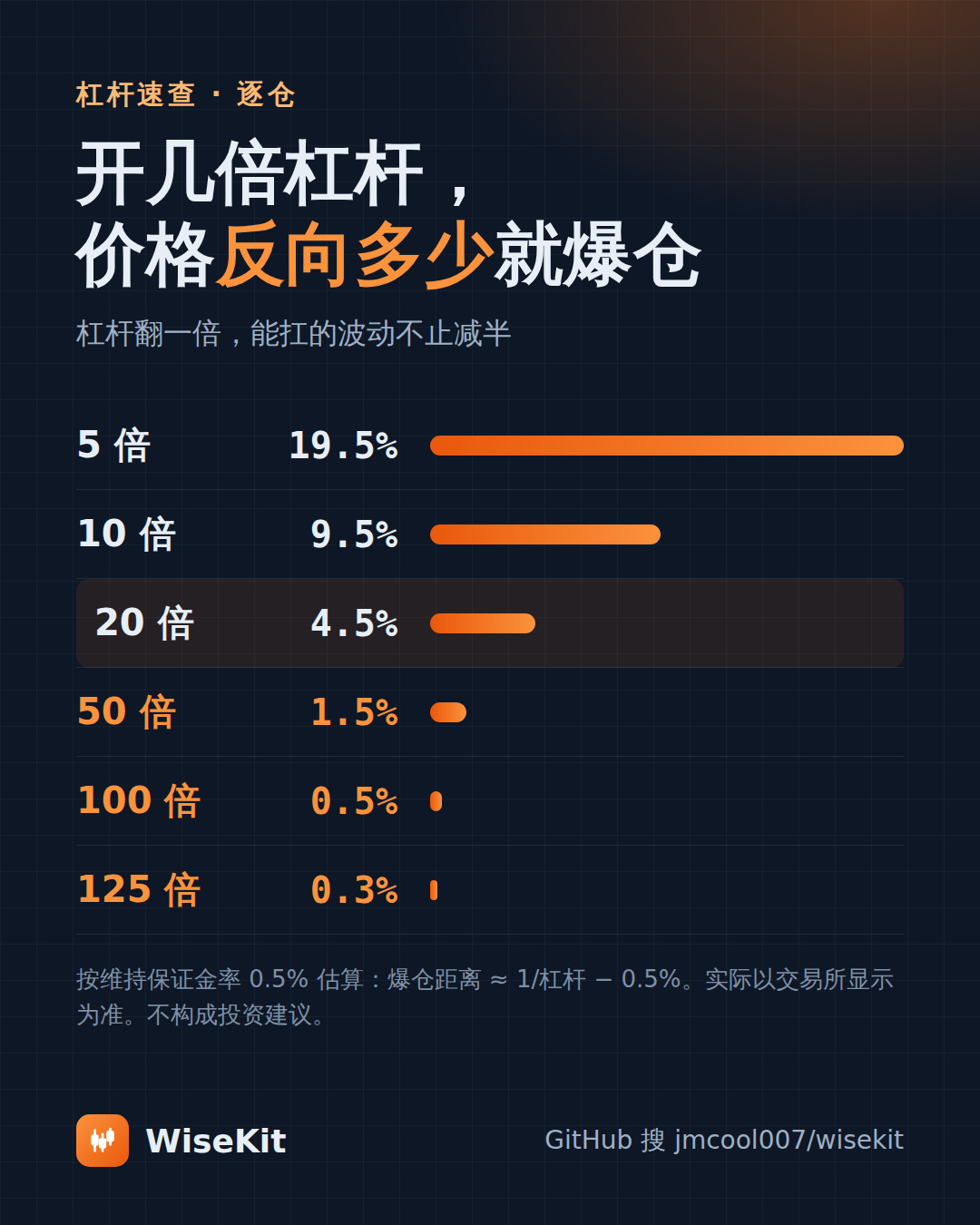
At 20x leverage, a 4.5% move in the wrong direction will liquidate you.
Before using leverage, many people only calculate “how much they could make,” without considering “how much they can withstand.” Here’s how much of a move against you common leverage levels can handle (isolated margin, assuming a 0.5% maintenance margin rate):
- 5x: 19.5%
- 10x: 9.5%
- 20x: 4.5%
- 50x: 1.5%
- 100x: 0.5%
- 125x: 0.3%
When leverage doubles, the adverse move you can withstand drops by more than half. At 100x, a single ordinary candlestick could wipe out your position—and it has little to do with whether your directional call was right.
A few things I’ve learned:
1. Set your stop-loss first, then choose your leverage. Leverage only determines how much margin is used; the real risk in a trade is “position size × stop-loss distance.”
2. Your stop-loss price must be reached before your liquidation price. Otherwise, the stop-loss is effectively useless.
3. Fees are charged based on position size. The higher your leverage, the larger the fees are relative to your margin.
I’ve turned these calculations into a set of free calculators on the WiseKit toolkit site: contract profit and loss, take-profit and stop-loss prices, quick liquidation estimates, position sizing, average entry price after adding to a position, funding rates, investment returns, and more. They’re ready to use—no registration required, and calculations are performed only in your own browser. GitHub: https://jmcool007.github.io/wisekit/
What leverage do you usually use? What other calculators are you missing? Let me know in the comments, and I’ll make the ones people ask for most.
#合约交易 #杠杆 #RiskManagement
This is not investment advice.
1
183
·
--
I tested more than 40,000 contract strategy configurations. The number that were ready for live trading: 0.
First, some background: I used 150 USDT of real money to run a Binance perpetual futures quant trading program, while also doing extensive backtesting research. Over the past month or so, my biggest takeaway wasn’t making money—it was figuring out “why most strategies that look good in backtests lose money as soon as they go live.”
My approach was simple, but rigorous:
1) I wrote down the evaluation rules before looking at the results. I decided in advance how to choose parameters and what counted as a pass, and didn’t allow myself to change the rules after seeing the results.
2) I split the data into three segments: the development segment for finding parameters, the validation segment for eliminating strategies, and the final segment, which was reserved for one-time use only.
3) I calculated costs based on actual live trade executions, not ideal prices.
The results:
- I tested various combinations of 13 common signals (breakouts, Bollinger Band mean reversion, sharp-move reversals, and so on), registering more than 40,000 configurations in total;
- Quite a few looked good in the development segment, but very few passed the validation segment. The number that passed all three segments and held up across multiple years of data from 2022 to 2025: 0;
- The only pattern to pass the full out-of-sample test later turned out to work on just one exchange, and the available capital was insufficient. I didn’t dare put it into live trading either.
Why share this? Because lots of people on the feed show off their returns, but very few show how they test. A strategy with a beautiful backtest curve often just means its parameters were picked well.
I’ll break down this research in upcoming posts:
- Why a 72.5% win rate can still lose money
- What real live-trading costs actually add up to
- Why adding filters is usually an illusion
- What the only pattern that passed testing was
This is all based on my own live-trading and backtesting data, and I’ll be honest about the losses too.
This is not investment advice.
1
132
·
--
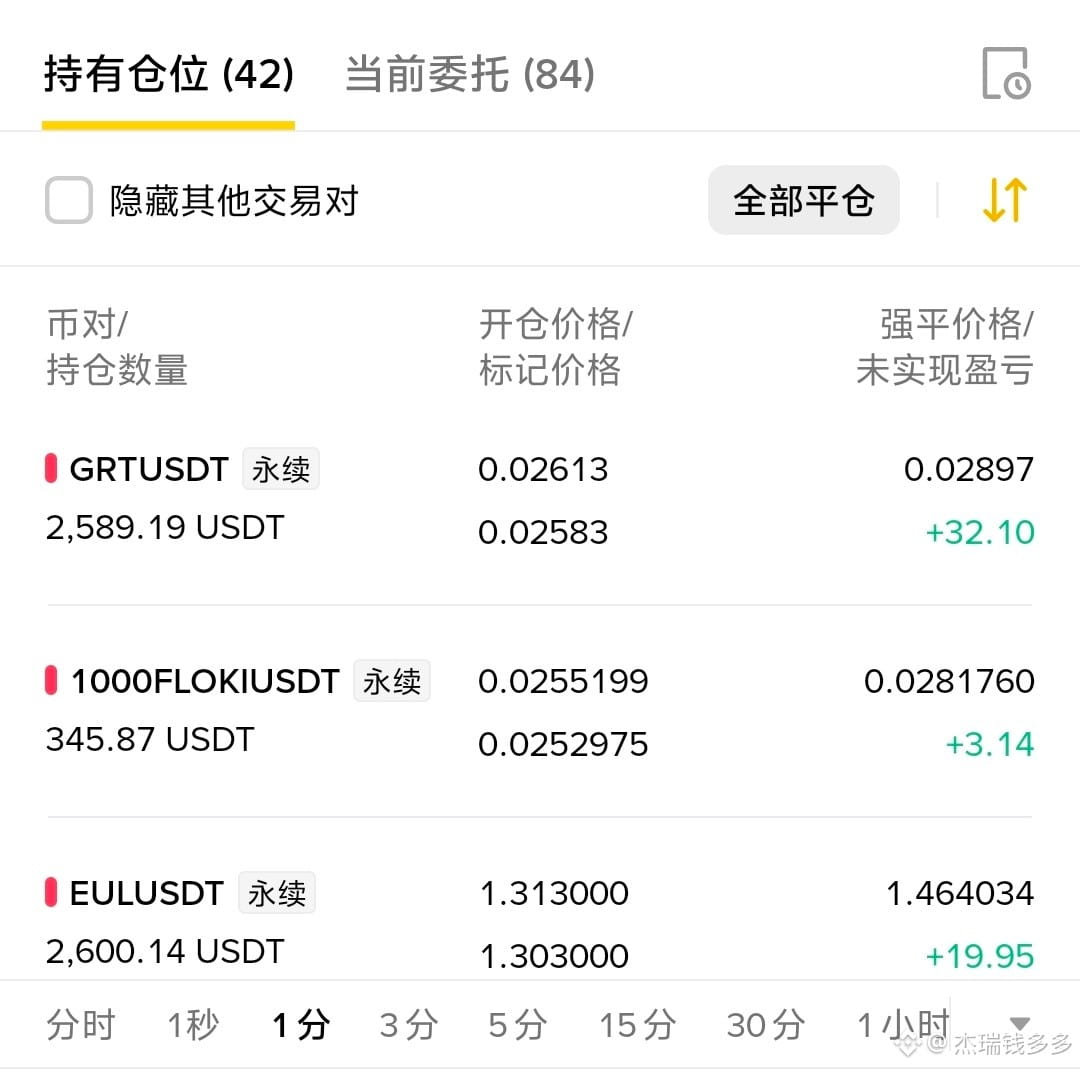
😍The AI bot manages 42 positions and 84 orders at the same time, which already makes me very happy. I hope it continues to deliver good results over the long term😍$BTC
{future}(BTCUSDT)
😍The AI bot manages 42 positions and 84 orders at the same time, which already makes me very happy. I hope it continues to deliver good results over the long term😍$BTC
1
58
·
--
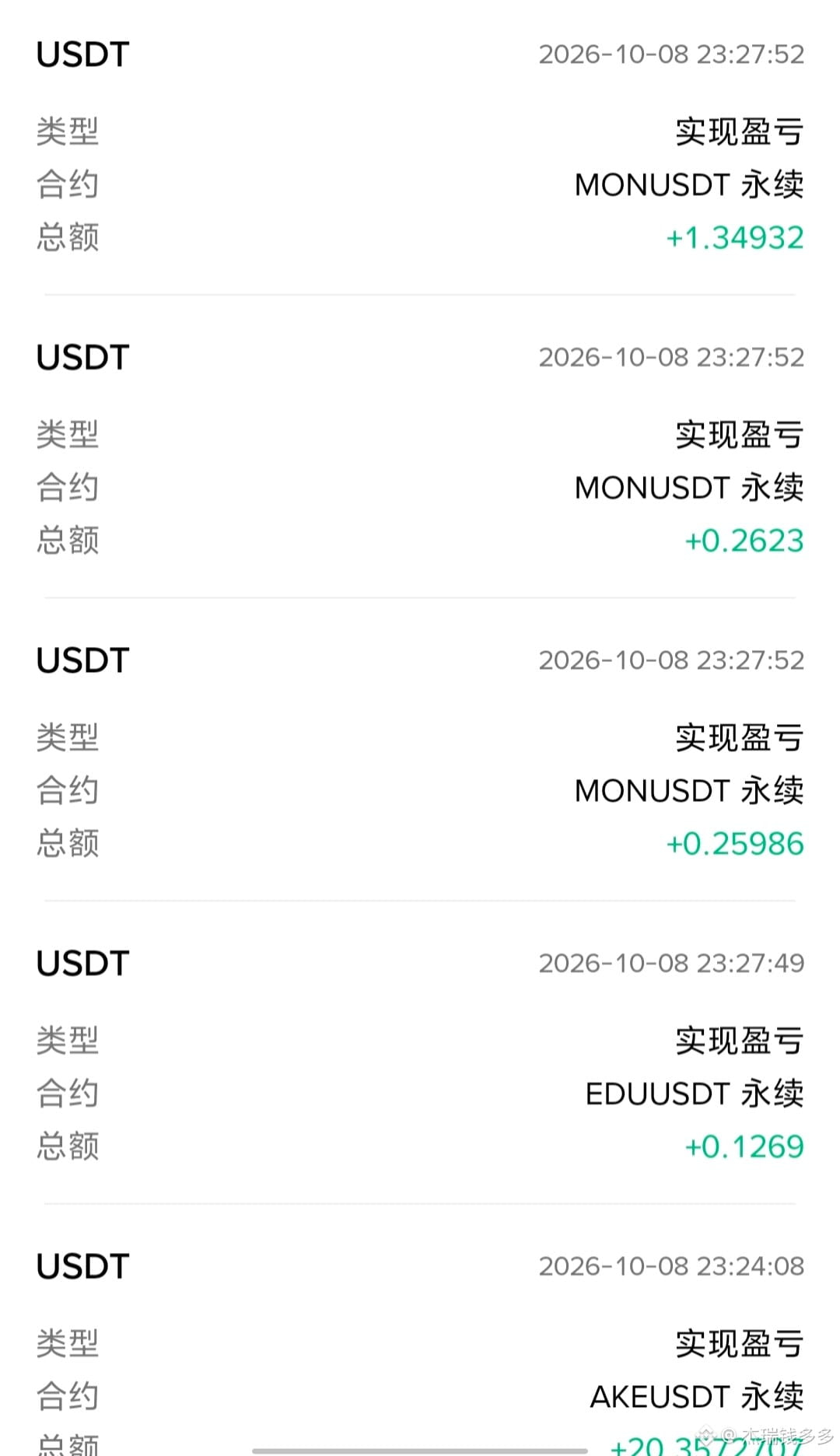
😍This AI robot already makes me so happy. I hope it can keep going like this for a long time—then that would be awesome 😍$MET $BTC
{future}(BTCUSDT)
😍This AI robot already makes me so happy. I hope it can keep going like this for a long time—then that would be awesome 😍$MET $BTC
1
·
--
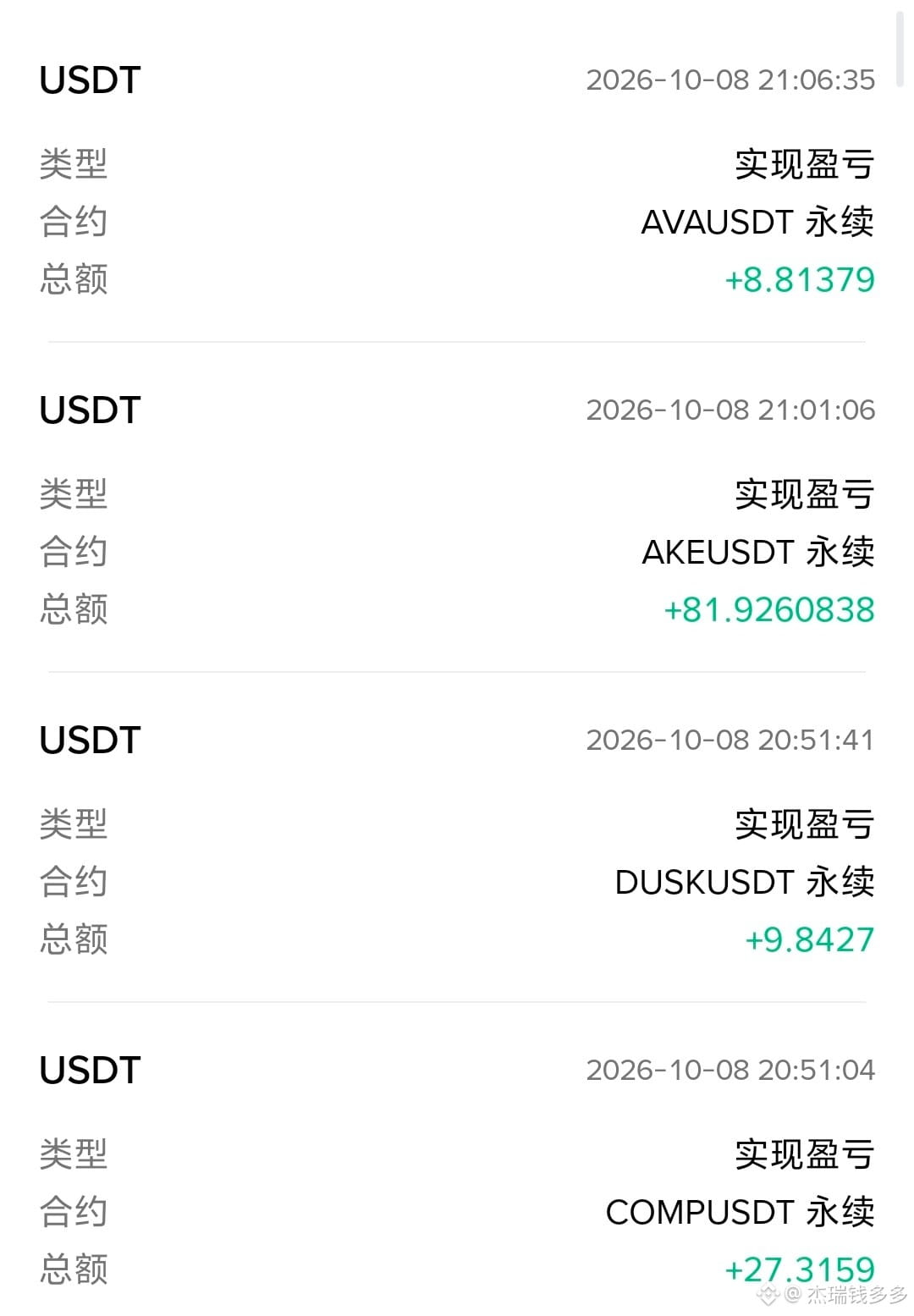
AI robots can also, I hope they can be extended for a long time $BTC
{future}(BTCUSDT)
AI robots can also, I hope they can be extended for a long time $BTC
66
·
--
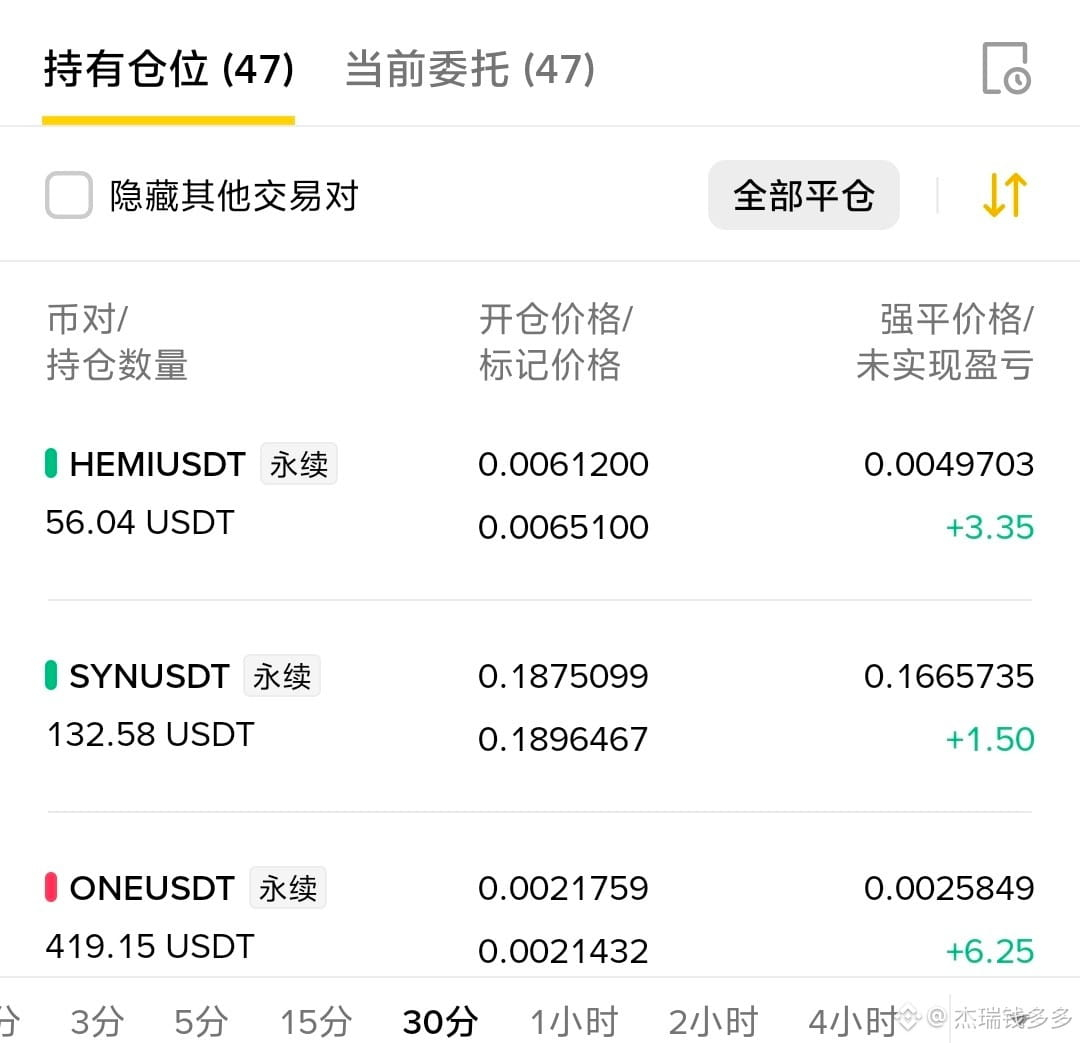
😍The AI robot is managing 47 positions at the same time, and I’m already so touched 🥹$HEMI $SYN $ONE
{future}(ONEUSDT)
{future}(SYNUSDT)
{future}(HEMIUSDT)
😍The AI robot is managing 47 positions at the same time, and I’m already so touched 🥹$HEMI $SYN $ONE
·
--
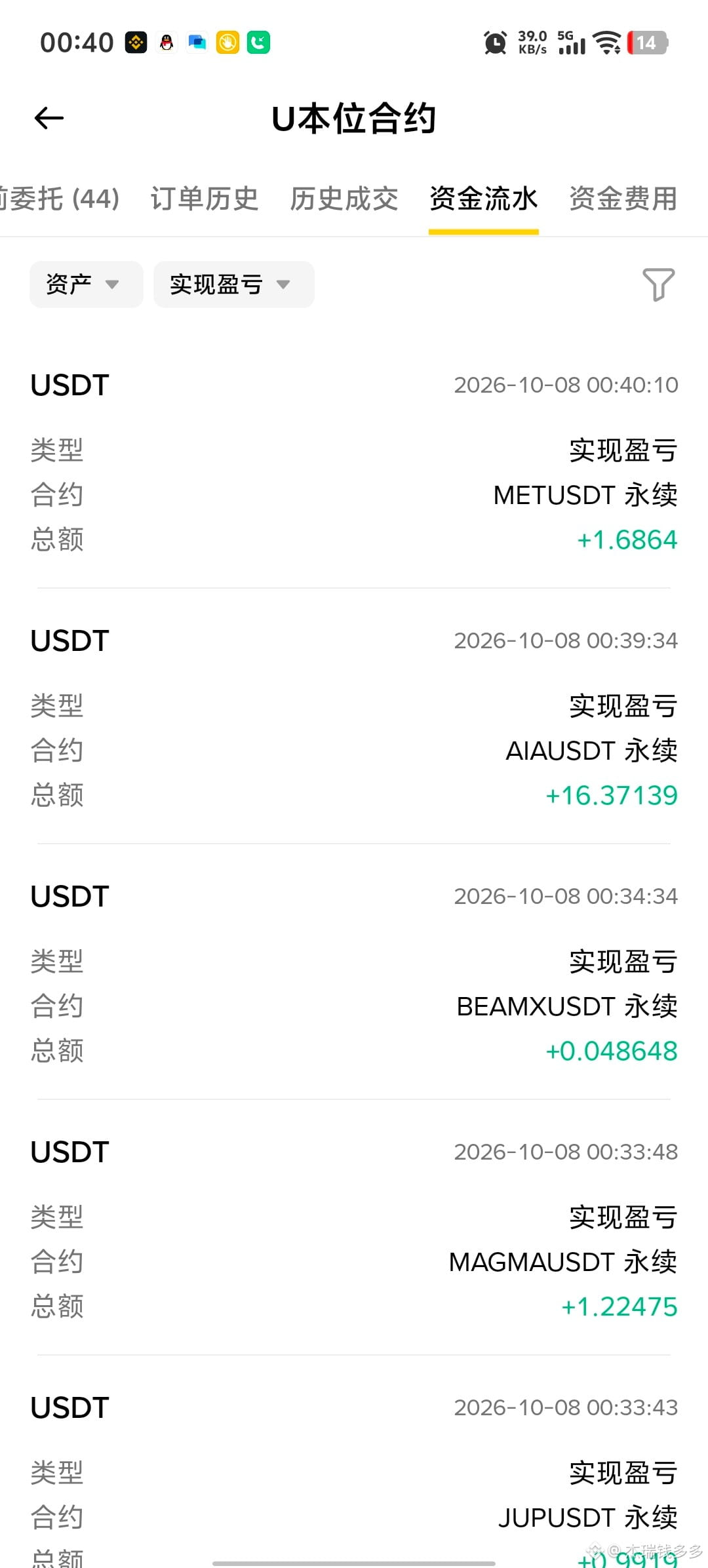
😍 This version of the AI bot feels pretty good so far. It’d be great if it could stay this way long-term $BTC $牛来 $AIA
{future}(BTCUSDT)
😍 This version of the AI bot feels pretty good so far. It’d be great if it could stay this way long-term $BTC $牛来 $AIA
1.3k
·
--
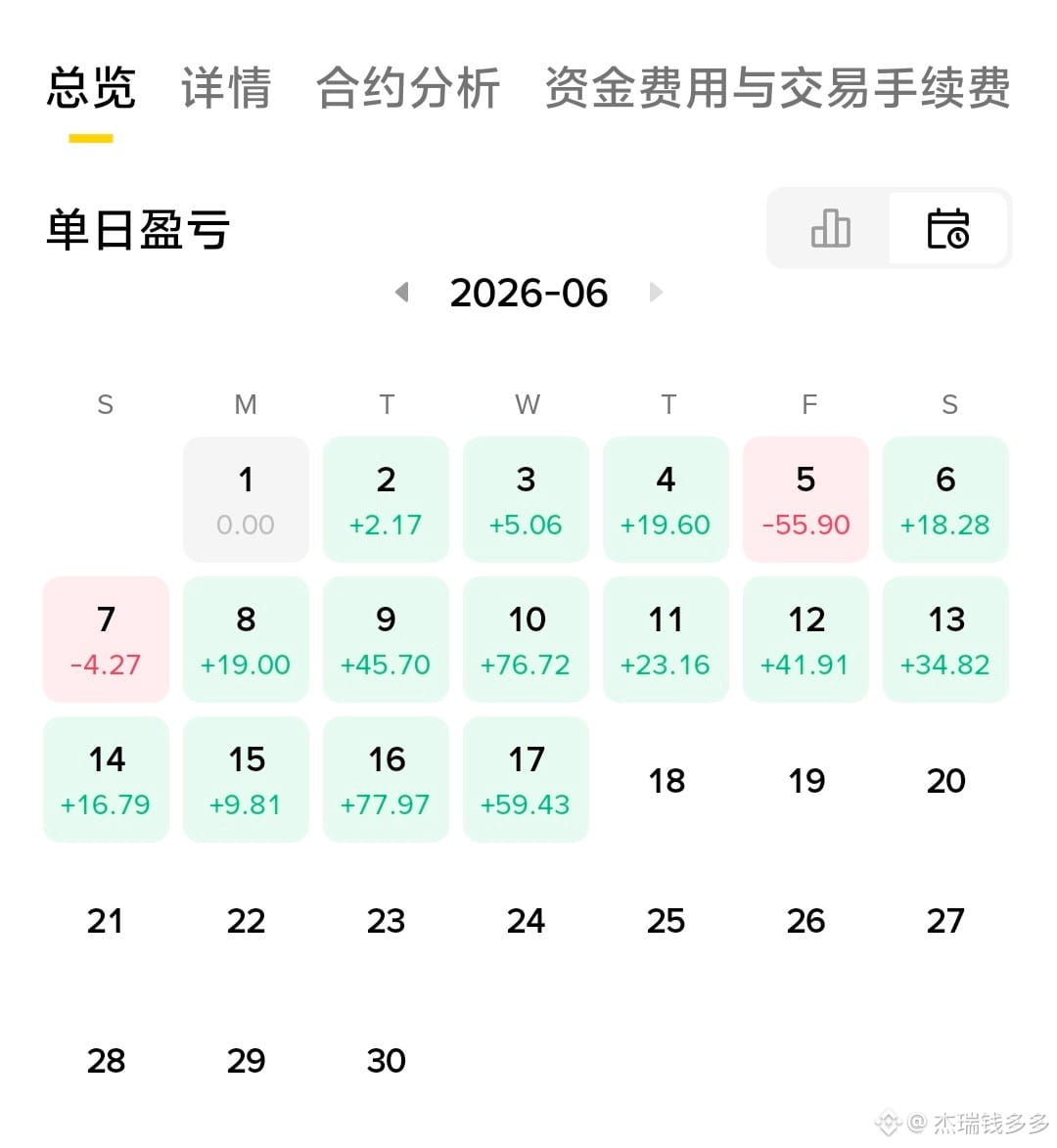
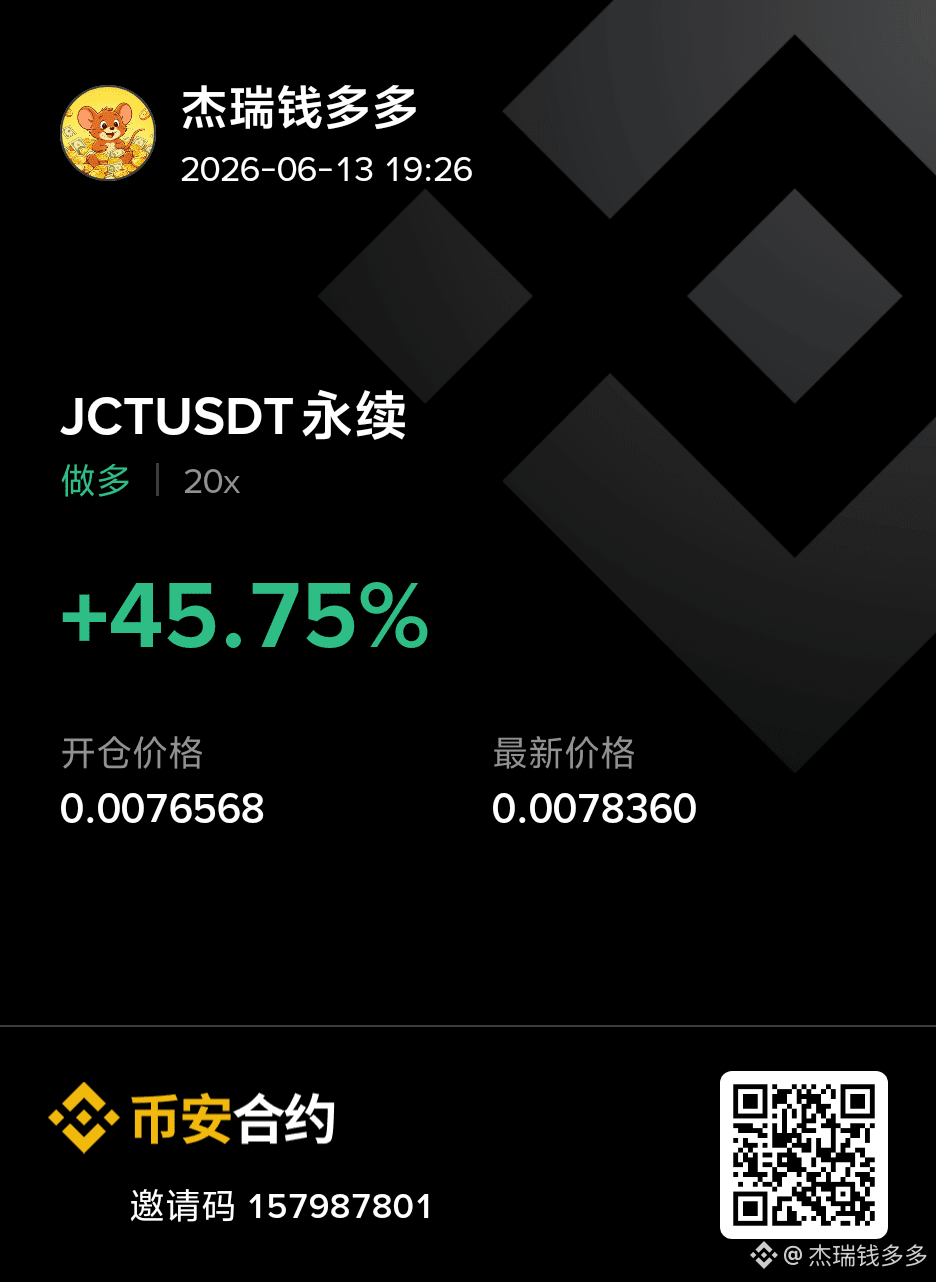
This month's performance, I'm pretty satisfied~$HYPE $SPCX
This month's performance, I'm pretty satisfied~$HYPE $SPCX
2
4
2.2k
·
--
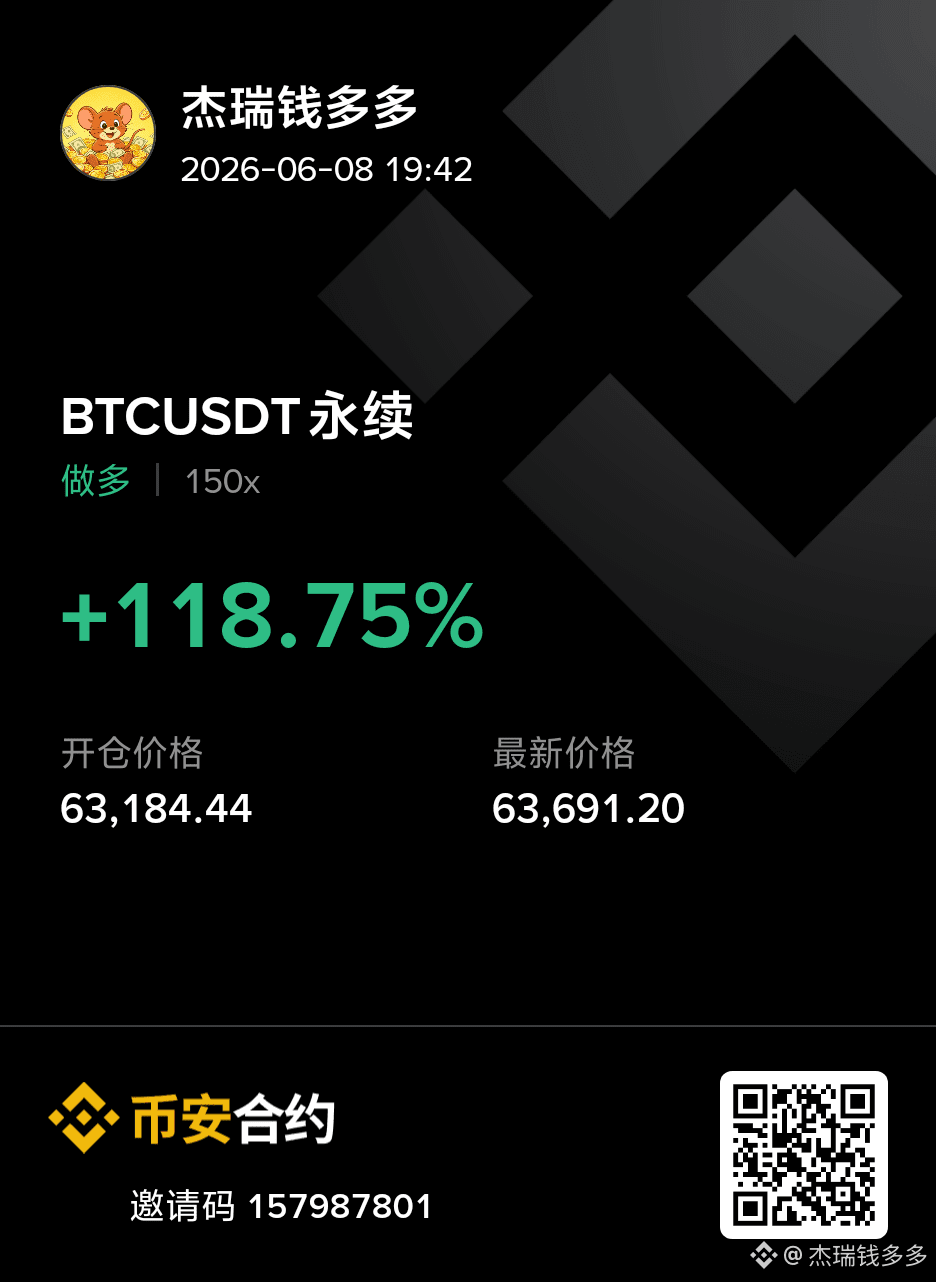
Why is the volatility so low right now for $ETH ? Even the fees can't bounce back 😮💨
Why is the volatility so low right now for $ETH ? Even the fees can't bounce back 😮💨
219
·
--
91
Log in to explore more content
Join global crypto users on Binance Square
⚡️ Get latest and useful information about crypto.
💬 Trusted by the world’s largest crypto exchange.
👍 Discover real insights from verified creators.
Email / Phone number
Trending Topics
HuangRisksOusterOverReportedAffairWithSubordinate
26,605 views
442 Discussing
Nvidia Board Meets to Decide Jensen Huang's Future as Crisis Deepens
Binance News
·23 Likes
·24.5k views
AnthropicRejectsIPODelayValuationinQuestion
467,148 views
3,902 Discussing
CoreWeaveJumps10%On168%RevenueGrowth
63,024 views
865 Discussing