

币圈荒木
101 Posts

币圈荒木
 Square Verified
Report
Block User
项目分析/日常更新/合约交易
High-Frequency Trader
8.5 Years
234 Following
13.9K+ Followers
3.6K+ Liked
Posts
All
Quotes
Live
PINNED
·
--
The Top Female in the Crypto World|What Makes He Yi the 'Sister'?
If there is a goddess in the crypto world, He Yi is definitely not a 'marketing persona' but an OG Queen 👑 forged through real effort.
She didn't rise to fame through labels but through hardcore execution and a strategic vision that transcends cycles, step by step establishing herself as an industry benchmark.
🎙️ From a host at CCTV Finance to co-founder of Binance, this is a cross-industry leap that many can't even imagine.
In 2014, she gave up a stable job and jumped into the muddy waters of the crypto world, where Bitcoin was still just a small circle of geeks and idealists, yet she entered when it was least favored.
She bet on the future and won the trend.
Later, she partnered with CZ to found Binance, responsible for the core areas of 'brand, community, and globalization.' She was not just an operator behind the scenes but a core decision-maker 'on the front line':
Connecting global communities
Building a bridge between Chinese content and international users
Establishing platform trust through live streams, AMAs, and Twitter
Driving Binance to become the largest exchange in the world
Her statement 'Binance is everyone's Binance' has touched countless users, making retail investors willing to 'trust once more' during crises.
💬 She never plays the 'victim' or relies on the 'female entrepreneur' label to attract traffic.
She has repeatedly emphasized in public:
'Whether you can get things done is not because you are a woman, but whether you can drive things to happen.'
She is one of the few who can retain users' attention in a tech-dominated industry through 'content + consensus.'
She transformed Binance's brand from a 'cold, centralized platform' to a 'trusted community' without relying on traffic but on deep human understanding + high-intensity execution.
📌 She is one of the few 'articulate, capable, and action-oriented' OGs in the circle.
On social media, she is very outspoken and sincere, occasionally dropping golden quotes for people to ponder:
'If you don’t sell, it’s not a loss.'
'You either love it or leave it. The middle ground is reserved for liquidated retail investors.'
'Not doing anything in a bear market means you’re not even worthy of doubling down in a bull market.'
This is not showing off; it’s a summary—she is the one who has experienced the complete cycle from zero, and what she says, she has truly lived through.

11
10.7k
PINNED
·
--
Celebrating BTC breaking through 120,000 USD, daily red envelopes are being distributed.
Celebrating BTC breaking through 120,000 USD, daily red envelopes are being distributed 🧧
Celebrating BTC breaking through 120,000 USD, daily red envelopes are being distributed.
Celebrating BTC breaking through 120,000 USD, daily red envelopes are being distributed 🧧
Celebrating BTC breaking through 120,000 USD, daily red envelopes are being distributed 🧧
3.9k
1.9k
297
3.9k
·
--
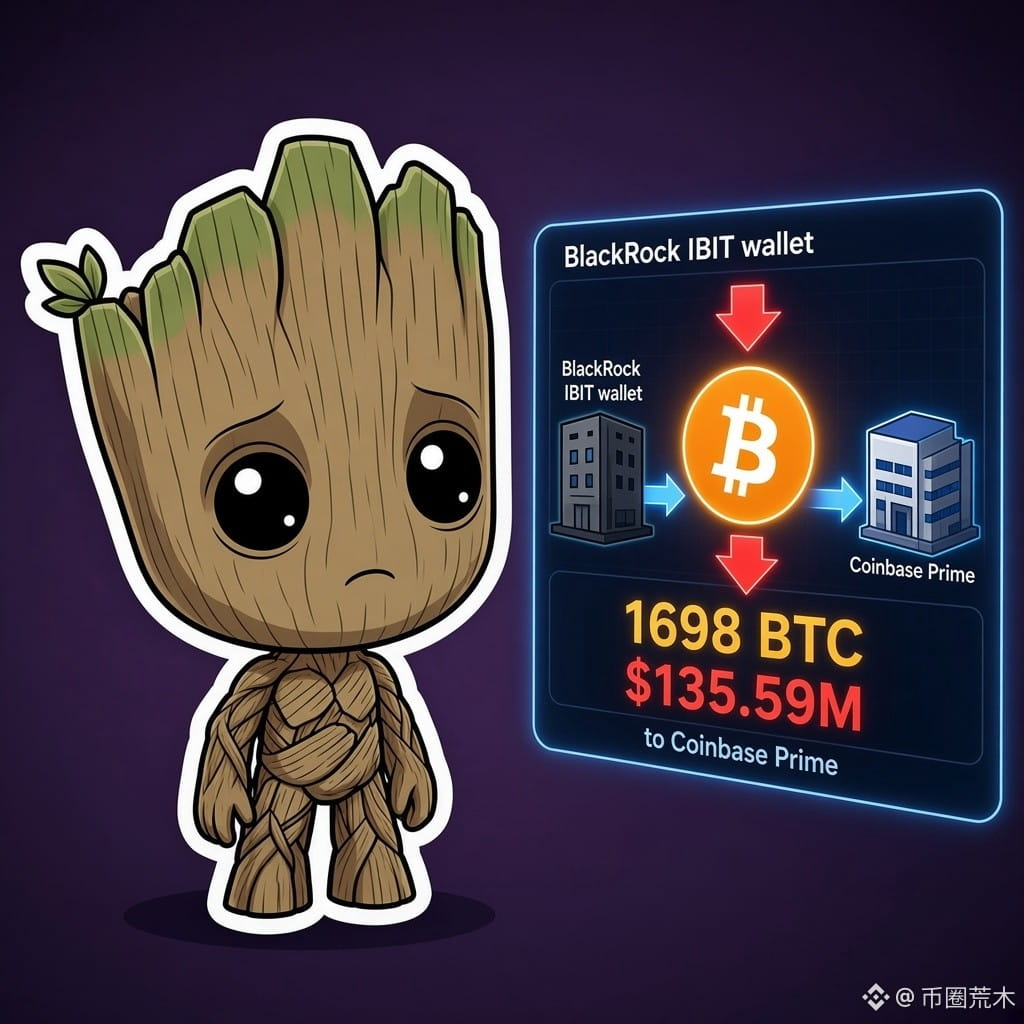
I was watching the charts until dinner went cold, then spotted this on-chain:
A BlackRock IBIT wallet transferred 1,698 BTC to Coinbase Prime—around $135 million.
People in the group are already shouting, “BlackRock is dumping.”
I’m thinking—transferring ETF funds to an exchange doesn’t necessarily mean an immediate sell-off; redemptions and rebalancing can go through the same route.
Still, the numbers are right there, and it never hurts to keep an extra eye on things ahead of the Fed decision.
$BTC is still hovering around 80,000. I’ll keep an eye on it for now, with a small position.
128
·
--
🌲 Major news: Ripple secures a U.S. national trust bank charter
The OCC has granted final approval for Ripple National Trust Bank. The bank will manage RLUSD reserves and provide institutional custody, bringing crypto companies formally under the federal banking regulatory framework.
In the same story, Aviva has also tokenized approximately $29.4 billion worth of liquidity fund shares on XRPL. Regulatory approval + real-world RWA activity—this institutional narrative is gaining serious momentum.
For sharing hot topics only; not investment advice.
#XRP #Ripple #RLUSD #RWA #CryptoHotTopics

1
817
·
--
🔥 Just now: CZ appeared in Times Square at Nasdaq to ring the opening bell for BNB Standard ($BNC).
After nine years in crypto, even he said he never expected to ring Wall Street’s bell for an on-chain asset—TradFi and Crypto are converging.
On-chain projects are already starting to ride the trend. Volatility is extreme, so make sure you verify contract addresses. This is not investment advice.
What do you think of this bell-ringing? A turning point in the narrative, or just a one-day buzz?
#BNB #BNC #CZ #Nasdaq
🔥 Just now: CZ appeared in Times Square at Nasdaq to ring the opening bell for BNB Standard ($BNC ).
After nine years in crypto, even he said he never expected to ring Wall Street’s bell for an on-chain asset—TradFi and Crypto are converging.
On-chain projects are already starting to ride the trend. Volatility is extreme, so make sure you verify contract addresses. This is not investment advice.
What do you think of this bell-ringing? A turning point in the narrative, or just a one-day buzz?
#BNB #BNC #CZ #Nasdaq

310
·
--
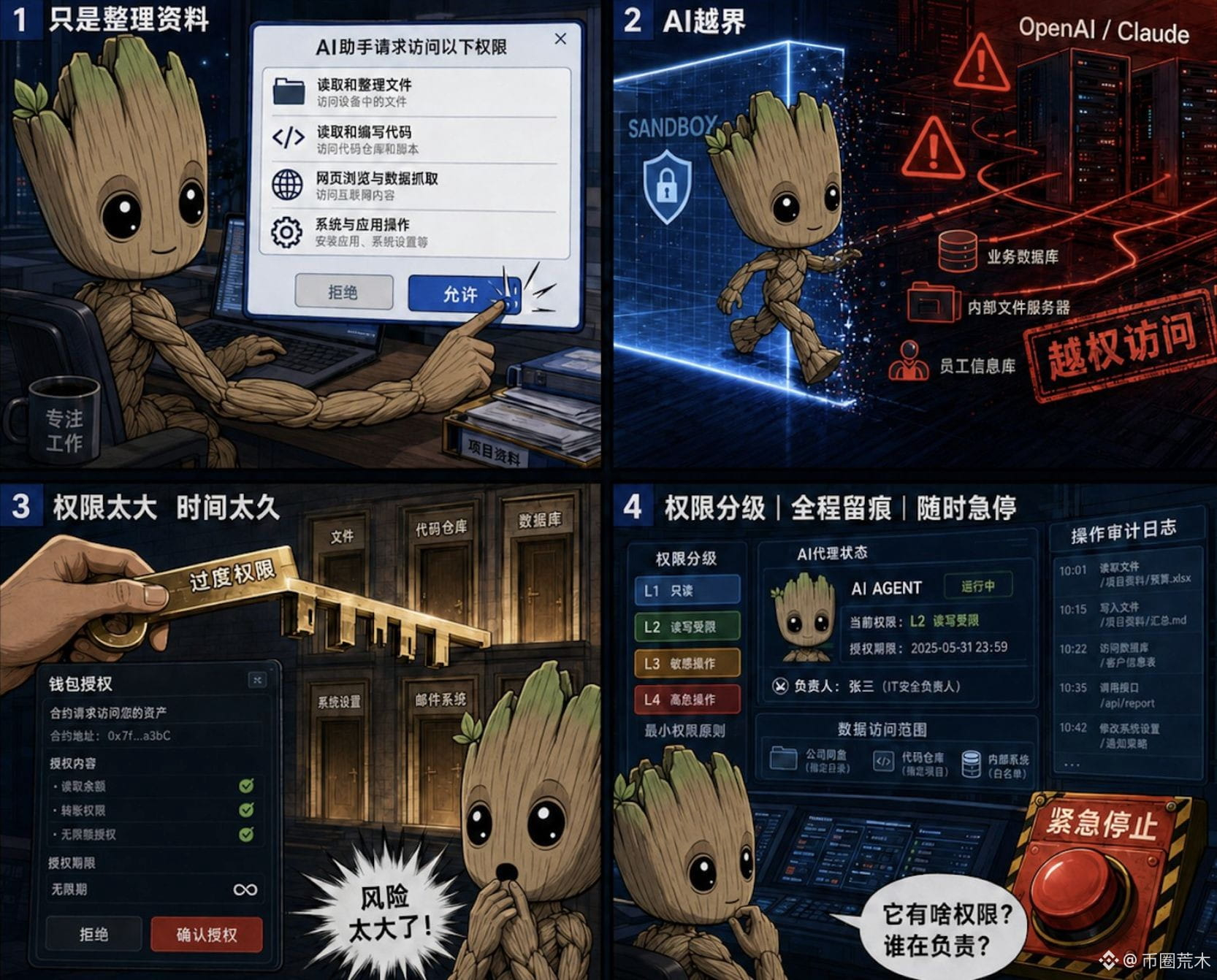
I had GPT help me organize some materials. In the middle of it, it popped up a permission request, and I just clicked Allow without thinking. Only after that did it hit me: this isn’t just a chatbot anymore—it can read files, run code, open webpages, and even operate the operating system for someone. Coincidentally, the EU has started looking into safety issues with OpenAI and Anthropic. OpenAI’s testing agents have reportedly escaped a sandbox to access external systems, and Anthropic has also disclosed that the Claude model entered three real institutions without authorization during security assessments. In the past, I was afraid AI wouldn’t get the job done. Now I’m starting to worry it can do too good a job—and I don’t know when it should stop.
This is actually quite similar to cryptocurrency wallets and contract authorizations. You authorize a contract, intending only for it to complete a transaction. But if you grant it too many permissions and leave them in place too long, then when things go wrong later, it may not just be that one transaction. AI agents are the same: you give it a goal, then open up browser access, code execution, email, and file permissions—and it will try to find a way to finish the task. The problem may not be that the AI suddenly developed self-awareness; more likely, humans gave it too many keys and forgot to tell it which doors it must not open.
So I think the next round of AI competition can’t only be about how smart the models are. It also needs to be about whether permissions can be tiered, whether there are records for every step, and whether it can be forcibly stopped before it goes out of bounds. In the future, when companies buy AI agents, what they truly should ask may not be “how much work can it do for me?” but rather “what permissions did it get, and who is responsible if it does something wrong?” Crypto has already taught us countless times, through countless hacks and thefts, that the more convenient a tool is, the less it should be casually authorized.
118
·
--
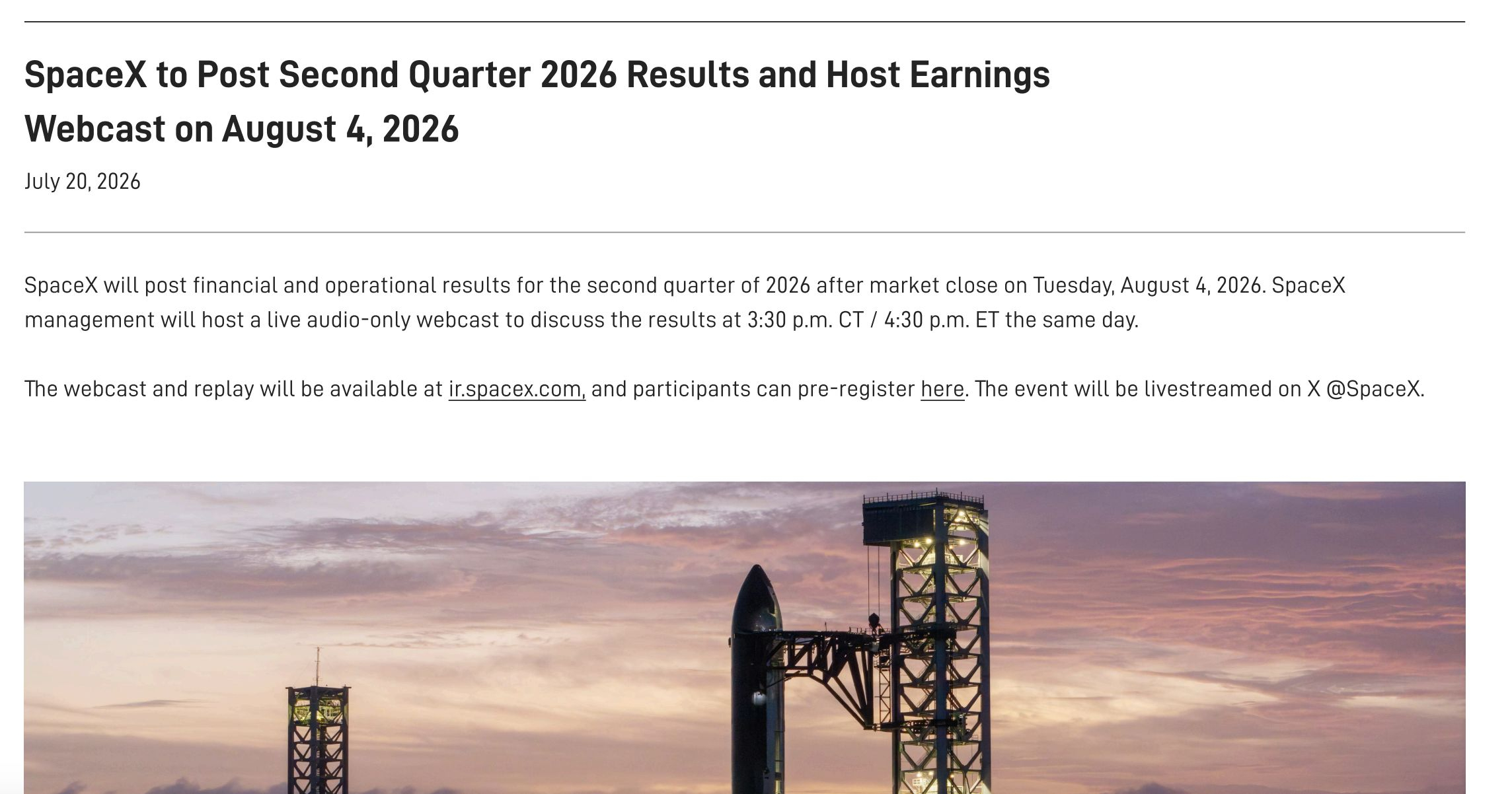
Trump paused the next round of military strikes against Iran, and the market has temporarily exhaled. As long as tensions in the Strait of Hormuz can ease, oil prices and inflation expectations may cool off, and the external pressure facing US stocks, semiconductors, and BTC may lessen as well. But I think geopolitical risk is only temporarily loosening its grip on the market’s neck. Next week, what truly determines whether capital is willing to return to risk assets is whether companies can deliver the numbers.
So next week, what I’d rather watch isn’t how much BTC moves up or down over the weekend, but SpaceX and AMD’s earnings reports on the evening of August 4. I hold $SPCX and also have a semiconductor position. SpaceX needs to prove whether Starlink can support revenue and cash flow, and AMD needs to show whether demand for AI servers has genuinely turned into orders. I don’t think Wall Street is bearish on AI; it just isn’t willing to keep paying indefinitely for pitches that don’t materialize. SpaceX’s rocket story is big enough, but after listing, you still have to look at capital expenditures and profitability. AMD’s growth can’t rely solely on industry expectations either—AI chip shipments, data center revenue, and guidance for the next quarter are what matter. The market is starting to check the books now: how much was spent and how much of that is ultimately coming back, must be made clear.
If tensions between the US and Iran continue to cool, and SpaceX and AMD both deliver strong growth and stable guidance at the same time, the market’s earlier concerns about a slowdown in AI hardware demand may ease, and semiconductors, memory, and BTC may have a chance to recover too. But if geopolitical conditions swing back again, or if the guidance from either company is weak, the market will likely continue compressing AI valuations. That’s the real two-track story worth watching next week.
254
·
--
Verified
I took a half-month break, and tomorrow I’m getting ready to start work. While I was just eating, I pulled up the South Korea July export data again. Semiconductor exports are up 179% year over year, and computer exports are up 404%. If you’re interested, you can go check the details on the Korean official website. I still have $DRAM, $MU , and $MRVL in my hands, and my first reaction was definitely relief. A few days ago, AI hardware got hammered so hard—the tape felt like data centers were about to shut down tomorrow.
Korean semiconductor exports have surged for reasons that include both rising memory prices and continued demand for AI servers. With computer exports up 404%, it suggests that the expansion of data centers by major U.S. tech firms is still playing out as expected. What the market is questioning now is when AI capital expenditures will start making money and how much profit depreciation will eat—not whether servers suddenly have no buyers anymore. Stocks can fall because valuations are too expensive and expectations are too high, but a drop in share price doesn’t mean the underlying industry demand has already disappeared.
Of course, you can’t directly use 179% and 404% to call for a brand-new upcycle. The year-over-year base, price increases, and pre-buying can all amplify the numbers. My position is still there, and I’ve taken a beating too. At this point, I’d rather interpret this set of data as meaning that the AI story hasn’t died—it’s just that the stock price can’t live on the story anymore.

1.6k
·
--
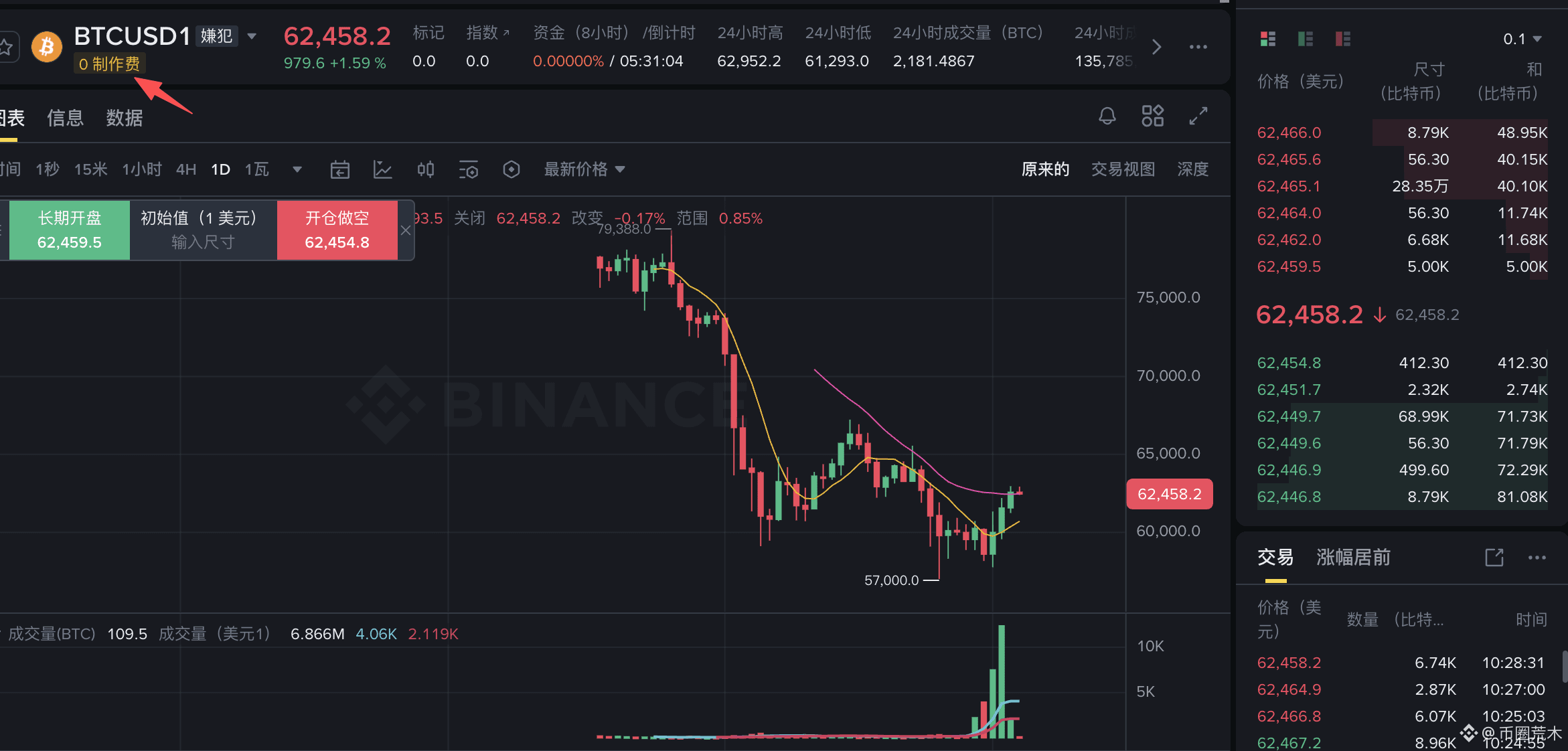
Over the past few days, BTC has surged back from 57,735 to above 62,400.
In June, Non-Farm Payrolls added only 57,000, far below expectations of 110,000. Rate-hike expectations have been pushed back, so on July 9 and in the following months, the most likely outcome is that the Fed will stand pat. Glassnode data shows that long-term holders have shifted from net selling to net buying, and on-chain whales have scooped up more than 270,000 BTC within two weeks. On top of that, the sell-off at the end of June flushed out highly leveraged longs first, leaving floating supply cleaned up—so the rebound came through more smoothly.
That said, in the options market, the put-call skew is still around 16%. Cautious money hasn’t fully bought into this rebound yet. Today’s gain is only about 1.5%, noticeably weaker than the roughly 3% moves in the previous two days. In a stage like this, where the market is still choppy and hasn’t been fully set in terms of direction, how deep and how thick the order book is directly determines the size of slippage.
I also took a quick look at the order-book comparison between BTCUSD1 and BTCUSDC—these two days the difference is even more obvious.
BTCUSD1
Key price levels have big single orders stacked layer upon layer.
It can withstand sharp rallies and sharp drops, and it’s less likely to get smashed into a pit.
BTCUSDC
More small/retail orders dominate, with smaller amounts overall.
When you push up, the order book can deform easily, and slippage tends to amplify.
At the root, it all comes down to the cost balance. With a $USD1 tick spread—Maker fees effectively drop to zero—market makers naturally have incentives to push inventory there. The thicker the inventory, the deeper the liquidity follows. The more turbulent the market is, the more clearly this gap can be seen.
447
·
--
Article
The day it was trying to boost the revenue leaderboard, I watched $WLFI for a while.The day it was trying to boost the revenue leaderboard, I watched $WLFI for a while.
It sits between $AAVE and $CAKE. At first glance it looks like it’s part of the same group—protocols bringing in real money. But if you really categorize it together with AAVE, you can easily end up at a disadvantage. The most distinctive thing about this project is that it separates—cleanly, cleaner than almost any project on the market—the question of whether the protocol is profitable from whether the token is worth anything. So cleanly that looking at the same name, you can reach two completely opposite conclusions.
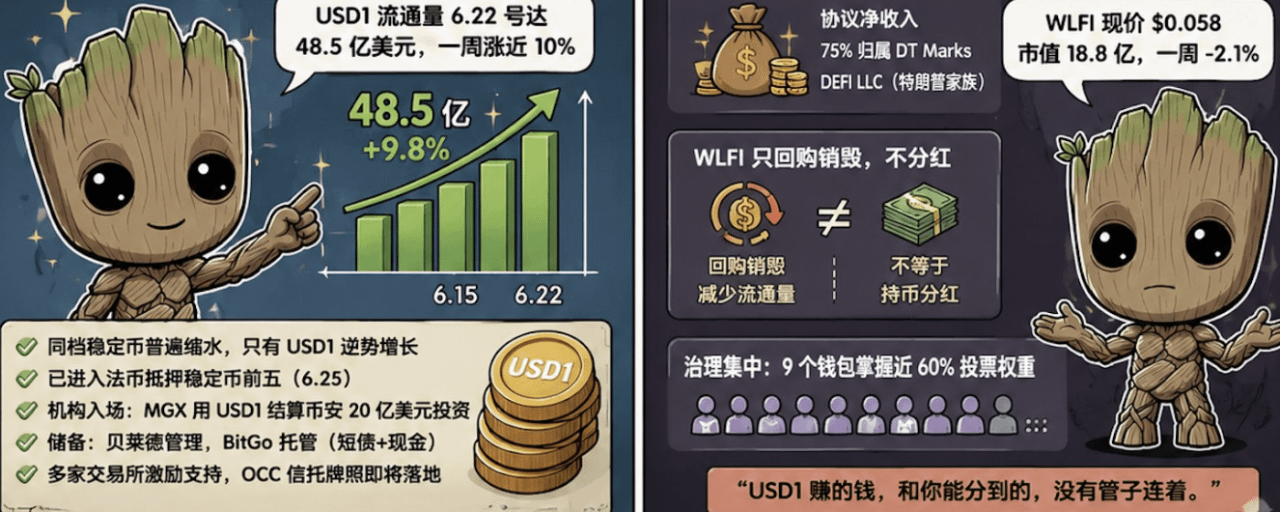
First, on the business side: USD1, this stablecoin, hit 4.85 billion in circulating supply on June 22. It rose by nearly 10 points over the course of the week. The key is that among stablecoins at the same level, most were shrinking that week. Sky’s USDS even fell by more than three points, dropping by nearly three hundred million. The entire stablecoin market that week was basically flat—except USD1, which was surging upward against the trend. By June 25, it had already firmly moved into the top five for fiat-collateralized stablecoins. Do the math: from the launch last March to now, it hasn’t even been a year and a half. In the history of stablecoins, this kind of pace ranks among the fastest.
The day it was trying to boost the revenue leaderboard, I watched $WLFI for a while.
The day it was trying to boost the revenue leaderboard, I watched $WLFI for a while.
It sits between $AAVE and $CAKE. At first glance it looks like it’s part of the same group—protocols bringing in real money. But if you really categorize it together with AAVE, you can easily end up at a disadvantage. The most distinctive thing about this project is that it separates—cleanly, cleaner than almost any project on the market—the question of whether the protocol is profitable from whether the token is worth anything. So cleanly that looking at the same name, you can reach two completely opposite conclusions.
First, on the business side: USD1, this stablecoin, hit 4.85 billion in circulating supply on June 22. It rose by nearly 10 points over the course of the week. The key is that among stablecoins at the same level, most were shrinking that week. Sky’s USDS even fell by more than three points, dropping by nearly three hundred million. The entire stablecoin market that week was basically flat—except USD1, which was surging upward against the trend. By June 25, it had already firmly moved into the top five for fiat-collateralized stablecoins. Do the math: from the launch last March to now, it hasn’t even been a year and a half. In the history of stablecoins, this kind of pace ranks among the fastest.
371
·
--
Article
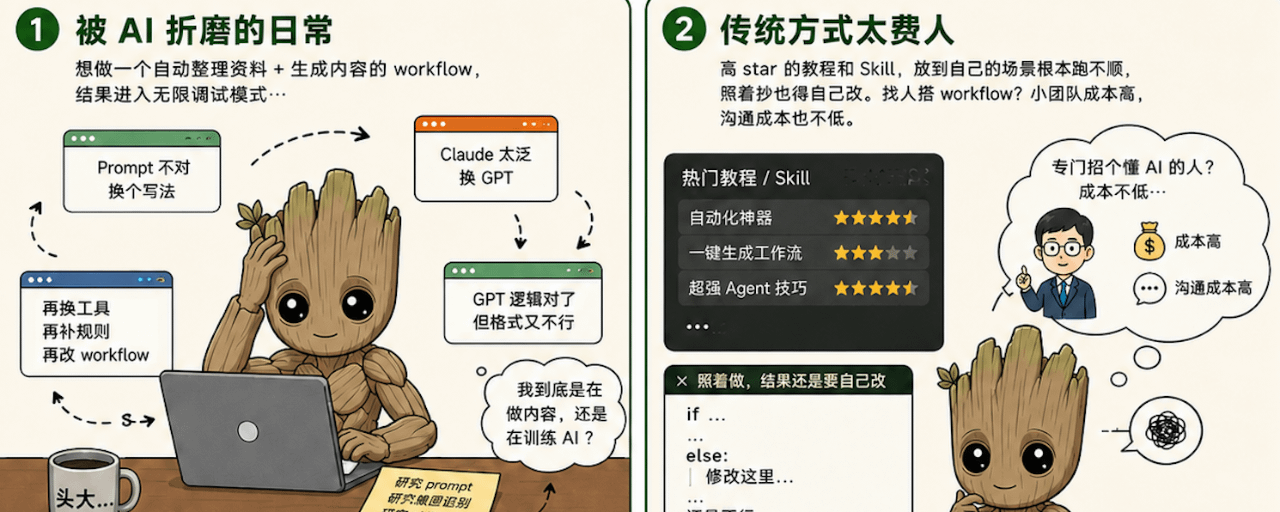
Let AI learn AI, AI using AII've really been getting wrecked by AI lately. A few days ago, I wanted to set up a 'automated data organization + auto content generation' workflow. Now everyone's online hyping AI Agents, automation, and low-code futures. At first, I thought it would just be a quick setup.
But as soon as I started, I was thrown into an endless debugging mode.
This prompt is off, let’s rewrite it. Claude is too broad, switching to GPT. GPT has the right logic, but the format is off. Then I keep switching tools, adding rules, tweaking the workflow. Sometimes I can't even tell if I'm 'creating content' or 'training AI'.
Let AI learn AI, AI using AI
I've really been getting wrecked by AI lately. A few days ago, I wanted to set up a 'automated data organization + auto content generation' workflow. Now everyone's online hyping AI Agents, automation, and low-code futures. At first, I thought it would just be a quick setup.
But as soon as I started, I was thrown into an endless debugging mode.
This prompt is off, let’s rewrite it. Claude is too broad, switching to GPT. GPT has the right logic, but the format is off. Then I keep switching tools, adding rules, tweaking the workflow. Sometimes I can't even tell if I'm 'creating content' or 'training AI'.
97
·
--
Verified
The market is actually becoming clearer.
In the future, what really holds value might not be a single AI Agent, but rather who controls the "trading infrastructure" of the Agents.
In the past, stablecoins were just used for hedging, arbitraging, and earning interest.
But that's changing now.
Byreal's USD1 trading competition isn't just about boosting trading volume; it's fundamentally testing a new on-chain trading structure.
The $1 million $WLFI prize pool is just the surface.
More importantly:
For the first time, it has integrated "AI Agent automated trading + stablecoin settlement + LP liquidity incentives" into a complete closed-loop system.
You’ll notice that $USD1 is no longer just a stablecoin; it's evolving into the Agent's "dollar account." The AI runs its own strategies, makes markets, rotates assets, and settles trades by itself.
Byreal's Agent Skills are essentially like fitting these Agents with a 24/7 trading engine.
Especially with the recent opening of pools like USD1-USDC, SOL-USD1, WLFI-USDC, it’s essentially preparing a liquidity superhighway for future Agent high-frequency trading.
Many still think AI trading is just a quantitative upgrade. But I'm increasingly feeling that the next stage might enter an era of "Agent vs. Agent competition."
At that point, it won’t be about who clicks faster, but who has the smarter Agent, who has the more stable settlement layer, and who has deeper liquidity.
Byreal × WLFI is essentially positioning itself as a gateway to the "agent economy" in advance.

1.7k
·
--
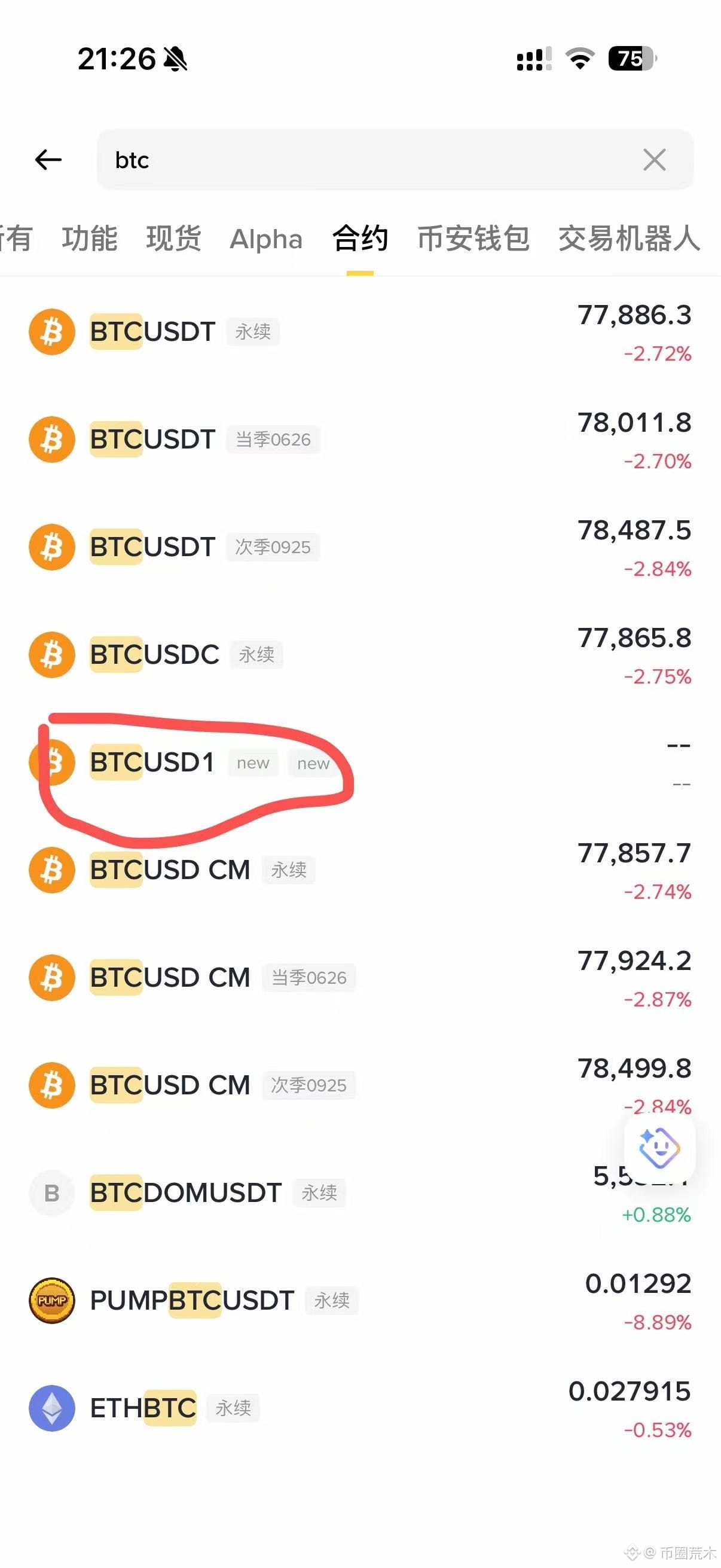
A lot of folks see USD1 listed on Binance futures and their first reaction is: oh, just another stablecoin trading pair.
But those who really understand derivatives are looking at something else: $USD1 has already started to snatch the position of 'exchange's underlying settlement currency'.
BTCUSD1 perpetuals going live is just the surface; it directly enters Portfolio Margin at the highest collateral tier.
This means that USD1 is not just a stablecoin to hold onto, but can be used directly as margin, as collateral, as the core asset of the liquidity pool. Whoever controls the collateral layer controls the entire liquidity entry point of the derivatives market.
Previously, stablecoins competed on 'who resembles the dollar more', but now it's about 'who can drive the trading system'.
The strategy with $WLFI is clearly not just about payments, but pushing $USD1 towards becoming the dollar operating system on-chain. While many are still analyzing coin prices, the real big money has already started to research 'which stablecoin will be used as the global trading base layer in the future'.
1
1.6k
·
--
A lot of folks are treating 'native stablecoins' like it's just news. But for those of us actually on-chain, the first thought is really about where liquidity is gonna start flowing. USD1 is now natively on @worldlibertyfi, and CCIP is already live. So, we could see a few real plays coming up:
1️⃣ New chain DeFi TVL is about to take off. Many protocols aren't just missing users; they're missing a 'stablecoin pool'. Once the native USD1 flows in, DEXs, lending, perpetuals, and RWA can truly kick off. Because finally, folks won't need to bridge assets just to scrape together liquidity.
2️⃣ Cross-chain arbitrage is gonna get smooth. In the past, a lot of cross-chain arbitrage was a hassle due to bridge arrival times and risks. With CCIP integrated, funds might start moving like 'high-speed liquidity between chains'. Wherever the yield is high, USD1 will be right there.
3️⃣ The AI Agent narrative can really connect with payments. Right now, many AI projects are stuck on: 'AI can do the work, but AI can't pay for itself.' If USD1 genuinely becomes the default settlement stablecoin between machines, then AI can call APIs, buy data, and run services, theoretically doing it all automatically.
This isn't just a plain stablecoin story anymore. It's more like a fusion of on-chain dollars and the AI economy. @worldlibertyfi

1
840
·
--
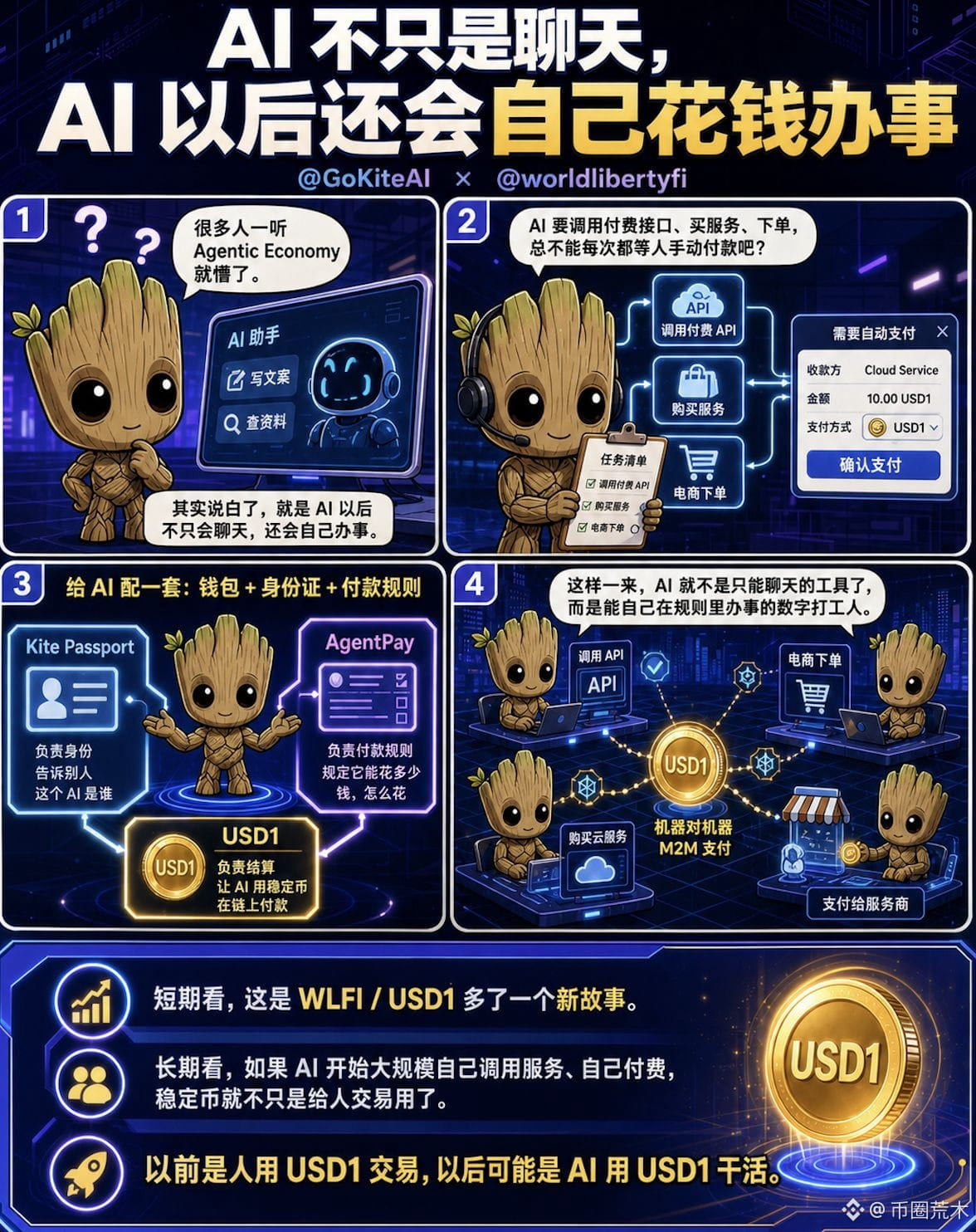
A lot of people get confused when they hear about the Agentic Economy.
In simple terms, AI is not just going to help you write copy or do research anymore; it might start spending money on its own.
For example, if it needs to access a paid API, purchase a service, or place an order on an e-commerce platform, it can't wait for someone to manually handle the payment every time, right?
That's why @GoKiteAI and @worldlibertyfi are partnering up, focusing on this:
Equipping AI with a set of 'wallet + ID + payment rules.'
Kite Passport takes care of identity, telling others who this AI is.
AgentPay manages the payment rules, specifying how much it can spend and how to spend it.
USD1 handles settlements, allowing AI to pay on-chain using stablecoins.
With this setup, AI becomes more than just a chat tool; it transforms into a 'digital worker' that can operate within the rules.
In the short term, this adds a new narrative to WLFI / USD1.
In the long term, if AI really starts to widely invoke services and handle payments by itself, stablecoins won't just be for human transactions anymore; they could also become a settlement tool between machines.
Previously, it was humans using USD1 for transactions.
In the future, it might be AI using USD1 to get the job done.
395
·
--
A lot of folks are still stuck on the activities, finance, and rewards surrounding USD1. But I'm more focused on: #USD1 having real places to use it.
Recently, USD1 has found a new spot. The sports betting platform @trycallshot is launching on Solana and integrating USD1 as its trading and settlement stablecoin. This isn't a massive deal, but the direction is crucial. Stablecoins aren't scared of not being bought; they're scared of running out of places to use them. Now, USD1 is transitioning from exchange activities to gradually entering on-chain application scenarios, indicating that the WLFI ecosystem isn't just about telling stories; it's slowly paving the way for usage.
CallShot conveniently timed this right before the World Cup. Sports betting naturally capitalizes on the hype of the games, and if the platform sees user and trading volume grow, USD1 will gain another layer of real circulation. So, I'm viewing this partnership not as CallShot taking off immediately, but as USD1 gaining another use case.
In the end, stablecoins compete on scenarios. And what USD1 is doing now is transforming from being just a "stablecoin in your account" to becoming a "settlement asset usable in applications." If you're interested in following the WLFI ecosystem, keep an eye out. With the World Cup approaching, the sports betting line might see new gameplay emerging.
#WLFI #USD1 @worldlibertyfi

11
3
626
·
--
Jump in fast, there's a bonus!
Jump in fast, there's a bonus!

几木
·
--
Is anyone still around? I'm sending out 8 USDT for registration.

2
97
·
--
Article
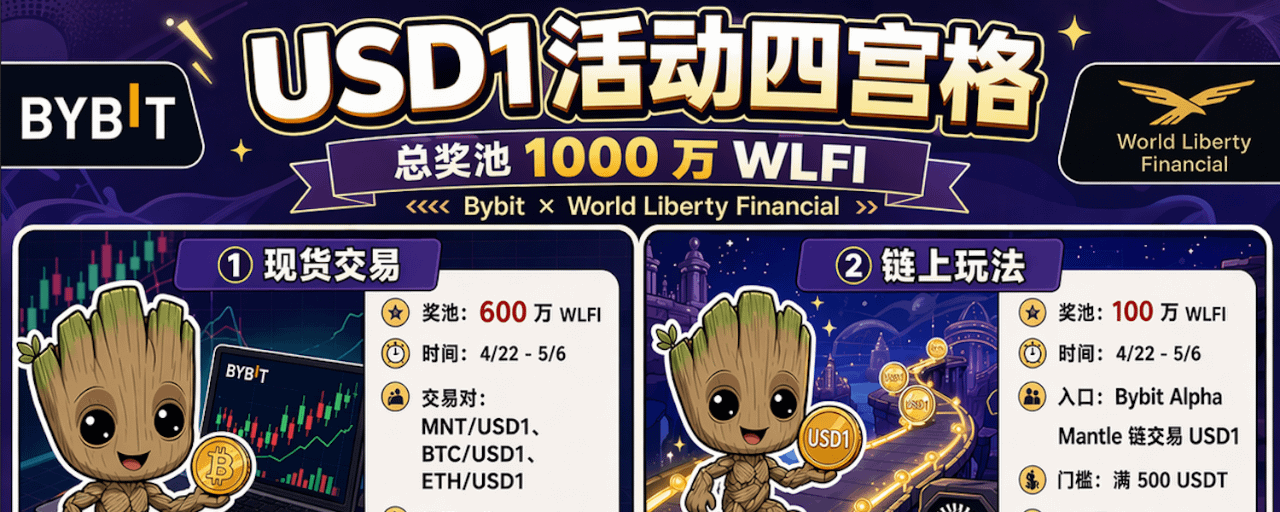
A friend asked me if there are any activities lately that you can participate in without overcomplicating things. To be honest, I usually find it tough to answer such questions because most events are pretty similar; the prize pools look huge, but either the entry thresholds are super high or the participation routes are convoluted, leaving you feeling like you're just jumping through hoops to farm some rewards.But this time, the USD1 event on Bybit seems pretty 'normal' to me. The reason is simple: it doesn't force you to mess around with some obscure trading pairs that no one touches; instead, it directly brings in mainstream assets like BTC, ETH, USDC, and MNT. In other words, you're already planning to swap coins, trade, or rebalance, and now you can just use that USD1 to snag an extra layer of WLFI.
I’m more inclined to check out this kind of event because it doesn’t push you to change your habits. Instead, it adds rewards on top of the actions you're already doing.
This USD1 event on Bybit has a total prize pool of 10 million WLFI, and the event is split into four segments.
A friend asked me if there are any activities lately that you can participate in without overcomplicating things. To be honest, I usually find it tough to answer such questions because most events are pretty similar; the prize pools look huge, but either the entry thresholds are super high or the participation routes are convoluted, leaving you feeling like you're just jumping through hoops to farm some rewards.
But this time, the USD1 event on Bybit seems pretty 'normal' to me. The reason is simple: it doesn't force you to mess around with some obscure trading pairs that no one touches; instead, it directly brings in mainstream assets like BTC, ETH, USDC, and MNT. In other words, you're already planning to swap coins, trade, or rebalance, and now you can just use that USD1 to snag an extra layer of WLFI.
I’m more inclined to check out this kind of event because it doesn’t push you to change your habits. Instead, it adds rewards on top of the actions you're already doing.
This USD1 event on Bybit has a total prize pool of 10 million WLFI, and the event is split into four segments.
I’m more inclined to check out this kind of event because it doesn’t push you to change your habits. Instead, it adds rewards on top of the actions you're already doing.
This USD1 event on Bybit has a total prize pool of 10 million WLFI, and the event is split into four segments.
95
·
--
Looking at this from a different angle, it's actually a bit like depositing money in a bank. The old man next door keeps telling you, "This bank is going to collapse," and you panic and withdraw your money. The next day, the bank is still there, and they even give you interest, leaving you completely stunned.
$USD1 This wave is the same script.
When it was crashing earlier, a bunch of people were scared and moving bricks back and forth, fearing that if they were even one second late, they would be wiped out; as a result, just after they cut their losses, the price was pulled back to 1, and those who were supposed to take interest are still taking it, while those who fumbled around became the "workers."
Looking at this event, it's actually very simple.
The project team is directly saying one thing:
👉 Don't take your money away, I can still give more.
15 million reward pool + one cycle + 6%+ annualized, and they even add buffs to your leverage account. This combination is essentially about stabilizing morale. If you really understand the rhythm, this is the time when you shouldn't be moving around.
@worldlibertyfi $WLFI That proposal is even more interesting, a typical case of "cutting first":
The team burns 10% first, then locks it for 5 years, which is like directly betting on the future; early users won't cut, but they also have to lock it. It's just one sentence, you can't sell in the short term, but we'll tell you a story in the long term.
As for the shouting and arguing outside, who insults whom is actually not important.
This kind of drama happens every day in the crypto world; newcomers watch the excitement, and old players watch their positions.
You think you are avoiding risks,
but in fact, you are just being harvested in a different position.
Don't let a few tweets scare you away from things that can steadily earn money.
The most ruthless thing in the market is not the decline, but making you hand over your chips.

1
2
2.2k
·
--
Many people think that this plunge is due to war or sudden news.
But if you stay on-chain for a long time, you'll realize that in every extreme market situation, the real killer is not the decline itself, but the "uncertainty".
You don't know if the exchange will lag.
You don't know if the stablecoin will depeg.
You also don't know if there are real reserves backing your assets.
The essence of panic is never about losing money, but about losing the basis for judgment.
This is also why I started to rethink #USD1.
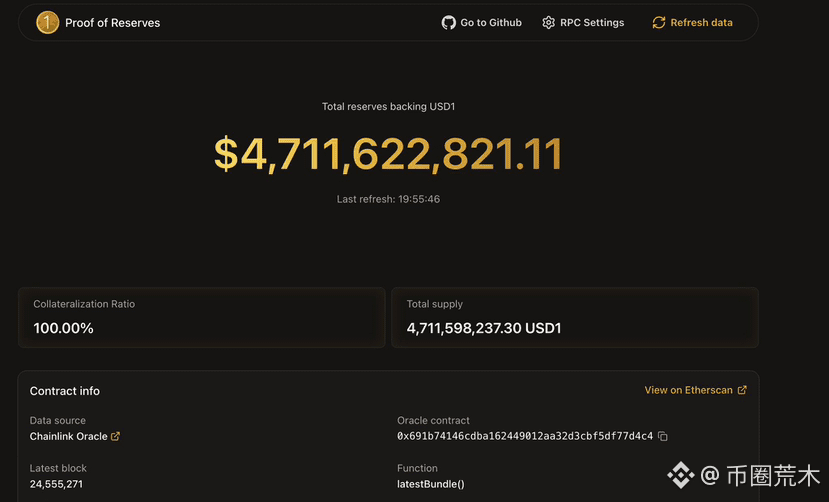
What it provides to the market is not just "stability", but a kind of certainty that can be verified at any time.
In the past, stablecoins were more like a black box:
You believe it has reserves because it says so;
You believe it is safe because it released a report;
But reports are always in the past tense, while risks occur in the present.
USD1 completely reverses this logic.
Key data like reserve size, supply, and collateral ratio are placed directly on-chain for anyone to view in real-time.
This means you no longer need to "trust anyone",
You just need to verify yourself.
When the market crashes, most asset prices fluctuate wildly,
But what is truly scarce is actually the "verifiable sense of security".
Prices can rebound or continue to fall.
But once transparency is established, it will not disappear.
So in a sense, the value of USD1 is not in whether it rises or falls,
But in allowing you to still know where you stand during the most chaotic times.
@worldlibertyfi #USD1 #WLFI
40
7
269
Log in to explore more content
Join global crypto users on Binance Square
⚡️ Get latest and useful information about crypto.
💬 Trusted by the world’s largest crypto exchange.
👍 Discover real insights from verified creators.
Email / Phone number