

白冰做交易
3.2k Posts

白冰做交易
Report
Block User
3 Following
7.9K+ Followers
7.7K+ Liked
Posts
All
Quotes
PINNED
·
--
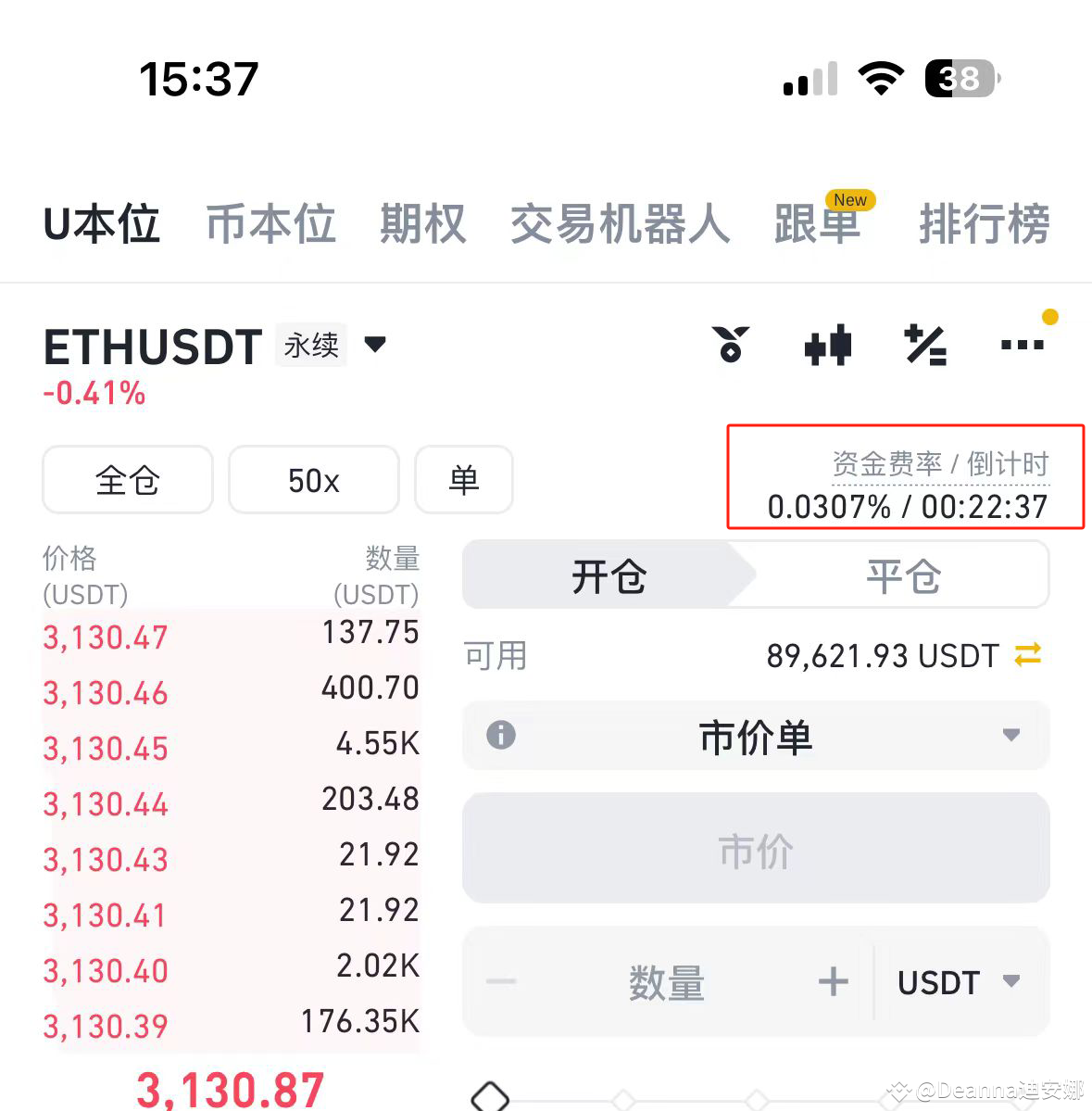
#资金费率 Many friends do not understand the funding rate, the funding rate is very important, you must learn it!
Here, I would like to share some practical knowledge about the funding rate: the calculation and significance of the funding rate.
Meaning of the funding rate:
1. The upper right corner of each cryptocurrency will display the funding rate of that coin and a countdown, generally settling every 8-4 hours. (For example, in the screenshot below) However, there are exceptions where it settles every hour.
If the rate is positive, long positions pay fees to short positions; if negative, the reverse is true.
Generally, this can indicate the long-short sentiment; for example, if a certain cryptocurrency has a funding rate of -3%, it means that there are more short positions being taken on that coin at the moment. If you also go short at this time, you will incur a larger fee when settling the funding rate (opening a short at -3% means a deduction of three points from the margin when settling once).
Some manipulators will use this to deliberately pump the price to profit from the funding rate!!
2. Calculation of the funding rate:
Funding rate cost deduction = Cost value position size * Leverage * Funding rate
For example:
Cost value of 30U opening a position with 10X leverage and a funding rate of -3%, the calculation would show that you need to deduct or earn 30*10*0.03=9U
$HBAR $WIF $BTC #市场回调,观望还是上车?
{future}(HBARUSDT)
#资金费率 Many friends do not understand the funding rate, the funding rate is very important, you must learn it!
Here, I would like to share some practical knowledge about the funding rate: the calculation and significance of the funding rate.
Meaning of the funding rate:
1. The upper right corner of each cryptocurrency will display the funding rate of that coin and a countdown, generally settling every 8-4 hours. (For example, in the screenshot below) However, there are exceptions where it settles every hour.
If the rate is positive, long positions pay fees to short positions; if negative, the reverse is true.
Generally, this can indicate the long-short sentiment; for example, if a certain cryptocurrency has a funding rate of -3%, it means that there are more short positions being taken on that coin at the moment. If you also go short at this time, you will incur a larger fee when settling the funding rate (opening a short at -3% means a deduction of three points from the margin when settling once).
Some manipulators will use this to deliberately pump the price to profit from the funding rate!!
2. Calculation of the funding rate:
Funding rate cost deduction = Cost value position size * Leverage * Funding rate
For example:
Cost value of 30U opening a position with 10X leverage and a funding rate of -3%, the calculation would show that you need to deduct or earn 30*10*0.03=9U
$HBAR $WIF $BTC #市场回调,观望还是上车?
16
10
78
94.8k
·
--
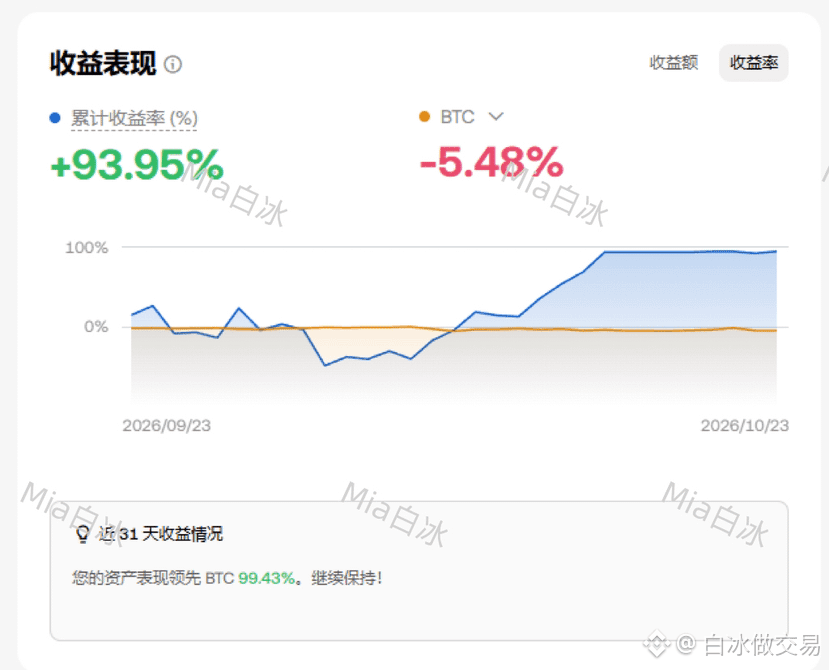
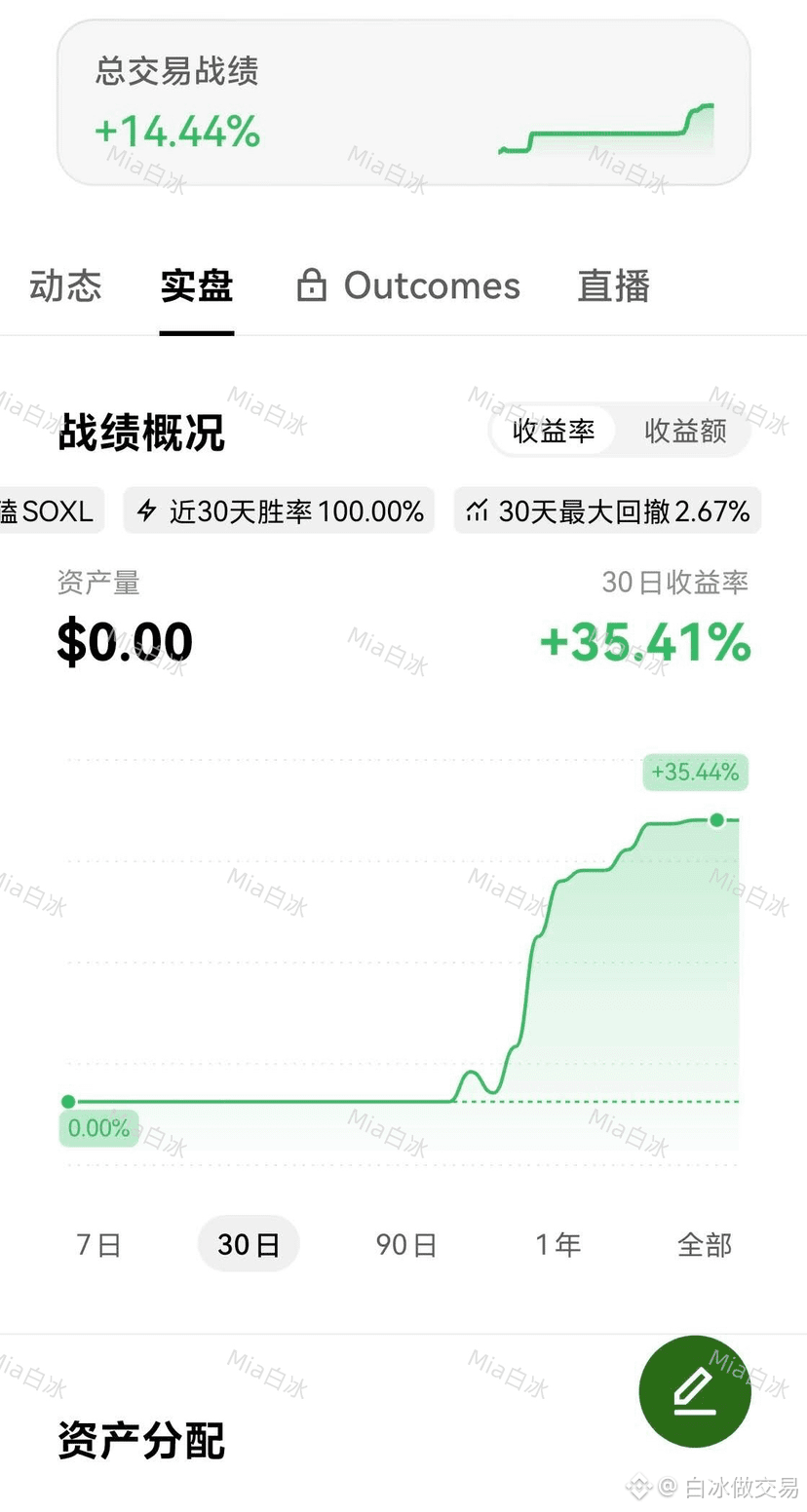
In the crypto world, what level is this?
{future}(SOXLUSDT)
In the crypto world, what level is this?
520
·
--
Partly True
【U.S. Pre-market 10/23】Index futures before the market opens: S&P 500 -0.14%, Nasdaq -0.03%, Dow -0.29%.
Data due today: October University of Michigan Consumer Sentiment Index at 22:00 Beijing time (forecast 46.3, previous 46.3).
U.S. Treasury yields: 10-year 4.968% (+1.5 basis points), 2-year 4.66% (+2.5 basis points). WTI crude oil $100.36 (+0.89%), Brent crude oil $113.98 (+0.72%), gold $4,017.9 (-1.05%). Federal funds futures imply an 89.7% probability that rates will remain unchanged at the October 28 meeting (FedWatch calculation). Based on the CME FedWatch methodology (federal funds futures + New York Fed EFFR), as of the December 9 meeting, the probability of at least one more rate hike this year (a cumulative 25 basis points) is 80.6%; prediction markets show 74.0% on Polymarket and 77.0% on Kalshi on the same basis.
$SPY: options walls at 770 above and 760 below. SPY key levels calculated from data by the system (not trading advice): above—767.71 (previous session high), 770 (call option wall), 774.03 (swing high over the past 60 trading days); below—762.04 (swing low over the past 60 trading days), 761.17 (previous session low), 760 (put option wall).
617
·
--
Verified

Article
A quick guide to the U.S. midterm electionsThe United States will hold its midterm elections on November 3, 2026.
What exactly does that mean?
The U.S. president serves a four-year term, but Congress holds elections every two years.
The election held halfway through a president’s term is called a midterm election.
What are voters mainly choosing this time?
All 435 seats in the House of Representatives are up for election
35 seats in the Senate are up for election
Some states will also elect governors
The whole process is pretty simple:
📌 Now through early November: Early voting takes place in states across the country
📌 November 3: Election Day
📌 The evening of November 3: Polling stations close throughout the country, and vote counting begins
📌 Starting November 4: Results are tallied over time; it may take several days to determine the winners in some key races
A quick guide to the U.S. midterm elections
The United States will hold its midterm elections on November 3, 2026.
What exactly does that mean?
The U.S. president serves a four-year term, but Congress holds elections every two years.
The election held halfway through a president’s term is called a midterm election.
What are voters mainly choosing this time?
All 435 seats in the House of Representatives are up for election
35 seats in the Senate are up for election
Some states will also elect governors
The whole process is pretty simple:
📌 Now through early November: Early voting takes place in states across the country
📌 November 3: Election Day
📌 The evening of November 3: Polling stations close throughout the country, and vote counting begins
📌 Starting November 4: Results are tallied over time; it may take several days to determine the winners in some key races
3
2.7k
·
--
Verified
【U.S. Market Close 10/22】The three major indexes were mixed: the Dow rose 12 points (+0.02%) to close at 52,867.98; the S&P 500 fell 1.21% to 7,663.43; and the Nasdaq fell 2.6% to 26,008.86.
U.S. Treasury yields: 10-year, 4.978% (-16.8 basis points); 2-year, 4.665% (-15.8 basis points). WTI crude oil was $99.43 (+2.35%), Brent crude was $113.13 (+3.96%), and gold was $4,044.1 (-2.55%). Federal funds futures imply a 92% probability that rates will remain unchanged at the 10/28 policy meeting (FedWatch calculation).
$SPY closed at 763.96 (-1.18%), with an options wall at 770 above and 760 below.
Sectors: stablecoins -4.0%, chips -5.7%, storage -7.3%, optical communications -10.7% (equal-weighted constituents). Notable moves: $COHR -12.5%, $AAOI -12.0%, $LITE -11.5%.
Yuyuantantian: DeepSeek and MiniMax, two leading companies, have successfully completed their registration procedures and completed open-source and overseas licensing. The Philadelphia Semiconductor Index fell more than 6%. India’s eMudhra triggered a global alert over a security vulnerability and exited the website security business.
After-hours earnings: $WDC, $NEM, $BE, $FIX, $BBD, $BBDO. October 23 watch: the University of Michigan Consumer Sentiment Index for October.
1.2k
·
--
Partly True
【U.S. Premarket 10/22】Index futures before the market opens: S&P 500 -0.70%, Nasdaq -1.33%, Dow -0.35%.
Today’s releases: At 8:30 p.m. Beijing time, initial jobless claims for last week (forecast: 200K; previous: 199K); at 10:00 p.m. Beijing time, September Leading Economic Index month over month (forecast: -0.1%; previous: -0.1%).
U.S. Treasury yields: 10-year 5.09% (-5.6 basis points), 2-year 4.782% (-4.1 basis points). WTI crude oil: $98.67 (+1.56%); Brent crude oil: $110.92 (+1.93%); gold: $4,107 (-1.04%). Federal funds futures imply an 86% probability that rates will remain unchanged at the 10/28 FOMC meeting (FedWatch methodology). Based on the CME FedWatch methodology (federal funds futures + New York Fed EFFR), as of the December 9 FOMC meeting, the probability of at least one more rate hike this year (a cumulative 25 basis points) is 89.1%; prediction markets using the same basis show 76.3% on Polymarket and 81.0% on Kalshi.
$SPY , with an options wall at 780 above and 769 below. SPY key levels calculated by the system from the data (not trading advice): above, 774.03, 775.14, and 776.85 (swing highs over the past 60 trading days); below, 769 (put options wall), 762.04 (swing low over the past 60 trading days), and 760.64 (previous week’s low / swing low over the past 60 trading days).
616
·
--
Partly True
【U.S. pre-market 10/16】Index futures before the market open: S&P 500 +0.16%, Nasdaq +0.17%, Dow +0.13%.
Today’s releases: September import prices m/m at 8:30 p.m. Beijing time (expected 0.9%, previous 0.7%); September capacity utilization at 9:15 p.m. Beijing time (expected 76.5%, previous 76.3%); September industrial production m/m at 9:15 p.m. Beijing time (expected 0.4%, previous 0.0%).
U.S. Treasury yields: 10-year 5.081% (-0.6 basis points), 2-year 4.746% (-0.5 basis points). WTI crude oil $97.35 (-0.63%), Brent crude oil $105.41 (-0.48%), gold $4,194.5 (+0.59%). Federal funds futures imply an 84% probability of rates remaining unchanged at the October 28 policy meeting (FedWatch methodology). Based on the CME FedWatch methodology (federal funds futures + New York Fed EFFR), as of the December 9 policy meeting, the probability of at least one more rate hike this year (a cumulative 25 basis points) is 89.4%; prediction markets show 82.8% on Polymarket and 85.5% on Kalshi using the same measure.
SPY key levels calculated by the system (not trading advice): resistance at 772.87 (previous trading day’s high), 774.03 (swing high over the past 60 trading days), and 775.14 (swing high over the past 60 trading days); support at 769.63 (low from the previous week), 764.43 (previous trading day’s low), and 762.04 (swing low over the past 60 trading days).
1
1.5k
·
--
【U.S. Market Close 10/15】All three major indexes rose: the Dow gained 556 points (+1.08%) to close at 52,177.69; the S&P 500 rose 0.33% to 7,744.06; and the Nasdaq gained 0.08% to 26,713.03.
U.S. Treasury yields: 10-year 5.087% (-10.3 basis points), 2-year 4.755% (-4.7 basis points). WTI crude $97.68 (+2.72%), Brent crude $105.76 (-0.28%), gold $4,197 (+2.17%). Fed funds futures imply a 72% probability that rates will remain unchanged at the 10/28 meeting (FedWatch calculation).
$SPY closed at 771.79 (+0.28%).
Sectors: stablecoins +7.8%, storage -1.0%, chips -1.3%, optical communications -2.9% (equal-weighted constituents). Notable movers: $CRCL +9.3%, $COIN +6.3%, $COHR -4.8%.
Alibaba and TSMC are among the names affected as U.S. stock options trading hours expand next week. Google’s quantum computing makes a new breakthrough, with its Willow chip reducing error rates by about 40 times. Meta released an open AI model while keeping its most powerful technology closed-source.
After-hours earnings: $IBKR, $JBHT. Friday’s watchlist: September import prices, September capacity utilization, and September industrial production.
335
·
--
Partly True
【U.S. Pre-Market 10/15】Pre-market index futures: S&P 500 -0.35%, Nasdaq -0.82%, Dow -0.01%.
Due today: September PPI month over month at 8:30 p.m. Beijing time (expected 0.6%, previous 0.4%); September retail sales month over month at 8:30 p.m. Beijing time (expected 0.3%, previous 1.2%); initial jobless claims for last week at 8:30 p.m. Beijing time (expected 199K, previous 197K); and the October Empire State Manufacturing Index at 8:30 p.m. Beijing time (expected 12.1, previous 7.6).
U.S. Treasury yields: 10-year 5.106% (-8.4 basis points), 2-year 4.726% (-7.6 basis points). WTI crude $94.05 (-1.09%), Brent crude $104.3 (-1.66%), gold $4,165.9 (+1.41%). Federal funds futures imply a 72% probability of rates remaining unchanged at the October 28 meeting (FedWatch methodology). According to the CME FedWatch methodology (federal funds futures + New York Fed EFFR), as of the December 9 meeting, the probability of at least one more rate hike this year (25 basis points in total) is 86.8%; prediction markets put it at 86.1% on Polymarket and 89.5% on Kalshi.
System-calculated key SPY levels (not trading advice): Upside: 769.63 (prior week's low), 774.03 (swing high over the past 60 trading days), 775.14 (swing high over the past 60 trading days); downside: 766.71 (previous trading day's low), 762.04 (swing low over the past 60 trading days), 759.48 (swing low over the past 60 trading days).
1
986
·
--
Should You Keep Holding After Your Stock Falls? Focus on These Three FactorsMost retail investors start buying stocks for a very simple reason: they spot a particular theme, news story, or trend and hope to make a quick profit.
Unexpectedly, after you bought in, the stock price fell instead of rising, and your account started losing money. That’s when you began to hesitate.
Should you sell? You’re reluctant to accept the loss. Should you keep holding? You have no idea when the price might recover. So you start making excuses to yourself:
“The company’s fundamentals are still pretty good. I’ll hold on a little longer.”
“Short-term declines are normal. The stock will definitely recover eventually.”
“As long as I don’t sell, it’s not really a loss.”
Should You Keep Holding After Your Stock Falls? Focus on These Three Factors
Most retail investors start buying stocks for a very simple reason: they spot a particular theme, news story, or trend and hope to make a quick profit.
Unexpectedly, after you bought in, the stock price fell instead of rising, and your account started losing money. That’s when you began to hesitate.
Should you sell? You’re reluctant to accept the loss. Should you keep holding? You have no idea when the price might recover. So you start making excuses to yourself:
“The company’s fundamentals are still pretty good. I’ll hold on a little longer.”
“Short-term declines are normal. The stock will definitely recover eventually.”
“As long as I don’t sell, it’s not really a loss.”
1
450
·
--
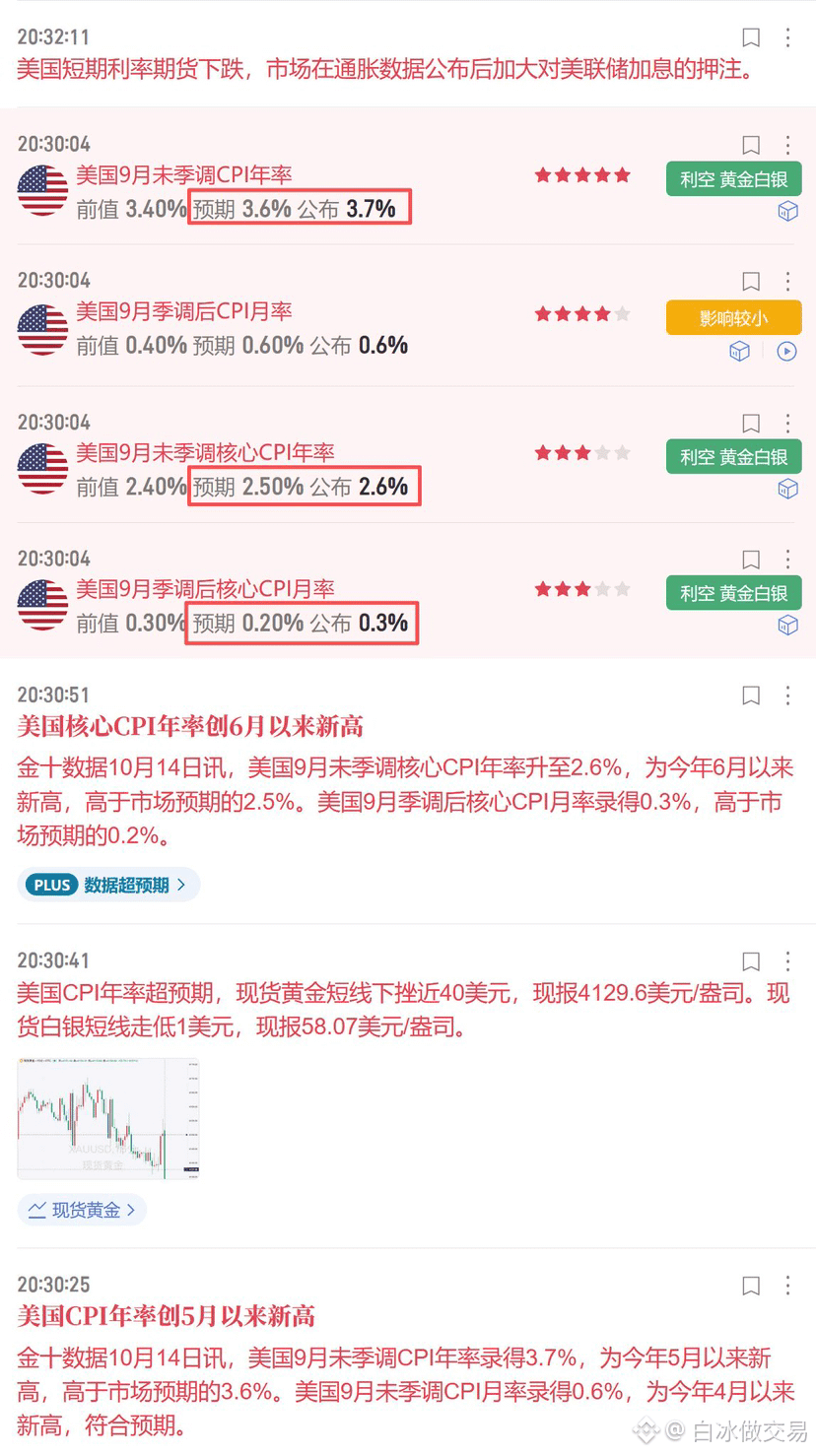
September CPI and core CPI both came in above expectations,
$BTC was already in a downtrend,
and now, with the CPI data,
the odds of falling below 80k are even higher
September CPI and core CPI both came in above expectations,
$BTC was already in a downtrend,
and now, with the CPI data,
the odds of falling below 80k are even higher
$BTC was already in a downtrend,
and now, with the CPI data,
the odds of falling below 80k are even higher
355
·
--
【U.S. Market Premarket 10/14】Index futures before the open: S&P 500 +0.23%, Nasdaq +0.25%, Dow +0.18%.
Due today: September CPI month-over-month at 20:30 Beijing time (forecast 0.6%, prior 0.4%); September CPI year-over-year at 20:30 Beijing time (forecast 3.6%, prior 3.4%); the Fed's Beige Book at 02:00 the following day, Beijing time.
U.S. Treasury yields: 10-year 5.204% (-1.3 basis points), 2-year 4.783% (-1.0 basis points). WTI crude oil: $94.68 (+0.57%); Brent crude oil: $106.28 (+0.56%); gold: $4,190.2 (+0.31%). Federal funds futures imply an 80% probability that rates will remain unchanged at the 10/28 meeting (FedWatch methodology).
System-calculated key SPY levels (not trading advice): upside levels at 778.75 (previous trading day's high) and 781.62 (previous week's high / swing high over the past 60 trading days); downside levels at 776.85 (swing high over the past 60 trading days), 775.95 (previous trading day's low), and 775.14 (swing high over the past 60 trading days).
362
·
--
Verified
How can you grow a small amount of capital quickly? The best solution on the internet!We all know that to grow a small amount of capital significantly, you have to use a strategy of “concentrated positions + leverage.”
However, if this approach is applied to the wrong asset in the wrong direction, you’re bound to lose everything.
So my view is: don’t touch individual stocks. They’re highly volatile and prone to black swan events, and a concentrated position can easily get wiped out by a single blowup.
Only invest in broad U.S. stock market indices, such as the Nasdaq-100 (whose corresponding ETF is QQQ). It represents a basket of leading tech companies and has a mechanism for weeding out weaker performers, making long-term growth inevitable. The index itself won’t fall to zero, and that’s very important.
How can you grow a small amount of capital quickly? The best solution on the internet!
We all know that to grow a small amount of capital significantly, you have to use a strategy of “concentrated positions + leverage.”
However, if this approach is applied to the wrong asset in the wrong direction, you’re bound to lose everything.
So my view is: don’t touch individual stocks. They’re highly volatile and prone to black swan events, and a concentrated position can easily get wiped out by a single blowup.
Only invest in broad U.S. stock market indices, such as the Nasdaq-100 (whose corresponding ETF is QQQ). It represents a basket of leading tech companies and has a mechanism for weeding out weaker performers, making long-term growth inevitable. The index itself won’t fall to zero, and that’s very important.
1
2
729
·
--
Korean stocks plunged, and the crypto market fell along with them. Why?
Korean stocks triggered a circuit breaker today. Many highly leveraged retail investors had to meet margin calls to avoid forced liquidation.
South Koreans are a major force in global crypto markets, with one in five people holding a crypto account.
To cover losses in their stock portfolios, they had no choice but to sell their crypto holdings across markets. ETH was hit first.
This is really a short-term shock caused by indiscriminate selling amid a liquidity crunch. Once this wave of liquidations in Korea passes, selling pressure should naturally ease.$ETH
1
1
3.8k
·
--
Verified
【U.S. Market Close 10/12】The three major indexes were mixed: the Dow rose 196 points (+0.38%) to close at 51,850.55; the S&P 500 fell 0.06% to 7,807.24; and the Nasdaq fell 0.44% to 27,245.9.
WTI crude oil: $93.27 (+1.55%); Brent crude oil: $106.1 (+1.32%); gold: $4,192.8 (-0.56%). Fed funds futures implied an 80% probability that rates will remain unchanged at the 10/28 policy meeting (FedWatch algorithm).
$SPY closed at 778.1 (-0.06%).
Sectors: stablecoins -0.1%, chips -2.0%, storage -4.1%, optical communications -8.9% (equal-weighted constituents). Notable movers: $CIEN -10.0%, $LITE -9.8%, $ALMU -8.6%.
U.S. storage stocks extended their losses: SanDisk fell nearly 7%, while Micron Technology dropped more than 4%. Meta: Its new Muse model reached the AI frontier after 14 months of development. U.S. AI software stocks rose across the board at the open; Palantir hit another record high, while ServiceNow, Shopify, and Salesforce gained nearly 4%.
Tuesday's focus: September existing home sales. Earnings: JPM, JNJ, UNH, GS, WFC, C.
760
·
--
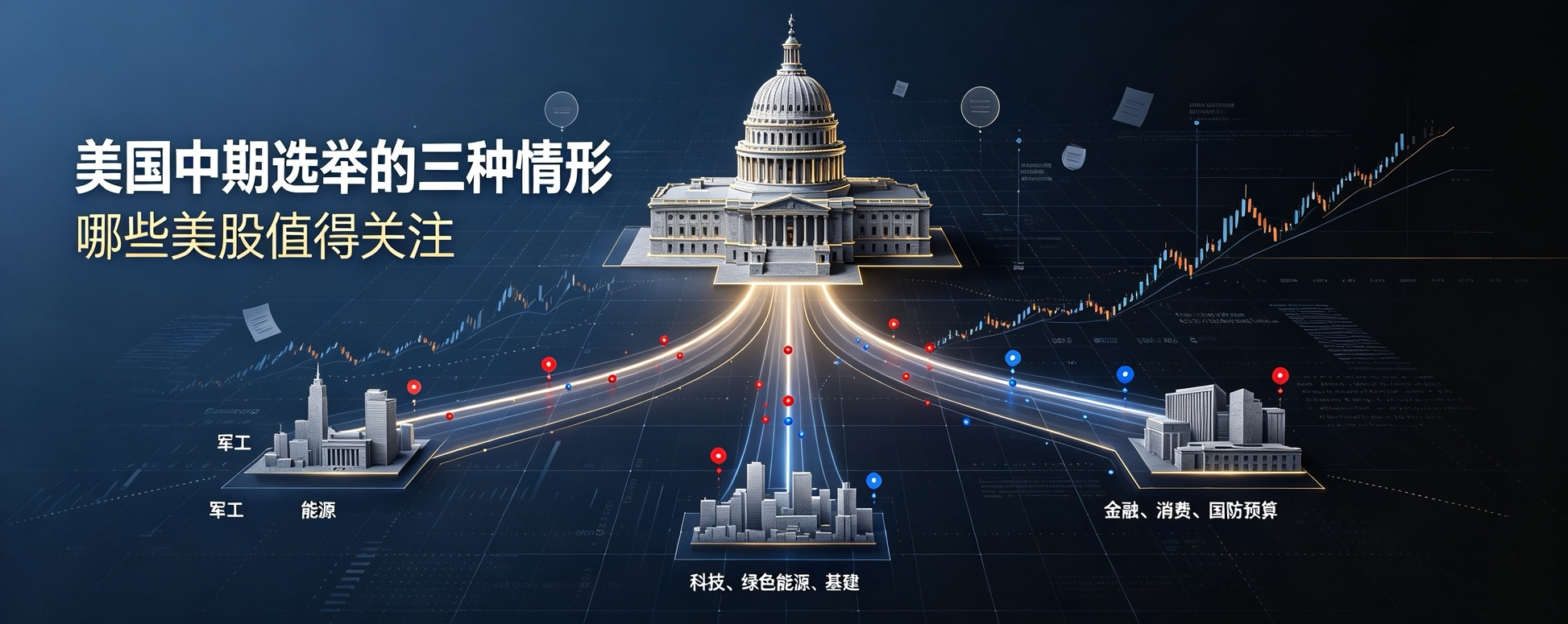
Article
Here's a list of US stocks that would benefit from three possible outcomes in the US midterm elections, shared for your reference:Ending 1: A Divided Congress
Primarily benefiting from reduced policy risks and the continuation of existing spending, this is a positive development.
energy
ExxonMobil
$ CVX Chevron
VLO Valero Energy
$ PSX Phillips 66
Material
Sherwin-Williams (SHW)
$ PRM Perimeter Solutions
industry
$ MOG.A Moog-A
$ CSL Carrefour Components
$ ORN Orion Group
$ RRX Regal Rexnord
$ ALNT Alliance
$ ESE ESE Technology
$ SSNC SS&C Technologies
Non-essential consumer sector
GM (General Motors)
Ford Motor Company
MGM
$ AMZN Amazon
Home Depot (HD)
Lowe's
healthcare
$ HIMS Hims & Hers Health
$ VEEV Veeva Systems
Here's a list of US stocks that would benefit from three possible outcomes in the US midterm elections, shared for your reference:
Ending 1: A Divided Congress
Primarily benefiting from reduced policy risks and the continuation of existing spending, this is a positive development.
energy
ExxonMobil
$ CVX Chevron
VLO Valero Energy
$ PSX Phillips 66
Material
Sherwin-Williams (SHW)
$ PRM Perimeter Solutions
industry
$ MOG.A Moog-A
$ CSL Carrefour Components
$ ORN Orion Group
$ RRX Regal Rexnord
$ ALNT Alliance
$ ESE ESE Technology
$ SSNC SS&C Technologies
Non-essential consumer sector
GM (General Motors)
Ford Motor Company
MGM
$ AMZN Amazon
Home Depot (HD)
Lowe's
healthcare
$ HIMS Hims & Hers Health
$ VEEV Veeva Systems
725
·
--

Article
All over the internet! Justin Sun’s 4-hour interview: The real secret to turning things around for young people in the AI eraIf you’re interested in personal growth, have you been seeing short video clips from Justin Sun’s four-hour podcast popping up in your feed these past couple of days?
A blog post featuring a roughly 4.5-hour in-depth conversation between Justin Sun (founder of TRON) and Alan Shao ("How Can Young People Seize Opportunities in the AI Era?") was recently published across the internet. Justin Sun shared a lot of advice for young people today. The conversation is long and packed with valuable insights. I’ve distilled the key points he made for young people throughout the interview to explore how ordinary young people should think about opportunities and build their own foundational systems amid the AI wave.
All over the internet! Justin Sun’s 4-hour interview: The real secret to turning things around for young people in the AI era
If you’re interested in personal growth, have you been seeing short video clips from Justin Sun’s four-hour podcast popping up in your feed these past couple of days?
A blog post featuring a roughly 4.5-hour in-depth conversation between Justin Sun (founder of TRON) and Alan Shao ("How Can Young People Seize Opportunities in the AI Era?") was recently published across the internet. Justin Sun shared a lot of advice for young people today. The conversation is long and packed with valuable insights. I’ve distilled the key points he made for young people throughout the interview to explore how ordinary young people should think about opportunities and build their own foundational systems amid the AI wave.
A blog post featuring a roughly 4.5-hour in-depth conversation between Justin Sun (founder of TRON) and Alan Shao ("How Can Young People Seize Opportunities in the AI Era?") was recently published across the internet. Justin Sun shared a lot of advice for young people today. The conversation is long and packed with valuable insights. I’ve distilled the key points he made for young people throughout the interview to explore how ordinary young people should think about opportunities and build their own foundational systems amid the AI wave.
406
·
--
What’s the most comfortable investing strategy for retail investors?
Buy index funds at the bottom, then sell when they rebound and you’re up 20–30%. Doing this two or three times a year is enough; stay fully in cash the rest of the time.
If an opportunity doesn’t come along, wait—and keep waiting. Don’t be afraid of missing out.
Wait for the right opportunity, then buy the index at the bottom.
I recommend that most retail investors take a closer look at how the national team trades in the A-share market. There’s actually a lot retail investors can learn from them. #STRK24小时上涨约20%
351
·
--
Your profits are being quietly deductedToday, let’s talk about a little-known trading fact: commission rebates.
If you trade, have you ever carefully reviewed your trading history and asked yourself: “Are market movements really the only reason you’re losing money?”
When I first started trading, I was pretty timid. As soon as I made a little profit, I’d close my position and take the money, then trade frequently. Later, when I checked the profit and loss details, I often found that fees, commissions, and funding rates had eaten up almost all my profits. Back then, I had no idea commission rebates were a thing. I thought fees were just part of trading, so I simply paid them without question. I only blamed myself for not making enough, which meant fees and funding rates swallowed up the money I’d worked so hard to earn.
Your profits are being quietly deducted
Today, let’s talk about a little-known trading fact: commission rebates.
If you trade, have you ever carefully reviewed your trading history and asked yourself: “Are market movements really the only reason you’re losing money?”
When I first started trading, I was pretty timid. As soon as I made a little profit, I’d close my position and take the money, then trade frequently. Later, when I checked the profit and loss details, I often found that fees, commissions, and funding rates had eaten up almost all my profits. Back then, I had no idea commission rebates were a thing. I thought fees were just part of trading, so I simply paid them without question. I only blamed myself for not making enough, which meant fees and funding rates swallowed up the money I’d worked so hard to earn.
2
1.1k
·
--
Some Advice from Changpeng Zhao for Young PeopleFor young people who have just graduated, recently started working, or are considering starting a business.
These days, we often see stories about “financial freedom,” “seizing the next big opportunity,” and “ordinary people making it big.” It’s easy to feel anxious: Has everyone else already gotten so far ahead? Is it too late for me to start now?
This article may offer you some answers...
Recently, at a closed-door sharing session in Hong Kong, an AMA about his new book (Binance Life), and several investment interviews, Changpeng Zhao (CZ) shared life advice for young people on entrepreneurship, skills, and investing. He didn’t offer grand theories—just straightforward, practical reflections drawn from his own experience.
Some Advice from Changpeng Zhao for Young People
For young people who have just graduated, recently started working, or are considering starting a business.
These days, we often see stories about “financial freedom,” “seizing the next big opportunity,” and “ordinary people making it big.” It’s easy to feel anxious: Has everyone else already gotten so far ahead? Is it too late for me to start now?
This article may offer you some answers...
Recently, at a closed-door sharing session in Hong Kong, an AMA about his new book (Binance Life), and several investment interviews, Changpeng Zhao (CZ) shared life advice for young people on entrepreneurship, skills, and investing. He didn’t offer grand theories—just straightforward, practical reflections drawn from his own experience.
6
2
29
11.4k
Log in to explore more content
Join global crypto users on Binance Square
⚡️ Get latest and useful information about crypto.
💬 Trusted by the world’s largest crypto exchange.
👍 Discover real insights from verified creators.
Email / Phone number
Trending Topics
BinancePick
2.7M views
143,020 Discussing
Join #EarningsSeason: Predict Earnings on Binance Pick, Share Your Take on Binance Square!
Binance Square Official
·402 Likes
·338.9k views
EarningsSeason
5M views
24,528 Discussing
SouthKoreaReportedlyWeighsFourthCryptoTaxDelay
199 views
35 Discussing