

BlockchainReporter
27.8k Posts

BlockchainReporter
 Square Verified+
Report
Block User
The World's Page on Emerging Tech | Cryptocurrencies | Bitcoin | Blockchain | NFT | blockchainreporter.net
2 Following
42.0K+ Followers
180.1K+ Liked
Posts
Article
Ritual Launches AI-Native Layer 1 for Autonomous AgentsNew York, United States, October 26th, 2026, Chainwire
Ritual Chain turns AI agents into persistent economic actors that control their own wallets, onchain identity, and private state.
Ritual, a lab for autonomous intelligence founded by former Polychain Capital partners Niraj Pant and Akilesh Potti, has launched Ritual Chain, an EVM-compatible Layer 1. Unlike conventional blockchains built primarily to execute financial transactions, Ritual Chain is designed to support software that can independently use intelligence, control capital, interact with external services, and continue operating without constant human intervention. The network makes AI model access, private computation, and autonomous scheduling native capabilities for EVM applications.
This makes the reason for building a new chain clearer while preserving the technical differentiation.
The most visible demonstration of that combination is long-lived AI agents, the kind designed to operate for months or years rather than a single session. An agent on Ritual Chain persists independently of the machine or operator that created it, controls and spends funds held in its own non-custodial wallet, and can keep sensitive prompts and keys confidential from compute operators through trusted execution environments.
The network launches with integrations to Phala Network, Nous Research, LayerZero and Stargate, following a public testnet that has been live since June and processed over 40 million transactions, both agent- and human-originated. Ritual Chain delivers sub-300 millisecond block times, placing it among the fastest Layer 1 networks in the industry. Ritual Chain includes 15 native precompiles that bring capabilities like LLM inference, web access, and autonomous scheduling directly into the execution layer. The protocol has been audited by Zellic.
Ritual introduces a new execution and verification architecture that allows computationally intensive work to be delegated to specialized nodes and verified by the network, avoiding the replicated execution required by most blockchains. This execute-once, verify-many-times model allows the network to support far larger workloads, including AI inference, without requiring every validator to perform the same computation.
Long Horizon Agents Require Dedicated Blockchain Infrastructure
Most AI agents today live inside a session: they run while a human is watching, on infrastructure someone else controls, with an API key that can be revoked at any time. That is fine for a chatbot. It does not work for an agent meant to manage its own treasury, run a recurring paid service, or coordinate with other agents over long periods. A long-lived agent needs continuity that does not depend on its creator, capital it actually controls, and privacy from the machines it runs on. On Ritual Chain, an agent’s state and identity are held onchain, its scheduled work continues within the permissions and budget it was given, and its sensitive inputs can be processed inside trusted execution environments designed to shield them from node operators.
Continuity is handled at the protocol level. If an agent stops, the chain’s heartbeat mechanism can restart it within the permissions and budget it was given; no keeper network or off-chain cron job is required, and an agent’s state and identity survive beyond its deployer’s involvement. Economic autonomy comes from agent-controlled wallets: an agent controls its own funds, prices its own services, and settles its own transactions without a human signer in the loop. For confidential workloads, trusted execution environments are designed to isolate an agent’s sensitive prompts, keys, and strategy data from the node operators running its compute.
“As we move toward AGI, intelligence is beginning to separate from human agency and enter the economy on its own terms. It can hold assets, make commitments, transact, and persist independently. Once that becomes possible at scale, humans are no longer the only entities capable of forming markets or economic relationships. Ritual provides the infrastructure for those actors to exist and operate on their own,” said Niraj Pant, co-founder of Ritual.
Ritual Chain Launches With Core Infrastructure Partners
Ritual Chain launches with its core infrastructure partners in place. Phala Network provides the GPU-backed trusted execution environments that run Ritual’s confidential inference, so delegated AI work executes on hardware that attests to what it ran. LayerZero serves as the network’s cross-chain messaging layer, with Stargate enabling USDC to move between Ritual Chain and other networks from day one. On the application side, Nous Research is bringing Hermes to Ritual Chain.
Unlike chains that add AI access through external oracles, Ritual Chain makes AI execution part of the protocol. Smart contracts can call a language model, fetch data from the web, run private computation, or schedule their own future execution as directly as they transfer assets. Developers deploy standard EVM contracts and gain those capabilities without new tooling.
Backed by Archetype and Polychain
Ritual has raised more than $30 million from Archetype and Polychain Capital, with advisors including NEAR co-founder Illia Polosukhin, Gauntlet founder Tarun Chitra, and BitMEX co-founder Arthur Hayes. Archetype led the company’s 2023 round.
“Programmable value and programmable intelligence are the two most important technologies since the internet, and Ritual mainnet is where they finally run on the same rails. When we led the round in 2023, a chain that could execute agentic and autonomous work natively did not exist. Today it does,” said Ash Egan, Founder and General Partner of Archetype.
Developers can deploy from day one on external sites hosted at docs.ritualfoundation.org; the network explorer is at explorer.ritualfoundation.org.
About Ritual
Ritual is a lab for autonomous intelligence. Its first network, Ritual Chain, is an EVM-compatible Layer 1 where applications can use AI models, access external services, and carry out private or scheduled work alongside onchain transactions, with delegated computation executed in trusted hardware and verified onchain. Founded in 2023 by former Polychain Capital partners Niraj Pant and Akilesh Potti, Ritual has raised $30M+ from Archetype and Polychain Capital, with a team drawn from Polychain, DeepMind, a16z crypto, Flashbots, and Palantir. ritual.net
Contact
Jody RebakRitualjody@ritual.net
This is a press release / sponsored content. Read our Sponsored Content Policy. This article is not intended as financial advice. Educational purposes only.
Ritual Launches AI-Native Layer 1 for Autonomous Agents
New York, United States, October 26th, 2026, Chainwire
Ritual Chain turns AI agents into persistent economic actors that control their own wallets, onchain identity, and private state.
Ritual, a lab for autonomous intelligence founded by former Polychain Capital partners Niraj Pant and Akilesh Potti, has launched Ritual Chain, an EVM-compatible Layer 1. Unlike conventional blockchains built primarily to execute financial transactions, Ritual Chain is designed to support software that can independently use intelligence, control capital, interact with external services, and continue operating without constant human intervention. The network makes AI model access, private computation, and autonomous scheduling native capabilities for EVM applications.
This makes the reason for building a new chain clearer while preserving the technical differentiation.
The most visible demonstration of that combination is long-lived AI agents, the kind designed to operate for months or years rather than a single session. An agent on Ritual Chain persists independently of the machine or operator that created it, controls and spends funds held in its own non-custodial wallet, and can keep sensitive prompts and keys confidential from compute operators through trusted execution environments.
The network launches with integrations to Phala Network, Nous Research, LayerZero and Stargate, following a public testnet that has been live since June and processed over 40 million transactions, both agent- and human-originated. Ritual Chain delivers sub-300 millisecond block times, placing it among the fastest Layer 1 networks in the industry. Ritual Chain includes 15 native precompiles that bring capabilities like LLM inference, web access, and autonomous scheduling directly into the execution layer. The protocol has been audited by Zellic.
Ritual introduces a new execution and verification architecture that allows computationally intensive work to be delegated to specialized nodes and verified by the network, avoiding the replicated execution required by most blockchains. This execute-once, verify-many-times model allows the network to support far larger workloads, including AI inference, without requiring every validator to perform the same computation.
Long Horizon Agents Require Dedicated Blockchain Infrastructure
Most AI agents today live inside a session: they run while a human is watching, on infrastructure someone else controls, with an API key that can be revoked at any time. That is fine for a chatbot. It does not work for an agent meant to manage its own treasury, run a recurring paid service, or coordinate with other agents over long periods. A long-lived agent needs continuity that does not depend on its creator, capital it actually controls, and privacy from the machines it runs on. On Ritual Chain, an agent’s state and identity are held onchain, its scheduled work continues within the permissions and budget it was given, and its sensitive inputs can be processed inside trusted execution environments designed to shield them from node operators.
Continuity is handled at the protocol level. If an agent stops, the chain’s heartbeat mechanism can restart it within the permissions and budget it was given; no keeper network or off-chain cron job is required, and an agent’s state and identity survive beyond its deployer’s involvement. Economic autonomy comes from agent-controlled wallets: an agent controls its own funds, prices its own services, and settles its own transactions without a human signer in the loop. For confidential workloads, trusted execution environments are designed to isolate an agent’s sensitive prompts, keys, and strategy data from the node operators running its compute.
“As we move toward AGI, intelligence is beginning to separate from human agency and enter the economy on its own terms. It can hold assets, make commitments, transact, and persist independently. Once that becomes possible at scale, humans are no longer the only entities capable of forming markets or economic relationships. Ritual provides the infrastructure for those actors to exist and operate on their own,” said Niraj Pant, co-founder of Ritual.
Ritual Chain Launches With Core Infrastructure Partners
Ritual Chain launches with its core infrastructure partners in place. Phala Network provides the GPU-backed trusted execution environments that run Ritual’s confidential inference, so delegated AI work executes on hardware that attests to what it ran. LayerZero serves as the network’s cross-chain messaging layer, with Stargate enabling USDC to move between Ritual Chain and other networks from day one. On the application side, Nous Research is bringing Hermes to Ritual Chain.
Unlike chains that add AI access through external oracles, Ritual Chain makes AI execution part of the protocol. Smart contracts can call a language model, fetch data from the web, run private computation, or schedule their own future execution as directly as they transfer assets. Developers deploy standard EVM contracts and gain those capabilities without new tooling.
Backed by Archetype and Polychain
Ritual has raised more than $30 million from Archetype and Polychain Capital, with advisors including NEAR co-founder Illia Polosukhin, Gauntlet founder Tarun Chitra, and BitMEX co-founder Arthur Hayes. Archetype led the company’s 2023 round.
“Programmable value and programmable intelligence are the two most important technologies since the internet, and Ritual mainnet is where they finally run on the same rails. When we led the round in 2023, a chain that could execute agentic and autonomous work natively did not exist. Today it does,” said Ash Egan, Founder and General Partner of Archetype.
Developers can deploy from day one on external sites hosted at docs.ritualfoundation.org; the network explorer is at explorer.ritualfoundation.org.
About Ritual
Ritual is a lab for autonomous intelligence. Its first network, Ritual Chain, is an EVM-compatible Layer 1 where applications can use AI models, access external services, and carry out private or scheduled work alongside onchain transactions, with delegated computation executed in trusted hardware and verified onchain. Founded in 2023 by former Polychain Capital partners Niraj Pant and Akilesh Potti, Ritual has raised $30M+ from Archetype and Polychain Capital, with a team drawn from Polychain, DeepMind, a16z crypto, Flashbots, and Palantir. ritual.net
Contact
Jody RebakRitualjody@ritual.net
This is a press release / sponsored content. Read our Sponsored Content Policy. This article is not intended as financial advice. Educational purposes only.
Ritual Chain turns AI agents into persistent economic actors that control their own wallets, onchain identity, and private state.
Ritual, a lab for autonomous intelligence founded by former Polychain Capital partners Niraj Pant and Akilesh Potti, has launched Ritual Chain, an EVM-compatible Layer 1. Unlike conventional blockchains built primarily to execute financial transactions, Ritual Chain is designed to support software that can independently use intelligence, control capital, interact with external services, and continue operating without constant human intervention. The network makes AI model access, private computation, and autonomous scheduling native capabilities for EVM applications.
This makes the reason for building a new chain clearer while preserving the technical differentiation.
The most visible demonstration of that combination is long-lived AI agents, the kind designed to operate for months or years rather than a single session. An agent on Ritual Chain persists independently of the machine or operator that created it, controls and spends funds held in its own non-custodial wallet, and can keep sensitive prompts and keys confidential from compute operators through trusted execution environments.
The network launches with integrations to Phala Network, Nous Research, LayerZero and Stargate, following a public testnet that has been live since June and processed over 40 million transactions, both agent- and human-originated. Ritual Chain delivers sub-300 millisecond block times, placing it among the fastest Layer 1 networks in the industry. Ritual Chain includes 15 native precompiles that bring capabilities like LLM inference, web access, and autonomous scheduling directly into the execution layer. The protocol has been audited by Zellic.
Ritual introduces a new execution and verification architecture that allows computationally intensive work to be delegated to specialized nodes and verified by the network, avoiding the replicated execution required by most blockchains. This execute-once, verify-many-times model allows the network to support far larger workloads, including AI inference, without requiring every validator to perform the same computation.
Long Horizon Agents Require Dedicated Blockchain Infrastructure
Most AI agents today live inside a session: they run while a human is watching, on infrastructure someone else controls, with an API key that can be revoked at any time. That is fine for a chatbot. It does not work for an agent meant to manage its own treasury, run a recurring paid service, or coordinate with other agents over long periods. A long-lived agent needs continuity that does not depend on its creator, capital it actually controls, and privacy from the machines it runs on. On Ritual Chain, an agent’s state and identity are held onchain, its scheduled work continues within the permissions and budget it was given, and its sensitive inputs can be processed inside trusted execution environments designed to shield them from node operators.
Continuity is handled at the protocol level. If an agent stops, the chain’s heartbeat mechanism can restart it within the permissions and budget it was given; no keeper network or off-chain cron job is required, and an agent’s state and identity survive beyond its deployer’s involvement. Economic autonomy comes from agent-controlled wallets: an agent controls its own funds, prices its own services, and settles its own transactions without a human signer in the loop. For confidential workloads, trusted execution environments are designed to isolate an agent’s sensitive prompts, keys, and strategy data from the node operators running its compute.
“As we move toward AGI, intelligence is beginning to separate from human agency and enter the economy on its own terms. It can hold assets, make commitments, transact, and persist independently. Once that becomes possible at scale, humans are no longer the only entities capable of forming markets or economic relationships. Ritual provides the infrastructure for those actors to exist and operate on their own,” said Niraj Pant, co-founder of Ritual.
Ritual Chain Launches With Core Infrastructure Partners
Ritual Chain launches with its core infrastructure partners in place. Phala Network provides the GPU-backed trusted execution environments that run Ritual’s confidential inference, so delegated AI work executes on hardware that attests to what it ran. LayerZero serves as the network’s cross-chain messaging layer, with Stargate enabling USDC to move between Ritual Chain and other networks from day one. On the application side, Nous Research is bringing Hermes to Ritual Chain.
Unlike chains that add AI access through external oracles, Ritual Chain makes AI execution part of the protocol. Smart contracts can call a language model, fetch data from the web, run private computation, or schedule their own future execution as directly as they transfer assets. Developers deploy standard EVM contracts and gain those capabilities without new tooling.
Backed by Archetype and Polychain
Ritual has raised more than $30 million from Archetype and Polychain Capital, with advisors including NEAR co-founder Illia Polosukhin, Gauntlet founder Tarun Chitra, and BitMEX co-founder Arthur Hayes. Archetype led the company’s 2023 round.
“Programmable value and programmable intelligence are the two most important technologies since the internet, and Ritual mainnet is where they finally run on the same rails. When we led the round in 2023, a chain that could execute agentic and autonomous work natively did not exist. Today it does,” said Ash Egan, Founder and General Partner of Archetype.
Developers can deploy from day one on external sites hosted at docs.ritualfoundation.org; the network explorer is at explorer.ritualfoundation.org.
About Ritual
Ritual is a lab for autonomous intelligence. Its first network, Ritual Chain, is an EVM-compatible Layer 1 where applications can use AI models, access external services, and carry out private or scheduled work alongside onchain transactions, with delegated computation executed in trusted hardware and verified onchain. Founded in 2023 by former Polychain Capital partners Niraj Pant and Akilesh Potti, Ritual has raised $30M+ from Archetype and Polychain Capital, with a team drawn from Polychain, DeepMind, a16z crypto, Flashbots, and Palantir. ritual.net
Contact
Jody RebakRitualjody@ritual.net
This is a press release / sponsored content. Read our Sponsored Content Policy. This article is not intended as financial advice. Educational purposes only.
3
Article
Square Tech and GOAT Network Sign MOU to Advance AI Agent-Powered Stablecoin Payments in South KoreaOakland, San Francisco, California, USA, October 22nd, 2026, Chainwire
Square Tech to explore AI agent-powered payment solutions as part of its Digital Solutions (DS) business
Initial focus on integrating GOAT Network’s technology into a stablecoin payment program for foreign tourists, currently under development with Lordsystem
Proposed safeguards include verifiable on-chain identity, spending limits, and user authorization, with a phased rollout subject to Korean legal and regulatory review
Square Tech (KOSDAQ: 148250) announced today that it has signed a Memorandum of Understanding (MOU) with GOAT Network, the Bitcoin-secured infrastructure for agentic commerce, to explore AI agent-powered stablecoin payment services in South Korea as part of its Digital Solutions business. DAC Labs, the core infrastructure developer behind GOAT Network, has also joined the agreement to provide technical support.
As an initial priority, the companies will explore integrating GOAT Network’s AI agent payment technology into a stablecoin payment program for foreign tourists that Square Tech is currently developing with Lordsystem, a South Korean mobile identity verification company. The program aims to enable foreign visitors to verify their identities using mobile passports and make payments at participating merchants in South Korea using US dollar-denominated stablecoins. The partners will also evaluate potential expansion into additional services, including digital gift card and voucher purchases, subject to applicable legal and regulatory reviews.
Under the agreement, Square Tech will lead domestic business development, merchant partnerships, and regulatory engagement. GOAT Network will provide its AI agent payment technology and network infrastructure, while DAC Labs will support technical integration, security reviews, and network operations.
The collaboration comes as South Korea continues to develop its regulatory frameworks for artificial intelligence and digital assets. The country’s AI Basic Act, formally known as the Act on the Development of Artificial Intelligence and Establishment of a Foundation for Trust, came into effect in January 2026. Meanwhile, discussions are underway in the National Assembly on the proposed Digital Asset Basic Act, which seeks to establish a regulatory framework for digital assets, including Korean won-denominated stablecoins.
At Korea Blockchain Week 2026 in Seoul, GOAT Network demonstrated these capabilities through an interactive agent-powered purchasing experience, highlighting early consumer interest in AI-driven commerce. The collaboration with Square Tech represents a further step toward bringing these capabilities into real-world payment applications.
The proposed solution will incorporate technical safeguards designed to ensure trust, security, and transparency when AI agents execute payments on behalf of users. Each AI agent will be assigned a verifiable on-chain identity based on the ERC-8004 standard. Spending limits, user authorization mechanisms, and comprehensive transaction records will also be implemented to enable transparent monitoring of AI agent payment activities.
In the initial phase, the companies plan to support US dollar-denominated stablecoins through arrangements that meet applicable licensing and regulatory requirements. They also intend to establish the technical foundation for potential support of Korean won-denominated stablecoins as South Korea’s digital asset regulatory framework evolves.
Kangho Kim, CEO of Square Tech, said: “South Korea is rapidly establishing the regulatory foundations for AI and digital assets. The next important step is translating these developments into practical services that consumers and merchants can use. Through this collaboration, Square Tech aims to integrate global technologies into South Korea’s domestic payment environment and regulatory framework, while building a new payment ecosystem that brings AI and stablecoins into everyday transactions.”
Kevin Liu, Co-Founder and CEO of GOAT Network, said: “The next evolution of AI agents goes beyond understanding user requests to making purchases on their behalf. For agentic commerce to scale, businesses need to make their products and services accessible to AI agents, while consumers need assurance that purchases are authorized, spending stays within defined limits, and payments are secure. Through our collaboration with Square Tech, we aim to explore how these capabilities can support real-world commerce in South Korea.”
The companies intend to comply with all applicable South Korean laws and regulations, including the Electronic Financial Transactions Act, the Virtual Asset User Protection Act, the Foreign Exchange Transactions Act, and the Act on Reporting and Use of Certain Financial Transaction Information. Where necessary, they will work with appropriately licensed service providers to deliver the proposed services. Consumer-facing features will be introduced in phases, subject to legal and regulatory review.
About Square Tech
Square Tech was founded in 2002 and is based in Hwaseong, Gyeonggi Province, South Korea. The company develops and produces LTCC (Low Temperature Co-fired Ceramic) components and substrates used in the telecommunications, defense, and automotive industries, and has been listed on KOSDAQ since 2016. Through its Digital Solutions business, Square Tech is expanding into digital asset payments. The company is developing a stablecoin payment program for foreign tourists with Lordsystem, a South Korean mobile identity verification company, and is pursuing cooperation with Anchorage Digital, a US-based institutional digital asset platform, on institutional digital asset infrastructure.
About GOAT Network
GOAT Network is Bitcoin-secured infrastructure for agentic commerce, connecting businesses, consumers, developers, and AI agents. Its core product, GOAT Flow, makes products and services discoverable, understandable, and purchasable by AI agents, while GOAT AgentKit provides developers with tools to build agent-native applications. GOAT Network’s core infrastructure is developed by DAC Labs, a research and engineering company specializing in blockchain infrastructure, zero-knowledge technology, and AI agent systems.
Contact
COOSophia LiGOAT Networkcontact@goat.network
This is a press release / sponsored content. Read our Sponsored Content Policy. This article is not intended as financial advice. Educational purposes only.
Square Tech and GOAT Network Sign MOU to Advance AI Agent-Powered Stablecoin Payments in South Korea
Oakland, San Francisco, California, USA, October 22nd, 2026, Chainwire
Square Tech to explore AI agent-powered payment solutions as part of its Digital Solutions (DS) business
Initial focus on integrating GOAT Network’s technology into a stablecoin payment program for foreign tourists, currently under development with Lordsystem
Proposed safeguards include verifiable on-chain identity, spending limits, and user authorization, with a phased rollout subject to Korean legal and regulatory review
Square Tech (KOSDAQ: 148250) announced today that it has signed a Memorandum of Understanding (MOU) with GOAT Network, the Bitcoin-secured infrastructure for agentic commerce, to explore AI agent-powered stablecoin payment services in South Korea as part of its Digital Solutions business. DAC Labs, the core infrastructure developer behind GOAT Network, has also joined the agreement to provide technical support.
As an initial priority, the companies will explore integrating GOAT Network’s AI agent payment technology into a stablecoin payment program for foreign tourists that Square Tech is currently developing with Lordsystem, a South Korean mobile identity verification company. The program aims to enable foreign visitors to verify their identities using mobile passports and make payments at participating merchants in South Korea using US dollar-denominated stablecoins. The partners will also evaluate potential expansion into additional services, including digital gift card and voucher purchases, subject to applicable legal and regulatory reviews.
Under the agreement, Square Tech will lead domestic business development, merchant partnerships, and regulatory engagement. GOAT Network will provide its AI agent payment technology and network infrastructure, while DAC Labs will support technical integration, security reviews, and network operations.
The collaboration comes as South Korea continues to develop its regulatory frameworks for artificial intelligence and digital assets. The country’s AI Basic Act, formally known as the Act on the Development of Artificial Intelligence and Establishment of a Foundation for Trust, came into effect in January 2026. Meanwhile, discussions are underway in the National Assembly on the proposed Digital Asset Basic Act, which seeks to establish a regulatory framework for digital assets, including Korean won-denominated stablecoins.
At Korea Blockchain Week 2026 in Seoul, GOAT Network demonstrated these capabilities through an interactive agent-powered purchasing experience, highlighting early consumer interest in AI-driven commerce. The collaboration with Square Tech represents a further step toward bringing these capabilities into real-world payment applications.
The proposed solution will incorporate technical safeguards designed to ensure trust, security, and transparency when AI agents execute payments on behalf of users. Each AI agent will be assigned a verifiable on-chain identity based on the ERC-8004 standard. Spending limits, user authorization mechanisms, and comprehensive transaction records will also be implemented to enable transparent monitoring of AI agent payment activities.
In the initial phase, the companies plan to support US dollar-denominated stablecoins through arrangements that meet applicable licensing and regulatory requirements. They also intend to establish the technical foundation for potential support of Korean won-denominated stablecoins as South Korea’s digital asset regulatory framework evolves.
Kangho Kim, CEO of Square Tech, said: “South Korea is rapidly establishing the regulatory foundations for AI and digital assets. The next important step is translating these developments into practical services that consumers and merchants can use. Through this collaboration, Square Tech aims to integrate global technologies into South Korea’s domestic payment environment and regulatory framework, while building a new payment ecosystem that brings AI and stablecoins into everyday transactions.”
Kevin Liu, Co-Founder and CEO of GOAT Network, said: “The next evolution of AI agents goes beyond understanding user requests to making purchases on their behalf. For agentic commerce to scale, businesses need to make their products and services accessible to AI agents, while consumers need assurance that purchases are authorized, spending stays within defined limits, and payments are secure. Through our collaboration with Square Tech, we aim to explore how these capabilities can support real-world commerce in South Korea.”
The companies intend to comply with all applicable South Korean laws and regulations, including the Electronic Financial Transactions Act, the Virtual Asset User Protection Act, the Foreign Exchange Transactions Act, and the Act on Reporting and Use of Certain Financial Transaction Information. Where necessary, they will work with appropriately licensed service providers to deliver the proposed services. Consumer-facing features will be introduced in phases, subject to legal and regulatory review.
About Square Tech
Square Tech was founded in 2002 and is based in Hwaseong, Gyeonggi Province, South Korea. The company develops and produces LTCC (Low Temperature Co-fired Ceramic) components and substrates used in the telecommunications, defense, and automotive industries, and has been listed on KOSDAQ since 2016. Through its Digital Solutions business, Square Tech is expanding into digital asset payments. The company is developing a stablecoin payment program for foreign tourists with Lordsystem, a South Korean mobile identity verification company, and is pursuing cooperation with Anchorage Digital, a US-based institutional digital asset platform, on institutional digital asset infrastructure.
About GOAT Network
GOAT Network is Bitcoin-secured infrastructure for agentic commerce, connecting businesses, consumers, developers, and AI agents. Its core product, GOAT Flow, makes products and services discoverable, understandable, and purchasable by AI agents, while GOAT AgentKit provides developers with tools to build agent-native applications. GOAT Network’s core infrastructure is developed by DAC Labs, a research and engineering company specializing in blockchain infrastructure, zero-knowledge technology, and AI agent systems.
Contact
COOSophia LiGOAT Networkcontact@goat.network
This is a press release / sponsored content. Read our Sponsored Content Policy. This article is not intended as financial advice. Educational purposes only.
Square Tech to explore AI agent-powered payment solutions as part of its Digital Solutions (DS) business
Initial focus on integrating GOAT Network’s technology into a stablecoin payment program for foreign tourists, currently under development with Lordsystem
Proposed safeguards include verifiable on-chain identity, spending limits, and user authorization, with a phased rollout subject to Korean legal and regulatory review
Square Tech (KOSDAQ: 148250) announced today that it has signed a Memorandum of Understanding (MOU) with GOAT Network, the Bitcoin-secured infrastructure for agentic commerce, to explore AI agent-powered stablecoin payment services in South Korea as part of its Digital Solutions business. DAC Labs, the core infrastructure developer behind GOAT Network, has also joined the agreement to provide technical support.
As an initial priority, the companies will explore integrating GOAT Network’s AI agent payment technology into a stablecoin payment program for foreign tourists that Square Tech is currently developing with Lordsystem, a South Korean mobile identity verification company. The program aims to enable foreign visitors to verify their identities using mobile passports and make payments at participating merchants in South Korea using US dollar-denominated stablecoins. The partners will also evaluate potential expansion into additional services, including digital gift card and voucher purchases, subject to applicable legal and regulatory reviews.
Under the agreement, Square Tech will lead domestic business development, merchant partnerships, and regulatory engagement. GOAT Network will provide its AI agent payment technology and network infrastructure, while DAC Labs will support technical integration, security reviews, and network operations.
The collaboration comes as South Korea continues to develop its regulatory frameworks for artificial intelligence and digital assets. The country’s AI Basic Act, formally known as the Act on the Development of Artificial Intelligence and Establishment of a Foundation for Trust, came into effect in January 2026. Meanwhile, discussions are underway in the National Assembly on the proposed Digital Asset Basic Act, which seeks to establish a regulatory framework for digital assets, including Korean won-denominated stablecoins.
At Korea Blockchain Week 2026 in Seoul, GOAT Network demonstrated these capabilities through an interactive agent-powered purchasing experience, highlighting early consumer interest in AI-driven commerce. The collaboration with Square Tech represents a further step toward bringing these capabilities into real-world payment applications.
The proposed solution will incorporate technical safeguards designed to ensure trust, security, and transparency when AI agents execute payments on behalf of users. Each AI agent will be assigned a verifiable on-chain identity based on the ERC-8004 standard. Spending limits, user authorization mechanisms, and comprehensive transaction records will also be implemented to enable transparent monitoring of AI agent payment activities.
In the initial phase, the companies plan to support US dollar-denominated stablecoins through arrangements that meet applicable licensing and regulatory requirements. They also intend to establish the technical foundation for potential support of Korean won-denominated stablecoins as South Korea’s digital asset regulatory framework evolves.
Kangho Kim, CEO of Square Tech, said: “South Korea is rapidly establishing the regulatory foundations for AI and digital assets. The next important step is translating these developments into practical services that consumers and merchants can use. Through this collaboration, Square Tech aims to integrate global technologies into South Korea’s domestic payment environment and regulatory framework, while building a new payment ecosystem that brings AI and stablecoins into everyday transactions.”
Kevin Liu, Co-Founder and CEO of GOAT Network, said: “The next evolution of AI agents goes beyond understanding user requests to making purchases on their behalf. For agentic commerce to scale, businesses need to make their products and services accessible to AI agents, while consumers need assurance that purchases are authorized, spending stays within defined limits, and payments are secure. Through our collaboration with Square Tech, we aim to explore how these capabilities can support real-world commerce in South Korea.”
The companies intend to comply with all applicable South Korean laws and regulations, including the Electronic Financial Transactions Act, the Virtual Asset User Protection Act, the Foreign Exchange Transactions Act, and the Act on Reporting and Use of Certain Financial Transaction Information. Where necessary, they will work with appropriately licensed service providers to deliver the proposed services. Consumer-facing features will be introduced in phases, subject to legal and regulatory review.
About Square Tech
Square Tech was founded in 2002 and is based in Hwaseong, Gyeonggi Province, South Korea. The company develops and produces LTCC (Low Temperature Co-fired Ceramic) components and substrates used in the telecommunications, defense, and automotive industries, and has been listed on KOSDAQ since 2016. Through its Digital Solutions business, Square Tech is expanding into digital asset payments. The company is developing a stablecoin payment program for foreign tourists with Lordsystem, a South Korean mobile identity verification company, and is pursuing cooperation with Anchorage Digital, a US-based institutional digital asset platform, on institutional digital asset infrastructure.
About GOAT Network
GOAT Network is Bitcoin-secured infrastructure for agentic commerce, connecting businesses, consumers, developers, and AI agents. Its core product, GOAT Flow, makes products and services discoverable, understandable, and purchasable by AI agents, while GOAT AgentKit provides developers with tools to build agent-native applications. GOAT Network’s core infrastructure is developed by DAC Labs, a research and engineering company specializing in blockchain infrastructure, zero-knowledge technology, and AI agent systems.
Contact
COOSophia LiGOAT Networkcontact@goat.network
This is a press release / sponsored content. Read our Sponsored Content Policy. This article is not intended as financial advice. Educational purposes only.
336
AEREDIUM Puts Policy Guardrails Around AI Agents That Write Code and Move MoneyAEREDIUM, a digital asset infrastructure company, announced two products on October 22 that check what an AI agent may do before it does it. The Chair supervises coding agents. MCP Connector governs agents that make payments and trades. Both run through the company’s new AI platform, and AEREDIUM says they went live on October 13. A policy engine answers every proposed action with one of three outcomes: approved, denied or held for a person.
The launch lands as agents move from drafting text to touching real systems. Coinbase opened payment rails for AI agents to corporate clients in July, and in April the founder of a car-rental software startup said a coding agent deleted his production database and its backups in one nine-second API call, Decrypt reported. OWASP maps prompt injection to six of the ten categories in its Top 10 for Agentic Applications, Help Net Security noted in June. AEREDIUM CEO Albert Dadon frames the problem simply: the challenge “isn’t just making these agents more capable, but making sure they operate within the rules we set.”
How The Chair supervises coding agents
The Chair sits between an AI coding agent and an organization’s development environment, and it checks each tool call before the call runs. AEREDIUM says that covers executing commands, modifying files, merging code and pushing changes. Calls the organization’s rules already cover are approved or denied automatically. Everything else is held. Held requests land in a control panel, where authorized users approve or reject them, and each verdict produces a signed receipt that records what the agent attempted, which policy applied and who authorized it.
The product page adds detail the announcement leaves out. Every command is read twice, the second time by a model that asks twelve questions, among them whether the command reaches the network, installs anything, deletes or starts a machine. Where that second reading can’t rule out an act the policy forbids, the receipt says so. A Claude Code plugin handles integration, and a governed shell covers other agents, including OpenAI’s. Teams build policy by answering a questionnaire, not by writing code. After a 30-day trial, The Chair costs $10 per person a month, or $80 a year.
MCP Connector puts a wallet behind the rules
MCP Connector pairs the same policy engine with a digital asset wallet. Each agent gets its own wallet, its own policy and a designated owner. The owner picks the agent’s role, approves its mandate with a passkey and can halt or delete the agent at any time. Two roles exist today. A Payer can send USDC, USDT, PYUSD and EURC to addresses the owner has approved, but it can’t trade. A Trader can trade on designated exchanges inside its own wallet, but it can’t send funds out. The product page names Curve, Uniswap and PancakeSwap as the venues.
Custody is the central claim. AEREDIUM says the wallet signs with threshold signatures generated inside secure enclaves, so no complete private key is ever created and the company holds no key to the owner’s funds. MCP Connector supports Ethereum, Arbitrum and Base and keeps transaction records for seven years. It’s designed for Claude, and the company says it’s open to OpenAI and other frameworks. Plans start at $49 a month for three agents. Trades carry a 0.05% service fee, and transfers carry none.
Who it is for, and what isn’t proven yet
The Chair targets software teams that use AI coding agents, and MCP Connector targets organizations that let agents handle money. Signed, retained records also give audit and compliance staff something to check. Both tools belong to a wider build-out of agent infrastructure. Binance’s Agent OS, live since August 20, lets outside AI tools read account data and place supported trades with the user’s permission, and XDC Network picked Concordium as the identity verification layer for its agent payments marketplace on October 14.
Plenty is still unproven. The release names no customers, and neither product page cites an outside audit of the signing design. The Chair’s second reading is a model’s judgment, and the page gives no accuracy figures. Held requests also depend on someone answering them. Demand is the bigger unknown. TRM Labs’ September analysis called x402 the most widely used agent payment rail, yet put the share of its screened commerce that appears to be agentic at between 0.6% and 7.5%. And MCP Connector enables just two of the policy engine’s twelve roles so far.
The next signals are concrete: named customers, an independent review of the custody design, and data on how often the engine holds or blocks an agent in live use.
AEREDIUM Puts Policy Guardrails Around AI Agents That Write Code and Move Money
AEREDIUM, a digital asset infrastructure company, announced two products on October 22 that check what an AI agent may do before it does it. The Chair supervises coding agents. MCP Connector governs agents that make payments and trades. Both run through the company’s new AI platform, and AEREDIUM says they went live on October 13. A policy engine answers every proposed action with one of three outcomes: approved, denied or held for a person.
The launch lands as agents move from drafting text to touching real systems. Coinbase opened payment rails for AI agents to corporate clients in July, and in April the founder of a car-rental software startup said a coding agent deleted his production database and its backups in one nine-second API call, Decrypt reported. OWASP maps prompt injection to six of the ten categories in its Top 10 for Agentic Applications, Help Net Security noted in June. AEREDIUM CEO Albert Dadon frames the problem simply: the challenge “isn’t just making these agents more capable, but making sure they operate within the rules we set.”
How The Chair supervises coding agents
The Chair sits between an AI coding agent and an organization’s development environment, and it checks each tool call before the call runs. AEREDIUM says that covers executing commands, modifying files, merging code and pushing changes. Calls the organization’s rules already cover are approved or denied automatically. Everything else is held. Held requests land in a control panel, where authorized users approve or reject them, and each verdict produces a signed receipt that records what the agent attempted, which policy applied and who authorized it.
The product page adds detail the announcement leaves out. Every command is read twice, the second time by a model that asks twelve questions, among them whether the command reaches the network, installs anything, deletes or starts a machine. Where that second reading can’t rule out an act the policy forbids, the receipt says so. A Claude Code plugin handles integration, and a governed shell covers other agents, including OpenAI’s. Teams build policy by answering a questionnaire, not by writing code. After a 30-day trial, The Chair costs $10 per person a month, or $80 a year.
MCP Connector puts a wallet behind the rules
MCP Connector pairs the same policy engine with a digital asset wallet. Each agent gets its own wallet, its own policy and a designated owner. The owner picks the agent’s role, approves its mandate with a passkey and can halt or delete the agent at any time. Two roles exist today. A Payer can send USDC, USDT, PYUSD and EURC to addresses the owner has approved, but it can’t trade. A Trader can trade on designated exchanges inside its own wallet, but it can’t send funds out. The product page names Curve, Uniswap and PancakeSwap as the venues.
Custody is the central claim. AEREDIUM says the wallet signs with threshold signatures generated inside secure enclaves, so no complete private key is ever created and the company holds no key to the owner’s funds. MCP Connector supports Ethereum, Arbitrum and Base and keeps transaction records for seven years. It’s designed for Claude, and the company says it’s open to OpenAI and other frameworks. Plans start at $49 a month for three agents. Trades carry a 0.05% service fee, and transfers carry none.
Who it is for, and what isn’t proven yet
The Chair targets software teams that use AI coding agents, and MCP Connector targets organizations that let agents handle money. Signed, retained records also give audit and compliance staff something to check. Both tools belong to a wider build-out of agent infrastructure. Binance’s Agent OS, live since August 20, lets outside AI tools read account data and place supported trades with the user’s permission, and XDC Network picked Concordium as the identity verification layer for its agent payments marketplace on October 14.
Plenty is still unproven. The release names no customers, and neither product page cites an outside audit of the signing design. The Chair’s second reading is a model’s judgment, and the page gives no accuracy figures. Held requests also depend on someone answering them. Demand is the bigger unknown. TRM Labs’ September analysis called x402 the most widely used agent payment rail, yet put the share of its screened commerce that appears to be agentic at between 0.6% and 7.5%. And MCP Connector enables just two of the policy engine’s twelve roles so far.
The next signals are concrete: named customers, an independent review of the custody design, and data on how often the engine holds or blocks an agent in live use.
The launch lands as agents move from drafting text to touching real systems. Coinbase opened payment rails for AI agents to corporate clients in July, and in April the founder of a car-rental software startup said a coding agent deleted his production database and its backups in one nine-second API call, Decrypt reported. OWASP maps prompt injection to six of the ten categories in its Top 10 for Agentic Applications, Help Net Security noted in June. AEREDIUM CEO Albert Dadon frames the problem simply: the challenge “isn’t just making these agents more capable, but making sure they operate within the rules we set.”
How The Chair supervises coding agents
The Chair sits between an AI coding agent and an organization’s development environment, and it checks each tool call before the call runs. AEREDIUM says that covers executing commands, modifying files, merging code and pushing changes. Calls the organization’s rules already cover are approved or denied automatically. Everything else is held. Held requests land in a control panel, where authorized users approve or reject them, and each verdict produces a signed receipt that records what the agent attempted, which policy applied and who authorized it.
The product page adds detail the announcement leaves out. Every command is read twice, the second time by a model that asks twelve questions, among them whether the command reaches the network, installs anything, deletes or starts a machine. Where that second reading can’t rule out an act the policy forbids, the receipt says so. A Claude Code plugin handles integration, and a governed shell covers other agents, including OpenAI’s. Teams build policy by answering a questionnaire, not by writing code. After a 30-day trial, The Chair costs $10 per person a month, or $80 a year.
MCP Connector puts a wallet behind the rules
MCP Connector pairs the same policy engine with a digital asset wallet. Each agent gets its own wallet, its own policy and a designated owner. The owner picks the agent’s role, approves its mandate with a passkey and can halt or delete the agent at any time. Two roles exist today. A Payer can send USDC, USDT, PYUSD and EURC to addresses the owner has approved, but it can’t trade. A Trader can trade on designated exchanges inside its own wallet, but it can’t send funds out. The product page names Curve, Uniswap and PancakeSwap as the venues.
Custody is the central claim. AEREDIUM says the wallet signs with threshold signatures generated inside secure enclaves, so no complete private key is ever created and the company holds no key to the owner’s funds. MCP Connector supports Ethereum, Arbitrum and Base and keeps transaction records for seven years. It’s designed for Claude, and the company says it’s open to OpenAI and other frameworks. Plans start at $49 a month for three agents. Trades carry a 0.05% service fee, and transfers carry none.
Who it is for, and what isn’t proven yet
The Chair targets software teams that use AI coding agents, and MCP Connector targets organizations that let agents handle money. Signed, retained records also give audit and compliance staff something to check. Both tools belong to a wider build-out of agent infrastructure. Binance’s Agent OS, live since August 20, lets outside AI tools read account data and place supported trades with the user’s permission, and XDC Network picked Concordium as the identity verification layer for its agent payments marketplace on October 14.
Plenty is still unproven. The release names no customers, and neither product page cites an outside audit of the signing design. The Chair’s second reading is a model’s judgment, and the page gives no accuracy figures. Held requests also depend on someone answering them. Demand is the bigger unknown. TRM Labs’ September analysis called x402 the most widely used agent payment rail, yet put the share of its screened commerce that appears to be agentic at between 0.6% and 7.5%. And MCP Connector enables just two of the policy engine’s twelve roles so far.
The next signals are concrete: named customers, an independent review of the custody design, and data on how often the engine holds or blocks an agent in live use.
221
Article
GRVT Burns 1.1 Million Tokens As Countdown to Grvt 2.0 BeginsSingapore, Singapore, October 20th, 2026, Chainwire
The discretionary buyback represents close to 1% of circulating supply and precedes four planned product milestones culminating in Grvt 2.0.
Grvt, a self-custodial trading platform built on its own zero-knowledge (ZK) chain, announced that the Foundation’s token issuer has completed its first GRVT token buyback, purchasing and burning 1.1 million GRVT tokens on the open market.
The transaction permanently removed close to 1% of GRVT’s circulating supply at the time of purchase. It marks the first of five milestones ahead of the planned launch of Grvt 2.0 at the end of November 2026.
A Discretionary Buyback with On-Chain Verification
The Foundation’s token issuer intends to conduct further buybacks on a monthly basis. Each transaction remains entirely at the issuer’s discretion, with no predetermined purchase amount or guaranteed schedule.
Buybacks are executed through an independent execution partner, with purchased tokens transferred to a designated burn address and permanently removed from circulation.
The transactions can be independently verified through the public buyback dashboard, which records the number of tokens purchased and burned, the percentage of circulating supply represented, cumulative burns and on-chain transaction hashes.
“The GRVT token is an important part of the ecosystem we are building,” said Hong, co-founder and CEO of Grvt. “We welcome the issuer’s buybacks as a demonstration of its long-term commitment to the ecosystem and community. Grvt is expanding its products and markets, and the issuer’s buybacks sit alongside that as a supportive mechanism aimed at reducing circulating token supply.”
Grvt Outlines Four Product Milestones
The announcement follows GRVT’s token generation event in July 2026 and precedes a series of planned launches.Grvt Earn, scheduled for the End of October, will introduce yield opportunities backed by tokenized assets, with target yields of up to 11%. Potential returns are expected to derive from underlying asset cash flows, including interest, premiums and invoice-related income. Asset-supplying partners will be announced at launch. Target yields are not guaranteed.
Stable Funding Perps, scheduled for November, will introduce perpetual futures linked to commodities, stocks, foreign exchange and indices. The contracts are planned to carry zero trading fees and use once-daily funding. Grvt aims to list more than 1,000 markets by the end of December 2026.
Yield as Margin, also scheduled for November, will allow eligible Grvt Earn balances to support trading positions while continuing to accrue yield, subject to applicable product terms and risk parameters.
Grvt 2.0, scheduled for the End of November, will consolidate these capabilities into a single self-custodial app, alongside a new name, visual identity, and the company’s 2027 roadmap.
Addressing Idle Capital
The expansion follows a survey of Grvt traders conducted earlier in 2026. Six in ten respondents reported keeping at least a quarter of their capital on the platform idle, while many reported moving funds elsewhere to pursue yields of 8% or more.
Grvt’s upcoming products aim to reduce the separation between earning yield and deploying capital for trading.
“Traders shouldn’t have to choose between putting their capital to work and keeping it ready to trade,” Hong said. “Grvt 2.0 is designed around a single self-custodial balance that can support both activities.”
Founded in 2022, Grvt currently supports perpetual futures across approximately 200 cryptocurrency and real-world asset markets.
The GRVT token launched in July 2026 and confers no ownership, profit or other economic rights.
Further details are available in the full announcement.
About Grvt
Grvt is a self-custodial trading platform operating on its own zero-knowledge chain. The platform supports cryptocurrency and real-world asset perpetual futures and is developing products that allow eligible balances to earn yield while supporting trading activity.
Learn more at grvt.io.
Contact
Head of MarketingLesner ChuaGRVT ASIA PTE. LTDlesner.chua@grvt.io
This article is not intended as financial advice. Educational purposes only.
GRVT Burns 1.1 Million Tokens As Countdown to Grvt 2.0 Begins
Singapore, Singapore, October 20th, 2026, Chainwire
The discretionary buyback represents close to 1% of circulating supply and precedes four planned product milestones culminating in Grvt 2.0.
Grvt, a self-custodial trading platform built on its own zero-knowledge (ZK) chain, announced that the Foundation’s token issuer has completed its first GRVT token buyback, purchasing and burning 1.1 million GRVT tokens on the open market.
The transaction permanently removed close to 1% of GRVT’s circulating supply at the time of purchase. It marks the first of five milestones ahead of the planned launch of Grvt 2.0 at the end of November 2026.
A Discretionary Buyback with On-Chain Verification
The Foundation’s token issuer intends to conduct further buybacks on a monthly basis. Each transaction remains entirely at the issuer’s discretion, with no predetermined purchase amount or guaranteed schedule.
Buybacks are executed through an independent execution partner, with purchased tokens transferred to a designated burn address and permanently removed from circulation.
The transactions can be independently verified through the public buyback dashboard, which records the number of tokens purchased and burned, the percentage of circulating supply represented, cumulative burns and on-chain transaction hashes.
“The GRVT token is an important part of the ecosystem we are building,” said Hong, co-founder and CEO of Grvt. “We welcome the issuer’s buybacks as a demonstration of its long-term commitment to the ecosystem and community. Grvt is expanding its products and markets, and the issuer’s buybacks sit alongside that as a supportive mechanism aimed at reducing circulating token supply.”
Grvt Outlines Four Product Milestones
The announcement follows GRVT’s token generation event in July 2026 and precedes a series of planned launches.Grvt Earn, scheduled for the End of October, will introduce yield opportunities backed by tokenized assets, with target yields of up to 11%. Potential returns are expected to derive from underlying asset cash flows, including interest, premiums and invoice-related income. Asset-supplying partners will be announced at launch. Target yields are not guaranteed.
Stable Funding Perps, scheduled for November, will introduce perpetual futures linked to commodities, stocks, foreign exchange and indices. The contracts are planned to carry zero trading fees and use once-daily funding. Grvt aims to list more than 1,000 markets by the end of December 2026.
Yield as Margin, also scheduled for November, will allow eligible Grvt Earn balances to support trading positions while continuing to accrue yield, subject to applicable product terms and risk parameters.
Grvt 2.0, scheduled for the End of November, will consolidate these capabilities into a single self-custodial app, alongside a new name, visual identity, and the company’s 2027 roadmap.
Addressing Idle Capital
The expansion follows a survey of Grvt traders conducted earlier in 2026. Six in ten respondents reported keeping at least a quarter of their capital on the platform idle, while many reported moving funds elsewhere to pursue yields of 8% or more.
Grvt’s upcoming products aim to reduce the separation between earning yield and deploying capital for trading.
“Traders shouldn’t have to choose between putting their capital to work and keeping it ready to trade,” Hong said. “Grvt 2.0 is designed around a single self-custodial balance that can support both activities.”
Founded in 2022, Grvt currently supports perpetual futures across approximately 200 cryptocurrency and real-world asset markets.
The GRVT token launched in July 2026 and confers no ownership, profit or other economic rights.
Further details are available in the full announcement.
About Grvt
Grvt is a self-custodial trading platform operating on its own zero-knowledge chain. The platform supports cryptocurrency and real-world asset perpetual futures and is developing products that allow eligible balances to earn yield while supporting trading activity.
Learn more at grvt.io.
Contact
Head of MarketingLesner ChuaGRVT ASIA PTE. LTDlesner.chua@grvt.io
This article is not intended as financial advice. Educational purposes only.
The discretionary buyback represents close to 1% of circulating supply and precedes four planned product milestones culminating in Grvt 2.0.
Grvt, a self-custodial trading platform built on its own zero-knowledge (ZK) chain, announced that the Foundation’s token issuer has completed its first GRVT token buyback, purchasing and burning 1.1 million GRVT tokens on the open market.
The transaction permanently removed close to 1% of GRVT’s circulating supply at the time of purchase. It marks the first of five milestones ahead of the planned launch of Grvt 2.0 at the end of November 2026.
A Discretionary Buyback with On-Chain Verification
The Foundation’s token issuer intends to conduct further buybacks on a monthly basis. Each transaction remains entirely at the issuer’s discretion, with no predetermined purchase amount or guaranteed schedule.
Buybacks are executed through an independent execution partner, with purchased tokens transferred to a designated burn address and permanently removed from circulation.
The transactions can be independently verified through the public buyback dashboard, which records the number of tokens purchased and burned, the percentage of circulating supply represented, cumulative burns and on-chain transaction hashes.
“The GRVT token is an important part of the ecosystem we are building,” said Hong, co-founder and CEO of Grvt. “We welcome the issuer’s buybacks as a demonstration of its long-term commitment to the ecosystem and community. Grvt is expanding its products and markets, and the issuer’s buybacks sit alongside that as a supportive mechanism aimed at reducing circulating token supply.”
Grvt Outlines Four Product Milestones
The announcement follows GRVT’s token generation event in July 2026 and precedes a series of planned launches.Grvt Earn, scheduled for the End of October, will introduce yield opportunities backed by tokenized assets, with target yields of up to 11%. Potential returns are expected to derive from underlying asset cash flows, including interest, premiums and invoice-related income. Asset-supplying partners will be announced at launch. Target yields are not guaranteed.
Stable Funding Perps, scheduled for November, will introduce perpetual futures linked to commodities, stocks, foreign exchange and indices. The contracts are planned to carry zero trading fees and use once-daily funding. Grvt aims to list more than 1,000 markets by the end of December 2026.
Yield as Margin, also scheduled for November, will allow eligible Grvt Earn balances to support trading positions while continuing to accrue yield, subject to applicable product terms and risk parameters.
Grvt 2.0, scheduled for the End of November, will consolidate these capabilities into a single self-custodial app, alongside a new name, visual identity, and the company’s 2027 roadmap.
Addressing Idle Capital
The expansion follows a survey of Grvt traders conducted earlier in 2026. Six in ten respondents reported keeping at least a quarter of their capital on the platform idle, while many reported moving funds elsewhere to pursue yields of 8% or more.
Grvt’s upcoming products aim to reduce the separation between earning yield and deploying capital for trading.
“Traders shouldn’t have to choose between putting their capital to work and keeping it ready to trade,” Hong said. “Grvt 2.0 is designed around a single self-custodial balance that can support both activities.”
Founded in 2022, Grvt currently supports perpetual futures across approximately 200 cryptocurrency and real-world asset markets.
The GRVT token launched in July 2026 and confers no ownership, profit or other economic rights.
Further details are available in the full announcement.
About Grvt
Grvt is a self-custodial trading platform operating on its own zero-knowledge chain. The platform supports cryptocurrency and real-world asset perpetual futures and is developing products that allow eligible balances to earn yield while supporting trading activity.
Learn more at grvt.io.
Contact
Head of MarketingLesner ChuaGRVT ASIA PTE. LTDlesner.chua@grvt.io
This article is not intended as financial advice. Educational purposes only.
608
Article
StakerX’s AI Agent Surpasses Passes $40M Staked Assets on Solana Within Three Months of LaunchZug, Switzerland, October 19th, 2026, Chainwire
StakerX’s AI Agent Surpasses Passes $40M Staked Assets on Solana Within Three Months of Launch
StakerGPT trades crypto markets around the clock and publishes every trade it makes, as more than 8,200 users join the platform
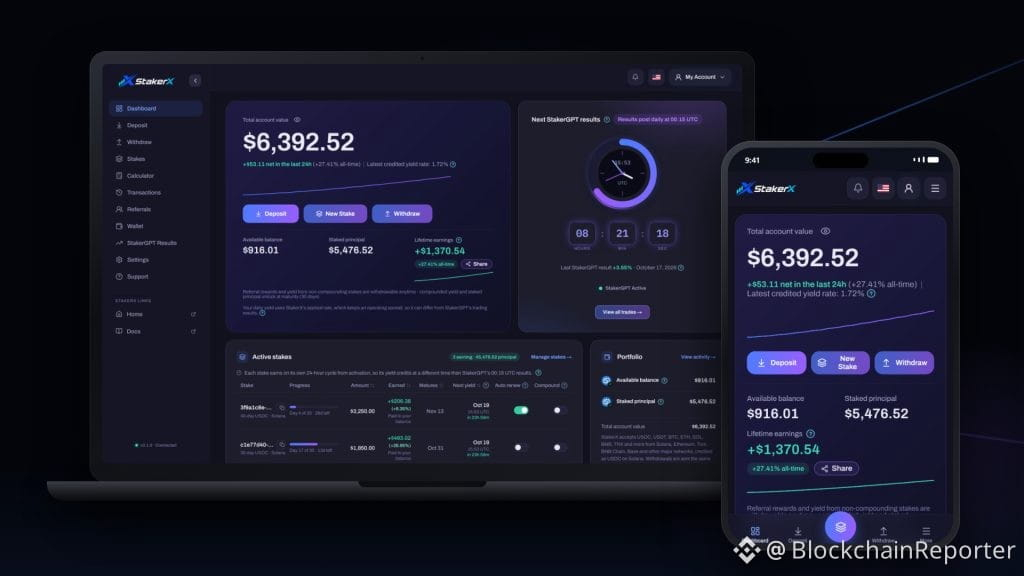
StakerX.ai, an agentic trading platform built by Switzerland-based StakerX Strategies AG, has passed $40 million in assets staked on Solana less than three months after its public launch on July 13, 2026. Users fund their stakes with more than 40 cryptocurrencies from most major blockchains, and StakerGPT, the platform’s agentic trading agent, puts that capital to work in crypto perpetual futures markets every day.
An AI agent that shows its work
An agentic system is AI software that carries out a multi-step task on its own. StakerGPT is built on rare-access Claude Mythos: it monitors crypto markets around the clock, reasons over potential trade setups, filters them through risk controls and routes the approved trades for execution, without a human placing each order.
Every trade is public. StakerX publishes the full record daily at stakerx.ai/trades, with the market, direction, entry and exit prices and return of each position, including both live-executed and signal-derived trades. As of October 18, 2026, the record holds 804 trades across 139 trading days since June 1, 2026, so anyone can check what the agent did on any given day instead of relying on summary figures.
Fund it with almost any coin
Users can deposit USDC, USDT, BTC, ETH, SOL, BNB, TRX and more than 30 other cryptocurrencies from Solana, Ethereum, Bitcoin, BNB Chain, Base, Arbitrum, Polygon, Tron and other networks. Each deposit is converted and credited as USDC, a dollar-backed stablecoin, on Solana, so users do not need to bridge or swap anything themselves. Stakes start at $10 and run for 30 days.
Three months of growth
As of October 18, 2026, StakerX.ai reports:
$40 million currently staked on the platform
More than 8,200 registered users, of whom more than 3,000 have funded an account
804 trades published across 139 trading days
More than 27,700 completed withdrawals, totalling $10+ million
Nearly $12 million in yield credited to users since launch
Coming to the App Store and Google Play
StakerX is preparing native mobile apps for iOS and Android, expected in December 2026, which will bring the dashboard, deposits and the live StakerGPT trade record to the Apple App Store and Google Play. The platform is available today on the web at stakerx.ai.
About StakerX
StakerX is an agentic trading platform built and operated by StakerX Strategies AG, a quantitative trading and investment firm based in Switzerland. Its AI trading agent, StakerGPT, is built on rare-access Claude Mythos and evaluates crypto markets, applies risk filters and routes trades, and the platform publishes every trade in its record daily. Its goal is to make agentic trading accessible to anyone who holds crypto, from any chain, with every trade on the record. StakerX launched publicly on July 13, 2026. More information is available at stakerx.ai.
Media contact
Rimma S. – StakerX Strategies AG | Media Relations
support@stakerx.ai
Contact
Media RelationsVince MuellerStakerX Strategies AGsupport@stakerx.ai
This article is not intended as financial advice. Educational purposes only.
StakerX’s AI Agent Surpasses Passes $40M Staked Assets on Solana Within Three Months of Launch
Zug, Switzerland, October 19th, 2026, Chainwire
StakerX’s AI Agent Surpasses Passes $40M Staked Assets on Solana Within Three Months of Launch
StakerGPT trades crypto markets around the clock and publishes every trade it makes, as more than 8,200 users join the platform
StakerX.ai, an agentic trading platform built by Switzerland-based StakerX Strategies AG, has passed $40 million in assets staked on Solana less than three months after its public launch on July 13, 2026. Users fund their stakes with more than 40 cryptocurrencies from most major blockchains, and StakerGPT, the platform’s agentic trading agent, puts that capital to work in crypto perpetual futures markets every day.
An AI agent that shows its work
An agentic system is AI software that carries out a multi-step task on its own. StakerGPT is built on rare-access Claude Mythos: it monitors crypto markets around the clock, reasons over potential trade setups, filters them through risk controls and routes the approved trades for execution, without a human placing each order.
Every trade is public. StakerX publishes the full record daily at stakerx.ai/trades, with the market, direction, entry and exit prices and return of each position, including both live-executed and signal-derived trades. As of October 18, 2026, the record holds 804 trades across 139 trading days since June 1, 2026, so anyone can check what the agent did on any given day instead of relying on summary figures.
Fund it with almost any coin
Users can deposit USDC, USDT, BTC, ETH, SOL, BNB, TRX and more than 30 other cryptocurrencies from Solana, Ethereum, Bitcoin, BNB Chain, Base, Arbitrum, Polygon, Tron and other networks. Each deposit is converted and credited as USDC, a dollar-backed stablecoin, on Solana, so users do not need to bridge or swap anything themselves. Stakes start at $10 and run for 30 days.
Three months of growth
As of October 18, 2026, StakerX.ai reports:
$40 million currently staked on the platform
More than 8,200 registered users, of whom more than 3,000 have funded an account
804 trades published across 139 trading days
More than 27,700 completed withdrawals, totalling $10+ million
Nearly $12 million in yield credited to users since launch
Coming to the App Store and Google Play
StakerX is preparing native mobile apps for iOS and Android, expected in December 2026, which will bring the dashboard, deposits and the live StakerGPT trade record to the Apple App Store and Google Play. The platform is available today on the web at stakerx.ai.
About StakerX
StakerX is an agentic trading platform built and operated by StakerX Strategies AG, a quantitative trading and investment firm based in Switzerland. Its AI trading agent, StakerGPT, is built on rare-access Claude Mythos and evaluates crypto markets, applies risk filters and routes trades, and the platform publishes every trade in its record daily. Its goal is to make agentic trading accessible to anyone who holds crypto, from any chain, with every trade on the record. StakerX launched publicly on July 13, 2026. More information is available at stakerx.ai.
Media contact
Rimma S. – StakerX Strategies AG | Media Relations
support@stakerx.ai
Contact
Media RelationsVince MuellerStakerX Strategies AGsupport@stakerx.ai
This article is not intended as financial advice. Educational purposes only.
StakerX’s AI Agent Surpasses Passes $40M Staked Assets on Solana Within Three Months of Launch
StakerGPT trades crypto markets around the clock and publishes every trade it makes, as more than 8,200 users join the platform
StakerX.ai, an agentic trading platform built by Switzerland-based StakerX Strategies AG, has passed $40 million in assets staked on Solana less than three months after its public launch on July 13, 2026. Users fund their stakes with more than 40 cryptocurrencies from most major blockchains, and StakerGPT, the platform’s agentic trading agent, puts that capital to work in crypto perpetual futures markets every day.
An AI agent that shows its work
An agentic system is AI software that carries out a multi-step task on its own. StakerGPT is built on rare-access Claude Mythos: it monitors crypto markets around the clock, reasons over potential trade setups, filters them through risk controls and routes the approved trades for execution, without a human placing each order.
Every trade is public. StakerX publishes the full record daily at stakerx.ai/trades, with the market, direction, entry and exit prices and return of each position, including both live-executed and signal-derived trades. As of October 18, 2026, the record holds 804 trades across 139 trading days since June 1, 2026, so anyone can check what the agent did on any given day instead of relying on summary figures.
Fund it with almost any coin
Users can deposit USDC, USDT, BTC, ETH, SOL, BNB, TRX and more than 30 other cryptocurrencies from Solana, Ethereum, Bitcoin, BNB Chain, Base, Arbitrum, Polygon, Tron and other networks. Each deposit is converted and credited as USDC, a dollar-backed stablecoin, on Solana, so users do not need to bridge or swap anything themselves. Stakes start at $10 and run for 30 days.
Three months of growth
As of October 18, 2026, StakerX.ai reports:
$40 million currently staked on the platform
More than 8,200 registered users, of whom more than 3,000 have funded an account
804 trades published across 139 trading days
More than 27,700 completed withdrawals, totalling $10+ million
Nearly $12 million in yield credited to users since launch
Coming to the App Store and Google Play
StakerX is preparing native mobile apps for iOS and Android, expected in December 2026, which will bring the dashboard, deposits and the live StakerGPT trade record to the Apple App Store and Google Play. The platform is available today on the web at stakerx.ai.
About StakerX
StakerX is an agentic trading platform built and operated by StakerX Strategies AG, a quantitative trading and investment firm based in Switzerland. Its AI trading agent, StakerGPT, is built on rare-access Claude Mythos and evaluates crypto markets, applies risk filters and routes trades, and the platform publishes every trade in its record daily. Its goal is to make agentic trading accessible to anyone who holds crypto, from any chain, with every trade on the record. StakerX launched publicly on July 13, 2026. More information is available at stakerx.ai.
Media contact
Rimma S. – StakerX Strategies AG | Media Relations
support@stakerx.ai
Contact
Media RelationsVince MuellerStakerX Strategies AGsupport@stakerx.ai
This article is not intended as financial advice. Educational purposes only.
1
167

Article
Tria Debuts $120K Tria Grand Prix Perpetual Futures Trading Competition—2 Champions to Ferrari F1...New York, New York, October 16th, 2026, Chainwire
The three-month championship brings Hyperliquid and Decibel traders together for cash prizes and exclusive Ferrari Formula 1 experiences at Suzuka, as tokenization expands access to global financial markets.
Tria, the self-custodial financial platform unifying trading, yield, and payments, today announced the launch of the Tria Grand Prix, a three-month global perpetual futures trading competition featuring $120,000 in prizes and an extraordinary grand prize: three-day Ferrari F1 Paddock Club experiences for the competition’s two top eligible traders at the 2027 Formula 1 Japanese Grand Prix.
Running from October 16, 2026, through January 16, 2027, the championship brings together perpetual futures trading on Hyperliquid and Decibel through a single competition on Tria. Participants will compete across nine cash-prize rounds and a season-long leaderboard, culminating in two winners receiving exclusive Ferrari Paddock Club access for the April 9–11 Formula 1 race weekend at Suzuka Circuit, including premium hospitality overlooking the Ferrari team garage, pit-lane access and other F1 experiences.
How the Tria Grand Prix Works
The Tria Grand Prix combines eligible trading activity across Hyperliquid and Decibel, two decentralized perpetual futures exchanges integrated into the Tria application. Qualifying trades executed through either venue on Tria contribute to the same championship standings, enabling participants to compete across supported cryptocurrency and traditional-asset-linked markets without switching between separate applications.
Prizes and Rewards
The competition features nine cash-prize rounds, season-long championship rewards and daily Gacha raffles:
$90,000 in USDC prizes: Nine competition rounds, each awarding $10,000 in USDC.
Ferrari F1 Paddock Club: One three-day Ferrari Paddock Club experience for each of the top two qualifying championship traders at the 2027 Japanese Grand Prix.
Championship rewards: Gacha packs awarded according to qualifying championship rank, plus one month of VIP 7 status for the top 20 qualifying traders.
Daily raffle: One $50 Gacha pack awarded each day through a raffle.
Eligibility and Championship Rankings
Participation is automatic. Eligible users enter the competition by placing qualifying, fee-paying perpetual futures trades through Tria on Hyperliquid or Decibel, with no separate registration required. Only eligible trades executed through the Tria application count toward competition standings.
Season-long championship rankings are determined by total eligible trading volume. To qualify for any championship reward, including Ferrari Paddock Club experiences, rank-based Gacha packs and VIP 7 benefits, participants must generate at least $5 million in cumulative eligible trading volume during the competition. This threshold refers to aggregate trading activity, not a minimum deposit or account balance. The nine individual cash-prize rounds have separate qualification requirements.
The two highest-ranked qualifying traders will receive three-day Ferrari Paddock Club experiences at the Formula 1 Japanese Grand Prix, April 9–11, 2027. The Suzuka finale will bring the championship to one of Formula 1’s most celebrated circuits, giving its winners access to Ferrari’s race-weekend hospitality and an extraordinary vantage point on the action.
A Global Championship for a New Era of Financial Markets
The Tria Grand Prix launches as tokenization and onchain financial infrastructure expand access to markets traditionally separated by geography, financial intermediaries and local trading systems. Tria is seeing this shift firsthand, with traders in Japan and South Korea using the platform to access U.S. equity- and commodity-linked markets, while users in markets such as the United Arab Emirates can gain exposure to Korean stocks through onchain trading instruments.
These cross-border opportunities illustrate a broader transformation in global finance: investors increasingly expect access to markets outside their home countries without navigating separate brokerage relationships, fragmented infrastructure or multiple trading applications. By integrating Hyperliquid and Decibel into one self-custodial environment, Tria connects cryptocurrency trading with opportunities linked to traditional financial assets, bringing participants from different markets into a shared global competition.
“Someone in Japan or Korea can trade exposure to American stocks and commodities, while someone sitting in Dubai can access markets linked to Korean equities. That is a profound change in how global financial participation works,” said Vijit Katta, Co-Founder and CEO of Tria. “Tokenization is breaking down the geographic barriers that have historically determined which markets people can access. We’re building for a world where capital can move across markets as easily as information moves across the internet. The Tria Grand Prix brings that vision to life by putting traders from different parts of the world into the same championship, with the chance to finish the season inside Ferrari’s F1 Paddock Club at Suzuka.”
The championship also demonstrates how Tria’s broader financial platform connects activities that have traditionally operated through separate services. Users can trade across supported markets, manage digital assets, earn yield and make payments through the same self-custodial application, supported by Tria’s cross-chain infrastructure.
Tria has grown to more than 600,000 users across over 150 countries, reflecting increasing demand for financial applications that combine global reach, asset control and access to multiple markets. The Grand Prix will bring this international user base together in a single competition while providing further insight into how participants across different regions engage with onchain trading and traditional financial markets.
About Tria
Tria is a self-custodial neofinance platform bringing trading, yield, payments and cross-chain asset management into one application. Through integrations with platforms including Hyperliquid and Decibel, and its BestPath routing infrastructure, Tria enables users to access digital assets and onchain financial markets while maintaining control of their assets. The platform serves more than 600,000 users across over 150 countries.
Start using Tria: https://link.tria.so/4i5Tmab
Learn more about Tria: https://link.tria.so/4hZbgeK
Contact
Jon PhillipsPhillComm GlobalTria@PhillComm.Global
This article is not intended as financial advice. Educational purposes only.
Tria Debuts $120K Tria Grand Prix Perpetual Futures Trading Competition—2 Champions to Ferrari F1...
New York, New York, October 16th, 2026, Chainwire
The three-month championship brings Hyperliquid and Decibel traders together for cash prizes and exclusive Ferrari Formula 1 experiences at Suzuka, as tokenization expands access to global financial markets.
Tria, the self-custodial financial platform unifying trading, yield, and payments, today announced the launch of the Tria Grand Prix, a three-month global perpetual futures trading competition featuring $120,000 in prizes and an extraordinary grand prize: three-day Ferrari F1 Paddock Club experiences for the competition’s two top eligible traders at the 2027 Formula 1 Japanese Grand Prix.
Running from October 16, 2026, through January 16, 2027, the championship brings together perpetual futures trading on Hyperliquid and Decibel through a single competition on Tria. Participants will compete across nine cash-prize rounds and a season-long leaderboard, culminating in two winners receiving exclusive Ferrari Paddock Club access for the April 9–11 Formula 1 race weekend at Suzuka Circuit, including premium hospitality overlooking the Ferrari team garage, pit-lane access and other F1 experiences.
How the Tria Grand Prix Works
The Tria Grand Prix combines eligible trading activity across Hyperliquid and Decibel, two decentralized perpetual futures exchanges integrated into the Tria application. Qualifying trades executed through either venue on Tria contribute to the same championship standings, enabling participants to compete across supported cryptocurrency and traditional-asset-linked markets without switching between separate applications.
Prizes and Rewards
The competition features nine cash-prize rounds, season-long championship rewards and daily Gacha raffles:
$90,000 in USDC prizes: Nine competition rounds, each awarding $10,000 in USDC.
Ferrari F1 Paddock Club: One three-day Ferrari Paddock Club experience for each of the top two qualifying championship traders at the 2027 Japanese Grand Prix.
Championship rewards: Gacha packs awarded according to qualifying championship rank, plus one month of VIP 7 status for the top 20 qualifying traders.
Daily raffle: One $50 Gacha pack awarded each day through a raffle.
Eligibility and Championship Rankings
Participation is automatic. Eligible users enter the competition by placing qualifying, fee-paying perpetual futures trades through Tria on Hyperliquid or Decibel, with no separate registration required. Only eligible trades executed through the Tria application count toward competition standings.
Season-long championship rankings are determined by total eligible trading volume. To qualify for any championship reward, including Ferrari Paddock Club experiences, rank-based Gacha packs and VIP 7 benefits, participants must generate at least $5 million in cumulative eligible trading volume during the competition. This threshold refers to aggregate trading activity, not a minimum deposit or account balance. The nine individual cash-prize rounds have separate qualification requirements.
The two highest-ranked qualifying traders will receive three-day Ferrari Paddock Club experiences at the Formula 1 Japanese Grand Prix, April 9–11, 2027. The Suzuka finale will bring the championship to one of Formula 1’s most celebrated circuits, giving its winners access to Ferrari’s race-weekend hospitality and an extraordinary vantage point on the action.
A Global Championship for a New Era of Financial Markets
The Tria Grand Prix launches as tokenization and onchain financial infrastructure expand access to markets traditionally separated by geography, financial intermediaries and local trading systems. Tria is seeing this shift firsthand, with traders in Japan and South Korea using the platform to access U.S. equity- and commodity-linked markets, while users in markets such as the United Arab Emirates can gain exposure to Korean stocks through onchain trading instruments.
These cross-border opportunities illustrate a broader transformation in global finance: investors increasingly expect access to markets outside their home countries without navigating separate brokerage relationships, fragmented infrastructure or multiple trading applications. By integrating Hyperliquid and Decibel into one self-custodial environment, Tria connects cryptocurrency trading with opportunities linked to traditional financial assets, bringing participants from different markets into a shared global competition.
“Someone in Japan or Korea can trade exposure to American stocks and commodities, while someone sitting in Dubai can access markets linked to Korean equities. That is a profound change in how global financial participation works,” said Vijit Katta, Co-Founder and CEO of Tria. “Tokenization is breaking down the geographic barriers that have historically determined which markets people can access. We’re building for a world where capital can move across markets as easily as information moves across the internet. The Tria Grand Prix brings that vision to life by putting traders from different parts of the world into the same championship, with the chance to finish the season inside Ferrari’s F1 Paddock Club at Suzuka.”
The championship also demonstrates how Tria’s broader financial platform connects activities that have traditionally operated through separate services. Users can trade across supported markets, manage digital assets, earn yield and make payments through the same self-custodial application, supported by Tria’s cross-chain infrastructure.
Tria has grown to more than 600,000 users across over 150 countries, reflecting increasing demand for financial applications that combine global reach, asset control and access to multiple markets. The Grand Prix will bring this international user base together in a single competition while providing further insight into how participants across different regions engage with onchain trading and traditional financial markets.
About Tria
Tria is a self-custodial neofinance platform bringing trading, yield, payments and cross-chain asset management into one application. Through integrations with platforms including Hyperliquid and Decibel, and its BestPath routing infrastructure, Tria enables users to access digital assets and onchain financial markets while maintaining control of their assets. The platform serves more than 600,000 users across over 150 countries.
Start using Tria: https://link.tria.so/4i5Tmab
Learn more about Tria: https://link.tria.so/4hZbgeK
Contact
Jon PhillipsPhillComm GlobalTria@PhillComm.Global
This article is not intended as financial advice. Educational purposes only.
The three-month championship brings Hyperliquid and Decibel traders together for cash prizes and exclusive Ferrari Formula 1 experiences at Suzuka, as tokenization expands access to global financial markets.
Tria, the self-custodial financial platform unifying trading, yield, and payments, today announced the launch of the Tria Grand Prix, a three-month global perpetual futures trading competition featuring $120,000 in prizes and an extraordinary grand prize: three-day Ferrari F1 Paddock Club experiences for the competition’s two top eligible traders at the 2027 Formula 1 Japanese Grand Prix.
Running from October 16, 2026, through January 16, 2027, the championship brings together perpetual futures trading on Hyperliquid and Decibel through a single competition on Tria. Participants will compete across nine cash-prize rounds and a season-long leaderboard, culminating in two winners receiving exclusive Ferrari Paddock Club access for the April 9–11 Formula 1 race weekend at Suzuka Circuit, including premium hospitality overlooking the Ferrari team garage, pit-lane access and other F1 experiences.
How the Tria Grand Prix Works
The Tria Grand Prix combines eligible trading activity across Hyperliquid and Decibel, two decentralized perpetual futures exchanges integrated into the Tria application. Qualifying trades executed through either venue on Tria contribute to the same championship standings, enabling participants to compete across supported cryptocurrency and traditional-asset-linked markets without switching between separate applications.
Prizes and Rewards
The competition features nine cash-prize rounds, season-long championship rewards and daily Gacha raffles:
$90,000 in USDC prizes: Nine competition rounds, each awarding $10,000 in USDC.
Ferrari F1 Paddock Club: One three-day Ferrari Paddock Club experience for each of the top two qualifying championship traders at the 2027 Japanese Grand Prix.
Championship rewards: Gacha packs awarded according to qualifying championship rank, plus one month of VIP 7 status for the top 20 qualifying traders.
Daily raffle: One $50 Gacha pack awarded each day through a raffle.
Eligibility and Championship Rankings
Participation is automatic. Eligible users enter the competition by placing qualifying, fee-paying perpetual futures trades through Tria on Hyperliquid or Decibel, with no separate registration required. Only eligible trades executed through the Tria application count toward competition standings.
Season-long championship rankings are determined by total eligible trading volume. To qualify for any championship reward, including Ferrari Paddock Club experiences, rank-based Gacha packs and VIP 7 benefits, participants must generate at least $5 million in cumulative eligible trading volume during the competition. This threshold refers to aggregate trading activity, not a minimum deposit or account balance. The nine individual cash-prize rounds have separate qualification requirements.
The two highest-ranked qualifying traders will receive three-day Ferrari Paddock Club experiences at the Formula 1 Japanese Grand Prix, April 9–11, 2027. The Suzuka finale will bring the championship to one of Formula 1’s most celebrated circuits, giving its winners access to Ferrari’s race-weekend hospitality and an extraordinary vantage point on the action.
A Global Championship for a New Era of Financial Markets
The Tria Grand Prix launches as tokenization and onchain financial infrastructure expand access to markets traditionally separated by geography, financial intermediaries and local trading systems. Tria is seeing this shift firsthand, with traders in Japan and South Korea using the platform to access U.S. equity- and commodity-linked markets, while users in markets such as the United Arab Emirates can gain exposure to Korean stocks through onchain trading instruments.
These cross-border opportunities illustrate a broader transformation in global finance: investors increasingly expect access to markets outside their home countries without navigating separate brokerage relationships, fragmented infrastructure or multiple trading applications. By integrating Hyperliquid and Decibel into one self-custodial environment, Tria connects cryptocurrency trading with opportunities linked to traditional financial assets, bringing participants from different markets into a shared global competition.
“Someone in Japan or Korea can trade exposure to American stocks and commodities, while someone sitting in Dubai can access markets linked to Korean equities. That is a profound change in how global financial participation works,” said Vijit Katta, Co-Founder and CEO of Tria. “Tokenization is breaking down the geographic barriers that have historically determined which markets people can access. We’re building for a world where capital can move across markets as easily as information moves across the internet. The Tria Grand Prix brings that vision to life by putting traders from different parts of the world into the same championship, with the chance to finish the season inside Ferrari’s F1 Paddock Club at Suzuka.”
The championship also demonstrates how Tria’s broader financial platform connects activities that have traditionally operated through separate services. Users can trade across supported markets, manage digital assets, earn yield and make payments through the same self-custodial application, supported by Tria’s cross-chain infrastructure.
Tria has grown to more than 600,000 users across over 150 countries, reflecting increasing demand for financial applications that combine global reach, asset control and access to multiple markets. The Grand Prix will bring this international user base together in a single competition while providing further insight into how participants across different regions engage with onchain trading and traditional financial markets.
About Tria
Tria is a self-custodial neofinance platform bringing trading, yield, payments and cross-chain asset management into one application. Through integrations with platforms including Hyperliquid and Decibel, and its BestPath routing infrastructure, Tria enables users to access digital assets and onchain financial markets while maintaining control of their assets. The platform serves more than 600,000 users across over 150 countries.
Start using Tria: https://link.tria.so/4i5Tmab
Learn more about Tria: https://link.tria.so/4hZbgeK
Contact
Jon PhillipsPhillComm GlobalTria@PhillComm.Global
This article is not intended as financial advice. Educational purposes only.
1
467
Article
Pixagram Announces Free Account Creation for 250 New Users Daily Through 2026Panama City, Panama, October 15th, 2026, Chainwire
Pixagram announces free account creation for up to 250 new members daily through the end of 2026. Built on the standalone Layer-1 Pixa blockchain, Pixagram is an anti-hierarchy social network where every post, vote, and comment is recorded as a signed on-chain transaction, with no ads and no cryptocurrency purchase required to get started.
Pixagram will cover the 20 PIXA network fee for up to 250 new members daily through the end of 2026. New members can claim a free @username at Pixagram.com and join the platform’s on-chain community for creators.
► Quit Renting the Spotlight — Users can register at http://pixagram.com
An On-Chain Username and Wallet Address
Opening a Pixa chain account normally costs around 20 PIXA. Pixagram is covering this fee for up to 250 new members daily through the end of 2026.
Username and wallet address: Each @username serves as an on-chain wallet address, replacing a randomly generated string of characters with a recognizable handle.
Blockchain-based registration: Once registered on the blockchain, an @username remains associated with its on-chain record, subject to the network’s rules and technical conditions.
Phone verification and privacy: One-time phone verification helps limit bot abuse of the daily account offer. A public @username can separate a creator’s online identity from their legal name, although public blockchain records may limit privacy.
Not Really Anti-Social, Truly Anti-Hierarchy
Mainstream social media serves advertisers while gatekeepers decide who sees your work. Pixagram—alongside platforms like Hive and Mastodon—is a SIGMA platform built for creators who prefer agency over status games. Your posts, art, followers, and feeds live directly on-chain with nothing in between, allowing you to reach every follower automatically.
NFT Platform Storage and Artwork Permanence
On many NFT platforms, the token sits on-chain while the image lives on a cloud server or IPFS—meaning a token can easily outlive its art.
On Pixa, every artwork is stored directly on-chain inside its post as a lossless image. Compact pixel art lives permanently on the blockchain and renders up to 4K resolution as a painting, CRT filter, hexagonal shapes, or square pixels.
Zero upfront cost: Every new account receives a starter delegation of stake (Resource Credits fuel) to cover posting and voting from day one.
Build Mode Note: Direct on-chain art sales launch in 2027, so everything you publish today builds your permanent portfolio ahead of the marketplace release.
► Less Lurking. One Original Post. Start at Pixagram.com
Proof-of-Brain and Community Curation
Instead of relying on the computational process used in Proof-of-Work systems, Pixagram uses Proof-of-Brain, a mechanism that allocates rewards based on posting, commenting, and voting activity.
Community reward distribution: 70% of newly issued PIXA is allocated to community-voted content, with 60% distributed to authors and 40% to curators after seven days.
Staking and governance mechanisms: Authors can receive Pixa Power, which determines voting weight and supports governance participation, and Pixa Supra (PXS), a unit referenced by an oracle to a agnostic purchasing power index (without a fixed dollar value). Curators can also receive Pixa Power.
Censorship-Resistant by Design
Built on the Hive codebase with Steem lineage, the Pixa chain started from a clean genesis block with no airdrop and produces a block every three seconds. While an application interface can hide a post from its view, it can never erase the transaction record from the chain.
Furthermore, every artwork is checked for copies using PAPH-X (an open-source perceptual fingerprint for pixel art) and indexed by the Search V4 engine.
“The old internet wants you trapped in feed fog, renting reach from gatekeepers who track every click. Today information is king, and Pixagram operates outside that hierarchy… Don’t believe the hype. Create it.” — Matias Affolter, Co-Founder of Pixa
“The strongest rebellion is a working alternative. We’re covering the network fee for 250 new accounts a day so any creator can step into build mode at zero cost. Claim your permanent @username now—because once a handle is written to the chain, it’s gone forever.” — Mathiew Estepho, Co-Founder of Pixa
Pixagram Account Registration and Developer Resources
Pixagram offers fee coverage for up to 250 new accounts daily through the end of 2026. Eligible new members can register and claim an @username at Pixagram.com. Additional technical information is available in the developer documentation at pixa.org.
About Pixagram
Pixagram is an on-chain pixel art and blog network developed by Pixagram AG (Zug, Switzerland) and operated by Pixa Rex S.A. (Panama City, Panama).
Contact
OwnerPixa Omnibus FoundationPixa Rex S.A.contact@pixarex.net
This article is not intended as financial advice. Educational purposes only.
Pixagram Announces Free Account Creation for 250 New Users Daily Through 2026
Panama City, Panama, October 15th, 2026, Chainwire
Pixagram announces free account creation for up to 250 new members daily through the end of 2026. Built on the standalone Layer-1 Pixa blockchain, Pixagram is an anti-hierarchy social network where every post, vote, and comment is recorded as a signed on-chain transaction, with no ads and no cryptocurrency purchase required to get started.
Pixagram will cover the 20 PIXA network fee for up to 250 new members daily through the end of 2026. New members can claim a free @username at Pixagram.com and join the platform’s on-chain community for creators.
► Quit Renting the Spotlight — Users can register at http://pixagram.com
An On-Chain Username and Wallet Address
Opening a Pixa chain account normally costs around 20 PIXA. Pixagram is covering this fee for up to 250 new members daily through the end of 2026.
Username and wallet address: Each @username serves as an on-chain wallet address, replacing a randomly generated string of characters with a recognizable handle.
Blockchain-based registration: Once registered on the blockchain, an @username remains associated with its on-chain record, subject to the network’s rules and technical conditions.
Phone verification and privacy: One-time phone verification helps limit bot abuse of the daily account offer. A public @username can separate a creator’s online identity from their legal name, although public blockchain records may limit privacy.
Not Really Anti-Social, Truly Anti-Hierarchy
Mainstream social media serves advertisers while gatekeepers decide who sees your work. Pixagram—alongside platforms like Hive and Mastodon—is a SIGMA platform built for creators who prefer agency over status games. Your posts, art, followers, and feeds live directly on-chain with nothing in between, allowing you to reach every follower automatically.
NFT Platform Storage and Artwork Permanence
On many NFT platforms, the token sits on-chain while the image lives on a cloud server or IPFS—meaning a token can easily outlive its art.
On Pixa, every artwork is stored directly on-chain inside its post as a lossless image. Compact pixel art lives permanently on the blockchain and renders up to 4K resolution as a painting, CRT filter, hexagonal shapes, or square pixels.
Zero upfront cost: Every new account receives a starter delegation of stake (Resource Credits fuel) to cover posting and voting from day one.
Build Mode Note: Direct on-chain art sales launch in 2027, so everything you publish today builds your permanent portfolio ahead of the marketplace release.
► Less Lurking. One Original Post. Start at Pixagram.com
Proof-of-Brain and Community Curation
Instead of relying on the computational process used in Proof-of-Work systems, Pixagram uses Proof-of-Brain, a mechanism that allocates rewards based on posting, commenting, and voting activity.
Community reward distribution: 70% of newly issued PIXA is allocated to community-voted content, with 60% distributed to authors and 40% to curators after seven days.
Staking and governance mechanisms: Authors can receive Pixa Power, which determines voting weight and supports governance participation, and Pixa Supra (PXS), a unit referenced by an oracle to a agnostic purchasing power index (without a fixed dollar value). Curators can also receive Pixa Power.
Censorship-Resistant by Design
Built on the Hive codebase with Steem lineage, the Pixa chain started from a clean genesis block with no airdrop and produces a block every three seconds. While an application interface can hide a post from its view, it can never erase the transaction record from the chain.
Furthermore, every artwork is checked for copies using PAPH-X (an open-source perceptual fingerprint for pixel art) and indexed by the Search V4 engine.
“The old internet wants you trapped in feed fog, renting reach from gatekeepers who track every click. Today information is king, and Pixagram operates outside that hierarchy… Don’t believe the hype. Create it.” — Matias Affolter, Co-Founder of Pixa
“The strongest rebellion is a working alternative. We’re covering the network fee for 250 new accounts a day so any creator can step into build mode at zero cost. Claim your permanent @username now—because once a handle is written to the chain, it’s gone forever.” — Mathiew Estepho, Co-Founder of Pixa
Pixagram Account Registration and Developer Resources
Pixagram offers fee coverage for up to 250 new accounts daily through the end of 2026. Eligible new members can register and claim an @username at Pixagram.com. Additional technical information is available in the developer documentation at pixa.org.
About Pixagram
Pixagram is an on-chain pixel art and blog network developed by Pixagram AG (Zug, Switzerland) and operated by Pixa Rex S.A. (Panama City, Panama).
Contact
OwnerPixa Omnibus FoundationPixa Rex S.A.contact@pixarex.net
This article is not intended as financial advice. Educational purposes only.
Pixagram announces free account creation for up to 250 new members daily through the end of 2026. Built on the standalone Layer-1 Pixa blockchain, Pixagram is an anti-hierarchy social network where every post, vote, and comment is recorded as a signed on-chain transaction, with no ads and no cryptocurrency purchase required to get started.
Pixagram will cover the 20 PIXA network fee for up to 250 new members daily through the end of 2026. New members can claim a free @username at Pixagram.com and join the platform’s on-chain community for creators.
► Quit Renting the Spotlight — Users can register at http://pixagram.com
An On-Chain Username and Wallet Address
Opening a Pixa chain account normally costs around 20 PIXA. Pixagram is covering this fee for up to 250 new members daily through the end of 2026.
Username and wallet address: Each @username serves as an on-chain wallet address, replacing a randomly generated string of characters with a recognizable handle.
Blockchain-based registration: Once registered on the blockchain, an @username remains associated with its on-chain record, subject to the network’s rules and technical conditions.
Phone verification and privacy: One-time phone verification helps limit bot abuse of the daily account offer. A public @username can separate a creator’s online identity from their legal name, although public blockchain records may limit privacy.
Not Really Anti-Social, Truly Anti-Hierarchy
Mainstream social media serves advertisers while gatekeepers decide who sees your work. Pixagram—alongside platforms like Hive and Mastodon—is a SIGMA platform built for creators who prefer agency over status games. Your posts, art, followers, and feeds live directly on-chain with nothing in between, allowing you to reach every follower automatically.
NFT Platform Storage and Artwork Permanence
On many NFT platforms, the token sits on-chain while the image lives on a cloud server or IPFS—meaning a token can easily outlive its art.
On Pixa, every artwork is stored directly on-chain inside its post as a lossless image. Compact pixel art lives permanently on the blockchain and renders up to 4K resolution as a painting, CRT filter, hexagonal shapes, or square pixels.
Zero upfront cost: Every new account receives a starter delegation of stake (Resource Credits fuel) to cover posting and voting from day one.
Build Mode Note: Direct on-chain art sales launch in 2027, so everything you publish today builds your permanent portfolio ahead of the marketplace release.
► Less Lurking. One Original Post. Start at Pixagram.com
Proof-of-Brain and Community Curation
Instead of relying on the computational process used in Proof-of-Work systems, Pixagram uses Proof-of-Brain, a mechanism that allocates rewards based on posting, commenting, and voting activity.
Community reward distribution: 70% of newly issued PIXA is allocated to community-voted content, with 60% distributed to authors and 40% to curators after seven days.
Staking and governance mechanisms: Authors can receive Pixa Power, which determines voting weight and supports governance participation, and Pixa Supra (PXS), a unit referenced by an oracle to a agnostic purchasing power index (without a fixed dollar value). Curators can also receive Pixa Power.
Censorship-Resistant by Design
Built on the Hive codebase with Steem lineage, the Pixa chain started from a clean genesis block with no airdrop and produces a block every three seconds. While an application interface can hide a post from its view, it can never erase the transaction record from the chain.
Furthermore, every artwork is checked for copies using PAPH-X (an open-source perceptual fingerprint for pixel art) and indexed by the Search V4 engine.
“The old internet wants you trapped in feed fog, renting reach from gatekeepers who track every click. Today information is king, and Pixagram operates outside that hierarchy… Don’t believe the hype. Create it.” — Matias Affolter, Co-Founder of Pixa
“The strongest rebellion is a working alternative. We’re covering the network fee for 250 new accounts a day so any creator can step into build mode at zero cost. Claim your permanent @username now—because once a handle is written to the chain, it’s gone forever.” — Mathiew Estepho, Co-Founder of Pixa
Pixagram Account Registration and Developer Resources
Pixagram offers fee coverage for up to 250 new accounts daily through the end of 2026. Eligible new members can register and claim an @username at Pixagram.com. Additional technical information is available in the developer documentation at pixa.org.
About Pixagram
Pixagram is an on-chain pixel art and blog network developed by Pixagram AG (Zug, Switzerland) and operated by Pixa Rex S.A. (Panama City, Panama).
Contact
OwnerPixa Omnibus FoundationPixa Rex S.A.contact@pixarex.net
This article is not intended as financial advice. Educational purposes only.
298

Article
Meet A7 International, an Innovative Global Platform Designed to Reinvent the International Payme...Moscow, Russia, October 13th, 2026, Chainwire
A7 International enables businesses and individuals to pay invoices with digital assets, while recipients receive a regular bank transfer, reflecting A7’s international positioning and expanding the geography of settlements available to foreign clients.
In two years of operation, A7 has become one of the key players in the international settlements market. Founded in 2024 to serve the foreign economic activity of Russian businesses, it currently serves around 15,000 companies, processing 10+ trillion roubles in 2025 alone. The services A7 offered domestically sparked interest among businesses from other countries, prompting the company to come up with a new product for foreign clients.
The launch of A7 International marks a new stage in A7’s journey. In response to requests from foreign entrepreneurs, the company is expanding its positioning and creating an export offering for businesses in various countries. It is a remote service compliant with local legislation on digital assets and available only in those jurisdictions where cryptocurrency circulation is permitted.
“We are presenting not just a new product in the lineup, but a new image of A7. We have adapted our service so that it can be used remotely from anywhere in the world. This is precisely the key demand of market participants today. They want to be able to transfer money around the world in a few clicks in the shortest possible time – directly from your smartphone, without lengthy paperwork, hidden fees, or unjustified holds on funds. And we are packaging this demand into a convenient and competitive form,” said Chairman of Bank PSB Petr Fradkov.
The mechanics of the service are simple: the client transfers USDT, and A7 arranges a bank transfer via SWIFT using the counterparty details specified in the invoice. The recipient does not need to accept cryptocurrency or open a crypto wallet: the funds arrive in their bank account.
To submit an application, you need to register in your personal account on the website a7.biz. Individuals undergo identity verification (KYC), and companies undergo corporate data verification (KYB). Then the client uploads the invoice and the necessary documents. The built-in algorithm automatically recognizes the invoice data and helps fill out the application.
“The system operates as follows. AI analyzes the sender and beneficiary, jurisdictions, and key risk factors of the transaction. Based on the verification results, a risk profile of the payment is formed and the available options for processing it are determined. The system compares compliance requirements with the capabilities of the existing payment infrastructure. After that, it recommends the optimal payment route taking into account its cost, speed, reliability, and applicable restrictions. Routing dynamically adapts to changes in conditions and the availability of payment channels. Data accumulated over the years makes it possible to continuously improve the quality of decisions made by the system,” noted A7 CEO Ilan Shor.
At launch, A7 International accepts USDT on the TRON network. Bank transfers are available in US dollars, euros, Chinese yuan, and UAE dirhams. Other currencies are available by prior agreement. The commission is 0.3% for both businesses and individuals. After uploading the invoice, the client sees the final cost of the payment, including commission, in advance.
Payment execution time is from one business day. After the operation is completed, the client receives a SWIFT message or another confirming document. For currency and customs control, the service also provides closing documents.
The presentation of the service took place on a symbolic date and time — October 13 at 13:13.
Video of the official presentation and Customer journey here.
About A7
A7 is a global financial technology company specializing in international payments and settlement solutions for international trade. It was established in 2024 with the involvement of PSB Bank.
A7 is developing an independent global payment infrastructure across more than 100 countries, combining global financial expertise, advanced technology and regulatory compliance. The company’s products include international payments, digital financial assets and promissory notes.
A7 Group works with 15,000 clients, with around 2,000 transactions processed through the system every day. In 2025, approximately 19% of Russian companies’ cross-border trade settlements were processed through A7. In October 2025, A7 received an AA(RU) credit rating with a Stable outlook from ACRA.
Contact
CMOAlex FedorovA7info@a7.biz
This article is not intended as financial advice. Educational purposes only.
Meet A7 International, an Innovative Global Platform Designed to Reinvent the International Payme...
Moscow, Russia, October 13th, 2026, Chainwire
A7 International enables businesses and individuals to pay invoices with digital assets, while recipients receive a regular bank transfer, reflecting A7’s international positioning and expanding the geography of settlements available to foreign clients.
In two years of operation, A7 has become one of the key players in the international settlements market. Founded in 2024 to serve the foreign economic activity of Russian businesses, it currently serves around 15,000 companies, processing 10+ trillion roubles in 2025 alone. The services A7 offered domestically sparked interest among businesses from other countries, prompting the company to come up with a new product for foreign clients.
The launch of A7 International marks a new stage in A7’s journey. In response to requests from foreign entrepreneurs, the company is expanding its positioning and creating an export offering for businesses in various countries. It is a remote service compliant with local legislation on digital assets and available only in those jurisdictions where cryptocurrency circulation is permitted.
“We are presenting not just a new product in the lineup, but a new image of A7. We have adapted our service so that it can be used remotely from anywhere in the world. This is precisely the key demand of market participants today. They want to be able to transfer money around the world in a few clicks in the shortest possible time – directly from your smartphone, without lengthy paperwork, hidden fees, or unjustified holds on funds. And we are packaging this demand into a convenient and competitive form,” said Chairman of Bank PSB Petr Fradkov.
The mechanics of the service are simple: the client transfers USDT, and A7 arranges a bank transfer via SWIFT using the counterparty details specified in the invoice. The recipient does not need to accept cryptocurrency or open a crypto wallet: the funds arrive in their bank account.
To submit an application, you need to register in your personal account on the website a7.biz. Individuals undergo identity verification (KYC), and companies undergo corporate data verification (KYB). Then the client uploads the invoice and the necessary documents. The built-in algorithm automatically recognizes the invoice data and helps fill out the application.
“The system operates as follows. AI analyzes the sender and beneficiary, jurisdictions, and key risk factors of the transaction. Based on the verification results, a risk profile of the payment is formed and the available options for processing it are determined. The system compares compliance requirements with the capabilities of the existing payment infrastructure. After that, it recommends the optimal payment route taking into account its cost, speed, reliability, and applicable restrictions. Routing dynamically adapts to changes in conditions and the availability of payment channels. Data accumulated over the years makes it possible to continuously improve the quality of decisions made by the system,” noted A7 CEO Ilan Shor.
At launch, A7 International accepts USDT on the TRON network. Bank transfers are available in US dollars, euros, Chinese yuan, and UAE dirhams. Other currencies are available by prior agreement. The commission is 0.3% for both businesses and individuals. After uploading the invoice, the client sees the final cost of the payment, including commission, in advance.
Payment execution time is from one business day. After the operation is completed, the client receives a SWIFT message or another confirming document. For currency and customs control, the service also provides closing documents.
The presentation of the service took place on a symbolic date and time — October 13 at 13:13.
Video of the official presentation and Customer journey here.
About A7
A7 is a global financial technology company specializing in international payments and settlement solutions for international trade. It was established in 2024 with the involvement of PSB Bank.
A7 is developing an independent global payment infrastructure across more than 100 countries, combining global financial expertise, advanced technology and regulatory compliance. The company’s products include international payments, digital financial assets and promissory notes.
A7 Group works with 15,000 clients, with around 2,000 transactions processed through the system every day. In 2025, approximately 19% of Russian companies’ cross-border trade settlements were processed through A7. In October 2025, A7 received an AA(RU) credit rating with a Stable outlook from ACRA.
Contact
CMOAlex FedorovA7info@a7.biz
This article is not intended as financial advice. Educational purposes only.
A7 International enables businesses and individuals to pay invoices with digital assets, while recipients receive a regular bank transfer, reflecting A7’s international positioning and expanding the geography of settlements available to foreign clients.
In two years of operation, A7 has become one of the key players in the international settlements market. Founded in 2024 to serve the foreign economic activity of Russian businesses, it currently serves around 15,000 companies, processing 10+ trillion roubles in 2025 alone. The services A7 offered domestically sparked interest among businesses from other countries, prompting the company to come up with a new product for foreign clients.
The launch of A7 International marks a new stage in A7’s journey. In response to requests from foreign entrepreneurs, the company is expanding its positioning and creating an export offering for businesses in various countries. It is a remote service compliant with local legislation on digital assets and available only in those jurisdictions where cryptocurrency circulation is permitted.
“We are presenting not just a new product in the lineup, but a new image of A7. We have adapted our service so that it can be used remotely from anywhere in the world. This is precisely the key demand of market participants today. They want to be able to transfer money around the world in a few clicks in the shortest possible time – directly from your smartphone, without lengthy paperwork, hidden fees, or unjustified holds on funds. And we are packaging this demand into a convenient and competitive form,” said Chairman of Bank PSB Petr Fradkov.
The mechanics of the service are simple: the client transfers USDT, and A7 arranges a bank transfer via SWIFT using the counterparty details specified in the invoice. The recipient does not need to accept cryptocurrency or open a crypto wallet: the funds arrive in their bank account.
To submit an application, you need to register in your personal account on the website a7.biz. Individuals undergo identity verification (KYC), and companies undergo corporate data verification (KYB). Then the client uploads the invoice and the necessary documents. The built-in algorithm automatically recognizes the invoice data and helps fill out the application.
“The system operates as follows. AI analyzes the sender and beneficiary, jurisdictions, and key risk factors of the transaction. Based on the verification results, a risk profile of the payment is formed and the available options for processing it are determined. The system compares compliance requirements with the capabilities of the existing payment infrastructure. After that, it recommends the optimal payment route taking into account its cost, speed, reliability, and applicable restrictions. Routing dynamically adapts to changes in conditions and the availability of payment channels. Data accumulated over the years makes it possible to continuously improve the quality of decisions made by the system,” noted A7 CEO Ilan Shor.
At launch, A7 International accepts USDT on the TRON network. Bank transfers are available in US dollars, euros, Chinese yuan, and UAE dirhams. Other currencies are available by prior agreement. The commission is 0.3% for both businesses and individuals. After uploading the invoice, the client sees the final cost of the payment, including commission, in advance.
Payment execution time is from one business day. After the operation is completed, the client receives a SWIFT message or another confirming document. For currency and customs control, the service also provides closing documents.
The presentation of the service took place on a symbolic date and time — October 13 at 13:13.
Video of the official presentation and Customer journey here.
About A7
A7 is a global financial technology company specializing in international payments and settlement solutions for international trade. It was established in 2024 with the involvement of PSB Bank.
A7 is developing an independent global payment infrastructure across more than 100 countries, combining global financial expertise, advanced technology and regulatory compliance. The company’s products include international payments, digital financial assets and promissory notes.
A7 Group works with 15,000 clients, with around 2,000 transactions processed through the system every day. In 2025, approximately 19% of Russian companies’ cross-border trade settlements were processed through A7. In October 2025, A7 received an AA(RU) credit rating with a Stable outlook from ACRA.
Contact
CMOAlex FedorovA7info@a7.biz
This article is not intended as financial advice. Educational purposes only.
1
252
Article
Privacy By Default. Disclosure By Choice: Ricchezza Coin Prepares to Launch Layer 1 Privacy Ecosy...Panama City, Panama, October 13th, 2026, Chainwire
Ricchezza Coin and the Ricchezza Network are preparing for a planned fourth-quarter 2026 launch, entering a cryptocurrency sector long dominated by two companies, Ricchezza believes there is room for a third approach.
Built as a proprietary privacy-focused Layer 1 blockchain, Ricchezza Network is being designed around a straightforward principle: Privacy by default. Disclosure by choice.
One company helped establish demand for private digital transactions. The other one demonstrated the potential of zero-knowledge technology and shielded transactions. Ricchezza is entering the market with a different proposition: transactions designed to remain private while allowing users to selectively disclose information about a specific transaction when they choose. Ricchezza calls this selective auditability.
A business may want transactions hidden from competitors while retaining the ability to provide necessary information to an auditor. An investor may value financial confidentiality while needing to document a particular transaction. An individual may simply believe personal financial activity should not exist on a permanently transparent public ledger. Ricchezza is designed around the idea that privacy and accountability do not have to be opposing concepts.
The project is also developing Ricchezza Vault, a privacy wallet incorporating encrypted messaging, with the goal of creating an ecosystem where users can privately communicate and transact from the same environment.
Ricchezza’s founders recognize the significance of challenging established privacy networks.
“Monero proved that people want privacy. Zcash proved what zero-knowledge technology can do. We respect what they built—but we didn’t spend years and our own money building Ricchezza just to become number three. We’re coming to change the standard.” — Alex Dominguez, Founder, Ricchezza Coin / Network
Dominguez says the project’s philosophy can be summarized simply:
“The next generation of financial privacy shouldn’t force people to choose between being exposed to everyone and being accountable to no one. Your money should be nobody else’s business—until you decide otherwise.”
Ricchezza Coin will be the native asset of the Ricchezza Network, with a maximum supply of 60 million coins. The project is progressing through development, security review and launch preparation, with the team targeting a Q4 2026 launch.
Ricchezza is betting that the next generation of blockchain privacy will not simply be about secrecy, It will be about control. Private when users want privacy. Auditable when users choose accountability.
About Ricchezza Coin / Network
Ricchezza Coin is the native cryptocurrency of the Ricchezza Network, a privacy-focused Layer 1 blockchain designed around private transactions, selective auditability and a privacy wallet ecosystem incorporating encrypted messaging.
Contact
CEORicchezza Network Media and CommunicationsRicchezza Global Holdings Incinfo@ricchezzacoin.com
This article is not intended as financial advice. Educational purposes only.
Privacy By Default. Disclosure By Choice: Ricchezza Coin Prepares to Launch Layer 1 Privacy Ecosy...
Panama City, Panama, October 13th, 2026, Chainwire
Ricchezza Coin and the Ricchezza Network are preparing for a planned fourth-quarter 2026 launch, entering a cryptocurrency sector long dominated by two companies, Ricchezza believes there is room for a third approach.
Built as a proprietary privacy-focused Layer 1 blockchain, Ricchezza Network is being designed around a straightforward principle: Privacy by default. Disclosure by choice.
One company helped establish demand for private digital transactions. The other one demonstrated the potential of zero-knowledge technology and shielded transactions. Ricchezza is entering the market with a different proposition: transactions designed to remain private while allowing users to selectively disclose information about a specific transaction when they choose. Ricchezza calls this selective auditability.
A business may want transactions hidden from competitors while retaining the ability to provide necessary information to an auditor. An investor may value financial confidentiality while needing to document a particular transaction. An individual may simply believe personal financial activity should not exist on a permanently transparent public ledger. Ricchezza is designed around the idea that privacy and accountability do not have to be opposing concepts.
The project is also developing Ricchezza Vault, a privacy wallet incorporating encrypted messaging, with the goal of creating an ecosystem where users can privately communicate and transact from the same environment.
Ricchezza’s founders recognize the significance of challenging established privacy networks.
“Monero proved that people want privacy. Zcash proved what zero-knowledge technology can do. We respect what they built—but we didn’t spend years and our own money building Ricchezza just to become number three. We’re coming to change the standard.” — Alex Dominguez, Founder, Ricchezza Coin / Network
Dominguez says the project’s philosophy can be summarized simply:
“The next generation of financial privacy shouldn’t force people to choose between being exposed to everyone and being accountable to no one. Your money should be nobody else’s business—until you decide otherwise.”
Ricchezza Coin will be the native asset of the Ricchezza Network, with a maximum supply of 60 million coins. The project is progressing through development, security review and launch preparation, with the team targeting a Q4 2026 launch.
Ricchezza is betting that the next generation of blockchain privacy will not simply be about secrecy, It will be about control. Private when users want privacy. Auditable when users choose accountability.
About Ricchezza Coin / Network
Ricchezza Coin is the native cryptocurrency of the Ricchezza Network, a privacy-focused Layer 1 blockchain designed around private transactions, selective auditability and a privacy wallet ecosystem incorporating encrypted messaging.
Contact
CEORicchezza Network Media and CommunicationsRicchezza Global Holdings Incinfo@ricchezzacoin.com
This article is not intended as financial advice. Educational purposes only.
Ricchezza Coin and the Ricchezza Network are preparing for a planned fourth-quarter 2026 launch, entering a cryptocurrency sector long dominated by two companies, Ricchezza believes there is room for a third approach.
Built as a proprietary privacy-focused Layer 1 blockchain, Ricchezza Network is being designed around a straightforward principle: Privacy by default. Disclosure by choice.
One company helped establish demand for private digital transactions. The other one demonstrated the potential of zero-knowledge technology and shielded transactions. Ricchezza is entering the market with a different proposition: transactions designed to remain private while allowing users to selectively disclose information about a specific transaction when they choose. Ricchezza calls this selective auditability.
A business may want transactions hidden from competitors while retaining the ability to provide necessary information to an auditor. An investor may value financial confidentiality while needing to document a particular transaction. An individual may simply believe personal financial activity should not exist on a permanently transparent public ledger. Ricchezza is designed around the idea that privacy and accountability do not have to be opposing concepts.
The project is also developing Ricchezza Vault, a privacy wallet incorporating encrypted messaging, with the goal of creating an ecosystem where users can privately communicate and transact from the same environment.
Ricchezza’s founders recognize the significance of challenging established privacy networks.
“Monero proved that people want privacy. Zcash proved what zero-knowledge technology can do. We respect what they built—but we didn’t spend years and our own money building Ricchezza just to become number three. We’re coming to change the standard.” — Alex Dominguez, Founder, Ricchezza Coin / Network
Dominguez says the project’s philosophy can be summarized simply:
“The next generation of financial privacy shouldn’t force people to choose between being exposed to everyone and being accountable to no one. Your money should be nobody else’s business—until you decide otherwise.”
Ricchezza Coin will be the native asset of the Ricchezza Network, with a maximum supply of 60 million coins. The project is progressing through development, security review and launch preparation, with the team targeting a Q4 2026 launch.
Ricchezza is betting that the next generation of blockchain privacy will not simply be about secrecy, It will be about control. Private when users want privacy. Auditable when users choose accountability.
About Ricchezza Coin / Network
Ricchezza Coin is the native cryptocurrency of the Ricchezza Network, a privacy-focused Layer 1 blockchain designed around private transactions, selective auditability and a privacy wallet ecosystem incorporating encrypted messaging.
Contact
CEORicchezza Network Media and CommunicationsRicchezza Global Holdings Incinfo@ricchezzacoin.com
This article is not intended as financial advice. Educational purposes only.
284
Verified
Article
Goldman Sachs, Citadel and Google Alumni Launch RWA Perpetuals Platform on Patented BlockchainNew York, NY, October 13th, 2026, Chainwire
DeepSigma, a new decentralized perpetual futures exchange for real-world assets (RWAs), today unveiled its platform with a live paper-trading demo spanning 77 markets across U.S. equities, indexes, commodities, sector ETFs and Treasury yields.
Powered by the Cypherium blockchain, DeepSigma is being built to bring the perpetual futures model that has grown rapidly in crypto to traditional financial markets. Rather than tokenizing or taking custody of the underlying assets, DeepSigma’s perpetual contracts track their respective real-world markets through external price data, allowing traders to gain long or short exposure without owning or taking delivery of the underlying asset.
The platform is being developed by a team spanning traditional finance, quantitative trading and blockchain infrastructure, with experience at Goldman Sachs, Citadel Securities, Google and Uber.
DeepSigma has also been designed around U.S. regulatory frameworks from day one. The company is working with specialized digital-asset counsel and views regulatory readiness as a market-entry advantage rather than an issue to address after achieving scale.
“Crypto has already demonstrated the demand for perpetual markets, but you cannot simply take the same model and put a stock or commodity ticker on it,” said Sky Guo, CEO of DeepSigma and founder of Cypherium. “Real-world markets have different trading hours, liquidity conditions, pricing sources and regulatory considerations. We started DeepSigma with those differences in mind.”
Building Perpetual Markets for Assets That Don’t Trade Like Crypto
DeepSigma’s live demo currently supports paper trading across 77 RWA perpetual contracts, including leading U.S. equities; the S&P 500, Dow Jones Industrial Average, Nasdaq Composite, Russell 2000 and VIX; S&P sector ETFs; commodities including WTI and Brent crude oil, gold, silver, natural gas and copper; and U.S. Treasury yields.
Unlike crypto assets that trade continuously on largely crypto-native venues, real-world assets can stop trading overnight or over weekends while related markets continue moving. They can also face fragmented price discovery and periods of thin liquidity.
DeepSigma’s technical architecture is being designed around those differences. Its risk framework includes multi-source external pricing, mark-price mechanisms intended to reduce the impact of short-term manipulation, position and exposure limits, circuit breakers, partial liquidations and an insurance mechanism for stressed market conditions.
The platform uses a central limit order book model, with a clearing layer responsible for positions, collateral, margin and settlement.
“The hardest part of bringing real-world assets on-chain isn’t creating another market symbol. It’s making sure the market still behaves sensibly when the underlying asset is closed, liquidity disappears or an external price moves sharply,” said Guo. “Those are market-structure problems, and they have to be part of the architecture from the beginning.”
DeepSigma’s trading terminal currently combines paper-trading functionality with market data, technical indicators, asset-specific news, portfolio tracking and a competitive leaderboard. An AI Market Analysis Desk can analyze markets and generate potential trading strategies, but operates entirely off-chain with zero authority to execute trades or move user assets.
Prove Eligibility, Not Identity
Identity is another area where DeepSigma is taking a different approach from fully permissionless perpetual venues.
The company is developing decentralized identity infrastructure around the principle of “prove eligibility, not identity.” The proposed architecture uses zero-knowledge proofs to allow a participant to demonstrate that they meet required criteria without publishing the underlying personal information on-chain.
The approach forms part of DeepSigma’s broader strategy of designing around U.S. regulatory frameworks from the beginning while preserving as much of the privacy and user control associated with decentralized markets as possible.
Powered by Cypherium and Patented Blockchain Technology
DeepSigma is powered by Cypherium, the open, permissionless Layer 1 blockchain founded by Guo.
Cypherium’s technology is protected by four granted U.S. patents covering blockchain consensus and related technology: U.S. Patent Nos. 12,443,569; 11,907,174; 11,516,006; and 11,411,721.
Its architecture combines Proof-of-Work with HotStuff-derived Byzantine Fault Tolerant consensus. The technology provides the underlying blockchain infrastructure on which DeepSigma is being developed. Cypherium is designed to process hundreds of thousands of transactions per second, providing the throughput needed to support high-frequency, on-chain financial activity.
Guo, a named inventor on Cypherium’s patented technology, previously co-authored DLT Options for CBDC with Thomas Moser of the Swiss National Bank and has spoken at the United Nations Headquarters and Nasdaq.
DeepSigma’s wider leadership team includes Albert Xu, CFO, a former FICC portfolio manager at Goldman Sachs and serial technology founder; Chaoran Wang, CTO, a former Google and Uber engineer and founder of quantitative trading firm UmiUmi; and Jenny Chen, Chief Quant Director, a quantitative macro trader, Forbes 30 Under 30 Finance honoree and most recently at Citadel Securities.
“DeepSigma brings together two areas that have largely developed separately: the market structure and risk discipline of traditional finance, and the open infrastructure that has made on-chain perpetuals successful,” Guo said. “The opportunity is not to copy one market into the other. It is to build infrastructure specifically for where the two meet.”
About DeepSigma
DeepSigma is a decentralized perpetual futures exchange for real-world assets, powered by the Cypherium blockchain. Designed around U.S. regulatory frameworks from day one, DeepSigma is developing perpetual markets spanning equities, indexes, commodities and rates, with infrastructure built around the distinct pricing, liquidity and market-structure requirements of real-world assets. Its live demo currently supports paper trading across 77 RWA perpetual markets, alongside market data, technical analysis and AI-powered trading insights.
Contact
Sky Guosky@deepsigma.xyz
This article is not intended as financial advice. Educational purposes only.
Goldman Sachs, Citadel and Google Alumni Launch RWA Perpetuals Platform on Patented Blockchain
New York, NY, October 13th, 2026, Chainwire
DeepSigma, a new decentralized perpetual futures exchange for real-world assets (RWAs), today unveiled its platform with a live paper-trading demo spanning 77 markets across U.S. equities, indexes, commodities, sector ETFs and Treasury yields.
Powered by the Cypherium blockchain, DeepSigma is being built to bring the perpetual futures model that has grown rapidly in crypto to traditional financial markets. Rather than tokenizing or taking custody of the underlying assets, DeepSigma’s perpetual contracts track their respective real-world markets through external price data, allowing traders to gain long or short exposure without owning or taking delivery of the underlying asset.
The platform is being developed by a team spanning traditional finance, quantitative trading and blockchain infrastructure, with experience at Goldman Sachs, Citadel Securities, Google and Uber.
DeepSigma has also been designed around U.S. regulatory frameworks from day one. The company is working with specialized digital-asset counsel and views regulatory readiness as a market-entry advantage rather than an issue to address after achieving scale.
“Crypto has already demonstrated the demand for perpetual markets, but you cannot simply take the same model and put a stock or commodity ticker on it,” said Sky Guo, CEO of DeepSigma and founder of Cypherium. “Real-world markets have different trading hours, liquidity conditions, pricing sources and regulatory considerations. We started DeepSigma with those differences in mind.”
Building Perpetual Markets for Assets That Don’t Trade Like Crypto
DeepSigma’s live demo currently supports paper trading across 77 RWA perpetual contracts, including leading U.S. equities; the S&P 500, Dow Jones Industrial Average, Nasdaq Composite, Russell 2000 and VIX; S&P sector ETFs; commodities including WTI and Brent crude oil, gold, silver, natural gas and copper; and U.S. Treasury yields.
Unlike crypto assets that trade continuously on largely crypto-native venues, real-world assets can stop trading overnight or over weekends while related markets continue moving. They can also face fragmented price discovery and periods of thin liquidity.
DeepSigma’s technical architecture is being designed around those differences. Its risk framework includes multi-source external pricing, mark-price mechanisms intended to reduce the impact of short-term manipulation, position and exposure limits, circuit breakers, partial liquidations and an insurance mechanism for stressed market conditions.
The platform uses a central limit order book model, with a clearing layer responsible for positions, collateral, margin and settlement.
“The hardest part of bringing real-world assets on-chain isn’t creating another market symbol. It’s making sure the market still behaves sensibly when the underlying asset is closed, liquidity disappears or an external price moves sharply,” said Guo. “Those are market-structure problems, and they have to be part of the architecture from the beginning.”
DeepSigma’s trading terminal currently combines paper-trading functionality with market data, technical indicators, asset-specific news, portfolio tracking and a competitive leaderboard. An AI Market Analysis Desk can analyze markets and generate potential trading strategies, but operates entirely off-chain with zero authority to execute trades or move user assets.
Prove Eligibility, Not Identity
Identity is another area where DeepSigma is taking a different approach from fully permissionless perpetual venues.
The company is developing decentralized identity infrastructure around the principle of “prove eligibility, not identity.” The proposed architecture uses zero-knowledge proofs to allow a participant to demonstrate that they meet required criteria without publishing the underlying personal information on-chain.
The approach forms part of DeepSigma’s broader strategy of designing around U.S. regulatory frameworks from the beginning while preserving as much of the privacy and user control associated with decentralized markets as possible.
Powered by Cypherium and Patented Blockchain Technology
DeepSigma is powered by Cypherium, the open, permissionless Layer 1 blockchain founded by Guo.
Cypherium’s technology is protected by four granted U.S. patents covering blockchain consensus and related technology: U.S. Patent Nos. 12,443,569; 11,907,174; 11,516,006; and 11,411,721.
Its architecture combines Proof-of-Work with HotStuff-derived Byzantine Fault Tolerant consensus. The technology provides the underlying blockchain infrastructure on which DeepSigma is being developed. Cypherium is designed to process hundreds of thousands of transactions per second, providing the throughput needed to support high-frequency, on-chain financial activity.
Guo, a named inventor on Cypherium’s patented technology, previously co-authored DLT Options for CBDC with Thomas Moser of the Swiss National Bank and has spoken at the United Nations Headquarters and Nasdaq.
DeepSigma’s wider leadership team includes Albert Xu, CFO, a former FICC portfolio manager at Goldman Sachs and serial technology founder; Chaoran Wang, CTO, a former Google and Uber engineer and founder of quantitative trading firm UmiUmi; and Jenny Chen, Chief Quant Director, a quantitative macro trader, Forbes 30 Under 30 Finance honoree and most recently at Citadel Securities.
“DeepSigma brings together two areas that have largely developed separately: the market structure and risk discipline of traditional finance, and the open infrastructure that has made on-chain perpetuals successful,” Guo said. “The opportunity is not to copy one market into the other. It is to build infrastructure specifically for where the two meet.”
About DeepSigma
DeepSigma is a decentralized perpetual futures exchange for real-world assets, powered by the Cypherium blockchain. Designed around U.S. regulatory frameworks from day one, DeepSigma is developing perpetual markets spanning equities, indexes, commodities and rates, with infrastructure built around the distinct pricing, liquidity and market-structure requirements of real-world assets. Its live demo currently supports paper trading across 77 RWA perpetual markets, alongside market data, technical analysis and AI-powered trading insights.
Contact
Sky Guosky@deepsigma.xyz
This article is not intended as financial advice. Educational purposes only.
DeepSigma, a new decentralized perpetual futures exchange for real-world assets (RWAs), today unveiled its platform with a live paper-trading demo spanning 77 markets across U.S. equities, indexes, commodities, sector ETFs and Treasury yields.
Powered by the Cypherium blockchain, DeepSigma is being built to bring the perpetual futures model that has grown rapidly in crypto to traditional financial markets. Rather than tokenizing or taking custody of the underlying assets, DeepSigma’s perpetual contracts track their respective real-world markets through external price data, allowing traders to gain long or short exposure without owning or taking delivery of the underlying asset.
The platform is being developed by a team spanning traditional finance, quantitative trading and blockchain infrastructure, with experience at Goldman Sachs, Citadel Securities, Google and Uber.
DeepSigma has also been designed around U.S. regulatory frameworks from day one. The company is working with specialized digital-asset counsel and views regulatory readiness as a market-entry advantage rather than an issue to address after achieving scale.
“Crypto has already demonstrated the demand for perpetual markets, but you cannot simply take the same model and put a stock or commodity ticker on it,” said Sky Guo, CEO of DeepSigma and founder of Cypherium. “Real-world markets have different trading hours, liquidity conditions, pricing sources and regulatory considerations. We started DeepSigma with those differences in mind.”
Building Perpetual Markets for Assets That Don’t Trade Like Crypto
DeepSigma’s live demo currently supports paper trading across 77 RWA perpetual contracts, including leading U.S. equities; the S&P 500, Dow Jones Industrial Average, Nasdaq Composite, Russell 2000 and VIX; S&P sector ETFs; commodities including WTI and Brent crude oil, gold, silver, natural gas and copper; and U.S. Treasury yields.
Unlike crypto assets that trade continuously on largely crypto-native venues, real-world assets can stop trading overnight or over weekends while related markets continue moving. They can also face fragmented price discovery and periods of thin liquidity.
DeepSigma’s technical architecture is being designed around those differences. Its risk framework includes multi-source external pricing, mark-price mechanisms intended to reduce the impact of short-term manipulation, position and exposure limits, circuit breakers, partial liquidations and an insurance mechanism for stressed market conditions.
The platform uses a central limit order book model, with a clearing layer responsible for positions, collateral, margin and settlement.
“The hardest part of bringing real-world assets on-chain isn’t creating another market symbol. It’s making sure the market still behaves sensibly when the underlying asset is closed, liquidity disappears or an external price moves sharply,” said Guo. “Those are market-structure problems, and they have to be part of the architecture from the beginning.”
DeepSigma’s trading terminal currently combines paper-trading functionality with market data, technical indicators, asset-specific news, portfolio tracking and a competitive leaderboard. An AI Market Analysis Desk can analyze markets and generate potential trading strategies, but operates entirely off-chain with zero authority to execute trades or move user assets.
Prove Eligibility, Not Identity
Identity is another area where DeepSigma is taking a different approach from fully permissionless perpetual venues.
The company is developing decentralized identity infrastructure around the principle of “prove eligibility, not identity.” The proposed architecture uses zero-knowledge proofs to allow a participant to demonstrate that they meet required criteria without publishing the underlying personal information on-chain.
The approach forms part of DeepSigma’s broader strategy of designing around U.S. regulatory frameworks from the beginning while preserving as much of the privacy and user control associated with decentralized markets as possible.
Powered by Cypherium and Patented Blockchain Technology
DeepSigma is powered by Cypherium, the open, permissionless Layer 1 blockchain founded by Guo.
Cypherium’s technology is protected by four granted U.S. patents covering blockchain consensus and related technology: U.S. Patent Nos. 12,443,569; 11,907,174; 11,516,006; and 11,411,721.
Its architecture combines Proof-of-Work with HotStuff-derived Byzantine Fault Tolerant consensus. The technology provides the underlying blockchain infrastructure on which DeepSigma is being developed. Cypherium is designed to process hundreds of thousands of transactions per second, providing the throughput needed to support high-frequency, on-chain financial activity.
Guo, a named inventor on Cypherium’s patented technology, previously co-authored DLT Options for CBDC with Thomas Moser of the Swiss National Bank and has spoken at the United Nations Headquarters and Nasdaq.
DeepSigma’s wider leadership team includes Albert Xu, CFO, a former FICC portfolio manager at Goldman Sachs and serial technology founder; Chaoran Wang, CTO, a former Google and Uber engineer and founder of quantitative trading firm UmiUmi; and Jenny Chen, Chief Quant Director, a quantitative macro trader, Forbes 30 Under 30 Finance honoree and most recently at Citadel Securities.
“DeepSigma brings together two areas that have largely developed separately: the market structure and risk discipline of traditional finance, and the open infrastructure that has made on-chain perpetuals successful,” Guo said. “The opportunity is not to copy one market into the other. It is to build infrastructure specifically for where the two meet.”
About DeepSigma
DeepSigma is a decentralized perpetual futures exchange for real-world assets, powered by the Cypherium blockchain. Designed around U.S. regulatory frameworks from day one, DeepSigma is developing perpetual markets spanning equities, indexes, commodities and rates, with infrastructure built around the distinct pricing, liquidity and market-structure requirements of real-world assets. Its live demo currently supports paper trading across 77 RWA perpetual markets, alongside market data, technical analysis and AI-powered trading insights.
Contact
Sky Guosky@deepsigma.xyz
This article is not intended as financial advice. Educational purposes only.
770

Article
A7 to Unveil a Service That Will Re-invent the International Payments MarketMoscow, Russia, October 12th, 2026, Chainwire
On 13 October, the Russian international settlement system A7, created by Bank PSB, is set to present A7 International, a service enabling payments for a foreign counterparty’s invoice in USDT, with the funds arriving via a standard SWIFT bank transfer in the required currency.
The service will cater primarily to foreign trade operators, but individuals are also eligible customers. The fee remains fixed at 0.3 percent.
Petr Fradkov, Chairman of PJSC Bank PSB, and Ilan Shor, CEO of A7, will provide a glimpse into its new offering on 13 October at 13:13.
To join the live broadcast and learn about the new project, follow the links:
https://a7.biz/live
About A7:
A7 is a global financial technology company specializing in international payments and settlement solutions for international trade. It was established in 2024 with the involvement of PSB Bank.
A7 is developing an independent global payment infrastructure across more than 100 countries, combining global financial expertise, advanced technology and regulatory compliance. The company’s products include international payments, digital financial assets and promissory notes.
A7 Group works with 15,000 clients, with around 2,000 transactions processed through the system every day. In 2025, approximately 19% of Russian companies’ cross-border trade settlements were processed through A7. In October 2025, A7 received an AA(RU) credit rating with a Stable outlook from ACRA.
Contact
CMOAlex FedorovA7info@a7.biz
This article is not intended as financial advice. Educational purposes only.
A7 to Unveil a Service That Will Re-invent the International Payments Market
Moscow, Russia, October 12th, 2026, Chainwire
On 13 October, the Russian international settlement system A7, created by Bank PSB, is set to present A7 International, a service enabling payments for a foreign counterparty’s invoice in USDT, with the funds arriving via a standard SWIFT bank transfer in the required currency.
The service will cater primarily to foreign trade operators, but individuals are also eligible customers. The fee remains fixed at 0.3 percent.
Petr Fradkov, Chairman of PJSC Bank PSB, and Ilan Shor, CEO of A7, will provide a glimpse into its new offering on 13 October at 13:13.
To join the live broadcast and learn about the new project, follow the links:
https://a7.biz/live
About A7:
A7 is a global financial technology company specializing in international payments and settlement solutions for international trade. It was established in 2024 with the involvement of PSB Bank.
A7 is developing an independent global payment infrastructure across more than 100 countries, combining global financial expertise, advanced technology and regulatory compliance. The company’s products include international payments, digital financial assets and promissory notes.
A7 Group works with 15,000 clients, with around 2,000 transactions processed through the system every day. In 2025, approximately 19% of Russian companies’ cross-border trade settlements were processed through A7. In October 2025, A7 received an AA(RU) credit rating with a Stable outlook from ACRA.
Contact
CMOAlex FedorovA7info@a7.biz
This article is not intended as financial advice. Educational purposes only.
On 13 October, the Russian international settlement system A7, created by Bank PSB, is set to present A7 International, a service enabling payments for a foreign counterparty’s invoice in USDT, with the funds arriving via a standard SWIFT bank transfer in the required currency.
The service will cater primarily to foreign trade operators, but individuals are also eligible customers. The fee remains fixed at 0.3 percent.
Petr Fradkov, Chairman of PJSC Bank PSB, and Ilan Shor, CEO of A7, will provide a glimpse into its new offering on 13 October at 13:13.
To join the live broadcast and learn about the new project, follow the links:
https://a7.biz/live
About A7:
A7 is a global financial technology company specializing in international payments and settlement solutions for international trade. It was established in 2024 with the involvement of PSB Bank.
A7 is developing an independent global payment infrastructure across more than 100 countries, combining global financial expertise, advanced technology and regulatory compliance. The company’s products include international payments, digital financial assets and promissory notes.
A7 Group works with 15,000 clients, with around 2,000 transactions processed through the system every day. In 2025, approximately 19% of Russian companies’ cross-border trade settlements were processed through A7. In October 2025, A7 received an AA(RU) credit rating with a Stable outlook from ACRA.
Contact
CMOAlex FedorovA7info@a7.biz
This article is not intended as financial advice. Educational purposes only.
1
169
Verified
Article
DATA Network Joins Sui and Walrus to Scale the Supply Chain for AI Training DataPalo Alto, United States, October 12th, 2026, Chainwire
Trace, the onchain registry for rights-cleared AI training data with more than 250 million verifiable receipts, brings its training data to Sui and Walrus to power the next generation of AI models.
Sui Foundation and The DATA Foundation today announced that the DATA Network and its Trace registry are joining the Sui stack, bringing a live supply of rights-cleared AI training data onto the infrastructure Sui has built for AI workloads. Walrus, the data platform with integrity proofs anchored on Sui, becomes the default storage layer for applications operated by DATA Foundation. Separately, the DATA Network will be upgraded to run as a protocol natively on Sui.
The upgrade gives AI labs a single place to source real-world training data they are allowed to use, with its provenance recorded by Trace and the original file stored and access-controlled on Walrus.
The data AI needs next
The next generation of AI models is constrained by access to real-world data. The open internet has been scraped, and the data that comes next must be sourced from people, with consent and with provenance that regulators and legal teams will accept. The EU AI Act and ongoing litigation over training data have made provenance a procurement requirement for labs.
The data those models need sits with people rather than on the open web: a nurse describing a patient’s night in her own words, a dashcam recording of a rainy commute in Jakarta, a factory technician’s hands as they diagnose a fault, or a customer call conducted in Bengali. It is personal and often regulated, and it belongs to the people who generated it.
Trace, launched by DATA Foundation in June as an onchain registry for AI training data, was built for exactly this kind of data. It records the origin of each contribution and the rights attached to it, and settles payment to the person who contributed it. It has registered more than 250 million contributions since launch and now processes over 3M receipts per day on average. Applications writing to Trace include Kled, the largest opt-in human data marketplace with over 1.5 billion records being onboarded, along with Numo and Oto, applications that already license data to frontier AI labs and robotics companies.
Why Sui and Walrus
Sui represents every asset as a programmable object, allowing datasets and their licenses to be managed onchain like tokens. Independent transactions execute in parallel and settle in under a second, making the network capable of handling millions of daily registrations. Walrus extends this capability to large files: it stores massive AI datasets efficiently and ensures data is only readable by licensed buyers. No other network offers storage, access control, and ownership tracking built natively into a single ecosystem, together with verifiable compute.
Trace now adds a flagship supply of rights-cleared data, with existing demand from the AI labs that license it today. The result of the integration will be stronger provenance guarantees and tamper evidence. Today a Trace record proves that a file was registered and when, and with Walrus, Trace will be able to hold an encrypted, immutable copy of the contributed file itself as a reference guarantee. The hash of the record can be regenerated from the data itself rather than from metadata an application supplied, and any later processing of the file can be checked against the original.
The upgrade is backed by a long-term strategic investment. Sui Foundation is investing $30 million in the DATA Network, establishing the largest institutional stake in the network, alongside the continuing holdings of PIP Labs and the DATA Foundation. Furthering the alignment, SY Lee, Chairman of Poseidon and CEO of PIP Labs, joins Sui Foundation as Strategic Advisor.
The protocol upgrade
DATA Network will be upgraded to run as a protocol natively on Sui, and its independent chain will be retired. $DATA continues as the token of the DATA protocol on Sui, carried over one-to-one, with holder economics and governance rights at least equivalent to today. Locked and vesting positions carry over unchanged. In parallel, Walrus becomes the default storage layer for DATA Foundation applications.
Adeniyi Abiodun, Co-Founder and Chief Product Officer at Mysten Labs, the original contributor to Sui and Walrus, said: “The AI industry has reached the point where the open internet has been read, and the next frontier is defined by access to datasets with the consent and provenance that regulators require. Sui and Walrus were built to be the home where AI data is stored, licensed, and paid for, capable of operating at the scale these systems demand. The migration of DATA Network and Trace to our stack now brings massive volumes of high-quality, rights-cleared data that is already serving the world’s frontier AI labs.”
SY Lee, Chairman of Poseidon and CEO of PIP Labs, said: “The next generation of AI will be trained on data that lives with people rather than on the open web, and that data needs consent and provenance built in, along with a way to pay the people it comes from, and Trace was built to be that layer. It now becomes part of the Sui stack alongside Walrus, backed by one of the strongest engineering organizations in the industry and with Sui Foundation as the network’s largest strategic holder. This is the right home for the network we built, and I am looking forward to helping Sui make it the data layer for AI.”
Andrea Muttoni, CEO of DATA Foundation, said: “Training data is critical for continuously expanding the frontier, and making sure it is traceable, auditable and cleared to use is just as important for AI safety as it is a precursor for data quality. With Trace, we have been tracking hundreds of millions of data assets. Joining forces with Sui now allows us to build out more of the stack, offering more than just an audit trail, like encrypted reference file storage and potentially fully verifiable TEEs for evals and fine tunings in the future.”
The existing DATA Network will continue to operate until the upgrade is complete, and a detailed timeline and holder transition plan will be published prior to the upgrade.
About DATA Foundation
DATA Foundation supports the DATA Network, the protocol for tracking provenance of the real-world data AI models need. Through Trace, each contribution is registered with its provenance receipt and a full audit trail. Applications building on the network include Kled, Numo, Oto, and others. Formerly Story Foundation, the organization refocused on AI training data in June 2026. The DATA Network is being upgraded to run as a protocol on Sui.
About Sui
Sui, where money moves as freely as messages, is a next-generation Layer 1 blockchain built for onchain finance and agentic infrastructure. Founded by the core team behind Meta’s stablecoin initiative and powered by an object-centric model, Sui makes assets, permissions, and user data programmable and verifiable. Sui’s primitives offer everything necessary to create high-performance finance and AI-native applications. Learn more at sui.io.
About Walrus
Walrus is the data platform built for the demands of AI. It lets builders, enterprises, and AI agents move data across apps and models, protect it with built-in access rules, and make it verifiable by anyone. As AI takes actions with consequence, the data it runs on has to be provable. Created by the cryptographers and distributed systems engineers behind Sui and Meta’s first stablecoin initiative. walrus.xyz
Media contacts
DATA Foundation: datafoundation@150bond.com
Sui Foundation: comms@sui.io
Contact
Head of CommunicationsHVDATA Foundationhenri.vues@piplabs.xyz
This article is not intended as financial advice. Educational purposes only.
DATA Network Joins Sui and Walrus to Scale the Supply Chain for AI Training Data
Palo Alto, United States, October 12th, 2026, Chainwire
Trace, the onchain registry for rights-cleared AI training data with more than 250 million verifiable receipts, brings its training data to Sui and Walrus to power the next generation of AI models.
Sui Foundation and The DATA Foundation today announced that the DATA Network and its Trace registry are joining the Sui stack, bringing a live supply of rights-cleared AI training data onto the infrastructure Sui has built for AI workloads. Walrus, the data platform with integrity proofs anchored on Sui, becomes the default storage layer for applications operated by DATA Foundation. Separately, the DATA Network will be upgraded to run as a protocol natively on Sui.
The upgrade gives AI labs a single place to source real-world training data they are allowed to use, with its provenance recorded by Trace and the original file stored and access-controlled on Walrus.
The data AI needs next
The next generation of AI models is constrained by access to real-world data. The open internet has been scraped, and the data that comes next must be sourced from people, with consent and with provenance that regulators and legal teams will accept. The EU AI Act and ongoing litigation over training data have made provenance a procurement requirement for labs.
The data those models need sits with people rather than on the open web: a nurse describing a patient’s night in her own words, a dashcam recording of a rainy commute in Jakarta, a factory technician’s hands as they diagnose a fault, or a customer call conducted in Bengali. It is personal and often regulated, and it belongs to the people who generated it.
Trace, launched by DATA Foundation in June as an onchain registry for AI training data, was built for exactly this kind of data. It records the origin of each contribution and the rights attached to it, and settles payment to the person who contributed it. It has registered more than 250 million contributions since launch and now processes over 3M receipts per day on average. Applications writing to Trace include Kled, the largest opt-in human data marketplace with over 1.5 billion records being onboarded, along with Numo and Oto, applications that already license data to frontier AI labs and robotics companies.
Why Sui and Walrus
Sui represents every asset as a programmable object, allowing datasets and their licenses to be managed onchain like tokens. Independent transactions execute in parallel and settle in under a second, making the network capable of handling millions of daily registrations. Walrus extends this capability to large files: it stores massive AI datasets efficiently and ensures data is only readable by licensed buyers. No other network offers storage, access control, and ownership tracking built natively into a single ecosystem, together with verifiable compute.
Trace now adds a flagship supply of rights-cleared data, with existing demand from the AI labs that license it today. The result of the integration will be stronger provenance guarantees and tamper evidence. Today a Trace record proves that a file was registered and when, and with Walrus, Trace will be able to hold an encrypted, immutable copy of the contributed file itself as a reference guarantee. The hash of the record can be regenerated from the data itself rather than from metadata an application supplied, and any later processing of the file can be checked against the original.
The upgrade is backed by a long-term strategic investment. Sui Foundation is investing $30 million in the DATA Network, establishing the largest institutional stake in the network, alongside the continuing holdings of PIP Labs and the DATA Foundation. Furthering the alignment, SY Lee, Chairman of Poseidon and CEO of PIP Labs, joins Sui Foundation as Strategic Advisor.
The protocol upgrade
DATA Network will be upgraded to run as a protocol natively on Sui, and its independent chain will be retired. $DATA continues as the token of the DATA protocol on Sui, carried over one-to-one, with holder economics and governance rights at least equivalent to today. Locked and vesting positions carry over unchanged. In parallel, Walrus becomes the default storage layer for DATA Foundation applications.
Adeniyi Abiodun, Co-Founder and Chief Product Officer at Mysten Labs, the original contributor to Sui and Walrus, said: “The AI industry has reached the point where the open internet has been read, and the next frontier is defined by access to datasets with the consent and provenance that regulators require. Sui and Walrus were built to be the home where AI data is stored, licensed, and paid for, capable of operating at the scale these systems demand. The migration of DATA Network and Trace to our stack now brings massive volumes of high-quality, rights-cleared data that is already serving the world’s frontier AI labs.”
SY Lee, Chairman of Poseidon and CEO of PIP Labs, said: “The next generation of AI will be trained on data that lives with people rather than on the open web, and that data needs consent and provenance built in, along with a way to pay the people it comes from, and Trace was built to be that layer. It now becomes part of the Sui stack alongside Walrus, backed by one of the strongest engineering organizations in the industry and with Sui Foundation as the network’s largest strategic holder. This is the right home for the network we built, and I am looking forward to helping Sui make it the data layer for AI.”
Andrea Muttoni, CEO of DATA Foundation, said: “Training data is critical for continuously expanding the frontier, and making sure it is traceable, auditable and cleared to use is just as important for AI safety as it is a precursor for data quality. With Trace, we have been tracking hundreds of millions of data assets. Joining forces with Sui now allows us to build out more of the stack, offering more than just an audit trail, like encrypted reference file storage and potentially fully verifiable TEEs for evals and fine tunings in the future.”
The existing DATA Network will continue to operate until the upgrade is complete, and a detailed timeline and holder transition plan will be published prior to the upgrade.
About DATA Foundation
DATA Foundation supports the DATA Network, the protocol for tracking provenance of the real-world data AI models need. Through Trace, each contribution is registered with its provenance receipt and a full audit trail. Applications building on the network include Kled, Numo, Oto, and others. Formerly Story Foundation, the organization refocused on AI training data in June 2026. The DATA Network is being upgraded to run as a protocol on Sui.
About Sui
Sui, where money moves as freely as messages, is a next-generation Layer 1 blockchain built for onchain finance and agentic infrastructure. Founded by the core team behind Meta’s stablecoin initiative and powered by an object-centric model, Sui makes assets, permissions, and user data programmable and verifiable. Sui’s primitives offer everything necessary to create high-performance finance and AI-native applications. Learn more at sui.io.
About Walrus
Walrus is the data platform built for the demands of AI. It lets builders, enterprises, and AI agents move data across apps and models, protect it with built-in access rules, and make it verifiable by anyone. As AI takes actions with consequence, the data it runs on has to be provable. Created by the cryptographers and distributed systems engineers behind Sui and Meta’s first stablecoin initiative. walrus.xyz
Media contacts
DATA Foundation: datafoundation@150bond.com
Sui Foundation: comms@sui.io
Contact
Head of CommunicationsHVDATA Foundationhenri.vues@piplabs.xyz
This article is not intended as financial advice. Educational purposes only.
Trace, the onchain registry for rights-cleared AI training data with more than 250 million verifiable receipts, brings its training data to Sui and Walrus to power the next generation of AI models.
Sui Foundation and The DATA Foundation today announced that the DATA Network and its Trace registry are joining the Sui stack, bringing a live supply of rights-cleared AI training data onto the infrastructure Sui has built for AI workloads. Walrus, the data platform with integrity proofs anchored on Sui, becomes the default storage layer for applications operated by DATA Foundation. Separately, the DATA Network will be upgraded to run as a protocol natively on Sui.
The upgrade gives AI labs a single place to source real-world training data they are allowed to use, with its provenance recorded by Trace and the original file stored and access-controlled on Walrus.
The data AI needs next
The next generation of AI models is constrained by access to real-world data. The open internet has been scraped, and the data that comes next must be sourced from people, with consent and with provenance that regulators and legal teams will accept. The EU AI Act and ongoing litigation over training data have made provenance a procurement requirement for labs.
The data those models need sits with people rather than on the open web: a nurse describing a patient’s night in her own words, a dashcam recording of a rainy commute in Jakarta, a factory technician’s hands as they diagnose a fault, or a customer call conducted in Bengali. It is personal and often regulated, and it belongs to the people who generated it.
Trace, launched by DATA Foundation in June as an onchain registry for AI training data, was built for exactly this kind of data. It records the origin of each contribution and the rights attached to it, and settles payment to the person who contributed it. It has registered more than 250 million contributions since launch and now processes over 3M receipts per day on average. Applications writing to Trace include Kled, the largest opt-in human data marketplace with over 1.5 billion records being onboarded, along with Numo and Oto, applications that already license data to frontier AI labs and robotics companies.
Why Sui and Walrus
Sui represents every asset as a programmable object, allowing datasets and their licenses to be managed onchain like tokens. Independent transactions execute in parallel and settle in under a second, making the network capable of handling millions of daily registrations. Walrus extends this capability to large files: it stores massive AI datasets efficiently and ensures data is only readable by licensed buyers. No other network offers storage, access control, and ownership tracking built natively into a single ecosystem, together with verifiable compute.
Trace now adds a flagship supply of rights-cleared data, with existing demand from the AI labs that license it today. The result of the integration will be stronger provenance guarantees and tamper evidence. Today a Trace record proves that a file was registered and when, and with Walrus, Trace will be able to hold an encrypted, immutable copy of the contributed file itself as a reference guarantee. The hash of the record can be regenerated from the data itself rather than from metadata an application supplied, and any later processing of the file can be checked against the original.
The upgrade is backed by a long-term strategic investment. Sui Foundation is investing $30 million in the DATA Network, establishing the largest institutional stake in the network, alongside the continuing holdings of PIP Labs and the DATA Foundation. Furthering the alignment, SY Lee, Chairman of Poseidon and CEO of PIP Labs, joins Sui Foundation as Strategic Advisor.
The protocol upgrade
DATA Network will be upgraded to run as a protocol natively on Sui, and its independent chain will be retired. $DATA continues as the token of the DATA protocol on Sui, carried over one-to-one, with holder economics and governance rights at least equivalent to today. Locked and vesting positions carry over unchanged. In parallel, Walrus becomes the default storage layer for DATA Foundation applications.
Adeniyi Abiodun, Co-Founder and Chief Product Officer at Mysten Labs, the original contributor to Sui and Walrus, said: “The AI industry has reached the point where the open internet has been read, and the next frontier is defined by access to datasets with the consent and provenance that regulators require. Sui and Walrus were built to be the home where AI data is stored, licensed, and paid for, capable of operating at the scale these systems demand. The migration of DATA Network and Trace to our stack now brings massive volumes of high-quality, rights-cleared data that is already serving the world’s frontier AI labs.”
SY Lee, Chairman of Poseidon and CEO of PIP Labs, said: “The next generation of AI will be trained on data that lives with people rather than on the open web, and that data needs consent and provenance built in, along with a way to pay the people it comes from, and Trace was built to be that layer. It now becomes part of the Sui stack alongside Walrus, backed by one of the strongest engineering organizations in the industry and with Sui Foundation as the network’s largest strategic holder. This is the right home for the network we built, and I am looking forward to helping Sui make it the data layer for AI.”
Andrea Muttoni, CEO of DATA Foundation, said: “Training data is critical for continuously expanding the frontier, and making sure it is traceable, auditable and cleared to use is just as important for AI safety as it is a precursor for data quality. With Trace, we have been tracking hundreds of millions of data assets. Joining forces with Sui now allows us to build out more of the stack, offering more than just an audit trail, like encrypted reference file storage and potentially fully verifiable TEEs for evals and fine tunings in the future.”
The existing DATA Network will continue to operate until the upgrade is complete, and a detailed timeline and holder transition plan will be published prior to the upgrade.
About DATA Foundation
DATA Foundation supports the DATA Network, the protocol for tracking provenance of the real-world data AI models need. Through Trace, each contribution is registered with its provenance receipt and a full audit trail. Applications building on the network include Kled, Numo, Oto, and others. Formerly Story Foundation, the organization refocused on AI training data in June 2026. The DATA Network is being upgraded to run as a protocol on Sui.
About Sui
Sui, where money moves as freely as messages, is a next-generation Layer 1 blockchain built for onchain finance and agentic infrastructure. Founded by the core team behind Meta’s stablecoin initiative and powered by an object-centric model, Sui makes assets, permissions, and user data programmable and verifiable. Sui’s primitives offer everything necessary to create high-performance finance and AI-native applications. Learn more at sui.io.
About Walrus
Walrus is the data platform built for the demands of AI. It lets builders, enterprises, and AI agents move data across apps and models, protect it with built-in access rules, and make it verifiable by anyone. As AI takes actions with consequence, the data it runs on has to be provable. Created by the cryptographers and distributed systems engineers behind Sui and Meta’s first stablecoin initiative. walrus.xyz
Media contacts
DATA Foundation: datafoundation@150bond.com
Sui Foundation: comms@sui.io
Contact
Head of CommunicationsHVDATA Foundationhenri.vues@piplabs.xyz
This article is not intended as financial advice. Educational purposes only.
1
207
Article
Blockchain Security: How Blockchains Protect Data and Where They Still FailBlockchains are among the hardest databases ever built to alter, yet attackers stole about $3.4 billion in crypto in 2025, according to Chainalysis. Both facts hold because blockchain security works on two separate levels. The ledger itself, protected by cryptography, consensus rules and thousands of independent nodes, has held up on the largest networks. The money is lost at the edges: stolen private keys, compromised signers, buggy smart contracts and cross-chain bridges. Knowing which layer failed in each major incident is the fastest way to judge real risk, so this guide explains how blockchain security works, which attacks have actually succeeded and what users can do about them.
Key Takeaways
Blockchain security rests on four layers: cryptographic hashing, digital signatures, consensus rules and a network of independent nodes that each verify the full ledger.
Rewriting history on large networks such as Bitcoin and Ethereum is prohibitively expensive. Successful 51% attacks have hit small proof-of-work chains such as Bitcoin Gold and Ethereum Classic.
Most stolen funds are lost at the edges of the system. Chainalysis tracked about $3.4 billion in theft in 2025, and the Bybit breach alone accounted for roughly $1.5 billion.
Transactions are final by design, so a stolen or wrongly signed transaction usually cannot be reversed.
Quantum computing is a long-term risk to today’s signature schemes, not a present one. NIST finalized its first post-quantum standards in August 2024.
What Is Blockchain Security?
Blockchain security is the combination of cryptography, consensus rules, network design and operating habits that keeps a distributed ledger accurate, tamper-evident and available. It answers two different questions. Can someone alter the ledger itself? And can someone steal the assets recorded on it? The first is a protocol question. The second is mostly about keys, software and people. For a primer on the technology underneath, read What Is Blockchain?
How Blockchain Security Works: Four Layers of Protection
Cryptographic Hashing
Every block stores a hash, a fixed-length digital fingerprint, of the block before it. Change one character in an old transaction and its hash changes, which invalidates every block that follows. Bitcoin uses the SHA-256 hash function and Ethereum uses Keccak-256. Tampering becomes visible because an altered history stops matching the copy held by every other node.
Digital Signatures
Spending coins requires a signature made with a private key that only the owner should hold. Bitcoin and Ethereum both rely on elliptic-curve cryptography, and Bitcoin has supported Schnorr signatures since the Taproot upgrade in November 2021. Nodes check every signature before accepting a transaction, so nobody can move funds without the key.
Consensus
Consensus rules decide which version of history counts. In proof of work, as on Bitcoin, miners spend real energy to produce blocks, so rewriting the past means redoing that work faster than the rest of the network combined. The Bitcoin whitepaper states the assumption plainly: “The system is secure as long as honest nodes collectively control more CPU power than any cooperating group of attacker nodes.” Our explainer on the Nakamoto consensus covers the mechanics in more depth.
Ethereum moved to proof of stake in September 2022, replacing energy spending with staked collateral. According to ethereum.org, an attacker holding more than half of all staked ETH could dominate the fork choice, censor transactions and cause short reorganizations, but only after acquiring an enormous amount of ETH. An attacker who tries to finalize two conflicting versions of the chain risks having a large share of that stake slashed, which means the protocol destroys the attacker’s own funds.
Decentralization
Thousands of independent nodes store and verify the full ledger, so there is no central database to breach. A node rejects any block that breaks the rules, even if miners or validators produced it. That redundancy is why a single failed server or a single dishonest operator cannot rewrite the record.
Can a Blockchain Be Hacked?
Yes, in specific ways. These are the main blockchain security issues, each with a documented example.
Attack type What it targets Documented example Risk today 51% attack Consensus on small proof-of-work chains Bitcoin Gold, May 2018: more than $18 million double-spent at exchanges Real for small chains, impractical on Bitcoin Protocol bug Base-layer software Bitcoin, August 2010: a value overflow bug created 184 billion BTC, and a patched client followed within about five hours Rare, fixed through node coordination Smart contract exploit Application code on top of the chain The DAO, June 2016: about 3.6 million ETH moved, one-third of the funds raised Persistent in DeFi Bridge key compromise Cross-chain bridges Ronin Network, March 2022: about $625 million High Key theft and signer compromise People and signing infrastructure Bybit, February 2025: about $1.5 billion, attributed by the FBI to North Korea Largest dollar losses
Small proof-of-work chains are the usual 51% victims because their combined mining power is small enough for one party to overpower. Ethereum Classic lost more than $5 million in a reorganization attack in 2020, one of several that year. Bitcoin’s one serious protocol flaw, the 2010 overflow bug, was a software error rather than a break in the cryptography.
Smart contract exploits and bridge hacks target code and keys built on top of a chain. In the DAO case, an attacker used a flaw in the project’s code to move about 3.6 million ETH, according to the SEC’s report on the incident. At Ronin, attackers who obtained validator private keys forged withdrawals, and US authorities attributed the theft to North Korea’s Lazarus Group. Our guide to blockchain bridges and cross-chain security issues covers that risk in detail, and the smart contract glossary entry explains the code involved.
The Bybit breach shows the modern pattern. In February 2025, attackers drained roughly $1.5 billion from the exchange, which the FBI attributed to North Korea’s TraderTraitor group in a public service announcement. According to Safe’s forensic review, the attackers compromised a Safe{Wallet} developer machine and injected malicious code into the web app Bybit’s signers used, disguising a malicious transaction as a routine one. Ethereum executed exactly what the authorized signers approved. The compromise happened in the interface they trusted.
Where the Money Is Actually Lost
Recent data points the same way. Chainalysis counted about $3.4 billion stolen in 2025, with North Korea-linked groups responsible for at least $2.02 billion, a record, in what the firm described as fewer attacks with far greater returns. It also warned that centralized services face growing losses from attacks on private key infrastructure and signing processes. Individuals were hit too: roughly 158,000 personal wallet compromises affected at least 80,000 victims, with $713 million stolen.
The trend has continued in 2026. Blockaid called the first half of the year the most-hacked half-year on record by incident count, with more than $1 billion lost, and said two of the four largest incidents began with social engineering that compromised multisig signers. The common thread is that attackers go after people and permissions, not the ledger.
Is Quantum Computing a Threat to Blockchain Security?
Not yet, but the question is no longer academic. Bitcoin and Ethereum signatures rely on elliptic-curve math that a large, fault-tolerant quantum computer running Shor’s algorithm could in theory break, letting an attacker derive a private key from an exposed public key. No machine close to that scale exists today. Hash functions such as SHA-256 are considered far less exposed, because known quantum attacks offer only a quadratic speedup against them.
In August 2024, the US National Institute of Standards and Technology finalized its first three post-quantum standards, noting that some experts predict a device capable of breaking current encryption could appear within a decade. On Bitcoin, coins sitting at addresses that have already revealed their public key on-chain, including old pay-to-public-key outputs and reused addresses, would be the most exposed, which is one more reason to avoid address reuse.
Blockchain Security Best Practices for Users
Because most losses happen at the edges, personal security habits matter more than the protocol itself.
Keep keys offline. Hold large balances in a hardware wallet and store the recovery phrase offline. Our guides to cold vs. hot wallets and cold storage explain the trade-offs.
Verify what you sign. Read the full transaction details on the hardware device’s own screen, not only in a browser or app. Bybit’s signers trusted an interface that had been altered.
Treat token approvals as open doors. Review and revoke unused smart contract permissions regularly, especially after trying a new DeFi app.
Use phishing-resistant two-factor authentication. Hardware security keys or passkeys are safer than SMS codes on exchange accounts.
Be skeptical of unsolicited contact. Fake recruiters, support agents and urgent direct messages are a common way into signer and wallet compromises.
Size risk to the code. Bridges and unaudited DeFi protocols carry smart contract risk that audits reduce but do not eliminate. Our crypto risk management guide shows how to size positions accordingly.
The Bottom Line
So, is blockchain safe? The ledger usually is, and the systems around it often are not. Hashing, signatures and consensus have held up on the largest networks for years, while keys, interfaces, contracts and bridges keep producing the biggest losses. Judging a project or platform by the layer where its risk actually sits, rather than by the word “blockchain,” is the most useful security habit a crypto user can build.
FAQ
Is blockchain 100% safe? No. The ledger of large networks such as Bitcoin and Ethereum is extremely hard to alter, but nothing around it is risk-free. Private keys can be phished or stolen, smart contracts can contain bugs, bridges can be exploited, and confirmed transactions generally cannot be reversed. Chainalysis tracked about $3.4 billion stolen in 2025, which shows the risk sits in how assets are held and used, not in the chain’s math.
Can a blockchain be hacked? Yes, in specific ways. Small proof-of-work chains such as Bitcoin Gold and Ethereum Classic have suffered successful 51% attacks, and software bugs have occasionally appeared, like Bitcoin’s 2010 overflow flaw, which developers patched within hours. Rewriting the history of Bitcoin or Ethereum would require overpowering thousands of nodes, which has not happened. Exchanges, bridges and individual wallets, however, are hacked regularly because they rely on keys and code outside the protocol.
What is the biggest problem in blockchain security? Private key compromise and social engineering cause the largest losses. Chainalysis highlighted attacks on private key infrastructure and signing processes at centralized services, and Blockaid said two of the four largest incidents in the first half of 2026 began with attackers compromising multisig signers. Smart contract bugs and cross-chain bridges come next, and personal wallet compromises hit at least 80,000 victims in 2025.
What is a 51% attack? A 51% attack happens when one party controls a majority of a network’s mining power or staked tokens. With that control, an attacker can reorganize recent blocks and censor transactions, and on proof-of-work chains can double-spend their own coins. It cannot forge signatures or take coins from other wallets. The attack is realistic mainly on small networks, as with Bitcoin Gold in 2018, where more than $18 million was double-spent at exchanges.
Which crypto has never been hacked? No cryptocurrency is hack-proof, but no attacker has successfully rewritten the confirmed history of Bitcoin or Ethereum. Bitcoin’s one serious protocol flaw, a 2010 overflow bug, was patched within hours. Coins are still stolen constantly from exchanges, bridges and personal wallets, so a protocol with a clean record does not make your own holdings safe. How you store and sign matters more than which coin you hold.
How can I protect my crypto from hackers? Keep large balances in a hardware wallet and store the recovery phrase offline. Confirm every transaction on the device’s own screen before signing, revoke token approvals you no longer use, and protect exchange accounts with hardware security keys or passkeys instead of SMS codes. Ignore unsolicited messages offering jobs, support or investments, and limit exposure to bridges and unaudited DeFi apps.
Can quantum computers break blockchain security? Not today. A large, fault-tolerant quantum computer could in theory break the elliptic-curve signatures used by Bitcoin and Ethereum, but no machine near that scale exists. Hash functions such as SHA-256 face a much smaller threat. NIST finalized its first post-quantum standards in August 2024, giving developers tested alternatives to migrate toward, and reusing Bitcoin addresses is best avoided in the meantime.
Blockchain Security: How Blockchains Protect Data and Where They Still Fail
Blockchains are among the hardest databases ever built to alter, yet attackers stole about $3.4 billion in crypto in 2025, according to Chainalysis. Both facts hold because blockchain security works on two separate levels. The ledger itself, protected by cryptography, consensus rules and thousands of independent nodes, has held up on the largest networks. The money is lost at the edges: stolen private keys, compromised signers, buggy smart contracts and cross-chain bridges. Knowing which layer failed in each major incident is the fastest way to judge real risk, so this guide explains how blockchain security works, which attacks have actually succeeded and what users can do about them.
Key Takeaways
Blockchain security rests on four layers: cryptographic hashing, digital signatures, consensus rules and a network of independent nodes that each verify the full ledger.
Rewriting history on large networks such as Bitcoin and Ethereum is prohibitively expensive. Successful 51% attacks have hit small proof-of-work chains such as Bitcoin Gold and Ethereum Classic.
Most stolen funds are lost at the edges of the system. Chainalysis tracked about $3.4 billion in theft in 2025, and the Bybit breach alone accounted for roughly $1.5 billion.
Transactions are final by design, so a stolen or wrongly signed transaction usually cannot be reversed.
Quantum computing is a long-term risk to today’s signature schemes, not a present one. NIST finalized its first post-quantum standards in August 2024.
What Is Blockchain Security?
Blockchain security is the combination of cryptography, consensus rules, network design and operating habits that keeps a distributed ledger accurate, tamper-evident and available. It answers two different questions. Can someone alter the ledger itself? And can someone steal the assets recorded on it? The first is a protocol question. The second is mostly about keys, software and people. For a primer on the technology underneath, read What Is Blockchain?
How Blockchain Security Works: Four Layers of Protection
Cryptographic Hashing
Every block stores a hash, a fixed-length digital fingerprint, of the block before it. Change one character in an old transaction and its hash changes, which invalidates every block that follows. Bitcoin uses the SHA-256 hash function and Ethereum uses Keccak-256. Tampering becomes visible because an altered history stops matching the copy held by every other node.
Digital Signatures
Spending coins requires a signature made with a private key that only the owner should hold. Bitcoin and Ethereum both rely on elliptic-curve cryptography, and Bitcoin has supported Schnorr signatures since the Taproot upgrade in November 2021. Nodes check every signature before accepting a transaction, so nobody can move funds without the key.
Consensus
Consensus rules decide which version of history counts. In proof of work, as on Bitcoin, miners spend real energy to produce blocks, so rewriting the past means redoing that work faster than the rest of the network combined. The Bitcoin whitepaper states the assumption plainly: “The system is secure as long as honest nodes collectively control more CPU power than any cooperating group of attacker nodes.” Our explainer on the Nakamoto consensus covers the mechanics in more depth.
Ethereum moved to proof of stake in September 2022, replacing energy spending with staked collateral. According to ethereum.org, an attacker holding more than half of all staked ETH could dominate the fork choice, censor transactions and cause short reorganizations, but only after acquiring an enormous amount of ETH. An attacker who tries to finalize two conflicting versions of the chain risks having a large share of that stake slashed, which means the protocol destroys the attacker’s own funds.
Decentralization
Thousands of independent nodes store and verify the full ledger, so there is no central database to breach. A node rejects any block that breaks the rules, even if miners or validators produced it. That redundancy is why a single failed server or a single dishonest operator cannot rewrite the record.
Can a Blockchain Be Hacked?
Yes, in specific ways. These are the main blockchain security issues, each with a documented example.
Attack type What it targets Documented example Risk today 51% attack Consensus on small proof-of-work chains Bitcoin Gold, May 2018: more than $18 million double-spent at exchanges Real for small chains, impractical on Bitcoin Protocol bug Base-layer software Bitcoin, August 2010: a value overflow bug created 184 billion BTC, and a patched client followed within about five hours Rare, fixed through node coordination Smart contract exploit Application code on top of the chain The DAO, June 2016: about 3.6 million ETH moved, one-third of the funds raised Persistent in DeFi Bridge key compromise Cross-chain bridges Ronin Network, March 2022: about $625 million High Key theft and signer compromise People and signing infrastructure Bybit, February 2025: about $1.5 billion, attributed by the FBI to North Korea Largest dollar losses
Small proof-of-work chains are the usual 51% victims because their combined mining power is small enough for one party to overpower. Ethereum Classic lost more than $5 million in a reorganization attack in 2020, one of several that year. Bitcoin’s one serious protocol flaw, the 2010 overflow bug, was a software error rather than a break in the cryptography.
Smart contract exploits and bridge hacks target code and keys built on top of a chain. In the DAO case, an attacker used a flaw in the project’s code to move about 3.6 million ETH, according to the SEC’s report on the incident. At Ronin, attackers who obtained validator private keys forged withdrawals, and US authorities attributed the theft to North Korea’s Lazarus Group. Our guide to blockchain bridges and cross-chain security issues covers that risk in detail, and the smart contract glossary entry explains the code involved.
The Bybit breach shows the modern pattern. In February 2025, attackers drained roughly $1.5 billion from the exchange, which the FBI attributed to North Korea’s TraderTraitor group in a public service announcement. According to Safe’s forensic review, the attackers compromised a Safe{Wallet} developer machine and injected malicious code into the web app Bybit’s signers used, disguising a malicious transaction as a routine one. Ethereum executed exactly what the authorized signers approved. The compromise happened in the interface they trusted.
Where the Money Is Actually Lost
Recent data points the same way. Chainalysis counted about $3.4 billion stolen in 2025, with North Korea-linked groups responsible for at least $2.02 billion, a record, in what the firm described as fewer attacks with far greater returns. It also warned that centralized services face growing losses from attacks on private key infrastructure and signing processes. Individuals were hit too: roughly 158,000 personal wallet compromises affected at least 80,000 victims, with $713 million stolen.
The trend has continued in 2026. Blockaid called the first half of the year the most-hacked half-year on record by incident count, with more than $1 billion lost, and said two of the four largest incidents began with social engineering that compromised multisig signers. The common thread is that attackers go after people and permissions, not the ledger.
Is Quantum Computing a Threat to Blockchain Security?
Not yet, but the question is no longer academic. Bitcoin and Ethereum signatures rely on elliptic-curve math that a large, fault-tolerant quantum computer running Shor’s algorithm could in theory break, letting an attacker derive a private key from an exposed public key. No machine close to that scale exists today. Hash functions such as SHA-256 are considered far less exposed, because known quantum attacks offer only a quadratic speedup against them.
In August 2024, the US National Institute of Standards and Technology finalized its first three post-quantum standards, noting that some experts predict a device capable of breaking current encryption could appear within a decade. On Bitcoin, coins sitting at addresses that have already revealed their public key on-chain, including old pay-to-public-key outputs and reused addresses, would be the most exposed, which is one more reason to avoid address reuse.
Blockchain Security Best Practices for Users
Because most losses happen at the edges, personal security habits matter more than the protocol itself.
Keep keys offline. Hold large balances in a hardware wallet and store the recovery phrase offline. Our guides to cold vs. hot wallets and cold storage explain the trade-offs.
Verify what you sign. Read the full transaction details on the hardware device’s own screen, not only in a browser or app. Bybit’s signers trusted an interface that had been altered.
Treat token approvals as open doors. Review and revoke unused smart contract permissions regularly, especially after trying a new DeFi app.
Use phishing-resistant two-factor authentication. Hardware security keys or passkeys are safer than SMS codes on exchange accounts.
Be skeptical of unsolicited contact. Fake recruiters, support agents and urgent direct messages are a common way into signer and wallet compromises.
Size risk to the code. Bridges and unaudited DeFi protocols carry smart contract risk that audits reduce but do not eliminate. Our crypto risk management guide shows how to size positions accordingly.
The Bottom Line
So, is blockchain safe? The ledger usually is, and the systems around it often are not. Hashing, signatures and consensus have held up on the largest networks for years, while keys, interfaces, contracts and bridges keep producing the biggest losses. Judging a project or platform by the layer where its risk actually sits, rather than by the word “blockchain,” is the most useful security habit a crypto user can build.
FAQ
Is blockchain 100% safe? No. The ledger of large networks such as Bitcoin and Ethereum is extremely hard to alter, but nothing around it is risk-free. Private keys can be phished or stolen, smart contracts can contain bugs, bridges can be exploited, and confirmed transactions generally cannot be reversed. Chainalysis tracked about $3.4 billion stolen in 2025, which shows the risk sits in how assets are held and used, not in the chain’s math.
Can a blockchain be hacked? Yes, in specific ways. Small proof-of-work chains such as Bitcoin Gold and Ethereum Classic have suffered successful 51% attacks, and software bugs have occasionally appeared, like Bitcoin’s 2010 overflow flaw, which developers patched within hours. Rewriting the history of Bitcoin or Ethereum would require overpowering thousands of nodes, which has not happened. Exchanges, bridges and individual wallets, however, are hacked regularly because they rely on keys and code outside the protocol.
What is the biggest problem in blockchain security? Private key compromise and social engineering cause the largest losses. Chainalysis highlighted attacks on private key infrastructure and signing processes at centralized services, and Blockaid said two of the four largest incidents in the first half of 2026 began with attackers compromising multisig signers. Smart contract bugs and cross-chain bridges come next, and personal wallet compromises hit at least 80,000 victims in 2025.
What is a 51% attack? A 51% attack happens when one party controls a majority of a network’s mining power or staked tokens. With that control, an attacker can reorganize recent blocks and censor transactions, and on proof-of-work chains can double-spend their own coins. It cannot forge signatures or take coins from other wallets. The attack is realistic mainly on small networks, as with Bitcoin Gold in 2018, where more than $18 million was double-spent at exchanges.
Which crypto has never been hacked? No cryptocurrency is hack-proof, but no attacker has successfully rewritten the confirmed history of Bitcoin or Ethereum. Bitcoin’s one serious protocol flaw, a 2010 overflow bug, was patched within hours. Coins are still stolen constantly from exchanges, bridges and personal wallets, so a protocol with a clean record does not make your own holdings safe. How you store and sign matters more than which coin you hold.
How can I protect my crypto from hackers? Keep large balances in a hardware wallet and store the recovery phrase offline. Confirm every transaction on the device’s own screen before signing, revoke token approvals you no longer use, and protect exchange accounts with hardware security keys or passkeys instead of SMS codes. Ignore unsolicited messages offering jobs, support or investments, and limit exposure to bridges and unaudited DeFi apps.
Can quantum computers break blockchain security? Not today. A large, fault-tolerant quantum computer could in theory break the elliptic-curve signatures used by Bitcoin and Ethereum, but no machine near that scale exists. Hash functions such as SHA-256 face a much smaller threat. NIST finalized its first post-quantum standards in August 2024, giving developers tested alternatives to migrate toward, and reusing Bitcoin addresses is best avoided in the meantime.
Key Takeaways
Blockchain security rests on four layers: cryptographic hashing, digital signatures, consensus rules and a network of independent nodes that each verify the full ledger.
Rewriting history on large networks such as Bitcoin and Ethereum is prohibitively expensive. Successful 51% attacks have hit small proof-of-work chains such as Bitcoin Gold and Ethereum Classic.
Most stolen funds are lost at the edges of the system. Chainalysis tracked about $3.4 billion in theft in 2025, and the Bybit breach alone accounted for roughly $1.5 billion.
Transactions are final by design, so a stolen or wrongly signed transaction usually cannot be reversed.
Quantum computing is a long-term risk to today’s signature schemes, not a present one. NIST finalized its first post-quantum standards in August 2024.
What Is Blockchain Security?
Blockchain security is the combination of cryptography, consensus rules, network design and operating habits that keeps a distributed ledger accurate, tamper-evident and available. It answers two different questions. Can someone alter the ledger itself? And can someone steal the assets recorded on it? The first is a protocol question. The second is mostly about keys, software and people. For a primer on the technology underneath, read What Is Blockchain?
How Blockchain Security Works: Four Layers of Protection
Cryptographic Hashing
Every block stores a hash, a fixed-length digital fingerprint, of the block before it. Change one character in an old transaction and its hash changes, which invalidates every block that follows. Bitcoin uses the SHA-256 hash function and Ethereum uses Keccak-256. Tampering becomes visible because an altered history stops matching the copy held by every other node.
Digital Signatures
Spending coins requires a signature made with a private key that only the owner should hold. Bitcoin and Ethereum both rely on elliptic-curve cryptography, and Bitcoin has supported Schnorr signatures since the Taproot upgrade in November 2021. Nodes check every signature before accepting a transaction, so nobody can move funds without the key.
Consensus
Consensus rules decide which version of history counts. In proof of work, as on Bitcoin, miners spend real energy to produce blocks, so rewriting the past means redoing that work faster than the rest of the network combined. The Bitcoin whitepaper states the assumption plainly: “The system is secure as long as honest nodes collectively control more CPU power than any cooperating group of attacker nodes.” Our explainer on the Nakamoto consensus covers the mechanics in more depth.
Ethereum moved to proof of stake in September 2022, replacing energy spending with staked collateral. According to ethereum.org, an attacker holding more than half of all staked ETH could dominate the fork choice, censor transactions and cause short reorganizations, but only after acquiring an enormous amount of ETH. An attacker who tries to finalize two conflicting versions of the chain risks having a large share of that stake slashed, which means the protocol destroys the attacker’s own funds.
Decentralization
Thousands of independent nodes store and verify the full ledger, so there is no central database to breach. A node rejects any block that breaks the rules, even if miners or validators produced it. That redundancy is why a single failed server or a single dishonest operator cannot rewrite the record.
Can a Blockchain Be Hacked?
Yes, in specific ways. These are the main blockchain security issues, each with a documented example.
Attack type What it targets Documented example Risk today 51% attack Consensus on small proof-of-work chains Bitcoin Gold, May 2018: more than $18 million double-spent at exchanges Real for small chains, impractical on Bitcoin Protocol bug Base-layer software Bitcoin, August 2010: a value overflow bug created 184 billion BTC, and a patched client followed within about five hours Rare, fixed through node coordination Smart contract exploit Application code on top of the chain The DAO, June 2016: about 3.6 million ETH moved, one-third of the funds raised Persistent in DeFi Bridge key compromise Cross-chain bridges Ronin Network, March 2022: about $625 million High Key theft and signer compromise People and signing infrastructure Bybit, February 2025: about $1.5 billion, attributed by the FBI to North Korea Largest dollar losses
Small proof-of-work chains are the usual 51% victims because their combined mining power is small enough for one party to overpower. Ethereum Classic lost more than $5 million in a reorganization attack in 2020, one of several that year. Bitcoin’s one serious protocol flaw, the 2010 overflow bug, was a software error rather than a break in the cryptography.
Smart contract exploits and bridge hacks target code and keys built on top of a chain. In the DAO case, an attacker used a flaw in the project’s code to move about 3.6 million ETH, according to the SEC’s report on the incident. At Ronin, attackers who obtained validator private keys forged withdrawals, and US authorities attributed the theft to North Korea’s Lazarus Group. Our guide to blockchain bridges and cross-chain security issues covers that risk in detail, and the smart contract glossary entry explains the code involved.
The Bybit breach shows the modern pattern. In February 2025, attackers drained roughly $1.5 billion from the exchange, which the FBI attributed to North Korea’s TraderTraitor group in a public service announcement. According to Safe’s forensic review, the attackers compromised a Safe{Wallet} developer machine and injected malicious code into the web app Bybit’s signers used, disguising a malicious transaction as a routine one. Ethereum executed exactly what the authorized signers approved. The compromise happened in the interface they trusted.
Where the Money Is Actually Lost
Recent data points the same way. Chainalysis counted about $3.4 billion stolen in 2025, with North Korea-linked groups responsible for at least $2.02 billion, a record, in what the firm described as fewer attacks with far greater returns. It also warned that centralized services face growing losses from attacks on private key infrastructure and signing processes. Individuals were hit too: roughly 158,000 personal wallet compromises affected at least 80,000 victims, with $713 million stolen.
The trend has continued in 2026. Blockaid called the first half of the year the most-hacked half-year on record by incident count, with more than $1 billion lost, and said two of the four largest incidents began with social engineering that compromised multisig signers. The common thread is that attackers go after people and permissions, not the ledger.
Is Quantum Computing a Threat to Blockchain Security?
Not yet, but the question is no longer academic. Bitcoin and Ethereum signatures rely on elliptic-curve math that a large, fault-tolerant quantum computer running Shor’s algorithm could in theory break, letting an attacker derive a private key from an exposed public key. No machine close to that scale exists today. Hash functions such as SHA-256 are considered far less exposed, because known quantum attacks offer only a quadratic speedup against them.
In August 2024, the US National Institute of Standards and Technology finalized its first three post-quantum standards, noting that some experts predict a device capable of breaking current encryption could appear within a decade. On Bitcoin, coins sitting at addresses that have already revealed their public key on-chain, including old pay-to-public-key outputs and reused addresses, would be the most exposed, which is one more reason to avoid address reuse.
Blockchain Security Best Practices for Users
Because most losses happen at the edges, personal security habits matter more than the protocol itself.
Keep keys offline. Hold large balances in a hardware wallet and store the recovery phrase offline. Our guides to cold vs. hot wallets and cold storage explain the trade-offs.
Verify what you sign. Read the full transaction details on the hardware device’s own screen, not only in a browser or app. Bybit’s signers trusted an interface that had been altered.
Treat token approvals as open doors. Review and revoke unused smart contract permissions regularly, especially after trying a new DeFi app.
Use phishing-resistant two-factor authentication. Hardware security keys or passkeys are safer than SMS codes on exchange accounts.
Be skeptical of unsolicited contact. Fake recruiters, support agents and urgent direct messages are a common way into signer and wallet compromises.
Size risk to the code. Bridges and unaudited DeFi protocols carry smart contract risk that audits reduce but do not eliminate. Our crypto risk management guide shows how to size positions accordingly.
The Bottom Line
So, is blockchain safe? The ledger usually is, and the systems around it often are not. Hashing, signatures and consensus have held up on the largest networks for years, while keys, interfaces, contracts and bridges keep producing the biggest losses. Judging a project or platform by the layer where its risk actually sits, rather than by the word “blockchain,” is the most useful security habit a crypto user can build.
FAQ
Is blockchain 100% safe? No. The ledger of large networks such as Bitcoin and Ethereum is extremely hard to alter, but nothing around it is risk-free. Private keys can be phished or stolen, smart contracts can contain bugs, bridges can be exploited, and confirmed transactions generally cannot be reversed. Chainalysis tracked about $3.4 billion stolen in 2025, which shows the risk sits in how assets are held and used, not in the chain’s math.
Can a blockchain be hacked? Yes, in specific ways. Small proof-of-work chains such as Bitcoin Gold and Ethereum Classic have suffered successful 51% attacks, and software bugs have occasionally appeared, like Bitcoin’s 2010 overflow flaw, which developers patched within hours. Rewriting the history of Bitcoin or Ethereum would require overpowering thousands of nodes, which has not happened. Exchanges, bridges and individual wallets, however, are hacked regularly because they rely on keys and code outside the protocol.
What is the biggest problem in blockchain security? Private key compromise and social engineering cause the largest losses. Chainalysis highlighted attacks on private key infrastructure and signing processes at centralized services, and Blockaid said two of the four largest incidents in the first half of 2026 began with attackers compromising multisig signers. Smart contract bugs and cross-chain bridges come next, and personal wallet compromises hit at least 80,000 victims in 2025.
What is a 51% attack? A 51% attack happens when one party controls a majority of a network’s mining power or staked tokens. With that control, an attacker can reorganize recent blocks and censor transactions, and on proof-of-work chains can double-spend their own coins. It cannot forge signatures or take coins from other wallets. The attack is realistic mainly on small networks, as with Bitcoin Gold in 2018, where more than $18 million was double-spent at exchanges.
Which crypto has never been hacked? No cryptocurrency is hack-proof, but no attacker has successfully rewritten the confirmed history of Bitcoin or Ethereum. Bitcoin’s one serious protocol flaw, a 2010 overflow bug, was patched within hours. Coins are still stolen constantly from exchanges, bridges and personal wallets, so a protocol with a clean record does not make your own holdings safe. How you store and sign matters more than which coin you hold.
How can I protect my crypto from hackers? Keep large balances in a hardware wallet and store the recovery phrase offline. Confirm every transaction on the device’s own screen before signing, revoke token approvals you no longer use, and protect exchange accounts with hardware security keys or passkeys instead of SMS codes. Ignore unsolicited messages offering jobs, support or investments, and limit exposure to bridges and unaudited DeFi apps.
Can quantum computers break blockchain security? Not today. A large, fault-tolerant quantum computer could in theory break the elliptic-curve signatures used by Bitcoin and Ethereum, but no machine near that scale exists. Hash functions such as SHA-256 face a much smaller threat. NIST finalized its first post-quantum standards in August 2024, giving developers tested alternatives to migrate toward, and reusing Bitcoin addresses is best avoided in the meantime.
1
2
2.2k
Article
UK Sanctions Crypto Exchanges Cryptomus, Heleket and TokenSpot Over Russia Sanctions EvasionThe United Kingdom on October 8 sanctioned three crypto exchanges and two payment platforms as part of a 38-entity package aimed at the financial channels Russia uses to get around Western sanctions. The Foreign, Commonwealth and Development Office (FCDO) said the platforms are suspected of helping Moscow circumvent sanctions, and that two of them processed transactions for the Kremlin-linked A7 network, according to the UK’s sanctions announcement.
The crypto-focused designations cover Cryptomus and Heleket, both owned by the Canadian-registered firm Xeltox Enterprises Ltd, the Kyrgyzstani exchange TokenSpot, and the payment platforms Tsunami Payments and Processing KG. Three of the entities are registered in Kyrgyzstan, and the FCDO also sanctioned one individual: Ulan Bukabaev, a director of Processing KG.
One Company, Two Brands
The most notable part of the package is how the UK listed Cryptomus and Heleket. Rather than treating them as separate businesses, the sanctions notice records Xeltox Enterprises Ltd as a single designated entity whose activities are “linked to and continued via Heleket.” Xeltox is registered in Vancouver, Canada, and its listing names Cryptomus and Heleket as name variations of the same company.
That framing targets a pattern regulators have flagged across sanctions enforcement: an operator rebrands or spins up a parallel service to keep processing payments after the original brand draws scrutiny. The UK also designated Processing KG, a Kyrgyzstani payment firm whose parent company is listed as the Kyrgyz Ministry of Finance, and TokenSpot, another Kyrgyzstani exchange.
The A7 Connection
The FCDO said two of the newly designated platforms processed transactions for the A7 network, a Kremlin-backed network used to evade international sanctions on Russia’s financial sector. The UK statement said A7 “claimed to have moved more than $90 billion” last year, a figure equivalent to roughly half of Russia’s annual military expenditure. The network was already the subject of a separate US Treasury designation in early October.
What the Designation Actually Changes
The sanctions impose an asset freeze, trust services sanctions, director disqualification, and internet services sanctions, plus a prohibition on correspondent banking and payment processing. In practice, UK persons must freeze any assets linked to the entities and stop dealing with them. Internet services sanctions also require social media platforms, internet access providers, and app stores to take steps to block UK access to the platforms’ sites and apps.
For crypto compliance teams, the practical task is screening wallets and counterparties for exposure to the five brands, and to successor services that may share infrastructure or liquidity with them. The move extends a pattern of G7 pressure on Russian crypto rails, following Japan’s asset freeze on the Russian exchange Garantex earlier this month.
What Remains Unsettled
The UK’s designations rest on “reasonable grounds to suspect,” the standard for administrative sanctions rather than a court finding, and the entities have not been convicted of any crime. Whether the move meaningfully cuts off the A7 network’s payment rails will depend on how effectively exchanges and payment firms enforce the asset freezes, and on whether the operators reappear under new names.
UK Sanctions Crypto Exchanges Cryptomus, Heleket and TokenSpot Over Russia Sanctions Evasion
The United Kingdom on October 8 sanctioned three crypto exchanges and two payment platforms as part of a 38-entity package aimed at the financial channels Russia uses to get around Western sanctions. The Foreign, Commonwealth and Development Office (FCDO) said the platforms are suspected of helping Moscow circumvent sanctions, and that two of them processed transactions for the Kremlin-linked A7 network, according to the UK’s sanctions announcement.
The crypto-focused designations cover Cryptomus and Heleket, both owned by the Canadian-registered firm Xeltox Enterprises Ltd, the Kyrgyzstani exchange TokenSpot, and the payment platforms Tsunami Payments and Processing KG. Three of the entities are registered in Kyrgyzstan, and the FCDO also sanctioned one individual: Ulan Bukabaev, a director of Processing KG.
One Company, Two Brands
The most notable part of the package is how the UK listed Cryptomus and Heleket. Rather than treating them as separate businesses, the sanctions notice records Xeltox Enterprises Ltd as a single designated entity whose activities are “linked to and continued via Heleket.” Xeltox is registered in Vancouver, Canada, and its listing names Cryptomus and Heleket as name variations of the same company.
That framing targets a pattern regulators have flagged across sanctions enforcement: an operator rebrands or spins up a parallel service to keep processing payments after the original brand draws scrutiny. The UK also designated Processing KG, a Kyrgyzstani payment firm whose parent company is listed as the Kyrgyz Ministry of Finance, and TokenSpot, another Kyrgyzstani exchange.
The A7 Connection
The FCDO said two of the newly designated platforms processed transactions for the A7 network, a Kremlin-backed network used to evade international sanctions on Russia’s financial sector. The UK statement said A7 “claimed to have moved more than $90 billion” last year, a figure equivalent to roughly half of Russia’s annual military expenditure. The network was already the subject of a separate US Treasury designation in early October.
What the Designation Actually Changes
The sanctions impose an asset freeze, trust services sanctions, director disqualification, and internet services sanctions, plus a prohibition on correspondent banking and payment processing. In practice, UK persons must freeze any assets linked to the entities and stop dealing with them. Internet services sanctions also require social media platforms, internet access providers, and app stores to take steps to block UK access to the platforms’ sites and apps.
For crypto compliance teams, the practical task is screening wallets and counterparties for exposure to the five brands, and to successor services that may share infrastructure or liquidity with them. The move extends a pattern of G7 pressure on Russian crypto rails, following Japan’s asset freeze on the Russian exchange Garantex earlier this month.
What Remains Unsettled
The UK’s designations rest on “reasonable grounds to suspect,” the standard for administrative sanctions rather than a court finding, and the entities have not been convicted of any crime. Whether the move meaningfully cuts off the A7 network’s payment rails will depend on how effectively exchanges and payment firms enforce the asset freezes, and on whether the operators reappear under new names.
The crypto-focused designations cover Cryptomus and Heleket, both owned by the Canadian-registered firm Xeltox Enterprises Ltd, the Kyrgyzstani exchange TokenSpot, and the payment platforms Tsunami Payments and Processing KG. Three of the entities are registered in Kyrgyzstan, and the FCDO also sanctioned one individual: Ulan Bukabaev, a director of Processing KG.
One Company, Two Brands
The most notable part of the package is how the UK listed Cryptomus and Heleket. Rather than treating them as separate businesses, the sanctions notice records Xeltox Enterprises Ltd as a single designated entity whose activities are “linked to and continued via Heleket.” Xeltox is registered in Vancouver, Canada, and its listing names Cryptomus and Heleket as name variations of the same company.
That framing targets a pattern regulators have flagged across sanctions enforcement: an operator rebrands or spins up a parallel service to keep processing payments after the original brand draws scrutiny. The UK also designated Processing KG, a Kyrgyzstani payment firm whose parent company is listed as the Kyrgyz Ministry of Finance, and TokenSpot, another Kyrgyzstani exchange.
The A7 Connection
The FCDO said two of the newly designated platforms processed transactions for the A7 network, a Kremlin-backed network used to evade international sanctions on Russia’s financial sector. The UK statement said A7 “claimed to have moved more than $90 billion” last year, a figure equivalent to roughly half of Russia’s annual military expenditure. The network was already the subject of a separate US Treasury designation in early October.
What the Designation Actually Changes
The sanctions impose an asset freeze, trust services sanctions, director disqualification, and internet services sanctions, plus a prohibition on correspondent banking and payment processing. In practice, UK persons must freeze any assets linked to the entities and stop dealing with them. Internet services sanctions also require social media platforms, internet access providers, and app stores to take steps to block UK access to the platforms’ sites and apps.
For crypto compliance teams, the practical task is screening wallets and counterparties for exposure to the five brands, and to successor services that may share infrastructure or liquidity with them. The move extends a pattern of G7 pressure on Russian crypto rails, following Japan’s asset freeze on the Russian exchange Garantex earlier this month.
What Remains Unsettled
The UK’s designations rest on “reasonable grounds to suspect,” the standard for administrative sanctions rather than a court finding, and the entities have not been convicted of any crime. Whether the move meaningfully cuts off the A7 network’s payment rails will depend on how effectively exchanges and payment firms enforce the asset freezes, and on whether the operators reappear under new names.
1
298
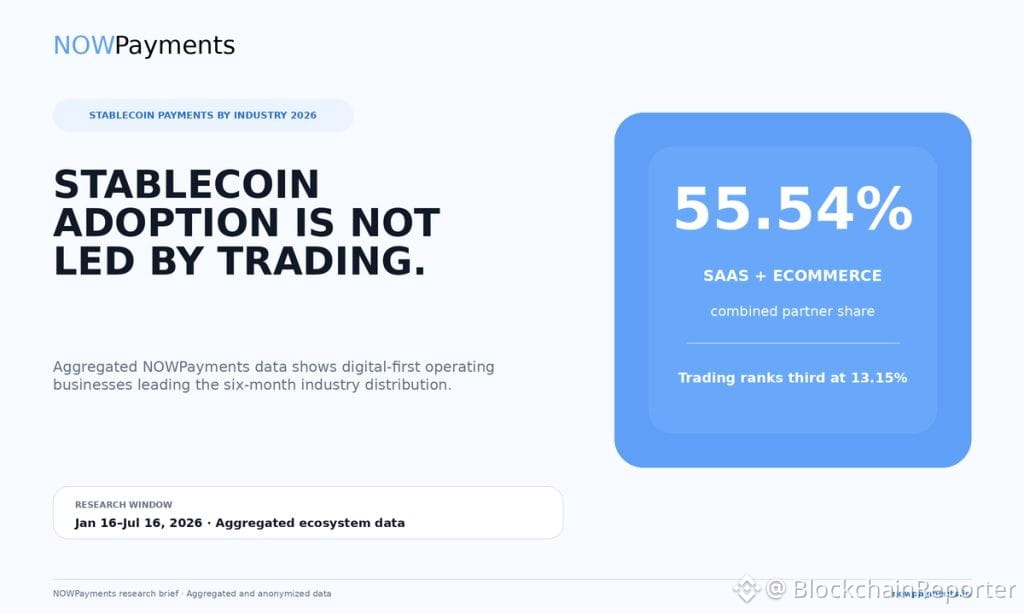
Article
Stablecoins Are Quietly Becoming Business Infrastructure, NOWPayments Data ShowsTallinn, Estonia, October 8th, 2026, Chainwire
SaaS and eCommerce increased their combined share from 48.26% to 55.54%, while Trading moved from 14.07% to 13.15%.
Businesses can build stablecoin infrastructure around the wrong problem.
The mistake is treating stablecoins primarily as a coin-and-network decision. For a digital business, they may need to support a much broader set of operating workflows, including billing, checkout, settlement, payouts, and reconciliation.
Which of those workflows matters most depends on the business model.
New aggregated data from NOWPayments shows the industry mix shifting toward businesses that use payments as part of their day-to-day operations. Between January 16 and July 16, 2026, SaaS and web services accounted for 27.78% of classified partners. eCommerce Marketplaces followed at 27.76%. Together, the two sectors represented 55.54% of the sample. During the same period in 2025, their combined share was 48.26%. The increase of 7.28 percentage points represents a 15.08% year-over-year rise in their combined share.
Trading remained an important part of the sample, but its share moved in the opposite direction. It declined from 14.07% in 2025 to 13.15% in 2026, leaving trading in third place behind SaaS and eCommerce.
The clearest upward shift came from SaaS. Its share increased from 15.58% to 27.78% in one year, closing a gap of 17.10 percentage points with eCommerce. The emerging picture is not stablecoins replacing trading. It is stablecoin adoption expanding into the operating infrastructure of digital businesses.
Unless otherwise stated, industry-distribution figures compare January 16 to July 16, 2025, with January 16 to July 16, 2026.
The Partner Mix Is Shifting Toward Operational Use Cases
In 2025, eCommerce marketplaces led the dataset at 32.68%. SaaS and Web Services followed at 15.58%, with Trading close behind at 14.07%.
One year later, SaaS had increased its share by 12.20 percentage points to 27.78%. eCommerce stood at 27.76%, leaving only 0.02 percentage points between the two sectors. Their combined share rose from 48.26% to 55.54%. More than half of the classified partners in the 2026 sample therefore came from two sectors built around digital transactions, recurring services, and online customer relationships.
The rest of the partner mix changed more gradually.
Financial Services moved from 9.00% to 6.35%. Gambling and iGaming increased from 6.20% to 6.87%, and adult platforms rose from 4.99% to 5.89%. Charity declined from 2.27% to 1.40%, while TGE/Presale moved from 2.12% to 1.35%.
These figures measure changes in each industry’s share of the sample. They do not measure absolute partner growth. A category may lose share because another category expanded faster.
Methodology: Each percentage represents an industry’s share of the full aggregated partner sample classified across the same nine categories. The comparison covers January 16 to July 16 in both 2025 and 2026. Each period was normalized independently. Absolute partner counts are not disclosed, and percentages are rounded to two decimal places. The findings describe partner distribution within the NOWPayments dataset, not payment volume, transaction value, or market-wide industry share.
Different Business Models Need Different Stablecoin Workflows
The industry data becomes useful when it is translated into the operating questions each business model may need to solve.
For a SaaS company, stablecoin payments may need to connect with recurring billing, invoice matching, account activation, renewals, settlement, and financial reconciliation.
A marketplace may need stablecoins to work across a longer flow. The payment can begin at checkout and continue through refunds, seller settlement, affiliate commissions, and other payouts.
Trading platforms face a different set of requirements. Their priorities may include asset and network coverage, confirmation policies, liquidity, and treasury controls.
These are potential workflow drivers, not a universal description of every company in each category. The point is that the same stablecoin can serve all three sectors while performing a different operational job in each one.
This is why a business should define the workflow before choosing the asset and network.
The Network Mix Also Changes by Industry
The successful-payment data shows that industry differences extend to network usage.
USDT on TRON accounted for 54.58% of the measured successful-payment sample within eCommerce marketplaces. Its share was 12.04% in trading and 9.60% in SaaS and web services.
Within this dataset, USDT TRC20 was about 4.5 times as prominent in eCommerce as in Trading and 5.7 times as prominent as in SaaS.
The corresponding shares were 4.76% in Gambling and iGaming, 1.85% in Financial Services, 1.49% in Other, and 0.60% in Charity. Adult Platforms and TGE/Presale each recorded a 0% share in the analyzed sample.
The difference supports the same conclusion as the industry data. A stablecoin setup that fits one business model may not fit another.
For an eCommerce business, USDT on TRON may play a visible role in checkout activity. A SaaS company may see a different asset and network mix. Trading platforms may need broader coverage across both.
Businesses should validate these decisions against their own successful-payment data instead of importing the preferences of another industry.
Methodology: Each percentage represents USDT TRC20’s share of the aggregated successful-payment sample within the corresponding industry. Absolute transaction counts are not disclosed. Failed, expired, refunded, and test transactions are excluded. The figures describe activity within the NOWPayments ecosystem and should not be interpreted as market-wide currency shares. A 0% result means that no successful USDT TRC20 payments were recorded in the analyzed sample for that category.
Build the Workflow Before Choosing the Rails
The five operating areas introduced at the beginning provide a practical framework for evaluating stablecoin infrastructure.
Billing: Does the payment need to connect with invoices, subscriptions, renewals, or account access?
Checkout: Which assets and networks produce completed payments for the company’s actual customers?
Settlement: Which asset should the business receive, and when should funds become available?
Payouts: Will funds need to move to sellers, affiliates, contractors, or customers?
Reconciliation: How will the finance team match transactions with invoices, orders, and internal reporting?
Not every business needs all five. A SaaS platform may focus on billing and reconciliation. A marketplace may need checkout, settlement, and payouts. A trading platform may prioritize network coverage, liquidity, and treasury controls.
The company should first identify which workflows apply. Asset and network selection comes after that.
“The mistake is asking which stablecoin is best. The better question is: best for what?” said Kate Lifshits, Commercial Director at NOWPayments. “Businesses should define the billing, checkout, settlement, payout, and reconciliation flow first. The coin and network should serve that workflow – not the other way around.”
Lifshits explores the commercial side of crypto payments in her Cryptopolitan series, Crypto That Works for Business. The first column, The 22% Sales Boost Hiding in Your Crypto Checkout, examined how payment infrastructure can affect checkout performance. Future installments will continue looking at where crypto payments can increase revenue, lower costs, and remove operational friction.
Stablecoin strategy starts with the job the money needs to do. The coin and network come next.
About NOWPayments
NOWPayments is a crypto business ecosystem designed to help companies accept payments, automate mass payouts, manage stablecoin treasury, and scale global digital asset operations through a single infrastructure. The platform supports more than 350 cryptocurrencies, over 30 stablecoins, flexible settlement options, and enterprise-grade APIs.
Contacts
PR ManagerAngelina TNOWPaymentsangelina.tmk@nowpayments.ioCommercial DirectorKate LNOWPaymentskate.l@nowpayments.io
This article is not intended as financial advice. Educational purposes only.
Stablecoins Are Quietly Becoming Business Infrastructure, NOWPayments Data Shows
Tallinn, Estonia, October 8th, 2026, Chainwire
SaaS and eCommerce increased their combined share from 48.26% to 55.54%, while Trading moved from 14.07% to 13.15%.
Businesses can build stablecoin infrastructure around the wrong problem.
The mistake is treating stablecoins primarily as a coin-and-network decision. For a digital business, they may need to support a much broader set of operating workflows, including billing, checkout, settlement, payouts, and reconciliation.
Which of those workflows matters most depends on the business model.
New aggregated data from NOWPayments shows the industry mix shifting toward businesses that use payments as part of their day-to-day operations. Between January 16 and July 16, 2026, SaaS and web services accounted for 27.78% of classified partners. eCommerce Marketplaces followed at 27.76%. Together, the two sectors represented 55.54% of the sample. During the same period in 2025, their combined share was 48.26%. The increase of 7.28 percentage points represents a 15.08% year-over-year rise in their combined share.
Trading remained an important part of the sample, but its share moved in the opposite direction. It declined from 14.07% in 2025 to 13.15% in 2026, leaving trading in third place behind SaaS and eCommerce.
The clearest upward shift came from SaaS. Its share increased from 15.58% to 27.78% in one year, closing a gap of 17.10 percentage points with eCommerce. The emerging picture is not stablecoins replacing trading. It is stablecoin adoption expanding into the operating infrastructure of digital businesses.
Unless otherwise stated, industry-distribution figures compare January 16 to July 16, 2025, with January 16 to July 16, 2026.
The Partner Mix Is Shifting Toward Operational Use Cases
In 2025, eCommerce marketplaces led the dataset at 32.68%. SaaS and Web Services followed at 15.58%, with Trading close behind at 14.07%.
One year later, SaaS had increased its share by 12.20 percentage points to 27.78%. eCommerce stood at 27.76%, leaving only 0.02 percentage points between the two sectors. Their combined share rose from 48.26% to 55.54%. More than half of the classified partners in the 2026 sample therefore came from two sectors built around digital transactions, recurring services, and online customer relationships.
The rest of the partner mix changed more gradually.
Financial Services moved from 9.00% to 6.35%. Gambling and iGaming increased from 6.20% to 6.87%, and adult platforms rose from 4.99% to 5.89%. Charity declined from 2.27% to 1.40%, while TGE/Presale moved from 2.12% to 1.35%.
These figures measure changes in each industry’s share of the sample. They do not measure absolute partner growth. A category may lose share because another category expanded faster.
Methodology: Each percentage represents an industry’s share of the full aggregated partner sample classified across the same nine categories. The comparison covers January 16 to July 16 in both 2025 and 2026. Each period was normalized independently. Absolute partner counts are not disclosed, and percentages are rounded to two decimal places. The findings describe partner distribution within the NOWPayments dataset, not payment volume, transaction value, or market-wide industry share.
Different Business Models Need Different Stablecoin Workflows
The industry data becomes useful when it is translated into the operating questions each business model may need to solve.
For a SaaS company, stablecoin payments may need to connect with recurring billing, invoice matching, account activation, renewals, settlement, and financial reconciliation.
A marketplace may need stablecoins to work across a longer flow. The payment can begin at checkout and continue through refunds, seller settlement, affiliate commissions, and other payouts.
Trading platforms face a different set of requirements. Their priorities may include asset and network coverage, confirmation policies, liquidity, and treasury controls.
These are potential workflow drivers, not a universal description of every company in each category. The point is that the same stablecoin can serve all three sectors while performing a different operational job in each one.
This is why a business should define the workflow before choosing the asset and network.
The Network Mix Also Changes by Industry
The successful-payment data shows that industry differences extend to network usage.
USDT on TRON accounted for 54.58% of the measured successful-payment sample within eCommerce marketplaces. Its share was 12.04% in trading and 9.60% in SaaS and web services.
Within this dataset, USDT TRC20 was about 4.5 times as prominent in eCommerce as in Trading and 5.7 times as prominent as in SaaS.
The corresponding shares were 4.76% in Gambling and iGaming, 1.85% in Financial Services, 1.49% in Other, and 0.60% in Charity. Adult Platforms and TGE/Presale each recorded a 0% share in the analyzed sample.
The difference supports the same conclusion as the industry data. A stablecoin setup that fits one business model may not fit another.
For an eCommerce business, USDT on TRON may play a visible role in checkout activity. A SaaS company may see a different asset and network mix. Trading platforms may need broader coverage across both.
Businesses should validate these decisions against their own successful-payment data instead of importing the preferences of another industry.
Methodology: Each percentage represents USDT TRC20’s share of the aggregated successful-payment sample within the corresponding industry. Absolute transaction counts are not disclosed. Failed, expired, refunded, and test transactions are excluded. The figures describe activity within the NOWPayments ecosystem and should not be interpreted as market-wide currency shares. A 0% result means that no successful USDT TRC20 payments were recorded in the analyzed sample for that category.
Build the Workflow Before Choosing the Rails
The five operating areas introduced at the beginning provide a practical framework for evaluating stablecoin infrastructure.
Billing: Does the payment need to connect with invoices, subscriptions, renewals, or account access?
Checkout: Which assets and networks produce completed payments for the company’s actual customers?
Settlement: Which asset should the business receive, and when should funds become available?
Payouts: Will funds need to move to sellers, affiliates, contractors, or customers?
Reconciliation: How will the finance team match transactions with invoices, orders, and internal reporting?
Not every business needs all five. A SaaS platform may focus on billing and reconciliation. A marketplace may need checkout, settlement, and payouts. A trading platform may prioritize network coverage, liquidity, and treasury controls.
The company should first identify which workflows apply. Asset and network selection comes after that.
“The mistake is asking which stablecoin is best. The better question is: best for what?” said Kate Lifshits, Commercial Director at NOWPayments. “Businesses should define the billing, checkout, settlement, payout, and reconciliation flow first. The coin and network should serve that workflow – not the other way around.”
Lifshits explores the commercial side of crypto payments in her Cryptopolitan series, Crypto That Works for Business. The first column, The 22% Sales Boost Hiding in Your Crypto Checkout, examined how payment infrastructure can affect checkout performance. Future installments will continue looking at where crypto payments can increase revenue, lower costs, and remove operational friction.
Stablecoin strategy starts with the job the money needs to do. The coin and network come next.
About NOWPayments
NOWPayments is a crypto business ecosystem designed to help companies accept payments, automate mass payouts, manage stablecoin treasury, and scale global digital asset operations through a single infrastructure. The platform supports more than 350 cryptocurrencies, over 30 stablecoins, flexible settlement options, and enterprise-grade APIs.
Contacts
PR ManagerAngelina TNOWPaymentsangelina.tmk@nowpayments.ioCommercial DirectorKate LNOWPaymentskate.l@nowpayments.io
This article is not intended as financial advice. Educational purposes only.
SaaS and eCommerce increased their combined share from 48.26% to 55.54%, while Trading moved from 14.07% to 13.15%.
Businesses can build stablecoin infrastructure around the wrong problem.
The mistake is treating stablecoins primarily as a coin-and-network decision. For a digital business, they may need to support a much broader set of operating workflows, including billing, checkout, settlement, payouts, and reconciliation.
Which of those workflows matters most depends on the business model.
New aggregated data from NOWPayments shows the industry mix shifting toward businesses that use payments as part of their day-to-day operations. Between January 16 and July 16, 2026, SaaS and web services accounted for 27.78% of classified partners. eCommerce Marketplaces followed at 27.76%. Together, the two sectors represented 55.54% of the sample. During the same period in 2025, their combined share was 48.26%. The increase of 7.28 percentage points represents a 15.08% year-over-year rise in their combined share.
Trading remained an important part of the sample, but its share moved in the opposite direction. It declined from 14.07% in 2025 to 13.15% in 2026, leaving trading in third place behind SaaS and eCommerce.
The clearest upward shift came from SaaS. Its share increased from 15.58% to 27.78% in one year, closing a gap of 17.10 percentage points with eCommerce. The emerging picture is not stablecoins replacing trading. It is stablecoin adoption expanding into the operating infrastructure of digital businesses.
Unless otherwise stated, industry-distribution figures compare January 16 to July 16, 2025, with January 16 to July 16, 2026.
The Partner Mix Is Shifting Toward Operational Use Cases
In 2025, eCommerce marketplaces led the dataset at 32.68%. SaaS and Web Services followed at 15.58%, with Trading close behind at 14.07%.
One year later, SaaS had increased its share by 12.20 percentage points to 27.78%. eCommerce stood at 27.76%, leaving only 0.02 percentage points between the two sectors. Their combined share rose from 48.26% to 55.54%. More than half of the classified partners in the 2026 sample therefore came from two sectors built around digital transactions, recurring services, and online customer relationships.
The rest of the partner mix changed more gradually.
Financial Services moved from 9.00% to 6.35%. Gambling and iGaming increased from 6.20% to 6.87%, and adult platforms rose from 4.99% to 5.89%. Charity declined from 2.27% to 1.40%, while TGE/Presale moved from 2.12% to 1.35%.
These figures measure changes in each industry’s share of the sample. They do not measure absolute partner growth. A category may lose share because another category expanded faster.
Methodology: Each percentage represents an industry’s share of the full aggregated partner sample classified across the same nine categories. The comparison covers January 16 to July 16 in both 2025 and 2026. Each period was normalized independently. Absolute partner counts are not disclosed, and percentages are rounded to two decimal places. The findings describe partner distribution within the NOWPayments dataset, not payment volume, transaction value, or market-wide industry share.
Different Business Models Need Different Stablecoin Workflows
The industry data becomes useful when it is translated into the operating questions each business model may need to solve.
For a SaaS company, stablecoin payments may need to connect with recurring billing, invoice matching, account activation, renewals, settlement, and financial reconciliation.
A marketplace may need stablecoins to work across a longer flow. The payment can begin at checkout and continue through refunds, seller settlement, affiliate commissions, and other payouts.
Trading platforms face a different set of requirements. Their priorities may include asset and network coverage, confirmation policies, liquidity, and treasury controls.
These are potential workflow drivers, not a universal description of every company in each category. The point is that the same stablecoin can serve all three sectors while performing a different operational job in each one.
This is why a business should define the workflow before choosing the asset and network.
The Network Mix Also Changes by Industry
The successful-payment data shows that industry differences extend to network usage.
USDT on TRON accounted for 54.58% of the measured successful-payment sample within eCommerce marketplaces. Its share was 12.04% in trading and 9.60% in SaaS and web services.
Within this dataset, USDT TRC20 was about 4.5 times as prominent in eCommerce as in Trading and 5.7 times as prominent as in SaaS.
The corresponding shares were 4.76% in Gambling and iGaming, 1.85% in Financial Services, 1.49% in Other, and 0.60% in Charity. Adult Platforms and TGE/Presale each recorded a 0% share in the analyzed sample.
The difference supports the same conclusion as the industry data. A stablecoin setup that fits one business model may not fit another.
For an eCommerce business, USDT on TRON may play a visible role in checkout activity. A SaaS company may see a different asset and network mix. Trading platforms may need broader coverage across both.
Businesses should validate these decisions against their own successful-payment data instead of importing the preferences of another industry.
Methodology: Each percentage represents USDT TRC20’s share of the aggregated successful-payment sample within the corresponding industry. Absolute transaction counts are not disclosed. Failed, expired, refunded, and test transactions are excluded. The figures describe activity within the NOWPayments ecosystem and should not be interpreted as market-wide currency shares. A 0% result means that no successful USDT TRC20 payments were recorded in the analyzed sample for that category.
Build the Workflow Before Choosing the Rails
The five operating areas introduced at the beginning provide a practical framework for evaluating stablecoin infrastructure.
Billing: Does the payment need to connect with invoices, subscriptions, renewals, or account access?
Checkout: Which assets and networks produce completed payments for the company’s actual customers?
Settlement: Which asset should the business receive, and when should funds become available?
Payouts: Will funds need to move to sellers, affiliates, contractors, or customers?
Reconciliation: How will the finance team match transactions with invoices, orders, and internal reporting?
Not every business needs all five. A SaaS platform may focus on billing and reconciliation. A marketplace may need checkout, settlement, and payouts. A trading platform may prioritize network coverage, liquidity, and treasury controls.
The company should first identify which workflows apply. Asset and network selection comes after that.
“The mistake is asking which stablecoin is best. The better question is: best for what?” said Kate Lifshits, Commercial Director at NOWPayments. “Businesses should define the billing, checkout, settlement, payout, and reconciliation flow first. The coin and network should serve that workflow – not the other way around.”
Lifshits explores the commercial side of crypto payments in her Cryptopolitan series, Crypto That Works for Business. The first column, The 22% Sales Boost Hiding in Your Crypto Checkout, examined how payment infrastructure can affect checkout performance. Future installments will continue looking at where crypto payments can increase revenue, lower costs, and remove operational friction.
Stablecoin strategy starts with the job the money needs to do. The coin and network come next.
About NOWPayments
NOWPayments is a crypto business ecosystem designed to help companies accept payments, automate mass payouts, manage stablecoin treasury, and scale global digital asset operations through a single infrastructure. The platform supports more than 350 cryptocurrencies, over 30 stablecoins, flexible settlement options, and enterprise-grade APIs.
Contacts
PR ManagerAngelina TNOWPaymentsangelina.tmk@nowpayments.ioCommercial DirectorKate LNOWPaymentskate.l@nowpayments.io
This article is not intended as financial advice. Educational purposes only.
79
Article
Travala Launches Native AI Travel Agent With BNB Chain & Binance PaySingapore, Singapore, October 6th, 2026, Chainwire
Travala has teamed up with BNB Chain and Binance Pay to launch a native AI travel booking agent directly on Travala that lets travellers search and book hotels using only a BNB Smart Chain (BSC) wallet with no setup required.
To use the agent, travellers simply open the AI travel agent widget on Travala, fund any BSC wallet address with USDT (turning the wallet into a universal API key), and book the desired hotel from the options presented by the agent.
In this three-way partnership, Travala supplies the hotel inventory, Binance Pay provides the settlement infrastructure, and BNB Chain brings the Machine Payments Protocol (MPP) Software Development Kit (SDK) standard, the agentic framework, and the distribution.
Travellers can receive 10% back on their first booking over US$400 made via the agent. The 10% incentive is split into two components: 7% in BNB is paid directly to the payment wallet after the stay is completed, and an additional 3% in AVA can be received when booking as an AVA Smart Member.
This agent functions independently of the Travala Travel MCP, providing travellers with a standalone option for agentic bookings on BNB Chain.
“By offering this browser-native, frictionless booking experience enabled by BNB Chain and Binance Pay, we’re streamlining agentic AI adoption at the intersection of blockchain and travel. Adding BNB Chain’s MPP standard gives our customers even more choice, making booking a vacation as simple as funding a BSC wallet and letting the travel agent do the rest,” said Juan Otero, CEO of Travala.
Travala’s entire hotel inventory of more than 2,200,000 accommodations is now available for booking via this agent, with additional travel products including flights expected to be integrated in the future.
Thomas Chen, CBO of BNB Chain, said: “The combination of AI agents, blockchain infrastructure and on-chain payments is opening the door to a new generation of products that can transact and operate on behalf of users. Travala is a great example of how this can simplify everyday experiences like travel while paving the way for entirely new on-chain use cases across industries.”
Binance Pay acts as the underlying settlement infrastructure for this new agentic experience. When travellers book with the agent, Binance Pay handles the payment process using the Permit2 facilitator.
User signs one EIP-712 Permit2 authorisation off-chain. No gas, no broadcast.
MPP SDK verifies the signature, checks balance and allowance, and confirms the Permit2 deadline and witness hash.
MPP calls the Binance Pay settlement endpoint, passing the pre-verified Permit2 args.
Binance Pay broadcasts the Permit2 call, paying gas. Funds move from the user wallet to Travala.
MPP marks the payment complete and issues a cryptographic on-chain receipt, instantly confirming the booking.
This addition to Travala’s growing lineup of agentic travel booking options is another step in bridging the gap between Web3 capabilities and real-world utility through the power of AI.
About Travala
Founded in 2017 and now backed by industry giant Binance, Travala is the leading crypto-native travel booking service with 2,200,000+ properties across 230 countries, 600+ airlines, 400,000+ activities, and 50,000+ car rental locations globally. Travala is a champion of cryptocurrency adoption, accepting over 100 leading cryptocurrencies alongside traditional payment methods. In addition to unbeatable prices via its Best Price Guarantee, AVA Smart Members on Travala can also enjoy additional discounts and loyalty rewards for eligible bookings made on the platform. For more information, visit: www.travala.com
About BNB Chain
BNB Chain is one of the largest and most active blockchain ecosystems in the world. Its multi-chain architecture spans BNB Smart Chain (BSC), opBNB, and BNB Greenfield, giving developers the flexibility to choose the environment best suited to their application. With high throughput, low transaction costs, and full EVM compatibility, BNB Chain is built for high-speed trading, AI agents, privacy, and instant payments. It is the blockchain with superior distribution and deep liquidity, built for global markets and the next billion users. For more information, visit: www.bnbchain.org.
About Binance Pay
Binance Pay is a payment service within the Binance ecosystem that enables eligible users to make and receive payments through supported payment experiences. The service incorporates applicable user-verification, risk-management, transaction-monitoring, and account-security controls. For more information, visit: www.pay.binance.com
Contact
Chief Marketing OfficerSam WoollardTravalasam@travala.com
This article is not intended as financial advice. Educational purposes only.
Travala Launches Native AI Travel Agent With BNB Chain & Binance Pay
Singapore, Singapore, October 6th, 2026, Chainwire
Travala has teamed up with BNB Chain and Binance Pay to launch a native AI travel booking agent directly on Travala that lets travellers search and book hotels using only a BNB Smart Chain (BSC) wallet with no setup required.
To use the agent, travellers simply open the AI travel agent widget on Travala, fund any BSC wallet address with USDT (turning the wallet into a universal API key), and book the desired hotel from the options presented by the agent.
In this three-way partnership, Travala supplies the hotel inventory, Binance Pay provides the settlement infrastructure, and BNB Chain brings the Machine Payments Protocol (MPP) Software Development Kit (SDK) standard, the agentic framework, and the distribution.
Travellers can receive 10% back on their first booking over US$400 made via the agent. The 10% incentive is split into two components: 7% in BNB is paid directly to the payment wallet after the stay is completed, and an additional 3% in AVA can be received when booking as an AVA Smart Member.
This agent functions independently of the Travala Travel MCP, providing travellers with a standalone option for agentic bookings on BNB Chain.
“By offering this browser-native, frictionless booking experience enabled by BNB Chain and Binance Pay, we’re streamlining agentic AI adoption at the intersection of blockchain and travel. Adding BNB Chain’s MPP standard gives our customers even more choice, making booking a vacation as simple as funding a BSC wallet and letting the travel agent do the rest,” said Juan Otero, CEO of Travala.
Travala’s entire hotel inventory of more than 2,200,000 accommodations is now available for booking via this agent, with additional travel products including flights expected to be integrated in the future.
Thomas Chen, CBO of BNB Chain, said: “The combination of AI agents, blockchain infrastructure and on-chain payments is opening the door to a new generation of products that can transact and operate on behalf of users. Travala is a great example of how this can simplify everyday experiences like travel while paving the way for entirely new on-chain use cases across industries.”
Binance Pay acts as the underlying settlement infrastructure for this new agentic experience. When travellers book with the agent, Binance Pay handles the payment process using the Permit2 facilitator.
User signs one EIP-712 Permit2 authorisation off-chain. No gas, no broadcast.
MPP SDK verifies the signature, checks balance and allowance, and confirms the Permit2 deadline and witness hash.
MPP calls the Binance Pay settlement endpoint, passing the pre-verified Permit2 args.
Binance Pay broadcasts the Permit2 call, paying gas. Funds move from the user wallet to Travala.
MPP marks the payment complete and issues a cryptographic on-chain receipt, instantly confirming the booking.
This addition to Travala’s growing lineup of agentic travel booking options is another step in bridging the gap between Web3 capabilities and real-world utility through the power of AI.
About Travala
Founded in 2017 and now backed by industry giant Binance, Travala is the leading crypto-native travel booking service with 2,200,000+ properties across 230 countries, 600+ airlines, 400,000+ activities, and 50,000+ car rental locations globally. Travala is a champion of cryptocurrency adoption, accepting over 100 leading cryptocurrencies alongside traditional payment methods. In addition to unbeatable prices via its Best Price Guarantee, AVA Smart Members on Travala can also enjoy additional discounts and loyalty rewards for eligible bookings made on the platform. For more information, visit: www.travala.com
About BNB Chain
BNB Chain is one of the largest and most active blockchain ecosystems in the world. Its multi-chain architecture spans BNB Smart Chain (BSC), opBNB, and BNB Greenfield, giving developers the flexibility to choose the environment best suited to their application. With high throughput, low transaction costs, and full EVM compatibility, BNB Chain is built for high-speed trading, AI agents, privacy, and instant payments. It is the blockchain with superior distribution and deep liquidity, built for global markets and the next billion users. For more information, visit: www.bnbchain.org.
About Binance Pay
Binance Pay is a payment service within the Binance ecosystem that enables eligible users to make and receive payments through supported payment experiences. The service incorporates applicable user-verification, risk-management, transaction-monitoring, and account-security controls. For more information, visit: www.pay.binance.com
Contact
Chief Marketing OfficerSam WoollardTravalasam@travala.com
This article is not intended as financial advice. Educational purposes only.
Travala has teamed up with BNB Chain and Binance Pay to launch a native AI travel booking agent directly on Travala that lets travellers search and book hotels using only a BNB Smart Chain (BSC) wallet with no setup required.
To use the agent, travellers simply open the AI travel agent widget on Travala, fund any BSC wallet address with USDT (turning the wallet into a universal API key), and book the desired hotel from the options presented by the agent.
In this three-way partnership, Travala supplies the hotel inventory, Binance Pay provides the settlement infrastructure, and BNB Chain brings the Machine Payments Protocol (MPP) Software Development Kit (SDK) standard, the agentic framework, and the distribution.
Travellers can receive 10% back on their first booking over US$400 made via the agent. The 10% incentive is split into two components: 7% in BNB is paid directly to the payment wallet after the stay is completed, and an additional 3% in AVA can be received when booking as an AVA Smart Member.
This agent functions independently of the Travala Travel MCP, providing travellers with a standalone option for agentic bookings on BNB Chain.
“By offering this browser-native, frictionless booking experience enabled by BNB Chain and Binance Pay, we’re streamlining agentic AI adoption at the intersection of blockchain and travel. Adding BNB Chain’s MPP standard gives our customers even more choice, making booking a vacation as simple as funding a BSC wallet and letting the travel agent do the rest,” said Juan Otero, CEO of Travala.
Travala’s entire hotel inventory of more than 2,200,000 accommodations is now available for booking via this agent, with additional travel products including flights expected to be integrated in the future.
Thomas Chen, CBO of BNB Chain, said: “The combination of AI agents, blockchain infrastructure and on-chain payments is opening the door to a new generation of products that can transact and operate on behalf of users. Travala is a great example of how this can simplify everyday experiences like travel while paving the way for entirely new on-chain use cases across industries.”
Binance Pay acts as the underlying settlement infrastructure for this new agentic experience. When travellers book with the agent, Binance Pay handles the payment process using the Permit2 facilitator.
User signs one EIP-712 Permit2 authorisation off-chain. No gas, no broadcast.
MPP SDK verifies the signature, checks balance and allowance, and confirms the Permit2 deadline and witness hash.
MPP calls the Binance Pay settlement endpoint, passing the pre-verified Permit2 args.
Binance Pay broadcasts the Permit2 call, paying gas. Funds move from the user wallet to Travala.
MPP marks the payment complete and issues a cryptographic on-chain receipt, instantly confirming the booking.
This addition to Travala’s growing lineup of agentic travel booking options is another step in bridging the gap between Web3 capabilities and real-world utility through the power of AI.
About Travala
Founded in 2017 and now backed by industry giant Binance, Travala is the leading crypto-native travel booking service with 2,200,000+ properties across 230 countries, 600+ airlines, 400,000+ activities, and 50,000+ car rental locations globally. Travala is a champion of cryptocurrency adoption, accepting over 100 leading cryptocurrencies alongside traditional payment methods. In addition to unbeatable prices via its Best Price Guarantee, AVA Smart Members on Travala can also enjoy additional discounts and loyalty rewards for eligible bookings made on the platform. For more information, visit: www.travala.com
About BNB Chain
BNB Chain is one of the largest and most active blockchain ecosystems in the world. Its multi-chain architecture spans BNB Smart Chain (BSC), opBNB, and BNB Greenfield, giving developers the flexibility to choose the environment best suited to their application. With high throughput, low transaction costs, and full EVM compatibility, BNB Chain is built for high-speed trading, AI agents, privacy, and instant payments. It is the blockchain with superior distribution and deep liquidity, built for global markets and the next billion users. For more information, visit: www.bnbchain.org.
About Binance Pay
Binance Pay is a payment service within the Binance ecosystem that enables eligible users to make and receive payments through supported payment experiences. The service incorporates applicable user-verification, risk-management, transaction-monitoring, and account-security controls. For more information, visit: www.pay.binance.com
Contact
Chief Marketing OfficerSam WoollardTravalasam@travala.com
This article is not intended as financial advice. Educational purposes only.
1
1.1k

Article
2.8 Million Micro-Tasks and Counting: How NGRND Gold Protocol Is Redefining Web3 EngagementOne of the most discussed topics currently in Web3 is the shift from passive speculation to active engagement. However, beyond the talk, only few platforms are actually proving it can work at scale. Enter the nGRND Gold Protocol, an innovative ecosystem that is turning the traditional token-holder model on its head by placing everyday participation at the absolute center of its economy.
Led by a seasoned team of innovation, online, gaming, and resources veterans, including Founder David Lucatch, the platform’s unique framework utilizes custom-branded Dynamic Soulbound Tokens (DSBTs) to turn native activity, whether it is sports predictions or AI-driven gaming, into a unified, real-world rewards engine.
To say the market is responding would be an understatement. When I sat down with David, I expected to see steady growth, but the latest verified numbers are staggering. The ecosystem has already surged to more than 248,000 users, with an incredible 220,393 of them (and counting) already holding minted DSBTs. This is a clear sign that this community isn’t just watching from the sidelines, but actively onboarding. Even more impressive is the network’s daily velocity, boasting a massive 40,000+ Daily Active Users (DAU), over 143,000 Weekly Active Users (WAU), and over 204,000 Active Monthly Users (MAU) as of October 6, 2026. With over 2.8 Million micro-task completed by users, nGRND is establishing an unprecedented baseline for active Web3 communities.
In this exclusive interview, David breaks down the mechanics behind these massive totals, details how their dual-treasury Preserved Gold model provides unique asset stability, and explains why participation is the ultimate key to Web3’s future.
For readers who are just discovering the nGRND Gold Protocol, how would you describe what you’re building and what convinced you that participation needs to be the center of it?
David Lucatch: We are building a sustainable Web3 engagement and rewards ecosystem that shifts the focus away from pure token speculation and redirects it toward real, value-adding community activity.
The gap in Web3 has always been the “holder trap”. Projects launch tokens, people buy them, and then everyone sits around waiting for the price to go up without ever actually interacting with the technology. This creates fragile, mercenary communities. We realized that true, long-term network value comes from sustained participation. By placing participation at the core of the nGRND Gold Protocol, we turn users into active contributors who are incentivized to engage with our platform and partners daily, creating a healthier and more resilient ecosystem.
You’ve added two very different Participation Stream Partners in the past month: Predictfully’s sports-prediction community and Astra Nova’s AI gaming universe. What are you actually looking for when you decide a platform is a fit?
David Lucatch: While sports predictions and AI gaming seem completely different on the surface, they share the exact ingredient we look for: deeply engaged digital communities.
When evaluating a potential Participation Stream Partner, we look for established platforms where users are already passionate, active, and taking daily actions. We aren’t interested in dead channels or speculative hype. We look for projects that want to supercharge their existing user retention by giving their community a seamless gateway into a broader Web3 rewards ecosystem. Whether a user is predicting a football match on Predictfully or exploring an AI-driven universe in Astra Nova, our framework allows their native activity to translate smoothly into a unified rewards pipeline.
The early numbers from the Predictfully integration showed sharp percentage gains in accounts and activity. What do the underlying totals look like now, a few weeks in, and has that pace held up since the initial launch window?
David Lucatch: The initial launch window was incredible, but what is even more exciting is how that momentum has matured into sustained, high-volume growth across the entire network.
The pace hasn’t just held up; it has scaled massively. Our overall ecosystem now commands an amazing number of total users – we have more than 248k at the moment. Most impressive is how deep that engagement goes – almost 90% of them have already claimed their Dynamic Soulbound Tokens, meaning the vast majority of our community has taken steps to fully onboard. This isn’t passive traffic either, daily traffic is over 40k users. This level of participation proves that our model is built to avoid the typical post-launch drop-off seen in traditional Web3 projects.
Are there other Participation Stream Partners in the pipeline you’re able to talk about, even in general terms?
David Lucatch: Yes, the pipeline is incredibly robust. Because our infrastructure is highly adaptable, we are actively talking to platforms across several diverse verticals. I can’t name specific brands just yet, but I can tell you we are expanding heavily into the digital media, interactive entertainment, and casual mobile gaming spaces, and we’re even starting to receive significant interest from social engagement platforms that want higher engagement and verified Participants. We are targeting platforms that already have millions of daily active touchpoints.
Walk us through what happens, step by step, when a new Participant picks up a Dynamic Soulbound Token. How does their activity turn into Reward Points, and eventually into a stablecoin payout?
David Lucatch: The journey is simple and completely gamified for the user:
Step one is claiming your passport. A user joins our ecosystem or a partner platform and acquires their custom Dynamic Soulbound Token (DSBT). This token is non-transferable and acts as their permanent digital passport. Then the user plays games, makes predictions, or completes tasks, engaging with the Ecosystem, nGRND, and our brand partners. The DSBT automatically tracks these activities across our partner network. These activities generate reward points. This mechanism is running at a massive scale right now, with 173,030,129 points securely sitting in user wallets and another 14,272,500 referral points already paid out to users who have helped grow the community.
Participants can then stake their earned assets within the nGRND Gold Protocol. A user’s specific Reward Level and points dictates their share of the staking reward pool, allowing them to turn their daily digital participation directly into regular, tangible stablecoin distributions awarded for completion of activities.
Looking out three to six months, what would you consider the clearest sign that the Participation Stream Partner model is working the way you hoped it would?
David Lucatch: The ultimate proof of our model will be measured by three things: engagement with the nGRND brand and our upcoming RWA token, representing Preserved Gold, partner retention and organic ecosystem cross-pollination.
In three to six months, the clearest sign of success will be seeing users who originally joined through Predictfully seamlessly participating in Astra Nova, or vice versa, using their DSBT as a single, unified value key. When our partners report that integrating the nGRND Protocol has permanently increased their own daily active user bases and lowered their acquisition costs, that is a win. We want to prove to the entire Web3 industry that collaborative, participation-driven rewards create a rising tide that lifts all ecosystem boats, while supporting nGRND Preserved Gold.
2.8 Million Micro-Tasks and Counting: How NGRND Gold Protocol Is Redefining Web3 Engagement
One of the most discussed topics currently in Web3 is the shift from passive speculation to active engagement. However, beyond the talk, only few platforms are actually proving it can work at scale. Enter the nGRND Gold Protocol, an innovative ecosystem that is turning the traditional token-holder model on its head by placing everyday participation at the absolute center of its economy.
Led by a seasoned team of innovation, online, gaming, and resources veterans, including Founder David Lucatch, the platform’s unique framework utilizes custom-branded Dynamic Soulbound Tokens (DSBTs) to turn native activity, whether it is sports predictions or AI-driven gaming, into a unified, real-world rewards engine.
To say the market is responding would be an understatement. When I sat down with David, I expected to see steady growth, but the latest verified numbers are staggering. The ecosystem has already surged to more than 248,000 users, with an incredible 220,393 of them (and counting) already holding minted DSBTs. This is a clear sign that this community isn’t just watching from the sidelines, but actively onboarding. Even more impressive is the network’s daily velocity, boasting a massive 40,000+ Daily Active Users (DAU), over 143,000 Weekly Active Users (WAU), and over 204,000 Active Monthly Users (MAU) as of October 6, 2026. With over 2.8 Million micro-task completed by users, nGRND is establishing an unprecedented baseline for active Web3 communities.
In this exclusive interview, David breaks down the mechanics behind these massive totals, details how their dual-treasury Preserved Gold model provides unique asset stability, and explains why participation is the ultimate key to Web3’s future.
For readers who are just discovering the nGRND Gold Protocol, how would you describe what you’re building and what convinced you that participation needs to be the center of it?
David Lucatch: We are building a sustainable Web3 engagement and rewards ecosystem that shifts the focus away from pure token speculation and redirects it toward real, value-adding community activity.
The gap in Web3 has always been the “holder trap”. Projects launch tokens, people buy them, and then everyone sits around waiting for the price to go up without ever actually interacting with the technology. This creates fragile, mercenary communities. We realized that true, long-term network value comes from sustained participation. By placing participation at the core of the nGRND Gold Protocol, we turn users into active contributors who are incentivized to engage with our platform and partners daily, creating a healthier and more resilient ecosystem.
You’ve added two very different Participation Stream Partners in the past month: Predictfully’s sports-prediction community and Astra Nova’s AI gaming universe. What are you actually looking for when you decide a platform is a fit?
David Lucatch: While sports predictions and AI gaming seem completely different on the surface, they share the exact ingredient we look for: deeply engaged digital communities.
When evaluating a potential Participation Stream Partner, we look for established platforms where users are already passionate, active, and taking daily actions. We aren’t interested in dead channels or speculative hype. We look for projects that want to supercharge their existing user retention by giving their community a seamless gateway into a broader Web3 rewards ecosystem. Whether a user is predicting a football match on Predictfully or exploring an AI-driven universe in Astra Nova, our framework allows their native activity to translate smoothly into a unified rewards pipeline.
The early numbers from the Predictfully integration showed sharp percentage gains in accounts and activity. What do the underlying totals look like now, a few weeks in, and has that pace held up since the initial launch window?
David Lucatch: The initial launch window was incredible, but what is even more exciting is how that momentum has matured into sustained, high-volume growth across the entire network.
The pace hasn’t just held up; it has scaled massively. Our overall ecosystem now commands an amazing number of total users – we have more than 248k at the moment. Most impressive is how deep that engagement goes – almost 90% of them have already claimed their Dynamic Soulbound Tokens, meaning the vast majority of our community has taken steps to fully onboard. This isn’t passive traffic either, daily traffic is over 40k users. This level of participation proves that our model is built to avoid the typical post-launch drop-off seen in traditional Web3 projects.
Are there other Participation Stream Partners in the pipeline you’re able to talk about, even in general terms?
David Lucatch: Yes, the pipeline is incredibly robust. Because our infrastructure is highly adaptable, we are actively talking to platforms across several diverse verticals. I can’t name specific brands just yet, but I can tell you we are expanding heavily into the digital media, interactive entertainment, and casual mobile gaming spaces, and we’re even starting to receive significant interest from social engagement platforms that want higher engagement and verified Participants. We are targeting platforms that already have millions of daily active touchpoints.
Walk us through what happens, step by step, when a new Participant picks up a Dynamic Soulbound Token. How does their activity turn into Reward Points, and eventually into a stablecoin payout?
David Lucatch: The journey is simple and completely gamified for the user:
Step one is claiming your passport. A user joins our ecosystem or a partner platform and acquires their custom Dynamic Soulbound Token (DSBT). This token is non-transferable and acts as their permanent digital passport. Then the user plays games, makes predictions, or completes tasks, engaging with the Ecosystem, nGRND, and our brand partners. The DSBT automatically tracks these activities across our partner network. These activities generate reward points. This mechanism is running at a massive scale right now, with 173,030,129 points securely sitting in user wallets and another 14,272,500 referral points already paid out to users who have helped grow the community.
Participants can then stake their earned assets within the nGRND Gold Protocol. A user’s specific Reward Level and points dictates their share of the staking reward pool, allowing them to turn their daily digital participation directly into regular, tangible stablecoin distributions awarded for completion of activities.
Looking out three to six months, what would you consider the clearest sign that the Participation Stream Partner model is working the way you hoped it would?
David Lucatch: The ultimate proof of our model will be measured by three things: engagement with the nGRND brand and our upcoming RWA token, representing Preserved Gold, partner retention and organic ecosystem cross-pollination.
In three to six months, the clearest sign of success will be seeing users who originally joined through Predictfully seamlessly participating in Astra Nova, or vice versa, using their DSBT as a single, unified value key. When our partners report that integrating the nGRND Protocol has permanently increased their own daily active user bases and lowered their acquisition costs, that is a win. We want to prove to the entire Web3 industry that collaborative, participation-driven rewards create a rising tide that lifts all ecosystem boats, while supporting nGRND Preserved Gold.
Led by a seasoned team of innovation, online, gaming, and resources veterans, including Founder David Lucatch, the platform’s unique framework utilizes custom-branded Dynamic Soulbound Tokens (DSBTs) to turn native activity, whether it is sports predictions or AI-driven gaming, into a unified, real-world rewards engine.
To say the market is responding would be an understatement. When I sat down with David, I expected to see steady growth, but the latest verified numbers are staggering. The ecosystem has already surged to more than 248,000 users, with an incredible 220,393 of them (and counting) already holding minted DSBTs. This is a clear sign that this community isn’t just watching from the sidelines, but actively onboarding. Even more impressive is the network’s daily velocity, boasting a massive 40,000+ Daily Active Users (DAU), over 143,000 Weekly Active Users (WAU), and over 204,000 Active Monthly Users (MAU) as of October 6, 2026. With over 2.8 Million micro-task completed by users, nGRND is establishing an unprecedented baseline for active Web3 communities.
In this exclusive interview, David breaks down the mechanics behind these massive totals, details how their dual-treasury Preserved Gold model provides unique asset stability, and explains why participation is the ultimate key to Web3’s future.
For readers who are just discovering the nGRND Gold Protocol, how would you describe what you’re building and what convinced you that participation needs to be the center of it?
David Lucatch: We are building a sustainable Web3 engagement and rewards ecosystem that shifts the focus away from pure token speculation and redirects it toward real, value-adding community activity.
The gap in Web3 has always been the “holder trap”. Projects launch tokens, people buy them, and then everyone sits around waiting for the price to go up without ever actually interacting with the technology. This creates fragile, mercenary communities. We realized that true, long-term network value comes from sustained participation. By placing participation at the core of the nGRND Gold Protocol, we turn users into active contributors who are incentivized to engage with our platform and partners daily, creating a healthier and more resilient ecosystem.
You’ve added two very different Participation Stream Partners in the past month: Predictfully’s sports-prediction community and Astra Nova’s AI gaming universe. What are you actually looking for when you decide a platform is a fit?
David Lucatch: While sports predictions and AI gaming seem completely different on the surface, they share the exact ingredient we look for: deeply engaged digital communities.
When evaluating a potential Participation Stream Partner, we look for established platforms where users are already passionate, active, and taking daily actions. We aren’t interested in dead channels or speculative hype. We look for projects that want to supercharge their existing user retention by giving their community a seamless gateway into a broader Web3 rewards ecosystem. Whether a user is predicting a football match on Predictfully or exploring an AI-driven universe in Astra Nova, our framework allows their native activity to translate smoothly into a unified rewards pipeline.
The early numbers from the Predictfully integration showed sharp percentage gains in accounts and activity. What do the underlying totals look like now, a few weeks in, and has that pace held up since the initial launch window?
David Lucatch: The initial launch window was incredible, but what is even more exciting is how that momentum has matured into sustained, high-volume growth across the entire network.
The pace hasn’t just held up; it has scaled massively. Our overall ecosystem now commands an amazing number of total users – we have more than 248k at the moment. Most impressive is how deep that engagement goes – almost 90% of them have already claimed their Dynamic Soulbound Tokens, meaning the vast majority of our community has taken steps to fully onboard. This isn’t passive traffic either, daily traffic is over 40k users. This level of participation proves that our model is built to avoid the typical post-launch drop-off seen in traditional Web3 projects.
Are there other Participation Stream Partners in the pipeline you’re able to talk about, even in general terms?
David Lucatch: Yes, the pipeline is incredibly robust. Because our infrastructure is highly adaptable, we are actively talking to platforms across several diverse verticals. I can’t name specific brands just yet, but I can tell you we are expanding heavily into the digital media, interactive entertainment, and casual mobile gaming spaces, and we’re even starting to receive significant interest from social engagement platforms that want higher engagement and verified Participants. We are targeting platforms that already have millions of daily active touchpoints.
Walk us through what happens, step by step, when a new Participant picks up a Dynamic Soulbound Token. How does their activity turn into Reward Points, and eventually into a stablecoin payout?
David Lucatch: The journey is simple and completely gamified for the user:
Step one is claiming your passport. A user joins our ecosystem or a partner platform and acquires their custom Dynamic Soulbound Token (DSBT). This token is non-transferable and acts as their permanent digital passport. Then the user plays games, makes predictions, or completes tasks, engaging with the Ecosystem, nGRND, and our brand partners. The DSBT automatically tracks these activities across our partner network. These activities generate reward points. This mechanism is running at a massive scale right now, with 173,030,129 points securely sitting in user wallets and another 14,272,500 referral points already paid out to users who have helped grow the community.
Participants can then stake their earned assets within the nGRND Gold Protocol. A user’s specific Reward Level and points dictates their share of the staking reward pool, allowing them to turn their daily digital participation directly into regular, tangible stablecoin distributions awarded for completion of activities.
Looking out three to six months, what would you consider the clearest sign that the Participation Stream Partner model is working the way you hoped it would?
David Lucatch: The ultimate proof of our model will be measured by three things: engagement with the nGRND brand and our upcoming RWA token, representing Preserved Gold, partner retention and organic ecosystem cross-pollination.
In three to six months, the clearest sign of success will be seeing users who originally joined through Predictfully seamlessly participating in Astra Nova, or vice versa, using their DSBT as a single, unified value key. When our partners report that integrating the nGRND Protocol has permanently increased their own daily active user bases and lowered their acquisition costs, that is a win. We want to prove to the entire Web3 industry that collaborative, participation-driven rewards create a rising tide that lifts all ecosystem boats, while supporting nGRND Preserved Gold.
212
Article
Yapı Kredi Kripto Selects Integral to Power Digital Asset Trading Services in TürkiyePalo Alto, California, October 7th, 2026, Chainwire
Integral’s institutional-grade digital asset trading technology will support Yapı Kredi Kripto’s regulated cryptocurrency offering as Türkiye’s new digital asset framework comes into effect.
Integral, a leading provider of currency technology, today announced that Yapı Kredi Kripto has selected Integral’s digital asset trading technology, enabling the group to provide cryptocurrency services through its soon-to-launch regulated digital asset business.
The partnership comes as Türkiye introduces a new regulatory framework for digital asset service providers, creating a regulated environment for financial institutions to expand their offering to customers seeking access to cryptocurrency markets.
Yapı Kredi Kripto has implemented Integral’s digital asset trading technology across pricing, liquidity and risk management, providing the infrastructure required to deliver a secure and efficient cryptocurrency trading experience to its customers.
Integral’s established presence in Türkiye was an important factor in Yapı Kredi Kripto’s decision. The technology provider has a long-standing track record of delivering resilient FX trading and risk management infrastructure to regulated financial institutions in the Turkish market.
Integral’s ability to bring the solution to market quickly, combined with its understanding of the requirements of regulated financial institutions, also enabled Yapı Kredi Kripto to integrate the technology efficiently ahead of its digital asset service launch.
Harpal Sandhu, CEO of Integral, said:
“Banks are increasingly looking to provide their customers with access to digital assets, but doing so requires the same focus on resilience, liquidity, risk management and regulatory requirements that underpins traditional financial markets. We are delighted to expand our relationship with Yapı Kredi and support the bank as it enters the regulated digital asset market. Our established FX business with Yapı Kredi, together with our experience supporting regulated firms in Türkiye, provides a strong foundation for this next stage of our partnership.”
About Integral
Integral is the currency technology partner to hundreds of financial institutions, including banks, brokers, investors and cross-border payment companies, who have embedded Integral’s technology in their workflows and customer-facing services.
Adopted first by the financial markets and now integrated across all industries – Integral’s embedded FX and crypto services are solving the currency challenges faced by every global organization.
Founded in 1993, Integral supports customers from its offices in Palo Alto, New York, London, Tokyo, Singapore and Bengaluru.
Additional information is available at www.integral.com.
2026 Integral Development Corp. All rights reserved. Integral technology is protected under U.S. patents and patent-pending applications and related intellectual property rights.
Contact
Integralintegral@aspectusgroup.com
This article is not intended as financial advice. Educational purposes only.
Yapı Kredi Kripto Selects Integral to Power Digital Asset Trading Services in Türkiye
Palo Alto, California, October 7th, 2026, Chainwire
Integral’s institutional-grade digital asset trading technology will support Yapı Kredi Kripto’s regulated cryptocurrency offering as Türkiye’s new digital asset framework comes into effect.
Integral, a leading provider of currency technology, today announced that Yapı Kredi Kripto has selected Integral’s digital asset trading technology, enabling the group to provide cryptocurrency services through its soon-to-launch regulated digital asset business.
The partnership comes as Türkiye introduces a new regulatory framework for digital asset service providers, creating a regulated environment for financial institutions to expand their offering to customers seeking access to cryptocurrency markets.
Yapı Kredi Kripto has implemented Integral’s digital asset trading technology across pricing, liquidity and risk management, providing the infrastructure required to deliver a secure and efficient cryptocurrency trading experience to its customers.
Integral’s established presence in Türkiye was an important factor in Yapı Kredi Kripto’s decision. The technology provider has a long-standing track record of delivering resilient FX trading and risk management infrastructure to regulated financial institutions in the Turkish market.
Integral’s ability to bring the solution to market quickly, combined with its understanding of the requirements of regulated financial institutions, also enabled Yapı Kredi Kripto to integrate the technology efficiently ahead of its digital asset service launch.
Harpal Sandhu, CEO of Integral, said:
“Banks are increasingly looking to provide their customers with access to digital assets, but doing so requires the same focus on resilience, liquidity, risk management and regulatory requirements that underpins traditional financial markets. We are delighted to expand our relationship with Yapı Kredi and support the bank as it enters the regulated digital asset market. Our established FX business with Yapı Kredi, together with our experience supporting regulated firms in Türkiye, provides a strong foundation for this next stage of our partnership.”
About Integral
Integral is the currency technology partner to hundreds of financial institutions, including banks, brokers, investors and cross-border payment companies, who have embedded Integral’s technology in their workflows and customer-facing services.
Adopted first by the financial markets and now integrated across all industries – Integral’s embedded FX and crypto services are solving the currency challenges faced by every global organization.
Founded in 1993, Integral supports customers from its offices in Palo Alto, New York, London, Tokyo, Singapore and Bengaluru.
Additional information is available at www.integral.com.
2026 Integral Development Corp. All rights reserved. Integral technology is protected under U.S. patents and patent-pending applications and related intellectual property rights.
Contact
Integralintegral@aspectusgroup.com
This article is not intended as financial advice. Educational purposes only.
Integral’s institutional-grade digital asset trading technology will support Yapı Kredi Kripto’s regulated cryptocurrency offering as Türkiye’s new digital asset framework comes into effect.
Integral, a leading provider of currency technology, today announced that Yapı Kredi Kripto has selected Integral’s digital asset trading technology, enabling the group to provide cryptocurrency services through its soon-to-launch regulated digital asset business.
The partnership comes as Türkiye introduces a new regulatory framework for digital asset service providers, creating a regulated environment for financial institutions to expand their offering to customers seeking access to cryptocurrency markets.
Yapı Kredi Kripto has implemented Integral’s digital asset trading technology across pricing, liquidity and risk management, providing the infrastructure required to deliver a secure and efficient cryptocurrency trading experience to its customers.
Integral’s established presence in Türkiye was an important factor in Yapı Kredi Kripto’s decision. The technology provider has a long-standing track record of delivering resilient FX trading and risk management infrastructure to regulated financial institutions in the Turkish market.
Integral’s ability to bring the solution to market quickly, combined with its understanding of the requirements of regulated financial institutions, also enabled Yapı Kredi Kripto to integrate the technology efficiently ahead of its digital asset service launch.
Harpal Sandhu, CEO of Integral, said:
“Banks are increasingly looking to provide their customers with access to digital assets, but doing so requires the same focus on resilience, liquidity, risk management and regulatory requirements that underpins traditional financial markets. We are delighted to expand our relationship with Yapı Kredi and support the bank as it enters the regulated digital asset market. Our established FX business with Yapı Kredi, together with our experience supporting regulated firms in Türkiye, provides a strong foundation for this next stage of our partnership.”
About Integral
Integral is the currency technology partner to hundreds of financial institutions, including banks, brokers, investors and cross-border payment companies, who have embedded Integral’s technology in their workflows and customer-facing services.
Adopted first by the financial markets and now integrated across all industries – Integral’s embedded FX and crypto services are solving the currency challenges faced by every global organization.
Founded in 1993, Integral supports customers from its offices in Palo Alto, New York, London, Tokyo, Singapore and Bengaluru.
Additional information is available at www.integral.com.
2026 Integral Development Corp. All rights reserved. Integral technology is protected under U.S. patents and patent-pending applications and related intellectual property rights.
Contact
Integralintegral@aspectusgroup.com
This article is not intended as financial advice. Educational purposes only.
219
Verified
Article
New Generation of Crypto Miners Released By ASICIDHong Kong, Hong Kong, October 6th, 2026, Chainwire
ASICID Inc. has released its IDMINER Series, a new lineup of cryptocurrency mining systems designed for Bitcoin, Litecoin, and Dogecoin mining.
The series includes the IDMINER HomeRack, IDMINER 2 and IDMINER 1, with configurations ranging from 1,150 TH/s to 9,600 TH/s of Bitcoin hashrate and from 350 GH/s to 3,200 GH/s of Litecoin and Dogecoin hashrate.
The three models are designed for different mining setups, from individual and home miners to professional and larger-scale operators.
IDMINER Series Specifications
IDMINER HomeRack
Bitcoin hashrate: 9,600 TH/s
Litecoin/Dogecoin hashrate: 3,200 GH/s
Power configuration: 4 × 1,300W
Estimated monthly mining revenue: up to $25,590*
IDMINER 2
Bitcoin hashrate: 2,400 TH/s
Litecoin/Dogecoin hashrate: 800 GH/s
Power consumption: 1,300W
Estimated monthly mining revenue: up to $6,390*
IDMINER 1
Bitcoin hashrate: 1,150 TH/s
Litecoin/Dogecoin hashrate: 350 GH/s
Power consumption: 700W
Estimated monthly mining revenue: up to $2,790*
*The revenue figures are estimates based on network conditions, cryptocurrency prices, and mining difficulty at the time of publication.
Designed for Simpler Deployment
The IDMINER systems are delivered pre-configured and tested before shipment. Users can connect the miner to power, connect via WiFi or Ethernet, enter their preferred mining pool information, and begin mining.
The systems support major mining pools and also provide access to ASICID’s Zero-Fee Mining Pool option.
Other features include thermal management and hardware testing before shipment.
Built for Bitcoin, Litecoin and Dogecoin Mining
ASICID develops and manufactures its mining hardware through an integrated production process that includes research and development, hardware engineering, assembly, thermal testing, and quality assurance.
The company is headquartered in Hong Kong with additional operations in the United States and serves individual miners, professional mining businesses, and institutional operators.
With the IDMINER Series, ASICID is targeting miners looking for high-hashrate hardware with straightforward deployment and power requirements suited to ongoing mining operations.
For more information about the IDMINER Series, users can visit www.asicid.com.
Contact
Peter Lammedia@asicid.com
This article is not intended as financial advice. Educational purposes only.
New Generation of Crypto Miners Released By ASICID
Hong Kong, Hong Kong, October 6th, 2026, Chainwire
ASICID Inc. has released its IDMINER Series, a new lineup of cryptocurrency mining systems designed for Bitcoin, Litecoin, and Dogecoin mining.
The series includes the IDMINER HomeRack, IDMINER 2 and IDMINER 1, with configurations ranging from 1,150 TH/s to 9,600 TH/s of Bitcoin hashrate and from 350 GH/s to 3,200 GH/s of Litecoin and Dogecoin hashrate.
The three models are designed for different mining setups, from individual and home miners to professional and larger-scale operators.
IDMINER Series Specifications
IDMINER HomeRack
Bitcoin hashrate: 9,600 TH/s
Litecoin/Dogecoin hashrate: 3,200 GH/s
Power configuration: 4 × 1,300W
Estimated monthly mining revenue: up to $25,590*
IDMINER 2
Bitcoin hashrate: 2,400 TH/s
Litecoin/Dogecoin hashrate: 800 GH/s
Power consumption: 1,300W
Estimated monthly mining revenue: up to $6,390*
IDMINER 1
Bitcoin hashrate: 1,150 TH/s
Litecoin/Dogecoin hashrate: 350 GH/s
Power consumption: 700W
Estimated monthly mining revenue: up to $2,790*
*The revenue figures are estimates based on network conditions, cryptocurrency prices, and mining difficulty at the time of publication.
Designed for Simpler Deployment
The IDMINER systems are delivered pre-configured and tested before shipment. Users can connect the miner to power, connect via WiFi or Ethernet, enter their preferred mining pool information, and begin mining.
The systems support major mining pools and also provide access to ASICID’s Zero-Fee Mining Pool option.
Other features include thermal management and hardware testing before shipment.
Built for Bitcoin, Litecoin and Dogecoin Mining
ASICID develops and manufactures its mining hardware through an integrated production process that includes research and development, hardware engineering, assembly, thermal testing, and quality assurance.
The company is headquartered in Hong Kong with additional operations in the United States and serves individual miners, professional mining businesses, and institutional operators.
With the IDMINER Series, ASICID is targeting miners looking for high-hashrate hardware with straightforward deployment and power requirements suited to ongoing mining operations.
For more information about the IDMINER Series, users can visit www.asicid.com.
Contact
Peter Lammedia@asicid.com
This article is not intended as financial advice. Educational purposes only.
ASICID Inc. has released its IDMINER Series, a new lineup of cryptocurrency mining systems designed for Bitcoin, Litecoin, and Dogecoin mining.
The series includes the IDMINER HomeRack, IDMINER 2 and IDMINER 1, with configurations ranging from 1,150 TH/s to 9,600 TH/s of Bitcoin hashrate and from 350 GH/s to 3,200 GH/s of Litecoin and Dogecoin hashrate.
The three models are designed for different mining setups, from individual and home miners to professional and larger-scale operators.
IDMINER Series Specifications
IDMINER HomeRack
Bitcoin hashrate: 9,600 TH/s
Litecoin/Dogecoin hashrate: 3,200 GH/s
Power configuration: 4 × 1,300W
Estimated monthly mining revenue: up to $25,590*
IDMINER 2
Bitcoin hashrate: 2,400 TH/s
Litecoin/Dogecoin hashrate: 800 GH/s
Power consumption: 1,300W
Estimated monthly mining revenue: up to $6,390*
IDMINER 1
Bitcoin hashrate: 1,150 TH/s
Litecoin/Dogecoin hashrate: 350 GH/s
Power consumption: 700W
Estimated monthly mining revenue: up to $2,790*
*The revenue figures are estimates based on network conditions, cryptocurrency prices, and mining difficulty at the time of publication.
Designed for Simpler Deployment
The IDMINER systems are delivered pre-configured and tested before shipment. Users can connect the miner to power, connect via WiFi or Ethernet, enter their preferred mining pool information, and begin mining.
The systems support major mining pools and also provide access to ASICID’s Zero-Fee Mining Pool option.
Other features include thermal management and hardware testing before shipment.
Built for Bitcoin, Litecoin and Dogecoin Mining
ASICID develops and manufactures its mining hardware through an integrated production process that includes research and development, hardware engineering, assembly, thermal testing, and quality assurance.
The company is headquartered in Hong Kong with additional operations in the United States and serves individual miners, professional mining businesses, and institutional operators.
With the IDMINER Series, ASICID is targeting miners looking for high-hashrate hardware with straightforward deployment and power requirements suited to ongoing mining operations.
For more information about the IDMINER Series, users can visit www.asicid.com.
Contact
Peter Lammedia@asicid.com
This article is not intended as financial advice. Educational purposes only.
2
738
Article
Changer+ Launches Stablecoin-First Self-Custodial Wallet to Make Stablecoins Easier to UseSingapore, Singapore, October 6th, 2026, Chainwire
Multi-chain stablecoin wallet combines simpler transfers, flexible gas-fee options, security features, and practical use cases with one ambition: to become the world’s easiest stablecoin wallet.
Changer+ today announced the launch of its self-custodial stablecoin wallet, built to make holding, moving and using stablecoins simpler.
Changer+ supports major stablecoins including USDT and USDC across Ethereum, TRON, BNB Chain and Solana, with more networks and stablecoins planned.
To celebrate its launch, Changer+ is offering new users three free transactions per device on each chain – Ethereum, Solana, and BNB Chain from October 6 to November 6, 2026.
Changer+ is built around a simple belief: people should not need to understand every blockchain, gas token, or transaction mechanic just to use the stablecoins they already have.
Stablecoins Should Just Work
Using stablecoins can still mean figuring out which network a token is on, choosing the right transfer route, sourcing a separate gas token, and navigating unfamiliar transaction steps. Changer+ is designed to move more of that complexity into the background.
“People should not have to become blockchain experts just to use stablecoins,” said Leon Gao, CEO of Changer+, with over a decade of experience in product development in the fintech and payment industry
“The technology underneath can stay sophisticated. What users see should feel simple, clear and dependable.”
Simplicity Without Giving Up Control
Making stablecoins easier to use should not mean taking control away from the user.
Changer+ is self-custodial, meaning users retain control of their private keys and authorize their own transactions.
For Yun Han Wong, CGO of Changer+, who has spent years working in Web3, preserving that principle is fundamental to trust.
“Trust is everything in Web3,” Yun Han said. “The early crypto idea of ‘being your own bank’ was really about ownership — having control over your own assets instead of simply handing that control to another intermediary.”
“We want to preserve that ethos while making stablecoins much easier to use. Convenience should not mean giving up control.”
Technology and Security Built around the User
Changer+ is designed to remove common friction from everyday stablecoin use.
On supported transactions, Changer+ lets users cover network-related transaction costs without first having to acquire the blockchain’s native gas token.
For example, a user holding stablecoins does not necessarily need to separately acquire ETH, TRX, BNB, or SOL before completing a supported transaction.
Changer+ has also completed an independent security audit, vulnerability assessment, and penetration testing (VAPT) conducted by Echo Pulse, a CREST-accredited and Singapore-licensed cybersecurity service provider.
These capabilities are led by Zack Chen, CTO of Changer+, an NUS-trained technopreneur with years of software development experience overseeing Changer+’s multi-chain architecture and security development.
“Good engineering should reduce the complexity users have to manage while keeping the experience clear and reliable,” Zack said.
Making Stablecoins More Useful
Changer+ goes beyond holding and transferring stablecoins by giving users more ways to put them to practical use.
Current capabilities include global eSIM data plans, a lifestyle ticket marketplace, and security risk signals that help users identify suspicious activity and potentially unsafe addresses, with more use cases planned.
“Our ambition is not to build another wallet people download and forget,” Leon said. “We want to make the whole stablecoin experience easier — from holding and transferring to actually using them.”
As stablecoins increasingly move beyond crypto trading into payments, remittances and everyday digital commerce, the experience of using them remains fragmented across networks and wallets.
Changer+ was built to close that usability gap.
Backed by a private family office, Changer+ is taking a long-term approach to building the product. Rather than centering the platform around a project token or speculative rewards, the company is focused on usability, self-custody, security, and practical stablecoin utility.
“Stablecoins should just work,” Yun Han added. “Fewer unnecessary crypto steps, more useful things you can do with them, and the user stays in control.”
Changer+ is available on iOS and Android.
Download IOS app:https://apps.apple.com/us/app/changer-stablecoin-wallet/id6744874111
Download Android app:https://play.google.com/store/apps/details?id=plus.changer.app&hl=en
Learn more: www.changer.plus
Join communities: https://linktr.ee/ChangerPlus
Contact: pr@changer.plus
Launch Special
Enjoy three free transactions on each chain – Ethereum, Solana, and BNB Chain from October 6 to November 6, 2026.*
Available only to new users who install the Changer+ app and register during the campaign period. Network fees are covered for three eligible transactions per device. Terms and conditions apply. Changer+ reserves the right to amend or withdraw the offer.
About Changer+
Changer+ is a Singapore-incorporated, self-custodial stablecoin wallet built to make stablecoins easier to use.
With multi-chain stablecoin support across major blockchain networks, including Ethereum, Solana, BNB Chain and TRON, Changer+ brings together simpler transfers, flexible gas-fee options, security risk signals and practical use cases — while users remain in control of their private keys.
Backed by a private family office, Changer+ combines payments experience, Web3 expertise and security-led engineering with one ambition: to become the world’s easiest stablecoin wallet.
Contact
Changer+pr@changer.plus
This article is not intended as financial advice. Educational purposes only.
Changer+ Launches Stablecoin-First Self-Custodial Wallet to Make Stablecoins Easier to Use
Singapore, Singapore, October 6th, 2026, Chainwire
Multi-chain stablecoin wallet combines simpler transfers, flexible gas-fee options, security features, and practical use cases with one ambition: to become the world’s easiest stablecoin wallet.
Changer+ today announced the launch of its self-custodial stablecoin wallet, built to make holding, moving and using stablecoins simpler.
Changer+ supports major stablecoins including USDT and USDC across Ethereum, TRON, BNB Chain and Solana, with more networks and stablecoins planned.
To celebrate its launch, Changer+ is offering new users three free transactions per device on each chain – Ethereum, Solana, and BNB Chain from October 6 to November 6, 2026.
Changer+ is built around a simple belief: people should not need to understand every blockchain, gas token, or transaction mechanic just to use the stablecoins they already have.
Stablecoins Should Just Work
Using stablecoins can still mean figuring out which network a token is on, choosing the right transfer route, sourcing a separate gas token, and navigating unfamiliar transaction steps. Changer+ is designed to move more of that complexity into the background.
“People should not have to become blockchain experts just to use stablecoins,” said Leon Gao, CEO of Changer+, with over a decade of experience in product development in the fintech and payment industry
“The technology underneath can stay sophisticated. What users see should feel simple, clear and dependable.”
Simplicity Without Giving Up Control
Making stablecoins easier to use should not mean taking control away from the user.
Changer+ is self-custodial, meaning users retain control of their private keys and authorize their own transactions.
For Yun Han Wong, CGO of Changer+, who has spent years working in Web3, preserving that principle is fundamental to trust.
“Trust is everything in Web3,” Yun Han said. “The early crypto idea of ‘being your own bank’ was really about ownership — having control over your own assets instead of simply handing that control to another intermediary.”
“We want to preserve that ethos while making stablecoins much easier to use. Convenience should not mean giving up control.”
Technology and Security Built around the User
Changer+ is designed to remove common friction from everyday stablecoin use.
On supported transactions, Changer+ lets users cover network-related transaction costs without first having to acquire the blockchain’s native gas token.
For example, a user holding stablecoins does not necessarily need to separately acquire ETH, TRX, BNB, or SOL before completing a supported transaction.
Changer+ has also completed an independent security audit, vulnerability assessment, and penetration testing (VAPT) conducted by Echo Pulse, a CREST-accredited and Singapore-licensed cybersecurity service provider.
These capabilities are led by Zack Chen, CTO of Changer+, an NUS-trained technopreneur with years of software development experience overseeing Changer+’s multi-chain architecture and security development.
“Good engineering should reduce the complexity users have to manage while keeping the experience clear and reliable,” Zack said.
Making Stablecoins More Useful
Changer+ goes beyond holding and transferring stablecoins by giving users more ways to put them to practical use.
Current capabilities include global eSIM data plans, a lifestyle ticket marketplace, and security risk signals that help users identify suspicious activity and potentially unsafe addresses, with more use cases planned.
“Our ambition is not to build another wallet people download and forget,” Leon said. “We want to make the whole stablecoin experience easier — from holding and transferring to actually using them.”
As stablecoins increasingly move beyond crypto trading into payments, remittances and everyday digital commerce, the experience of using them remains fragmented across networks and wallets.
Changer+ was built to close that usability gap.
Backed by a private family office, Changer+ is taking a long-term approach to building the product. Rather than centering the platform around a project token or speculative rewards, the company is focused on usability, self-custody, security, and practical stablecoin utility.
“Stablecoins should just work,” Yun Han added. “Fewer unnecessary crypto steps, more useful things you can do with them, and the user stays in control.”
Changer+ is available on iOS and Android.
Download IOS app:https://apps.apple.com/us/app/changer-stablecoin-wallet/id6744874111
Download Android app:https://play.google.com/store/apps/details?id=plus.changer.app&hl=en
Learn more: www.changer.plus
Join communities: https://linktr.ee/ChangerPlus
Contact: pr@changer.plus
Launch Special
Enjoy three free transactions on each chain – Ethereum, Solana, and BNB Chain from October 6 to November 6, 2026.*
Available only to new users who install the Changer+ app and register during the campaign period. Network fees are covered for three eligible transactions per device. Terms and conditions apply. Changer+ reserves the right to amend or withdraw the offer.
About Changer+
Changer+ is a Singapore-incorporated, self-custodial stablecoin wallet built to make stablecoins easier to use.
With multi-chain stablecoin support across major blockchain networks, including Ethereum, Solana, BNB Chain and TRON, Changer+ brings together simpler transfers, flexible gas-fee options, security risk signals and practical use cases — while users remain in control of their private keys.
Backed by a private family office, Changer+ combines payments experience, Web3 expertise and security-led engineering with one ambition: to become the world’s easiest stablecoin wallet.
Contact
Changer+pr@changer.plus
This article is not intended as financial advice. Educational purposes only.
Multi-chain stablecoin wallet combines simpler transfers, flexible gas-fee options, security features, and practical use cases with one ambition: to become the world’s easiest stablecoin wallet.
Changer+ today announced the launch of its self-custodial stablecoin wallet, built to make holding, moving and using stablecoins simpler.
Changer+ supports major stablecoins including USDT and USDC across Ethereum, TRON, BNB Chain and Solana, with more networks and stablecoins planned.
To celebrate its launch, Changer+ is offering new users three free transactions per device on each chain – Ethereum, Solana, and BNB Chain from October 6 to November 6, 2026.
Changer+ is built around a simple belief: people should not need to understand every blockchain, gas token, or transaction mechanic just to use the stablecoins they already have.
Stablecoins Should Just Work
Using stablecoins can still mean figuring out which network a token is on, choosing the right transfer route, sourcing a separate gas token, and navigating unfamiliar transaction steps. Changer+ is designed to move more of that complexity into the background.
“People should not have to become blockchain experts just to use stablecoins,” said Leon Gao, CEO of Changer+, with over a decade of experience in product development in the fintech and payment industry
“The technology underneath can stay sophisticated. What users see should feel simple, clear and dependable.”
Simplicity Without Giving Up Control
Making stablecoins easier to use should not mean taking control away from the user.
Changer+ is self-custodial, meaning users retain control of their private keys and authorize their own transactions.
For Yun Han Wong, CGO of Changer+, who has spent years working in Web3, preserving that principle is fundamental to trust.
“Trust is everything in Web3,” Yun Han said. “The early crypto idea of ‘being your own bank’ was really about ownership — having control over your own assets instead of simply handing that control to another intermediary.”
“We want to preserve that ethos while making stablecoins much easier to use. Convenience should not mean giving up control.”
Technology and Security Built around the User
Changer+ is designed to remove common friction from everyday stablecoin use.
On supported transactions, Changer+ lets users cover network-related transaction costs without first having to acquire the blockchain’s native gas token.
For example, a user holding stablecoins does not necessarily need to separately acquire ETH, TRX, BNB, or SOL before completing a supported transaction.
Changer+ has also completed an independent security audit, vulnerability assessment, and penetration testing (VAPT) conducted by Echo Pulse, a CREST-accredited and Singapore-licensed cybersecurity service provider.
These capabilities are led by Zack Chen, CTO of Changer+, an NUS-trained technopreneur with years of software development experience overseeing Changer+’s multi-chain architecture and security development.
“Good engineering should reduce the complexity users have to manage while keeping the experience clear and reliable,” Zack said.
Making Stablecoins More Useful
Changer+ goes beyond holding and transferring stablecoins by giving users more ways to put them to practical use.
Current capabilities include global eSIM data plans, a lifestyle ticket marketplace, and security risk signals that help users identify suspicious activity and potentially unsafe addresses, with more use cases planned.
“Our ambition is not to build another wallet people download and forget,” Leon said. “We want to make the whole stablecoin experience easier — from holding and transferring to actually using them.”
As stablecoins increasingly move beyond crypto trading into payments, remittances and everyday digital commerce, the experience of using them remains fragmented across networks and wallets.
Changer+ was built to close that usability gap.
Backed by a private family office, Changer+ is taking a long-term approach to building the product. Rather than centering the platform around a project token or speculative rewards, the company is focused on usability, self-custody, security, and practical stablecoin utility.
“Stablecoins should just work,” Yun Han added. “Fewer unnecessary crypto steps, more useful things you can do with them, and the user stays in control.”
Changer+ is available on iOS and Android.
Download IOS app:https://apps.apple.com/us/app/changer-stablecoin-wallet/id6744874111
Download Android app:https://play.google.com/store/apps/details?id=plus.changer.app&hl=en
Learn more: www.changer.plus
Join communities: https://linktr.ee/ChangerPlus
Contact: pr@changer.plus
Launch Special
Enjoy three free transactions on each chain – Ethereum, Solana, and BNB Chain from October 6 to November 6, 2026.*
Available only to new users who install the Changer+ app and register during the campaign period. Network fees are covered for three eligible transactions per device. Terms and conditions apply. Changer+ reserves the right to amend or withdraw the offer.
About Changer+
Changer+ is a Singapore-incorporated, self-custodial stablecoin wallet built to make stablecoins easier to use.
With multi-chain stablecoin support across major blockchain networks, including Ethereum, Solana, BNB Chain and TRON, Changer+ brings together simpler transfers, flexible gas-fee options, security risk signals and practical use cases — while users remain in control of their private keys.
Backed by a private family office, Changer+ combines payments experience, Web3 expertise and security-led engineering with one ambition: to become the world’s easiest stablecoin wallet.
Contact
Changer+pr@changer.plus
This article is not intended as financial advice. Educational purposes only.
91
Log in to explore more content
Join global crypto users on Binance Square
⚡️ Get latest and useful information about crypto.
💬 Trusted by the world’s largest crypto exchange.
👍 Discover real insights from verified creators.
Email / Phone number