

Nexus Live
2.5k Posts

Nexus Live
 Square Verified
Report
Block User
Learn and Earn With The Nexus Team || You can Reach Us on X: @thenexus_team 167k follower II Available for Collaboration and Partnership

Macro KOL
Frequent Trader
4.8 Years
493 Following
24.2K+ Followers
8.4K+ Liked
1 Badges
Posts
All
Quotes
Videos
Live
PINNED
·
--
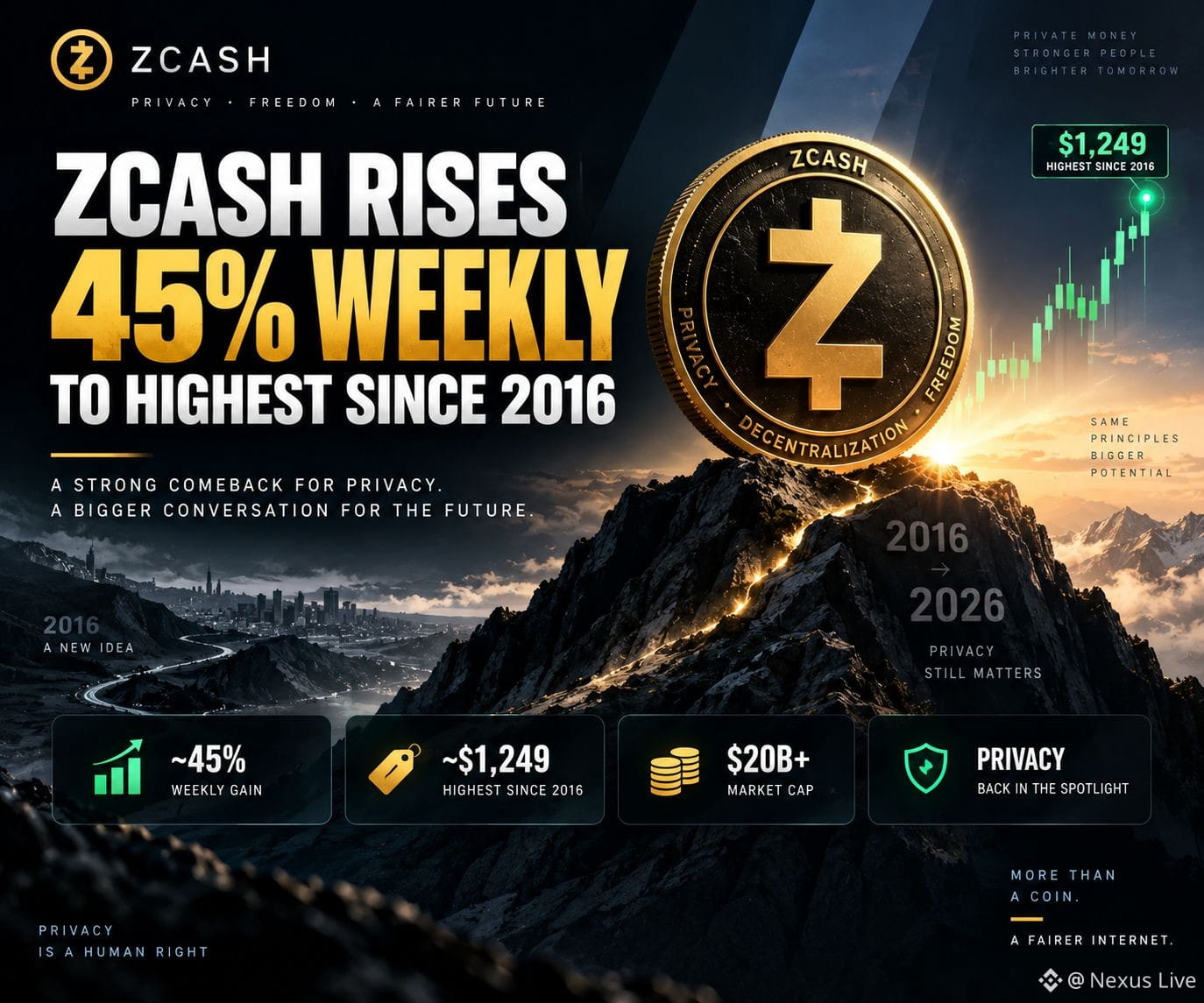
🚨 ZEC IS BACK AT 2016 LEVELS
$ZEC just gained roughly 45% in a week briefly reaching ~$1,249 its highest level since 2016.
The bigger story is the comeback of the privacy-coin narrative with Zcash now above a $20B market cap.
After a move this strong volatility matters.
DYOR. NFA.
#ZEC #Zcash #Privacy #Crypto
#ZcashRises45%WeeklyToHighestSince2016
🚨 ZEC IS BACK AT 2016 LEVELS
$ZEC just gained roughly 45% in a week briefly reaching ~$1,249 its highest level since 2016.
The bigger story is the comeback of the privacy-coin narrative with Zcash now above a $20B market cap.
After a move this strong volatility matters.
DYOR. NFA.
#ZEC #Zcash #Privacy #Crypto
#ZcashRises45%WeeklyToHighestSince2016
$ZEC just gained roughly 45% in a week briefly reaching ~$1,249 its highest level since 2016.
The bigger story is the comeback of the privacy-coin narrative with Zcash now above a $20B market cap.
After a move this strong volatility matters.
DYOR. NFA.
#ZEC #Zcash #Privacy #Crypto
#ZcashRises45%WeeklyToHighestSince2016
3
4.9k
·
--

Article
Project Deep Dive: Why SagaVolt Might Be the Next Big Opportunity in Energy RWAsLately, I’ve started focusing quite a bit on SagaVolt, and the reason is pretty straightforward: the projects that actually make me want to spend time researching these days aren't driven by pure hype, trending narratives, or short-term clout.
They are the infrastructure projects capable of truly embedding Web3 tech into real-world industries—and creating long-term, sustainable demand.
SagaVolt feels like a prime candidate in that direction.
Its wedge into the market is the distributed green energy sector in Indonesia.
When a lot of people see the word "energy," their first reaction might be that it feels pretty disconnected from Crypto.
But look at it from another angle: this might actually be one of the most imaginative, high-potential use cases for RWAs moving forward.
Indonesia consists of thousands of islands, meaning its energy supply naturally leans distributed.
Industrial parks, community microgrids, fishing ports, cold chains, mining sites, and remote areas all have a very real, non-negotiable demand for stable power.
At the same time, renewable energy sources like solar, micro-hydro, biomass, and wind are widely scattered across different regions.
The catch?
If you want these energy resources to scale into a real market, there's a whole stack of underlying infrastructure issues to fix first:
How do you measure power output in a tamper-proof way?
How do you prove its green attributes?
How do participants settle payments?
How do long-term Power Purchase Agreements (PPAs) get standardized?
How can data be verified while preserving privacy?
What makes SagaVolt stand out is that it isn't just tackling a single isolated step.
It's building an end-to-end network spanning metering, proof generation, settlement, assetization, clearing, and governance.
The project designed PoG—or the Proof-of-Green mechanism—combining ZK (zero-knowledge proofs), TEE (Trusted Execution Environments), device identities, and on-chain verification so that energy data isn't just recorded, but crucial to point out, verifiable.
From an investor's perspective, I think this point is huge.
The RWAs that actually bring value in the future won't just be tokenized versions of real-world assets.
The winners will be the ones that solve the hardest problem before assets ever hit the chain: the authenticity problem.
You can turn a contract into an NFT or wrap an asset into a Token, but if the underlying data can't be verified, your RWA is ultimately just financial packaging.
SagaVolt builds trust from the ground up starting at the hardware and metering layer, then scales up to eKWh, PPA-NFTs, RECs, and carbon assets.
That logical chain is rock solid.
Another point I really value is that SagaVolt doesn't stop at energy data—it actively tries to unlock "energy assetization."
For instance, eKWh can serve as an on-chain power accounting unit, PPA-NFTs can hold long-term power purchase agreements, while RECs and carbon assets can enter independent green asset markets.
If real devices and real-world energy use cases continue onboarding in the future, it won't just generate a single product, but a full-fledged ecosystem of on-chain assets and cash flows revolving around energy.
And that’s what sets SagaVolt apart from pure narrative plays.
Its growth thesis can theoretically stem from real business expansion:
More devices.
More metering data.
Higher energy transaction volume.
More PPAs.
Higher oracle call frequency.
Expanding data services.
All of which convert into organic demand for the network.
Now let’s talk about SAVLT.
When I personally analyze a Token, the main thing I care about is:
Is this Token genuinely a vital component of the network's operation?
SagaVolt’s design here is crystal clear.
SAVLT plays an active role in Gas fees, validator staking, restaking, oracle collateral, settlement collateral, insurance pools, governance, and ecosystem incentives—it’s far from just a governance voting chip.
Validation nodes need SAVLT, metering witnesses need to stake, oracle nodes need to participate in staking, while hardware and data contributors get rewarded in ecosystem incentives.
Once this flywheel starts spinning, Token demand becomes directly tied to real network activity.
Even more interesting is the upside of SagaVolt’s data market layer.
Energy networks naturally generate massive amounts of daily data spanning pricing, equipment metrics, weather, carbon emissions, power consumption, and supply.
SagaVolt designed a Decentralized Energy Oracle along with a Data DAO, aiming to turn raw data into authorized, subscribable, revenue-generating data products.
In short, it’s not just an energy settlement network—it could gradually evolve into a full-scale energy data infrastructure.
Taking an investor's view, what makes SagaVolt worth watching isn't just a buzzword.
It hits multiple long-term macro trends simultaneously:
RWAs, Green Energy, DePIN, Decentralized Data, ZK Privacy, and Real-World Asset Digitalization.
Plus, it isn't targeting already mature Western energy markets, but rather region-specific environments like Indonesia that organically demand distributed energy, island-tailored solutions, and infrastructure upgrades.
If it successfully scales from individual microgrids, industrial zones, cold chains, ports, and power devices into a unified regional energy web, SagaVolt's upside could go way beyond just a typical "energy concept" token.
Right now, I view it as:
Gradually transforming real-world "electricity" into an on-chain digital asset that can be verified, settled, traded, and financed.
The projects truly worth tracking long-term aren't always the best storytellers—they're the ones getting real-world industries that previously had zero on-chain demand to actually start using the blockchain.
SagaVolt is actively building that bridge.
That’s why I’m keeping a close eye on the SagaVolt and SAVLT ecosystem moving forward.
The above content represents personal research and observations only and does not constitute financial or investment advice.
Project Deep Dive: Why SagaVolt Might Be the Next Big Opportunity in Energy RWAs
Lately, I’ve started focusing quite a bit on SagaVolt, and the reason is pretty straightforward: the projects that actually make me want to spend time researching these days aren't driven by pure hype, trending narratives, or short-term clout.
They are the infrastructure projects capable of truly embedding Web3 tech into real-world industries—and creating long-term, sustainable demand.
SagaVolt feels like a prime candidate in that direction.
Its wedge into the market is the distributed green energy sector in Indonesia.
When a lot of people see the word "energy," their first reaction might be that it feels pretty disconnected from Crypto.
But look at it from another angle: this might actually be one of the most imaginative, high-potential use cases for RWAs moving forward.
Indonesia consists of thousands of islands, meaning its energy supply naturally leans distributed.
Industrial parks, community microgrids, fishing ports, cold chains, mining sites, and remote areas all have a very real, non-negotiable demand for stable power.
At the same time, renewable energy sources like solar, micro-hydro, biomass, and wind are widely scattered across different regions.
The catch?
If you want these energy resources to scale into a real market, there's a whole stack of underlying infrastructure issues to fix first:
How do you measure power output in a tamper-proof way?
How do you prove its green attributes?
How do participants settle payments?
How do long-term Power Purchase Agreements (PPAs) get standardized?
How can data be verified while preserving privacy?
What makes SagaVolt stand out is that it isn't just tackling a single isolated step.
It's building an end-to-end network spanning metering, proof generation, settlement, assetization, clearing, and governance.
The project designed PoG—or the Proof-of-Green mechanism—combining ZK (zero-knowledge proofs), TEE (Trusted Execution Environments), device identities, and on-chain verification so that energy data isn't just recorded, but crucial to point out, verifiable.
From an investor's perspective, I think this point is huge.
The RWAs that actually bring value in the future won't just be tokenized versions of real-world assets.
The winners will be the ones that solve the hardest problem before assets ever hit the chain: the authenticity problem.
You can turn a contract into an NFT or wrap an asset into a Token, but if the underlying data can't be verified, your RWA is ultimately just financial packaging.
SagaVolt builds trust from the ground up starting at the hardware and metering layer, then scales up to eKWh, PPA-NFTs, RECs, and carbon assets.
That logical chain is rock solid.
Another point I really value is that SagaVolt doesn't stop at energy data—it actively tries to unlock "energy assetization."
For instance, eKWh can serve as an on-chain power accounting unit, PPA-NFTs can hold long-term power purchase agreements, while RECs and carbon assets can enter independent green asset markets.
If real devices and real-world energy use cases continue onboarding in the future, it won't just generate a single product, but a full-fledged ecosystem of on-chain assets and cash flows revolving around energy.
And that’s what sets SagaVolt apart from pure narrative plays.
Its growth thesis can theoretically stem from real business expansion:
More devices.
More metering data.
Higher energy transaction volume.
More PPAs.
Higher oracle call frequency.
Expanding data services.
All of which convert into organic demand for the network.
Now let’s talk about SAVLT.
When I personally analyze a Token, the main thing I care about is:
Is this Token genuinely a vital component of the network's operation?
SagaVolt’s design here is crystal clear.
SAVLT plays an active role in Gas fees, validator staking, restaking, oracle collateral, settlement collateral, insurance pools, governance, and ecosystem incentives—it’s far from just a governance voting chip.
Validation nodes need SAVLT, metering witnesses need to stake, oracle nodes need to participate in staking, while hardware and data contributors get rewarded in ecosystem incentives.
Once this flywheel starts spinning, Token demand becomes directly tied to real network activity.
Even more interesting is the upside of SagaVolt’s data market layer.
Energy networks naturally generate massive amounts of daily data spanning pricing, equipment metrics, weather, carbon emissions, power consumption, and supply.
SagaVolt designed a Decentralized Energy Oracle along with a Data DAO, aiming to turn raw data into authorized, subscribable, revenue-generating data products.
In short, it’s not just an energy settlement network—it could gradually evolve into a full-scale energy data infrastructure.
Taking an investor's view, what makes SagaVolt worth watching isn't just a buzzword.
It hits multiple long-term macro trends simultaneously:
RWAs, Green Energy, DePIN, Decentralized Data, ZK Privacy, and Real-World Asset Digitalization.
Plus, it isn't targeting already mature Western energy markets, but rather region-specific environments like Indonesia that organically demand distributed energy, island-tailored solutions, and infrastructure upgrades.
If it successfully scales from individual microgrids, industrial zones, cold chains, ports, and power devices into a unified regional energy web, SagaVolt's upside could go way beyond just a typical "energy concept" token.
Right now, I view it as:
Gradually transforming real-world "electricity" into an on-chain digital asset that can be verified, settled, traded, and financed.
The projects truly worth tracking long-term aren't always the best storytellers—they're the ones getting real-world industries that previously had zero on-chain demand to actually start using the blockchain.
SagaVolt is actively building that bridge.
That’s why I’m keeping a close eye on the SagaVolt and SAVLT ecosystem moving forward.
The above content represents personal research and observations only and does not constitute financial or investment advice.
They are the infrastructure projects capable of truly embedding Web3 tech into real-world industries—and creating long-term, sustainable demand.
SagaVolt feels like a prime candidate in that direction.
Its wedge into the market is the distributed green energy sector in Indonesia.
When a lot of people see the word "energy," their first reaction might be that it feels pretty disconnected from Crypto.
But look at it from another angle: this might actually be one of the most imaginative, high-potential use cases for RWAs moving forward.
Indonesia consists of thousands of islands, meaning its energy supply naturally leans distributed.
Industrial parks, community microgrids, fishing ports, cold chains, mining sites, and remote areas all have a very real, non-negotiable demand for stable power.
At the same time, renewable energy sources like solar, micro-hydro, biomass, and wind are widely scattered across different regions.
The catch?
If you want these energy resources to scale into a real market, there's a whole stack of underlying infrastructure issues to fix first:
How do you measure power output in a tamper-proof way?
How do you prove its green attributes?
How do participants settle payments?
How do long-term Power Purchase Agreements (PPAs) get standardized?
How can data be verified while preserving privacy?
What makes SagaVolt stand out is that it isn't just tackling a single isolated step.
It's building an end-to-end network spanning metering, proof generation, settlement, assetization, clearing, and governance.
The project designed PoG—or the Proof-of-Green mechanism—combining ZK (zero-knowledge proofs), TEE (Trusted Execution Environments), device identities, and on-chain verification so that energy data isn't just recorded, but crucial to point out, verifiable.
From an investor's perspective, I think this point is huge.
The RWAs that actually bring value in the future won't just be tokenized versions of real-world assets.
The winners will be the ones that solve the hardest problem before assets ever hit the chain: the authenticity problem.
You can turn a contract into an NFT or wrap an asset into a Token, but if the underlying data can't be verified, your RWA is ultimately just financial packaging.
SagaVolt builds trust from the ground up starting at the hardware and metering layer, then scales up to eKWh, PPA-NFTs, RECs, and carbon assets.
That logical chain is rock solid.
Another point I really value is that SagaVolt doesn't stop at energy data—it actively tries to unlock "energy assetization."
For instance, eKWh can serve as an on-chain power accounting unit, PPA-NFTs can hold long-term power purchase agreements, while RECs and carbon assets can enter independent green asset markets.
If real devices and real-world energy use cases continue onboarding in the future, it won't just generate a single product, but a full-fledged ecosystem of on-chain assets and cash flows revolving around energy.
And that’s what sets SagaVolt apart from pure narrative plays.
Its growth thesis can theoretically stem from real business expansion:
More devices.
More metering data.
Higher energy transaction volume.
More PPAs.
Higher oracle call frequency.
Expanding data services.
All of which convert into organic demand for the network.
Now let’s talk about SAVLT.
When I personally analyze a Token, the main thing I care about is:
Is this Token genuinely a vital component of the network's operation?
SagaVolt’s design here is crystal clear.
SAVLT plays an active role in Gas fees, validator staking, restaking, oracle collateral, settlement collateral, insurance pools, governance, and ecosystem incentives—it’s far from just a governance voting chip.
Validation nodes need SAVLT, metering witnesses need to stake, oracle nodes need to participate in staking, while hardware and data contributors get rewarded in ecosystem incentives.
Once this flywheel starts spinning, Token demand becomes directly tied to real network activity.
Even more interesting is the upside of SagaVolt’s data market layer.
Energy networks naturally generate massive amounts of daily data spanning pricing, equipment metrics, weather, carbon emissions, power consumption, and supply.
SagaVolt designed a Decentralized Energy Oracle along with a Data DAO, aiming to turn raw data into authorized, subscribable, revenue-generating data products.
In short, it’s not just an energy settlement network—it could gradually evolve into a full-scale energy data infrastructure.
Taking an investor's view, what makes SagaVolt worth watching isn't just a buzzword.
It hits multiple long-term macro trends simultaneously:
RWAs, Green Energy, DePIN, Decentralized Data, ZK Privacy, and Real-World Asset Digitalization.
Plus, it isn't targeting already mature Western energy markets, but rather region-specific environments like Indonesia that organically demand distributed energy, island-tailored solutions, and infrastructure upgrades.
If it successfully scales from individual microgrids, industrial zones, cold chains, ports, and power devices into a unified regional energy web, SagaVolt's upside could go way beyond just a typical "energy concept" token.
Right now, I view it as:
Gradually transforming real-world "electricity" into an on-chain digital asset that can be verified, settled, traded, and financed.
The projects truly worth tracking long-term aren't always the best storytellers—they're the ones getting real-world industries that previously had zero on-chain demand to actually start using the blockchain.
SagaVolt is actively building that bridge.
That’s why I’m keeping a close eye on the SagaVolt and SAVLT ecosystem moving forward.
The above content represents personal research and observations only and does not constitute financial or investment advice.
2
297
·
--
$BNB: $750 Level Reclaimed
$BNB has moved back above the $750 mark reaching around $750.92 with a 3.43% 24H gain according to Binance market data.
Beyond price BNB Chain is pushing deeper into tokenized equities and
AI powered on chain applications. Its current $20K Tokenized Stocks Hackathon runs from Sept. 16 to Oct. 11, with tracks focused on tokenized stock products and agents.
Recent Binance Research also shows tokenized equity DeFi TVL reaching $289.1M by Sept. 9 highlighting growing on chain utility.
The bigger question is whether this ecosystem activity can translate into sustained usage.
#BNB #BNBChain #crypto $BNB
{future}(BNBUSDT)
$BNB : $750 Level Reclaimed
$BNB has moved back above the $750 mark reaching around $750.92 with a 3.43% 24H gain according to Binance market data.
Beyond price BNB Chain is pushing deeper into tokenized equities and
AI powered on chain applications. Its current $20K Tokenized Stocks Hackathon runs from Sept. 16 to Oct. 11, with tracks focused on tokenized stock products and agents.
Recent Binance Research also shows tokenized equity DeFi TVL reaching $289.1M by Sept. 9 highlighting growing on chain utility.
The bigger question is whether this ecosystem activity can translate into sustained usage.
#BNB #BNBChain #crypto $BNB
$BNB has moved back above the $750 mark reaching around $750.92 with a 3.43% 24H gain according to Binance market data.
Beyond price BNB Chain is pushing deeper into tokenized equities and
AI powered on chain applications. Its current $20K Tokenized Stocks Hackathon runs from Sept. 16 to Oct. 11, with tracks focused on tokenized stock products and agents.
Recent Binance Research also shows tokenized equity DeFi TVL reaching $289.1M by Sept. 9 highlighting growing on chain utility.
The bigger question is whether this ecosystem activity can translate into sustained usage.
#BNB #BNBChain #crypto $BNB

210
·
--
🔐 Paradigm Discloses ZEC Holding
Paradigm co-founder Matt Huang disclosed that Paradigm holds ZEC and is also an investor in the Zcash Open Development Lab (ZODL). The disclosure came as ZEC rallied sharply, pushing the privacy focused asset toward the $1,400 area.
The position size and purchase price were not disclosed so the announcement should be viewed as a signal of exposure not proof of a specific investment strategy.
With Zcash also advancing governance changes around faster block times privacy and institutional interest are now converging around $ZEC.
DYOR. NFA.
#zec #Zcash #crypto
#ParadigmDisclosesZECHolding
🔐 Paradigm Discloses ZEC Holding
Paradigm co-founder Matt Huang disclosed that Paradigm holds ZEC and is also an investor in the Zcash Open Development Lab (ZODL). The disclosure came as ZEC rallied sharply, pushing the privacy focused asset toward the $1,400 area.
The position size and purchase price were not disclosed so the announcement should be viewed as a signal of exposure not proof of a specific investment strategy.
With Zcash also advancing governance changes around faster block times privacy and institutional interest are now converging around $ZEC.
DYOR. NFA.
#zec #Zcash #crypto
#ParadigmDisclosesZECHolding
Paradigm co-founder Matt Huang disclosed that Paradigm holds ZEC and is also an investor in the Zcash Open Development Lab (ZODL). The disclosure came as ZEC rallied sharply, pushing the privacy focused asset toward the $1,400 area.
The position size and purchase price were not disclosed so the announcement should be viewed as a signal of exposure not proof of a specific investment strategy.
With Zcash also advancing governance changes around faster block times privacy and institutional interest are now converging around $ZEC.
DYOR. NFA.
#zec #Zcash #crypto
#ParadigmDisclosesZECHolding
172
·
--
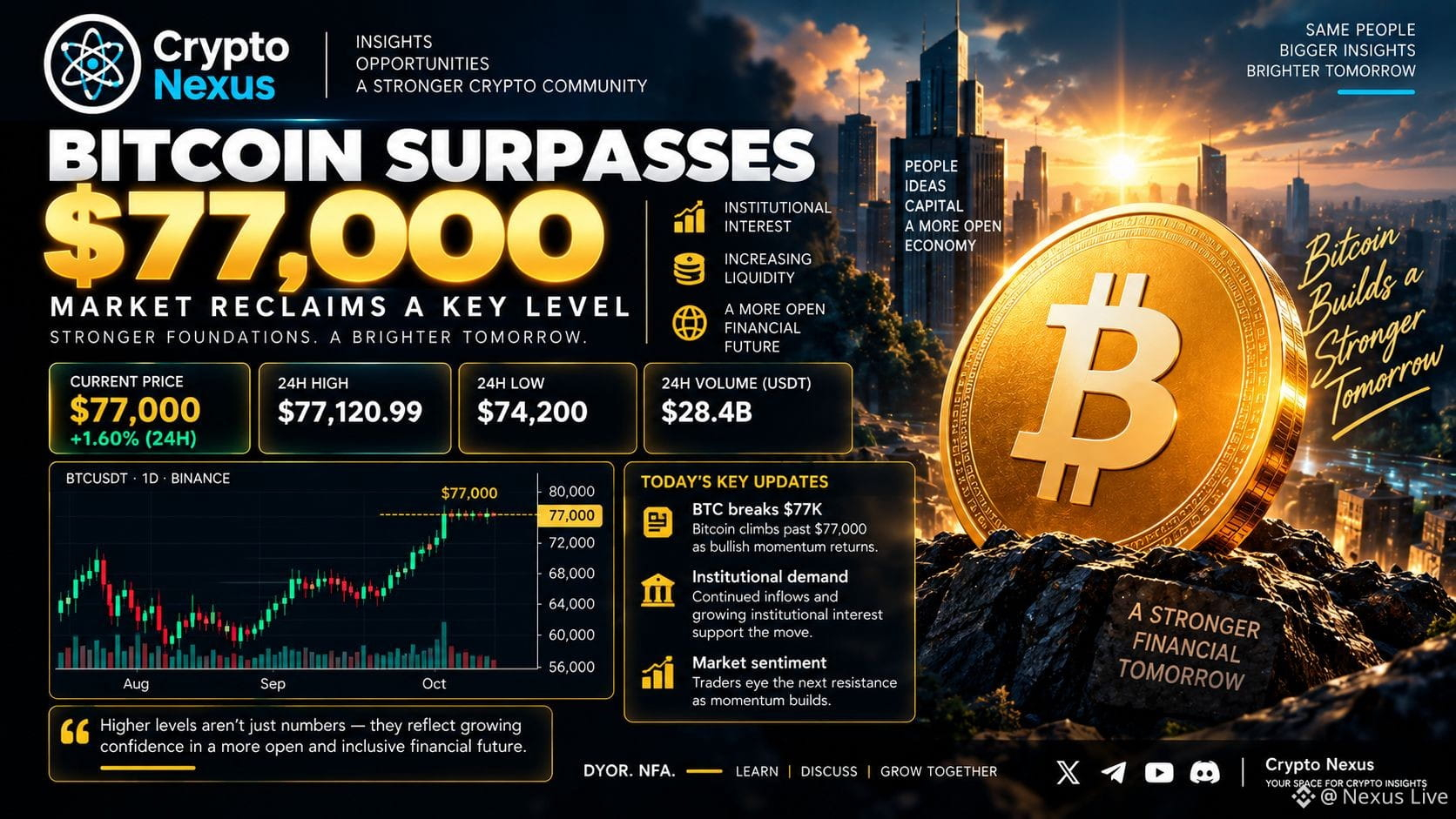
🚨 Bitcoin Surpasses $77,000
Bitcoin has reclaimed the $77,000 level putting a key psychological zone back in focus. The move comes as market liquidity institutional activity and broader sentiment continue to influence BTC price action.
The next question is whether $BTC can sustain above $77K or face profit taking after the sharp move. Traders should watch volume and the reaction around this level closely.
Momentum is back but volatility remains.
#BitcoinSurpasses$77000
#BTC #bitcoin #Crypto
🚨 Bitcoin Surpasses $77,000
Bitcoin has reclaimed the $77,000 level putting a key psychological zone back in focus. The move comes as market liquidity institutional activity and broader sentiment continue to influence BTC price action.
The next question is whether $BTC can sustain above $77K or face profit taking after the sharp move. Traders should watch volume and the reaction around this level closely.
Momentum is back but volatility remains.
#BitcoinSurpasses$77000
#BTC #bitcoin #Crypto
Bitcoin has reclaimed the $77,000 level putting a key psychological zone back in focus. The move comes as market liquidity institutional activity and broader sentiment continue to influence BTC price action.
The next question is whether $BTC can sustain above $77K or face profit taking after the sharp move. Traders should watch volume and the reaction around this level closely.
Momentum is back but volatility remains.
#BitcoinSurpasses$77000
#BTC #bitcoin #Crypto
1
83
·
--
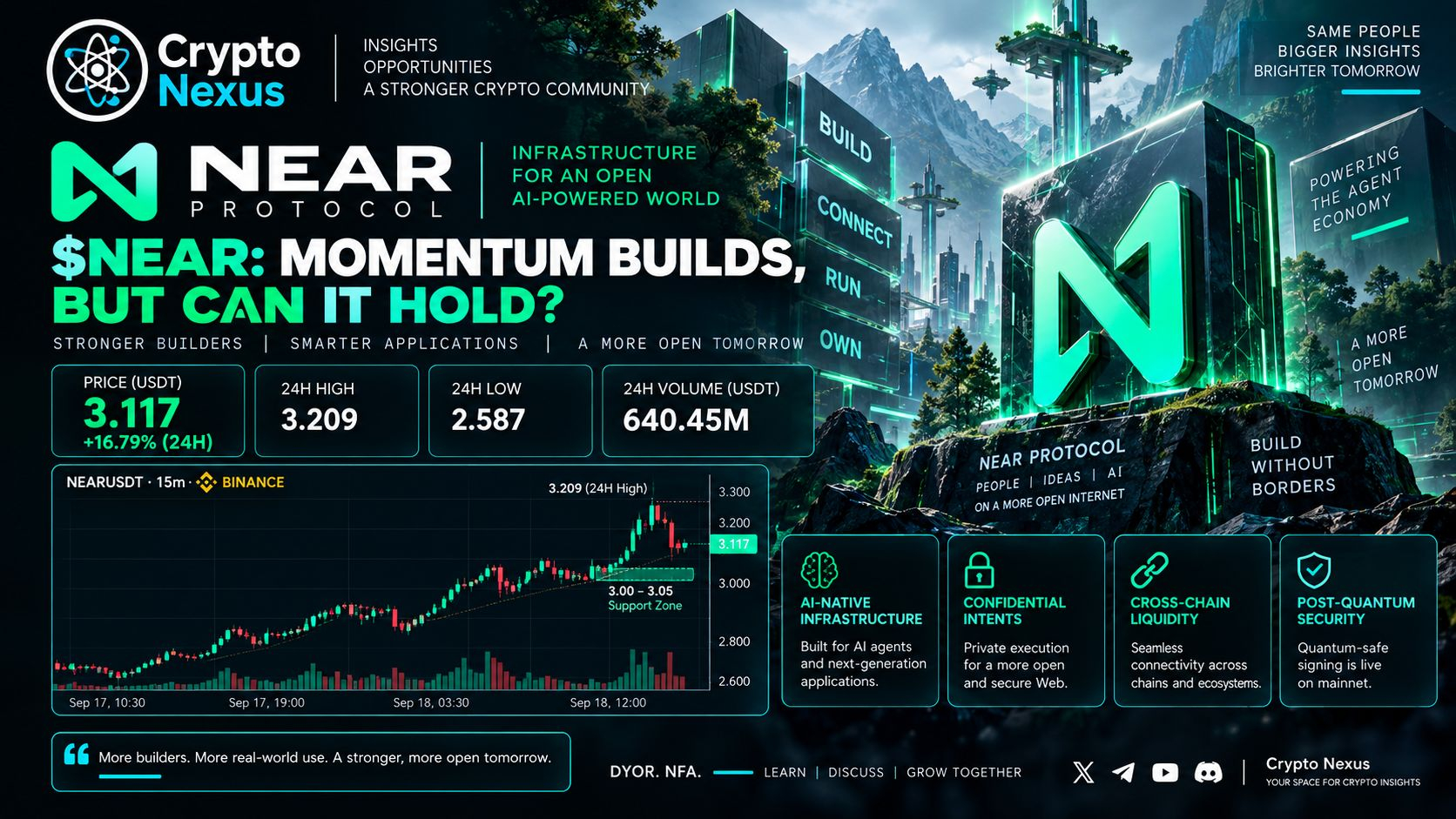
$NEAR : Momentum Builds But Can It Hold?
$NEAR is showing strong momentum today, trading around $3.117 up 16.79% on Binance Perpetuals. The 24h range is $2.587–$3.209 with roughly $640.45M in USDT volume.
The 15 minute chart remains structurally bullish but price has pulled back from the $3.209 high. The key area now is whether buyers can reclaim the recent high while holding above the $3.00–$3.05 zone.
Beyond price NEAR is gaining attention around Confidential Intents AI infrastructure and post quantum security while Binance is also running a NEAR trading tournament with up to 400 BNB in token vouchers.
#NEAR🚀🚀🚀 #nearprotocol #Crypto
$NEAR
{spot}(NEARUSDT)
$NEAR : Momentum Builds But Can It Hold?
$NEAR is showing strong momentum today, trading around $3.117 up 16.79% on Binance Perpetuals. The 24h range is $2.587–$3.209 with roughly $640.45M in USDT volume.
The 15 minute chart remains structurally bullish but price has pulled back from the $3.209 high. The key area now is whether buyers can reclaim the recent high while holding above the $3.00–$3.05 zone.
Beyond price NEAR is gaining attention around Confidential Intents AI infrastructure and post quantum security while Binance is also running a NEAR trading tournament with up to 400 BNB in token vouchers.
#NEAR🚀🚀🚀 #nearprotocol #Crypto
$NEAR
$NEAR is showing strong momentum today, trading around $3.117 up 16.79% on Binance Perpetuals. The 24h range is $2.587–$3.209 with roughly $640.45M in USDT volume.
The 15 minute chart remains structurally bullish but price has pulled back from the $3.209 high. The key area now is whether buyers can reclaim the recent high while holding above the $3.00–$3.05 zone.
Beyond price NEAR is gaining attention around Confidential Intents AI infrastructure and post quantum security while Binance is also running a NEAR trading tournament with up to 400 BNB in token vouchers.
#NEAR🚀🚀🚀 #nearprotocol #Crypto
$NEAR
2
319
·
--
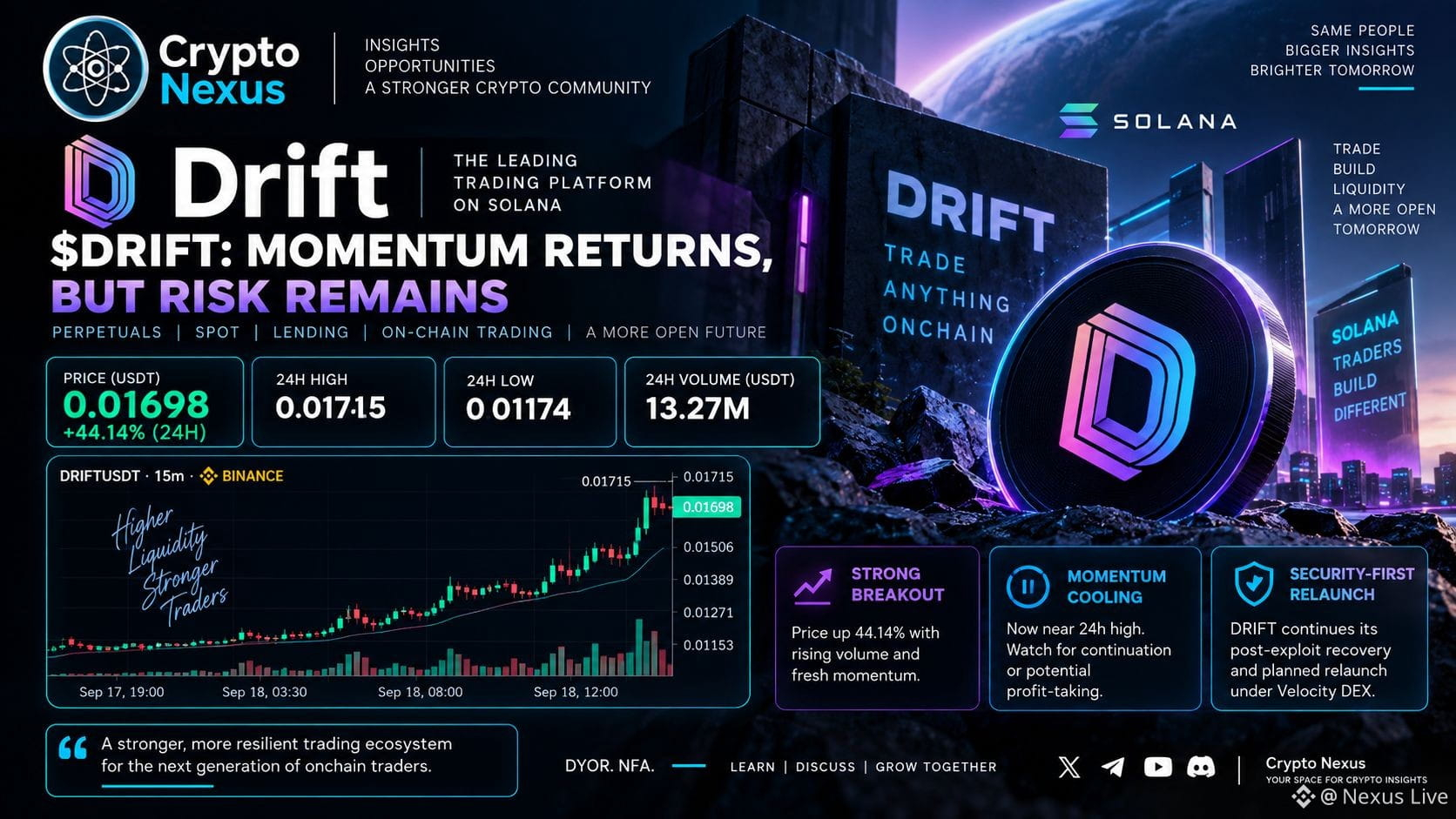
$DRIFT: Momentum Returns But Risk Remains
$DRIFT is showing a sharp move on Binance Perpetuals trading around $0.01698 up 44.14% in 24h. The pair has reached $0.01715 with roughly $13.27M USDT volume.
The 15-minute chart shows a strong breakout with rising volume and positive MACD momentum. However price is now close to the daily high so the next test is whether buyers can sustain this move rather than trigger profit taking.
DRIFT’s broader story also remains tied to its post exploit recovery and planned relaunch under Velocity DEX making security and execution key factors to watch.
Strong momentum, but volatility is elevated.
#DRIFT #solana #crypto
$DRIFT
{future}(DRIFTUSDT)
$DRIFT : Momentum Returns But Risk Remains
$DRIFT is showing a sharp move on Binance Perpetuals trading around $0.01698 up 44.14% in 24h. The pair has reached $0.01715 with roughly $13.27M USDT volume.
The 15-minute chart shows a strong breakout with rising volume and positive MACD momentum. However price is now close to the daily high so the next test is whether buyers can sustain this move rather than trigger profit taking.
DRIFT’s broader story also remains tied to its post exploit recovery and planned relaunch under Velocity DEX making security and execution key factors to watch.
Strong momentum, but volatility is elevated.
#DRIFT #solana #crypto
$DRIFT
$DRIFT is showing a sharp move on Binance Perpetuals trading around $0.01698 up 44.14% in 24h. The pair has reached $0.01715 with roughly $13.27M USDT volume.
The 15-minute chart shows a strong breakout with rising volume and positive MACD momentum. However price is now close to the daily high so the next test is whether buyers can sustain this move rather than trigger profit taking.
DRIFT’s broader story also remains tied to its post exploit recovery and planned relaunch under Velocity DEX making security and execution key factors to watch.
Strong momentum, but volatility is elevated.
#DRIFT #solana #crypto
$DRIFT
3
422
·
--
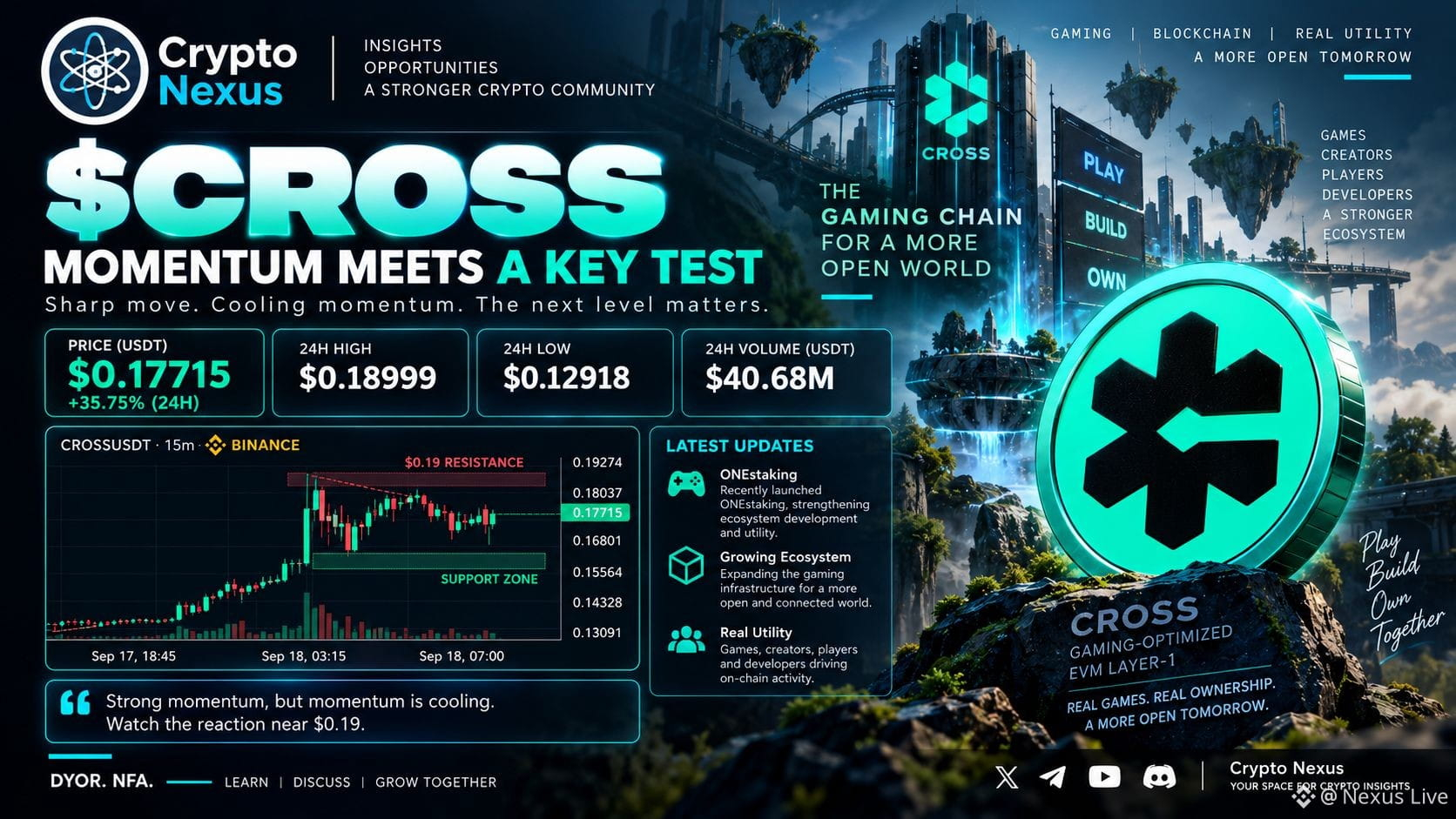
🚨 $CROSS : Momentum Meets a Key Test
$CROSS is showing strong momentum today trading around $0.177 up 35.75% on the Binance perpetual market. The 24h range is $0.129-$0.190 with roughly $40.68M USDT volume.
The 15 minute chart shows price consolidating after a sharp move while momentum has started cooling. The key question now is whether buyers can reclaim the $0.19 area or whether profit taking pushes price back toward lower support.
CROSS also recently released ONEstaking, adding another ecosystem development to watch.
High volatility = high risk. Manage accordingly.
#cross #crypto #Web3 $CROSS
{future}(CROSSUSDT)
🚨 $CROSS : Momentum Meets a Key Test
$CROSS is showing strong momentum today trading around $0.177 up 35.75% on the Binance perpetual market. The 24h range is $0.129-$0.190 with roughly $40.68M USDT volume.
The 15 minute chart shows price consolidating after a sharp move while momentum has started cooling. The key question now is whether buyers can reclaim the $0.19 area or whether profit taking pushes price back toward lower support.
CROSS also recently released ONEstaking, adding another ecosystem development to watch.
High volatility = high risk. Manage accordingly.
#cross #crypto #Web3 $CROSS
$CROSS is showing strong momentum today trading around $0.177 up 35.75% on the Binance perpetual market. The 24h range is $0.129-$0.190 with roughly $40.68M USDT volume.
The 15 minute chart shows price consolidating after a sharp move while momentum has started cooling. The key question now is whether buyers can reclaim the $0.19 area or whether profit taking pushes price back toward lower support.
CROSS also recently released ONEstaking, adding another ecosystem development to watch.
High volatility = high risk. Manage accordingly.
#cross #crypto #Web3 $CROSS
2
208
·
--
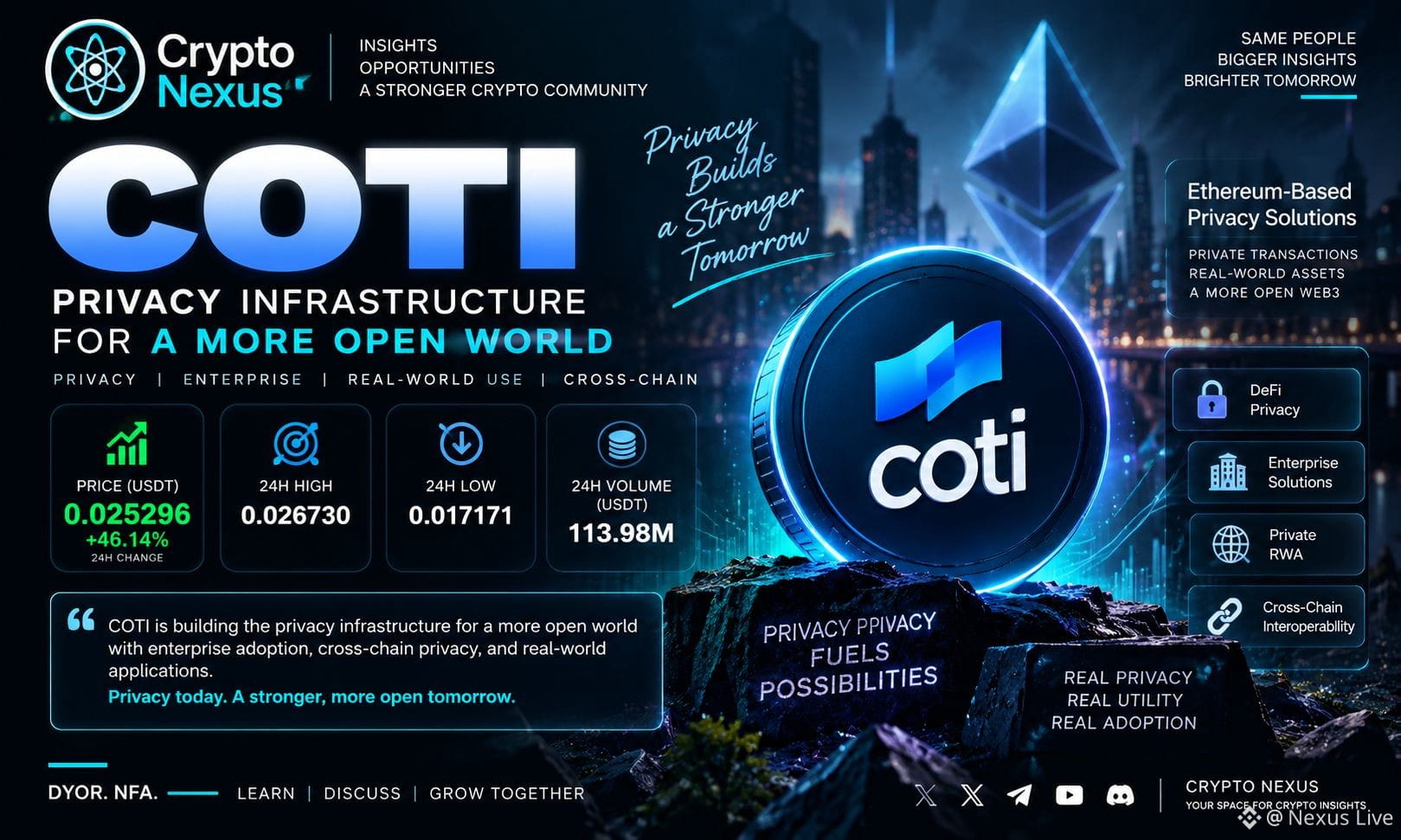
$COTI : Privacy Narrative Meets Strong Momentum
$COTI is catching attention as its Ethereum based privacy push gains visibility. Today COTI is trading around $0.0253 up 46.14% with 24h volume near $113.98M and a high of $0.02673.
COTI’s latest roadmap highlights its enterprise privacy infrastructure and continued focus on cross chain privacy and private RWA applications.
The chart shows strong momentum, but after a sharp move, volatility remains a key factor to watch.
$COTI
{spot}(COTIUSDT)
#COTI #Crypto #Privacy
$COTI : Privacy Narrative Meets Strong Momentum
$COTI is catching attention as its Ethereum based privacy push gains visibility. Today COTI is trading around $0.0253 up 46.14% with 24h volume near $113.98M and a high of $0.02673.
COTI’s latest roadmap highlights its enterprise privacy infrastructure and continued focus on cross chain privacy and private RWA applications.
The chart shows strong momentum, but after a sharp move, volatility remains a key factor to watch.
$COTI
#COTI #Crypto #Privacy
$COTI is catching attention as its Ethereum based privacy push gains visibility. Today COTI is trading around $0.0253 up 46.14% with 24h volume near $113.98M and a high of $0.02673.
COTI’s latest roadmap highlights its enterprise privacy infrastructure and continued focus on cross chain privacy and private RWA applications.
The chart shows strong momentum, but after a sharp move, volatility remains a key factor to watch.
$COTI
#COTI #Crypto #Privacy
5
496
·
--
🚨 $AVA : Exchange Listing Meets Buyback Momentum
$AVA is back in focus after a major exchange development. Travala’s native token was added to Bithumb’s KRW market on Sept. 17 while its August update reported 165K Smart Program members (+110% YoY) and 369,881 AVA repurchased through its monthly buyback.
At the same time Binance placed AVA under its Monitoring Tag adding another factor for traders to watch.
The key story now is balancing ecosystem growth with exchange related risk.
#AVA #Travala #crypto
$AVA
{spot}(AVAUSDT)
🚨 $AVA : Exchange Listing Meets Buyback Momentum
$AVA is back in focus after a major exchange development. Travala’s native token was added to Bithumb’s KRW market on Sept. 17 while its August update reported 165K Smart Program members (+110% YoY) and 369,881 AVA repurchased through its monthly buyback.
At the same time Binance placed AVA under its Monitoring Tag adding another factor for traders to watch.
The key story now is balancing ecosystem growth with exchange related risk.
#AVA #Travala #crypto
$AVA
$AVA is back in focus after a major exchange development. Travala’s native token was added to Bithumb’s KRW market on Sept. 17 while its August update reported 165K Smart Program members (+110% YoY) and 369,881 AVA repurchased through its monthly buyback.
At the same time Binance placed AVA under its Monitoring Tag adding another factor for traders to watch.
The key story now is balancing ecosystem growth with exchange related risk.
#AVA #Travala #crypto
$AVA

1
331
·
--
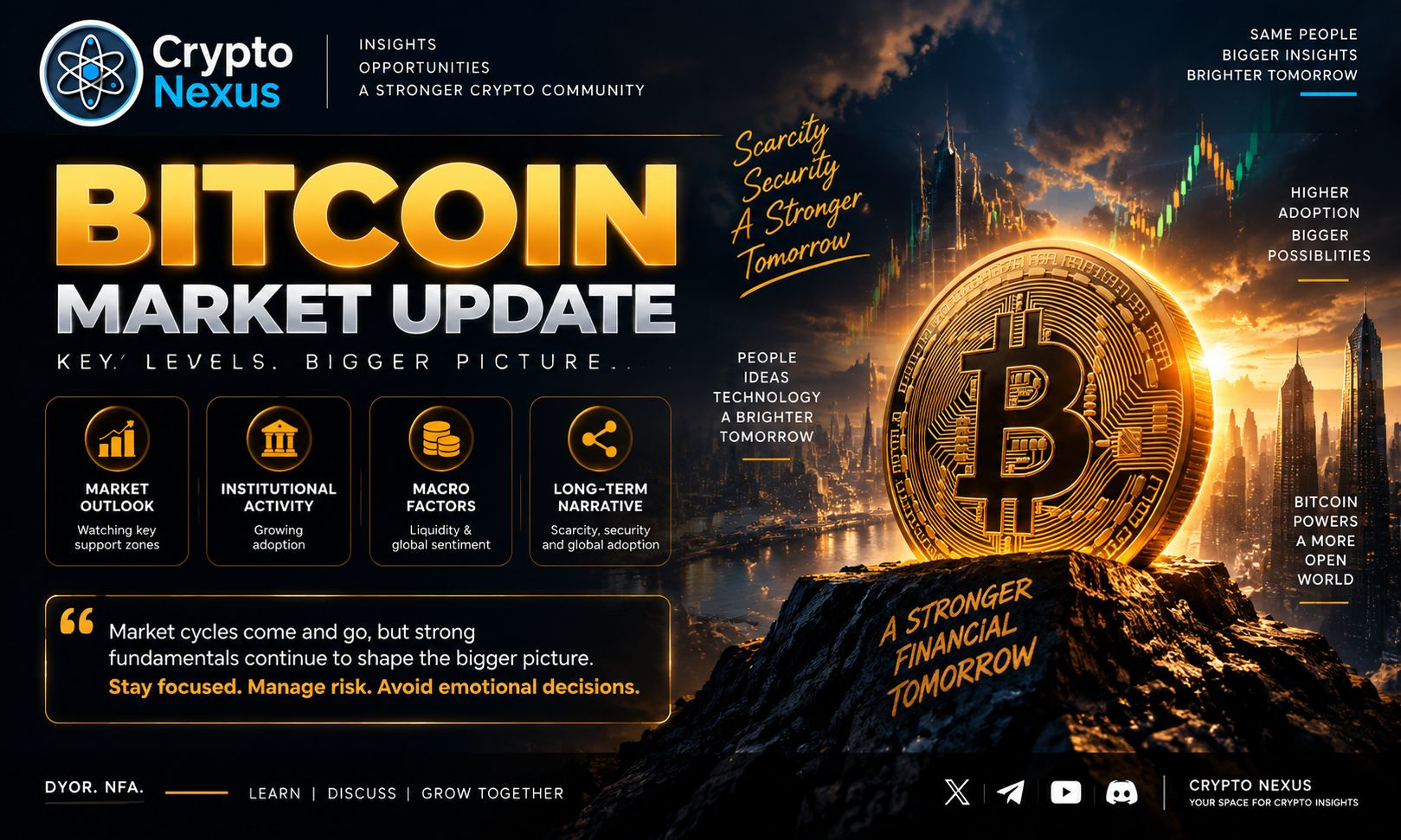
Bitcoin Update Market Watch
Bitcoin is holding a key position as the crypto market continues to react to macro factors liquidity conditions and investor sentiment. $BTC is trading around the $76K level with the market closely watching support zones institutional activity and upcoming catalysts.
Despite short term volatility Bitcoin’s long term narrative remains focused on scarcity network security and growing global adoption. Market cycles come and go but strong fundamentals continue to shape the bigger picture.
Stay focused. Manage risk. Avoid emotional decisions.
DYOR. NFA.
#BTC #Bitcoin #crypto
Bitcoin Update Market Watch
Bitcoin is holding a key position as the crypto market continues to react to macro factors liquidity conditions and investor sentiment. $BTC is trading around the $76K level with the market closely watching support zones institutional activity and upcoming catalysts.
Despite short term volatility Bitcoin’s long term narrative remains focused on scarcity network security and growing global adoption. Market cycles come and go but strong fundamentals continue to shape the bigger picture.
Stay focused. Manage risk. Avoid emotional decisions.
DYOR. NFA.
#BTC #Bitcoin #crypto
Bitcoin is holding a key position as the crypto market continues to react to macro factors liquidity conditions and investor sentiment. $BTC is trading around the $76K level with the market closely watching support zones institutional activity and upcoming catalysts.
Despite short term volatility Bitcoin’s long term narrative remains focused on scarcity network security and growing global adoption. Market cycles come and go but strong fundamentals continue to shape the bigger picture.
Stay focused. Manage risk. Avoid emotional decisions.
DYOR. NFA.
#BTC #Bitcoin #crypto
2
235
·
--
⏳ TIME PROTOCOL HAS BEGUN ⏳
⭐️ Every second, 1 $TIME disappears FOREVER.
🔥 Buy it today — tomorrow, there may not be enough TIME left for you.
⭐️ The clock won't wait.
The supply won't come back.
And TIME only moves in one direction.
➡️ 1 SECOND = 1 TIME GONE.
⭐️DON'T WAIT FOR TOMORROW ⭐️
🌐 For more Details : https://timeonchain.org/
⏳ TIME PROTOCOL HAS BEGUN ⏳
⭐️ Every second, 1 $TIME disappears FOREVER.
🔥 Buy it today — tomorrow, there may not be enough TIME left for you.
⭐️ The clock won't wait.
The supply won't come back.
And TIME only moves in one direction.
➡️ 1 SECOND = 1 TIME GONE.
⭐️DON'T WAIT FOR TOMORROW ⭐️
🌐 For more Details : https://timeonchain.org/
⭐️ Every second, 1 $TIME disappears FOREVER.
🔥 Buy it today — tomorrow, there may not be enough TIME left for you.
⭐️ The clock won't wait.
The supply won't come back.
And TIME only moves in one direction.
➡️ 1 SECOND = 1 TIME GONE.
⭐️DON'T WAIT FOR TOMORROW ⭐️
🌐 For more Details : https://timeonchain.org/

2
299
·
--
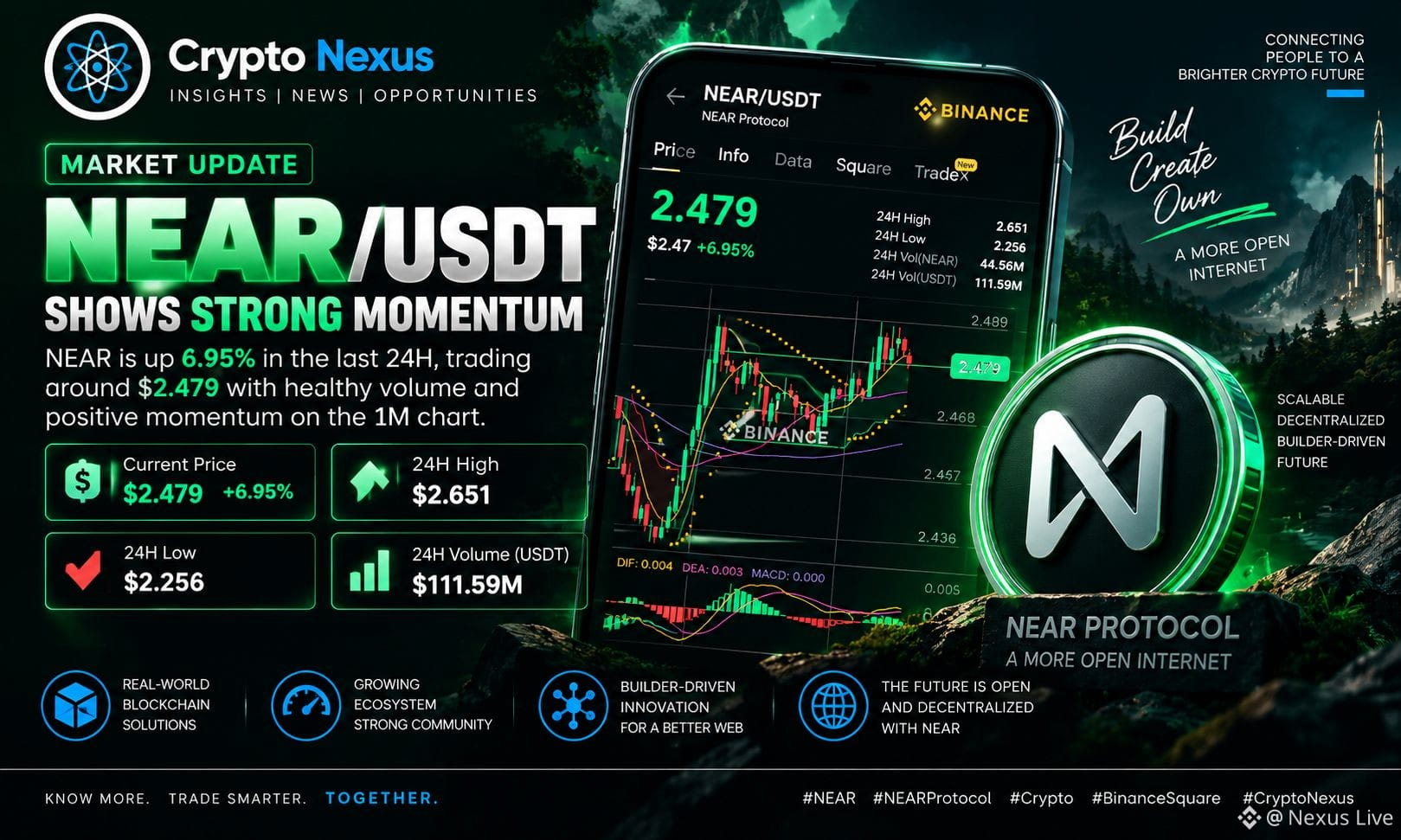
$NEAR Quick Market Update
NEAR/USDT is trading around $2.479 up 6.95% over the last 24H.
24H range: $2.256 - $2.651
24H USDT volume: $111.59M
On the 1M chart, price is holding above the short term moving averages while MACD remains slightly positive.
The interesting part now is whether this momentum can hold after the recent push.
#NEAR #NEARProtocol #Crypto #BinanceSquare
$NEAR Quick Market Update
NEAR/USDT is trading around $2.479 up 6.95% over the last 24H.
24H range: $2.256 - $2.651
24H USDT volume: $111.59M
On the 1M chart, price is holding above the short term moving averages while MACD remains slightly positive.
The interesting part now is whether this momentum can hold after the recent push.
#NEAR #NEARProtocol #Crypto #BinanceSquare
NEAR/USDT is trading around $2.479 up 6.95% over the last 24H.
24H range: $2.256 - $2.651
24H USDT volume: $111.59M
On the 1M chart, price is holding above the short term moving averages while MACD remains slightly positive.
The interesting part now is whether this momentum can hold after the recent push.
#NEAR #NEARProtocol #Crypto #BinanceSquare
1
292
·
--
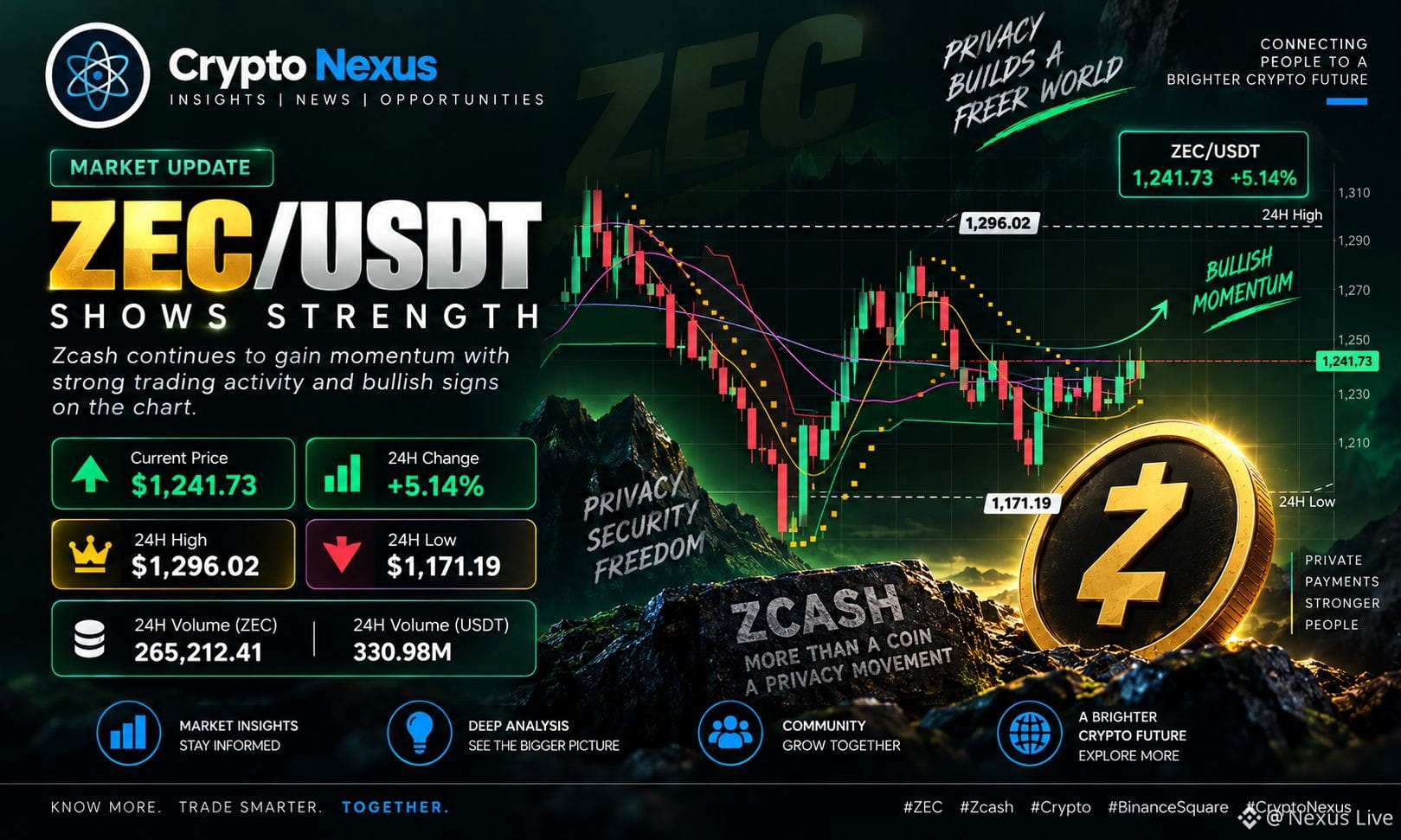
🟢 $ZEC is holding strong.
ZEC/USDT is up +5.14% in 24H, trading around $1,241.73 with $330.98M in volume.
Price is holding above the $1,239 area after the recent recovery.
Now watching $1,244–$1,248 for a potential breakout.
#ZEC #Zcash #Crypto #BinanceSquare
$ZEC
{spot}(ZECUSDT)
🟢 $ZEC is holding strong.
ZEC/USDT is up +5.14% in 24H, trading around $1,241.73 with $330.98M in volume.
Price is holding above the $1,239 area after the recent recovery.
Now watching $1,244–$1,248 for a potential breakout.
#ZEC #Zcash #Crypto #BinanceSquare
$ZEC
ZEC/USDT is up +5.14% in 24H, trading around $1,241.73 with $330.98M in volume.
Price is holding above the $1,239 area after the recent recovery.
Now watching $1,244–$1,248 for a potential breakout.
#ZEC #Zcash #Crypto #BinanceSquare
$ZEC
440
·
--
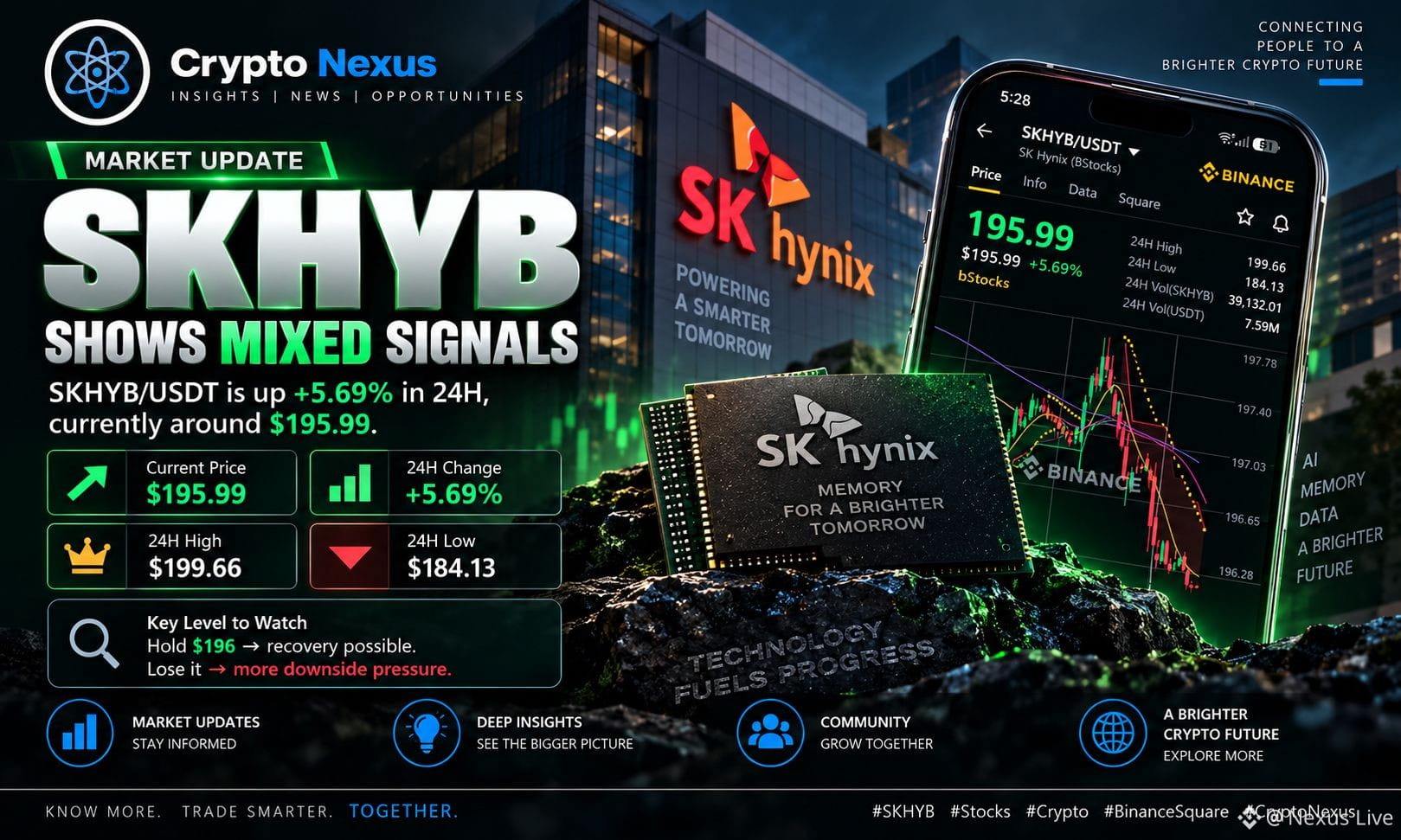
📊 $SKHYB is showing mixed signals
SKHYB/USDT is up +5.69% over 24H currently around $195.99.
But short term momentum has turned weaker after the rejection near $199.66.
$196 is the level I’m watching now.
Hold it recovery possible.
Lose it more downside pressure.
#SKHYB #Stocks #Crypto #BinanceSquare
$SKHYB
{spot}(SKHYBUSDT)
📊 $SKHYB is showing mixed signals
SKHYB/USDT is up +5.69% over 24H currently around $195.99.
But short term momentum has turned weaker after the rejection near $199.66.
$196 is the level I’m watching now.
Hold it recovery possible.
Lose it more downside pressure.
#SKHYB #Stocks #Crypto #BinanceSquare
$SKHYB
SKHYB/USDT is up +5.69% over 24H currently around $195.99.
But short term momentum has turned weaker after the rejection near $199.66.
$196 is the level I’m watching now.
Hold it recovery possible.
Lose it more downside pressure.
#SKHYB #Stocks #Crypto #BinanceSquare
$SKHYB
205
·
--
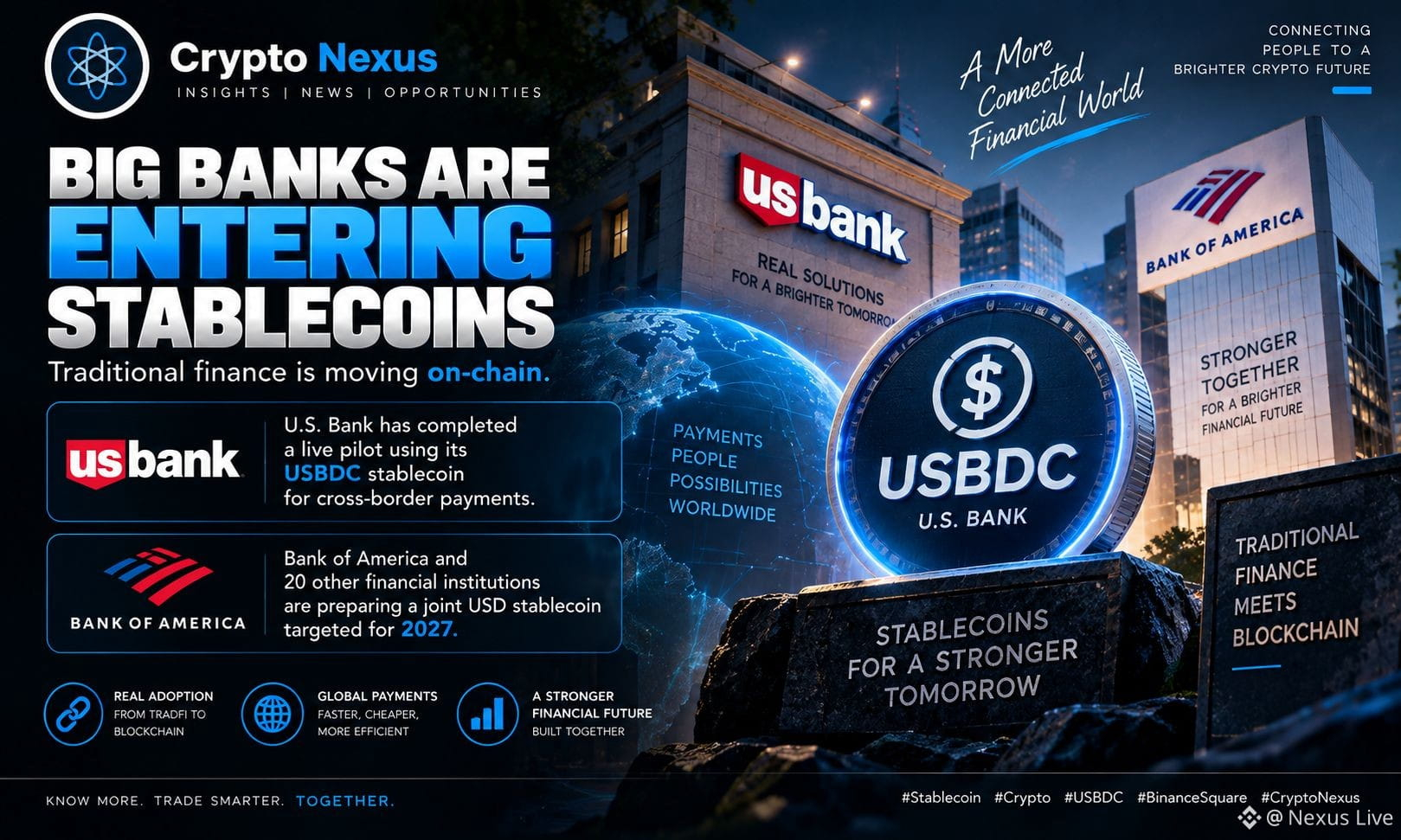
🚨 Big Banks Are Entering Stablecoins
U.S. Bank has completed a live pilot using its USBDC stablecoin for cross border payments.
Meanwhile Bank of America and 20 other financial institutions are preparing a joint USD stablecoin targeted for 2027.
Traditional finance is moving on chain.
#Stablecoin #Crypto #USDC #BinanceSquare
#BankOfAmericaGroupPilotsUSBDCStablecoin
$NVDA.US $USDC
🚨 Big Banks Are Entering Stablecoins
U.S. Bank has completed a live pilot using its USBDC stablecoin for cross border payments.
Meanwhile Bank of America and 20 other financial institutions are preparing a joint USD stablecoin targeted for 2027.
Traditional finance is moving on chain.
#Stablecoin #Crypto #USDC #BinanceSquare
#BankOfAmericaGroupPilotsUSBDCStablecoin
$NVDA.US $USDC
U.S. Bank has completed a live pilot using its USBDC stablecoin for cross border payments.
Meanwhile Bank of America and 20 other financial institutions are preparing a joint USD stablecoin targeted for 2027.
Traditional finance is moving on chain.
#Stablecoin #Crypto #USDC #BinanceSquare
#BankOfAmericaGroupPilotsUSBDCStablecoin
$NVDA.US $USDC
USDC+0.00%
NVDAUS+0.22%
324
·
--
$DOGE is holding up despite the pressure.
DOGE/USDT is trading around $0.08588 down 4.45% in 24H.
But the interesting part is the volume: $77.08M USDT traded while price is starting to recover from the intraday low.
Can DOGE reclaim $0.0863 next?
#DOGE #Dogecoin #Crypto #BinanceSquare
$DOGE
{future}(DOGEUSDT)
$DOGE is holding up despite the pressure.
DOGE/USDT is trading around $0.08588 down 4.45% in 24H.
But the interesting part is the volume: $77.08M USDT traded while price is starting to recover from the intraday low.
Can DOGE reclaim $0.0863 next?
#DOGE #Dogecoin #Crypto #BinanceSquare
$DOGE
DOGE/USDT is trading around $0.08588 down 4.45% in 24H.
But the interesting part is the volume: $77.08M USDT traded while price is starting to recover from the intraday low.
Can DOGE reclaim $0.0863 next?
#DOGE #Dogecoin #Crypto #BinanceSquare
$DOGE

242
·
--
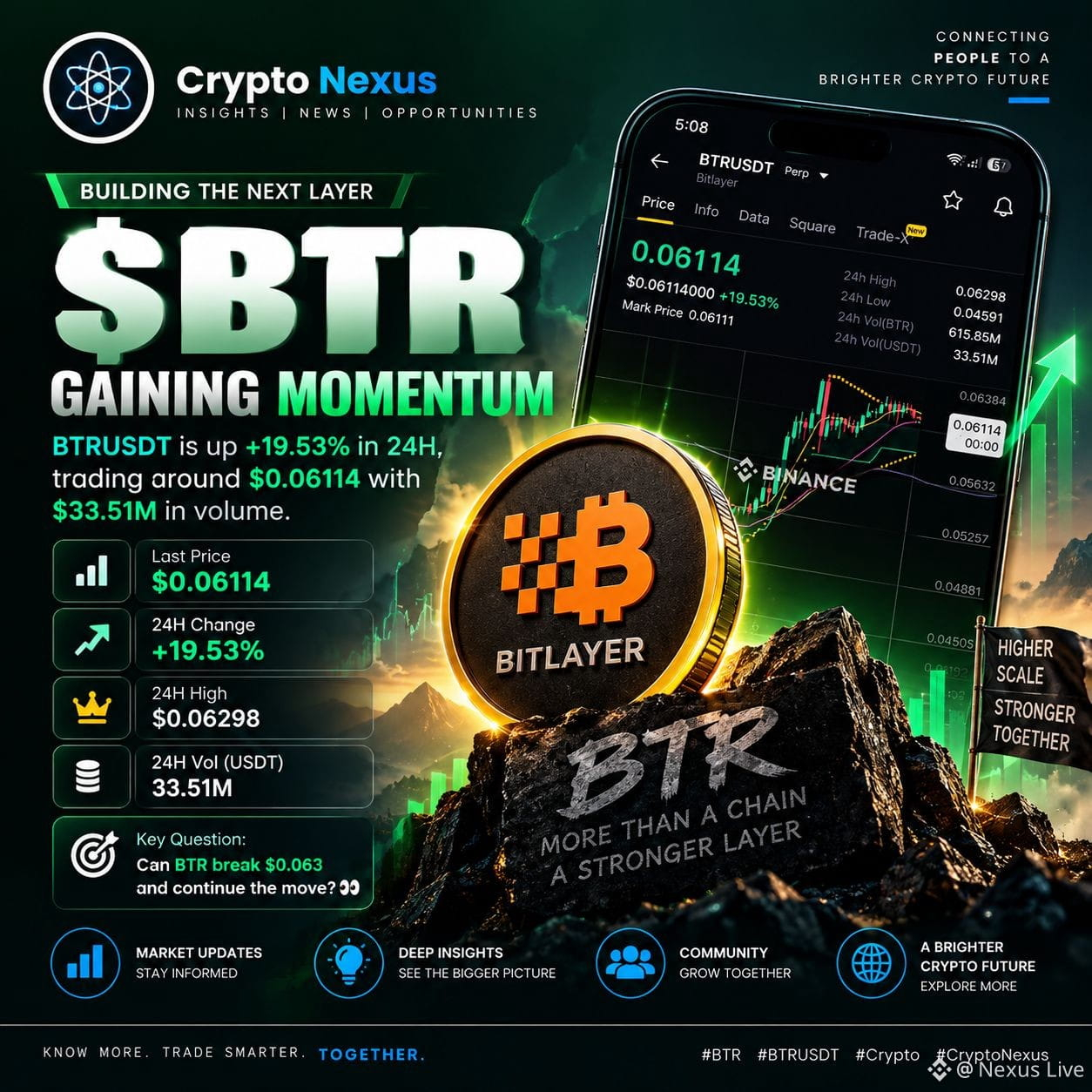
🚀 $BTR is gaining momentum.
BTRUSDT is up +19.53% in 24H trading around $0.06114 with $33.51M in volume.
Price is holding near the highs.
Now the key question:
Can BTR break $0.063 and continue the move? 👀
#BTR #Crypto #BinanceSquare
$BTR
{future}(BTRUSDT)
🚀 $BTR is gaining momentum.
BTRUSDT is up +19.53% in 24H trading around $0.06114 with $33.51M in volume.
Price is holding near the highs.
Now the key question:
Can BTR break $0.063 and continue the move? 👀
#BTR #Crypto #BinanceSquare
$BTR
BTRUSDT is up +19.53% in 24H trading around $0.06114 with $33.51M in volume.
Price is holding near the highs.
Now the key question:
Can BTR break $0.063 and continue the move? 👀
#BTR #Crypto #BinanceSquare
$BTR
2
354
Log in to explore more content
Join global crypto users on Binance Square
⚡️ Get latest and useful information about crypto.
💬 Trusted by the world’s largest crypto exchange.
👍 Discover real insights from verified creators.
Email / Phone number
Trending Topics
CircleMints500MUSDCOnSolana
76,423 views
1,770 Discussing
#circlemints500musdconsolana
🚨 $500M USDC MINTED ON SOLANA! 💵🔥
Circle Treasury just minted 500M USDC on Solana, pushing total global supply to $75.2B! 📈✨
💡 Quick Reality Check:
🔹 Minting = Fresh Inventory Creation (Not instant buying power!🛒
🔹 Real Trigger = Capital Deployment into DeFi, Exchanges & Pools! 🌐🚀
🎯 Coins to Watch:
⚡ $SOL — Network activity is booming, and fresh liquidity continues to drive ecosystem growth!
💎 $RARE — A high-volatility altcoin that reacts fast to fresh market liquidity and sentiment!🪐
💥 Are you accumulating now or waiting for full capital deployment? Drop your thoughts below! 👇✨
#CircleMints500MUSDCOnSolana
#PolymarketBankFailureBetsDrawFDICConcern
#BlackRockBuildsTokenizedPortfoliosForOndo
#BitwiseFilesToListNEARETFOnNYSEArca
Hifza Rubab
·4 Likes
·4.3k views
PolymarketBankFailureBetsDrawFDICConcern
83,166 views
1,656 Discussing
BlackRockBuildsTokenizedPortfoliosForOndo
73,195 views
1,171 Discussing