

TAREQ BNB
524 Posts
TAREQ BNB
Report
Block User
Global Binance🔶community powered by Binance users, coming together in real life and online to pursue their passions and support the cause of cryptocurrencies.

#BinanceTurns7 task 2

#BinanceTurns7
81 Following
11.8K+ Followers
2.8K+ Liked
2 Badges
Posts
All
Quotes
·
--
The Economic Moment of Truth: Timing and Expectations for the Fed’s Decision and Its Decisive Impact on Markets
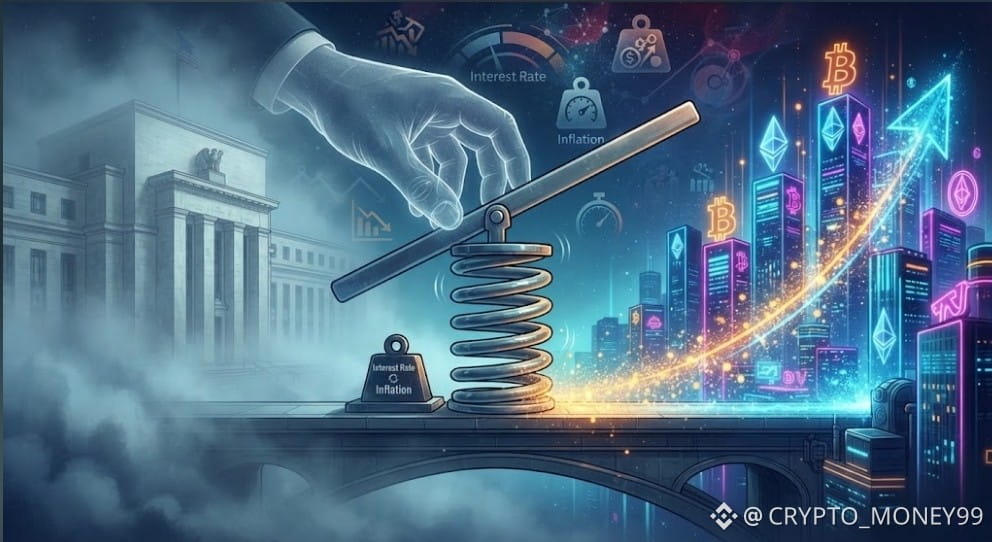
Investors and global liquidity funds are turning their attention to a pivotal event taking center stage under the hashtag #FOMCWatch ; the U.S. Federal Reserve will announce its key interest rate decision tomorrow, Wednesday, October 28, 2026, at 7:00 p.m. Mecca time (2:00 p.m. Eastern Time).
Prevailing expectations (~90%): Strong odds of interest rates remaining unchanged in the 3.75%–4.00% range, with the main focus on the statement’s tone and the press conference.
Scenario one (rates held steady with a neutral tone—the most likely): This would generally reassure markets and give Bitcoin and other cryptocurrencies an opportunity to break upward out of their current sideways range.
Scenario two (rates held steady with a hawkish tone): This would create downward pressure and sharp volatility as markets await and digest the Fed’s messages.
Scenario three (an unexpected rate hike—low probability, <10%): This would trigger a severe shock and a swift sell-off to flush out excessive liquidity (Flush-out) and test support levels.
The crypto market is currently in a highly sensitive “compressed spring” phase, particularly in response to dollar liquidity. So let’s stay disciplined, monitor price action, and make risk management our primary shield—leaving emotions aside.
#Fed #US #bitcoin #BinanceSquareFamily
1
1
3.1k
·
--
A United Front Before the Regulator: Chainlink and Major Networks Join Forces to Establish the Era of “Digital Commodities”
In a historic move reflecting the crypto-asset sector’s growing maturity and shift toward institutional frameworks, Chainlink led a broad, high-profile coalition of major blockchain networks—including Cardano, Hedera, Avalanche, Stellar, and Aptos—to submit a joint, unified message to the U.S. Securities and Exchange Commission (SEC). The goal? To establish a precise and clear legal definition of the term “Digital Commodity.”
This coalition represents a coordinated, all-out push to define the sector’s legal boundaries. It is an attempt to align the perspectives of major networks, eliminate the regulatory ambiguity that has long cast a shadow over the market, and protect technological innovation from arbitrary oversight.
If this coalition succeeds in securing a clear regulatory definition, it would remove many of the legal risks facing tokens associated with these infrastructures, especially Chainlink (LINK) and Avalanche (AVAX).
Major financial institutions are unwilling to pour vast sums of money into an environment rife with uncertainty. Regulatory clarity is the real key to opening the floodgates to major institutional inflows.
Markets do not build their value on fleeting speculation, but on compliance, infrastructure, and regulatory clarity. Let’s keep an eye on laws and regulations,
for they chart the course of smart money flows.
#crypto #LINK #SEC #news #usa
$LINK $AVAX $ADA
{spot}(HBARUSDT)
{spot}(APTUSDT)
{spot}(XLMUSDT)
A United Front Before the Regulator: Chainlink and Major Networks Join Forces to Establish the Era of “Digital Commodities”
In a historic move reflecting the crypto-asset sector’s growing maturity and shift toward institutional frameworks, Chainlink led a broad, high-profile coalition of major blockchain networks—including Cardano, Hedera, Avalanche, Stellar, and Aptos—to submit a joint, unified message to the U.S. Securities and Exchange Commission (SEC). The goal? To establish a precise and clear legal definition of the term “Digital Commodity.”
This coalition represents a coordinated, all-out push to define the sector’s legal boundaries. It is an attempt to align the perspectives of major networks, eliminate the regulatory ambiguity that has long cast a shadow over the market, and protect technological innovation from arbitrary oversight.
If this coalition succeeds in securing a clear regulatory definition, it would remove many of the legal risks facing tokens associated with these infrastructures, especially Chainlink (LINK) and Avalanche (AVAX).
Major financial institutions are unwilling to pour vast sums of money into an environment rife with uncertainty. Regulatory clarity is the real key to opening the floodgates to major institutional inflows.
Markets do not build their value on fleeting speculation, but on compliance, infrastructure, and regulatory clarity. Let’s keep an eye on laws and regulations,
for they chart the course of smart money flows.
#crypto #LINK #SEC #news #usa
$LINK $AVAX $ADA

2
552
·
--
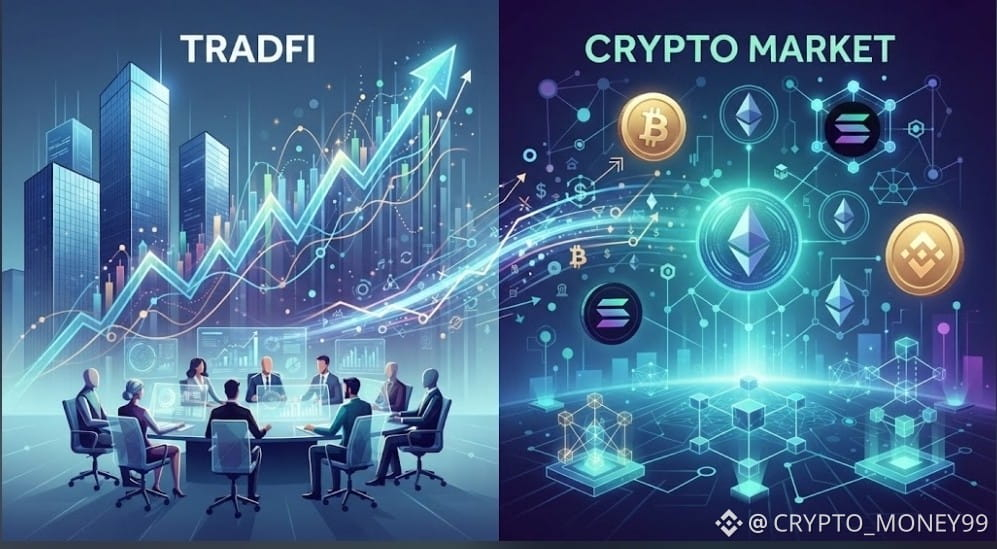
The Compressed Spring in Crypto Markets: Macro Contradictions and the Blockchain Revolution... Which Will Prevail?
The market is experiencing a unique state of “silent contradiction”: while markets are beset by macroeconomic pressures and cautious liquidity as they await the Fed’s decisions, blockchain networks are bubbling with a technological and institutional revolution quietly gaining momentum. This vast disparity between what the screens are saying and what the networks are building creates an environment that is much like a “compressed spring.”
Inflationary pressures persist, along with energy and diesel costs and pressure from AI. This climate creates a sense of anticipation and hesitation, with liquidity remaining cautious as it awaits a clearer direction for upcoming monetary policy.
In contrast, blockchain tells a completely different story: massive technological developments that cannot be ignored. Fundamentals are strengthening, and genuine adoption is expanding day by day.
Despite this, Bitcoin’s price is moving within a narrow range. This price behavior, alongside strengthening fundamentals, is the embodiment of the “compressed spring” concept: a period of silent accumulation that often precedes a violent and sudden move—either a rocket-like breakout or a fierce false breakdown that flushes excessive liquidity from the market.
💡
At these stages, we amateurs stumble while institutions seize opportunities. We shouldn’t let short-term noise blind us to the real data. Major explosions are always born from a long period of calm.
#MarketSentimentToday #BTC
$BTC $ETH $BNB
4
549
·
--
Earnings Season (#EarningsSeason): Why Are Investors Watching It Cautiously?
Earnings season dominates market discussions, reflecting the great importance of the period when major companies announce their quarterly financial results and their direct impact on global liquidity flows.
What is earnings season, and why does it matter to investors?
A pulse on the real economy: This is the recurring period when major companies (especially tech giants) disclose their earnings figures, providing a clear indicator of the health of the economy and the soundness of the markets.
Market interconnectedness: The performance of traditional markets directly affects institutions’ “risk appetite” (Risk-On / Risk-Off), which in turn has an indirect effect on liquidity flows in digital asset markets.
How should investors navigate this period?
Monitor overall liquidity: Tracking the impact of major companies’ results on market indices helps you understand the general direction of smart money flows.
Stick to risk management: Avoid rushed, emotional decisions, and always focus on protecting your capital and maintaining a clear strategy, away from short-term news noise.
#BinancePick #EarningsSeason #BTC #crypto #BinanceSquareFamily
1
439
·
--
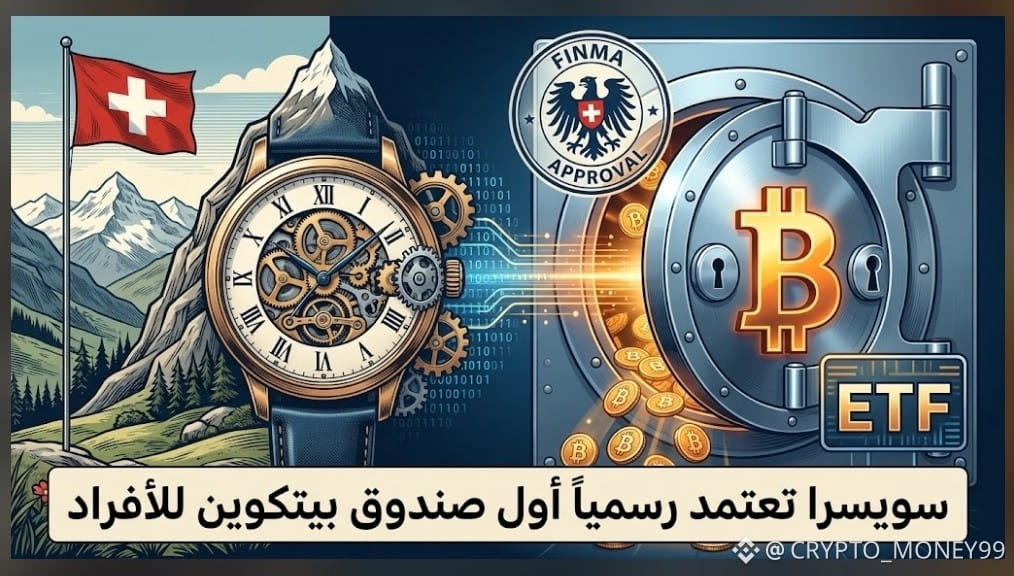
🚨 A REGULATORY EARTHQUAKE IN THE HEART OF EUROPE: SWITZERLAND OFFICIALLY APPROVES ITS FIRST BITCOIN FUND FOR INDIVIDUAL INVESTORS!
In a historic move that strengthens global confidence in digital assets, the Swiss Financial Market Supervisory Authority (FINMA) has officially approved the launch of the country’s first publicly available Bitcoin exchange-traded fund (ETF), as Bitcoin trades near $81,500.
This landmark shift brings exposure to cryptocurrencies within a secure, fully regulated framework, opening the door to massive institutional and investment inflows from one of the world’s leading wealth-management hubs.
#SwitzerlandApprovesFirstBitcoinETF #BTC #etf #crypto #BinanceSquareFamily
1
1
383
·
--
🚨 Liquidation… the sword that cuts down traders in seconds
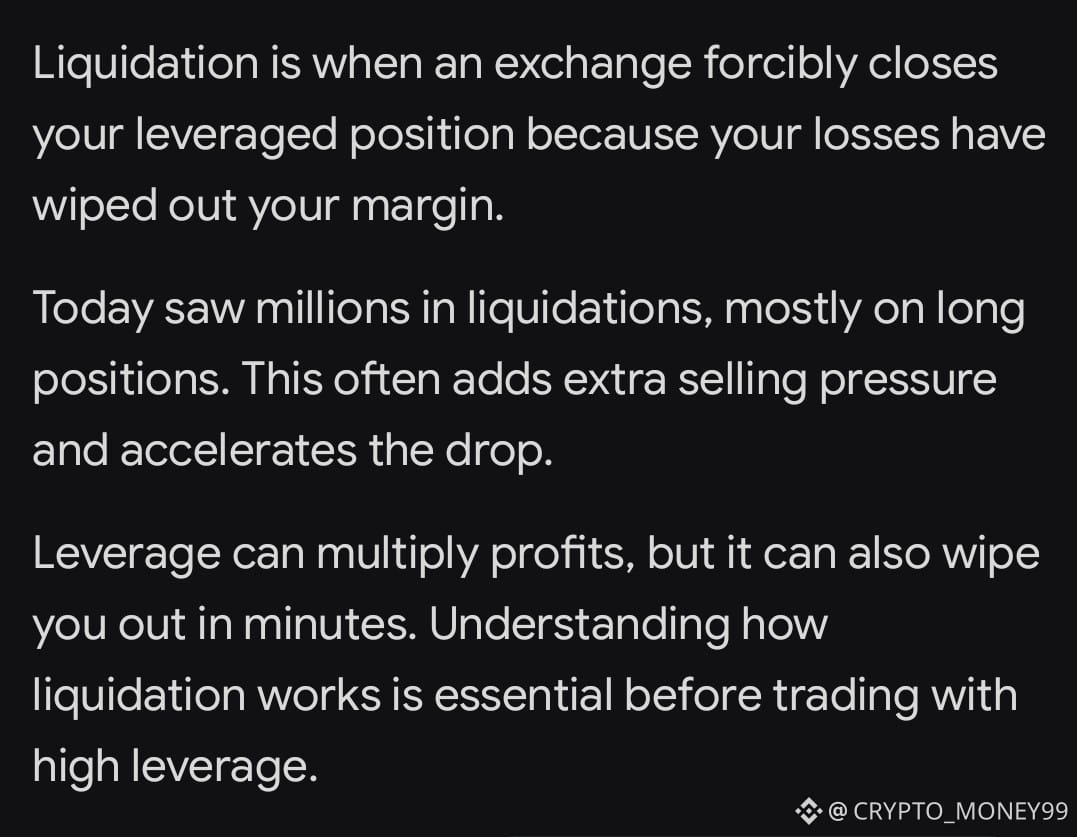
Today, the market saw millions of dollars in liquidations, most of them from long positions.
What exactly is liquidation?
Liquidation is when the platform forcibly closes your position because your losses have reached a point where you no longer have enough collateral.
Simply put:
You open a position with a small amount of capital and high leverage…
The price moves slightly against you…
Suddenly, the platform forcibly closes your position.
How does it happen?
You open a leveraged position (such as 10x or 20x).
The price moves against you.
Your loss reaches a certain percentage of your capital.
The platform forcibly sells or buys the asset to close your position.
You walk away with a large loss, and sometimes lose all the capital you put in.
What does it mean for the market?
When long positions are liquidated in large numbers → selling pressure increases, pushing the price down further.
When short positions are liquidated in large numbers → the price rises sharply.
Liquidation is not just an ordinary move; it often creates an additional wave in the same direction.
What does it mean for you as a trader?
Leverage is a double-edged sword.
It can multiply your profits… and it can take you out of the market in minutes.
Today’s lesson is clear:
The market has no mercy for those who play with fire.
Understand how liquidation works before entering any leveraged trade.
In the world of crypto, your most dangerous enemy isn’t the market…
It’s the leverage you use.
$BTC $ETH $BNB
1
288
·
--
Verified
🇨🇳 Solana enters China, the world’s largest developer market… but with extreme caution
Solana has established a physical presence in China, specifically in Shanghai.
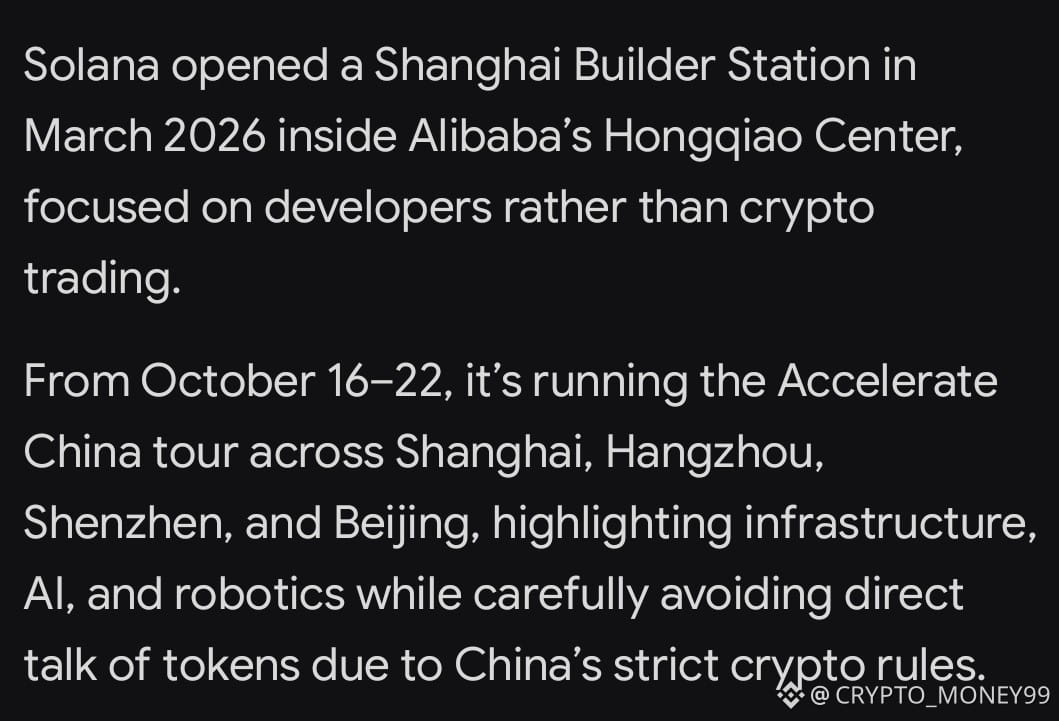
In March 2026, Solana launched the Solana Shanghai Builder Station inside Alibaba’s center in Hongqiao, with support from the local government.
The center is for developers and tech professionals—not for promoting or trading cryptocurrencies.
Now, from October 16 to 22, Solana is organizing the Accelerate China tour across four cities:
Shanghai, Hangzhou, Shenzhen, and Beijing.
The topics?
Infrastructure, artificial intelligence, and robotics.
Why this approach?
Because China imposes strict restrictions on virtual currencies. So Solana avoids talking directly about tokens and focuses on technology and collaboration with local developers.
This isn’t a full return of crypto to China…
It’s a smart attempt to establish technological roots without running afoul of the law.
#solana #china #blockchain #AI #BinanceSquareFamily $SOL

1
1
675
·
--
🕰️ Just 17 years… compared with a thousand years of paper
What is money?
A medium of exchange, a store of value, and a unit of account.
Simply put: a tool people agree to accept in exchange for goods and services.
From stones to metal
At first, there was bartering.
Then came commodity money: livestock, shells, salt, and metals.
Around the 7th century BCE, the first standardized coins were minted in Lydia (now Turkey), and money began to take its familiar form.
The age of paper
By the first millennium CE, paper money had appeared in China.
It spread gradually, and over time paper money came to be backed by the trust people placed in governments and central banks… not necessarily by gold or silver.
More than a thousand years have passed since then.
Then came Bitcoin
On January 3, 2009, the first block on the Bitcoin network was created.
A decentralized digital currency, with no central bank or geographical borders, relying on cryptography and consensus instead of trust in a single entity.
A comparison of ages
Bitcoin is about 17 years old.
Paper money is more than a thousand years old.
In other words: compared with the history of paper money, Bitcoin is still in its early infancy.
And yet, in less than two decades, it has established itself as a new monetary system.
Money is always evolving.
From metal to paper to the network.
And the question today is no longer “Is Bitcoin money?”
But “Where will it go, while it is still just getting started?”

218
·
--
🔐 Trust… the greatest problem in financial systems
For decades, the same question has kept coming up:
How can we trust a bank not to freeze our money?
How can we trust a broker not to tamper with the records?
How can we trust a government not to print unbacked currency?
Blockchain philosophy emerged to answer this question in a completely different way.
Instead of trusting people or institutions…
we trust in mathematics + transparent rules + a distributed network.
Decentralization is not chaos.
It simply means rejecting a single central point that controls everything.
No single server can be shut down.
No single entity can change the records on its own.
Decisions are made through the consensus of participants.
The goal? Resisting control, censorship, and corruption.
Reducing trust, not eliminating it
Blockchain does not eliminate trust entirely, but it reduces it to a minimum.
You don’t need to trust a particular person…
Instead, you trust transparency, economic incentives, and the mathematical difficulty of tampering.
The deeper idea
This technology seeks to redefine the relationship between the individual and authority.
It gives individuals greater sovereignty over their assets.
It reduces reliance on intermediaries.
And it shifts trust from “people” to “rules.”
Blockchain philosophy revolves around one question:
Can we design systems that make trust less necessary and power more distributed?
The answer it offers: Yes… through mathematics, transparency, and incentives—not promises.
#blockchain #BTC #Finance #BinanceSquareFamily #LearnTogether

2
114
·
--
🚨 He threw a fortune worth hundreds of millions… in the trash
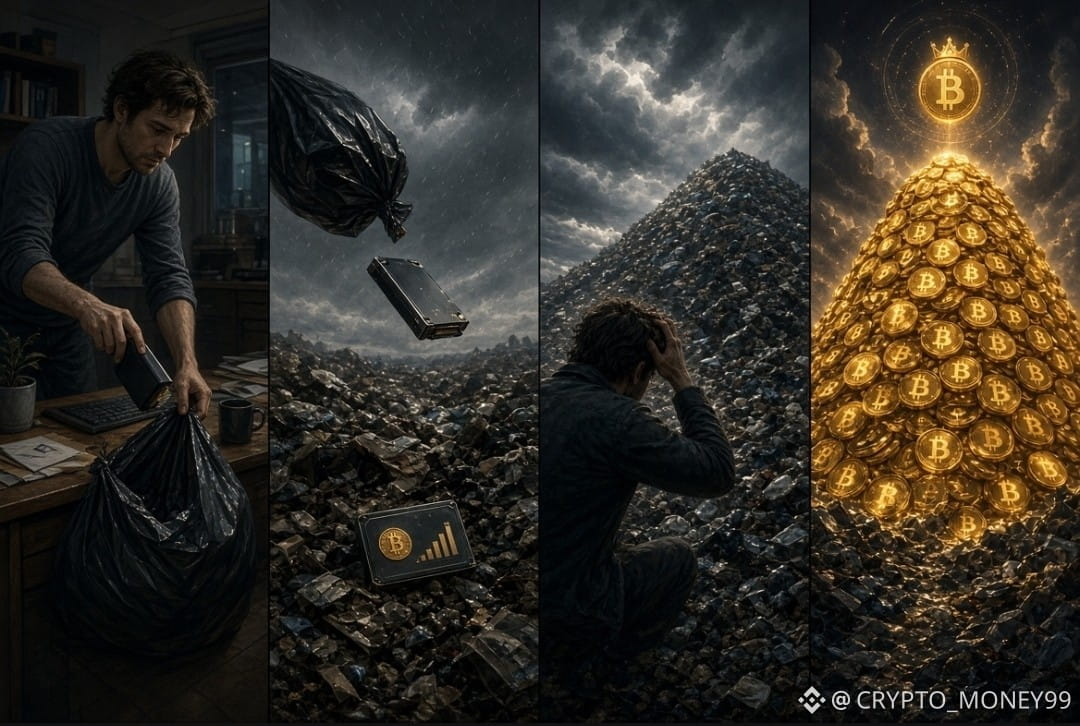
In 2013, a British computer engineer named James Howells was cleaning his office.
By mistake, he put an old hard drive in a garbage bag.
The drive contained the private keys to 7,500 to 8,000
bitcoins he had mined as a hobby in 2009.
They were worth around half a million pounds at the time.
Today? Hundreds of millions of dollars.
His partner thought the bag was meant to be thrown away… and took it to the landfill.
When Howells realized his mistake, the drive had been buried under tons of trash.
For more than a decade, he has been trying to get permission to dig, but the authorities have refused, and the courts have ruled against him.
To this day… the drive has not been found, and the bitcoins remain untouched on the blockchain.
The harshest lesson in crypto:
Not your keys… not your coins.
#crypto #bitcoin #BinanceSquareFamily #dyor #Learn
173
·
--
🚨 When Bitcoin hit $1,000… everything changed
In November 2013, specifically between the 27th and 28th, Bitcoin’s price crossed the $1,000 mark for the first time on the Mt. Gox exchange.
Less than a year earlier, it had been trading for just a few dozen dollars.
Suddenly, the idea of a “digital currency” reaching four figures became a serious topic on global news screens.
The shock wasn’t just about the number… but what it meant.
What did the $1,000 milestone represent?
It proved that a fully decentralized monetary system could grow and gain real value without central banks or governments.
It showed that individuals could own financial assets directly, without an intermediary controlling or freezing them.
It turned the idea of “individual financial sovereignty” from a fringe theory into a reality discussed in mainstream media.
Before this moment, Bitcoin was seen as a technological experiment or a tool for privacy.
Afterward, it began to be treated as an alternative monetary system competing with the traditional banking model.
One thousand dollars wasn’t just a number…
It was the unofficial announcement of the birth of a new financial system, built on decentralization and individuals’ control over their own money.
#BTC #crypto #Binance #Market_Update #InvestSmart

2
492
·
--
Verified
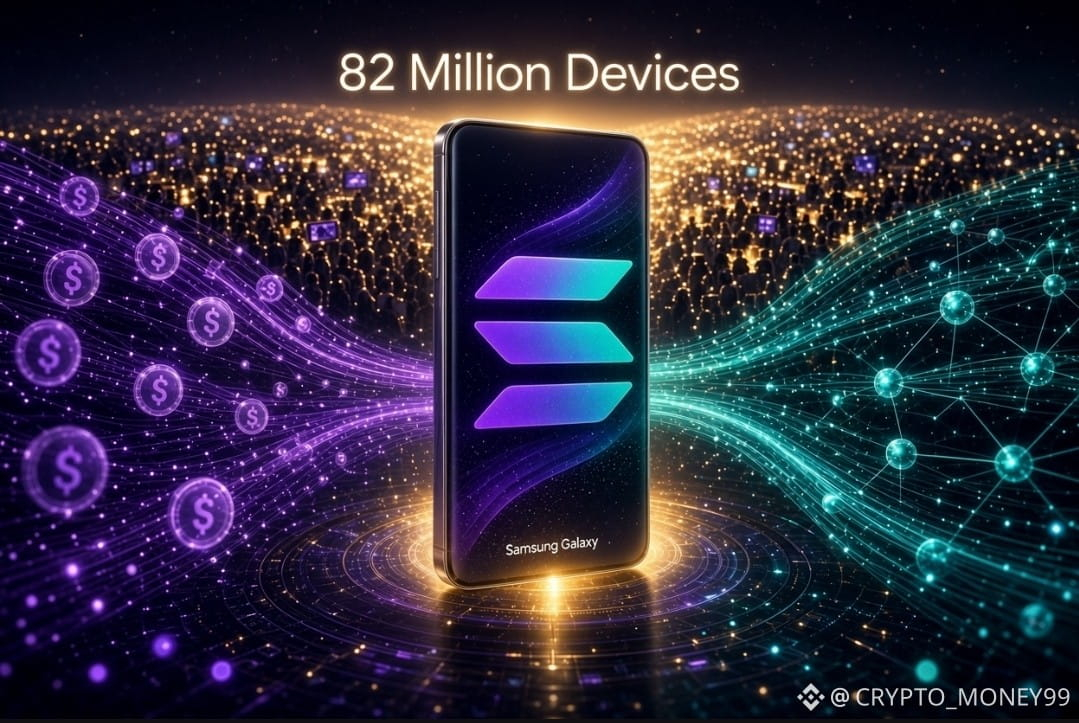
🚨 Samsung brings Solana into the pockets of 82 million people
Samsung announced the integration of USDC transfers inside the Samsung Wallet app, using the Solana network in the background.
Starting at the end of October, Galaxy users in the U.S. will be able to send money across borders directly from the wallet they use every day...
This is exactly what real adoption looks like:
People will use the blockchain without realizing they’re using it.
Just like you use the internet every day without thinking about TCP/IP protocols.
This takes stablecoins out of the realm of speculation and into everyday use.
It proves that fast networks can serve millions of real users.
It reduces the complexity of entering the world of crypto.
It opens the door for more major companies to integrate the technology into their regular products.
When international transfers become easier and cheaper over a regular phone...
Then the technology will have moved beyond the “experiment” phase into the “everyday life” phase.
This is the path that future payments are built on.
#Solana #USDC #blockchain #Samsung #BinanceSquareFamily $SOL $USDC
3
3k
·
--
🚨 The Silk Road… The notoriety that tarnished Bitcoin’s reputation 🌑💰
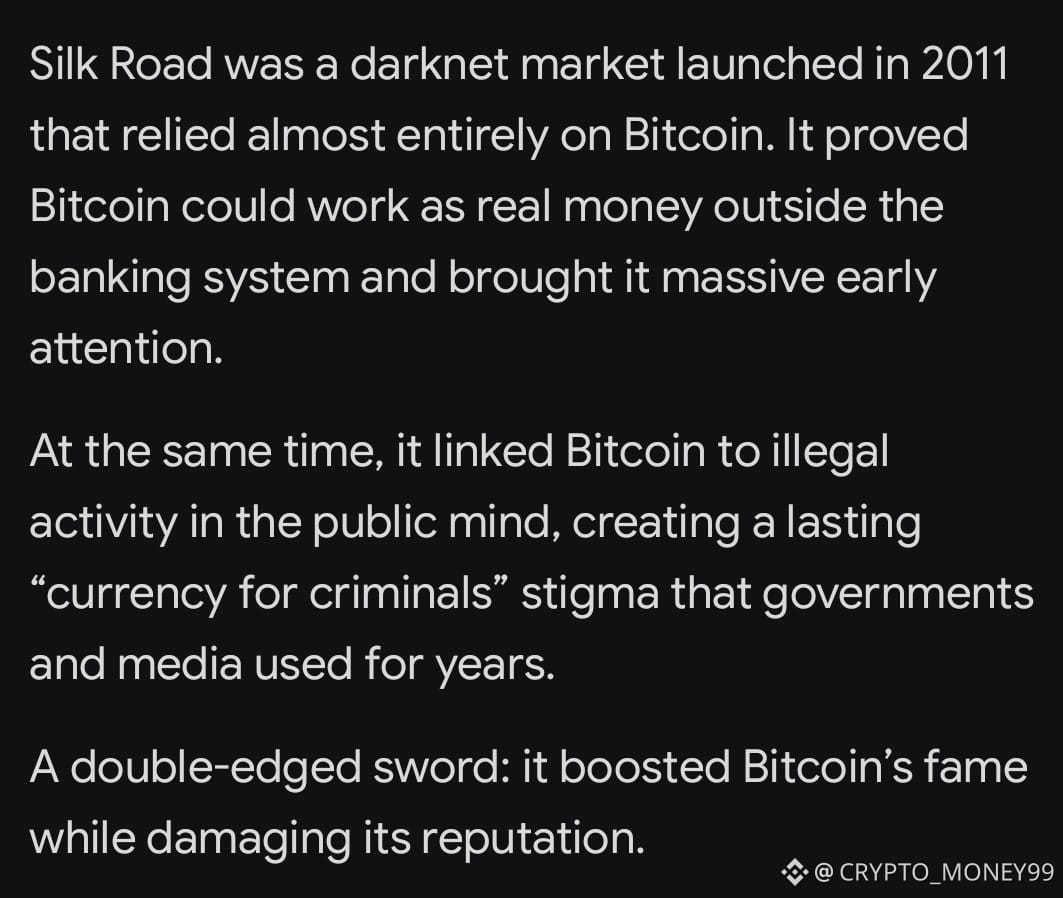
In early 2011, a secret marketplace called the Silk Road appeared on the Tor network.
It was created by Ross Ulbricht and relied almost entirely on Bitcoin as a means of payment.
What was sold there?
Mostly drugs and prohibited goods.
The platform operated until October 2013, when U.S. authorities shut it down and arrested its founder.
How did it make Bitcoin famous?
It was one of the currency’s first real-world uses on a large scale.
It proved that Bitcoin could operate outside banks and oversight.
It drew major global media attention for the first time (especially after Gawker’s famous report).
And how did it tarnish Bitcoin’s reputation?
It linked Bitcoin in people’s minds with the underworld.
The phrase “the currency of drugs and criminals” became common for years.
Governments used this association to justify calls for restrictions and bans.
The Silk Road was a double-edged sword.
It demonstrated Bitcoin’s resistance to censorship… while tarnishing its public image for a long time.
Today, Bitcoin has largely moved beyond this association, but the memory of the Silk Road remains etched in its early history.
#BTC #crypto #BinanceSquareFamily #Binance #Market_Update
1
303
·
--
🚨 Sberbank officially enters the world of Bitcoin
Russia’s largest bank has received official approval from the Central Bank to become a custodian of digital assets.
What does this mean?
The bank will be able to offer regulated custody and trading services for:
Bitcoin
Ethereum
USDT
The services are expected to launch in December through its existing apps, with full customer identification and transaction monitoring procedures in place.
Important notes:
This approval covers regulated custody and trading only.
Using cryptocurrencies for everyday payments in Russia remains prohibited.
The move comes as part of a new regulatory framework recently introduced in the country.
This news doesn’t mean Russia is fully opening up to crypto. Rather, it means the state has begun bringing digital assets under the umbrella of the formal banking system.
The goal is clear: more control and regulation, rather than full liberalization.
Even so, the entry of Russia’s largest bank into this space is a significant signal for institutional adoption.
#BTC #crypto #ETH #USDT #BinanceLaunchesBinanceIntelligence
1
188
·
--
🚨 When the banks closed their doors… Bitcoin opened one
In late 2010, after WikiLeaks published thousands of U.S. diplomatic cables known as Cablegate, the organization came under an unprecedented financial blockade.
Major payment companies — Visa, Mastercard, PayPal, Bank of America, and Western Union — suddenly stopped processing donations.
The result? The organization lost about 95% of its revenue overnight.
At the time, Bitcoin was still in its infancy.
Satoshi Nakamoto himself warned in December 2010 that WikiLeaks’ use of the emerging currency could bring significant pressure on it, saying it had “kicked the hornet’s nest.”
But WikiLeaks waited.
On June 14, 2011, it officially announced that it would accept Bitcoin donations.
This was one of the first moments when the cryptocurrency proved its real-world value:
It could operate outside the control of traditional banking systems
It offered genuine resistance to censorship
And decentralized digital money could protect freedom of expression from political and financial pressure
When every traditional door had closed to WikiLeaks…
Bitcoin opened an alternative one.
A very early moment, but one that cemented an idea that remains alive today:
Financial freedom isn’t a slogan… it’s technology.
#BTC #crypto #money #freedomofmoney #blockchain $BTC
{spot}(BTCUSDT)
🚨 When the banks closed their doors… Bitcoin opened one
In late 2010, after WikiLeaks published thousands of U.S. diplomatic cables known as Cablegate, the organization came under an unprecedented financial blockade.
Major payment companies — Visa, Mastercard, PayPal, Bank of America, and Western Union — suddenly stopped processing donations.
The result? The organization lost about 95% of its revenue overnight.
At the time, Bitcoin was still in its infancy.
Satoshi Nakamoto himself warned in December 2010 that WikiLeaks’ use of the emerging currency could bring significant pressure on it, saying it had “kicked the hornet’s nest.”
But WikiLeaks waited.
On June 14, 2011, it officially announced that it would accept Bitcoin donations.
This was one of the first moments when the cryptocurrency proved its real-world value:
It could operate outside the control of traditional banking systems
It offered genuine resistance to censorship
And decentralized digital money could protect freedom of expression from political and financial pressure
When every traditional door had closed to WikiLeaks…
Bitcoin opened an alternative one.
A very early moment, but one that cemented an idea that remains alive today:
Financial freedom isn’t a slogan… it’s technology.
#BTC #crypto #money #freedomofmoney #blockchain $BTC
2
237
·
--
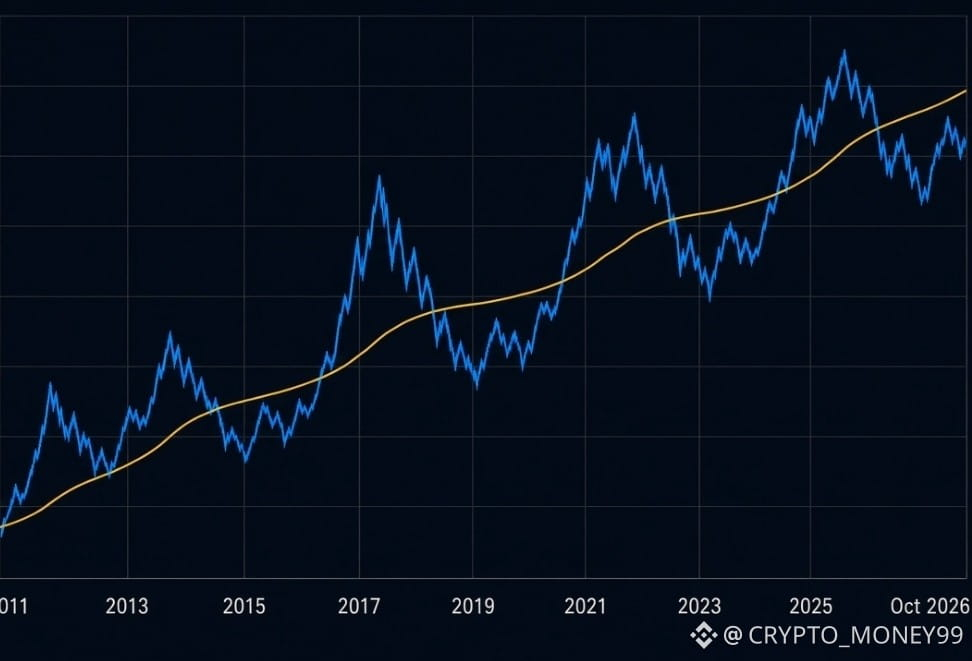
🚨 Bitcoin’s Power Law: Analytical Framework or Mathematical Illusion?
The Power Law is one of the most prominent models used to describe Bitcoin’s long-term price trajectory.
It is based on a simple idea: the price grows approximately as a power function of time, appearing as a straight line when plotted on a log-log scale.
It captures Bitcoin’s structural trend with notable accuracy across more than 15 years of data.
It reduces the impact of short-term volatility and seasonal cycles.
It provides an objective reference for assessing the current price relative to its historical trajectory.
It is not good at predicting cycle tops and bottoms.
It assumes that the historical growth rate will continue, which is not guaranteed.
It ignores macroeconomic, regulatory, and geopolitical factors.
It may create an exaggerated sense of certainty if treated as an absolute law.
The Power Law is a powerful analytical tool for understanding the long-term trend, but it is neither a prophecy nor a guarantee.
Its true value lies in using it as a frame of reference… not as a definitive roadmap.
#BTC #AnalyseCrypto #power #Market_Update #Binance
1
197
·
--
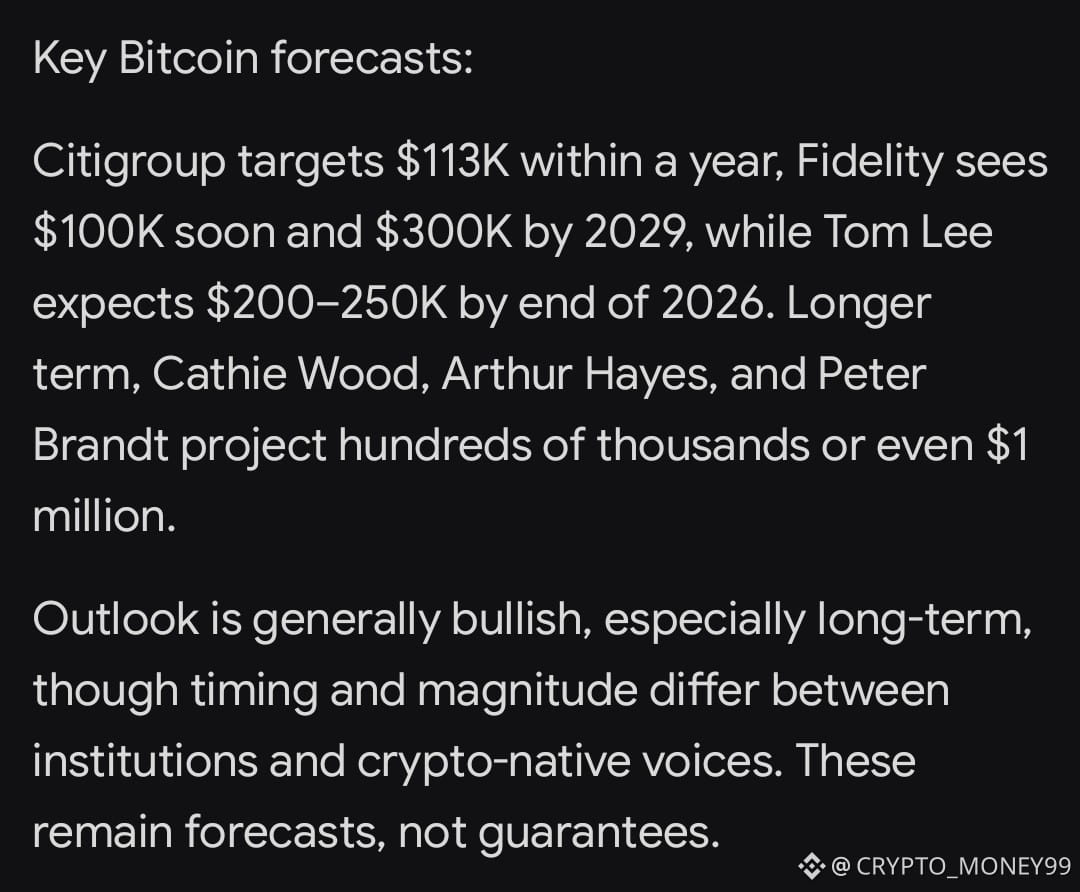
🚨 From 100 thousand to a million dollars… What do the big players say about Bitcoin?
The most prominent current forecasts from institutions, CEOs, and funds:
• Citigroup (global bank) → $113,000 within 12 months
• Fidelity – Jurrien Timmer (global macro director) → $100k soon, and $300k by 2029
• Tom Lee – Fundstrat (leading strategist analyst) → $200–250k by end of 2026
• Cathie Wood – ARK Invest (famous growth investor) → a base-case scenario near $750k over the long term
• Arthur Hayes (former BitMEX founder) → a path toward $1 million by 2030
• Peter Brandt (seasoned trader) → the cycle peak between $300–600k by the end of 2029
• Michael Saylor (Head of Strategy) → extremely optimistic long term, with continued strong accumulation
Most institutional forecasts focus on a return of ETF inflows and corporate adoption, while the boldest predictions come from figures directly tied to the crypto industry. There is a relative agreement on long-term positivity, but a clear difference regarding the timing of the big rise in 2026.
These figures reflect strong optimism, but they remain forecasts—not facts. History shows that markets rarely play out exactly according to the most optimistic scenario, and macro and regulatory risks are still present.
Best to treat them as a probability map… not promises.
#BTC #crypto #RWA #AI #Market_Update
1
256
·
--
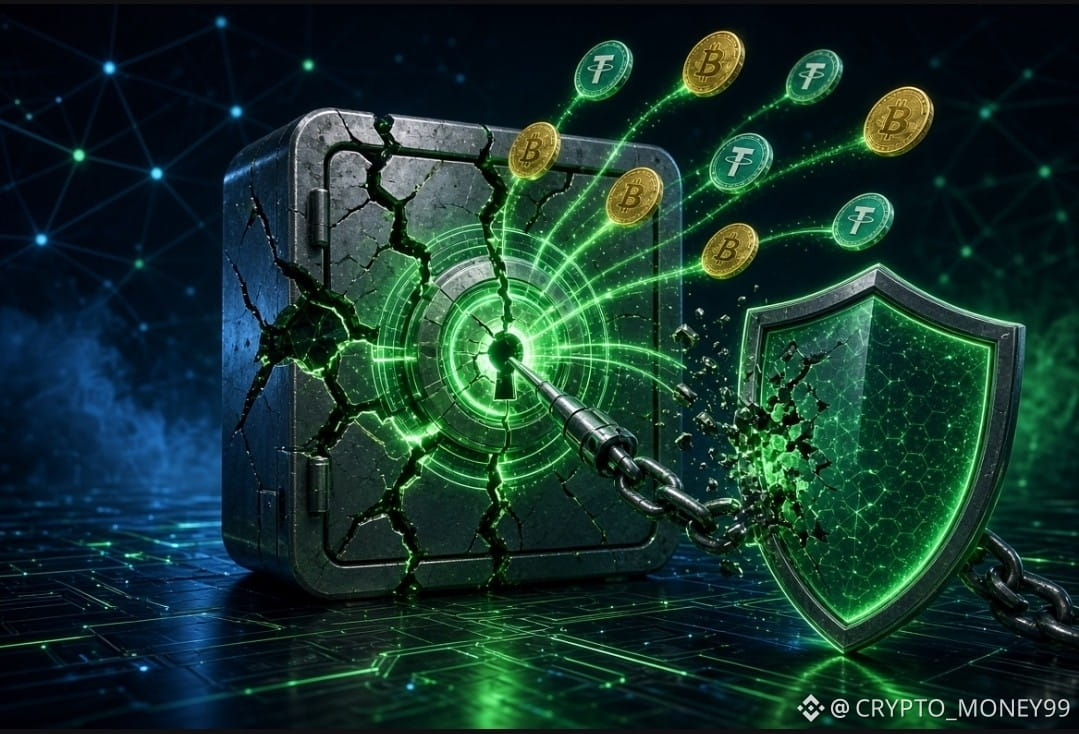
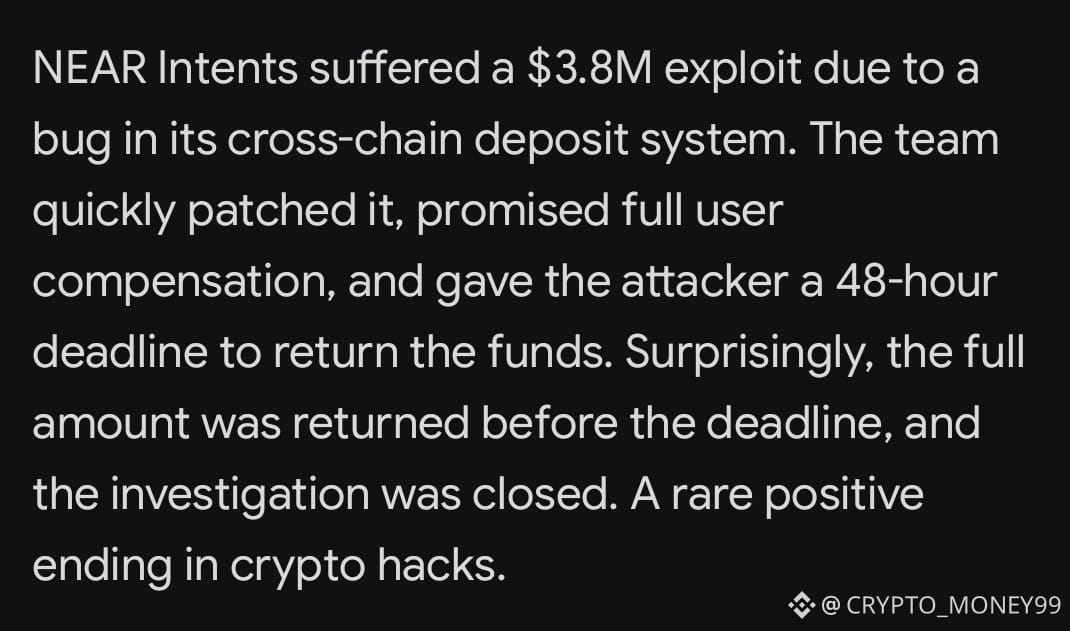
🚨 A $3.8 million hack… and it ends with an unexpected story
A few days ago, the NEAR Intents protocol suffered an exploitation of a vulnerability in its cross-chain deposit and withdrawal system.
The attacker withdrew about $3.8 million USDT from a contract on the network within just a few hours.
Most stories end right here: lost funds, long investigations, and delayed compensation.
But this time, things were different.
The team halted services immediately, patched the vulnerability, and stated clearly:
“Funds will be fully reimbursed.”
Then they did something bolder…
They identified the responsible party and gave them only a 48-hour deadline to return everything.
The result?
Before the deadline even ended, the funds were fully returned.
A large portion came back in the form of Bitcoin, and the investigation was officially closed.
Even the attacker left a message on-chain saying they were wrong, thanking the team for handling it professionally, and advising to use Bug Bounties instead of hacking.
The takeaway is clear:
Not every hack ends in disaster.
Speed in fixing + transparency + smart pressure… sometimes can turn loss into a rare success story in the crypto world.
What do you think? Should this model become the norm?
#SecurityAlert #Near #crypto #USDT #Binance
2
1.3k
·
--
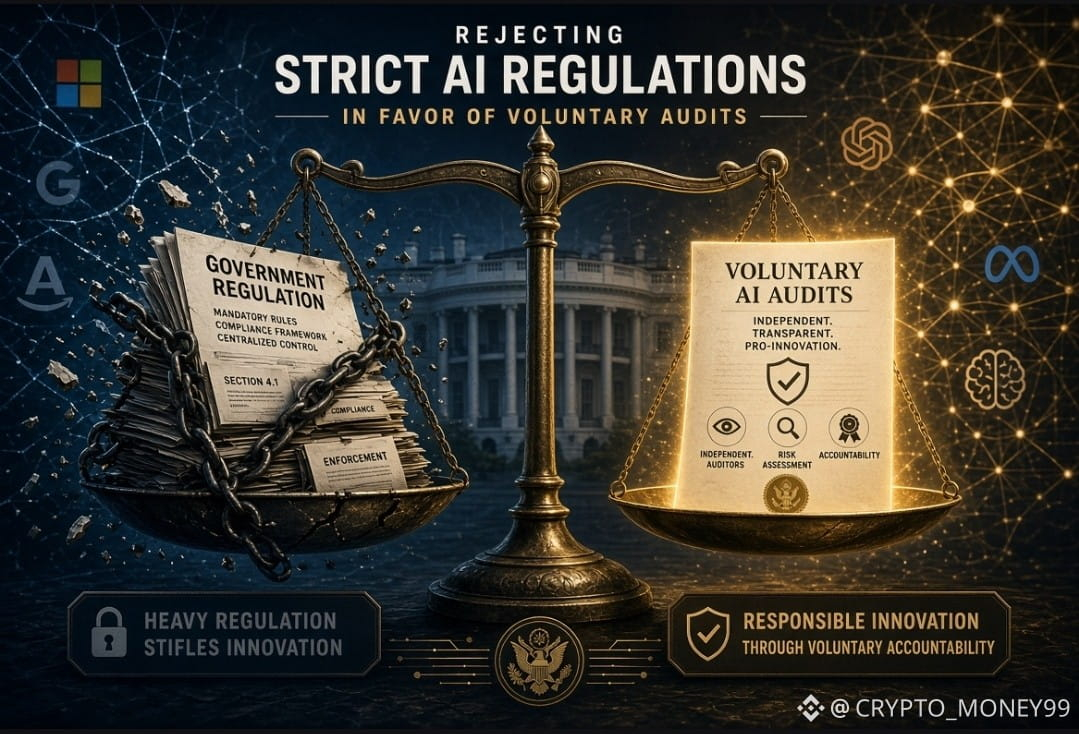
🚨 Trump Rejects AI Regulation and Chooses Voluntary Oversight
After a meeting at the White House with top AI company executives, Trump refused to impose new mandatory government rules on the industry.
Instead, an agreed-upon voluntary framework will rely on independent external audits and strengthening controls within companies themselves.
The official message is clear: the industry can regulate itself, and heavy-handed regulation could slow America in front of its competitors—especially China.
But the agreement is not legally binding, and it does not precisely specify who will carry out the audits or what the penalties would be in case of non-compliance.
So some see it as a practical step, while others view it as merely delaying the real decision.
In the end, the question remains open:
Is self-regulation enough to keep up with the rapid development of AI? Or are the risks too great to be left to companies alone?
#TrumpRejectsAIRulesForVoluntaryAudits #AltcoinSeasonIndexHoldsAbove60For5Days #AI #USCorePCEEasesTo3%InAugust #crypto
4
270
·
--
🚨 Bitget hacked for $351.6 million… and the industry unites
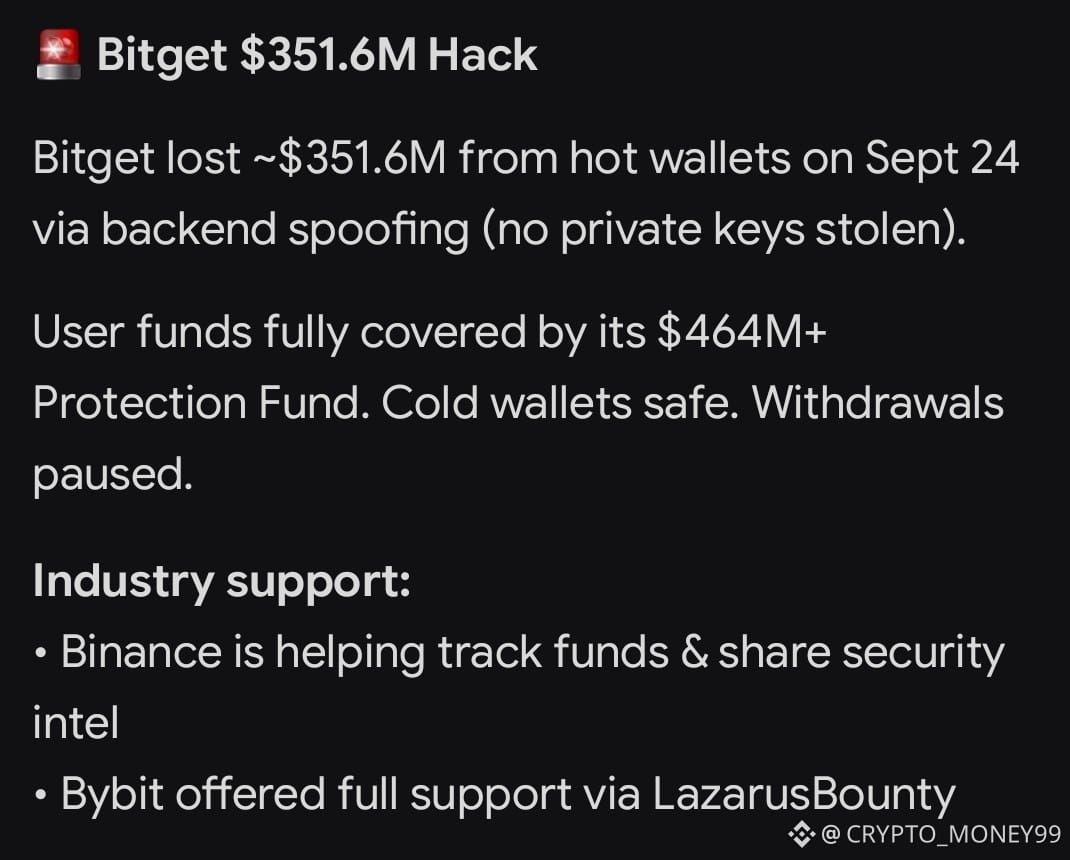
On September 24, Bitget suffered a breach affecting hot wallets worth approximately $351.6 million.
Private keys were not stolen; the attack targeted the backend system by forging transaction data.
Key points:
• Users’ funds are safe and fully covered by the Protection Fund (over $464 million).
• Cold wallets were not affected.
• Withdrawals are temporarily paused, while trading and deposits continue.
What stands out in this incident is the stance taken by industry leaders:
🔹 Binance (via Co-CEO Richard Teng): announced that Binance’s security team has been working closely with Bitget since the very first moment, sharing security information, tracking the movement of stolen funds, and supporting recovery efforts.
🔹 Bybit (via Ben Zhou): provided full support and activated the LazarusBounty platform to track the funds, confirming that Bitget had helped them previously in a similar incident.
This collaboration reminds us that exchange attacks are no longer a solitary matter… but a collective battle between the industry and the attackers.
What do you think? Is having Protection Funds enough, or is reliance on hot wallets still a major weakness?
#SecurityAlert #HackerNews #crypto #Binance #BTC
4
2.3k
Log in to explore more content
Join global crypto users on Binance Square
⚡️ Get latest and useful information about crypto.
💬 Trusted by the world’s largest crypto exchange.
👍 Discover real insights from verified creators.
Email / Phone number