

八方阁
297 Posts
 LIVE
LIVE八方阁
Report
Block User
八方智慧,汇聚一阁,交易修心,盈亏炼人,系统教学,实战策略。进聊天室加入内部社区,自动返佣20%,返佣码: BFG8888。
Open Trade
High-Frequency Trader
11.9 Months
6 Following
9.1K+ Followers
1.3K Liked
Posts
Portfolio
All
Quotes
Live
PINNED
·
--
We're live! 🧧
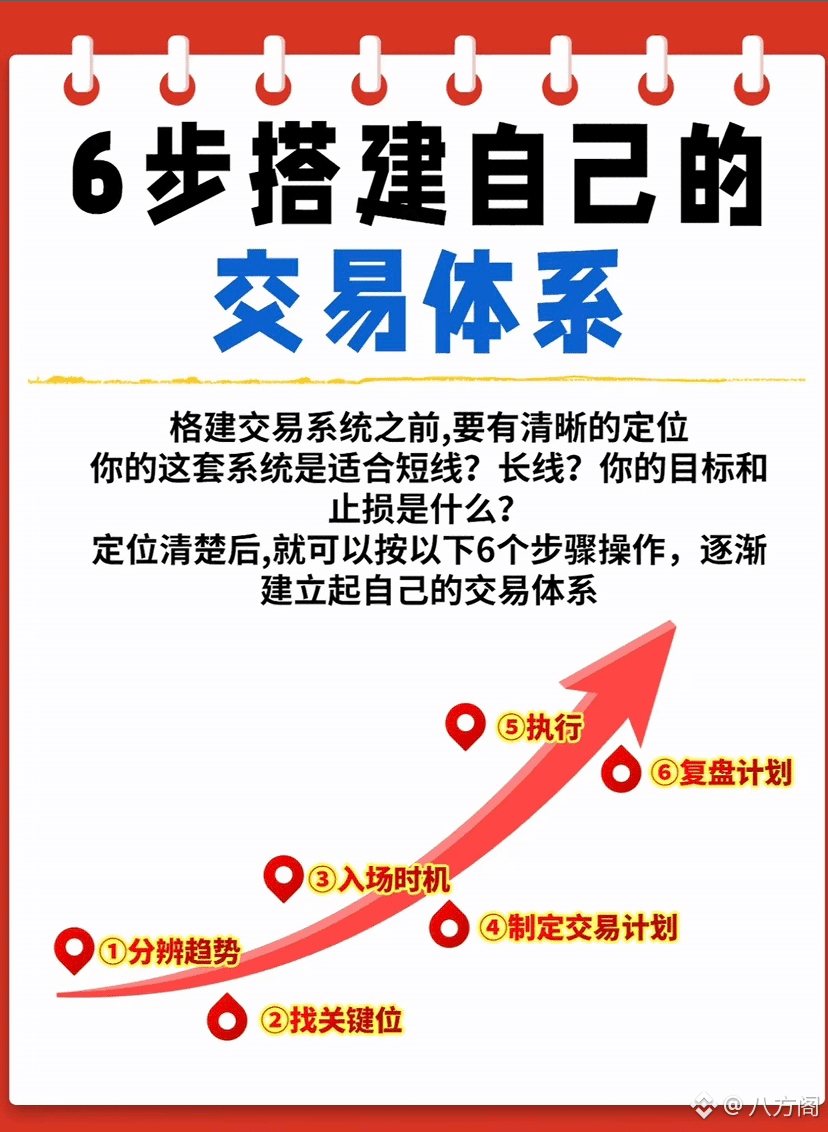
Six steps to build your trading system.
Step 1: Identify the trend.
1. Set your timeframe. 2. Determine the current stage.
Step 2: Find key levels.
1. Horizontal support/resistance. 2. Chart patterns.
Step 3: Look for entry signals.
1. Check the candlesticks. 2. Analyze volume. 3. Moving averages. 4. Patterns.
Step 4: Trading plan.
Reasons, direction, leverage, position sizing, entry signals, stop-loss, take-profit, countermeasures.
Step 5: Execute.
1. Bullish developments. 2. Bearish developments. 3. Market stagnation.
Step 6: Review.
If you're unsure, come to the live session where we'll grow together! #交易训练 $ETH
We're live! 🧧
Six steps to build your trading system.
Step 1: Identify the trend.
1. Set your timeframe. 2. Determine the current stage.
Step 2: Find key levels.
1. Horizontal support/resistance. 2. Chart patterns.
Step 3: Look for entry signals.
1. Check the candlesticks. 2. Analyze volume. 3. Moving averages. 4. Patterns.
Step 4: Trading plan.
Reasons, direction, leverage, position sizing, entry signals, stop-loss, take-profit, countermeasures.
Step 5: Execute.
1. Bullish developments. 2. Bearish developments. 3. Market stagnation.
Step 6: Review.
If you're unsure, come to the live session where we'll grow together! #交易训练 $ETH
Six steps to build your trading system.
Step 1: Identify the trend.
1. Set your timeframe. 2. Determine the current stage.
Step 2: Find key levels.
1. Horizontal support/resistance. 2. Chart patterns.
Step 3: Look for entry signals.
1. Check the candlesticks. 2. Analyze volume. 3. Moving averages. 4. Patterns.
Step 4: Trading plan.
Reasons, direction, leverage, position sizing, entry signals, stop-loss, take-profit, countermeasures.
Step 5: Execute.
1. Bullish developments. 2. Bearish developments. 3. Market stagnation.
Step 6: Review.
If you're unsure, come to the live session where we'll grow together! #交易训练 $ETH
18
20
15
411
·
--
🎙️ Beginner’s Teaching Live Stream—Learn to Trade in Fifteen Minutes.

 LIVE
LIVE1k listens · 1 in Live Trading
1
2
·
--
Stop being moved by yourself. The market doesn’t buy this.
Let me ask you one question first:
Do you think you’re putting in real effort in trading?
And don’t you feel like you are—
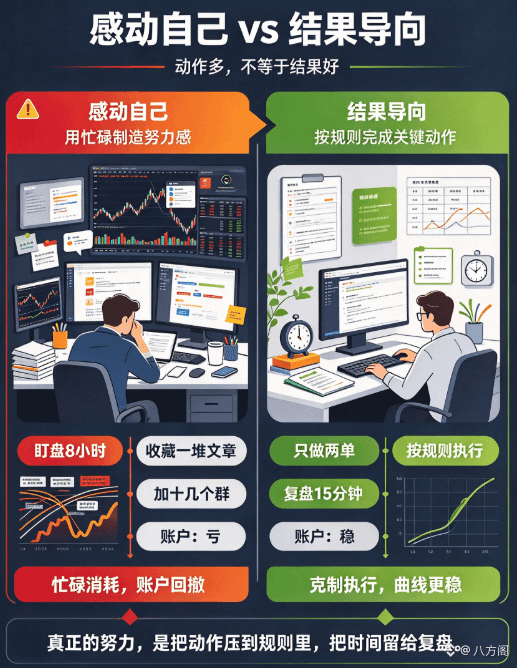
watching the screen for hours every day, reading plenty of technical articles, not missing any messages in the group, still replaying charts at midnight, and studying on weekends.
But have you noticed that with all this “effort,” your account is still in the red?
Because your effort only makes you feel good.
Staring at the screen for a few hours doesn’t mean you’re doing the right thing. You might just be watching candles jump up and down, letting your emotions swing with the price—learning nothing.
Reading lots of articles doesn’t mean you absorb them. You may just be saving them, then forgetting the moment you close the page.
Joining a dozen groups doesn’t mean you’re progressing. You may just be watching others’ profit screenshots, then getting anxious.
Real effort leads to results. It’s not about how painful the process is—it’s about whether you did the right things.
So how do you do the right things?
First, shift your focus from “how much I learned” to “how much I applied.”
You learned a stop-loss method—did you use it in live trading today? You learned a position-sizing formula—did you run the numbers on a trade? You learned a drawing technique—have you opened the chart and drawn it?
If you learned it but don’t use it, then you haven’t learned anything.
Second, turn “effort” into “discipline.”
You don’t need to stare at the screen for 8 hours a day. You only need to execute your plan at key moments. Let the market do the rest.
Third, replace “being moved by yourself” with “reviewing yourself.”
Every day, spend 15 minutes asking: Of the trades I made today, how many followed the rules? How many were made on a hunch?
Those made on a hunch are the root cause of your losses.
If you find that you’ve been working hard for a long time and you’re still losing, come in tonight.
I’ll use the current mainstream counterfeit/altcoin-style market moves and explain it live: how to put your effort in the right place.
Tonight at Bafangge: mainstream counterfeit/altcoin guided trading + one-on-one teaching.
Stop being moved by yourself. The market doesn’t buy this.
Let me ask you one question first:
Do you think you’re putting in real effort in trading?
And don’t you feel like you are—
watching the screen for hours every day, reading plenty of technical articles, not missing any messages in the group, still replaying charts at midnight, and studying on weekends.
But have you noticed that with all this “effort,” your account is still in the red?
Because your effort only makes you feel good.
Staring at the screen for a few hours doesn’t mean you’re doing the right thing. You might just be watching candles jump up and down, letting your emotions swing with the price—learning nothing.
Reading lots of articles doesn’t mean you absorb them. You may just be saving them, then forgetting the moment you close the page.
Joining a dozen groups doesn’t mean you’re progressing. You may just be watching others’ profit screenshots, then getting anxious.
Real effort leads to results. It’s not about how painful the process is—it’s about whether you did the right things.
So how do you do the right things?
First, shift your focus from “how much I learned” to “how much I applied.”
You learned a stop-loss method—did you use it in live trading today? You learned a position-sizing formula—did you run the numbers on a trade? You learned a drawing technique—have you opened the chart and drawn it?
If you learned it but don’t use it, then you haven’t learned anything.
Second, turn “effort” into “discipline.”
You don’t need to stare at the screen for 8 hours a day. You only need to execute your plan at key moments. Let the market do the rest.
Third, replace “being moved by yourself” with “reviewing yourself.”
Every day, spend 15 minutes asking: Of the trades I made today, how many followed the rules? How many were made on a hunch?
Those made on a hunch are the root cause of your losses.
If you find that you’ve been working hard for a long time and you’re still losing, come in tonight.
I’ll use the current mainstream counterfeit/altcoin-style market moves and explain it live: how to put your effort in the right place.
Tonight at Bafangge: mainstream counterfeit/altcoin guided trading + one-on-one teaching.
Let me ask you one question first:
Do you think you’re putting in real effort in trading?
And don’t you feel like you are—
watching the screen for hours every day, reading plenty of technical articles, not missing any messages in the group, still replaying charts at midnight, and studying on weekends.
But have you noticed that with all this “effort,” your account is still in the red?
Because your effort only makes you feel good.
Staring at the screen for a few hours doesn’t mean you’re doing the right thing. You might just be watching candles jump up and down, letting your emotions swing with the price—learning nothing.
Reading lots of articles doesn’t mean you absorb them. You may just be saving them, then forgetting the moment you close the page.
Joining a dozen groups doesn’t mean you’re progressing. You may just be watching others’ profit screenshots, then getting anxious.
Real effort leads to results. It’s not about how painful the process is—it’s about whether you did the right things.
So how do you do the right things?
First, shift your focus from “how much I learned” to “how much I applied.”
You learned a stop-loss method—did you use it in live trading today? You learned a position-sizing formula—did you run the numbers on a trade? You learned a drawing technique—have you opened the chart and drawn it?
If you learned it but don’t use it, then you haven’t learned anything.
Second, turn “effort” into “discipline.”
You don’t need to stare at the screen for 8 hours a day. You only need to execute your plan at key moments. Let the market do the rest.
Third, replace “being moved by yourself” with “reviewing yourself.”
Every day, spend 15 minutes asking: Of the trades I made today, how many followed the rules? How many were made on a hunch?
Those made on a hunch are the root cause of your losses.
If you find that you’ve been working hard for a long time and you’re still losing, come in tonight.
I’ll use the current mainstream counterfeit/altcoin-style market moves and explain it live: how to put your effort in the right place.
Tonight at Bafangge: mainstream counterfeit/altcoin guided trading + one-on-one teaching.
1.6k
·
--
How many different methods have you changed?
Let me ask you one question first:
Since you started trading, how many different ways have you tried?
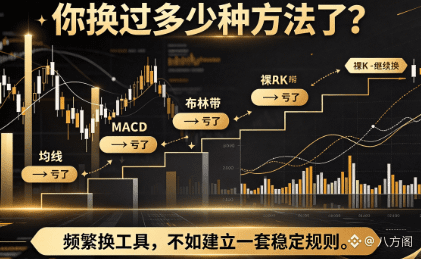
At the beginning, you learned moving averages, used them for a while, and lost money. Then you switched to MACD—still lost. Then you learned Bollinger Bands—still lost.
After that, you studied Chan theory, Elliott Waves, price-and-volume, naked K…
Learn one, discard one.
Switch one, lose again.
No matter how much you change, the account is still the same.
You’re not looking for a method—you’re avoiding yourself.
Every time you change methods, you tell yourself: this time it’s the method that’s wrong, not my fault.
But is it really the method?
You used moving averages and lost money—but when you used moving averages, did you execute them strictly? Did you set a stop loss? Did you manage your position size?
No.
When you used MACD, it was the same—nothing was done.
So why do you think that switching methods will make you money?
For anyone who doesn’t execute, any method is a losing method.
Moving averages themselves don’t make money; it’s the way you use them that determines whether they make money.
MACD itself doesn’t make money either; it’s the way you use MACD that determines whether it makes money.
What you’re missing has never been a perfect method.
What you’re missing is the patience to use one method thoroughly.
So how do you change?
First, pick one method and use it for three full months.
No matter whether it’s moving averages, naked K, or support and resistance—pick one.
Use it for three months. You’re not allowed to switch.
During these three months, even if you lose, you don’t change.
Second, break the method into rules.
It’s not “use moving averages to trade.”
It’s “Go long when price is above the 20-day moving average; go short when it breaks below; set the stop loss 2 points below the moving average.”
The more specific the rules, the easier execution becomes.
Third, record every single trade.
If you trade according to the rules, write it down.
If you don’t trade according to the rules, write it down too.
After three months, look back, and you’ll find that the problem was never with the method.
If you’ve already changed more than three methods, come in tonight.
I’ll use the current mainstream altcoin market situation and explain in real time: how to use one method thoroughly, and how to turn a method into rules.
Bafangge: mainstream altcoin trade signals + one-on-one instruction.
How many different methods have you changed?
Let me ask you one question first:
Since you started trading, how many different ways have you tried?
At the beginning, you learned moving averages, used them for a while, and lost money. Then you switched to MACD—still lost. Then you learned Bollinger Bands—still lost.
After that, you studied Chan theory, Elliott Waves, price-and-volume, naked K…
Learn one, discard one.
Switch one, lose again.
No matter how much you change, the account is still the same.
You’re not looking for a method—you’re avoiding yourself.
Every time you change methods, you tell yourself: this time it’s the method that’s wrong, not my fault.
But is it really the method?
You used moving averages and lost money—but when you used moving averages, did you execute them strictly? Did you set a stop loss? Did you manage your position size?
No.
When you used MACD, it was the same—nothing was done.
So why do you think that switching methods will make you money?
For anyone who doesn’t execute, any method is a losing method.
Moving averages themselves don’t make money; it’s the way you use them that determines whether they make money.
MACD itself doesn’t make money either; it’s the way you use MACD that determines whether it makes money.
What you’re missing has never been a perfect method.
What you’re missing is the patience to use one method thoroughly.
So how do you change?
First, pick one method and use it for three full months.
No matter whether it’s moving averages, naked K, or support and resistance—pick one.
Use it for three months. You’re not allowed to switch.
During these three months, even if you lose, you don’t change.
Second, break the method into rules.
It’s not “use moving averages to trade.”
It’s “Go long when price is above the 20-day moving average; go short when it breaks below; set the stop loss 2 points below the moving average.”
The more specific the rules, the easier execution becomes.
Third, record every single trade.
If you trade according to the rules, write it down.
If you don’t trade according to the rules, write it down too.
After three months, look back, and you’ll find that the problem was never with the method.
If you’ve already changed more than three methods, come in tonight.
I’ll use the current mainstream altcoin market situation and explain in real time: how to use one method thoroughly, and how to turn a method into rules.
Bafangge: mainstream altcoin trade signals + one-on-one instruction.
Let me ask you one question first:
Since you started trading, how many different ways have you tried?
At the beginning, you learned moving averages, used them for a while, and lost money. Then you switched to MACD—still lost. Then you learned Bollinger Bands—still lost.
After that, you studied Chan theory, Elliott Waves, price-and-volume, naked K…
Learn one, discard one.
Switch one, lose again.
No matter how much you change, the account is still the same.
You’re not looking for a method—you’re avoiding yourself.
Every time you change methods, you tell yourself: this time it’s the method that’s wrong, not my fault.
But is it really the method?
You used moving averages and lost money—but when you used moving averages, did you execute them strictly? Did you set a stop loss? Did you manage your position size?
No.
When you used MACD, it was the same—nothing was done.
So why do you think that switching methods will make you money?
For anyone who doesn’t execute, any method is a losing method.
Moving averages themselves don’t make money; it’s the way you use them that determines whether they make money.
MACD itself doesn’t make money either; it’s the way you use MACD that determines whether it makes money.
What you’re missing has never been a perfect method.
What you’re missing is the patience to use one method thoroughly.
So how do you change?
First, pick one method and use it for three full months.
No matter whether it’s moving averages, naked K, or support and resistance—pick one.
Use it for three months. You’re not allowed to switch.
During these three months, even if you lose, you don’t change.
Second, break the method into rules.
It’s not “use moving averages to trade.”
It’s “Go long when price is above the 20-day moving average; go short when it breaks below; set the stop loss 2 points below the moving average.”
The more specific the rules, the easier execution becomes.
Third, record every single trade.
If you trade according to the rules, write it down.
If you don’t trade according to the rules, write it down too.
After three months, look back, and you’ll find that the problem was never with the method.
If you’ve already changed more than three methods, come in tonight.
I’ll use the current mainstream altcoin market situation and explain in real time: how to use one method thoroughly, and how to turn a method into rules.
Bafangge: mainstream altcoin trade signals + one-on-one instruction.
2
1
6
9k

·
--
🎙️ Beginner-friendly for total newbies—learn trading in ten minutes. Free guided lessons

End
05 h 59 m 59 s
7.2k
26
26
·
--
You watch the account balance to trade—if you don’t lose, who’s supposed to?
First, let me ask you a question:
When you place a trade, what are you looking at?
Is it the price on the candlestick chart, or the floating profit/loss number in your account?
Most people’s answer is: the number.
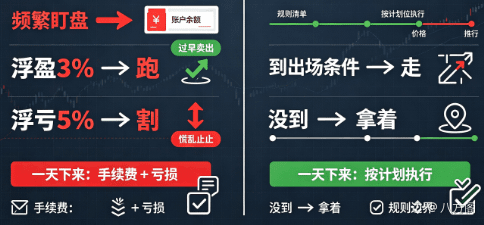
When you lose, it turns red, your heartbeat races, and you rush to get out.
When you win, it turns green, you’re afraid it’ll turn red, and you rush to lock in profits.
All your decisions are being driven by that number.
But that number is really not important.
It’s only a temporary state after you enter. If you watch it, it won’t increase. If you don’t watch it, it won’t decrease.
What truly determines the outcome of your trade is whether the price has reached the position you planned—not the bouncing number on your account.
People who trade by watching their balance will always end up making emotional decisions.
Lose 5%, panic, cut at the lowest point—then the price turns back up.
Win 3%, get scared, run from halfway up—then the price keeps surging.
All your “sell too early” and “cut the wrong way” happen because you’re watching the balance instead of watching the price position.
So what should you do?
First, after entering, turn off the floating profit/loss number.
Many trading platforms allow you to hide the account balance and floating P&L. If you can’t find that feature, then just cover the corner of your screen with a piece of paper.
Keep only the candlestick chart—focus only on the position.
Second, ask just one question: has it reached my exit conditions yet?
Not “how much have I made,” not “how much have I lost,” but “has the price reached the position where I should exit?”
If it’s there, exit. If not, wait.
Third, check the balance during review, not while trading.
During review, you need to see how much you made and how much you lost. But during the few minutes you’re trading, you have nothing to do with the balance.
If you realize that every time you make decisions, you’re watching your floating profit/loss, then come in tonight.
I’ll take the current mainstream fake-meme market setup and demonstrate it live: how to place trades by watching only the position, not the balance.
Tonight at Bafangge—mainstream fake-meme trading guidance plus one-on-one teaching.
You watch the account balance to trade—if you don’t lose, who’s supposed to?
First, let me ask you a question:
When you place a trade, what are you looking at?
Is it the price on the candlestick chart, or the floating profit/loss number in your account?
Most people’s answer is: the number.
When you lose, it turns red, your heartbeat races, and you rush to get out.
When you win, it turns green, you’re afraid it’ll turn red, and you rush to lock in profits.
All your decisions are being driven by that number.
But that number is really not important.
It’s only a temporary state after you enter. If you watch it, it won’t increase. If you don’t watch it, it won’t decrease.
What truly determines the outcome of your trade is whether the price has reached the position you planned—not the bouncing number on your account.
People who trade by watching their balance will always end up making emotional decisions.
Lose 5%, panic, cut at the lowest point—then the price turns back up.
Win 3%, get scared, run from halfway up—then the price keeps surging.
All your “sell too early” and “cut the wrong way” happen because you’re watching the balance instead of watching the price position.
So what should you do?
First, after entering, turn off the floating profit/loss number.
Many trading platforms allow you to hide the account balance and floating P&L. If you can’t find that feature, then just cover the corner of your screen with a piece of paper.
Keep only the candlestick chart—focus only on the position.
Second, ask just one question: has it reached my exit conditions yet?
Not “how much have I made,” not “how much have I lost,” but “has the price reached the position where I should exit?”
If it’s there, exit. If not, wait.
Third, check the balance during review, not while trading.
During review, you need to see how much you made and how much you lost. But during the few minutes you’re trading, you have nothing to do with the balance.
If you realize that every time you make decisions, you’re watching your floating profit/loss, then come in tonight.
I’ll take the current mainstream fake-meme market setup and demonstrate it live: how to place trades by watching only the position, not the balance.
Tonight at Bafangge—mainstream fake-meme trading guidance plus one-on-one teaching.
First, let me ask you a question:
When you place a trade, what are you looking at?
Is it the price on the candlestick chart, or the floating profit/loss number in your account?
Most people’s answer is: the number.
When you lose, it turns red, your heartbeat races, and you rush to get out.
When you win, it turns green, you’re afraid it’ll turn red, and you rush to lock in profits.
All your decisions are being driven by that number.
But that number is really not important.
It’s only a temporary state after you enter. If you watch it, it won’t increase. If you don’t watch it, it won’t decrease.
What truly determines the outcome of your trade is whether the price has reached the position you planned—not the bouncing number on your account.
People who trade by watching their balance will always end up making emotional decisions.
Lose 5%, panic, cut at the lowest point—then the price turns back up.
Win 3%, get scared, run from halfway up—then the price keeps surging.
All your “sell too early” and “cut the wrong way” happen because you’re watching the balance instead of watching the price position.
So what should you do?
First, after entering, turn off the floating profit/loss number.
Many trading platforms allow you to hide the account balance and floating P&L. If you can’t find that feature, then just cover the corner of your screen with a piece of paper.
Keep only the candlestick chart—focus only on the position.
Second, ask just one question: has it reached my exit conditions yet?
Not “how much have I made,” not “how much have I lost,” but “has the price reached the position where I should exit?”
If it’s there, exit. If not, wait.
Third, check the balance during review, not while trading.
During review, you need to see how much you made and how much you lost. But during the few minutes you’re trading, you have nothing to do with the balance.
If you realize that every time you make decisions, you’re watching your floating profit/loss, then come in tonight.
I’ll take the current mainstream fake-meme market setup and demonstrate it live: how to place trades by watching only the position, not the balance.
Tonight at Bafangge—mainstream fake-meme trading guidance plus one-on-one teaching.
1
8
2.8k
·
--
You don’t know how to trade—you just want everything to be perfect.
Let me ask you a question first:
Have you ever missed an entire market swing because you wanted to wait for a “better price”?
When the price reached your planned level, you thought, “Wait a bit more—it might go even lower.” Then the trend started, and it never looked back.
You slapped your thigh: “If I had entered back then!”
Let me ask you another question:
Have you ever watched all your profit slip away because you wanted to sell at the “highest point”?
When you had floating gains, you felt, “It can still go up,” so you didn’t exit. Then the market pulled back and the profit was gone. You regretted: “If I had sold back then!”
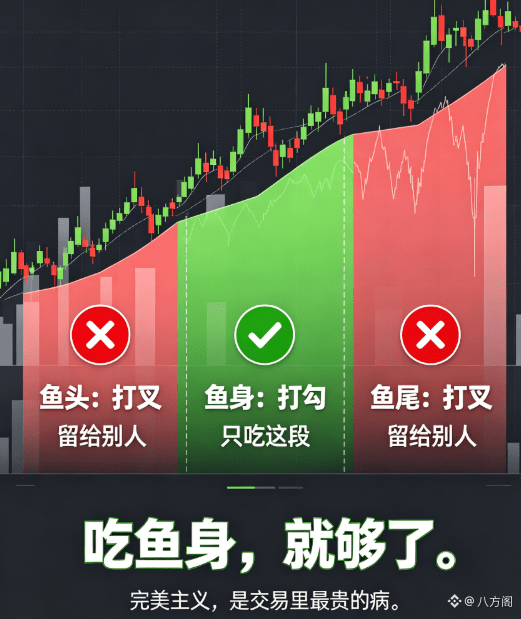
All your regret comes from one single thought: you want to be perfect.
Buy at the lowest point, sell at the highest point, catch every move, and never let a single profit segment go.
This isn’t trading—it’s dreaming.
Perfectionism is the most expensive disease in trading.
Because it makes you:
Hesitate when you should enter—you’re afraid you’ll enter too early
Be greedy when you should exit—you’re afraid you’ll exit too soon
Fant asize about when you should stop-loss—you think it can still come back
Feel anxious when you should hold—you always want to lock in gains
All your actions get distorted.
It’s not because you don’t understand the technicals—it’s because you want everything to be perfect.
How do you cure it?
First, accept the “eat the fish body” principle.
In one swing, the fish head and tail are left for others—you only eat the middle portion. If you can eat the fish body, you’ve already won. People who try to eat the fish head and tail too often end up getting nothing.
Second, set your target price before entering.
When you reach your target, exit unconditionally. No matter what happens afterward, it has nothing to do with you. Money is what you’ve actually earned—not what you only hoped for.
Third, delete the words “better” from your mind.
“A better price,” “higher profit,” “a more perfect exit”—these are all illusions. The market will never give you perfection. It only gives you opportunities. Seize the opportunities—it's ten thousand times more important than chasing perfection.
If you’re the kind of person who always wants to be perfect but always ends up regretting, come in tonight.
I’ll take the current mainstream altcoin trend and explain it live: how to set your targets, how to execute, and how to accept imperfection.
You don’t know how to trade—you just want everything to be perfect.
Let me ask you a question first:
Have you ever missed an entire market swing because you wanted to wait for a “better price”?
When the price reached your planned level, you thought, “Wait a bit more—it might go even lower.” Then the trend started, and it never looked back.
You slapped your thigh: “If I had entered back then!”
Let me ask you another question:
Have you ever watched all your profit slip away because you wanted to sell at the “highest point”?
When you had floating gains, you felt, “It can still go up,” so you didn’t exit. Then the market pulled back and the profit was gone. You regretted: “If I had sold back then!”
All your regret comes from one single thought: you want to be perfect.
Buy at the lowest point, sell at the highest point, catch every move, and never let a single profit segment go.
This isn’t trading—it’s dreaming.
Perfectionism is the most expensive disease in trading.
Because it makes you:
Hesitate when you should enter—you’re afraid you’ll enter too early
Be greedy when you should exit—you’re afraid you’ll exit too soon
Fant asize about when you should stop-loss—you think it can still come back
Feel anxious when you should hold—you always want to lock in gains
All your actions get distorted.
It’s not because you don’t understand the technicals—it’s because you want everything to be perfect.
How do you cure it?
First, accept the “eat the fish body” principle.
In one swing, the fish head and tail are left for others—you only eat the middle portion. If you can eat the fish body, you’ve already won. People who try to eat the fish head and tail too often end up getting nothing.
Second, set your target price before entering.
When you reach your target, exit unconditionally. No matter what happens afterward, it has nothing to do with you. Money is what you’ve actually earned—not what you only hoped for.
Third, delete the words “better” from your mind.
“A better price,” “higher profit,” “a more perfect exit”—these are all illusions. The market will never give you perfection. It only gives you opportunities. Seize the opportunities—it's ten thousand times more important than chasing perfection.
If you’re the kind of person who always wants to be perfect but always ends up regretting, come in tonight.
I’ll take the current mainstream altcoin trend and explain it live: how to set your targets, how to execute, and how to accept imperfection.
Let me ask you a question first:
Have you ever missed an entire market swing because you wanted to wait for a “better price”?
When the price reached your planned level, you thought, “Wait a bit more—it might go even lower.” Then the trend started, and it never looked back.
You slapped your thigh: “If I had entered back then!”
Let me ask you another question:
Have you ever watched all your profit slip away because you wanted to sell at the “highest point”?
When you had floating gains, you felt, “It can still go up,” so you didn’t exit. Then the market pulled back and the profit was gone. You regretted: “If I had sold back then!”
All your regret comes from one single thought: you want to be perfect.
Buy at the lowest point, sell at the highest point, catch every move, and never let a single profit segment go.
This isn’t trading—it’s dreaming.
Perfectionism is the most expensive disease in trading.
Because it makes you:
Hesitate when you should enter—you’re afraid you’ll enter too early
Be greedy when you should exit—you’re afraid you’ll exit too soon
Fant asize about when you should stop-loss—you think it can still come back
Feel anxious when you should hold—you always want to lock in gains
All your actions get distorted.
It’s not because you don’t understand the technicals—it’s because you want everything to be perfect.
How do you cure it?
First, accept the “eat the fish body” principle.
In one swing, the fish head and tail are left for others—you only eat the middle portion. If you can eat the fish body, you’ve already won. People who try to eat the fish head and tail too often end up getting nothing.
Second, set your target price before entering.
When you reach your target, exit unconditionally. No matter what happens afterward, it has nothing to do with you. Money is what you’ve actually earned—not what you only hoped for.
Third, delete the words “better” from your mind.
“A better price,” “higher profit,” “a more perfect exit”—these are all illusions. The market will never give you perfection. It only gives you opportunities. Seize the opportunities—it's ten thousand times more important than chasing perfection.
If you’re the kind of person who always wants to be perfect but always ends up regretting, come in tonight.
I’ll take the current mainstream altcoin trend and explain it live: how to set your targets, how to execute, and how to accept imperfection.
5
2.2k
·
--
The more you try to break even, the more you lose.
Let me ask you a question first:
After you lose a trade, what’s the very first thought in your mind?
Isn’t it: “I need to earn it back”?
Then you start looking for opportunities, eager to place a trade quickly and make up for the loss.
You see a pattern and think it might work, so you enter.
You see a message and think it’s going up, so you enter again.
And what happens?
You lose again.
A break-even mindset is a loss-accelerator.
Why?
Because it lowers your standards.
Trades that don’t meet your rules—you still enter.
Trades that you should cut—you keep holding.
Your mind is focused on “making the loss back,” not on “doing the right thing.”
The more you try to break even, the easier it is to act messily.
The messier you act, the more you lose.
So how do you fix it?
First, delete the words “break even” from your head.
The money you lost doesn’t belong to you anymore. It won’t come back just because you’re in a hurry to earn it back. The market doesn’t know how much you lost, and it doesn’t care how much you lost.
Second, accept that losing is part of trading.
Every trade has the possibility of loss. If you stop-loss, it means this trade is over—it’s finished. Turn the page. The next trade is a brand-new beginning, with no relation to the previous one.
Third, after you’ve taken a loss, force yourself to stop.
After a loss, close the software and rest for half an hour. Wait until the “break even” voice in your head disappears before coming back.
If you’re the kind of person who loses and immediately rushes to break even, come in tonight.
I’ll use the current mainstream altcoin/shady-coin market trend and explain on the spot: how to stay calm after a loss, and how to ensure the next trade isn’t affected by the previous one.
Bafangge—mainstream altcoin trading signals + one-on-one coaching.
The more you try to break even, the more you lose.
Let me ask you a question first:
After you lose a trade, what’s the very first thought in your mind?
Isn’t it: “I need to earn it back”?
Then you start looking for opportunities, eager to place a trade quickly and make up for the loss.
You see a pattern and think it might work, so you enter.
You see a message and think it’s going up, so you enter again.
And what happens?
You lose again.
A break-even mindset is a loss-accelerator.
Why?
Because it lowers your standards.
Trades that don’t meet your rules—you still enter.
Trades that you should cut—you keep holding.
Your mind is focused on “making the loss back,” not on “doing the right thing.”
The more you try to break even, the easier it is to act messily.
The messier you act, the more you lose.
So how do you fix it?
First, delete the words “break even” from your head.
The money you lost doesn’t belong to you anymore. It won’t come back just because you’re in a hurry to earn it back. The market doesn’t know how much you lost, and it doesn’t care how much you lost.
Second, accept that losing is part of trading.
Every trade has the possibility of loss. If you stop-loss, it means this trade is over—it’s finished. Turn the page. The next trade is a brand-new beginning, with no relation to the previous one.
Third, after you’ve taken a loss, force yourself to stop.
After a loss, close the software and rest for half an hour. Wait until the “break even” voice in your head disappears before coming back.
If you’re the kind of person who loses and immediately rushes to break even, come in tonight.
I’ll use the current mainstream altcoin/shady-coin market trend and explain on the spot: how to stay calm after a loss, and how to ensure the next trade isn’t affected by the previous one.
Bafangge—mainstream altcoin trading signals + one-on-one coaching.
Let me ask you a question first:
After you lose a trade, what’s the very first thought in your mind?
Isn’t it: “I need to earn it back”?
Then you start looking for opportunities, eager to place a trade quickly and make up for the loss.
You see a pattern and think it might work, so you enter.
You see a message and think it’s going up, so you enter again.
And what happens?
You lose again.
A break-even mindset is a loss-accelerator.
Why?
Because it lowers your standards.
Trades that don’t meet your rules—you still enter.
Trades that you should cut—you keep holding.
Your mind is focused on “making the loss back,” not on “doing the right thing.”
The more you try to break even, the easier it is to act messily.
The messier you act, the more you lose.
So how do you fix it?
First, delete the words “break even” from your head.
The money you lost doesn’t belong to you anymore. It won’t come back just because you’re in a hurry to earn it back. The market doesn’t know how much you lost, and it doesn’t care how much you lost.
Second, accept that losing is part of trading.
Every trade has the possibility of loss. If you stop-loss, it means this trade is over—it’s finished. Turn the page. The next trade is a brand-new beginning, with no relation to the previous one.
Third, after you’ve taken a loss, force yourself to stop.
After a loss, close the software and rest for half an hour. Wait until the “break even” voice in your head disappears before coming back.
If you’re the kind of person who loses and immediately rushes to break even, come in tonight.
I’ll use the current mainstream altcoin/shady-coin market trend and explain on the spot: how to stay calm after a loss, and how to ensure the next trade isn’t affected by the previous one.
Bafangge—mainstream altcoin trading signals + one-on-one coaching.

1
3
2.2k
·
--
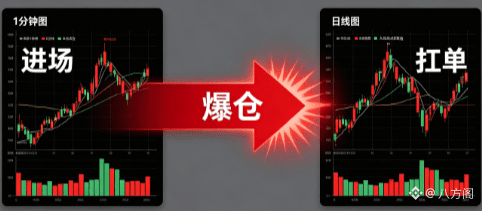
You enter on a 1-minute chart, but hold the position using the daily chart—if you don’t lose, who will?
Let me ask you a question first: When you entered, which timeframe were you looking at? A 1-minute? A 5-minute?
Most people answer: the 1-minute, because the signals are fast.
Then let me ask you another question: After you got stuck in a losing trade, which timeframe did you look at? The daily? The weekly?
Most people answer: the daily, because they want to hold for the long term.
Congratulations—you’ve found the standard setup for getting liquidated: enter with a microscope, hold with a telescope.
You enter using one timeframe, but hold using another—that isn’t trading; it’s self-deception.
Why?
Because the 1-minute chart tells you it’s time to exit, but you don’t. You go look at the daily chart for reasons: “The daily trend is still bullish; it’s fine to hold.”
Then the daily chart breaks down too, and you’re already trapped—you can’t move anymore.
The right way is: your entry and exit must use the same timeframe.
If you enter using a 1-minute chart, exit using a 1-minute chart. If the 1-minute chart tells you to stop out, then you leave—don’t look at the daily.
If you enter using a daily chart, exit using a daily chart. If the daily chart says the trend is still there, then you hold—don’t get distracted by 1-minute fluctuations.
Only by keeping the timeframe consistent will your trading logic stay consistent, and you won’t contradict yourself.
Tonight in the live room, I’ll focus on the mainstream altcoin market and demonstrate in real time: how to unify your timeframes, and how to build consistent trading rules.
If you’ve also had the problem of “enter on the 1-minute, hold on the daily,” come in.
You enter on a 1-minute chart, but hold the position using the daily chart—if you don’t lose, who will?
Let me ask you a question first: When you entered, which timeframe were you looking at? A 1-minute? A 5-minute?
Most people answer: the 1-minute, because the signals are fast.
Then let me ask you another question: After you got stuck in a losing trade, which timeframe did you look at? The daily? The weekly?
Most people answer: the daily, because they want to hold for the long term.
Congratulations—you’ve found the standard setup for getting liquidated: enter with a microscope, hold with a telescope.
You enter using one timeframe, but hold using another—that isn’t trading; it’s self-deception.
Why?
Because the 1-minute chart tells you it’s time to exit, but you don’t. You go look at the daily chart for reasons: “The daily trend is still bullish; it’s fine to hold.”
Then the daily chart breaks down too, and you’re already trapped—you can’t move anymore.
The right way is: your entry and exit must use the same timeframe.
If you enter using a 1-minute chart, exit using a 1-minute chart. If the 1-minute chart tells you to stop out, then you leave—don’t look at the daily.
If you enter using a daily chart, exit using a daily chart. If the daily chart says the trend is still there, then you hold—don’t get distracted by 1-minute fluctuations.
Only by keeping the timeframe consistent will your trading logic stay consistent, and you won’t contradict yourself.
Tonight in the live room, I’ll focus on the mainstream altcoin market and demonstrate in real time: how to unify your timeframes, and how to build consistent trading rules.
If you’ve also had the problem of “enter on the 1-minute, hold on the daily,” come in.
Let me ask you a question first: When you entered, which timeframe were you looking at? A 1-minute? A 5-minute?
Most people answer: the 1-minute, because the signals are fast.
Then let me ask you another question: After you got stuck in a losing trade, which timeframe did you look at? The daily? The weekly?
Most people answer: the daily, because they want to hold for the long term.
Congratulations—you’ve found the standard setup for getting liquidated: enter with a microscope, hold with a telescope.
You enter using one timeframe, but hold using another—that isn’t trading; it’s self-deception.
Why?
Because the 1-minute chart tells you it’s time to exit, but you don’t. You go look at the daily chart for reasons: “The daily trend is still bullish; it’s fine to hold.”
Then the daily chart breaks down too, and you’re already trapped—you can’t move anymore.
The right way is: your entry and exit must use the same timeframe.
If you enter using a 1-minute chart, exit using a 1-minute chart. If the 1-minute chart tells you to stop out, then you leave—don’t look at the daily.
If you enter using a daily chart, exit using a daily chart. If the daily chart says the trend is still there, then you hold—don’t get distracted by 1-minute fluctuations.
Only by keeping the timeframe consistent will your trading logic stay consistent, and you won’t contradict yourself.
Tonight in the live room, I’ll focus on the mainstream altcoin market and demonstrate in real time: how to unify your timeframes, and how to build consistent trading rules.
If you’ve also had the problem of “enter on the 1-minute, hold on the daily,” come in.
2
2
4
2.2k
·
--
You’ve learned so much about “how to make money,” but have you ever learned “how to lose”?
Let me ask you something first:
Since you started trading, what have you learned?
How to read candlestick charts, how to draw support and resistance, how to find entry points, how to judge trends…
It’s all about “how to make money.”
But have you ever learned “how to lose money”?
How to lose is also a skill that needs to be learned.
You might say: Who can’t lose money? Do I really need to learn it?
Yes, because you don’t actually know how to lose.
When you lose, you hold on until you can’t stand it anymore, then you sell at the lowest point.
When you lose, you average down to “balance it out”—adding more and more until you get liquidated.
When you lose, you get emotionally carried away, and one losing trade wipes out the profit from the previous ten trades.
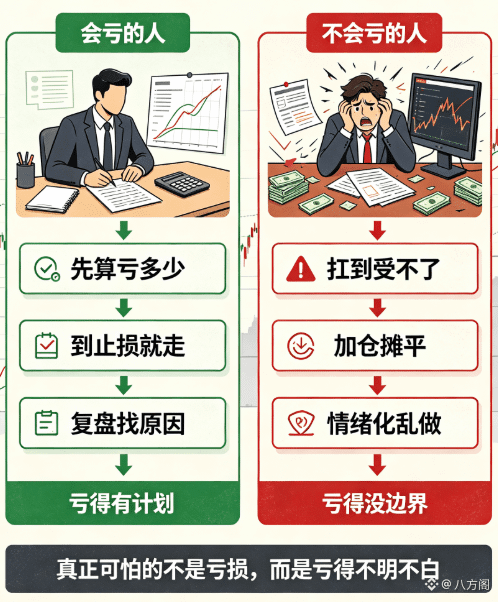
That isn’t “knowing how to lose.” That’s just losing chaotically.
So what does a real expert at losing do?
First, before entering every single trade, calculate how much you can lose at most. If I can accept losing up to that amount, then anything beyond it means I don’t enter—if I do, I’m violating discipline.
Second, once your loss reaches the stop-loss level, leave unconditionally. No hesitation, no wishful thinking, no averaging down, no praying. Once it hits, you go—cleanly and decisively.
Third, after you’ve lost, do a review. Why did this trade lose? Was your direction wrong? Your position wrong? Or was it simply bad luck? Find the cause and avoid it next time.
Someone who knows how to lose loses less, loses clearly, and after losing, they can keep trading.
Someone who doesn’t know how to lose loses more, loses blindly, and once they’ve lost, they’re out.
Trading isn’t about who makes the most money. It’s about who loses the least. If you learn how to lose, making money is only a matter of time.
If you realize you’ve never learned “how to lose,” come in tonight.
I’ll use the current mainstream altcoin market conditions and explain on the spot: before entering a trade, how to calculate your maximum loss, how to set a stop-loss, and how to review it after you’ve lost.
You’ve learned so much about “how to make money,” but have you ever learned “how to lose”?
Let me ask you something first:
Since you started trading, what have you learned?
How to read candlestick charts, how to draw support and resistance, how to find entry points, how to judge trends…
It’s all about “how to make money.”
But have you ever learned “how to lose money”?
How to lose is also a skill that needs to be learned.
You might say: Who can’t lose money? Do I really need to learn it?
Yes, because you don’t actually know how to lose.
When you lose, you hold on until you can’t stand it anymore, then you sell at the lowest point.
When you lose, you average down to “balance it out”—adding more and more until you get liquidated.
When you lose, you get emotionally carried away, and one losing trade wipes out the profit from the previous ten trades.
That isn’t “knowing how to lose.” That’s just losing chaotically.
So what does a real expert at losing do?
First, before entering every single trade, calculate how much you can lose at most. If I can accept losing up to that amount, then anything beyond it means I don’t enter—if I do, I’m violating discipline.
Second, once your loss reaches the stop-loss level, leave unconditionally. No hesitation, no wishful thinking, no averaging down, no praying. Once it hits, you go—cleanly and decisively.
Third, after you’ve lost, do a review. Why did this trade lose? Was your direction wrong? Your position wrong? Or was it simply bad luck? Find the cause and avoid it next time.
Someone who knows how to lose loses less, loses clearly, and after losing, they can keep trading.
Someone who doesn’t know how to lose loses more, loses blindly, and once they’ve lost, they’re out.
Trading isn’t about who makes the most money. It’s about who loses the least. If you learn how to lose, making money is only a matter of time.
If you realize you’ve never learned “how to lose,” come in tonight.
I’ll use the current mainstream altcoin market conditions and explain on the spot: before entering a trade, how to calculate your maximum loss, how to set a stop-loss, and how to review it after you’ve lost.
Let me ask you something first:
Since you started trading, what have you learned?
How to read candlestick charts, how to draw support and resistance, how to find entry points, how to judge trends…
It’s all about “how to make money.”
But have you ever learned “how to lose money”?
How to lose is also a skill that needs to be learned.
You might say: Who can’t lose money? Do I really need to learn it?
Yes, because you don’t actually know how to lose.
When you lose, you hold on until you can’t stand it anymore, then you sell at the lowest point.
When you lose, you average down to “balance it out”—adding more and more until you get liquidated.
When you lose, you get emotionally carried away, and one losing trade wipes out the profit from the previous ten trades.
That isn’t “knowing how to lose.” That’s just losing chaotically.
So what does a real expert at losing do?
First, before entering every single trade, calculate how much you can lose at most. If I can accept losing up to that amount, then anything beyond it means I don’t enter—if I do, I’m violating discipline.
Second, once your loss reaches the stop-loss level, leave unconditionally. No hesitation, no wishful thinking, no averaging down, no praying. Once it hits, you go—cleanly and decisively.
Third, after you’ve lost, do a review. Why did this trade lose? Was your direction wrong? Your position wrong? Or was it simply bad luck? Find the cause and avoid it next time.
Someone who knows how to lose loses less, loses clearly, and after losing, they can keep trading.
Someone who doesn’t know how to lose loses more, loses blindly, and once they’ve lost, they’re out.
Trading isn’t about who makes the most money. It’s about who loses the least. If you learn how to lose, making money is only a matter of time.
If you realize you’ve never learned “how to lose,” come in tonight.
I’ll use the current mainstream altcoin market conditions and explain on the spot: before entering a trade, how to calculate your maximum loss, how to set a stop-loss, and how to review it after you’ve lost.
11
3
1.9k

·
--
You’ve been searching for a “buy signal,” but the people who truly make money focus on “trading logic.”
Let me ask you a question first: when you open the chart, what do you look for first?
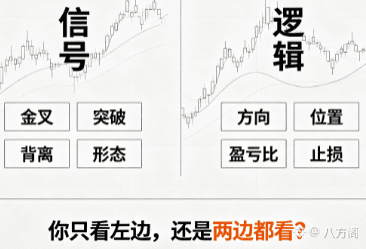
Most beginners look for “signals”: Has there been a golden cross? Has it broken above the moving average? Is there an MACD bullish divergence at the bottom?
Once they find a signal, they rush in excitedly. Then they get trapped—and blame the indicators for being wrong.
It’s not that the indicators are wrong. You simply don’t know what the logic behind that signal is.
A signal tells you, “You can enter now.” Logic tells you, “Why you can enter now, and what to do after you enter.”
You only know there was a golden cross—but do you know what to do if the price drops after the golden cross? You only know it broke above the moving average—but do you know that the real breakout is confirmed only when it retests and holds?
A signal without logic is just gambling.
The truly profitable traders look at logic:
Is the direction right? Is the entry position good? Is the risk-reward worth it? Where exactly should the stop-loss go? If I’m wrong, how much am I willing to lose?
Think these questions through—then the signal actually matters.
So how do you build trading logic?
Step 1: First, define the direction. Is the market bullish or bearish on the daily timeframe? Once the big direction is set, trade only that one direction.
Step 2: Then find the position. Where are the key support and resistance levels? Only when price reaches those key areas do you pay attention to signals.
Step 3: Wait for signal confirmation. Only when familiar signals appear at the key level (e.g., engulfing patterns, breakout + retest), consider entering.
Step 4: Set your stop-loss. At the moment you enter, the stop-loss must be placed. If it hits, you exit—no hesitation.
After these four steps, you finally have trading logic. A signal is just the trigger at the very end.
If you’re still out there searching for “buy signals,” come in tonight.
I’ll use the current mainstream altcoin market and explain live: how to have logic first, then wait for signals.
Tonight at Bafangge: mainstream altcoin trading guidance + one-on-one teaching.
In the comments, type “logic” and I’ll send you the entry link.
Tonight I’ll teach you: buy signals without logic are all traps.
You’ve been searching for a “buy signal,” but the people who truly make money focus on “trading logic.”
Let me ask you a question first: when you open the chart, what do you look for first?
Most beginners look for “signals”: Has there been a golden cross? Has it broken above the moving average? Is there an MACD bullish divergence at the bottom?
Once they find a signal, they rush in excitedly. Then they get trapped—and blame the indicators for being wrong.
It’s not that the indicators are wrong. You simply don’t know what the logic behind that signal is.
A signal tells you, “You can enter now.” Logic tells you, “Why you can enter now, and what to do after you enter.”
You only know there was a golden cross—but do you know what to do if the price drops after the golden cross? You only know it broke above the moving average—but do you know that the real breakout is confirmed only when it retests and holds?
A signal without logic is just gambling.
The truly profitable traders look at logic:
Is the direction right? Is the entry position good? Is the risk-reward worth it? Where exactly should the stop-loss go? If I’m wrong, how much am I willing to lose?
Think these questions through—then the signal actually matters.
So how do you build trading logic?
Step 1: First, define the direction. Is the market bullish or bearish on the daily timeframe? Once the big direction is set, trade only that one direction.
Step 2: Then find the position. Where are the key support and resistance levels? Only when price reaches those key areas do you pay attention to signals.
Step 3: Wait for signal confirmation. Only when familiar signals appear at the key level (e.g., engulfing patterns, breakout + retest), consider entering.
Step 4: Set your stop-loss. At the moment you enter, the stop-loss must be placed. If it hits, you exit—no hesitation.
After these four steps, you finally have trading logic. A signal is just the trigger at the very end.
If you’re still out there searching for “buy signals,” come in tonight.
I’ll use the current mainstream altcoin market and explain live: how to have logic first, then wait for signals.
Tonight at Bafangge: mainstream altcoin trading guidance + one-on-one teaching.
In the comments, type “logic” and I’ll send you the entry link.
Tonight I’ll teach you: buy signals without logic are all traps.
Let me ask you a question first: when you open the chart, what do you look for first?
Most beginners look for “signals”: Has there been a golden cross? Has it broken above the moving average? Is there an MACD bullish divergence at the bottom?
Once they find a signal, they rush in excitedly. Then they get trapped—and blame the indicators for being wrong.
It’s not that the indicators are wrong. You simply don’t know what the logic behind that signal is.
A signal tells you, “You can enter now.” Logic tells you, “Why you can enter now, and what to do after you enter.”
You only know there was a golden cross—but do you know what to do if the price drops after the golden cross? You only know it broke above the moving average—but do you know that the real breakout is confirmed only when it retests and holds?
A signal without logic is just gambling.
The truly profitable traders look at logic:
Is the direction right? Is the entry position good? Is the risk-reward worth it? Where exactly should the stop-loss go? If I’m wrong, how much am I willing to lose?
Think these questions through—then the signal actually matters.
So how do you build trading logic?
Step 1: First, define the direction. Is the market bullish or bearish on the daily timeframe? Once the big direction is set, trade only that one direction.
Step 2: Then find the position. Where are the key support and resistance levels? Only when price reaches those key areas do you pay attention to signals.
Step 3: Wait for signal confirmation. Only when familiar signals appear at the key level (e.g., engulfing patterns, breakout + retest), consider entering.
Step 4: Set your stop-loss. At the moment you enter, the stop-loss must be placed. If it hits, you exit—no hesitation.
After these four steps, you finally have trading logic. A signal is just the trigger at the very end.
If you’re still out there searching for “buy signals,” come in tonight.
I’ll use the current mainstream altcoin market and explain live: how to have logic first, then wait for signals.
Tonight at Bafangge: mainstream altcoin trading guidance + one-on-one teaching.
In the comments, type “logic” and I’ll send you the entry link.
Tonight I’ll teach you: buy signals without logic are all traps.
1
973

·
--
You always only understand after the market move is already over.
Let me ask you a question first:
Have you ever had this experience?
When the market move ends, you look back at the K-line chart, and suddenly everything becomes clear.
“Why was this clearly support—why didn’t I enter back then?”
“Here it obviously broke down—why didn’t I exit back then?”
“With this trend so obvious, how could I not see it?”
After the fact, you understand everything. Before it happens, everything is a blur.
Then you slap your thigh in regret, swear you’ll抓住 it next time.
But when the next market comes, you still can’t understand.
Why?
Because beforehand you’re seeing “emotions,” and afterward you’re seeing “results.”
Once the market move is over, the K-line freezes—there’s no more fluctuation. Your mind settles. At that point, looking at the chart is naturally clear.
But while the market is still moving, the price jumps up and down, and your heart follows. You’re thinking nonstop: “Will it drop?” “Should I run?” “Could this be a fake breakout?” How could you have time to look at support and resistance?
You don’t really not understand—you’re just having your vision blocked by emotion.
So how do you solve it?
First, draw the key levels on the chart in advance.
Don’t wait until the market is moving to make临时判断. Before the session opens, mark all support, resistance, and key points. Decide ahead of time what to do when the market reaches each area.
When the market is moving, you don’t need to analyze—you only need to check whether the price has reached the levels you drew.
Second, accept that “blur before the fact, clarity after the fact” is the norm.
No one can see everything clearly 100% while the market is moving. Those who seem like they “already knew” either are post-hoc know-it-alls, or simply got lucky.
You don’t need to see everything—you just need to take the correct actions at the key levels.
Third, during your review, ask yourself one question:
“Next time I run into the same kind of market, can I understand it in advance?”
Save screenshots of every “I only understood after it happened” moment, and review them again and again. The more you do it, the more you’ll gradually be able to see clearly before it happens.
If you’re still the kind of person who always understands only after the fact, come tonight.
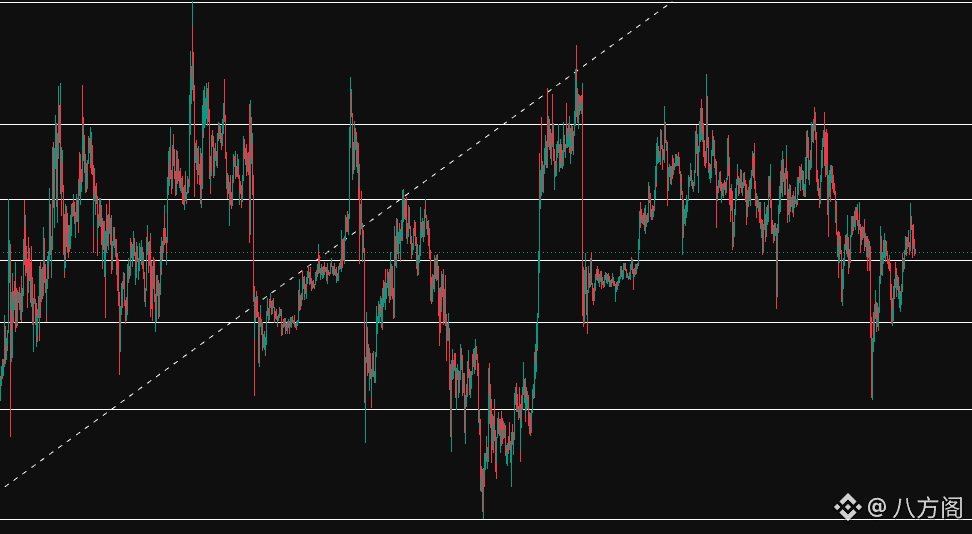
I’ll use the current mainstream “shanzhai” market scenario and draw the lines live. This isn’t waiting until the market move finishes to draw—it’s drawing in advance, then waiting for the market to validate your work.
After you watch, you’ll know exactly where the gap between seeing beforehand and seeing afterward really is.
Tonight at Bafangge: mainstream shanzhai order guidance + one-on-one teaching.
You always only understand after the market move is already over.
Let me ask you a question first:
Have you ever had this experience?
When the market move ends, you look back at the K-line chart, and suddenly everything becomes clear.
“Why was this clearly support—why didn’t I enter back then?”
“Here it obviously broke down—why didn’t I exit back then?”
“With this trend so obvious, how could I not see it?”
After the fact, you understand everything. Before it happens, everything is a blur.
Then you slap your thigh in regret, swear you’ll抓住 it next time.
But when the next market comes, you still can’t understand.
Why?
Because beforehand you’re seeing “emotions,” and afterward you’re seeing “results.”
Once the market move is over, the K-line freezes—there’s no more fluctuation. Your mind settles. At that point, looking at the chart is naturally clear.
But while the market is still moving, the price jumps up and down, and your heart follows. You’re thinking nonstop: “Will it drop?” “Should I run?” “Could this be a fake breakout?” How could you have time to look at support and resistance?
You don’t really not understand—you’re just having your vision blocked by emotion.
So how do you solve it?
First, draw the key levels on the chart in advance.
Don’t wait until the market is moving to make临时判断. Before the session opens, mark all support, resistance, and key points. Decide ahead of time what to do when the market reaches each area.
When the market is moving, you don’t need to analyze—you only need to check whether the price has reached the levels you drew.
Second, accept that “blur before the fact, clarity after the fact” is the norm.
No one can see everything clearly 100% while the market is moving. Those who seem like they “already knew” either are post-hoc know-it-alls, or simply got lucky.
You don’t need to see everything—you just need to take the correct actions at the key levels.
Third, during your review, ask yourself one question:
“Next time I run into the same kind of market, can I understand it in advance?”
Save screenshots of every “I only understood after it happened” moment, and review them again and again. The more you do it, the more you’ll gradually be able to see clearly before it happens.
If you’re still the kind of person who always understands only after the fact, come tonight.
I’ll use the current mainstream “shanzhai” market scenario and draw the lines live. This isn’t waiting until the market move finishes to draw—it’s drawing in advance, then waiting for the market to validate your work.
After you watch, you’ll know exactly where the gap between seeing beforehand and seeing afterward really is.
Tonight at Bafangge: mainstream shanzhai order guidance + one-on-one teaching.
Let me ask you a question first:
Have you ever had this experience?
When the market move ends, you look back at the K-line chart, and suddenly everything becomes clear.
“Why was this clearly support—why didn’t I enter back then?”
“Here it obviously broke down—why didn’t I exit back then?”
“With this trend so obvious, how could I not see it?”
After the fact, you understand everything. Before it happens, everything is a blur.
Then you slap your thigh in regret, swear you’ll抓住 it next time.
But when the next market comes, you still can’t understand.
Why?
Because beforehand you’re seeing “emotions,” and afterward you’re seeing “results.”
Once the market move is over, the K-line freezes—there’s no more fluctuation. Your mind settles. At that point, looking at the chart is naturally clear.
But while the market is still moving, the price jumps up and down, and your heart follows. You’re thinking nonstop: “Will it drop?” “Should I run?” “Could this be a fake breakout?” How could you have time to look at support and resistance?
You don’t really not understand—you’re just having your vision blocked by emotion.
So how do you solve it?
First, draw the key levels on the chart in advance.
Don’t wait until the market is moving to make临时判断. Before the session opens, mark all support, resistance, and key points. Decide ahead of time what to do when the market reaches each area.
When the market is moving, you don’t need to analyze—you only need to check whether the price has reached the levels you drew.
Second, accept that “blur before the fact, clarity after the fact” is the norm.
No one can see everything clearly 100% while the market is moving. Those who seem like they “already knew” either are post-hoc know-it-alls, or simply got lucky.
You don’t need to see everything—you just need to take the correct actions at the key levels.
Third, during your review, ask yourself one question:
“Next time I run into the same kind of market, can I understand it in advance?”
Save screenshots of every “I only understood after it happened” moment, and review them again and again. The more you do it, the more you’ll gradually be able to see clearly before it happens.
If you’re still the kind of person who always understands only after the fact, come tonight.
I’ll use the current mainstream “shanzhai” market scenario and draw the lines live. This isn’t waiting until the market move finishes to draw—it’s drawing in advance, then waiting for the market to validate your work.
After you watch, you’ll know exactly where the gap between seeing beforehand and seeing afterward really is.
Tonight at Bafangge: mainstream shanzhai order guidance + one-on-one teaching.
1
1.4k
·
--
🎙️ Yesterday's performance: twelve take-profits and one stop-loss. Today, keep going hard!

End
04 h 55 m 01 s
1.9k
7
27
·
--
You can’t even stay in cash—how do you expect to make money?
Let me ask you a question first:
Have you ever calculated how much of your day is spent with zero position?
Most people’s answer is: almost none.
You close one order and immediately look for the next. If you decide not to do this coin, you switch to another. Once you cut a loss, you rush right back in.
You’re either in a position—or on the way to enter one.
You’ve never truly been in cash.
Why can’t you stay in cash?
Because you’re afraid. Afraid of what? Afraid of missing out.
“What if the market moves while I’m in cash?”
But have you considered the other side of the question:
While you’re always in the market, how much of the move have you actually captured?
Frequent entries and exits lead to many mistakes—going long wrong, then long wrong again. You pay a pile of fees, and your account keeps getting smaller.
Staying in cash is also a position.
Sometimes, the best trade is not to trade.
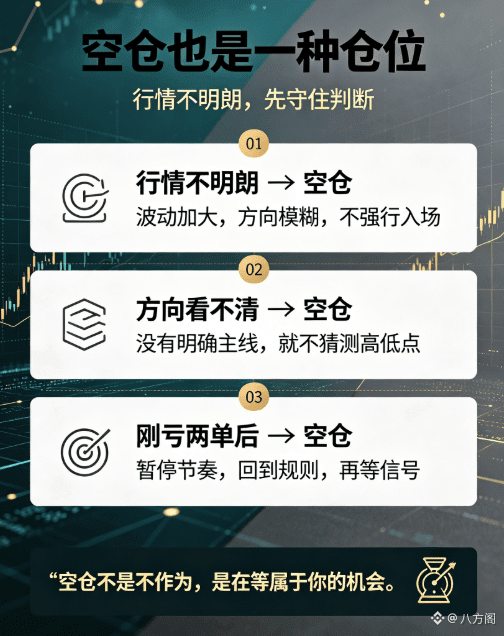
When the market isn’t clear, stay in cash.
When you can’t see the direction, stay in cash.
When you’ve just lost two trades and your mindset is unstable, stay in cash.
Staying in cash isn’t wasting time—it’s protecting your capital, waiting for the real opportunity that belongs to you.
How do you learn to stay in cash?
First, set a rule for yourself: at most two trades per day.
After you complete two trades, win or lose, close the software. The rest of the time, stay in cash.
Second, when the market doesn’t match your rules, don’t enter—period.
If your rule says to wait for a pullback, then wait. If there’s no pullback, don’t trade. Better to stay in cash than to make a wrong trade.
Third, after two consecutive losing trades, force yourself to stay in cash for a day.
No trades, no staring at the screen, no reviewing charts. Completely leave the market for a day—reset your emotions before coming back.
Do these three things, and you’ll find: you’ll have more time in cash, but your account becomes more stable instead.
Because you’re no longer trading just to trade—you only act when it’s worth it.
If you discover you can’t even stay in cash for half a day, come in tonight.
I’ll use the current mainstream altcoin market to explain on the spot: what kind of setups you should trade, and what kind of setups you should stay in cash.
Tonight at Bafangge: mainstream altcoin trade guidance + one-on-one teaching.
In the comments, type “stay in cash” and I’ll send you the entry link.
Tonight I’ll teach you: sometimes the best trade is simply not trading.
You can’t even stay in cash—how do you expect to make money?
Let me ask you a question first:
Have you ever calculated how much of your day is spent with zero position?
Most people’s answer is: almost none.
You close one order and immediately look for the next. If you decide not to do this coin, you switch to another. Once you cut a loss, you rush right back in.
You’re either in a position—or on the way to enter one.
You’ve never truly been in cash.
Why can’t you stay in cash?
Because you’re afraid. Afraid of what? Afraid of missing out.
“What if the market moves while I’m in cash?”
But have you considered the other side of the question:
While you’re always in the market, how much of the move have you actually captured?
Frequent entries and exits lead to many mistakes—going long wrong, then long wrong again. You pay a pile of fees, and your account keeps getting smaller.
Staying in cash is also a position.
Sometimes, the best trade is not to trade.
When the market isn’t clear, stay in cash.
When you can’t see the direction, stay in cash.
When you’ve just lost two trades and your mindset is unstable, stay in cash.
Staying in cash isn’t wasting time—it’s protecting your capital, waiting for the real opportunity that belongs to you.
How do you learn to stay in cash?
First, set a rule for yourself: at most two trades per day.
After you complete two trades, win or lose, close the software. The rest of the time, stay in cash.
Second, when the market doesn’t match your rules, don’t enter—period.
If your rule says to wait for a pullback, then wait. If there’s no pullback, don’t trade. Better to stay in cash than to make a wrong trade.
Third, after two consecutive losing trades, force yourself to stay in cash for a day.
No trades, no staring at the screen, no reviewing charts. Completely leave the market for a day—reset your emotions before coming back.
Do these three things, and you’ll find: you’ll have more time in cash, but your account becomes more stable instead.
Because you’re no longer trading just to trade—you only act when it’s worth it.
If you discover you can’t even stay in cash for half a day, come in tonight.
I’ll use the current mainstream altcoin market to explain on the spot: what kind of setups you should trade, and what kind of setups you should stay in cash.
Tonight at Bafangge: mainstream altcoin trade guidance + one-on-one teaching.
In the comments, type “stay in cash” and I’ll send you the entry link.
Tonight I’ll teach you: sometimes the best trade is simply not trading.
Let me ask you a question first:
Have you ever calculated how much of your day is spent with zero position?
Most people’s answer is: almost none.
You close one order and immediately look for the next. If you decide not to do this coin, you switch to another. Once you cut a loss, you rush right back in.
You’re either in a position—or on the way to enter one.
You’ve never truly been in cash.
Why can’t you stay in cash?
Because you’re afraid. Afraid of what? Afraid of missing out.
“What if the market moves while I’m in cash?”
But have you considered the other side of the question:
While you’re always in the market, how much of the move have you actually captured?
Frequent entries and exits lead to many mistakes—going long wrong, then long wrong again. You pay a pile of fees, and your account keeps getting smaller.
Staying in cash is also a position.
Sometimes, the best trade is not to trade.
When the market isn’t clear, stay in cash.
When you can’t see the direction, stay in cash.
When you’ve just lost two trades and your mindset is unstable, stay in cash.
Staying in cash isn’t wasting time—it’s protecting your capital, waiting for the real opportunity that belongs to you.
How do you learn to stay in cash?
First, set a rule for yourself: at most two trades per day.
After you complete two trades, win or lose, close the software. The rest of the time, stay in cash.
Second, when the market doesn’t match your rules, don’t enter—period.
If your rule says to wait for a pullback, then wait. If there’s no pullback, don’t trade. Better to stay in cash than to make a wrong trade.
Third, after two consecutive losing trades, force yourself to stay in cash for a day.
No trades, no staring at the screen, no reviewing charts. Completely leave the market for a day—reset your emotions before coming back.
Do these three things, and you’ll find: you’ll have more time in cash, but your account becomes more stable instead.
Because you’re no longer trading just to trade—you only act when it’s worth it.
If you discover you can’t even stay in cash for half a day, come in tonight.
I’ll use the current mainstream altcoin market to explain on the spot: what kind of setups you should trade, and what kind of setups you should stay in cash.
Tonight at Bafangge: mainstream altcoin trade guidance + one-on-one teaching.
In the comments, type “stay in cash” and I’ll send you the entry link.
Tonight I’ll teach you: sometimes the best trade is simply not trading.
1
1.3k


·
--
Do you always feel like “making less is the same as losing”?
Let me ask you a question first:
Suppose you have an order in hand, and you’re up by 10%. You don’t close it—you want to wait for more. Then the market pulls back, and your profit drops from 10% to 2%. You panic and exit.
After you’re out, what you tell yourself is, “If only I had closed when it was at 10%.”
Then on the next trade, when you’re up 5%, you exit. After you exit, the market keeps going another 30%. And you start regretting again: “If only I had held a bit longer.”
Have you noticed the problem?
You’re always regretting.
Regret when you make less; regret when you exit too early; regret when you don’t enter; regret even after you enter.
Your trading career is basically a history of regret.
Why does this happen?
Because there’s a voice in your head saying, “I should make more.”
That voice never lets you be satisfied with the profits you have right now—it keeps you chasing the imagined, bigger profit.
And then, in order to get “more,” you even risk the profits you already had.
The biggest trap in trading is the idea that “making less is losing.”
You originally made 5%—that’s the fact. But you think it’s not enough. You feel like, “It could have been 10%,” so you decide you “lost” the extra 5%.
To chase those 5% that didn’t even exist, you end up wiping out the real 5% as well.
In the end, you make nothing—and even lose money on fees.
So how do you cure this?
First, set your target level before you enter.
Not “see how it goes when it happens,” but “when it hits, you exit.”
When your target is reached, no matter how much more may come later, close half first. Set the other half with a breakeven stop-loss so it can run on its own.
Second, what you make is what you make.
Don’t care how much others make, and don’t care how the market moves afterward.
The extra numbers in your account are real.
If you made it, you made it. Anything you didn’t make doesn’t belong to you in the first place.
Third, accept imperfection.
You’ll never sell at the very top, and you’ll never buy at the very bottom.
Accept that reality.
People who chase perfection don’t last long in trading.
If you’re the kind of person who’s “always regretting,” come in tonight.
I’ll use the current mainstream fake-out (shanzhai) market situation to demonstrate in real time: how to set targets, how to take profit, and how to accept imperfection.
Tonight at Bafangge—mainstream shanzhai trade guidance + one-on-one teaching.
Do you always feel like “making less is the same as losing”?
Let me ask you a question first:
Suppose you have an order in hand, and you’re up by 10%. You don’t close it—you want to wait for more. Then the market pulls back, and your profit drops from 10% to 2%. You panic and exit.
After you’re out, what you tell yourself is, “If only I had closed when it was at 10%.”
Then on the next trade, when you’re up 5%, you exit. After you exit, the market keeps going another 30%. And you start regretting again: “If only I had held a bit longer.”
Have you noticed the problem?
You’re always regretting.
Regret when you make less; regret when you exit too early; regret when you don’t enter; regret even after you enter.
Your trading career is basically a history of regret.
Why does this happen?
Because there’s a voice in your head saying, “I should make more.”
That voice never lets you be satisfied with the profits you have right now—it keeps you chasing the imagined, bigger profit.
And then, in order to get “more,” you even risk the profits you already had.
The biggest trap in trading is the idea that “making less is losing.”
You originally made 5%—that’s the fact. But you think it’s not enough. You feel like, “It could have been 10%,” so you decide you “lost” the extra 5%.
To chase those 5% that didn’t even exist, you end up wiping out the real 5% as well.
In the end, you make nothing—and even lose money on fees.
So how do you cure this?
First, set your target level before you enter.
Not “see how it goes when it happens,” but “when it hits, you exit.”
When your target is reached, no matter how much more may come later, close half first. Set the other half with a breakeven stop-loss so it can run on its own.
Second, what you make is what you make.
Don’t care how much others make, and don’t care how the market moves afterward.
The extra numbers in your account are real.
If you made it, you made it. Anything you didn’t make doesn’t belong to you in the first place.
Third, accept imperfection.
You’ll never sell at the very top, and you’ll never buy at the very bottom.
Accept that reality.
People who chase perfection don’t last long in trading.
If you’re the kind of person who’s “always regretting,” come in tonight.
I’ll use the current mainstream fake-out (shanzhai) market situation to demonstrate in real time: how to set targets, how to take profit, and how to accept imperfection.
Tonight at Bafangge—mainstream shanzhai trade guidance + one-on-one teaching.
Let me ask you a question first:
Suppose you have an order in hand, and you’re up by 10%. You don’t close it—you want to wait for more. Then the market pulls back, and your profit drops from 10% to 2%. You panic and exit.
After you’re out, what you tell yourself is, “If only I had closed when it was at 10%.”
Then on the next trade, when you’re up 5%, you exit. After you exit, the market keeps going another 30%. And you start regretting again: “If only I had held a bit longer.”
Have you noticed the problem?
You’re always regretting.
Regret when you make less; regret when you exit too early; regret when you don’t enter; regret even after you enter.
Your trading career is basically a history of regret.
Why does this happen?
Because there’s a voice in your head saying, “I should make more.”
That voice never lets you be satisfied with the profits you have right now—it keeps you chasing the imagined, bigger profit.
And then, in order to get “more,” you even risk the profits you already had.
The biggest trap in trading is the idea that “making less is losing.”
You originally made 5%—that’s the fact. But you think it’s not enough. You feel like, “It could have been 10%,” so you decide you “lost” the extra 5%.
To chase those 5% that didn’t even exist, you end up wiping out the real 5% as well.
In the end, you make nothing—and even lose money on fees.
So how do you cure this?
First, set your target level before you enter.
Not “see how it goes when it happens,” but “when it hits, you exit.”
When your target is reached, no matter how much more may come later, close half first. Set the other half with a breakeven stop-loss so it can run on its own.
Second, what you make is what you make.
Don’t care how much others make, and don’t care how the market moves afterward.
The extra numbers in your account are real.
If you made it, you made it. Anything you didn’t make doesn’t belong to you in the first place.
Third, accept imperfection.
You’ll never sell at the very top, and you’ll never buy at the very bottom.
Accept that reality.
People who chase perfection don’t last long in trading.
If you’re the kind of person who’s “always regretting,” come in tonight.
I’ll use the current mainstream fake-out (shanzhai) market situation to demonstrate in real time: how to set targets, how to take profit, and how to accept imperfection.
Tonight at Bafangge—mainstream shanzhai trade guidance + one-on-one teaching.
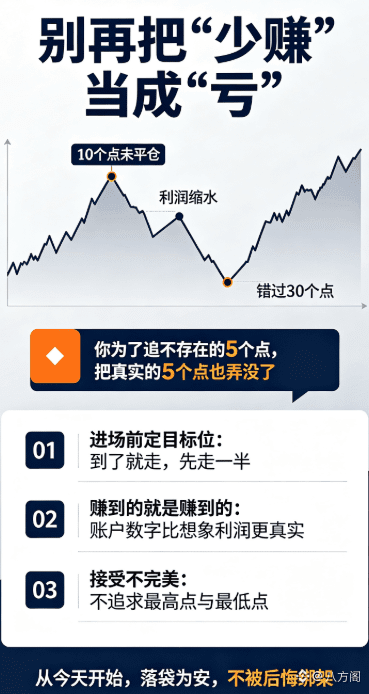
3
1.5k
Log in to explore more content
Join global crypto users on Binance Square
⚡️ Get latest and useful information about crypto.
💬 Trusted by the world’s largest crypto exchange.
👍 Discover real insights from verified creators.
Email / Phone number
Trending Topics
QNTRises287%
37 views
18 Discussing
#QNTRises287%
🚀 QNT +287% — a move that demands attention.
A rally this sharp can reflect a sudden shift in market sentiment, liquidity, and trading activity. But after a vertical move, volatility can expand quickly.
My takeaway: don’t chase the candle—watch volume, liquidity, and whether QNT can sustain the breakout. 📊
#QNTRises287% #QNT #Crypto #Binance
$QNT
PALASH5
·0 Likes
·128 views
TrumpRejectsAIRulesForVoluntaryAudits
3,013 views
175 Discussing
BitgetHotWalletBreachTiedToThirdPartySecurityFlaw
1,522 views
129 Discussing