
Blockboy
90 Posts

Blockboy
Report
Block User
BP-37C5661ADB1D
49 Following
118 Followers
167 Liked
Posts
All
Quotes
Videos
PINNED
·
--
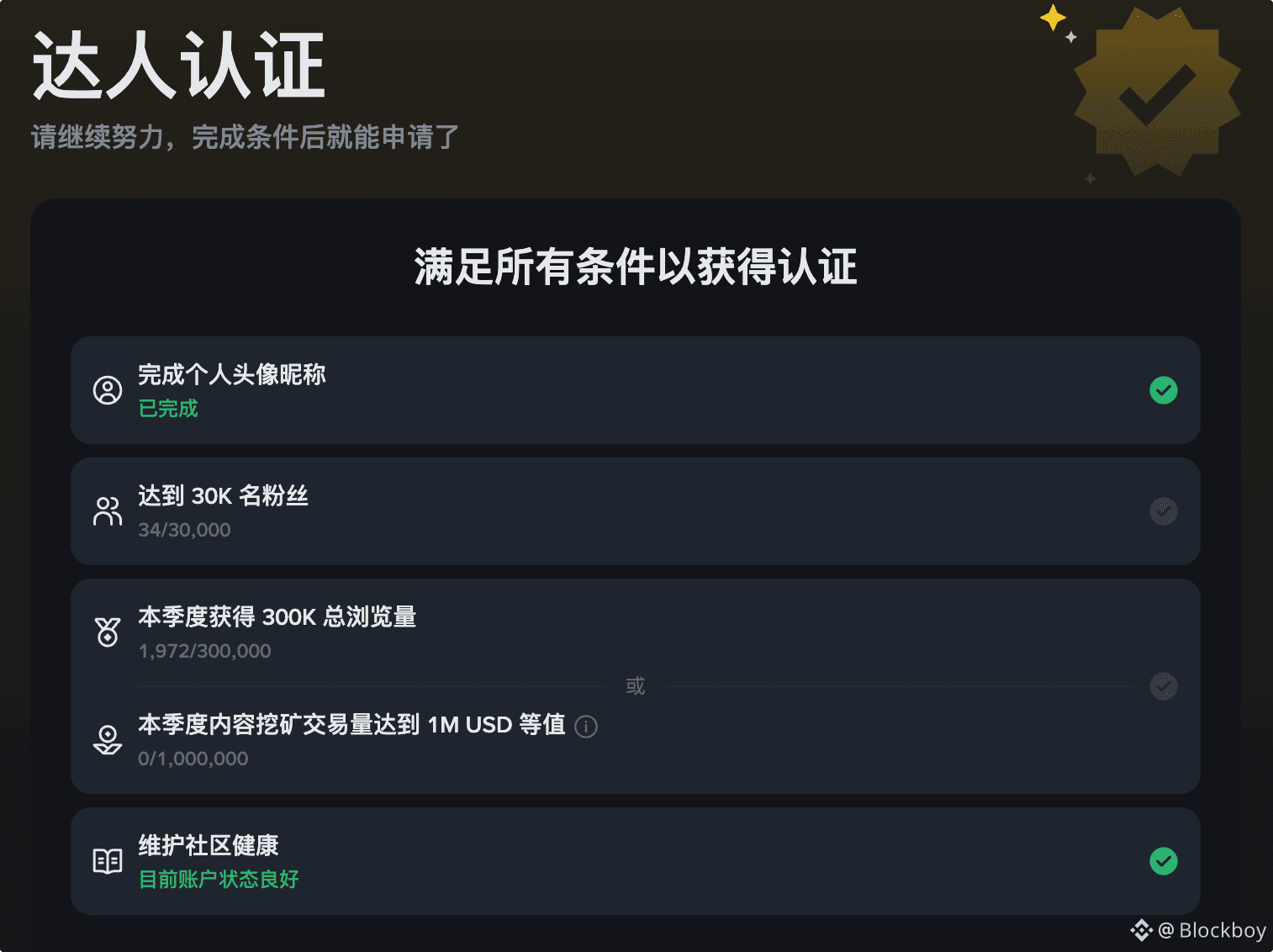
What the heck is this influencer certification? What are the benefits? Can you guys help me complete this? Although this extravagant request is a bit unrealistic right now. Hahaha~
What the heck is this influencer certification? What are the benefits? Can you guys help me complete this? Although this extravagant request is a bit unrealistic right now. Hahaha~
1
1
2
874
·
--
Partly True
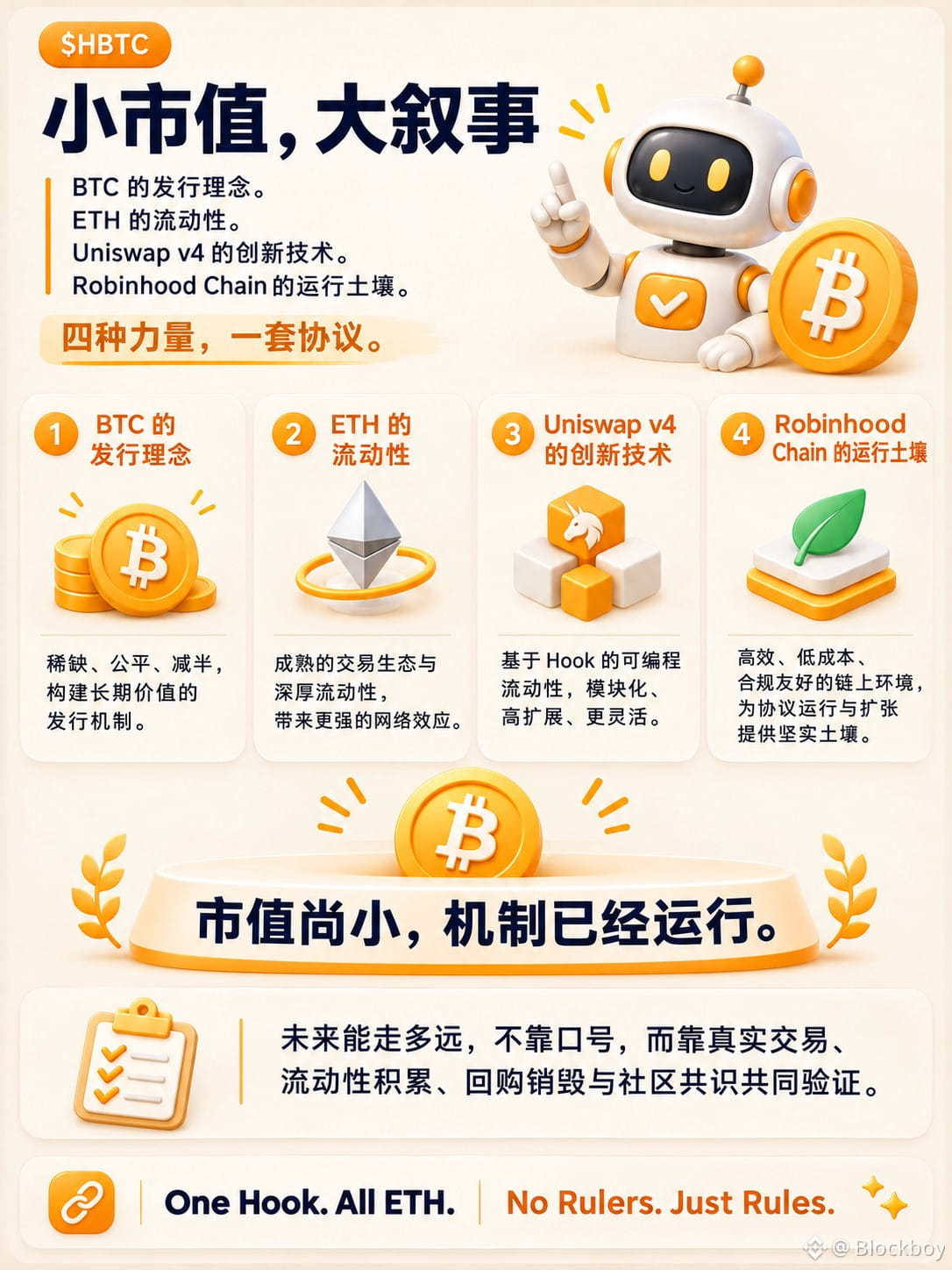
$HBTC: Small market cap, big vision.
An interesting experiment: bringing four core forces of the crypto world together in a single protocol.
₿ BTC’s issuance philosophy: scarcity, fairness, and periodic halving.
◆ ETH’s liquidity: a mature trading ecosystem and network effects.
🦄 Uniswap V4’s innovative technology: hook-driven programmable liquidity.
🌱 Robinhood Chain’s operating ground: on-chain infrastructure for the protocol.
Four forces. One protocol.
HBTC isn’t trying to simply copy a meme. It’s an attempt to combine Bitcoin-style issuance, on-chain liquidity, and automated buybacks and burns.
What I’m more focused on:
The market cap is still small, but the mechanism is already running.
How far it goes will depend not on narrative packaging, but on real trading, liquidity growth, buybacks and burns, and whether community consensus can continue to grow.
Of course, an innovative mechanism doesn’t guarantee value will be realized. Ultimately, the market will decide.
One Hook. All ETH.
No Rulers. Just Rules.
$HBTC 🔥
1
891
·
--
HBTC: What would happen if Bitcoin’s issuance mechanism were brought to Robinhood Chain?
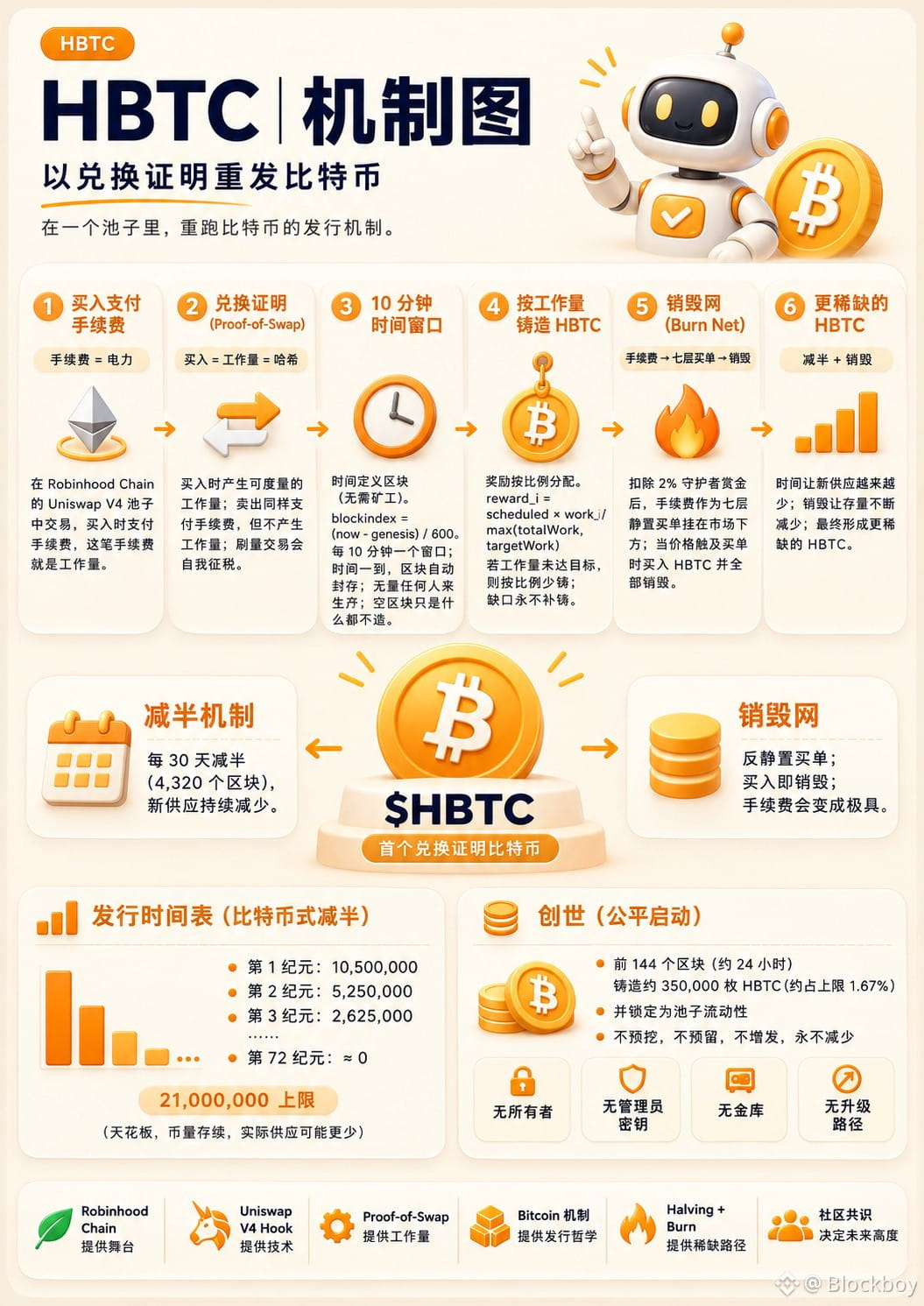
HBTC is doing something quite interesting: it aims to rebuild an issuance system similar to Bitcoin’s, using transaction activity as proof of work.
Its core isn’t simply buying, selling, and staking, but a combination of five mechanisms:
1. Proof-of-Swap: Transactions as work
In Robinhood Chain’s Uniswap V4 pools, the fees paid on purchases count as work. Buying generates work; selling incurs fees but generates none. Transactions themselves become the basis for participating in issuance.
2. Automatic block generation every 10 minutes
A block is created every 600 seconds. Unlike traditional mining, rewards aren’t allocated according to actual work performed: if there isn’t enough work, fewer tokens are minted, and the shortfall is never made up.
3. Work determines issuance rewards
The more work you contribute, the greater your reward. Rather than simply earning yield by holding tokens, you participate in token issuance through trading activity.
4. Burn Net: Fee-driven burns
After deducting a 2% guardian bounty, the remaining fees are used to create seven layers of buy orders. When the market price reaches a buy order, the system purchases HBTC and burns it all.
Fees aren’t just project revenue; they’re designed to potentially drive buybacks and burns.
5. Halving every 30 days
The issuance rate halves every 4,320 blocks, following logic similar to Bitcoin’s halving.
The maximum supply is 21 million tokens, starting at 10.5 million, then 5,250,000, then 2,625,000, and continuing to decrease.
A fair launch is another key emphasis:
The first 144 blocks (about 24 hours) are expected to mint around 350,000 HBTC, which will be locked as pool liquidity.
The project claims there was no premine, no tokens set aside, no admin keys, no treasury, and no upgrade path.
My take:
HBTC isn’t trying to create another ordinary meme token. Instead, it recombines several of Bitcoin’s core ideas:
Proof of work + timed block production + periodic halvings + fee-funded buybacks and burns
Bitcoin earns issuance rights through competition in computing power, while HBTC attempts to distribute issuance rewards based on on-chain transaction activity.
Of course, an interesting mechanism design doesn’t guarantee a viable economic model. What’s really worth watching over time is actual trading demand, fee revenue, the scale of burns, liquidity depth, and whether the smart contract can deliver on these rules.
2
67
·
--
If buying itself is mining, can a DEX become a mine that never closes?
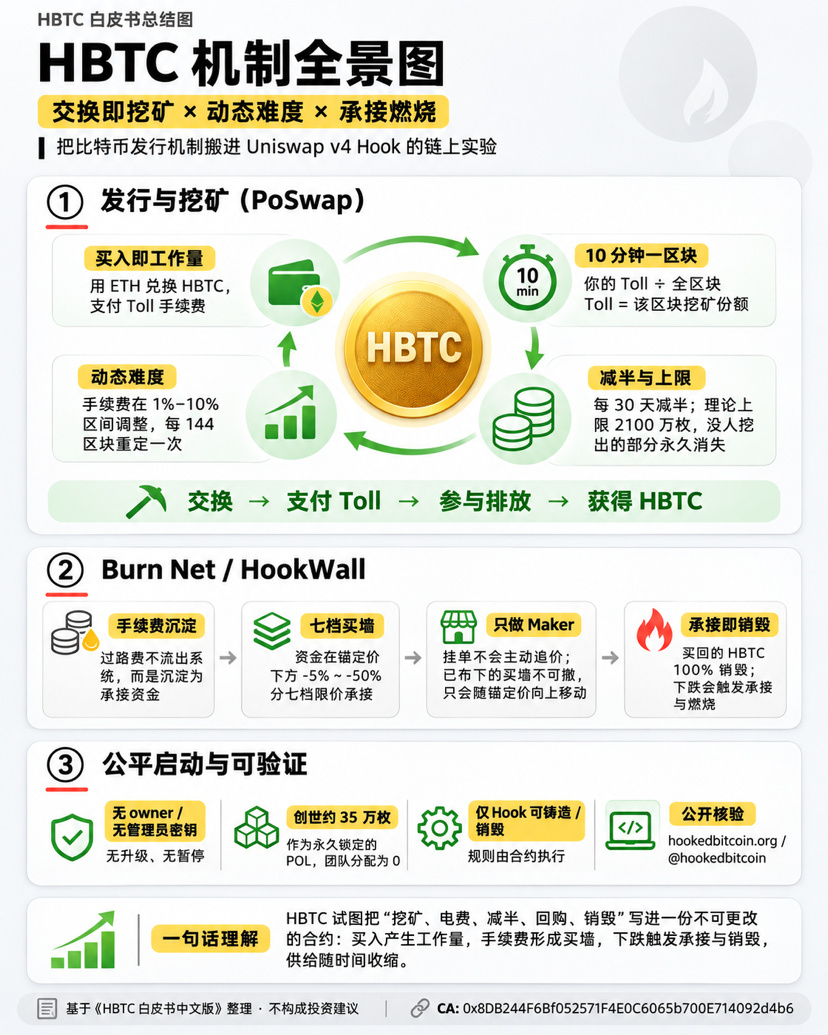
$HBTC has proposed a pretty interesting experiment: Proof of Swap.
It attempts to rewrite Bitcoin’s issuance logic into a Uniswap v4 Hook:
⛏️ Swap to mine: Every purchase pays a Toll, and the fee determines your share of block emissions.
⏱️ Dynamic issuance: One block every 10 minutes, halving every 30 days. 21 million is only a theoretical cap; any unmined tokens disappear forever.
🔥 Burn Net: Fees accumulate into seven tiers of limit buy walls. Price drops trigger buy support, and 100% of the HBTC bought back is burned.
🔒 Contract-driven: The white paper claims there is no Owner, no admin key, and no upgrade or pause permissions.
What’s most worth watching isn’t that there’s yet another Bitcoin Meme, but that it’s trying to combine “mining, dynamic issuance, buybacks, and burns” into a unified on-chain economic mechanism.
Of course, a mechanism’s design doesn’t guarantee that its economic model will work. Buy-wall depth, genuine liquidity, contract security, and sustained trading demand all need ongoing verification.
Every swap is a hash.
This may be one of the most compelling Uniswap v4 Hook experiments to watch.
DYOR.
#HBTC #RobinhoodChain #UniswapV4 #DeFi
2
141
·
--
Article
Bug-hunting King — Sun Yuchen’s rise to wealth
In June 2019, Wang Sicong reposted a news story on his Moments, captioned with seven Chinese characters: “This isn’t just a dumbass, is it.”
At the time, no one thought there was anything wrong with that remark. A 90s-born man who made his name by issuing tokens—who had just spent $4.56 million to win a Warren Buffett lunch—was, in the eyes of the nation’s “Mr. Right,” nothing more than a joke. Sun Yuchen responded across the distance: “Using dad’s money and you still dare to insult someone who uses their own.” Everyone assumed he was just being stubborn with words.
Seven years later. On August 6, 2026, Forbes’ real-time billionaire list was updated: Sun Yuchen, age 36, with a net worth of $8.5 billion—about RMB 57.4 billion—ranked 435th worldwide; and the family of Wang Jianlin, age 71, with $4.4 billion, ranked 973rd worldwide.
Bug-hunting King — Sun Yuchen’s rise to wealth
In June 2019, Wang Sicong reposted a news story on his Moments, captioned with seven Chinese characters: “This isn’t just a dumbass, is it.”
At the time, no one thought there was anything wrong with that remark. A 90s-born man who made his name by issuing tokens—who had just spent $4.56 million to win a Warren Buffett lunch—was, in the eyes of the nation’s “Mr. Right,” nothing more than a joke. Sun Yuchen responded across the distance: “Using dad’s money and you still dare to insult someone who uses their own.” Everyone assumed he was just being stubborn with words.
Seven years later. On August 6, 2026, Forbes’ real-time billionaire list was updated: Sun Yuchen, age 36, with a net worth of $8.5 billion—about RMB 57.4 billion—ranked 435th worldwide; and the family of Wang Jianlin, age 71, with $4.4 billion, ranked 973rd worldwide.
251
·
--
Article
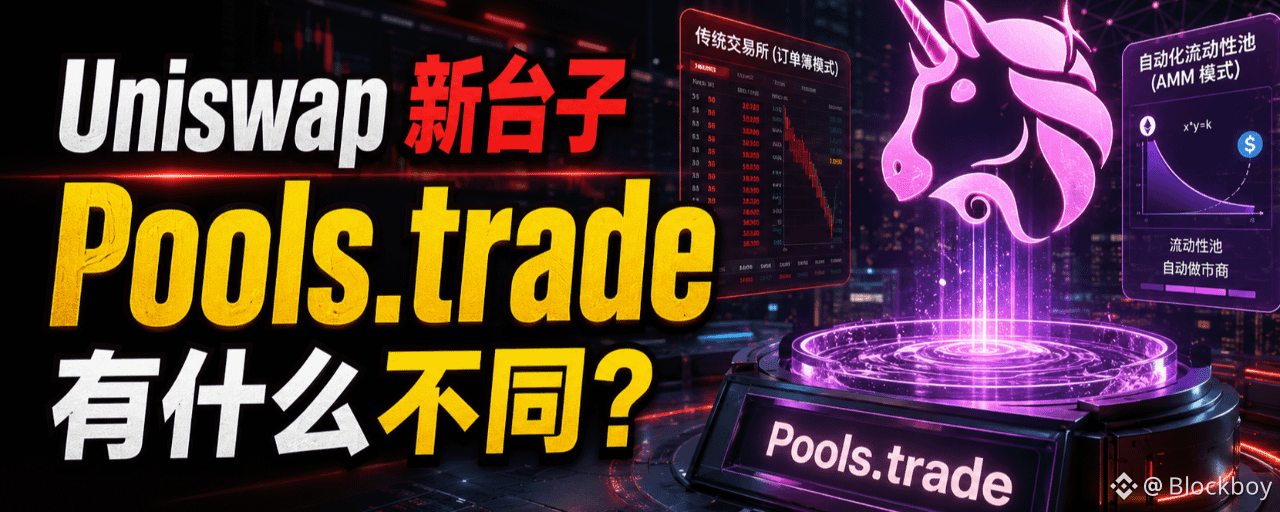
What’s different about Uniswap’s new platform, Pools.trade?Report date
:2026-08-06
Research subject
:Pools.trade (Uniswap Labs official launch platform)
Chain
:Robinhood Chain (Arbitrum Orbit L2)
Comparison platforms
:Pump.fun (Solana), Four.meme (BSC), Pons (Robinhood Chain), Flap (Robinhood Chain)
Data sources
:Uniswap official blog, Dune Analytics, PANews, Odaily Planet Daily,律动 BlockBeats, CoinFactory, BSCN, CryptoSlate, Phemex, FalconX, The Block, etc.
Disclaimer
:This report is for research purposes only and does not constitute investment advice
1. What is Pools.trade
What’s different about Uniswap’s new platform, Pools.trade?
Report date
:2026-08-06
Research subject
:Pools.trade (Uniswap Labs official launch platform)
Chain
:Robinhood Chain (Arbitrum Orbit L2)
Comparison platforms
:Pump.fun (Solana), Four.meme (BSC), Pons (Robinhood Chain), Flap (Robinhood Chain)
Data sources
:Uniswap official blog, Dune Analytics, PANews, Odaily Planet Daily,律动 BlockBeats, CoinFactory, BSCN, CryptoSlate, Phemex, FalconX, The Block, etc.
Disclaimer
:This report is for research purposes only and does not constitute investment advice
1. What is Pools.trade
122
·
--
Article
bStocks and Tokenized Stocks: An Experiment in Rewriting Stock Market Rules with BlockchainOn June 10, 2026, Binance launched a product called bStocks. For $5, users can buy "on-chain stocks" of Tesla, Nvidia, and SpaceX—trading 7×24 hours, settling in seconds, and transferring to their own crypto wallet.
Sounds like stock trading, but it isn’t called a stock—it’s called "tokenized securities".
Behind it is a rapidly booming sector: tokenized stocks. According to CoinGecko’s 2026 RWA report, the market cap of tokenized stocks surged from $2.09 million in mid-2025 to $487 million in Q1 2026, with quarterly spot trading volume reaching $15.1 billion. The entire RWA (tokenization of real-world assets) market size has grown to $19.3 billion.
bStocks and Tokenized Stocks: An Experiment in Rewriting Stock Market Rules with Blockchain
On June 10, 2026, Binance launched a product called bStocks. For $5, users can buy "on-chain stocks" of Tesla, Nvidia, and SpaceX—trading 7×24 hours, settling in seconds, and transferring to their own crypto wallet.
Sounds like stock trading, but it isn’t called a stock—it’s called "tokenized securities".
Behind it is a rapidly booming sector: tokenized stocks. According to CoinGecko’s 2026 RWA report, the market cap of tokenized stocks surged from $2.09 million in mid-2025 to $487 million in Q1 2026, with quarterly spot trading volume reaching $15.1 billion. The entire RWA (tokenization of real-world assets) market size has grown to $19.3 billion.
1
1
1.3k
·
--
Article
Squid (QUID) In-Depth Research ReportResearch note: This report starts from first principles and objectively breaks down Squid’s project technical architecture, team background, token economics model, and the core problems it solves. It does not constitute any investment advice.
Project Overview
Squid is a cross-chain infrastructure platform, positioned as a "cross-chain routing and settlement layer." It enables users to send any token on one chain and receive any token on another—compressing the entire process into a single signature and one transaction. Since the mainnet went live in January 2023, Squid has processed over $6.2 billion in cross-chain transaction volume, served more than 1.09 million unique users, covered 106+ blockchains, and integrated with over 1,000 partners (including MetaMask, Ripple, Ledger, Brave, Keplr, etc.).
Squid (QUID) In-Depth Research Report
Research note: This report starts from first principles and objectively breaks down Squid’s project technical architecture, team background, token economics model, and the core problems it solves. It does not constitute any investment advice.
Project Overview
Squid is a cross-chain infrastructure platform, positioned as a "cross-chain routing and settlement layer." It enables users to send any token on one chain and receive any token on another—compressing the entire process into a single signature and one transaction. Since the mainnet went live in January 2023, Squid has processed over $6.2 billion in cross-chain transaction volume, served more than 1.09 million unique users, covered 106+ blockchains, and integrated with over 1,000 partners (including MetaMask, Ripple, Ledger, Brave, Keplr, etc.).
310
·
--
Article
Hardware Wallets Being Robbed: Full Record of ColdCard’s $88+ Million Heist
On July 30, 2026 at 1:10 a.m. UTC, something strange happened on the Bitcoin blockchain.
1,196 addresses—within just 41 minutes—were wiped one by one by the same unknown attacker, like harvesting grain. 1,082.65 bitcoins—worth more than $70 million at the time—were quietly transferred across the span of 6 blocks. No hardware wallet sounded an alarm. No user received any notification.
And at this very moment, there are still a full 30 hours until ColdCard’s official security warning is released.
This isn’t a typical hacking incident. The attacker didn’t use phishing, didn’t use social engineering, and didn’t implant anything into the supply chain. He doesn’t even need to touch your device. He only needs to sit in front of a computer and “calculate” your private key, like solving a math problem.
Hardware Wallets Being Robbed: Full Record of ColdCard’s $88+ Million Heist
On July 30, 2026 at 1:10 a.m. UTC, something strange happened on the Bitcoin blockchain.
1,196 addresses—within just 41 minutes—were wiped one by one by the same unknown attacker, like harvesting grain. 1,082.65 bitcoins—worth more than $70 million at the time—were quietly transferred across the span of 6 blocks. No hardware wallet sounded an alarm. No user received any notification.
And at this very moment, there are still a full 30 hours until ColdCard’s official security warning is released.
This isn’t a typical hacking incident. The attacker didn’t use phishing, didn’t use social engineering, and didn’t implant anything into the supply chain. He doesn’t even need to touch your device. He only needs to sit in front of a computer and “calculate” your private key, like solving a math problem.
1
152
·
--
Article
$4.5 Billion Vanished Overnight! A 25-Year-Old AI Prophet Dies Five Minutes Before DawnOn the last trading day of July 2026, before the closing bell’s echoes had fully faded, a piece of news detonated like a depth charge, sparking a frenzy in the trading circle.
A hedge fund that surged from $225 million to $45 billion—only to be wiped out in less than 30 days.
$45 billion—gone.
The fund’s owner is named Leopold Aschenbrenner, 25 years old, a former core member of OpenAI’s team, dubbed the "AI prophet" by Silicon Valley.
He precisely predicted the AI wave; his network spans two top AI companies, OpenAI and Anthropic. His investment logic is held up on Wall Street as gospel.
He got everything right.
$4.5 Billion Vanished Overnight! A 25-Year-Old AI Prophet Dies Five Minutes Before Dawn
On the last trading day of July 2026, before the closing bell’s echoes had fully faded, a piece of news detonated like a depth charge, sparking a frenzy in the trading circle.
A hedge fund that surged from $225 million to $45 billion—only to be wiped out in less than 30 days.
$45 billion—gone.
The fund’s owner is named Leopold Aschenbrenner, 25 years old, a former core member of OpenAI’s team, dubbed the "AI prophet" by Silicon Valley.
He precisely predicted the AI wave; his network spans two top AI companies, OpenAI and Anthropic. His investment logic is held up on Wall Street as gospel.
He got everything right.
70
·
--
Article
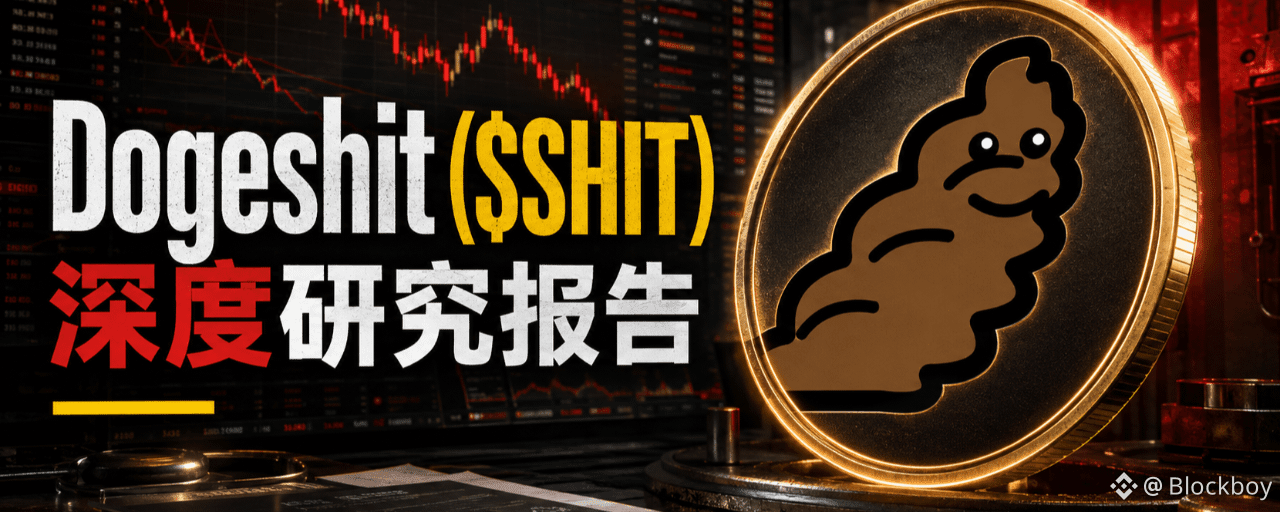
In-Depth Research Report on the Dogeshit ($SHIT) Project
Report date: August 1, 2026 | This report is for research purposes only and does not constitute any investment advice
Project overview
Dogeshit (token ticker: $SHIT) is an ERC-20 meme token deployed on the Ethereum mainnet, officially launched on May 9, 2026. Its core narrative is—“the world’s first meme coin minted by a Claude AI agent.”
Unlike ordinary meme coins, Dogeshit’s minting (casting) process cannot be completed through a website button or by manually calling the contract. Users must open the Claude AI chat interface, enter a sentence—“mint me some shit”—and have the AI agent execute the minting on-chain via a relayer. This design upgrades Dogeshit from a simple meme coin into a technical experiment.
In-Depth Research Report on the Dogeshit ($SHIT) Project
Report date: August 1, 2026 | This report is for research purposes only and does not constitute any investment advice
Project overview
Dogeshit (token ticker: $SHIT) is an ERC-20 meme token deployed on the Ethereum mainnet, officially launched on May 9, 2026. Its core narrative is—“the world’s first meme coin minted by a Claude AI agent.”
Unlike ordinary meme coins, Dogeshit’s minting (casting) process cannot be completed through a website button or by manually calling the contract. Users must open the Claude AI chat interface, enter a sentence—“mint me some shit”—and have the AI agent execute the minting on-chain via a relayer. This design upgrades Dogeshit from a simple meme coin into a technical experiment.
1
131
·
--
Article
Slonks ($SLOP) In-Depth Research Report“
Report date: August 1, 2026 | This report is for research purposes only and does not constitute any investment advice
Project Overview and Core Positioning
Slonks is an on-chain experimental art project deployed on the Ethereum mainnet. It was founded by developer Michael Hirsch (Twitter @MichaelHirsch, who calls himself "The Slopfather") and launched on May 1, 2026. The project combines three key elements: on-chain micro AI models, NFTs, and ERC-20 tokens. Its core slogan is "The slop is the art" (distortion is art).
The project's core counterintuitive idea is: AI-mistaken pixels are more valuable than correctly rendered ones.
Slonks ($SLOP) In-Depth Research Report
“
Report date: August 1, 2026 | This report is for research purposes only and does not constitute any investment advice
Project Overview and Core Positioning
Slonks is an on-chain experimental art project deployed on the Ethereum mainnet. It was founded by developer Michael Hirsch (Twitter @MichaelHirsch, who calls himself "The Slopfather") and launched on May 1, 2026. The project combines three key elements: on-chain micro AI models, NFTs, and ERC-20 tokens. Its core slogan is "The slop is the art" (distortion is art).
The project's core counterintuitive idea is: AI-mistaken pixels are more valuable than correctly rendered ones.
108
·
--
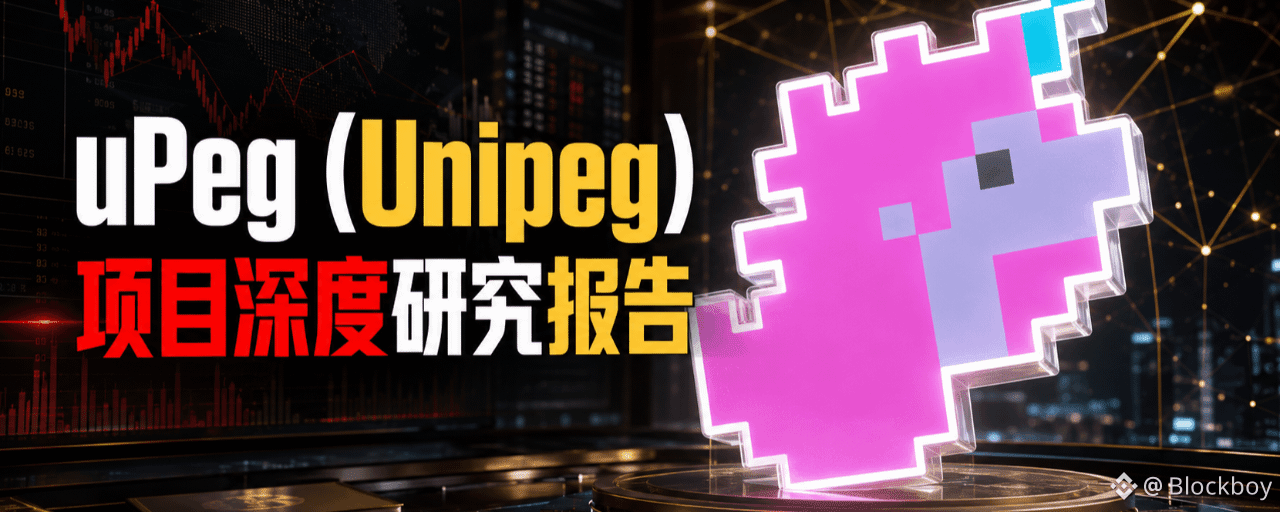
Article
uPeg (Unipeg) In-Depth Research ReportReport date: July 30, 2026 | This report is for research purposes only and does not constitute any investment advice
1. Project Overview
uPeg (Unipeg) is an experimental on-chain object project built on Uniswap v4 Hooks, deployed on the Ethereum mainnet. It is neither an NFT in the traditional sense nor a standard ERC-20 token; instead, it is a type of “on-chain native artwork” generated directly through transaction behavior itself.
The project’s core innovation lies in: converting swap trading behavior in Uniswap v4 liquidity pools into a mechanism for generating dynamic SVG images—whenever a user’s token holdings cross an integer threshold, the on-chain Hook automatically generates a unique 24×24 pixel unicorn image. The entire process is fully executed on-chain, with no reliance on IPFS or any external storage.
uPeg (Unipeg) In-Depth Research Report
Report date: July 30, 2026 | This report is for research purposes only and does not constitute any investment advice
1. Project Overview
uPeg (Unipeg) is an experimental on-chain object project built on Uniswap v4 Hooks, deployed on the Ethereum mainnet. It is neither an NFT in the traditional sense nor a standard ERC-20 token; instead, it is a type of “on-chain native artwork” generated directly through transaction behavior itself.
The project’s core innovation lies in: converting swap trading behavior in Uniswap v4 liquidity pools into a mechanism for generating dynamic SVG images—whenever a user’s token holdings cross an integer threshold, the on-chain Hook automatically generates a unique 24×24 pixel unicorn image. The entire process is fully executed on-chain, with no reliance on IPFS or any external storage.
330
·
--
Article
In-depth Research Report on the LO0p Project"
Disclaimer: This report is for research purposes only and does not constitute any investment advice. LO0p involves an anonymous team, smart contracts that have not been audited by a third party, a novel but insufficiently verified mechanism based on Uniswap V4 Hooks, and a high-volatility trading environment. Before participating, please fully understand the risks and assume responsibility yourself (DYOR).
Project overview
LO0p is a lending AMM (automated market maker) protocol built on an Ethereum mainnet Uniswap V4 Hook. Its core idea is: convert idle ETH capital in an AMM liquidity pool into borrowable assets. After users purchase LO0P tokens, they lock them as collateral, allowing them to borrow ETH from the pool’s ETH reserves without selling the tokens.
In-depth Research Report on the LO0p Project
"
Disclaimer: This report is for research purposes only and does not constitute any investment advice. LO0p involves an anonymous team, smart contracts that have not been audited by a third party, a novel but insufficiently verified mechanism based on Uniswap V4 Hooks, and a high-volatility trading environment. Before participating, please fully understand the risks and assume responsibility yourself (DYOR).
Project overview
LO0p is a lending AMM (automated market maker) protocol built on an Ethereum mainnet Uniswap V4 Hook. Its core idea is: convert idle ETH capital in an AMM liquidity pool into borrowable assets. After users purchase LO0P tokens, they lock them as collateral, allowing them to borrow ETH from the pool’s ETH reserves without selling the tokens.
1
199
·
--
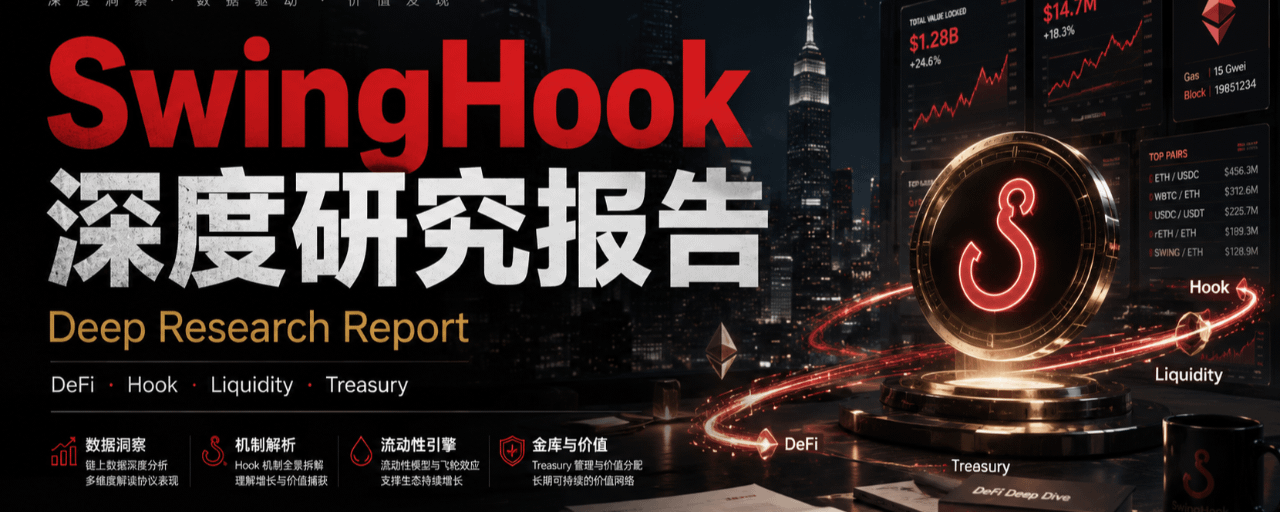
Article
SwingHook In-Depth Research Report“
Report date: July 30, 2026 | This report is for research purposes only and does not constitute any investment advice
1. Project Overview
SwingHook is a decentralized trading protocol built on Uniswap v4 Hooks. Its core idea is to introduce "randomness" into the AMM trading process through a customizable Hook smart contract, creating an entirely new on-chain trading experience.
The project proposes the concept of "Hooknomics" (hook economics), branding itself as "Tokenomics 2.0"—that is, no longer designing economic models around token issuance and allocation, but rather embedding economic logic directly into the transaction lifecycle itself.
SwingHook In-Depth Research Report
“
Report date: July 30, 2026 | This report is for research purposes only and does not constitute any investment advice
1. Project Overview
SwingHook is a decentralized trading protocol built on Uniswap v4 Hooks. Its core idea is to introduce "randomness" into the AMM trading process through a customizable Hook smart contract, creating an entirely new on-chain trading experience.
The project proposes the concept of "Hooknomics" (hook economics), branding itself as "Tokenomics 2.0"—that is, no longer designing economic models around token issuance and allocation, but rather embedding economic logic directly into the transaction lifecycle itself.
333
·
--
Article
Sato (sato) In-Depth Research ReportReport date: July 30, 2026 | This report is for research purposes only and does not constitute any investment advice
1. Project Overview
Sato is a minimalist ERC-20 token experimental project deployed on Ethereum. Its core idea is to recreate Bitcoin’s narrative of "digital scarcity" on Ethereum through an immutable bonding curve mechanism.
Token name/symbol: sato (all lowercase, 18 decimals)
Contract address: 0x829f4B62EEBE12Af653b4dD4fFc480966F7d7f09
Hook contract: 0x0000f07d2B5F1Ddf3244b8780F972f306EFd2888
PoolManager: 0x000000000004444c5dc75cB358380D2e3dE08A90
Sato (sato) In-Depth Research Report
Report date: July 30, 2026 | This report is for research purposes only and does not constitute any investment advice
1. Project Overview
Sato is a minimalist ERC-20 token experimental project deployed on Ethereum. Its core idea is to recreate Bitcoin’s narrative of "digital scarcity" on Ethereum through an immutable bonding curve mechanism.
Token name/symbol: sato (all lowercase, 18 decimals)
Contract address: 0x829f4B62EEBE12Af653b4dD4fFc480966F7d7f09
Hook contract: 0x0000f07d2B5F1Ddf3244b8780F972f306EFd2888
PoolManager: 0x000000000004444c5dc75cB358380D2e3dE08A90
138
·
--
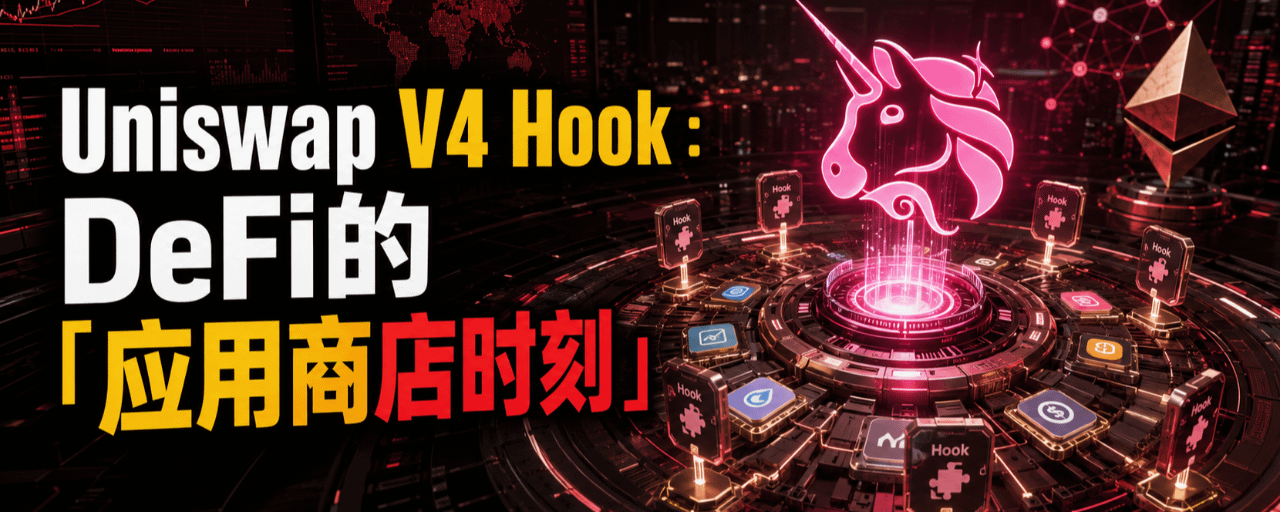
Article
Uniswap V4 Hook: The “App Store Moment” of DeFiOn January 31, 2025, a message sent shockwaves through the encrypted world—Uniswap V4 officially launched, with 10 chains going live in sync.
This isn’t a routine upgrade. It handed the entire DeFi industry a key—a key that can unlock the “liquidity black box.”
Over the past 7 years, Uniswap has processed more than $2.75 trillion in transaction volume from V1 to V3, with zero hacker incidents. In traditional finance, this is akin to an exchange running for 7 years without losing a cent. But the V3 era has a hard flaw: if you want to change any rule, you have to fork the entire protocol code and build your own stack from scratch. It’s no different from “putting your own sign on someone else’s storefront”—it’s expensive, slow, and prone to errors.
Uniswap V4 Hook: The “App Store Moment” of DeFi
On January 31, 2025, a message sent shockwaves through the encrypted world—Uniswap V4 officially launched, with 10 chains going live in sync.
This isn’t a routine upgrade. It handed the entire DeFi industry a key—a key that can unlock the “liquidity black box.”
Over the past 7 years, Uniswap has processed more than $2.75 trillion in transaction volume from V1 to V3, with zero hacker incidents. In traditional finance, this is akin to an exchange running for 7 years without losing a cent. But the V3 era has a hard flaw: if you want to change any rule, you have to fork the entire protocol code and build your own stack from scratch. It’s no different from “putting your own sign on someone else’s storefront”—it’s expensive, slow, and prone to errors.
347
·
--
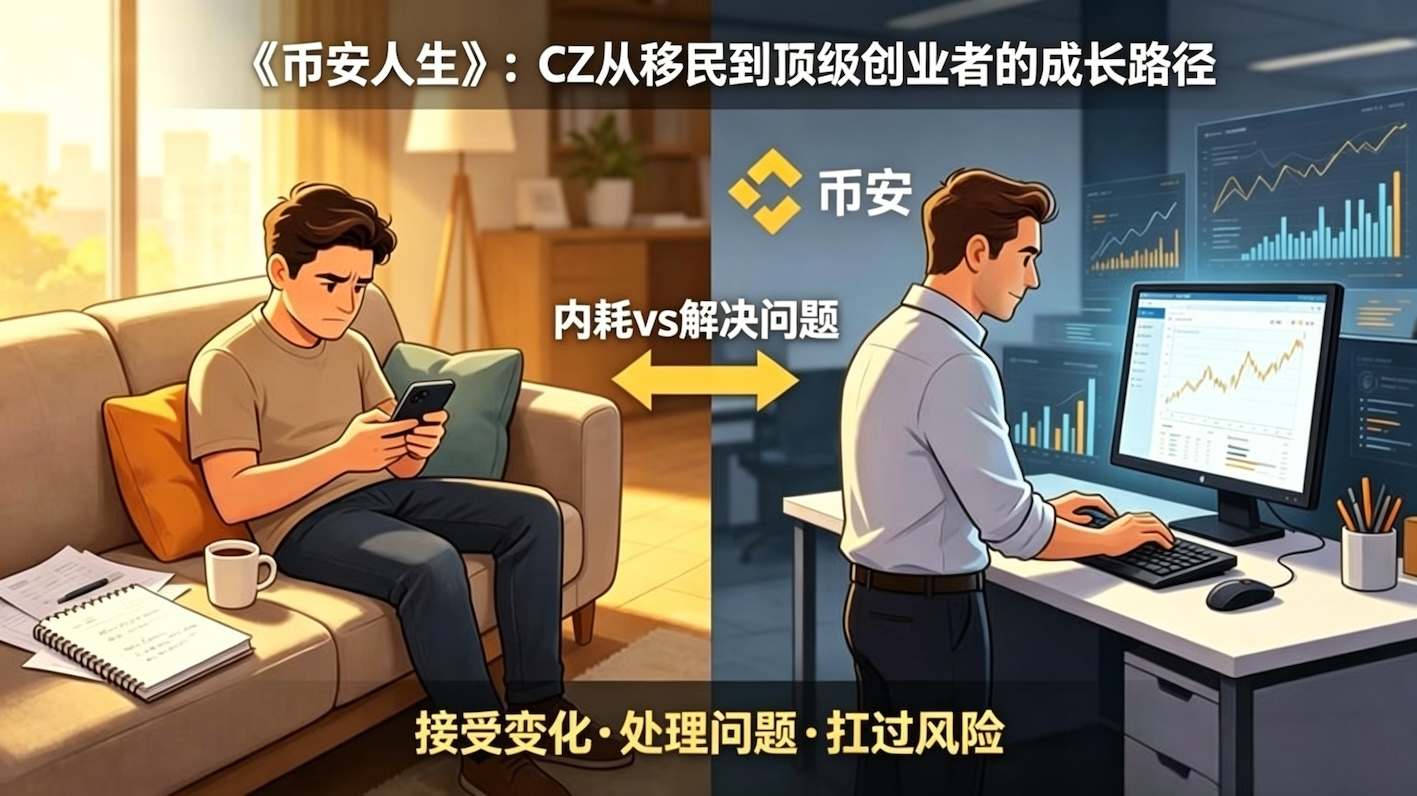
After reading "Binance Life," I suddenly understood why CZ was able to create Binance.
It's not because he tells the best stories,
but because he has a very tough quality:
no internal strife, just solve problems.
Immigration, changing careers, going all in on Bitcoin, starting a business, relocating, regulation, lawsuits…
His narrative core has always remained the same:
When faced with change, accept it;
When faced with problems, deal with it;
When faced with risks, endure it.
This may be the biggest difference between top entrepreneurs and ordinary people:
Ordinary people are easily trapped by emotions,
while capable people move directly to the next action.
#Binance #CZ #BinanceLife #CryptoBriefHistory #FreedomOfMoney
{future}(币安人生USDT)
After reading "Binance Life," I suddenly understood why CZ was able to create Binance.
It's not because he tells the best stories,
but because he has a very tough quality:
no internal strife, just solve problems.
Immigration, changing careers, going all in on Bitcoin, starting a business, relocating, regulation, lawsuits…
His narrative core has always remained the same:
When faced with change, accept it;
When faced with problems, deal with it;
When faced with risks, endure it.
This may be the biggest difference between top entrepreneurs and ordinary people:
Ordinary people are easily trapped by emotions,
while capable people move directly to the next action.
#Binance #CZ #BinanceLife #CryptoBriefHistory #FreedomOfMoney
1
99
·
--
$币安人生 Binance founder Zhao Changpeng posted on X platform, stating that his new book 'Freedom of Money' will be officially released next week. The English e-book and the traditional Chinese e-book are now available for pre-order, and the English physical book will be launched simultaneously next week. Versions in other languages will be released in the coming months.
Upon checking the Amazon website, the Chinese title of the book is 'Binance Life: Memoir of Luck, Resilience, and Protecting Users'.
Upon checking the Amazon website, the Chinese title of the book is 'Binance Life: Memoir of Luck, Resilience, and Protecting Users'.
1
340
·
--
Recently, Zhou Hongyi from 360 revealed: the United States is the real manipulator in the cryptocurrency circle, the precision harvesting of global assets is too outrageous!
From 2022 to 2025, the United States will confiscate virtual assets exceeding 30 billion US dollars, and just two typical cases are close to 20 billion. First, let's look at two heart-wrenching numbers.
The total market value of global cryptocurrencies is 2.73 trillion US dollars, accounting for 47% of global central bank gold reserves, already becoming a major pool affecting financial security.
The U.S. harvesting relies on a "three-piece suit," advancing step by step.
Technological hegemony: core technologies such as on-chain tracing and node control, with American companies holding the majority.
Rule binding: legislation first, then long-arm jurisdiction, bringing all global trading platforms under its regulation.
Institutional execution: law enforcement → sanctions → confiscation, a complete closed-loop operation.
These coins have been dormant for nearly 4 years, transferred to the U.S. government wallet in 2024, and only prominently prosecuted in 2025. The key point is — there were no American victims before the harvest!
Even more frightening is state-level cyber attacks! Not ordinary phishing scams, but directly breaking through the underlying technology and cracking private keys. The Chen Zhi case is solid evidence:
In 2020, the United States used national hacker power, cracking the private key and transferring huge amounts of Bitcoin in 2 hours, with zero operational errors and minimizing traces, something ordinary hackers simply cannot achieve!
The so-called victims gathered later have timelines and asset flows that do not match at all, and the indictment is even more absurd, using images of domestic internet water army tools exposed by CCTV 315 as evidence, a low-level mistake of mislabeling. To put it simply, they are using the fight against crime as a pretext, while in fact, they are plundering assets as strategic reserves!
1
11
1.3k
Log in to explore more content
Join global crypto users on Binance Square
⚡️ Get latest and useful information about crypto.
💬 Trusted by the world’s largest crypto exchange.
👍 Discover real insights from verified creators.
Email / Phone number
Trending Topics
BTCRebounds80K
84,106 views
833 Discussing
BITCOIN UPDATE I’M STILL BEARISH, AND HERE’S WHY! 🚨⚠️
As you all witnessed, BTC bounced back from the $75,700 area and touched $81K. First, the market trapped long traders, and then it trapped short traders.
I’m still bearish. First of all, as everyone knows, Democrats won today’s US midterm elections, and in my view, this outcome is bearish for the market.
The market can remain volatile in the short term and trap as many traders as it wants, but that doesn’t change the overall market outlook.
There are several important upcoming events, including US Non Farm Payrolls (November 6), US CPI Inflation (November 10), US PPI (November 13), US Retail Sales (November 17), FOMC Meeting Minutes (November 18), US PCE Inflation (November 25), Federal Reserve interest rate expectations, the US Dollar Index (DXY), Treasury Yields, Nasdaq performance, Bitcoin ETF flows, and ongoing( Iran ) Israel geopolitical developments. All of these could have a significant impact on Bitcoin and the overall crypto market.
But don’t get too carried away by Bitcoin’s recent movement. Technically speaking, there hasn’t been any major bullish move yet. Yesterday, BTC was trading between $80K and $82K, and even today, it’s still around the same range.
If you want to turn bullish, that’s entirely your choice.
In my previous post, I clearly explained that BTC had technical support in the $75K / $76K zone, and the price bounced from that support and made its way back towards $80K. But this wasn’t something I had failed to mention before. In fact, I repeatedly mentioned in my posts that BTC could move towards $80K, $81K, or even $82K.
Despite that, I’m still bearish.
And I don’t have just one reason to support my bearish outlook. I have several reasons, which I’ve already explained in my previous posts.
For now, I’ll continue to wait for BTC to drop below $74K, which I believe could happen very soon. In my view, such a correction is also necessary for the market.
Anyone looking for crypto guidance just let me know.
#BTCRebounds80K
Strategic Adviser
·32 Likes
·37.3k views
Binance98PercentReplenished
47,004 views
647 Discussing
USMidterms-WhatAreMarketsExpecting?
369,148 views
2,163 Discussing