


"
Disclaimer: This report is for research purposes only and does not constitute any investment advice. LO0p involves an anonymous team, smart contracts that have not been audited by a third party, a novel but insufficiently verified mechanism based on Uniswap V4 Hooks, and a high-volatility trading environment. Before participating, please fully understand the risks and assume responsibility yourself (DYOR).
Project overview
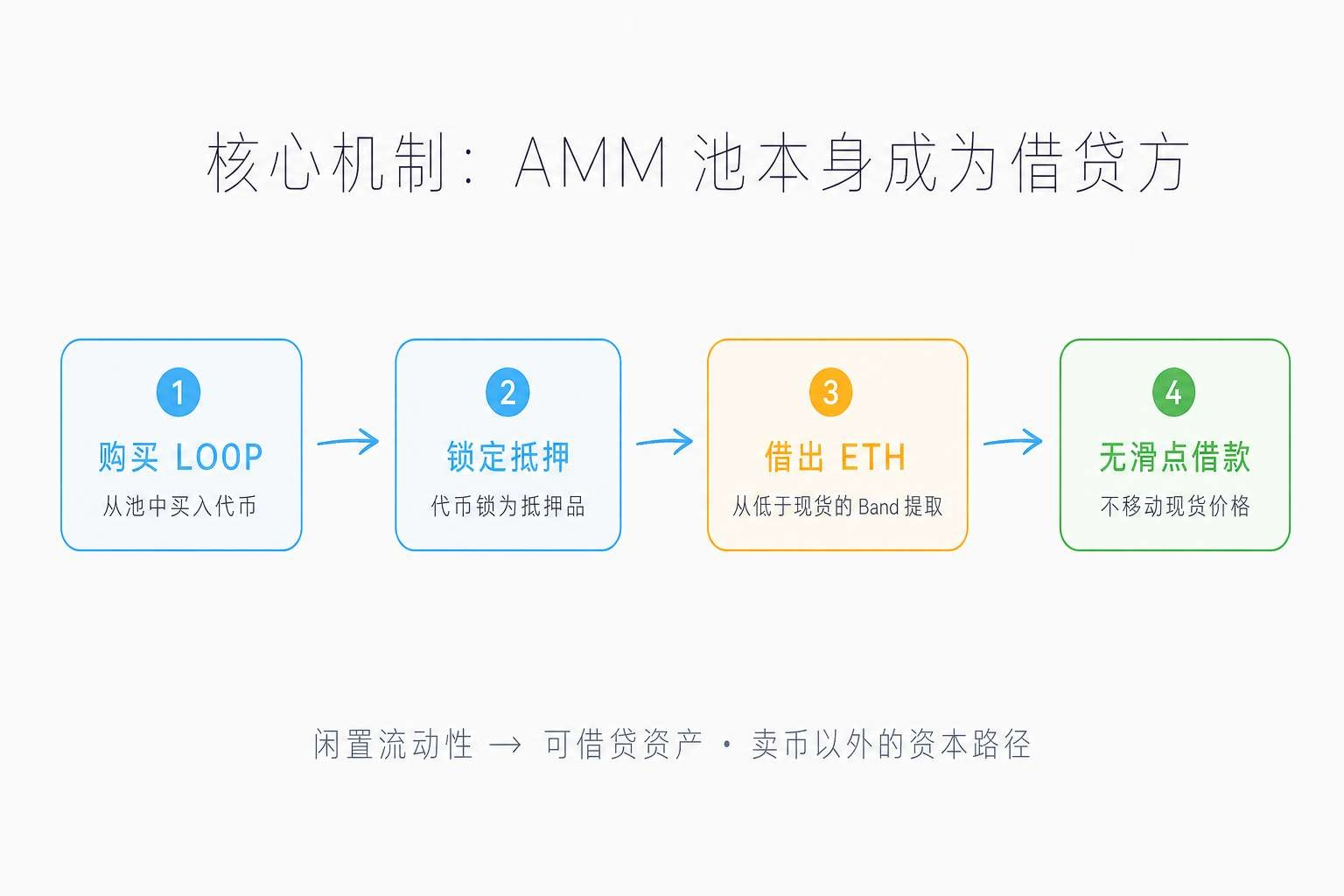
LO0p is a lending AMM (automated market maker) protocol built on an Ethereum mainnet Uniswap V4 Hook. Its core idea is: convert idle ETH capital in an AMM liquidity pool into borrowable assets. After users purchase LO0P tokens, they lock them as collateral, allowing them to borrow ETH from the pool’s ETH reserves without selling the tokens.
Key information at a glance:
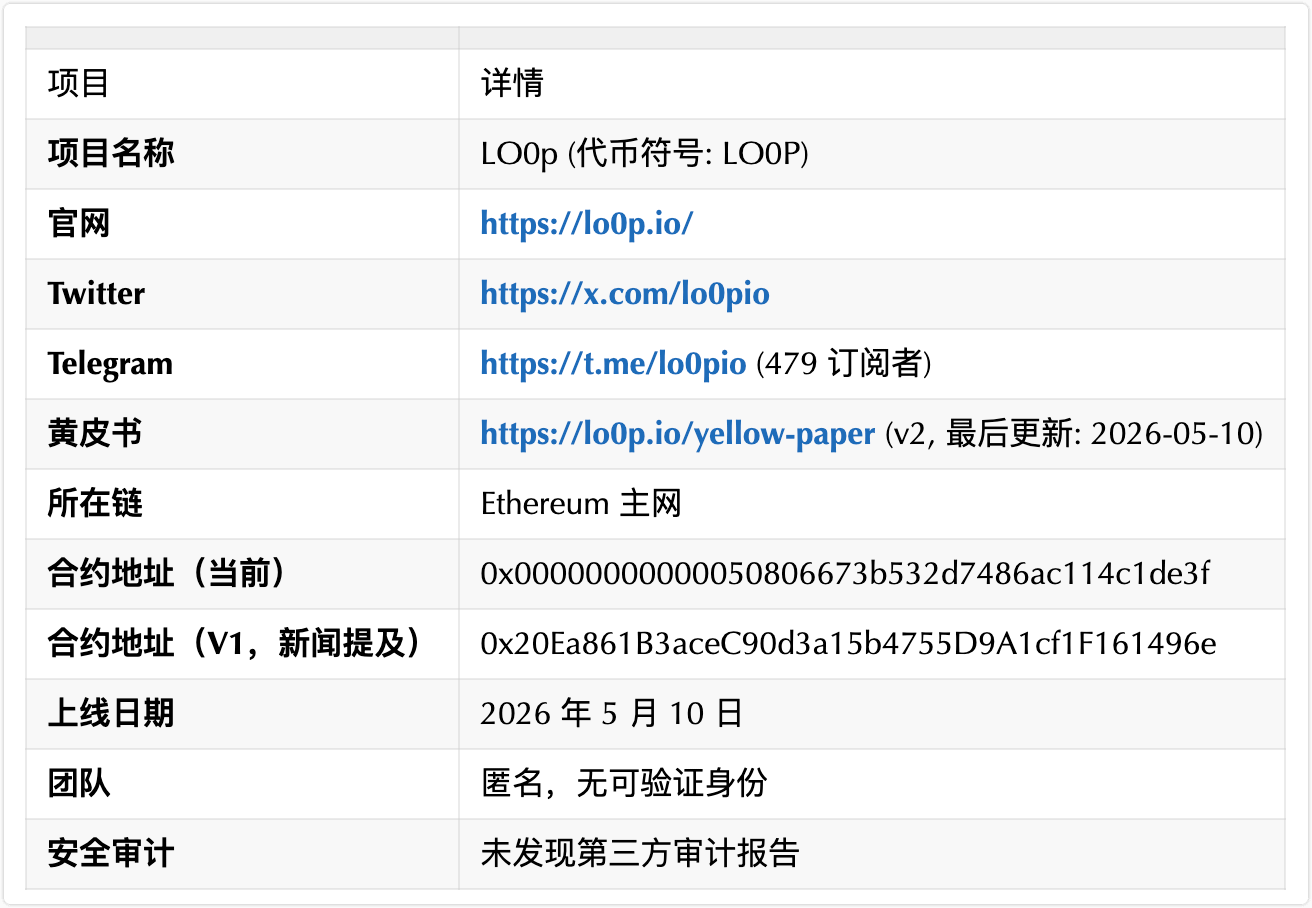
Technical architecture
Core mechanism
LO0p is built on the Uniswap V4 Hook architecture. A Hook is the "plugin-style smart contract" concept introduced by Uniswap V4, allowing developers to inject custom logic before and after key lifecycle events of a liquidity pool (initialization, adding/removing liquidity, Swap, etc.).
LO0p’s innovation is that it makes the AMM pool itself the lender. When a user wants to borrow ETH, the Hook extracts ETH from the LP position in the LOOP/ETH pool and delivers it to the borrower. Because it extracts ETH from bands below the current spot price, it does not move the spot price—borrowing is slippage-free.
Mathematical model
Constant product curve formula: realTokens × (V + realETH) = K
V = 20 ETH: fixed virtual reserves, ensuring the curve is still defined even when there is zero real ETH
K = 20,000,000: constant product; fixed total issuance of 1,000,000 LO0P
Spot price = (V + realETH) / realTokens ETH per LOOP
Initial issuance price: 0.00002 ETH per LO0P
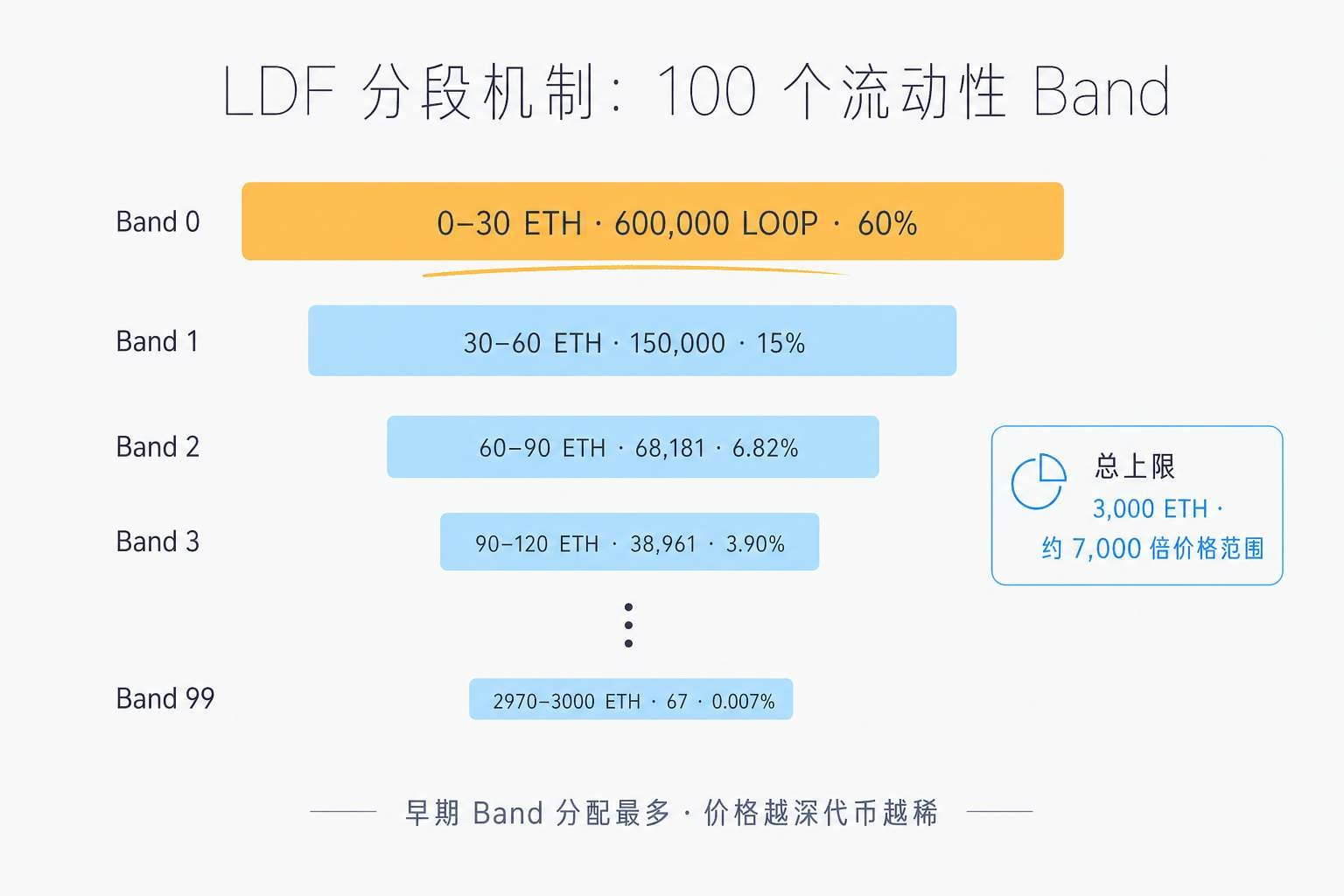
LDF segmented mechanism (100 Bands)
The liquidity pool is split into 100 discrete bands; each band covers cumulative inflows of 30 ETH. The total cap is 3,000 ETH:
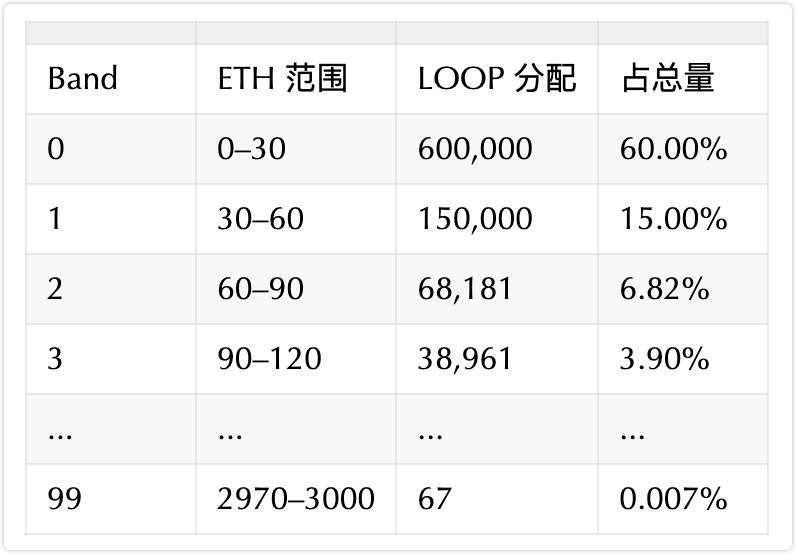
100 bands cover an approximate 7,000× price range.
Lending mechanism
LTV (loan-to-value): 40% — debt = collateral value × 0.40
Liquidation threshold: 150% — liquidation is triggered when collateral value is < 1.5× the debt
Origin fee: 1% of the loan amount, sent to the FeeCollector
Minimum collateral: 0.1 ETH worth
Repayment cooldown: 2 blocks
When borrowing, the system calculates a "bound band" based on the liquidation price, and extracts ETH from the LP position in that band. Since this band is below the spot price, extracting ETH does not move the price.
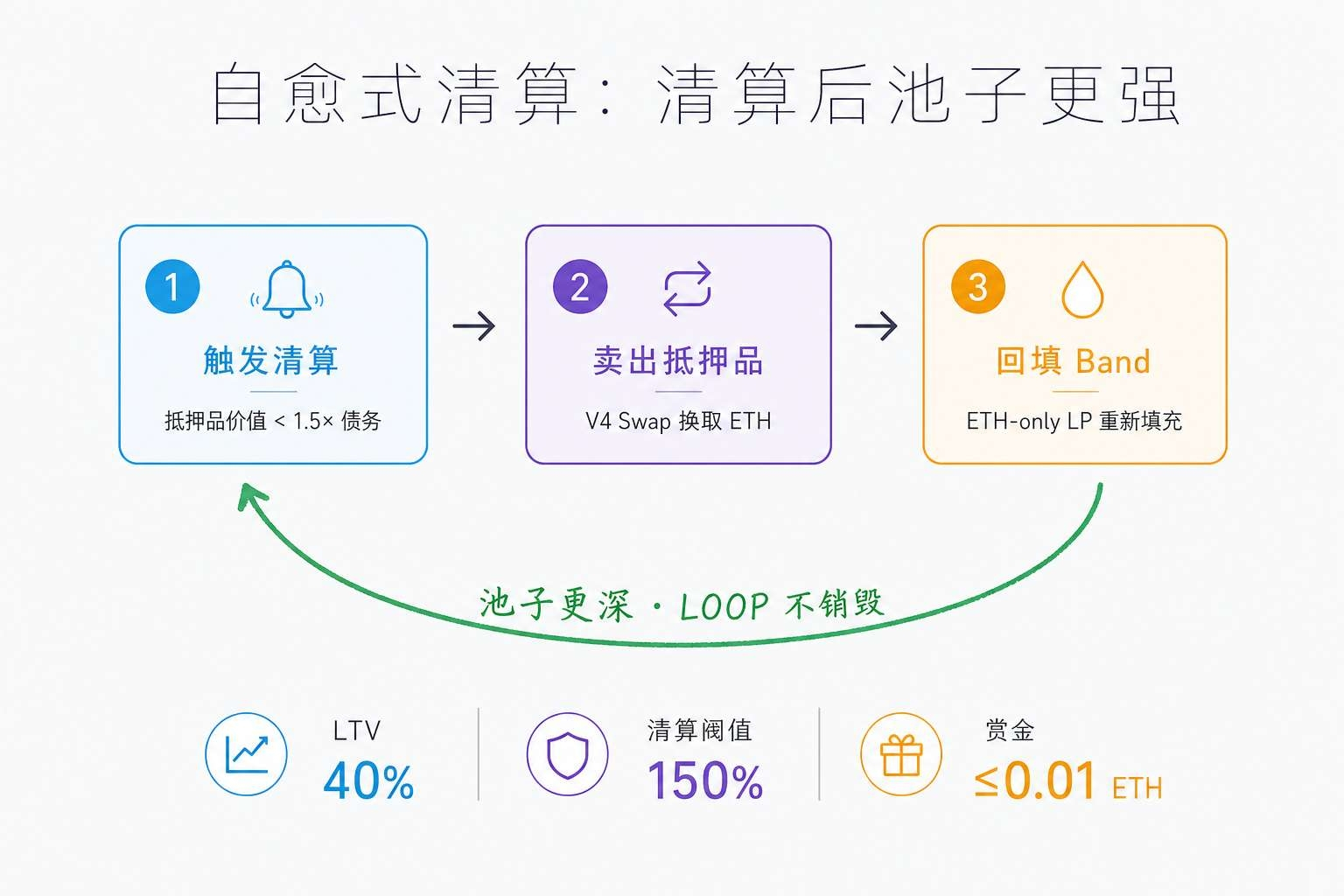
Self-healing liquidation
When a position is undercollateralized, anyone can call liquidate() to trigger liquidation:
The Hook sells collateral via the V4 swap and obtains ETH
Pay bounties to liquidators (min(1% × debt, 0.01 ETH))
Refill the remaining ETH back into the original band as ETH-only LP
Key feature: the pool becomes stronger after each liquidation (deeper ETH reserves), and LOOP is not destroyed.
Security design
Same-block lock: prevents swapping and borrow/liquidate within the same block, defending against single-block oracle manipulation
No cascading liquidations: since borrowing is extracted from bands below the spot price and does not move the spot price, liquidation of a single position does not drag down other positions
Fixed parameters, no governance: all parameters are fixed at deployment; no proxy; not upgradeable
Whitepaper acknowledges: multi-block manipulation is theoretically possible, but simulations of "pumping out loans" claim the attacker’s P&L is negative (origin fee + slippage costs exceed extracted gains)
Tokenomics
Basic information
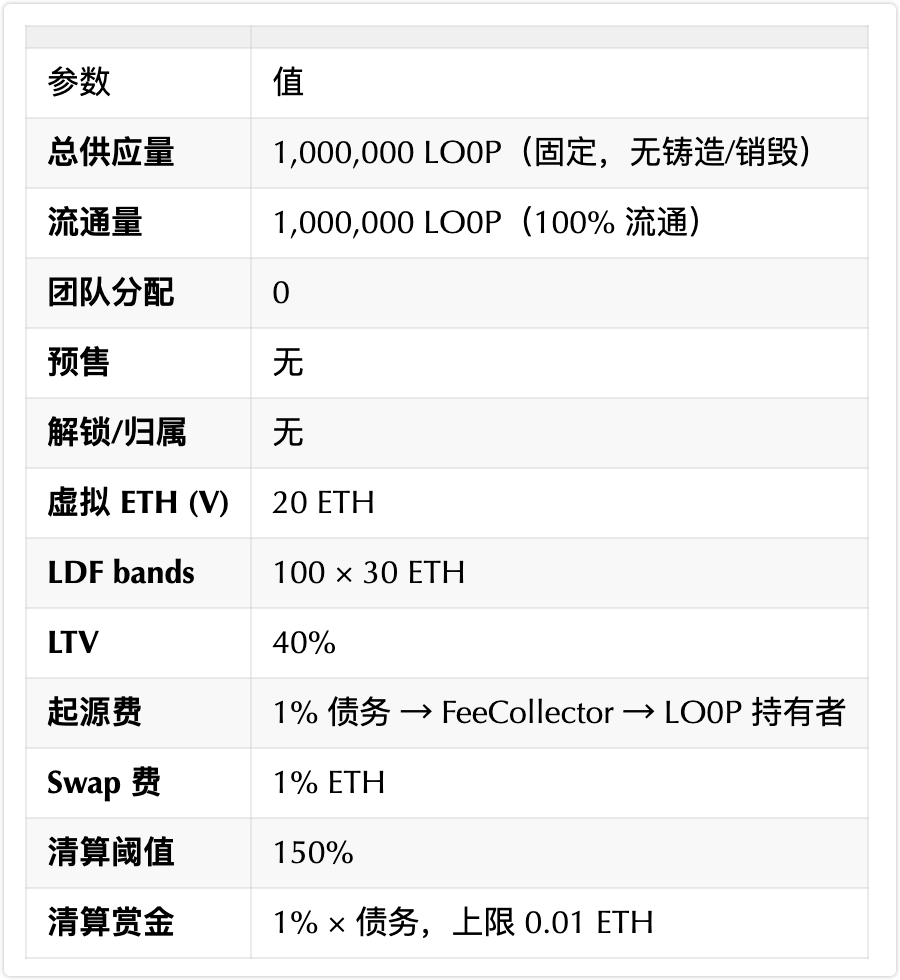
All 1,000,000 LO0P tokens are minted to the lending Hook contract at deployment, with no team allocation, no presale, and no vesting period.
Income distribution
Protocol revenue sources:
Borrow origin fee (live): charges 1% of the debt amount per loan
V4 swap fee (planned): charges 1% ETH per buy/sell
Income flows to the FeeCollector contract — a standalone, non-upgradeable account. Policy commitment: all fees are returned to LO0P holders. The distribution mechanism has not been finalized yet (snapshot airdrops, holder-only buybacks, Merkle-claim distribution, etc. are all open for community discussion). It will be locked before the first distribution.
"
The Hook is not upgradeable; no one can reroute fees to other addresses. The FeeCollector withdrawal key is the only operational lever, and its use is constrained by publicly stated income distribution policies.
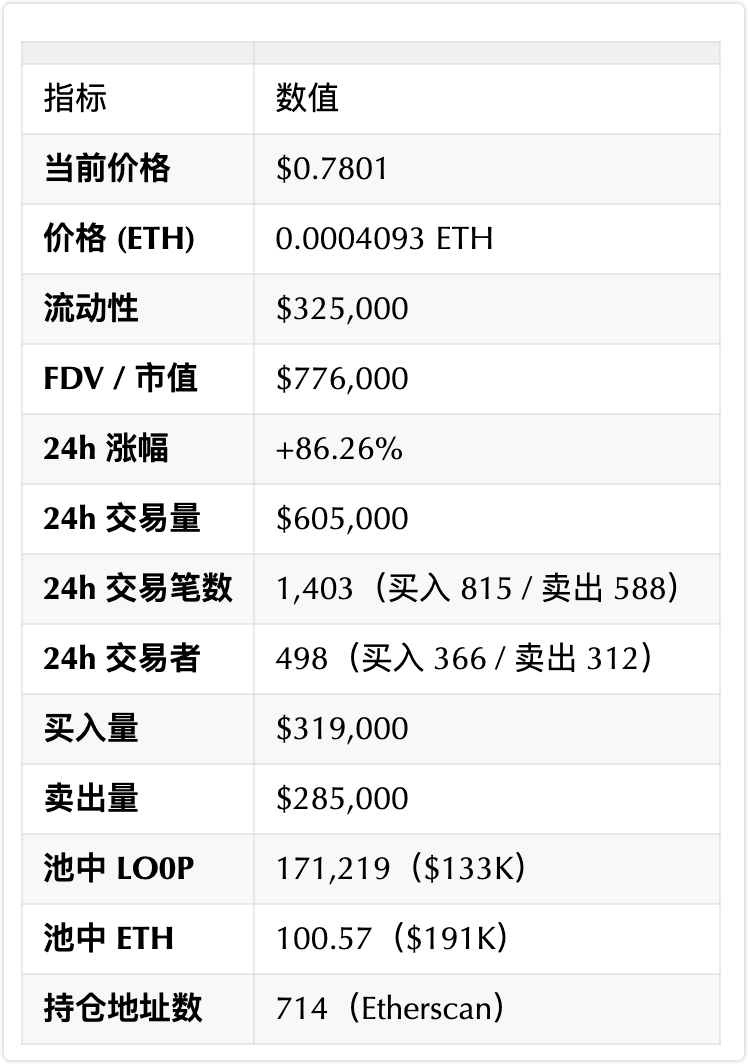
Market data (as of July 31, 2026)
Real-time on-chain data (DexScreener)
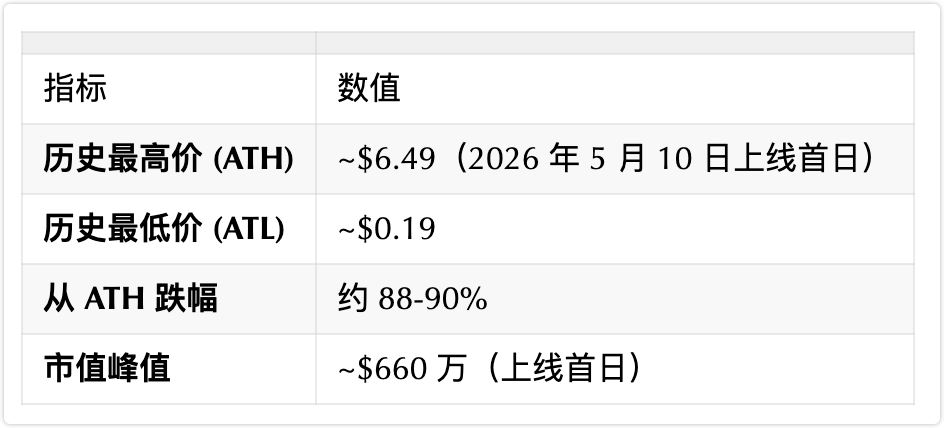
Historical price
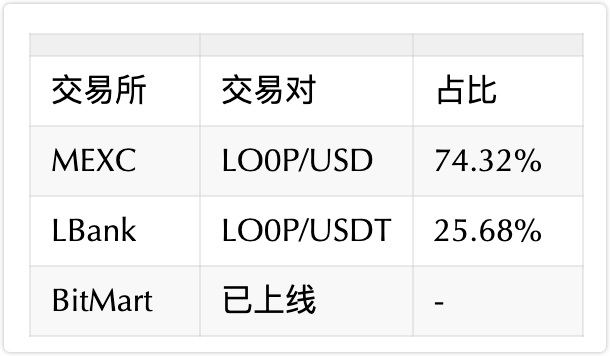
Listed on exchanges
Community and ecosystem
Social media
Twitter (@lo0pio): Bio = "Turn idle liquidity into a living economy with Uniswap v4 Hooks"
Telegram (LOOP [ENTRY PORTAL]): 479 subscribers; relatively small scale
Not found: Discord community, GitHub code repositories
Narrative positioning
LO0p belongs to the narrative segment that emerged in May 2026, the "Hook Summer" storyline. This narrative centers on the token ecosystem built around the Uniswap V4 Hook mechanism. Representative projects include:
Some media outlets (e.g., KuCoin, HTX, Odaily) categorize this kind of Hook token as a type of "meme coin," although LO0p positions itself as a serious DeFi protocol.
Team and transparency
Team status
Fully anonymous: no verifiable team identity information
No GitHub organization: no publicly accessible code repositories related to the project were found
No LinkedIn / other social identities: no traceable personal profiles found
Whitepaper author: unnamed
Contract information
Contract name: LOOP
Compiler: Solidity v0.8.26
EVM version: Cancun
Optimization: enabled, 200 runs
License: not specified (N/A)
Source code verified: verified on Etherscan
Upgradeability: not upgradeable (no proxy mode)
Third-party security audit: none found
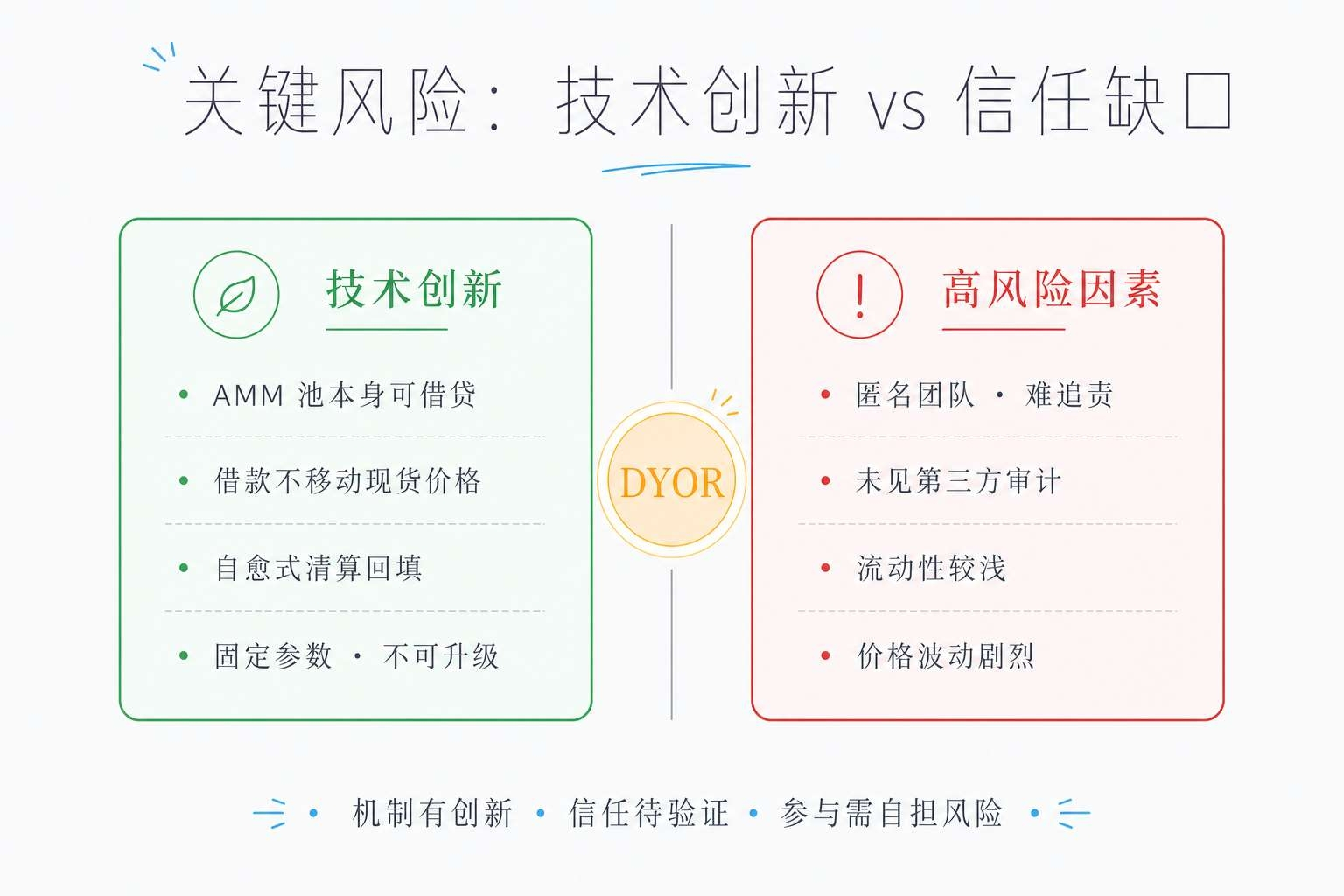
Key risk: technical innovation vs. trust gap
Risk analysis
High-risk factors
Anonymous team: no traceable team members, no accountability
No third-party audit: although the contract source code is verified on Etherscan, no independent security audit reports were found (Trail of Bits, CertiK, OpenZeppelin, etc.)
Uniswap V4 Hook novelty risk: V4 Hooks are new technology, with known attack surfaces such as reentrancy risk, malicious logic, Gas DoS, access control issues, etc. Multiple security research organizations (Trail of Bits, CertiK, Zealynx) have published articles pointing out the extremely high difficulty of Hook development
Shallow liquidity: $325K liquidity is limited for large trades
Holder concentration risk: a third-party AI analysis report shows that the Top 10 holders control about 94% of the tokens (note this data may be specific to the V1 contract)
Extreme price volatility: from ATH ~6.49 down to ~0.78, a drop of about 88%; the 24h gain reaches +86%, with very high volatility
Income distribution mechanism not set: the specific distribution pipeline of FeeCollector has not been locked, creating uncertainty
Dual-contract confusion risk: there are two contract addresses (V1: 0x20Ea... and V2: 0x0000...), which may confuse users
Technical risks
No TWAP oracle: the whitepaper admits it does not use a TWAP (time-weighted average price) oracle; multi-block manipulation is theoretically possible
Max borrowing per band is 30 ETH: large loans must be split across bands
Cold-start edge case: when the spot price is inside band 0, a special "cross-band borrowing" mechanism is needed
No governance = no flexibility: fixed parameters mean it cannot respond to future emerging issues
Distribution mechanism "open to community discussion": the initial income distribution plan has not been determined yet, which may affect token value capture
Market risk
Narrative-driven: the price trajectory is highly tied to the "Hook Summer" narrative; after the narrative fades, the market cap drops significantly
Small market cap: FDV ~$776k, a micro-cap token
Trading volume fluctuates a lot: trading volume discrepancies across different data sources are significant
Low CEX trading volume: LO0P/USD 24h trading volume on MEXC is only about $54k (based on 120btc data)
"Honest limitations" in the official whitepaper
In Section §05, the whitepaper frankly acknowledges the following limitations:
Maximum borrowing per band is 30 ETH; large loans must be split across bands
Same-block lock defense prevents single-block manipulation, but manipulation across multiple blocks is still possible (even though the attacker’s P&L is claimed to be negative)
No cascading liquidations (because borrowing does not move the spot price)
Fixed parameters, no governance (LTV 40%, liquidation threshold 150%, bounty cap, etc. are fixed at deployment)
No proxy, not upgradeable
Competitive comparison
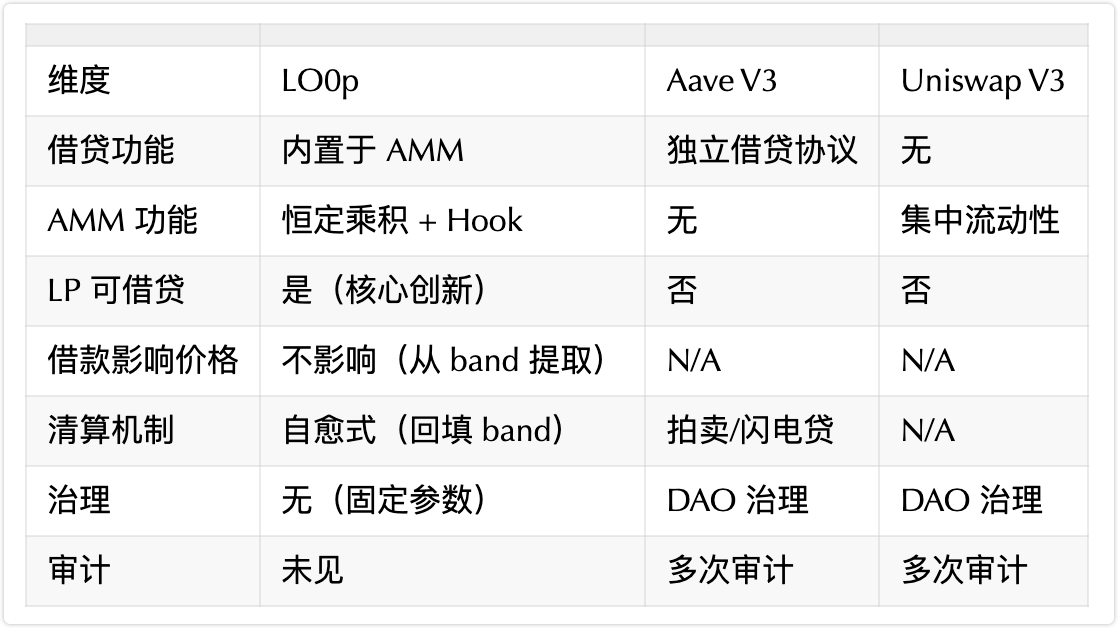
LO0p’s positioning in DeFi lending is fairly unique: it is neither a traditional overcollateralized lending protocol (e.g., Aave, Compound) nor a typical AMM (e.g., Uniswap V2/V3), but rather a fusion of the two.
Dimension | LO0p | Aave V3 | Uniswap V3 | Lending/borrowing built into AMM independent lending protocol | No AMM functionality | Constant product + Hook | No | Concentrated liquidity LP can borrow | Yes (core innovation) | No | Borrowing affects price | No (extracts from bands) | N/A | N/A | Liquidation mechanism | Self-healing (refilling bands) | Auction/flash loan | N/A | Governance | None (fixed parameters) | DAO governance | DAO governance | Audits | Not seen | Multiple audits | Multiple audits
Summary
LO0p is a lending AMM protocol with technical innovation in the Uniswap V4 Hook ecosystem. Its concept of "making the AMM pool itself the lender" is a new direction in DeFi. The technical description in the whitepaper is detailed, the mathematical model is clear, and the security design shows some consideration.
But there are also several notable risk factors: anonymous team, no audits, shallow liquidity, high holder concentration, extreme price volatility, and the income distribution mechanism not yet finalized. The project has been live for only about 2.5 months; it is down about 88–90% from ATH and is currently in a micro-cap range with a market cap of about $776k.
References
LO0p official website
LO0p whitepaper v2
LO0p official Twitter
LO0p Telegram
Etherscan - LO0P Token
DexScreener - LO0P/ETH
OKX Web3 - LO0P
MEXC - LO0P Tokenomics
Odaily - Hook Summer: sato, Lo0p, FLOOD spark a new Uniswap v4 narrative
KuCoin - Uniswap v4 Hook protocol drives a new wave of meme coin hype
HTX - Hook Summer narrative
Bitrue - LO0P project introduction
BitMart - LO0P listing announcement
120BTC - LO0P quotes
MyTokenCap - LO0P
Unhosted.ai - LO0P AI analysis
Trail of Bits - Building secure Uniswap v4 hooks
CertiK - Uniswap V4 Hooks Security Considerations
Zealynx - Uniswap v4 Security Guide
Uniswap V4 Whitepaper