

Aeri 艾瑞
8k Posts

Aeri 艾瑞
Report
Block User
@Aeshiha
428 Following
17.3K+ Followers
11.6K+ Liked
Posts
All
Quotes
Live
·
--
🚀 Exploring new opportunities with Binance Pick! Analyzing market movements, making predictions, and enjoying the crypto challenge. 📊 #BinancePick
$CAP
{future}(CAPUSDT)
$DOS
{future}(DOSUSDT)
#MooDCirCuiT
#Aeri
$龙虾
{future}(龙虾USDT)
🚀 Exploring new opportunities with Binance Pick! Analyzing market movements, making predictions, and enjoying the crypto challenge. 📊 #BinancePick
$CAP
$DOS
#MooDCirCuiT
#Aeri
$龙虾
$CAP
$DOS
#MooDCirCuiT
#Aeri
$龙虾

1
1
120
·
--
Bullish
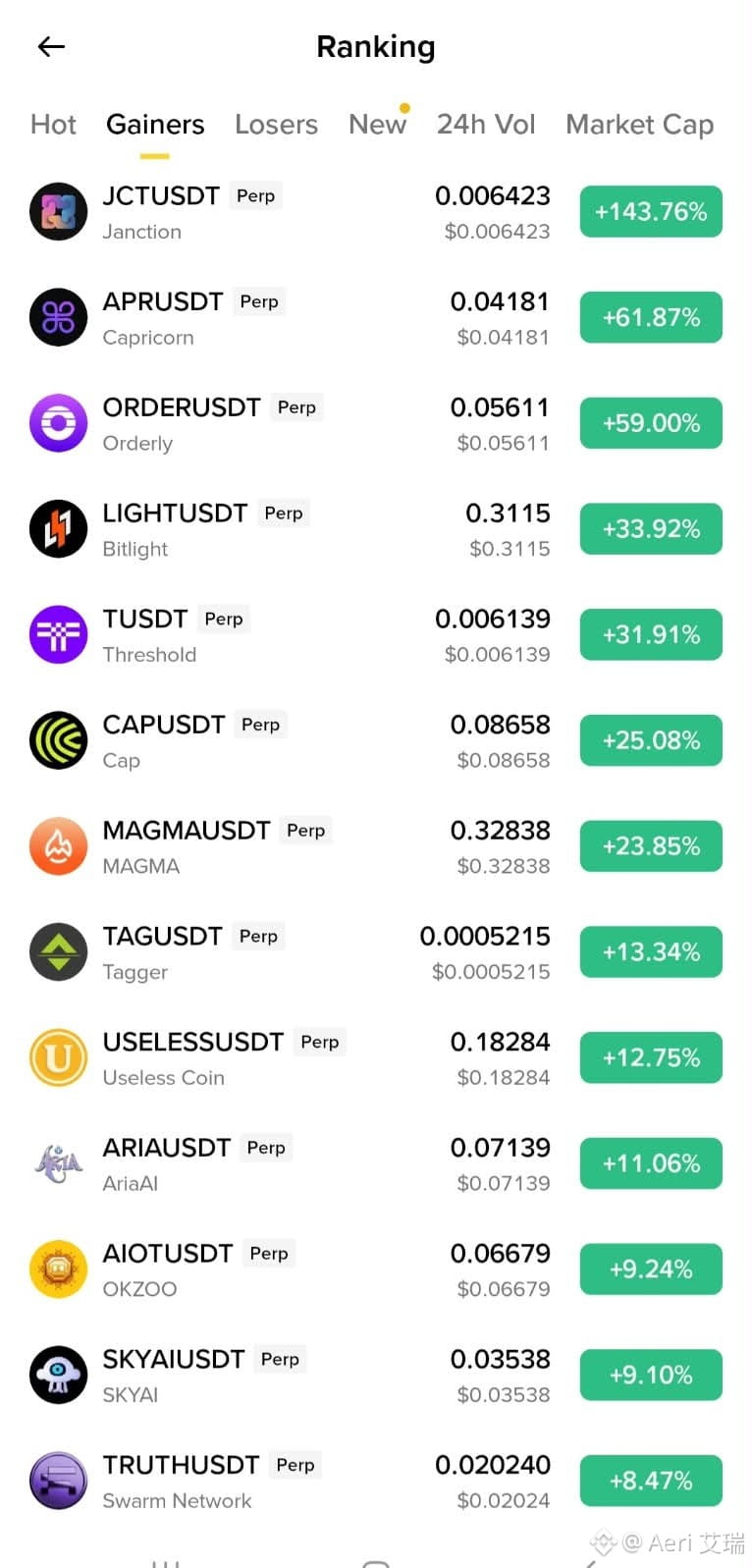
👀 What’s getting attention in the crypto market today?
Binance’s trending list is a useful place to start when exploring which coins are attracting interest. 📊
I’m keeping these names on my radar today—not rushing into trades, just watching the movement and looking for potential opportunities.
Remember, attention can change quickly in crypto. Check the volume, price action, and your risk before making a move.
Watch the market. Do your research. Trade with a plan. 🎯
Which coin caught your eye today? 👇
$JCT
{future}(JCTUSDT)
$T
{future}(TUSDT)
$APR
{future}(APRUSDT)
#Binance
#Aeri
#MooDCirCuiT
👀 What’s getting attention in the crypto market today?
Binance’s trending list is a useful place to start when exploring which coins are attracting interest. 📊
I’m keeping these names on my radar today—not rushing into trades, just watching the movement and looking for potential opportunities.
Remember, attention can change quickly in crypto. Check the volume, price action, and your risk before making a move.
Watch the market. Do your research. Trade with a plan. 🎯
Which coin caught your eye today? 👇
$JCT
$T
$APR
#Binance
#Aeri
#MooDCirCuiT
Binance’s trending list is a useful place to start when exploring which coins are attracting interest. 📊
I’m keeping these names on my radar today—not rushing into trades, just watching the movement and looking for potential opportunities.
Remember, attention can change quickly in crypto. Check the volume, price action, and your risk before making a move.
Watch the market. Do your research. Trade with a plan. 🎯
Which coin caught your eye today? 👇
$JCT
$T
$APR
#Binance
#Aeri
#MooDCirCuiT
1
4
1k
·
--
🌍 Crypto markets never stop moving, and neither do the opportunities to learn. Exploring Binance Pick Season 1! 📊 #BinancePick
$LIGHT
{future}(LIGHTUSDT)
$USELESS
{future}(USELESSUSDT)
$ORDER
{future}(ORDERUSDT)
🌍 Crypto markets never stop moving, and neither do the opportunities to learn. Exploring Binance Pick Season 1! 📊 #BinancePick
$LIGHT
$USELESS
$ORDER
$LIGHT
$USELESS
$ORDER

2
101
·
--
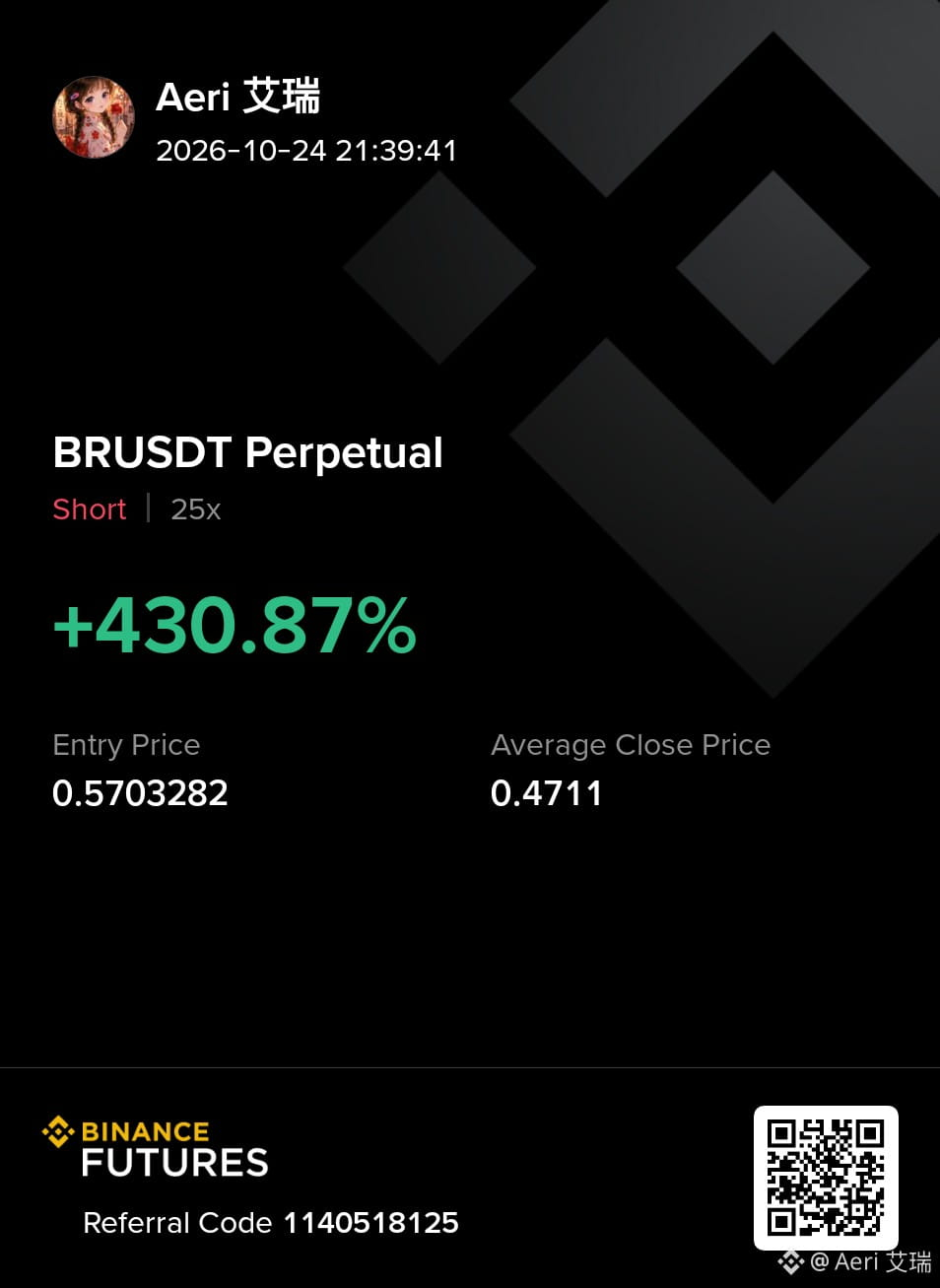
Finally closed my $BR trade after 38 long days! 😮💨 This market really tests my patience. Every time I go long, it goes short, and when I go short, it goes long. 😭📉📈
{future}(BRUSDT)
Finally closed my $BR trade after 38 long days! 😮💨 This market really tests my patience. Every time I go long, it goes short, and when I go short, it goes long. 😭📉📈
4
10
2.8k
·
--
🔥 TODAY'S TRENDING COINS ON BINANCE 📊
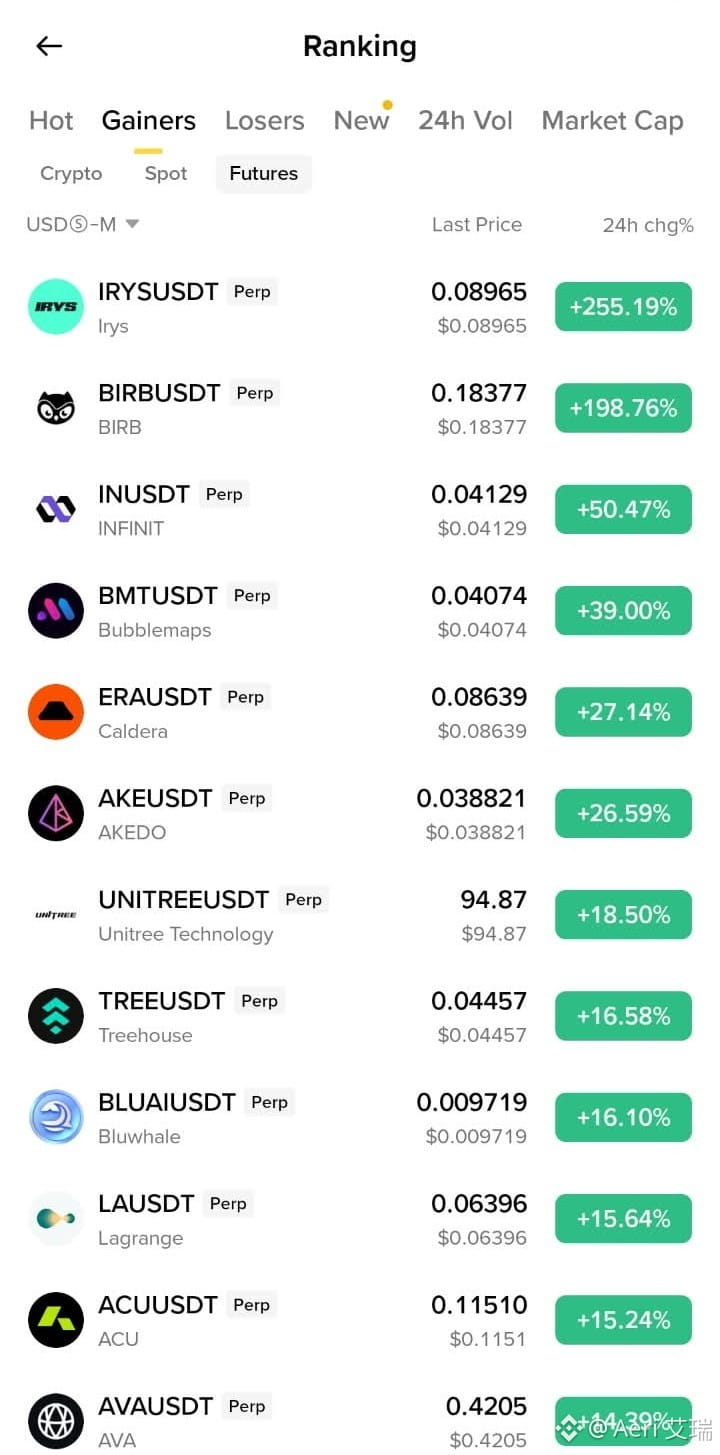
Looking for coins that are catching the market's attention today? 👀
Here are today's trending coins on Binance! Keep an eye on them, do your own research, and watch how the market moves. 📈
⚡ Save this post to keep these coins on your radar.
💡 Remember: Trending doesn't automatically mean profitable.
Always check the volume, price action, and risk before entering a trade.
Which coin are you watching today? 👇
$BIRB
$IRYS
{future}(BIRBUSDT)
{future}(IRYSUSDT)
🔥 TODAY'S TRENDING COINS ON BINANCE 📊
Looking for coins that are catching the market's attention today? 👀
Here are today's trending coins on Binance! Keep an eye on them, do your own research, and watch how the market moves. 📈
⚡ Save this post to keep these coins on your radar.
💡 Remember: Trending doesn't automatically mean profitable.
Always check the volume, price action, and risk before entering a trade.
Which coin are you watching today? 👇
$BIRB
$IRYS
Looking for coins that are catching the market's attention today? 👀
Here are today's trending coins on Binance! Keep an eye on them, do your own research, and watch how the market moves. 📈
⚡ Save this post to keep these coins on your radar.
💡 Remember: Trending doesn't automatically mean profitable.
Always check the volume, price action, and risk before entering a trade.
Which coin are you watching today? 👇
$BIRB
$IRYS
1
2
1.4k
·
--
Bullish
🏆 The competition is heating up! Making smarter picks and climbing toward rewards in Binance Pick Season 1. 💰 #BinancePick
$IN
{future}(INUSDT)
#Aeri
$BIRB
{future}(BIRBUSDT)
#MooDCirCuiT
$IRYS
{future}(IRYSUSDT)
🏆 The competition is heating up! Making smarter picks and climbing toward rewards in Binance Pick Season 1. 💰 #BinancePick
$IN
#Aeri
$BIRB
#MooDCirCuiT
$IRYS
$IN
#Aeri
$BIRB
#MooDCirCuiT
$IRYS

815
·
--
📊 Strategy meets predictions on Binance Pick! Earning scores, learning markets, and aiming higher every day. 🔥 #BinancePick
$MAGMA
{future}(MAGMAUSDT)
#Aeri
$BTR
{future}(BTRUSDT)
#MooDCirCuiT
$AGT
{future}(AGTUSDT)
📊 Strategy meets predictions on Binance Pick! Earning scores, learning markets, and aiming higher every day. 🔥 #BinancePick
$MAGMA
#Aeri
$BTR
#MooDCirCuiT
$AGT
$MAGMA
#Aeri
$BTR
#MooDCirCuiT
$AGT

1
1k
·
--
📈 Testing my market insights with Binance Pick! Every prediction counts. Let's climb the leaderboard! 🔥 #BinancePick
$ALT
{future}(ALTUSDT)
#Aeri
$BILL
{future}(BILLUSDT)
#MooDCirCuiT
$IRYS
{future}(IRYSUSDT)
📈 Testing my market insights with Binance Pick! Every prediction counts. Let's climb the leaderboard! 🔥 #BinancePick
$ALT
#Aeri
$BILL
#MooDCirCuiT
$IRYS
$ALT
#Aeri
$BILL
#MooDCirCuiT
$IRYS

184
·
--
Bullish
🏆 Binance Pick Season 1 is live!
Make smart predictions, earn scores, and compete for 1M USDC! 🚀 #BinancePick
#MooDCirCuiT
#Aeri
$APT
{future}(APTUSDT)
$DOOD
{future}(DOODUSDT)
$AKE
{future}(AKEUSDT)
🏆 Binance Pick Season 1 is live!
Make smart predictions, earn scores, and compete for 1M USDC! 🚀 #BinancePick
#MooDCirCuiT
#Aeri
$APT
$DOOD
$AKE
Make smart predictions, earn scores, and compete for 1M USDC! 🚀 #BinancePick
#MooDCirCuiT
#Aeri
$APT
$DOOD
$AKE

252
·
--
Quoted content has been removed
1
386
·
--
$KITE Businesses Need a Way to Trust AI Agents Too
Most conversations about AI focus on what agents can do for users.
But there is another side to the story: what happens when an agent approaches a business, requests a paid service or tries to complete a transaction?
A business needs to understand which agent is acting, whether it has permission to act, and whether a payment is properly authorized.
@GoKiteAI 's approach to agent identity, delegated permissions and verifiable payment activity targets parts of this challenge. These mechanisms could help create clearer boundaries between a human user's authority and the actions performed by an AI agent.
The opportunity is interesting, but adoption will depend on practical integrations, security, and whether businesses find the system useful.
The agent economy needs trust on both sides of every transaction.
#KiteBBW $KITE
What will businesses need most to trust AI agents?
$KITE Businesses Need a Way to Trust AI Agents Too
Most conversations about AI focus on what agents can do for users.
But there is another side to the story: what happens when an agent approaches a business, requests a paid service or tries to complete a transaction?
A business needs to understand which agent is acting, whether it has permission to act, and whether a payment is properly authorized.
@KITE AI 中文 's approach to agent identity, delegated permissions and verifiable payment activity targets parts of this challenge. These mechanisms could help create clearer boundaries between a human user's authority and the actions performed by an AI agent.
The opportunity is interesting, but adoption will depend on practical integrations, security, and whether businesses find the system useful.
The agent economy needs trust on both sides of every transaction.
#KiteBBW $KITE
What will businesses need most to trust AI agents?
Most conversations about AI focus on what agents can do for users.
But there is another side to the story: what happens when an agent approaches a business, requests a paid service or tries to complete a transaction?
A business needs to understand which agent is acting, whether it has permission to act, and whether a payment is properly authorized.
@KITE AI 中文 's approach to agent identity, delegated permissions and verifiable payment activity targets parts of this challenge. These mechanisms could help create clearer boundaries between a human user's authority and the actions performed by an AI agent.
The opportunity is interesting, but adoption will depend on practical integrations, security, and whether businesses find the system useful.
The agent economy needs trust on both sides of every transaction.
#KiteBBW $KITE
What will businesses need most to trust AI agents?
🔐 Verifiable identity
75%
🛡️ Limited permissions
0%
💳 Secure payments
25%
📋 Transparent activity
0%
4 votes • Voting closed
7
11
400
·
--
#nil $NIL @nillionnetwork
okay so I closed a 20x short on NIL...
tbh I was just scalping and held it for like 3 hours, but it made me dig into what @nillionnetwork is actually building. ngl the tech is kinda wild.
it's not just a token, it's basically a "blind computer" for private data. the part that really caught my attention though was Covenants. imagine placing an order on Ethereum but it stays totally encrypted until a specific condition is met. nobody can read it. no MEV bots front running you, no copying your moves.
with DUSK now live on ETH mainnet, this isn't just some roadmap promise anymore. it's the first release of their 7-era plan. And no single node holds the key to unlock it.
anyway, my trade card is below if you wanna see the 20x. what would you build first if your instructions could stay hidden until exactly the right moment?
#NIL [ ](https://www.binance.com/square/hashtag/NIL)
#nil $NIL @Nillion
okay so I closed a 20x short on NIL...
tbh I was just scalping and held it for like 3 hours, but it made me dig into what @Nillion is actually building. ngl the tech is kinda wild.
it's not just a token, it's basically a "blind computer" for private data. the part that really caught my attention though was Covenants. imagine placing an order on Ethereum but it stays totally encrypted until a specific condition is met. nobody can read it. no MEV bots front running you, no copying your moves.
with DUSK now live on ETH mainnet, this isn't just some roadmap promise anymore. it's the first release of their 7-era plan. And no single node holds the key to unlock it.
anyway, my trade card is below if you wanna see the 20x. what would you build first if your instructions could stay hidden until exactly the right moment?
#NIL
okay so I closed a 20x short on NIL...
tbh I was just scalping and held it for like 3 hours, but it made me dig into what @Nillion is actually building. ngl the tech is kinda wild.
it's not just a token, it's basically a "blind computer" for private data. the part that really caught my attention though was Covenants. imagine placing an order on Ethereum but it stays totally encrypted until a specific condition is met. nobody can read it. no MEV bots front running you, no copying your moves.
with DUSK now live on ETH mainnet, this isn't just some roadmap promise anymore. it's the first release of their 7-era plan. And no single node holds the key to unlock it.
anyway, my trade card is below if you wanna see the 20x. what would you build first if your instructions could stay hidden until exactly the right moment?
#NIL
2
12
493
·
--
Bearish
$XRP Setup | SHORT
XRP has lost its footing after a clean breakdown below the $1.38 support zone. The 1-hour chart shows price getting rejected at the EMAs, and momentum is clearly bearish. I am watching for a retest of broken support before considering continuation.
Trade Plan
Direction: Short
Entry Zone: $1.3338 – $1.345
Stop Loss: $1.3780
TP1: $1.3237
TP2: $1.3000
TP3: $1.2800
Why This Makes Sense
• XRP closed below the critical $1.35–$1.38 support band, flipping this area into resistance. The 50-EMA at $1.40 and 100-EMA near $1.34 are now overhead caps, reinforcing the bearish structure.
• The daily RSI has dropped to around 40, showing weak momentum without yet signaling an oversold bounce. MACD remains below the zero line with no bullish crossover in sight.
• A long-to-short ratio of 2.32 means leveraged longs heavily outnumber shorts. If $1.32 fails, forced liquidations could accelerate the drop toward $1.28 and potentially $1.25.
• Despite institutional news like Standard Chartered's RLUSD custody deal, ETF inflows have slowed to roughly $12 million this month—about 75% lower than September.
Risk Note
This is a momentum short in a market that can squeeze hard on any headline. The upcoming XRPL protocol upgrade on October 23 and Ripple's Swell conference on October 27–29 are potential catalysts that could trigger a sharp reversal. Keep position size small, respect the stop loss, and do not chase entries far below $1.34.
What do you think?
Would you take this setup, or wait for a confirmed retest of $1.38 before entering?
$XRP
{future}(XRPUSDT)
$XRP Setup | SHORT
XRP has lost its footing after a clean breakdown below the $1.38 support zone. The 1-hour chart shows price getting rejected at the EMAs, and momentum is clearly bearish. I am watching for a retest of broken support before considering continuation.
Trade Plan
Direction: Short
Entry Zone: $1.3338 – $1.345
Stop Loss: $1.3780
TP1: $1.3237
TP2: $1.3000
TP3: $1.2800
Why This Makes Sense
• XRP closed below the critical $1.35–$1.38 support band, flipping this area into resistance. The 50-EMA at $1.40 and 100-EMA near $1.34 are now overhead caps, reinforcing the bearish structure.
• The daily RSI has dropped to around 40, showing weak momentum without yet signaling an oversold bounce. MACD remains below the zero line with no bullish crossover in sight.
• A long-to-short ratio of 2.32 means leveraged longs heavily outnumber shorts. If $1.32 fails, forced liquidations could accelerate the drop toward $1.28 and potentially $1.25.
• Despite institutional news like Standard Chartered's RLUSD custody deal, ETF inflows have slowed to roughly $12 million this month—about 75% lower than September.
Risk Note
This is a momentum short in a market that can squeeze hard on any headline. The upcoming XRPL protocol upgrade on October 23 and Ripple's Swell conference on October 27–29 are potential catalysts that could trigger a sharp reversal. Keep position size small, respect the stop loss, and do not chase entries far below $1.34.
What do you think?
Would you take this setup, or wait for a confirmed retest of $1.38 before entering?
$XRP
XRP has lost its footing after a clean breakdown below the $1.38 support zone. The 1-hour chart shows price getting rejected at the EMAs, and momentum is clearly bearish. I am watching for a retest of broken support before considering continuation.
Trade Plan
Direction: Short
Entry Zone: $1.3338 – $1.345
Stop Loss: $1.3780
TP1: $1.3237
TP2: $1.3000
TP3: $1.2800
Why This Makes Sense
• XRP closed below the critical $1.35–$1.38 support band, flipping this area into resistance. The 50-EMA at $1.40 and 100-EMA near $1.34 are now overhead caps, reinforcing the bearish structure.
• The daily RSI has dropped to around 40, showing weak momentum without yet signaling an oversold bounce. MACD remains below the zero line with no bullish crossover in sight.
• A long-to-short ratio of 2.32 means leveraged longs heavily outnumber shorts. If $1.32 fails, forced liquidations could accelerate the drop toward $1.28 and potentially $1.25.
• Despite institutional news like Standard Chartered's RLUSD custody deal, ETF inflows have slowed to roughly $12 million this month—about 75% lower than September.
Risk Note
This is a momentum short in a market that can squeeze hard on any headline. The upcoming XRPL protocol upgrade on October 23 and Ripple's Swell conference on October 27–29 are potential catalysts that could trigger a sharp reversal. Keep position size small, respect the stop loss, and do not chase entries far below $1.34.
What do you think?
Would you take this setup, or wait for a confirmed retest of $1.38 before entering?
$XRP
5
469
·
--
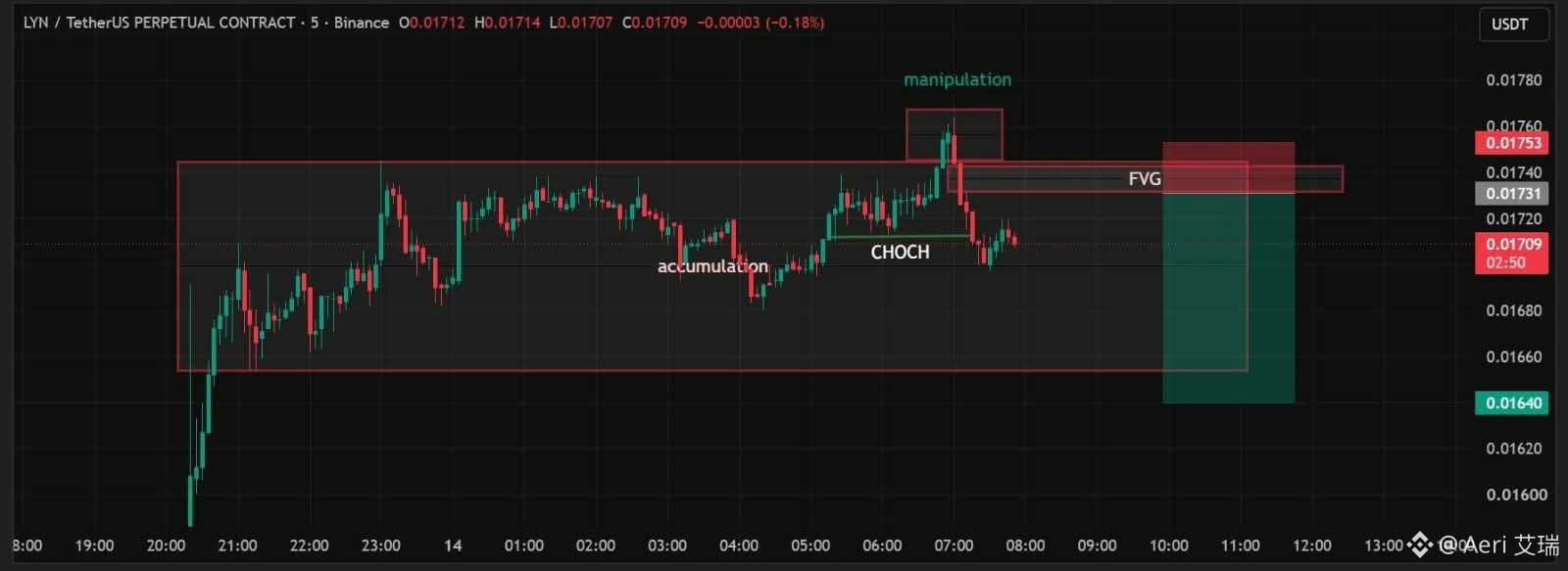
$LYN SHORT
Price is locked in a clear 1H downtrend, and the recent 5m spike into the FVG at 0.01753 looks like a classic manipulation before continuation. With Binance cutting leverage tiers on Oct 16 forcing high-leverage longs to unwind, the path of least resistance is down.
Trading Ideas Short $LYN
Entry: 0.01710 - 0.01730 (current range / FVG retest)
SL: 0.01765 (above the manipulation high and FVG)
TP1: 0.01640 (range low / initial target)
TP2: 0.01580 (manipulation wick low)
TP3: 0.01500 (next psychological support)
Risk: A 1H close above 0.01765 invalidates the bearish structure and signals a potential trend reversal. The leverage adjustment on Oct 16 could also cause a violent short squeeze if too many traders are positioned short. Size accordingly.
What do you think?
Would you take this setup, or wait for confirmation?
$LYN
{future}(LYNUSDT)
#MooDCirCuiT
#Aeri
$LYN SHORT
Price is locked in a clear 1H downtrend, and the recent 5m spike into the FVG at 0.01753 looks like a classic manipulation before continuation. With Binance cutting leverage tiers on Oct 16 forcing high-leverage longs to unwind, the path of least resistance is down.
Trading Ideas Short $LYN
Entry: 0.01710 - 0.01730 (current range / FVG retest)
SL: 0.01765 (above the manipulation high and FVG)
TP1: 0.01640 (range low / initial target)
TP2: 0.01580 (manipulation wick low)
TP3: 0.01500 (next psychological support)
Risk: A 1H close above 0.01765 invalidates the bearish structure and signals a potential trend reversal. The leverage adjustment on Oct 16 could also cause a violent short squeeze if too many traders are positioned short. Size accordingly.
What do you think?
Would you take this setup, or wait for confirmation?
$LYN
#MooDCirCuiT
#Aeri
Price is locked in a clear 1H downtrend, and the recent 5m spike into the FVG at 0.01753 looks like a classic manipulation before continuation. With Binance cutting leverage tiers on Oct 16 forcing high-leverage longs to unwind, the path of least resistance is down.
Trading Ideas Short $LYN
Entry: 0.01710 - 0.01730 (current range / FVG retest)
SL: 0.01765 (above the manipulation high and FVG)
TP1: 0.01640 (range low / initial target)
TP2: 0.01580 (manipulation wick low)
TP3: 0.01500 (next psychological support)
Risk: A 1H close above 0.01765 invalidates the bearish structure and signals a potential trend reversal. The leverage adjustment on Oct 16 could also cause a violent short squeeze if too many traders are positioned short. Size accordingly.
What do you think?
Would you take this setup, or wait for confirmation?
$LYN
#MooDCirCuiT
#Aeri
1
7
1k
·
--
$XRP Setup | LONG
XRP is trying to stabilize after a brutal five-day slide that took it from $1.41 down to $1.31. Price is now hovering around $1.36, sitting above the 100-day EMA at $1.339 which has been acting as a floor for the past two sessions. The monthly RSI is at its lowest level in 13 years, and the long-to-short ratio sits at 1.09, meaning positioning is starting to tilt slightly bullish.
Trade Plan
Direction: Long
Entry Zone: $1.345 – $1.365
Stop Loss: $1.315
TP1: $1.395
TP2: $1.445
TP3: $1.500
Why This Makes Sense
• XRPL payment volume jumped 153.9% in 24 hours to 363.3 million XRP, signaling fresh on-chain demand
• The 100-day EMA at $1.339 is holding as support, and buying interest emerged near the $1.34 moving average zone
• Monthly RSI at a 13-year low suggests the selling may be overextended; historically, such extreme readings have preceded sharp rebounds
• Long-to-short ratio at 1.09 shows a modest tilt toward longs, though not overwhelming conviction
Risk Note
This is a counter-trend bounce play, not a confirmed reversal. XRP remains below both the 200-day EMA at $1.381 and the 50-day EMA at $1.395, so the overhead resistance is real. If price fails to reclaim $1.38 on a daily close, I'll cut the trade without hesitation. Position size accordingly.
#MooDCirCuiT
#Aeri
$XRP
{future}(XRPUSDT)
$XRP Setup | LONG
XRP is trying to stabilize after a brutal five-day slide that took it from $1.41 down to $1.31. Price is now hovering around $1.36, sitting above the 100-day EMA at $1.339 which has been acting as a floor for the past two sessions. The monthly RSI is at its lowest level in 13 years, and the long-to-short ratio sits at 1.09, meaning positioning is starting to tilt slightly bullish.
Trade Plan
Direction: Long
Entry Zone: $1.345 – $1.365
Stop Loss: $1.315
TP1: $1.395
TP2: $1.445
TP3: $1.500
Why This Makes Sense
• XRPL payment volume jumped 153.9% in 24 hours to 363.3 million XRP, signaling fresh on-chain demand
• The 100-day EMA at $1.339 is holding as support, and buying interest emerged near the $1.34 moving average zone
• Monthly RSI at a 13-year low suggests the selling may be overextended; historically, such extreme readings have preceded sharp rebounds
• Long-to-short ratio at 1.09 shows a modest tilt toward longs, though not overwhelming conviction
Risk Note
This is a counter-trend bounce play, not a confirmed reversal. XRP remains below both the 200-day EMA at $1.381 and the 50-day EMA at $1.395, so the overhead resistance is real. If price fails to reclaim $1.38 on a daily close, I'll cut the trade without hesitation. Position size accordingly.
#MooDCirCuiT
#Aeri
$XRP
XRP is trying to stabilize after a brutal five-day slide that took it from $1.41 down to $1.31. Price is now hovering around $1.36, sitting above the 100-day EMA at $1.339 which has been acting as a floor for the past two sessions. The monthly RSI is at its lowest level in 13 years, and the long-to-short ratio sits at 1.09, meaning positioning is starting to tilt slightly bullish.
Trade Plan
Direction: Long
Entry Zone: $1.345 – $1.365
Stop Loss: $1.315
TP1: $1.395
TP2: $1.445
TP3: $1.500
Why This Makes Sense
• XRPL payment volume jumped 153.9% in 24 hours to 363.3 million XRP, signaling fresh on-chain demand
• The 100-day EMA at $1.339 is holding as support, and buying interest emerged near the $1.34 moving average zone
• Monthly RSI at a 13-year low suggests the selling may be overextended; historically, such extreme readings have preceded sharp rebounds
• Long-to-short ratio at 1.09 shows a modest tilt toward longs, though not overwhelming conviction
Risk Note
This is a counter-trend bounce play, not a confirmed reversal. XRP remains below both the 200-day EMA at $1.381 and the 50-day EMA at $1.395, so the overhead resistance is real. If price fails to reclaim $1.38 on a daily close, I'll cut the trade without hesitation. Position size accordingly.
#MooDCirCuiT
#Aeri
$XRP
1
2
326
·
--
$APT Setup | LONG
Aptos just finished its four-year token unlock. Monthly emissions dropped around 60%. Price is holding near $0.83 after a strong four-week run, but on-chain stablecoin liquidity is down 17.5%. That divergence tells me to keep size small and wait for confirmation.
Trade Plan
Direction: Long
Entry Zone: 0.8280 – 0.8350
Stop Loss: 0.8150
TP1: 0.8650
TP2: 0.8950
TP3: 0.9400
Why This Makes Sense
• The unlock overhang is gone. Monthly APT emissions fell from ~11.3M to ~4.5M tokens, removing a persistent supply pressure that kept rallies capped.
• Price is defending the $0.82–$0.83 zone. This area acted as support after the recent dip, and the 24h low of $0.7880 held cleanly.
• Momentum is cooling but not broken. RSI on the 4H sits near 60 after peaking above 70, which is typical mid-trend behavior rather than exhaustion.
• The first real resistance sits around $0.94–$0.96. If buyers reclaim that band, the path toward $1.00 opens up.
I'm watching whether stablecoin liquidity stabilizes while price holds above $0.83. If it keeps bleeding, this rally looks supply-driven, not demand-driven. That's why I prefer confirmation over catching the exact bottom.
Risk Note
The main risk here is a liquidity drain. If stablecoins on Aptos keep falling, the ecosystem loses dry powder and the token can drift lower even without a fresh catalyst. Keep your position size modest. A close below $0.82 invalidates the setup, and I'd step aside rather than average down.
#Aeri
#MooDCirCuiT
$APT
{future}(APTUSDT)
$APT Setup | LONG
Aptos just finished its four-year token unlock. Monthly emissions dropped around 60%. Price is holding near $0.83 after a strong four-week run, but on-chain stablecoin liquidity is down 17.5%. That divergence tells me to keep size small and wait for confirmation.
Trade Plan
Direction: Long
Entry Zone: 0.8280 – 0.8350
Stop Loss: 0.8150
TP1: 0.8650
TP2: 0.8950
TP3: 0.9400
Why This Makes Sense
• The unlock overhang is gone. Monthly APT emissions fell from ~11.3M to ~4.5M tokens, removing a persistent supply pressure that kept rallies capped.
• Price is defending the $0.82–$0.83 zone. This area acted as support after the recent dip, and the 24h low of $0.7880 held cleanly.
• Momentum is cooling but not broken. RSI on the 4H sits near 60 after peaking above 70, which is typical mid-trend behavior rather than exhaustion.
• The first real resistance sits around $0.94–$0.96. If buyers reclaim that band, the path toward $1.00 opens up.
I'm watching whether stablecoin liquidity stabilizes while price holds above $0.83. If it keeps bleeding, this rally looks supply-driven, not demand-driven. That's why I prefer confirmation over catching the exact bottom.
Risk Note
The main risk here is a liquidity drain. If stablecoins on Aptos keep falling, the ecosystem loses dry powder and the token can drift lower even without a fresh catalyst. Keep your position size modest. A close below $0.82 invalidates the setup, and I'd step aside rather than average down.
#Aeri
#MooDCirCuiT
$APT
Aptos just finished its four-year token unlock. Monthly emissions dropped around 60%. Price is holding near $0.83 after a strong four-week run, but on-chain stablecoin liquidity is down 17.5%. That divergence tells me to keep size small and wait for confirmation.
Trade Plan
Direction: Long
Entry Zone: 0.8280 – 0.8350
Stop Loss: 0.8150
TP1: 0.8650
TP2: 0.8950
TP3: 0.9400
Why This Makes Sense
• The unlock overhang is gone. Monthly APT emissions fell from ~11.3M to ~4.5M tokens, removing a persistent supply pressure that kept rallies capped.
• Price is defending the $0.82–$0.83 zone. This area acted as support after the recent dip, and the 24h low of $0.7880 held cleanly.
• Momentum is cooling but not broken. RSI on the 4H sits near 60 after peaking above 70, which is typical mid-trend behavior rather than exhaustion.
• The first real resistance sits around $0.94–$0.96. If buyers reclaim that band, the path toward $1.00 opens up.
I'm watching whether stablecoin liquidity stabilizes while price holds above $0.83. If it keeps bleeding, this rally looks supply-driven, not demand-driven. That's why I prefer confirmation over catching the exact bottom.
Risk Note
The main risk here is a liquidity drain. If stablecoins on Aptos keep falling, the ecosystem loses dry powder and the token can drift lower even without a fresh catalyst. Keep your position size modest. A close below $0.82 invalidates the setup, and I'd step aside rather than average down.
#Aeri
#MooDCirCuiT
$APT
2
434
·
--
Bullish
$JCT Setup | LONG
The 1H chart has shifted structure. We are seeing a classic rounded bottom with higher lows grinding up from 0.001704. The price is now consolidating right below the 0.00200 resistance. Momentum is clearly with the buyers on this timeframe.
Trade Plan
Direction: Long
Entry Zone: 0.001920 – 0.001945 (Retest of the yellow EMA)
Stop Loss: 0.001870 (Below the recent higher low and pink EMA)
TP1: 0.001986 (Immediate resistance)
TP2: 0.002050 (Breakout extension)
TP3: 0.002150 (Macro lower high)
Why This Makes Sense
• The chart shows a textbook sequence of higher lows. Buyers are stepping in earlier each time.
• The yellow EMA has crossed above the pink EMA and is acting as dynamic support. Price is holding above both.
• Volume is steady on the green candles, showing real accumulation, not a fakeout pump.
• The dip to 0.001704 was the liquidity flush. The slow grind up is the recovery phase.
Risk Note
The macro 4H trend is still technically down, so this is a counter-trend scalp. Do not marry this long. If price loses the pink EMA (around 0.001880), the bullish thesis is dead. Take profits at TP1 and move your stop to break-even.
#MooDCirCuiT
#Aeri
$JCT
{future}(JCTUSDT)
$JCT Setup | LONG
The 1H chart has shifted structure. We are seeing a classic rounded bottom with higher lows grinding up from 0.001704. The price is now consolidating right below the 0.00200 resistance. Momentum is clearly with the buyers on this timeframe.
Trade Plan
Direction: Long
Entry Zone: 0.001920 – 0.001945 (Retest of the yellow EMA)
Stop Loss: 0.001870 (Below the recent higher low and pink EMA)
TP1: 0.001986 (Immediate resistance)
TP2: 0.002050 (Breakout extension)
TP3: 0.002150 (Macro lower high)
Why This Makes Sense
• The chart shows a textbook sequence of higher lows. Buyers are stepping in earlier each time.
• The yellow EMA has crossed above the pink EMA and is acting as dynamic support. Price is holding above both.
• Volume is steady on the green candles, showing real accumulation, not a fakeout pump.
• The dip to 0.001704 was the liquidity flush. The slow grind up is the recovery phase.
Risk Note
The macro 4H trend is still technically down, so this is a counter-trend scalp. Do not marry this long. If price loses the pink EMA (around 0.001880), the bullish thesis is dead. Take profits at TP1 and move your stop to break-even.
#MooDCirCuiT
#Aeri
$JCT
The 1H chart has shifted structure. We are seeing a classic rounded bottom with higher lows grinding up from 0.001704. The price is now consolidating right below the 0.00200 resistance. Momentum is clearly with the buyers on this timeframe.
Trade Plan
Direction: Long
Entry Zone: 0.001920 – 0.001945 (Retest of the yellow EMA)
Stop Loss: 0.001870 (Below the recent higher low and pink EMA)
TP1: 0.001986 (Immediate resistance)
TP2: 0.002050 (Breakout extension)
TP3: 0.002150 (Macro lower high)
Why This Makes Sense
• The chart shows a textbook sequence of higher lows. Buyers are stepping in earlier each time.
• The yellow EMA has crossed above the pink EMA and is acting as dynamic support. Price is holding above both.
• Volume is steady on the green candles, showing real accumulation, not a fakeout pump.
• The dip to 0.001704 was the liquidity flush. The slow grind up is the recovery phase.
Risk Note
The macro 4H trend is still technically down, so this is a counter-trend scalp. Do not marry this long. If price loses the pink EMA (around 0.001880), the bullish thesis is dead. Take profits at TP1 and move your stop to break-even.
#MooDCirCuiT
#Aeri
$JCT
2
461
·
--
Bullish
$DUSK Setup | LONG
DUSK is pushing hard today, up over 15% and reclaiming the $0.097 area after a clean bounce from the $0.0880 floor. Price is holding above all key EMAs on the 1H chart, and the breakout from that tight consolidation looks real, not just a wick. Volume is confirming the move, and the structure has shifted from choppy to clearly bullish.
Trade Plan
Direction: Long
Entry Zone: $0.0965 – $0.0980
Stop Loss: $0.0880
TP1: $0.1025
TP2: $0.1080
TP3: $0.1150
Why This Makes Sense
• Price broke above the $0.095–$0.098 neckline resistance that has capped every rally since early October, flipping it into support.
• The 1H EMA structure is stacked bullishly — price is holding above the 7, 25, and 99 EMAs, with the 25 EMA rising sharply.
• Buyers are clearly in control, with recent activity showing nearly 99% buy pressure and a strong social sentiment reading of +8.23%.
• Fundamental catalysts are lining up: Dusk Domains mainnet launches October 18, routing protocol revenue directly into DUSK liquidity, and the team just shipped 10 core cryptography upgrades
#Aeri
#MooDCirCuiT
$DUSK
{future}(DUSKUSDT)
$DUSK Setup | LONG
DUSK is pushing hard today, up over 15% and reclaiming the $0.097 area after a clean bounce from the $0.0880 floor. Price is holding above all key EMAs on the 1H chart, and the breakout from that tight consolidation looks real, not just a wick. Volume is confirming the move, and the structure has shifted from choppy to clearly bullish.
Trade Plan
Direction: Long
Entry Zone: $0.0965 – $0.0980
Stop Loss: $0.0880
TP1: $0.1025
TP2: $0.1080
TP3: $0.1150
Why This Makes Sense
• Price broke above the $0.095–$0.098 neckline resistance that has capped every rally since early October, flipping it into support.
• The 1H EMA structure is stacked bullishly — price is holding above the 7, 25, and 99 EMAs, with the 25 EMA rising sharply.
• Buyers are clearly in control, with recent activity showing nearly 99% buy pressure and a strong social sentiment reading of +8.23%.
• Fundamental catalysts are lining up: Dusk Domains mainnet launches October 18, routing protocol revenue directly into DUSK liquidity, and the team just shipped 10 core cryptography upgrades
#Aeri
#MooDCirCuiT
$DUSK
DUSK is pushing hard today, up over 15% and reclaiming the $0.097 area after a clean bounce from the $0.0880 floor. Price is holding above all key EMAs on the 1H chart, and the breakout from that tight consolidation looks real, not just a wick. Volume is confirming the move, and the structure has shifted from choppy to clearly bullish.
Trade Plan
Direction: Long
Entry Zone: $0.0965 – $0.0980
Stop Loss: $0.0880
TP1: $0.1025
TP2: $0.1080
TP3: $0.1150
Why This Makes Sense
• Price broke above the $0.095–$0.098 neckline resistance that has capped every rally since early October, flipping it into support.
• The 1H EMA structure is stacked bullishly — price is holding above the 7, 25, and 99 EMAs, with the 25 EMA rising sharply.
• Buyers are clearly in control, with recent activity showing nearly 99% buy pressure and a strong social sentiment reading of +8.23%.
• Fundamental catalysts are lining up: Dusk Domains mainnet launches October 18, routing protocol revenue directly into DUSK liquidity, and the team just shipped 10 core cryptography upgrades
#Aeri
#MooDCirCuiT
$DUSK
2
347
·
--
Bullish
$BAT Setup | LONG
Trade Plan
Direction: Long
Entry Zone: $0.1880 – $0.1920
Stop Loss: $0.1790
TP1: $0.2030
TP2: $0.2150
TP3: $0.2280
Why This Makes Sense
* MA5 has crossed above MA20, and MACD is still printing positive bars — the short-term trend is up.
* The funding rate is deeply negative, which means short positions are crowded and paying to hold. Any push higher forces them to cover.
* RSI is around 65, close to overbought but not there yet. There's still room before momentum exhaustion.
* The $0.1880–$0.1920 zone sits near MA5 and the middle Bollinger band, which has acted as a launchpad on previous pullbacks.
Risk Note
This is a short-squeeze-driven rally, not a slow, spot-led uptrend. If funding flips positive and price stalls, the buying pressure can vanish fast. Keep position size small — volatility over the last 30 candles is above 28%, so wicks can hit stops easily. A close below MA20 invalidates the setup; don't average down.
#MooDCirCuiT
#Aeri
$BAT
{future}(BATUSDT)
$BAT Setup | LONG
Trade Plan
Direction: Long
Entry Zone: $0.1880 – $0.1920
Stop Loss: $0.1790
TP1: $0.2030
TP2: $0.2150
TP3: $0.2280
Why This Makes Sense
* MA5 has crossed above MA20, and MACD is still printing positive bars — the short-term trend is up.
* The funding rate is deeply negative, which means short positions are crowded and paying to hold. Any push higher forces them to cover.
* RSI is around 65, close to overbought but not there yet. There's still room before momentum exhaustion.
* The $0.1880–$0.1920 zone sits near MA5 and the middle Bollinger band, which has acted as a launchpad on previous pullbacks.
Risk Note
This is a short-squeeze-driven rally, not a slow, spot-led uptrend. If funding flips positive and price stalls, the buying pressure can vanish fast. Keep position size small — volatility over the last 30 candles is above 28%, so wicks can hit stops easily. A close below MA20 invalidates the setup; don't average down.
#MooDCirCuiT
#Aeri
$BAT
Trade Plan
Direction: Long
Entry Zone: $0.1880 – $0.1920
Stop Loss: $0.1790
TP1: $0.2030
TP2: $0.2150
TP3: $0.2280
Why This Makes Sense
* MA5 has crossed above MA20, and MACD is still printing positive bars — the short-term trend is up.
* The funding rate is deeply negative, which means short positions are crowded and paying to hold. Any push higher forces them to cover.
* RSI is around 65, close to overbought but not there yet. There's still room before momentum exhaustion.
* The $0.1880–$0.1920 zone sits near MA5 and the middle Bollinger band, which has acted as a launchpad on previous pullbacks.
Risk Note
This is a short-squeeze-driven rally, not a slow, spot-led uptrend. If funding flips positive and price stalls, the buying pressure can vanish fast. Keep position size small — volatility over the last 30 candles is above 28%, so wicks can hit stops easily. A close below MA20 invalidates the setup; don't average down.
#MooDCirCuiT
#Aeri
$BAT
1
398
Log in to explore more content
Join global crypto users on Binance Square
⚡️ Get latest and useful information about crypto.
💬 Trusted by the world’s largest crypto exchange.
👍 Discover real insights from verified creators.
Email / Phone number
Trending Topics
BinancePick
2.6M views
140,306 Discussing
Join #EarningsSeason: Predict Earnings on Binance Pick, Share Your Take on Binance Square!
Binance Square Official
·400 Likes
·337.9k views
EarningsSeason
5M views
24,219 Discussing
FranklinTempletonFilesForTwoDividendToBitcoinETFs
24 views
25 Discussing