

阿乐_纯爱版
300 Posts

阿乐_纯爱版
Report
Block User
Web3纯爱战神|撸毛学习者|空投教程|项目分享|BP-F428804C72EB
Frequent Trader
1.4 Years
140 Following
12.3K+ Followers
2.5K+ Liked
Posts
All
Quotes
Videos
Live
·
--

Article
It’s Not Just Staking $ACU: How Acurast Ties Rewards to Real ComputeYesterday, after writing about running AI on a phone with Laya, I followed @Acurast’s docs and came across Staked Compute.
Running tasks on phones is one thing; keeping those phones online long-term and delivering reliably is another.
Acurast doesn’t distribute rewards equally to every device that’s online. It requires some compute providers to commit $ACU as a stake. Devices earn rewards by fulfilling their commitments, but they also incur losses if they go offline for a long time or fail to provide the promised compute.
This part explains exactly what practical purpose $ACU serves beyond paying for compute.
It’s Not Just Staking $ACU: How Acurast Ties Rewards to Real Compute
Yesterday, after writing about running AI on a phone with Laya, I followed @Acurast’s docs and came across Staked Compute.
Running tasks on phones is one thing; keeping those phones online long-term and delivering reliably is another.
Acurast doesn’t distribute rewards equally to every device that’s online. It requires some compute providers to commit $ACU as a stake. Devices earn rewards by fulfilling their commitments, but they also incur losses if they go offline for a long time or fail to provide the promised compute.
This part explains exactly what practical purpose $ACU serves beyond paying for compute.
34
·
--
Article
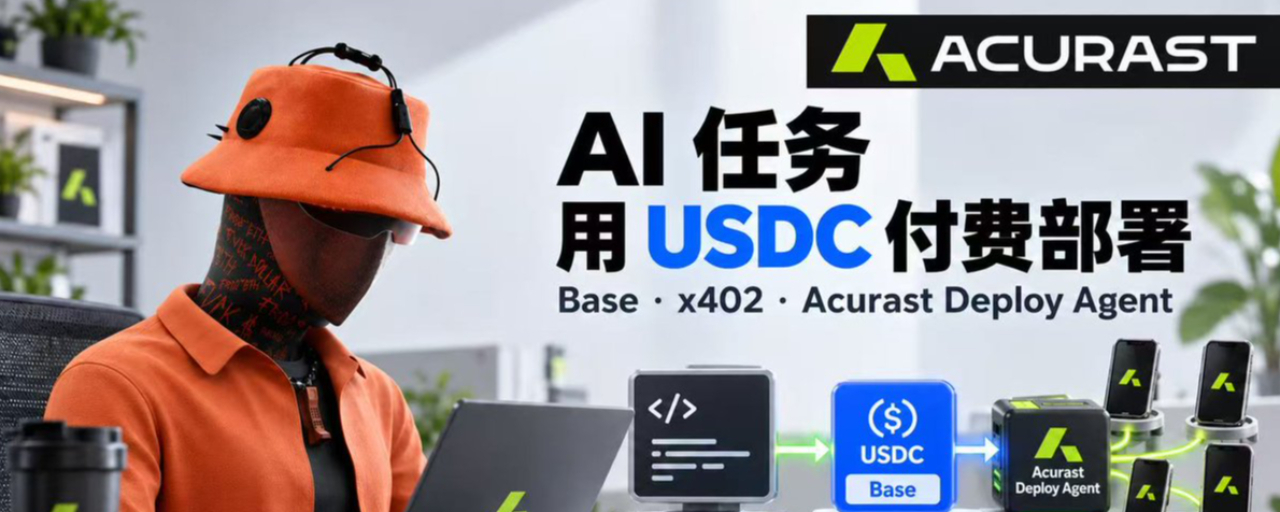
Today I’m recommending a way to use @Acurast to friends who build AI tools. It has nothing to do with leaving your phone running or earning points.Today I’m recommending a way to use @Acurast to friends who build AI tools. It has nothing to do with leaving your phone running or earning points.
Acurast connects phones into a computing network, where developers can run their programs on these devices. It now has a Deploy Agent option that lets you pay with **USDC on Base to have tasks deployed for you, without having to manage a separate Acurast account.
I can definitely understand this need.
I just wanted to test-run a small program, but first I had to figure out wallets, which coin to buy, and where to transfer it. The program hadn’t even started running, and I’d already done a ton of prep work. It’s not difficult for people familiar with on-chain operations, but developers may not want to go through all that hassle just for a one-off test.
Today I’m recommending a way to use @Acurast to friends who build AI tools. It has nothing to do with leaving your phone running or earning points.
Today I’m recommending a way to use @Acurast to friends who build AI tools. It has nothing to do with leaving your phone running or earning points.
Acurast connects phones into a computing network, where developers can run their programs on these devices. It now has a Deploy Agent option that lets you pay with **USDC on Base to have tasks deployed for you, without having to manage a separate Acurast account.
I can definitely understand this need.
I just wanted to test-run a small program, but first I had to figure out wallets, which coin to buy, and where to transfer it. The program hadn’t even started running, and I’d already done a ton of prep work. It’s not difficult for people familiar with on-chain operations, but developers may not want to go through all that hassle just for a one-off test.
1
25
·
--
Don’t want to buy a phone or manage devices long-term? You can participate in Acurast through delegated stakingI’ve still been quite interested in the @Acurast project lately, and I’d like to keep participating.
We’ve already talked a few times about how phones provide computing power. Today, let’s switch to a topic related to $ACU holders.
You can also participate through delegated staking if you don’t want to buy a phone or manage devices long-term.
Acurast is a mobile computing network where developers deploy programs and device providers make sure those programs run. If you already hold $ACU, you can choose a computing provider in the Hub and delegate your tokens to their stake to share rewards according to the rules. They maintain the devices, so you don’t have to provide a phone yourself, but you’ll need to pay the delegation fee they set. Delegation mechanism
Don’t want to buy a phone or manage devices long-term? You can participate in Acurast through delegated staking
I’ve still been quite interested in the @Acurast project lately, and I’d like to keep participating.
We’ve already talked a few times about how phones provide computing power. Today, let’s switch to a topic related to $ACU holders.
You can also participate through delegated staking if you don’t want to buy a phone or manage devices long-term.
Acurast is a mobile computing network where developers deploy programs and device providers make sure those programs run. If you already hold $ACU, you can choose a computing provider in the Hub and delegate your tokens to their stake to share rewards according to the rules. They maintain the devices, so you don’t have to provide a phone yourself, but you’ll need to pay the delegation fee they set. Delegation mechanism
43
·
--
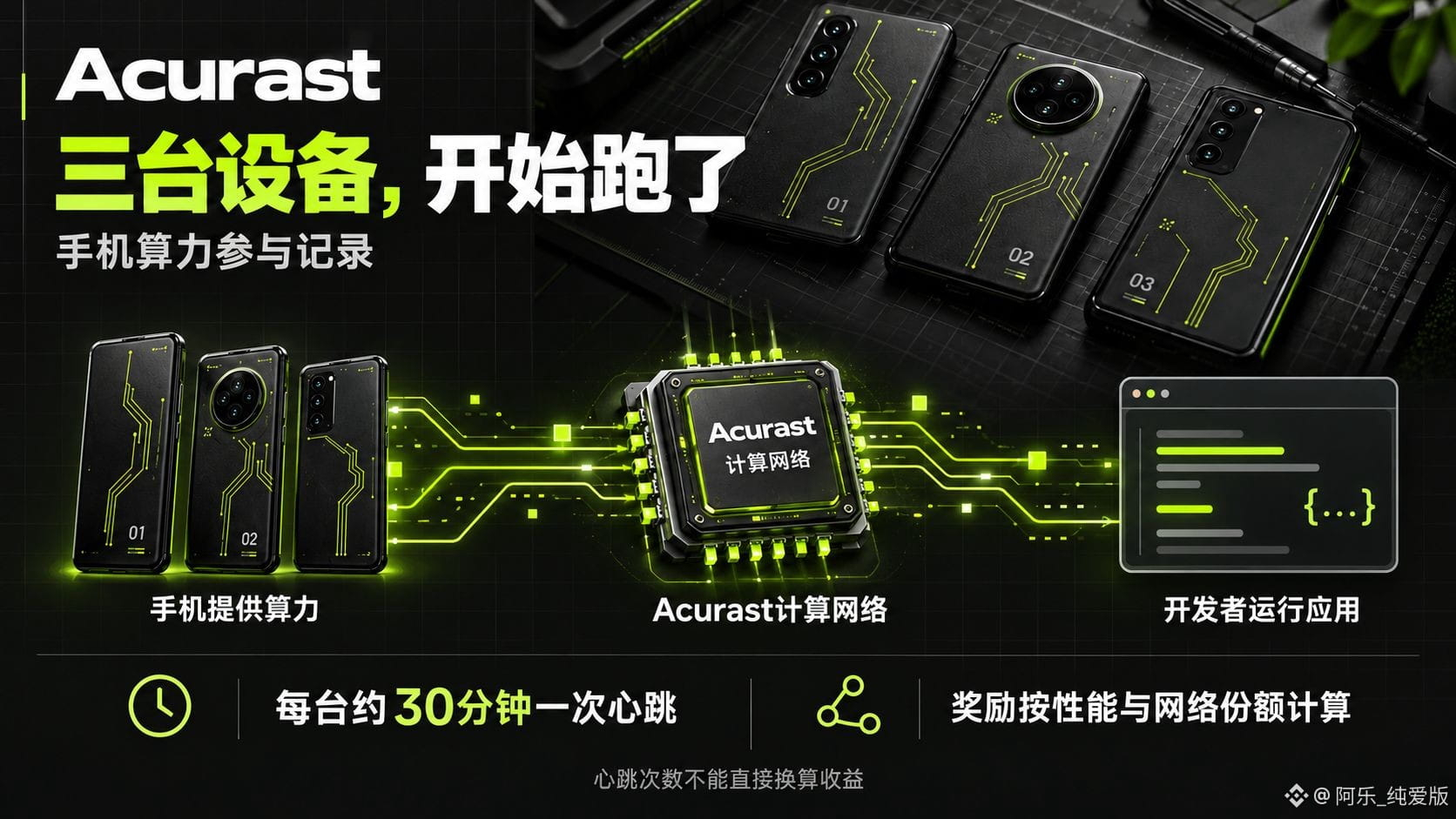
I’ve been tinkering with @Acurast lately and have connected three devices so far. I’ve gone through installation, checking heartbeats, and looking at Gas several times, so I wanted to share what I’ve learned with anyone who’s thinking of joining.
Acurast is a mobile computing network. After installing Processor on a phone, developers can deploy programs to run on eligible devices. The devices provide computing resources and earn rewards according to the network’s rules.
When I first checked the Hub, all three devices showed 0.5 next to the star, and I thought it might be related to heartbeat frequency. I looked it up and found out that it’s the device reputation score, which defaults to 0.5 for new devices.
Heartbeats usually happen about once every 30 minutes, so three devices should theoretically send six heartbeats per hour. But you can’t work out rewards by simply multiplying the number of heartbeats by a set rate. Base rewards depend on test results for CPU, memory, storage, and other factors, as well as the device’s share of the network reward pool. Different configurations can earn different rewards.
Base rewards come from token issuance. A phone earning rewards while online doesn’t mean a developer has paid to use that device. You’ll need to check separately whether it’s handling actual tasks.
There are already some real use cases you can try out. The recently released official Laya demo has an AI model on your phone sort emails, moderate chats, and even decide where the snake should go next in Snake.
These tasks are easy to understand, and you can see what your phone is actually processing.
If you want to join, you can add a device through Acurast Hub, then follow the prompts to install Processor and link your device. Android currently requires version 12 or later, no root access, and a locked bootloader. Once it’s connected, check the heartbeat and authentication status first—there’s no need to rush into adding more devices.
Also, make sure you know which network you’re using: mainnet rewards are in $ACU, while Canary shows cACU; MIST is a separate campaign points system. On-chain actions such as heartbeats also incur a small fee.
My three devices are still being monitored, so I don’t want to throw out unreliable earnings figures just yet. Once I have a complete operating record, I’ll work out the rewards and costs together.
If you’d like to join in, you can use my invitation link to enter Cloud Rebellion, connect your phone, then add the device in Hub:
1
17
·
--
Article
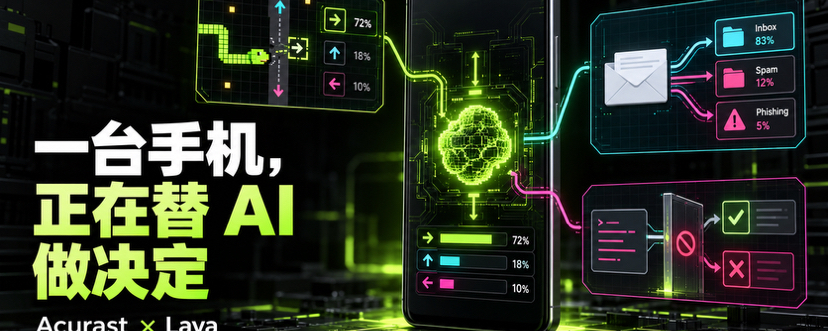
laya demoToday I want to write about
@Acurast
The newly released Laya demo.
This time I wasn’t left to imagine the purpose by being told, “how many nodes there are worldwide”—instead, they directly put an AI model running on a phone onto the web. Snake, email categorization, chat moderation, and prompt-injection attack interception can all be tried on the spot.
I originally thought that if a phone runs AI, it would be a bit performative. After seeing Laya's working approach, though, I feel that these small models work quite well with mobile computing power.
It’s not there to chat with you, nor does it generate a long block of text. The app sends the current situation and a few fixed options; it returns the probability for each option, then picks one to execute.
laya demo
Today I want to write about
@Acurast
The newly released Laya demo.
This time I wasn’t left to imagine the purpose by being told, “how many nodes there are worldwide”—instead, they directly put an AI model running on a phone onto the web. Snake, email categorization, chat moderation, and prompt-injection attack interception can all be tried on the spot.
I originally thought that if a phone runs AI, it would be a bit performative. After seeing Laya's working approach, though, I feel that these small models work quite well with mobile computing power.
It’s not there to chat with you, nor does it generate a long block of text. The app sends the current situation and a few fixed options; it returns the probability for each option, then picks one to execute.
1
126
·
--
Article
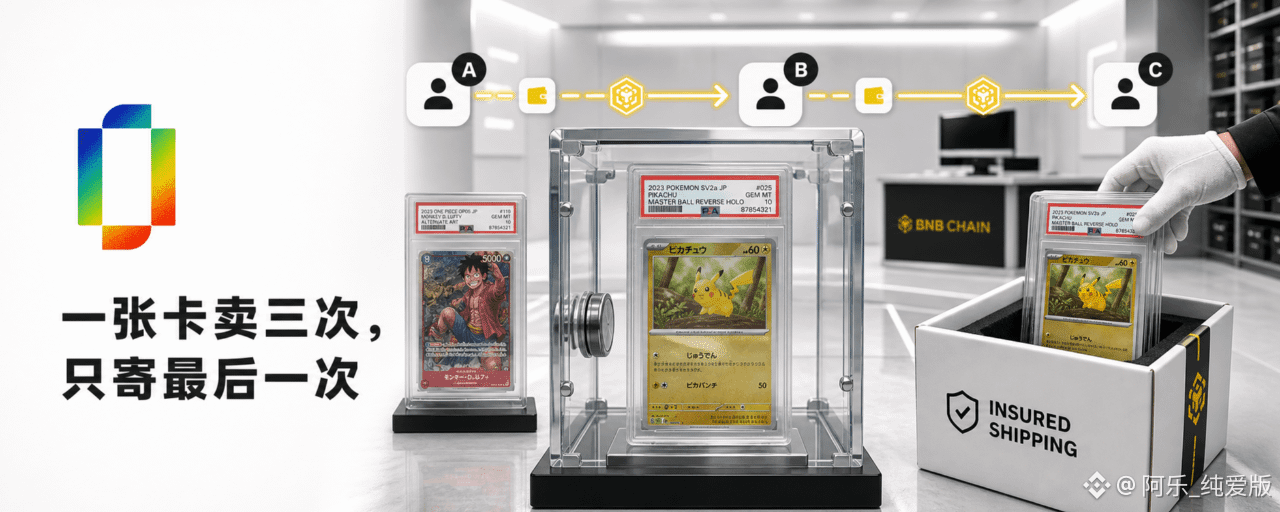
How to Play RWA for Physical Collectibles? Starting with Renaiss’s “Ownership and Physical Separation”If you play physical card games (like Pokémon, One Piece TCG, etc.), you’ve probably had this experience: buying a card may take only a few minutes, but waiting for shipping and then waiting for the card often takes up to half a month.
Once high-value graded cards need to change hands frequently in the secondary market, the traditional process starts to feel rather cumbersome. Every transaction involves packaging, buying insurance, shipping via international courier, clearing customs, and then having the buyer unbox to inspect the item.
Shipping back and forth costs more money, and there’s also the risk of damaging the graded case—scratches, or even loss.
After experiencing the Renaiss Protocol ( @renaissxyz ), I feel that its approach to RWA for tangible collectibles is very straightforward: it separates “ownership transfer” from “physical shipment”—“a card can be sold three times, but only the last one is shipped.”
How to Play RWA for Physical Collectibles? Starting with Renaiss’s “Ownership and Physical Separation”
If you play physical card games (like Pokémon, One Piece TCG, etc.), you’ve probably had this experience: buying a card may take only a few minutes, but waiting for shipping and then waiting for the card often takes up to half a month.
Once high-value graded cards need to change hands frequently in the secondary market, the traditional process starts to feel rather cumbersome. Every transaction involves packaging, buying insurance, shipping via international courier, clearing customs, and then having the buyer unbox to inspect the item.
Shipping back and forth costs more money, and there’s also the risk of damaging the graded case—scratches, or even loss.
After experiencing the Renaiss Protocol ( @renaissxyz ), I feel that its approach to RWA for tangible collectibles is very straightforward: it separates “ownership transfer” from “physical shipment”—“a card can be sold three times, but only the last one is shipped.”
146
·
--
Article
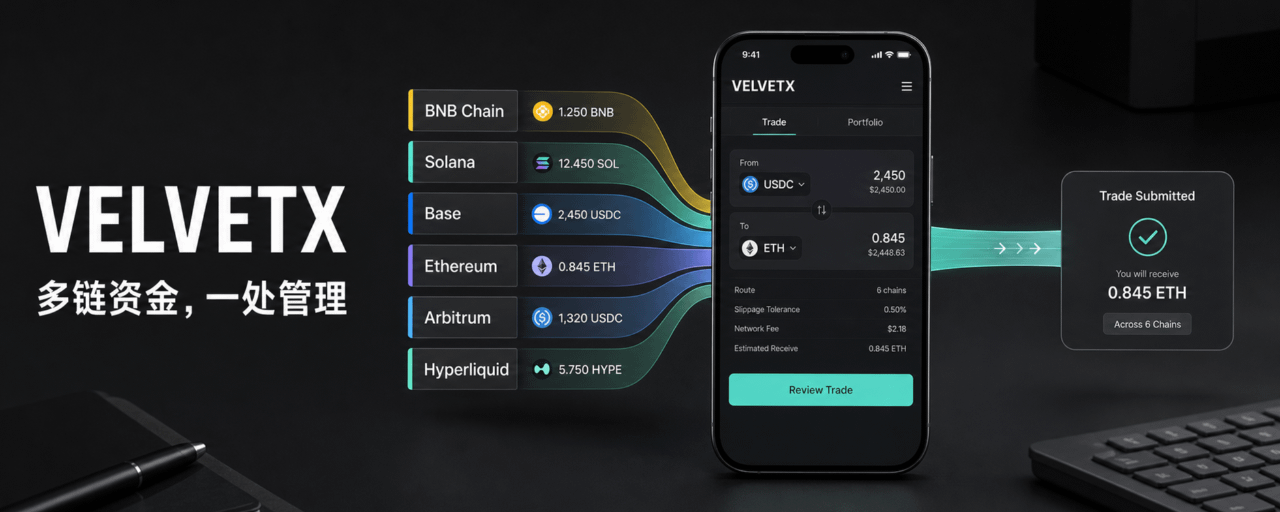
My reason for using VelvetX is simple: I don’t want to move money between multiple chains every dayPeople who often play on-chain usually end up leaving a bunch of scattered assets in their wallets.
Keep some on BNB Chain, some on Base, and also prepare funds and Gas separately for Solana. When you truly run into a trading moment, the money is often on the wrong chain.
For example, when you see a coin on Arbitrum that you’re ready to buy, but your funds are on the BNB Chain. A normal operation is to first find a cross-chain bridge, verify the networks and addresses on both sides, wait for the funds to arrive, and then open the trading page to exchange the coins. When the amount isn’t that big, the cross-chain fee, Gas, and slippage add up pretty noticeably.
If the market moves quickly, by the time the money arrives, the buy price may already have changed.
My reason for using VelvetX is simple: I don’t want to move money between multiple chains every day
People who often play on-chain usually end up leaving a bunch of scattered assets in their wallets.
Keep some on BNB Chain, some on Base, and also prepare funds and Gas separately for Solana. When you truly run into a trading moment, the money is often on the wrong chain.
For example, when you see a coin on Arbitrum that you’re ready to buy, but your funds are on the BNB Chain. A normal operation is to first find a cross-chain bridge, verify the networks and addresses on both sides, wait for the funds to arrive, and then open the trading page to exchange the coins. When the amount isn’t that big, the cross-chain fee, Gas, and slippage add up pretty noticeably.
If the market moves quickly, by the time the money arrives, the buy price may already have changed.
365
·
--
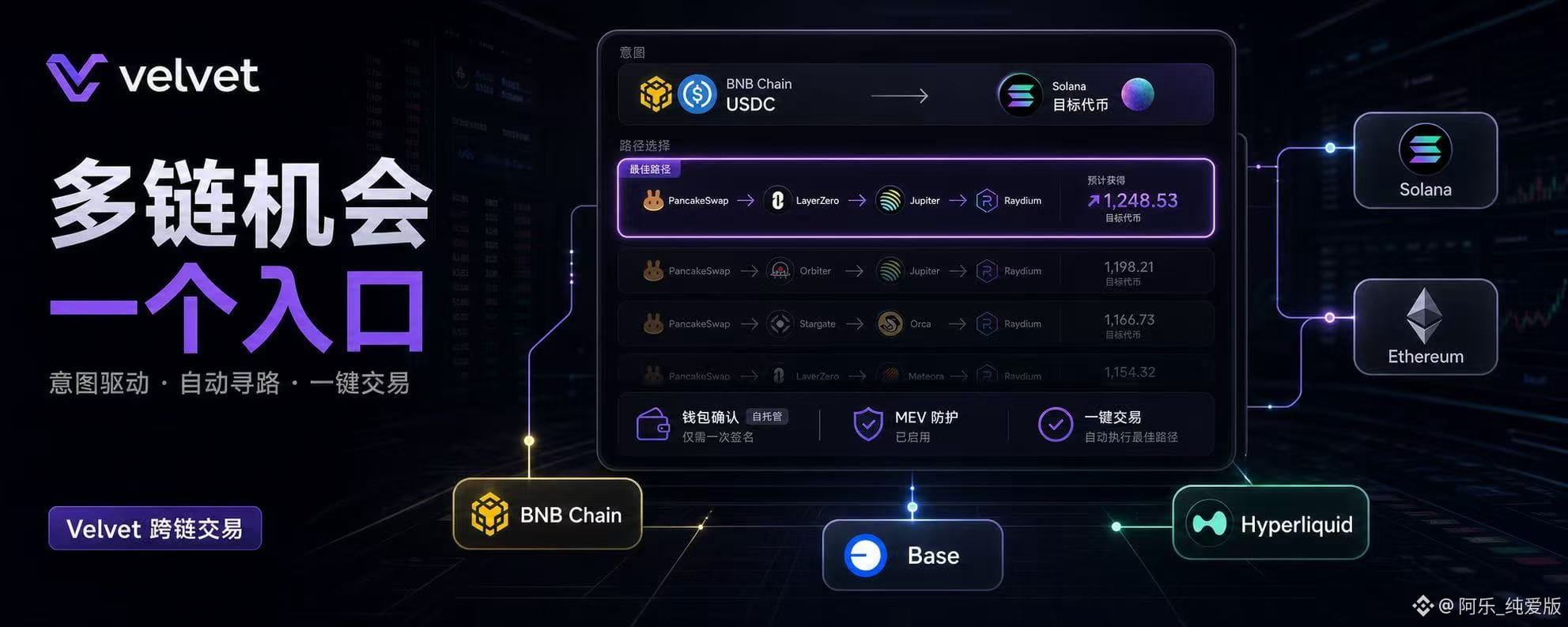
Brothers, I’ve been digging around for tools on chain recently and did some research on @Velvet. I found that this SocialFAI trading platform really does have something to offer in terms of the cross-chain experience.
Brothers who often play on-chain should have experienced this: Meme trading on Solana is booming, or a new project launches on Base—you want to chase it with idle funds from BNB Chain. But by the time you’ve been switching back and forth between cross-chain bridges, signing approvals, and waiting for node confirmations, the market move is already over.
Not to mention multi-chain gas costs and hidden slippage—every cross-chain feels like you’re losing a layer of skin.
Velvet’s approach to solving this is pretty straightforward: it uses intent-driven execution. In simple terms, you don’t need to worry about which specific bridge the transaction uses under the hood, or where to find liquidity from a DEX. On the same interface, you just select the token you want, and the backend automatically optimizes and matches the best route—turning what used to be a tedious multi-step process into a one-click operation.
It currently integrates seamlessly with BNB Chain, Solana, Base, Ethereum, Hyperliquid, and even Robinhood Chain. In practice, there are a few scenarios where it’s especially smooth:
Snatch hot opportunities instantly: Use idle funds on a single chain to deploy into the breakout target on the destination chain in one cross-chain step—no wasting time.
Cross-chain hedging: When your positions face major volatility, it smoothly connects to Hyperliquid to open a short position right away, instantly hedging risk between spot and derivatives.
Capture cross-chain spreads: Rapidly reallocate funds with lower interaction friction to grab the yield differentials across DeFi protocols on different chains.
What makes me feel most at ease is that it’s a fully non-custodial architecture—your private keys always stay in your own hands. So you don’t have to worry about platform risks like you would with CEX deposits/withdrawals. At the same time, the underlying transaction routing includes MEV protection, helping you avoid sandwich attacks during cross-chain transfers.
On-chain competition is all about speed and capital efficiency. Less operational friction means you keep more profit. If you’re interested, brothers can go try this terminal.
317
·
--
Renaiss fully opens physical card extraction, and on-chain collectibles finally reach the delivery stage
A physical card can be opened in a package, traded, and transferred on-chain. But as long as it still can’t be shipped from the vault to the holder, this asset pathway isn’t fully closed.
@renaissprotocol officially opens Full Redemption to all players
Previously, the SBT threshold and phased permissions have been removed. Players who currently hold eligible cards in their accounts can now directly apply for physical extraction through the Redemption entry.
From here, a card can already complete its full journey within Renaiss:
Enter the vault → Create an on-chain record → Open the pack or trade on the marketplace → Buyback and transfer → Extract the physical card
After players抽出 (draw) a card through Pack Access, they can view, in their account, the rating agency, certification number, condition grade, the vault it belongs to, the current holder, and the Token ID on BNB Chain.
This information points to the specific physical card in the vault, and also allows players to verify exactly which card they hold, who is storing it, and which address owns it on-chain.
While the card remains in the vault, it can be listed for sale on the Marketplace, purchased directly, or have an offer submitted. Each successful transaction only requires updating on-chain ownership—there’s no need to repeatedly transport the physical item alongside trades, saving time on re-verification, insurance, and waiting for logistics.
Some packs also offer instant buyback. If you draw a card you don’t want to keep, you can exit by referring to the page’s quoted price. If you want to continue holding, you can wait for the market’s quoted price, transfer ownership, or apply for physical extraction. The buyback ratio and eligible cards are subject to what is actually displayed on the page.
With Full Redemption opened, holders gain one truly important right: deciding whether the card should remain circulating in the vault, or ending its on-chain trading status and having the physical card shipped to their own hands.
The Marketplace handles trading, Buyback provides a quick exit route, the vault is responsible for custody, the on-chain record logs ownership, and Redemption completes final delivery. With these stages connected, Renaiss’s physical collectible RWA forms a real, operational circulation pathway.
Next to watch are the application review process, cross-border shipping fees, packaging standards, logistics tracking, and updates to the card’s on-chain status after it leaves the vault.
Renaiss fully opens physical card extraction, and on-chain collectibles finally reach the delivery stage
A physical card can be opened in a package, traded, and transferred on-chain. But as long as it still can’t be shipped from the vault to the holder, this asset pathway isn’t fully closed.
@Renaiss Collectibles officially opens Full Redemption to all players
Previously, the SBT threshold and phased permissions have been removed. Players who currently hold eligible cards in their accounts can now directly apply for physical extraction through the Redemption entry.
From here, a card can already complete its full journey within Renaiss:
Enter the vault → Create an on-chain record → Open the pack or trade on the marketplace → Buyback and transfer → Extract the physical card
After players抽出 (draw) a card through Pack Access, they can view, in their account, the rating agency, certification number, condition grade, the vault it belongs to, the current holder, and the Token ID on BNB Chain.
This information points to the specific physical card in the vault, and also allows players to verify exactly which card they hold, who is storing it, and which address owns it on-chain.
While the card remains in the vault, it can be listed for sale on the Marketplace, purchased directly, or have an offer submitted. Each successful transaction only requires updating on-chain ownership—there’s no need to repeatedly transport the physical item alongside trades, saving time on re-verification, insurance, and waiting for logistics.
Some packs also offer instant buyback. If you draw a card you don’t want to keep, you can exit by referring to the page’s quoted price. If you want to continue holding, you can wait for the market’s quoted price, transfer ownership, or apply for physical extraction. The buyback ratio and eligible cards are subject to what is actually displayed on the page.
With Full Redemption opened, holders gain one truly important right: deciding whether the card should remain circulating in the vault, or ending its on-chain trading status and having the physical card shipped to their own hands.
The Marketplace handles trading, Buyback provides a quick exit route, the vault is responsible for custody, the on-chain record logs ownership, and Redemption completes final delivery. With these stages connected, Renaiss’s physical collectible RWA forms a real, operational circulation pathway.
Next to watch are the application review process, cross-border shipping fees, packaging standards, logistics tracking, and updates to the card’s on-chain status after it leaves the vault.

115
·
--
Article
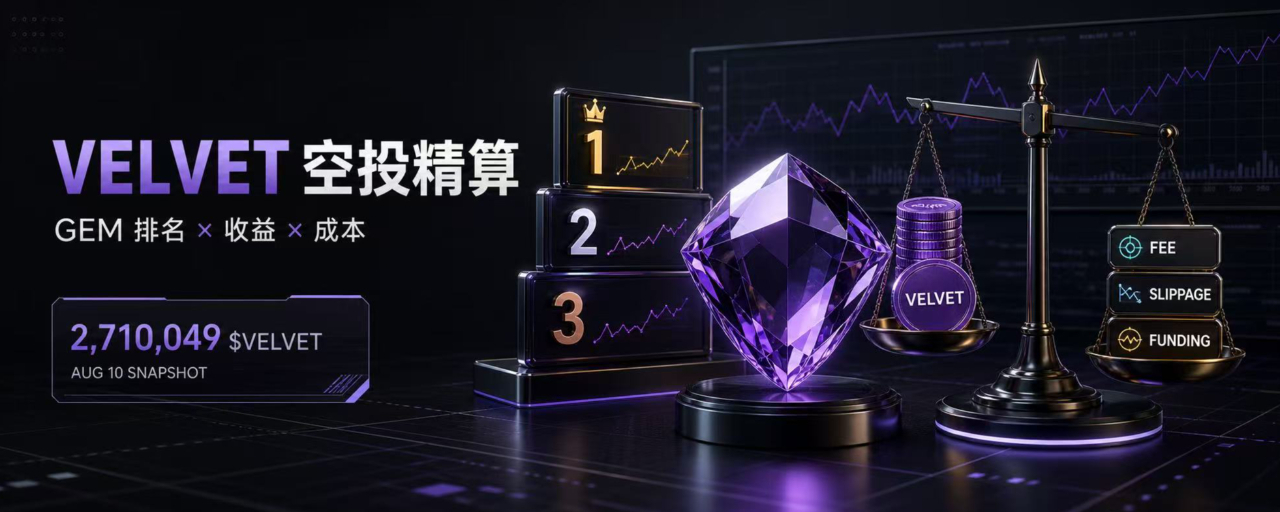
Velvet Airdrop Rules Deconstructed: Refuse Blindly Farming Volume—Teach You to Calculate Gem Earnings and Wear-and-Tear Costs Velvet has officially released the details for this round of Epoch airdrop distribution. The total pool is 2,710,049 $VELVET tokens (valued at approximately $1.1 million USD using a $0.40 token price), and the Gem ranking leaderboard snapshot will be taken on August 10.
This article is a “actuarial guide” specifically for Velvet’s airdrop this round.
I will break down the three dimensions: the Gem tiered allocation weight, the multiplier Buff stacking mechanism, and independent fee cashback, and then provide the most cost-effective practical strategy tailored to players with different funding sizes and capabilities.
The core purpose is only one: help you calculate the fees, slippage, and expected token returns—so you don’t blindly farm for volume and end up doing wasted work.
Velvet Airdrop Rules Deconstructed: Refuse Blindly Farming Volume—Teach You to Calculate Gem Earnings and Wear-and-Tear Costs
Velvet has officially released the details for this round of Epoch airdrop distribution. The total pool is 2,710,049 $VELVET tokens (valued at approximately $1.1 million USD using a $0.40 token price), and the Gem ranking leaderboard snapshot will be taken on August 10.
This article is a “actuarial guide” specifically for Velvet’s airdrop this round.
I will break down the three dimensions: the Gem tiered allocation weight, the multiplier Buff stacking mechanism, and independent fee cashback, and then provide the most cost-effective practical strategy tailored to players with different funding sizes and capabilities.
The core purpose is only one: help you calculate the fees, slippage, and expected token returns—so you don’t blindly farm for volume and end up doing wasted work.
154
·
--
Article
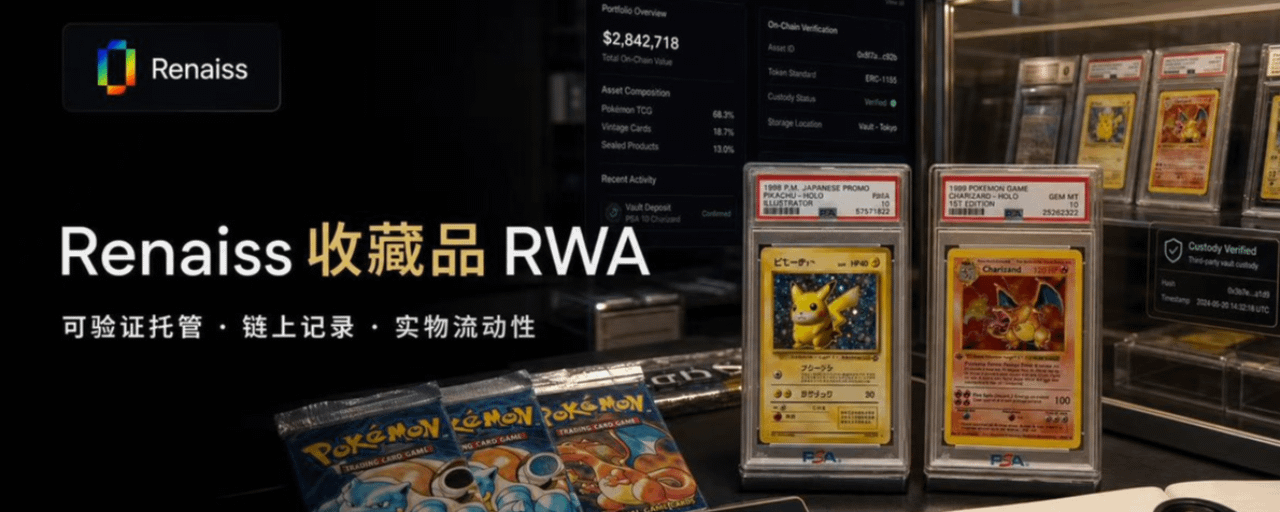
Deconstructing the Renaiss Index: An On-Chain Pricing Oracle for Tokenized Collectibles RWAIn the tokenized collectible asset space, top TCG franchises such as Pokémon and One Piece have massive global markets.
However, to securitize these discrete, non-standard physical assets with high price volatility, the key challenge is how to achieve fair, manipulation-resistant and real-time fair pricing on a decentralized network.
Lack of reliable price anchors means that when on-chain RWA listings occur, there may be prices but no market activity; without reliable anchors, buyback and liquidation as well as market making are also out of the question.
To address this challenge, @renaissprotocol has built a financial oracle and data engine specifically designed for physical collectibles—Renaiss Index.
I. Core Pricing Logic of the Renaiss Index: FMV and CMV systems
Deconstructing the Renaiss Index: An On-Chain Pricing Oracle for Tokenized Collectibles RWA
In the tokenized collectible asset space, top TCG franchises such as Pokémon and One Piece have massive global markets.
However, to securitize these discrete, non-standard physical assets with high price volatility, the key challenge is how to achieve fair, manipulation-resistant and real-time fair pricing on a decentralized network.
Lack of reliable price anchors means that when on-chain RWA listings occur, there may be prices but no market activity; without reliable anchors, buyback and liquidation as well as market making are also out of the question.
To address this challenge, @Renaiss Collectibles has built a financial oracle and data engine specifically designed for physical collectibles—Renaiss Index.
I. Core Pricing Logic of the Renaiss Index: FMV and CMV systems
1
123
·
--
Verifying my Binance Square account for YZi Labs Amplify via EchoHunt: EH-TE5MJS
Verifying my Binance Square account for YZi Labs Amplify via EchoHunt: EH-TE5MJS
93
·
--
Article
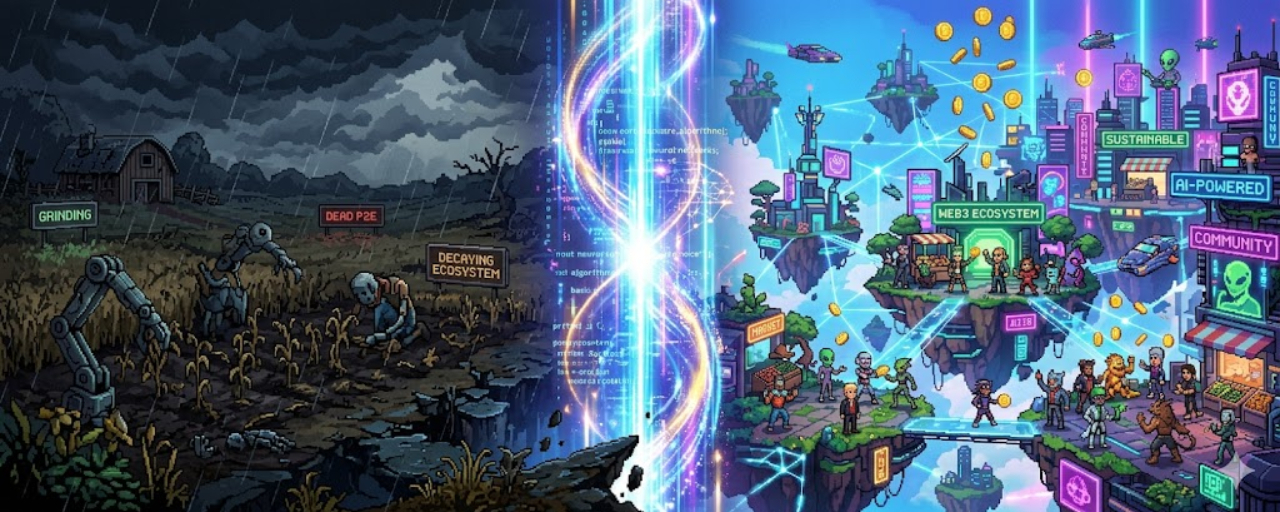
The Wild Era of Chain Games is Over: If You Don't Understand the Stacked Engine, It's Hard to Make Real Money in Web3The other day during the weekend, I had dinner with a few old group friends, and everyone talked about the chain games of the past few years, basically all complaining bitterly.
Everyone bought a bunch of random tokens, and in the end, they basically turned into worthless paper, sucked dry by those gold farming studios that used scripts.
I used to be a typical losing retail investor, so when my friends first urged me to play @pixels I was actually extremely resistant, always feeling that this was just another scheme to fleece investors.
What annoyed me the most was that when I first started playing, I had worked hard to accumulate some resources in the farm to withdraw, but the system prompted me that due to my insufficient credit score, nearly half of the fees would be deducted.
The Wild Era of Chain Games is Over: If You Don't Understand the Stacked Engine, It's Hard to Make Real Money in Web3
The other day during the weekend, I had dinner with a few old group friends, and everyone talked about the chain games of the past few years, basically all complaining bitterly.
Everyone bought a bunch of random tokens, and in the end, they basically turned into worthless paper, sucked dry by those gold farming studios that used scripts.
I used to be a typical losing retail investor, so when my friends first urged me to play @Pixels I was actually extremely resistant, always feeling that this was just another scheme to fleece investors.
What annoyed me the most was that when I first started playing, I had worked hard to accumulate some resources in the farm to withdraw, but the system prompted me that due to my insufficient credit score, nearly half of the fees would be deducted.
2
1
209
·
--
I have been studying the data of the blockchain gaming sector in detail recently.
@pixels 's performance is truly outstanding. There are over a million real players farming and exploring in the game every day. This level of activity is top-notch in the entire industry.
Many players are concerned that the play-to-earn model cannot operate sustainably. The development team fully understands this pain point. After years of practical testing, they launched the Stacked engine. You can think of it as a foundational system equipped with artificial intelligence.
The best part of this system is its accuracy. The AI analyzes our gaming behavior in real-time. The system knows which core players might churn. Then it will issue exclusive rewards to these players at the most appropriate moment. The system no longer blindly distributes money. It gives the right rewards to the users who contribute the most to the ecosystem.
Traditional gaming companies spend billions of dollars each year on user acquisition advertising. The Stacked engine directly reallocates this massive budget to us real players. This cash-back model has already brought in over twenty-five million dollars in real revenue for the project team.
In this huge business closed-loop, $PIXEL plays an increasingly central role. It is undergoing a significant leap. As the system integrates more external games like Chubkins, this token has upgraded from a consumable in a single game to a universal reward currency across games.
In the future, more games will join this network. The actual demand scenarios for the token are continuously expanding.
The team is truly building infrastructure with real money.
#pixel $PIXEL
I have been studying the data of the blockchain gaming sector in detail recently.
@Pixels 's performance is truly outstanding. There are over a million real players farming and exploring in the game every day. This level of activity is top-notch in the entire industry.
Many players are concerned that the play-to-earn model cannot operate sustainably. The development team fully understands this pain point. After years of practical testing, they launched the Stacked engine. You can think of it as a foundational system equipped with artificial intelligence.
The best part of this system is its accuracy. The AI analyzes our gaming behavior in real-time. The system knows which core players might churn. Then it will issue exclusive rewards to these players at the most appropriate moment. The system no longer blindly distributes money. It gives the right rewards to the users who contribute the most to the ecosystem.
Traditional gaming companies spend billions of dollars each year on user acquisition advertising. The Stacked engine directly reallocates this massive budget to us real players. This cash-back model has already brought in over twenty-five million dollars in real revenue for the project team.
In this huge business closed-loop, $PIXEL plays an increasingly central role. It is undergoing a significant leap. As the system integrates more external games like Chubkins, this token has upgraded from a consumable in a single game to a universal reward currency across games.
In the future, more games will join this network. The actual demand scenarios for the token are continuously expanding.
The team is truly building infrastructure with real money.
#pixel $PIXEL
2
1
291
·
--
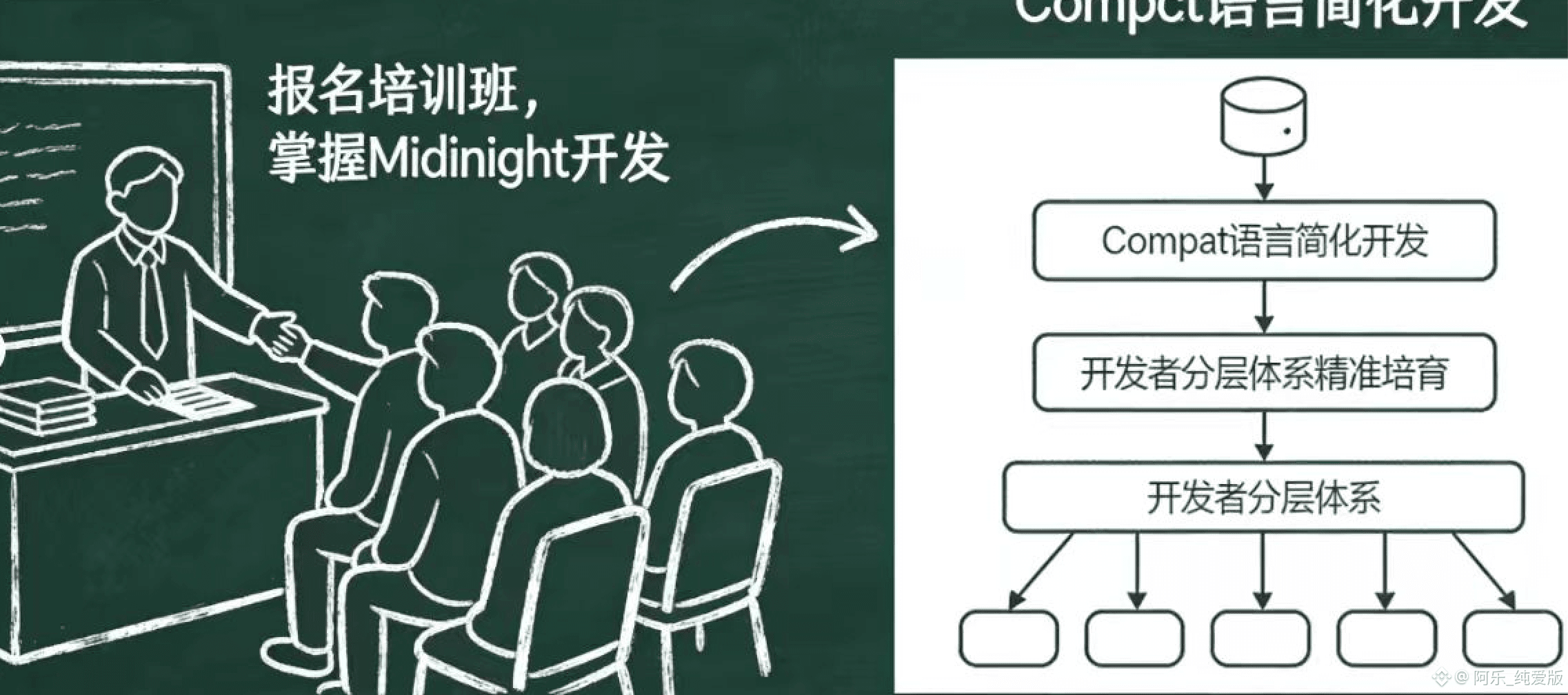
A couple of days ago, I passed by the community training class and saw the teacher at the door trying to recruit students, while also stopping a few passing children to say a few words. In the past, students would seek out teachers, but now it's the opposite; those willing to teach a bit more are the ones who have the opportunity to retain people.
The developer ecosystem of the privacy chain is actually in this state as well. The barriers are high, the tools are immature, and most people prefer to stay in familiar environments, unwilling to spend time exploring an uncertain direction. It's not that they don't want to do it, but the cost is too high.
@MidnightNetwork has a straightforward approach regarding this matter; instead of waiting for developers to figure it out themselves, they actively lower the barriers. The Compact language uses a TypeScript-like approach, allowing developers who originally wrote for Web2 and front-end to directly get started without first having to digest a pile of underlying cryptography. The tools and documentation are also designed to be as user-friendly as possible, with the goal of enabling people to get up and running quickly, rather than getting stuck at the first step.
At the same time, they are tiering the developers. The Aliit Fellowship brings in a group of experienced individuals to write templates, create tutorials, and mentor newcomers. Additionally, by clearly providing desired application directions, they reduce hesitation in topic selection.
This logic isn't complicated; it's about proactively attracting people, teaching them, and providing direction. The key isn't in the design, but in the details. Whether the tools are user-friendly, whether error messages are clear, and whether the community has people who respond in a timely manner—these factors ultimately determine whether developers will stick around.
The real validation isn't in the white paper; it has to be seen after the mainnet goes live, whether anyone can use Compact to create usable applications. Only when it can run, can the ecosystem truly be considered to have begun.
#night $NIGHT
1
181
·
--
Article
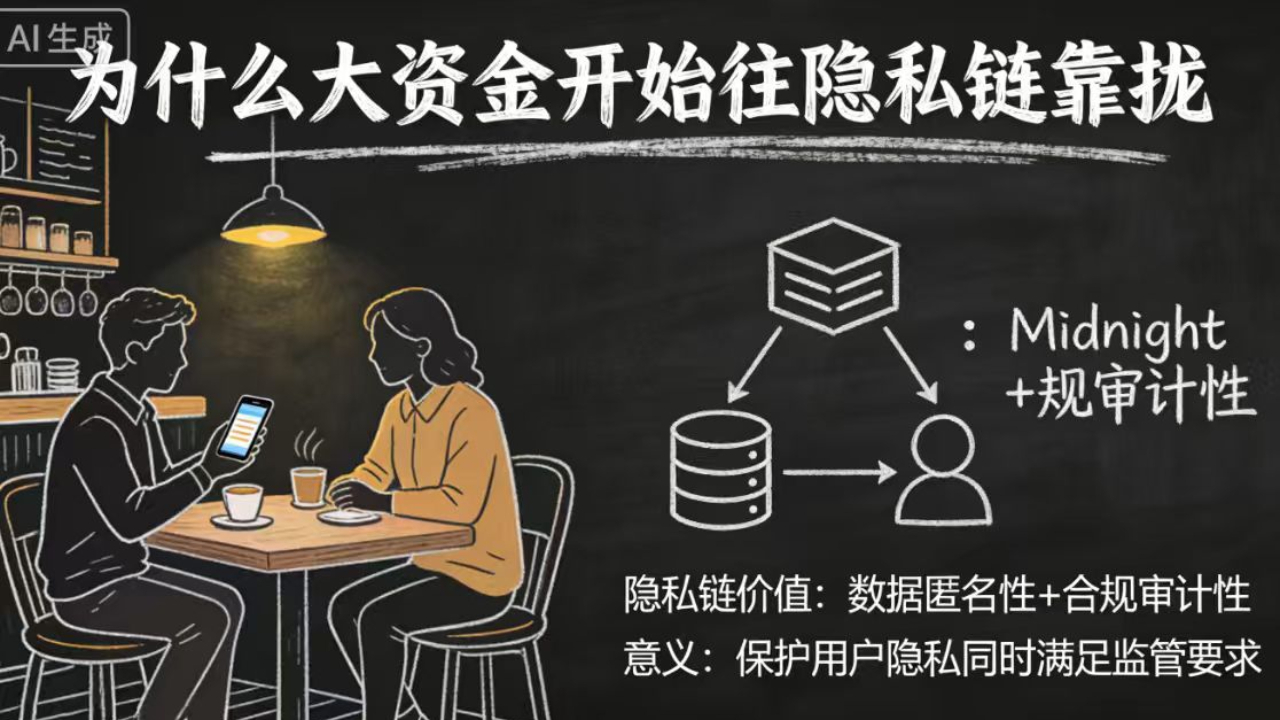
Why Large Funds Are Starting to Lean Towards Privacy ChainsA couple of days ago at the coffee shop, two people next to me were discussing investments, one was talking about his recent position, and the other person directly took out his phone to check his on-chain address, and within a few minutes, he had a pretty good view of his holding structure. At that moment, you suddenly realize one thing: the transparency of the blockchain is exciting for small funds but stressful for large funds.
Many people think transparency equals fairness, but for those who really want to make large-scale allocations, excessive transparency can actually bring risks. Your position-building rhythm, position changes, and even strategic direction can be captured by competitors. In this environment, the larger the funds, the less willing they are to act rashly.
Why Large Funds Are Starting to Lean Towards Privacy Chains
A couple of days ago at the coffee shop, two people next to me were discussing investments, one was talking about his recent position, and the other person directly took out his phone to check his on-chain address, and within a few minutes, he had a pretty good view of his holding structure. At that moment, you suddenly realize one thing: the transparency of the blockchain is exciting for small funds but stressful for large funds.
Many people think transparency equals fairness, but for those who really want to make large-scale allocations, excessive transparency can actually bring risks. Your position-building rhythm, position changes, and even strategic direction can be captured by competitors. In this environment, the larger the funds, the less willing they are to act rashly.
Many people think transparency equals fairness, but for those who really want to make large-scale allocations, excessive transparency can actually bring risks. Your position-building rhythm, position changes, and even strategic direction can be captured by competitors. In this environment, the larger the funds, the less willing they are to act rashly.
141
·
--
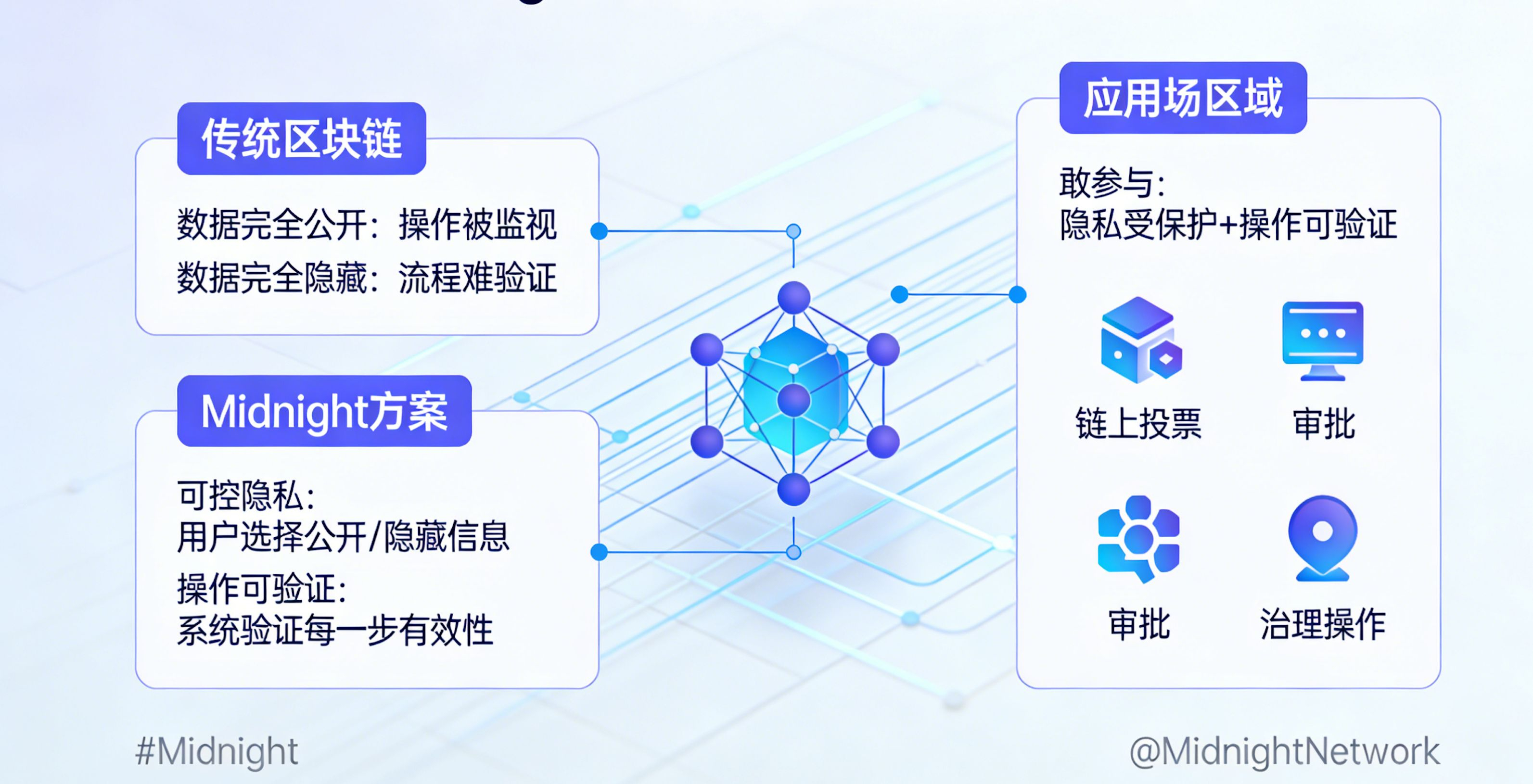
In traditional blockchains, having data fully public or fully hidden can make users hesitate. Transparency makes people fear that actions are being monitored, while complete privacy makes processes difficult to verify. Midnight provides a new way: controllable privacy. Users can choose which information to make public and which to keep private, allowing actions to be verifiable without exposing sensitive content.
This design directly enhances user trust. On-chain voting, approvals, or other governance actions are no longer just 'visible', but participants are willing to engage. The system verifies whether each action is valid, but does not leak unnecessary data, meaning participants can operate with peace of mind while the process remains transparent and trustworthy.
For community governance or enterprise on-chain operations, this experience is very important. Users know their data is protected, and each action can be verified by the system, preventing malicious actions and ensuring credible results. Participants no longer need to worry about privacy breaches or the process being manipulated.
The value of @MidnightNetwork lies not only in the technical aspect but also in how it improves user experience and trust mechanisms. With controllable privacy, on-chain operations are no longer 'visible but untouchable', but rather a secure, trustworthy, and genuinely participatory experience.
#night $NIGHT
104
·
--
Article
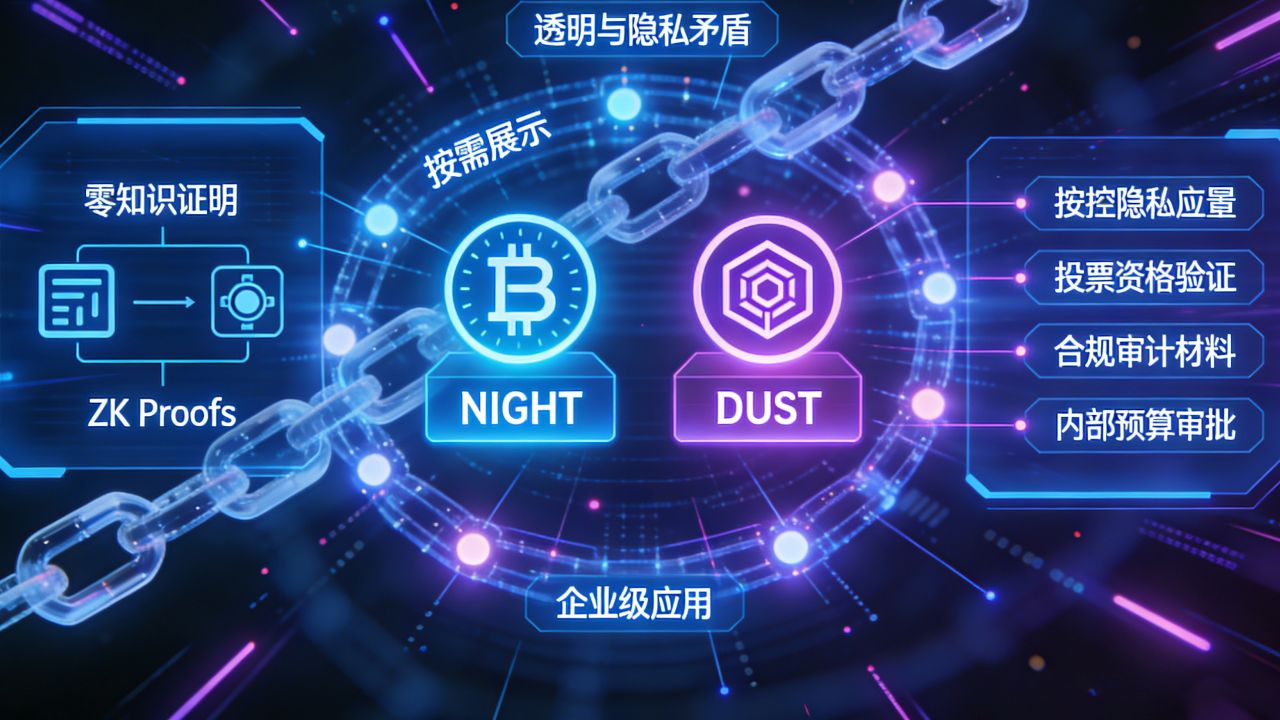
Midnight: Making On-Chain Privacy a Controllable Participation RightToday, after an online meeting with a client, I was preparing to write an internal budget approval into the on-chain system. Just as I paused in front of the operating interface, an intuitive question popped into my mind: why do some data must be exposed to the entire chain when we are doing the approval process?
The seemingly open and transparent benefits, on the contrary, make people hesitant to boldly use on-chain tools. Transparency is good, but in the real-world business processes, many pieces of information cannot be casually disclosed; complete concealment raises doubts about whether the processes are real and trustworthy.
@MidnightNetwork 's appearance is precisely a response to the contradiction between 'transparency and privacy'. It does not hide everything, nor does it indiscriminately make all data public, but allows you to decide which information to display and which to protect. This controllable privacy is more useful in real application scenarios than simply being open or closed.
Midnight: Making On-Chain Privacy a Controllable Participation Right
Today, after an online meeting with a client, I was preparing to write an internal budget approval into the on-chain system. Just as I paused in front of the operating interface, an intuitive question popped into my mind: why do some data must be exposed to the entire chain when we are doing the approval process?
The seemingly open and transparent benefits, on the contrary, make people hesitant to boldly use on-chain tools. Transparency is good, but in the real-world business processes, many pieces of information cannot be casually disclosed; complete concealment raises doubts about whether the processes are real and trustworthy.
@MidnightNetwork 's appearance is precisely a response to the contradiction between 'transparency and privacy'. It does not hide everything, nor does it indiscriminately make all data public, but allows you to decide which information to display and which to protect. This controllable privacy is more useful in real application scenarios than simply being open or closed.
2
1
69
·
--
A couple of days ago, while waiting in line at the bank to handle some business, the person in front of me only showed the teller one page of confirmation information, keeping the other materials very tight. The process was completed as usual, but nothing that shouldn't be exposed was shown more than a glance.
What is currently lacking on the chain is this kind of boundary. Many people think that by changing the environment or the tools, they can hide themselves, but as long as funds and addresses flow on the chain, behaviors can still be pieced together. Especially now, with various analytical tools becoming stronger, once an address is targeted, past operations can basically be restored.
What @MidnightNetwork is doing is to break apart this one-size-fits-all transparency. It is not about complete openness or complete concealment, but about allowing users to control the range of what is displayed. Through zero-knowledge proofs, the system only verifies that the result holds without needing the complete data.
This approach is closer to real-world needs. Places that need verification can provide proof without having to hand over all underlying information. For ordinary users, it reduces exposure; for scenarios that require compliance, usable interfaces are also available.
In this structure, NIGHT bears not only the transaction fees but also acts as the resource supporting the entire verification process. Each instance of privacy computation and verification incurs costs, and tokens create actual demand here rather than relying solely on market sentiment.
Privacy is something that usually does not reveal its value; once it is missing, it becomes very obvious. Funds being tracked, strategies being dismantled, many operational spaces will be compressed. As there are more and more participants on the chain, this problem will only become more apparent.
Compared to some projects that rely solely on narrative, this kind of design that starts from the underlying structure may progress slowly but is more likely to endure. When more people begin to care about privacy, this capability will truly manifest itself.
#night $NIGHT

2
1
88
·
--

Article
Transparency is not the answer: Midnight is addressing the gap in on-chain privacyA few days ago, while waiting in line at a coffee shop, someone intentionally pulled their phone in closer while making a payment, only showing the clerk the successful payment page, while others nearby could see nothing. It’s not about deliberately hiding from anyone; it’s just unnecessary to expose all information.
The on-chain world is currently lacking this sense of measure. Transferring money and interacting, the address, balance, and path can all be restored by tracking tools. Many people are accustomed to this transparency, but once real funds and strategies are involved, the problems become very tangible. Your actions are not only known to you; many people in the market can see them.
Transparency is not the answer: Midnight is addressing the gap in on-chain privacy
A few days ago, while waiting in line at a coffee shop, someone intentionally pulled their phone in closer while making a payment, only showing the clerk the successful payment page, while others nearby could see nothing. It’s not about deliberately hiding from anyone; it’s just unnecessary to expose all information.
The on-chain world is currently lacking this sense of measure. Transferring money and interacting, the address, balance, and path can all be restored by tracking tools. Many people are accustomed to this transparency, but once real funds and strategies are involved, the problems become very tangible. Your actions are not only known to you; many people in the market can see them.
The on-chain world is currently lacking this sense of measure. Transferring money and interacting, the address, balance, and path can all be restored by tracking tools. Many people are accustomed to this transparency, but once real funds and strategies are involved, the problems become very tangible. Your actions are not only known to you; many people in the market can see them.
2
3
281
Log in to explore more content
Join global crypto users on Binance Square
⚡️ Get latest and useful information about crypto.
💬 Trusted by the world’s largest crypto exchange.
👍 Discover real insights from verified creators.
Email / Phone number