
饭桶哟
659 Posts

饭桶哟
沉舟侧畔千帆过,病树前头万木春
352 Following
11.1K+ Followers
8.5K+ Liked
Posts
All
Quotes
Live
PINNED
Alpha Daily Report
October 5 (CYPR) Financing 4.3 million Claim airdrop at 17:00
Expected to be small profit, if the pre-market price is not high, it is not recommended to claim, suggest saving points
October 6 (LYN) Expected to be above medium profit!
Recently, there have been quite a few new image verification codes, you can go click to claim and see what the verification images look like, familiarize yourself in advance, because the same few images come and go.
Familiarity with verification code method: After clicking to claim, do not select the correct image, refresh to see more verification images.
October 5 (CYPR) Financing 4.3 million Claim airdrop at 17:00
Expected to be small profit, if the pre-market price is not high, it is not recommended to claim, suggest saving points
October 6 (LYN) Expected to be above medium profit!
Recently, there have been quite a few new image verification codes, you can go click to claim and see what the verification images look like, familiarize yourself in advance, because the same few images come and go.
Familiarity with verification code method: After clicking to claim, do not select the correct image, refresh to see more verification images.

After doing interactions for so long, I don’t buy the so-called ecosystem “red packet” narrative drawn by the official for new projects. Instead, I’ve gotten into the habit of closely watching the real proportions between FDV and initial circulating supply—that’s the yardstick for whether large players can safely exit. Recently, @grvt_io has been flooding the timeline with reminders due to frequent TGE delays, and many people are still debating whether to go to the secondary market to buy the dip. Today, we’ll dig a bit deeper into some hidden risks in its token model—looking only at the data, with no hype and no condemnation.
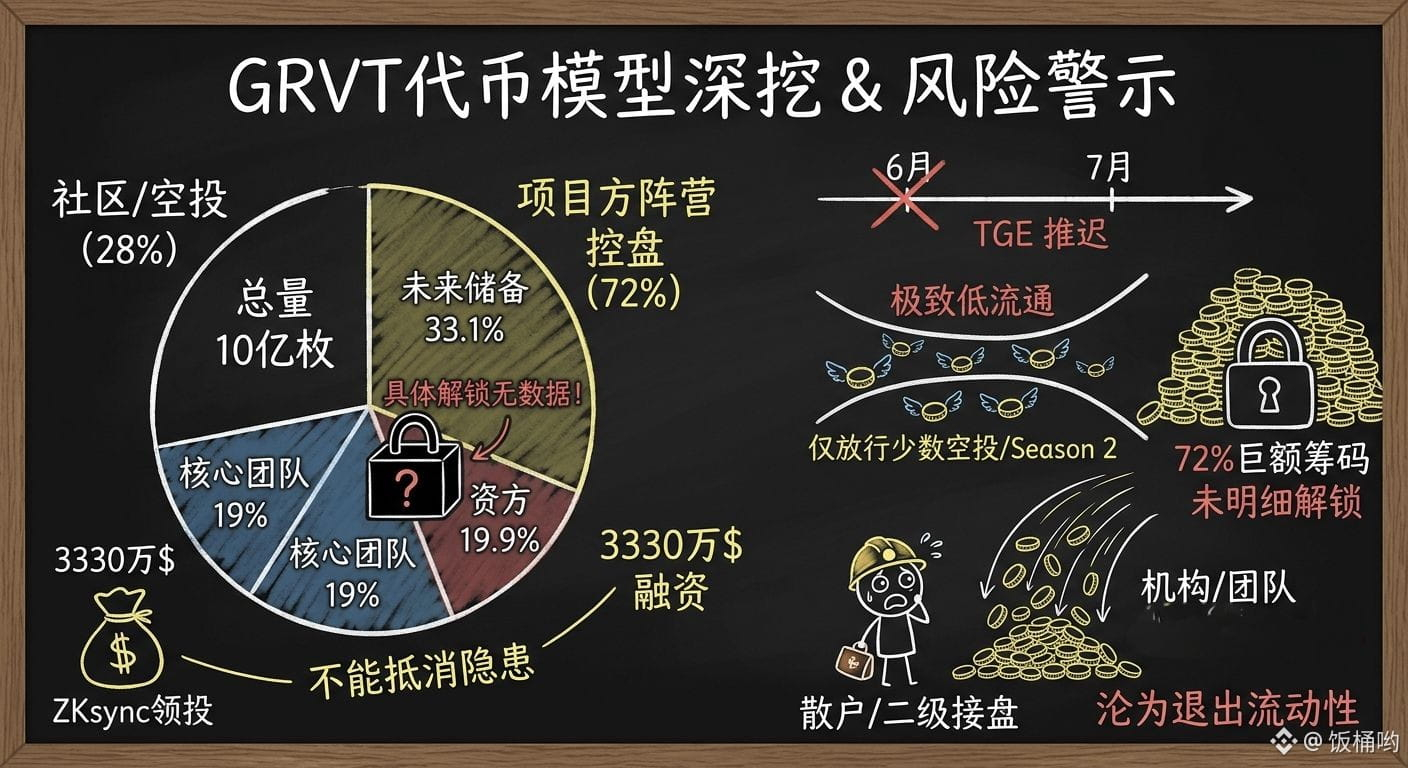
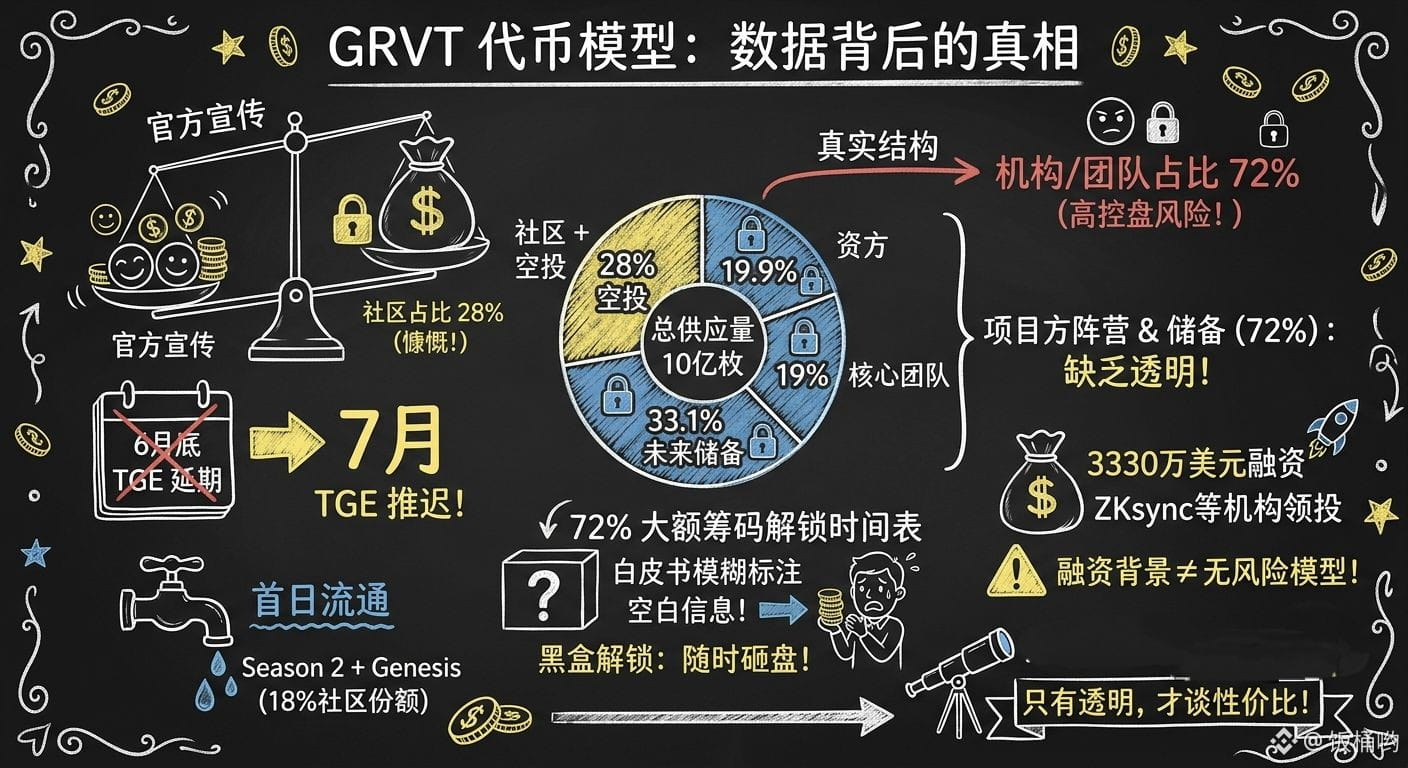
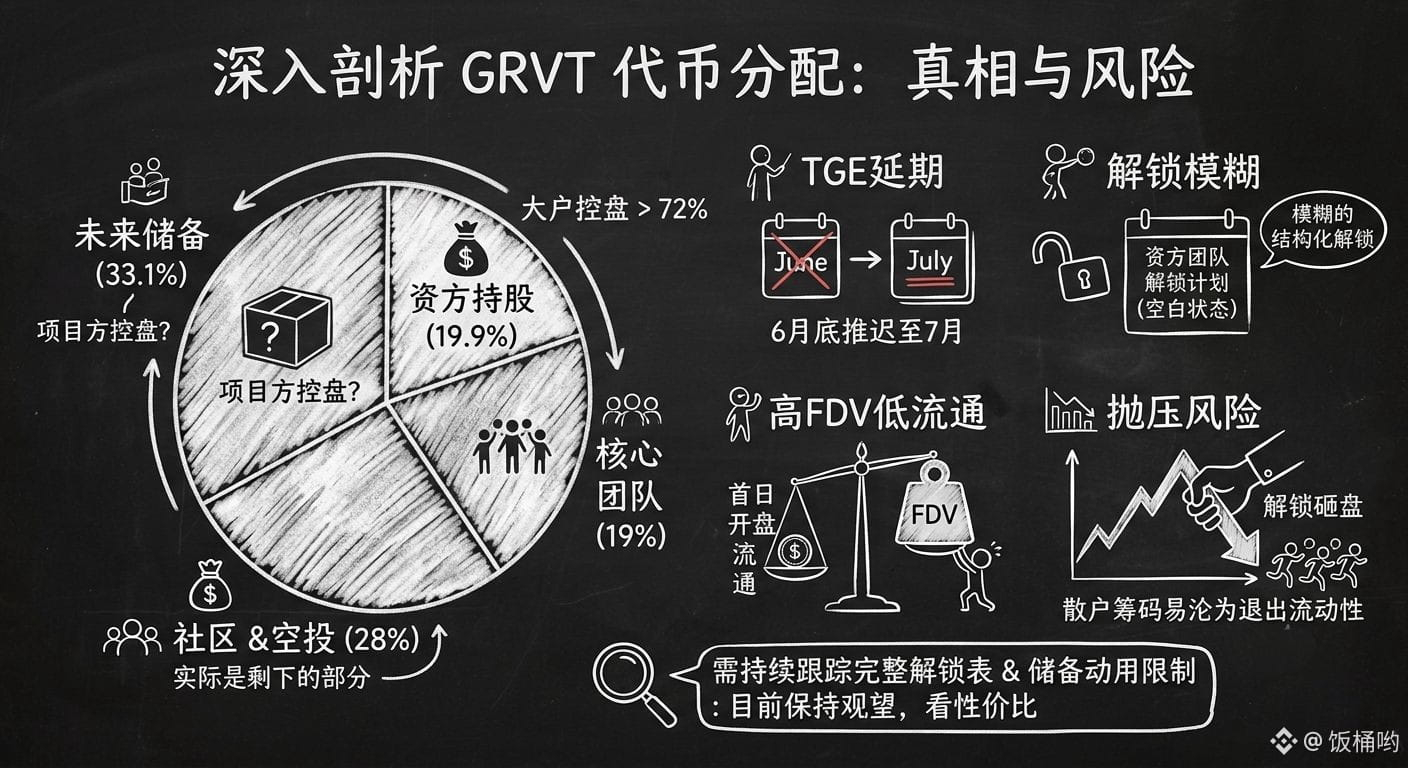
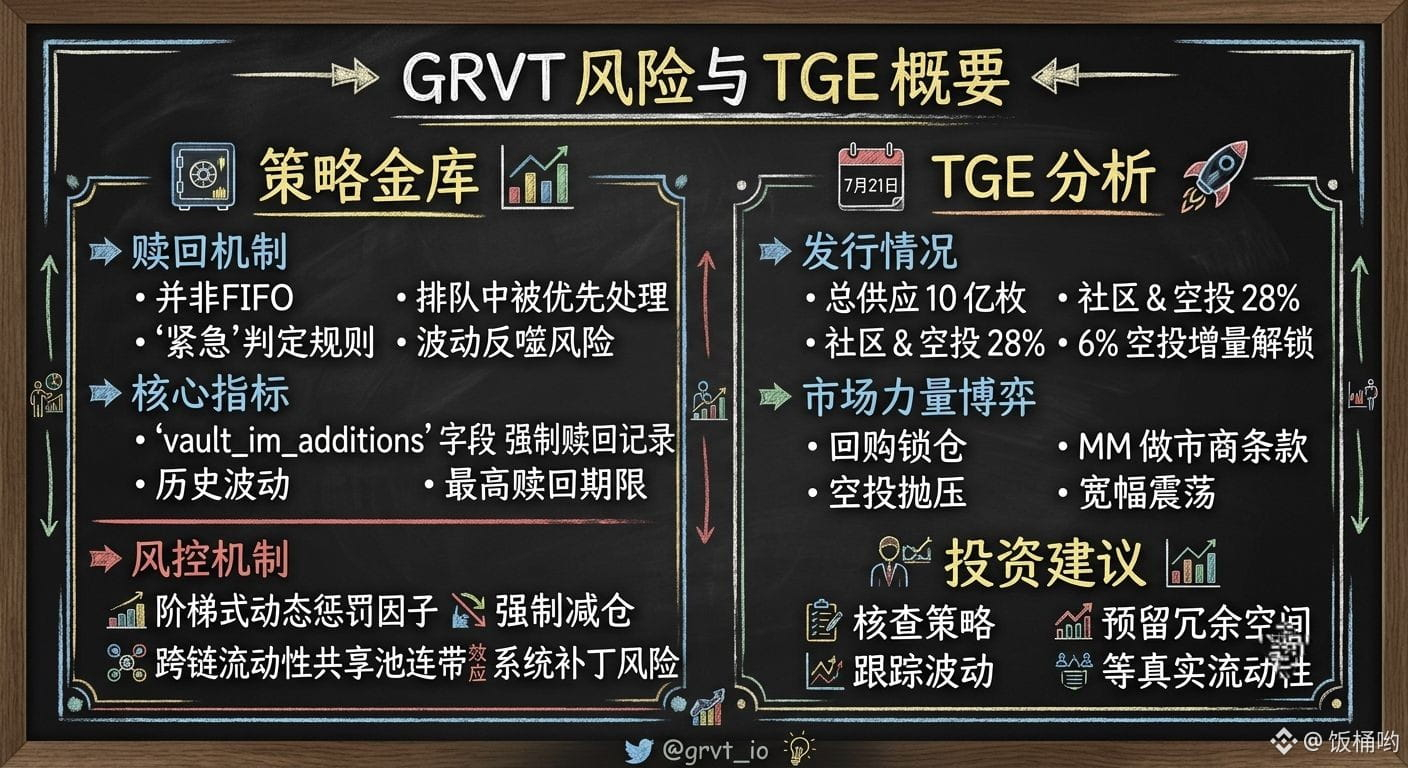
GRVT has a total supply of 1 billion tokens. Although it appears to leave 28% on paper for the community, if you study the “future reserves” that make up 33.1% of the total, you’ll find something fishy. This portion is called “ecosystem reserves,” but in reality it has no on-chain constraints whatsoever, nor any independent DAO voting mechanism. To put it plainly, that 33.1% together with the allocations for investors and the team means the project side controls more than 70% of the chips firmly. With such an absolute control rate, “community co-governance” is more like empty talk.
This time, the TGE was delayed from the end of June to July. The official explanation is that it’s to optimize the product. But from the perspective of token liquidity management, it looks more like an effort to support an opening strategy with extremely low circulating supply. On day one, only partial airdrops for Season 2 and early Genesis were allowed. This deliberate creation of supply-demand tightness can easily push up the token price right at launch and drive FDV higher. Yet, the 72% of unlocked tokens with no details disclosed so far remains a black box. The whitepaper contains no specific percentages describing how and when investors and the team release tokens in batches. It could become a Damocles’ sword hanging over retail users at any time.
Even with a massive $33.3 million funding backing it, and big-name institutions like ZKsync working hard to endorse it in marketing, none of that can hide the fact that it carries the typical “high FDV, low circulating VC token” DNA. Ordinary traders think they’re getting a generous 28% share. In reality, in the face of later unlock waves from institutions and the team—large in size and still undisclosed—this small amount of community allocation is all too likely to turn into exit liquidity for investors when liquidity is scarce.
Based on what we have so far, I think GRVT’s token economics still contain extremely high uncertainty. Until the project officially and completely discloses the specific unlock pipeline for investors and the team, as well as the usage constraints for that 33.1% future reserve, blindly participating in secondary-market speculation is definitely not a wise move. Stay on the sidelines. After all the core data is fully transparent, I’ll bring everyone back to evaluate the project’s value for money. Before the 21st launch, I’ll write a brief ##grvt .
GRVT has a total supply of 1 billion tokens. Although it appears to leave 28% on paper for the community, if you study the “future reserves” that make up 33.1% of the total, you’ll find something fishy. This portion is called “ecosystem reserves,” but in reality it has no on-chain constraints whatsoever, nor any independent DAO voting mechanism. To put it plainly, that 33.1% together with the allocations for investors and the team means the project side controls more than 70% of the chips firmly. With such an absolute control rate, “community co-governance” is more like empty talk.
This time, the TGE was delayed from the end of June to July. The official explanation is that it’s to optimize the product. But from the perspective of token liquidity management, it looks more like an effort to support an opening strategy with extremely low circulating supply. On day one, only partial airdrops for Season 2 and early Genesis were allowed. This deliberate creation of supply-demand tightness can easily push up the token price right at launch and drive FDV higher. Yet, the 72% of unlocked tokens with no details disclosed so far remains a black box. The whitepaper contains no specific percentages describing how and when investors and the team release tokens in batches. It could become a Damocles’ sword hanging over retail users at any time.
Even with a massive $33.3 million funding backing it, and big-name institutions like ZKsync working hard to endorse it in marketing, none of that can hide the fact that it carries the typical “high FDV, low circulating VC token” DNA. Ordinary traders think they’re getting a generous 28% share. In reality, in the face of later unlock waves from institutions and the team—large in size and still undisclosed—this small amount of community allocation is all too likely to turn into exit liquidity for investors when liquidity is scarce.
Based on what we have so far, I think GRVT’s token economics still contain extremely high uncertainty. Until the project officially and completely discloses the specific unlock pipeline for investors and the team, as well as the usage constraints for that 33.1% future reserve, blindly participating in secondary-market speculation is definitely not a wise move. Stay on the sidelines. After all the core data is fully transparent, I’ll bring everyone back to evaluate the project’s value for money. Before the 21st launch, I’ll write a brief ##grvt .
The longer I research @grvt_io ’s liquidation and margin mechanism, the more I feel that risk control is a concealed trap—everything looks calm on the surface, but every strike is aimed straight at you.
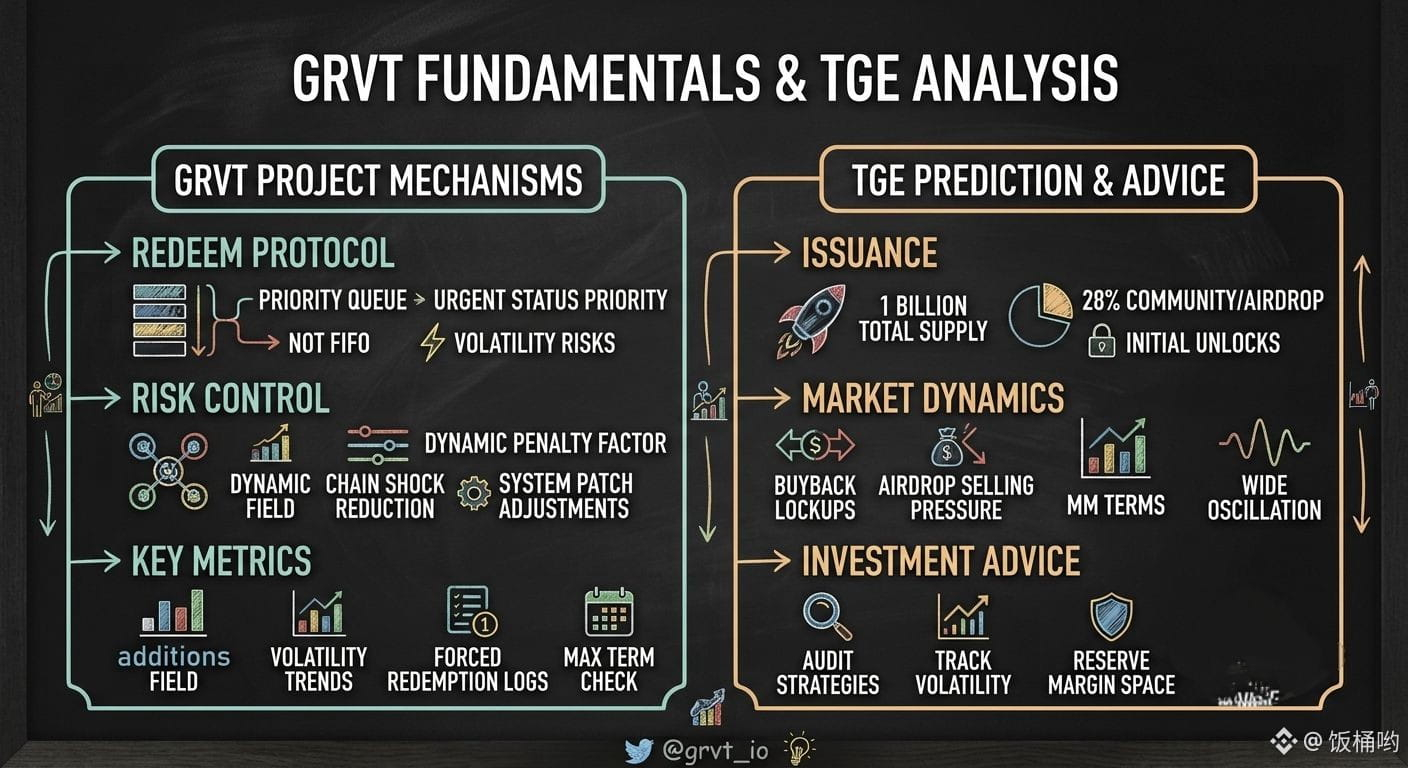
Everyone is watching the returns from high leverage, yet very few people bother to calculate the dynamic adjustment logic of the maintenance_margin_ratio. In GRVT’s hybrid trading architecture, once the market experiences extreme one-sided conditions, the system doesn’t simply liquidate in the crude “cut-and-dry” way traditional DEXes do. Instead, it introduces a stepped, dynamic penalty factor. Sounds human-friendly, right? The catch is that when the total network open interest hits a specific threshold, that penalty factor jumps exponentially. This means that even if your position is still safely away from the original liquidation line, an unexpected network-wide risk-control upgrade can force you to deleverage instantly. Even more chilling is the knock-on effect of its cross-chain liquidity shared pool. If the oracle price feed on some non-mainstream chain is delayed by even 0.5 seconds, GRVT’s primary liquidation engine will automatically raise the risk exposure coefficient of all related positions to hedge the risk. This seemingly tiny system patch—during extreme market conditions—is the final straw that crushes high-leverage users.
So my ironclad rule for my real trading is: never go all-in blindly, and you must keep your position health locked at a level with 30% redundancy space reserved above the system’s theoretical liquidation line. Any signal that triggers dynamic risk controls frequently is a red alarm that capital is about to pull out. Now let’s bring our focus back to GRVT’s TGE on July 21. With a total supply of 1 billion and 28% allocated to the community, this juicy portion was already watched and eyed by multiple power blocs. The market generally focuses on calculating the token’s initial circulating market value and the accounting-style return of FDV—but what truly determines life or death is the market makers’ loan terms and the release schedule. Rumor has it that some partner MMs hold very low-cost call options to hedge their exposure. That means that at the very instant trading opens and pumps higher, market makers naturally have a built-in incentive to dump—to lock in profits and release liquidity. Combined with the additional 6% airdrop allocation that causes retail to panic and rush in, the K-line during the first half hour before the opening is very likely to draw an extremely exaggerated “antenna” spike.
What I want to say is: in a game of open information, any so-called frontrun strategy is just feeding fuel to high-frequency bots. Once the storm of the TGE bloodbath passes, and you see clearly which addresses the chips truly settle in, then decide whether to build your position in batches—#grvt
Everyone is watching the returns from high leverage, yet very few people bother to calculate the dynamic adjustment logic of the maintenance_margin_ratio. In GRVT’s hybrid trading architecture, once the market experiences extreme one-sided conditions, the system doesn’t simply liquidate in the crude “cut-and-dry” way traditional DEXes do. Instead, it introduces a stepped, dynamic penalty factor. Sounds human-friendly, right? The catch is that when the total network open interest hits a specific threshold, that penalty factor jumps exponentially. This means that even if your position is still safely away from the original liquidation line, an unexpected network-wide risk-control upgrade can force you to deleverage instantly. Even more chilling is the knock-on effect of its cross-chain liquidity shared pool. If the oracle price feed on some non-mainstream chain is delayed by even 0.5 seconds, GRVT’s primary liquidation engine will automatically raise the risk exposure coefficient of all related positions to hedge the risk. This seemingly tiny system patch—during extreme market conditions—is the final straw that crushes high-leverage users.
So my ironclad rule for my real trading is: never go all-in blindly, and you must keep your position health locked at a level with 30% redundancy space reserved above the system’s theoretical liquidation line. Any signal that triggers dynamic risk controls frequently is a red alarm that capital is about to pull out. Now let’s bring our focus back to GRVT’s TGE on July 21. With a total supply of 1 billion and 28% allocated to the community, this juicy portion was already watched and eyed by multiple power blocs. The market generally focuses on calculating the token’s initial circulating market value and the accounting-style return of FDV—but what truly determines life or death is the market makers’ loan terms and the release schedule. Rumor has it that some partner MMs hold very low-cost call options to hedge their exposure. That means that at the very instant trading opens and pumps higher, market makers naturally have a built-in incentive to dump—to lock in profits and release liquidity. Combined with the additional 6% airdrop allocation that causes retail to panic and rush in, the K-line during the first half hour before the opening is very likely to draw an extremely exaggerated “antenna” spike.
What I want to say is: in a game of open information, any so-called frontrun strategy is just feeding fuel to high-frequency bots. Once the storm of the TGE bloodbath passes, and you see clearly which addresses the chips truly settle in, then decide whether to build your position in batches—#grvt
Verified
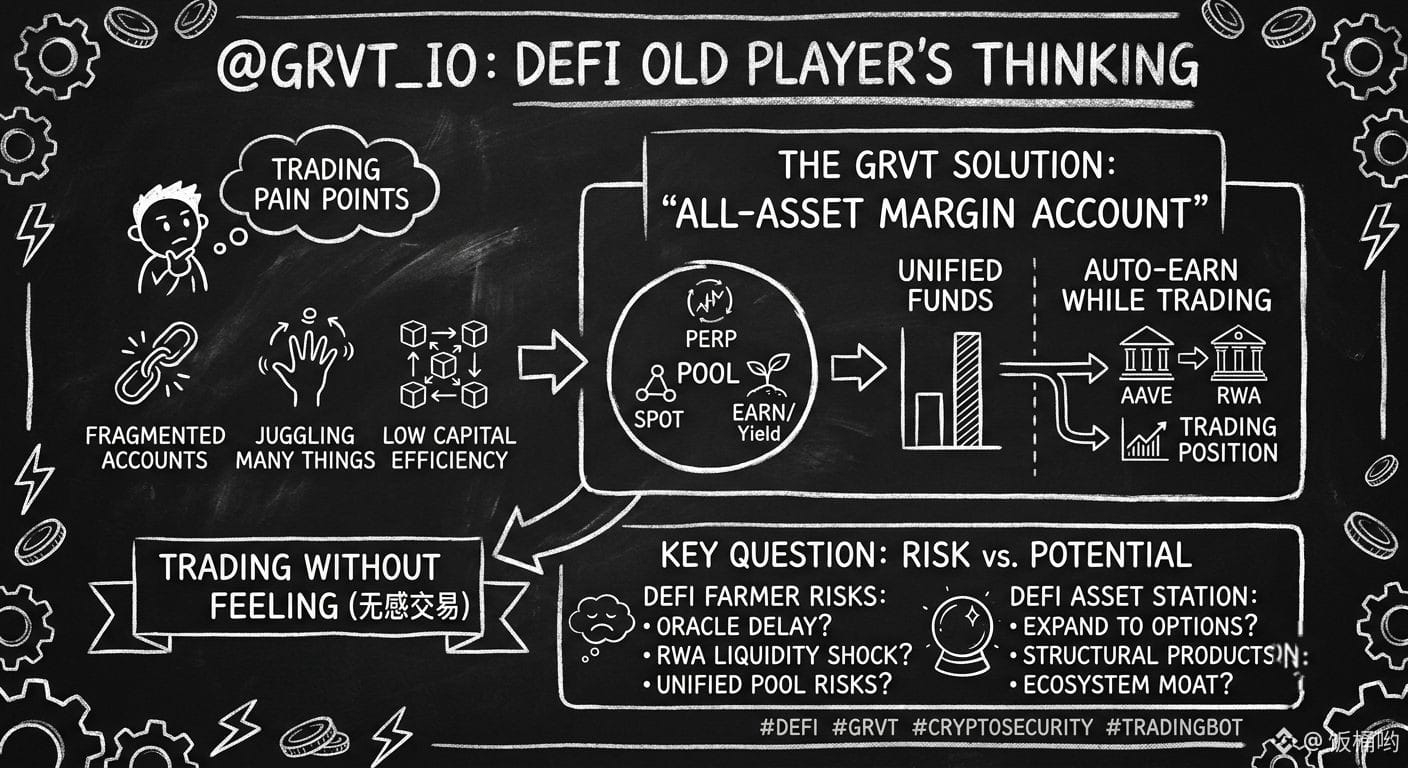
Recently I’ve seen quite a few people discussing the technical whitepaper of @grvt_io . After carefully thinking it through, I believe its core logic has really nailed one of the pain points for DeFi veterans. In the past, doing trades on-chain was basically like playing a “funds-moving laborer” game: if you wanted to hedge with derivatives, you had to go to a DEX; if you wanted to do stablecoin mining, you still had to withdraw and switch chains. Between endless signatures, approvals, and Gas fees, capital gets scattered across multiple smart contracts, and efficiency is as low as a product from the last century. The “all-asset margin account” approach promoted by GRVT, put simply, is to replicate in a decentralized world the “one account does everything” experience you’d have with brokerage-style platforms like Futu or Interactive Brokers. This idea really hits the urgent need.
A few days ago, I went to try their testnet. The most direct feeling is that it’s seamless. In the past, we either compromised with the centralized risks of CEXs or endured DeFi’s cumbersome processes. But GRVT connects perpetuals, spot, and underlying earning channels—such as Aave and some RWA protocols—so that when your funds are idle, they can automatically earn without you having to place orders. Once you need to open a position, these earning assets can directly serve as collateral. This “liquidity perpetual-motion machine” concept is indeed far more sophisticated than the single-purpose protocols fighting their own battles in the market.
That said, as a DeFi farmer who has stepped into countless traps, in my eyes it’s not just about returns—there are also risks. A tightly coupled liquidity setup like #grvt puts extreme pressure on the oracle’s price-feeding speed and the liquidation mechanism. If an extreme black-swan event hits and the liquidity of underlying assets like RWAs temporarily slips out of peg or experiences delays, would the unified account trigger cascading liquidations? Also, putting all your eggs into one “super pool” means the audit boundaries of the smart contract and code security directly determine the fate of retail users. Whether the isolation mechanisms that prevent the collapse of one block will hold up—well, that’s still a big question.
I actually hope they further expand horizontally into other derivatives categories—whether structured finance products or more complex volatility-based products can also be placed into this unified account. If the moat of the ecosystem can deepen as more asset classes are added, then GRVT won’t just be a handy trading tool—it could have a chance to become an all-in-one on-chain asset management endpoint.
At the end of the article, I want to ask everyone: do you think this grvt model is promising?
A few days ago, I went to try their testnet. The most direct feeling is that it’s seamless. In the past, we either compromised with the centralized risks of CEXs or endured DeFi’s cumbersome processes. But GRVT connects perpetuals, spot, and underlying earning channels—such as Aave and some RWA protocols—so that when your funds are idle, they can automatically earn without you having to place orders. Once you need to open a position, these earning assets can directly serve as collateral. This “liquidity perpetual-motion machine” concept is indeed far more sophisticated than the single-purpose protocols fighting their own battles in the market.
That said, as a DeFi farmer who has stepped into countless traps, in my eyes it’s not just about returns—there are also risks. A tightly coupled liquidity setup like #grvt puts extreme pressure on the oracle’s price-feeding speed and the liquidation mechanism. If an extreme black-swan event hits and the liquidity of underlying assets like RWAs temporarily slips out of peg or experiences delays, would the unified account trigger cascading liquidations? Also, putting all your eggs into one “super pool” means the audit boundaries of the smart contract and code security directly determine the fate of retail users. Whether the isolation mechanisms that prevent the collapse of one block will hold up—well, that’s still a big question.
I actually hope they further expand horizontally into other derivatives categories—whether structured finance products or more complex volatility-based products can also be placed into this unified account. If the moat of the ecosystem can deepen as more asset classes are added, then GRVT won’t just be a handy trading tool—it could have a chance to become an all-in-one on-chain asset management endpoint.
At the end of the article, I want to ask everyone: do you think this grvt model is promising?
Verified
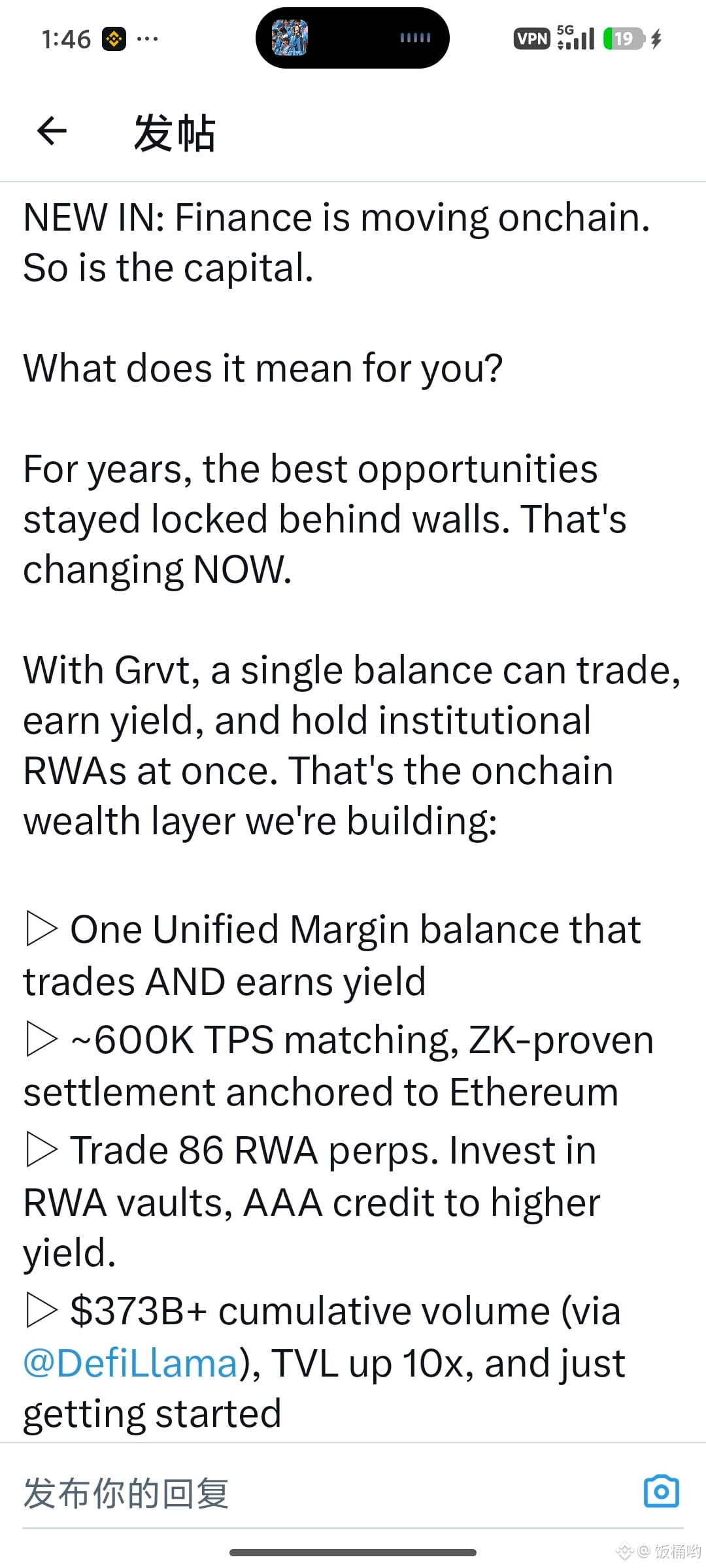
Today I carefully reviewed the settlement mechanism and margin system of @grvt_io . When you peel back the underlying technical details, you’ll find an easily overlooked hidden “hellscape.”
I read GRVT’s whitepaper. They use a unified margin account based on smart contracts, claiming they can maximize capital efficiency. Spot, perpetual, and options positions can supposedly offset each other. That sounds great, but the key is the liquidation trigger mechanism. Because matching happens off-chain, there’s a tiny time lag between the oracle price feed that GRVT uses and the actual liquidation price on-chain. I asked a friend who specializes in liquidation arbitrage, and he put it plainly: in this kind of hybrid architecture, once the market suddenly crashes, the off-chain matching engine determines that you’re liquidated, but the on-chain state update may be delayed by a few tenths of a second. For high-frequency liquidators, this information asymmetry is the arbitrage window; but for users, it means your position could already be liquidated by the off-chain liquidation engine before you even realize it.
Even more subtle is its market maker incentive scheme. GRVT frequently hints that it will offer liquidity at a top-tier CEX level, and it introduces so-called trading mining and a points system. But when I checked their API documentation for professional market makers, because they use a Validium architecture, market makers’ quoted orders on GRVT may have no Gas fee—yet their funds still have to be subject to the withdrawal cycle of Ethereum Layer 2. There may be fast withdrawal bridges, but moving funds has costs. If the platform can’t, in the short term, explosively provide enough retail counterparties to trade against, then after the early token/option incentive period, market makers will most likely narrow spreads and even withdraw capital.
My current new thinking: GRVT’s strategy is the standard play of using speed to buy room. It uses extreme off-chain speed to funnel CEX users into the decentralized world. But the fate of a hybrid architecture is that hardcore DeFi players will complain that its Validium committee is not decentralized enough and not transparent enough; while big players accustomed to CEXs will complain that cross-chain deposits/withdrawals and on-chain settlement aren’t smooth enough. Its ceiling doesn’t depend on how fast its engine can run—it depends on how well it can balance that “water” between the off-chain black box and on-chain trust: #grvt
I read GRVT’s whitepaper. They use a unified margin account based on smart contracts, claiming they can maximize capital efficiency. Spot, perpetual, and options positions can supposedly offset each other. That sounds great, but the key is the liquidation trigger mechanism. Because matching happens off-chain, there’s a tiny time lag between the oracle price feed that GRVT uses and the actual liquidation price on-chain. I asked a friend who specializes in liquidation arbitrage, and he put it plainly: in this kind of hybrid architecture, once the market suddenly crashes, the off-chain matching engine determines that you’re liquidated, but the on-chain state update may be delayed by a few tenths of a second. For high-frequency liquidators, this information asymmetry is the arbitrage window; but for users, it means your position could already be liquidated by the off-chain liquidation engine before you even realize it.
Even more subtle is its market maker incentive scheme. GRVT frequently hints that it will offer liquidity at a top-tier CEX level, and it introduces so-called trading mining and a points system. But when I checked their API documentation for professional market makers, because they use a Validium architecture, market makers’ quoted orders on GRVT may have no Gas fee—yet their funds still have to be subject to the withdrawal cycle of Ethereum Layer 2. There may be fast withdrawal bridges, but moving funds has costs. If the platform can’t, in the short term, explosively provide enough retail counterparties to trade against, then after the early token/option incentive period, market makers will most likely narrow spreads and even withdraw capital.
My current new thinking: GRVT’s strategy is the standard play of using speed to buy room. It uses extreme off-chain speed to funnel CEX users into the decentralized world. But the fate of a hybrid architecture is that hardcore DeFi players will complain that its Validium committee is not decentralized enough and not transparent enough; while big players accustomed to CEXs will complain that cross-chain deposits/withdrawals and on-chain settlement aren’t smooth enough. Its ceiling doesn’t depend on how fast its engine can run—it depends on how well it can balance that “water” between the off-chain black box and on-chain trust: #grvt
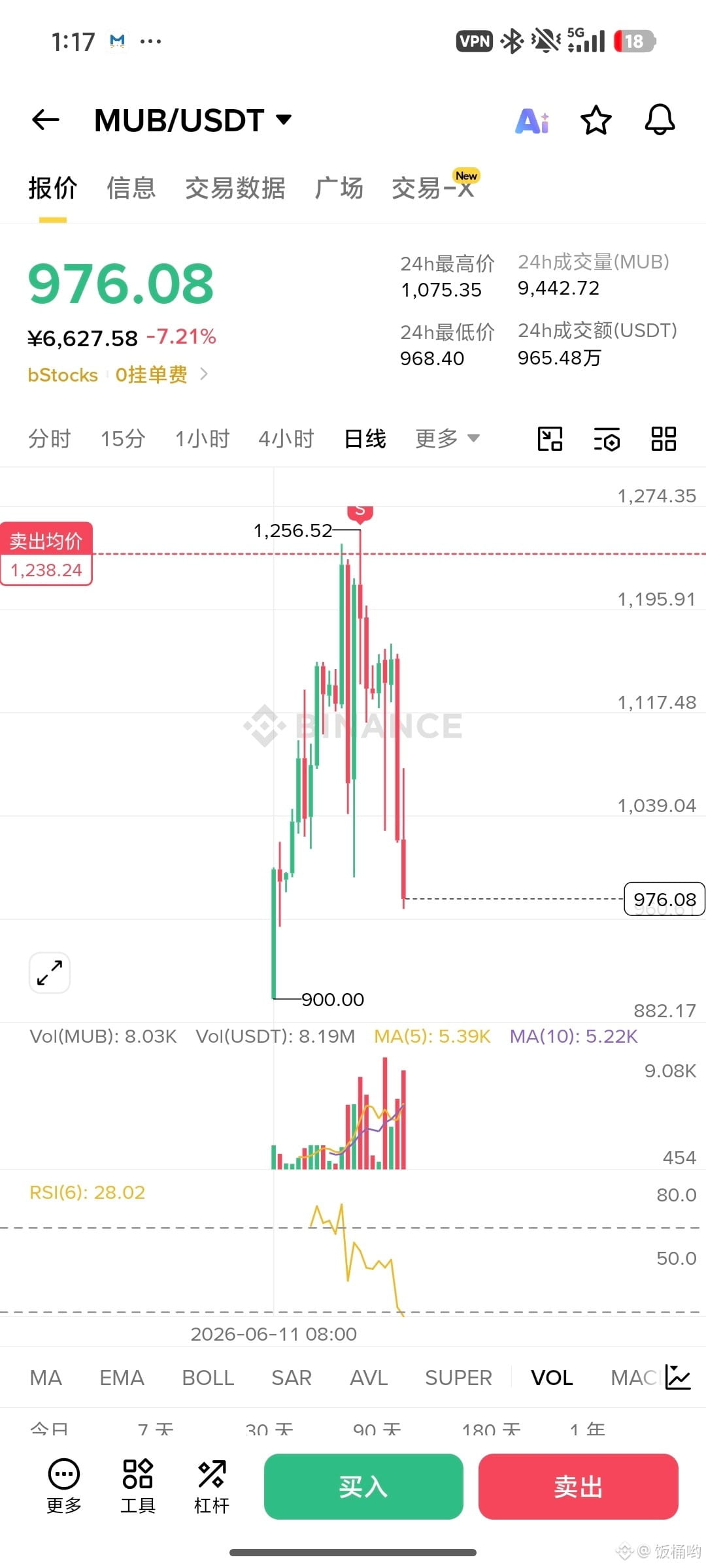
Die already. When a whale falls, all things are born—make the blood-sucked platelets rise back up to $MUB $NVDAB
I've been diving deep into OpenLedger's decentralized computing architecture these past few days, and the more I look, the more it feels like it has a dimension-reducing impact. Most so-called AI public chains out there just force existing models onto the blockchain, creating a bunch of bloated on-chain junk. But the #OpenLedger distributed node architecture breaks down computing tasks into small pieces and distributes them to idle computing power around the globe—this approach is quite interesting. $OPEN
To put it bluntly, we used to contribute our data to those tech giants without getting a dime, all while enduring their nauseating algorithmic bullying, being labeled and sold to advertisers. @OpenLedger The core killer feature here is that it reconstructs the value flow of data. Previously, data was free raw material for the giants; now, through their protocol, data has become a digital asset in our hands. The computing power or data you contribute is no longer silent traffic but a certifiable proof on the blockchain. This logic of value return is definitely more penetrating than all those flashy narratives.
But honestly, I’m still keeping my guard up. The biggest pitfall of decentralized AI will always be latency and synchronization. If the communication overhead caused by task splitting is too high, or if data privacy protection leads to a drop in model training efficiency, then this thing could easily turn into an expensive and slow experiment. Plus, ensuring node consistency under high loads and preventing bad actors from exploiting low-quality computing power is an extremely tricky engineering challenge. If these technical implementation issues can't be resolved, even the best top-level design will just end up as distributed scrap metal that nobody uses.
However, what I value most about OpenLedger is its attempt to build a free market for the AI era. It's betting that future AI large models won’t just be the private property of the giants but can be a collaborative social engineering project completed by thousands of independent nodes. This ambition to decentralize power down to the infrastructure level definitely has a taste of returning to the soul of decentralization.
If you ask me, this project is still in the early mine-clearing stage; we need to see how deep the technical moat is based on the stability of the upcoming testnet. No matter how appealing the project team’s pitch is, it’s still just unbaked dough. For us small traders, risk control is more important than anything else.
To put it bluntly, we used to contribute our data to those tech giants without getting a dime, all while enduring their nauseating algorithmic bullying, being labeled and sold to advertisers. @OpenLedger The core killer feature here is that it reconstructs the value flow of data. Previously, data was free raw material for the giants; now, through their protocol, data has become a digital asset in our hands. The computing power or data you contribute is no longer silent traffic but a certifiable proof on the blockchain. This logic of value return is definitely more penetrating than all those flashy narratives.
But honestly, I’m still keeping my guard up. The biggest pitfall of decentralized AI will always be latency and synchronization. If the communication overhead caused by task splitting is too high, or if data privacy protection leads to a drop in model training efficiency, then this thing could easily turn into an expensive and slow experiment. Plus, ensuring node consistency under high loads and preventing bad actors from exploiting low-quality computing power is an extremely tricky engineering challenge. If these technical implementation issues can't be resolved, even the best top-level design will just end up as distributed scrap metal that nobody uses.
However, what I value most about OpenLedger is its attempt to build a free market for the AI era. It's betting that future AI large models won’t just be the private property of the giants but can be a collaborative social engineering project completed by thousands of independent nodes. This ambition to decentralize power down to the infrastructure level definitely has a taste of returning to the soul of decentralization.
If you ask me, this project is still in the early mine-clearing stage; we need to see how deep the technical moat is based on the stability of the upcoming testnet. No matter how appealing the project team’s pitch is, it’s still just unbaked dough. For us small traders, risk control is more important than anything else.
Lately, I've been keeping an eye on #OpenLedger , and my biggest takeaway is that they have zero interest in playing the loudest voice wins game for traffic. Instead, they're focused on solidifying the foundation for AI and on-chain interactions. Most AI projects out there are either just shell applications or detached from reality with far-fetched visions, while OpenLedger has taken an extremely hardcore route to build a trustworthy interaction protocol that lets AI understand blockchain.
I’ve deeply explored their tech logic, and what blew me away was their implementation of decentralized verifiable computing. In the past, when we used AI for complex tasks, we often faced the black box problem: you didn’t know how the AI reached its conclusions, let alone if the process had been tampered with. OpenLedger has completely transparentized the AI inference process through an underlying on-chain data tracing mechanism. It’s like having HD cameras installed at every step, with all logical operations, cross-chain calls, and data extractions being recorded in real-time on the chain and immutable. This essence of restored trust directly breaks the awkward situation of traditional AI applications being untrustworthy. $OPEN
Now, looking at their flagship AI Agent ecosystem tools, like that computing power aggregation framework that developers can’t stop raving about. It’s not just simple computing power leasing; it’s like a highly intelligent scheduling center. Whether you have scattered GPU resources or various fragmented model interfaces, it can link them together like building blocks, automatically optimizing paths and matching the best costs. This high-dimensional operation that highly abstracts and standardizes underlying complex computing truly allows developers to focus their energy on business logic.
One more thing that can't be overlooked is their dedication to standards. They've established an extremely elegant interface standard that completely connects the myriad of DeFi vaults, oracles, and on-chain data sources. It’s like setting up a universal outlet between different protocols; systems that were originally incompatible are now forming synergy through OpenLedger's bridge. This not only enhances efficiency but is also a necessary path for ecological integration.
Ultimately, the value of @OpenLedger lies not in how grand a future picture it can paint, but in the problems it is currently solving, which are precisely the pain points at the intersection of crypto and AI.
I’ve deeply explored their tech logic, and what blew me away was their implementation of decentralized verifiable computing. In the past, when we used AI for complex tasks, we often faced the black box problem: you didn’t know how the AI reached its conclusions, let alone if the process had been tampered with. OpenLedger has completely transparentized the AI inference process through an underlying on-chain data tracing mechanism. It’s like having HD cameras installed at every step, with all logical operations, cross-chain calls, and data extractions being recorded in real-time on the chain and immutable. This essence of restored trust directly breaks the awkward situation of traditional AI applications being untrustworthy. $OPEN
Now, looking at their flagship AI Agent ecosystem tools, like that computing power aggregation framework that developers can’t stop raving about. It’s not just simple computing power leasing; it’s like a highly intelligent scheduling center. Whether you have scattered GPU resources or various fragmented model interfaces, it can link them together like building blocks, automatically optimizing paths and matching the best costs. This high-dimensional operation that highly abstracts and standardizes underlying complex computing truly allows developers to focus their energy on business logic.
One more thing that can't be overlooked is their dedication to standards. They've established an extremely elegant interface standard that completely connects the myriad of DeFi vaults, oracles, and on-chain data sources. It’s like setting up a universal outlet between different protocols; systems that were originally incompatible are now forming synergy through OpenLedger's bridge. This not only enhances efficiency but is also a necessary path for ecological integration.
Ultimately, the value of @OpenLedger lies not in how grand a future picture it can paint, but in the problems it is currently solving, which are precisely the pain points at the intersection of crypto and AI.
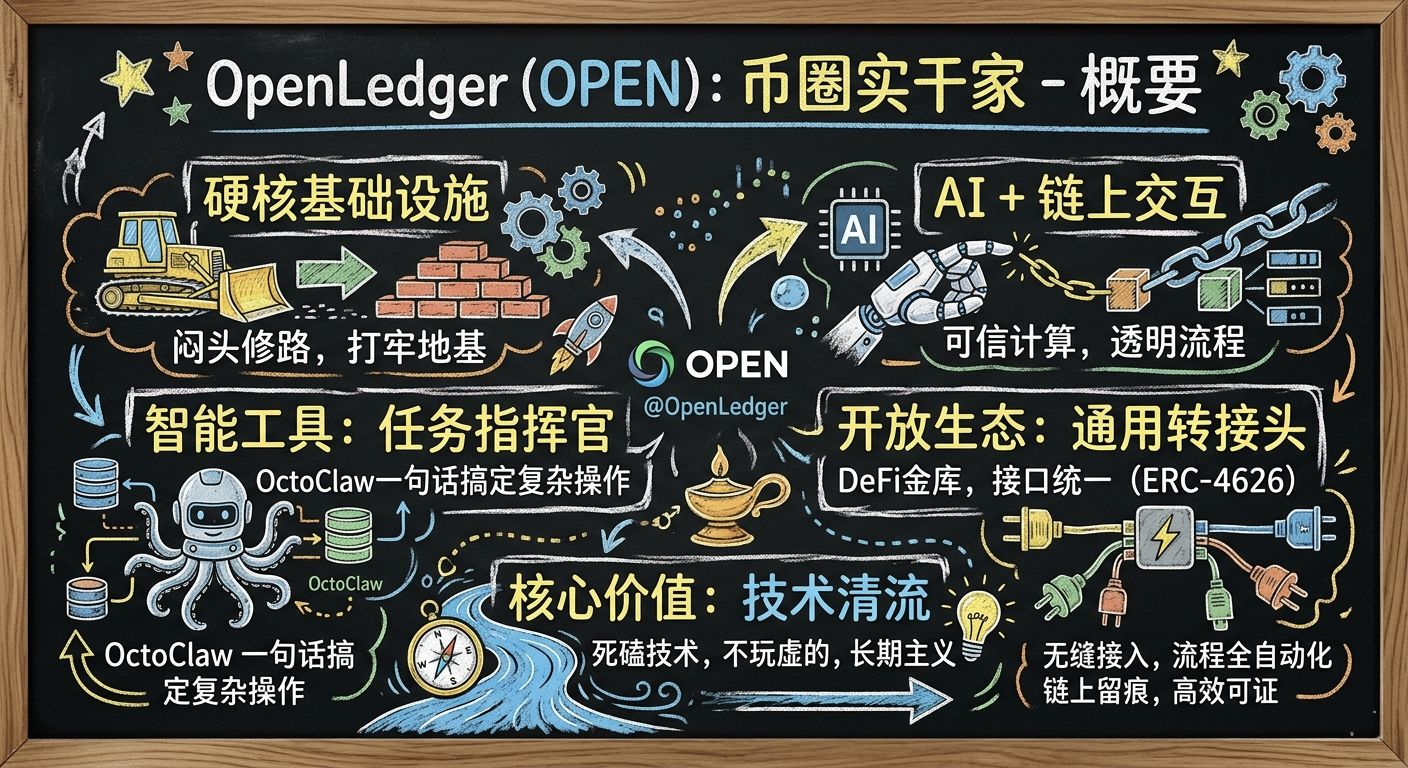

Recently, I ramped up my setup with a few more rigs to dive into the @OpenLedger ecosystem. I've done a deep dive into the granular returns from Datanet during this period, and honestly, my mindset is much steadier now than when I first entered the scene. A lot of folks simplify AI data nodes way too much, thinking that just by running their rigs and having $OPEN in their accounts, the rewards will roll in automatically. This kind of passive wealth illusion is really just a daydream for many newcomers.
I went through some of my earlier interactions and realized that simply chasing uptime by connecting to those long-tail, niche data pools has led to fragmented rewards that, after deducting electricity and network losses, yield an almost shocking ROI. Many are blinded by the hype of so-called airdrops, forgetting that this low-quality data has no bargaining power within the AI training context. At best, it just adds some useless load to the protocol. To truly build a sustainable return model in OpenLedger, the key is understanding data assetization. You have to realize that nodes are not just physical terminals; they are dynamic data gateways that require fine-tuning. I found that the nodes that consistently generate returns all align perfectly with the current mainstream model training demands of Datanet. There’s a huge cognitive gap here: most people only look at the current APY, ignoring the fact that AI training compute demands fluctuate in steps. If you haven’t set up your data caching before the peak demand, your bandwidth and storage are largely just spinning their wheels.
Now, let’s discuss the highly anticipated incentive mechanism of #OpenLedger . After long-term observation, I’ve come to understand that so-called profit distribution is essentially the ecosystem's real-time pricing for high-value data sets. If your data doesn’t directly hit the critical paths for fine-tuning large models or enhancing retrieval generation, then no matter how long your node is online, the reward mechanisms will filter it out using algorithmic weights.
To put it bluntly, in the $OPEN lane, static configuration strategies are completely outdated. The future profit margins will belong to those who truly treat their nodes as data factories and operate them with precision. Remember, OpenLedger rewards aren’t based on your device's uptime; they’re based on your judgment and execution as a data supplier in this wave of AI transformation.
I went through some of my earlier interactions and realized that simply chasing uptime by connecting to those long-tail, niche data pools has led to fragmented rewards that, after deducting electricity and network losses, yield an almost shocking ROI. Many are blinded by the hype of so-called airdrops, forgetting that this low-quality data has no bargaining power within the AI training context. At best, it just adds some useless load to the protocol. To truly build a sustainable return model in OpenLedger, the key is understanding data assetization. You have to realize that nodes are not just physical terminals; they are dynamic data gateways that require fine-tuning. I found that the nodes that consistently generate returns all align perfectly with the current mainstream model training demands of Datanet. There’s a huge cognitive gap here: most people only look at the current APY, ignoring the fact that AI training compute demands fluctuate in steps. If you haven’t set up your data caching before the peak demand, your bandwidth and storage are largely just spinning their wheels.
Now, let’s discuss the highly anticipated incentive mechanism of #OpenLedger . After long-term observation, I’ve come to understand that so-called profit distribution is essentially the ecosystem's real-time pricing for high-value data sets. If your data doesn’t directly hit the critical paths for fine-tuning large models or enhancing retrieval generation, then no matter how long your node is online, the reward mechanisms will filter it out using algorithmic weights.
To put it bluntly, in the $OPEN lane, static configuration strategies are completely outdated. The future profit margins will belong to those who truly treat their nodes as data factories and operate them with precision. Remember, OpenLedger rewards aren’t based on your device's uptime; they’re based on your judgment and execution as a data supplier in this wave of AI transformation.
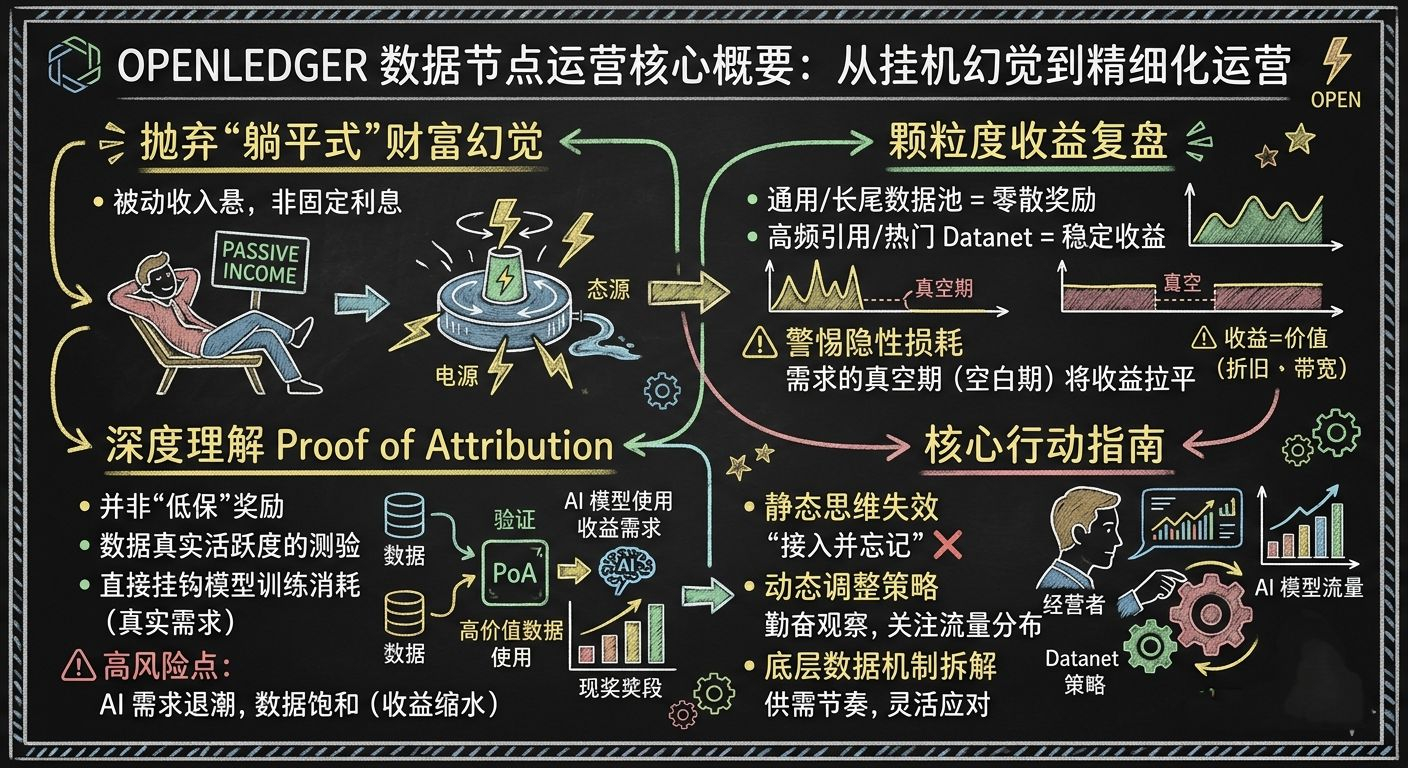

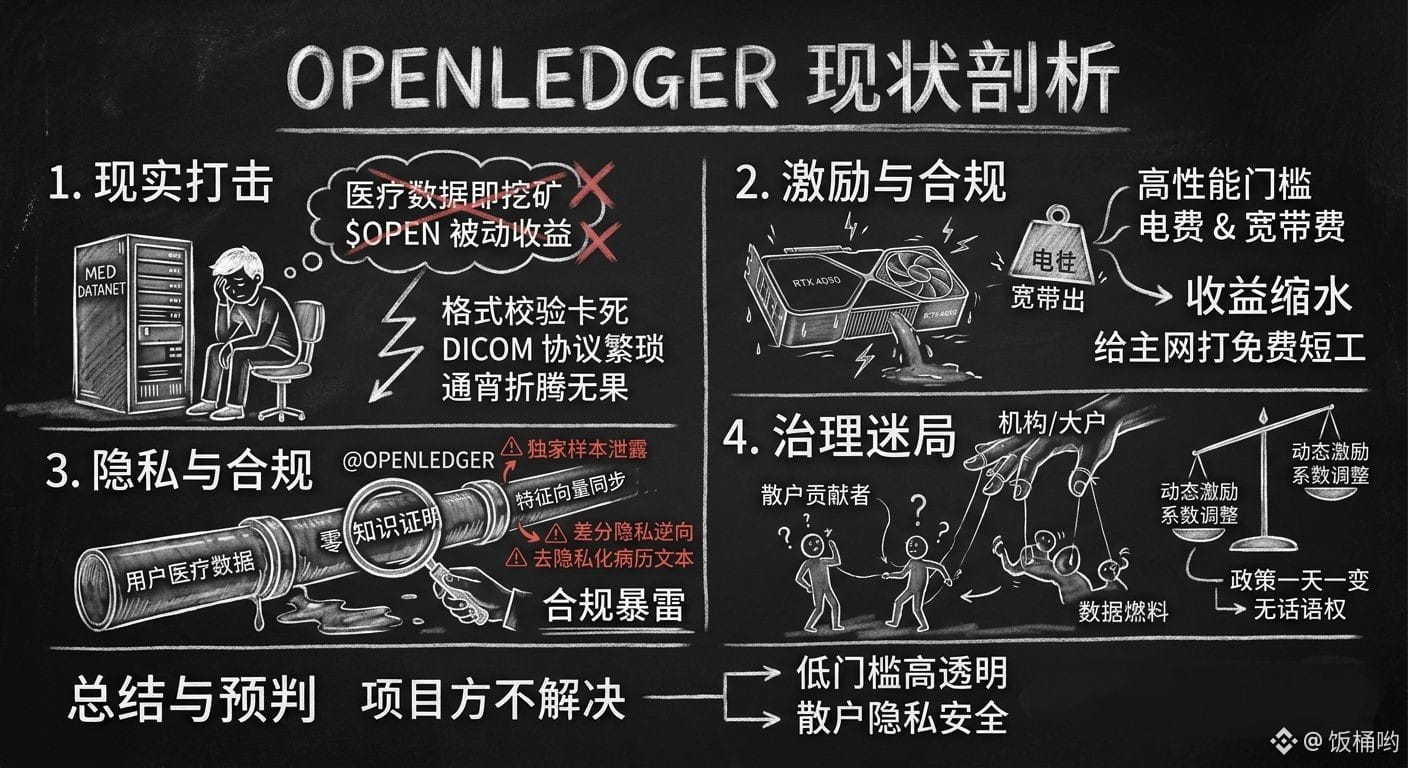
A couple of days ago, I saw everyone in the square hyping up the AI medical imaging annotation platform at @OpenLedger . In a moment of impulse, I uploaded the stash of dermatopathology slide datasets my studio had saved up to Med DataNet. The result? I spent the entire night wrestling with it, getting stuck on the format validation step, nearly losing my mind over that convoluted DICOM conversion protocol and label alignment logic.
I admit, I got all hyped up by their grand narrative of medical data as a mining opportunity, fantasizing that uploading my hidden assets would yield passive income of $OPEN . But when it came time to deploy the validation node, reality slapped me in the face. They call this low-barrier co-construction in the official docs, but the requirements for VRAM and network bandwidth throughput are downright terrifying. I ran my top-notch 4090 workstation for three days, and based on their latest dynamic incentive formula, after deducting the full-time electricity bills and commercial broadband fees, the meager amount of $OPEN I got wouldn't even cover a cup of coffee. I was just doing free labor for the mainnet.
What freaks me out more than the shrinking returns is the bottomless pit of data rights and compliance issues. @OpenLedger keeps bragging about their zero-knowledge proofs and homomorphic encryption tech, claiming they can make data usable but not visible. But in practice, to get the higher-tier incentive weights, you have to bundle and sync the data feature vectors with de-identified medical records. Even though they say medical data is decentralized and stored anonymously, who can guarantee that the routing nodes at the retrieval layer won't be hacked through differential privacy reverse engineering? Once exclusive samples leak, who's left holding the bag? Us digital miners who provided the data in the first place? #OpenLedger
What's even more disheartening is the current community governance vibe around $OPEN . Policies change daily, and us retail traders have no right to know what's going on, let alone any say in it. Put simply, we're just fuel being repeatedly harvested by the whales' algorithms. I've completely had my illusions shattered. Whether @OpenLedger is genuinely disrupting the way AI production materials are distributed or just using the guise of decentralized AI to create a new round of traffic hype is no longer up for debate. I'll leave it at that: if the project team doesn't take retail traders' privacy and income transparency seriously, relying solely on a few big players flipping tokens in the community, this so-called Web3+AI narrative will ultimately just be a mirage.
I admit, I got all hyped up by their grand narrative of medical data as a mining opportunity, fantasizing that uploading my hidden assets would yield passive income of $OPEN . But when it came time to deploy the validation node, reality slapped me in the face. They call this low-barrier co-construction in the official docs, but the requirements for VRAM and network bandwidth throughput are downright terrifying. I ran my top-notch 4090 workstation for three days, and based on their latest dynamic incentive formula, after deducting the full-time electricity bills and commercial broadband fees, the meager amount of $OPEN I got wouldn't even cover a cup of coffee. I was just doing free labor for the mainnet.
What freaks me out more than the shrinking returns is the bottomless pit of data rights and compliance issues. @OpenLedger keeps bragging about their zero-knowledge proofs and homomorphic encryption tech, claiming they can make data usable but not visible. But in practice, to get the higher-tier incentive weights, you have to bundle and sync the data feature vectors with de-identified medical records. Even though they say medical data is decentralized and stored anonymously, who can guarantee that the routing nodes at the retrieval layer won't be hacked through differential privacy reverse engineering? Once exclusive samples leak, who's left holding the bag? Us digital miners who provided the data in the first place? #OpenLedger
What's even more disheartening is the current community governance vibe around $OPEN . Policies change daily, and us retail traders have no right to know what's going on, let alone any say in it. Put simply, we're just fuel being repeatedly harvested by the whales' algorithms. I've completely had my illusions shattered. Whether @OpenLedger is genuinely disrupting the way AI production materials are distributed or just using the guise of decentralized AI to create a new round of traffic hype is no longer up for debate. I'll leave it at that: if the project team doesn't take retail traders' privacy and income transparency seriously, relying solely on a few big players flipping tokens in the community, this so-called Web3+AI narrative will ultimately just be a mirage.
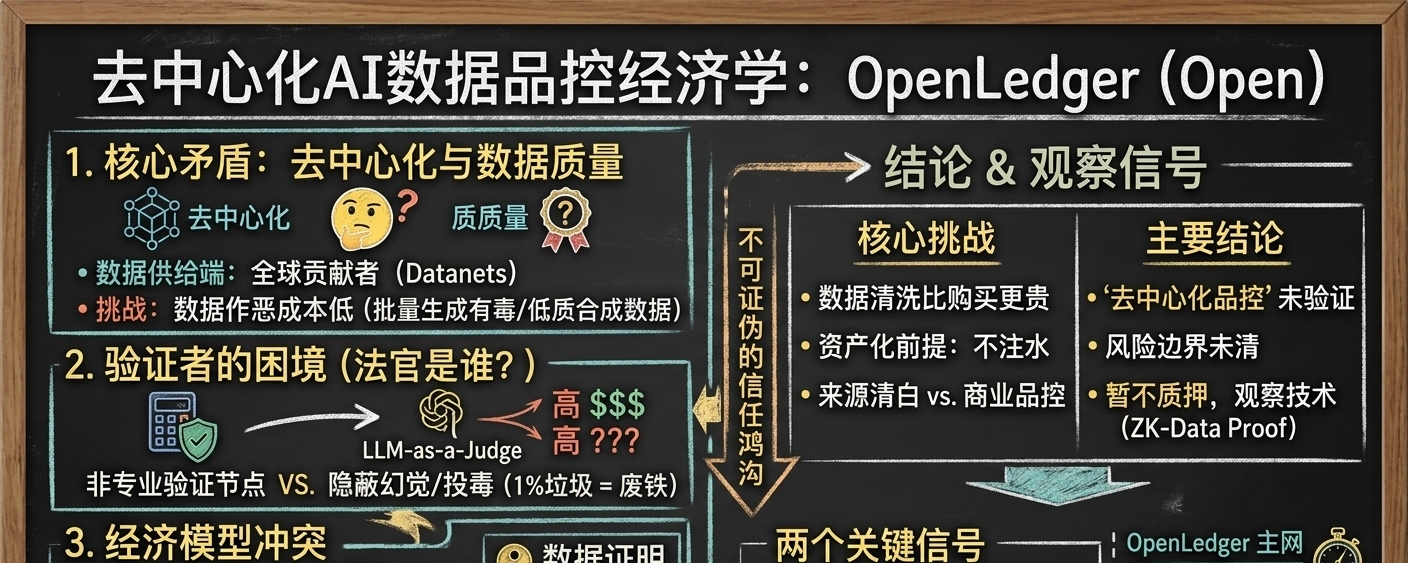
I just set up the node environment for @OpenLedger this morning. I was thinking of taking advantage of the testnet hype to run a task and scoop up some OPEN points, but then I saw a pop-up on the task execution page that said: computing resources need to go through a node reputation assessment, and the specific thresholds are dynamically updated in real-time. I dug through the docs on GitHub, but they didn’t disclose the algorithm for this reputation score at all. I asked around in Discord for tech support, and the response was always the same: to prevent witch attacks, the specific parameters are optimized in real-time by the algorithm. Great, here we go again with this black-box logic.
But what I really want to rant about isn’t the technical threshold; it’s this so-called task distribution mechanism. The OpenLedger compute pool not only has to provide computing power, but it also needs to cross-verify the inference results submitted by other nodes. Only after passing the verification can the points be settled. It sounds very decentralized, but in reality, if the task distribution logic is monopolized by a few top-power nodes, doesn’t this mechanism just turn into a classic case of the rich getting richer? It’s not fundamentally different from AWS’s pay-for-compute model; over there, you buy hardware, and here you stake Tokens to get rights for compute allocation. What’s even more intriguing is the so-called $OPEN governance committee. The docs state that the committee can adjust node penalty weights and profit distribution coefficients, but they don’t explain how these committee seats are generated, nor whether big players have absolute voting rights in proposals. If the underlying algorithm logic is controlled by a few early large miner nodes, they can gain priority task distribution rights through the algorithm while locking in high returns at the governance level. What’s the difference between this so-called open computing network and a power rental platform with a different shell? Decentralized for the sake of it. I calculated that if you want to improve your reputation score, you have to stay online 24/7 and bear the high bandwidth costs to verify fragmented tasks. Based on the current point exchange expectations and electricity costs, the annualized return might not even touch 10%, and you also have to constantly guard against penalties from network fluctuations.
I killed the process of the #OpenLedger node and deleted the config files. I’ll consider entering once they clearly outline the node reputation algorithm, task distribution logic, and the mechanism for generating the governance committee in black and white. After all, decentralized computing is supposed to be about equalizing computing power, not just swapping in a new set of big nodes as the new landlords.
But what I really want to rant about isn’t the technical threshold; it’s this so-called task distribution mechanism. The OpenLedger compute pool not only has to provide computing power, but it also needs to cross-verify the inference results submitted by other nodes. Only after passing the verification can the points be settled. It sounds very decentralized, but in reality, if the task distribution logic is monopolized by a few top-power nodes, doesn’t this mechanism just turn into a classic case of the rich getting richer? It’s not fundamentally different from AWS’s pay-for-compute model; over there, you buy hardware, and here you stake Tokens to get rights for compute allocation. What’s even more intriguing is the so-called $OPEN governance committee. The docs state that the committee can adjust node penalty weights and profit distribution coefficients, but they don’t explain how these committee seats are generated, nor whether big players have absolute voting rights in proposals. If the underlying algorithm logic is controlled by a few early large miner nodes, they can gain priority task distribution rights through the algorithm while locking in high returns at the governance level. What’s the difference between this so-called open computing network and a power rental platform with a different shell? Decentralized for the sake of it. I calculated that if you want to improve your reputation score, you have to stay online 24/7 and bear the high bandwidth costs to verify fragmented tasks. Based on the current point exchange expectations and electricity costs, the annualized return might not even touch 10%, and you also have to constantly guard against penalties from network fluctuations.
I killed the process of the #OpenLedger node and deleted the config files. I’ll consider entering once they clearly outline the node reputation algorithm, task distribution logic, and the mechanism for generating the governance committee in black and white. After all, decentralized computing is supposed to be about equalizing computing power, not just swapping in a new set of big nodes as the new landlords.
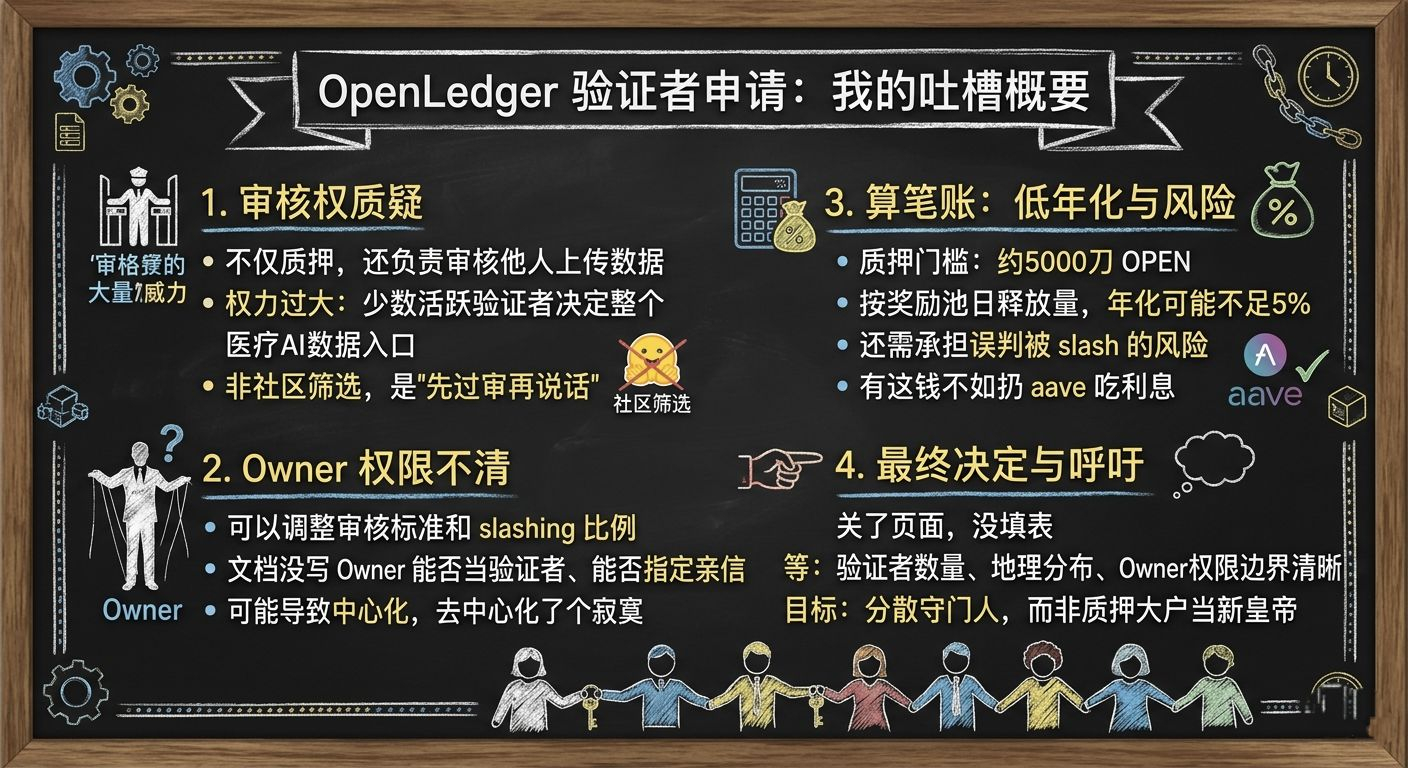
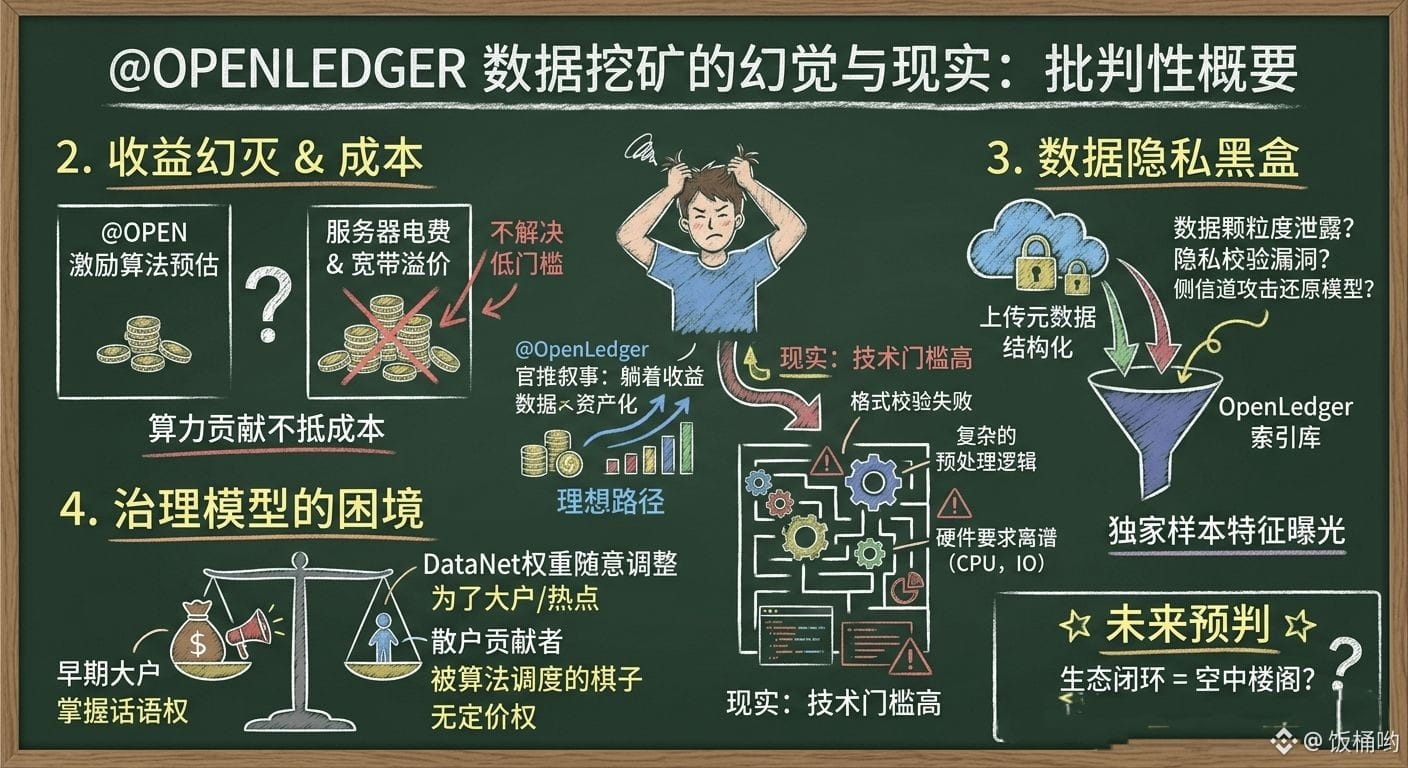
A couple of days ago, I saw everyone in my circle talking about the AI training data of @OpenLedger . I couldn't resist and decided to try importing my well-organized financial sentiment annotation set into Finance DataNet. I spent the whole afternoon on it, and not only did I not get it to run, but that complex preprocessing logic also left my head spinning.
I was brainwashed by the official Twitter narrative about data assetization, thinking that just sitting back and earning $OPEN rewards was just around the corner. But when I actually went to set up the nodes, I realized that the so-called one-click access was all just an ideal scenario. The hardware requirements for node access in the documentation were vague; they said a home computer could run it, but in reality, the CPU and IO requirements were ridiculously high to even pass the preliminary review. I estimated using their incentive algorithm that if I couldn't maintain high availability around the clock, the little bit of computing power I contributed in exchange for $OPEN might not even cover my server's electricity costs and bandwidth premiums.
What worries me more than the rewards is the black box issue of data privacy. Although @OpenLedger claims to use federated learning technology, which allows training without local data leaving, we still have to upload structured metadata to their index repository when submitting data packages. This means that the granularity of my data, and even some exclusive sample features from the industry, are basically laid bare to the platform. The officials keep emphasizing decentralized storage, but if there's a flaw in the privacy verification logic on the retrieval side, or if a malicious node manages to reconstruct the data model through a side-channel attack, who will take the hit for that loss?
Even more frustrating is the governance model of $OPEN . The so-called decentralized governance is basically just watching a few early big players making the calls. The claimed dynamic weight adjustment for DataNet can change on a dime; today they adjust rewards to attract the financial sector, and tomorrow they might tilt towards AI video training. Us retail contributor types are more like pawns being scheduled by algorithms, completely lacking pricing power.
I've come to terms with it now; whether @OpenLedger is actually reshaping AI production relations or just creating an illusion of data mining, we’ll find out in six months by looking at the active node count and actual retrieval volume. I’ll put it out there: if the project team doesn’t solve the low barrier to entry and high transparency issues, this so-called ecological closed loop is just a castle in the air. #OpenLedger
I was brainwashed by the official Twitter narrative about data assetization, thinking that just sitting back and earning $OPEN rewards was just around the corner. But when I actually went to set up the nodes, I realized that the so-called one-click access was all just an ideal scenario. The hardware requirements for node access in the documentation were vague; they said a home computer could run it, but in reality, the CPU and IO requirements were ridiculously high to even pass the preliminary review. I estimated using their incentive algorithm that if I couldn't maintain high availability around the clock, the little bit of computing power I contributed in exchange for $OPEN might not even cover my server's electricity costs and bandwidth premiums.
What worries me more than the rewards is the black box issue of data privacy. Although @OpenLedger claims to use federated learning technology, which allows training without local data leaving, we still have to upload structured metadata to their index repository when submitting data packages. This means that the granularity of my data, and even some exclusive sample features from the industry, are basically laid bare to the platform. The officials keep emphasizing decentralized storage, but if there's a flaw in the privacy verification logic on the retrieval side, or if a malicious node manages to reconstruct the data model through a side-channel attack, who will take the hit for that loss?
Even more frustrating is the governance model of $OPEN . The so-called decentralized governance is basically just watching a few early big players making the calls. The claimed dynamic weight adjustment for DataNet can change on a dime; today they adjust rewards to attract the financial sector, and tomorrow they might tilt towards AI video training. Us retail contributor types are more like pawns being scheduled by algorithms, completely lacking pricing power.
I've come to terms with it now; whether @OpenLedger is actually reshaping AI production relations or just creating an illusion of data mining, we’ll find out in six months by looking at the active node count and actual retrieval volume. I’ll put it out there: if the project team doesn’t solve the low barrier to entry and high transparency issues, this so-called ecological closed loop is just a castle in the air. #OpenLedger
Log in to explore more content