
Hiddit
277 Posts

Hiddit
Cross-border trust bridges 🌉 Founder @ BorderFlow 🏠 Settle in Europe — guaranteed housing 🌍 Trade Sourcing — verified suppliers
47 Following
195 Followers
80 Liked
Posts












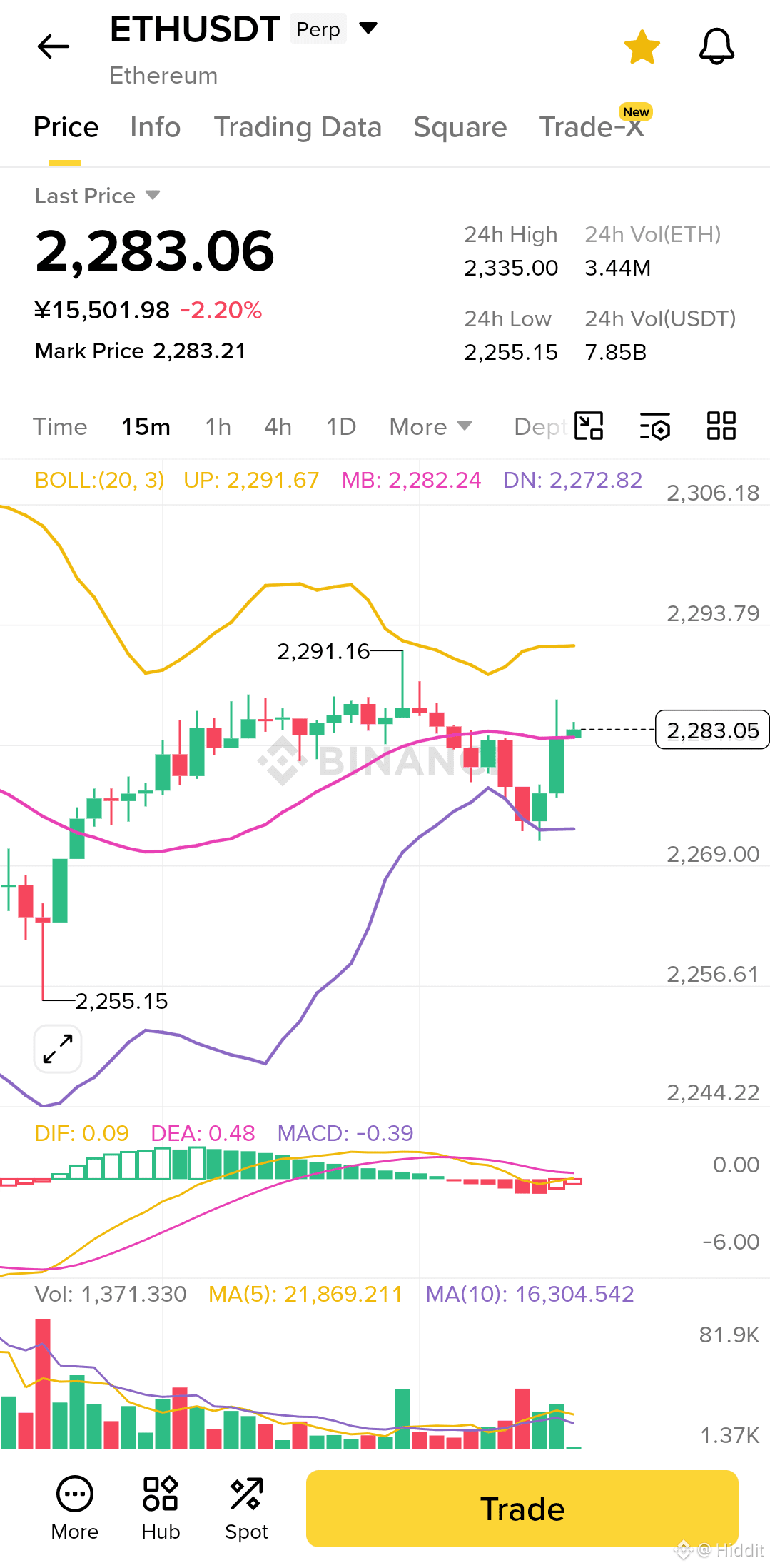
📢 Can $ETH hold the critical lifeline at 2280?
The market is calmer than expected.
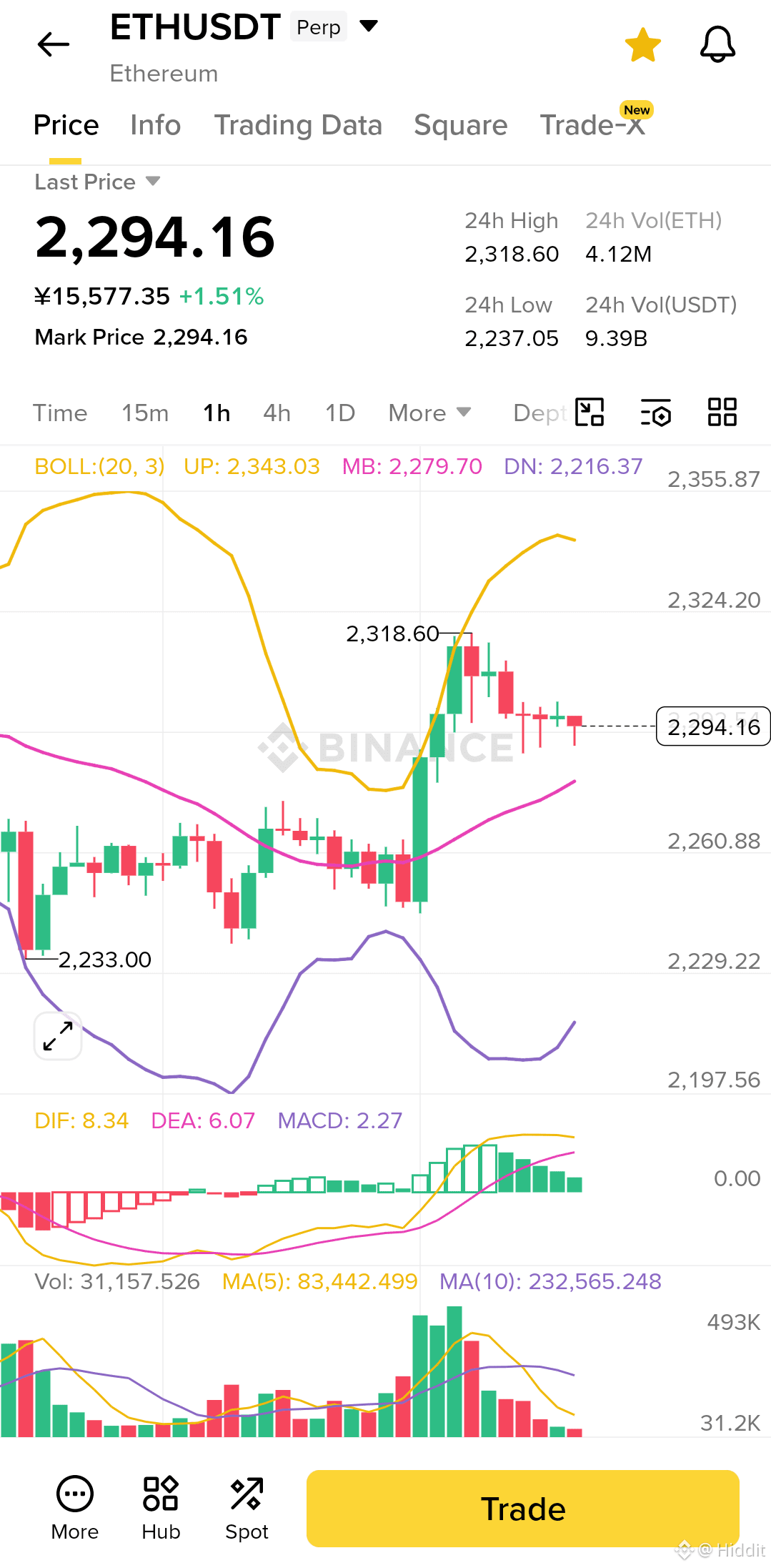
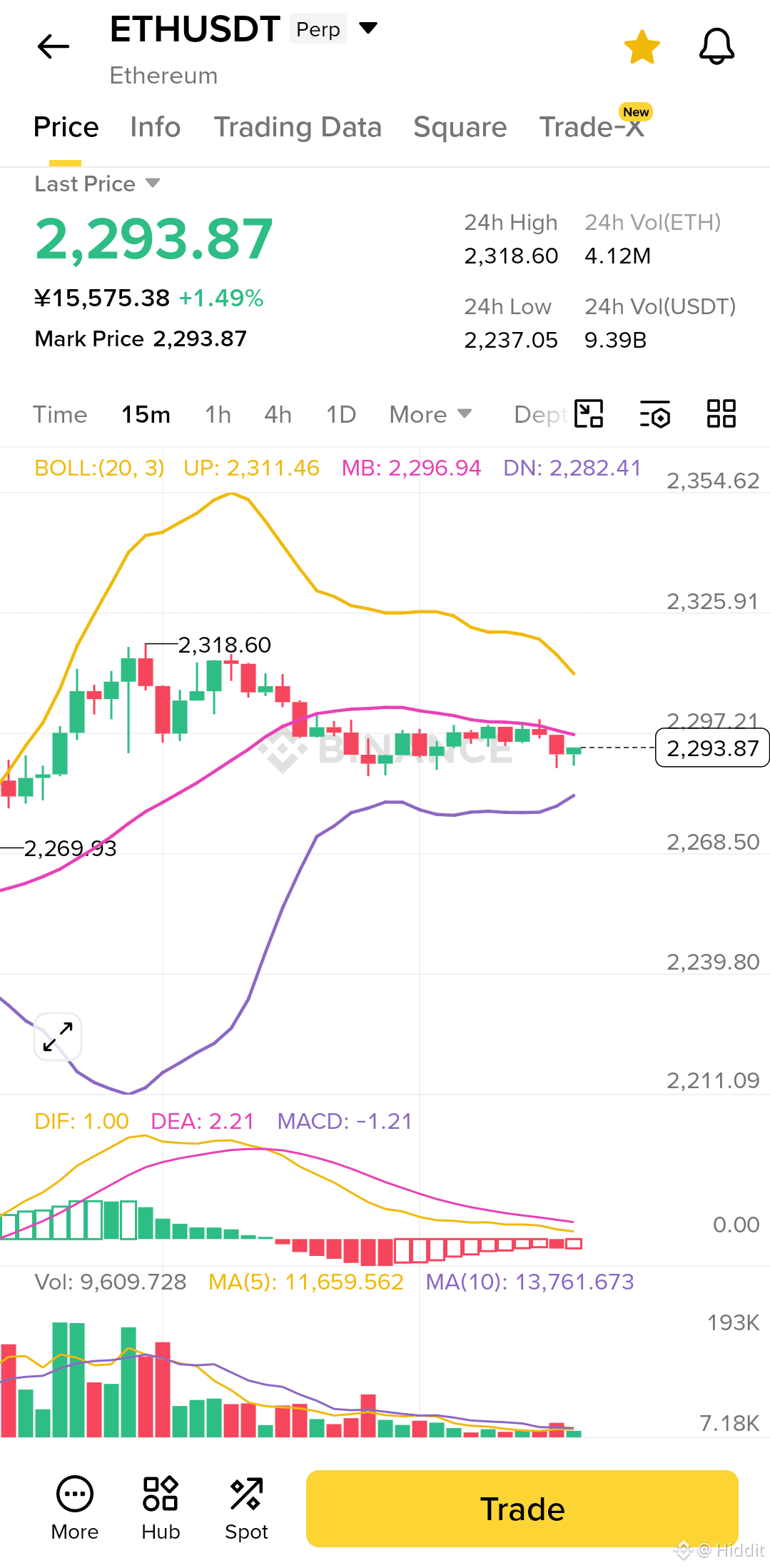
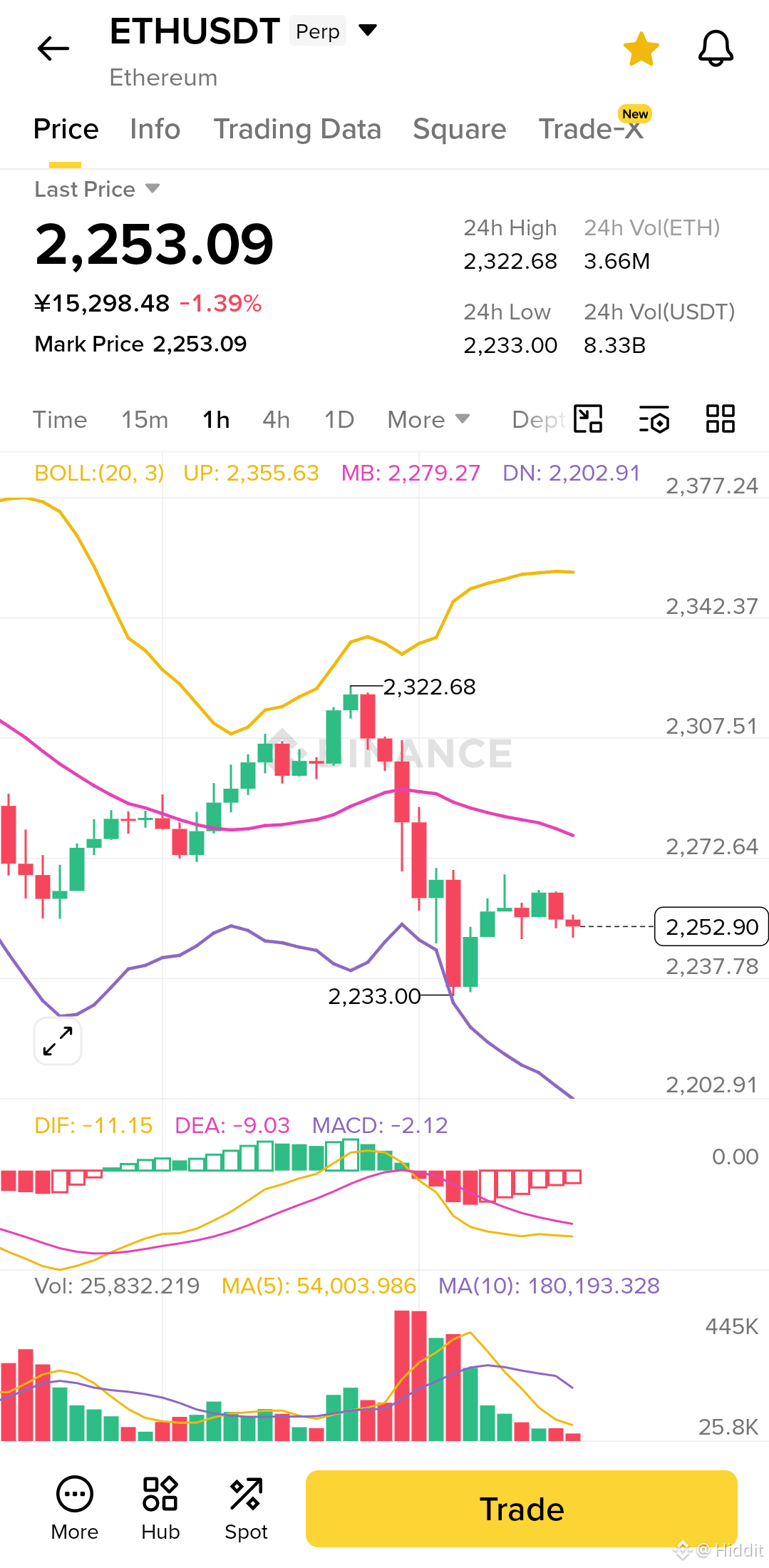
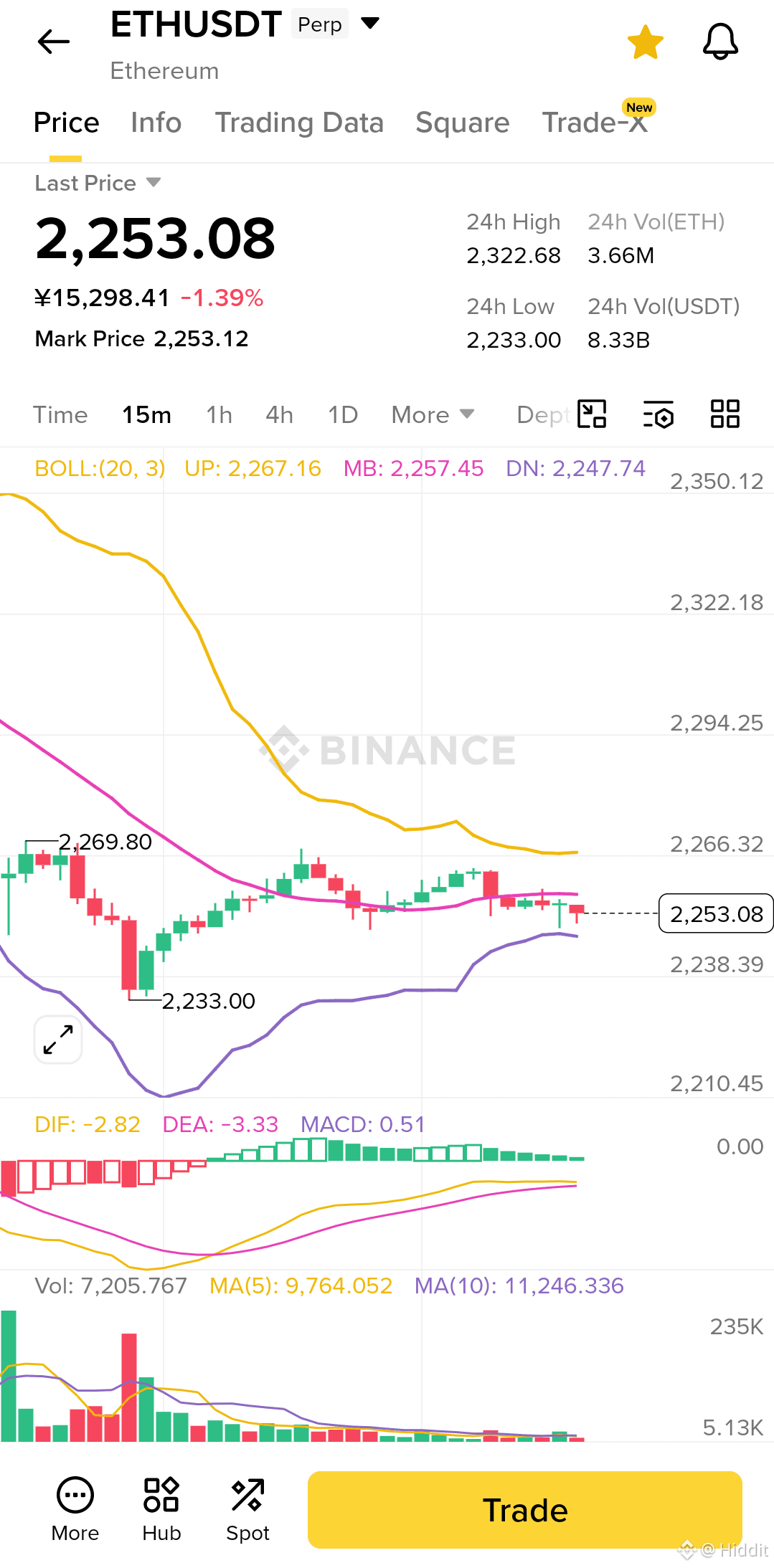
ETH is not taking off as imagined on the short term. The 15-minute chart has dropped below the middle band, and the hourly middle band support is around 2279.7. This means we need to switch from 'party mode' to 'sniper mode'.
Logic Analysis: Is this a retracement or a trap?
While the new highs in the US stock market bring some warmth, ETH's lack of follow-through below 2320 needs caution. As long as the current drop can hold above the 2280 line, it's a healthy consolidation; if it breaks below, we need to be wary of a short attack returning.
Latest Battle Plan
Trading Strategy: No chasing highs, wait for a retracement.
Entry Points: Key to observe the support strength in the 2285 - 2295 range.
Stop-Loss Logic: Firmly protect 2265. In this phase of volatility and washout, preserving capital is the most important.
Take-Profit Target: The first rebound target is set at 2345.
☕ A Note to Myself
The biggest fear in trading is having a preconceived notion. Thanks to real-time data reminders, we can hit the brakes before risks arise. Keep a close eye on 2279.7; it’s the 'line of life and death' for bulls and bears today.
💡 Random Advice:
Since the 15m has already broken the middle band, this retracement may continue for several candlesticks. Don't rush in yet; watch the volume and price action around 2280. If signs of a volume decrease and a halt in the drop appear, then consider entering in batches.
#ETH #以太坊策略 #合约实战 #美股
The market is calmer than expected.
ETH is not taking off as imagined on the short term. The 15-minute chart has dropped below the middle band, and the hourly middle band support is around 2279.7. This means we need to switch from 'party mode' to 'sniper mode'.
Logic Analysis: Is this a retracement or a trap?
While the new highs in the US stock market bring some warmth, ETH's lack of follow-through below 2320 needs caution. As long as the current drop can hold above the 2280 line, it's a healthy consolidation; if it breaks below, we need to be wary of a short attack returning.
Latest Battle Plan
Trading Strategy: No chasing highs, wait for a retracement.
Entry Points: Key to observe the support strength in the 2285 - 2295 range.
Stop-Loss Logic: Firmly protect 2265. In this phase of volatility and washout, preserving capital is the most important.
Take-Profit Target: The first rebound target is set at 2345.
☕ A Note to Myself
The biggest fear in trading is having a preconceived notion. Thanks to real-time data reminders, we can hit the brakes before risks arise. Keep a close eye on 2279.7; it’s the 'line of life and death' for bulls and bears today.
💡 Random Advice:
Since the 15m has already broken the middle band, this retracement may continue for several candlesticks. Don't rush in yet; watch the volume and price action around 2280. If signs of a volume decrease and a halt in the drop appear, then consider entering in batches.
#ETH #以太坊策略 #合约实战 #美股
📢 $ETH Deep squat accumulation, is the "diamond pit" around 2210?
Review: Why have mainstream coins dropped like dogs?
Yesterday, ETH hit a wall at the hundred-dollar mark, facing a double whammy of macro liquidity tightening and long leverage liquidations. This slow bleed turning into a crash is essentially the market washing out weak hands.
Latest Analysis: Signs of a bottom starting to show
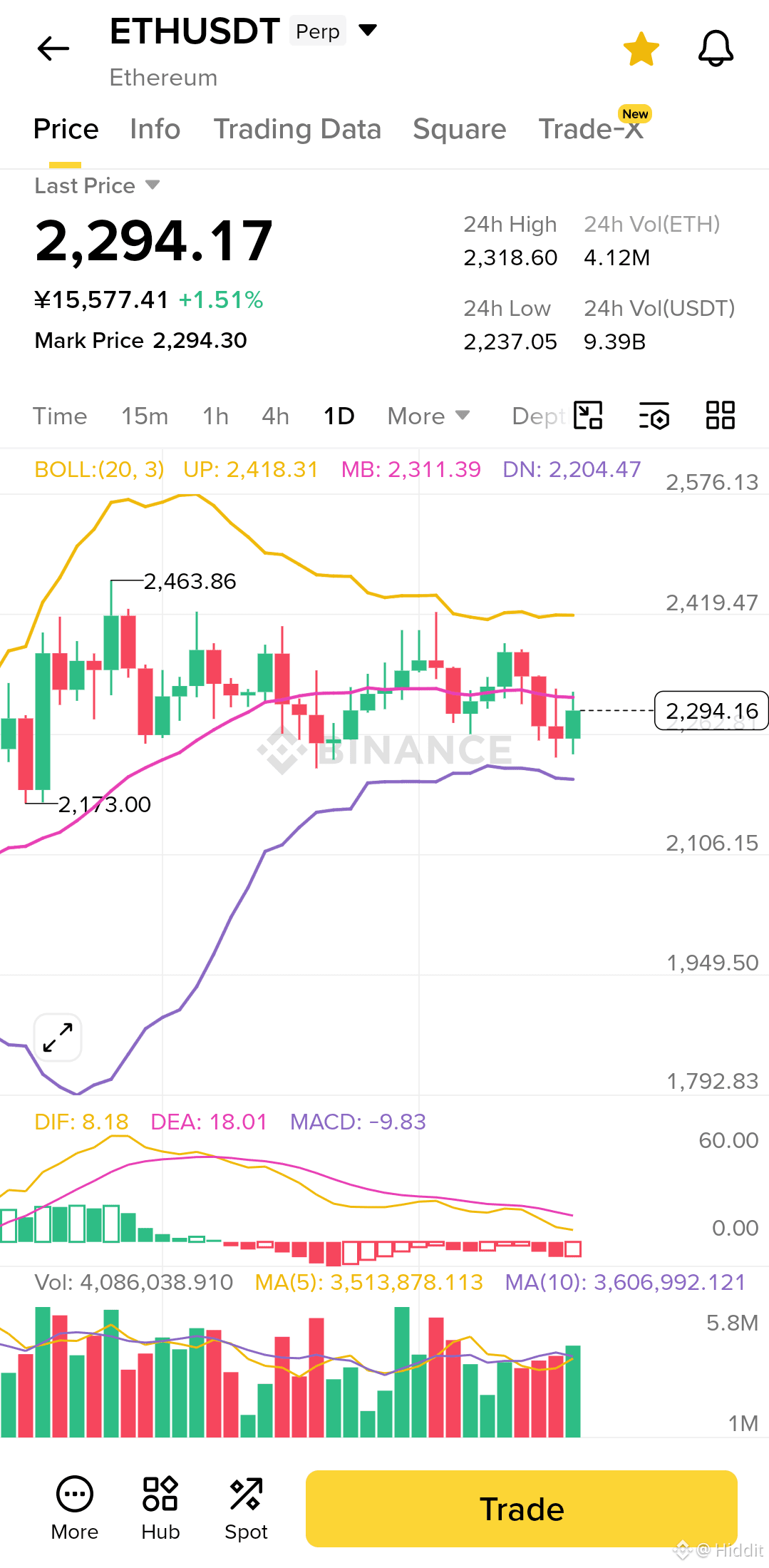
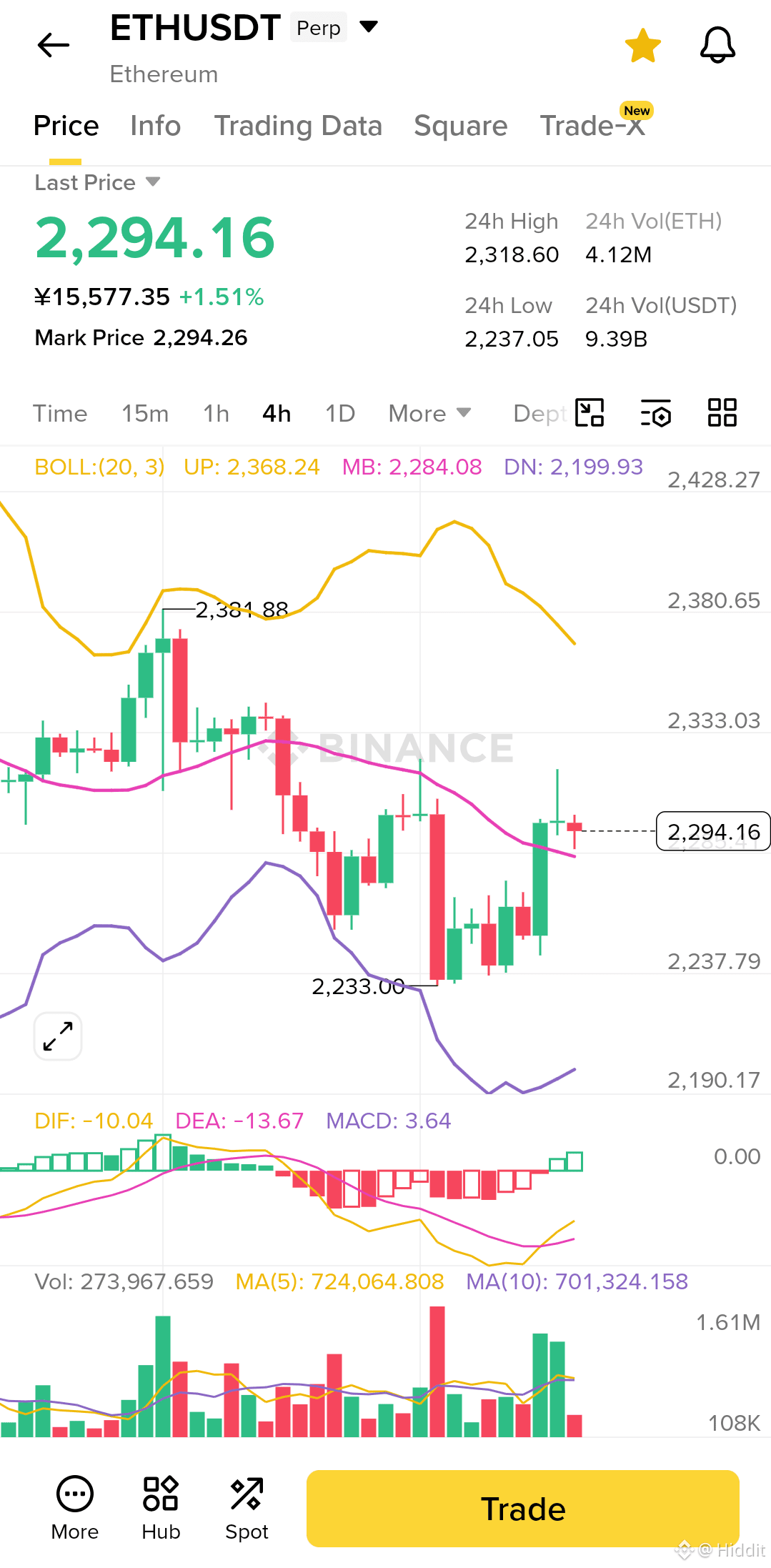
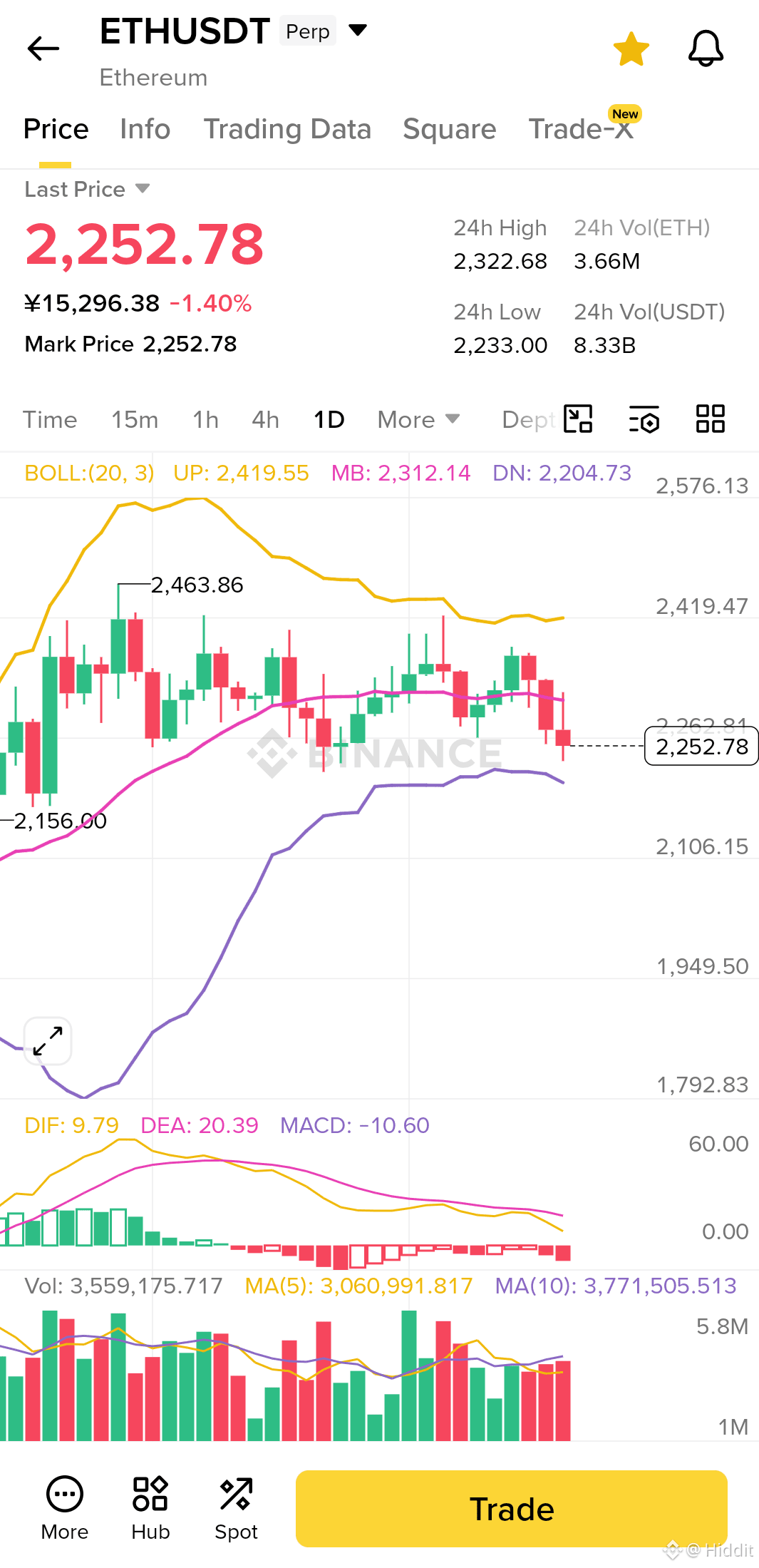
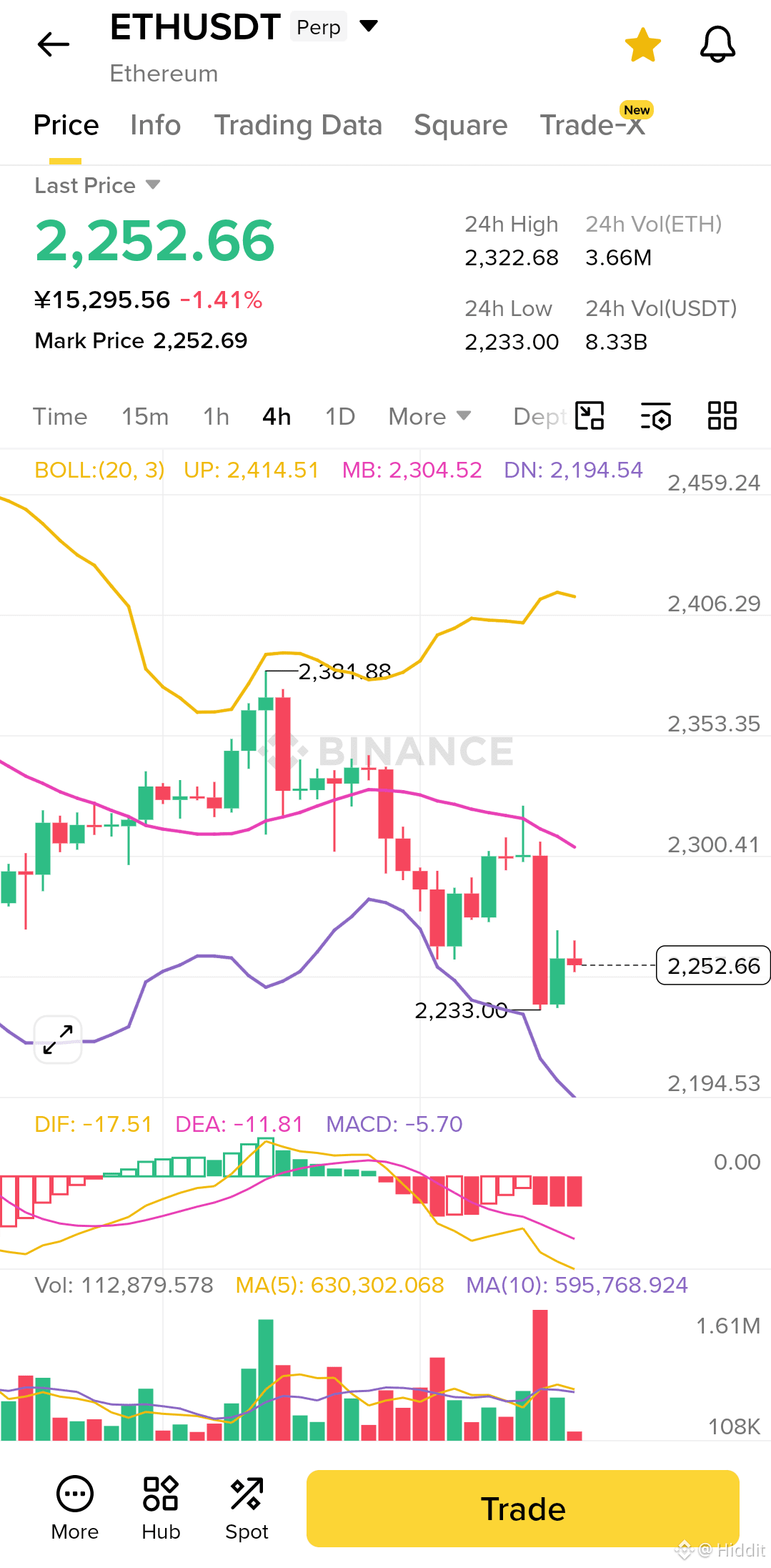
From the latest market snapshot, the daily chart has touched the lower Bollinger Band around 2,204. Although the 4-hour MACD is still in a death cross, the 15-minute chart is showing signs of bullish divergence, and a bounce is imminent.
Today's Trading Guide
Refuse to chase shorts: The current price is at 2,253, very close to a strong daily support level, making chasing shorts here a poor risk-reward setup.
Left-side positioning: I’ve decided to set my defenses around 2,210, with a stop-loss at 2,185. Since it’s dropped like a dog, let’s wait until this "dog" is sitting at the bottom before bringing it back home.
Take-profit settings: The first resistance to watch for a bounce is at 2,280.
☕ Insight
Trading is about finding logic when others are fearful. Yesterday’s profits are secured, today’s task is to protect the principal and patiently await that definitive "second test support" signal.
#ETH #以太坊策略 #暴跌分析 #合约交易 #风险控制
Review: Why have mainstream coins dropped like dogs?
Yesterday, ETH hit a wall at the hundred-dollar mark, facing a double whammy of macro liquidity tightening and long leverage liquidations. This slow bleed turning into a crash is essentially the market washing out weak hands.
Latest Analysis: Signs of a bottom starting to show
From the latest market snapshot, the daily chart has touched the lower Bollinger Band around 2,204. Although the 4-hour MACD is still in a death cross, the 15-minute chart is showing signs of bullish divergence, and a bounce is imminent.
Today's Trading Guide
Refuse to chase shorts: The current price is at 2,253, very close to a strong daily support level, making chasing shorts here a poor risk-reward setup.
Left-side positioning: I’ve decided to set my defenses around 2,210, with a stop-loss at 2,185. Since it’s dropped like a dog, let’s wait until this "dog" is sitting at the bottom before bringing it back home.
Take-profit settings: The first resistance to watch for a bounce is at 2,280.
☕ Insight
Trading is about finding logic when others are fearful. Yesterday’s profits are secured, today’s task is to protect the principal and patiently await that definitive "second test support" signal.
#ETH #以太坊策略 #暴跌分析 #合约交易 #风险控制
📢 Trading Recap: The Victory of Dynamic Defense, $ETH & $CL Both ‘hit the target’ in oil
ETH Flash Attack: Precise Exit, ROI 60%
Today's ETH strategy didn't trigger the planned high-level intercept since the trend wasn't in place. However, after the funding rate settlement, we caught a short-term pulse demand. Decisively entered a long position with light leverage, setting the first take-profit at 2322.
⚡ Nail-Biting Moment: The market peaked at 2321.3, just a step away from take-profit but lacked momentum.
🛠️ Trade Details: Continuously moved up the stop-loss to lock in profits. As the initial signs of a pullback appeared, we exited precisely, netting 20 points in an hour with an ROI shooting for 60%!
💡 Insights: In the absence of major market moves, compounding is king. Don't fixate on the last point of profit; focus on securing the most certain gains.
Oil $CL : Better late than never, the uptrend remains intact
Earlier entry points at 96.8 and 97.3 missed out by a bit (lowest at 97.35) since I was busy with cross-border trading and missed the ideal ticketing point. Fortunately, I followed up at a high position in time, currently enjoying a steady profit of 16%.
🔮 Future Deployment: The uptrend remains strong, but I've set two short positions at lower levels as a risk hedge to guard against sudden geopolitical shifts.
☕ Today's Trading Summary
Trading isn’t just about watching candlesticks; it’s a game against one’s own greed. The precise exit in ETH and timely ticketing in oil prove that flexibility is the moat of a qualified trader. Keep this rhythm, and today’s gains are sure to continue expanding.
#ETH #CLUSDT #合约实战 #动态止损 #TradingNotes
ETH Flash Attack: Precise Exit, ROI 60%
Today's ETH strategy didn't trigger the planned high-level intercept since the trend wasn't in place. However, after the funding rate settlement, we caught a short-term pulse demand. Decisively entered a long position with light leverage, setting the first take-profit at 2322.
⚡ Nail-Biting Moment: The market peaked at 2321.3, just a step away from take-profit but lacked momentum.
🛠️ Trade Details: Continuously moved up the stop-loss to lock in profits. As the initial signs of a pullback appeared, we exited precisely, netting 20 points in an hour with an ROI shooting for 60%!
💡 Insights: In the absence of major market moves, compounding is king. Don't fixate on the last point of profit; focus on securing the most certain gains.
Oil $CL : Better late than never, the uptrend remains intact
Earlier entry points at 96.8 and 97.3 missed out by a bit (lowest at 97.35) since I was busy with cross-border trading and missed the ideal ticketing point. Fortunately, I followed up at a high position in time, currently enjoying a steady profit of 16%.
🔮 Future Deployment: The uptrend remains strong, but I've set two short positions at lower levels as a risk hedge to guard against sudden geopolitical shifts.
☕ Today's Trading Summary
Trading isn’t just about watching candlesticks; it’s a game against one’s own greed. The precise exit in ETH and timely ticketing in oil prove that flexibility is the moat of a qualified trader. Keep this rhythm, and today’s gains are sure to continue expanding.
#ETH #CLUSDT #合约实战 #动态止损 #TradingNotes
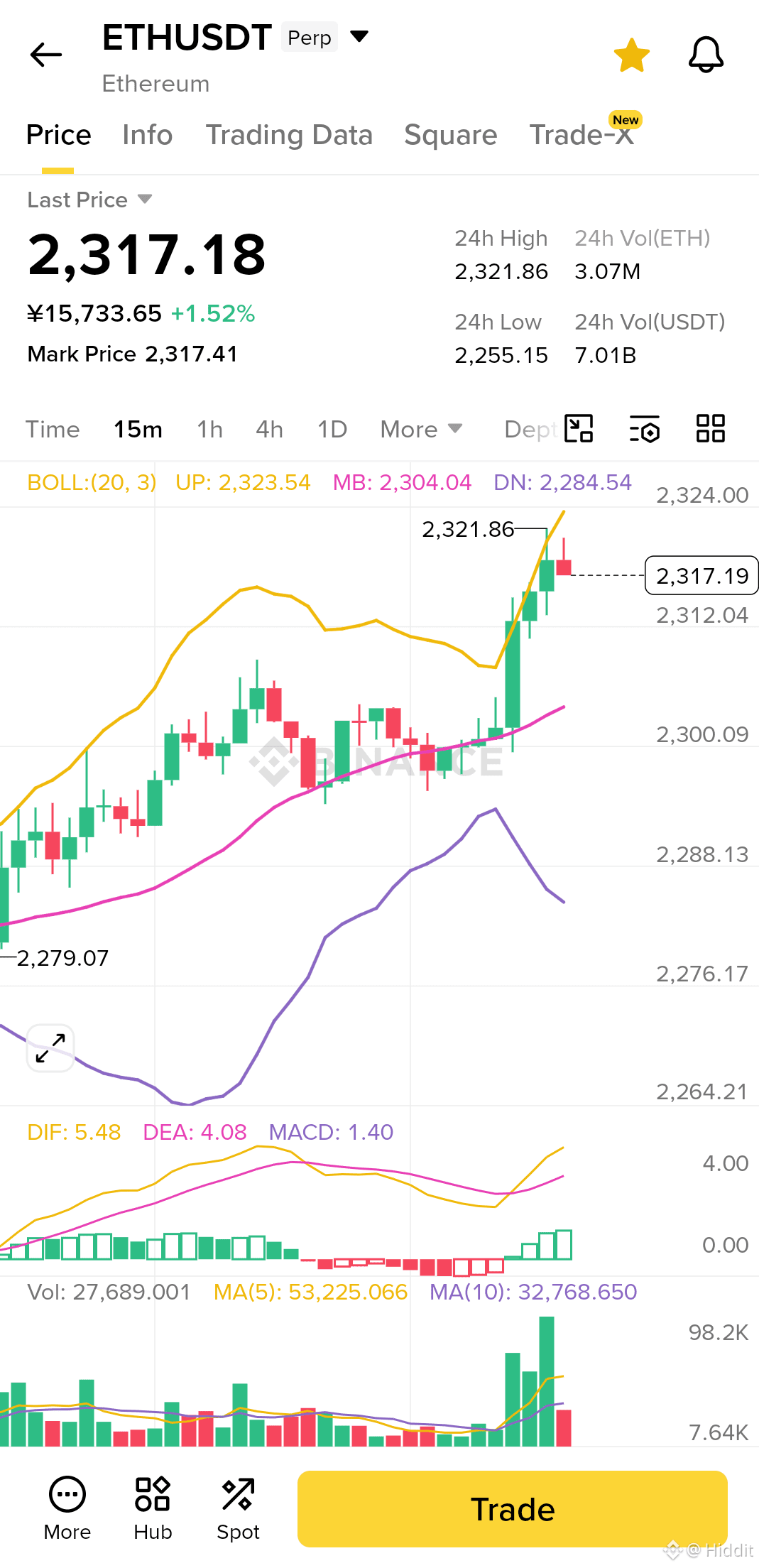

📢 $ETH Trading Recap: Reject Impatience, Wait for the Bounce After the Dip
Recap: The Tuition Fee of a 10 Point Stop Loss
Earlier, I got too eager to short during a downtrend, and a 10-point stop loss is way too "fragile" in the volatile ETH market. The quick recovery at 2380 shows that big players are aggressively buying at lower levels. Impatience is the enemy of profit; careless orders often become fuel for others.
Core Insights from the Charts
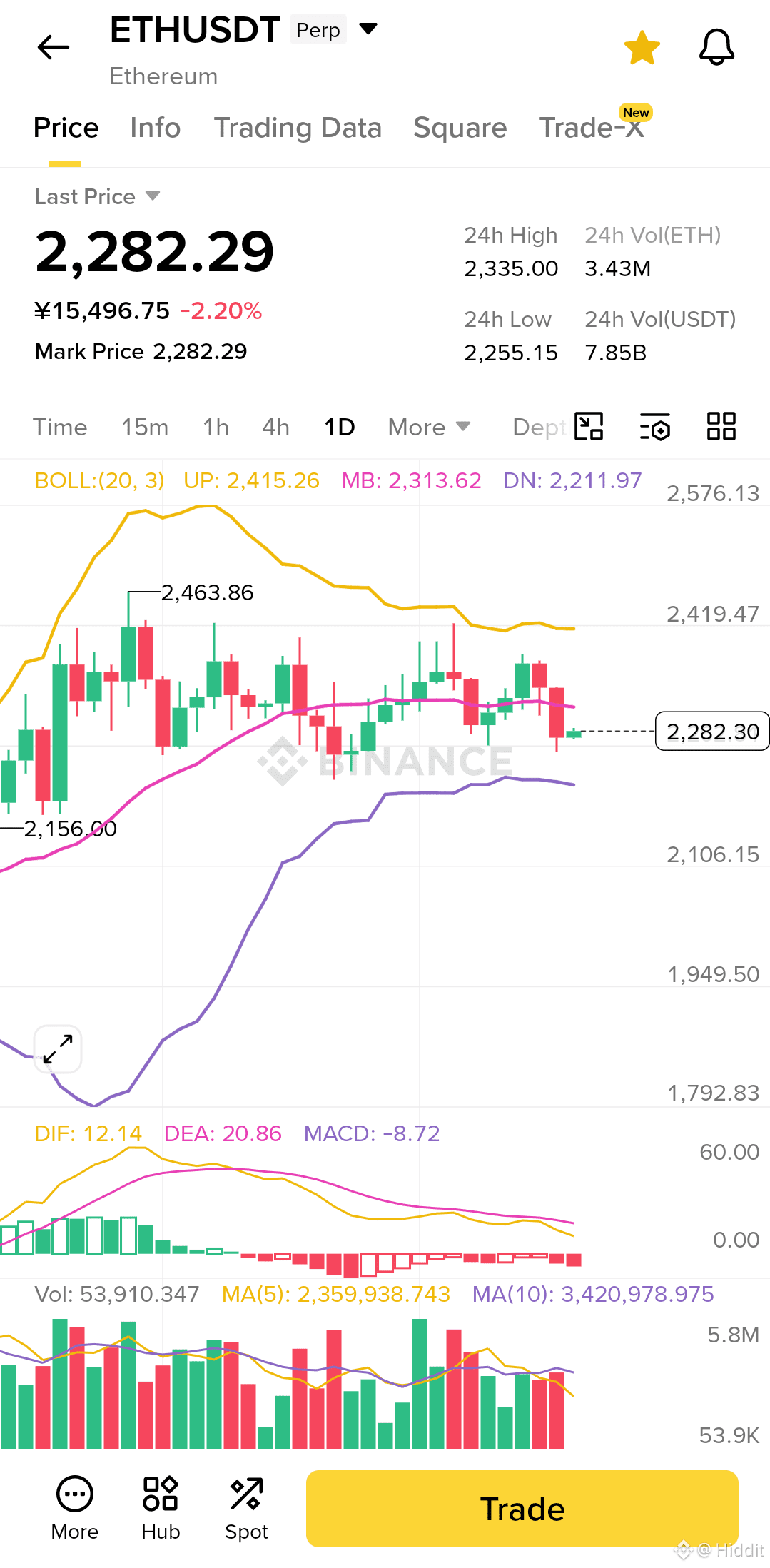
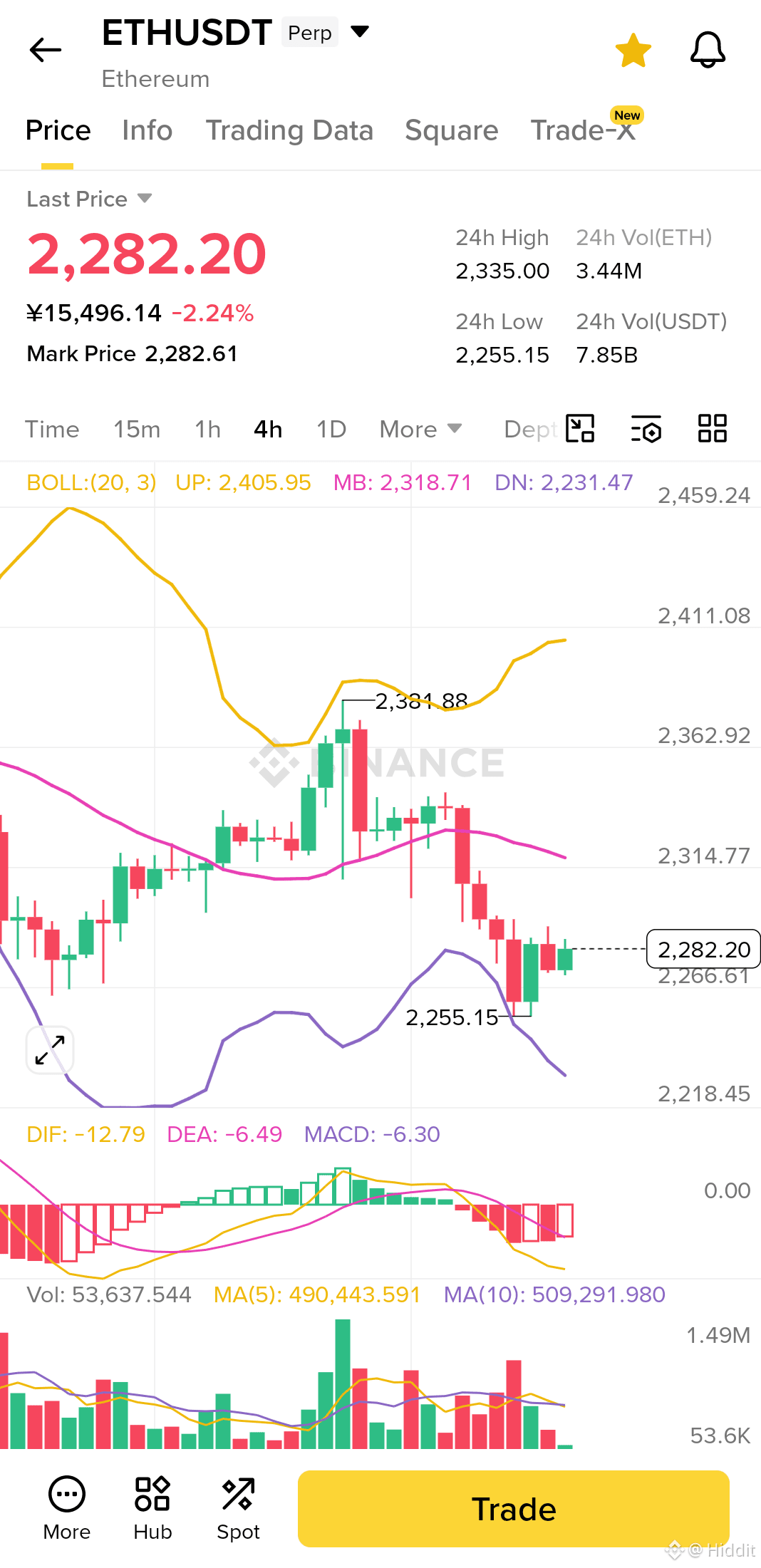
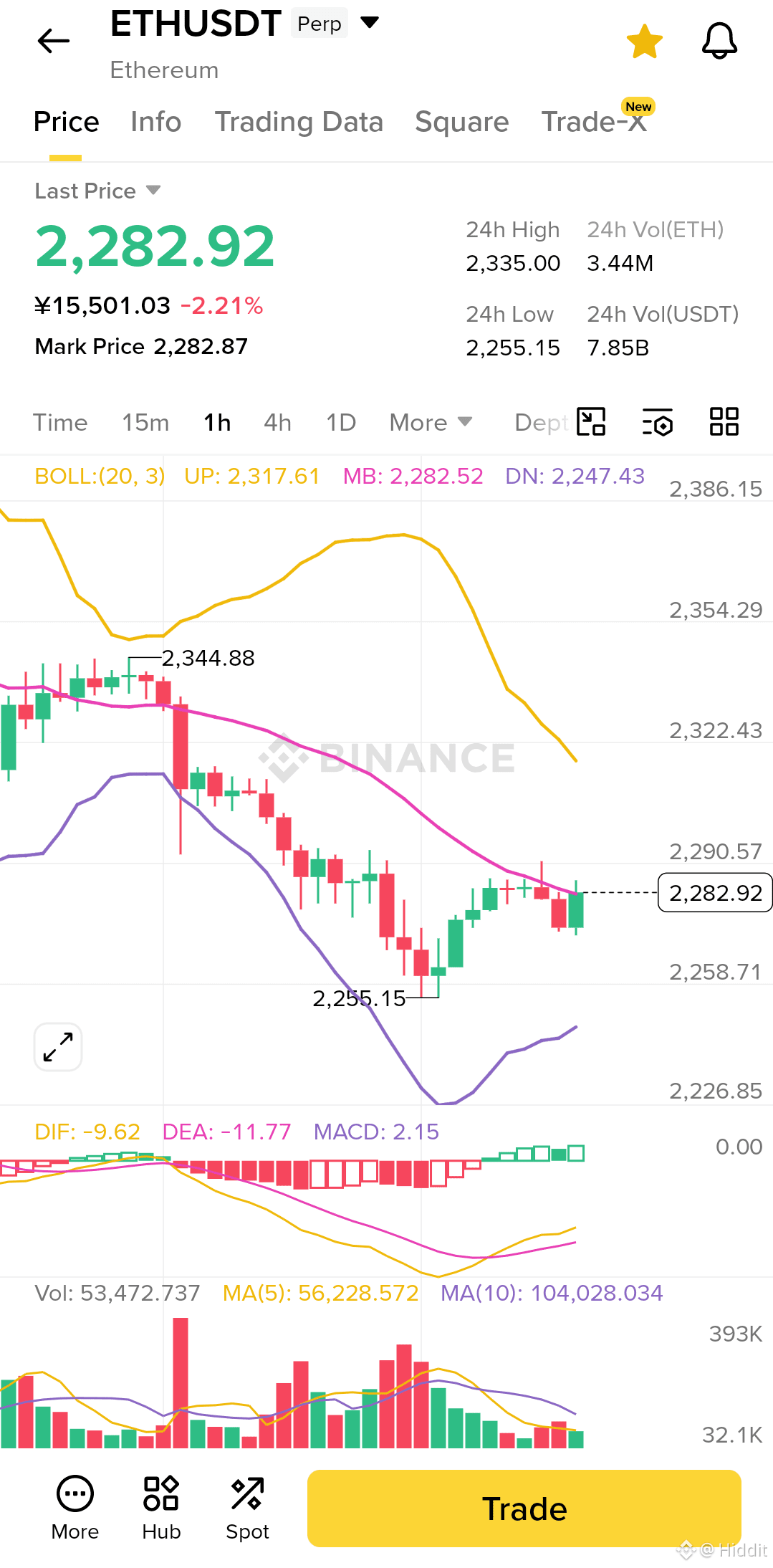
Support Confirmation: The 1-hour chart shows strong support at 2255 (today's low). As long as this level holds, the logic of a corrective bounce remains intact.
Indicator Signals: The 15-minute MACD green bars are starting to show up, indicating a short-term pullback demand to the mid-track at 2282 or even an upward attack.
Mid-term Pressure: The 4-hour MACD is still in a death cross; a bounce doesn't mean a reversal. The 2340 - 2380 zone remains a heavy resistance area.
Latest Entry and Exit Strategy
Shift in Strategy: From "chasing shorts" to "buying low and selling high in a range" with a wider stop loss to withstand volatility.
Long Position Setup: 2255 - 2265 USDT (buying on support retracement).
Stop Loss Suggestion: 2240 USDT (providing a sufficient 20-point buffer to avoid wicks).
Take Profit Levels: First target at 2315, and a larger target at 2340.
Short Position Interception: 2335 - 2350 USDT (consider entering on weak rebounds).
Take Profit Targets: 2280 / 2260 USDT.
☕ A Note to Myself
Slow is fast, and steady is winning. Let go of the frustration from earlier liquidated trades, stabilize the leverage, and be patient with the levels. $ETH hasn’t fully dropped yet, but it hasn’t skyrocketed either. In this wide range, patience is more valuable than skill!
#ETH #以太坊策略 #合约实战 #复盘总结 #CryptoSurvivalRules
Recap: The Tuition Fee of a 10 Point Stop Loss
Earlier, I got too eager to short during a downtrend, and a 10-point stop loss is way too "fragile" in the volatile ETH market. The quick recovery at 2380 shows that big players are aggressively buying at lower levels. Impatience is the enemy of profit; careless orders often become fuel for others.
Core Insights from the Charts
Support Confirmation: The 1-hour chart shows strong support at 2255 (today's low). As long as this level holds, the logic of a corrective bounce remains intact.
Indicator Signals: The 15-minute MACD green bars are starting to show up, indicating a short-term pullback demand to the mid-track at 2282 or even an upward attack.
Mid-term Pressure: The 4-hour MACD is still in a death cross; a bounce doesn't mean a reversal. The 2340 - 2380 zone remains a heavy resistance area.
Latest Entry and Exit Strategy
Shift in Strategy: From "chasing shorts" to "buying low and selling high in a range" with a wider stop loss to withstand volatility.
Long Position Setup: 2255 - 2265 USDT (buying on support retracement).
Stop Loss Suggestion: 2240 USDT (providing a sufficient 20-point buffer to avoid wicks).
Take Profit Levels: First target at 2315, and a larger target at 2340.
Short Position Interception: 2335 - 2350 USDT (consider entering on weak rebounds).
Take Profit Targets: 2280 / 2260 USDT.
☕ A Note to Myself
Slow is fast, and steady is winning. Let go of the frustration from earlier liquidated trades, stabilize the leverage, and be patient with the levels. $ETH hasn’t fully dropped yet, but it hasn’t skyrocketed either. In this wide range, patience is more valuable than skill!
#ETH #以太坊策略 #合约实战 #复盘总结 #CryptoSurvivalRules
📢 $CL Oil is unfazed by pullbacks, heading for bullish momentum at the 97 mark
Recap and Reflection: Missing out is part of the game
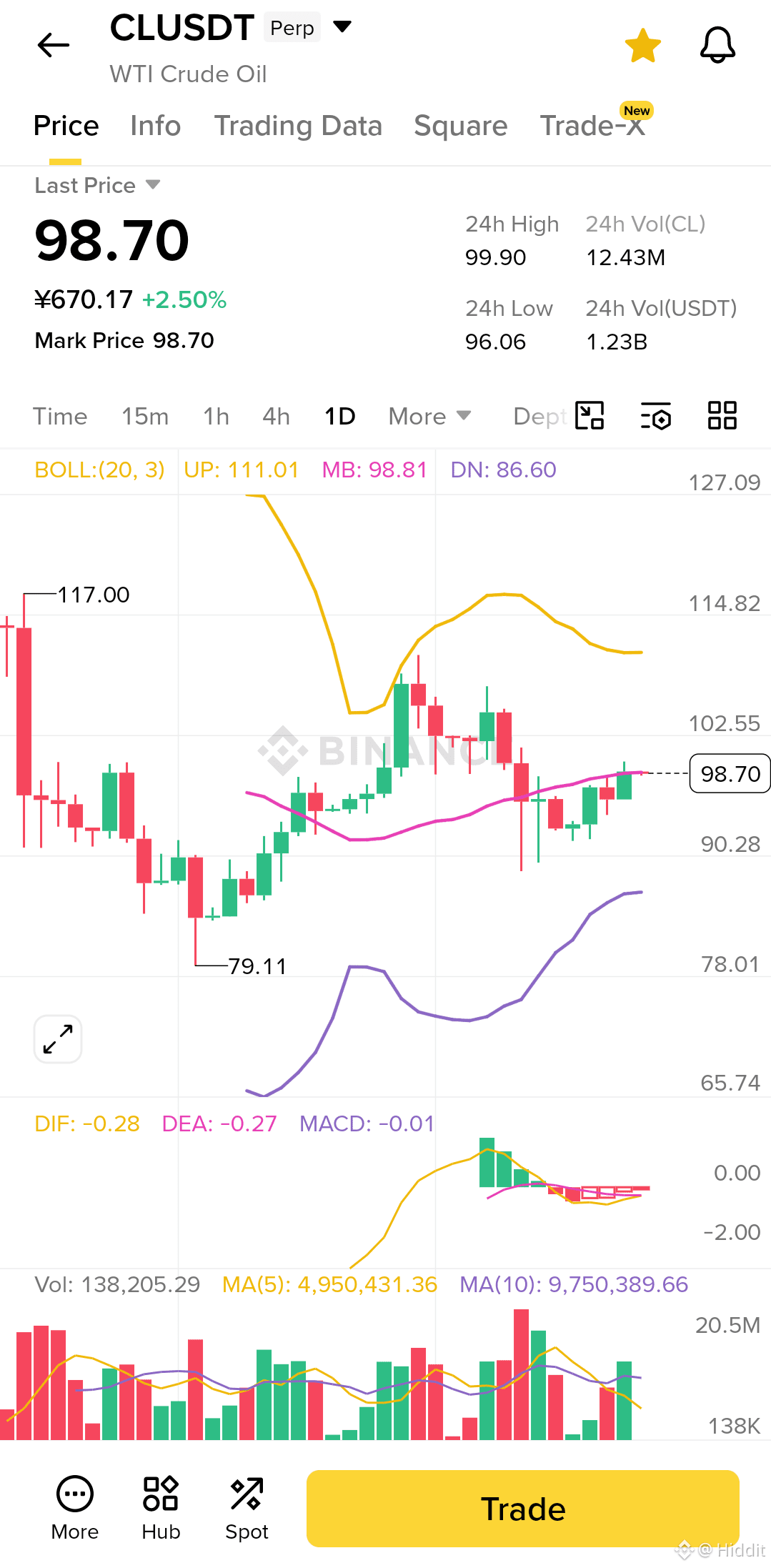
Last night, $CL pushed to 99.9, just a step away from the big 100. Unfortunately, my long position at 97.8 was too strong to pull back and I missed it. Even though I left some profit on the table, sticking to my 'no chasing highs' rule saved me from the current dip from 99.9.
Market Analysis: Rate Returns, Positioning for Power
The funding rate has returned from -0.2% to -0.038%, indicating a wave of shorts got liquidated and market sentiment has cooled. Currently, the 1-hour chart has broken below the midline and is undergoing a technical pullback. This isn't a bad sign; it's just the big players doing a second squat to gain strength for a push towards the 100 mark.
Today's Trading Logic
Avoid catching a falling knife: I wouldn't rush in close to the current price of 98.6, as the 1-hour lower band is still waving around 97.
Repositioning: I've decided to set up again in the golden support zone of 96.8 - 97.3.
Stop-loss set at 95.80, first take profit at 99.30 (to fill today’s gap down).
Target structure at 101.50 (once again pushing and betting on breaking the 100 mark).
Using 20x leverage with the 4-hour midline support, as long as geopolitical issues don't flip, every major dip is an opportunity to 'pick up cash'.
☕ Insight
Trading oil is like taming a wild horse; you can’t rush it. What I missed last night, I’m set to double up on tonight. Hold the 97, and patiently await the arrival of the $100 era!
#CLUSDT #原油行情 #实战复盘 #合约挑战 #Futures Trading
Recap and Reflection: Missing out is part of the game
Last night, $CL pushed to 99.9, just a step away from the big 100. Unfortunately, my long position at 97.8 was too strong to pull back and I missed it. Even though I left some profit on the table, sticking to my 'no chasing highs' rule saved me from the current dip from 99.9.
Market Analysis: Rate Returns, Positioning for Power
The funding rate has returned from -0.2% to -0.038%, indicating a wave of shorts got liquidated and market sentiment has cooled. Currently, the 1-hour chart has broken below the midline and is undergoing a technical pullback. This isn't a bad sign; it's just the big players doing a second squat to gain strength for a push towards the 100 mark.
Today's Trading Logic
Avoid catching a falling knife: I wouldn't rush in close to the current price of 98.6, as the 1-hour lower band is still waving around 97.
Repositioning: I've decided to set up again in the golden support zone of 96.8 - 97.3.
Stop-loss set at 95.80, first take profit at 99.30 (to fill today’s gap down).
Target structure at 101.50 (once again pushing and betting on breaking the 100 mark).
Using 20x leverage with the 4-hour midline support, as long as geopolitical issues don't flip, every major dip is an opportunity to 'pick up cash'.
☕ Insight
Trading oil is like taming a wild horse; you can’t rush it. What I missed last night, I’m set to double up on tonight. Hold the 97, and patiently await the arrival of the $100 era!
#CLUSDT #原油行情 #实战复盘 #合约挑战 #Futures Trading
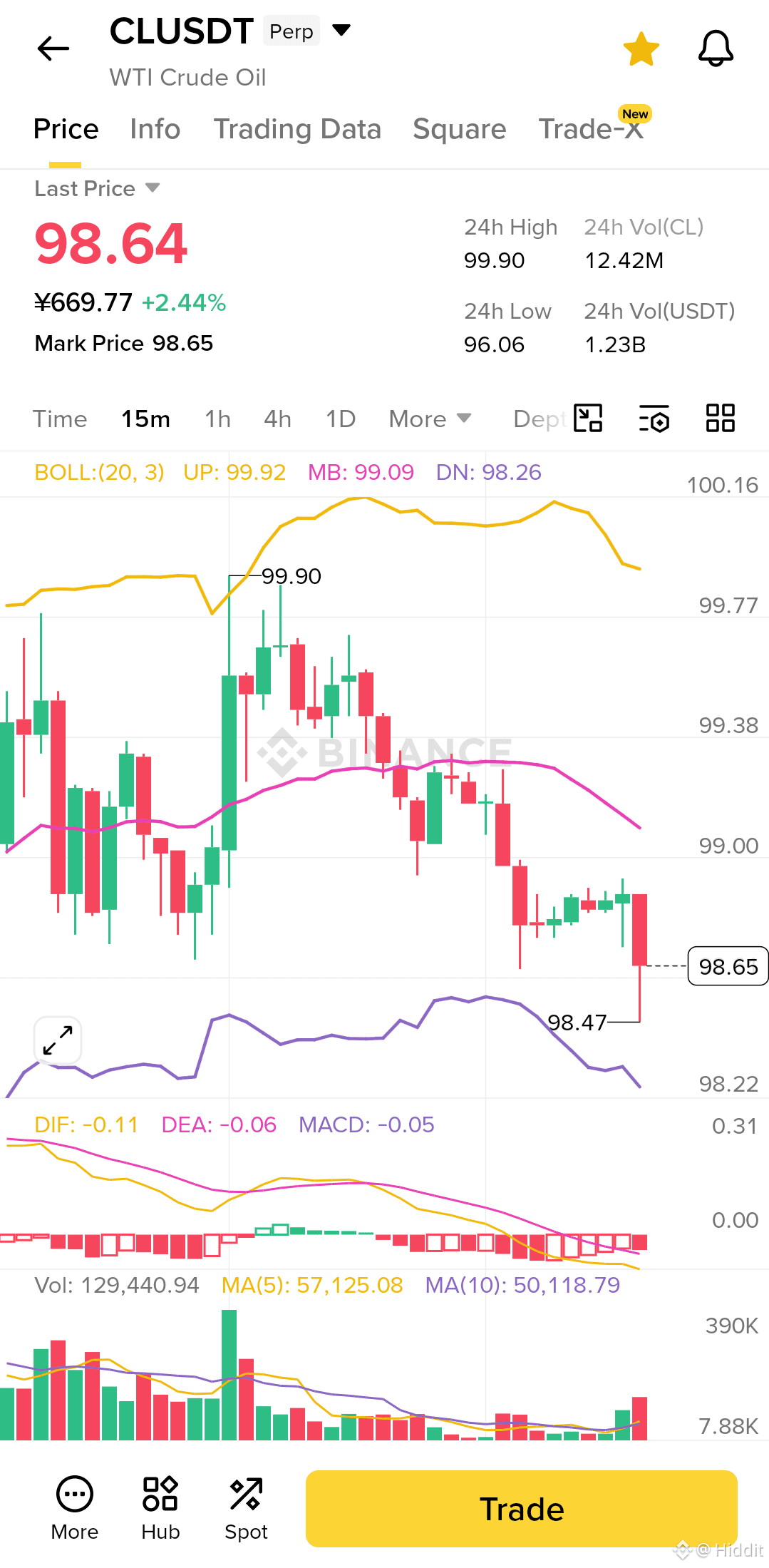
CLUSDT Trading Notes: Unlocking a New World of Crude Oil Trading with 20x Leverage!
Review: Precise Ambush, the Steady Power of 20x Leverage
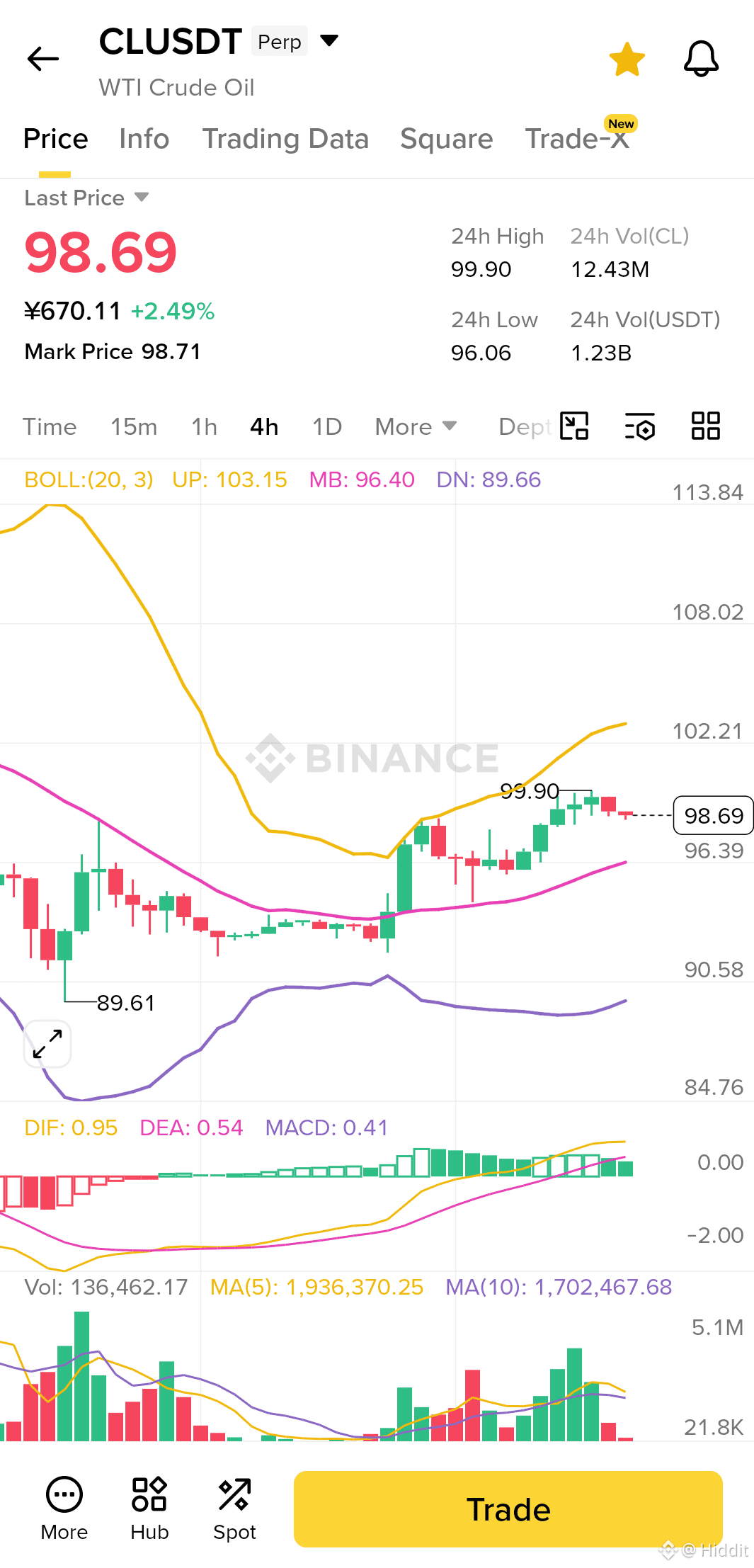
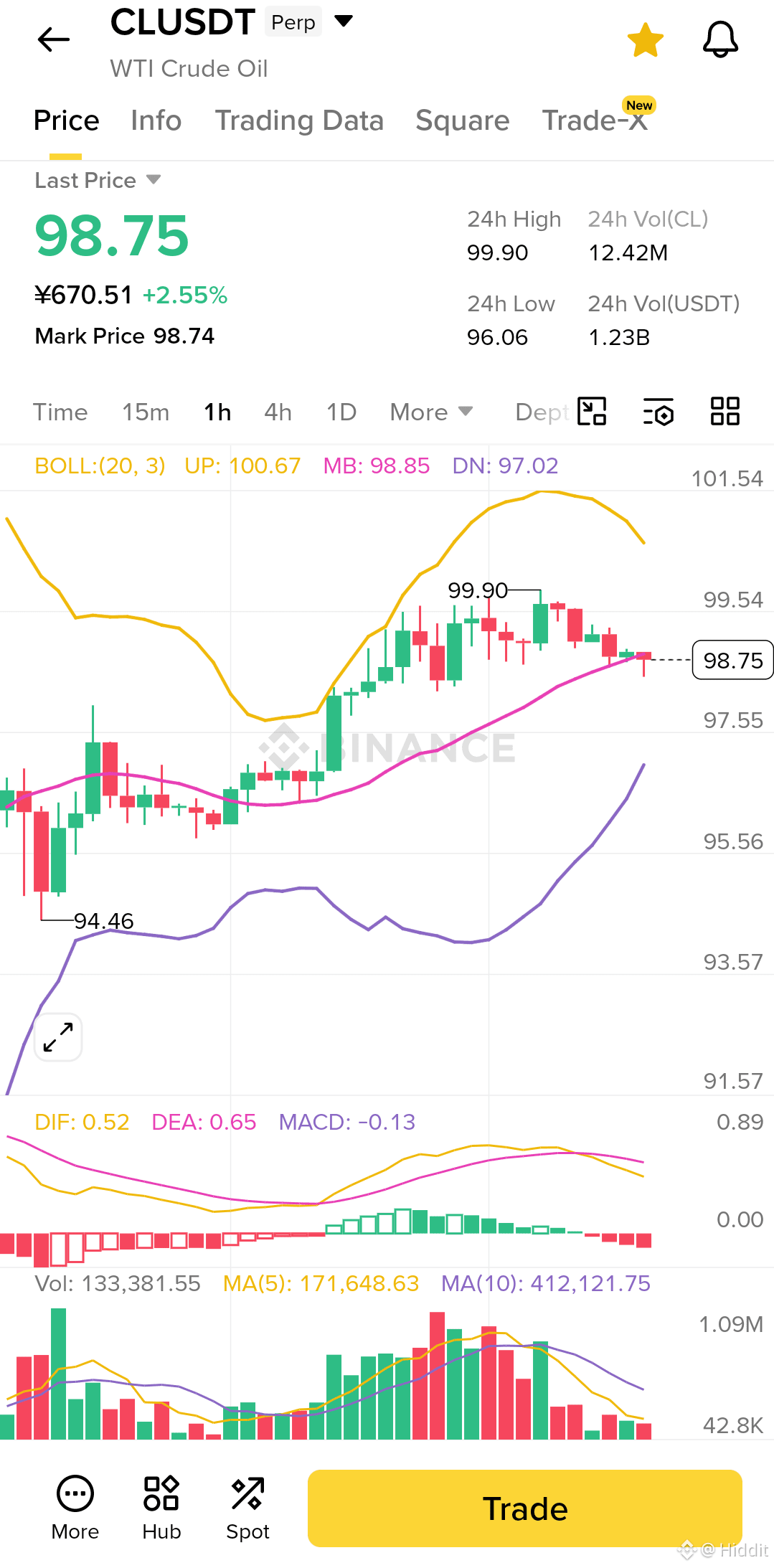
This was my third crude oil trade ($CL ). I had almost never touched this instrument before, but yesterday's trade made me realize that the logical rigor of a strategy is far more important than blindly pursuing high leverage. Following the morning's plan, I precisely placed two long orders near 96.8 and 95.8. By abandoning the previous 75x leverage and using 20x leverage, I successfully withstood the narrow range of intraday fluctuations and directly captured the "body" of this trend.
Results: 30% Profit is Just the Beginning, Target 70%-80% ROI
Currently, the position is steadily approaching a 30% profit.
Risk Control: To be on the safe side, I have raised the stop-loss to the 20% profit level. This means the trade is already running at "pure profit," allowing for extreme relaxation.
A breakout is imminent: the first profit target of 98.5 is within reach. I plan to continue "strategizing" with the remaining position, seeing if this geopolitical premium can propel it past the 100.0 mark!
The key to this move: the catalyst of negative funding rates
Another very interesting finding: CLUSDT currently has negative funding rates, and there are only 15 minutes left before the next settlement. This means the shorts are paying "protection money" to the longs. Under this sentiment, there's a high probability of a second surge triggered by short covering after settlement.
🎯 Today's strategy execution suggestions
Maintain composure: Now that 20% profit has been locked in, don't be easily shaken out by small fluctuations before reaching the psychological barrier of 100.0.
Keep an eye on 100.0: That's the watershed between bulls and bears. Once it breaks through with significant volume, the upside potential will be fully unlocked. ☕ Trading Insights: From an 80% ROI on $ETH to steady profits in crude oil, the true essence of trading lies not in the number of instruments you trade, but in whether you understand the "subtext" behind the market movements. A crude oil novice, please be kind!
#CLUSDT #原油行情 #实战复盘 #负费率 #地缘溢价
Review: Precise Ambush, the Steady Power of 20x Leverage
This was my third crude oil trade ($CL ). I had almost never touched this instrument before, but yesterday's trade made me realize that the logical rigor of a strategy is far more important than blindly pursuing high leverage. Following the morning's plan, I precisely placed two long orders near 96.8 and 95.8. By abandoning the previous 75x leverage and using 20x leverage, I successfully withstood the narrow range of intraday fluctuations and directly captured the "body" of this trend.
Results: 30% Profit is Just the Beginning, Target 70%-80% ROI
Currently, the position is steadily approaching a 30% profit.
Risk Control: To be on the safe side, I have raised the stop-loss to the 20% profit level. This means the trade is already running at "pure profit," allowing for extreme relaxation.
A breakout is imminent: the first profit target of 98.5 is within reach. I plan to continue "strategizing" with the remaining position, seeing if this geopolitical premium can propel it past the 100.0 mark!
The key to this move: the catalyst of negative funding rates
Another very interesting finding: CLUSDT currently has negative funding rates, and there are only 15 minutes left before the next settlement. This means the shorts are paying "protection money" to the longs. Under this sentiment, there's a high probability of a second surge triggered by short covering after settlement.
🎯 Today's strategy execution suggestions
Maintain composure: Now that 20% profit has been locked in, don't be easily shaken out by small fluctuations before reaching the psychological barrier of 100.0.
Keep an eye on 100.0: That's the watershed between bulls and bears. Once it breaks through with significant volume, the upside potential will be fully unlocked. ☕ Trading Insights: From an 80% ROI on $ETH to steady profits in crude oil, the true essence of trading lies not in the number of instruments you trade, but in whether you understand the "subtext" behind the market movements. A crude oil novice, please be kind!
#CLUSDT #原油行情 #实战复盘 #负费率 #地缘溢价
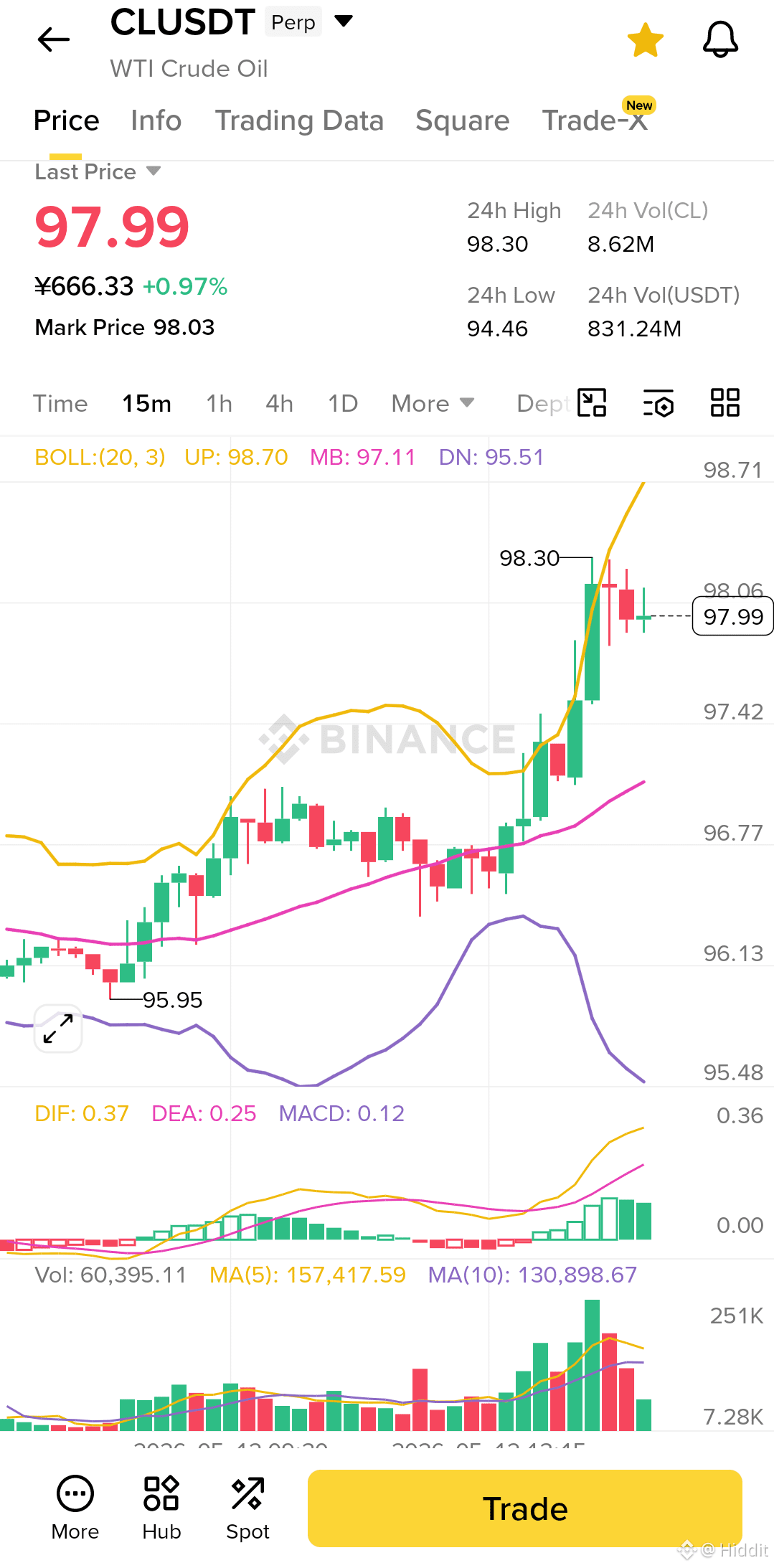
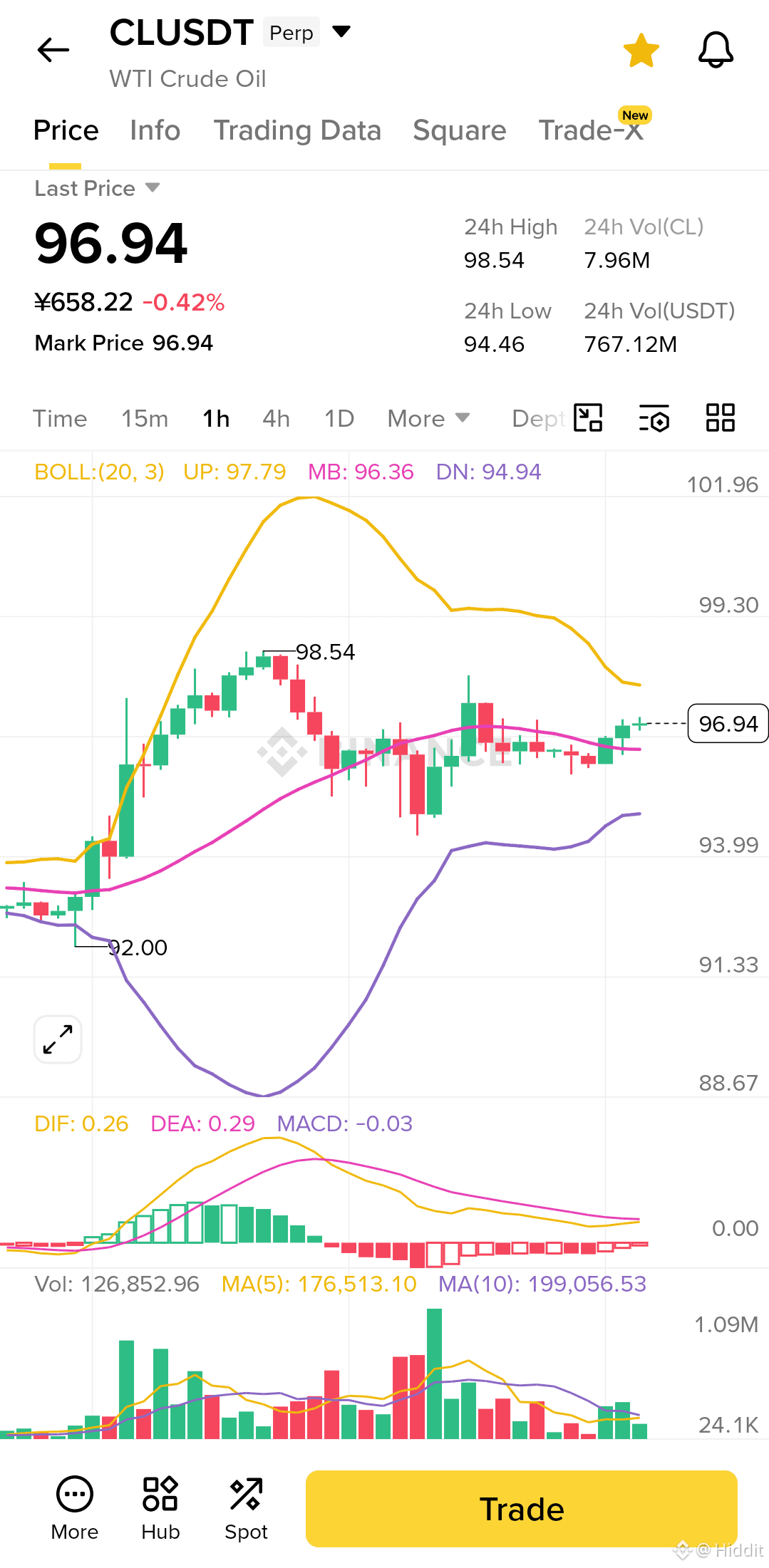
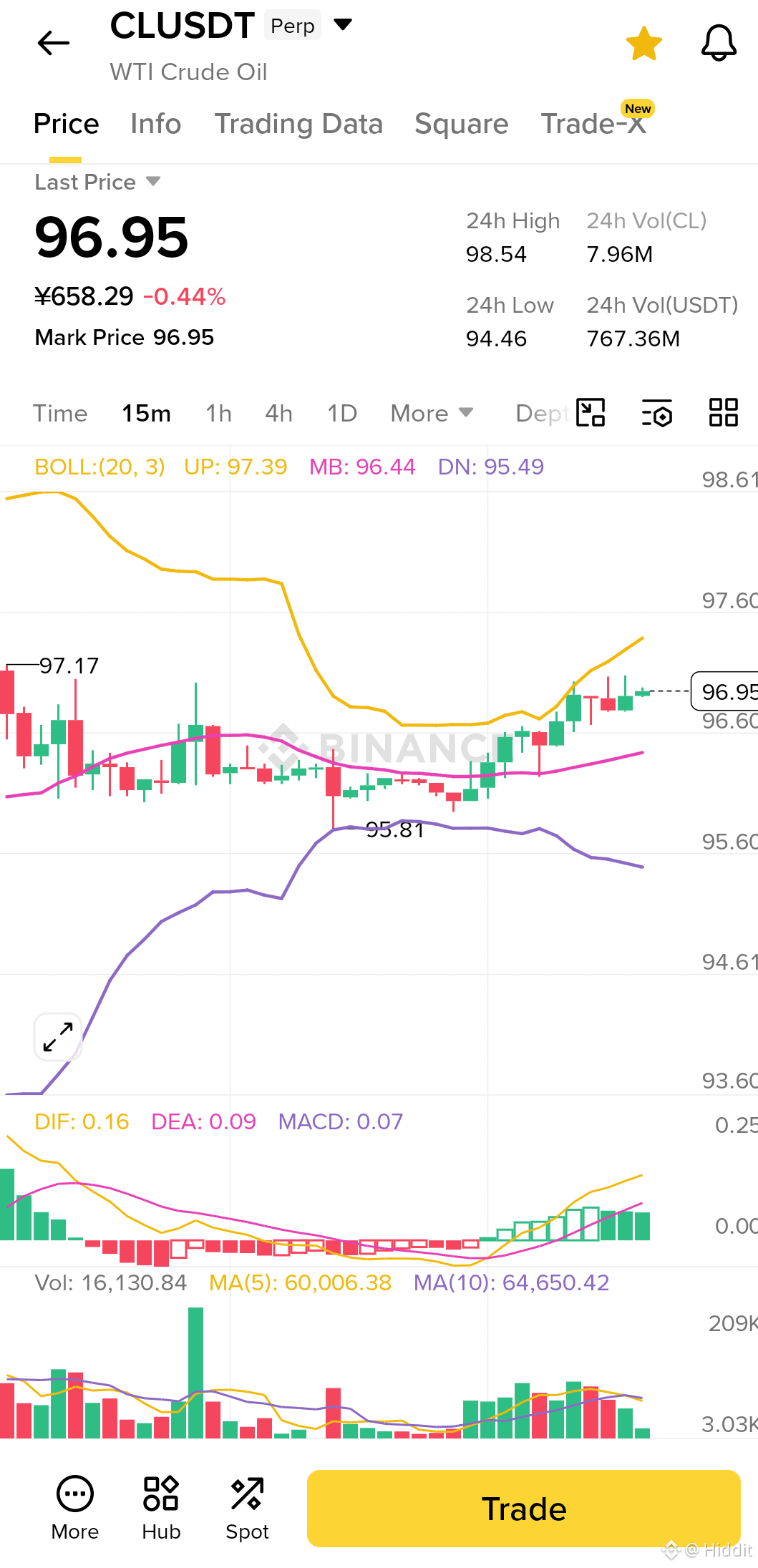
📢 Oil strategy moves with the market, defense and counterattack at the $CL 97 level
Review and Adjustment: No rigid thinking, adapt to real-time market action
In trading, the worst thing is to "seek the sword in the boat." The previously set entry point of 98.30 is now invalid against the current price of 96.88. The pullback from last night's high indicates that the bears still have power before the $100 mark, but my bullish logic regarding the Iran situation remains unchanged.
Trading Logic
Since the price has returned to 96.88, this actually provides us with a low-entry, high-risk-reward opportunity. I’ve decided to drop the high sell orders and instead enter around 97.00 in real-time.
Latest Strategy
Entry: 96.80 - 97.30
Stop Loss: 95.80 (to give the trend some breathing room)
Target: First look at 98.50, broader target 100+
☕ Insight
The advantage of 20x leverage is that we don't need to be precise to every decimal point; as long as the big picture (geopolitical premium) remains unchanged, entering near 97 is a high-value "ambush."
Don't chase highs, don't wait to get burned, only play the trends that have the best odds!
💡 Suggestion:
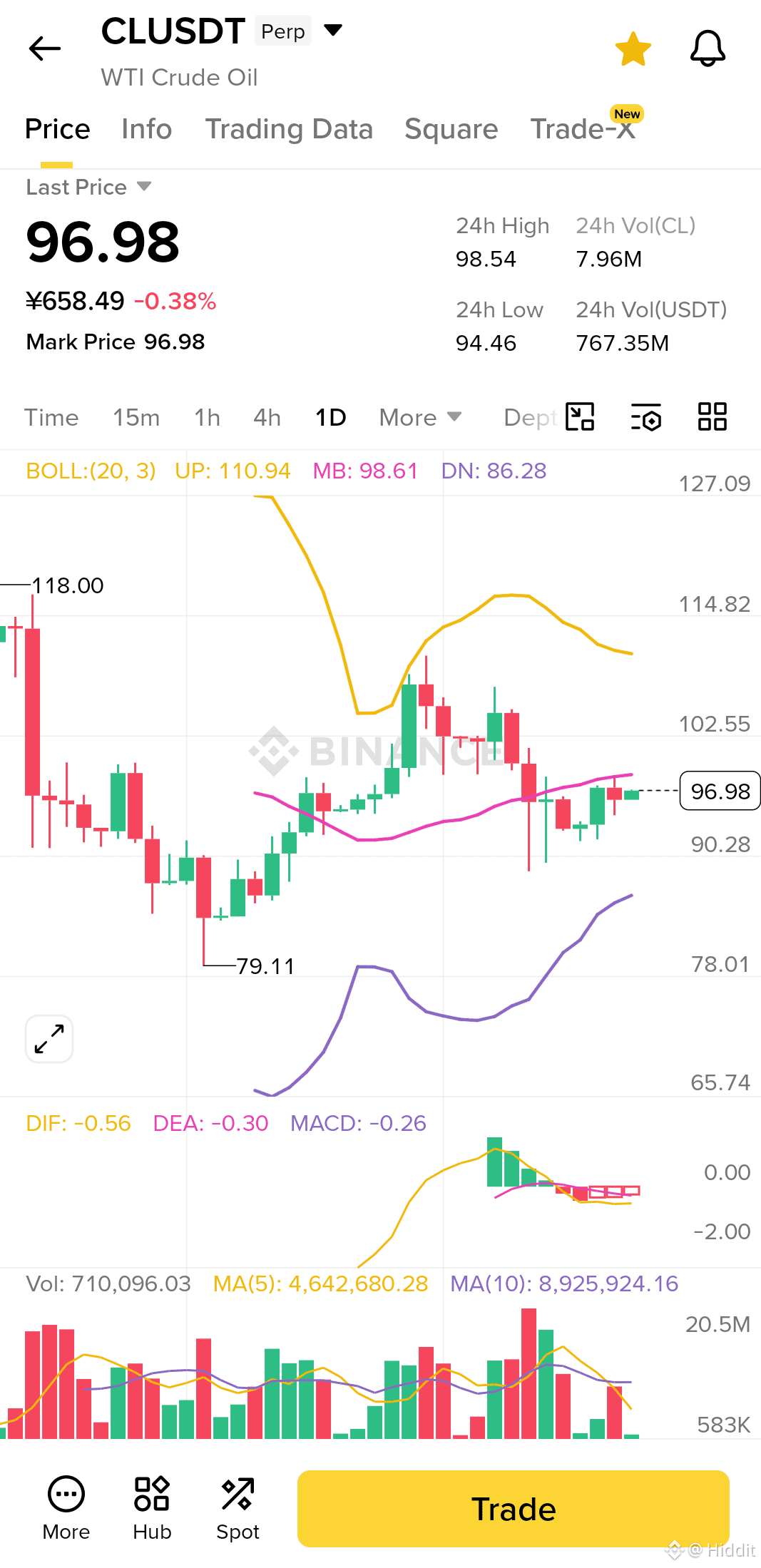
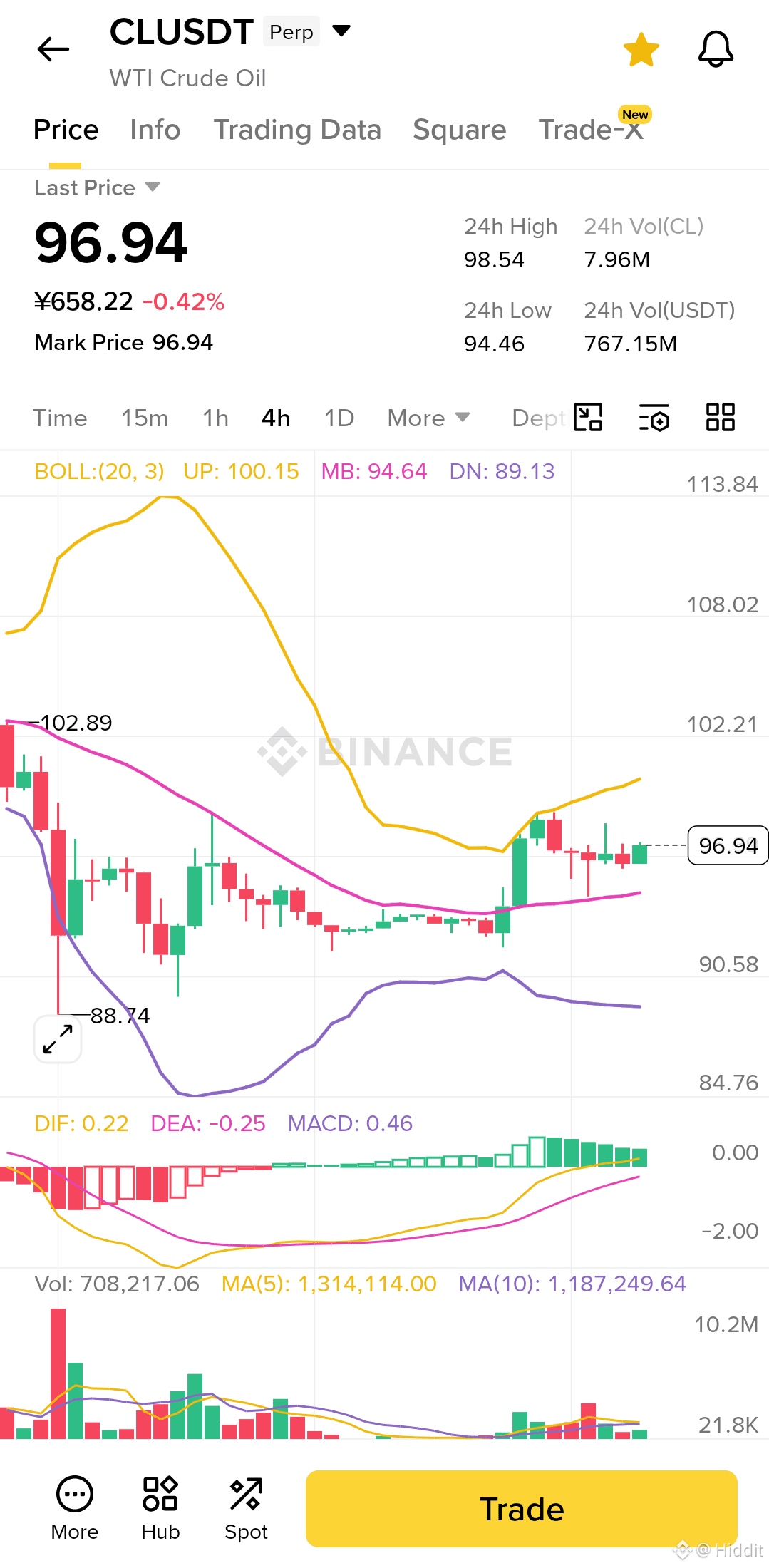
Since we’re observing the price at $CL at 96.88, don’t rush to go all in. You can enter the first batch at 96.90; if it holds 96.50 and rebounds, then add a second batch. Remember, oil’s "grind" is no less than $ETH , stay steady!
#CLUSDT #原油策略 #实战复盘 #TradingMindset
Review and Adjustment: No rigid thinking, adapt to real-time market action
In trading, the worst thing is to "seek the sword in the boat." The previously set entry point of 98.30 is now invalid against the current price of 96.88. The pullback from last night's high indicates that the bears still have power before the $100 mark, but my bullish logic regarding the Iran situation remains unchanged.
Trading Logic
Since the price has returned to 96.88, this actually provides us with a low-entry, high-risk-reward opportunity. I’ve decided to drop the high sell orders and instead enter around 97.00 in real-time.
Latest Strategy
Entry: 96.80 - 97.30
Stop Loss: 95.80 (to give the trend some breathing room)
Target: First look at 98.50, broader target 100+
☕ Insight
The advantage of 20x leverage is that we don't need to be precise to every decimal point; as long as the big picture (geopolitical premium) remains unchanged, entering near 97 is a high-value "ambush."
Don't chase highs, don't wait to get burned, only play the trends that have the best odds!
💡 Suggestion:
Since we’re observing the price at $CL at 96.88, don’t rush to go all in. You can enter the first batch at 96.90; if it holds 96.50 and rebounds, then add a second batch. Remember, oil’s "grind" is no less than $ETH , stay steady!
#CLUSDT #原油策略 #实战复盘 #TradingMindset
Log in to explore more content