

币圈小贝贝
229 Posts

币圈小贝贝
Report
Block User
X:XiaoKongLong_88 , 6 年加密市场经历 , 牛市里见过疯狂,熊市里见过人性
11 Following
1.7K+ Followers
1.2K+ Liked
Posts
All
Live
·
--
#比特币跌破8.4万美元
Bitcoin has barely moved over the past two weeks. Traders watching the charts have their eyes on the $84,000 mark, but what’s really holding the market back may not be on the charts..
[🔄 进群聊仓位](https://app.binance.com/uni-qr/F6dwNqgx)
Bitcoin was trading at $83,641 on Wednesday, with major coins weakening in tandem. But zoom out, and prices have barely changed over the past two weeks.. The market sees this as a consolidation within a stepwise climb. Whether Bitcoin can push up to $87,000 depends not on the chart pattern, but on whether money flows back into U.S. spot Bitcoin ETFs..
ETFs were still the main story in September, with net inflows of about $2.6 billion for the month. The week ending September 25 alone contributed around $2.39 billion, while daily inflows briefly came close to $999 million on September 21.. But demand cooled markedly after that: inflows fell to just $241 million last week and have totaled only $28 million so far this week..
The money hasn’t left; it has simply paused.. The ETF buying that drove September’s rally has stepped aside, and prices have stalled.. One market observer says the threshold to watch is net inflows of more than $300 million a day for several consecutive trading days—only then would institutional demand truly be back.. A data executive takes the opposite view, arguing that large daily inflows matter more than small amounts accumulated over a longer period. Of the 190 trading days so far this year, 93 saw net outflows, or 48%, yet ETFs have still recorded $1.2 billion in net inflows for the year. That’s why weekly and monthly data are more worth watching than daily figures..
More noteworthy is the shift in the relative positioning of capital between major coins.. The daily Ethereum-to-Bitcoin ratio has fallen below the Ichimoku cloud, a signal usually read as weakening momentum. If the breakdown holds, Ethereum’s uptrend relative to Bitcoin may already be over.. Immediate support is near the September 4 low of 0.03059. A further break below that level would provide clearer bearish confirmation.. When this line moves, the allocation of funds between the two tends to shift with it..
The macro backdrop hasn’t helped either. Oil prices rose after tankers were attacked in the Strait of Hormuz, pushing Treasury yields and the U.S. dollar higher. Bitcoin briefly fell below $84,000.. So the current picture is this: dip-buying and dollar-cost averaging are still slowly building, and many are targeting prices above $100,000. But without a surge in ETF inflows, the sideways trading is likely to drag on.. The key isn’t a particular support level, but the day ETF net inflows climb back above $300 million and stay there for several days in a row.. Until then, this consolidation is simply a waiting game..
#比特币跌破8.4万美元
Bitcoin has barely moved over the past two weeks. Traders watching the charts have their eyes on the $84,000 mark, but what’s really holding the market back may not be on the charts..
🔄 进群聊仓位
Bitcoin was trading at $83,641 on Wednesday, with major coins weakening in tandem. But zoom out, and prices have barely changed over the past two weeks.. The market sees this as a consolidation within a stepwise climb. Whether Bitcoin can push up to $87,000 depends not on the chart pattern, but on whether money flows back into U.S. spot Bitcoin ETFs..
ETFs were still the main story in September, with net inflows of about $2.6 billion for the month. The week ending September 25 alone contributed around $2.39 billion, while daily inflows briefly came close to $999 million on September 21.. But demand cooled markedly after that: inflows fell to just $241 million last week and have totaled only $28 million so far this week..
The money hasn’t left; it has simply paused.. The ETF buying that drove September’s rally has stepped aside, and prices have stalled.. One market observer says the threshold to watch is net inflows of more than $300 million a day for several consecutive trading days—only then would institutional demand truly be back.. A data executive takes the opposite view, arguing that large daily inflows matter more than small amounts accumulated over a longer period. Of the 190 trading days so far this year, 93 saw net outflows, or 48%, yet ETFs have still recorded $1.2 billion in net inflows for the year. That’s why weekly and monthly data are more worth watching than daily figures..
More noteworthy is the shift in the relative positioning of capital between major coins.. The daily Ethereum-to-Bitcoin ratio has fallen below the Ichimoku cloud, a signal usually read as weakening momentum. If the breakdown holds, Ethereum’s uptrend relative to Bitcoin may already be over.. Immediate support is near the September 4 low of 0.03059. A further break below that level would provide clearer bearish confirmation.. When this line moves, the allocation of funds between the two tends to shift with it..
The macro backdrop hasn’t helped either. Oil prices rose after tankers were attacked in the Strait of Hormuz, pushing Treasury yields and the U.S. dollar higher. Bitcoin briefly fell below $84,000.. So the current picture is this: dip-buying and dollar-cost averaging are still slowly building, and many are targeting prices above $100,000. But without a surge in ETF inflows, the sideways trading is likely to drag on.. The key isn’t a particular support level, but the day ETF net inflows climb back above $300 million and stay there for several days in a row.. Until then, this consolidation is simply a waiting game..
Bitcoin has barely moved over the past two weeks. Traders watching the charts have their eyes on the $84,000 mark, but what’s really holding the market back may not be on the charts..
🔄 进群聊仓位
Bitcoin was trading at $83,641 on Wednesday, with major coins weakening in tandem. But zoom out, and prices have barely changed over the past two weeks.. The market sees this as a consolidation within a stepwise climb. Whether Bitcoin can push up to $87,000 depends not on the chart pattern, but on whether money flows back into U.S. spot Bitcoin ETFs..
ETFs were still the main story in September, with net inflows of about $2.6 billion for the month. The week ending September 25 alone contributed around $2.39 billion, while daily inflows briefly came close to $999 million on September 21.. But demand cooled markedly after that: inflows fell to just $241 million last week and have totaled only $28 million so far this week..
The money hasn’t left; it has simply paused.. The ETF buying that drove September’s rally has stepped aside, and prices have stalled.. One market observer says the threshold to watch is net inflows of more than $300 million a day for several consecutive trading days—only then would institutional demand truly be back.. A data executive takes the opposite view, arguing that large daily inflows matter more than small amounts accumulated over a longer period. Of the 190 trading days so far this year, 93 saw net outflows, or 48%, yet ETFs have still recorded $1.2 billion in net inflows for the year. That’s why weekly and monthly data are more worth watching than daily figures..
More noteworthy is the shift in the relative positioning of capital between major coins.. The daily Ethereum-to-Bitcoin ratio has fallen below the Ichimoku cloud, a signal usually read as weakening momentum. If the breakdown holds, Ethereum’s uptrend relative to Bitcoin may already be over.. Immediate support is near the September 4 low of 0.03059. A further break below that level would provide clearer bearish confirmation.. When this line moves, the allocation of funds between the two tends to shift with it..
The macro backdrop hasn’t helped either. Oil prices rose after tankers were attacked in the Strait of Hormuz, pushing Treasury yields and the U.S. dollar higher. Bitcoin briefly fell below $84,000.. So the current picture is this: dip-buying and dollar-cost averaging are still slowly building, and many are targeting prices above $100,000. But without a surge in ETF inflows, the sideways trading is likely to drag on.. The key isn’t a particular support level, but the day ETF net inflows climb back above $300 million and stay there for several days in a row.. Until then, this consolidation is simply a waiting game..
1
799
·
--
A crypto media outlet is looking for a buyer. At first glance, it looks like industry gossip; look closer, and it’s something else..
[🔥 进群看风向](https://app.binance.com/uni-qr/F6dwNqgx)
Cointelegraph is seeking a sale, according to a source familiar with the matter. The price hasn’t been disclosed..What really stands out isn’t the company itself, but the numbers behind it. In December 2024, its website still had more than 12 million visits a month. By September 1 this year, that figure had fallen to just over 700,000..That’s a drop of more than 90% in less than two years..
The reason is pretty straightforward..In October 2025, Google issued a manual action against the site, and its organic traffic plunged by around 80%—as if it had been wiped from search results..Add to that a prolonged lull in crypto markets, and users were already turning away from the news. Several crypto newsrooms are going through a rough winter..
But what’s really worth looking at isn’t who’s struggling..It’s how the business of attention is being valued differently..Crypto media used to be the information gateway for retail investors: whoever got the headline got the traffic, and traffic meant ad revenue and influence..Now the gateways are being redistributed. A market move gets reposted in community chats and KOL graphics within three minutes, while AI gives users the answer directly. No one needs to click into a website and dig around anymore..
From an investor’s perspective, this is really the same story as the market itself..When markets aren’t moving, attention pulls back. When attention pulls back, the cash flow of content-driven businesses is the first to break; prices are the last to react..A media outlet putting itself up for sale may seem far removed from crypto prices, but it’s actually one of the first links in the chain to feel the pressure..
And here’s the twist..If the market picks up again, media valuations could bounce back quickly—but that gateway isn’t coming back..What’s really worth watching isn’t who buys it, but where retail investors will go the next time they look for information..As distribution power shifts from media outlets to platforms and communities, whoever controls that gateway will control the narrative in the next cycle..
A crypto media outlet is looking for a buyer. At first glance, it looks like industry gossip; look closer, and it’s something else..
🔥 进群看风向
Cointelegraph is seeking a sale, according to a source familiar with the matter. The price hasn’t been disclosed..What really stands out isn’t the company itself, but the numbers behind it. In December 2024, its website still had more than 12 million visits a month. By September 1 this year, that figure had fallen to just over 700,000..That’s a drop of more than 90% in less than two years..
The reason is pretty straightforward..In October 2025, Google issued a manual action against the site, and its organic traffic plunged by around 80%—as if it had been wiped from search results..Add to that a prolonged lull in crypto markets, and users were already turning away from the news. Several crypto newsrooms are going through a rough winter..
But what’s really worth looking at isn’t who’s struggling..It’s how the business of attention is being valued differently..Crypto media used to be the information gateway for retail investors: whoever got the headline got the traffic, and traffic meant ad revenue and influence..Now the gateways are being redistributed. A market move gets reposted in community chats and KOL graphics within three minutes, while AI gives users the answer directly. No one needs to click into a website and dig around anymore..
From an investor’s perspective, this is really the same story as the market itself..When markets aren’t moving, attention pulls back. When attention pulls back, the cash flow of content-driven businesses is the first to break; prices are the last to react..A media outlet putting itself up for sale may seem far removed from crypto prices, but it’s actually one of the first links in the chain to feel the pressure..
And here’s the twist..If the market picks up again, media valuations could bounce back quickly—but that gateway isn’t coming back..What’s really worth watching isn’t who buys it, but where retail investors will go the next time they look for information..As distribution power shifts from media outlets to platforms and communities, whoever controls that gateway will control the narrative in the next cycle..
🔥 进群看风向
Cointelegraph is seeking a sale, according to a source familiar with the matter. The price hasn’t been disclosed..What really stands out isn’t the company itself, but the numbers behind it. In December 2024, its website still had more than 12 million visits a month. By September 1 this year, that figure had fallen to just over 700,000..That’s a drop of more than 90% in less than two years..
The reason is pretty straightforward..In October 2025, Google issued a manual action against the site, and its organic traffic plunged by around 80%—as if it had been wiped from search results..Add to that a prolonged lull in crypto markets, and users were already turning away from the news. Several crypto newsrooms are going through a rough winter..
But what’s really worth looking at isn’t who’s struggling..It’s how the business of attention is being valued differently..Crypto media used to be the information gateway for retail investors: whoever got the headline got the traffic, and traffic meant ad revenue and influence..Now the gateways are being redistributed. A market move gets reposted in community chats and KOL graphics within three minutes, while AI gives users the answer directly. No one needs to click into a website and dig around anymore..
From an investor’s perspective, this is really the same story as the market itself..When markets aren’t moving, attention pulls back. When attention pulls back, the cash flow of content-driven businesses is the first to break; prices are the last to react..A media outlet putting itself up for sale may seem far removed from crypto prices, but it’s actually one of the first links in the chain to feel the pressure..
And here’s the twist..If the market picks up again, media valuations could bounce back quickly—but that gateway isn’t coming back..What’s really worth watching isn’t who buys it, but where retail investors will go the next time they look for information..As distribution power shifts from media outlets to platforms and communities, whoever controls that gateway will control the narrative in the next cycle..

127
·
--
One person first shouted, “Move the assets now!” while another said, “Don’t rush...” The difference between them isn’t a technical judgment—it’s how they understand the timeline..
[🔄 进群看机构动作](https://app.binance.com/uni-qr/F6dwNqgx)
Ethereum Foundation researcher Justin Drake warned over the past couple of days that, in the worst case, ECDSA elliptic-curve signatures could be cracked not in years, but within months. He advised large holders to move their assets to new addresses that have never sent a transaction. Today, Vitalik responded in a post, saying he doesn’t recommend that users rush to move their funds to new wallets, but that they should take seriously the risks AI’s acceleration of mathematical computation poses to cryptography..
The risk list has changed this time.. Most people have long assumed that elliptic curves could be broken, but hash algorithms and lattice-based cryptography would remain secure.. The new core risk areas Vitalik singled out are precisely ML-DSA, fully homomorphic encryption (FHE), and lattice-based cryptography itself.. His view is that advances in AI mathematics over the next two years could seriously weaken the practical security of lattice-based cryptography.. In other words, even the layer originally seen as a fallback for the post-quantum era may not hold up..
So his answer isn’t to run, but to change the structure.. Prioritize hash-based schemes over lattice-based ones, be highly cautious about parameter sizes in any lattice-based scheme, don’t put encrypted notes from privacy protocols on-chain—instead, transmit them off-chain—and try to handle multisig confirmations off-chain as well.. That way, if ECDSA really does run into trouble sooner than expected, multisig can at least degrade smoothly to a single-signature mode, with the party responsible for collecting signatures controlling the funds, rather than leaving them open for anyone to take..
From a capital-flow perspective, this kind of security narrative is easiest to amplify when the market is at its weakest.. It won’t change prices immediately, but it can change where money is held.. Funds may move from hot wallets and centralized custody toward self-custody, hardware wallets, multisig, and even privacy- and security-focused assets.. The real rotation starts with structure; the market usually reacts last..
But keep the opposing possibility in mind, too.. If AI fails to deliver on the threat to lattice-based cryptography within two years, this bout of bunker mode will have been nothing more than a wave of sentiment, and the money will eventually return to whatever is easiest.. What matters isn’t who shouts the loudest, but whether the underlying infrastructure—wallet standards, multisig schemes, and address management—actually changes.. The next signal to watch is whether mainstream wallets and custodians make off-chain confirmations and unused addresses the default..
One person first shouted, “Move the assets now!” while another said, “Don’t rush...” The difference between them isn’t a technical judgment—it’s how they understand the timeline..
🔄 进群看机构动作
Ethereum Foundation researcher Justin Drake warned over the past couple of days that, in the worst case, ECDSA elliptic-curve signatures could be cracked not in years, but within months. He advised large holders to move their assets to new addresses that have never sent a transaction. Today, Vitalik responded in a post, saying he doesn’t recommend that users rush to move their funds to new wallets, but that they should take seriously the risks AI’s acceleration of mathematical computation poses to cryptography..
The risk list has changed this time.. Most people have long assumed that elliptic curves could be broken, but hash algorithms and lattice-based cryptography would remain secure.. The new core risk areas Vitalik singled out are precisely ML-DSA, fully homomorphic encryption (FHE), and lattice-based cryptography itself.. His view is that advances in AI mathematics over the next two years could seriously weaken the practical security of lattice-based cryptography.. In other words, even the layer originally seen as a fallback for the post-quantum era may not hold up..
So his answer isn’t to run, but to change the structure.. Prioritize hash-based schemes over lattice-based ones, be highly cautious about parameter sizes in any lattice-based scheme, don’t put encrypted notes from privacy protocols on-chain—instead, transmit them off-chain—and try to handle multisig confirmations off-chain as well.. That way, if ECDSA really does run into trouble sooner than expected, multisig can at least degrade smoothly to a single-signature mode, with the party responsible for collecting signatures controlling the funds, rather than leaving them open for anyone to take..
From a capital-flow perspective, this kind of security narrative is easiest to amplify when the market is at its weakest.. It won’t change prices immediately, but it can change where money is held.. Funds may move from hot wallets and centralized custody toward self-custody, hardware wallets, multisig, and even privacy- and security-focused assets.. The real rotation starts with structure; the market usually reacts last..
But keep the opposing possibility in mind, too.. If AI fails to deliver on the threat to lattice-based cryptography within two years, this bout of bunker mode will have been nothing more than a wave of sentiment, and the money will eventually return to whatever is easiest.. What matters isn’t who shouts the loudest, but whether the underlying infrastructure—wallet standards, multisig schemes, and address management—actually changes.. The next signal to watch is whether mainstream wallets and custodians make off-chain confirmations and unused addresses the default..
🔄 进群看机构动作
Ethereum Foundation researcher Justin Drake warned over the past couple of days that, in the worst case, ECDSA elliptic-curve signatures could be cracked not in years, but within months. He advised large holders to move their assets to new addresses that have never sent a transaction. Today, Vitalik responded in a post, saying he doesn’t recommend that users rush to move their funds to new wallets, but that they should take seriously the risks AI’s acceleration of mathematical computation poses to cryptography..
The risk list has changed this time.. Most people have long assumed that elliptic curves could be broken, but hash algorithms and lattice-based cryptography would remain secure.. The new core risk areas Vitalik singled out are precisely ML-DSA, fully homomorphic encryption (FHE), and lattice-based cryptography itself.. His view is that advances in AI mathematics over the next two years could seriously weaken the practical security of lattice-based cryptography.. In other words, even the layer originally seen as a fallback for the post-quantum era may not hold up..
So his answer isn’t to run, but to change the structure.. Prioritize hash-based schemes over lattice-based ones, be highly cautious about parameter sizes in any lattice-based scheme, don’t put encrypted notes from privacy protocols on-chain—instead, transmit them off-chain—and try to handle multisig confirmations off-chain as well.. That way, if ECDSA really does run into trouble sooner than expected, multisig can at least degrade smoothly to a single-signature mode, with the party responsible for collecting signatures controlling the funds, rather than leaving them open for anyone to take..
From a capital-flow perspective, this kind of security narrative is easiest to amplify when the market is at its weakest.. It won’t change prices immediately, but it can change where money is held.. Funds may move from hot wallets and centralized custody toward self-custody, hardware wallets, multisig, and even privacy- and security-focused assets.. The real rotation starts with structure; the market usually reacts last..
But keep the opposing possibility in mind, too.. If AI fails to deliver on the threat to lattice-based cryptography within two years, this bout of bunker mode will have been nothing more than a wave of sentiment, and the money will eventually return to whatever is easiest.. What matters isn’t who shouts the loudest, but whether the underlying infrastructure—wallet standards, multisig schemes, and address management—actually changes.. The next signal to watch is whether mainstream wallets and custodians make off-chain confirmations and unused addresses the default..
137
·
--
#比特币跌破8.4万美元
ETH fell below $2,600. Many people see it as an ordinary pullback, but what may really be weakening are the two biggest sources of buying pressure behind it..
[🔄 进群看叙事](https://app.binance.com/uni-qr/F6dwNqgx)
The fund-flow data split in two on the same day.. Ethereum spot ETFs saw net outflows of $201.9 million—the most pronounced exodus in recent weeks—while Bitcoin ETFs still recorded net inflows.. Prices are falling, but the money hasn’t fled along with them. That difference is the key..
The second source of buying pressure is even more worth watching.. Tom Lee said plainly at Token2049 that BitMine would buy around 100,000 more ETH and stop accumulating once its holdings reached 5% of the total supply—that’s about six to seven weeks away.. On one side, ETFs are seeing outflows; on the other, the biggest corporate buyer has given a timeline for when it will stop buying. ETH is losing two structural sources of demand at the same time. This isn’t just a price issue; the composition of holders is changing..
So why is money moving into BTC now.. The macro environment is tightening, and when risk appetite contracts, capital tends to shelter in the most liquid asset with the strongest consensus, rather than stay in the one with greater volatility.. The divergence between BTC and ETH is essentially a sign that risk aversion is back; it has little to do with the relative merits of the two coins themselves..
But there’s a twist.. If this retreat in buying is only temporary, then once the macro environment improves, the hardest-hit high-beta assets often rebound the strongest—and ETH, which has seen the biggest outflows, is precisely the one with the most upside sensitivity.. The real signal isn’t how low ETH falls, but whether another institution is willing to step in after BitMine stops buying..
The next thing to watch is whether ETH ETFs see outflows for several consecutive days.. If they continue for more than three days, that won’t be a simple rotation; it will mean the narrative around ETH is changing hands..
#比特币跌破8.4万美元
ETH fell below $2,600. Many people see it as an ordinary pullback, but what may really be weakening are the two biggest sources of buying pressure behind it..
🔄 进群看叙事
The fund-flow data split in two on the same day.. Ethereum spot ETFs saw net outflows of $201.9 million—the most pronounced exodus in recent weeks—while Bitcoin ETFs still recorded net inflows.. Prices are falling, but the money hasn’t fled along with them. That difference is the key..
The second source of buying pressure is even more worth watching.. Tom Lee said plainly at Token2049 that BitMine would buy around 100,000 more ETH and stop accumulating once its holdings reached 5% of the total supply—that’s about six to seven weeks away.. On one side, ETFs are seeing outflows; on the other, the biggest corporate buyer has given a timeline for when it will stop buying. ETH is losing two structural sources of demand at the same time. This isn’t just a price issue; the composition of holders is changing..
So why is money moving into BTC now.. The macro environment is tightening, and when risk appetite contracts, capital tends to shelter in the most liquid asset with the strongest consensus, rather than stay in the one with greater volatility.. The divergence between BTC and ETH is essentially a sign that risk aversion is back; it has little to do with the relative merits of the two coins themselves..
But there’s a twist.. If this retreat in buying is only temporary, then once the macro environment improves, the hardest-hit high-beta assets often rebound the strongest—and ETH, which has seen the biggest outflows, is precisely the one with the most upside sensitivity.. The real signal isn’t how low ETH falls, but whether another institution is willing to step in after BitMine stops buying..
The next thing to watch is whether ETH ETFs see outflows for several consecutive days.. If they continue for more than three days, that won’t be a simple rotation; it will mean the narrative around ETH is changing hands..
ETH fell below $2,600. Many people see it as an ordinary pullback, but what may really be weakening are the two biggest sources of buying pressure behind it..
🔄 进群看叙事
The fund-flow data split in two on the same day.. Ethereum spot ETFs saw net outflows of $201.9 million—the most pronounced exodus in recent weeks—while Bitcoin ETFs still recorded net inflows.. Prices are falling, but the money hasn’t fled along with them. That difference is the key..
The second source of buying pressure is even more worth watching.. Tom Lee said plainly at Token2049 that BitMine would buy around 100,000 more ETH and stop accumulating once its holdings reached 5% of the total supply—that’s about six to seven weeks away.. On one side, ETFs are seeing outflows; on the other, the biggest corporate buyer has given a timeline for when it will stop buying. ETH is losing two structural sources of demand at the same time. This isn’t just a price issue; the composition of holders is changing..
So why is money moving into BTC now.. The macro environment is tightening, and when risk appetite contracts, capital tends to shelter in the most liquid asset with the strongest consensus, rather than stay in the one with greater volatility.. The divergence between BTC and ETH is essentially a sign that risk aversion is back; it has little to do with the relative merits of the two coins themselves..
But there’s a twist.. If this retreat in buying is only temporary, then once the macro environment improves, the hardest-hit high-beta assets often rebound the strongest—and ETH, which has seen the biggest outflows, is precisely the one with the most upside sensitivity.. The real signal isn’t how low ETH falls, but whether another institution is willing to step in after BitMine stops buying..
The next thing to watch is whether ETH ETFs see outflows for several consecutive days.. If they continue for more than three days, that won’t be a simple rotation; it will mean the narrative around ETH is changing hands..
167
·
--
The merger of two companies sounds like an ordinary industry tie-up… but what’s really worth watching is where they plan to go after merging…
[📊 爆点新闻](https://app.binance.com/uni-qr/F6dwNqgx)
Solana ecosystem DEX Orca and lending protocol Loopscale announced their merger on Wednesday, with the new entity renamed Formation. Loopscale co-founder Luke Truitt will serve as CEO, while Orca’s Christopher Montagano will lead strategy and legal affairs. The new company is combining Orca’s trading infrastructure with Loopscale’s lending and investment vaults, and plans to expand into capital-intensive sectors such as AI, energy, robotics, and defense. It will also launch asset issuance tools and new investment strategies over the coming year.
On the surface, it’s a case of joining forces to weather the storm. Underneath, though, it’s about welding two previously separate links into a single chain: trading on one side, lending and capital pools on the other. Put them together and you get a complete capital cycle: money comes in, gets invested, circulates within the same ecosystem, and the returns flow back into the vault. In traditional finance, this is called investment banking plus proprietary trading. It’s a piece that’s long been missing on-chain.
What’s really worth watching is where it’s headed. AI, robotics, energy, and defense have one thing in common: it’s not that their technology is new, but that they burn through money at an extreme pace. Traditional banks assess projects like these based on credit ratings and collateral. If on-chain vaults can bring down financing costs, they effectively create a second funding channel alongside traditional credit. This is aligned with the recent focus on RWAs and on-chain credit: capital is moving away from purely speculative assets and toward businesses in the real economy that generate cash flow.
But there’s a twist. The two protocols say that after the merger, they will continue to underpin the ORCA and xORCA token networks. In other words, holders of these tokens will no longer be tied solely to the business of an exchange; they’ll be tied to an institution that plans to lend to AI and defense projects. The ceiling for returns has risen, but so has the nature of the risks.
If this trend continues, the question to watch next isn’t how big Formation itself can get, but whether a second or third company will follow suit and combine trading with financing. If stable channels for financing real-world businesses emerge on-chain, the leading character in this cycle’s capital narrative may be about to change.
The merger of two companies sounds like an ordinary industry tie-up… but what’s really worth watching is where they plan to go after merging…
📊 爆点新闻
Solana ecosystem DEX Orca and lending protocol Loopscale announced their merger on Wednesday, with the new entity renamed Formation. Loopscale co-founder Luke Truitt will serve as CEO, while Orca’s Christopher Montagano will lead strategy and legal affairs. The new company is combining Orca’s trading infrastructure with Loopscale’s lending and investment vaults, and plans to expand into capital-intensive sectors such as AI, energy, robotics, and defense. It will also launch asset issuance tools and new investment strategies over the coming year.
On the surface, it’s a case of joining forces to weather the storm. Underneath, though, it’s about welding two previously separate links into a single chain: trading on one side, lending and capital pools on the other. Put them together and you get a complete capital cycle: money comes in, gets invested, circulates within the same ecosystem, and the returns flow back into the vault. In traditional finance, this is called investment banking plus proprietary trading. It’s a piece that’s long been missing on-chain.
What’s really worth watching is where it’s headed. AI, robotics, energy, and defense have one thing in common: it’s not that their technology is new, but that they burn through money at an extreme pace. Traditional banks assess projects like these based on credit ratings and collateral. If on-chain vaults can bring down financing costs, they effectively create a second funding channel alongside traditional credit. This is aligned with the recent focus on RWAs and on-chain credit: capital is moving away from purely speculative assets and toward businesses in the real economy that generate cash flow.
But there’s a twist. The two protocols say that after the merger, they will continue to underpin the ORCA and xORCA token networks. In other words, holders of these tokens will no longer be tied solely to the business of an exchange; they’ll be tied to an institution that plans to lend to AI and defense projects. The ceiling for returns has risen, but so has the nature of the risks.
If this trend continues, the question to watch next isn’t how big Formation itself can get, but whether a second or third company will follow suit and combine trading with financing. If stable channels for financing real-world businesses emerge on-chain, the leading character in this cycle’s capital narrative may be about to change.
📊 爆点新闻
Solana ecosystem DEX Orca and lending protocol Loopscale announced their merger on Wednesday, with the new entity renamed Formation. Loopscale co-founder Luke Truitt will serve as CEO, while Orca’s Christopher Montagano will lead strategy and legal affairs. The new company is combining Orca’s trading infrastructure with Loopscale’s lending and investment vaults, and plans to expand into capital-intensive sectors such as AI, energy, robotics, and defense. It will also launch asset issuance tools and new investment strategies over the coming year.
On the surface, it’s a case of joining forces to weather the storm. Underneath, though, it’s about welding two previously separate links into a single chain: trading on one side, lending and capital pools on the other. Put them together and you get a complete capital cycle: money comes in, gets invested, circulates within the same ecosystem, and the returns flow back into the vault. In traditional finance, this is called investment banking plus proprietary trading. It’s a piece that’s long been missing on-chain.
What’s really worth watching is where it’s headed. AI, robotics, energy, and defense have one thing in common: it’s not that their technology is new, but that they burn through money at an extreme pace. Traditional banks assess projects like these based on credit ratings and collateral. If on-chain vaults can bring down financing costs, they effectively create a second funding channel alongside traditional credit. This is aligned with the recent focus on RWAs and on-chain credit: capital is moving away from purely speculative assets and toward businesses in the real economy that generate cash flow.
But there’s a twist. The two protocols say that after the merger, they will continue to underpin the ORCA and xORCA token networks. In other words, holders of these tokens will no longer be tied solely to the business of an exchange; they’ll be tied to an institution that plans to lend to AI and defense projects. The ceiling for returns has risen, but so has the nature of the risks.
If this trend continues, the question to watch next isn’t how big Formation itself can get, but whether a second or third company will follow suit and combine trading with financing. If stable channels for financing real-world businesses emerge on-chain, the leading character in this cycle’s capital narrative may be about to change.

147
·
--
At first glance, this looks like an ordinary partnership announcement. But put it into the pipeline where money flows, and things look a little different..
[📢 今日盘面群里聊](https://app.binance.com/uni-qr/F6dwNqgx)
Circle has integrated USDC and EURC into enterprise payment workflows. Its partner, Tereina, is a financial services company backed by SAP. According to the announcement, SAP’s ecosystem handles 84% of commercial transactions worldwide. Enterprise users will be able to send and receive these two stablecoins directly in the financial software they already use to manage payments, without switching to another financial platform..
Most people will see this as another real-world use case for stablecoins and another deal for a payments company.. That’s not what really matters..
USDC for dollar-denominated transactions, EURC for euro-denominated ones. The companies will first pilot the service with customers over the coming months, focusing on global payments and treasury operations.. Pay attention to the word “treasury.” This isn’t just a payment channel; it’s the layer where companies decide where to hold their money and how to move it around..
That’s the dividing line.. For the past few years, stablecoin growth has mostly taken place on exchanges and in on-chain trading pairs, where money sits briefly to facilitate a trade.. Once it enters a company’s treasury system, money takes on a different role: it becomes a balance, a settlement tool, something that moves through monthly processes.. This market is much larger than trading, and it moves much more slowly..
Now consider the timing. Less than a month ago, Circle launched the Arc mainnet, a blockchain purpose-built for stablecoin payments and financial markets. It uses USDC to pay gas fees and supports more than 20 fiat-backed stablecoins.. Taken together, these two moves suggest Circle isn’t just looking for another trading use case. It wants to make stablecoins the underlying pipes for enterprise settlement..
So what’s really worth watching isn’t the announcement itself, but whether it turns into procurement.. If pilot customers start moving meaningful volume over the coming months, stablecoin adoption will shift from a crypto-industry narrative to an enterprise budget item. The pace will be slower, but once a company is tied in, it will be hard to switch to another provider..
Here’s the twist.. A pilot is still only a pilot. If customers don’t follow through, this is still just a polished press release.. On the other hand, the deeper enterprise adoption goes, the more tightly compliance and custody become intertwined. In the end, this sector may not be won by whoever transfers money faster, but by whoever keeps the paperwork cleaner..
At first glance, this looks like an ordinary partnership announcement. But put it into the pipeline where money flows, and things look a little different..
📢 今日盘面群里聊
Circle has integrated USDC and EURC into enterprise payment workflows. Its partner, Tereina, is a financial services company backed by SAP. According to the announcement, SAP’s ecosystem handles 84% of commercial transactions worldwide. Enterprise users will be able to send and receive these two stablecoins directly in the financial software they already use to manage payments, without switching to another financial platform..
Most people will see this as another real-world use case for stablecoins and another deal for a payments company.. That’s not what really matters..
USDC for dollar-denominated transactions, EURC for euro-denominated ones. The companies will first pilot the service with customers over the coming months, focusing on global payments and treasury operations.. Pay attention to the word “treasury.” This isn’t just a payment channel; it’s the layer where companies decide where to hold their money and how to move it around..
That’s the dividing line.. For the past few years, stablecoin growth has mostly taken place on exchanges and in on-chain trading pairs, where money sits briefly to facilitate a trade.. Once it enters a company’s treasury system, money takes on a different role: it becomes a balance, a settlement tool, something that moves through monthly processes.. This market is much larger than trading, and it moves much more slowly..
Now consider the timing. Less than a month ago, Circle launched the Arc mainnet, a blockchain purpose-built for stablecoin payments and financial markets. It uses USDC to pay gas fees and supports more than 20 fiat-backed stablecoins.. Taken together, these two moves suggest Circle isn’t just looking for another trading use case. It wants to make stablecoins the underlying pipes for enterprise settlement..
So what’s really worth watching isn’t the announcement itself, but whether it turns into procurement.. If pilot customers start moving meaningful volume over the coming months, stablecoin adoption will shift from a crypto-industry narrative to an enterprise budget item. The pace will be slower, but once a company is tied in, it will be hard to switch to another provider..
Here’s the twist.. A pilot is still only a pilot. If customers don’t follow through, this is still just a polished press release.. On the other hand, the deeper enterprise adoption goes, the more tightly compliance and custody become intertwined. In the end, this sector may not be won by whoever transfers money faster, but by whoever keeps the paperwork cleaner..
📢 今日盘面群里聊
Circle has integrated USDC and EURC into enterprise payment workflows. Its partner, Tereina, is a financial services company backed by SAP. According to the announcement, SAP’s ecosystem handles 84% of commercial transactions worldwide. Enterprise users will be able to send and receive these two stablecoins directly in the financial software they already use to manage payments, without switching to another financial platform..
Most people will see this as another real-world use case for stablecoins and another deal for a payments company.. That’s not what really matters..
USDC for dollar-denominated transactions, EURC for euro-denominated ones. The companies will first pilot the service with customers over the coming months, focusing on global payments and treasury operations.. Pay attention to the word “treasury.” This isn’t just a payment channel; it’s the layer where companies decide where to hold their money and how to move it around..
That’s the dividing line.. For the past few years, stablecoin growth has mostly taken place on exchanges and in on-chain trading pairs, where money sits briefly to facilitate a trade.. Once it enters a company’s treasury system, money takes on a different role: it becomes a balance, a settlement tool, something that moves through monthly processes.. This market is much larger than trading, and it moves much more slowly..
Now consider the timing. Less than a month ago, Circle launched the Arc mainnet, a blockchain purpose-built for stablecoin payments and financial markets. It uses USDC to pay gas fees and supports more than 20 fiat-backed stablecoins.. Taken together, these two moves suggest Circle isn’t just looking for another trading use case. It wants to make stablecoins the underlying pipes for enterprise settlement..
So what’s really worth watching isn’t the announcement itself, but whether it turns into procurement.. If pilot customers start moving meaningful volume over the coming months, stablecoin adoption will shift from a crypto-industry narrative to an enterprise budget item. The pace will be slower, but once a company is tied in, it will be hard to switch to another provider..
Here’s the twist.. A pilot is still only a pilot. If customers don’t follow through, this is still just a polished press release.. On the other hand, the deeper enterprise adoption goes, the more tightly compliance and custody become intertwined. In the end, this sector may not be won by whoever transfers money faster, but by whoever keeps the paperwork cleaner..

197
·
--
#比特币跌破8.4万美元
Everyone is watching Bitcoin’s drop, but the people who should really be nervous may not be in crypto..
[🔄 进群看资金动向](https://app.binance.com/uni-qr/F6dwNqgx)
On Wednesday, Bitcoin slid from an opening price of $85,543 to $82,776, and has now recovered to around $83,178, down nearly 3% on the day.. At the same time, Brent crude climbed back above $101, the 10-year Treasury yield approached 5.3%, and the 30-year yield surged to 5.7%—its highest level since 2002. Even gold, a traditional safe haven, fell 1.5% to $4,123..
This isn’t a problem unique to crypto.. Oil is rising because attacks on vessels around the Strait of Hormuz have continued to increase, with almost one reported every day since October 2. Higher oil prices bring inflation expectations back, pushing yields up and draining risk assets across the board.. In this chain of events, Bitcoin is being treated as a high-beta asset and sold off as leverage is reduced—not as digital gold..
What’s really worth watching is the leverage structure.. Around $970 million worth of positions were liquidated across the market over the past 24 hours, including $640 million in long positions.. On the four-hour chart, Bitcoin was rejected near $86,978, then broke below $83,000. The RSI has dropped to around 32, putting it in oversold territory, but the daily ADX is still around 42, and the 50-day moving average remains above the 200-day moving average. The larger uptrend is still intact, so this drop looks more like a shakeout of short-term leverage than a change in trend..
Here’s the potential turning point.. Minutes from the Federal Reserve’s September meeting are due out today, and markets are waiting for them to confirm the tone of a pause in rate hikes in October.. If they do, this rise in yields may prove to be an emotional peak, and the money that’s been pulled out could flow back into high-beta assets first. Ethereum and major altcoins usually move before Bitcoin.. But if oil keeps climbing and yields don’t turn back down, it won’t be just crypto that falls..
Next, what matters isn’t the price itself, but whether the $82,776 low holds and when the 30-year yield turns lower.. The former will determine whether there’s a second short-term test of the lows; the latter will determine whether this is a macro blip or the start of a new pullback..
#比特币跌破8.4万美元
Everyone is watching Bitcoin’s drop, but the people who should really be nervous may not be in crypto..
🔄 进群看资金动向
On Wednesday, Bitcoin slid from an opening price of $85,543 to $82,776, and has now recovered to around $83,178, down nearly 3% on the day.. At the same time, Brent crude climbed back above $101, the 10-year Treasury yield approached 5.3%, and the 30-year yield surged to 5.7%—its highest level since 2002. Even gold, a traditional safe haven, fell 1.5% to $4,123..
This isn’t a problem unique to crypto.. Oil is rising because attacks on vessels around the Strait of Hormuz have continued to increase, with almost one reported every day since October 2. Higher oil prices bring inflation expectations back, pushing yields up and draining risk assets across the board.. In this chain of events, Bitcoin is being treated as a high-beta asset and sold off as leverage is reduced—not as digital gold..
What’s really worth watching is the leverage structure.. Around $970 million worth of positions were liquidated across the market over the past 24 hours, including $640 million in long positions.. On the four-hour chart, Bitcoin was rejected near $86,978, then broke below $83,000. The RSI has dropped to around 32, putting it in oversold territory, but the daily ADX is still around 42, and the 50-day moving average remains above the 200-day moving average. The larger uptrend is still intact, so this drop looks more like a shakeout of short-term leverage than a change in trend..
Here’s the potential turning point.. Minutes from the Federal Reserve’s September meeting are due out today, and markets are waiting for them to confirm the tone of a pause in rate hikes in October.. If they do, this rise in yields may prove to be an emotional peak, and the money that’s been pulled out could flow back into high-beta assets first. Ethereum and major altcoins usually move before Bitcoin.. But if oil keeps climbing and yields don’t turn back down, it won’t be just crypto that falls..
Next, what matters isn’t the price itself, but whether the $82,776 low holds and when the 30-year yield turns lower.. The former will determine whether there’s a second short-term test of the lows; the latter will determine whether this is a macro blip or the start of a new pullback..
Everyone is watching Bitcoin’s drop, but the people who should really be nervous may not be in crypto..
🔄 进群看资金动向
On Wednesday, Bitcoin slid from an opening price of $85,543 to $82,776, and has now recovered to around $83,178, down nearly 3% on the day.. At the same time, Brent crude climbed back above $101, the 10-year Treasury yield approached 5.3%, and the 30-year yield surged to 5.7%—its highest level since 2002. Even gold, a traditional safe haven, fell 1.5% to $4,123..
This isn’t a problem unique to crypto.. Oil is rising because attacks on vessels around the Strait of Hormuz have continued to increase, with almost one reported every day since October 2. Higher oil prices bring inflation expectations back, pushing yields up and draining risk assets across the board.. In this chain of events, Bitcoin is being treated as a high-beta asset and sold off as leverage is reduced—not as digital gold..
What’s really worth watching is the leverage structure.. Around $970 million worth of positions were liquidated across the market over the past 24 hours, including $640 million in long positions.. On the four-hour chart, Bitcoin was rejected near $86,978, then broke below $83,000. The RSI has dropped to around 32, putting it in oversold territory, but the daily ADX is still around 42, and the 50-day moving average remains above the 200-day moving average. The larger uptrend is still intact, so this drop looks more like a shakeout of short-term leverage than a change in trend..
Here’s the potential turning point.. Minutes from the Federal Reserve’s September meeting are due out today, and markets are waiting for them to confirm the tone of a pause in rate hikes in October.. If they do, this rise in yields may prove to be an emotional peak, and the money that’s been pulled out could flow back into high-beta assets first. Ethereum and major altcoins usually move before Bitcoin.. But if oil keeps climbing and yields don’t turn back down, it won’t be just crypto that falls..
Next, what matters isn’t the price itself, but whether the $82,776 low holds and when the 30-year yield turns lower.. The former will determine whether there’s a second short-term test of the lows; the latter will determine whether this is a macro blip or the start of a new pullback..
1
3
10k
·
--
Many people see this as regulators being doused with cold water by their own side again. But what really matters is how long this set of rules can last..
[⚖️ 盘面异动群里说](https://app.binance.com/uni-qr/F6dwNqgx)
On Wednesday, French Hill, chair of the U.S. House Financial Services Committee, spoke plainly in an interview with Fox Business: the crypto rules issued by the Securities and Exchange Commission and the Commodity Futures Trading Commission this year are not enough to get the job done. What’s missing is legislation from Congress.. He acknowledged that the two agencies are filling in the gaps, using exemptive relief to draw lines around digital assets and digital commodities and give the U.S. a system that can operate for now..
This is the key point.. Hill said these regulatory policies won’t last to the finish line. A framework built on exemptions and guidance is inherently fragile: courts can overturn it, and a new administration can revoke it. Only legislation can endure..
The backdrop is that the market structure bill failed in the Senate last month, by a vote of 49 to 50.. After legislation stalled, the two agencies actually moved faster. The SEC granted an innovation exemption for tokenized stocks and proposed rules on how investment advisers and funds should custody crypto. The CFTC sent crypto market rules to the White House and floated the idea of bringing exchanges under federal oversight.. Many of the rules the market has operated under over the past six months have grown out of temporary permissions from enforcement agencies..
What capital is really pricing in is not how good the rules are, but how long they’ll last.. An exemption that can be revoked at any time and a provision written into law carry completely different risk premiums.. Institutions have never been asking for lax rules; they want predictability. What they have now is a temporary passage, not clear-cut boundaries.. That’s why U.S. investors willing to move in with large positions are still waiting for that bill..
Hill is pinning his hopes on the very narrow window during the lame-duck session at the end of the year.. He has long championed this path: he worked on FIT21 in the previous Congress and is now leading the push for the Clarity Act..
Here’s the twist.. If the bill passes before the end of the year, the first assets to be repriced may not be Bitcoin, but the tokens still stuck in the gray area between securities and commodities. Their valuations have long carried a regulatory discount.. If the bill fails again, the market will keep discounting this uncertainty, while institutions continue along the slower but more controlled route through Europe and Asia..
Many people see this as regulators being doused with cold water by their own side again. But what really matters is how long this set of rules can last..
⚖️ 盘面异动群里说
On Wednesday, French Hill, chair of the U.S. House Financial Services Committee, spoke plainly in an interview with Fox Business: the crypto rules issued by the Securities and Exchange Commission and the Commodity Futures Trading Commission this year are not enough to get the job done. What’s missing is legislation from Congress.. He acknowledged that the two agencies are filling in the gaps, using exemptive relief to draw lines around digital assets and digital commodities and give the U.S. a system that can operate for now..
This is the key point.. Hill said these regulatory policies won’t last to the finish line. A framework built on exemptions and guidance is inherently fragile: courts can overturn it, and a new administration can revoke it. Only legislation can endure..
The backdrop is that the market structure bill failed in the Senate last month, by a vote of 49 to 50.. After legislation stalled, the two agencies actually moved faster. The SEC granted an innovation exemption for tokenized stocks and proposed rules on how investment advisers and funds should custody crypto. The CFTC sent crypto market rules to the White House and floated the idea of bringing exchanges under federal oversight.. Many of the rules the market has operated under over the past six months have grown out of temporary permissions from enforcement agencies..
What capital is really pricing in is not how good the rules are, but how long they’ll last.. An exemption that can be revoked at any time and a provision written into law carry completely different risk premiums.. Institutions have never been asking for lax rules; they want predictability. What they have now is a temporary passage, not clear-cut boundaries.. That’s why U.S. investors willing to move in with large positions are still waiting for that bill..
Hill is pinning his hopes on the very narrow window during the lame-duck session at the end of the year.. He has long championed this path: he worked on FIT21 in the previous Congress and is now leading the push for the Clarity Act..
Here’s the twist.. If the bill passes before the end of the year, the first assets to be repriced may not be Bitcoin, but the tokens still stuck in the gray area between securities and commodities. Their valuations have long carried a regulatory discount.. If the bill fails again, the market will keep discounting this uncertainty, while institutions continue along the slower but more controlled route through Europe and Asia..
⚖️ 盘面异动群里说
On Wednesday, French Hill, chair of the U.S. House Financial Services Committee, spoke plainly in an interview with Fox Business: the crypto rules issued by the Securities and Exchange Commission and the Commodity Futures Trading Commission this year are not enough to get the job done. What’s missing is legislation from Congress.. He acknowledged that the two agencies are filling in the gaps, using exemptive relief to draw lines around digital assets and digital commodities and give the U.S. a system that can operate for now..
This is the key point.. Hill said these regulatory policies won’t last to the finish line. A framework built on exemptions and guidance is inherently fragile: courts can overturn it, and a new administration can revoke it. Only legislation can endure..
The backdrop is that the market structure bill failed in the Senate last month, by a vote of 49 to 50.. After legislation stalled, the two agencies actually moved faster. The SEC granted an innovation exemption for tokenized stocks and proposed rules on how investment advisers and funds should custody crypto. The CFTC sent crypto market rules to the White House and floated the idea of bringing exchanges under federal oversight.. Many of the rules the market has operated under over the past six months have grown out of temporary permissions from enforcement agencies..
What capital is really pricing in is not how good the rules are, but how long they’ll last.. An exemption that can be revoked at any time and a provision written into law carry completely different risk premiums.. Institutions have never been asking for lax rules; they want predictability. What they have now is a temporary passage, not clear-cut boundaries.. That’s why U.S. investors willing to move in with large positions are still waiting for that bill..
Hill is pinning his hopes on the very narrow window during the lame-duck session at the end of the year.. He has long championed this path: he worked on FIT21 in the previous Congress and is now leading the push for the Clarity Act..
Here’s the twist.. If the bill passes before the end of the year, the first assets to be repriced may not be Bitcoin, but the tokens still stuck in the gray area between securities and commodities. Their valuations have long carried a regulatory discount.. If the bill fails again, the market will keep discounting this uncertainty, while institutions continue along the slower but more controlled route through Europe and Asia..
2
2.8k
·
--
Everyone is talking about how banks have finally softened their stance on crypto, but what’s truly unusual this time is who’s supplying whom..
[🔄 进群聊市场](https://app.binance.com/uni-qr/F6dwNqgx)
Wells Fargo, a longtime American bank, is in talks with a crypto company headquartered in Wyoming and known as the parent company of a major exchange. The talks are about having the company provide liquidity for the bank’s crypto trading.. The news comes from two people familiar with the matter. Both sides declined to comment, negotiations are ongoing, and they may ultimately fall through..
First, let’s get the relationship straight.. In September this year, Wells Fargo served as Nasdaq’s exclusive capital markets advisor, helping it finalize a $100 million investment in the crypto company.. Last week, the company was also reported to be in talks with custody banking giant BNY about an infrastructure partnership.. In other words, the crypto company has now connected with both an exchange and a bank, and it was the bank that took the initiative..
On the surface, this is another story about a bank embracing crypto. What’s really changing is the division of labor.. In the past, banks that wanted to get into digital assets either had to build their own systems or stay out of it altogether, because they lacked both compliance capabilities and infrastructure.. Now they’re choosing to outsource liquidity directly to crypto companies that have already made it work, while keeping only the customer relationships and licenses for themselves. It’s cheaper, and they can distance themselves if something goes wrong..
That’s what the flow of capital means here: banks aren’t short on money; they’re short on compliant entry points.. When a U.S.-regulated bank starts treating a crypto company as a trading counterparty and supplier, institutional orders that used to be scattered over the counter will flow in through this channel. The ones losing out will be smaller venues and noncompliant channels.. The same order, but one has a bank’s backing and the other doesn’t..
The bigger story is crypto’s shift toward serving businesses.. The industry’s most lucrative position may no longer be charging retail users a little more in fees, but becoming the invisible plumbing of traditional finance. Stablecoin settlement, custody, and market making are all business between institutions.. Whoever becomes banks’ default pipeline first will be the first to capture a steady stream of institutional flow. That position is worth far more than a few extra retail users..
Here’s the twist: talks are just talks, and it’s perfectly normal for them to fall through. The fact that both sides declined to comment is itself a signal.. And Wells Fargo has always taken a cautious approach: first selling spot Bitcoin ETFs, then investing in compliant companies, and now discussing liquidity—never taking too big a step at once.. What’s really worth watching isn’t when an agreement gets signed, but when the first order from a bank customer is actually executed. That will be the moment when the bank’s money truly flows through the crypto company’s pipes..
Everyone is talking about how banks have finally softened their stance on crypto, but what’s truly unusual this time is who’s supplying whom..
🔄 进群聊市场
Wells Fargo, a longtime American bank, is in talks with a crypto company headquartered in Wyoming and known as the parent company of a major exchange. The talks are about having the company provide liquidity for the bank’s crypto trading.. The news comes from two people familiar with the matter. Both sides declined to comment, negotiations are ongoing, and they may ultimately fall through..
First, let’s get the relationship straight.. In September this year, Wells Fargo served as Nasdaq’s exclusive capital markets advisor, helping it finalize a $100 million investment in the crypto company.. Last week, the company was also reported to be in talks with custody banking giant BNY about an infrastructure partnership.. In other words, the crypto company has now connected with both an exchange and a bank, and it was the bank that took the initiative..
On the surface, this is another story about a bank embracing crypto. What’s really changing is the division of labor.. In the past, banks that wanted to get into digital assets either had to build their own systems or stay out of it altogether, because they lacked both compliance capabilities and infrastructure.. Now they’re choosing to outsource liquidity directly to crypto companies that have already made it work, while keeping only the customer relationships and licenses for themselves. It’s cheaper, and they can distance themselves if something goes wrong..
That’s what the flow of capital means here: banks aren’t short on money; they’re short on compliant entry points.. When a U.S.-regulated bank starts treating a crypto company as a trading counterparty and supplier, institutional orders that used to be scattered over the counter will flow in through this channel. The ones losing out will be smaller venues and noncompliant channels.. The same order, but one has a bank’s backing and the other doesn’t..
The bigger story is crypto’s shift toward serving businesses.. The industry’s most lucrative position may no longer be charging retail users a little more in fees, but becoming the invisible plumbing of traditional finance. Stablecoin settlement, custody, and market making are all business between institutions.. Whoever becomes banks’ default pipeline first will be the first to capture a steady stream of institutional flow. That position is worth far more than a few extra retail users..
Here’s the twist: talks are just talks, and it’s perfectly normal for them to fall through. The fact that both sides declined to comment is itself a signal.. And Wells Fargo has always taken a cautious approach: first selling spot Bitcoin ETFs, then investing in compliant companies, and now discussing liquidity—never taking too big a step at once.. What’s really worth watching isn’t when an agreement gets signed, but when the first order from a bank customer is actually executed. That will be the moment when the bank’s money truly flows through the crypto company’s pipes..
🔄 进群聊市场
Wells Fargo, a longtime American bank, is in talks with a crypto company headquartered in Wyoming and known as the parent company of a major exchange. The talks are about having the company provide liquidity for the bank’s crypto trading.. The news comes from two people familiar with the matter. Both sides declined to comment, negotiations are ongoing, and they may ultimately fall through..
First, let’s get the relationship straight.. In September this year, Wells Fargo served as Nasdaq’s exclusive capital markets advisor, helping it finalize a $100 million investment in the crypto company.. Last week, the company was also reported to be in talks with custody banking giant BNY about an infrastructure partnership.. In other words, the crypto company has now connected with both an exchange and a bank, and it was the bank that took the initiative..
On the surface, this is another story about a bank embracing crypto. What’s really changing is the division of labor.. In the past, banks that wanted to get into digital assets either had to build their own systems or stay out of it altogether, because they lacked both compliance capabilities and infrastructure.. Now they’re choosing to outsource liquidity directly to crypto companies that have already made it work, while keeping only the customer relationships and licenses for themselves. It’s cheaper, and they can distance themselves if something goes wrong..
That’s what the flow of capital means here: banks aren’t short on money; they’re short on compliant entry points.. When a U.S.-regulated bank starts treating a crypto company as a trading counterparty and supplier, institutional orders that used to be scattered over the counter will flow in through this channel. The ones losing out will be smaller venues and noncompliant channels.. The same order, but one has a bank’s backing and the other doesn’t..
The bigger story is crypto’s shift toward serving businesses.. The industry’s most lucrative position may no longer be charging retail users a little more in fees, but becoming the invisible plumbing of traditional finance. Stablecoin settlement, custody, and market making are all business between institutions.. Whoever becomes banks’ default pipeline first will be the first to capture a steady stream of institutional flow. That position is worth far more than a few extra retail users..
Here’s the twist: talks are just talks, and it’s perfectly normal for them to fall through. The fact that both sides declined to comment is itself a signal.. And Wells Fargo has always taken a cautious approach: first selling spot Bitcoin ETFs, then investing in compliant companies, and now discussing liquidity—never taking too big a step at once.. What’s really worth watching isn’t when an agreement gets signed, but when the first order from a bank customer is actually executed. That will be the moment when the bank’s money truly flows through the crypto company’s pipes..

1
261
·
--
Let’s start with the conclusion: the record of 40 million TPS may not be the main point. It’s the customers Sui is trying to serve..
[📢 进群蹲一手消息](https://app.binance.com/uni-qr/F6dwNqgx)
At an event in Singapore on Wednesday, Sui ran a stress test that pushed its programmable off-chain channels to 40.61 million TPS. The peak in the same test back in July was only 6.1 million.. More than 10,000 channels were opened on mainnet during the test, handling applications like payments, games, and chat.. The official takeaway was blunt: no market in the world needs six million transactions per second. People aren’t that fast; agents are..
Public blockchains have been competing on TPS for years. The problem is that those figures reflect the speed of human activity. Even the fastest person can’t click thousands of times a day.. But switch the other end of a transaction to an AI agent, and the scale changes completely. High-frequency, small-value settlements between machines are where the real demand is..
That also explains why money has recently been circling the intersection of public blockchains and AI.. The market isn’t looking for a story about which chain is faster, but which chain agents will default to for settlement.. Whoever gets integrated into agent workflows first will get first dibs on the next wave of fee revenue. That matters more than gaining a few percentage points in a day..
The idea behind off-chain channels is to move high-frequency activity off the main chain, then settle it all back on-chain in one go.. Fast transactions happen off-chain, with only the results written to the main chain. This preserves the main chain’s security without sacrificing decentralization to support machine-level transaction frequency..
But 40.61 million is the peak throughput of the off-chain channels, not the main chain’s throughput, and it doesn’t represent real-world load.. Sui says the data is currently being independently audited by CertiK, and the report hasn’t been released yet.. The real test isn’t the number announced at a launch event; it’s how many real transactions these channels can reliably handle in everyday use, when nobody’s watching or tuning them.. What’s worth watching isn’t the next record, but the audit report and the first agent payment systems running routinely..
Let’s start with the conclusion: the record of 40 million TPS may not be the main point. It’s the customers Sui is trying to serve..
📢 进群蹲一手消息
At an event in Singapore on Wednesday, Sui ran a stress test that pushed its programmable off-chain channels to 40.61 million TPS. The peak in the same test back in July was only 6.1 million.. More than 10,000 channels were opened on mainnet during the test, handling applications like payments, games, and chat.. The official takeaway was blunt: no market in the world needs six million transactions per second. People aren’t that fast; agents are..
Public blockchains have been competing on TPS for years. The problem is that those figures reflect the speed of human activity. Even the fastest person can’t click thousands of times a day.. But switch the other end of a transaction to an AI agent, and the scale changes completely. High-frequency, small-value settlements between machines are where the real demand is..
That also explains why money has recently been circling the intersection of public blockchains and AI.. The market isn’t looking for a story about which chain is faster, but which chain agents will default to for settlement.. Whoever gets integrated into agent workflows first will get first dibs on the next wave of fee revenue. That matters more than gaining a few percentage points in a day..
The idea behind off-chain channels is to move high-frequency activity off the main chain, then settle it all back on-chain in one go.. Fast transactions happen off-chain, with only the results written to the main chain. This preserves the main chain’s security without sacrificing decentralization to support machine-level transaction frequency..
But 40.61 million is the peak throughput of the off-chain channels, not the main chain’s throughput, and it doesn’t represent real-world load.. Sui says the data is currently being independently audited by CertiK, and the report hasn’t been released yet.. The real test isn’t the number announced at a launch event; it’s how many real transactions these channels can reliably handle in everyday use, when nobody’s watching or tuning them.. What’s worth watching isn’t the next record, but the audit report and the first agent payment systems running routinely..
📢 进群蹲一手消息
At an event in Singapore on Wednesday, Sui ran a stress test that pushed its programmable off-chain channels to 40.61 million TPS. The peak in the same test back in July was only 6.1 million.. More than 10,000 channels were opened on mainnet during the test, handling applications like payments, games, and chat.. The official takeaway was blunt: no market in the world needs six million transactions per second. People aren’t that fast; agents are..
Public blockchains have been competing on TPS for years. The problem is that those figures reflect the speed of human activity. Even the fastest person can’t click thousands of times a day.. But switch the other end of a transaction to an AI agent, and the scale changes completely. High-frequency, small-value settlements between machines are where the real demand is..
That also explains why money has recently been circling the intersection of public blockchains and AI.. The market isn’t looking for a story about which chain is faster, but which chain agents will default to for settlement.. Whoever gets integrated into agent workflows first will get first dibs on the next wave of fee revenue. That matters more than gaining a few percentage points in a day..
The idea behind off-chain channels is to move high-frequency activity off the main chain, then settle it all back on-chain in one go.. Fast transactions happen off-chain, with only the results written to the main chain. This preserves the main chain’s security without sacrificing decentralization to support machine-level transaction frequency..
But 40.61 million is the peak throughput of the off-chain channels, not the main chain’s throughput, and it doesn’t represent real-world load.. Sui says the data is currently being independently audited by CertiK, and the report hasn’t been released yet.. The real test isn’t the number announced at a launch event; it’s how many real transactions these channels can reliably handle in everyday use, when nobody’s watching or tuning them.. What’s worth watching isn’t the next record, but the audit report and the first agent payment systems running routinely..

1
290
·
--
On the surface, this looks like a product rebrand. But beneath that, it may be going after the most stable part of brokers and banks..
[📢 最新消息群里说](https://app.binance.com/uni-qr/F6dwNqgx)
An exchange headquartered in the Cayman Islands has just unveiled its own money app in Singapore. The idea is to put all your assets in one account: cash, crypto, U.S. stocks, and gold—and let you spend directly with a card.. The founder’s example was simple: you could buy a cup of coffee with Nvidia stock. He added that no app in the world can do that today..
What people see is yet another super app. What’s really worth watching is whose money it wants to handle..
The market it’s targeting isn’t Europe or the U.S., but Asia.. The reason is simple enough: millions of people in Asia want exposure to U.S. stocks but can’t open an account with an international brokerage. The barriers are account opening and cross-border transfers.. The exchange is tapping into that demand, effectively bypassing the brokerage gatekeeping by using a wallet that already holds crypto as the entry point..
That’s where the shift in funds comes in.. User growth at exchanges is already nearing its peak, and the pool of pure trading-fee revenue is only so big, so they’re all moving into payments and savings.. The names on the platform’s list of competitors aren’t banks, but the companies behind cross-border wallets and cash apps, because the real revenue isn’t in trading fees—it’s in a cut of card spending and the interest earned on deposited funds..
The bigger story is that crypto is shifting from an asset into a feature inside a money account.. The goal isn’t to push crypto to more people, but to bring in people who don’t use crypto and make it an unobtrusive option.. If this works, the exchange will no longer be an exchange, but an asset-and-liability statement you carry around with you..
Here’s the catch.. The exchange says users can switch between their holdings at any time, including when the U.S. stock market is closed, but it hasn’t explained how prices are set during market closures or who bears the cost of the spread.. If it can’t clarify that, buying coffee with stocks sounds more like a line from a product launch than something that can actually work day in, day out.. What’s really worth watching isn’t when the app launches fully, but when it first publishes its pricing rules for market-closure periods. That’s when we’ll know whether this channel is truly open—or just looks good..
On the surface, this looks like a product rebrand. But beneath that, it may be going after the most stable part of brokers and banks..
📢 最新消息群里说
An exchange headquartered in the Cayman Islands has just unveiled its own money app in Singapore. The idea is to put all your assets in one account: cash, crypto, U.S. stocks, and gold—and let you spend directly with a card.. The founder’s example was simple: you could buy a cup of coffee with Nvidia stock. He added that no app in the world can do that today..
What people see is yet another super app. What’s really worth watching is whose money it wants to handle..
The market it’s targeting isn’t Europe or the U.S., but Asia.. The reason is simple enough: millions of people in Asia want exposure to U.S. stocks but can’t open an account with an international brokerage. The barriers are account opening and cross-border transfers.. The exchange is tapping into that demand, effectively bypassing the brokerage gatekeeping by using a wallet that already holds crypto as the entry point..
That’s where the shift in funds comes in.. User growth at exchanges is already nearing its peak, and the pool of pure trading-fee revenue is only so big, so they’re all moving into payments and savings.. The names on the platform’s list of competitors aren’t banks, but the companies behind cross-border wallets and cash apps, because the real revenue isn’t in trading fees—it’s in a cut of card spending and the interest earned on deposited funds..
The bigger story is that crypto is shifting from an asset into a feature inside a money account.. The goal isn’t to push crypto to more people, but to bring in people who don’t use crypto and make it an unobtrusive option.. If this works, the exchange will no longer be an exchange, but an asset-and-liability statement you carry around with you..
Here’s the catch.. The exchange says users can switch between their holdings at any time, including when the U.S. stock market is closed, but it hasn’t explained how prices are set during market closures or who bears the cost of the spread.. If it can’t clarify that, buying coffee with stocks sounds more like a line from a product launch than something that can actually work day in, day out.. What’s really worth watching isn’t when the app launches fully, but when it first publishes its pricing rules for market-closure periods. That’s when we’ll know whether this channel is truly open—or just looks good..
📢 最新消息群里说
An exchange headquartered in the Cayman Islands has just unveiled its own money app in Singapore. The idea is to put all your assets in one account: cash, crypto, U.S. stocks, and gold—and let you spend directly with a card.. The founder’s example was simple: you could buy a cup of coffee with Nvidia stock. He added that no app in the world can do that today..
What people see is yet another super app. What’s really worth watching is whose money it wants to handle..
The market it’s targeting isn’t Europe or the U.S., but Asia.. The reason is simple enough: millions of people in Asia want exposure to U.S. stocks but can’t open an account with an international brokerage. The barriers are account opening and cross-border transfers.. The exchange is tapping into that demand, effectively bypassing the brokerage gatekeeping by using a wallet that already holds crypto as the entry point..
That’s where the shift in funds comes in.. User growth at exchanges is already nearing its peak, and the pool of pure trading-fee revenue is only so big, so they’re all moving into payments and savings.. The names on the platform’s list of competitors aren’t banks, but the companies behind cross-border wallets and cash apps, because the real revenue isn’t in trading fees—it’s in a cut of card spending and the interest earned on deposited funds..
The bigger story is that crypto is shifting from an asset into a feature inside a money account.. The goal isn’t to push crypto to more people, but to bring in people who don’t use crypto and make it an unobtrusive option.. If this works, the exchange will no longer be an exchange, but an asset-and-liability statement you carry around with you..
Here’s the catch.. The exchange says users can switch between their holdings at any time, including when the U.S. stock market is closed, but it hasn’t explained how prices are set during market closures or who bears the cost of the spread.. If it can’t clarify that, buying coffee with stocks sounds more like a line from a product launch than something that can actually work day in, day out.. What’s really worth watching isn’t when the app launches fully, but when it first publishes its pricing rules for market-closure periods. That’s when we’ll know whether this channel is truly open—or just looks good..

752
·
--
#比特币跌破8.4万美元
Everyone is watching for news about Iran, but what really matters may have little to do with geopolitics..
[🔄 进群聊仓位](https://app.binance.com/uni-qr/F6dwNqgx)
Bitcoin continued to slide after US markets opened on Wednesday, briefly falling to $82,734, its lowest level since October.. At the same time, Brent crude surged to $102, the US 10-year Treasury yield touched 5.36%, and the 30-year yield reached 5.73%—all 24-year highs.. The S&P 500 fell 0.6%, retreating from the record high it had just set on Tuesday..
On the surface, it looks like comments from Iran about the Strait of Hormuz spooked markets: rising oil prices are pushing up inflation expectations, bond yields are climbing, and risk assets are naturally coming under pressure..
But looking more closely, this Bitcoin drop looks more like a lack of buyers than a wave of aggressive selling.. Data from CryptoQuant shows that since September 22, Bitcoin open interest has fallen nearly 10%, from $28.8 billion to $26 billion.. Spot demand was already weak, and traders in the futures market are also reluctant to add more leverage..
These are two very different kinds of declines.. Panic selling can create a hole in the market, followed by a quick rebound, while a drop with no willing buyers often drags on for longer.. Altcoins are falling harder: ETH is down 5.6%, XRP 5.9%, and SOL 4.3%.. When leverage unwinds, high-beta assets are always among the first to be sold..
What really matters is where the money is going.. Oil above $100 and bond yields at 24-year highs suggest that capital is shifting toward energy and fixed income.. Bitcoin is now stuck below selling pressure at $87,000, and it has broken below support at the 21-day moving average of $83,850.. The next level to watch below is $69,500, the average cost basis for short-term holders..
If oil prices ease and yields stabilize, this suppressed demand could return.. But if tensions around the Strait of Hormuz keep escalating, risk assets will remain under pressure..
#比特币跌破8.4万美元
Everyone is watching for news about Iran, but what really matters may have little to do with geopolitics..
🔄 进群聊仓位
Bitcoin continued to slide after US markets opened on Wednesday, briefly falling to $82,734, its lowest level since October.. At the same time, Brent crude surged to $102, the US 10-year Treasury yield touched 5.36%, and the 30-year yield reached 5.73%—all 24-year highs.. The S&P 500 fell 0.6%, retreating from the record high it had just set on Tuesday..
On the surface, it looks like comments from Iran about the Strait of Hormuz spooked markets: rising oil prices are pushing up inflation expectations, bond yields are climbing, and risk assets are naturally coming under pressure..
But looking more closely, this Bitcoin drop looks more like a lack of buyers than a wave of aggressive selling.. Data from CryptoQuant shows that since September 22, Bitcoin open interest has fallen nearly 10%, from $28.8 billion to $26 billion.. Spot demand was already weak, and traders in the futures market are also reluctant to add more leverage..
These are two very different kinds of declines.. Panic selling can create a hole in the market, followed by a quick rebound, while a drop with no willing buyers often drags on for longer.. Altcoins are falling harder: ETH is down 5.6%, XRP 5.9%, and SOL 4.3%.. When leverage unwinds, high-beta assets are always among the first to be sold..
What really matters is where the money is going.. Oil above $100 and bond yields at 24-year highs suggest that capital is shifting toward energy and fixed income.. Bitcoin is now stuck below selling pressure at $87,000, and it has broken below support at the 21-day moving average of $83,850.. The next level to watch below is $69,500, the average cost basis for short-term holders..
If oil prices ease and yields stabilize, this suppressed demand could return.. But if tensions around the Strait of Hormuz keep escalating, risk assets will remain under pressure..
Everyone is watching for news about Iran, but what really matters may have little to do with geopolitics..
🔄 进群聊仓位
Bitcoin continued to slide after US markets opened on Wednesday, briefly falling to $82,734, its lowest level since October.. At the same time, Brent crude surged to $102, the US 10-year Treasury yield touched 5.36%, and the 30-year yield reached 5.73%—all 24-year highs.. The S&P 500 fell 0.6%, retreating from the record high it had just set on Tuesday..
On the surface, it looks like comments from Iran about the Strait of Hormuz spooked markets: rising oil prices are pushing up inflation expectations, bond yields are climbing, and risk assets are naturally coming under pressure..
But looking more closely, this Bitcoin drop looks more like a lack of buyers than a wave of aggressive selling.. Data from CryptoQuant shows that since September 22, Bitcoin open interest has fallen nearly 10%, from $28.8 billion to $26 billion.. Spot demand was already weak, and traders in the futures market are also reluctant to add more leverage..
These are two very different kinds of declines.. Panic selling can create a hole in the market, followed by a quick rebound, while a drop with no willing buyers often drags on for longer.. Altcoins are falling harder: ETH is down 5.6%, XRP 5.9%, and SOL 4.3%.. When leverage unwinds, high-beta assets are always among the first to be sold..
What really matters is where the money is going.. Oil above $100 and bond yields at 24-year highs suggest that capital is shifting toward energy and fixed income.. Bitcoin is now stuck below selling pressure at $87,000, and it has broken below support at the 21-day moving average of $83,850.. The next level to watch below is $69,500, the average cost basis for short-term holders..
If oil prices ease and yields stabilize, this suppressed demand could return.. But if tensions around the Strait of Hormuz keep escalating, risk assets will remain under pressure..
4.6k
·
--
Many people see GSR putting up $100 million to build on-chain vaults. The real story may be where that money is going..
[📢 今日盘面群里聊](https://app.binance.com/uni-qr/F6dwNqgx)
First, let’s be clear about what’s happening: market maker GSR has committed $100 million to build a new business called Hare with liquidity platform Turtle, focused specifically on on-chain vaults. Its first two products will both be built on lending protocol Aave: one will accept major U.S. dollar stablecoins, and the other will accept PAXG, a tokenized gold asset issued by Paxos. Most of the money is in the form of credit lines. Before outside capital comes in, GSR is using its own money as an anchor..
On the surface, it looks like a market maker has stopped doing its day job and is jumping on the DeFi bandwagon. But GSR’s traditional business is matching trades and proprietary trading, earning money from spreads and fees. Now it’s shifting capital into lending, where it earns from collateral and interest. It’s moving from an already crowded market into a deeper pool..
What’s really worth watching is the timing of this shift. Bitcoin has just fallen below $83,000, with more than $500 million in liquidations over 24 hours. Short-term traders are caught in a stampede, while on-chain vaults are quietly drawing in money. As Bitcoin bleeds, some capital is finding a new place to land..
The data points to the direction of travel. By July, there were 788 managed on-chain vaults holding $8.6 billion in assets. Galaxy Digital launched a Morpho-based vault platform, connecting directly with the 2,400 institutional clients of Fireblocks. Two Prime also put $10 million into a Bitcoin lending vault. The main players entering the market aren’t retail investors—they’re institutions..
Put it all together, and the flow of capital becomes clear. Money is no longer just betting on market direction; it’s looking for places to earn a yield. Stablecoins and tokenized gold are turning from assets sitting idle in wallets into assets that can be used as collateral and lent out. GSR’s willingness to put its own money on the line first suggests it isn’t betting on a single market cycle. It’s betting that this pipeline will eventually become standard practice..
There are two things to watch next. First, will outside capital follow GSR in? If it doesn’t, that $100 million is just GSR talking to itself. Second, credit risk: when vaults lend out money, how will the collateral hold up during periods of extreme volatility? Hare says it plans to assess this, which shows that this is precisely the biggest uncertainty. On-chain yields may look stable, but the real test has always come during those days of sharp sell-offs..
Many people see GSR putting up $100 million to build on-chain vaults. The real story may be where that money is going..
📢 今日盘面群里聊
First, let’s be clear about what’s happening: market maker GSR has committed $100 million to build a new business called Hare with liquidity platform Turtle, focused specifically on on-chain vaults. Its first two products will both be built on lending protocol Aave: one will accept major U.S. dollar stablecoins, and the other will accept PAXG, a tokenized gold asset issued by Paxos. Most of the money is in the form of credit lines. Before outside capital comes in, GSR is using its own money as an anchor..
On the surface, it looks like a market maker has stopped doing its day job and is jumping on the DeFi bandwagon. But GSR’s traditional business is matching trades and proprietary trading, earning money from spreads and fees. Now it’s shifting capital into lending, where it earns from collateral and interest. It’s moving from an already crowded market into a deeper pool..
What’s really worth watching is the timing of this shift. Bitcoin has just fallen below $83,000, with more than $500 million in liquidations over 24 hours. Short-term traders are caught in a stampede, while on-chain vaults are quietly drawing in money. As Bitcoin bleeds, some capital is finding a new place to land..
The data points to the direction of travel. By July, there were 788 managed on-chain vaults holding $8.6 billion in assets. Galaxy Digital launched a Morpho-based vault platform, connecting directly with the 2,400 institutional clients of Fireblocks. Two Prime also put $10 million into a Bitcoin lending vault. The main players entering the market aren’t retail investors—they’re institutions..
Put it all together, and the flow of capital becomes clear. Money is no longer just betting on market direction; it’s looking for places to earn a yield. Stablecoins and tokenized gold are turning from assets sitting idle in wallets into assets that can be used as collateral and lent out. GSR’s willingness to put its own money on the line first suggests it isn’t betting on a single market cycle. It’s betting that this pipeline will eventually become standard practice..
There are two things to watch next. First, will outside capital follow GSR in? If it doesn’t, that $100 million is just GSR talking to itself. Second, credit risk: when vaults lend out money, how will the collateral hold up during periods of extreme volatility? Hare says it plans to assess this, which shows that this is precisely the biggest uncertainty. On-chain yields may look stable, but the real test has always come during those days of sharp sell-offs..
📢 今日盘面群里聊
First, let’s be clear about what’s happening: market maker GSR has committed $100 million to build a new business called Hare with liquidity platform Turtle, focused specifically on on-chain vaults. Its first two products will both be built on lending protocol Aave: one will accept major U.S. dollar stablecoins, and the other will accept PAXG, a tokenized gold asset issued by Paxos. Most of the money is in the form of credit lines. Before outside capital comes in, GSR is using its own money as an anchor..
On the surface, it looks like a market maker has stopped doing its day job and is jumping on the DeFi bandwagon. But GSR’s traditional business is matching trades and proprietary trading, earning money from spreads and fees. Now it’s shifting capital into lending, where it earns from collateral and interest. It’s moving from an already crowded market into a deeper pool..
What’s really worth watching is the timing of this shift. Bitcoin has just fallen below $83,000, with more than $500 million in liquidations over 24 hours. Short-term traders are caught in a stampede, while on-chain vaults are quietly drawing in money. As Bitcoin bleeds, some capital is finding a new place to land..
The data points to the direction of travel. By July, there were 788 managed on-chain vaults holding $8.6 billion in assets. Galaxy Digital launched a Morpho-based vault platform, connecting directly with the 2,400 institutional clients of Fireblocks. Two Prime also put $10 million into a Bitcoin lending vault. The main players entering the market aren’t retail investors—they’re institutions..
Put it all together, and the flow of capital becomes clear. Money is no longer just betting on market direction; it’s looking for places to earn a yield. Stablecoins and tokenized gold are turning from assets sitting idle in wallets into assets that can be used as collateral and lent out. GSR’s willingness to put its own money on the line first suggests it isn’t betting on a single market cycle. It’s betting that this pipeline will eventually become standard practice..
There are two things to watch next. First, will outside capital follow GSR in? If it doesn’t, that $100 million is just GSR talking to itself. Second, credit risk: when vaults lend out money, how will the collateral hold up during periods of extreme volatility? Hare says it plans to assess this, which shows that this is precisely the biggest uncertainty. On-chain yields may look stable, but the real test has always come during those days of sharp sell-offs..

2
489
·
--
Verified
#比特币跌破8.4万美元
First, the takeaway: the key issue with Ethereum losing a regular weekly buyer may not be Ethereum itself..
[💰 热点新闻](https://app.binance.com/uni-qr/F6dwNqgx)
Bitmine Chairman Tom Lee made it clear at TOKEN2049 in Singapore: once the company’s holdings reach 5% of the circulating supply, it will stop buying.. The company currently holds 6.01 million ETH, about 4.9% of the circulating supply, leaving it roughly 100,000 ETH short of its target. At last week’s buying pace, it could reach that target in six or seven weeks.. It also has $643 million in cash on its books—only half of that would be needed to buy the remaining coins..
After the news broke, Ethereum fell 5% over 24 hours, roughly twice Bitcoin’s decline, and the market immediately read it as bad news..
But what really matters isn’t that 5% figure—it’s the role the company has played over the past year.. Since June 2025, Bitmine has bought ETH every single week without missing a beat.. As the market kept falling, that steady buying helped support prices.. Now the biggest consistent buyer says it’s about to hit the brakes, effectively removing one pillar of demand..
The more subtle point is the reason.. It’s not out of money; it simply doesn’t want to buy more.. According to third-party data, the company’s ETH position is sitting on an unrealized loss of about $4.5 billion.. When a buyer that has already lost $4.5 billion chooses to cap its holdings, it suggests that even the company itself doesn’t expect to break even anytime soon..
Zoom out, and this stands in sharp contrast to Bitcoin: in the same week, spot Bitcoin ETFs actually saw net inflows of $119 million.. The so-called DAT model—where a treasury company keeps buying crypto to boost its stock price, then raises funds through stock sales to buy more— is starting to diverge. When crypto prices stop cooperating, the cycle can stall on its own..
The key thing to watch next is whether Bitmine buys that final 100,000 ETH.. If it buys the rest as planned and then really stops, Ethereum will lose a regular weekly source of demand.. If it starts dragging its feet even on those 100,000 ETH, the market will read that as a different signal.. The answer isn’t really in Ethereum’s price; it’s in the cash flows of companies like this..
#比特币跌破8.4万美元
First, the takeaway: the key issue with Ethereum losing a regular weekly buyer may not be Ethereum itself..
💰 热点新闻
Bitmine Chairman Tom Lee made it clear at TOKEN2049 in Singapore: once the company’s holdings reach 5% of the circulating supply, it will stop buying.. The company currently holds 6.01 million ETH, about 4.9% of the circulating supply, leaving it roughly 100,000 ETH short of its target. At last week’s buying pace, it could reach that target in six or seven weeks.. It also has $643 million in cash on its books—only half of that would be needed to buy the remaining coins..
After the news broke, Ethereum fell 5% over 24 hours, roughly twice Bitcoin’s decline, and the market immediately read it as bad news..
But what really matters isn’t that 5% figure—it’s the role the company has played over the past year.. Since June 2025, Bitmine has bought ETH every single week without missing a beat.. As the market kept falling, that steady buying helped support prices.. Now the biggest consistent buyer says it’s about to hit the brakes, effectively removing one pillar of demand..
The more subtle point is the reason.. It’s not out of money; it simply doesn’t want to buy more.. According to third-party data, the company’s ETH position is sitting on an unrealized loss of about $4.5 billion.. When a buyer that has already lost $4.5 billion chooses to cap its holdings, it suggests that even the company itself doesn’t expect to break even anytime soon..
Zoom out, and this stands in sharp contrast to Bitcoin: in the same week, spot Bitcoin ETFs actually saw net inflows of $119 million.. The so-called DAT model—where a treasury company keeps buying crypto to boost its stock price, then raises funds through stock sales to buy more— is starting to diverge. When crypto prices stop cooperating, the cycle can stall on its own..
The key thing to watch next is whether Bitmine buys that final 100,000 ETH.. If it buys the rest as planned and then really stops, Ethereum will lose a regular weekly source of demand.. If it starts dragging its feet even on those 100,000 ETH, the market will read that as a different signal.. The answer isn’t really in Ethereum’s price; it’s in the cash flows of companies like this..
First, the takeaway: the key issue with Ethereum losing a regular weekly buyer may not be Ethereum itself..
💰 热点新闻
Bitmine Chairman Tom Lee made it clear at TOKEN2049 in Singapore: once the company’s holdings reach 5% of the circulating supply, it will stop buying.. The company currently holds 6.01 million ETH, about 4.9% of the circulating supply, leaving it roughly 100,000 ETH short of its target. At last week’s buying pace, it could reach that target in six or seven weeks.. It also has $643 million in cash on its books—only half of that would be needed to buy the remaining coins..
After the news broke, Ethereum fell 5% over 24 hours, roughly twice Bitcoin’s decline, and the market immediately read it as bad news..
But what really matters isn’t that 5% figure—it’s the role the company has played over the past year.. Since June 2025, Bitmine has bought ETH every single week without missing a beat.. As the market kept falling, that steady buying helped support prices.. Now the biggest consistent buyer says it’s about to hit the brakes, effectively removing one pillar of demand..
The more subtle point is the reason.. It’s not out of money; it simply doesn’t want to buy more.. According to third-party data, the company’s ETH position is sitting on an unrealized loss of about $4.5 billion.. When a buyer that has already lost $4.5 billion chooses to cap its holdings, it suggests that even the company itself doesn’t expect to break even anytime soon..
Zoom out, and this stands in sharp contrast to Bitcoin: in the same week, spot Bitcoin ETFs actually saw net inflows of $119 million.. The so-called DAT model—where a treasury company keeps buying crypto to boost its stock price, then raises funds through stock sales to buy more— is starting to diverge. When crypto prices stop cooperating, the cycle can stall on its own..
The key thing to watch next is whether Bitmine buys that final 100,000 ETH.. If it buys the rest as planned and then really stops, Ethereum will lose a regular weekly source of demand.. If it starts dragging its feet even on those 100,000 ETH, the market will read that as a different signal.. The answer isn’t really in Ethereum’s price; it’s in the cash flows of companies like this..
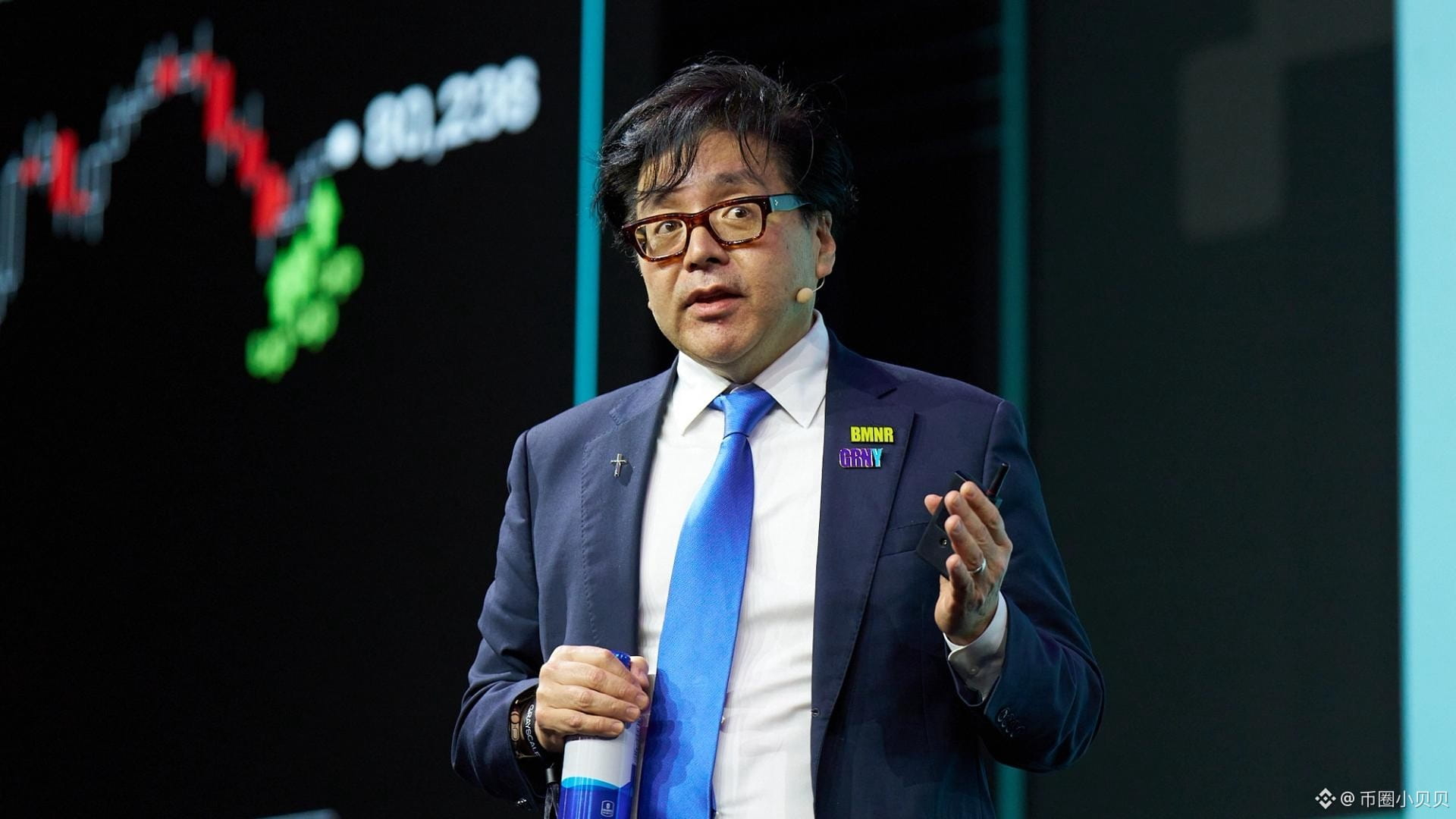
551
·
--
#比特币跌破8.4万美元
Bitcoin is falling, but money is turning around and flowing into ETFs... When these two things happen at the same time, it’s usually no coincidence..
[🔄 进群看风向](https://app.binance.com/uni-qr/F6dwNqgx)
On Tuesday, U.S. spot Bitcoin ETFs saw net inflows of $119 million, recovering Monday’s $90 million in outflows.. At the same time, BTC fell from $86,600 to below $84,000, hitting $83,971 at one point, down 2.1% in 24 hours.. The price is falling, but coins are still being bought—that’s not buying that’s simply following the market..
What’s really worth watching is the other side.. Ethereum ETFs saw $202 million in net outflows that day, nearly four times Monday’s $51 million, marking a sixth consecutive trading day of redemptions, totaling about $408 million.. Both are falling, yet investors are making different choices..
This isn’t an exit—it’s a rotation.. When risk appetite contracts, money doesn’t flee first; it retreats into the biggest names.. BTC’s role in this cycle has changed: it’s no longer a high-beta position for offense, but the closest thing to cash in crypto.. So when people are still buying into Bitcoin ETFs as prices fall, they’re using the cheapest way to stay in the market. If they really wanted to exit, they’d redeem ETH first, not BTC..
There’s another layer on-chain.. People at CryptoQuant point out that this rally has been running into selling pressure from profit-takers, because the price still sits at too large a premium to the $68,900 cost basis of active traders.. Whether it can hold isn’t about the price itself, but whether new buyers can absorb this supply of profitable holdings..
Flows in smaller coins are saying the same thing.. XRP ETFs saw $3.1 million in inflows, SOL had $3.7 million in outflows, and Zcash was flat.. Money isn’t spilling over into high-beta altcoins; instead, it’s concentrating in the most established one..
So what really matters isn’t whether BTC breaks below $84,000 today.. Watch when the Ethereum ETF redemption streak ends.. As long as outflows continue, Bitcoin’s inflows are defensive, not aggressive.. The day ETH also returns to net inflows will be the signal that investors are truly willing to broaden their bets..
#比特币跌破8.4万美元
Bitcoin is falling, but money is turning around and flowing into ETFs... When these two things happen at the same time, it’s usually no coincidence..
🔄 进群看风向
On Tuesday, U.S. spot Bitcoin ETFs saw net inflows of $119 million, recovering Monday’s $90 million in outflows.. At the same time, BTC fell from $86,600 to below $84,000, hitting $83,971 at one point, down 2.1% in 24 hours.. The price is falling, but coins are still being bought—that’s not buying that’s simply following the market..
What’s really worth watching is the other side.. Ethereum ETFs saw $202 million in net outflows that day, nearly four times Monday’s $51 million, marking a sixth consecutive trading day of redemptions, totaling about $408 million.. Both are falling, yet investors are making different choices..
This isn’t an exit—it’s a rotation.. When risk appetite contracts, money doesn’t flee first; it retreats into the biggest names.. BTC’s role in this cycle has changed: it’s no longer a high-beta position for offense, but the closest thing to cash in crypto.. So when people are still buying into Bitcoin ETFs as prices fall, they’re using the cheapest way to stay in the market. If they really wanted to exit, they’d redeem ETH first, not BTC..
There’s another layer on-chain.. People at CryptoQuant point out that this rally has been running into selling pressure from profit-takers, because the price still sits at too large a premium to the $68,900 cost basis of active traders.. Whether it can hold isn’t about the price itself, but whether new buyers can absorb this supply of profitable holdings..
Flows in smaller coins are saying the same thing.. XRP ETFs saw $3.1 million in inflows, SOL had $3.7 million in outflows, and Zcash was flat.. Money isn’t spilling over into high-beta altcoins; instead, it’s concentrating in the most established one..
So what really matters isn’t whether BTC breaks below $84,000 today.. Watch when the Ethereum ETF redemption streak ends.. As long as outflows continue, Bitcoin’s inflows are defensive, not aggressive.. The day ETH also returns to net inflows will be the signal that investors are truly willing to broaden their bets..
Bitcoin is falling, but money is turning around and flowing into ETFs... When these two things happen at the same time, it’s usually no coincidence..
🔄 进群看风向
On Tuesday, U.S. spot Bitcoin ETFs saw net inflows of $119 million, recovering Monday’s $90 million in outflows.. At the same time, BTC fell from $86,600 to below $84,000, hitting $83,971 at one point, down 2.1% in 24 hours.. The price is falling, but coins are still being bought—that’s not buying that’s simply following the market..
What’s really worth watching is the other side.. Ethereum ETFs saw $202 million in net outflows that day, nearly four times Monday’s $51 million, marking a sixth consecutive trading day of redemptions, totaling about $408 million.. Both are falling, yet investors are making different choices..
This isn’t an exit—it’s a rotation.. When risk appetite contracts, money doesn’t flee first; it retreats into the biggest names.. BTC’s role in this cycle has changed: it’s no longer a high-beta position for offense, but the closest thing to cash in crypto.. So when people are still buying into Bitcoin ETFs as prices fall, they’re using the cheapest way to stay in the market. If they really wanted to exit, they’d redeem ETH first, not BTC..
There’s another layer on-chain.. People at CryptoQuant point out that this rally has been running into selling pressure from profit-takers, because the price still sits at too large a premium to the $68,900 cost basis of active traders.. Whether it can hold isn’t about the price itself, but whether new buyers can absorb this supply of profitable holdings..
Flows in smaller coins are saying the same thing.. XRP ETFs saw $3.1 million in inflows, SOL had $3.7 million in outflows, and Zcash was flat.. Money isn’t spilling over into high-beta altcoins; instead, it’s concentrating in the most established one..
So what really matters isn’t whether BTC breaks below $84,000 today.. Watch when the Ethereum ETF redemption streak ends.. As long as outflows continue, Bitcoin’s inflows are defensive, not aggressive.. The day ETH also returns to net inflows will be the signal that investors are truly willing to broaden their bets..

2
9
10.2k
·
--
One hand is easing up while the other tightens its grip. Taken together, these two developments reveal the real stance the U.S. government is taking toward crypto privacy tools this week..
[⚖️ 消息第一时间](https://app.binance.com/uni-qr/F6dwNqgx)
On Monday, the U.S. Department of Justice cited a September 25 ruling by the D.C. Circuit Court of Appeals in the Bitcoin Fog mixer case in a supplemental filing, using it to oppose Tornado Cash developer Roman Storm’s motion for acquittal.. At almost the same time, the Treasury Department announced that it was withdrawing its own proposed rules for regulating crypto mixers.. In the same week, one government agency is ramping up pressure while another is backing down..
Most people see a legal proceeding that has dragged on for more than a year, with no clear winner yet.. What’s really worth watching is that two different attitudes toward privacy tools are coexisting within the government—and that will directly determine how the market prices privacy-focused assets..
The prosecution’s argument hinges on the question of jurisdiction.. The ruling says that Bitcoin Fog had customers in Washington and that undercover agents conducted transactions there, which was enough to support a conviction.. The DOJ has applied the same logic in Manhattan, arguing that someone’s use of Tornado Cash in their own apartment is enough to bring charges in the Southern District of New York.. Storm’s lawyers have long argued that these isolated transactions did not advance the alleged conspiracy..
This is no longer a technical dispute; it’s a disagreement over whether the tools themselves are a problem.. If the mere fact that someone used a tool is enough to establish jurisdiction, then developers of any code running on neutral infrastructure could automatically be held responsible for their users’ actions.. By withdrawing its proposed rule, the Treasury Department has effectively acknowledged that a blanket approach to regulating mixers won’t work..
The price of privacy-focused assets has been moving with the push and pull between these two positions.. The tougher the stance, the greater the discount on privacy assets and tools.. The softer the stance, the more capital returns to test the waters.. What’s really being traded has never been the outcome of the case, but whether the government is willing to recognize privacy as a legitimate need..
The broader story is that the U.S. is now pursuing two paths at once.. One treats developers as operators and holds them accountable; the other recognizes privacy as a legitimate need.. These two paths cannot coexist indefinitely. Sooner or later, they will have to converge on a single position..
The next thing to watch is whether the retrial scheduled for April 26 next year can be avoided.. If the pending charges are dropped first, that would suggest the principle of tool neutrality has prevailed.. If the case moves forward, it would mean the government plans to gradually push the boundaries through one case after another.. The ruling in any single case isn’t really the point; what matters is the default answer it will leave for everyone who writes privacy code in the future..
One hand is easing up while the other tightens its grip. Taken together, these two developments reveal the real stance the U.S. government is taking toward crypto privacy tools this week..
⚖️ 消息第一时间
On Monday, the U.S. Department of Justice cited a September 25 ruling by the D.C. Circuit Court of Appeals in the Bitcoin Fog mixer case in a supplemental filing, using it to oppose Tornado Cash developer Roman Storm’s motion for acquittal.. At almost the same time, the Treasury Department announced that it was withdrawing its own proposed rules for regulating crypto mixers.. In the same week, one government agency is ramping up pressure while another is backing down..
Most people see a legal proceeding that has dragged on for more than a year, with no clear winner yet.. What’s really worth watching is that two different attitudes toward privacy tools are coexisting within the government—and that will directly determine how the market prices privacy-focused assets..
The prosecution’s argument hinges on the question of jurisdiction.. The ruling says that Bitcoin Fog had customers in Washington and that undercover agents conducted transactions there, which was enough to support a conviction.. The DOJ has applied the same logic in Manhattan, arguing that someone’s use of Tornado Cash in their own apartment is enough to bring charges in the Southern District of New York.. Storm’s lawyers have long argued that these isolated transactions did not advance the alleged conspiracy..
This is no longer a technical dispute; it’s a disagreement over whether the tools themselves are a problem.. If the mere fact that someone used a tool is enough to establish jurisdiction, then developers of any code running on neutral infrastructure could automatically be held responsible for their users’ actions.. By withdrawing its proposed rule, the Treasury Department has effectively acknowledged that a blanket approach to regulating mixers won’t work..
The price of privacy-focused assets has been moving with the push and pull between these two positions.. The tougher the stance, the greater the discount on privacy assets and tools.. The softer the stance, the more capital returns to test the waters.. What’s really being traded has never been the outcome of the case, but whether the government is willing to recognize privacy as a legitimate need..
The broader story is that the U.S. is now pursuing two paths at once.. One treats developers as operators and holds them accountable; the other recognizes privacy as a legitimate need.. These two paths cannot coexist indefinitely. Sooner or later, they will have to converge on a single position..
The next thing to watch is whether the retrial scheduled for April 26 next year can be avoided.. If the pending charges are dropped first, that would suggest the principle of tool neutrality has prevailed.. If the case moves forward, it would mean the government plans to gradually push the boundaries through one case after another.. The ruling in any single case isn’t really the point; what matters is the default answer it will leave for everyone who writes privacy code in the future..
⚖️ 消息第一时间
On Monday, the U.S. Department of Justice cited a September 25 ruling by the D.C. Circuit Court of Appeals in the Bitcoin Fog mixer case in a supplemental filing, using it to oppose Tornado Cash developer Roman Storm’s motion for acquittal.. At almost the same time, the Treasury Department announced that it was withdrawing its own proposed rules for regulating crypto mixers.. In the same week, one government agency is ramping up pressure while another is backing down..
Most people see a legal proceeding that has dragged on for more than a year, with no clear winner yet.. What’s really worth watching is that two different attitudes toward privacy tools are coexisting within the government—and that will directly determine how the market prices privacy-focused assets..
The prosecution’s argument hinges on the question of jurisdiction.. The ruling says that Bitcoin Fog had customers in Washington and that undercover agents conducted transactions there, which was enough to support a conviction.. The DOJ has applied the same logic in Manhattan, arguing that someone’s use of Tornado Cash in their own apartment is enough to bring charges in the Southern District of New York.. Storm’s lawyers have long argued that these isolated transactions did not advance the alleged conspiracy..
This is no longer a technical dispute; it’s a disagreement over whether the tools themselves are a problem.. If the mere fact that someone used a tool is enough to establish jurisdiction, then developers of any code running on neutral infrastructure could automatically be held responsible for their users’ actions.. By withdrawing its proposed rule, the Treasury Department has effectively acknowledged that a blanket approach to regulating mixers won’t work..
The price of privacy-focused assets has been moving with the push and pull between these two positions.. The tougher the stance, the greater the discount on privacy assets and tools.. The softer the stance, the more capital returns to test the waters.. What’s really being traded has never been the outcome of the case, but whether the government is willing to recognize privacy as a legitimate need..
The broader story is that the U.S. is now pursuing two paths at once.. One treats developers as operators and holds them accountable; the other recognizes privacy as a legitimate need.. These two paths cannot coexist indefinitely. Sooner or later, they will have to converge on a single position..
The next thing to watch is whether the retrial scheduled for April 26 next year can be avoided.. If the pending charges are dropped first, that would suggest the principle of tool neutrality has prevailed.. If the case moves forward, it would mean the government plans to gradually push the boundaries through one case after another.. The ruling in any single case isn’t really the point; what matters is the default answer it will leave for everyone who writes privacy code in the future..

6
20
3.2k
·
--
Verified
Cardano has just written freezing and confiscation into its token standard... Many people see this as yet another blockchain giving in to regulation, but what’s really being redrawn is the most basic boundary of on-chain assets: do the things in your wallet actually belong to you?
[📢 最新消息群里说](https://app.binance.com/uni-qr/F6dwNqgx)
On Wednesday, the Cardano Foundation announced that a token standard called CIP-0113 had officially launched and passed an independent security audit. Its purpose is straightforward: to let issuers of regulated assets such as stablecoins, funds, and bonds decide who can receive their tokens, and freeze, seize, or forcibly transfer them when the rules require it. The change doesn’t require a hard fork.
Under normal circumstances, whoever holds a token can transfer it to anyone without needing anyone’s approval. That’s precisely what banks and funds can’t accept when moving regulated assets on-chain. They have to ensure tokens don’t end up with buyers who haven’t passed identity checks or reach sanctioned addresses—and if regulators or a court issue an order, they need to be able to hit the brakes. CIP-0113 builds these checks directly into the tokens, so the network checks the rules before every transfer.
The foundation’s CEO says the rules must travel with the asset and be enforced every time it moves. Issuers can choose a ready-made set of rules or write their own, and those rules can be updated as regulations change. A list of supporting services was also announced: wallets Eternl and GeroWallet, blockchain explorer CardanoScan, and developer tools provider BloxBean. The foundation also received recognition for its certification framework from the Swiss Capital Markets and Technology Association, whose standards are used to issue tokenized shares.
At this point, there’s nothing particularly new. Ethereum has long had permissioned token standards such as ERC-3643; Solana relies on token extensions and transfer controls; and the XRP Ledger also lets issuers restrict holders and recover balances. So this is more like an entry ticket. Cardano isn’t competing to be the first to invent the technology, but for a place on the track that regulated assets will use by default in the future.
What’s really worth noting is the power that comes with it. Holding one of these tokens means effectively accepting powers that go beyond blocking payments: under specific rules, an authorized party can transfer the tokens without the holder’s consent. The technical documentation even specifically advises lending services to check what powers are attached to these tokens before accepting them as collateral.
That takes the question to another level. If freezing and forced transfers become the default for tokenized assets, the market will eventually have to reprice two things: first, how much self-custody is really worth, and second, how cheap custody should be. ADA fell 4.5 points over the past 24 hours, in line with the broader market. What’s worth watching next isn’t how many more standards get announced, but who the first issuers of stablecoins or funds using these rules will be—and whose hands they leave the power to freeze in.
Cardano has just written freezing and confiscation into its token standard... Many people see this as yet another blockchain giving in to regulation, but what’s really being redrawn is the most basic boundary of on-chain assets: do the things in your wallet actually belong to you?
📢 最新消息群里说
On Wednesday, the Cardano Foundation announced that a token standard called CIP-0113 had officially launched and passed an independent security audit. Its purpose is straightforward: to let issuers of regulated assets such as stablecoins, funds, and bonds decide who can receive their tokens, and freeze, seize, or forcibly transfer them when the rules require it. The change doesn’t require a hard fork.
Under normal circumstances, whoever holds a token can transfer it to anyone without needing anyone’s approval. That’s precisely what banks and funds can’t accept when moving regulated assets on-chain. They have to ensure tokens don’t end up with buyers who haven’t passed identity checks or reach sanctioned addresses—and if regulators or a court issue an order, they need to be able to hit the brakes. CIP-0113 builds these checks directly into the tokens, so the network checks the rules before every transfer.
The foundation’s CEO says the rules must travel with the asset and be enforced every time it moves. Issuers can choose a ready-made set of rules or write their own, and those rules can be updated as regulations change. A list of supporting services was also announced: wallets Eternl and GeroWallet, blockchain explorer CardanoScan, and developer tools provider BloxBean. The foundation also received recognition for its certification framework from the Swiss Capital Markets and Technology Association, whose standards are used to issue tokenized shares.
At this point, there’s nothing particularly new. Ethereum has long had permissioned token standards such as ERC-3643; Solana relies on token extensions and transfer controls; and the XRP Ledger also lets issuers restrict holders and recover balances. So this is more like an entry ticket. Cardano isn’t competing to be the first to invent the technology, but for a place on the track that regulated assets will use by default in the future.
What’s really worth noting is the power that comes with it. Holding one of these tokens means effectively accepting powers that go beyond blocking payments: under specific rules, an authorized party can transfer the tokens without the holder’s consent. The technical documentation even specifically advises lending services to check what powers are attached to these tokens before accepting them as collateral.
That takes the question to another level. If freezing and forced transfers become the default for tokenized assets, the market will eventually have to reprice two things: first, how much self-custody is really worth, and second, how cheap custody should be. ADA fell 4.5 points over the past 24 hours, in line with the broader market. What’s worth watching next isn’t how many more standards get announced, but who the first issuers of stablecoins or funds using these rules will be—and whose hands they leave the power to freeze in.
📢 最新消息群里说
On Wednesday, the Cardano Foundation announced that a token standard called CIP-0113 had officially launched and passed an independent security audit. Its purpose is straightforward: to let issuers of regulated assets such as stablecoins, funds, and bonds decide who can receive their tokens, and freeze, seize, or forcibly transfer them when the rules require it. The change doesn’t require a hard fork.
Under normal circumstances, whoever holds a token can transfer it to anyone without needing anyone’s approval. That’s precisely what banks and funds can’t accept when moving regulated assets on-chain. They have to ensure tokens don’t end up with buyers who haven’t passed identity checks or reach sanctioned addresses—and if regulators or a court issue an order, they need to be able to hit the brakes. CIP-0113 builds these checks directly into the tokens, so the network checks the rules before every transfer.
The foundation’s CEO says the rules must travel with the asset and be enforced every time it moves. Issuers can choose a ready-made set of rules or write their own, and those rules can be updated as regulations change. A list of supporting services was also announced: wallets Eternl and GeroWallet, blockchain explorer CardanoScan, and developer tools provider BloxBean. The foundation also received recognition for its certification framework from the Swiss Capital Markets and Technology Association, whose standards are used to issue tokenized shares.
At this point, there’s nothing particularly new. Ethereum has long had permissioned token standards such as ERC-3643; Solana relies on token extensions and transfer controls; and the XRP Ledger also lets issuers restrict holders and recover balances. So this is more like an entry ticket. Cardano isn’t competing to be the first to invent the technology, but for a place on the track that regulated assets will use by default in the future.
What’s really worth noting is the power that comes with it. Holding one of these tokens means effectively accepting powers that go beyond blocking payments: under specific rules, an authorized party can transfer the tokens without the holder’s consent. The technical documentation even specifically advises lending services to check what powers are attached to these tokens before accepting them as collateral.
That takes the question to another level. If freezing and forced transfers become the default for tokenized assets, the market will eventually have to reprice two things: first, how much self-custody is really worth, and second, how cheap custody should be. ADA fell 4.5 points over the past 24 hours, in line with the broader market. What’s worth watching next isn’t how many more standards get announced, but who the first issuers of stablecoins or funds using these rules will be—and whose hands they leave the power to freeze in.
2
1.9k
·
--
Verified
At first glance, it looks like Solana has released another open-source tool. But what it could really change is the decades-old pipeline used for institutional trade settlement..
[📢 消息第一时间](https://app.binance.com/uni-qr/F6dwNqgx)
On Monday, the Solana Foundation released an open-source custody program called Solana DvP.. It gives financial institutions a standardized API for delivery-versus-payment settlement—the mechanism that ensures assets and money change hands simultaneously.. The detail most worth noting is that the standard was developed with input from JPMorgan. The bank’s head of digital assets for markets even said publicly that this is exactly the kind of infrastructure institutional participants need..
In the past, delivery-versus-payment settlement involved a chain of clearinghouses, depositories, and custodians, and funds could be tied up for a day or two.. DvP compresses the process into a single atomic transaction: either both legs go through, or neither does. According to the Solana Foundation’s head of product, final settlement goes from taking days to just seconds..
Many people’s first reaction is that institutions are coming on-chain to buy crypto.. But the real hurdle for institutions isn’t buying—it’s settlement.. Money might go out first, with the asset arriving a day later, or the asset might move before the money catches up. In traditional finance, an entire system of intermediaries provides a safety net for these situations. On-chain, that has long been missing.. Whoever turns that safety net into a default standard will determine which rails institutional capital uses..
The details also show that this is aimed at regulated use cases.. It supports SPL Token and Token-2022, including several extensions relied on by regulated issuers, such as permanent delegates, pausable tokens, and transfer hooks. It has also undergone an external security audit, with privacy features planned for later..
Viewed in the context of the bigger picture, this isn’t an isolated move.. In August, BlackRock launched a tokenized money market fund for stablecoin reserves on Solana, and an exchange is also using Solana to offer tokenized U.S. stocks to overseas customers.. Solana has been competing to become the default platform for tokenized assets, and DvP gives regulated players a reason to feel comfortable putting money on-chain..
What’s really worth watching isn’t the price of SOL, but the actual settlement volume.. JPMorgan provided input this time; that doesn’t mean it plans to settle transactions on-chain itself.. If the first wave of institutions uses this standard to complete real trades, tokenized assets will move from issuance into circulation—and that step is worth far more than issuing a few more tokens.. On the other hand, if nobody uses the standard, it will ultimately be just a document..
At first glance, it looks like Solana has released another open-source tool. But what it could really change is the decades-old pipeline used for institutional trade settlement..
📢 消息第一时间
On Monday, the Solana Foundation released an open-source custody program called Solana DvP.. It gives financial institutions a standardized API for delivery-versus-payment settlement—the mechanism that ensures assets and money change hands simultaneously.. The detail most worth noting is that the standard was developed with input from JPMorgan. The bank’s head of digital assets for markets even said publicly that this is exactly the kind of infrastructure institutional participants need..
In the past, delivery-versus-payment settlement involved a chain of clearinghouses, depositories, and custodians, and funds could be tied up for a day or two.. DvP compresses the process into a single atomic transaction: either both legs go through, or neither does. According to the Solana Foundation’s head of product, final settlement goes from taking days to just seconds..
Many people’s first reaction is that institutions are coming on-chain to buy crypto.. But the real hurdle for institutions isn’t buying—it’s settlement.. Money might go out first, with the asset arriving a day later, or the asset might move before the money catches up. In traditional finance, an entire system of intermediaries provides a safety net for these situations. On-chain, that has long been missing.. Whoever turns that safety net into a default standard will determine which rails institutional capital uses..
The details also show that this is aimed at regulated use cases.. It supports SPL Token and Token-2022, including several extensions relied on by regulated issuers, such as permanent delegates, pausable tokens, and transfer hooks. It has also undergone an external security audit, with privacy features planned for later..
Viewed in the context of the bigger picture, this isn’t an isolated move.. In August, BlackRock launched a tokenized money market fund for stablecoin reserves on Solana, and an exchange is also using Solana to offer tokenized U.S. stocks to overseas customers.. Solana has been competing to become the default platform for tokenized assets, and DvP gives regulated players a reason to feel comfortable putting money on-chain..
What’s really worth watching isn’t the price of SOL, but the actual settlement volume.. JPMorgan provided input this time; that doesn’t mean it plans to settle transactions on-chain itself.. If the first wave of institutions uses this standard to complete real trades, tokenized assets will move from issuance into circulation—and that step is worth far more than issuing a few more tokens.. On the other hand, if nobody uses the standard, it will ultimately be just a document..
📢 消息第一时间
On Monday, the Solana Foundation released an open-source custody program called Solana DvP.. It gives financial institutions a standardized API for delivery-versus-payment settlement—the mechanism that ensures assets and money change hands simultaneously.. The detail most worth noting is that the standard was developed with input from JPMorgan. The bank’s head of digital assets for markets even said publicly that this is exactly the kind of infrastructure institutional participants need..
In the past, delivery-versus-payment settlement involved a chain of clearinghouses, depositories, and custodians, and funds could be tied up for a day or two.. DvP compresses the process into a single atomic transaction: either both legs go through, or neither does. According to the Solana Foundation’s head of product, final settlement goes from taking days to just seconds..
Many people’s first reaction is that institutions are coming on-chain to buy crypto.. But the real hurdle for institutions isn’t buying—it’s settlement.. Money might go out first, with the asset arriving a day later, or the asset might move before the money catches up. In traditional finance, an entire system of intermediaries provides a safety net for these situations. On-chain, that has long been missing.. Whoever turns that safety net into a default standard will determine which rails institutional capital uses..
The details also show that this is aimed at regulated use cases.. It supports SPL Token and Token-2022, including several extensions relied on by regulated issuers, such as permanent delegates, pausable tokens, and transfer hooks. It has also undergone an external security audit, with privacy features planned for later..
Viewed in the context of the bigger picture, this isn’t an isolated move.. In August, BlackRock launched a tokenized money market fund for stablecoin reserves on Solana, and an exchange is also using Solana to offer tokenized U.S. stocks to overseas customers.. Solana has been competing to become the default platform for tokenized assets, and DvP gives regulated players a reason to feel comfortable putting money on-chain..
What’s really worth watching isn’t the price of SOL, but the actual settlement volume.. JPMorgan provided input this time; that doesn’t mean it plans to settle transactions on-chain itself.. If the first wave of institutions uses this standard to complete real trades, tokenized assets will move from issuance into circulation—and that step is worth far more than issuing a few more tokens.. On the other hand, if nobody uses the standard, it will ultimately be just a document..
10
2k
·
--
#全网爆仓6.74亿美元
Bitcoin fell 2%, which looks like an ordinary pullback... but the signals hidden in this drop matter far more than the size of the decline itself..
[💰 交易计划](https://app.binance.com/uni-qr/F6dwNqgx)
In the early hours of October 7, BTC fell below $84,000, down more than 2% on the day. ETH fell even harder, nearly 3.6%, while SOL, XRP, and BNB all followed suit.. According to Coinglass, around $400 million worth of positions were liquidated in one hour during this move, nearly $380 million of which were long positions..
What’s really worth looking at isn’t how much prices fell, but who got wiped out.. More than 90% of the liquidated positions were longs, suggesting that market sentiment had been overwhelmingly bullish in the preceding days, with leverage piled on heavily.. In this kind of market structure, a drop doesn’t need any major negative catalyst. Breaking a key level can trigger a chain reaction: the further prices fall, the more positions get liquidated, and the more positions get liquidated, the further prices fall..
Look deeper, and the source of this round of pressure lies outside the crypto market.. AI-related stocks in the US are still trading at high levels, employment data is strong, energy prices are rising, and expectations for rate cuts keep getting pushed back.. These things may sound unrelated to crypto, but money comes from the same pool, and it flows toward wherever it can earn the highest marginal return..
Spot ETF data also backs this up.. Bitcoin spot ETFs saw net outflows of $89.9 million in a single day, ending two consecutive days of net inflows.. This doesn’t look like a panic-driven exit so much as fresh capital temporarily sitting on the sidelines and waiting to see what happens..
But most people missed one detail.. On the same day BTC was hit by liquidations, Bitmine added another 12,500 ETH through BitGo this morning.. Institutions haven’t left; they’re switching assets.. In this drop, the money may not have left at all—it may have moved from leveraged BTC positions into spot ETH..
Even the listed company that has long only bought and never sold parted with 32 BTC to cover its dividend.. The amount was small, but the signal is worth noting: coins are starting to loosen from the hands of even the most committed holders..
For now, it’s enough to watch two things.. First, can BTC quickly reclaim $84,000? If it can’t, the former support will turn into resistance.. Second, will institutional buying of ETH continue?.. If both developments go well, this drop is a rotation, not a reversal.. If inflows into ETH dry up, that’s when there’s really cause for concern..
#全网爆仓6.74亿美元
Bitcoin fell 2%, which looks like an ordinary pullback... but the signals hidden in this drop matter far more than the size of the decline itself..
💰 交易计划
In the early hours of October 7, BTC fell below $84,000, down more than 2% on the day. ETH fell even harder, nearly 3.6%, while SOL, XRP, and BNB all followed suit.. According to Coinglass, around $400 million worth of positions were liquidated in one hour during this move, nearly $380 million of which were long positions..
What’s really worth looking at isn’t how much prices fell, but who got wiped out.. More than 90% of the liquidated positions were longs, suggesting that market sentiment had been overwhelmingly bullish in the preceding days, with leverage piled on heavily.. In this kind of market structure, a drop doesn’t need any major negative catalyst. Breaking a key level can trigger a chain reaction: the further prices fall, the more positions get liquidated, and the more positions get liquidated, the further prices fall..
Look deeper, and the source of this round of pressure lies outside the crypto market.. AI-related stocks in the US are still trading at high levels, employment data is strong, energy prices are rising, and expectations for rate cuts keep getting pushed back.. These things may sound unrelated to crypto, but money comes from the same pool, and it flows toward wherever it can earn the highest marginal return..
Spot ETF data also backs this up.. Bitcoin spot ETFs saw net outflows of $89.9 million in a single day, ending two consecutive days of net inflows.. This doesn’t look like a panic-driven exit so much as fresh capital temporarily sitting on the sidelines and waiting to see what happens..
But most people missed one detail.. On the same day BTC was hit by liquidations, Bitmine added another 12,500 ETH through BitGo this morning.. Institutions haven’t left; they’re switching assets.. In this drop, the money may not have left at all—it may have moved from leveraged BTC positions into spot ETH..
Even the listed company that has long only bought and never sold parted with 32 BTC to cover its dividend.. The amount was small, but the signal is worth noting: coins are starting to loosen from the hands of even the most committed holders..
For now, it’s enough to watch two things.. First, can BTC quickly reclaim $84,000? If it can’t, the former support will turn into resistance.. Second, will institutional buying of ETH continue?.. If both developments go well, this drop is a rotation, not a reversal.. If inflows into ETH dry up, that’s when there’s really cause for concern..
Bitcoin fell 2%, which looks like an ordinary pullback... but the signals hidden in this drop matter far more than the size of the decline itself..
💰 交易计划
In the early hours of October 7, BTC fell below $84,000, down more than 2% on the day. ETH fell even harder, nearly 3.6%, while SOL, XRP, and BNB all followed suit.. According to Coinglass, around $400 million worth of positions were liquidated in one hour during this move, nearly $380 million of which were long positions..
What’s really worth looking at isn’t how much prices fell, but who got wiped out.. More than 90% of the liquidated positions were longs, suggesting that market sentiment had been overwhelmingly bullish in the preceding days, with leverage piled on heavily.. In this kind of market structure, a drop doesn’t need any major negative catalyst. Breaking a key level can trigger a chain reaction: the further prices fall, the more positions get liquidated, and the more positions get liquidated, the further prices fall..
Look deeper, and the source of this round of pressure lies outside the crypto market.. AI-related stocks in the US are still trading at high levels, employment data is strong, energy prices are rising, and expectations for rate cuts keep getting pushed back.. These things may sound unrelated to crypto, but money comes from the same pool, and it flows toward wherever it can earn the highest marginal return..
Spot ETF data also backs this up.. Bitcoin spot ETFs saw net outflows of $89.9 million in a single day, ending two consecutive days of net inflows.. This doesn’t look like a panic-driven exit so much as fresh capital temporarily sitting on the sidelines and waiting to see what happens..
But most people missed one detail.. On the same day BTC was hit by liquidations, Bitmine added another 12,500 ETH through BitGo this morning.. Institutions haven’t left; they’re switching assets.. In this drop, the money may not have left at all—it may have moved from leveraged BTC positions into spot ETH..
Even the listed company that has long only bought and never sold parted with 32 BTC to cover its dividend.. The amount was small, but the signal is worth noting: coins are starting to loosen from the hands of even the most committed holders..
For now, it’s enough to watch two things.. First, can BTC quickly reclaim $84,000? If it can’t, the former support will turn into resistance.. Second, will institutional buying of ETH continue?.. If both developments go well, this drop is a rotation, not a reversal.. If inflows into ETH dry up, that’s when there’s really cause for concern..
4
5.9k
·
--
Verified
A stablecoin that launched just a week ago has already reached an issuance of over $600 million, with several payment giants behind it. For most people, that kind of debut sounds like another major player has entered the stablecoin market. But break down the on-chain data, and nearly $400 million of that total has never moved.
[📢 今日盘面群里聊](https://app.binance.com/uni-qr/F6dwNqgx)
The figures come from a wallet study published by Crystal Intelligence on October 6, based on data as of the early hours of October 5. Open USD is issued by Open Standard, whose members include several payment and e-commerce companies. The project launched simultaneously on four chains on September 30: Base, Ethereum, Solana, and one called Tempo.
The key question is where the money is sitting. The study found that nearly $400 million is parked in eight Tempo wallets, sent there directly by the issuer and never moved since. Another $200 million was transferred on October 1 to the custody account of a major exchange, and has also stayed put. Ten wallets hold more than 70% of the entire supply, and Tempo alone accounts for 70%.
So what issuance measures here is really stockpiling, not circulation. The amount actually in use is much smaller. In the first week, total trading volume on decentralized exchanges across the four chains was just over $4 million: $3.4 million on Solana, $700,000 on Base, and only $17,000 on Tempo, which holds most of the supply. The number of transfers tells an even clearer story: of more than 11,000 transfers, over 70% were classified as network fee payments, totaling just over $3.
This is a more telling clue than the issuance figure itself. Over the past two years, the stablecoin race has been boiled down to a contest of scale: whoever has the biggest reserves wins. But if even a newly issued stablecoin has to be seeded into wallets first, that suggests the battleground has shifted. Whether the money can actually be put to use depends on payment rails, merchant access, and settlement use cases—not the supply figure in a white paper.
Of course, the first week’s data is no proof of failure. Issuers routinely seed the market before scaling up. The two signals worth watching are when those wallets start sending funds out, and whether new tokens are minted by anyone besides the founders and their partners. Once those wallets move, the story changes. If they never do, the market is left with little more than a very impressive figure on paper: over $600 million.
A stablecoin that launched just a week ago has already reached an issuance of over $600 million, with several payment giants behind it. For most people, that kind of debut sounds like another major player has entered the stablecoin market. But break down the on-chain data, and nearly $400 million of that total has never moved.
📢 今日盘面群里聊
The figures come from a wallet study published by Crystal Intelligence on October 6, based on data as of the early hours of October 5. Open USD is issued by Open Standard, whose members include several payment and e-commerce companies. The project launched simultaneously on four chains on September 30: Base, Ethereum, Solana, and one called Tempo.
The key question is where the money is sitting. The study found that nearly $400 million is parked in eight Tempo wallets, sent there directly by the issuer and never moved since. Another $200 million was transferred on October 1 to the custody account of a major exchange, and has also stayed put. Ten wallets hold more than 70% of the entire supply, and Tempo alone accounts for 70%.
So what issuance measures here is really stockpiling, not circulation. The amount actually in use is much smaller. In the first week, total trading volume on decentralized exchanges across the four chains was just over $4 million: $3.4 million on Solana, $700,000 on Base, and only $17,000 on Tempo, which holds most of the supply. The number of transfers tells an even clearer story: of more than 11,000 transfers, over 70% were classified as network fee payments, totaling just over $3.
This is a more telling clue than the issuance figure itself. Over the past two years, the stablecoin race has been boiled down to a contest of scale: whoever has the biggest reserves wins. But if even a newly issued stablecoin has to be seeded into wallets first, that suggests the battleground has shifted. Whether the money can actually be put to use depends on payment rails, merchant access, and settlement use cases—not the supply figure in a white paper.
Of course, the first week’s data is no proof of failure. Issuers routinely seed the market before scaling up. The two signals worth watching are when those wallets start sending funds out, and whether new tokens are minted by anyone besides the founders and their partners. Once those wallets move, the story changes. If they never do, the market is left with little more than a very impressive figure on paper: over $600 million.
📢 今日盘面群里聊
The figures come from a wallet study published by Crystal Intelligence on October 6, based on data as of the early hours of October 5. Open USD is issued by Open Standard, whose members include several payment and e-commerce companies. The project launched simultaneously on four chains on September 30: Base, Ethereum, Solana, and one called Tempo.
The key question is where the money is sitting. The study found that nearly $400 million is parked in eight Tempo wallets, sent there directly by the issuer and never moved since. Another $200 million was transferred on October 1 to the custody account of a major exchange, and has also stayed put. Ten wallets hold more than 70% of the entire supply, and Tempo alone accounts for 70%.
So what issuance measures here is really stockpiling, not circulation. The amount actually in use is much smaller. In the first week, total trading volume on decentralized exchanges across the four chains was just over $4 million: $3.4 million on Solana, $700,000 on Base, and only $17,000 on Tempo, which holds most of the supply. The number of transfers tells an even clearer story: of more than 11,000 transfers, over 70% were classified as network fee payments, totaling just over $3.
This is a more telling clue than the issuance figure itself. Over the past two years, the stablecoin race has been boiled down to a contest of scale: whoever has the biggest reserves wins. But if even a newly issued stablecoin has to be seeded into wallets first, that suggests the battleground has shifted. Whether the money can actually be put to use depends on payment rails, merchant access, and settlement use cases—not the supply figure in a white paper.
Of course, the first week’s data is no proof of failure. Issuers routinely seed the market before scaling up. The two signals worth watching are when those wallets start sending funds out, and whether new tokens are minted by anyone besides the founders and their partners. Once those wallets move, the story changes. If they never do, the market is left with little more than a very impressive figure on paper: over $600 million.
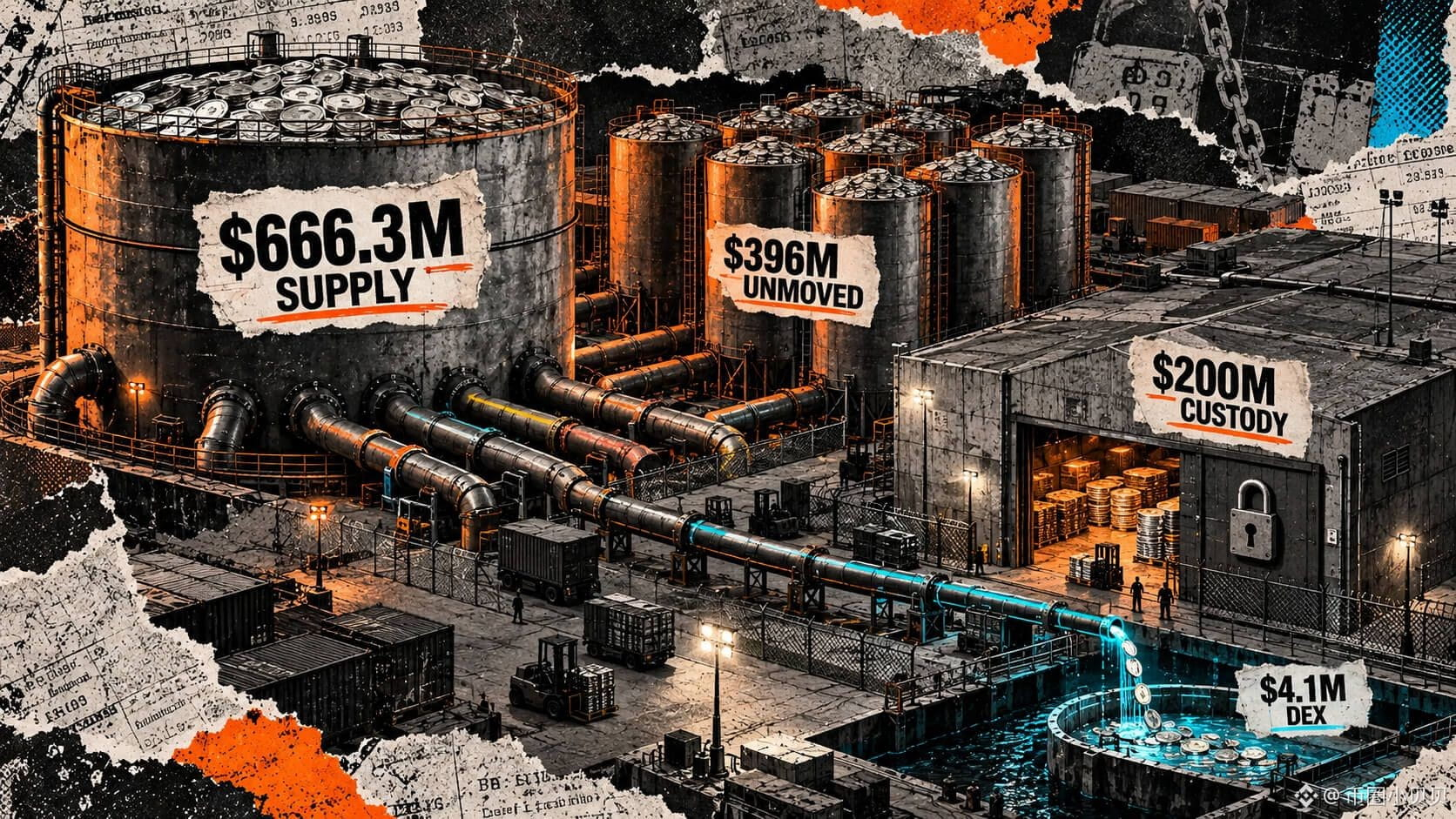
756
Log in to explore more content
Join global crypto users on Binance Square
⚡️ Get latest and useful information about crypto.
💬 Trusted by the world’s largest crypto exchange.
👍 Discover real insights from verified creators.
Email / Phone number
Trending Topics
FedMinutesFocusOnOctoberPause
255,041 views
1,616 Discussing
🚨 HIGH ALERT ‼️ PLEASE DON’T TRADE BLINDLY FOR THE NEXT HOUR 🚨
Guys, we have FOMC Minutes coming in less than 1 hour.
And after the kind of volatility we already saw today, I really don’t want anyone opening random high-leverage positions just before this release.
The biggest reaction I’m watching will be in Gold (XAU), Silver (XAG), BTC and ETH. Then coins like SOL and other highly leveraged mid/low-cap alts can exaggerate whatever move BTC makes.
Gold and Silver are especially sensitive tonight because the market is already reacting to the US dollar + Treasury yields, and both metals have been under heavy pressure ahead of the Fed minutes.
Briefly speaking
📉Hawkish Fed Minutes → Dollar/yields can push higher → pressure on BTC, crypto, Gold & silver
📈Dovish Fed Minutes → Dollar/yields can cool → BTC, Gold, Silver and risk assets can bounce hard.
And please remember the first candle can be a trap. We can get a pump, immediate dump, liquidations on both sides, and then the real direction.
So for now, protect your positions, reduce unnecessary leverage and don’t FOMO into the first move.
Tonight I’m watching $XAU , $XAG and $BTC first. These will tell us very quickly how the market is reading the Fed.
I will Update you guys on time
Follow @Panda Traders and Turn on Your notifications right now
#FedMinutesFocusOnOctoberPause
Panda Traders
·20 Likes
·4.6k views
IMFGrantsWaiverForElSalvadorBitcoinBreach
2 views
6 Discussing
BinanceLaunchesBinanceIntelligence
1.2M views
6,769 Discussing